Explore Big Sky - January 8th to January 21st, 2026
January 8 - January 21, 2026
Volume 17 // Issue 1
Owned and published in Big Sky, Montana
PUBLISHER
Eric Ladd | eric@theoutlawpartners.com
EDITORIAL
VP MEDIA
Mira Brody | mira@theoutlawpartners.com
SENIOR EDITOR
Jack Reaney | jack@theoutlawpartners.com
STAFF WRITER
Jen Clancey | jen@theoutlawpartners.com
LOCAL JOURNALIST
Leslie Kilgore | leslie@theoutlawpartners.com
DIGITAL MEDIA LEAD
Fischer Genau | fischer@theoutlawpartners.com
SOCIAL MEDIA COORDINATOR
Carli Johnson | carli@theoutlawpartners.com
CREATIVE
GRAPHIC DESIGNER
Griffin House | griffin@theoutlawpartners.com
SALES AND OPERATIONS
CHIEF OPERATING OFFICER
Josh Timon | josh@theoutlawpartners.com
CHIEF MARKETING OFFICER
Megan Paulson | megan@theoutlawpartners.com
VP DESIGN & PRODUCTION
Hiller Higman | hiller@theoutlawpartners.com
DIRECTOR OF RELATIONSHIPS
Ersin Ozer | ersin@theoutlawpartners.com
MARKETING MANAGER
Tucker Harris | tucker@theoutlawpartners.com
CONTENT MARKETING LEAD
Taylor Owens | taylor.owens@theoutlawpartners.com
SENIOR ACCOUNTANT
Sara Sipe | sara@theoutlawpartners.com
BUSINESS DEVELOPMENT LEAD
Patrick Mahoney | patrick@theoutlawpartners.com
ACCOUNT COORDINATOR
Ellie Boeschenstein | ellie@theoutlawpartners.com
Jason Bacaj, Lindsay Coe, Dave Craft, Blake Hempstead, Rachel Hergett, Betsy Marston, Brooks Nuanez, Colter Nuanez, Benjamin Alva Polley, Dustin Tetrault, Sophie Tsairis CONTRIBUTORS
TABLE OF CONTENTS
6 8
12
WILDLANDS ANNOUNCES PERC AS EVENT BENEFICIARY
EBS sits down with the Property and Environment Research Center to learn more about the nonprofit’s unique, actionfocused conservation mission. PERC will be the beneficiary of the 2026 Wildlands event in Big Sky.
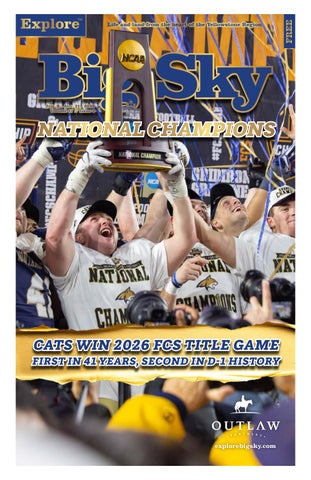
BOBCATS WIN IT ALL
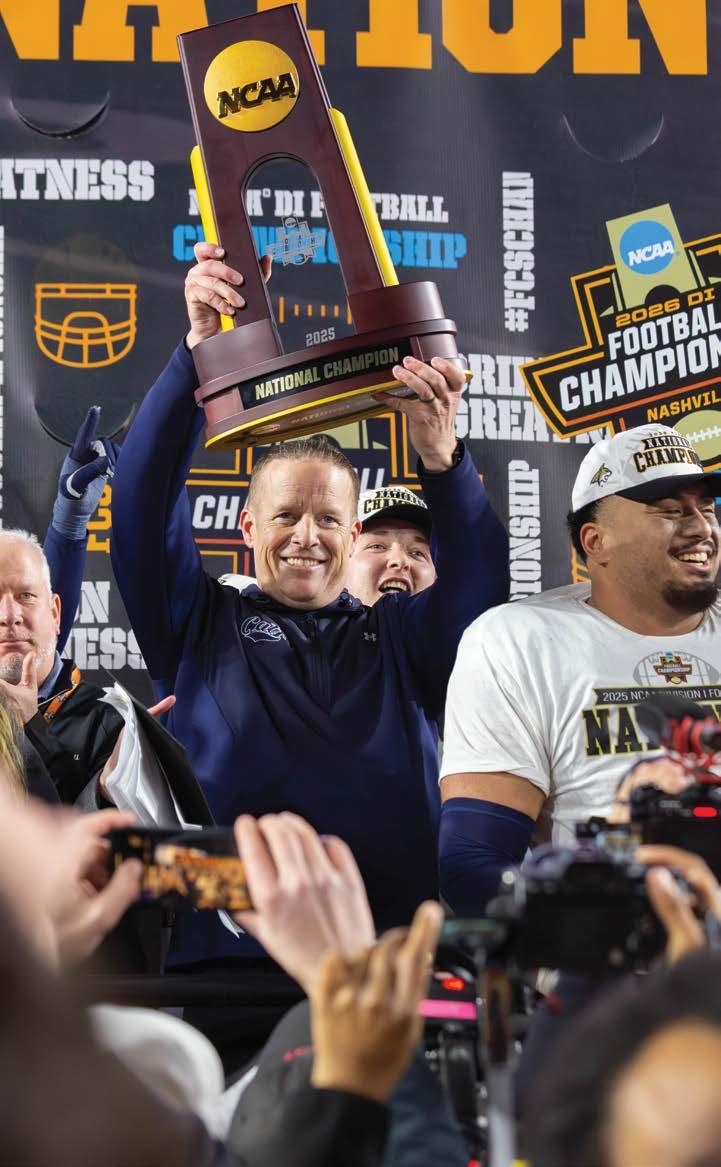
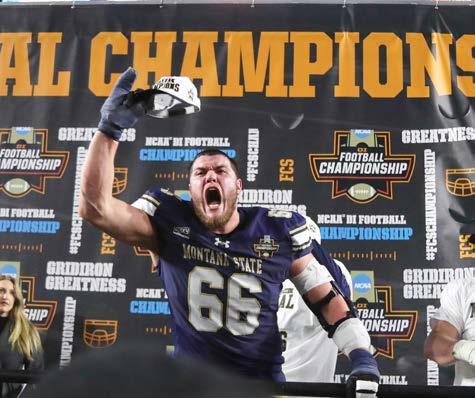
On the verge of heartbreak against a fearsome underdog in the unranked Redbirds of Illinois State, playoff heroics earned No. 2 Montana State its first national championship in 41 years. EBS columnist Colter Nuanez dives into the details of a gut-wrenching game.
THOUSANDS TRAVEL FOR ‘NASHVILLE TAKEOVER’
Close to 17,000 Montana State fans traveled to Nashville for the FCS national championship game, and beyond the football action, EBS dives into the significance of the moment—one that brought thousands together and displayed the best of the Treasure State.
BIG SKY WINTER PRIDE WEEK
18
ON THE COVER:
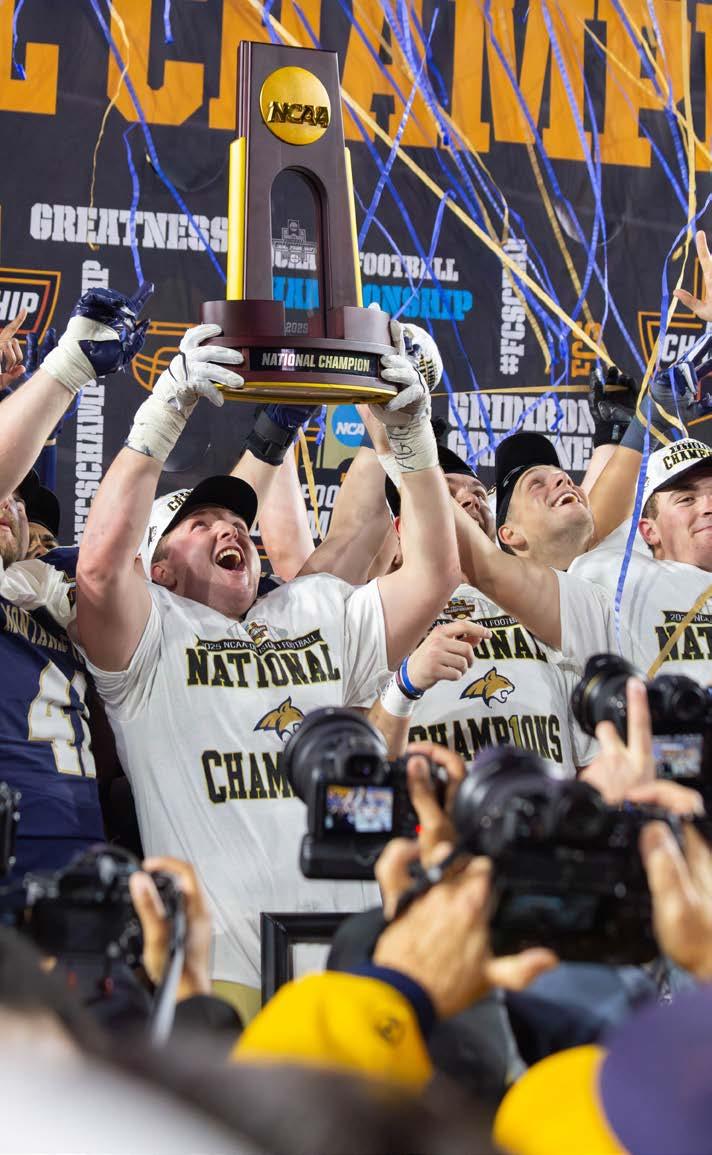
Bobcat players hoist the trophy, gazing at an eruption of blue and gold streamers in the triumphant minutes following their Jan. 5 national championship victory over the Illinois State Redbirds. PHOTO BY
EDITORIAL POLICIES
EDITORIAL POLICY
Outlaw Partners, LLC is the sole owner of Explore Big Sky. EBS reserves the right to edit all submitted material. Printed material reflects the opinion of the author and is not necessarily the opinion of Outlaw Partners or its editors. EBS will not publish anything discriminatory or in bad taste.
EBS welcomes obituaries written by family members or from funeral homes. To place an obituary, please submit 500 words or less to media@theoutlawpartners.com.
For the second winter in a row, local nonprofit Big Sky OUT is bringing color and celebration to the community with Winter Pride Week, returning Jan. 5 to 11. The weeklong event features a full slate of free and low-cost programming across Big Sky, including DJ dance parties, a drag brunch, a ski parade and educational opportunities.
NEW SERVICE SUPPORTS BIG SKY MOTHERS
Beginning in January 2026, new and expecting mothers can take advantage of a helpful resource in Big Sky. Blossom Mom Big Sky will offer weekly peer support sessions every Tuesday at 11 a.m. at Wellness In Action.
LETTERS TO THE EDITOR
Letters to the editor allow EBS readers to express views and share how they would like to effect change. These are not Thank You notes. Letters should be 250 words or less, respectful, ethical, accurate, and proofread for grammar and content. We reserve the right to edit letters and will not publish individual grievances about specific businesses or letters that are abusive, malicious or potentially libelous. Include: full name, address, phone number and title. Submit to media@outlaw.partners.
ADVERTISING DEADLINE
For the Jan. 22nd issue: Jan. 16th, 2026
CORRECTIONS Please report errors to media@outlaw.partners.
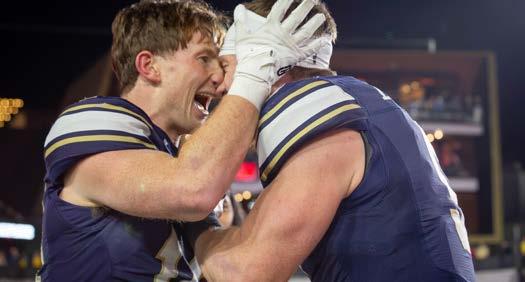
The Dowler twins embrace after Taco’s championship-winning touchdown catch. Taco (left), the receiver and postseason hero; Caden (right), the gritty, interception-hoarding defensive back and Big Sky Conference Defensive Player of the Year. Brothers from Billings. Undeniably team leaders and heroes. A pair of champions immortalized in Bobcat history.
PHOTO BY JACK REANEY
JACK REANEY
ARTS COUNCIL TO HOST ANNUAL AUCTION FOR THE ARTS ON FEB. 19
EBS STAFF
The Arts Council of Big Sky will host its 14th annual Auction for the Arts fundraising gala on Thursday, Feb. 19, at the Center for the Arts. The Mardi Gras-themed event begins at 5 p.m. and serves as the organization’s largest fundraiser of the year.
The evening will feature live and silent auctions, food and drink, live music and a “quick-finish” event in which eight artists will complete artwork live during the event. Their completed works will be auctioned live during the gala.
The silent auction includes more than 90 juried pieces, of varying mediums, from paintings and photography to jewelry and sculpture. Bidding for the silent auction opens at 5 p.m. on Feb. 6 and will remain open through the live event. The Arts Council will host two public preview events on Feb. 6 and Feb. 13 at the Center for the Arts offering an early look at live auction pieces available for bidding. The drop-in preview evenings are free and open to the public.
Proceeds from the auction support the Arts Council’s education programs, including its Contribute-What-You-Can class fee structure, which is designed to make arts education more accessible. According to the organization, more than 60% of class participants use the reducedfee option, particularly in youth programs such as preschool, afterschool and summer camps.
“Along with the rest of our programs, our educational offerings continue to grow,” Arts Council Executive Director Brian Hurlbut said in a press release. “We’re serving more and more community members each year, and we’re excited for what the future holds.”
Tickets to the gala are available through the Arts Council’s website.
OBITUARY NEWS IN BRIEF
YELLOWSTONE SEEKS PUBLIC INPUT ON NORTH ENTRANCE ROAD PROJECT
EBS STAFF
Yellowstone National Park is finalizing plans for the permanent reconstruction of North Entrance Road, which was partially destroyed in the 500-year flood event on June 13, 2022, specifically sections between Mammoth Hot Springs, Gardiner and Tower Junction. In addition to being a major thoroughfare for visitors to the park, the road also provides year-round access between Gardiner, Cooke City and Silver Gate. The temporary road, in use since Oct. 30, 2022, is not engineered for long-term use.
The National Park Service in cooperation with the Federal Highway Administration is seeking public input on an environmental assessment for the road’s reconstruction through a series of public and virtual meetings. At each, NPS and FHWA staff will present three preliminary road alignment alternatives, including a video fly-over of the preferred alignment, followed by a question-and-answer session.
The in-person meeting is scheduled for Tuesday, Jan. 13, from 4 to 5:30 p.m. at the Yellowstone Forever Institute Conference Room, 308 Park Street, Gardiner. The virtual meeting will take place Jan. 14, from 1 to 2:30 p.m. via Microsoft Teams. Attendees can join the meeting live, or watch a recording after on YouTube.
Public comment is open for 30 days and can be submitted online or mailed to: Yellowstone Center for Resources, Attn: North Entrance Road EA, P.O. Box 168, Yellowstone National Park, WY 82190.
At the conclusion of the 30-day public comment period on Feb. 4, NPS will review all comments and a final decision will be made in spring 2026.
BENJAMIN ERYCK TRAPP
OCT. 6, 2002—NOV. 8, 2025
Benjamin Eryk Trapp, born Oct. 6, 2002, to Eric Trapp and Marzena Swida-Trapp in Krakow, Poland, passed unexpectedly into the hands of the Lord in Bozeman on Nov. 8, 2025.
Ben was raised in Ennis, graduated from Park High School in Livingston, and had been residing in Big Sky working for his lifelong family friends, Kevin and Jackie Miller. Ben found solace and joy in family, friends, pets and nature.
He will be remembered as a thoughtful, compassionate, dedicated and whimsical individual. His words warmed hearts and his actions moved mountains. As a keen skier, biker, ethical hunter and collaborative problem solver, Ben’s legacy lives on in the people he loved, and whose lives he touched, and whom he continues to inspire. He will be deeply missed by all who knew and loved him.
Ben was preceded in death by his mother, Marzena Swida-Trapp; grandfather, Dale Trapp; and uncle,
Jon Trapp. He is survived by his loving family: father, Eric Trapp; brother, Max; stepmother, Christie; stepbrother, Matthew Johnson; grandmother, Charlotte Nunn; many uncles, aunts and cousins; and the community of friends who were touched by his beautiful soul.
Ben was a true gentleman who wished for the world to be better for all. His questions and doubts are now answered. We bid him farewell and bon voyage for his next journey.
A Celebration of Life for Ben will be held Saturday, March 28, 2026, at 1 p.m. at Alberto’s Mexican Cuisine restaurant in Big Sky.
In lieu of flowers, the family requests donations be directed in his name to the non-profit “Suffer Out Loud,” P.O. Box 6401, Bozeman, MT 59771 and online at sufferoutloud.org
OP NEWS
PERC FINDS COMMON GROUND IN CONSERVATION AND RANCHING
NONPROFIT TO SERVE AS PRIMARY CONSERVATION BENEFICIARY FOR THIS
SUMMER'S WILDLANDS LIVE MUSIC EVENT
BY MIRA BRODY
BOZEMAN—Brian Yablonski describes a typical map in shades of color. Oftentimes, he explains, national parks are brown, national forests are green, state land purple and tribal land yellow.
“But the private land’s colorless,” Yablonski said. “It’s either white or gray, often. … Part of the mission here is to give color to private land.”
As CEO of the Bozeman-based nonprofit Property and Environment Research Center, Yablonski and his team are focused on these colorless sections as a common ground on which to build lasting conservation efforts nationwide, but also here in the Greater Yellowstone Ecosystem.
Private land, he said, is some of the most ecologically beneficial land we have in an ecosystem—it’s often closest to the water, fertile soil and other life-giving resources where wildlife thrive. Instead of ignoring this land, PERC’s mission, through research, policy and law translation and programs, is to use market solutions and incentives as the lever to make conservation mutually beneficial to landowners. PERC approaches the concept of protecting land, water and wildlife as an asset rather than a liability. And while PERC partners with other nonprofits to make projects happen, Yablonski said a distinction is important.
“One of the things that distinguishes us is we are a ‘how’ conservation organization,” he said.
Picture conservation efforts in a matrix, he explained. One box might be ‘where,’ or placebased, another ‘who,’ person or activity-based, and another ‘what,’ or species-based. PERC focuses on the ‘how.’
“We think how you do conservation matters most,” Yablonski said. “The how for us is incentives and voluntary cooperative use of markets, economics and property rights to get better conservation outcomes, because that’s grounded in cooperation at its heart. And if conservation can be grounded in cooperation, and if conservation can make economic sense for those who want to do the conserving, it’ll be more durable in the end.”
Based in Bozeman, PERC’s efforts stretch from the everglades of Florida to the old growth forests of Maine. Some of the group's most successful projects though, are here in southwest Montana.
PERC’s research has long served Yellowstone National Park’s fee policy, most recently in the new $100 foreign tourist tax, starting Jan. 1, 2026, projected to generate $55 million annually. In the early 2000s, PERC also supported a pilot program that became a change in law that ensured 80% of park fees stay in the park.
The Elk Rent program, also called “pay for presence,” compensates ranchers for images of elk captured by remote cameras. If you have 20 or more
elk on your ranch on a given day, you’ll get an elk rent payment for that day. Two hundred elk warrant a bonus payment, capped at $12,000. The Fence Fund program pays between 30-50% of the cost to repair fencing damaged by migrating wildlife, with a double payout incentive for a wildlife-friendly fence replacement.
“There’s a higher payment if you go to wildlifefriendly fencing, which is a way not to force it, but to incentivize ranches,” Yablonski said. “If they’ve got an area where every year the elk are pounding that particular area, it would make all the sense in the world to take the higher payment and convert to wildlife-friendly fencing.”
PERC is working with ranchers in Cody, Wyoming, and the Centennial Valley on a Virtual Fence Conservation Fund, cooked up in PERC’s Conservation Innovation Lab. Virtual fencing works much like an invisible fence for a wandering dog, except for an entire herd of cattle. It can be used for predator management, containment and control within an ecologically sensitive area, like protecting sensitive recovery areas for Arctic grayling in the Centennial Valley. PERC’s first Virtual Fence Conservation Fund awarded over $400,000 to local farms and ranches to adopt the project.
PERC’s Grizzly Bear Conflict Reduction Grazing Agreement, and one of Yablonski’s favorite programs, is a partnership with the Greater Yellowstone Coalition, the National Wildlife Federation and J Bar L Ranch in the Gravelly Mountains. Some of the highest rates of grizzly bear depredation of cattle occur in the Gravellys, explained Yablonski, and J Bar L have cattle across a 50,000 acre grazing allotment.
By utilizing research from its Innovation Lab, PERC and its partners are supporting and monitoring a specific cattle rotation developed by J Bar L—including more cattle for shorter periods of time, increased movement of cattle and increased supervision—that reduces cattle casualties so both ranchers and bears can coexist.
The positive relationships PERC has built with ranchers across the Greater Yellowstone region is proof that its ‘how’ approach is viable, Yablonski said. Especially in a volatile market, ranchers are looking to solutions to keep up with rising property taxes and costs of living to maintain their families’ land for the next generation.
“Most of these ranchers could turn around and sell and walk away with a whole lot of money, especially in places like the Greater Yellowstone Ecosystem,” Yablonski said. “But they don’t want to do that. They’re ranchers. Rancher isn’t just what they do, it’s who they are. It’s not an occupation. It’s a lifestyle and a livelihood that they’ve grown up with that they want to preserve.”
Preservation—of a species, of land, of a way of life—becomes the common ground on which farmers and conservationists can unite.
“If we can keep these ranches intact and financially viable, that’s going to be the greatest proof that this is working,” he said.
This summer during Wildlands, an Outlaw Partners-produced weekend of live music at the Big Sky Events Arena in Big Sky, PERC will serve as the primary beneficiary to the conservation-focused event. A portion of ticket sales, auction items and individual donations will go toward the nonprofit’s efforts in the GYE. The weekend takes place July 31 and Aug. 1 and Wildlands and Outlaw Partners will announce the full artist lineup Jan. 15 at wildlandsmusic.com
Yablonski and the PERC team hope this summer’s event will shed light on the work they do, and gather lovers of both live music and conservation on a similar theme of common ground.
“We live in the greatest country in the world, and conservation really represents the heart and soul of America itself,” Yablonski said. “I always tell people, we invented conservation. This is our thing. … We’ve been blessed to be stewards of this.”
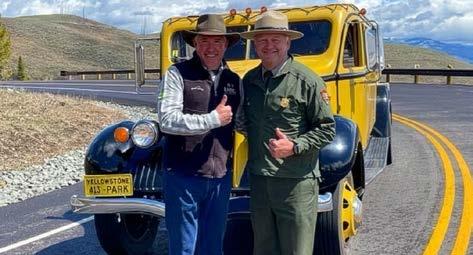
Brian Yablonski and Yellowstone National Park Superintendent Cam Sholly at a 2022 ribbon cutting for the newly renovated Grand Loop Road. PHOTO BY LINDSAY COE
SPORTS
MONTANA STATE WINS FIRST NATIONAL TITLE SINCE ‘84 UNRANKED REDBIRDS
PLAY WITH FEROCITY, RELENTLESSNESS AND FORTITUDE
BY COLTER NUANEZ SKYLINE SPORTS
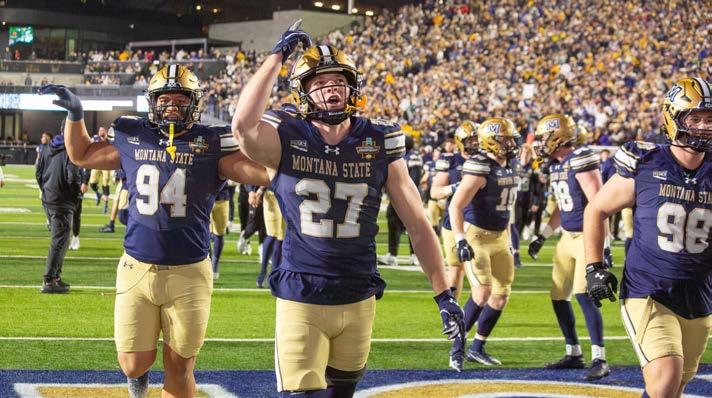
NASHVILLE—A championship game victory 41 years in the making came down to the two young men who have risen to the occasion over and over again throughout a tumultuous-turned-triumphant season for the Montana State Bobcats.
With a sea of blue and gold filling up most of FirstBank Stadium here on Monday night, MSU looked like the team to beat for most of the first three quarters of action. Then, in the blink of an eye, Illinois State pushed Montana State’s season, and title aspirations, to the brink.
Dane Steel capped a spectacular last-minute drive to put MSU up 21-7 before halftime with a play that will live in Bobcat lore forever. Steel’s 33-yard touchdown catch included a hurdle, a spin, a dive and a No. 1 ranking on SportsCenter’s Top 10.
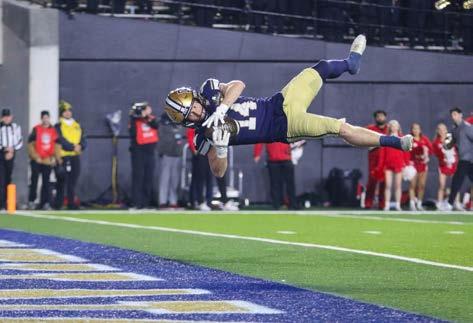
Taco Dowler thrust Montana State to a 28-14 lead late in the third quarter with a winding, juking 22yard touchdown run that was SportsCenteresque, too.
As the fourth quarter began to unfold, it all started to unravel for Montana State. The horrors of when MSU blew a fourth quarter lead to lose in overtime to North Dakota State in the 2023 playoffs might’ve started to ring in the heads of the thousands and thousands of Bobcat fans who made the cross-country trip to Nashville. Certainly, memories of last season’s 35-32 loss to NDSU in Frisco, Texas that spoiled an undefeated season came to mind. And certainly, so did MSU’s doubleovertime loss to South Dakota State in the second week of this season.
Illinois State scored 20 unanswered points and rallied all the way back to push Montana State to the brink of another heartbreak. And when Redbird kicker Michael Cosentino lined up for a 38-yard field goal with 83 seconds left, it looked like MSU might’ve let another national championship game slip away.
Instead, Jhase McMillan blocked the game-winning field goal attempt to help MSU stay alive. After a manic final minute that included a bad snap and a missed opportunity for the ‘Cats, the game went to overtime.
Again, ISU pushed Montana State to the brink. Freshman wide receiver Dylan Lord had a breakout evening as MSU focused intently on limiting Illinois State All-American Daniel Sobkowicz, and Lord made the biggest play of his career when he snared his 13th catch for his second touchdown to give ISU its first lead of the game.
But the Redbirds led by six instead of seven points because MSU senior Hunter Parsons blocked Costentino’s extra point attempt.
After Montana State committed its eighth false start on a night when MSU committed 14 penalties, the Bobcats faced a fourth down, trailing in overtime with their season to go. And of course, Taco Dowler and stud quarterback Justin Lamson were the kings of clutch once again.
On fourth and 11, from the MSU 14-yard line, Lamson threw through contact, lofting a perfectly placed ball that Dowler settled underneath for the latest in their iconic string of connections. That touchdown tied the game 34-34, thanks to the extra point blocked by Parsons.
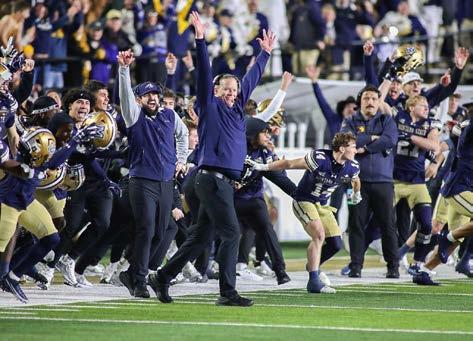
Myles Sansted, Montana State’s kicker who happens to be head coach Brent Vigen’s nephew, hit the PAT and the stadium, which featured a crowd of 24,101—the largest to see an FCS title game live since 1996—lost its collective minds.
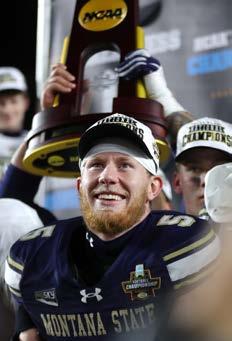
For the first time since 1984, the Bobcats are national champions.
“We are standing on the shoulders of giants and we would not be where we are at without the alumni, the donors, the players who came before us,” Dowler said after the game. “It means the world to see a family and a culture that was built so long ago and there’s so much love for— that’s what this means so much for. This is for the alumni, the people that came before us. I couldn’t be happier to bring this championship to them along with my brothers here.”
The decades-long road to riches
Montana State has been knocking on the door of the nation’s best—first quietly then loudly, but never definitively over the last four decades. The 1984 championship marked the third title for the Big Sky Conference since Division I-AA was created in 1978. That 12-2 title season was also sandwiched between two abysmal seasons. MSU went 1-10 in Dave Arnold’s first season in 1983, won the national title in 1984, went 2-9 in 1985 and after a 3-8 record in 1986, Arnold was dismissed.
MSU did not make the playoffs between 1987 and 2002. Those shortcomings were associated by losses to archrival Montana year in and year out. “The Streak” became the most omnipresent sports narrative in the state of Montana.
But since MSU won in Missoula 10-7 in 2002, the Bobcats have been ascending toward the moment that played out on Monday night. It was never
Titan Fleischmann celebrates a historic, instant-classic win in the 2025 FCS national championship. PHOTO BY BROOKS NUANEZ / SKYLINE SPORTS
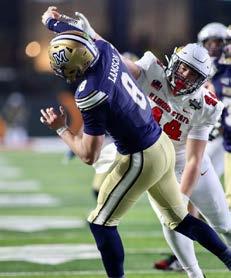
Quarterback Justin Lamson heaves up a pass during the national championship game. PHOTO BY BLAKE HEMPSTEAD / SKYLINE SPORTS
rapid but always incremental. MSU beat the Griz in 2002, 2003 and 2005 to share the league title with a rival that won 12 in a row.
In the early 2010s, Rob Ash had a heck of a time beating the Griz but he kept helping MSU win league crowns, three-peating from 2010-2012. And even when it fell apart for Montana State’s all-time leader in wins, the Bobcats kept building.
Jeff Choate won four times in a row over Montana, helping solidify the Bobcats as the Treasure State’s best football program of the last decade. And when Choate bolted, Brent Vigen took over, helping raise the expectations from in-state and in-conference to a national championship standard.
But the previous four seasons, while wildly successful, ended in heartbreak for MSU. The Bobcats took a 29-10 whipping in Missoula at the hands of the Griz and turned it into a run to the national title game in 2021, winning the first road playoff game in school history by toppling No. 1 Sam Houston State in the quarterfinals on the way to appearing in the title game for the first time in 37 years. That came to an abrupt end with a 38-10 loss to North Dakota State.
“WE ARE STANDING ON THE SHOULDERS OF GIANTS AND WE WOULD NOT BE WHERE WE ARE AT WITHOUT THE ALUMNI, THE DONORS, THE PLAYERS WHO CAME BEFORE US.”
- TACO DOWLER, MSU WIDEOUT
Two years later in a second-round playoff game in Bozeman, NDSU blocked an extra point in overtime to win 35-34—the same final score of Monday’s slugfest.
Last season, Montana State fell to NDSU because of a slow start and a myriad of off-the-field drama.
So when NDSU lost in the second round this season for the first ever, it seemed like MSU had a golden opportunity to fulfill the destiny athletic director Leon Costello hoped he could achieve when he hired Vigen, a former NDSU player who had been on the coaching staff at his alma mater when they won their first three—in a string of 10— FCS national titles.
Trouble was, the team that ousted NDSU in Fargo, North Dakota was the team that awaited MSU in Nashville. And that Illinois State team played with ferocity, relentlessness and fortitude. With MSU focusing heavily on Sobkowicz, Lord went nuts. Senior running back Vic Dawson has been a revelation down the stretch, rushing for almost 1,000 yards since Nov. 1 alone, including 126 yards on 29 physical carries Monday. And the Redbirds controlled the ball, running 85 plays to MSU’s 51 and possessing the ball for nearly 40 minutes of game time.
Montana State blew a two-score lead in the second half. The Bobcats committed an uncharacteristic number of penalties. MSU let the underdog Redbirds take their first lead in overtime. And the ‘Cats nearly suffered yet another heartbreak
in front of a passionate, partisan fan base that has experienced so many over the years.
Instead, though, the meltdown did not come to fruition. Instead, Lamson and Dowler saved the day.
Again.
The same duo who converted a game-changing and unforgettable third and 20 against Montana in the semifinals to spark a 48-23 win, made magic again in the Music City.
“I think you always dream of winning a national championship and I really do think that’s become the standard at Montana State,” said Lamson, the title game’s Most Outstanding Player. “I know we lost a lot of guys coming out of last season and that’s all I heard coming into the season. But coming in, I already knew we had dudes, guys not a lot of people were talking about.
“I thought about this moment but to be here is a little bit different. You think it’s going to happen. But now that it’s really happened, it’s a dream come true. I’m just trying to take it all in.”
Colter Nuanez has covered the Big Sky Conference for 19 seasons and has directly covered Montana State since 2011. His work can be found at skylinesportsmt.com and he can be reached at Colter.Nuanez@gmail.com.
PHOTO BY BLAKE HEMPSTEAD / SKYLINE SPORTS
Taco Dowler dives into the end zone after dodging tackles for a 22-yard score. PHOTO BY JASON BACAJ / SKYLINE SPORTS
Defensive star Caden Dowler battled injuries in the team's final two playoff games. PHOTO BY BROOKS NUANEZ / SKYLINE SPORTS
3
9,498±
Listed
3
8,167±
Listed
CREEK LODGES
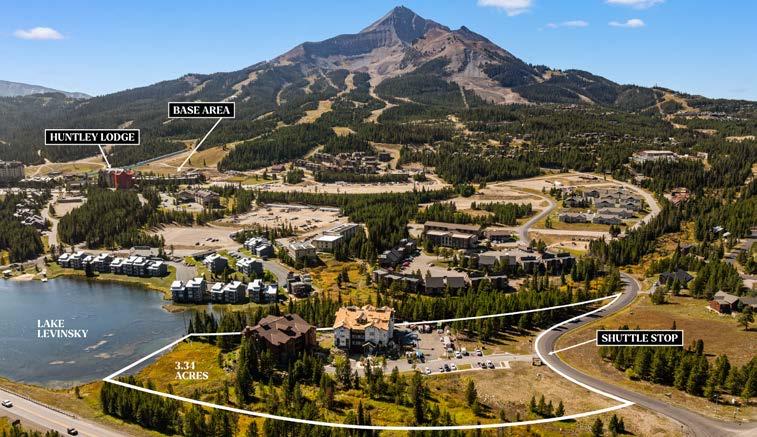
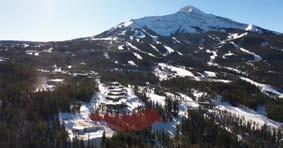
Mountain Village Development Opportunity
Developable Land: 3.34± Acres
Zoning: RMF-2 | 57.5 SFEs
Listed with Eric Ladd
AT $5,500,000
3
| 2 Bath | 2,171
Listed with Eric Ladd
‘NASHVILLE TAKEOVER’ DISPLAYS MONTANA PRIDE SPORTS
BY JACK REANEY
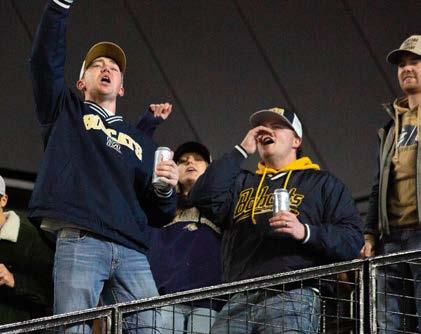
NASHVILLE—Ask any Uber driver, bartender or hotel bellhop, and they’ll tell you the entire state of Montana flew into Nashville, Tennessee for the national championship game.
Many of those Montana State football fans made a similar trip to Frisco, Texas, last year, only to suffer a heartbreaking loss to North Dakota State. Despite the Bobcats losing stars like Walter-Payton-awardwinning quarterback Tommy Mellott, the focus shifted to 2026. When Nashville was named as the site, the Bobcat faithful responded, “Let’s party.”
And party they did. Broadway bars overflowed with blue and gold the whole weekend, especially the nights before and immediately after the game.
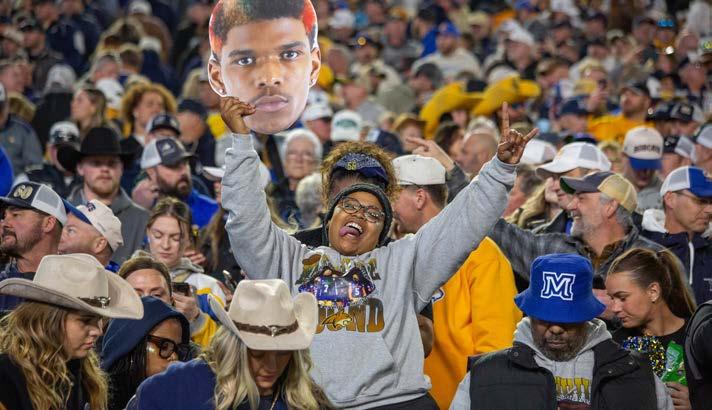
Flint Rasmussen summed up the Treasure State camaraderie during his remarks at the Bobcat Bash in Nash, a pregame rally at Music City Center that gathered 7,000 alumni, families, students and fans on Sunday, Jan. 4.
“Montana is one big small town with a really long main street. And we all live on Main Street,” said Rasmussen, a famed rodeo entertainer and selfproclaimed Montana ambassador. He described the small-world feeling of Montana life, exemplified in home-away-from-home settings like Nashville this weekend.
I tagged along with Rasmussen to collaborate on a video in the hours before kickoff, and he proved it. With every group of Bobcat fans passing by, Rasmussen said hello, shook hands, greeted them by name—or, for unfamiliar faces, discovered mutual friends and common backgrounds in the state—and displayed humility in spite of his Western fame.
He couldn’t chat with every Bobcat fan, though.
The game’s attendance totaled 24,105, the most fans for an FCS title game since 1996. Explore Big Sky’s official estimate for Montana State fans
is 17,000, enough to fill more than two-thirds of Vanderbilt’s FirstBank Stadium—and the bars, the hotels and Music City streets.
That’s why head coach Brent Vigen called it a “Nashville takeover” in his remarks at the Bash event.
But let’s give credit to Illinois State: As an unranked team facing North Dakota State in the first round, it’s hard to imagine Redbird Nation had Jan. 5 circled on their calendars like the Bobcat fans did after their three-point defeat in Frisco.
I spoke with many Redbirds fans in Lower Broadway the night before the game, while filming a score-prediction video. Many admitted their doubts against a powerhouse Montana State program. Some offered an optimistic score prediction, but off-the-record, added a skeptical wink and nudge.
And yet many held the faith, ferocity and confidence displayed so dramatically by quarterback Tommy Rittenhouse, star receiver Daniel Sobkowicz, championship-breakout receiver Dylan Lord, and the rest of the inspired Redbirds.
The power of a moment
As Illinois State closed a 14-point deficit and suffocated the Bobcat offense in the fourth quarter, I noticed two things.
First, every Bobcat-focused media worker beside me on the sideline—mostly photographers— seemed overwhelmed by shock and dread. While folks like me are supposed to be objective in our reporting, there’s no doubt a Bobcat win rubs off on us, with success typically lending to an enjoyable writing experience. So as the Bobcats appeared to fumble their victory, a quiet panic spread. Personally, my heart raced and my skin crawled as I felt the Redbirds’ gravity weigh upon a stadium full of Montanans.
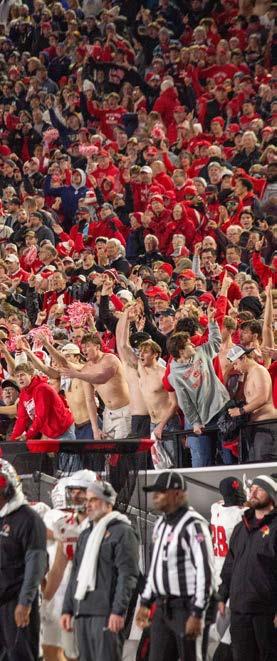
Second, anyone wearing red could not contain their excitement. Redbird sports photographers seemed to come out of the woodworks, filling in the gaps behind the end zone, capturing everything and perhaps planning their route to rush onto the turf when their team finished the impossible job. Illinois State’s percussion section seemed to double their force as they pounded a thunderous rhythm in support of the Redbird defense. Fans hugged, and I overheard red-clad personnel near the ISU sideline saying things like “We’re really gonna do it,” and “I can’t believe this is happening” as the Redbird offense marched downfield toward tie-breaking points with under two minutes to play.
But one blocked field goal, another blocked extra point and an overtime, do-or-die fourth down conversion changed everything.
Heartbreak struck the Land of Lincoln. And in the Treasure State, despair evaporated into joyous disbelief.
Putting aside the outcome of the game—columnist Colter Nuanez has you covered for that—I’ll share one final observation.
Everyone was captivated: red and white; blue and gold; black-and-white striped; or neutral gray. In a world controlled by screens, it’s a powerful and aweinspiring privilege to experience a thrilling moment with 24,000 others, all of whom are fully present.
That’s what makes a trip to Nashville worthwhile.
How many variations of “What a game” will be uttered in the 24 hours after the likes of Vigen, Lamson, Lencioni, Fleischmann, Sansted and the Dowlers hoisted the NCAA trophy? How many celebratory phone calls? How many airplane seats filled with proud Bobcat fans?
This collective spirit is not found often, but it can be found in Montana, in Bobcat Stadium and surely wherever else the Bobcats play.
Bobcat players salute their fans as they enter the locker room leading 21-7 at halftime.
PHOTO BY JACK REANEY
More than 7,000 fans filled a downtown Nashville convention center. PHOTO BY JACK REANEY
PHOTO BY JACK REANEY
Redbirds fans were elated as Dylan Lord scored an overtime touchdown. PHOTO BY JACK REANEY
PHOTO BY JACK REANEY
NHL PROGRAM TO HOST YOUTH HOCKEY CLINICS IN BIG SKY
VEGAS GOLDEN KNIGHTS HOST AUTOGRAPHS, PHOTOS WITH DERYK ENGELLAND, AND MASCOT ON JAN. 4
BY JEN CLANCEY
BIG SKY—Youth hockey players have the opportunity to learn to play, or sharpen their skills in the game at the Marty Pavelich Ice Rink in Big Sky as part of an NHL clinic. The Vegas Golden Knights team, on their ninth season in the National Hockey League, began leading a five-week clinic for kids aged 4-11 on Jan. 4, and also held a oneday free clinic for kids aged 9-13 to kick off the program. The five-week paid clinic will run on Sundays from Jan. 4 to Feb. 1.
For the clinic, players need prior skating experience. Those who registered for the paid clinic for ages 4-11 received a full set of complimentary hockey equipment shipped to them ahead of the first session.
Steven Reid, recreation manager for Big Sky Community Organization, the nonprofit that operates and maintains the ice rink, estimates that between 20 and 25 kids are registered for both the five-week session and the free clinic.
Families pay $275 for the five-week session with new hockey gear included, which is subsidized by
the NHL to keep costs low for participants.
“You know, anyone who’s been around the sport of hockey knows that hockey gear is not cheap,” Reid said. “And to get that much brand new hockey gear out to these kids, that’s huge and hopefully will get them interested in playing the sport.”
Reid is glad to see families signed up for the fiveweek session.
“The fact that we have 20 to 25 kids signed up for that alone means that’s a potential 20 new hockey players in our community right there and the hope is that they feed into the local youth hockey program and continue to grow there with those coaches,” Reid said.
The local youth hockey program is organized by the Montana 64’s Hockey Association, which recently formed as a nonprofit.
Sheri Hudspeth, director of youth programs and fan development with the Vegas Golden Knights, reached out to BSCO with the hopes of scheduling the youth clinic in Big Sky to engage younger kids in the sport and reach further audiences for
the Golden Knights. From there, BSCO and the Golden Knights sorted out use of facilities and local involvement.
Outside of youth learning, the clinic will also train coaches on how to teach hockey, with local community members Cassie Dietz, Keelan Grupe, Brandon Maki and Jack Murray participating in coaching the clinics, learning practice plans and leading kids throughout the five-week session.
BSCO hopes this clinic can become an annual tradition with the Golden Knights.
“My hope is to not only bring new kids into the sport of hockey, but get some adults interested in coaching and being good role models in that sport for the kids,” Reid said.
On Jan. 4, Deryk Engelland, a former ice hockey defenseman for the Golden Knights was at the rink to meet fans and give autographs. Chance, the team’s mascot will also be there as well as Hudspeth, who has more than 30 years in playing and coaching hockey. Reid said Sunday’s events were a fun atmosphere for families and participants.
E P 518
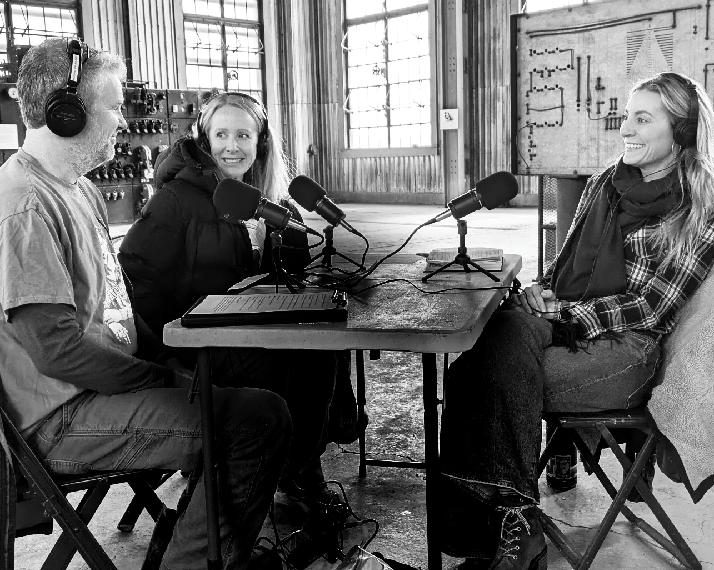
PERC: Gr eed is Good f or the Ear th
Meet t he Proper t y a nd
Env ironment Resea rch
ma k i ng nat iona l head li nes w it h its u nique approach to env ironmenta l advocac y
Framing Jane Goodall
Ja ne Gooda l l made a na me for hersel f hu ma nizi ng chi mpa nzees, a nd legenda r y w i ld life photog rapher
us ra re i nsig ht i nto who she was as a person.
The New Bobcatin - Chief
resea rch a nd at h let ics, Dr. Brock Tessma n is poised to lead a rapid ly g row i ng Monta na State Universit y i nto u ncha r ted territor y E P 5 2 8
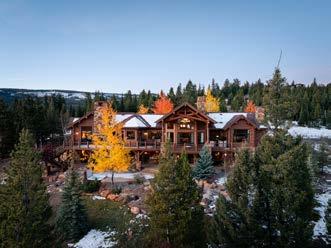
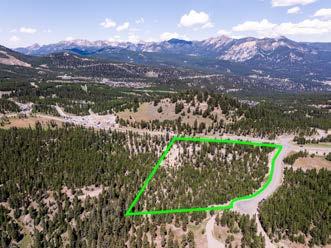
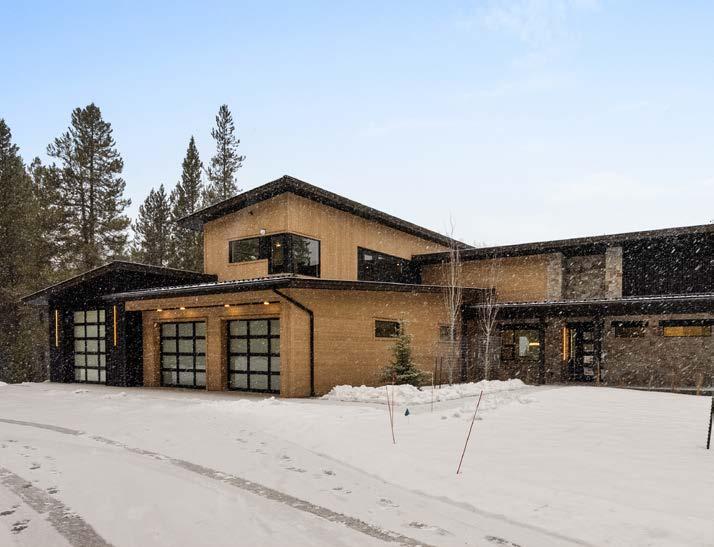
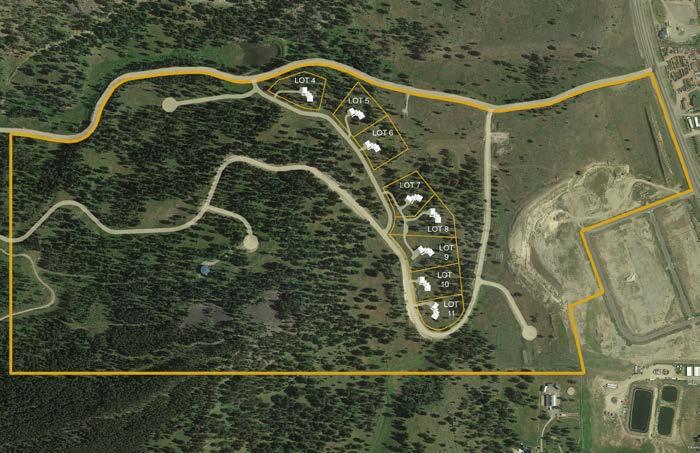
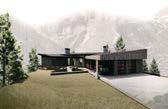
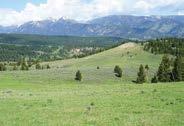
Nestled in the heart of Big Sky, Montana, Gallatin Foothills Phase 2 offers a rare opportunity to own a homesite that combines natural beauty, outdoor adventure, and convenient access to local amenities. With spacious lots ranging from 1 to ± 2 acres and over ± 75 acres of open space, this neighborhood is designed to provide privacy, stunning mountain views, and a connection to the outdoors.
Residents will enjoy a professionally built trail system by Terraflow, sledding hills, open space for XC skiing, and access to public lands for activities like snowmobiling, ATV riding, and hiking. The Gallatin River is just 5 minutes away, while Big Sky Town Center and Big Sky Resort are a 10 and 15-minute drive, respectively, creating the ultimate home base for your year-round recreation.
Terraflow
WINTER PRIDE WEEK RETURNS FOR SECOND YEAR
BY CARLI JOHNSON
BIG SKY—For the second winter in a row, local nonprofit Big Sky OUT will bring color and celebration to the community with Winter Pride Week, returning Jan. 5 to 11. The weeklong event will feature a full slate of free and low-cost programming across Big Sky, including DJ dance parties, a drag brunch, a ski parade and educational opportunities. All events are open to anyone interested in participating, whether they identify as LGBTQ+ or as allies.
“Last year was about proving the concept. Can Winter Pride work in rural Montana?” Taylor McCaslin, a Big Sky OUT board member said in an interview with EBS. With around 150 participants attending events last year, McCaslin said the answer was a resounding yes. “This year is really about establishing ourselves as an annual tradition.”
Building on that momentum, organizers expect roughly 200 participants this year and have expanded the schedule to include new offerings alongside returning favorites. One new addition is the No Man’s Land Film Festival, showcasing awardwinning films on underrepresented voices in outdoor spaces. Fan favorites like the ski parade down Mr.
K will also return this year and the week earned its recognition as an official Big Sky Resort event.
Beyond the celebrations, Winter Pride Week is rooted in Big Sky OUT’s broader mission of fostering inclusion and belonging.
“We’re not just hosting parties,” McCaslin said.
“We’re training local businesses on LGBTQ+ inclusion, creating safe and family-inclusive spaces and showing that rural Montana can be a welcoming and vibrant community for everybody."
For McCaslin, the goal is simple but meaningful: making outdoor recreation feel accessible to all. “We want queer people to feel welcome and included in all of these outdoor experiences,” he said. “A lot of times it’s just about creating a space where people feel welcome to show up as their authentic selves and experience what Big Sky has to offer.”
That sense of belonging is especially important in a resort town where seasonal workers come and go. Big Sky OUT aims to be a year-round resource, hosting monthly events and providing consistent opportunities for connection across seasons.
Looking ahead, organizers hope Winter Pride Week will continue to grow. Inspired by established winter pride events in mountain towns like Aspen, Telluride and Whistler, McCaslin envisions Big Sky becoming a destination for LGBTQ+ visibility in mountain culture.
The detailed schedule of events can be found online.
NEW PROGRAM PROVIDES PEER SUPPORT TO BIG SKY MOTHERS
WIA, ROOTS FAMILY COLLABORATIVE LAUNCH BLOSSOM MOM BIG SKY
BIG SKY—Beginning in January 2026, new and expecting mothers can take advantage of a helpful resource in Big Sky. Blossom Mom Big Sky will offer weekly peer support sessions every Tuesday at 11 a.m. at Wellness In Action.
The group is organized by Bozeman-based Roots Family Collaborative, hosted in partnership with WIA and made possible by a grant from the Moonlight Community Foundation. Sessions will be facilitated by licensed counselor Julie Grimm, a trained volunteer facilitator with Roots and mother with lived experience, in a confidential, supportive and comfortable space, according to a press release from Roots Family Collaborative.
Sessions aim to foster connection and strengthen each mother’s sense of belonging and resilience. The program is designed to address a longstanding nationwide gap in maternal support by providing a consistent, compassionate space for mothers to connect, share experiences, and build the social and emotional networks essential during this transformational and often challenging time, the release explained.
Common discussion topics include sleep deprivation, feeling overwhelmed, partner relationships, work-life balance, community resources, feeding challenges, shifts in identity and how to reach out for help.
“I am so excited to have a part in bringing traumainformed support to the Big Sky parenting community and am eager to meet women in Big Sky who are in the perinatal period of their lives and to provide an open and inclusive space for those seeking a bit of care and acknowledgement during this transitional time,” Grimm stated in the release.
Mackenzie Johnson, Roots’ program and partnerships director, started her family in Big Sky and experienced the importance of community and the challenges posed by Big Sky’s seasonal, rural character. The Big Sky program builds off Roots’ success in Park County, where a Blossom Mom group began meeting in 2022.
“Roots is committed to creating spaces where families feel seen, supported, and connected. We’re grateful for our partners who are passionate about bringing this program to Big Sky,” Johnson stated in the release.
Big Sky programs will start with weekly Blossom Mom meetings. In Bozeman, Roots offers a variety of programs including feeding groups, monthly dads groups, pregnancy and infant loss, fertility support and other programs including seasonal Fresh Air Families hiking groups. Johnson hopes to bring more programs to Big Sky.
The Blossom Mom model is “grounded in peer connection and shared experience,” led by trained peer facilitators like Grimm who have personally navigated the perinatal journey and can offer empathy, understanding and a non-judgmental space for meaningful conversation, according to the release.
Kiernan Volden, director of programs for WIA, believes the partnership reflects WIA’s commitment to meeting community members where they are, with resources they need most.
“Through this partnership, we can ensure that families have access to the care, resources, and connection they need to thrive,” Volden stated.
Interested community members are encouraged to reach out to Johnson at mackenzie@ rootsfamilycollaborative.com.
EBS STAFF
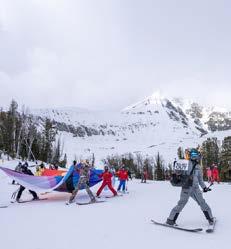
2025 Big Sky Winter Pride Parade participants ski down Mr. K. PHOTO COURTESY OF BIG SKY OUT
WHAT WESTERN WRITERS CARED ABOUT DURING A TUMULTUOUS YEAR ENVIRONMENT
BY BETSY MARSTON WRITERS ON THE RANGE
Once the Trump administration took over the reins of government last year, attacks on public land came fast and furious. Elon Musk’s cost-cutters stormed into federal agencies to root out purported waste and corruption, but what Writers on the Range opinion writers found afterward was chaotic mismanagement.
Writer Stephen Trimble called it a “Valentine’s Day Massacre” after 2,300 employees of the Department of the Interior were summarily fired, leaving the National Park Service, Bureau of Land Management, Geological Survey and several other agencies short-staffed. Eventually, the Forest Service lost nearly one-quarter of its workers.
Many rural communities reacted with shock as unemployed workers faced the sudden loss of income and benefits. Visitors were unhappy about the loss of skilled rangers and inadequate maintenance of trails and bathrooms.
As former firefighter Riva Duncan put it, the mass firings cut the muscle of the workforce, not the fat. “Cost-cutters have no idea how government works or who does what,” she said. Probationary workers, for example, were not on probation for poor performance; rather, they were simply new to their job, which might have even been a promotion.
Duncan said one fired staffer told her she was outraged by the wording of her termination, as every performance rating she’d received as a ranger on Oregon’s Deschutes National Forest was
“excellent.” This was her cursory dismissal: “The agency finds, based on your performance, that you have not demonstrated your further employment would be in the public interest.” She had been making $19.10 an hour.
Stephen Trimble uncovered a threat to national parks in Utah as the administration solicited bids for coal leasing on 48,000 of BLM land, much of it on and near the boundaries of national parks such as Capitol Reef, Zion and Bryce Canyon. This made little sense, he wrote, because mining would harm the vistas of these magnificent places that attract millions of people every year. The move was part of the administration’s intent to pursue “energy dominance” on public land.
Interior Secretary Doug Burgum’s directive to all national parks to restore “truth and sanity” to the nation’s history drew scorn from writer Ernie Atencio. He noted that history wasn’t meant to accentuate the positive, it was to describe what happened no matter how dark. The signs that went up at public lands urged visitors to report unpatriotic materials that “fail to emphasize the country’s grandeur.” By all accounts, most people responding called the directive dangerous and ridiculous.
It was the push to sell off public lands to the highest bidder that most alarmed the public. Utah Republican Senator Mike Lee introduced that notion several times, but hunters, hikers and environmental nonprofits pushed back hard, and his plans were defeated. Then there was Trump’s nominee to head the BLM, former New Mexico Republican congressman Steve Pearce. According to Aaron Weiss of the Center for Western Priorities, Pearce was a terrible choice because he had co-sponsored several bills to “dispose” of vast public lands he called useless.
Tracy Stone-Manning of the Wilderness Society eloquently explained why public lands were so valuable to all Americans. She called them “one of the country’s great equalizers,” and said that selling off public land ought to be unthinkable.
Other opinions included Laura Paskus documenting the climate change affecting New Mexico and Arizona. Recurrent drought dried up rivers, causing hotter heat waves and consistently warmer summers.
Pepper Trail denounced the Colossal Biosciences corporation for its boast that it had used gene editing to create three dire wolves, a species that went extinct some 10,000 years ago. Trail wrote that “the most basic goal of conservation is not to preserve individual animals; it is to help populations sustain themselves in their native habitats.” Trail called the company’s claims a “delusional fantasy.”
Marjorie “Slim” Woodruff listed some of the many ways hikers screw up in the Grand Canyon, leaving plenty of traces behind. One found object was unusual, though—a vial of someone’s ashes. “I reported finding the urn to park rangers,” she wrote, “and for the next month was identified as ‘the lady who found the body.’”
A final word for Thanksgiving came from ecologist Pepper Trail, who wrote about nature’s cycle of gift exchange. “The world we inhabit is a web of reciprocity far beyond our ability to comprehend, much less control,” he said. “To be alive seems a miracle.”
Betsy Marston is the editor of Writers on the Range, subscribe at writersontherange.org, an independent nonprofit dedicated to spurring lively conversation about the West. She lives in rural western Colorado.
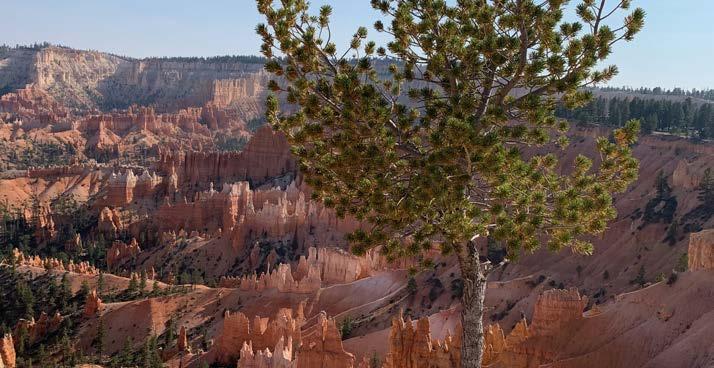
Walking tree, Bryce Canyon National Park. PHOTO BY DAVE CRAFT
DISPATCHES FROM THE WILD: BANGTAIL GRIZZLY REPRESENTS THE SPECIES’ TERRITORY EXPANSION ENVIRONMENT
BY BENJAMIN ALVA POLLEY EBS COLUMNIST
This December, Montana Fish, Wildlife and Parks confirmed a grizzly bear in the Bangtail Mountains east of Bozeman—the first documented grizzly there in decades. To reach this isolated range, the bear likely had to cross over or underneath I-90, a busy four-lane interstate where the few grizzlies that attempt to cross are often struck and killed by vehicles traveling near 80 mph.
FWP specialists verified the sighting after a remote trail camera captured images of a single subadult bear on national forest land. It is the first formal documentation of a grizzly in the Bangtails since modern recovery efforts began in 1975, when the species was listed as threatened under the Endangered Species Act. A comprehensive Grizzly Bear Recovery Plan was implemented on Jan.29, 1982, and the Interagency Grizzly Bear Committee was formed in 1983 to coordinate conservation efforts. The Bangtail observation fits a broader pattern: similarly sized grizzlies were reported along the Yellowstone River in Livingston in fall 2025 and in the Shields Valley in 2023, suggesting a quiet but steady expansion.
Across the Northern Continental Divide Ecosystem and the Greater Yellowstone Ecosystem, grizzly populations are growing and pushing beyond their traditional strongholds. From these two main meta-populations, bears are moving in all directions, testing the edges of their range and venturing into landscapes that haven’t seen grizzlies in generations. Although the NCDE and GYE populations have not yet fully connected, biologists believe it is only a matter of time. In the coming years, more exploratory bears are expected to cross significant barriers such as I-90, bringing the two populations closer together and increasing the chance of genetic exchange.
Wildlife bridges, underpasses and culverts could help make these crossings safer and more frequent. While costly to build, they save human lives and allow grizzlies and other species to reconnect fragmented habitats—a true win-win.
A grizzly’s life history helps explain this expansion. Female bears invest heavily in their young, often staying with cubs for up to three years. When offspring—especially young males—disperse, they strike out to find unclaimed territory, following food, scent trails of potential mates, and the promise of secure habitat. As core habitats fill with resident adults, these younger bears are pushed into the margins, probing new valleys, foothills and mountain ranges.
Meanwhile, traditional high-elevation foods are changing. Whitebark pine, whose fat-rich nuts once anchored many grizzlies’ fall diets, is declining due to disease, insect outbreaks, climate change, and development in the wildland urban interface. As these trees disappear, bears must adapt, roaming farther in search of roots, berries, carcasses, agricultural crops, and even attractants like livestock, garbage and bird feeders around human communities. This search often brings them into conflict with people, livestock and fast-moving traffic on highways like I-90.
The Bangtail bear is more than a single dot on a map. It symbolizes a larger story of recovery, resilience and risk. Grizzlies are reclaiming parts of their historic range, but they are doing so in a modern landscape fragmented by roads, subdivisions, ranches and recreation.
Whether these pioneering bears can safely navigate that maze—with our help—will help determine the future of grizzlies in the Northern Rockies.
Benjamin Alva Polley is a place-based storyteller. His words have been published in Rolling Stone, Esquire, Field & Stream, The Guardian, Men’s Journal, Outside, Popular Science, Sierra, and WWF, among other notable publications, which can be viewed on his website.
3
A&E
A LA CARTE: I LOVE MISO
BY RACHEL HERGETT EBS COLUMNIST
I have another dad joke for you, one that hits home for me in many ways. First, it appeals to the young me who loved singing songs in Sunday school at church. It also speaks to my Japanese roots and obvious affection for food.
Why did Jesus go to the Japanese restaurant? Because he loves miso.
For those who are not familiar, the Christian hymn “Jesus Loves Me” begins, “Jesus loves me, this I know, for the Bible tells me so.”
I think what I most love about the joke, though, is that it is about miso—a Japanese soup that probably runs through my veins.
My Grandma Keiko made miso soup for breakfast almost every day. Miso is generally a breakfast food in Japan. Here, we usually have it in sushi restaurants for lunch or dinner. I could eat it for all meals, and when I’m sick, I often do. It is packed with nutrients and antioxidants.
The soup is made with a stock known as a dashi and miso, fermented soybean paste. Dashi creates a base savory umami flavor, and is usually made with kelp, dried fish or mushrooms, or some combination of the three. The flavor has obvious
variation through both the dashi and choice of miso paste. The miso most of us know from Japanese restaurants is usually made with a white, or shiro, miso. The paste is also salty and savory, but follows that with a mild sweetness. The darker the miso, the saltier and earthier it is.
I would love to be able to experiment with the flavors, to work my way through the yellow, red and dark miso variations. The necessary plethora of Japanese ingredients is simply not available locally. And when I travel, I tend to go for quantity, stocking up on larger tubs of a basic shiro miso paste. Each one is two pounds of miso from the brand Yamajirushi.
Miso is a staple in my house. It is what I make when there is “nothing to eat” in the fridge— meaning everything feels like too much effort to prepare. Everything goes in one pot and “everything” is really minimal things.
Lately, I’ve been making a dashi with water and bonito flakes, which are thin slices of skipjack tuna that is dried, fermented and smoked. I let that heat a bit then add miso paste. Start with about a tablespoon of paste for each cup and a half of water if you don’t know how strong your paste is. You can always add more. Like grandma, I eyeball it. You can always add more water too. And that’s it. That is your basic miso.
You could top it with green onions and enjoy it at its purest, but why stop there? I always add chunks of tofu for the protein. If you do, make sure to give the tofu little time to simmer in the
soup and really take on the flavor. I also enjoy wakame, a type of dried seaweed that is rehydrated and added. Shiitake mushrooms are always an option. However, my favorite topping—one that is also hard to access here—is something called fu. These are little balls of wheat gluten which absorb moisture and become soft or spongy, depending on the specific type. I haven’t met one I don’t like.
For me, miso soup is comfort and home. It takes me back to mornings in grandma’s kitchen where I learned to make it by watching her every move and peppering her with questions, and to later years when she was too forgetful to be trusted near a stove and I would cook Japanese food for her. I think she loved my cooking as much as I did hers, but she was never one to hold back if the dish wasn’t perfect or true to her fading memories. My miso though, made by taste honed over decades of tasting hers, was always up to spec.
Let’s just say I also love miso.
Rachel Hergett is a foodie and cook from Montana. She is arts editor emeritus at the Bozeman Daily Chronicle and has written for publications such as Food Network Magazine and Montana Quarterly. Rachel is also the host of the Magic Monday Show on KGLT-FM and teaches at Montana State University.
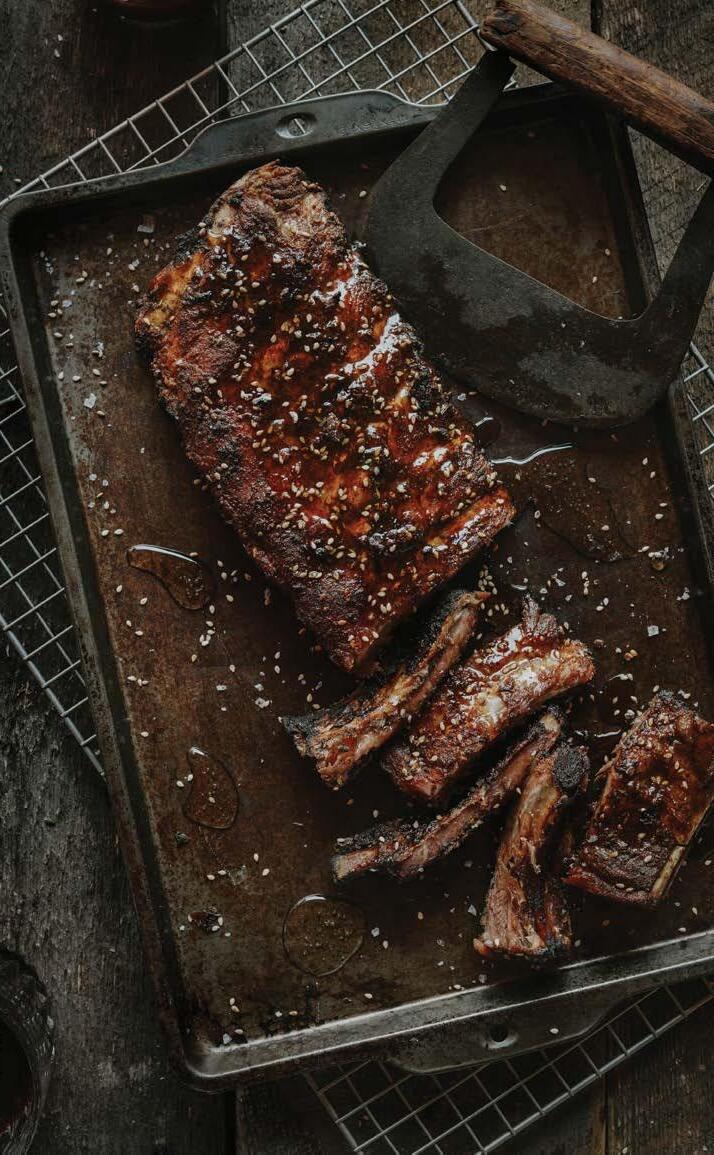
PHOTO BY RACHEL HERGETT
GUARDIANS OF YELLOWSTONE: THE YELLOWSTONE COUGAR PROJECT
Thursday, Jan. 15
The Waypoint, 6 p.m.
On Thursday, Jan. 15 at 6 p.m., The Waypoint will show the film, “Guardians of Yellowstone: The Yellowstone Cougar Project.” The film reveals the hidden world of Yellowstone National park’s cougars, and a research project to study them for the past 35 years. Afterward, a panel of filmmakers, the cougar team and Yellowstone’s senior wildlife biologist will discuss questions from the audience.
5
ADOBE STOCK PHOTO
Ridgeview Loop, Big Sky
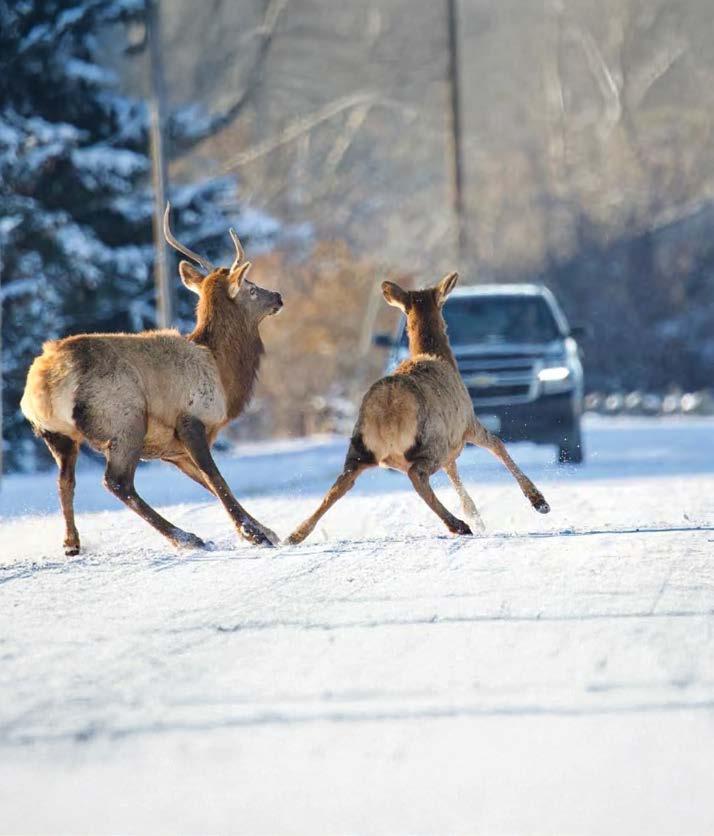
IT’S TIME TO PROTECT THE ELK AND DEER HERDS OF GALLATIN GATEWAY AND BIG SKY
3,562
Deer and Elk were killed by vehicles in Gallatin County since 2008.
PRIORITIZE WILDLIFE CROSSING SOLUTIONS. SUPPORT AND DONATE TODAY.
OPINION THE POWERS THAT BE: A CONVERSATION ABOUT MADISON COUNTY’S FUTURE
BY DUSTIN TETRAULT GUEST COLUMNIST
Every ten years, Montana voters are given a unique opportunity to step back and evaluate whether their local government is structured in the best way to serve their communities today and into the future. Madison County voters approved that review in 2024, and the Madison County Local Government Study Commission has spent the past year studying how our county government is organized, where it works well, and where it may benefit from modernization.
One option the study commission has been exploring is whether Madison County should consider adopting self-government powers through a locally drafted county charter.
While charter governments are fairly common among Montana municipalities—Ennis and Virginia City, to name a couple—they are exceedingly rare at the county level. Yet the flexibility and responsiveness provided by a charter may be especially valuable in a county as large, diverse and rapidly changing as ours.
Let’s take a look at the difference between general powers and self-government powers.
Under Montana’s Constitution, counties such as Madison County operating under general powers may only perform actions that the Montana Legislature has specifically authorized. This is the traditional structure used by the vast majority of counties. It is predictable and well-established,
but also inherently limited: if state law does not explicitly allow a county to adopt a certain structure or take a certain action, the county simply cannot do so, no matter how sensible or desired locally it is.
In contrast, a county with self-government powers may take any action not prohibited by state law. This flips the model from restrictive to permissive. Instead of waiting for Helena to authorize a solution, a self-governing county can address local needs directly, provided those actions do not conflict with state statutes or the Montana Constitution.
So, why would Madison County consider a charter form of government?
A charter is essentially a local constitution. It allows residents to define the structure of their county government and how authority is exercised. For Madison County, this could include locally determined decisions such as: the number of county commissioners; whether commissioners are elected at-large or by district; the use of additional elected or appointed positions; and alternative models for administration, budgeting or oversight.
Under general powers, many of these changes are either extremely difficult or impossible. Under a self-governing charter, they become attainable if the voters choose them.
It’s important to emphasize that adopting a charter does not expand taxation authority unless explicitly included and approved by voters. Nor does it eliminate state oversight. What it does is allow a county to adapt its organizational structure to match its unique geography, population distribution and service demands rather than relying on onesize-fits-all statutory models.
This is not a conclusion—it’s meant to be a conversation.
The study commission has not yet made any formal recommendations, and we are committed to transparency throughout this process. Our role is to research, evaluate options and invite public input before any decision is considered for placement on the fall 2026 ballot. Whether Madison County ultimately retains its current form or proposes a charter will depend on the will of the voters, and that begins with community understanding and dialogue.
Join the conversation: upcoming public listening sessions
We invite all Madison County residents to participate in our upcoming public listening sessions, hosted in collaboration with the Montana State University Local Government Center, to learn more, ask questions and share perspectives.
Jan. 6 at 6 p.m. – Madison Valley Rural Fire Station 1
Jan. 8 at 6 p.m. – Big Sky Fire Station 2 (near Big Sky Resort)
Jan. 28 at 6 p.m. – Alder Rural Fire Hall
These sessions are designed to be informative and interactive. Your feedback is essential as we evaluate the tools available to shape Madison County’s future.
Dustin Tetrault serves as chair of the Madison County Local Government Study Commission. He also serves as fire chief of the Big Sky Fire Department.
ADOBE STOCK PHOTO
BIG SKY LISTINGS
BIG SKY COMMERCIAL LISTINGS
REGIONAL
‘SURVIVAL CABIN’ NEAR WHITEFISH MOUNTAIN RESORT AIDS CHRISTMAS RESCUE
BY JACK REANEY
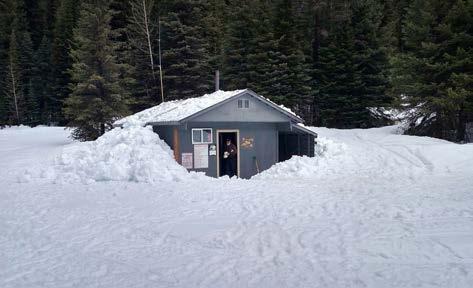
WHITEFISH—On Dec. 25, an 18-year-old male snowboarder became lost in the Big Mountain backcountry accessible from Whitefish Mountain Resort in northwest Montana. He was discovered hunkered down in a safe-haven cabin designed for exactly that purpose.
According to reporting by the Daily Inter Lake, the North Valley and Flathead County search and rescue teams led a joint rescue effort. They discovered footprints heading toward a rescue cabin maintained by the Flathead Snowmobile Association, and found the snowboarder at 8:40 p.m. in the cabin, where he had lit a fire.
“He did the right thing by hunkering down and waiting for help to arrive,” North Valley Search and Rescue told Daily Inter Lake. The cabin has been around for 45 years, and replaced an earlier structure of the same purpose.
The snowboarder was brought back to the summit of Big Mountain, where Whitefish ski patrollers escorted him to safety.
Amanda Berlinger, president of the nonprofit Flathead Snowmobile Association, spoke on the phone with Explore Big Sky on Dec. 30. She said the organization hasn’t kept track of the total number of rescues over the past half-century, but the Christmas Day rescue has certainly spurred some reminiscent stories from grateful community members.
“Anecdotally there’s been more than a handful of individuals who have taken shelter in the cabin overnight, in a survival situation,” Berlinger told
EBS. “… It’s in place for anyone who needs a place to stop and be warm.”
The cabin is accessed almost daily by snowmobilers, who use it as a warming hut and often a barbecue spot. As an unspoken rule, many visitors leave leftover water and stable foods in the cabin for potential emergency visitors.
The cabin has a stove and is stocked with firewood, and the U.S. Forest Service provides a toilet as the cabin is located in the Flathead National Forest.
“We are so glad that the cabin was there for this young man when he needed it the most,” Berlinger said. “Is it intended to be available for anyone out there in this wilderness. Any recreation person, it
doesn’t have to just be snowmobilers… and for dire situations such as this.”
Berlinger said he was lucky to follow the path of least resistance and discover the cabin, likely in the darkness.
“We are really very grateful that the cabin was there for him when he really needed it, and it will continue to be there for as long as we continue to maintain it,” Berlinger said.
She believes that the regional and national interest in the story will help generate support for the nonprofit as it continues providing a critical resource.
Volunteers with NVSAR at the cabin during a rescue training day. COURTESY OF FLATHEAD SNOWMOBILE ASSOCIATION
A cabin maintained by the Flathead Snowmobile Association provided urgent shelter on Christmas, as it has for decades. COURTESY OF FLATHEAD SNOWMOBILE ASSOCIATION
BACK 40
For
a
THE MOUNTAIN WITHIN REACH
we
into
BY SOPHIE TSAIRIS
On May 15, 2025, Bozeman resident Emma Schwerin stood at the top of the world. At just 17 years old, she reached the summit of Mount Everest at 29,032 feet above sea level, becoming the youngest woman ever to complete the Seven Summits—the highest mountain on every continent—and the youngest American woman to summit Everest.
Her size never defined her; her determination did. She went big. From 4-hour Stairmaster sessions to a mountaineer course in Bolivia, to carrying more than her bodyweight up Denali, her determination and focus never wavered. Encouraged by her family and accompanied by her father and their guide Tendi Sherpa—an 18-time Everest summiteer—Schwerin carved her name into mountaineering history.
Mountain Outlaw sat down with Schwerin before she headed back to her senior year of high school to find out what it takes, emotionally and physically, to accomplish such a big dream at such a young age. She reflected on what the mountain gave her— and what she hopes to give back.
Mountain Outlaw: What inspired you to take on a challenge as massive as the Seven Summits?
Emma Schwerin: I went to Headwaters Academy in Bozeman for middle school, and in English class, one of the units was on Mount Everest— super random, but it changed my life. We read Into Thin Air and The Climb, which are about a famous disaster on Everest. We also watched a documentary, and there was a scene in it that showed someone crossing a ladder on icefall, and I remember watching it and thinking, ‘That looks amazing.’
I was driving up to Big Sky to ski for my birthday, and I was with my dad—just the two of us—and he was asking, ‘How’s your day’ and I was telling him about the unit we were doing in school and how cool it was and how it would be so awesome to do something like that one day. He was like, ‘Yeah that would be super cool we should—we should do that.’ So, we decided the next day. We booked a trip to go to Everest Base Camp, which is a two-week trek to get there and back.
MO: Which summit was the most challenging and which was your favorite?
ES: Mentally, Aconcagua [the highest peak in South America] was the hardest because of the wind. We almost didn’t get to summit—you don’t know if it’s going to happen until the last minute. Everest was definitely the longest. It was 50 days, and it just kind of eats away at you emotionally— being so far from home for that long, waiting on weather. That part was really hard. Everest just kind of changes everything. It’s not like any of the other Seven Summits. The only thing you can really compare Everest to is other 8,000-meter peaks, just because there’s no other mountains that you have to spend two months preparing for and acclimating for. So Everest, it’s just like … it’s a crazy experience. And I mean, it was one of my favorite mountains.
But Denali was the hardest mountain physically, for sure. You’re carrying a 60-pound pack and dragging a sled behind you, and your body just gets broken down. I think Denali was my favorite, even though it was brutal. It was just so beautiful and remote. It felt wild.
MO: Did you encounter people who didn’t think you could do it? What did your family think?
ES: Yes. That was something that I really struggled with. Denali was kind of the turning point for me. After I climbed Denali, whenever I showed up, I was able to say, ‘Well, I climbed Denali.’ Before that, it was especially difficult because people thought I was just this little girl who was saying, ‘I’m gonna climb the Seven Summits, and I’m gonna be the youngest woman to do it,’ and people would be like, ‘Okay, sure … yeah, oh, okay.’
After Denali I was also able to say I carried all my own gear—120 pounds—so at least I could tell people that, and it would stop them from doubting me, I guess. But I mean, I had to believe in myself a lot, because pretty much no one else would. I mean, some people did, but a lot of people would doubt me. I would show up for a climb, and if I was in a group, people would look at me and see this girl who’s 4-foot-11, and assume that I was going to be the weak link, and that I was going to be the person holding everyone back. And so, it was really frustrating for me to know that when I showed up,
people already had an impression of me that wasn’t right, and it wasn’t true, and I had to change that.
I’m very grateful for [my parents]. I definitely couldn’t do it without them. I’m very grateful for my dad, because there were a lot of times when it was really difficult, and I was glad that I had someone who always believed in me from the start. And there were people, like all my friends on Everest, they believed in me a ton, but it was nice to have someone who believed in me before I proved in an actual concrete way that I could do it.
MO: What did your training consist of—the physical and the mental?
ES: I trained for two years, six days a week, anywhere from one to maybe five hours a day. So, it was a lot. The Seven Summits … those mountains were a small portion of the hard work. The training was really difficult. I go to boarding school, so my gym is in my high school, full of my high school peers. That was something that was very difficult for me, because I would go with my giant Denali backpack, which is taller than I am, walk in, and I would take the weights and put them in my backpack. I was like, ‘People probably think that I’m stealing these weights right now.’ And then I would go on the Stairmaster for four hours with the pack. The nice thing was that the Stairmaster faced a window, and I couldn’t see anything behind me. So, I was like, ‘People are giving me weird looks, and that’s okay. I can’t see them.’
The mental training was a big thing too. I had to learn a lot, because I would get really nervous. And I was always way more nervous the weeks before I even left than when I was on the mountain. Every time I got to the mountain, I was like, ‘Ok, this is fine. I can do this, because now I can’t train anymore. I can’t change anything. And I’m here, and this is it.’
I always thought to myself that it was going to be some level of hard—and it’s either gonna be hard right now, in my training, or it’s gonna be hard later. And I get to decide.
MO: Were there any specific moments of doubt? How did you get through them?
ES: A very different thing about Everest, is you have to go through the icefall. It’s between base
Explore Big Sky, the Back 40 is a resource:
place where
can delve
subjects and ask experts to share their knowledge. Here, we highlight stories from our flagship sister publication Mountain Outlaw magazine.
Noun: wild or rough terrain adjacent to a developed area Origin: shortened form of “back 40 acres”
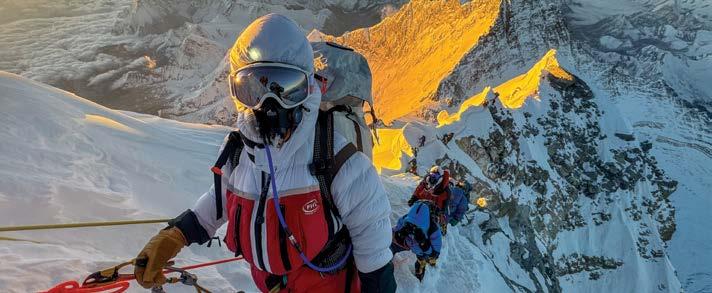
Emma Schwerin nears the summit of Mount Everest, the highest peak in the world — and the final climb in her Seven Summits journey.
PHOTO COURTESY OF EMMA SCHWERIN
camp and camp one, so it’s pretty early on. And we went through the icefall six times. So, you go up three times, down three times. I think that there were probably … there were only a few days on Everest that I was scared, and I mean, most of them had to do with the icefall.
I think of the night, the first time I went through the icefall. I think about the night that I had the most growth and that’s the same night as the night I was most scared. And I mean, summit night was great, I summited, and it was wonderful and there were challenges there, but I remember waking up the night before and pretty much knowing that I was going to summit, and so that was kind of different. But the night we went through the icefall for the first time, I was just very nervous.
A friend [on Everest] told me this quote: “If it wasn’t scary, it wouldn’t be big enough.” And, oh my gosh, it just, really changed my life, and I remember every time I heard an avalanche going through the icefall that night, I would just repeat it in my head. And I remember when he told me that I was like, ‘Wow that really resonates with me,’ and I think that’s something I’ve learned from this whole thing is that if I’m not challenging myself to where I’m scared, I really could be challenging myself more. Because the other Seven Summits were also challenging, but the night that I changed the most and learned the most was the night I was most scared. And I don’t think that’s a coincidence. I think that because I was so scared, I was able to push myself and work through that.
MO: How did it feel to complete this huge goal? ES: So, I mean, I guess if I told myself before
I started the whole thing, that person would be very proud. But I worked every day for two years trying to accomplish [this goal]. And so, for me, it wasn’t really like, ‘Oh my God, I did it.’ It was relief because I accomplished it, and nothing got in my way. I was proud, but at the same time, I was confident by the end because I knew how hard I worked. I have three world records and that’s great, but it’s not crazy for me because I guess I lived it, and I couldn’t really work any harder. Yes, I’m very happy with it, but it’s also just like, the records—I never really did it for the records—they were nice, but … it was really just an extra challenge for me, and to me it just says how hard I worked which is more important to me than the actual numbers themselves.
Reaching the summit of Everest though, that whole thing felt like a dream—less in the moments where it was hard and more like, when we saw the sunrise, I thought, ‘This can’t be real, it’s so beautiful,’ … I was like ‘This is, this is a dream.’ And then I remember thinking, ‘I have to get down,’ because I sort of promised my mom that I wouldn’t celebrate until I got down.
MO: What has it been like returning to “normal life” after all of that?
ES: I think it is going to be hard for me to not be training towards something and working towards something, because I loved that I got to spend an hour or two each day, which isn’t that much in the grand scheme of things, training for something and then I was able to accomplish this insane thing. A lot of times people tell me, ‘Oh my god it’s so crazy that you climbed Mount Everest,’ and I’m like, ‘Well, but it’s similar to what other people do.’
I just decided to do this instead of something else. I know friends who spend an hour or two playing the violin each day, and they’re incredible at that. And so, I think that’s going to be hard for me to not be doing something small each day to work towards something big.
It’s my senior year, which is helpful because I’m trying to soak in all the fun memories of my last year of high school. I have plans [for the next adventure] already, just because that’s kind of who I am. I have to be working towards something. I’m trying to take a break for now, and just enjoy my senior year.
With the Seven Summits, it’s honestly, it’s super cool, but I also feel like I barely scratched the surface. People who don’t know a lot about it always ask me, ‘How are you going to do anything more? Haven’t you done all of them?’ But no. The tallest mountain outside of the Himalayas is Aconcagua, but that’s because all of the tallest mountains are in the Himalayas.
MO: What would you tell other young people— especially girls—who dream big?
ES: It’s really important to me to kind of be a role model for other girls and show them that even if you don’t have someone else to believe in you, you can believe in yourself. And that’s really all that matters. You can do crazy things—and you can be the girl who says she’s going to do something crazy and does it. I’m in this calendar actually… for this guiding company called AWE Expeditions … they sell calendars to help raise money for women, young girls’ scholarships to start mountaineering. And so that’s so fun for me; I get to help other girls do stuff like this.