Explore Big Sky - January 22nd to February 4th, 2026
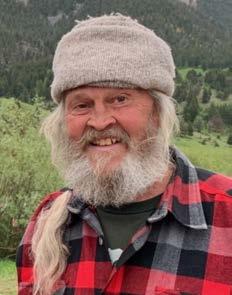
REMEMBERING A LOCAL LEDGEND: TIMOTHY ‘BO TIM’ PATTISON
WILDLANDS LINEUP ANNOUNCED
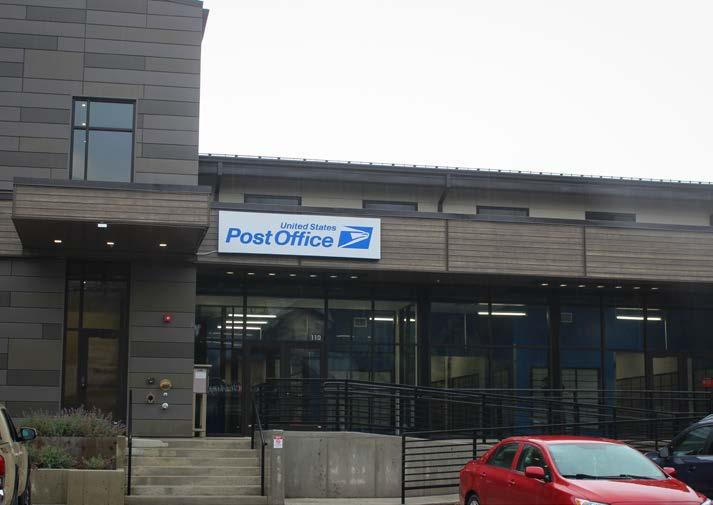
BIG SKY POST OFFICE WOES CONTINUE
BIG SKY SKI ATHLETES SHOW RESILIENCE AMID COURSE CHALLENGES
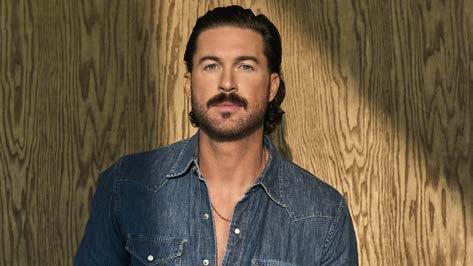
ANNIE CLEMENTS FINDS BALANCE IN MUSIC, MOTHERHOOD
January 22 - February 4, 2026
Owned and published in Big Sky, Montana
PUBLISHER
Eric Ladd | eric@theoutlawpartners.com
EDITORIAL
VP MEDIA
Mira Brody | mira@theoutlawpartners.com
SENIOR EDITOR
Jack Reaney | jack@theoutlawpartners.com
STAFF WRITER
Jen Clancey | jen@theoutlawpartners.com
LOCAL JOURNALIST
Leslie Kilgore | leslie@theoutlawpartners.com
DIGITAL MEDIA LEAD
Fischer Genau | fischer@theoutlawpartners.com
STAFF WRITER
Carli Johnson | carli@theoutlawpartners.com
CREATIVE
GRAPHIC DESIGNER
Griffin House | griffin@theoutlawpartners.com
SALES AND OPERATIONS
CHIEF OPERATING OFFICER
Josh Timon | josh@theoutlawpartners.com
CHIEF MARKETING OFFICER
Megan Paulson | megan@theoutlawpartners.com
VP DESIGN & PRODUCTION
Hiller Higman | hiller@theoutlawpartners.com
DIRECTOR OF RELATIONSHIPS
Ersin Ozer | ersin@theoutlawpartners.com
MARKETING MANAGER
Tucker Harris | tucker@theoutlawpartners.com
CONTENT MARKETING LEAD
Taylor Owens | taylor.owens@theoutlawpartners.com
SENIOR ACCOUNTANT
Sara Sipe | sara@theoutlawpartners.com
BUSINESS DEVELOPMENT LEAD
Patrick Mahoney | patrick@theoutlawpartners.com
ACCOUNT COORDINATOR
Ellie Boeschenstein | ellie@theoutlawpartners.com
Chris Boyer, Mario Carr, Nielsen Greiner, Bobby Jehrig, Jeff Johnson, Kyle Moon, Benjamin Alva Polley, Tim Radigan, Lauren Rearick, Michael Ruebusch, Josh Weichman CONTRIBUTORS
TABLE OF CONTENTS
6
8
10
REMEMBERING A LOCAL LEDGEND: TOMOTHY ‘BO TIM’ PATTISON
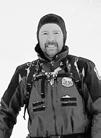
He was chased up trees by grizzlies, lived for years in a wall tent and rejected modern comforts in favor of elk, rivers and hand-built lodgepole beds. Timothy “Bo Tim” Pattison, a legendary Big Sky mountain man, lived entirely on his own terms and left behind a way of life that feels nearly lost today. Big Sky lost a legend with Pattison’s recent passing, but his stories and spirit remain legend.
OP NEWS: WILDLANDS LINEUP ANNOUNCED Now in its sixth year, this summer’s Wildlands will feature Carrie Underwood, LeAnn Rimes, Riley Green and Kaitlin Butts at the Big Sky Events Arena July 31 – Aug. 1. The weekend-long event pairs world-class artists while raising funds for conservation groups devoted to preserving the Greater Yellowstone Ecosystem.
BIG SKY POST OFFICE WOES CONTINUE
Big Sky residents have recently reported long wait times at the Big Sky Post Office ranging from two to five hours in late December and continuing into the new year. At best, community members retrieved shipments and missing letters after shaving a few hours off of the work day. At its worst, some residents report their mail, including Christmas gifts, medications and bills, have been lost entirely.
ON THE COVER:
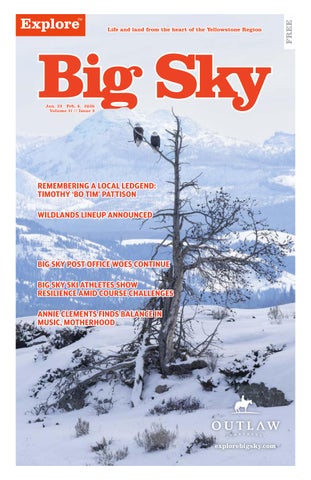
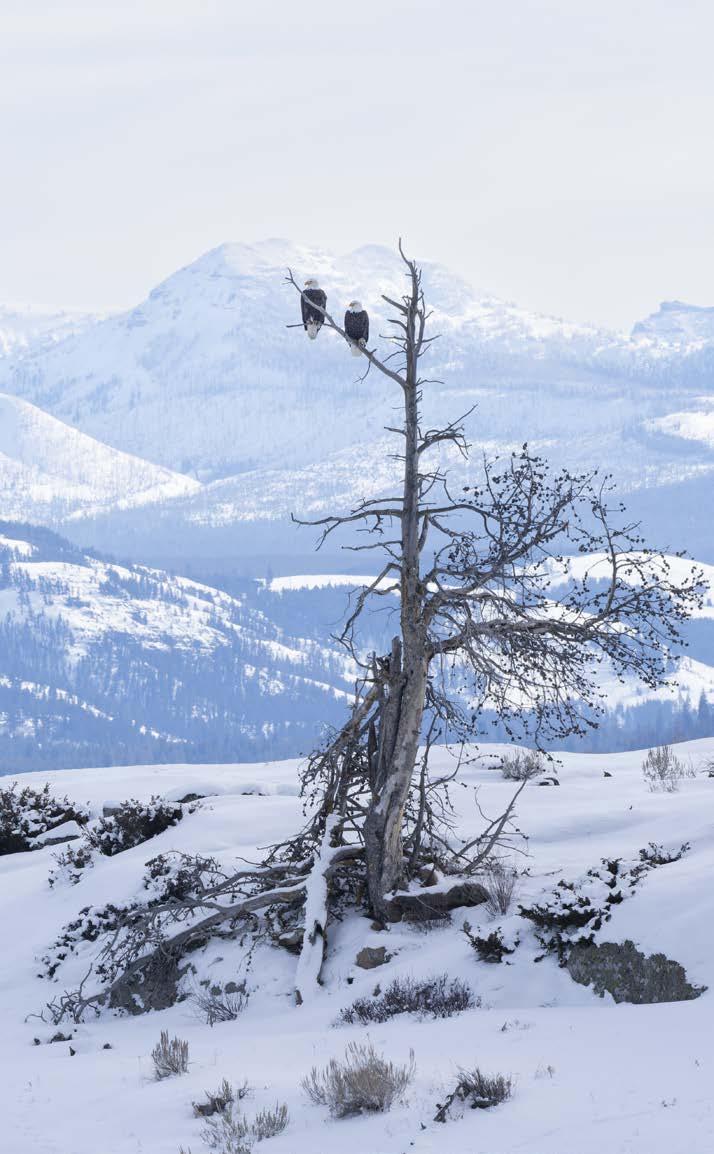
Local photograhper Kyle Moon of Moon Man Photography captured a pair of bald eagles perched on a dead snag right as he was entering Lamar Valley in Yellowstone National Park. PHOTO BY KYLE MOON
EDITORIAL POLICIES
EDITORIAL POLICY
Outlaw Partners, LLC is the sole owner of Explore Big Sky. EBS reserves the right to edit all submitted material. Printed material reflects the opinion of the author and is not necessarily the opinion of Outlaw Partners or its editors. EBS will not publish anything discriminatory or in bad taste.
EBS welcomes obituaries written by family members or from funeral homes. To place an obituary, please submit 500 words or less to media@theoutlawpartners.com.
21
BIG SKY SKI ATHLETES SHOW RESILIENCE AMID COURSE CHALLENGES
Amid cancelled races and a below-average snowpack on courses, the Big Ski Ski Education Foundation has still found ways to train, and even excel, in their programs this winter. The nearly 175 athletes that make up the BSSEF Nordic, alpine and freeride teams have been adapting to thin courses, climbing podiums in regional races and training hard.
ANNIE CLEMENTS FINDS BALANCE IN MUSIC, MOTHERHOOD
Annie Clements is a touring bassist who has played with bands like Sugarland, Amos Lee, Miranda Lambert, Maren Morris, Jason Isbell and countless others across the globe. She’s also a mom, a wife, a music educator, a Big Sky local and now the central voice in a new documentary that aims to change how the music industry supports working mothers.
LETTERS TO THE EDITOR
Letters to the editor allow EBS readers to express views and share how they would like to effect change. These are not Thank You notes. Letters should be 250 words or less, respectful, ethical, accurate, and proofread for grammar and content. We reserve the right to edit letters and will not publish individual grievances about specific businesses or letters that are abusive, malicious or potentially libelous. Include: full name, address, phone number and title. Submit to media@outlaw.partners.
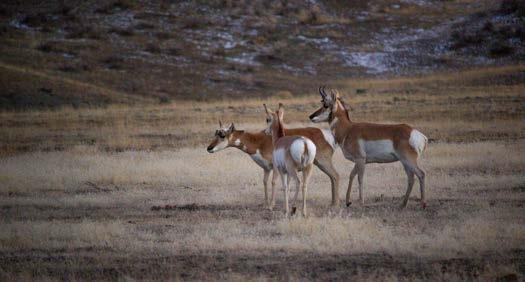
On Martin Luther King Jr. Day, Jan 19, EBS Staff Writer Jen Clancey traveled to Gardiner to take photos of wildlife and scenery in Yellowstone National Park. Pictured are a pair of pronghorns grazing. PHOTO BY JEN CLANCEY
BRIEFS
NEWS IN BRIEF
MONTANA STATE LIBRARY
HOSTING BLIND DATE WITH THE ARCHIVES IN FEBRUARY
EBS STAFF
If you’re looking for a date this coming February, look no further than that Montana State University archives department. Through the month of February, the university’s archivists are putting together an event called Blind Date with the Archives in which history buffs, or curious minds, can book a time to browse a curated collection of archives.
To book a time with the archives, located on the second floor of the MSU Library, visit their availability calendar and specify interest in the Blind Date event. The archivists will then provide a menu of topics to choose from including photographs, slides, scrapbooks, architectural drawings and documents.
The MSU archives are home to some of the most robust historical research on trout and salmonids, history on Montana and the American West, Montana State University and Native Americans, and Yellowstone National Park, to name a few.
BOZEMAN AIRPORT REPORTS RECORD-BREAKING 2.8 MILLION PASSENGERS IN 2025
BY JEN CLANCEY
A record-breaking number of passengers traveled through Bozeman Yellowstone International Airport in 2025. In a Jan. 13 press release, the airport reported a total of 2,809,419 passengers, a 6.3% increase from a total of 2,642,707 passengers in 2024.
Overall, the airport tallied 118,030 flights taking off and landing in 2025, a 2.1% decrease compared to 2024. This lull occurred mostly in general aviation and military operations, which respectively decreased by 8.3% and 48.6%, though the airport processed 343 private international arrivals compared to 241 in 2024. Meanwhile, scheduled passenger and cargo airline operations increased by 11.1% and business jet operations increased by 9.1%.
United Airlines transported the most passengers at 811,127, followed by Delta Air Lines, Southwest Airlines, American Airlines and Alaska Airlines in the top five.
In 2025, the airport also worked on a multi-phase East Terminal Expansion Project, projected to cost $190 million dollars.
Other accomplishments of the year include main runway extension by 328 feet, improvements to the navigational aid system, which will continue into 2026.
The airport also announced new daily summer service to Phoenix, Arizona, summer Saturday service to Long Beach, California, and Austin, Texas, as well as spring break service to Fort Lauderdale, Florida.
SPECIAL OLYMPICS MONTANA TO RETURN TO BIG SKY IN EARLY MARCH
EBS STAFF
On Monday, March 2, Big Sky Resort will host one of its finest annual events: the Special Olympics Montana Big Sky Area Winter Games.
The 17th annual event will take place at the resort’s Madison Base Area. A press release from SOMT thanked Big Sky Resort for graciously hosting the event year after year, and announced events will include giant slalom, snowshoe and Nordic skiing. Bozeman radio and television host, DJ and auctioneer Missy O’Malley will again emcee the event—the release noted she is “beloved by all the athletes.”
“The energy at the Big Sky Winter Games is contagious,” stated Sean Fitzgerald, volunteer winter games coordinator. “These games prove that when we come together, we can create unforgettable experiences for every athlete.”
Fitzgerald added that his favorite part of the event is the smiles worn by athletes and volunteers.
“[W]hen you see these competitors coming through the race gates having the best day of their lives, especially at the award ceremonies, it is just electric,” Fitzgerald stated.
“We are incredibly proud to host the Special Olympics of Montana for the 17th consecutive year, bringing together dozens of competitors and volunteers who fill our mountain with determination and joy,” said Tom Marshall, general manager of mountain experience at Big Sky Resort. “Through our work with Eagle Mount and Special Olympics Montana, we’re committed to making world-class snow sports accessible to everybody.”
The public is encouraged to attend the event, and SOMT will soon release a volunteer sign-up webpage to provide opportunities for willing helpers. More information is available online.
BIG SKY RESORT PARTNERS WITH RIVIAN
EBS STAFF
Big Sky Resort has partnered with Rivian to introduce electric vehicles into daily mountain operations this winter, announced a Jan. 13 press release from the resort. Starting Jan. 16, a fleet of Rivian SUVs will began shuttling guests, along with on-mountain vehicle demos and select après events throughout the season.
As the resort’s official vehicle partner, Rivian is supporting the resort’s efforts toward sustainability and its goal of achieving netzero emissions by 2030, explained the release. The partnership brings Rivian’s all-electric R1S and R1T vehicles, “showcasing how Rivians enable the ultimate mountain excursion,” and operate in a winter climate, said Denise Cherry, VP of marketing experiences at Rivian in the release.
Throughout the winter season, guests will see Rivian vehicles integrated across the resort, from shuttle transportation to on-site demonstrations designed for snow and alpine terrain.
TIMOTHY ROBERT “BO TIM” PATTISON FEB.
24, 1955—JAN. 7, 2026
Timothy Robert Pattison, known to his friends as Bo Tim, Bo, or Ledge, sadly passed away on Jan. 7, 2026, at the age of 70 years young.
Writing a summary of Tim’s life is like trying to describe Yellowstone Lake with a bucket of water. The life this man lived was extraordinary. Bo Tim was born on Feb. 24, 1955, in Minneapolis, Minnesota, and within the first year of his life, moved to Sacramento, California, with his parents and three siblings. Tim spent his childhood playing outside, attending scout meetings, swimming, cuddling with his mom, riding his bike along the river and outrunning everyone on his little league team. His grandfather owned some cabins on a lake in Minnesota and in the summer, Tim’s family would travel cross country to visit him. Their road trips were filled with camping and time spent in National Parks. This is how Tim first learned of Yellowstone. Tim’s father, Bo Daddy, and Tim’s uncle introduced him to hunting and fishing and the man, the myth, the legend was created—the fire was lit!
Tim spent his teenage years infusing himself into the wilds of the American and Sacramento Rivers, practicing bird calls, studying the habits of animals and marveling at the trees. He often spoke of his mother packing a home cooked meal and having family days out at the ocean. Tim was taken on hunting trips in Idaho and Montana and always dreamed of this part of our country. When Tim graduated high school, he got a job in Yellowstone National Park, working and living at Grant Village General Store and Fishing Bridge.
In November of 1974, Tim laid his feet on the majestic west side of Yellowstone in a little town called Big Sky, where “there were no jobs and the hunting was good.” The ski resort had just opened and there was work available, but Tim was content to set up his tent and fish and hunt for his food. Occasionally he would take a job and go indoors during winter months but his soul needed to be in the great wide open with the animals, looking for artifacts of the past. Tim never cared much for money or the things society had to offer. He instead spent thousands of hours of his life hiking in the forests of Yellowstone National Park and Gallatin and Madison County. Living in Big Sky in the seventies, there were elk antlers to be found, and Tim made a living selling them in Ennis and the horn auction in Jackson Hole. He also made elkhorn belt buckles, deer horn pipes and jewelry out of antler and elk ivory of which he sold or gifted to the people he loved.
In his 20s and 30s, Tim hitchhiked all over the western United States making it up to Alaska several times. This is when his nickname Bo came about. When Tim wasn’t in the back country of Yellowstone or traveling, he could be found at Bo Camp, a place on the Gallatin River where Bos had their tents upright, their fish hanging, their elk butchered and a fire burning. Later he would move into a log cabin that was just south of Soldier’s Chapel. The same cabin can now be found at Ophir school. Tim’s brother Mike and a half dozen friends from Sacramento followed him to Big Sky and made it their home as well.
Two of his closest friends were Terry and Lance Thomas who owned Thomas Heating in Big Sky. They hired Tim and that was his part time job up until a couple of years ago. People often thought Tim was a blood relation to Terry and Lance. They were the three musketeers driving around in the Bo V going to work or the shooting range. As more people met them, the clan of Bos grew, a group of brothers that had your back no matter what. Men who lived for the hunt and moments shared with the bears, bison, elk and the magic of nature.
Tim had to move out of his cabin in the mid ‘90s, so he set up his wall tent in Knaubs Hole, a homestead owned by his friends Marjorie and J.C. Knaub. This is where he met Meredith Madden. She was the nanny for the Knaub Family and living in her tent up Porcupine Creek. Meredith and Bo Tim were soul mates and in February of 1997 they had their beloved son, Winter, in Coaches Cabin down in Knaubs Hole. Tim was a wonderful father and taught his son all that he knew. He always had a loving tender heart towards him. Shortly after Winter’s birth, Tim built his first log bed and took his first trip to Nevada with the Bos where he found his biggest set of elk antlers ever. These two events would shape the next 28 years of his life.
Building log furniture came natural to Tim and he loved it. He was a true artist. Tim would hike into the woods with his chainsaw and find the prettiest dead trees with “the most character.” It was common to see him hiking through the woods with a hundred or more pounds on his back. Sometimes it was a tree trunk, other times antlers. In 1999, the Pattison-Madden family moved to a log cabin on the Gallatin River where Tim resided for the last 26 years. He had a shop where he made his rustic log beds, coffee tables, belt buckles, earrings and more. He lived a life of peace with his various black dogs, his son and his cat. The Porcupine game range was on the other side of the river from him. He had a pair of binoculars next to his wood stove, and every day he would “glass” for his elk herd. In the same way a National Geographic team might scout the Serengeti to capture a pride of lions or a bloat of hippos, Bo Tim was recording the natural
ecosystem he lived in. If you saw him at the Half Moon, Corral or Riverhouse, he would know what was going on with his animal friends. Tim wasn’t afraid of grizzly bears. He had been chased up trees at least a half a dozen times by bears but never injured. I can only imagine the size of him was a threat to a sow with her cubs, but maybe once she saw him up in that tree she realized he was part of the forest too.
The Bos continued to travel to Nevada every spring to look for antlers and artifacts, as well as North Dakota in the fall to go pheasant hunting. Tim looked forward to these trips all year long. Tim never truly conformed to societal norms. When Winter was one year old Meredith had a land line phone installed. The man from Three Rivers Phone Company said “Hell must be freezing over; Bo Tim is getting a phone.” When Winter was three, Meredith brought a television into the house so Winter could watch cartoons. Tim enjoyed the cartoons as much as his son. He had the best sense of humor and was always telling jokes. Tim never had a computer, a car or a cell phone. He was happy with his radio and his oldies station. He had peace in his heart and was surrounded by a community that loved him and took care of him. Tim was a man of God. If you were someone he knew and you were suffering, I guarantee he prayed for you. He had more integrity than most. He never gossiped or spoke of anyone in a negative light.
Over the last several years, Tim had developed a heart condition and respiratory problems. Recently he had contracted a cold that progressively got worse. On Wednesday morning, Jan. 7, he passed away at his home of natural causes.
Bo Tim left his mark on this land and our hearts. Not only has the community of Big Sky lost one of their main characters, but they have also lost a friend. Tim is preceded in death by his father, Bo Daddy (Robert); mother, Ardis Pattison; sister, Sandy; brother in-law, Ron Asher; soul brother, Bo Terry Thomas; his four black dogs, Dudley the Dude, Chester the Pheasant Hunter, Huckleberry Huck Stom Bull, Zac Attack; and his orange tabby cat, Ichabod Crane. Tim leaves behind his son, Winter Madden-Pattison; brother, Mike (Cheryl); sister, Luann (Adam) Dziuk; niece, Ashley (Joe) Killen; nephew, A.J. Dziuk; nieces, Katie and Jamie Asher; great-nieces, Jolene and Chloe; greatnephew, Tommy; the Bos; Meredith Madden; and his golden retriever, Sky. God Bless Timothy Robert Pattison. May God Bless you, love you and keep you in the palm of his hand.
In honoring Tim’s wishes, cremation has taken place. As many of Tim’s friends are currently out of town, there will be two celebrations. A funeral service will be held Saturday, January 17, 2026 at 11 a.m., at the Big Sky Chapel, with a luncheon to follow at the church. A second memorial will be held this spring to allow time for all of the Bos to reunite from all corners of our land.
Arrangements are in the care of Dokken-Nelson Funeral Service. A link to a live webcast of the service can be found at dokkennelson.com.
PHOTO COURTESY OF THE PATTISON FAMILY
OUTLAW PARTNERS ANNOUNCES 2026 WILDLANDS MUSIC LINEUP
CARRIE UNDERWOOD HEADLINES, WITH LEANN RIMES, RILEY GREEN AND KAITLIN
BUTTS AT THE BIG SKY EVENTS ARENA JULY 31 – AUG. 1
OUTLAW PARTNERS
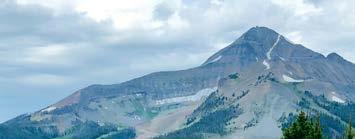
Outlaw Partners is excited to release the official lineup for Wildlands, a live music event returning July 31 – Aug. 1 at the Big Sky Events Arena for two unforgettable nights of live music in an intimate venue set against the backdrop of 11,166foot Lone Mountain.
Now in its sixth year, Wildlands continues to distinguish itself as one of the most unique music events in the country, pairing world-class artists in an unique outdoor venue limited to 5,000 attendees, while raising funds for conservation groups devoted to preserving the Greater Yellowstone Ecosystem. Carrie Underwood, one of the most successful artists in modern country music, will headline the weekend on Saturday, Aug. 1. Launching her career after winning American Idol in 2005, Underwood is the highest RIAA certified female country artist of all time, released 29 No. 1 singles (14 of which she cowrote), and has won over 100 major awards, which include eight GRAMMY® Awards, 16 Academy of Country Music Awards, with multiple Entertainer
of the Year honors, and 25 CMT Music Awards, the most wins in the show’s history, among others. She has starred in the show open for primetime television’s No. 1 program, NBC’s Sunday Night Football, for 13 consecutive seasons, and this month will return for a second season on the judges panel of the hit show “American Idol,” alongside Luke Bryan and Lionel Richie on ABC and Hulu.
Underwood has played several times before in Montana including 2006 in Great Falls at the Montana State Fair, 2010 at Montana State University’s Brick Breeden Fieldhouse and in 2016 in Billings at the Rimrock Auto Arena at MetraPark.
Kaitlin Butts will join Underwood on Saturday. Like Underwood, Butts is from Oklahoma and has built a strong following with music that blends traditional country sounds with a modern perspective and wit, building a respected presence in the Red Dirt and Americana scenes.
Friday, July 31, will feature country music singersongwriters Riley Green and LeAnn Rimes.
Hailing from Jacksonville, Alabama, Riley Green first broke through with hits like “There Was This Girl” and has continued to build a strong presence, earning multiple Academy of Country Music Awards, which include Single of the Year and Music Event of the Year. Rimes rose to fame in the mid-1990s as a country music prodigy and gained international recognition at just 13 years old with her breakout hit “Blue,” becoming one of the youngest Grammy winners in history.
Produced by Outlaw Partners, Wildlands is a conservation-driven event, benefiting vital land, water and wildlife initiatives. The lead conservation partner for 2026 will be the Property and Environment Research Center. PERC is a leader in conservation with over 40 years of pioneering research and a network of respected experts in the Yellowstone Ecosystem. PERC has a unique approach to conservation, exploring incentives for environmental stewardship that produce sustainable outcomes for land, water and wildlife. Tickets and more information can be found at wildlandsmusic.com.
PHOTO BY JEFF JOHNSON
PHOTO COURTESY OF RILEY GREEN
PHOTO BY LAUREN REARICK
PHOTO COURTESY OF LEANN RIMES
BIG SKY POST OFFICE WOES CONTINUE, OFFICE UNDERSTAFFED LOCAL
BY JEN CLANCEY STAFF WRITER
Big Sky residents began reporting wait times at the United States Postal Service Big Sky Post Office ranging from two to five hours in late December 2025, continuing into the new year. At best, community members retrieved shipments and letters after shaving a few hours off of the work day. At its worst, some residents report their mail, including Christmas gifts, medications and bills, has been lost entirely or sent back without the chance to pick up their deliveries.
In a Jan. 8 email statement, the representative for the Western Pacific Region including Montana, Janella Herron, noted that two vacant positions at the Big Sky Post Office during the holiday season have contributed to delays.
“We understand that some customers may experience longer wait times at the Big Sky Post Office during this period,” Heron stated. “Our dedicated employees are working diligently to serve every customer as efficiently as possible and additional resources have been assisting to reduce customer impact.”
The USPS is burdened by its unique position as a business and public service, requiring it to rely on
sales but deliver to all U.S. communities six days a week. High operational costs, debt, reduced profits and coverage of workers’ salaries have resulted in the USPS losing money each fiscal year since 2007. At this point, the U.S. The Government Accountability Office recommends substantial and difficult policy changes in Congress to begin solving the issue.
“The USPS has experienced a myriad of issues in recent years,” Sen. Tim Sheehy wrote in an email shared by Big Sky resident Shana Seelye, who wrote to Sen. Sheehy about the problems at the Big Sky Post Office. “Mail center closures, mistakenly or slowly delivered mail, and staffing shortages have contributed to an inability for Montanans to receive their mail in a timely manner.”
Sen. Sheehy explained that Postmaster General DeJoy has worked to identify a successor to his position and that on July 15, David Steiner began his tenure as the Postmaster General after being confirmed by the USPS Board of Governors.
“I am hopeful that Postmaster General Steiner will lead the USPS with vigor and resolve the issues that have plagued the service these last five years, all while ensuring the service remains a public entity,” Sen. Sheehy stated in the email.
Herron stated that the Big Sky Post Office is currently hiring and interested candidates can directly access applications online. As of Jan. 21, a job posting is available online for the Big Sky area. Herron noted that jobs will be posted in cycles.
Seelye described confusion about how best to retrieve packages and described how she wanted to heed the post office’s guidance to wait for a yellow slip in her post box before waiting on the long line to get her package. After five days of her package tracking being marked as delivered at the post office this holiday season, she decided to wait in the line to ask about the package and was informed it had been returned, despite her never receiving a yellow slip indicating it was ready for pickup. She also described her friend who brought a camp chair to the line to wait out the two to three hour queue and a younger resident in front of her one day who waited two hours and learned that the package couldn’t be found despite tracking showing it delivered at the post office.
There are 10 months before a new cohort of seasonal workers arrive to the community for the first time in late fall, second homeowners spend their Thanksgiving and Christmas in Big Sky and families order gifts, and items they need that time of year. Locals hope that there’s enough time to plan for a better holiday season next year.
The USPS Big Sky Post Office opened in 2024 in Meadow Village. PHOTO BY JEN CLANCEY
COLD SMOKE LAND ACQUIRED, AT LAST HOUSING TRUST PURCHASES 99
ACRES FOR $39.75 MILLION,
ONE OF THE LARGEST COMMUNITY LAND TRUST PROJECTS IN THE COUNTRY
BY JEN CLANCEY STAFF WRITER
A big deal closed in the first week of 2026 in Big Sky.
On Jan. 7, the Big Sky Community Housing Trust announced they had finally acquired the land for one of the country’s largest community land trust projects to date for $39.75 million. The Cold Smoke project consists of 99 acres reserved for 389 permanently deed-restricted homes and was valued at an average of $46.4 million after three third party appraisals were commissioned by Lone Mountain Land Company, BSCHT, and the Big Sky Resort Area District. LMLC sold the land at a 14% reduction.
Board members and the audience at the first BSRAD board meeting of the year applauded David O’Connor, executive director of BSCHT, when he announced the acquisition on Jan. 7. “Closing happens today, recording will happen this afternoon and I’m here to report: mission accomplished,” O’Connor said. When completed, the Cold Smoke development will construct 264 apartments and 125 single-family for-purchase houses for year-round local workers. Neighborhood infrastructure for the apartments will begin as soon as weather allows this year, he said, and the land for single family homes needs about 18-24 months of work on infrastructure before construction.
Already, towns around the country with similar housing struggles have reached out to BSCHT to learn how to organize a project like Cold Smoke. O’Connor credits a united community and group of organizations in Big Sky who paved the way for 10 years to make the project possible.
“The answer to how we pulled that off is this community,” O’Connor said. “This event celebrates Big Sky, the community of Big Sky, this is something that we all did together.”
Sarah Blechta, board chair of BSRAD, explained that in her 35 years living in Big Sky, this is the most proud she’s ever been in the community, and described how this accomplishment will change the lives of thousands of people.
“There are people who have left here because they couldn’t be here,” Blechta said, noting residents who’ve had to move because the cost of living was too high. “… This is work that helps mental health. This is work that helps our community. This makes us stronger and better and I couldn’t be more proud.”
Several steps had to take place to enable Big Sky to plan and fund such a large project. In the Montana legislature, a bill broadening the use of the 1% additional resort tax allowed communities
to use those collections for workforce housing. BSRAD also needed to get approval from voters in May 2025 to take on long-term debt of up to $60 million to fund the project, which was a success. More than a year of negotiations with Lone Mountain Land Company resulted in a discounted plot of land for the project, which O’Connor said couldn’t have been done without LMLC investing in the vision for this property.
In a Jan. 7 BSCHT press release, Matt Kidd, LMLC president, described their involvement in the project.
“Cold Smoke exists because we believed early on that this land could and should serve the long-term needs of the community,” Kidd stated. “That belief required patience, partnership and a meaningful commitment over many years. We’re proud to have helped create the opportunity for a project that supports the people who live and work in Big Sky and strengthens the community for generations to come.”
Finally, in November 2025, the Gallatin County Commission approved the preliminary plats for the Cold Smoke development, followed by bond sales in late December, and BSCHT closing the the land purchase agreement in the first week of January. A timeline of the project is available on BSCHT’s website, and shows groundbreaking for infrastructure planned for the spring of 2026, vertical groundbreaking in the fourth quarter of 2026, and initial occupancy for apartments and single family homes opening in summer 2028 and 2029, respectively.
Inspired by Blechta’s remarks of the long-term impact of Cold Smoke in Big Sky, O’Connor concluded his announcement in the BSRAD board meeting.
“In three or four decades from now, there will be people sitting around this table, sitting in this audience, standing at this podium, that would not be here otherwise.”
PHOTO COURTESY OF BSCHT
BIG SKY OUT CELEBRATES SECOND ANNUAL WINTER PRIDE WEEK LOCAL
BY CARLI JOHNSON STAFF WRITER
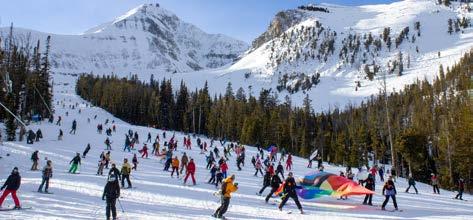
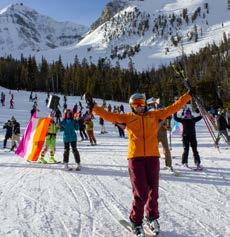
From Jan. 5 through 11, Big Sky-based nonprofit organization Big Sky OUT celebrated the second annual Winter Pride Week. From ski parades to yoga classes, the weeklong celebration invited all LGBTQ+ identifying persons and allies to participate.
Over 200 participants turned out across all events, according to Big Sky OUT board member Taylor McCaslin. Noting some guests had traveled from other states, and even internationally to attend the festivities.
“What stood out most was watching people make new connections across these boundaries—that’s what community is all about,” McCaslin stated in an email to EBS.
The parade, queer enchanted forest takeover and fundraising drag variety show were fan-favorites, according to McCaslin. Attendees were also grateful for the range of events across different days, times and price points.
This year’s parade more than doubled last year’s numbers with roughly 100 participants donned in rainbows, bubbles and glitter.
“That’s queer joy in action, bringing communities together and making everyone feel welcome and supported,” McCaslin said.
As a young organization, awareness is their biggest challenge. This year, Winter Pride Week was
supported and shared by Big Sky Resort, Visit Big Sky and the Chamber of Commerce, allowing Big Sky OUT to reach more diverse participants, including resort guests. Big Sky Ski Patrol joined the parade to carry the pride flag and provide support.
“I’m speechless at how our tiny mountain community showed up,” McCaslin said. Aside from the expected negative comments on social media, Big Sky OUT received much positive support from the community throughout the week.
“We all danced, skied, laughed, crafted, learned, relaxed, ice skated, snatched wigs and shared the joy of being able to show up as our authentic selves in spaces where we weren’t just welcomed, but celebrated,” McCaslin stated.
Skiers and snowboarders parading down Mr. K. PHOTO BY CARLI JOHNSON
PHOTO BY CARLI JOHNSON
SPORTS
BOYS BASKETBALL HITS MILESTONES IN GAME AGAINST TWIN BRIDGES
GIRLS RALLY IN FOURTH QUARTER, BOYS’ EBE GRABOW REACHES 1,000 POINTS
BY JEN CLANCEY STAFF WRITER
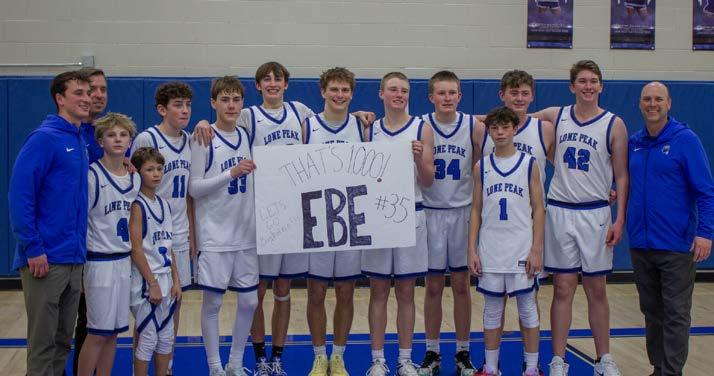
On Friday, Jan. 9, the Lone Peak High School boys basketball team hit not one, not two, but three milestones in their home game against Twin Bridges High School. First, senior Ebe Grabow became the third player in program history to score 1,000 points over the course of his career, then junior Ryan Malinowski sank seven threepointers, matching the program record. Finally, the Big Horns scored 12 three-pointers, setting a new program high.
The game closed with a 71-61 win for the Big Horns, but on the way to the buzzer, fans waited anxiously with “1,000” posters to celebrate Grabow’s accomplishment. That moment didn’t happen until the fourth quarter, and the cheers came as a surprise for Grabow, who, with his teammates, had zoned in on a tough matchup against Twin Bridges and had no time to focus on tallying.
“ I didn’t really know how close I was. I was unsure and then I just, I scored and then Al [Malinowski] told me … I had no idea,” Grabow told EBS after the game. He said that he’s loved being a part of the basketball team and guidance from older players when he was starting out was helpful for staying focused too.
“Being a freshman, I had some seniors that were good, great role models for me, and then I just carried on,” Grabow said. The senior had 11 points to go before reaching 1,000 at the beginning of the game against the Twin Bridges Falcons. He began erasing that distance in the first quarter with his first-ever dunk in a game.
Head coach Al Malinowski made sure that he kept the score countdown to himself so the players focused on beating Twin Bridges, but there were hints.
“ I try not to tell ‘em when something like that’s coming up because I don’t want them to feel the pressure,” Malinowski said, smiling. “I think he could probably sense it from me a little bit ’cause at the end I was like, get Ebe the ball. Get him a shot.”
Malinowski noted that Grabow has played a big part in the team’s success over the years, including a run in the state tournament when he was a freshman.
“He was a big part of helping make that happen and just to really see him grow as a person and as a teammate over the last four years has been exciting,” Malinowski said.
The boys and girls teams entered Friday’s game with less rest than usual, as away buses from Townsend rolled into the Lone Peak High School parking lot at around midnight the night before. Malinowski was pleased with the team’s turnaround in such a short span of time.
“ I thought we rebounded much better than we did [Thursday night]. And that benefited us in a lot of ways where we were getting second, third chance opportunities that we weren’t getting [Thursday] night,” Malinowski said. Each player on the court was ready to score on Friday night, too, making things difficult for the Falcons’ man-toman defense.
Junior Ryan Malinowski continually collected rebounds, moved the ball quickly to open players
and scored the most of his team on Friday with 33 points, followed by Grabow’s 12, junior Miles Romney and sophomore Steen Mitchell’s nine, junior Sid Morris’ six and freshman Jens Biggerstaff’s two.
Malinowski explained that the Falcons are a “really good team” and they do not quit—a scoreboard of 71-61 shows the relentless back-and-forth each quarter.
The team stood together with a homemade poster celebrating Grabow’s 1,000th point after the game and the senior’s overall scoring sits at 1,001.
Girls bring heat in the final quarter, lose to Falcons
In a 43-31 loss against the Falcons, the girls basketball team continued pressure, with Lone Peak players racking up 17 points with five minutes left in the fourth quarter. In those five minutes, four players scored: senior Harper Morris, senior Maddie Wilcynski, eighth grader Kaydence Rothmeyer and junior Catherine Coltea with a three-pointer.
Though the Falcons had already collected enough points to hold off the Big Horns, the crowd cheered as the Big Horns continued to find momentum. Notably, with 36 seconds to go, Coltea sank a three-pointer to move the score to 29, followed by Wilcynski intercepting a pass and putting it away.
The basketball programs will host a home game against Red Lodge High School on Saturday, Jan. 24, with games starting at 3 p.m. for the girls and 4:30 p.m. for the boys.
The boys basketball team smiles for a photo celebrating senior Ebe Grabow's 1,000th point. PHOTO BY JEN CLANCEY
COACHES, DIRECTORS REFLECT ON MID-SEASON ATHLETE WINS SO FAR
BY CARLI JOHNSON STAFF WRITER
Amid cancelled races and a below-average snowpack on courses, the Big Ski Ski Education Foundation has still found ways to train, and even excel, in their programs this winter. The nearly 175 athletes that make up the BSSEF team hail from Big Sky, Bozeman, Billings, Red Lodge, Ennis, Manhattan and other neighboring towns.
Despite limited snowpack across the Northern Rockies, Big Sky Resort was still able to open early for alpine athletes to host their annual fall camps that allowed teams to get on-snow training as early as Nov. 15. Training for the alpine team started strong, while both the Nordic and freeride teams struggled with lack of terrain in the early season.
“Our kids have been lucky enough to be on snow since the 15th of November,” BSSEF’s Director of Programming, Jeremey Ueland, told EBS. Compared to any of the programs across the country, Big Sky athletes have had great early season access, according to Ueland.
Freeride team makes strides
With 32 athletes committed to the freeride team this winter, Freeride Director Wallace Casper is “stoked,” to say the least. Although the snowpack has been thin below treeline, Casper is confident and optimistic about the trajectory of his team’s training.
“I've been pretty impressed with how well the mountain has been skiing. It's been kind of funky weather and a weird winter, but we've had pretty decent conditions, surprisingly,” Casper said. “I feel like our kids are actually doing a lot better than a lot of other competitors, just in terms of training. Like, if you look at Colorado and Utah, they’re still on groomers.”
Even with variable conditions, two athletes made the podium at the International Freeskiers and Snowboarders Association Whitefish Junior 3 competition.
Casper was impressed and proud of U15 male athlete Duke Woodman for finishing in first place. “He's just got really good technique and air awareness, and he's kind of just got it all,” Casper said. “He's been on fire.”
U19 female Kennedy Coachenour finished in third place at the same competition. “She's done really well and worked consistently over the years with us. She's now a senior, so it's good to see her finishing strong,” Casper said.
Looking ahead, the freeride team is preparing to host an IFSA junior competition at Big Sky Resort on Jan. 30 to Feb. 1, bringing athletes as far as Wyoming, Jackson Hole, Targhee and Whitefish.
This year, the freeride team feels cohesive with matching jackets and a dialed warm-up routine, and Casper is excited about the structure the athletes have this year.
“We've been really good at educating the kids on the super fine-tuned details about the judging and scoring and rules,” he said. “So I definitely take
pride in how well our kids understand the system.”
With all the warm temperatures in town, Casper noted it’s easy to feel disappointed in the snowpack this season.
“But, we've been up here every day and have been able to find pretty good skiing,” he said, ending with an optimistic outlook for the remainder of the season.
Alpine team proves promising early season results
Similarly, the alpine team has experienced a positive season thus far. Despite the collective complaints of warmer temperatures in town, director of the alpine team Aaron Haffey has been able to get his athletes on the snow and ripping down the mountain.
“Thanks to the Big Sky Resort Snowmaking and Mountain Ops teams, we have had more training–on quite good surfaces–than any other team in the Western U.S., if not the entire nation this year,” Haffey explained in an email to EBS.
The volume and quality of their training is already paying off as seen in the first few competitions of the season. BSSEF hosted the opening race of the season at Big Sky Resort, placing their very own athletes on the podium early in the season.
On day one, BSSEF saw one podium appearance from Carter Morton, who placed fifth overall. Day two had another BSSEF male skier on the podium with Geno DiTullio finishing fourth overall and second for the U18s.
Their next competition took them to Jackson Hole, which had soft conditions and a cancelled day of racing. Despite these setbacks, the BSSEF alpine team adapted to achieve promising scores.
Both U16 males Dom DiTullio and Elijah Harder finished the day on the podium with fourth and fifth place results, respectively. U16 female Camryn Morton was also on the podium on day one with a fifth place result. Millie Fritsch also showed that the hard work she has been putting in is starting to pay off with a top 15 result in 14th place.
On the final day in Jackson, Dominic Ditullio ended up standing on the top step of the podium with the overall win. Haffey saw solid finishes
from his athletes with Dayne Free in eighth, Elijah Harder in 14th, and Cullen Sheil in 31st. Camryn Morton had her third top-10 result of the week finishing in eighth with Millie Fritsch in 22nd and Layal Turcer in 37th.
After final results were calculated, BSSEF ended up qualifying a club record of four athletes, more than any club in the Western Region this year, according to Haffey, for the exclusive National Performance Series project at Burke, Vermont, later this January.
Nordic team adapts to late start
The Nordic team will head to their first race Jan. 23 through 25 in Midway, Utah. Previously scheduled races were rescheduled, then cancelled due to the variable weather and unsafe conditions. However, the delayed start to the season has not discouraged Nordic coach Brooke Dunnagan from maintaining a positive attitude.
“It's hard to complain at all about the snow, knowing the West in general is hurting more than we are [in Montana],” Dunnagan told EBS.
They’ve only had to pivot to dry land training options a couple of times, Dunnagan said. Reminding athletes that comparatively, Big Sky has access to many different options of skiable terrain.
“We're lucky to be able to drive down to West Yellowstone where they usually have colder temps,” Dunnagan said. “They have some of the best cross country skiing trails down there at Rendezvous.”
Four high school athletes and four middle school athletes will head down to Soldier Hollow in Utah to compete this weekend at the 2002 Winter Olympics facility. The super qualifier race includes a classic sprint and a distance skate race. With the delayed start to races, this shortens the Nordic season from late January to early March.
Even with the lack of races, Dunnagan is excited to support and lead the nearly 40 athletes in their own unique Nordic skiing goals.
“I just want to support Nordic skiing being a part of their lives and staying active,” Dunnagan said. “Every member of our team is such a key player, whether they're going to every race or they're just here to get out on snow with friends.”
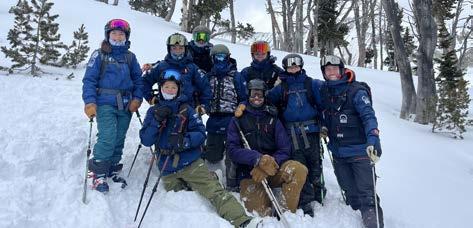
BSSEF freeride team with Coach Wallace Casper. PHOTO COURTESY OF WALLACE CASPER
BIG SKY’S HAYES LIVERNOIS TO COMPETE IN HIS THIRD FREERIDE WORLD TOUR
JUNIOR CHAMPIONSHIP
LIVERNOIS WILL CAP OFF HIS JUNIOR CAREER IN KAPPL AUSTRIA NEXT WEEK, THEN AIMS TO QUALIFY FOR THE ADULT 2027 FWT
BY MARIO CARR EBS CONTRIBUTOR
Brother and sister Hayes and Kira Livernois dreamed of competing at this Junior Championship together, but after Kira suffered a season-ending knee injury last year, Hayes will represent the Livernois family alone. Both siblings have been elite competitors in freeride as teenagers, and hope to one day compete together as adults on the tour.
From Vermont, the Livernois family has spent their winters at a condo in Big Sky since 2020. They believe this mountain has helped them take their freeride to the next level.
“I travel a lot, I love traveling, and every time I come back here I’m excited to ski here again,” Hayes said while riding Challenger with his dad.
Scott Livernois loves to watch his kids compete and excel in freeride and is excited to see what the increased level of competition will bring out of Hayes.
“He’s been at the top of the sport for three years. I’m excited for him, and for him to be able to do what he wants to do now,” Scott said.
Junior freeride competitions do not allow athletes to produce inverted tricks, but there are no restrictions at the adult level.
“There’s a lot of stuff that I would’ve liked to do–flat spins, corks and all that… but now it’s like you don’t have to worry about that at all, anything goes… I just love skiing and I really also like to
show everybody what I’m capable of.” Hayes said.
Hayes is a confident skier who doesn’t shy away from the competitive nature of freeride. It’s the competition that motivates him to continue progressing.
“I’m always chasing that feeling of when I go through the finish gates after I land a sick run,” Hayes said.
One of the areas where he has grown the most over the past few years is in the air. Big Sky Ski Education Foundation Freeride Coach Wallace Casper, and Freeskiing Coach Cody Ling with Bridger Ski Foundation had positive things to say about Hayes’ evolution as a skier, and his potential in freeride at the adult level. By working hard and working consistently in freeride, as well as the terrain park, Hayes has set himself apart from other riders.
“He’s an extremely talented skier with a great foundation… But the more time he has spent in the park, the more I’ve seen his style develop and he just looks so smooth and effortless as he’s riding the mountain now,” Coach Ling said.
Ling also mentioned that freeride is 90% mental and 10% ability based, and that Hayes has a good head on his shoulders. He believes Hayes is confident and carries himself with humility while letting his skiing do the talking. Ling also believes he’s got another great thing going for him in his sister Kira.
“When you do see two siblings that are finding success in the same sport and same discipline, I
think some pretty special things happen. So it’s so cool to see the way that those two support each other,” Ling said.
Coach Casper took notice of Hayes in a Big Sky competition back in 2019, and let his father Scott know that he saw great potential. Over the course of his junior career, it’s Hayes’ consistency that has impressed Casper the most and that consistency will be the key to success at the adult level.
“It’s really rare you see the kid crash. He’ll push things pretty hard and he’s pretty dialed in with what he can pull off… That’s how you make it to the Tour, by being consistent like that and consistently getting good scores,” Casper said.
Hayes sees the mountain from a unique angle, according to his coaches. Casper explained that he is a perpetual optimist when it comes to seeing his way through challenging lines.
“He’s not cocky, he’s confident. He knows what he can do and he does it… You don’t get to Hayes’ level just by natural talent… He really works hard.”
Livernois has placed in the top three for the past three years as a junior rider and because he is competing at the championship once again this year, he will automatically qualify for four-star events at the adult level. By choosing to forgo the first four-star event of the adult season for his junior championship, Livernois will have four more competitions in which his top three scores will be taken in order to qualify for the Challenger Series where he can fight to earn the right to compete on the Pro Tour in 2027.
PHOTO BY TIM RADIGAN
ENVIRONMENT
NEW U.S. 191 BILLBOARDS WARN DRIVERS OF CROSSING WILDLIFE
COURTNEY COLLINS, JIM WINJUM DONATE SPACE FOR A CRITICAL MESSAGE
BY MIRA BRODY VP MEDIA
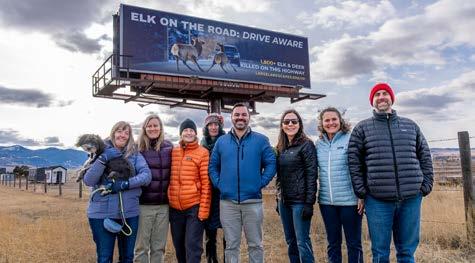
It’s treacherous work, crossing U.S. Highway 191 on foot, as I found out last week while doing so to join a group of wildlife advocates standing under a new wildlife safety billboard just south of Gallatin Gateway. From the road’s edge, I got a strong sense of what elk, deer and other creatures felt playing Frogger along a stretch of road that sees nearly 8,000 commuters from Bozeman to Big Sky each day. It was loud, overstimulating, vulnerable and not at all a task I’d want as a part of my species’ survival.
As another semi truck roared by at 60 mph, I turned my attention to the north-facing billboard around which the group had gathered. The message is clear: “Elk on the road: Drive aware.”
I’m crossing at what researchers from the nonprofit organization Center for Large Landscape Conservation identified in 2024 as a hotspot for wildlife-vehicle collisions. And while the data is staggering—2,625 white-tailed deer, 625 mule deer and 312 elk struck in Gallatin County between 2008 and 2022—the everyday, visual proof is in the blood-stained asphalt and frequent carcasses along the side of the highway.
Those visuals are what motivated two individuals— Courtney Collins of Courtney Collins Fine Art Gallery in Big Sky, and Jim Winjum, owner of Bozeman-based Kenetrek Boots—to donate their billboard space so wildlife and driver safety messaging could be visible for both north-bound and south-bound drivers. And while it’s not the ribbon-cutting event we hope to someday celebrate with a real wildlife crossing that spans the highway allowing animals to safely migrate in their habitat, the pair of billboards represent a symbolic step in a journey to get there.
“That’s that location—where the two billboards are on either end—is exactly where our wildlife crossings would go,” CLLC’s Chief Strategy Officer, Deb Kmon Davidson said, joined
under the billboard’s shadow by a handful of other CLLC staff.
The multi-stepped effort toward a permanent wildlife crossing takes patience amid “the wheels of government” that “sometimes turn slowly,” said Holly Pippel. “In the long run, we’re hoping for more permanent measures.”
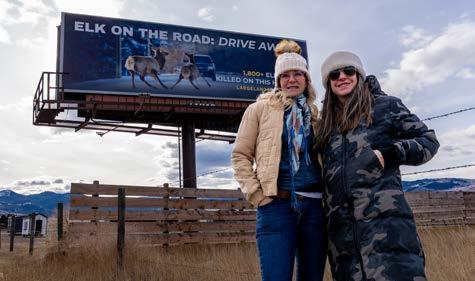
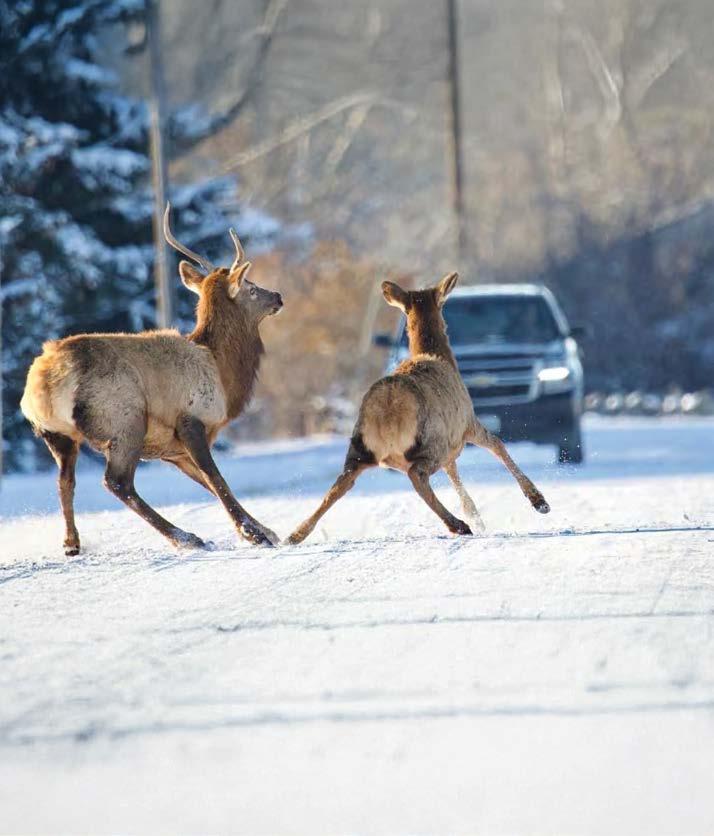
Pippel is a Gallatin Gateway photographer and wildlife advocate who uses her visual medium to communicate the dire straits local wildlife face along this corridor. Her image of elk scrambling to avoid an oncoming car on an icy roadway is featured on the billboard, which was designed by Explore Big Sky’s publisher, Outlaw Partners. While organizations like CLLC and advocates like Pippel work to make that wildlife crossing a reality, the billboards will serve as a warning, conveying an important message to commuters and visitors alike.
“These two billboards are to remind drivers to be aware, slow down, keep their eyes out for elk on the road,” Pippel said. “Elk at this time of year trying to find forage and food and water. And they often
need to move from one side of the road to the other.”
The next step, Pippel and Kmon Davidson explained, is that Montana Department of Transportation will approve solar-light elk crossing signage, similar to the bighorn sheep warnings drivers see as they head further south into Big Sky. “It has been proven already by other successful wildlife crossings that if we can blend engineering with empathy, we can share the land,” Collins told EBS. “I want to help the Center for Large Landscapes’ efforts in any possible way I can.”
While CLLC’s project proposal was rejected last December, Elizabeth Fairbank, road ecologist with CLLC, told EBS shortly after that news, that their team is “not giving up on this project.”
For Collins, the decision to donate her billboard was motivated by a deep love for wild things.
“For me, it stems from a deep love for animals and a desire to prevent suffering. … It hurts to think about the dangers they face, especially on busy roadways,” Collins said. “This billboard represents my commitment to raising awareness and making a positive impact, even if it is in my own unique way.”
“We’re hoping it makes a difference,” Pippel said. “We’re hoping people look up and not at their phones as they come out of the canyon and we can save a few lives.”
As we talk, cars and trucks continue to whizz by the highway. On our side of the road just up the hill from a mowed hayfield, a large herd of elk lay bedded. As our scent became wind-bound to their nostrils, a few stood to get a better view of us. I wondered if they’d try to cross the road that evening, and if they’d all make it.
“We’re distracted as a culture,” Pippel said. “It’s time to get our feet back on the ground and pay attention and start to cherish our wildlife a little more.”
Center for Large Landscape Conservation staff celebrate a milestone along a wildlife-vehicle hotspot in Gallatin Gateway. PHOTO BY MICHAEL RUEBUSCH
Holly Pippel, photographer, and Courtney Collins, donor of the billboard. PHOTO BY MICHAEL RUEBUSCH
DISPATCHES FROM THE WILD: TAMING THE BIG SKY
WHAT PROGRESS REALLY COSTS IN MONTANA’S LAST WILD VALLEYS
BY BENJAMIN ALVA POLLEY EBS COLUMNIST
Everyone wants their slice of heaven—a piece of paradise to call their own. For those with the means, Big Sky, Montana, and the Yellowstone Club promise exactly that: sweeping peaks, deep snow and the feeling of living on the edge of true wilderness.
The dream is simple: a winter or summer home high in the mountains, in a country where grizzlies, wolves and elk still occasionally roam. But the transformation that follows—trees felled, ground torn up, driveways and foundations poured, houses and lodges rising—quietly reshapes who and what can live here. Over time, the wild visitors that helped sell the dream often stop coming through.
Big Sky and the Yellowstone Club sit inside the Greater Yellowstone Ecosystem, one of the largest relatively intact temperate ecosystems left on the planet. They also lie along the path of the Yellowstone to Yukon Initiative, a conservation effort designed to maintain connected habitat from Wyoming to the Yukon for wide-ranging species like grizzlies, lynx, wolverines and wolves. What happens here doesn’t just affect a single town; it influences a continental wildlife corridor.
The scale of Big Sky depends on what you measure. The skiable terrain covers roughly 5,850 acres— about 9.14 square miles. The core development area, including Town Center and Meadow Village, occupies around 165 acres. Look at the broader geographic district and the service area tied to it, and Big Sky’s influence stretches to an estimated 228.1 square miles, or about 76,800 acres. That’s a significant footprint for communities that remain unincorporated, with no mayor and limited formal local government.
This raises a straightforward but essential question: What is the true cost—to land, wildlife and water—of turning a high mountain valley of our public lands into a global destination?
Places like Big Sky are among the last wild-adjacent landscapes in the Lower 48 that people can still buy into. They are also emblematic of a global pattern: wild rural ground steadily converted into human habitat. Lance Richardson, in his comprehensive 2025 book True Nature: The Pilgrimage of Peter Matthiessen, discusses how he and one of his wives, Deborah, separately expressed sentiments in 1961 that captured the tension surrounding their home place, Sagaponack, New York, which could easily be applicable today as Big Sky.
“I am heartbroken. This place is among the last remaining places and is representative of what the world is becoming that humans feel they must occupy,” his recorded his wife Deborah stating. “It is being emptied inexorably and stuffed with stale inert matter and all the lovely potential of being human crowded into small pockets of lessening possibility.”
“It is not a question of standing in the way of ‘progress’; it is a question of understanding what true progress is,” Matthiessen himself remarked in an issue of the The East Hampton Star. “What progress is not is condemning one (1-1.5) million acres of American land per year to asphalt; every year we have more highways (and more people) and every year we have fewer places left to go. ‘Progress’ is the last refuge of the speculator and the spoiler…”
One million acres a year—an area roughly the size of a Glacier National Park—disappears annually beneath pavement and development in the U.S. Big Sky’s share of that number is small on a national scale, but its location in the GYE gives its choices outsized ecological weight.
This isn’t a simple story of villains and victims. Big Sky generates jobs, income and philanthropic support. It has helped fund schools, health care and nonprofits in a region where such services can be fragile. Construction workers, lift operators, teachers, nurses, guides, servers and small business owners all depend on the local economy, whether in Big Sky or the neighboring counties of Gallatin, Madison, or Broadwater Counties.
At the same time every new subdivision, driveway and widened road narrows the options for wildlife and strains local resources. Fencing and traffic affect how elk, deer and carnivores move. Nighttime light and noise reach once-dark valleys. Demand for water—for snowmaking, landscaping and homes— adds pressure to rivers and aquifers that native fish and wildlife rely on.
The point is not that people should leave or stop coming. That debate is already over. The real question is what kind of community will emerge here, and how much wildness it will still hold.
Answering that question requires rethinking what we mean by progress, as Matthiessen did. If progress is measured only in square footage, lane miles and skier visits, the trajectory is familiar: expansion outward, incremental loss of habitat, and a gradual thinning of the wild. But progress can also mean restraint and creativity—clustered
development instead of sprawl, building vertically instead of horizontally, dark-sky policies, wildlifefriendly fencing and firm protection of key migration corridors and riparian areas.
Because of where it sits, Big Sky is a test case. Can a high-end resort community in the heart of a world-class ecosystem chart a path that allows people and wildlife to persist together? Can it design growth around the needs of grizzlies and elk as intentionally as it designs lift networks and luxury homes? Can it treat water, open space and dark nights as assets as valuable as real estate?
Those choices will not be made in a single sweeping decision, but in a series of small ones: zoning hearings, road plans, building approvals, conservation easements, water treatment plants. Each one nudges the balance between development and wildness.
This op-ed is not a call to lock the gate or freeze Big Sky in time. It is an invitation to look closely— to acknowledge that we are shaping one of the last great temperate ecosystems every time we build, pave or protect. Progress here does not have to mean repeating the mistakes that turned other mountain valleys into congested, overbuilt corridors.
For now, Big Sky remains a place where you can still see stars unbroken by city glow, hear elk bugling in the fall and, on the right morning, find bear tracks along a muddy trail. Those experiences are not guaranteed. They depend on what we choose to value.
The wild in Big Sky is no longer a backdrop; it is a partner in negotiation. How we conduct that negotiation—how we define progress in this corner of Montana—will say as much about us as it does about the mountains themselves.
Benjamin Alva Polley is a place-based storyteller. His words have been published in Rolling Stone, Esquire, Field & Stream, The Guardian, Men’s Journal, Outside, Popular Science, Sierra, and WWF, among other notable publications, which can be viewed on his website.
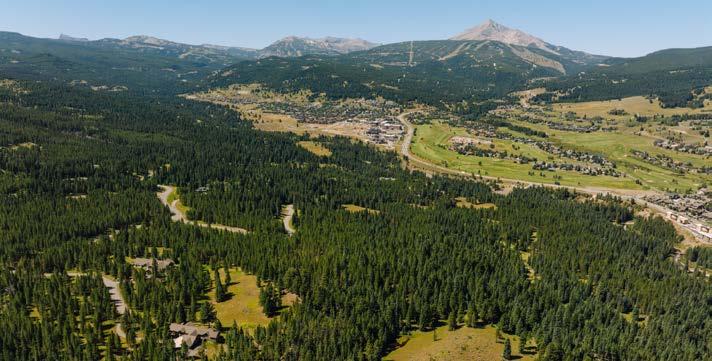
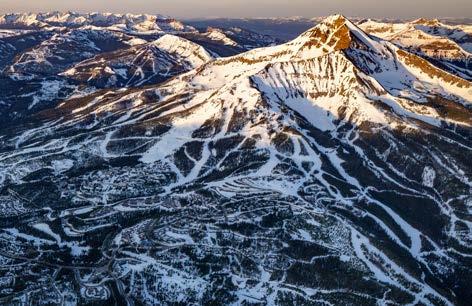
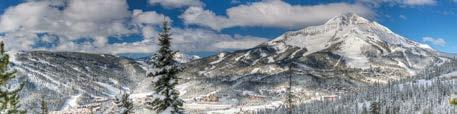
Lone Mountain Aerial view to the south of Lone Mountain and Big Sky. PHOTO BY CHRIS BOYER/LIGHTHAWK.ORG
GNFAC: WATCH OUT BELOW! ENVIRONMENT
BY IAN HOYER EBS COLUMNIST
When avalanche conditions are dangerous, staying off steep slopes is an important piece of staying safe while riding in the mountains, but it isn’t enough.
For an avalanche to break, some part of the slope has to be steeper than 30 degrees. However, that doesn’t mean you’re safe if you just stay off those steep slopes. Avalanches can be triggered from lower-angled (or even flat) slopes and break above you, below you or sometimes hundreds or thousands of feet away. If you’re too close below a steep slope when you trigger an avalanche, that avalanche is going to run downhill and hit you from above. Depending on how big that slope is, the snow could be moving 60-80 mph by the time it hits you. When the snow stops moving, it’ll pile up on top of you, burying you deeply near the bottom of the debris. An avalanche airbag pack won’t help much, because you won’t be tumbled far enough for it to do its job and push you towards the surface. If all this sounds like crossing beneath steep slopes can be dangerous, that’s correct—it is.
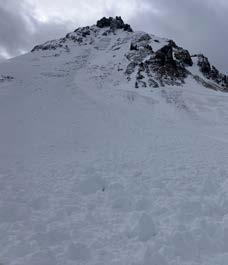
An avalanche earlier this season near Cooke City demonstrates these dangers well. The avalanche occurred first thing in the morning on Dec. 11. There were feet of fresh snow following the first
big storm of the season. There had been avalanche warnings issued the previous two days. Snowfall had stopped the previous afternoon and avalanche danger remained “Considerable.”
A group of two riders left town, rode up to Daisy Pass and one of the riders dropped over the back side. He was the first rider to cross the pass this day (and likely the first in several days). His route was not in steep terrain, but it did cross beneath the steep northeast face of Crown Butte. As he descended, he triggered a big avalanche that broke 800 feet uphill of him, 500 feet wide and 4-6 feet deep. He was fully buried beneath 2-3 feet of snow,
but luckily was wearing an avalanche transceiver and was located and dug out quickly by wellprepared onlookers. A happy end to the story, but one that wasn’t at all assured.
So, what happened? I have personally dropped over Daisy Pass dozens, if not hundreds, of times. There are many times when it is a totally reasonable route—except not on that day. It just wasn’t the day to be crossing underneath steep slopes. When avalanche conditions are dangerous, particularly if there are weak layers buried at the base of the snowpack (as there were on that day), you’ll want to avoid all avalanche terrain. That means steep slopes, but also means the runout zones beneath them.
How can you know conditions are dangerous? Reading your local avalanche forecast is the easiest way. The avalanche forecast will tell you when you are likely to trigger avalanches and will also highlight when you’re most likely to be able to trigger slides from the below. When these conditions exist, stay far away from steep slopes. If it isn’t possible to stay out of the runout zone, choose a different area to ride where there isn’t any hazard above you and come back when conditions are less dangerous.
You can find your local forecast at avalanche.org. Ian Hoyer is a forecaster with the Gallatin National forest Avalanche Center.
Ian Hoyer is a forcaster with the Gallatin National Forest Avalanche Center.
Montana Junior Hockey: So Hot
Jackson Hole’s Brainiac
Cats & Dogs: MSU vs Yale Bulldogs
View from avalanche burial location, looking up on Crown Butte on Dec. 11. PHOTO COURTESY OF GNFAC
A&E
ON THE ROAD,
AND AT HOME MUSICIAN ANNIE CLEMENTS IS REWRITING THE RULES AS A MOM ON TOUR, WHILE RAISING KIDS IN BIG SKY
BY LESLIE KILGORE EBS STAFF
On any given day in Big Sky, you might find Annie Clements holding down the bass guitar on stage, teaching a student how to trust their ear, or heading home just in time to tuck her two kids into bed–music and parenthood is a rhythm she’s worked decades to perfect. It’s shaped by world tours, late night load-ins, family sacrifices and a deep belief that a career in music doesn’t have to disappear when motherhood begins.
“I like to say we’ve retired and moved to a ski community,” Clements told EBS with a laugh. “But we’re actually playing more music than ever before.”
Clements is a Grammy-level touring bassist whose résumé includes playing with bands like Sugarland, Little Big Town, Amos Lee, Miranda Lambert, Maren Morris, Jason Isbell and countless sessions and stages across the globe. She’s also a mom, a wife, a music educator, a Big Sky local and now the central voice in a new documentary that aims to change how the music industry supports working mothers.
The film, currently titled “Mom Bus” and scheduled to debut in 2027, follows Clements and other professional touring musicians as they navigate pregnancy, parenting, contracts and careers on the road. Its goal is simple and somewhat radical.
As Clements puts it: “Nobody ever asks the dude drummer what he’s going to do when his wife gets pregnant. It’s never a question for him. But for women, it’s always the question.”
Clements’ life in music started early. Her father Cranston Clements was a touring electric guitarist who played with legends like Dr. John, Boz Scaggs, Maria Muldaur and the Neville Brothers, to name a few. Music wasn’t a hobby in her household; it was a way to make a living and support a family.
“I grew up not only surrounded by music, but with the living example of how to make a living playing music,” she says. “There was never any fear about how it worked. I’d already seen it.”
With a successful attorney mom, her parents’ contrasting careers gave her a rare blend of structure and creativity. “I was very lucky to have these two very different people shaping the trajectory of my life,” Clements said.
By the time she attended Berklee College of Music in Boston, she already had what her professors called “street knowledge.”
“They’d tell me, ‘You’re already ready to go work,’” Clements recalled. And she did, often scraping by in the early years.
She remembers a moment in New Orleans, Louisiana, at the start of her career, when a $300 gig as one of the orchestra members for a high school production of Singing in the Rain saved her from financial collapse.
“I remember thinking, thank God this showed up when it did,” she said. “That’s the story of the music industry. Right place, right time.”
Her first major break came with Sugarland, where she met her husband, producer and guitarist Thad Beaty, at an audition in 2006. From there, her career took off. Touring internationally, playing stadiums, recording albums and building a reputation as one of Nashville, Tennessee’s most trusted bass players.
But even at the top, the dream didn’t always support women who wanted families.
“I kept asking myself, how am I going to do this?” Clements said. “How do I have a family and keep my career?”
She pursued In Vitro Fertilization while touring, giving herself what she calls “a lifeline” and a choice. When she became pregnant alongside Maren Morris, the plan was to raise babies on the road together. Then the pandemic hit.
“The entire industry shut down,” she said. “I was seven-and-a-half months pregnant, and I had no idea what I was going to do.”
When touring resumed, bringing a child on the road was no longer an option. “That was really hard for me,” Clements said. “I was back to square one.”
Then, the opportunity for a new life in Big Sky entered the picture for both her and Beaty, through a long-standing friendship with hospitality visionary Rick Reese, who invited Clements and
Beaty to help build a live music culture at Montage Big Sky. What started as a four-month stay turned into a permanent home.
“We lived at the Montage with our daughter for several months when we first arrived,” Clements said. “We turned a walk-in closet into our daughter’s bedroom. We fell in love with the area, the community, the beauty of this place. And once we realized I could still tour based out of Bozeman, we decided, let’s just stay.”
In Big Sky, Clements has found something she’d been chasing for years: sustainability.
“To get to do what I love, and then drive five minutes down the road and tuck my kids in,” she said. “It doesn’t get any better than that.”
She and Beaty quickly became central figures in the Big Sky music scene, organizing songwriter retreats to community concerts. Clements and Beaty co-founded the band Tuesday Night Rodeo Club with Bozeman-based artist Amanda Stewart. Now a staple in Big Sky and the winner of Best of Big Sky’s “Best Band” in 2025, the band performs regularly in southwest Montana and beyond. Clements also teaches music to local students at her and Beaty’s Big Sky studio, bringing a teaching method that focuses less on sheet music and more on playing by ear.
“That’s why I teach kids to play by ear,” she said. “That’s how real music works. You listen, you respond, you connect.”
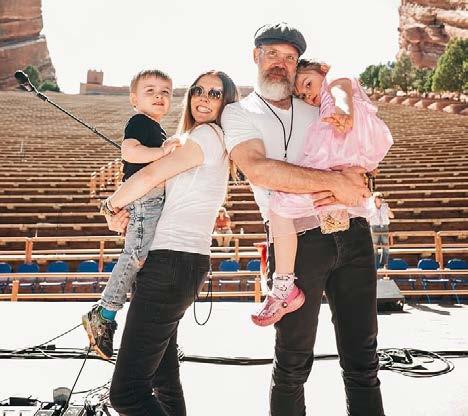
Annie and Thad with kids Hawk and Noura Beaty at sound check at the Red Rocks Amphitheater in May. PHOTO
BY JOSH WEICHMAN
The upcoming documentary, Mom Bus, directed by award-winning filmmaker Dylan McGee, grew out of Clements’ lived reality. It features interviews with Jennifer Nettles of Sugarland, members of Little Big Town, Jason Isbell, and other industry leaders grappling with the same issue–how to keep families together without sacrificing careers.
While the documentary came to fruition, which spans three to four years of Clement’s touring life, she found herself touring again with Sugarland.
“Jennifer so generously invited Thad and me, and our two young children, to ride her tour bus along with her young son. This made it possible for us to accept the invitation to return to the tour with our family.”
Clements explained that she envisions venues offering on-site childcare, tour managers maintaining vetted caregiver lists, and the industry acknowledging that parenting musicians aren’t an exception, they’re the future.
“The ultimate goal is infrastructure,” Clements said. She’s already advocating directly, asking venue managers simple questions: “Could you provide a small room backstage? Do you have a list of childcare providers?”
“This isn’t just about moms,” she added. “It’s about families.”
The message is personal, too. Clements’ own children are growing up the same way she did, surrounded by instruments, rehearsals and the quiet lessons of watching adults working together and supporting one another on tour.
“There’s no playbook for a career in music,” she said. “You learn by doing. And exposing kids to that early makes it feel possible.”
That legacy came full circle recently at the annual Big Sky community performance, “Her Gift, Her Creation” when Clements debuted an original song, “Mama Bear,” written for the documentary. Her daughter Nora joined her on stage.
“She just walked right out, stood next to me, stomped her foot on the beat,” Clements said. “It was so awesome.”
Since moving to Big Sky and raising her family here, success looks a lot different.
“I’ve been to the top of the mountain,” she said. “I’ve checked those boxes.”
What she wants next is impact. “I want to be a living example of what’s possible,” she says. “To show people a path forward.”
In Big Sky, she’s found a place where that path feels wide open.
“When I connect with someone from the stage and they feel seen, that’s what lasts,” Clements said. “Whether it’s 10 people or 10,000.”
“And to get to do all of that,” she added with a smile. “And still be there to read a bedtime story— that’s everything.”
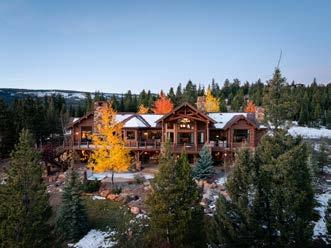
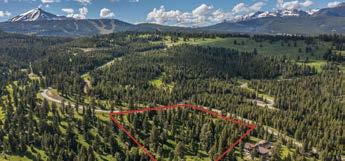
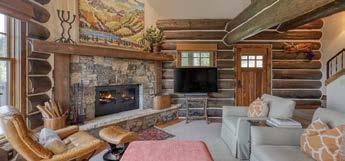
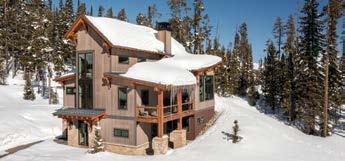
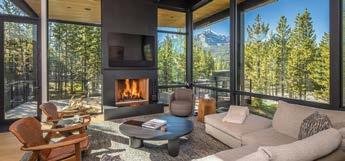
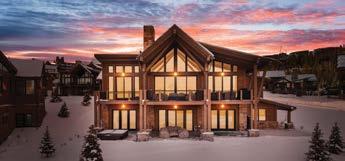
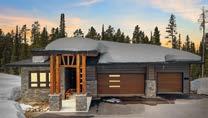
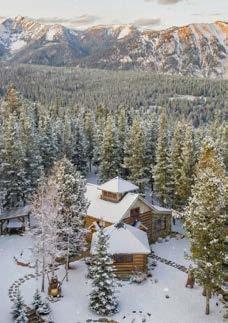
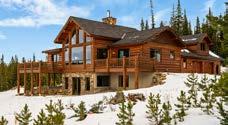
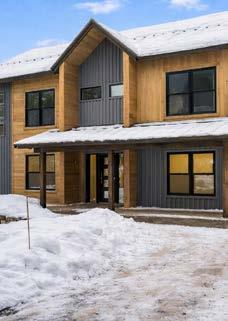
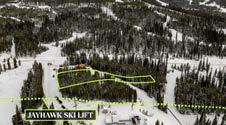
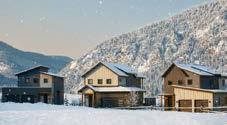
44 Ridgeview Loop, Big Sky
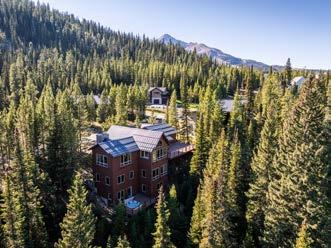
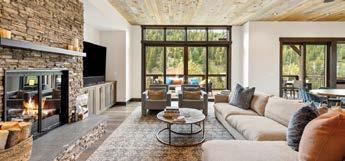
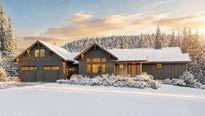
35 Low Dog Road, Big Sky
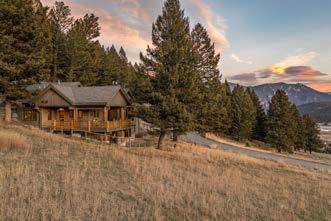
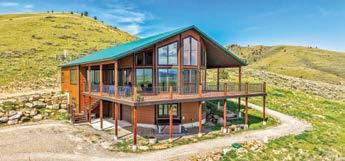
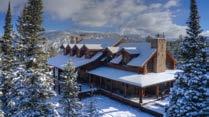
11 Speaking Eagle, Big Sky
Luxury
Annie, joined on stage by daughter Noura, at Her Gift, Her
Creation. PHOTO COURTESY OF ANNIE CLEMENTS
COMMUNITY EVENTS CALENDAR
THURSDAY, JAN. 29
BIG SKY CENTER FOR THE ARTS, 6 P.M.
On Thursday, Jan. 29, artist Russell Brausch will instruct a workshop about how to capture misty mountains through layered watercolor techniques. All skill levels are welcome and Brausch will guide participants step-by-step. Materials are included in the class, which costs $50 or contribute-what-you-can.
Do You or Someone You Know Need Help Getting Sober?
ADOBE STOCK PHOTO
GALLATIN ALPINE SPORTS CELEBRATES 30 YEARS
BY LESLIE KILGORE EBS STAFF
In a town often defined by change, Gallatin Alpine Sports has been a constant for 30 years. As Big Sky has grown from a small mountain community into a world-class destination, this locally owned outdoor retail shop has quietly evolved alongside it, adapting, expanding and continuing to put service first.
Founded in 1995 by Tom Owen, Gallatin Alpine Sports recently marked its 30th anniversary and was also named Best Outdoor Retailer for the annual Best of Big Sky awards, a recognition Owen sees as a reflection of both longevity and community trust.
“I came to Big Sky first in ’94, came back in January of ’95, and opened the shop in the fall of ’95,” Owen said. “I just had a passion for skiing and wanted to move out West.”
Owen arrived from Tennessee after years in the ski and bike industry, including time working in the Teton Mountains.
“Back then, it was a very different town, maybe like 800 people,” he said. “I was in the Blue Mall, where Broken Spoke and Blue Moon Bakery are now. It was kind of crazy at first, but also really fun.”
That first winter delivered one of the snowiest seasons on record, giving the shop an early boost. Owen ran the store with just one employee while juggling trade shows, product orders and the realities of starting a business in a remote mountain town.
In the decades since, Gallatin Alpine Sports has grown into a full-service outdoor shop offering sales, rentals and service for alpine and nordic skiing, snowboarding and biking. The store carries
a curated selection of equipment, apparel and accessories from leading brands, along with bikes, skis and snowboards. Rentals include everything from alpine and Nordic skis to snowshoes and fat tire bikes, serving both locals and visitors year-round.
In 2003, the shop moved into its current location after construction began the year prior. Since then, Owen has focused on staying open year-round and meeting customers where they are, literally, with a focus on deliveries too.
“We are open 52 weeks a year,” he said. “We don’t close. For our customers, but also for our staff, so they have year-round work and aren’t unemployed during the shoulder seasons.”
One of the most significant evolutions of the business has been delivery service, which Owen says has become essential, particularly in the last decade.
“Something that’s really big for us is deliveries,” Owens said. “I’ve been doing them since I opened, but in the last decade, and especially since the pandemic, this has been a necessary growth.”
Today, Gallatin Alpine Sports delivers ski and snowboard rentals in the winter and bikes in the summer directly to homes, condos and hotels throughout Big Sky, offering convenience for visitors while maintaining the personal service locals expect.
“Any outdoor sports business that’s recognizing trends and elevating customer service to meet those demands, that’s paramount,” Owen said.
That service-first philosophy extends to the shop’s staff, many of whom have stayed for years in an industry known for seasonal turnover.
“Just give them a lot of freedom, pay them well, help them out with health insurance, pay their gas from Bozeman,” Owen said. “Take care of them. Make them feel like they have a future here, not just a season.”
Owen credits his employees as the backbone of the business, noting that the shop can operate smoothly even when he’s away.
“Oh, heck yeah,” he said, when asked if the store can run without him day-to-day.
Like many Big Sky businesses, Gallatin Alpine Sports is greatly affected by weather patterns.
“I’ve never seen anything like this,” he said, when asked about the current winter season. “I’ve heard the same when talking to buddies in their 60s who were born and raised in Montana; they also say by far the warmest.”
Despite the unpredictability, Owen remains optimistic and deeply connected to the lifestyle that initially drew him to Big Sky. He still alpine and Nordic skis, cycles and competes in races regularly. “Am I tired? No,” he said. “I still love running the shop.”
After 30 years, it’s clear that Gallatin Alpine Sports remains more than just an outdoor shop. It’s also a reflection of Big Sky itself: resilient, adaptive, community-focused and rooted in a deep love for the outdoors.
Looking ahead, Owen says his vision for the next decade is simple.
“I’d like to see the people who have helped me out so much still doing well,” he said. “And myself, still doing everything I love to do here in the outdoors. “Happiness is pretty key.”
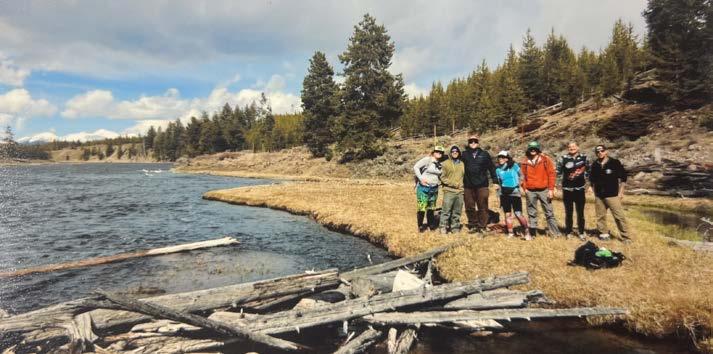
The GAS team on a river trip. PHOTO COURTESY OF TOM OWEN
BY LESLIE KILGORE EBS STAFF
In Big Sky, “making it” often means taking a leap, sometimes across the country and trusting that a good idea, hard work and community focus can carry you forward. For Mike Dawkins, that leap brought his family from Charleston, South Carolina, to southwest Montana, where he launched Bison and Bear Fine Clothing with the belief that even in a casual mountain town, people appreciate quality, fit and personal service when it comes to their wardrobe. Explore Big Sky recently chatted with Dawkins, who shares what drew him to Big Sky, why custom clothing makes sense here, and what it’s been like building a business and a life in a place that values authenticity, ambition, quality of life and family values.
This series is part of a paid partnership with the Big Sky Chamber of Commerce. The following answers have been edited for brevity.
Explore Big Sky: When did you first come to Big Sky, or southwest Montana?
Mike Dawkins: We moved to Bozeman last June. So, it’s been less than a year. I also knew that I was going to spend a lot of time in Big Sky. I figured most of my clientele is going to be in Big Sky as well as Bozeman, so I started going up to Big Sky as often as I could.
EBS: What made you choose to move to southwest Montana from Charleston, South Carolina, with your young family?
MD: It was a combination of a couple different things. My wife and I were working in Charleston and both had really good jobs, making good income, like everything looked good on paper. But at some point, I was like, are you happy because this doesn’t really feel like happiness. I don’t love the trajectory of this. And what I mean by that is, we saw our kids for like two hours a day, and they’re three and five. Having to wake the kids up while it’s still dark out, just to get them to daycare by a certain time, just so that we could get through the rest of the commute to get to our offices—it was a lot. The schedule and kind of the grind of it all became too much. And not that Charleston is a huge city, but it’s a lot bigger than Bozeman and has a much faster pace.
EBS: Did you work in the clothing industry in South Carolina?
MD: Yes, for a brand called Tom James company. They don’t advertise their market or anything, but they’re well-known in most big cities. When I decided to start my own company, I had a noncompete for that region, so I knew our safest bet was to just move to a new territory, start fresh with a new life and business.
EBS: Was it hard to just pick up and start over with young children?
MD: Yes, and we had family saying, “stay closer.” But both my wife and I love the mountains, so
MAKING IT IN BIG SKY: MIKE DAWKINS, OWNER AND FOUNDER OF BISON AND BEAR FINE CLOTHING
we knew this area would be a good fit. And I said, respectfully, if we’re moving to the mountains, we’re going to where the real mountains are.
EBS: So it was the way of life here, along with the opportunity to launch your clothing business?
MD: Yes, it was a combination of Bozeman having the mountains that we wanted, and there was enough population here that I felt like I could launch my company here and there’d be enough people that I could find clientele versus moving to a much smaller market. We felt that Bozeman was on a very, very short list of places that had a big enough population, but still felt small enough that it still has its soul and a community.
EBS: How are you growing your clientele here in Montana?
MD: So that’s interesting because the company I used to work for, they have a very aggressive approach for how to build clientele and I was never really a fan of it, but working for them, I didn’t really have a choice. And what I mean by that is it was kind of like an old-school sales approach, with regular cold calls to gain business. But if you rewind to the early 1900s, for a custom clothier, the tailor was everything.
EBS: So is that how you see your business growing, with talented and experienced tailors?
MD: Yes, but what happens with that business model is you end up with a two-year wait list because a tailor can only do so much. So the more modern version of that is basically, the analogy that I’m the golf caddy in the sense that I know everything I need to know about the game, but I’m not swinging. So I’m not doing the needle and thread work, but when I meet with somebody, I have all of my fabrics. I have the linings, I have all the details. I help them style everything. I measure them. We discuss how they want everything to fit. I’m making recommendations on the style, color and fabrics reflecting my clients’ lifestyles.
EBS: Where are most of your clothes made? Are your tailors based locally?
MD: Some of mine are in the U.S., especially if it’s important for somebody that they have their clothes made in the US. I have tailor shops in the U.S. that I use, and then I also have some overseas. Sometimes if it’s a specialty item, like for instance, sweaters and my custom knits, I haven’t found an American option for that, so I have accounts with different tailor shops around the world that specialize in particular items.
EBS: Is it important to make good connections within the industry globally?
MD: Yes, I go to industry trade shows where I can make connections with brands and manufacturers, Especially the custom manufacturers. Some of the trade shows are where I can go to make relationships and meet people. That’s how I found the company that does my custom jeans.
EBS: Are you finding success in making custom clothes for people who are moving to Montana and want a different type of wardrobe?
MD: Yes, and it is about connections and meeting people. This is a smaller market and a market where a lot of people know each other. I’ve done a lot of networking and introducing myself to people. I’ve met clients and connections in Big Sky just by introducing myself to them, say at the farmer’s market or at Lone Mountain Ranch.
EBS: What do you see as a growing trend for you here in Southwest Montana?
MD: Other than being able to control a fit and make it something truly yours, a big part of what I do is to make clothing for certain people who are hard to fit, they love the personal service and the time they save by not having to shop for pieces on their own.
I can take fit out of the equation. My clothes will be made for you only. I come to them, either at their homes or office, so the whole process is seamless.
EBS: So, a lot of your business model relies on connections and convenience, or an ease of purchasing.
MD: Exactly. And I find many clients through word-of-mouth. I like to meet people at their home because they’re a little bit more relaxed and less distracted. They don’t have to focus on deadlines and emails.
EBS: My last question, as a new resident to Montana, what have you enjoyed most about your new life since you moved here last June?
MD: My wife and I are loving seeing our kids outdoors all the time. I come home from work and they are often playing outside and run up to greet me. Seeing them outside all the time in such a beautiful setting, It’s one of my favorite things here. We are also all going to take up skiing together, which I am looking forward to. And I love going on family drives, where the kids are looking out the back at the beautiful scenery and taking it all in. That’s worth everything.
PHOTO COURTESY OF MIKE DAWKINS
BIG SKY LISTINGS
BIG SKY COMMERCIAL LISTINGS
IT’S TIME TO PROTECT THE ELK AND DEER HERDS OF GALLATIN GATEWAY AND BIG SKY
3,562
Deer and Elk were killed by vehicles in Gallatin County since 2008.
PRIORITIZE WILDLIFE CROSSING SOLUTIONS. SUPPORT AND DONATE TODAY.
OPINION
SKI TOWN VIGNETTES: NEW YEAR, NEW LIGHT
BY NIELSEN GREINER EBS COLUMNIST
It’s dark this time of year. And, for some of us, not just the short days themselves.
The American Psychiatric Association states that “two in five Americans say their mood worsens in winter.” And, according to Forbes, Montana ranks sixth as a state “most likely to be impacted by the winter blues.”
The previous two years, I bypassed Big Sky’s early winter in New Zealand, thru-hiking Te Araroa— “The Long Pathway”—in two different trips. Going to sleep early in my tent to the otherworldly sound of a Tūī’s song in fading light, and waking up early to low sunlight on damp mornings, I certainly didn’t mind the long summer days of the southern hemisphere before returning to the already lengthening days, and deeper snowpack, in Montana.
This year, after a few months of summer travel in Canada and Alaska, I stuck around—no escaping early winter darkness, this time.
At a Christmas Eve service, I caught up with a friend I haven’t seen in a while. We discussed the difficulty of early winter’s long nights and austere daylight. “I’ve tried all kinds of vitamins and supplements, but nothing’s worked,” he told me. What does work?
Montana Psychiatry and Brain Health Center gives some tips for coping with “the winter blues,” otherwise known as seasonal affective disorder. Exercise, outdoor activity and maintaining a routine are on the list.
This time of year, some mornings you force yourself out of bed for your job, or the resort, or the backcountry, or the gym, or some extra coffee and quiet before the day gets rolling. When the sun finally—finally!—finds its way into the sky, your whole being breathes a sigh of relief and manages to wake up a little.
Recently, I clocked my first day of splitboarding this season. I set an alarm on my phone and pulled myself out of bed when it screamed at me, though I would have rather kept sleeping. After caffeine and breakfast and giving myself some time to wake up, I loaded my gear in the truck and drove the slick roads to my destination, the first to arrive.
With cold hands, I put on snowboard boots in the icy air, ripped and applied skins to my splitboard, turned on my avalanche beacon and walked off into the woods under a traversing sun that cast the dark shadows of skeletal trees on fresh, glistening snow. The shifting shadows on bright white were beautiful, a natural work of abstract art.
There was no skintrack, and I broke trail to the top, stopping to observe thick hoar frost growing on a rusty branch. Like the snow, it also glistened, bright as a distant star shining in a dark night.
There’s always a little light waiting for you somewhere. Sometimes you just have to force yourself out of the darkness—or your bed—to find it.
Nielsen Greiner is an aspiring writer, outdoor enthusiast, and small business owner based in Big Sky. He loves snowboarding and splitboarding, mountain biking, long day hikes and truck camping in the woods, and has a thing for books, coffee, trees and birds. This summer, Nielsen lived out of his truck while traveling through Canada and Alaska for two months. To read more, visit nielseninthewild.com.
BACK 40
For Explore Big Sky, the Back 40 is a resource: a place where we can delve into subjects and ask experts to share their knowledge. Here, we highlight stories from our flagship sister publication Mountain Outlaw magazine.
“LET’S JUST DO THE FUN PART” FULLY RAD WISDOM FROM BRENDAN LEONARD
BY MAGGIE NEAL DOHERTY
Brendan Leonard is running to our interview. No, he’s not running late but rather, we’re meeting at the Missoula Public Library, and it’s on his route after descending Mt. Sentinel, the trail he runs twice a week. In only a handful of miles, the path ascends 2,000 vertical feet from the University of Montana’s iconic “M” to the summit.
But it’s not nostalgia for his college years that draws him back, run after run. Leonard, an Iowa native, first came to Missoula in 2004 to attend graduate school for journalism. These days, the pull of Mt. Sentinel is less academic and more personal.
After shedding his running vest, Leonard said he just loves the climb, especially the small forest near the top. He estimates he’s done it 170 times, though Strava, the fitness tracking app, could likely provide a more accurate tally. He’s not boasting; the number is simply a testament to his connection with this landscape. Leonard returned to Missoula with his wife in 2020, and they now have a 3-year-old son. Trail runs around the valley have become part of his rhythm and routine.
Besides, bragging in any form—whether about athletic feats or his accomplishments as an author, illustrator, and award-winning filmmaker— isn’t his style. It doesn’t fit with the ethos of Semi-Rad, the website he launched in 2011 that celebrates everyday adventures and creativity. The site is for people like him: people who enjoy running or skiing or camping but aren’t professional athletes or the type who take their Strava accounts too seriously.
The first spark of Semi-Rad was born from his frustrations working as a freelance journalist after graduate school. He found a lot of the assignments in adventure and outdoor magazines lacking
and the work inconsistent. Much of the glossy adventure magazine world tends to hinge upon a familiar trifecta: triumph, tragedy, or buy this new (expensive) gear. But Leonard wanted something different. He was drawn to the intersection of adventure, maximum enthusiasm (his phrase), and meaningful self-inquiry, the latter of which was the basis of his first two books, The New American Road Trip Mixtape and Sixty Meters to Anywhere. In fact, he probably has a Venn diagram somewhere depicting this exploration.
He was also inspired by his friend Fitz Cahall, who launched the Dirt Bag Diaries in 2007— a mountain culture storytelling podcast—and eventually turned it into a full-time job. If someone like Cahall who recorded stories in his closet could transform his passion project into a career, then Leonard figured he could make stuff all on his own, too.
“I just wanted to do funny stuff and people [magazine editors] didn’t want funny stuff so I was going to do it on my own website,” he said.
Semi-Rad started as a place to share his blog posts and illustrations that had become popular such as “Do You Have Obsessive Campfire Adjustment Syndrome?” and “Hopefully This Beer Is Thanks Enough: A Gratitude Scale for Outdoors Folk,” and his work expanded into social media, including Instagram and YouTube. His weekly newsletter has 15,000 subscribers, and he’s been published in some of the magazines he always aspired to write for, including Alpinist, National Geographic Adventure, Adventure Journal, and Outside, where he was a columnist for six years.
Steve Casimiro, the founder of Adventure Journal, calls Leonard this generation’s leading voice of outdoor writers. In the foreword to Leonard’s Bears Don’t Care About Your Problems, he writes, “Today in this post-millennial, rapidly changing, pre-
who-knows-what era, there is Brendan Leonard— self-deprecating, open-hearted, considerate, and respectful, the voice of humility and optimism and stoke.”
Leonard has written a dozen books, including quirky and inspiring guidebooks on adventure, outdoor survival, creativity, and running. Some are collections of essays from his website. Others are slim tomes including 15-Second Recipes: A Cookbook for Busy People which includes delicacies like “Deconstructed Cereal” and “10-Second Cheese Sandwich.” His most recent book, Ultra-Something, published in 2024, is an exploration into the quirks of human nature and its expressions of endurance: from distance runners like himself to football teams and factory workers. Like most of his books, it includes his illustrations, a clever take on charts and graphs. The range of his creative work and output is staggering, particularly for a person who routinely runs ultramarathons, climbs mountains, and has a family. He also teaches courses on essay writing through his website and with Missoula’s Freeflow Institute.
Yet Leonard, doesn’t view his multi-channel storytelling work as prescient for an industry that now requires writers to have a diverse platform and legions of followers, though he’s long garnered both. “I’m just somebody trying a bunch of stuff and trying to avoid having to get a real job,” he said.
Now 47, he has given himself permission to create what he wants and has a lot of fun doing it. Although outdoor adventures have taken him all over the world, including competing in the Motatapu 52K Ultra in New Zealand last March, he also likes standing on peaks closer to home.
Two years ago, he created his own choose-yourown-adventure project, a riff on the Seven Summits endeavor to climb the highest mountains on all seven continents. That type of expedition, created
Noun: wild or rough terrain adjacent to a developed area Origin: shortened form of “back 40 acres”
Brendan Leonard works in his home office in Missoula, where he writes a newsletter, shares poetry on Strava and creates illustrations. PHOTO BY BOBBY JEHRIG
by mountaineer Dick Bass in 1986, requires a lot of time away from home and comes with a price tag of hundreds of thousands of dollars. As a middle-aged dad, Leonard didn’t have the cash or the time, and recalled his fondness for the choose-your-own-adventure books he read as a child. Instead of traveling across the world, he formulated his own version of the Seven Summits: The Seven Summits of My Neighborhood, which he documented in a short film in 2023. He selected the seven mountains within a 20-mile radius of Missoula and climbed them, sometimes with his mom, Kathy, sometimes solo, or with a friend. It was an entirely human powered mission, biking to trailheads if the approach took longer than his regular neighborhood dog walk.
The project is also Leonard’s way of reminding people that adventure doesn’t need to be intense, expensive or global. “You should be able to do things closer to home and still have fun with it,” he explained. “Otherwise, you’re just setting yourself up and giving yourself excuses. There are literally thousands of mountains in the world. Just go pick one. I guarantee you’re going to have a good time.”
Through his writing, illustrations, and films, Leonard offers an expansive and approachable concept of adventure—one that’s relatable, refreshing and grounded in humility and humor. His work encourages people to create their own version of The Seven Summits of My Neighborhood or pursue another creative endeavor.
Embedded in Leonard’s storytelling and his own endeavors is a simple perspective: “Most of us are just f*****g around in the woods and that’s great.” As a father, his approach to adventure has shifted.
“My working definition of adventure, at this point, is any self-directed undertaking with an unknown outcome, which includes bike rides around the neighborhood with my 3-year-old.”
Whether he’s creating a cartoon video on how an average runner can survive an ultramarathon or having his mom introduce his new books on his YouTube channel, Leonard continues to deliver an inviting, accessible, and motivating message about adventure and the outdoors, applicable to regular
folks and elite athletes alike. He shared a final tenet of Semi-Radism, before running home, “Let’s just do the fun part.”
Maggie Neal Doherty is a freelance journalist, opinion columnist, and book critic, and lives with her family in Kalispell, Montana. She teaches writing at Flathead Valley Community College. Her work has appeared in The Guardian, Washington Post, LA Times, SKI, and more.
Leonard holds a stack of his published books, which cover topics from ultrarunning and camping to cooking and life’s quirks–many of them illustrated in his signature style. PHOTO BY BOBBY JEHRIG