5 0 6 1 2 1 6 20 26 29
5 0 6 1 2 1 6 20 26 29

REPRODUCTION OF EDITORIAL, PHOTOGRAPHIC OR ADVERTISING CONTENT WITHOUT WRITTEN CONSENT OF THE PUBLISHER IS STRICTLY PROHIBITED. ADVERTISERS ARE RESPONSIBLE FOR SECURING RIGHTS TO ANY COPYRIGHTED MATERIAL WITHIN THEIR ADVERTISEMENTS. PUBLISHER ASSUMES NO RESPONSIBILITY FOR THE CLAIMS OF ADVERTISERS AND RESERVES THE RIGHT TO
ASSUMES NO RESPONSIBILITY FOR THE LOSS OR DAMAGE OF MATERIALS SUBMITTED. OPINIONS

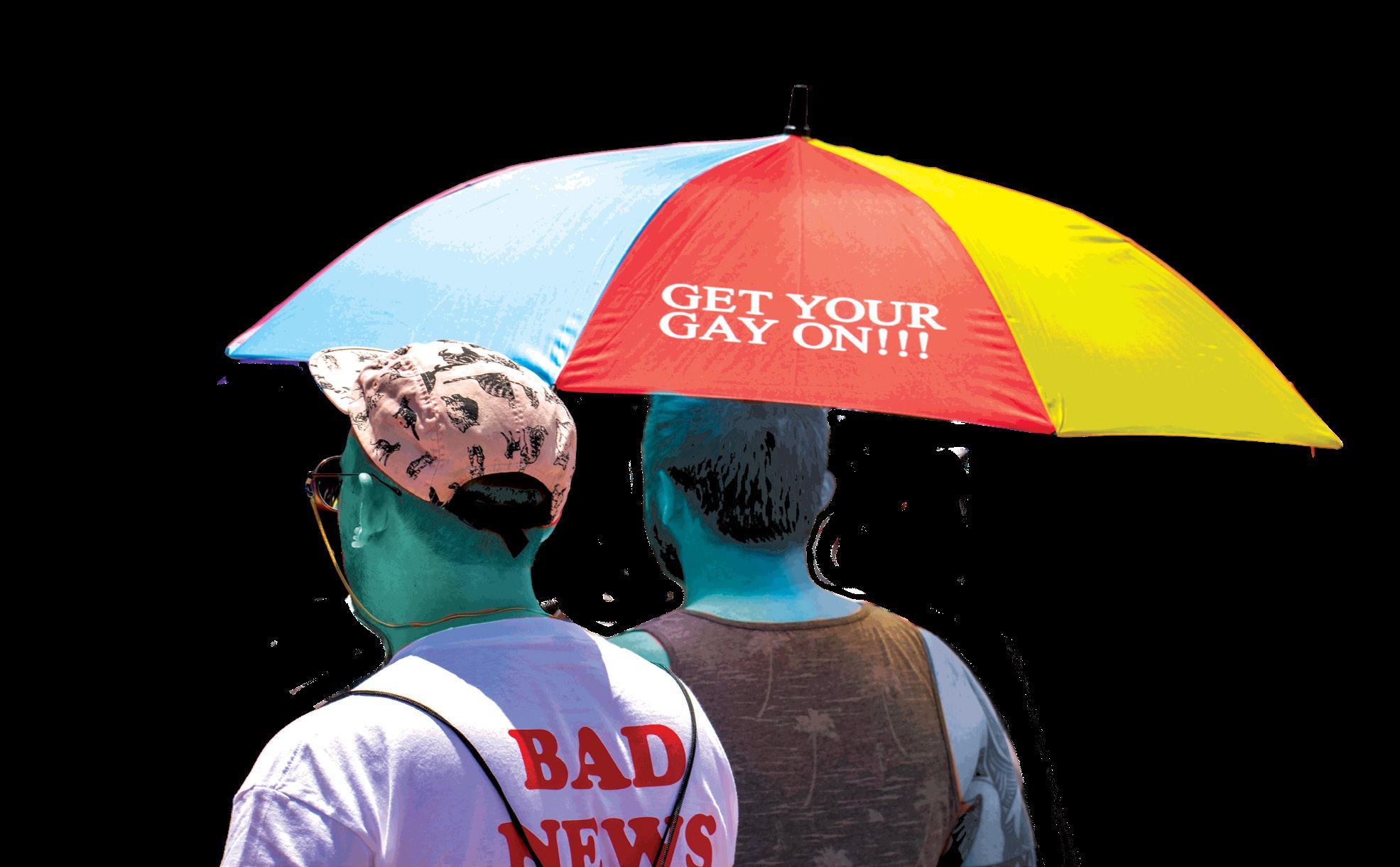

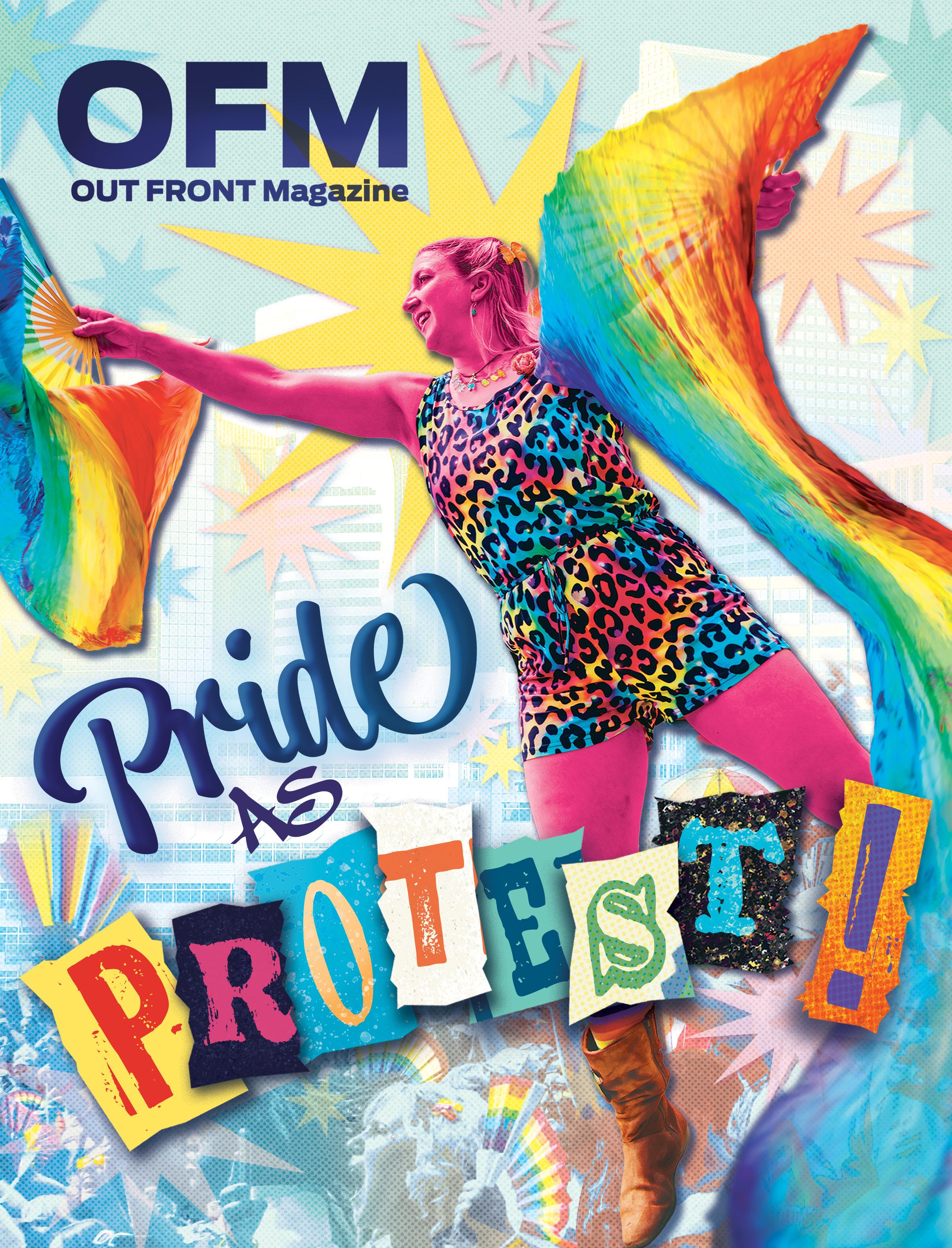
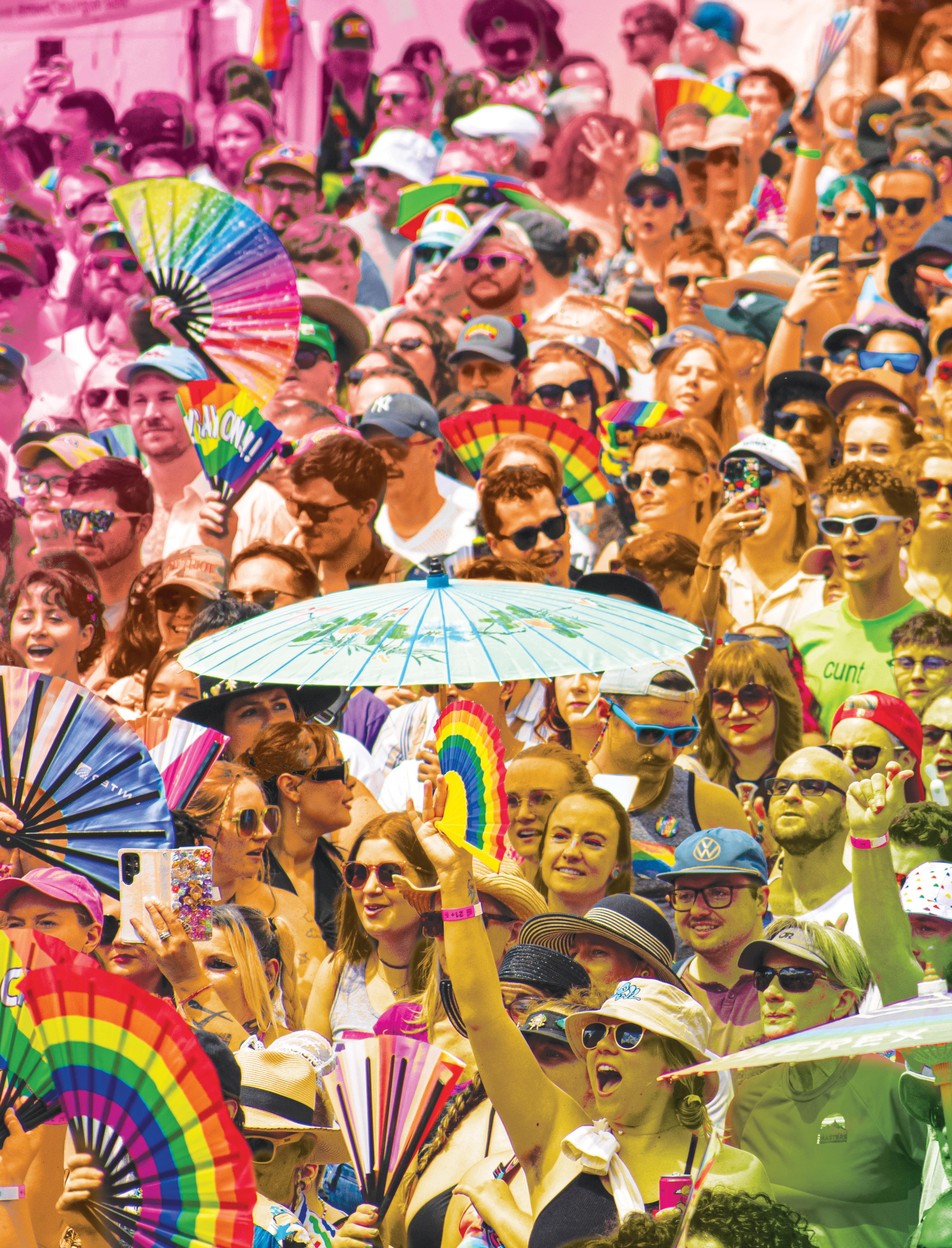
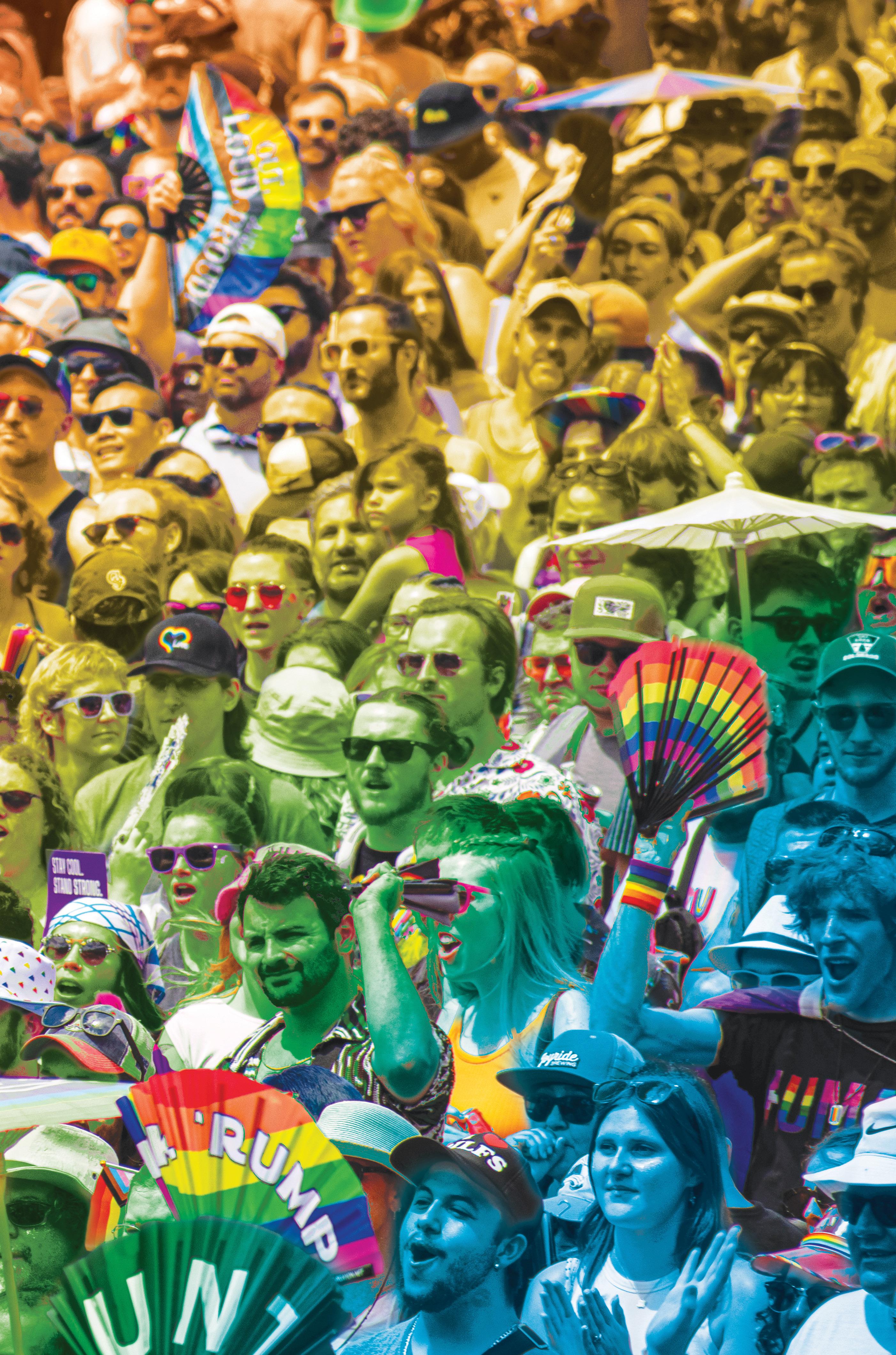
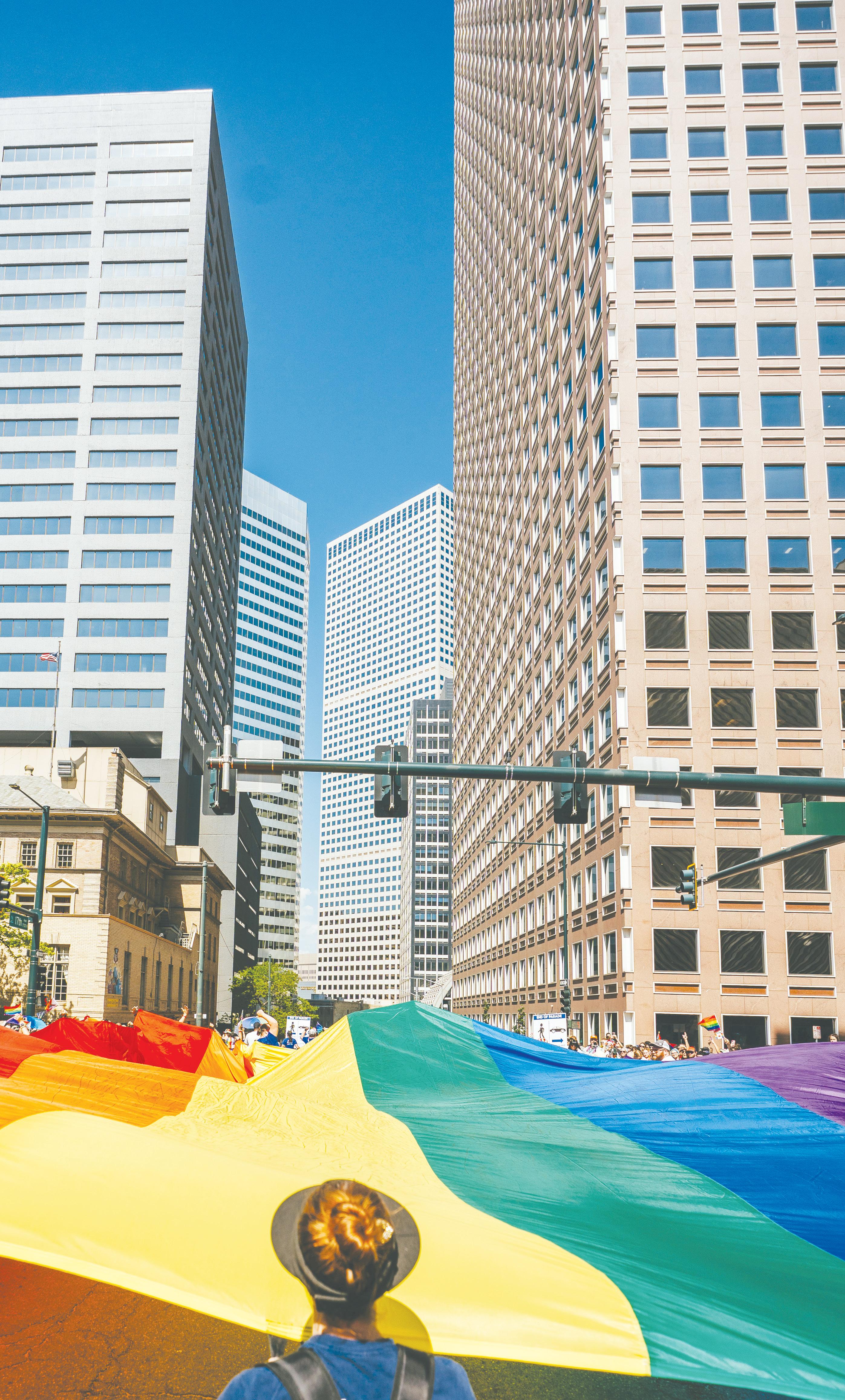
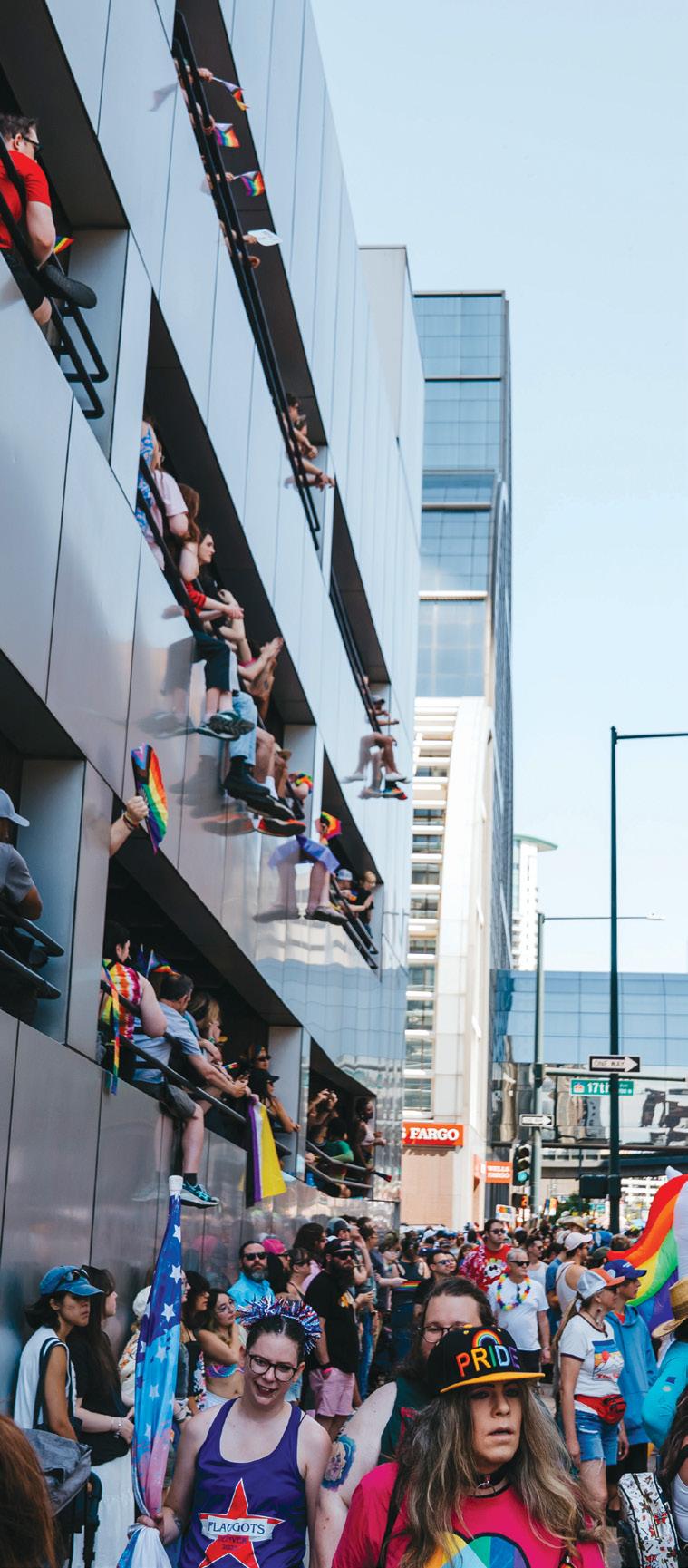
As we look toward the horizon of June 2026, the familiar rainbow flags fluttering against the Mile High skyline carry a weight they haven’t held in years. This year’s Denver Pride is not merely a celebration; it is a tactical evolution and a profound act of defiance.
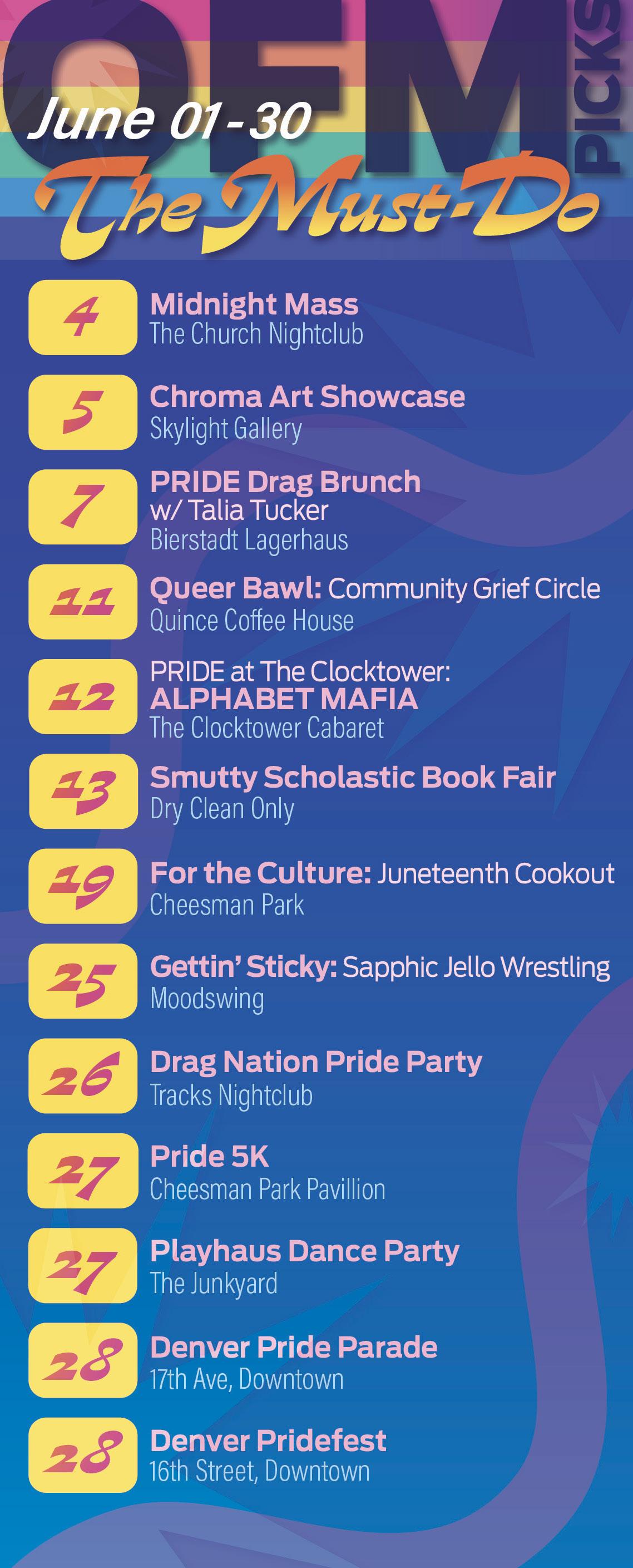
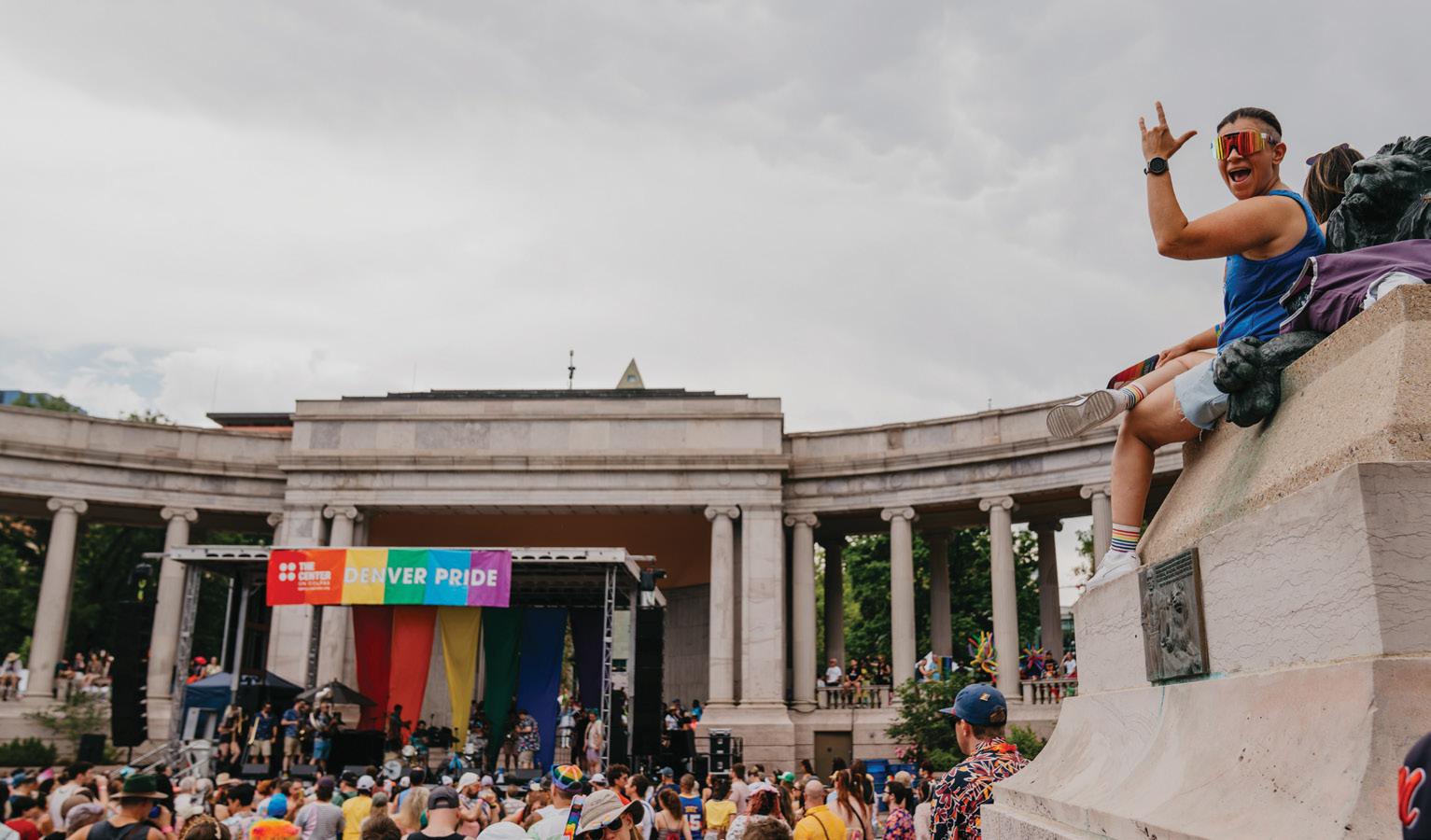
For those who have walked the traditional route for decades, the landscape looks remarkably different. Due to the ongoing Bus Rapid Transit construction on Colfax and major renovations at Civic Center Park, our central gathering has transformed this year. The festival is moving to the 16th Street Mall for a condensed, high-intensity one-day event on June 28, while the rest of the month has been activated with specialized programming—from Queer Hiking in the Rockies to the "For the Culture Cookout" celebrating Juneteenth.
However, as we all know, these superficial changes aren’t the only difference this year. We are celebrating in the shadow of a federal administration that has made the erasure of LGBTQ+ identities a cornerstone of its policy. With the current executive orders aimed at redefining "sex"
to exclude gender identity and the tightening of federal protections, the stakes have shifted from the theoretical to the existential. We see this reality in the faces of the people who have recently migrated to Colorado via the Trans Continental Pipeline,
seeking refuge from states where their very existence has been legislated out of public life.
Resilience, in this climate, is not just about enduring; it is about the refusal to be diminished. The Center on Colfax has met this moment with a renewed commitment to integrity, implementing a rigorous new "values rubric" for corporate sponsors. We are no longer interested in "rainbow
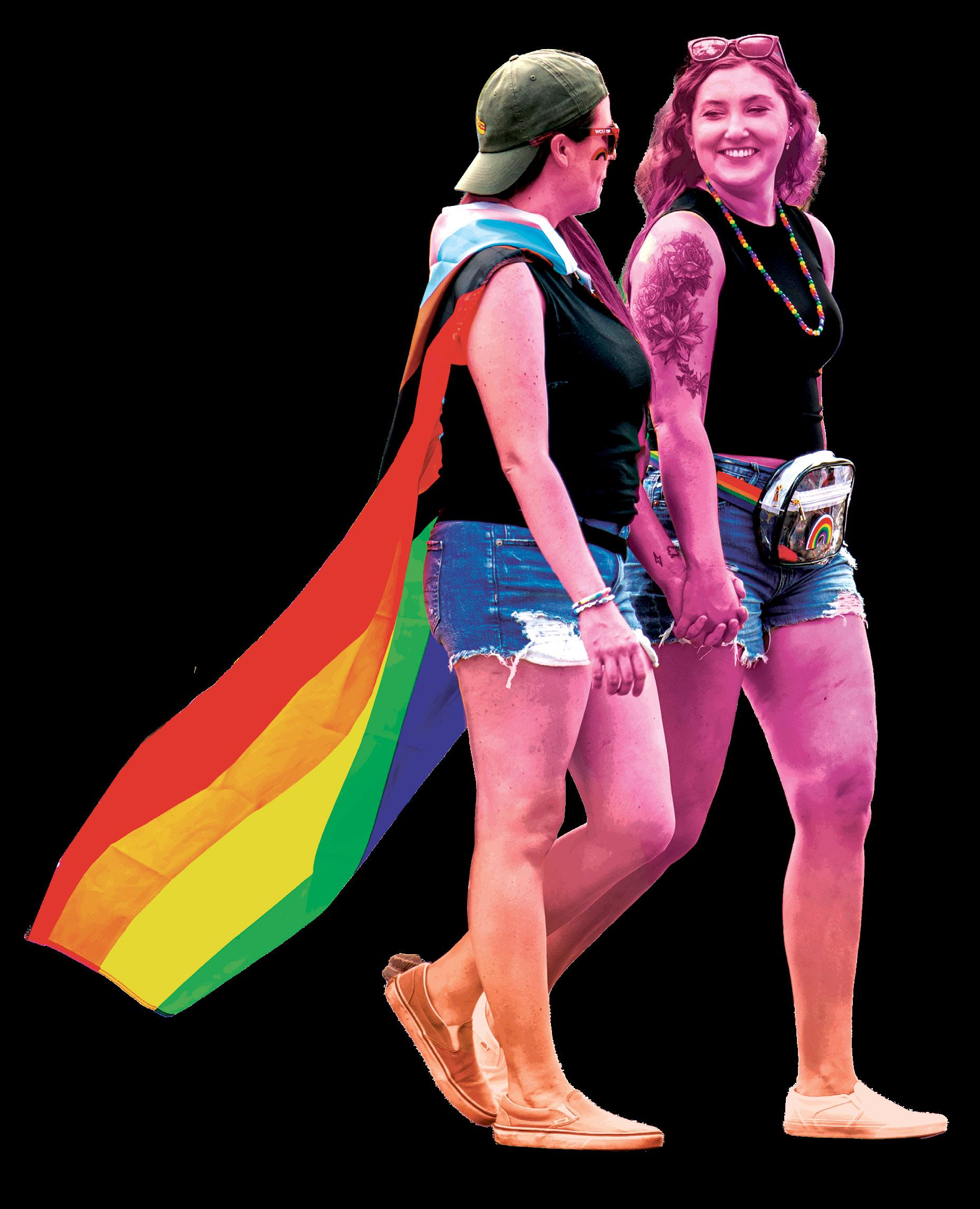
washing" from entities that fund harm at our borders or retreat at the first sign of political pressure. As we prepare for the 5K and the vibrant parade down 17th Avenue, we must remember that joy is our most potent form of protest. In a world that demands we disappear, standing together on 16th Street is a revolutionary act. We are here; we are growing, and we are not going anywhere.
-Addison Herron-Wheeler

Photos by Joan Herting
on Reimagining
By Addison Herron-Wheeler
Kim Salvaggio is not a woman who shies away from a challenge. As the CEO of The Center on Colfax, she stepped into the role during a period of significant transition—not just for the organization, but for the very landscape of LGBTQ+ advocacy in America. Now in her second year, she finds herself at a unique crossroads. Between the physical reconstruction of Civic Center Park and a national climate thick with political tension, Salvaggio is overseeing a reimagining of Denver Pride that is as much about survival as it is about celebration.
In a candid conversation with OFM, Salvaggio peeled back the curtain on the logistical hurdles, the ethical debates over corporate sponsorship, and the personal motivations that drive her to keep the 52-year-old institution moving forward. The result is a 2026 Denver Pride that looks vastly different from years past—a "thoughtfully designed Pride Month
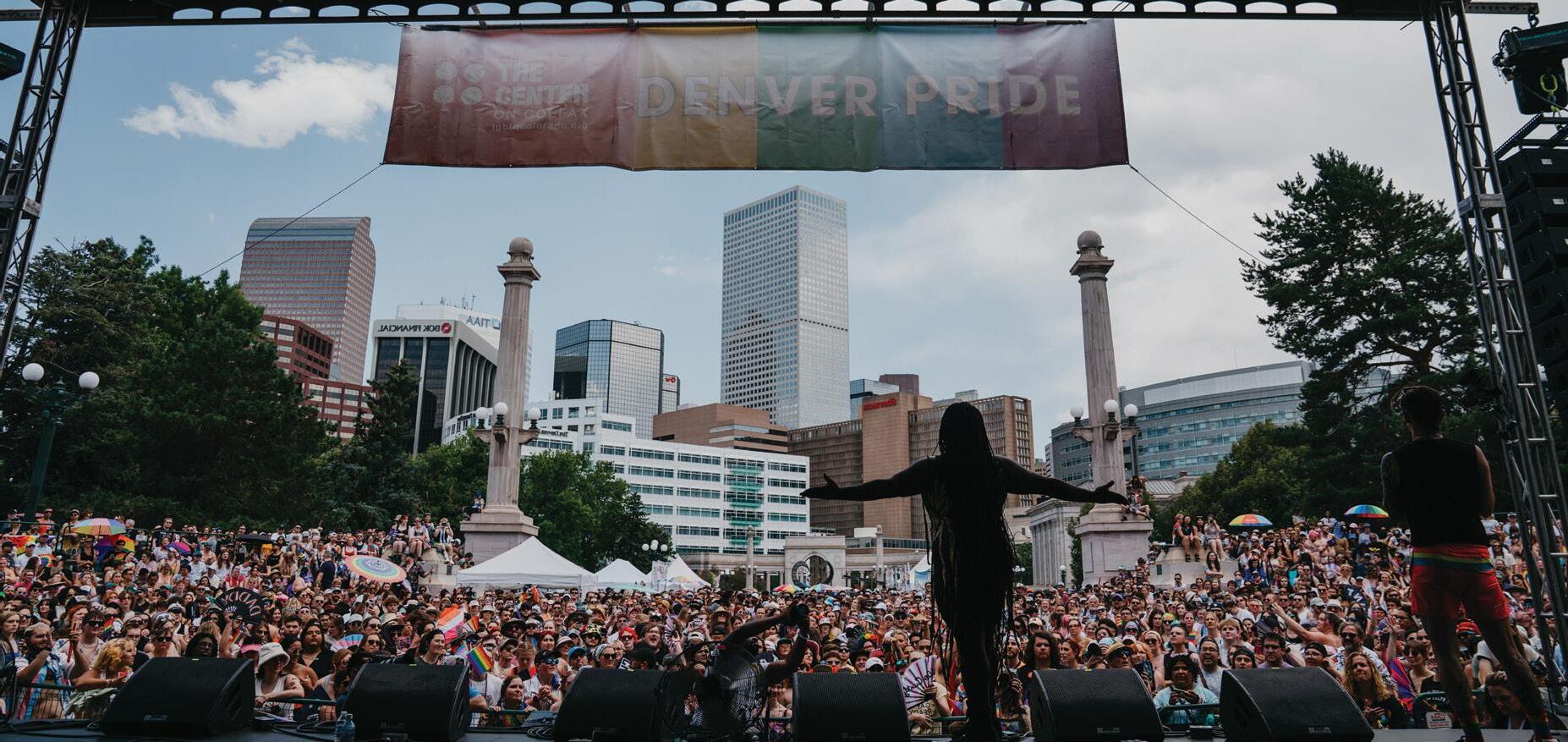
experience" that trades some of the monolithic scale of years past for a more distributed, community-centered approach.
The necessity of change was catalyzed by the environment—literally. With Civic Center Park undergoing massive reconstruction, the traditional home of the two-day festival simply couldn’t accommodate the usual crowds. Salvaggio reflects on the weight of that reality:
“When we learned Civic Center Park was being fully reconstructed, it was clear we couldn’t do Pride the way we always had. So the question became: do we scale back, or do we evolve?”
But for Salvaggio, "rebuilding" didn't mean scaling back. It meant evolving. “At a time when we’re seeing hundreds of pieces of legislation targeting LGBTQ people—and even efforts here in Colorado—it didn’t feel like the moment to shrink. It felt like the moment to evolve. It’s a risk, but it’s also an opportunity to rethink how Pride serves our community.”
This year’s Pride features a one-day free festival, the 5K race, and the parade, but it is bolstered by a monthlong calendar of partner events across the city. For Salvaggio, the shift is more than just a workaround. "You don’t often get the opportunity to
reimagine a 50-year institution. Those moments are rare—and when they come, you have to take them.”
One of the most persistent points of contention for any major Pride organization is the presence of corporate sponsors. To address community concerns about "pinkwashing" and ethical alignment, Salvaggio implemented a transparent rubric system for evaluating sponsors. This committee-led approach moves the decision-making power away from a single executive and into the hands of a diverse group of community volunteers.
"“One of my first priorities was bringing transparency to how we fund Pride—who we take money from, why, and where it goes. That shouldn’t be a mystery.”," Salvaggio explains. have a “We built a committee of community members with different perspectives and identities, and gave them a clear rubric. If a sponsor doesn’t meet that standard, it goes directly to the board. It’s not a single person’s decision—it’s a shared responsibility.”
The rubric focuses on three main "deal-breakers" identified through community feedback: climate justice, war profiteering, and domestic threats like ICE. "If you're a weapons manufacturer, you’re probably not going to pass that rubric," Salvaggio notes. "Climate justice was something that came
back really strongly and third is anybody who is intent on terrorizing our neighbors at home."
This transparency is a direct response to the community's demand for accountability, even when the financial stakes are high. Salvaggio is firm in her belief that the source of funding matters. “I don’t believe a dollar is just a dollar. How we fund our work matters. It has to align with our values— and it has to be transparent to the community we serve.”
However, she is also a pragmatist. The revenue from Pride doesn't just fund a party; it funds the life-saving services The Center provides year-round. This year, with some events carrying ticket prices (like Bubbles & Boas, Midnight Mass, and the Mutt Strut), she has had to manage expectations regarding costs.
“What will always be free are the services at The Center—mental health support, community programs, connection. Your ticket is what makes that possible.”
She also points out the changing habits of the community, specifically regarding alcohol. "“When we looked at the data, it was clear our community is changing—including our relationship with alcohol. So we built experiences that reflect who we are now, not who we were ten years ago.” This shift influenced the curation of this year's events, including high-end mocktails and curated coffee drinks at the brunch.
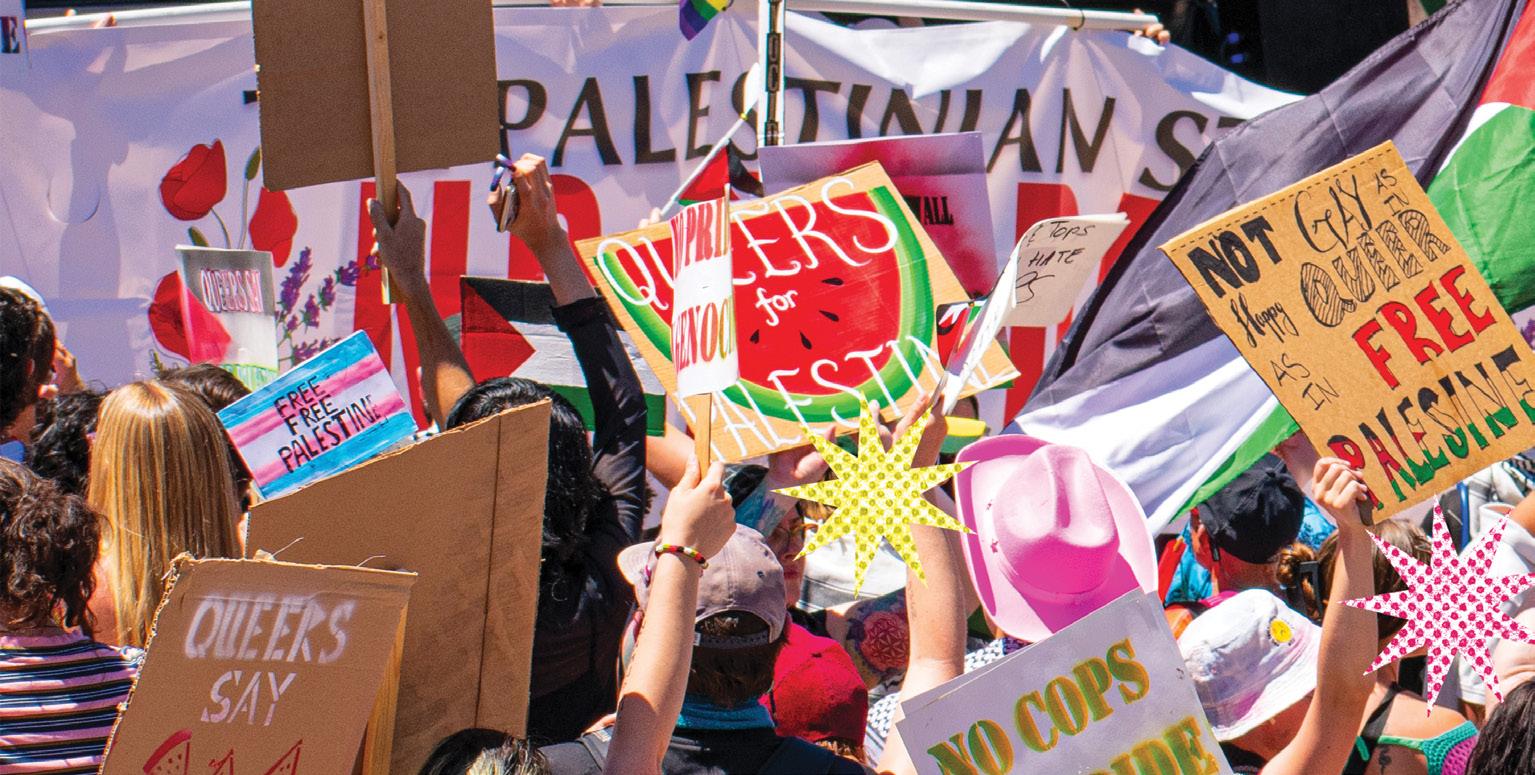
Beyond the balance sheets and the logistics, Salvaggio has spent her first full year as CEO engaging in deep, often difficult dialogues with those who have historically felt alienated
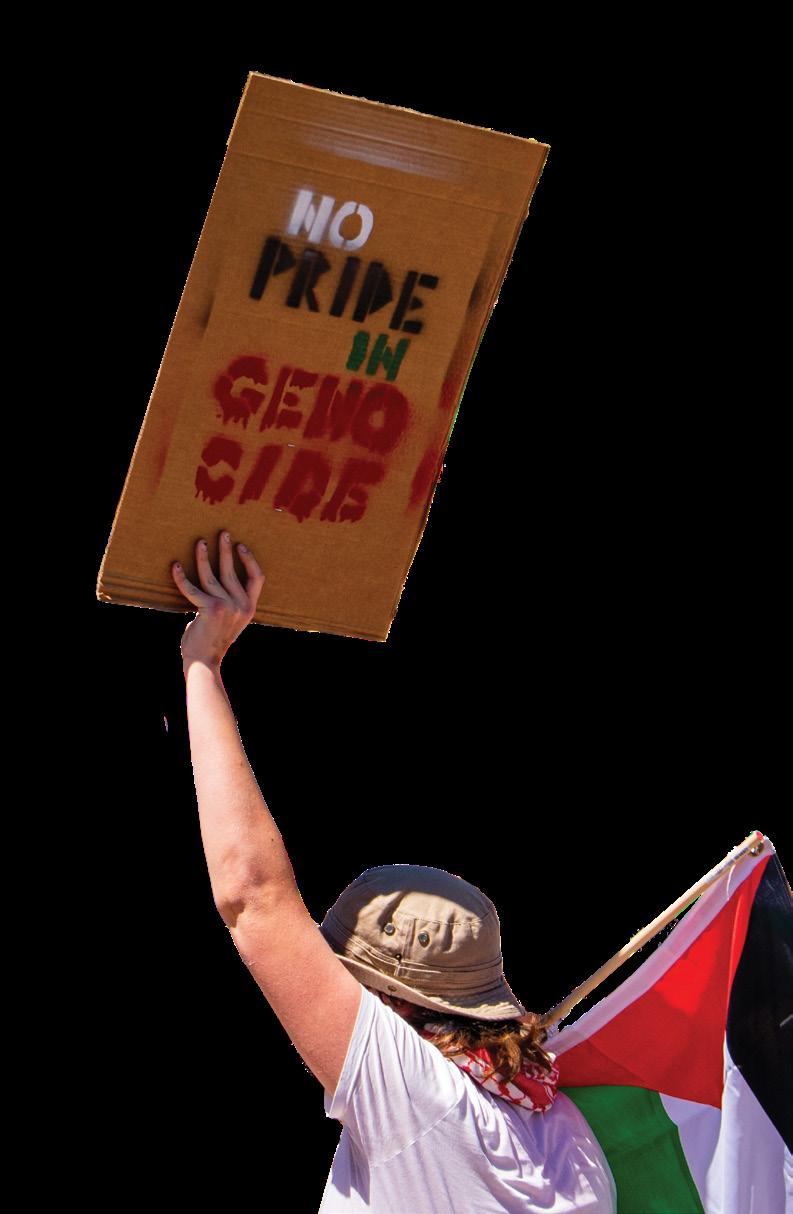
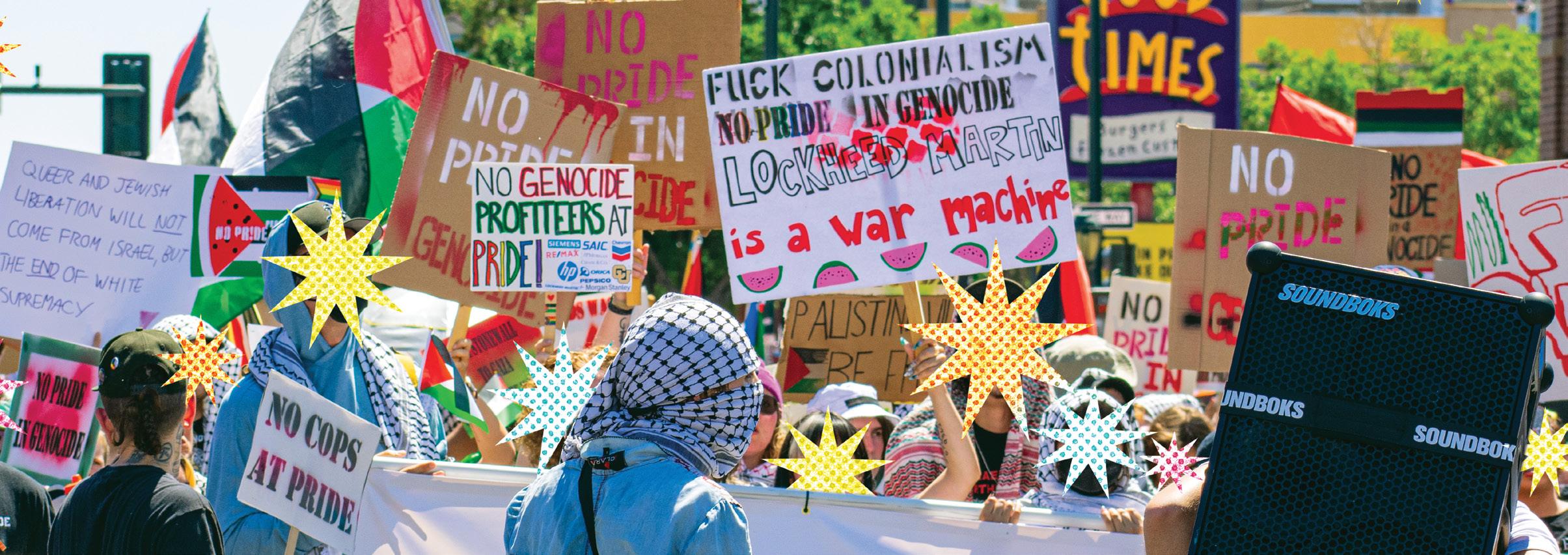
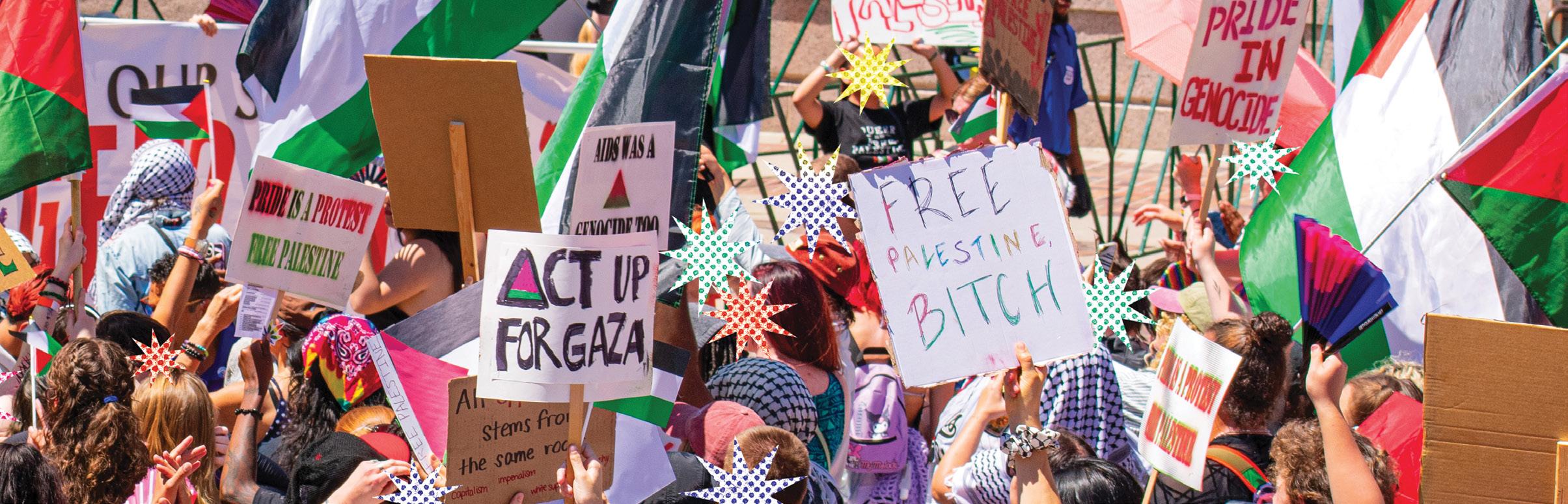
by The Center. Specifically, she has worked to bridge the gap with protesters who have targeted Denver Pride in recent years.
"“I’ve spent the past year in conversation with our protesters and other communities that historically have not felt they had a place at the Center or Pride. This time has been about listening, not defending. What I learned is that the concerns go deeper than funding. They’re about visibility, belonging, and who feels seen.”
The work is complex, especially when the needs of one marginalized group appear to conflict with those of another. Salvaggio is honest about the limitations of her role. ““Some of the needs within our community are in direct tension with each other. I can’t resolve that fully, but I can make sure The Center remains a place where

those conversations can happen. The work is not done, and it is on going. I believe we are moving together in good faith, I have been given an opportunity to learn, to understand a lived experience different from my own. It hasn’t always been easy, but the real work very rarely is.”
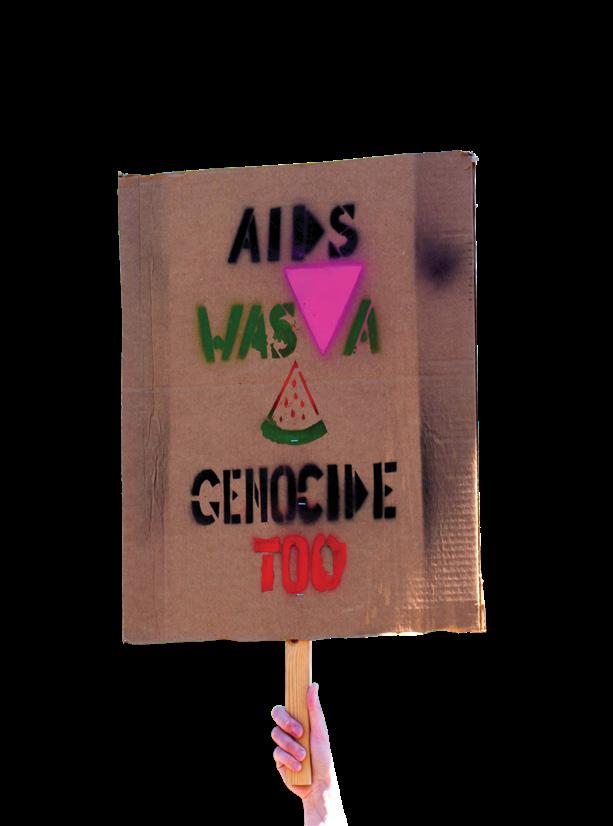
We spoke to Z IY Williams, a local activist who protested Pride annually in years past. “I can’t speak for every trans person, every Palestinian, or every queer person in our struggle. I think we have some major victories. It’s not enough. We are going to have to struggle together to get there.
“I remember Les Feinberg talking about how the first pride flag was the North Vietnamese flag—They do it in this talk where they show folks where the room to nurse a baby or to be supported as a parent is. Pride isn’t a
parade. It isn’t booths or markets. It is a protest. It is acts of deep care.
“Pride is revolutionary. Pride is anti-imperialist. Pride is uncompromising.”
Despite these deep-seated ideological divides, Salvaggio remains committed to the table. "I'm committed to listen and build progress year over year. The work remains a priority.”

She views these internal community debates not as a sign of weakness, but as a byproduct of a diverse movement. However, she warns that the community must not lose sight of the external threats that endanger everyone under the rainbow umbrella.
"“We can’t lose sight of the fact that there are real forces working against our community right now. The more we stay focused on protecting the safety and freedom of all LGBTQ people, the stronger we are.”
As Pride Month approaches, Salvaggio is leaning into the joy that the season brings, despite the schedule and the high-stakes decisions. For her, the "why" behind her work is deeply personal—It’s a conversation with her younger self.
"For all of us, Pride is something deeply personal” she says when asked what brings her joy about Pride this
year. "It’s about the kid I was—growing up without seeing people like me—and what it means to now stand in a space where hundreds of thousands of people are seen and celebrated. “I think about what it would have meant to see this as a kid. And now I think about all the kids who do get to see it—and what that changes for them.”
She continues, " We are so powerful as a community when we come together. “There is real power in a community that shows up for itself. That’s what Pride is, its our collective strength.
This year, that power will be on display not just in a park, but throughout the city. From the new "Eat Out with Pride" campaign—a partnership with queer-affirming local restaurants—to a wide array of satellite events, Denver Pride 2026 is designed to be accessible to everyone, regardless of their budget or their preferred way to celebrate.
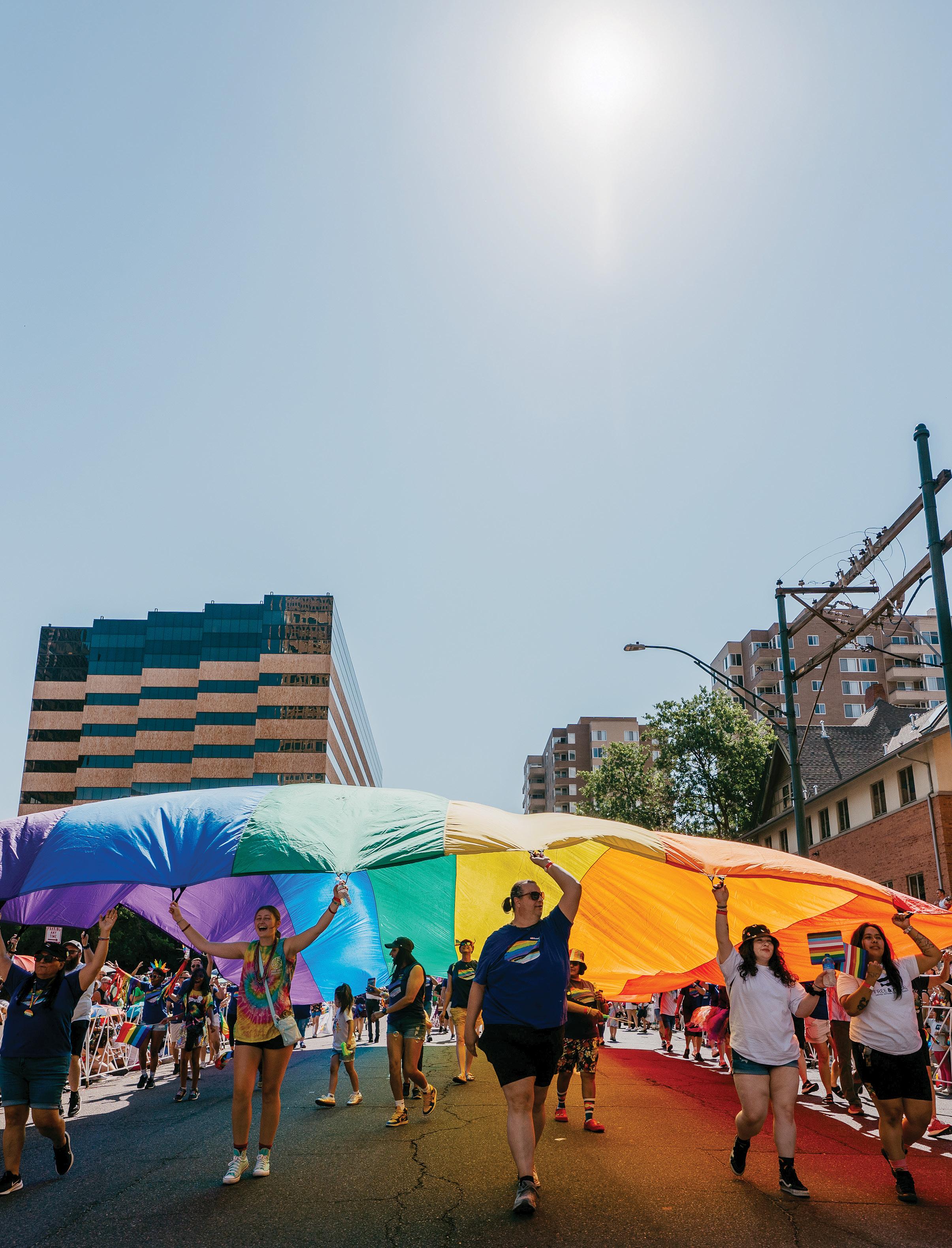
“Pride is for everyone—that’s by design. And at its core, it’s a reminder of our collective power. We’ve been fighting for our rights for a long time, and while I wish we didn’t have to keep doing that, Pride exists because we do—and that’s exactly why it matters.”
As Salvaggio looks toward July 1st— the day after the festivities conclude—she isn't just looking for a break. She is looking at a legacy of a community that refused to let construction, political attacks, or internal disagreements stop the celebration. Under her leadership, The Center on Colfax is proving that while the location and the funding might change, the core mission remains unshakable: a space where every LGBTQ+ person in the Rocky Mountain region can see themselves reflected, supported, and free.

By Julie River
The story of marriage equality in Colorado is almost as old as the history of OUT FRONT itself. In fact, it predates us by a year and begins with the story of a Boulder County Clerk named Clela Rorex.
According to the Washington Post, she was only in office one day before she was asked by gay couple Dave McCord and Dave Zamora if they could get married. Rorex could find nothing in the law that said she couldn’t and asked a county attorney, who couldn’t find anything either.
“I didn’t even know anyone from the gay and lesbian community,” Rorex recalled in the Washington Post interview. “I had no exposure to homosexuals.” But, being a feminist herself, she was
sensitive to discrimination and issued the license.
Rorex’s decision to issue same-sex marriage licenses stirred up a storm of controversy in the state and, according to a 1977 OUT FRONT article, Colorado Attorney General J.D. MacFarlane issued a formal legal opinion that other laws made same-sex marriages invalid and ordered Rorex to stop issuing licenses to gay couples, which she did.
Then in January of 1977, in an 8-2 decision, the Colorado House State Affairs Committee approved a bill which would outlaw samesex marriages in the state in an attempt to prevent this situation from happening again. Voting against the bill were Rep. Jack McCrosky
(D-Denver) and Rep. Lee Jones (R-Boulder), although two other people raised objections to the bill before voting for it anyway. Jones, the lone Republican dis senter, said in an interview afterwards, “I think they should be given marriage licenses if it makes them feel better. And for that matter, I think they should have valid marriages, too.”
front of the issue, even back then, with a March 1977 editorial from writer Penni Kimmel offer ing a scathing rebuke of the newly established law. “The legislating of life styles (sic) is a massively dangerous procedure,” wrote Kimmel, “not least when it goes against the preference of a large minority (gays) and an even larger grouping of people who wish to believe (1) that laws are made for the protection of people, (2) that all adult citizens are entitled to the rights and privileges guaranteed under the U.S. Constitution, and (3) that the government in any form has no business in the home of a private citizen, much less his/her bedroom. Even less do legislators have the right to take a salary to waste their time considering such a proposal.”
But the licenses that Rorex issued remained controver sial after Anthony Corbett Sullivan and Richard Frank Adams married in April of 1975 with one of the licenses that Rorex issued. According to the Washington Post, Sullivan, an Australian citizen, was facing deportation and, after Adams attempted to inform officials of his
marriage in an attempt to keep Sullivan from being deported, they received an infamous denial letter stating: “You have failed to


AUGUST 29, 2026
11 A.M. TO 7 P.M.
AURORA CITY PARK


mid-to-late ‘90s as bills were passed in both 1996 and 1997 to ban same-sex marriage in the state, with both being vetoed by then-Governor Roy Romer. Romer was hardly a
champion for full marriage equality, as, even though a 1997 AP story that we ran in OUT FRONT at the time said that Romer believed “there was a bit of gay bashing in it,” he still believed that marriage should only be between a man and a woman. Romer said that he hoped that the legislature would find a procedure to recognize same-sex relationships, “but not in the same way as traditional marriage.”
According to the official website for the Freedom to Marry campaign, a bill banning same-sex marriage was officially passed in 2000 and signed by the new governor, Bill Owens.
Opponents of marriage equality were unsatisfied, especially as they saw the tide starting to turn stateby-state towards acceptance of gay marriage, or at the very least partial recognition of same-sex relationships. In 1997, AP reported that Hawaii became the first state to extend some legal benefits to same-sex couples (albeit in an effort to thwart a full recognition of same-sex marriage). In 2000, according to the ACLU, Vermont became the first state to allow same-sex civil unions, specifically reserving the word “marriage” for straight couples but still offering a legally recognized partnership for same-sex couples. Then, in 2004, as NPR reports, Massachusetts became the first state to legally allow same-sex marriages.
In 2006, a ballot initiative was put to the Colorado voters to ban same-sex marriage in the state
constitution, a measure that passed with 55% of the vote, according to Ballotpedia, enacting Amendment 43 which stated that “Only a union of one man and one woman shall be valid or recognized as a marriage in this state,” thereby enshrining hateful language in the state’s most important legal document. At the same time, Referendum 1, a ballot measure that would have legalized domestic partnerships in Colorado, was defeated in the same election.
OUT FRONT not only covered Amendment 43 and Referendum 1, but we were also already prepared to give helpful advice to those grieving the political losses in the fight for equality. Our Therapist Advice column offered guidance from Jamey Collins, LCSW, who wrote, “We in the GLBT community, along with our allies, are in the process of dealing with the pain that accompanies our current disappointment. Now is the time to work through these feelings of anger, hurt and frustration—to take really good care of ourselves and to care for each other. We need to allow our pain to surface fully and be expressed so that we can move forward.”
Similarly, Judy Calhoun, then-Executive Director at The Center on Colfax, wrote a piece for OUT FRONT on the few positive outcomes of the ballot measure fights. “The loss was a narrow one, and we need to keep in mind that hundreds of thousands of our fellow Coloradans voted with us,” she wrote. “I sometimes think that
anti-gay crowd sounds so shrill because they know that they are losing ground. They may have won this time, but they know that our society is trending toward more openness and more acceptance of GLBT people.”
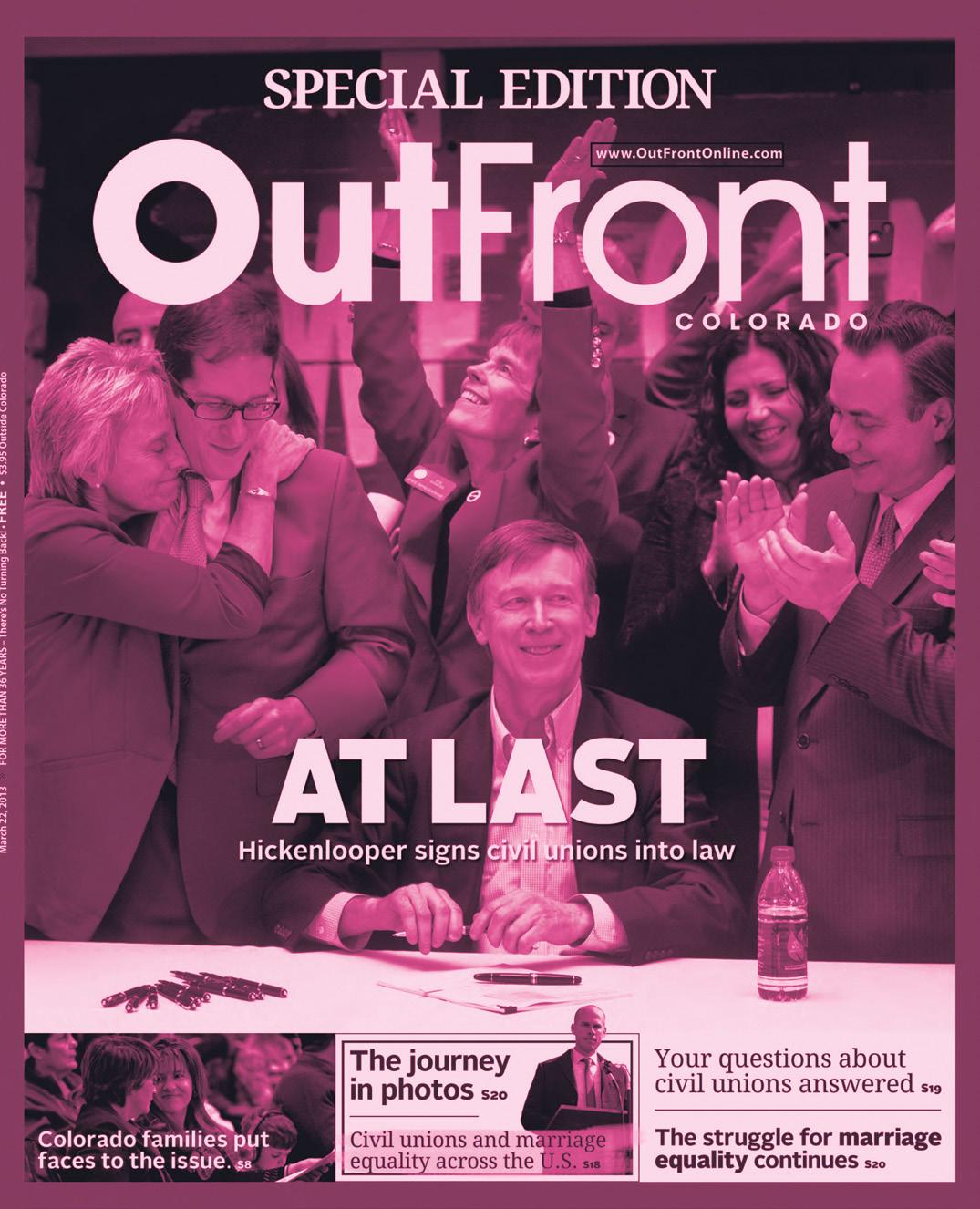
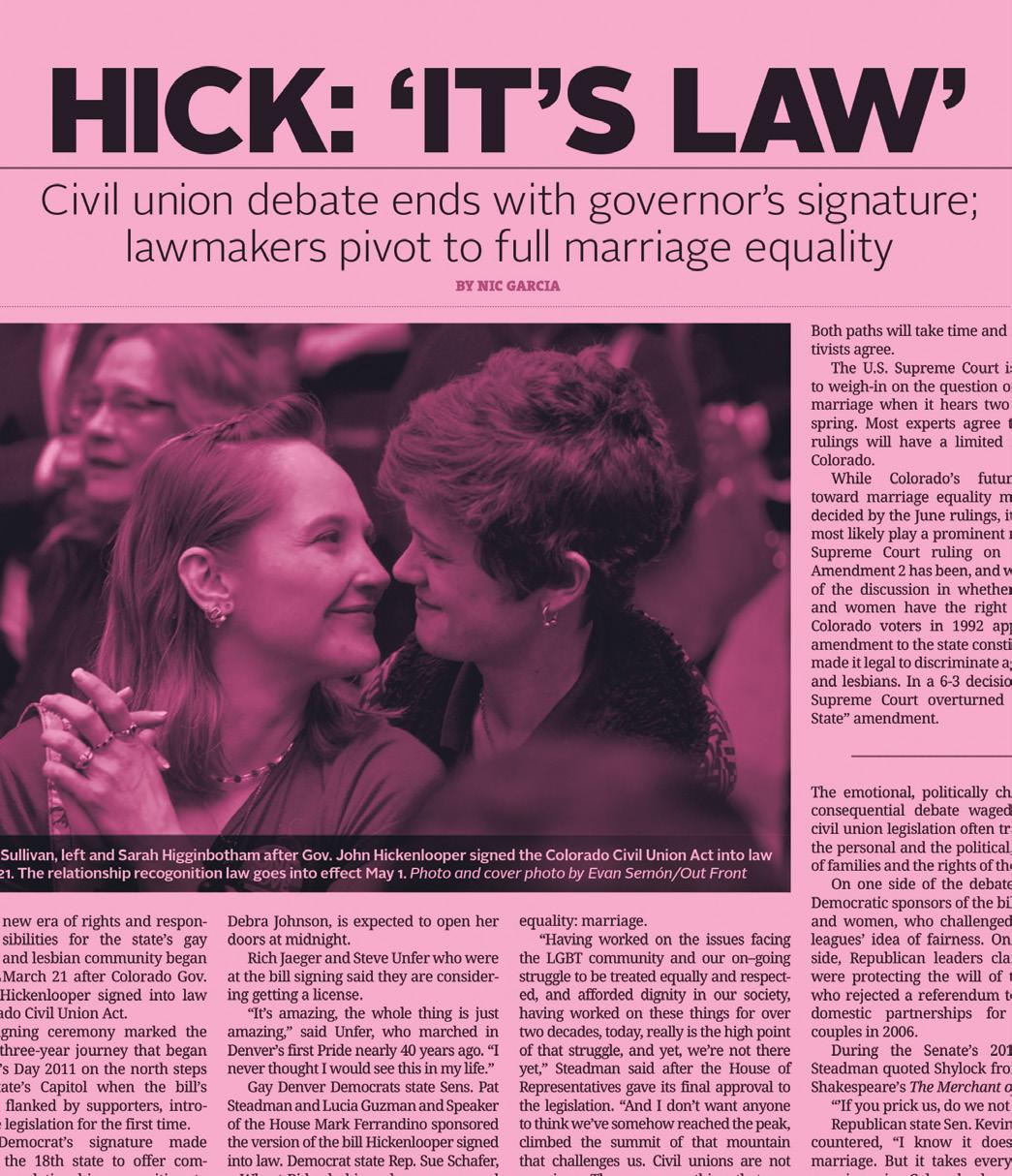
Calhoun turned out to be correct as the momentum of the marriage equality movement was too strong to slow down and, in March 0f 2013, OUT FRONT got to run our triumphant cover story with then-Governor John Hickenlooper signing into law the Colorado Civil Union Act, making Colorado the 18th state in the United States to offer comprehensive relationship recognition to same-sex couples. “It is a moment the whole community has waited for, for so long,” said Hickenlooper right before signing the bill. “It’s the beginning of the country changing. A change has gotten here. And it’s going to keep going.”
“It’s amazing, the whole thing is just amazing,” said Steve Unfer, who had marched in Denver’s first Pride parade and was present at the 2013 bill signing with his partner, Rich Jaeger. “I never thought I would see this in my life.”
Of course, the celebration over the Colorado Civil Union Act was short-lived as two years later, in 2015, the U.S. Supreme Court Case of Obergefell v. Hodges declared that same-sex marriage was protected by the 14th Amendment to the United States Constitution. Obergefell instantly legalized same-sex marriage across the country, thereby
overruling discriminatory state laws like the one passed by Colorado in 2000 and even state constitutional amendments like the one passed by Colorado in 2006.
You would think that the story of marriage equality in Colorado ends there, but remember that, even after Obergefell, the law banning same-sex marriage in Colorado, not to mention Amendment 43, still remained on the books, even if they were unenforceable. This was a problem for two reasons. The first is that it’s deeply insulting to have anti-LGBTQ+ language in the state’s constitution, even if it’s language that can’t be enforced. The other problem was that, as Politico reported, in 2022 when the U.S. Supreme Court struck down the legal right to abortion in Dobbs v. Jackson, conservative Supreme Court justice Clarence Thomas wrote in his opinion that the court “should reconsider all of this Court’s substantive due process precedents, including Griswold, Lawrence, and Obergefell,” thus signaling a desire to overturn the landmark ruling on marriage equality. Therefore, there was a fear amongst marriage equality experts that, if Obergefell were to be overturned, marriage rights would go back to being decided on a state-by-state basis. For these reasons, it was imperative for Colorado to act to protect the right of same-sex couples to marry.
As OUT FRONT had the pleasure of reporting on, in 2024 Amendment J was put to the voters to repeal the unenforceable language in
Colorado law defining marriage as between one man and one woman, passing with over 63% of the vote.
On April 7, 2025, Governor Jared Polis, the first openly gay man elected governor of a U.S. state, signed the Protecting the Freedom to Marry Act into law. “Colorado is for everyone, no matter who you are or who you love,” said Polis at the signing. “Last November, the voters got rid of outdated language in our constitution that banned same-sex marriage. This is a long overdue step in the right direction, and today’s law I’m signing ensures that Coloradans can marry who they love in our Colorado for all.”
Yet, even with the Freedom to Marry Act signed into law, there is still progress to be made in the fight for true marriage equality. People with disabilities, for
example, often risk a reduction or even total loss of their Supplemental Security Income (SSI) if they are to marry or even move in with a romantic partner. Some argue that the current framework of marriage can exclude evolving understandings of family and create barriers for family structures that do not fit traditional legal definitions.
OUT FRONT Magazine is proud of the fact that we’ve been able to document the advocacy efforts for marriage equality for same-sex couples over the course of our history, and that we’ve seen the story unfold as advocates continue to work towards a more inclusive and equitable state. Whatever the next fight for relationship recognition in Colorado ends up looking like, OFM intends to be at the forefront of covering it.
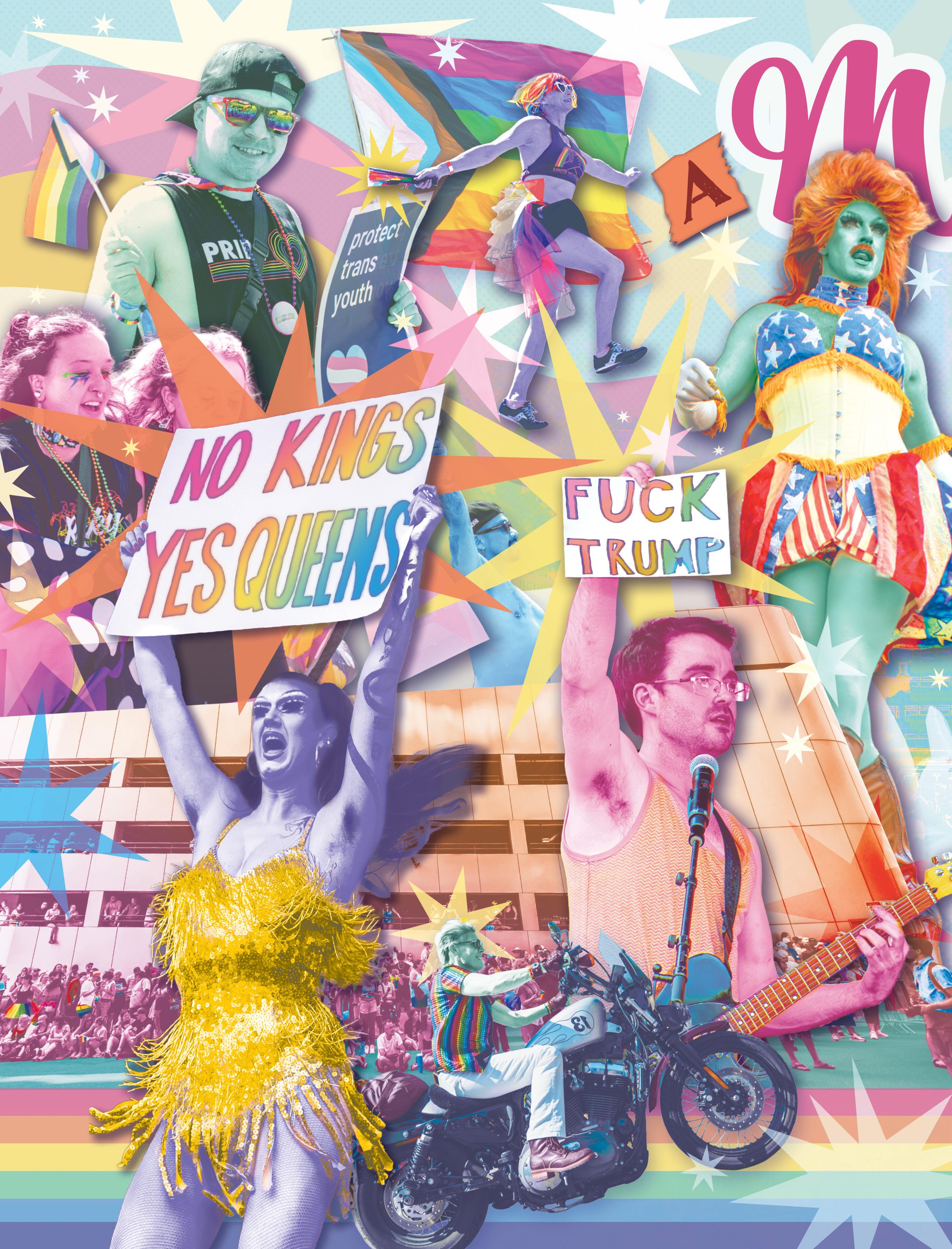
EDenver Pride, produced by The Center on Col- fax, has grown into one of the top five Pride celebrations in the United States and remains the largest in the Rocky Mountain region. Drawing over 500,000 participants annually, it is both a celebration of queer joy and a
very June, the Mile High City transforms into a vibrant tapestry of rain- bows, glitter, and activism.
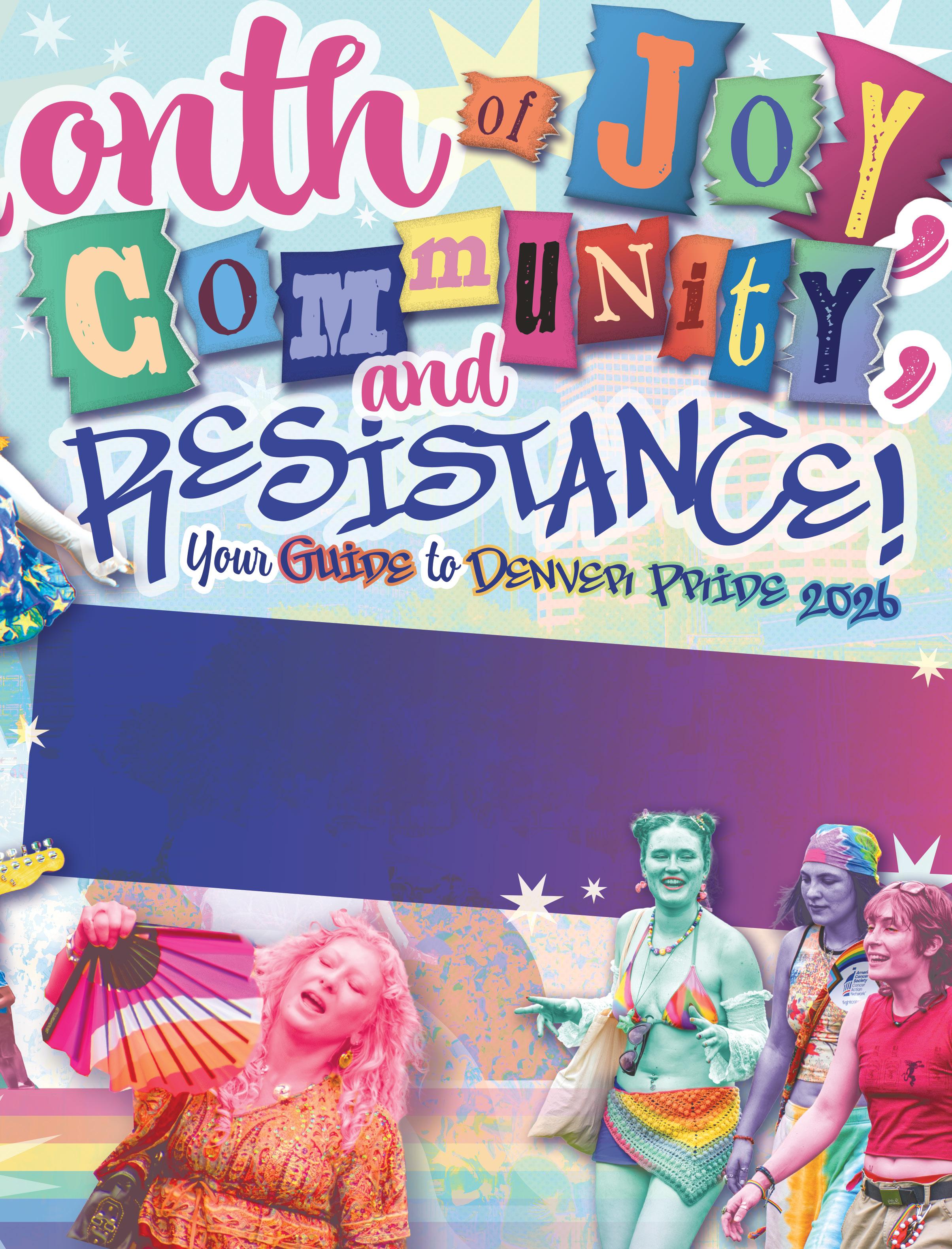
By Addison Herron-Wheeler
crucial fundraiser for LGBTQ+ ser- vices in Colorado.
As organizers at The Center on Col- fax note, the event is more vital than ever: "Today, we face a growing wave of challenges: from hateful rhetoric nationwide to shifting policies ... Den- ver Pride helps The Center remain a lifeline, a beacon, and a gathering place for our expanding community."
Whether you are looking for the "Clas- sic" mainstays or the "New Girls in Town"—a collection of partner events across the city—this year’s lineup offers something for everyone. Here is your comprehensive guide to the events of Denver Pride 2026.
For many, Denver Pride is defined by three major events that anchor the final weekend of June. However, 2026 brings a significant change to the festival's footprint due to construction on Colfax Avenue.
Saturday, June 27
9:00 a.m.
For those who prefer to celebrate with a bit of cardio, the Pride 5K remains a beloved tradition. Taking place at the Cheesman Park Pavilion, this event brings together runners, walkers, and rollers to support The Center on Colfax. It’s a family-friendly way to kick off the final weekend of celebrations.
Sunday, June 28
10:00 a.m. – 6:00 p.m.
The signature event of the month, Denver PrideFest, moves to a new downtown home for 2026: the 16th Street Pedestrian Promenade. This move allows the festival to integrate with the heart of Denver's shopping and dining district while providing a major downtown venue to accommodate the massive crowds.
Attendees can expect three stages of live entertainment, hundreds of vendors, and a celebration of local talent. This year’s Center Stage lineup features Nini Coco, fresh off her appearance on RuPaul’s Drag Race, alongside environmental advocate Pattie Gonia and King Molasses, the winner of the first season of King of Drag. The festival remains free to attend, serving as a hub for the community to gather in a safe, affirming space.
Sunday, June 28
9:30 a.m. – 12:30 p.m.
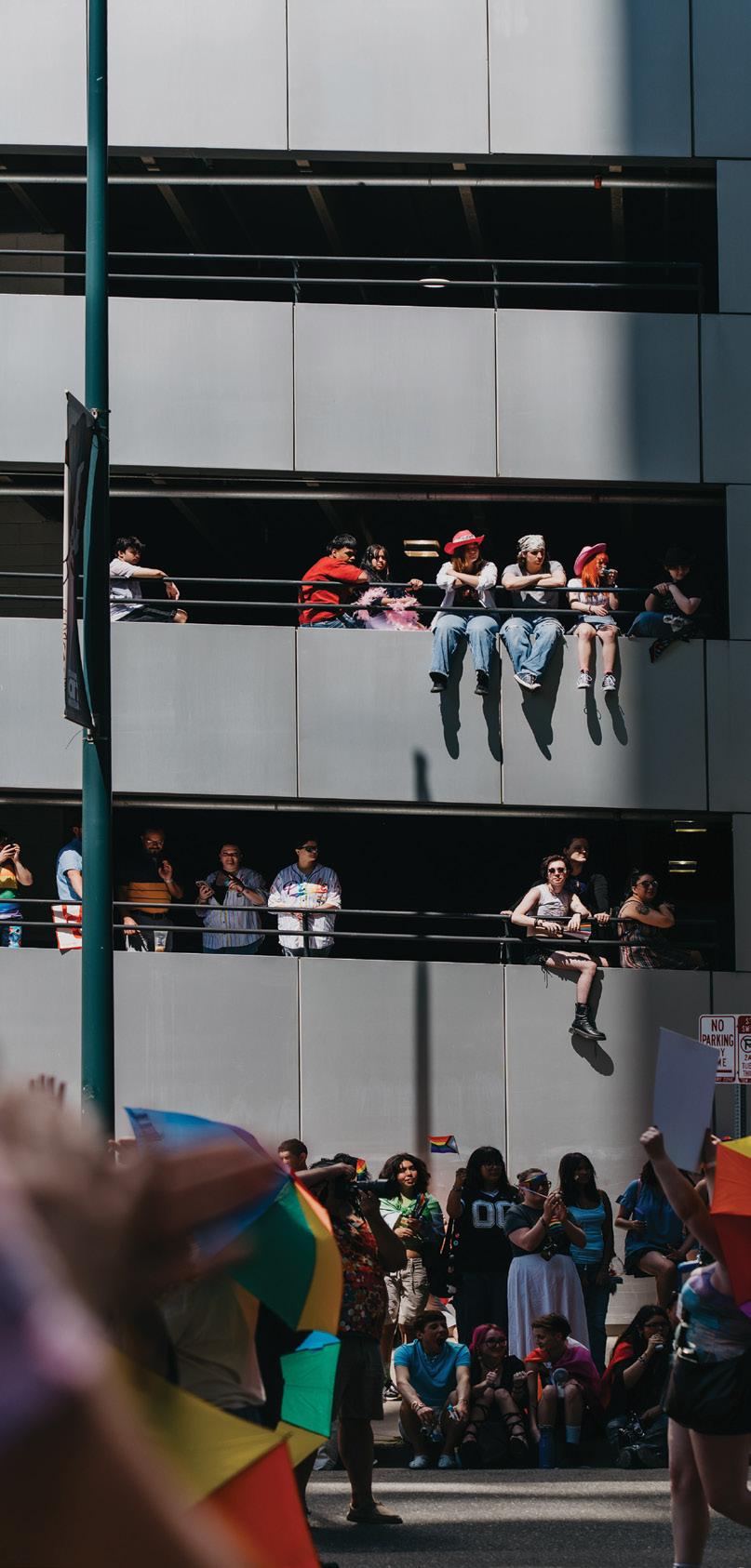
The Vizzy Denver Pride Parade is a colorful, high-energy march through the city’s Capitol Hill area. It kicks off at 9:30 a.m. with over 100,000 cheering spectators lining the route. This year, the parade departs from Franklin Street and 17th Avenue, traveling west to Lincoln Street before concluding at the 16th Street Mall festival grounds.
Expect a dazzling display of floats, community organizations, and performers. The parade is not just a spectacle but a statement of visibility. As organizers describe it, "Through Pride, we are able to meet today’s urgent needs while building the foundation for what comes next. Together, we are sparking a revolution."
Denver Pride 2026 has expanded its "gay agenda" to include partnerships with local venues, galleries, and parks, ensuring that Pride is felt in every corner of the city.
The festivities begin long before the main festival weekend.
Midnight Mass (Thursday, June 4)
A late-night celebration at The Church Nightclub that leans into Denver’s nightlife scene.
Pride Night at The Rockies (Friday, June 5) The community gathers at Coors Field at 6:40 p.m. for a night of baseball and visibility.
Mutt Strut (Saturday, June 6) Held at Skiptown, this pet-centric event invites furry friends to join the celebra- tion from 10:00 a.m. - 7:00 p.m.
Denver Pride highlights that queer identity intersects with art, nature, and history.
Queer Hiking (Sunday, June 14) A guided outdoor excursion leaving from Denver at 8:00 AM, perfect for those who find their "Pride" in the Colorado wilderness.
Clyfford Still Museum
Pride Free Day (Sunday, June 14)
An opportunity for community mem- bers to engage with art for free from 10:00 a.m. to 5:00 p.m.
Smutty Scholastic Book Fair (Saturday, June 13) A nostalgic, adult-oriented twist on the classic book fair, hosted at Dry Clean Only from 5:00 p.m. to 9:00 p.m.
While the parties and parades are the most visible aspects of the month, the underlying mission remains the focus. Denver Pride is the primary fundraiser for The Center on Colfax, which has served the community for over 50 years. The Center provides peer programs, youth outreach, and social groups that act as a "lifeline" for many in the region.
When you attend Denver Pride, you are participating in a tradition that organiz- ers describe as "one-day festival on Sunday ... but a month-long activation of the city." Whether you are cheering at the parade, running the 5K, or dancing at the Playhaus, you are part of a movement that ensures Denver remains a safe and vibrant place for all.
For the latest updates and to see "what Pride looks like" in 2026, visit the official website at denverpride.org.
Mid-month events focus on inclusivity and heritage.
For the Culture Cookout (Friday, June 19) A free event at Cheesman Park from 4:30 to 9:30 p.m., celebrating the intersection of Black and Queer identities.
Tea Dance – Neon Nineties (Saturday, June 20) A retro-themed dance party at Champagne Tiger that brings the energy of 90s nightlife back to the forefront.
As the month draws to a close, the energy ramps up with several high-pro- file ticketed events.
Playhaus Kickoff & Dance Parties:
The Fillmore Auditorium hosts the Playhaus Kickoff on Friday, June 26, fol- lowed by a massive Dance Party at the JUNKYARD on Saturday, June 27.
Drag Nation Pride Party: Taking place on Friday, June 26, at 10:00 p.m. at Tracks Night Club, this event is a cornerstone of Denver’s drag scene.
Bubbles and Boas (Saturday, June 27) A glamorous 10:00 a.m. gathering at Cheesman Park, offering a sophisticated start to the fes- tival’s final Saturday.
By Rose Eden
Cobrah is packing when we speak, though nothing about the conversation feels rushed. There is no sense of her being pulled in another direction, no background chaos bleeding into the call. She is hours away from leaving for California to perform during Coachella weekend, a moment that usually comes with a certain kind of urgency, but she doesn’t mirror that energy. If anything, she resists it. The way she speaks is measured, deliberate, as if she has already decided what matters and what doesn’t.
What becomes clear quickly is that for her, the work doesn’t begin on stage. It begins much earlier, in a process she treats with the same level of attention.
“I have a full day of glam,” she says. “My hair takes five hours … my nails take three. It’s like a full day of … sharpening the claws, bleaching the roots.”
She stops, then reframes it more precisely.
She doesn’t describe it like a performance requirement or an obligation.
It comes across as something more structured than that, something closer to a ritual she has refined over time. The repetition matters. The time it takes matters. It creates a separation between her everyday self and the version that steps into a performance, but she seems just as invested in that in-between space as she is in what comes after.
is not her interest in building something immersive, but where that construction begins.
“I wanted to … have Cobrah and Clara be the same.”
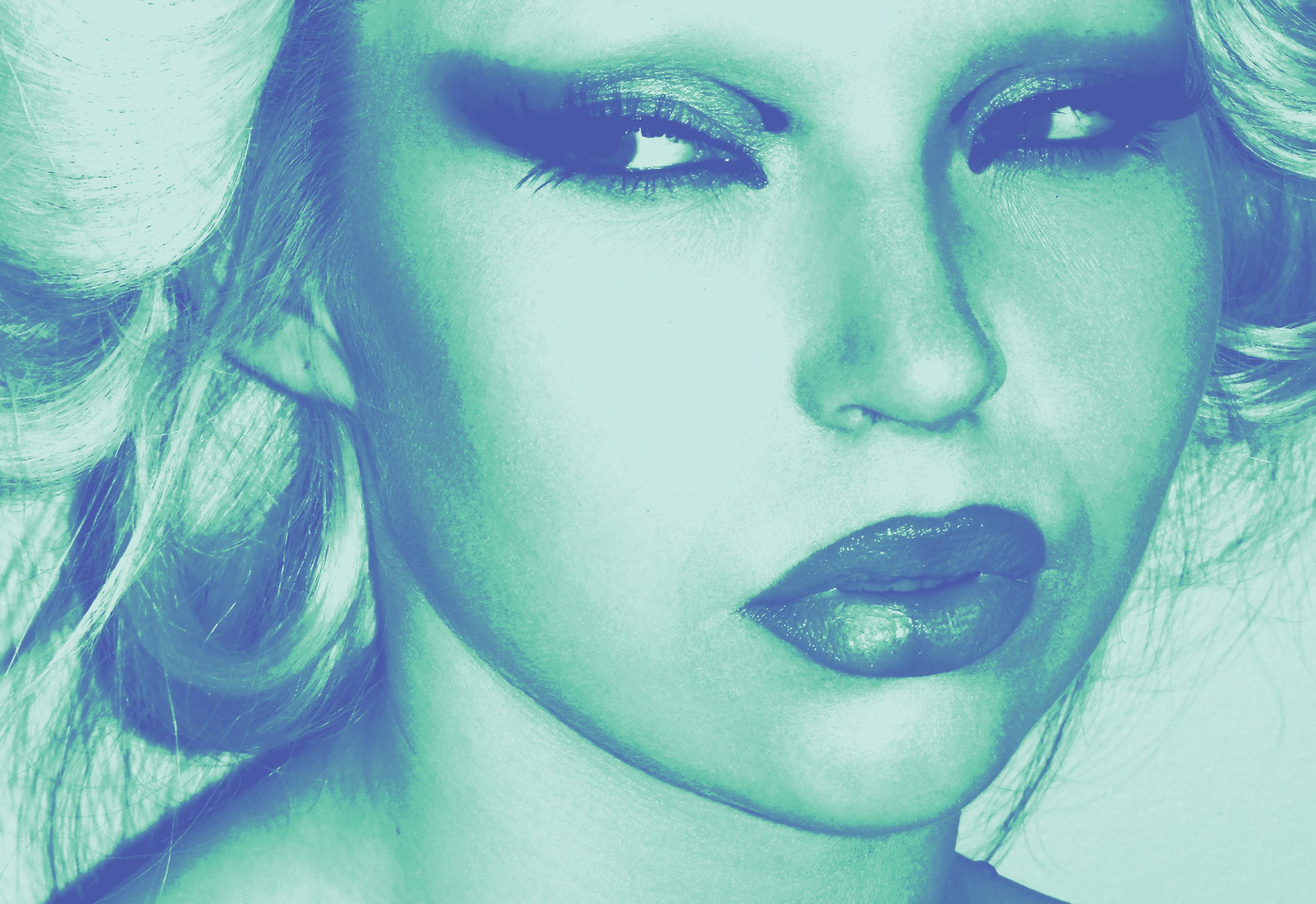
“I do my own glam on tour,” she says. “I really like it. I think it’s the best part of the day because you get to sit in silence for a bit … and enjoy the becoming of a pop star.”
That idea of becoming sits at the center of how she is thinking about her work right now, especially in contrast to how she approached it earlier in her career. There was a time when distance was part of the appeal, when the world she built around herself was intentionally exaggerated, almost mythic in its construction.
“I was taking on the form of a succubi … I was really into lore and creating worlds,” she says. “But I felt like there was a disconnection between the music that I do and the person that I am.”
She doesn’t distance herself from that phase. She talks about it like something that made sense at the time, until it didn’t. What has shifted
The distinction is subtle, but it changes the entire process. Instead of starting with a concept and placing herself inside it, she begins with herself and lets the work take shape outward from there. That shift shows up most clearly in how she describes making the album, which she approached without a fixed direction or a defined endpoint.
“I didn’t want to decide what the album was going to be,” she says. “I just wanted to make music that we like … and then look at it afterwards and see what kept happening.”
It is a method that relies on accumulation rather than control. She wrote dozens of demos without trying to categorize them in real time, allowing patterns to emerge on their own instead of forcing them into place.



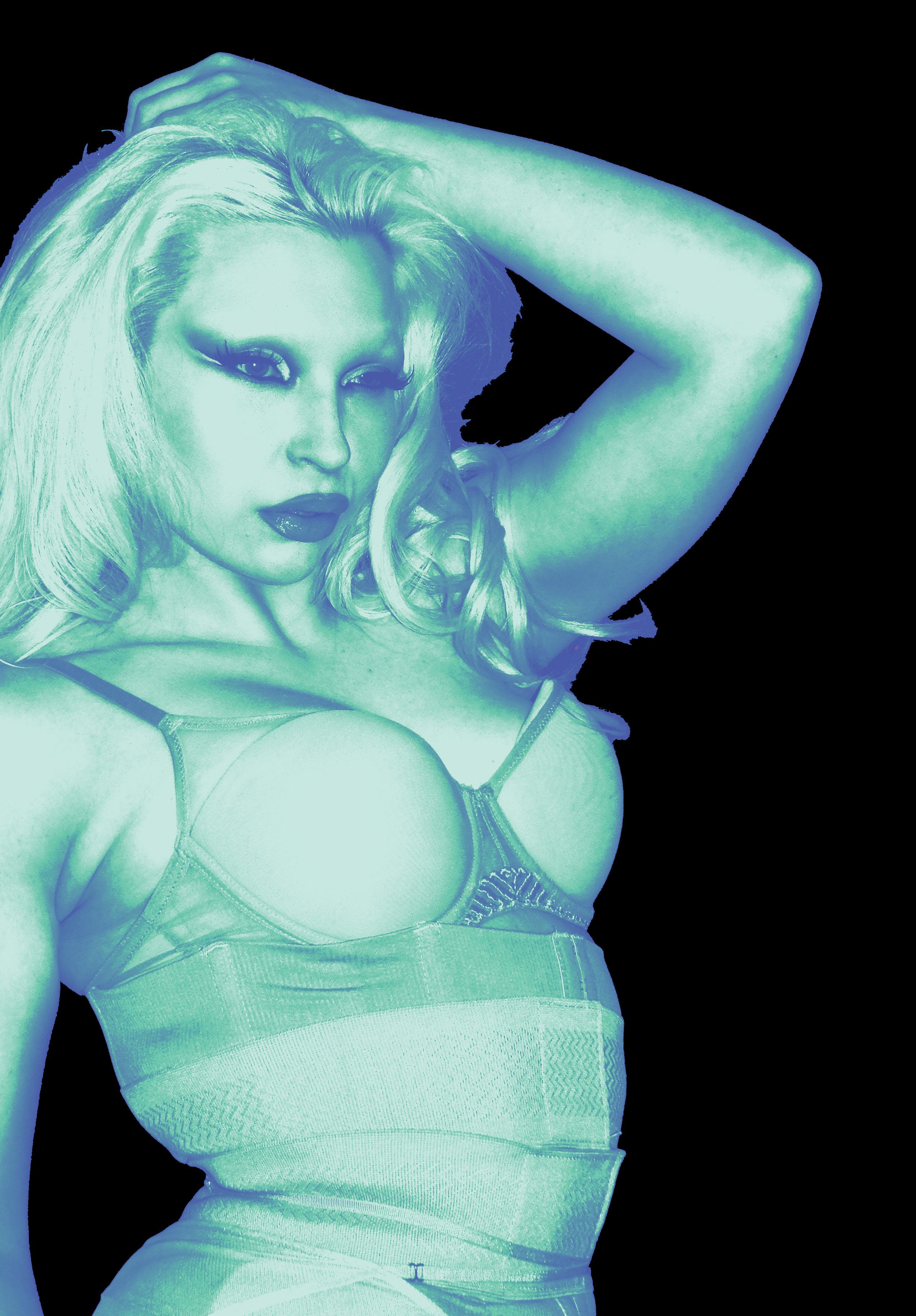
“There is a beat, and then I improvise … and then I try to clarify what did I write,” she says.
The instinct comes first. The meaning follows. That sequence is intentional, and it explains why she is less interested now in returning to the sound she already knows how to replicate.
“I felt really unchallenged … I know how to write this song,” she says. “It’s just not interesting anymore.”
There is no hesitation in that admission. If anything, it feels like the clearest articulation of where she is right now. The appeal is no longer in refinement, but in risk.
“I really like the thrill of creating and being a little brave,” she says. “Being naked in a music video or writing something new … It’s all kind of like a challenge.”
That recalibration extends beyond the recording process and into how she thinks about performance. Where earlier shows leaned on structure and distance, the current iteration moves in the opposite direction, pulling the audience closer rather than holding them at arm’s length.


“You can hear my real voice a lot more,” she says. “It’s more like an intimate live show … rather than before.”
The shift is not framed as a reinvention, but it does require a different kind of presence. Less insulation, more exposure. When the conversation turns to intimacy, she doesn’t hesitate or overcomplicate it.
“It’s trust,” she says.
She applies that idea directly to the
live experience, where the relationship between artist and audience becomes immediate.
“You have to think … Everyone’s there rooting for you. There has to be a trust that we’re in it together.”
That sense of trust becomes more complex as the work itself begins to shift, especially when the audience already has a fixed idea of who she is. For Cobrah, this moment is less about redefining herself and more about allowing uncertainty back into the process.
“I wanted to have Cobrah and Clara be the same.”
“I felt like … This is the first time I’m exploring again,” she says. “I had no idea how it was going to be received.”
She describes it as giving herself a second birthday, not as a dramatic break from the past, but as a return to something she had moved away from. The difference now is that the exploration is happening in full view, in front of an audience that expects continuity.
She doesn’t resolve that tension. She stays inside it.

By Addison Herron-Wheeler
For decades, the streets of Denver were a battlefield where the front lines were drawn not by geography, but by identity. While the national narrative of queer liberation often centers on the 1969 Stonewall Uprising in New York City, Denver’s own struggle against state-sanctioned violence was a gritty, long-running war of attrition. It was a history defined by "The Johnny Cash Special" entrapment bus, the systemic "fag-bashing" by both citizens and officers, and the blood of individuals like Anthony DeSoto and Daniel O’Hayre.
In Denver, police actions were not merely "gay issues"—they were fundamental abuses of civil and human rights. As one activist wrote in the late 1970s:
"Police actions do not constitute a ‘gay issue’, but rather an ‘abuse issue’ and a matter of civil and human rights. When a man is beaten because of his perceived sexuality, it is the law itself that has been broken by those sworn to protect it."
(OUT FRONT, 1977)
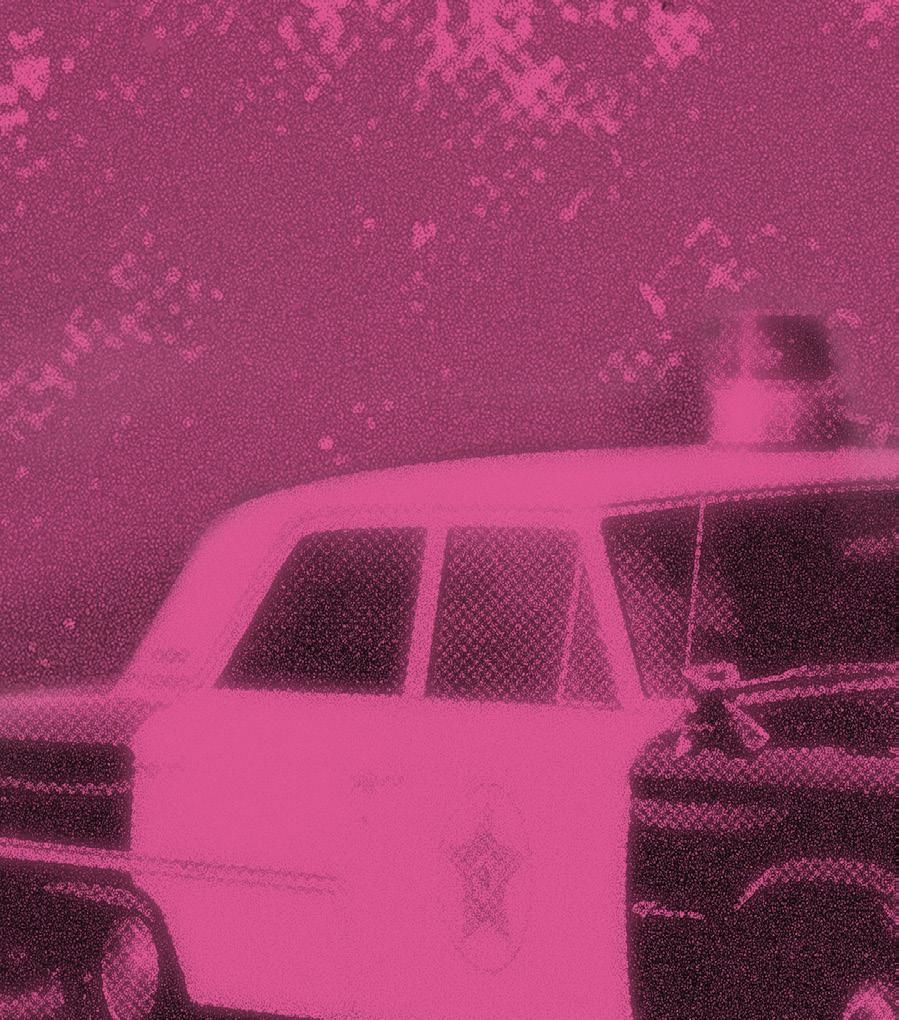
In the early 1970s, the Denver Vice Squad, led by figures like Captain Jerry Kennedy, operated with near impunity. The strategy was simple: criminalize the very existence of queer people through vague ordinances against "loitering," "cross-dressing," and "lewd conduct."
The Johnny Cash Special
One of the most infamous tools of this era was the "Johnny Cash Special." This was a bus, rented by the Denver Police Department, which was parked near gay cruising areas like Civic Center Park. Undercover officers would lure men onto the bus with the promise of a "Johnny Cash show" or sexual encounters. Once inside, the men were arrested on obscenity charges.
In February 1973, this operation resulted in the arrest of 24 men in a single night. This event became the catalyst for the Gay Coalition of Denver (GCD). Gerald Gerash, a founder of the GCD, recalled the atmosphere of terror:
"It was an extremely closeted city, and most of these people had never appeared at any protest, much less a gay protest. But the ticket for jaywalking or the overnight in jail wasn't the penalty that was really impacting people. It was being outed. Being outed meant losing your job, your family, and your safety."
(OUT FRONT)
The 1973 "Gay Revolt"
On October 23, 1973, the GCD staged what is now known as "Denver’s Stonewall." Over 300 activists packed a Denver City Council meeting. They presented evidence that 98% of all "offered lewd conduct" arrests in the city were of gay men—a statistical impossibility unless the police were exclusively targeting one demographic.
The testimony was visceral. For three hours, 35 people described being beaten, harassed, and humiliated by the Denver Police Department (DPD). The result was the repeal of four discriminatory ordinances, but while the laws changed, the culture of the precinct did not.


Throughout the late 1970s, OUT FRONT Magazine became the primary recordkeeper of police violence that the mainstream Denver Post often ignored.
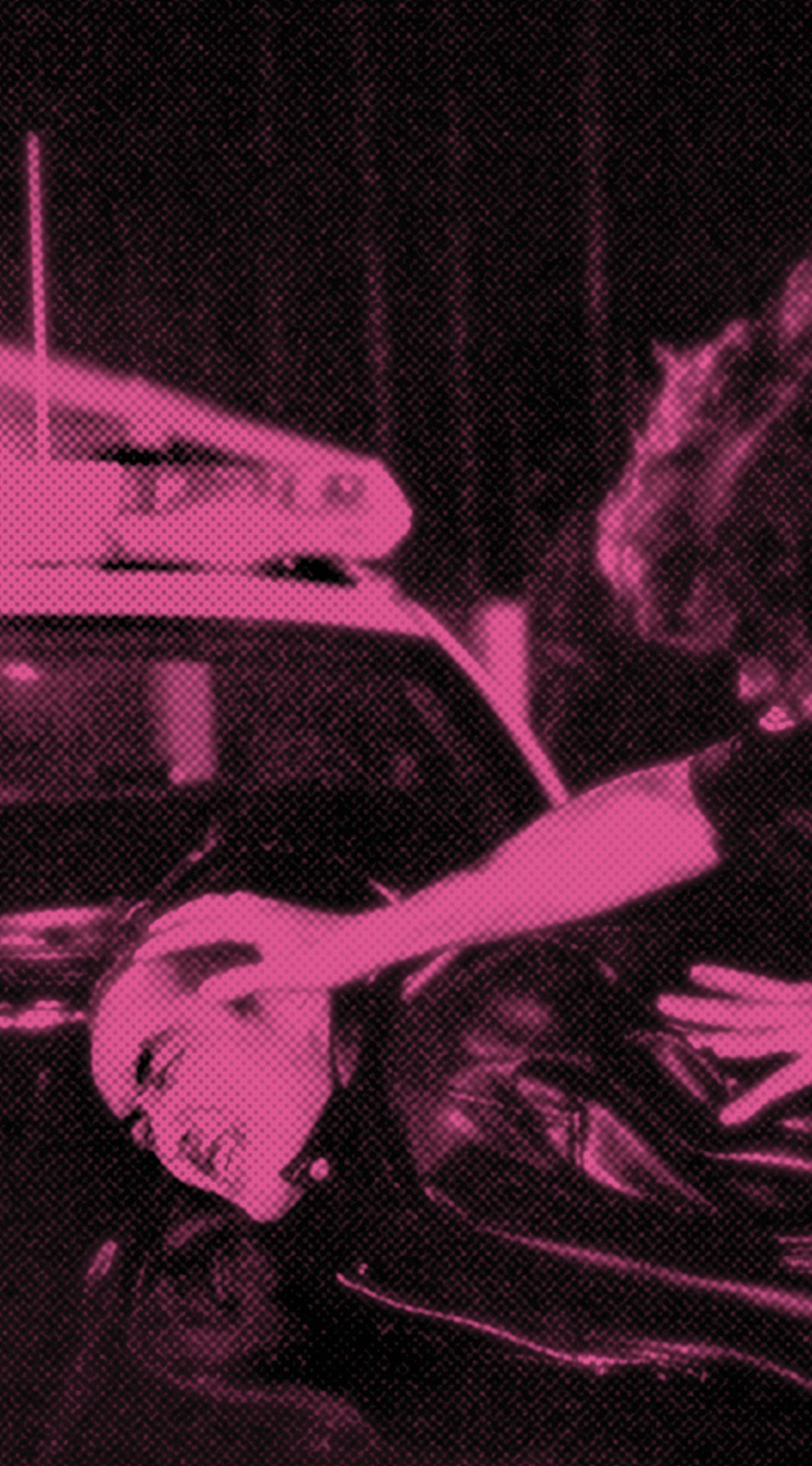
On May 19, 1978, the queer community was rocked by the killing of Anthony DeSoto, a transgender woman known as Irene. Officer Lawrence Subia shot DeSoto, claiming she had lunged at him with a pair of scissors. The community response was one of outrage and disbelief.
"When will the killings stop? How many more times will a 'pair of scissors' or a 'sudden movement' be the justification for the execution of one of our sisters or brothers on the street?"
(OUT FRONT Editorial, May 1978)

by

DeSoto’s death highlighted the intersectional vulnerability of transgender sex workers in Denver, who were "hounded with harassing phone calls and death threats" by the very officers who patrolled their neighborhoods.
In 1977, Patrolman Daniel O’Hayre shot Eugene Levi during a struggle. O'Hayre became a symbol of the "cowboy" mentality within the DPD. Reports from the time indicate that O'Hayre was frequently involved in the harassment of bar patrons.
In July 1977, Out Front reported on the systematic ticketing of patrons leaving gay bars:
"Officers wait in the shadows of the alleyways behind the Broadway and the Fox. They do not wait for crimes; they wait for a reason to ask for an ID. They wait for a jaywalk. They wait for a loud laugh. The goal is not public safety; the goal is the record of the individual’s presence in a 'deviant' establishment."
(OUT FRONT, 1977)
David Faulk’s experience in August 1979 serves as a chilling example of the physical abuse used during arrests. Faulk was reportedly beaten so severely during a routine stop that he required
hospitalization. The police report, however, described his injuries as resulting from "resisting arrest and a subsequent fall."
As Denver entered the 1980s, the "Gay Police Task Force" was established in an attempt to bridge the gap. However, the community remained skeptical. While the "City Agency Responds to Task Force" headlines suggested progress, the reality on the ground was a rise in "fag-bashing" by civilian gangs—often with the perceived tacit approval of the police.
By the 1990s, the focus shifted toward "Hate Violence." The Out Front Magazine (OFM) established a monitor to report crimes that mainstream media refused to cover.
"In 1992, as Amendment 2 loomed over our heads, the violence became more brazen. It wasn't just the cops anymore; it was the skinheads and the 'moral' citizens who felt they had a mandate to purge the city. And when we called the police, they would ask us what we were doing wearing a dress or why we were in that part of town in the first place."
(Community Statement, 1993)
Today, organizations like One Colorado work to ensure that the legislative gains of the 1990s and 2000s are not rolled back. While the "Johnny Cash Special" is a relic of the past, and Denver has some of the most progressive anti-discrimination laws in the country, the legacy of mistrust remains.
The history of queer police brutality in Denver is not just a collection of dates and names; it is a testament to the resilience of a community that refused to be beaten into the shadows. As we look at the modern Denver Police Department, it is vital to remember the names of DeSoto, Faulk, and Levi, whose experiences forced the city to confront its own bigotry.
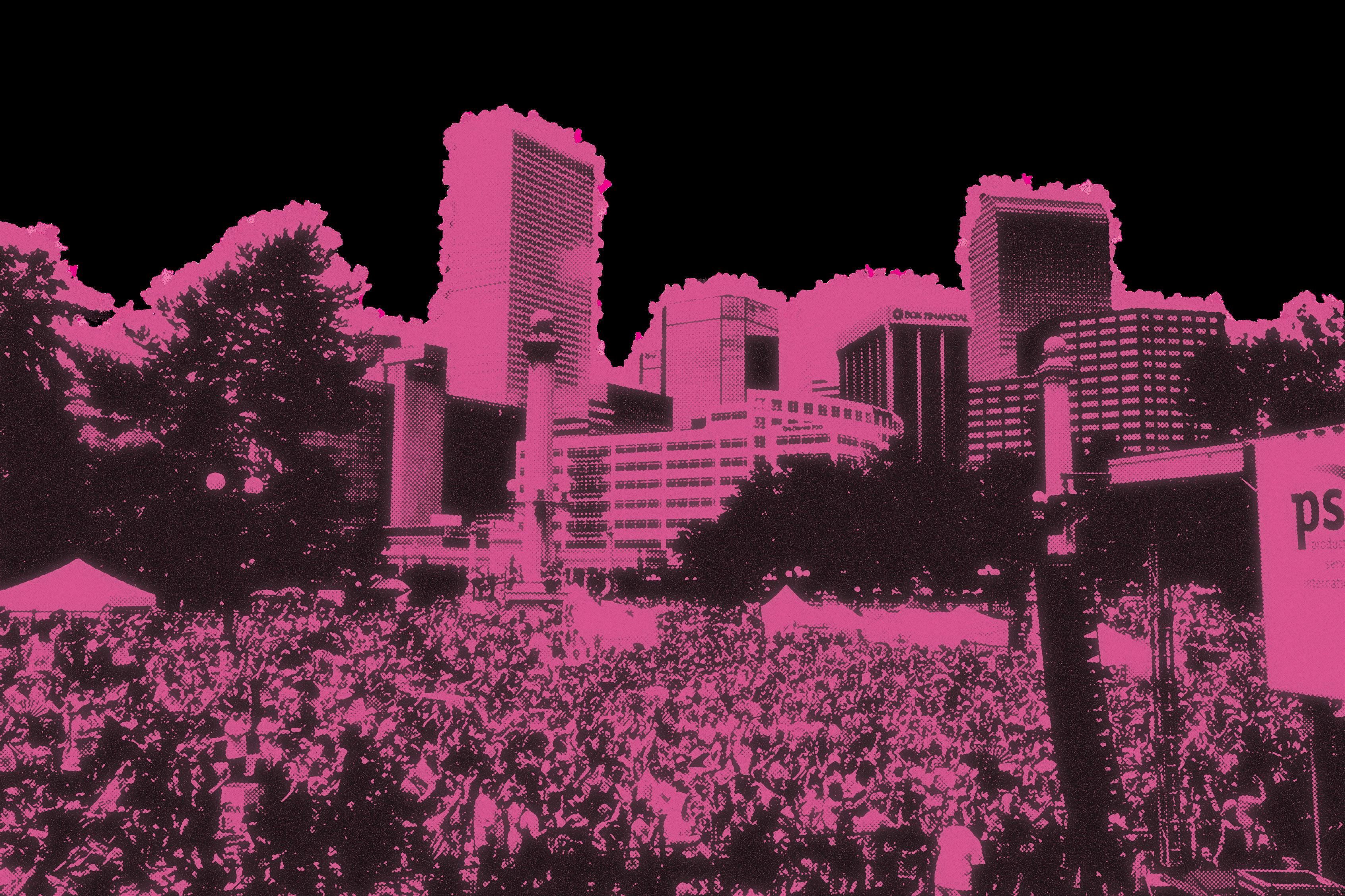

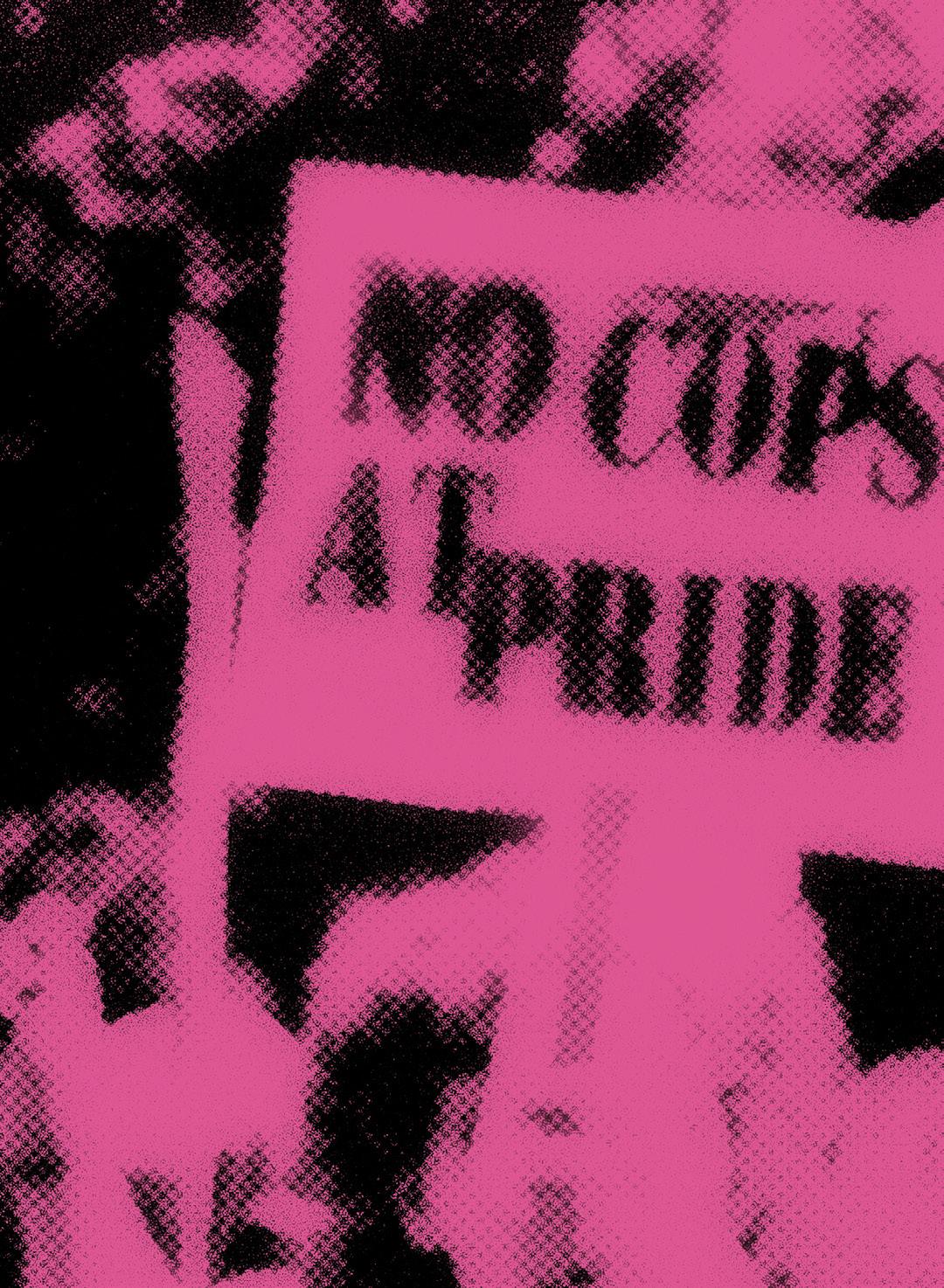



1973: The "Gay Revolt" at City Council; repeal of "lewd conduct" laws.
1976: Phil Price starts OUT FRONT Magazine to document harassment.
1977: Daniel O'Hayre shoots Eugene Levi; mass ticketing of bar patrons.
1978: Killing of Anthony "Irene" DeSoto by Officer Subia.
1979: David Faulk beating; community demands for "human rights, not just gay rights."
1992: Amendment 2 passes, leading to a spike in hate violence and a "boycott Colorado" movement.
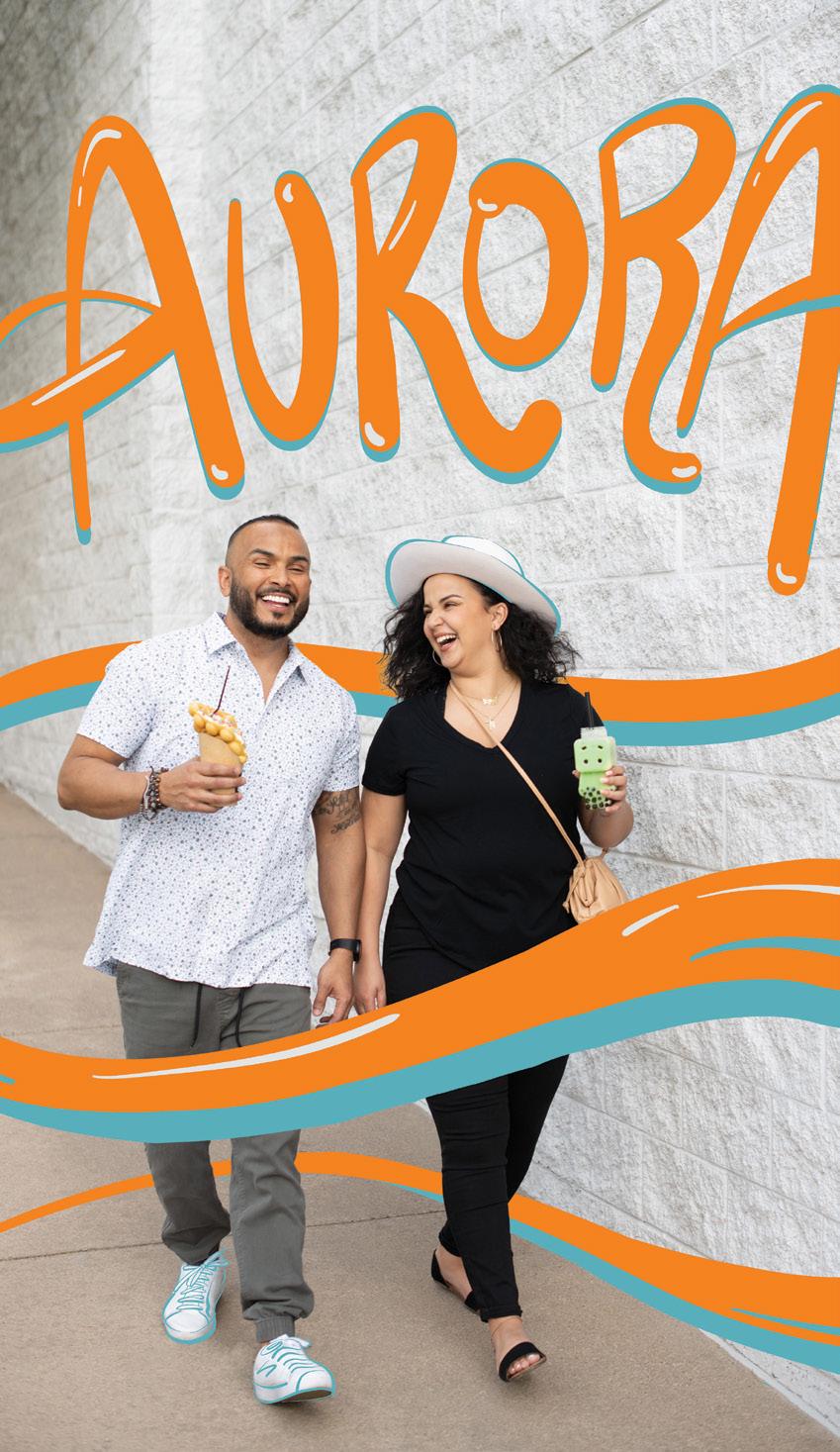
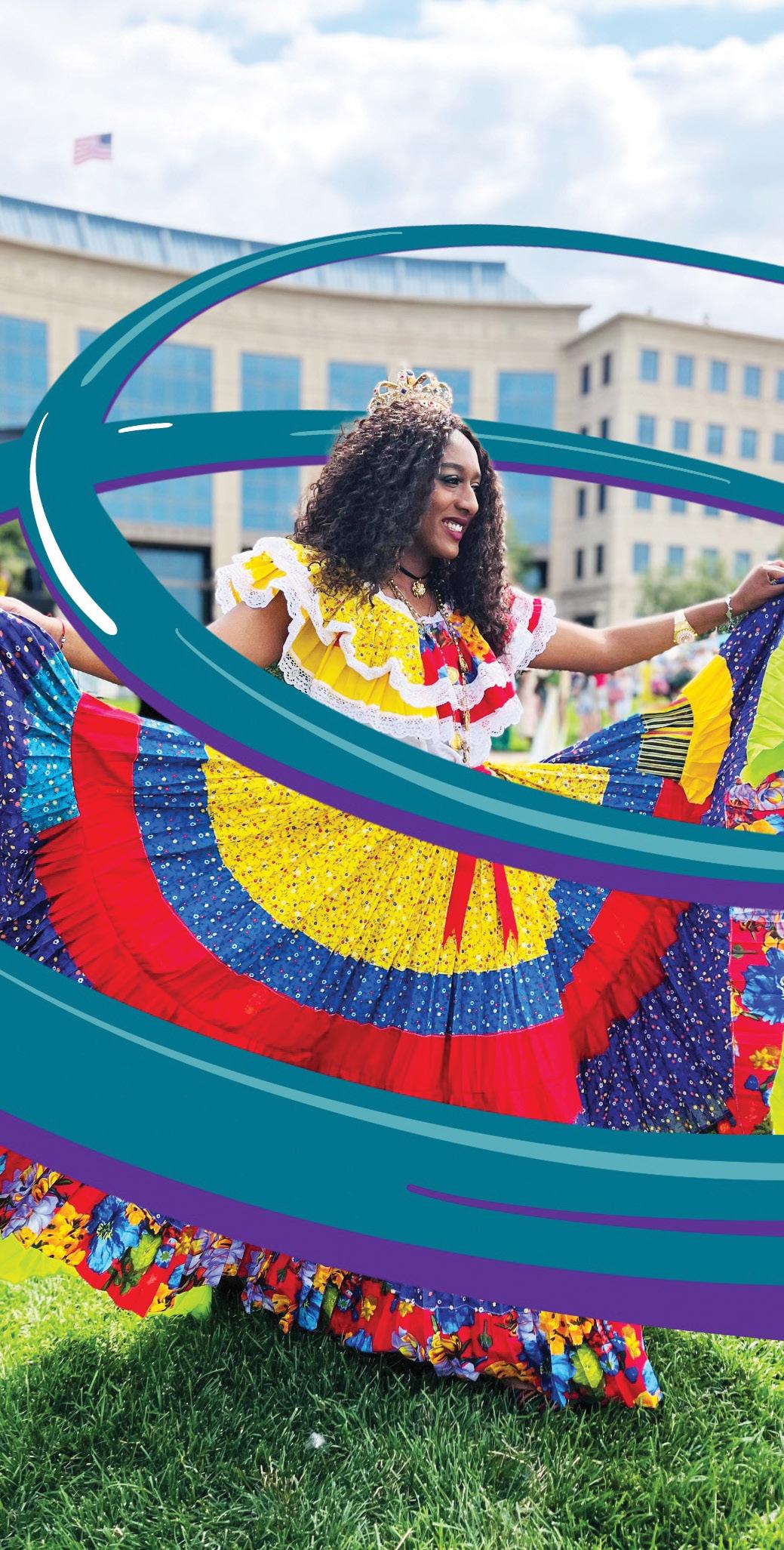
Aurora is a place where diversity, culture, and community come together to create something truly special. Known as The World in a City, Aurora is home to more than 150 languages and a rich mix of global traditions. This diversity shapes every part of life here, from the food and festivals to the arts, neighborhoods, and open spaces.
Whether you are looking for your next adventure or a place to call home, Aurora offers a global experience rooted in local pride.
Aurora is one of the most diverse cities in Colorado, with residents representing cultures from all over the world. This diversity brings vibrant energy to everyday life and is reflected in the people, the community, and the shared experiences that bring everyone together.
Food is one of the most visible and celebrated expressions of this cultural richness. Aurora is known for its wide range of global cuisines, with hundreds of local restaurants and markets offering authentic dishes and flavors from every corner of the world. Whether you are craving something familiar or trying something completely new, Aurora’s food scene invites culinary exploration right at home.
Community events and cultural celebrations also highlight the city’s international character. Annual events bring together music, dance, fashion, and food from across the globe, offering residents and visitors a chance to connect with cultures different from their own. These moments help define Aurora as a place where the world gathers.
Aurora’s natural surroundings offer space to explore, relax, and reconnect. The city features more than 100 parks, over 200 miles of trails, two major reservoirs, and large areas of open space. Whether you are hiking, biking, kayaking, or simply enjoying a quiet moment outdoors, Aurora provides space for every kind of adventure.
Neighborhood parks include playgrounds, sports fields, and gathering spaces for families and friends. Larger natural areas provide open views, peaceful trails, and chances to spot native wildlife. Every season brings new opportunities to enjoy the outdoors.
Aurora’s arts scene is as dynamic as its people. Public art, galleries, local performances, and community theaters help tell the stories of the people who live here. Artists and creatives of all backgrounds contribute to a growing cultural movement that reflects the city's global roots.
The city also values its past. Museums and cultural spaces share the story of Aurora’s growth and transformation over time. From early settlers to recent arrivals, every chapter adds depth to the city’s identity.
Aurora is a welcoming community that offers opportunities for individuals and families to thrive. People from all walks of life are drawn to its inclusive spirit, strong sense of connection, and unique blend of cultures.
Whether you are visiting for a few days or looking to plant roots, Aurora invites you to experience something new every day.

chaosbloom.com | (720) 432-3581
Chaos Bloom Theater offers Improv Comedy & Sketch Shows and Classes for all levels. The Friday shows are always different from Storytelling to Musical Improv & Sketch. Our improv classes for the summer are up on our website.
movingbodychiro.com | (720) 239-2702
We’ll take care of all your aches and pains and get/keep you doing the things you love. Caring, compassionate, thorough full-body and whole-person care.
Jeof Oyster • VTA, ACC | (720) 828-7665 outward.travel
Travel isn't just movement; it's a reset. Whether you crave the silence of a private villa or the electric energy of a celebration with friends, we don't just plan trips—We design chapters of your life.

THE 99ERS
SPORTS BAR
909 E. Colfax Ave, Denver the99erssportsbar.com
BUDDIES
504 E. Colfax Ave, Denver buddiesdenver.com
CHAMPAGNE TIGER
601 E. Colfax Ave, Denver champagnetiger.com
CHARLIE'S NIGHTCLUB
900 E. Colfax Ave, Denver (303) 839-8890 charliesdenver.com
DENVER EAGLE
5110 W. Colfax Ave, Denver (303) 534-0500
Facebook @denvereaglebar
EL POTRERO
4501 E. Virginia Ave, Glendale (303) 388-8889
Facebook @elpotreroclub
GOOD JUDY’S
BAR & CLUB
103 N. 1st St. Grand Junction (970) 433-7115 good-judys.com
HAMBURGER MARY’S
1336 E. 17th Ave. Denver (303) 993-5812
hamburgermarys.com/denver
LADY JUSTICE BREWING
3242 S Acoma St. Englewood (303) 578-8226
ladyjusticebrewing.com
LIL' DEVILS
255 S. Broadway St. Denver (303) 733-1156
Facebook @lildevilslounge
R&R LOUNGE
4958 E. Colfax Ave, Denver (303) 320-9337
Facebook @randrdenver
TIGHT END BAR
1501 E. Colfax Ave, Denver (303) 861-9103
tightendbar.com
TOWN HALL COLLABORATIVE
525 Santa Fe Dr, Denver (720) 389-7502
townhallcollaborative.com
TRACKS
3500 Walnut St. Denver (303) 836-7326
tracksdenver.com
TRADE
475 Santa Fe Dr, Denver (720) 627-5905
Facebook @tradedenver
WILD CORGI PUB
1223 E. 13th Ave, Denver (303) 832-7636
wildcorgipub.com
X BAR
829 E. Colfax Ave, Denver (303) 832-2687
xbardenver.com
#VYBE
1027 N. Broadway St, Denver (720) 573-8886
303vybe.com