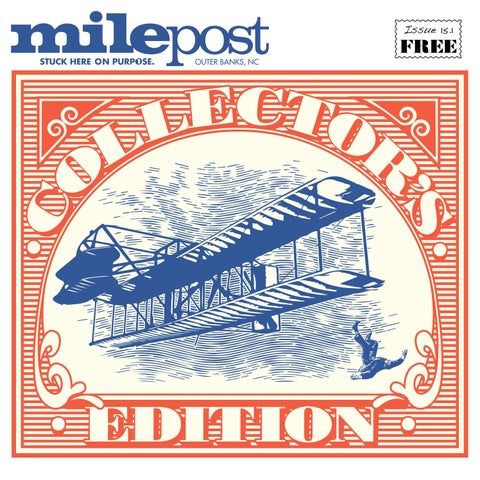
Don’t believe us? Ask the postal worker who minted the “Inverted Jenny.” Poor fella probably came into the press facility a touch hungover. Hit “print” before putting his head on the desk. Woke up responsible for the single biggest stamp screw-up in US history: 1918’s “Inverted Jenny,” which features a Curtiss JN-4 “Jenny” biplane flying upside down — on our country’s very first piece of “air mail” postage, no less.
I bet his boss really stuck it to him — pun intended — then cut him a pink slip.
But with any luck, he pocketed a second misprinted sheet on his way out the door, then stashed it for a decade or two. Because, today, fewer than 100 of the mess-
ups are known to exist — from a print-run of more than 3 million. So rare that a single “Inverted Jenny” stamp can be worth $2 million. The right-side-up ones? They go for maybe thirty bucks.
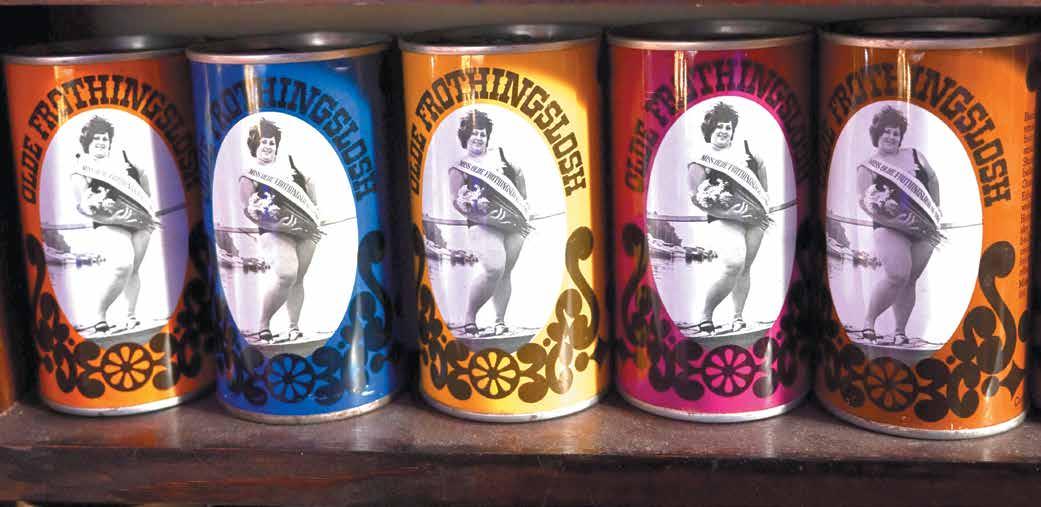
Sounds backwards. But if there’s one thing we learned talking to collectors this issue, it’s that a little imperfection often ups the price, whether it’s a misspelled name on a sleek little fishing lure or putting a plussized model on a shiny beer can. You just have to know what you’re looking at.
To me, the metaphor holds even more value — especially from an Outer Banks perspective. After all, we’re a place that loves a good flaw, whether it’s our healthy
appreciation for unhealthy habits, making heroes out of legendary pirates and local misfits, or that warm-cozy feeling we get from a cramped, leaky beach box.
“OUTER BANKERS CAN FIND THE GOLD IN JUST ABOUT ANYTHING.
Hell, our very map is littered with mistakes, from the mangling of Indigenous names (Hatteras and Kitty Hawk) to the occasional drunken mishap (Kill Devil Hills), to plain old typos. (Shouldn’t it be “Nag’s Head”?)
Rather than fix them, we keep all that red ink permanent, broadcasting our brazen willingness to color outside the lines and live well beyond the margins.
It adds up to a more vibrant — and more precious — coastal community. One that can look past a little dent or ding to find the gold in just about anything. A place where a rusty truck and ripped shirt means you can probably still fix an engine. A fishy odor comes with the promise of a fresh seafood dinner. And a missing tooth makes for a more classic smile — and probably a few epic tales. Because, like any seasoned collector, we understand that you don’t need to be perfect to be priceless.
— Matt
Walker
Thank you for reading Outer Banks Milepost. We hope you enjoy it. If not — before chucking this issue into the nearest dumpster — please consider one of the following equally satisfying ways to express your disgust: glue up the pages, wrap up a package, then send it on a round-the-world trip with a sticker saying, “Do Not Return!”; paint your sneaker treads red, stomp it to pieces, and consider it “canceled.” Or just toss it on that 6-month pile of newspapers you’ve yet to recycle. (Trust us, you’ll feel better.) Then, send any and all feedback — positive, negative or just plain confused — to: editor@outerbanksmilepost.com. We promise to find some way to re-purpose them.



“This is true of all collecting...The object finally possesses the possessor.” ― John Fowles “I do live in sort of a museum situation.” — Joe Bonamossa
Issue 15.1
Spring 2026
Cover: Inverted Orville
Illustration: Jesse Davis

Carnell Boyle, Jared Cera, George Cheeseman, Marcia Cline, Carolina Coto, Kim Cowen, Cloey Davis, Michael J. Davis, Fay Davis Edwards, Mary Edwards, Laine Edwards, Marc Felton, Janet Fenton, Travis Fowler, Adriana Gomez-Nichols, Amelia Kasten, Chris Kemp, Nathan Lawrenson, Dave Lekens, Tim Lusk, Elisa McVearry, James Melvin, Ben Miller, Dawn Moraga, Ben Morris, Holly Nettles, Stella Nettles, Rick Nilson, Barbara Noel, Holly Overton, Stuart Parks II, James Perry, Tisch Perry, Charlotte Quinn, Meg Rubino, Shirley Ruff, Amy Snowden, Noah Snyder, Rob Snyder, Janet Stapelman, Alyse Stewart, Willow Temple, Kenneth Templeton, Stephen Templeton, Shane Thomas, George Tsonev, CW, Christina Weisner, Chris Wheeler, John Wilson, Mark Wiseman, Bri Young, Mike Zafra Lensfolk
Nate Appel, Matt Artz, Nathan Beane, Chris Bickford, Russell Blackwood, Mike Booher, Don Bower, Aycock Brown, Mark Buckler, Jon Carter, Rich Coleman, Marc Corbett, Kim Cowen, Chris Creighton, Mere Crockett, Benny Crum, Jason Denson, Amy Dixon, Susan Dotterer Dixon, Lori Douglas, Julie Dreelin, Tom Dugan/ ESM, Roy Edlund, Bryan Elkus, Ben Gallop, Cory Godwin, Treveon Govan, Michael Halminski, Cody Hammer, Chris Hannant, Katie Harms, Bryan Harvey, David Alan Harvey, Ginger Harvey, Bob Hovey, Biff Jennings, Jenni Koontz, Daryl Law, Mike Leech, Anthony Leone, Jeff Lewis, Jared Lloyd, Matt Lusk, Ray Matthews, Brooke Mayo, Mickey McCarthy, Nic McLean, Roger Meekins, D. Victor Meekins, Richard L. Miller, Dick Meseroll/ESM, Ashley Milteer, David Molnar, Rachel Moser, Ryan Moser, Elizabeth Neal, Rob Nelson, Candace Owens, Anne Snape Parsons, Crystal Polston, Daniel Pullen, Cal Ramsey, Ryan Rhodes, Casey Robertson, Terry Rowell, Cyndi Goetcheus Sarfan, Katie Slater, Tom Sloate, Wes Snyder, David Thomas, Ed Tupper, Eve Turek, Chris Updegrave, Dan Waters, Kati Wilkins, Cyrus Welch, Jay Wickens, Cody Wright Penfolk Ashley Bahen, Madeline Bailey, Sarah Downing, Ty Evans, Laura Gomez-Nichols, Jim Gould, Steve Hanf, Sam Harriss, Sarah Hyde, Catherine Kozak, Katrina Leuzinger Owens, Dan Lewis, Michelle Lewis, Terri Mackleberry, Fran Marler, Amanda McDanel, Maggie Miles, Matt Pruett, Mary Ellen Riddle, Peter Graves Roberts, Arabella Saunders, Corinne Saunders, Shannon Sutton, Kip Tabb, Brian Tress, Emmy Trivette, Kathleen Wasniewski, Hannah West, Clumpy White, Sharon Whitehurst, Natalie Wolfe, Michele Young-Stone Pointing/Clicking
Jesse Davis
Sales Force
Laurin Walker
Blame It All On Suite P Inc. PO Box 7100 • KDH, NC 27948 Office: 252-441-6203 • Sales: 949-275-5115
editor@outerbanksmilepost.com • sales@outerbanksmilepost.com
Outer Banks Milepost is published quarterly (sorterly) by Suite P Inc. All contents are the property of Suite P Inc. and do not reflect the opinion of advertisers or distributors. Nor do their contents reflect that of the creative types (who would never, ever sell out). Comments, letters and submissions are usually welcome. Please include SASE for return delivery of all snail mail, however, Milepost and Suite P Inc. still aren’t responsible for any unsolicited materials. And don’t expect much else to move much faster than IST (Island Standard Time). Oh yeah: if you reprint a lick of this content you’re ripping us off. (Shame on you.) To discuss editorial ideas, find out about advertising or tell us we blew it – or just find out what the waves are doing – call 252-441-6203 or email: editor@outerbanksmilepost.com; sales@outerbanksmilepost.com.


“Before & After” By
Tisch Perry @saltywarebytisch
03 StartingPoint
Philate-al flaws.
06 UpFront
Fishing apps, floating mail and five-fingered discounts.
20 GetActive
This fashionable fundraiser is all the rage.
22 Stamped In Time
Why our tiny corner of the world boasts an outsized role on US envelopes.
28 GraphicContent
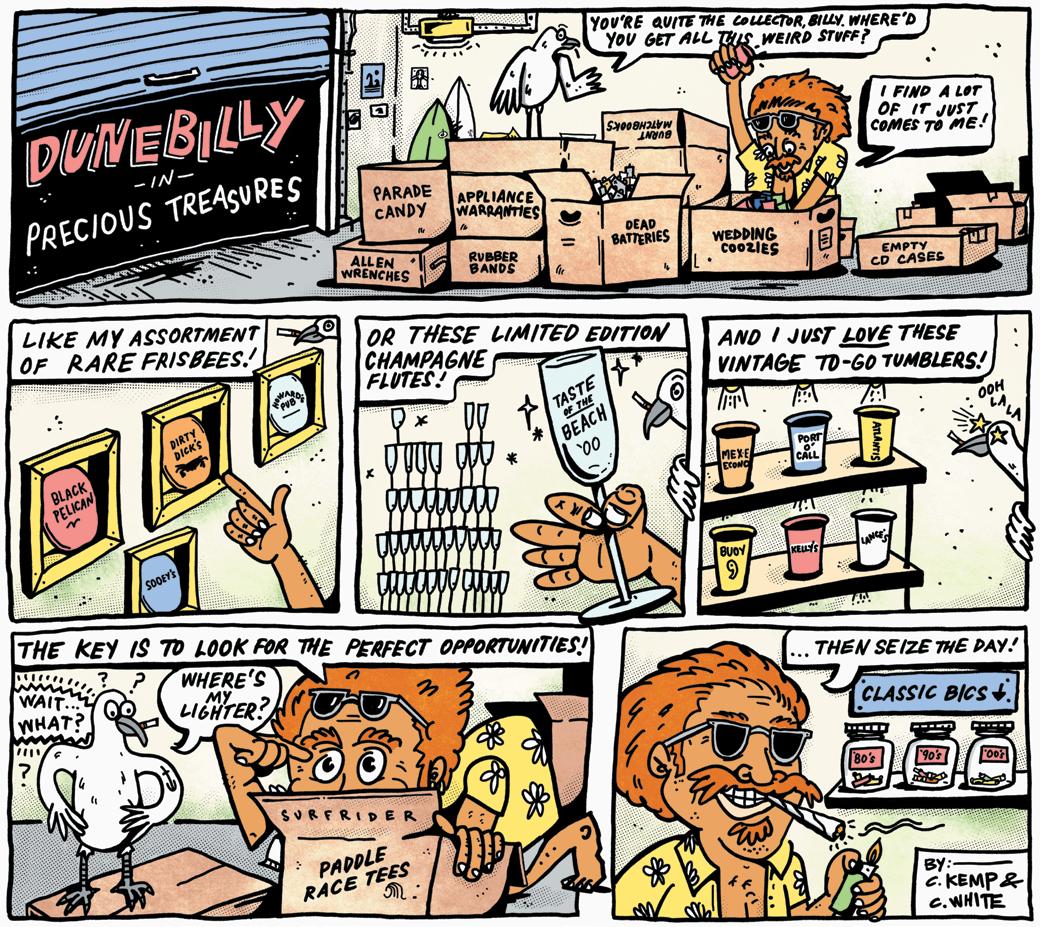
The lighter side of cancel culture.
30 It’s A Lot
Five one-of-a-kind collections — from Honda hoarders to seed-bank saviors.
40 FoodDrink
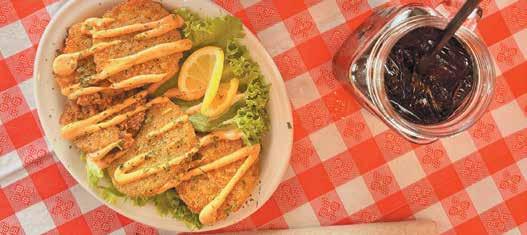
These century-old biscuits are anything but stale.
42 ArtisticLicense
Tisch Perry loves to spoon.
45 OutThere
Of mice and girls.
46 EndNotes
A not-so-limited collection of spring events.
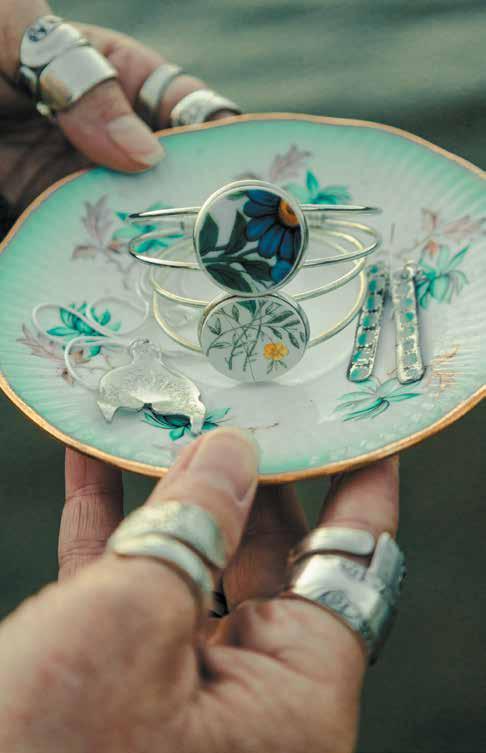
“I’ve been collecting vintage and antique dishes since I was in my 20s. And I’ve always been interested in upcycling things. So, making jewelry out of porcelain and silverware was all very organic — especially since none of my jewelry ever matches completely. In fact, when I first started, I would just stick plates in pillowcases and drop them on the concrete. Now I have the proper tools. I’ll see a design that I want to use for a bracelet or pendant, and I’ll just focus in and cut it out. I still make mistakes. But that’s okay. Because most of the stuff I’m getting has been sitting in a drawer, or they’re forgotten about in a thrift store bin, or they’re collecting dust on an antique store shelf. Same with the silverware I use for my rings. So, I don’t feel guilty smashing or cutting anything up. Because I take something that had a prior life, that may have sat on the family’s table at one point, and I get to transform it and give it new life. I think that’s beautiful.” — Tisch Perry
RELIEF FOR STRESS & PAIN
Cheryl Blankenship, lac
Heather Geoghegan, lac
Lindsey Salanga, lmbt #08105
Tracie Rosso, lmbt #02083
Laurie Everett, lmbt #20629
Licensed Acupuncturists • Licensed Massage Therapists IslandAcupunctureOBX.com islandacupunctureobx@gmail.com

State launches a new website, app — and law — to collect crucial data.
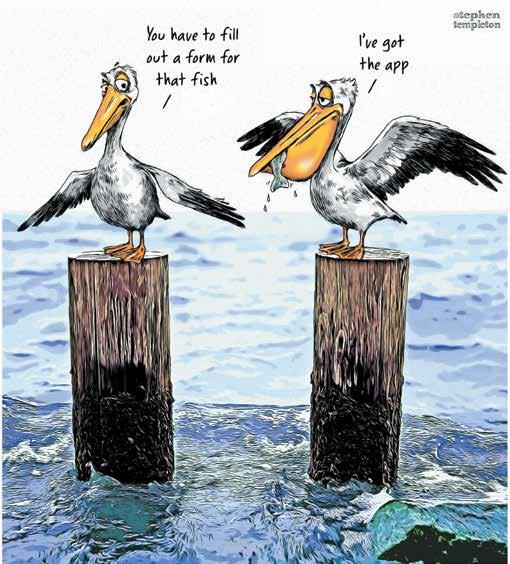
Fishing regulations and controversy are conjoined twins of resource management. But a new state law mandating that anglers and watermen must now fill out a form documenting the number of catch they keep might turn out to be a worthwhile annoyance.
“This isn’t an enforcement issue,” says Chad Thomas, Executive Director of the nonprofit conservation group North Carolina Marine & Estuary Foundation, one of the groups behind the legislation. “It’s not about trying to catch anyone. It’s simply trying to improve the data collection.”
As every fisher knows, data about catch — how many, what size, where caught, when harvested — directly influence regulations on stock assessments, fishing seasons, catch limits, closures, jurisdictions, and quotas. But there have been significant gaps in data because there are gaps in the reporting.
According to Thomas, roughly 2000 of the estimated 6000 commercial fishing licenses sold in NC tend to report any sales. And for years, recreational fishers have not been required to report any fish they keep.
As a result, as of Dec. 1, state law requires
recreational fishers to report any flounder, striped bass, red drum, spotted seatrout, or weakfish they keep to the North Carolina Division of Marine Fisheries.
Commercial fishers, meanwhile, continue to be required to report their harvest to a licensed seafood dealer within 48 hours of landing — plus unsold fish now must also be reported to the dealer, who enters that new code on a trip ticket. (In other words, that bushel your crabber friend used to just give away now has to be reported.)
“The law doesn’t tell Marine Fisheries how to use data,” Thomas adds. “It just tells them they have to collect it.”
“The better your data to inform those decisions,” he continues, “perhaps the higher economic potential you’ll have if those species can recover or if we can perhaps have longer seasons, different seasons.”
The specific fish named in the law are some of the most popular and economically valuable recreational catch in NC waters.
According to Jesse Bissette, Marine Fisheries Commission liaison for the NC Department
of Natural Resources Division of Marine Fisheries, fishers can report their catches on a digital form accessed on the division’s website. Or if they don’t have internet access, they can print out a paper form and fill in the information, which would



have to be entered on the digital form and submitted to the division’s website by midnight the following day.
The form asks whether the fisher has a North Carolina fishing license, their

name and zip code, and whether they’re reporting for themselves and/or minor children.
Bissette says QR code stickers are available to slap on a cooler or tackle box to quickly access the reporting form, as well as an iPhone app.
“We haven’t had a ton of downloads on it yet,” he says, adding that it’s been working well, with no crashes reported. “We’re hoping that more people hear about it and get to use it, because it does have some useful features in it.”
The division is currently developing an Android app. They also plan to add a more robust reporting platform featuring more useful and informative features on both.
Data collected in the new state effort, officially known as the Mandatory Harvest Reporting program, is intended to complement the well-established federal surveys guided by the Marine Recreational Information Program, or MRIP, Bissette says.
Based in NOAA Fisheries, the voluntary program is a state/regional/federal partnership that coordinates a national network of recreational fishing surveys to develop estimates of catch. Those results are then combined with commercial fishing and biological research data that is applied to species management.
In North Carolina’s MRIP program, as Bissette explains, division staff would typically meet anglers at boat ramps, piers and beaches to ask questions about their
trip and their catch. Separately, a mailed survey asks how often they fish and how many trips they take. All the information is then used to estimate harvests and discards.
The good news about the new mandatory reporting? While having to submit the information might be an irritant, there are no additional fees and there are three years before a $35 fine.
“We’ve heard from people that, ‘Oh, $35 is not really that much money,’” says Bissette.
But it’s important to note, he adds, that the fine doesn’t include court costs. So that infraction could end up totaling close to $200. Also, repeat offenders could have their license revoked.
Since 2007, the state has required anglers to have a coastal recreational fishing license, which helps understand impacts. However, recreational fishing has increased tremendously in North Carolina, leading to a growing need for better reporting, says Jess Hawkins, a former Marine Fisheries official and instructor at two state universities’ marine laboratories.
“Recreational harvest is a very, very, very important component of monitoring, of trying to figure out what the population status is of these five species, and it’s going to continue to grow,” he says.
One significant factor for the increased interest from anglers, he says, is the big jump in fishing mobility in North Carolina’s plentiful and bountiful inshore and

nearshore waters, especially compared with pier and shore fishing.
“Economic conditions have allowed people to go out and pursue recreational activities in a boat, which usually involves fishing,” says Hawkins, who today owns Crystal Coast Ecotours, which is geared towards conservation-oriented recreational fishers.
Although the state is blessed with vast amounts of habitat and diversity of fish, he says, the environment is changing, species are moving around, and management has not been able to keep up.
“ “THE LAW DOESN’T TELL MARINE FISHERIES HOW TO USE DATA... IT JUST TELLS THEM THEY HAVE TO COLLECT IT.”
“We’re a prime recreational fishing place,” Hawkins says. “We were a prime commercial fishery, but the fisheries are declining.”
Blame for decreased population of some species — directed at both recreational anglers and commercial watermen — runs the gamut from overfishing to overregulation. But there’s a lot of contributing factors, Hawkins says, including warming waters. And inadequate data.
“I think recreational fishing and commercial fishing can coexist,” he says. “It’s important to have both.”
To that point, he says, commercial fishing is not only a proud heritage in North Carolina, it provides high quality, fresh fish for people to eat. At the same time, recreational fishing is a beloved sport for millions, as well as a valuable economic driver on the Outer Banks and statewide.
Putting aside the years-long conflict between both camps, Thomas explains that proponents of the reporting legislation see better data as the way to address long-standing concerns about fair fisheries management and accurate stock assessments, among other benefits.
After a few years, he says, the data will level out and become more consistent, making it possible to show trends. Ideally, more species will be added to the program.
“So, I think this is really just a way to continue to enhance data collection,” Thomas says. “Instead of looking at it as an entirely new system.”
Despite the famously independent streak of fishers of all stripes, Hawkins says he believes they will come to understand the value to North Carolina’s fisheries of good data.
“I would encourage the division to continue to reach out to stakeholders and say that the need for this is very important,” he says. “It’s always better to use the carrot versus the stick.” — Catherine Kozak
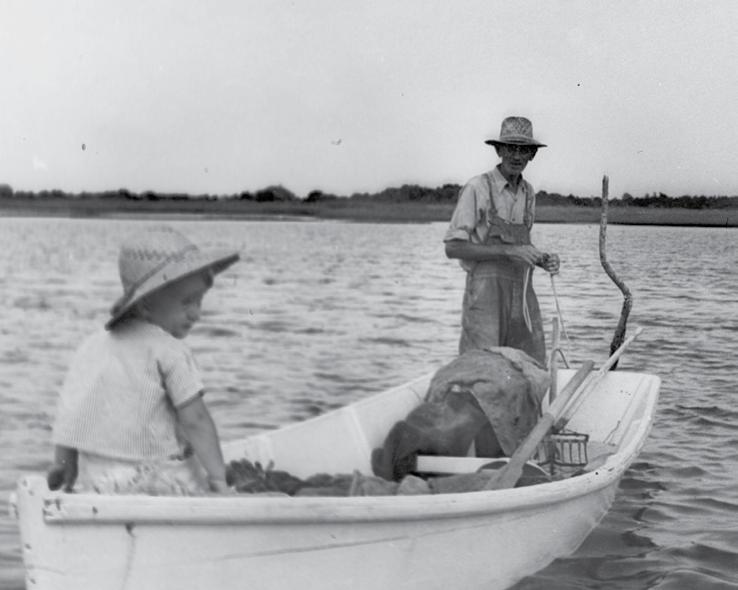

Manteo’s George Washington Creef, Jr. was one busy mailman. On Fridays he traveled 50 miles between Manteo and Elizabeth City. (Leaving Dare’s County Seat at 6am on Thursday, he arrived in River City on Friday by 11am; by 2pm he was headed back to Manteo and landed by 6pm Saturday evening.) Come Sunday morn, he set off on a 73-mile round-trip ’tween Roanoke Island and Hatteras. (Leaving Manteo at 6am, he worked his way down the barrier island by 6pm; then headed home at 6am Tuesday to arrive home by 6pm Wednesday.) Creef’s third route was much shorter — just a 25-mile jaunt to “The Lake” — surely East Lake — on the Dare County mainland.
Most impressively, Creef delivered mail and freight purely by boat.
Of course, this was back in 1875, when there were no roads or bridges to the Outer Banks. In fact, the automobile and
the airplane were yet to be invented. Railroads provided some transportation inland, but no lines ran to the watery fringes of the Albemarle.
Just securing the job took some work. Following the passage of An Act to revise, consolidate and amend the statutes relating to the Post Office Department in 1872, the federal government set out to award oneyear contracts for mail delivery in North Carolina and other southern states for the 1876 fiscal year beginning July 1, 1875. Creef beat out a handful of others, and on March 8, 1875, he was awarded all three mail routes – 13156, 13157 and 13158 –for which he was paid annual sums of $370, $779, and $270, respectively.
Other nearby contracts of this time included Perry Coleman Howard, who made the 60-mile trip to Beaufort once a week to bring letters and packages back to Ocracoke Island, and William H. Fulcher

who shuttled mail from Ocracoke to Hatteras weekly.
Beginning in the 30s, mail, freight, and passengers came to Ocracoke aboard the Aleta, a 42-foot vessel that made a 30mile journey from the village of Atlantic on Cedar Island in three and a half hours, including a stop at Portsmouth Island along the way. She began the route between Atlantic and Morehead City in 1923, but after the road to Atlantic was paved, she started service to Ocracoke.
In 1944, captains Elmo Fulcher and George O’Neal purchased Aleta and obtained the Ocracoke mail contract. They continued for the next eight years, carrying correspondence, packages, supplies, and passengers, except on the rare occasion when a bad blow might prevent it.
The late historian Ellen Fulcher Cloud accompanied her father and rode aboard
Aleta as a child. She later wrote about the journey to Portsmouth Island and how Henry Piggott, the last permanent male resident would meet the mailboat.
Henry would meet us, bringing the mail and the resident’s grocery and supply list… As we came in view, we could see Henry in his skiff poling out to meet us. I never remember having to wait for him. He had it timed just right, so that when the mail boat arrived he would be right there to grab the side of it and hold while the supplies were loaded in his skiff.
After Fulcher and O’Neal got out of the mail business, the Dolphin — captained by Ainslee O’Neal — picked up the Ocracoke route until 1964.
Naturally, with the advent of roads and bridges, the use of mailboats diminished. Between 1914 and 1932, the Trenton, with legendary captain Martin Johnson at
the helm, brought the mail from Elizabeth City and made stops at the sound-side wharf in Nags Head and at Manteo’s downtown docks. By 1932, the contract to deliver mail to Nags Head and Manteo was awarded to the Virginia Dare bus line, which could deliver the mail quicker and cheaper than the Trenton
“
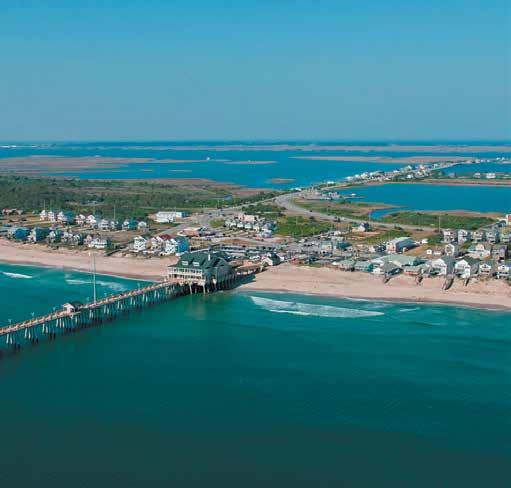
But there’s still one place where mail continues to be “shipped”: Ocracoke Island. Even now, a truck runs out of Norfolk to deliver the mail on Ocracoke via the North Carolina State Ferry System. If NC Highway 12 is closed due to
overwash, then the mail is held in Norfolk until the road is reopened — though it can occasionally be rerouted via the Swan Quarter ferry.
“It’s quite a journey,” says Jackie Reynolds, island resident and co-owner of Tradewinds Tackle on Ocracoke. “And if the road is closed between Ocracoke and the ferry dock, we’ll go several days without.” — Sarah Downing
Sources: “Aleta: Ocracoke’s Lifeline”, Core Sound Waterfowl Museum (www. coresound.com); Portsmouth: The Way It Was, Cloud, Ellen Fulcher, Havelock, N.C.: Print Shop, 1996; Executive Documents Printed by the Order of the House of Representatives 1875-1876, Government Printing Office, 1876; Living at the Water’s Edge: A Heritage Guide to the Outer Banks Byway, Garrity-Blake, Barbara J., and Karen Willis Amspacher; The University of North Carolina Press.
SAY “PARTICIPATION
TROPHY” LIKE IT’S A BAD THING
Veteran Coastland Times reporter. Volunteer firefighter. Driving force behind the Outer Banks Scenic Byway and Radio Hatteras. Mary Helen Goodloe-Murphy’s been pouring her heart into this community for 40 years, and never once received a bit of credit! Actually, she’s been named Dare County Citizen of the Year, Outer Banks Citizen of the Year, and received the prestigious Order of the Long Leaf Pine Award. But why stop there?
In Nov., Dare’s commissioners marked her 80th birthday by adding “County Ambassador” to her mantel. Proof that when you love the Outer Banks, it keeps loving you right back.

Since when was it okay to open fire on your next-door neighbor? That’s the question that rang out this winter after a beloved local accidentally followed a failing cable line under the closest house and got shot twice in the leg without warning. Granted, it was dark. And apparently the gunman was new to the ’hood. But maybe first try shooting the shit with the folks around you when you move in? Or at least yell, “Who’s there?” before blasting away.
Bring in the bulldozers — then bust out the checkbook! In Dec., Nags Head approved another round of beach nourishment for summer 2026, with an estimated price tag of $36 million. According to the town, that’s a 100 percent increase over the first round of sand in 2011, and 40 percent more than the most recent refill in 2019. All of which begs the question: which precious resource
will disappear first? The shoreline? The sand supply? Or the cash?
Being a kid with disabilities comes with enough hurdles — reaching the swing set shouldn’t be one of them. Luckily, in Dec., the Dare Education Board announced that 150 donors — including the Outer Banks Relief Foundation, Outer Banks Visitor’s Bureau, Outer Banks Community Foundation and Surf Pediatric Foundation — had contributed $900,000 to create the region’s first “all-inclusive playground” at Kitty Hawk Elementary. By year’s end, the aptly titled “Everyone’s Playground OBX” will replace the potential pitfalls of mulch and steps with smooth rubber surfacing and low-grade ramps — and add features like adaptive swings, sensory-friendly features and creative layouts — to allow kids of every aptitude to go ape.
More than a century after the Wright Brothers built and flew the world’s first powered glider atop Kill Devil Hill, First Flight High unveiled the school’s first student-built airplane — and the secondever flying machine constructed on site — all during the official 122nd anniversary festivities. It’s all part of a CTE Aviation Program that helps teach real-world aeronautics, engineering and teambuilding skills. So, while the two-seater, Vans RV-12 may be the first of its kind, it definitely won’t be the last.
What’s the big deal with NC’s First Judicial District banning electronics in Dare’s Superior Court? Well, if you’re a reporter covering cases, it’s huge — now you can no longer hit “record,” then listen later that day for improved accuracy and file your story in a reasonable manner. Instead,
you must request a transcript, wait seven days, and pay $200. (More than most transcription services charge for a year.) It all adds up to more problems for local newsrooms — and less transparency for the public at large.
“Garbage in, garbage out.” So goes the old adage regarding scientific modeling. That’s bad news for NOAA’s Atlas 14 data server, which is supposed to help municipalities with infrastructure planning and flood risk assessment but doesn’t include data from the past quarter-century — a period when we’ve had nine “100-year storm events.” (Thanks, climate change.) The good news? NOAA’s Atlas 15 will update the predictive model with a deluge of fresh data — and roll it out in stages between now and 2027 — to better gauge the impact of future rain events.
It was a rough winter for local schools. Canadian weirdos creeping into cafeterias. Parents doing key bumps in the pick-up line. But we’re used to adults making poor decisions in these parts. What made our eyes pop out was seeing a kid include a swastika in their A250 art project — a project intended to celebrate our nation’s birthday. Makes you wonder how much kids are paying attention in class — or what they’re hearing out of school. Because even the worst student of history knows that the Nazis are always the bad guys.
For detailed reports on these stories and breaking local news on a daily basis — plus plenty of local discussion — visit www.outerbanksvoice.com, www. islandfreepress.org, www.coastalreview. org, www.samwalkerOBXnews.com, www.outerbanksnews.org, and www. thecoastlandtimes.com.
“All for the amazingly low price of $25,342 per day. And if you act right now, we’ll throw in KDH for half off! That’s just $38,013 per day for TWO sets of beaches! Call right now!” — Sandflea
“Nags Head Moves To Award 2026 Beach Nourishment Contract To Weeks Marine,” www.outerbanksvoice.com, Dec. 17, 2025
Volunteering on the Outer Banks helps make people more aware of, and connected to, the important work that nonprofits are doing within the community. By getting involved with local organizations, residents, visitors, and second homeowners come away with a deeper appreciation for the area and a greater sense of responsibility. Let‘s protect what we love, together.
INTRODUCING THE VOLUNTEER OBX PORTAL
The Volunteer OBX portal is your new online community hub for doing good, serving as a platform to search, find and sign up for volunteer opportunities that match your interests and schedule. It also provides Dare County nonprofits and governmental entities with FREE tools to recruit, engage and retain volunteers. Learn more at VolunteerOBX.com.



We got questions — you got answers.
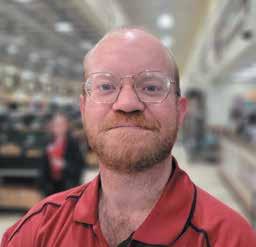
Ian Brown, 35 Word Nerd Corolla
“Old books. They have a lot of character. Sometimes they even have old notes inside; you almost feel their history.”
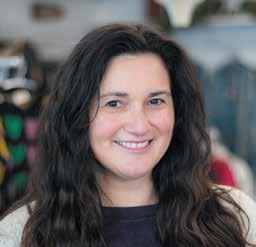
Britton Ricketts, 56 Jedi Nut Manteo
“I collect everything! But I love my Star Wars stuff the most.”
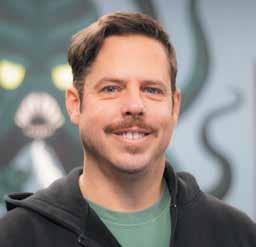
Adriana Scafetta, 45 Professional Propagator Duck
“I collect monstera plants. I started with one...then it became six. Now I give them away instead of collecting them.”

Rory Kelleher, 43 Bauble
Head Frisco
“I inherited a bunch of FunkoPops last year. I was never really into them previously, but I came across the Twin Peaks ones and now I have a whole setup with a custom backdrop.” [laughs]
Gigi Ward, 63
Geo Logician Nags Head
“I was a geology major, so wherever I go, whenever a rock speaks to me, I have to pick it up.”

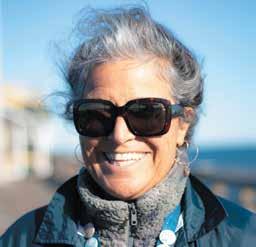
Martha Daniels, 45
Mother Christmas
Kitty Hawk
“I collect ornaments. When my family and I take a trip anywhere special, I get a new one.”

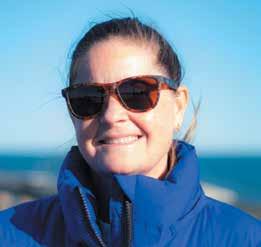
Shane Collins, 49
Street Sweeper
Kill Devil Hills
“I have a pretty decent sized collection of street signs.”
Kenny Crawford, 62
Speed Demon
Kitty Hawk
“I used to collect NASCAR diecast racing cars — like the 1:24 scale ones — but when I moved out here, I had to downsize.”
Interviews and images by Tony Leone


Local advice from an OBgenXer who’s seen a thing or two — and has the scars to prove it.
Dear Scabby,
My grandmother passed away recently, and I’m tasked with liquidating her assets. The good news is she lived a full life and died peacefully, in her own home and surrounded by family, at 101 years old. The bad news is she had a bit of a hoarding problem, and, in lieu of donating a century’s worth of possessions to charity, I’d prefer to try and sell some of it first. Any suggestions?
— Donna, Kill Devil Hills
active startingpoint roadmap
Sorry for your loss, Donna. A smarter person might advise you to press the easy button and hire an accredited appraiser with the contacts and resources to get you top dollar for the lot (minus a healthy chunk for their services, or course). A younger person might suggest you take a deep dive online and freestyle swim towards the dozens of sites and apps specializing in that sort of thing. If you’re intent on cutting out the middleman, you could always sell everything yourself via major online marketplaces like eBay or Poshmark or even Facebook’s Outer Banks Virtual Yard Sale. But that’s a lot of piecework that would require hours if not days of researching and photographing and cataloguing and schlepping and shipping — and possibly some haggling. Then you’ve gotta deal with all the annoying, post-transaction back-and-forth: “Is this still available?”
Now, I’m not all that smart, and I’m definitely no longer young, so if it were me, I’d go full analog and carve out a weekend or two for a good, old-fashioned, friendly neighborhood yard sale. Then, all you’ve gotta do is throw up a few flyers, scribble out a couple social media posts, slap on some price tags, roll it all out to the driveway, and let the money come to you. Kick back in your grandma’s favorite rocking chair with the antebellum inscriptions. Play her favorite music on that ol’ phonograph of hers. Any friends of hers that are still alive, invite ’em over to chow down on her favorite (non-perishable) snacks. Have the great-great-great grandkids set up a lemonade stand and earn even more money that way. Make a party out of it! A true celebration of life where your grandmother’s possessions are seen, felt and procured, passing from one world to the next with the same dignity that she had.
Dear Scabby,
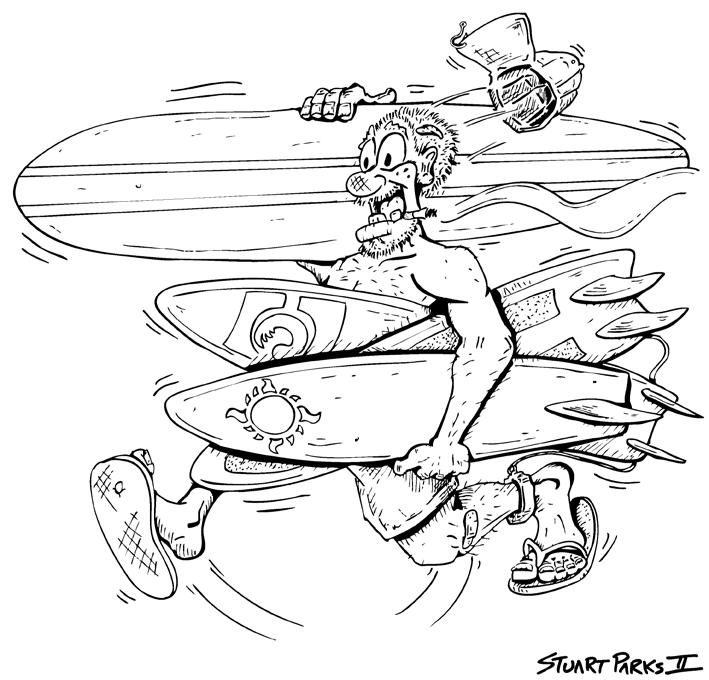
My wife says that I have too many surfboards. That they take up too much room. That I never even ride half of them anymore. I’ve tried explaining to her that my quiver represents 30 years of my life, but she just doesn’t get it. How do I keep my boards and my wife? — Terry, Kitty Hawk
Well, whatever you do, don’t try and leverage your case by bringing up her shoe collection and how many kingdoms of space it takes up. That’ll put you in the doghouse for sure. I dunno, man. It’s hard to relay to a non-surfer how deeply personal and meaningful our surfboards are. They’re much more than mere mementos; they’re totems — not only representing a magical moment but an entire era of magical moments — and the secondhand stoke and nostalgic flash flood we get from simply ogling or caressing them is beyond description. To discard one would be like saying you’re never gonna listen to reggae again because you’ve outgrown it.
But, then again, have you outgrown them? Aside from your non-negotiable nine — shortboard, longboard, fish, step-up, mid-length, groveler, tube shooter, soft-top, and alternative thingamajig (foil, SUP, kite, etc.) — can she say with absolute certainty that you’ll never ride the others ever again? Because at some point in your life you will break out that spotless rhino chaser for the day of days here on the Outer Banks. And there’s gotta be at least one wall-hanger in there that she can live with.
gokite milepost graphiccontent outthere gohunt rearview gosurf photofinish
On the other hand, maybe those well-worn but still-rideable boards would be best suited for a surf trip. One last shallow water hurrah where you ride ’em off into the sunset and leave their carcasses behind for the local kids to enjoy. There are few things more satisfying than returning from a killer trip emptyhanded. As for those brightly colored, two-inch-thick flyswatters from your ESA Menehune days — those NRA’s (never-ride-agains) — oh, you’ve gotta move on, dude. Donate ’em to charity or an artist who’ll make weird shit out of ’em, or a restauranteur who likes to hang old relics from the ceiling. Then pick up two freshies with updated dimensions but identical paint jobs. She’ll never even know.
Keep on scratchin’!
— Scabby
Got a question for Dear Scabby? Email editor@outerbanksmilepost.com.


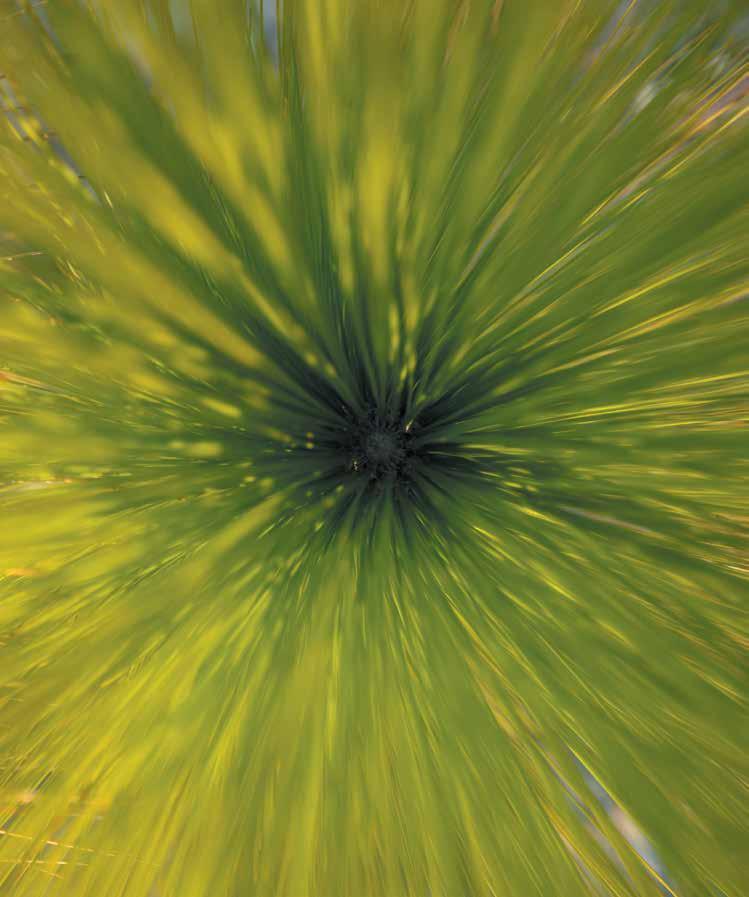
Nail this smelly feller, win four VIP tix to Live From OBX’s Pre-Season Kickoff Weekend!
This spiky species is the plant you love to hate.
Digs salty areas — but smells sorta sweet.
Stands tall — but can’t seem to stay upright.
And if it ain’t part of your house, it probably will be one day!
Think you’ve got a clearcut answer? Saw off a guess and send it — along with a name and phone number — to editor@outerbanksmilepost.com by Apr. 12. We’ll throw the correct ones into a clay pot and pick one lucky winner, who’ll score two free VIP tickets to Live From OBX’s Pre-Season Kickoff Weekend, starring jam-band geniuses Joe Russo’s Almost Dead (June 12) and OG funkmasters Kool & The Gang (June 13)! (VIP tix include premier seating, a private bar and bathrooms, and more! Get all the groovy details at www.livefromobx.com.)
PS: Congrats to Basil Belsches for ripping out the right answer to last month’s puzzle: a surfboard fin.

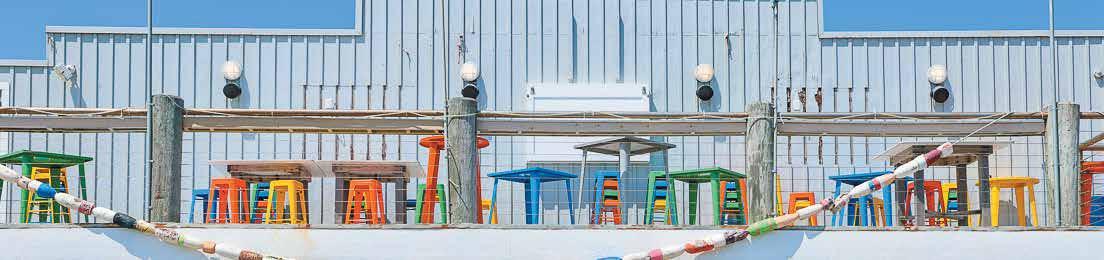




Sassy styles — serious generosity. Every turn on the runway raises big cash for the Outer Banks Relief Foundation.

Couture by the Shore is the hottest trend in charitable giving.
Golf tourneys. Cook-offs. Art shows. Surf comps. The Outer Banks has a long history of fun-loving fundraisers. But few events are as committed, colorful — or cash-positive — as Couture by the Shore, a fashion show by local boutiques that’s raised hundreds of thousands of dollars for local families in need.
The story begins in 2010, when the Outer Banks Relief Foundation — which helps about 150 families a year pay bills during times of crisis and has provided $4.5 million in relief to 1,672 families over
the past two decades — teamed up with an annual fashion show put on by Miss Lizzie’s Boutique, and expanded the lineup to include more shops and raise funds exclusively for OBRF.
“That first year, I think we raised about $20,000, and we were so excited,” says Millie Ward, a co-founder of the Outer Banks Relief Foundation and chair of Couture by the Shore. “So, we thought if we could get enough stores involved, it would be different from any of the other charitable events out there.”
Now, every May, multiple boutiques from Corolla to Manteo fill a runway with their favorite fashions — while the audience enjoys a lively luncheon — and the designs, décor, and entertainment follow a brandnew theme, like “Couture Palm Springs” or “Pastel Dreams” or “Sparkle and Shine.” One year they even did “Nashville,” complete with a Patsy Cline impersonator.
“Every year the models say, ‘That was the best theme we’ve ever had,’” says Ward. “So, our job is always to come up with a better theme than the one before.”
And 2026 is sure to be a doozie: “Party Animal: Go Wild for Relief.”
“With an emphasis on ‘party,’” laughs Fashion Show Chair, Jill Bennett. “But seriously, the last few years we’ve done more fancy themes, so we want this one to be a little more fun and funky. Maybe we’ll do jungle décor, maybe a disco ball — who knows? And there’s always animal prints in the fashion world.”
Come May 9, expect some wild times at Duck Woods, as 12 more boutiques — Birthday Suits, Bloom, the Cottage Shop, the French Door, Hairoics Spa & Salon, Life’s a Beach, Miss Lizzie’s, Salty Skies, Sojourn, The Shop, Untucked, and Whalebone Surf Shop — select their favorite local models to strut their stuff, wearing everything from leopard print latex to tiger striped miniskirts, faux fur mankinis to alligator shirts!
Maybe...
“We never know how each store will interpret the theme,” says Jill. “But we try to go for a really eclectic mix so there’s something for everyone in the crowd. And we always have models of every size, both men and women.”
Still, in many ways, the attendees are the real stars of the show, as every $100 ticket
supports the cause. In return, they get a tasty lunch complete with never-ending champagne and an over-the-top silent auction of items, from spa treatments to tree removal — plus a limited, 200-ticket raffle for a luxurious getaway. (This year, it’s a free weekly rental in St. John.)
All of which adds up to even more dollars to donate. In fact, last year’s vacation giveaway brought in $20,000 before the event even began, and the silent auction generated nearly $50,000. By the end, they’d raised $185,000 — the most ever — for Outer Banks families facing severe financial hardship due to serious illness or personal tragedy.
But they can’t do it alone. Couture by the Shore relies entirely on volunteers to staff everything from the silent auction and greeting teams to sponsoring ambassadors and event logistics.
“We’ve got such a strong group of women around the table,” Ward says. “It’s pretty amazing.”
Rather spend some green than get your hands dirty? Sponsor a table! Purchase a seat! Buy a raffle ticket! If there’s one thing that never goes out of style on the Outer Banks, it’s helping your neighbor.
And as Ward notes, “Everybody knows someone that has been helped by the Relief Foundation.” — Maggie Miles
Wanna join the party? Couture by the Shore returns to Duck Woods Country Club on Sat., May 9, from 11am-2:30pm. Tickets go on sale at participating boutiques in early April. (Follow @obxcouture for the latest news.) For sponsorship information, email milmac52@gmail.com ASAP. Would-be volunteers can email Bennett at sales@birthday-suits.com.




Why does the Outer Banks corner the market on US postage?
Start by looking at American history.
SEND MAIL. They feed US coffers and preserve American heritage. Maybe even push a national agenda. But more than anything, they bring people together — even people who might live centuries apart.
“To me, it’s not just a stamp, it’s how it was used,” says Corolla resident and Outer Banks Stamp Club president, Rick Kinner, as he cracks open one of many fat albums. “Take this stamp sent from the Panama Canal in 1906. I don’t just have the stamp, I also have the actual envelope. So, I have the Brigadier General’s name who sent it, I have him sending it to somebody in San Francisco — I even have his handwriting. This stamp allowed that man’s message to go across the world 120 years ago — but there’s also a connection to it today.”
Particularly the second Sunday of every month. That’s when the Outer Banks Stamp Club sits down at Nags Head’s Grace Lutheran Church.
For 30 years, our local branch of the American Philatelic Society has gathered local collectors from as far as Elizabeth City, Columbia and Avon, swapping stamps and sharing insights — plus any number of reference books, tweezers and magnifying glasses — covering whole worlds of topics, from architecture to zoology.
“Maybe your family came from Brazil, so you collect Brazilian stamps,” says Kinner. “Or maybe you like stamps that have locomotives or animals. We have a guy who only collects Christmas stamps.
Others who specialize in forgeries. So that’s one of the things that makes the club neat. Nobody’s doing the same thing.”
In fact, at any given meeting you might cross paths with subjects from geography to math, US Presidents to Harry Potter, astronomy to Alex Trebek. (The Postal Service issued a stamp in honor of Mr. Jeopardy just last year.) Which makes sense, because spending just 30 minutes with any of these avid collectors can feel like a trivia show where every clue starts with the question: “Did you know?”
Each tiny square is like a technicolor portrait of the nation’s past.
Like, “Did you know the English gave Ben Franklin the responsibility of creating a postal system in the Americas in the 1750s?” (That’s why he’s the second-most depicted person on US postage behind George Washington.)
Or, “Did you know the rarest and most valuable stamp ever wasn’t even made in the US?” (The only known example of 1856’s “British Guiana 1-Cent Magenta” sold for $9.48 million in 2014.)
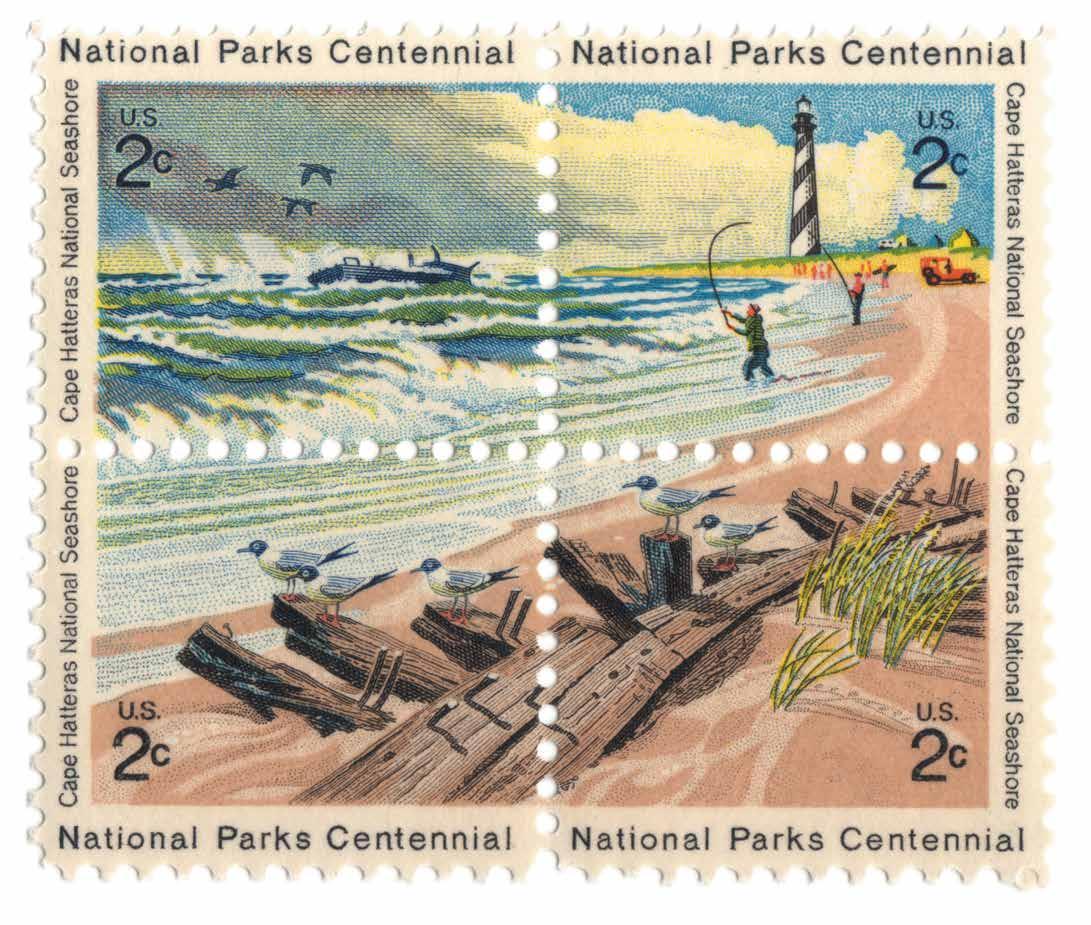
“The Postal Service is committed to three things,” says Outer Banks Stamp Club president Rick Kinner. “First is providing consistent communication, and second is generating revenue. But they’re also committed to celebrating the cultural aspects of America.” No wonder public spaces occupy so much real estate on US postage, including 1972’s National Park Centennial Series where Cape Hatteras was just one of five parks to make the cut, and the very first to roll off the press. “That gives you a sense of how important the Postal Service thought it was,” says Kinner. Most notably, it was the only stamp that used four sections to form a larger, single image — technically called a “se-tenant” — allowing plenty of space to depict shorebirds and shipwrecks, fishermen and 4-wheel drives, even a surfer fixin’ to paddle out at the Lighthouse. “So, 54 years later, this stamp still feels like a picture of the seashore right now,” Kinner notes. “It literally shows the value of preserving these national parks.”




Or even, “Did you know that people used to send their children through the mail?”
“It’s true!” gushes club vice president, John Webster, as he flips a page to show a real-life specimen. “It was cheaper to send baby to Grandma by railway mail than it was to pay passenger fare, so, starting in 1913, you could put a stamp on your kid, and the post office would deliver them!”
But if there are two categories that cover every piece of postage, they would be “art” and “history,” as each tiny square is like a technicolor portrait of the nation’s past.
“Think about it,” says Webster. “If you’re the head of a country, what are you going to put on a stamp: a picture of some nasty prison? Or a national hero or landmark? So, stamps tend to show either a country’s beauty or its history. Or both.”
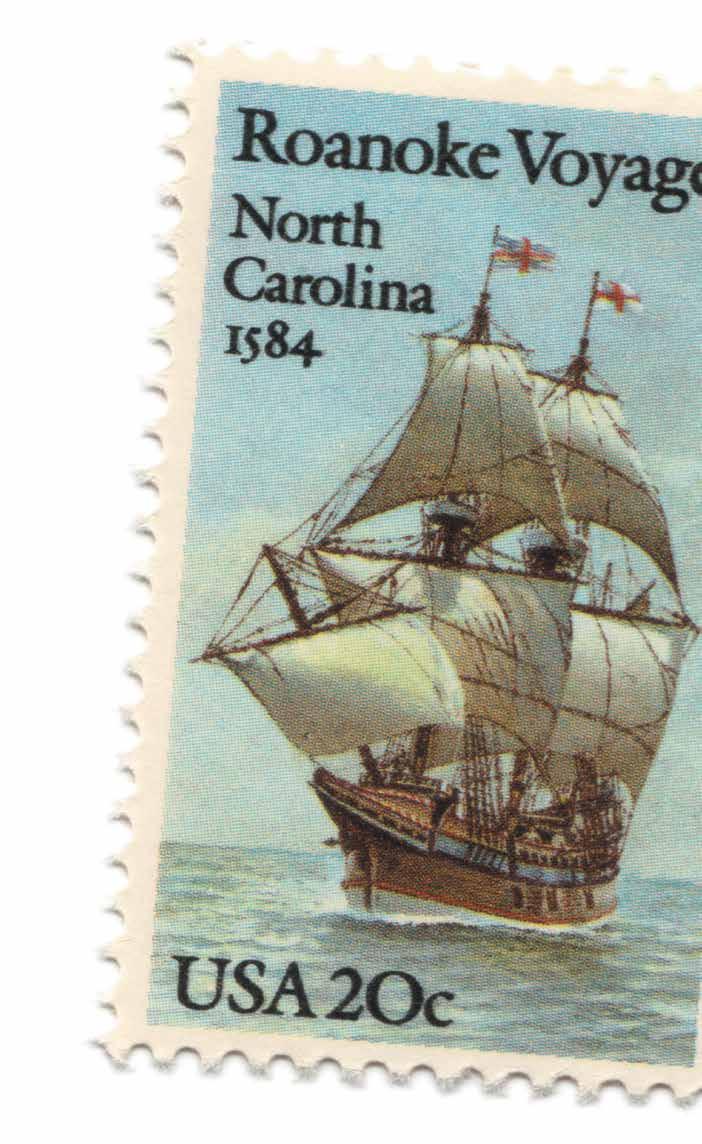
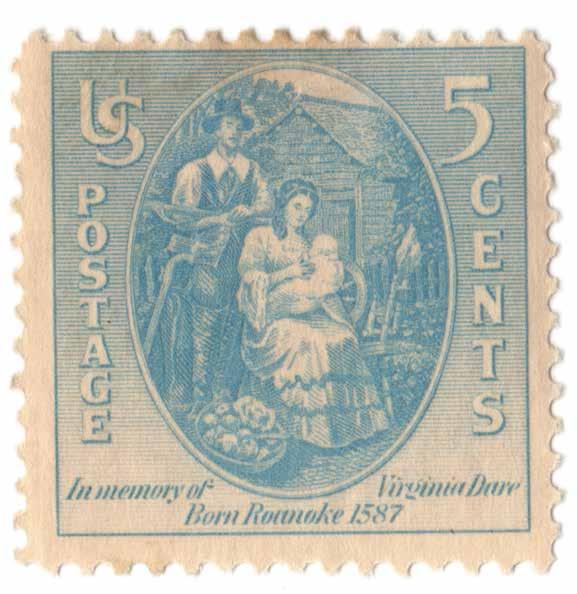
No wonder so many American stamps can trace their roots back to our timeless shores, including two Lost Colony tributes (1937’s celebration of Virginia Dare’s 350th birthday and 1984’s 400th anniversary of the Roanoke Voyages) and three depictions of the Cape Hatteras Lighthouse and/or National Seashore. Most notably, there are seven different takes on the Wright Brothers or their glider — most recently in 2003 — when the Postal Service marked their 100th anniversary of First Flight by first issuing the stamps right here in Kitty Hawk.
Sort of.
“They issued it simultaneously in Kitty Hawk and in Dayton, because Ohio claims the Wright Brothers, too,” explains stamp club founding member and former Nags Head Postmaster, Gene Garrison. “So, technically, it’s what’s called a ‘dual issue.’”
But no matter where or how it feels its first postmark, every stamp comes with serious
street cred, as each design goes through a rigorous process that can take up to seven years from idea to envelope.
“The Postal Service’s Citizens’ Stamp Advisory Committee is responsible for selecting stamp topics,” says Kinner. “Every year, thousands of citizens send in ideas, and that committee gets to judge whether it’s important enough to become a stamp. And they only say yes if they see there’s a connection to a significant amount of the country.”
“Stamps tend to show either a country’s beauty or its history. Or both.”
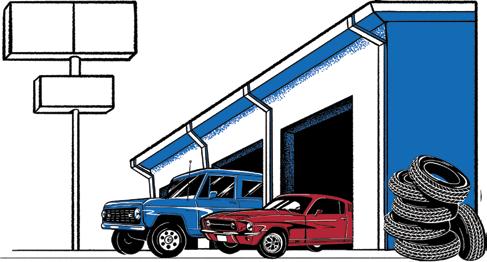
Which is what makes every stamp so special. Because each one of these illustrated stickers can tie back to just about anywhere — with the right perspective. In fact, the Stamp Club installs displays in public buildings and private businesses, covering an endless selection of disparate topics, whether its celebrating children’s book authors or dinosaurs in the local library, or parking trains and Model-Ts inside the KDH Tire Choice.
“The Tire Choice shows the Transportation Series, which is one of the longest series the US government ever issued,” says Kinner. “So is the ongoing Black Heritage Series, which started in 1978. It’s very significant. And we’ve got those displayed
“The Outer Banks remains one of the more represented regions when it comes to commemorative stamps,” says stamp club founding member and former Nags Head postmaster Gene Garrison. “And a good portion of that is because of the Wright Brothers.” No kidding. All told, seven US stamps feature some depiction of powered aviation’s fathers or the ground-breaking glider, including 1978’s “Aviation Pioneers,” which celebrated 75 years of powered flight by keeping Wilbur and Orville aloft as postage for international air mail. “Of course, nowadays, just about everything is technically air mail,” says Garrison. “But back then, you could pay more to put an envelope on a plane, and it would get there quicker. Kind of like FedEx — but it probably didn’t get there overnight.” [laughs]




in the Historic Jarvisburg Colored School. So, we try and do things that are pertinent to the place that we’re installing them.”
Some, like the Frisco Native American Museum, Outer Banks History Center, and Wright Brothers Memorial boast permanent displays. Others, like the Baum Center, rotate out themes.
“We’ve done Halloween, the Olympics, the Superbowl,” says Webster. “We just did a healthy living exhibit for the Outer Banks Hospital. In fact, when I approach businesses about doing a display, they’ll say, ‘What are you gonna put on it?’ And I’ll say ‘Anything you want. They make a stamp for anything. You name it.’”
“They make a stamp for anything. You name it.”
One of the many local bizzes that revolve around marriage? There’s a series called “Wedding Blooms.” Tackle shop or guide service? Take a look at “Fishing Lures.” Big fan of boardsports? You’ll flip over “Skateboard Art.”
And that’s just from last year’s list of fresh ideas. If you’re a fan of Outer Banks history, you can bet there’ll be more cool additions in years to come.
“The 450th anniversary of the Roanoke Voyages is in — what? — seven or eight years?” muses Garrison. “And, in 2028, it’ll be the 125th anniversary of First Flight, which may not sound notable, but they issued the first air mail stamp at 25 years, then another at 50...and 75... and 100...” [laughs]
But why repeat old favorites? After all, Wanchese or Manteo could easily join the tribe of Native American leaders, while Frank Stick’s famous stock of fish illustrations could live under both “animals” or “artists.” Why not add the USS Huron to the list of shipwrecks — or maybe issue a whole Graveyard of the Atlantic set? Better yet, sign up lifesaving hero Richard Etheridge and his crew for the Black Heritage Series.
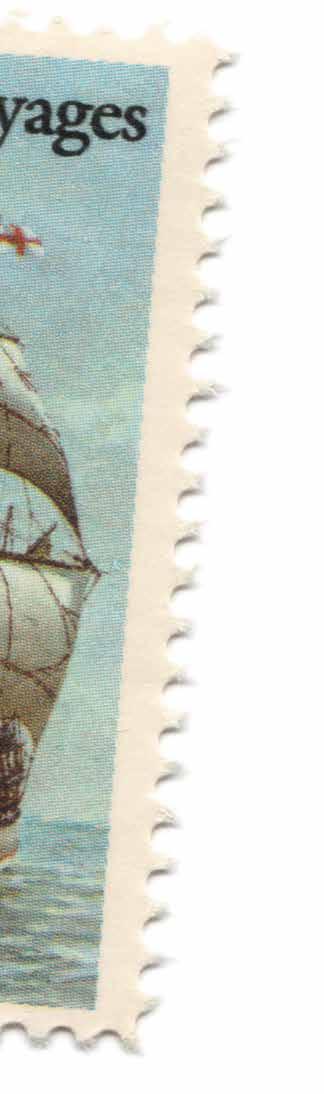
“Stamps are basically propaganda,” says Kinner. “But they’re propaganda in the more positive sense of the word: to speak highly of your own country, to continue to reinforce cultural mores.” In 1937, President Franklin Roosevelt was so smitten with the tale of the Lost Colony, that he helped design a stamp to celebrate Virginia Dare’s 350th birthday, depicting a thriving young family that was well-housed, well-fed and…well…still alive — ignoring the fact that the whole expedition starved, struggled and eventually failed. But then this stamp was meant to send a patriotic message as much as it was mail. “People forget that Spain successfully colonized St. Augustine decades before the Lost Colony,” says Skinner. “And this stamp came out just a few decades after the Spanish-American War, when there was still a lot of anti-Spain/pro-America sentiment.” Just 50 years later, nobody alive could “Remember the Maine!,” while everyone recognized that Native Americans were the continent’s OG settlers. As a result, 1984’s “Roanoke Voyages” stamp marks 400 years of American history with an image of the Elizabeth sailing the Atlantic, changing tacks to a tone of “world exploration” instead of “world domination.” “So, the stamp not only became more accurate,” says Skinner, “it became more inclusive. Because cultural mores change, and each stamp represents its own moment in time.”
Truth is, the Outer Banks could keep cornering the market on envelopes year after year — provided there are collectors to make the connections.
“I just realized there’s not one single stamp dedicated to the US Lifesaving Service!,” Skinner blurts, after cross-referencing a pair of thick volumes. “Now, that’s something we should pitch.” — MATT WALKER
Got a stamp collection you’d like to share? Inherited Grandpa’s album and don’t know what you got? Maybe you’re wondering if that potential misprint is worth a fortune — or just a few pennies? Join the Outer Banks Stamp Club the second Sunday of every month at Grace Lutheran Church in Nags Head, from 2:30-5pm. In-between meetings, email John Webster at JKonthebay@gmail.com.
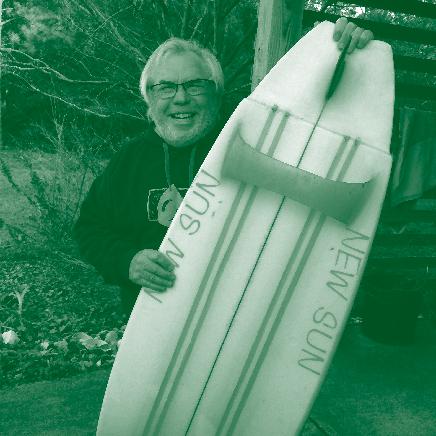
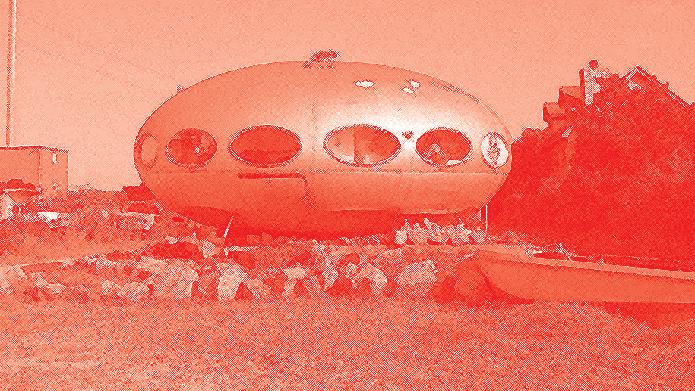
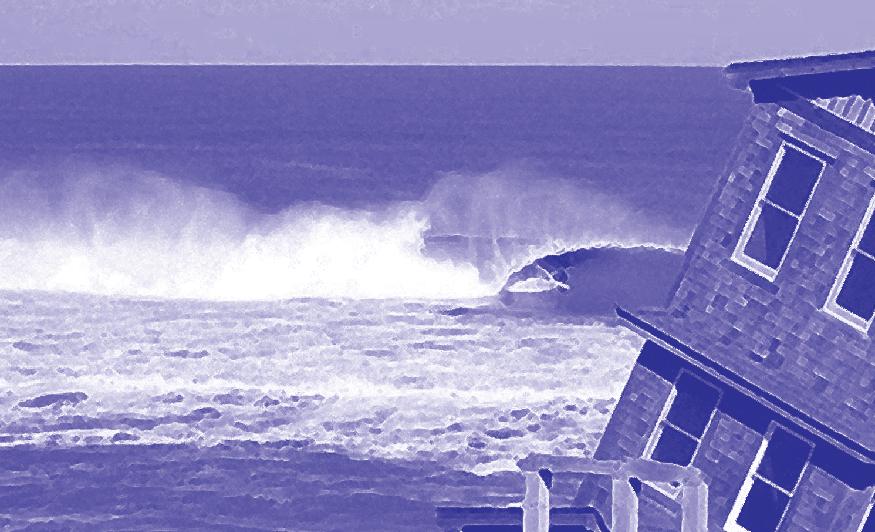
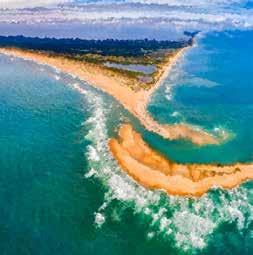
ALL THAT STAMP TALK GOT US THINKING: for today’s Outer Bankers? Not the historic and aren’t going anywhere. (We hope.) would appreciate. Natural features, favorite — or just seem to be fading — but helped that may never see a single envelope,
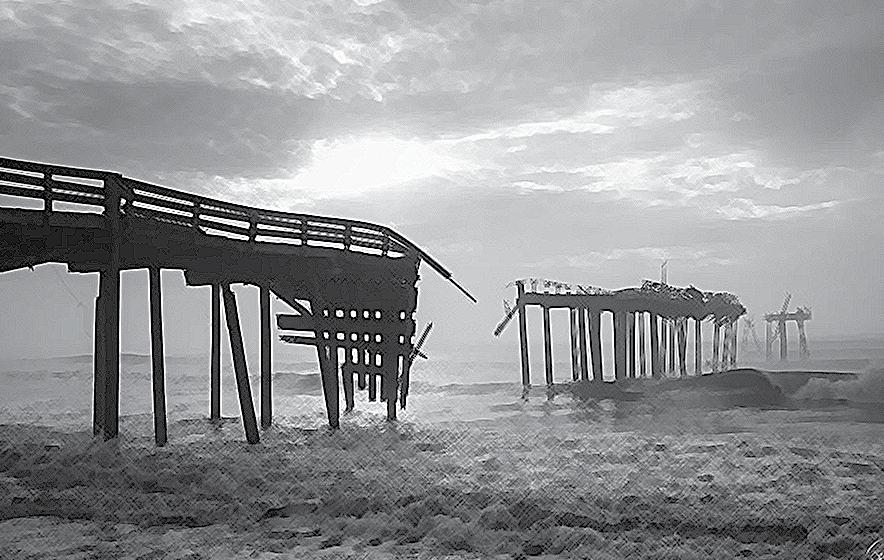
ideas any Outer Banker would love.
US THINKING: What would make a great “forever” stamp historic heroes and monuments that appeal to all Americans hope.) But the one-of-a-kind elements only a longtime local favorite haunts and fond memories that may no longer exist helped set the tone for our quirky coastal culture. Elements envelope, but will always stick in our hearts and minds.


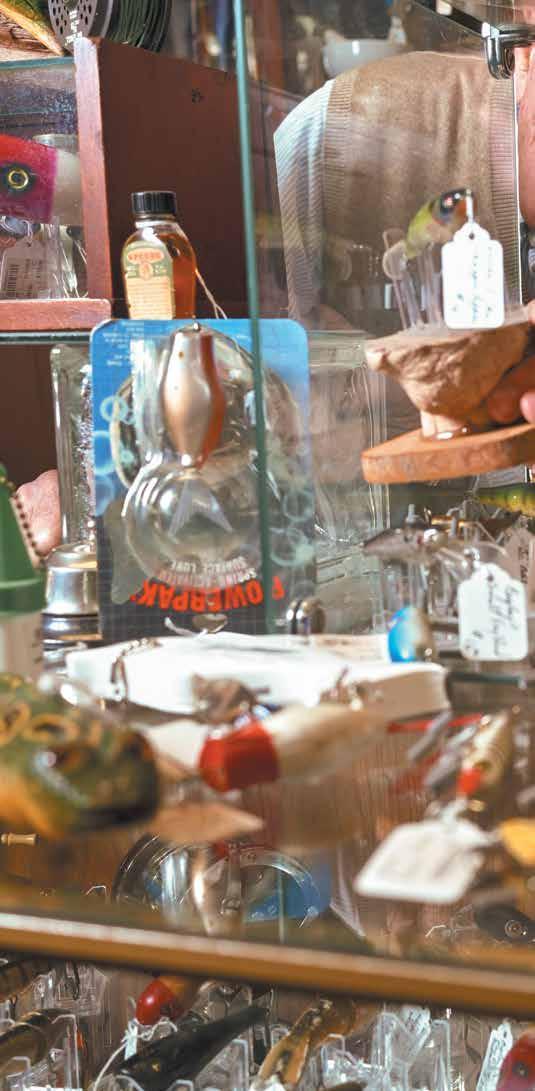
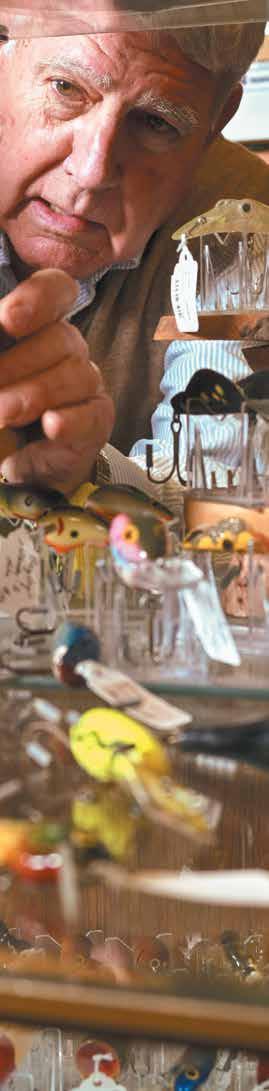
Vintage cameras and classic vinyl. Dusty books and shiny jewelry. One-of-a-kind furniture and every kind of Pokemon card. There’s a lot for any would-be collector waiting at B & B Antiques. But what jazzes Brewster Brown isn’t his stock of shiny Pikachus — it’s his assorted range of sparkling Ping-a T’s.
“In the 30s, 40s and 50s, Michigan, Ohio and Indiana probably manufactured close to half of the lures that were made in the United States,” says the 78-year-old, life-long angler, as he cracks the box on a particularly dazzling “Golden Greenie.” “And these particular lures were made in Pinkney, Michigan, which was about 35 miles from where I went to high school.”
As a teen, Brewster would visit some of the very garages where the designs were constructed. But he wouldn’t get truly hooked on collecting for another five decades, after he retired to the Outer Banks and he and his wife Betsy opened their Kitty Hawk antique store.
“People would bring in grandpa’s old tackle box full of classic lures,” Brown recalls. “And I’d say, ‘Well, I’ll take these off your hands and see what I can do with them.’” [laughs]
Twenty years later, Brewster’s amassed close to
He’s got all the big brands. (Heddon, Bagley, South Bend, and Arbogast.) All the weird names. (Injured Minnows, Mud Puppies, and Walkie Talkies.) And all the necessary insight on what makes each design special, whether it’s a different material, a cool color scheme or just a cool story.
“This is a ‘Devel’s Warhorse,’” he explains, lifting one from a lampshade. “They misspelled it with an ‘e’ the first two years because the maker was superstitious. And these old balsa wood Bagleys are still really popular with bass fishermen because they act differently than the plastic ones.”
You might as well be talking to some tyke about his favorite Star Wars action figure. And why not? After all, these toys are still meant to be played with. And at just $35 a pop, you can snag one in a tree without losing a fortune.
“You can appreciate it hanging on a lamp, or you can go out and fish with them,” Brewster says. “Either way, it doesn’t have to be an expensive hobby unless you try to get 50,000 — and then it can be.” [laughs.]
Not that you couldn’t spend a pretty penny. In 2003, an 1859 Haskell Minnow sold for more than $100k. Brewster’s 19th century spinners are closer to several hundred — if he chose to part
Big-eyed beetles and baby duckies. Even the occasional busty mermaid.
“Those were sort of novelty,” Brewster says. “But this mouse one is really good because that’s what muskies eat. And I’ve been on farm ponds where you kick out a field mouse when you’re walking along and he’ll swim out and it’s gone.”
Brewster’s client base is equally voracious. Over two decades, he’s built a regional rep as a vintage lure “honey hole.” Each year, hundreds of fresh faces and old friends pop by to see if he’s snagged something special — or to sell a prize piece. If he doesn’t have an item, he’ll usually buy it. And if he does, he’ll offer to sell on consignment. And if he happens to come across the lure you can’t live without, he won’t stick it to you when it comes time to sell. Because he knows each sale is personal.
“We had a very rare, real snake-skin lure that was still in the box, and I sold it to another collector for $100,” he recalls. “I could have put $150 on it, but he’s a good friend. And he wasn’t sure he’d ever have one — and now he does.”
In a world where art fiends gamble headscratching sums on paintings for pure snob appeal — and toy companies turn so-called
“It doesn’t have to be expensive — unless you try to get to 50,000.”
50,000 vintage freshwater lures from across the country, ranging from 30 years old to more than a century. Some are wood; others metal. These have real feathers; those use faux plastic. This one’s a glass bobber the size of an eyeball — that handcarved ice-fishing decoy’s as big as a pike.
“It doesn’t have any hooks,” Brewster explains. “You put it down through the hole in the ice. Then, when the fish school up around it, you spear them.”
with them. But those are mostly wires and pieces of metal. They look more like earrings or dream catchers than aquatic critters. The most eyecatching specimens date back to the 50s and 60s and are designed to hook “muskies.”
As the largest members of the pike family, these freshwater predators will eat anything, from big fish to small birds and mammals. The result is a case full of colorful figures that look more like Christmas ornaments than fishing tackle.
“limited editions” into endless profits — fake bait may be the most legit collectible there is: a passion where the cheapest of pieces can still feel priceless, yet they all share the same tangible value.
“A lot of folks like something that they fished with 50 years ago, or they knew was their dad’s,” Brewster says. “But the main thing with fishing lures is they have to catch fish [laughs]; if they catch fish, they’re popular.” STU NAHAN



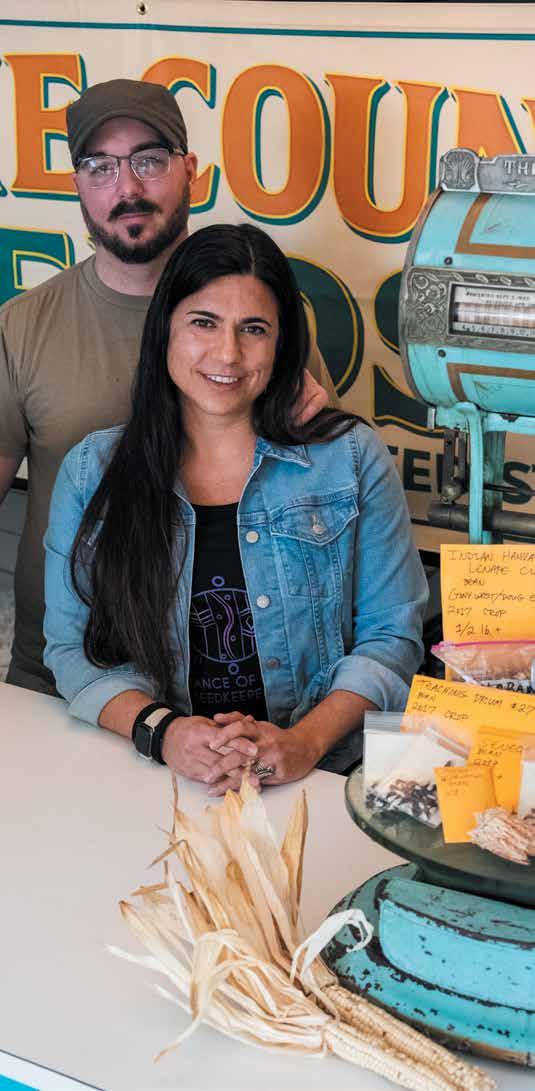
Dilapidated brick storefronts. Empty sidewalks. Quiet streets. Even at high noon, downtown Colerain can feel like a ghost town. But Bertie County Seeds is brimming with life. In the back, two ladies bustle between shelves, sorting colorful packets to mail nationwide. Out front, Beth Roach fires up the coffee machine while her partner, Frank “Fix” Cain, starts organizing a cart stacked with black bins and deep history.
“Some of these seeds are thousands of years old,” Fix says. He shuffles through manila and plastic envelopes scrawled with names like “Grandpa Bean” and “Teaching Drum.” “The fact that they are still here despite hundreds of years of colonization and removal and intentional degradation and everything like that is powerful in itself.”
The couple is on a mission to reconnect Indigenous communities of North Carolina, Virginia and beyond with their ancestral seeds and cultural practices. A mission that sparked nine years ago when Beth and Fix first began dating.
Beth hails from Surry, Virginia, and is vice chair of the Nottoway Indian Tribe of Virginia’s Tribal Council; she also works as the national water conservation campaign manager for the Sierra Club. Fix is a Tuscarora “seedkeeper” whose passion for preserving and promoting Indigenous ways blossomed from childhood memories of helping his greataunts grow things near the Neuse River, “planting and harvesting corn and these interesting beans that you just don’t see anywhere else.”
In 2018, they co-founded the Alliance of Native Seedkeepers to help preserve endangered ancestral seeds and connect coastal tribes to their agricultural roots. Pretty soon, they realized they could fund their cause by selling organic, heirloom and already-commercialized seeds to the wider public, while sharing Indigenous history and using practices that put the planet over process. Things like eco-friendly packaging and promoting environmental awareness.
climate challenges and is part of the Albemarle-Pamlico National Estuary Partnership.
In 2020, they began working a microfarm on the Cashie River — close to Cain’s Eastern NC roots and a short drive to Roach’s beloved Outer Banks beaches — after launching a small website, with plans to slowly grow the business.
Then COVID-19 happened.
“All of a sudden, we just saw a huge influx of orders,” Cain recalls. “We went from a few hundred followers on social media to tens of thousands of followers in, like, probably a week or two.”
Today, Bertie County Seeds ships up to 606 different varieties of organic heirloom and hard-to-find seeds to homes and small growers around the country.
But the focus remains on preserving ancestral seeds that aren’t for sale. Seeds they only offer to Indigenous groups and farms — and as a result, receive rare seed donations in return.
“We get things in the mail from people that are excited about [our work],” Cain says. “They know that we are a repository for these stories.”
As a result, they now warehouse 5,000 to 6,000 types of ancestral seeds.
But even when they can’t sell the actual seeds, they gladly share their stories, from crops that once helped tribes predict rainy seasons or dry seasons, to seeds that map tribes’ longterm movements.
“You can trace the migration of our people through corn seeds,” Cain says. “That lines up with our oral histories through seed traits that you find.”
“Some of these seeds are thousands of years old.”
“How do we help people understand their connection to our seeds and our agriculture, then, also, these current threats that are impacting our rivers and our lands?” muses Beth. She established the Tribal Coastal Resilience Connections Program, which brings together tribal communities to address
There are also tales of hardy vegetables, like Tuscora white flour corn — “a really beautiful, long, skinny corn that’s been in North Carolina for more than 4,000 years” — and legumes that come with troubled histories, such as the “Seneca cornstalk bean,” which is often sold commercially as the
Popular myth says these red-and-white speckled kernels came “across the pond” with the pilgrims. In truth, they’ve existed in traditional Indigenous agriculture and stories for centuries, long predating the colonization of North America, which is why Bertie County Seeds only sells them under their original name.
“It’s like regaining control over the narrative,” Cain says.
It’s not the only example. In fact, the website never misses an opportunity to share tribal history. The product page for “Cherokee Dr. Wyche’s Yellow Beefsteak Tomato” says it was “preserved by Dr. John Wyche” with “a remarkable legacy of Indigenous care,” while the “Cherokee Candy Roaster” squash is a “traditional variety maintained by Cherokee seedkeepers for generations.”
At the same time, all that Indigenous knowledge allows them to organize seeds around different climes, buyers and markets. Currently, they’re building an Outer Banks Collection that features wild, edible beans, a wild cabbage variety, yaupon holly, and a specific variety of native ground cherries that Cain says “only grows along the dunes in North Carolina” and are “some of the most delicious ground cherries that I’ve ever had.”
“There’s like a whole Outer Banks collection that nobody else has ever focused on,” Cain explains. “We are because we’ve had this ancestral connection to this area that goes back thousands of years.”
At the same time, the couple stays focused on the future, with plans to one day publicly offer 1,200 varieties of flower, vegetable and herb seeds — nearly double the current stock.
That’s a lot of growth. So, last year, they purchased the Colerain storefront and stocked it with shelves and a six-figure sorting machine to keep online sales moving. Out front, the plan’s to sell packets to beachbound traffic — and maybe a few tees. The grand opening is planned for March 21, but they’ve already been serving customers for months, especially on “Free Coffee Wednesdays.” That’s when a stream of “oldtimers” come in to buy seeds — and go home with some kernels of wisdom they never considered.
“They tell us some of the most amazing stories of them growing up here and the growing that they do,” says Roach. “It gives us a huge opportunity to educate about the Indigenous history and culture here, as well.”
— CORINNE SAUNDERS


Paul Carr will keep just about anything. His Bay Drive abode — aka “Le Château Ghetto” — is a Squid Game of obstacles he’s gathered since moving here in 1993. Piles upon piles of scrap metal, ceramics and wood scavenged from doomed homes and businesses. Not to mention, thousands of antiques and relics collected from his youth everything from comic books and action figures to Matchbox cars and Garbage Pail Kids. And he saves it all for more than mere sentimental value.
“I made $200 off of four comics,” he boasts. “And a Thrasher Magazine my brother threw in the garbage sold for a hundred bucks all because Danzig was on the cover.”
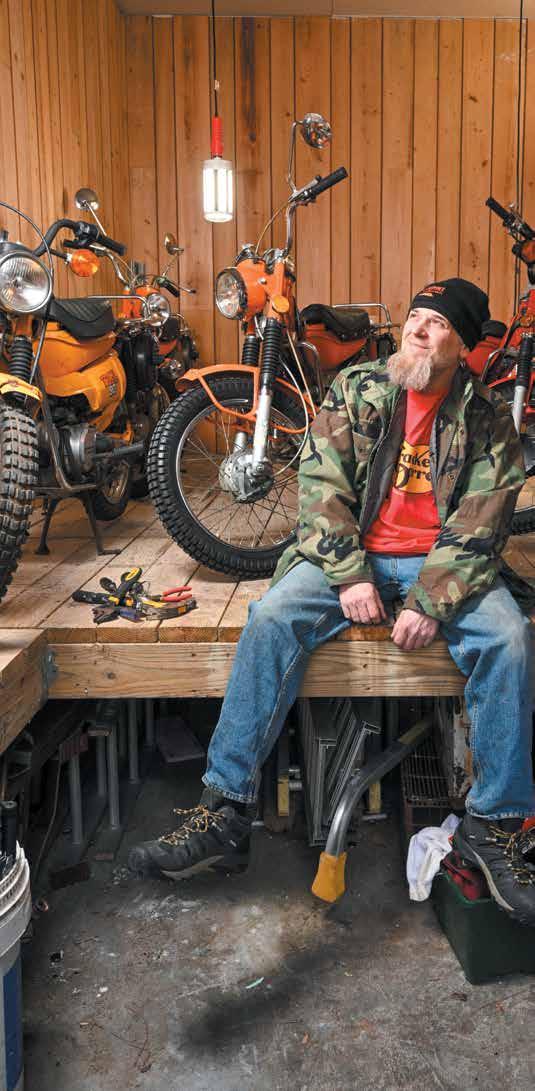
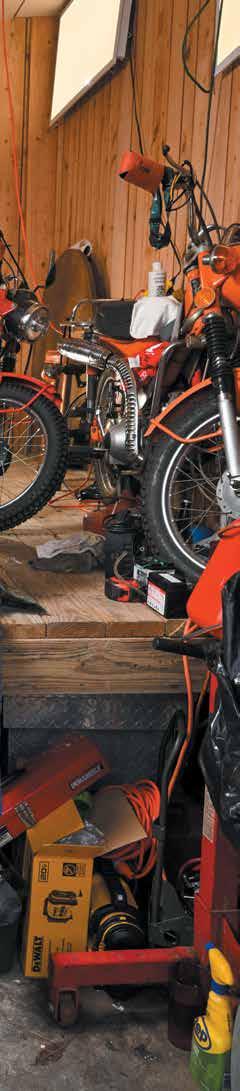
But there’s one collectible he’ll never part with. The Honda Trail Bike. More accurately, 15 of them, housed in either a trailer in his driveway or the storage shed he built out of juniper he’d salvaged from a condemned hotel.
“I don’t sell these,” he says with a shrug. “I just buy them.”
Hard to blame him. These trail bikes might be the most emblematically Outer Banks vehicle there is: slightly underground and fully independent; easily underestimated, yet fearless in the face of life’s big obstacles; born to be wild — and be in the wild.
during the pandemic. He barely had a chance to ride it before he found two more on Facebook. Then another popped up for $1,200 in mint condition, so he couldn’t pass that up. Then another just because it had original paint and no rust. Then another because it was a limited-edition color, Mars Orange (1972-74).
“Another had a spare canteen that was so mint the stickers weren’t even faded,” he rattles off. “Then this one was built the same month I was born, October 1973, so I just had to have it.” [laughs]
Carr has traveled as far as Winston-Salem, Richmond and Smithfield to buy them. Places where farms and forests make them invaluable — although not every seller recognizes what they’re sitting on.
“I paid as little as 35 bucks for one,” Paul says. “Some people think they’re mopeds and just give ’em away.”
Some of his collection start right up with the push of a button. Others have a bad spark plug or a loose wire or not enough juice in the battery. He reckons that only six of them are road ready; the rest require a little work.
“Look, the throttle cable’s still hanging off that
“It’s just a good all-around workhorse.”
“Honda designed them for hunters and campers,” Paul explains. “So they’re small and light enough to go up trails and through knee-deep water but big enough so you can strap a deer behind the seat. Switch to low, and you can basically climb trees. There’s a YouTube video where a guy pulls a van with his trail bike. It’s just a good all-around workhorse. Simple and indestructible.”
Paul picked up his first trail bike from a buddy’s garage when looking for a new toy to play with
one,” he points out. “But most of these I just need to change the gas, clean out the carburetor, throw in a new battery. Plus, the tool bag that comes with the bike fits in the palm of your hand. That’s how many tools it takes to fix these things.”
Luckily, Paul has a wealth of knowledge at his fingertips via the Facebook group, Honda CT(70-90) (110-125)Trail Bike US, where members answer mechanical questions and offer video tutorials. It’s a small but passionate subculture, which makes sense
given the machine’s history.
“The first trail bikes came out in 1965,” Paul explains. “Before that they were called ‘minibikes.’ Apparently, this one guy from Colorado souped ’em up to ride up trails. Honda realized this one area was selling a bunch more bikes than the rest of the country, so they flew in to meet the guy, and he showed them what he did. The next year, Honda came up with the Hunter Cub for the trails and the Super Cub for the streets.”
After a couple of decades, in 1986, Honda ceased production of the bike. Then, in 2021, they unveiled a modernized 125cc model — LED lighting, electric start, anti-lock brakes, fuel injection, the works. Of course, Carr had to buy one of those, too. But his pride and joy remains the limited-edition OG models although he may personalize one or two.
“I could make a theme bike, like a Halloween Special,” he muses. “Or maybe make a sidecar and go camping down in Hatteras. Might have to pull over a couple times so you’re not a rolling speed bump [laughs], but it’ll hit 50mph.”
Ultimately, Carr plans to restore and repaint them all. One day, he might trick out his storage room into an all-cedar, moisture-free trail bike museum. Or make a YouTube channel showing an attractive young couple or a social media influencer riding the bikes around the Outer Banks to generate interest in all the natural wonder this place holds.
Those are just a few of many million-dollar ideas based on Paul’s million dollars of junk. Some might dismiss this behavior as “hoarding.” Others would just call it “playing the long game.” Either way, this wifeless, childless 52-year-old will never be bored for the rest of his life.
“I’ve got too many ideas and not enough time, so I guess all this stuff is my retirement plan,” he finishes. “I don’t want other people to have to deal with selling my stuff, so I’m gonna find a way to cash out before I cash out.” [laughs] — MATT PRUETT




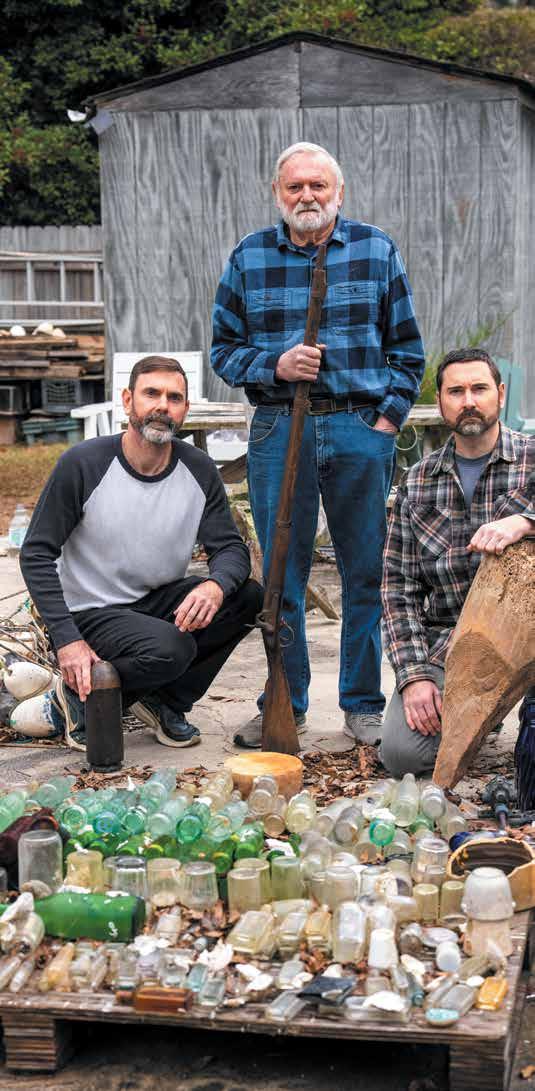
On Roanoke Island, history is layered into the landscape. Some of it lies beneath sandy soil and muddy sound. Some of it appears along the shore after a hard blow. Some of it is hiding in plain sight, waiting for someone who simply knows how to see it.
“After church on Sundays, my brother Eddie and I would go to the west side of the island and walk the shoreline,” says 79-year-old native, Herbert “Hubby” Bliven. “We’d find an arrowhead every once in a while, or a Civil War bullet. By the time I was 10 or 12, I was hooked.”
Nearly 70 years later, Hubby’s massive assortment of artifacts has made him a local legend. Step inside Manteo’s Roanoke Heritage Art Gallery and History Museum, which doubles as the family frame shop, and you’ll find Native American serrated arrowheads and pottery shards worn smooth. Clay pipes, ammo and weapons left behind by Civil War soldiers, and glass bottles dropped by last century’s litterbugs. Nooks and crannies full of natural driftwood and shelves lined with fossils from Megalodon sharks’ teeth to whale vertebrae to Jeffersonius scallops.
But it’s really a collective effort. Hubby’s wife, Mary Ann, also grew up searching for treasures with her parents and siblings. So, when kids came along, Sunday afternoons were spent walking, scanning, probing, and waiting on the shore while Hubby strapped on a scuba tank to feel through the muck. In time, two of the Blivens’ five sons, Jeremy and John, were just as keen to go hunting for pieces of history.
badly that, to him, every knob of marsh grass looked like one. Finally, at age 7, he spotted one in the mud.
“It was so exciting,” he recalls. “Now I have about 5,000 of them.”
John — born ten years behind Jeremy — found his first Civil War Eagle Cuff button at the age of 5, sitting in the dirt driveway of their 1908 home. Soon, he started tagging along with his older brother.
“Jeremy would pile up the dirt, and I would be the sifter,” John says. “We’d find things you wouldn’t be able to with a metal detector. Porcelain buttons, clay pipe stems, glass beads, that kind of stuff.”
The boys never stopped adding to the family’s collection. But whether they come home with a 10-pound cannonball, a rusty musket or another Civil War bullet casing, the tradition continues the way it always has: Jeremy will call John, or vice versa, and say, “Want to go looking?”
Although they insist it’s not really “looking.” It’s more about scanning the landscape and training your eyes to notice odd shapes, manmade edges and unnatural angles. Over time, the brain adjusts and you’re open to anything that doesn’t quite fit.
“You don’t actively search for the thing you want to find,” John says. “You’re just looking for things that don’t belong.”
“You don’t search for the thing you want to find.”
“That’s just what we did,” says 49-year-old Jeremy. “It was a natural part of life.”
But Hubby says it takes time to develop “the eye.” So, he came up with methods to train his boys. When Jeremy was 5, Hubby would keep an arrowhead in his pocket then drop it ahead on the beach as they walked.
“At first he walked right by it,” Hubby says. “I’d pick it up, drop it again later. Finally, I just had to draw a circle around it and say, ‘Son, look here.’”
Jeremy remembers wanting to find a Civil War bullet so
One such find was a Quaker gun, a fake cannon made from a log, used during the Civil War to make a fort appear more heavily armed. To anyone else it would have looked like a burned log — but a series of hatchet marks helped Hubby spot it immediately.
Other objects tell quieter stories. Jeremy remembers finding bullets arranged in three neat piles of nine, set in a triangle. The family’s best guess is that someone opened paper cartridges, used the gunpowder to start a fire, and left the shells behind.
And some objects remain a mystery. Like the lead disk John
found in a Civil War-era campsite at age 13.
“It has ‘XXII’ at the top and Roman numerals all around, with a slit in the middle,” he explains. “We think it’s some sort of time-telling device.”
But finding items is only half the work. The rest happens back home — cleaning, photographing, labeling, and documenting stories so they don’t drift away.
One of the Blivens’ most meaningful records is the Composition Book, also called the Arrowhead Book. Since the early 1970s, the family has traced arrowheads in pen, noting where and when each was found along with first finds. Handwriting even changes as kids grow up, giving the collections a personal context.
Not every outing produces something noteworthy, though. On a recent rainy walk, they came home with a marble and a handful of old glass to tumble. Still, every find counts, and it all makes for a constantly evolving collection.
For a while, Jeremy obsessed over Civil War relics. Then it was driftwood. Then sharks’ teeth and whale vertebrae. These days, he’s pulling up 100-year-old bottles from Shallowbag Bay. One rare find was the only bottle known to be embossed with “Manteo, N.C.” and tied to the former Holcomb Dairy. John is usually right there with him, helping on the boat, filming and photographing their finds — all strictly for personal use and documentation.
“We are not trying to attract too much attention,” John says. “We don’t want to lead others to places where they don’t have permission to look.” (The Blivens never go on private land without asking and always adhere to state and federal rules.)
If you ask them how to describe their hobby, they all shrug. Hubby offers “manual laborers” with a laugh. In England, John says, they would be called “mudlarkers.” All three hate the suggestion of amateur archaeologist.
They insist it’s not always about what you find.
“Just being outside for hours with no distractions, letting your brain wander,” Jeremy says. “It’s a very peaceful thing to do. I just love it.”
John agrees. “It’s a wonderful break from everything else. I didn’t realize it when I was younger, but this has been a nice gift.” — TERRI MACKLEBERRY










WILL
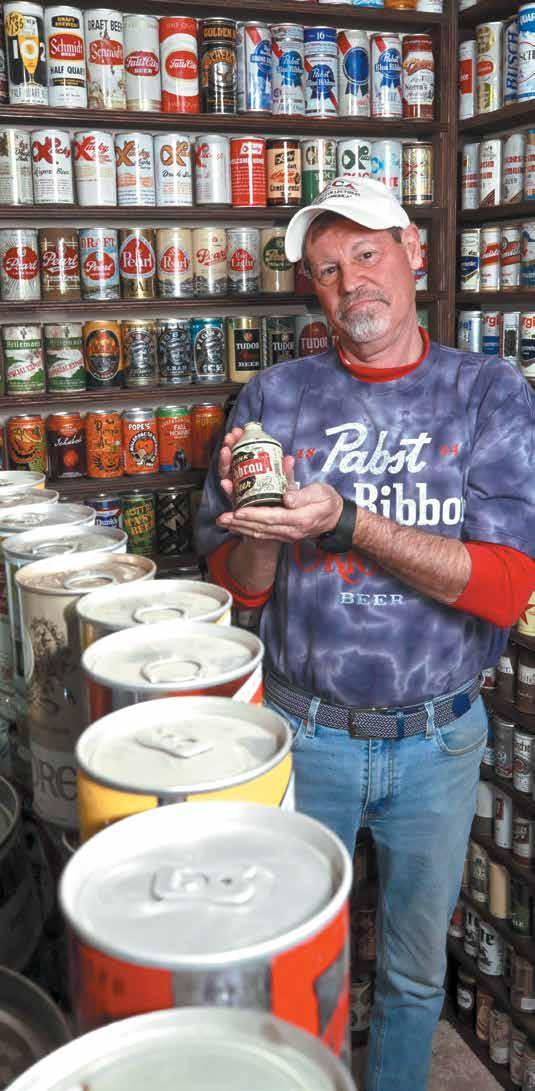
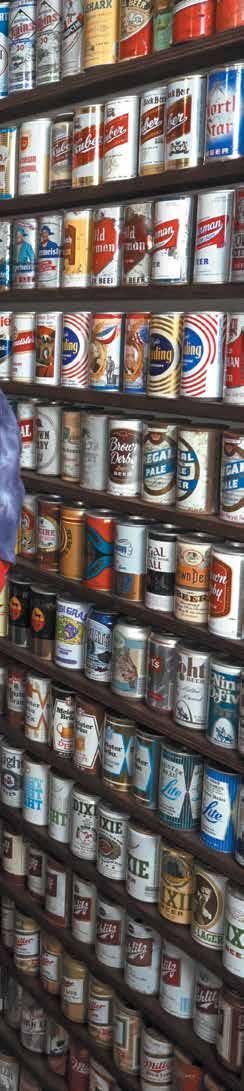
On a quiet street in Kill Devil Hills. In a modest beach box shaded by trees, Will Robertson opens his front door and steps back with a grin that says, “Get ready.” From the threshold, you can already see the shimmer of aluminum, steel, tin, color, and nostalgia shining over his sofa — but stepping inside is something else entirely. Two-thirds of Will’s house is covered, floor to ceiling, in beer cans.
“People think it’s just the living room,” he says. “And then I take them to the back bedrooms and they’re like, ‘Holy shit.’’’
Some visitors stay five minutes. Others stay two hours. Neighbors bring friends. Vacationers get sent over by their Airbnb hosts. None of it is advertised.
“No Facebook, no Craigslist. People just hear about it,” he says.
At 57, Will has gathered an equally impressive mass of cool experiences — windsurfing professionally on St. John, running a bed-and-breakfast in the Great Smoky Mountains, working at a golf course in Currituck. But on the Outer Banks, he’s best known as “the Beer Can Man.”
It started when he was seven, helping his dad with a volunteer ditch clean-up in Richmond, Virginia. Buried under damp leaves, Will spotted an old, locally brewed Richbrau “cone top” that somehow hadn’t rusted.
“That was the first one,” he says.
“They’re like conversational wallpaper.”
After that, his dad, Dave, started bringing cans he collected while traveling and working for the National Fire Protection Association.
“He’d drink them, and I’d keep the cans,” Will recalls. “That’s how I got exposed to beers from everywhere.”
The mid-70s were a boomtime for beer can collecting, largely thanks to new technologies pop-top cans came out in the 60s — and
novelty trends, like the nation’s Bicentennial releases and “Billy Beer.” By 1978, the Beer Can Collector’s Association boasted 12,000 members.
That same year, father and son went to a convention in Virginia. Will entered the raffle and won a suitcase filled with 64 cans. When they got home, they built wall-to-wall shelves in his bedroom.
“That’s where it really kicked off,” Will says.
But dad didn’t just support the hobby, he modeled it. To preserve value, he’d open freshies from the bottom with a “church-key” opener so the top stayed intact.
“Some of those cans are worth five or six hundred dollars now,” Will says.
Still, Will says the real payoff to his passion isn’t the price — it’s the reaction he gets from random visitors.
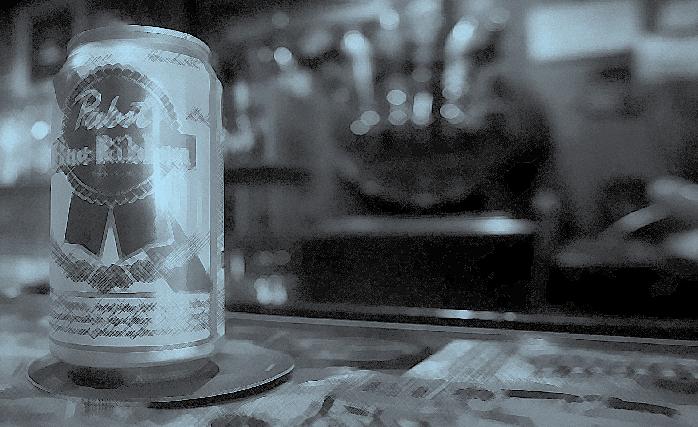
“They’re like conversational wallpaper,” he says. “People ask, ‘You got Pabst? Schaefer? Blitz?’ I like making people happy when they see this stuff. They leave thinking it was pretty cool, and they tell their friends.”
Today, Will’s house holds around 8,000 cans. There are cone tops, pop-tops, tin cans, steel cans, aluminum cans, commemorative runs, seasonal and holiday collections, all curated and organized for maximum impact.
The back bedrooms hold rare pieces from long-gone breweries — early cone tops from Buffalo, Gunther, and Banner, and a sizeable Richbrau collection. The hallway features the iconic “Tennent’s Ladies” series from Scotland, Pittsburgh’s “Miss Olde Frothingslosh” in every color, plus commemorative wildlife cans from Minnesota’s Schmidt Brewing.
“If you’ve got the whole series of something, it’s worth a lot more,” Will explains.
The most prized real estate remains the shelf lining his staircase; that’s where he displays what he calls “the shrine” — early examples by Pabst Blue Ribbon, Dakota, and Richbrau — favorites of his dad, who passed away nine years ago. When Will walks by, he says he still feels the love.
“My dad was dedicated to the fire service,” Will says. “Honorable, respectable. He thought the world of his community. I think about him every day. He had more fun doing this than I did. He got to drink most of the beers.”
Will? He savors what’s left. Some days, he’ll lose himself in a single can — like an Orion beer from Japan, with scenes of Japanese life embedded in the metal: a woman scuba diving, a karate pose or a Kabuki theater. Other times, he’ll simply bask in the colors that bounce off the walls. But Will insists that the collection provides more comfort than chaos.
“It’s kind of relaxing,” he says. “It gives me a sense of calm.”
Still, there are minor inconveniences of living in a beer can museum — adding a new one often requires shifting dozens around, and construction projects sometimes trigger a small avalanche. So, while he remains a member of the Beer Can Collectors of America and still scrolls eBay for rare finds, Will’s become much more particular — partly because he’s almost out of space, partly because his girlfriend, Karen, has declared the kitchen offlimits. And partly because modern beer trends make cans less desirable.
“They’re all paper labels now,” he says. “And made of aluminum, versus tin or steel.”
These days, if he adds something new, it better be special. Usually, it’s a local release with some crazy art or cool theme, like the Lost Colony Brewery’s Halloween Series. Or maybe a personal connection, like Swells’a Brewing’s Jimmy Buffet Ruined My Life.
“I’ve been to 46 Buffet concerts,” Will laughs.
Otherwise, it’s got to be a bonafide relic. His latest score — a highly valuable can from the original Frankenmuth Brewery in Michigan, founded in 1862 and now a craft-brew pub — still makes him beam. But when asked how long he wants to keep collecting, he doesn’t hesitate.
“Until I die,” he says. “Because that’s what my dad would have wanted. He’d be proud of this. I just wish he was here to see it.” BRIAN TRESS

Brooke Rosell uses century-old recipes to make social media magic.
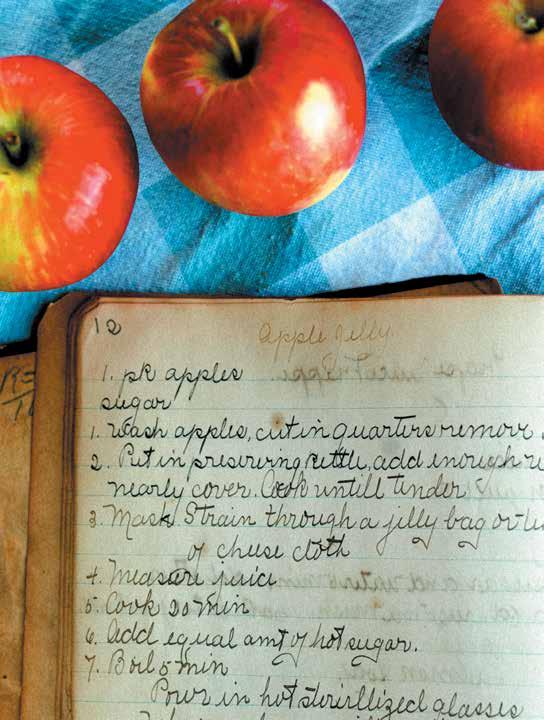
What do you like in a cooking show?
Tasty flavors? Simple ingredients? Serious laughs? Then drop the remote, dial up that smart phone and check out Brooke Rosell’s Instagram and TikTok pages, where hearty meals meet funny reels — plus the occasional delicious insight — based on a collection of 100-year-old recipes recorded by an Eastern NC woman named “Elizabeth.” A woman Rosell never knew existed before last fall.
“Basically, I was just walking around this
vintage sale in Buxton when I saw an old, hand-written journal from 1914,” recalls the Frisco resident, photographer and digital content creator. “I said, ‘This is pretty cool, maybe I’ll do a TikTok series.’”
Seven dishes, and a couple hundred thousand views later, Rosell’s made everything from biscuits to jams, birthday cakes to hard candies. And while there may be varying degrees of success in terms of taste — “The birthday cake was terrible, but the biscuits were great.” — the
entertainment value never fails as she blindly tackles each dish with nothing but some century-old words to guide her.
No mixers or modern conveniences. No Googling. No trial runs. And no turning back.
“I tried to keep everything as period sensitive as I could,” Rosell says. “Like, I only have an electric thermometer, so when I made candy, I just followed her directions and trusted the process. It’s all very, ‘Let’s full-on go for it and we’ll see what happens.’ And I guess it makes for quality TV.”
And how. The mix of food prep and facial mugs feels like a mix of Julia Child and Lucille Ball, with a huge dollop of Fred Sanford, as Rosell inevitably cries out “Elizabeth!” in emotions that range from total confusion over what to do next to utter glee over a job well done.
“ NO MIXERS. NO GOOGLING. AND NO TURNING BACK.
At some point Rosell started wondering: who was Elizabeth, really?
“A couple of recipes in, I realized the journal is actually a schoolbook and she was probably pretty young,” Rosell says. “But I wanted to know more, so I posted a video asking for help and let the internet do its thing.”
With the help of 20-plus thousand followers and Ancestry.com, plus a wedding announcement and obituary, Rosell soon knew Elizabeth’s story. Turns out the girl in the recipe book grew up to lead a very full life.
“Her name was Elizabeth Seymour Clark,” Rosell notes. “She was born in 1900 and was married twice. She was also highly educated and worked at a newspaper — so kind of progressive for a woman of her time. It’s made me think about history and how a cookbook shows how women experience the world. Like, what would life have been like if I’d grown up 100 years ago — or what will it be like 100 years from now?”
“I didn’t realize I was saying her name so much until I watched the first video,” she admits. “Now it’s like an inside joke in my online universe. [laughs] But my personality is to be silly. And I very much like to rally people like, ‘Come on girls, let’s go do this!’ So, it’s been really fun personifying this new existence.”
Maybe she lights a candle to channel her spirit. (“I call upon Elizabeth to help my dumb ass” or “Come, Elizabeth, I have curves to feed!”) Maybe she pleads for assistance from the great beyond. (“Anyone know how to use cheesecloth? Elizabeth, help us!”)
Or maybe she just waxes rhapsodic about her invisible co-host.
“I feel like if Brooke’s in a mood, Elizabeth is gonna be in a mood, too,” Rosell muses while mixing cocoa. During the hard-candy episode, she giggles, “It says ‘hard balls’ here...Do you think Elizabeth laughed, too, when she said ‘hard balls?’”
That’s given Rosell ideas on taking the series to entirely new places. Maybe she’ll tackle some of her own grandmother and great grandmother’s Eastern NC recipes. Maybe she’ll pivot to an actual cookbook. Hell, why not her own Food Network special?
“Sure, I’d do it!” she laughs. “But they better have their censor bar ready.”
For now, she plans to just keep cooking through Elizabeth’s book. Making new dishes — and maybe a few mistakes. But either way, the digital feed is sure to satisfy.
“I haven’t done anything with meat yet, which would maybe be fun to do this spring,” she says. “And I know people get so scared about cooking, but I’m making simple recipes out of, like, four ingredients. So hopefully people just feel empowered to try something new; to create something just for the hell of it.” — Paul
A. Dean
Got a hankering for vintage dishes and modern hijinks? Cook with Brooke and Elizabeth on TikTok (@brooke.rosell) and Instagram (@iva.brooke).
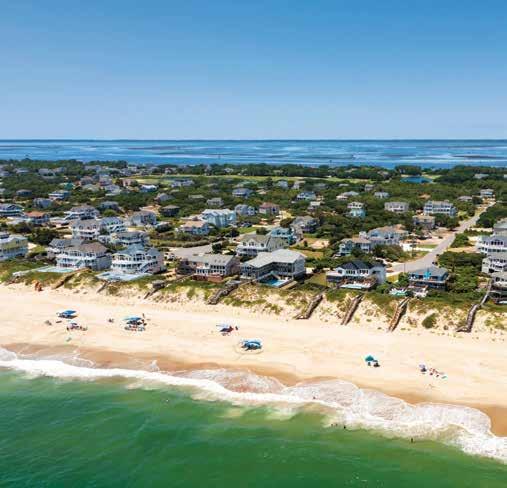


We make the vacation experience the best it can be for our customers. If you are looking for that perfect home to rent or are interested in investing in your own Outer Banks property, contact Joe Lamb, Jr. today!

m

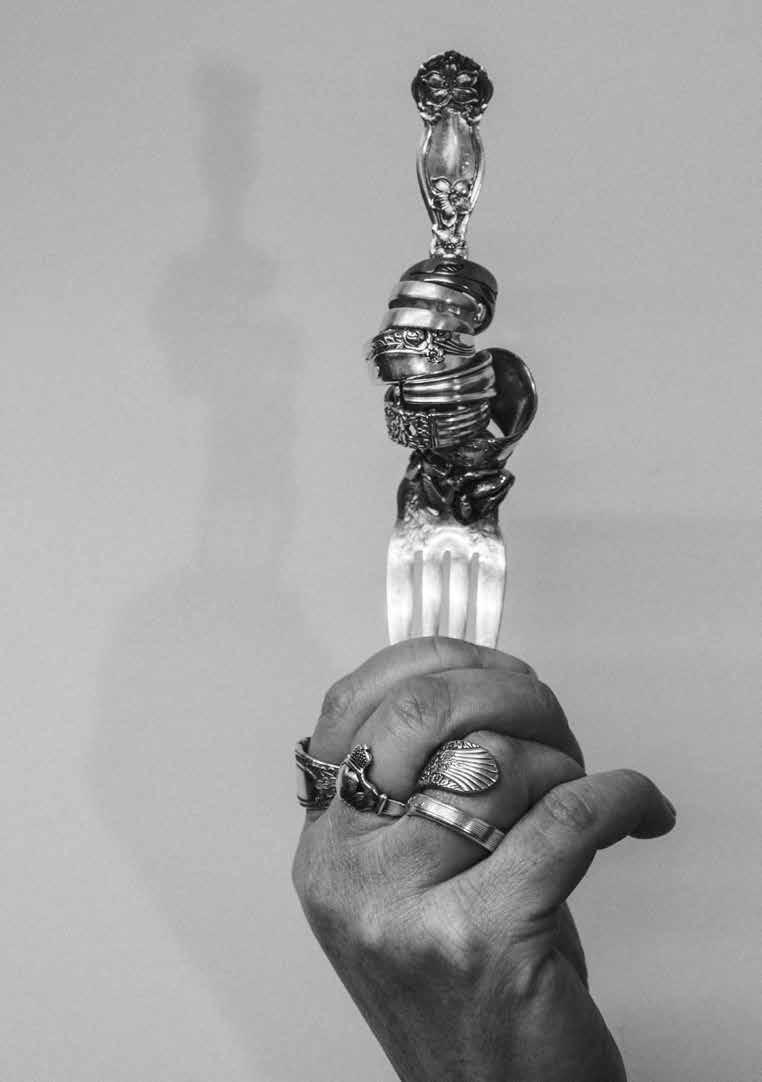
Tisch Perry turns tarnished silver and chipped plates into breathtaking jewelry.
Picture a 1600s butler silently cracking a drawer in some wealthy manor. He pilfers a piece of ornate crested silverware, then takes it home and twists it into a piece of jewelry for someone special. Now imagine a 21st century Outer Banks artist doing nearly the same thing.
“In 17th century England, you might want to propose to your significant other but lack the means to buy a ring,” explains Tisch Perry of Saltyware Jewelry. “So, it became
common for the servants of wealthy people to steal silver flatware — usually spoons — then repurpose them into a symbol of love and commitment.”
Today, the Wanchese native and KDH resident takes a similar approach: she sneaks around town and online, looking for silver cutlery, hand-painted tins and porcelain dishes that once belonged to someone else, then whisks them home to her workshop, where she creates
something shiny and new for someone to cherish forever.
Family China gets busted up and bound in silver to become stunning pendants; cut tins turn into eye-catching earrings blooming with flowers; forks, spoons and knives get twirled into bracelets and rings — including one very special wedding band.
“I made it for my fiancé, Rob,” Perry laughs. “But each piece is so unique and holds a special place in my heart.”
Of course, Perry never steals any of her source material. However, the lifelong artist did lift the inspiration from College of the Albermarle’s Professional Crafts department.
“My craft actually originated with wood burning and resin art jewelry,” she explains. “I then decided to take a jewelry class at COA to help me hone my skills.”
Perry was immediately smitten with the silver-smithing process. Couple that with an inherent love for vintage items and the rest is history. Antique utensils turned into ornate tins and flowered porcelain. Trips to thrift stores shifted to estate sales and e-commerce.
“I have even linked up with a woman in Ukraine who has the most unusual and unique spoons,” she says.
In just two years, Tisch has launched a bustling side biz, cranking out items for seasonal markets and stores like Cloud Nine, and rekindling her creative passion with each piece.
“There really is nothing like putting my music on, getting in the studio, and throwing myself into the art,” she says. “My whole world just changes! And each piece of silver, tin or porcelain holds its own story.”
Revealing each story requires its own tools and tact. With silverware, heat can weaken the integrity, so instead of a torch, she’ll use a “ring bender,” “mandrel” and a selection of mallets to gently hammer knives, forks and spoons to fit wrists, fingers and toes.
For cutting tin, Perry stencils and snips an outline around her favorite design to create light and airy earrings — but only after smoothing the raw edges with a wet grinder and good sandpaper.
“The last thing you want is for a customer to get cut,” she says.
But it’s the vintage plateware that can cause the most stress.
After all, centuryold plates, saucers and teacups often come patterned with fractures and chips; they demand a delicate touch with tile nippers.
“FAMILY CHINA GETS BUSTED UP AND BOUND IN SILVER.
“You must be careful not to hit one of the hairline cracks,” Tisch notes. “Because, if you do, you have to start all over. Sometimes there are days where I just have to walk away.”
No worries. There’s plenty more where that came from. She need only crack open any of five boxes to bust out another floral print dinner plate. And her work bench is stocked with silverware drawers, ripe for the looting. And when that’s gone? There’s always someone looking to offload grandma’s tarnished flatware and dusty China.
“I get calls from all sorts of people who just don’t know what to do with their old vintage goods,” Perry says.
The irony? She’d rather see them on some modern table, surrounded by family and friends.
“So many people are afraid to use all of these old pieces,” Tisch shares with excitement. “Don’t be! Use them! It’s what they were made for.”
And if they break?
“Bring them to me,” she says. “I’ll make you something beautiful.” — Fran Marler
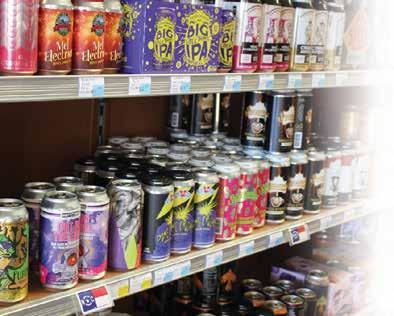



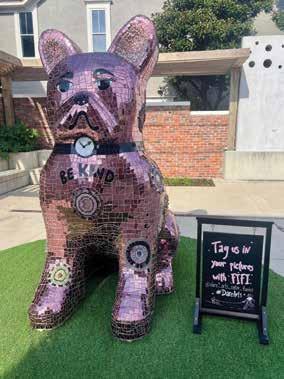
We have three unique spaces dedicated to hosting exhibitions and installations. Find Your Place at
Enjoy artist opportunities & community events all year long.
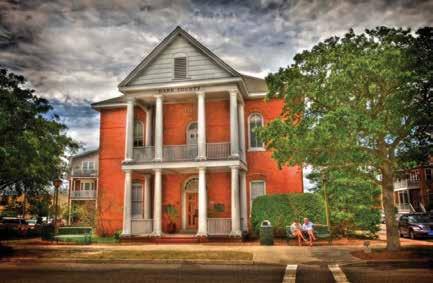
Exhibitions & Installations
Rotating Monthly & Quarterly
The Dare Arts Gallery
In Manteo’s Historic 1904 Courthouse
Visit our Gallery or submit your work during one of two yearly jury sessions.

Workshops & The Power of Art
Share Your Talent & Learn With Us
Take a workshop at Dare Arts or sign up to teach a workshop.

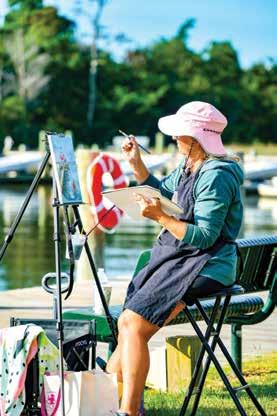
Fresh - A Plein Air Event
September 2-4, 2026
Artists are invited to participate in this outdoor painting event and special exhibit.
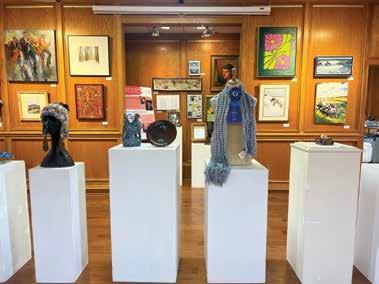
29th Annual Mollie Fearing Memorial Art Show
The exhibit has an open call for entry, and will open on Sunday, May 3, 2026.
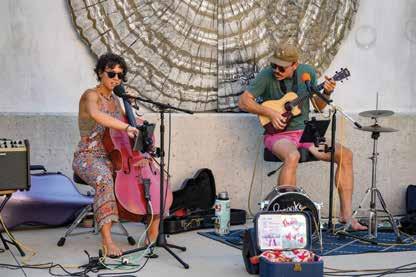
First Fridays In Downtown Manteo
Join us between 6pm and 8pm for live music, art, food, shopping, and fun.
Art by Fay Davis Edwards
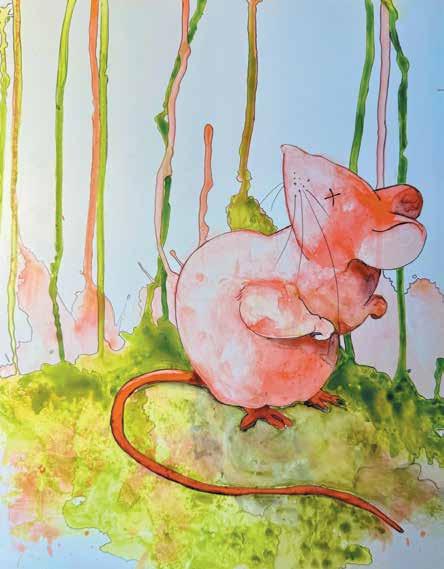
In my father’s outstretched palms were six baby mice. They were pink and dewy, their eyes unopened.
“Go,” he said to my mother. “Drown them over there.”
We were standing on the side of I-40, somewhere between Texas and Arizona, heading west. There was clay the color of sand, brittle brown shrubs and a cloudless sky so expansive it made your eyes water. There was also a pond to the left of our car, just down a rocky slope on the edge of the flat road. It was bright green. When I asked my father why it looked like that, he said it was because someone had dyed it. My mother just cried.
The six baby mice had come from Petunia, my pet. She was the size of a small potato with chocolate brown fur as soft as a brandnew blanket. I’d won her at the end-of-school carnival a few weeks before. When I brought her home, my father was furious. He didn’t think the school had any business sending a child home with a pet. A rodent at that. I immediately began to cry, begging him to let me keep her. I told him I would feed her and give her water every day. When he told me she needed a cage I told him I would pay for it.
“ “GO,” HE SAID. “DROWN THEM OVER THERE.”
I would sell my clothes, even the bright red shoes my mother had gotten me for Christmas after we watched The Wizard of Oz. When Judy Garland sang “Somewhere Over the Rainbow,” my mother sang with her, delicately and under her breath like she did at church. My father sang differently at church. He was a baritone with deep and commanding breath.
My mother convinced him to let me keep Petunia. She’d had an unusual pet when she was a girl, a chicklet named Sammy. This was back when you could go to the grocery store during Easter and they’d have a box at the entrance full of dyed chicks. My mother picked out a purple one and her father, gentle as ever, let her keep it. My mother and Sammy went everywhere together. They splashed in the cool creek, crawled between tobacco leaves as big as elephant ears, climbed the church spire’s creaky stairs to ring the bell.
By the Fourth of July, Sammy had shed the last of his purple feathers. He was bigger, too. The size of a can of peas. When my mother learned she wouldn’t be able to take him to the schoolhouse with her, she cried so hard she gave herself a headache that lasted for three days. Her father drove her into town to see the doctor. He let her bring Sammy and she sat in the backseat and hugged him like a teddy bear as she leaned her head against the hot window and watched the watermelon fields woosh by. Occasionally, she squeezed Sammy even tighter and cried into his soft feathers. When they got to the doctor’s office and her father opened the door for her to climb out, my mother gently handed Sammy to him. “Oh, darling,” he said, looking down at her, the sun half obscuring his leathery face. “Sammy’s dead.”
I watched from the backseat, my head peeking over the childlocked window, as my father slipped the six baby mice we didn’t realize Petunia had been carrying into my mother’s outstretched hands. They looked like tiny glass figurines, their hairless skin reflecting in the sun. My mother didn’t look up. She kept her eyes fixed on her hands as she drifted toward the pond. I squeezed Petunia lightly, pressing her against my chin, my breath fluttering her fur like wind falling down a hill. My father leaned his butt against the hood of the car. My mother’s auburn hair was long and curly and streaks of blonde danced in the light. She bent down next to the pond and clasped her palms together. She lowered them into the bright green water. I counted to 27.

We never spoke about it again. — Arabella Saunders


pounce!
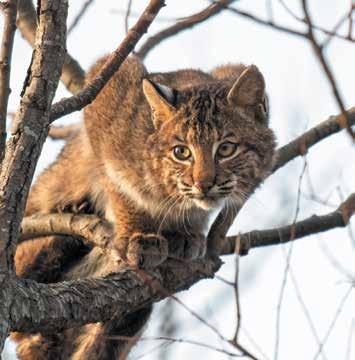
You call that a collection? Wait ’til you see Museum of the Albemarle’s “Race What You Bring” exhibit, where artifacts and photos from across Northeastern NC cover vehicles from paddleboards to lawnmowers, greyhounds to horses — and of course a blistering pack of stock cars. (Hangs ’til 2029.) Just looking for ways to make your 3- to 5-year-old sit still? Bring ’em out to Tot Time from 10-11am, where subjects range from Mar 12’s Dr. Seuss to Apr. 9’s exhibit-specific “Life in the Fast Lane” to a TBD topic on May 14. Learn more at www.museumofthealbemarle.com. • Come Mar. 6-7, fly south for the Hatteras Village Waterfowl Festival, where Fri. eve’s Fin, Feather and Bourbon Social pairs locally harvested dishes with delicious hooch. Come Sat., flock inside Hatteras Civic Center from 10am-5pm for traditions like decoys and carving demos, duck calling comps and a live raptor show. Full deets at www. hatteraswaterfowlfest. com • Prefer your waterfowl live-andflapping? Head to Pea Island Visitor Center any Fri. am, where Free Bird Walks reveal any of 400 avian species from 8-9:30am. Then grab those binos and go hunting for bears — metaphorically speaking — at one of the offseason’s last three Alligator River National Wildlife Refuge Open-Air Tram Tours: Mar. 7, Apr. 4 & May 2. 9-11am. $10 for ages 13 and up. Call 252-216-9464 to reserve your space. • Or take a self-guided stroll through Nags Head Woods, where butterflies and migratory birds abound, but parking is limited — so please carpool, if possible. (If not, additional spaces await at Nags Head’s Barnes Street Park.) And always remember to stay on the designated trails — and leave the bikes and e-bikes at the gate. Maps can be found at the kiosk outside of the offices or online at www.nature.org/nhw • Who knows what kind of creative critters you’ll cross paths with, Mar. 6-28, when Dare Arts hosts woodworkers, ceramicists and metalsmiths from Pocosin Arts School of Fine Craft. But we’re sure you can meet a few firsthand during the First Friday opening night reception from 6-8pm. More at www.darearts.org. • Mar. 7 is all about putting party animals through their paces when Outer Banks Brewing Station’s St. Patrick’s Day Beer Mile mixes 10 oz. drafts with 1/4-mile sprints — plus plenty of crazy green costumes — to get a head start on everyone’s favorite high-timing holiday. 2pm start; late registration and check-in from 1-1:45pm. Stumble over to www.obxrunning.com for more. • Just want a way to lick winter boredom? The Outer Banks Stamp Club meets at Nags Head’s Grace Lutheran Church the second Sun. of every month — that’s Mar. 8, Apr. 12 & May 10 — from 2:30-5pm. • On Mar. 10, be at Jennette’s Pier for the feel-good philanthropic event of the season, where the Outer Banks Community Foundation Annual Meeting & Luncheon reflects on a year’s worth of good deeds — and honors one local leader or group with their prestigious Champion Award. 11:30am. Register and learn more at www.obcf.org • Meanwhile, the Dare County Extension Master Gardeners Winter Speaker Series generously serves up two more sessions of horticultural advice with Mar. 11’s “Shade Gardening on the Outer Banks” and Mar. 25’s “Talkin’ Tomatoes.” Join them at KDH Library or via Zoom at 11am sharp.
Call 252-441-4331 with questions. • On Mar. 12, OBX Green Drinks will dole out the offseason’s last lively discussion surrounding some pressing eco concern or local issue at Waverider’s Coffee & Deli. 6-8pm. Follow their Facebook page for updates. • Wanna challenge your sophisticated palate with a wide spectrum of bold flavors and fancy beverages? Or just stuff your face with different versions of the same tasty item? Do it all, Mar. 13-15, when Outer Banks Taste of the Beach fills local eateries with everything from tapas tours to wine pairings to Mar. 14’s OBX Chowder Cookoff at the Outer Banks Brewing Station. 11am-2pm. Get a full calendar and tix at www.obxtasteofthebeach.com.
• And Sanctuary Vineyards blends fermented grapes with fun times for three Taste of the Beach events: Mar. 13’s Friends in Merlot Places mixes line dancing and BBQ into one asskicking afternoon; Mar. 14’s Leprechaun kicks up its heels with a St. Patrick’s themed party featuring Celtic music by Poisoned Dwarf and an Irish lunch by Coinjock Catering; and Mar. 15’s Edible Art invites folks to paint their plates with local artist Sandy Tipton, while savoring a charcuterie lunch and glass of wine. (PS: Acoustic Sunsets will begin serving fine bands, food trucks and fermented bevvies every Thurs. at 5pm, starting Apr. 2.) More at www.sanctuaryvineyards.com • Take a second to stock up on artisanal foods on Mar. 14, when Nags Head’s Dowdy Park Winter Market serves up a healthy selection of local and regional vendors — think Shine On Juicery, Heavenly Portion Farms, The Upper Crust, and Coastal Pickling Company — then come back for seconds on Apr. 11. Both run from 9am-12pm. All the tasty deets await on Facebook. • And the Beach Road is an endless buffet of festive floats for Mar. 15’s 35th Annual St. Patrick’s Day Parade. This year is twice the rager as they kick off the county’s year-long Dare A250 celebrations of our nation’s big bisesquicentennial. So, grab your best combo of green and star-spangled gear, then line up between Bladen St. and Driftwood St. well before 1pm. Learn more — or register to participate — at kellysobxcatering.com. • While the floats may stop, a range of rockin’ after parties is just getting started! Just keep marching north to Swells’a Brewing where Hot Sauce will pour on blistering jams from 2-5pm. Then, jump to Jack Brown’s and howl with the Yacht Dogs from 3-6pm. Then cross over to the Outer Banks Brewing Station, where a TBD band will rock the backyard ’til dark. (PS: every weekend is a potential rager at the Brew Pub, with Live Acoustic Music by Phil Watson (Fri.) and Bryan Campbell (Sat.), from 5-8pm, followed by a late-night DJ or band.) Tune into each venue’s social media pages for updates. • Wanna add some red and gold to your green? Get to the Pioneer Theater, Mar. 15, as Vusic OBX presents Dan Kelly’s Anthem Tour, where the Fortunate Youth frontman lines up Cas Haley, Kevin Kinsella, John Landry, and Ike Kanakanui for an intimate acoustic-reggae experience. 5pm. Tix and deets at www. vusicobx.com. • Meanwhile, roots music from Celtic, Eastern European and Appalachian traditions raises the roof on Roanoke Island Festival Park’s Indoor Theatre, when Bluegrass Island Nights brings on Scythian, Mar. 15. 7pm. More at www.bluegrassnights. com • Heads up! Festival Park will fully reopen on Mar. 18, which means the public can once more visit the Elizabeth II and American Indian Town, as well as enjoy seasonal educational programs. And at press time, the Dare County Student Art Show was set to showcase talents from all grades and schools, Apr. 1-30. Check out www.roanokeisland.com for a full calendar.
• On Mar. 18, keep paddling back in time at the Museum of the Albemarle, where Blades on the Pasquotank: The History of the Elizabeth City Rowing Club covers cultures and vessels from 20th century races on NC waters to ancient Roman barges and Egyptian galleys. (12-1pm.) And on Mar. 19, students can dive deep into the way state government works via a special one-day exhibit on NC’s state constitution titled “To Preserve the Blessings of Liberty.” 1-4pm. Pre-register and learn more at www. museumofthealbemarle.com
• Wanna give your fat ass a workout without leaving your seat? Plop down inside Duck’s Paul F. Keller Meeting Hall on Mar. 18 for a Chair Yoga Class from 10-10:45am. And burn a few more calories stepping over to Duck Town Hall, where the latest Rotating Art Show Exhibit stretches imaginations with paint and pen creations by Robyn Scott. Hangs through Apr. 23. More at www.ducknc.gov. • Come Mar.
15TH ANNUAL
SIERRA HULL • APPALACHIAN ROAD SHOW • SOUTHERN LEGACY PITNEY MEYER • THE SLOCAN RAMBLERS MEYER
THE INFAMOUS STRINGDUSTERS • PO’ RAMBLIN’ BOYS
MICHAEL CLEVELAND & JASON CARTER THE STEEL WHEELS • RHONDA VINCENT
PUNCH BROTHERS • THE BROTHERS COMATOSE THE KRUGER BROTHERS
DELLA MAE • THE TREY HENSLEY BAND
TICKETS AND INFO AT BLUEGRASSISLAND.COM
18, squeeze inside Captain George’s for the 2026 State of the County Breakfast, where Dare’s commissioners run down a menu of past achievements and pressing issues, while various Outer Banks bigwigs and fat cats dig into a tasty buffet. $10 a person. 9am start. Seats fill fast, so register now at www.darenc.gov. • Just save room for the Outer Banks Brewing Station Tasting Series’ Italian Dinner, where delectable sauces, delicious vino, and the dolce guitar sounds of Bryan Campbell will make you yell, “mamma mia!” on Mar. 19. 6pm. Score tix at www.obbrewing.com. • Strange family dynamics and showbiz aspirations make for big Golden State drama when Theater of Dare presents the Sam Shepard classic, True West: Mar. 20-21 & 26-28 at 7:30pm and Mar. 22 & 29 at 2pm. Deets and tix at www.theatreofdareobx.com • Then tinkled ivories take center stage at Grace Lutheran Church, Mar. 20, when noted Bosendorfer concert pianist, professor and author Dr. Dylan Savage puts on a master class followed by a performance, all to raise some do-remi for Interfaith Community Outreach. Times TBD. Get the full score at www.gracelutheranobx.org. • Like some guitar, dobro and cello with your piano? With maybe a lyric or two layered over top? On Mar. 21, Outer Banks Forum for the Lively Arts presents Young Original’s stunning mix of strings and harmonies, in styles from jazz to classical, folk to pop. 7pm at First Flight High. More at www.outerbanksforum.org • Or just watch the county’s best musical artists battle for bragging rights at Manteo’s Pioneer Theater, when the Grand Finale of OBX Got Talent whittles down the last remaining songwriters and chanteuses to crown one big winner on Mar. 21. 7pm. Tix and deets at www.thepioneertheater.com. • Every gardener’s a winner at Bertie County Seeds, Mar. 21, as they celebrate the grand opening of their retail storefront with food vendors and live music — and a killer lineup of heirloom seeds for veggies, herbs, and flowers. 10am-6pm. Find kernels of info and shop online at www.bertiecountyseeds.com • Burning
legs make for killer views when Currituck Beach Light opens their season with a Free Climb on Mar. 21, 9am-5pm. Must be 4+ years old to climb (or fit in a BYO carrier if not). Learn more on Facebook • And if 200 vertical steps don’t sound painful enough, why not try walking south for 24 hours? From Mar. 21-22, Blackbeard’s Revenge 100 UltraMarathon challenges athletes to trek up to 100 miles from Historic Corolla Park to Hatteras’ The Wreck Tiki Bar. 5:30am start. Or take the “easy route” by doing the 100k version, which sets out from Jennette’s Pier at 10am. Sat. Sign up by Mar. 17. See Facebook for updates. • Bending and stooping makes Salvo’s Ramp 23 look and feel healthier, Mar. 21, when the NC Beach Buggy Association hosts an Adopt A Beach Clean-Up from 9am-12pm. Or work up a sweat sweeping the streets around Nags Head’s Ramp 4 for Apr. 11’s Adopt A Highway Event. 7:30-10:30am. Email Tom.Brueckner@ncbba.org for deets. • Then shop ’til you drop while supporting local artists and food artisans when Soundside’s Spring Market sets up 60-plus vendors on Mar. 21. Can’t make it? Race back for Apr. 4’s Soundside Easter Market, where you’ll find all that same hopping action — plus a visit from the Easter Bunny Both run from12-4pm. Find a list of participants at www.soundsidemarket. com. • Got a thing for helicopters and health services? Copy that! You’ll want to be at Manteo’s MedFlight Open House, Mar. 21, where Dare County EMS Station 7 gives the public a firsthand look at flying first aid. 10 am-1pm. Get the latest at www.darenc.gov/ems • On Mar. 24, Island Farm’s Opening Day shows how 19th century Roanoke Islanders survived day-to-day life, as costumed interpreters show off skills, from blacksmithing to open-hearth cooking — while kids meet farm animals and play games like hoop and stick and tug of war. $11 for ages 4+. 9am-3pm. More at www.obcinc.org • Then help keep coastal traditions alive and kicking by hitting up Mar. 28’s Ocracoke Preservation Society Art Auction, where every dollar spent on original works goes



toward safeguarding the island’s quirky heritage. Visit www.visitocracokenc.com for deets. • Or get a jump on all your Easter festivities at KDH Rec Park when Mar. 28’s 29th Annual Eggstravaganza rolls out egg dashes, games, crafts, and concessions for kids of all ages. 11am-1pm. Learn more at darenc.gov/parks or call 252-475-5920. • Then kick up your heels inside Festival Park’s Indoor Theater, Mar. 28, as Bluegrass Island Nights presents Appalachian Road Show’s lively mix of Americana, bluegrass and folk songs, Mar. 28. 7pm. Tix and deets at www.bluegrassnights.com
Hop aboard the Appalachian Road Show at Festival Park, Mar. 28.
• Can’t wait to fool around at Swells’a Brewing’s Duck Dive Bar? Good. ’Cause they open up for the season on Apr. 1 with serious plans to start showcasing live bands such as Hot Sauce (Apr. 9) and Brett Newski (Apr. 10). 6-9pm. Follow @swellsa_duck_dive for all the intoxicating details. • And Blue Moon Beach Grill keeps groovin’ on through the offseason with live music by Bryan Campbell (Mon.) and the Bar Cats (Wed.), 5:308:30pm. Boogie over to www.bluemoonbeachgrill.com for updates. • Museum of the Albemarle’s “History for Lunch” makes a party out of the past with lessons like J.R. Shanty Co.’s Stories and Songs of Sea and Sound (Apr. 1) and Guardians of the Graveyard of the Atlantic: The 235-Year History of the USCG in North Carolina (Apr. 12). 12-1pm. More at www.museumofthealbemarle.com. • Fifty-plus and play ping-pong like Marty Supreme? Or maybe you produce abstracts like a latter-day Pablo Picasso? Better sign up for the 2026 Dare County Senior Games & Silver Arts by Apr. 3, where athletics range from table tennis to track and field, and creative outbursts run from painting to poems. Then be
prepared to battle for medals — or cheer on competitors — Apr. 18-May 8. Get up to speed at www.darenc.gov/seniorgames. • Drop the paddle and pop a tent! Cape Hatteras National Seashore’s Cape Point & Frisco Campgrounds will open for the season on Apr. 3. Reserve and pay for campsites at www.recreation.gov. • “The great outdoors” takes on a whole different meaning at Downtown Manteo’s First Friday, Apr. 3, where sidewalks and streets glow with warm smiles and shimmering live tunes from 6-8pm. Just be sure to pop into Dare Arts for the opening reception for a new exhibit of paintings and paper work by Jackie & Paul Tury. Hangs through Apr. 25. More at www. darearts.org • And the Jockey’s Ridge skyline ripples with color, Apr. 3-4, when Kitty Hawk Kites’ Fly into Spring celebrates National Kite Month with a weekend display of fluttering fabric from 10am-4pm. Come Apr. 4, hop across the bypass to KHK’s Easter Eggstravaganza, where the Easter Bunny and egg hunts await eager families. 10:30am-1:15pm. $7 per entrant. Preregistration strongly encouraged. Learn more at www. kittyhawk.com • On Apr. 4, Elizabethan Gardens’ Easter Tide covers the Great Lawn with games, contests, and vendors — while kids follow a map along paths to various “egg stations” — guaranteeing fun finds for all ages from 10am-2pm. The big challenge? Securing a spot. So make sure to pre-order tix at www.elizabethangardens.org. (PS Butterfly Releases will also start lifting off every Wed & Thurs. — 10am & 2pm — sometime in Apr. See the website for updates.) • There’s always room for one more at Kill Devil Derby Brigade’s New Skater Nights — provided you’re 18+. Just show up at












Aviation Park on any “first Tues.” — that’s Apr. 7, May 5, or June 2 — and get a free basic roller skating or derby lesson from 6-8pm. Limited loaner gear, so please bring: roller skates, knee pads, wrist guards, elbow pads, helmet, mouth guard, and water bottle. Find deets and future bouts at www.killdevilderbybrigade.com
• And locally inspired works bounce off the walls of Glenn Eure’s Ghost Fleet Gallery, Apr. 7-May 14, when area artists come together for a group show titled, “My Outer Banks.” Wanna meet the peeps behind the paintings? Come to Apr. 12’s opening reception from 2-4 pm. See www.glenneureart.com for all the colorful details.
• Celebrate the Outer Banks’ OG locals with Frisco Native American Museum & Natural History Center as they mark their 40th anniversary with two special spring presentations: Apr. 8’s take on Pacific Northwest tribes, titled, “The Tlingit: Warriors, Carvers and Totem Poles”; and, on May 6, Gray Parsons — author of Hope on Hatteras — shares the story of “Chief Wingina of the Secotan.” Both start at 2pm and are free with museum admission. More at www.nativeamericanmuseum.org.
• Shopping for a new pooch — or just sitting on too much Purina? Head to Kitty Hawk Kites’ Nags Head location on Apr. 8, where Salty Tails Adoption Day will support the OBX SCPA by loading up on pet food and other donations, while hopefully finding some forever homes for furry friends. 10am-12:30pm. Follow-up event on May 27. Visit www.kittyhawk.com for the latest.
• On Apr. 15, “Many Hands Make Light Work” at Island Farm’s Homeschool Day, where students get up-close-and-personal with 19th century tasks, such as candlemaking, hearth cooking, gardening, and blacksmithing. (They also get a lesson in economics, as students can take $3 off the $11 entrance fee.) 9am-3pm. Learn more at www.obcinc.org
• Big dunes make for bad-ass paintings, Apr. 16, when Friends of Jockey’s Ridge unveils their Second Annual Art From the Edge exhibit inside the Visitor Center at 6pm — and every piece sold raises funds for the cause. Show runs through June 21. Follow the FOJR Facebook Page for updates. • “What’s Zamrock,” you say? Find out Apr. 17 when Niger’s own TAKAAT delivers a mind-blowing blend of psychedelic, funk, garage-rock and African rhythms to the Swells’a Duck Dive Bar. 6-9pm. Follow @swellsa_duck_dive for more. • Then, floating birds make for weekend fun when the Ocracoke Island Waterfowl Festival returns Apr. 17-18, with exhibits and demos from decoy carving to duck calls. More at www.visitocracokenc. com • Big fan of the fillies? On Apr. 18, giddyup over to Grandy’s Besty Dowdy Equine Center for the Corolla Wild Horse Fund’s Spring Open House! From 9am-1pm, meet rescued Banker horses, enjoy a free movie screening of The Secret of Corolla, and ask staff pressing questions. Can’t make it? Summer’s Mustang Mornings on the Farm will run the same sched. every Wed. starting May 27. Suggested donation of $10 per vehicle at the gate. See www. corollawildhorses.com for details. • And if you love the feeling of freedom, head to Wright Brothers National Memorial, Apr. 18, where Dare’s A250 Faire: Life,
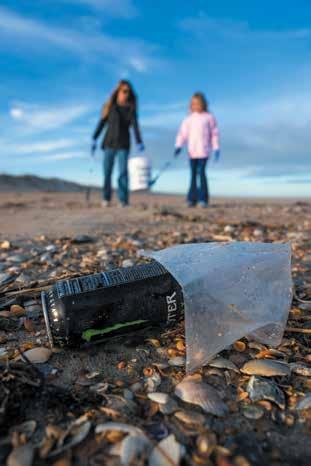
Liberty and Liftoff in the Land of Beginnings Faire marks America’s 250th birthday with music, food, drink, vendors, and performances — plus a special look at the Outer Banks’ historic local contributions to the country we love. 1-9pm. That’s not all — there’s plenty of ways to celebrate throughout the year, including an educational passport program that touches upon 13 local landmarks. Learn more at www.darea250.org. • Just love a good deal? From Apr. 18-26, Wright Brothers Memorial will waive the entrance fee in honor of National Public Land Week. Visit www.nps.gov for a full list of participating parks. • Star spangled bandanas are all the rage when the 24th Annual Outer Banks Bike Week roars back into Harbinger’s Harley Davidson, Apr. 18-26, promising a week of guided rides, rockin’ runs, and bikini contests. BYOAC (Bring your own assless chaps). Keep tabs at www.outerbankshd.com. • Make a pit stop at Jockey’s Ridge State Park Sound Access, Apr. 19, where the good folks behind Kitty Hawk Kites/Outer Banks Surfrider Spring Beach Clean-Up will hand out trash bags and gloves so folks can race off and sweep their favorite hunk of coast. 4-5pm. Follow @obxsurfrider for deets. • Adults age 21+ can satisfy every appetite — almost — at The Lost Colony Winefest! Just be at Waterside Theatre, Apr. 19, for a decadent mix of full-bodied wines and mouth-watering dishes — plus a regional art show and live music — all to make sure the nation’s longest-running outdoor symphonic lasts forever. Pricing and tickets at www.thelostcolony.org • Then it’s time for some all-amateur surfing action at Jennette’s Pier, when Apr. 24-26’s ESA Mid-Atlantic Regionals draws the top rippers to battle for big trophies and bigger bragging rights — plus a shot at Sept.’s prestigious Eastern Championships. Drop into www.surfesa.org for deets. • Help KDH do battle with cig butts, balloons and other bad actors when Trash Attack! returns on Apr. 25. From 9am12pm, head to Aviation Park for your bag and gloves, then go wipe some dirty piece of beach, street or parking lot off the map. (Rain date: Apr. 26, 1-3pm.) More at www.kdhnc. com. • Think you can turn a mess of coastal litter into a masterpiece? Kitty Hawk Kites and Dare Arts are joining forces for a Sweep the Beach Trash Art Contest. Just drop your work at the Nags Head store in early Apr., and they’ll share the winners at Apr. 25’s Earth Fair OBX, where NC Coastal Federation and a litany of enviro-groups and community non-profits gather at Jockey’s Ridge to promote educational awareness in support of a clean planet. 1-4pm. (Follow their respective social media pages for updates.)
• Vintage local architecture sure cleans up nicely on Apr. 25, when Southern Shores Historic Flat Tops Tour opens the doors on 10 classic cottages to random strangers from 1-5pm — and the proceeds help the Flat Top Preservation Fund keep the town’s Frank Sticks looking sharp for years to come. Find deets on Facebook.
• On Apr. 25, “lady sings the blues” — and Jazz Legacy Project salutes a musical legend with live music and multimedia — when Outer Banks Forum for the Lively Arts presents “Billie Holiday: God Bless the Child.” 7pm at First Flight High. Score tix at www.outerbanksforum.org • Then wake up to The Brothers Comatose’s radical mix of Americana and roots music, when Nights returns to Festival Park on Apr. 28 at 7pm. Tix and deets at com. • From Apr. 29-May 1, the Ocracoke Island Surf Fishing Tournament four decades of swash zone shenanigans when dozens of teams gather for three days of fishing and fellowship. See www.visitocracokenc.com for more.
Stingrays and shiny Barracudas — plus any number of eye-catching vehicles, from hot rods and customs to classic rides and modern muscle cars — when the Festival fishtails into Soundside Event Site, May 1-2. Vroom over to obxrodandcustomfestival.com for the ways to register, plus info on static displays and other special events about town. • Pump the brakes! We almost forgot 1’s monthly Manteo street party will roll with live tunes and family fun from 6-8pm. Just be sure to cruise inside Dare Arts to catch fresh photos by Aaron Canipe May 3’s opening reception for the 29th Annual Mollie Fearing Memorial Art Show pm. Both exhibits hang through May 30. More at www.darearts.org Cape Hatteras Secondary School auditorium is alive with The Sound of Music of four shows over three days: May 1 (7pm), May 2 (2pm & 7pm) & May 3 (2pm). Find
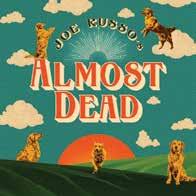

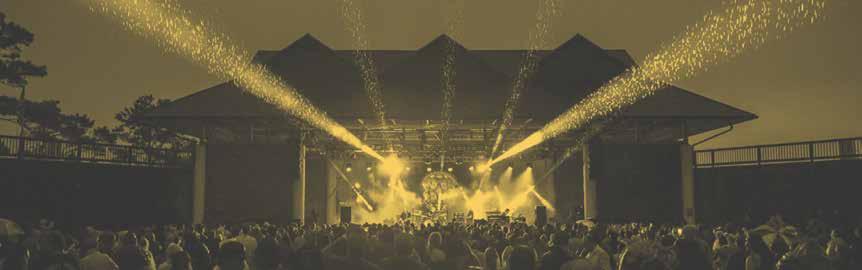

advance tix at the front office or the Froggy Dog in Avon.
• Are seafood, vino and tunes a few of your favorite things? Then skip over to Sanctuary Vineyards’ Hook’d Festival, May 2, for a mix of AYCE fried catfish, local wine and beer, and live music. Find times, tix and deets at www.sanctuaryvineyards.com
• Maybe organic produce and artisanal food items are more your jam? You’ll be stoked to learn Secotan Market’s Main Season hours are back as of May 2. That means you can score the freshest baked goods and locally harvested items every Sat. through Sept., 8am-12pm. More at www.secotanmarket.com
• Just rather grow your own goodness? Head to the KDH Baum Center, May 2, where Dare County Master Gardener’s Coastal Gardening Festival offers up booths full of plant sales, vendors, and first-class advice, as well as kids activities and educational displays. 9am-2:30pm; rain or shine. Got questions? Call 252-4759245. • And springtime means a fresh field of free music at Morris Farm, such as Made In America: A Tribute To Toby Keith (May 3), Blazing Keys Dueling Pianos (May 10) and the Dave Matthews Tribute Band (May 31). Willing to pay a little for premier seating? Limited VIP tix are also available. And on May 23, the Morris Farm Back 40 Live brings back Scotty McCreery. Get full deets and tickets at www.morrisfarmmarket.com • Cinco De Mayo make your cabeza hurt? Head north of the border to Swells’a Brewing’s Duck Dive Bar for May 6’s Seis De Mayo/Hair of the Dog Party from 3-8pm. Then, circle back and howl at the moon on May 22, as the Yacht Dogs kick-off their summer run of weekly Fri. night shows. 7-10pm. Follow socials for more. • On May 8, let your rug rats off the leash inside Roanoke Island Festival Park for KidsFest, where young’uns from newborn to 5 years old can enjoy games, activities and the occasional fire truck — while funds support Dare County Children and Youth Partnership’s family resources, from diaper banks to summer camps. 9:30am12:30pm. Get the latest at www.darekids.org • Help give brave WWII sailors their due on

Ocracoke, May 8, when the annual British Cemetery Ceremony salutes the U-boat victims of the H.M.T. Bedfordshire with tributes from dignitaries from home and abroad. 11am. More at www.visitocracokenc.com • Show tunes are all the rage inside St. Andrew’s bythe-Sea, when the Outer Banks Chorus performs Regards to Broadway on May 8 (7pm) & May 9 (4pm). Just bring a donation and follow @obxchorus for updates. Feel like breaking into song? Go to www.obxchorus.org for audition deets. • The end is nigh for Theatre of Dare, as they finish off their ’25/’26 season with Eight Minutes Left — where seemingly unconnected characters depict their final moments on Earth in the face of an unstoppable catastrophe. May 8-9 & 14-16 at 7:30pm; May 10 & 17 at 2pm. Learn more at www.theatreofdareobx.com. • Then there’s plenty of ways to run for your life at May 9’s 40th Annual Nags Head Woods 5K/1 Mile, including a Fun Run (7:40am), 5K & 1-Mile Walk (8am), and Breakfast & Brews (8:15am). Get the full scoop on Facebook or via www.firstflightrotary.org • On May 9, runway models raise serious cash for the Outer Banks Relief Foundation at the 17th Annual Couture by the Shore, where 12 local boutiques show off their latest spring fashions inside Duck Country Club — while attendees enjoy a lavish luncheon, plus a silent auction and raffles, where this year’s big giveaway is a stay in St. John. 9am-2:30pm. Strut over to www.obrf.org for the latest.• And local families fuel creative futures, May 9, when the 37th Annual Artrageous Kids Art Festival fills Dowdy Park with interactive art activities, live music, performers, and food vendors — and funds benefit Dare County Arts Council’s cultural arts programming and the Artrageous Youth Scholarship Fund. 10am-2pm. Get all the colorful details at www.darearts.org • Fiddle fans will be tickled pink to hear that Bluegrass Island Nights is ending the season’s run at Roanoke Island Festival Park’s Indoor Theater, May 9, with Grammy nominee Michael Cleveland & Flamekeeper. 7pm. More at www.bluegrassnights.com • Blue crab season is


never sweeter — or suppler — than on May 11-16’s Outer Banks Soft Shell Week, when local restaurants and seafood markets serve up bushels of tasty “jimmies” and “sooks” in everything from fancy specials to classic sammies. Dig into www.softshellweek.com for all the delicious deets.
• Meanwhile, it’s the blue marlin’s time to shine, May 12-16, when the 32nd Annual Hatteras Village Offshore Open sends captains from all over the coast chasing billfish in a battle for big bragging rights — and bigger foam checks. Sign up and learn more at www.hvoo.org • Kitty Hawk Kites reels in soaring pilots from across the country, May 14-17, when the 54th Annual Hang Gliding Spectacular comes to Jockey’s Ridge State Park and Jarvisburg’s Cotton Gin — for four days of jaw-dropping demos, dinners and more. Find a full schedule at www.kittyhawk.com • And the weekend promises more sandy fun as Friends of Jockey’s Ridge sets up everything from disc golf to special volunteer opportunities, plus May 15’s special Concert on the Dunes stars a top TBD act. Follow the FOJR Facebook page for updates. • On May 16, roll down to Rodanthe’s Graveyard Run Skate Park, where the 9th Annual OBX ShredFest will feature skaters, BMXers, and roller girls grinding the coping — while live bands rip up the stage. More at www.obxshredfest.com • Luckily, we have a solid emergency service crew to support all these thrill-seekers. On May 16, show ’em your thanks — and see how they do it — when KDH’s Dare County EMS Station 1 Open House kicks off National EMS Week. 10am1pm. Learn more at www.darenc.gov/ems • Who let the dogs out? Find out May 16, when
OBX SPCA’s 5th Annual Bark in the Park raises funds via fun activities for pooches and people, from live music to local beers — plus the Great American Bark Off invites humans to impersonate everything from howling hounds to yappy lap dogs in a shot for prizes. 1pm-4pm. More at www.obxspca.org
“Look ma, no fear!” BMXers and skaters go bonkers at OBX Shredfest, May 16.


• And who knows what cool finds you’ll sniff out at Ocracoke’s Island-Wide Yard Sale, May 16, where businesses and residences unload garages and closets for a full day affair. (Rain date: Sun., May 17.) Then come back May 23 and throw the local rescue service some bones by attending the Ocracoke Volunteer Firemen’s Ball. Tix cover a pig pickin’, silent and live auctions, and at least one blazing band. Get pricing and deets at www. visitocracokenc.com
• Meanwhile in Corolla, the first race of the 16th Annual Lighthouse 5k /1 Mile Series leaves the starting line May 20 at 8am — and continues running every Wed. through summer. Register at www.obxrunning. com.
• From May 22-23, the NC Beach Buggy Association posts up for a pair of members’ only comps — and the John Overholtzer Youth Tournament — before hosting May 23’s NCBBA Annual Meeting & BBQ at the Rodanthe-Waves-Salvo Community Center, where non-members can score a plate and learn more for just $15. (2pm. Please RSVP at www.ncbba.org.) And anyone can join the cause for a litter-free coast at June 6’s Adopt A Beach at Ramp 23. 9am-12pm. Email tom.brueckner@ncbba.org with questions. • Come May 24, celebrate the beginning of summer by shopping for cool local crafts, fresh produce and more at the first-ever Soundside Memorial Day Weekend Market. 9am-1pm. Find a May 11-16, 2026
full list of vendors at www.soundsidemarket.com. • Then remember what the holiday’s really about, May 25, when the Nags Head Memorial Day Ceremony invites everyone to Town Hall at 11am to reflect, remember loved ones, and pay tribute to those who made the ultimate sacrifice for our freedoms. Follow the town Facebook page for updates. • From May 29-31, Kitty Hawk Kites’ Kiteboarding Kickoff Weekend promotes the feeling of flying high — and moving fast — with gear demos and more at Waves Village Watersports. 10am-4pm. More at www. kittyhawk.com • Then ground yourself in lessons from the Outer Banks’ original peoples, May 29-30, when The Secotan Alliance lines up two days of Indigenous history lectures, Indigenous and current environmental gardening presentations, and artistic entertainment under the theme, “In the Spirit of Wingina 3: Seeds of Wisdom & Sustenance.” Daytime presentations take place at the Virginia S. Tillett Center, Fri. & Sat., with music by the Benjie Porecki Trio at Jennette’s Pier, Fri. eve. Learn more at www. secotanalliance.org • The Manteo Downtown Market opens up for the season on May 30 — and comes back every Sat. am — offering a mix of locally made art, food and crafts along the waterfront. 8am-12pm. Get the latest at www.manteonc.gov or on Facebook • Think something queer’s going on in Downtown Manteo? You’re right! After 15 years, the Outer Banks Pridefest has switched from their usual fall dates to May 2931! But don’t worry, there will still be the same spectrum of fun times, anchored by May 30’s free day of live music, food trucks, friendly vendors and more at Roanoke Island Festival Park. Find a full calendar of events, from booze cruises to drag brunches at www.obxpridefest.com. And remember: all daytime events are family friendly — all nighttime events are NOT.
• On May 30, bolt west to Currituck County Community Park to help raise mental health and suicide prevention awareness by racing in The Sigma Stomp — or just come hear speakers and support families on site. 8am start. More at www.obxrunning.com
• Want to help give local animal shelters a lift? On June 4, be at KDH’s Mary’s Paws Park Celebration, where folks can bring fur babies and donations — and in return they fetch giveaways for dogs and owners, educational information, and free ice cream treats. 1-4pm. Sniff out the latest on Facebook • Did someone say “dinner and a show”? On June 4 & 5, full-time residents can score free admittance to the Lost Colony’s Locals’ Preview Nights — provided they bring three non-perishable items for the local food pantry and proof of residency. After that, performances run every Mon.-Sat. ’til Aug.
22. Get details, tickets, and learn more about special opportunities like the Native PreShow at www.thelostcolony.org. • On June 5, the family fun continues at Downtown Manteo’s local favorite for friendly vibes — another First Friday! — where streets flow with live music and cool peeps from 6-8pm. Meanwhile, Dare Arts reveals two fresh exhibits: first, the Pride Project showcases work by local queer creators inside The Vault, while the Courtroom Gallery features Tiny Art by a host of big regional names. Both hang through June 27. More at www. darearts.org • Or hop a ferry south to the Ocrafolk Festival, June 5-7, where live music, storytelling and art add up to a one-of-a-kind community celebration. Dig into www. visitocracokenc.com for more. • By now, you’ve heard that beloved local music instructor John Buford’s started the Outer Banks Youth Choir with St. Andrew’s Bythe-Sea Episcopal Church. On June 7, come out to their Spring Concert and hear them firsthand at 4pm. Even better, lend a voice, as ages 9-19 can still join. Learn more at www. saintandrewsobx.com.
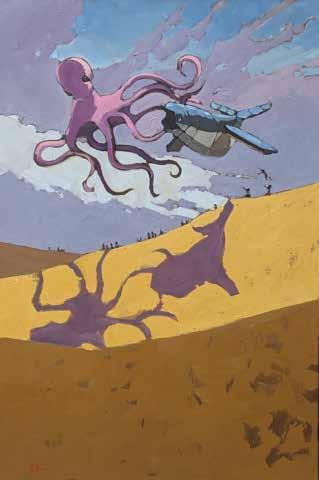
Wild paintings preserve local landmarks when Jockey’s Ridge’s “Art from the Edge” fundraiser returns, Apr. 16-June 21. “Shark Attack” by Brad Price.
• Maybe your kid can’t carry a tune — but they can definitely catch a fish. See for yourself June 10, when Avalon Pier, Nags Head Pier, Jennette’s Pier, and Outer Banks Fishing Pier all waive their fees for kids ages 4-16 as part of the Fritz Boyden Memorial Youth Tournament. 7am-2pm. (Get deets at www.nagsheadsurffishingclub. org.) And come back to Jennette’s Pier on June 14 for the Fishing with Friends Special Olympics Fishing Tournament from 8:30am-12:30 pm. Hook the latest news at www.jennettespier.net
• And anyone can go fly a kite on Jockey’s Ridge during the Outer Banks Rogallo Kite Festival, June 12-13, where Kitty Hawk Kites will be displaying amazing 30- to 100-foot fabric masterpieces while hosting demos and stunt kite lessons — all in memory of the NASA scientist and inventor of the “flexible wing.” 10am-4pm. Learn more at www.kittyhawk.com • Then, the high times continue at Festival Park, June 12-13, via two mind-blowing concerts courtesy of Live From OBX. The fun starts Fri. when Joe Russo’s Almost Dead brings the music of the Grateful Dead back into vibrant, living color. Come Sat., Kool & the Gang delivers the best booty-shaking sounds of 70s and 80s soul. Both shows start at 6:30pm. Get details and tix — including VIP options — at www.livefromobx.com • And show your kids the value of some old-fashioned homegrown, June 17, when Island Farm’s Tater Day celebrates the good, old-fashioned Irish potato! Join historic interpreters as they dig in the gardens and harvest a handful, then kick back and enjoy kettle-fried chips. 9am-3pm. $11 for ages 4+. More at www.obcinc.org