This sample chapter is provided in draft format for inspection purposes.
To access a sample of the digital resources that support the series, visit: oup.com.au/ac-sci-info
Oxford University Press is a department of the University of Oxford. It furthers the University’s objective of excellence in research, scholarship, and education by publishing worldwide. Oxford is a registered trademark of Oxford University Press in the UK and in certain other countries.
Published in Australia by Oxford University Press
Level 8, 737 Bourke Street, Docklands, Victoria 3008, Australia.
The moral rights of the author have been asserted.
First published 2016
Second edition 2023
All rights reserved. No part of this publication may be reproduced, stored in a retrieval system, or transmitted, in any form or by any means, without the prior permission in writing of Oxford University Press, or as expressly permitted by law, by licence, or under terms agreed with the reprographics rights organisation. Enquiries concerning reproduction outside the scope of the above should be sent to the Rights Department, Oxford University Press, at the address above.
You must not circulate this work in any other form and you must impose this same condition on any acquirer.
ISBN 9780190332617
Reproduction and communication for educational purposes
The Australian Copyright Act 1968 (the Act) allows educational institutions that are covered by remuneration arrangements with Copyright Agency to reproduce and communicate certain material for educational purposes. For more information, see copyright.com.au.
Edited by Siddhi Chavan
Typeset by QBS Learning
Proofread by XXX
Indexed by Max McMaster
Printed in Singapore by Markono
Oxford University Press Australia & New Zealand is committed to sourcing paper responsibly.
Disclaimer
Links to third party websites are provided by Oxford in good faith and for information only. Oxford disclaims any responsibility for the materials contained in any third party website referenced in this work.
Printer please replace with your FSC logo
Acknowledgement of Country
Oxford University Press acknowledges the Traditional Owners of the many lands on which we create and share our learning resources. We acknowledge the Traditional Owners as the original storytellers, teachers and students of this land we call Australia. We pay our respects to Elders, past and present, for the ways in which they have enabled the teachings of their rich cultures and knowledge systems to be shared for millennia.
Warning to First Nations Australians
Aboriginal and Torres Strait Islander peoples are advised that this publication may include images or names of people now deceased.
1
Genetics
2
Science toolkit
Scientists work collaboratively and individually to design experiments.
Heritable characteristics are transmitted from one generation to the next in a process that involves genes and DNA.
Evolution
3
The theory of evolution by natural selection explains the diversity of living things on Earth and is supported by a range of scientific evidence. This theory has been developed over time.
Climate change
4
5
6
The periodic table
There are interactions and cycles within and between Earth’s spheres. Global systems, including the carbon cycle, rely on these interactions involving the biosphere, lithosphere, hydrosphere and atmosphere.
The periodic table is used to classify and organise elements. The atomic structure and properties of elements are used to organise them in the periodic table. This system can be used to make predictions about the properties of elements.
Chemical reactions
Different types of reactions are used to produce a range of products and can occur at different rates. Different factors influence the rate of reactions.
The universe
The universe contains features including galaxies, stars and solar systems. The Big Bang theory can be used to explain the origin of the universe. This theory is supported by scientific evidence and has developed over time. 7
Motion
8
Learning and memory
SCI EN CE
The relationships between force, mass and acceleration can be used to predict changes in the motion of objects.
The brain coordinates learning and memory. Behaviours can be learned in specific ways, and the duration and capacity of memory can be improved. 9
Introducing Oxford Science 7–10
Australian Curriculum ................. vi
Aus tralian Curriculum:
Science 10 scope and sequence x
Acknowledgements xii
CHAPTER 1
SCIENCE TOOLKIT....
2
1.1 There are many types of scientific investigations 4
1.2 Scientists communicate using scientific language 6
1.3 Experiments must be controlled 8
1.4 Data c an be analysed 10
1.5 Clinical testing uses the scientific method 14
1.6 Science as a human endeavour: Scientific investigations must be ethical 16
1.7 Cognitive verbs identify the tasks in a question 18
Chap ter 1 review 20
CHAPTER 2
GENETICS..............
24
2.1 Science as a human endeavour: Scientists review the research of other scientists 26
2.2 DNA consists of a sugar–phosphate backbone and complementary nitrogen bases 28
2.3 Chromosomes carry genetic information in the form of genes 30
2.4 DNA holds the code for building proteins 32
2.5 Mitosis forms new somatic cells 34
2.6 Meiosis forms gamete cells 36
2.7 Allele s can produce dominant or recessive traits 38
2.8 Alleles for blood group traits co-dominate 40
2.9 Alleles on the sex chromosomes produce sex-linked traits 42
2.10 Inheritance of traits can be shown on pedigrees 46
2.11 Mutations are changes in the DNA sequence 50
2.12 Science as a human endeavour: Genes can be tested 54
2.13 Science as a human endeavour: Genes can be manipulated 56
2.14 Science as a human endeavour: Genetic engineering is used in medicine 58
Chapter 2 review 60
CHAPTER 3
EVOLUTION
............ 64
3.1 Science as a human endeavour: Dar win and Wallace were co-conspirators 66
3.2 Natural selection is the mechanism of evolution 70
3.3 Different selection pressures cause divergence. Similar selection pressures cause convergence 72
3.4 Fossils provide evidence of evolution 74
3.5 Multiple forms of evidence support evolution 78
3.6 DNA and proteins provide chemical evidence for evolution 82
3.7 Humans artificially select traits 84
3.8 Science as a human endeavour: Natural selection affects the frequency of alleles 86
Chap ter 3 review 88
CHAPTER 4
CLIMATE CHANGE
... 92
4.1 Climate change is global 94
4.2 Climate change indicators include increased global temperatures, extreme weather, disease and species distribution 98
4.3 Deep ocean currents regulate global climate change 102
4.4 Science as a human endeavour: Climate change can be mitigated 106
Chapter 4 review 110
CHAPTER
5 THE PERIODIC TABLE .................. 114
5.1 The structure of an atom determines its properties 116
5.2 Groups in the periodic table have properties in common 120
5.3 Non-metals have properties in common 12 2
5.4 Ions have more or less electrons 124
5.5 Metal cations and non-metal anions combine to form ionic compounds 126
5.6 Non-metals combine to form covalent compounds 128
5.7 Metals form unique bonds 130
5.8 Science as a human endeavour: Nanotechnology involves the specific arrangement of atoms 132 Chapter 5 review 134
CHAPTER 6
CHEMICAL REACTIONS
......... 138
6.1 Synthesis, decomposition and displacement reactions can be represented by equations 140
6.2 Acids have a low pH, bases have a high pH 144
6.3 Acid r eactions depend on strength and concentration 146
6.4 The solubility rules predict the formation of precipitates 148
6.5 Metals and non-metals react with oxygen 150
6.6 Poly mers are long chains of monomers 152
6.7 Surf ace area, concentration, temperature and stirring affect reaction rate 154
6.8 Catalysts increase the rate of a reaction 158
6.9 Science as a human endeavour: Reactions are used to produce a range of useful products... 160 Chapter 6 review 162
CHAPTER 7
THE UNIVERSE .... 166
7.1 Science as a human endeavour: The universe was studied by First Nations peoples 168
7.2 The Earth is in the Milky Way 170
7.3 Stars have a life cycle 174
7.4 The galaxies are moving apart 176
7.5 Evidence supports the Big Bang theory 178
7.6 Science as a human endeavour: Technology aids cosmological research 180
Chapter 7 review 182
CHAPTER 8
MOTION ............... 186
8.1 Displacement is change in position with direction 188
8.2 Velocity is speed with direction 190
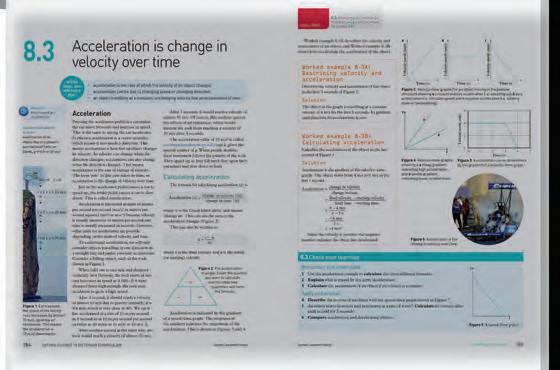
8.3 Acceleration is change in velocity over time 192
8.4 An object in motion remains in motion until a net unbalanced force acts on it 194
8.5 Net force equals mass × acceleration 196
8.6 Each action has an equal and opposite reaction 198
8.7 Momentum is conserved in a collision 200
8.8 Science as a human endeavour: Understanding motion improves vehicle safety 202
Chapter 8 review 204
CHAPTER 9
LEARNING AND MEMORY
.............. 208
9.1 The brain is responsible for learning and memory 210
9.2 Animals have innate behaviours to survive 212
9.3 Animals can learn behaviour from their environment 214
9.4 Information must be effectively encoded and stored for it to be recalled 216
9.5 Memory and learning can be improved 218
9.6 Science as a human endeavour: Neuroimaging makes memory and learning visible 220 Chapter 9 review 222
CHAPTER 10 EXPERIMENTS
.... 226
CO NT EN TS
INTRODUCING OXFORD SCIENCE 7–10 AUSTRALIAN CURRICULUM
Oxford Science Australian Curriculum has been developed to meet the requirements of the Australian Curriculum: Science across Years 7–10. Taking a concept development approach, each double-page spread of Oxford Science represents one concept , one topic and one lesson. This new edition ensures students build science skills and cross-curriculum capabilities, paving a pathway for science success in the senior secondary years.
The series offers a completely integrated suite of print and digital resources to meet your needs, including:
> Student Book
Key features of this Student Book
> Student obook pro > Teacher obook pro.
> This Student Book combines complete curriculum coverage with clear and engaging design.
> Each print Student Book comes with complete access to all the digital resources available on Student obook pro.
Focus on concept development
Chapter openers
• Every chapter begins with a clear learning pathway for students.
Concept statements
• Every topic begins with a concept statement that summarises the key concept of the topic in one sentence.
Learning intentions
• Learning intentions are clearly stated for every topic.
Key ideas
• Key ideas are summarised for each topic in succinct dot points.
Integrated links to engaging digital resources
• Where relevant, digital icons flag engaging resources that can be accessed via Student obook pro. These resources are directly integrated with the topic being covered.
Margin glossary terms
• Key terms are bolded in the body in blue text, with a
in the margin.
Reflect
• Students are encouraged to selfassess their learning against a set of success criteria in the Chapter checklist tables at the end of each chapter. If students do not feel confident about their learning, they are directed back to the relevant topic.
Worked examples
• Students are provided with step-by-step worked examples for mathematical problems and scientific concepts.
Check your learning
• Each topic finishes with a set of ‘Check your learning’ questions that are aligned to the learning intentions for the topic. Questions are phrased using bolded cognitive verbs which state what is expected of a student and prepares them for studying senior science subjects.
Focus on science inquiry skills and capabilities
Science toolkit
• The Science toolkit is a standalone chapter that explicitly teaches important science inquiry skills and capabilities.
Digital hotspots
Icons found in the student book link to digital resources accessible via the obook pro.
Digital versions of the Check your learning and Chapter review questions
Videos
Digital quizzes
Interactives
Science as a human endeavour
• ‘Science as a human endeavour’ topics explore real-world examples and case studies, allowing students to apply science understanding.
Focus on practical work
Practical work appears at the back of the book
• All practical activities are organised in a chapter at the end of the book and signposted at the point of learning throughout each chapter.
Challenges, Skills labs and Experiments
• These activities provide students with opportunities to use problemsolving and critical thinking, and apply science inquiry skills.
Focus on STEAM
Integrated STEAM projects
• Take the hard work out of cross-curricular learning with engaging STEAM projects. Two fully integrated projects are included at the end of each book in the series, and are scaffolded and mapped to the Science, Maths and Humanities curricula. The same projects also feature in the corresponding Oxford Humanities and Oxford Maths series to assist crosscurricular learning.
Test your skills and capabilities
• This section provides scaffolded opportunities for students to apply their science understanding while developing skills and capabilities.
Problem solving through design thinking
• Each STEAM project investigates a real-world problem that students are encouraged to problem solve using design thinking.
Full digital support
• Each STEAM project is supported by a wealth of digital resources, including student booklets (to scaffold students through the design-thinking process of each project), videos to support key concepts and skills, and implementation and assessment advice for teachers.
INTRODUCING OXFORD SCIENCE
AUSTRALIAN CURRICULUM
Key features of Student obook pro
> Student obook pro is a completely digital product delivered via Oxford’s online learning platform, Oxford Digital
> It offers a complete digital version of the Student Book with interactive note-taking, highlighting and bookmarking functionality, allowing students to revisit points of learning.
> A complete ePDF of the Student Book is also available for download for offline use and read-aloud functionality.
Focus on eLearning
Videos
• Videos are available online to support understanding of concepts or key practical activities.
• Integrated Quizlet sets, including real-time online quizzes with live leaderboards, motivate students by providing interactive games that can be played solo or as a class. Quizlet can be used for revision or as a topic is introduced to keep students engaged.
Complete digital version of the Student Book
• This digital version of the Student Book is true to the print version, making it easy to navigate and transition between print and digital.
Interactive quizzes
• Each topic in the Student Book is accompanied by an interactive assessment that can be used to consolidate concepts and skills.
• These interactive quizzes provide a mix of auto- and teacher-corrected questions, with students receiving instant feedback on achievement and progress. Students can also access all their online assessment results to track their own progress and reflect on their learning.
> integrated Australian Concise Oxford Dictionary look up feature
> targeted instructional videos for key concepts, practicals and worked examples
> interactive assessments to consolidate understanding
> integrated Quizlet sets, including real-time online quizzes with live leaderboards
> access to their online assessment results to track their own progress.
Quizlet
Key
features
of Teacher obook pro
> Teacher obook pro is a completely digital product delivered via Oxford Digital.
> Each chapter and topic of the Student Book is accompanied by full teaching support. Teaching programs are provided that clearly direct learning pathways throughout each chapter, including ideas for differentiation and practical activities.
> Teachers can use their Teacher obook pro to share notes and easily assign resources or assessments to students, including due dates and email notifications.
Focus on assessment and reporting
Additional resources
• Each chapter of the Student Book is accompanied by additional worksheets and learning resources to help students progress.
Complete teaching support
• Teaching support includes full lesson and assessment planning, ensuring there is more time to focus on students.
DRAFT
Curriculum and assessment reports
• Teachers are provided with clear and tangible evidence of student learning progress through curriculum and assessment reports.
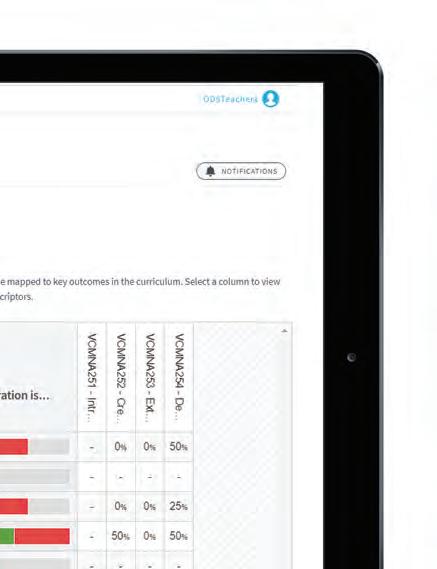
• Assessment reports directly show how students are performing in each online interactive assessment, providing instant feedback for teachers about areas of understanding.
• Curriculum reports summarise student performance against specific curriculum content descriptions and curriculum codes.
> In addition to online assessment, teachers have access to editable class tests that are provided at the conclusion of each chapter. These tests can be used as formative or summative assessment and can be edited to suit the class’s learning outcomes.
> Teachers are provided with laboratory support through experiment answer guidance, laboratory technician notes and risk assessments to ensure safe learning experiences.
Benefits for teachers
AUSTRALIAN CURRICULUM: SCIENCE 10 SCOPE AND SEQUENCE
LEVELS 9 AND 10 DESCRIPTION
In Levels 9 and 10, the curriculum focus is on explaining phenomena involving science and its applications. Students consider both classic and contemporary science contexts to explain the operation of systems at a range of scales. At a microscopic scale, they consider the atom as a system of protons, electrons and neutrons, and understand how this system can change through nuclear decay. They learn that matter can be rearranged through chemical change and that these changes play an important role in many systems. At a macroscopic scale, they explore ways in which the human body as a system responds to its external environment, and investigate the interdependencies between biotic and abiotic components of ecosystems. They develop a more sophisticated view of energy transfer by applying the concept of the conservation of matter in a variety of contexts. They apply their understanding of energy and forces to global systems including continental movement. Students explore the biological, chemical, geological and physical evidence for different theories, including the theories of natural selection and the Big Bang theory. Atomic theory is used to understand relationships within the periodic table of elements. Students understand that motion and forces are related by applying physical laws. Relationships between aspects of the living, physical and chemical world are applied to systems on a local and global scale enabling students to predict how changes will affect equilibrium within these systems.
LEVELS 9 AND 10 CONTENT DESCRIPTIONS
Science as a human endeavour
Chapter 7
Year 9
Chapter 2
Chapter 7
Chapter 6
Year 9
Chapter 2
Chapter 6
Year 9
Biological sciences
Year 9
Year 9
Chapter 2
Chapter 3
Year 9
Scientific understanding, including models and theories, are contestable and are refined over time through a process of review by the scientific community (VCSSU114)
Advances in scientific understanding often rely on developments in technology and technological advances are often linked to scientific discoveries (VCSSU115)
The values and needs of contemporary society can influence the focus of scientific research (VCSSU116)
Multicellular organisms rely on coordinated and interdependent internal systems to respond to changes to their environment (VCSSU117)
An animal’s response to a stimulus is coordinated by its central nervous system (brain and spinal cord); neurons transmit electrical impulses and are connected by synapses (VCSSU118)
The transmission of heritable characteristics from one generation to the next involves DNA and genes (VCSSU119)
The theory of evolution by natural selection explains the diversity of living things and is supported by a range of scientific evidence (VCSSU120)
Ecosystems consist of communities of interdependent organisms and abiotic components of the environment; matter and energy flow through these systems (VCSSU121)
<texttobeupdatedat2pp> DRAFT
LEVELS 9 AND 10 CONTENT DESCRIPTIONS
Chemical sciences
Year 9
Chapter 4
Year 9
Chapter 4
Year 9
Chapter 4
Year 9
Chapter 5
Earth and space sciences
Year 9
Chapter 6
All matter is made of atoms which are composed of protons, neutrons and electrons; natural radioactivity arises from the decay of nuclei in atoms (VCSSU122)
The atomic structure and properties of elements are used to organise them in the periodic table (VCSSU123)
Chemical reactions involve rearranging atoms to form new substances; during a chemical reaction mass is not created or destroyed (VCSSU124)
Different types of chemical reactions are used to produce a range of products and can occur at different rates; chemical reactions may be represented by balanced chemical equations (VCSSU125)
Chemical reactions, including combustion and the reactions of acids, are important in both non-living and living systems and involve energy transfer (VCSSU126)
The theory of plate tectonics explains global patterns of geological activity and continental movement (VCSSU127)
Global systems, including the carbon cycle, rely on interactions involving the atmosphere, biosphere, hydrosphere and lithosphere (VCSSU128)
Chapter 7 The Universe contains features including galaxies, stars and solar systems; the Big Bang theory can be used to explain the origin of the Universe (VCSSU129)
Physical sciences
Year 9
Year 9
Chapter 9
Chapter 8
SCIENCE INQUIRY SKILLS
Questioning and predicting
Chapter 1
Chapter 11
Year 9
Planning and conducting
Chapter 1
Chapter 11
Year 9
Chapter 1
Chapter 11
Year 9
Recording and processing
Chapter 1
Chapter 11
Year 9
Analysing and evaluating
Chapter 1
Chapter 11
Year 9
Electric circuits can be designed for diverse purposes using different components; the operation of circuits can be explained by the concepts of voltage and current (VCSSU130)
The interaction of magnets can be explained by a field model; magnets are used in the generation of electricity and the operation of motors (VCSSU131)
Energy flow in Earth’s atmosphere can be explained by the processes of heat transfer (VCSSU132)
<texttobeupdatedat2pp>
The description and explanation of the motion of objects involves the interaction of forces and the exchange of energy and can be described and predicted using the laws of physics (VCSSU133)
Formulate questions or hypotheses that can be investigated scientifically, including identification of independent, dependent and controlled variables (VCSIS134)
Independently plan, select and use appropriate investigation types, including fieldwork and laboratory experimentation, to collect reliable data, assess risk and address ethical issues associated with these investigation types (VCSIS135)
Select and use appropriate equipment and technologies to systematically collect and record accurate and reliable data, and use repeat trials to improve accuracy, precision and reliability (VCSIS136)
Construct and use a range of representations, including graphs, keys, models and formulas, to record and summarise data from students’ own investigations and secondary sources, to represent qualitative and quantitative patterns or relationships, and distinguish between discrete and continuous data (VCSIS137)
DRAFT
Analyse patterns and trends in data, including describing relationships between variables, identifying inconsistencies in data and sources of uncertainty, and drawing conclusions that are consistent with evidence (VCSIS138)
ACKNOWLEDGEMENTS
The author and the publisher wish to thank the following reviewers: Professor Bradley Moggridge James Kennedy, Paguiel Meunier, Michelle Moore.
They also wish to thank the following copyright holders for reproduction of their material.
Every effort has been made to trace the original source of copyright material contained in this book. The publisher will be pleased to hear from copyright holders to rectify any errors or omissions.
CLIMATE CHANGE 4 CHAPTER
> Explain how solar radiation influences the global climate system. 4.1
Climate change is global
> Explain the difference between weather and climate.
> Describe how climate change has led to changes in disease and species distribution. 4.2
Climate change indicators include increased global temperatures, extreme weather, disease and species distribution
> Describe how increased greenhouse gases have resulted in increased global temperatures and extreme weather events.
4.3
Deep ocean currents regulate global climate change
> Explain how climate change models help make predictions about global climate trends.
> Describe how melting icecaps result from increased global temperatures and how this influences sea levels.
> Explain how deep ocean currents regulate global climate.
4.4
Science as a human endeavour: Climate change can be mitigated
> Compare climate mitigation and climate adaptation strategies.
> Describe how First Nations peoples have used ecological knowledge to reduce carbon dioxide from the atmosphere.
What if?
Greenhouse gases
What you need:
Two clear identical water bottles with labels removed, water, tape, scissors, two thermometers, two seltzer (effervescent) tablets, two lamps, a stopwatch, markers
What to do:
1 Fill both bottles so that they are a third full of water. Label one bottle ‘CO2 'and the other ‘control’.
2 Tape the top of the control bottle and poke a thermometer down through the tape so that it sits in the bottle without touching the water.
3 Drop the two seltzer tablets into the CO2 bottle and quickly tape the top of the bottle. Poke a thermometer down through the tape to that it sits in the bottle without touching the water.
4 Immediately record the temperature of each bottle and then position the bottles so that each has a lamp shining directly on it.
5 Start the stopwatch and record the temperature of each bottle every 20 minutes for the next hour.
What if?
» What if four seltzer tablets were placed in the CO2 bottle? (Would this increase or decrease the temperature of the bottle?)
Climate change is global 4.1
Learning intentions
By the end of this topic, you will be able to:
• explain the difference between weather and climate
• explain how solar radiation influences the global climate system.
Key ideas
• Weather is the short-term changes in temperature, wind, rain, humidity and atmospheric pressure in a small region.
• Climate is a long-term measure of averages, variations and extremes in weather over large global areas.
• Solar radiation interacts with the atmosphere, ocean and land to affect the global climate system.
climate change periodic change in the Earth’s climate
weather
rthe temperature, humidity, rainfall and wind on particular days in a particular placeç
climate the weather conditions at a particular place, averaged over a long period of time, based on the collection and analysis of large amounts of data
solar radiation
radiant electromagnetic energy from the Sun
Many systems in nature are balanced, from the regulation of the body to the carbon cycle of the Earth. When the balance is disrupted, it can cause a chain of reactions that can have long-term impacts. For thousands and thousands of years, there has been a balance between the geosphere (the rocks and minerals on the surface of the earth), the biosphere (all living things), the hydrosphere (all the ice, water and vapour on the Earth) and the atmosphere (the layer of gases surrounding the Earth). These spheres act together to make the global climate one in which humans and other parts of the biosphere are able to survive. Climate change refers to change in the state of the global climate.
Weather and climate systems
Weather reports tell you the temperature, humidity, rainfall and wind on particular days in a particular place. They provide a snapshot of dayto-day changes. Climate is concerned with longer periods of time and involves the collection and analysis of large amounts of data. You can use weather predictions to decide what to wear each day, whereas climate predictions may help farmers plan what types of crops to grow each year, governments to decide whether to invest in certain technologies or even households to decide whether they’ll need to install an air conditioner.
Solar radiation
Light and thermal energy produced by the Sun is something that is often taken for granted. We have all felt the heat of a footpath or road on a hot day. This is due to the energy of solar radiation (shortwave, high-energy radiation) heating the rocks and minerals that form the geosphere under our feet. This includes everything from the molten rocks of the mantle to the peaks of the mountains of the Earth. The amount of solar radiation released by the Sun varies by 0.1% every 9–11 years (Figure 1a). The small variation has had no impact on the amount of solar radiation that reaches the top of Earth’s atmosphere.
4.1:
This means that the variations in the energy released by the Sun are not the cause of the current increasing trend in global climate warming (Figure 1b).
Solar radiation that reaches the Earth’s atmosphere is either absorbed or reflected into space. Seventy per cent of solar radiation is absorbed by the water and rocks that make up the Earth’s surface (hydrosphere and geosphere). The absorbed energy causes the molecules that make up the rocks and water to increase their kinetic energy and vibrate faster which results in the increased temperature. This energy is then re-radiated as longwave, lower-energy wavelengths of infrared radiation (known as heat) into the gases in the air. The more solar radiation that is absorbed by the Earth, the hotter the surface becomes. This in turn heats the greenhouse gases in the atmosphere.
Some parts of the Earth will receive more solar radiation than other parts. At the North or South Pole, the energy from the Sun shines at an angle. As it travels through the atmosphere, some of it radiates back into space. Less energy is available to heat the Earth. Near the equator, the Sun spends more time directly overhead. This means more solar radiation is absorbed by the Earth’s surface at the equator than at the poles where the Sun is at a steep angle (Figure 2). This is the reason that the temperature at the equator is higher than at the Earth’s poles.
Areas of the Earth that experience long periods of solar radiation from the Sun have
higher temperatures. Regions near the equator are warmer than regions near the Earth’s poles. Near the equator, the Earth is exposed to long periods of solar radiation because the equator faces the Sun all year. Because of this, the Earth’s surface is heated intensely. The thermal energy in the rocks making up the geosphere heats the gases in the atmosphere. This can lead to higher temperatures lasting longer at the equator. This uneven heating of the geosphere and hydrosphere can affect the global atmosphere and ocean circulation patterns.
As the air heats up, the particles in the air move faster, spread out and become less dense (high air pressure). As a result, the less dense warm air rises above the denser and slowermoving cold air (low air pressure). This means warm air near the equator rises into the upper atmosphere and colder air near the poles moves towards the equator to fill the space left by the warm air (Figure 3). The movement of air is better known as wind . The wind is the result of sideways or horizontal movements of air due to pressure differences.
The Coriolis effect is the influence of the Earth’s rotation on the direction of air or water movement. The Coriolis effect of a spinning Earth can cause the winds to appear to move in a circular pattern across the Earth (Figure 4). The surface of the Earth can also interfere with the speed and direction of wind. Rough and mountainous terrain will slow wind and significantly change the wind’s direction.
wind the sideways movement of air as a result of lowerdensity warm air rising through the atmosphere Coriolis effect the influence of the Earth’s rotation on the direction of movement of air or water
Steep angle of
Steep
Figure 2 The angle of solar radiation (sunlight) can affect the amount of energy absorbed by the Ear th’s surface.
isobar a line drawn on a weather map that joins places of equal air pressure
On a weather map, the air pressure differences caused by heated air are shown as isobars ; the closer the isobars, the greater the difference in pressure and the stronger the wind. Regions of high and low pressure are shown on weather maps (Figure 5b). Lowpressure areas are frequently associated with clouds and precipitation and represented by an ‘L’. High-pressure systems bring clear blue skies and are represented by an ‘H’.
Cool air descending North Pole
Equator
3 Movement of air at the equator and at the poles can result in the circular movements of air called cyclones.
Westerlies
4 Wind patterns over the Earth; the
DRAFT
South-east tradesNorth-east trades
air rising
are areas of low pressure where winds tend to be very calm.
Figure
Doldrums
Equator
Doldrums
Doldrums
Figure
South Pole
Hot
4.1 Check your learning
Retrieve
1 Defi ne the term ‘air pressure’.
Comprehend
2 Describe the relationship between winds and rising air.
3 Explain what happens to the pressure of the air when it is heated.
4 Describe the role of the Coriolis effect on global winds.
Analyse
5 Compare weather and climate.
6 Compare the wavelength and energy levels of solar radiation and infrared (heat) radiation.
Apply
7 Cyclones are more likely to occur close to the equator during the wet season. Describe what is meant by the term ‘wet season’ and investigate the climate conditions that contribute to the formation of a cyclone. Create a 2-minute video in which you are a meteorologist on the news who explains why the cyclone is forming.
Quiz me
Complete the Quiz me to check how well you’ve mastered the learning intentions and to be assigned a worksheet at your level.
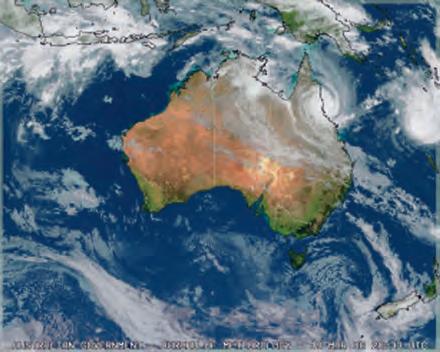
Figure 5 a A satellite image and b a weather map showing tropical Cyclone Larry as it crosses the Australian coast at Innisfail, just south of Cairns, in 2006
Climate change indicators include increased global temperatures, extreme weather, disease and species distribution 4.2
Learning intentions
By the end of this topic, you will be able to:
• describe how increased greenhouse gases have resulted in increased global temperatures and extreme weather events
• describe how climate change has led to changes in disease and species distribution.
greenhouse gas an atmospheric gas able to absorb and emit solar energy causing a greenhouse effect
Figure 1 Trends in atmospheric carbon dioxide from a air bubbles trapped in ice sheets and glaciers, and b Mauna Observatory, Hawaii
Key ideas
• Data is used to measure climate change.
• Climate change has caused increasing global temperatures and extreme weather events.
• Climate change has changed the distribution of diseases.
• Rapid changes in climate have changed and will continue to change species distribution.
Greenhouse gases
The presence of a gaseous atmosphere allows the Earth to maintain a relatively constant environment in which life can survive. The Moon is not large enough to retain a full atmosphere. This means the Moon’s temperatures can vary from 123°C when in sunlight to –153°C when it is turned away from the Sun.
Gases in the Earth’s atmosphere (oxygen, nitrogen, hydrogen, carbon dioxide and methane) can reflect some of the heat from solar radiation during the day. These gases can also retain some of the heat so that the Earth’s surface does not cool too much at night (similar to how a greenhouse retains heat for plants to grow).
a Carbon dioxide trapped in air bubbles in ice sheets and glaciers (ppm)
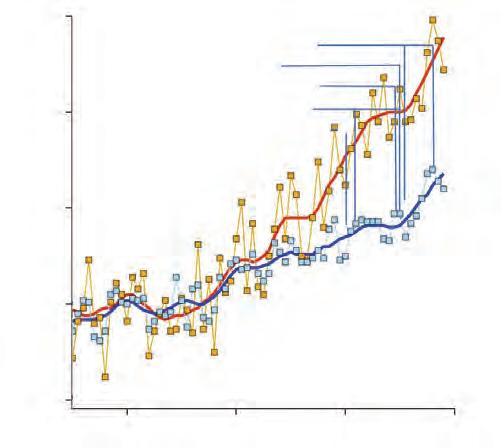
Not all atmospheric gases are equal in their ability to retain heat. Greenhouse gases such as methane (CH4), nitrous oxide (N2O) and carbon dioxide (CO2) absorb and emit solar radiation within the thermal infrared range. Atmospheric carbon dioxide has increased significantly because of humanrelated activities, such as burning fossil fuels and deforestation. The level of carbon dioxide has varied between 180 and 300 ppm (parts per million) over the last 800 years. The amount of carbon dioxide trapped in ice sheets and glaciers was used to obtain this data (Figure 1a). In 2022, the level of carbon dioxide reached a new high of 419 ppm wh ich has contributed to the rise in average global temperatures (Figure 1b).
4.2:
Rising temperatures
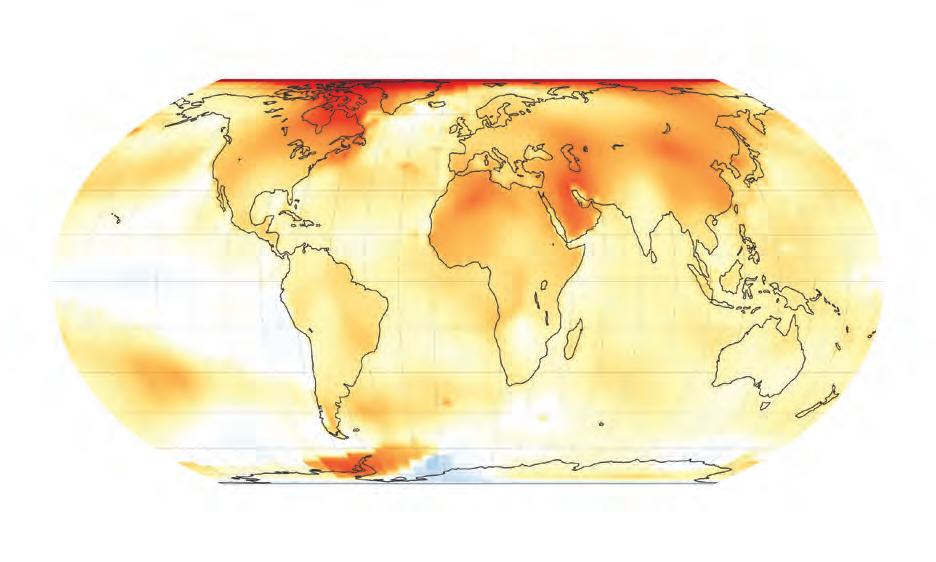
Increased atmospheric carbon dioxide from human activities has resulted in a rapid increase in the average global temperature. Figure 2 shows that the increase in average temperature is not evenly spread across the Earth. Temperatures might rise by 5°C in the North Pole but only increase by 1.5°C in Australia.
drastic changes. It only took a drop of 1–2°C to cause the Little Ice Age in the seventeenth century. This resulted in widespread crop failure, famine and disease. NASA has predicted that global warming of 1.5°C will cause deadly annual heatwaves, water stress in some countries, increased heavy rainfall and floods in other countries, reduced biodiversity,
Figure 2 The average increase in global temperature compared to the 1951–1980 average
Extreme weather events
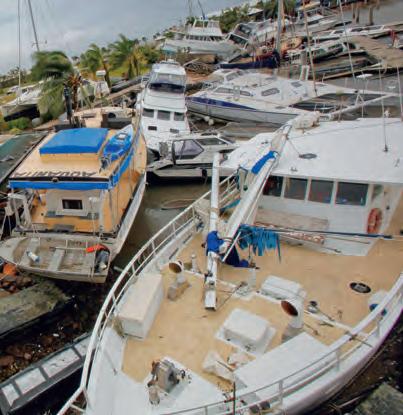
The number of extreme weather events around the world is increasing (Figure 3). Warmer oceans increase the amount of water vapour in the atmosphere and rapidly rising hot air causes stronger winds. Based on the current trend of rising global temperatures, scientists have predicted that storms will have greater maximum wind speeds and more sudden and extreme rainfall. More intense tropical cyclones will cause flooding, landslides and damage to buildings. Worldwide, the number of cyclones reaching categories 4 or 5 has risen by 15% over the past 20 years (Figure 4). With an increase in extreme weather events, we can expect to see an increase in the loss of human lives.
Figure 4 The aftermath of a cyclone; the number of severe cyclones is increasing.
Extreme weather surge began for stalled hurricanes (2012, 2017) big inland floods (2010) big inland windstorms (2008) mega heatwaves (2003, 2010) fire weather (2000)
Figure 3 The number of ex treme weather events has increased with the increased surface temperatures of the Earth and the sea. NASA GISTEMP V4 Foundation.org
Health and disease
Higher temperatures in summer have increased heat-related deaths. In 2022, the average global temperature was recorded to have risen by approximately 1.1°C. Heatwaves are now lasting longer causing people to become more dehydrated, placing more strain on their hearts and causing people to experience sleep deprivation.
These factors contributed to the deaths of 56 000 pe ople during a heatwave in Russia in 2010. ASIA
Enhanced global warming is changing the climates in many areas. Some areas are becoming warmer and experiencing more rain. This can extend the zones for infectious diseases, such as dengue fever and malaria, which thrive in warm, moist conditions (Figure 5). In cities such as Beijing, China, stagnant weather conditions can trap both warm air and pollutants, leading to increased smog which results in serious respiratory problems contributing to increased deaths.
Malaria transmission occurs
Limited risk of malaria transmission
Species distribution
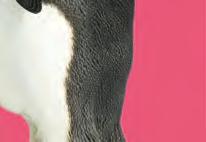
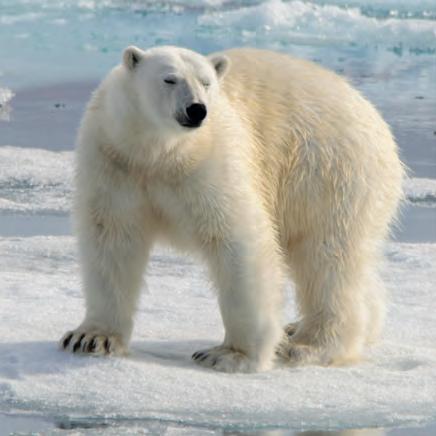
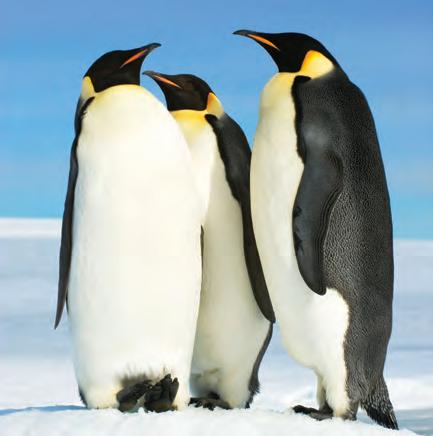
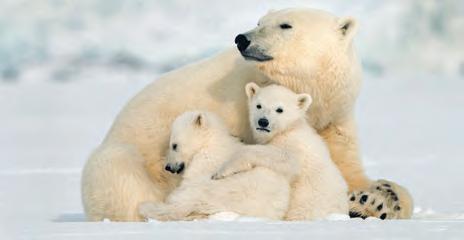
Rapid climate change over the past 50 years has resulted in many changes to the distribution and numbers of species and is thought to have caused extinctions. Many of the species at risk are Arctic and Antarctic animals, such as polar bears and emperor penguins, which live on the rapidly disappearing ice (Figures 6a and 6b).
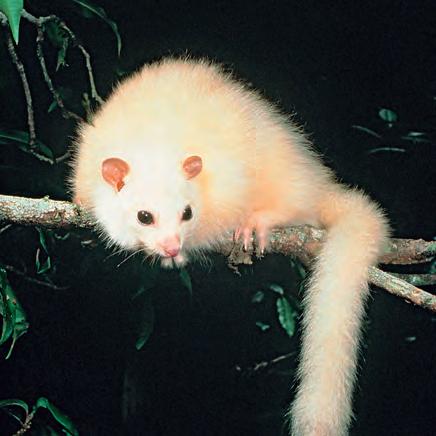
Other species, such as the white lemuroid possum, which is only found in high-altitude areas in north Queensland, can only live within certain temperature ranges (Figure 6c). These possums cannot survive extended temperatures over 30°C, which occurred in 2005. The species was thought to be extinct until recently when small numbers were seen.
Australian native plants and animals are well adapted to year-to-year climate
fluctuations, such as floods and droughts, but can often only survive within a narrow range of temperatures. This means that many species and ecosystems could be highly vulnerable to the rapid and sustained increase in longterm average temperatures of 1–2°C that are expected as a result of global warming.
For example, climate change modelling suggests that the extent of highland rainforest ecosystems of tropical north Queensland may decrease by up to 50% if the temperature increases by 1°C. These changes mean some species may become extinct.
As all organisms in the biosphere are interlinked, the loss of one species will affect the survival of other organisms. Even a small decrease in a population may cause a decrease in the number of alleles in the gene pool, making the species more vulnerable to disease in the future.
AUSTRALIA
Figure 5 Countries and areas at risk of transmission of malaria, 2010
Figure 6 Many animals are at risk of extinction as a result of climate change, including a polar bears and b emperor penguins, which live in cold climates, and c lemuroid possums, which can only live within a certain temperature range.
4.2 Check your learning
1 Defi ne the term ‘extreme weather event’. Comprehend
2 Explain how increasing levels of carbon dioxide have contributed to global climate change.
3 Identify and explain two sets of data that show how the climate has changed over the last 100 years.
4 Describe the ways that climate change can affect human health
5 Explain how the loss of one species can affect other species. Apply
6 Evaluate the statement ‘An average increase in global temperature of 1°C is not going to have a large effect on me,’ (by comparing weather and climate, defi ning ‘average increase in global temperature’, describing how climate change will affect your environment, and deciding if the statement is correct).
Complete the Quiz me to check how well you’ve mastered the learning intentions and to be assigned a worksheet at your level.
Quiz me
4.3 Deep ocean currents regulate global climate change
Learning intentions
By the end of this topic, you will be able to:
• explain how climate change models help make predictions about global climate trends
• describe how melting icecaps result from increased global temperatures and how this influences sea levels
• explain how deep ocean currents regulate global climate.
Key ideas
• Climate change is modelled through scientific principles and data gathered over long periods of time.
• Increased global temperatures are causing icecaps to melt and will increase sea levels.
• Deep ocean currents can regulate global climate and affect marine ecosystems.
Modelling the future
While there are many indicators of climate change, from increasing global temperatures and extreme weather events to reduction in biodiversity, scientists are constantly developing a series of models that predict how we may be able to reduce the impact of the change.
Climate change models use scientific principles and data gathered over long periods of time to simulate the transfer of energy through the climate system. Each model uses mathematical equations to describe how the thermal energy will interact with different parts of the ocean, atmosphere, wildlife and land.
Climate change models break large areas into a series of smaller cell volumes (100 km 3) so that the mathematical equations are more accurate.
These equations will estimate the temperature, wind speed and rainfall for each three-dimensional cell before moving on to the next cell and repeating the calculations. Using smaller cells means the calculations for a total area take longer than than if using larger cells, because more smaller than larger cells will cover the same area. Early climate models used very large cells, making them less accurate. The development of super computers has allowed scientists and mathematicians to use small cells (50 km 3), making the climate change predictions more accurate. The use of current data from satellites and the improvement of mathematical models that predict how the climate will change every 30 minutes for the next 100 years means the current climate models are very accurate (Figure 1).
Figure 1 Super computers have used satellite data to predict how the changing climate in Australia will affect the distribution of emus.
4.3A: Melting ice and its effect on
Changing sea levels
The impact of global warming will vary. Some areas of the Earth will experience larger changes in average temperatures than other areas. At the Earth’s poles, average temperatures have increased by up to 2°C over the last 40 years (compared to 1.1°C for the rest of the Earth). This is due to the increasingly warm ocean currents melting the glaciers and ice sheets (Figure 2). The extremely cold temperatures do not last long enough for the ice to fully reform during the winter months. The thinner ice melts more quickly each year.
When this has been modelled by data scientists, it has shown that as the ice and snow melt at the poles, the rate of global warming will increase.
4.3B: Salt water density
One of the main roles of the white ice and snow is to reflect solar radiation back into space. As the amount of snow and ice cover decreases, the amount of solar radiation that will be absorbed by the geosphere and hydrosphere will increase. This, in turn, will heat the atmosphere even more and increase the rate of global warming as more heat energy is retained by the Earth.
The water that is released from the land ice will contribute to increased sea levels. While floating sea ice replaces the water it displaces, melted land ice returns to the sea, increasing the overall sea level. This, combined with an increase in extreme storms will have a large impact on the cities located in Australia’s coastal regions (Figure 3).
Sea ice has reduced by nearly 50%
Figure 2 The amount of sea ice at the North Pole has been reduced by nearly 50% in the last 20 years.
Figure 3 The modelled rise in sea levels in Australia every 10 years
Deep
ocean currents and climate control
Within the oceans are large deep ocean currents that act like conveyor belts, distributing heat through parts of the world and regulating temperature (Figure 4).
Ocean currents have the important job of moving warm water from equatorial regions towards the poles; the water cools and travels from the poles back to the warmer areas of the Earth. These large conveyer belts of water are driven by the differences in temperature and salinity. Colder water is dense and heavy, and it moves towards the ocean floor picking up many nutrients along the way. Warmer water is less dense and moves up towards the surface, completing the up-and-down conveyer belt-like movement. Less salty water is also less dense and rises to the surface, whereas salty water is denser and sinks. Heat from the Sun evaporates the top layer of the ocean which causes the remaining water to become more concentrated in salt. The salty water will continue to sink once again. This cycle of warm water and cold water is disrupted by the melting of the fresh water in ice caps. This in turn can affect the ocean conveyor belt that controls climate.
Small changes in these large ocean currents can produce large changes in the marine life and the climate (Figure 5). El Niño events occur when the waters of the Pacific Ocean are warmer than normal. This in turn causes more rain to fall in the Pacific Basin instead of northern Australia. A La Niña event occurs when the Pacific Ocean is cooler than normal, causing increased rainfall and possible flooding in Australia. This means small changes in the temperature of the Antarctic region will result in large changes in the climate of all parts of Australia.
Figure 4 The path of the ocean ‘conveyor belt’, in which differences in temperature and salinity drive the movement of large currents of water
Figure 5 Coral bleaching along the Great Barrier Reef may be the result of rising sea temperatures, which block the photosynthetic reactions corals need to stay alive.
Deep ocean currents have a large impact on marine life. This can be seen in the Galapagos Islands in South America where cold ocean currents carrying nutrient-rich deep water travel up to the surface. This process is known as upwelling and helps transport nutrients to the surface of the islands. Nutrients then feed phytoplankton concentrations and support the food web of the marine ecosystem. The upwelling process also occurs along the coast of Queensland during monsoon season (Figure 6). Occasionally, the upwelled waters do not completely reach the surface. When this occurs it is called an intrusion GPC
Cairns QLD Plateau
NGCC
Townsville Rockhampton Brisbane
Intermittent current
Intrusion – doesn’t reach surface
Upwelling – reaches surface
upwelling a process in which deep, nutrient-rich cold water moves up towards the surface
Marion Plateau EAC SEC
Figure 6 Ocean currents driving marine ecosystems through upwelling and intrusion during monsoon season in Queensland intrusion when upwelled waters do not reach the surface
4.3 Check your learning
Comprehend
1 Describe how scientists and mathematicians model climate change.
2 Describe why the development of supercomputers has improved the accuracy of climate modelling.
3 Explain why ocean currents are responsible, in part, for global temperature.
4 Explain how the temperature of the Pacific Ocean can affect Australia’s climate.
Analyse
5 Compare the impact of sea ice and land ice on sea levels.
6 Use Figure 3 to determine the expected rise in sea level at the coast closest to where you live.
7 It is expected that as the sea level rises, the inland water table will also rise. Many new housing developments are built just above the water table. Create a flyer that explains why the residents in a new housing development should care about global warming.
Quiz me
Complete the Quiz me to check how well you’ve mastered the learning intentions and to be assigned a worksheet at your level.
//SCIENCE AS A HUMAN ENDEAVOUR//
Climate change can be mitigated
Learning intentions
By the end of this topic, you will be able to:
• compare climate mitigation and climate adaptation strategies
• describe how First Nations peoples have used ecological knowledge to reduce carbon dioxide from the atmosphere.
change mitigation efforts that aim to reduce or prevent greenhouse gas emission
Increasing awareness of the effects of climate change has resulted in increased urgency to implement change. There are two key approaches humanity is using to respond to climate change: mitigation and adaptation.
Mitigation
Climate change mitigation refers to actions that work to reduce the production of greenhouse gases, or that increase the rate of greenhouse gas removal from the atmosphere.
Reducing production of greenhouse gases
The greenhouse gas carbon dioxide (CO2) is produced through the chemical reaction called combustion. In a combustion reaction, a fuel reacts with oxygen and produces carbon dioxide and water as follows:
Combustion is used for powering cars, industrial production and even the heating of our homes. The demand for and consumption of oil, coal and gas has steadily increased in Australia over the last 50 years. However, now as more people have become aware of the effects of global warming, they are changing their habits. Figure 1 shows that the consumption of electricity generated by coal has gradually reduced since 2009. Reducing the number of trips in cars and aeroplanes, and the insulation of houses and businesses to reduce heating and cooling costs can all contribute to the reduction in energy consumption and therefore reduce carbon dioxide production.
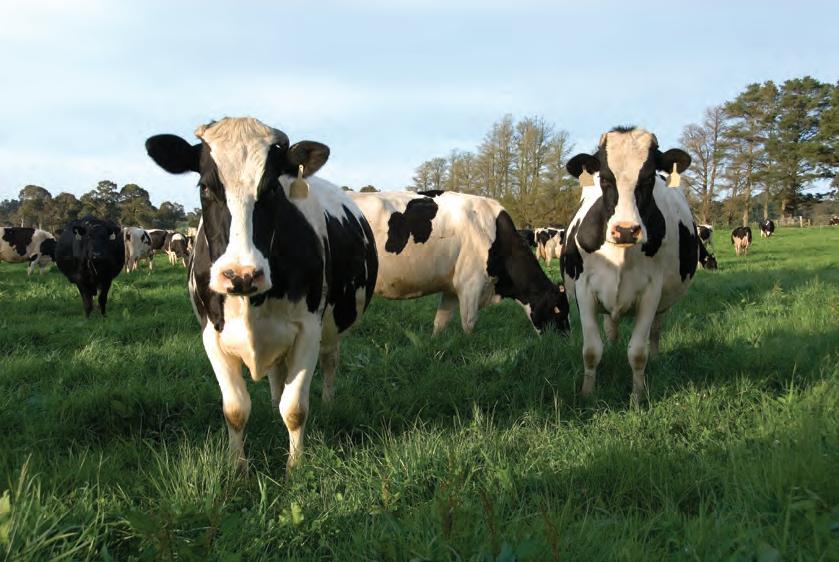
Another greenhouse gas that has a significant impact on climate change is methane (CH4). This gas can store up to 25% more heat than carbon dioxide. Approximately 32% of human-caused methane comes from manure and gastroenteric releases from agricultural livestock such as cattle (Figure 2). Human-caused methane emissions can be reduced by cutting down on the amount of red meat consumed and by opting for plant-based substitutes for dairy and protein.
Methane is also produced when food waste is broken down. The National Food Waste Strategy Feasibility Study calculated that food waste produces 3% of Australia’s greenhouse gas emissions. This is equivalent to 312 kg per person. This is the reason for the establishment of a National Food Waste Strategy and Action Plan that aims to reduce Australia’s food waste by:
> redirecting more food to the food rescue sector
> delivering an education campaign, and
> maki ng investments that aim to create value from food waste.
Removing greenhouse gases
Several different strategies to remove greenhouse gases (i.e. carbon dioxide) are currently being applied and having their effectiveness tested to determine best practice in atmospheric CO2 removal. The first of these strategies is reforestation . This process involves planting new trees and vegetation (Figure 3). Through the process of photosynthesis, the carbon dioxide is removed from the atmosphere and stored as other molecules in the plants. The risk of this process is that the carbon dioxide could be released during a bushfire.
reforestation the process of replanting trees and vegetation to restore natural habitat
Figure 2 Reducing the amount of red meat and dairy consumed can reduce the demand for agricultural cattle.
Figure 3 Reforestation res tores vegetation which can remove CO2 from the atmosphere.
climate change adaptation coping adjustments made in response to the effects of climate change
Carbon dioxide is also being captured directly from the air using Direct Air Carbon Capture and Storage (DACCS). This process uses chemicals that directly bond to carbon dioxide. The gas is then extracted and stored in sedimentary rock that previously contained oil and gas. Rocks used to store the CO2 are carefully chosen. They must have high porosity (contain small holes) and permeability (ability to let things in and out). After capturing and storing the carbon dioxide, the sedimentary rock is capped by a mud stone which prevents the carbon dioxide from escaping back into the atmosphere. The DACCS process is currently being trialled in several states of Australia.
Adaptation
biochar a lightweight residue containing carbon and ash that is formed from the slow burning of biomass
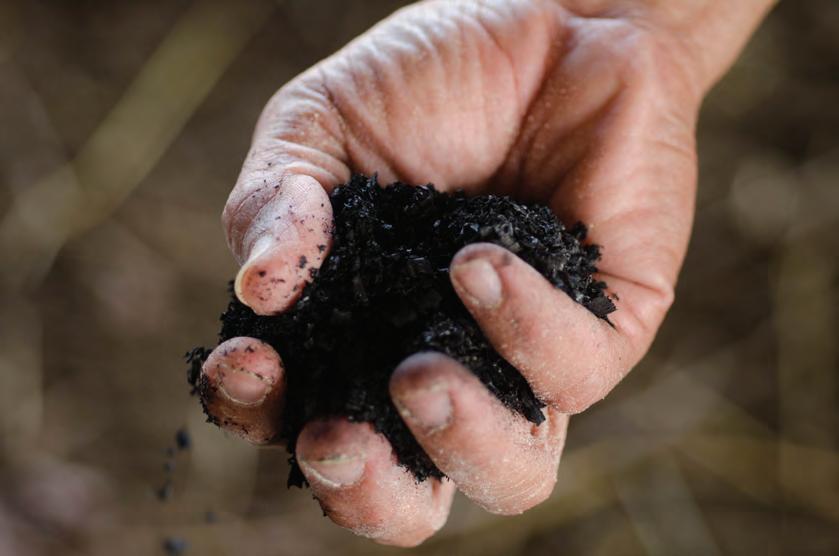
A much older method of carbon dioxide removal used by First Nations peoples involves removing carbon dioxide from the atmosphere using biochar. Biochar is a fine-grained charcoal produced from the slow burning of organic material in a low oxygen environment (Figure 4). Plants emit carbon dioxide into the atmosphere when they decay. Slow burning biomass into biochar and then storing it in soil controls the release of CO2. Instead of being released into the atmosphere, the CO2 is stored in the ground for hundreds of years. This way, stored CO2 can act as a fertiliser, improve the quality of water, and reduce soil acidity and the amount of irrigation needed.
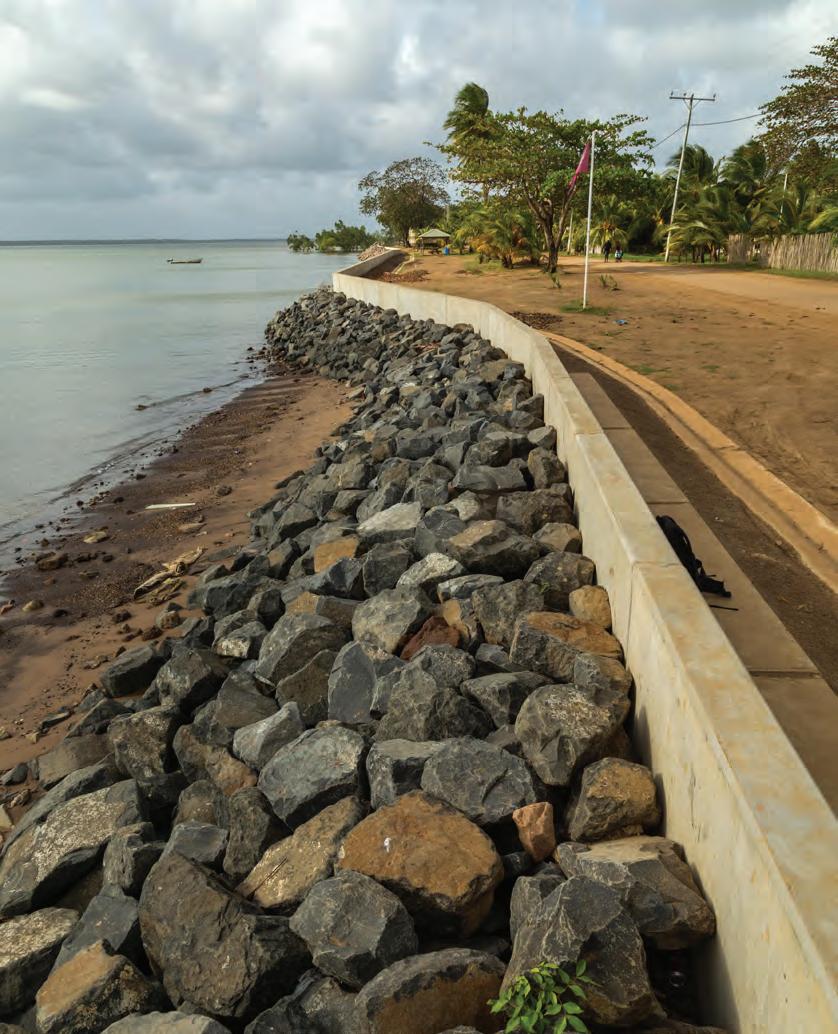
Climate change adaptation refers to making changes to adjust to the current or predicted effects of climate change. A major struggle with global climate change is that some communities are currently being affected more than others. For example, low level islands in the Pacific (such as the Torres Strait Islands) are more susceptible to the effects of extreme weather and rising sea levels. In December 2016, the Torres Strait Regional Adaptation and Resilience Plan was released. This plan identified several actions that could be made to adapt to and limit some of the impacts of climate change. One action included the construction of a sea wall to protect Saibai Island from erosion and the impact of storm surges (Figure 5).
Torres Strait Islander peoples are also involved in monitoring the temperature and humidity levels in the community. This is used to reduce the heat stress risk for individuals. Plans have also been generated to organise outdoor activities during cooler times. Another action as a result of the plan includes the monitoring of five climate-sensitive infectious diseases, including tuberculosis and dengue fever. This is to ensure the local health systems of the Torres Strait Islands can adapt to the increasing risk of infections.
DRAFT
Figure 4 Biochar
4.4 Test your skills and capabilities
A climate sceptic is someone who does not believe the increasing levels of carbon dioxide in the atmosphere is causing rapid climate change. It can be difficult to change someone’s mind. A study published in the scientific journal, Nature, in 2015 identified that emphasising the shared understanding of climate change was an effective way to encourage people to take action.
People are more likely to listen if they know and trust the messenger. This means children are more likely to be persuaded by their parents than by a stranger. It is also important to use data and evidence in arguments. Write a letter to someone you know explaining climate change. Use the data and evidence in this chapter to explain why it is important for them to make changes in their life that will reduce the impact of climate change.
Figure 5 The sea wall of Saibai Island Communication
CHAPTER 4 REVIEW
CLIMATE CHANGE
Retrieve
1 Identify which of the following is the result of sideways or horizontal movements of air due to pressure differences.
A deep ocean currents
B wind
C the Coriolis effect
D solar radiation
2 Identify the term that explains the impact of the Earth’s rotation on the direction of air or water movement.
A permafrost
B carbon footprint
C solar energy
D the Coriolis effect
3 Identify which of the following best describes the ‘ocean conveyer belt’.
A the movement of water in the ocean
B the migration of marine life
C the heating and cooling of the ocean
D the most effective path for sailing the ocean
4 Define the term ‘solar radiation’.
5 Recall which of Earth’s spheres describes all the water contents of Earth.
6 Define the term ‘greenhouse gas’.
7 Recall the global temperature increase (in degrees Celsius) that NASA has predicted will cause annual heatwaves, water stress, increased heavy rainfall, floods, reduced biodiversity, increased wildfires and increased melting of the polar icecaps.
Comprehend
8 Describe one way that the greenhouse gas methane is released into the atmosphere.
9 Describe one way that the greenhouse gas carbon dioxide is released into the atmosphere.
10 Explain why cold water from melted sea ice will sink to the bottom of the ocean.
11 Describe two causes of climate change in the last 2000 years.
12 Explain why upwelling is important for some marine ecosystems.
14 Explain how biochar is produced and how it can be used to reduce carbon dioxide emissions.
15 Describe how high-pressure and low-pressure weather systems are formed.
16 Explain why it is warmer near the equator than elsewhere on Earth.
17 Explain why increased melting of sea ice will trigger a more rapid rate of global temperature increase.
Analyse
18 Contrast weather and climate.
19 Compare climate change mitigation with climate change adaptation.
DRAFT
13 Explain why animals that live in the polar regions of the Earth (the Arctic or Antarctic) are at great risk due to climate change.
20 Compare ocean currents and air currents.
Apply
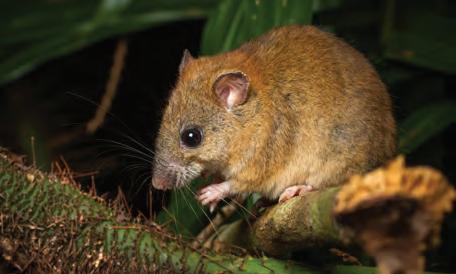
21 The Bramble Cay melomys was a rodent native to Bramble Cay, a small island on the surface of a coral reef in the Torres Strait (Figure 2). The species was declared extinct by the Queensland Government and University of Queensland in 2016. It was the first species reported to become extinct because of human-caused climate change.
Investigate the Bramble Cay melomys. Identify some of the effects of climate change that caused the species to become extinct.
Figure 1 Polar bears are at risk of extinction.
Figure 2 The Bramble Cay melomys
22 Discuss how deep ocean currents can affect climate.
23 Consider the weather map of Australia shown in Figure 3.
a Predict whether the Queensland coast is more likely to experience storms and rain, or clear sunny skies. Justify your response.
b Predict whether the south coast of Western Australia is more likely to experience storms and rain, or clear sunny skies. Justify your response.
25 Not all countries have contr ibuted to climate change equally. Countries that were industrialised earlier or industrialised to a large scale have had longer periods of time and greater capacity to emit greenhouse gases into the atmosphere. Climate debt is a concept that was proposed in the 1990s that suggests developing countries are owed a debt by developed countries for the disproportionate damage developed countries have contributed to climate change.
Investigate climate debt and discuss whether you believe it is fair for developed countries to owe a climate debt to developing countries severely affected by climate change.
Social and ethical thinking
24 Red meat and dairy from livestock are heavily consumed in Australia as they offer a range of nutritional benefits and tastes, and are easily accessible to purchase. However, the red meat industry in Australia contributes 11.8% of Australia’s total greenhouse gas emissions.
Discuss the ethical dilemma of red meat overconsumption by:
• inve stigating and describing the advantages of consuming/purchasing red meat
• inve stigating and describing the disadvantages of consuming/purchasing red meat
• decidi ng whether the advantages are more important than the disadvantages.
Critical and creative thinking
26 One of your close personal friends tells you that they don’t believe in climate change. Use evidence presented in this chapter to write a persuasive passage you could use to try and change your friend’s mind about the climate crisis.
27 Create a concept map that links all the bolded glossar y terms in this chapter together.
28 Create an infographic that explains three different climate change mitigation strategies and how they work.
29 Imagine you had to reduce your energy impact on the environment. Look at all the appliances and gadgets you use in your home. Identify one of these as one that you could not bear to give up. Create an A4 page outlining why this one item is ‘essential’ to you and then make a list of appliances and gadgets that you could live without.
Figure 3 Weather map of Australia
Figure 4 Red meat is a popular choice in many Australian households.
Research
30 Choose one of the following topics for a research project. Some questions have been included to help you begin your research. Present your report in a format of your own choosing.
» Reducing methane production with FutureFeed
Approximately 1.3 billion people around the world rely on livestock for their livelihoods. Unfortunately, livestock also contributes 15% of global greenhouse gas emissions. Scientists from CSIRO, Meat & Livestock Australia and James Cook University have developed livestock feed called FutureFeed which can reduce the emissions produced by the livestock that consume it.
Research FutureFeed and describe:
» what F utureFeed is made of
» how it works to reduce methane emissions
» the impact FutureFeed can have if global ruminant producers adopt it as feed.
» Responding to climate change
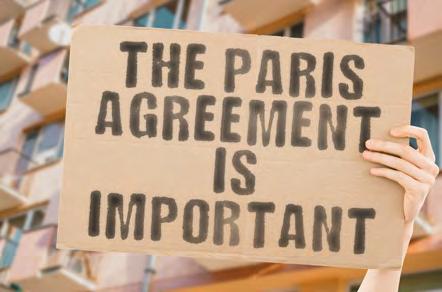
The Paris Agreement is an agreement between countries that aims to reduce greenhouse gas emissions in the atmosphere at a level that would prevent danger to the Earth’s climate system.
» Inve stigate Australia’s commitment and current goals that result from this agreement.
» Desc ribe the strategy that Australia is using to meet their commitment.
» Evaluate the strategy to determine if Australia will be able to meet its commitment.
» Desc ribe how you could contribute to this target.
» Rising sea level crisis
As the polar icecaps melt and sea levels rise, low level (low elevation) island countries are at serious risk of disappearing if sea levels continue to rise as they are now. One such island includes the island nation of Kiribati. Research Kiribati and describe:
» the factors that leave Kiribati so vulnerable to rising sea levels
» the cl imate adaptation strategies in place to deal with the impact of rising sea levels washing out Kiribati.
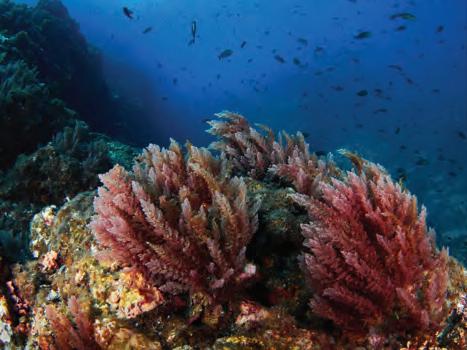
Figure 5 Asparagopsis spp. are native to Australia and are used in FutureFeed.
Figure 7 Tabuaeran Beach, Kiribati
Figure 6 The Paris Agreement was signed in December 2015.
Chapter checklist
Now that you have completed this chapter, reflect on your ability to do the following. I can do this. I cannot do this yet.
• Explain the difference between weather and climate.
• Explain how solar radiation influences the global climate system.
• Describe how increased greenhouse gases have resulted in increased global temperatures and extreme weather events.
• Describe how climate change has led to changes in disease and species distribution.
• Explain how climate change models help make predictions about global climate trends.
• Describe how melting icecaps result from increased global temperatures and how this influences sea levels.
• Explain how deep ocean currents regulate global climate.
• Compare climate mitigation and climate adaptation strategies.
• Describe how First Nations peoples have used ecological knowledge to reduce carbon dioxide from the atmosphere.
Play
Test
Go back to Topic 4.1 ‘Climate change is global’.
Page XXX
Go back to Topic 4.2 ‘Climate change indicators include increased global temperatures, extreme weather, disease and species distribution’.
Page XXX
Go back to Topic 4.3 ‘Deep ocean currents regulate global climate’.
Page XXX
Go back to Topic 4.4 ‘Science as a human endeavour: Climate change can be mitigated’.
Page XXX
Launch a live team or individual quiz for your students on key concepts in this chapter.
Check your Teacher obook pro for these digital resources and more:
Check your Student obook pro for these digital resources and more:
a Quizlet game to test your knowledge.
Chapter quiz
your understanding of this chapter with the chapter review quiz.
[STEAM project 1] How can we use technology so
that we improve the
lives of people in the world’s poorest nations?
In Australia we are surrounded by technology every day. It is in the phones we use, the televisions we watch and the cars we drive. The term ‘technology’ is used for any machinery or equipment that applies the scientific knowledge we have discovered. Wheels and computers are both examples of technology.
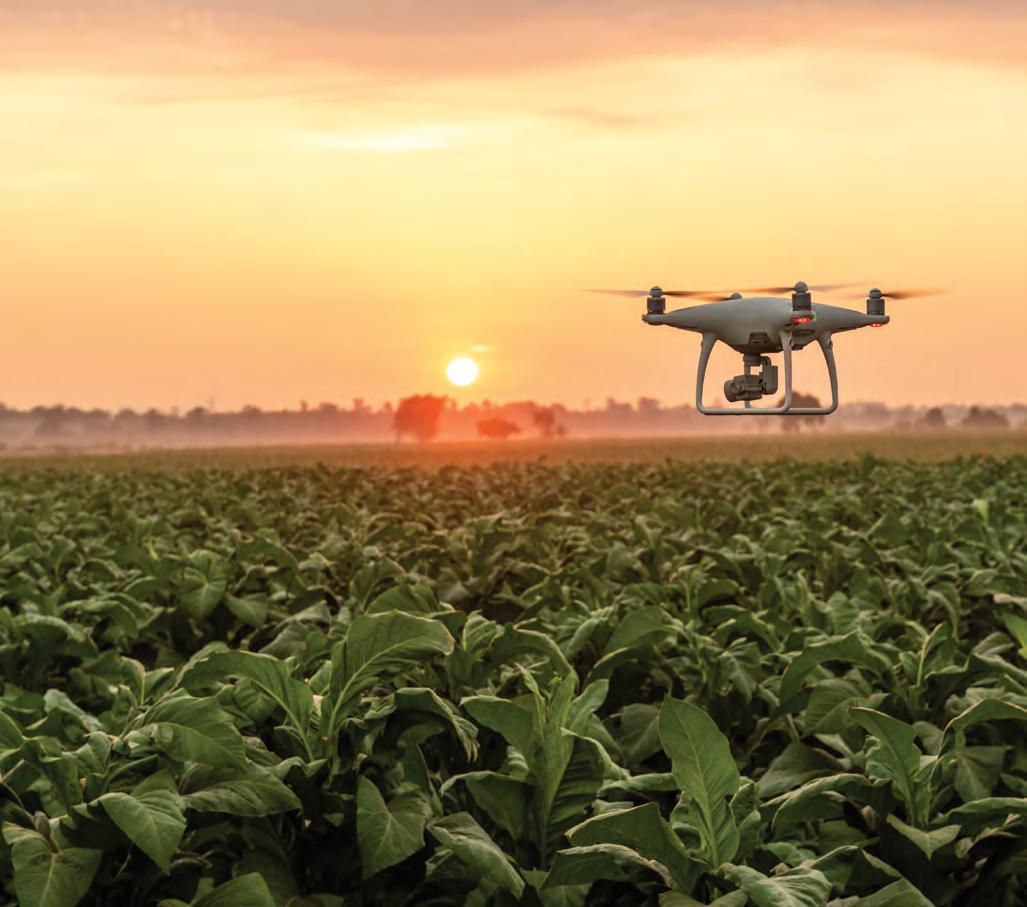
In high-income countries, emergency response teams often rely on technological data supplied by electronic sensors to respond to natural disasters such as storms, fi res and plagues. Drones might be used to conduct search and rescue operations. Doctors can use technology to remotely diagnose people who are sick and to perform operations that save lives.
At the end of 2017, the number of high-speed mobile subscriptions in member countries of the Organisation for Economic Co-operation and Development (OECD) reached a milestone: more subscriptions than the number of people. These mobile phones have been used to alert people to natural disasters, or to call for help in the event of floods and fi res.
Technology is not just used for communication during natural disasters. It is also used to create medicine, improve farming practices and for education.
However, not everyone has access to technology.
Your task
Develop an innovative technology that will improve the life of a person or a group of people in a low-income country with limited access to digital technology.
The digital divide
The term ‘digital divide’ is used to describe the gap between those who have access to digital technology – such as mobiles, computers and the internet – and those who do not.
The Australian Bureau of Statistics has identified that almost 2.6 million Australians do not use the internet and cannot access technology in an emergency. Access is even lower in lower-income countries throughout Africa and Asia.
The OECD has identified that targeted innovation that uses technology can boost productivity, increase economic growth and help solve problems in society.
Figure 2 Technology has made attending a doctor’s appointment easier and more accessible for people who may have difficulty attending in person.
Figure 1 Technology can be used to enhance and improve agricultural practices.
HUMANITIES
In Geography this year, you will be learning about the spatial variations in human wellbeing globally. You will need to explore a range of factors that lead to inequalities, such as social, political, economic and technological differences. In Economics and Business, you will study living standards in Australia and globally and how living standards can be improved.
To complete this task successfully, you will need to research the initiatives of international governments and non-government organisations (NGOs) aimed at improving human wellbeing, particularly regarding health. You should consider how technology could be effectively accessed, resourced and used by a group of people to address their health concerns.
You will find more information on this in Chapter 5 ‘Inequalities in wellbeing’ and Chapter 14 ‘Living standards’ of Oxford Humanities and Social Sciences 10 Australian Curriculum.
MATHS
In Maths this year, you will extend your skills in representing, comparing and interpreting data. You will use digital technology to work with data, but also perform calculations by hand.
To complete this task successfully, you will need to find data to quantify the problem, to cost your interventions and to calculate a quantitative, evidence-based estimate of the likely benefits of your interventions. You will need to use skills in performing proportionality and other calculations with very large numbers, using scientific notation.
DRAFT
You will find relevant mathematical and statistical concepts in Chapter 9 ‘Statistics’ of Oxford Maths 10 Australian Curriculum
SCIENCE
In Science this year, you will learn how an understanding of evolution can contribute to the selection of desired traits (such as drought resistance) in plants and animals. You will also learn how genetic engineering can be used to develop medicines that will cure cancers and prevent disease.
To complete this task successfully, you will need to consider how the values and needs of different societies can influence the focus of scientific research. You will also need to consider the ethics of the technology that you will be offering to your selected individual or group of people.
You will find more information on this in Chapter 2 ‘Genetics’ and Chapter 3 ‘Evolution’ of Oxford Science 10 Australian Curriculum
[STEAM project 1] The design cycle
To successfully complete this task, you will need to complete each of the phases of the design cycle.
Define your version of the problem
Discover
When designing solutions to a problem, you need to know who you are helping and what they need. The people you are helping, who will use your design, are called your end-users.
Consider the following questions to help you empathise with your end-users:
• Who am I designing for?
• What problems are they facing? Why are they facing them?
• What do they need? What do they not need?
• What does it feel like to face these problems? What words would you use to describe these feelings?
To answer these questions, you may need to investigate using different resources, or even conduct interviews or surveys.
Rewrite the problem so that you describe the group you are helping, the problem they are experiencing and the reason it is important to solve it. Use the following phrase as a guide.
‘How can we help (the group) to solve (the problem) so that (the reason)?’
Determine the criteria
1 Describe the limitations in energy, communications, transport and support personnel that will need to be considered as part of the solution.
2 Describe how many copies of the solution prototype will need to be made to make a difference in the country you have chosen.
3 Identify who could pay for the construction of the solution prototypes.
4 Describe the social culture that is experienced by the individuals and groups who are affected by the problem. Why might some technologies be viewed as unwanted or even dangerous?
Ideate
Once you know who you’re designing for, and you know what the criteria are, it’s time to get creative!
Outline the criteria or requirements your technological design must fulfi l (i.e. cost, size and weight for transportation, and cultural appropriateness).
Brainstorm at least one idea per person that fulfi ls the criteria.
Remember that there are no bad ideas at this stage. One silly thought could lead to a genius innovation!
Before you start to design your innovative technology, you need to defi ne the parameters you are working towards.
Build
Each group member should select one design to draw. Label each part of the design. Include the material that will be used for its construction.
Include in the individual designs:
a a detailed diagram of the design
b a description of how it will change the life of your selected individual or group
c an outline of any similar designs that are already available to buy
d an outline of why your idea or design is better than others that are already available. Present your design to your group.
Build the prototype
Choose one solution and build two or three prototypes. The prototype may be full size, or it may be a scale model (10 cm = 1 m).
Use the following questions as a guideline for your prototype solution.
• What materials or technology will you need to build or represent your prototype solution?
• What skills will you need to construct your prototype design? Does your group have these skills, or who can teach you those skills?
• How will you make sure your prototype design is able to be used by your selected individual or group? Will they need training?
• How will you display or describe the way the prototype design will work?
Test
Prototype 1
Use the scientific method to design an experiment that will test the effectiveness and strength of your fi rst prototype solution. You will test the prototype more than once to compare results, so you will need to control your variables between tests.
What criteria will you use to determine the success of your prototype? Conduct your tests and record your results in an appropriate table.
Prototype 2
If your prototype will be used to help an individual, then you will need to generate a survey to test whether the prototype is appropriate for their use. (How would they use it? Would it make their work easier or harder? Would they consider buying it?)
Prototype 3
Use the information you have obtained from testing the fi rst two versions to adapt your last prototype to be more effective and usable for the group you are helping. You may want to use the fi rst two prototypes to demonstrate how the design has been improved over time.
Communicate
Present your design to the class as though you are trying to get your peers to invest in your designed solution. In your presentation, you will need to:
• outline the situation of the country in which your selected individual or group lives
• outline the challenges faced by your selected individual or group
• include a working model or a detailed series of diagrams with a description of how the prototype of the solution will be used
• include a description of how you changed your design prototype as a result of testing or feedback
• include a description of how the design prototype will improve the lives of your selected individual or group.
DRAFT
[STEAM project 2] How can Australia reduce
its reliance on fossil fuels so that we protect the environment
and the economy?
Fossil fuels such as coal, oil and gas are made from fossilised, decomposed organisms that aged over millions of years in the Earth’s crust. They contain carbon, which can be burned for energy. Due to the length of time it takes for these fuels to form as part of the carbon cycle, they are classified as long-term renewable sources of energy, sometimes called non-renewable.
Australia is a major user, producer and exporter of fossil fuels. Nearly 80 per cent of Australia’s electricity is generated from coal and gas. Seventy-five per cent of coal mined in Australia is exported, making Australia the largest net exporter of this fuel in the world.
In 2019, it was reported that Australia was the world’s third-largest exporter of fossil fuels. Economically, the production and export of fossil fuels contributes hugely to Australia’s GDP, and the mining industry is an important employer.
Coal emits higher amounts of CO2 than oil or gas when used to produce energy. Measuring fossil fuel exports according to their potential to emit CO2 makes Australia’s carbon footprint per capita one of the largest in the world. This is contentious globally, particularly for nations most affected by a changing climate.
Your task
Research a short-term renewable energy and propose how it could be scaled and regarded as secure, reliable and affordable by the public. You must consider how it will reduce reliance on fossil fuels and protect the economy and the environment.
DRAFT
Renewable alternatives
To protect both the environment and the economy, Australia needs to focus more on short-term renewable energy. When deciding on energy alternatives, it is important that energy supply be secure, reliable and affordable.
Short-term renewable energy sources include hydropower, solar power, wind power, bioenergy and ocean energy. Australia’s landscape is suitable for many of these alternatives, but large investments in technology are required. As we invest more in the technology that makes short-term renewable energy possible, the better we get at making it, the more affordable it becomes and the more demand for renewable energy grows (a cyclical process).
Figure 2 A solar farm in Canberra. Solar energy is a source of renewable energy.
Figure 1 Most of Australia’s energy is generated from coal. Almost 80 per cent of the coal produced in Australia is from open-cut mines.
HUMANITIES
In Geography this year, you will learn about environmental change and management. You will explore the environmental, technological and economic factors that have influenced the change and the consequences of human actions on the sustainability of the environment.
In Economics and Business, you will investigate how the performance of Australia’s economy is measured and how Australia’s economic growth has depended on natural resources. You will explore the impact that environmental policies can have on Australia’s economy and living standards.
To complete this task successfully, you will need to understand how stakeholders such as governments, communities and businesses can work together to initiate environmental change and management plans that protect both the environment and the economy.
You will find more information on this in Chapter 2 ‘Changing and managing the environment’ and Chapter 13 ‘Economic growth and productivity’ of Oxford Humanities and Chapter 13 ‘Economic growth and productivity.
MATHS
In Maths this year, you will extend your skills in representing and interpreting data, including univariate, bivariate and multivariate data sets. This will include critical consideration of media reports that use statistics and present graphs. You will use digital technology to work with data but also perform calculations by hand.
DRAFT
To complete this task successfully, you will need to find data to quantify the problem, to cost your interventions and to calculate a quantitative, evidence-based estimate of the likely benefits of your interventions. You will need to have skills in performing proportionality and other calculations with very large numbers, using scientific notation.
You will find relevant mathematical and statistical concepts in Chapter 9 ‘Statistics’ of Oxford Maths 10 Australian Curriculum
SCIENCE
In Science this year, you will learn about the impacts of fossil fuel combustion reactions in the production of carbon dioxide and carbon monoxide. You will also examine how increased reliance on this form of energy has affected the way carbon cycles through Earth’s spheres, and how the resulting increase in greenhouse gases (including carbon dioxide) has led to enhanced global warming, which is contributing to melting sea ice and permafrost, rising sea levels and an increased number of extreme weather events.
To complete this task successfully, you will need to consider how energy that is generated can be used efficiently.
You will find more information on this in Chapter 4 ‘Climate change’ of Oxford Science 10 Australian Curriculum
[STEAM project 2] The design cycle
To successfully complete this task, you will need to complete each of the phases of the design cycle.
‘How can we help (the group) to solve (the problem) so that (the reason)?’
Determine the criteria
Discover
When designing solutions to a problem, you need to know who you are helping (your end-users) and what they need.
Consider the following questions to help you empathise with your end-users:
• Who am I designing for? Will I be helping the government or members of the public?
• What problems are they facing? Why are they facing them?
• What do they need? What do they not need?
To answer these questions, you may need to investigate using different resources, or even conduct interviews or surveys.
1 What type of energy source are you trying to replace? How much of it is currently used and how is it used?
2 How will the renewable energy be used? Will it be easy for the user to access?
3 Will the renewable energy require many changes in the vehicles or equipment being used? Who will pay for this change in infrastructure? How much will it cost?
4 How long will it take to generate the resources needed to make this renewable energy resource accessible and affordable for most people?
Ideate
Once you know who you’re designing for, and you know what the criteria are, it’s time to get creative!
Outline the criteria or requirements your design must fulfi l (i.e. type of equipment, number and amount of materials, area that needs to be covered).
Brainstorm at least one idea per person that fulfi ls the criteria.
Remember that there are no bad ideas at this stage. One silly thought could lead to a genius innovation!
Build
Before you start to design your solution for the potential replacement of fossil fuels, you need to defi ne the parameters you are working towards.
Define your version of the problem
Rewrite the problem so that you describe the group you are helping, the problem they are experiencing and the reason it is important to solve it. Use the following phrase as a guide.
Each team member should draw one individual design. Label each part of the design. Include the material that will be used to construct a model of the design.
Include in the individual designs:
a a description of what you see as the biggest problem with the energy source that you are replacing
b a description of the renewable energy that you propose could be used instead
c a description of how this renewable energy could be scaled up so that it can be used more effectively. Present your design to your group.
Build the prototype
As a group, choose one design and plan how to model or build it. You may need to produce two or three to-scale prototypes for your group’s design. Keep each iteration so that you can show the progress of your ideas.
Use the following questions as a guideline for your prototype.
• How will you replicate or model the renewable energy source?
• How will you model how the renewable energy will be used?
• What are the limitations of the renewable energy source? Will it produce enough energy for the equipment that currently uses fossil fuels?
• Calculate the number, density or requirements of energy sources in your area. How will your model provide for these demands?
Test
Use the scientific method to design an experiment that will test the limitations of your renewable energy prototype idea. You will need to model and test more than one prototype to compare results, so you will need to consider all variables between tests.
What criteria will you use to determine the success of your renewable energy prototype?
If your prototype will be used by a particular group of individuals, then you will need to generate a survey to test whether the prototype is appropriate for their use. (How would they use the alternative energy source? Would it make their life easier or harder? Would they consider
buying it? How much would they be prepared to pay to access this form of energy?)
Conduct your tests and record your results in an appropriate table.
Communicate
Present your design to the class as though you are trying to get your peers to invest in your alternative energy design. In your presentation, you will need to:
• outline the energy needs of the selected individual or group you are supporting
• outline the energy challenges faced by your selected individual or group
• create a working model or a detailed series of diagrams, with a description of how the design prototype will be used to replace the current energy demands
• describe how you changed your design prototype as a result of testing or feedback
• describe how the renewable energy prototype will improve the life of your selected individual or group
• estimate the cost of production for each element of your energy design
• estimate the number of each element of your energy design required in your local government area
• estimate the total implementation cost to individuals, or to local, state or national government bodies
• compare how this energy system could be implemented in developed and developing countries.
This
GL OS SA RY
Aabsolute dating
a method of determining the age of a fossil, by measuring the amount of radioactivity remaining in the rock surrounding the fossil
absolute magnitude scale a scale for measuring the brightness (luminosity) of objects from the same distance
absorption spectrum
a spectrum with dark bands missing from the pattern, where the element has absorbed characteristic light wavelengths; the opposite of an emission spectrum acceleration due to gravity acceleration of an object due to a planet’s gravitational field; on Earth, g = 9.8 or 10 m/s2
achondroplasia
a genetic (inherited) disorder of bone growth resulting in abnormally short stature and short limbs
acid
a hydrogen containing substance that has the ability to donate a proton active site
the region of an enzyme that substrates can bind to
adaptation
a characteristic or behaviour of a species that allows it to survive and reproduce more effectively
alkali
a base that dissolves in water
alkali metal
an element in group 1 of the periodic table
alkaline earth metals elements with similar properties found in group 2 of the periodic table
alkaline solution
a solution that consists of a base dissolved in water
allele
a version of a gene; a person inherits two alleles for each gene, one coming from each parent
amino acids small molecules that make up proteins
amygdala
a part of the brain responsible for encoding the emotional part of a memory analogous structures structures in organisms of different species that have the same function but are structurally different, because they evolved independently; for example, wings in birds and bats anion
a negatively charged ion formed when an atom gains electrons
antigen
a molecule that will cause the body’s immune system to react
apoptosis
programmed cell death
apparent magnitude scale
a scale for measuring the brightness of an object when viewed from Earth
artificial selection when humans breed organisms that have desirable traits, increasing the likelihood of that trait occurring in the next generation atomic number the number of protons in an atom autosome a chromosome that does not determine the sex of an organism
B
base
a substance that has the ability to accept a hydrogen proton
Big Bang theory
the theory that the universe began as a hot, dense, single point at some time in the past, and since then has expanded and will continue to expand into the future
binary fission
a form of asexual reproduction used by bacteria; the splitting of a parent cell into two equal daughter cells
biochar
a lightweight residue containing carbon and ash that is formed from the slow burning of biomass
biodiversity the variety of life; the different plants, animals and micro-organisms and the ecosystems they live in
bioplastics
plastics produced from renewable biomass sources
black dwarf
a remnant formed when a white dwarf star cools and gradually fades away
black hole
a region in space of infinite density where gravity is so strong that nothing, not even light, can escape from it blind study when the participants do not know if they are receiving the treatment or a placebo blue shift the apparent increase in frequency (towards the blue end of the spectrum) of light from galaxies that are moving towards the Earth
Bohr model
a model of the atom in which electrons orbit the nucleus in a series of defined orbits known as shells
Ccarbon nanotube
a very small tube of carbon atoms, made synthetically
carrier
a person who has the allele for a recessive trait that does not show in their phenotype
catalyst
a substance that increases the rate of a chemical reaction without undergoing any permanent chemical change cation
a positively charged ion that results from an atom losing electrons
cerebellum
a small lobe at the lower rear of the brain responsible for fine motor movement, balance and coordination
cerebral cortex the outer layer of the brain that is responsible for conscious thought chromatid one side of the X-shaped chromosome that contains a double helix of DNA
chromosome the form of DNA that is tightly wound around proteins before replication
classical conditioning
a learned behaviour that is linked to a previously neutral stimulus
climate the weather conditions at a particular place, averaged over a long period of time, based on collection and analysis of large amounts of data
climate change periodic change in the Earth’s climate climate change adaptation coping adjustments made in response to the effects of climate change climate change mitigation efforts that aim to reduce or prevent greenhouse gas emission
co-dominant two different alleles that can both appear in the phenotype at the same time; both can appear with a single allele
codon
a group of three nucleotides on mRNA
cognition mental processes that are involved in acquiring, storing, manipulating and retrieving information
cognitive verb a doing word that requires you to perform a specific thinking task complementary base a nucleotide base that pairs with its partner nucleotide on the alternative DNA strand; adenine pairs with thymine, cytosine pairs with guanine concentration the number of active molecules in a set volume of solution
confirmation bias when a scientist selects a method that will support the outcome they want confounding variable a variable that impacts both the independent and dependent variables constellation a group of stars that form a pattern or picture
continental drift the continuous movement of the continents over time
control group
a group of organisms, chemical reactions or physical conditions that can be compared to the group that have had the independent variable changed controlled variables variables that remain unchanged during an experiment
convergent evolution the process whereby unrelated organisms evolve to have similar characteristics as a result of adapting to similar environments
Coriolis effect the influence of the Earth’s rotation on the direction of movement of air or water
cosmic microwave background radiation remnant electromagnetic radiation left from early stages of the universe covalent bond a bond formed when two or more atoms share electrons
cultural norm the expectation that you should behave according to the values of the people around you
cytokinesis
the splitting of a replicating cell into two cells
Ddecomposition a reaction that involves the breakdown of a compound into simpler substances delocalised electron an electron in a molecule that can easily move between atoms
DNA (deoxyribonucleic acid) a molecule that contains all the instructions for every job performed by the cell; this information can be passed from one generation to the next dependent variable a variable in an experiment that may change as a result of changes to the independent variable
diatomic molecule a molecule that consists of two atoms
dilute
containing a small number of solute particles in the volume of solution displacement the change of position of a moving object in a particular direction distance the length of the path travelled by an object diploid containing two complete sets of chromosomes diverge in relation to two species: to become more different over time due to different selection pressures, possibly becoming reproductively isolated dominant trait a characteristic that needs only one copy of an allele to appear in the physical appearance of an organism Doppler effect the apparent change in wavelength (or frequency) when the source of the waves or the observer is moving; responsible for the red shift of distant stars
displacement reaction a reaction resulting in the displacement of an atom or group of atoms
double displacement reaction when two reactants exchange ions to form new products during a chemical reaction double-blind study when neither the participants nor the treating doctors know if they are receiving the treatment or a placebo
E
early detection and predictive testing for adults the testing of chromosomes for the presence of alleles that increase the probability of cancers forming echoic memory auditory memory that decays after a few seconds
elaborative rehearsal a memory technique that involves thinking about the meaning of the term to be remembered elastomer long chains of polymers occasionally linked together like a ladder
electron configuration
a numerical way of showing the number of electrons in each electron shell around a particular atomic nucleus
electron shell
a defined area of space in which electrons move around an atom’s nucleus
emission spectrum the pattern of wavelengths (or frequencies) that appear as coloured lines in a spectroscope; it is unique to each element
encoding the act of information moving into our memory
environmental stimulus sensory information from the environment (sound, smell, feel) that can start a behaviour
enzyme a protein based catalyst ethics
a set of principles that provide guidance to determine what is morally right and wrong
event horizon the boundary around a black hole at which no light or matter can escape
evolution the gradual change in the genetic material of a population of organisms over a long period of time
evolutionary relationship the way in which two species or populations are related with respect to their evolutionary descent
Ffirst-hand data
data collected by the person writing the report
fossil
the remains or traces of an organism that existed in the past fossilisation the process of an organism becoming a fossil
frameshift mutation
a type of mutation in which a nucleotide is added or deleted, causing a shift in the reading frame of codons and resulting in a deformed protein
functional magnetic resonance imaging (fMRI) the use of magnetic fields to show areas of high blood flow in areas of the brain
Ggene cloning the production of identical copies of a gene
gene flow the flow of genes from one generation to the next, or from one population to the next, as different families or groups in the population choose partners and mate
gene pool all the genes or alleles in a population
gene therapy
inserting a new healthy allele into an organism to treat a genetic disease genes basic units of genetic material passed on from parents to offspring genetic code the sequence of nucleotides in DNA, inherited from parent organisms genetic engineering the deliberate engineering of change in the DNA of an organism genetically modified organism (GMO) an organism that has had its DNA changed in a laboratory
genotype the combination of alleles for a particular trait
greenhouse gas an atmospheric gas able to absorb and emit solar energy causing a greenhouse effect
group a vertical list of elements in the periodic table that have characteristics in common
Hhalf-life the time it takes the radioactivity in a substance to decrease by half halogens the group of elements in group 17 of the periodic table
haploid containing one complete set of chromosomes in each cell; an example is gametes
Hertzsprung–Russell diagram
a graph displaying star data, with the star’s spectral class (temperature) on the x-axis and its absolute magnitude (luminosity) on the y-axis
heterozygous having two different alleles for a particular trait; a carrier for a recessive trait
hippocampus a central part of the brain responsible for encoding memories
homologous structure structure that is similar in different species, because those species evolved from a common ancestor, but do not necessarily have the same function now; an example is forelimbs in different mammal species
homozygous having two identical alleles for a particular trait
horizontal transfer the transfer of genetic material (usually containing antibiotic resistance) from a bacterium to another bacterium that is not its offspring
hydrocarbon
a molecule that contains only carbon and hydrogen atoms
hydrogen bond
a type of weak chemical bond between two groups of atoms; the bond between two nitrogen bases in the DNA helix
hydrostatic equilibrium in relation to Earth’s atmosphere: a state of stability, with upward forces balanced by downward forces
Iiconic memory visual memories that decay in less than 1 second
imprinting
a form of learning where a baby rapidly encodes a memory that identifies a parent or object
independent variable a variable (factor) that is changed in an experiment
indicator
a substance that changes colour in the presence of an acid or base inertia the tendency of an object to resist changes in its motion while either at rest or in constant motion
informed consent
a decision that is made by a person who has had the procedure and possible effects explained to them
innate behaviour
a common behaviour that all members of a species are born with interphase
a phase of cell life where normal functioning occurs
intrusion when upwelled waters do not reach the surface
ion
an atom that is charged because it has an unequal number of electrons and protons
ionic bond
a bond between a negatively charged anion and a positively charged cation
ionic compound
a molecule made up of a negatively charged anion and a positively charged cation
isobar
a line drawn on a weather map that joins places of equal air pressure
isolation the division of a population into two groups
Kkaryotype
a way of representing a complete set of chromosomes, arranged in pairs, in order of decreasing size
kinetic energy the energy possessed by moving objects
Llaw of conservation of momentum a scientific rule that states that the total momentum in an isolated system does not change during a collision light-year the distance that light travels in one year
linear polymer long single chains of polymers
litmus paper
a paper containing an indicator that turns red when exposed to an acid and blue when exposed to a base
living fossil
an existing species of ancient lineage that has remained unchanged in form for a very long time
long-term memory (LTM) memory that stores information for an unlimited period of time
luminosity the actual brightness of a star (amount of energy it radiates); measured using the absolute magnitude scale
M
machinability
ability of a metal to be cut and shaped magnetic resonance imaging (MRI) the use of magnetic fields and radio waves to produce detailed images of the brain magnitude the size or extent of something maternal serum screening (MSS) the genetic testing of fetal DNA found in the mother’s blood maturation the process of becoming an adult metalloids a small collection of elements that have characteristics of metals and non-metals metals elements on the left-hand side of the periodic table; they are malleable, lustrous, ductile and highly conductive methodology the rationale (why) and approach (how) used by the scientist to investigate the scientific question mitosis the process of cell division that results in genetically identical daughter cells; allows growth and repair mnemonic
a learning strategy of using a song, rhyme or visual image to help in the encoding, storage and recall of a memory
molecular compound a molecule that contains two or more different atoms bonded together molecule group of two or more atoms bonded together (e.g. a water molecule)
momentum the product of an object’s mass and velocity
monomer a small molecule from which polymers are made
mutagen a chemical or physical agent that causes a change in genetic material such as DNA mutation a permanent change in the sequence or amount of DNA
N
nanotechnology the manipulation of individual atoms to form structures
natural selection when the natural environment selects for or against a physical characteristic nebula a cloud of gas and dust in space
negative control an individual test that checks that a negative result is possible in an experiment net force the vector sum of all the forces acting on an object; also known as resultant force neuroimaging the creation of an image of brain structures or brain activity
neuron a nerve cell
neuroscience the study of how the brain works to improve learning and memory
neutral having a pH of 7, so neither an acid nor a base; an example is water
neutralisation a reaction in which an acid and a base combine to produce a metal salt and water
neutron star a small, highly dense star made mostly of neutrons
newborn screening the testing of chromosomes in a baby’s white blood cells for the presence of a genetic disease
noble gases the stable gaseous elements in group 18 of the periodic table
non-disjunction the failure of one or more chromosomes to separate during meiosis; can result in an abnormal number of chromosomes in the daughter cells non-metals elements on the right-hand side of the periodic table
nuclear fusion
a reaction in which two lighter atomic nuclei fuse to form a heavier nucleus, releasing energy nucleotide a subunit of a DNA molecule
Oobjective
uninfluenced by personal opinions and interests
observational learning when an animal learns from watching others
operant conditioning a way of learning that some behaviours result in a reward and other behaviours result in a punishment
operationalising a way to break a large science question into smaller measurable questions
Ppedigree a chart showing the phenotypes for an individual and their ancestors, usually over several generations; also known as a family tree diagram period in chemistry: a horizontal list of elements in the periodic table
pH scale
a scale that represents the acidity or basicity of a solution; pH < 7 indicates an acid, pH > 7 indicates a base, pH 7 indicates a neutral solution phenotype the physical characteristics that result from an interaction between the genotype and the environment
phylogenetic tree a branching tree-like diagram showing relationships between different taxonomic groups
placebo a substance or treatment that is designed to have no effect
planetary nebula a glowing shell of gas formed when a star dies
polyatomic ion a charged ion that consists of two or more atoms bonded together polymer a long-chain molecule formed by the joining of many smaller repeating molecules (monomers)
polymerisation the process of joining smaller units (monomers) to form a long-chain molecule (polymer)
positive control
an individual test that checks that a positive result is possible in an experiment
positive reinforcement a positive result or consequence of a behaviour
positron emission tomography (PET) the use of radioactive glucose to produce an image of the highly active areas of the brain
precipitate a solid, insoluble compound formed in a precipitation reaction
precipitation reaction a reaction used to produce solid products from solutions of ionic substances protein a chain of amino acids; an essential part of cells
punishment a negative result or consequence of a behaviour
Punnett square a diagram used to predict the outcome of breeding organisms
Rrandom error when an unpredictable variation in measurement occurs, resulting in an outlier result
randomised when people or objects are selected at random reaction force the force acting in the opposite direction to an initial force
reaction rate how fast or slowly a reaction proceeds
recessive trait a characteristic that is only expressed in the phenotype when two identical alleles are inherited
red giant a star that has become large and bright with a cool surface, because it has run out of hydrogen fuel
red shift the apparent decrease in frequency (towards the red end of the spectrum) of light from galaxies that are moving away from the Earth
reflex response a behaviour that does not have to be learnt reforestation the process of replanting trees and vegetation to restore natural habitat
relative dating a method of determining the age of an object relative to events that occurred before and after
reliability when an experiment can be repeated to produce the same results
repeatable when an experiment can be repeated by the same scientist using the same materials
reproducible when the experiment can be repeated by another scientist in another laboratory
retrieval the act of taking a memory out of storage
Ssampling bias
a bias where a group of test subjects do not represent the larger sample group scalar having only magnitude (a numeric quantity)
second-hand data data collected by someone else selection pressure the environmental factors that affect an organism’s ability to survive
semantic networks
a framework that links information in our brain
sensory memory the ability of our senses to store a specific memory
sex chromosome
a chromosome that determines the sex of an organism shell diagram a diagram that shows the number of electrons in each electron shell around a particular atomic nucleus
short-term memory (STM) a type of memory where we can hold information while we use it or before we transfer it to long-term memory
single displacement reaction a reaction in which a more reactive element displaces a less reactive element on a molecule
solar radiation
radiant electromagnetic energy from the Sun solution a mixture of a solute dissolved in a solvent
somatic cells the body cells except gametes (egg and sperm)
speciation the process that results in the formation of a new species species-specific behaviour a behaviour that is unique to a single species
spectator ion
an ion that does not take part in a chemical reaction
speed the distance travelled per unit of time stellar parallax a change in the apparent position of a star against its background when viewed from two different positions
stem cell a cell that can produce different types of cells; adult stem cells can produce a limited number of cell types (e.g. skin stem cells), whereas embryonic stem cells can produce many types of cells
stimulus any information that the body receives that causes the body to respond storage the ability to keep information in the brain
strength how easily an acid releases a hydrogen ion in a chemical reaction; also describes the bond between different atoms substitution mutation a form of mutation where one nucleotide is substituted for another; may or may not result in a deformed protein
substrate a molecule that reacts with an enzyme superalloys high-strength complex metal alloys resistant to extreme temperature and stress
supernova the explosive death of a star
synthesis a reaction that involves the building up of compounds by combining simpler substances, usually elements systematic error a repetitive error that occurs when equipment has not been calibrated
T
thermoplastic polymer
a polymer that softens and forms new shapes when heated thermosetting polymers polymers that do not melt or change shape when heated
transgenic organism an organism that has a gene from another organism inserted into its own chromosomes
transition metals the elements in groups 3–12 of the periodic table
transitional fossil a fossil or an organism that shows an intermediate state between an ancestral form and its descendants; also known as a ‘missing link’ translation the formation of a protein from RNA; occurs on a ribosome
Uunbiased impartial and free from preconceived ideas
universal indicator a solution that is used to determine the pH (amount of acid or base) of a solution upwelling a process in which deep, nutrient-rich cold water moves up towards the surface
Vvalence shell the outermost electron shell in an atom that contains electrons
valid when the design of the experiment will produce a result that answers the scientific question vector having magnitude and direction velocity the vector quantity that measures speed in a particular direction
vestigial structure a structure in an organism that no longer has an obvious purpose
Wweather the temperature, humidity, rainfall and wind on particular days in a particular place
white dwarf a small, hot star that forms when a star (e.g. our Sun) runs out of fuel and slowly fades and cools wind the sideways movement of air as a result of lower-density warm air rising through the atmosphere
AABO blood groups in Australia 34 co-dominant traits 34–5, 233
animal behaviours
innate behaviour to survive 214–15 learnt from their environment 216–17 anions 94, 95
Aboriginal and Torres Strait Islander peoples calendar 162–3 as early scientists 163 farming by the stars 163 observation of the night sky 162–3 stories in the stars 163 absolute dating 65, 239 absolute magnitude scale 165 absorption spectra of distant galaxies 171 of helium 170 of stars 170 acceleration 184 calculating 184–5 force and mass 188, 189, 275 measuring 272 acceleration due to gravity 184, 189 acceleration triangle 184 accelerometers 273 acetylcholine 213 achondroplasia 41 acid rain 114 acid titrations 254 acids 114 concentration 115 reaction with bases 114, 254 reaction with metal carbonates 115 reaction with metal oxides 115 reaction with metals 114, 243 strength 115 acknowledging the work of others 21 acronyms 221 acrostics 221 acrylic paints 128, 129 action–reaction pairs 190–1 adaptation within a species 62 adenine 22, 23, 26 aim 5
alternative periodic tables 85 amino acids 27, 72 comparing in proteins 72–3 ammonia synthesis 112–13 ammonium ion 97
AstraZeneca vaccine 13 astronomers 171, 173, 177, 267 atmosphere 134, 142, 143, 144 layers in 135–6 atomic number 86 atoms charge on 94, 95 rearranged during chemical reactions 109 and their electrons 86
ATP (adenosine triphosphate) 144
Australian Square Kilometre Array telescope (ASKAP) 174–5
reason for choosing Murchison, WA 175 telescope viewing area 174–5 autosomal dominant 34, 35 autosomal recessive 34, 35, 76 autosomes 36 average speed 182 average speed triangle 182 average velocity triangle 183 axons 213
Bbacteria
<Indextexttocomeat2pp> DRAFT
amygdala 212, 213, 284 analogous structures 63 analysing numerical data 10 anaphase 28, 29 anaphase I 31
antibiotic resistance 75 evolution of super-bacteria 74–5
balanced forces 90, 187 barometer, making a 261 bases 114, 115 bias 8–9 Big Bang theory 171, 172–3 and cosmic microwave background radiation 172–3 and production of elements 173 binary fission 75 biodegradable products 128 biodiversity 136 loss of and climate change 153–4 biogeochemical cycles 142–7 human impact on 147 biogeography 68–9
blood types, co-dominant traits 34–5, 233 blue shift 171
Bohr model of the atom 86, 87 bonds
covalent 98, 118, 247 ionic 95, 96
bottom-down method (nanotube manufacture) 103
bowerbirds 214 brain 212 amygdala 212, 213, 284 cerebellum 212, 213, 284 effect of damage to 282 hippocampus 212, 213, 284 learning and neural pathways 213, 283 lobes of the cerebral cortex 212, 284 modelling structure and function 284 neuroimaging 222–3 parts involved in memory 212–13, 282 brightness of stars 165–6 bushfires 147
Ccalcium carbonate 113
calcium oxide 113 cancer, as mitosis out of control 29
carbon 118, 119, 147
carbon cycle 146–7
carbon dioxide 109, 115, 118, 134 absorption by forests 147, 148 absorption by oceans 147, 149 in the atmosphere 148, 149 from burning fossil fuels 147, 148 global emissions by area 169 carbon economy 119
carbon emissions, reducing 156 carbon farming 157
carbon monoxide 118–19, 148 carbon nanotubes 102 applications 102 how they are made 103
diatomic molecules 98 diesel 119 digital divide 286
dilute solutions 115 diploid 28
diploid somatic cells 28–9, 30 discussion 5 displacement 180 calculating 183 distance 180, 183 distance and displacement 180, 181 calculating over time 181 calculating using direction 181 distance and displacement diagrams 180, 181 position–time graphs 180, 181 divergent evolution 62, 68, 69, 72, 238 DNA (deoxyribonucleic acid) 144 blueprint 22 and chromosomes 24–5 comparing order of nucleotides (evolutionary relationships) 72, 73 double helix structure 21 extraction 228 and genes 25 genetic code 26 holds the code in protein synthesis 26–7, 230 length of 25 and mitosis out of control in cancer 29 modelling the structure 229 sequence mutations 42–5 sugar-phosphate backbone and complementary nitrogen bases 22–3 in transcription 27 dogs, selective breeding 74, 241 dominant traits 32–3, 232 Doppler effect 170–1, 269 double displacement reaction 116 double-blind studies 9, 13 double helix 21, 23 Down syndrome 43, 44, 46, 47 ducklings 214 dwarfism 41
Eearly detection and predictive testing for adults (genetic screening) 46 early evolutionary theory 56–9 Earth distribution of water and the water cycle 138 living and non-living systems, inputs and outputs 137 in the solar system 164 structure 134
Earth’s mantle 134, 260 Earth’s spheres 134–7 matter cycles through 142–5 echoic memory 218 ecosystems, human impact 147 egg cells (haploid) 30 El Niño events 154 elaborative rehearsal 221 elastic potential energy (EPE) 199, 200 relationship to kinetic energy 278 elastomers 120
electrical conductivities of elements 100–1 electrolysis 113, 253 electrolytic decomposition 113, 253 electron configurations 87–8 and properties of elements 88, 89 electron shells 86–7, 94
and emission spectra 88–9 electrons 86 elements
electrical conductivities 100–1 emission spectra 170, 269 periodic table of 86–9 properties and electron configurations 88, 89 elliptical galaxies 167 embryonic development (evolution) 70–1 embryonic stem cells, ethical issues 51 emission spectra 269 and electron shells 88–9 of helium 170 of stars 170 encoding 213, 218 energy
conservation of 200, 203, 279 elastic potential energy 199, 200, 278 gravitational potential energy 199, 200, 201, 279
internal energy of a system 206–7 kinetic energy (KE) 198–9, 200, 201, 204, 205, 206, 207, 278, 279 and motion 198–9, 200–1 in rubber bands 278 thermal energy 202–3, 204, 205, 207, 280, 281
<Indextexttocomeat2pp>
total energy of a system 206 energy efficiency 200–1 energy production 119, 147 enhanced global warming 148, 153 enhanced greenhouse effect 147, 156 evidence of 148–51 entropy 207 environmental stimulus 216 enzymes, as catalysts 127 ethane 119 ethene 121 ethics 14–15 gene therapy 51 genetic testing 47 stems cells 51, 77 eutrophication 145 evolution allele frequencies 61, 76–7 biogeography 68–9 comparing amino acids in proteins 72–3 comparing DNA 72 convergent 62, 63, 73, 238 divergent 62, 68, 69, 72, 238 embryonic development 70–1 fossil evidence 64–7 multiple forms of evidence 68–71 phylogenetic trees 73 speciation 62–3 of super-bacteria 74–5 through natural selection 56, 57, 60–3, 76–7 vestigial structures 70 evolutionary relationships 72, 73, 240 evolutionary theory before 56 early 56–9 exoplanets 177 exothermic reactions 118 experiment group 7
Ffast tracking the process (vaccine development) 13 fires 147 first law of thermodynamics 207 first-hand data 8 footprint, reducing your impact on the environment 129 for every action there is an equal and opposite reaction 190–1, 276 force 186 affects acceleration 188–9 mass and acceleration 188, 189, 275 Newton’s first law 186–7, 273 Newton’s second law 188–9, 275 Newton’s third law 190–1, 276 and work 198 force diagrams 274 forests, absorption of carbon dioxide 147, 148 fossil evidence of evolution 64–7 fossil fuels 119, 146, 291 burning of 147, 148, 291 fossilisation 64–5 fossilised pollen 69 fossils 56 dating 65–7 formation 64 living 67 trace 67 transitional 65 what are they? 64–5 frameshift mutations 43–4 Franklin, Rosalind 21 frontal lobe 212, 284 functional magnetic resonance imaging (fMRI) 223
G
GABA (gamma-aminobutyric acid) 213 Galapagos Island finches 57 Galapagos Island tortoises 58 galaxies 164, 167 measuring movement of 170, 171, 270 racing away from each other 172 red shift, blue shift 171 gametes 30–1, 43 gases 93, 202 gene cloning 50 gene flow 62 gene pool 60 gene sequencing 73 gene therapy 50–1 genes 20, 22 and alleles 32–9 for blood type 34–5 and chromosomes 24 making protein 26–7
meiosis 30–1, 231 Mendelian 20–1 mitosis 28–9, 31, 230 genotypes 32, 33, 35, 36, 232, 242 sex-linked crosses 38–9 geological carbon cycle 146, 147 geological eras 66 geosequestration 157 global cycles, water cycle as 138–9 global temperature changes 149, 150 global warming 156 glossary 294–300 glutamate 213 GM crops and foods 48, 49 golden rice 49 Gondwana 68, 69 graphing speed 183 graphs 9–10
position–time graphs 180, 181, 183, 270, 272 speed–time graphs 183, 184, 185, 271, 272 velocity–time graphs 183, 185 gravitational potential energy (GPE) 199, 200 in pendulums 201, 279 gravity 186 green chemistry 128–9 greenhouse, factors affecting a 264 greenhouse effect 148 greenhouse gases 134, 156, 159 increased level of 148–9 reducing emissions 156, 157 group 1 metals 90 group 2 metals 90–1 group 17: halogens 92–3 group 18: noble gases 93 groups 86 properties in common 90–1 and valence electrons 88, 89 guanine 22, 23, 26
HHaber process 113 haemoglobin 42, 43, 76, 118 haemophilia 37, 38 half-life 65–6, 67 halogens 92–3 haploid gametes 30 health and disease, and climate change 153 heat energy 200 see also thermal energy heat engines 206–7 heating by conduction 204 by convection 205, 281 effect on molecules 202, 204, 205 heatwaves 152, 153
kinetic energy (KE) 198–9, 200, 206 heating by conduction 204 heating by convection 205 of molecules 202, 204, 205, 206, 207 in pendulums 201, 279 relationship to elastic potential energy 278 thermodynamic systems 202
insulin production 50, 236 internal energy of a thermodynamic system 206–7 interphase 28, 29
introduction (written report) 5 ion formation 94–5, 114
law of conservation of energy 200, 203, 279 law of conservation of mass 108, 249 law of conservation of momentum 192, 277 law of inertia 186–7 lead 128 learning 216 classical conditioning 216–17 improving 220–1 and neural pathways 213 observational learning 217 operant conditioning 216 light-years 164–5 line of best fit 9 line graphs 9 linear polymers 120 liquified petroleum gas (LPG) 119 lithosphere 134, 137, 142, 144 living fossils 67 lobes of the brain 212 logbook 3 long-term memory 219 increasing 221 ‘lost’ energy 200, 203 low-impact chemicals 128 low-pressure systems 141 luminosity 166 lyrebirds 215 M
Newton’s first law for an object already moving 187, 273 and stationery objects 186–7 Newton’s second law 188–9, 275 Newton’s third law 190–1, 276 nitrogen 134 nitrogen base pairs, DNA 23 nitrogen bases
<Indextexttocomeat2pp>
Newton’s first law 186–7, 273 Newton’s second law 188–9, 275 Newton’s third law 190–1, 276 speed and velocity 182–3 motion sensors, using 272 movement of galaxies, measuring 170, 171 moving objects, and Newton’s first law 187 mRNA (messenger RNA) 12, 26 role in protein synthesis 26–7 in transcription 27 in translation 27 multipotent adult stem cells 51 mutagens 42 mutations 42 cri du chat syndrome 45 genetic mutations 42–4, 235 involving chromosome number 44 non-disjunction in sex chromosomes 45 myelin sheath 213
Nnanobots, in medicine 102 nanotechnology 102–3 natural gas 119, 147 natural greenhouse effect 148 natural mutations 42
natural selection as the mechanism of evolution 56, 57, 60–1 allele frequencies 61, 76–7 mutating moths 61 observations and inferences by Darwin and Wallace 60
selection pressures 60, 61, 62–3, 237 variations in populations 60–1 nature and nurture 32–3 in animal learning to survive 214–15 nebulae 168 negative control 7
net force 90, 186, 187, 274 equals mass × acceleration 188–9
DNA 22, 23, 42 RNA 26 nitrogen cycle 143–4 nitrogen-fixing bacteria 143 Nobel, Alfred 14, 15 Nobel Prize 15, 171, 173 noble gases 93 non-disjunction and change in chromosome number 43, 44 in sex chromosomes 44, 45 non-invasive prenatal testing (NIPT) 47 non-metals 92–3 forming anions 94, 95 forming covalent compounds 98–9 group 17: the halogens 92–3 group 18: the noble gases 93 oxidation reactions 118 properties 92 nuclear fusion 165, 168, 170 nucleic acids 22, 23 nucleotides 22, 25, 26, 27, 42 nucleus 24 numerical data, analysing 10 nylon 120, 121
Oobservational learning 217 occipital lobe 212, 284 ocean currents and climate control 154–5 oceans, absorption of carbon dioxide 147, 149 open thermodynamic systems 206 operant conditioning 216 operationalising the question 2 ovum 30 oxidation reactions with metals 118, 256 with non-metals 118 oxygen 109, 118 in the atmosphere 134, 142 reacting with hydrogen 110, 251 reservoirs of 142
Southern Cross constellation 166 speciation 62–3 species, evolutionary relationship 72, 73, 240 species-specific behaviour 214–15 spectator ions 116 speed 182 average 182 graphing 183 instantaneous 182 speed–time graphs 183, 271, 272 gradient 184, 185 sperm 30 sperm cells (haploid) 30 spiral galaxies 164 stable electron configuration 99 stable valence shell 94, 96 star charts 266 stars 165 absorption spectra 170 adult stars 168 birth of 168 brightness 165–6 colour 166 death of 169 emission spectra 170 life cycle 168–9 measuring distance to using stellar parallax 167 nuclear fusion 165, 168, 170 older stars 168 steam engines 206–7 STEAM projects innovative technology to improve lives of people in a low-income country 286–9 renewable energy source to reduce Australia’s reliance on fossil fuels 290–3 stellar parallax 167 stem cells and ethics 51, 77 stimulus 212, 219 stirring and mixing, and reaction rates 124 storage (in memory) 218 stratosphere 135 strength of acids 115 substitution mutations 42–3, 235 sugar-phosphate backbone 22–3, 144
Sun 164, 165 calculating distance to 268 supernovas 169 surface area, and reaction rates 123 sustainable chemistry 128–9 synapse 213 syndactyly 61 synthesis reactions 112–13, 251 systematic errors 11
Ttectonic plates 134 telophase 28, 29 telophase I 31 temperature of the Earth’s mantle 260 impact on thermodynamic systems 202 and reaction rates 123 versus thermal energy 203, 280 temperature gradient 203 temporal lobe 212, 284
<Indextexttocomeat2pp>
Therapeutic Goods Administration (TGA) 12, 13 thermal conductors 204 thermal energy 202–3, 207 heating by conduction 204 heating by convection 205, 281 versus temperature 203, 280 thermal energy transfers 205 thermal equilibrium 203 thermal insulators 204–5 thermodynamic systems 202–3, 206 heating by convection 205, 281 heating y conduction 204 internal energy 206–7 thermodynamics 202 laws of 207 thermometers 203 thermoplastic polymers 120, 121 thermosetting polymers 121 thymine 22, 23, 26 ticker timers 271 tongue-rolling 40, 41 top-down method (nanotube manufacture) 103 total energy of a system 206 total momentum 192, 193, 277 trace fossils 67 trampoline 200 transcription 26, 27 transgenic organisms 48–9 transition metals 91 transitional fossils 65 translation 26, 27 trisomy 43, 44 troposphere 135 Turner syndrome 44, 45
Uultraviolet (UV) light 42 unbalanced forces 187 uncertainties in data 11 universe 164, 165 age of 173 Big Bang theory 171, 172–3
changing 173 expanding 270 studied by early Australians 162–3 University of Oxford 13 uracil 26
Vvaccine development stages 12–13 vaccines 12 vacuum flasks 204 valence shell electrons and groups 88, 89 in metals 100 valence shells 87, 94, 95, 98 valid experiments 6 validity 6, 223 variations in populations 60–1 vector addition using three spring balances 274 vector quantities 180, 186, 192 velocity 183, 185
WWallace, Alfred Russel 56, 57, 60 waste energy 200, 201 water 99, 109 direct synthesis 251 electrolysis 113 water cycle 138–9 water vapour 129, 139, 261 Watson, James 21 weather 138 and climate systems 139–40 weather maps 141 weight, or mass 189 weight force 186 Weismann, August 57 white dwarfs 166, 169 Wilson, Robert 173 winds 140–1, 152 wire wool, combustion 256 word equations 110 work 198, 207 work triangle 198 writing scientific reports 5