
Mathematics and Statistics 5 for Aotearoa New Zealand Name:
Rich task 3.2
Area
1.A rectangle has an area of 48 cm 2. What might the length and width measure? How many different rectangles can you find?
© Oxford University Press 2026 Page 1
Permission has been granted for this page to be photocopied within the purchasing institution only. No part of this publication may be reproduced, stored in a retrieval system, transmitted, used for text and data mining, or used for training artificial intelligence.
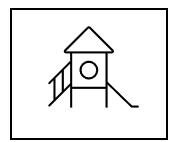
2.Hollywell School has 34 metres of wood to build the perimeter of a rectangular playground for their junior students. How should they set up the playground so that it gives the students the maximum amount of space to play in (what should the width and length of the playground) be?
© Oxford University Press 2026 Page 2
Permission has been granted for this page to be photocopied within the purchasing institution only. No part of this publication may be reproduced, stored in a retrieval system, transmitted, used for text and data mining, or used for training artificial intelligence.
Teacher notes
Curriculum links
Knowledge
Measuring The areas of rectangles (including squares) can be calculated by multiplication of side lengths.
Possible answers
1. Whole number answers are: 1
× 48 m 2
Practices
Calculating the areas of rectangles (including squares) using multiplication of side lengths.
Recognising that shapes with the same area can have different perimeters, and vice versa.
But we could include fraction/decimals too (e.g., 0.5 m × 96 m) and then there are more answers! (1.5 × 32; 2.5 × 19.2; 3.2 × 15; 6.4 × 7.5; 9.6 × 5)
2. 8.5 m × 8.5 m (a square!) = 72.25 m2. Other rectangles would have a smaller area than this:
What to notice and look for
Question 1
o Many different rectangles have the same area?
o Any similar rectangles (e.g., 12 cm x 4 cm and 4 cm x 12 cm)?
o As one dimension increases by 1 metre, the other decreases by 1 metre?
o Patterns in their answers? (e.g., as the length doubles, the width halves)?
Question 2
o That the dimensions add up to half of the perimeter?
© Oxford University Press 2026 Page 3
Permission has been granted for this page to be photocopied within the purchasing institution only. No part of this publication may be reproduced, stored in a retrieval system, transmitted, used for text and data mining, or used for training artificial intelligence.
o As one dimension increase by 1 metre, the other decreases by 1 metre?
o Many rectangles with the same perimeter can have different areas.
o As the dimensions (length and width) become closer (more square-like), the area increases— the largest area of any rectangle with a given perimeter will be a square? Do they understand that all squares are rectangles (they belong to the rectangle family)?
© Oxford University Press 2026 Page 4
Permission has been granted for this page to be photocopied within the purchasing institution only. No part of this publication may be reproduced, stored in a retrieval system, transmitted, used for text and data mining, or used for training artificial intelligence.