People & Places Connections Oxford 6
We are learning to review and connect key ideas about Australia’s place in the Asia region and the wider world.
Global citizenship is about understanding that countries and people around the world are connected. These connections come with shared responsibilities to care for the planet and each other.
Countries show global citizenship by working together to solve shared issues, such as:
• Understanding the needs and concerns of neighbouring countries. For example, Australia understands that Pacific Island nations and Southeast Asian countries face rising sea levels and stronger weather events, such as cyclones.
• Communicating with other countries. For example, at the Pacific Islands Forum, Australia and neighbouring countries meet to discuss shared challenges and plan solutions together.
A global citizen understands that people, countries and environments around the world are connected. They think about how their actions can affect others by:
• learning about different cultures through travel or by taking part in cultural activities within local communities
• Providing support where possible. For example, Australia gives foreign aid to help Pacific Island nations respond to climate change, including flood and storm damage.
• Respecting people, cultures and traditions. For example, Australia welcomes migrants from many different countries, which helps to make Australia a multicultural place.
• Protecting the environment, including animals and their habitats. For example, Australia supports the protection of whales in its waters and in shared environments like the Pacific Ocean.
• staying informed about local and global events using reliable news sources
• helping people or the environment by volunteering for beach clean-ups or fundraising for disaster relief
• speaking up for fairness and human rights by supporting campaigns that protect people, animals or the environment.
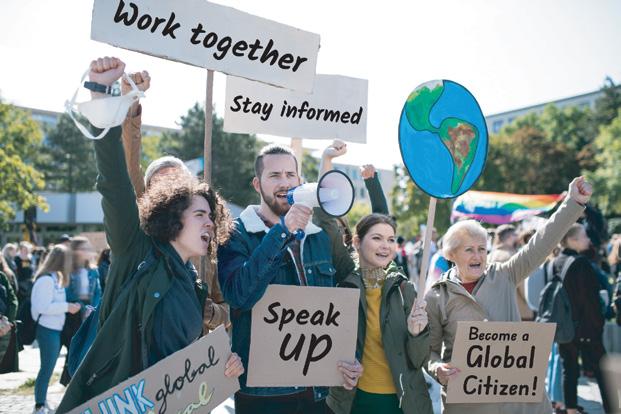
Campaign to support climate change action
1. Draw a line to connect the features of global citizenship to Australia’s actions.
Features Examples
Understanding the needs and concerns of neighbouring countries
Supports the protection of whales in its waters and shared oceans
Communicating with other countriesRecognises that Pacific Island nations face rising sea levels and stronger cyclones
Providing support
Respecting people, cultures and traditions
Protecting the environment
2. Answer True or False.
Welcomes migrants from many different countries
Gives foreign aid to help countries respond to disasters and climate change
Meets at the Pacific Islands Forum to discuss shared challenges and plan solutions
a. Learning about different cultures helps you understand and respect other people.
b. Volunteering or helping out at school has nothing to do with global citizenship.
c. Global citizens think about how their actions affect people in other countries.
3. Explain what you think the world would be like if all countries and people agreed to act as global citizens.
4. Write a persuasive speech convincing other Year 6 students to become global citizens. Include sentences using the “Because, But, So” strategy and two or more persuasive devices, such as: emotive or inclusive language, rhetorical questions, anecdotes and hyperbole.
You are working hard to learn something new!



We are learning how different types of work support individuals and the wider community.
Nurses are incredibly important for many aspects of life. They provide a service by caring for people who are sick or injured, checking vital signs, giving medication and supporting their patients as they heal. There are many different types of nurses. Together, they support the whole community and the wider world by keeping hospitals, clinics and doctors’ offices running through their expert care and advice.

they need, especially those who are unable to travel or cannot transport the items themselves. They also support businesses by moving their goods around the community, delivering them to customers.
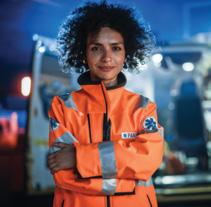
Paramedics are first responders, arriving at emergencies to give first aid and often providing lifesaving help. They give urgent care when every second counts, and are the first line of support for people having a medical emergency. Paramedics save lives daily, which impacts not only the people whose lives they are saving, but also their loved ones and the wider community.
Delivery drivers are responsible for transporting goods like parcels, food and equipment to homes, schools and businesses. They help individuals gain access to things
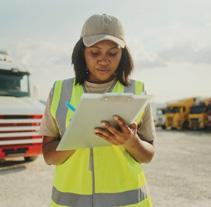
Rubbish and recycling collectors pick up our waste and recycling from homes, schools and businesses. They play a vital role in making sure that our community is kept clean and safe and are an essential part of society. By collecting the rubbish and taking it to the tip or recycling centre, they are protecting the environment from waste buildup and the damage it can do. They are also preventing health problems that can occur when rubbish is left uncollected.

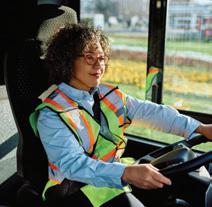
Bus drivers are incredibly important, and many people rely on them to get around. Bus drivers transport people safely to school, work, shops and a lot of other places. They provide a way for people to travel without having to walk long distances or drive. They also support the wider community by reducing traffic and pollution, as there are fewer cars on the road. Every day, bus drivers ensure that millions of people around the country reach their destination safely.
1. How do paramedics and nurses help people stay safe?
2. What is the difference between a “good” and a “service”?
3. What might happen to a community if rubbish was not collected regularly?
4. Select one of the jobs you have learnt about today, or another job you think is important in the community, and describe how your daily life would change if that job did not exist.
We are learning how consumer choices are influenced by financial and non‑financial factors and how these choices impact families and communities.
Joel just had to have the new video game that everyone at school had been talking about. He really wanted it! However, even though he had been saving for a few months, he knew he still did not have quite enough money. He decided that all he could do was wait and try to save a bit more. In the meantime, he planned to look around for the best deal – maybe the game was on sale somewhere.
On the way to school that morning, Joel noticed that his mates all had the same sneakers. He looked down at his own and thought that maybe he should just spend the money he had saved on a pair of shoes like his friends’ instead of the game. After all, if he got the shoes, maybe he’d feel a bit more like he fitted in. Then he remembered what his mum had said about spending wisely. He thought about how he had planned to go to a movie with his brother. If he spent all his money now, then he wouldn’t be able to see the movie. He wouldn’t be able to get the game any time soon, either.
So, Joel thought about it and made a plan. He still wanted the video game, even more than the shoes, so he decided to keep saving. But he also decided to spend just a little bit on the movie with his brother, because he had promised they would see it together. He didn’t want to let him down. He realised that his choices had an effect on others, too.
There were a lot of factors involved in his decision, such as when he bought the game, where he bought it, how much he paid and whether it would affect anyone else. Ultimately, he felt good about his choice because he had thought carefully, planned to get the best deal, and considered his family as well.

1. What financial factors did Joel consider?
2. What non‑financial factors affected Joel’s decision?
3. How could Joel’s purchase have affected his family?
4. How might Joel’s consumer choices have affected the community?
5. Find one conditional and one causal connective from the passage. Write them below.
Conditional:
Causal:
6. Write 3–5 questions to extend your thinking about consumer choices and their impacts. For example: What will happen if many people stop buying from local businesses? What … Why … How …
7. In what ways can someone be a responsible consumer? Write a paragraph explaining your thinking. Start by explaining what a responsible consumer is, and then explain how understanding financial and non‑financial influences helps people make good choices.
We are exploring the experiences and perspectives of migrants from different Asian countries to Australia.

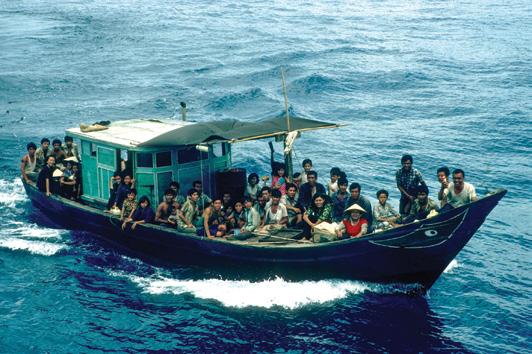
Mai Ho left Vietnam at 3:00 am one morning in 1982, sneaking out of her village and getting into a small boat with 131 other people. They were taken quietly from the village and almost an hour later they reached a larger boat out at sea. As they were loaded onto the bigger boat, the sailors warned everyone to keep silent and pray that the government boats passing them would not hear anything and come aboard to check. If Mai Ho or any of the others were found they would be arrested. Once they crossed into international waters, they no longer feared being arrested, but the danger did not end there. The seas were very rough and strong winds rocked the boat back and forth throughout the night. Some people became very ill, vomiting and crying, convinced that they would not survive.
Eventually, after days of being at sea, they saw the lights of an oil rig glowing in the distance. Everyone thought it was a miracle. They were rescued from their boat and carefully lifted onto a ship, a few people at a time. By 9:00 am the next morning, everyone was safely on the ship, and people were filled with relief and gratitude.
After several months Mai Ho was told she would be accepted into Australia. She was so happy and relieved. In December 1982, she boarded an aeroplane for the first time, an “iron bird” that brought her closer to her dreams. But as the plane descended towards Melbourne, Mai Ho looked out the window and saw what looked like a desert and farmland. She was shocked as she thought she was travelling to a big city, and had no idea what her life might look like now.
“Oh my God, I’ve travel to a desert or something! How come we haven’t got a city life like I imagine?”
Mai Ho, “Journeys to Australia”, Immigration Museum https://museumsvictoria.com.au/immigrationmuseum/resources/ journeys-to-australia/#1970s-2000s
The journey did not end there, however, as Mai Ho went on to a refugee camp on Palau Bidong Island in Malaysia. Many people thought they were safe now, until they heard many frightening stories about life in the camp. But Mai Ho remembered that her father’s final wish was for her to go forward, to live, and to reach Australia.
1. What might have been a push factor that made Mai Ho want to leave Vietnam?
2. What are some of the dangers that Mai Ho faced when leaving Vietnam?
3. Why do you think the lights from the oil rig seemed like a miracle to the people on the boat?
4. Reflect on the reading passage. Explain how Australia benefits as a nation by welcoming and supporting refugees from different countries.

We are learning how the right to vote in Australia expanded over time and why these changes were important for building a fairer society.
Before colonisation, Aboriginal and Torres Strait Islander Nations had their own ways of making decisions through culture and community discussion. These systems were ignored when British laws were introduced.
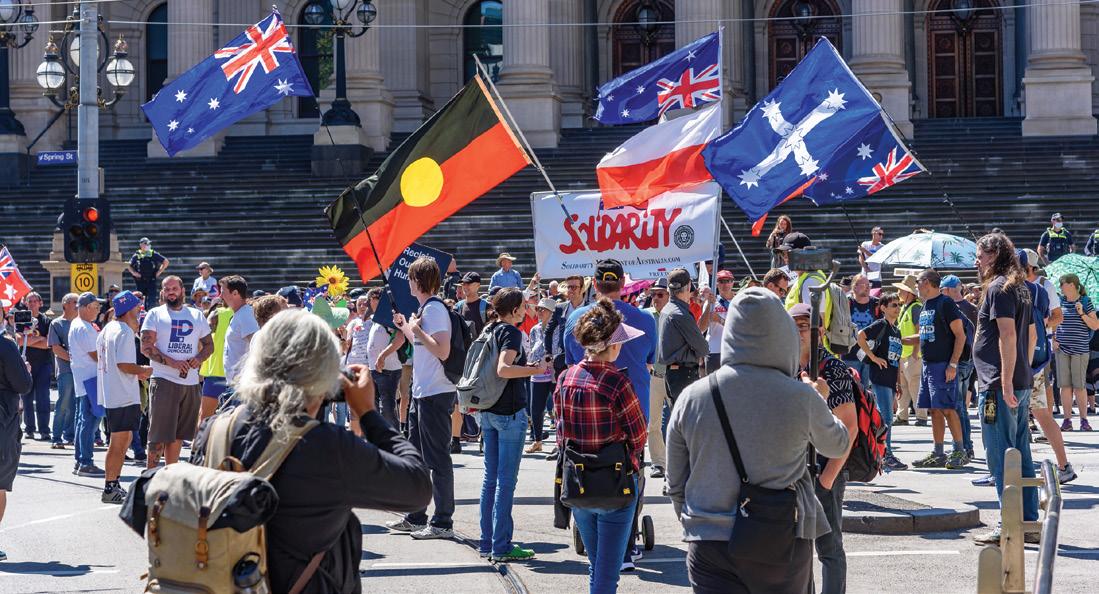
Over time, people began to demand a fairer system. Women’s groups, Aboriginal and Torres Strait Islander leaders and migrant communities worked to change unfair laws.
In 1902, most non-Indigenous women gained the right to vote in federal elections. However, Aboriginal and Torres Strait Islander women were still excluded.
Change came slowly. In 1962, Aboriginal and Torres Strait Islander adults gained the legal right
to vote in federal elections. In 1965, Queensland became the last state to remove restrictions on Aboriginal and Torres Strait Islander peoples voting in state elections.
The late Aunty Lowitja O’Donoghue, a Yankunytjatjara woman and respected leader, explained why these changes mattered:
“Our people want to be part of this nation’s future, not shut out from it.”
O’Donoghue, L. (1997). Lowitja O’Donoghue: Bringing Australia together. Canberra, ACT: Aboriginal Studies Press.
Democracy becomes stronger when more voices are included.
1. Draw lines to match each word to its definition.
Word Definition
Democracy
Having the same rights and opportunities
RepresentationMaking sure everyone is welcomed, respected and able to participate
Activism
Equality
Inclusion
Having a voice in decisions and being spoken for in government
People can take part in choosing leaders and decisions
Taking action to create social or political change
2. For each of the events listed below, write one sentence about why each change mattered and how and if it made Australia a fairer democracy.
a. 1902: Most non-Indigenous women gain the federal vote.
b. 1962: Aboriginal and Torres Strait Islander peoples gain the legal right to enrol and vote in federal elections.
c. Queensland removes remaining restrictions on Aboriginal and Torres Strait Islander peoples voting in state elections.
3. For each situation below, explain what it meant for Australia’s democracy, and whether you think it made the democracy more or less fair.
a. Aboriginal and Torres Strait Islander peoples were excluded from voting
b. Most women were excluded from voting.
4. Read the quote from the late Aunty Lowitja O’Donoghue. She was a Yankunytjatjara woman and a highly respected Aboriginal leader.
a. What do you think she meant by “not shut out”?
b. Why is this message still important for democracy today?

We are learning how to describe the roles and responsibilities of the three levels of government in Australia.

Up until the 1850s, each colony (now known as a state) was governed by a British-appointed governor. In 1901, the six colonies united at Federation to form the Commonwealth of Australia and create a stronger nation. They then went on to establish the three levels of government.
Australia’s system of government was based on the British Westminster system, with power divided between three levels: local, state and federal. This division ensures that no single level has complete control over laws. Although decisions are made at different levels, governments must be aware of each other and sometimes work together.
The Australian Constitution came into effect in 1901 as the nation’s founding law. It established a bicameral parliament, made up of the Senate and the House of Representatives, and divided powers between the federal and state governments.
Councils have existed in Australia since 1842. They gained more responsibilities in 1858 under the Municipalities Act, such as caring for bridges, ferries and sewerage. By 1908, more shires had been created, and local councils were given greater authority to carry out works in their own areas without relying on state governments. Today, there are 537 local councils in Australia, responsible for looking after their communities.
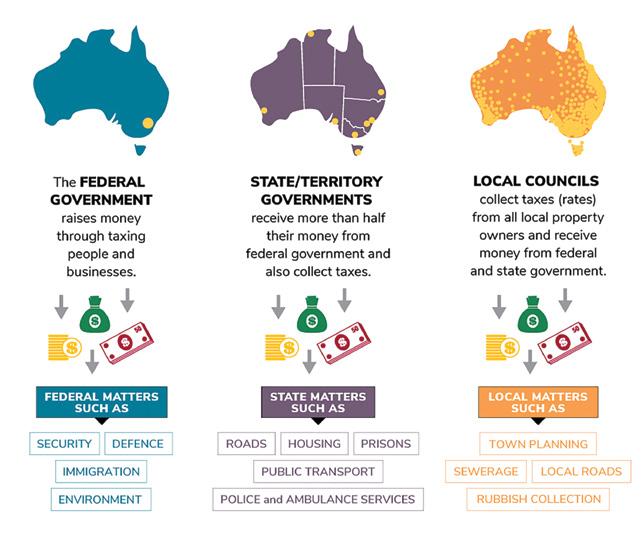
Three levels of government in Australia
Source: Parliamentary Education Office
1. When were the three levels of government established in Australia?
2. What is a bicameral parliament?
3. If Australia had not established the Constitution, what might Australia look like today?
4. Why do you think councils were established earlier than state governments in Australia?
5. Using the website of your local council, state MP or federal MP, find your representative’s name, issues they are working on and how to contact them. Then incorporate this information into a brief summary. Focus on key words, key pieces of information and interesting facts to engage the reader.