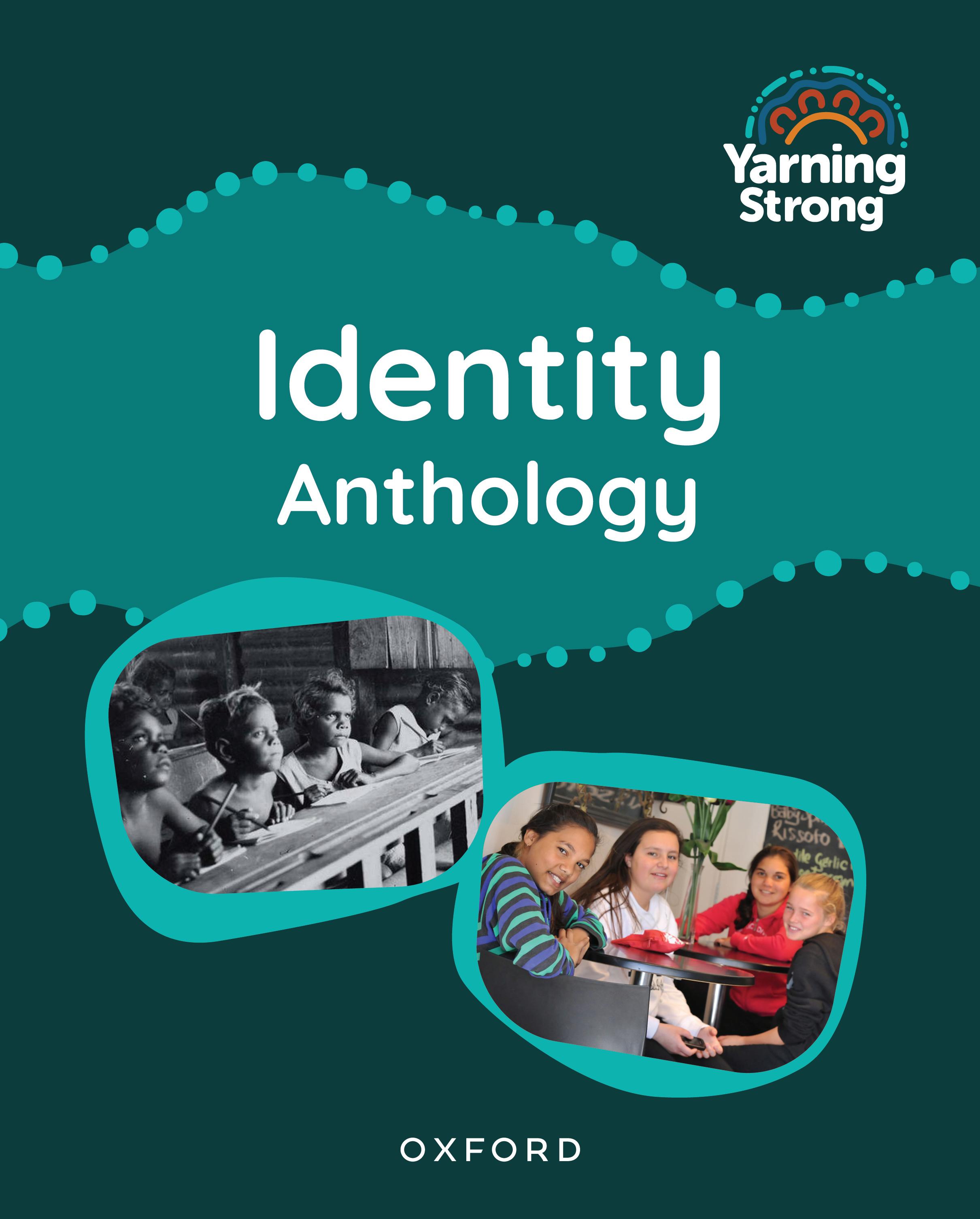
Uluru Statement from the Heart
We, gathered at the 2017 National Constitutional Convention, coming from all points of the southern sky, make this statement from the heart:
Our Aboriginal and Torres Strait Islander tribes were the first sovereign Nations of the Australian continent and its adjacent islands, and possessed it under our own laws and customs. This our ancestors did, according to the reckoning of our culture, from the Creation, according to the common law from “time immemorial”, and according to science more than 60,000 years ago.
This sovereignty is a spiritual notion: the ancestral tie between the land, or “mother nature”, and the Aboriginal and Torres Strait Islander peoples who were born therefrom, remain attached thereto, and must one day return thither to be united with our ancestors. This link is the basis of the ownership of the soil, or better, of sovereignty. It has never been ceded or extinguished, and co-exists with the sovereignty of the Crown.
ancient sovereignty can shine through as a fuller expression of Australia’s nationhood.
Proportionally, we are the most incarcerated people on the planet. We are not an innately criminal people. Our children are aliened from their families at unprecedented rates. This cannot be because we have no love for them. And our youth languish in detention in obscene numbers. They should be our hope for the future.
SAMPLE
These dimensions of our crisis tell plainly the structural nature of our problem. This is the torment of our powerlessness.
We seek constitutional reforms to empower our people and take a rightful place in our own country. When we have power over our destiny our children will flourish. They will walk in two worlds and their culture will be a gift to their country.
We call for the establishment of a First Nations Voice enshrined in the Constitution.
How could it be otherwise? That peoples possessed a land for sixty millennia and this sacred link disappears from world history in merely the last two hundred years?
With substantive constitutional change and structural reform, we believe this
Makarrata is the culmination of our agenda: the coming together after a struggle. It captures our aspirations for a fair and truthful relationship with the people of Australia and a better future for our children based on justice and self-determination.
“ We invite you to walk with us in a movement of the Australian people for a better future.”
We seek a Makarrata Commission to supervise a process of agreement-making between governments and First Nations and truth-telling about our history.
In 1967 we were counted, in 2017 we seek to be heard. We leave base camp and start our trek across this vast country. We invite you to walk with us in a movement of the Australian people for a better future.
Different languages
To demonstrate how different the many Aboriginal languages are from each other, we asked four of the Yarning Strong authors to translate twelve English words into a traditional language. What Aboriginal language is local to your area? Can you find out the words for “hello” and “goodbye”?
English Gumbaingirr Kullilli Nyoongar Nukunu
bread birriin muntha manjali mayi (food)
crazy garraanggi wombaa kaat - wara nuntha dog waanyji mouda dwert kartli or wilka
ear ngaalgan manga dwonk yuri good darruy murga moorditj wanypatha goodbye tjakurinanyi * nhakutya hello giinagay ngawa kaya nhiina wanypatha meat wijiirr yurdi daati partu/paru money maniing bunguu boomdoong or boya katnya
SAMPLE
sea gaagal maambakoort thatni
stars birraarl niyardi djinda purtli talk/speak gayi ngalga waangkan wangkatya
Please note: * No word exists. Nyoongar words: There are a number of Nyoongar dialects. Examples given here are particular to one dialect. Some words are used in more than one Aboriginal language.
Ngarrindjeri language teaching
Kelli J. Owen — proud Kaurna, Nharungga and a Ngarrindjeri woman
Before the British invaded our lands, we communicated with our body, eyes, lips, hands, whistling, carvings and symbols on trees, rocks and in the sand.
When our people were together we shared stories of our families, the land, skies, animals and waterways. Since colonisation we have lost many people (our ancestors) and many languages. Our languages then went to sleep amongst the trees, rivers, hills, boulders and land.
As the missions spread across our lands, our people were trapped and this kept us disconnected from speaking, seeing and living with our family members. Some nations were able to secretly keep their speakers protected and only spoke their language when the missionaries were not around. This was one way languages were kept alive.
Learning a new language can be scary and exciting at the same time. Learning my mutha’s (grandmother) Ngarrindjeri
language took me three years of language lessons on Ngarrindjeri Ruwi (country).
I sat and listened to my Elders, knowing they wouldn’t be around forever. I was committed to learn my grandmother’s tongue. The language fire and flames burn in my belly to learn.
When we taught our Nunga students in years 3 to 6, there were many things the children wanted to know how to say in Ngarrindjeri: how to introduce themselves, how to do the Welcome and Acknowledgement of Country, how to sing happy birthday, how to ask questions to find answers, how new words were created and how to make new songs in language.
We had a Nunga choir at our school and practised weekly. We organised songwriters and musicians to come to the school to workshop with the children with music and language. Singing was a great way to learn and practise language.
SAMPLE

Kee
Vernon Ah
a member of the Kuku Yalandji, Waanji, Yidinji and Gugu Yimithirr peoples
The Jerry Snake
Greg Lehman descendant of the Trawulwuy people
There is a snake moving along the river this morning. He is a big one. White. Slow. Very cold. I can feel the chill of him. As he makes his way, it is the banks of the river that guide him – mostly. Maybe he is impatient to get to where he is going, or perhaps it’s because he is afraid of nothing. But he will sometimes move straight ahead, past factories and bridges. At a bend in the river, he will climb straight up and over any hill that gets in the way. If the river widens into a bay, this snake swims straight across. He is very determined, like an old man who has seen everything there is to see. He has no inclination to stop and wonder about what he doesn’t know. And there is so much to understand on the banks of Nipaluna these days.
I see him every winter, moving down the valley towards the sea. Do you wonder what he does when he gets to the coast? Once, maybe ten years ago, I found out. I was watching the news on television. After the stories had finished about war and money, they moved on to the weather. The satellite photo showed no cloud, so the river’s mouth was clear to see. Can you believe it? The snake was there on the screen!
The people who live along the river call him “the Bridgewater Jerry” and wake to see him in the morning – already among them
– because he comes in the early hours. “Oh, there’s the Jerry. It’s big today. You’ll need a coat for sure!” I also used to think of him like they did. The Jerry. A fog. Cold, damp and chilling to the bone. But when I saw him on my TV, I held my breath. Gliding out of the mouth of the river and across Storm Bay like a giant rope slung over the waters, I knew that there was more to this “fog” than just mist and science.
Here on Lutruwita, the island that is now called Tasmania, we have some problems. Not that long ago, the British arrived to bring grief to my ancestors. Killing began. Not just of cartela the seal, but us palawa mob too. That’s the simple truth. Lots of killing. All of this happened because of one thing: the sons of England did not know tunapri manta. This is our knowing that comes from the old stories, handed down for a thousand generations. It gives us our law and a way to know the world that works for everyone. But the sealers and soldiers would not learn! If it is true that they were num – the ghosts of our own ancestors –then this is hard to understand. Because num are part of tunapri manta. Something was not right. Something had changed.
The story of their arrival could be a long one with much crying and sadness. But
Us Mob Walawurru
David Spillman and Lisa Wilyuka David Spillman is a non-Indigenous man, and Lisa Wilyuka is a Luritja woman from Titjikala
Us Mob Walawurru is a book about Ruby, an Anangu girl living on Joe Mogren’s cattle station in Central Australia in the 1960s and 1970s. Joe is a whitefella, who Ruby’s Uncle Archie describes as his brother. In this scene, Ruby is on her way to a sports carnival, feeling anxious about leaving her uncle behind. She and Uncle Archie have been discussing law and all of a sudden, sitting on the bus, she realises the meaning of something he’s told her.
How I wished that Uncle Archie was on the bus. I closed my eyes, calling up his face. I felt the warmth and strength of his hug. I remembered the day he had told me about whitefellas owning things and how scaredI felt, thinking about them killing Walawurru and disrespecting our Country. Uncle had also told me that it was alright with Joe, that he respected our law.
And then it hit me. I finally understood why Uncle and Joe were brothers. There was something the same about them, something important, even though they
lived by different law. “He respects me and I respect him,” Uncle had said. That was it. It’s not so much that Joe respects our law, I thought – how can he if he doesn’t understand it? What’s important is that he respects Uncle Archie and Uncle respects him. They grew up together. They know each other and they know how important it is to show respect. Even though Joe often seemed to be in a hurry to get things done, unlike most whitefellas he’d stop what he was doing if it was important to show respect.

The Chainsaw File
A play by Bruce Pascoe, based on his novel The Chainsaw File
Bruce Pascoe is a Yuin, Bunurong and Tasmanian man
Cast:
TYRONE, a fourteen-year-old boy
LES, Tyrone’s father
BERYL, Tyrone’s mother
CHOCKO, Les’s boss
BOXER, Les’s workmate
DRAGO, Les’s workmate
Warning
Please note that this play contains offensive language, which is not acceptable language at any time or in any context.
It also contains negative and incorrect racist stereotypes.
This story has been included to provide context of the prolific racism that First Nations peoples have faced and continue to face.
What is NAIDOC?
NAIDOC stands for National Aborigines and Islanders Day Observance Committee. Its origins go back to the 1920s and 1930s, when several organisations began to fight for Aboriginal rights – for better living conditions and citizenship rights.
The groundswell of Aboriginal resistance to domination has been ongoing since Cook and the Endeavour first appeared over the horizon. Resistance has taken many forms since 1770, from small encounters, to guerilla warfare, open warfare and the war of words.”
John Maynard, Fred Maynard’s grandson.
In 1924, the Australian Aboriginaes Progressive Association (AAPA) was formed, and is recognised as the first politically organised First Nations group in Australia. The group was led by Worimi man Fred Maynard (Charles Frederick), and they organised street rallies and wrote letters to the press and politicians about the injustice and inequality forced upon First Nations people. Their efforts were largely overlooked by the general Australian population, and due to police harassment, the AAPA abandoned their work in 1927.
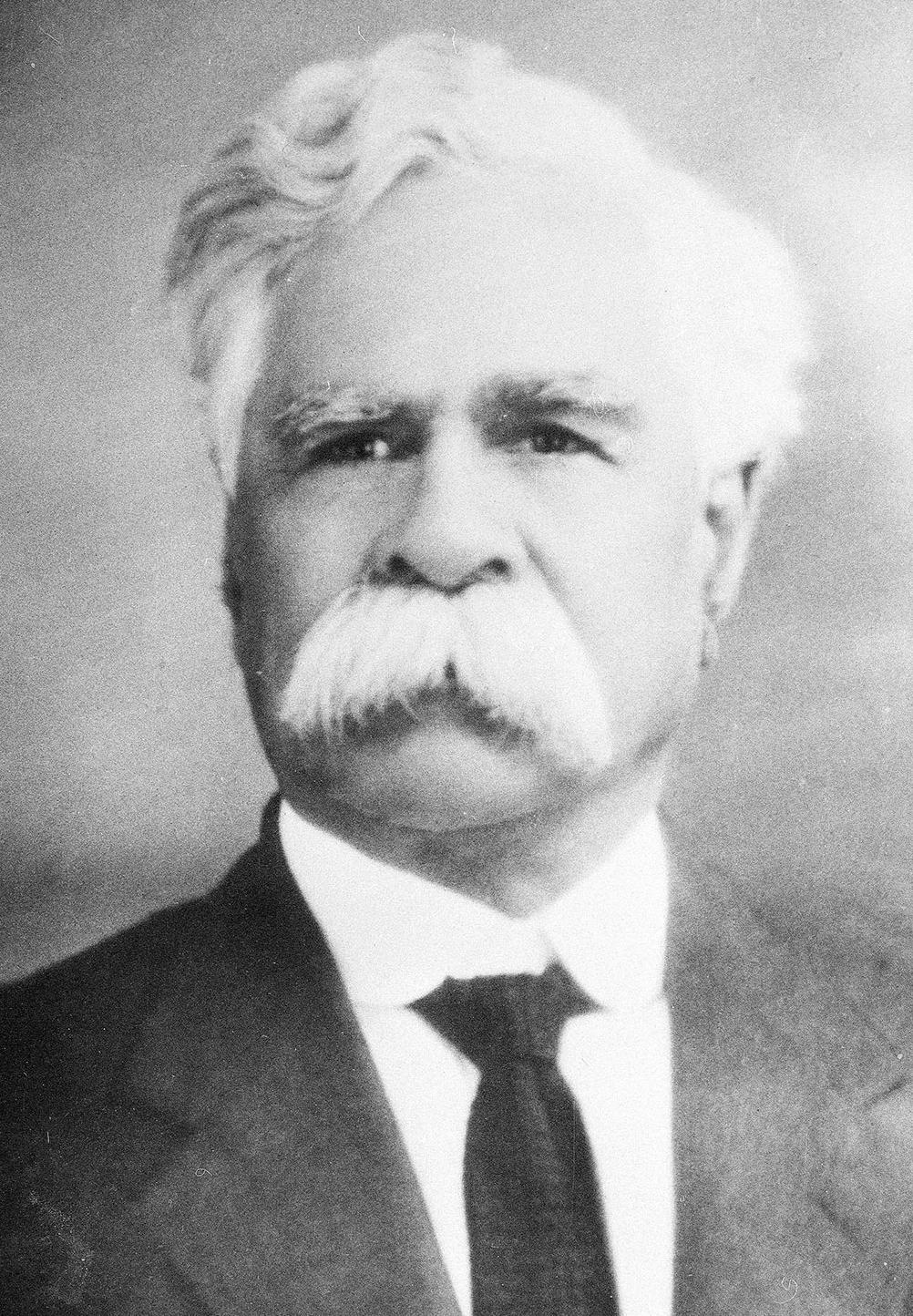
In 1935, Yorta Yorta man William Cooper, founder of the Australian Aborigines’ League, drafted a petition to send to King George V, asking for special Aboriginal electorates in Federal Parliament. The Australian Government believed that the petition fell outside its constitutional responsibilities.
In 1937 about 1,000 Aboriginal people attended a “Day of Mourning” conference on the 150th anniversary of British colonisation. A proposed national policy for Aboriginal people was presented to the Prime Minister, Joseph Lyons. This was rejected because the Commonwealth then had no constitutional responsibility for Aboriginal affairs.
William Cooper
From 1940 until 1955, the Day of Mourning was held on the Sunday before Australia Day and was known as Aborigines Day. In 1955 it shifted to the first Sunday in July and became not just a protest day but also a celebration of Aboriginal culture.
In 1957 a National Aborigines Day Observance Committee (NADOC) was formed, supported by governments, churches and major First Nations organisations. Aborigines Day became a day of remembrance for Aboriginal people and their heritage.
After the 1967 referendum and the 1972 establishment of a Federal Department of Aboriginal Affairs, the national focus on Indigenous issues increased significantly. In 1974 NADOC became an all-Aboriginal committee, and in 1975 National Aborigines Day extended to National Aborigines Week.
In 1988 the committee’s name was changed to NAIDOC – National Aborigines and Islanders Day Observation Committee –to acknowledge Torres Strait Islander peoples.
Now NAIDOC week has become an important event on the Australian calendar, when all Australians are invited to celebrate the history, culture and achievements of First Nations peoples.