A FUNCTIONAL MODEL OF LANGUAGE

Language is at the heart of the learning process. In order to succeed in school, students need to use language for such purposes as explaining, arguing, recounting, and describing across a range of subject areas and in a variety of modes and media. Such language does not come naturally to most students and generally requires explicit teaching. This means that teachers themselves need to have a solid understanding of how language operates in academic contexts. Unfortunately, however, this is not always the case. In an attempt to address this, the Australian Curriculum: English includes an explicit knowledge about language as a major focus. This chapter will begin to introduce the functional model of language that informs the national curriculum.
Learning oBJeCtiVeS
In this chapter, you will:
» begin to become familiar with a functional model of language
» be introduced to the language system as a rich network of resources for making meaning
» understand the relationship between language and the contexts in which it is used
» consider the implications of a functional model for your own understanding of how language works and for your classroom practice.
KeY terMS and ConCePtS
» functional model of language
» context
» genres
» register (field, tenor, mode)






» the language system
Note: throughout the chapters, you will be invited to ‘have a go’ at certain activities. These can be done either individually or in pairs/groups.
OXFORDUNIVERSITYPRESSSAMPLEONLY
OXFORD UNIVERSITY PRESS 1
INTRODUCTION
The Australian Curriculum: English places a major emphasis on ‘knowledge about language’, along with an appreciation of literature and expanding repertoires of literacy use. In the Framing Paper that guided the development of the national English curriculum, the following objectives were outlined:
All students need to develop their understanding of how language functions to achieve a range of purposes that are critical to success in school. Th is includes reading, understanding, and writing texts that describe, narrate, analyse, explain, recount, argue, review, and so on. Such an approach aims to:
• extend students’ language resources in ways that support increasingly complex learning throughout the school years
• help students deal with the language demands of the various curriculum areas
• enable students to move from the interactive spontaneity of oral language towards the denser, more crafted language of the written mode
• help students, in their speaking and writing, to move to and fro between the general and the specific, the abstract and the concrete, and the argument and the evidence
• generally raise students’ awareness of interpersonal issues, such as how to take and support a stand in an argument, how to express considered opinions, how to strengthen or soften statements, how to interact with a variety of audiences, and so on (DEEWR 2008, p. 10).
In Australia, teachers have been using a functional approach to language for the past couple of decades to address the above aspirations. Such an approach is concerned with how language functions to make the kinds of meanings that are important in our daily lives, in school learning, and in the wider community.
A functional model of language draws on the work of Professor Michael Halliday (see, for example, Halliday 2009), one of the leading linguists of modern times. Halliday sees language as a meaning-making system through which we interactively shape and interpret our world and ourselves. His interest is in language as ‘a resource for making meaning’. Based on the work of Halliday, educational linguists such as Martin (1985) and Christie (2005) developed a ‘genre-based approach’ with the goal of making the language demands of the curriculum explicit so that all students have access to the linguistic resources needed for success in school and to the powerful ways of using language in our culture.
In this book, you will be learning about language and how it works from a functional perspective so that you can better support your students to learn language, to learn through language, and to learn about language.
OXFORDUNIVERSITYPRESSSAMPLEONLY
LANGUAGE IN CONTEXT
A functional model describes how language varies from context to context. It shows, for example:
• how the language of science differs from the language of literature
• how the language we use when talking to close friends differs from that we use when giving a formal oral presentation
• how spoken language differs from written language.
OXFORD UNIVERSITY PRESS 3 CHaPter 1 a FunCtionaL ModeL oF Language
CONTEXT LANGUAGESYSTEM
In Figure 1.1, we can see the relationship between the language system and its context. According to Halliday (1985), the language system can be seen as a complex network of choices that have evolved to serve our needs. The context in which language is used interacts with the kinds of choices we make from the language system.
The relationship between the context and the language system is a dynamic one. We might enter a context with certain expectations regarding:
• the purpose of the interaction
• the topic to be discussed
• the nature of the relationship between the interactants
• the mode and channel of communication.
These factors in the context help us to predict the language choices we might make. As the interaction progresses, however, the context can also change as a result of the language choices being made. In an email exchange, for example, the initial purpose might be to complain about a faulty piece of equipment bought for the school. In a subsequent phone call, however, the purpose might change to an apology as you find out that in fact the equipment has been installed incorrectly. With the shift in context, the language choices will also change in terms of the purpose (complaint versus apology), the topic (the faulty equipment versus the faulty installation), the relationship (aggrieved versus contrite), and the mode of communication (email versus telephone).
HAVE A GO!
From the above scenario, try to predict the kind of language choices made in the initial email exchange as opposed to the choices made in the telephone conversation. How do they differ in terms of the factors outlined above?
Similarly, the language system as a whole is in a constant state of flux, impacted by the ways people use language in creative and unusual ways.
THE CULTURAL CONTEXT
context of culture
The broad cultural context within which we use language in ways that reflect the discourse communities we engage in—in our case, the discourse community of schooling.
At a global level, we need to consider the relationship between language and the broader context of culture. The language system evolves within the context of a certain culture to meet the needs of that culture. Our language choices will therefore be sensitive to the cultural context. When we refer to ‘culture’, we don’t necessarily mean national or regional cultures (e.g. ‘Australian’, ‘Asian’, ‘British’). Rather, we often think about cultures as a collection of discourse communities, subcultures, or social institutions such as sporting groups, theatre aficionados, book clubs, friends, and family. Each of these discourse communities might have its own traditions, beliefs, values and behaviours and uses language in particular ways. In this sense, we are thinking of the school as part of an educational discourse community.
4 OXFORD UNIVERSITY PRESS Part 1 Language and Learning
FIGURE 1.1 The language system in a dynamic relationship with the context
In Chapter 2 you will be introduced more fully to the choices available in the language system.
OXFORDUNIVERSITYPRESSSAMPLEONLY
THINK ABOUT IT
Most people move within and between different discourse communities every day.
• How many discourse communities have you engaged with over the past week or so?
• How does your language change as you move between these communities?
GENRE
In our daily lives, we use language to achieve a variety of social purposes: telling friends what we did on the weekend, instructing someone how to follow a recipe, explaining how a computer application works, persuading parents to buy a treat, completing tax forms, and so on. We can refer to these as genres —goal-oriented social practices that have evolved in our culture to enable us to get things done (Martin & Rose 2008). If our purpose was to obtain employment, for example, then a relevant genre to use would be a job application. If our purpose was to draw up a legally binding agreement, then an appropriate genre would be a contract. Or if we wanted to tell someone how to use a video camera, we might choose the genre of giving instructions.
In order to identify the genre of a particular text, we first ask what purpose the text is serving: describing, counselling, lobbying, instructing, recommending, informing, and so on. Rather than seeing genres simply as products or things, we will also be thinking of them as processes. We employ them to do things: to persuade someone to our point of view, to satirise, to share experiences, to order a meal, and so on.
Extending on Figure 1.1, we can think of our social purpose for using language as part of the context in which we operate. This is shown in Figure 1.2.
Genres evolve over time through social use. If social purposes change, then genres will modify themselves to accommodate these changes. Outmoded genres do not persist simply because of convention. If they are no longer functional, they will generally adapt or die out.
For some time, the most widespread use of the term ‘genre’ has been in association with particular kinds of literature (later extended to include works of art and film). Thus, works of literature of a particular style were referred to as genres of one variety or another: the elegy, the sonnet, the ballad, the romance genre, the pastoral genre, the gothic horror genre, the science fiction genre, and so on.
The meaning of the term has been extended these days to include non-literary texts—texts from the community (casual conversation, patient–doctor consultations, shopping lists), from the media (editorials, news bulletins, television documentaries), from the workplace (business reports, office memos, safety warnings), and from educational contexts (book reviews, classroom interaction, lab reports). As you can see, genres can be spoken, written, or multimodal (integrating visual elements with written text).
genres
The ways in which we achieve our social purposes through language.
5 OXFORD UNIVERSITY PRESS CH a P ter 1 a Fun C tiona L Mode L o F Language
GENRE(socialpurpose) LANGUAGESYSTEM CONTEXT
FIGURE 1.2 Genre as part of the context
OXFORDUNIVERSITYPRESSSAMPLEONLY
HAVE A GO!
In this book, the terms ‘genre’ and ‘text type’ will be used interchangeably to refer to ways of achieving a specific social purpose through language. In some contexts, however, the term ‘text type’ is used to refer to the format of a particular text (poster, email, list, picture book, blog, essay, and so on) rather than its social purpose.
In school contexts, we encounter a range of genres over which students need to gain control in order to succeed in their academic lives (see Table 1.1). In this book, we will be introducing some of the key genres of schooling.
TABLE 1.1 Examples of genres typically used in school contexts
P ur P o S e genre Fa M i LY e X a MPL e S to ent ertain (Chapter 4) Stories Reading a narrative
Sharing an anecdote
Innovating on a fable to tell what happened (Chapter 5) Recounts Recounting the results of a science experiment
Recounting a historical event
Recounting how a maths problem was solved to respond (Chapter 6) Responses Responding personally to a text or artform
Interpreting a text, artform, or body of work
Critically appraising a work to pro vide information about a general class of things (Chapter 7)
Information reports Classifying types of transport
Outlining the body parts of a platypus
Describing rainforests to explain how things work or why things happen (Chapter 8)
Explanations
How an electric circuit works
What causes earthquakes
How the Second World War began to argue (Chapter 9) Arguments/ expositions
Essay developing a particular stance
Discussion considering various sides of an issue
Formal debate
to conduct an inquiry (Chapter 10) Inquiry reportsA science experiment
A technology and design assignment
A problem-solving inquiry
As we can see from Table 1.1, virtually all the activities in which students participate involve the use of particular genres. If we are clear about the purposes that students will be expected to achieve in a unit of work, then we can better support them in learning how to use relevant genres.
Just by looking at the opening lines of a text, we can usually infer the genre being used. From the following, see if you can predict the likely genre. (Hint: Think about the likely purpose of the text.) What is it in the language choices that enables you to identify the genre?
OXFORDUNIVERSITYPRESSSAMPLEONLY
• Onc e there were four children whose names were Peter, Susan, Edmund, and Lucy.
• The koala is an arboreal herbivorous marsupial native to Australia.
• Do this science experiment to learn about the chemical reaction that makes sherbet fizz when you put it in your mouth.
• There are many reasons why new laws should be introduced to make organic farming techniques compulsory for all Australian growers.
• The plants in our school vegetable garden are looking unhealthy.
• On Tuesday, 3A went to the animal sanctuary to observe the wildlife.
• Ero sion is the result of several factors.
6 OXFORD UNIVERSITY PRESS Part 1 Language and Learning
Each genre has a characteristic structure and goes through a number of stages to achieve its purpose. The various stages are generally ordered in a relatively predictable way (see Table 1.2). In a recount of an incident, for example, we typically find a stage at the beginning that lets us know who was involved, when and where it took place, and so on. This is generally followed by a description of the sequence of events. And finally, another stage might conclude the recount—a summarising comment, for example.
Interspersed through these broad stages, we might find a number of smaller phases While the stages are relatively stable, the phases provide greater flexibility in terms of, for example, which to include, where to include them, how many to include, and even whether to include them. They allow for greater elaboration and for an element of creativity. Table 1.2, for example, includes phases typical of what you might expect to find in an historical recount.
TABLE 1.2 Historical recount of Cook’s first voyage (1768–71)
S tage SPH a S e S
orien tation When?
even t 1
Where?
Why?
How?
With whom?
Where?
When?
Citation (primary source)
Incident
Significance
even t 2 Where?
Significance
Description (primary source)
even t 3 Where? When?
Incident Activity
Significance
reor ientation Where? When?
Significance
In 1768, Captain James Cook was hired by the Royal Society to travel to the Pacific Ocean to observe and record a transit of Venus across the Sun and to search for Terra Australis Incognita —the mysterious great southern land. He sailed on ship Endeavour—a small but sturdy coal ship— accompanied by astronomers, botanists, artists and scientists, including Joseph Banks.
Arriving in Australia in 1770, Cook landed at Kurnell on Botany Bay. In his journal, he records an encounter with a group of ‘natives’ who came close to the ship in their canoe, but who later ‘ran away as fast as they could’. This was one of the earliest European contacts with Australian Aborigines and the first European sightings of Australia’s strange wildlife and varied vegetation.
As they sailed north along the eastern coast of Australia, they documented the unique flora and fauna. Cook describes an animal ‘with the Head and Ears most like a Hare’s … and the Tail nearly as long as they body … that bears no sort of resemblance to any European animal I ever saw’.
Navigating the Great Barrier Reef, on 11 June 1770, the Endeavour ran aground near Cooktown and was seriously damaged. While there, Joseph Banks and Daniel Solander made their first major collections of Australian flora.
Cook arrived back in England in 1771, where he became something of a hero among the scientific community. Cook’s voyages helped guide generations of explorers and provided the first accurate map of the Pacific.
OXFORDUNIVERSITYPRESSSAMPLEONLY
In identifying the various stages, it is important to ask how each one contributes to achieving the overall purpose of the text. The terms used to describe the stages should be functional, that is, they should give an indication of the job the stage is doing within the text. Terms such as ‘beginning’, ‘middle’, and ‘end’, for example, are not really functional. They tell us about the structure, not about what role that stage is playing. Most genres have a beginning stage, a middle stage, and an ending stage, but they differ in terms of what these stages do. The beginning of an anecdote, for example, might make reference to a particular incident in someone’s experience (‘I’ll never forget the day I ran into old Winston.’), whereas the beginning of a job application might identify the job being applied for (‘I am writing in reference to the position of caretaker advertised in last Friday’s Gazette.’).
7 OXFORD UNIVERSITY PRESS CH a P ter 1 a Fun C tiona L Mode L o F Language
HAVE A GO!
In analysing texts, students will come across stages that they may not have previously encountered. It is useful at these points to ask them to make up a term for this stage that indicates the function it has in the text.
What is the social purpose of the following text? What different stages can you identify in the text? What names could you give to each stage to indicate its role in achieving the overall purpose of the text?
For Auction
Piccadilly Gardens
HAVE A GO!
Have you ever wanted to live in an apartment with old-world charm and yet have none of the worries of rising damp or dry rot? Then Piccadilly Gardens is the place for you. These apar tments have been superbly renovated by expert craftspersons.
Choice of one or two bedrooms. Spacious lounge/dining room area. Modern kitchen and bathroom. Traditional open fireplaces and cornices. Original features include small-paned windows and picture rails.
Come and see for yourself. Phone us today and arrange for an inspection at your convenience.
Some genres are more predictable than others. Certain religious ceremonies, parliamentary question time, and formal meeting agendas, for example, go through very predictable stages. Other genres, such as casual conversations and certain literary texts, are much less predictable.
Identify the genres suggested by the titles below. Write three brief texts about volcanoes, each using one of the genres. You can use your imagination if necessary.
• Explain how a volcano erupts
• The last days of Pompeii
• Wha t are the common features of volcanoes?
• How to make a model volcano
• Problems caused by volcanic ash and what can be done about it
• My near-death encounter with boiling magma!
Did your texts involve more than one stage?
How might you label the stages of each text according to their function? How do the stages differ between genres?
OXFORDUNIVERSITYPRESSSAMPLEONLY
It is useful for students to be aware of how genres are organised differently according to their purpose. It is important, however, that genres are not taught as rigid formulae, but rather that knowledge about stages and phases can be used as tools for exploring how texts achieve their purposes in different ways. Ultimately, we might want students to play discerningly with the genre or even subvert it (as in spoofs), but before they can intentionally create the unexpected, they first need to be aware of what is the expected.
8 OXFORD UNIVERSITY PRESS Part 1 Language and Learning
We can think of how texts differ not only in terms of their overall social purpose (genre) but also in terms of how they vary depending on their use in particular situations (register). According to Halliday (2009), in any situation there are three key factors that resonate with our language choices. These factors are referred to as the field, the tenor, and the mode. Together, these make up the register of the situation.
The field refers to the content or subject matter. In a school context, our language choices will vary depending on such matters as the curriculum area and the topic being studied. The language choices we make in science, for example, will be quite different from those made in history. The topic of crystallisation will employ quite different language features from the topic of life in ancient Rome.
The tenor refers to the roles we take up (student, parent, customer, employee) and our relationships with others in any particular situation. The tenor will be affected by such matters as the status, level of expertise, age, ethnic background, and gender of the participants. Language choices will vary according to such factors as how well people know each other, how frequently they meet, and how they feel about each other. If you are having a conversation with a close friend with whom you meet regularly, your language choices will be quite different from a tutorial session with a senior lecturer and a group of students you hardly know. The tenor in any particular situation might evoke a certain mood, atmosphere or emotional response.
The mode often refers to the difference between the spoken mode and the written/ visual mode. Increasingly, the term is used to refer to a broad range of meaning-making resources such as language, image, sound and gesture. We could also consider how these vary depending on the medium of transmission—the channel of communication such as hard copy, digital, face-to-face, radio, and television. In particular, we are concerned with the different roles these play in the learning process. This is an important consideration as students move from the oral language of the home and schoolyard to the increasingly dense and compact language of the written mode and multimodal texts in academic contexts. Any combination of these contextual features—the field, tenor and mode—creates the register of a situation (see Figure 1.3). In one situation, we might find a couple of old friends (tenor) discussing (oral mode) their holiday plans (field). In another situation, we might imagine a teacher and principal (tenor) corresponding through emails (written mode) about the agenda for the staff meeting (field). As you can imagine, the language choices will differ considerably depending on the register.
Being able to identify the register of a situation enables us to predict the kind of language our students will need to use in that situation. If we are planning a particular geography lesson, for example, our students might need support in using language (and images) to explain the movement of tectonic plates (field) to an unknown audience (tenor) in the written mode (mode).
field
The subject matter or topic being developed in a particular situation.
tenor
The roles and relationships being enacted in a particular situation.
mode
OXFORDUNIVERSITYPRESSSAMPLEONLY
Language (spoken and written) and other meaning-making resources such as image, sound, and gesture together with the medium or channel of communication (oral, print, screen). register A combination of the field, tenor, and mode in a particular situation. Part 2 of this book will introduce you more fully to a range of academic registers.
9 OXFORD UNIVERSITY PRESS CH a P ter 1 a Fun C tiona L Mode L o F Language
REGISTER
TENOR


& relationships)
REGISTER (any combination of tenor, field and mode in a particular situation)

MODE (channel of communication)


GENRE AND REGISTER IN PRACTICE


We can now extend our diagram to include the register that is operating in any particular situation. In Figure 1.4, we see that context can be viewed both from the perspective of the overarching social purpose (genre) and from the perspective of specific situations that occur within the culture (register).
We might imagine an activity where students are discussing climate change. At the level of social purpose, the genre would be one that is highly valued in democratic cultures— debating an issue.
In this particular situational context, the field being developed by the debaters is concerned with the science of climate change and people’s perceptions of the issues. The language choices will therefore reflect the kinds of happenings involved in climate change (increasing temperature, melting ice, rising sea levels, net zero emissions and so on).
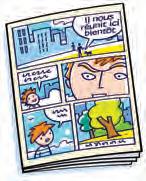
The tenor will probably be relatively formal, with students engaging with their peers in front of an audience, trying to persuade the adjudicator to their point of view. The language choices will therefore involve the use of rhetorical devices such as repetition, intensification, emotive vocabulary, rebuttals, and so on.
And while the mode is spoken, it will have features of the written mode in that the students will have had time to research, make notes, and prepare their arguments. The language choices will therefore reflect certain

















10 OXFORD UNIVERSITY PRESS Part 1 Language and Learning
LANGUAGESYSTEM Mode (Channel ofcommunicati on?') REGISTER Tenor (‘Whoisinvolved?’) F i le d ’tahW‘( hs a inepp n g ? ’ ) GENRE(socialpurpose) CONTEXT
FIGURE 1.4 The context as comprising two strata: genre and register
LANGUAGESYSTEM Mode [ Channelofcommunicati on?'] F i le d ’tahW‘( hs a inepp n g ? ’ ) REGISTER Tenor (‘Whoisinvolved?’)
FIGURE 1.3 The register (field, tenor, and mode) of a particular situation
(roles
FIELD (subject matter)
OXFORDUNIVERSITYPRESSSAMPLEONLY
features of the oral mode (intonation, gesture, facial expression, pausing, volume, fluency) as well as features of the written mode (resources for organising the flow of the text, careful structuring of the points, and so on).
Comparing the two texts below, identify how they differ in terms of the genre and its stages, along with the field, tenor, and mode. Provide evidence from the text.
Text A
Student 1: Okay. So we’re making … Where’s the diagram?
We’ve got magnets, two matchsticks … [checking off materials on the worksheet]
You read, I’ll count.
Student 2: OK, icy pole stick, two straws, one Blu-Tack, four wheels.
Student 1: One, put the two matches through the straws.
Uh one and the other …
Now, what’s next? [picks up some wheels to attach]
Student 2: No, no, I want to do it here, here.
It’s my turn, Dude. [reaches for the vehicle]
Student 1: Try the other one. [hands over the vehicle]
Cut the matchstick … I think we need a smaller one …
Student 2: That looks pretty schmick!
Text B
Yesterday our class made a model of a Maglev train to test attraction and repulsion using magnets.
First we constructed the model in pairs using two matchsticks, four wheels, Blu-Tack, an icy pole stick, and a bar magnet.
Then we tested our vehicle to see if it ran smoothly. Ours got a bit stuck so we had to adjust the wheels.
After that, we used another bar magnet to test whether our model went faster or slower when the two magnets attracted or repelled each other.
We found that our vehicle moved faster over one metre when the magnets were attracting each other.
THINK ABOUT IT
The class was engaged in a unit of work on earthquakes. The teacher had asked the students to write a story about earthquakes, expecting that they would explain how an earthquake happens. One student wrote the following:
Have you ever been in an earthquake? Well, I have. It was really scary. Our house started shaking and all my books fell off my bookcase and the cat ran under the house and we couldn’t get her out so we had to get some food to get her to come out. There have been a lot of earthquakes in Japan and New Zealand. I hope we don’t have another one here.
What does the text reveal about the student’s understanding of the genre, field, tenor, and mode required? How could the teacher have provided better guidance?
11 OXFORD UNIVERSITY PRESS CH a P ter 1 a Fun C tiona L Mode L o F Language
HAVE A GO!
OXFORDUNIVERSITYPRESSSAMPLEONLY
From the discussion above, it is clear that an appropriate model of language for today’s classrooms needs to go beyond what is offered by a traditional approach. We might conclude by considering, in Table 1.3, the differences between what a traditional model of language and a functional model offer.
in terms of grammatical classes (form), such as prepositions, pronouns, adverbs, conjunctions, and so on.
Describes language in terms of the relationship between the forms of language and their functions. An adverb, for example, can function to provide information about an action (He ran swiftly), to evaluate behaviour (She sang beautifully), to intensify a description (very interesting), to sharpen or blur (exactly right or somewhat pleased), to provide a comment (Luckily he escaped), and to structure a text (First, …, second, …).
oper ates at the level of the sentence and below.
describes the grammar of written language.
Sees language as a set of rules to be followed.
Focuses on grammatical accuracy.
Presents a decontextualised view of language.
uses a pedagogy that is typically concerned with labelling the parts of a sentence and manipulating these parts in exercises that are often inauthentic and unrelated to the classroom curriculum.
Has little to say about students’ language development over the years of schooling.
Deals with language from the level of the whole text through to the level of the word (and below), including the interaction between these levels.
Describes how written language differs from spoken language and offers a means of analysing visual and multimodal texts.
Sees language as a resource and seeks to extend students’ potential to make meaning more effectively.
Acknowledges the importance of accuracy but goes beyond correct structure to focus on meaning making.
Systematically describes how the choices we make in using language interact with factors in the context.
Draws on a scaffolding cycle that relates students’ knowledge about language to the kinds of meanings they need to make in the various areas of the curriculum and in their daily lives.
Describes language development from early childhood through to late adolescence in terms of the ways in which language is implicated in constructing increasingly complex meanings.
In this book, we will be focusing on how language is used to create different meanings in context rather than going into detail in relation to matters of accuracy in spelling, punctuation and sentence structure.
OXFORDUNIVERSITYPRESSSAMPLEONLY
CHAPTER SUMMARY
In this chapter, we have encouraged you to start thinking about the need for teachers to have a clear understanding about language and how their knowledge about language is significant in planning, teaching, assessing, and supporting students to achieve educational outcomes. We have explained how a functional approach provides us with an appropriate model of language for today’s classrooms. In particular, we have focused on how a functional model describes the relationship between context and the choices we make from the language system. We have observed how the context can be seen in terms of the broader social purpose (genre) and the more specific context of a particular situation (the register—a particular combination of field, tenor, and mode).
12 OXFORD UNIVERSITY PRESS Part 1 Language and Learning
TABLE 1.3 Differences between traditional and functional approaches traditiona L a PP roa CHF un C tiona L a PP roa CH describes language
FOR FURTHER DISCUSSION
1 How would you describe your current understanding of language? What kind of terminology do you use to talk about language? Do you feel it is sufficient to enable you to support students’ language and literacy development?
2 Looking at Table 1.3, take each of the points listed, and see if you agree with how they distinguish between a traditional and a functional approach.
3 Identify three different classroom activities or tasks and describe how they differ in terms of the genre being focused on (refer to Table 1.1), their field (e.g. topic), the tenor (e.g. the relationship between writer/speaker and reader/listener), and the mode (e.g. spoken or written) being used. Reflect on whether this helps you to clarify and predict the kind of language being used in such a context.
4 Cre ate a brief text about a cat. Keeping the field the same (‘felines’), change the genre (description? anecdote? procedure?), the tenor (relationship with the reader/viewer/listener), and the mode (written? spoken? multimodal?). What do you notice about how the language features change in relation to each of these factors?
5 If you are training to be a teacher, examine the details of one of your current assignments. What genre/s does the task require you to produce? Think about your previous experiences with texts of that type; for example, do you know how it should be structured? Is there a model available? What are the language demands in terms of field, tenor, and mode? If these are not clear, you might approach your lecturer and other sources of support. Many institutions have useful online resources to guide students as they complete assignments using different genres.
6 Dow nload a copy of the Australian Curriculum: English (see ‘Useful resources’ below) so that you can refer to it as you work with this book.
USEFUL RESOURCES
Australian Curriculum and Reporting Authority: The Australian Curriculum: English, version 9.0
https://v9.australiancurriculum.edu.au/f-10-curriculum/f-10-curriculum-overview
On this website you will find several documents relating to the Australian Curriculum: English, including the curriculum itself.
The Literacy Teaching Toolkit
https://www.education.vic.gov.au/school/teachers/teachingresources/discipline/english/literacy/ Pages/default.aspx
Excellent resource developed by the Victorian Department of Education and Training. Search for a topic such as ‘genre’.
REFERENCES
OXFORDUNIVERSITYPRESSSAMPLEONLY
Christie, F. (2005). Language Education in the Primary Years University of NSW Press. DEEWR (2008). National English Curriculum—Framing Paper ACARA.
Halliday, M. A. K. (2009). The Essential Halliday Continuum.
Halliday, M. A. K. (with Hasan, R.) (1985). Language, Context, and Text: Aspects of language in a social–semiotic perspective Deakin University Press. (Republished by Oxford University Press in 1989.)
Martin, J. R. (1985). Factual Writing: Exploring and Challenging Social Reality Deakin University Press.
Martin, J. R., & Rose, D. (2008). Genre Relations: Mapping Culture. Equinox.
13 OXFORD UNIVERSITY PRESS CH a P ter 1 a Fun C tiona L Mode L o F Language
