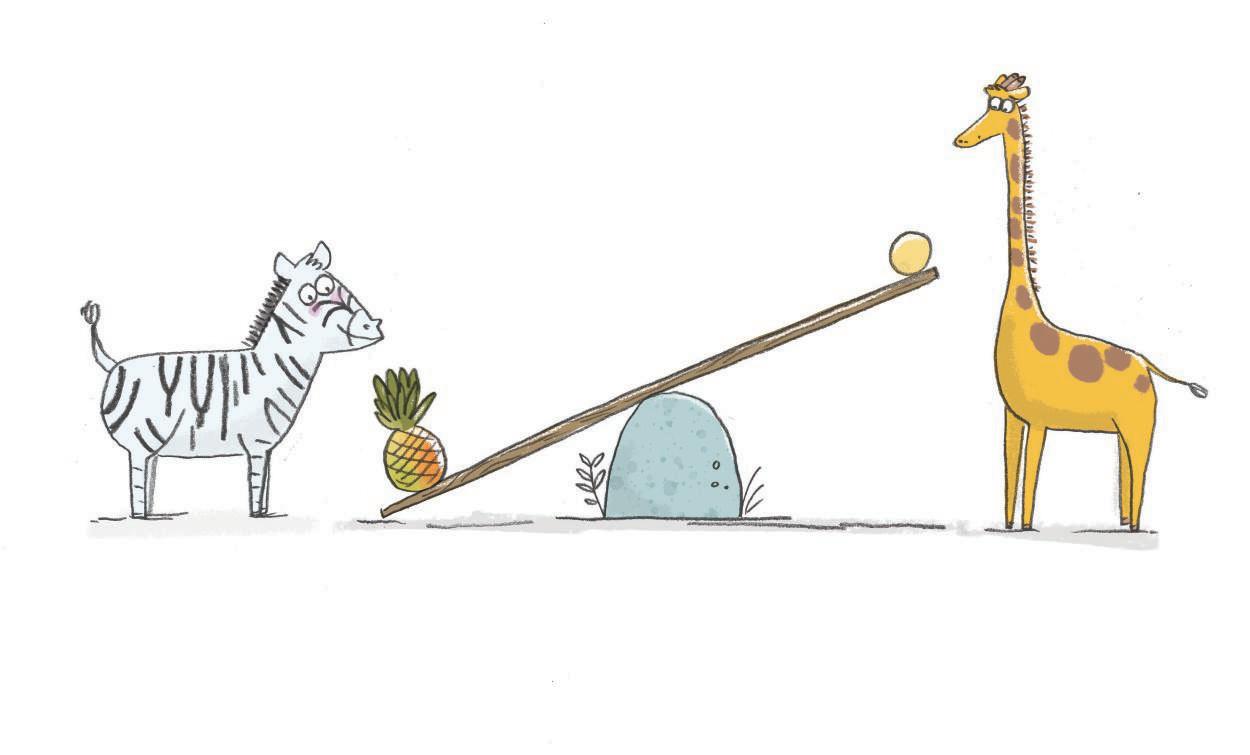
Children are learning to compare the mass of objects by seeing the objects on balance scales. They learn that, when compared, heavier items are lower on balance scales
Supporting children
Children might think that if an object is larger, it is heavier, and that if an object is smaller, it is lighter. You can handle different objects together and put them on a simple balance scale to predict and compare the weight of the objects. You can also place
MATHS LEARNING SAMPLE
This story is designed for an adult to read to a child. A child may be able to read the larger, decodable text.
SAMPLE
Written by Naomi Jones
Illustrated by Pauline Gregory
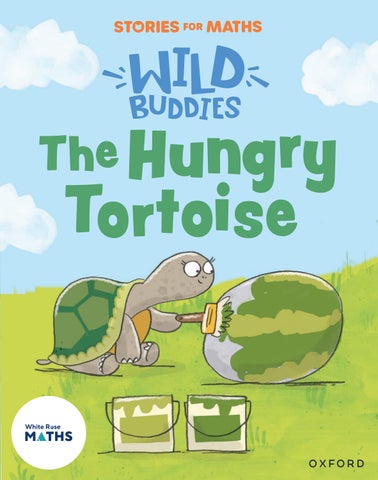
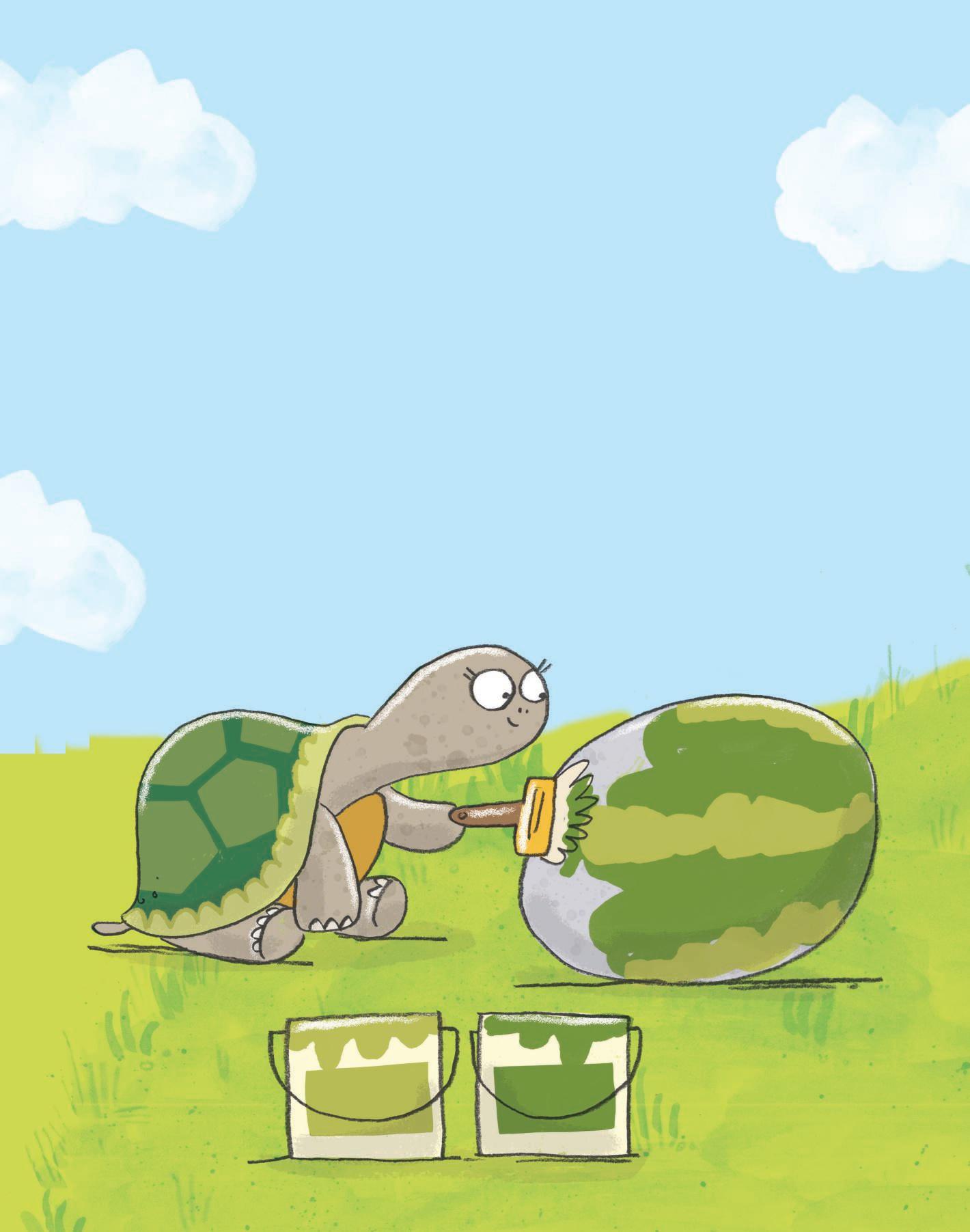
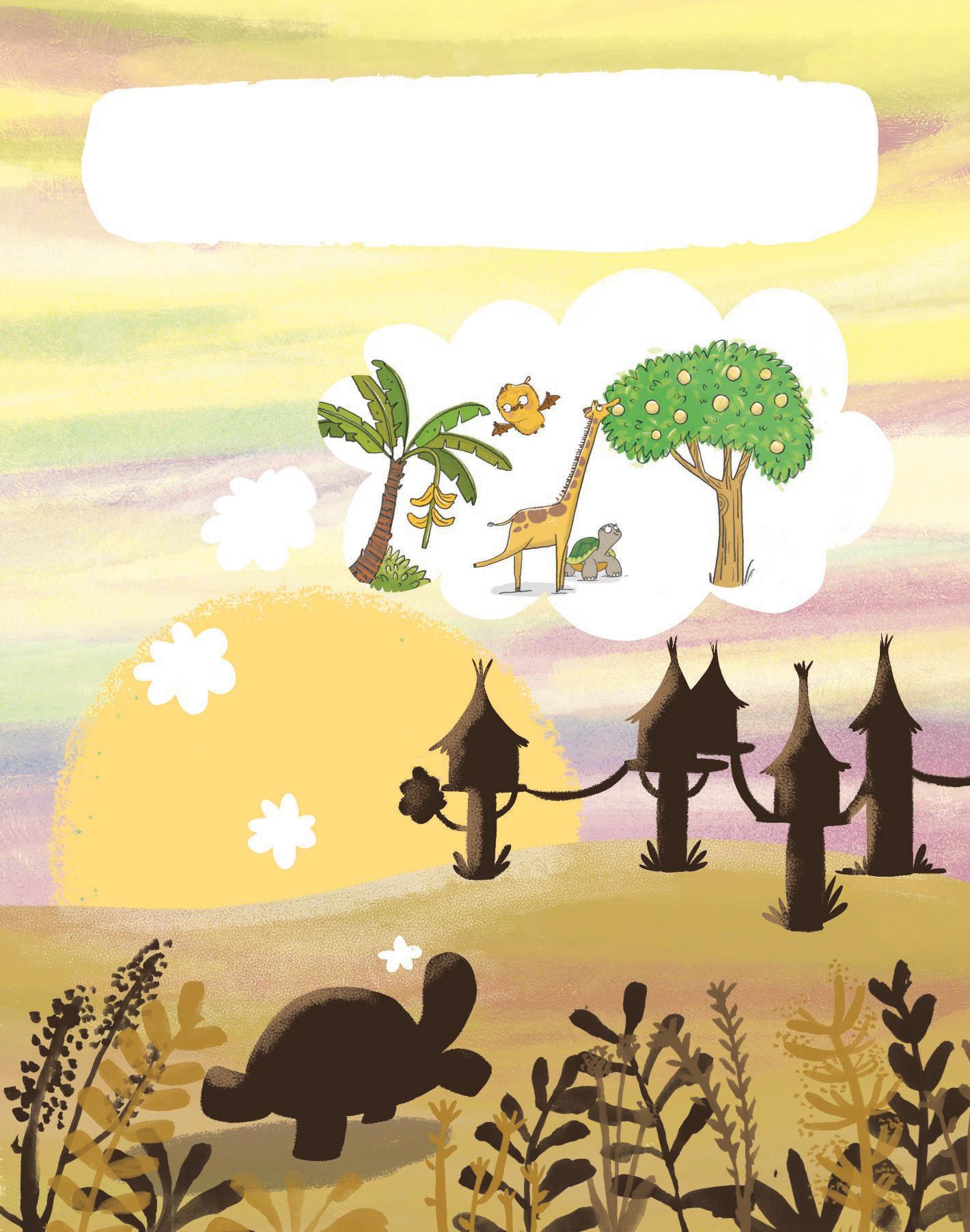
Sneaky the tortoise loved fruit.
SAMPLE
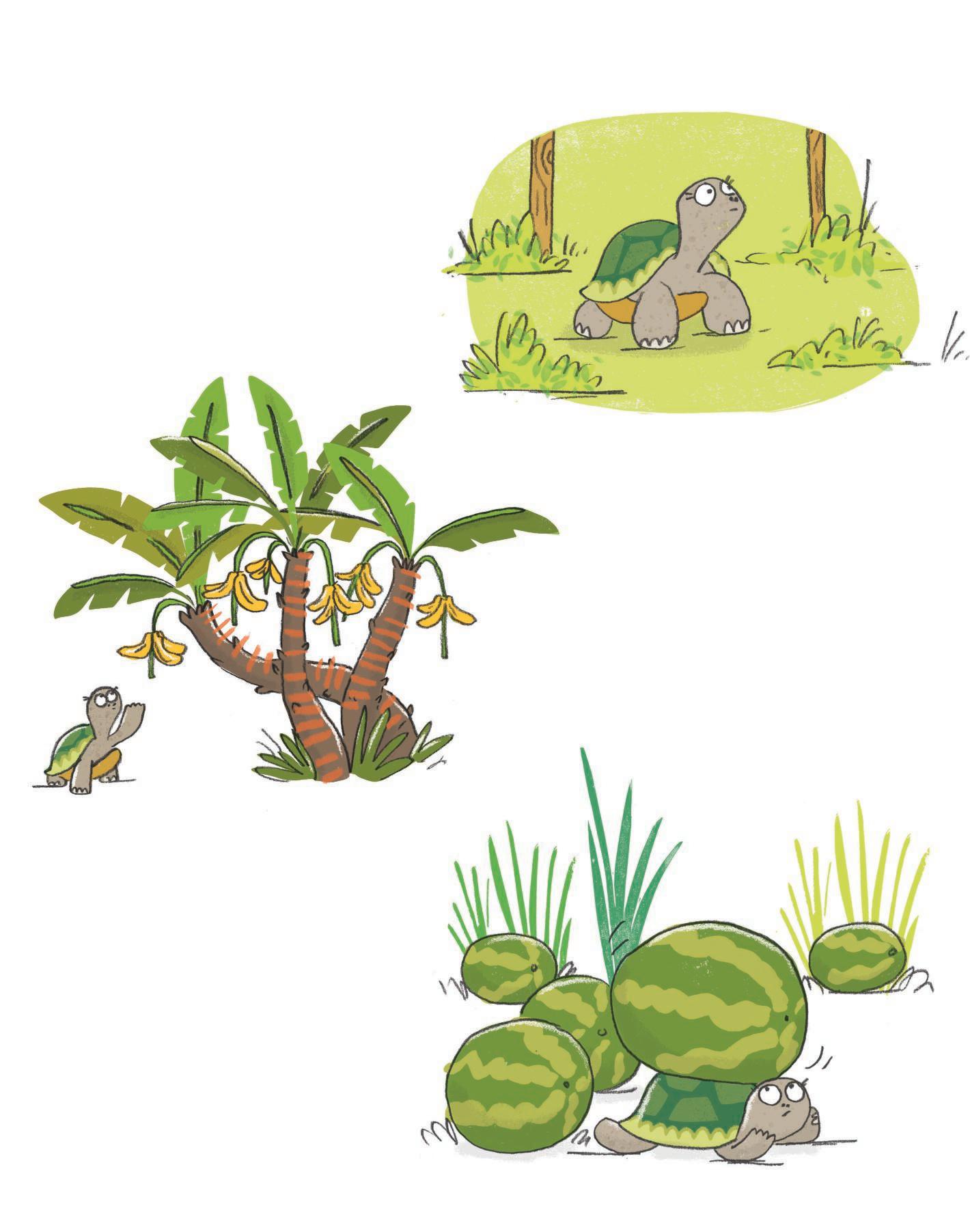
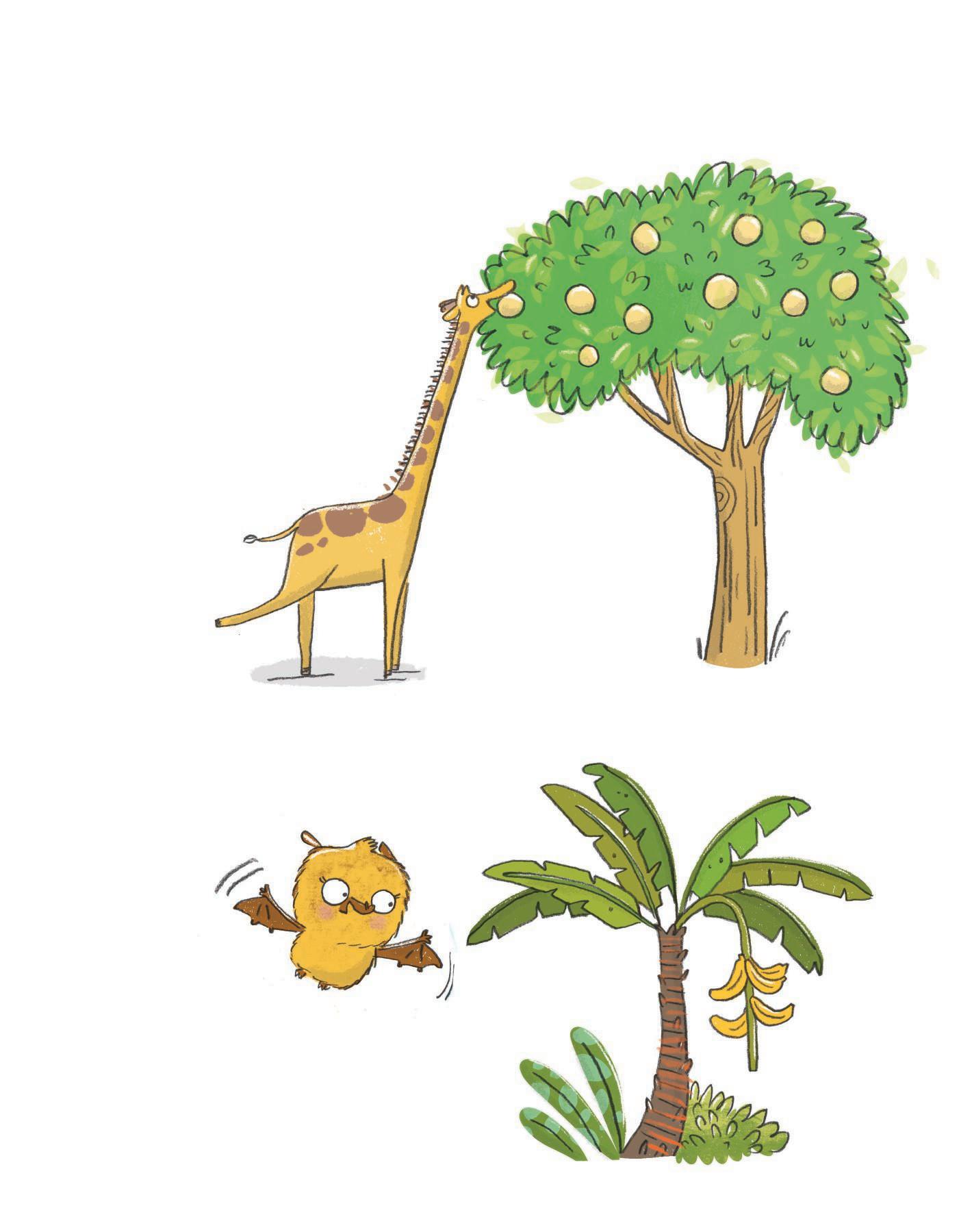
However, her favourite fruit was either too high up for her to reach ...
... or was too heavy for her to carry by herself.
‘Getting fruit is hard work,’ Sneaky thought. Then she had an idea. ‘Maybe I can trick some other animals into getting some fruit for me.’
So, Sneaky set off for Canopy City.
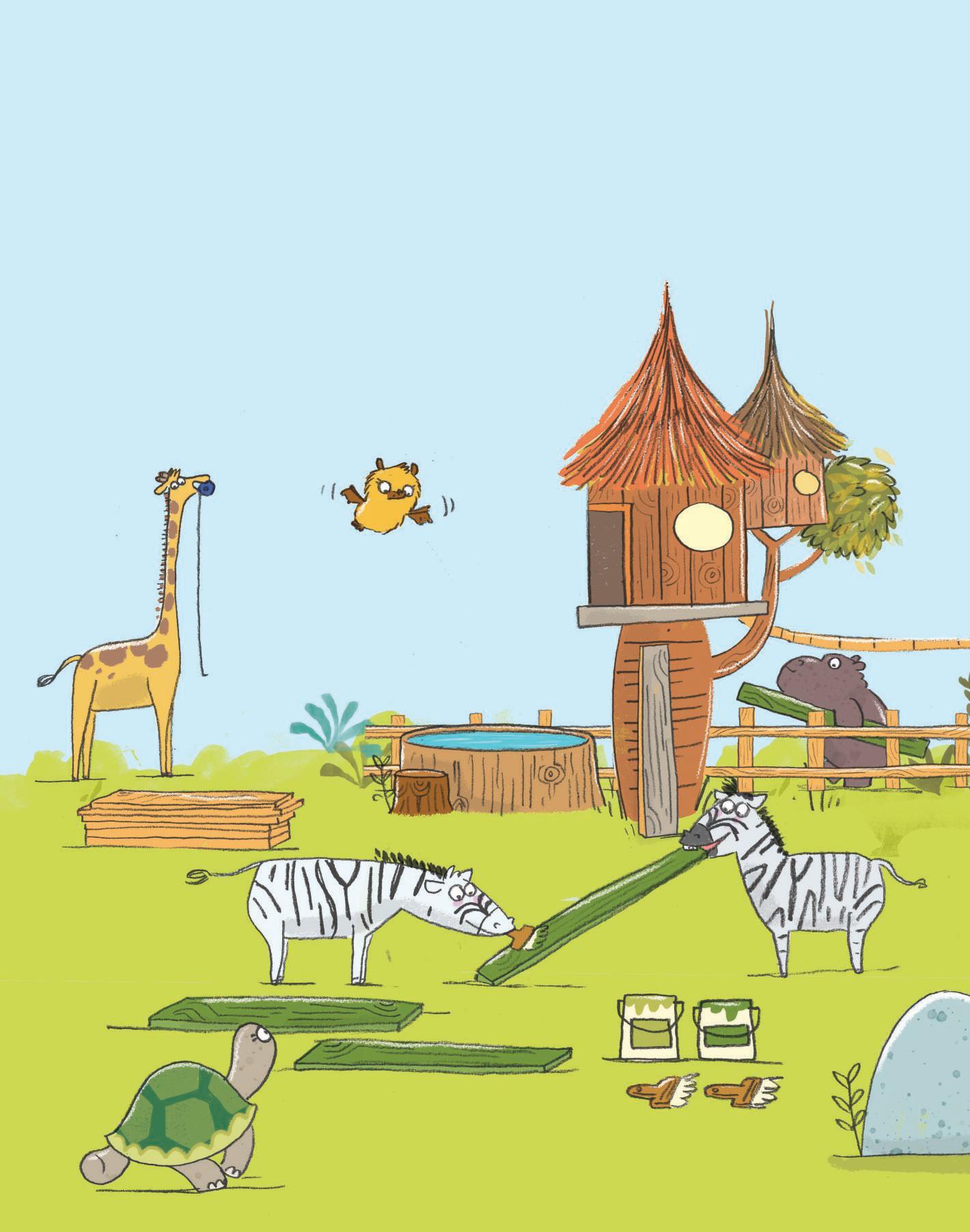
Sneaky met Gus, Meg, Jazz, and Zig. They were helping Herb the hippo fix his fence.
‘Hello!’ said Sneaky. ‘Would you like to play a game?’
‘That sounds like a good idea,’ said Herb. ‘We could do with a break.’
Gus Meg
‘We each have to look for a piece of fruit,’ said Sneaky. ‘The winner will be the one who finds the fruit which is heavier than the rest.’
‘Does the winner get a prize?’ asked Meg.
‘Yes!’ said Sneaky. ‘They get all the fruit.’
This will be fun.
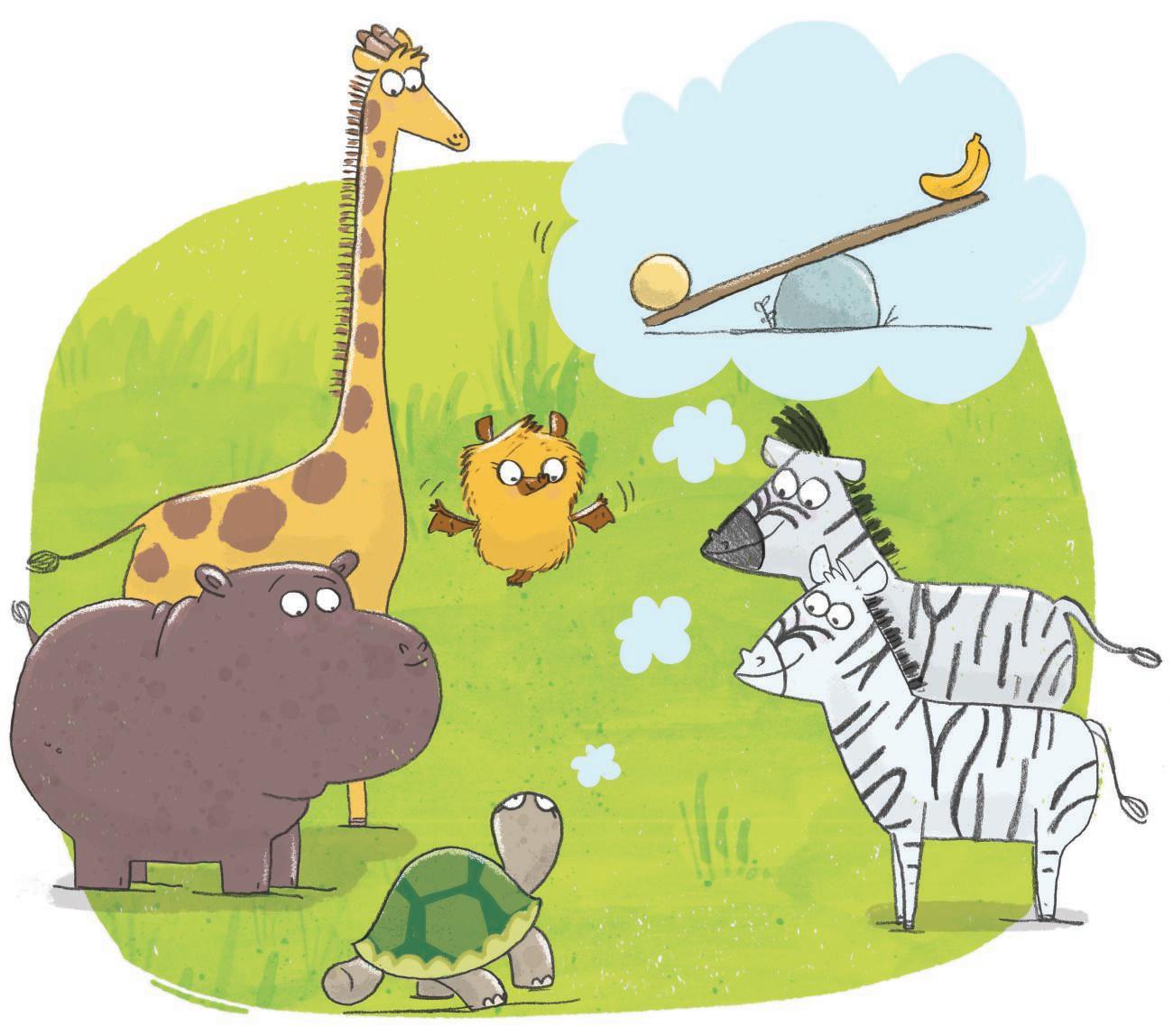
Look at the balance scale Sneaky is thinking about. Is the grapefruit heavier or lighter than the banana?
All the animals went into the forest to look for fruit.
Gus picked a grapefruit.
Meg found a banana.
SAMPLE
Talking with children about maths concepts can help deepen their understanding and grow their mathematical skills. Children also benefit from hearing and using key maths vocabulary in multiple contexts. Some suggestions to support children in learning through talk have been included in this story.
The following words are highlighted in bold in the book.
balance or balance scale NOUN
(pages 5, 12, 13, 14, 15, 16, 17, 18, 19, 24) a device for weighing things
Great Clarendon Street, Oxford, OX2 6DP, United Kingdom Oxford University Press is a department of the University of Oxford. It furthers the University’s objective of excellence in research, scholarship, and education by publishing worldwide. Oxford is a registered trade mark of Oxford University Press in the UK and in certain other countries
The moral rights of the author have been asserted First published 2025
All rights reserved. No part of this publication may be reproduced, stored in a retrieval system, transmitted, used for text and data mining, or used for training artificial intelligence, in any form or by any means, without the prior permission in writing of Oxford University Press, or as expressly permitted by law, by licence or under terms agreed with the appropriate reprographics rights organization. Enquiries concerning reproduction outside the scope of the above should be sent to the Rights Department, Oxford University Press, at the address above.
on any acquirer.
Acknowledgements
Written by Naomi Jones
Illustrated by Pauline Gregory
The publisher wishes to thank White Rose Maths, MK Connolly, and Voice 21 for their help in producing this book.
2. You talk about how light something is when you are talking about how little it weighs.