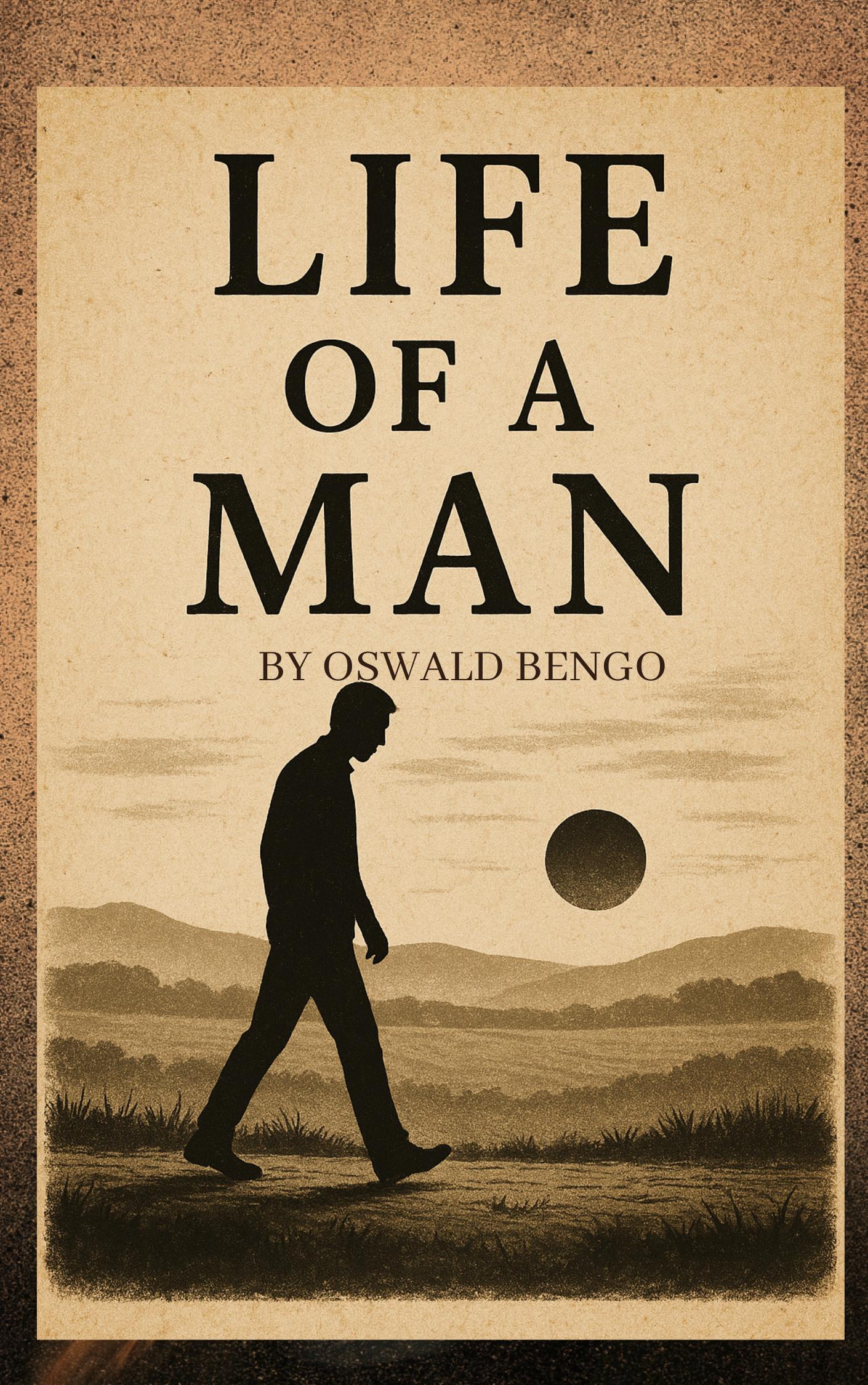
Life of a Man
Prologue: The First Breath
The universe began not with a bang, but with a gasp A sharp, cold intake of air that shocked the tiny lungs into a rhythm they would maintain for decades In a room washed in soft, sanitized light, a cry echoed not of sorrow, but of sheer, undeniable existence He was here He had a name: Samuel For now, it was his only possession The story of a man is not written in years, but in breaths: the first desperate one, and all the millions that follow, each carrying a moment, a memory, a fragment of a life
Samuel’s world was small, but to him, it was an empire Its borders were the gnarled oak tree at the end of the lane and the whispering stream behind his house His maps were drawn in the dirt with a stick, his treasures were smooth stones and bottle caps He learned the fundamental laws of life here: that skinned knees heal, that a mother’s voice can soothe any fear, and that the scent of rain on dry earth is a kind of magic
He was a knight, a explorer, a king His father’s shoulders were the highest mountain, and his mother’s laughter was the sun He did not yet know about mortgages, heartbreak, or deadlines He knew about the profound importance of catching a frog and the deep betrayal of a melting ice cream cone In this small atlas of his world, every day was an expedition, and every discovery was monumental
Chapter 1: The Atlas of a Boyhood World
Chapter 2: The Unraveling
Adolescence arrived not as a gentle tide, but as a earthquake. The familiar map of his boyhood world cracked and shifted. His voice betrayed him, his limbs grew clumsy, and a new, restless energy coursed through him. The simple truths of childhood unraveled.
He discovered the searing heat of insecurity, the dizzying high of a first crush, and the bitter taste of social failure. Friendships became complex, layered with competition and unspoken loyalties. The house that was once a castle now felt like a cage. He had furious arguments with his father, whose wisdom suddenly seemed antiquated, and silent misunderstandings with his mother, who couldn't possibly understand.
He spent hours in his room, music pounding, writing terrible poetry he thought was profound He was a ship in a storm, desperate for a lighthouse, all the while refusing to look at the shore He was learning the most painful lesson of youth: that he was both utterly unique and completely, agonizingly ordinary
Chapter 3: The Forge
His twenties were a forge He left home, armed with a diploma and a dangerous amount of confidence The world was no longer a playground but a workshop, and he was the raw material He took a job he didn't love to pay for an apartment that was too small. He learned to cook pasta five different ways and to unclog a sink with a coat hanger.
He fell in love, truly, for the first time It was electric and all-consuming, a fire that warmed him to his core And when it ended, it left him ashen and hollow, teaching him that a heart could feel physical pain He made friends in cramped bars, their bonds sealed with cheap beer and shared dreams They talked of changing the world, their ambitions burning bright in the night
He made colossal mistakes trusted the wrong people, spent money he didn't have, stayed in a job that shrunk his soul But with every failure, a little more of the boy was tempered away, and a little more of the man was hardened into place He was being forged, not into something perfect, but into something strong ---
Chapter 4: The Pillars
One day, he looked around and realized the frantic scrambling had slowed He was in his thirties The forge had cooled, and in its place, he was building something He found work that didn't just pay the bills but offered a sliver of purpose He met a woman whose quiet strength was more compelling than any fiery passion of his youth Her smile felt like coming home
They built a life together They bought a house, its empty rooms echoing with possibility They filled it with a dog, with books, with arguments over paint colors, and with the deep, comfortable silence of mutual understanding
Then came the child.
Holding his daughter for the first time, Samuel felt a tectonic shift within himself. Here was a vulnerability so absolute it rewrote his entire definition of strength. The weight of her tiny body in his arms was the weight of the world, and he welcomed it. He had become a pillar a husband, a father, a provider. The freedom of his youth was gone, replaced by a responsibility that was, to his surprise, more liberating than any freedom he had ever known.
The forties were a long, straight road under a wide sky. The frantic energy of building had settled into the steady hum of maintenance. He drove a car packed with soccer gear and grocery lists. His conversations were about school districts, retirement funds, and replacing the roof.
He attended his father’s funeral, and in the quiet aftermath, he felt the baton pass into his own hands. He was now the patriarch, the keeper of the family stories. His own body began to whisper its limitations a lower back that ached in the morning, a prescription for reading glasses.
This was the middle passage, not always exciting, but deeply meaningful It was in the small, uncelebrated moments: teaching his daughter to ride a bike, holding his wife’s hand during a movie, sharing a beer with a friend who had also lost his hair The grand ambitions of his youth had mellowed into a profound appreciation for a quiet, loving, ordinary life He was no longer trying to conquer the world; he was nurturing his small, beautiful corner of it
Chapter 6: The Harvest
Chapter 5: The Middle Passage
The house was quiet again His daughter was at university, and the silence she left behind was a new, strange music Samuel, now in his sixties, had entered the season of harvest
He looked back on the sprawling field of his life and saw not a single, glorious crop, but a patchwork. There were areas of stunning abundance his long marriage, his daughter’s character, the respect of his colleagues. There were also patches where the yield was thin friendships he’d let wither, dreams he’d left unplanted. But he accepted it all. The harvest was what it was.
He had more time now He took long walks He started gardening, feeling a kinship with the slow, patient growth of things. He found a new tenderness for his wife, their love no longer a blazing fire but the deep, enduring warmth of embers. He was reaping what he had sown: the wisdom of patience, the comfort of ritual, the joy of a grandchild’s laugh.
Chapter 7: The Fading Light
The world grew softer at the edges. The sharp, urgent colors of his youth had muted into the gentle hues of a sunset. His steps were slower, his body a familiar, if sometimes frustrating, companion. Samuel spent his days in a comfortable armchair by the window, the sunlight warm on his knotted, veined hands.
He was not afraid The frantic noise of life had faded, leaving behind a clear, quiet signal He remembered the feel of cool grass under his bare feet as a boy. He remembered the scent of his wife’s hair on their wedding day. He remembered the crushing, beautiful weight of his newborn daughter.
His life was no longer a question to be answered or a mountain to be climbed It was a story A long, imperfect, beautiful story He had been a son, a boy, a rebel, a lover, a husband, a father, a friend He had built and stumbled and loved and lost
Epilogue: The Last Breath
And when the final breath came, it was not a gasp, but a sigh. A soft release. A story, fully told, being gently closed.
It was not an end, but a completion The life of the man was over But the story, like all good stories, lingered in the air long after the last word was spoken, a quiet echo in the hearts of those who had listened
