
How Governors Failed To Deliver For Their Parties In 2023 Presidential Election
Others Did Not Deliver
Votes, Not Govs Determine Electoral Success
THE 2023 general elec ons exposed major cracks in the long-held belief that Nigerian governors can automa cally “deliver” their states to their par es in presiden al contests.
Despite their control of state structures, resources and poli cal machinery, a significant number of governors watched their states vote against their preferred presiden al candidates.
OSUN DEFENDER reports that the 2023 elecons were conducted in two phases, with presidenal and Na onal Assembly polls held on February 25, followed by governorship and state assembly elecons on March 18.
While the governorship polls largely favoured incumbents and ruling par es at the state level, the presiden al elec on told a different story.
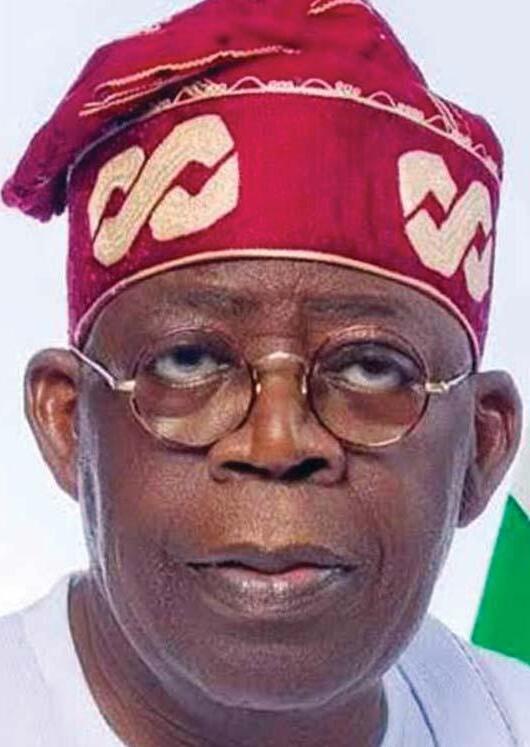
President Bola Tinubu of the All Progressives Congress (APC) won the presidency with 8.79 million votes, but secured victories in only 12 states. In contrast, Peter Obi of the Labour Party (LP) won 11 states and the Federal Capital Territory, while A ku Abubakar of the Peoples Democra c Party (PDP) also carried 12 states, reflec ng a deeply fragmented poli cal landscape.
Findings by OSUN DEFENDER revealed that in at least 19 states, governors failed to deliver their states to their party’s presiden al candidate.
Results obtained from the Independent Na onal Electoral Commission (INEC) showed that more than half of the country’s governors were unable to align state-level power with na onal electoral outcomes, par cularly in the presiden al race.
Some of the most striking examples occurred in APC-controlled states. In Lagos, despite Gover-
nor Babajide Sanwo-Olu’s firm grip on the state and the APC retaining the governorship, Peter Obi defeated Tinubu in the presiden al poll, driven largely by youth mobilisaon and urban dissa sfacon. The APC presiden al candidate, for instance, lost his Ikeja Local Government to the Labour Party with 30,004 to his 21,276 votes.
Similar outcomes were recorded in Imo, Ebonyi, Plateau, Nasarawa, and Kano, where APC governors could not overcome regional sen ment internal party fractures, or strong local poli cal movements.
PDP governors were not exempt. In Rivers, Governor Nyesom Wike’s dispute with the PDP leadership and his refusal
to support A ku Abubakar contributed to Obi’s presiden al victory in the state. In Oyo, Governor Seyi Makinde won reelec on comfortably, yet Tinubu carried the state in the presiden al poll, underscoring the separa on between local loyalty and na onal vo ng behaviour.
Furrher analysis by OSUN DEFENDER indicated that the Labour Party
surge further weakened governors’ influence, parcularly in the South-East, South-South, and parts of the North-Central.
Economic hardship and insecurity also played a role. In several northern states, voters punished ruling par es over fuel scarcity, infla on, naira redesign challenges, and persistent security crises, o en disregarding the preferences of si ng governors.
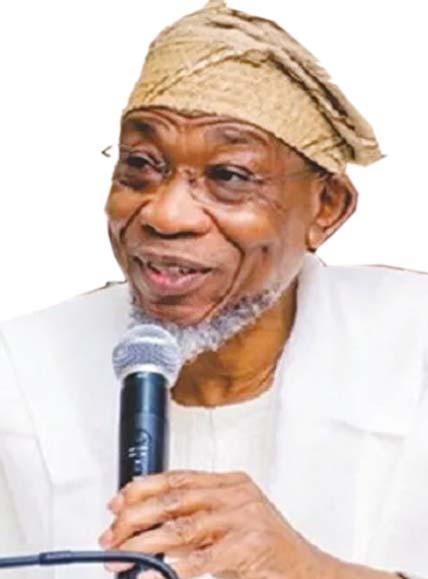
Popular Votes, Not Govs Determine Electoral Success – Aregbesola Former Osun State governor and ex-Minister of Interior, Rauf Aregbesola, also captured this reality during the week when
Sodiq Yusuf
MONDAY, FEBRUARY 02, 2026
Osun Assembly Alleges Diversion Of N50bn LG Funds By APC Chairmen
THE Osun State House of Assembly
has raised the alarm over what it described as the illegal handling and diversion of billions of naira belonging to local governments in the state by All Progressives Congress (APC) Yes/No chairmen, allegedly facilitated by the Minister of Marine and Blue Economy, Mr Gboyega Oyetola and the United Bank for Africa (UBA).
The Assembly al alleged that about ₦50 billion in local government funds had been illegally disbursed, while local government workers across the state con nue to endure unpaid salaries and prolonged neglect.
Addressing a press conference yesterday, Speaker of the Assembly, Adewale Egbedun, condemned what he called “illegal payments and handling of billions of naira from Osun local government fund” by the APC chairmen, describing the situa on as a grave viola on of the law and a betrayal of grassroots governance.
According to the assembly, payments allegedly made under the direc ve of Mr Oyetola included “₦25m payment to each of the 30 illegal APC chairmen; ₦12m payment to each of the 30 illegal APC vice chairmen; ₦10m payment to each of the 332 APC councillors; ₦130m each to selected tradi onal rulers in Osun State; and ₦13bn legal
•Accuses Oyetola, UBA Of Complicity
fees payment to Layonu and Co., lawyers represen ng the illegal chairmen and councillors as 15% of deposited funds.”
Reaffirming the alleged illegality of the forceful occupa on of council secretariats by poli cians whose tenure had expired, the Assembly lamented that despite these alleged payments, “not one naira has been paid in the last 12 months as salaries of local workers by these illegal APC chairmen.”
It listed unpaid workers to include “primary school teachers – zero; nurses and other healthcare workers – zero; local government civil servants – zero; tradi onal rulers not favoured by Gboyega Oyetola – zero; re rees –zero.”
The lawmakers further alerted the public to what they described as fresh plans to divert more funds, sta ng, “Even more disturbing are reports before this House that plans are allegedly underway to disburse another Fi y Billion Naira (N50B) of LG funds for poli cal purpos-
es, disguised as project funds, while governance at the grassroots con nue to suffer.”
The Assembly declared that it “will not tolerate the diversion of public funds meant for salaries, healthcare, educa on, and community development into private hands to fund the elec on of a parcular poli cian in Osun State.”
It also warned that all illegally handled funds would be recovered and that those involved would face legal consequences.
The Assembly cauoned that UBA faced reputa onal damage, while alleging that Mr Oyetola “breached the law by orchestra ng illegal handling of Osun LG funds.”
According to the House, “any bank that releases Local Government funds on the instruc ons of unauthorised persons, regardless of who issued such instruc ons, acts unlawfully and exposes itself and its officers to criminal liability,” stressing that “illegal disbursement of
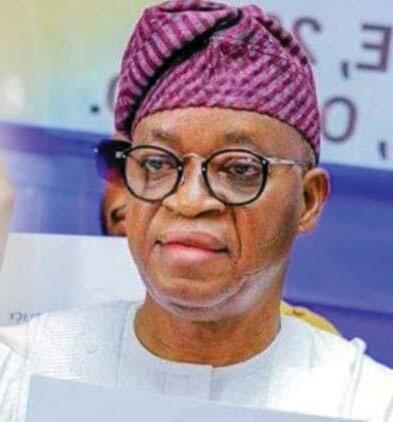
•Oyetola public funds is fraudulent. It is not banking prac ce. It is not poli cal discreon. It is a crime.”
It further placed the interna onal community and financial regulators on no ce, sta ng that if UBA con nued on the same path, it risked “reputa onal damage and legal consequences that go far beyond Osun State and Nigeria.”
The House commended Governor Ademola Adeleke for what it de-
scribed as an “extraordinary sacrifice” in ensuring payment of salaries to teachers, healthcare workers and local government staff over the past 12 months, despite alleged withholding of local government alloca ons.
While acknowledging the governor’s effort, the Assembly warned that such sacrifice “must not become an excuse for criminal diversion of funds meant for salaries of Osun State Local Gov-
ernments.”
Reaffirming its constu onal powers, the Assembly maintained that “financial autonomy does not invalidate Sec on 7 of the Cons tu on,” adding that the authority of State Houses of Assembly to regulate local government administra on “is expressly recognised under Sec on 7 of the Cons tu on of the Federal Republic of Nigeria.”
The lawmakers also expressed concern that individuals whose elecons were nullified and whose self-awarded tenure expired on October 22, 2025, were s ll occupying council secretariats.
“These individuals have no legal mandate; they are not recognised by law, by the courts, or by the Cons tu on,” the Assembly said.
The Assembly concluded by insis ng that “the law is the law; no individual is above it; no bank is immune from it; no poli cal interest can override it,” stressing that democracy demands that “nobody is above the law.”
Osun LG Chairmen, Career Heads Yet To Align Despite Resumption
DESPITE the resumpon of members of the Osun State chapter of the Na onal Union of Local Government Employees (NULGE) a er nearly a year of strike, career heads in the local governments have
How Governors Failed To Deliver For Their Parties...
•Continued from page 1
he argued that elec ons are won by the electorate, not governors.
Speaking on the state of party poli cs at an event in Abuja recently, Aregbesola warned political par es against overes ma ng the power of incumbency and underes ma ng voter agency, stressing that public sen ment now plays a greater role than elite direc ves.
His words, “I used the opportunity to remind the ruling APC that elecons must be free and fair, because it is the people, not poli cal power brokers, who should decide who wins.
“The 2023 elec ons taught us an important lesson: governors and other poli cal bigwigs do not guarantee electoral victory. The APC’s presiden al candidate was declared winner, yet he lost his ward, his local government, and his state. That alone tells us that controlling a state does not
automa cally translate into votes.
“In the Southwest, the APC governed all but one state, but s ll could not exceed 55 percent of the vote, with other par es sharing the rest. In the Southeast, the outcome was even more revealing, the APC managed just 5.8 percent of the total votes.
“The message is clear: elec ons are won by the people, not by governors. All we are asking of those in charge of the process is simple, commit to a free and fair elec on, and let the people’s choice speak for itself,” Aregbesola noted.
While the comments have con nued to generate controversies, the 2023 experience showed that while governors remain powerful actors, their ability to impose presiden al outcomes has weakened, challenged by voter awareness, technology, economic pressures, and grassroots movements.
not been working with the council officials elected under the All Progressives Congress (APC) pla orm.
OSUN DEFENDER reports that Osun NULGE leadership on December 30, 2025, directed its members to resume work from January 5, 2026, bringing to an end an 11month-long strike that paralysed ac vi es across local government secretariats in the state.
A statement signed by the Osun NULGE President, Dr Nathaniel Ogungbangbe, said the decision followed “a series of security council mee ngs to deliberate on security guarantees and the successful resump on of work at the grassroots.”
It would be recalled that ac vi es at local government secretariats across Osun State were grounded on February 17, 2025, when the union directed its members to withdraw their services due to the crisis that erupted following the Court of Appeal judgement.
NULGE said the acon was taken to prevent its members from becoming vic ms of a power tussle involving chairmen elected during the October 15, 2022 local government elec ons conducted under the administra on of former Governor Adegboyega Oyetola and the leadership of the Peoples
Democra c Party in the state.
The workers who stayed at home for 11 months returned on January 05. However, the resump on was marred with allega ons and counter-allega ons by the APC council chairmen and the Osun NULGE leadership over alleged the of official documents.
While the APC council chairmen announced that three local government staff were apprehended while allegedly a empting to remove documents from secretariats, the NULGE leadership denied the allega on and accused the APC council officials of harassing the local government workers.
The suspects were reportedly arrested at Boluwaduro Local Government headquarters in Otan Ayegbaju and Egbedore LGA Secretariat in Awo.
Also, the lawmaker represen ng Ede North, Ede South, Egbedore and Ejigbo Federal Cons tuency, Bamidele Salam, condemned the alleged harassment, unlawful deten on, and public humilia on of one of the local government workers who was arrested.
Salam describes the role of the Nigerian Police Force in the incident as shameful, despicable, and a gross viola on of the cons tu on.
Meanwhile, OSUN DEFENDER reliably gathered that since the workers resumed work, the relaonship between the APC council chairmen and the heads of local government administra on has been frosty.
Sources in some of the local governments in the state described the rela onship between the poli cal heads and the local government career officers as hos le.
A source in a local government in Osun Central who does not want his name in print for fear of a ack, said the duo in his council area have not been exchanging correspondence.
He also said that what transpired between the APC chairmen and local government workers on the day of resump on further strained the rela onship between the poli cal office holders and local government staff
He said, “The rela onship has not been good and it may be like this for some me. Our leader is not working with the council chairman. Everyone is just coming to work and closing at the end of the day.
“The arrest and humilia on of some local government workers by the APC chairmen also contributed to the situaon. We are standing in
solidarity with our people and there are some workers who s ll feel that the council officials are imposing themselves here.
“The chairman and his people have not been exchanging correspondence. It is just like a cat-andmouse rela onship. We resumed back to work but I can’t say things are going as normal in our council.”
An aide to one of the APC chairmen in a local government at Osun West Senatorial District while speaking with OSUN DEFENDER under condi on of anonymity, said the lack of local government alloca ons might be the reason for the inac ve relaonship between the duo.
“You know the local governments cannot access the alloca on due to the ongoing court cases between the state government and the APC chairmen. I think this is the reason why there has been less communica on and work between the chairman and the leadership of the council.
“There is li le to do now that we don’t have the money. It is only when we have full access to our alloca ons that work will begin and everyone will be involved. Mr Chairman and the head of administra on have a good rela onship and they will con nue to do so,” the aide said.
Sodiq Yusuf
LONG before our current season of twists, turns, and tales of the unexpected, Nigeria has grappled with the meaning and limits of “loyalty” within its poli cal framework. The ques on is neither new nor incidental; rather, it sits at the very heart of the country’s poli cal evolu on and recurring instability.
Nigeria’s poli cal history is, to a considerable extent, shaped by debates and disputes over how loyalty is interpreted and to whom or what it should be owed. Notable examples include Dr. K. O. Mbadiwe’s break with Dr. Nnamdi Azikiwe in the 1950s, as well as the personal and ideological ri within the Ac on Group that culminated in the declara on of a State of Emergency in the Western Region in 1962. That crisis set off a chain of events that tragically culminated in the January 15, 1966 coup d’état. These episodes illustrate that loyalty, when misunderstood or weaponised, can become a destabilising force rather than a unifying one. By its very nature, poli cs mirrors the complexity of human existence. Consequently, the ques on of loyalty and the o en contrived defini on of “disloyalty” reappears with predictable
“When leaders and followers alike understand that allegiance is owed to ideas rather than individuals, dissent becomes constructive rather than destructive”

Fidelity To Principles
regularity. Former Lagos State Governor Babatunde Fashola once captured this dilemma poignantly when he remarked, “May our loyalty never be tested.” It was an acknowledgment of the moral and poli cal minefield that loyalty can become when it is detached from principle.
It is against this backdrop that the recent asser on by a former governor of Osun State, Ogbeni Rauf Aregbesola, deserves careful a en on. Speaking at a public gathering, he declared: “Where I come from, loyalty is to a cause, not to personali es.” This is an important clarifica on, par cularly within the context of a poli cal system largely stripped of ideological depth. While the 1962 Acon Group crisis was deeply flawed, it nonetheless had a discernible ideological founda on. Today, such clarity is often absent, leaving loyalty vulnerable to manipula on by transient interests and
entrenched godfatherism. Aregbesola’s posi on is fundamentally sound. The bedrock of poli cs ought to be fidelity to philosophy, cons tu onalism, and the common good not blind a achment to individuals. Loyalty anchored in ideology and principle is what enables socie es to make forward progress, elevate standards of governance, and improve the wellbeing of all strata of society, especially the most vulnerable. Without this grounding, poli cs becomes li le more than a contest of personali es, devoid of purpose or direc on.
Poli cs without programmes cannot develop a society. There must be a coherent set of principles translated into ac onable programmes of development. When the Ac on Group in the early 1950s produced its manifesto centred on making “life more abundant,” it was anchored in a clearly ar culated ideological vision. The impact was transforma ve, se ng in mo on policies and
The Discourse
ins tu ons that reshaped educa on, social welfare, and governance in ways that remain influen al to this day. The lesson is clear: manifestos and ideological posi ons must not only be developed but con nually refined to respond to changing societal needs.
Aregbesola’s own tenure as a twoterm governor of Osun State reflects this principle-driven approach. His adopon of a social democra c framework informed wide-ranging interven ons across educa on, infrastructure, social protec on, and governance reforms. These achievements endure despite attempts at revisionist distor ons of historical sequence. The emphasis was consistently on people-centred governance, placing collec ve advancement above personal poli cal comfort.
Crucially, loyalty to principles also provides a moral compass during moments of poli cal tension and transion. When leaders and followers alike understand that allegiance is owed to ideas rather than individuals, dissent becomes construc ve rather than destruc ve. It allows for internal debate, reform, and renewal without descending into fac onalism or betrayal narraves that have so o en weakened Nigeria’s poli cal par es and ins tu ons.
Impact Of The Proliferation Of Radio Stations On Professionalism In Nigeria
RADIO is the process of sending and receiving messages through the air, using electromagne c waves. Radio is one of the most important means of communica on. Radio remains one of the most influen al and accessible forms of mass communica on in Nigeria. The history of Radio dates back to the 19th Century when Samuel Morse invented the electric telegraph. According to Bi ner (1989), Gugielmo Marconi built on this Inven on to produce electromagne c impulses which would be sent through the air without the use of wires. Thus, in 1866, signals were transmi ed from England to America without wires. In 1988, Heinrick Hertz, working on the electromagne c theory propounded earlier by a Bri sh scien st James Clark Maxwell, produced the first radio waves.
According to report, the advent of radio broadcast in Nigeria began with introducon of the wired system called Radio Distribu on or Radio re-diffusion by the Bri sh Broadcas ng Corpora on (BBC). In this process, wires were connected to loudspeakers installed in houses of subscribers. The wireless system was introduced by the BBC in 1930. The wired broadcas ng services were commissioned in Lagos on December 1, 1935, and two relay sta ons were located at Ikoyi and the Glover Memorial Hall, both in Lagos. The main duty of the relay was to carry BBC programmes, with just one hour le for local programmes featuring news, entertainment as well as local announcements. Other sta ons were later opened at Ibadan in 1939, Kano 1944, and Kaduna, Enugu, Jos, Zaria, Abeokuta, Ijebu Ode, Port Harcourt and Calabar in the subsequent years.
The Radio Diffusion Services (RDS) later became the Nigerian Broadcas ng Service (NBS) and was basically concerned with sa sfying the programme needs of its audience, with the tradi onal role of informing,
By Funmi Adekoya-Ojo, PhD
educa ng and entertaining the audience members. The NBS upheld the role of impar ality; the colonial government, on the other hand, did not give all the Nigerian na onalists the opportunity to react to accusa ons levelled against them. Against this backdrop, the Nigerian Broadcas ng Corpora on was established on April 1, 1957, to replace the NBS. The establishment of NBC marked the first public broadcas ng corpora on established in any Bri sh colonial territory. But not sa sfied with the new arrangements, the Western Regional Government established its radio and television sta on in 1959. Eastern Nigeria followed in 1960 on the day Nigeria had its poli cal independence from Britain. Northern Nigeria followed suit in 1962. Today, virtually all the states own and operate both radio and television sta ons.
With the liberaliza on of the media industry, there has been a significant increase in the number of radio sta ons across the country. While this expansion has improved informa on dissemina on, entertainment, and civic engagement, it has also raised concerns about professionalism in the industry.
The deregula on of Nigeria’s broadcast
“Though the establishment of more radio stations has its benefits on professionalism as well as for the public. The establishment of many radio stations has created jobs for journalists, presenters, producers, and technicians”
industry in 1992 allowed private individuals and organiza ons to own and operate radio sta ons. Since then, the number of radio sta ons has skyrocketed, with over 400 licensed sta ons opera ng across the country today.
The Federal Radio Corpora on of Nigeria, FRCN, Africa’s Largest Radio Network established by the FRCN Decree No. 8 of 1978, has six Zonal Sta ons opera ng on Short and Medium Wave Bands and two Operaons Centres, as well as over 32 FM Sta ons across the country.
In the south western region of Nigeria, Lagos State, according to a report by Radio Reporter NG, as of December 2023, has sixty two (62) radio sta ons licensed by Nigeria Broadcas ng Commission transmi ng on Frequency Modula on (FM). Lagos state is the only state in Nigeria with highest number of radio sta ons.
In the final analysis, the challenge before Nigeria is not merely to demand loyalty, but to redefine it. A poli cal culture that rewards fidelity to causes jus ce, equity, development, and democra c values will naturally marginalise godfatherism and personal rule. Loyalty must ul mately serve a higher purpose: the eleva on of the common good and the steady progress of society. Loyalty, in its truest sense, must always be to a cause. Oyo State followed suit as it has 57 licensed Radio sta ons transmi ng on Frequency Modula on (FM), while other states in the South West region, Osun state thirty two (32) radio sta ons, Ogun state has twenty seven (27), Eki has fi een (15) and Ondo states with thirteen (13 ) radio sta ons has the least in the region. It should however, be noted that each states are recording the births of new radio sta ons , just as the Nigeria Broadcas ng Commission, NBC, is s ll releasing licenses for the establishment of radio sta ons.
OSUN DEFENDER
Publisher – Moremi Publishing House Ltd.
This growth has been driven by factors such as; increased demand for local and diverse content , advancements in broadcas ng technology, poli cal and economic interests in the media sector as well as the rise of digital and community radio . While this expansion has democra zed access to informa on, it has also brought about concerns regarding ethical standards, professionalism, and content quality.
Deputy Editor – Michael Bamigbola
Asst. News Editor – Yusuf Oketola
Deputy Photo Editor – Shola Aderinto
Deputy Graphics Manager – Zainab Olalere
Produc on Controller – Petkola Taiwo Ibitowa
OSUN DEFENDER is published by Moremi Publishing House Limited, Behind Oranmiyan Building, Gbodofon, Off Gbongan Road, Osogbo, Osun State.
ISSN : 0794-8050
Telephone : 0809-301-9152
Website : www.osundefender.com/index.php e-mail : osundefenderhq@gmail.com osundefenderbank@gmail.com
All correspondence to the above email addresses.
Though the establishment of more radio sta ons has its benefits on professionalism as well as for the public. The establishment of many radio sta ons has created jobs for journalists, presenters, producers, and technicians. Many graduates of Mass Communica ons and other related courses now have an assurance of ge ng employed a er gradua on. This has expanded the media industry, allowing more professionals to gain experience and contribute to the field.
MONDAY, FEBRUARY 02, 2026 VOL. 21 NO 09 www.osundefender.com, email: osundefenderbank@gmail.com
Imake this call in my personal capacity, not on behalf of any person, party, group or organiza on.
Our na on has arrived at a cri cal moment. We can no longer comfort ourselves with the illusion that all is well. The ship of state is adri , and every day that uncertainty at the top con nues deepens the anxiety of ci zens and weakens confidence at home and abroad.
Recent public incidents involving the President have raised serious and legimate concerns about his health and ability to discharge the enormous responsibili es of his office.
In his state visit to Turkey, the President fell twice and was minded like a baby learning to walk by his host, President Erdogan.
This is really not unusual for people in his age bracket. But since then, he has disappeared from the radar and no one knows where he is presently.
But we saw this during his campaign that he was not a fit and proper person for the office. The concerns raised then on his health were jeered at and then ignored completely. But the chicken has come to roost.
Since then, there has been an unse ling lack of transparency regarding his condion and whereabouts. In a healthy democracy, uncertainty at the very highest level of leadership is not a private ma er — it is a na onal concern requiring accountability and clarity.
This is not about mockery, par sanship, or poli cs as usual. Age and health challenges are part of the human condi on. But leadership of a na on of over 200 million people demands full capacity, clarity of mind, and visible direc on. When cizens are le guessing about who is truly in charge, the na on itself is placed at risk.
We have been at this junc on before. During the prolonged incapacita on of former President Umaru Musa Yar’Adua, the na on dri ed without clear leadership for months. Decisions were stalled, cons tuonal processes were tested, and Nigeria was forced into an avoidable cons tu onal crisis before his eventual passing. That period remains a sobering chapter in our history.
It was a painful reminder that when leadership is uncertain, governance falters, public confidence weakens, and na onal development slows.
Around the world, similar stories have shown how dangerous ambiguity and delays in addressing presiden al incapacity can be. Woodrow Wilson in the United States: In 1919, President Woodrow Wilson suffered a massive stroke that le him incapacitated, yet the na on was never formally informed of the full extent of his condi on.
As a result, key decisions were delayed
“This is not about mockery, partisanship, or politics as usual. Age and health challenges are part of the human condition. But leadership of a nation of over 200 million people demands full capacity, clarity of mind, and visible direction. When citizens are left guessing about who is truly in charge, the nation itself is placed at risk”
PERSPECTIVE BY SOLA FASURE

Calling On The Patriots: The President Is Incapacitated
or made without proper direc on, contribu ng to setbacks in global diplomacy a er World War.
Lansana Conté of Guinea: President Conté’s long periods away for medical treatment, combined with diminished capacity and lack of clear leadership, created a power vacuum that destabilized governance and sparked na onwide unrest. Observers noted that the absence of transparent leadership contributed to protests and deepened poli cal and economic challenges.
Malawi’s cons tu onal confusion in 2012: A er President Bingu wa Mutharika died, senior officials a empted to
conceal that fact and delay the succession process, crea ng uncertainty and risk of a cons tu onal crisis. It was only a er public pressure that the cons tu onally mandated transfer of power to Vice-President Joyce Banda occurred.
These cases illustrate a simple truth: when the health and con nuity of leadership are shrouded in silence, instability follows. Too o en, ambiguity invites specula on, undermines confidence, stalls decision-making, and weakens the very ins tu ons meant to hold power to account.
This is why the Cons tu on of the Federal Republic of Nigeria provides a lawful
and peaceful path forward. Sec on 144 of the 1999 Cons tu on (as amended) clearly outlines the procedure for determining permanent incapacity:
The President or Vice-President shall cease to hold office if:
(a) A resolu on is passed by at least two-thirds of all members of the Federal Execu ve Council declaring that the President or Vice-President is incapable of performing the func ons of the office; and
(b) That declara on is verified by a medical panel appointed for the purpose and reported to the President of the Senate and the Speaker of the House of Representa ves.
If the medical panel confirms permanent incapacity, a no ce must be published in the Official Gaze e of the Government of the Federa on.
This provision exists not for poli cal warfare, but to protect the na on from paralysis at the highest level of governance. It is a cons tu onal safeguard, designed precisely for moments like this. It would be both cruel and unpatrio c to knowingly subject Nigeria to the ordeal of leadership uncertainty again. Nigeria is bigger than any one individual. Loyalty to country must be greater than loyalty to office. Patriots across all regions, pares, and faiths must now speak with one voice: the stability, dignity, and effec ve leadership of Nigeria must come first. History will remember those who chose courage over convenience.
•Fasure writes from Osogbo
STRIKER Striker is not the opinion of the Columnist featured above
ONE of the very things the Corporate Affairs Commission will ask of you, if you want to register an organisa on, is your Rules and Regula ons, otherwise called Cons tu on. Why? It is simple. “Ni ilu
ko ba si ofin, ese ko si,” literally translating to “there is no offence in a city without rules.” Serious organisa ons not only have clear rules and regula ons in place, but in addi on have a Code of Conduct – clearly setout dos and don’ts – that all members must abide by, as well as s pulated punishments for the don’ts (infrac ons).
Discipline is simply the prac ce of making people abide by spelt-out rules and regulaons and ensuring that members who don’t are punished accordingly. A simple study of our society, at all levels of organisa on, will reveal that this failing – indiscipline – which has become a culture, is at the very root of most of our woes. Once somebody disobeys the rules and does not get punished, the door to disorder is open; and once unpunished disobedience becomes frequent, the door is wide open to anarchy.
How far any associa on goes in fulfilling its aims and objec ves depends, to a large extent, on how disciplined it is. It is a funcon of how self-disciplined its members are; or how well they are disciplined and amenable to discipline. It is not a big grammar. An orderly and prosperous organisa on must be disciplined. Its members must, on their own, abide by the rules and regula ons of the associa on, and those who don’t must ALWAYS be made to pay the fine and face the music EVERY TIME they break the rules.
Example, they say, is greater (be er) than precept. Leaders of associa ons, poli cal organisa ons, non-governmental organisaons, religious and cultural groups, etc, have a big duty concerning discipline. Those who must come to equity must come with clean hands. The ke le calling the pot black doesn’t
Discipline
always advance the cause of organisa onal discipline, and one essen al need for self-discipline is “amojukuro;” that is, self-sacrifice and restraint, a large heart without greed. Inevitably, as the organisa on grows in achieving its objec ves, there arrive dividends to be allocated. Periodically also, there are goodies to be shared on special occasions. These are some of the mes that truly test organisaonal and leadership discipline.
From punctuality, regular a endance at mee ngs and payment of dues, to seeking and accep ng responsibili es and assignments, a self-disciplined leader sets an example for members to follow, making sure that appropriate penal es are paid by members every me rules are violated. Fairness and jus ce must be apparent at all mes in order to ins l orderliness, which is a vital condi on for growth and development. An organisaon where might is right, wealth is right, and favours and privileges are dispensed without pa ern other than sec onal loyalty has no future. Selec ve punishment and differing sentences for same offence cannot be. The seeds of indiscipline growing within such associa ons will lead it to inevitable doom.
As it is with organisa ons, so it is with naons. Nigeria, as can be generally observed, suffers a terrible deficit of discipline everywhere you turn – its ci zens, ins tu ons, state and leadership. Too many examples on a daily basis to be sited, from observance of simple traffic regula ons to mind-boggling loo ng in high places: and the bigger the viola on of the rules, the more our inability to punish it! When indiscipline is carried to areas of public health and na onal security, of course, everyone can now see that unless we have a rethink and make a change, we
are speeding towards self-destruc on. For the simplest instance, how else would we account for the inability of educated adults especially, to follow basic COVID-19 protocols, even if the uneducated live in senseless denial? A lot of people argue that corrup on is our country’s biggest problem. All you need to know is that where there is corrup on, there will be indiscipline; but where there is strict discipline, there will be no corrupon, and any me corrup on rears its head, it will be ruthlessly dealt with according to the rules!
True, leadership indiscipline spreads disorder down the followership ranks and files, but the solu on is two-way: it can either be corrected from leadership downwards; or from followership upwards. Not correc ng it will con nually leave us in trials and tribulaons to live through and hand over to our children. Individuals have the capacity to demonstrate powerful examples of discipline that can reverberate beyond an organisa on and become a change mantra. No one can forget that the Spartan discipline of President Mohammadu Buhari, for many years lived before his Presiden al aspira ons, became the eventual Joker for his triumph a er several a empts.
There is a saying that “Small (posi ve) acts, when mul plied by millions of people, can transform the world.” It is par cularly true for self-discipline with individuals and organisa ons. “Obedience,” they say, “is better than sacrifice.” One small but significant posi ve change you can make within your organisa on is, as a disciplined person that you have now resolved to be and have become, begin promo ng discipline, for the growth of your organisa on and the fulfilment of its aims and objec ves. It may turn out to be a big contribu on to the redemp on of your community, and indeed our dear country, Nigeria.
OSUN DEFENDER is published by Moremi Publishing House Limited, Behind Oranmiyan Building, Gbodofon, Off Gbongan Road, Osogbo, Osun State. All correspondence to the Deputy Editor, MICHAEL BAMIGBOLA, Telephone: 0809-301-9152. ISSN: 0794-8050. Website: www.osundefender.com Email: osundefenderbank@gmail.com, osundefenderhq@gmail.com