
Why Adeleke Is Yet To Commission Oke-Fia Flyover Months After Completion
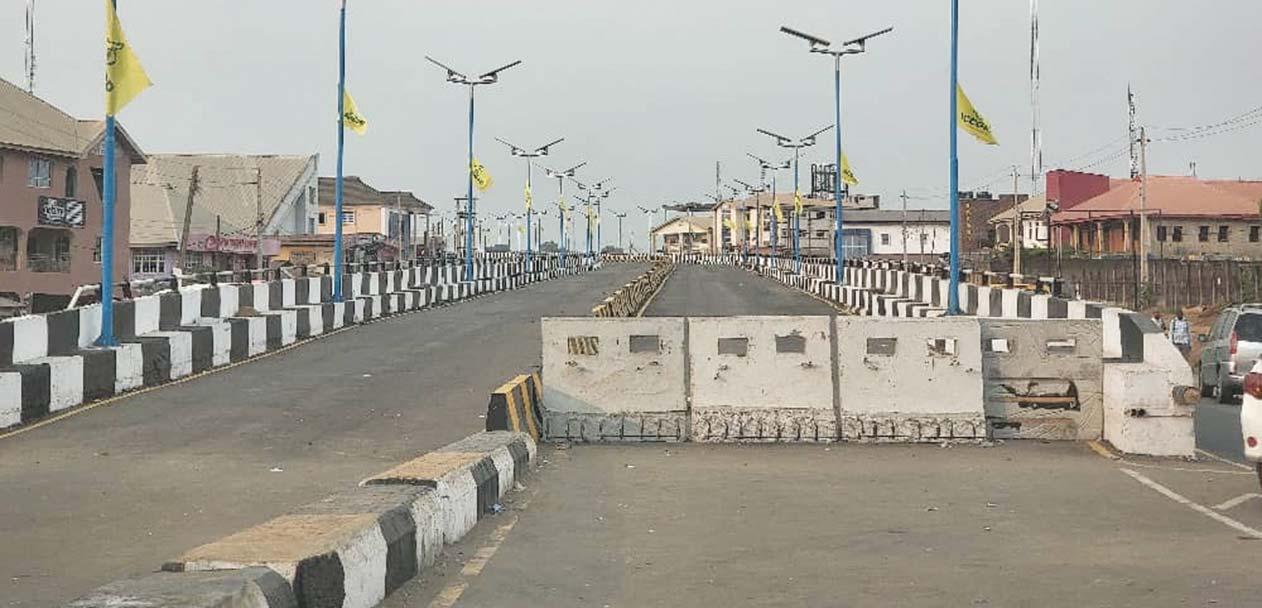
FRESH informa on has emerged on the reasons behind the delay in the commissioning and opening of the newly constructed Oke-Fia Flyover in Osogbo, months a er its comple on by Governor Ademola Adeleke’s administra on.
It would be recalled that Governor Adeleke had on October 27, 2023 announced a ₦100 billion infrastructure development plan for Osun State. The plan included the construc on of five flyovers and 45 roads across the state’s 30 local government areas, aimed at easing traffic conges on and improving road connec vity.
The proposed flyovers were slated for Osogbo (Oke-Fia and Lameco), IleIfe, Ikirun and Owode-Ede.
Following the announcement, Governor Adeleke officially flagged off the construc on of the Oke-Fia and Lameco flyovers, with full-scale construc on commencing in 2024.
According to the Osun State Commissioner for Informa on and Public Enlightenment, Mr Kolapo
Alimi, the construc on of the seven-span bridge at the Oke-Fia intersec on was awarded to A’skorj Nigeria Limited at a cost of ₦10,764,206,257.58. The project was completed in October 2025.
However, following the comple on of the flyover, debates erupted among supporters of the ruling Peoples’ Democra c Party (PDP) and the opposi on All Progressives Congress (APC) over the quality and design of the bridge.
Party loyalists took to social media to cri cise and defend the project, with APC supporters alleging that the flyover was substandard and did not qualify as a dual carriageway. They argued that the bridge was too narrow and should not have accommodated a median.
One of the APC supporters, Misbahudeen Ibrahim, in a Facebook post, claimed that the Oke-Fia flyover could not be regarded as a dual carriageway because of insufficient lane width.
He argued that a er two vehicles occupy a lane, the remaining space
is about 0.1 metre, which he described as unsafe and unprofessional. According to him, the minimum width for a single traffic lane should range between 7.6 and 8 metres.
He further explained
that, based on anthropometric data used in architectural and engineering designs, vehicles require between 2.7 and 3 metres of space. He claimed the sec onal width of the OkeFia bridge is approximately
5.4 metres (18 feet), which, when divided into two lanes, leaves inadequate clearance for safe driving.
“Bisec ng the road to jus fy the narra ve of a dualised carriageway is unprofessional on the part
of the engineer and contractor. It is also a dubious move by the project sponsors if human safety is truly a priority,” he stated.
In response, the Senior Special Assistant to Governor Adeleke on Bureau of Social Services, Mr. Akintunde Sheriff, dismissed the cri cisms, insis ng that the flyover meets the minimum standard specifica ons.
Sheriff described the project as an improvement on all flyovers constructed under previous administra ons in the state.
“I have seen the feeble a empts by some members of the Ileri school of thought of Osun APC to downplay a significant infrastructure provided by this government at OkeFia,” he said.
According to him, the flyover is a dual-lane bridge with a length unprecedented in the state’s history. He noted that each carriageway measures not less than five metres, giving the flyover a total width of 10 metres, which he said meets approved
•Continued on Page 2

MONDAY, JANUARY 26, 2026
Mixed Reactions Trail Makinde’s ‘I Miss You, Things Aren’t The Same’ Remarks On Osinbajo
NIGERIANS have expressed mixed reac ons to comments made by Oyo State Governor, Seyi Makinde, in which he publicly told former Vice-President, Prof. Yemi Osinbajo, that he “misses” him, adding that governance has not been the same since Osinbajo le office.
Governor Makinde made the remarks on Saturday in Ibadan during the 60th birthday celebra on of the President of the Men of Issachar Vision Incorporated (MIV), Mr Samson Ajetomobi. The event was a ended by several dignitaries, including Prof. Osinbajo.
While addressing the congrega on, the governor reflected on the period when Osinbajo served as Vice-President, par cularly during the COVID-19 pandemic, no ng that governance at the me was more consulta ve and inclusive.
“I miss you as VicePresident,” Makinde was quoted as saying, adding that things were “not the same again” under the current poli cal arrangement.
The comments have since sparked widespread reac ons across the country, especially
on social media platforms, where Nigerians have expressed divergent opinions on the governor’s statement.
Some commentators described Makinde’s remarks as a sincere expression of admira on for Osinbajo’s leadership
style, praising the former Vice-President for his calm disposi on, intellectual depth and role in coordina ng government

responses during na onal emergencies.
Others, however, cricised the statement, accusing the governor of making poli cally charged remarks that could be interpreted as a subtle cri que of the current administra on. Some argued that such comments could heighten poli cal tensions ahead of the 2027 general elec ons.
A user on Nairaland, yarimo wrote: “Missing him that is your business, Makinde you must return that #30 billions given to you by FG”
“Miss who no miss you… Clown,” another social media user, okomile commented.
Chief Oloye in his opinion taunted the gov-
ernor saying, “Makinde a er his apology was rejected… Fayose was spot on.”
“2027 poli cs has started… APC was only interested in power, not governance,” SixSeven wrote.
A sec on of the public also urged poli cal leaders to focus on addressing pressing na onal challenges, including economic hardship and insecurity, rather than drawing comparisons between past and present administra ons.
As of the me of filing this report, neither the Presidency nor Prof. Osinbajo has issued an official response to the reac ons generated by the remarks.
I Did Not Authorise Sale Of Agboro Dumpsite, Govt Land In Ikirun – Okanlawon
CHAIRMAN of Ifelodun
Local Government Area of Osun State, Hon. Hassan Okanlawon, has denied allega ons that he authorised the sale of the council’s refuse dumping site located at Agboro Community, Ikirun.
Okanlawon made the clarifica on in a rejoinder issued in response to a letter tled “Request for Clarifica on and Accountability on the Sale of Ikirun Refuse Dumping Land at Agboro Community,” wri en by
the Na onal Ikirun Progressive Union (NIPU) Northern States Council.
OSUN DEFENDER had in its last edi on reported that the le er signed by NIPU Northern states Council Secretary, Abdelhafeez Ishaq, stated that the absence of a designated dumping site has exposed the town to blocked drainage systems, air pollu on from indiscriminate burning of waste and rising health risks.
It also alleged that the land was sold by Alhaji Ka-
morudeen under the jusfica on that the area had been developed and that waste disposal ac vi es were nega vely affec ng residents.
Describing the allegaon as misleading, the council boss stated that at no me during his tenure, either as Caretaker Chairman or as Execu ve Chairman, did he sell or approve the sale of the Ifelodun Local Government dumpsite.
According to him, the Agboro area, previously used as a refuse dumping
site, had become surrounded by residen al buildings, posing serious environmental, health and safety risks to residents.
He explained that the decision to discon nue the use of the site was taken in line with professional advice and urban planning standards, leading to its conversion into government-approved schemes in the public interest.
Okanlawon stressed that the conversion of the site did not involve any personal or private gain, adding
Court Remands Two Over Alleged Kidnapping, Rustling Of 200 Cattle In Ekiti
Francis Adekunle, Ado-Ekiti
AN Ado-Eki Chief Magistrates’ Court in Eki State has ordered the remand of two men, Ibrahim Abubakar (37) and Adamu Lukman (26), at the Ado-Eki Correc onal Centre over alleged kidnapping and ca le rustling.
The defendants are accused of conspiring to kidnap and kidnapping two vic ms, iden fied as Olaniyan Gbolahan (26) and one Kazeem, as well as rustling about 200 ca le.
The prosecutor, Inspector Akinwale Oriyomi, told the court that
the offences were commi ed within the IkoleEki Magisterial District on or about October 23, 2025, at about 10:00 a.m.
He said the alleged offences contravene Secons 280, 279, and 302 of the Criminal Law of Eki State, 2021, which prescribe severe penales.
Inspector Oriyomi informed the court that there was probable cause to believe the defendants commi ed the offences and that further inves ga on was required.
warded to the Director of Public Prosecu ons (DPP) for legal advice, and he urged the court to grant his ex-parte applica on for remand.
The defendants were
that he neither sold government land nor authorised any illegal transac on concerning the property.
He further disclosed that contrary to claims that no alterna ve dumping site was provided, his administra on acquired a new parcel of land measuring several acres at Ago Ajuna, within the Akeremewe Families’ Farm, specifically for refuse dumping purposes.
represented by Barrister Oluwafemi Alabi, but their pleas were not taken.
In his ruling, the Chief Magistrate, Mr Abayomi Adeosun, granted the prosecu on’s applicaon and ordered that the defendants be remanded in custody.
On issues rela ng to land sale, alloca on, and documenta on, Okanlawon clarified that all lands belonging to Ifelodun Local Government are government assets and not the personal property of the Execu ve Chairman.
The case was adjourned un l February 24, 2026, for men on.
Why Adeleke Is Yet to Commission Oke-Fia Flyover...
•Continued from page 1
According to him, the case file has been forstandards.

He also explained that the road divider is removable to ease traffic in the event of accidents or vehicle breakdowns.
“This flyover is an improvement on all flyovers constructed under previous administra ons. We urge cri cs to stop being blind to the progress recorded by the present administra on. Osun State is our collec ve heritage,” Sheriff added.
Why the Flyover Is Yet to Be Opened
Despite its comple on in October 2025, the OkeFia Flyover has neither been commissioned nor opened to motorists, raising concerns and speculaons among residents.
Some observers suggested that the delay might be due to the government’s inability to secure a prominent per-
sonality to commission the project, given ongoing poli cal realignments naonwide.
However, an impeccable government official who spoke with OSUN DEFENDER dismissed the insinua on, describing the delay as a strategic decision.
The source, who requested anonymity, said the state government is deliberately wai ng for the comple on of other major projects before commissioning the flyover.
According to the official, Governor Adeleke, who is seeking re-elec on under the Accord Party, plans to showcase the projects as key campaign achievements.
“We are going to commission the Oke-Fia flyover very soon. What we are wai ng for is the comple on of other major
projects.
“The Ile-Ife and Lameco flyovers will be completed shortly, alongside several road projects in Iwo and other towns. The governor wants to campaign with these projects so that people can physically see what has been delivered in their communi es,” the source said.
On claims that the government is s ll searching for who would commission the project, the source dismissed such sugges ons, revealing that President Bola Tinubu is likely to be invited.
“There is nothing like shopping for who will commission the flyover.
Governor Adeleke is a performing governor and one of the best in the country.
President Bola Tinubu will be invited, and we are confident he will honour the invita on,” the source added.
“I want to make it abundantly clear that I did not, at any me, sell or authorise the sale of any government land in Ifelodun Local Government. Such allegaons are completely false and do not reflect the reality of what transpired.
“The decision to disconnue the Agboro dumping site was taken strictly on environmental and public health grounds, as the area had become fully residenal and posed serious risks to the lives and well-being of our people.
“Contrary to the narra ve being pushed, my administra on proac vely acquired an alterna ve dumping site at Ago Ajuna, which was approved and already in use before I exited office. This shows our commitment to responsible waste management.
“I remain open to transparent and lawful scru ny, but I strongly urge individuals and groups to channel their inquiries through the appropriate government departments and avoid spreading unverified claims that could mislead the public,” Okanlawon added.
Sodiq Yusuf
Abiodun Ogunrinde, Ibadan
•Osinbajo
•Makinde
THE ongoing back-andforth over the correct version of an already conten ous tax bill is a profound embarrassment to the Nigerian state. It should never have happened. Even more troubling is the growing belief that there will be no consequences for those responsible. This is a moment that calls for sober reflec on. One can only shed a tear for a once-promising na on.
Nigeria was once at the forefront of building the mechanisms of a modern state. The country boasted first-rate legal dra smen,
“To begin redeeming Nigeria’s image, this matter must not be brushed aside. There should be a thorough forensic investigation and, if necessary, a judicial commission of enquiry to establish what went wrong, who is responsible, and how such a failure can be prevented in the future”

The Institutional Deficit
me culous legisla ve processes, and deep respect for procedure. Legisla ve draing was treated as sacrosanct, not casual or poli cally convenient. Sadly, that era now feels distant. The current tussle over the authencity of a law confirms how far standards have fallen.
This episode raises serious ques ons about the credibility of some recent legisla on passed into law. If the integrity of the legisla ve process itself is in doubt, then the certainty of the laws produced by that process is equally ques onable. That uncertainty is dangerous for
governance and devasta ng for public trust.
The legal implica ons, par cularly in rela on to interna onal arbitra on, are deeply concerning. It is be er not to imagine the full extent of the damage. In a country aggressively seeking foreign investment, such ins tu onal lapses weaken confidence and invite scep cism. Investors rely on clear, authen c, and predictable legal frameworks. When those frameworks appear unstable, capital looks elsewhere.
What is likely to follow is a prolifera on of complex arbitral clauses addressing inter-
The Discourse
preta on, cer fica on, and even the authen city of Nigerian legisla on. This is not the mark of a confident modern state. Rather, it reflects the troubling ethos of a banana republic, where ins tu ons are weak and procedures are treated as op onal.
To begin redeeming Nigeria’s image, this ma er must not be brushed aside. There should be a thorough forensic inves ga on and, if necessary, a judicial commission of enquiry to establish what went wrong, who is responsible, and how such a failure can be prevented in the future. Accountability is not op onal in a serious state; it is founda onal.
Ul mately, a modern state is anchored on strong ins tuons, not on transient leaders, poli cal convenience, or strongmen. The strength of ins tu ons determines the capacity of the state to deliver real development and las ng progress to its people. Un l Nigeria recommits to ins tuonal integrity, episodes like this will con nue to undermine its credibility at home and abroad.
President Tinubu’s Economic Policies: Breeding Poverty, Unemployment, And Hardship In Nigeria
SINCE assuming office in 29th May 2023, President Bola Ahmed Tinubu’s administra on has ini ated a series of radical economic reforms that have significantly altered the Nigerian economic landscape. These policies, which include the removal of fuel subsidies, the floa ng of the naira, increased electricity tariffs, import du es, higher interest rates, New tax reform, and the imposi on of new financial levies, were introduced to stabilize public finances and a ract investment. In any Economy, the primary roles of economic policies are to promote economic growth, ensure price stability, maintain full employment, redistribute income and wealth, improve the balance of payments, and ensure sustainable development.
However, for many Nigerians, these reforms have resulted in unprecedented hardship, escala ng poverty, skyrocketing prices, and rising unemployment with available sta s cs, though the government is trying to manipulate data, claiming the government met bad economic situa on, unfortunately, there is no hiding place because Nigerians are over taxed from all manners to generate Income into the Federa on Account and huge borrowing that never impacted on the life of average Nigerian.
One of the most impac ul decisions made by the Tinubu administra on was the removal of the fuel subsidy. Before this acon, petrol was sold at ₦185 per litre. Following the removal, pump prices surged to above ₦850 per litre, reflec ng a staggering 360% increase. The result has been an immediate and painful rise in the cost of living. Transporta on costs doubled in most urban and rural areas, with commuters paying 1250% more for basic travel. The increase in fuel prices triggered a ripple effect on the prices of goods and services across the
By Wahab Abiona
economy. According to the Na onal Bureau of Sta s cs (NBS), food infla on climbed to 40.66% in May 2024, the highest figure in two decades. Essen al food items such as rice, which cost ₦35,000 per 50kg bag in April 2023, now sell for over ₦80,000, which shows around 130% increase. This surge in prices has severely eroded household purchasing power, pushing millions of Nigerians into abject poverty.
Closely linked to this is the decision to float the naira. The exchange rate moved from ₦471/$1 in May 2023 to over ₦1,550/$1 by July 2024, a 230% devaluaon. This policy, intended to unify the foreign exchange market and eliminate distorons, instead unleashed severe vola lity. As Nigeria imports a significant por on of its food, pharmaceu cals, and manufacturing inputs, the devalua on drama cally increased the cost of imports, worsening infla onary pressures. This has indirectly increased the cost of local produc on, even above imported items which has shut down most of the local firms and made the companies reduce workers or lay them off completely. The World Bank has noted that
“As Nigerians continue to bear the brunt of these reforms, public discontent has grown. Protests have erupted in various states, labour unions have staged multiple strikes, and market women, civil society organisations, and even religious groups have voiced their dissatisfaction”
the naira’s sharp deprecia on contributed significantly to rising food prices and inflaon, making basic goods inaccessible to low-income earners and most ci zens with no income at all. Despite these measures, the an cipated influx of foreign investment has not materialized. The NBS Capital Importa on Report showed a decline in capital inflow from $5.3 billion in 2022 to $3.9 billion in 2023, represen ng a 26% drop, sugges ng a reduc on in investor confidence in the Nigerian economy.
Import du es in Nigeria have significantly contributed to rising prices and economic hardship, par cularly under this administra on. As the government increased tariffs on imported goods some reaching up to 35% to boost revenue and protect local industries, the unintended consequence has been a sharp rise in the cost of essenal items. Coupled with the naira’s steep
deprecia on has made import costs tripled in local currency terms. Businesses reliant on imported raw materials have also struggled, with thousands of SMEs closing due to high input costs. While customs revenue is projected to surpass ₦6 trillion in 2025, the burden on consumers and small businesses has deepened the cost-of-living crisis and weakened economic resilience.
OSUN DEFENDER
Publisher – Moremi Publishing House Ltd.
Deputy Editor – Michael Bamigbola
Asst. News Editor – Yusuf Oketola
Deputy Photo Editor – Shola Aderinto
Deputy Graphics Manager – Zainab Olalere
Produc on Controller – Petkola Taiwo Ibitowa
OSUN DEFENDER is published by Moremi Publishing House Limited, Behind Oranmiyan Building, Gbodofon, Off Gbongan Road, Osogbo, Osun State.
ISSN : 0794-8050
Telephone : 0809-301-9152
Another burden imposed on ci zens is the hike in electricity tariffs. Previously, consumers paid an average of ₦68 per kilowa -hour. By April 2024, Band A customers were paying ₦280/kWh, a 312% increase. This steep rise has forced many small businesses to cut down on opera ons or close en rely due to unaffordable energy bills. Despite the increased tariffs, power supply remains irregular, averaging 10 to 12 hours daily. Consequently, many households and businesses con nue to rely on generators powered by diesel, which now costs over ₦1,200 per litre. According to the Manufacturers Associa on of Nigeria (MAN), over 5,000 small and medium-scale enterprises (SMEs) shut down between June 2023 and March 2024, ci ng high energy, fuel costs as primary reasons and costs of produc on in general. The cumula ve impacts of these policies have manifested in worsening economic indicators.
Website : www.osundefender.com/index.php e-mail : osundefenderhq@gmail.com osundefenderbank@gmail.com
All correspondence to the above email addresses.
•Abiona is an Economist, Writer and Public Affairs Analyst

MONDAY, JANUARY 26, 2026 VOL. 21 NO 07 www.osundefender.com, email: osundefenderbank@gmail.com
IN Nigeria, many people see public service roles as a way to make money, o en saying, “There is money there.” This mindset focuses on personal gain instead of the true purpose of serving others and helping the na on grow. Imagine if public service roles were seen as opportuni es to improve our communi es rather than ways to get rich. Changing this mindset is essen al if we want to address corrup on. Public service should be a pla orm for integrity and posi ve impact, not personal enrichment.
Public service should be about commitment, honesty, and making a real difference in society. But when people take these roles just to enrich themselves, corrup on inevitably creeps in. Nigeria consistently ranks as one of the most corrupt countries, according to Transparency Interna onal. This highlights how urgently we need to shi our view of public service. Imagine leaders whose priority is serving the people—this would transform trust in governance and inspire hope.
Corrup on in Nigeria o en stems from how public service is perceived. Agencies like the EFCC and ICPC exist to combat corrup on but are frequently cri cized for poli cal bias and selec ve enforcement. Recently, the EFCC offered to train Liberia’s An -Corrup on Commission on comba ng corrup on and financial crimes. While this shows a willingness to share exper se, Liberia and Nigeria both rank 145th on the 2023 corrup on index, raising ques ons about the EFCC’s own readiness to improve. Wouldn’t it make sense for the EFCC to learn from countries like Ghana (ranked 70th) or the UK (ranked 20th), where an -corrup on systems are more advanced?
The U.S. Department of State offers programs under its Bureau of Internaonal Narco cs and Law Enforcement Affairs, focusing on transparency and enforcement. These efforts are part of a broader U.S. strategy to modernize ancorrup on tools and foster partnerships globally. Nigeria’s EFCC could benefit immensely from engaging with such advanced ini a ves. Imagine the impact of combining Nigeria’s regional experience
“Everyone has a role to play in correcting this view of the world. Schools can teach the value of honesty and media can highlight stories of people who serve selflessly. For example, Nigerian police officers have been recognized for refusing bribes, proving that integrity is achievable. These stories inspire others to follow their example and prioritize ethical behavior. Imagine the ripple effect if more people embraced these values”
PERSPECTIVE
By

Integrity Over Wealth In Public Service
with global best prac ces. Addressing internal challenges would strengthen the EFCC’s credibility and ability to lead effec vely.
Why does this ma er? When the EFCC focuses on training others without addressing its own gaps, it misses chances to grow. The U.S. Strategy on Countering Corrup on emphasizes building partnerships and sharing knowledge as key to success. Imagine the progress Nigeria could make if the EFCC learned from the most effec ve an -corrup on systems. This kind of knowledge exchange could elevate Nigeria’s efforts and create stronger governance. A be er EFCC means a be er Nigeria for everyone.
Corrup on doesn’t just damage governments; it affects everyone.
THERE is a popular saying that captures the heart of infidelity with respect to the rela ons between human words and ac ons, “do as i say but not as i do.” once you come to terms with that statement, you are no longer likely to be perplexed that majority of mankind find it difficult, if not almost impossible, to match their ac ons with their words, and they have unlimited lame excuses for that infidelity.
We will skip infidelity at family and friendship levels, bearing in mind that those are the theatres where infidelity is cul vated and takes root. Let us go straight to government, simply because its infidelity has overriding consequences that deepens infidelity everywhere!
In order for a poli cal party to get into government, its candidates must be elected as decided by a majority of the electorate. One major characteris c of elec ons is poli cal debates amongst contes ng candidates and campaign rallies for the candidates by their par es. It is during these events that promises are made concerning the aspira ons of the people. What aspiraons do the people have? Simply, to be happy. What are those things that will make them happy? Food on their tables, decent clothing and affordable accommoda ons, func onal educa on for their children, func onal transporta on means, affordable access to stable power, water supplies and health services, jobs that will pay their bills and allow a li le fun and holidays, security to lives and proper es that gives
Fraud schemes like “Yahoo” scams have become so normalized that many families ignore how their children make money. This mindset harms society and encourages dishonesty. The White House’s Global An -Corrup on Consor um brings inves ga ve journalists and civil society together to expose corrup on and push for reforms. What if families in Nigeria celebrated honesty instead of ignoring the problem? Accountability starts at home and grows into a na onal culture. Everyone has a role to play in correc ng this view of the world. Schools can teach the value of honesty, and media can highlight stories of people who serve selflessly. For example, Nigerian police officers have been recognized for refusing bribes, proving that
integrity is achievable. These stories inspire others to follow their example and priori ze ethical behavior. Imagine the ripple effect if more people embraced these values.
What if public service was seen as a noble duty rather than a way to get rich? Instead of asking, “How much will they make?” we could ask, “What posi ve changes will they bring?” This shi could inspire future leaders to focus on serving others. Media and educa on can help by promo ng those who lead with integrity. A new perspec ve like this could mark the beginning of a brighter future for Nigeria.
Integrity benefits everyone. Countries with honest governments tend to have stronger economies and happier ci zens. The EFCC has the chance to set an example by learning from global leaders and adop ng best pracces. Together, we can create a Nigeria where public service is respected, and corrup on is rare. By making integrity the standard, we can improve lives and build a fairer society.
Mahatma Gandhi once said, “The best way to find yourself is to lose yourself in the service of others.” This is especially true today. Valuing honesty and service can transform Nigeria and inspire future genera ons. Let’s work together to make Nigeria a place where integrity thrives, and public service truly serves the people. Everyone has a role to play in building a be er future for Nigeria.
Walk Your Talk
peace of mind, freedom of conscience, liberty and jus ce equally for all, and so on.
With the debates, rallies and elecons over, every candidate of every poli cal party having promised all these, governments are formed. James Madison said “a good government implies two things: first, fidelity to the object of government, which is the happiness of the people; secondly, knowledge of the means by which that object can best be a ained.” It is given then that the people, when vo ng, believed that the par es and candidates that get their majority votes have these two quali es. So, what usually happens that society ends up where it does, with the majority of poli cal par es and their constuted government, with few excep ons, failing to walk their talks?
Is it simply impossible for par es and governments to do as they say? No, we have a few contrary examples. Chief Obafemi Awolowo and Ac on Group, Unity Party of Nigeria come to mind, as well to a great degree, Asiwaju Bola Ahmed Tinubu and Alliance for Democracy in Lagos specifically. However, a simple inventory, generally, will dishearten any good heart! Put all poli cal par es that ever got into government in Nigeria on one side and their many promises next to it, alongside the reali es during their tenure. Each of the 36 states and the FCT can examine themselves for
various periods but we can check out the Federal Governments by ourselves, especially the last few ones. The table, as everyone can take me to find out, is simply not deligh ul. Solving only ten of a hundred problems, while crea ng fi y new problems in the process does not speak well for “good government” as defined by James Madison.
If we are to get out of the sad and ugly experiences occasioned by failed government promises accompanied with lame excuses, we all have a role to play at the forma ve stages. As adults, if our fishes are too dried up to bend, we can at least work on the coming genera on. Vince Lombardi, the great go-ge ng American Football Coach said “watch your ac ons, they become your habits. Watch your habits, they become your character.” One of the best characters we can begin to cul vate is to always do as we say, to always walk our talks. Let us stop saying “it is easier said than done.” Lombardi said “perfec on is not a ainable,” as we all accept, “but if we chase perfec on we can catch excellence.” A majority with excellent character can surely, one day soon, install a government excellent in character, pu ng an end to the ages of governments across all poli cal par es that are incapable of walking their talk, solving 10 out of 100 societal problems, while crea ng 50 new problems as legacy.
OSUN DEFENDER is published by Moremi Publishing House Limited, Behind Oranmiyan Building, Gbodofon, Off Gbongan Road, Osogbo, Osun State. All correspondence to the Deputy Editor, MICHAEL BAMIGBOLA, Telephone: 0809-301-9152. ISSN: 0794-8050. Website: www.osundefender.com Email: osundefenderbank@gmail.com, osundefenderhq@gmail.com
STRIKER Striker is not the opinion of the Columnist featured above