
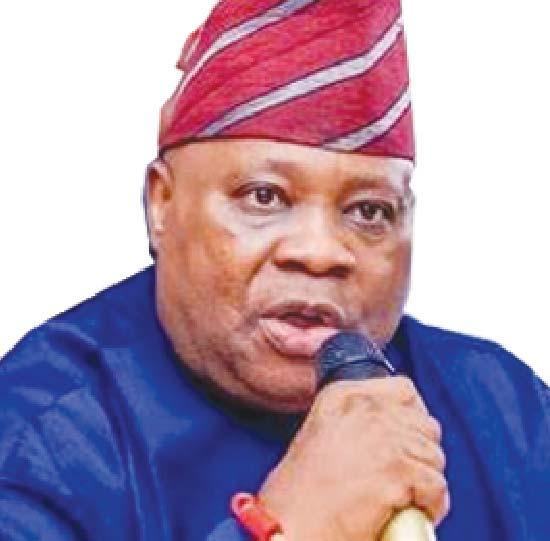
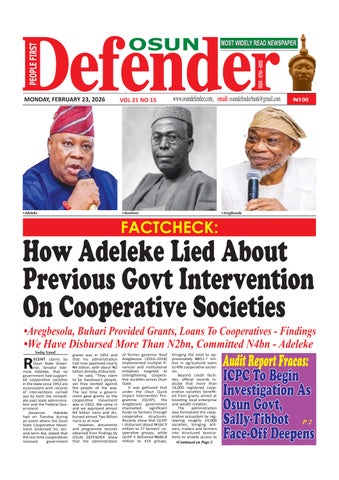
RE C E N T claims by Osun State Governor, Senator Ademola Adeleke, that no government had supported coopera ve socie es in the state since 1952 are inconsistent with records of interven ons carried out by both the immediate past state administraon and the Federal Government Governor Adeleke had on Tuesday during an event where the Osun State Coopera ve Movement endorsed his second-term bid, stated that the last me coopera ves received government
grants was in 1952 and that his administra on had now approved nearly ₦4 billion, with about ₦2 billion already disbursed. He said, “ They claim to be Awolowo’s people, yet they worked against the people all the way The last me a government gave grants to the coopera ve movement was in 1952. We came in and we approved almost N4 billion naira and disbursed almost Two Billion naira as at now.”
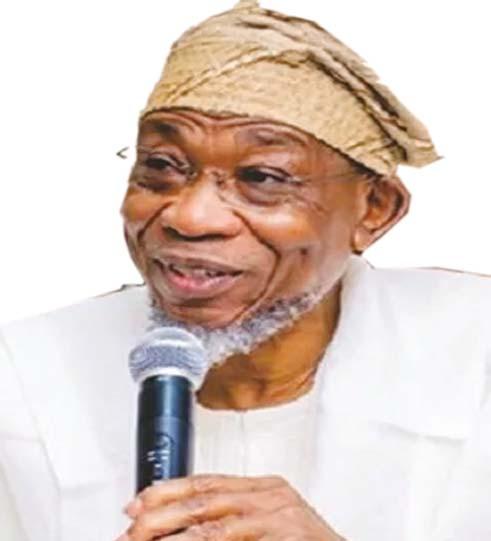
However, documents and programme records obtained from findings by OSUN DEFENDER show that the administra on
of former governor Rauf Aregbesola (2010–2018) implemented mul ple financial and ins tu onal ini a ves targeted at strengthening cooperave socie es across Osun State
It was gathered that under the Osun Quick Impact Interven on Programme (QUIIP), the Aregbesola government channelled significant funds to farmers through coopera ve structures.
Records show that QUIIP I disbursed about ₦164.9 million to 77 farmers’ coopera ve groups, while QUIIP II delivered ₦686.8 million to 419 groups,
bringing the total to approximately ₦851 7 million in agricultural loans to 496 coopera ve societies
Beyond credit facilies, official records indicate that more than 16,000 registered coopera ve socie es benefited from grants aimed at boos ng local enterprise and wealth crea on.
The administra on also formalised the coopera ve ecosystem by registering roughly 24,000 socie es, bringing arsans, traders and farmers into structured associaons to enable access to
MONDAY, FEBRUARY 23, 2026
THE controversy trailing the disputed payroll audit in Osun State has taken a new turn as the Independent Corrupt Prac ces and Other Related Offences Commission (ICPC) is set to step into the ma er following a formal request by Governor Ademola Adeleke for a forensic review.
The governor, in a letter dated February 20, asked the an -corrup on agency to inves gate and authen cate allega ons of a padded payroll and the existence of ghost workers in the state’s workforce.
According to the correspondence, the administra on engaged Sally Tibbot Limited to audit the payroll it inherited covering the period from 2018 to November 2022, with the firm submi ng its report on June 27, 2024.
Adeleke said he ini ally directed implementa on of the report to eliminate suspected ghost workers but later cons tuted a review commi ee a er controversies emerged, par cularly claims that senior officials were wrongly listed.
He subsequently requested the ICPC to deploy forensic auditors to examine both the original audit report and the review commi ee’s findings to authen cate the correctness or otherwise of the
conclusions reached.
Allega ons, Denials And Poli cal Fallout
The audit has generated sharp poli cal exchanges, especially a er the consul ng firm alleged an annual payroll fraud running into ₦13.7 billion under the current administra on.
The Osun State Government, through Commissioner for Informa on, Kolapo Alimi, rejected the allega on, describing it as poli cally mo vated and sponsored by opposi on elements.
The dispute has widened beyond par san actors, drawing ins tu onal backlash from Osun State University, whose management threatened legal acon against the consultants a er about 250 members of staff were allegedly classified as ghost workers in the audit report.
UNIOSUN Vice-Chancellor Clement Adebooye said he personally par cipated in the verifica on exercise yet was s ll listed, describing the report as subjec ve and damaging to the instu on’s reputa on.
The university argued that staff on legi mate sabba cal, study leave and visi ng appointments were wrongly categorised, ques oning the methodology adopted by the consultants.
Escala on Raises Gov-

•FCT Minister, Nyesom Wike, during a monitoring exercise to some polling units during Saturday’s Council Polls ernance Concerns
The unfolding scenario has turned what began as an administra ve payroll verifica on into a mulfront dispute involving the state government, opposion voices and the auditing firm, with each side contes ng the credibility of the process.
Observers note that the decision to invite ICPC signals an acknowledgement of the depth of disagreement surrounding the audit’s findings and implementa on, par cularly amid conflic ng narra ves over whether the exercise
ALagos State High Court has fined Fidelity Bank Plc the sum of N2 million for unlawfully deduc ng N11,922.41 from a customer’s account as repayment for a loan allegedly linked to NIRSAL Microfinance Bank.
Delivering judgment on February 12, 2026, Jus ce A. Ipaye of the Lagos State High Court also issued a perpetual injunc on restraining the bank from further processing the applicant’s account for any automa c loan recovery ed to the disputed facility.
The claimant, Esther Agboola, a student, filed the suit on April 22, 2025, through her counsel, Muhib Owodunni, who held the brief of Olumide Babalola. She alleged that the bank deducted the money on April 19, 2025, despite the fact that she never applied for or obtained any loan from the microfinance ins tu on or any other lender.
Agboola maintained that repeated efforts to no fy the bank of the alleged error yielded no result. She therefore sought a declara on that the processing of her
account for automa c loan recovery was misleading and inaccurate, alongside an order of perpetual injunc on and N50 million in general damages.
In response, counsel to the bank, Oluseyi Olukoga, argued that the deduc on arose from a Global Standing Instruc on (GSI) triggered through the Nigerian Inter-Bank Se lement System, which enables lenders to recover debts from linked accounts once a borrower defaults.
The bank contended that the debit alert labelled “SIRecovery” reflected an automated repayment ed to a loan agreement between the applicant and the microfinance bank.
However, the court held that the bank failed to provide evidence of any valid loan agreement, GSI mandate, or proof that the applicant authorised such an arrangement.
Jus ce Ipaye ruled that the disclosure and use of the applicant’s financial data without lawful jus fica on amounted to an unjus fied
intrusion into her cons tuonal right to privacy.
The court emphasised that protec on of personal data forms part of the right to privacy and must comply with principles of fairness, accuracy and lawfulness.
While the court declined to award the N50 million claimed, describing it as dispropor onate, it granted N2 million as compensatory damages and ordered the immediate refund of the deducted N11,922.41, alongside N300,000 in costs. Post-judgment interest of 10 per cent per annum was also awarded un l full liquida on of the judgment sum.
The court further declared that any con nued a empt to process the applicant’s account in respect of the alleged loan would remain permanently restrained.
The case comes amid reports that several Nigerians have received debit alerts ed to interven on loans introduced during the COVID19 pandemic by the Central Bank of Nigeria to cushion economic hardship.
exposed fraud or was fundamentally flawed.
With threats of li gaon, poli cal accusa ons and ins tu onal rebu als now converging, the ICPC’s interven on is expected to
determine the accuracy of the audit claims, the validity of the review carried out by the state and whether any financial misconduct actually occurred.
Stakeholders say the
an -corrup on agency’s findings may ul mately decide whether the audit exercise becomes a tool for accountability or another flashpoint in Osun’s intensifying poli cal contest.
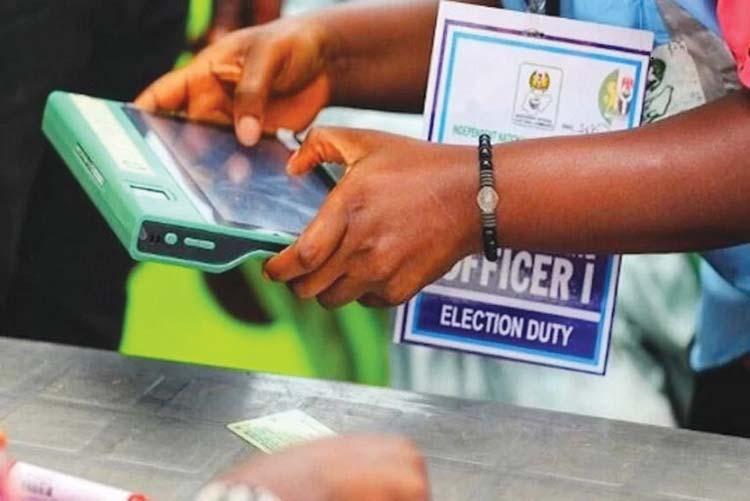
THE local government elec ons held on Saturday in the Federal Capital Territory were dogged by allega ons of irregularies, technical glitches and low voter turnout across several polling units.
Findings by observers indicated widespread voter apathy in parts of Abuja, as many residents stayed away from the polls, ci ng lack of confidence in the electoral process and poor awareness.
It was gathered that some polling units recorded late commencement of vo ng, while others witnessed a very few turnout of voters
throughout the exercise.
There were also complaints about the failure of the Result Viewing Portal (IREV), a transparency tool introduced by the Independent Naonal Electoral Commission. Party agents and voters alleged that results were not uploaded in real me in several loca ons, raising concerns about the credibility of the process.
In a statement issued a er the exercise, the African Democra c Congress condemned the conduct of the polls, alleging incidents of manipula on and procedural lapses in some wards.
The party through its spokesperson, Mallam Bolaji Abdullahi said the challenges observed undermined the integrity of the elec on and called for a thorough review of the process, including the performance of the IREV system.
The ADC stressed that credible council elec ons were vital to strengthening grassroots democracy and urged the electoral body to take correc ve measures to restore public trust in future polls.
Efforts to get an official reac on from the electoral commission were unsuccessful as of the me of filing this report.
•Continued from page 1
finance and governmentbacked programmes.
Ins tu onally, the government created the office of a Special Adviser on Coopera ve Matters led by Mr. Gbenga Awosode and facilitated partnerships with First Bank of Nigeria Limited to expand agricultural financing for coopera ve members, enabling them to procure tools and improve produc vity.
At the federal level, the administra on of former President Muhammadu Buhari also implemented social investment schemes that reached coopera ve members and grassroots traders in Osun and other states through
Federal Government of Nigeria ini a ves.
OSUN DEFENDER recalls that programmes such as TraderMoni and MarketMoni, executed under the Government Enterprise and Empowerment Programme (GEEP), provided micro-credit facili es ranging from ₦10,000 to ₦50,000 to pe y traders, market women and ar sans.
These interven ons formed a key component of the Federal Government’s post-2016 economic inclusion strategy and were widely deployed through coopera ve and market associa ons naonwide.
Analysts who spoke note that while Adeleke’s
ongoing disbursement to coopera ves and the establishment of a dedicated Ministry of Coopera ves represent a connua on of support for the sector, the asser on that there had been no grants or assistance since 1952 does not align with documented state and federal programmes implemented over the past decade.
Available records therefore indicate that coopera ve socie es in Osun have benefited from sustained layers of interven on including grants, so loans, instu onal partnerships and formalisa on policies prior to the current administra on.
LAST Friday was a grim one for the hospitality industry in Abuja, the na on’s seat of power. A sweeping restric on of movement, imposed from Friday night un l 6 p.m. the following day, effec vely paralysed economic and social life across the Federal Capital Territory. The familiar refrain of “Thank God It’s Friday” vanished, replaced by empty restaurants, idle taxis, cancelled events and shu ered businesses.
The economic toll must have been enormous yet this was only one sector. The disrup on rippled across supply chains, logis cs, retail and informal trade. One hardly needs the skills of an econometrician to grasp the devastating impact, par cularly on small businesses already ba ered by insecurity and declining purchasing power.
Such costs appear to ma er li le to a segment of the elite that con nues to thrive within a rent-seeking economic structure. Yet the na on must pause and reflect. Elec ons, which should symbolise democra c vitality, are instead accompanied by enforced economic hiberna on. The shutdown of a capital city sends troubling signals not only to ci zens but also to foreign missions and investors who watch these developments closely through the eyes of commercial a achés and risk analysts. It undermines the country’s persistent, if o en rhetorical, campaign to a ract foreign direct investment.
Once proudly described as the “Giant of Africa,” Nigeria now lags behind many peers in the management of electoral processes. The resort to largescale shutdowns reveals deeper ins tuonal fragility and structural dysfuncon. If security architecture were more decentralised and community-based, opera onal efficiency would reduce the perceived need to immobilise enre ci es. Other African democracies, including Ghana, conduct elec ons without suspending economic life be-

cause ins tu ons are trusted to funcon and poli cal actors show greater commitment to process over theatrics.
There is also the ques on of proporonality. Security must never become an excuse for administra ve overreach that punishes millions of law-abiding ci zens. Democracies are strengthened
not by the absence of risk but by the capacity of ins tu ons to manage risk without crippling normal life. When economic ac vity is halted in the name of order, the unintended consequence is a gradual erosion of confidence in governance itself.
Moreover, the recurring pa ern of
“Each cycle that shuts down commerce advertises instability and raises the perceived cost of doing business, thereby weakening competitiveness in a continent where several countries are actively reforming to attract capital”
elec on-induced paralysis contributes to a subtle but damaging form of na onal “de-marke ng.” Investors prize predictability; they seek environments where poli cal transi ons are rou ne rather than disrup ve spectacles. Each cycle that shuts down commerce adver ses instability and raises the perceived cost of doing business, thereby weakening compe veness in a con nent where several countries are ac vely reforming to a ract capital.
What is required is a return to reform conversa ons long acknowledged but seldom implemented. Recommendaons of the Uwais Report, alongside other ins tu onal reform proposals, must be revisited with sincerity. Strengthening the autonomy and capacity of the Independent Na onal Electoral Commission, modernising elec on security strategy and deepening local policing structures would allow elec ons to occur without placing en re territories under siege. Nigeria cannot con nue to adver se inefficiency at every electoral turn. The present model is economically injurious, reputa onally costly and democra cally unsustainable. Reform will meet resistance, as all structural change does, but the poli cal elite must recognise it as an act of collec ve self-preserva on. A democracy that shuts itself down to funcon is one that must urgently learn how to run without stopping.
By Babatunde Adesokan
ROWING up and watching my father sell, we took some cues as per what a smile could do and how your gaze could pummel your would-be customer to make an urgent purchase. We sold to Yoruba and we sold to Fulanis, who o en have the knacks for buying be er ma resses for their marriageable females. Yet, language differences did not at once affect the use of monetary figure and the psychic need to know when and how to close a deal.
Aside that the bus stop engagements unmask the fake lure of Ibadan peacefulness, the city’s park hub is a beehive of lessons for wouldbe salesperson. Sales there start from compulsory patronage and discre onary patronage; a micra driver and a hawker respec vely. Whilst a micra would not need charms to sell his service, nor eye contact to make his demand sink in, a hawker employs a lot of subtle psychological tac cs to get you to buy.
In fact, neccesary services created a niche for the likes of Micra drivers who may appear rude and seem very en tled but you s ll have to engage their services. Same way a “motherly” nurse might treat her pa ents like they would regard their recalcitrant kids at home. Whereas, a street vendor, even when bereaved, will s ll rile all form of nice es to get you to close purchase.
Because, for someone selling discre onary
goods or services the buyer’s choice to buy is based on personal preferences, desires or priori es. A street hawker besides the bus, knows the importance of convincing you to buy. That’s why they build jus fica on for sales. “Iya kaabo, Omo ku ile” roughly translated as “This is a wonderful gi for your children a er sojourn as a mother”. They employ this with the use of charms and eye contact.
Eye contact, to them, serves as a vital hook to grab the a en on of passing or disinterested customers. Vendors employ this deliberately to:
First, establish connec on: this creates a sense of familiarity and rapport with potenal customers. As they say, a en on is in the eyes.
Second, convey enthusiasm: this shows genuine passion for their products, making customers more recep ve to their pitches. Raised eye-brows, bulging eyeballs can show passion
“Art of Charm in Sales is to create rapport, diffuse tension and kill skepticism in the mind of the customer, also to highlight benefits in an attentive way. Some hawkers go as far as telling alarming stories (we remember the usual “molue” pitch), stand up comedy, compliments passing etc”
or convinc on.
Third, build trust: this demonstrates honesty and transparency, essen al for building trust with customers.
Street vendors, alongside the aforemenoned, have developed unique charming techniques to maintain eye contact, even in the most challenging environments. They might use: Mirroring: subtly imitate the customer’s body language to create a sense of rapport. Or
to s r response from the disinterested buyer.
Proximity: posi on themselves close to the customer, making eye contact more in mate and engaging. A lover’s pose is a trader’s close.
Facial expressions: use warm, genuine smiles to create a welcoming atmosphere. Unlike the Micra driver, the street vendor needs to get that money from your pocket through apppeal. Warmth creates a bias for sales.
Art of Charm in Sales is to create rapport, diffuse tension and kill skep cism in the mind of the customer, also to highlight benefits in an a en ve way. Some hawkers go as far as telling alarming stories (we remember the usual “molue” pitch), stand up comedy, compliments passing etc.
: www.osundefender.com/index.php e-mail : osundefenderhq@gmail.com osundefenderbank@gmail.com All correspondence to the above email addresses.
To them on the street, these are not rocket science but necessary skills you pick up through creatvity, flexibility and resilient learning and unlearning. Just like us, as small boys, we subtly imbibed our fathers knacks for closing purchases and remaining a friend to almost every customer for life. #ThingsILearntFromMyFather.
•Adesokan is a poet, writer and public affairs analyst.

MONDAY, FEBRUARY 23, 2026 VOL. 21 NO 15 www.osundefender.com, email: osundefenderbank@gmail.com
TWO years a er the last general elec on, Nigerians are jusfied in asking a direct queson: is our democracy stronger today than it was then? Democracy is not measured by how many offices a party controls or how loudly poli cians speak. It is measured by integrity, accountability, and the lived experience of the people. Good Poli cs demands more than victory at the polls; it demands moral leadership and visible progress in the lives of ci zens.
The debate over amendments to the Electoral Act should have provided an opportunity to deepen transparency and strengthen public confidence. Instead, hesitaon to fully embrace reforms that safeguard credible vote transmission and accountability has fueled doubt. In a na on where electoral credibility remains fragile, any reluctance to reinforce safeguards sends the wrong signal. Good Polics stands firmly for processes that are open, fair, and beyond suspicion.
The party in power commands significant authority across the federa on. With control of the presidency, many state governments, a strong presence in the Na onal Assembly, and influence at local levels, there should be no anxiety about reforms that ensure free and fair elec ons. Confidence in leadership is demonstrated not by dominance, but by a willingness to subject power to scru ny. Poli cs rooted in the omoluabi ethos embraces fairness, transparency, and responsibility, even when inconvenient.
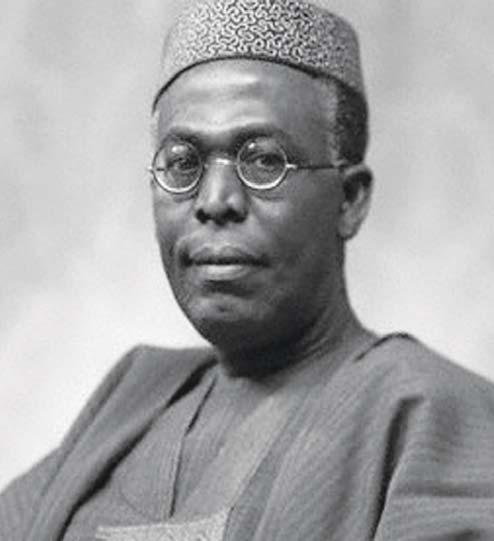
This is the standard long associated with Awolowo, whose poli cs emphasized discipline, social welfare, educa on, and ins tu onal strength. His vision was not merely about holding office, but about transforming society through principled governance. Good Poli cs follows that tradi on. It rejects manipula on, arrogance, and the concentra on of power without accountability. It insists that authority must serve the people, not itself. Beyond electoral reforms, de-
“Democracy weakens when dominance replaces performance. It weakens when loyalty to party eclipses loyalty to principle. The Omoluabi tradition teaches that character defines leadership. Without character, authority becomes hollow”

mocracy must deliver tangible relief. Across the country, households struggle with rising prices and
THE progressives are generally defined as those favouring social reforms. Differing from conserva ves and tradi onists who are content with the status quo, the progressives aim at policies that will take society to a new developmental level that guarantees, more and more, the welfare and prosperity of the majority of ci zens.
purchasing power.
escala ng costs. Young people search
for opportuni es that remain scarce. When economic hardship deepens, democracy feels abstract. Good Poli cs recognizes that poli cal legi macy is reinforced when ci zens can see and feel the benefits of governance.
The concentra on of power within a single poli cal structure should translate into coordinated reform and measurable development. When it does not, ques ons naturally arise. Democracy weakens when dominance replaces performance. It weakens when loyalty to party eclipses loyalty to principle. The Omoluabi tradi on teaches that character defines leadership. Without character, authority becomes hollow.
A healthy democracy requires credible elec ons and compassionate governance. It requires leaders who understand that poli cs is a moral enterprise. Two years into this administra on, many Nigerians remain uncertain about the direc on of both our democra c processes and their daily welfare. If democracy is to endure, it must reflect Good Poli cs: fairness in compe on, integrity in conduct, and compassion in governance. Anything less falls short of the standard that our history and our values demand.
not the opinion of the Columnist featured above
The common saying is that “birds of the same feather flock together.” Accordingly, be it poli cs or other social organisa ons, progressives come together on the basis of likeness of mind and interest to advance humanity to the next level, while conserva ves, reac onaries, radicals, revolu onaries, and centrists do likewise, for their various interests and agenda. It is expected that you will never find a reformist in a neo-Nazi movement. However, whereas flocking together on the basis of breed s ll obtains largely in the avian and animal world, humans seem to have moved on to a new perplexing level of breed dilu on when it comes to bedfellow on ideas and interests!
Depending on the historical challenges of any specific country, one can plainly tell what the posi ons of the progressives are. That used to be the case in mes past in Africa, Nigeria not exempted. In Nigeria for instance, when Awolowo, Aminu Kano or Balarabe Musa speak, you know from which point of view and in whose overall interests; same for Ahmadu Bello, Adisa Akinloye or Umaru Dikko.
Things have changed dras cally and nas ly, especially since 1999. Today, ei-
ther in poli cs or within various social organisa ons, ideas, manifestoes and programmes have been relegated to the shadows. Congrega ons are no longer based on the promo on of any ar culated social interests rooted in any lo y concep on. All that exists are various gangs promo ng private and clique interests basically deleterious to the common good. In poli cs, the major poli cal assemblies are as patently different from one another as six is from half a dozen!
Progressive-minded ac vists and poli cians s ll abound in the land even as they are becoming endangered species in an age when “the best are full of doubts and the worst are full of passionate intensity.” However, number has never been a disadvantage to votaries of good causes; their handicap has always been waned zeal to dis llate themselves as wheat away from the chaff, then organise with passionate intensity.
Today, progressives, with very few excep ons, are sandwiched in a variety of reac onary and an -people assemblies, fearful for personal fortune and thereby silenced in words and ac on. With Nigeria trauma sed and endangered as it is, there is no graver me in its history demanding crystallisa on of progressive thoughts and ac ons in a purified and outstanding assembly.
The most cri cal ques on on the front burner of the na on is the very one conserva ve and reac onaries do
not want raised and progressive are fearful to proclaim and demand answers to the ques on of the structure of a naon that is named “FEDERAL REPUBLIC of Nigeria.” Any progressive-minded patriot that has not lost his/her progressive mind must know that the infidelity to that very name is the root cause of all trials and tribula on the country faces, from me, and ll date – which is threatening to consume it.
In Nigeria, we always love to dance around our problems rather than solving them as witness the recent Supreme Court judgement that targeted solving accountability problems rather than the structural problem that occasioned corrup on of the en re system in the first place!
Genuine progressives must know that un l we resolve the ques on of the warped, upside-down structure of the country, a thousand more general elecons, however free and fair, can never produce persons that will right that wrong, having been premised on polics, poli cal par es, poli cal proceedings that are offspring of a deformed structure.
Indeed, it is amazing grace that Nigeria is s ll standing; and perplexing that true progressives can claim that nomenclature – in their invisible, ineffectual state wherever they are. One clear fact is that Time always propels a solu on from the belly of the problem confronting any age, and Time will surely tell.
OSUN DEFENDER is published by Moremi Publishing House Limited, Behind Oranmiyan Building, Gbodofon, Off Gbongan Road, Osogbo, Osun State. All correspondence to the Deputy Editor, MICHAEL BAMIGBOLA, Telephone: 0809-301-9152. ISSN: 0794-8050. Website: www.osundefender.com Email: osundefenderbank@gmail.com, osundefenderhq@gmail.com