Osprey Annual Report: 2025 Regional Review and 2026 Outlook
EXECUTIVE SUMMARY
Aviation security incidents reached unprecedented levels in 2025, with Osprey recording over 370,000 events across seven global regions This report provides aviation operators with essential intelligence on conflict zone dynamics, violent non-state actor (VNSA) activity, and airspace risks that will shape operational planning through 2026
Three critical patterns defined the 2025 security environment Conflict zones directly impacted aviation infrastructure through drone attacks, missile strikes, and airspace incursions The Russia-Ukraine war generated 189,948 incidents in Ukraine alone, while sustained military activity affected Poland, Romania, and Moldova Iranian-backed militant groups conducted repeated attacks on airports across Israel, Iraq, and Lebanon
Weaponised drones emerged as the predominant aviation threat across multiple regions Operators faced drone incursions at European airports from November onwards, whilst VNSA groups in the Middle East, Africa, and Latin America used drones to target aviation facilities This tactical evolution demonstrates how readily available technology now enables persistent, low-cost threats to airspace integrity
Inter-state tensions triggered multiple airspace closures and operational disruptions India and Pakistan exchanged strikes in May Thailand and Cambodia resumed hostilities in December Border disputes created unpredictable environments where military air activity could rapidly escalate without warning
For 2026, Osprey assesses that high-intensity conflict will persist in Ukraine, the Middle East, and parts of Africa Drone threats will continue across Europe Border disputes in Asia Pacific remain unresolved, creating conditions for sudden escalation Aviation operators require continuous intelligence to navigate these dynamic threat environments and maintain safe operations
The Osprey Annual Report provides expert-level analysis of the global aviation operating environment. The report is regionally focused, with seven sections covering each region. Each regional section provides an overview of significant factors that impacted aviation in 2025, particularly conflict zone dynamics considering both conventional military and non-state actors, followed by an outlook for such activity for 2026.
The depth of the aviation-centric analysis contained in the report is unparalleled and gives the reader unique insight into the operating environments in key countries, as well as emerging concerns at major locations and an understanding of dynamic trends centred on airspace risk This report is compiled as a collaborative effort by our team of analysts, each of whom has different regional and thematic expertise, which is underpinned by Osprey’s unique datasets This allows a truly unique and objective view of aviation risk, challenging some conventional thinking as well as highlighting potential issues which may not have been considered by existing teams due to operational priorities or resource constraints, ensuring a fuller understanding of the global risk picture to aid assessments and consider possible situational outcomes
ASIA AND PACIFIC (APAC) REGION
2025 Review
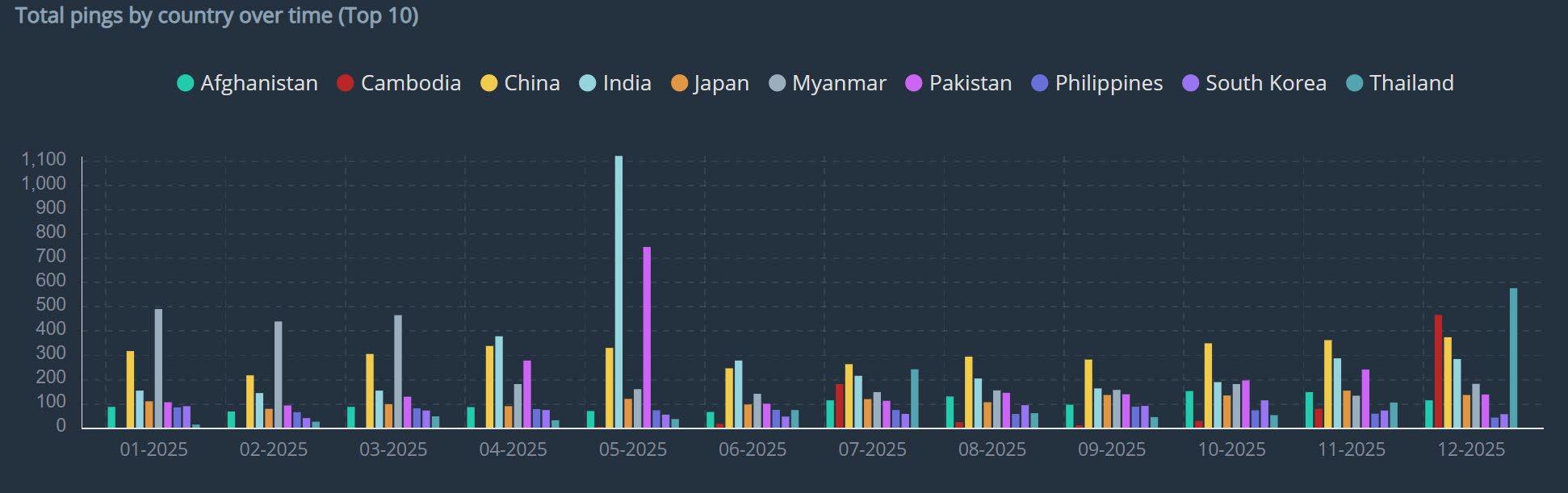
APAC Region: 2025 Monthly Incident Totals from Osprey:Explore
Osprey recorded a total 22,312 incidents in the APAC region during 2025 The top three countries by number of incidents were China ( 3,689), followed by India ( 3 ,583) and Myanmar ( 2 ,844)
In 2025, the region witnessed significant inter-state hostilities triggered by long-standing border disputes and cross-border militant activity contributing to an uptick in aviation security incidents In May, India and Pakistan exchanged missile and drone strikes prompting airspace closures Escalating cross-border attacks by Tehrik-i-Taliban Pakistan (TTP) militants triggered clashes between Pakistan and Afghanistan in October Thailand and Cambodia resumed hostilities in December after the unravelling of a ceasefire that came into effect following an earlier round of clashes in July Sustained Chinese military activity in the Taiwan Strait also fuelled aviation risk during the year
2026 Outlook
Osprey assesses that in light of attacks on New Delhi and Islamabad in November, further escalation in tensions between India and Pakistan is a realistic possibility in 2026 Separately, the border dispute between Cambodia and Thailand remains unresolved; therefore, while there is a realistic possibility the ceasefire will hold in the short term, prospects for a longer-term peace agreement will likely remain limited Osprey assesses that China is likely to conduct large-scale military air and naval drills around Taiwan on a quarterly basis through 2026, and Taiwan will likely maintain a heightened state of readiness amid sustained Chinese military activities near the island
SECTION PREPARED BY
Brijesh Khemlani Senior Aviation Security Analyst
Brijesh holds a master’s degree in Comparative Politics from the London School of Economics. Prior to joining Osprey, he worked for Meta’s corporate security team, supporting internal stakeholders with intelligence assessments on political and security threats in APAC. He has also worked as a freelance consultant for the Economist Intelligence Unit and Oxford Analytica.
EASTERN AND SOUTHERN AFRICA (ESAF) REGION
2025 Review
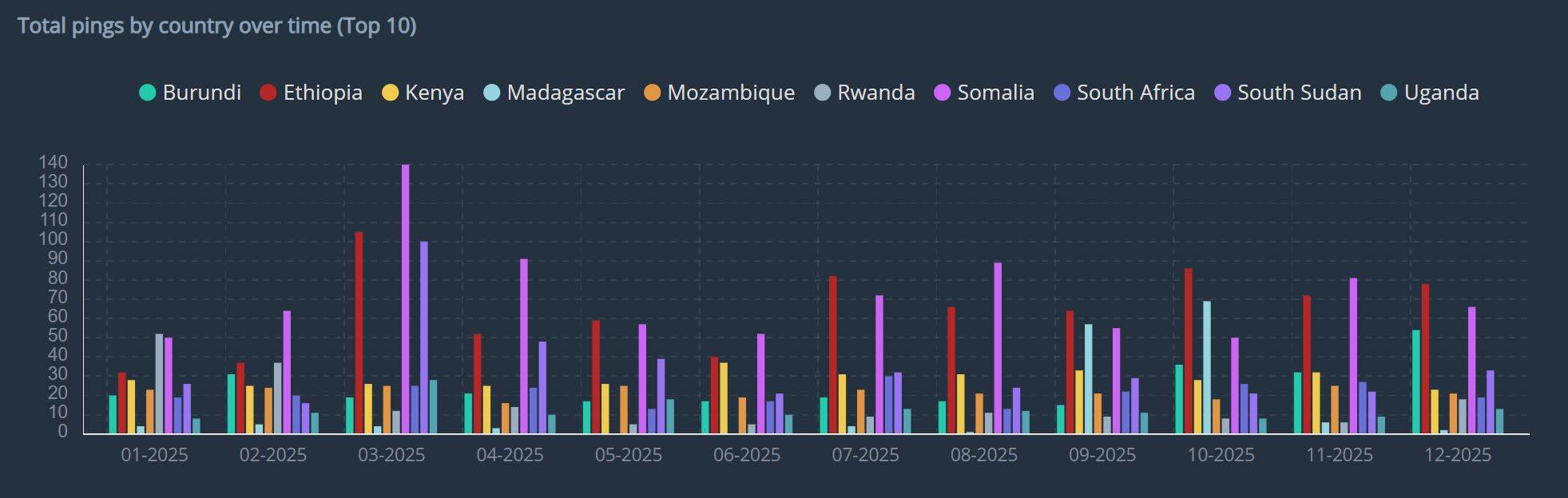
Osprey recorded a total of 4,236 incidents in the ESAF region during 2025. The top three countries by number of incidents were Somalia ( 867), Ethiopia ( 773) and South Sudan ( 411).
Aviation in the region was impacted on multiple occasions by conflict zone activity, including attacks on/near aviation infrastructure In South Sudan, armed clashes have occurred since a militia group known as the "White Army" conducted an attack in March on a South Sudan People's Defence Force (SSPDF) base in Nasir, Upper Nile state During the conflict, UN helicopters have reportedly been fired upon, and subsequent clashes occurred in April. Fighting has continued into 2026, with increasing calls among opposition groups to "march" on the capital. Separately, in Somalia , the extremist violent non-state actor (VNSA) group al-Shabab has threatened the areas surrounding Mogadishu and continued to launch attacks on Aden Adde International Airport (HCMM/MGQ) and the adjacent Halane compound, where numerous hotels, international organisations and diplomatic staff are located. The US reportedly conducted the most airstrikes in Somalia in a single calendar year in 2025, targeting both al-Shabab and Islamic State militants. Political instability and associated unrest were also reported in multiple locations in the region throughout 2025, including Tanzania, Madagascar and Somalia
ESAF Region: 2025 Monthly Incident Totals from Osprey:Explore
2026 Outlook
Osprey assesses that fighting in South Sudan – including armed clashes at or near airports, airstrikes and/or attempted downings of aircraft – is likely to continue into 2026 due to ongoing tensions and the impact of the Sudanese Civil War Somali Armed Forces, with support from international partners, and al-Shabab are also both likely to continue to conduct offensives and counter-offensives in central areas of Somalia, with fighting in proximity to the capital, Mogadishu, likely Further airstrikes by international forces, especially the US, are near certain in the coming year Operators should also expect further unrest throughout the region due to ongoing political and economic grievances, with further unrest in Tanzania and Madagascar a realistic possibility Kenya is also likely to experience unrest as the country's government struggles to implement economic reforms
SECTION PREPARED BY
Alexandra James Analysis Output Manager
Alexandra holds a master’s degree in Forensic Linguistics, with her dissertation focusing on communication between crew and aggressive airline passengers She joined Osprey from Green Light Ltd where she was the subeditor and regular contributor to the trade journal, Aviation Security International She also delivered training to crew and security personnel on unruly passenger management and advanced interview techniques
EUROPE & NORTH ATLANTIC (EUR/NAT) REGION
2025 Review
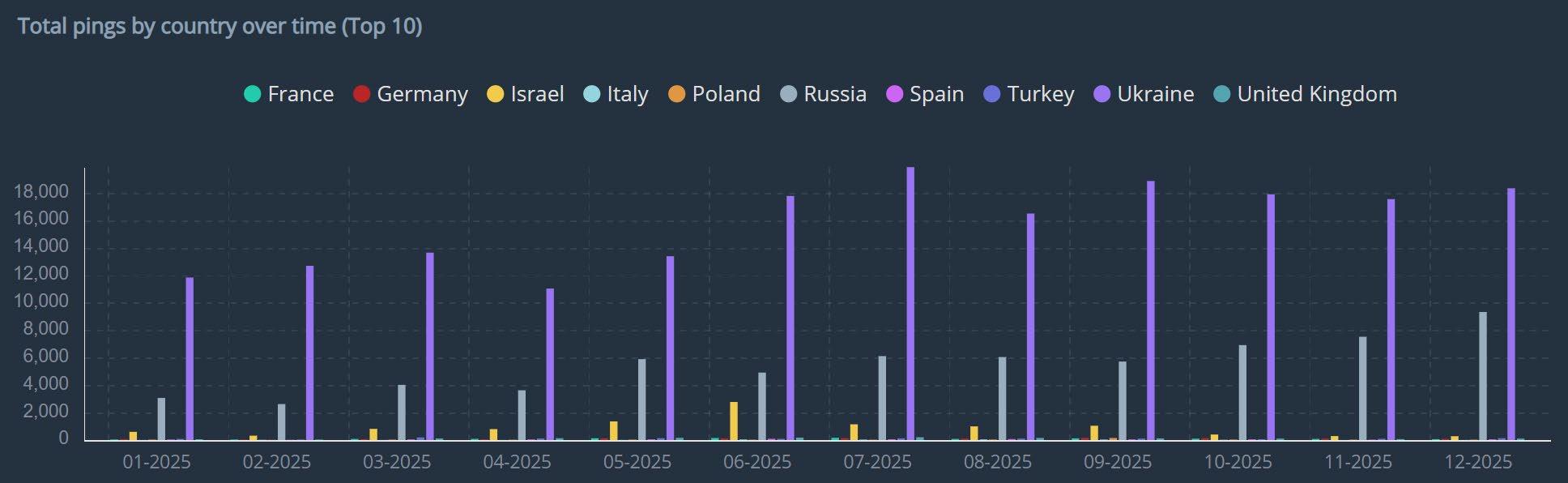
EUR/NAT Region: 2025 Monthly Totals from Osprey:Explore
Osprey recorded a total of 287,335 incidents in the EUR/NAT region during 2025. The top three countries by number of incidents were Ukraine ( 189,948), Russia ( 66,316), and Israel ( 11,345).
Russia accused Ukraine of launching waves of drone attacks against targets deep inside Russian territory on over 500 occasions in 2025, frequently including Moscow – with Russian air defences activated in response and flight disruption reported at multiple facilities. Drone incursions and/or related military air activity was also reported on at least 79 occasions across Poland, Romania and Moldova, resulting in airspace closures and suspensions of flight operations. Meanwhile, 213 drone attacks/unmanned aerial vehicle (UAV) events and 844 aviation security incidents were recorded in Israel. The Yemeni Houthi Iranian-backed militant group (IBMG) conducted drone attacks on Israel's Ben Gurion (LLBG/TLV), Haifa (LLHA/HFA) and Eilat Ramon (LLER/ETM) international airports. The Houthis conducted dozens of ballistic missile launches targeting Ben Gurion Airport, and an Iranian ballistic missile launch on 22 June also targeted the facility. Separately, UAV events were repeatedly reported in Western Europe near airports, including in Germany (66), Belgium (26), Denmark (22), Spain (22), the Netherlands (10) and Sweden (10), as well as in France, Switzerland, Norway, Poland, Latvia, Estonia, Lithuania, Czechia and Romania , resulting in temporary suspensions at various airports in the period from November Several drone incursions were also reported into airspace over Belgian, French, Dutch and German airbases in the same period Though attribution for the 'Eurodrone' phenomenon remains unconfirmed, some Western leaders have alleged Russian responsibility
2026 Outlook
Osprey assesses that significant Russian military operations – likely including the use of drones, and cruise and ballistic missiles targeting Ukrainian armed forces bases and critical infrastructure sites in Ukraine, including airports/airbases – are likely to persist through the first quarter of 2026 Ukraine is also likely to continue to conduct drone, missile and/or rocket launches into Russian territory multiple times daily through the first quarter of 2026, and Osprey assesses it is likely the Ukraine war will continue at a high intensity in Kharkiv, the Donbass and the south of the country through the first quarter of 2026 A limited number of airspace incursions into the airspace of Poland, Romania, Moldova, Lithuania, Estonia and Latvia are assessed by Osprey to be likely through the first quarter of 2026
SECTION PREPARED BY
Gian Como Senior Aviation Security Analyst
Gian is a Senior Aviation Security Analyst based in Jakarta, Indonesia He provides expertise on interstate conflict, geopolitics, insurgency and political instability in high-risk geographies Gian is a security and intelligence specialist with a background in risk management consulting, advising private sector, government and NGO clients to mitigate critical organisational exposure in dynamic global settings Gian holds a master’s and bachelor’s degree from the Department of War Studies, King’s College London.
MIDDLE EAST (MID) REGION
2025 Review
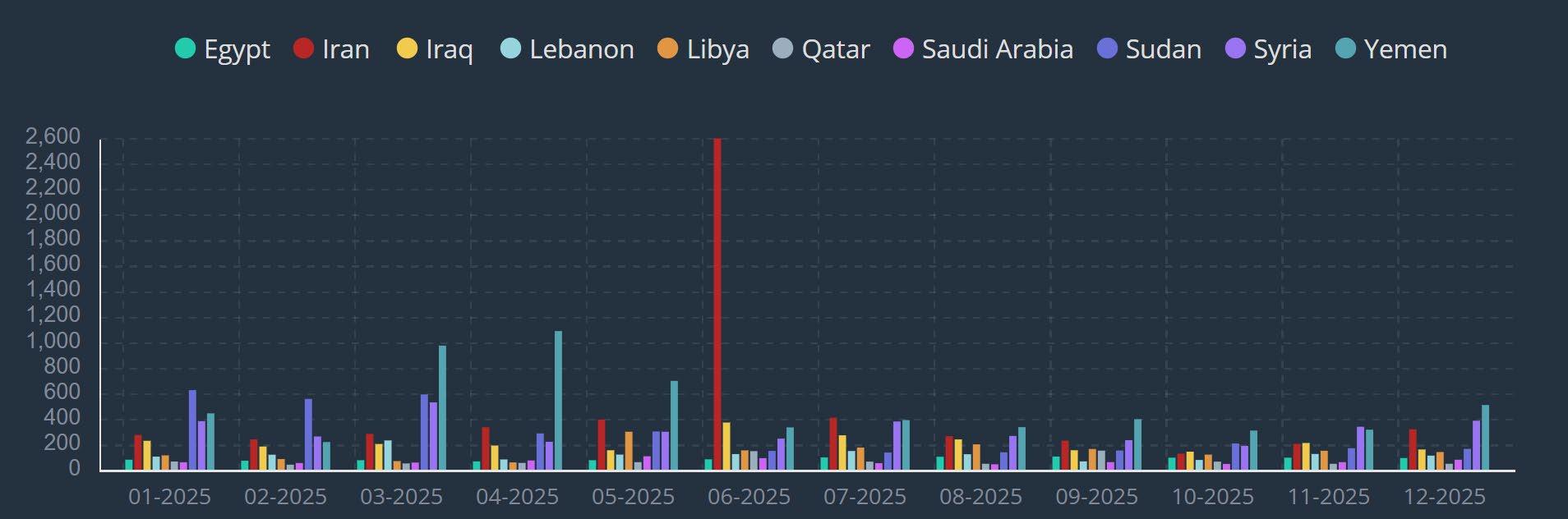
MID Region: 2025 Monthly Incident Totals from Osprey:Explore
Osprey recorded a total of 29,872 incidents in the MID region during 2025 The top three countries by number of incidents were Yemen ( 6,100), Iran ( 5 ,764) and Syria ( 3 ,822)
VNSA groups in the MID region conducted dozens of attacks on airports during 2025: the Yemeni Houthi IBMG conducted drone attacks on all three of Israel’s international airports; IBMGs in Iraq conducted drone attacks on Baghdad (ORBI/BGW), Kirkuk (ORKK/KIK) and Erbil (ORBI/ORER) international airports; the Rapid Support Forces (RSF) in Sudan conducted several drone attacks on Sudanese airports during the year, and VNSA groups in Syria conducted drone attacks on Latakia International Airport (OSLK/LTK) Meanwhile, Israeli airstrikes targeted various international airports in Iran as well as the perimeter confines of Beirut International Airport (OLBA/BEY) in Lebanon The Houthis conducted dozens of ballistic missile launches targeting Israel’s Ben Gurion International Airport (LLBG/TLV), and an Iranian ballistic missile launch on 22 June also targeted the airport Israeli and US military airstrikes both targeted Houthi sites at Sana'a International Airport (OSYN/SAH) Iraqi IBMGs conducted rocket attacks on Baghdad and Kirkuk international airports Separately, both the RSF and the Sudanese Armed Forces (SAF) conducted rocket attacks on airports in Sudan, and the SAF carried out airstrikes on airports under RSF control in Sudan Additionally, a VNSA group rocket attack on 14 May targeted Tripoli Mitiga International Airport (HLLM/MJI) in Libya
2026 Outlook
Osprey assess that the Yemeni Houthis will refrain from launching drone and missile attacks on Israel and/or Israeli-linked entities in the region while the Gaza ceasefire holds Meanwhile, Iraqi IBMG rocket and/or drone attacks against airports/airbases as well as oil and gas facilities in Iraq (outside of the southern provinces) and eastern Syria are assessed by Osprey to be possible on a monthly basis through the first half of 2026 In Sudan, fighting is likely to continue in central and southern regions of the country, and a prolonged civil war remains the most likely outlook The full impact of a political rift between Saudi Arabia and the UAE on the Sudanese conflict, especially on the UAE's ability to resupply RSF forces with advanced weaponry such as drones, is unclear at this stage
SECTION PREPARED BY
Logan Coale
Senior Aviation Security Analyst
Logan holds over 17 years of experience as an Operations Intelligence Craftsman in the US Air Force and is currently a Master Sergeant in the Air National Guard. Prior to joining Osprey, Logan worked as an Electronic Warfare Scientist and Engineer, programming sensors for fifth- and sixthgeneration military aircraft His areas of expertise include Air defence weapons, Fighter aircraft and armament, Electronic warfare, Conflict zones and terrorism
NORTH AMERICAN, CENTRAL AMERICAN AND CARIBBEAN (NACC) REGION
2025 Review
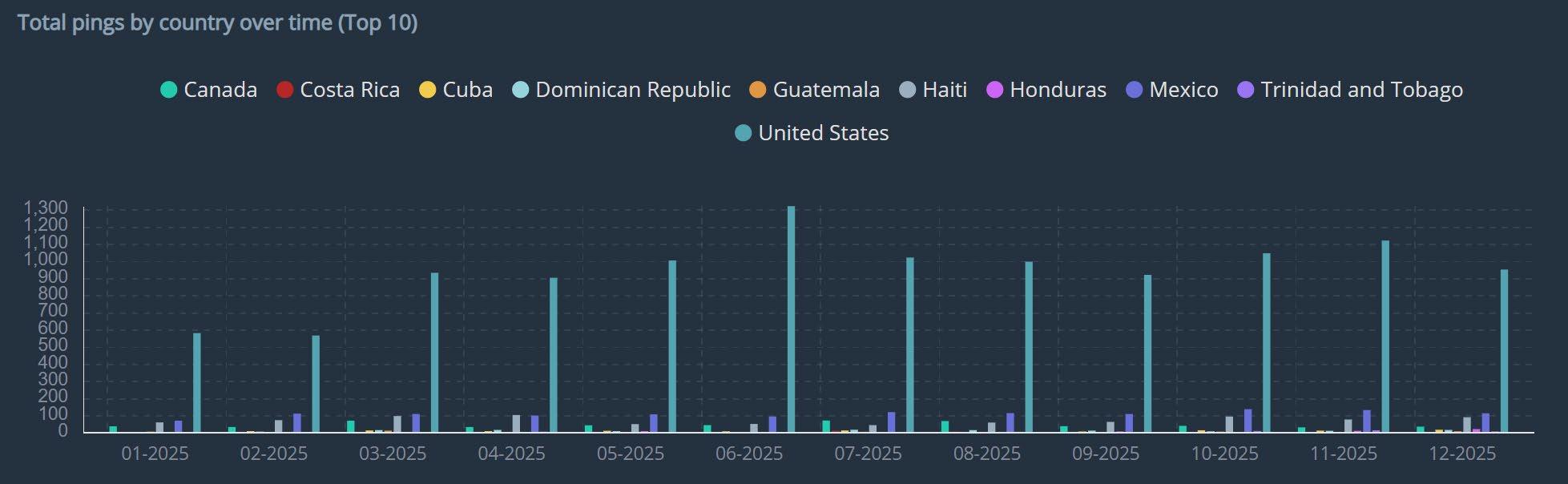
Osprey recorded a total of 15,153 incidents in the NACC region during 2025 The top three countries by number of incidents were the United States (US) ( 11,397), Mexico ( 1 ,340) and Haiti ( 885)
In Haiti, gang violence continued to impact aviation in 2025 Towards the end of the year, various incidents were reported involving aircraft being struck by gunfire while operating at Toussaint Louverture International Airport (MTTP/PAP), serving Port-au-Prince Since January, only cargo, charter, military, humanitarian and some domestic flights have been operating from the airport Authorities continue to work on developing and implementing new security measures at the facility to enable the resumption of all flights; however, significant security gaps around the perimeter of the facility remain Separately, VNSA groups, particularly in Mexico, have continued to use weaponised drones in attacks targeting security forces, government bodies, rival organisations and civilians during 2025; there have also been reports of operations by security forces to counter the activity Meanwhile, the use of such weapons emerged in March in Haiti after the creation of a new task force led by Haitian authorities, who launched a security offensive in Port-au-Prince, killing several gang members Haiti's main gang leader threatened a "proportional" retaliation against security forces; while there has been no indication at this stage that gangs possess weaponised drones, media reporting has highlighted that gangs have procured and used drones, largely for surveillance Security forces have since regularly used weaponised drones in operations targeting gangs
NACC Region: 2025 Monthly Incident Totals from Osprey:Explore
2026 Outlook
Osprey assesses that the security environment in Haiti will continue to deteriorate through 2026, with gangs launching frequent attacks against security forces and civilians in order to take control of more municipalities and further assert their power In the medium term, extensions of existing airspace prohibitions are near certain
Mathilde is a skilled aviation specialist with a particular interest in crimes committed at aviation facilities and corruption among employees, especially across the Latin America and Caribbean region Prior to joining Osprey, Mathilde worked as a geopolitical intelligence analyst for a strategic intelligence and advisory firm where she specialised in identifying security, financial, regulatory, political and cyber risks to businesses in the Americas and sub-Saharan Africa
SOUTH AMERICA (SAM) REGION
2025 Review
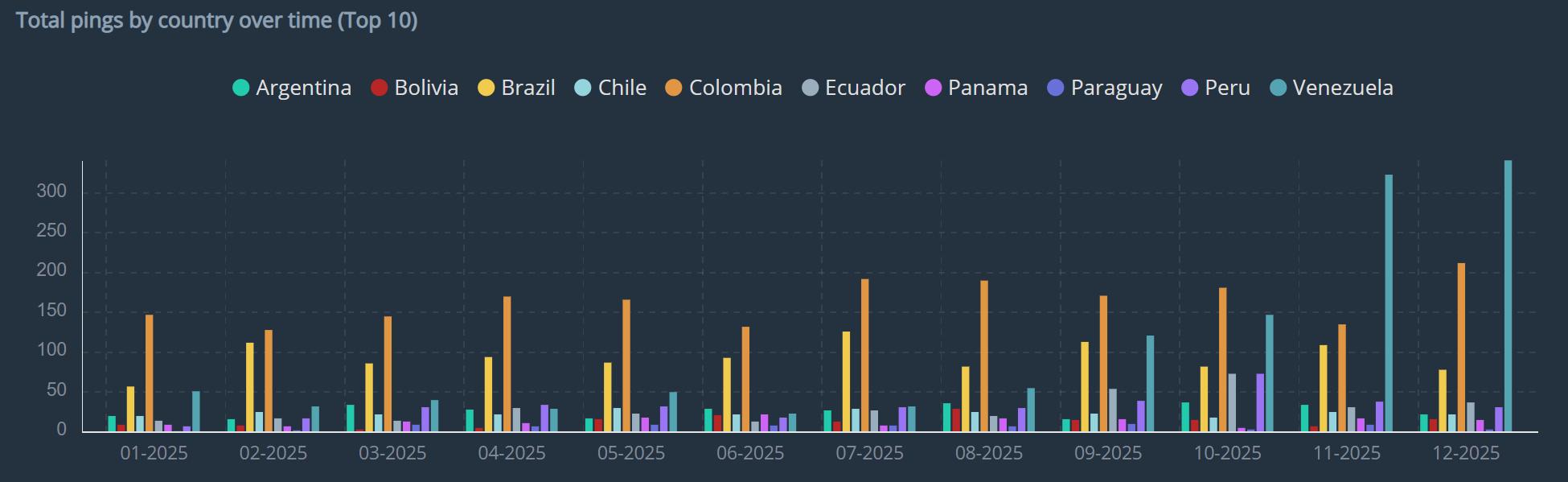
Osprey recorded a total of 6,254 incidents in the SAM region during 2025. The top three countries by numbers of incidents were Colombia ( 1,969), Venezuela ( 1 ,244) and Brazil ( 1 ,119).
Already strained relations between the US and Venezuela deteriorated further after the US began increasing its military presence in the southern Caribbean Sea in late August under the guise of counter-narcotics operations. Tensions escalated even more after the US military began conducting kinetic strikes against VNSA narcotics-trafficking group vessels in the southern Caribbean Sea off the coast of Venezuela and in unspecified areas of the eastern Pacific Ocean. The tensions culminated on 3 January 2026 in a US military operation, which included a wave of strikes on Venezuela, including in the capital, Caracas, and led to the capture of President Nicolás Maduro and his wife. Meanwhile, in Colombia, VNSA attacks targeting security forces and rival groups continued throughout 2025, and have involved explosives, including weaponised drone attacks and improvised explosive device (IED) attacks. In October, several security incidents, including instances of violent crime and the use of IEDs, were reported across Ecuador, especially in Guayaquil. Criminal groups, specifically those involved in narcotics trafficking, were thought to be responsible for the majority of the violent criminal activity.
SAM Region: 2025 Monthly Incident Totals from Osprey:Explore
2026 Outlook
The security situation in Venezuela remains fluid and subject to rapid change, and the heightened tensions and political insecurity are near certain to persist through at least the first quarter of 2026 Osprey assesses that both the US and Venezuela are near certain to maintain increased military deployments to the Caribbean Sea, and Venezuela will increase military operations within its own territory, particularly in coastal areas, in the short term Additionally, while the overall situation between both countries has calmed somewhat since 3 January, further US military strikes against sites in territorial Venezuela are possible in the short term Additionally, in neighbouring Colombia, the increased deployment of Colombian Armed Forces personnel to the border with Venezuela is near certain in the short term Across the South America region, VNSA activity is near certain to persist through 2026, albeit varying in activity types and intensity by country For example, Osprey assesses that weaponised drone attacks in Colombia are near certain to continue in 2026, particularly in areas of heightened VNSA activity and counter operations by the armed forces
SECTION PREPARED BY
Isobel Kerr Analysis Output Manager
Isobel is an experienced aviation analyst who has been with Osprey since 2020 She holds a master’s degree in Security Management from the University of Portsmouth, with her dissertation focusing on the development of performance measurements for security management systems (SeMS) within the aviation sector Isobel’s areas of expertise include violent non-state actor activity in Latin America, cyber security and activism
WESTERN & CENTRAL AFRICAN (WACAF) REGION
2025 Review
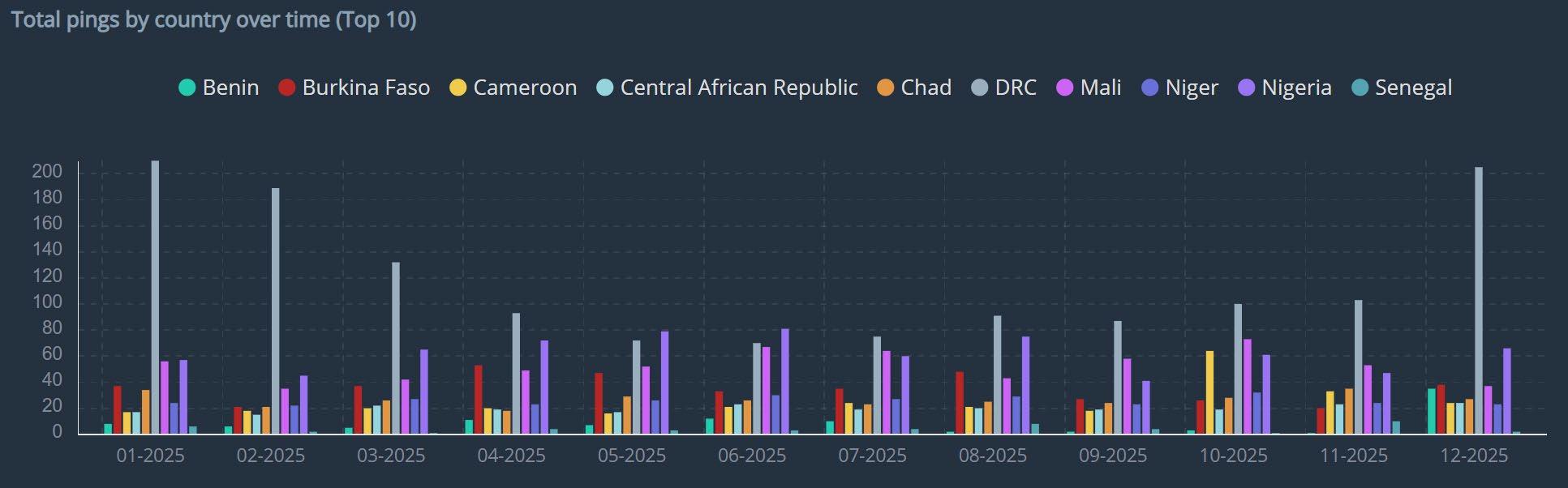
WACAF Region: 2025 Monthly Incident Totals from Osprey:Explore
Osprey recorded a total of 4,823 incidents in the WACAF region during 2025 The top three countries by numbers of incidents were Democratic Republic of Congo (DRC) (1,427), Nigeria (749) and Mali ( 629)
VNSA groups conducted multiple attacks on airports in the region during 2025 Specifically, Jama'at Nusrat al-Islam wal-Muslimin (JNIM) in Mali conducted rocket attacks on Timbuktu Airport (GATB/TOM) and Gao International Airport (GAGO/GAQ) Multiple aircraft were shot down or crashed in unclear circumstances while operating in the region In Burkina Faso, a Nigerian aircraft was seized and its crew detained after they diverted and landed in the country on 8 December due to a technical fault; the Burkinabe junta called the incident an "unfriendly act" As a result, the juntas in Burkina Faso, Mali and Niger together issued a directive to "neutralise" any aircraft violating their airspace In the DRC, the Rwandan-backed M23 VNSA group seized Goma (FZNA/GOM) and Kavumu (FZMA/BKY) airports during an offensive in the country's east Several aircraft were engaged during the fighting in the region Attempted coups and unrest, including in Guinea Bissau, Benin and Cameroon, resulted in airspace closures, suspension of operations at airports and violent clashes in proximity to aviation facilities In Nigeria, the US conducted airstrikes in coordination with the government in December The strikes, which have since been followed by Nigerian Air Force strikes against extremist targets in the country's north, followed reports that JNIM had conducted their first attack in Nigeria, exploiting the porous borders in the region. The attack was the latest in a series of spillover incidents from Burkina Faso, Mali and Niger - attacks were also reported in Benin and Togo throughout 2025.
2026 Outlook
The eastern part of the DRC will likely continue to suffer from acute instability, and further attacks on fortified installations with aviation infrastructure remain likely Further attacks by VNSA groups on towns and cities across Burkina Faso, Mali and Niger, as well as the targeting of military personnel and military bases, including airbases and airports, are near certain in the short term Osprey also assesses that further military coups and/or regime collapse in at least one country in the region is now a realistic possibility in the medium term Further spillover attacks by extremist groups into Benin, Togo and, increasingly, Nigeria by extremist groups are near certain in 2026
SECTION PREPARED BY
Sean Patrick
Senior Aviation Security Analyst
Sean has almost a decade of experience in the security industry and holds a master’s degree with distinction in Intelligence and Security Studies from Brunel University Prior to joining Osprey, Sean worked for many years in the travel and security industry, alongside government agencies Much of his work involved supporting travel and security in high risk locations and during conflicts Sean also has a special focus on forecasting, ensuring that operators are aware of changing security environments as situations develop
CONCLUSION
The 2025 operating environment demonstrated that aviation security threats have become more complex, distributed, and technologically sophisticated Operators can no longer rely on static risk assessments or reactive responses to geopolitical developments
Conflict zones will continue generating direct threats to aviation infrastructure in 2026 Weaponised drones have proliferated beyond state militaries, creating persistent threats that traditional security measures struggle to counter Geopolitical tensions remain unresolved across multiple regions, meaning sudden escalation can disrupt operations with minimal warning
Organisations that succeed in this environment will prioritise predictive intelligence over reactive responses Real-time monitoring, expert analysis, and predictive forecasting are now essential operational requirements
Osprey clients access continuous updates through :Alerts for breaking incidents, :Forecasts for emerging threats, and :Explore for historical analysis :Oracle consultation sessions provide tailored assessments for specific operational challenges
Aviation operators face an increasingly volatile security environment in 2026 Success requires proactive intelligence-driven decision making