

• Aramark to Redefine Ballpark Hospitality for A’s New Facility in Las Vegas
PAGE 6
• AeroFarms Brings Vertically Farmed Microgreens to Harris Teeter Customers
PAGE 8
• Most U S Companies Boost Sustainability Efforts
PAGE 9
• Consumers Shift Grocer y Shopping Habits Amid Inflation Concerns, Uncertainty
PAGE 11
• FMI: Industr y Succeeds in Offering Shoppers Value in Complex Operating Environment
PAGE 15
• QSR Diners Expect Digital Convenience, Accuracy, Personalized Engagement
PAGE 18
• Oli e Aceti
PAGE 19
• Featured Products
PAGE 23
• Advertiser Index
PAGE 26
BY WILFORD JONES Special to Gourmet News
Consumer wellness/appetite shifts to a more demand for near perfect plant-based products was among trends seen at this year ’ s National Restaurant Association Show, along with bold global flavors with a big presence of spicy, smoky and Asian-inspired ingredients usage and better-defined sustainable manufacturing
From May 16-19, well over 53,000 foodservice professionals and over 2,300 exhibiting companies with representation from 110 countries gathered at Chicago’s McCormick Place for
the annual trade show There were more than 900 product categories covering creative food and beverage products, innovative kitchen equipment and the newest technology ser ving the foodservice industry
The first wave of plantbased protein ingredients were soy, pea and wheat gluten The next wave of creative plant-based products has shifted in the direction of more complex protein ingredients, better application/function usage and authentic taste Plant-based 2 0 proteins include hemp, algae
and fungi (microorganisms:
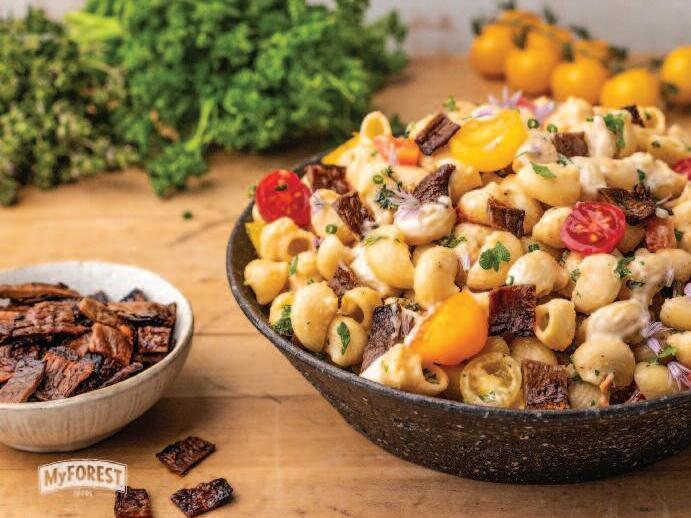
yeasts, molds and mushrooms) MyForest Foods showcased its farm-grown meatless mycelium product called MyBacon
As the UN Food Systems Summit +4 wrapped up in Addis Ababa, Wawira Njiru, founder and CEO

of Food4Education, took the TED stage with a powerful message: Africa is not waiting for answers, it’s creating them In her TED Talk, food systems trailblazer Njiru tells the stor y of how a simple act of care – feeding 25 children in a m a k e s h i f t kitchen –
sparked a bold, locally-led solution now delivering over 500,000 meals every day Today, Food4Education is the backbone of Kenya’s school feeding infrastructure and a blueprint for countries across Africa investing in nutrition, education, and opportunity all at once
“School feeding isn’t charity, it’s strategy, it’s infrastructure,” said Njiru “It’s how we nourish children, support farmers, strengthen education, and build systems that last
The U S Food and Drug Administration and U S Department of Agriculture are accelerating federal efforts to address the growing concerns around ultraprocessed foods and the current epidemic of diet-related chronic disease that is plaguing America The agencies are announcing a joint Request for Information to gather information and data to help establish a federally recognized uniform definition for ultraprocessed foods – a critical step in providing increased transparency to consumers about the foods they eat
“Ultraprocessed foods are driving our chronic disease epidemic,” said HHS Secretar y Robert F Kennedy Jr “We must act boldly to eliminate the root causes of chronic illness and improve the health of our food supply ”
Currently, there is no single authoritative definition for ultraprocessed foods for the U S food supply Creating a uniform federal definition will serve as a key deliverable on the heels of the recently published Make Our Children Healthy Again Assessment, which recognizes that the overconsumption of ultraprocessed
The restaurant and foodser vice industry is a dynamic sector with strong profit potential, projected to reach $1 5 trillion in sales in 2025
Opening a commercial kitchen is an exciting milestone for foodser vice entrepreneurs, but it is not cheap The price tag often goes far beyond up-front costs for equipment and rent, with new insights from commercial kitchen technology innovator Alto-Shaam revealing some hidden costs that can total up to
tens of thousands of dollars
Kitchen equipment uses a significant amount of power Older, less efficient equipment is often more power-intensive, so if you purchase space with existing equipment included, this can add even more to utility costs
For example, an old oven or fridge could add an extra $200 to the monthly electric bill Even a single inefficient deep fryer might add $20 to $50 a month; so, with multiple fryers on the go, this can really stack up
This can be a difficult call for
kitchen startups, as the purchase and installation of new equipment can be highly expensive
For example, a traditional ventilation hood system can cost $2,000 to $5,000 per linear foot to install With most hoods averaging 10 to 15 feet This means the installation alone for a hood could cost up to $75,000, in addition to the cost of the product itself
Brian Newland, senior VP of National Accounts at Alto-Shaam said ventless cooking technology can deliver key cost savings for
operators
“Kitchen operators don’t want to compromise on food flavor and quality Where budgets are constrained, there are options to reduce costs without sacrificing standards,” he said
“For example, ventless cooking technology saves money on the installation of a hood system, and on running costs, as a typical commercial hood costs around $56 per day to operate, which is $20,000 each year ”
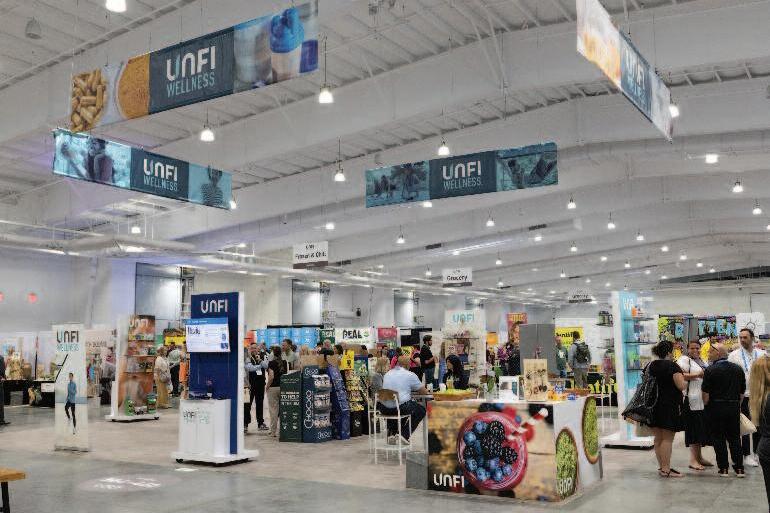
During its second Holiday and Winter Selling Show of 2025 in Uncasville, Conn , United Natural Foods, Inc brought together more than 3,900 attendees, connecting more than 1,400 retailers and over 750 suppliers Exhibitors showcased thousands of unique products, spanning the natural, organic, fresh, specialty and conventional grocer y categories
During the show, UNFI experts shared the latest industry insights and emerging growth opportunities to help grocers stand out during the upcoming holiday and winter selling season Top industry trends include:
sortments and in-store experiences continue to drive traffic and volume for retailers of all sizes
To help customers and suppliers capitalize on these trends, UNFI leaders also
1 Promotions are on the rise – Promotional activity has ramped up with onethird of grocery volume focused on deals or value
2 Private label is gaining popularity –Investment in private label continues with an expected 40 percent sales growth by 2030
3 Disruptors are picking up speed –Challenger brands are gaining an edge, generating 27 percent growth in the food sector last year
4 Health and wellness brands are booming – Fresh, high-protein and better-foryou options are outpacing the rest of the store
5 Experiences are essential – Unique as-
highlighted how their Professional Ser vices offerings – including data platforms such as Scan Advantage – can make it easier to use consumer insights and analytics for better assortment and promotional planning during high-volume seasons
“UNFI Professional Services has been a game changer for us, ” said Emily Brown, store manager, Catherine’s Market “Scan Advantage gives us the insight we need to align our operations and product mix with seasonal trends and consumer preferences ?It helps us stay ahead of what they’re looking for, whether it’s national brands or ideas we can translate into our housemade bakery and deli offerings ”
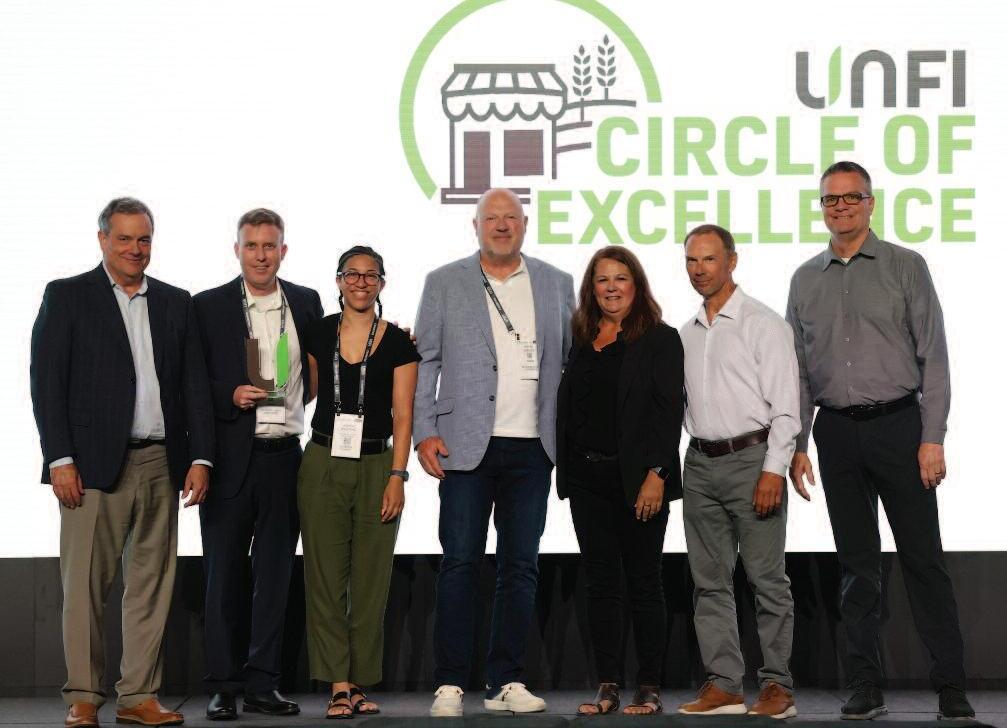
UNFI also honored 31 supplier brand partners across 15 unique categories in its second annual Supplier Circle of Excellence Awards The awards recognize suppliers for excellence in brand performance, categor y leadership, product innovation, and more
“This year ’ s Supplier Circle of Excellence Award winners represent the best of our industr y and we ’ re proud to recognize their meaningful contributions,” said Sandy Douglas, UNFI CEO “Their leadership, creativity, and commitment to excellence in an increasingly competitive market is defining the future of the consumerpackaged goods and grocer y retail industries ”
UNFI recognized the following three companies with the highest Circle of Excellence award, Supplier of the Year:
• Impact Supplier of the Year – Chobani
• Supplier of the Year – The Hershey Company
“At Chobani, our commitment to our people and our communities runs deep –we live it every day by working with local partners to end hunger,” said Marcin Moscicki, vice president of sales at Chobani “Our partnership with UNFI has helped us extend that impact even further,
• Broad Market Supplier of the Year –Loisa
bringing nutritious food to more communities and making a meaningful difference where it’s needed most ” GN
There’s an old saying about restaurants: the condition of the restroom is a good indication of how clean they keep their kitchen
Many diners use it as a rule of thumb, and even customers who don’t subscribe to this thinking can be put off by a bad-smelling restroom Something so far away from food prep can have a real impact on how an establishment is perceived
What might be surprising is where the offending odors actually come from – and how the cleaning process itself can sometimes make things worse Restroom floor drains, other types of floor drains and grease traps are designed to carry away the runoff from cleaning, but they often leave
behind urine and other organic waste clinging to the insides of pipes, where the odor lingers
The same goes for porous grout on floors and walls Even after the surrounding tile is scrubbed and dried, odors can remain trapped in the grout
To combat these lingering smells, Hospeco Brands Group offers a suite of odorneutralizing products specially formulated to keep restaurant restrooms, drains and surrounding surfaces truly clean Each product uses bio-enzymes to literally break down and digest the organic waste that causes odors and contributes to a sense of uncleanliness
ZymeCLING Multi-Purpose Bio-Enzymatic Gel is thick and made to cling to the inside of drains and pipes so that it works around the clock It is fast-acting and extremely effective at breaking down and digesting organic material (proteins, starches, and sugars) from hard-to-reach drains and areas where drain flies breed It helps eliminate odors and even improves flow in slow drains
Nilozyme Trap & Drain Treatment contains multiple strains of bacteria for faster breakdown of organic matter The formula liquefies and consumes complex proteins, cellulose, starches and other organic waste found in grease traps, kitchen and rest-
room drains, garbage chutes, septic tanks and more
Bio-Enzymatic Urine Digester combats urine, feces and any organics in the grout, subfloor, walls and other surfaces Simply apply Urine Digester once a day during regular cleaning schedules
The residual biologicals will continue to work all day They penetrate deep into the grout and subfloor where the bulk of residual urine is lurking
The bacteria will actually seek out deeply embedded urine Urine Digester contains an odor counteractant and comes in a variety of light fragrances that can last up to 24 hours GN
Flashfood grocery app has partnered with the Mid-Atlantic Division of The Kroger Co to introduce its program across 16 Richmond-area Kroger stores The rollout offers local shoppers significant savings on groceries while supporting Kroger’s commitment to sustainability, affordability and healthy food access
Through the partnership, Richmondarea customers can purchase fresh groceries in surplus or nearing their best-by date – including meat, dairy, produce and baked goods – at big discounts through the Flashfood app Items are then picked up
from designated Flashfood zones inside participating Kroger stores
“Kroger’s leadership in operational excellence makes them an incredible partner to demonstrate what Flashfood can deliver when executed at scale,” said Jordan Schenck, CEO of Flashfood “We’re thrilled to be kicking off this partnership and to support Kroger’s impactful Zero Hunger, Zero Waste program
“Together, we ’ re not only expanding access to fresh, affordable groceries in Richmond – we ’ re also demonstrating how innovation can leverage surplus and end-of-
life food to serve communities, support retailers and keep good food out of landfills ”
In its recently published 2024 Impact Report, Flashfood demonstrates the role food waste plays in today’s affordability, health and nutrition crisis In a 2025 shopper survey, 70 percent of Flashfood shoppers reported a healthier diet since using Flashfood and 65 percent report eating more fruits and vegetables
“At Kroger, we ’ re always looking for innovative ways to serve our communities, reduce our environmental impact and move closer to our Zero Hunger Zero
Waste goals,” said Mid-Atlantic Division President Kate Mora “Our partnership with Flashfood helps us achieve all three
“This app is another resource for customers who are looking for affordable options to feed their families while also keeping perfectly good food out of landfills It’s a win for our community and the planet ”
With this expansion, Flashfood is available in more than 2,000 stores across North America To date, the program has diverted over 140 million pounds of food from landfills and saved shoppers more than $355 million on groceries GN

I get a lot of emails every day A Lot Just ask my colleague, Hannah, whose job includes reminding me periodically that my email account is taking up too much space on the server and I need to do a lot of deleting A Lot Of course, many of the emails are subscriptions to accounts that give me industry news Then, there are legitimate emails from people sending me press releases and such And, naturally, the spam Some time ago, I started getting emails from people – I’m giving the senders the benefit of a doubt that they aren’t bots – sending me the results from Google searches ranking states for the number of times residents looked for certain terms Most of them have nothing to do with any interest of mine (in no facet of my life do I need to know how many people browse the internet for Taylor Swift mentions), much less information of interest to our readers
Every once in a while, though, there are topics that catch my attention In my head, I file them under “Things I Should Know If I’m Ever a ‘Jeopardy!’ Contestant” and fewer still “Things That Just Might Be of Interest to People in the Food and Beverage Industry ” I remember one such poll ranked the top 10 states with favorite and least favorite fast food restaurants I couldn’t help myself, I had to reply to the email that maybe the restaurant mentioned that is least popular in Arizona doesn’t have any restaurants here Just sayin’ Regardless, I saw a couple of polls in the latter category recently that had interesting results
The first poll looked for the most mispronounced words in the world and found a few of them apply to food The winner, with what the email said was “ an overwhelming” victory with 160,510 monthly Google searches is “croissant ”
Apparently, I’m not the only one who struggled to pronounce “açaí” when I first heard of the Brazilian berry The press release said “açaí” ranked second with 106,846 monthly searches
The other food word in the top 10, coming in seventh, is “Worcestershire” with 80,005 searches Some languages have silent letters British words have silent syllables
If you ’ re curious, other mispronounced words were Loewe, Yves Saint Laurent, Louis Vuitton, schedule, Porsche, genre, gyroscope (What, no confusion over “ gyro”?), entrepreneur, Massachusetts (where Gloucester is “GLAH-ster” and Worcester is “WHU-ster” –see Worcestershire, above) and hierarchy
The study was conducted by the podcast and video creation platform Riverside
The second poll is more fun and won’t have you muttering the results to see if you ’ ve got it right
The price-monitoring website pricelisto com says that Oreo is America’s most popular snack brand on social media, with over 11 2 million posts across Instagram and TikTok
Kit Kat took second place with 4 2 million posts largely from Instagram posts, which total over 3 8 million Snickers rounded out the top three with 1 9 million posts At the other end of the universe (See what I did there?), Milky Way ranked as the least visible major brand on social media with just 80 total posts, despite having a 98 percent fame rating and 70 percent popularity among consumers
Keeping Milky Way company at the bottom of social media footprints are Fritos Original Corn Chips, Tostitos Scoops, Life Savers, Land O'Lakes butter (People snack on butter? Oh, maybe it’s the cheese Butter is a weird snack ), Ruffles, McCormick (The snack line, not the spices, which really would be weird – “Would you like some marjoram with your butter?”), Kraft Foods, Jif and Planters
The study found that Instagram remains the dominant platform for food and snack brand visibility, with most brands receiving substantially more posts on Instagram than TikTok For the top 10 brands, Instagram posts accounted for approximately 90 percent of their total social media presence Hey, there’s actually some useful info there! Well, I’ve got to go back to clearing some space on the server Until next time, stay safe and take care GN
AJ Flick, Senior Editor aj f@oser com

PizzaForno is expanding across college campuses in Southern California The company has officially made its debut at L A City College, with other schools in Los Angeles County quickly following suit PizzaForno is also available at Rio Hondo College, located at the police shooting academy range, with the second machine arriving on the main campus at the end of July
The rollout continued with Long Beach State, where two machines launched in early August
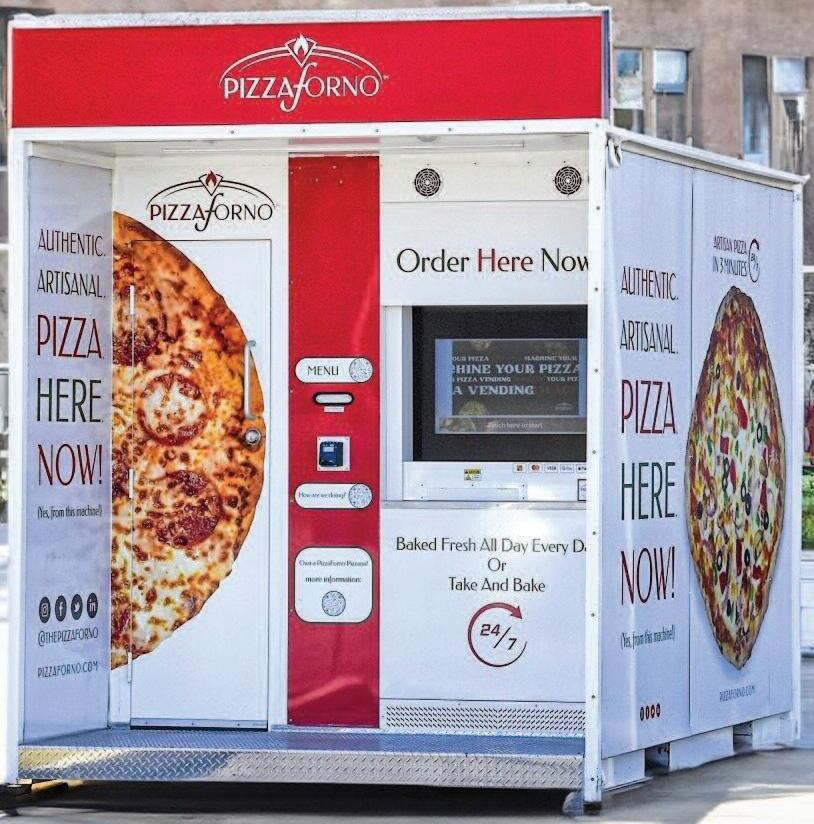
“Our goal is to bring college students 24/7 access to affordable and quality pizza,
especially during late hours when other options on campus are closed,” said Travis Musser, master licensee for PizzaForno Southern California and W a s h i n g t o n State “Pizza is the number one food choice among college students, so this expansion perfectly fills that gap
“By bringing PizzaForno machines to West Coast campuses, we ’ re helping schools provide a convenient solution that meets students’ busy schedules From our machines on East Coast campuses, we ’ ve seen that 70 percent of pizza sales happens between 10 p m and 6 a m
“Having food available round the clock keeps students safer on campus – they don’t have to leave at 2 in the morning just to grab something to eat We’re excited to continue our expansion and aspire to have multiple PizzaForno machines on ever y college campus in Southern California ”
Students can satisfy their pizza cravings with a variety of PizzaForno’s options, including Meat Lovers, Pepperoni, Cheese, Vegetarian, Barbecue and even Breakfast Pizza To keep things fresh, PizzaForno features a rotating Pizza of the Month, showcasing limited-time flavors such as Margherita, Kraft Mac and Cheese, Jalapeño and Hot Honey
Beyond the food, PizzaForno is committed to supporting students through a student ambassador program, offering hands-on marketing experience to earn an income while pursuing their education
“College is expensive, and many students are looking for flexible ways to earn an income without falling behind in their studies,” Musser said “We’re proud to bring students the opportunity to take part
in a side hustle right on campus – completely flexible with their lives and without the stress of commuting or rigid hours typical from part-time jobs
“It’s a way to support students’ financial and academic success ”
Founded in 2018 by Canadian entrepreneurs William Moyer and Les Tomlin, PizzaForno is North America’s only automated pizzeria, which introduces high-quality pizza in fewer than five minutes Accessible 24/7 at the tap of a digital screen, PizzaForno offers a selection of pizza options, each made with high-quality ingredients
Utilizing technology made popular in France by ADIAL, PizzaForno has built the brand on a proven food tech platform with already 2,200 operating in Europe PizzaForno has over 70 operating locations, over 100 additional locations committed in the United States alone, and over 30 U S locations already established in California, Georgia, Florida, Delaware, Michigan, Virginia, Alabama, Texas, Mississippi and Louisiana GN
The Athletics baseball club has formed a long-term partnership for food and beverage offerings with hospitality provider Aramark Sports + Entertainment for the team’s new ballpark in Las Vegas As part of the collaboration, Aramark has brought on restaurateur and author of the New York Times bestseller, “Unreasonable Hospitality,” Will Guidara, as a strategic partner to help curate the ballpark’s culinar y and hospitality vision
“This partnership reflects our belief that great hospitality should be at the heart of the fan experience,” said A’s President Marc Badain “With Aramark’s culinar y expertise and Will’s visionary approach, we ’ re not just building a ballpark, we ’ re creating a destination that captures the creativity and energy of the Las Vegas community ”
ice and culinary innovation by consulting on the creation of a hospitality brand, advising on food and beverage programming, supporting strategic partnerships, and elevating guest experiences

“Our work together with the A’s will be evolutionar y in sporting event experiences, ” said Alison Birdwell, president and CEO of Aramark Sports + Entertainment
“What we do in Las Vegas will be the gold standard for the industr y moving forward ”
As a strategic partner, Will Guidara will help define the ballpark’s approach to serv-
Best known for his book, the former coowner of the Best Restaurant in the World and as a co-producer on the Emmy Award-winning series “The Bear,” Guidara brings heart and creativity into every guest interaction His radically personal approach to hospitality will bring a fresh perspective to the gameday atmosphere through a customized training program and ser vice philosophy that ensures unforgettable moments for ballpark guests at ever y visit
Beyond baseball games, Aramark and Guidara will extend their hospitality approach to all events at the venue, from concerts and community gatherings to private and corporate functions with the goal of delivering a consistently memorable experience for ever y guest, no matter the occasion In addition to ser ving as the concessionaire, Aramark will become a minority owner in the club This long-term strategic investment deepens the collaboration and underscores a shared commitment to innovation, hospitality and building an iconic fan destination in Las Vegas
The A’s ballpark is scheduled to open in 2028 GN
Toast’s Go 3 handheld point-of-sale device is designed to help restaurants deliver faster, smarter ser vice – anywhere Purpose-built for the rigors of hospitality, Toast Go 3 combines speed, durability and comfort in a lighter, sleeker design that keeps up with teams from patios to festivals to curbside
Toast Go 3 is the only handheld that combines ToastIQ, Toast’s intelligence engine with built-in cellular connectivity, enabling staff to take orders, process payments and print receipts over both wi-fi and cellular networks, with seamless switching between them
Several ToastIQ features, embedded across the Toast platform, specifically enhance handheld service: Menu Upsells, which deliver real-time prompts to help boost checks; Shift at a Glance providing instant updates so every staff member knows what’s 86’d; and Digital Chits that highlight guest preferences and special occasions right on their handhelds, giving staff the tools to deliver unparalleled hospitality
stand drops from 5 feet
• Automated pairing recommendations anywhere Through ToastIQ-powered Menu Upsells, automatically populated
terminals Digital Chits enable personalized service by sharing important guest details and Shift at a Glance helps enable efficient operations with instant updates –

prompts on the Toast Go 3 guide ser vers to suggest menu pairings, modifier suggestions and upgrades in real time to staff, helping to act as a training tool and drive additional revenue
“The launch of our first Toast Go handheld in 2018 revolutionized restaurants by putting the power of Toast directly into staff ’ s hands,” said Steve Fredette, president and co-founder “Since then, our handhelds have powered over 2 billion orders, and every aspect of the new Toast Go 3 is shaped by that wealth of experience of Toast
• Real-time staff intelligence ToastIQ features deliver critical, in-the-moment information directly to staff handhelds and
including specials, low stock notifications and staffing changes, among others
• Extended batter y life Designed for long shifts, Toast Go 3 handheld stays powered throughout service, allowing staff to offer continuous hospitality In regular service, Toast Go 3 operates for more than 24 hours by consuming less power than
the Toast Go 2
• Compact design Toast Go 3 delivers the same expansive screen for easy order taking and payment processing as Toast Go 2 in a device that’s 16 percent lighter and fits in a pocket – making it easy for staff to comfortably
y throughout a shift The new handheld also includes built-in
and front-facing cameras
e s t o b e i n t ro d u c e d t o o u r
h a n d h e l d s ” T h e m o d e r n re s t a u r a n t l a n d s c a p e d e -
m a n d s f l e x i b i l i t y, w i t h o n - p re m i s e , t a k e -
o u t a n d d e l i v e r y n o w f u n d a m e n t a
Toast Go 3 was designed to meet that demand and also offer:
• Cellular network payments and printing Ser vers don’t have to run back and forth to take payments and print tickets
Cellular printing allows for seamless receipt and kitchen ticket printing on devices across separate internet networks, significantly extending ser vice areas beyond traditional wi-fi range
• Durable, restaurant-ready design Whether it’s dropped or exposed to spills, dust or heat, Toast Go 3 is designed to endure the rigors of a busy shift IP65-rated, it protects from dust and liquids, and with built-in shock absorption and can with-
“We are now considering new possibilities for off-site events like a cocktail cart or festival pop-up It’s a game-changer for
and
working with our in-house sommelier to build wine pairings into Menu Upsells, so all ser vers can give expert recommendations ” To a

As high school graduates prepare to begin their college careers this fall, eight students from the table grape growing regions of California will be aided with scholarships awarded by California table grape growers
Growers awarded two $25,000 field worker scholarships to students attending a four-year college or university Three $14,500 field worker bridge scholarships were awarded to students attending two years of community college and transferring to a four-year college or university
In order to be eligible for a field worker scholarship, applicants or a parent or guardian must work in the California table grape harvest
Three $25,000 agricultural scholarships were awarded to students attending a fouryear California college or university and planning to pursue an undergraduate degree in a field of study pertinent to the table grape industry
Since 1985, California table grape growers have awarded more than 200 scholarships to help students in the grape growing regions of California attend college
“Maintaining a scholarship program for 40 years is an exciting milestone and a testament to California table grape growers ’ continued investment in the community that surrounds the California table grape industr y, ” said Ian LeMay, commission president “At the same time, it illustrates why choosing California grapes is important in that it helps fuel support for all those working in the industr y and their
$25,000 Field Worker Scholarship winners
business
upcoming journey to become a corporate
• Daisy Sanchez Fernandez graduated from Delano High School with a 4 38 GPA and will attend University of California, Berkeley to study political science as she starts her journey in becoming an immigration lawyer Fernandez was awarded the 2025 Migrant Honor Student of the Year and ser ved as the soprano section leader in choir Fernandez was an active member of multiple school clubs and organizations, including the ser vice club, math club, mock trial, choir and Future Business Leaders of California
$14,500 Field Worker Bridge Scholarships
• Adriana Cerpas graduated from South High School with a 3 53 GPA and will at-
tend Bakersfield College to study radiologic technology Cerpas participated in South High School’s theater program, where she found mentorship and was encouraged to pursue her goals and dreams Cerpas looks forward to becoming an ultrasound technician to combine her interest in healthcare and desire to make a positive impact on people’s lives
• Kelly Ledezma graduated from Cesar E Chavez High School with a 3 49 GPA
study education Ledezma was an active
gram, which prepared her for a career in education Ledezma looks for ward to becoming an elementary school teacher and
succeed
• Yaribeth Suarez graduated from East Bakersfield High School with a 4 18 GPA and will attend Bakersfield College to study radiologic sciences Suarez was exposed to healthcare education through the Health Careers Academy, which nurtured her passion for the medical field Suarez was also a member of multiple school clubs, including the histor y club, Great Outdoors Club, and Link Crew
$25,000 Agriculture Scholarships
• David Cox graduated from Riverdale High School with a 4 39 GPA and will attend California Polytechnic State University, San Luis Obispo to study agricultural
business Cox was actively involved in a number of school clubs and activities, including Future Farmers of America Leadership, and varsity captain of the baseball and basketball teams Cox plans to be a business proprietor in the Central Valley and start a farm equipment company to support the agricultural industry
Garces Memorial High School with
Reygan Jones graduated from Kingsburg High School with a 4 13 GPA and will attend California State University, Fresno to study agricultural business Reygan’s work experience with a local farm sparked her passion for agriculture and inspired her to pursue a lifelong career in the industr y Jones is actively involved in her community and participated in numerous school activities, including softball, volleyball and Link Crew GN
AeroFarms, an indoor vertical farming company and a leading supplier of microgreens to the U S retail market, announced that its Micro Broccoli, Rainbow Mix, Micro Kale and Super Mix can now be found in Harris Teeter stores chainwide, including 20 locations within 90 miles of the AeroFarms location in Danville, Va
Today, most leafy greens in the United States are grown in California or Arizona and transported to the eastern United States On average, fresh produce travels about approximately 1,500 miles from farm to plate and, today, about 31 percent of the U S food supply is lost in transport, storage and beyond, according to the USDA 1, AeroFarms’ supply of microgreens to Harris Teeter’s Mid-Atlantic store locations from its farm in Danville not only reduces the risk of food loss, but secures yearround access to these nutrient-packed greens for Harris Teeter shoppers
“The adjacency of our farm in Virginia to Harris Teeter’s distribution centers translates to longer shelf-life, shorter transportation routes, and, ultimately, more
time for shoppers to use and enjoy our microgreens,” said Dane Almassy, SVP of sales & marketing “With Harris Teeter, we
now offer the power of locally grown microgreens to the communities in which we live, play and farm ”
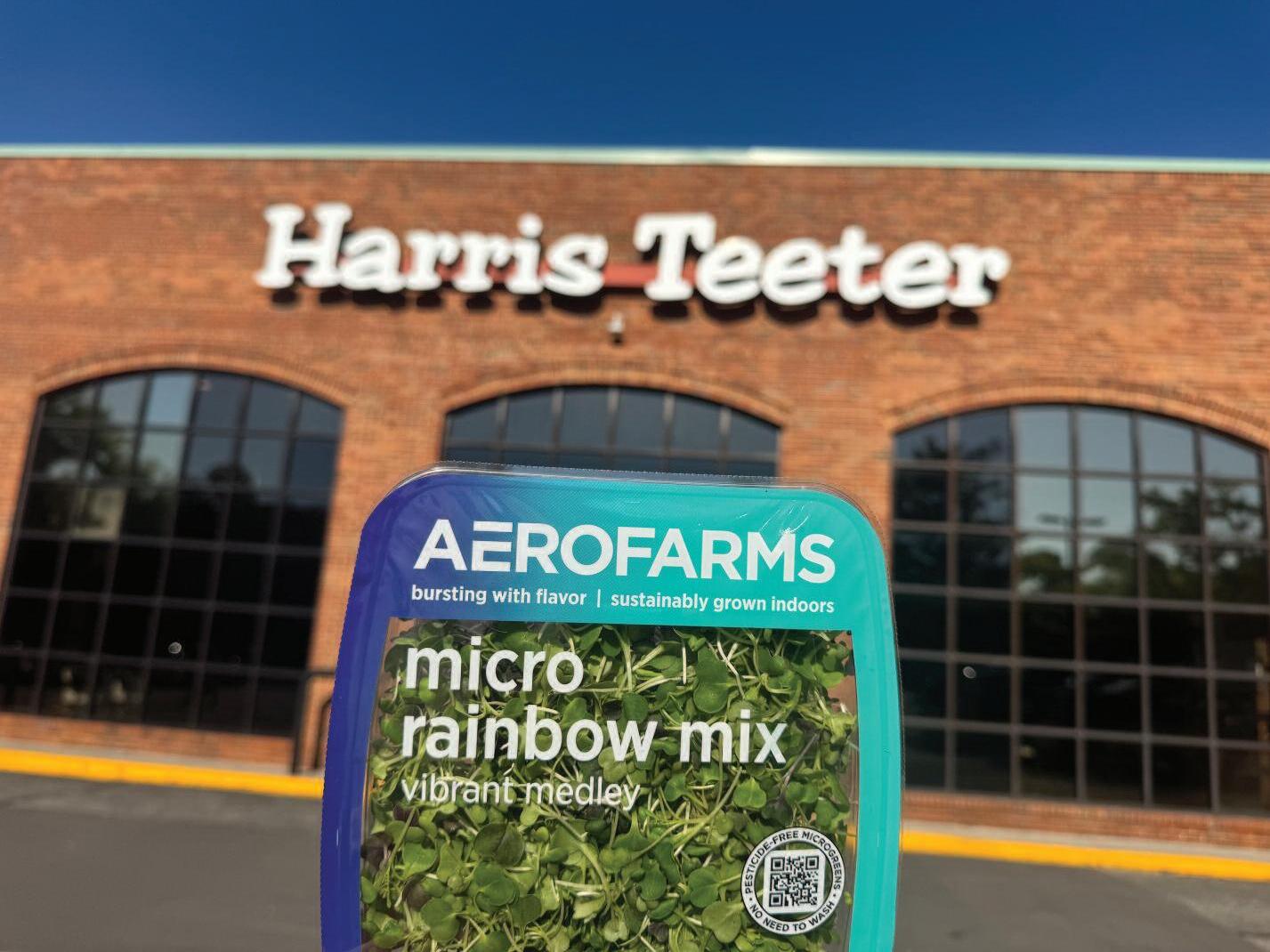
With an industry-leading shelf life of 18 to 23 days and the proximity of AeroFarms to Harris Teeter stores, shoppers will enjoy microgreens that stay fresh in their home for up to two weeks
AeroFarms microgreens’ diverse taste and versatility allow Harris Teeter shoppers to boost nutritional meals in an endless variety of ways, using great tasting recipes that combine AeroFarms microgreens with other Harris Teeter-branded products
Harris Teeter shoppers can now find AeroFarms microgreens in all Harris Teeter locations in Virginia; Washington, D C ; Delaware; Mar yland; North Carolina; South Carolina; Georgia and Florida GN
Pilgrim’s will invest $400 million to expand its footprint in Georgia The company will build a new, multi-phase prepared foods facility in LaFayette, Walker County, supporting more than 630 new jobs at full capacity
“Georgia’s No 1 industry of agriculture continues to drive growth with companies like Pilgrim’s, creating quality jobs in communities like LaFayette,” said Georgia Gov Brian Kemp “As our state’s economy continues to advance, we are excited to see these continued innovations and the opportunities they will bring for hard-working Georgians ”
Pilgrim’s is a leading global provider of high-quality food products Across Georgia, the company supports an estimated 7,500 jobs and operates seven food production facilities, in addition to supporting facilities such as feed mills and hatcheries
“Expanding the Pilgrim’s footprint in Georgia highlights our ongoing commitment to the region and our company ’ s
long-term growth strategy,” said Fabio Sandri, Pilgrim’s CEO “This significant investment will allow further growth of our prepared foods business by expanding brands like Just Bare, Pilgrim’s and Gold Kist, and supporting increasing demand in retail and foodservice channels
“We are also proud of our role in creating jobs and being a strong community partner ”
The new facility, located at the Walker County Business Park in LaFayette, will produce a variety of fully cooked chicken products to support the growth of its fastgrowing prepared foods business The project is expected to get under way in the fall of 2025, and hiring is expected to begin in 2027, aligning with the expected completion of the first phase of construction
“We welcome Pilgrim’s to Walker County and LaFayette,” said LaFayette Mayor and Chairman of the Walker County Development Authority Andy
Arnold “Pilgrim’s has a wonderful history of positive community involvement, and the creation of up to 630 jobs for our area is a game changer for many families We look forward to our partnership ”
“This is a tremendous opportunity for Walker County to provide stable jobs and long-term security for residents who want to work where they live,” said Chairwoman and CEO Angie Teems, Walker County Government “Not only is this a well-respected company with a strong track record, but it already has a presence in our community through its partnerships with local poultry growers
“Expanding their operations here is a natural next step that will strengthen our local economy and reinforce our county’s commitment to supporting hardworking families ”
Senior Regional Project Manager Lori Dowdy represented the Georgia Department of Economic Development’s Global Commerce team on this competitive proj-
ect in partnership with the Walker County Development Authority and Georgia Quick Start
“We are excited that Pilgrim’s continues to grow its footprint and drive economic opportunities here in Georgia,” said GDEcD Commissioner Pat Wilson “Agriculture has long been the backbone of our economy, laying the groundwork for today’s thriving food and beverage sector
“Critical industries like cold storage and logistics build on that legacy, generating jobs and opportunities across the state
Congratulations to Walker County for helping bring these new investments and possibilities to LaFayette ”
Pilgrim’s employs over 61,000 people and operates protein processing plants and prepared-foods facilities in 14 states, Puerto Rico, Mexico, the United Kingdom, the Republic of Ireland and continental Europe The company ’ s primary distribution is through retailers and foodser vice distributors GN
Eighty-seven percent of U S companies say they’ve maintained or increased their investment in business sustainability efforts this year, according to the 2025 U S Business Sustainability Landscape Outlook: Executive Perspectives on Supply Chain Disruption, Resilience and Competitiveness, released by EcoVadis
The findings reveal a shifting approach: companies are still prioritizing business sustainability behind the scenes, but fewer are promoting it publicly Executives see sustainability as a way to stay competitive and resilient, especially at a time when the scaling back of ESG regulatory oversight raises concerns about greater supply chain disruption
The report identifies five major trends shaping corporate sustainability strategy in 2025:
• Sustainability Investments Continue Despite a Rise in “Greenhushing”: Nearly one-third (31 percent) of executives say they are increasing business sustainability investments but reducing public communications Eight percent have stopped talk-
ing about their commitments publicly but continue to invest and stay on-plan Only 7 percent have actively cut back their sustainability efforts, and just 6 percent admit it is not a priority and do the minimum to comply
• Executives See Sustainability as a Competitive Advantage: Sixty-five percent of all respondents say supply chain sustainability is a competitive advantage that helps them grow faster through risk reduction, resilience, brand enhancements, supply chain performance and cost savings
Sixty-two percent of directors and VPs and 59 percent of c-suite leaders say it helps attract and retain customers A majority of finance leaders (52 percent) agree with this sentiment, saying sustainability is a growth driver
• Rolling Back ESG Rules Could Backfire: Nearly half (47 percent) of c-suite respondents say eliminating ESG regulations would increase supply chain disruptions
Thirty-five percent of all executives say ESG regulator y rollback could backfire,
weakening ESG data quality, undermining accountability, and negatively impacting sustainability outcomes Another 59 percent expect unfair labor practices and worker mistreatment to rise
• Companies Are Struggling to Keep Pace with ESG Compliance: Only 13 percent of companies are on track to comply with deadlines across four major regulations: the EU’s CSRD and CBAM, California’s SB-253 and Canada’s Modern Slavery Act For each regulation, up to 19 percent of covered companies haven’t begun collecting supply chain ESG data, and up to 15 percent are in “wait and see ” mode, hoping regulatory timelines shift
• Tech Investments Accelerate as Companies Work to Close Data Gaps: A third of executives (33 percent) admit to knowingly reporting ESG data that was based on estimates, even if they knew it was not accurate, for compliance, marketing, or investor expectations Still, the majority are working to close these gaps with technology: 57 percent are using ESG risk map-
ping tools, 49 percent have supplier ESG engagement platforms in place, 34 percent are using supply base mapping tools, and 32 percent are using on-site audit tools And 89 percent of companies are planning further tech investments over the next 12 months
“Even as the debate over business sustainability heats up, executives are focused on the reality – sustainability is what keeps supply chains running and customers on board,” said Pierre-François Thaler, cofounder and co-CEO of EcoVadis “To stay ahead of risks and disruption, leading companies are prioritizing transparency and accountability by investing in tools that help them assess supplier performance, manage risk more proactively and navigate evolving compliance demands ” The 2025 U S Business Sustainability Landscape Outlook gathered insights from 400 U S executives at companies with over $1 billion in revenue, across industries including consumer, industrial, technology and services GN
professionals looking to make an impres-
“As we near the holiday season, we ’ re excited to help companies celebrate in a way that’s both thoughtful and timeless,” said Doug Dressman, CEO “Gifting is about connection, and we believe chocolate does that better than anything ”
Two offerings lead the collection:
• The Executive Box, a polished presen-
tation of gourmet chocolates, nuts and candies
• The Champion Box, a bold mix of sweet favorites that celebrates excellence with every bite
Ordering is simple and flexible Businesses can find more information on how to order on Esther Price’s site, making the process as convenient as it is sweet Each gift box reflects the same quality and care Esther Price has been known for since
1926
Whether it’s for holiday giving, employee milestones or just saying thank you, the company aims to elevate ever y gesture with something special
Esther Price operates seven retail stores in Dayton and Cincinnati, holds over 100 wholesale accounts and is stocked in Buehler’s, UDF, Meijer, Kroger, Giant Eagle, Dorothy Lane Markets and Esther Price locations GN
The Food Network New York City Wine & Food Festival presented by Invesco QQQ announced its 18th annual programming lineup in its new home, the Seaport, one of New York City’s most historic and dynamic neighborhoods Now anchored at the Invesco QQQ Festival Campus in the Seaport, the annual festival promises an enhanced guest experience in a dynamic new setting
This move reflects NYCWFF’s continued evolution while honoring its longstanding partnership with the Food Network and its mission to celebrate the very best in food, drink and entertainment The 2025 festival will feature more than 60 events and 300 of today’s top chefs, culinary personalities, mixologists, winemakers, content creators and celebrities – from walk-around tastings and cocktail parties to exclusive dinners, brunches, master classes and the return of FoodieCon
This year, the festival begins a new chapter with acclaimed chef and restaurateur Jean-Georges Vongerichten joining as culi-
“This vibrant neighborhood is the perfect backdrop for our reimagined festival, blending the charm of old New York with the energy of today’s culinary innovation
“I’ve wanted to bring the festival to the Seaport since it opened 15 years ago, and I’m thrilled we ’ re finally here, with all our signature events within two blocks It feels great to be in a true neighborhood that celebrates creativity, community and culinary excellence, Schrager said “It’s a fresh start and an opportunity to reintroduce the festival in an exciting new way
“I’m especially excited to collaborate with my longtime friend Jean-Georges on this new chapter and deeply grateful to the chefs, partners and passionate fans who continue to support us year after year As always, Southern Glazer’s Wine & Spirits will be the exclusive beverage provider, giving guests the opportunity to taste and sip some of the finest wines and spirits from around the globe ”
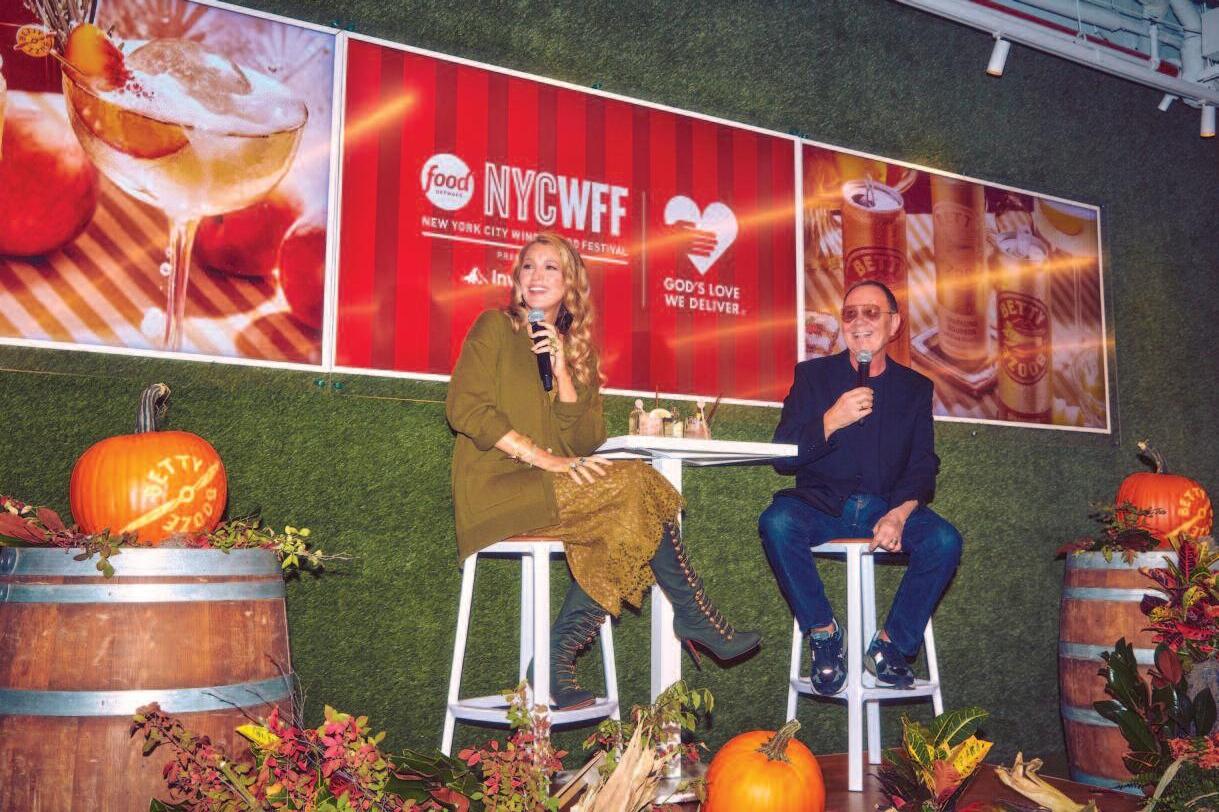
nar y host As part of his role, he’ll help spotlight the culinar y community at the Seaport’s Tin Building and Pier 17 through a series of special dining experiences and chef collaborations
His participation complements a lineup that brings together James Beard Award winners, Michelin-recognized chefs, beloved Food Network personalities, rising culinar y talents and purpose-driven partners across tastings, panels, pop-ups and more
Since its inception, the festival has raised more than $14 8 million for charitable causes This year ’ s festival will support the Event Zero Foundation’s mission to inspire and guide event organizers, businesses and communities toward sustainable practices as well as the James Beard Foundation’s mission to lead chefs and the broader culinar y industr y toward a new standard of excellence
“2025 marks a transformative milestone for NYCWFF as we move to the historic Seaport, launching a bold new chapter of immersive, waterfront culinar y experiences, ” said Lee Brian Schrager, festival founder and chief communications officer and SVP of Corporate Social Responsibility for Southern Glazer’s Wine & Spirits
Beckham’s Cloud23 hot sauce
The festival’s marquee slate continues with the popular Grand Tasting, the ultimate tour of NYC’s best bites and restaurants, Southern Glazer’s vast selection of wines and spirits and Food Network
p e r s o n a l i t i e s
And because there are not enough hours in a day to feast your senses on ever ything at Grand Tasting, this year the festival is offering a new Grand Tasting evening session
“As stewards of the hospitality industry, a21 is inspired to not just be a part of this celebration of food and c o m m unity, but to help steer the event to grander
p r e s t i g e , ” said Brett
F r i e d m a n ,
F o u n d e r and CEO of a21
“With the addition of the James B e a r d
F o u n d ation and
Event Zero Foundation, the event will evolve through its vibrant talent while creating a positive impact throughout the city with an emphasis on sustainability in the culinary industry ”
The festival will kick off the weekend at the Invesco QQQ Festival Campus in the Seaport with A Taste of the Tin Building, hosted by Vongerichten and Gregor y Gourdet, and featuring music by celebrity favorite DJ Cassidy This immersive evening will take place inside Jean-Georges’ dazzling culinar y marketplace, the Tin Building, rooted in global flavors, cultural discover y and bold creativity, making it the perfect place to launch a weekend of extraordinary taste
The iconic fan favorite that has ser ved as the cornerstone of NYCWFF for over 16 years, Blue Moon Burger Bash, returns – hosted by Rachael Ray and Brooklyn Beckham, presented by Pat LaFrieda Meats The festival’s iconic burger bacchanal, amped up in partnership with features the best burgers across the boroughs, plus a special hot dog recipe created by Rachael Ray and Brooklyn
Can’t Stop Eating, Karissa Dumbacher, The Golden Balance, Cheffin with Zach, The Vegan Bubby Elle and more Guests will have facetime with their favorite foodie
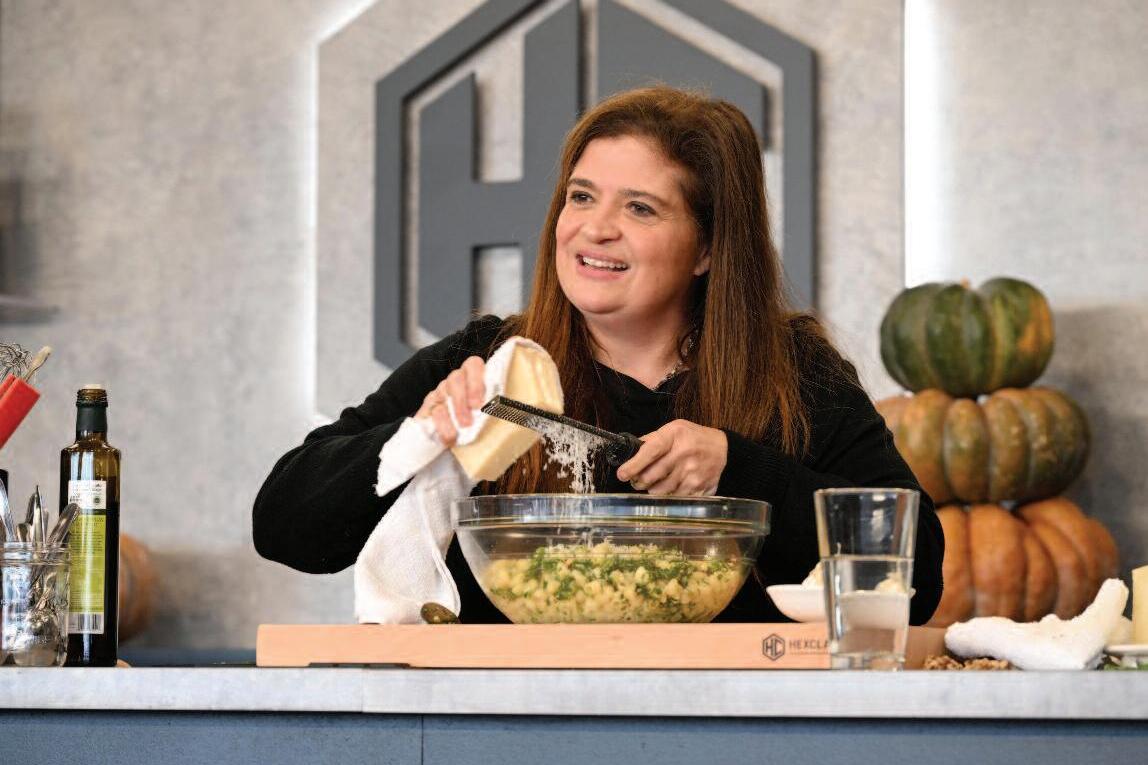
hosted by Food Network star chefs Bobby Flay and Brooke Williamson with the option to add on VIP Experience to a special steak focused event at Carne Mare hosted by Andrew Carmellini
A variety of themed tastings and celebrations follow, including Asian Night Market hosted by Padma Lakshmi and Vongerichten; A Taste of Tomorrow, an elegant evening spotlighting James Beard Foundation Award-winning chefs and fine wines, hosted by Marcus Samuelsson; Caviar, Cocktails & Champagne hosted by Antonia Lofaso at the WSA Building; and Catch of the Day, a seafood-centric feast presented by Modelo and hosted by Andrew Zimmern that pays homage to the host venue ’ s histor y as the site of the original Fulton Fish Market
Red sauce lovers can rejoice at Sunday Supper, presented by Peroni and hosted by influencers “The Pasta Queen” Nadia Caterina Munno and Lil Mo Mozzarella Whether you ’ re craving elevated luxury or street food swagger, NYCWFF’s signature
creators in an engaging format with bites provided by NYC’s trendiest restaurants 2025 also introduces a host of exciting cookbook authors, from legendary culinarians to unexpected fresh faces The year ’ s most talked-about cookbook authors and culinary storytellers will be hosting exclusive signings, menus and demo-led tastings inspired by the books themselves Confirmed titles include “Party People” by Brie Larson and Courtney McBroom, “Entertaining” by Martha Stewart, “I Regret Almost Ever ything: A Memoir” by Keith McNally, “Russ & Daughters” by Niki Russ Federman and Josh Russ Tupper, “Parm to Table” by Christian Petroni, “The Blue Food Cookbook” by Zimmern, “Padma’s All American” by Lakshmi and “A School Lunch Revolution: A Cookbook” by Alice Waters

events promise unforgettable moments for every appetite
Back by popular demand, this year ’ s FoodieCon – a specially curated space where social culinary creators take center stage – features live demos, panels, discussions and tastings led by tastemakers including Munno, Olivia Tiedemann, Brian
This year, NYCWFF debuts its most exclusive dinner series yet – a handpicked collection of one-night-only culinary experiences hosted by the world’s most celebrated chefs These intimate evenings offer rare access to top talent over bespoke menus and expert wine and spirit pairings provided by Southern Glazer’s Wine & Spirits Highlights include Waters and Dan Kluger, Paul Carmichael and Kwame Onwuachi, Michael White and Zimmern, Daniel Boulud and George Ruan, and a oncein-a-lifetime dinner for 12 with José Andrés Additional exclusive dining experiences feature Ray, Eric Ripert, Tony Shalhoub, Vikas Khanna, Alain Ducasse, Alex Guarnaschelli and more
The festival’s Headquarter Hotel, The Wall Street Hotel, is centrally located within walking distance to the Invesco QQQ Festival Campus in the Seaport GN
Blue Yonder revealed how sustained inflation, supply chain challenges and global tariffs are influencing grocer y spending and broader consumer behavior across generations and regions in its 2025 Global Consumer Sentiment on Grocery Inflation Survey
The sur vey, which polled consumers across Australia, New Zealand, France, Germany, the Middle East, the United Kingdom and the United States, found that 85 percent of overall respondents are concerned about inflation’s impact on grocery prices, illustrating consumer unease and clear changes in purchasing decisions across the world
“The findings of this survey underscore just how widespread and deeply felt the impact of inflation is on consumers ’ everyday lives,” said Ben Wynkoop, senior director, Global Industry Strategist, Grocery & Convenience, Blue Yonder “From buying fewer grocery items and cutting back on alcohol purchases to shopping at discount retailers and reprioritizing spending across other categories, consumers are navigating prolonged uncertainty – and retailers must adapt accordingly ”
Nearly half (49 percent) of all respondents believe newly introduced global tariffs are the leading factor behind inflated grocery prices, followed by increased costs for raw materials (42 percent), increased labor costs in manufacturing and food processing (39 percent) and increased profit margins for brands and manufacturers (33 percent)
The perceived top factor driving inflated grocery prices differs across regions Consumers in the United States (65 percent),
the United Kingdom (56 percent) and the Middle East (50 percent) feel global tariffs are the leading cause of rising prices Consumers in Australia and New Zealand (50 percent) feel that increased profit margins for brands and manufacturers is the top factor for inflated prices, while consumers in France (48 percent) and Germany (47 percent) believe the increased cost of raw materials is the leading cause of grocery inflation
There is a generational divide, too Baby Boomers uniquely believe that increased labor costs in manufacturing and food processing are the leading cause for grocer y inflation (52 percent), whereas all other generational groups believe global tariffs are the top cause of inflated prices
“In today’s global market, tariffs are significantly impacting grocer y supply chains, resulting in inventory and logistics challenges, as well as increased costs for both retailers and consumers, ” said Wynkoop “Leveraging advanced technology for AI- and ML-driven scenario planning and visibility across the end-to-end supply chain can help grocers mitigate tariff-related disruptions by increasing agility, resilience and cost savings ”
Inflation’s grip on grocery bills is triggering global concern from consumers Almost two-thirds of consumers (65 percent) report they would buy fewer grocery items across categories to cope with price increases, while 42 percent would shop at discount and wholesale stores In addition, approximately one-third would prefer shopping based on promotions and discounts (36 percent) and switching to private label brands (34 percent)
Alcohol is facing the biggest budget cuts compared to other grocery categories, with one-third (33 percent) of consumers saying they would reduce alcohol purchases in response to inflation price increases
“During times of economic uncertainty, consumers often look for ways to save money on essential items such as groceries, from shopping at discount stores to seeking out sales and opting for private label brands,” said Wynkoop “As a result, retailers tend to prioritize and invest more heavily in their owned brands to accommodate these changing shopping behaviors
“Sophisticated retailers are becoming more vertically integrated from production to consumer to maintain greater control over their supply chain, increase profitability and deliver more affordable products to shoppers ”
To offset high grocery costs, many consumers noted they would be willing to cut back on discretionary spending More than half (56 percent) of respondents are willing to cut back on clothing and footwear – this was also the top response by generations and regionally Other top categories consumers are willing to cut back on include consumer electronics (46 percent), streaming/gaming subscriptions (43 percent), personal care and beauty (36 percent), appliances (33 percent) and automotive purchases (28 percent) Only 7 percent of respondents were not willing to reduce their other retail spending to offset grocery costs Generationally, Baby Boomers are most likely to scale back on clothing and footwear (63 percent), compared to Gen X (59 percent), Gen Z
(53 percent) and Millennials (50 percent)
Globally, consumers in Australia and New Zealand are the most likely to reduce spending on clothing and footwear (67 percent), followed closely by the United States (62 percent), the United Kingdom (61 percent), France (49 percent), Germany (49 percent) and the Middle East (47 percent) The next top category varied by countr y, with Australia and New Zealand (60 percent) and United Kingdom (54 percent) consumers most likely to reduce spending on streaming and gaming subscriptions, followed by Germany (42 percent), the Middle East (40 percent) and France (39 percent) willing to reduce spending on consumer electronics
These two categories – subscriptions and consumer electronics – were tied for U S consumers (54 percent)
The Blue Yonder 2025 Global Consumer Sentiment on Grocery Inflation Survey was fielded by a third-party provider in May Blue Yonder sur veyed over 6,000 consumers to gather insight on their shopping behaviors due to inflated grocer y prices and their feelings on what is contributing to prices GN
From the first stretch blow molder manufactured in series to Plasmax barrier technology, the KHS production site in Hamburg, Germany, is celebrating its 50th anniversary The turnkey supplier is looking back on half a century as a PET technology pioneer and wants to set standards in the future, too
“Our factory in Hamburg is one of the pillars and drivers of the success and growth of the KHS Group,” says Kai Acker, CEO of KHS GmbH “The last 50 years have shown just how much innovative strength this site has
“Numerous systems and solutions developed in Hamburg still dominate the beverage and packaging industries today ”
The company ’ s story began in 1975 with the founding of Gildemeister Corpoplast GmbH, predecessor of the present KHS facility in Hamburg With the first stretch blow molder manufactured in series, later known under the name of InnoPET Blomax, the business established competitive benchmarks in its branch of industry
Further key developments followed,
among them groundbreaking Plasmax technology with its sustainable FreshSafe PET system and ultramodern
lightweighting equipment The production site in Hamburg stands for resource-conser ving plant engineering and sustainable packaging systems
recycled material The containers
p
What’s more, thanks to KHS technology, customers can significantly cut their material and energy consumption One example of this is the new generation of InnoPET Blomax stretch blow molders
ciency established by KHS’ further facilities in Germany The focus in Dortmund,
Together, they ensure a holistic, innovative pool of system expertise

Thanks to its optimized Double Gate heating system, it saves up to 40 percent in energy costs compared to single-lane stretch blow molders of the same capacity
Hamburg’s field of specialization perfectly complements the network of profi-
for example, is on bottle washing, conveying and labeling technology plus manufacture, with Bad Kreuznach responsible for process engineering and filling technology, while Kleve concentrates on secondar y packaging and Worms on palletizing systems
The PET market is growing worldwide In order to meet the increased demand for resource-conser ving packaging systems and smart production processes, KHS is expanding its factory in Hamburg
A new production shop and enhanced research facilities are being built By investing in technology, infrastructure and specialist personnel, the plant is also safeguarding its powers of innovation for years to come
One pivotal factor here is the team in Hamburg, Acker said
“Our employees are the key to our success Their expertise and unparalleled commitment considerably help to ensure that we ’ re able to flourish on a global scale ” GN
BY A.J. FLICK
There are a bunch of great new products on the market – meaty, juicy and (spoiler alert) saucy
In our last issue, we were introduced to Valor Provisions, three veteran-owned ranches supplying quality meats directly to consumers Founder Patrick Montgomery ’ s KC Cattle Company quickly reached cult status with its American Wagyu hot dogs Now, the company has introduced its “ new brat on the block” – the Wagyu Beef Cheeseburger Bratwurst My mouth waters just writing that
is available in both ground coffee and KCup Pods
Community Coffee is joining with World Coffee Research to address long-term sustainability in the coffee industr y According to WCR data, the global coffee industr y could face a supply shortage of millions of bags as early as 2030, as demand for coffee steadily increases amid the challenges of climate change

Community Coffee joined forces with other industr y leaders to establish WCR in 2012
beverage cups are used annually and an estimated 10 million metric tons of plastic
The Cheeseburger Brats are made with marbled 100 percent American Wagyu beef and stuffed with real Cheddar and smoky bacon for cheeseburger level satisfaction in the form of a brat Bonus: No hormones or antibiotics They come in a one-pound four pack for $18 99 and ship all over the country
If you ’ re hosting your own Oktoberfest this month, the brats are great grilled, cooked in a cast-iron skillet or in a smoker – even “animal style” with no bun
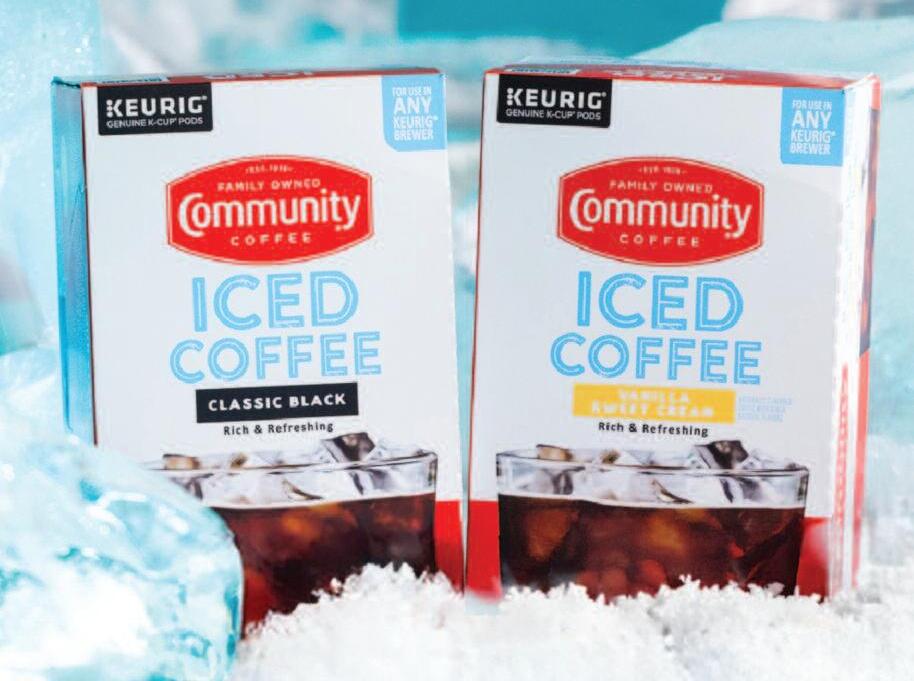
Fellow iced coffee fans, rejoice! More and more coffee companies are thinking about us The latest is the family owned (for five generations) Community Coffee, which has just launched Iced Coffee K-Cup Pods and First Light ground coffee
The Iced Coffee K-Cup Pods offer extraflavorful blends crafted to keep their character over ice Classic Black is a rich dark roast that stays bold when cold, while Vanilla Sweet Cream features decadent and buttery vanilla bean notes
First Light Coffee is a bright blend of
Nearly three-fourths of the world’s coffee is produced in only five countries, leaving the supply chain vulnerable to climate change and other risks WCR aims for a more diverse supply by breeding and distributing new coffee varieties relevant to different growing environments in origins across the world
The first waves of WCR coffee varieties will arrive at farms across the globe as early as 2036 as the organization races to accelerate timelines in plant breeding From there, WCR plans to deliver approved varieties to farmers every three years
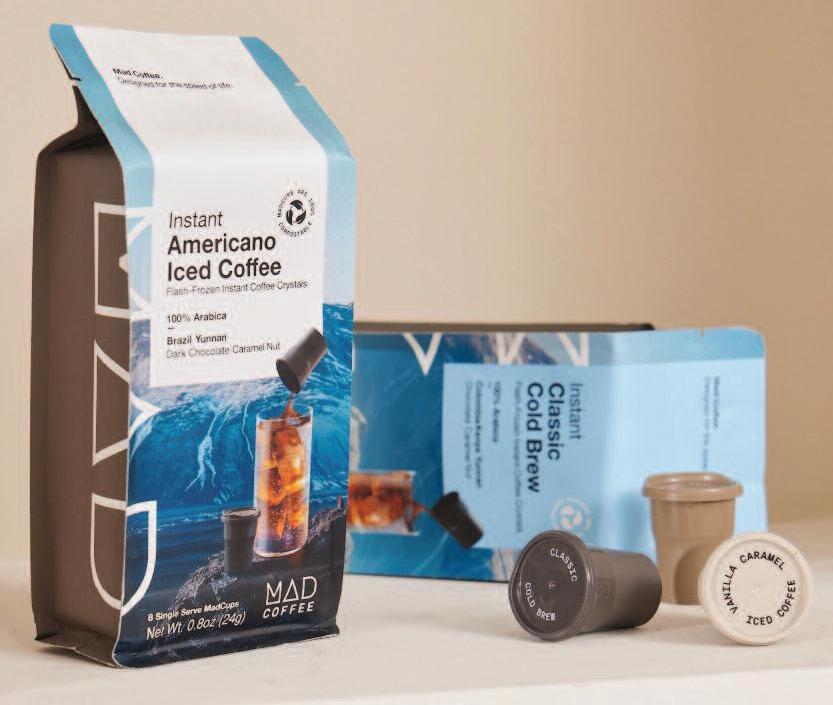
Back to iced coffee, this isn’t your mom ’ s Nescafe The biotech company Genecis Bioindustries has launched Mad Coffee, barista-quality instant coffee geared toward iced coffee lovers
Mad Coffee’s approach to cold brew melds the innovation of its LyoExtract technology with artisanal coffee, packaged in individual compostable MadCups – with no machines, filters or additional equipment required It’s made from 100 percent arabica coffee and sourced directly from family farms all around the world, including Colombia, Ethiopia and Yunnan
Central
waste and microplastics pollute the oceans each year Genecis Bioindustries launched its first brand of compostable tea pods, Mad Tea, to wide success last year Mad Coffee is sold online and in more than 400 stores operated by Sprouts Farmers Market
Prime Shrimp caught my attention with its newest addition to its cook-from-frozen solutions: Prime Shrimp Burgers, made
ture
In addition to its QVC placement, Prime Shrimp Burger is available to foodser vice customers through distributors including Sysco, with item number 7385448 Prime Shrimp Burger Food Ser vice packs come 24 in a case
Family owned O’Neill Vintners & Distillers has strayed from its wine and spirits portfolio to the functional beverage market with Catalyst, an energy drink powered by plant-based caffeine and vitamins B12 and B6
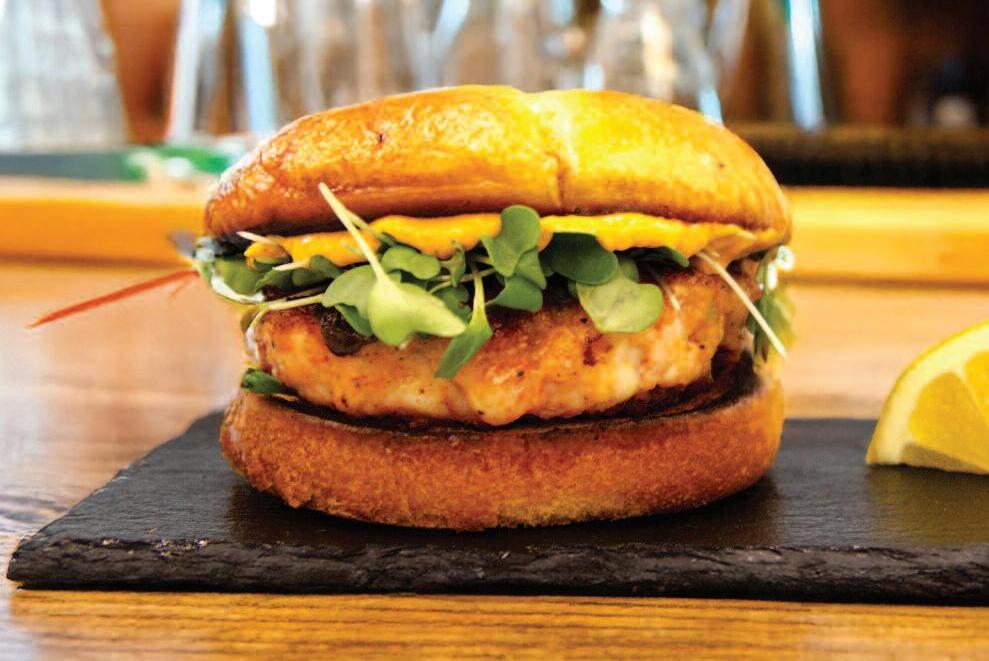
with 80 percent shrimp and free from sodium tripolyphosphate for direct-toconsumer sale and foodservice
Made with Pacific white shrimp sourced from responsible aquaculture operations in Ecuador, each four-ounce shrimp burger patty contains a blend of large shrimp pieces, chopped bell pepper and Prime Shrimp’s Signature Cajun seasoning
Mad Coffee offers four signature blends: Classic Cold Brew, Americano, Vanilla Caramel and Single Origin Espresso
Each MadCup can be simply poured and stirred into eight ounces of a cold or hot liquid of the drinker’s choice (water or milk), dissolving without clumping or a bitter aftertaste Designed for convenience and portability, Mad Coffee requires no preparation or refrigeration
As cafe culture continues to grow globally, approximately 500 million single-use
The new product made its direct-toconsumer debut in May with an exclusive airing on QVC, where it sold out during its first and second broadcasts Since then, Prime Shrimp Burgers have maintained a high customer rating on QVC, with reviewers praising the product’s flavor, convenience and shrimp-for ward tex-

The U S functional beverage market is seeing strong growth, particularly in the energy and sports drinks categories, with the segment expanding by 15 4 percent this year Catalyst is entering this market to meet evolving consumer preferences for healthier, great-tasting energy drinks that combine moderate caffeine with low-to-no sugar and added natural vitamins and supplements
Catalyst offers 120 milligrams of caffeine, 10 calories, zero sugar and no artificial sweeteners, colors or flavors
Housed in a sleek, modern can, Catalyst is available in six flavors – SuperBerry, PomPower, Grapefruit Frost, Fruit Fusion, Citrus Spark and Orange Dream – for $32 99 for a 12-pack and $2 99 for a single 12-ounce can Catalyst can be purchased online or at select retailers
Jordan’s Skinny Mixes has a new twist on the energy drink market with its new syrups that come in three flavors: Wild Berry, Peach Mango and Strawberry Dragonfruit The Energy Syrup line has zero
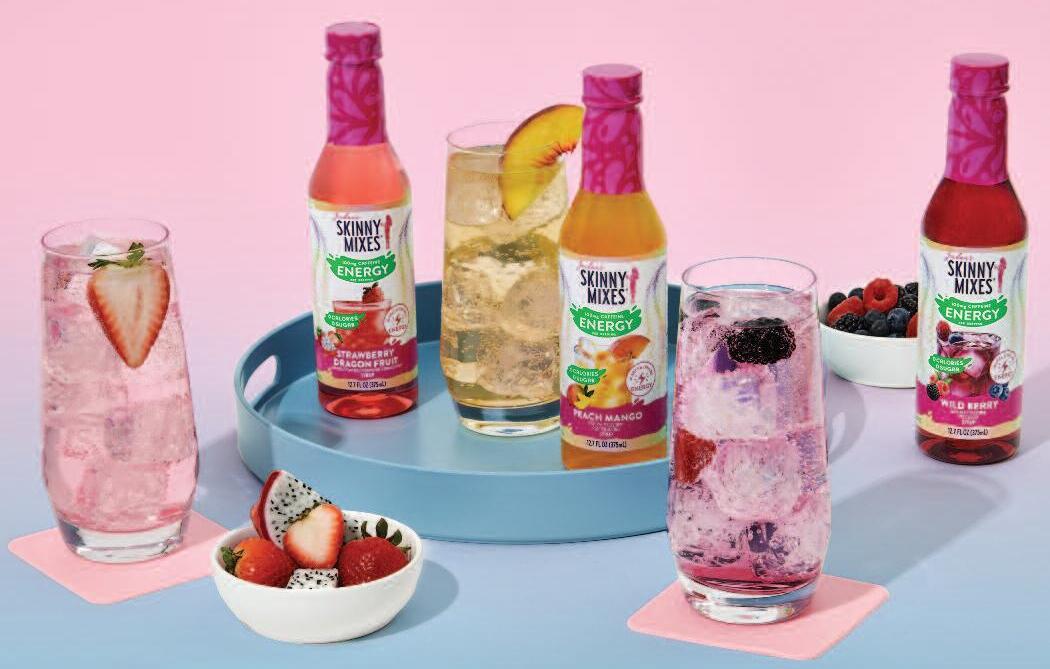
sugar, zero calories and no aspartame
Each serving contains 100 milligrams of caffeine and is gluten-free, Kosher, ketofriendly and made in the USA While most ready-to-drink energy cans cost more than $3 per serving, each 375 milliliter bottle of Energy Syrups costs $7 99 and can create up to six energy drinks
Unlike traditional energy drinks, which deliver a one-size-fits-all dose that can be more than 200 milligrams of caffeine, Jordan’s Skinny Mixes Energy Syrup puts the power back in the consumers ’ hands With a little more caffeine than a cup of black coffee in a ser ving, consumers decide if they want a light lift or double the boost
NFL legend Tom Brady has introduced GOAT Gummies, an organic vegan snack brand available through Gopuff GOAT Gummies contain no artificial sweeteners, dyes or flavors and are made with real fruit
“Retirement’s been a chance to slow down and enjoy life a little more – and that includes treating myself once in a while,” said Brady “But when I do reach for something more indulgent, I want the best
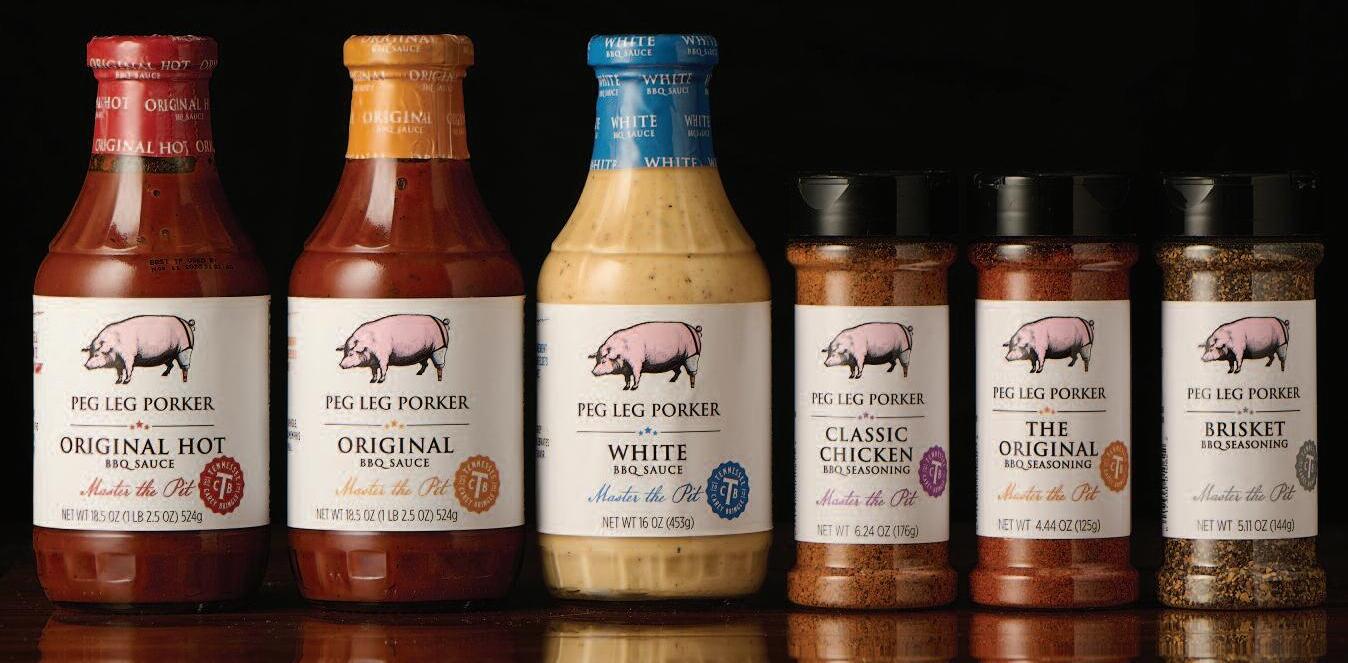
Tennessee barbecue to kitchens nationwide
The new line includes Classic Chicken Seasoning, Brisket Seasoning, Original BBQ Seasoning, Original Hot BBQ Sauce, Original BBQ Sauce and White BBQ Sauce
The sauces are launching in major retailers including Kroger, Walmart, Meijer, HEB, Safeway and more

“GOAT Gummies hit that sweet spot: they taste amazing and come in several delicious flavors, plus they’re made with real ingredients I’ve had a blast creating this new line of snacks with Gopuff and can’t wait for the world to try them ”
Each pack of GOAT Gummies is $4 99 and includes Sweet Rush (pear, mango, passion fruit, cherr y), Sour Burst (tangerine, apricot, grapefruit) and Tropic Fusion (passion fruit, raspberr y, pomegranate)
This latest collaboration is part of an ongoing, multi-year partnership between Gopuff and Brady Brady, who is also an investor in Gopuff, collaborates with the company on product development, content creation, community support initiatives, fan experiences and more
In partnership with Buffalo Wild Wings, The Marzetti Company has expanded its retail portfolio with the launch of four hot sauces, made with the bold, innovative fla-
zon, with plans to expand to additional retailers in 2026
Genius Gourmet has debuted a 30-gram S p a r k l i n g C l e a r P ro t e i n D r i n k i n B l u e Raspberry Lemonade, now rolling out nationally in Costco warehouses
Designed to drink more like a crisp soda than a thick protein shake, this beverage delivers 30 grams of ultra-filtered protein with zero sugar, zero lactose and no artificial preservatives or colors
“Protein doesn’t have to taste like chalk to be effective,” said Pete Vas Dias, president of Genius Gourmet “With this new 30-gram version, we ’ re bringing more functionality and even more flavor to the market, and making it available at Costco for ever yday athletes, busy parents and anyone looking to level up their routine ”
With a light, sparkling texture – no blender or shaker needed – the naturally flavored Blue Raspberr y Lemonade has 130 calories
The new 30-gram Sparkling Clear Protein Drink in Blue Raspberr y Lemonade is available in 15-count cases
After seven years of research and development, Nara Organics – the first and only FDA-registered and USDA-certified organic whole milk infant formula developed to meet both European and U S safety standards, using no skim milk – has launched Developed by moms, scientists, pediatricians and nutritionists, Nara offers an organic, clean, nutritious alternative to routine formulas currently on the market – free from palm oil, soy, corn syrup, maltodextrin and GMOs so parents can feel confident about what they’re feeding their little ones
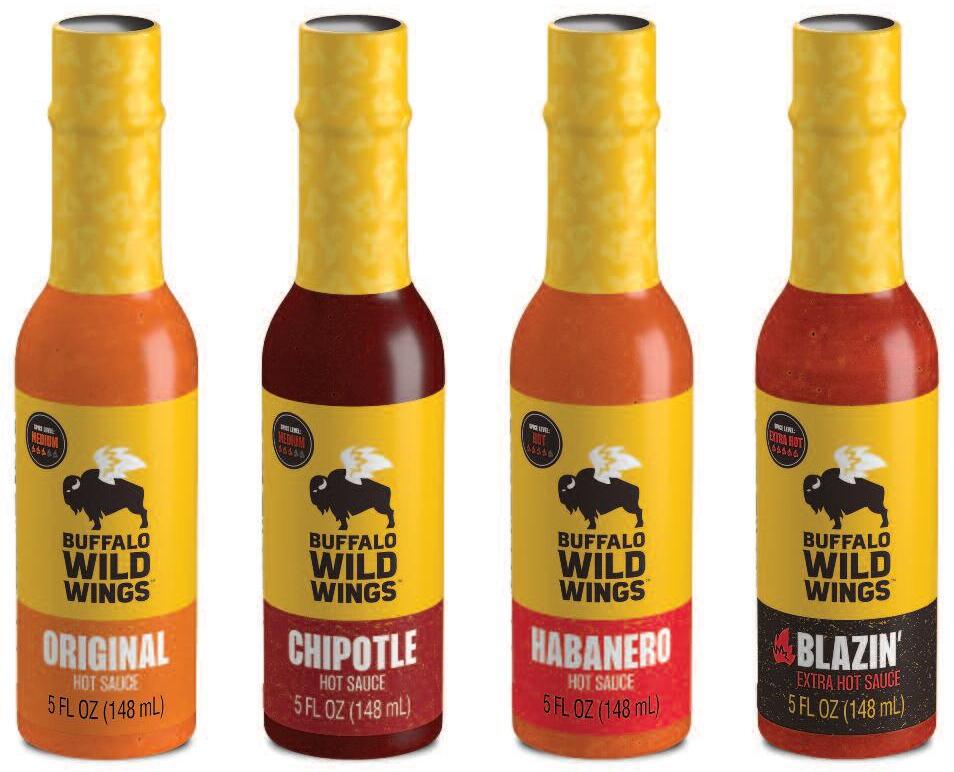
vors consumers expect from the Buffalo Wild Wings brand
Nashville’s BBQ legend Peg Leg Porker has teamed up with McCormick & Company Inc to launch a new line of six seasonings and sauces – bringing bold, authentic West
Buffalo Wild Wings Hot Sauces are available in four varieties: Original, Chipotle, Habanero and Blazin’ Perfect for spicing up a variety of dishes, the 5-ounce bottles are available exclusively on Ama-
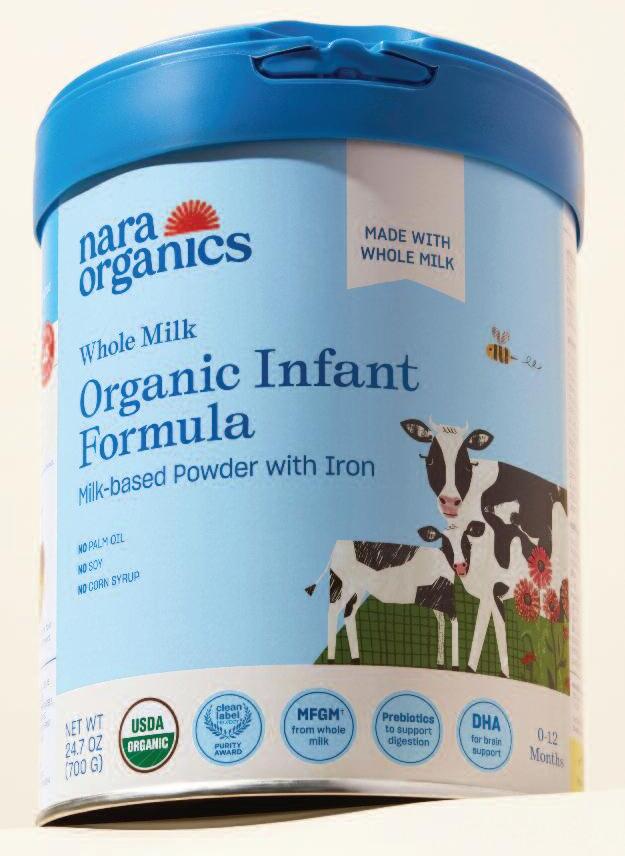
fant formula to Good+ Foundation, a leading national nonprofit that works to dismantle multi-generational poverty by pairing tangible goods with innovative services for under-resourced fathers, mothers and caregivers, creating an upward trajector y for the whole family

Nara will be available for purchase online, with plans to expand to retailers Two-can starter bundles are available for $36
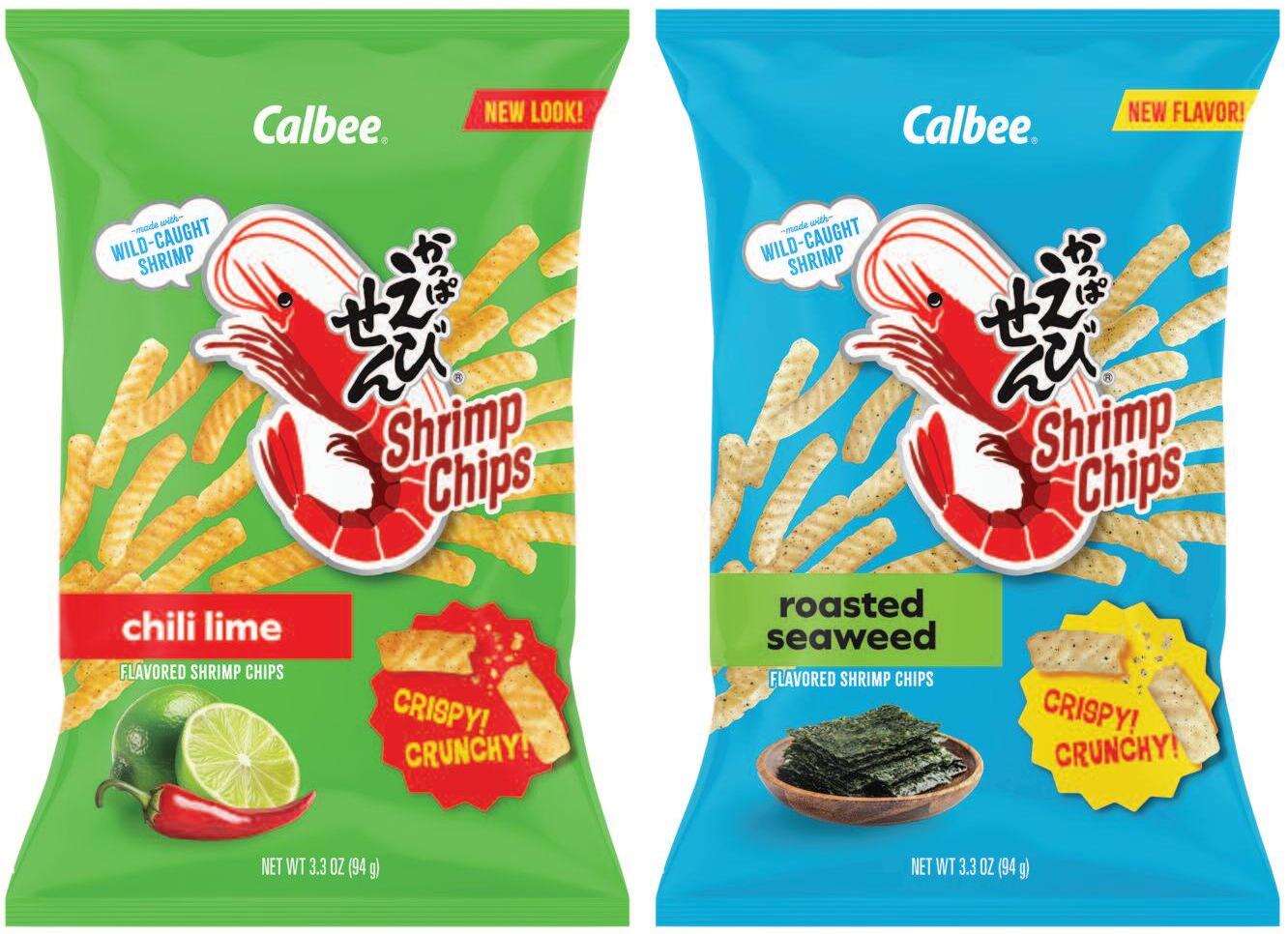
Calbee America has given its timeless heritage brand, Shrimp Chips, a packaging refresh and introduced new flavors
Bold colors and a prominent red shrimp graphic are designed to stand out on shelf and better align with its global counterparts Zesty Chili Lime and umami-packed Roasted Seaweed are joining the lineup that includes top-selling Original, Sriracha Mayo and Hot Garlic
These puffed snacks are made with wild-caught, whole shrimp; wheat flour; and a blend of savory spices that deliver an authentic Japanese experience Since expanding into conventional re-
Costco, Shrimp Chips have built a loyal following and become the #1 Asian Salty
As part of its launch, Nara Organics is donating over 1,400 cans of in-
nels
Point B, a leading management consulting firm specializing in business transformation and technology ser vices, opened its Restaurant Technology Innovation Center in Chicago The first facility of its kind, the center aims to provide a practical resource for restaurant operators navigating the increasingly complex landscape of restaurant technology
“Multi-unit restaurant operators have an overwhelming number of options to evaluate before investing in new technology,” said David Hanfland, chief executive officer “To make these decisions easier, Point B’s Restaurant Technology Innovation Center provides a centralized hub showcasing the leading technology solutions so they can try them before implementation ”
The center’s fully integrated technology ecosystem allows operators to understand how different platforms work together to
address specific operational needs and improve guest and employee experiences It includes best-in-class commerce platforms, back-office systems, kitchen displays, kiosks, loyalty programs, tipping systems, digital menu/order confirmation boards and AI woven throughout
“This is more than just a lab – it’s a strategic ecosystem designed to help restaurants innovate with confidence,“ said Rich Faltot, senior client partner for the restaurant industr y “By simulating real-world scenarios using enterprisegrade technology, we ’ re giving brands the clarity and tools they need to drive performance, avoid missteps, and lead the industry forward ”
“It’s amazing,” said Jerr y Philips, vice president of technology at Whataburger “It’s something that I think the industr y has needed
“I love being able to see all the different types of technology, whether you ’ re in your point of sale, your back office, your display systems, your kitchen management systems, your data analytics systems – all in one space ”
Based in Point B’s Chicago office, the center allows customers to test and tr y modern technologies in a “live” environment using various restaurant concept data sets (quick service, table service, fast casual, etc ) In addition to product testing, the center offers customized, expertled workshops designed to help restaurant brands address specific operational and technology challenges
As part of Point B’s comprehensive restaurant tech stack offering, the center supports multi-unit restaurants looking to transform their technology to achieve the following outcomes:
• Improve average unit volumes
• Drive more digital transactions
• Simplify and standardize restaurant operations
• Set up brands to scale for growth
• Serve more guests
• Enhance guest experience
• Gain better insights and access to data
• Improve speed of service
Point B's Restaurant Technology Innovation Center represents a step forward in the evolution of the restaurant industry By creating a space where innovation thrives and ideas come to life, Point B empowers restaurants to redefine their operations, enhance guest experiences and drive sustainable growth
The center will transform how restaurants integrate technology and inspire a new era of culinary excellence and operational efficiency GN
tinues to expand
m g ro c e r y
s l e s t o o n l i n e c a r t s ,
J a m b a p ro d u c t f o r m a t s m e e t r i s i n g d e -
m a n d f o r o n - t h e - g o o p t i o n s : m a k i n g i t e a s i e r f o r f a n s t o c e l e b r a t e t h e i r b r i g h t e s t s e l f w i t h J a m b a a n y t i m e , a n y w h e re
T h i s g ro w i n g p o r t f o l i o n o w i n c l u d e s
d r i n k m i x e s , f ro z e n s m o o t h i e k i t s , f r u i t
s n a c k s a n d d i re c t - t o - c o n s u m e r s m o o t h i e
b o x e s – e a c h d e s i g n e d t o m e e t c o n -
s u m e r s w h e re t h e y a re a n d o ff e r t h e v ib r a n t f l a v o r s J a m b a i s k n o w n f o r
L a u n c h e d i n p a rt n e r s h i p w i t h T h e J e l
S e r t C o m p a n y, t h e s e i n d i v i d u a l l y
w r a p p e d d r i n k m i x s t i c k s a l l o w c o ns u m e r s t o e n j o y J a m b a o n t h e g o Av a i l -
a b l e i n t h re e J a m b a - i n s p i re d f l a v o r s , R a z z m a t a z z , M a n g o - a - G o - G o a n d S t r a w -
b e r r i e s Wi l d , t h e l o w - c a l o r i e p a c k e t s
offer 3 grams of energy, essential vitamins
a n d c o n v e n i e n c e i n e v e r y s i p
J a m b a A t H o m e S m o o t h i e s w i l l s o o n o f f e r a re a d y - t o - b l e n d s o l u t i o n f o r f a n s c r a v i n g t h e i r f a v o r i t e f l a v o r s a t h o m e
E a c h k i t w i l l f e a t u re p re - p a c k e d f ro z e n
f r u i t a n d n e w B o o s t e d c u b e s c o n t a i n i n g
f u n c t i o n a l b e n e f i t s i n c l u d i n g p ro t e i n , v i -
t a m i n s , m i n e r a l s a n d a n t i o x i d a n t s
Wi t h n i n e t o 1 3 g r a m s o f p ro t e i n p e r
p a c k i n J a m b a f l a v o r s i n c l u d i n g O r a n g e
D re a m M a c h i n e , S t r a w b e r r i e s Wi l d a n d
R a z z m a t a z z , t h e s e c o n v e n i e n t , e a s y - t o -
m a k e k i t s o f f e r a q u i c k w a y t o p o w e r
your day – ideal for breakfast, post-work-
o u t o r a n y t i m e i n b e t w e e n
A f e w a i s l e s d o w n , J a m b a F r u i t S n a c k s
t r a n s f o r m s m o o t h i e - i n s p i re d f l a v o r s i n t o
c h e w y, m e l t - i n - y o u r- m o u t h g u m m i e s
Av a i l a b l e i n M a n g o - a - G o - G o a n d S t r a w -
berr y Surf Rider, these vibrant treats offer
a n e w w a y t o e n j o y t h e b o l d , f r u i t y t a s t e
o f J a m b a – n o b l e n d e r re q u i re d T h e y ’ re
a v a i l a b l e a t g ro c e r y s t o re s n a t i o n w i d e
C o n t i n u i n g t h e i r s u c c e s s f u l p a r t n e r-
s h i p , J a m b a a n d R e v i v e S u p e rf o o d s h a v e expanded their co-branded smoothie line
w i t h t w o n e w o f f e r i n g s : R a s p b e r r y Ly -
c h e e a n d B a n a n a M o c h a T h e s e j o i n
Tro p i c a l S t r a w b e r r y a n d A p p l e M a t c h a t o ro u n d o u t a f o u r- f l a v o r l i n e u p o f re a d yt o - b l e n d , n o - s u g a r- a d d e d s m o o t h i e s d el i v e re d s t r a i g h t t o t h e h o m e s o f c o n s u m e r s J a m b a f a n s n o w h a v e t h e o p t i o n t o o rd e r i n d i v i d u a l , re a d y - t o - b l e n d s m o o t h i e c u p s o r s e l e c t t h e o n e - c l i c k
J a m b a b o x f e a t u r i n g t h e c o m p l e t e J a m b a x
insecurity among veterans and
s
We s
C o u n
T h e f u n d i n g w i l l p ro v i d e A c m e g i f t c a rd s d i re c t l y t o veterans, ensuring they have dignified acc e s s t o f re s h , n u t r i t i o u s a n d c u l t u r a l l y a p p ro p r i a t e f o o d t h ro u g h o u t t h e y e a r “ T h i s g e n e ro u s c o n t r i b u t i o n w i l l d ire c t l y i m p a c t l o c a l v e t e r a n s t h ro u g h f inancially and emotionally difficult times, h e l p i n g t o re d u c e h u n g e r a n d b r i n g h o p e t o t h o s e w h o h a v e s e r v e d , ” s a i d G a b r i e l
D i C o l a , F S W ’ s d i re c t o r o f v e t e r a n s p ro -
g r a m s “ T h e g i f t c a rd s a l l o w v e t e r a n s t o s h o p w i t h d i g n i t y a n d c h o o s e t h e f o o d s t h a t b e s t m e e t t h e i r f a m i l i e s ’ n e e d s , i n -
c l u d i n g f re s h , h e a l t h y o p t i o n s t h a t m i g h t
o t h e r w i s e b e o u t o f re a c h ” T h e Ve t 2 Ve t P ro g r a m s t a n d s a p a rt a s a peer-led initiative where veterans support
v e t e r a n s T h ro u g h t h i s u n i q u e a p p ro a c h , p a rt i c i p a n t s d o n ’t j u s t re c e i v e a s s i s t a n c e – t h e y b u i l d l a s t i n g c o m m u n i t y c o n n e ct i o n s t h a t c o m b a t i s o l a t i o n a n d re s t o re t h e i r s e n s e o f i d e n t i t y a n d p u r p o s e T h e p ro g r a m o ff e r s s u p p o rt g ro u p s , i n d i v i d ua l i z e d c a s e m a n a g e m e n t , a n d c o m m un i t y - b u i l d i n g e v e n t s , a l l a t n o c o s t t o p a rt i c i p a n t s “ W h a t s e t s Ve t 2 Ve t a p a rt i s i t s p e e r- t op e e r f o u n d a t i o n , ” D i C o l a s a i d “ Ve t e r a n s a re n ’t j u s t g e t t i n g h e l p , t h e y ’ re b u i l d i n g a c o m m u n i t y T h e y ’ re s h a r i n g s t o r i e s , c e le b r a t i n g w i n s , a n d f i n d i n g s t re n g t h i n s o l i d a r i t y M a n y p a rt i c i p a n t s s a y t h e c o nn e c t i o n s t h e y ' v e m a d e t h ro u g h Ve t 2 Ve t h a v e b e e n p i v o t a l i n re s t o r i n g t h e i r s e n s e
o f i d e n t i t y a n d p u r p o s e ”
F o o d i n s e c u r i t y a m o n g v e t e r a n s o f t e n goes unrecognized, as many are reluctant
t o a s k f o r h e l p d u e t o p r i d e o r s t i g m a The Vet2Vet Program addresses this chal-
lenge by providing discreet, respectful ac-
c e s s t o f o o d re s o u rc e s A p o rt i o n o f t h e
g i f t c a rd s w i l l a l s o s u p p o r t c o m m u n i t y
h o l i d a y e v e n t s a n d p e e r s u p p o rt d i n n e r s ,
w h e re f o o d p l a y s a v i t a l ro l e i n f o s t e r i n g
c o n n e c t i o n , c o m f o rt , a n d b e l o n g i n g
B e y o n d a d d re s s i n g i m m e d i a t e n u t r i -
t i o n a l n e e d s , t h e p ro g r a m t a c k l e s c o m -
p l e x c h a l l e n g e s s o m e v e t e r a n s m a y f a c e in post-ser vice life, including housing in-
s t a b i l i t y, u n e m p l o y m e n t a n d a c c e s s t o m e n t a l a n d p h y s i c a l h e a l t h c a re S e r v i c e s i n c l u d e a s s i s t a n c e s e c u r i n g a f f o rd a b l e
h o u s i n g , l e g a l a i d , e m p l o y m e n t a n d e d u -
c a t i o n a l o p p o rt u n i t i e s , e m e rg e n c y f i n a n -
c i a l s u p p o r t a n d m e a n i n g f u l s o c i a l
e n g a g e m e n t T h e p ro g r a m s e r v e s v e t e r a n s f ro m a l l e r a s a n d t h e i r f a m i l y m e m b e r s , m e e t i n g t h e m w h e re t h e y a re a n d w a l k i n g w i t h
o m p re h e n s i v e a p p ro a c h e n s u re s t h a t a d d re s s i n g f o o d i n s e c u r i t y s e r v e s a s a g a t
w
o b ro a d e r
r t a n d l a s t i n g p o s i t i v e c h a n g e F a m i l y S e r v i c e s o f We s t c h e s t e r h a s been ser ving the community for 71 years, p ro v i d i n g v i t a l s u p p o rt s e r v i c e s t o i n d ividuals and families in need The Vet2Vet Program, founded in 2012, represents the o rg a n i z a t i o n ' s c o m m i t m e n t t o h o n o r i n g t h o s e w h o h a v e s e r v e d o u r c o u n t r y b y e n s u r i n g t h e y re c e i v e t h e c o m p re h e n s i v e s u p p o rt t h e y d e s e r v e GN
t h e m e v e r y s t e p o f t h e w a y W h e t h e r ref e r re d b y p a rt n e r o rg a n i z a t i o n s , c o m m unity members or through self-referral, the Ve t 2 Ve t t e a m d e v e l o p s p e r s o n a l i z e d s u pp o r t p l a n s t h a t a d d re s s b o t h s h o r t - a n d l o n g - t e r m g o a l s B y t h e e n d o f t h e p ro j e c t p e r i o d , F S W a i m s f o r p a rt i c i p a t i n g v e t e r a n s t o e x p e r ie n c e g re a t e r f o o d s e c u r i t y, re d u c e d s t re s s re l a t e d t o b a s i c n e e d
The U S Food and Drug Administration is revoking, or proposing to revoke, 52 food standards after concluding they are obsolete and unnecessary The 52 standards are for canned fruits and vegetables, dair y products, baked goods, macaroni products and other foods
These are the first results from the agency’s ongoing analysis of its portfolio of over 250 food Standards of Identity to make sure they are useful, relevant and serve consumers in the best possible way The removal of these standards is in alignment with broader efforts to ensure that HHS is directing resources to where they’re most needed – delivering better outcomes for the American people
“I’m eliminating outdated food regulations that no longer serve the interests of American families,” said HHS Secretar y Robert F Kennedy Jr
The FDA began establishing food standards in 1939 to promote “honesty and fair dealing” and to ensure that the characteristics, ingredients and production processes of specific foods were consistent with what consumers expect However, advances in food science, agriculture and production practices, and additional consumer protections have made many of these older, rigid “recipe standards” unnecessary
“The FDA’s Standards of Identity efforts have helped ensure uniformity, boost consumer confidence and prevent food fraud But many of these standards have outlived their usefulness and may even stifle innovation in making food easier to produce or providing consumers healthier choices,” said FDA Commissioner Dr Marty Makary “Antiquated food standards are no longer serving to protect consumers It is
common sense to revoke them and move to a more judicious use of food standards and agency resources ”
These actions include publication of:
• A direct final rule revoking standards for 11 types of canned fruits and vegetables that are no longer sold in U S grocery stores, including seven standards for fruits artificially sweetened with saccharin or sodium saccharin The agency is issuing a companion proposed rule in the same issue of the Federal Register in case the direct final rule is withdrawn because significant adverse comments are received, and the agency needs to move forward with a proposed rule to put these changes in place
• A proposed rule that would revoke standards for 18 types of dairy products –including certain milk and cream products, cheeses and related cheese products
and frozen desserts
• A proposed rule that would revoke standards for 23 types of food products
including bakery products, macaroni and noodle products, canned fruit juices, fish and shellfish, and food dressings and flavorings
On May 13, HHS and FDA issued a Request for Information to identify and eliminate outdated or unnecessary regulations This initiative supports a broader federal effort to reduce regulatory burdens and increase transparency GN
As part of its ongoing strategic collaboration, Save A Lot and Leevers Supermarkets announced the opening of a new store format called Save A Lot y Mas Located at 9430 Midland Blvd in Overland, Mo , the store builds on the core Save A Lot concept, offering an expanded selection of fresh Hispanic produce, specialty meats and baker y items designed to deliver both cultural relevance and everyday value
The new concept, with two additional locations in Colorado, will operate as a test-and-learn format with the
potential for further introduction into other Save A Lot locations serving a large Hispanic customer base
“Save A Lot y Mas is an extension of our work, expanding on our commitment to delivering quality, culturally meaningful grocer y experiences at affordable prices,” said Bill Mayo, Save A Lot chief operating officer “We’ll continue to test and learn as we expand our product offerings and store formats into other areas ”
The store concept is the next iteration in a continuing collaboration between Save A Lot and Leevers to better ser ve the Hispanic community and follows the introduction of the Ahorra Mucho store format in Aurora, Colo , last fall Save A Lot y Mas incorporates learnings from Ahorra Mucho and blends these best practices within the successful value-driven Save A Lot platform customers know and love Initial concept features include an enhanced and diverse produce assortment, a curated meat selection with popular cuts and ready-to-cook marinated options, and partnerships with local bakeries to offer fresh-baked sweet breads and other authentic bakery options
Save A Lot y Mas will also introduce up-
dated graphics and advertising designed to better connect with Spanish-speaking shoppers Spanish will be prominently featured throughout the store and across marketing materials, including in-store signage and digital promotions
“Save A Lot y Mas is part of our ongoing concept development efforts to better meet the needs of Hispanic shoppers,” said Jon Koontz, chief operating officer at Leevers Supermarkets “We’re excited to bring these offerings to the vibrant St Louis community “Using what we learn here, and in our locations in Colorado, we hope to be able to bring insights about how best to serve this growing customer base to the broader Save A Lot network ” GN
FMI – The Food Industr y Association’s
The Food Retailing Industry Speaks 2025 reveals how the industry is evolving into a modern grocery experience while navigating a complex operating environment The analysis highlights successful strategies across the sector and offers a deeper exploration of how food retailers and suppliers are adapting their businesses
The food industr y continues to face a challenging macroeconomic situation Approximately 80 percent of both retailers and suppliers anticipate that trade policies and tariffs will continue to impact pricing and disrupt supply chains Additionally, most expect operating costs to remain elevated
FMI President and CEO Leslie G Sarasin said, “Our industr y, long accustomed to operating on narrow margins, is once again feeling economically squeezed, with food retail profit margins settling at
1 7 percent, while food product suppliers reported a net income of 7 7 percent, consistent with 2023 figures
“These performance pressures remain persistent, and the outlook presented in our recent analysis highlights a broader trend – a sharp rise in costs associated with regulatory actions at the federal and state levels and their impact on the food industry in recent years As regulatory burdens and complexity continue to grow, our industr y braces for even greater costs ahead,” Sarasin said
“With more than half of suppliers and over one-third of retailers expecting increased compliance expenses in 2025, we are focused on advocating for changes to these policies and on providing tools to our members to help reduce the compliance burden ”
Despite these hurdles, retailers and suppliers reported significant progress in
workforce stability last year due to continued efforts to boost employment incentive offerings The share of retailers citing recruitment and retention challenges dropped dramatically from 85 percent in 2022 to just 52 percent in 2024
Suppliers witnessed an even steeper decline in recruitment and retention challenges, falling from 65 to 28 percent over the same period This positive shift reflects substantial investments in talent development across the food industry, specific to enhanced wages, expanded benefits, performance bonuses, and robust training programs that have contributed to a notable reduction in employee turnover –falling to 48 percent in 2024 from a historic high of 65 percent in 2022
It is unclear how the current immigration and deportation policy changes will impact these numbers in 2025
Nearly 50 percent of food retailers and
suppliers note the positive impact of consumers leveraging food to manage or avoid health issues, and most are offering products with beneficial nutrition attributes for health and well-being While shoppers remain concerned about food prices, FMI’s recent consumer trends research found customers are willing to invest in key needs related to “eating well,” including health, entertainment, exploration and convenience
“
expanded fresh offerings and well-
A new restaurant industr y sur vey from Imaginuity, a leading performance marketing company, reveals that restaurant marketers are facing significant challenges with multi-system data integration, customer insight visibility and measuring return on marketing investment
Only 20 percent of the restaurant marketing professionals sur veyed said their metrics were fully automated across platforms such as POS, loyalty and paid media systems, while 38 percent reported inconsistent metrics and definitions as the top
barrier to delivering useful marketing insights The survey gathered responses from more than 200 restaurant marketing professionals across the United States, representing a wide range of titles, organizational sizes and advertising budgets
“This survey validates what we see every day Restaurant marketers are drowning in siloed data and spending far too much time pulling reports instead of acting on insights,” said Matt Sommer, CTO at Imaginuity “Marketers are under more pressure
than ever to prove impact and demonstrate ROI ”
When asked what would make investing in a data integration tool a “no-brainer,” the top response (35 percent) was a significant reduction in manual hours spent compiling reports A third of respondents (31 percent) cited the lack of a unified customer view as their biggest data blind spot, while 43 percent reported that it is moderately challenging to measure the ROI of their media and advertising efforts
“With 80 percent of respondents rank-
ing data integration and measurement as a medium to high strategic priority for the coming year, the results signal a growing demand for smarter tools that streamline reporting and improve campaign visibility across channels,” said Sommer
To meet this need, Imaginuity offers AdScience, a proprietary, AI-powered marketing intelligence and dashboard platform that consolidates data from across a company ’ s tech stack – providing a clear, unified view of performance at both the brand and individual location level GN
Keke’s Breakfast Cafe, one of the fastestgrowing breakfast chains in the United States, selected PAR Technology Corporation to power its bustling cafes with PAR POS, PAR Pay and reliable hardware solutions This collaboration lays a solid foundation for Keke’s rapid expansion, ensuring scalability, connected systems and innovation as it prepares for the next stage of growth
Since its acquisition by Denny’s in 2022, the brand has expanded from its Florida roots to become a national chain, with over 140 units in development The chain is reimagining ever y aspect of its operations, from updated store designs with
brighter, more inviting aesthetics to innovative menu offerings catering to families and foodies alike
Amid its rapid growth and transformation, Keke’s has embraced technology to ensure every guest’s experience is exceptional With PAR POS and PAR Pay, supported on mobile tablets, Keke’s teams can take orders more efficiently, reduce wait times and provide faster service without compromising the personal touch that guests love
These tools, powered by PAR’s cloudbased platform, create a reliable and flexible foundation for managing both the high volumes of Keke’s current and future locations
“Keke’s has always been about providing
the best for our guests,” said David Schmidt, president of Keke’s Breakfast Cafe “Partnering with PAR allows us to bring that philosophy into the digital age
“With PAR’s innovative solutions, we ’ re creating efficiencies that empower our team and enhance every guest interaction ”
As Keke’s continues to transform its cafes with refreshed designs, expanded menus and modernized kitchens, successfully scaling a fast-growing brand requires purpose-driven solutions PAR’s open API platform ensures seamless integration across all systems, enabling aligned data and smooth operations that guests don’t see but always feel
For Keke’s, this collaboration is about building not just for today but for the future, with scalable technology that grows alongside the business
“Who doesn’t love breakfast?” said Savneet Singh, CEO of PAR Technology “It’s the one meal that brings everyone together, whether families, friends or solo diners looking for a great start to their day
“Keke’s knows how to make that experience unforgettable and we ’ re excited to help them take it even further We’re bringing together the warmth of breakfast with the power of smart technology to make mornings smoother, faster and more enjoyable ” GN
2nd Nature, a leader in clean ingredient solutions, unveiled its proprietary AI platform, AgWaste Portal This cutting-edge technology uses advanced machine learning to turn food processing leftovers into valuable functional ingredients
With rising consumer demand for healthy and sustainable food options, 2nd Nature is at the forefront of transforming
Continued from PAGE 1
Popular tools such as point-of-sale systems, kitchen displays and inventory software can make kitchen and restaurant operations run more efficiently, but they often carry layered costs
A basic POS can start at $65 per month, but adding features such as staff scheduling, inventory tracking and CRM can raise fees to over $300 per month
Kitchen display screens with locally networked systems that support offline usage will require professional installation, which can mean an upfront cost of over $1,000 The software fees for these systems start at $20 per month or more
Newland recommends start-up kitchens drive efficiencies across technologies
“You can utilize data collection across technologies in the front and back of house Both point of sale systems and
many industries seeking cost effective, safe and healthy ingredients By leveraging AgWaste Portal, 2nd Nature is able to rapidly select high yielding input materials and identify functional compounds, including novel molecules from the inedible parts of fruits, cereals and vegetables, as well as post fermentation slurries
This AI technology aims to democratize
ovens now have IoT capabilities that both provide data that helps run your business
“To discover where waste is occurring, you can cross-reference how many menu items are purchased down to the specific item and cross-reference it with the quantity of cooks for that same item in your oven ”
Selling takeout orders through popular delivery apps can be a great way to access new customer bases, with 51 percent of consumers in the United States turning to a third-party deliver y platform when ordering food
However, these apps take a big cut in return for this ser vice Typically, 15 to 30 percent of each order for delivery is taken by the delivery provider So, for example, on a $50 delivery order, a 25 percent fee is $12 50, which is money food ser vice providers lose out of pocket
It's important to balance these considerations with how much business is generated through these apps to assess whether using them is worthwhile
clean ingredients while reducing the environmental impact of food waste
“Our AI platform is a game-changer because it allows us to unlock the full potential of food processing leftovers and turn them into high-quality ingredients,” said Effendi Leonard, co-founder and CEO
“Not only does this technology help reduce waste, but it also provides a cost-ef-
One-fifth of restaurants lose almost $21,000 per year to food waste, with more than half (57 percent) of operators estimating that they throw out between 100 to 500 pounds of food a week This is money that could be spent on kitchen equipment, rent, marketing or other valuable products and services
Some of the biggest causes of this waste include fresh food spoiling (49 percent) and demand fluctuations (48 percent)
“There are measures restaurants can put in place to reduce food waste and the financial loss associated with it,” said Kristina Bladecki, director of culinar y at Alto-Shaam “Inventory management systems are important to keep track of food use and spoilage
“Menu engineering software can analyze sales data to identify items or dishes generating the highest volume of waste, so ingredients can be adapted to minimize it ”
Due to the fast-paced nature of the food service industry, restaurants typically lose
fective solution for food & beverage, home & personal care and health & wellness manufacturers ”
AgWaste Portal is the first and only tool of its in the industry It is poised to revolutionize how food processing waste is utilized, creating a more sustainable and environmentally friendly ingredient manufacturing GN
staff at a fast rate of around 80 percent a year On average, replacing a cook or ser ver costs $1,000 per person, meaning that if you lose four people a year at $1,000 each, that’s $4,000 that potentially hasn't been budgeted for
There are ways that restaurants can ease the transition as employees come and go
“Equipment can play a vital role in reducing hiring and training costs Choosing equipment that is programmable and intentionally simple to operate reduces training time and takes the stress out of cooking for staff,” Newland said
“The latest oven technology of the oven can also provide more consistent results that free up staff from having to monitor the oven constantly, enabling them to prioritize other tasks ”
For kitchen entrepreneurs opening a commercial kitchen for the first time, taking the time to calculate all potential costs into budgets is key in avoiding expensive surprises GN
Continued from PAGE 1
Mycelium is the vegetative part of the fungus (mushroom) that grows underground They are thread-like hyphae that have been used to cultivate fungi for food and medicine since ancient times MyBacon is manufactured with minimal ingredients of organic mushroom mycelium, organic coconut oil, organic sugar, natural flavor and salt
There are over 300 million sandwiches eaten each day in the United State, making it the most consumed food in America Although small, plant-based sandwiches continue to bite into this vast sandwich market
The company Prime Roots launched a line of plant-based deli meat alternative products made with mycelium The flavors include cracked pepper turkey-inspired, smoked ham-inspired and Italian style salami-inspired deli plant-based meats These products are preser vative, nitrate, cholesterol, soy and gluten free The product line contains no GMO, artificial colors or ingredients
Chuck Foods is the maker of premium plant-based steaks that give consumers versatile cooking functionality pan-seared, grilled, smoked, braised, sous vide or stewed These soy products are high in protein, iron fortified, B12 fortified, cholesterol free, non-GMO, Ketogenic certified and Kosher
“From steakhouses and fine dining establishments to luxur y hotels, countr y clubs, convention centers and corporate campuses, Chuck has already proven itself as an industr y disruptor,” said Chuck’s CEO and founder, Amos Golan “Our clean-label, operator-ready products allow chefs to introduce premium plant-based options without changing workflows or compromising quality ”
Before the Butcher is the maker of a new product called Vegburg This plant-based burger was designed with the input from chefs and foodser vice professionals It’s made of lintels, organic zucchini, carrots, quinoa, mushrooms and other whole plant-based ingredients
“With the VegBurg, we set out to craft a burger that celebrates vegetables in the most flavorful form,” said Danny O’Malley, president and founder of Before the Butcher “It’s all about clean ingredients, great texture and a taste that stands out on its own ”
The North Coast Seafood Company sampled its FABI Award-winning Seaweedish Kelp Meatballs It’s the world’s only
plant-based meatball of its kind, made with USA-grown kelp – a renewable, zeroinput superfood sea vegetable that fights climate change while purifying the ocean
The remaining kelp meatballs ingredients are main sugar kelp, green chickpeas, brown rice, pea protein, basil, extra virgin olive oil, chickpea from pea starch, oat fiber and spices
Over the past few years, salt trends have evolved into more unique flavors
Himalayan pink salt continues to take a larger piece of the retail and foodser vice marketplace Because of its slightly sweet taste and mineral-rich benefits of calcium, magnesium, potassium, copper and iron, Himalayan pink salt is expected to gain a 4 2 to 6 5 percent increase of the global salt market over the next decade, according to Introspective Market Research
U S -based company Saltwise manufactures a line of Plant-Based Salt, which uses Salicornia (sea asparagus), as its main ingredient Salicornia contains 50 percent less sodium and it has a naturally salty taste that makes it healthier in comparison to traditional table salt Salicornia comes with a naturally generous amount of Vitamin B3, D and essential minerals Saltwise products are 100 percent natural plant-based with zero additives (no anticaking agent used), no preservatives and are microplastic free
Tabañero also has a new low sodium and gluten-free Bloody Mary Mix with bold flavors of horseradish and celery
Mr Bajan Foods manufactures a Caribbean recipe hot sauce with ingredients imported from Vietnam This Caribbean-Vietnamese style hot sauce is made of chili peppers, onions, cane sugar, vinegar, shallots, sea salt, garlic and turmeric
Application use ranges from lo mein noodles, hotpots and Caribbean barbecue It compliments American foods and can be used as a condiment for pizza, pasta, soups and fried foods
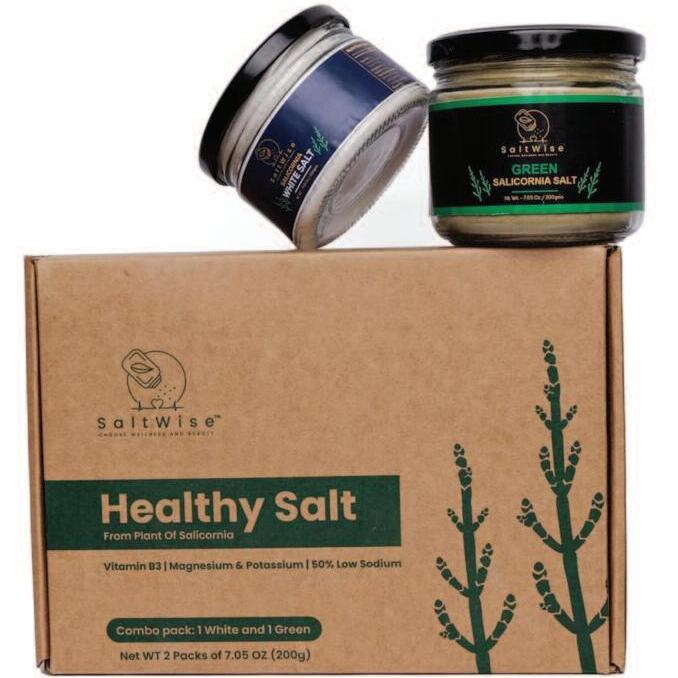
Dair y-free manufacturers target flavor profiles to obtain a more authentic taste and a familiar mouthfeel regards to texture Canadian-based company Daiya Foods manufactures a line of plant-based cream cheeses and Cheddar shreds that uses oat cream as the main functional ingredient
These products are available in more than 25,000 grocery stores in the United States and Canada There are two newcomers that will be positioned in the foodservice market: Daiya Foods dairy-free cheese sauce to pair with nachos, fries, hotdogs, American and Mexican cuisines, and a diar y-free cream cheese single-ser ve 1ounce packet to be paired with bagels and sandwiches
Global Bold Flavors
There was a big presence of spicy, smoky and Asian-inspired products at this year ’ s National Restaurant Association Show
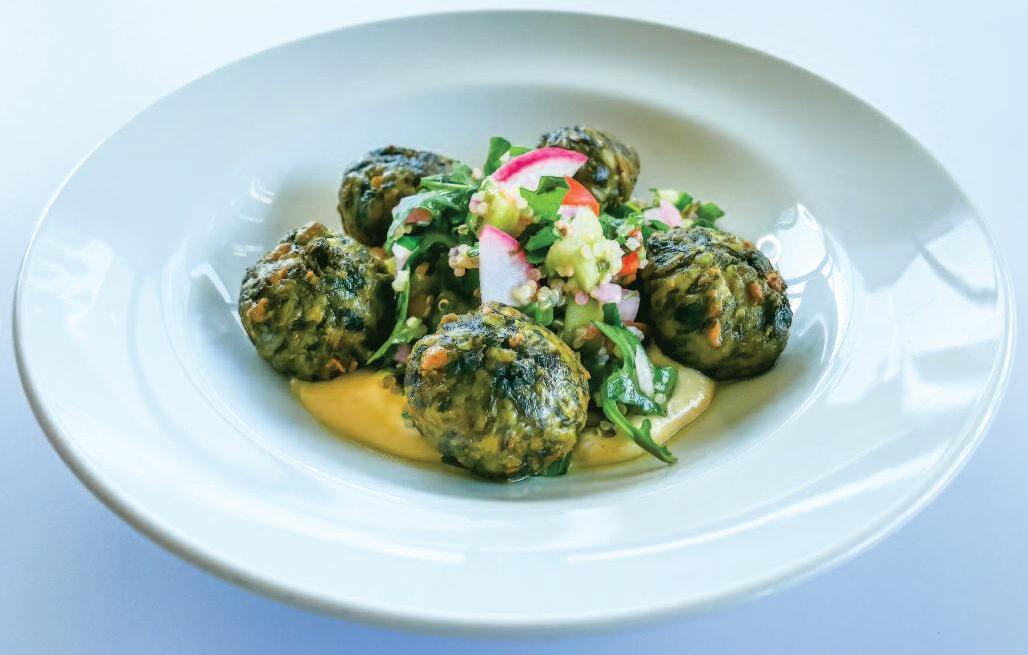
And there was also an abundance of new products made of global fusion of ingredients from around the world
Tabañero Hot Sauce Company introduced a new line of hot sauce that defines the global fusion The new flavors include Peach Bourbon, Key Lime Habanero, Jalapeño Avocado and Harissa
KFI Sauces, Canada’s top-selling maker of Indian sauces and condiments, sampled one of its popular products, Hakka Szechuan This Pan Asian-style Indian curry sauce can be used to make chicken or beef meatballs and ser ved over rice or noodles KFI also produced a garlic chili chutney sauce made of roasted garlic, chili paste and spices The flavor is versatile, which pairs well with sandwiches and wraps V i r g i n i a - b a s e d company Mar Mar Foods has two family-based recipes that have been commercially produced: Chili Garlic Crunch and Hot Chili Garlic Crunch These products are inspired by traditional Asian-Filipino chili pastes and oils
Application usage includes adding to cooked noodles, used as condiment over eggs or pizza, mixed into rice, cream cheese or barbecue sauce Chili Garlic Mar Mar flavor is described as a bold garlic flavor, followed by slow buildup of sweet spiciness
Tan Tan Foods is a 20-year-old family business based in Oregon Since 2017, it has produced a line of Vietnamese sauces from family recipes There’s a peanut sauce, hoisin sauce, vegan fish sauce and hot chili sauce that have crossover appeal to be used as alternative condiments and sauces in traditional American foods
Tan Tan’s peanut sauce pairs well with French fries and fried or baked chicken wings The hoisin sauce can be an alternative to barbecue sauce for grilling ribs, chicken or fish
Centur y old family-owned company Enrico Formella & Sons has a line called Simply Salsas These handcrafted salsas feature minimum ingredients to achieve fresh and bold flavors Each batch is manufactured to “taste like homemade” with the usage of up to seven ingredients per product
The flavors are based on heat levels of Mild, Medium and Hot There are no artificial flavors, colors, additives or preservatives This product line is available for private labeling
Montana based company 41 Grains raised the culinary bar in the healthy snack category This company manu-
factures a line of lentil-based snacks that are minimally processed, shelf stable and designed to integrate into high-volume kitchens, institutional meal programs and foodservice distribution pipeline
The produce line, Lentil Crunchers, includes flavors Signature Salty, Sweet Hickory, Dill Pickle and Sauced Apple These non-GMO nutrient-rich snacks are a great source of whole-grain fiber, vegetarian protein and allergen-friendly simplicity
Tidewater Grain Co showcased its Carolina Gold Rice line This heirloom rice dates back to 1685, which takes credit as the first rice grown in the Americas However, it’s the first time in Tidewater’s 120 history that they are planting, har vesting and milling heirloom rice
Products include the Heirloom Carolina Gold White Rice, Brown Rice and Middlins (broken grains of rice) All are nonGMO
One cup of Tidewater’s Carolina Gold White Rice contains 22 grams of total carbohydrates, compared to 53 grams in regular medium-grain white rice
SIMPLi debuted its line of regenerative organic products Regenerative is a holistic approach to agriculture farming that focuses on restoring and enhancing the natural environment – from healthy soil, biodiversity and good water cycles
SIMPLi is a global company that works directly with international regenerative organic farmers to consolidate complicated supply chains into a transparent and ethical process This company ’ s motto is “You know where your food comes from and the communities behind it ”
Some of SIMPLi’s products include Regenerative Organic Certified Chickpeas (sustainably sourced from Andean Valleys), Regenerative Organic Certified Gigante beans (sustainably sourced from the Greek Mountains) and Regenerative Organic Certified Tri-Color Quinoa (sustainably sourced from the Andes Mountains) SIMPLi’s Peruvian Spice Salt Blend, which is sustainably sourced from natural springs in the Sacred Valley, is made of huscatay (Peruvian black mint), panca pepper, yellow pepper, cumin and garlic
It has a mildly spicy, earthy and smoky flavor that transcends not only South American signature dishes, but enhances popular global cuisine from street food to national dishes
Wilbert Jones is a food & beverage consultant on assignment for Gourmet News Contact him at 312 972 1579 or Joneswilbert@aol com GN
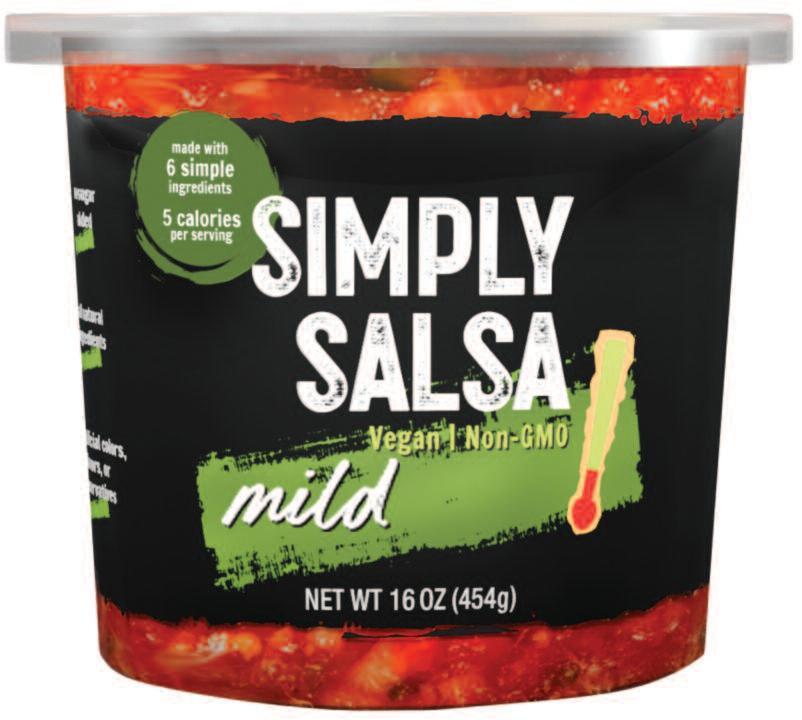
While economic pressure is pushing diners to seek more affordable options, consumer expectations for digital convenience, accuracy and personalized market engagement have never been higher, according to HungerRush’s consumer sur vey revealing how inflation, evolving consumer expectations, and technology preferences are reshaping the dining experience at quick-ser vice and fast-casual restaurants
Brands that embrace technology to meet these needs are positioned to build loyalty and grow market share, even in a cost-conscious environment
“This new data confirms what our restaurant partners are experiencing every day,” said Bill Mitchell, CEO at HungerRush “Consumers are still dining out, but they’re more selective Operators who use technology to reduce friction, personalize offers, and enhance speed of ser vice will win both loyalty and repeat business ”
Key findings: Dining frequency remains high, but so do expectations
• 93 percent of consumers visit a QSR or fast-casual restaurant at least once per month, with 36 percent doing so up to three times and another 32 percent visiting four to six times a month
• Despite high frequency, 40 percent of diners report eating out less often due to inflation, while 16 percent say they’re choosing QSRs more frequently to save money
• When asked what drives them to choose QSRs, respondents cited:
◦ Price (67 percent)
◦ Convenience and location (51 percent)
◦ Speed of service (48 percent)
The survey also found that diners expect more relevant communications from restaurants 57 percent of respondents said they prefer personalized discounts based on order history, while just 34 percent prefer generic offers, and 40 percent want more use of tech for rewards and loyalty programs
While price remains critical, the survey shows that technology plays a major role
in influencing where diners choose to eat and whether they return The data found that 57 percent say mobile ordering apps have improved their dining experience
Additional findings include:
• 40 percent of consumers say technology has improved their experience through contactless payment options
• 69 percent of diners say real-time order updates are important, with 35 percent calling them very important
• 51 percent would use more technology if it provided faster service
• 40 percent would do so for rewards or loyalty perks
Balancing human interaction and digital convenience
Despite increasing their frequency at QSRs, diners reported frustrations as well
The top pain points for diners include long wait times (42 percent), followed by incorrect or missing items and poor customer service These frustrations can be felt due to disconnected systems or ongoing labor and staffing challenges, which can be re-
duced or eased by technology integrations
While diners value tech enhancements, the top ordering method was still in-store with human staff (38 percent), followed by drive-thru (26 percent) This underscores the importance of blending high-touch service with operational efficiency, and not incorporating technology for the sake of having it; it needs to focus on improving the customer experience
“Convenience without compromise is the new standard,” Mitchell said “By equipping staff with the right tools and automating behind-the-scenes processes, restaurants can meet demand without sacrificing experience ”
The sur vey was commissioned by HungerRush and conducted by Dynata, the world’s largest first-party data company The survey was conducted in April among 1,000 U S consumers 18 years and older to understand the customer experience, micro and macro trends, consumer behaviors and technology needs within the restaurant industry G N
Rainbow, a small business insurance platform built for independent agents, launched its Restaurant Program Business Owner’s Policy in the state of New York The expansion marks a significant step forward in Rainbow’s mission to serve industry verticals with specialized, tailored coverage and long-term stability
Continued from PAGE 1
foods is one of the driving factors of the childhood chronic disease crisis
“This Request for Information is yet another step in seeking commonsense ways to foster improved and more informed consumer choice,” said U S Secretar y of Agriculture Brooke L Rollins “A unified, widely understood definition for ultraprocessed foods is long overdue
“As this process unfolds, I will make certain the great men and women of the agri-
Continued from PAGE 1
“We’ve created a sustainable solution that shows Africa isn’t just solving its own challenges – we ’ re setting precedents the world can learn from ” Built on public–private partnership, Food4Education combines government co-investment, parent contributions and philanthropic force to power its industryredefining solution Its green kitchens run on clean energy Its meals are sourced from local smallholder farmers Its systems are digital, dignified, and built for scale, with
With the state being the third largest restaurant market in the country, with over 20,000 restaurants in New York City alone, this launch represents Rainbow’s most ambitious restaurant program rollout to date New York’s restaurant industry is not only massive, but complex, with regulator y, staffing and operational hurdles that re-
culture value chain are part of the conversation ”
“I am delighted to lead this critical effort at the FDA,” said FDA Commissioner Dr Marty Makary “The threats posed to our health by foods often considered ultraprocessed are clear and convincing, making it imperative that we work in lockstep with our federal partners to advance, for the first time ever, a uniform definition of ultra-processed foods ” I
7 0 percent of packaged products in the U S food supply are foods often considered ultraprocessed and that children get over 60
every plate powering learning, livelihoods and long-term opportunity
Taking the stage as part of The Audacious Project 2024’s cohort, Njiru’s TED Talk comes at a time of renewed global attention on school feeding as a proven lever for inclusive, sustainable development
With Africa home to the youngest population on Earth, and 1 in 4 people projected to be African by 2050, how the continent feeds its children today will shape the future everyone shares
“There’s no debate: school meals are among the most effective, scalable tools to strengthen food systems, linking education, nutrition, agriculture and local economies,”
quire agile, dependable coverage
Following recent growth in the beauty & wellness segment, which has expanded to Texas and Illinois, this latest move brings Rainbow’s Restaurant BOP to 30 states, with Mar yland and Washington coming soon Rainbow launched its Restaurant BOP
percent of their calories from such foods
links between the consumption of foods often considered ultraprocessed with numerous adverse health outcomes, includi
Ty p
2 diabetes, cancer, obesity and neurological disorders
A uniform definition of ultra-processed foods will allow for consistency in research and policy to pave the way for addressing health concerns associated with the consumption of ultraprocessed foods The RFI will be publicly available in the federal register and seeks information on what factors
said Shalom Ndiku, director of public affairs at Food4Education “At UNFSS+4, it was a proud moment for our whole team to see our work recognized as a flagship intervention in Kenya’s national report
“It’s a testament to the collective effort driving sustainable, African-led school feeding systems ”
This is not just a Kenyan story It’s a global opportunity This TED milestone reflects a growing movement and global recognition that African solutions – grown and led locally – can transform systems at scale
TED2025’s theme, Humanity Reimagined, celebrates bold ideas redefining the future Njiru’s TED Talk, “From Origin to
salers with deep expertise in the market
coverage offerings, disciplined under writing and deeper collaboration with trusted partners G N
and criteria should be included in a definition of ultraprocessed foods
Alongside developing a uniform definition, the FDA and National Institutes of Health are investing in high-quality research to help answer remaining questions about the health impacts of ultraprocessed foods through its recently announced Nutrition Regulator y Science Program The Department will also continue to pursue developing and implementing other key policies and programs that seek to, collectively, dramatically reduce chronic disease and help ensure a healthy future for Americans GN
Opportunity,” reframes hunger through three bold provocations:
1 School meals are infrastructure Hunger, education, and opportunity are interconnected Feeding children well powers learning, health and livelihoods all at once
2 Locally led solutions work Food4Education grew from 25 meals to 500,000 a day by investing in African ingenuity, community ownership, and public partnership
3 Africa can lead the way With 1 in 4 people projected to be African by 2050, the systems we build on the continent today will shape the world tomorrow GN

Graza has launched its latest product innovation: Frizzle, exclusively on-shelf at select Whole Foods Market stores nationwide and online at graza co A single-origin, high-heat cooking oil boasting a smoke point up to 490°F and made from 100 percent olives, Frizzle is designed for neutral-flavor cooking, baking, grilling and frying
The new pantry staple comes in three convenient formats to fit every kitchen need:
• Frizzle 750-mililiter Squeeze Bottle: For squeezing directly into a super hot pan or cast-iron
• Frizzle 5-ounce Spray Bottle: For oiling up a baking pan, grilling, and more
• Frizzle 2-liter Jug: For frying, pouring into a measuring cup, or refilling a squeeze bottle (Launching soon on graza co)
“Frizzle is a game-changer for Graza,
opening the door for us to reach even more home cooks across the countr y, ” said Graza CEO and co-founder, Andrew Benin “We’re unlocking even more ways to cook with our high-quality oil – empowering our customers to crisp, fry and grill with the same confidence they've come to expect from Graza
“We have been working on this product since before our January 2022 launch and we are thrilled to finally introduce it to the world ”
Crafted from a glorious mix of olive pomace oil – derived from the tasty tapenade remnants of the first cold press of Sizzle and Drizzle, that is then repressed –and Graza Extra Virgin Olive Oil, Frizzle is a higher quality and more wholesome alternative to traditional neutral cooking oils Made with single varietal Picual
olives, har vested at their peak for topnotch flavor and performance, Frizzle is naturally extracted and refined without chemicals, solvents or additives
Frizzle has a buttery, yet neutral flavor and a high smoke point that makes it stand out among popular oils such as canola, vegetable, grapeseed and avocado Like all of Graza’s products, Frizzle is picked, pressed and bottled in Jaen, Spain
Brooke Gil, principal category merchant at Whole Foods Market said, “Frizzle brings an exciting stor y to our shelves, using leftover pomace from EVOO production to extract the remaining olive oil It also fills a unique gap in our assortment with an olive oil specifically designed for very high-heat cooking – perfect for stirfrying, deep-frying, or making homemade fries
Olive oil exporter Canaan Palestine features a seasonal lineup of fused olive oils using lemon, garlic, chili and basil
These flavored olive oils are crafted through a labor-intensive process known as the agrumato method to extract every ounce of flavor
Produced only once a year, this offering celebrates national heritage, regenerative farming practices and traditional craftsmanship Priced at $20 per bottle, each oil makes the perfect addition to grazing tables, salads, meats or even fresh bread
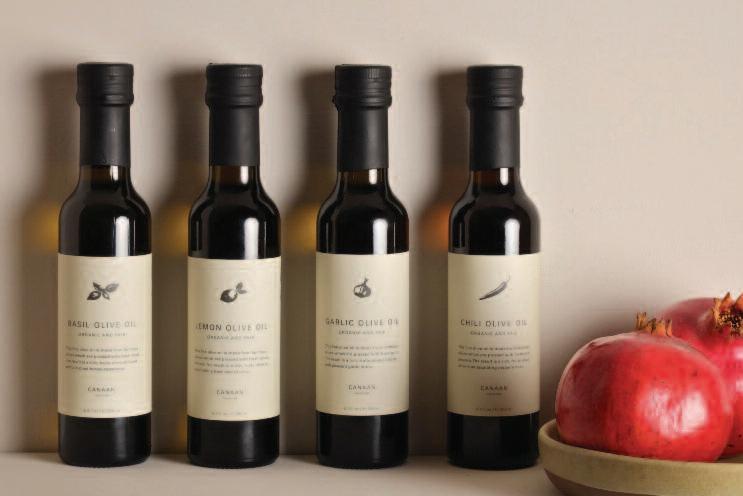
ents after pressing the olives Through crushing whole ingredients including lemon, garlic, chili and basil – along with ancient landrace Souri olives at the olive press, it ensures that each bottle has an unparalleled amount of flavor
The process requires exact timing and agricultural precision to guarantee that each ingredient is at peak ripeness for exceptional pairing with the olive harvest, resulting in a flavorful olive oil that enriches every meal
A more in-depth look at the offering and its recommended uses include:
crushed whole lemons lend a natural citrus note that lifts ever y dish 8 4 fluid ounces (250 milliliters)
• Garlic Olive Oil ($20): Bold, savor y and aromatic, this oil is a must-have for garlic lovers Ideal for pastas, meats or as a dipping oil with crusty bread 8 4 fluid ounces (250 milliliters)
• Chili Olive Oil ($20): For those who crave a kick, this spicy blend brings heat and complexity – perfect for grilled dishes, pizza or adding flair to sauces and marinades 8 4 fluid ounces (250 milliliters)
• Basil Olive Oil ($20): Crushed with fresh basil leaves at the olive press, this herbaceous blend delivers a deep, authentic flavor ideal for salads, dips or cooking vegetables, meats or seafood 8 4 fluid ounces (250 milliliters)

“We’re excited to offer a product like this that delivers on performance and it is sure to please our customers ” Frizzle 750-mililiter squeeze bottle and 5-ounce spray bottle are now available at select Whole Foods Market stores nationwide and on graza co, where “The Trio” set, featuring Sizzle, Drizzle, and Frizzle squeeze bottles can also be purchased In the coming weeks The 2-liter jug will launch exclusively on graza co GN
The agrumato process is truly what sets Canaan Palestine apart from commercially infused olive oils; simply adding ingredi-
• Lemon Olive Oil ($20): A bright and zesty oil perfect for drizzling over roasted vegetables, seafood or fresh greens The
O Olive Oil & Vinegar, known for its artisan crushed olive oils and wine vinegars, has released the first California Organic Extra Virgin Olive Oil available in a chefstyle squeeze bottle This new format –clean, convenient and made for modern kitchens – is joined by the release of a California Premium Extra Virgin Olive Oil in the same bottle design
The squeeze bottle trend, long favored by chefs for its precision and ease, is gaining ground in home kitchens Until now, no U S producer had launched a certified organic California EVOO in this format O is leading the charge, delivering high-quality, California-grown olive oil in a package that's as functional as it is flavorful
Crafted from 100 percent certified organic olives grown in California and
pressed within hours of harvest, the California Organic EVOO is naturally high in polyphenols and antioxidants Its green, fruity profile has long made it a favorite of chefs – and now, thanks to the BPA-free squeeze bottle, it’s easier than ever to finish dishes, dress salads or sauté with precision and zero mess
In addition to the Organic EVOO, O has also released its beloved California Premium Extra Virgin Olive Oil in the same format Made from California olives and pressed with the same care, this version offers a balanced, fruit-forward flavor ideal for everyday use With both products, O offers a dual lineup of premium, domestically produced EVOOs in a format built for the way people cook today
“This launch isn’t just about packaging
These fused olive oils are made with olives from trees that have stood for over 2,000 years, rooted in ancient limestone terraces and surrounded by wild herbs, na-
tive flowers and thriving biodiversity This rich natural setting creates a unique flavor profile; one shaped by generations of harmony between the land and its stewards With a focus on organic, clean-label foods, the brand ensures every product is free from additives – celebrated for its authenticity, purity and connection to the land Canaan Palestine is more than olive oils and tapenades It’s a bridge between ancient agricultural wisdom and modern sustainability, offering consumers a way to support fair trade, ecological balance and cultural continuity with every purchase The company supports over 2,000 smallholder farmers in Palestine to produce Fair Trade, USDA Organic and Regenerative Organic Certified products, as well as planting over 430,000 olive trees through its Trees for Life initiative Canaan Palestine is sold online and in over 600 nationwide retailers, including Erewhon, select Whole Foods Market locations and independent grocers GN
–
it’s about making exceptional olive oil easier to use and accessible to more people,” said Paolo Colavita, CEO “We’re proud to introduce the first certified Organic California EVOO in a squeeze bottle and to continue delivering innovation rooted in quality and sustainability ”
O partners with local farmers and their families, many of whom have cultivated olives for generations, to grow olives with care and purpose These groves are managed using regenerative practices – including no-till farming, micro-drip irrigation and organic soil amendments – that support environmental health and long-term soil vitality
In keeping with O’s values, the new squeeze bottles are BPA-free, 100 percent recyclable and designed with both form
and function in mind Like all O Olive Oil products, they are:
• Never blended with imports
• Produced using California-grown olives
• Bottled in-house at O’s solar-powered facility
With these releases, O is inviting cooks of all levels to experience chef-quality flavor with everyday ease Whether it’s a finishing drizzle, vinaigrette base or stovetop sauté, this is olive oil designed for how consumers cook now
The California Organic EVOO (500 milliliter) and California Premium EVOO (500 milliliter) squeeze bottles are now available at ooliveoil com and at select retailers including Roche Bros, Market of Choice, Central Market and more GN

In the Bursa province of Turkey, nestled around the pristine Lake Iznik of Iliad fame, some of the world’s best-tasting olives grow Gemlik olives, like champagne, have a protected designation of origin or PDO and have a rich, smooth, slightly smoky flavor that produces a truly exceptional olive oil
Floral, delicate, and delicious olive oil sourced from this extraordinar y varietal has never been available in the United States –until now
Nicea Olive Oil has launched extra virgin olive oil made from 100 percent Gemlik olives
There are three options: Ever yday ($15 89) Early Har vest ($20 89) and Private Reser ve ($23 89), which are available for purchase and nationwide shipping from niceaolives com
Thankfully, the Gemlik olive produces a higher amount of oil than other varieties
Rashied and Ayris approached a network of villages and olive-growing cooperatives to exclusively source these highest-quality olives and became the first to import Gemlik olive (PDO) olive oil to the United States

“The seed for Nicea Olive Oil was planted by love,” said Rashied Amini, CEO “From L A , I would travel halfway around the world frequently to visit my now wife, Ayris, in her native Türkiye I took so much time off work that I had to bring my team back something special, so I shared some of the amazing olive oil Ayris’s family made from Gemlik olives
“My colleagues had never had anything like it and I realized we had something remarkable on our hands ”
Choosing Nicea, the Greek name for the Lake Iznik region, was an easy next choice for the new company The challenge was to process estate-quality Gemlik olives at a large volume from villages across the Lake Iznik region
But Rashied and Ayris didn’t stop there Concerned by news reports of tainted, spoiled or counterfeit olive oil, they wanted Nicea Olive Oil to be unprecedentedly transparent
They decided to integrate lab testing and labeling for each of their olive oils
Each individual har vest is handpicked, pressed and immediately sent to a local laboratory Within a few days, Nicea receives a report and creates the label that details exactly what's inside that particular bottle: free fatty acid content, K270 UV absorptance, peroxide content and polyphenol count
In every way, Nicea Olive Oil shares exactly where it’s coming from; each protective dark glass bottle features designs inspired by traditional Iznik tiles and made Nicea a Gold Series Winner in the L A International Extra Virgin Olive Oil Competition for packaging
“Our bottles may be made of dark glass, but our aim is total transparency,” said Ayris Gucun Amini “We want Americans to know exactly where their extra virgin olive oil comes from and rest assured that it’s of exceptional quality at an affordable price ” GN

Ariston Specialties introduced Tuscan Herb-Infused Olive Oil recently and this item has already become one of its topselling flavors! This infused olive oil is made from 100% Koroneiki Olive oil – sourced from Ariston’s farms and local farmers in the Messinias region of Greece –and infused with herbs inspired by Tuscan cuisine
This Tuscan Herb-infused oil pairs nicely with Ariston’s Lemon-infused White Balsamic Vinegar for a sweet and zesty dressing combination or marinade Ariston Tuscan Herb-infused is an
amazing addition to pasta, baked chicken dish or any poultry, tomato sauces, soups, hummus, sautéed vegetables, salads or even in a sandwich Ariston Tuscan Herb-Infused Olive Oil is also a wonderful addition to grilling meats, chicken or tuna steaks
Order online on aristonspecialties faire com or email for more information to get these delicious products in your store! Come see Ariston at the Small Business Expo in Las Vegas in October, Dallas in November and Atlanta in December 2025
Ariston Specialties
860.263.8498
aristonspecialties faire com www.aristonspecialties.com
Try the new Italian Risottos from Ariston Specialties Ariston has now added authentic Risottos sourced from Italy to its line of products with the newest one now being Ariston Risotto with Seafood
Are your customers pressed for time and looking for a convenient, delicious, time-saving side dish for their family meal? Ariston’s Risottos make it easy for you to do just that Make this wonderful dish at home within 18 minutes There are 6½ servings per container
Select Extra Virgin Olive Oil or any of its infused olive oils to the recipe
One of the benefits of these products is that they are gluten free and have no added salt They are also GMO free
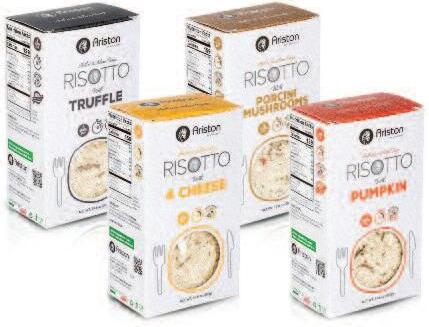
Risotto is a norther n Italian rice dish made with a special high-starch, shortgrain rice Risotto is cooked in broth until it reaches a creamy consistency
Ariston’s Risottos are available in five flavors: Risotto with Truffle, Risotto with Pumpkin, Risotto with Porcini Mushroom, Risotto with 4 Cheese and now Seafood
The risottos contain Italian Car naroli rice as the main ingredient Car naroli rice is even starchier than arborio, so it makes a truly top-tier restaurant-worthy risotto You can follow the suggested instructions on the box and add water However, if you prefer extra flavor, we recommend you use beef, chicken or vegetable broth
You can also enhance the risotto’s creaminess and flavor by adding Ariston’s
In addition, you can get creative with the risottos and pair them with other Ariston products For example, the Pumpkin Risotto pairs well with Ariston’s Rosemary, Ariston Basil Olive Oil or Ariston Curry infused olive oil
You can also add Ariston’s infused Sea Salt line and Ariston Black Peppercor n to any of these risottos products as well to taste Order today and enjoy!
Come see Ariston at Small Business Expo Las Vegas, Oct 15, 2025, Plaza Hotel & Casino Convention Center, Sierra Ballroom, booth #222; Small Business Expo Dallas, Nov 19, Kay Bailey Hutchison Convention Center, Hall C, booth #632; Small Business Expo, Atlanta, Dec 10, Atlanta Convention Center at AmericasMart, Building #2, booth #219
Ariston Specialties 860 263 8498 aristonspecialties.faire.com www aristonspecialties com
Ariston Risotto from Italy (Truffle, Porcini, 4-Cheese & Pumpkin)
Ariston Infused Sea Salts
Ariston Specialties
860 263 8498
www aristonspecialties com
https://aristonspecialties faire com
Ariston Specialties
860 263 8498
www aristonspecialties com
https://aristonspecialties faire com
Indulge in the exquisite taste of our line of authentic Italian Risottos from Italy These risottos are made with 100 percent Italian Carnaroli rice with flavors all sourced from Italy and made in Italy Ariston Risottos come in four varieties: Truffle, Porcini, 4-Cheese and Pumpkin Tr y them all!
Tr y all Ariston’s line of infused authentic sea salts Greek Salad Sea Salt (inspired by summers in Greece), Garlic & Basil Infused Sea Salt (perfect for Italian inspired foods), Lemon & Turmeric infused Sea Salt (a bright taste of lemon and earthiness of Turmeric) and Smoked Sea Salt (adds a summer BBQ feel to any dish), Classic Sea Salt, Authentic Pink Himalayan Salt and 4-color Peppercorn All pair ver y well with Ariston’s line of oils and vinegars





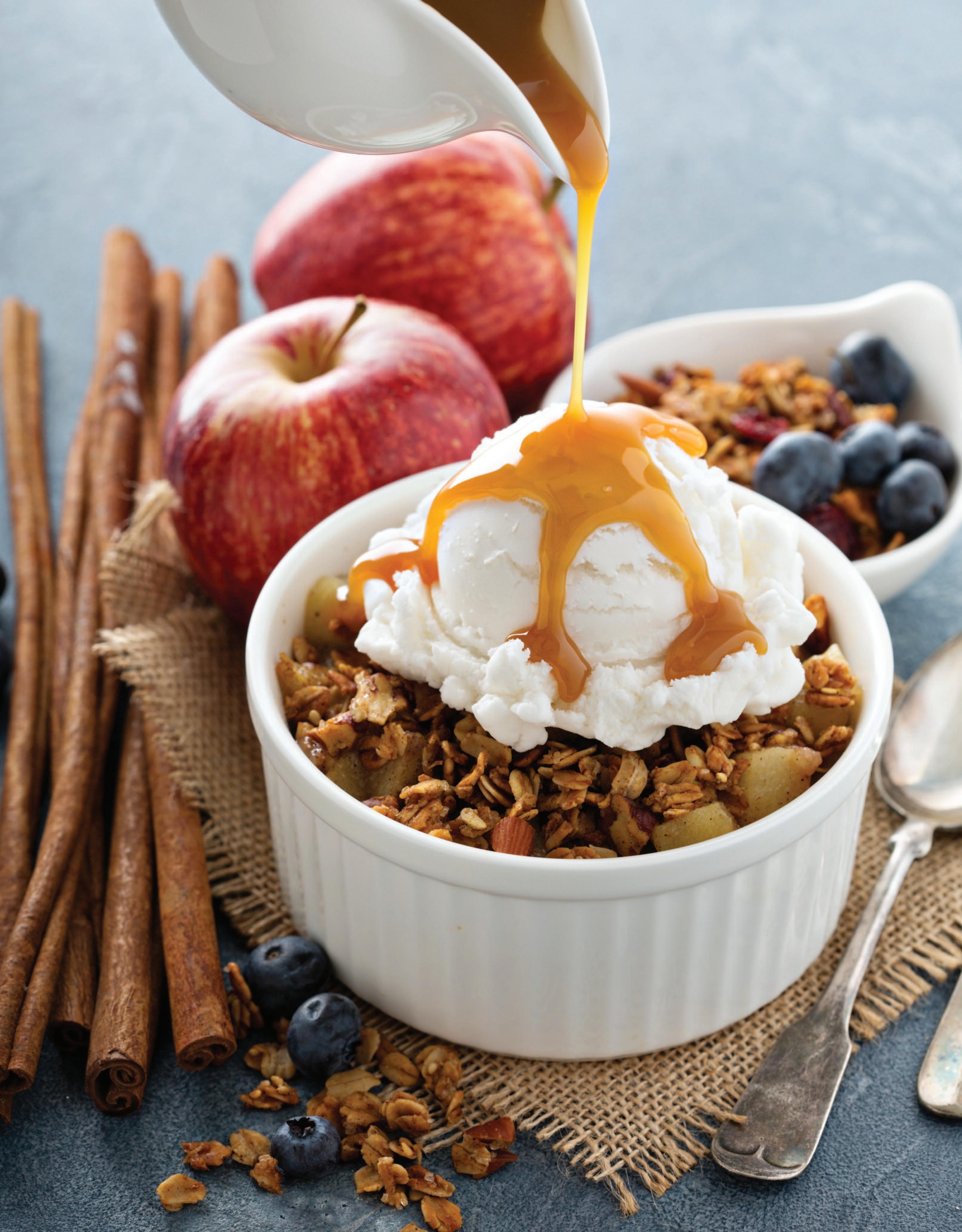
Stonewall Kitchen’s 2025 Holiday Collection is here just in time for the upcoming season Exclusively designed by the in-
award-winning products sure to suit anyone’s tastes
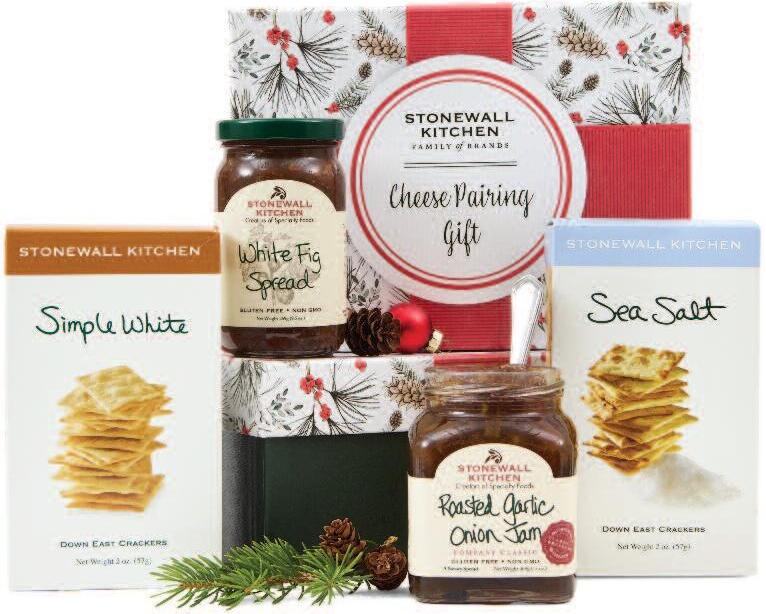
house team with pretty packaging celebrating merry winter motifs, these gift sets feature a selection of best-selling and
Filled with two types of crackers, a sweet fig spread and a savory onion jam, the 2025 Cheese Pairing Gift is the ideal shortcut for creating a festive snack plate, charcuterie board or appetizer display Made to pair well with a range of cheeses – from creamy Brie to aged gouda – it’s the perfect pick for hosts and hostesses or anyone who loves to entertain Everything comes packaged in a ready-to-give box finished with the appearance of a tied ribbon, making it a must-have grab-and-go option to keep on hand for last-minute family gatherings and holiday parties
Stonewall Kitchen www stonewallkitchen com
Bring bold Spanish flavor to your shelves with the vibrant and versatile Tapas Sauces collection Rooted in Spanish tradition and crafted with premium ingredients, these sauces capture the essence of Mediterranean cooking in every jar
Now available in five distinct varieties: Salsa Verde, Salsa Chimichurri, Salsa Mojo Picón, Salsa Brava and Salsa Aioli
Each one follows a traditional recipe that highlights the rich, regional flavors of Spain Whether drizzled over grilled meats, paired with vegetables or served as a bold dip, these sauces offer endless possibilities for home cooks and entertainers alike
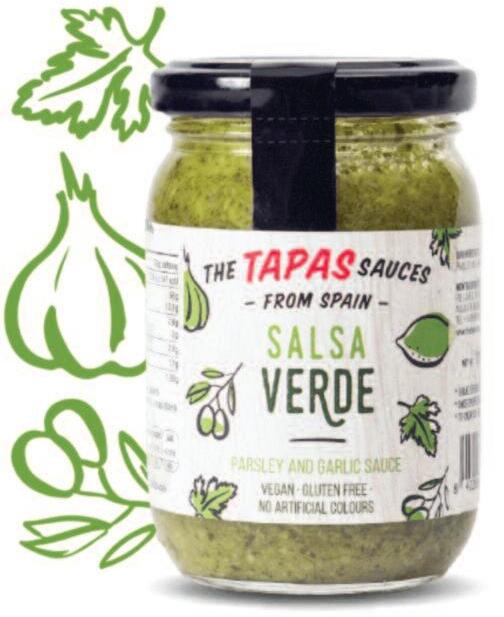
Salsa Verde brings bright, herbaceous
notes Salsa Chimichurri adds a garlicky kick with a splash of vinegar Salsa Mojo Picón, from the Canary Islands, delivers smoky depth and mild heat Salsa Brava offers bold spice for patatas bravas, and Salsa Aioli rounds out the lineup with a creamy, garlicky finish
Perfect for gourmet markets, specialty grocers and Mediterranean-focused retailers, Tapas Sauces blend authenticity with shelf appeal, bringing a true taste of Spain to your customers
To place an order or lear n more, contact The French Farm
The French Farm wholesale thefrenchfarm com
Crave Brothers Fresh Mozzarella Hearts are a standout specialty item, perfect for driving excitement and incremental sales in the specialty cheese case Handcrafted on the Crave family’s Wisconsin farmstead using farm-fresh milk from their own dairy, these heart-shaped delights deliver both high quality and visual appeal Ideal for seasonal promotions around Valentine’s Day, Mother’s Day, weddings, anniversaries or any retail theme focused on love and celebration, they offer retailers a unique merchandising opportunity
and elevating the overall specialty cheese presentation With growing consumer interest in artisanal, locally produced and visually appealing food experiences, Crave Brothers Fresh Mozzarella Hearts check
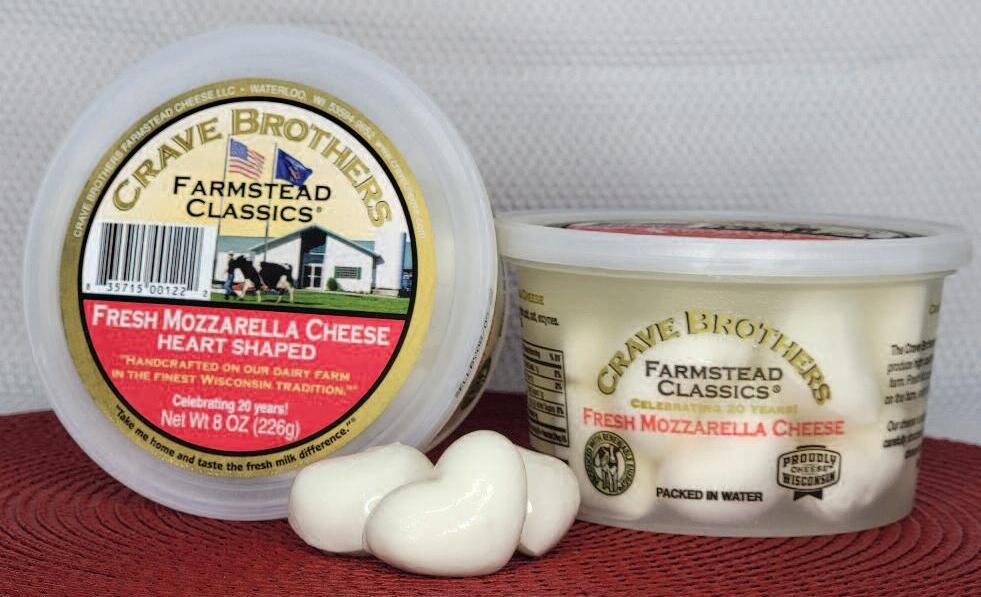
Each Fresh Mozzarella Heart is smooth, delicate and milky in flavor – perfect for pairing with fresh produce, charcuterie or prepared deli offerings
A great summer twist is a Fresh Mozzarella and strawberry skewer! The eyecatching shape draws attention in the case, encouraging impulse purchases
Ariston has now added authentic risottos from Italy to its line of products
Are your customers pressed for time and looking for a convenient, delicious, time-saving side dish for their family meal? Ariston’s risottos make it easy for you to do just that Make this wonderful dish at home within 18 minutes There are 6½ servings per container
Risotto is a norther n Italian rice dish made with a special high-starch, shortgrain rice Risotto is cooked in broth until it reaches a creamy consistency
every box
Visit cravecheese com to lear n more about Crave Brothers products and to find recipes
Crave Brothers Farmstead Cheese www.cravecheese.com
on the box and add water
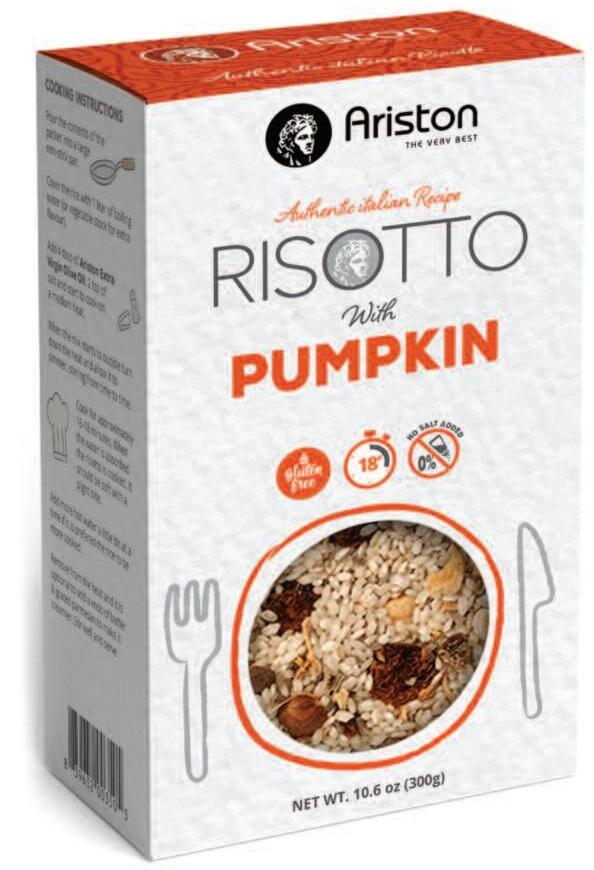
Ariston’s Risottos are available in five flavors: Ariston Risotto with Truffle, Ariston Risotto with Pumpkin, Ariston Risotto with Ariston Porcini Mushroom, Risotto with 4 Cheese and now, Ariston Risotto with Seafood
The risottos contain Italian carnaroli rice as the main ingredient Car naroli rice is even starchier than arborio, so it makes a truly high-end restaurant-worthy risotto You can follow the suggested instructions
Since its farmers’ market days in 1991, Stonewall Kitchen has been crafting premium condiments using only the best ingredients The new Cherry Berry Quartet Jam is no exception, offering a symphony of fruity flavors in one delectable product Ripe cherries, strawberries, raspberries and cranberries come together with just the right amount of pure cane sugar and a dash of lemon juice to form a perfectly harmonious spread Each of the four fruits shines, creating a wonderful medley of harvest-fresh produce Delicious on toast or swirled into yogurt, Stonewall Kitchen’s Cherry Berry Quartet Jam is also a must-have for home bakers It makes a quick and easy filling for pastries such as turnovers or danishes
However, if you prefer extra umami flavor, you can use beef, chicken or vegetable broth You can also enhance the risotto’s creaminess and flavor by adding Ariston’s Select Extra Virgin Olive Oil or any of Ariston’s infused olive oils One of the benefits of this product is that it is gluten free, GMO free and has no added salt These risottos are also 0 percent cholesterol In addition, you can get creative with the risottos and pair them with other Ariston products For example, the Pumpkin Risotto pairs well with Ariston’s Rosemary, Basil Olive Oil or Curry Infused Olive Oil
You can also add Ariston’s infused Sea Salt line to any of these risottos products as well
You can find these risottos online now at faire com/direct/aristonspecialties for retailers
Enjoy and buon appetito from Ariston Specialties!
Ariston Specialties www aristonspecialties com
and can even be used to t o p desserts such as c h e e s ecake C u s
t o m e r s will love its ver-
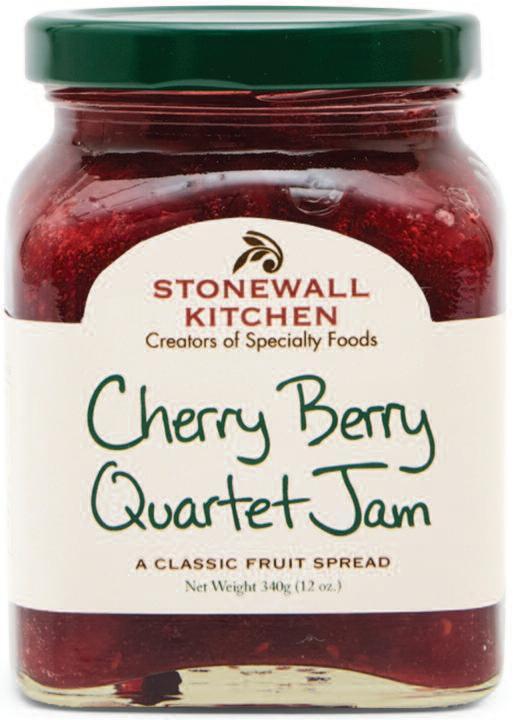
satility, not to mention the fact that it’s made in Maine with less total sugar than leading competitors How sweet is that?
Stonewall Kitchen www.stonewallkitchen.com
Plant protein pioneer ChickP Protein, Ltd is forging ahead in the active nutrition market to fill the surging demand for natural, highprotein, plant-based nutrition bars and similar on-the-go, betterfor-you products The company developed a line of prototypes, powered by its signature, 90 percent chickpea isolate, to fit the requirements of active lifestyle consumers and others who live life on-the-go

The company showcased the proteinfortified, granola-based demos at the Fi
Europe 2023 in Frankfurt including chickpea protein enriched cereal and energy bars The bars are made of nuts, seeds, oats and green buckwheat and infused with a minimum 30 percent of the proprietary, 90 percent chickpea isolate They are naturally mildly sweetened with honey and agave and are rich in fiber ChickP Protein Ltd
As the U S gourmet snack market continues to trend toward healthy indul-
gourmet snack boasts a bold savory crunch with buttery sweetness

gences and global flavors, Mochikichi’s Caramel Almond Crisps offer a uniquely delicious taste experience from overseas Made from toasted Japanese rice crackers coated in a rich caramel glaze and packed with Califor nia almonds, this
Here are some facts about Le Gruyère AOP:
• Le Gruyère AOP is produced using raw milk
• Le Gruyère AOP is natural – there are no additives, no GMOs and no preservatives
• Le Gruyère AOP is naturally gluten and lactose free
• Each wheel of Gruyère AOP is aged for a minimum of five months before being released for sale and can be aged for between 14 and 18 months It can be kept for more than 24 months for cheese lovers looking for an even stronger flavor
• A wheel of Gruyère AOP weighs between 25 and 40 kg
What does AOP mean?
It means it has a protected designation of origin To be considered AOP, you have to have:
• A tradition
• A limited production zone
Holidays are a great time to bring out a charcuterie board For those in the greater Chicago area, beloved Bobak Sausage Company has six new sausage flavors to try – and they’re available at area grocery stores
Elevate your culinary adventures with Bobak’s Maxwell Polish, Smoked Polish, Smoked Brat, Smoked Cheddar, Mild Italian and Beef Polish
A longtime favorite in Japan’s premium snack market, this product is made with natural mineral spring water and the finest domestically grown Japanese rice It contains no wheat, making it naturally gluten free Beautifully packaged and ready to gift, it appeals to upscale consumers who crave novelty, authenticity and better-for-you ingredients without sacrificing taste
Mochikichi is actively seeking U S partners and investors to help bring this high-potential product to American consumers For those looking to expand their portfolio with exclusive, inter nationally proven products, Mochikichi’s Caramel Almond Crisps offer a compelling entry point into Japanese gluten-free artisan snacking
Mochikichi mochikichi-usa@mochikichi.co.jp www mochikichi co jp
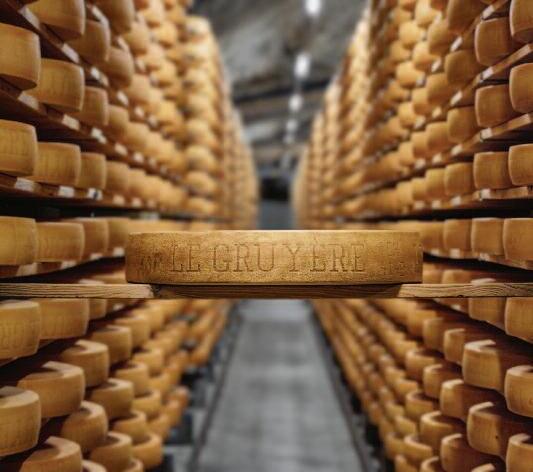
• A name
• A knowhow and a history
• A product
Production process has been maintained since the origins of Gruyère AOP back in the year 1115 and is strictly respected by the milk producers, the cheesemakers and the affineurs who follow the rules of the AOP specifications
Le Gruyère www.gruyere.com
Grana Padano PDO cheese and Prosciutto di Parma PDO stand are prime examples of European culinary heritage These exceptional products continue to gain attention due to their quality, authenticity and tradition with each carrying a distinctive history:
• Grana Padano cheese has been a part of Italy’s proud gastronomic heritage for nearly 1,000 years To preserve the surplus milk they produced, Benedictine monks created a hard cheese, which could withstand the test of time
• The monks called it “Caesus Vetus” (old cheese) in Latin, but due to its grainy texture, it soon became known as “Grana ” In 1954, it was officially named “Grana Padano,” with “Padano” (adjective) identifying the area of production, the Pianura Padana (Po River Valley) in Norther n Italy
• Produced using only naturally, partially skimmed milk from the production area, Grana Padano possesses unique nutritional features such as quality proteins, vitamins and mineral salts, especially calcium It is naturally lactose free due to the characteristics of its production and long aging process, which last from a minimum of nine months to over 24 months
• Prosciutto di Parma PDO was created in the ancient Roman times when Cato the “Censor” first mentioned the extraordinary flavor of the aircured ham made around the town of Parma in Italy
Padano PDO cheese in the world The Consorzio ensures that every wheel of cheese is made according to the Production Specifications so that it can be awarded its PDO status and be firebranded with the Grana Padano mark, while also protecting it against fraud in Italy and abroad
• The Consorzio del Prosciutto di Parma was established in 1963 by 23 producers who wanted to protect and promote their product throughout the world Since then, production has been regulated by strict laws, defining the quality characteristics of Prosciutto di Parma, identified by the Parma Crown branded on every ham
• PDO (or the acronym in Italian, DOP) is the European Community’s Protected Designation of Origin certification system that guarantees the authenticity of certain

• Prosciutto di Parma is made using traditional methods perfected over centuries and only from the hind legs of specially bred Italian pigs and sea salt It is completely natural, free of preservatives, additives and hormones Salting is still done by hand in the traditional way, by the “maestro salatore,” the salt master
• Its aging process, which ranges from a minimum of 14 to over 36 months, develops a variety of flavor profiles from mild and nutty to mature and full-flavored
About the Consortiums
• Established in 1954, the Consorzio Tutela Grana Padano (Grana Padano Protection Consortium) is a non-profit organization, which brings together producers and curers to protect and promote Grana
The new sausage products will feature
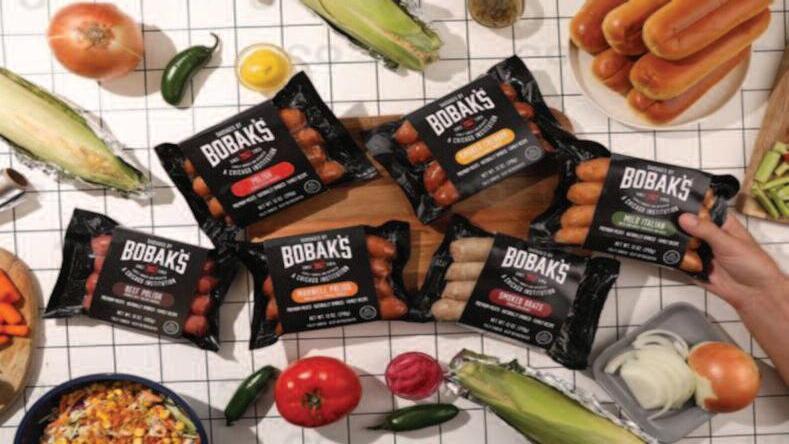
nary history beginning in 1964 when Frank Bobak, an immigrant from Poland,
• When you purchase a PDO certified product, you are assured that it was produced in a strictly defined geographic region In addition, it guarantees production methods that comply with rules set down by the gover ning consortium based on centuries old recipes and techniques, methods that have proven over time to be safe, effective, and the most flavorful Funded by the European Union Views and opinions expressed are however those of the author(s) only and do not necessarily reflect those of the European Union or of the granting authority Neither the European Union nor the granting authority can be held responsible for them
Distinctly Deliciously European www distinctlydeliciouslyeuropean eu
Indulge in the latest dessert topping from the specialty food creators at Stonewall Kitchen Inspired by the classic Turtle candies, the new Chocolate Pecan Caramel Sauce is a moder n take on oldschool hot fudge
Smooth chocolate and rich caramel are a match made in heaven, with pieces of roasted pecans adding a wonderfully savory crunch to every bite Crafted in the USA with premium ingredients, this sauce can be spread on pastries, warmed and drizzled over ice cream or eaten straight from a spoon (no judgment here!)

Sure to be a hit during the holiday baking season, it pairs well with everything from c h o c o l a t e chip pancakes to brownie sundaes, delivering decadent flavor to any dish Stonewall Kitchen www stonewallkitchen com
NationsBenefits, a healthcare fintech and supplemental-benefits platform, announced its latest retail network integration with Marc’s, one of Ohio’s premier discount grocery and pharmacy chains Eligible health plan members can now use their NationsBenefits Benefits Mastercard Prepaid Flex Card – powered by the realtime Basket Analyzer Ser vice – at all 61 Marc’s locations
This partnership empowers NationsBenefits to scale its Food as Medicine initiatives, delivering fresh, nutrient-rich groceries and essential pharmacy services directly to neighborhoods and making healthy living accessible for all
“At NationsBenefits, we believe food is
Sept 10-12
Seafood Expo Asia
Singapore
www seafoodexpo com
Sept. 24-25
Plant Based World Expo
New York City, New York
www plantbasedworldexpo com
Jan 9-10
Tastemaker Conference
Las Vegas, Nevada
www tastemakerconference com
Jan 11-13
Winter FancyFaire
San Diego, California
www specialtyfood com
Feb. 1-3
National Grocers Association
Las Vegas, Nevada
www nationalgrocers org
Feb 10-13
Biofach
Nuremberg, Germany
info@biofach de
a crucial component of whole-person care, ” said Michael Parker, co-CEO “By partnering with Marc’s – known for its fresh fruits and vegetables and community-centered spirit – we are removing barriers to healthy choices
“Now, members can use their Flex Card seamlessly at Marc’s stores to purchase nourishing foods, and pick up over-thecounter essentials without any extra steps ”
Building on this philosophy, the integration with Marc’s leverages the proprietary BAS technology to streamline benefit adjudication and enhance personalized care at the point of sale Similarly, to ensure individuals have easy access to the foods and products that support their health jour-
neys, NationsBenefits and Marc’s are empowering shoppers to make informed nutrition and wellness decisions through:
• Medically Tailored Produce & Meal Kits: Health plans can now offer customized meal recommendations – complete with GLP-1-aligned ingredients and chronic-disease–friendly recipes – redeemable via Flex Card utilizing Marc’s fresh fruits and vegetables delivered daily
• Chronic Condition Support & Nutrition Counseling: For members managing diabetes, hypertension or weight-loss goals, the Flex Card covers nutritious meal components and snack options designed by registered dietitians in collaboration with NationsBenefits
The Basket Analyzer Ser vice is at the heart of this collaboration As members present their Flex Card at Marc’s register, BAS instantly verifies benefit eligibility and
Feb 26
Converters Expo South Charlotte, North Carolina
www convertersexposouth com
March 3-6
Natural Products Expo West Anaheim, California
www expowest com
March 10-12
PACK EXPO Southeast Atlanta, Georgia
www packexposoutheast com
March 15-17
Seafood Expo Boston, Mass
www seafoodexpo com
April 14-15
SupplySide East
Secaucus, N J
www east supplysideshow com
April 21-23
applies allowances for grocer y, OTC or pharmacy items – eliminating the need for manual claims and reducing out-of-pocket surprises
Each transaction also generates anonymized, ZIP code-level data, providing health plans with insights into shopping and usage patterns These analytics drive smarter benefit design, optimized rewards and incentives, and a clearer understanding of social determinants of health at the community level
NationsBenefits not only expands retail access for members, but also empowers health plans to deliver truly personalized, data-driven care This partnership exemplifies how innovative fintech and community-focused grocer y retail can work together to close care gaps, advance health equity and transform ever yday shopping into meaningful wellness opportunities GN
May 14-16
Food Safety Summit Rosemont, Ill www foodsafetysummit com
May 19-21
Sweets and Snacks Expo Las Vegas, Nevada www sweetsandsnacks com
June 7-9
Dairy Deli Bake Seminar & Expo Orlando, Florida www iddba org
June 15-17
International Society of Sports Nutrition Annual Conference and Expo Fort Lauderdale Beach, Florida www sportsnutritionsociety org
June 28-39
Seafood Expo Global Barcelona www seafoodexpo com (dates subject to change)
Summer Fancy Food Show New York, New York wwwspecialtyfood com
July 7-10
American Cheese Society’s Annual Conference Louisville, Kentucky www cheesesociety org/conference
July 13-15
School Nutrition Association Annual National Conference
Charlotte, North Carolina www schoolnutrition org
Oct 18-21
PACK EXPO Chicago, Ill www packexpointernational com
Oct 27-30
SupplySide West Las Vegas, Nevada www west supplysideshow com


Ariston Specialties aristonspecialties
aristonspecialties com