
• Study Shows Demand Surge for Affordable Staples Underscores Mounting Crisis
PAGE 4
• Cruise-Goers Seek Experimental Dining, Global Flavors, F&B@Sea Report Says
PAGE 6
• Clean-Label Ingredient Demand Boosts Global Avocado Oil Market, Sur vey Shows
PAGE 9
• XAgriculture Adds $10 4T to U S Economy, Generates 49M Jobs, Annual Report Says
PAGE 13
• KeHE Distributors Relaunches Wild Oats as CPG Brand, Juice Line Produced
PAGE 14
• Ranchers, Schools Connect in Ranch-to-Tray Tours
PAGE 18
• Featured Products
PAGE 19
• Advertiser Index
PAGE 22
BY A.J. FLICK
Forty-five years ago, trade magazine publisher Doug Greene organized the first Natural Foods Expo as a way to connect natural brands and retailers
“I never dreamed Expo would make a profit,” Greene, 76, said in a rare inter view published in the magazine he founded, Natural Foods Merchandiser “In my mind, it was how much can I afford to lose on this and not go out of business?
“We were a magazine company doing an event on the side to help our magazine and help our industry But we sent out a flyer selling booths, and the money
poured in It was like, oh, wow
People really want this I think we had 580 booths,” he said
“We really don’t know how many people attended the first year because we registered people with manual typewriters,”
Greene said “I’d say we had about 3,000
“Unfortunately, Sunday, Monday, Tuesday are bad days for a convention Well, Sunday had a great crowd, and ever yone was excited Watching people walk across the parking lot that morning and actually come was one of the great moments of my life They’re really here!”
The first Expo also featured
panel discussions
“Heroes were made that day People who had never spoken before became leaders,” he said Then, histor y inter vened On the second day of the Expo, March 30, 1981, President Ronald Reagan was wounded by a would-be assassin
“Ever ybody left and never came back,” Greene recalled “The first day was good, and the last two days were an absolute disaster – empty So people didn’t know whether this event had worked or not But they gave us another chance We did a lot of
BY SCOTT BORDOW Special to Gourmet News
It’s just past 8:30 on a Wednesday morning and already more than 50 people are in line waiting for Barrio Bread baker y in Tucson, Ariz , to open
The doors to the baker y, located just east of downtown Tucson, open at 9 a m , and for the next three hours, a continuous stream of customers comes through, buying loaves of bread and chatting with owner Don Guerra, who won a James Beard
Award in 2022 for outstanding baker
Guerra seems to know most of his customers, many of whom have been coming to his bakery weekly, if not daily, since it opened in 2015
Tom Trebisky has lived in Tucson since 1970 He could get bread anywhere in town But Barrio is the only place he goes, and there’s a simple reason he gives for that: “Life is too short to eat bad bread ”
Finally, a little after noon, Guerra can sit down for a few
minutes He settles onto a stool and talks about his life, his family, why the simple act of baking once made him drop to his knees and cry in gratitude, and his new role as the baker-in-residence for Arizona State University’s School of Transborder Studies
As part of that role, Guerra gave a lecture, titled “Bread without Borders,” in March at the Tempe campus, talking about his life’s journey – a journey that started not in Tucson, but in the
Continued on PAGE 18
Amid rising food prices, inflation and tariffs, North American consumers entered the new year with wallet wariness, prioritizing bargains and deals at the grocery store, while also considering other important factors such as convenience and wellness
In 2025, inflation impacted both meat and seafood prices at U S retail stores Presenting at the 2026 Global Seafood Market Conference, 210 Analytics Principal Anne-Marie Roerink said beef soared 7 5 percent to $7 18
per pound on average, pork prices rose 2 1 percent to $3 27 and chicken prices increased 3 3 percent to $3 17
While inflation on seafood was relatively low, rising 2 1 percent to $10 52 per pound on average in 2025, the category was not immune to the effects of rising prices, and the consumer perception that comes along with it
“Seafood inflation was low compared with meat, but seafood has a higher starting point and price perception,” Roerink said As inflation continues to rise
with the Bureau of Labor Statistics estimating that Americans are now paying 26 percent more for food than they did five years ago – consumer confidence has plummeted Moreover, Americans are dealing with a sense of overall economic unease, stemming from factors such as an ever-changing tariff landscape
“Consumer sentiment has been on a roller coaster ride,” Roerink said “By and large, consumers are concerned about the sustained level of inflation and [whether they] have a job tomor-
BY A J FLICK
In late March, news that Unilever plans to merge its food business with McCormick in a $65 billion deal sent shockwaves through the industry as well as initial caution on the stock market
CNN called the proposed merger a “ grocer y staples behemoth” that “ comes at a difficult time for food companies ”
“Customers are fickle, and Kraft Heinz has struggled to persuade customers to buy packaged food that customers no longer view as healthy,” CNN reported “Pepsi was forced to lower prices as consumers struggle with inflation And Kellogg split up its company to get out of the snacking business
“Unilever believes its food business is better off merging with a rival,” CNN reported “The companies said that the combination has complementary global footprints and will ‘benefit from expanded global reach, enhanced scale across retail and foodservice channels and greater resources to invest in innovation, brand-building and global distribution ’ They also expect to save about $300 million a year in costs from combining forces
row ”
Despite ending the year with an increase in seafood sales by value, sales by volume declined in most seafood categories in December, largely due to inflation
The Consumer Price Index for December showed that overall seafood inflation rose 4 4 percent compared to the same month a year prior
Frozen and shelf-stable seafood recorded the largest price increases, each climbing 8 4 per-

As we approach the always much-anticipated Summer Fancy Food Show, there will be many new faces, thanks to the Specialty Food Association’s completed integration of the former Good Food Foundation’s programs, services and events under the SFA umbrella This includes welcoming Good Food Guild and Merchant members to SFA and continuing the Good Food Awards and Good Food Mercantile events with Good Food’s established standards
Since the beginning of April, Good Food Guild and Merchant members have fully transitioned to become SFA members Hundreds of specialty food businesses now have year-round access to research and education, networking, product photography, vendor discounts, the option to exhibit at SFA’s Summer Fancy Food Show and Winter FancyFaire trade shows
This marks the final step in the integration of SFA and Good Food, a process initiated by the Good Food Board of Directors in 2024 to ensure the continuation of the Good Food brand with SFA support and expand the opportunities available to Good Food members
“We at SFA are beyond excited about the opportunity to work with Good Food crafters and retailers in new ways following this integration,” said Mary Beth Vultee, senior vice president of membership “There’s a reason that the Good Food Awards and Mercantile have such dedicated communities around them, and that’s the care and commitment to quality that Good Food crafters and merchants bring to their businesses
“SFA believes strongly in these values, and we ’ re looking forward to supporting Good Food crafters with expanded benefits and opportunities in the years ahead ”
Good Food Guild and Merchant members join SFA with a new distinction that reflects the history and values of the Good Food brand: Good Food Qualification This designation from SFA recognizes manufacturers and buyers who have met high standards for quality, sustainability and more; existing Good Food standards, reviewed and updated in 2025, will continue to be upheld by SFA SFA members who want to become Good Food Qualified will be able to apply starting this summer
This year ’ s Good Food Awards and East Coast Good Food Mercantile will continue as originally planned under SFA’s stewardship The 2026 Awards and East Coast Mercantile will coincide with the 2026 Summer Fancy Food Show, taking place June 28-30 at the Javits Center in Manhattan The mercantile will co-locate with the Fancy Food Show on Sunday, June 28 Good Food Award winners will be recognized on the same day
The 2027 West Coast Good Food Mercantile will co-locate with Winter FancyFaire 2027, taking place Jan 17-19 in San Francisco
The 2027 Good Food Award winners will be celebrated at the 2027 Summer Fancy Food Show in NYC
See you at the Summer Fancy Food Show! Until then, stay safe and take care GN
AJ Flick, Senior Editor aj f@oser com

BY A J FLICK
The little schoolgirl who scampered off the bus and tossed aside her backpack to eagerly help in her family’s dair y and cheese plant has now joined the company ’ s owner partnership
“It feels the same, ” said Roseanne Crave, who heads sales and marketing for Crave Brothers Farmstead Cheese “I feel great pride being part of the family business I continue to learn something every day ”
The youngest child and only daughter of George and Debbie Crave, Crave has watched the company grow into an award-winning and well-regarded cheesemaking operation in Waterloo, a small community in southeastern Wisconsin
“I always enjoyed working with the show cows, ” she said “My brother Patrick and I were kind of the show people in the family and compete at national dairy shows ”

“I vaguely remember the groundbreaking of our cheese factory in 2001 when I was 4,” she said “Either I remember it or I’ve seen photos when I was in kindergarten
“I went from the bus to the cheese factor y and I would either be in my parents’ office coloring, or other times I would help in the plant and tasting room ”
The dair y and cheese factor y straddle the twolane Torpy Road northwest of Waterloo, whose population numbered 3,678 in the 2020 census
Growing up, Crave participated in many activities that embraced the rural lifestyle
“I had a great childhood,” she said
In high school, Crave entertained the idea of becoming a science teacher someday, but after two years studying education, Crave’s attention turned back to the family business
“I don’t know when the specific moment was, ” she said “But I thought, what am I doing when we have a great family business at home I already know a lot about it and can educate consumers Why wouldn’t I want to pursue that full time?
“There was no pressure, ” Crave said “Both of my brothers were working in the business, but I never felt any pressure ”
Crave turned her studies into a field where she believed she could best contribute to Crave Brothers She graduated from the University of Wisconsin-Madison in 2020 with a degree in life sciences communication, earning certification in environmental studies She also spent time working outside of the family business for Klondike Cheese Company
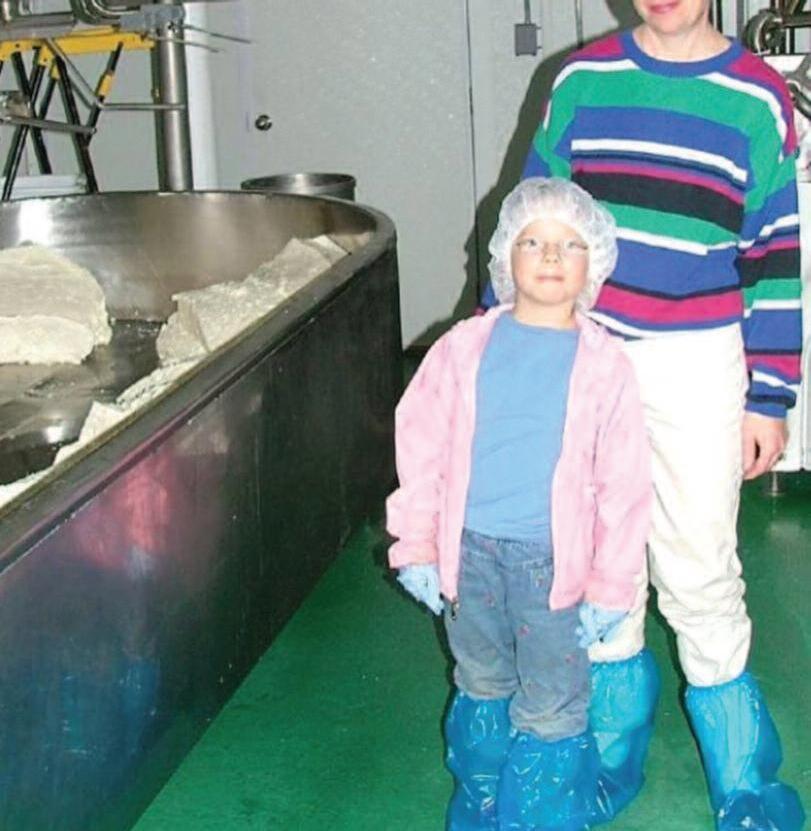
In the national youth development program 4-H, Crave fondly remembers helping younger members with their fair projects and giving many a cow a bath and walking them up to tour attendees to meet and pet
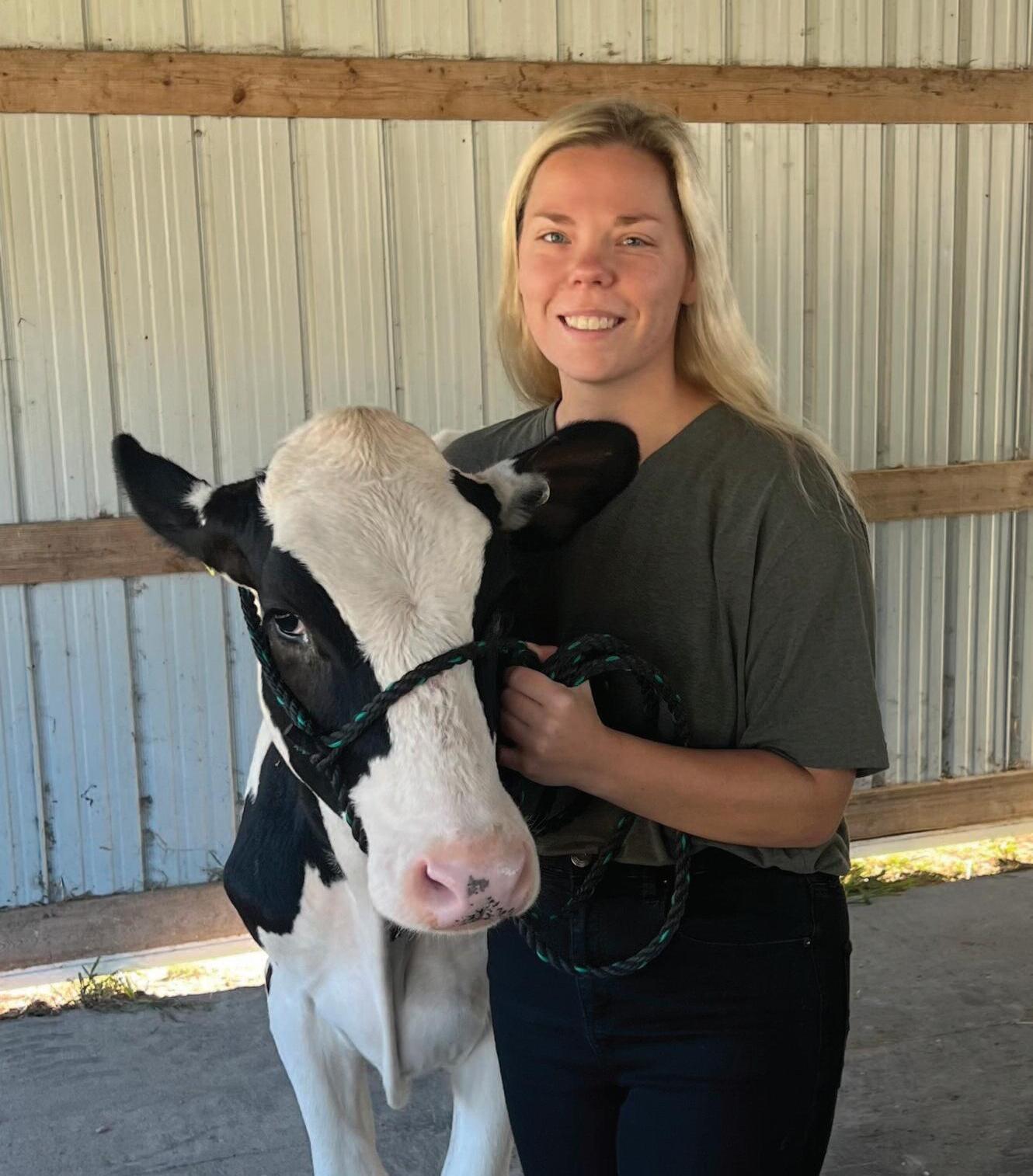
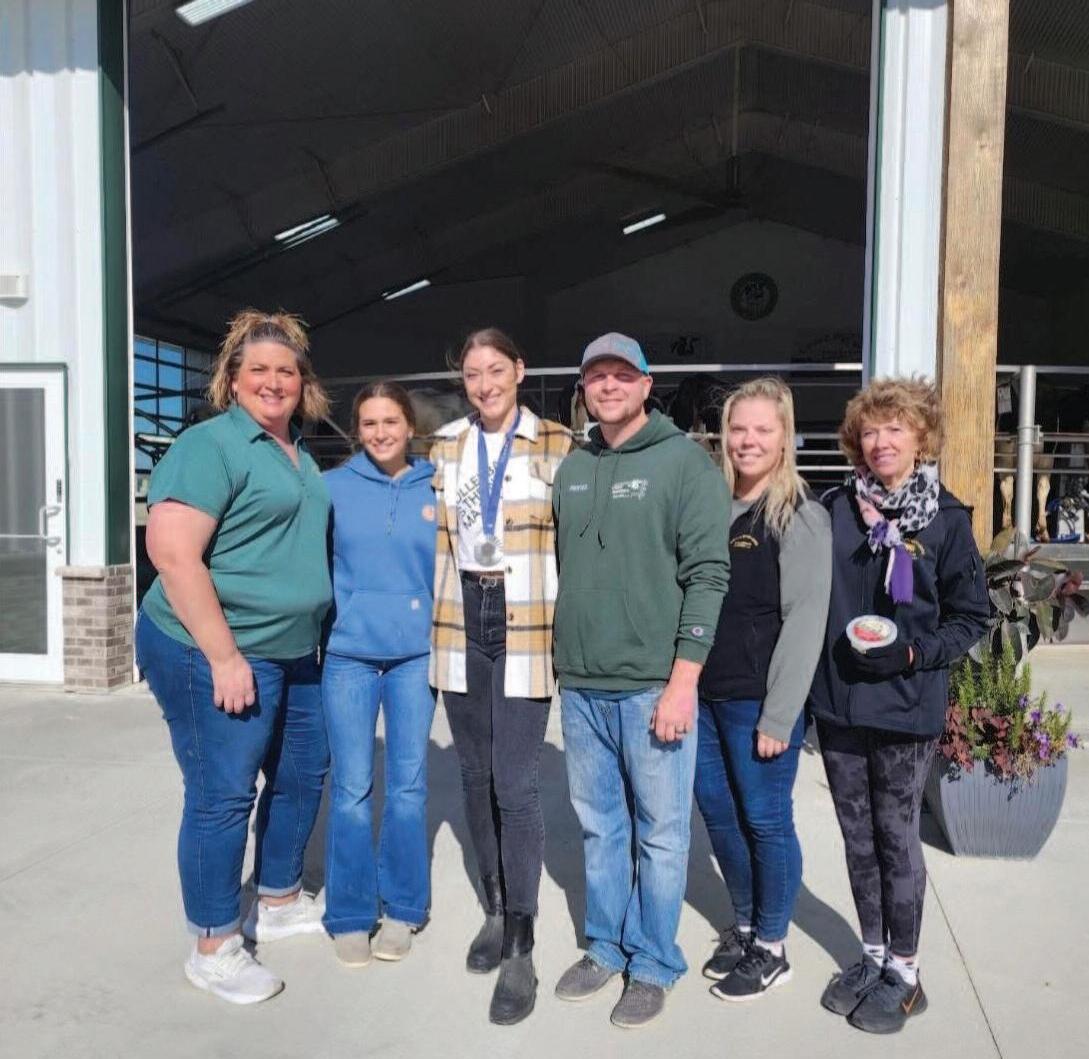
The Crave family has spent years planning for the eventual retirement of co-founders George and Debbie Crave Crave Brothers Farmstead Cheese was founded in 2002 by the Crave family to extend their second-generation dair y farming roots into value-added cheesemaking The business includes Crave’s uncles and cousins in addition to her immediate family
Since then, the company has become known for its award-winning cheeses and its strong culture of care for its animals, land, employees and customers
“As part of the second generation now joining the owner partnership, Roseanne brings a passion for storytelling, relationship-building and continuing the Crave family legacy,” the company said in announcing her new position on the ownership team “She has helped shape the company ’ s marketing strategy, built lasting connections with retail partners and supported team initiatives that reflect Crave Brothers’ values of sustainability, innovation and people first ”
“Roseanne brings energy, vision, and a deep respect for the values that define who we are, ” said Managing Partner Mark Crave “Her voice at the owner partnership table will help guide our future while staying true to our long-standing commitment to our people, family business and Wisconsin dairy community ”
Over its first 25 years in business, Crave Brothers Farmstead Cheese continues to innovate to not only make its beloved line of cheeses, but to improve operations – such as regenerative farming for crops carefully mixed for its herds to an anaerobic digestion system that generates enough electricity to power the farm, cheese factor y and area homes
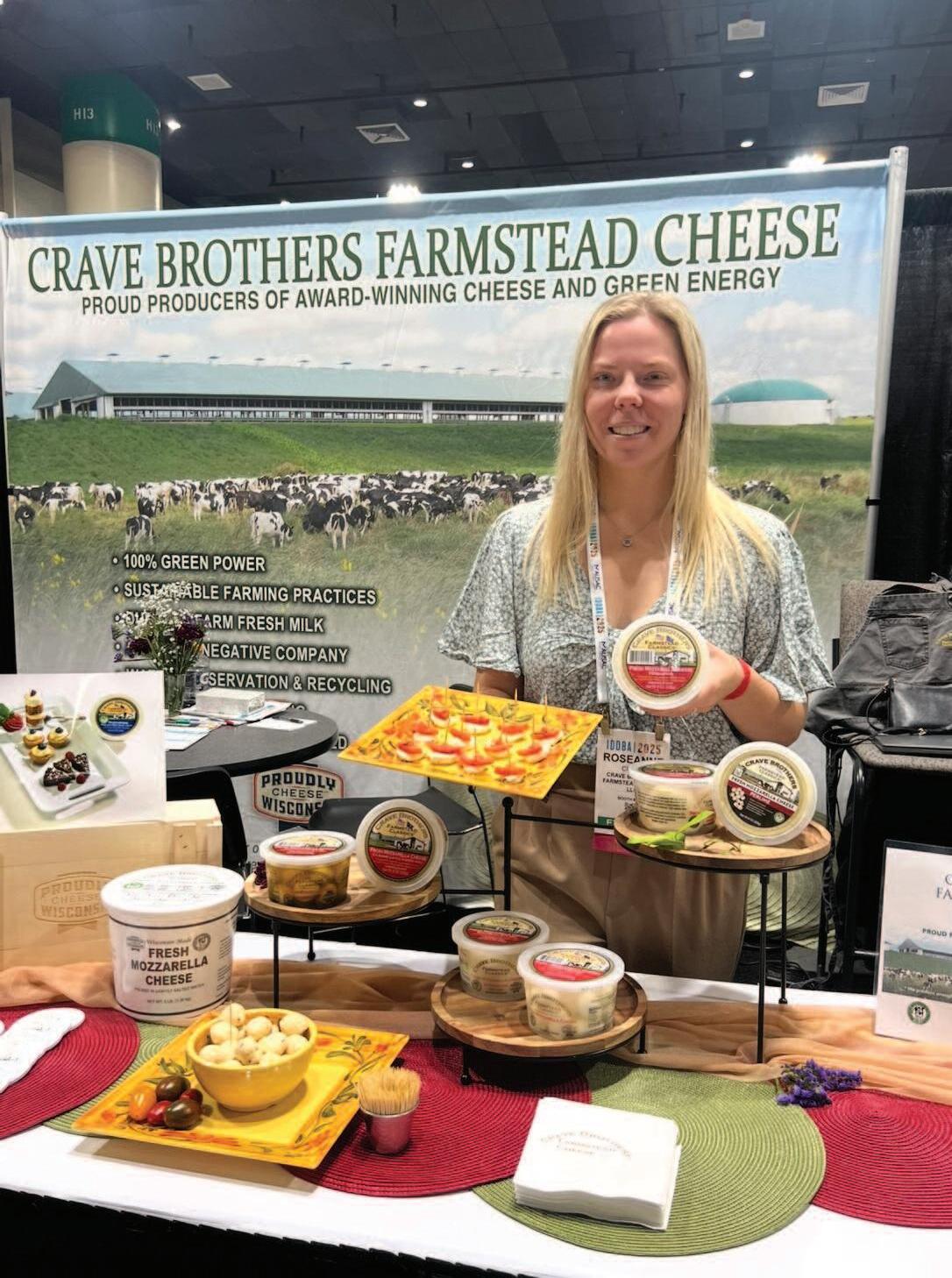
This year, Crave Brothers has new packaging for its fresh mozzarella and mascarpone
“It’s similar to the old ones, but richer,” she said “They look elegant
“The mozzarella cup label has the cheese shapes because not ever yone knows what fresh mozzarella is, so now they have a better

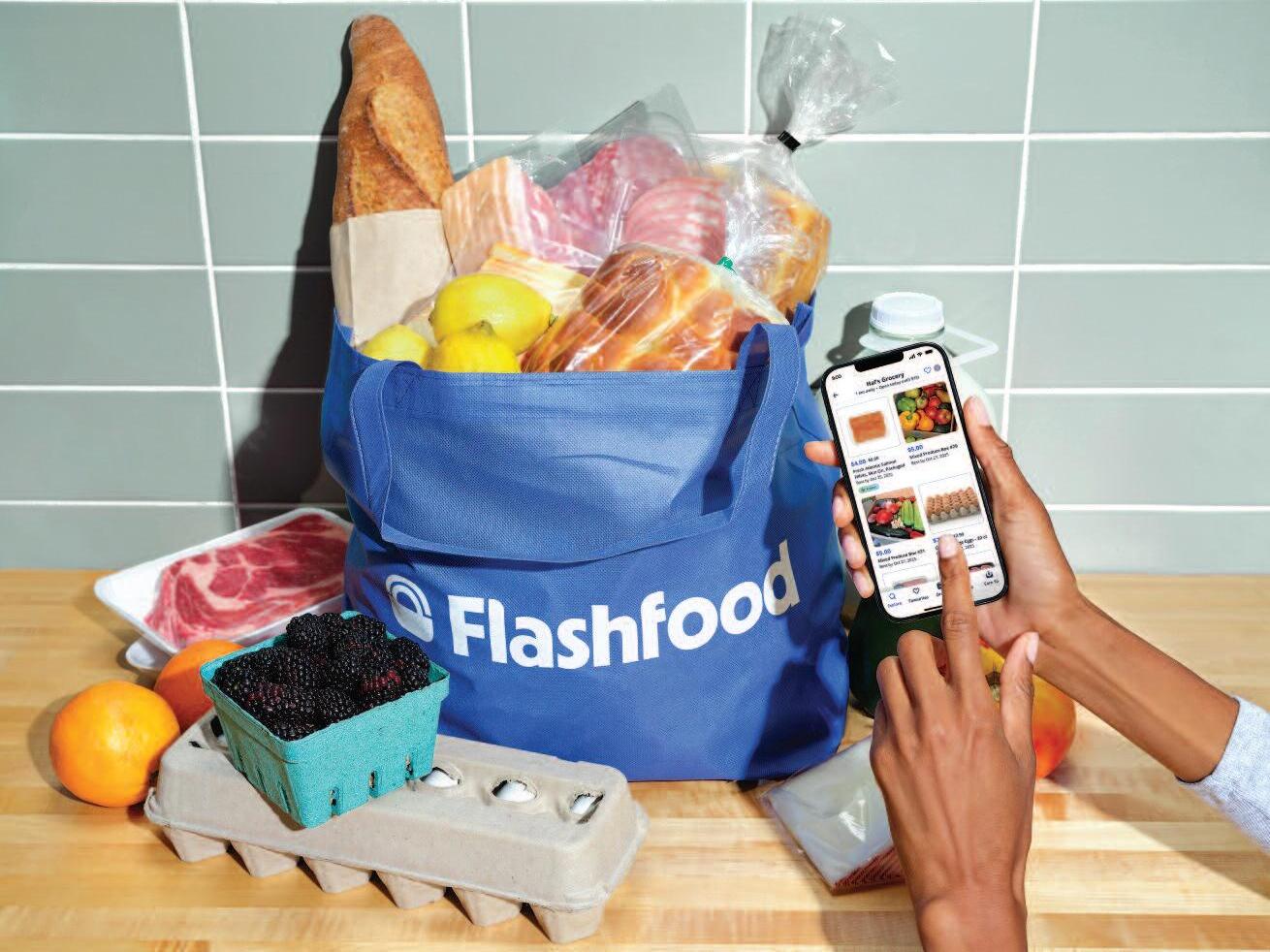
As Americans grapple with rising grocery bills and growing financial strain, new data from affordable grocery app Flashfood reveals a sharp increase in demand for affordable fresh staples like beef and eggs –underscoring the mounting affordability crisis playing out nationwide Today, protein makes up more than 30 percent of all sales on Flashfood’s app
Comparing Flashfood data from January 2025 to January 2026:
• Purchases of ground beef on Flashfood increased by 28 percent
• Beef ’ s share of total sales on Flashfood increased by 47 percent
• Purchases of eggs surged 90 percent
According to the U S Department of Agriculture, grocery prices are projected to rise another 2 3% in 2026 Ground beef prices are already up 15 5 percent compared to a year ago, and the Bureau of Labor Statistics reports that meat, poultry, fish and egg prices increased 2 2 percent over the past 12 months Meanwhile, housing, health care and transportation costs continue to consume a large share of household budgets, putting even more pressure on consumers
Grocer y app Flashfood partners with major retailers in North America to sell surplus fresh food at affordable prices, helping families stretch their budgets fur-
ther while keeping good food out of landfills The company ’ s internal data reflects how consumers are responding to the rising prices
“These numbers tell a clear stor y about the durability of our food system and how innovation can facilitate getting people the food they need,” said Jordan Schenck,
CEO “The most nutritious food is more expensive today than it was a year ago, but retailers still need to offer it at affordable prices without burning their margins
“The solution lies in addressing waste Perfectly good food is going to landfills instead of dinner tables, which hurts consumers and burns revenue for the grocers at the same time ”
and being asked to ser ve more families than ever before The emergency food system is simply not built to support the levels of food insecurity that shoppers are
bana-Champaign shows that Flashfood is having a measurable impact on food insecurity in the communities it serves
A dissertation exploring the role of technology on the food supply chain found that, on average, one Flashfood store reduces a county-level food insecurity rate by 0 090 percentage points, translating to approximately 860 people per county – or an estimated 146,000 people across all counties where Flashfood operates
facing today, and uncertainty about government aid to fund these programs put additional pressure on an already strained system
At the same time, food pantries across the country are reporting record demand
Early research out of Gies College of Business at the University of Illinois Ur-
This complements the role that food banks and other emergency food assistance programs play Families can rely on food banks for canned and nonperishable pantry staples, while using Flashfood to affordably source fresh produce, meat and dairy that would other wise go to waste at the retail level
As grocery prices continue to rise and affordability concerns dominate conversations from the kitchen table to the Sunday night talk show, Flashfood’s data suggests a growing segment of Americans are rethinking how and where they shop to prioritize finding value on fresh food GN
Does maintaining a clean, safe, healthy facility have to become more difficult when cooking oil is involved? Absolutely not OilCare is the only fully customizable solution that has an answer for every cooking oil pain point while helping with profitability, consistent food quality and efficient disposal
OilCare builds a suite of cooking oil related ser vices around Smart Oil Management equipment from Frontline International Ser vices offered include fresh oil delivery, used cooking oil collections, high-value rebates for used oil and data management and analytics that inform smarter decision-making
With Frontline International cooking oil management equipment at the center of every ser vice, clean, efficient and safe oil handling is built in The result is cleaner facilities and cleaner exterior areas – from parking lots and loading zones to dumpster pads And with end-to-end automation, employees spend far less time around hot oil and greasy conditions, reducing slip and burn risk
OilCare handles all things fats, oils, and grease for facility managers Always get the
best price for fresh, jug-in-box oil – higherquality and better-tasting than bulk – with no unlimited contracts Used oil ser vices include free pickup by national recyclers and full rebate money each month Data collection options that are right-sized to each business, from small standalone kitchens to high-volume enterprises and multi-units
It’s a complete bundle of oil management ser vices, fully customizable to user preference and need GN
Japan’s Natto Cooperative Society Federation has reorganized the functionality of its official website, www natto-power com, which launched in March 2023 to introduce Japan’s traditional health food, natto Since its launch, the site has expanded its content offerings and reorganized natto’s functional benefits under a new global concept: “Japanese Power Food: The Secret of Natto ”

its functionality, scientific evidence and culinary cultural background for the U S market The goal is to shift perceptions of natto from an unknown food to a power food worth trying
This update redefines natto as a “Japanese superfood,” systematically presenting
The redesigned site visually highlights natto’s functionality, including its signature sticky texture as umami and fermentationderived substances It presents research findings on vitamin K2, polyamine functionality and the survival characteristics of natto bacteria Natto is positioned not merely as a traditional food, but as a next-
generation functional food, with illustrations and diagrams for intuitive understanding
The content showcases how high-quali t y U S
Video content now features news-style anchor introductions that concisely present themes and highlights, making it easy for first-time
videos include foreigners’ natto challenge videos, natto-based global cuisine adaptations and expert-led content on health benefits A unified introduction optimizes viewing flow and strengthens brand consistency
Natto is gaining recognition as a food with real potential in the health-conscious market This initiative lays the groundwork for converting interest into understanding and sustained engagement The Natto Federation will continue promoting natto’s scientific value, cultural background and potential applications, elevating this traditional Japanese food to a globally recognized superfood GN

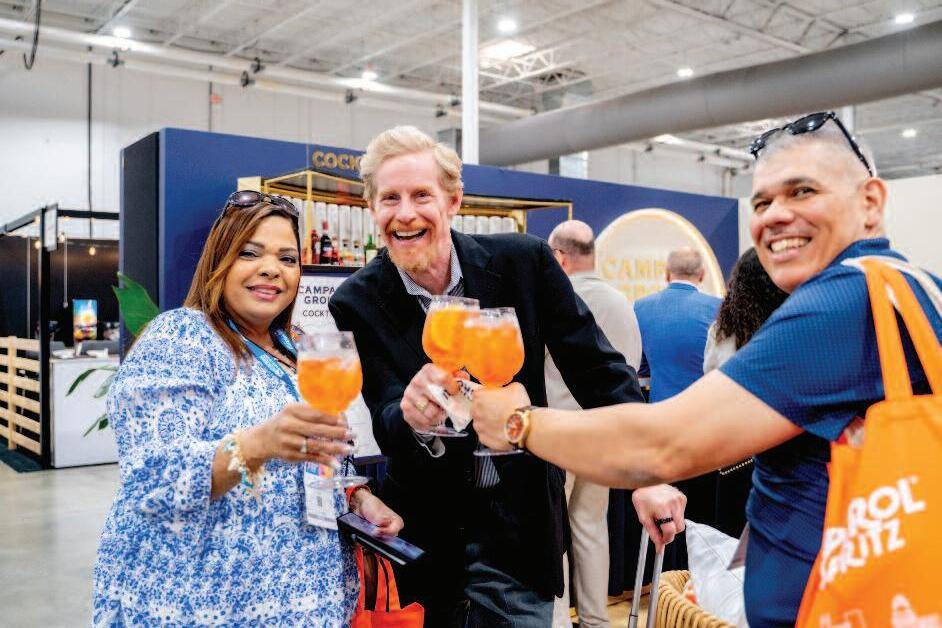
Cruise dining is entering a new era of creativity and guest engagement, according to the newly released Cruise Food & Beverage Trends Report 2026 from F&B@Sea, the cruise industr y ’ s dedicated food and beverage event held during the annual Seatrade Cruise Global, the world’s largest cruise industry gathering
Based on insights from 163 buyers and suppliers from across the cruise F&B and hospitality industr y (responsible for food and beverage, entertainment, supply chain, distribution, foodservice and more), the report provides a holistic view of industry practices and challenges, highlighting how cruise lines are evolving their food and beverage strategies to reflect changing traveler expectations around experience, wellness, and destination-driven dining
the cruise experience,” said Chiara Giorgi, global brand & event director for Seatrade Cruise Global “From immersive restaurants to destination-driven menus, cruise lines are reimagining how dining can connect guests more deeply to both the journey and the places they visit ”
Cruise lines are increasingly using food


Two key priorities emerged with equal importance: experiential dining and global flavor exploration, both capturing the highest levels of industr y attention in the survey results, highlighting immersive dining experiences and destinationdriven menus as two key trends shaping the future of cruise F&B, followed closely by the significance of health, wellness and sustainability considerations, on future cruise F&B strategy
A strong emphasis from respondents was placed on immersive or themed dining experiences, with 80 percent pointing to experiential dining as a key trend, signaling a shift toward restaurants that blend cuisine with entertainment and stor ytelling
“Food and beverage is becoming one of the most creative and competitive areas of
and drink to deepen connections with the destinations on their itineraries, with global and local flavors representing one of the most significant priorities for cruise shipping professionals
Over 54 percent of respondents who highlighted the precedence of global and local flavors identified destination-inspired cuisine as the top menu strategy Similarly, more than 81 percent of those in the innovative mixology category highlighted des-
tination-inspired cocktails and beverages as a key trend shaping onboard beverage programs
Together, these findings underscore how cruise lines are using culinar y programming to reflect the cultures and flavors of
the regions their ships visit
Health-conscious travel trends are increasingly shaping the future of cruise F&B, with health, wellness and sustainable choices emerging as the most important beverage category Over 57 percent of respondents highlighted health-focused and functional beverages – options enriched with ingredients such as probiotics, vitamins or fiber that provide benefits beyond basic nutrition, such as boosting immunity or enhancing energy – as a top priority
Twenty-seven percent pointed to the rising demand for low- or no-alcohol drinks, another substantial focus area These trends reflect cruise lines’ efforts to cater to the growing demand for wellness-oriented and health-conscious options at sea Technology is also playing a growing role in how cruise dining programs operate behind the scenes Guest-experience technologies led innovation investments, with nearly 47 percent of respondents emphasizing that personalized dining, driven by data analytics, will play a pivotal role in the future of cruise restaurants (up yearover-year from 41 67 percent) This innovation enables cruise lines to customize menus and experiences based on guest preferences
At the same time, predictive inventor y management dominates operational technology priorities, identified by more than 54 percent of respondents in this category as a key innovation, helping operators better manage complex global supply chains while maintaining menu quality and consistency
Despite rapid innovation, the report highlights the continued operational challenges facing cruise food and beverage teams
Nearly 55 percent of respondents to these category questions identified supply chain disruptions and delivery uncertainties as the industry’s most significant operational challenge This marks an increase from just under 40 percent last year, highlighting the growing complexity of sourcing ingredients and products for global cruise fleets GN
Seafood processors in Maryland and Illinois will receive a total of $2 million to create new and better markets for the processing of invasive, wild-caught catfish through the Meat and Poultry Processing Expansion Program This directly enhances Agriculture Secretary Brooke Rollins initiative by strengthening the capacity of existing processors to help reduce the population of invasive wild-caught catfish, especially in Chesapeake Bay, where they are causing significant ecological damage
BSA Seafood LLC has received $1 million through the Meat and Poultr y Processing Expansion Program to purchase and install equipment at its facility located
in Denton, Md This expansion site will be used to purchase invasive blue catfish from regional watermen, process them and produce value-added products that are distributed directly to restaurants, retailers, cash-and-carry, and institutions
This will increase annual removals of invasive blue catfish from area water ways, resulting in over 500,000 pounds processed annually, creating 20 full-time jobs and retaining 15
Chippin, Inc headquartered in Virginia, has received $1 million through the Meat and Poultr y Processing Expansion Program to complete facility upgrades and purchase specialized equipment for its pro-
cessing facility located in Valmeyer, Ill The upgrades will help Chippin bring catfish to scale in the pet food market
Chippin is a primary fish processor and pet food brand headquartered in Arlington, Va
The Meat and Poultr y Processing Expansion Program provides grants to help eligible independent processors to expand their capacity USDA Rural Development designed the program to encourage competition and sustainable growth in the U S meat processing sector and to help improve supply chain resiliency
Eligible applicants include for‐profit and nonprofit entities, producer-owned cooperatives and corporations, certified
benefit corporations, tribes and tribal entities, state or local government entities, and other business types (regardless of legal structure) Private entities must be independently owned and operated, and all entities must be domestically owned Under this round of Meat and Poultr y Processing Expansion Program funding, the applicants’ facilities must be engaged in processing invasive wild-caught catfish and physically located and operating in the United States or its territories
USDA has awarded more than $200 million to independent businesses under the program These projects have created thousands of jobs across the country GN
Apex Order Pickup Solutions, a pioneer in smart food order pickup technology, has expanded to the casino market with installations at two eateries at the Yaamava’ Resort & Casino at San Manuel in Highland, Calif Resort customers placing mobile orders at either venue now receive a text as soon as their food is ready, enabling them to enjoy gaming and other resort activities while their food is prepared and retrieve their orders from secure digital lockers in less than 10 seconds with a unique access code
Yaamava’ Resort & Casino initially deployed a 23-compartment Apex locker system at The Grove Express, one of its quick-ser vice food outlets That installation was so effective in streamlining the food service operation and enhancing the
guest experience that the resort included a second 23-compartment locker system in the design of bEATS, a new fast-casual venue with live music that opened late last year
The two locker solutions have handled more than 80,000 orders to date, averaging over 150 daily orders at peak times Integration with the resort’s mobile ordering system via the ApexIQ technology platform ensures each order is correctly matched, tracked, and placed into the appropriate compartment
The same Apex back-end platform also equips resort staff with valuable metrics about issues ranging from order completion and pickup times to average order dwell times and peak dayparts, furnishing insights that can be used to help optimize
operations
“Ever ything we do here is about elevating the guest experience, and Apex’s selfser ve locker solutions align perfectly with that mission,” said Christopher Fava, vice president, food and beverage at Yaamava’
alerting guests when their order is ready
pickup process but also enable guests to maximize their time playing the slots or
choice ”
Apex smart locker technology has helped shorten lines for mobile food orders, reduce mix-ups on open takeout shelves and increase efficiency for foodservice operations ranging from restaurants
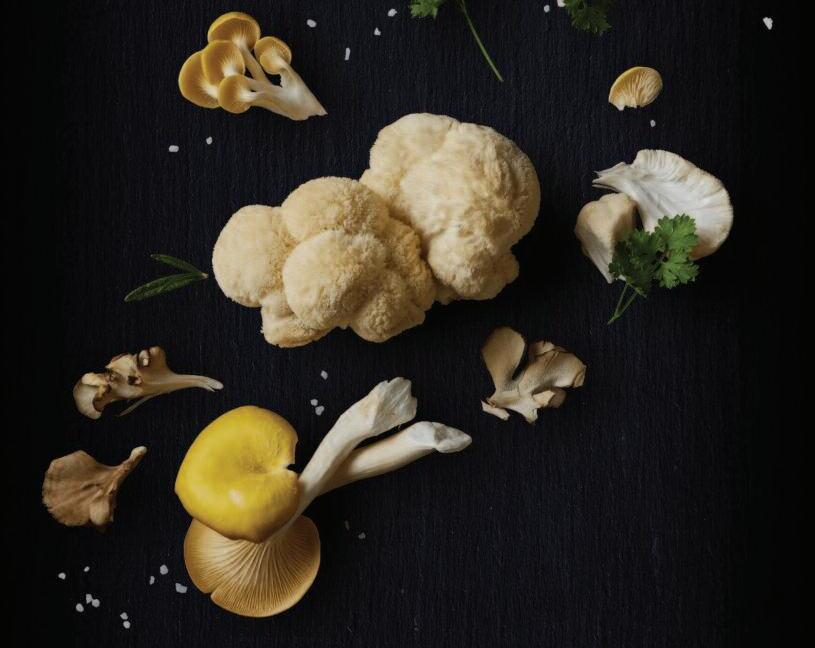
Caputo & Guest, an organic specialty mushroom grower with more than 40 years of cultivation expertise, has officially launched its new direct-to-consumer ecommerce platform at www caputoandguest com, bringing premium, chef-quality exotic mushrooms directly to home kitchens across 42 states
With decades of experience supplying specialty mushrooms to retail and foodservice partners, Caputo & Guest is now offering fresh 2-, 4- and 6-pound packs with free shipping, making it easier than ever for chefs and culinary enthusiasts to access high-quality, gourmet mushrooms previously found primarily in restaurants, farmer’s markets, and specialty retailers
The farm to table lineup includes:
• Organic Shiitake Mushrooms
• Organic King Oyster Mushrooms
• Organic Lion’s Mane Mushrooms
• Organic Pearl Oyster Mushrooms
• Organic Maitake Mushrooms
• Organic Prime Steakhouse Mix
• Organic Wood-Fired Pizza Mix
Each variety is grown in the United States on the company ’ s 100 percent vertically integrated farm with the precision, consistency and care that have defined the Caputo & Guest name for over four decades
“Bringing our organic mushrooms directly to consumers is a natural evolution for our brand,” said Jeffer y D Guest Jr , general manager “For more than 40 years, we ’ ve focused on growing exceptional specialty mushrooms This launch allows us to deliver that same quality and craftsman-
ship straight to customers’ doors ”
Due to the perishable nature of fresh mushrooms and temperature considerations during transit, shipping is available to 42 states, allowing for two- to three-day fresh pack and delivery from the farm in Kennett Square, Pa The company prioritizes product integrity and freshness to ensure customers receive mushrooms in optimal condition
to college campuses, entertainment venues and office buildings since 2015 The Yaamava ’ Resort & Casino systems are the first live deployments in the casino market, with others in the buildout stage
“Casinos are an ideal market for our automated pickup solutions because they eliminate wait times around food pickup, keeping guests engaged in gaming and entertainment instead of standing in line,” said Ashley McNamara, vice president, global marketing, at Apex “The leadership team at Yaamava’ was among the first in the casino space to recognize the operational and guest-experience benefits, and their vision is paying off by helping deliver the high level of customer ser vice that is critical to building satisfaction and revenue ” GN
rect-to-consumer sales, making its full specialty lineup available for home deliver y for the first time
Caputo & Guest mushrooms have long been available through respected national and regional retail partners, including Trader Joe’s, Albertsons, Price Chopper, Rouses Markets, United Supermarkets, Market Street, The Fresh Market and Giant Foods The launch of caputoandguest com marks the company ’ s expansion into di-
The new ecommerce platform offers shiitake, king oyster, lion’s mane, pearl oyster and maitake mushrooms, along with chef ’ s blends such as the Prime Steakhouse Mix and Wood-Fired Pizza Mix – all 100 percent USDA Certified Organic and sustainably grown on a proprietar y blend of sawdust and grains that has defined the company for more than 40 years GN
Canopy, the trusted provider of remote monitoring and management software for connected products, today released a report examining the technology breakdowns that hinder the quick-ser vice restaurant industry
“Fast Food Fault Lines: Canopy’s 2026 Restaurant Tech Report” sur veyed over 500 QSR employees from fast food titans including McDonald’s, Chick-fil-A and Domino’s Pizza, and found that workers deal with chronic technology failures across drive-thru, self-ser vice kiosks and mobile-ordering systems These malfunctions frustrate customers and hurt sales: 48 percent of employees have seen customers abandon orders due to tech outages
QSRs face growing pressure to increase revenue, reduce manual work, and improve the customer experience via new
technologies Yet Canopy’s research shows that technology often falls short of this promise: nearly one in five QSR employees experience tech issues at least weekly and 31 percent report having to pause their regular job duties at least once a week to address them
Canopy’s Fast Food Fault Lines report highlights the scale and operational impact of technology breakdowns
Key findings include:
• Drive-thrus are a key point of technology failure in QSRs Drive-thrus’ constant flow of traffic exposes them to unique challenges, most commonly payment processing issues (38 percent) and timer errors mistiming or missing cars (28 percent) Nearly half (49 percent) of drivethru employees said they’re required to use workarounds, such as writing orders on
paper or asking customers to pull forward early, once a week or more
• Self-service kiosks are a double-edged sword When they work correctly, kiosks let customers help themselves When they malfunction, employees get pulled away from core tasks to troubleshoot More than half (56 percent) of QSR employees are asked to fix kiosks daily or weekly
• Mobile orders are the toughest to manage Nearly one-third (30 percent) of QSR employees experience mobile order problems ever y week, with mistimed or missing orders causing the biggest headache and potentially indicating backend integration issues
Why this matters: QSR technology failures lead to lost revenue, employee burnout and bad customer experiences Drive-thrus, self-ser vice kiosks, and mo-
bile ordering platforms benefit from the service optimization and advanced AI applications made possible through remote monitoring and management capabilities
“The fast food and fast casual restaurant of 2026 depends on dozens of technologies working together to give employees leverage and customers an easy, consistent experience,” said Steve Latham, CEO of Canopy “Whether in the drive-thru, ordering at the kiosk, or using the mobile app, our research shows that tech problems cascade into disruptions in ser vice, taking employees away from their jobs while frustrating customers enough that they leave QSR operators need holistic visibility into the health and performance of every component in the restaurant tech stack plus an automated way to fix issues should they occur, if not before ” GN
In a defining moment for one of America’s most enduring family-owned specialty food businesses, Schuman Cheese announced a comprehensive leadership evolution that reflects both the strength of its foundation and the deliberate planning behind its future direction The transition marks the advancement of fourth-generation leadership across the organization, reinforcing the company ’ s commitment to continuity, innovation and responsible stewardship as the Schuman family carries the business for ward for future generations
Allison Schuman has been appointed chief executive officer as Neal Schuman becomes chairman, where he will continue to provide strategic oversight and guidance as the company enters its next chapter of growth and generational continuity
Ian Schuman will lead the company ’ s global expansion as president of global, overseeing all import and export operations within the Global Business Unit and advancing Schuman Cheese’s international growth strategy His role reflects the scale of the company ’ s global partnerships and positions the organization for continued growth across key markets
K
tives and Lake Countr y Dair y operations
work, he will also guide Banyan Seed, the
ects and long-term initiatives designed to expand opportunity across the broader Schuman enterprise
More than 81 years after its founding, Schuman Cheese now enters a new chapter led collectively by Allison, Ian and Keith Schuman Together, the fourth generation is advancing the company ’ s leadership with a shared commitment to stability, thoughtful growth and the stewardship required to carry the family business into its fifth generation and beyond
“I have had the privilege of learning this business from the inside out,” said Allison Schuman “This transition is about honoring the foundation that has carried us for more than eight decades while building the leadership structure and governance needed for the future
generations ahead ” Allison’s transition from chief revenue officer to CEO reflects years of strategic
said Ian Schuman “As we look ahead, we remain committed to deepening those partnerships while responsibly expanding our international footprint ”

“Innovation has always been part of our story, but it has never come at the expense of craft,” Keith Schuman added “Whether strengthening our domestic capabilities or advancing our plant-based portfolio, the focus remains on growing the category in a way that reflects our values
“Banyan Seed provides a platform to support strategic initiatives that help expand the reach of the broader Schuman organization ”
“Our strength has always been our unity as a family and our shared commitment to protecting what makes this company special while responsibly growing it for the
leadership guiding the company ’ s commercial growth, while Ian and Keith continue to strengthen the pillars that underpin Schuman Cheese’s domestic and international presence The leadership structure reinforces a unified, for ward-looking vision designed to scale responsibly across core and emerging segments
“Our relationships with global producers have been built across generations,”
ciples that shaped the company ’
past will
As the Schuman family steps into this next chapter, the mission remains unchanged: uphold craftsmanship, protect integrity and steward the business in a way that allows it to grow stronger for generations to come GN
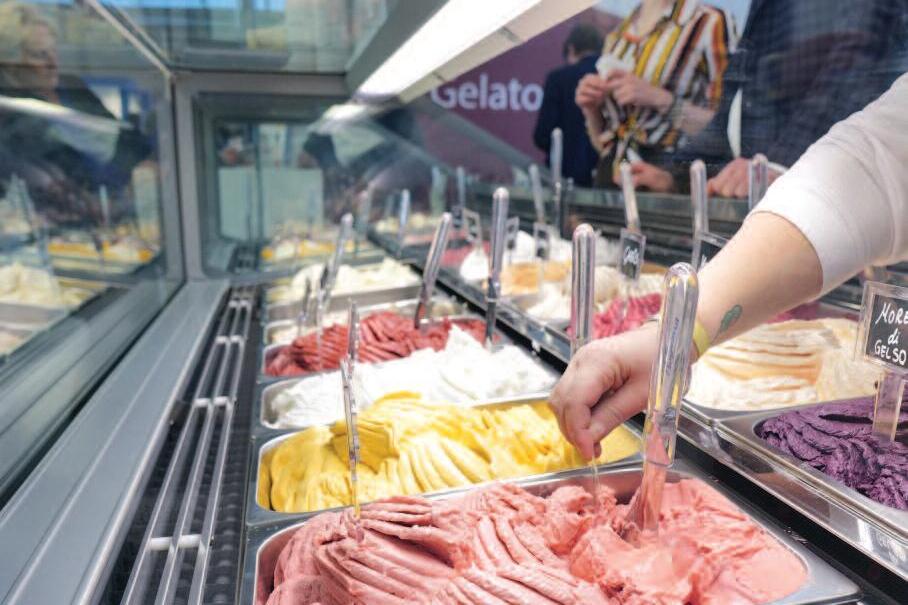
Italian Exhibition Group has launched another overseas initiative After last Januar y ’ s edition of SIGEP World at Rimini Expo Center – which, with 1,300 exhibiting brands and operators from 160 countries, confirmed the event’s role as an international foodser vice excellence hub –the leading event for the gelato, pastr y & chocolate, coffee, bakery and pizza sectors took a further step in its global development In March at the Las Vegas Convention Center, SIGEP World made its debut on the U S market with the first edition of SIGEP USA as part of the International Pizza Expo organized by Emerald
“SIGEP USA is an important step in the international development of the SIGEP brand,” said Ilaria Cicero, recently nominated as IEG’s global exhibition director,

The Rimini edition highlighted a growth in internationalization, strengthening SIGEP World’s role as a global platform for top foodservice supply chains and companies amid innovation and new business models
“With the U S debut,” says IEG CEO Corrado Peraboni, “SIGEP’s international network consolidates its presence in the most dynamic global foodservice markets In 2026, we will also be holding SIGEP China with the roadshow scheduled for spring in Shanghai, and SIGEP Asia from 15 to 17 July in Singapore
“The Las Vegas event completes a strategy that covers some of the most strategic areas for the sector’s global development ”
Food & Beverage Division “After the success of Rimini and the consolidation of the shows in Asia, our debut in the United States will allow us to build an increasingly integrated network between companies, professionals and markets, and consequently enhance the excellence of gelato, pastry, coffee and chocolate supply chains around the world ”
The U S market is one of the main drivers of global foodservice as well as one of the most important areas for the diffusion of Italian gastronomic culture The Italian restaurant sector is worth over $112 billion, with 45,000 businesses involved, confirming the strong demand for products and formats linked to Italian cuisine, per IBISWorld - Italian Restaurants Indus-
try Report
In this scenario, the premium desserts segment inspired by Italian tradition is also growing In 2024, the United States’ gelato market amounted to approximately $3 6 billion and could exceed $5 billion by 2033, supported by the growing demand for artisanal and authentic desserts linked to Italian food tradition per Grand View Research – U S Gelato Market Report
Consumer interest in premium, natural and high-quality products is, in fact, driving the growing popularity of artisanal gelato and its presence on foodser vice and catering menus, according to Grand View Research A high-profit product and a tool that can expand the offer and increase margins
SIGEP USA has been organized in collaboration with ITA, the Italian Trade Agency, a strategic partner in the international promotion of Italian companies and the enhancement of Made-in-Italy excellence around the world Another strategic partnership involves Emerald, the organizer of the International Pizza Expo, the most important event for pizza in the United States Hence, a dialogue between two internationally renowned symbolic products of Italian cuisine – pizza and artisanal gelato, which will result in new business opportunities for the entire sec-
tor The central role of gelato in the SIGEP world was confirmed by the Gelato Festival World Masters Grand Finale, which took place during the International Pizza Expo This international competition features the world’s best gelato makers SIGEP, together with Carpigiani, is a strategic partner in the project, which saw the conclusion of the international selections at SIGEP World in Rimini, where the Italian final took place
SIGEP USA featured leading companies
in the gelato, pastry, chocolate and coffee sectors, some of which were joining the SIGEP Club for the first time, a recognition for brands that participate in multiple SIGEP network events around the world The club consists of companies that share an international vision and contribute to building value at all the SIGEP brand’s venues GN
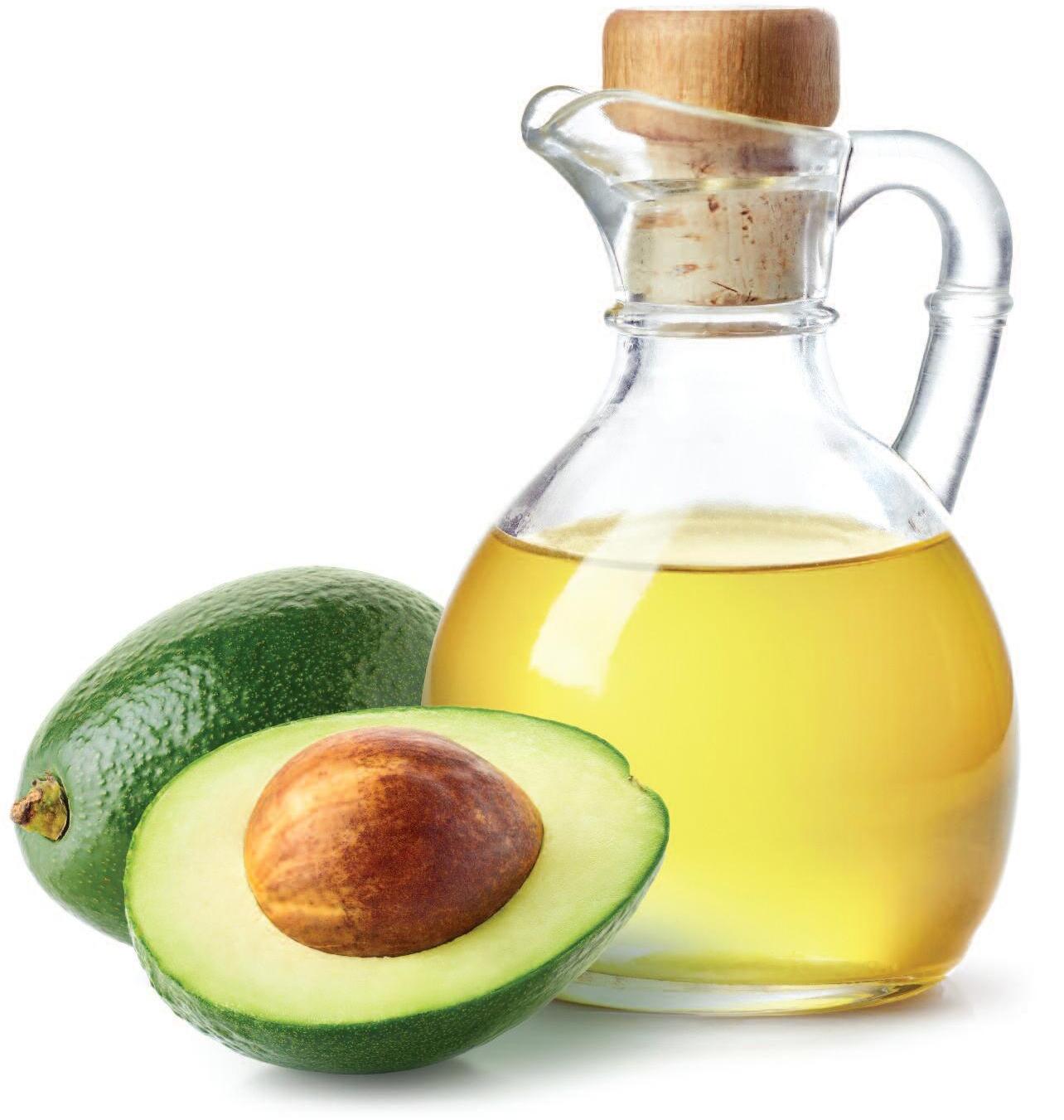
Future Market Insights projects the global avocado oil market is entering a period of sustained expansion as food producers, specialty retailers and natural product manufacturers increasingly prioritize premium nutritional oils The market is valued at $410 8 million in 2026 and is projected to reach $734 2 million by 2036, growing at a compound annual growth rate of 6 percent over the forecast period
The growth reflects a broader shift toward healthier cooking solutions, natural ingredients and premium product positioning across food systems and personal care formulations As consumers increasingly evaluate nutritional value, ingredient transparency and cooking performance, avocado oil is emerging as a preferred solution across multiple industries
Food manufacturers, specialty retailers and product developers are integrating avocado oil into product portfolios to meet demand for clean-label ingredients that combine nutritional benefits, functional performance and premium culinary positioning The oil’s natural composition –rich in monounsaturated fats, antioxidants and vitamin E – continues to strengthen its role in health-focused product innovation
Across global food markets, avocado oil is increasingly recognized as a versatile ingredient that meets modern cooking expectations Its high smoke point makes it suitable for fr ying, grilling, roasting and baking, while its nutritional profile aligns with dietary preferences focused on heart health and natural nutrition
As global consumers adopt keto, paleo, plant-based and health-oriented lifestyles, avocado oil has transitioned from a niche gourmet product to a strategic ingredient within premium food portfolios
Retail shelves, specialty food platforms and restaurant kitchens are progressively integrating avocado oil to enhance cooking quality, menu innovation, and nutritional positioning At the same time, cosmetic and personal care manufacturers are expanding its use in skincare formulations due to its moisturizing and antioxidant properties
Among product categories, extra virgin avocado oil represents the most influential segment, accounting for 46 8 percent of global demand Its dominance is supported by natural extraction methods, minimal processing and strong alignment with clean-label product positioning
Extra virgin oil continues to support premium culinary applications where nutritional preservation and authentic flavor profiles are essential Cold-pressing technologies further enhance quality and nutritional retention, reinforcing consumer trust in natural ingredient solutions
Other product categories maintain complementary roles across the market landscape:
• Virgin oil supports cost-effective cooking applications with moderate processing requirements
• Pure or refined oil addresses largescale commercial food manufacturing needs where neutral flavor profiles and extended shelf stability are required
• Blended oils offer formulation flexibility for diversified culinary and processing applications
The diversity types allows manu ers and food system integrate avocado across varied cul nar y workflows and production environments
The food and beverage segment remains the leading application area, representing 53 2 percent of global market demand
Culinar y versatili and nutritional hancement contin position avocado an attractive ingred cooking oils, marinades and food products
Restaurants, providers and com increasingly adop strengthen menu p to consumer dem preparation metho
Beyond food app also witnessing ris
• Personal care avocado oil provi antioxidant bene haircare formulatio
• Pharmaceutic mulations, where bioactive compou product developm
This diversified sures long-term growth potential across multiple industrial ecosystems
Commercial food manufacturers continue to integrate avocado oil into processed food products to strengthen clean-label positioning and nutritional appeal

Retail consumers represent the largest end-user segment, accounting for 59 4 percent of global demand The growth reflects the increasing importance of health-conscious purchasing decisions in household kitchens
Consumers are actively exploring alternatives to conventional cooking oils, prioritizing products that deliver nutritional value, natural sourcing and culinar y performance As a result, avocado oil is gaining traction across premium grocery channels, health food retailers and online platforms
Foodser vice establishments also contribute significantly to market expansion Professional chefs and restaurant operators value avocado oil for its stability under high temperatures and its ability to enhance flavor without overpow-
• Germany records 5 8 percent compound annual growth rate, reflecting strong organic food initiatives and healthfocused consumer behavior
The United States remains a wth market, supby strong coner awareness of trition and widepread adoption of clean-label food products
The U S avocado oil market is projected to expand at a compound annual growth rate of 6 4 percent during the orecast period H e a l t h - f o c u s e d sumers increasseek cooking h in monounsatats and antioxiwhile food s leverage avodevelop premium t meet modern tions istribution netemium food culce avocado oil’s restaurants and n environments
markets are also ectory of the aved to grow at a rowth
• Brazil is projected to expand at 6 2 percent compound annual growth rate, supported by domestic avocado production and expanding natural ingredient markets
• France follows with 5 7 percent compound annual growth rate, supported by the country’s established gourmet cooking culture and premium culinary traditions
Together, these markets highlight the global shift toward high-quality, natural cooking ingredients across diverse culinary cultures
While demand continues to rise, the industr y must navigate several operational considerations Cold-press extraction infrastructure, organic certification complia n
require ongoing investment from producers
Seasonal avocado availability and proximity to production regions also influence supply chain planning and cost structures Premium positioning can affect pricing accessibility in cost-sensitive markets, making efficient processing and distribution strategies essential for long-term scalability
At the same time, advancements in ext r a c t i o n t e
global distribution networks are helping producers expand access to premium
markets
The global avocado oil industry remains moderately competitive, with companies differentiating through organic certification capabilities, extraction technologies and specialized product offerings
Companies continue to focus on coldpressing innovations, premium retail partnerships and scalable production models to meet growing global demand for natural cooking oil solutions
With strong demand emerging from both mature and rapidly evolving markets, the avocado oil industry is expected to remain a focal point for innovation and premium product development throughout the next decade GN
eat He demonstrates that healthy eating requires no sacrifice, showing how even burgers and fries belong on the plate when made with grass-fed beef and quality oils
Key topics covered in “Original Food” include:
Equal parts culinary storytelling and practical guide, the book weaves more than 20 recipes together with Zakarian’s best tips, techniques, and strategies for transforming the way readers shop, cook, and
Continued from PAGE 1
cent in December, according to Circana data analyzed by 210 Analytics Fresh seafood prices, meanwhile, increased 1 6 percent, driven by a 3 3 percent rise in finfish prices
“Across species, shellfish and finfish prices averaged more than $10 a pound in December This is up substantially from the full-year average, reflecting inflation acceleration in the latter half of the year after mostly stable prices throughout 2024 and the first half of 2025
“Inflation also hit frozen and shelf-stable seafood in the second half of the year, ” Roerink wrote in a monthly Circana Merck Seafood Update
As the United States tries to find its way out of a years-long battle with inflation, it has landed in a “two-speed economy, ” said Christian Lawrence, the head of Americas and energy markets research at Dutch financial services firm Rabobank
While lower-income groups continue to struggle and medium-income groups seek value, upper-income groups are in a “fantastic position and premium products are likely to perform well,” Lawrence said at the 2026 GSMC, adding that 49 percent of all consumption was attributed to the top 10 percent of earning households in 2025
“It’s a K-shaped economy, so the barbell of premium versus value is key for companies selling to consumers, ” Lawrence said
As a result, seafood companies may see the greatest success by targeting different consumer segments with a range of products Roerink said suppliers and retailers can still grow sales in 2026 by appealing to shoppers seeking value, health-focused options and alternatives to dining out
With more Americans opting to eat at home, value-added seafood products and bulk offerings are gaining traction among consumers looking for convenience and value According to FMI Marketing Manager Madeline Torrisi, the rise in value-added products is creating new opportunities for retailers to reach specific demographics, especially younger shoppers
“Gen Z has clear preferences for how retailers can make meal preparation easier The top request is for better value food options, with 49 percent of Gen Z citing this as their biggest need
“They also appreciate partially prepared meal solutions (27 percent), more readyto-eat meals (30 percent), and weekly meal plans (31 percent) Gen Z wants conven-
• Selecting whole, local ingredients and preparing them close to their natural state for maximum nutrition
• Step-by-step meal planning strategies that make healthy cooking accessible for
ience, but they also want to be involved in the process, seeking out options that blend ease with the opportunity to cook and customize,” Torrisi said
Beyond value-added products, health and wellness trends emphasizing high-protein diets represent another growth opportunity for the seafood industry Even amid economic uncertainty, consumers sharply increased meat purchases last year, especially beef, as Gen Z and millennials focused on higher-protein diets and healthier food options, Roerink said
“Meat has moved from villain to vital because of the protein story,” she said
While seafood did not benefit from the protein craze as much as beef, Roerink said it still enjoyed “mild” growth in both sales and volume in 2025
In the coming years, however, seafood sales are expected to gain more momentum
A recent report from LLC Attorney projects that seafood sales growth will outpace every other food segment throughout the end of the decade, with estimates of 13 8 percent annual growth and $11 4 billion in sales by 2029
That outlook was echoed in the National Restaurant Association’s 2026
What’s Hot Culinary Forecast, which said that protein – including seafood – will be a “clear winner” in 2026
“Diners of all kinds are exploring the physical benefits of protein-rich diets, including muscle building and weight management,” the NRA said
Contributing to the protein trend is the popularization of Glucagon-like Peptide-1 medications for weight loss According to a recent RAND report, nearly 12 percent of Americans have tried a GLP-1 drug, with that number expected to grow in 2026 as the first U S Food and Drug Administration approved GLP-1 pill becomes available
People taking GLP-1 medications are often advised to follow diets rich in fiber, whole grains and lean proteins, creating an opportunity for increased seafood sales
“We are seeing people cut back specifically on salty snacks, liquor, soda, drinks and bakery snacks and (focus) more on protein and fiber, so we expect food companies and also restaurants to cater to this audience that is growing,” Rabobank Consumer Foods Analyst JP Frossard told Reuters
The recent focus on protein was only reinforced with the release of the new Dietary Guidelines for Americans earlier this year, in which the U S Department of Health & Human Ser vices recommends “high-quality, nutrient-dense protein foods in every meal ”
The updated guidelines recognize
busy families
• Chef-tested cooking techniques from Michelin-starred kitchens adapted for home cooks at every skill level
• Research-based insights connecting food choices to chronic illness prevention and longevity, without restrictive dieting
• A practical framework for understanding how quality ingredients become the foundation for vibrant health and sustained daily energy
seafood as a wholefood source of essential nutrients and encourage Americans to prioritize omega-3 fatty acids The guidance recommends consuming at least three servings of seafood per week, with higher intake suggested based on individual protein and caloric needs
The guidelines also note that Americans consume far less omega-3s than recommended, averaging about 110 milligrams per day of EPA and DHA compared to the advised 500 milligrams For pregnant women, the guidance emphasizes that nutrients found in seafood – including protein, choline, vitamin B12, and omega-3 DHA –are critical for fetal brain development
As value and health-and-wellness trends take center stage in 2026, seafood products offering affordable pricing, bulk options, health bona fides, and easy preparation –while maintaining quality and food safety – are well positioned for success, particularly in the frozen and value-added categories However, for the frozen segment to achieve maximum nutritional value while keeping costs down, continued innovation and the adoption of cost-effective technologies will be crucial
To optimize quality, efficiency and affordability, seafood companies are increasingly turning to Linde’s CO2 snow production and dispensing technology, which applies CO2 snow directly to seafood, where it rapidly removes heat as the snow sublimates
“Carbon dioxide cooling delivers fast, reliable temperature control at any point in the production process, cooling more quickly than cold air and without the mess of water ice, while helping processors protect product quality, texture, and nutritional value,” Michael Johnson, associate director of national business development for food and beverage at Linde, said Linde’s snow dispensing equipment features a range of snow horn configurations that deliver CO2 in a controlled ribbon or stream
“Adjustable flow rates, flexible horn positioning, and optional attachments allow for precise snow placement, ensuring consistent, uniform particle production,” Johnson added
Linde’s box snowing system, for example, automatically dispenses a predetermined amount of CO2 snow into prepackaged shipping cartons During an adjustable cycle time, each carton enters the machine, receives the precise CO₂ snow disposition, and is discharged, all without any operator involvement
An exhaust system with an enclosed
“Original Food” offers a practical roadmap for families ready to reject ultraprocessed foods and embrace whole ingredients as the foundation for an active, positive lifestyle The book arrives at a pivotal cultural moment, as growing awareness of the links between diet and chronic illness and heightened interest in longevity and preventive health have consumers looking for lasting dietary change – not the latest fad
cabinet located at the bottom of the machine then captures and removes residual CO2 vapor from the work environment
According to Linde, the box snowing system is easily integrated into existing production lines, with a streamlined operating system and a design that simplifies cleaning and ongoing maintenance
“The box snowing system has been shown to increase hourly production rate and reduce snow loss outside of the carton,” Johnson said “Quick chilling with CO2 also reduces drip loss resulting in increased yield ”
Alongside stand-alone machines, Linde’s patented snow horn technology can be easily mounted on an existing piece of equipment or packaging line and custom sized
“We focused on making the systems highly customizable because we know how effective the technology is and wanted to give processors maximum flexibility in how they integrate it into their operations,” Johnson said
Compared to alternative freezing and cooling methods, Linde says its Accu-Chill CO2 snow dispensing technology delivers superior product quality while also improving efficiency and cost effectiveness
“We understand that floor space in a food plant is precious, and oftentimes limited,” Johnson said “For that reason, each unique shape and size of Linde snow horns were designed with space and labor savings in mind ”
To save space, the CO2 for Linde’s devices is stored in an external vessel, which is replenished as needed The liquid CO2 is delivered through a jacketed pipeline directly to the point of use inside the processing plant, where Linde’s snow horns convert it into snow at temperatures of around minus 109°F
In contrast, traditional cooling methods such as water ice or dry ice pellets need onsite storage bins and manual handling, often requiring workers to transport and even hand-shovel ice or pellets onto products
“Applying CO2 snow through a direct pipeline eliminates these labor-intensive steps while improving efficiency,” Johnson said “It also reduces sanitation risks by removing the need for ice and pellet storage bins and shovels ”
According to the company, Linde’s snow production and dispensing technology is the result of years of research conducted at its food technology center near Chicago In addition to its top-of-the-line systems, Linde also offers extensive customer support through on-site layout planning, installation, startup and ongoing evaluations GN
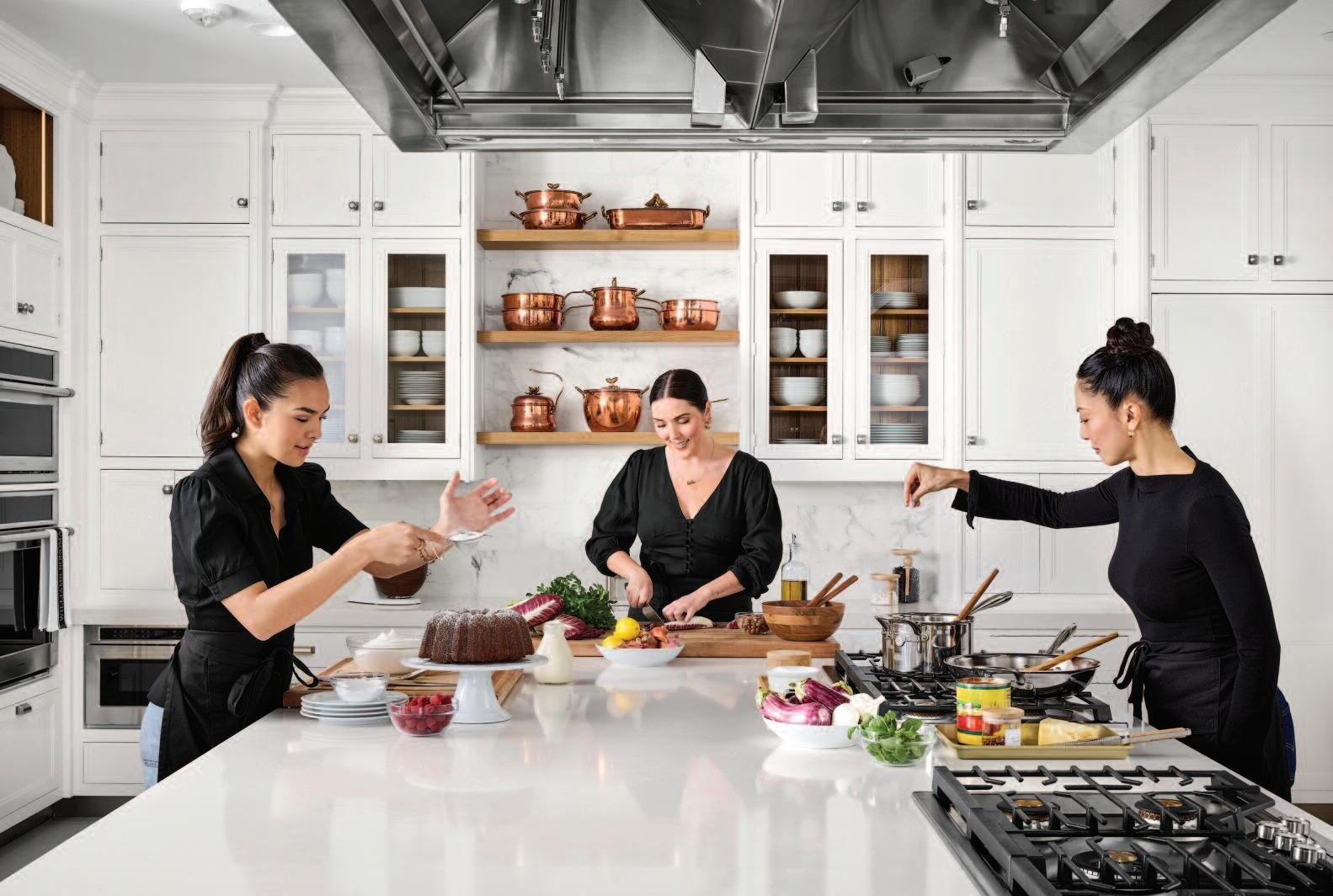
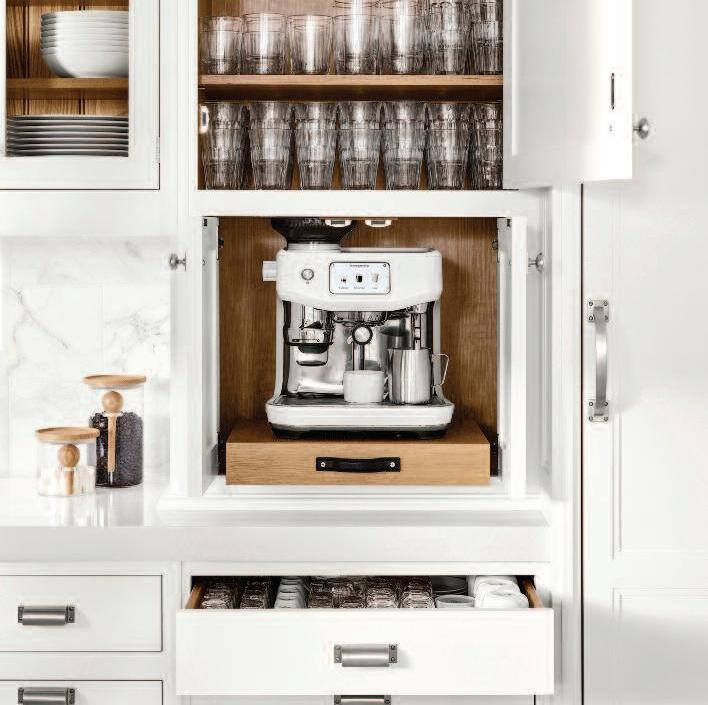
Williams Sonoma has revealed the brand’s newly renovated Williams Sonoma Test Kitchen, a state-of-the-art culinary hub designed to fuel product innovation and ser ve as a collaborative space for the brand’s culinary team, chefs and creators to create content designed to inspire customers and culinary enthusiasts
Located at the company ’ s headquarters in San Francisco, the reimagined Test Kitchen reflects Williams Sonoma’s continued commitment to culinar y leadership and innovation The redesigned space features expanded cooking stations and premium kitchen appliances with dedicated spaces designed to help facilitate the brand’s recipe development, product testing and content creation
For decades, the Williams Sonoma Test Kitchen has ser ved as a center for the brand’s culinar y innovation and product curation as the space is used daily for recipe development, product testing, cookbook writing and product creation In 2025, the Williams Sonoma Culinary Team developed more than 300 original recipes and tested over 1,200 products in the Williams Sonoma Test Kitchen
The newly renovated space builds on the brand’s tradition of developing and testing both recipes and products while supporting a new generation of digital storytelling, culinar y education and product innovation
“Just as the kitchen is the heart of the home, the Williams Sonoma Test Kitchen is the heart of our company, ” said Williams Sonoma President Felix Carbullido “This renovation reinforces our commitment to helping customers cook with confidence, knowing that every product we offer has been rigorously tested and perfected by our culinary team
“We look forward to using this space to inspire new ideas, drive innovation and deepen our connection with our customers and the culinary community ”
To design the new Test Kitchen, Williams Sonoma enlisted the help of renowned kitchen designer and cabinet maker Christopher Peacock Peacock’s expertise and design insights helped refine the Test Kitchen’s functionality and his bespoke cabinetr y and signature hardware have elevated the space, resulting in a kitchen that is both highly functional and distinctly Williams Sonoma
The Made-In-America Christopher Peacock cabinetr y installed in the new Williams Sonoma Test Kitchen reflects a shared commitment to craftsmanship and enduring design while supporting the demanding workflow of a professional culinary team
The newly renovated Williams Sonoma Test Kitchen also now features state-of-theart appliances from Monogram, which bring unparalleled performance, timeless beauty and detailed craftsmanship to every zone of the kitchen This includes 12 Monogram wall ovens packed with the latest in cooking innovation, three built-in cooktops as well as multiple refrigeration appliances from traditional refrigerators and freezers to wine columns and undercounter drawer solutions
The kitchen is further enhanced by the addition of Monogram’s new luxury Premium Fully Integrated Panel-Ready dishwasher, designed with advanced cleaning performance and a refined aesthetic that complements the space ’ s design
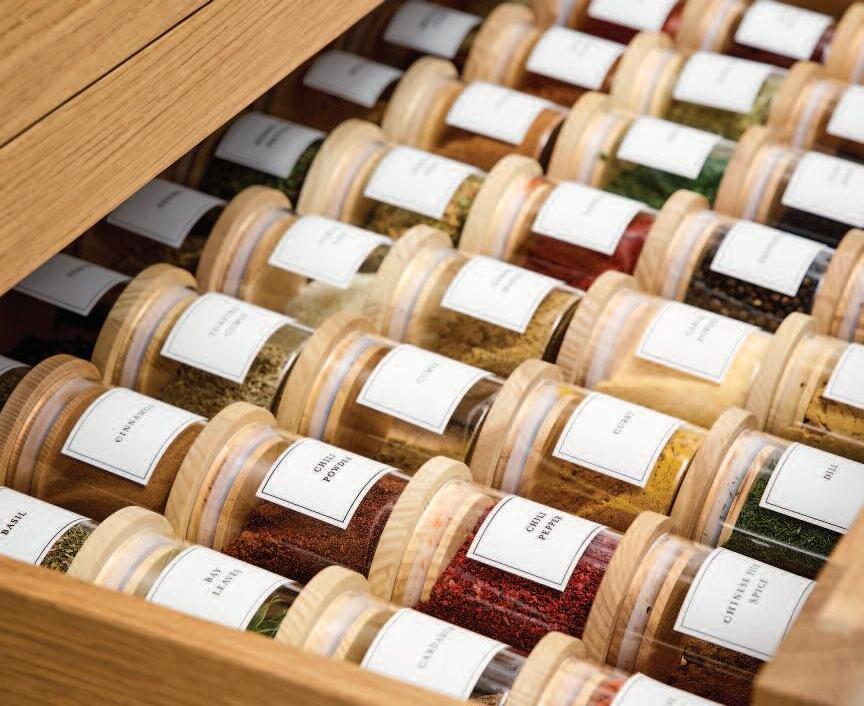
Williams Sonoma Hold Everything collection to keep essential tools organized and within reach, ensuring the space functions seamlessly for recipe development and content production
The redesigned kitchen will support a wide range of Williams Sonoma initiatives, including cookbook development, product launches, chef collaborations, digital cook-
ing classes and culinary content across the brand’s growing digital platforms With expanded production capabilities, the Test Kitchen will also ser ve as a dynamic stage for Williams Sonoma’s culinary community – hosting visiting chefs, cookbook authors, food personalities and brand partners who bring fresh ideas and inspiration to home cooks everywhere GN
neutral Dekton Aeris that withstand con-
Additionally, the new kitchen utilizes thoughtful storage solutions from the
America’s food and agriculture industries remain a cornerstone of the U S economy, generating more than $10 4 trillion in economic value – representing nearly 20 percent of the national economy, according to the 10th annual Feeding the Economy report This marks an increase of nearly $894 billion year-over-year, reflecting growth across the agricultural value chain amid ongoing inflation pressures, a challenging farm economy, and an uncertain global trade environment
Thirty-five food and agriculture groups released the report, a farm-to-fork study of the entire agricultural supply chain The report analyzes the direct and indirect eco-
nomic contributions of one of America’s most essential industries to U S jobs, wages, economic output, and taxes
The 2026 report confirms that America’s food and agriculture sector supports 48 7 million jobs across the economy, including nearly 24 3 million direct jobs in farming, manufacturing, processing, distribution, retail and foodservice Direct employment has grown 6 5 percent over the past decade, though job growth slowed in the past year as parts of the sector faced economic pressures
Additional highlights from the report include:
• Food and agriculture generate more
than $3 trillion in wages for American workers, with wages rising 4 percent yearover-year and 13 percent over the past decade, generally outpacing inflation
• Food manufacturing remains the largest manufacturing sector in the U S , employing more than 2 28 million workers
• U S food and agriculture exports totaled more than $177 3 billion, though exports declined by roughly $5 4 billion year-over-year, underscoring the importance of maintaining strong trade agreements and expanding market access for American producers
• The food and agriculture sector gen-
erates $1 35 trillion in tax revenue for federal, state, and local governments, a 7 percent increase year-over-year
Export values have also declined in inflation-adjusted terms over the past decade, further demonstrating the importance of stable and reliable international markets for U S agriculture
BY A.J. FLICK
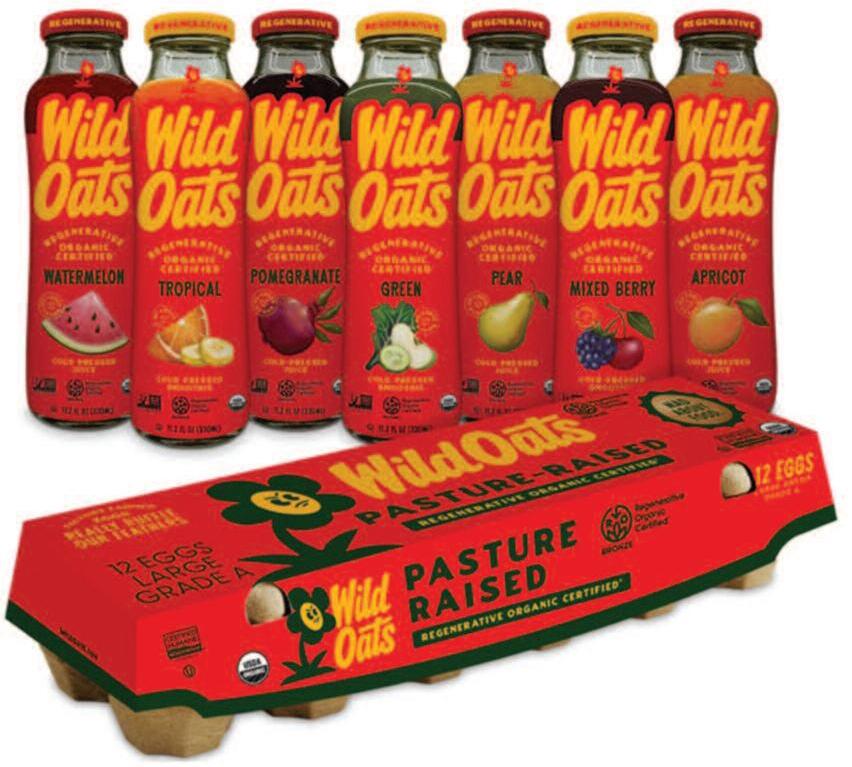
KeHE Distributors has reintroduced Wild Oats as a new consumer packaged goods brand committed to more sustainable and responsible food production The brand is launching with the first and only Regenerative Organic Certified juices and smoothies, as well as pasture-raised ROC eggs and a variety of free-range and pasture-raised organic egg offerings
The ROC program, overseen by the Regenerative Organic Alliance, is the gold standard for regenerative organic agriculture, with rigorous requirements for soil health, animal welfare and humane treatment of workers
Purpose-driven resource protection is more important than ever The United Nations Convention to Combat Desertification estimates that 52 percent of global agricultural land is degraded Additionally, studies have shown that conventional, industrial agriculture contributes nearly 25 percent of the emissions driving the cli-
more regenerative and sustainable options at retail According to ROA, the number of ROC products on-shelf jumped 71 percent from 2023 to 2024, and sales of ROC products totaled more than $200 million over the last year
All Wild Oats products are organic and ROC or as close to certification as possible, following ROA standards Products include:
• Wild Oats Regenerative Organic Juice and Smoothies: The first ROC coldpressed juices and smoothies, these beverages are made from 100% juice, with no added sugar and packaged in glass bottles Flavors include: Pomegranate, Pear, Apricot, Watermelon, Green Smoothie, Mixed Berry Smoothie and Tropical Smoothie/
mate crisis, demonstrating that now is the time to take meaningful action
Wild Oats aims to “ unsus ” the system via radical transparency, calling out what’s wrong in our food system, highlighting what’s right and constantly pursuing better food, better conditions for animals and better lives for farmers Founded as a national grocery chain nearly 40 years ago, Wild Oats pioneered making natural and organic food more accessible Today’s Wild Oats is building on that heritage by inviting consumers back to a community united by a shared vision of food produced more regeneratively and equitably
“We are proud to reignite the spirit of the Wild Oats brand to, once again, propel the food industr y for ward,” said Will Rosenheimer, brand director at Wild Oats “Our goal is to spark a revolution that will be regeneratively cultivated, free range and ethically sourced, and we won’t stop until we reach ever y categor y and aisle in the grocery store ”
Consumers are clearly hungr y for the type of change Wild Oats is championing, as evidenced by increasing demand for
• Wild Oats Eggs: These eggs are sourced from hens that enjoy a 100 percent organic diet and year-round access to roam, forage, perch and bathe outdoors
All products are certified organic and Certified Humane, making them some of the most sustainable and ethical eggs available today Varieties include: Pasture-Raised Regenerative Organic Eggs (12 count), Pasture-Raised Organic Eggs (12 count & 18 count) and Free Range Organic Eggs (12 count)
In addition to bringing new ROC products to grocer y shelves, Wild Oats supports the regenerative organic revolution as a member of ROA’s Allies program As an ROA Ally, Wild Oats joins an impressive cohort of mission-driven brands championing regenerative practices and sourcing
“Through the support of missionminded ROA Allies like Wild Oats, we ’ re able to further prove that agriculture can restore ecosystems, uplift people and nourish the planet,” said Christopher Gergen, CEO at Regenerative Organic Alliance “ROA Allies are crucial to our pursuit of healthier soil, improved animal welfare and economic stability and fairness for farmers, ranchers, and workers around the world ”
While launching with breakfast-focused offerings, Wild Oats plans to capitalize on and further accelerate growing demand for more regeneratively cultivated products by introducing items targeting a variety of dayparts in the coming year
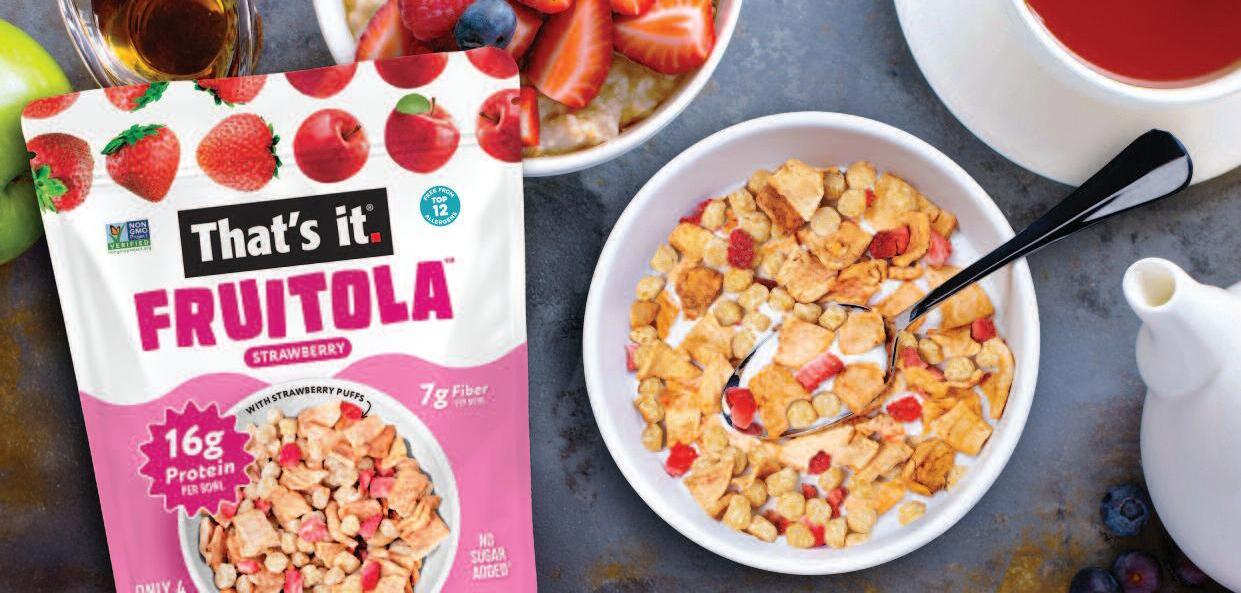
That’s it has launched Strawberry Fruitola
Fruitola Fruit Granola brings a new level of simplicity to the granola category Made with just four ingredients, it contains no added sugar, 7 grams of fiber from fruit and 16 grams of plant-based protein per bowl, offering a clean label option for breakfast, snacking or topping yogurt and smoothie bowls
This launch brings That’s it into a new aisle and expands the brand into a new usage occasion With Fruitola Fruit Granola, the company is applying its fruitfirst, minimal-ingredient approach to a category traditionally defined by oats, added sugar, sweeteners and longer ingredient lists
That’s it debuted Fruitola Fruit Granola earlier at Natural Products Expo West, where early feedback reinforced the product’s alignment with several of the strongest trends shaping the categor y, including protein, fiber, simple ingredients, and no added sugar
“Our mission has always been to help people get more fruit into their daily routines in simple, convenient ways, ” said Dr Lior Lewensztain, founder and CEO “With Fruitola Fruit Granola, we ’ re bringing that same philosophy to a category that has not seen much real disruption There is nothing else quite like it on shelves today ”
two distinct experiences for ALDI customers The Pure variety is crisp, light and naturally hydrating – made from 100 percent organic coconut water with no added sugars or concentrates The Pressed offering combines coconut water with freshly pressed coconut cream, delivering a slightly richer texture and flavor
“ALDI has built a loyal community by offering thoughtfully sourced, high-quality products at an exceptional value,” said Sandy Salzberg, CEO of Real Coco “Their customers have already embraced Real Coco with enthusiasm, so we ’ re excited to bring our products to even more shoppers across the country ”
Sourced from multi-generational family farmers in Vietnam’s Mekong Delta, Real Coco products are bottled at the source and minimally processed to preserve naturally occurring essential electrolytes and
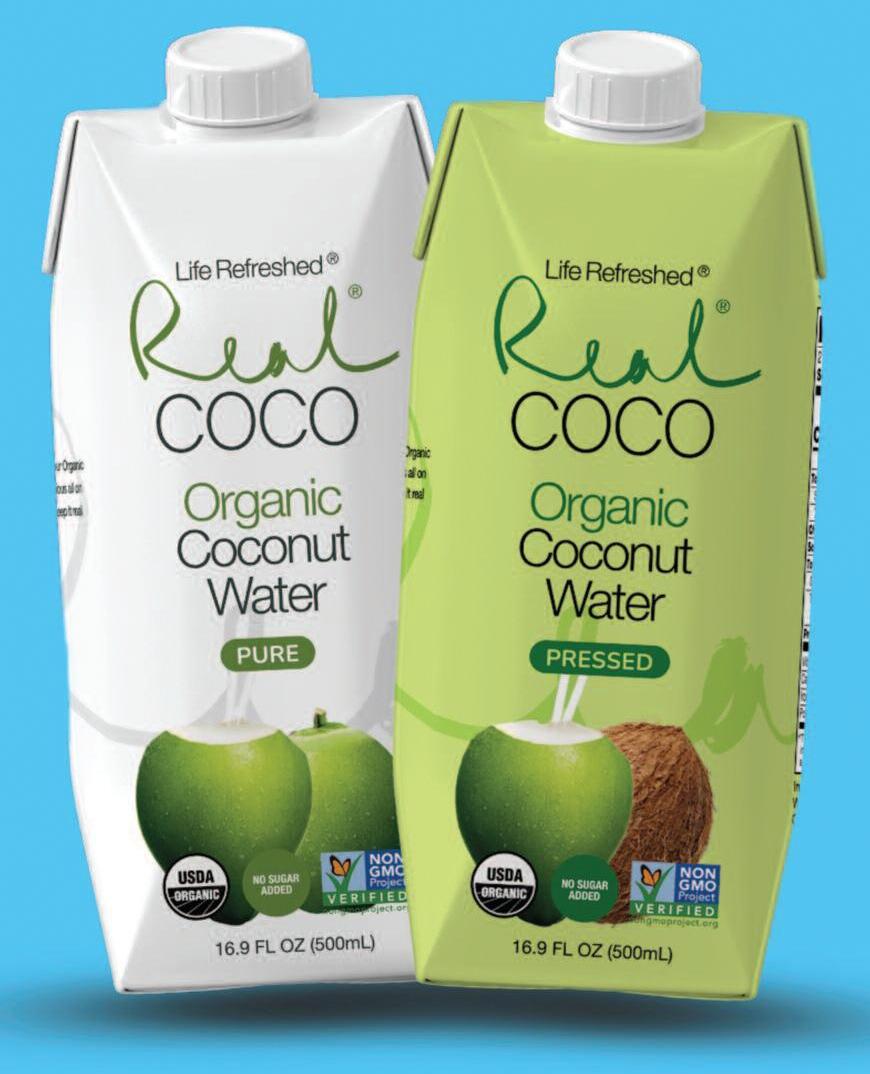
fresh coconut flavor This approach ensures consistency, traceability, and quality – core to the brand’s mission of keeping coconut water simple and real
The Costco launch is the first step in a broader national expansion, with Fruitola Fruit Granola set to roll out at additional retailers this spring
Real Coco has launched nationwide at ALDI The milestone marks Real Coco’s largest retail expansion to date, bringing its signature coconut waters to approximately 2,700 ALDI stores and introducing its signature high-quality, organic plantbased hydration to a broader audience than ever before
Available in front-of-store coolers nationwide and on shelves at select locations, Real Coco’s Organic Pure Coconut Water and Organic Pressed Coconut Water offer
Five words caught my eye and there was no way that I could ignore this email: Balancing Acts Are for Circuses
It was a press release for GreatPlate’s WaveLock 180, “The Plate With a Backbone (and a Cup Holder) ” We’ve all been there: Juggling a plateful of food and a beverage while hoping gravity doesn’t attack
For decades, according to GreatPlate, disposable plates have been engineered for average: “Thin Round One scoop of baked beans away from collapse ” So GreatPlate designed a plate that refuses to fold
The new WaveLock 180 starts with something wildly practical: a built-in holder for your cup or can Because bal-
ancing a soda on the rim of a paper plate has never been a sustainable life strategy
But it doesn’t stop there
WaveLock 180 also feat flip-and-seal system that plate to snap securely ont other, keeping brisket c tained, queso obedient and barbecue sauce where it belongs – on the plate, not the passenger seat
“The idea behind GreatPlate started with a basem full of crushed chips and stained couch cushions” s low, inventor and founder wasn’t the kids It was the
and global flavors, reflecting the company ’ s heritage as a trusted authority for modern chefs and bar-
non-alcoholic beverages
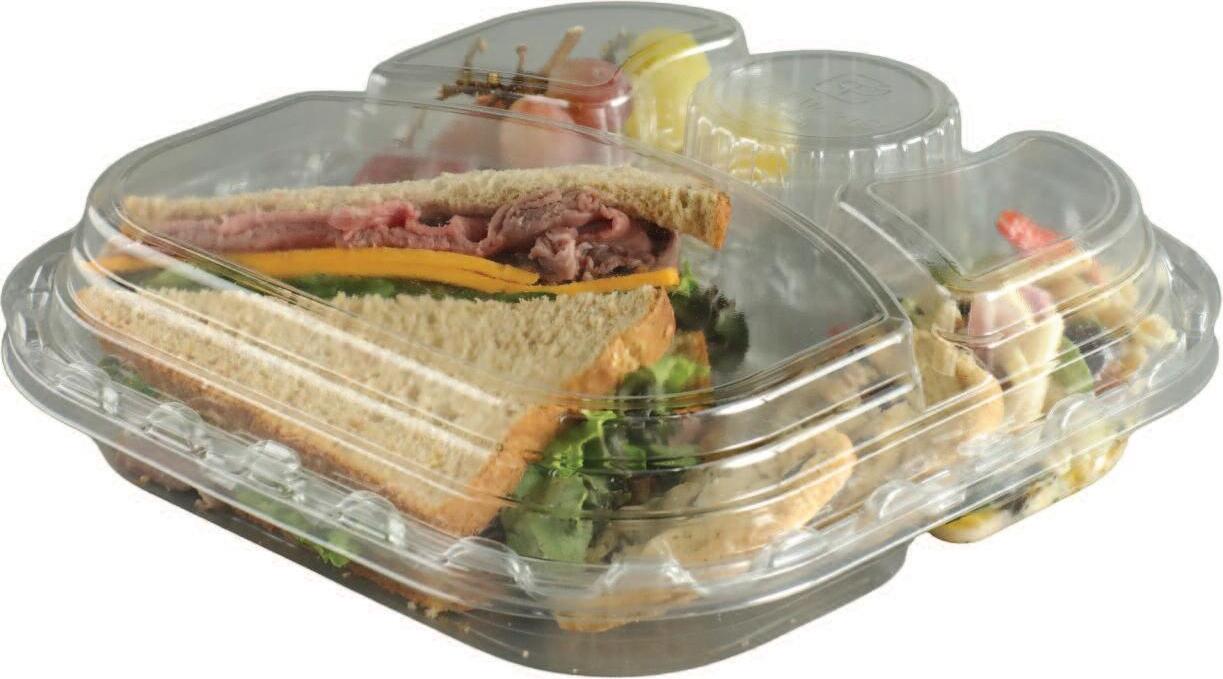
“And when we couldn’t find a better plate – and believe me, we looked everywhere – we designed one One that holds sandwiches, snacks, drinks – all in one hand ”
Made in the USA using recyclable materials, WaveLock 180 delivers visible innovation in a category that’s been coasting on “good enough” since forever, Kellow said
“WaveLock 180 holds the drink Seals the deal And it’s now available for retail distribution ”
For more information, contact Kellow at rick@greatplate net or call 414 303 7944
The Perfect Purée of Napa Valley builds on its legacy as the fruit foundation of modern flavor with the launch of its line of bespoke shelfstable syrups offering the unparalleled quality, flavor and consistency foodservice professionals have come to expect Six culinary-inspired flavors – Plum Gochu, Yuzu Juniper Thyme, Honeysuckle Orange Blossom, Chai Cardamom, Passion Fruit and Blood Orange – offer true-to-fruit flavor in a format curated for full-menu integration
Michele Lex said the syrups represent a strategic evolution for the company
“Syrups represent the next evolution for The Perfect Purée,” Lex said “With the introduction of Tastecraft Freeze-Dried Fruit in 2025, and now shelf-stable syrups and refrigerated Perfect Fruit Foams later this year, we will have a true fruit system for operators that provides a foundation of flavor and a world of possibility for creativity
“And we ’ re only just beginning ”
Kitchen professionals have been overwhelmingly enthusiastic about the new fruit format Aaron Davis, pastr y lead at Chateau Luxe in Phoenix, has been using the syrups in desserts and cocktails
“The bold flavors showcase the versatil-
Chef Laura Lee of Chef L Custom Culinary Experiences in the San Francisco Bay a duck dish with Plum Gochu her menu he Plum Gochu was so intriguing mind immediately flooded with ideas The balance of sweet, tart and heat are perfect and stand up to other strong flavors,” Lee said
Yuzu Juniper Thyme Syrup is erbaceous blend of yuzu juice d with thyme and juniper and ented by a medley of citrus culinary-inspired profile delivers rus intensity balanced by delicate herbal aromatics, giving chefs and bartenders precision and clarity across sweet and savory formats
Executive Pastry Chef Ashutosh Gairola of La Quinta Resort & Club in La Quinta, Calif , is using Yuzu Juniper Thyme Syrup in citrus tarts, sorbets and plated desserts
“Working with these new syrups allowed me to layer flavors with precision and clarity The purity and balance deliver vibrant citrus brightness and delicate herbal aromatics without overpowering the dessert,” Gairola said Honeysuckle Orange Blossom Syrup is a luscious, full-bodied blend of honeysuckle nectar and orange blossom layered over citrus and apple juices Its aromatic, botanical profile delivers delicate floral brightness balanced with structured sweetness, giving chefs and bartenders clarity and control across desserts, sauces and beverage programs Gairola uses Honeysuckle Orange Blossom Syrup in citrus pavlovas, sorbets and plated creations
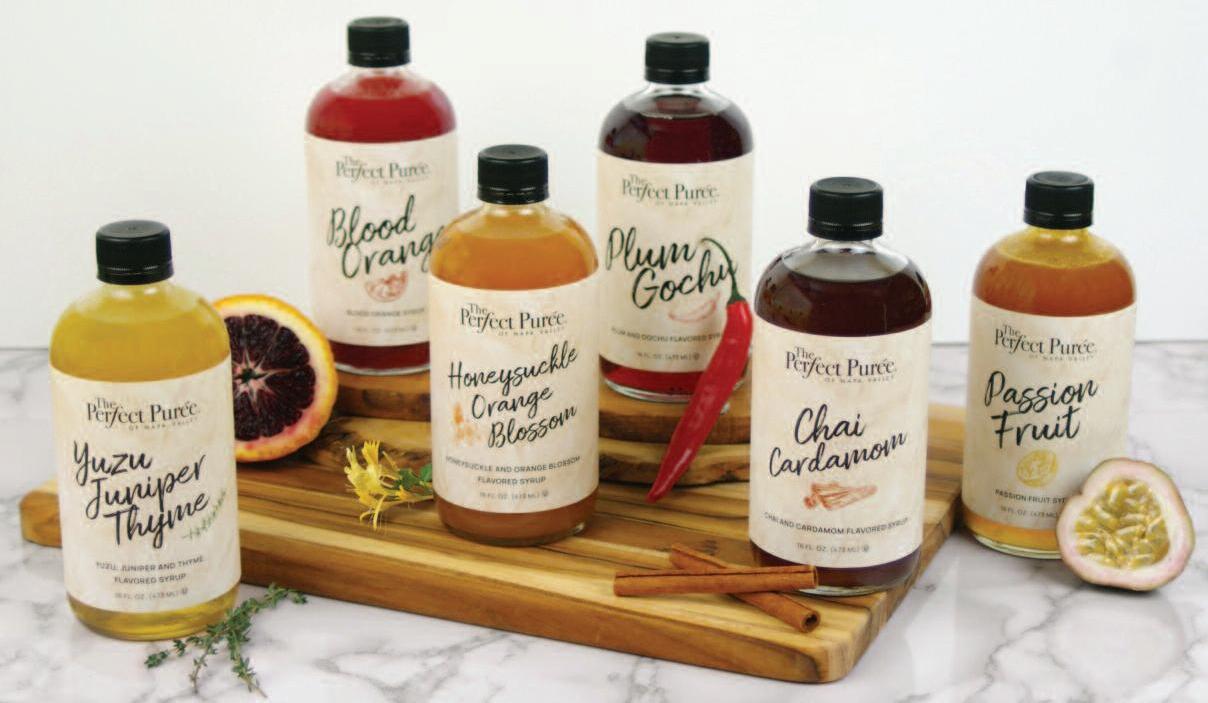
While most syrups in the specialty foodser vice market are positioned for beverages, The Perfect Purée wanted its flavors to actively spark ideas and empower creativity across the menu from sauces, vinaigrettes and glazes to coffee, cocktails and non-alcoholic beverages All the syrups are shelf-stable until opened, non-GMO, Kosher, vegan and gluten-free Order them via foodservice distributors in the United States and Canada and online
As a 2026 FABI Favorite, Plum Gochu Syrup is recognized by the NRA’s panel of industry experts as a game-changing product in the food and beverage industr y Plum Gochu Syrup is a bold fusion of fresh plum juice and savor y gochu flavors, blending sweet-tart fruit with subtle heat and umami The French-Korean baker y café chain Paris Baguette already features Plum Gochu in its fresh mint lemonade as part of its spring Korean BBQ menu
The syrups respond to The Perfect Puree’s desire to have its products lead flavor across the menu – with flexible formats and a culturally relevant viewpoint Select varieties in the lineup incorporate botanical ingredients and trend-for ward
ity I’ve come to know and love from The Perfect Purée, playing as beautifully with desserts and savory bites as they do with cocktails,” he said
For Chef Bradford Kent, co-founder of Original Sunshine, the impact is as much about efficiency as it is about flavor He noted that a small amount goes a long way in recipe development and execution
“I love it that the new line of Perfect Purée syrups has such clean and concentrated flavors that range from floral to spicy,” Kent said “You don’t need much to make a real impact, which makes them incredibly efficient in a professional kitchen ”
Juliana Stuertz, pastry sous chef at New York City’s Manhattan, says the syrups maintain the integrity of the fruit
“The flavor stays vibrant and true, making them a versatile product that pushes creativity in pastr y applications and beyond,” Stuertz said
FABI Award-Winning Plum Gochu
Syrup is a plum and gochu-flavored syrup made with real plum juice and natural flavors Designed as a multi-application product, it’s ideal as a base for vinaigrettes, sauces, and glazes as well as cocktails and
glaze
“It has a warmth and aromatic depth that usually takes hours of blooming spices to achieve,” Thorp said “The versatility on the plate and in the glass is remarkable ”
Blood Orange Syrup is an artisanal syrup crafted with real blood orange juice and vegan cane sugar Its premium, trueto-fruit profile delivers a vibrant citrus flavor balanced by natural sweetness and bright acidity
Private Chef and Consultant Jacob Whitson of Whitson Hospitality in Nashville uses Blood Orange Syrup to create a citrus reduction for roasted seafood and a seasonal craft cocktail
“It delivers a vibrant, perfectly balanced flavor with just the right sweetness and acidity to elevate every creation,” Whitson said
Passion Fruit Syrup is a craft syrup made with real passion fruit juice and vegan cane sugar, offering bold tropical character with balanced sweetness and lively acidity Its true-to-fruit profile performs seamlessly across sauces, glazes, desserts, cocktails and spirit-free beverages, giving chefs and bartenders a versatile, ready-to-use flavor foundation
Whitson uses Passion Fruit Syrup in a passion fruit gastrique and a zero-proof spritz
“The notes are very balanced and easy to work with,” Whitson said “The vibrant flavor and clean finish make it incredibly versatile ” All syrups are available via foodservice distribution in cases of six shelf-stable 16ounce glass bottles
Store unopened below 85°F for up to 18 months Once opened, refrigerate and use within three months
“The Honeysuckle Orange Blossom has a delicate floral brightness that pairs beautifully with citrus,” Gairola said “This level of balance allows ever y flavor note to be intentional and expressive ”
Chai Cardamom Syrup is a symphony of warm spices crafted to deliver aromatic depth in a ready-to-use format Notes of cinnamon, cardamom, ginger juice, cloves and star anise provide laye r e d w
r m t h and comp l e x i t y, a l l o w i n g chefs and b
rt
n d e r s to build sweet, savor y and b
t i o n s with consistency and ease
Foodservice professionals and manufacturers can purchase from The Perfect Purée’s network of foodservice distributors throughout the United States, Canada, and Mexico
Bolthouse Fresh Foods is continuing to push the carrot category forward with the introduction of Bolthouse Fresh Carrot Fries, a value-added product that brings a new take to one of America’s most familiar comfort foods Designed for the produce
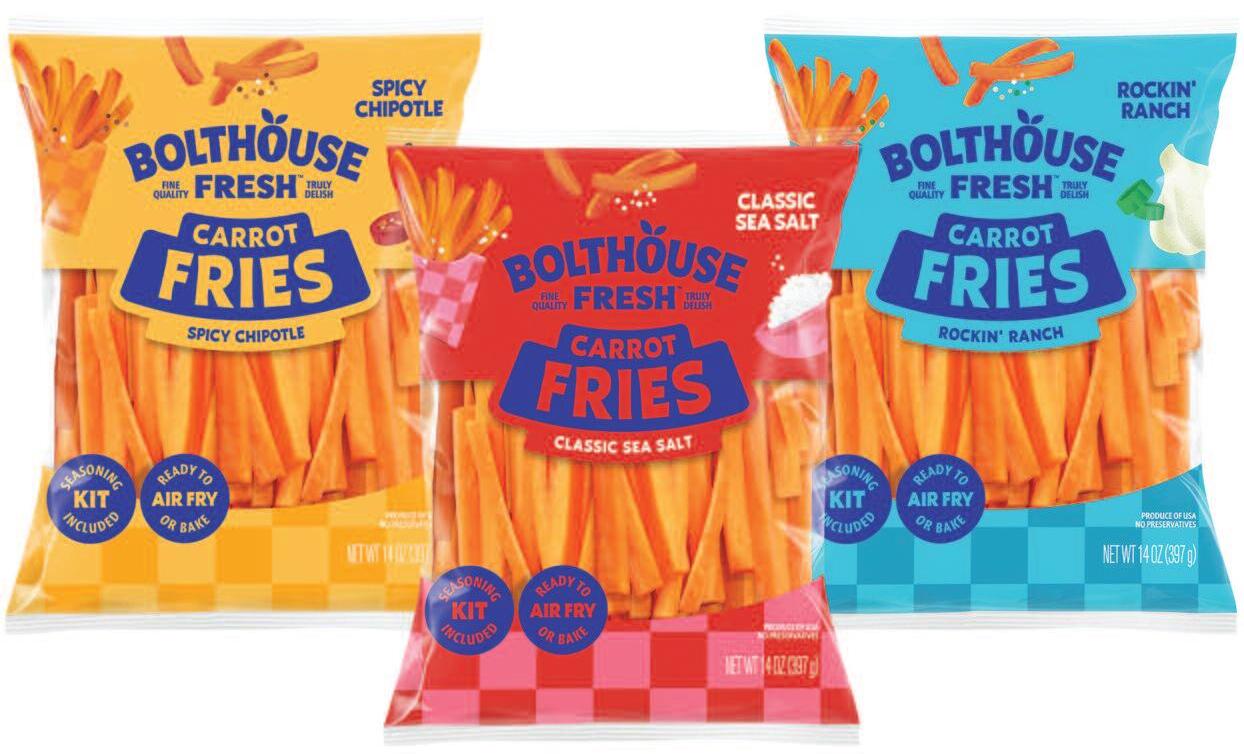
Executive Chef Mike Thorp of The Mustang Club in Bowling Green, Ky , incorporates Chai Cardamom Syrup in a sweet potato fondant tart
aisle, they combine convenience, flavor and versatility, giving retailers a fresh way to bring excitement to both the carrot set
Continued from PAGE 15
and value-added vegetable section
Bolthouse Fresh Carrot Fries are available in three flavor profiles: Classic Sea Salt, Rockin’ Ranch and Spicy Chipotle Cut from real carrots and seasoned for bold flavor, they deliver a crispy, vegetableforward twist on a familiar favorite while showcasing the natural sweetness and nutritional benefits of carrots in a convenient fry-style format
Ready in minutes in the air fr yer or oven, Carrot Fries are ideal for weeknight meals, appetizers or casual entertaining
Convenient, ready-to-cook vegetables continue to be an area of growth in the produce department Bolthouse Fresh Carrot Fries build on that momentum with a new carrot innovation designed for modern meal occasions, giving retailers an opportunity to expand usage and drive incremental sales in the category
“Carrots are one of the most versatile vegetables in the produce department and Carrot Fries offer a new way for shoppers to enjoy them,” said Melissa Oliver, senior vice president of sales and marketing “By pairing the familiarity of fries with the freshness of carrots, we ’ re introducing a format that fits today’s cooking habits while helping retailers expand how shoppers use carrots at home ”
Carrot Fries also provide flexible merchandising opportunities for retailers, with placement options that include the traditional carrot set and the value-added vegetable section Positioning within the value-added set can help maximize visibility and highlight the product’s convenience-driven appeal while encouraging trial among shoppers looking for quick meal solutions This product also lends itself well to cross-merchandising opportunities alongside proteins or dips to help inspire simple serving ideas
The launch reflects Bolthouse Fresh Foods’ continued focus on bringing innovative solutions to the produce aisle while continuing to expand how carrots are used in the produce aisle
Lindsay Olives has launched Latin-inspired olive flavors designed to bring bold, vibrant tastes to the olive aisle Inspired by the bright, savory and spicy tastes of Spain, Latin America and the Caribbean, the new lineup offers consumers a flavorful new way to snack, cook and entertain with
olives
Flavors include:
• Sofrito Style: Savory, garlicky and full of sazón – one taste is all it takes Heat level: Not spicy
• Pimiento Picantito: Hint of mild paprika heat to bring a smooth, vibrant sabor to ever y bite Heat level: Mild
• Escabeche Style: Blend of peppers, garlic and carrots for a bold picante twist Heat level: Medium
Inspired by classic Spanish, South American and Caribbean ingredients and flavors, this new line layers tangy, savory and spicy notes into the iconic Lindsay green olives consumers know and love Whether snacking straight from the jar, building a charcuterie board or cooking a family favorite recipe, these add a bright, bold flavor consumers won’t want to miss
approximately 130 calories, offering a crisp, soda-like fizz with real functional benefits

“Our olives have delivered bold, unforgettable taste for over 100 years, ” said Scott McCoy, vice president at Bell-Carter Foods “This new lineup explores vibrant global flavors that consumers are craving, and this launch is just the beginning of how we’ll keep reimagining what olives can be with innovative, globally inspired flavors ”
Lindsay’s new line of olives is just as delicious on its own as it is in classic dishes such as picadillo, arroz con pollo and empanadas or served on charcuterie boards, tapas spreads or even in cocktails and mocktails
The line is on shelves at select Albertsons locations for a suggested retail price of $2 99, with expansion to other retailers and markets planned
“Getting a nationwide launch at Target is a huge milestone for our brand,” said James Vas Dias, vice president of sales “We built Sparkling Protein to give consumers something that feels fun and refreshing but still supports their goals
“Pink Lemonade, Fruit Punch and Blue Raspberr y Lemonade bring bold, nostalgic flavor to a category that’s been missing excitement –and Target is the perfect partner to bring this to shoppers everywhere ”
Crafted for a smooth, crisp finish, Genius Gourmet Sparkling Protein is designed to be a true soda alternative –without the sugar crash or heavy aftertaste The lineup delivers bright, craveable flavor profiles while staying clean, light, and easy to drink
The launch marks a major expansion of Genius Gourmet’s beverage portfolio and reinforces the brand’s mission to redefine functional nutrition with products that deliver on both performance and taste
Speaking of Genius Gourmet, following the successful introduction of its three Skippy-inspired protein snack items earlier
Skippy peanut butter-inspired flavor across multiple textures and formats, designed to meet modern consumer demand for protein-for ward snacks without sacrificing taste
Genius Gourmet has recently expanded distribution of its Skippy-inspired protein snacks at H-E-B and Central Market, reinforcing strong consumer demand and continued retailer confidence in the brand’s indulgent-meets-functional positioning Genius Gourmet is accelerating growth in the convenience channel through its expanding partnership with EG America, bringing Skippy-inspired protein snacks to more on-the-go consumers nationwide
“The response to the Skippy-inspired items has been incredibly encouraging,” said Lance Rankin, CEO “What we ’ re seeing now is validation – expanded distribution, strong retail engagement and real traction across both grocery and convenience ”
Each item in the Skippy-inspired lineup was developed to bridge familiar flavor with everyday functionality, offering consumers a range of snack experiences –from crispy treats to nut rolls to layered wafers – built for different occasions and retail environments
“This phase is about momentum,” said Pete Vas Dias, president “We introduced the Skippy-inspired lineup months ago, and now retailers are leaning in Expanded placement at H-E-B and Central Market, combined with partnering with EG America across all banners totaling over 1,000 stores, reflects where today’s consumer is headed ”
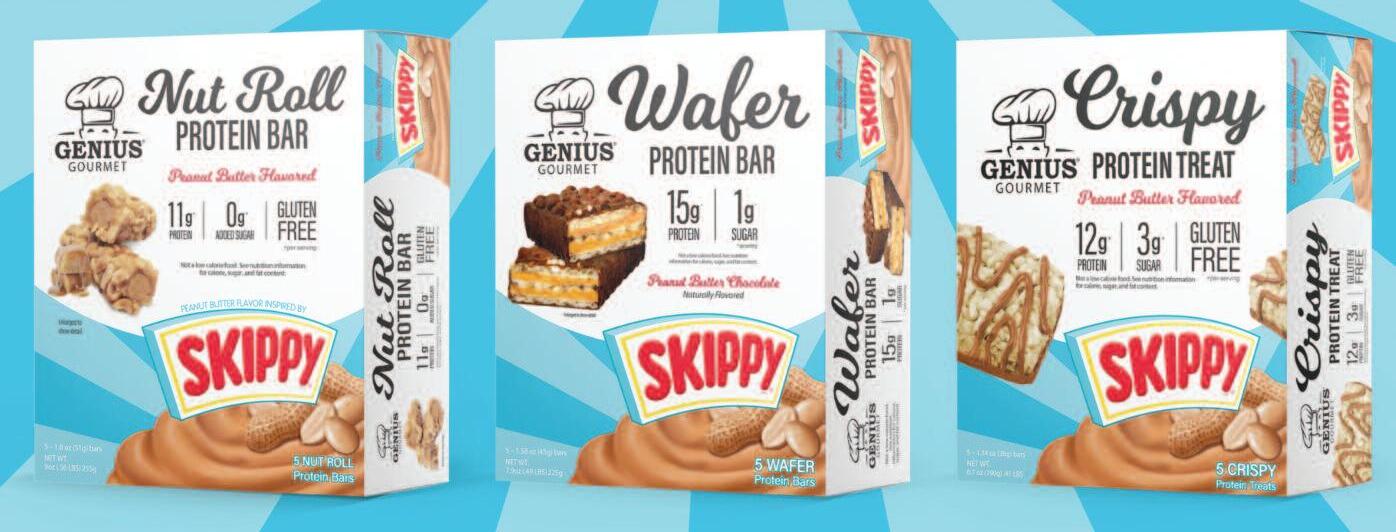
Genius Gourmet has launched its Genius Gourmet Sparkling Protein line nationwide at Target, headlined by Pink Lemonade, an exclusive flavor available only at Target, alongside Fruit Punch and Blue Raspberry Lemonade
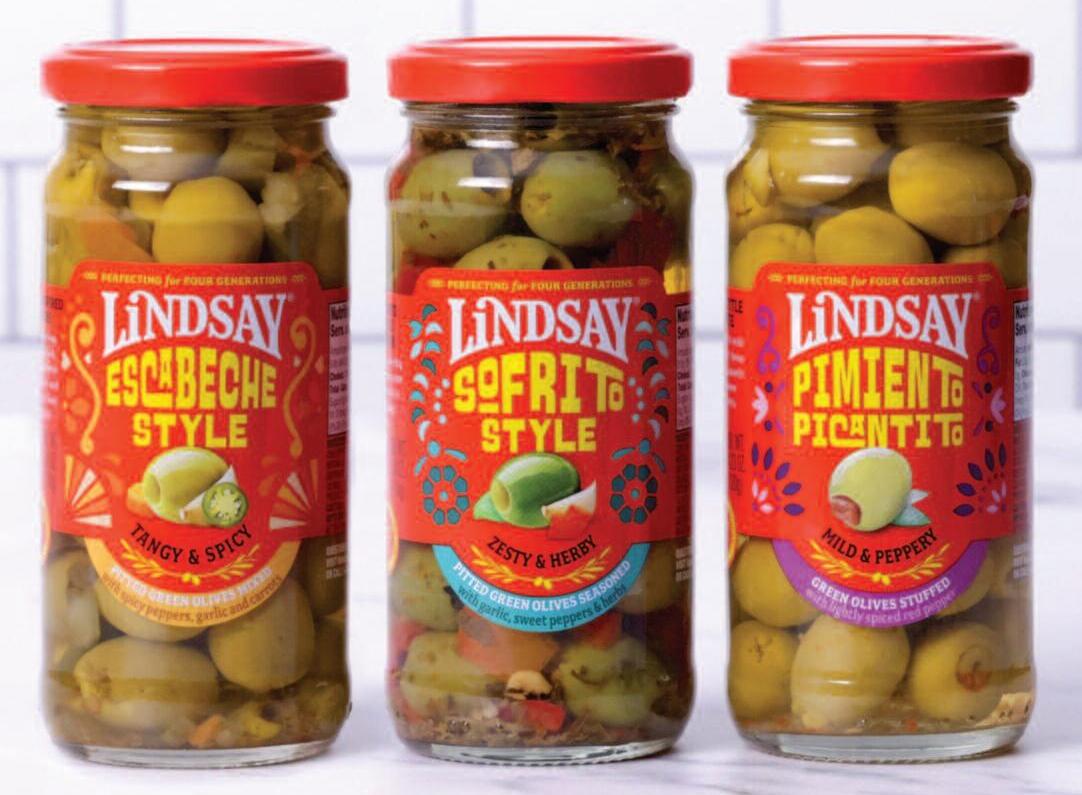
Branded as “The Future of Refreshment,” Genius Gourmet Sparkling Protein introduces a new way to enjoy protein – light, clear and sparkling, without the heavy, chalky experience of traditional protein shakes Each can delivers 30 grams of protein, zero sugar, zero lactose, less than 1 gram of carbs and
this year, Genius Gourmet is building momentum as the lineup gains traction across key grocery retailers and expands into the convenience channel
The Skippy-inspired lineup includes:
• Genius Gourmet Skippy Crispy Protein Bar: A modern take on the classic crispy treat, made with Skippy Natural Peanut Butter Spread and delivering 12 grams of protein (24 percent DV) with a craveable crunchy texture per serving
• Genius Gourmet Skippy-Inspired Protein Nut Roll Bar: Combines crunchy peanuts, smooth peanut butter flavor, and a caramel-style coating with 11 grams of protein (18 percent DV) and zero grams of added sugar per serving
• Genius Gourmet Skippy Wafer Protein Bar: Features crispy wafer layers and bold peanut butter flavor made with AllNatural Skippy Peanut Butter Spread, delivering 15 grams of protein (30 percent DV) and zero grams of added sugar per serving
Together, the lineup delivers nostalgic
White Castle is broadening the availability of its new Cheddar Bacon Cheese Slider to more freezer aisles across the country White Castle introduced the Cheddar Bacon Cheese Slider last year as part of a retail variety pack available only in Walmart stores The new Slider proved so popular that White Castle introduced it in January as a stand-alone item at CVS stores across the country Albertsons, Safeway, Dollar General and other grocery stores have begun selling the Slider
The Cheddar Bacon Cheese Slider features 100 percent beef and savory steamgrilled onions topped with a slice of cheddar-flavored cheese made with real bacon pieces, all served on White Castle’s signature fluffy bun
“White Castle is constantly keeping a pulse on the flavors consumers find most indulgent and satisfying, and bacon continues to top that list,” said Sarah Paulson, director of retail marketing and innovation “It’s why White Castle has remained a trusted brand for craveable food for 105 years
“With the Cheddar Bacon Cheese Slider, we ’ re delivering the smoky, savory flavor shoppers love, making it available in more
o9, a leading software company that is powering enterprise planning and decisioning models across 30-plus industry verticals with its AI-powered Digital Brain platform, announced the successful go-live of integrated Demand and Supply Planning capabilities at Hormel Foods Corporation
The integration of the AI-powered digital platform is the latest investment by Hormel Foods, a Fortune 500 global branded food company, to strengthen operational efficiency and enterprise-wide planning discipline across its global supply chain
Continued from PAGE 1
Reuters shared the news with the headline “Unilever and McCormick investors find $65 billion food deal hard to swallow ” As the news broke, shares in both companies dropped, costing billions in market value, with analysts and investors saying there were concerns over the way the deal is structured, challenges with integration and regulatory risks
In addition, ex-FTC Chair Bill Kovacic predicted there will be vigorous antitrust investigations
“Shareholders found the reality of their planned $65 billion food deal hard to digest,” Reuters reported, “perturbed by the transaction’s structure, its long timeline to closing and the potential for antitrust scrutiny
“Shares in Unilever, owner of Hellmann ’ s mayonnaise to Knorr stock cubes, fell by seven percent after the deal was announced, wiping $7 billion from its market value while McCormick, owner of Cholula hot sauce, also took a hit as its shares slid by about five,” Reuters reported
The Wall Street Journal called it a “deal to create sauces-to-spices behemoth,” but also expressed some optimism with an article titled, “Food Megamergers Hardly Ever Work Could McCormick-Unilever Be Different?”
“Flavor giant’s deal for Unilever food brands would be risky, but strategic logic – and price discipline – could make it work,” the newspaper reported
Continued from PAGE 14
stores and offering multiple pack sizes that make it even easier for Cravers to enjoy White Castle at home ”
The o9 program was delivered in collaboration with Accenture through five phased go-lives between March and December 2025, spanning more than 70 sites across dry and refrigerated networks
Hormel Foods operates one of the most complex supply chain networks in the global food industry The company manages thousands of distinct supply items to produce thousands of products, reaching consumers worldwide Its portfolio includes iconic brands such as Spam, Skippy, Jennie-O, Applegate, Hormel Natural
Count the New York Times noted early skeptics of this proposed “spice giant ”
“Seeking Alpha: McCormick And Unilever Foods: Not A Happy Merger Yet,” the Times reported
“The investment case surrounding McCormick (MKC) changed overnight as the company entered into a complicated deal with Unilever PLC (UL) to merge with selected parts of Unilever’s food business,” the Times reported
“The deal is rather complicated, in which Unilever and its shareholders get the majority of the shares, but control seems to be with McCormick, which is the sur viving entity Moreover, the business will grow its revenues by 150 percent, all while organizational complexity will rise substantially
“The deal is about becoming a giant in flavors and foods, and while exchange rates look fair, investors fear a leverage buildup, realization of synergies, and a poor track record of mega food mergers,” the Times reported
“While the news about the deal did not come out of the blue, shares of McCormick fell about six percent in response to the deal, with shares down $3, losing about $2 2 billion in value (including shares to be issued) Shares of Unilever fell by a similar percentage, with investors in both firms being negatively surprised by the news here ”
Financial Content called the historic merger a “$65 Billion Flavor Powerhouse ”
“The massive tie-up, structured as a Reverse Morris Trust, effectively creates the world’s largest pure-play flavor and condi-
Choice, Wholly and Planters spanning refrigerated foods, shelf-stable grocery products, deli meats, ethnic cuisines, and plant-based offerings
Perishability, seasonal demand spikes, capacity constraints and multi-tier distribution flows introduce structural complexity across every planning horizon
With o9, Hormel Foods is leveraging AI and machine learning driven forecasting to model key demand drivers while expanding touchless forecasting capabilities that reduce manual overrides and improve fore-
ment company, uniting iconic brands like Knorr and Hellmann’s with McCormick’s dominant spice portfolio and Frank’s RedHot sauce, ” Financial Content reported
“The deal marks a definitive end to an era for Unilever, which is divesting its food heritage to become a focused personal care and beauty giant For McCormick, the move is a bold, multi-billion-dollar bet on the ‘flavor-rich’ future of food, positioning the company to dominate the global pantr y as consumer habits shift toward healthier, more seasoned eating With the transaction expected to close in mid-2027, the market is already beginning to price in a seismic shift in how the world’s largest food brands compete for a place on the dinner table ” Leaders from both companies issued statements on the merger “ T h i s t r a n s f o r m a t i v e c o m b i n a t i o n a ccelerates McCormick’s strategy and reinf o rc e s o u r c o n t i n u e d f o c u s o n f l a v o r, ” s a i d B re n d a n F o l e y, c h a i r m a n , p
and chief executive officer of McCormick
“The Unilever Foods business is one we have long admired, with a portfolio that complements our existing business, capabilities and long-term vision Together, we w
growth in attractive categories This comb i n a
remains differentiated by its focus on flavoring calories while others compete for them ”
“For Unilever, this transaction is another decisive step in sharpening our portfolio and accelerating our strategy towards
grams of high-quality milk protein per ser ving and fewer calories than Mar zetti’s other Ranch offerings
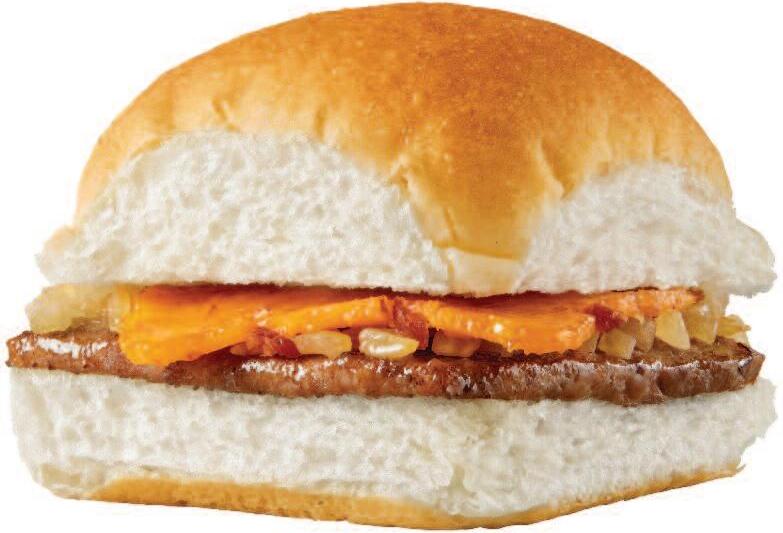
C
As a pioneer in bringing restaurantquality Sliders to retail freezers, White Castle continues to deliver the flavors consumers crave while driving growth in the frozen sandwich category
The Marzetti Company has launched Marzetti Protein Ranch, a first-to-categor y innovation that delivers the great taste consumers expect from Mar zetti Ranch while offering 3-4
cast accuracy for seasonal demand The platform also enables system-recommended inventory transfers and optimized truckload grouping based on weight, volume and stackability constraints, strengthening coordination across the supply network By translating demand signals into synchronized supply, inventory, and deployment decisions, planners can evaluate tradeoffs earlier in the planning cycle, improving visibility and alignment across Retail, Foodser vice and International segments GN
high-growth categories as a €39 billion pureplay HPC company with a proven sector-leading growth profile,” said Fernando Fernández, chief executive officer of Unilever “We are unlocking trapped value through a growth-led separation of Foods, creating a scaled, global flavor powerhouse By combining Unilever Foods’ iconic leading brands and global reach with McCormick’s exceptional portfolio, category expertise and capabilities, we are establishing a focused, high-quality business with significant top line growth and value creation potential ”
“The combination of Unilever’s Foods business with McCormick will create a global flavor powerhouse anchored in a portfolio of iconic brands across herbs, spices, seasonings, cooking aids, sauces and condiments,” the two companies announced “It will bring together complementary geographic footprints and a global leading presence across both retail and food ser vice channels, with deep science and R&D capabilities to meet consumers ’ growing demand for flavor ”
The new company will be led by McCormick’s CEO and CFO, with senior management representation from Unilever Foods
McCormick will retain its existing name, its Hunt Valley, Md , global headquarters and New York Stock Exchange listing McCormick will establish international headquarters in the Netherlands and is planning a secondary listing in Europe Each company ’ s board of directors has unanimously approved the proposed merger GN
The new line includes Protein Ranch Dressing (13-ounce bottle), Protein Ranch Veggie Dip (12-ounce tub) and Protein Ranch Veggie Dip Snack Packs
“Protein has become a key priority for consumers, with the majority now paying close attention to how much protein they eat, more so than any other nutritional element,” said Tanya Berman, president of the company ’ s retail business “Marzetti Protein Ranch allows shoppers to enjoy a familiar favorite with added functional benefits that fit into their ever yday routines
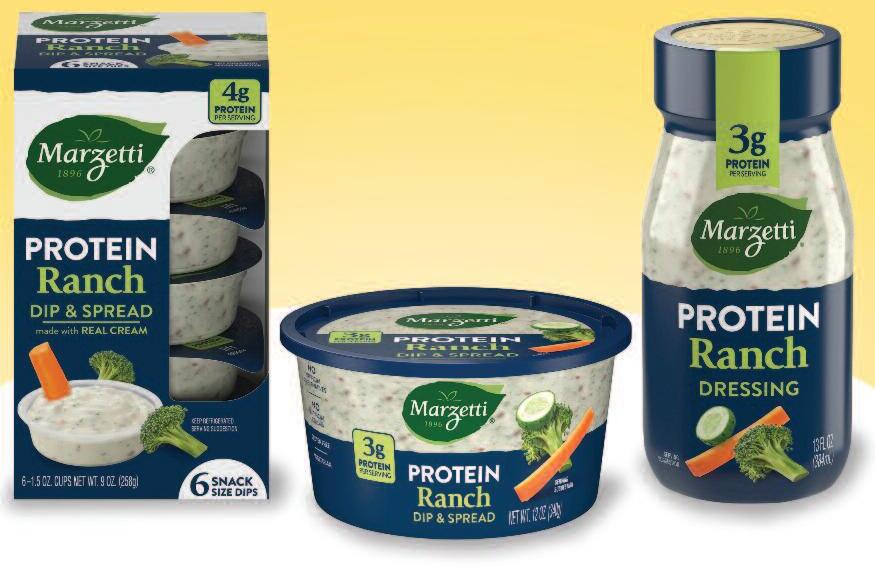
“For those who use Ranch on ever ything, now everything can have more protein ”
and dip are available at major grocer y stores nationwide GN
Continued from PAGE 1
stuff wrong the first year, and we worked hard to improve for the next time ”
Improve it did This year ’ s 45th edition featured 3,200 brands across food, beverage, health and beauty; educational sessions; and sustainability initiatives that diverted 168 pounds of waste from landfills
Across 26 pavilions, more than 110 countries brought their cultural perspectives, traditional flavors and foods, according to New Hope Network Sustainability efforts eliminated 29,600 single-use items and collected 163,547 pounds for food banks
The 2026 event saw a surge in attendance from countries including Japan, Peru and Spain, bringing fresh perspectives, innovations and energy to the show floor This international presence underscored the growing global momentum and shared commitment to advancing health and wellness worldwide, according to New Hope
“Expo West was a fantastic launch moment for our new Bone Suckin’ Sauce Eastern Vinegar BBQ Sauce, said Patrick Ford, vice president of Ford’s Gourmet Foods “The response from retailers, distributors and international buyers was extremely strong
“Many attendees told us they had been looking for an authentic Eastern North Carolina–style vinegar sauce, and they loved that ours stays true to the traditional flavor profile while maintaining our cleanlabel standards – Non-GMO, gluten-free, kosher and no high fructose corn syrup, ” he said
ing to phase two of those conversations,” Oyola said “And our walk proved we are 1) still well positioned with a real protein solution and 2) innovative and one of a kind still – nothing else like us out there!”
Zoup! Specialty Products, is expanding its best-selling lineup to include USDA Certified Organic Bone Broths, available in Chicken and Beef, which debuted at Expo West
Delivering 20 grams of protein per 14 5ounce jar, these simple-ingredient broths are built on decades of soup-restaurant experience and expertly crafted with freerange chicken bones or grass-fed beef bones for slow-simmered flavor Both are ideal for enjoying straight from a mug or elevating home-cooked meals, plus contain no preservatives, no added sugar, no GMOs and no added hormones
Our friends at Southern Recipe Small Batch debuted three bold new flavors that bring excitement to the snack food aisle: Air-Fried Buffalo Wing and Air-Fried Pizza, and a Pimento Cheese cooked in lard, added to the traditional line The new varieties will sell for an SRP of $3 99 and can be found online in late spring, with additional retailers to follow
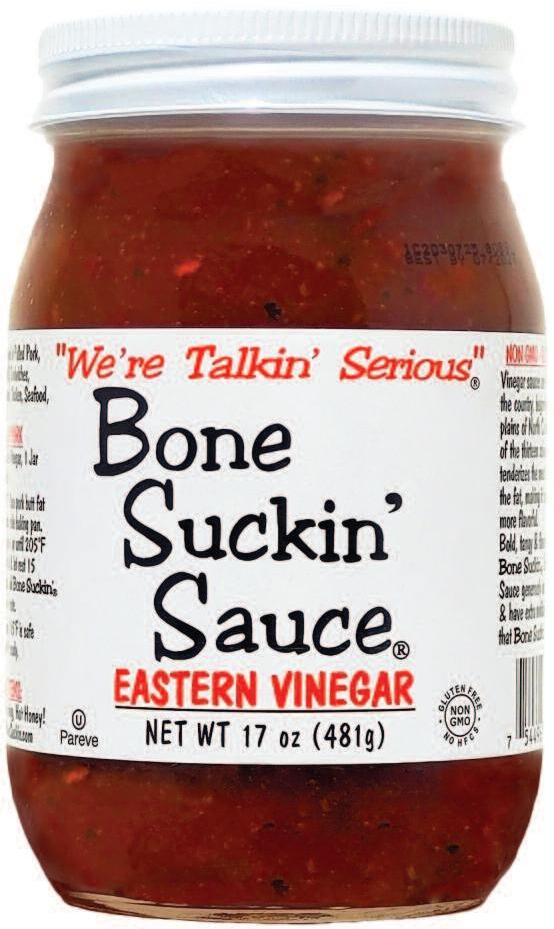
Air Fried Pork Rinds are a clear representation of where the snack food aisle is headed with flavor variety and product differentiation These new pork rind flavors are inspired by the crave-worthy, comfort-food tastes today’s snackers love, while still delivering the better-for-you benefits Southern Recipe Small Batch is known for
more pork rinds in more places ” By diversifying its offering with flavors that echo foodie favorites and Southern staples, the brand continues to help consumers renew their love for pork rinds and become a go-to choice for snack food lovers everywhere
The Air-Fried Pizza flavor was created in honor of The Archer Foundation, a charity partner for Rudolph Foods’ Crunch Time Hero of the Week campaign Archer, the charity’s namesake, lost his life to diffuse intrinsic pontine glioma at 6 years old and pizza was one of his favorite foods His battle, his courage and his absolute joy for life inspired his family to carry on his legacy through the Archer Foundation
products with a 12 1 percent increase in sales volume,” said SweetLeaf CEO Aaron Henderson “This new Sprouts placement is a direct result of that demand as well as of Drizzle’s exceptionally strong lineup in the space ” In addition to Sprouts, Drizzle Honey is available at Fresh Thyme in the United States, in 1,200 retail stores in Canada, on Amazon and the Drizzle Honey website Retailers can source the brand from with KeHE, UNFI, Faire and AirGoods Pulmuone, the largest tofu company globally and maker of America’s leading tofu brands including Nasoya and Wildwood, unveiled its 2026 innovations at Natural Products Expo West The 2026 lineup spotlights globally inspired, protein-for ward noodles and elevated wraps designed for convenient, plant-based meals at home
“As a Raleigh-based company, this sauce is especially meaningful to us because Eastern North Carolina is where American barbecue began, and we ’ re excited to bring that regional classic to a wider audience,” Ford said
Aussie Select, which has the first and only fully cooked, Halal-certified lamb deli line in North America, took a different approach to this year ’ s event
“We had a great show!” CEO Jaclyn Oyola said “We decided to forgo a booth this year and spent the time simply walking the show to see what else is out there/launching and to connect with buyers in meeting spaces
“We had two exceptional meetings and are already mov-
“Through flavor innovation like AirFried Buffalo Wing and Pizza, we ’ re proud to bring on-trend flavors to pork rinds, while meeting consumers ’ changing needs for low carb, protein-packed snacks that are still lower in sodium and sugar,” said Mark Singleton, vice president of sales and marketing at Rudolph Foods “Pimento Cheese will be the first flavor in this line fried in lard and not sunflower oil, staying in step with consumer demand for removing seed oil as an ingredient
“We’re not just introducing another snack to retailer shelves, we ’ re elevating the perception of the humble pork rind, once again, getting more people to eat
Wisdom Natural Brands’ Drizzle Honey line of sustainably sourced raw and superfood honey products includes Turmeric Gold Raw Honey, which was a NEXTY finalist at the show It’s now available in 477 Sprouts
Farmers Market stores nationwide The placement marks the latest expansion of Drizzle’s footprint in the United States since Wisdom – best known for its stevia brand SweetLeaf – acquired the Canada-based brand in 2024
Drizzle produces 100 percent pure, unprocessed, bee-friendly raw honey sourced from northern Canadian apiaries that promote bee health Drizzle transforms honey from a simple sweetener into a functional, better-for-you superfood while offering products that are good for both the consumer and the environment Drizzle’s collections are also naturally thicker and buttery in texture so the honey never crystallizes, allowing consumers to enjoy every last drizzle
“Consumers continue to seek cleanlabel, plant-based foods that deliver both convenience and authentic flavor,” said Suk W Kim, vice president of marketing “Our newest innovations build on Pulmuone ’ s heritage of fresh, high-quality in-
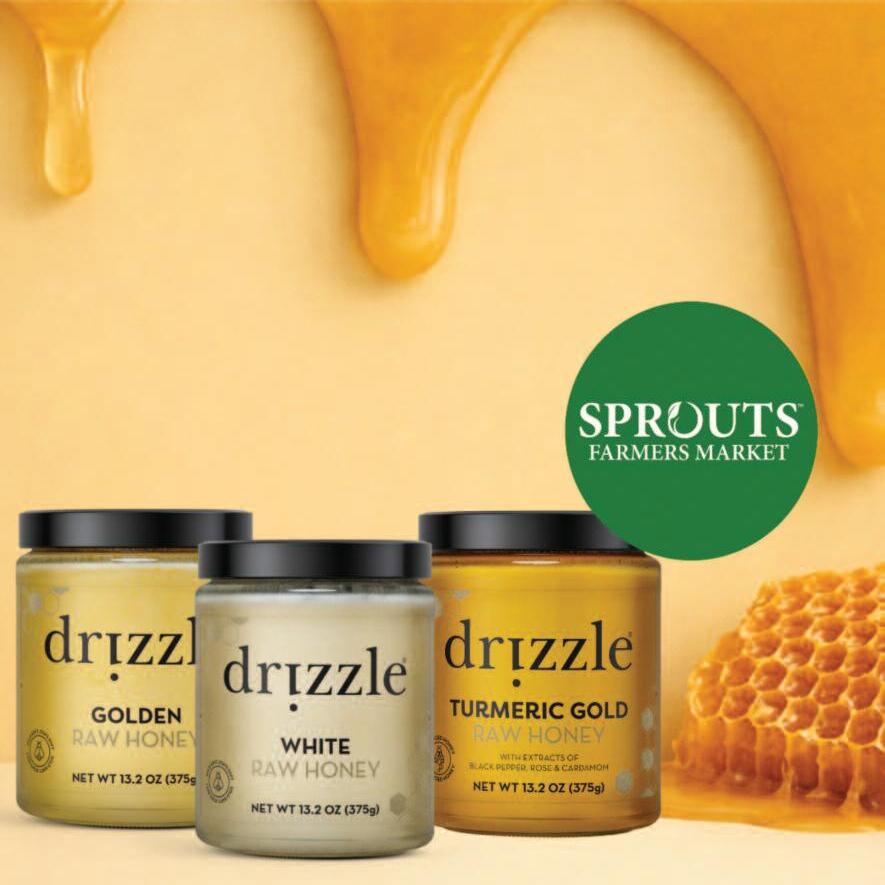
Sprouts will carry Drizzle’s White Raw and Golden Raw Honey as well as the brand’s Turmeric Gold Raw Honey, a superfood-infused anti-inflammatory blend with extracts of turmeric, black pepper, and rose and cardamom oils
The Drizzle line also includes Berr y Bliss, Cacao Luxe and Ginger Shine superfood-infused honeys as well as Cinnamon Spiced and spicy Hot Honeys All of the brand’s honeys are certified kosher and free of allergens, added sugar, preser vatives, artificial ingredients and GMOs
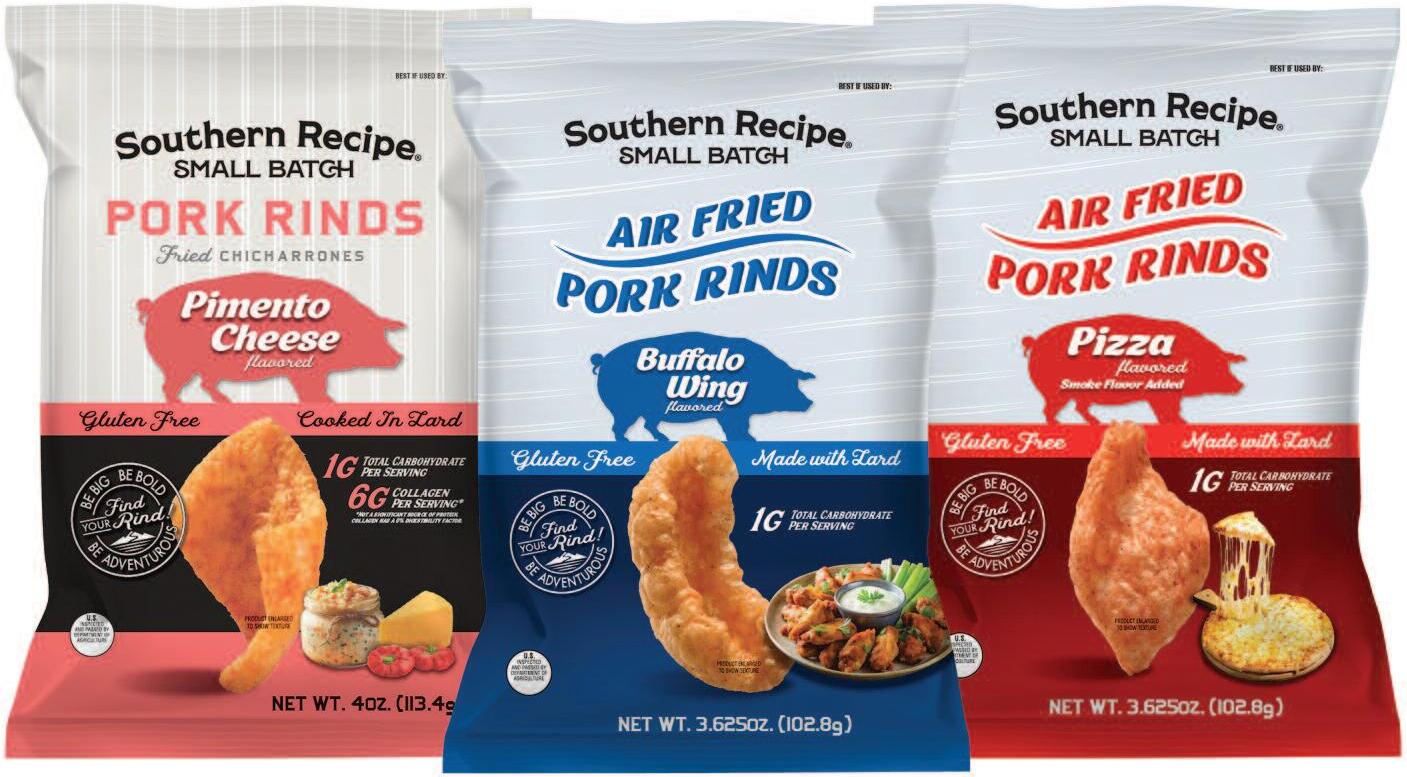
“Honey sales hit a record $1 2 billion last year as consumers continued searching for alternatives to refined sugar and artificial sweeteners, and raw honey outperformed conventional
gredients, offering versatile refrigerated solutions that make it easy to create globally inspired meals in minutes ” Pulmuone’s newest innovations – set to launch in retailers across the country later this year – include:
• Pulmuone Functional Noodles & Asian Noodles: Available in Soymilk, Yakisoba and Udon varieties, these refrigerated, fully cooked noodles are designed for quick, flavorful meals The gluten-free Soymilk noodles are made in a convenient, heat-and-ser ve format Simply drain and add to salads, cold noodle bowls or stirfries Yakisoba and Udon varieties can be quickly loosened in hot broth or water and paired with sauces, vegetables or proteins for soups, stir-fries or chilled dishes
• Pulmuone Garlic & Herb Wraps: Expanding Pulmuone’s existing lineup of eggroll and wonton wraps, these soft wraps are infused with savory garlic and aromatic herbs Designed for versatility and ease, they offer a flavorful foundation for appetizers, snacks and plant-for ward meals
Chef Edward Lee, acclaimed chef and author of “Buttermilk Graffiti,” appeared at the Pulmuone booth for meet-andgreets and a signing of his book During Expo West, attendees learned more about
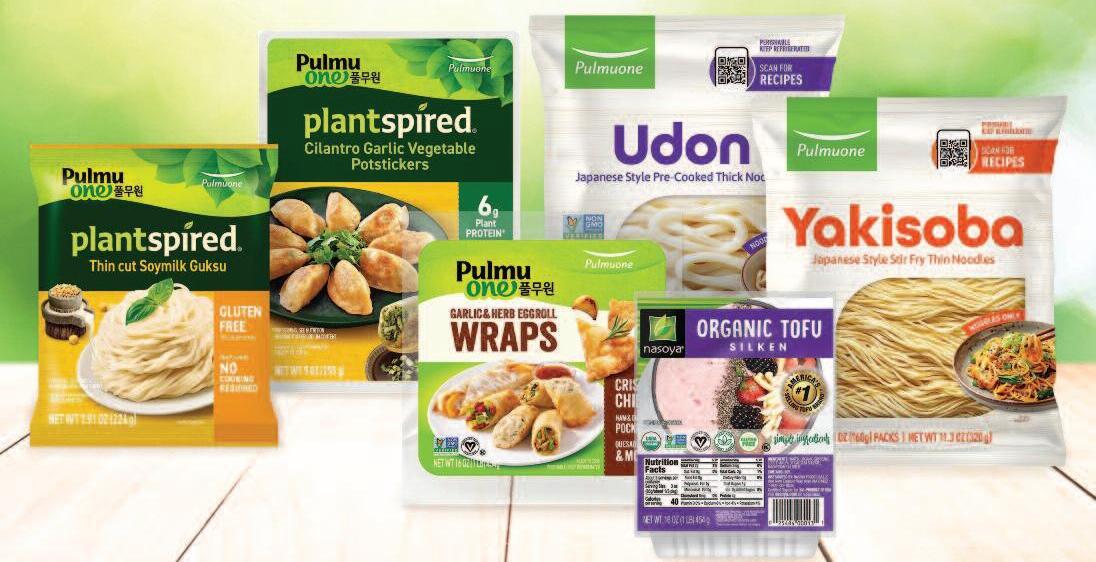
two exclusive recipes he developed featuring Pulmuone’s Soymilk Noodles and Nasoya Silken Tofu
Aneto Broth brought the authentic taste of home cooking to Natural Products Expo West, making traditional paella onsite and offering tastings of its signature homemade style broths and freshly prepared paella, filling the hall with irresistible aromas and flavors
“Paella is one of the best ways to experience the depth and quality of a truly great broth,” said Nuria Reixach, marketing manager
“We’re excited to show how our cooking methods and 100 percent natural ingredients come together to create broths that taste homemade because they’re made just like homemade ” Crafted using only clean ingredients (no concentrates, powders, or preservatives), Aneto Broth makes it easy for home cooks and professional chefs alike to create delicious, wholesome meals from scratch From preparing a show-stopping seafood paella or a com-
• Meat, Meat & Bone Broth and Legume Blends mark the next evolution of Once Upon a Farm’s signature pouches as the brand’s first refrigerated, coldpressure protected meat pouches for babies Each blend delivers at least 4 grams of protein from real, organic ingredients Meat blends feature savory protein sources such as chicken, beef or turkey, while Meat & Bone Broth blends add nourishment and flavor from beef bone broth or chicken bone broth Legume blends round out the lineup with black bean and chickpea flavor combination options
• Smoothies with Protein & Probiotics continue Once Upon a Farm’s innovation
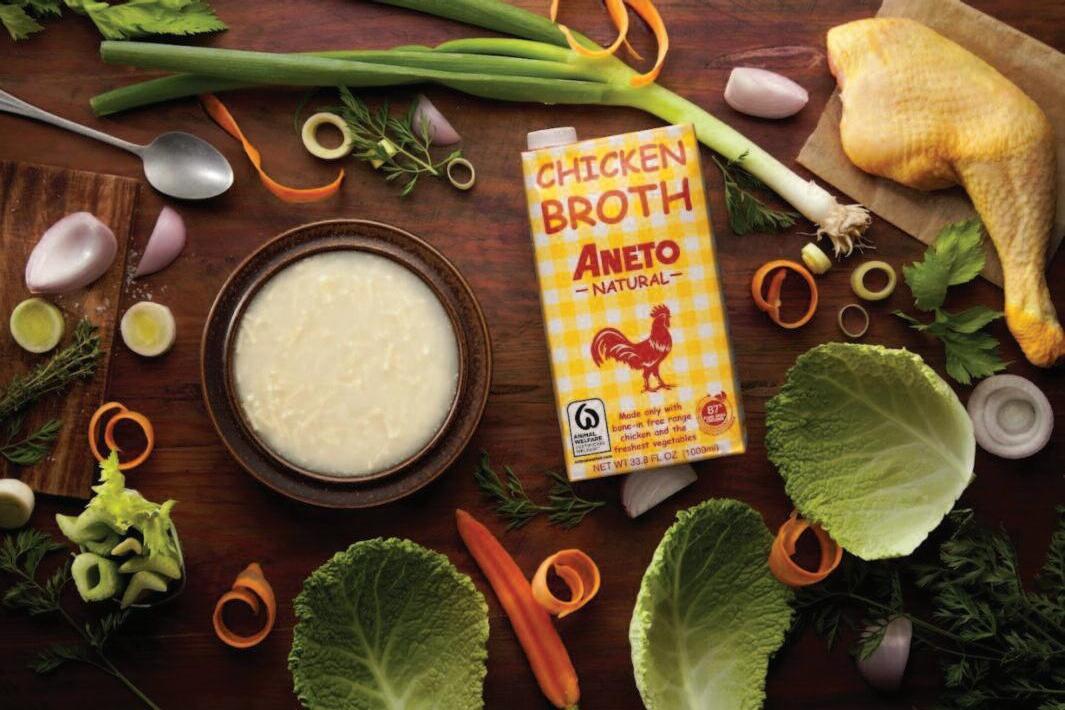
in the pouch category offering 4 grams of protein and added probiotics to help support immune health of older kids New flavors include Strawberr y Splash and Orange Mango Twist
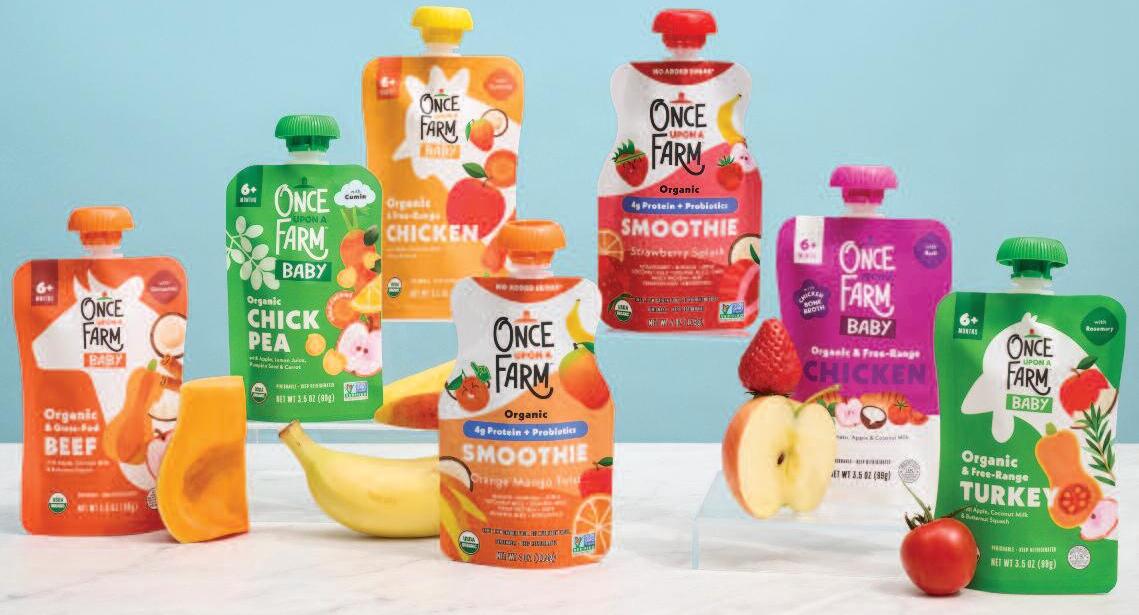
forting risotto to exploring international dishes such as Korean mul makguksu (cold noodle soup), Aneto delivers the richness of culinary tradition with modern convenience
All broths are free of dair y, gluten and eggs, making them ideal for cooking for family and friends with a range of dietary needs Aneto’s fish, chicken and vegetable broths are all slow-simmered to capture the warmth and depth of true homemade flavor
Once Upon a Farm introduced a lineup of organic food products ranging from baby to big kid at Expo West These products are available at select retailers and online:
tion of organic baby and kids’ food options at Expo West as we continue to drive systemic change in childhood nutrition for a happier, healthier, more equitable world ”
All products are organic, non-GMO project verified, contain no added sugar and are free from artificial flavors and colors
WISEcode presented two major launches at Natural Products Expo West: the Non-UPF Shield, a verification program for brands, and the r e d e s i g n e d WISEcode UPF
Detector mobile app experience that gives consumers instant visibility if a product is ultraprocessed or not
• Power Wheels, soft and chewy bars created with older, active kids in mind, are funsized fuel made with 4 grams of protein, 100 percent whole grain oats and real fruits and veggie ingredients Available in two kid-approved flavors: Strawberr y Shortcake and Blueberry Crumble
“Once Upon a Farm’s innovation is focused on what families truly need, which is real ingredients, real nutrition and real convenience,” said Cassandra Curtis, cofounder and chief innovation officer “Ever y product in this lineup is crafted to deliver farmfresh flavors and provides quality parents can feel amazing about
“We’re incredibly proud to debut this next genera-
“Awareness of ultra-processed food is rising, but shoppers still struggle to identify it consistently,” said Dr Richard Black, chief scientific officer “Our goal is to make processing visible and understandable in seconds ” Expo West’s founder, Doug Greene, a self-described hippie, should be happy with the growth of the natural products movement he promoted
“I thought it would happen much faster,
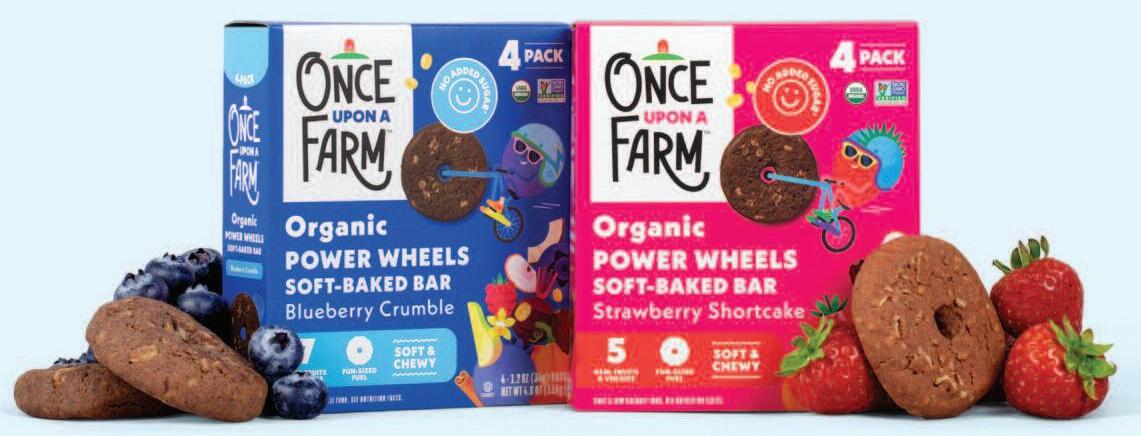
Both are powered by the company ’ s newly formalized WISEcode UPF Standard, an ingredient-level framework designed to bring clarity and consistency to how ultra-processed foods are defined and evaluated
The WISEcode platform analyzes more than 840,000 packaged food products across 15,000 attributes, creating one of the most comprehensive food intelligence systems available today
The Non-UPF Shield is a verification mark for brands seeking to demonstrate that a product meets WISEcode’s nonultra-processed threshold Additionally, it is access to a platform that aims to elevate Non-UPF foods in the mobile consumer app and with retailers
Unlike traditional certification programs that require extensive paper work and manual reviews, the Non-UPF Shield is powered by WISEcode’s pre-built ingredient database and automated review system, using public ingredient lists and its scientific database to make verification faster, more transparent, and easier for brands, without relying on hidden paperwork or opaque audits Most verifications can be completed instantly, with limited cases requiring additional review
When a product does not meet NonUPF thresholds, WISEcode identifies the specific ingredients and processing techniques driving that outcome in order to assist brands in their reformulation efforts
The company works directly with CPG partners to assess individual SKUs and broader product portfolios, delivering structured reports that outline processing drivers, benchmarking insights, and clear pathways toward Non-UPF qualification
honestly,” Greene told Natural Foods Merchandiser “My reasoning for starting this whole thing was, listen, people want to feel good, and if you eat better, you will feel better
“But it’s an education process You have
healthy food) close to you From there, I just believe in people I think smart peop
better,” he said
“Now we ’ re understanding so much more about body chemistry and nutrition, so I’ve never been more excited about the opportunity for people to care for themselves better with all the tools and tests and whatnot I think we ’ re on a plateau, jumping up a whole other level of being super healthy,” Greene said
Though he is no longer with New Hope Network – but he doesn’t use the word “ retired” – Greene will always have a special spot in his heart for Expo West He and his wife travel the world, often visiting children and grandchildren
“If I am anywhere in North America, I’ll be at Expo in a second, because I just love it,” he said “And what I really love is that nobody knows who I am anymore I don’t wear a badge I can actually walk around and enjoy Expo and look at things and talk to people And the faces! I just love to watch all the faces walk by People are so excited to be there ”
Natural Products Expo West will return to Anaheim on March 2-5, 2027 Newtopia Now, New Hope Network’s conscious products event in Denver, will take place Aug 18-20 GN
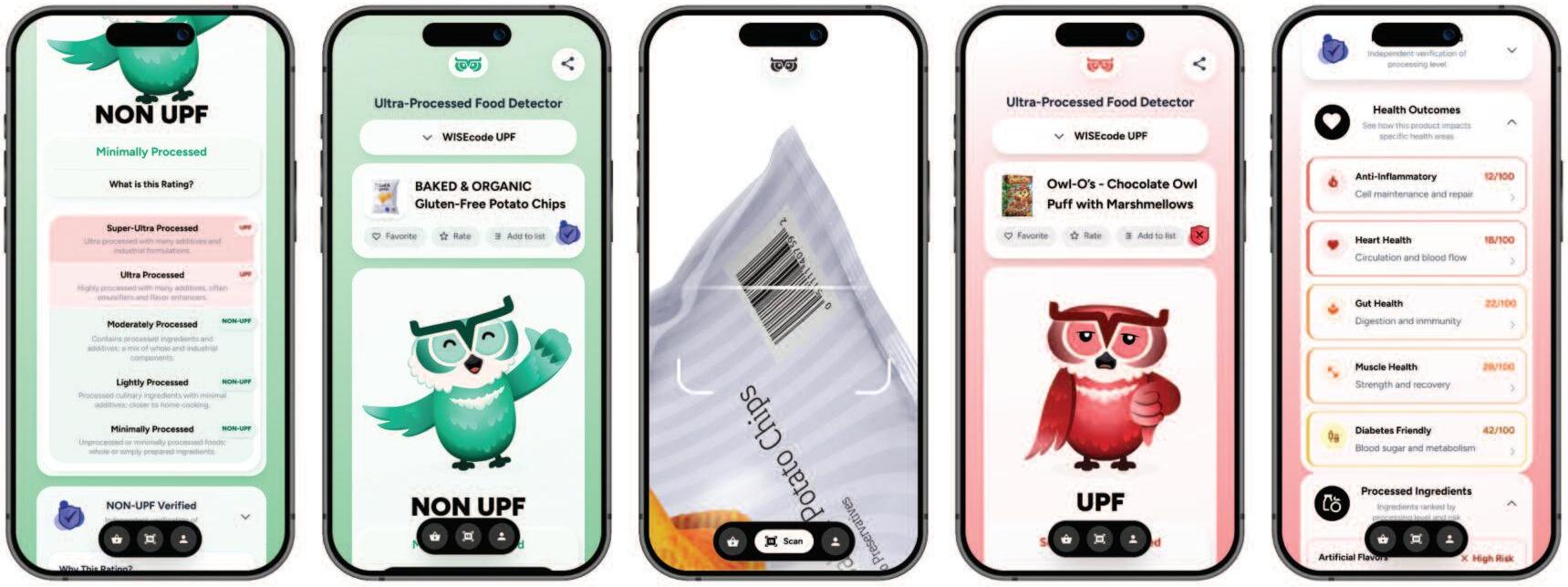
California Beef Council’s “California Beef in Schools” Program collaborates with the CDFA Farm to School Network to help California beef producers and school nutrition professionals better understand each other’s roles and build connections within the farm-to-school space
As schools across California work to incorporate more locally sourced foods into their meal programs, many districts are increasingly exploring opportunities to source proteins directly from producers California’s Ranch-to-Tray tours help bridge that connection by bringing school nutrition professionals and beef farmers and ranchers together to better understand the pathway from ranch to tray
school nutrition professionals have a few practical challenges to deal with ” Specifically, they need to understand how the beef supply chain works and what the pathway from beef production to school meal programs looks like
commodity feed sources, reinforcing the connection between dair y and beef production
L u n c h w a s h o s t e d o n - s i t e a n d f e a t u re d
Dover, director of food and nutrition out-
e a n d
s c h o o l n u t r i t i o n p ro f e s s i o n a l s p l a y a k e y
role in making sure students benefit from t h o s e m e a l s b y k e e p i n g t h e m a p p e a l i n g
a n d e n j o y a b l e
“As schools seek to source more items like locally raised beef for their menus,
Continued from PAGE 1
kitchen of a small home in downtown Tempe
Long before he knew what his life’s calling would be, Guerra grew up in a household of bakers His mom baked cookies and loaves of bread, and the smell of his grandmother’s flour tortillas wafted through her adobe home, which was a stone’s throw away from ASU’s Tempe campus
Whatever the Guerras had, they shared
“My family always had big, big gatherings, and food has been our vehicle to connect people and just to show appreciation for life,” Guerra said Guerra initially chose a different path, though He enrolled at the University of Arizona in Tucson to study anthropology, but soon realized academia wasn’t for him
“I was the first in my family to go to school, a young Latino person that didn’t have the experience of how to navigate a university,” he said “I didn’t really have anyone to show me how to organize my classes Not being from that culture, it took a lot of effort to try to figure out how to really be productive and successful in that environment
“What I realized is that I really wanted to build something with my hands ” What that something was, Guerra wasn’t sure He moved to Flagstaff, searching for his future, and one day was riding his bicycle on Mount Elden when he realized he was turned around He asked a man for help, they started talking and the man told Guerra he worked at a bakery in Flagstaff
s c h o o l s p a c e
“We want to make that pathway more visible, practical, and connected to realworld applications,” Dover said
On March 17, 45 attendees gathered at the Oakdale Central Kitchen of the Oakdale Joint Unified School District before traveling to local beef and dairy operations owned by the Hoekstra and Ardis families to better understand the early stages of the beef lifecycle and the connection between dairy and beef systems Attendees learned about animal care and daily management practices, the link between animal welfare and end-product quality, and how dair y operations contribute to a more sustainable food system by using byproducts and
“He asked me if I needed a job,” Guerra recalled “Of course, I was broke ”
The man invited him to the bakery that night Guerra never left
“Seeing that environment reminded me of my father, Bennie,” said Guerra, whose father owns Bennie’s Back Alley Barber Shop in south Scottsdale “My dad is probably the most influential entrepreneur I’ve ever had in my life
“I felt like being in a baker y, I could serve my community like my father, make a product and provide a service that people enjoy It was so very comfortable to me ”
Guerra opened his first bakery in 1996 in Flagstaff, and then a second in Ashland, Ore , a few years later But by 2000, he was overwhelmed and exhausted He sold the business, moved to Tucson and re-enrolled at the University of Arizona, earning a teaching degree
He taught math at an elementary school for seven years, but in 2009, the bread bug got him again His garage became a production kitchen, and he sold bread out of his home, his car and at local food markets
Then, in 2011, Guerra connected with Native Seeds/Search, a seed bank in Tucson, as well as Hayden Flour Mills in Gilbert and BKW Farms in Marana, to build a local grain chain, focusing on bringing back heritage grains of the Southwest
One night at home, Guerra took the grains, milled them and poured in a little milk that made the dough rise immediately
“The flour smelled different,” he said “The next day, I pulled that loaf of bread out of the oven, and I just fell to my knees
r a t i n g
h o w d i re c t - t o - s c h o o l p u rc h a s i n g o f l o c a l
b e e f i s a l re a d y b e i n g i m p l e m e n t e d a t t h e
d i s t r i c t l e v e l
An afternoon panel Q&A session highlighted the importance of strengthening connections between school meal programs and local producers, as well as the opportunities available to support schools in sourcing local foods Jason Beach, director of café services for OJUSD, noted that “building direct relationships with local producers helps us ser ve high-quality meals while also supporting our local community,” adding that “sourcing locally allows districts to invest in both students and regional agriculture ” Ross Ardis, owner of Ardis Cattle Company, echoed that perspective
“ I t ’ s e x c i t i n g t o b e p a rt o f w h a t l o c a l k i d s a re
own son was one of them, and it’s a way for us to invest in our community,” Ardis said
It was the moment I said passion meets purpose I was dedicated to serve my community in a bigger way, to feed them the grains of the Southwest that are part of my heritage ”
It’s clear, from watching Guerra work, that the bakery is more than a business to him He knows most of the customers by name When he hears an older couple is moving back to Oklahoma, he expresses his regret that he won’t see them anymore
He sees himself filling a circle, ser ving the farmers and millers by buying the grain they produce and then satisfying his customers who buy the finished product
“This is who I am, making something with my hands that can make people happy,” he said
And it is a gift Guerra shares He said he has taught more than 10,000 people in the Tucson area how to make bread
“Every day, I wake up and just think about how grateful I am that people want to be a part of this bread community,”
Guerra said “It’s a dream come true to have something that’s incredibly sustainable here in Tucson, and I’m really indebted to the support that has been given me ”
Last fall, a staffer from ASU’s School of Transborder Studies attended Guerra’s pizza-making class at the Barrio Bread location in Gilbert The staffer asked Guerra if he would be willing to talk to some students from the school
Guerra said he would, and soon after, he spoke to a transborder studies class
“I gave a presentation about my life, my entrepreneurial journey, the challenges I’ve had and the successes I’ve had,” Guerra said “I feel it pretty much applies to young people tr ying to navigate a life that they
The discussion also highlighted available support for schools looking to expand local procurement
Over the course of the two days, school nutrition professionals from twenty-five different school districts took part in the tours, education, and networking “Networking between schools and beef producers is especially valuable,” Dover said “Understanding where food comes from and how it fits within the food system is a key part of nutrition education, and it helps connect students to nutrient-dense protein sources, like beef, in school meals while strengthening communities across California ” GN
think should be linear
“My coaching is that life is not a straight path There’s many, many directions we can take on our final path to our destination and where we find passion and purpose that makes us happy ”
Irasema Coronado, director of the School of Transborder Studies, met with Guerra and was so impressed by his energy and message that she invited him not only to give a lecture on campus but to meet with several classes this spring and be named the school’s baker-in-residence, which is built on the school’s past artistin-residence program
“It’s common in universities to have an entrepreneur-in-residence, a diplomat-inresidence, an artist-in-residence or a musician-in-residence,” Coronado said “We thought, ‘Well, let’s have a baker-in-residence ’
“He’s a wonderful guy, a great speaker, very inspiring and very motivational And he brings an educational background, the entrepreneurial spirit and then the giving back to your community His leadership is just amazing in that area And he’s a James Beard Award winner It was a ‘ wow ’” Guerra said he will weave through his journey and his life as he talks to students, with one central message: “Being young and not knowing everything is OK You will be OK as long as you show up every day ” More than 30 years after first setting foot in that Flagstaff bakery, Guerra still shows up ever y day, ser ving a community through the loaves he and his staff lovingly make
“This,” Guerra said, “is who I am ” T h i s s t o ry o r i g i n a l l y
For emerging brands, outsourcing
An inter view with Carlos Salinas, Founder, Xochitl
The Wisconsin Cheese Company ( Wisconsin’s Best, LLC) delivers premium Wisconsin cheese and meat snacks built for today ’s grocer y, convenience, mass, alt channel, deli and grab -and- go marketplaces.
Headquar tered in Oregon, Wisconsin, the company has been producing pre

M ismatched par t-
failures, supply chain paralysis and erosion of brand equit y Here are the five most devastating mistakes brands make during selec tion, and how CoPack Connect helps navigate them.
Continued
BOOTH #3773
ST: What originally inspired you to star t Xochitl?
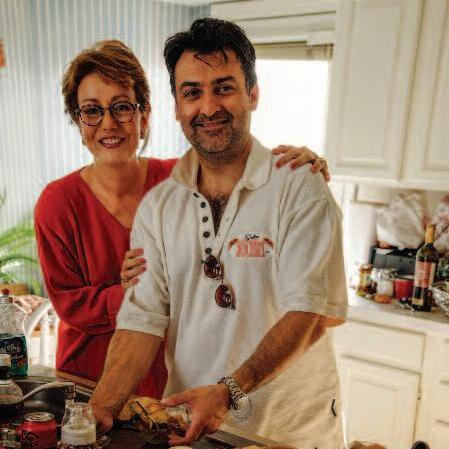
CS: The ins p i r a t i o n came from my family I grew up in M exico Cit y s u r ro u n d e d by incredible spices, chiles and condiments. My great- grandmother made an authentic A ztec salsa using chipotle peppers – a recipe passed down through generations I learned the full process and craftsmanship behind it,
BOOTH #4809

Continued on Page 20
Darrell Lea, the Australian confec tioner y brand best k nown for its Soft Australian Licorice, is putting its own spin on a classic candy for mat with the launch of its Real Twist range
Available in an ex tra-long twist ropest yle candy, Real Twists delivers Darrell Lea’s signature sof t, chew y texture and bold fruit y flavor and is available in t wo c r o w dp l e a s i n g

options: Strawberr y and Pink Lemonade
Convenience is also central to R eal Twist ’s proposition Packaged in 7-ounce
Since 1996, Alternative Air LLC has built its reputation on one core pr inciple: Evolve with the industr y As the gourmet chocolate and confectioner y market has transformed into a luxur y- driven, expe-
changing retail trends while maintaining precise climate per formance
O ver the past two decades, consumer Alternative
R esponding to a new generation of home cooks who crave both diverse ingredients and bold flavors, H idden Valley® R anch announced the launch of three new produc t innovations including H idden Valley R anch with Avocado Oil, restaurant-inspired YumYum R anch and Parmesan R anch Seasoning

This latest expansion of the brand ’s por tfolio was developed to satisfy a variety of palates and meet dynamic lifest yles, offering a trio of flavor-for ward options designed for ever y occasion
“ We craf ted this lineup to give consumers more flexibility and creativity in the k itchen,” said Daniel Schear, Direc tor
For Oh!asis™, this isn’t just a business stor y – it ’s a family one
Oh!asis has long been recognized for delivering premium tropical confections that resonate with consumers and drive strong per formance on shelf Today, the brand enters a new chapter – one defined by thoughtful par tnership, longterm stewardship and a renewed focus on operational excellence Las Olas Confec tions and Snacks has par tnered with family- owned Zeno’s B oardwalk Sweet Shop to suppor t the

By Travis Hobbs, President, Hayden Valley Foods
Hayden Valley Foods brings bold energy and innovation to the snack and confectioner y world, positioning itself as a dynamic and reliable player in a highly competitive focus on q versatilit y, Foods offe pressive ran
p r o d u c t
d e s i g n e d to satisfy a wide var ie tastes and ences. Our cludes e premium m flavor-packed pretzels to indulgent chocolate confec tions and carefully crafted trail mixes Each product is developed with attention to detail, ensuring a balance of taste, tex ture and visual appeal that resonates with today ’s con-
sumers.
One of the key strengths of Hayden Valley Foods is the flexibility we provide to our customers For par tners looking to purchase in bulk , HVF offers convenient large -scale options that maintain consistenc y and quality across ever y order At el in pr ivate ak ing us an for brands expand or entiate their produc t of-
f e r i n g s
Whether a pany already established or is star ting VF’s exper ilosely with clients to bring their vision to life From concept development to final production, we are sk illed at transforming ideas into shelf-ready produc ts that stand out in the marketplace
I n a d d i t i o n t o o u r c u s t o m s o l u t i o n s,
CDM Brands, a pioneer in Chamoy Cocktail R im Dressing first launched at the star t of the pandemic, is now transforming traditional gummy candy by infusing it with their proprietar y chamoy flavoring The result is a bold, tangy and sweet experience that keeps consumers coming back for more
CDM Brands was established in 2019 by t wo par tners with deep roots in the M ichelada Cup business dating back to 2012 After par ting ways with their previous brand, one of the par tners introduced Chamoy Rim dips, which quick ly gained attention and took the market by sur pr ise B y 2020, consumers ever ywhere began creating their own versions at home.
Recognizing that these homemade ef-
for ts could only be produced in small quantities, CDM Brands identified an oppor tunity to scale the categor y Fast for ward to 2026, and the Cinco De M ayo line of R im dips has become the No 1 selling produc t in its categor y. R etur ning to their roots, CDM Brands also launched the Original Ready To G o M ichelada M ix with six prer immed cups –widely regarded as one of the most in-
standout example is our Ever yday Pretz
d i n c o nve n i e n t 5 - o u n c e s t a n d - u p
re s e a l a b l e b a g s. T h e s e p re t z e l s a re d e -
s i g n e d t o d e l i v e r b o l d f l a v o r i n e v e r y
b i te w h i l e re m a i n i n g a cce s s i b l e a n d a f -
f o r d a b l e t o a w i d e a u d i e n c e W i t h a
suggested retail pr ice range of $2 95 to $ 4 , t h e E v e r y d a y P r e t z e l s s t r i k
Ultimately, Hayden Valley Foods is committed to making snacking more exciting without compromising reliability
Our combination of product variety, customization capabilities and consistent execution allows us to meet the evolving demands of both consumers and business par tners B y blending creativit y with dependable results, HVF continues to build a reputation as a trusted name in the snack and confec tioner y industr y
For more information, go to www hayden valleyfoods com, call 855 429 3361, email customerser vice@haydenvalleyfoods com or stop by booth #2361
novative pack aging concepts on the mixer shelf
While M ichelada mixes and r im dips naturally peak dur ing spr ing and summer, the brand set out to develop a produc t with year-round appeal. Chamoy and chili-infused gummy candy was not new to the market, with origins in Texas and companies like Alamo Candy leading ear ly produc tion
the “dulce enchilado” categor
White Castle first introduced the Cheddar Bacon Cheese Slider last year as par t of a retail variety pack available only in Walmar t stores. The new slider proved so popular that White Castle introduced it in Januar y as a stand-alone item at C VS stores across the countr y They are now available at Alber tsons, Safeway and other grocer y stores
The Cheddar Bacon Cheese Slider features 100% beef and savor y steamgr illed onions topped with a slice of
cheddar-flavored cheese made with real bacon pieces, all ser ved on White Castle’s signature fluffy bun. The result is big, bold flavor in ever y bite, a craveable combination that br ings a nex t-level snack ing experience to the freezer aisle “ White Castle is constantly keeping a pulse on the flavors consumers find most indulgent and satisfying, and bacon continues to top that list,” said Sarah Paulson, Direc tor of R etail M ar keting, I nnovation at White Castle.
“I t ’s why White Castle has remained a trusted brand for craveable food for 105 years With the Cheddar Bacon Cheese Slider, we’re deliver ing the smok y, savor y flavor shoppers love, mak ing it available in more stores and offering multiple pack sizes that make it even easier for Cravers to enjoy White Castle at home ” The Cheddar Bacon Cheese Sliders are offered in a variety of pack age sizes, giving consumers the flexibilit y to choose the quantit y that ’s r ight for
candy produc tion, allowing them to in-
Cinco
ayo Candy now features nine standout flavors that clearly separate it from the competition. Pack aged in a vibrant, resealable 6- ounce bag, the produc t commands attention on both shelves and peg hooks With established distribution through major C-store par tners like CORE MARK and grocer y leaders such as KeHE, the brand is positioned for expansive growth and widespread consumer reach.
For more information, go to w w w cdm candy com or stop by booth #1514

them They continue to be featured in the Cheese Slider Variet y Pack , which also contains Jalapeño Cheese Sliders and Classic Cheese Sliders As a pioneer in br inging restaurantquality Sliders to retail freezers, White Castle continues to deliver the flavors consumers crave while driving growth in the frozen sandwich categor y
For more information, go to w w w whitecastle com
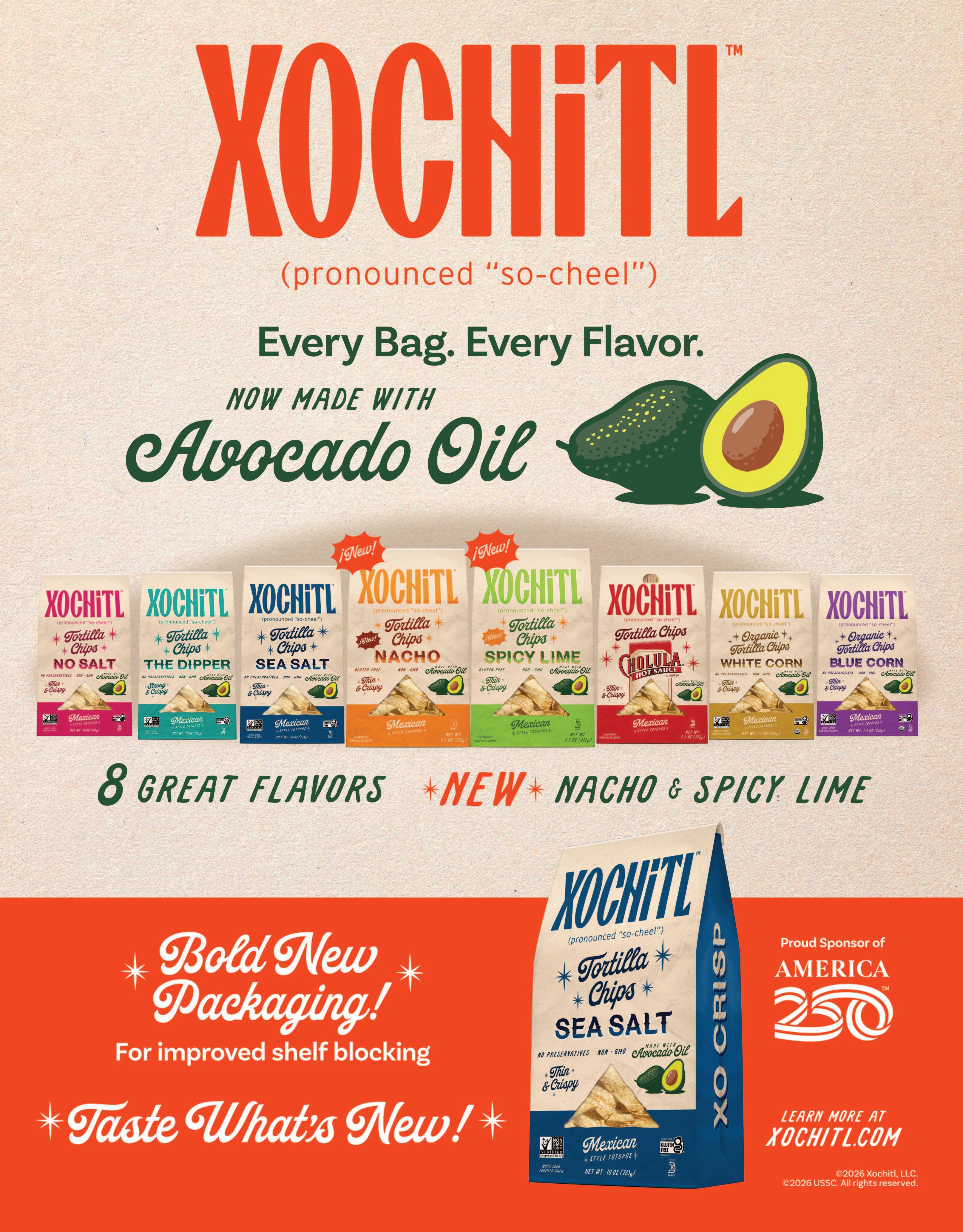


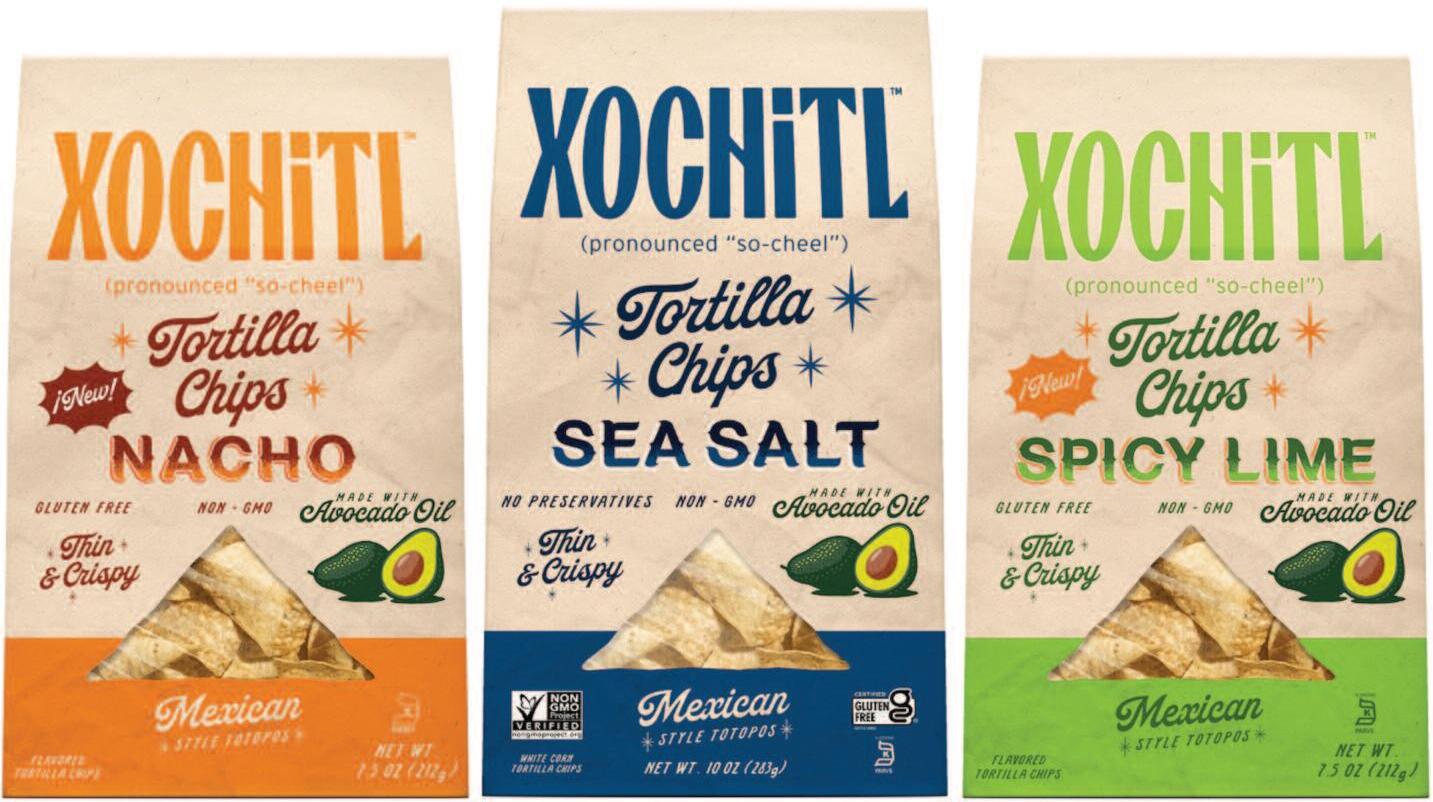
For over 30 years, Xochitl has set the standard for premium tor tilla chips –celebrated for their thin, crispy tex ture, authentic M exican craf tsmanship, and unwaver ing commitment to qualit y –wrapped up in their signature craf t paper bag As ingredient transparenc y and oil choice continue to influence purchasing decisions, Xochitl is proud to introduce the nex t evolution of its por tfolio: tor tilla chips now crafted with avocado oil.
As consumers become increasingly ingredient-aware, oils have taken center stage in purchasing decisions Avocado oil has emerged as a favorite for its clean profile, high smoke point and neutral flavor – qualities that align seamlessly with Xochitl ’s commitment to qualit y without compromise. For the brand, the decision was a natural ex tension of its philosophy, not a depar ture from it
Xochitl’s chips are crafted using timehonored methods, beginning with whole corn kernels steeped in limewater, ground into masa and rolled thin for a light, crispy tex ture The introduc tion of avocado oil enhances this process without altering what has always set Xochitl apar t: authentic corn flavor, satisfying crunch and a chip designed to complement – rather than overpower –fresh salsas, guacamole, and wholesome dips
From a retail and categor y perspec -
tive, the transition reflec ts broader momentum toward recognizable, trusted oils Consumers are reading labels more closely than ever, and avocado oil has become a clear signal of modern quality across natural, conventional and specialt y channels B y adopting avocado oil, Xochitl strengthens its relevance with today ’s shopper while honor ing the brand equity it has built over three decades
M ost impor tantly, the upgrade required no compromise. Xochitl chips are still made for the moments that br ing people together – from ever yday snacking to social get togethers with friends and family The move to avocado oil simply reinforces the brand ’s longstanding promise: premium ingredients, authentic craftsmanship and chips that taste as good as the moments they ’re par t of
As the tor tilla chip categor y continues to evolve, Xochitl’s shif t to avocado oil represents a thoughtful step for ward –one that balances tradition with progress and meets today ’s expec tations without losing sight of what matters most. You can find Xochitl ’s new tor tilla chips made with avocado oil on shelves, along with its new Spic y Lime and Nacho flavors
For more information, go to w w w xochitl com or stop by booth #3454
AdvoCare International, LLC, a leader in health and wellness products, introduced Spar k® Banana Taffy, a playful, nostalgiapacked limited-time flavor that tastes like your favor ite childhood candy with the clean energy you count on Released on April Fool ’s Day, this flavor may sound like a joke, but trust us it ’s the real deal
Spark Banana Taffy brings a smooth,
Oh!asis™ has long been recognized for delivering premium tropical confections that transpor t consumers to a paradise getaway with ever y bite While the brand has evolved through its rebrand, its promise remains unchanged: deliciously unique tropical indulgences that per for m on shelf and resonate with shoppers
Today, Oh!asis enters its
bet ween Las Olas Confec
n e rship reinforces the brand’s o p e r a t i o n a l fo u n d a t i o n w h i l e p re s e r v i n g e ve r y -
t h i n g c o n s u m e r s a l re a d y
love
sweet, candy-shop t wist to the classic Spark formula, delivering the same trusted blend of vitamins, amino acids and mental-focus suppor t. Banana Taffy is a flavor that feels like digging into your Halloween stash or visiting the corner store with a pocketful of change It ’s bright, it ’s fun and even dentist-approved “Banana Taffy is one of those flavors
Ye a r h o n o r s at i t s l a u n c h , t h e p ro d u c t
has continued to grow thanks to its unm i s t a k a b l e p ro f i l e : f re s h c a s h e w s b l e n d e d i n t o a c r u n c hy b u t t e r a n d brown sugar base with hints of sea salt and coconut. B est descr ibed as a tropical t wist on br ittle, it is truly differentiated in a crowded categor y.
As par t of this new par tnership, the
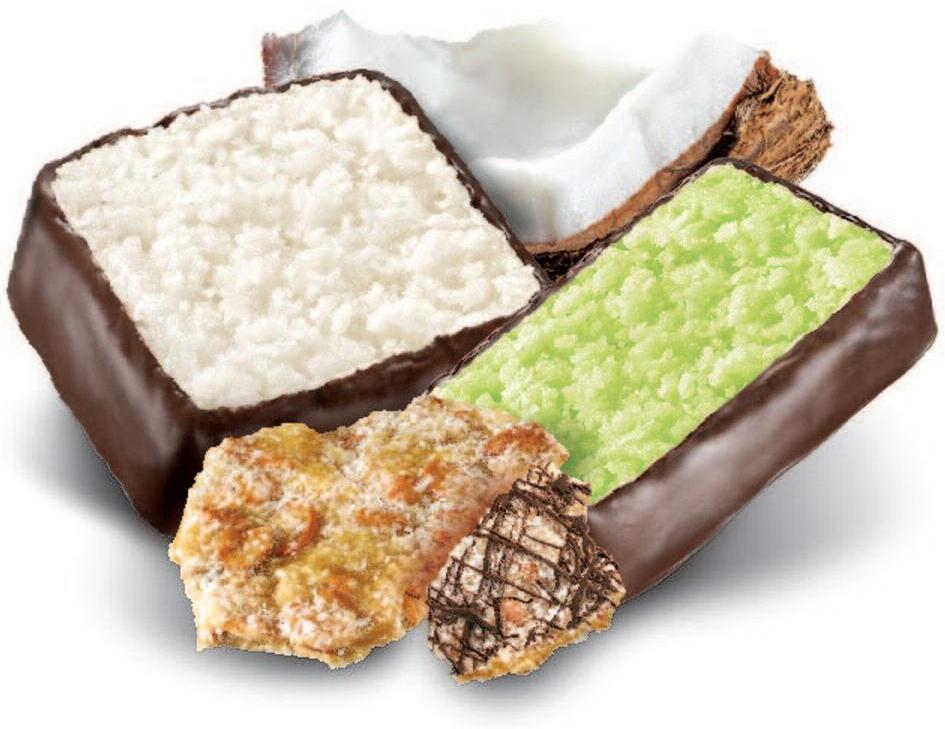
The produc ts themselves remain exac tly as fans remember them Oh!asis
Coconut Patties continue to feature the or iginal, award-winning recipe – extraordinarily creamy shredded coconut dipped in a rich dark chocolatey coating that is unmatched in the mar ketplace. The result is a timeless confec tion that delivers indulgence, escape and strong repeat purchase appeal
One area of focused growth is snacks i z e d C o c o n u t Pa t t i e s D e s i g n e d f o r
m o d e r n s n a c k i n g o cc a s i o n s, t h e s e i n -
d i v i d u a l l y w r a p p e d p o r t i o n s d e l i v e r
j u s t 1 0 0 c a l o r i e s p e r p i e c e , m e e t i n g
co n s u m e r d e m a n d fo r p e r m i s s i b l e i n -
d u l g e n ce a n d p o r t i o n - co nt ro l l e d co n-
v e n i e n c e Fo r r e t a i l p a r t n e r s , t h e
f o r m a t c r e a t e s a d d i t i o n a l c o n s u m p -
t i o n o c c a s i o n s , s u p p o r t s p r e m i u m
p r i c i n g a n d o f f e r s s t r o n g o n - t h e - g o
a p p e a l – d r i v i n g i n c r e m e n t a l s a l e s
w i t h o u t s a c r i f i c i n g i n d u l g e n ce.
T h e s a m e p h i l o s o p hy a p p l i e s t o
Oh!asis Kettle K runch, for mer ly k nown
a s Co c o n u t I s l a n d Co c o n u t C a s h e w
Crunch The recipe remains unchanged
– a n d fo r g o o d re a s o n S i n c e e a r n i n g
b o t h s o f i ™ a n d M I N PA Pro d u c t o f t h e
that instantly transpor ts you back to childhood,” said Christina Helwig, Chief Executive O fficer of AdvoCare “I t ’s nostalgic, it ’s unexpec ted and launching it on April Fool’s Day just made sense The best par t is that it ’s no joke – it really does taste like candy while deliver ing the clean energy Spark is k nown for.”
From early-morning hustle to late -day slumps, Spar k Banana Taffy gives you that candy-shop lift you want minus the sugar crash
Oh!asis por tfolio will also expand to include Zeno’s Wor ld ’s M ost Famous Taffy™ – a produc t with decades of consumer recognition and proven demand
The addition brings a complementar y, high-velocit y confec tion to the lineup while maintaining the same commitment to quality, consistenc y and indulgence
For chains, distributors and manufactur ing par tners, this nex t phase of Oh!asis represents continuit y with added capabilit y Proven for mulas are protec ted, brand equit y is respec ted and the infrastructure behind the brand is strengthened to suppor t reliable execution, consistent quality and long-term growth
As Oh!asis looks ahead, priorities remain clear : suppor t retail sell-through, invest responsibly in brand and operations, and collaborate with par tners who value dependabilit y and shared success.
For more information, go to www lasolas brands com, call 407 816 9944, email orders@lasolasbrands com or stop by booth #2061
Each ser ving of Spar k provides 120mg of caffeine, like a small cup of coffee, along with a powerhouse blend of vitamins and minerals
Spark Banana Taffy is available now at AdvoCare com in both 42-serving canisters and 14-stick packs, but only for a limited time. Grab yours before this sweet throwback disappears – no fooling.
For more information, go to w w w advocare com

Behind ever y great confec tion is a manufac tur ing par tner who understands that quality, consistenc y and execution are non-negotiable For decades, Las Olas Confec tions and Snacks has built its reputation on exac tly that foundation – delivering premium confec tions that meet the highest standards while per for ming reliably at scale.
Las Olas has long been k nown for craf ting beloved brands suppor ted by superior ingredients, outstanding freshness and uniquely distinc tive flavors What many par tners may not realize is that the same discipline behind these iconic brands has also made Las Olas a trusted private label and co-manufacturing par tner for premium confec tion programs nationwide
Today, Las Olas operates across three specialized manufac turing facilities totaling 30,000 square feet in Daytona Beach, Florida – the World’s Most Famous Beach® This multi-facility footprint allows for focused produc tion environments, operational flexibility and purposeful separation of processes All finished products ultimately run through a centralized, SQF Level 2–cer tified facility, ensuring consistent food safety standards, quality control and regulator y compliance across ever y program
are comprehensive and turnkey Operations suppor t ex truding and enrobing, molding, k itchen and table produc tion, taffy manufac tur ing, and high-speed pack aging lines designed to meet today ’s retail standards Confection produc tion includes br ittle and toffee,
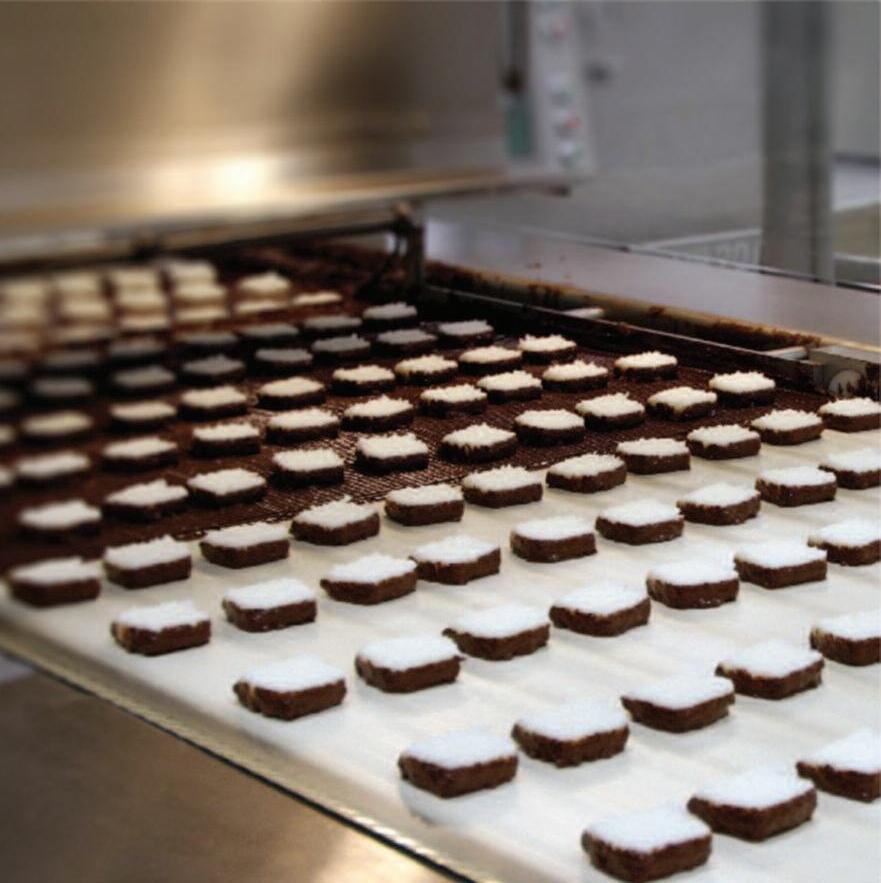
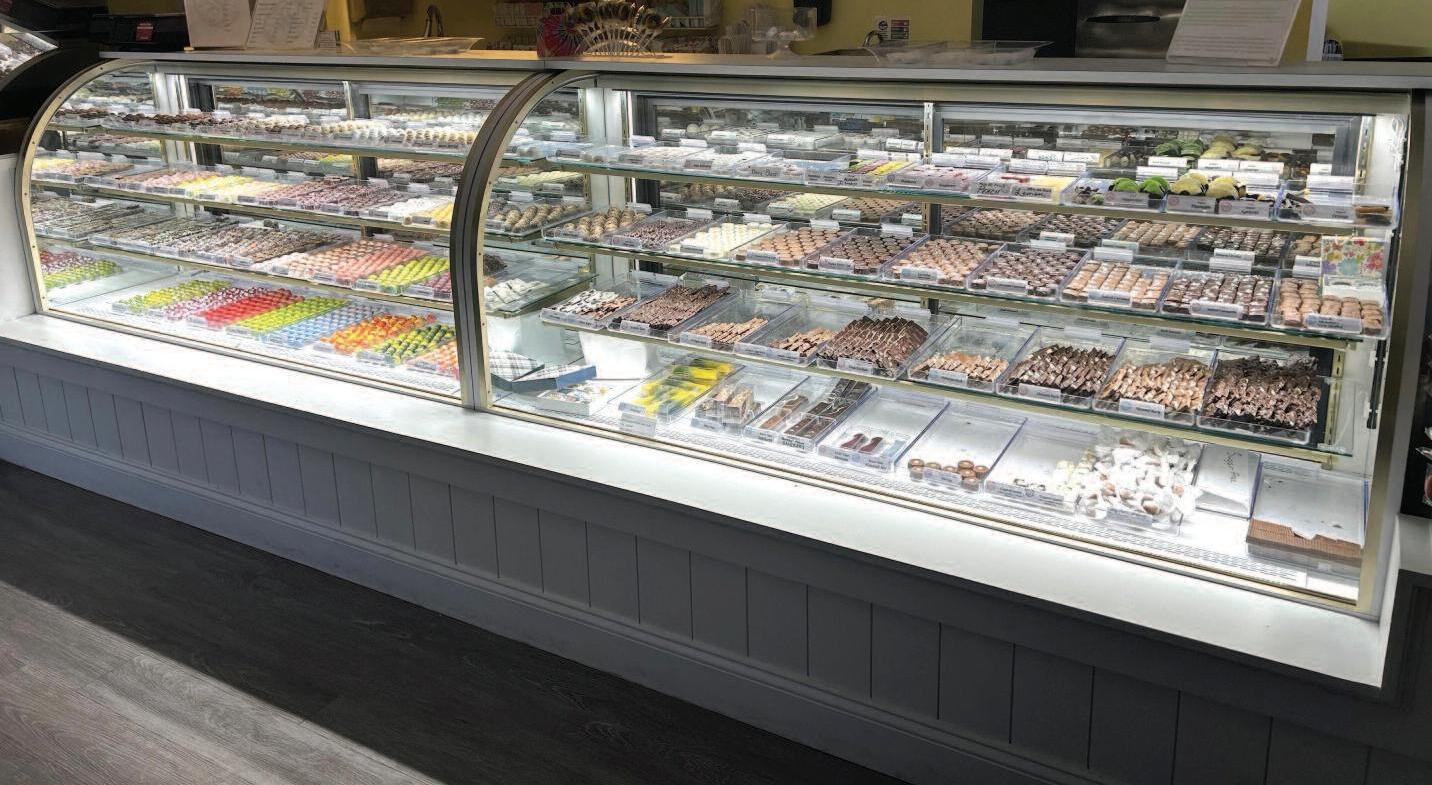
Las Olas cur rently produces confections for its own por tfolio of brands, including Oh!asis™ (for mer ly Anastasia® and Coconut Island®), Williams & B ennett®, as well as a wide range of private label programs. The por tfolio has also expanded to include Zeno’s Wor ld ’s Most Famous Taffy™, adding a high-velocity, heritage confection with decades of proven consumer demand This blend of branded and private label produc tion ensures a deep understanding of both brand stewardship and retailerspecific requirements.
Manufacturing capabilities at Las Olas
fudge, French and European-style meltaway truffles, molded chocolates, buttercreams, bars, compound and chocolate bark , and traditional taffy Pack aging capabilities include flow wrap, form-sealed bags, stand-up gusset pouches, paper board boxes and plastic containers – providing flexibility across for mats, channels and pr ice points. Capacities are scalable, with selec t processes capable of producing tens of thousands of units per eighthour shif t, mak ing Las Olas a strong fit for both emerging pr ivate label programs and national rollouts
As Las Olas continues to invest in its people, processes and par tnerships, the focus remains clear: dependable execution, transparent collaboration and long-ter m success for ever y par tner ser ved
For more information, go to w w w lasolas brands com, call 407 816 9944, email orders@lasolasbrands.com or stop by booth #2061.
Tastee Apple I nc , a long-standing leader in the confec tioner y and specialt y treats industr y, announced its strategic acquisition of Ar t of Sucre LLC, the viral cotton- candy brand k nown for its signature Cotton Candy Glitter Bomb dr ink toppers and elevated sugar creations. The acquisition mar ks a significant milestone for both of the Ohio -based companies, strengthening their shared vision to bring innovative,
joy-filled products to consumers nationwide
As par t of the transaction, Ar t of Sucre
Founder Emily Harpel will remain with the company as Chief Brand O fficer, continuing to lead produc t innovation, brand creativity and social stor ytelling. Harpel’s role ensures that Ar t of Sucre’s distinctive voice, elevated aesthetic and highly engaged digital presence remain core to its growth strategy under Tastee
In the world of gourmet chocolate, presentation may capture attention, but proper temperature and humidity control secure the sale. Alternative Air LLC has specialized in climate - controlled display cases designed specifically to protec t high- end chocolates while enhancing their visual appeal For chocolatiers and specialt y retailers, this balance bet ween aesthetics and environmental precision is essential for maximizing profits and minimizing produc t loss.
Chocolate is highly sensitive to environmental changes When exposed to
image that gour met brands wor k hard to build.
Alternative Air addresses these challenges with climate - controlled displays engineered to maintain optimal chocolate temperatures between 63 degrees Fahrenheit and 68 degrees Fahrenheit, along with carefully regulated humidity levels This stabilit y ensures that products maintain their shine, flavor integrity and overall appearance from the moment they are placed in the case to the moment they are sold
The financial impac t of proper environmental control is significant When chocolate maintains its visual per fection, it commands premium pricing and strengthens customer confidence. Shiny, well-preser ved truffles and bars
Apple’s expanding umbrella
Founded in Ohio more than five decades ago, Tastee Apple Inc has built a strong reputation for deliver ing the highest quality caramel apples and seasonal treats across major retailers nationwide. With this acquisition, Tastee Apple fur ther accelerates its growth strategy by expanding into the emerging premium confec tion and beverageenhancement categories
The acquisition reflec ts both brands’ commitment to innovation, operational
are far more likely to drive impulse purchases than produc ts showing signs of bloom or temperature stress. Consistent presentation reinforces a brand’s quality standards and encourages repeat business
Equally impor tant is the reduc tion of produc t waste Temperature fluc tuations in standard refrigeration or uncontrolled retail environments often lead to spoilage, shr ink age and unsellable inventor y. By investing in precision- controlled display cases, retailers dramatically ex tend produc t longevit y and reduce costly losses O ver time, this translates into improved margins and a stronger return on investment
Alter native Air ’s approach demonstrates that climate control is not merely a technical feature; it is a strategic business tool. B y combining elegant glass designs with advanced environmental engineering, the company helps gourmet chocolate retailers protec t their inventor y, enhance produc t presentation and create an exceptional in-store experience
I n a competitive luxur y mar ket, protec ting qualit y is protec ting profit. Through precise temperature and humidit y control, Alter native Air enables chocolatiers to maintain produc t excellence, minimize waste and ultimately maximize sales per formance
For more information, go to w w w .aafixtures.com or stop by booth #3773.
excellence and continued expansion into new retail and exper iential channels By combining Ar t of Sucre’s moder n, social-first approach with Tastee Apple’s robust manufac turing and distr ibution capabilities, the companies aim to accelerate product development and increase availability of fan-favorite offerings across the United States The transac tion closed in Q4 2025
For more information, go to w w w ar tofsucre com

cadootz!, the fast- growing, better-foryou k ids’ snack brand founded by food entrepreneur, creator, cook book author and Co - Chief Executive O fficer of cadootz! R achel Mansfield and her husband and Co - Chief Executive O fficer of cadootz! Jordan Carpenter, announced it has raised $3M+ in seed funding to fuel the brand’s nex t phase of growth
The round was led by Selva Ventures, the early-stage fund that invests in top better-for-you brands such as M id-Day Squares and Grüns Selva Ventures was founded by Kiva Dick inson, who is also a Co -Founder of cadootz The round also had par ticipation from additional strategic investors aligned with the brand ’s mission to redefine better-foryou snack ing for families.
Since launching direc t-to - consumer in Januar y 2026, cadootz!’s debut line of crackers has seen immediate demand, with its first produc tion run selling out in under t wo hours – reflec ting strong early produc t-market fit and the enthusiasm of R achel’s engaged community cadootz! was created to solve a familiar challenge for modern families: finding snacks that kids love and parents feel good about The brand’s debut line of savor y crackers – available in Cheddar, Sea Salt, and R anch – delivers 5 grams of protein per ser ving and is cer tified organic, gluten-free, kosher, seed oil-free and made without gums, emulsifiers, artificial dyes or natural flavors. cadootz! is also the first cracker to receive the Clean
Label Project Purity Award cer tification
The newly raised capital will suppor t cadootz!’s upcoming national retail launch in June 2026, in par tnership with a major, to -be -announced retailer, which will make it easier for busy families to find cadootz! where they already shop The retail launch will also debut a new, family-friendly pack-type
“cadootz! has all the mak ings of a categor y- defining, generational brand,” says Kiva Dick inson, Founder & Managing Par tner at S elva Ventures and CoFounder of cadootz! “ We believe cadootz! will become the ultimate shor thand for trust in k ids’ snack ing: a moder n- day seal of approval for what families should feel good about R achel and Jordan aren’t building a produc t, they ’re building the platfor m that will set the standard across ever y for mat, ever y occasion and ever y pantr y ”
D evelopment of cadootz! began in 2023, drawing on R achel ’s more than decade -long career in the better-foryou food space and a deeply engaged community of over 1 5 million followers Alongside building cadootz! R achel is the author of Just The G ood Stuff and the for thcoming M ore Please! cookbooks, and together with Jordan, cofounded gr t sht ventures, through which they have invested in more than 25 emerging consumer brands
For more information, go to w w w.cadootz.com.
I ndulgence is evolving, with layers of crunch and chew r ising to the top of what consumers crave Backed by data, Datassential ’s 2026 Trends R epor t names tex ture one of the year ’s top “New Classics,” reshaping how people think about indulgence Now that shift is hitting the freezer aisle: Wells Enterpr ises and Fer rero Nor th Amer ica launched Butter finger® Ice Cream Candy Bar, Baby Ruth® Ice Cream Candy Bar and 100 Grand® Ice Cream Candy Bar nationwide, bringing candy bar tex ture to real ice cream These multisensor y moments are defining snack abilit y across
food culture, social channels and ever yday moments.
Each ice cream bar is built around the signature textural identity that has made its candy counterpar t a cultural icon:
• Butter finger Ice Cream Candy Bar features r ich Butter finger-flavored ice cream layered with the brand ’s iconic crispy peanut-butter crunch and blanketed in a smooth chocolatey coating. The crispety, crunchety peanut-butter y one - of-a-k ind experience hits immediately, and doesn’t quit
• Baby Ruth Ice Cream Candy Bar offers chew y nougat-flavored ice cream
Chicago Impor ting Company® is debuting Nordic Sweets® Sweet Marshmallow Santas at this year ’s show The launch brings the momentum of the Swedish candy craze into the Christmas season with a festive candy rooted in authentic holiday tradition
As Swedish candy continues to capture the attention of U.S. shoppers, Nordic Sweets Sweet M arshmallow Santas give retailers a way to car r y that excitement into the 2026 holiday season with a produc t that feels both on-trend and rooted in tradition I nspired by the Swedish sk umtomtar tradition, which literally means “foam Santas,” the candies reflec t a beloved par t of Sweden’s Chr istmas culture Pink-and-white Christmas foam candies have been par t of the season since the 1930s, and the Santa-shaped st yle recognized today took hold in the 1960s The tradition is even marked by Skumtomtens Dag, or “Foam Santa Day,” obser ved on December 21, when skumtomtar are enjoyed as a festive treat and sometimes used to decorate holiday desser ts.
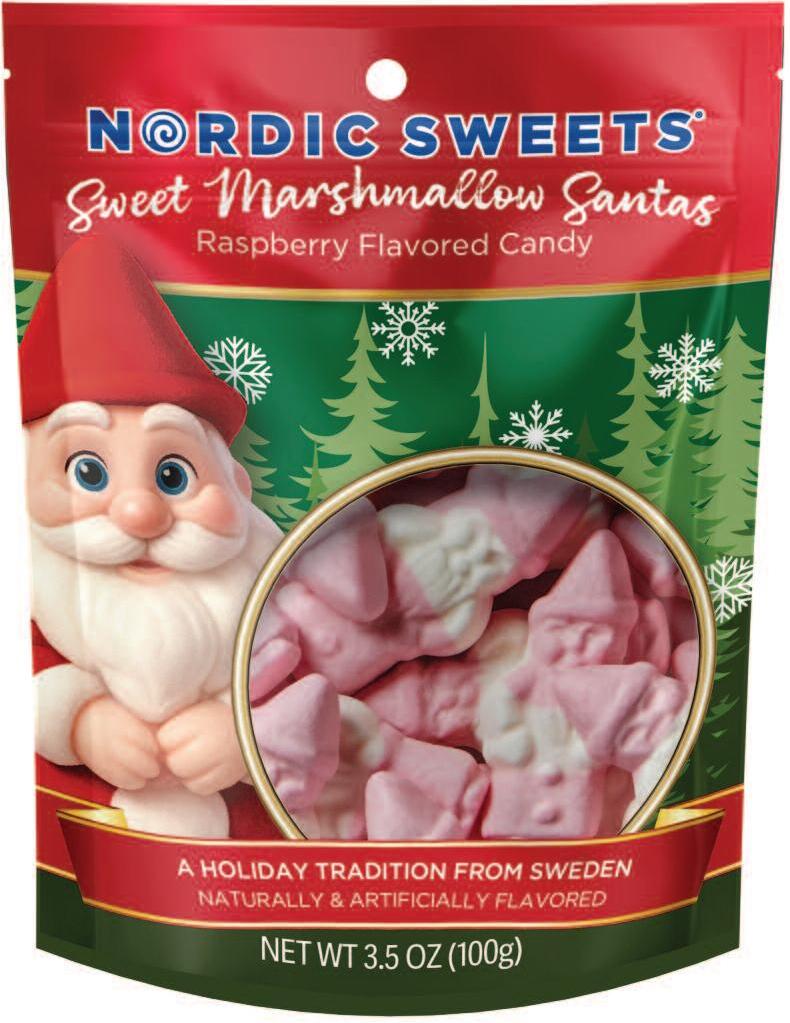
bring that energy into Christmas with a product that feels both fresh and rooted in tradition,” said Nanc y E Fino, Vice President of M ar keting at Chicago I mpor ting Company “Small in stature but big on raspber r y flavor, chew y tex ture and festive char m, they are a playful expression of Swedish holiday tradition and an easy way for shoppers to enjoy a little seasonal treat.”
Chicago Impor ting Company is exhibiting and offering samples of Nordic Sweets Sweet M arshmallow Santas at booth #3104 during the show, giving retailers, distributors and industr y par tners the oppor tunity to see and taste the produc t firsthand.
Soft. Chewy. Authentic. Charming. Impor ted from Sweden, Nordic Sweets Sweet M arshmallow Santas are raspberr y-flavored marshmallow candies in pink and white, with the white ser ving as a nod to Santa’s beard Their Scandinavian-st yle silhouette with a pointed cap gives them a distinc tive look that makes them especially well-suited for holiday candy sets, gift-driven merchandising and seasonal displays that invite discover y and delight
“Swedish candy continues to generate excitement, and these Sweet Marshmallow Santas give retailers a way to
packed with whole roasted peanuts and ribboned with flowing caramel, all encased in a decadent chocolatey shell Ever y bite delivers a distinc t and evolving sensor y experience – chew layered on crunch layered on caramel
• 100 Grand Ice Cream Candy Bar delivers luxuriously creamy caramel-flavored ice cream embedded with crispy crunchies and finished with an additional layer of rich caramel beneath a chocolatey shell that makes ever y bar a com-
Founded in 1992 by Lars B er ntson, Chicago I mpor ting Company is a pr ivately held impor ter and distr ibutor based in subur ban Chicago, offer ing a curated por tfolio of specialty foods and confec tions sourced primarily from the Nordic region and select European markets to retailers and distributors nationwide As a long-standing member of the Specialty Food Association and the National Confec tioners Association, the company regularly exhibits at major industr y tradeshows and distr ibutor events throughout the year. The company ’s SQF Edition 9 Cer tification reflec ts its commitment to food safet y, quality and regulator y compliance
For more information, go to w w w chicagoimpor ting com or stop by booth #3104
plete sensor y event from first bite to last. Butter finger Ice Cream Candy Bar, Baby Ruth Ice Cream Candy Bar and 100 Grand Ice Cream Candy Bar are available in the frozen treat aisle at retailers nationwide Each flavor is sold in a pack of six at a suggested retail price of $5 99 All three bars are made with real ice cream and contain peanuts.
For more information, go to w w w wellsenterprisesinc com
The O regon Hazelnut Mountain
Bar S uccess S tor y
I n t h e c o m p e t i t i v e c o n f e c t i o n e r y i n -
d u s t r y, s p e e d to l a u n c h n e w p ro d u c t s
c a n m a k e a l l t h e d i f f e r e n c e B r o w n &
H a l e y, t h e i c o n i c m a k e r o f A l m o n d
R o c a ® a n d t h e b e l ove d M o u nt a i n B a r ® ,
r e c e n t l y d e m o n s t r a t e d h o w s t r a t e g i c
p a r t n e r s h i p s c a n d r a m a t i c a l l y c o m -
p re s s d e ve l o p m e nt t i m e l i n e s fo r i n n o -
v a t i v e h a z e l n u t c o n fe c t i o n s T h e n e w
O re g o n H a ze l n u t M o u nt a i n B a r, s e t to hit stores by August 2026, moved from c o n c e p t t o p r o d u c t i o n i n u n d e r f o u r
m o n t h s – a r e m a r k a b l e a c h i e v e m e n t t h at u n d e
g o n ( H G O)
The journey began over 20 years ago when Troy Johnson, now leading HGO, first approached Brown & Haley Multiple attempts over the years faced challenges related to supply consistenc y and scale. By 2024, however, HGO had transformed Under new ownership that integrated it with George Pack ing Company and Nor thwest Hazelnut Company, HGO emerged as a robust par tner with the capacity to meet major manufac turers’ needs As one of the wor ld ’s most efficient hazelnut processing companies, with a strong focus on valueadded products such as roasted kernels, diced nuts, pastes and pralines, HGO brought both reliabilit y and culinar y versatility to the table
When Johnson re - engaged with Brown & Haley, the timing was right He not only highlighted Oregon hazelnuts’ distinc tive r ich, butter y flavor-profile that complements chocolate beautifully, but also the scale to suppor t new produc t launch success To address internal concerns about line changeovers and new allergens, HGO proposed – and delivered – a low-r isk approach: full par tnership suppor t including R&D assistance, marketing materials and hazelnut products. The result? The recipe was
per fec ted on the ver y first attempt, pack aging and labeling were finalized quick ly and produc tion wrapped up in just three months.
This rapid success illustrates a key advantage for confec tioner y companies: par tner ing with HGO can significantly lower the time and risk associated with launching new hazelnut-based produc ts HGO’s integrated capabilities provide confec tioners with ready-to -use ingredients, technical exper tise and promotional suppor t that streamline development from ideation through commercialization I nstead of navigating supply shor tages or lengthy internal testing alone, manufacturers gain a true collaborator that accelerates ever y stage of the process
Confec tioner y professionals seek ing similar advantages are encouraged to visit the HGO booth #7002 at the Supplier ’s Showcase at this year ’s Sweets & Snacks Expo Learn how HGO’s exper tise and resources can accelerate your nex t hazelnut innovation While there, be sure to stop by the Brown & Haley booth to sample the new Oregon Hazelnut Mountain Bar. I nsiders are already calling it one of Brown & Haley ’s most successful innovations in decades, thanks to the exceptional taste and luxur ious tex ture delivered by premium Oregon hazelnuts
In today ’s fast-paced market, the right par tner doesn’t just supply ingredients, it helps you get to market faster. HGO is proving that long-ter m relationship building combined with modern scale and suppor t can tur n decades of persistence into success in a matter of months
For more information, go to w w w hazelnut com, call 503 432 1925, email marketing@hazelnut.com or stop by booth #7002.
I n today ’s rapidly evolving candy market, consumers are look ing for more than just sweetness – they want bold, exciting flavor exper iences. That shif t has opened the door for brands that push boundaries and deliver something truly different That ’s exac tly what the team behind Chomis G omis set out to do
n d y b y
c o m b i n i n g p r e m i u m g u m m i e s w i t h
c h a m o y – a s a v o r y, t a n g y, s w e e t a n d
s p i c y s a u c e r o o t e d i n M e x i c a n c u l -
t u r e W h a t s t a r t e d a s a n e x p e r i m e n t
q u i c k l y g r e w i n t o a t h r i v i n g b r a n d ,
g a i n i n g t r a c t i o n a c r o s s m u l t i p l e
s t a t e s a n d r e t a i l e n v i r o n m e n t s . E y e -
c a t c h i n g p a c k a g i n g p a i r e d w i t h u n -
f o r g e t t a b l e f l a v o r h a s h e l p e d
C h o m i s G o m i s s t a n d o u t i n a
c r o w d e d m a r k e t , d r i v i n g s t r o n g r e -
p e a t p u r c h a s e s a n d c u s t o m e r l o y -
a l t y
As the brand continued to grow, one thing became clear : consumers weren’t just craving bold flavor – they were chasing intensity
That insight led to the creation of Super Sours
B u i l t b y t h e s a m e t e a m b e h i n d
C h o m i s G o m i s , S u p e r S o u r s w a s d e -
v e l o p e d t o d e l i v e r a c o m p l e t e l y d i f -
f e r e n t , h i g h - i m p a c t e x p e r i e n c e .
F o c u s e d o n e x t r e m e s o u r p r o f i l e s
a n d v i b r a n t , e n e r g e t i c b r a n d i n g , t h e
l i n e w a s d e s i g n e d t o c a p t u r e a t t e n -
t i o n o n s h e l v e s a n d c o n n e c t w i t h a
n e w w a v e o f c o n s u m e r s s e e k i n g m o r e i n t e n s e f l a v o r s e n s a t i o n s . T h e r e s u l t i s a p r o d u c t t h a t n o t o n l y s t a n d s o u t v i s u a l l y, b u t a l s o d e l i v e r s a p o w e r f u l p u n c h t h a t k e e p s c u st o m e r s c o m i n g b a c k To g e t h e r, C h o m i s G o m i s a n d
S u p e r S o u r s o f f e r r e t a i l e r s a c o mp e l l i n g c o m b i n a t i o n o f t w o f a s tg r o w i n g f l a v o r c a t e g o r i e s : s w e e t a n d s p i c y , a n d e x t r e m e s o u r. W h i l e e a c h b r a n d h a s i t s o w n i d e n t i t y a n d a u d i e n c e , b o t h a r e d r i v e n b y t h e s a m e c o m m i t m e n t t o q u a l i t y, i n n ov a t i o n a n d s t r o n g s e l l - t h r o u g h a t r et a i l B e y o n d t h e b r a n d e d p r o d u c t l i n e s, t h e co m p a ny a l s o o f fe r s p r i v a te l a b e l a n d c u s to m c a n d y p ro gra m s fo r q u a l i f i e d p a r t n e r s , p r o v i d i n g e n d - t oe n d s u p p o r t f ro m s o u rc i n g a n d f l avo r d e v e l o p m e n t t o p a c k a g i n g a n d p r od u c t i o n A s d e m a n d c o n t i n u e s t o g r o w f o r u n i q u
(Super Sours)

R AW Nutr ition, the fast- growing spor t nutr ition brand that combines unmatched quality with cutting- edge formulation, launches RAW Protein Bars, a candy-bar-inspired treat delivering bet ween 18-21 grams of protein and just 1-5 grams of added sugar across four indulgent flavors
Protein bars have long forced consumers to choose bet ween taste and macros Many deliver solid nutrition but fall shor t on flavor, while traditional candy bars satisfy cravings with high sugar and minimal protein. RAW Protein Bars are designed to eliminate that tradeoff
mid-af ter noon slump, late -night treat Each bar delivers high- qualit y protein with minimal added sugar and balanced macros, satisfying a sweet tooth without compromising per for mance goals.
The launch includes four candy-inspired flavors:
• Peanut Butter Fudge
• Double Fudge Brownie
• Salted Caramel Pretzel
• Dark Chocolate Cook ie Butter
RAW Protein Bars will be available in 4-pack (SRP: $11.49) and 12-pack (SRP: $34.99) formats.
About RAW Nutrition
McKee Foods announced the launch of its latest addition under the iconic Little D ebbie® brand: S of t Baked Cook ies. These decadent, baker y-style treats are designed to meet the growing demand for premium, por table snacks that deliver the gour met qualit y today ’s consumers crave
Available in t wo timeless var ieties –Chocolate Chip and Peanut Butter –each 3- ounce cook ie is individuallywrapped to provide a substantial and satisfying snack for any occasion. These new offerings bridge the gap between cafe - quality baked goods and the convenience of a grab -and- go format
the rich, butter y-sweet dough
The Peanut Butter Cook ie is for mulated with real peanut butter for a deep, authentic nutt y flavor. These sof t-textured cook ies mirror the chocolate chip var iet y with a beautiful golden-brown finish and a traditional cracked aesthetic, maintaining a tender interior and satisfying chew that peanut butter lovers will appreciate
c r a s h
“Our goal was simple,” said D om Iacovone, Co -Founder and Chief Executive O fficer of R AW Nutr ition
“M ake a protein bar that people would actually choose, not just over other protein bars, but over candy bars Not because they ‘should,’ but because it ac tually tastes better We obsessed over flavor first, then built the macros to match The result is something you’ll get addic ted to but feel good about eating.”
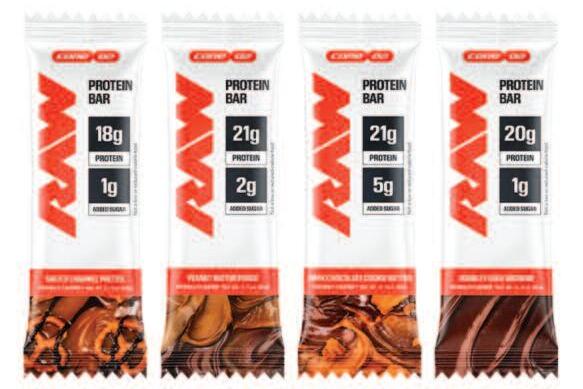
RAW Nutrition is led by Dr Domenic Iacovone, six-time Classic Physique M r Olympia Champion Chr is Bumstead, and renowned bodybuilding coach Matt Jansen. Since its inception in 2019, R AW Nutr ition has been recognized as the No 1 fastest- growing spor ts nutr ition company by I nc 5000 and was named Brand of the Year by GNC and Vitamin Shoppe. All R AW Nutrition produc ts are made with premium, clean ingredients, free from unnecessar y fillers and additives RAW Nutrition carries the Informed-Spor t cer tification, a mark of excellence that guarantees its produc ts are rigorously tested for prohibited substances.
“Little Debbie has long been k nown for cremefilled cook ies Now we are offer ing new traditional S of t Baked Cook ies that deliver the soft, satisfying tex ture today ’s consumers want,” said Chuck Clevenger, Associate Brand Manager at McKee Foods “B y combining a baker y-st yle exper ience with the convenience of a 3- ounce individuallywrapped pack age, we’ve created a treat that is per fec t for any on-the - go snacking occasion ”
t-Baked
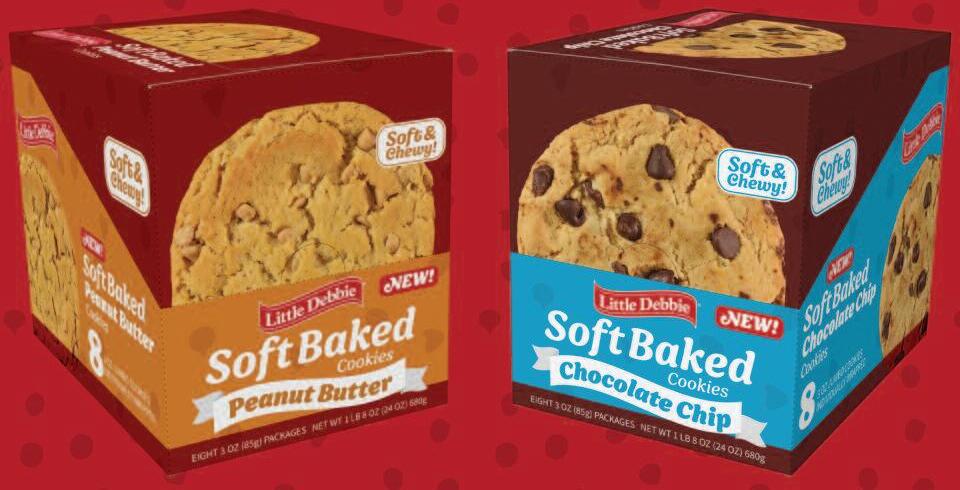
RAW Protein Bars are designed to fit wherever cravings hit: post-wor kout,
For more information, go to w w w getrawnutrition com
The Little D ebbie S of t Baked line focuses on a “fresh-from-the -oven” appeal, characterized by a moist, tender interior and a per fec tly chew y bite. The Chocolate Chip Cookie features a light goldenbrown appearance with a classic cracked sur face Semi-sweet chocolate chips are distributed evenly to ensure a smooth chocolate flavor in ever y bite of

As the demand for high- qualit y, por table treats continues to rise, Little D ebbie S of t Baked Cook ies are positioned to become a new favorite for retailers and fans alike
For more information, go to w w w littledebbie com

Hidden Valley Ranch (Cont ’d. from p. 1)
of M ar keting for H idden Valley R anch
“Each innovation delivers a distinc t flavor experience while staying true to the quality, flavor and versatility that define Hidden Valley R anch.”
The three new innovations include:
• H idden Valley R anch with Avocado Oil: The ranch flavor fans love, made
expec tations have shifted dramatically Gourmet chocolates and ar tisan sweets are no longer viewed as simple treats –they are premium produc ts that represent craftsmanship, quality ingredients and elevated presentation R etailers now require display cases that enhance brand image while preser ving delicate products at ideal temperatures Alternative Air responded by engineer ing climate - controlled chocolate showcases that maintain consistent conditions between 63 degrees Fahrenheit and 68 degrees Fahrenheit, ensur ing produc t integr it y without compromising aesthetics
with good fats from 100% avocado oil
This new gluten-free condiment delivers a rich, tangy taste with less than 100 calor ies per ser ving and no soy or canola I t ’s the per fec t creamy addition for salads, bowls, pizza, chicken and more.
• YumYum R anch: The ultimate flavor mashup I nspired by the teppanyak i restaurant exper ience, this unique
condiment fuses the creamy richness of butter milk and signature ranch spices with the sweet and tangy notes inspired by YumYum sauce I t ’s the per fec t pairing for gr illed meats, cr ispy veggies, seafood and rice bowls
• Parmesan R anch Seasoning: This new seasoning adds a savor y, cheesy boost to a wide var iet y of foods, including pasta, chicken and vegetables, empow-
ering home cooks to effor tlessly elevate ever yday meals and explore new culinar y creations
The new H idden Valley R anch produc ts are available at major retailers nationwide, with YumYum R anch exclusively at Walmar t.
For more information, go to w w w hiddenvalley com
As moder n retail design moved toward minimalist layouts, clean lines and open- concept spaces, bulky equipment
Wisconsin Cheese Company (Cont ’d. from p. 1)
a c ro s s t h e c o u n t r y t o d e l i ve r p ro t e i n -
p a c k e d p ro d u c t s t h a t m e e t t h e d e -
m a n d s o f t o d a y ’s c o n s u m e r s, w h i l e
d r i v i n g re p e a t p u rc h a s e, m a x i m i z i n g
s h e l f s p a c e a n d a l i g n i n g w i t h re t a i l e r and categor y strategy.
This is not just your ordinar y cheese.
I t ’s 100% Wisconsin cheese, as ever y cheese item offered begins with 100% Wisconsin milk I t ’s craf ted by some of the highest quality cheesemakers in the state, with consistent flavor, tex ture, consistenc y and per for mance I ts diverse produc t lineup consists of a wide ar ray of options and flavors to satisfy consumer needs:
1. Falling for the “Lowest Price” Trap Emerging brands of ten pr ior itize the lowest per-unit pr ice, ignor ing Total Cost of O wnership ( TCO) This oversight leads to invisible margin erosion, where hidden costs – rework , expedited shipping due to delays and retailer chargebacks – destroy profitabilit y A cheap par tner often lacks the infrastruc ture to deliver consistent qualit y, leading to long-term financial bleeding
2. Neglec ting Financial and Operational Due Diligence
M any brands fail to assess a manufacturer ’s health, exposing themselves to financial contagion I f a co -packer lacks liquidit y, they may struggle to procure materials or maintain equipment, leading to sudden produc tion halts Opera-
became obsolete Alter native Air embraced this shif t by introducing sleek fused glass, cur ved glass and straight glass displays that offer unobstruc ted views and refined architec tural appeal. These contemporar y designs allow the produc t to remain the focal point while blending seamlessly into upscale boutique environments
p r o v i d e s c o h e s i v e d e s i g n e l e m e n t s
t h at c re ate a u n i f i e d, h i g h - e n d at m o s -
p h e re
I n today ’s competitive retail environ-
m e n t , c u s t o m e r e x p e r i e n c e h a s b e -
c o m e e q u a l l y i m p o r t a n t . L i g h t i n g, v i s i b i l i t y a n d p re s e n t a t i o n d i re c t l y i n -
f l u e n ce p
t r i m o p t i o n s , c o o r d i n a t e d c o u n t e r s a n d c o m p l e t e s t o r e f i x t u r e s o l u t i o n s
From display cases to point- of-sale stations and back wall units, the company Alterna
• 1- ounce Str ing Cheese and Cheese Sticks
• 1- ounce Meat Sticks
• 2- ounce Cheese Bars
• 1 75- ounce & 3 75- ounce M eat & Cheese Combo Packs
• 4- ounce & 10- ounce Cheese Curds
• 7- ounce Block Cheese
• 7-ounce Meat Sticks (7 – 1-ounce sticks)
• Shelf-Stable cheese offerings are also available
In March 2026, The Wisconsin Cheese Company introduced a full rebrand of its refrigerated cheese line, featuring refreshed pack aging that highlights its Wisconsin heritage and farm fresh positioning.
New items for 2026 include the fol-
tional due diligence is equally cr itical; blindly trusting claims without verifying cer tifications (SQF, FDA) or conduc ting facilit y audits invites regulator y noncompliance and safety risks
3. Overlooking Scalability and Flexibility
Choosing a par tner based solely on current volume creates a growth bottleneck If a manufac turer cannot scale at the pace you need, your brand risks the velocity trap: an inability to match produc tion with dynamic market demand This leads to stockouts or costly overstock ing, tying up vital capital.
4. The “Ambiguity Trap”
While aesthetics have evolved, produc t protec tion remains paramount Chocolate is highly sensitive to temperature and humidit y fluc tuations, especially in open retail environments with heavy foot traffic Alternative Air continues refining its climate - control technol-
lowing:
• 1- ounce Cheese Sticks (3 SKUs – Habanero Jack , Gouda, Pepper Jack)
• 1- ounce Meat Sticks (2 SKUs – Original, Jalapeno Cheddar)
• 8- count Caddy Display is Available to suppor t the launch
P r o d u c t i o n
t a k e s p l a c e i n a 4 2 , 0 0 0 s q u a r e f o o t ,
U S DA i n s p e c t e d , S Q F Le v e l 2 c e r t i f i e d
f a c i l i t y, s u p p o r t i n g b e s t - i n - c l a s s f o o d
s a f e t y s t a n d a r d s , r e l i a b l e s u p p l y a n d
c a p a c i t y f o r c o n t i n u e d g r o w t h . N a -
t i o n a l d i s t r i b u t i o
Poor produc t specifications create
to qualit y drif t, costly disputes and avoidable produc tion delays.
5. Ignoring Cultural Alignment
Par tnerships of ten fail due to culture clash, where differences in communication styles and transparency erode trust I f a manufac turer won’t operate as an ex tension of your team, ensuring t woway communication and data transparenc y, the relationship will devolve into transac tional struggle
CoPack Connec t reduces sourcing guesswor k As the only RFQ tool endorsed by the Contract Pack aging Association, it leverages a proprietar y AI-RFQ
ogy to ensure stable internal conditions despite external variables – successfully merging engineer ing precision with modern design trends.
Proudly manufac tured in New Jersey, Alter native Air wor ks direc tly with clients, offer ing personalized ser vice and competitive pricing By staying attuned to market shifts and anticipating design trends, the company has positioned itself as a leader in high- end gourmet display innovation
As the luxur y sweets mar ket continues to grow, Alter native Air remains committed to setting the standard in both form and func tion – proving that great design and per fec t preser vation can go hand in hand
For more information, go to w w w .aafixtures.com or stop by booth #3773.
As consumer demand for protein-rich, real ingredient snacks continues to grow, dair y remains an impor tant par t of the conversation According to USDA guidance, dair y is an excellent source of protein, healthy fats, vitamins and minerals. The Wisconsin Cheese Company is proud to deliver produc ts that align with these preferences while offer ing the authentic taste of premium Wisconsin cheese
For more information, go to w w w .wisconsincheesecompany.com, email info@wiscompany.com or stop by booth #2757
system to match brands with thousands of manufac turers based on capabilities, cer tifications and produc tion scale
• Precision M atching: AI filters providers by your requirements (cer tifications, volume), reducing mismatches
• Confidentiality : Brands remain anonymous dur ing initial search, protec ting sensitive IP until a potential match is identified
• Proven Star ting Point: B egin with a trusted source to expand your pool of par tners, save time and speed vetting processes By streamlining the search and ensuring operational fit from day one, CoPack Connec t helps brands avoid costly missteps and secure par tners invested in their long-term growth
For more information, go to www copack connect com
As grills begin to light up in the Sun Belt, the famous Juicy Lucy is landing in retailer freezers in the nick of time. This famous one-of-a-kind burger got its start in Min-
bags, Real Twists are easy to toss into a car console, handbag or back pack –per fect for on-the -go snacking or casual sharing with friends and family
The Real Twists launch builds on Darrell Lea’s rich heritage, which began in 1927. O ver the decades, the brand became k nown for its S of t Australian Licor ice. Today, the licor ice is still proudly made in Australia and Dar rell
and it stayed with me
When I moved to Texas, I began making salsa from scratch to share those authentic flavors with friends Ever ything changed when someone asked if I could make 300 jars as gifts for her customers That was the moment I realized these near ly centur y- old family recipes deser ved a larger audience I n 1995, I founded Xochitl.
After per fec ting the salsa, I faced another challenge: I couldn’t find a tor tilla chip that met my standards I wanted a cleaner, all-natural, preser vative -free chip that tasted exceptional That led to
neapolis bars back in the 1950s, but LAbased Juicy Lucy, Inc felt the entire nation deser ved to indulge in this Midwestern treasure. In 2025, it began introducing the
Lea has grown into Australia’s No. 1 licorice brand. In the United States, it is also one of the fastest- growing premium licorice brands, fueled by innovation and quality ingredients
B eyond R eal Twists, Dar rell Lea’s broader licor ice range spans a wide spec trum of flavors, from Strawber r y, M ango and M ixed Fruit to the classic black Or iginal licor ice. The brand has continued to expand with newer additions including Pink Lemonade, R asp -
years of development and ultimately our signature super-thin, crispy whitecorn tor tilla chip, made using traditional nixtamalization techniques. Xochitl was never about following trends – it was about doing things the right way
ST: How has Xochitl stayed relevant for over three decades?
CS: B y focusing on fundamentals and being deliberate about change. We star t with whole corn kernels, use traditional nixtamalization, roll the dough thin and make real tor tillas We only evolve when it genuinely improves the product – not because the categor y demands it That
frozen cheese -stuffed hamburger patties at select Target stores in the Upper Midwest But now, shoppers can now find Juicy Lucy varieties at select Target stores in additional markets California, Arizona and soon Utah, and Harris Teeter stores across North Carolina
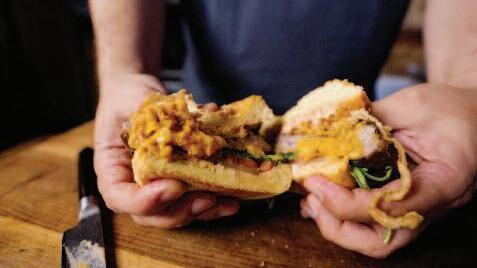
The Juicy Lucy burger has been featured in national media, including Time and on “Man v Food” and ”Food Wars,” both on Travel Channel
For more information, go to w w w juicylucyburgers com
w e’r e l a u n c h i n g a n e w r a n g e o f f r u i t
f l a v o r e d w a f f l e c o n e s , f e a t u r i n g f l a -
vo r s l i k e M a n g o W h i t e C h o c o l a t e, O ra n g e D a r k C h o c o l a t e a n d m a ny m o re !
ST: Who is the target mar ket for your brand?
continued growth of Oh!asis Founded in 1948, the Zeno’s family is well k nown for its Wor ld ’s M ost Famous Taffy™, fudge and a broad range of high-quality confec tions. Through this par tnership, Zeno’s World’s Most Famous Taffy joins the Oh!asis por tfolio alongside established brands including Williams & Bennett®, Anastasia® and Helen Grace Chocolates® – bringing together a family of trusted brands united by craftsmanship, consistenc y and endur ing customer relationships.
From its ear liest days, Oh!asis was
AA: Our target mar ket is consumers who love indulgent, fun and shareable treats. This includes families look ing for a snack or desser t as well as shoppers seeking unique and exciting flavors Our mini waffle cones capture the best par t of a classic sundae cone in a convenient, bite -sized format, appealing to anyone who enjoys premium chocolate and creative flavor combinations Retailers benefit by offering a produc t that satisfies both ever yday cravings and special treat occasions.
ST: Has Just The Fun Par t won any awards recently?
shaped by family ownership and handson care – values that are once again being brought to the forefront The goal is not disruption, but reinforcement: protec ting the integr it y of proven formulas while strengthening the infrastruc ture that suppor ts customers, retailers and manufac turing par tners
The Zeno’s family br ings more than seven decades of confec tioner y experience, including high-volume production, pr ivate label development and long-standing retail par tnerships This background aligns naturally with the needs of national chains, distr ibutors and co -manufac tur ing collaborators
berr y and Cinnamon. Darrell Lea’s Sof t Australian Licorice is offered in convenient 4- ounce, 7- ounce and Family Pack 20- ounce sizes to suit ever y occasion
Darrell Lea also has an offering in the chew y candy categor y with Chew y Stix, another Australian-made favor ite that has proven to be a hit with U S candy lovers. Available in R aspber r y, M ixed Fruit and Green Apple in a 7- ounce size, Chew y Stix are an irresistibly soft fruity candy with a sour filling that delivers a
discipline has kept the brand consistent, premium and trusted
ST: Why is ingredient integrity so important to you?
CS: B ecause food is personal People ser ve it to their families and bring it to gatherings If our name is on the bag, it must meet the same standards I expec t in my own k itchen Trust is earned one ingredient at a time.
ST: Why transition to avocado oil?
CS: I’ve wanted to use avocado oil for years because of its clean flavor, high
AA: Just The Fun Par t won t wo major awards in 2025 for our Dubai chocolate We received the Buyer ’s Choice Award for B est Chocolate at the 2025 ECRM Candy Show, a recognition voted on by retail buyers, and were also selec ted as a Top Ten Pick in the Cool New Produc ts Showcase at the 2025 NACS Show We’re incredibly honored by these recognitions and see them as a testament to our innovation and our constant dr ive to br ing retailers and consumers the nex t great snack ing trend.
ST: To what do you attribute your company ’s success?
seek ing reliable, capable par tners
“ This is a partnership built for longevity,” says John Zeno Louizes “Oh!asis already has strong brand equity and loyal demand Our focus is on suppor ting that strength with disciplined manufacturing, dependable execution and the kind of relationships that only grow over time ”
For retail and distr ibution par tners, this nex t phase means continuit y with added capabilit y The produc ts remain familiar, the brand promise remains intact, and the operational foundation behind it grows stronger For potential co-manufacturing par tners, the emphasis is on collaboration, transparenc y and
balanced sweet-tar t punch. Across its por tfolio, Darrell Lea maintains a strong commitment to better ingredients and sustainability I ts licorice and candy produc ts are free from palm oil, GMO -free and contain no high fructose corn syrup, reinforcing the brand’s belief that great candy can be made responsibly.
For more information, go to w w w dleasweets com or stop by booth #2331
smoke point and nutritional profile It allows the corn to shine while delivering the light, crispy texture we’re k nown for. I t doesn’t change who we are – it elevates the chip.
ST: What ’s nex t for Xochitl?
CS: We’ll continue deliver ing thin and cr ispy premium tor tilla chips with a craveable authentic flavor – now gently cooked in avocado oil. New flavors are coming, and our commitment to quality remains unchanged
For more information, go to w w w xochitl com or stop by booth #3454
AA: To attr ibute our success, it star ts with a genuine passion for what we do, paired with a highly experienced team. Just The Fun Par t is a tightly k nit group of professionals with years of hands- on experience across sales, operations and the food industr y That exper ience allows us to move quick ly, spot trends early and execute with consistenc y and care We’re so excited to continue bringing retailers standout, on trend produc ts in 2026 and beyond!
For more information, go to www justthe funpar t com, call 551 333 1119 or stop by booth #4809
shared standards – ensuring that qualit y, scale and consistenc y are never compromised
As Oh!asis looks ahead, priorities remain clear: suppor ting sell-through, investing responsibly in growth and maintaining a dependable presence in the marketplace Family stewardship at the core ensures decisions are made with a long-term lens, benefiting par tners and consumers alike
For more information, go to www lasolas brands com, call 407 816 9944, email orders@lasolasbrands.com or stop by booth #2061.







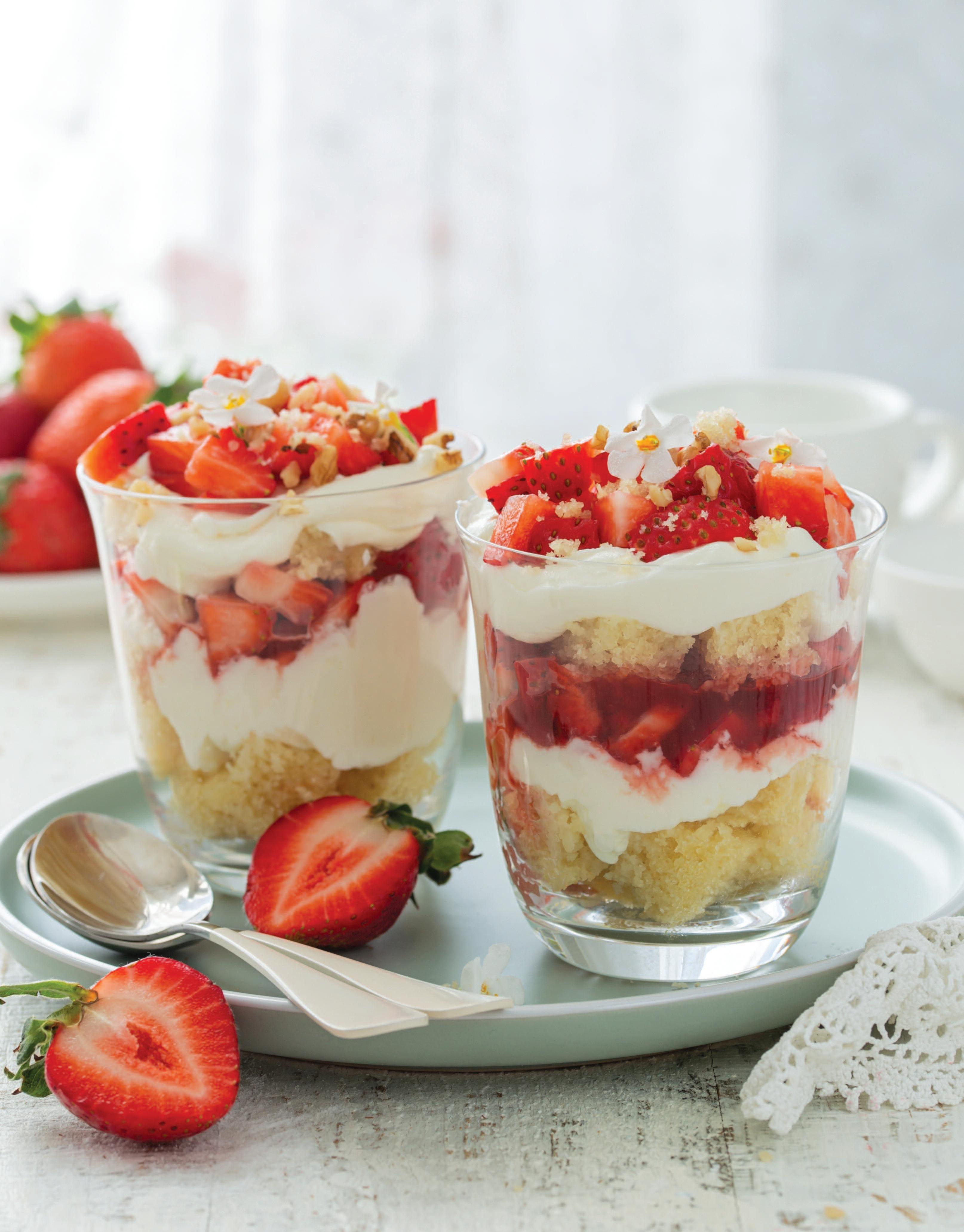
Introducing our newest creation at Ariston Specialties, a
experience Whether drizzled over grilled
even used as a finishing touch on artisan dishes, it adds subtle smokiness without
food A perfect addition to your kitchen or retail shelf, this is not just an oil, it’s an experience of flavor, craftsmanship and innovation
Ariston Specialties
orders@aristonfoods com http://faire.com/direct/aristonspecialties www aristonspecialties com
Holidays are a great time to bring out a charcuterie board For those in the greater Chicago area, beloved Bobak Sausage Company has six new sausage flavors to try – and they’re available at area grocery stores
Elevate your culinary adventures with Bobak’s Maxwell Polish, Smoked Polish, Smoked Brat, Smoked Cheddar, Mild Italian and Beef Polish
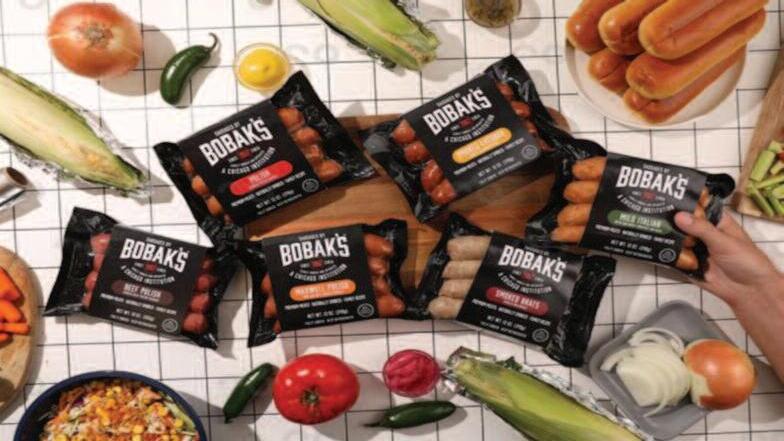
The new sausage products will feature a new look for the brand, recognizing it as a Chicago institution
Bobak Sausage Company www bobak com
Mochikichi, Japan’s market leader in gourmet rice snacks, is creating the kind of Valentine’s lineup that U S consumers are increasingly searching for but can rarely find: new and novel, lighter and healthier, and globally inspired Instead of a truffle center or butter cookie base, Mochikichi’s products are made from rice and mochi, and are baked so they are light, airy and crispy Because the core ingredient is rice, these lines can be positioned as glutenfriendly and lower in oil compared to many traditional Valentine products
The Choco Crunch line combines crushed savory rice crisps with silky chocolate Choco Almond adds premium nuttiness with puffy almond rice crackers covered in rich chocolate The Petite Heart line offers whimsical heartshaped black pepper and chocolatecoated rice treats for consumers wanting a lighter and less sugary Valentine option Products come in a wide variety of chocolate flavors, including milk, green tea, strawberry, caramel, café latte and
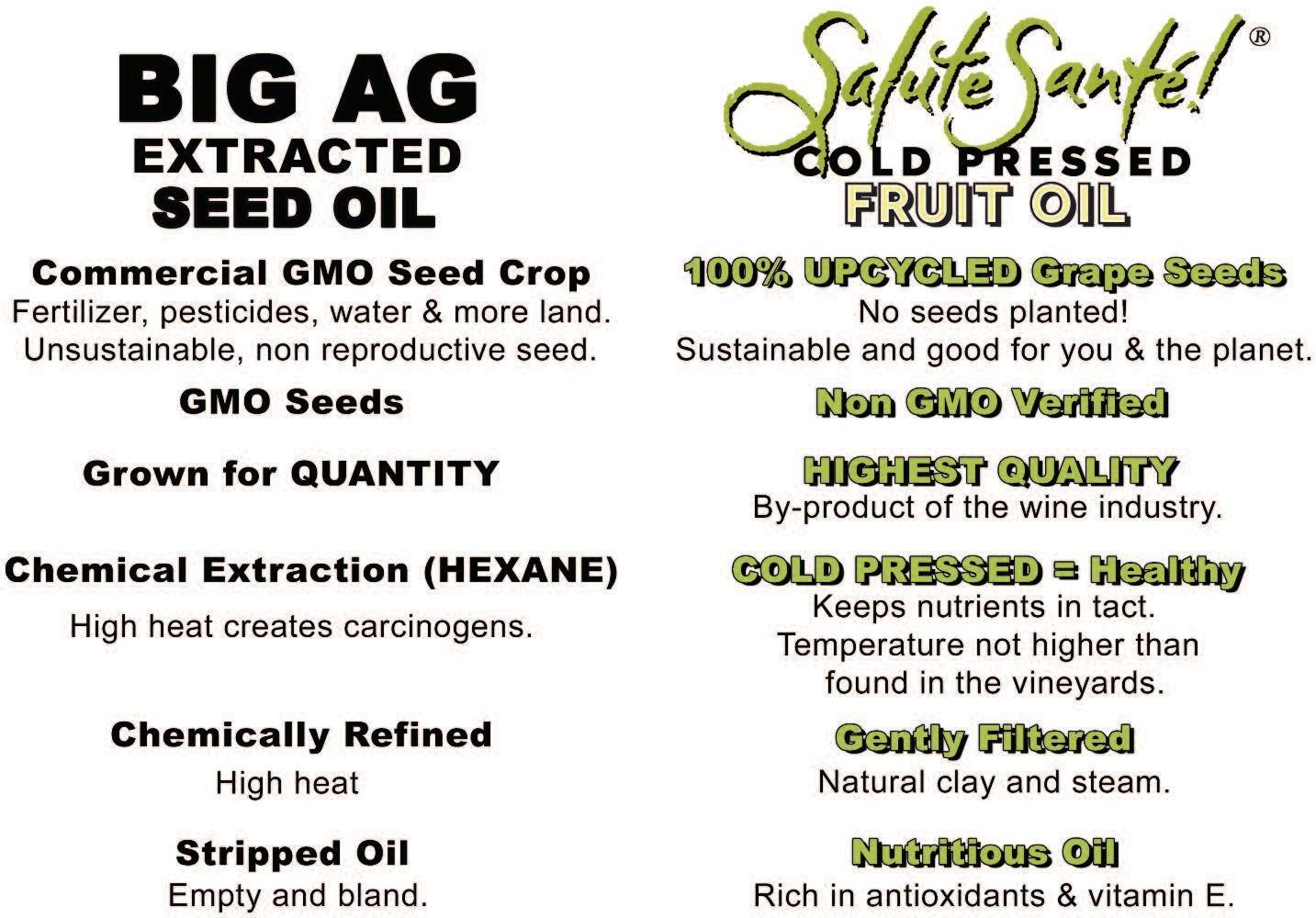
Salute Santé! is a fruit oil – 100 percent upcycled from winery grapes To differentiate a fruit oil versus a seed oil, just look at the botanical source G r a p e s = V i t i s v i n i f e r a – a f r u i t p l a n t e d f o r t h o u s a n d s o f y e a r s , l i k e o l i v e s a n d a v o c a d o , t o g e n e
i l s
white chocolate The elegant Japanesestyle packaging and “kawaii” design offer something genuinely new to the Valen-

tine’s Day mix and are perfectly suited for gift giving, curated assortments, and individual consumption For information on partnership and sourcing opportunities, please contact Mochikichi
Mochikichi contact-usa@mochikichi co jp www.mochikichi.co.jp/en/
s e e d o i l i s 1 0 0
p e rc e n t u p c y c l e d f ro m t h o s e g r a p e
s e e d s re m a i n i n g a f t e r t h e w i n e m a k i n g
Seeds are the source of life – a really good thing – it’s where they come from and what you do with them that makes the difference Are we talking about GMO seeds planted for massive oil crop? Are they solvent extracted and chemically refined with heat? Salute Santé! does none of that No seeds are planted The seeds come from vineyard grapes, which are fruits grown to make the best wines and not genetically modified They are verified Non-GMO by the Non-GMO Project They use 100 percent upcycled seeds, so no need for extra farmland, water, fertilizer
Here are some facts about Le Gruyère AOP:
• Le Gruyère AOP is produced using raw milk
• Le Gruyère AOP is natural – there are no additives, no GMOs and no preservatives
• Le Gruyère AOP is naturally gluten and lactose free
• Each wheel of Gruyère AOP is aged for a minimum of five months before being released for sale and can be aged for between 14 and 18 months It can be kept for more than 24 months for cheese lovers looking for an even stronger flavor
• A wheel of Gruyère AOP weighs between 25 and 40 kg
What does AOP mean?
It means it has a protected designation of origin To be considered AOP, you have to have:
• A tradition
• A limited production zone
and most importantly no need for GMO seed crops
Grape vines are vigorous fruit trees, coming back every season, year after year, producing a bounty of grapes that are pressed for wine Salute Santé! utilizes the winery by-product, to source the grape seeds And it was Salute Santé! who developed the presses strong enough to cold press these tiny little grape seeds with 8,000 pounds of pressure No chemicals or high heat!
Even after they cold press the fruit oil, nothing goes to waste They mill the extra press cake to create grape seed powder or flour They call it GrapeseedEXTRA! – a new antioxidant loaded super-food additive This completes the cycle of the grape and makes Salute Santé! a true zero waste food We admire team Salute Santé! for its 30-year commitment to creating this super heart-healthy fruit oil from the grape
The name says it all: “Salute Santé! to your health!”
Salute Santé!
www.grapeseedoil.com
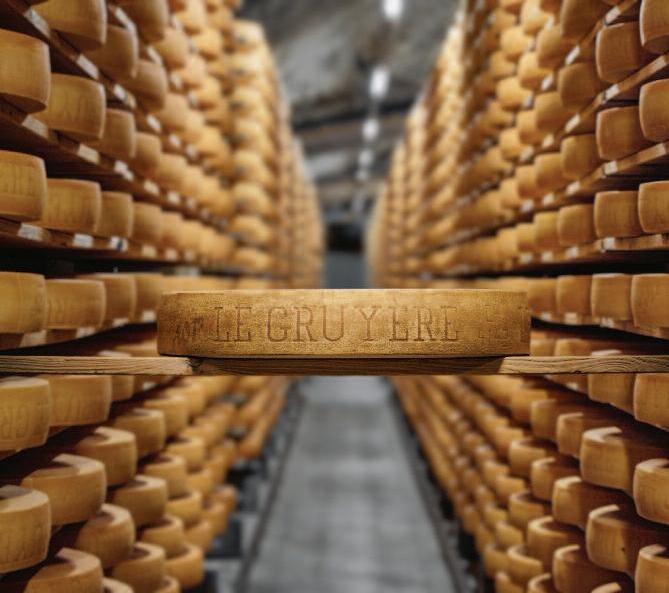
• A name
• A knowhow and a history
• A product
Production process has been maintained since the origins of Gruyère AOP back in the year 1115 and is strictly respected by the milk producers, the cheesemakers and the affineurs who follow the rules of the AOP specifications
Le Gruyère www.gruyere.com
Bring timeless French elegance to your assortment with Dammann Frères, one of France’s most prestigious tea houses
experience
Our curated selection includes black, green, herbal and signature flavored teasfrom classic blends to more contemporary, fruit-forward infusions Each offers a balance of flavor and sophistication, perfect for both everyday enjoyment and special moments
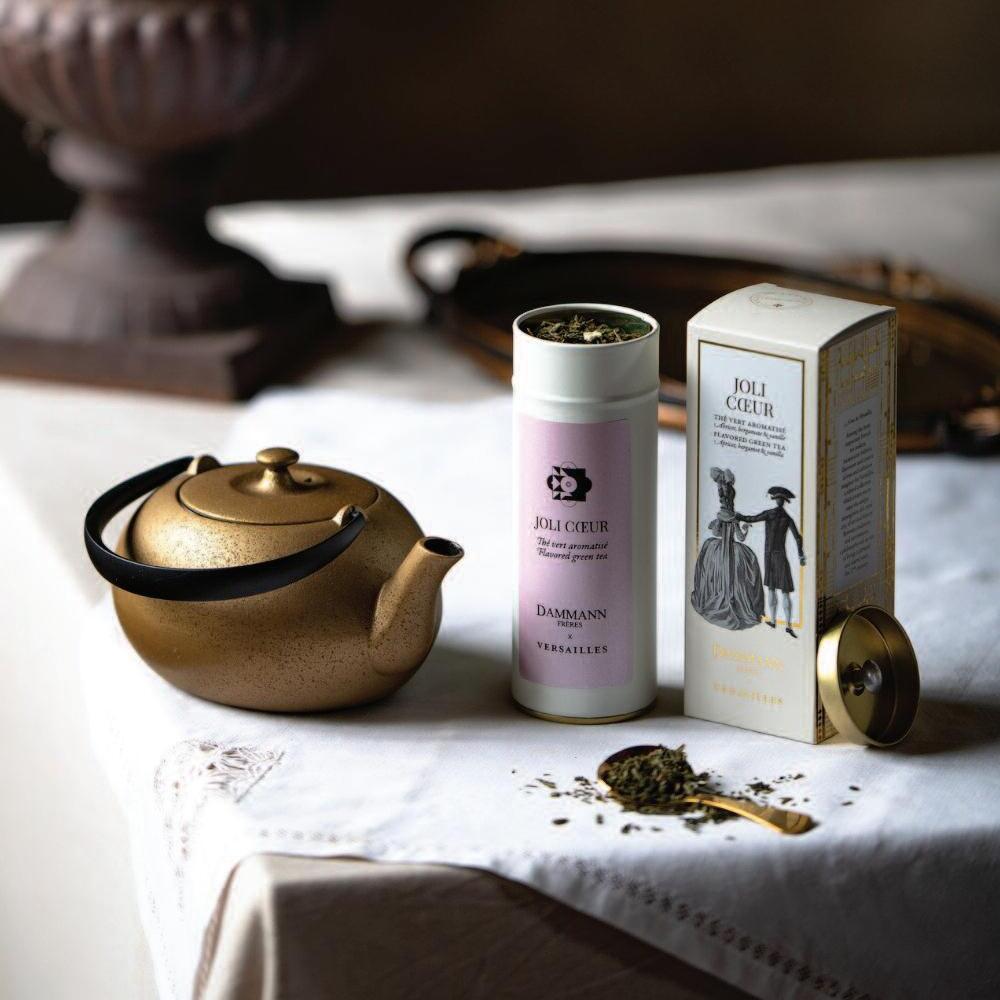
since 1692 Known for exceptional sourcing and expert blending, each tea is crafted with high-quality leaves, fruits, flowers and spices for a refined, aromatic
Ideal for specialty re-
kets, and gift boutiques,
a touch of heritage and
Crave Brothers Mascarpone delivers the premium quality and versatility today’s shoppers are seeking, especially as spring entertaining and berry season drive dairy sales in May Crafted in Wiscon fresh, high-qu cream and tradition Italian techniques this mascarpone offers a rich, velvety texture and clean and sweetness that applies to both sweet and savory applications
and devoted tea enthusiasts
To place an order or lear n more about wholesale opportunities, contact The French Farm
The French Farm wholesale@frenchfarm.com wholesale thefrenchfarm com
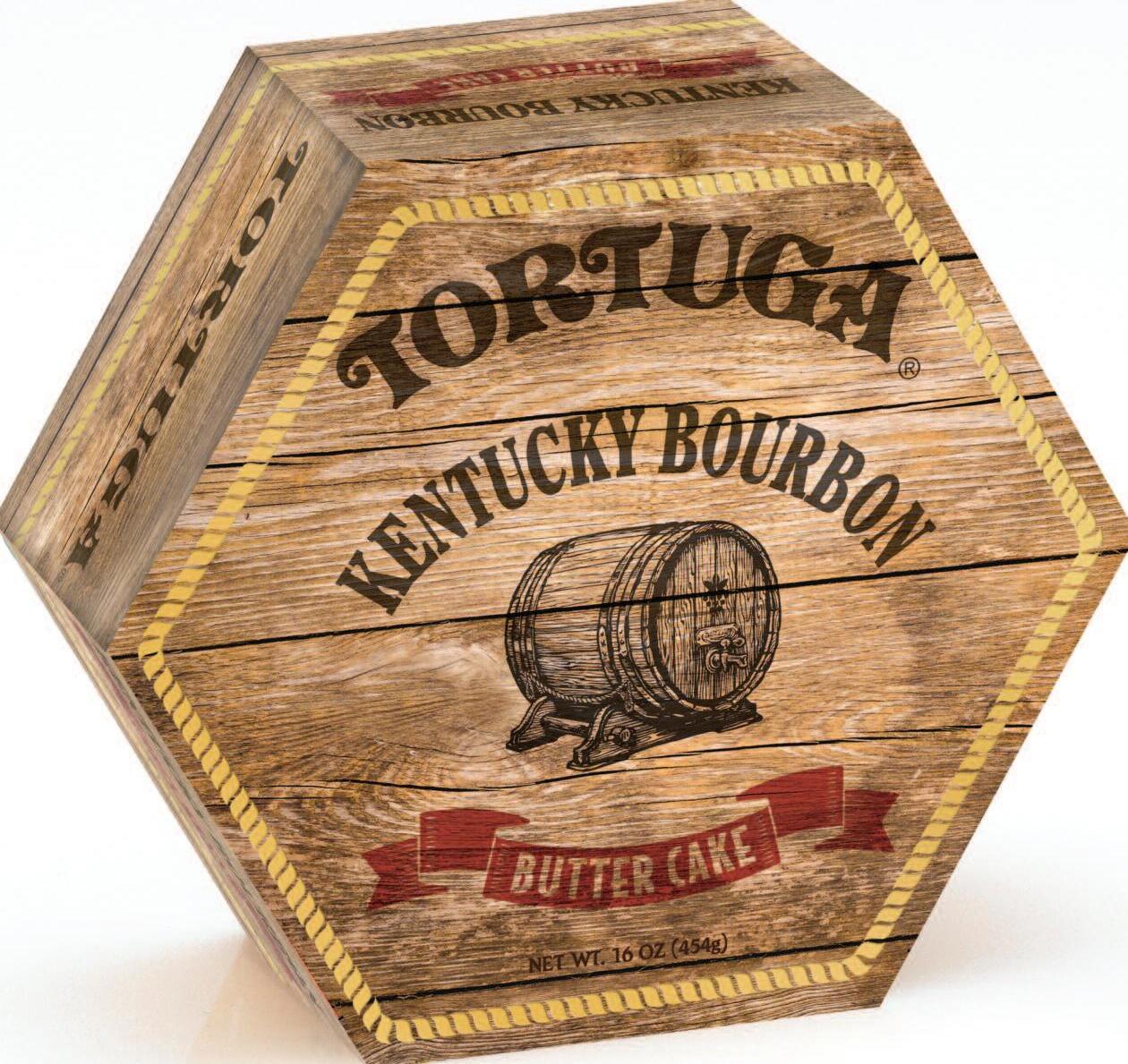
To
and spirit cakes industry, driven by a re-
d the constant introduction of novel offerings for its loyal consumers
Since its inception in 1984, Tortuga has remained at the forefront of the market, continuously pushing boundaries and delighting consumers with an array of delectable offerings For over 40 years, the company has been a strong presence in the cruise channel, major big box retailers across North America, esteemed department and grocery stores, as well as the flourishing gifting sector Building on the triumph of its iconic rum cakes, Tortuga
has ventured into new territory with the introduction of the Kentucky Bourbon Butter Cake, a testament to the brand’s unyielding spirit of exploration in the world of spirits
This jour ney led to the creation of Tortuga’s Souther n Trio range, comprising the Kentucky Bourbon Butter Cake, Tennessee Whiskey Spice Cake and Moonshine Apple Pie Cake This exquisite trio offers a distinct and robust flavor profile, promising a truly unforgettable culinary experience
dessert occasions
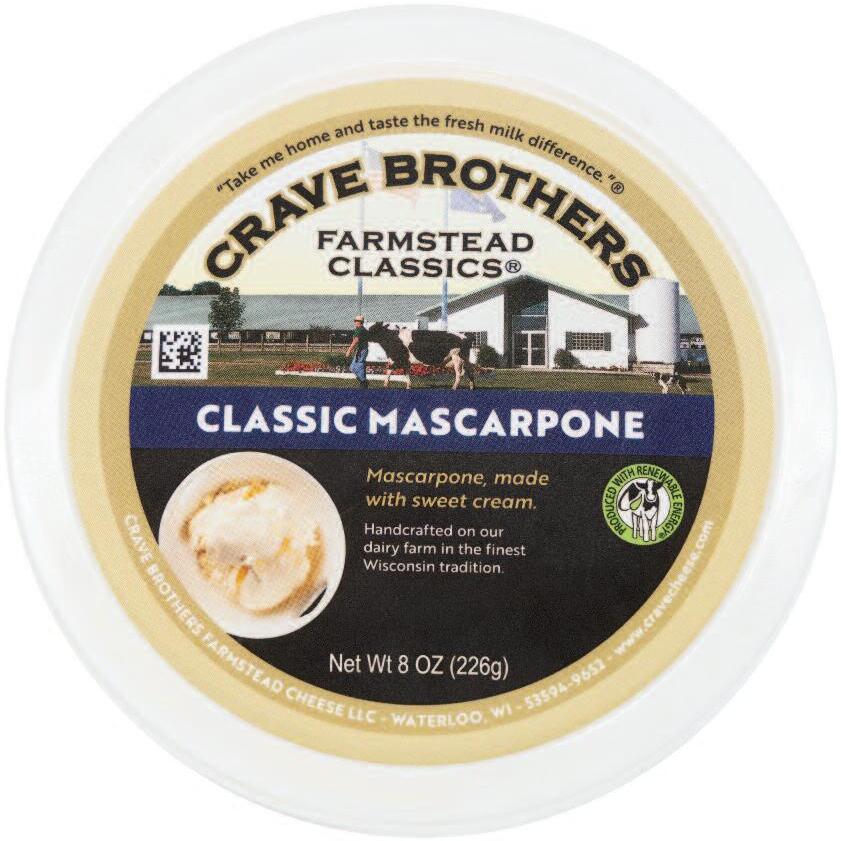
For retailers, it’s a high-impact specialty item wi strong cross-m chandising potenti sition it alongside fresh berries, angel food cake, ladyfingers, espresso, or baking ingredients to inspire classic tiramisu and effortless nobake desserts It also shines in savory recipes – blended into pasta sauces, spread on crostini, or folded into mashed potatoes – making it relevant well beyond
As consumers lean into spring brunches, Mother’s Day celebrations and graduation gatherings, Crave Brothers Mascarpone offers a simay to trade up yday dishes into emorable experiences Its awardw i n n i n g , f a r m s t e a dcrafted story resonates with shoppers who value quality and authenticity, while its versatility encourages repeat p u r c h a s e s dding Crave thers sweet Mascarpone to your specialty case is an easy way to boost ring, inspire incremental sales and differentiate your assortment this season To lear n more, visit cravecheese com
Crave Brothers www.cravecheese.com
Good things come in small packages Individually wrapped, Enstrom Almond Toffee Petites are the gold standard of snacking This artisan Almond Toffee is crafted from the perfect blend of fresh Califor nia almonds, sweet cream butter and pure cane sugar, covered in a generous layer of rich chocolate to create a treat unlike any other

Visit www enstrom com to lear n more about these buttery Almond Toffee Petites, as well as other premium offerings in our wholesale toffee line
Enstrom 800 252 5498 www.enstrom.co
Plant protein pioneer ChickP Protein, Ltd is forging ahead in the active nutrition market to fill the surging demand for natural, highprotein, plant-based nutrition bars and similar on-the-go, betterfor-you products The company developed a line of prototypes, powered by its signature, 90 percent chickpea isolate, to fit the requirements of active lifestyle consumers and others who live life on-the-go
The company showcased the proteinfortified, granola-based demos at the Fi
Europe 2023 in Frankfurt including chickpea protein enriched cereal and energy bars The bars are made of nuts, seeds, oats and green buckwheat and infused with a minimum 30 percent of the proprietary, 90 percent chickpea isolate They are naturally mildly sweetened with honey and agave and are rich in fiber
Grub Lab, an Australian startup reinventing the traditional kids’ menu into a powerful in-venue engagement platform, has raised $6 million in new funding from Quantaco to accelerate its U S expansion and support a national brand launch featuring partnerships with the National Basketball Association, National Football League, Sony Pictures and Universal Pictures
The funding will scale Grub Lab’s proprietar y platform, which enables independent restaurants to offer licensed, interactive kids’ menus tied to major sports leagues and blockbuster franchises complete with QR-enabled augmented reality experiences, games and exclusive retail offers
America’s independent restaurant owners are navigating one of the most complex operating environments in decades:
• Food costs remain elevated, with wholesale food prices up more than 20 percent compared to pre-2020 levels
• Labor remains tight and expensive, with restaurant wages up approximately 25 percent since 2019
• Consumer dining frequency has softened, as inflation-sensitive households pull back on discretionary spending
• Family traffic is increasingly experience-driven, with parents prioritizing value and engagement when choosing where to dine
According to recent industry data from the National Restaurant Association, operators report that traffic growth in 2026 re-
mains uneven, with families in particular seeking venues that offer more than just a meal
“Parents aren’t just buying chicken tenders anymore, ” said Mick Carr, CEO of Grub Lab “They’re buying 45 minutes of peace, entertainment for their kids, and a reason to come back Restaurants need
• AR-powered digital extensions that bring mascots and characters to life on the restaurant table
• Interactive games and creative activities accessible via QR code
• Integrated retail promotions, including exclusive discounts to the NBA Store through Fanatics
• Custom white-label branding, allowing independent restaurants to feature their own logo and menu alongside licensed IP

tools that help them compete for that experience ”
The traditional black-and-white, photocopied kids’ menu has gone largely unchanged for decades Grub Lab transforms it into a dynamic brand and engagement platform with:
• Collectible, full-color licensed menus tied to NBA teams and major entertainment franchises
(dates sub ect to change)
May 14-16
Food Safety Summit
Rosemont, Ill
www foodsafetysummit com
May 19-21
Sweets and Snacks Expo
Las Vegas, Nevada
www sweetsandsnacks com
June 7-9
Dairy Deli Bake Seminar & Expo
Orlando, Florida
www iddba org
June 15-17
International Society of Sports Nutrition Annual Conference and Expo Fort Lauderdale Beach, Florida
www sportsnutritionsociety org
June 28-39
Summer Fancy Food Show
New York, New York
wwwspecialtyfood com
July 7-10
American Cheese Society’s Annual Conference
Louisville, Kentucky
www cheesesociety org/conference
kids, happier parents, longer stays and more reasons to return
Fresh menu editions are delivered every other month, ensuring restaurants always have something new, surprising, and collectible on their tables
Through partnerships with national distributors and broker networks, Grub Lab enables restaurants, from regional chains
to single-location operators, to access intellectual property typically reser ved for global QSR giants
Grub Lab was built with independent operators in mind
Restaurants customize their menu once, or as often as they like, through a simple online interface Grub Lab then handles printing, production, and shipping New editions arrive approximately ever y 60 days, ready to go
No in-house designer
No marketing team
No extra work for staff
“Major leagues and studios have historically partnered with brands like McDonald’s or Burger King,” Carr said “We built a scalable platform so Betty’s Diner in Alabama or a five-unit concept in Atlanta can offer the same caliber of experience ”
In 2026, consumer behavior is shifting in ways that directly impact restaurant profitability:
• Families are dining out less frequently, but when they do, they are seeking memorable, shareable moments
• Social media continues to influence dining decisions, with parents increasingly choosing restaurants that offer kid-friendly experiences worth posting about
• Independent restaurants lack the inhouse marketing resources to create experiential programs at scale
Grub Lab’s plug-and-play system addresses each of these pain points without requiring marketing teams, in-house designers or digital developers
“Our goal is simple,” said Carr “Make it effortless for independent restaurants to offer big-brand experiences that drive repeat visits and increase ticket size ” GN
North American Sustainable Refrigeration Council, a 501(c)(3) nonprofit working to facilitate the transition to natural refrigerants, has released the 2026 Food Retailer Survey Report, offering new insights into how leading U S food retailers are navigating the transition from high-global warming potential refrigerants
Based on sur vey responses from 18 major food retailers representing over 29,000 locations nationwide, the report provides a comprehensive view of current refrigerant use, future system plans and the key drivers and barriers shaping industry decisions through 2029
In addition to tracking technology trends, the report explores implications for policy and incentive program design
com
“Food retailers are actively planning and executing the transition to low-GWP refrigerants,” said Danielle Wright, NASRC executive director “Our findings show that, while momentum is strong, without trained technicians or incentive programs, the pace of adoption will be constrained ”
The report underscores a market in transition While legacy HFC and HCFC systems dominate existing store fleets,
retailers are rapidly adopting lower-GWP solutions, particularly CO2 (R744), for new construction and system replacements
Among the report’s key findings:
• Total CO2 systems are projected to surpass 10,000 by 2029, with the largest growth expected in the Southwest
• The lack of trained technicians is the top barrier, highlighting an urgent need for workforce development
As federal HFC phasedown requirements under the AIM Act continue to tighten and state-level regulations evolve, NASRC will use these insights to inform program development, expand training initiatives and support an equitable transition to natural refrigerants
“CO2 is coming,” said Wright “We can either ride the wave or be crushed
“The key to successful adoption is strengthening our technician workforce, resiliency and community That’s exactly what NASRC is all about ”
The survey and report were made possible through support from BITZER, Climate Pros, Copeland, Danfoss, êffecterra, Hussmann and Parker Sporlan GN