

• Albertsons Launches Chef ’s Counter Ready-to-Cook Marinated Meats
PAGE 5
• Tech, Data Improves Agriculture by Enabling Better Decisions, Transforming Sustainability
PAGE 6
• Study Reveals Significant Progress in CPG Recycled Content Goals
PAGE 8
• Bobbie Launches Industr y First USDA Organic Whole Milk Infant Formula Made in USA
PAGE 8
• Meatable, TruMeat to Speed Up Process of Cultivated Meat Commercialization
PAGE 10
• Digital Media Platform Eases Tariff Terror
PAGE 11
• Is Anyone In the Mood for Tasty Nostagia?
PAGE 12
• Featured Products
PAGE 19
• Advertiser Index
PAGE 22
BY A.J. FLICK
Patrick Montgomery is the kind of guy who likes to take chances
“What can I say?” Montgomer y said, reflecting on his life’s path with good humor “I was young and dumb once in Kansas City At 16, 17, I was kind of wild ”
That daredevil attitude took a serious spin when he went from a Missouri high school to joining the U S Army and volunteering to be in its elite fighting force, the Army Rangers
Life after the Army was a challenge for Montgomery In 2014, he continued his mission to be a large animal veterinarian and
went back to school
“After two and a half years, I realized I only liked the large animal side,” he said
Montgomery knew he had to give his supportive wife a break from being the family’s wage earner, but what should he do?
“Let’s be honest,” Montgomer y said, “corporate American jobs are unappealing after being in special operations ”

gomery ever held For some reason, he decided to launch what many around him called the craziest job: Raising cattle to be a premium meat supplier
“I knew for a fact that it wouldn’t be easy, ” he said “This is not a generational farm I jumped right into it without inheriting land, equipment or animals ” Not to mention he would be
Undoubtedly, being an Army Ranger was the riskiest job Mont-
BY A.J. FLICK
envisioned a plan to reduce food w
e n
a t i n g businesses, no one imagined the answer could be as simple as a
s c re w d r i v e r o r s p a t u l a T h e inspiration for the initiative is the
e l p reduce food waste on the job and, in turn, at home
“Frontline workers are key to reducing food waste,” said Kris-
ten Lee, director of business initiatives with ReFED, a U S -based nonprofit that prioritizes evidence-based action to stop wasting food
As word spread among signatories of the PCFWC to pilot the newly christened Employee Engagement Toolkit, Bob’s Red Mill enthusiastically stepped up The beloved employee-owned supplier of oats, flours, mixes and more already prided itself on its commitment to sustainability
“Sustainability has always been embedded in our culture,” said
Julia Person, sustainability manager “It’s a natural manifestation of what we do
“We don’t want to waste the awesome, nutritious ingredients that growers give us to make it to the final customers’ shelves ”
Four years ago, the company reported nearly 2,500 tons of food waste Bob’s Red Mill reduced that by 8 percent by donating to local charities It recycled the rest of what would have been wasted by selling 92 percent of
Continued on PAGE 18
A cyberattack in early June left UNFI scrambling to fill orders
“We have identified unauthorized activity in our systems and have proactively taken some systems offline while we investigate,” the company said in a statement on June 9 “As soon as we discovered the activity, an investigation was initiated with the help of leading forensics experts and we have notified law enforcement
“We are assessing the unauthorized activity and working to restore our systems to safely bring them back online As we work through this issue, our customers, suppliers and associates are our highest priority
“We are working closely with them to minimize disruption as much as possible ”
A few days later, the company reported steady progress to restore its systems After taking its online platform down on June 6, UNFI was working to bring it back online
“We’re gradually bringing our ordering and receiving capabilities back online, with the goal of further increasing our capacity over the coming days,” the company said “The investigation is ongoing with the support of leading forensics experts
“Our customers, suppliers and
BY MAMIE HERTEL Special to Gourmet News
Jess Atkin’s favorite planet is Earth It always has been No surprise there – after all, she spends her days nurturing plants, diving into oceans to clean up debris and caring for her horses at her home on a small patch of land outside of Bryan, Texas And Atkin’s second favorite thing in the universe? The moon It’s the quiet, constant companion in the night sky, one
that has long captivated her imagination
“I’ve always felt a deep connection to the moon, ” Atkin said “It’s this peaceful, steady presence But when I think about it, I realize how much of our understanding of the universe has been shaped by this celestial body And now, here we are, thinking about sustaining life on it ”
Rather than simply gazing up at the moon, Atkin, a doctoral student in the Texas A&M College of Agriculture and Life Sciences Department of Soil and
Crop Sciences, is doing something many might consider impossible She’s researching how to grow chickpeas in lunar regolith, otherwise known as moondust
“It sounds insane, right?” Atkin said “I’m studying how a crop that thrives on Earth might survive in the dust of the moon But it’s not as crazy as it seems If we want to go to the moon – and beyond – we need to figure out how to grow food there And if we can make chickpeas grow in that environment, it could open the door to a whole new way of
thinking about sustainability in space ” If she’s successful, her work won’t just be another space experiment – it could be one small plant for man but a giant leap for plant-kind
Military service to moon research
Born into a military and first responder family, Atkin spent much of her childhood moving between the agricultural landscapes of Utah and the bright


I’ve been fortunate enough to live in and travel to a variety of places on this Earth Six years of my childhood were spent in Southeast Asia, living in the Philippines and traveling to Tokyo, Hong Kong, Bangkok, Singapore and the Philippine islands My mother grew up as a picky eater, but she didn’t want us kids to be So we dove in to a lot of food from exotic cuisines we might not have eaten if we thought too much about it My dad worked in an office where any excuse to have a barbecue was the norm Happy day!
So we three kids with healthy appetites picked up our plates and eagerly made our way down the rows of tantalizing foods, taking samples of almost everything there But then I stopped At the end of the table of side dishes was a sight I was not prepared to see On a table was a roasted pig An entire roasted pig With an apple in its mouth and all A man was slicing into the flesh and placing the meat on plates Seeing my horror, my dad directed me to a dish on the table with cubes of something, I don’t know but he suggested I try them and avoid the pig I can still taste those cubes They were so tender, I didn’t need to slice them I gobbled them up and was going to go back and get seconds, when Daddy caught my attention He pointed to my plate “That,” he said, then pointing to the pig, “ came from that ” He didn’t have to say anything else I went straight to the pig and lifted my plate to get a heaping serving
The last year we lived in the Philippines, we lived in the mountains on an air base that really was just a vacation spot for golfers The base was too small for a school, so we attended Brent, a private Episcopal school where the children of local military, miners and missionaries attended We sometimes had field trips to interesting places, such as a noted silversmithing school and a local pig slaughterhouse I was probably the only kid who wasn’t scared to watch the pigs slaughtered because I could imagine them all roasted and tasty
Skip ahead to more contemporary times, when I was a feature
writer at a now-defunct newspaper Through friends, I had the opportunity to go on a real cattle drive – well, an afternoon of herding cattle, but on a real ranch with real ranch hands I don’t pretend to be the most accomplished horse rider, but I haven’t fallen off a horse yet At first, I was hesitant to actually urge my horse to keep the cattle walking where we wanted them to But thanks to an experienced horse who knew more about cattle drive duties than I did, I really got into it It surprised me that the cattle behaved and went where I wanted them to I even guided one who started going astray to go back to the herd Yee haw!
Now, I wouldn’t quit my day job to work in a slaughterhouse or become a rancher, but experiencing things like I have did make me appreciate farmers and ranchers who work hard to put quality food on our plates I was thinking about all this when I was talking to Julia Person, the sustainability manager for Bob’s Red Mill I appreciate the quality of Bob’s Red Mill and I’ve used their products over the years I loved when Julia was talking about ways to reduce food waste to honor the farmers who provide the ingredients for their products as well as customers, who appreciate the efforts the company makes to be more sustainable and planet friendly
I also thought about my experiences talking with Patrick Montgomery of KC Cattle Company, who takes Valor Provisions’ mission to vet sources for humane care of the animals and the land, and help family farms and military veterans to deliver quality proteins to Americans One line popped out to me when we were talking: “Food security is national security ”
In this month that we celebrate our nation’s 250th birthday –probably at barbecues – let’s take some time to appreciate those who make sure the foods we eat are the best for us, them and the environment
Until next time, take care and stay safe GN
AJ Flick, Senior Editor aj f@oser com

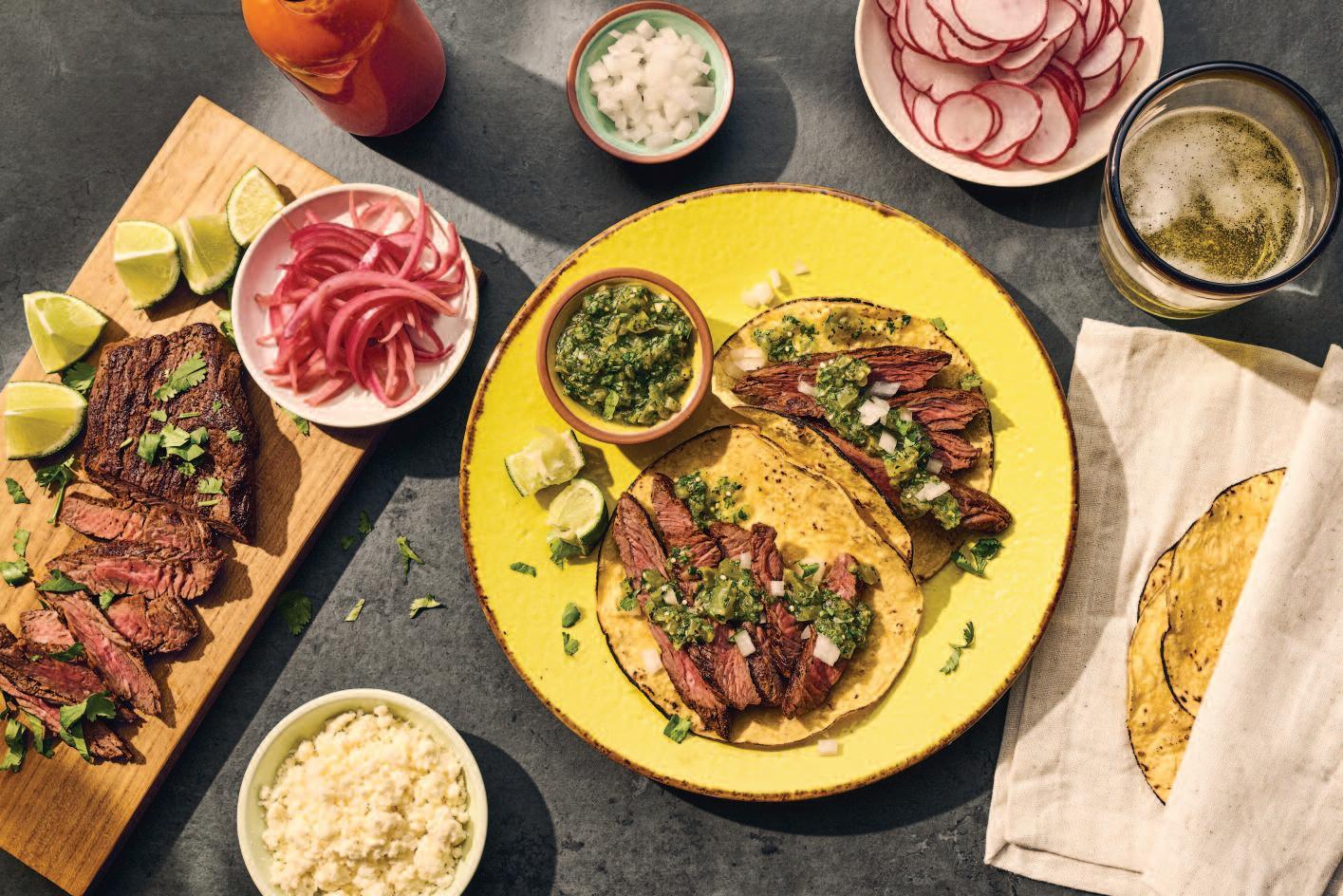
Albertsons Companies, Inc has launched its latest Own Brand, Chef ’ s Counter, designed to bring chef-inspired flavors and tastes to customers in a convenient, easy and affordable way Created to meet growing consumer demand for cooking meals at home with adventurous flavors and globally inspired ingredients, Chef ’ s Counter is debuting with a flavorful selection of ready-to-cook marinated meats to help food lovers turn their culinary inspirations into reality
Chef ’ s Counter is exclusively available in Albertsons Cos stores including Albertsons, Safeway, Vons, Jewel-Osco, ACME and Shaw’s
“At Albertsons Cos , we are committed to inspiring our customers by delivering innovative products to elevate their culinary experiences,” said Omer Gajial, EVP of merchandising and chief digital officer
“With our new Chef ’ s Counter brand, we recognized an opportunity to enhance our Own Brands portfolio of marinated offerings and tap into the growing consumer interest in international-inspired foods
“Chef ’ s Counter offers shoppers restaurant-quality recipes, enticing flavors and new mealtime possibilities, all with the convenience, ease and value of cooking at home ”
To celebrate the launch of Chef ’ s Counter, Albertsons Cos has partnered with renowned chef and TV personality Antonia Lofaso as the brand’s first ambassador
Through curated social content, Lofaso will share her passion for flavor, creativity and approachable cooking Her perspective as both a celebrated chef and a working mom embodies the essence of the
brand – bringing elevated, yet efficient and affordable, everyday meals to the home
“I’m delighted to partner with Albertsons Cos for the launch of Chef ’ s Counter as their featured chef brand ambassador,” said Lofaso
“Growing up in a family rich with diverse culinar y flavors and traditions, my love for cooking was deeply rooted from an early age
“I am excited to see a national grocer making it easier and more accessible for everyone to explore new, adventurous flavors and recipes, celebrating the joy of culinar y exploration and fine eating ”
For additional variety, Chef ’ s Counter provides meal starters including balsamic peppercorn beef tips, chimichurri pork tenderloin medallions and tangy orange
Additionally, Chef ’ s Counter is introducing a collection of shoppable recipes to simplify meal planning for customers
chicken breast strips, offering even more delicious meal-time options
minimum effort, ready in about 20 minutes Shoppers will enjoy lemon pepper-
thighs in savor y teriyaki-style or refreshing cilantro lime flavors Rich mesquite or aromatic garlic herb flavors enhance ten-
d
buttery garlic beef sirloin steaks as well as carne asada beef flap steak, each bursting with flavor
Chef ’ s Counter flavor profiles were thoughtfully inspired by consumer research and emerging trends, ensuring a delightful mix of familiar favorites alongside exciting and adventurous choices The products were also designed to ser ve the diverse needs of Albertsons Cos ’ foodie customers, offering distinctly memorable and sensorily evocative experiences and trend-for ward flavors that are often challenging to replicate
For instance, the Chef ’ s Counter carne asada beef flap steak was crafted to evoke a distinct restaurant experience with its
Shoppers can access these recipes by scanning the QR code on the product packages or by visiting the Albertsons Cos store websites or apps
Chef ’ s Counter can be found in the self-service meat section of the store and ranges in prices from $4 99 for boneless pork loin chops in mesquite or garlic herb flavors to $12 69 for carne asada In 2026, Albertsons Cos will expand its Chef ’ s Counter line by introducing premium selections in the deli and frozen sections, along with globally inspired products in the center store
The launch of Chef ’ s Counter is supported across Albertsons Cos ’ digital and in-store channels with dynamic creative, social content featuring Lofaso and culinar y inspiration that encourages customers to simmer, sear and sauce in ways they never imagined possible
Chef ’ s Counter is the latest addition to the company ’ s Own Brands portfolio, which includes trusted household names such as Signature Select, O Organics®, Overjoyed, Overjoyed Boutique, Lucerne, Open Nature, Primo Taglio, waterfront Bistro, Soleil and Value Corner GN
Verified restaurants on the Uber Eats app For a limited time, users can also enjoy $5 off Uber Eats orders of $30 or more
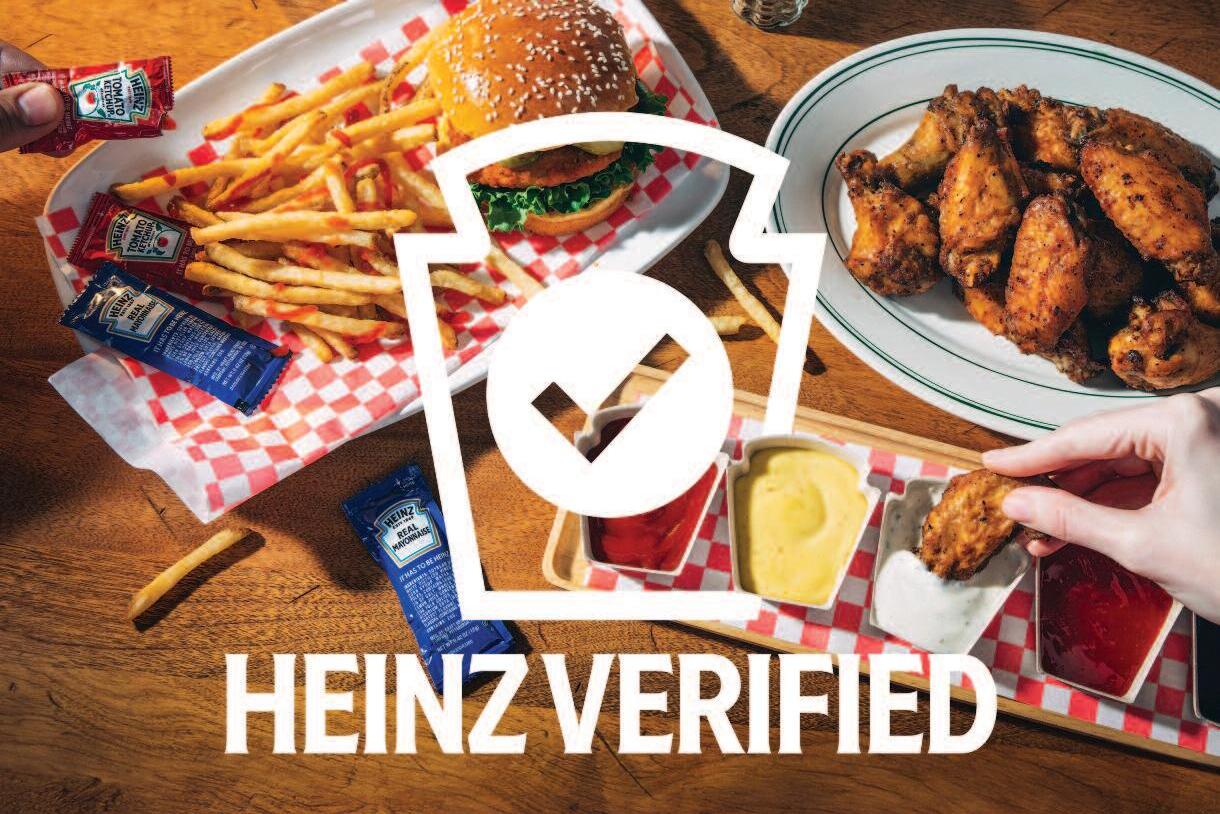
has launched Heinz Verified, a program designed to
lence
Heinz Verified is the latest program from the company ’ s Away From Home business, which is a key growth pillar for Kraft Heinz
In today’s landscape, it is harder than ever for restaurants to succeed, and Kraft Heinz aims to help enable their success The company is collaborating with Uber Eats as its inaugural platform partner for the program, and people in Chicago, Dallas, Denver, Los Angeles, Miami and Pittsburgh can now find Heinz
when ordered from Heinz Verified restaurants (Taxes and fees apply See Uber Eats app for details)
Kraft Heinz will provide restaurants that are Heinz Verified with access to insights and consumer trends, free product samples, promotions, branded merchandise, digital resources and free marketing support designed to drive customer traffic
“By introducing Heinz Verified, we want to help restaurants succeed so communities can thrive –delivering quality and value for both restaurants and individuals through meaningful, best-in-class products and experiences, ” said Peter Hall, president of elevation, North America at Kraft Heinz “Our ambition is to help restaurant operators excel while also providing elevated dining experiences for people wherever they eat away from home ”
“This exciting new partnership with Heinz spotlights restaurants on the Uber Eats platform across the countr y ser ving the products people know and crave, ” said Alex DiValerio, head of restaurant operations, North America at Uber “This collaboration makes it easier than ever for consumers to discover local favorites featuring Heinz products – and helps drive even more value to our restaurant partners ”
Kraft Heinz showcased Heinz Verified at the National Restaurant Association Show in Chicago
As part of the Heinz Verified program, Kraft Heinz will also debut a new content series called “Daytrippin’” to be distributed on YouTube and packaged for streaming platforms The series will follow actor, comedian and social media personality Steven He as he takes viewers on a road trip from Pittsburgh to Cleveland to Chicago, showcasing each city’s local food culture and iconic dishes and the passionate people behind them GN
Enhanced connectivity in agriculture is predicted to add more than $500 billion to global gross domestic product by the end of the decade, according to the consultancy McKinsey Sophisticated digital tools – such as sensors, drones and data analytics – are enabling new levels of precision agriculture, optimized resource use and improved decision-making, empowering farmers and transforming the sustainability of agriculture Farm operations at the leading edge of this technology transformation are positioning themselves to thrive in this connectivity-driven future
Syngenta, a global leader in agricultural innovation, and Al Dahra, a multinational agribusiness stewarding 400,000 acres of sustainable irrigated farmland with active operations across six continents, have announced a strategic partnership to implement Syngenta’s digital farm management solutions across more than 220,000 acres of Al Dahra farms in Romania, Serbia, Egypt and Morocco This collaboration aims to advance sustainable agriculture at scale and enhance productivity across key regions
all-in-one platform integrating modules for agronomic, financial and administrative farm management, which will be integrated with Al Dahra’s existing digital
tions across diverse geographies
“This partnership not only revolutionizes farm management and optimizes yields but also sets a new global standard for sustainable, data-driven farming ”

tools Real-time data will enable Al Dahra’s farm managers to quickly respond to emerging pest or disease situations, better manage water usage and irrigation efficiency and to optimize and target their seed, fertilizer and agricultural input use
By implementing Syngenta’s Cropwise Operations, Al Dahra will be able to centralize farm data across its operations in multiple countries and production sites and optimize its farm management decisions – from the individual field level to across its entire operations Through the collaboration, Al Dahra aims to improve the sustainability of its agricultural operations, ensure long-term productivity and secure its feed supply
Syngenta’s Cropwise Operations is an
Cropwise Operations has been fully integrated into Al-Dahra’s complex IT solutions landscape, enabling the implementation of unified corporate standards across the entire agro-holding As a result, all business units now use the same templates, classifiers and metrics, allowing for consistent and compatible managerial reporting
Feroz Sheikh, chief information and digital officer at Syngenta Group, said, “Our Cropwise Operations platform represents a significant leap forward in digital agriculture By partnering with Al Dahra, we ’ re demonstrating how data-driven insights can transform large-scale farming opera-
Cropwise digitally connects 70 million hectares of farmland at present
Arnoud van den Berg, Group CEO at Al Dahra, said, “At Al Dahra, we ’ re always looking for ways to push the industry forward through innovation Our vision for the future is clear: a smart, digital infrastructure that works for us, cutting down on manual data entry and giving our employees more time to focus on what really matters
“One of our biggest goals is to automate reporting as much as possible, ensuring real-time insights into everything happening on our farms To make that vision a reality we needed the right partner, and Cropwise Operations stood out as the perfect fit for taking our farm management to the next level ”
Syngenta’s Cropwise Operations is being utilized for:
Field Monitoring and Analysis
• Real-time satellite monitoring of plant health and crop conditions
• Multiple vegetation indices analysis (NDVI, NDMI, NDWI)
• Early problem detection through advanced scouting functionalities
• Private weather station networks providing hyperlocal forecasting
• Comprehensive soil data collection and analysis
Far m Operations Management
• Comprehensive data integration from satellites, machiner y, weather, irrigation stations and sensors
• Complex data analysis to interpret patterns and predict crop yields
• Decision support tools for optimizing pesticide and fertilizer applications
• Seasonal planning and detailed record-keeping of all agricultural operations
• Trial management system for monitoring and analyzing field experiments
Resource Optimization
• Tracking of fuel consumption and maintenance schedules
• Variable Rate Application support
• Streamlined and digitalized documentation processes
• Inventor y management and production costs tracking
• Fleet management including maintenance activities, machiner y repairs, and routine check-ups
Advanced Equipment Integration
• Seamless integration with John Deere Operations Center
• Compatible with Trimble, Claas, and Safe Fleet systems
• Automated data transfer from field equipment to central management platform
• Real-time equipment status monitoring and performance optimization
Sustainability Initiatives
• Implementation of Best Management Practices
• Monitoring of soil health indicators
• Water management through precision irrigation techniques GN
CookUnity, the first-of-its-kind chef-led meal deliver y platform, has acquired Fraîche, a premium smart fridge solution for companies interested in providing employees convenient access to high quality food, positioning CookUnity to advance its mission to make nutritious, chef-crafted meals available wherever people are
The Fraîche network of smart fridges brings elevated meals, curated healthy snacks, drinks and breakfast to the workplace with 24/7 availability With more than 10,000 users across more than 20 New York City office locations, Fraîche has served over 500,000 meals to date, serving industry leading companies including PayPal, Coty and Boston Consulting Group More than 200 meals are served daily at Fraîche’s Empire State Building location alone
Through always-on food access at work,
CookUnity can bridge workplace culture and foodie culture by connecting people directly to chef-crafted meals within the daily rhythms of office life, driving recurring habits, building loyalty, and making “sad desk lunch” a thing of the past
CookUnity offers premium, chef-prepared meals deserving of a premium experience and Fraîche delivers just that The smart fridge stands out in any office – not just for its sleek design and curated selection, but for the seamless mobile ordering and the flexibility it offers to both employees and companies
Upon completion of a simple registration process, employees can explore a diverse menu of available offerings from top New York City chefs and curated snacks/drinks via the Fraîche app Once selections are made, employees simply use
the app scanner to unlock the fridge and purchase their favorite items All done steps from employees’ desks – no pre-ordering required
For companies, Fraîche is an amazing office perk, ensures teams are well fueled and provides unprecedented mealtime data and management capabilities From corporate offices to factories and plants across the country, more workers will now have convenient access to fresh, nourishing meals that impress from the moment they place their order to the last bite
“With CookUnity’s infrastructure and culinary excellence, and our smart-fridge technology platform, we now have the foundation needed to continue improving the food system at scale,” said Txim Lizarazu, Fraîche co-founder and CEO
“This partnership unlocks the ability to
serve millions – from corporate towers to underser ved communities, from NYC to every city in America – and keep improving how people eat at work ”
For consumers, this acquisition enhances access and discovery, meeting them where they are with convenient, nourishing meals prepared by acclaimed chefs
“At CookUnity, our goal has always been to make great food from celebrated chefs a daily reality for more consumers, ” said Mateo Marietti, founder and CEO of CookUnity “The addition of Fraîche allows us to do that in an exciting new way
“Weekly meal subscription is our core business today but our full ambition is to create the world’s leading food platform We aspire to meet people wherever they are and this is a meaningful step towards that goal ” GN



A new report from Ameripen, prepared by Circular Matters and funded by Plastics’ Recycling is Real initiative, highlights significant progress by consumer packaged goods companies toward recycled content goals in packaging while also exploring critical gaps in infrastructure, collection systems, and supply to meet targets
The U S Packaging Recycled Content Goals Analysis is freely available for individuals and organizations to use in sustainability efforts
Success in goals for post-consumer recycled content will require coordination across this value chain; understanding where and why challenges may be occurring can provide further insight into effective interventions to ensure success This new resource provides an update and expands on Ameripen’s 2021 report that explored the relationship between packaging recyclability and recycled content goals, domestic supply and reprocessing capacity, and what, if any, additional policies or program supports could be supported to close potential gaps
A lot has happened in recycling and packaging since 2021, including new goals, new investment, and increased PCR usage With this progress, Ameripen and
Recycling Is Real felt quantifying impact again would provide value to many stakeholders
“When we began our initial study over five years ago, we assumed that most goals would be developed for a broad portfolio of packaging formats and variety of materials and that we would be able to drill down into demand and supply curves for all those materials,” said Rob Keith, membership & policy director at Ameripen “To our surprise, outside of some plastics goals, we found most goals were framed in an either/or context (recyclable or sustainably sourced) or no recycled content objectives were publicly stated
“This update to our 2021 study gives the packaging industr y the ability to look more holistically at recycled content in packaging, leading to better sustainability outcomes ”
The updated U S Packaging Recycled Content Goals Analysis is the most comprehensive assessment to date of how voluntar y corporate commitments, trade association targets, and state and federal laws align with the current and projected capacity of the U S recycling system The study includes detailed data from 46 CPG companies, state legislation, and national
trade associations covering paper, plastic, and aluminum packaging Key findings include:
• Progress Being Made: The average post-consumer recycled content in plastic packaging more than doubled (from 5 3 percent in 2019 to 10 7 percent in 2023) among companies with stated goals
• Supply Gaps Remain: Despite added reclamation capacity, the United States will still fall short in meeting 2025 plastics packaging goals, especially for PET, unless collection rates and advanced recycling capabilities increase significantly
• State Policies Are Gaining Influence: Since 2020, at least 10 states have enacted laws mandating recycled content in packaging, adding new external pressures across the supply chain
• Barriers Persist which could benefit from intervention: Companies continue to cite limited availability of food-grade PCR, inconsistent material quality, and higher costs compared to virgin resins as primary obstacles
• Increased Capacity: Between the 2021 and 2025 reports, U S plastics reclaimers have more than doubled their capacity to supply PCR to the packaging market “This study reflects encouraging mo-
mentum while also pointing to key opportunities for system-wide improvement,” said Patrick Krieger, senior vice president of sustainability and policy at Plastics “With more companies committing to sustainable packaging and more states enacting mandates, we ’ re stepping up to meet demand
“However, additional support – through stronger collection systems, clearer regulatory guidance, and greater investment in U S recycling infrastructure is essential to sustaining progress Recycling is real and working – and our next challenge is aligning PCR goals with available supply and capacity ”
The report also cautions against policies that give preferential access to recycled materials, advocating instead for open, competitive markets that balance all enduses of recovered materials
As pressure mounts to increase the use of recycled content, it’s critical to understand how voluntary corporate goals and state legislation align with the realities of U S material supply and recycling infrastructure When informed by objective current data, goals for recycled content in packaging will be more effective and achievable GN
Bobbie has announced its fourth infant formula since the company ’ s launch in 2021: after three years of development, Bobbie Organic Whole Milk Infant Formula is on shelves
As the first and only USDA Organic Whole Milk infant formula manufactured in America, this industry-first product redefines high quality infant nutrition Developed with the leading science and research and manufactured at the brand’s state-of-the-art facility in the heartland of America, Heath, Ohio, Bobbie Organic Whole Milk infant formula offers quality, safety and reliability at a time when the U S infant formula industr y is facing continued uncertainty
Only 7 percent of infant formulas sold in the United States are organic and only 5 percent are certified USDA Organic Just 4 percent of formulas sold in the United States use whole milk
families with high-quality, organic infant formula made in the United States The research and development arm of the company, Bobbie Labs, spent three years developing Bobbie’s closest-to-breast milk recipe, featuring less vegetable oils, more

Bobbie Organic Whole Milk Infant Formula is the only routine infant formula manufactured in the United States that is both USDA Organic and made with whole milk
Bobbie Organic Whole Milk infant formula is available today at hibobbie com for $28/can and coming to select retailers this summer
Since its launch four years ago, Bobbie remains dedicated to providing American
naturally occurring milk fat globule membrane from organic whole milk, choline, and industry leading levels of DHA to support infant brain development
MFGM is a component of milk fat that has been linked to cognitive and immune system support in infants MFGM is naturally found in breast milk; research has suggested it can play a role in supporting brain development, immune health and gut function
“As a pediatrician, I am always looking for the best options to support infant nutrition,” said Lauren Crosby, MD, FAAP , “and I’m thrilled to see Bobbie Organic Whole Milk Infant Formula enter the market as the first and only USDA Organic whole milk-based formula manufactured in the U S
“Bobbie continues to set the standard for clean, high-quality infant nutrition by using naturally occurring milk fat globule membrane from whole milk – an essential component of breast milk that supports brain development Bobbie continues to be a brand I trust and recommend for parents seeking a clean, high-quality, breast milk-inspired formula that prioritizes both safety and science-backed nutrition ” Bobbie Organic Whole Milk formula undergoes over 2,000 safety and quality checks before release at Bobbie’s state-of-the-art manufacturing facility in Ohio Owning end-to-end manufacturing has unlocked innovation on an entirely new level for the industr y-disrupting, mom-led brand
With a steady supply of unlimited inventor y, manufacturing redundancy and the ability to produce high quality infant formulas in-house, Bobbie has unlocked the recipe development and manufactur-
ing rigor required to lead the way for the next generation of American infant formula
Bobbie Organic Whole Milk infant formula is the only USDA Organic whole milk infant formula on the U S market, designed to bring parents a first-of-its-kind formulation that is certified Organic to both the USDA and EU Organic standards, and features a no palm oil, no soy fat blend The groundbreaking recipe is made with USDA Organic whole milk, a critical choice in a formula category flooded with organic claims that fall short of the USDA Organic seal
“As a team of parents, we understand firsthand the importance of quality and reliability when it comes to feeding our babies,” said Laura Modi, CEO and co-founder of Bobbie and mom of four “No parent should have to choose between the two and with this product, we can guarantee the best of the best on both fronts
“This recipe, the first USDA Organic whole milk infant formula in the world, is the epitome of my why behind Bobbie It’s a dream formulation that represents much more than what’s inside the can (though I’m very proud of that as well) – it is about pushing the nutritional standards forward, reimagining how we feed babies in the U S , and making America the gold standard in infant nutrition ” GN
Clover, a point-of-sale solution, under its parent company, Fiser v, launched Clover Hospitality by BentoBox at the 2025 National Restaurant Association Show in Chicago, with a commitment to the industry and tagline, “There’s a Clover for Every Restaurant ”
The solution, complete with new-tomarket features designed to enhance the guest experience, marks a step forward as Clover – already ser ving more than 125,000 restaurants – expands its offerings to better serve the hospitality industry
Clover’s journey in the restaurant industry has been driven by a deep understanding of the challenges restaurateurs face, from day-to-day operations to evolving guest expectations Its technology has supported a wide range of restaurants, from independent eateries to large franchises, and has helped businesses stay ahead of the curve with easy-to-use tools that integrate front-of-house and back-of-house operations
Clover Hospitality takes this commitment further, offering a solution that is built with high standards in mind to meet the specific needs of upper market restaurants
Clover Hospitality is a customized point-of-sale system specifically engineered to meet the needs of upper market restaurants, blending advanced technology with exceptional hospitality By combining industr y-leading hardware, software and payment technology, it empowers restaurant teams to deliver better ser vice that
As restaurants adapt to shifting diner behaviors – according to the National Restaurant Association’s 2025 State of the Restaurant Industry report, 64 percent of full-service diners surveyed place value in the experience over the price – this technology provides a leg up in a multitude of ways, including streamlining back-ofhouse operations for a smooth shift, checkless payments for guests and frontof-house notifications for a more seamless process with seating and turning tables
“Clover has always been a leader in the industry and understands the pain points that restaurants are facing and the opportunities that lie ahead,” said Kr ystle Mobayeni, senior vice president, head of restaurants at Fiserv “We believe that the right technology can propel restaurants forward, allowing them to take day-to-day challenges in stride
“Whether it’s reducing check wait times, optimizing labor and table turns or ensuring consistent connectivity, Clover Hospitality provides an all-in-one solution empowering both diners and restaurateurs to have a seamless, elevated experience ”
The Clover Hospitality technology includes omnicommerce capabilities from BentoBox, which was acquired by Fiserv in 2021, and enables restaurants to build their online presence, diversify revenue, engage with diners while increasing operational efficiency through websites, ordering, reser vations, marketing tools and more With this launch, Clover is now able
to support a broader range of restaurants, from small neighborhood spots to the world’s most distinguished dining experiences
Knowing that cash-strapped operators continue to face greater challenges including restaurant expenses increasing by 26% since 2021, business loan interest rates reaching nearly 8 percent in 2024, and hourly earnings growing by 4 percent in 2024, Clover Hospitality will meet numerous needs of restaurant owners and operators while also easing some of the stressors
Newly announced, Clover is continuing to actualize its commitment to trailblazing innovation in the industry through a collaboration with Union Square Hospitality Group The two have teamed up to launch Checkless Payments, an alternative payment solution that empowers diners to pay for their meal without the disruption of asking and waiting for the bill, ensuring a memorable, friction-free dining experience
This solution – imagined by Frank Bisignano, former Fiser v chairman, CEO and president, and Danny Meyer, executive chairman and founder of USHG – is being piloted in Manhatta, USHG’s award-winning fine dining restaurant The feature is available exclusively at USHG establishments, before being rolled out to restaurants leveraging the Clover Hospitality system
“USHG has always championed technology that enhances hospitality and ad-
vances touch,” said Meyer “With Checkless Payments, we finally have a solution to the least hospitable part of the dining experience: waiting for the check
“Checkless Payments has the potential to create a new industry standard, allowing diners to seamlessly pay their bill digitally and leave when they’re ready Our team is proud to have partnered with Fiser v to make this vision a reality ”
During this year ’ s NRA show, Clover hosted a panel with industr y leaders including Kr ystle Mobayeni, SVP, head of restaurants at Fiser v; Kelly Macpherson, chief technology officer of USHG; Sean Feeney, co-founder for Grovehouse Hospitality Group; and Chef Sarah Grueneberg, head chef and owner of Monteverde Restaurant & Pastificio, titled, “Wired for Hospitality: Crafting Meaningful Experiences in a Digital Age ”
In addition to announcing the launch of Clover Hospitality during the session, panelists explored the dynamic interplay between cutting-edge technology and the exceptional hospitality that keeps diners coming back Together, they discussed how technology is revolutionizing operations, while preser ving the warmth and emotional connection that make dining memorable
Attendees were also able to learn more about striking the perfect balance between efficiency and personalization to ensure that restaurants remain places of meaningful human interaction in a tech-driven future GN
The United States Fast Food & Quick Service Restaurant Market size was valued at $248 8 billion in 2024 and is anticipated to rise at a compound annual growth rate of 3 74 percent from 2025 to 2033 and reach $345 6 billion by 2033, according to a new report from Research And Markets
The market is influenced by evolving consumer lifestyles, the growth of digital ordering and consumer demand for convenient and affordable dining Growing menu innovation and healthy fast food further drive the growth of the market
QSRs and fast food have become the leading segment of the food sector because of time-strapped lives, urbanization and the urgency of instant meal options Large chains including McDonald’s, Subway and Taco Bell keep growing, while new brands focus on healthy choices and vegetablebased offerings
Advances in technology through mobile applications and delivery have driven market growth further The demand for fast food is still strong because it is affordable, convenient and offers a wide variety of menu items, which is why it is the go-to option for millions of Americans every day
The busy lifestyle of American consumers has driven the need for quick and convenient meals With increased work hours, hectic lifestyles and a desire for little
meal preparation, fast food and quick service restaurants offer the perfect solution
Drive-thrus, mobile ordering, and thirdparty delivery options like DoorDash and Uber Eats have further increased convenience, enabling customers to indulge in fast food without waiting for long periods of time
The increasing popularity of contactless payment methods and digital menus has also enhanced service efficiency, making QSRs a go-to option for millions of consumers Perkins American Food Co introduced Perkins Griddle Go, a fast-casual concept for quick on-the-go meals, in 2024, with the first store opening in late October
With health-conscious food trends on the upswing, fast food and QSR chains are expanding their menus to offer healthier options Customers demand plant-based options, low-calorie foods and organic products, leading big brands such as McDonald’s, Burger King and Subway to add salads, grilled foods and meat alternatives
The need for nutritional transparency has also led fast-food chains to list calorie counts and offer personalized meal options
This transition toward healthier options has benefited QSRs in bringing a wider base of customers, such as those with a focus on nutrition and dietary needs During the National Rural Grocer’s Summit in
July 2024, the U S Agriculture Secretary made a new initiative announcement under the Healthy Food Financing Initiative to enhance access to healthy foods for underser ved populations The Food Access and Retail Expansion Fund is paid for by the American Rescue Plan Act
Integrating technology into fast food and QSRs has greatly enhanced customer experience and operational efficiency Mobile applications, automated self-ser vice kiosks, and AI-driven ordering allow for faster service and tailored promotions
Chains such as Starbucks and Chick-filA have used loyalty programs and mobile payments to improve customer loyalty
The emergence of AI-driven inventor y management and food preparation automation is cutting operational expenses and wait times
Moreover, virtual brands and ghost kitchens for online orders are reshaping the fast food industry, allowing restaurants to cope with increasing demand for delivery services
In 2024, My Place Hotels of America collaborated with Grubhub to enhance guest experience through online food ordering and delivery Customers can also scan QR codes to go directly into the Grubhub marketplace, which streamlines location and drop-off information at checkout
One of the largest challenges for the fast food and QSR sector is the rising cost of ingredients and labor Inflation, supply chain issues and increased wages due to staffing shortages have driven up operational costs
Most restaurants have increased menu prices to cover expenses, which can affect customer spending behavior Also, keeping employees in a high-turnover business continues to be difficult, with QSRs requiring competitive wages and benefits to secure employees
Increased costs of sustainable packaging and adherence to government regulations contribute to financial burdens
The U S fast food and QSR industry is intensely competitive, with regional and national brands vying for customer loyalty
Established behemoths such as McDonald’s and Wendy’s are increasingly being challenged by new fast-casual names like Shake Shack and Chipotle, which provide high-quality ingredients and more flexible dining options
Moreover, independent fast food restaurants and international chains expanding into the market drive competition As consumer preferences evolve, QSRs must constantly innovate their menus, marketing strategies, and customer service models to maintain market share GN
Square delivered new hardware and software innovation to help restaurants grow and thrive, including its most powerful, portable point-of-sale device and restaurant-specific features and upgrades
Hundreds of thousands of food and beverage sellers have built resilient businesses using Square’s refreshingly easy technology to balance scalability and hospitality These innovations are part of Square Releases, the company ’ s new, twice-yearly product launch that delivers the features and tools, all at once, in a way that’s easy for sellers to understand and adopt
Square Handheld is a powerful and pocketable point of sale for all restaurant businesses For full-service restaurants, it’s taking orders tableside or from across the bar, and for quick-service restaurants, that means cutting down on lines during a busy rush
By eliminating unnecessar y trips between tables and the counter, Square Handheld enables servers to provide more attentive service and turn tables more efficiently during peak hours, leading to improved customer satisfaction and increased revenue
Its features include:
• A spill- and splash-resistant 6 2-inch Gorilla Glass touchscreen and an IP54 rating, which means it can stand up to accidental drops, water and dust;
• A long-lasting batter y designed to power through a whole day;
• A bar code scanner to quickly scan in retail offerings such as merch or bottles of wine; and
• A camera for capturing photos of new menu or retail items
“Square Handheld is powerful, profitable and predictable It’s sleek and slim, and it gives us 10 times the power in the palms of our hands (and our pockets) and helps us to elevate our hospitality in the front of house,” said Chad Sykora, CEO at
Krootz Brewing Company in Gainesville, Texas “It’s easy to be hands-free as staff members round corners
“Now, they can focus on keeping food steady Each of our bartenders and servers have been fighting over getting their hands on one ”
The newly redesigned, unified Square Point of Sale app lets restaurants get started even faster with Square and allows for greater flexibility selling across different revenue streams It doesn’t matter if a seller is a full-service restaurant, quick-service restaurant, bar or brewer y, catering service, or any combination – there are now different, purpose-built modes to meet the specific complex needs of each of these workflows in one single app
This new, unified app encourages business growth, too, with restaurants able to easily add entirely new modes – say, retail – to expand their sales capabilities And with this shift to a single, consolidated app, Square product velocity is accelerating, meaning food and beverage sellers can expect even more restaurant-specific tools they need to run their business, faster Out of the box, Square Handheld runs the new Square Point of Sale
streamline ser vice and grow revenue –without sacrificing hospitality:
• Food and beverage sellers can now get online effortlessly with our newly rebuilt, fast, high-converting Square Online Ordering page that seamlessly syncs with Square menus Sellers will also save up to 30 percent on every online order with built-in, commission-free pickup and delivery 1
• The new Square Dashboard App is completely reimagined for food and beverage teams to manage back-office operations from their pocket With operators and managers not always by their comput-
• Surcharging will soon help sellers improve their margins and manage costs with the ability to pass on credit card fees to their buyers using an automatic surcharge for credit cards
Square is also expanding its comprehensive partner ecosystem to allow sellers the flexibility and modularity to choose the right technology to power their businesses
Square is strengthening its strategic partnership with Sysco, offering new restaurants who switch to Square’s platform the opportunity to earn up to $1,000 per month in grocer y subsidies through Sysco’s distribution network As rising operational costs continue to squeeze restaurants with expenses for food and other supplies hitting record highs, this partnership will ease the burden on businesses

“Square has gone big in restaurants, and it shows, with our product velocity accelerating to best meet the needs of new and existing sellers,” said Ming-Tai Huh, head of food and beverage at Square “Square is the technology backbone for restaurants across the world, from neighborhood cafés to national chains – and with this latest release, we ’ re giving single unit and multiunit restaurants the tools they need to operate efficiently and to thrive in today’s dynamic marketplace ”
Square is also introducing a number of additional features for restaurants to
ers, this Dashboard app allows users to get real-time alerts, see cash flow, manage payroll, update time cards and schedules, send out announcements, and more – all from a mobile device
• Sellers will soon be able to bundle multiple items at a discount with Combos, making it easier for staff to upsell and increase check amounts
• With Item Splits, individual items can now be split across multiple checks Staff can easily and quickly handle checkout for larger groups, reducing the time they may typically spend calculating totals and waiting on guests to work out shared costs
Newly streamlined Uber Eats and DoorDash integrations are built for accuracy and efficiency, from order to delivery Now, sellers can manage menus, pricing, and orders – all within Square, with seamless real-time syncing to keep everything running smoothly With these integrations, sellers can smooth out their cash flow and access their DoorDash and Uber Eats earnings same-day via Instant Payouts through Square Checking
Resy allows sellers to streamline bookings, manage table assignments and access detailed guest insights Through integrations with Resy, OpenTable and SevenRooms, sellers can streamline bookings, manage table assignments and access detailed guest insights
Thanx extends Square’s loyalty capabilities, now delivering more advanced data insights and personalization to equip sellers with robust loyalty capabilities that drive repeat visits and maximize revenue GN
Meatable, the leader in cultivated meat technology, and TruMeat, specializing in the contract manufacturing of cultivated meat at commercial scale, have formed a strategic collaboration to advance the global commercialization of cultivated meat This collaboration will focus on optimizing processes and media development and building out a state-of-the-art facility operated by TruMeat in Singapore using Meatable’s technology T
TruMeat brings extensive experience in media development and process optimization that enables production at scale
“This is the next step in our journey to make cultivated meat accessible and affordable,” said Jeff Tripician, CEO of Meatable “We have full trust in TruMeat’s expertise, and together, we are confident in our ability to optimize processes and scale efficiently
tions
that
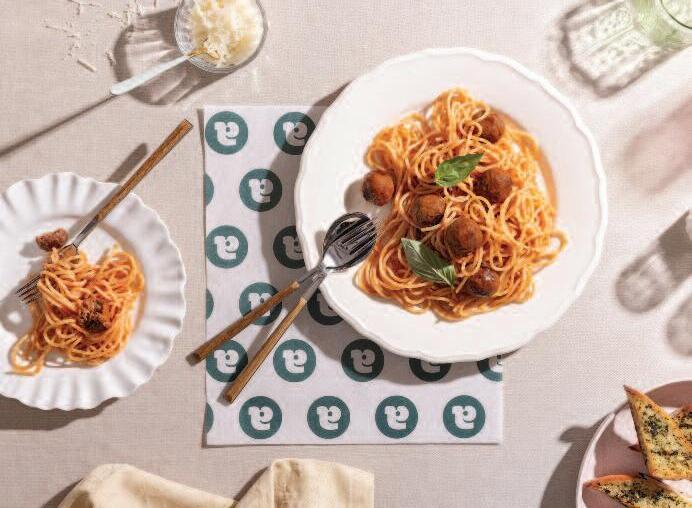
“This collaboration brings us closer to providing the meat industry with the solu-
The collaboration underscores Meatable and TruMeat’s shared commitment to revolutionizing the food system by delivering sustainable and efficient cultivated meat technology to the meat industry By combining cutting-edge technology with proven expertise, the companies aim to drive the industry forward and meet the growing global demand for alternative proteins
The U S retail sector is being reshaped by aggressive tariffs – over $300 billion in Chinese goods alone remain under Section 301 tariffs – and ongoing inflation, according to retail-agnostic digital media platform ShopLiftr
Grocery input and packaging costs have jumped 4 1 percent year-over-year, with the majority of that impact directly tied to tariffs As a result, grocery prices are up 2 7 percent YoY and restaurant menu prices have soared 4 4 percent
Retailers are feeling the squeeze Fortyone percent of major U S retailers report increased inventory costs due to tariffs, resulting in compressed margins
Consumers are adapting, fast Fifty-two percent of U S grocery shoppers are trading down to private label – the highest ever recorded Forty-five percent are actively searching for deals and digital coupons to offset higher prices Seventy-seven percent changed brands or stores in the past year
to find better value or promotions
The pace of change is unprecedented Ever y week, new tariffs or input cost shocks can upend pricing, promotions, and shopper behavior Legacy marketing and ad platforms – built for predictability – simply can’t keep up
ShopLiftr is purpose-built for today’s climate of volatility and value-seeking shoppers The platform’s industr y-leading real-time data engine enables brands and retailers to instantly launch, optimize and personalize digital offers – everywhere, at any retailer, across every channel:
• Real-time, hyper-local activation: Deploy unlimited, regionally tailored creative variations in days, not weeks
• Pinpoint targeting: Match digital offers to shifting shopper behaviors and local price sensitivities as they happen, and geotarget to the device level
• Dialed-in measurement: Measure and optimize true incremental sales lift – be-
yond mere shifts – at city or category levels, while tracking ad unit performance down to the store level
• Channel and retailer agnostic: Activate across any retail partner, future-proofing your promotional strategy against ongoing supply chain shocks and tariff impacts
A national discount retailer, saw 11 percent year-over-year sales growth and had $81 return on advertising spend, even as category sales decline sector-wide A major East Coast supermarket chain redeployed creative resources to high-impact strategic work, with ShopLiftr’s automated creative and deployment capabilities
“As a longtime partner of Shopliftr, I’ve seen firsthand the immense value of their local market trade promotions data in driving personalized targeting across digital media, including DOOH, mobile and web,” said Brian Dunphy, chief commercial officer, Starlite Media “In today’s challeng-
ing economic climate, where consumers are more value-conscious than ever, it’s crucial for brands to amplify local pricebased promotions in their path-to-purchase
“Our partnership with ShopLiftr allows brands to seamlessly leverage real-time data and dynamic content optimization, delivering highly relevant, location-based promotions across Starlite’s premium DOOH network This level of precision and agility is key to ensuring brands reach their customers at the right time, in the right place, with the right offer ”
ShopLiftr empowers partners to deploy real-time, hyper-local digital offers at scale – wherever shoppers are; achieve and prove true incremental sales lift, not just sales shifts; future-proof promotional strategies across any retailer, channel or region; and scale personalized value messaging – without added operational complexity GN
Cargill is investing nearly $90 million in automation and new technologies at its Fort Morgan, Colo , beef plant as part of its Factory of the Future initiative The enhancements, which will take place over the next several years, will help Cargill continue to improve operational efficiencies, increase yields and make the facility even safer and more inclusive for employees
The company has already invested nearly $24 million in technology upgrades at Fort Morgan since 2021
One of the first and most revolutionary automated solutions to be implemented at the plant will be CarVe, Cargill’s proprietar y, patent-pending computer vision technology CarVe measures red meat yield
in real time, giving frontline managers instant insights and the ability to share feedback with employees to improve their cutting technique
CarVe helps keep more protein in the food system that otherwise would be lost in the process According to the U S Department of Agriculture, the United States produces more than 27 billion pounds of beef annually
Even a 1 percent yield improvement can save hundreds of millions of pounds of meat And with the U S cattle supply at its lowest level in years, improving yield matters more than ever
“Before CarVe, yield data was always yesterday’s news, ” said Jarrod Gillig, senior
vice president of Cargill’s North American Beef business “Now, we ’ re making decisions in the moment and saving product that would’ve been lost
“By applying smart technology to the problem, we ’ re getting more meat from every animal, reducing waste, and making protein production more efficient and sustainable from start to finish ”
Gillig noted that Cargill has also invested in the community of Fort Morgan and its people there To help address a regional housing shortage, the company has backed a $40 million development project for employee housing This includes 27 townhomes, which have been built, and an apartment complex with 81 units set to
open in the fall
Cargill has provided more than $500,000 in grants to local organizations, including the United Way, to support additional childcare options and other programs that help address the regional housing issue like first-time home buyer classes
“Fort Morgan plays an important part in Cargill’s critical role as a food company to the nation and the world,” said Gillig “By partnering with local ranchers and farmers in Colorado and the region, we ’ re working hard to produce more food with less impact there so we can move it to store shelves and ultimately family dinner tables across the country ” GN
first brand campaign, Abuela Intelligence
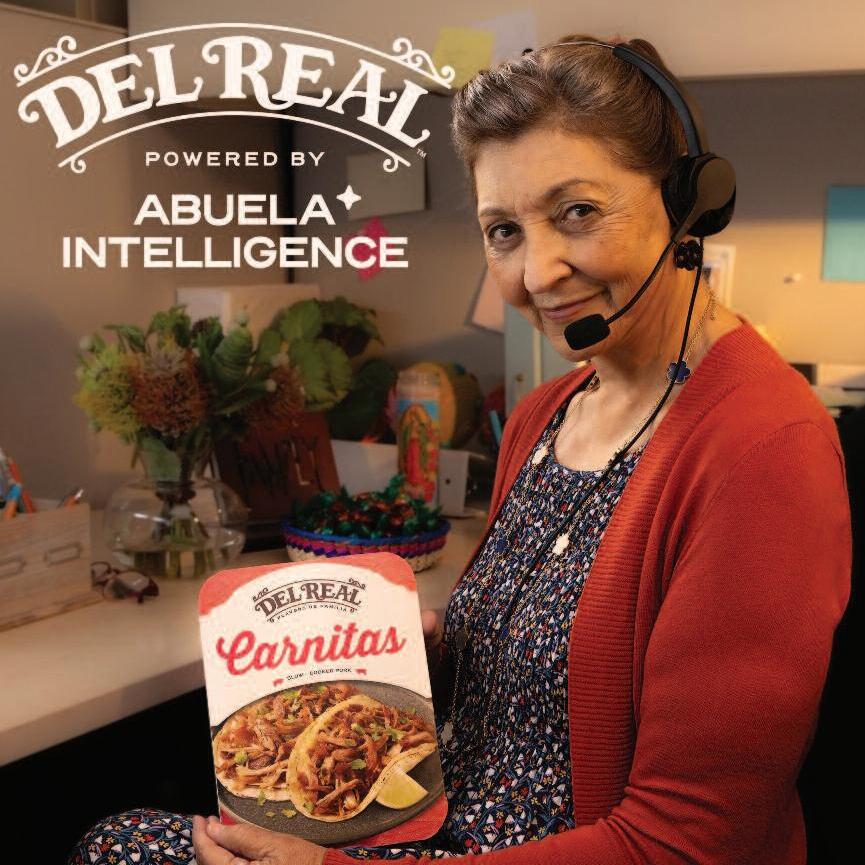
At a time when the world is chasing artificial intelligence and mass production, Del Real Foods is turning to a deeper, more authentic source of inspiration – the wisdom, warmth, and wit of abuelas The integrated campaign celebrates ever ything Del Real Foods stands for – handcrafted meals made with love and real, whole ingredients you’d find in your grandma’s kitchen
The campaign debuted with a nostalgic, charmingly unexpected video set in a ‘90s-style call center – but instead of tech support agents, it’s fully staffed with headset-wearing abuelas Whether it’s, “Why won’t my son get married?” or “What’s the easiest way to
make authentic tacos?,” these abuelas answer with tough love, wisdom and a heavy dash of flavor, because when it comes to food (and life), they don’t cut corners
“Abuela Intelligence is our playful, heartfelt way of honoring the real source behind our recipes: generations of grandmothers whose love and tradition are built into ever y bite,” said Daniela Simpson, CMO of Del Real Foods “While the world leans on technology, we ’ re leaning on something that’s been here all along: abuela wisdom
“Real meals Real advice Real love That’s what Del Real Foods is all about ”
The integrated campaign rolled out with the TV commercial on connected TV platforms across Los Angeles, San Diego and San Francisco, as well as through online video, including social media, YouTube and the brand’s website
It will also come to life through an “Abuela Road Trip,” a mobile sampling experience at select retail stores across Los Angeles, San Diego, the Sacramento area and Phoenix From May to July, shoppers can taste some of Del Real Foods’ most beloved offerings, including its Carnitas and Birria & Cheese Pupusas, and learn more about the brand’s authentic recipes and rich heritage
To
with
To learn
contest to discover the
about the campaign and redeem Abuela’s Treat, visit www del realfoods com
BY A.J. FLICK
Creamsicles remind me of my childhood
They were my favorite after-school snack and I savored each bite of ice cream coated in orange flavor
Years later, a local fast-casual restaurant chain gave me the same palate-pleasing taste with its orange slushes that you can complement with a little tub of vanilla ice cream
Nowadays, I’m more careful about what I eat, calories, carbs, etc But I still crave orangey ice cream

Recess to the rescue! The relaxation beverage maker has debuted the latest flavor addition to its best-selling, magnesium-infused Mood sparkling water line: Orange Vanilla
Each can of Mood sparkling water combines magnesium and adaptogens to help you unwind, providing a gentle lift that puts you in the right headspace, whether it’s a night out or a lowkey night in, sans alcohol
No wonder I love it Recess describes it as a “perfect balance of juicy orange, creamy vanilla and a splash of nostalgia, combined with effervescence that lifts you right up to the moment of zen you seek in a can of Recess Mood Think of it as an adult creamsicle that tastes and feels like a dream ”
They’re made with real fruit – no artificial anything – with 53mg of magnesium from Recess’s proprietar y magnesium blend, which includes magnesium L-threonate, magnesium ascorbate and active vitamin B6, as well as L-theanine and lemon balm powder
And at 25 calories, no added sugars and only 2g of carbs, it checks all the boxes for me
I’m enjoying one now Don’t hate me Get some
Consumers are demanding clean label snacks not only for themselves, but for their children That’s it has answered the call with the nationwide launch of Organic Fruit Crunchables, now on Walmart shelves
Grocer y shopping for toddler snacks
can be overwhelming for parents navigating a crowded categor y filled with ultraprocessed products, hidden sugars and vague claims i n c l u d i n g “made with fruit” or “natural flavors ”
Decoding labels often requires more time than busy families can spare
That’s it makes snack choices easier for parents with Organic Fruit Crunchables, a real fruit snack made with just one or two ingredients: 100 percent real whole fruit and no added sugars, juices, purees, concentrates, artificial colors, flavors or dyes
Rangoon, Scallion Pancakes and Taiwanese Popcorn Chicken joining the successful dumplings and bao buns
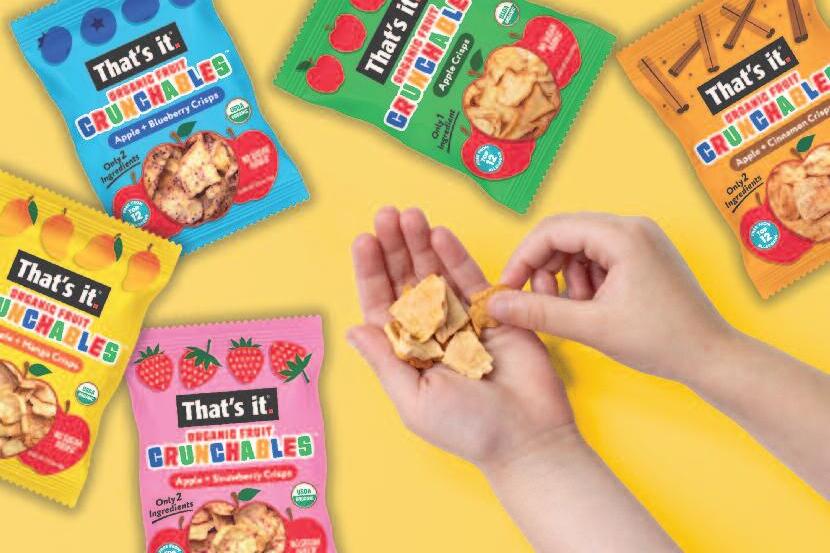
The new collection, called Crunchy Bites, hit Whole Foods Market shelves in June, to be followed by Taiwanese Popcorn Chicken in August Crunchy Bites are airfr yer-ready and deliver Laoban’s signature flavor and quality promise, with a satisfying texture: crispy on the outside, warm and savor y inside Like all Laoban products, they’re made with premium, wholesome ingredients, including antibiotic-free chicken, with no preservatives
just the first three months, frequently selling out nationwide That momentum earned Laoban a 2024 Supplier All-Star Award from Whole Foods Market
“Laoban keeps raising the bar with frozen favorites that punch way above their weight when it comes to flavor, texture and quality,” said Christopher Manca, principal categor y merchant at Whole Foods Market “This new lineup brings something different to the category – not just improvements to familiar dishes, but fun, chef-driven takes that make these products feel totally fresh
“Our shoppers are always on the lookout for what’s next, and Laoban delivers every time ”
“Today’s modern parents are looking for clean, simple ingredients they can trust,” said Katie Eshuys, president of That’s it “We’re proud to launch Organic Fruit Crunchables in partnership with Walmart, who shares our commitment to making better choices more accessible for families everywhere Together, we set out to create something that meets those needs without compromising on taste, convenience or nutrition ”
“These items are a love letter to the dishes I grew up eating in my family’s
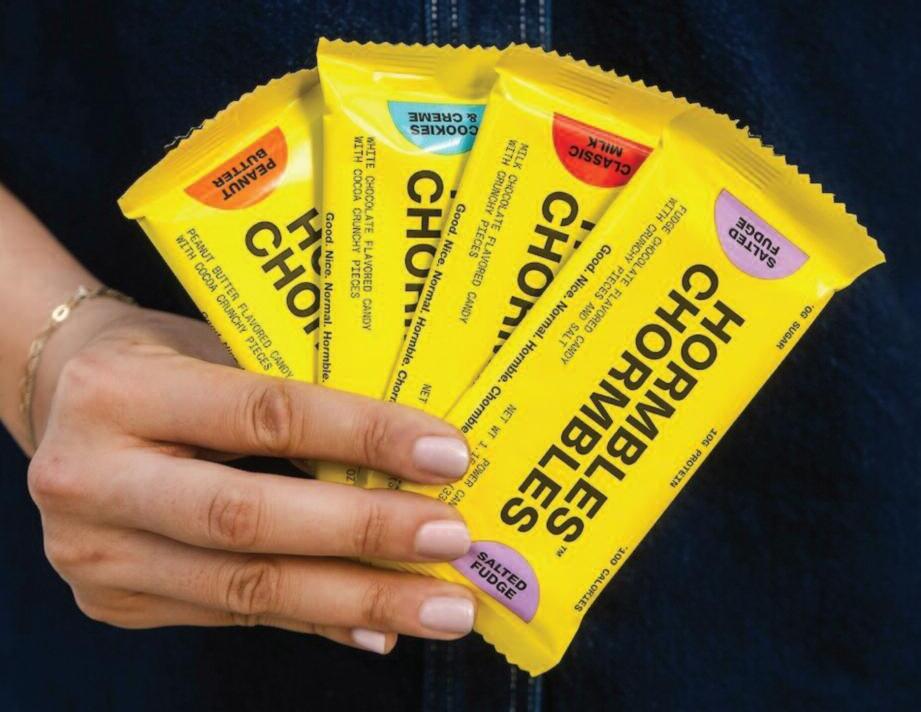
Hormbles Chormbles has launched its first line of high-protein, zero-sugar, chocolateflavored candy bars Packed with 10g protein, 0g sugar and 100 calories, Hormbles Chormbles aims to “Make Candy Make Sense,” born out of the idea that there
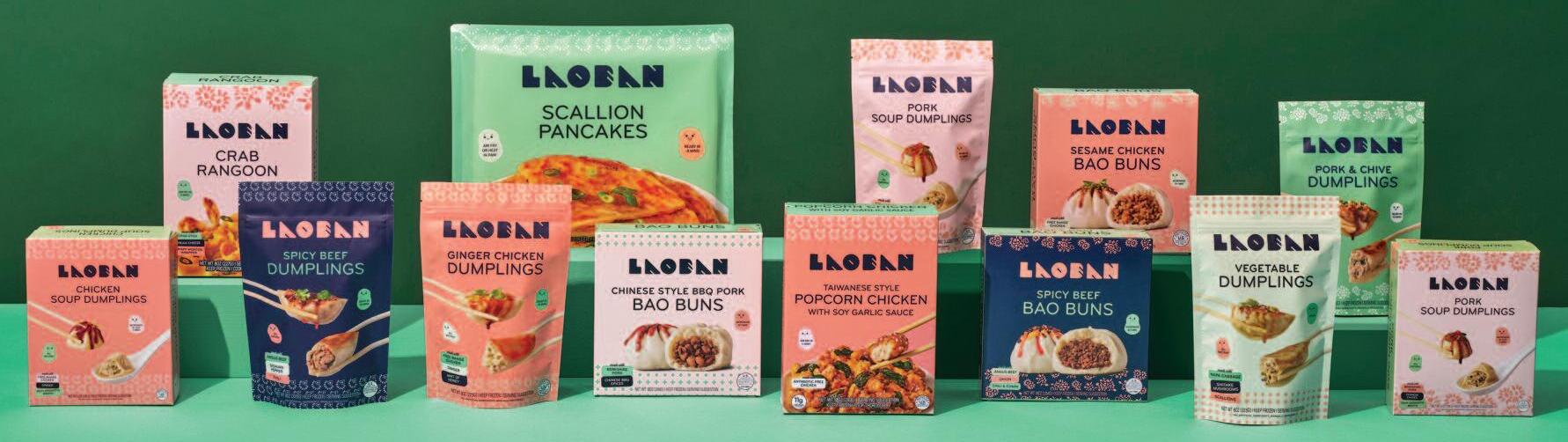
Organic Fruit Crunchables are free from the top 12 allergens, offering a more inclusive choice for families Approximately 8 percent of children under age 5 in the United States are affected by food allergies The launch also comes as synthetic dyes such as Red 40 and Red 3 face increasing regulatory scrutiny and have already been banned in several states and K–12 school systems due to health concerns
“We’ve listed our ingredients on both sides of our packaging since we first launched in Los Angeles farmers markets in 2012,” said Dr Lior Lewensztain, founder and CEO “It’s encouraging to see the FDA now proposing to make this standard Clear, honest labeling should be the norm – not the exception – especially when it comes to snacks for kids and toddlers ”
According to the That’s it Snacking Trends Survey, nearly 80 percent of registered dietitians believe healthy snacking habits should begin in toddlerhood and 94 percent agree that increasing fruit and vegetable intake should be a top priority at every age
And, with zero net carbs, they won’t spike anyone ’ s blood sugar (adults, too)
has expanded its frozen food line with takeout inspired dishes with Crab
restaurants,” said Chef Tim Ma, Laoban’s co-founder and culinary director “We set out to capture the joy of Asian takeout classics, while making them easy to enjoy anytime at home Every bite is packed with intention, and we never compromise on quality ”
“We chose these items because they got us the most excited,” said Patrick Coyne, co-founder and CEO “When you think of the dishes you always have to order anytime you ’ re at a restaurant or getting takeout or delivery, you ’ re always getting an order of scallion pancakes and crab rangoon
“We haven’t seen these dishes widely available in grocery stores, and we ’ re thrilled to be able to make them accessible to ever yone ever ywhere and easy enough to prepare at home in a few minutes ”
should be a guilt-free option for those looking for a healthier, delicious indulgence
Founded by Jared Smith, co-founder of RXBAR, Hormbles Chormbles was created to bridge the gap between the candy aisle and the nutrition world Unlike other protein snacks trying to imitate candy, Horm-
The launch marks the next milestone in Laoban’s continued collaboration with Whole Foods Market, a key early supporter of the brand’s frozen line Over the past year, Laoban has seen nearly 300 percent growth at Whole Foods Market and is one of the retailer’s top frozen food brands
In 2024, Laoban introduced its first product outside of dumplings: Bao Buns, which sold nearly half a million units in
bles Chormbles is candy first, made for those looking for a sweet treat with added nutritional value
With sugar removed, each 33g Hormbles Chormbles bar is crafted using highquality whey and milk protein, meaning it is nutrient-rich and contains all essential amino acids Not only is it satiating, but it is also functional and effective for muscle recovery
“Candy never really made sense to me, ” said Jared Smith, founder and CEO “At RXBAR, we prioritized transparency and whole food ingredients, yet I still found myself reaching for whatever candy or snack was around
“I had a cognitive dissonance with nutrition I understood its importance, but I still craved candy,” he said
“There was an opportunity to bridge the gap between the nutrition world and candy That’s why we created Hormbles Chormbles We removed the sugar and calories, then added protein, and made candy that makes sense ”
With a focus on functionality and taste, the bars deliver on the satisfaction of candy with none of the sugar crash Each bar contains added crunch for extra indulgence, maintaining the taste and texture of traditional candy bars, every time
“The candy you got as a kid on Halloween is still the same today It’s loaded with sugar and offers no nutritional value,” Smith said “At Hormbles Chormbles, we ’ re shaking up the candy aisle with something that’s never been done before ”
Peter Rahal, RXBAR cofounder and founder of David, sits as a key advisor for Hormbles
C h o r m b l e s , where he lends his expertise to the brand’s strategic growth to break into the $28 1 billion U S chocolate candy market
aration technology maintains the integrity of the protein during processing, allowing the resulting protein ingredient to gel, emulsify, leaven, bind and more
The protein is the same ingredient that powers Eat Just’s award-winning Just Egg brand
“My chefs and I have fooled around with Just One in our kitchens for the last six months,” said Andrew Zimmern, famed chef and TV host “We’re in love
“From pumpkin bread to mushroom meatballs and silky smoothies, this single ingredient can do it all It’s best in class ”
This launch comes at a time when consumers are seeking to add more protein to their diet, while demanding ever cleaner and simpler ingredients Eighty-five percent of Americans want to consume more protein in 2025, according to a survey by Edelman Eighty-one percent of Americans say it’s important to them to purchase clean label food products, according to Acosta Shopper Insights
Hormbles Chormbles is sold online in four flavors – Salted Fudge, Classic Milk, Cookies and Creme and Peanut Butter
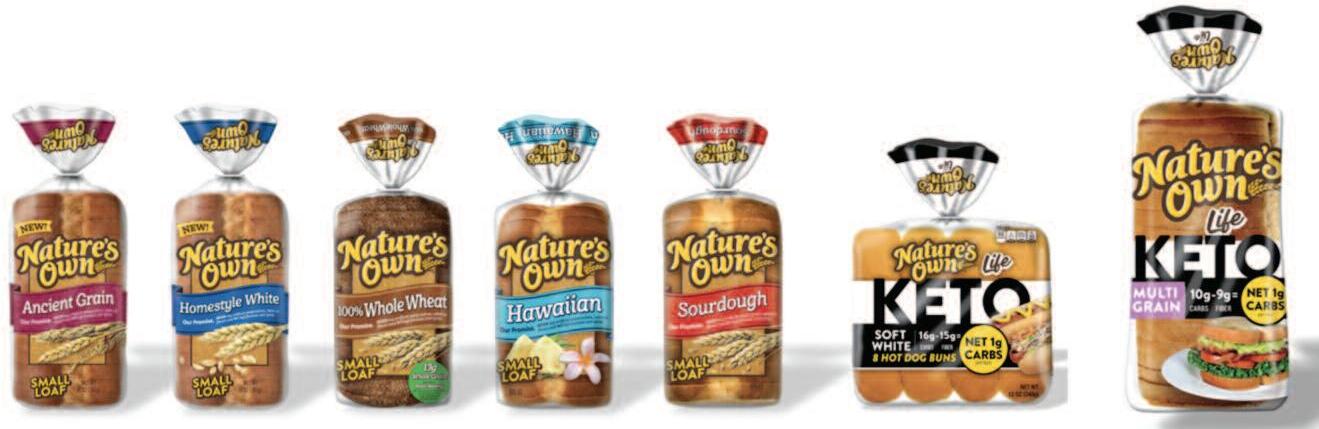
Eat Just, Inc has launched its Just One protein, available in U S locations of Whole Foods Market
With just one pure ingredient and the highest protein per serving on the market, Just One makes everyday recipes protein rich Bake protein packed cookies, blend into creamy smoothies or use it to make fluffy, filling pancakes
Just One is made from the protein of mung beans, one of the most nutrient-rich and sustainable crops on the planet This single, non-GMO ingredient delivers the most protein per gram of any protein on the market, while also introducing a new kitchen tool to make a wide variety of protein-packed foods, from muffins to pasta and ice cream
“We spent years trying to find a clean, single ingredient protein that could make it a little easier to eat better,” said Joshua Tetrick, CEO and co-founder “We’re so excited to see what folks make with it ”
While consumers can add many traditional protein powders to dishes like oatmeal or pancakes, it isn’t functional in cooking and often makes food grittier or denser Just One’s proprietary protein sep-
low-carb lifestyle
Just One’s nutritional performance is also great for blended shakes and smoothies
Just One has the most protein per gram of any leading protein powder
Just One is a complete protein, containing all nine essential amino acids It has more total essential amino acids than whey, pea or soy protein – the conventional sources of consumer protein powders
Just One is available in three other varieties: Just One + Chocolate + Peanut Butter, Just One + Maple + Banana and Just One + Vanilla + Chai These products pair Just One with real, natural ingredients including cashews, chai spices and premium Guittard cocoa for even easier delicious shakes and smoothies
The 12-ounce items come in premium, reusable aluminum tins In addition to Whole Foods Market, the original flavor is also available online at Purple Carrot
Following the success of its graham sandwiches, Once Again is introducing standalone cinnamon, honey and chocolate graham crackers Handcrafted in small batches by the company ’ s 100 percent employee owners, the wholesome lineup is certified both organic and gluten free (the cinnamon and dark chocolate are also vegan)
A blend of sorghum, oat and cassava flour, plus organic cinnamon, real clover honey or rich dark chocolate liquor, give these artisanal crackers a homemade taste superior to their conventional counterparts
Made with carefully selected, clean and simple, ethically sourced ingredients, the new graham crackers contain no artificial flavors, colors, sweeteners or preservatives
and are also kosher and Non-GMO Project Verified
“We’re excited to bring to market a highquality and allergen-friendly upgrade to a childhood favorite snack,” said Sudheer Kosaraju, chief commercial officer “Our new graham crackers are satisfying on their own or topped with one of our nut butters They also serve as a great ingredient for s ’ mores and pie crusts ”
Once Again’s bakery-made graham crackers are sold at natural food stores across the country and available for retailers nationwide to carry for an SRP of $7 99
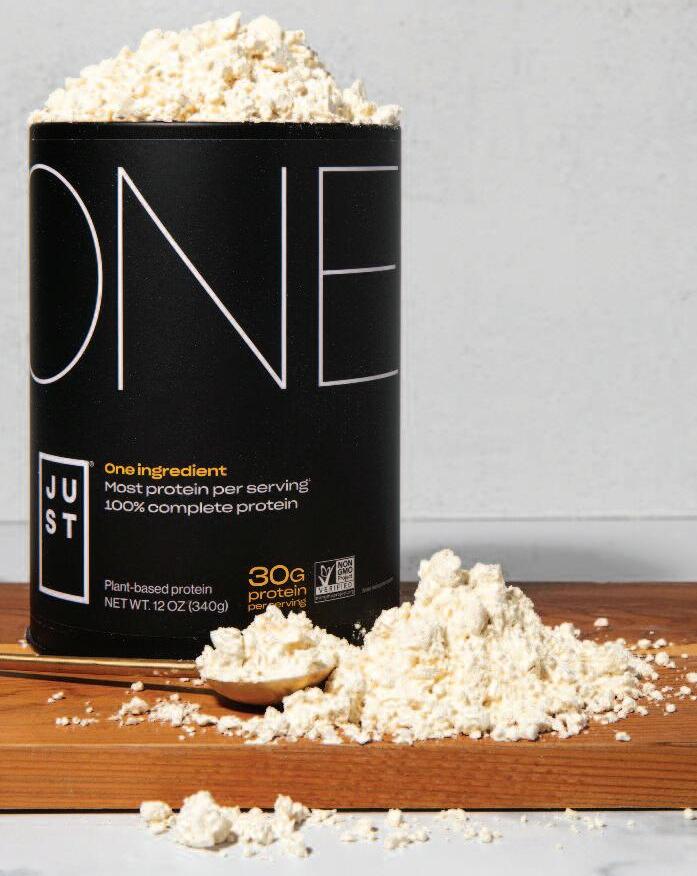
America’s No 1 selling bread brand, Nature’s Own, has added seven products to its portfolio, expanding its Small Loaf series with additional varieties and its Keto Life offerings to include hot dog buns and a multigrain loaf
The new products meet the needs of two growing market trends: Nature’s Own Small Loaves are well suited for smaller households seeking to maximize freshness while minimizing cost and waste – and for larger households seeking variety – the Keto Life lineup is perfect for consumers living a low-carb lifestyle
The Keto Life Multigrain Sliced Bread, with each slice boasting 1 net carb –balances softness with bold flavor, ensuring ever y bite delights the palate Free from artificial flavors, colors, or preser vatives, shoppers can enjoy a better-for-you bite that lets you savor bread without compromising their dietary preferences or keto lifestyle
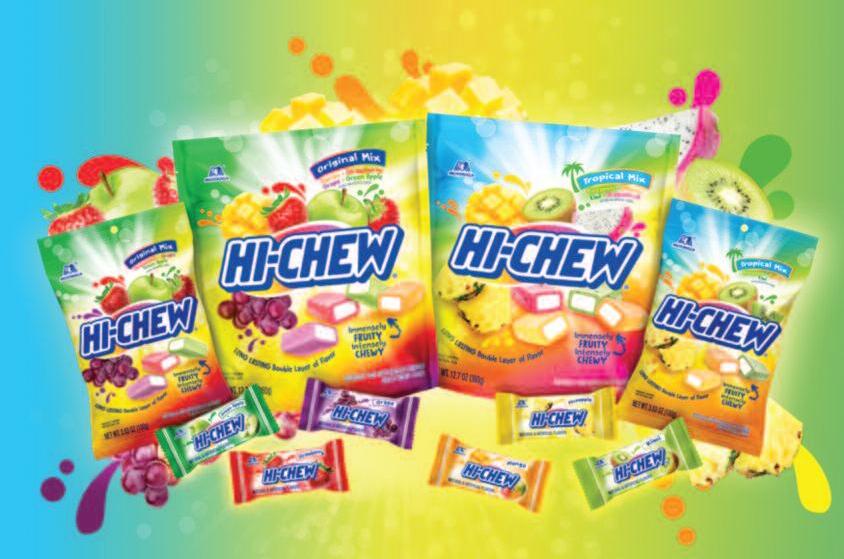
Hi-Chew unveiled a fresh look at the 2025 Sweets & Snacks Expo The brand’s signature Original and Tropical Mix assortments are the first to showcase the updated packaging and new chewlet colors –marking the beginning of a broader portfolio refresh rolling out in retailers beginning in May and continuing into 2026
As Hi-Chew grows across the United
“With consumers at the center of everything we do, our new lineup was thoughtfully developed using direct feedback and real insights from the families we ser ve, ” said Kr ystle Farlow, senior director of brand management "We’ve expanded our portfolio to deliver a variety of delicious, better-for-you options that don’t compromise on flavor or value
“These products not only reflect what today’s shoppers are asking for – they also uphold Nature’s Own brand promise of no artificial flavors, colors or preser vatives, and no high fructose corn syrup ”
Building on the successful regional introduction of the Small Loaf Homestyle White and Ancient Grain in 2024, Nature’s Own is expanding its Small Loaf series, with a full lineup of five varieties launching nationally, including Homestyle White, Ancient Grain, 100% Whole Wheat, Hawaiian and Sourdough Each loaf features 12 perfectly portioned slices – ideal for smaller households and fresh-eating convenience – while preserving the signature soft texture and delicious taste fans expect from Nature’s Own
Expanding its popular Keto line, Nature’s Own presents the Keto Soft White Bun with 1 net carb per serving Nature’s Own Keto Soft White Bun offers a wholesome, flavorful experience that elevates burgers, sandwiches, and more – perfect for anyone looking to enjoy classic favorites while staying on track with their
States, the brand has been listening to what candy lovers really want – especially Gen-Z and Millennial fans Based on the feedback, Hi-Chew is giving its packaging a bold new look that’s all about standing out, being easier to shop and bringing more fun to every bag
The rebranding includes a fresh, vibrant design for both peg bags and stand-up pouches, with updates like a lowered logo for better shelf visibility; larger, easier-toread flavor names for quick flavor recognition and clear, consumer-friendly descriptions that highlight key product qualities
For the first time, the playful brand mascot, Chewbie, will be featured on the back of each peg bag and stand-up pouch to bring even more personality to the brand
In addition to the new look, Hi-Chew Original and Tropical Mix chewlets are getting a colorful makeover of their own The classic white exterior will now be reversed, with bold, colorful outsides and juicy white centers – delivering the same chewy texture and true-to-fruit flavor that fans can’t get enough of
“The consumer journey has always been at the heart of Hi-Chew,” said Teruhiro Kawabe (Terr y), chief representative for the USA & president, CEO of Morinaga America, Inc “This fresh look is designed to catch the eye, reflect the bold flavors inside, and create more opportunities for people to discover the candy that’s loved around the world ”
Continued from PAGE 13
With protein topping the list of what today’s snackers want, Catalina Crunch has made it easier (and tastier) to get Catalina Crunch 10g Protein Snack Mix is available at Target stores nationwide and Target com
With 10g of protein, 150 calories and an
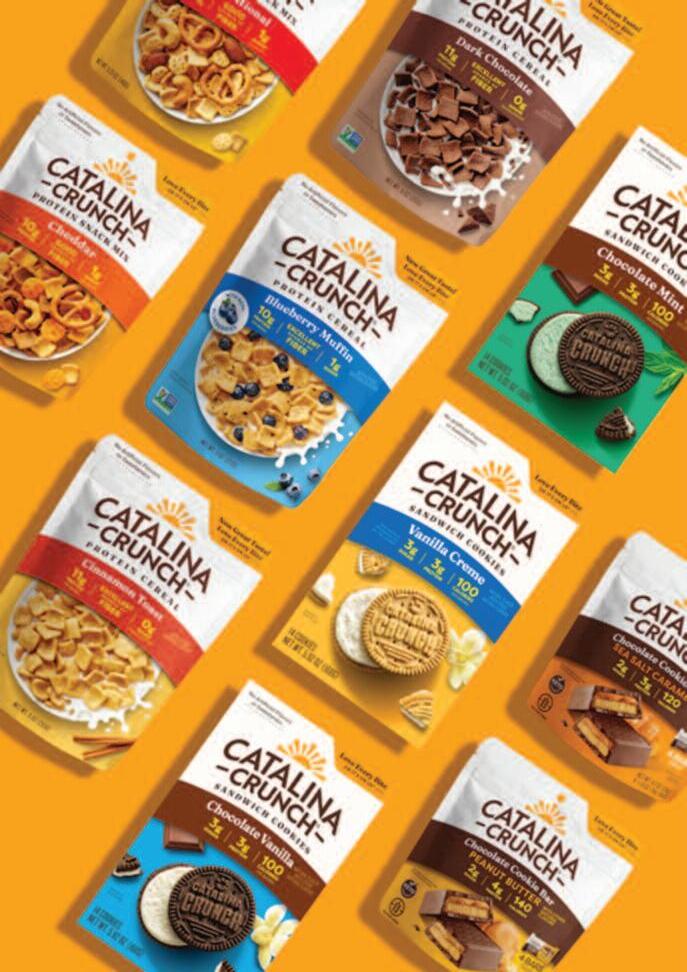
excellent source of fiber per ser ving, this snack mix delivers bold flavor and satisfying crunch – without the guilt Made with clean, all-natural ingredients and free from artificial sweeteners, flavors and colors, it’s a better-for-you snack that doesn’t compromise on taste or quality This snack mix comes in flavors including Spicy Kick, Creamy Ranch, Honey Mustard, Cheddar and Original
It’s Skinny, the brand known for reinventing pasta, has introduced its ready-to-eat Pasta Meals – a first-of-its-kind innovation in the pasta meal categor y Pairing the brand’s signature zero-carb, gluten-free noodles with rich, organic cheese blends, these indulgent dishes bring restaurantquality flavors to the grocer y aisle without sacrificing on taste or convenience
Available in three flavors –Truffle Parm, Cacio e Pepe and Velvety Cheddar – each meal provides a new way to enjoy pasta With just 7 grams or fewer of total carbs per ser ving, the Pasta Meals offer lower calories and reduced sodium
Guadagno, CEO “These meals are for ever yone, providing comforting flavors made with ingredients that fit a variety of dietary preferences, so no one has to miss out on what they love ”
Developed with a focus on culinar y quality and flavor innovation, the Pasta Meals are made with premium ingredients to ensure crave-worthy, balanced options that cater to modern dietary preferences
“Our goal was to create indulgent, restaurant-inspired flavors while keeping nutrition at the forefront,” said Elad Barkan, chief product officer “By leveraging my experience in both culinary artistry and food science, we created meals with high-quality ingredients that deliver bold taste without unnecessary carbs, calories or sodium ”
H-E-B is one of the first retailers to carry the new Pasta Meals Both It’s Skinny and H-E-B are rooted in Austin, Texas This debut in H-E-B reflects the brand’s deep connection to the local community and reinforces their shared mission to provide healthier, more accessible food options
It’s Skinny is also available for purchase on Amazon and through national retailers including Publix and Kroger
For years, Gushers fans have made one thing clear: they’re obsessed with the blue ones They’ve begged They’ve posted They’ve even sorted them by hand
Now, Gushers is finally making dreams come true with the launch of Gushers All Blue – the first box featuring only blue Gushers, available nationwide
Alongside the return of fan-favorite vibrant Blueberr y Grape, the Gushers All Blue pack also introduces Sour Blue Raspberry, a brand-new flavor inspired by the internet’s latest candy trends and the surge in popularity for sour candy It’s sweet, tart and it’s here as a result of fan cravings
“The buzz around blue Gushers is impossible to ignore,” said Stephanie Lensing, brand experience manager “In the past year alone, mentions of ‘blue Gushers’ on social media have jumped more than 30
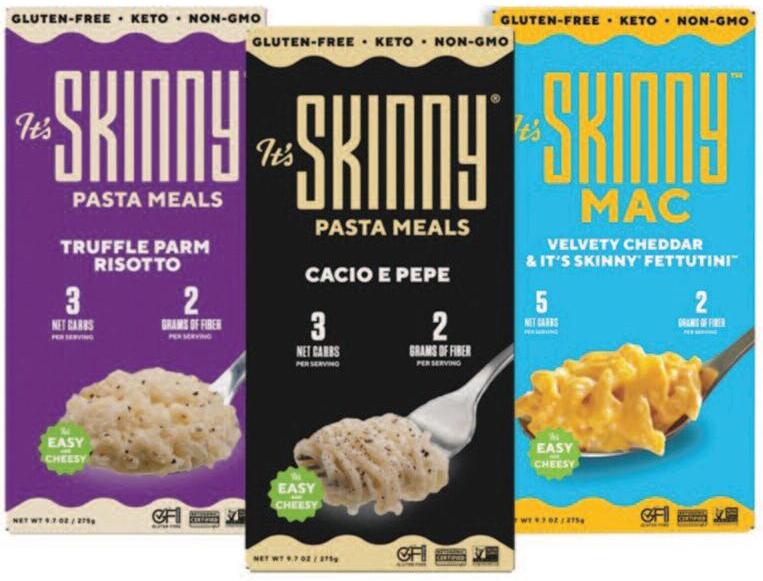
percent
“Fans have been asking for a box of all-blue Gushers for years, so when we saw how much love Sour Blue Raspberr y was getting on TikTok, we knew this was the perfect moment to drop This new variety wouldn’t exist without the energy fans brought to every post, comment and share We’re really excited to bring their requests to life ”
owned food companies in the United States, has reached a global partnership with the world’s No 1 social media creator, businessman and philanthropist, MrBeast (Jimmy Donaldson) This collaboration will see the two entities launch a line of protein-packed meat snack products
This partnership marks MrBeast’s first collaboration with a consumer packaged goods company for a co-branded product line, signaling a significant convergence of traditional food industr y expertise and modern digital influence
The Jack Link’s x MrBeast collaboration introduces a line of co-branded meat snack multipacks featuring individual-sized packs of favorite flavors of beef jerky and meat sticks Designed for convenient pantry storage and active lifestyles, these multipacks, showcasing MrBeast’s signature branding, cater to protein-rich snacking needs for school lunches, road trips and ever yday protein fueling
“We are incredibly excited to partner with MrBeast,” said Troy Link, CEO of Jack Link’s “Jimmy’s entrepreneurial spirit and dedication to his fans align perfectly with our values at Jack Link’s We believe this collaboration will drive a new generation of consumers into the meat snacks category, worldwide ”
ByHeart’s innovation introduces a new single-ser ve option for modern parents specifically designed to simplify bottlemaking while traveling, commuting or tackling day-to-day errands Each pack contains 14 pre-measured sticks of ByHeart’s formula – the first U S infant formula to combine certified organic, grass-fed whole milk, their closest-tobreast-milk patented protein blend and clinically proven benefits – now available in a flexible, travel-ready format
“Today’s parents aren't putting their lives on pause when they have children –they’re bringing their babies along for the adventure,” said Mia Funt, co-founder and president “We created the Anywhere Pack specifically for this new generation of Beta babies whose parents are redefining what early parenthood looks like: more flexible, more mobile and less tied to the con-
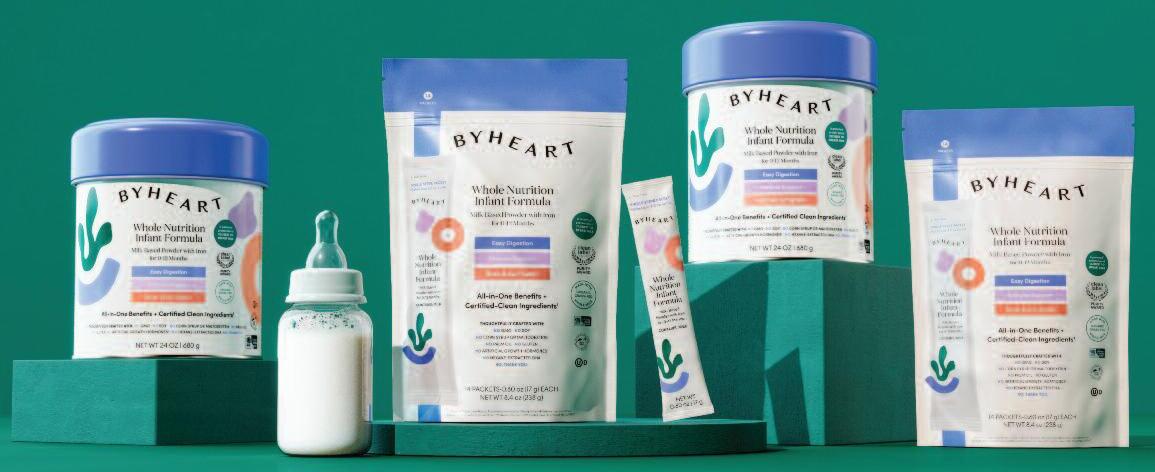
straints of home ”
Ready in about five minutes from start to finish, they offer the indulgence of classic pasta dishes with the ease of a readyto-eat meal
“The current Pasta Meals selections have remained largely untouched when it comes to true innovation and we saw an opportunity to bring something completely new to the table,” said Br yan
And the fun doesn’t stop there – Gushers is leaning all the way into the internet chatter that led to the new pack by sharing an origin tale of the coveted new product
The absurd story comes to life on TikTok through the “Legend of Blue Gushers,” a mysterious tale about a place tucked away in the Blue Ridge Mountains
Jack Link’s, a global leader in meat snacks and one of the largest privately
This partnership targets the significant market of Gen Alpha, Gen Z and their parents Despite 33 percent of younger consumers snacking more than three times a day, only about 9 percent opt for meat snacks, highlighting a substantial opportunity for growth
“I’ve been eating Jack Link’s since I can remember, so teaming up is a no-brainer,” Donaldson said “Now we get to do something super fun and tasty for our fans I can’t wait for ever yone to see what we dream up ”
ByHeart infant nutrition company has launched the Anywhere Pack – a mess-free way to feed babies on-the-go Compact, convenient and pre-portioned, the Anywhere Pack offers freedom for parents to feed wherever life takes them
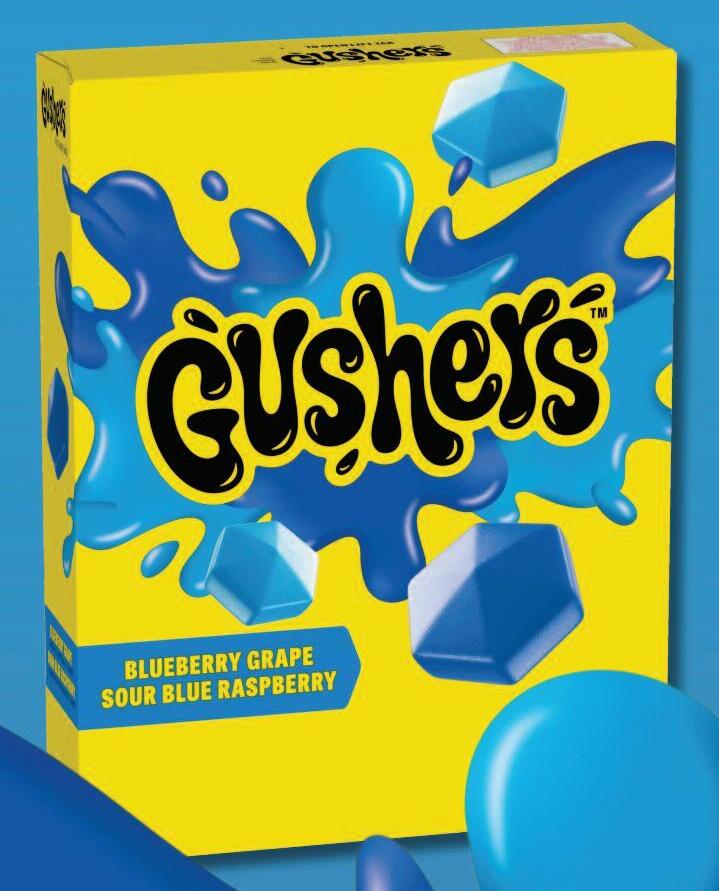
Anywhere Pack formula is free from corn syrup, maltodextrin and the seed oils soy and palm; is small-batch blended to preserve the natural goodness of fats; and locally made in ByHeart’s own factories in Pennsylvania, Iowa and Oregon
“At ByHeart, we ’ re committed to advancing infant nutrition through breast milk science, evidence and purpose, ” said Ron Belldegrun, co-founder and CEO “We created a formula that prioritizes baby’s functional health and development, with breast milk as our north star
“By focusing on powerhouse macronutrients such as protein, we ’ ve been able to create a patented protein blend that gets closest to breast milk With the Anywhere Pack, we ’ re offering that same groundbreaking formulation in a new, convenient format – empowering parents to nourish their babies with optimal nutrition, wherever life takes them ”
The Anywhere Pack is available for purchase on ByHeart com and will be rolling out to retail partners nationwide
Hold on to your taste buds They’re about to be craving Bob’s Red Mill’s newest creation
The company has debuted its Signature Blends Cinnamon Swirl Coffee Cake Mix
Available exclusively at Whole Foods Market and Amazon, the new Cinnamon Swirl Coffee Cake Mix joins the brand’s line of Signature Blends Baking Mixes, offering scratch-quality results without the hassle
Crafted with Bob’s Signature Blend of premium flours, Cinnamon Swirl Coffee Cake Mix creates a tender, moist cake with a decadent ribbon of cinnamon sugar in every bite The new mix is made with the simple, high-quality ingredients that Bob’s Red Mill is known for, with no artificial flavors or colors
Perfect for breakfast, brunch, dessert or
a sweet snack, Cinnamon Swirl Coffee Cake Mix comes complete with a Cinnamon Sugar Topping Packet, to create warm and cozy swirls in the cake, as well as an irresistibly sweet and crunchy top Requiring just three ingredients – eggs, butter or oil and water – the new mix offers a foolproof shortcut to homemade taste and texture, minus the fuss
Cinnamon Swirl Coffee Cake Mix joins other Signature Blends products Fudgy Brownie Mix, Golden Cornbread Mix, Classic Yellow Cake Mix and Decadent Chocolate Cake Mix
“The success of our innovative Signature Blends Baking Mix line reflects a growing demand for high-quality, approachable baking solutions,” said Daniel Barba, vice president of marketing “The new Cinnamon Swirl Coffee Cake Mix thoughtfully expands the line, honoring timeless flavors while staying true to Bob's Red Mill's commitment to quality ingredients ”
Jolene, please don’t take my Dolly Parton meals!
Global icon Dolly Parton has expanded her retail food line in collaboration with Conagra Brands, introducing single-serve frozen meals that bring Parton’s cherished Southern-inspired favorites to homes across the nation in a convenient, no-hassle format
ery, onions and roasted red potatoes in a rich, savory Southern-style gravy
• Dolly Parton’s Chicken & Dumplings: White meat chicken with thick-cut carrots and celery, paired with fluffy dumplings in a creamy pepper and thyme sauce
• Dolly Parton’s Country Fried Steak: A tender, fried beef patty topped with black pepper and chive countr y gravy, ser ved alongside chunky mashed potatoes and seasoned green beans with smoky bacon
• Dolly Parton’s Shrimp & Grits: Creamy white cheddar grits with succulent shrimp, cherry tomatoes and a bold, spicy Southern-style sauce
Each meal has a suggested retail price of $4 49 and can be prepared in either the microwave or oven
“I’ve always believed in the power of a warm, hearty meal, and now with these offerings I'm bringing a little taste of my own Southern favorites to you, ” said Parton “Whether you're busy or just craving some quick comfort, I hope these dishes warm your heart as much as your belly!”
This launch builds upon the successful collaboration between Dolly Parton and Conagra Brands, which began in 2022 with a line of baking mixes and frostings under the Duncan Hines brand
The partnership, which is facilitated by IMG Licensing, has since expanded to include a variety of items inspired by Parton’s Southern roots including Dolly Parton’s Biscuit Batter
Peach Cobbler, a new multiserve frozen peach cobbler that brings one of her favorite desserts to a broader audience
Dolly Parton’s Biscuit Batter
vor into homes across the country ”
The new single-serve frozen meals and frozen peach cobbler are available at major grocer y retailers across the United States
Gerrit J Verburg Company has introduced Gerrit’s Baker y Mini Stroop Wafels to satisfy consumers looking for a sweet treat with international flair These bitesized Dutch delights feature thin, golden brown, crispy waffles filled with a sweet, gooey caramel center, for the perfect balance of texture and taste in every bite
Each 5 29-ounce peg bag contains around 16 mini stroop wafels, with 12 bags per case It’s the perfect addition to every store shelf, from c-stores to grocery, drug, dollar stores and mass retailers
This poppable snack size is a smaller version of traditional Dutch stroop wafels Popular in Holland for nearly two centuries, stroop wafels are enjoyed as a snack
has teamed up with McCormick & Company Inc to launch a line of six seasonings and sauces – bringing bold, authentic West Tennessee barbecue to kitchens nationwide
The new line includes Classic Chicken Seasoning, Brisket Seasoning, Original BBQ Seasoning, Original Hot BBQ Sauce, Original BBQ Sauce and White BBQ Sauce
Zoup! Specialty Products is expanding its premium soup lineup to include a hearty and vibrant new addition: White Chicken Chili
Richly flavored and with a balanced kick of heat, this savor y recipe features antibiotic-free chicken combined with cannellini beans, lentils, onions, corn and chili peppers, all slowly simmered in the brand’s best-selling chicken bone broth
Ready to enjoy after a quick warm on the stovetop, the premium product is packaged in a stylishly slim, recyclable (and reusable) glass jar and perfect for a cozy family dinner or lunch
Peach Cobbler has a biscuit batter top that bakes up fresh in the oven, as the peaches and filling are caramelizing underneath
“Our partnership with Dolly Parton has been nothing short of extraordinary,” said Tim Nangle, VP & general manager at Conagra Brands “Her genuine love for
The new collection features four comforting heat-and-eat dishes:
• Dolly Parton’s Beef Pot Roast: Tender USDA Choice beef with cuts of carrots, cel-
home-cooked meals and deep connection with fans makes this expansion into frozen foods a natural next step We’re proud to bring even more of Dolly's warmth and fla-
or dessert, either on their own or paired with a hot beverage Consumers who want the larger conventional delicacy may choose Gerrit’s Bakery Stroop Wafels with Real Butter
“These delicious bite-sized Gerrit’s Bakery Mini Stroop Wafels are the perfect indulgence for snacking on the go, sharing with friends or treating yourself,” said Gerrit Verburg, president of Gerrit J Verburg Company
Dayparts are blurring as consumers snack all day long, often in place of meals Many consumers seek out decadent treats, with 53 percent saying their last snack was an indulgent offering, according to Datassential SNAP! Snacking Keynote 2023
According to lore, the first stroop wafel was conceived around 1840 when Dutch baker Gerard Kamphuisen combined leftover crumbs with sweet syrup He called his culinary sensation “Goudsewafel” after the town of Gouda; however, people began to refer to the cookie by its sticky center and the Dutch word for syrup: “stroop ” The name became “stroop wafels ”
White Chicken Chili is so flavorful, you’ll find yourself thinking it’s homemade The thought occurred to me, after trying some, that the next time I go to a potluck, I could pour a couple of jars into my crockpot and who would know it wasn’t homemade? (Shhhh Don’t tell anyone )
Zoup! White Chicken Chili j
fully crafted soups that deliver
behind Zoup! Eater y (now Z! Eats), each
potpie to aromatic mushroom bisque and silky butternut squash with brown butter
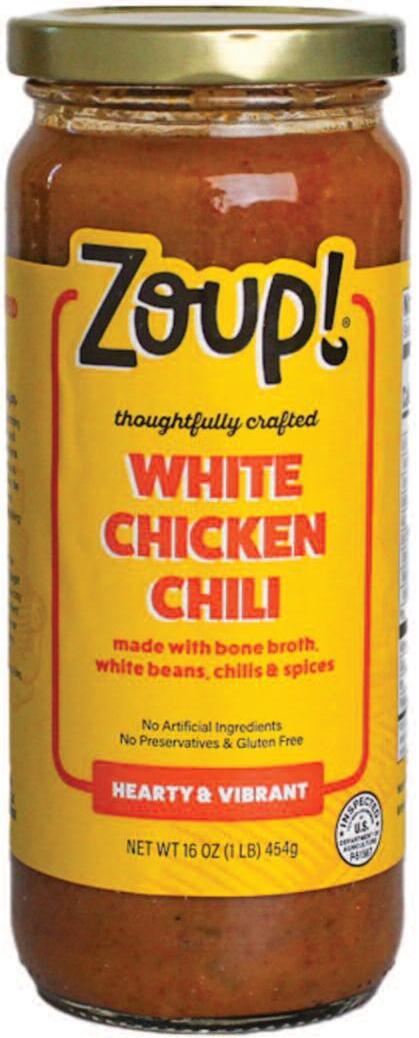
Nashville’s BBQ legend Peg Leg Porker
wholesome, fresh ingredients
Continued from PAGE 1
lights of Las Vegas
“I grew up between two ver y different worlds,” she said “One where I was in the fields, learning how things grew from the ground up, and another where I was surrounded by the fast-paced environment of the city That contrast shaped how I see the world ”
But the most important influence on her love for plants didn’t come from the ranch; it came from her grandmother’s greenhouse As a child, Atkin would spend hours alongside her grandmother, watching as she nurtured seedlings into thriving plants
“My grandmother could grow anything,” Atkin said “Her greenhouse was this peaceful space where I learned about plants, soil and how ever ything worked together I didn’t realize it at the time, but those moments planted a seed in me
something kept pulling her back to plants She couldn’t stop thinking about her time spent in the greenhouse with her grandmother
“Being in horticulture brought me back to those moments,” she said “It was calm, methodical and I realized I could make a real impact ”
She switched her major to study in the Department of Horticultural Sciences, where she earned her undergraduate degree, and later moved to the Department of Soil and Crop Sciences for her doctorate Her interest in space agriculture grew as she saw parallels between what plants had done for Earth’s early ecosystems and what they might be able to do for future space habitats
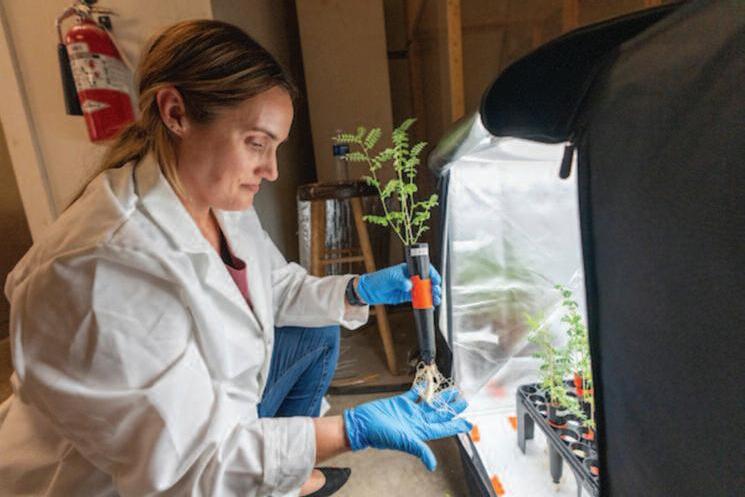
one that eventually led me to where I am today ”
That early experience shaped her understanding of plant-microbe interactions, even before she knew the science behind them Little did she know that her grandmother’s ability to grow anything had been passed down to her in a way she could have never imagined But as she got older, life took her in a different direction, away from plants
College wasn’t an immediate option, so she enlisted in the U S Air Force, inspired by a family member who had served before her During the 2006 surge, she deployed to Baghdad as part of a police transition team, where she trained and mentored Iraqi police in high-risk districts, taking on combat roles beyond the Air Force’s traditional mission
“I was raised with a strong sense of duty and responsibility,” Atkin said “There wasn’t much room for excuses You worked hard, you pushed through the tough days, and you always gave it your best ”
After returning from deployment, Atkin trained cavalr y horses at Fort Hood for militar y use and therapeutic programs This eventually led her to equine therapy for disabled veterans, a cause she remains passionate about While horses kept her grounded, something else was calling to her: science
“I was good at military work, but I never felt truly fulfilled,” she said “I realized that my real passion was in science I had always loved biology, the environment and the idea of solving real-world problems I just hadn’t figured out how to make it a career yet ”
Finding sustainable solutions in space
After leaving the military, Atkin started community college before transferring to Texas A&M University Initially, she pursued biomedical sciences, thinking she might go into large animal medicine But
“I had always been fascinated by space Growing up, I’d watch documentaries and read about the Apollo missions,” she said “But I never thought I’d be studying how to grow food on the moon It was just something that seemed so far out of reach ” However, as Atkin continued her studies, she realized there was an undeniable connection between space exploration and the issues faced by humanity on Earth The idea of sustainable food production was central to both
Growing crops in space could provide solutions to feeding astronauts on long missions while also offering insights into how we could grow food more efficiently on Earth, especially in areas facing soil depletion and harsh climates
“That’s when it clicked for me, ” she said “Growing food in space wasn’t just a theoretical challenge It was something that could have real-world applications for food security on Earth And that’s when I started thinking seriously about researching space agriculture ”
Atkin then took her research a step further, diving into the concept of growing plants in moondust Her background in plant science and interest in space exploration aligned perfectly with the growing body of research on the future of space food systems
Unlike many graduate students, Atkin didn’t start with external funding or a bigname research project Instead, she funded her own work, purchasing a grow tent, specialized lighting and chickpea seeds out of pocket
“I knew I had the knowledge to make something work, but I didn’t know if it would actually turn into real science,” Atkin said “So, I started small, buying what I could afford, setting up experiments in my home and hoping for the best ”
True to her militar y roots and no excuses upbringing, Atkin didn’t let the lack of formal resources stop her “I’ve always loved to experiment and see what happens If I can’t afford a fancy lab, I’ll make do with what I have,” she said “That
mindset has gotten me pretty far ”
With determination and a growing curiosity, she set up her own research Over time, she homed in on the idea of growing chickpeas in lunar dust, focusing on their symbiosis with nitrogen-fixing bacteria and other beneficial microorganisms –traits that made them perfect candidates for Lunar remediation
“Chickpeas are an underdog in the plant world,” she said “They’re hardy, tough and can sur vive in a wide range of environments If we can grow them on the moon, they might be able to provide food and contribute to sustainability during longduration space missions ”
Getting noticed by NASA
A bit of an underdog herself, starting with little funding at the beginning of her research, Atkin’s work has since caught the attention of NASA, who awarded her a $150,000 NASA Future Investigators in NASA Earth and Space Science and Technology, FINESST, grant As one of only a select few chosen from 1,120 proposals, the FINESST grant secures her funding for the next three years, allowing her to refine her work and contribute directly to NASA’s goals for space food systems
Adding to her grant selection, she was selected to do an internship at the Space Plant Biology lab at Kennedy Space Center during the Fall of 2024 Atkin worked in Florida, alongside NASA scientists Dr Aubrie O’Rourke and Dr Gioia Massa, developing plant systems that will land on the moon during the Artemis III mission in mid-2027 Her research could play a critical role in making longterm lunar habitation possible
Atkin is testing chickpeas in environments that mimic the moon ’ s harsh conditions
Moondust is not only dry and nutrient-deficient but also contains harmful elements that make it difficult for plants to thrive
also personal Tucked among her research
chickpeas growing on the moon, a vision
reality It hangs near her moondust experiments, not just as decoration, but as in-
music for them, believing that a calm env
sometimes, she even talks to them, offering words of motivation like a coach urg-
them, ‘You’re going to grow up to be big and strong, and one day, you’ll be on the moon ’”
Rooted in curiosity
Atkin is not just focused on her research; she’s also deeply committed to sharing her passion with others She mentors young scientists across the country, working with high school and college students to get them excited about plant science and space research
“I love working with younger students because they still have that natural curiosity,” she said “When you ’ re young, you don’t know that things can’t be done, so you just try That’s the kind of mindset we need – people who are open to asking questions, to failing, to getting up and trying again ”

“The idea is to recreate the conditions we expect on the moon in a controlled environment here on Earth,” Atkin said “I’ve tested different types of lunar regolith simulants and even experimented with 16 different varieties of chickpeas It’s about finding the right combination of conditions to make it possible for these plants to survive and thrive ”
Atkin is also supported by the faculty in both her undergraduate department and graduate department, particularly Terr y Gentry, Ph D , professor in the Department of Soil and Crop Sciences, and Betsy Pierson, Ph D , professor emeritus in the Department of Horticultural Sciences
“Having advisers in both soil and horticulture has been crucial to my research,” Atkin said “Dr Pierson specializes in plant-microbe interaction Dr Gentr y guides me with his expertise in soil and water microbiology, as well as remediation Having the combination of their mentorship has pushed this research forward ”
Outside the lab, she remains connected to Earth Whether tending to her horses, scuba diving to clean up debris from oceans or working with veterans through equine therapy, her passion for s u s t a i n a b i l i t y isn’t just about space – it’s about making the world better, wherever she is “Earth is my favorite planet,” she said “I love space, but everything I’m learning out there applies to what we need to fix here, too ”
Her research is more than just about growing chickpeas in moondust It’s about blending the past, present and future –honoring the Earth while preparing for the possibility of life on other planets It’s about finding solutions to problems we haven’t even encountered yet and always asking questions
“Stay curious,” she said “Don’t let what seems to be impossible stop you Ask every question, turn over every stone, and surround yourself with people who believe in you The future is full of possibilities a whole universe of them ”
And perhaps one day soon, the same dust that clung to Neil Armstrong’s boots in 1969 will be home to the first chickpea roots of a lunar farm, a testament that the underdog should always reach for the stars, and the moon
This article first appeared in Texas A&M’s AgriLife digital magazine Used with permission GN
The Institute of Food Technologists, a nonprofit scientific organization committed to advancing the science of food and its application across the global food system, will address the most challenging food safety issues – from food additives and GRAS to recalls and regulator y changes – at IFT FIRST: Annual Event and Expo
The annual food research, science and technology event that will be held July 1316 at McCormick Place in Chicago
A keynote on “Food Additives: Reformulation and Regulatory Challenges” will share the latest perspectives on clean label and natural alternatives and the growing pressure for food and beverage manufacturers to reformulate products and replace synthetic additives, including colors, preservatives and other functional ingredients Featuring five top experts across legal, regulatory, and consumer advocacy, this keynote will discuss the complexities of replacing synthetic additives – including costs, technical hurdles, scalability challenges and what it will take for food companies to stay afloat in a rapidly changing food market
Other key sessions at IFT FIRST will
focus on Generally Recognized as Safe regulations and the introduction of new food ingredients as well as navigating the FDA’s new era of food safety Meanwhile, a variety of scientific panels will address the role technology must play to enhance food safety, the food safety challenges having the biggest impact on public health, why food recalls are still so common, how international regulatory frameworks are impacting new food products, as well as addressing consumer confidence in food safety
In addition, a pre-event workshop on “NextGen Food Safety: Bridging Farm to Table with Smart Tech Solutions” is being hosted by IFT’s Food Microbiology Division on July 12-13 from 8 a m to 4:30 p m Designed for agri-food professionals, the training will cover Hazard Analysis and Critical Control Points, Good Agricultural Practices and the Food Safety Modernization Act, among other topics
“Consumer expectations around food safety, transparency and ingredient integrity are evolving, and the food system must rise to meet that demand,” said IFT CEO Christie Tarantino-Dean “At IFT FIRST, we bring together experts from
across academia, industry, and government to tackle complex challenges head-on –and ensure that we ’ re not just keeping up with change but driving it ”
IFT FIRST unites top experts throughout the science of food disciplines
Through cutting-edge scientific programming and multi-disciplinary discussions, IFT FIRST addresses the biggest issues impacting the food industr y across novel technology and innovation, health and nutrition, sustainability and climate, food safety and consumer insights
The dynamic expo floor, a celebration of the latest food innovations and technologies, features some of the top food, health and wellness companies in the world launching or showcasing the products and solutions that will help usher in a new era of food
This year, the latest food ingredient innovations will be on full display, including Sensient’s butterfly pea flower extract
The industr y ’ s first plant-derived natural
cently approved by the FDA Meanwhile,
Datacor will showcase software solutions
that help food and beverage manufacturers uphold stringent food safety and compliance standards Featuring capabilities like real-time production monitoring, full batch traceability, integrated quality cont
across the supply chain
Each year, IFT FIRST (Food Improved by Research, Science and Technology) convenes prominent food, health and nutrition professionals across industr y, academia and government to collaborate, innovate, and educate IFT FIRST features a dynamic expo floor that connects many of the top global food and wellness companies with buyers and those with purchasing influence, while also offering cutting-edge scientific programming that explores the hottest topics across the science of food
IFT FIRST also offers valuable networking opportunities, unique food competitions, and engaging interactive experiences to connect, enrich, and empower attendees in their missions to transform the global food system For more information, go to www iftevent org GN
Fetch, a rewards app, is partnering with Dollar General Media Network, the retail media arm of retail giant Dollar General, to offer DGMN advertisers a new, highperformance solution to reach high-intent consumers With this collaboration, brands can leverage Fetch to drive incremental consumer purchasing behavior
Continued from PAGE 1
starting as a first-generation rancher during a global pandemic
Not for the first time, Montgomery’s military background served him well Thanks to tight camaraderie among veterans and especially special operations veterans, he became acquainted with others who had the same dream of producing premium meat on a smaller scale than corporate operations
“I saw there were a lot of folks in the veteran community who were doing something similar to what I was doing,” he said “I had the cool idea of what if we had a marketplace with vetted ranches doing things the right way to provide a customer base with quality meat
Along with two other ranches, Little Belt Cattle Company in Montana and Mac’s Farms in Excelsior Springs, Mo , Montgomer y ’ s KC Cattle Company in Kansas City, Mo , formed Valor Provisions The company “is dedicated to forging a strong financial future for America’s protein producers,” according to the website
“We provide economically viable op-
with rewards-based advertising as part of their DGMN investment
By leveraging the Fetch ecosystem in concert with DGMN’s extensive reach, Dollar General provides brand partners the ability to acquire and retain consumers Brands can now seamlessly put their DGMN advertising spend toward Fetch re-
tions to high-quality American producers while offering consumers exceptional pricing, quality and service Patriotism and the preser vation of our nation’s food independence guide every decision we make ”
Launched last November, Valor Provisions was an instant hit
“We had rocket growth,” Montgomery said “This time last year I remember having the idea of this marketplace and looking for other folks, what if we had an alternative market where we don’t have to deal with the hassles of a B2C shipping business ”
Valor Provisions quickly had a membership of 10,000 active subscribers
“I think the biggest thing I’ve learned that carried over from my military service is that it’s important to adapt quickly,” Montgomery said
“Raising cattle is an interesting market,” he said “It’s wild Since the pandemic, we haven’t had a normal year ”
Valor Provisions was created with the intention to be able to absorb the ebbs and flows of an inflationary market, not only for consumers, but farmers, too According to the U S Department of Agriculture, there were 1 88 million U S farms in 2024, down 8 percent from 2 04 million in 2017 Acres of land in farms numbered 876 mil-
wards offers, unlocking a new highly effective and efficient ad format that’s easy to implement
Fetch is a full-funnel platform built to drive real change in consumer behavior – at scale By reaching shoppers at the most impactful moments in their journey, Fetch helps brands not just get seen, but get chosen
lion in 2024, down 3 percent from 900 million acres in 2017
During the critical years of 2017 and 2022, when the COVID pandemic reached its peak, USDA estimated nearly 142,000 farms failed
Just as critically, economic issues dissuade younger generations from farming According to USDA, the average age in 2022 of a beginning farmer – defined as someone with fewer than 10 years of experience – was just over 47 years, with the average age of all farmers at just over 58 years One-quarter of beginning farmers were under 35, while farmers under 35 represented 9 percent of all U S farmers
“Four massive corporations control 85 percent of all U S protein production,” according to Valor Provisions’ website, “while foreign entities acquire increasing control over U S agricultural assets Deregulation has opened the door to market manipulation, price fixing and corrupt practices, leaving family farms struggling to compete ”
Valor Provision aims to help farmers survive in a competitive marketplace
“The crazy part is we didn’t start out trying to do this,” Montgomery said “When we started, I thought we would be compet-
With millions of users submitting over 70 million receipts each week, brands and retailers gain deep insight into real-world spending But it’s what Fetch does with that data – personalizing campaigns and influencing purchase decisions – that sets it apart, delivering measurable impact on units and sales GN
ing with high-end grocery stores ” Now, Valor Provisions customers can find premium protein at prices lower than most grocery stores
“I’m always thinking of ways that we can drive down our costs,” Montgomery said Not surprisingly, Valor Provision’s customer base is spread across the countr y, crossing demographics Montgomery and his partners see their current mission as patriotically as their military service
“Food security is national security,” Montgomery said
Montgomer y hopes that his own children will benefit from being in a farming family
“That’s why I fight so hard,” he said “There’s no better place to raise kids, to teach them work ethic and morality
“The goal is not to raise good kids, but to raise good men and women And there’s no better place than an American farm and ranch to do it ”
As Valor Provisions progresses, though, Montgomer y finds himself less and less with the large animals he loves
“Yeah, I’m more like a John Travolta urban cowboy now because I sit at a desk,” he said, laughing “But I do it because I want to watch my kids grow up ” GN
Toast, a digital technology platform for restaurants, has launched its Menu Price Monitor, a tool that provides monthly insights into menu pricing trends across the restaurant industr y in the United States Utilizing data from the Toast platform, which has over 140,000 restaurant locations as of March 31, this tracker offers a look at how prices on menus at restaurants change over time
Toast’s Menu Price Monitor tracks price fluctuations for key food and beverage items, including beer, burgers, burritos, chicken wings, cold brew coffee and regular coffee Data is presented by median, 25th percentile and 75th percentile pricing per item, along with year-over-year percentage increases, offering a view of menu pricing dynamics from restaurants in the United States
This data is powered by Toast Benchmarking, which leverages an AI-based classification tool to categorize menu items
Data from April 2025:
• The median monthly price of regular coffee on restaurant menus was $3 50, up 6 4 percent when compared to April 2024 and 0 0 percent compared to March
Continued from PAGE 1
associates are our highest priority We continue to work closely with them to minimize disruptions as much as possible ”
Continued from PAGE 1
byproducts to farms as animal feed
The toolkit provides businesses with a customizable plan to present to employees, train them and eventually reach a “quick win” solution – defined as an idea that’s easily implemented – that the employees suggest in a competition
Bob’s Red Mill employee owners at its Milwaukie, Ore , facility were just as excited to get started One-third of the employees watched the education video presenting the plan, with one-quarter of employees submitting 176 ideas to the Food Waste Opportunity Register
The quick win idea required only a screwdriver and attention to machinery involving Line 10, which operates when short runs of specialty grains are in high demand
The idea to “Fix the Scale Buckets” was to perform regular checks on a series of bolts that secure a metal screen on top of the conveyance system and tighten them with a screwdriver when necessar y In turn, grain buckets are filled more evenly, reducing overflow, which causes grains to spill over the bucket and be lost to “floor sweepings ”
A food waste audit conducted after the idea was implemented showed an average
• The median monthly price of beer on restaurant menus was $6 41, up 2 6 percent when compared to April 2024 and 0 2 percent compared to March
• The median monthly price of burgers on restaurant menus was $14 31, up 3 1 percent compared to April 2024 and 0 3 percent compared to March
• The median monthly price of burritos on restaurant menus was $13 32, up 3 3 percent compared to April 2024 and 0 5% compared to March
• The median monthly price of chicken wings on restaurant menus was $13 67, up 3 2 percent compared to April 2024 and 01 percent compared to March
Other features of the Toast Menu Price Monitor:
• Monthly Updates: Two years of historical data and monthly updates on pricing adjustments at restaurants in the United States
• Itemized Data: Tracks various popular menu items and provides detailed pricing breakdowns
• Industr y Perspective: Offers a snapshot of pricing adjustments across a diverse range of restaurant types and locations on the Toast platform
• The median monthly price of cold brew on restaurant menus was $5 40, up 4 2 percent when compared to April 2024 and 0 0 percent compared to March
Within days, UNFI was shipping and receiving products out of most of their distribution centers, using manual procedures to fulfill orders
As of press time, UNFI reported progress restoring systems
• Data-Driven Insights: Helps understand how economic factors like inflation, ingredient availability, and demand impact pricing at a broad range of restaurant types and locations
The Toast Menu Price Monitor is featured on Data by Toast, which includes additional research and data reports from Toast, including the Restaurant Trends Report, surveys, holiday and event reporting, and more Data by Toast can be found at https://pos toasttab com/blog/data
Data from the Menu Price Monitor is a combination of all restaurant types on the Toast platform, from small quick-ser vice restaurants to large, full-service restaurants and everything in between Restaurants are located in all 50 U S states and Washington, D C
The Menu Price Monitor does not provide insights into same-store sales, nor is it indicative of company or restaurant performance Data is compiled from a snapshot of all applicable Toast platform restaurant locations in a month
Percentiles indicate data distribution
The 25th percentile means 25 percent of values are at or below that point The 75th percentile means 75 percent of values are at or below The median (50th percentile) shows the exact midpoint of all data val-
ues These percentiles show the range of typical menu prices
Leveraging an AI-based classification model, Toast Benchmarking classifies restaurant menu items into a standard set of categories so that transactional data can be aggregated and compared in a meaningful way
Transactional and menu data from Toast restaurants are included in the aggregated dataset, and are not exposed in isolation For example, is a whiskey donut a dessert or an alcoholic beverage? Insights are provided for general informational purposes only, and menu item categorizations may be incomplete or inaccurate
As of Q4 2024, each menu item tracked has a quarterly volume of over 6 million items The Toast Benchmarking tool aggregates pricing data from over 70 million restaurant menu items on the Toast platform Data in the Menu Price Monitor will be updated monthly to include updated pricing information from the month prior Data in the Menu Price Monitor is a snapshot view of all applicable Toast platform restaurant locations in a given month Previous pricing data released by Toast included filtering, such as same-store sales, and further breakdowns by restaurant type and other categories GN
“UNFI is receiving orders and delivering products to our grocer y store customers across North America,” the company said on June 15 “Over the past few days, we ’ ve made significant progress toward safely restoring our electronic ordering systems, which will allow us to serve the customers that order through these systems in a more automated way and continue to increase our operational capacity
of up to 78 percent reduction in food waste – per pound and per case – for each product produced on Line 10, despite production output nearly doubling during the pilot period
“It’s about honoring and respecting the ingredients the farmers are growing,” Person said “Not only are we losing our costs, but the farmers, too, in their carbon footstep
“We’re able to place even more products with consumers, ” she said “Once it’s in their hands, they’re able to enjoy nutritious food that is not going to end up in a landfill
“It saves money, feeds people and helps the environment ”
Person said the toolkit, which is open source and free for anyone to adopt, is easy to follow
“The competitions are engaging and fun It helps get employees to buy in,” Person said The experiment was so successful that Bob’s Red Mill is extending the idea to the rest of its facilities
“Just that one idea planted the seed for a lot more to happen,” said Anne Garszkta, senior program officer for food loss and waste at World Wildlife Fund, which partnered in to help promote the initiative
In early June, the U S Food Waste Pact and PCFWC presented a webinar that walked people through the Employee Engagement Toolkit World Wildlife Fund, ReFED and TripleWin Advisory sponsored
the webinar
Land O’Lakes, which has committed to reducing its food waste by 30 percent by 2030, also was an early adopter of the Employee Toolkit Again, the initiative was met with enthusiasm at the company ’ s Kozy Shack dessert products facility in Turlock, Calif
Seventy-eight percent of Kozy Shack’s employees received food waste education and training, with 77 percent submitting 277 ideas The quick win idea reduced condensed milk waste by 74 percent, which will result in the company saving an estimated $3,500 annually
That idea? To use a spatula to scrape condensed milk material from 50-pound pails
“Clearly, it was an idea that worked and was implemented,” Garszkta said Fresh Del Monte was next to jump on board The company ’ s Portland, Ore , facility was the first to present the toolkit to employees in English and Spanish Last winter, nearly 200 ideas were submitted The quick win came from three employees, who suggested moving procedures for receiving fresh produce from an outside area to inside
According to an audit, that change resulted in producing nearly 4,620 additional finished product packs, from blends to individual fruit items, over a five-week period
“The biggest advantage is that team members are deeply involved in daily op-
“We are also using alternative processes to ensure our customers receive the products they need while we continue making progress to restore our technology capabilities ” GN
erations and have an intimate understanding of their work areas, ” said Ana Cueva, sustainability global program manager at Fresh Del Monte “Their insights are invaluable when it comes to spotting opportunities to reduce food waste and enhance overall performance
“This initiative was met with an overwhelmingly positive response, as it gave team members a chance to see how much we value their ideas and contributions It truly reinforced that those closest to the work are often best positioned to drive meaningful change ”
In some cases, companies may have to adjust workplace culture around reporting food waste
“Generally, creating a culture around not blaming someone for reporting food waste or food waste tracking,” said Kate Gaertner, founder and CEO of TripleWin Advisory
“If employees feel they’re going to get into trouble by reporting, they’re going to hide it,” she said
Next up for the toolkit is a foodservice collaboration between Aramark, Sodexo and the Stanford Food Institute involving 10 kitchens across the countr y Results should be released in a few weeks
U S Food Pack realized that foodservice kitchens contain a diversity of languages among employees, so the toolkit is being translated into five languages GN






Bring a beloved taste of France to your shelves with the iconic Pierrot Gourmand lollipops Crafted in France since 1892, these charming sweets are known for their nostalgic packaging, signature teardrop shape and irresistible flavors
Now available in a variety of options, including fruity, caramel and chocolate, each lollipop is made using traditional techniques and quality ingredients for a smooth, satisfying treat Free from artificial preservatives and presented in vintage-style packaging, these lollipops are as delightful to display as they are to enjoy
The fruity assortment features bright, refreshing flavors that appeal to all ages, while the caramel and chocolate lollipops offer a richer, indulgent take on the classic French pop Perfect for upscale retailers, gift shops and gourmet markets, these sweets blend whimsical charm with authentic confectionery craftsmanship
tory in every bite
To place an order or lear n more about
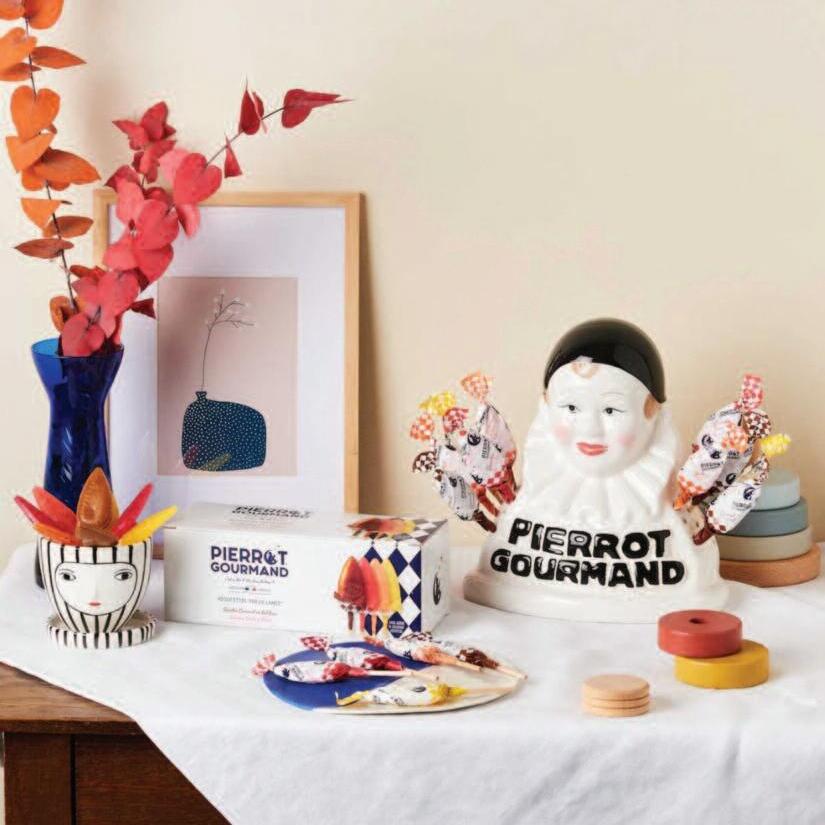
wholesale opportunities, email The French Farm or visit the website
Grana Padano PDO cheese and Prosciutto di Parma PDO stand are prime examples of European culinary heritage
These exceptional products continue to gain attention due to their quality, authenticity and tradition with each carrying a distinctive history:
• Grana Padano cheese has been a part of Italy’s proud gastronomic heritage for nearly 1,000 years To preserve the surplus milk they produced, Benedictine monks created a hard cheese, which could withstand the test of time
• The monks called it “Caesus Vetus” (old cheese) in Latin, but due to its grainy texture, it soon became known as “Grana ” In 1954, it was officially named “Grana Padano,” with “Padano” (adjective) identifying the area of production, the Pianura Padana (Po River Valley) in Norther n Italy
Padano PDO cheese in the world The Consorzio ensures that every wheel of cheese is made according to the Production Specifications so that it can be awarded its PDO status and be firebranded with the Grana Padano mark, while also protecting it against fraud in Italy and abroad
• The Consorzio del Prosciutto di Parma was established in 1963 by 23 producers who wanted to protect and promote their product throughout the world Since then, production has been regulated by strict laws, defining the quality characteristics of Prosciutto di Parma, identified by the Parma Crown branded on every ham
Pierrot Gourmand lollipops are more than candy: they’re a piece of French his-
(Pumpkin) spice things up this fall!
As a Maine-based company, Stonewall Kitchen knows a thing or two about creating delicious specialty foods infused with New England flavors Just take the recently released Pumpkin Spice Maple Cream, which is filled with fall charm and sure to sweeten your shelves
Made by heating and whipping pure maple syrup until it’s the perfect spreadable consistency, this condiment is accented by a blend of warm spices to create a wonderfully cozy bite Smooth and rich, it recalls classic sugar shack treats while adding trending pumpkin pie notes that all will love
Delicious on baked goods such as scones, muffins and croissants, Stonewall Kitchen’s Pumpkin Spice Maple Cream can also be used as a unique glaze for doughnuts or as a tasty topping for pancakes and waffles Crafted with premium
The French Farm wholesale@frenchfarm.com wholesale thefrenchfarm com
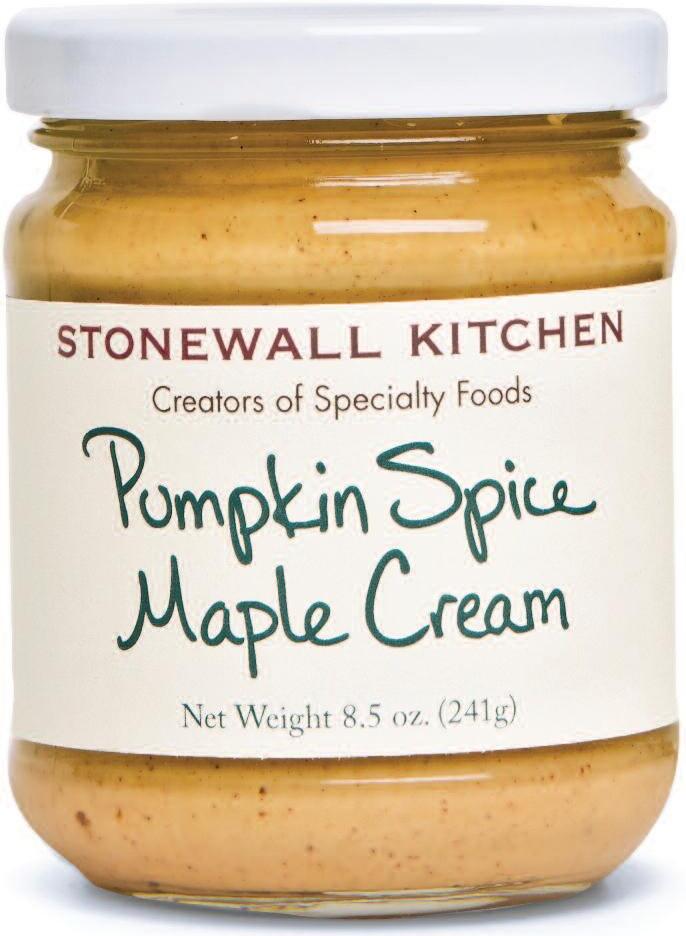
ingredients, this unique spread is an easy win for retailers looking to offer shoppers something special during the autumnal season
Stonewall Kitchen www.stonewallkitchen.com
Holidays are a great time to bring out a charcuterie board For those in the greater Chicago area, beloved Bobak Sausage Company has six new sausage flavors to try – and they’re available at area grocery stores
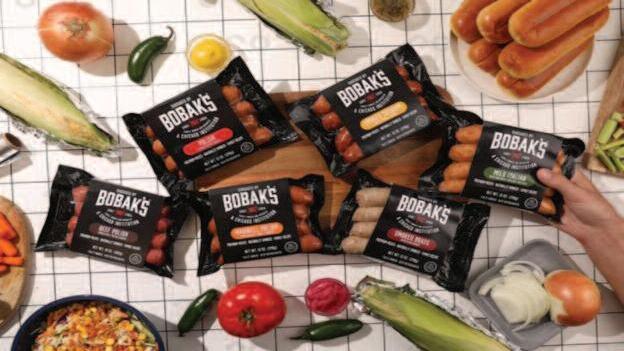
Elevate your culinary adventures with Bobak’s Maxwell Polish, Smoked Polish, Smoked Brat, Smoked Cheddar, Mild Italian and Beef Polish
The new sausage products will feature a
• Produced using only naturally, partially skimmed milk from the production area, Grana Padano possesses unique nutritional features such as quality proteins, vitamins and mineral salts, especially calcium It is naturally lactose free due to the characteristics of its production and long aging process, which last from a minimum of nine months to over 24 months
• Prosciutto di Parma PDO was created in the ancient Roman times when Cato the “Censor” first mentioned the extraordinary flavor of the aircured ham made around the town of Parma in Italy
• PDO (or the acronym in Italian, DOP) is the European Community’s Protected Designation of Origin certification system that guarantees the authenticity of certain
• Prosciutto di Parma is made using traditional methods perfected over centuries and only from the hind legs of specially bred Italian pigs and sea salt It is completely natural, free of preservatives, additives and hormones Salting is still done by hand in the traditional way, by the “maestro salatore,” the salt master
• Its aging process, which ranges from a minimum of 14 to over 36 months, develops a variety of flavor profiles from mild and nutty to mature and full-flavored
About the Consortiums
• Established in 1954, the Consorzio Tutela Grana Padano (Grana Padano Protection Consortium) is a non-profit organization, which brings together producers and curers to protect and promote Grana
• When you purchase a PDO certified product, you are assured that it was produced in a strictly defined geographic region In addition, it guarantees production methods that comply with rules set down by the gover ning consortium based on centuries old recipes and techniques, methods that have proven over time to be safe, effective, and the most flavorful Funded by the European Union Views and opinions expressed are however those of the author(s) only and do not necessarily reflect those of the European Union or of the granting authority Neither the European Union nor the granting authority can be held responsible for them
Distinctly Deliciously European www distinctlydeliciouslyeuropean eu
Plant protein pioneer ChickP Protein, Ltd is forging ahead in the active nutrition market to fill the surging demand for natural, highprotein, plant-based nutrition bars and similar on-the-go, betterfor-you products The company developed a line of prototypes, powered by its signature, 90 percent chickpea isolate, to fit the requirements of active lifestyle consumers and others who live life on-the-go

The company showcased the proteinfortified, granola-based demos at the Fi
Europe 2023 in Frankfurt including chickpea protein enriched cereal and energy bars The bars are made of nuts, seeds, oats and green buckwheat and infused with a minimum 30 percent of the proprietary, 90 percent chickpea isolate They are naturally mildly sweetened with honey and agave and are rich in fiber
Specialty food creator Stonewall Kitchen is ready for the upcoming holiday season with thoughtfully made gift sets Featuring a selection of best-selling and award-winning products, this year’s collection is exclusively designed by their in-house team for your customers to enjoy Beautifully illustrated with adorable birds perched on pretty pine branches, each present is finished with the appearance of a tied ribbon for the perfect presentation
The Jam Tree is a great first introduction to the Stonewall Kitchen brand Mini versions of Wild Maine Blueberry, Holiday and Raspberry Peach Champagne Jams deliver irresistible fruity flavors that’ll elevate brunch staples such as pancakes, toast, muffins and pastries Elegantly packaged in a triangular box that evokes Yuletide bliss, it’s a terrific gift for loved ones and acquaintances alike
need for a last-minute gift Boasting sweet and savory jams plus zesty mustards in six mini jars, the Sampler Gift is sure to suit anyone’s tastes It’s an easy grab-and-go pick to have on hand for a
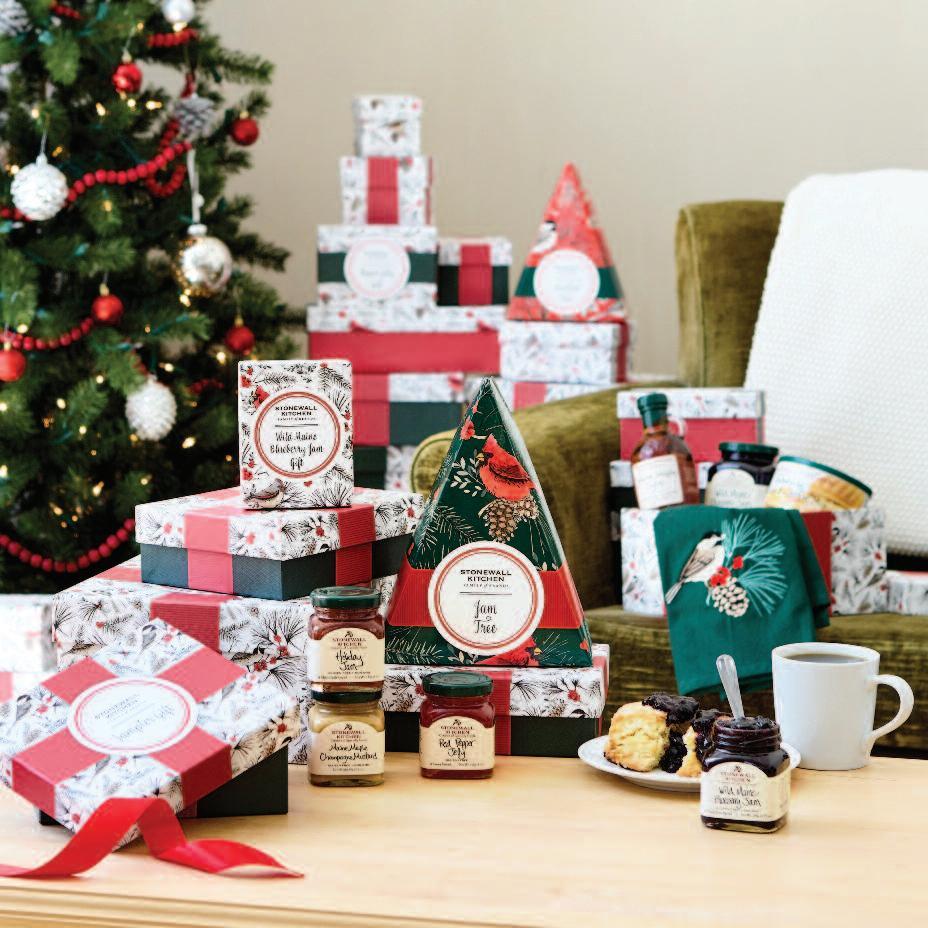
Guaranteed to spread warmth on chilly mor nings, Stonewall Kitchen’s Farmhouse Breakfast, Holiday Breakfast and Blueberry Breakfast Gifts are ideal for sending to out-of-town friends and family Company classics such as Wild Maine Blueberry Jam and Farmhouse Pancake & Waffle Mix are artfully arranged in attractive boxes that are bursting with winter charm
And, since the holidays are a time for gatherings and parties, there’s always a
Ariston Specialties launched two new products: Ariston Tahini with Honey and Ariston Tahini with Cocoa Think of your favorite chocolate-nut spread but not as sweet! Others who never had Ariston’s tahini spread described these spreads as something analogous to their favorite nut and peanut butter spread, but with sesame flavor instead
The Tahini is made from hulled sesame seeds (sourced from Greece), ground to a creamy spread, then introduced with honey or cocoa to balance the nuttiness of the sesame with a touch of sweet honey or sweet cocoa
The result is a balanced sweet and nutty flavor without being overly sweet
co-worker, neighbor, teacher, hostess, Secret Santa recipient – or anyone who could use a dose of festive cheer! With more than a dozen sets to choose from, Stonewall Kitchen’s 2025 Holiday Collection has something for everyone on your customers’ lists From foodies and home chefs to those who simply appreciate the finer things, these gifts will please any palate and satisfy any style within a range of affordable price points
Stonewall Kitchen www.stonewallkitchen.com
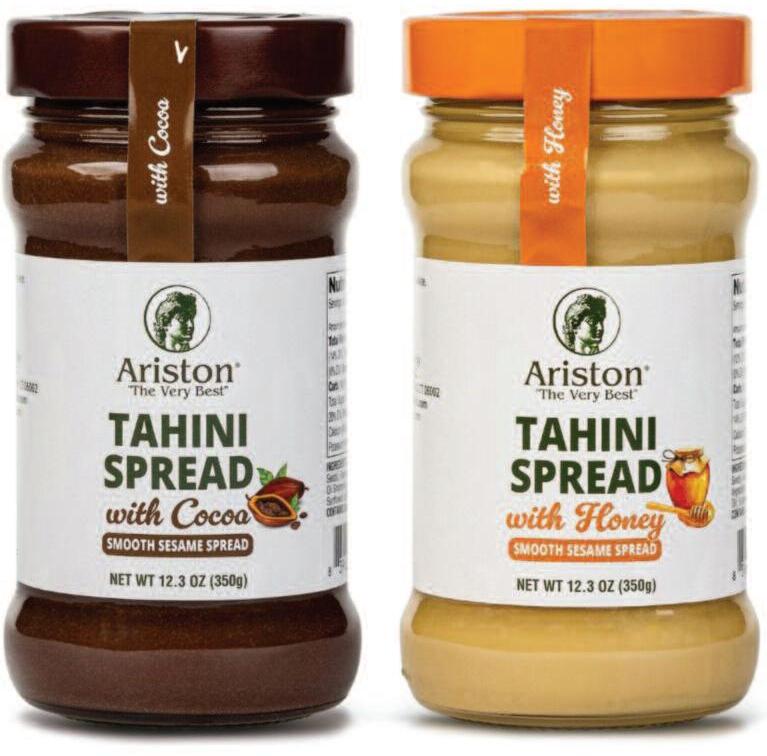
Ariston’s Tahini spreads (both children and adults approved) will make a healthy hit at your store, at your own breakfast table, at your work’s break room area or anywhere else Ariston encourages you to try them today!
Find Ariston at the following trade shows in 2025:
Small Business Expo Las Vegas • Oct 15
Plaza Hotel & Casino Convention Center
Sierra Ballroom Booth #222
Small Business Expo Dallas • Nov 19
Kay Bailey Hutchison Convention Center
snacking, reimagined

tested techniques that bring out
Hall C Booth #632
Small Business Expo Atlanta • Dec 10
Atlanta Convention Center at AmericasMart
Building #2, Booth #219
Email Ariston Specialties for more information, order wholesale online at Faire or visit the website
Ariston Specialties orders@aristonfoods com http://faire.com/direct/aristonspecialties www aristonspecialties com
For more information contact Mochikichi or go online
Mochikichi mochikichi-usa@mochikichi.co.jp www mochikichi co jp
Good things come in small packages Individually wrapped, Enstrom Almond Toffee Petites are the gold standard of snacking This artisan Almond Toffee is crafted from the perfect blend of fresh Califor nia almonds, sweet cream butter and pure cane sugar, covered in a generous layer of rich chocolate to create a treat unlike any other For 60 years, the Enstrom family has crafted Almond Toffee with only the finest, freshest and sustainably sourced ingredi-

ents Every batch is still made in Grand Junction, Colorado, using founder Chet Enstrom’s original recipe, lovingly handed down through four generations Enstrom Almond Toffee is made with allnatural ingredients, and is certified gluten free, and Kosher dairy It’s quality you can taste in every bite
Visit www enstrom com to lear n more about these buttery Almond Toffee Petites, as well as other premium offerings in our wholesale toffee line
Enstrom 800.252.5498 www enstrom co
Since its farmers’ market days in 1991, Stonewall Kitchen has been crafting premium condiments using only the best ingredients The new Cherry Berry Quartet Jam is no exception, offering a symphony of fruity flavors in one delectable product
Ripe cherries, strawberries, raspberries and cranberries come together with just the right amount of pure cane sugar and a dash of lemon juice to form a perfectly harmonious spread Each of the four fruits shines, creating a wonderful medley of harvest-fresh produce
Delicious on toast or swirled into yogurt, Stonewall Kitchen’s Cherry Berry Quartet Jam is also a must-have for home bakers It makes a quick and easy filling for pastries such as turnovers or Danishes and can even be used to top desserts such as cheesecake Customers will love its versatility, not to mention the fact that it’s made in Maine with less total sugar
Bibigo, the top Korean food brand in the United States, is inviting people to just “bibigo for it” and step outside their culinary comfort zones to discover the exciting world of Korean cuisine
The new campaign features KoreanAmerican actor Randall Park, who brings his signature comedic flair to dish on his love for K-food Bibigo’s collection of single-serve bowls is notably making its debut to showcase how easy it is to make Korean cuisine exciting and approachable for both newcomers and dedicated enthusiasts
Bibigo is the fastest-growing Asian food brand, delivering American households breakout hits including Steamed Dumplings and Mandu (potsticker-style dumplings) Beyond its strong retail availability and ease of preparation, bibigo’s popularity has soared in the past few years, making consumers come back for more Today, approximately 1 in 7 American households regularly stock up on bibigo
products
“We’re incredibly excited to launch the ‘bibigo for it’ campaign, building on the growing appetite we ’ ve seen across America for Korean flavors,” said Federico Arreola Carrazco, VP of marketing at Schwan’s “Beyond delicious food, this campaign is all about making Americans even more curious about the vibrant world of Korean cuisine
“We couldn’t think of a better person than Randall Park to show just how effortlessly enjoyable K-food can be Together, we aim to be the trusted guide for anyone looking to explore and savor the rich tastes of Korea ”
This campaign is a flavorful journey with Randall Park as he shares his fondness for bibigo products and unveils personal anecdotes with dry humor Whether navigating a bustling night market in Seoul, interrupting a K-pop music video shoot, enjoying a meal with grandmas or in his living room with friends here in
America, Randall illustrates how bibigo enables him to enjoy his favorite dishes right at home
“Partnering with bibigo on this campaign feels like a full-circle moment for me, ” said Park “This project, celebrating Korean food, reminds me vividly of childhood lunches, where opening my homecooked meals in front of my classmates felt like a vulnerable act
“All self-consciousness and fear of judgment I experienced then now stand in stark contrast to the immense pride I feel today To be able to participate in presenting the flavors of Korean cuisine with the entire nation is a profound opportunity to honor my heritage through dishes I grew up with,” he said
“I hope all those kids who once judged me can now enjoy these incredible products and see me as the young visionar y that I truly was ”
Bibigo’s latest campaign officially debuts its new line of single ser ve bowls, representing a significant step in its ongoing mission to democratize K-food for Americans across the nation Without having to
e g o r y l a c k s s t a n d a rd l a -
b e l i n g d e f i -
Ventura Foods, a foodser vice partner for culinary professionals, has introduced its MayoNeeds Framework This approach eliminates confusion within the mayonnaise category by aligning specific mayonnaise formulations with specific culinary applications to meet the distinct needs of chefs and operators
d i e n t w h e n p l a c i n g w e e k l y
o rd e r s A d d i t i o n a l l y, t h e m a y o n n a i s e c a t -
June 29-July 1
Summer Fancy Food Show
New York City, New York
www specialtyfood com
July 13-15
School Nutrition Association Annual National Conference
San Antonio, Texas
www schoolnutrition org
July 23-26
American Cheese Society’s Annual Conference
Sacramento, California
www cheesesociety org/conference
Aug. 20-22
Newtopia Now Denver, Colorado
www newhope com
Sept 10-12
Seafood Expo Asia Singapore
www seafoodexpo com
Sept 24-25
Plant Based World Expo
New York City, New York
www plantbasedworldexpo com
n i t i o n s a n d u s e s m a r k e ti n g t e r m s s u c h a s “heavy duty,”
“ p r e m i u m ” a n d “ e x t r a h e a v y, ” c a u si n g a d d e d
c o n f u s i o n
A s a re s u l t ,
c h e f s a n d
leave home or knowing how to cook those recipes, these microwaveable single serve bowls offer a remarkably easy way to enjoy and discover beloved traditional meal options, ready in just a few minutes
The brand now features a complete range of home-cooked-style dishes, including Beef Bibimbap, Chicken Japchae Noodles, Spicy Sauced Dumplings, Chicken Bibimbap, Beef Japchae Noodles and Chicken Wonton Soup Already known for its viral TikTok Steamed Dumplings and flavorful Mandu, as well as the vibrant tastes of Gochujang sauce, chewy Tteokbokki and savory Sobaba Chicken, bibigo now looks to open the door to an even richer world of Korean culinary experiences with this new product line
These spots exemplify the brand’s ongoing mission to introduce Korean cuisine to a wider international audience This effort builds upon the recent appointment of popular K-pop group Seventeen as its new global brand ambassadors, a move that extends bibigo’s established history of partnering with influential Korean figures worldwide GN
o p e r a t o r s o f t e n d e f a u l t t o u s i n g t h e s a m e
f o o d s e r v i c e - g r a d e m a y o n n a i s e f o r a l l
t h e i r h o t a n d c o l d a p p l i c a t i o n s , a s s u m -
i n g i t w i l l p e rf o r m c o n s i s t e n t l y a n d u n -
k n o w i n g l y s a c r i f i c i n g p ro d u c t q u a l i t y i n
t h e p ro c e s s
Ventura Foods is solving this problem with MayoNeeds Framework, which is designed to create clarity in the categor y With its deep expertise in culinar y solutions, Ventura Foods developed a new way to look at mayonnaise – not by ingredients and formulations – but by culinary applications
“ E v e n t h o u g h t h i s u b i q u i t o u s i n g r e -
d i e n t i s i n t e g r a l t o r e c i p e s a c r o s s
c u i s i n e s a n d m e n u s , m o s t c h e f s a n d o p -
e r a t o r s re o rd e r t h e s a m e m a y o re g u l a r l y
w i t h o u t m u c h c o n s i d e r a t i o n , ” s a i d
A h m a d P o p a l , s e n i o r v i c e p r e s i d e n t , f o o d i n n o v a t i o n & c u s t o m e r e x p e r ie n c e We w a n t t h e m t o u n d e r s t a n d t h a t
t h e c u r r e n t l a b e l s , l i k e h e a v y d u t y, a r e
a c t u a l l y m e a n i n g l e s
To ensure the MayoNeeds Framework accurately reflects real-world kitchen needs, Ventura Foods collaborated with The Culinary Institute of America to con-
duct a blind study evaluating the performance of various foodser vice mayonnaise products labeled as heavy duty The findings revealed inconsistencies in how these products performed across mixed, bound and dippable applications – underscoring the need for clarity in the mayonnaise category
“We confirmed that not all heavy duty mayos are the same and that chefs can often improve the quality of a dish by choosing a mayonnaise formulated for a specific application, rather than relying on a one-size-fits-all mayonnaise,” said David Kamen, director, client engagement, consulting at The Culinary Institute of America “The lack of standards in mayo labeling creates confusion for chefs who rely on an essential ingredient that can make or break texture, taste and the overall impression of the dish ” Ve