PORTFOLIO
OSCAR KISTER
2023 - 2026 I CORNELL
FALL 2025: Structural Systems, Prof. Mark Cruvellier
SUDIO PROMPT: Sectional model
Colaberation: Blake Zimmerman & Sophia Petmecky
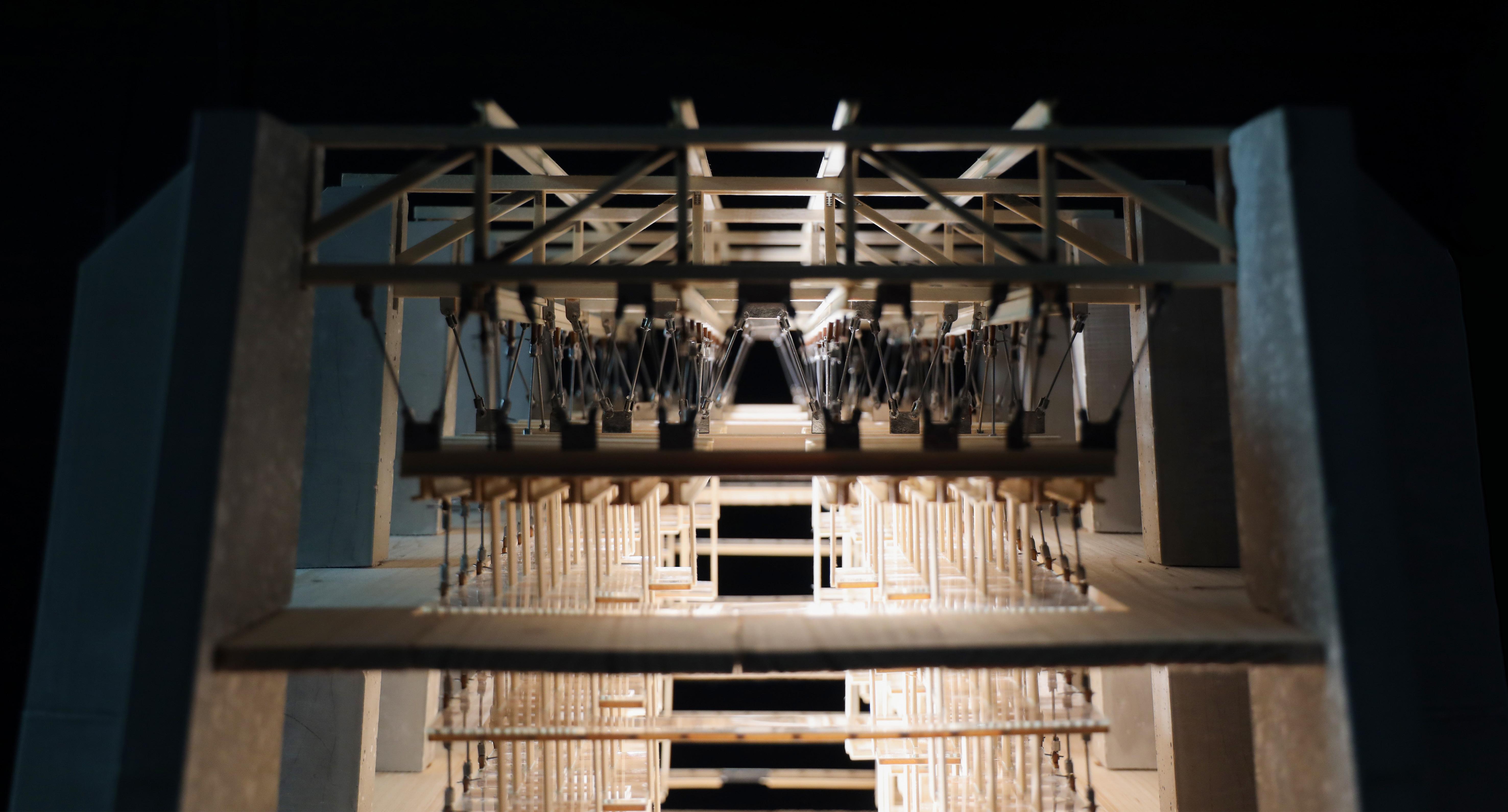
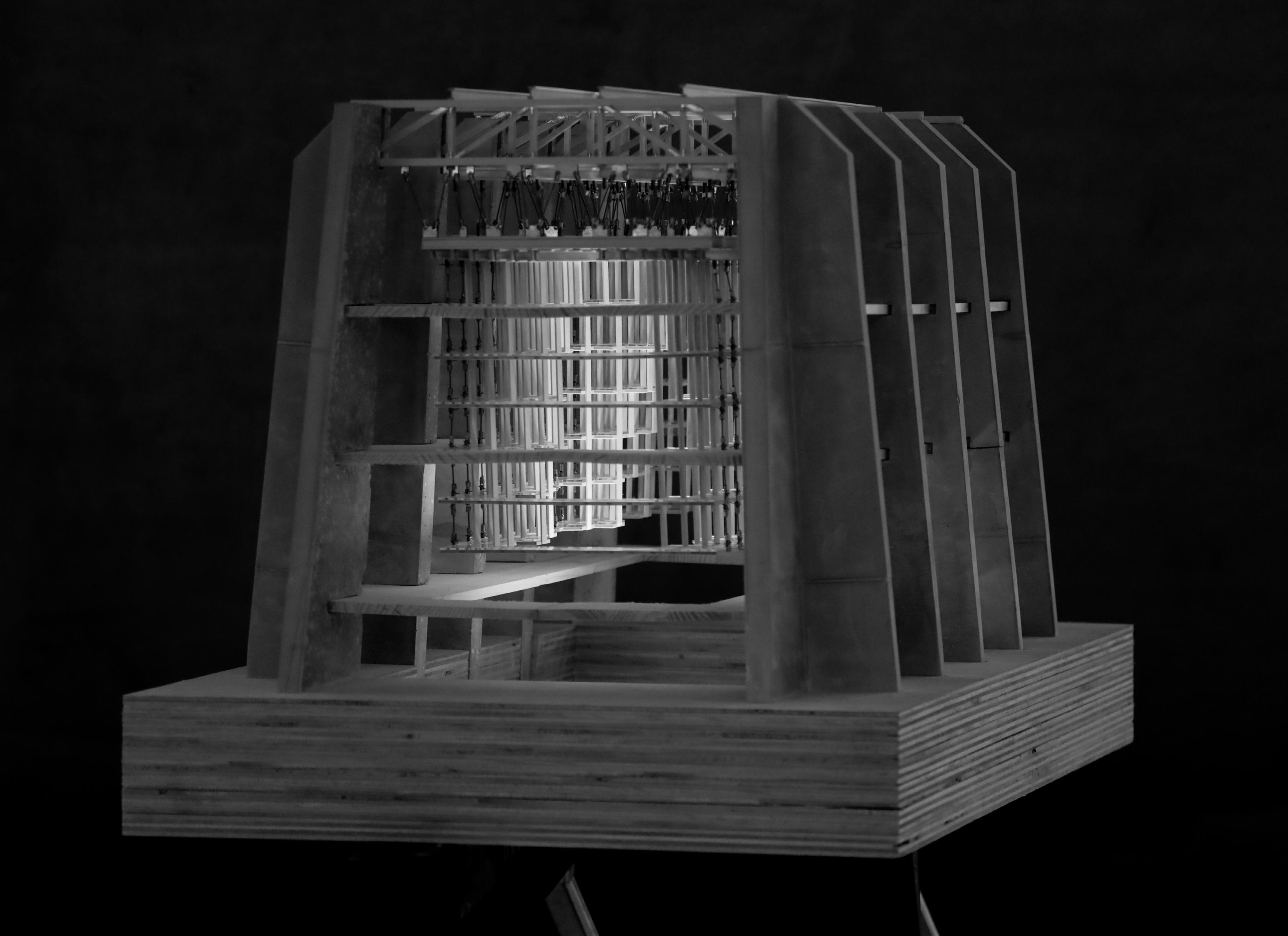
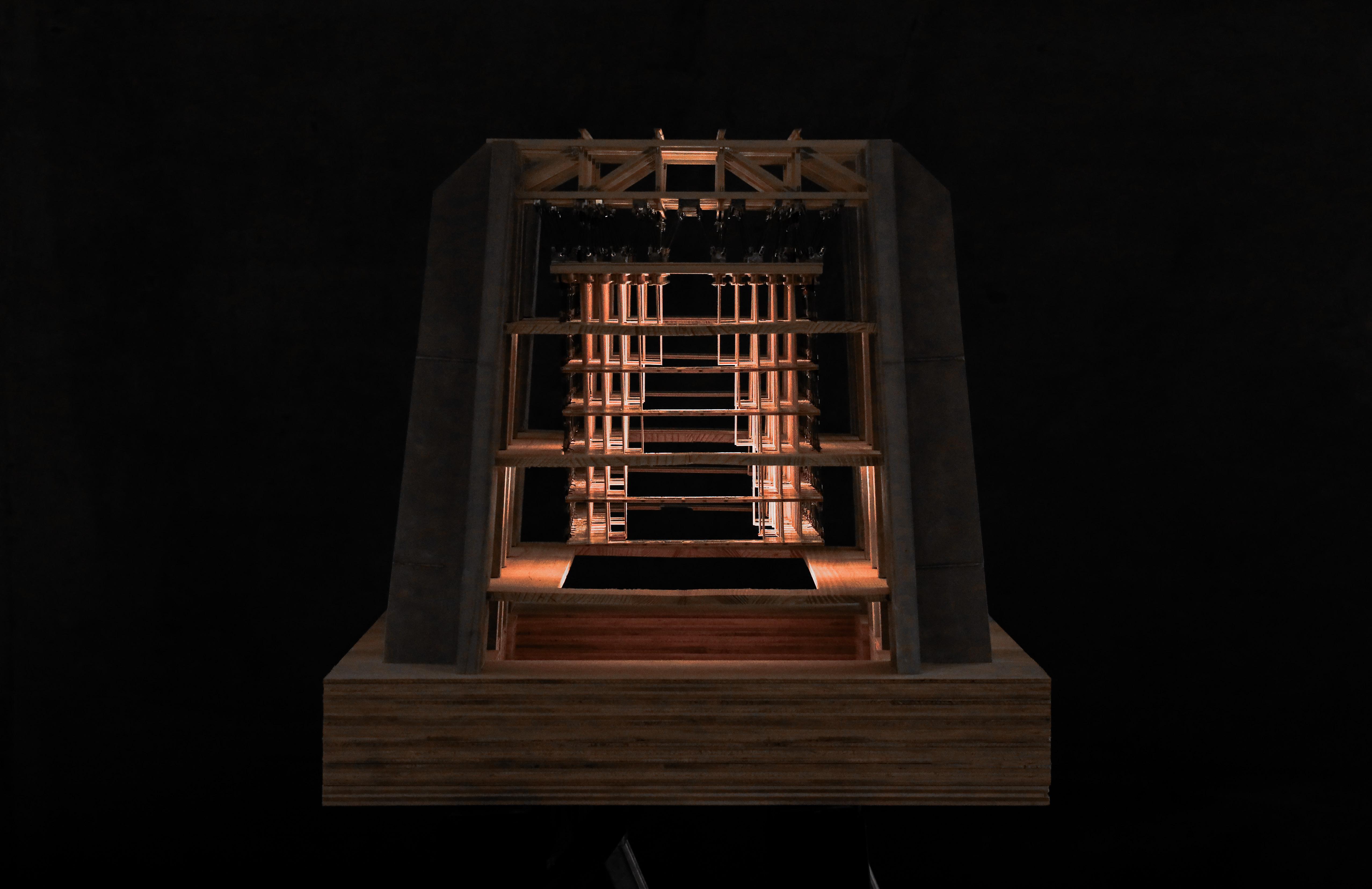
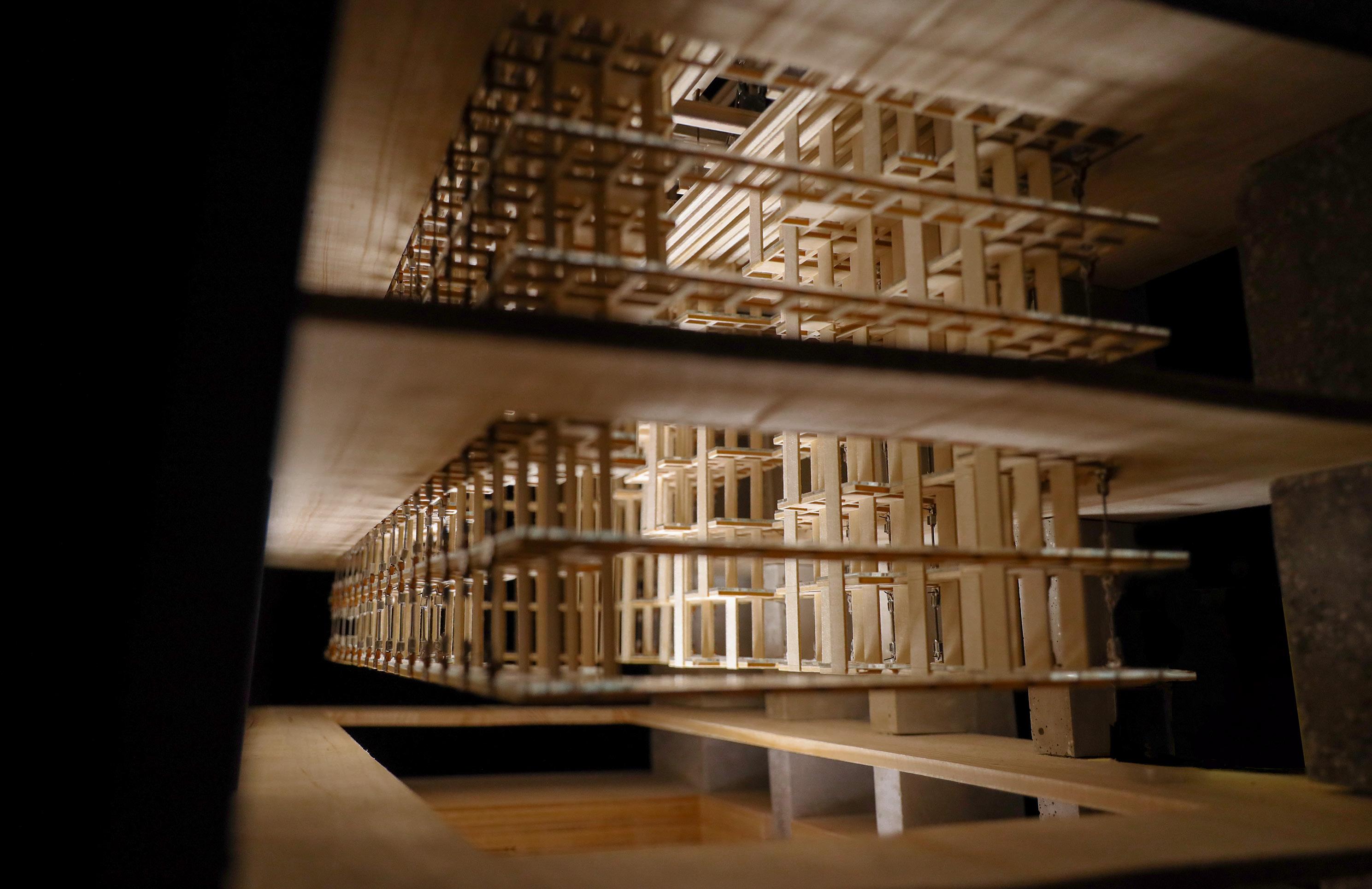
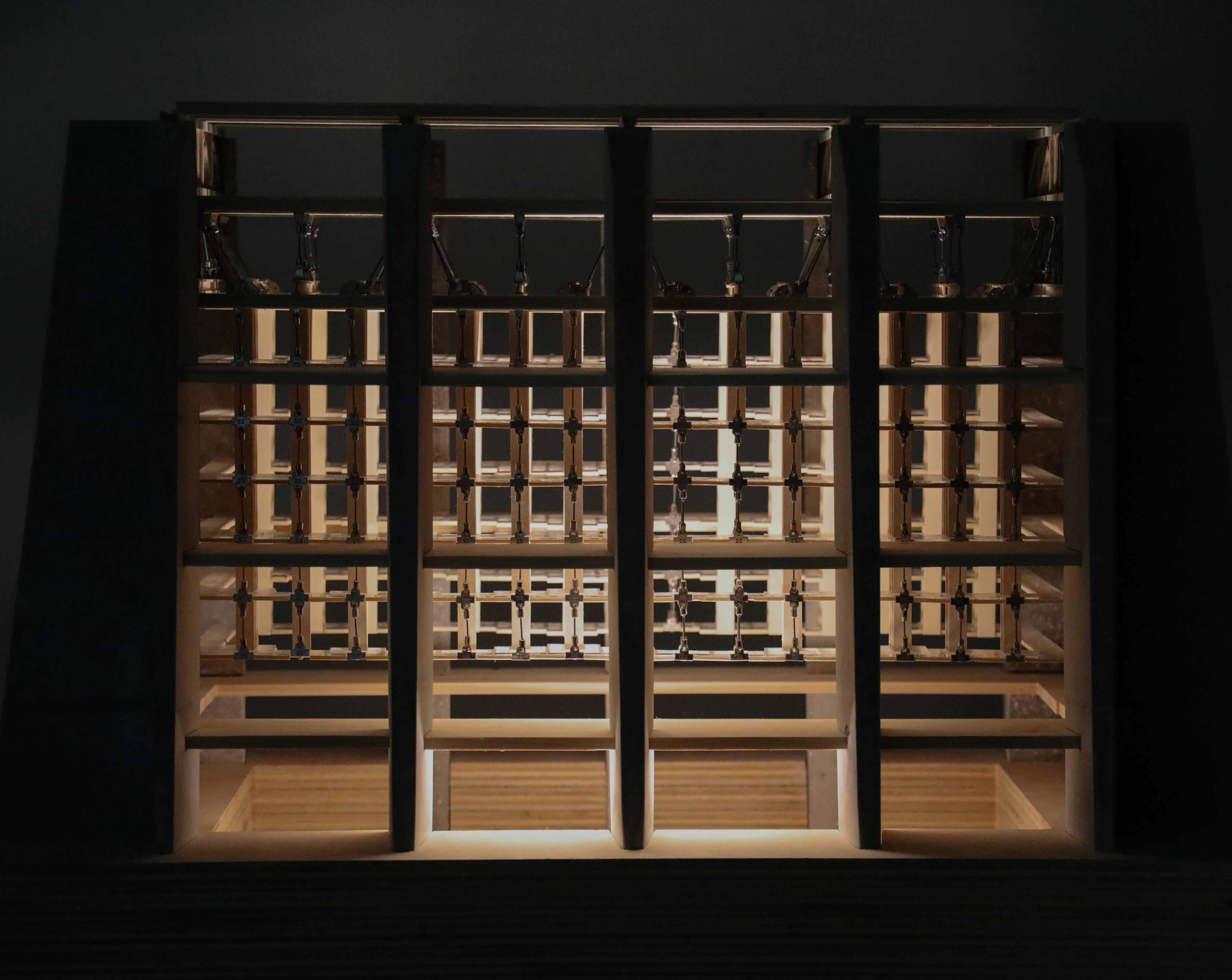
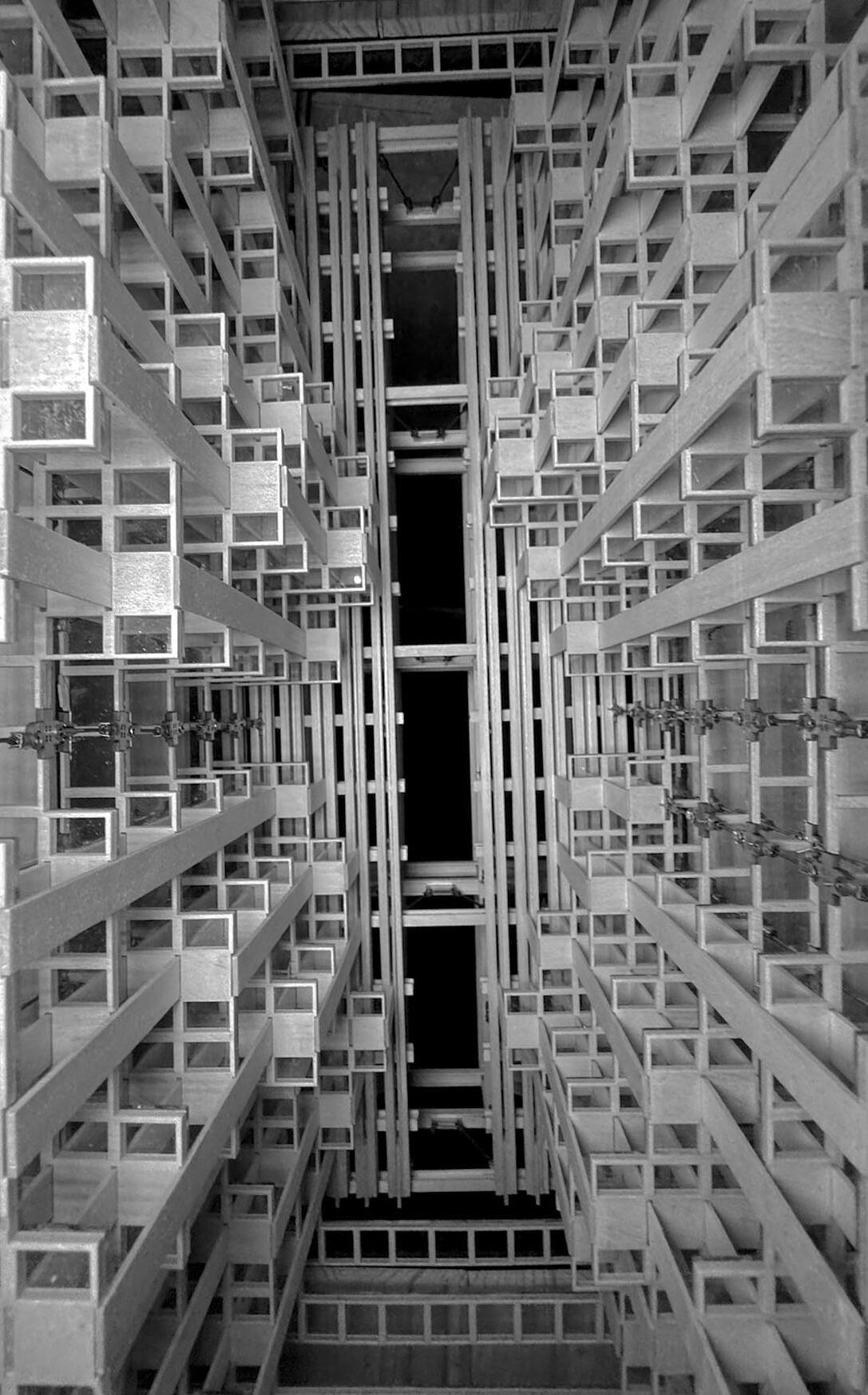
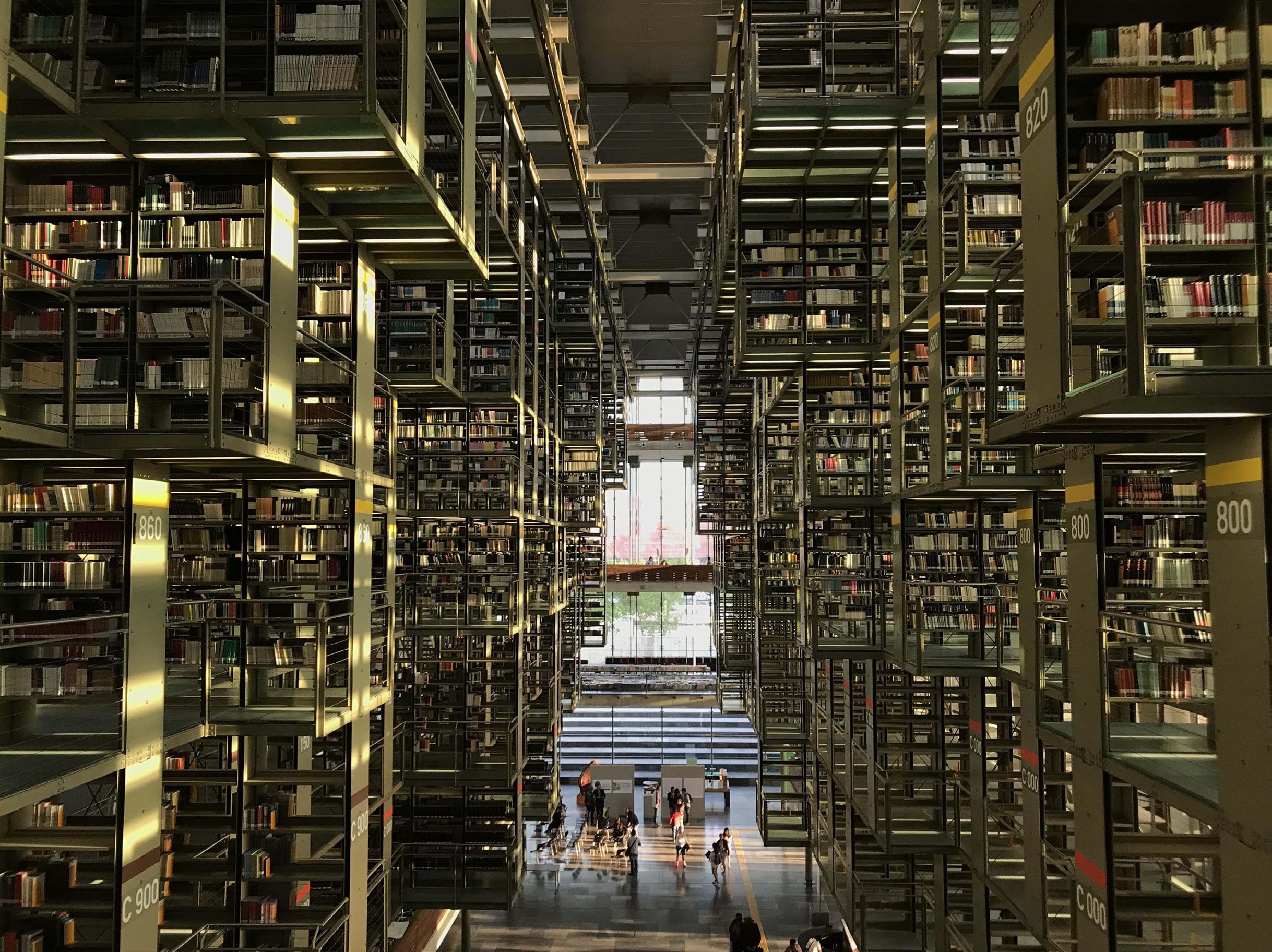
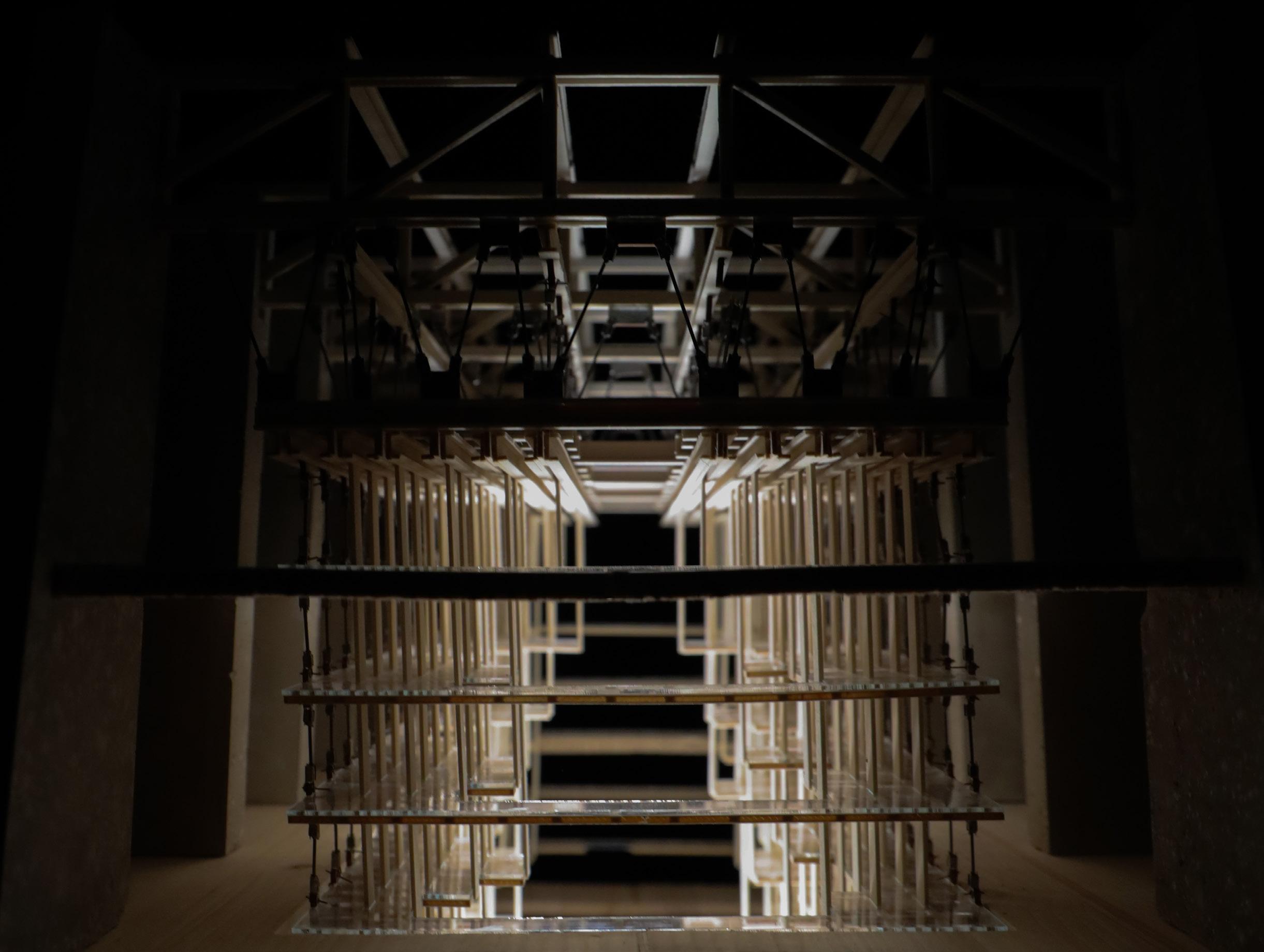
This project examines the structural systems of Alberto Kalach’s Mexico City library, Biblioteca Vasconcelos, through the use a sectional scale model.
A collaborative assignment, our team of 3 focused our attention on the large concrete columns supporting an intricate truss system from which the primary library stacks hang.
Dimensions: Height 27.2”, Length 36.5”, Width 28.5”.
Materials: Rockite, Plywood, Balsa Wood, Aluminum.
CASCADILLA CSA
FALL 2025 Core Studio, Prof. Jenifer Newsom Studio Prompt: Hybridizing Domestics/ Domestic Plusses
Sited in Ithaca, NY, this project integrates a single family residence with a CSA (Community Supported Agriculture) distribution center, examining the threshold of public and private space. The proposal lays out a residence incorporating the production, processing and distribution of produce to the local community through the use of a CSA model.
The overarching ethos of this project is social and environmental resilience, evident in the house’s fundamental design and the functionality it serves. The CSA provides nearby residents access to fresh produce while also allowing them to disassociate from the standard, monetarily driven market by allowing individuals to use their time and space in exchange for produce. The project transitions through three levels of public and private: The main residence serves as the most private space and is completely separate from the public. The production and processing areas act as a medium between public and private. The distribution area and central courtyard is fully accessible to the public and allows for the congregation and connection between residents, neighbors and local passers-by.
The materiality of the project is influenced by this concept of three layers of public and private with a fully translucent polycarbonate, a semi-transparent metal mesh, and opaque corrugated siding.
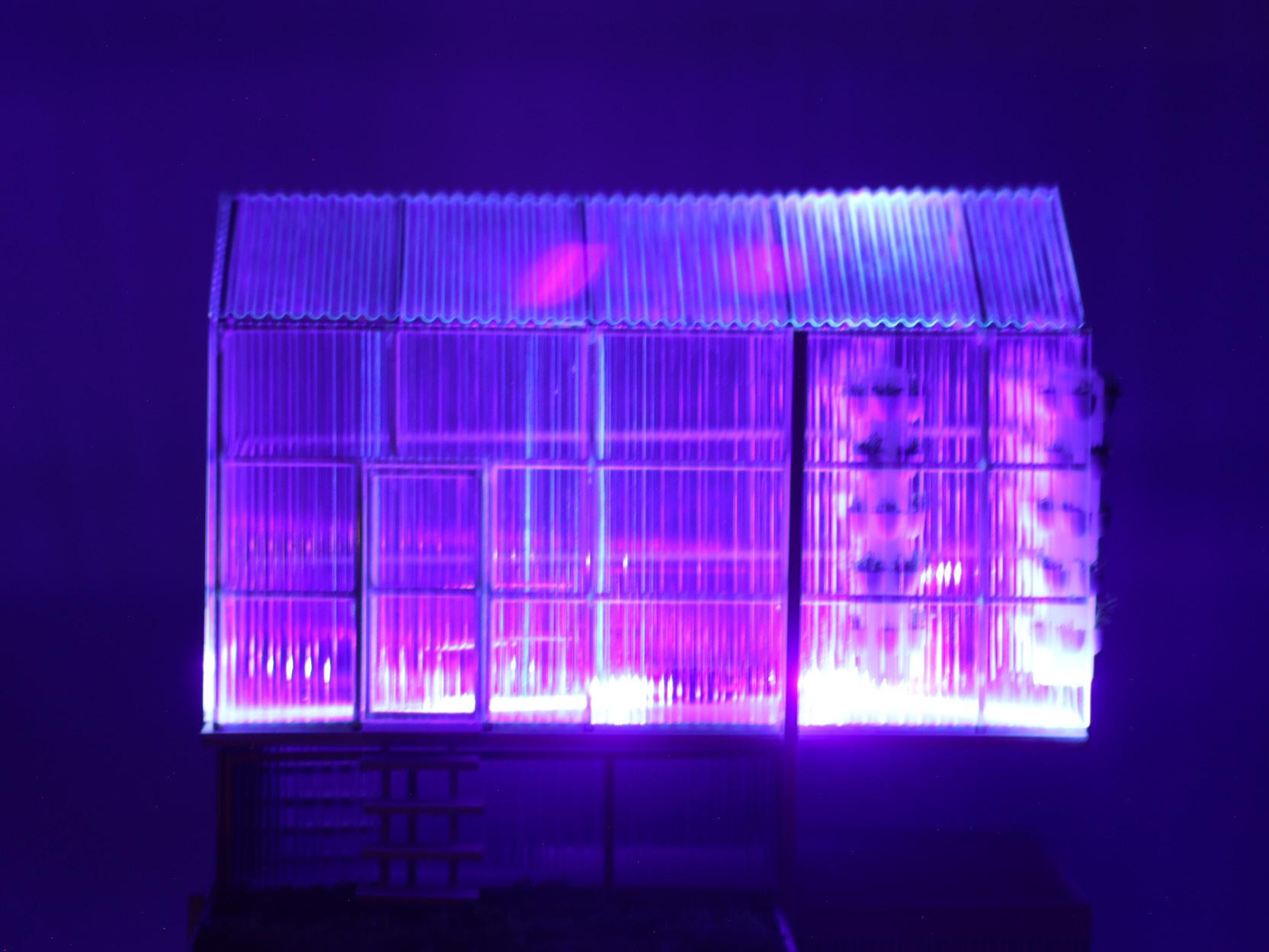
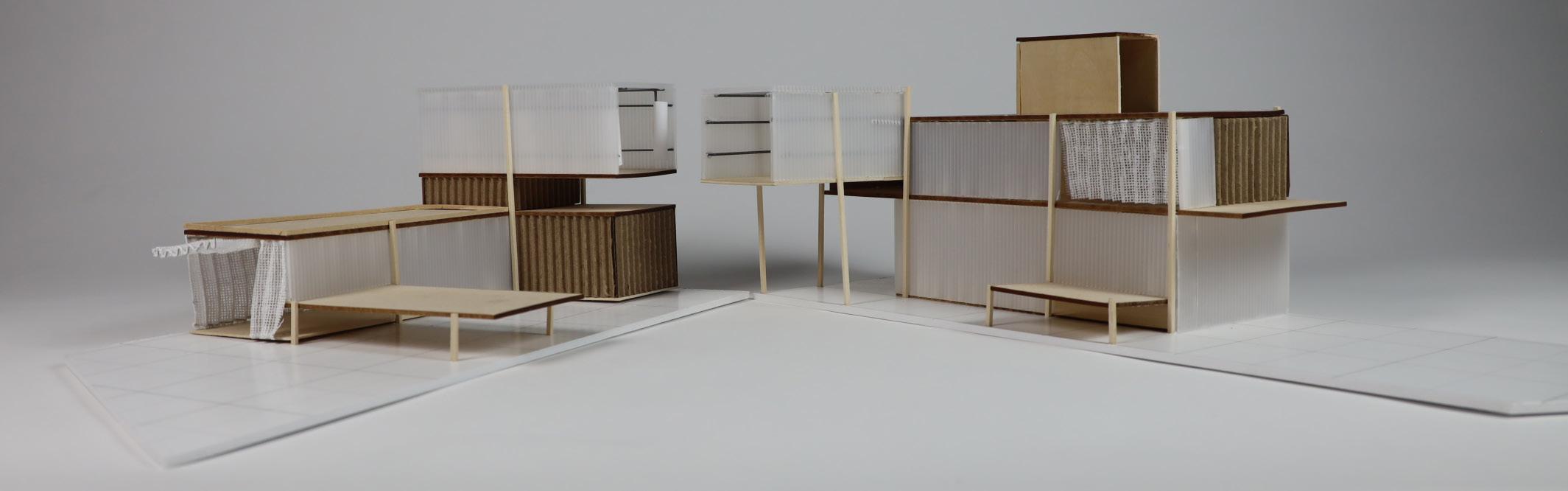
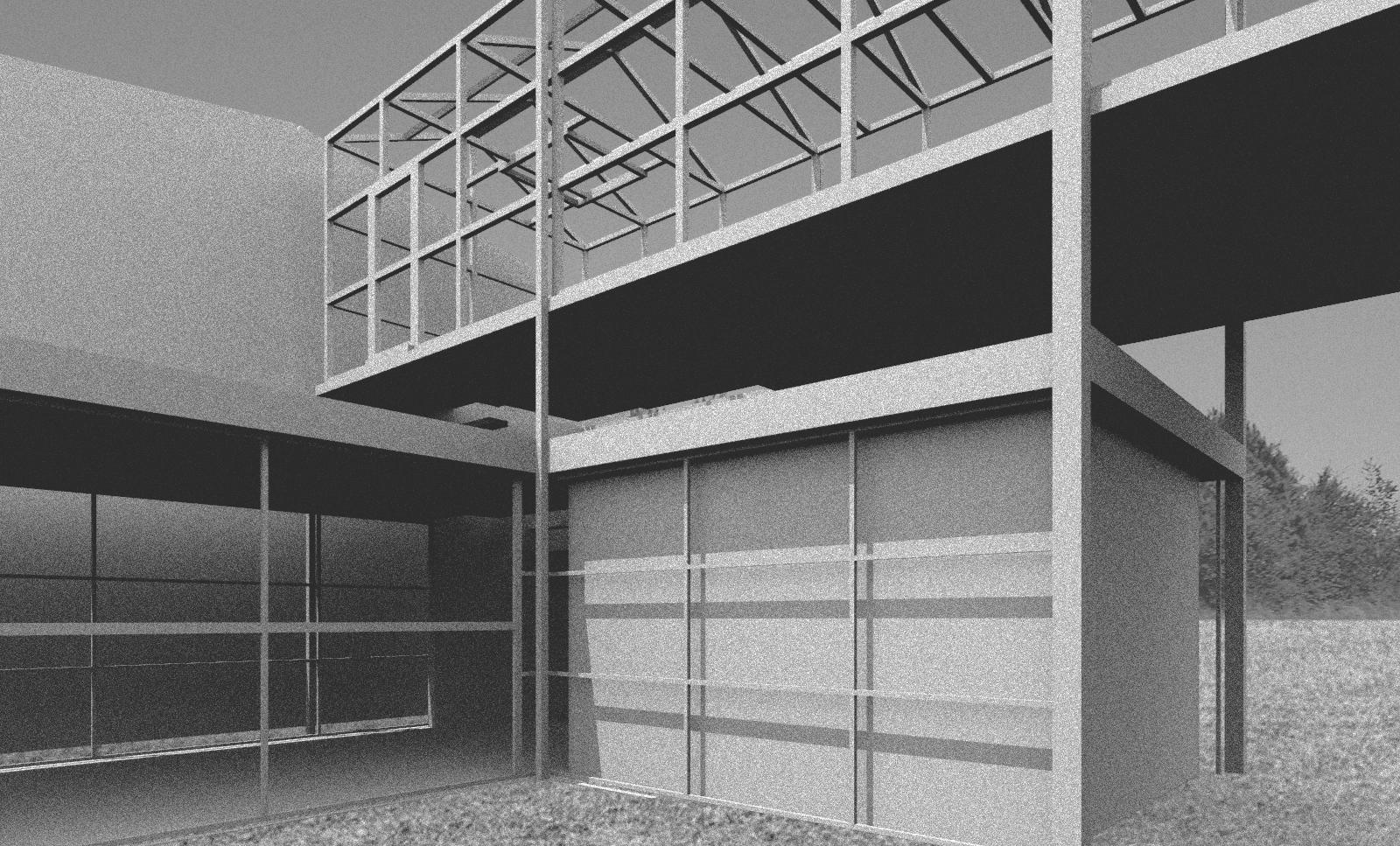
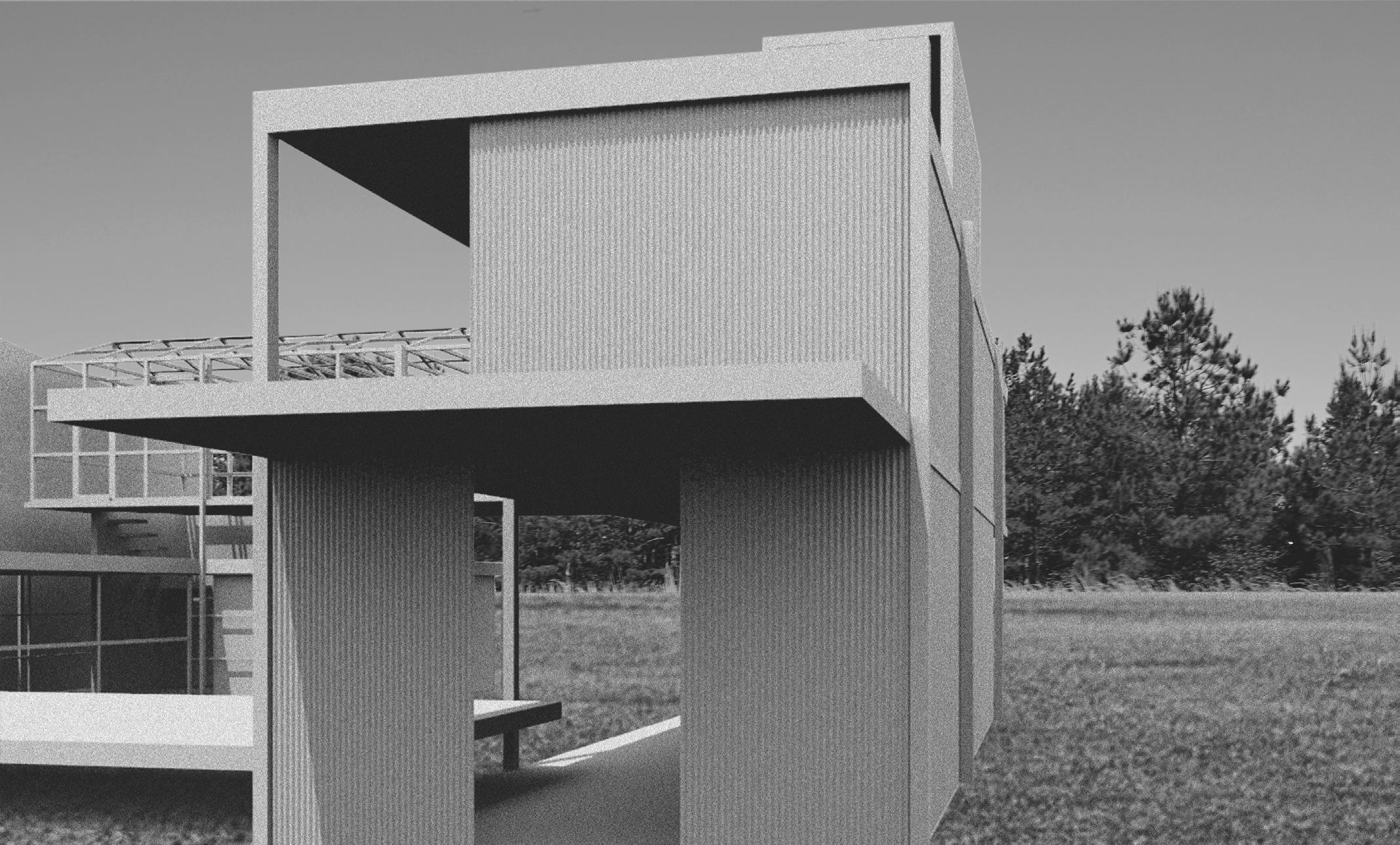
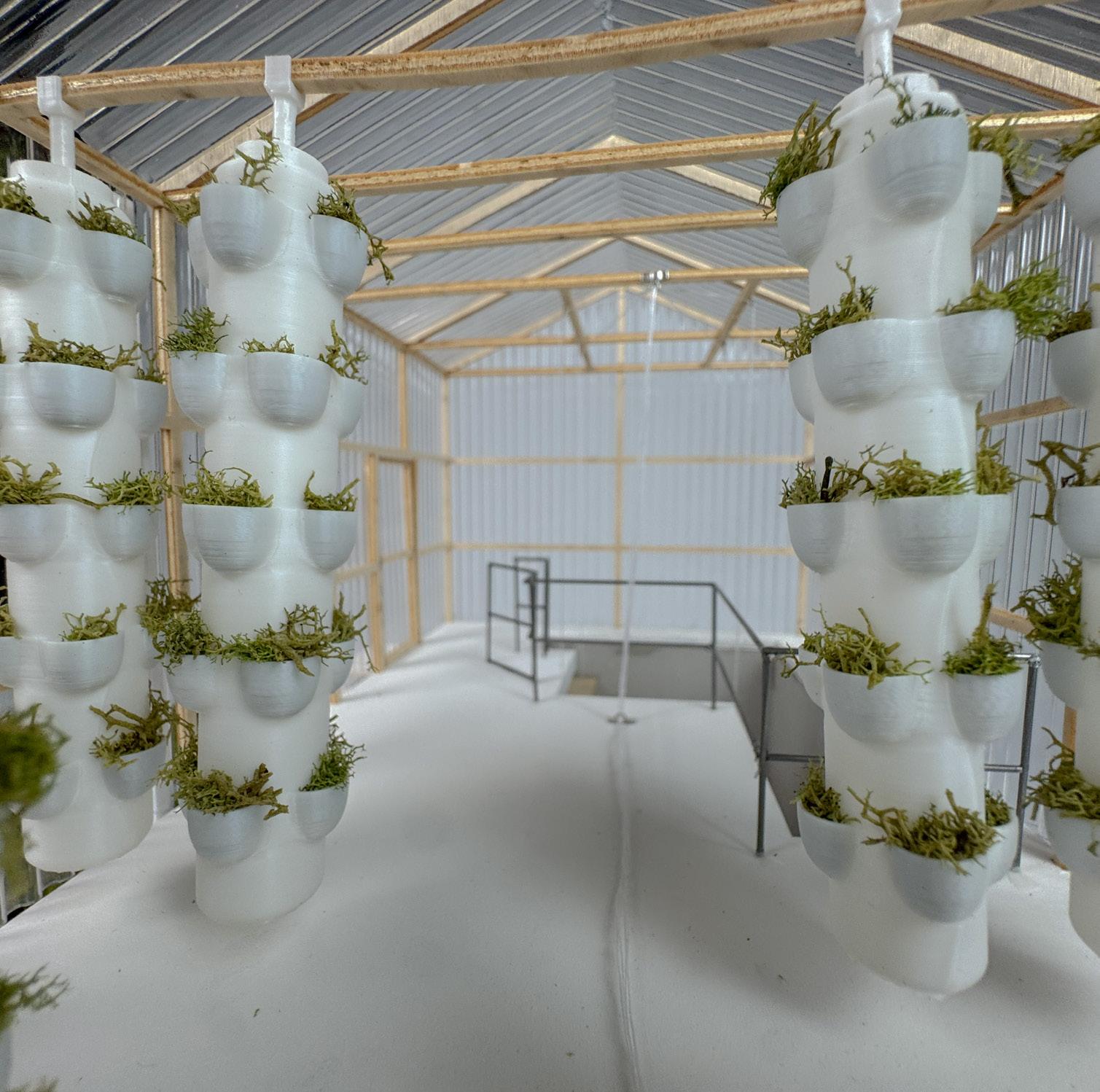
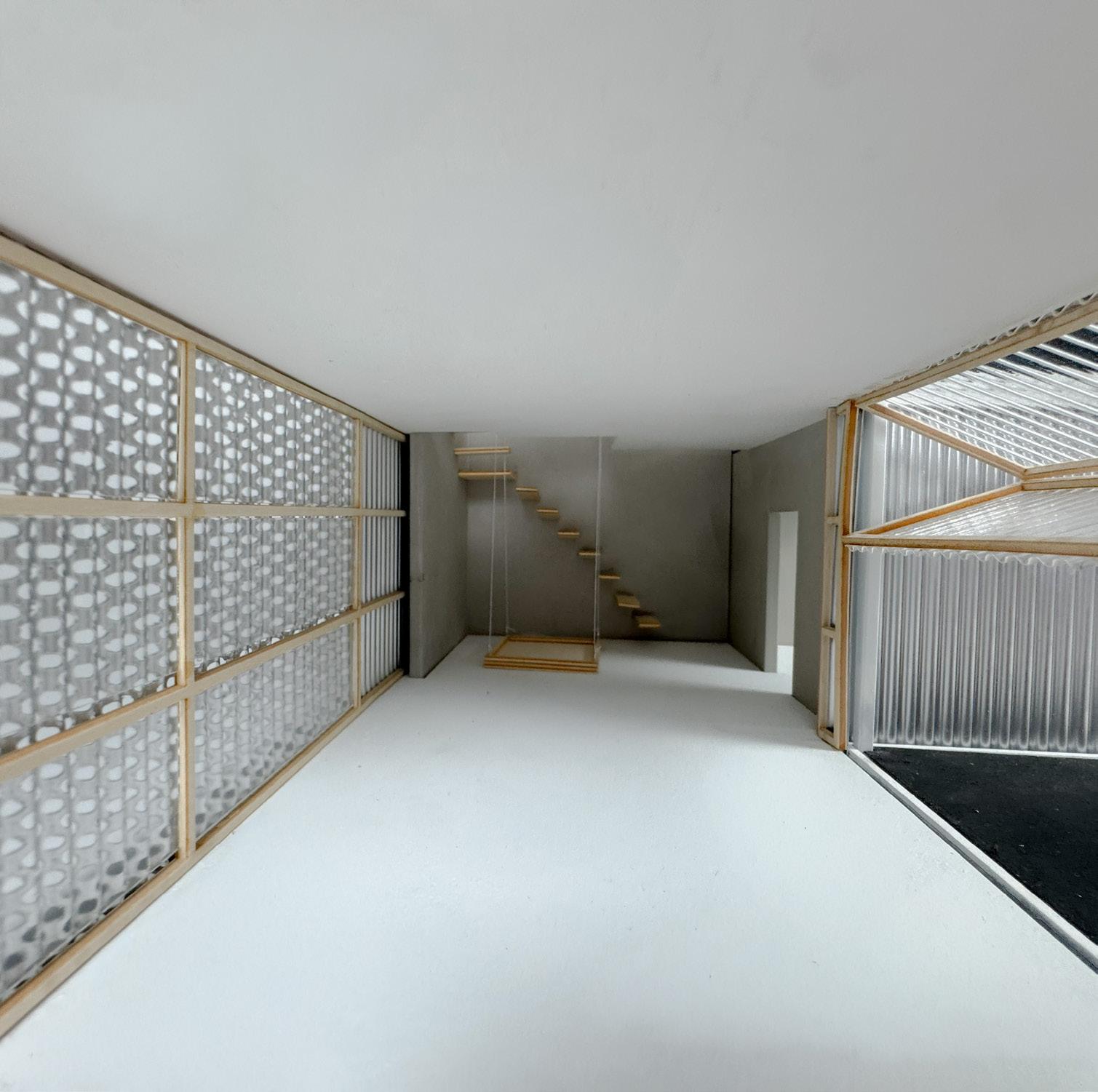
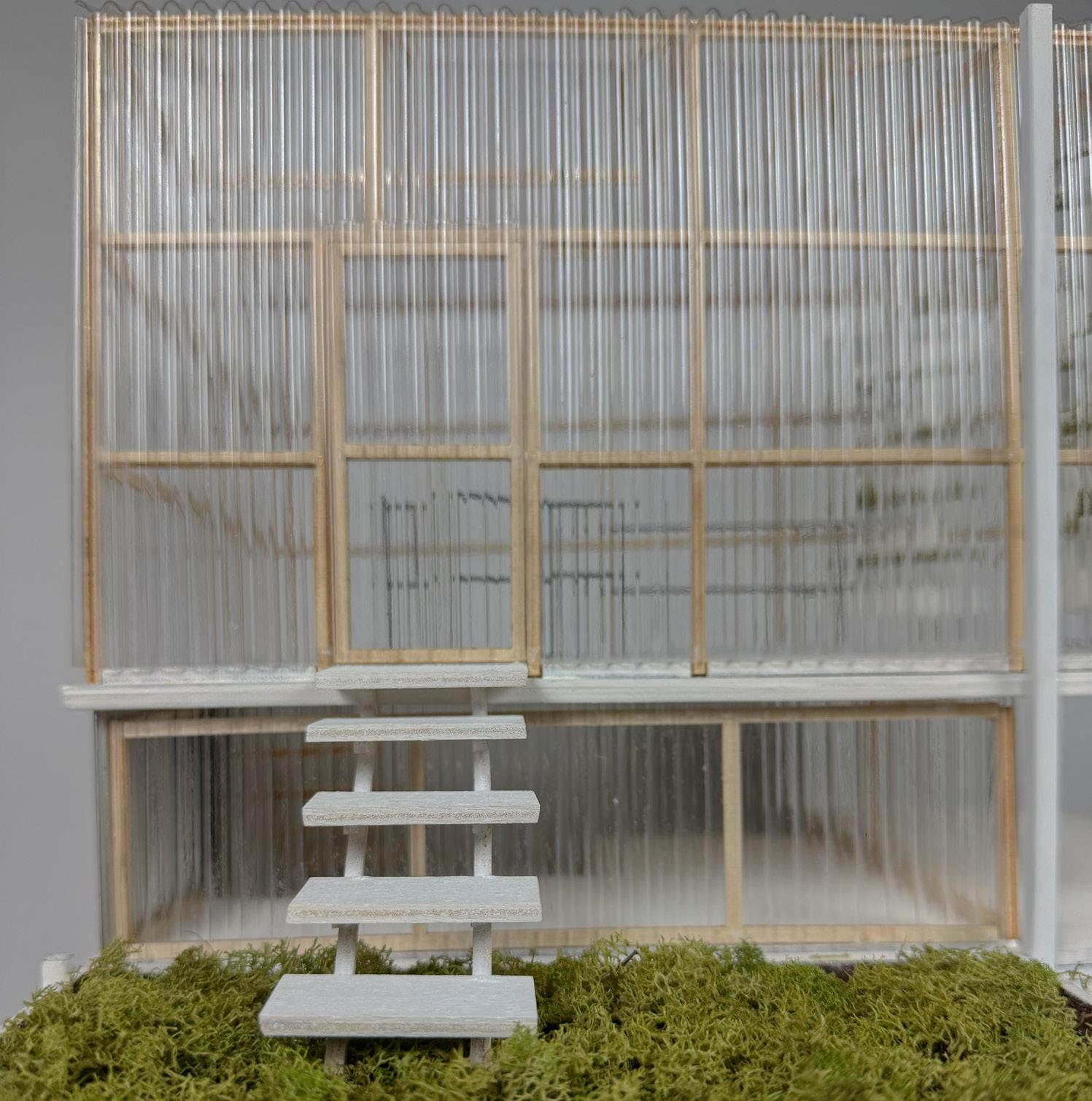
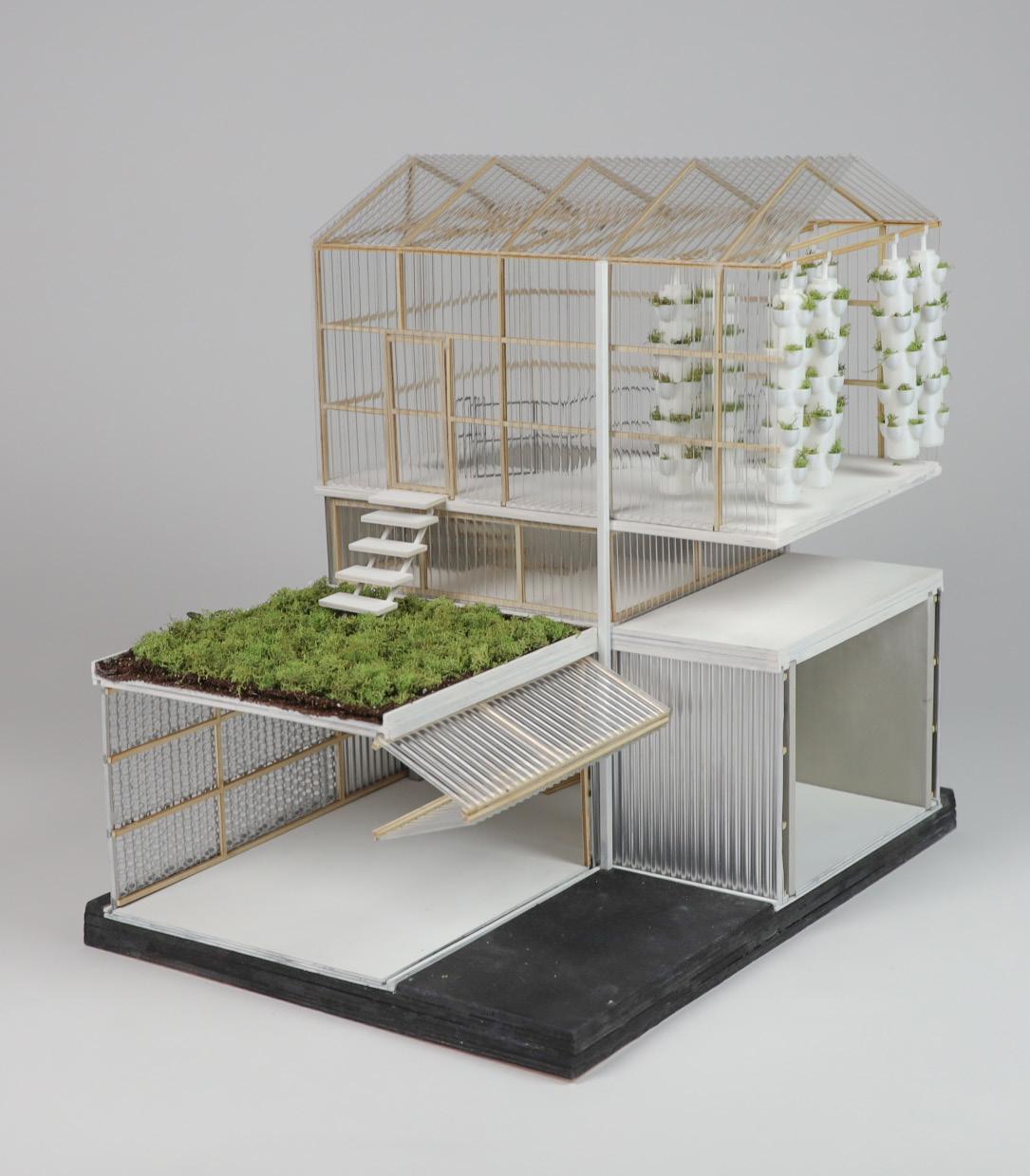
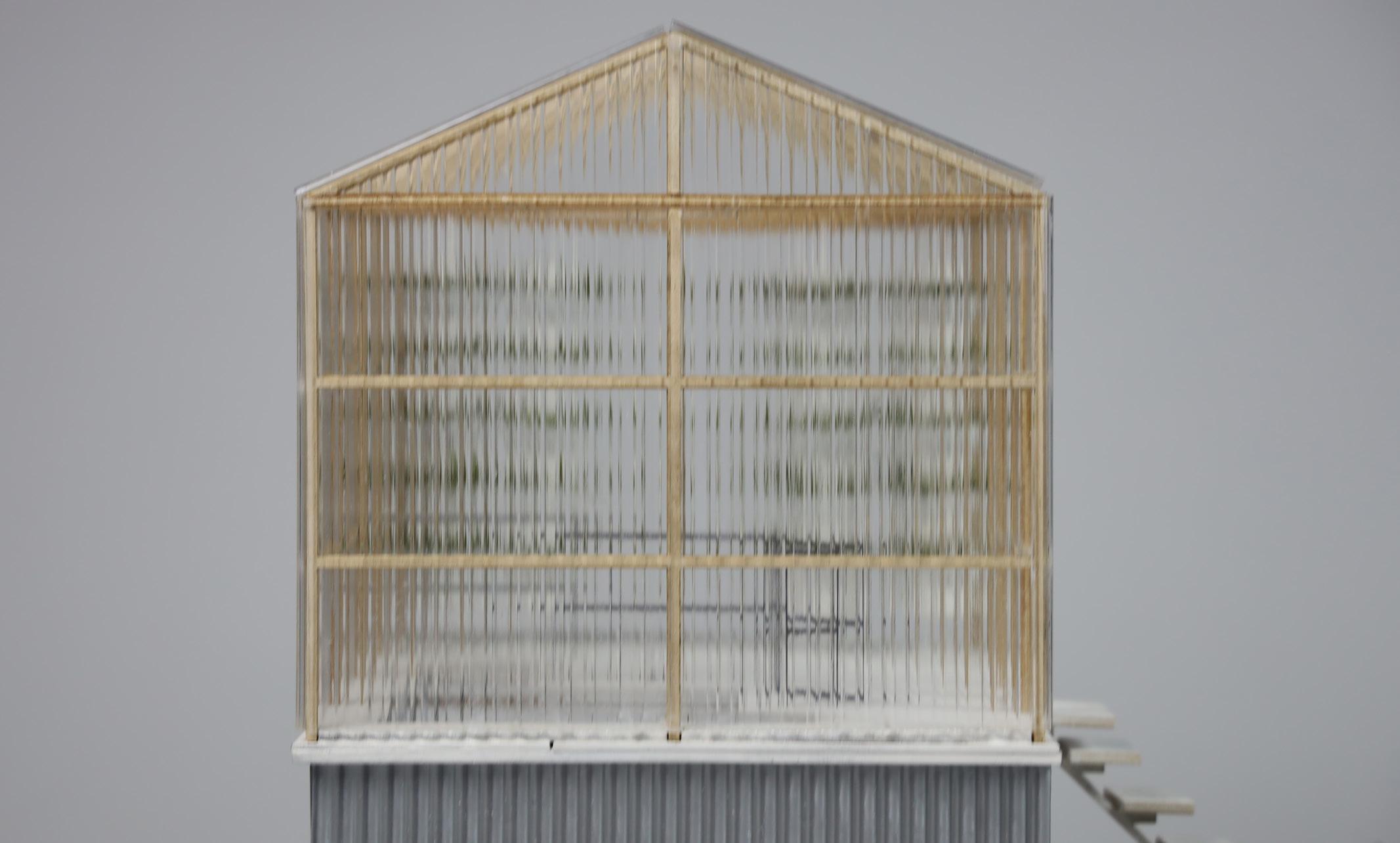
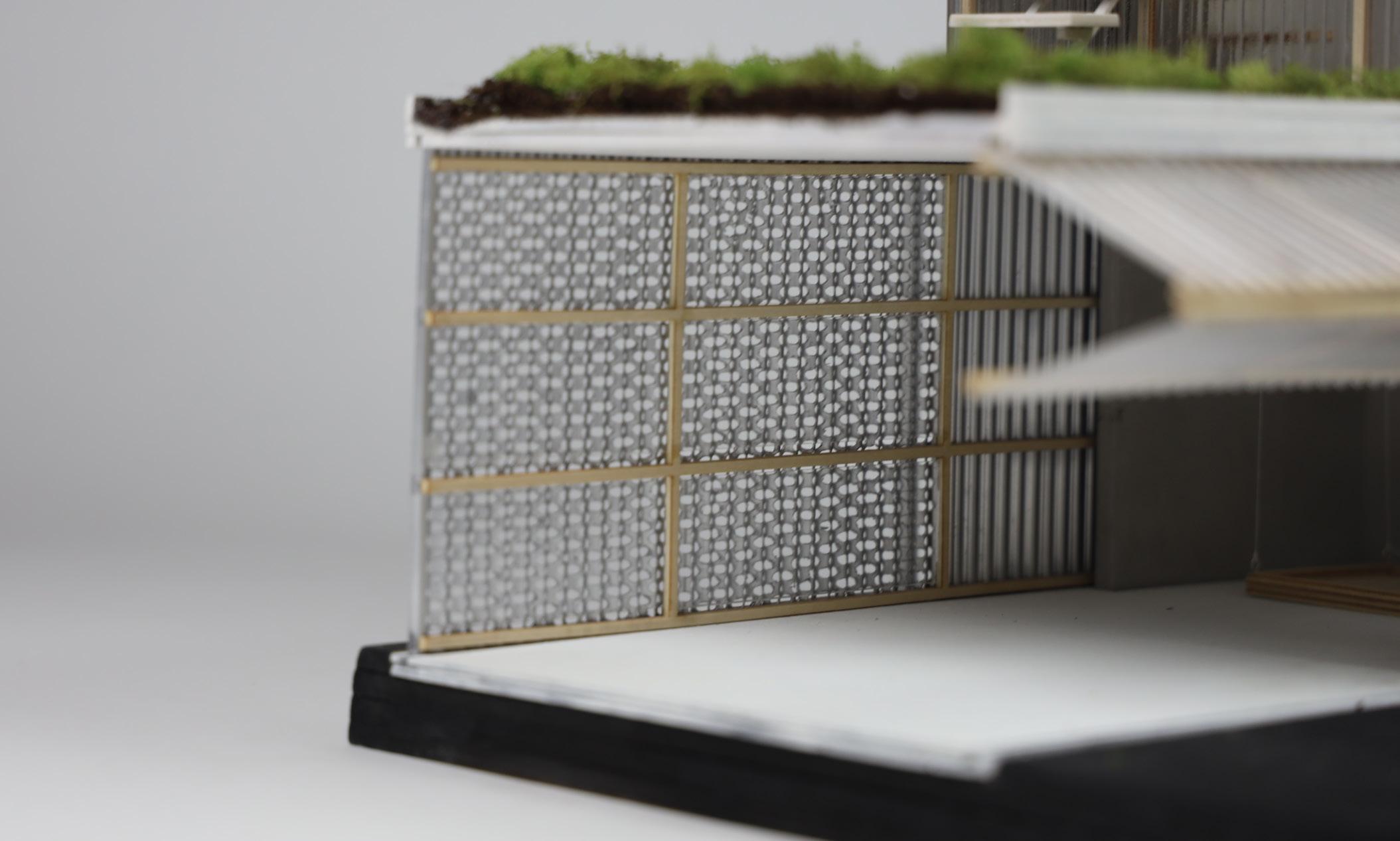
Domestic Plusses: Photographs: 1/2”=1’ Section Model
FARNSWORTH RESILIENCE
FALL 2025: Core Studio, Prof. Jenifer Newsom
Studio Prompt: BAIRD PRIZE
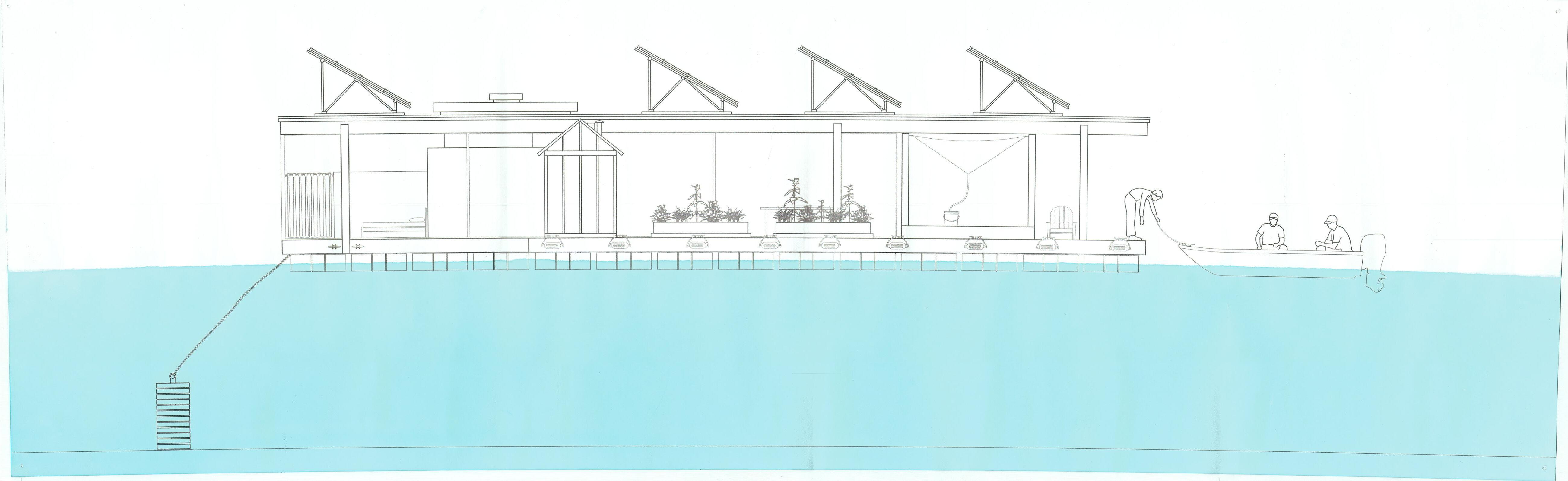
This project continues my exploration into social and environmental resilience that I began in a earlier analysis of Mies Van der Rohe’s Farnsworth House. The competition prompted us to envision an intervention of a gathering, event based activity or house party to the existing context.
It was Tuesday, September 4th, 2355. Climate change and the rise in global temperatures have led to unrelenting natural disasters and set the precedent for what’s considered a normal way of life. Henry Farnsworth and his wife, Justine, were getting ready for their weekly Tuesday night dinner with their neighbors. They have been doing this every week since the great flood of 2320. This event was one of, if not the most important, events in modern history due to the flash floods that swept the world, sending families and individuals panicking to find a way to survive. As flood warnings were issued, Henry and Justine rushed to find an answer. Their solution was to uproot the Farnsworth house from its site and retrofit it with a flotation system made from 55-gallon drums. It took months to renovate and prepare the house for his new site - afloat on the water.
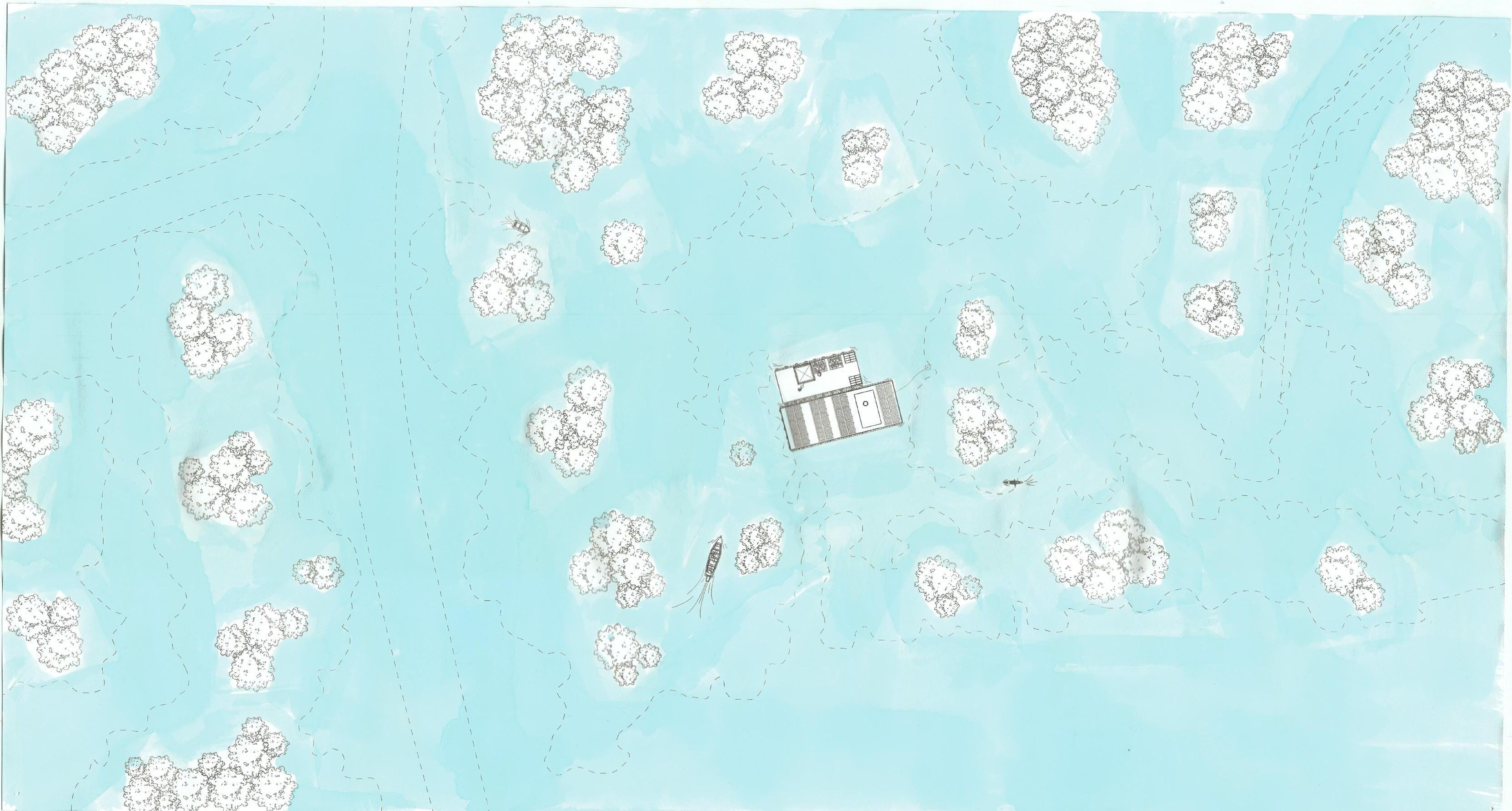
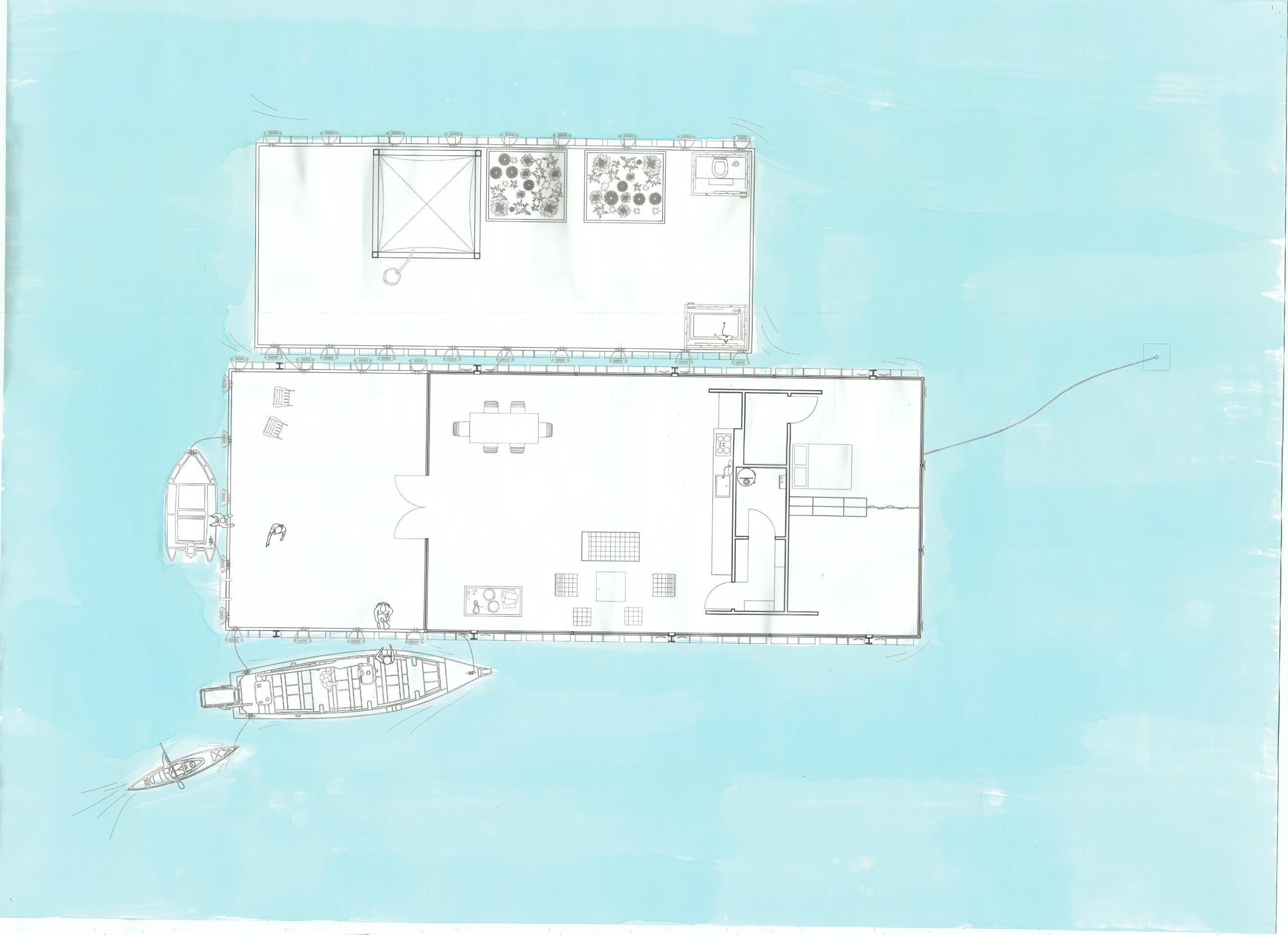
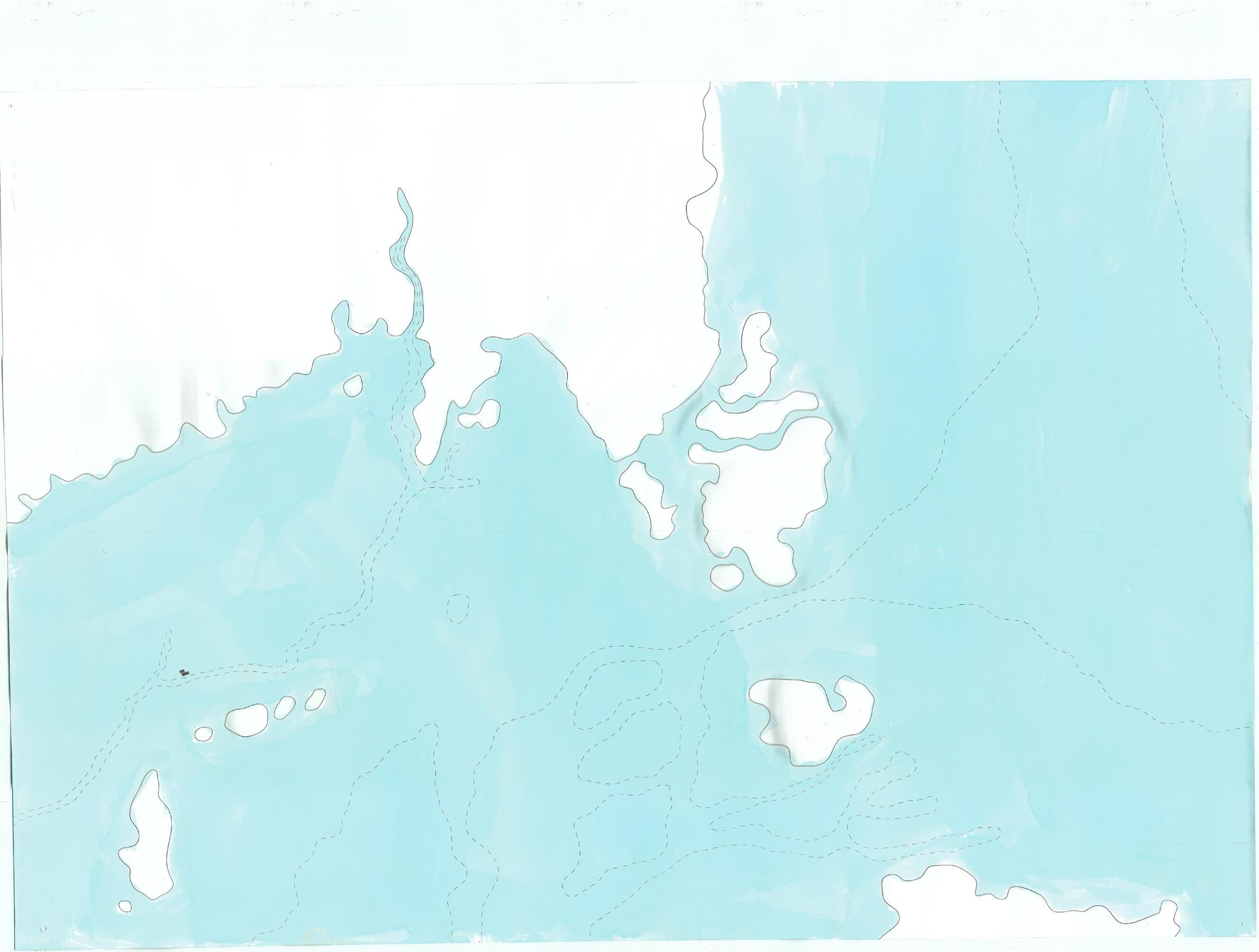
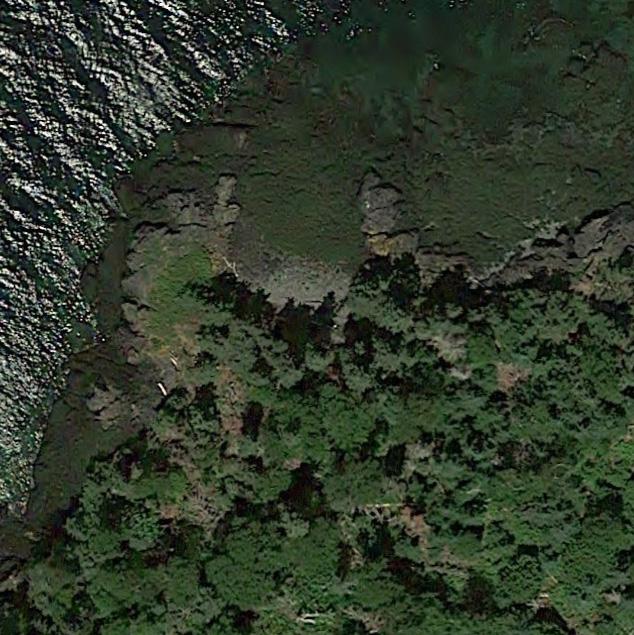
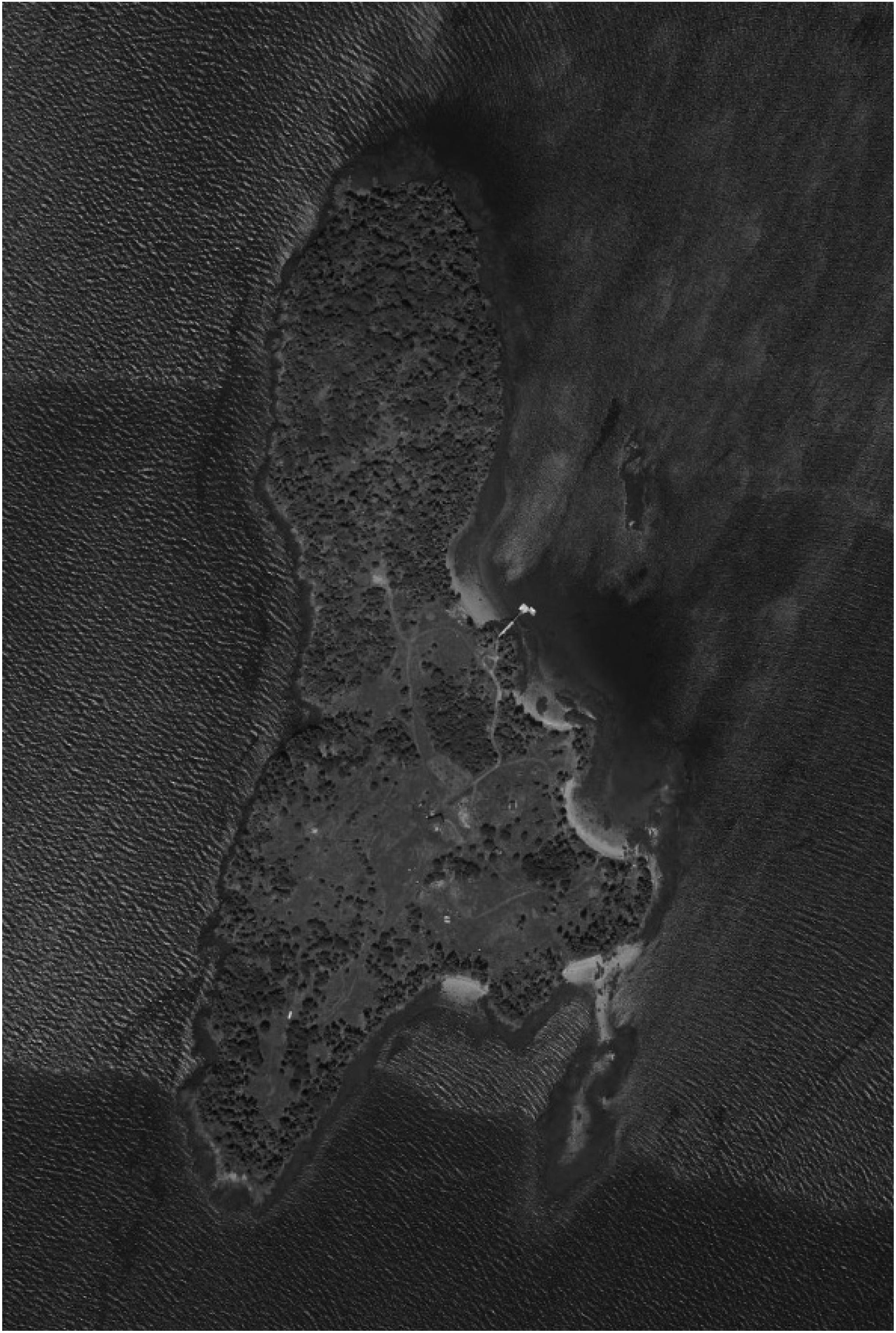
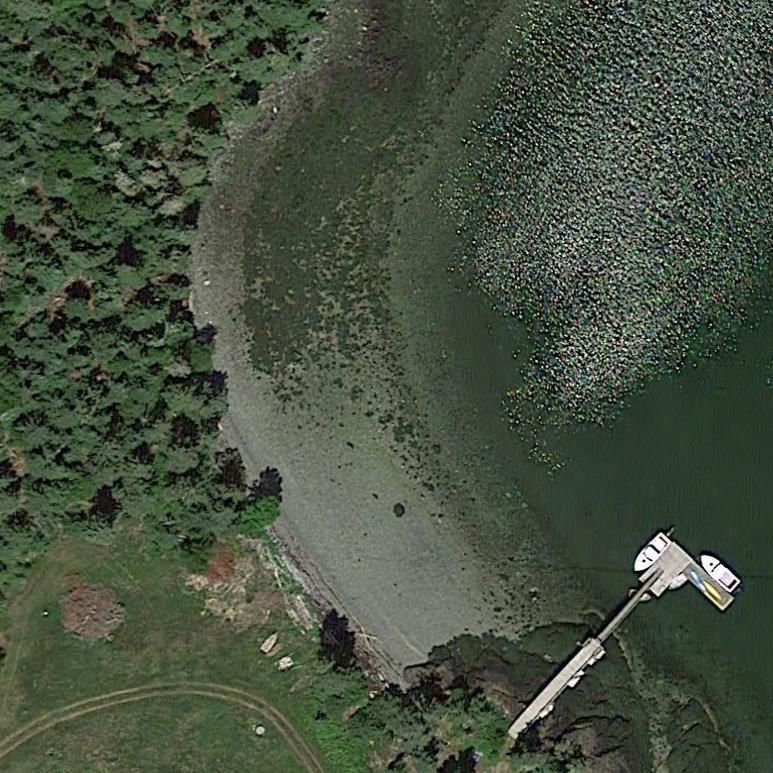
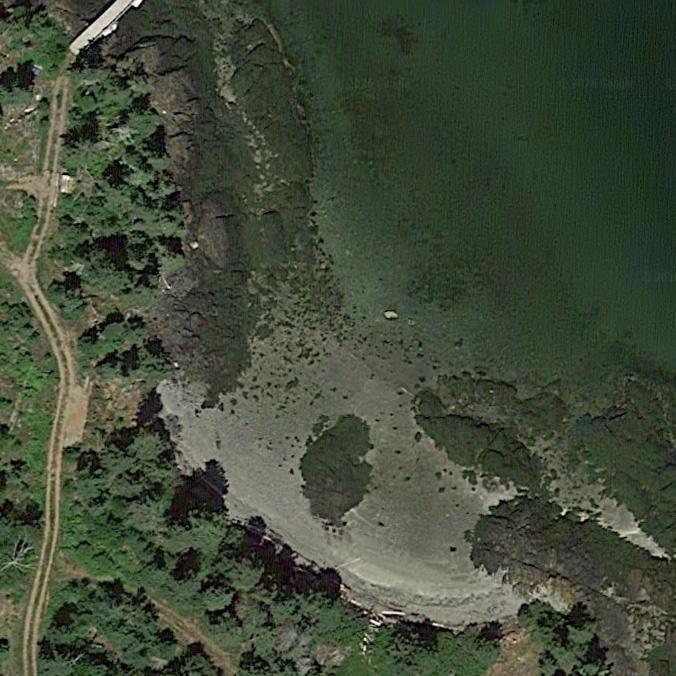
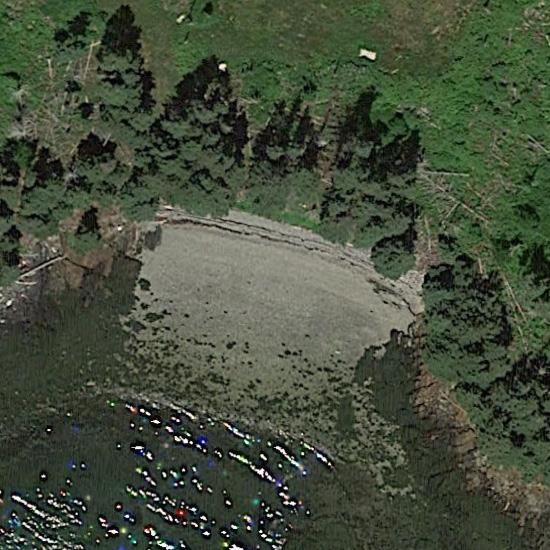
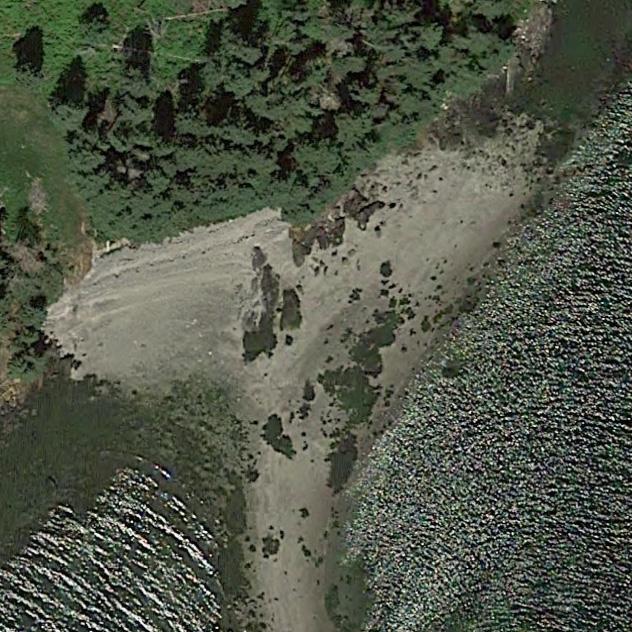
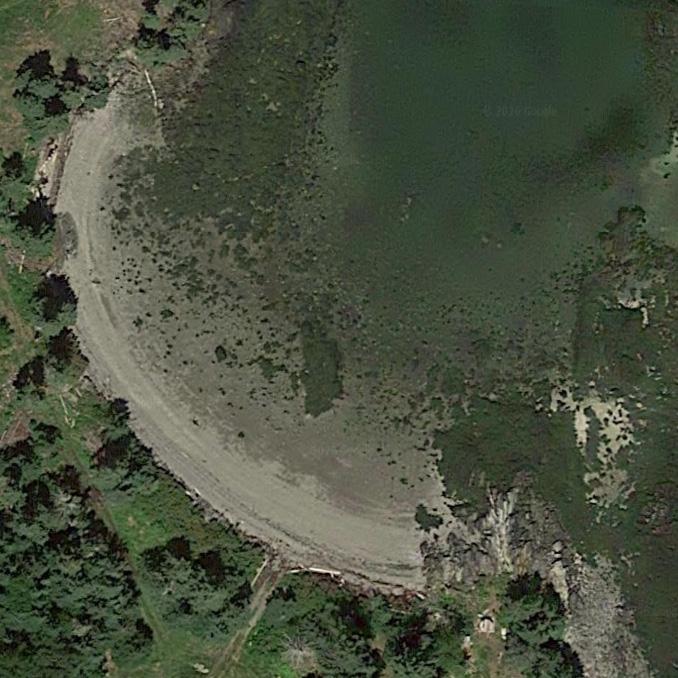
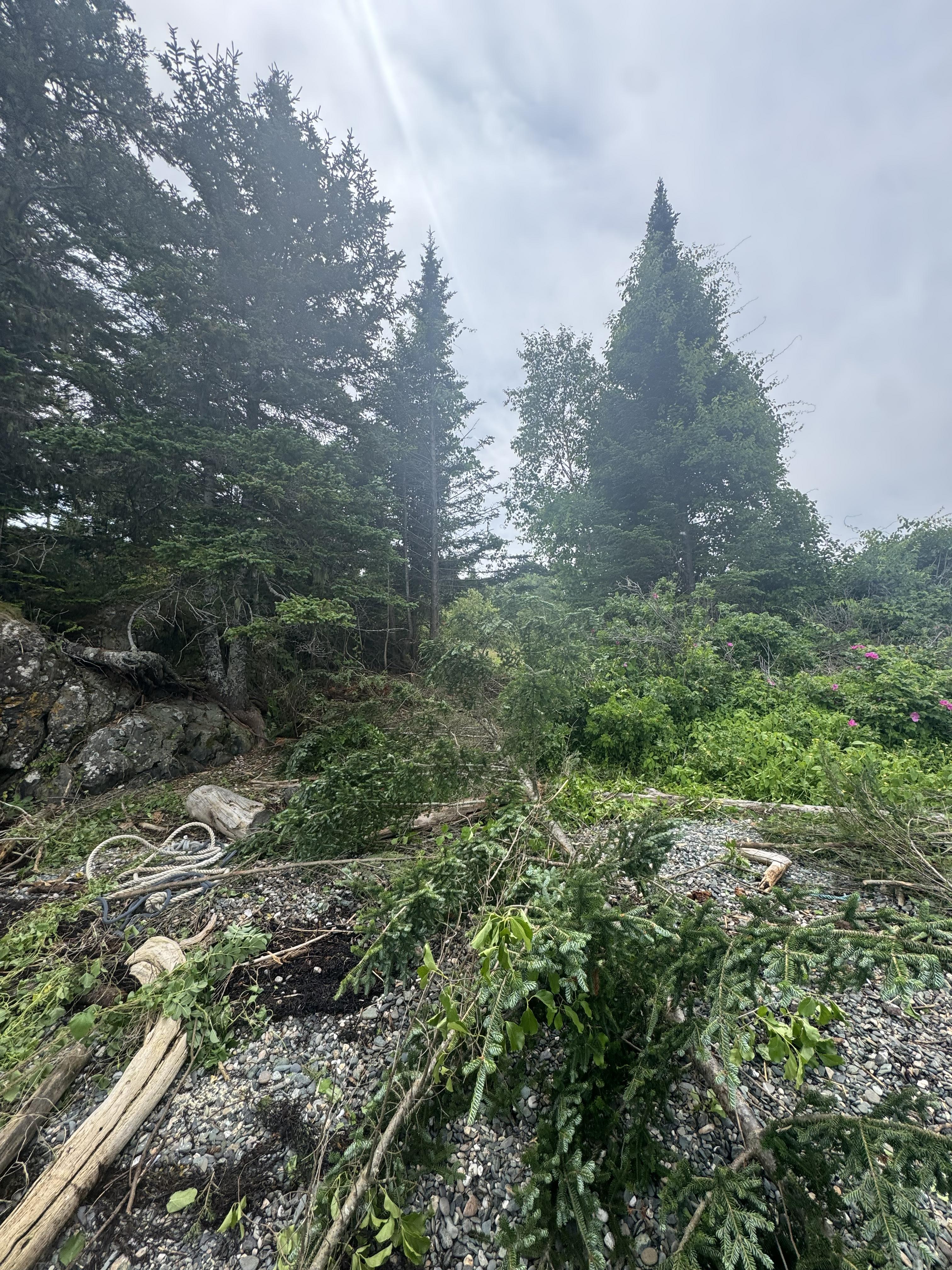
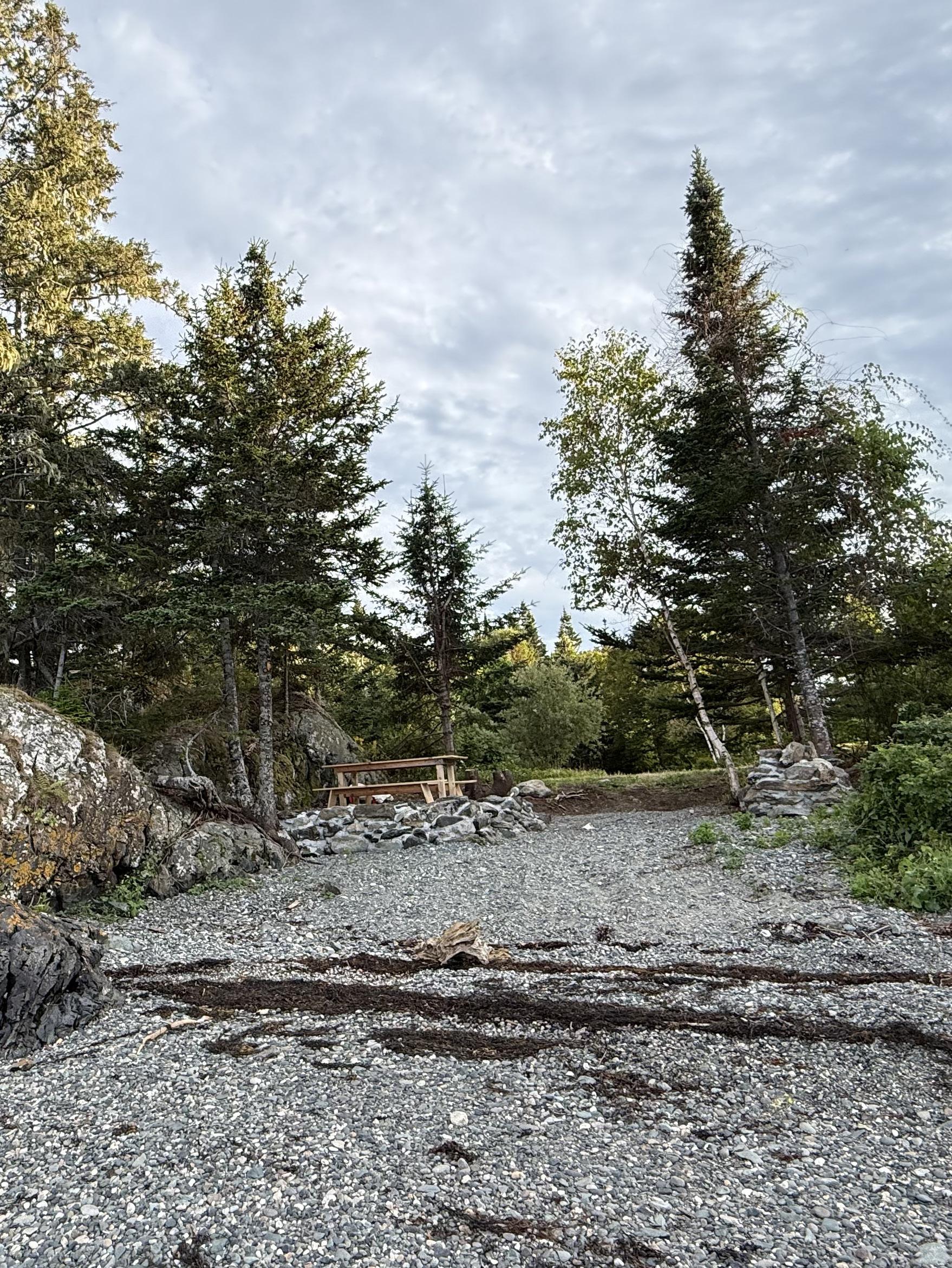
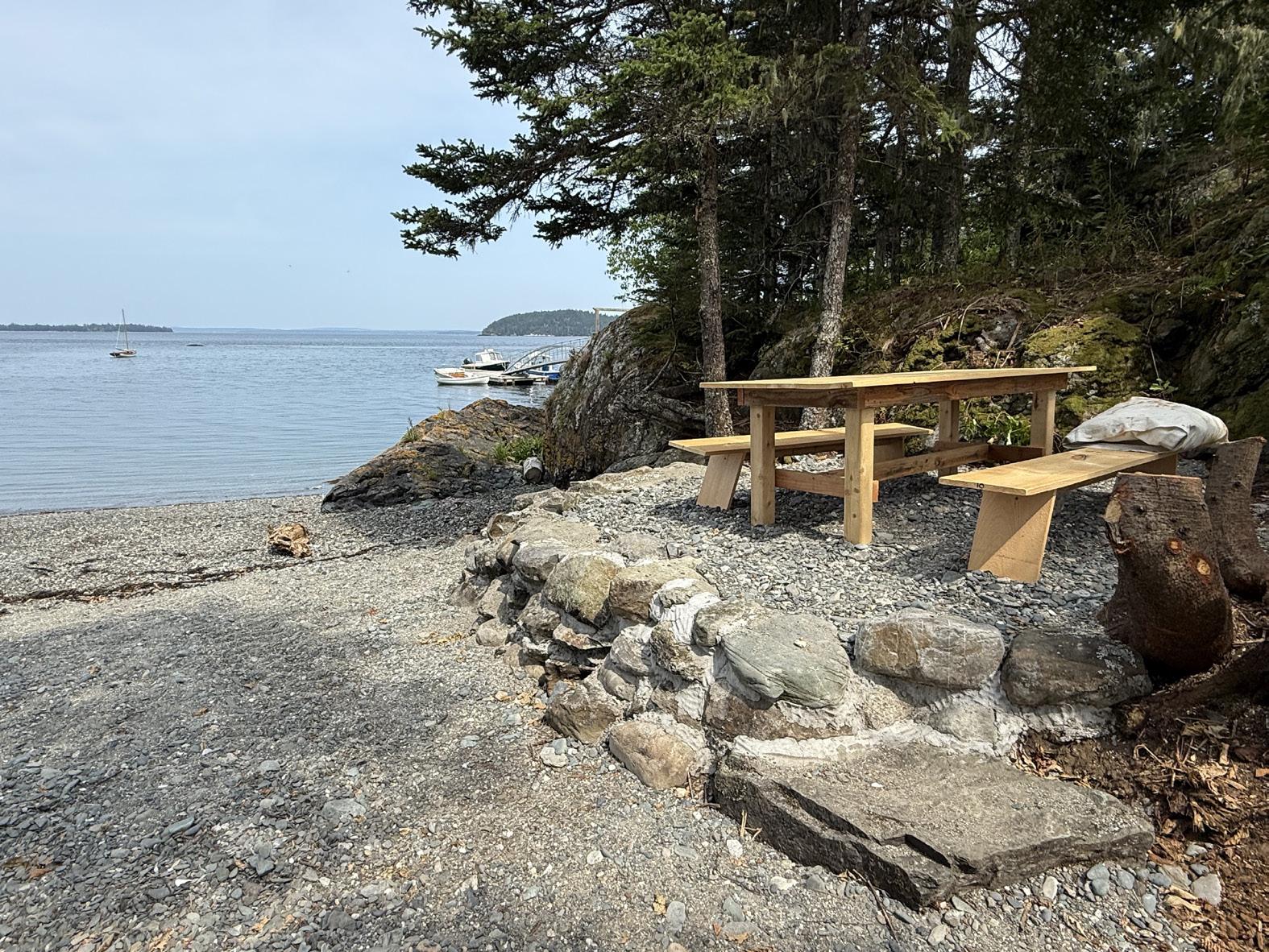
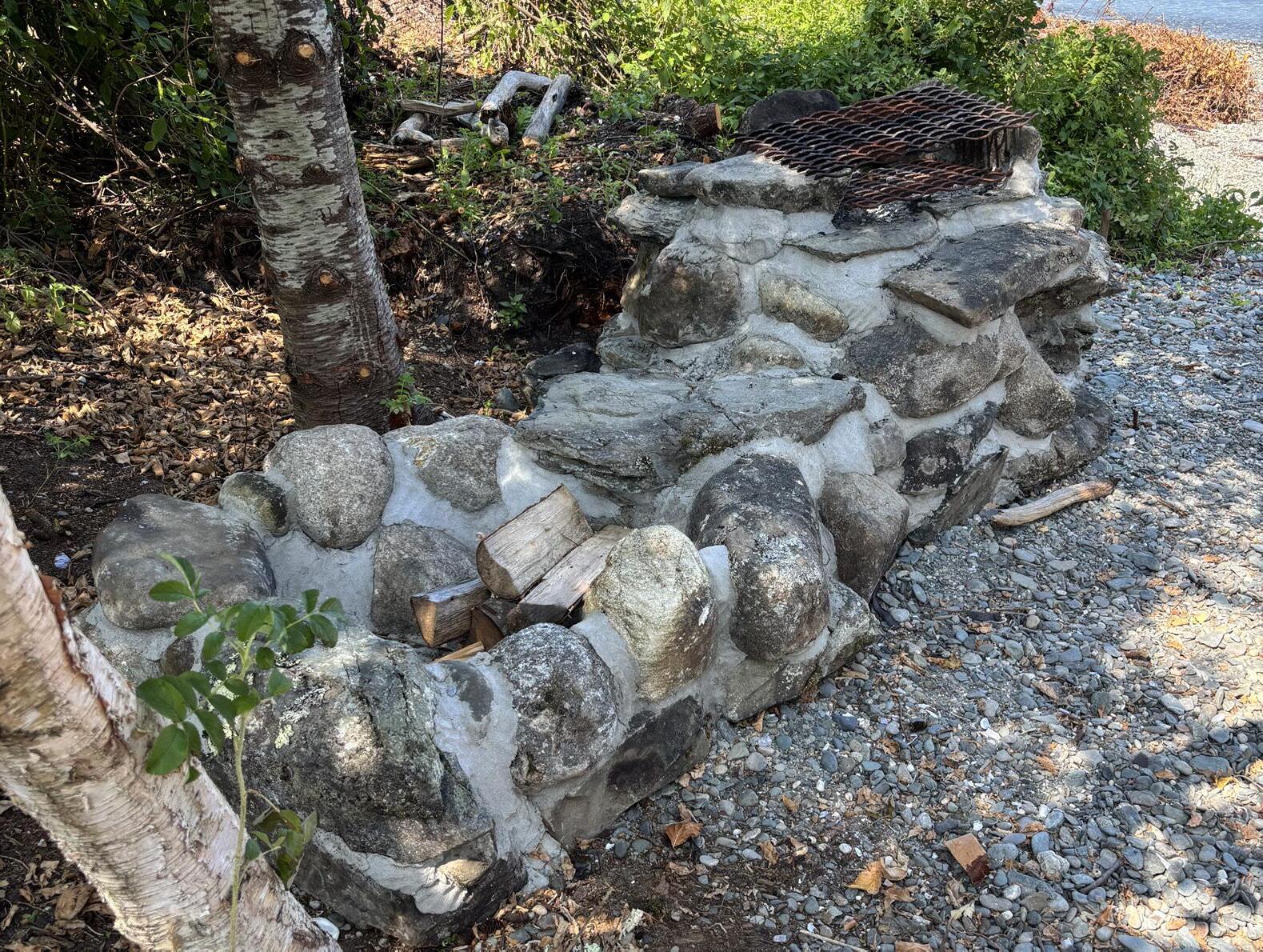
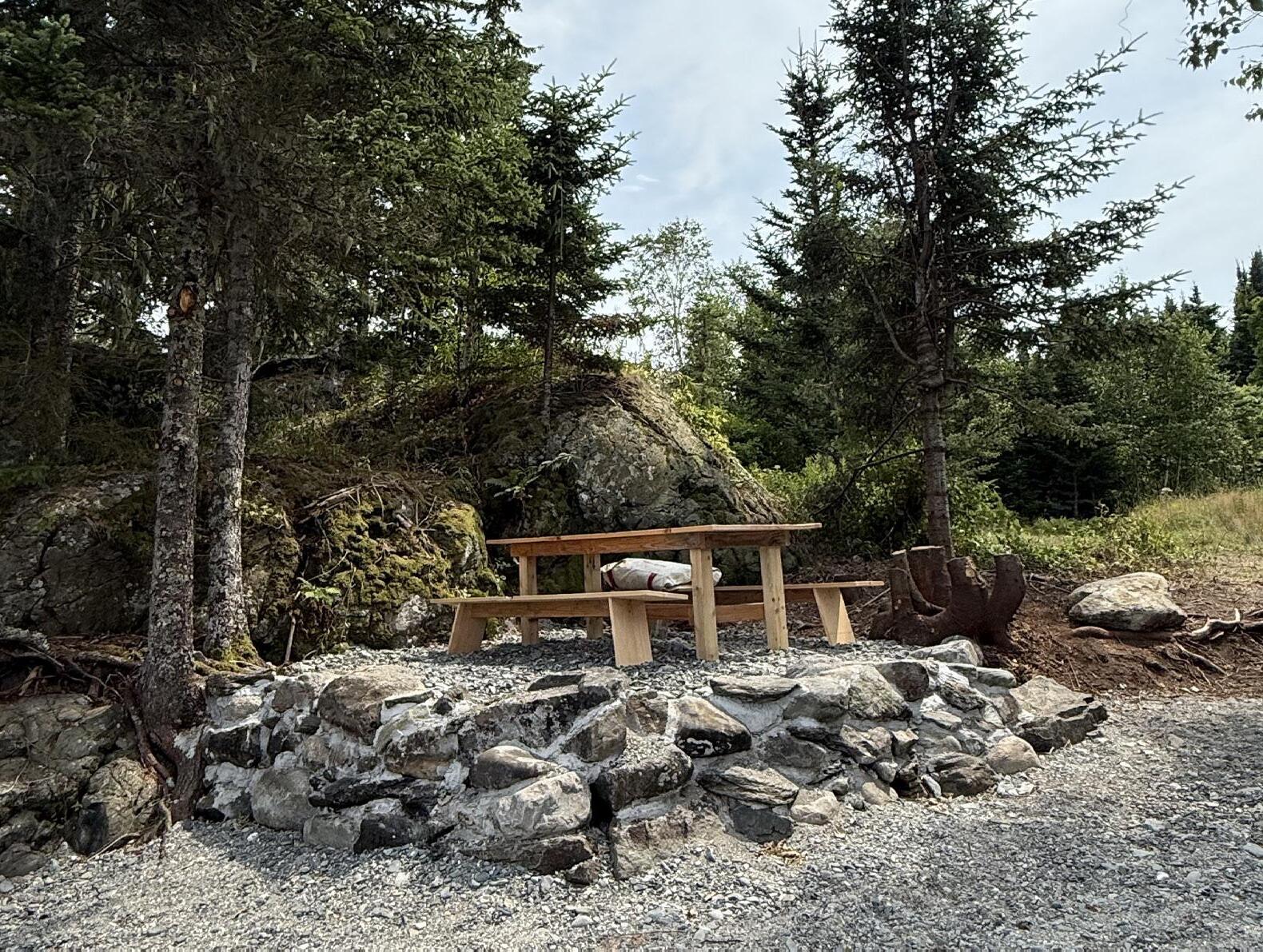
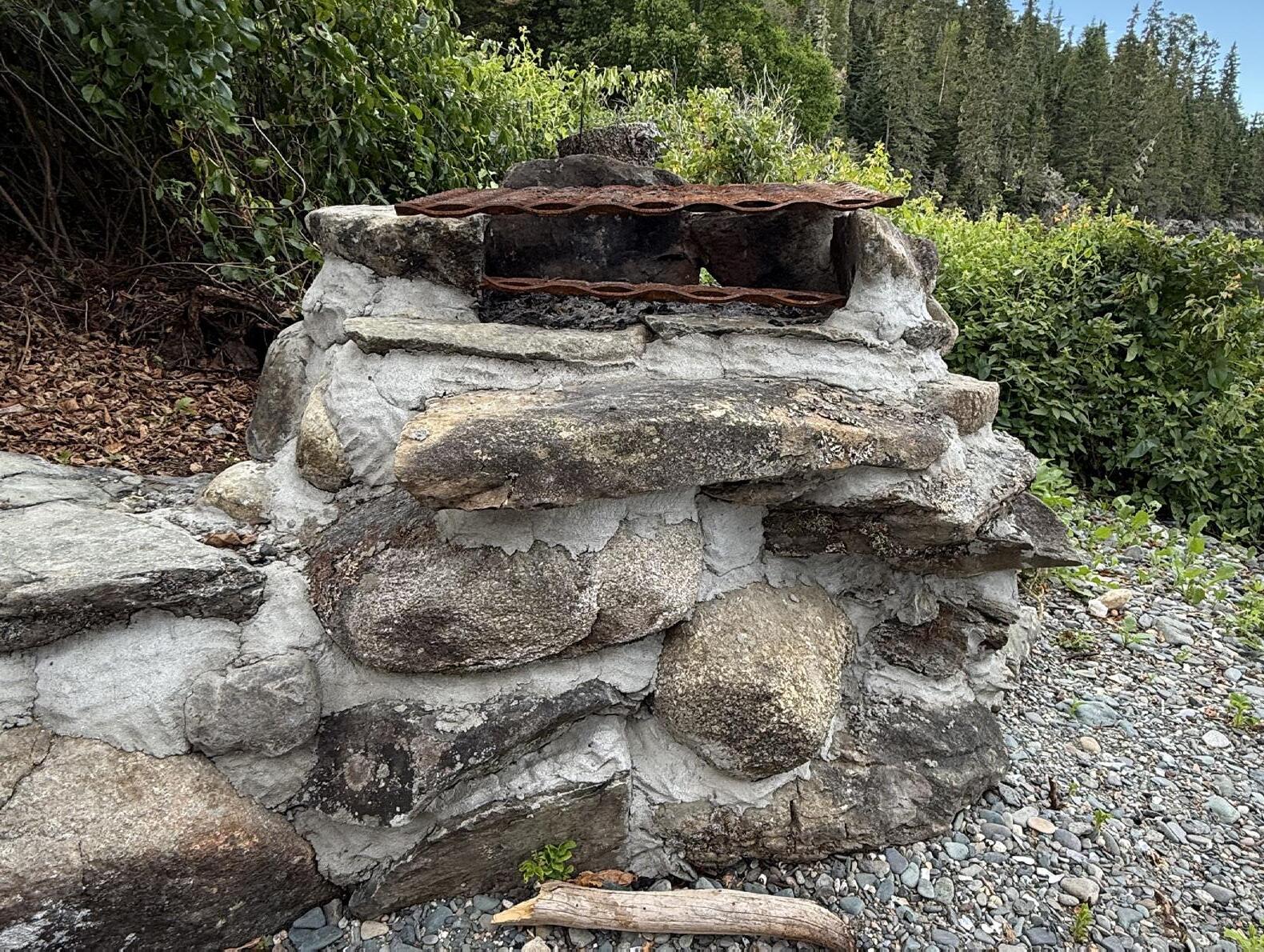
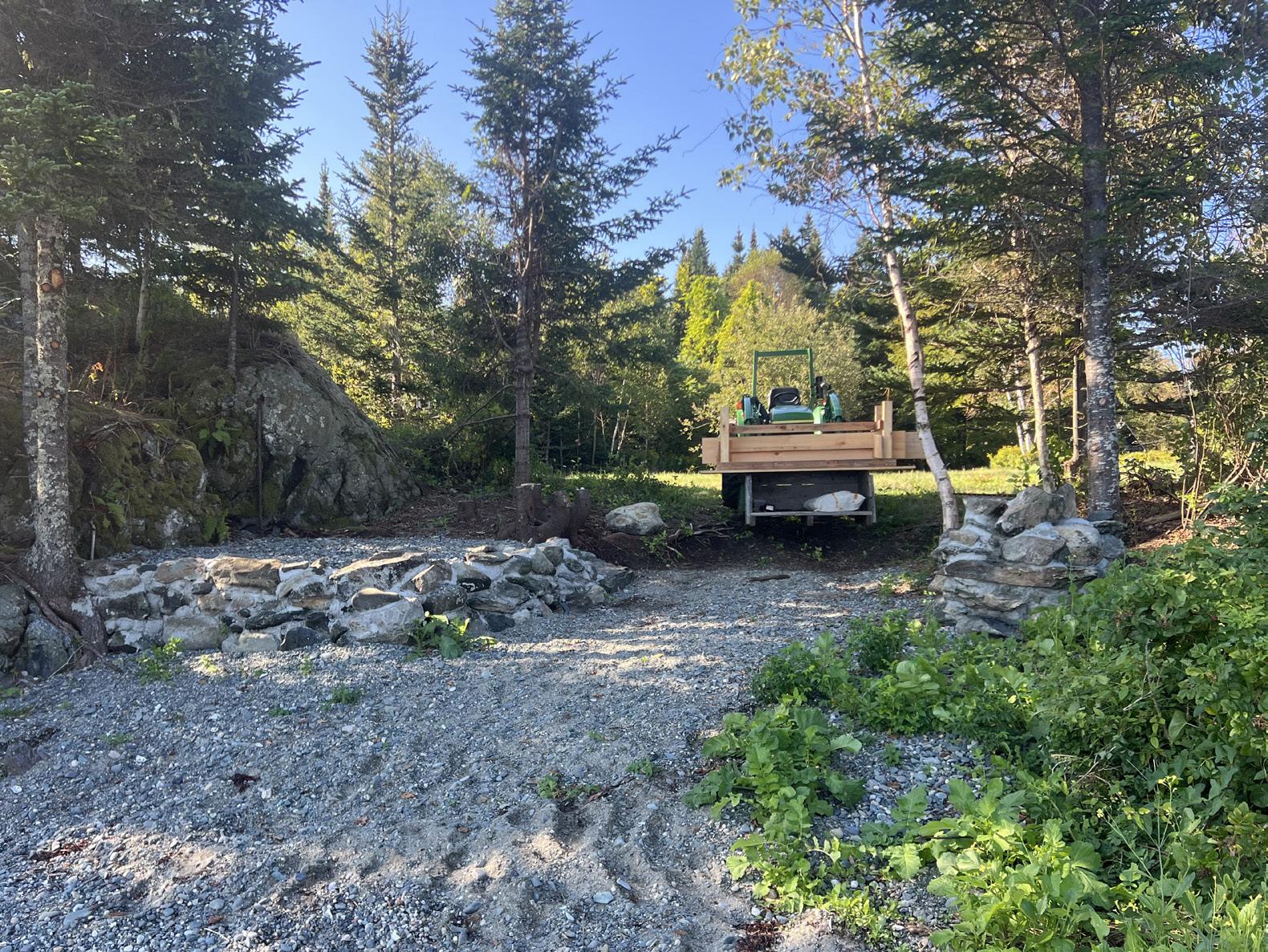
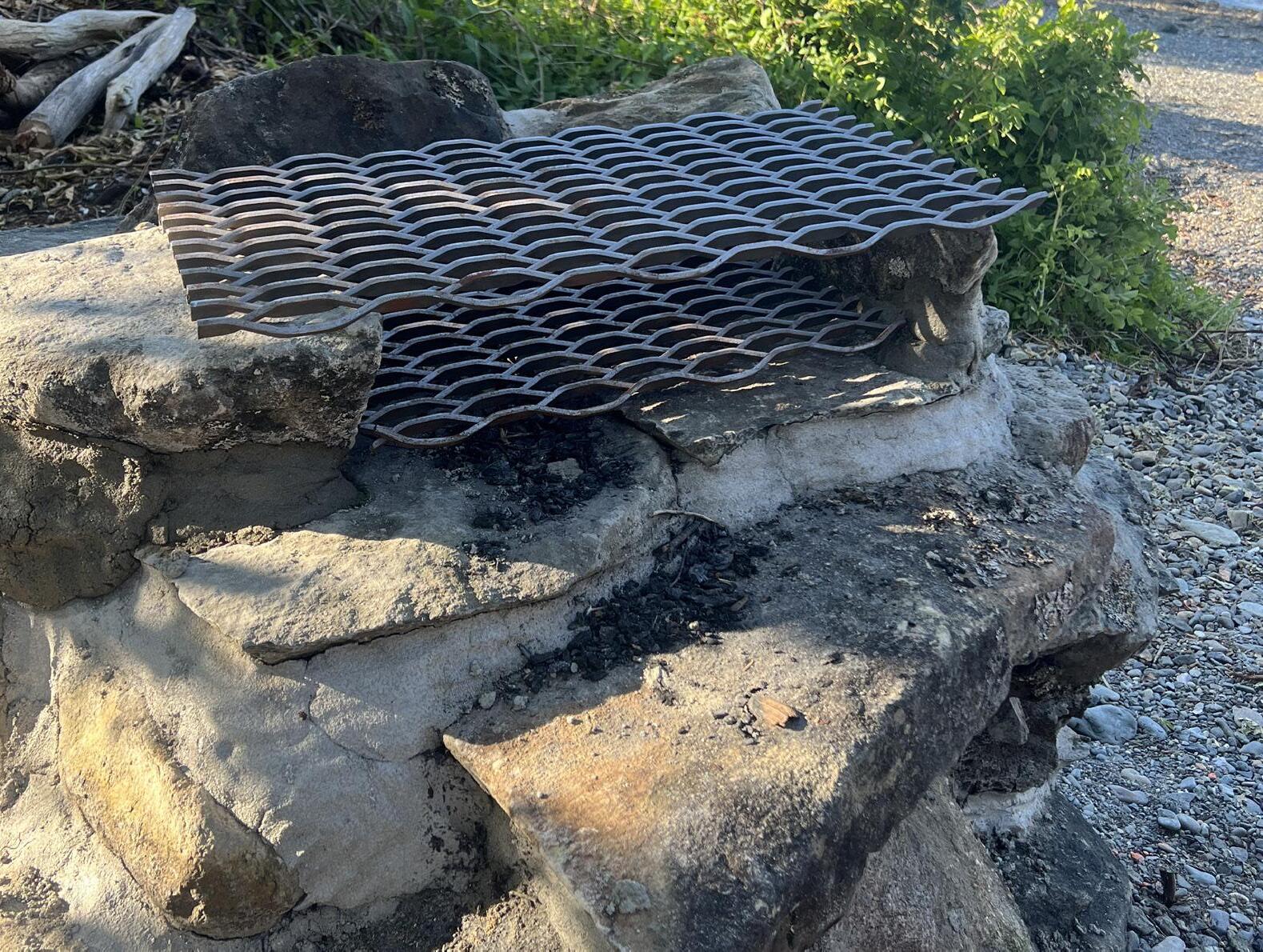
Commissioned by Little Spruce Head Island, LLC, this project explores the design of a beach pavilion and gathering space on a completely remote, off-grid 44-acre island on the Maine coast. The work began with a comparative analysis of multiple sites, considering extreme winds, southwest storm patterns, solar exposure, tidal conditions, and the spatial quality of the shoreline.These environmental forces informed the pavilion’s site, orientation, and degree of enclosure. The proposal prioritizes minimal intervention, allowing the structure to operate as an adaptation of the island’s natural forms, adding to the landscape rather than imposing itself. Strategies for shade, wind protection, and durability rely on form, orientation, and material selection suited to saltwater exposure and fluctuating tides. The resulting design frames collective use while preserving the island’s natural character, positioning architecture as a responsive and resilient mediator between human occupation and a fragile coastal environment.
SPRING 2025: Core Studio, Prof. Ryan Whitby
Studio Prompt: Cook House
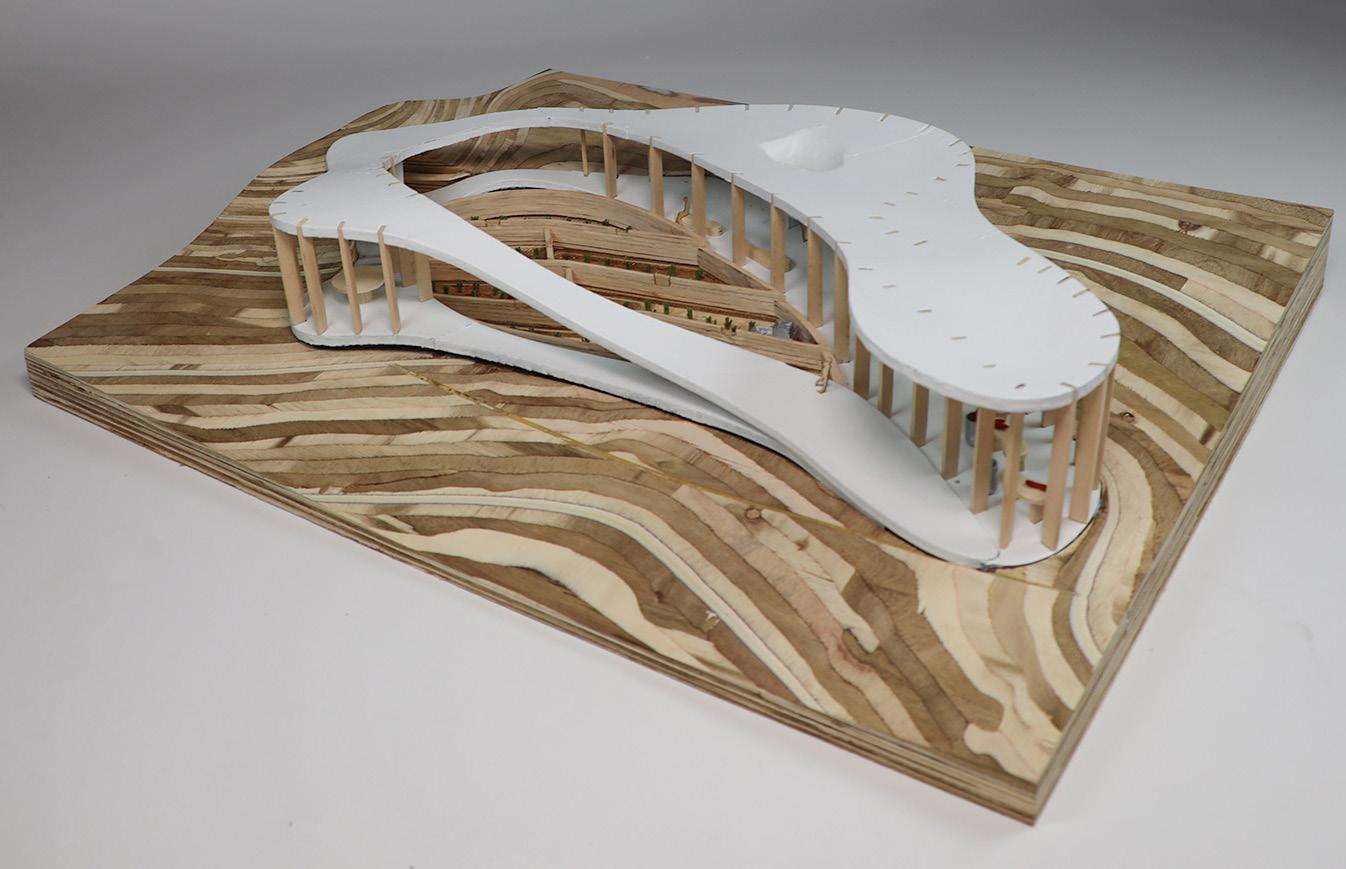
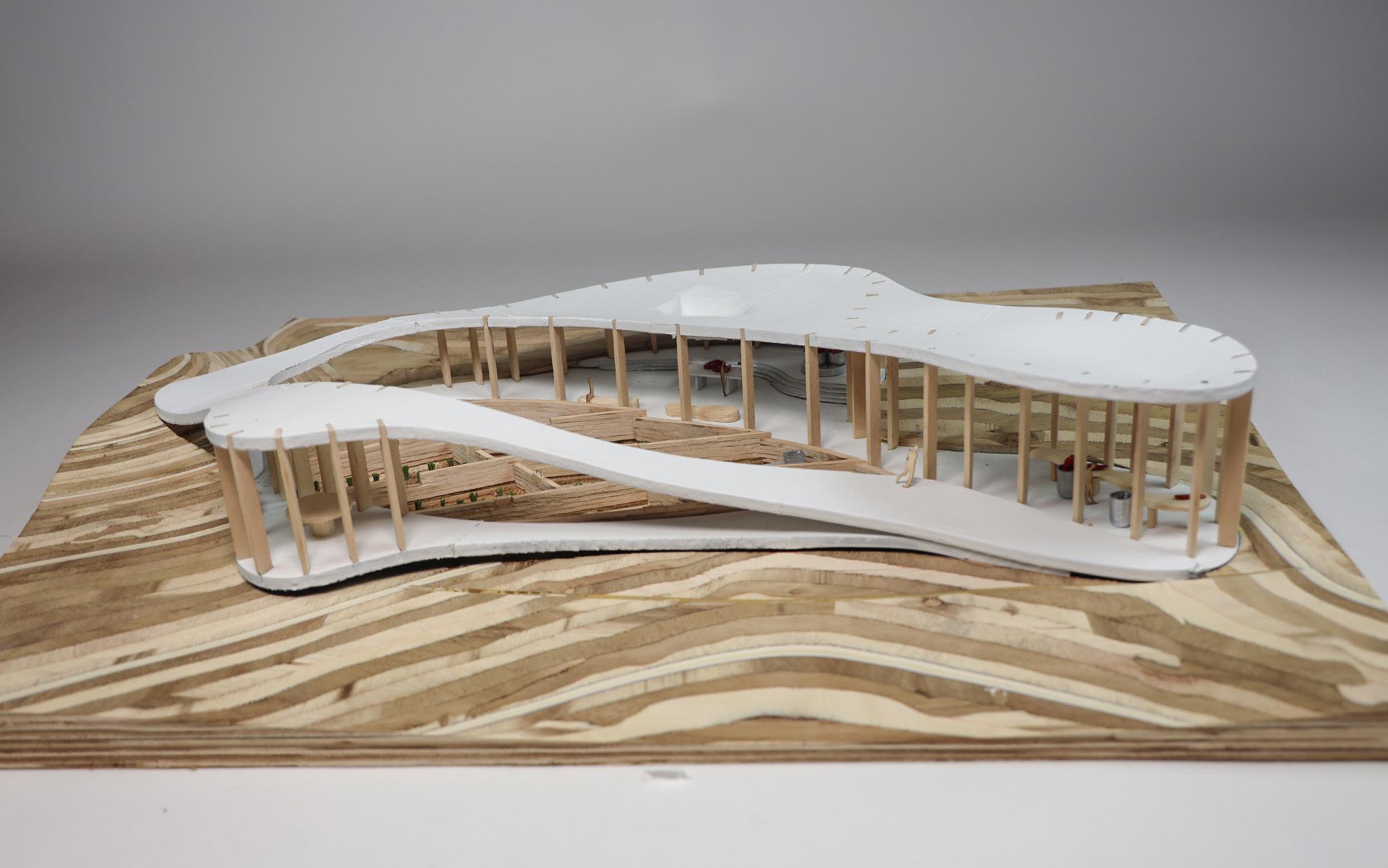
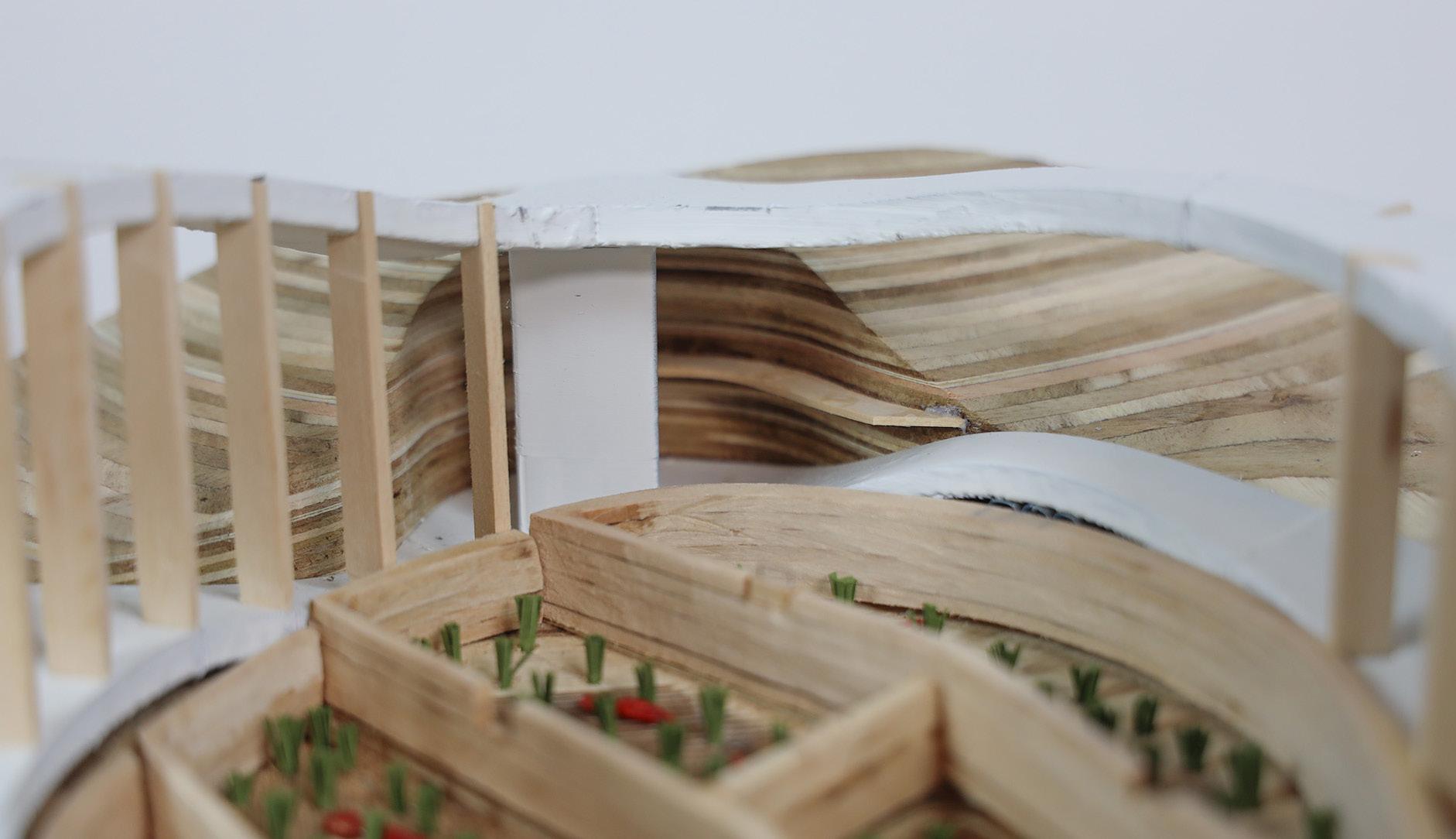
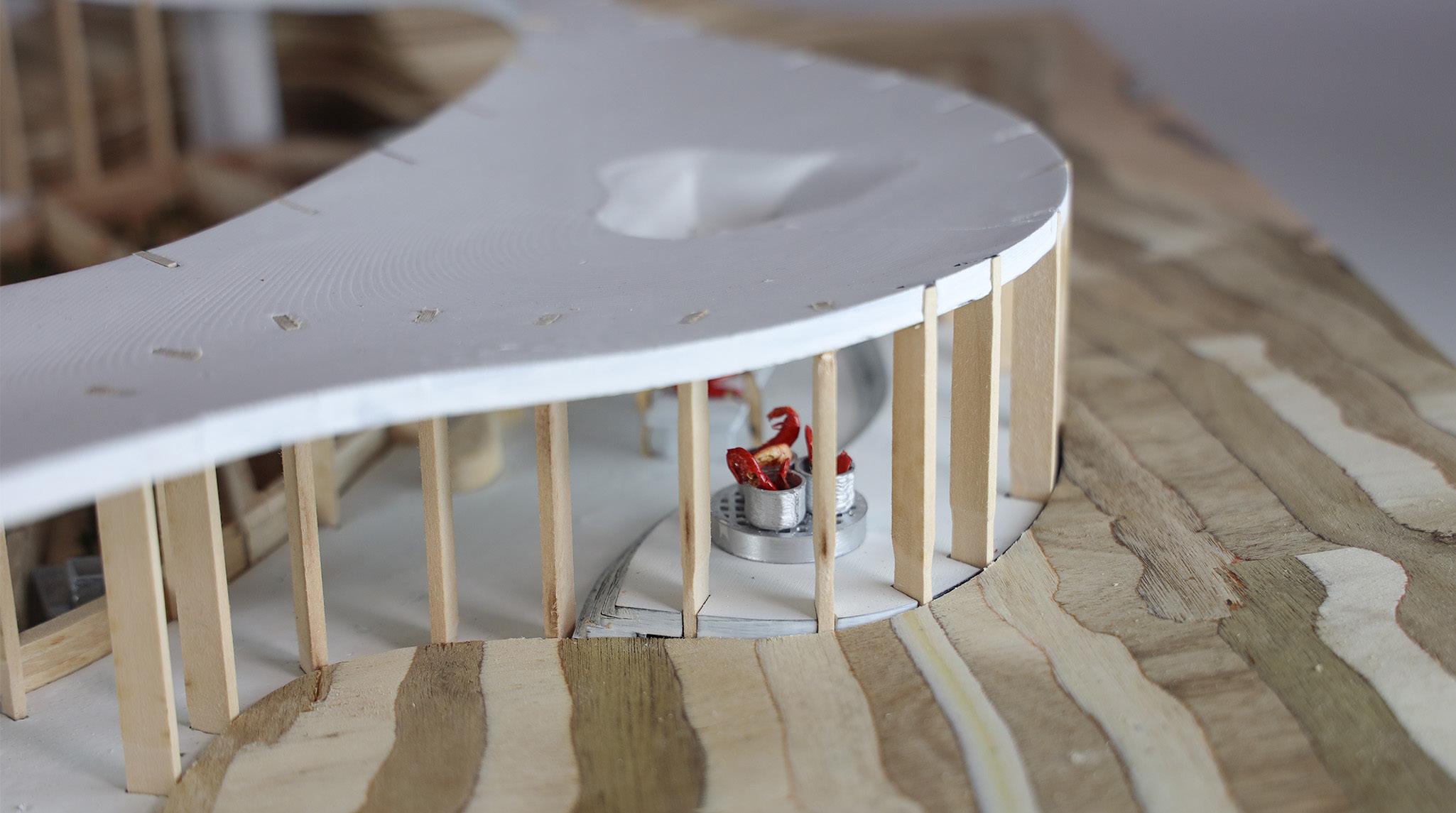
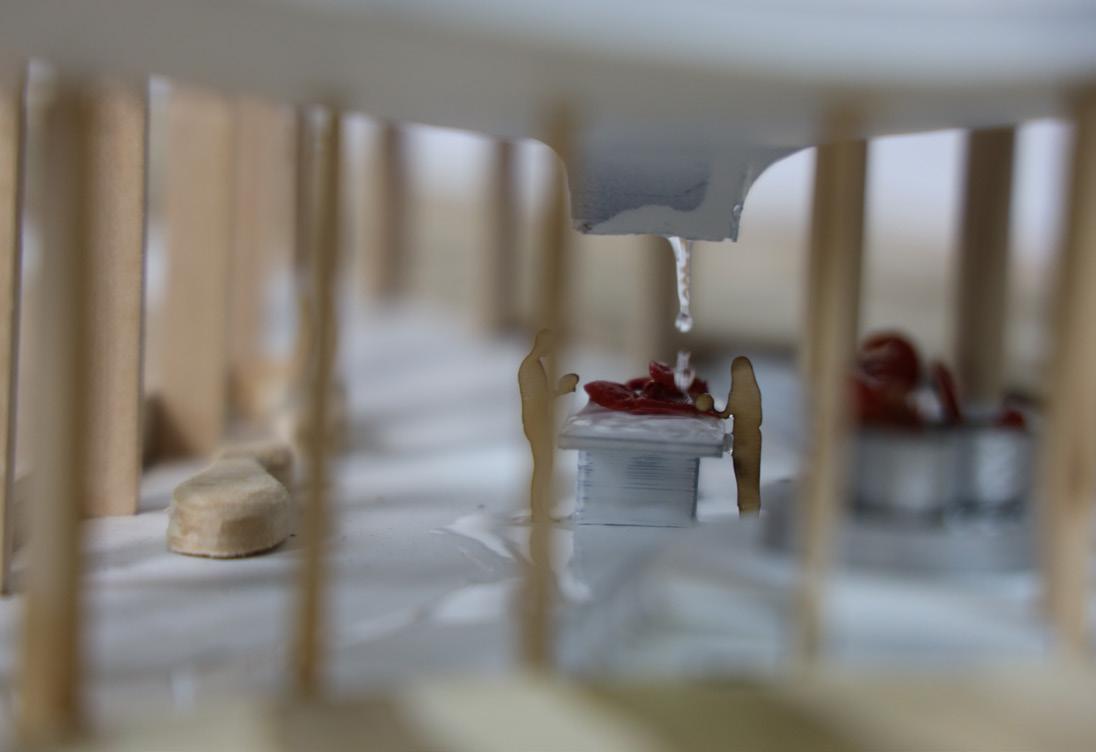
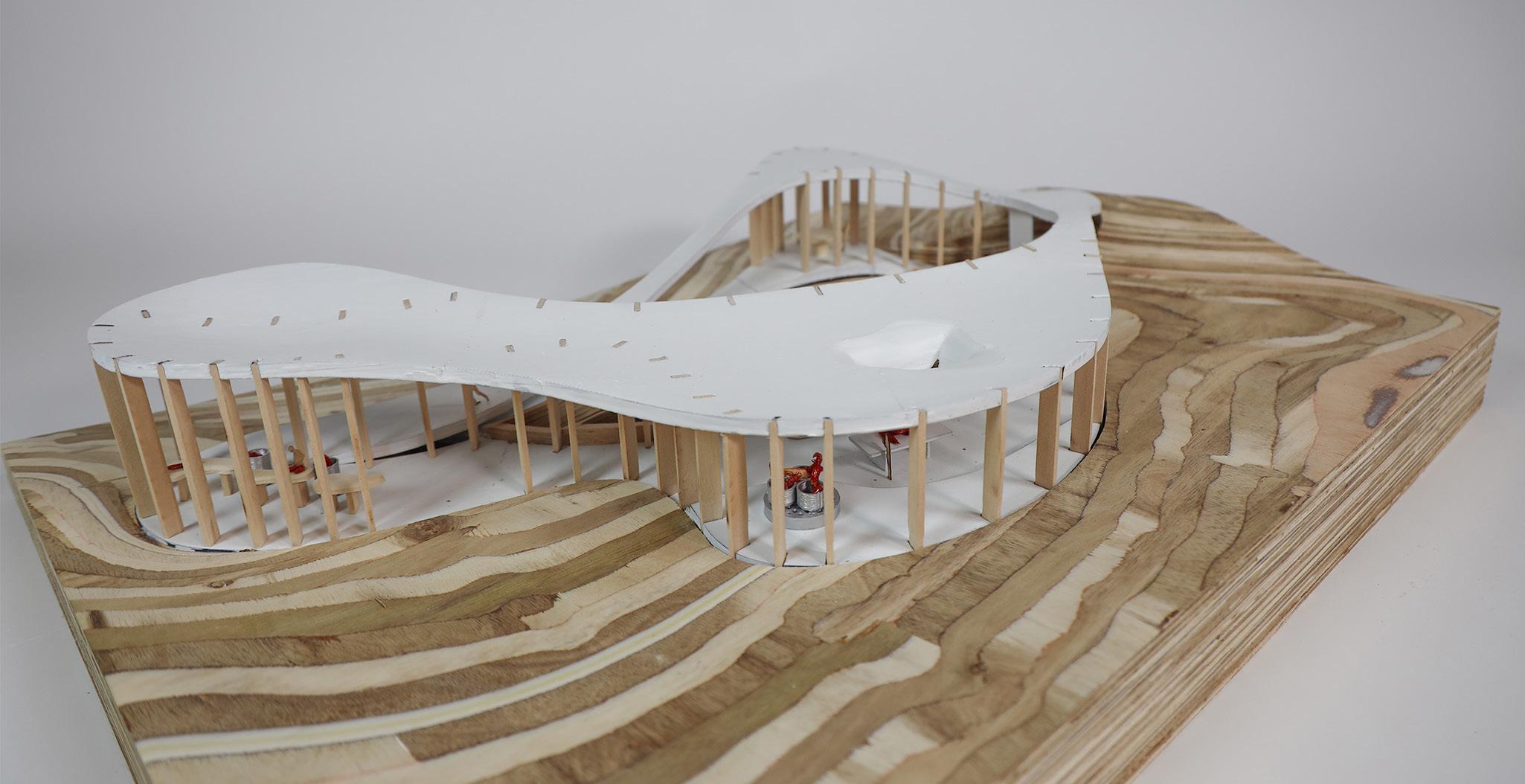
Drawing from both contemporary and regional precedents, the AMAZON COOKHAÜS reimagines the spatial systems of the regional Iranian courtyard house and the contemporary HOUSE 10 by MOS. These precedents feature a central courtyard surrounded by circulation passages. Challenging the strict linear profiles of these examples allowed for the blurring of boundaries between interior and exterior. By hybridizing these forms with a membrane derived from the circulation thresholds, the building becomes an amorphous, cellular structure that adapts to the program of a cookhouse.
SPRING 2025: Core Studio, Prof. Ryan Whitby
Studio Prompt: York Prize
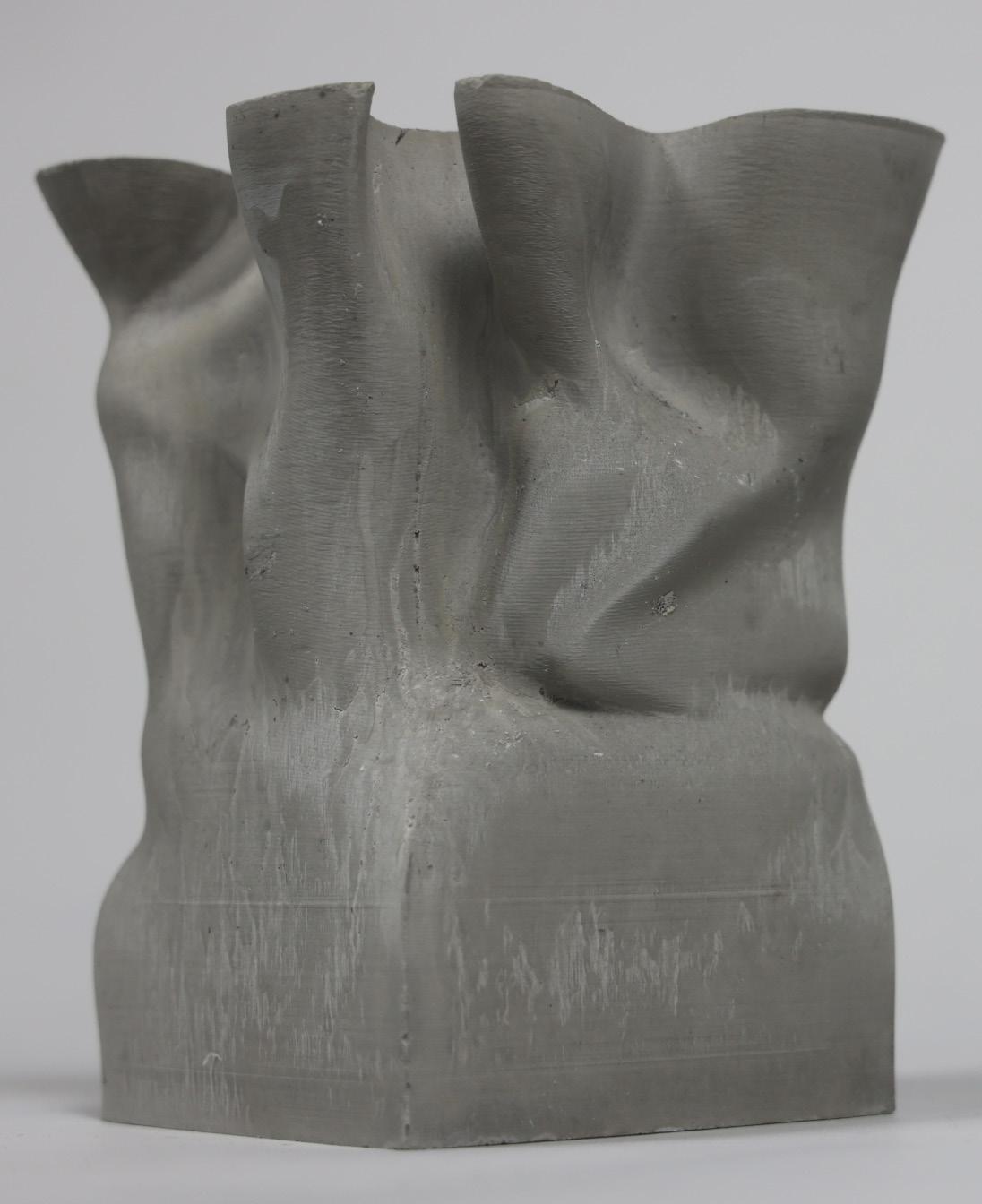
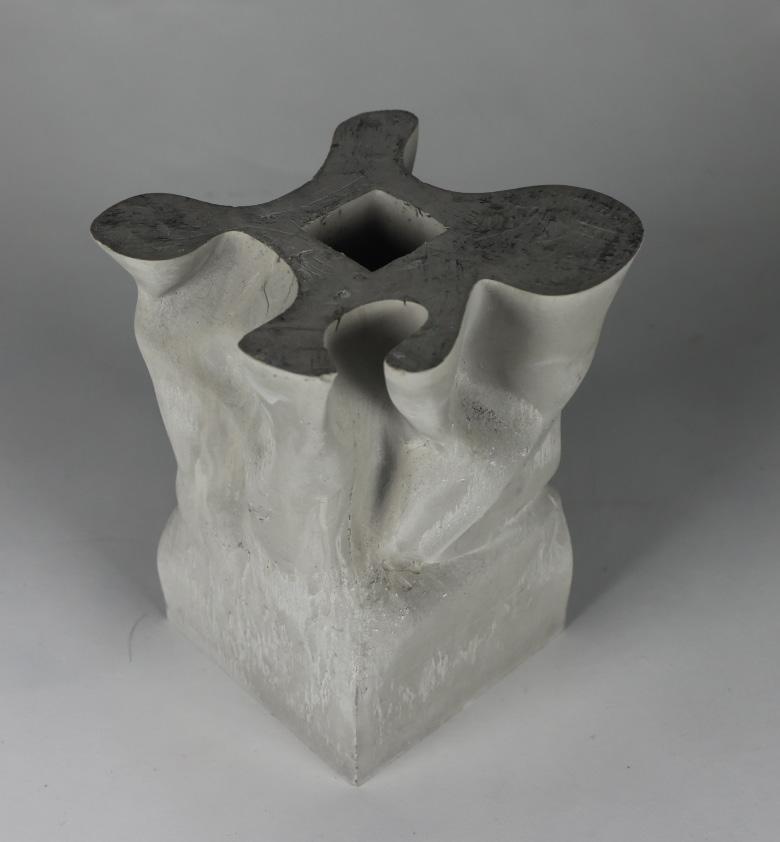
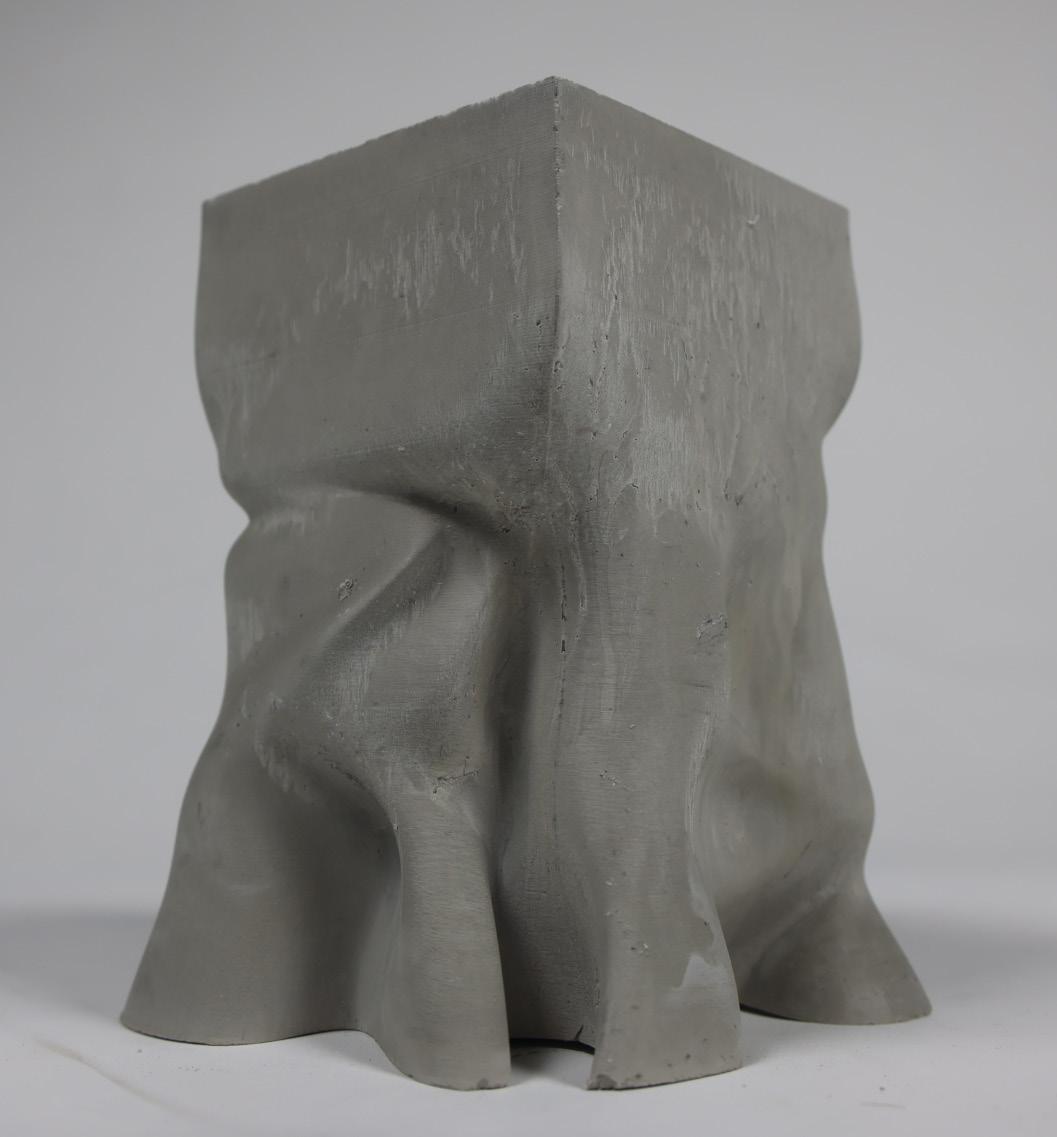
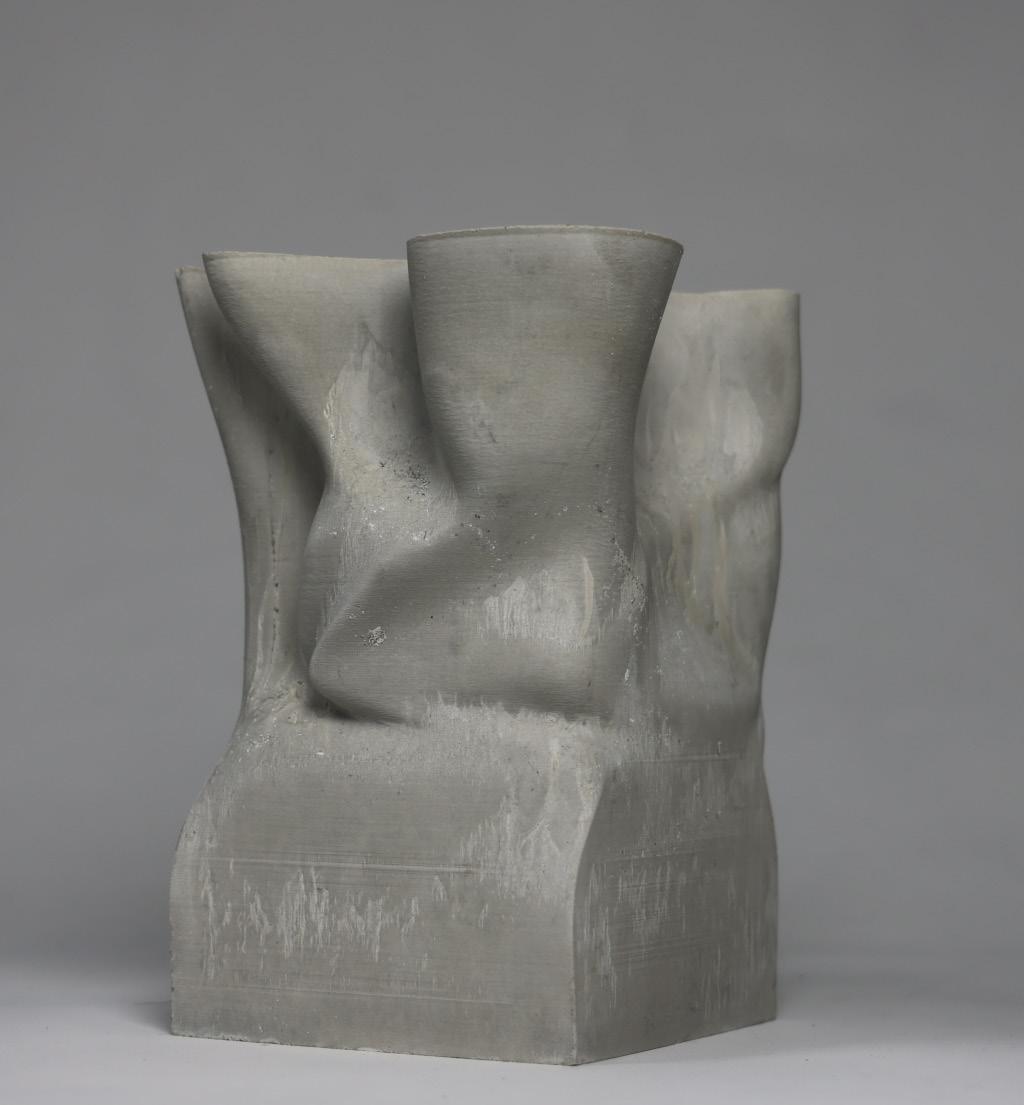
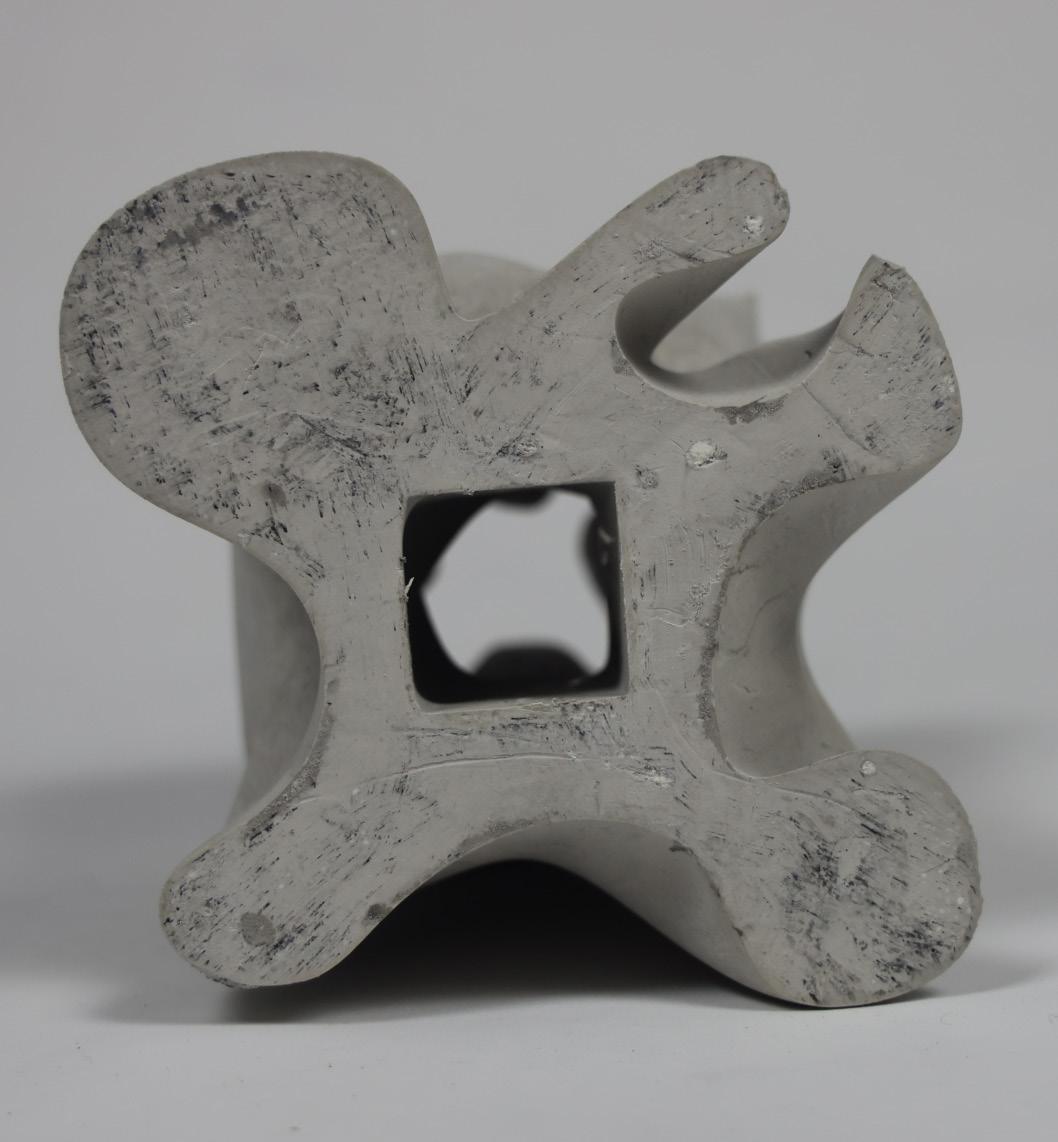
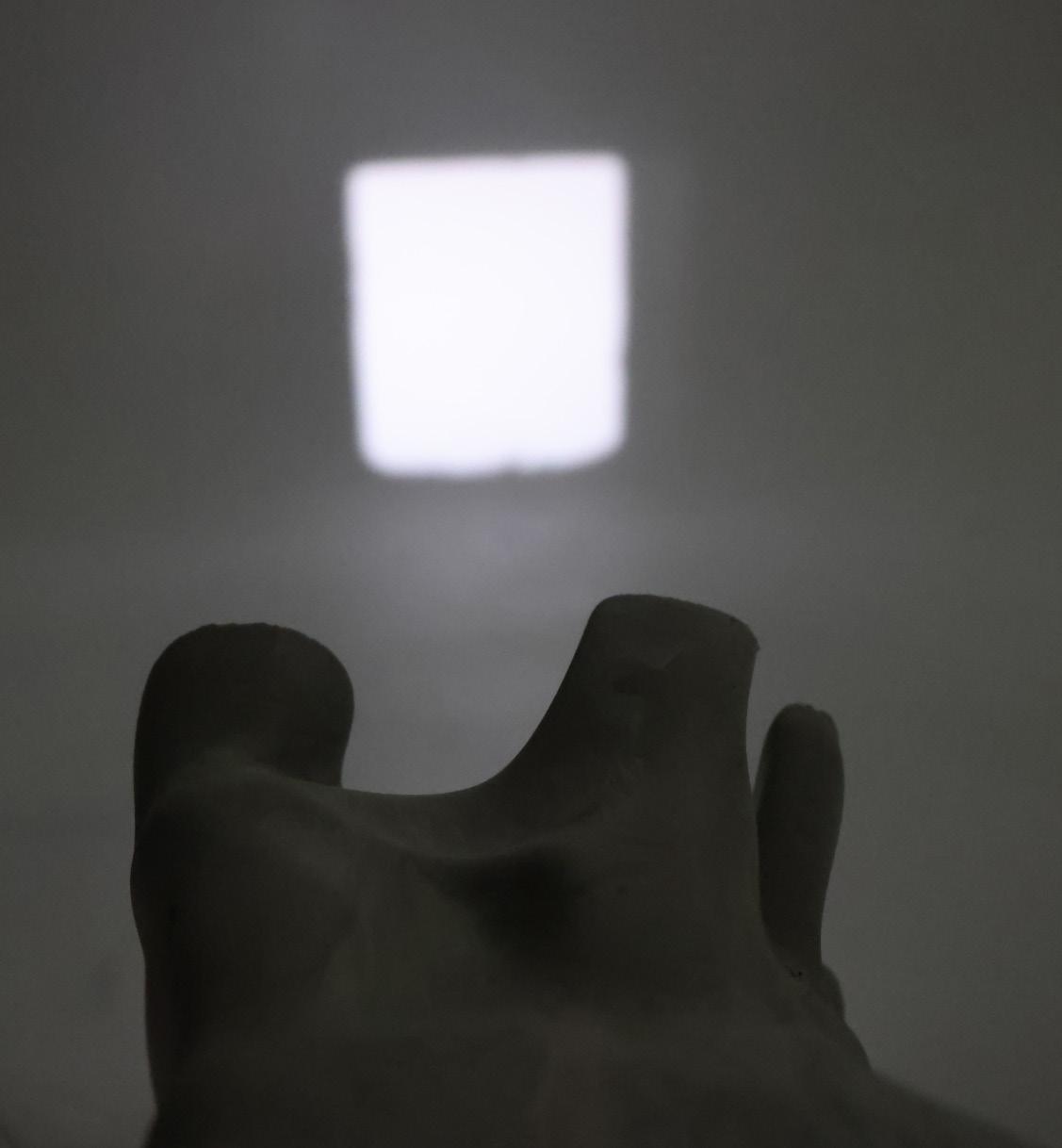
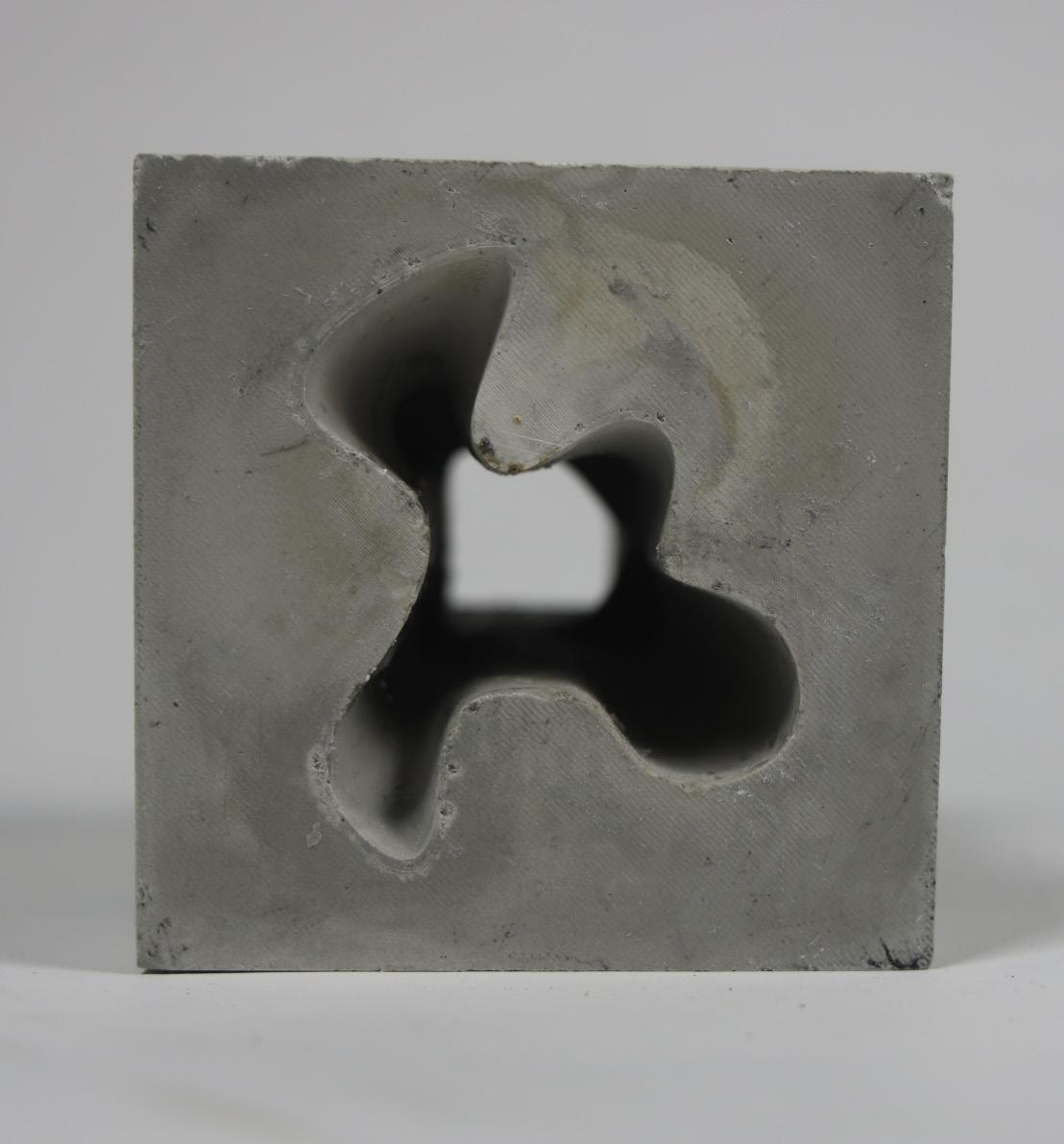
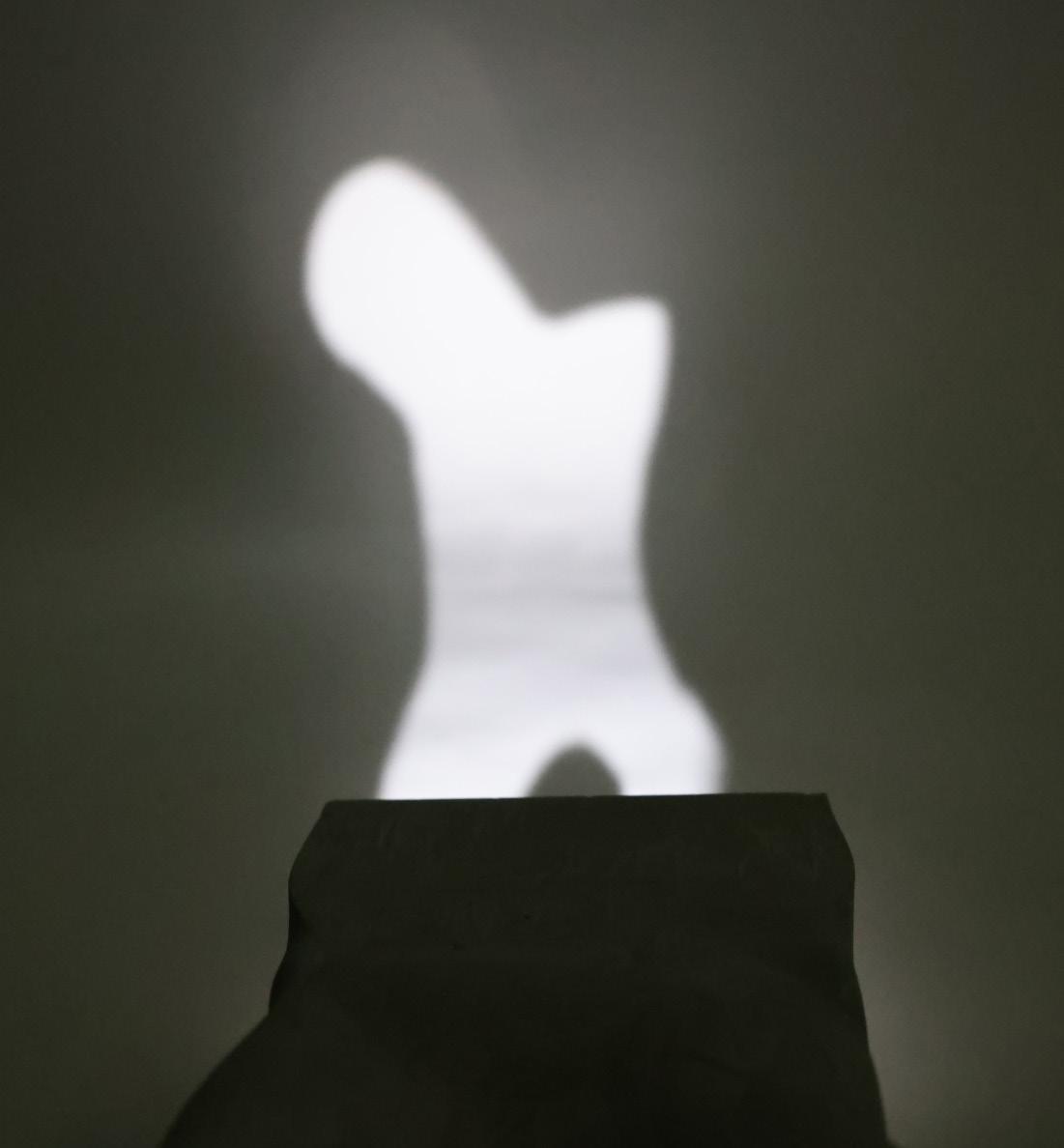
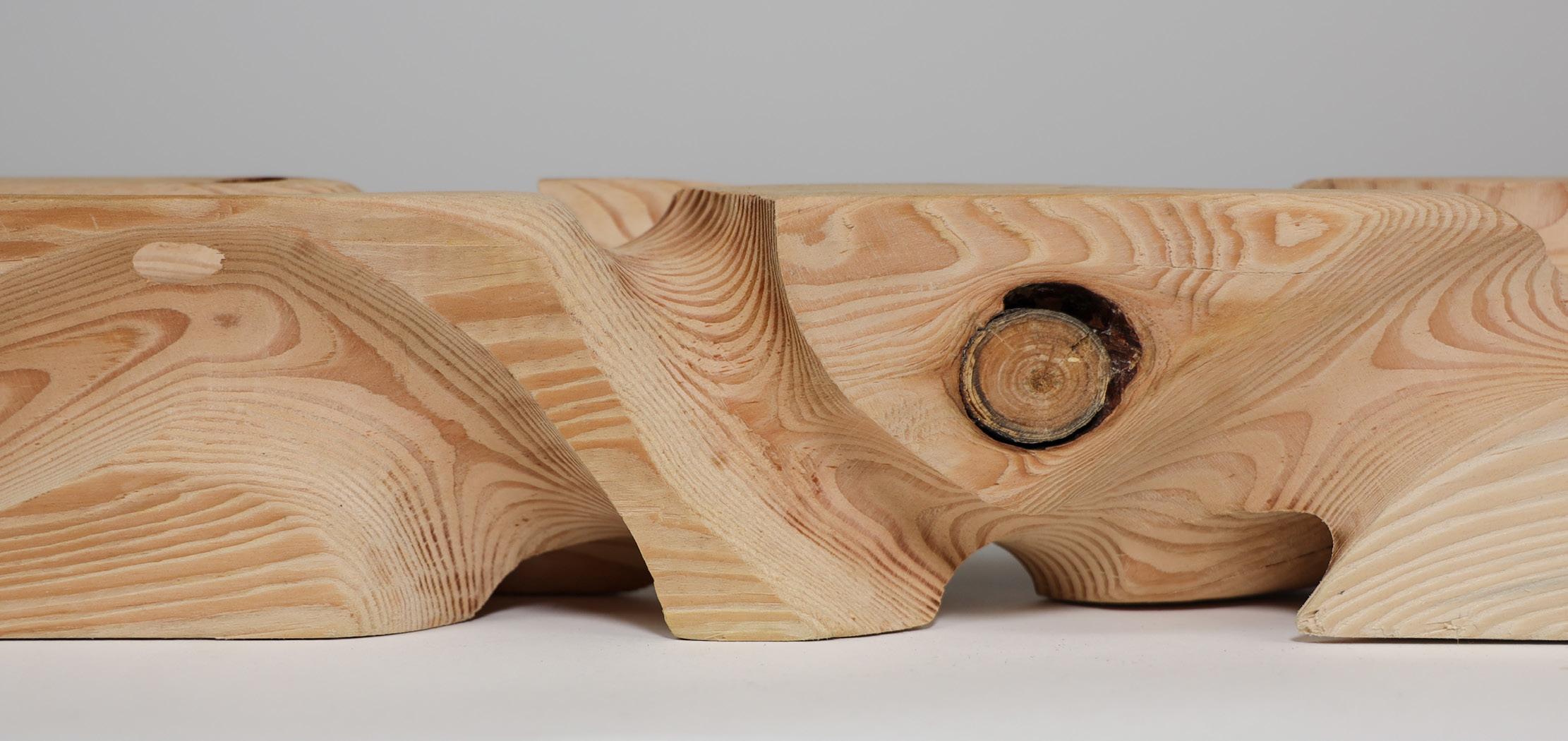
Centered on concepts of transition and contrast, this project presents a Rockite block that, at one end, embodies an amorphous figure gradually transitioning into a strictly defined configuration. On the interior, one can find the inverse void of this through the act of subtraction. This project visually and structurally articulates the interplay between solid and void, while also engaging with the constructs of transition and contrast.
FALL 2025: Core Studio, Prof. Stefana Kuzmova
Studio Prompt: GEOLOGIES OF MAKING
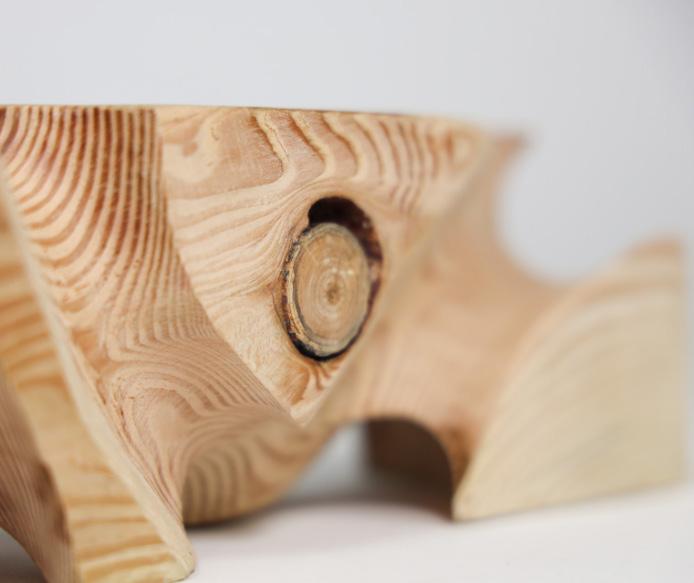
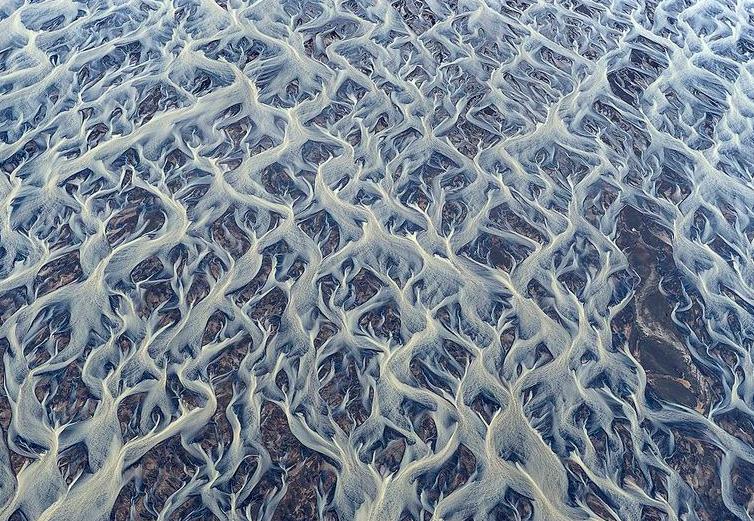
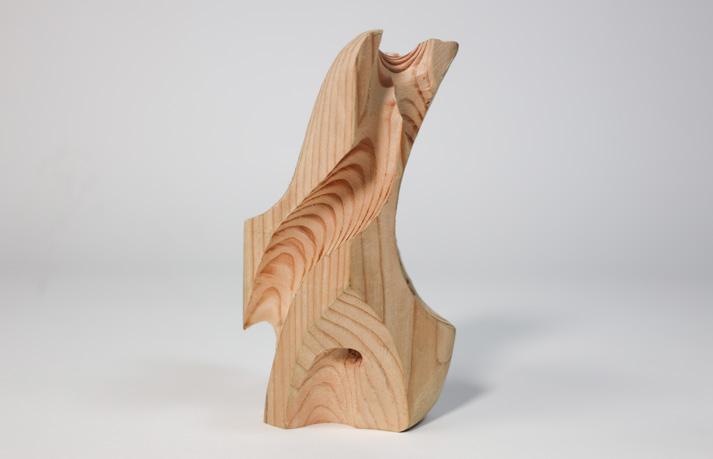
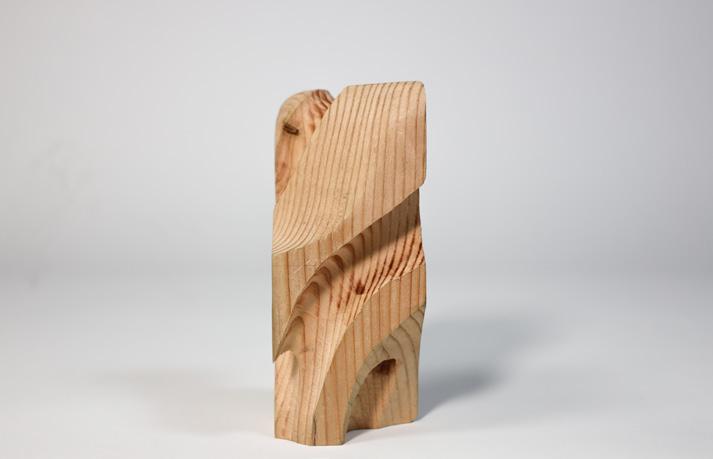
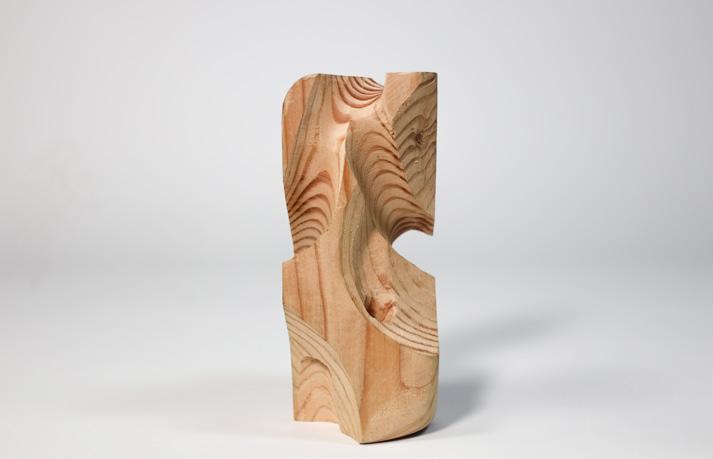
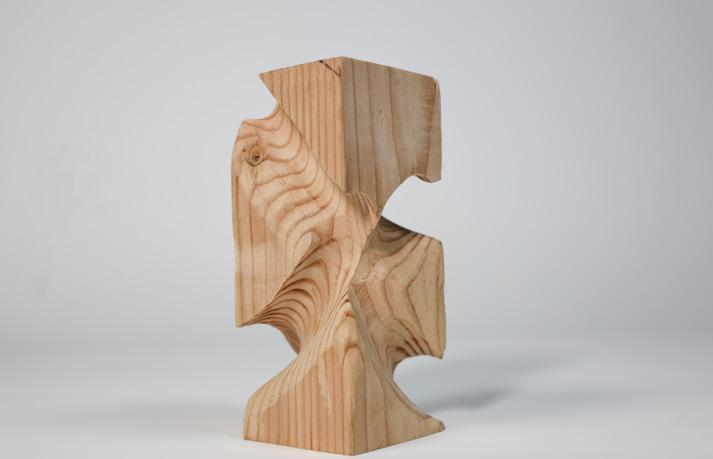
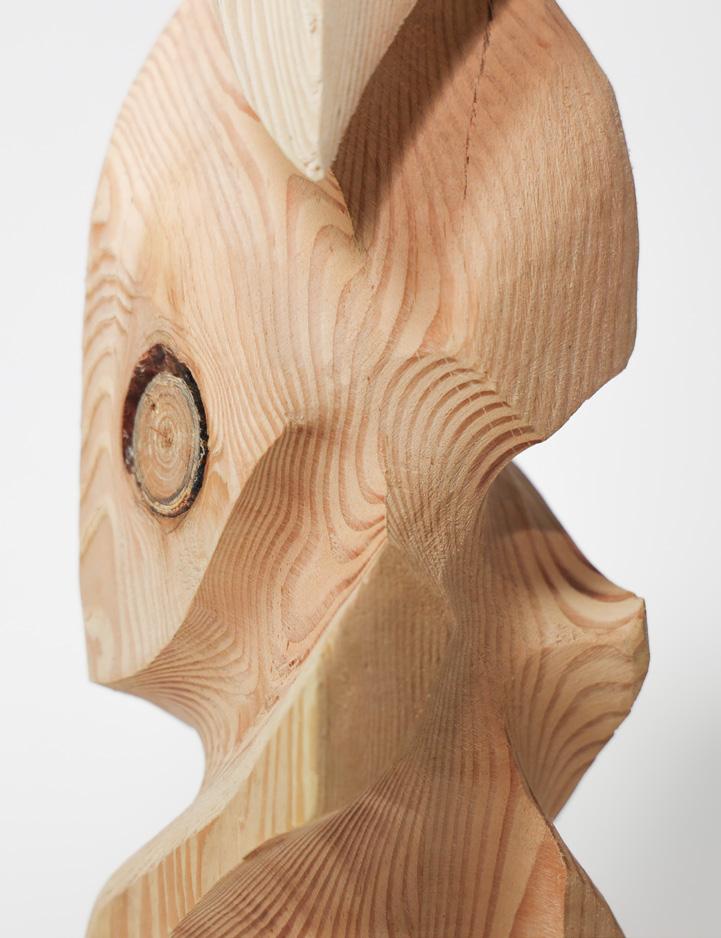
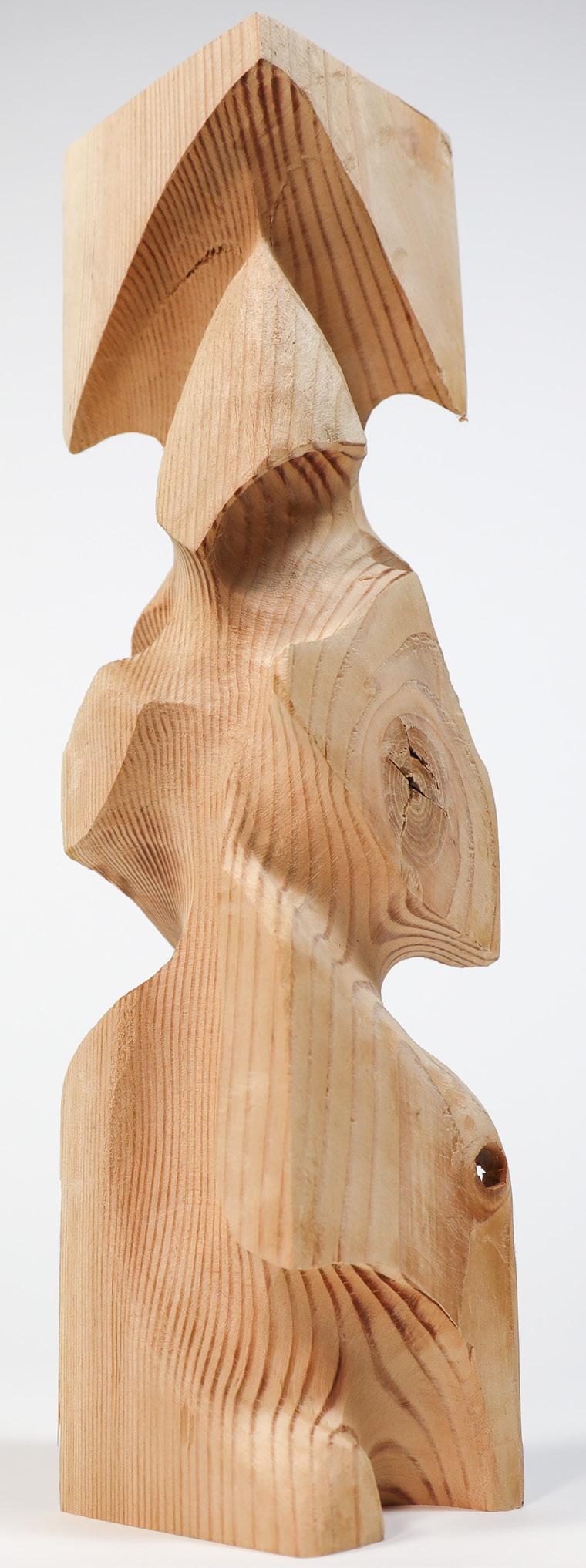
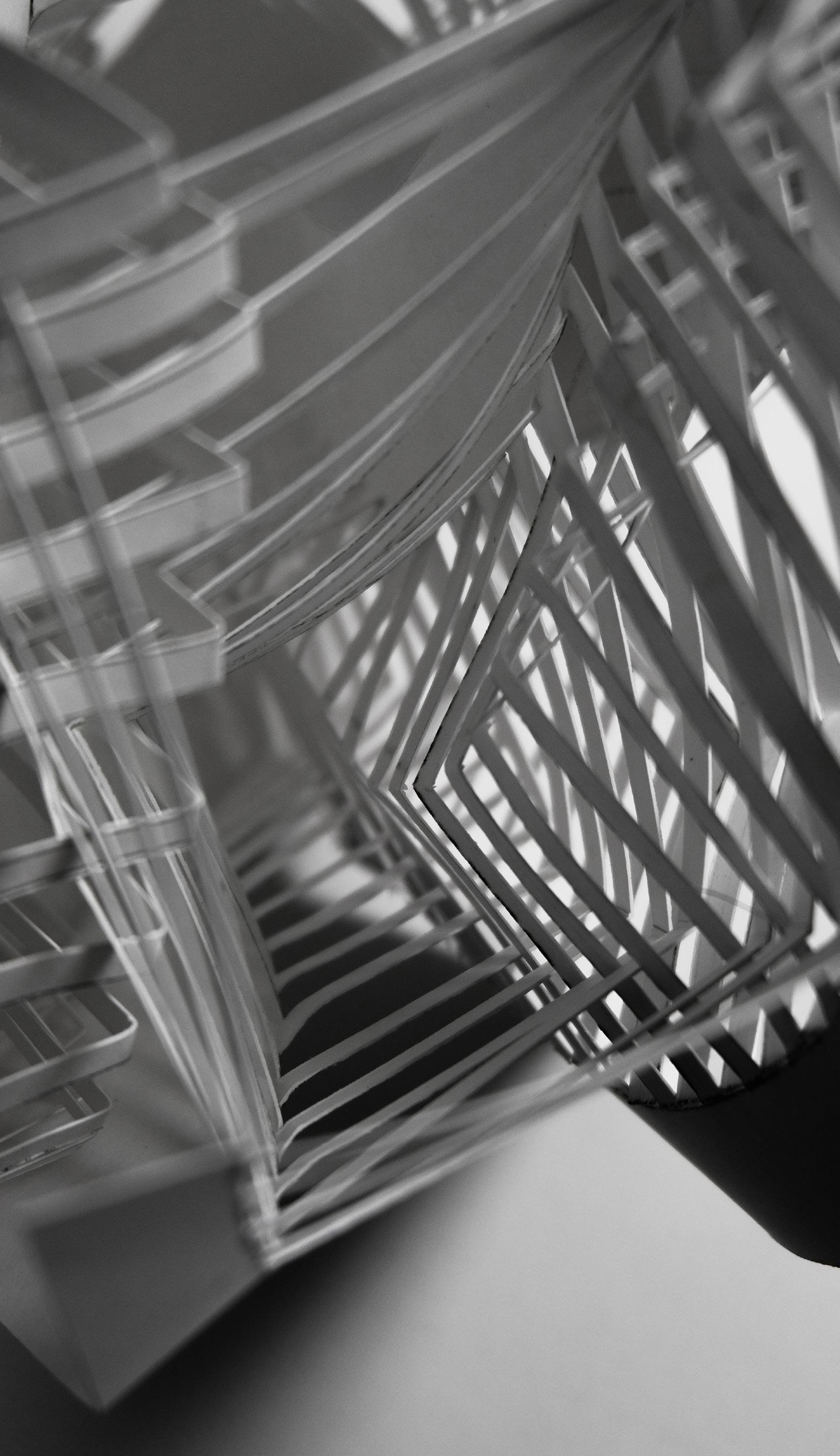
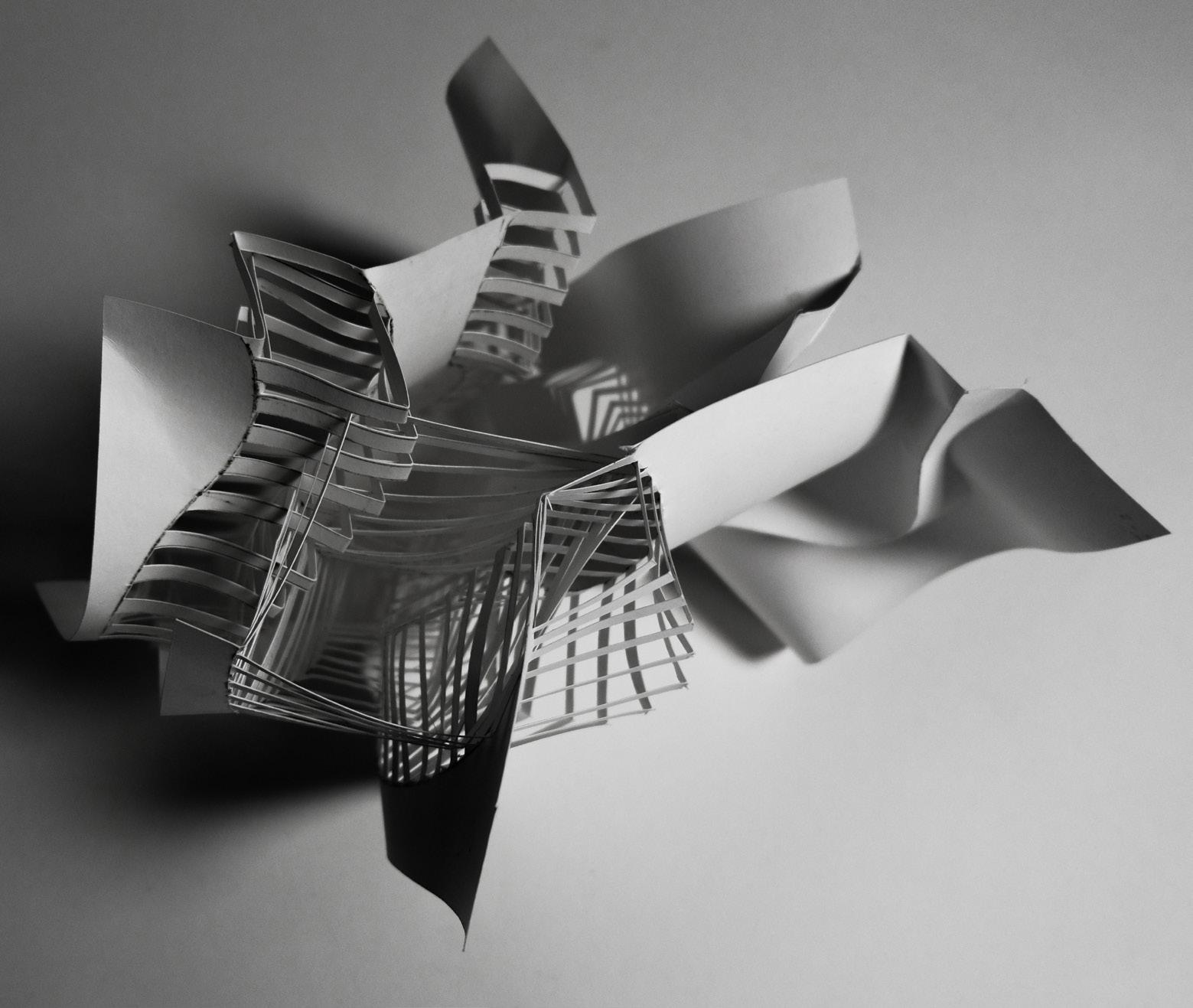
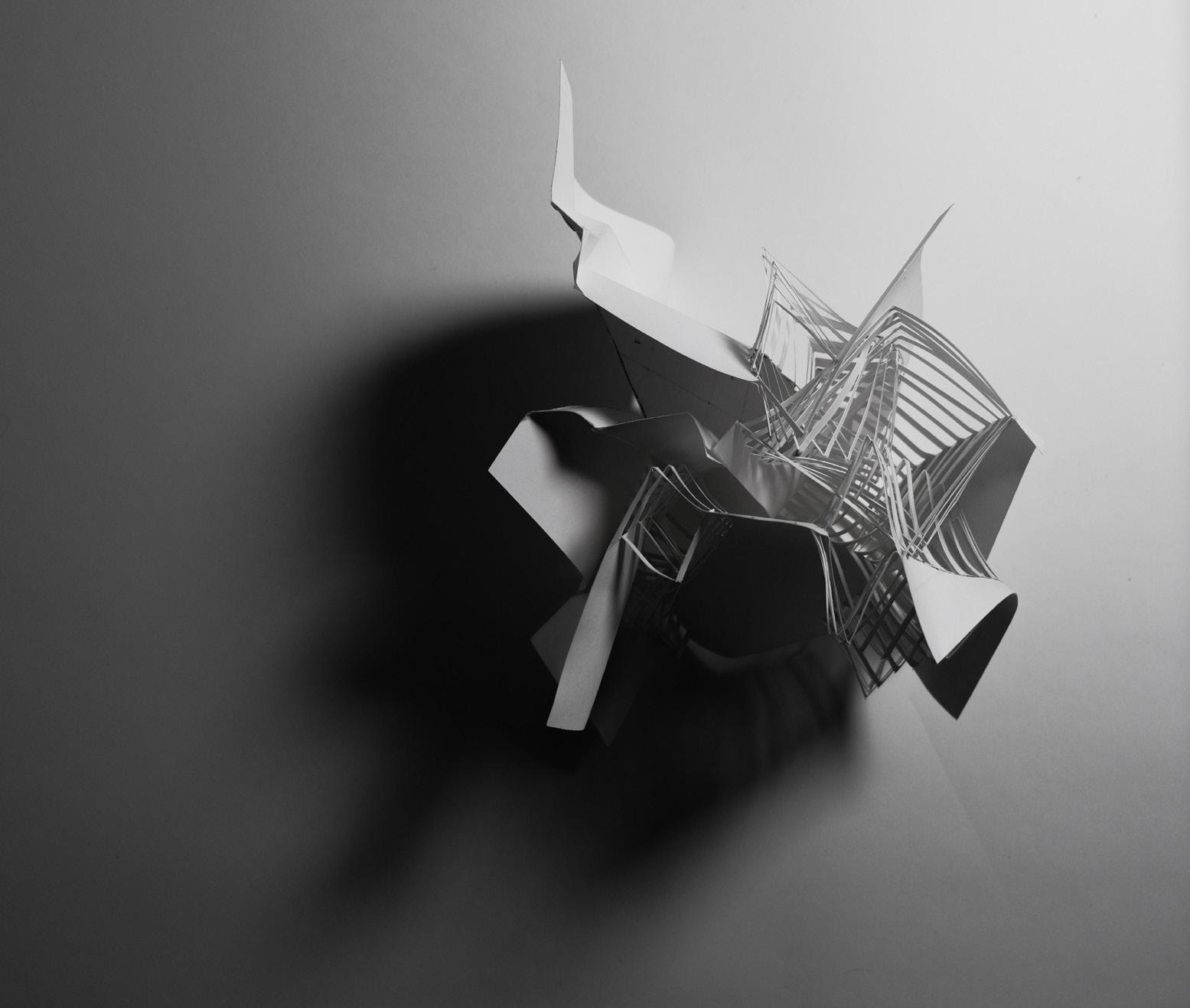
Inspired by the natural geology of braided river systems, this project manifests architectural concepts from the natural world. The iterative design process began with extensive research into the geological system, first explored through the manipulation of paper and ultimately expressed in a wooden totem. One of the most important qualities found in the braided river systems is its ambiguous and unpredictable movement. The wooden totem construction mimics long term erosion caused by freeflowing water and expresses the idea that braided river systems are borderless and always changing.
AXONOMETRIC
PRIMARY SECTION
SECONDARY SECTION
PRIMARY ELEVATION
SECONDARY ELEVATION
PRIMARY PLAN
SECONDARY PLAN

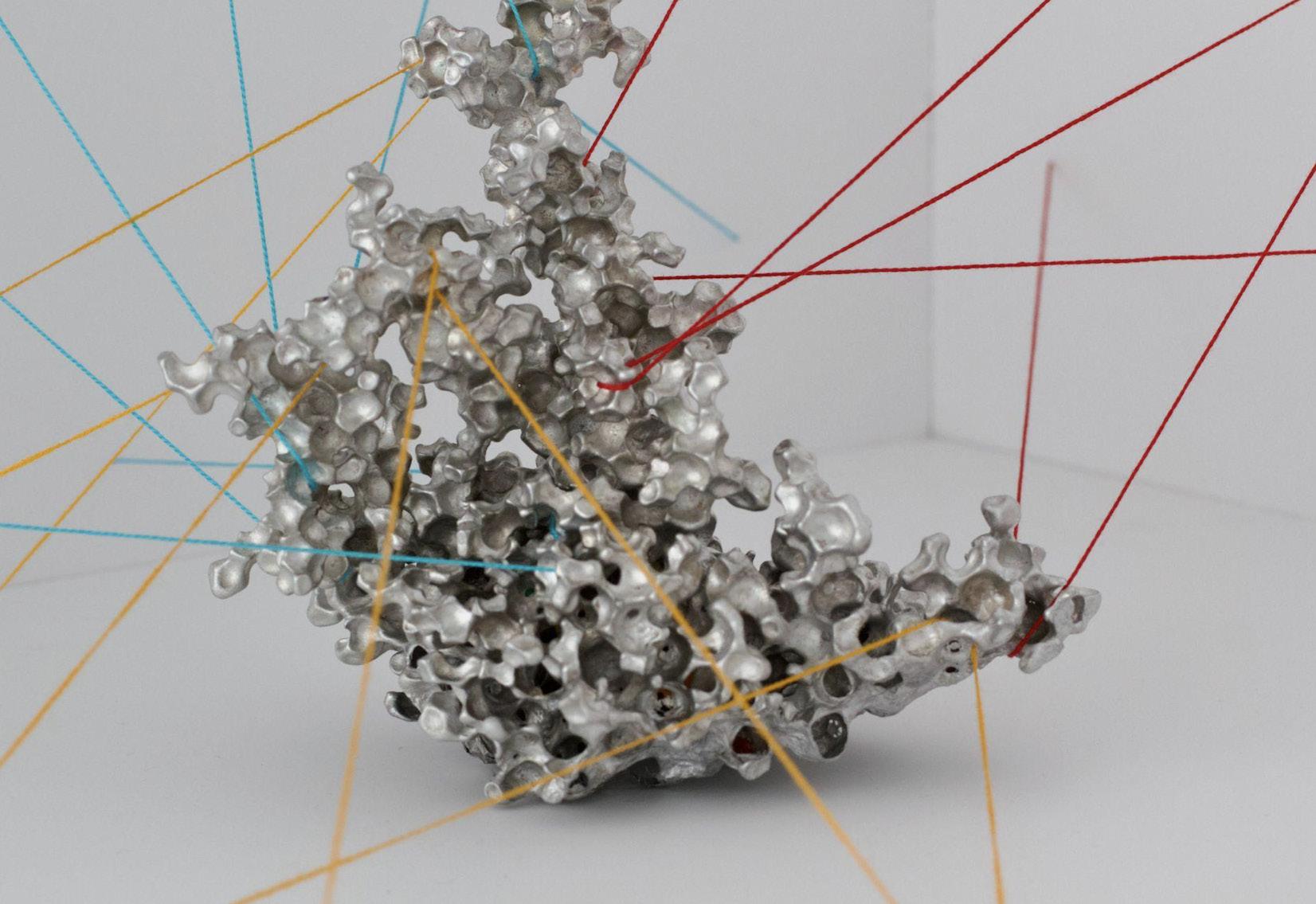
FALL 2023: Independent Work
A cast metal object that let the free flowing properties of molten aluminum drive its own form which is contrasted with specific tension elements.
Dimensions: Height 10”, Length 11”, Width 9”. Materials: Aluminum, wool thread.
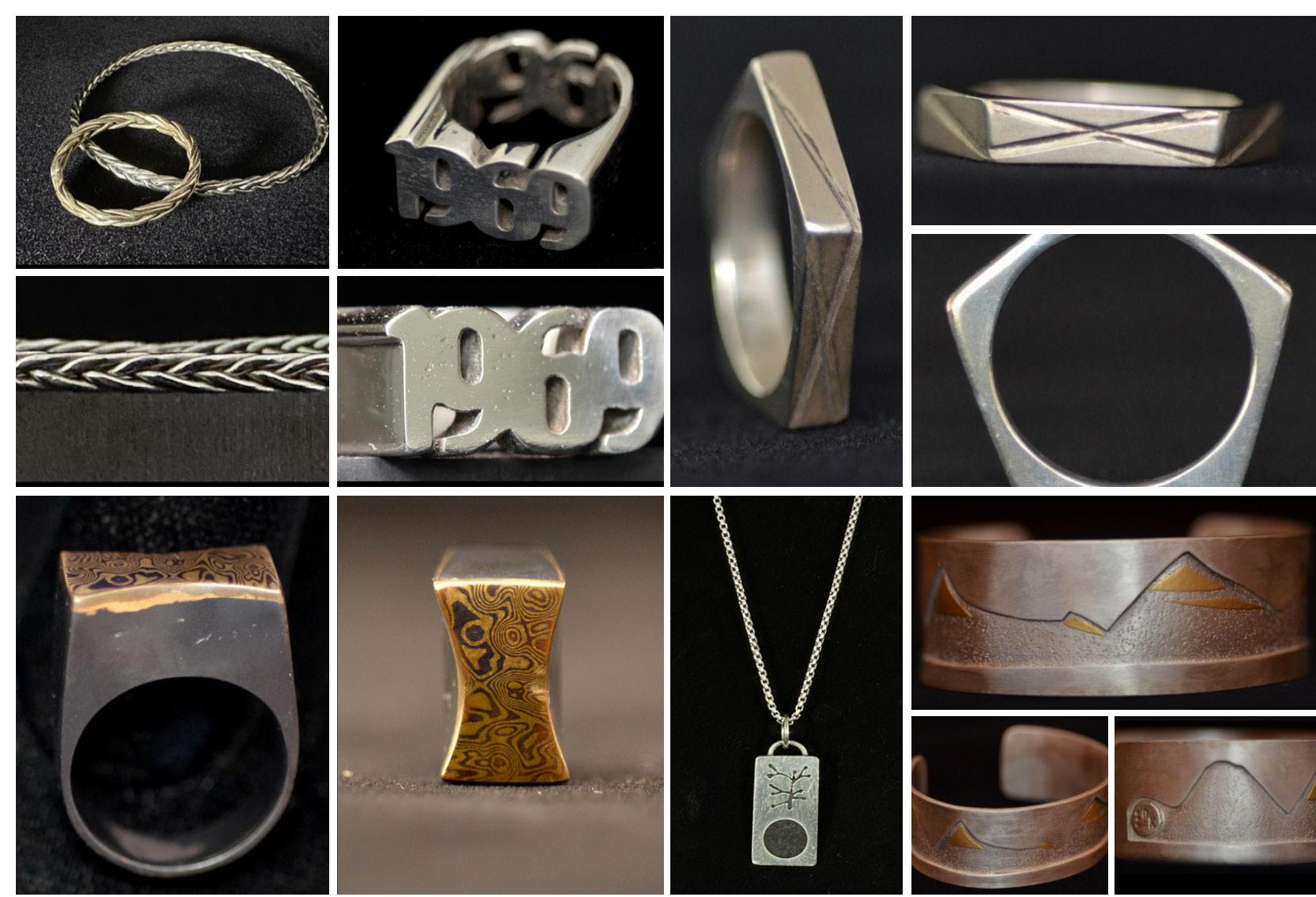
2022-2024: High school metals studio (I, II, III, IV), Prof. M. NeJame
Selected metal work ranging from abstract objects to jewelry, using various techniques including lost wax casting, Keum boo gold inlay and Mokume.
Awarded 2024 Colorado Scholastic Art Awards Gold Key.