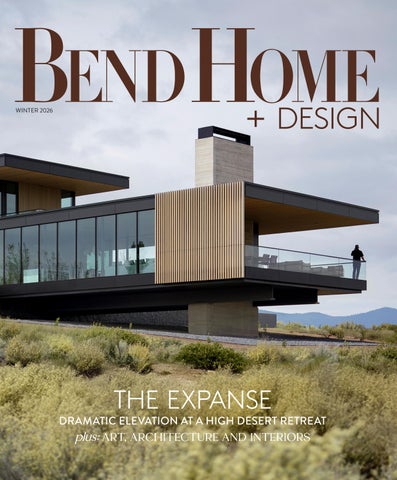
THE EXPANSE
DRAMATIC ELEVATION AT A HIGH DESERT RETREAT
plus: ART, ARCHITECTURE AND INTERIORS






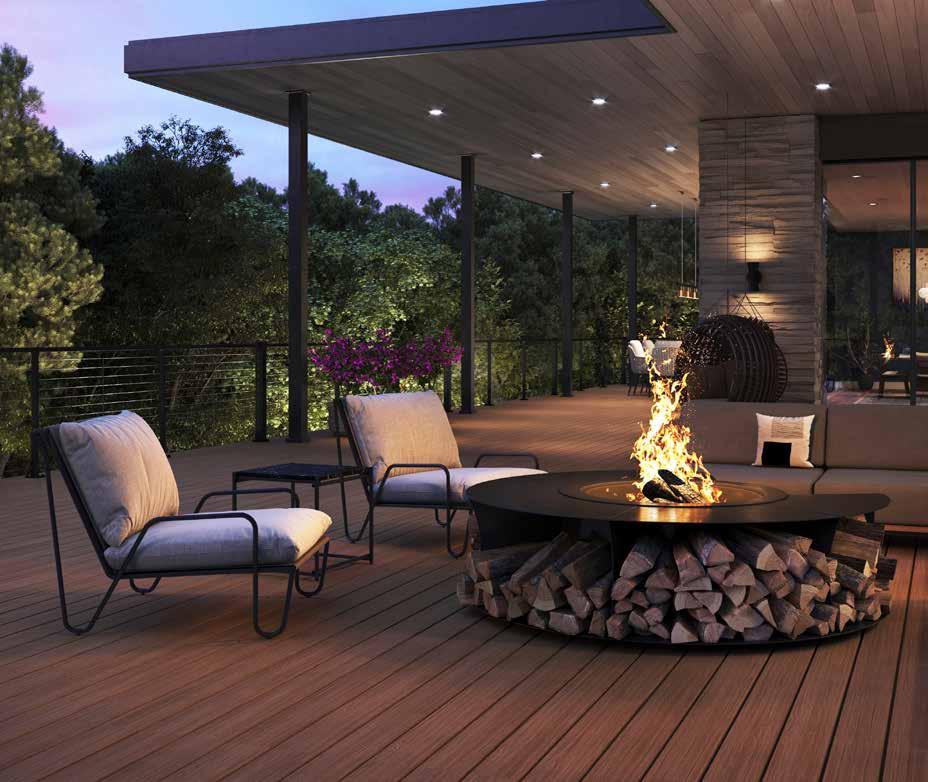
Looking to build a new deck? When you’re ready, we’re ready.
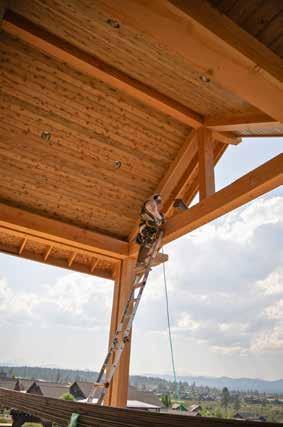
Right now, our beautiful high-performance, low-maintenance decking is in stock and available at Building Solutions . With premium decking available to pick up today – and planning tools to help you with every step – there’s never been a better time to build with Trex , the #1 brand in outdoor living.
Call Building Solutions, we have the people, service and products to build your ideas into a home that’s stylish and functional.

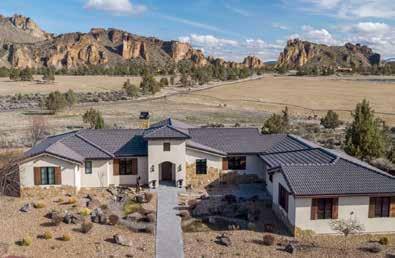
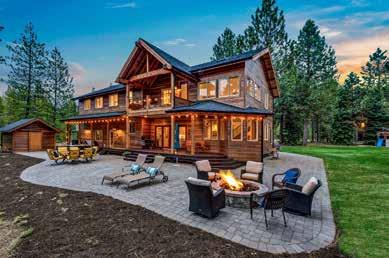


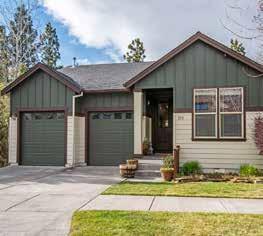
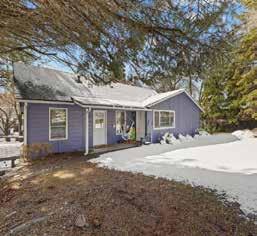
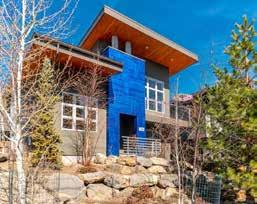
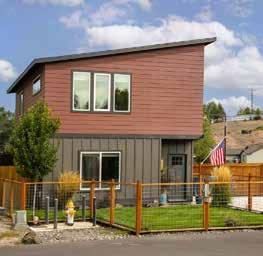
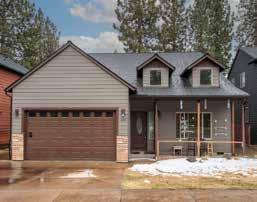
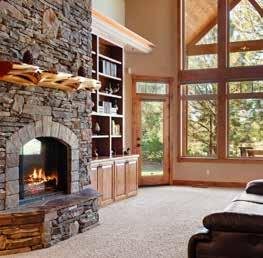
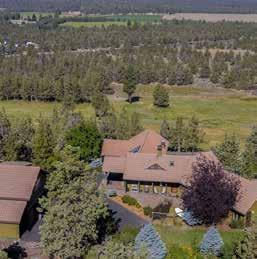
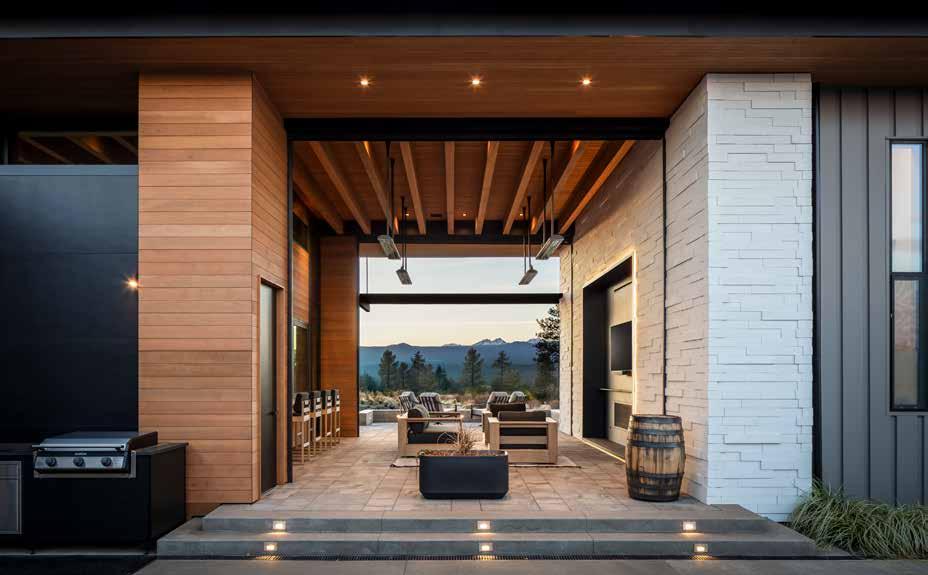
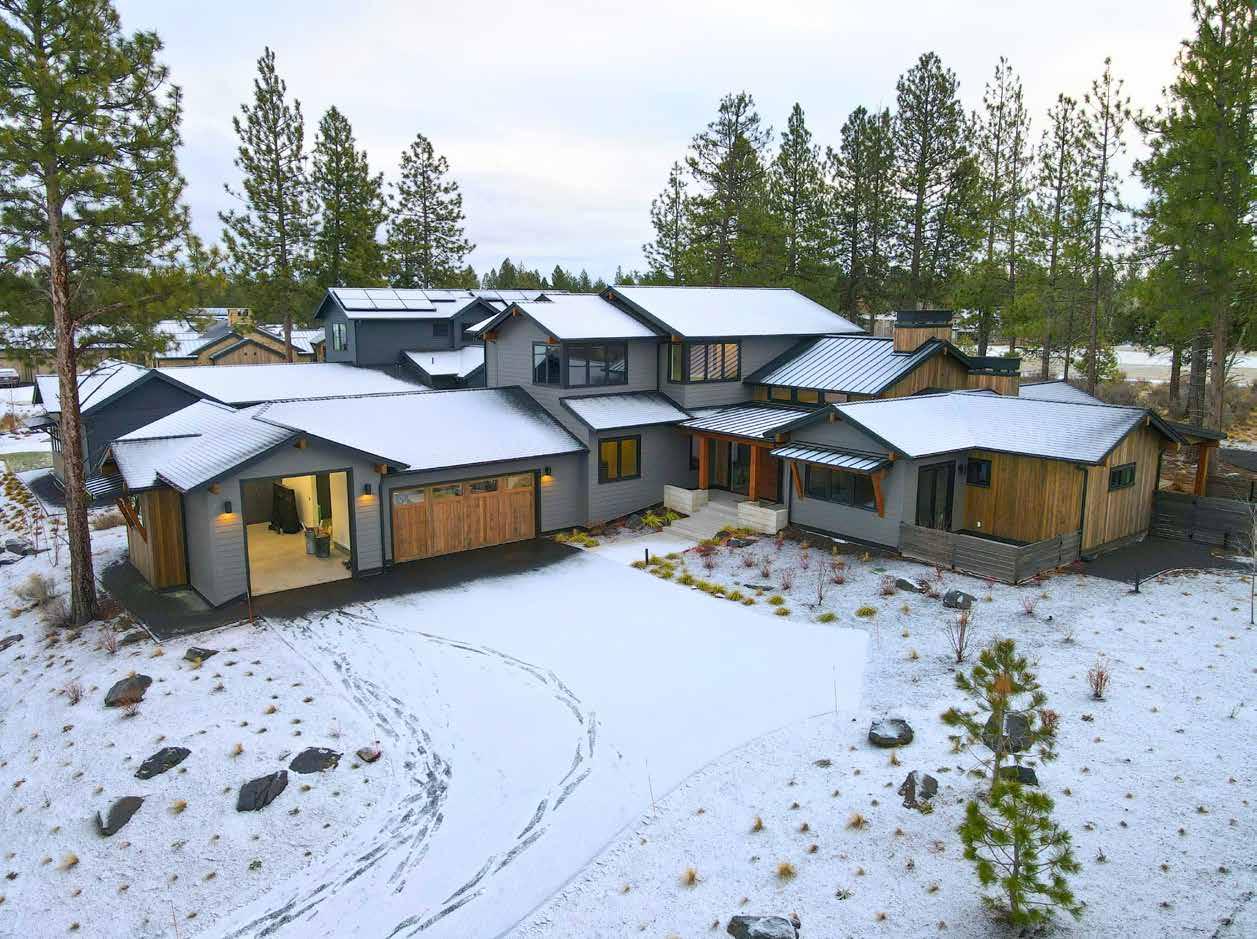
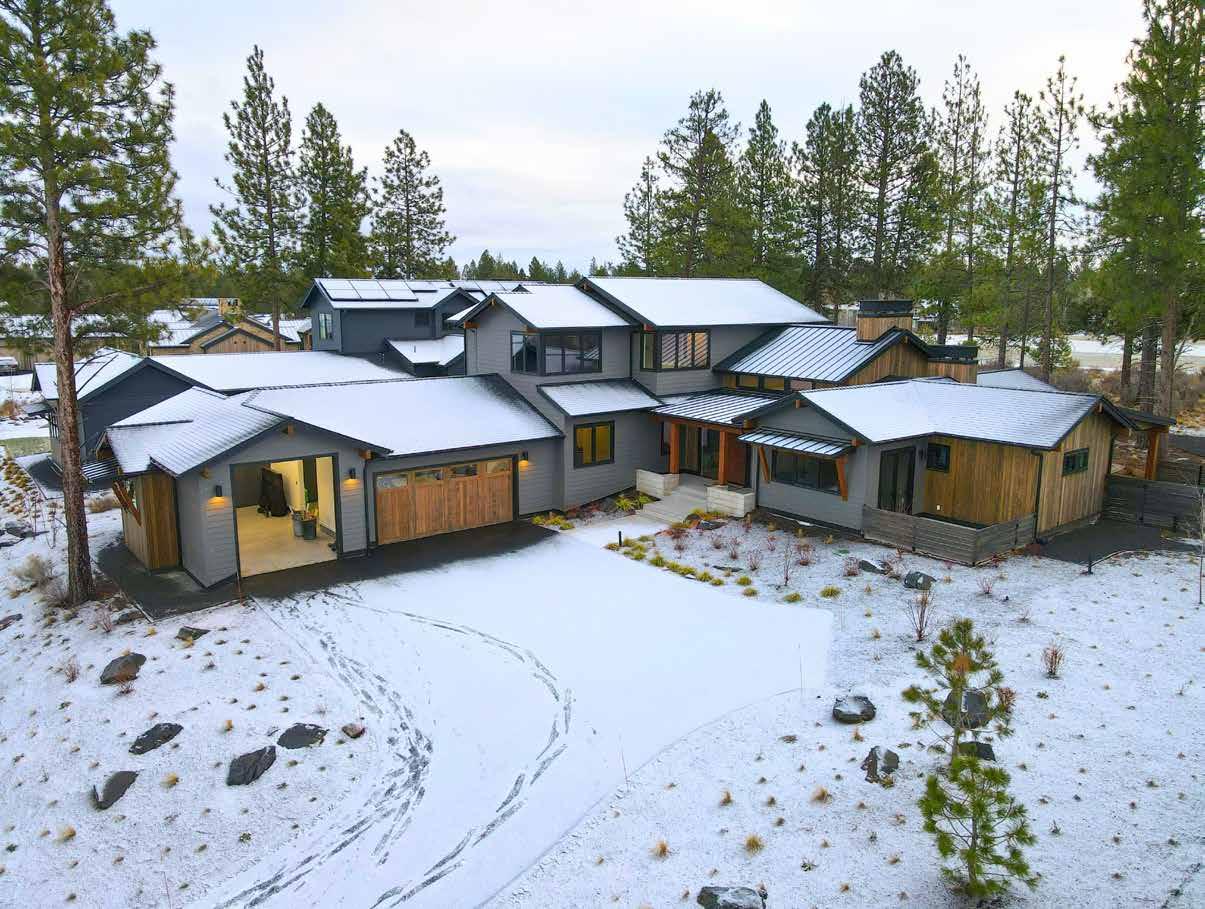
Builder: Timberline Construction of Bend
Architect: Olin Architecture
Photographer: Chris Murray Productions
In Bend, Oregon since 1999
WHERE EXTRAORDINARY HAS BEEN THE NORM SINCE 1977.

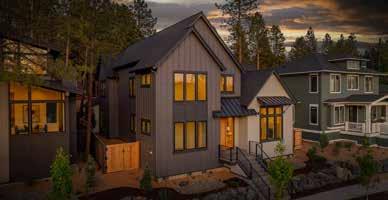
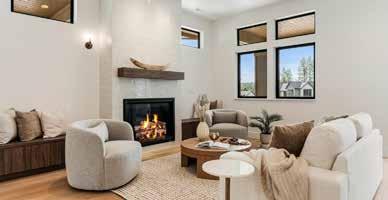
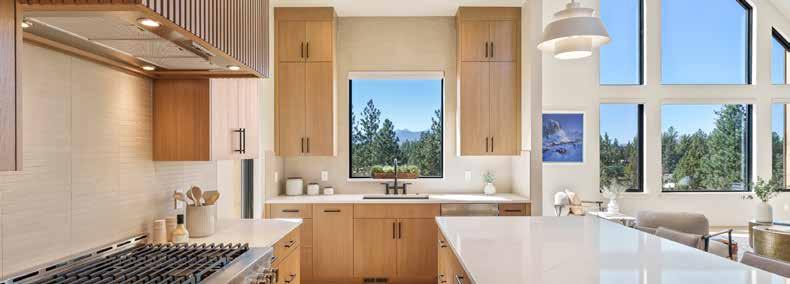
West Bend’s newest neighborhood is taking shape.
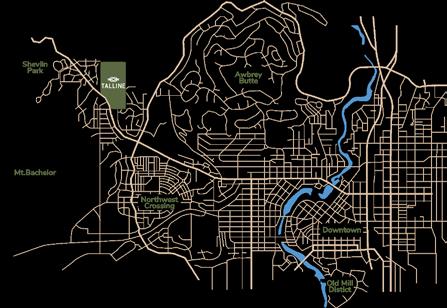
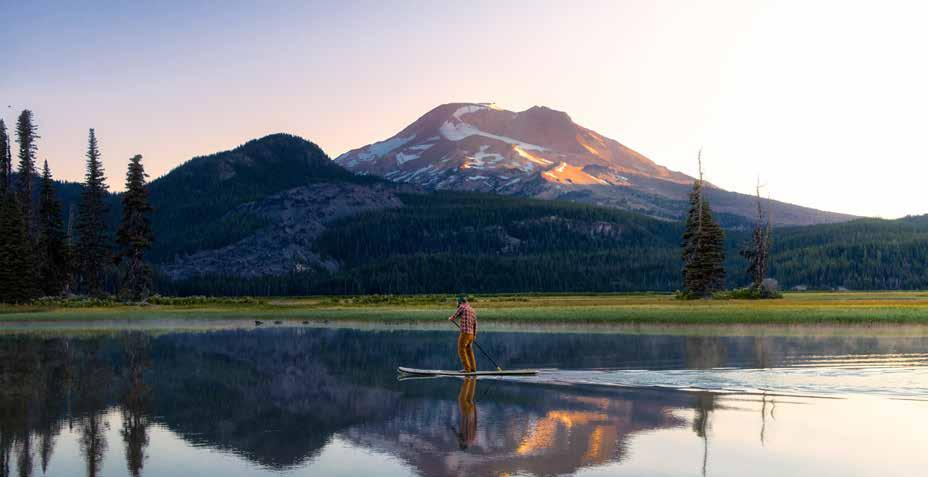
3 MIN to Shevlin Park to NW Crossing to Downtown to Old Mill District to Mt.Bachelor
A premier place to call home.
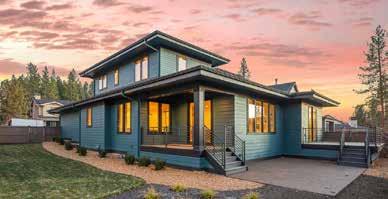
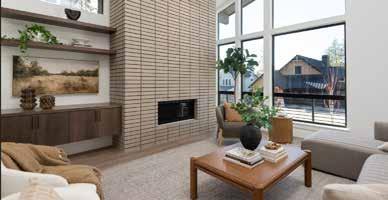
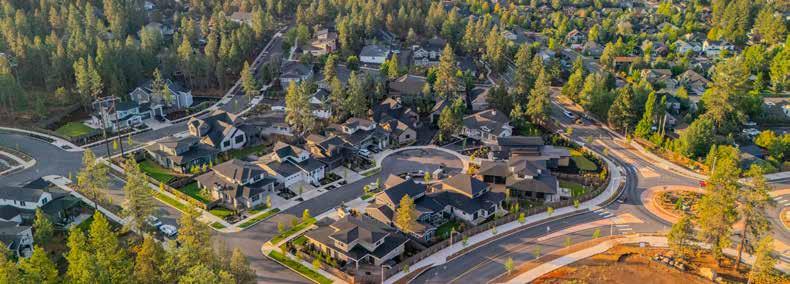
Derived from the “tall line” of the Cascade Mountain Range, the Talline development was created as a neighborhood, not only for the family, but for the whole community to call home amongst the mountains. Talline will feature a 5 acre mixed commercial core anchoring the neighborhood with some diverse commercial tenants as well as an 8 acre park nestled into the heart of Talline to better accommodate your family needs. This vision for the Talline community is being shaped by a few of the best builders in Bend coming together as partners to develop this last remaining large parcel of land on Bend’s Westside, placing Homeowners in close proximity to many of the area’s best amenities.

Let us do the work ... ...You do the play
Whether you’re a seasoned real estate investor or a first-time homebuyer, let us help you find the loan to fit your needs. With our local presence in the region, established relationships in the real estate community, and a trusted national platform, we have a suite of loan products available to meet your goals.
• Purchase or Refinance
• Jumbo, Conforming, Portfolio, and Government
• Competitive financing options for Primary, Second, Vacation and Investment properties.
• Non-QM products for borrowers or transactions that may not fit conventional financing.







52 PAST TO PRESENT
In Old Bend, a 1918 home keeps its Craftsman facade while adding contemporary new spaces. 72 THE CHALET
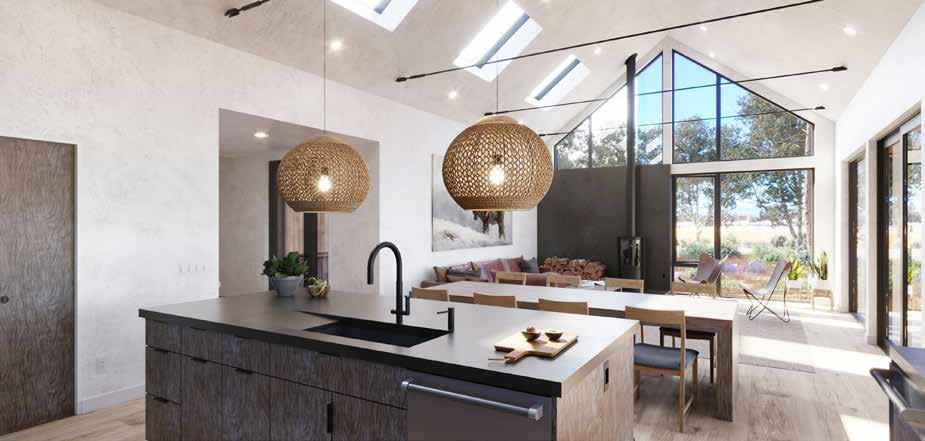
Accenting the skyline above Cascade Lakes Highway are Scandinavian-styled townhomes. Take a peek inside.
88 FROM THE GROUND UP
Pulling from a lifetime of working with natural materials, Jan Daggett of The Jewel in Sisters crafts art from gems.
92 CONSCIENTIOUS CACAO
Seahorse Chocolate takes pride in its handpoured delicacies and in making its bean-to-bar craft more sustainable.
Caring



PUBLISHERS
Heather Huston Johnson
Ross Johnson
EDITOR IN CHIEF
Cheryl Parton
EDITOR
Lee Lewis Husk
MANAGING EDITOR
Katie Henry
STAFF WRITER
Siena Dorman
CUSTOM PUBLICATIONS EDITOR
Heidi Hausler
COPY EDITOR
Stephanie Boyle Mays
CREATIVE DIRECTORS
Kelly Alexander, Cali Clement
LEAD DESIGNER
Kelly Alexander
SENIOR GRAPHIC DESIGNER

Jeremiah Crisp
GRAPHIC DESIGNER
Libby Marsden
SALES MANAGER
Ronnie Harrelson
SENIOR ACCOUNT EXECUTIVES
Susan Crow, Amy Landgraf
ACCOUNT EXECUTIVES
Bootsie Boddington
SALES & MARKETING ASSISTANT
McKenzie Klecker
OFFICE ASSISTANT
Kim Page
DIRECTOR OF OPERATIONS
Heather Renee Wong
WEB DEVELOPMENT
Zack Jenks - Litehouse Tech

CIRCULATION MANAGER
Amara Spittler
All rights reserved. No part of this publication may be reproduced or transmitted in any form or by any means, electronically or mechanically, including photocopy, recording or any information storage and retrieval system, without the express written permission of Oregon Media. Articles and photographs appearing in Bend Home + Design may not be reproduced in whole or in part without the express written consent of the publisher. Bend Home + Design and Oregon Media are not responsible for the return of unsolicited materials. The views and opinions expressed in these articles are not necessarily those of Bend Home + Design, Oregon Media or its employees, staff or management. Proudly printed in Oregon.


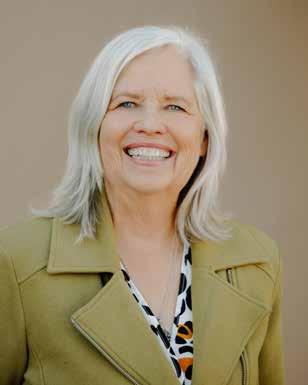
EDITOR’S LETTER
On a brisk afternoon walk to Justin Halvorsen’s Farmers Deli for warm-the-heart tomato soup, his signboards and menu declare his commitment to local—a reminder that supporting businesses in town isn’t a trend but a belief in strengthening our community, ourselves and our neighbors.
Bend Home + Design recently reflected on its mission, its core promise to readers and its value to Central Oregon. It turns out local is at the heart of everything we do. From Oregon Media’s publishers, Ross and Heather Johnson—nearly 30-year Bend residents—to our locally based staff and headquarters, our team collaborates daily with dozens of local design firms, contractors, writers and photographers, as well as the homeowners who graciously invite us into their spaces.
In the seven years since Bend Home + Design was founded to complement award-winning Bend Magazine, we’ve become Central Oregon’s go-to voice for residential architecture and forwardthinking design, delivering fresh, relevant content, and we do it more frequently than other regional publications.
To our readers, we promise that all of our coverage is created through real
human reporting. Our editors, writers and designers, along with help from talented freelance writers and photographers, conduct the interviews, write and factcheck every story.
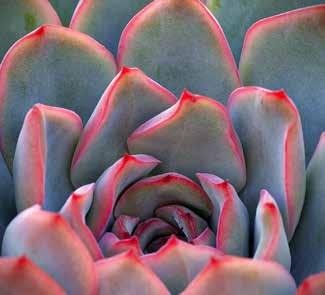
In this issue, the featured home is grounded in a Bend neighborhood but is quite literally elevated above the high desert (page 28). A thoughtfully remodeled 1918 home shows how historic character can be preserved while adapting to modern living (page 52). And for cacti and succulent lovers, we share tips for bringing them indoors for winter, or caring for hardy varieties that stay outside (page 77).
As I finished that cup of Justin’s soup, I was reminded how powerful local can be, infusing our lives with gratitude for the special people among us. Thanks for reading, for supporting the makers and creatives who shape this place, and for being part of a community that keeps it close to home.

Lee Lewis Husk, Editor
From Your Local Experts

THOMAS FAGAN ARCHITECT
Founder of Studio Mas, Thomas Fagan centers his craftsmanship on the stages of his clients’ lives, designing spaces to gather, rest and enjoy life. Page 52


AARON AND HEATHER SALVESON BUILDER AND INTERIOR DECOR
Aaron, founder of Salveson Homes, and Heather build and finish custom projects, including their family home. Page 60

PJ HURST INTERIOR DESIGN
Owner of PJ Hurst Design, an interior architectural design firm, PJ Hurst creates thoughtful and livable custom spaces, both indoors and out. Page 66

JORDYN MIYAMA
CO-OWNER, DESERT ROSE CACTUS LOUNGE
Spending her days at the Old Iron Works plant shop, Jordyn Miyama knows what it takes to create lush landscapes inside high desert homes. Page 77
PHOTO OF LEE LEWIS HUSK BY ELY ROBERTS
CONTRIBUTORS

JEREMY BITTERMANN
PHOTOGRAPHER
As a photographer, Jeremy Bittermann maintains a focus on architecture, interiors and landscapes. With an office in Portland, he works all over the world. His images are published in magazines, online and in newspapers. When not working, he can be found hanging out with his family or in a barely controlled descent on a bike, skis or surfboard. In this issue, Bittermann showcases the architecture of The Expanse. Page 28
CATHY CARROLL
WRITER
A writer who loves telling the stories of community, Cathy Carroll has reported on people, places and businesses both locally and around the world for media including Travel + Leisure, Travel Weekly and Forbes. Join her in this season’s issue as she explores the way adding lighting can influence the mood of a home, and discovers the earth-derived art and jewelry crafted by Jan Daggett. Pages 66 and 88
CASEY HATFIELD-CHIOTTI
WRITER
The words of Casey Hatfield-Chiotti can be found in Marin Living, The New York Times, Travel + Leisure and Forbes. As the daughter of an architect and designer, HatfieldChiotti has a deep appreciation for architecture. Here, she writes about an extraordinary build in Westgate, an Old Bend redesign that blends past and present, and a family home built by the homeowners. Pages 28, 52 and 60
CHERYL MCINTOSH
PHOTOGRAPHER
A full-time architectural photographer based in Bend, Oregon, Cheryl McIntosh collaborates with builders and architects to create narrativerich visuals. Drawing on her background, Cheryl approaches assignments with an eye toward design integrity and brand clarity, giving clients work that feels refined, timeless, and unmistakably their own. Here, she documents the modern transformation of an Old Bend Craftsman home. Page 52
JENN MONTOYA
PHOTOGRAPHER
Passionate about capturing wellplaced details and composing images, Jenn Montoya thoughtfully showcases the work of designers, architects and builders on the West Coast. She works with her clients to create photographs that elevate their spaces, portfolios and brand presence. In this issue, she captures a Discovery West home. Page 60
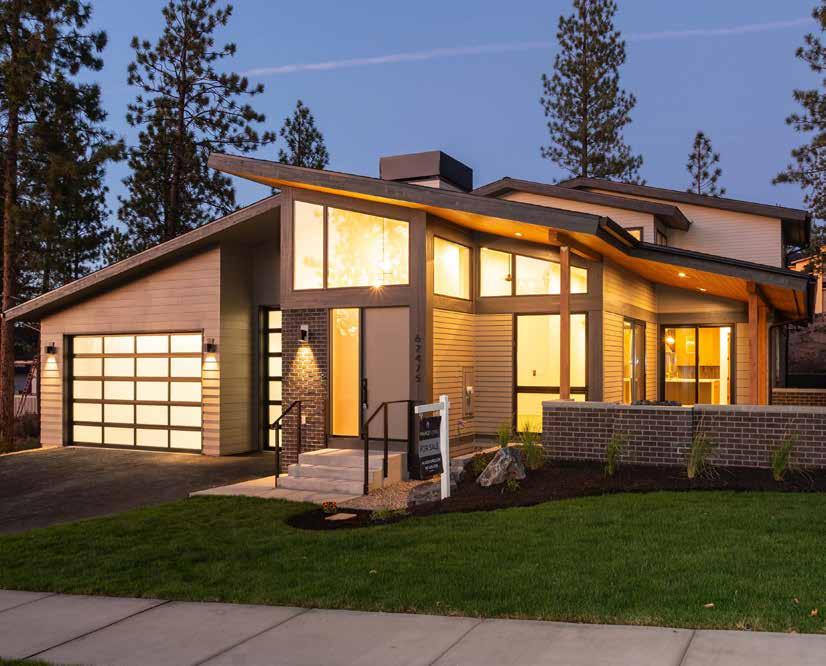
CELEBRATING 10 YEARS OF CRAFTING DREAM HOMES IN CENTRAL OREGON
CHECK OUT OUR NEW BONUS PROGRAM
Refer a friend and when they close on their dream home, you’ll both receive $5,000. malacehomes.com/referral

EXPECT MORE FROM MALACE HOMES
Award-Winning Central Oregon home builder designing + building quality, luxurious homes for clients to enjoy for generations to come. We turn your home dreams into reality. Contact us today to learn about our distinctive home building process.
| 541-408-2178
LOCALLY Found
Inspired by the warmth of winter hearths
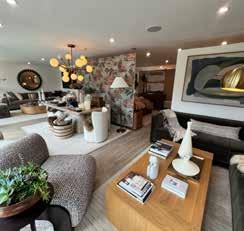
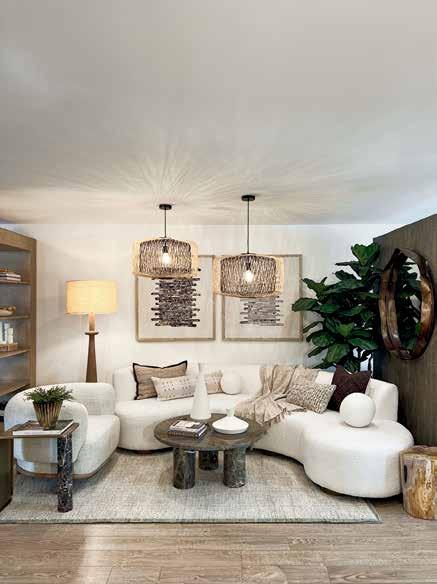
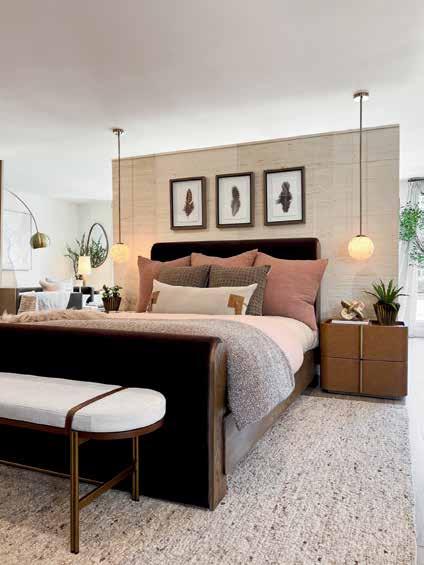
Skye Design Interiors & Co. brings refined, landscape-minded interior design to Galveston Avenue. Owned and operated by interior designer Malia Mathis, the shop leans into warm tones that reflect the region’s natural palette. Think warm neutrals, woods, metals, fur and natural fabrics. The shop layers textiles and color to create a grounded, inviting atmosphere to showcase its medium- to high-end furnishings. Dressers, for example, may range from $400 to $1,900. A curated mix of lighting, wallpaper, flooring samples and artwork rounds out the showroom, along with a rotating selection of sofas, seating and bedroom pieces. Retail sections hold thoughtful gifts throughout, from glassware and kitchen linens to jewelry, cookbooks and candles. The shop also carries its signature Fresh Linen scent from L’avant Collective in dish soap, hand soap and hand lotion. California influences are present in the styling, yet the overall feel is distinctly Central Oregon. Skye Design Interiors & Co. incorporates elegance with everyday function.
SKYE DESIGN INTERIORS & CO.
1346 NW Galveston Ave., Bend skyedesigninteriors.com
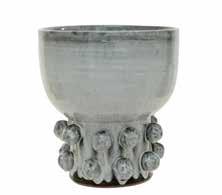
GLAZED FOOTED PLANTER
$135, Rescued Living
161 E Cascade Ave., Ste. A, Sisters
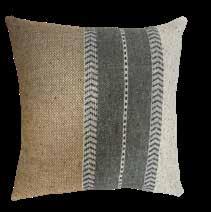
MONTANA PILLOW COVER
$345, Borgo Rosati
550 SW Industrial Way, Ste. 175, Bend
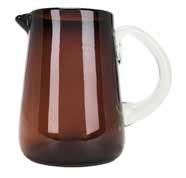
TAMARIND PITCHER,
$65, Lark Mountain Modern
831 NW Wall St., Bend
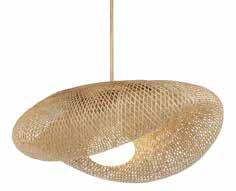
SAND DUNE CHANDELIER,
$1,350, Skye Design Interiors & Co.
1346 NW Galveston Ave., Bend

CAPRA ZIP PLANTER-DUSTY ROSE
$79, Root Adorned
2748 NW Crossing Drive, Ste. 130, Bend
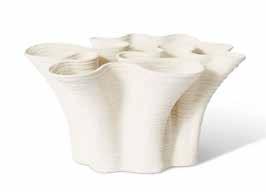
LUMINOUS 3D PRINTED VASE,
$200, Skye Design Interiors & Co.
1346 NW Galveston Ave., Bend
COMMUNITY Pulse
A Collaboration
BETWEEN CALDERA STUDENTS AND ROOTEDHOMES
A new vibrant mural is on display where a blank retaining wall once existed near Rooted at 19th, a new neighborhood in Redmond. Five students from Caldera High School worked with the nonprofit RootedHomes to bring this project to life. It is a reflection of both entities, empowering the youth of Central Oregon to apply their creative talents in ways that help the community thrive. See rootedhomes.org.
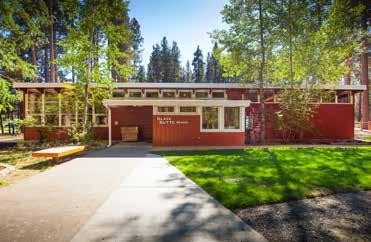
Black Butte School
UNDERGOES ADDITIONS AND MODERNIZATION EFFORTS
Located in the sprawling pines of Camp Sherman, the historic Black Butte School, through bond approval, has invested in renovations to the existing structure of the building and added a 1,750-square-foot expansion. The project prioritized preserving the school's original feel while providing the modernization necessary for long-term durability. This quaint red-and-white building will remain a staple heart of the area and an inviting kindergarten through 8th grade learning space for generations to come. See blackbutte.k12.or.us.
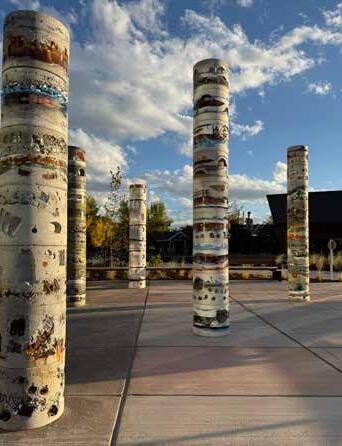
Designs at Jackstraw
ARE A CELEBRATION OF ART
Even more than a well-designed apartment complex, Jackstraw is the culmination of intentional artistic feats. The majority of the mixed-media artistry in and surrounding the building has roots in local art and artists. Take, for example, the sculptural concrete columns located in the outdoor plaza of the first floor. Created by artist Tyler E. Burton, the sculptures are collectively titled “Fossils of the Future.” In some columns, impressions of plastic materials challenge onlookers to think deeper into our use of single-use plastics, while others pay tribute to Bend’s rich lumber history. From the entry door handles to art lining the interior, Jackstraw, at its core, is a celebration of artistry, design and community. See jackstrawbend.com.
REVIEW
Market TRENDS
Statistics represent combined closed transactions for residential homes in Bend, Redmond, Sisters and Sunriver for the 12-month period prior to publication.
$9,750,000
MOST EXPENSIVE SOLD HOME
Inventory Overview
$489
AVERAGE SOLD PRICE PER SQUARE FOOT
1613
A Getaway Every Day
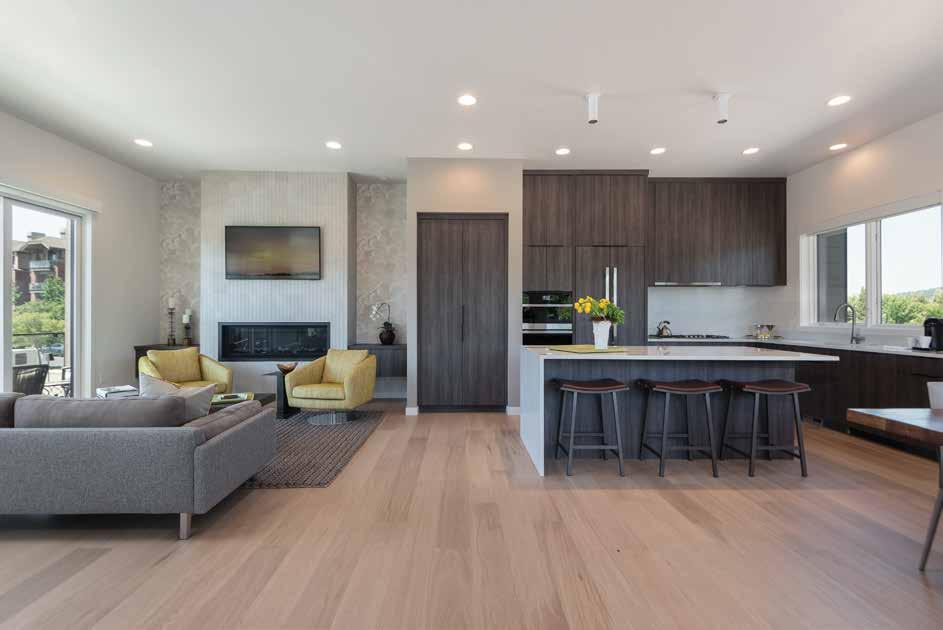
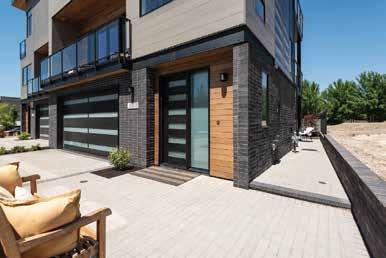
It’s a special place that can make you feel like you’re on vacation every day. The Eight is that place. Nestled in the Old Mill District and just steps from the Deschutes River, this exclusive collection of townhomes offers resort living just minutes from Central Oregon’s finest restaurants, shops, galleries, golf, skiing, hiking, and so much more.
Step inside The Eight and you will find three floors of luxurious living spaces with a perfect mix of industrial elements and natural materials. Expansive balconies invite you to entertain, relax, and enjoy the sweeping views. Every detail has been considered, from designer lighting to high-end appliances to cozy fireplaces.
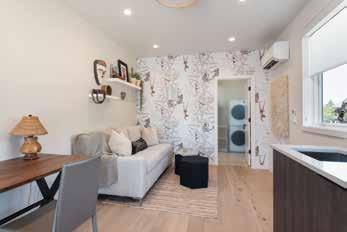
Each home at The Eight is zoned for nightly rental, making it a fantastic investment opportunity whether you choose to rent the entire space or just the first-floor lockout ADU. Then again, with everything it offers, we won’t blame you if you choose to keep it all for yourself.
Stephanie Ruiz, Broker 541.948.5196
Jordan Grandlund, Principal Broker 541.420.1559 www.theeightattheoldmill.com

HOME FEATURE
Into the Expanse
A home for multiple families is a study in minimalism and architecture that connects with its surroundings
WRITTEN BY CASEY HATFIELD-CHIOTTI | PHOTOGRAPHY BY JEREMY BITTERMANN / JBSA
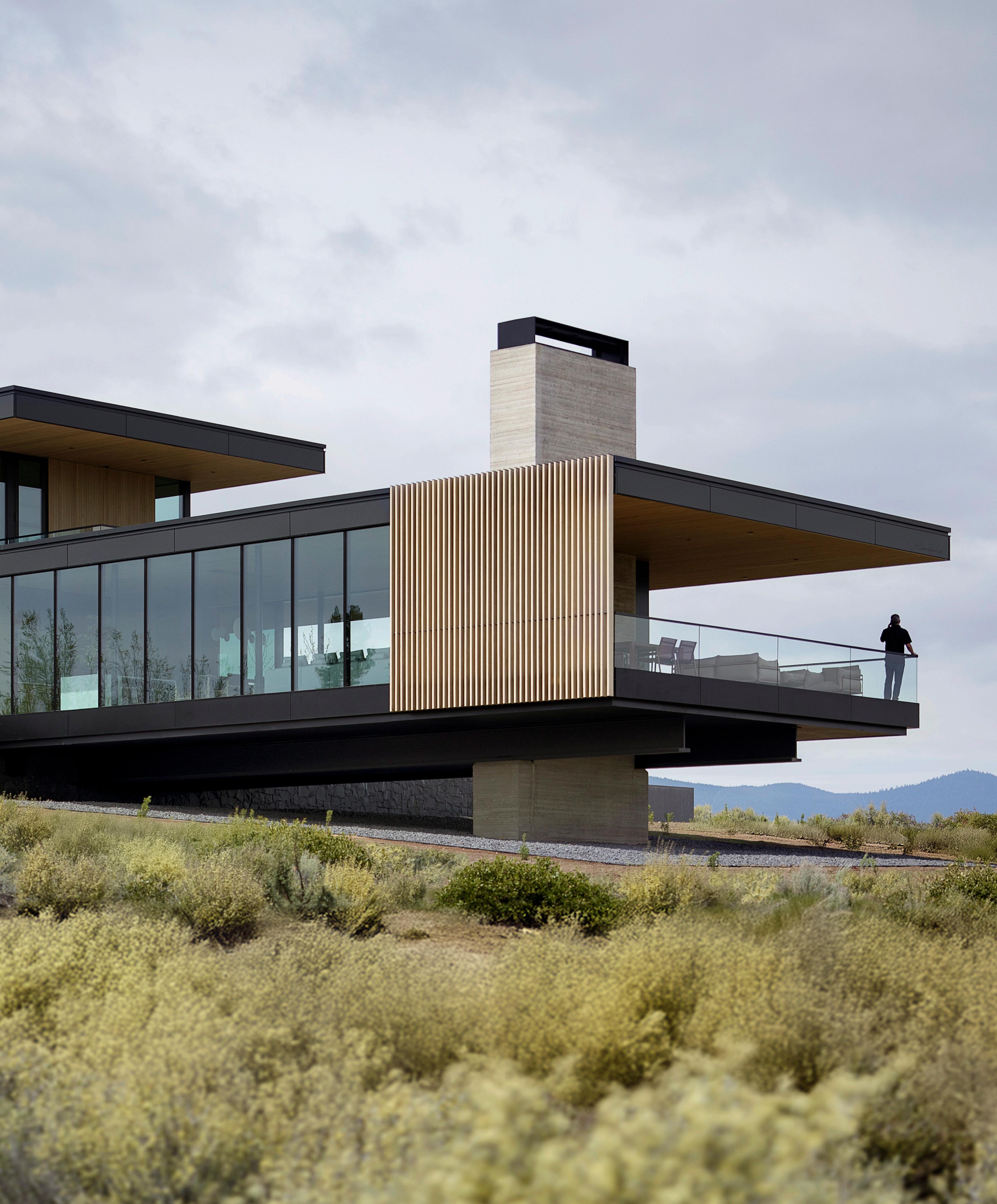
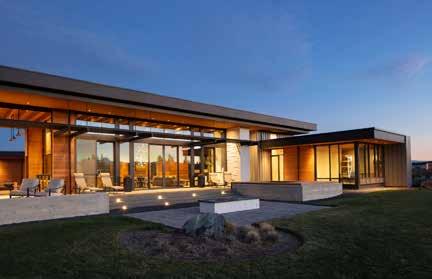
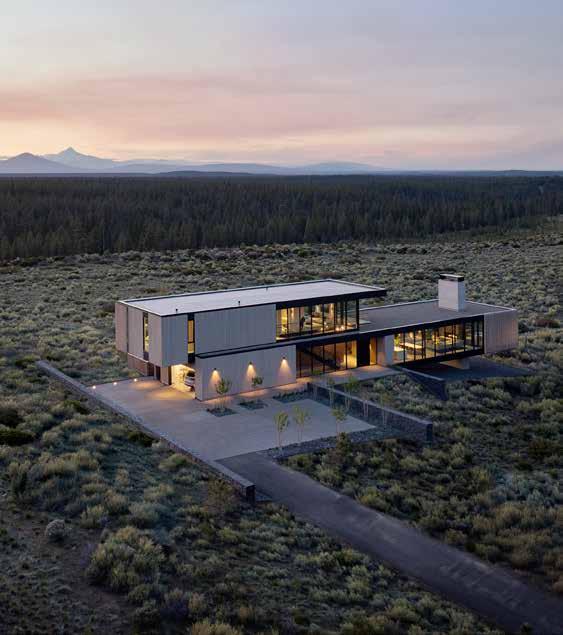
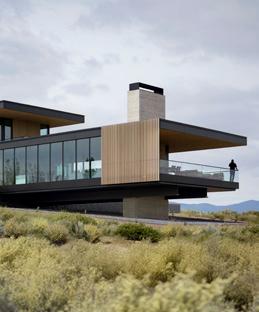
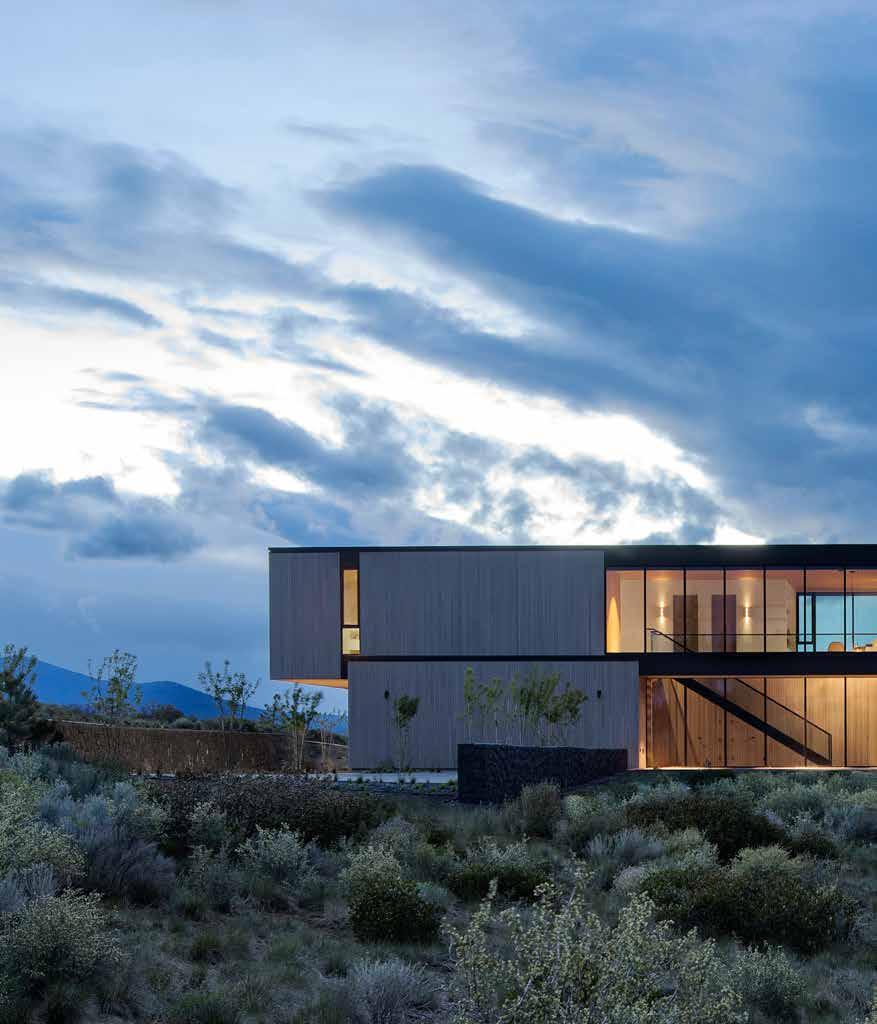
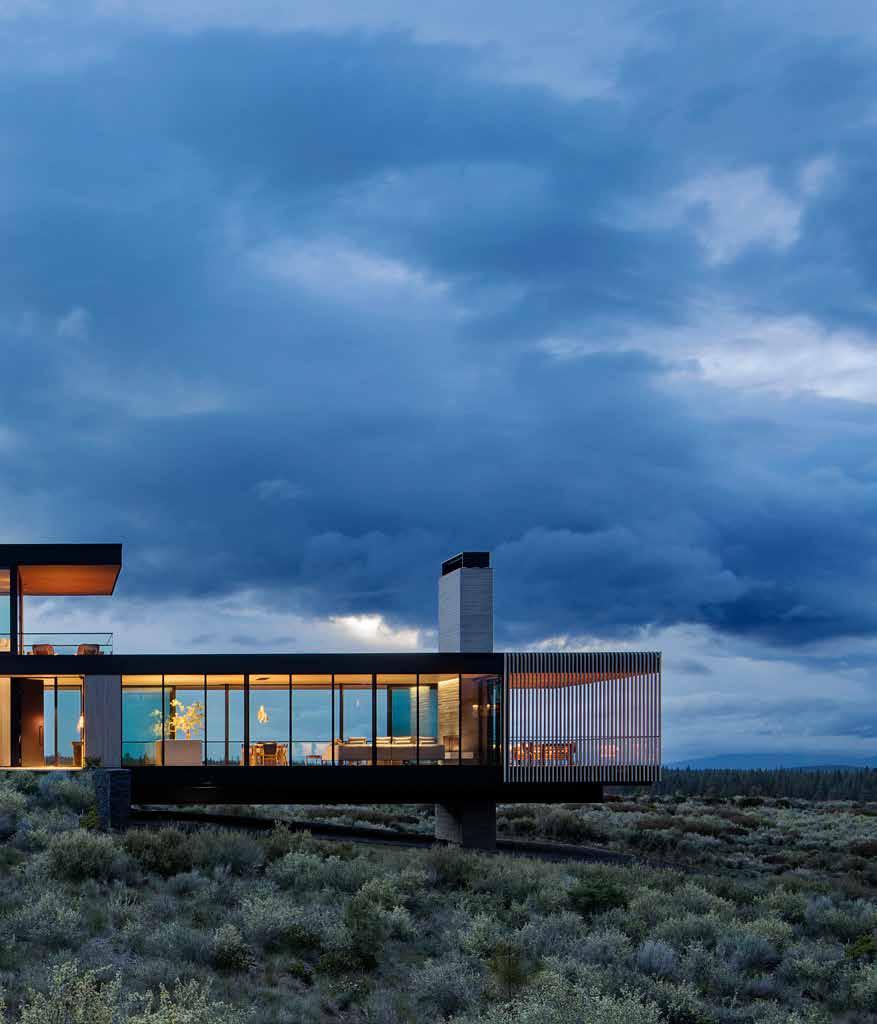
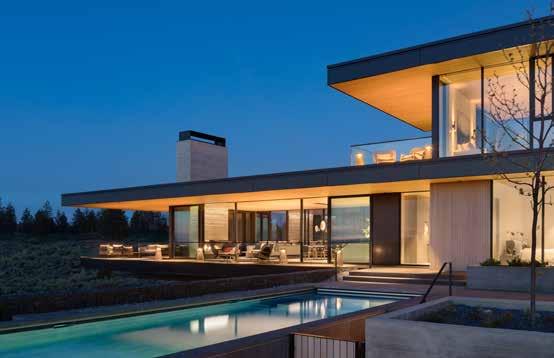
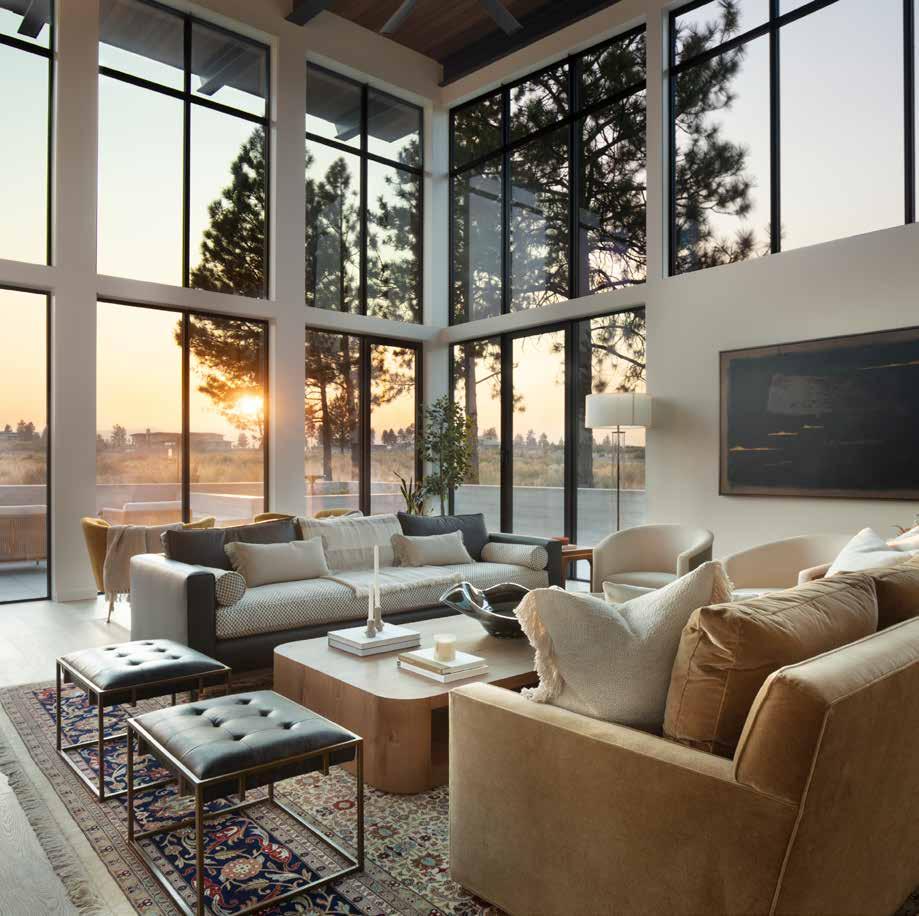
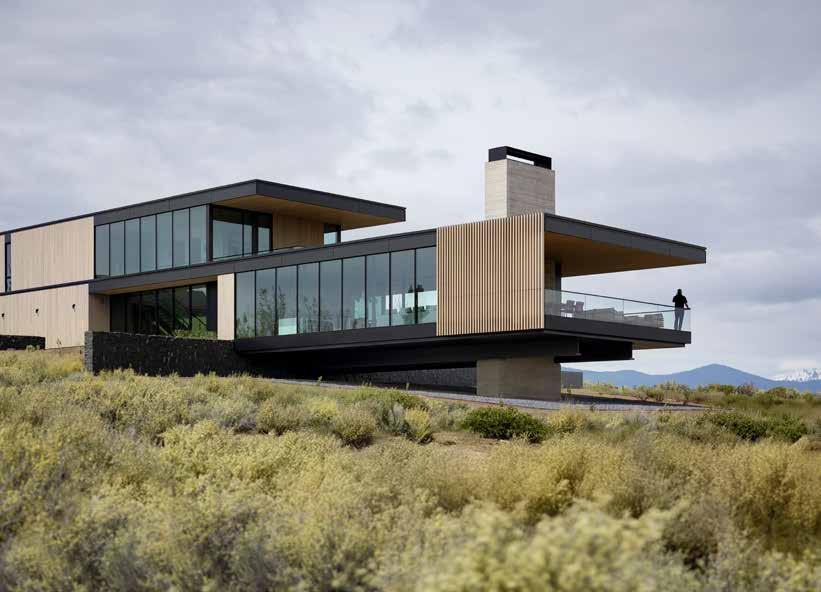
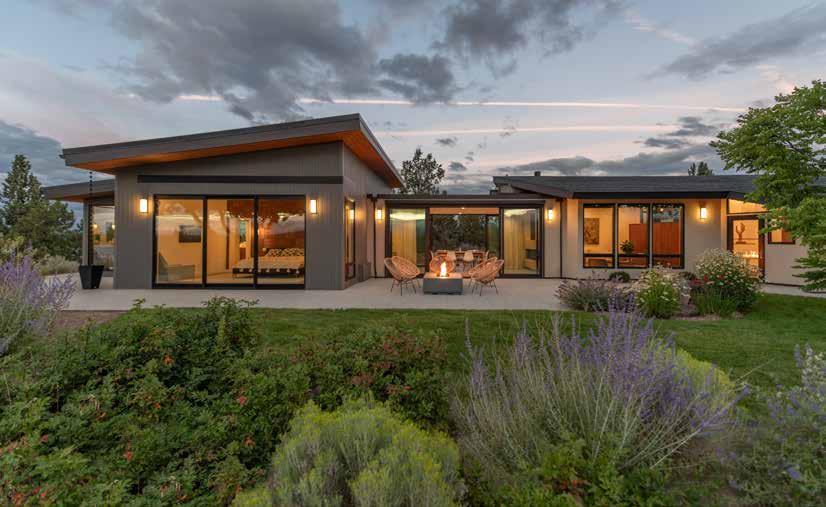
Once inside the multigenerational home in Bend’s Westgate development, it’s clear why the glass, steel and cedar structure that seemingly floats above the rugged high desert landscape earned the moniker The Expanse.
“You can see Bachelor, the Three Sisters, Broken Top, Mount Washington, Three Fingered Jack, Mount Jefferson and Mount Hood. The view has it all,” said Rick Berry, a principal designer at Portlandbased Scott Edwards Architecture.
Berry and architect Ryan Yoshida began working with the owners in 2020 to create a home on the westernmost edge of the customdesign neighborhood, perfectly positioned to capture the views while minimizing environmental impact. When the shades are up, it’s possible to see through the house to the view that lies beyond.
The 4.5-acre site has a cross slope, and Berry and Yoshida seized the opportunity to do something different. They suggested a rectangular structure with a cantilever at one end. A great room fireplace, made of blackened steel and board-formed concrete, is the heart of the home and the house’s literal anchor, contributing to its appearance of weightlessness.
“Our clients are minimalists. They wanted something simple, clean and timeless,” said Yoshida.
HUMAN-SCALED DESIGN
A part-time residence for multiple families, including a brother and sister and their parents, it was important that the home was a
“We were captivated by the beauty of the high desert.”
comfortable place for two people or 10. With four bedrooms and three and a half bathrooms, the home feels spacious but not sprawling.
The homeowners chose FQ Designs Group in San Francisco to work on the interiors. Designer Kathy Vuong chose minimal, refined furniture and finishes. “We were captivated by the beauty of the high desert,” said Vuong. “The Expanse home is a reflection of the clients’ love for thoughtful simplicity,” she added.
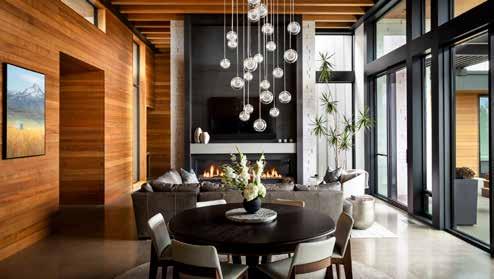
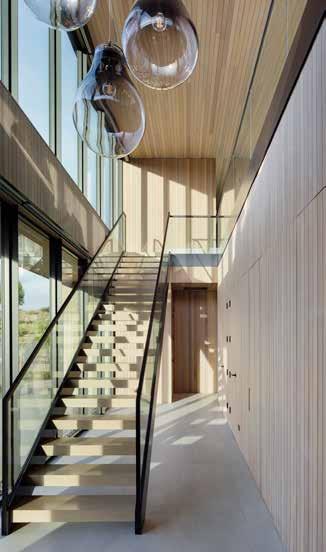
The grand entry foyer is two stories high and clad in cedar siding that discreetly conceals doors to closets, the powder room and the bedrooms. The large Bomma Tim pendants make a statement, in contrast to the more understated Apparatus Lantern sconces that flank a sculptural console.
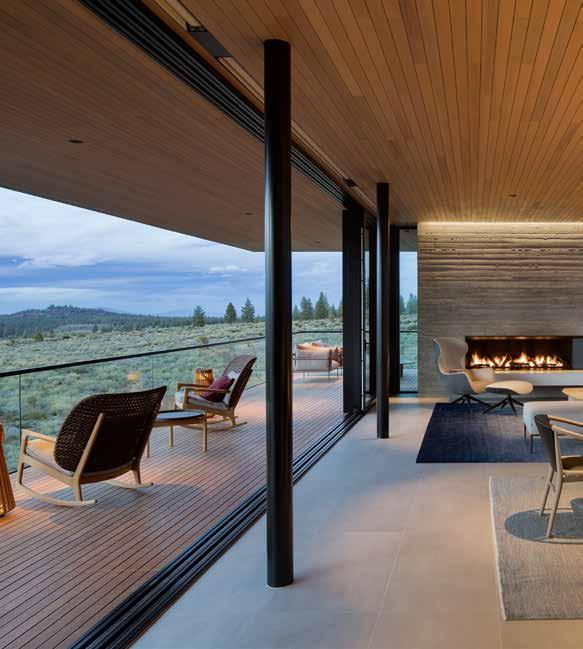
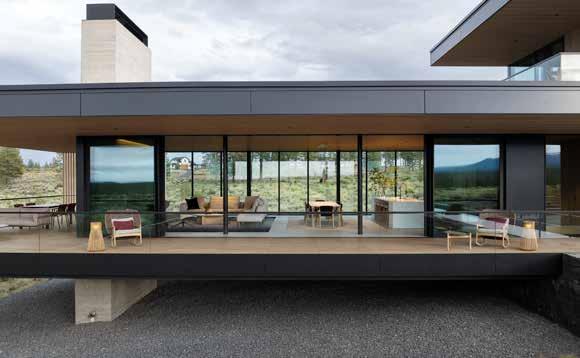
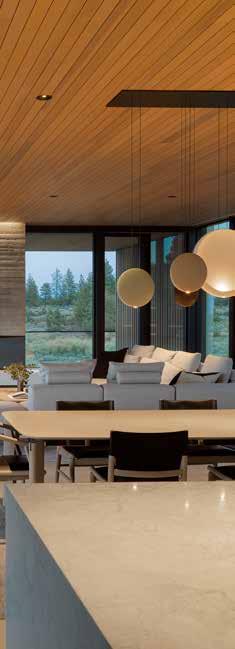
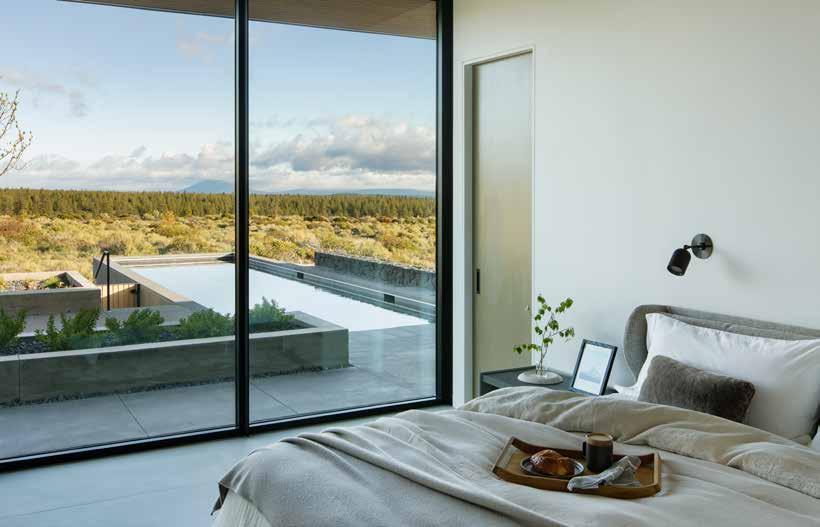
The great room has an open floor plan and a 40-foot-long sliding glass door, blurring the line between indoors and out, and opening onto a back patio with a firepit, hot tub, outdoor shower and swimming pool. The 36-foot-long pool juts out toward the mountains. The western facade includes a deep overhang to mitigate harsh sunlight and provide shade. A porch made of thermally modified wood wraps
“The Expanse home is a reflection of the [homeowners’] love for thoughtful simplicity.”

Photos by Chris Murray Productions
around the end of the cantilever and serves as a viewing platform to see herds of elk and deer wander by in the afternoon.
ARTFUL EASE
Award-winning PLACE, a Portland landscape architecture firm, which has worked on notable projects such as the Nike headquarters in Beaverton, was hired to make outdoor improvements.
“How you move from the house into the landscape, that whole sequence and story, it’s important
to us,” said PLACE Principal Charles Brucker.
The climate-adaptive landscaping includes native Idaho fescue and bitterbrush, as well as amur maple trees, a tough, drought-tolerant tree with beautiful fall color. A gravel band around the building helps meet firewise requirements and softens the transition from the angular architecture to the natural landscape, a patchwork quilt of scrub-shrub habitat and grasses. Low walls are made of Deschutes Basin local black basalt. “The
landscape will weather the hot and the cold and still look beautiful,” said Brucker.
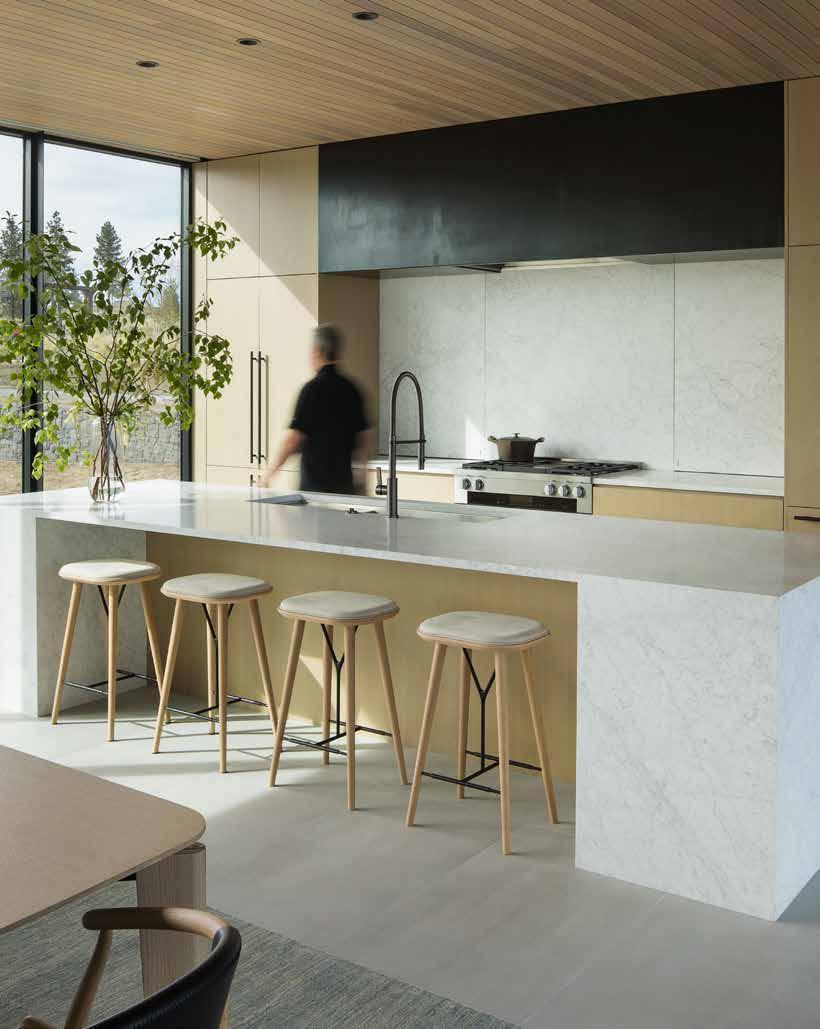
A balance between beauty and functionality is the goal inside. The primary bedroom features a custom bed with a headboard covered in a fade-resistant, easy-to-maintain material. The adjoining bathroom is a spa-like space coated in earthy artisan-applied plaster. In the kitchen—which features Carrara extra-white marble countertops, white oak cabinets and Miele appliances—a sliding backsplash
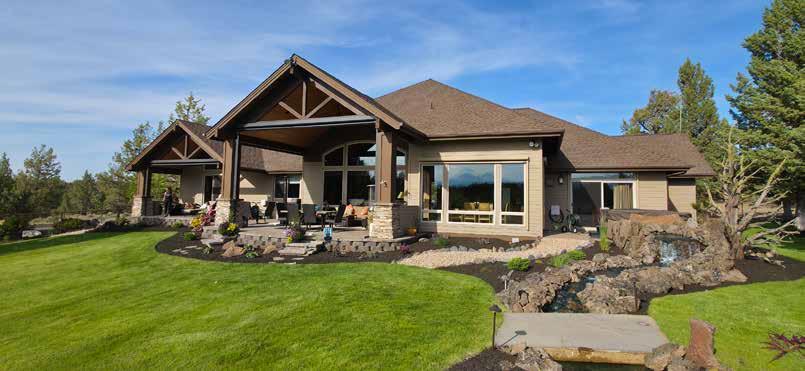
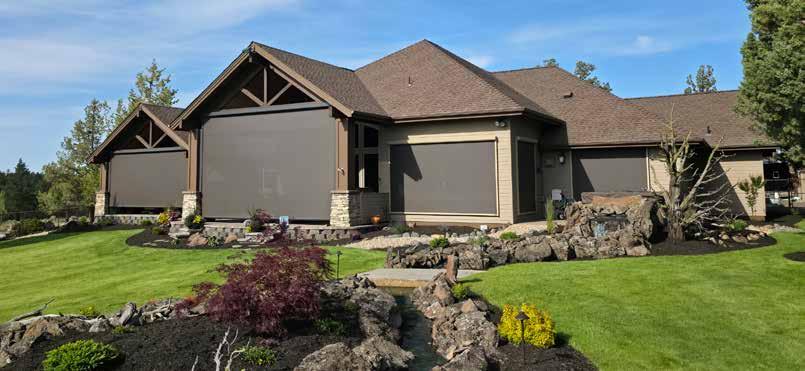
CUSTOM SHADE SOLUTIONS,
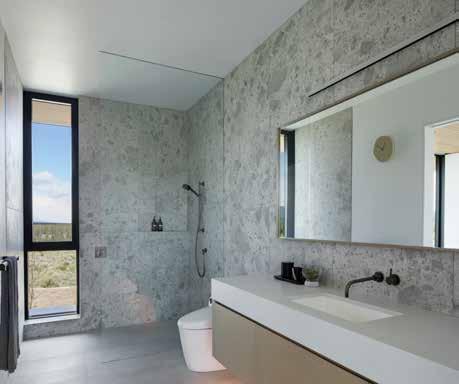
reveals a shallow cabinet where homeowners can access kitchen items.
The B&B Italia Oskar table is a fun gathering space for meals and game nights. The Vibia Cosmos cluster pendants resemble an array of planets, and the custom wool Peshawar rug, hand-woven in Pakistan, features soft, muted tones reminiscent of the surrounding landscape.
Due to the great room’s orientation, the homeowners can sit on the soft gray sectional and enjoy the sunrise in the morning and the sunset in the evening. The expansive views are endless.
“You really feel like you are part of the landscape,” said Berry.
Architect: Scott Edwards Architecture | Builder: KN Visions | Interior Designer: FQ Designs Group | Landscape Architect: PLACE


Bring Comfort Outdoors

LOOKBOOKS
The following pages feature a collection of inspired projects highlighting developers, builders and designers leading the way in Central Oregon.
40
BUILDING DREAMS
Intentionally small, Bend Craftsmen Company focuses on boutique service, from the first client meeting through construction and beyond.
44
BUILT TO LAST
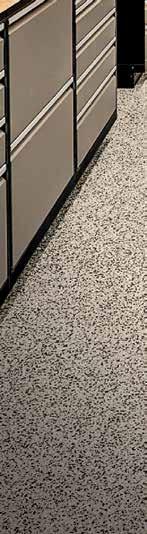
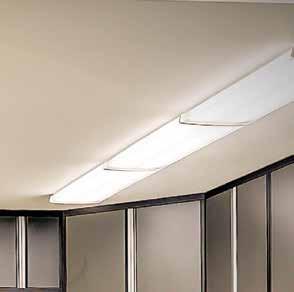
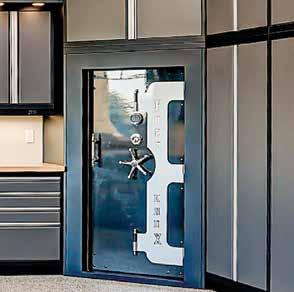
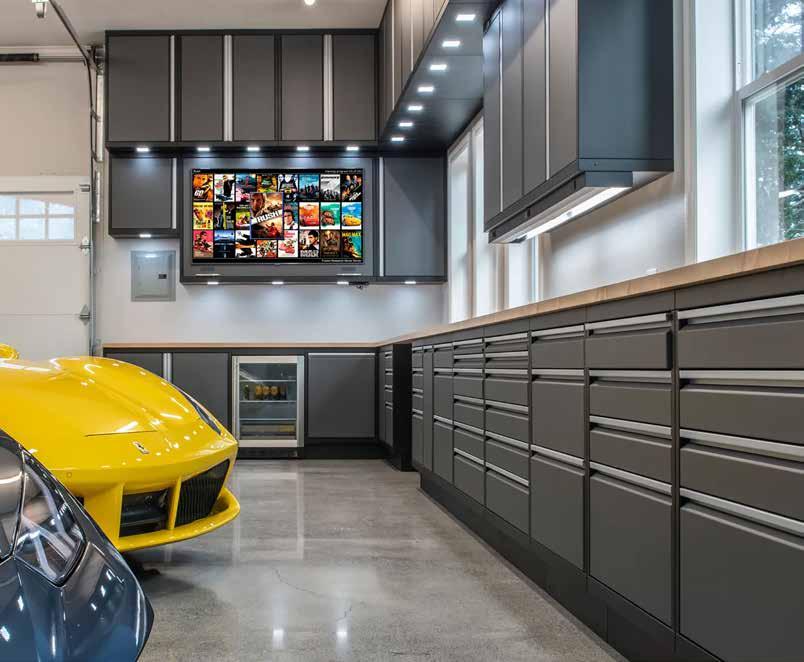
For more than 20 years, Baldhead Cabinets has been crafting and installing high-end metal cabinetry to elevate garages and utility rooms for organizational perfection.
48
CRAFTING STYLE
InterZone Interiors provides quality finishing touches to restorations and new builds, from floors to countertops, cabinets and more.
Building Dreams
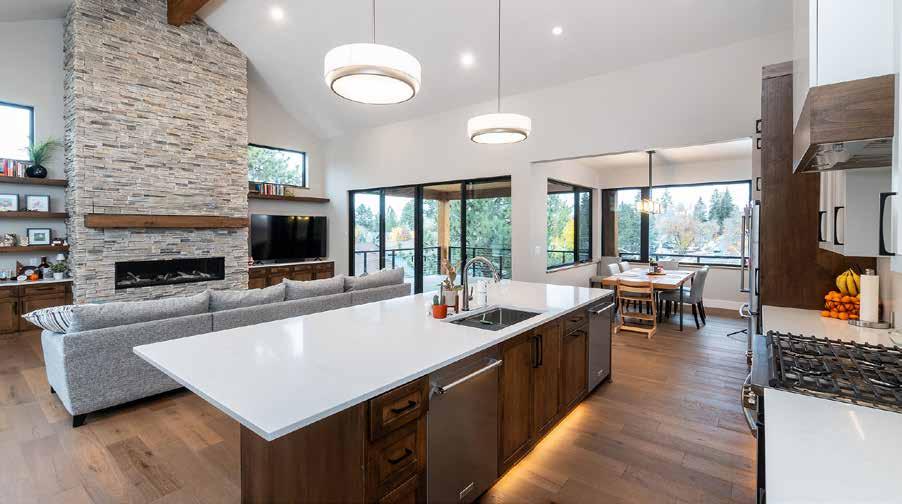
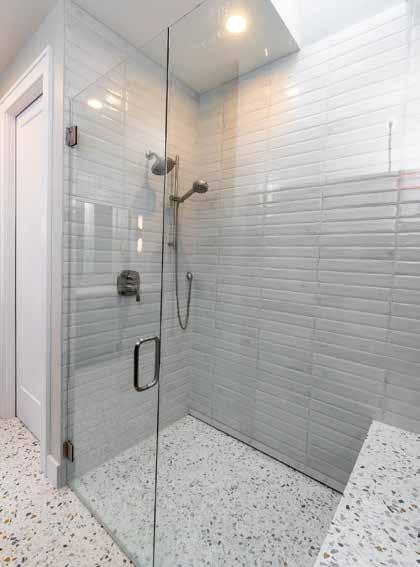
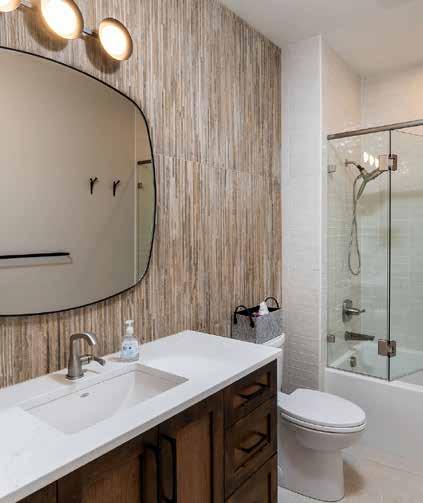
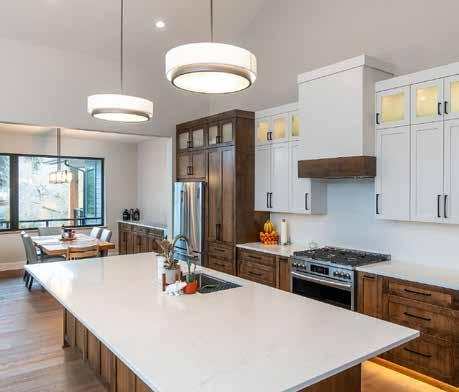
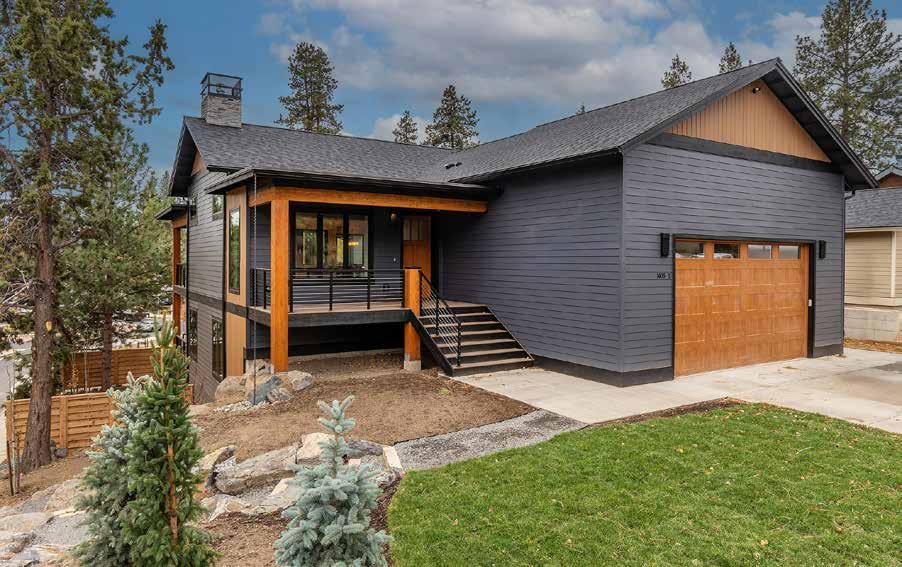
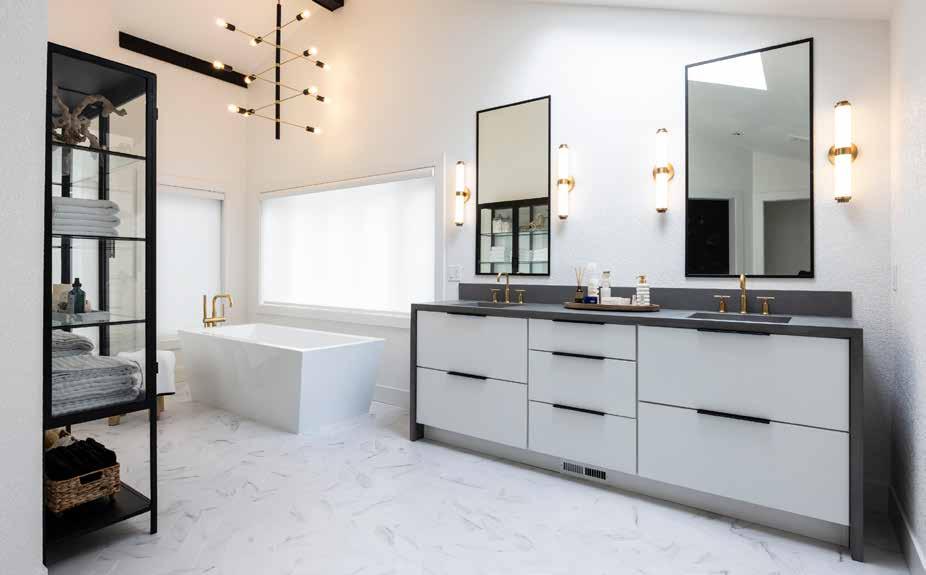
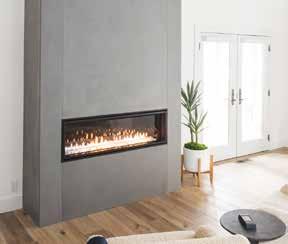
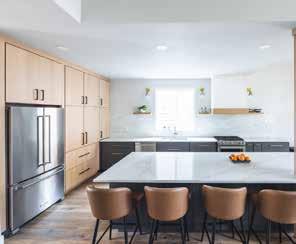
A newly completed multigenerational compound in Bend unites two connected yet independent homes for a family relocating from Austin. Designed with shared outdoor spaces, wide Texas-inspired porches, and abundant natural light, the project reflects Bend Craftsmen Company’s craft-driven approach through amenities such as alder woodwork, European oak floors, cedar ceilings and a stone fireplace.
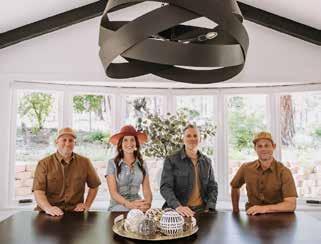
Bend Craftsmen Company is an intentionally small firm rooted in integrity, collaboration and a deep respect for the homes people live and work in. Founder Hank Hill has spent more than a decade shaping a practice where craftsmanship is both process and principle. What began as a boutique remodeling company has evolved into a collective of dedicated designers, trade partners and artisans committed to quality, sustainability and genuine client relationships.
BEND CRAFTSMEN COMPANY
Q&A

As the founder of Bend Craftsmen Company, Hank Hill reflects on the firm’s origins, its values and its green-building practices.
How did your company begin, and what’s the origin of the name?
I started Bend Craftsmen Company in 2012 as a small remodeling company after years of working as a finish carpenter and project manager. The name “Craftsmen” comes from my time in Charleston, South Carolina, where I learned carpentry under a company called Palmetto Craftsmen. The word represents more than a style—it’s a philosophy. For me, it’s about enlisting highly skilled craftsmen and craftswomen who take pride in their work and approach every project with integrity. I’ve always wanted Bend Craftsmen Company
to stay small—a boutique builder that feels like a collaborative collective of designers, trade partners, vendors and craftspeople united by a shared commitment to quality.
What sets Bend Craftsmen Company apart from other Central Oregon designbuild firms?
We’re intentionally small, and that’s by design. Remaining boutique allows me to be deeply involved in every project, from the very first meeting through post-construction follow-up. That hands-on connection builds trust and creates an intimate, enjoyable experience for clients.
The relationships we build become just as meaningful as the work itself. The journey with our clients is what distinguishes us from larger designbuild firms in the region.
Do you have a signature style or distinguishing features?
While every project is tailored to the client’s vision and the designer’s direction, many of our builds lean toward a “mountain modern” or contemporary Central Oregon aesthetic. As a certified Sustainable Homes Professional through Earth Advantage, I naturally incorporate energy efficiency and sustainability into every project.
We consistently build beyond code, focusing on healthy materials, nontoxic finishes, tight building envelopes and excellent air circulation. Even smaller choices like waterwise fixtures or advanced framing for extra-thick insulated walls reflect our commitment to energy-smart design. Not every client goes for full green
certification, but I always ensure they understand their options.
How does your green building approach differ from traditional models?
Our green building approach goes beyond meeting energy codes. It’s about creating homes that are healthier for people and the planet. We emphasize nontoxic materials, airtight construction balanced with fresh-air systems and sustainable strategies such as radiant heating and highperformance insulation.
We view the home as a living system. Advanced framing and specialized airsealing methods help achieve impressive efficiency, comfort and indoor air quality. It’s a balance of building science, craft and conscience—something I take a lot of pride in.
Where do you see your firm focusing as Central Oregon grows?
I plan to keep Bend Craftsmen Company small, concentrating on remodeling and intimate custom builds. Staying small preserves that high-touch experience and quality that define our work. I may eventually bring on another project or office manager to balance growth while maintaining that client-focused experience. Ultimately, my goal is to continue crafting homes that reflect care, collaboration and craftsmanship— values that feel especially meaningful as the region evolves.

BALDHEAD CABINETS Built to Last
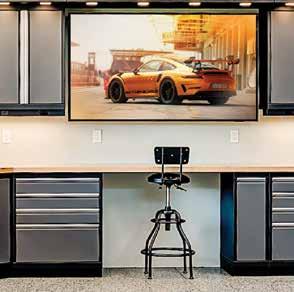
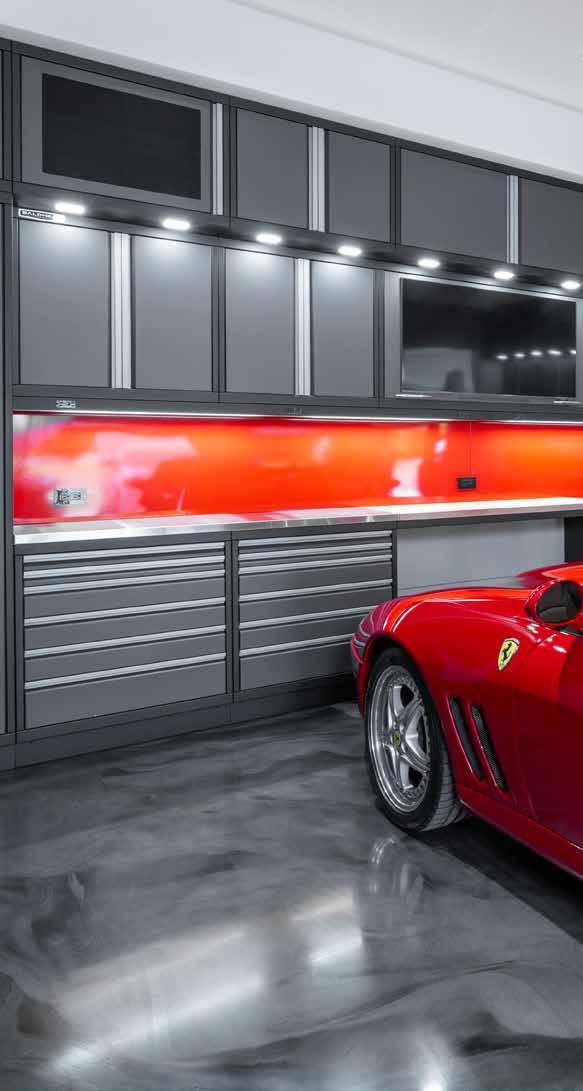
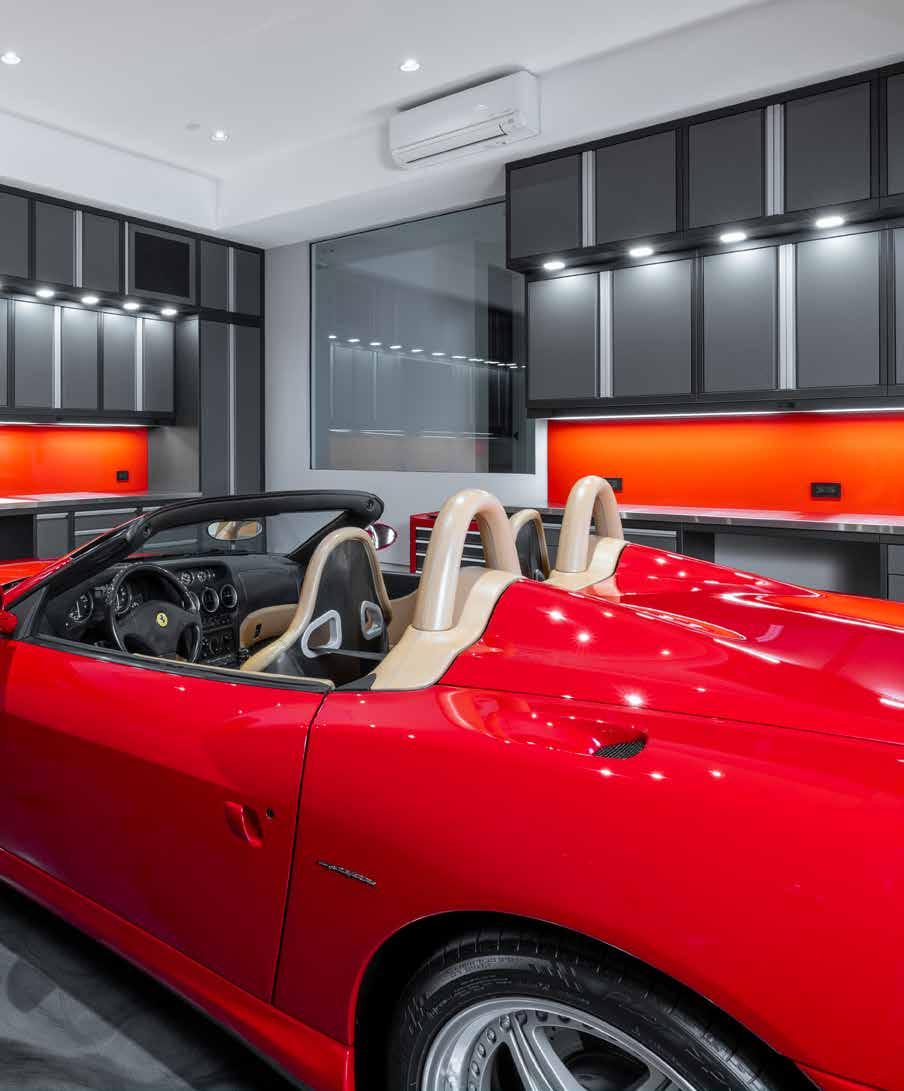
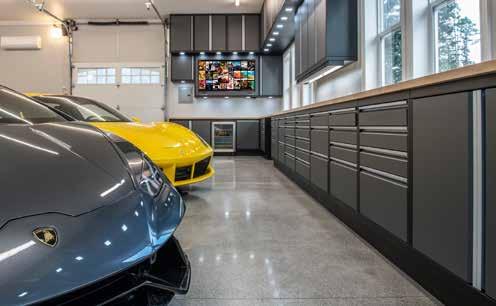
For more than 40 years, Baldhead Cabinets has been in the metal manufacturing business, and the past 20 years have been spent crafting high-end metal cabinets that transform garages, barns and utility spaces into durable, well-designed extensions of the home. Family-owned and operated, the company moved to Bend more than 20 years ago and manufactures everything in-house. The company also travels across the country to install its systems, ensuring every detail is done right.
Built to last in any environment, Baldhead’s precision-engineered cabinets appeal to homeowners who value craftsmanship, longevity and clean design. CEO Peter Fleming says that while their cabinets are made of steel, the company’s real strength comes from its focus on family, handson work and respect for customers who expect excellence.
In Central Oregon, where outdoor living is part of everyday life, homeowners rely on their garages and storage spaces to hold gear for biking, skiing, camping and more. Baldhead’s systems are designed for that lifestyle, from heavy-duty shelves for equipment to secure cabinetry that keeps gear clean, organized and protected from temperature swings.
Q&A

We go inside Baldhead Cabinets with CEO Peter Fleming
Baldhead Cabinets has a long history. How did it all begin?
My parents started the company more than 40 years ago in Southern California. My mom was actually the one who came up with the idea. They were remodeling their home, and when it came time to do the garage, they couldn’t find anything that was well built—everything on the market was cheap. She said, “Why don’t we make cabinets out of metal?” My dad and our engineer sat down together and designed the first ones, and it took off from there.
How did the business make its way to Bend?
We’d been in Southern California for years, but it wasn’t getting any easier to run a business there. A client who had moved to Bend invited my parents up for an installation, and they fell in love with the area. Over a few years, they explored the idea of moving.
Eventually, in the early 2000s, we relocated everything—family and business. Bend has been a great fit ever since.
What makes Baldhead Cabinets different from other storage brands?
We manufacture everything right here in the U.S. Our team handles the entire process—design, production and installation. A lot of other companies just sell you boxes and leave you to figure it out. We’re involved from start to finish. That’s important to our customers, and it’s what sets us apart.
Tell us more about your products and process.
About half of our work is custom manufacturing for other companies, and the other half is our own cabinet line—mostly high-end residential garage systems. In Central Oregon, we focus heavily on garage systems that help homeowners store and organize outdoor gear—skis, bikes and camping supplies. Our products also help with overflow storage from the house,
such as holiday decor, yard tools, bulk supplies and seasonal clothing. We also help organize storage for barns, kitchens and utility spaces. Customers or designers reach out with ideas and dimensions, and we go back and forth on the design. Once it’s finalized, it takes about four to six weeks to build and ship. If we’re doing the install, we fly out to a client’s location, deliver our product and get the installation done in a day.
How would you describe the quality difference?
It’s like comparing a cheap car to a Porsche—both get you there, but one’s built to a whole different standard. Our clients notice that difference. They’re often building their last home and want every detail done right. For them, the garage isn’t just storage or a place to throw their junk; it’s part of the home’s overall design. That’s where we come in.
BALDHEAD CABINETS
20522 Builders St., Bend baldheadcabinets.com

INTERZONE INTERIORS
Crafting Style
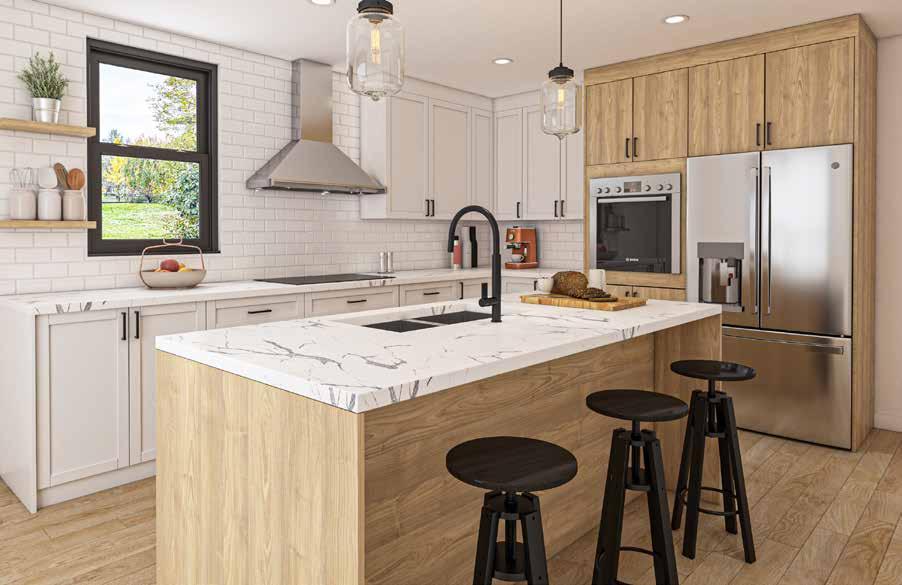
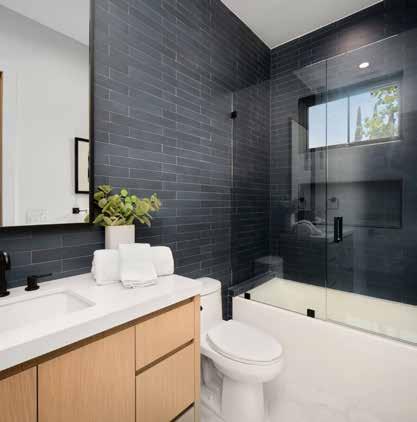
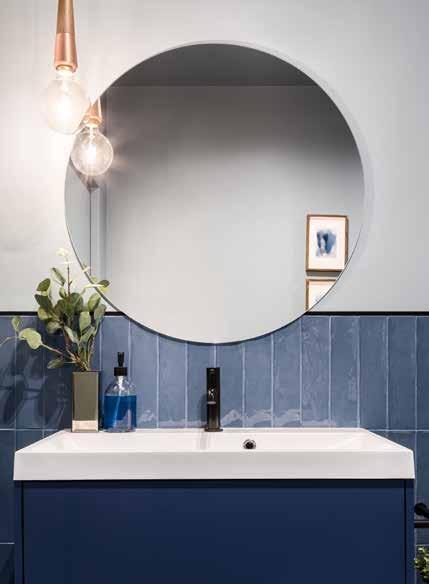
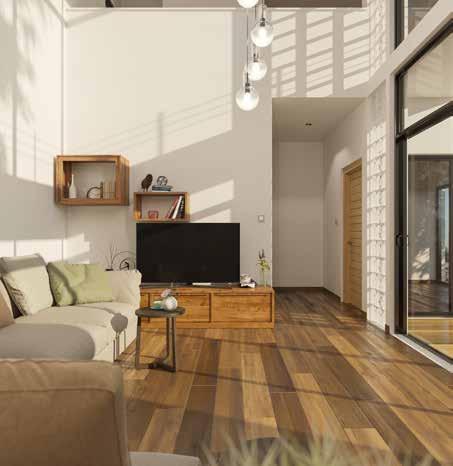
For more than two decades, Sam Paz, owner and founder of InterZone Interiors, has built a reputation for craftsmanship and trust among Oregon’s building contractors and homeowners. Starting as a one-man flooring installer in Springfield in 1998, Paz has grown his business into a family-owned, full-service interiors company with showrooms in Springfield, Eugene and Redmond. InterZone Interiors now offers a wide range of products, including solid wood and luxury vinyl flooring, carpet, tile, countertops, cabinetry and window coverings—a one-stop resource for anyone needing help with restoration or building projects. Known for quality work and dependable service, Paz believes success comes from hard work, community connections and a deep respect for his customers. As the company continues to expand, Paz shared his focus: providing honest service, lasting quality and interiors that reflect the lifestyles of Oregonians.
Q&A

Sam Paz, owner and founder of InterZone Interiors, reflects on his origins and how his services have expanded over the years.
How did you get your start in the flooring business?
I started working with my brother, installing wood floors in Lane County back in 1998. About five years later, in 2003, I decided to start my own company. In the beginning, it was just me refinishing and repairing floors, learning the products and dealing with vendors. Eventually, I opened a showroom so I could get materials directly from suppliers and serve customers faster and better.
What kind of projects did you focus on early in your career?
At first, it was all about solid hardwood floors—oak, maple, Brazilian cherry. Back then, there were no vinyl planks, just real wood. I did sanding, staining and refinishing, creating custom colors
and finishes. It was hands-on work, and I still love it. There’s nothing like seeing the grain come to life after sanding and applying the finish.
How has InterZone Interiors grown since those early days?
Over time, I added more products and services. After hardwood floors, we expanded into installing carpet, tile and countertops. Now we also offer cabinets and window coverings. That’s why we changed the name from InterZone Flooring to InterZone Interiors, because we do more than just floors. I now have about seven employees in sales and another 10 to 14 installers. We’re proud to keep everything in-house, ensuring the best quality from start to finish.
What types of materials are most popular with your customers?
For flooring, luxury vinyl plank (LVP) has become very popular because it’s durable and waterproof, which is perfect for homes with pets or kids. Still, my personal favorite will always be solid wood floors. They last a lifetime. For carpets, we carry several lines, but I prefer brands like DreamWeaver DWS Select because they are high-quality, pet-friendly and easy to maintain. In Central Oregon, we see a lot of demand for natural textures and warm tones that fit the mountain lifestyle.
Tell us about your countertop and tile offerings.
We install quartz, granite, quartzite and marble—all fabricated at our Springfield shop. Quartz is a lowmaintenance and budget-friendly option, while natural stone offers a unique beauty. For tile, we focus mainly
on floors, showers and backsplashes. We work with both production and handmade tiles, depending on the client’s design and budget.
You also launched a new business, right? Yes, two years ago we started Giant Custom Builders, a Springfield-based company offering restoration, remodeling and new construction services. It handles restoration and remediation for fire, water and mold damage as well as rebuilds. It fits perfectly with what we do because we already have access to all the materials and trades needed for repair and remodeling.
What drives you to keep growing your business?
I love what I do. I enjoy working with customers and my employees, and I’m proud of what we build together. My vision for the future is to continue providing high-quality service and to train the next generation, so that when I retire, the legacy will continue. It’s about leaving a legacy built on honesty, trust and craftsmanship.
INTERZONE INTERIORS
2605 S 1st St., Ste. 3, Redmond interzonefloors.com

HOME SPOTLIGHT
Past to Present
A Craftsman in Old Bend gets a slick renovation
WRITTEN
BY
CASEY HATFIELD-CHIOTTI
PHOTOGRAPHY BY
CHERYL MCINTOSH
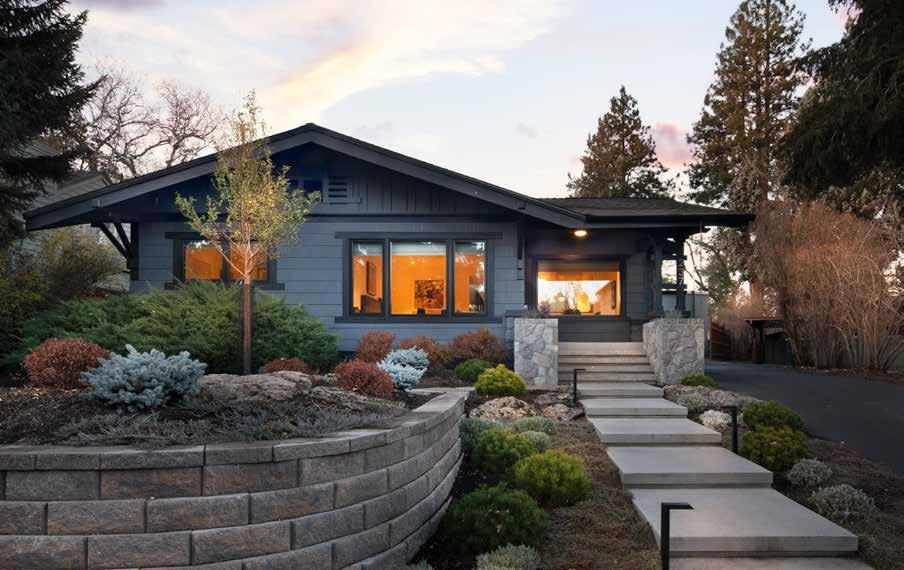
Craftsman homes feel warm and welcoming, often with interesting details, but they can feel cramped compared to modern, open-plan homes. When Howard and Stephanie Natinsky began looking for a home in Bend, they settled on a 1918 Craftsman on a quiet street. The well-cared-for house was 1,500 square feet with a galley kitchen and three small bedrooms. The couple hired architect Thomas Fagan of Studio Mas to remodel the home. He was excited about the prospect of respecting the history while modernizing interior spaces and adding square footage with a contemporary wing.
“Working with historic architecture causes you to do something a little unusual. I like that because it feels more personal,” said Fagan.
The result is a home that’s an intriguing juxtaposition between traditional architecture and modern composition.
SMOOTH TRANSITION
After years of living in Chicago’s Lincoln Park, the Natinskys liked that the house near Trinity Episcopal Church was within walking distance to the river, multiple parks and downtown.
“We like the pedestrian life,” said Howard, a developer in the Chicago area for more than three decades. They also wanted more light and indoor-outdoor flow.
When starting any remodel of a historic structure, it’s important to ensure the structure is sound. This home was built well and featured interesting exterior details, including a basalt foundation with lava-rock column bases. “It made practical sense to continue working with it,” said Fagan. The homeowners chose basalt planters in the front and back to tie in with the original architecture. The home’s shingle and tongue-and-groove cedar siding has a solid stain in a cool, dark gray with a hint of green.
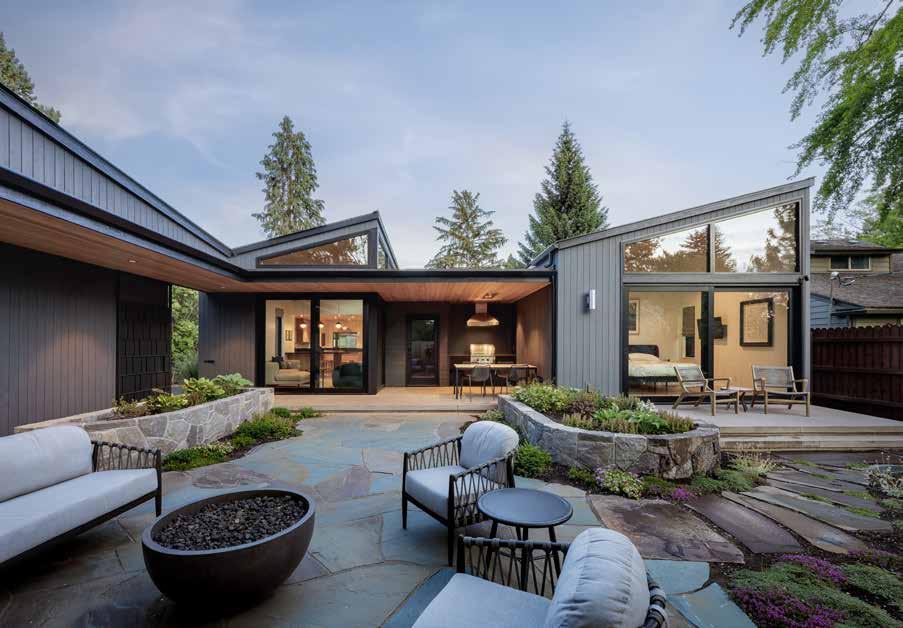
Fagan designed the light-filled addition in the back with
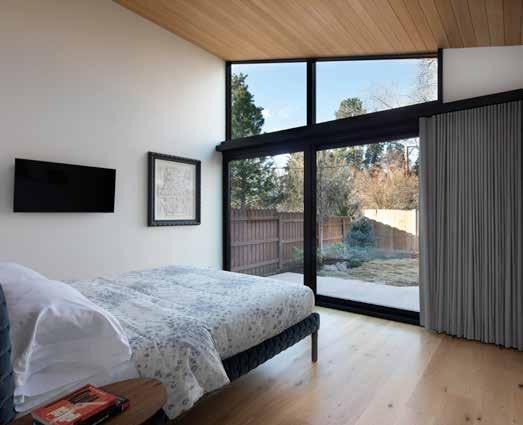
tall, slanted ceilings to maximize light. It includes a family room, primary bedroom and bathroom, and a garage with a workout room, creating a courtyard feel in the backyard.
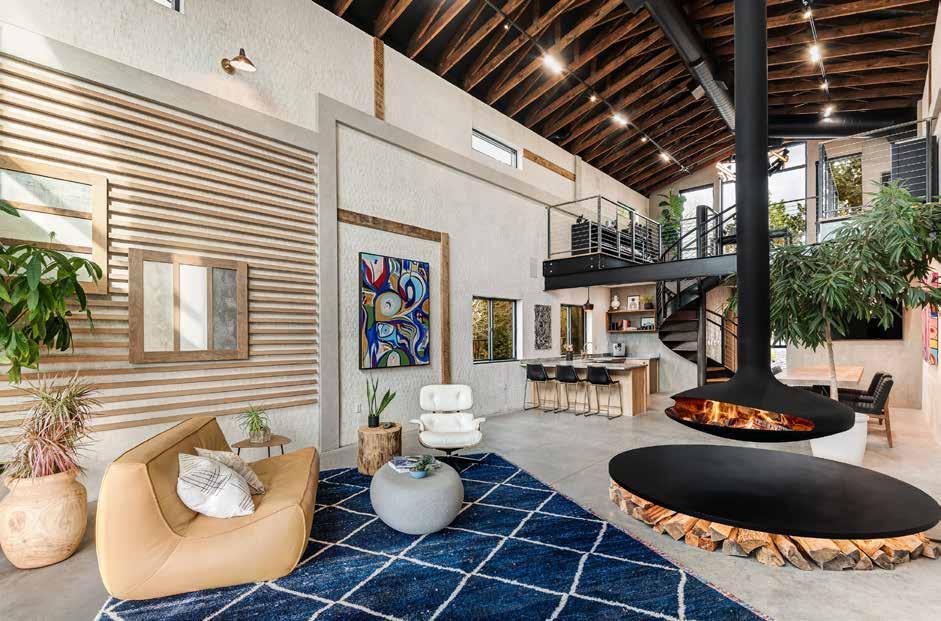
Original interiors were gutted and painted white to tie in with the new part of the house and create a more modern, blank canvas for the Natinskys’ mid-century furniture and colorful collection of fine street art.
INTENTIONAL SPACES
“You can make a smaller house live large and comfortably if you’re intentional and careful about how all the spaces are laid out,” said Fagan.
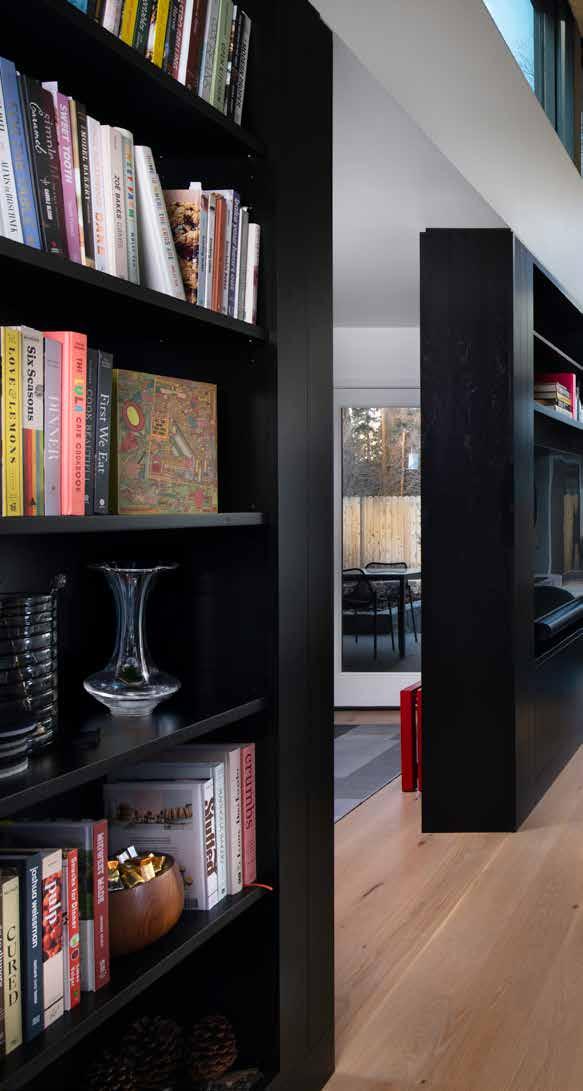
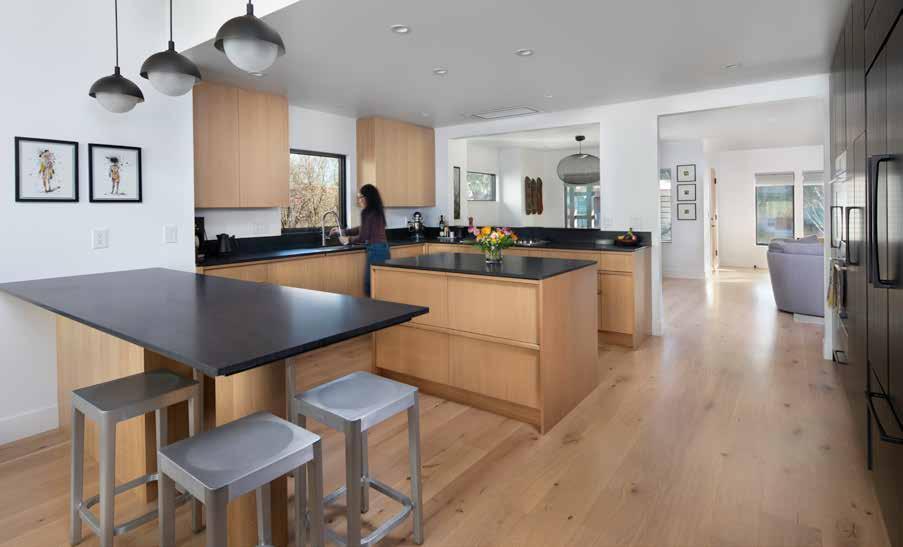
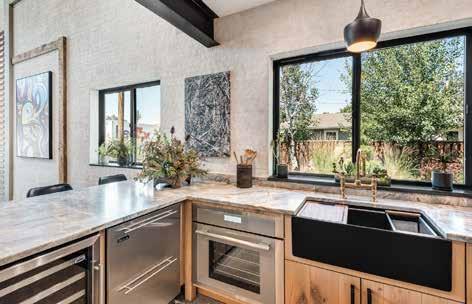
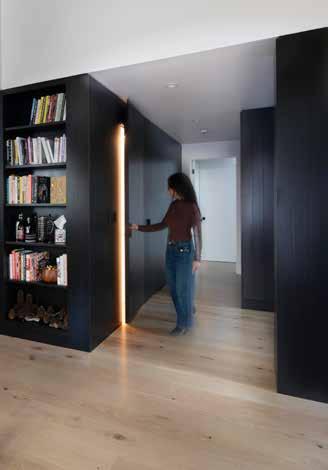
The remodeled kitchen, with rift white oak cabinets and black granite counters, marks the transition from old to new. An ebony-stained wall on one side—with shelves holding a rainbow of cookbooks, cabinets, the refrigerator and wall ovens—contrasts with the lighter oak wood floors and also creates a hallway of sorts.

“We took that dark line from the front to the back so that the rear section of the house kind of ties together, and then it opens up,” said Howard.
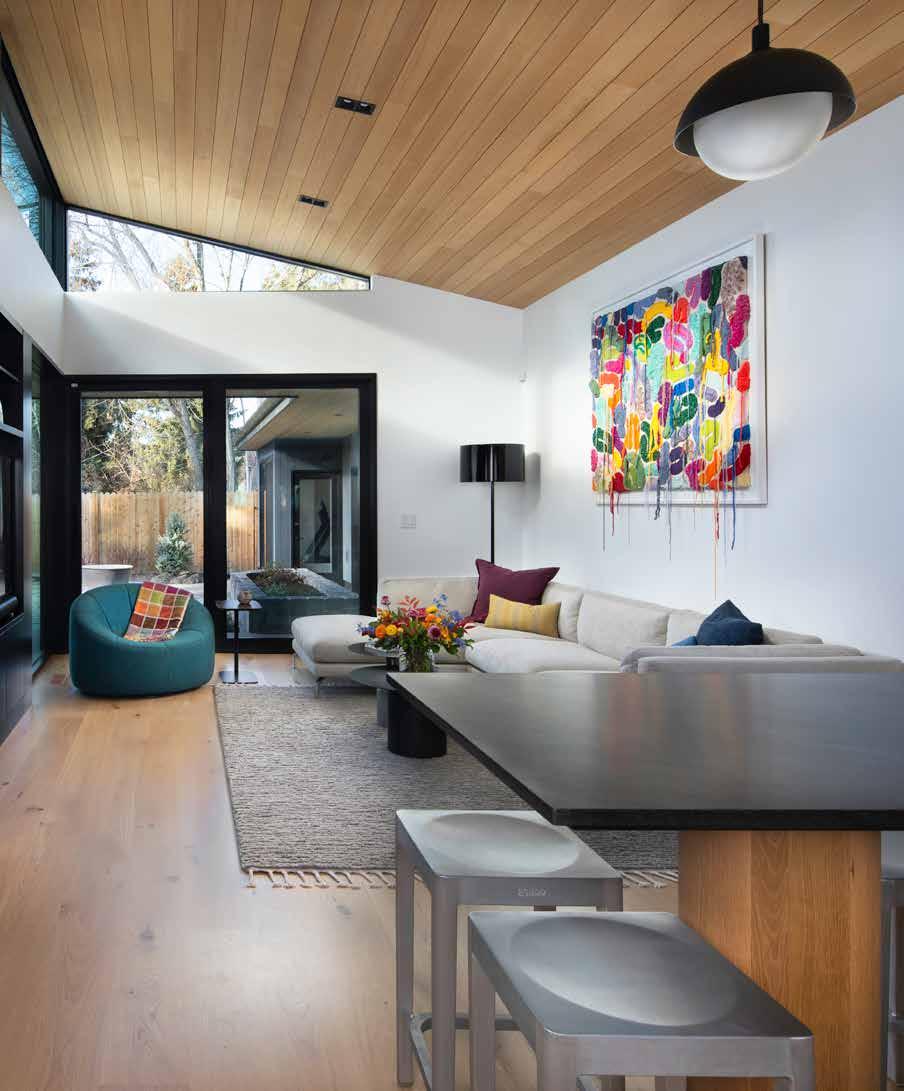
The family room—with a high, slanted, wood-paneled ceiling and sliding glass doors—showcases the couple’s preference for modern furniture, featuring an eyecatching dark green Ligne Roset Pumpkin swivel chair and a light gray sectional from Design Within Reach. A brightly colored textile art piece by Chicago artist Lefty Out There (aka Francesco Campanella) is a focal point on one wall.
ALL IN THE DETAILS
Other interesting pieces in the Natinsky’s collection include a Robert Rauschenberg print in the guest bedroom and a Shepard Fairey original over the soapstone fireplace in the living room, which also features more sculptural

“You can make a smaller house live large and comfortably if you’re intentional and careful about how all the spaces are laid out.”
mid-century furnishings, like a vintage oak Knoll coffee table and a Moooi fixture over the dining table.
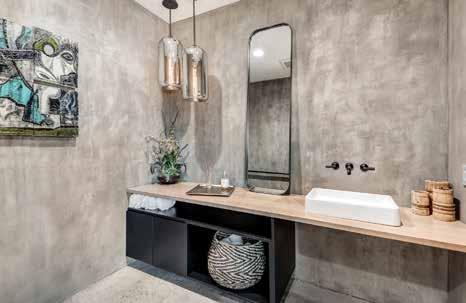
More thoughtful surprises can be discovered throughout the 2,300-squarefoot home, like a powder bathroom behind a peek-a-boo door with inky blue-green tiles and a crackle glaze from Encore Ceramics in Southern Oregon. The
kitchen’s light colored oak cabinets have an integrated edge pull. A continuous piece of oak milled into an L shape; it’s a detail that’s clean and modern but nods to Craftsman style.
“Modern architecture can feel cold and sterile, but something doesn’t have to look traditional to introduce a warm, handmade quality,” said Fagan.
Older houses may have quirks, but working with what’s there can create opportunities and spark more creativity.
Architect: Thomas Fagan, Studio Mas Architecture | Interior Designer: Lisa Rhee Rokosh, Brass Tacks | Builder: Copperline Homes | Cabinets: 541
Cabinets | Landscape Design: Cahill Design | Hardscaping: Landscape Elements

HOME SPOTLIGHT
Thematic Spaces
A builder and his wife buck modern home trends with warm tones and dramatic finishes
WRITTEN BY CASEY HATFIELD-CHIOTTI
PHOTOGRAPHY
BY
JENN MONTOYA
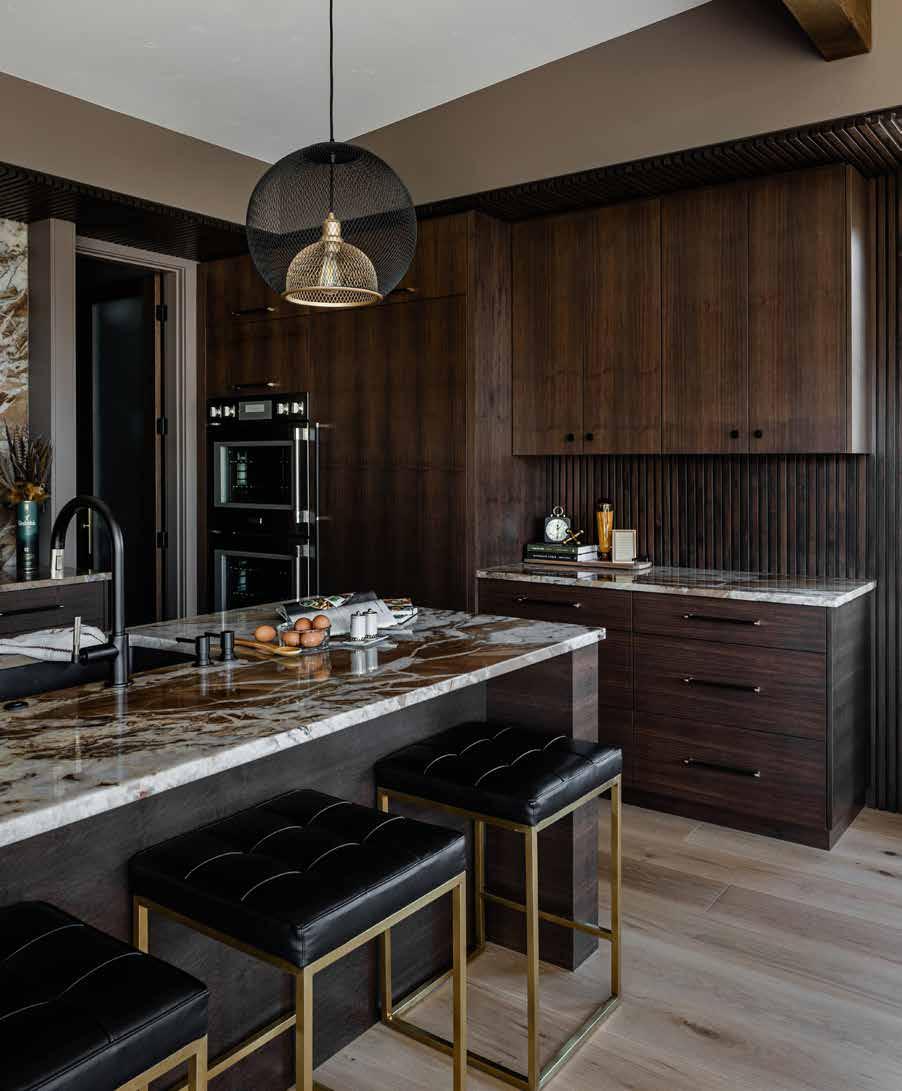
Some Discovery West homes sit on the edge of a green space, a tree-lined ravine with a trail running through its center. Builder Aaron Salvesen and his wife Heather decided to build their family home on one of these prized lots. With interiors featuring walnut wood and a color palette of chocolate brown, gold and black, the modern home exudes warmth and richness.
“Aaron is the one who talked me into doing a dark wall color,” explained Heather, who often works with her husband to choose finshes in their projects, but was initially nervous about the deep beige with red undertones that covers ground-floor walls. “I thought it’d be moody, edgy and dramatic,” said Aaron. The risk ultimately paid off, setting it apart from the ubiquitous white walled interiors of other modern homes. It also inspired Heather to select
bold finishes and fixtures, such as the cork wallcovering with gold leaf in the primary bedroom and the bird wing-shaped Guild Manor entry pendants above the floating staircase. Eyecatching natural Splendido Quartzite, with veins the color of single malt Scotch, covers many of the home’s surfaces.
A third-generation builder who learned his trade in the Seattle area, Aaron founded Salvesen Homes in Bend in 2010. He designed the floor plan and built the two-story home with three bedrooms and two-and-a-half bathrooms.
“Aaron knows all the components of building so well,” said Heather. “He is a perfectionist.”
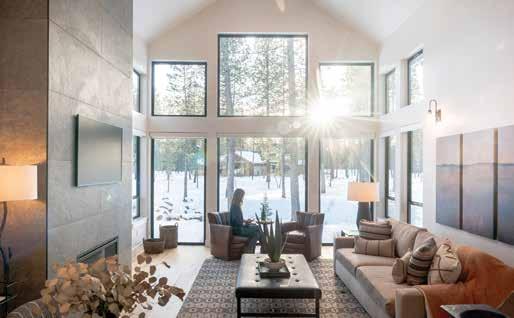
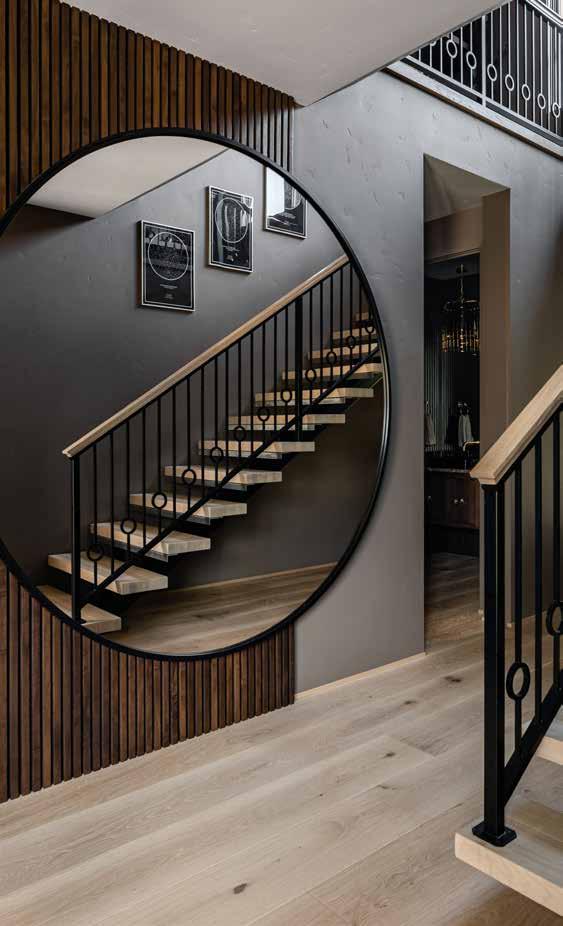
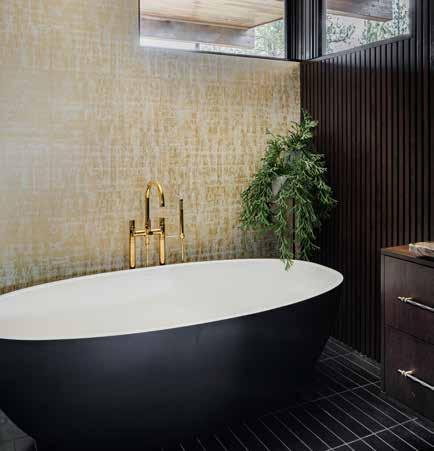
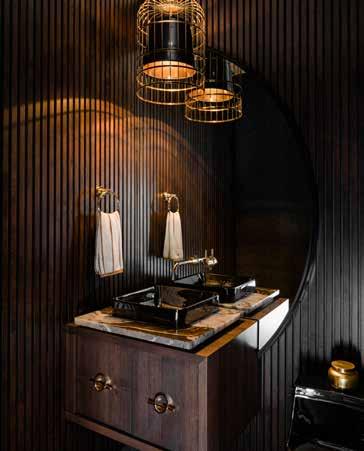
Examples of his craftsmanship include the hutch in the dining room, featuring brass hardware that appears to be a piece of furniture but is built in, and the fluted wood paneling in the entryway, powder bathroom and primary bath. Each panel is a separate piece of wood carefully placed and stained. To break up the linear lines, the couple decided to incorporate round shapes, such as the 8-foot-wide round mirror in the entryway—the lighting behind it gives it a subtle glow. A halfmoon mirror in the powder bath mimics the same pattern. The circle motif is echoed on the custom steel stair railing and etched into the black hood above the Thermador range. Despite the home’s moodier finishes, it doesn’t feel dark. The living room—with a high, angled ceiling—features large picture windows that frame views of ponderosa pine trees and let in abundant natural light. The white brick fireplace and white oak floors add a touch of brightness.
Multiple windows are a Salvesen signature, and Aaron dreamed up the decorative balances throughout the home, concealing electronic shades that resemble crown molding and don’t detract from the view or aesthetic. “I wanted it to look intentional and not like an afterthought,” said Aaron.
Heather loves to entertain. A large sliding glass door makes it easy to open the main living area, allowing people to mix and mingle on the patio with a fire-rock water feature. The jewel-box bar, backed with glittering gold mosaic Ann Sacks tile, is where she displays a dark green 100-year-old margarita set given to the couple by Aaron’s grandmother. “I believe in using the things that bring you joy and evoke memories, not tucking them away,” said Heather.
Other meaningful pieces are displayed throughout their home, such as a framed print of the Tower Theatre, which stokes memories for Heather, who was born and raised in Bend. Aaron created the floating shelves on the second floor, the kids’ zone with two bedrooms and a bonus room, specifically to display the family of five’s extensive collection of large-scale Lego sets, works of art in their own right.
The couple is proud that the home has both character but a feeling of cohesion.
“There’s this consistency to the whole house,” said Aaron.
Builder: Salvesen Homes | Architect: Jason Todd Home Design | Interior Design: Heather and Aaron Salvesen and KMR Interior Design | Landscape Design: LandEscapes


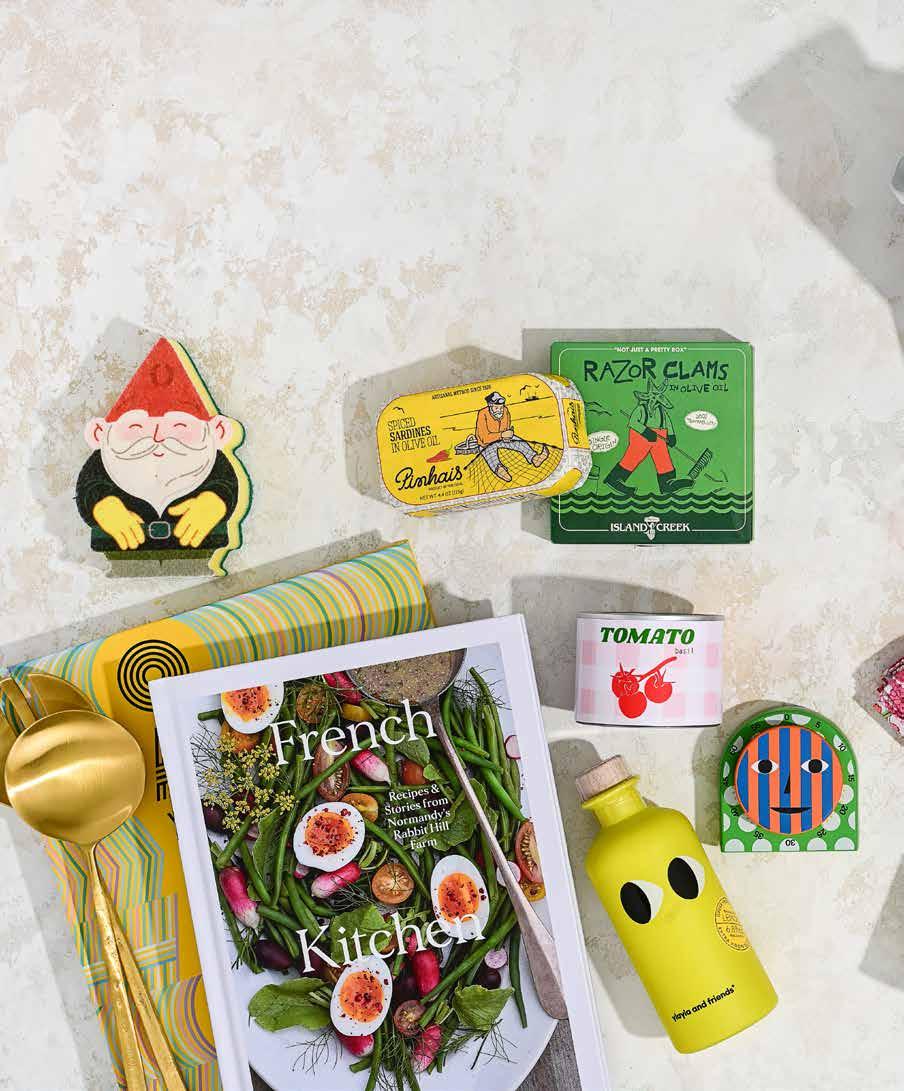
Beat the chill by spending an evening in the kitchen, inspired by Iris & Stout
PHOTOGRAPHY BY ALYSON BROWN

1. GNOME SPONGE, $7
2. SPICED SARDINES, $10 RAZOR CLAMS, $25
3. OAXACA COOKBOOK, $45 | FRENCH KITCHEN LESSONS COOKBOOK, $40
4. BRASS WABI SERVING UTENSIL SET, $44
5. TOMATO BASIL SOY CANDLE, $25
6. EVERYBODY KITCHEN TIMER, $48
7. YIAYIA AND FRIENDS EXTRA VIRGIN OLIVE OIL, $30
8. CIAO PAPPY MARINARA CLASSICO, $14
9. FINEX 12” CAST IRON SKILLET, $230
10. GOOD HAIR DAY PASTA, $16
11. CLOTH NAPKINS, $44
12. FAT GOLD EXTRA VIRGIN OLIVE OIL, $32
13. OLIVES & HERBS SOY CANDLE, $21 | SEA SALT SOY CANDLE, $21
ILLUMINATION
The New Rules of Lighting
Designers share how thoughtful layers, sculptural fixtures and mood-first planning elevate every room
WRITTEN BY CATHY CARROLL
Walk into any beautifully lit home and you can feel it instantly. Lighting sets the stage—a relaxing glow for winding down, a romantic shimmer for evenings in or bright clarity for focused tasks. Filmmakers and actors have long known the truth: Light shapes how we look, feel and even behave. The same is true for our homes. Thoughtful lighting doesn’t just brighten a space, it sets the stage for daily life.
One of the strongest lighting shifts local designers are embracing is a move away from blanket illumination and toward intentional, mood-driven layering. Kate Darden of Kate Darden Interior Design said that rather than relying on overhead recessed cans, she guides how a room feels and functions by using softer, sculptural sources.
“Where there are cans in the ceiling, there’s also a chandelier, a table lamp,
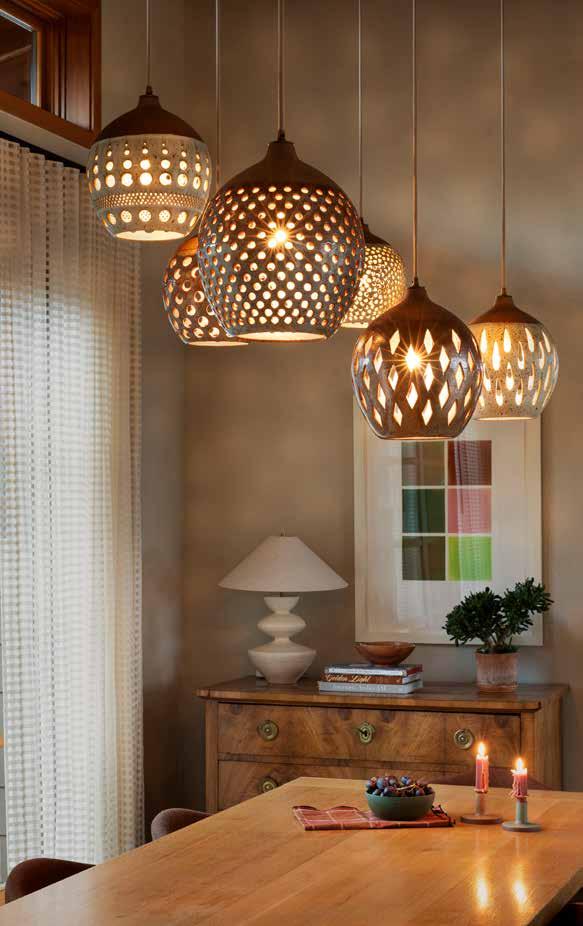
“They act like artwork, floating on the wall to bring softness to all the linear forms.”
an art light,” she said. “Walk into a bedroom, you want to set a mood—a light in the corner over a chair. At the bedside table, you turn on a different kind of light. And with home automation becoming more popular, it’s easier for people to do that from their phone or tablet.”
Lighting choices are becoming a foundational step in shaping a home’s look, mood and personality. “We bring lighting into the conversation right at the start,” said designer PJ Hurst of PJ Hurst DESIGN. In a recent entryway, she used a trio of alabaster sconces mounted on reeded white
oak, creating a larger sculptural object that adds a welcoming glow. “They act like artwork, floating on the wall to bring softness to all the linear forms,” she said.
In the same project, Hurst used a cloudlike Artemide Logico chandelier in the dining room, which softened the modern architecture without competing with windows and views of clouds and mountains. A slim linear walnut light over the island brings a cohesive, calm feeling to the space. Hurst and Darden also leverage lighting to add fun and interest to little powder rooms, which frequently lack









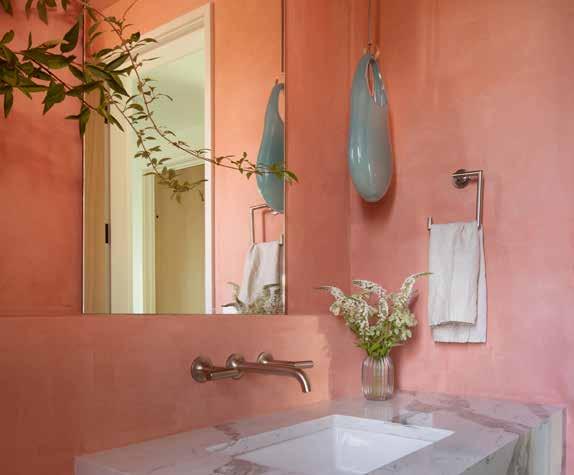
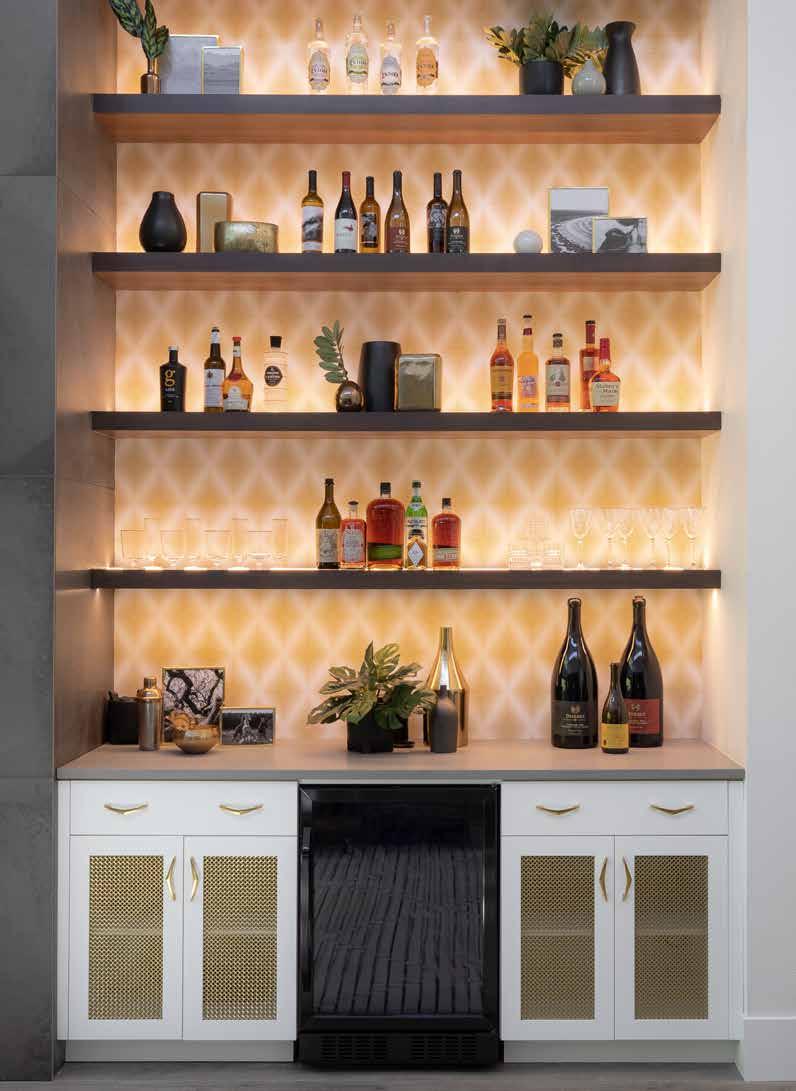
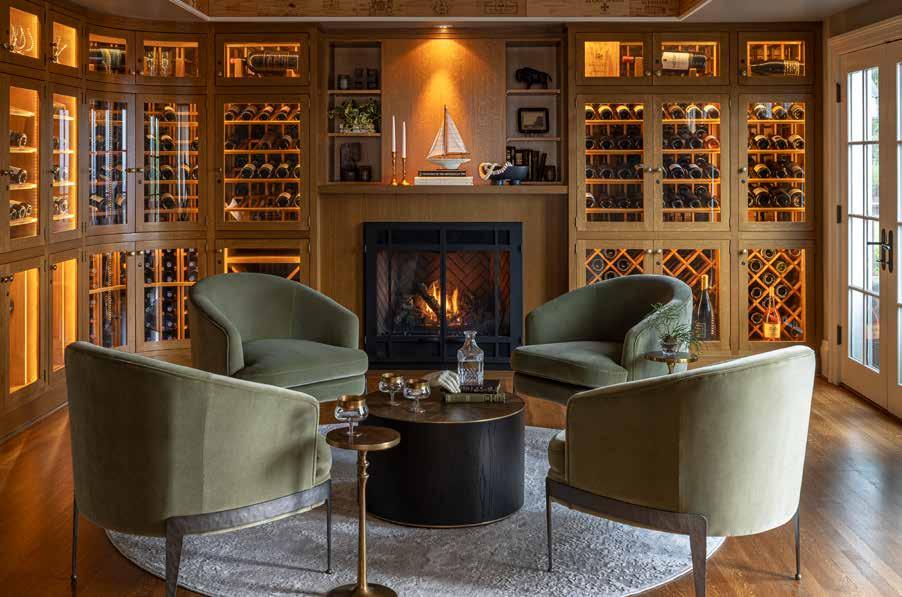
Top: Soft lighting warms up dark corners, creating inviting atmospheres for small spaces.
Bottom: Sconces and fixtures highlight works of art when mindfully placed on a wall.
windows. In one project, Hurst used a sculptural blue glass sconce for playful contrast, almost like a piece of jewelry. “The shape and color bring an energy to the room that keeps it from feeling too serious,” she said.
When lighting becomes a design conversation rather than an afterthought, rooms take on depth, personality and warmth. This turns architecture into experience—and transforms everyday spaces into environments where you feel genuinely at home.







The Chalet
LEACH
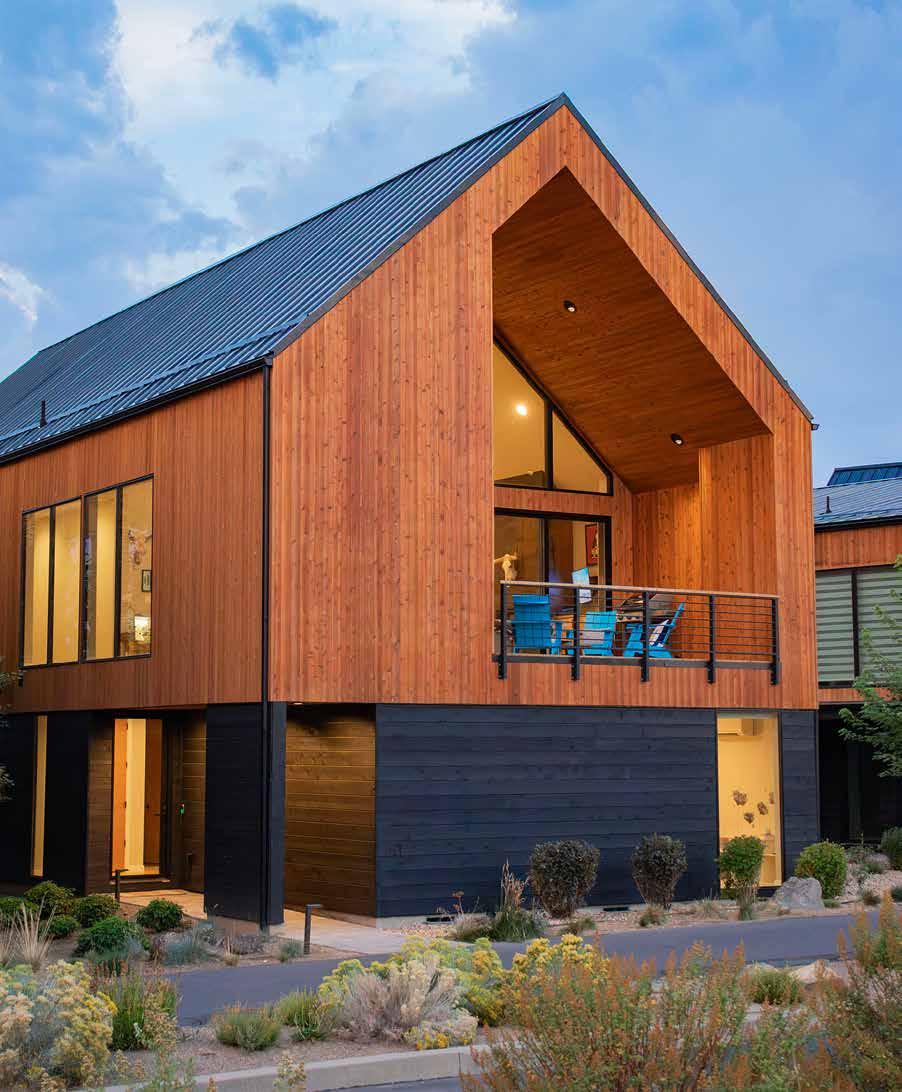
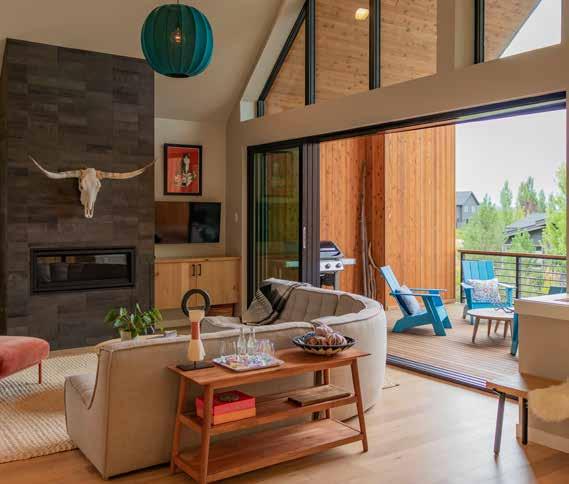
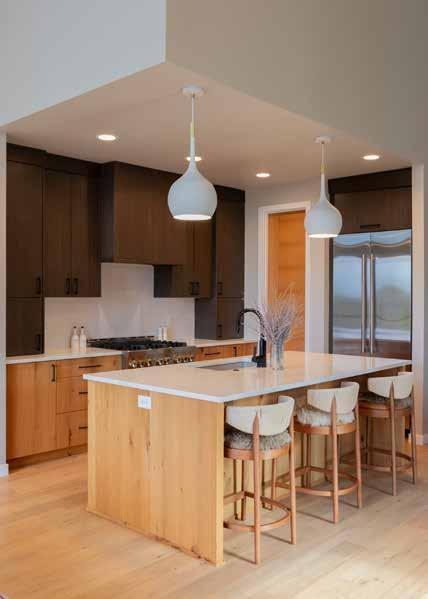
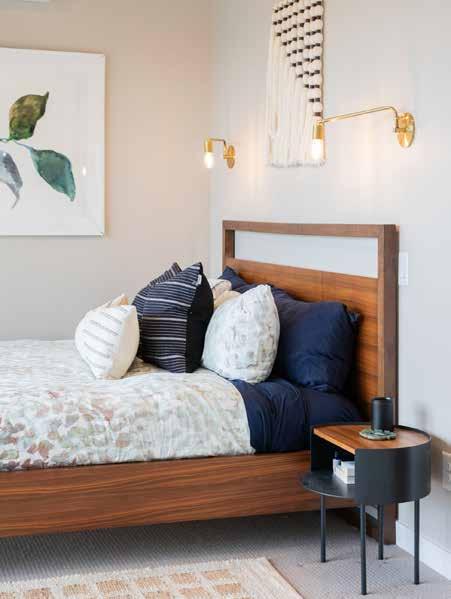
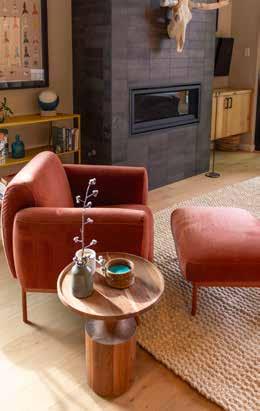
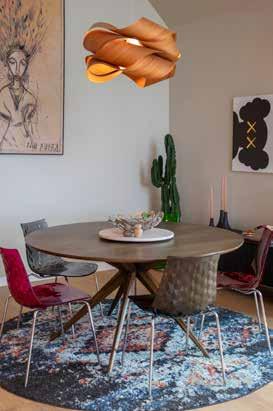
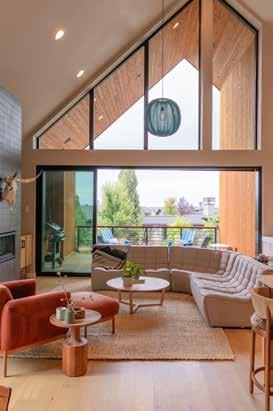
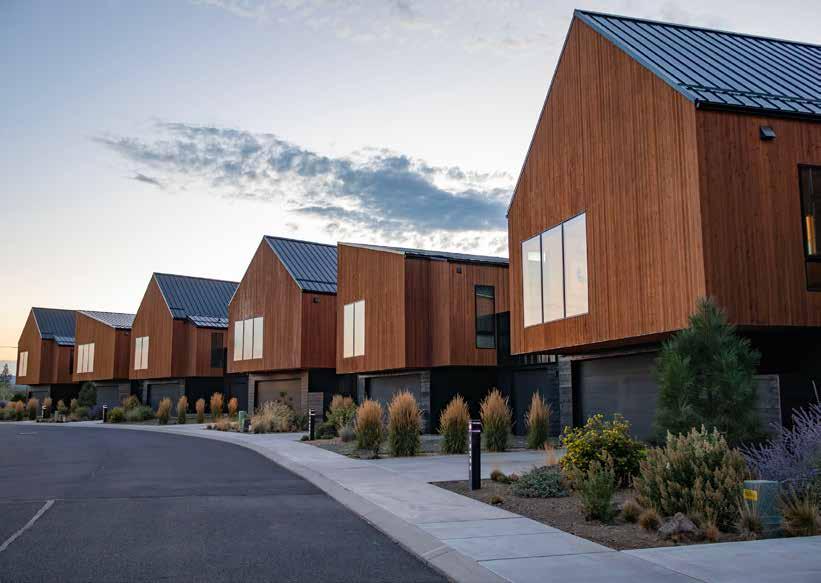
A collection of 12 Chalet townhomes rises along a ridge above SW Century Drive as it climbs toward alpine forests. Developed by Woodhill Homes of Bend, each Chalet features expansive upper-level windows that capture light and partial mountain views. Architect Sean Cho brought a fresh perspective to the modern aesthetic and reverse-living layout, creating a design well-suited to its surroundings.
PHOTOGRAPHY BY EHPRIL
Developer: Woodhill Homes | Architect: Sean Cho

Central Oregon’s Leading Design + Build Remodel Experts
We make everything kitchen and bath easier!
Surface Kitchen & Bath, Bend’s only full-service design center offering custom cabinets and in-house countertop fabrication — no middlemen, no delays. From design to install, we bring your vision to life in one seamless process.
One team. One design center. One stunning result.
541-213-2834
20794 NE High Desert Lane, Bend, OR 97701 www.surfacekb.com
We are a purposely kept small business, with a hands-on approach by the owner of the company, working from the very early stages of design and pre-construction all the way through construction and post-construction. Our goal is to provide an intimate, pleasant experience along the way that exceeds expectations in both quality and craftsmanship, while providing an unparalleled working relationship.




Opening February 2026.






856 NW Bond Street, Hardware Bend Building




Join our design trade program and discover full bene ts special pricing custom sizes exclusive nishes





GARDEN & LANDSCAPE
Winter Sanctuaries
Indoor care for cacti and succulents
WRITTEN BY SHEILA G. MILLER
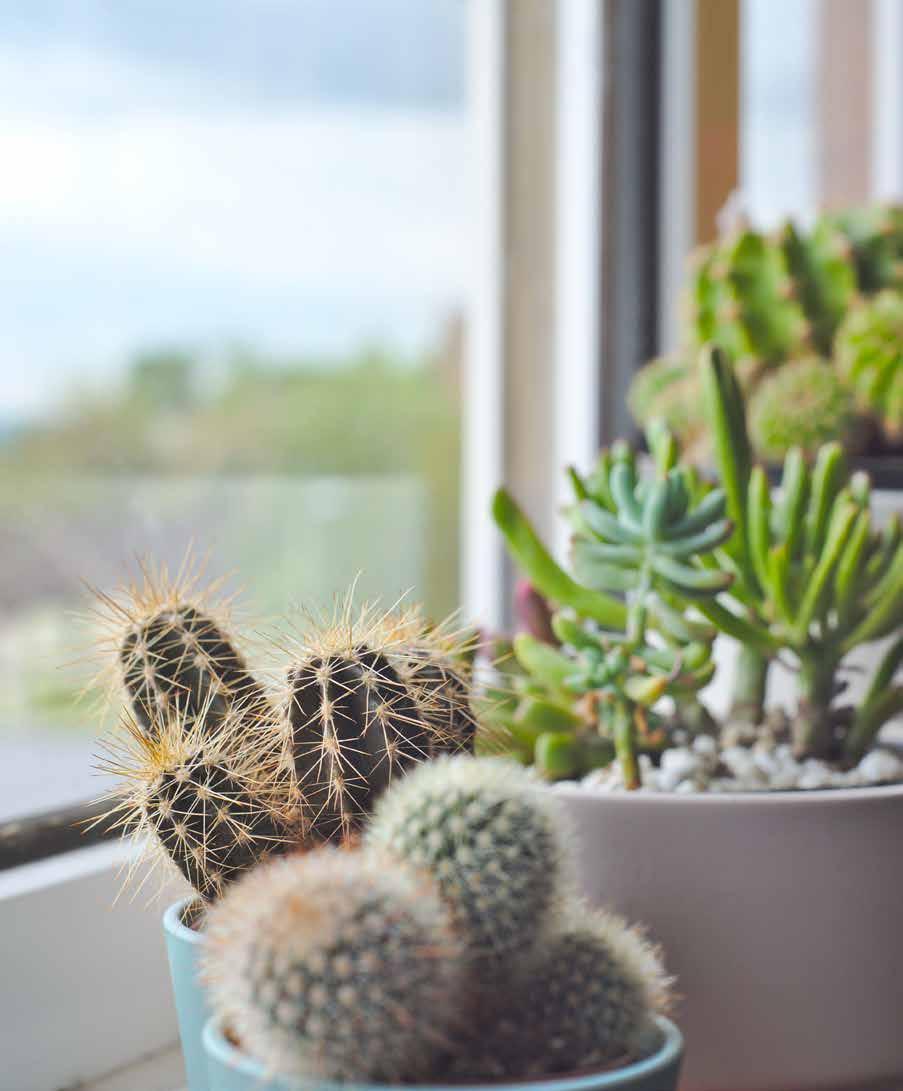
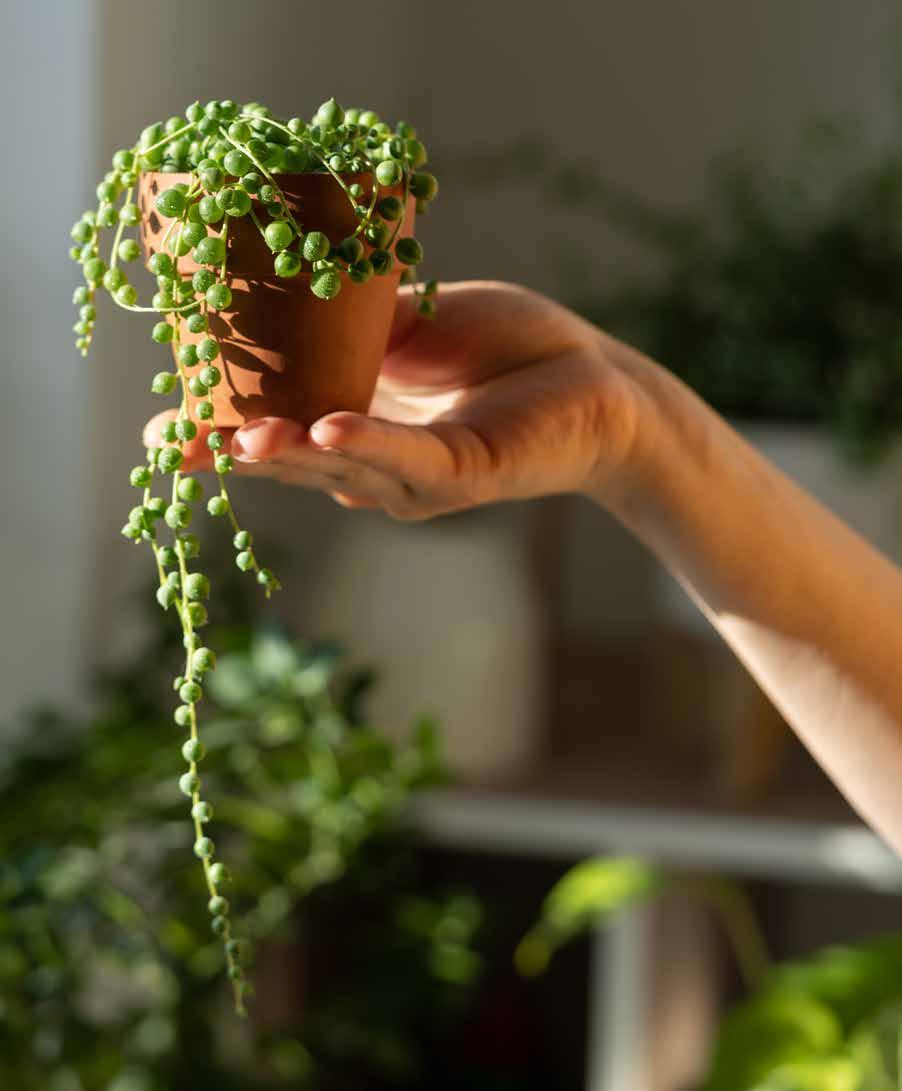
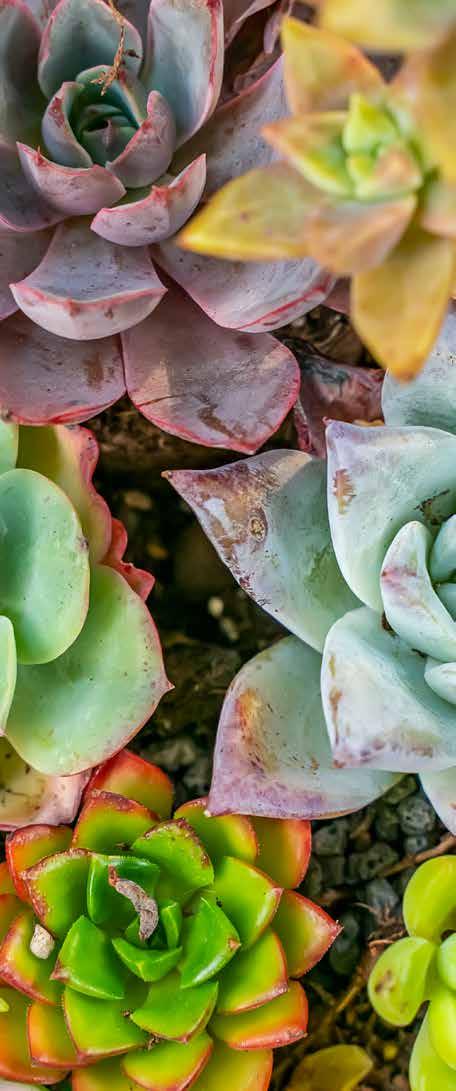
he lush warmth of summer in Central Oregon is a distant memory, and humans aren’t the only ones who need to throw on layers and prepare for the long, dark winter. Plants need a little TLC, too. Even our hardiest plants, which survive hot summers, can benefit from coming inside for a respite. Succulents and cacti, for example, store the bulk of their water in their leaves and stems. In the cold, the water inside those leaves and stems will freeze, ultimately killing them.
“Getting enough light on short days can be a challenge. Direct sunlight is best, especially
in south-facing windows, but access to any light is essential.”
BRING IN THE EXPERTS
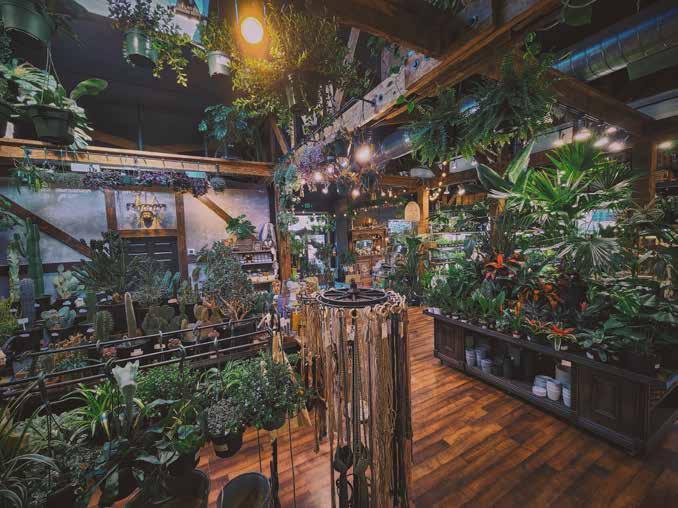
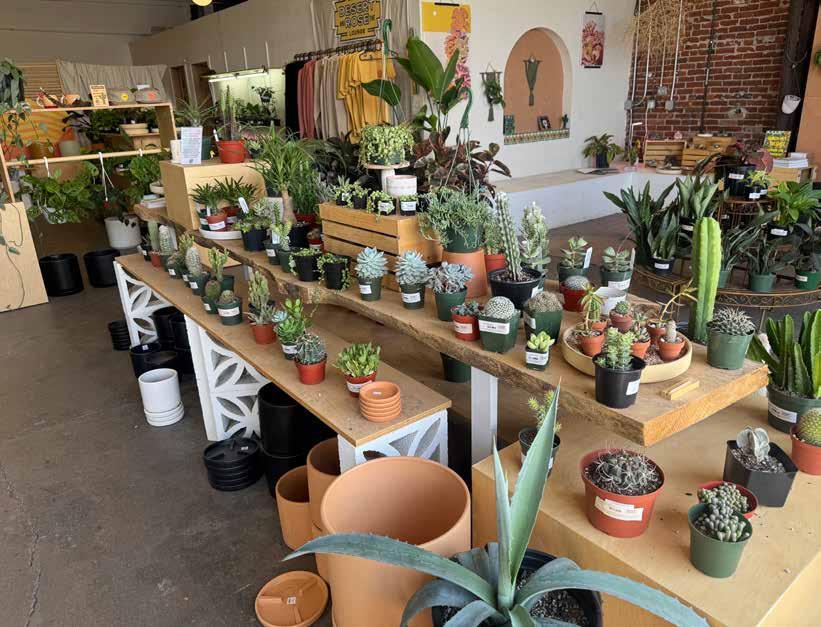
Jordyn and Pauline Miyama run Desert Rose Cactus Lounge, which has a large selection of cacti and succulents, as well as houseplants, tropicals and other fun greenery. The space, tucked into the crafty warehouses in the Old Iron Works creative hub off Scott Street, is just as charming as it sounds. Jordyn’s top recommendation when considering bringing hardy cacti and other plants indoors is simple: Check for bugs. “A lot of people who have indoor-outdoor plants also have indoor houseplants,” she said, “and you’re risking dragging in pests.”
She recommends a thorough inspection, especially at the base where the leaf meets the stem, looking for leaf damage, holes or discoloration. Then either spray the plants with neem oil or insecticidal soap to prevent pests, or use beneficial bugs—that is, bugs that eat other bugs. Jordyn uses these at her shop and is partial to lacewings, which eat other bugs and then eat each other, but will leave plants alone.
INDOOR CARE
Once the plants are indoors, the care centers on water and light through the winter. Getting enough light on short days can be a challenge. Direct sunlight is best, especially in south-facing windows, but access to any light is essential. Jordyn suggested replacing standard lightbulbs with full-spectrum bulbs, a great option to avoid filling a home with grow lights.
There’s no need to fertilize or repot cacti in the winter; succulents don’t mind being squished into smaller pots. As barometric pressure changes, the plants will sense it and begin growing naturally, Jordyn said. In the meantime, her biggest piece of advice is to avoid overwatering. She checks her plants with a chopstick—if it comes out dry, it’s time to water.
One thing not to fret about: Cacti and succulents do not struggle with a shock when they move from outdoors to indoors—no need to slowly transition them indoors. Come springtime, though, returning them to the outdoors does need to be done in short spurts. “It’s pacing them so they don’t get
Desert Rose Cactus Lounge
6 Tips for THE GARDENER
1. Drainage is Key
This one is simple, but vital. Do your pots have drainage holes? If not, drill them or buy new ones. Cacti and succulents thrive without much difficulty, but they will suffer without drainage.
2. Choose the Right Soil
On the subject of drainage, don’t feel like you have to get too carried away with fancy soils. It should be porous: most of Central Oregon’s volcanic, sandy soil is perfect for cacti and succulents.
3. Tools of the Trade
The Miyamas swear by kitchen tongs for handling the spiky cacti in their shop. They also measure the soil’s water level with a chopstick: Insert it into the soil and leave it there for 20ish seconds. Remove the chopstick if it’s dry and if there’s no soil clinging to it, it’s time to water.
4. Light It Up
You may think your plant is getting enough light, but it’s probably not. If you don’t have a good south-facing window where it can soak it up, consider grow lights or other lighting options to help keep it happy.
5. Give Them Shelter
If you don’t want your outdoor plants littering your indoor spaces, place them in the garage or even under your porch. Providing them protection from precipitation goes a long way to a healthy spring plant.
6. Don’t Overlove Them
One of the biggest killers of cacti and succulents is too much attention. These plants are introverts—give them space. Resist the urge to water “just because.” When in doubt, leave them alone. They thrive on neglect more than pampering.
sunburned,” Jordyn said. “Start with an hour, then two hours, then doubling until they’re officially outside.”
If you don’t want to drag pots in and out of the garage every year, Julie Lay’s Smith Rock Cactus Company is proof that there are plenty of cactus varieties that can survive in harsh Central Oregon winters. Smith Rock Cactus Company features a large demonstration garden filled with about 100 varieties of cactus.
While the Miyamas’ shop focuses primarily on indoor plants, Lay has found varieties from as far north as Montana, the Dakotas and Nebraska that aren’t shocked by the cold winters here. If you love a cactus but don’t want to keep it potted, bring it under cover each winter, It can be done here, “given the right conditions and care during the summer months,” she said. If you’ve found a hardy cactus that is appropriate for Deschutes County’s growing zones, Lay recommends giving it plenty of water in the summer months when it’s really hot, which helps the root system expand.
Outdoor cacti may not look like much in the winter. “I look at the cacti in our demo garden right now, and a lot of them are wilted, they’re wrinkly, and they have flopped over,” Lay said. “They’re protecting themselves to survive winter.” Come March, they’ll start plumping up again.




Natasha Smith Broker/Transaction
Kimberly Morse Broker
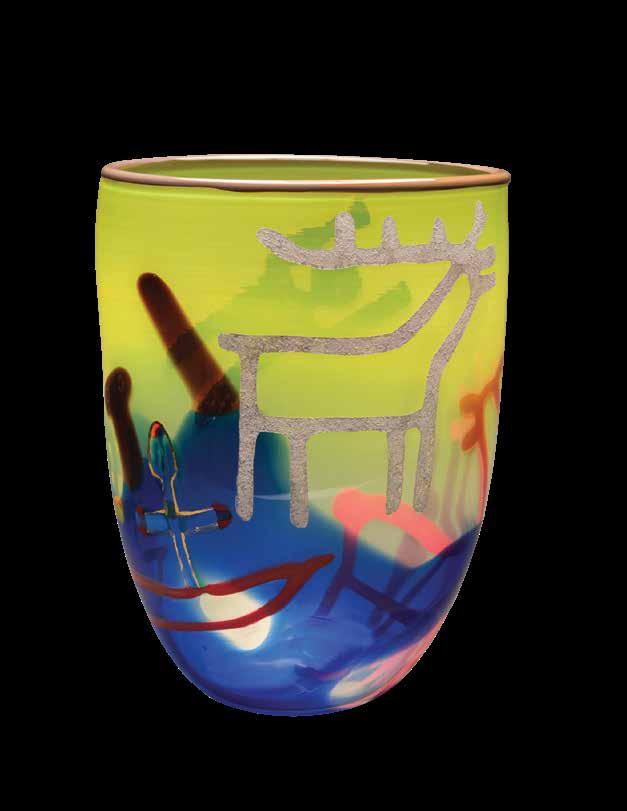
Joe Feddersen (b. 1953, Confederated Tribes of the Colville Reservation), Floating By, 2020, blown glass with enamel. Collection of the artist. Photograph by Dean Davis.
ART + EXHIBITS
WRITTEN BY SIENA DORMAN

ARTISTS’ GALLERY SUNRIVER
DAVE FOX
Oil painter Dave Fox captures the seasons as he experiences them, shifting his focus from expansive Western landscapes to intimate narrative scenes drawn from daily life. Trained at the University of Arizona and influenced by classical study through the Watts Atelier, he works in layers of paint, allowing each stage to settle before the next begins. His palette shifts with the year. Summer scenes are painted in the summer, fall in fall and so on. Late winter often steers Fox toward scenes of warmth and light. Fox builds atmosphere slowly, so patience is imperative to his process.
Dave Fox, “Early Snow Late Fall”

DIANNE
Sunriver watercolorist Dianne Lay believes that beauty is essential. She favors wet-in-wet techniques to capture soft changes of light, allowing pigment to move across damp paper in unpredictable ways before balancing those applications with crisp final details. Lay also creates pieced watercolors— stitched compositions that borrow the structure of quilts while incorporating metallic paints and thread. Her process is informed by long walks, memory and her years of study with artists from across the region. Lay paints to share moments that comfort, stir recollection or simply bring a sense of serene joy into someone’s home.
MARJORIE COSSAIRT
Working in watercolor since 2005, Marjorie Cossairt brings the open meadowland of her Sunriver home into luminous scenes guided by intuition. Originally a stained-glass artist, Cossairt’s transition to watercolor came about by chance: During an art class, fellow students provided her with watercolor supplies when she was missing her own. That generosity and sense of discovery remain central to her practice. Horses, distant peaks and shifting light guide her

hand as she makes space for spontaneity, then control. Her pigments travel freely before refining forms into familiar terrain. Cossairt’s paintings reflect her devotion to observing the world and an ever-present gratitude for the community that first enabled her to explore watercolor.
ARTISTS’ GALLERY SUNRIVER
57100 Beaver Drive, Sunriver Village, Building 19 artistsgallerysunriver.com
Marjorie Cossairt, “Winter’s Magic”
Dianne Lay, “Standing Guard”
LAY

LAYOR ART
TELMA SETTI
Painting from life’s encounters is both anchor and compass for Bend artist Telma Setti. Originally trained as a civil engineer in São Paulo, Brazil, Setti turned to classical oil painting after moving to Oregon, dedicating herself to still life, animals and plein air landscapes. Whether standing in a field or arranging a simple tabletop scene, Setti studies light, color and atmosphere with focused attention. Her plein air works in particular reflect hours of observation, shaped by changing weather and shadows. A member and current vice president of the Plein Air Painters of Oregon, Setti continues to learn through disciplined practice as a tribute to nature.
EMILY LIVENGOOD
Drawing on her background in ecology and naturopathic medicine, Emily Livengood’s acrylic landscapes of the Pacific Northwest and high desert convey the nervous system-steadying nature of these environments. Inviting connection and pause, Livengood’s impressionistic brushwork represents what landscapes look like and even how our relationships to them impact our bodies. Livengood collects moments that quiet the mind, such
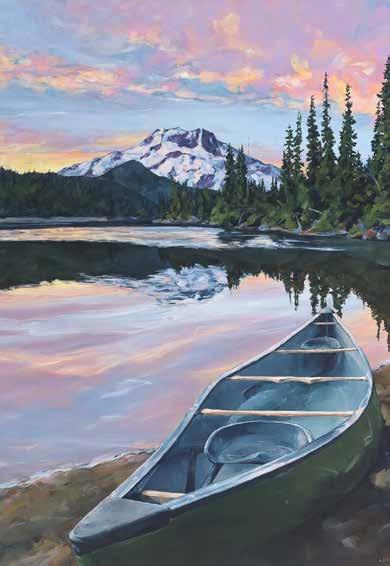
as shorelines, forests and ridgelines. Through her work, she translates these settings into scenes that hold space for breath. Livengood balances her painting practice with running Rainwood Integrative Medicine in Bend. Her work in both fields reinforces the other by requiring focus and offering a means of renewal.
LAYOR ART + SUPPLY
1000 NW Wall St., Ste. 110, Bend layorart.com
Telma Setti, “Special Visitor”
Emily Livengood, “Night Swimming”

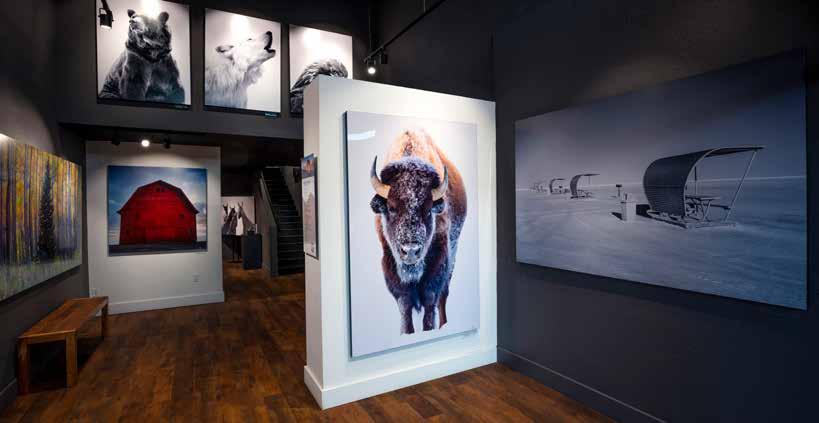
JEFFREY MURRAY FINE ART PHOTOGRAPHY
JEFFREY MURRAY
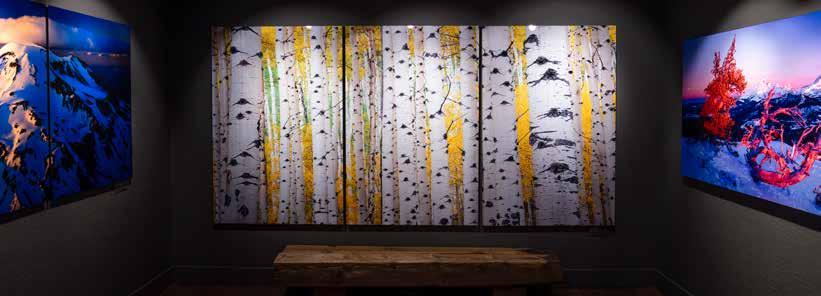
What began as a middle school avocation, Jeffrey Murray’s photography career is built on years of darkroom work, photojournalism training at Northern Arizona University and cross-country shooting. Before settling in Central Oregon. Murray spent five years living on the road, making images daily and refining his printing process from campgrounds and parking lots. The constant movement
generated a vast catalog of American landscapes, many captured in their most fleeting conditions. After opening galleries in Bend and Sisters, he continues to travel when he can, building on a style rooted in patience, craft and a steadfast fixation with nature.
JEFFREY MURRAY FINE ART PHOTOGRAPHY
118 NW Minnesota Ave., Bend jeffreymurrayphotography.com
ARTIST PROFILE
From the Ground Up
Drawing on a lifetime with natural materials, Jan Daggett crafts gemstones into emotionally resonant art and jewelry
WRITTEN BY CATHY CARROLL
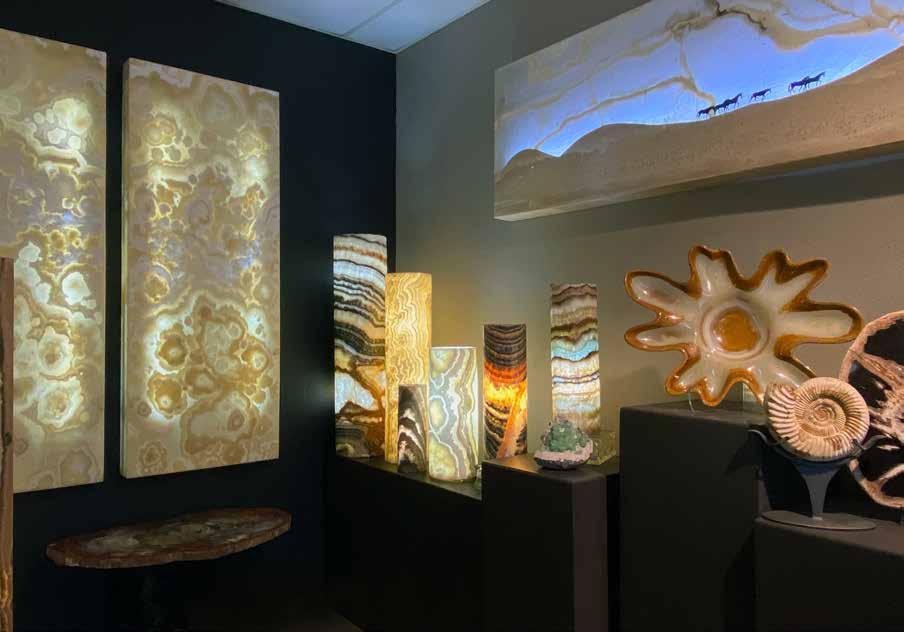

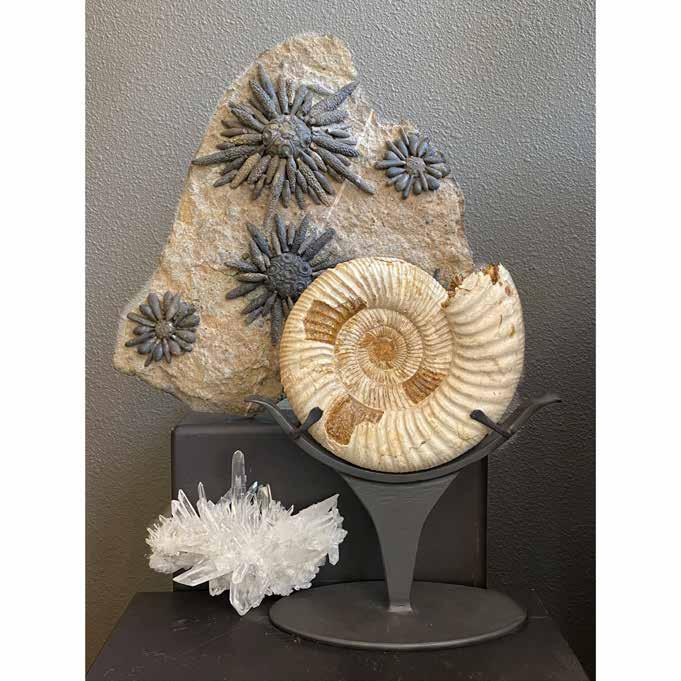
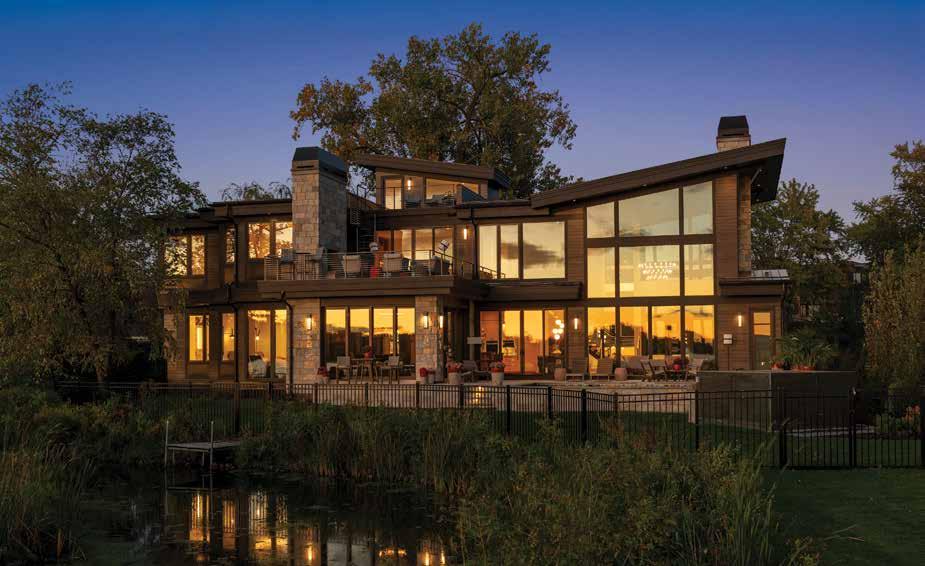
Jan Daggett knows the power of working with materials created by the earth itself, be it precious gemstones for jewelry or large, museum-quality minerals, fossils and rare materials for interior decor. Behind each piece for the home—whether it’s a glowing alabaster wall panel or a massive slab of ancient, petrified wood—lies Daggett’s lifetime of working with these materials. That depth of experience elevates not only how the pieces look but how they can make a space feel.
Her training began at the source—in the ground itself. After becoming captivated by high-grade agates and jaspers as a teenager in the Willamette Valley, she began making jewelry, sculpting precious metals and digging and cutting her own stones. She later owned and operated a mine in Montana, selling mineral collections to museums, including the Smithsonian. Those worlds blend seamlessly at The Jewel in Sisters, which she opened in 1991, offering handmade jewelry and a gallery of museum-quality mineral specimens and interior pieces sourced from around the world.
Daggett and her dog, Hitch, sharing lunch while spending the day on the Metolius River.
“It’s visceral. They feel something whether they know what it is or not.”
“People have an experience when they come into my store,” Daggett said. “It’s visceral. They feel something, whether they know what it is or not.” Just as people respond instinctively to her interior pieces, the same holds true for her jewelry. Customers often return years after first encountering a piece, telling her, “Your jewelry is what stuck in my mind all these years.”
That response is shaped by her talent for striking the right balance and combination of materials and textures. With her interior decor compositions, she creates visual vignettes that feel simultaneously earthy and refined by grouping natural specimens with pottery, paintings or glass. Working with larger pieces energizes her—from luminous white quartz crystals to deep purple amethysts—she arranges forms that complement one another, allowing clients to envision them in their own homes. “Crystalline minerals offer a vivid palette—bright fuchsia, bright turquoise, deep forest green, olive green, dark blue,” Daggett said. “They lend themselves beautifully to a cabinet or a vignette and to mixing with our natural woods and fibers.”
After half a century of handling stones, it takes something truly extraordinary to move her. One material that stopped her in her tracks was architectural alabaster. The soft, translucent stone, typically white or cream, casts a soft, natural glow when illuminated. In one project, clients installed a painting flanked by two illuminated alabaster panels in their dining room, creating a warm focal point that transformed the space. Other homeowners paired the panels with a hand-carved alabaster trough—a substantial piece stretching several feet—set along a trestle table for added dimension. The material inspired a new direction for The Jewel itself. Two years ago, Daggett added a darkened alcove to showcase architectural alabaster. The slim, carved panels glow like oversized gemstones when backlit, revealing veining and color variations that look almost painted. “These lighted panels are big, dramatic interior pieces,” Daggett said. Some measure 2 feet tall and 5 feet long. One recent showpiece is a 4-by-4-foot mirror framed in illuminated alabaster.
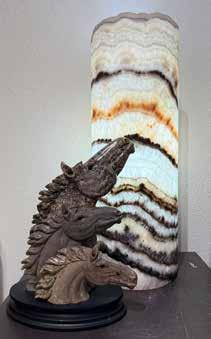
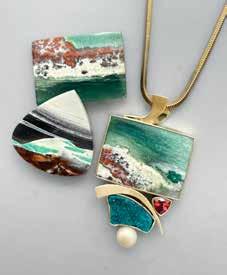
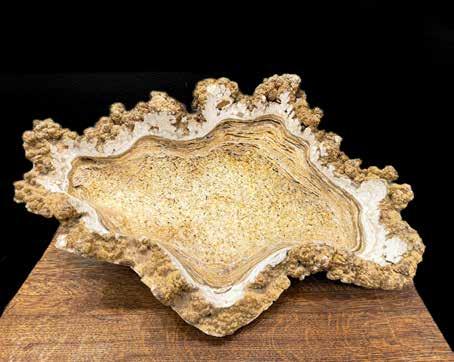
She believes that incorporating decorative stone and minerals into the home is both natural and meaningful. “We buy furniture made of wood, we put granite on our countertops,” she said. “This is something natural from the earth that’s mind-bogglingly beautiful.”
For more than three decades, The Jewel’s enduring appeal has been Daggett’s instinct for harmony—an immediate, felt connection in every display and piece of jewelry. “People feel the difference,” she said. That resonance is her greatest reward. After a lifetime spent digging, cutting and shaping the earth’s raw materials, what moves her now is seeing how others make these pieces their own—how a glowing panel or sculptural mineral can transform a room in ways both unexpected and deeply personal.
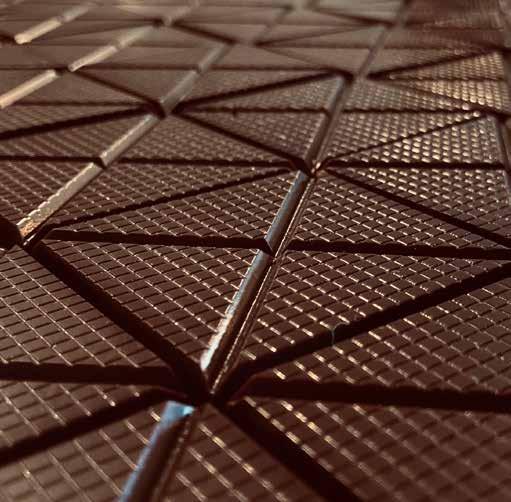
Conscientious Cacao CHEF'S KITCHEN
Behind the scenes with Seahorse Chocolate
WRITTEN BY HEIDI HAUSLER
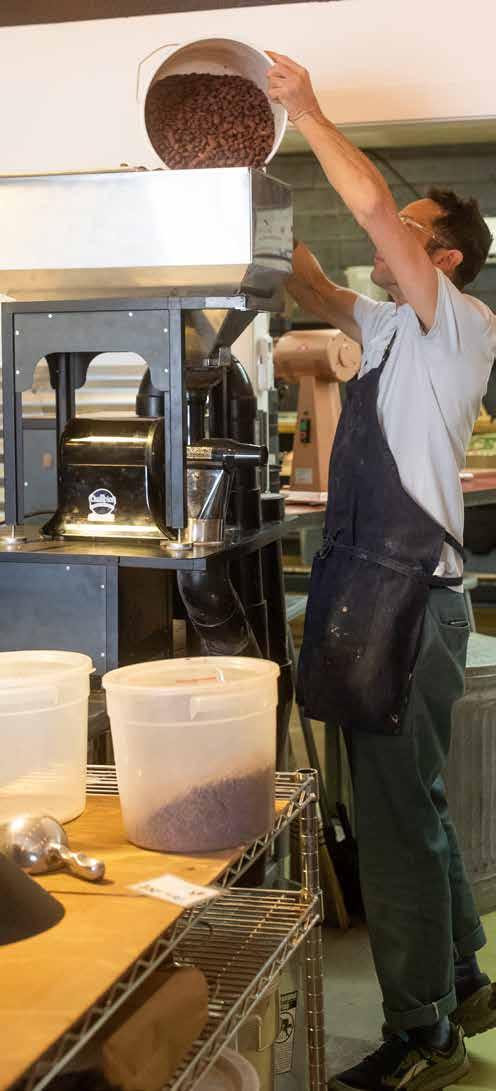
hrough the doors of an unassuming roastery near downtown Bend, the rich aromas of Seahorse Chocolate fuse with Still Vibrato coffee in a dynamic space of creation. Melangers hum as they grind cacao beans, and burlap sacks from Peru, Belize, Indonesia and other exotic growing regions line the walls. Time beats slower between these walls—the fastpaced clock of modern production has no place in the methodical world of chocolate making.
Founded in 2017 by R.C. and Amanda Gartrell, 2024 Good Food award-winner
Seahorse Chocolate has earned local and national attention among chocolate connoisseurs for its refined flavor profiles. On the shelves at nearly 30 stores in Oregon and 30 more across the country, Seahorse Chocolate looks to the future with new owner Emily Pappo, her husband Garry (a teacher at Caldera High School) and her extended family taking the reins.
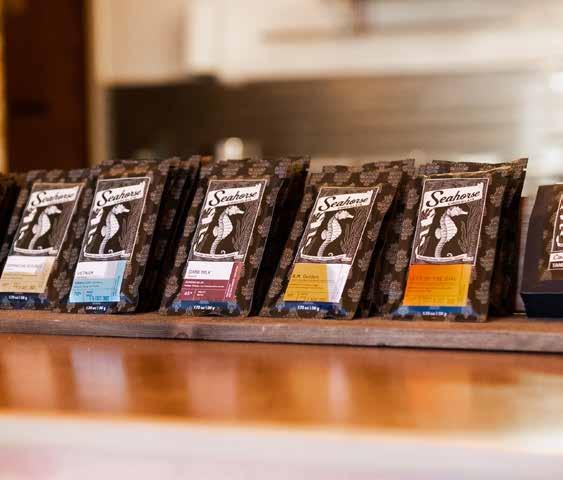
“It’s always better to start with chocolate,” Pappo said, laying out samples of the company’s most popular bars as she explained the journey that landed


her at Seahorse. From a background in roasting and buying specialty coffee, Pappo witnessed firsthand how climate change was impacting farmers. Earning a master’s degree in agronomy and a PhD in ecology, she focused on building resilience in coffee and cacao supply chains. “I was always pulled back to the business end of things. It takes a good business to build resilient and sustainable farming,” she explained.
Upon moving to Bend in 2023, Pappo and her husband quickly discovered Seahorse Chocolate. “We ate it almost every day,” she shared. So when they learned the Gartrells were moving on to other projects, they jumped at the opportunity to carry on the Seahorse legacy, grounded in conscious sourcing and building strong relationships with the people who grow the chocolate.
“Our goal at Seahorse is to be a leader in sustainability and to continue to make the best chocolate I’ve ever tasted in my life,” she said. The company recently became a member of 1% for the Planet, a consortium of businesses dedicated to donating 1% of all profits to organizations working to protect the earth.
One of Seahorse’s partner farms is Reserve Zorzal, the world’s first-ever Smithsonian-certified Bird-Friendly cacao farm. Tucked in the mountains of the Dominican Republic’s Duarte Province, Zorzal is working to nurture the growth of the country’s cacao industry through organic and regenerative practices, with 70% of the land preserved as a “forever wild” sanctuary for biodiversity. Zorzal’s commitment to the environment and improving livelihoods for the people of the region exemplifies the quality of producers behind every bar of Seahorse Chocolate.
“We think about what is happening at origin,” Pappo explained. “Is the cacao being grown ethically and sustainably? What are the social conditions happening on the farm? We analyze the soil, climate and the management practices being used. We learn when and how the beans are harvested, fermented, dried and stored.”
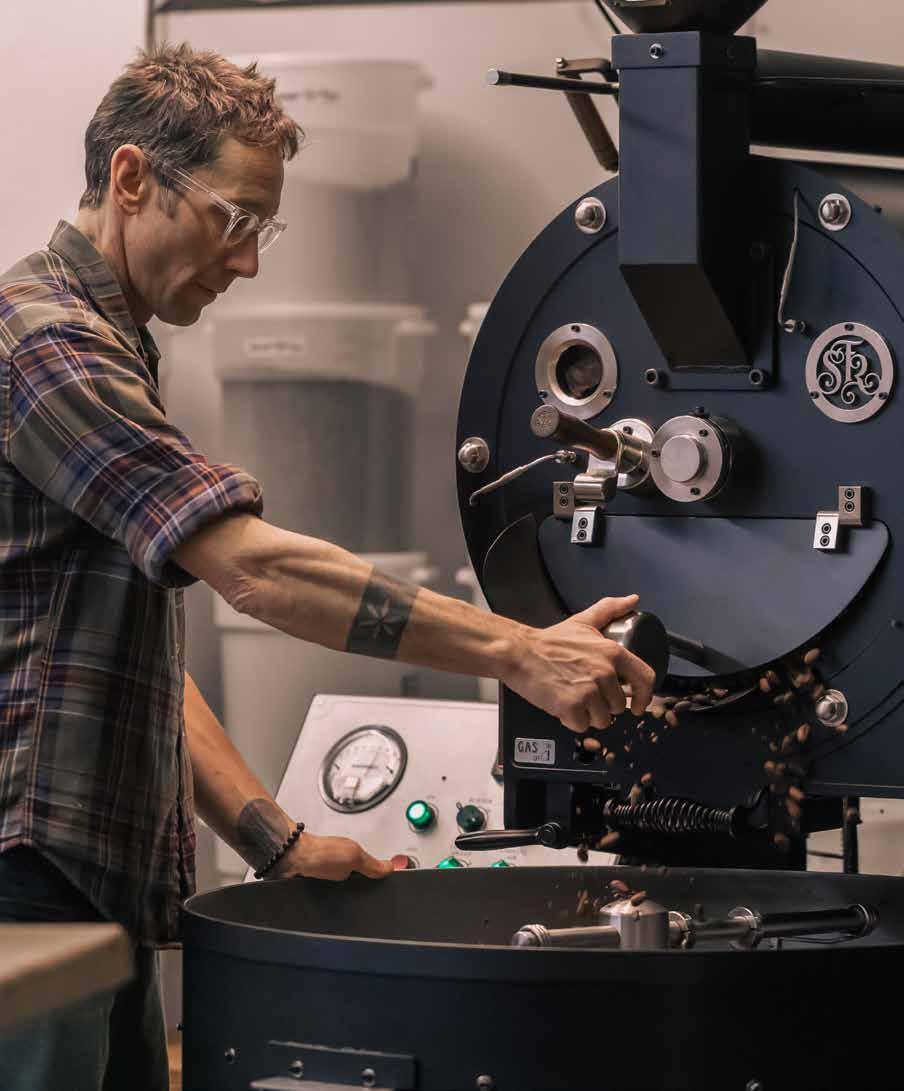
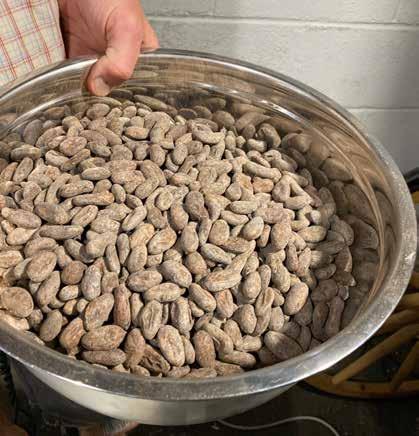
While the origins of cacao beans shape the quality and taste of the chocolate, roasting is what brings out their potential. Seahorse roasts its beans in a small-batch San Francisco drum roaster shared with coffee roaster, Still Vibrato. “Roasting is an art and a science,” Pappo said, noting that the company’s original owner, R.C. Gartrell, still oversees the process. “He has a sixth sense,” she added.
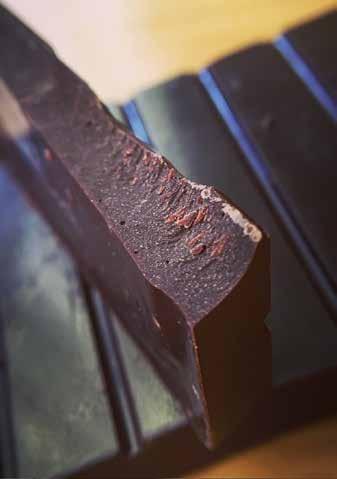
Honoring the countries they hail from, the Belize, Dominican Republic, Ecuador, Ghana and Indonesia bars each possess distinctive regional flavors. “We want to make sure we have interesting and exciting chocolate that highlights the terroir of that origin,” Pappo explained. Made of only two ingredients— cacao and sugar—Seahorse offers a suite of chocolates that represent diverse attributes, “some that are more approachable for folks who are not used to wild and crazy flavors,” Pappo said, “and others that are a little more out there, something you don’t taste every day.”
Similar to the complex process of turning different varieties of grapes into wine, cacao beans vary in how long they can be roasted and how much sugar is needed to achieve their optimal flavor.
“Our goal at Seahorse is to be a leader in sustainability and to continue to make the best chocolate I’ve ever tasted in my life.”
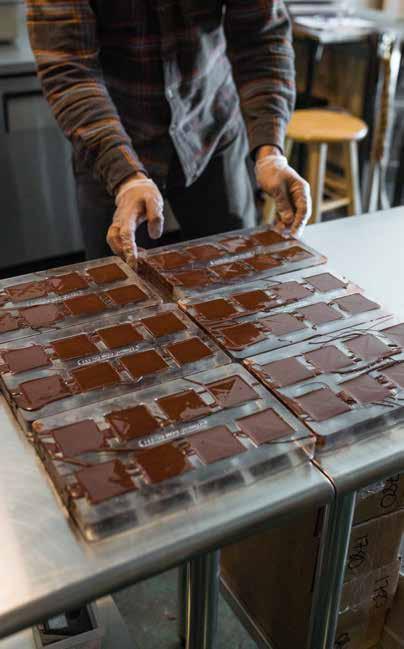
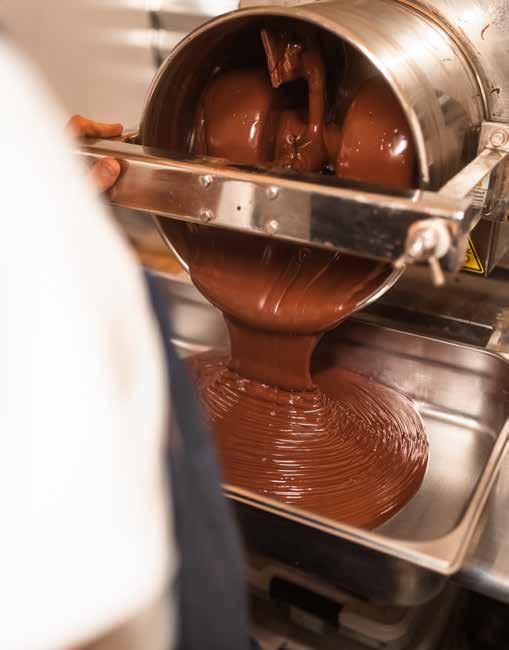
Roasting temperature, conching time (the mixing, aerating stage), tempering (the heating and cooling phase) and the amount of sugar added all contribute to the creation of each chocolate’s flavor profile. The labels reveal the percentage of cacao to sugar. For those with the most refined chocolate palates, the Dominican Republic 100% single-origin chocolate bar is pure superfood. “It’s an acquired taste,” Pappo laughed. A new look for the company’s branding is slated to hit the shelves in January 2026, but the whimsical seahorse will still be the star of the show. Interested chocolate enthusiasts are invited to join the team for a tour to learn about small-batch roasting, the farms Seahorse sources from, the process of turning beans into bars and a tasting flight from around the world. On a cold winter day, it is a chance to slow down and craft goodness from warm, liquid chocolate poured by hand. See seahorsechocolate.com

“Winter is the time for comfort ... it is the time for home.”
—EDITH SITWELL
PHOTO

STYLE in every home.
SOUL in every street.
STRENGTH in every connection.

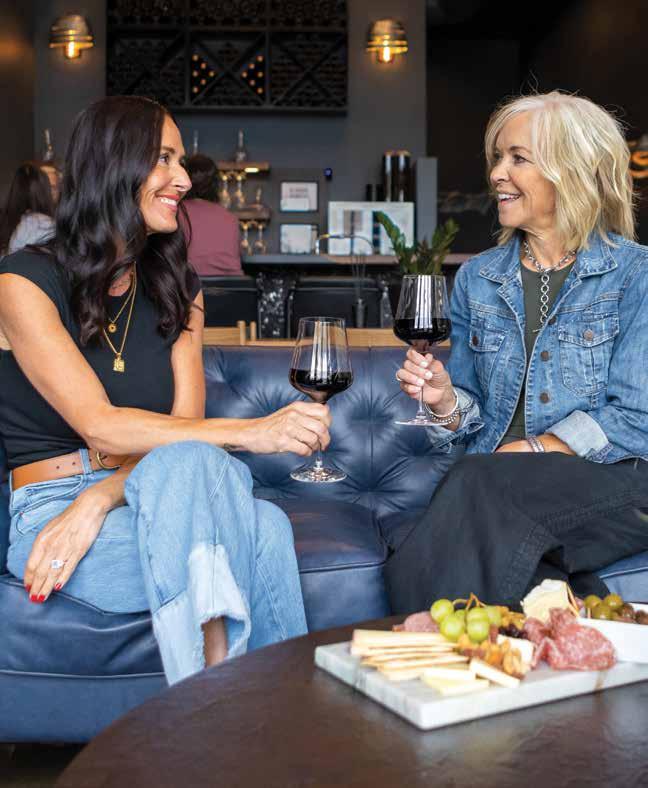

Where connection comes naturally. Nestled on Bend’s west side, Discovery West is where good company and good living meet. Neighbors gather for impromptu happy hours, kids roam nearby parks, and trails invite you to slow down and breathe. It’s a neighborhood designed for real life—full of warmth, convenience, and the little joys that make a place feel like home.
Learn more at discoverywestbend.com, visit the Harcourts The Garner Group neighborhood office or call (541)383-4360.