


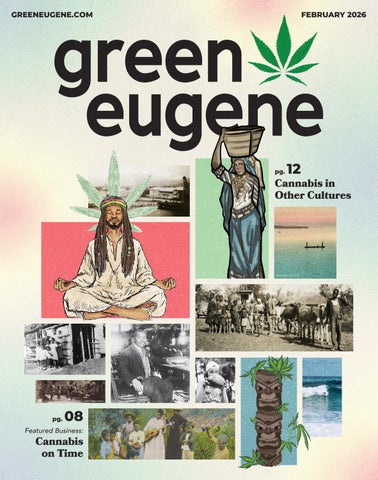
So many of us regularly joke about cannabis or stoner culture as being the munchies and lounging around, but there is so much nuance and variance within cannabis culture, especially when we bring things like ethnicity and nationality into the conversation. My hope with this edition of Green Eugene was to shine a light on the ways other cultures exist with, appreciate, use, and experience cannabis. So much of the diversity around this incredible plant has been lost or slowly ignored as it has grown into its own industry, but I wanted to take some time to hold space for the plant’s history (before it was so tied to dollar bills and capitalism).
The world feels like madness for so many of us right now, and I hope that this edition of Green Eugene provides you with some solace or at least momentary peace where you can catch your breath and center yourself (be it with or without cannabis). May you learn something new or get inspired to try something new from this issue!
Be blazed!
Javay Frye-Nekrasova Editor-in-Chief


Thank you for reading Green Eugene. Please note that our publication and site spotlights content about substances that are illegal under federal and state laws in certain places. We do not promote, advocate, or condone illicit drug use. All content produced by Green Eugene is for educational and entertainment purposes only for readers 21+.
Publisher & President
Eric Henry ehenry@dailyemerald.com
VP Operations Kathy Carbone kcarbone@dailyemerald.com
Director of Sales Shelly Rondestvedt srondestvedt@dailyemerald.com
Creative & Technical Director Anna CK Smith creative@dailyemerald.com
Editor-in-Chief
Javay Frye-Nekrasova
Lead Designer
Abigail Raike
Cover Illustrators
Amanda Bell
Ava Klooster
Dewni Mirihana
Cover Design
Abigail Raike
Writers
Savannah Brown
Madisyn MacKay
Designers and Illustrators
Amanda Bell
Adaleah Carman
Ryan Ehrhart
Ava Klooster
Dewni Mirihana
Gabe Vannelli
Photographers
Adaleah Carman
Javay Frye-Nekrasova
Account Executives
Elliot Byrne
Torin Chevalier
Camcole Pereira
Ava Stephanian





Written by Javay Frye-Nekrasova
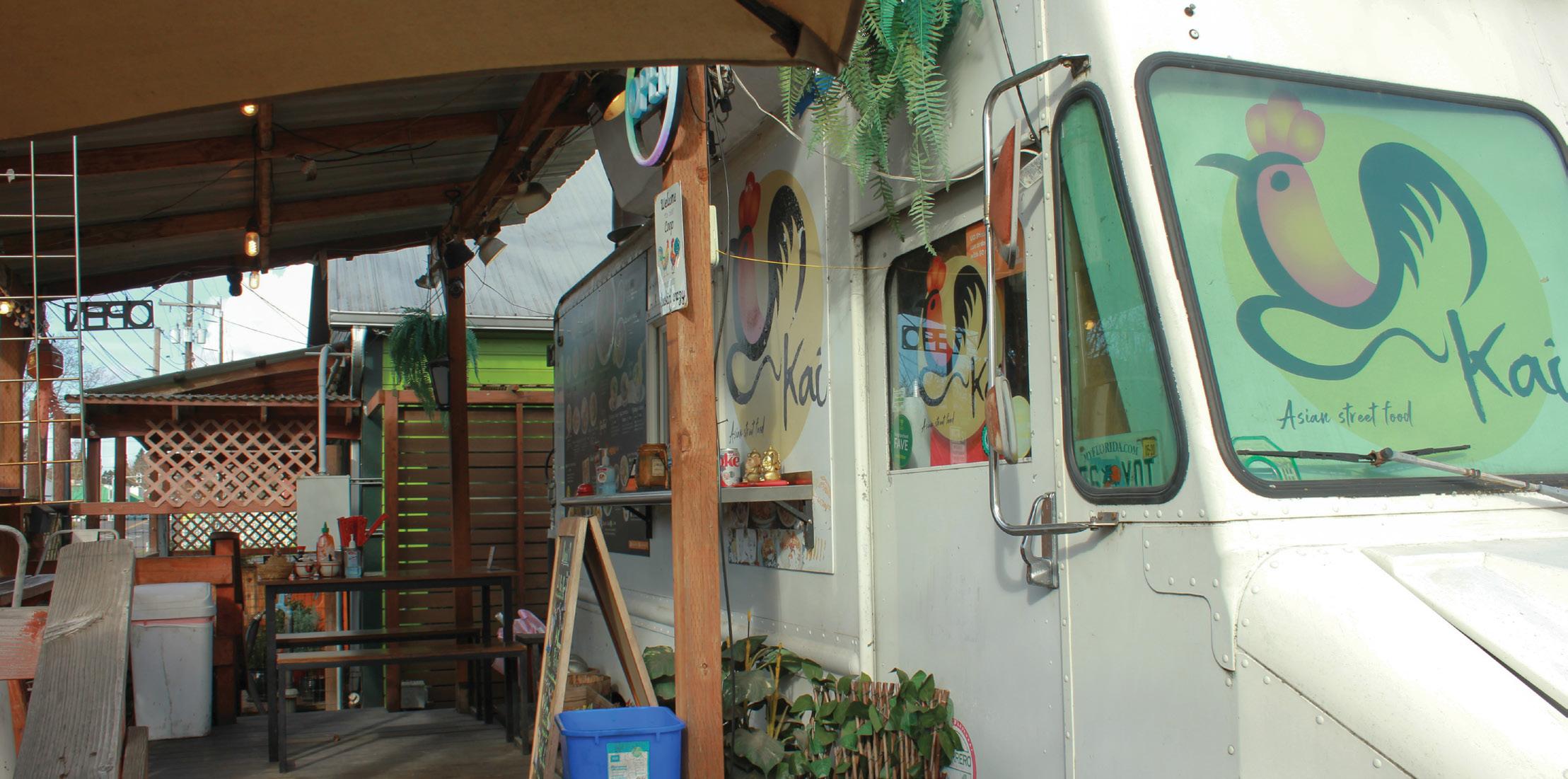

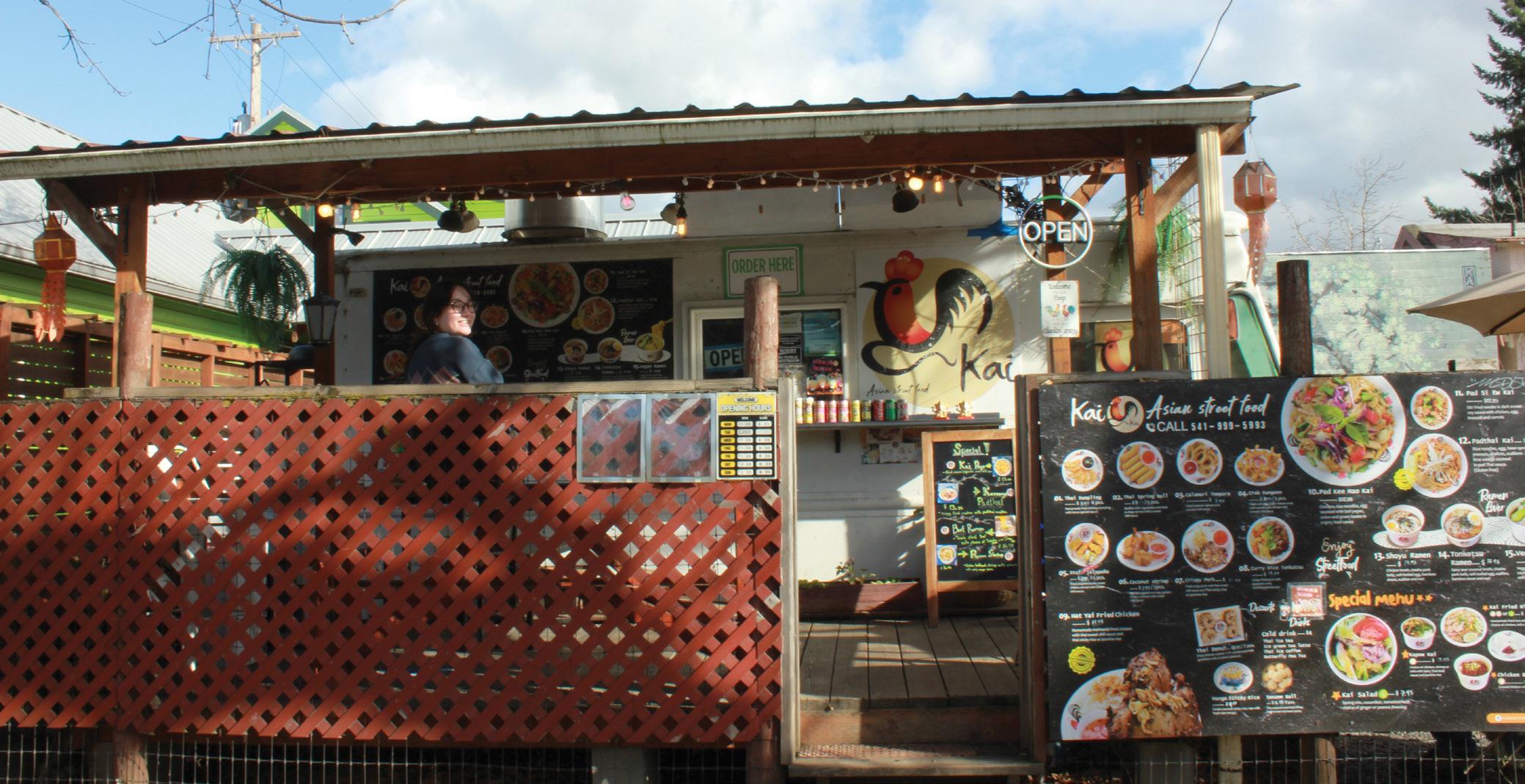
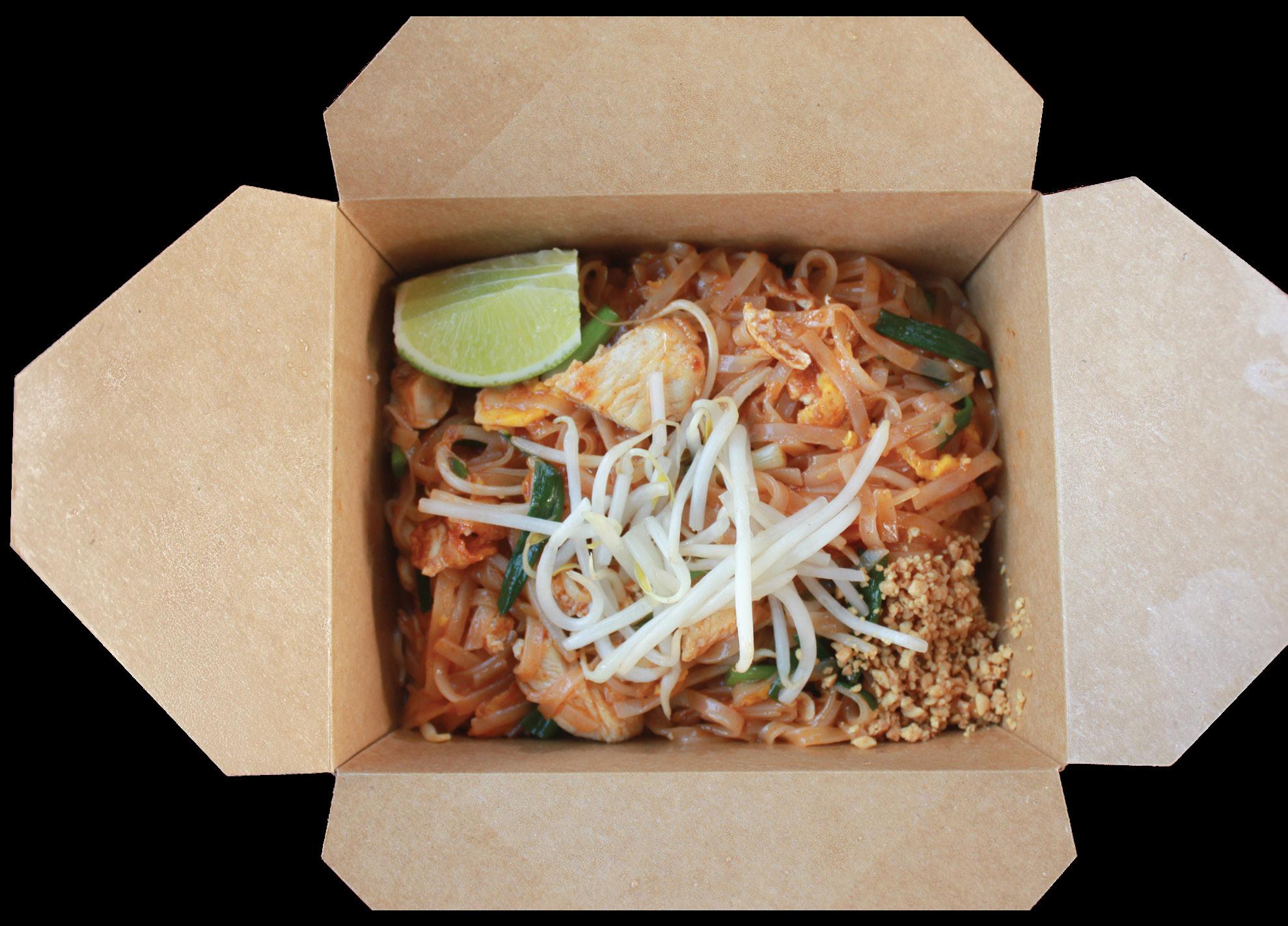
Lately, my munchies have been focused on one thing—Asian cuisine, and lucky for me, the Kai Asian Street Food Truck in the Whitaker Neighborhood, also known as the Whit, never misses. Nothing rounds out my day better than a fat bowl and some hot, delicious Asian street food. After locking in for a full day of writing, I decided that I deserved a treat, and Kai was just that. I called in my order for Pad Thai without peanuts (they accommodate it no fuss every time) and made my way to the Whit to pick it up.
Kai Asian Food Truck is located at the food truck park on Van Buren Street in the Whit, directly across the street from Ninkasi Brewing. While Pad Thai is my go-to order at Kai, that is not the only delicious option on their menu. You can choose from Chinese, Japanese, and Thai cuisine dishes, which, if you are anything like me, is perfect, because sometimes you need the perfect combo of all three to fully satisfy your munchies.
Kai’s menu has options galore, from traditional and classic items like Hat Yai Fried Chicken, Cha Shu Buns, and Tonkatsu Ramen to more novel and creative dishes such as
and Thai Donuts. If you would like a recommendation on what to order, my go-to is the Pad Thai and Mango Sticky Rice (when mangoes are in season, that is). My husband loves their Kai Salad with ginger dressing, the crab rangoons, and either the Shoyu
a drink from any of the other establishments around and still get notified when your order is ready.
If you are a lover of Asian cuisine, be sure to get their punch card, because I am positive you will be coming back again and again. I embarrassingly only
Written and Photographed by Javay Frye-Nekrasova
Designed by Abigail Raike
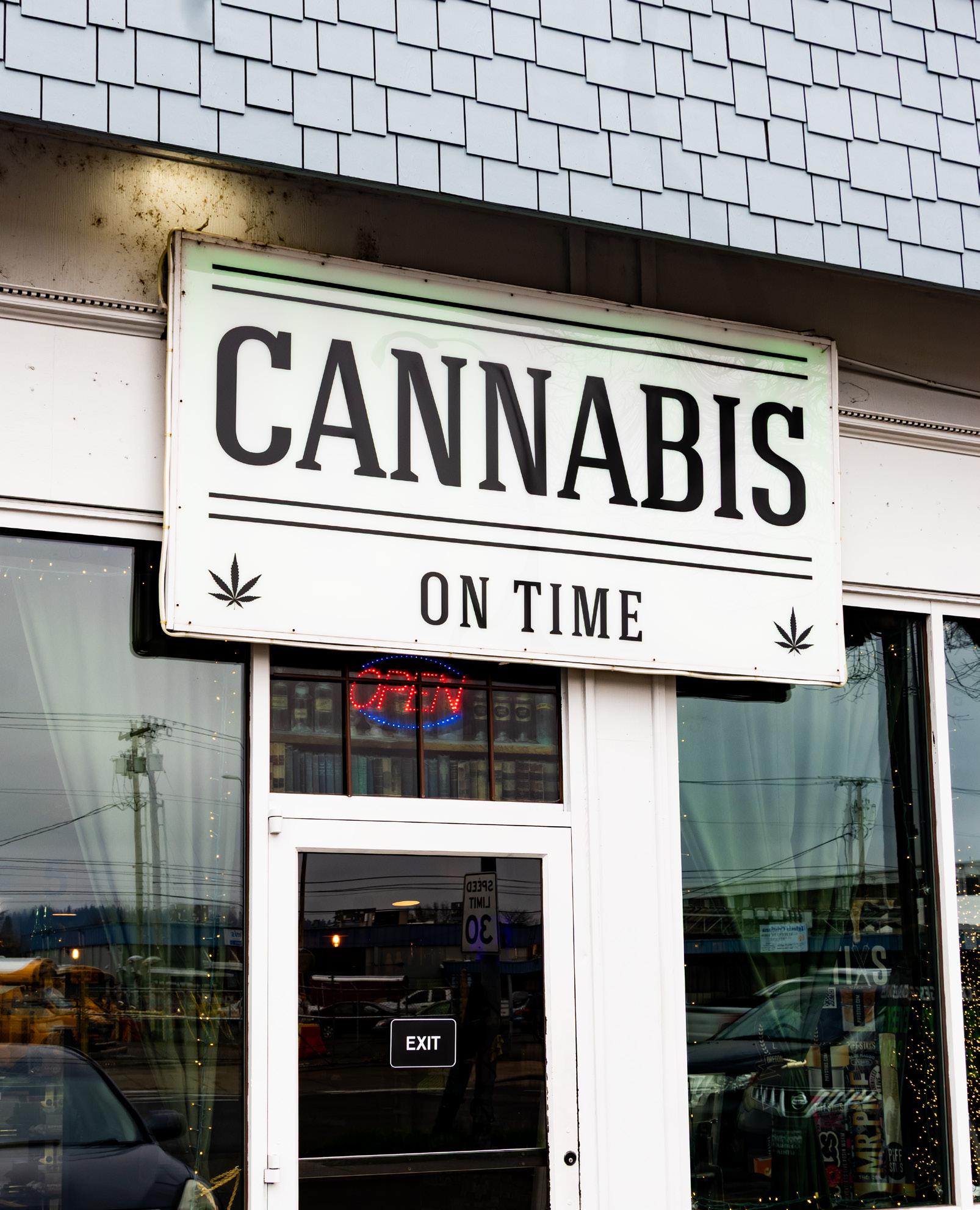
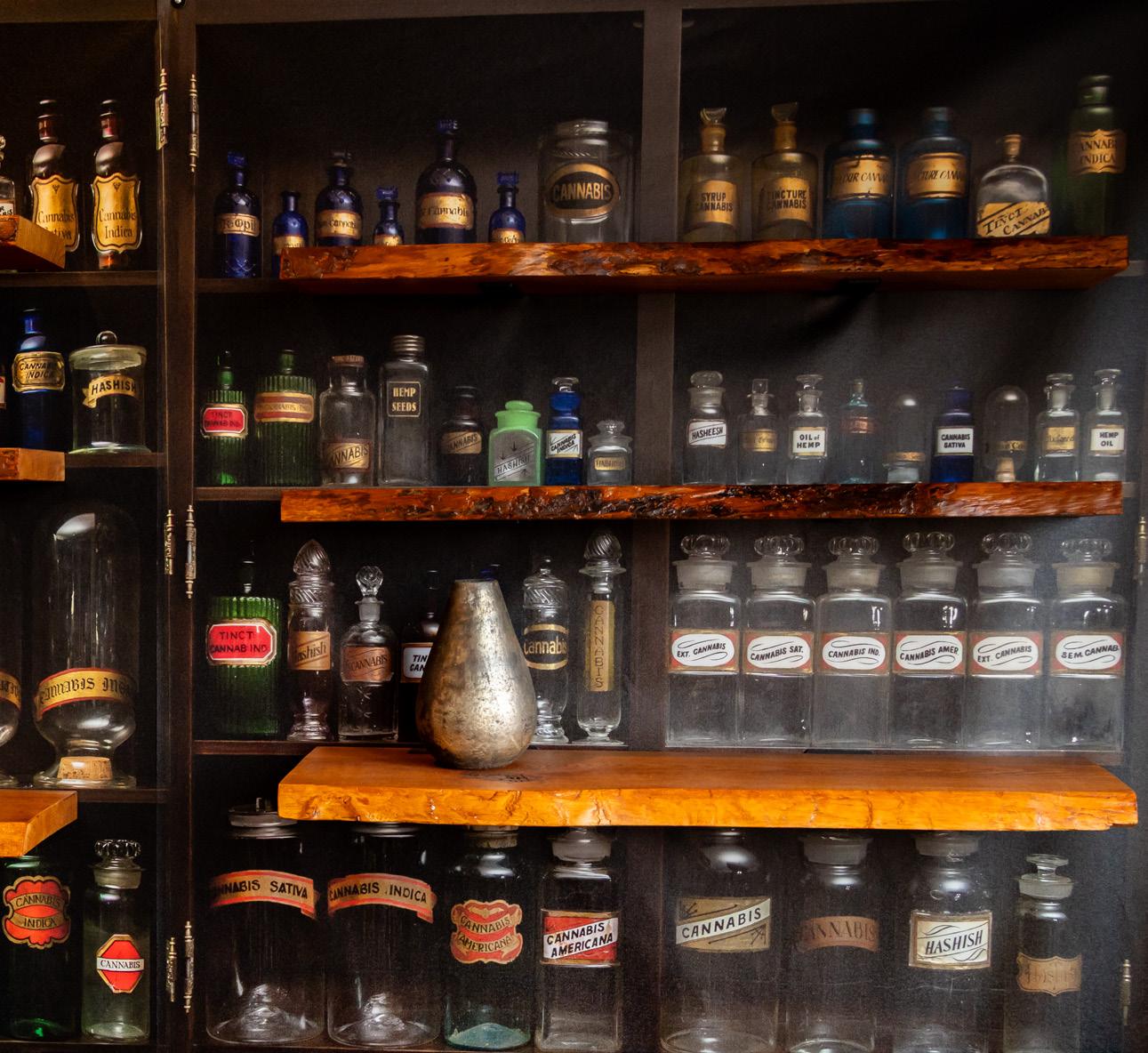
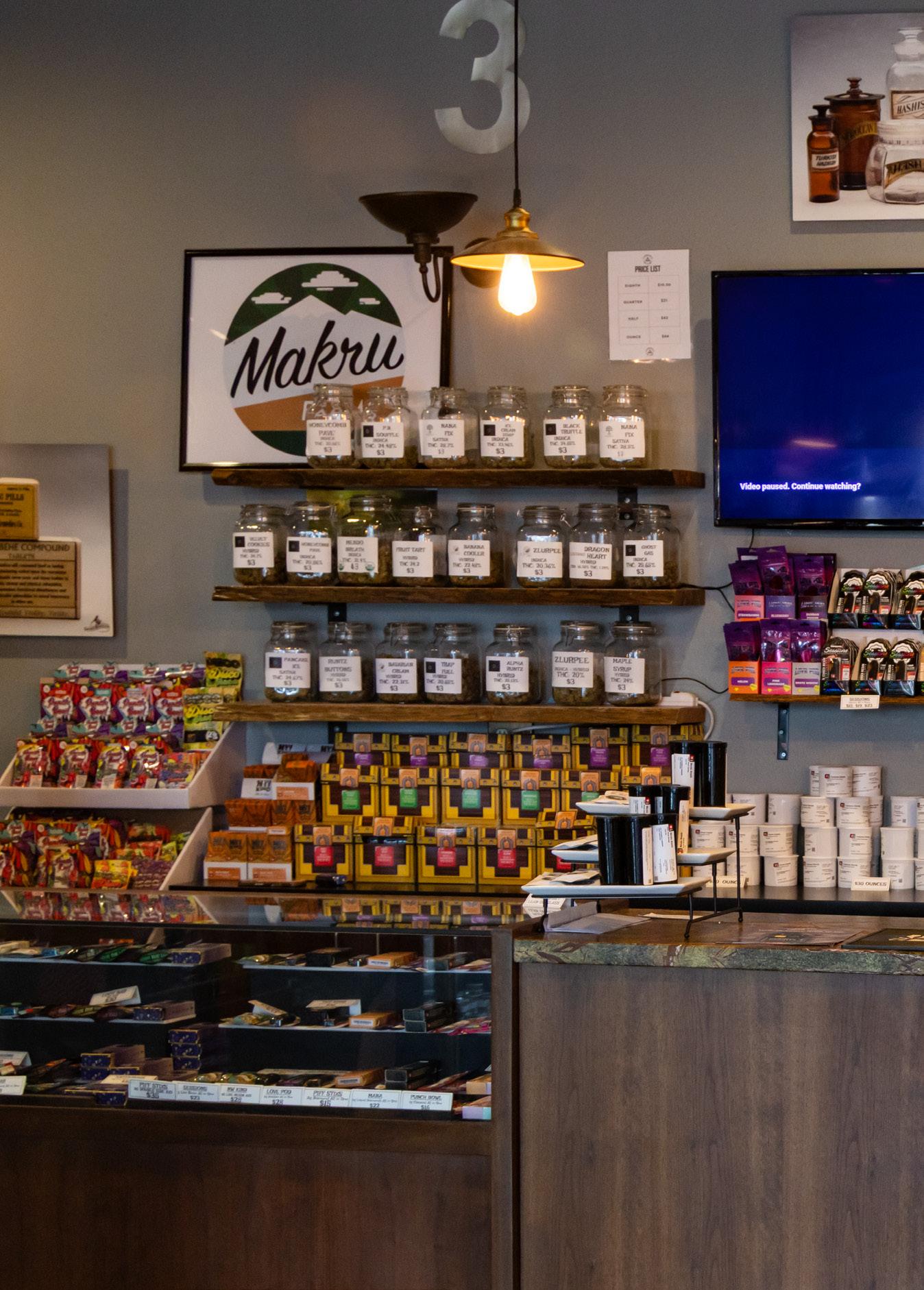
When you walk into a dispensary, how often do you think about what the dispensary and its owner(s) care about? The answer is probably not often, if at all, and that’s fair. You go into the dispensary on a mission—get the goods, go home, get high—who cares about what the owner(s) think about. Well, you should. The cannabis industry is ever-evolving, and those changes affect you as a customer, so it may be time to consider what your dispensary owner(s) care about. Don’t believe me? Cannabis On Time owner, Louis Segarra, cares about cannabis on so many levels, and you benefit from it.
It has been known that Cannabis On Time is focused on making and keeping cannabis affordable and accessible, but it’s not just the cost of the cannabis when you look at the big picture. I chatted with Louis to learn more about his story and how Cannabis On Time came to be, and in one word, it is passion. Passion for making cannabis accessible for everyone, passion for more research on cannabis, and passion for a customer-driven dispensary.
Louis’ passions around cannabis are ingrained in Cannabis On Time in numerous ways. “We are customer-driven; our bottom line is our customers,” shared Louis. The customer focus of Cannabis On Time is more than just being knowledgeable; it is about prioritizing customer service and creating a fun atmosphere for everyone. The atmosphere that is created at Cannabis On Time is multi-purpose. The fun matters, but the music playing on the TVs also helps create a sense of privacy for customers when talking with the budtenders. “Music helps to keep the conversations private with budtenders,” explained Louis.
The privacy that the atmosphere supports also aligns with the focus on cannabis accessibility. Many customers use cannabis for medicinal and pain reasons, and by creating an atmosphere where customers feel comfortable sharing their personal information and experiences with budtenders, make it even more accessible.
Though Louis is passionate about cannabis now, that is not what brought him to the industry. About 10 years ago, Louis came to Oregon for a work trip while working in a different industry and fell in love with the weather. He loved it so much that he decided to move to Oregon, drawn by the financial possibilities in the cannabis industry. After getting into the industry he realized that cannabis wasn’t the quick and easy money maker that everyone thought. This realization also led Louis to understand that “It’s not just about the money, it’s about the folks who need and want cannabis for medical uses and needs.”
Louis’ recognition of the number of people who use cannabis for medical reasons helped encourage his passion for cannabis research. “Cannabis is still in the early stages of medical [research],”
Louis shared, “and Oregon state needs to support cannabis a lot more, on the medical side.” Coming from a business background, Louis understands the complexities of business ownership, especially in cannabis, in ways the state of Oregon doesn’t. “The state of Oregon legalized cannabis without knowing the business side of it,” exclaimed Louis. We can see this in the continual changes of laws and the impacts that they have on cannabis customers. “With rescheduling, there are going to be
a lot of changes over the next three years. The state can change the rules whenever it wants and on a whim.” Despite the way the government continually changes the game in ways that impact access for customers, Cannabis On Time will always be committed to keeping cannabis accessible for its customers, and that is not changing anytime soon.
A second Cannabis On Time location is opening in Salem in the coming months, further demonstrating that when owners care about more than just getting rich, they can expand, grow, and achieve great things in this industry.
If you want to put your money behind people who care, consider stopping by Cannabis On Time, where the customer matters and access is important.
It’s not just about the money, it’s about the folks who need and want cannabis for medical uses and needs.”
-Louis Segarra, Cannabis On Time Owner

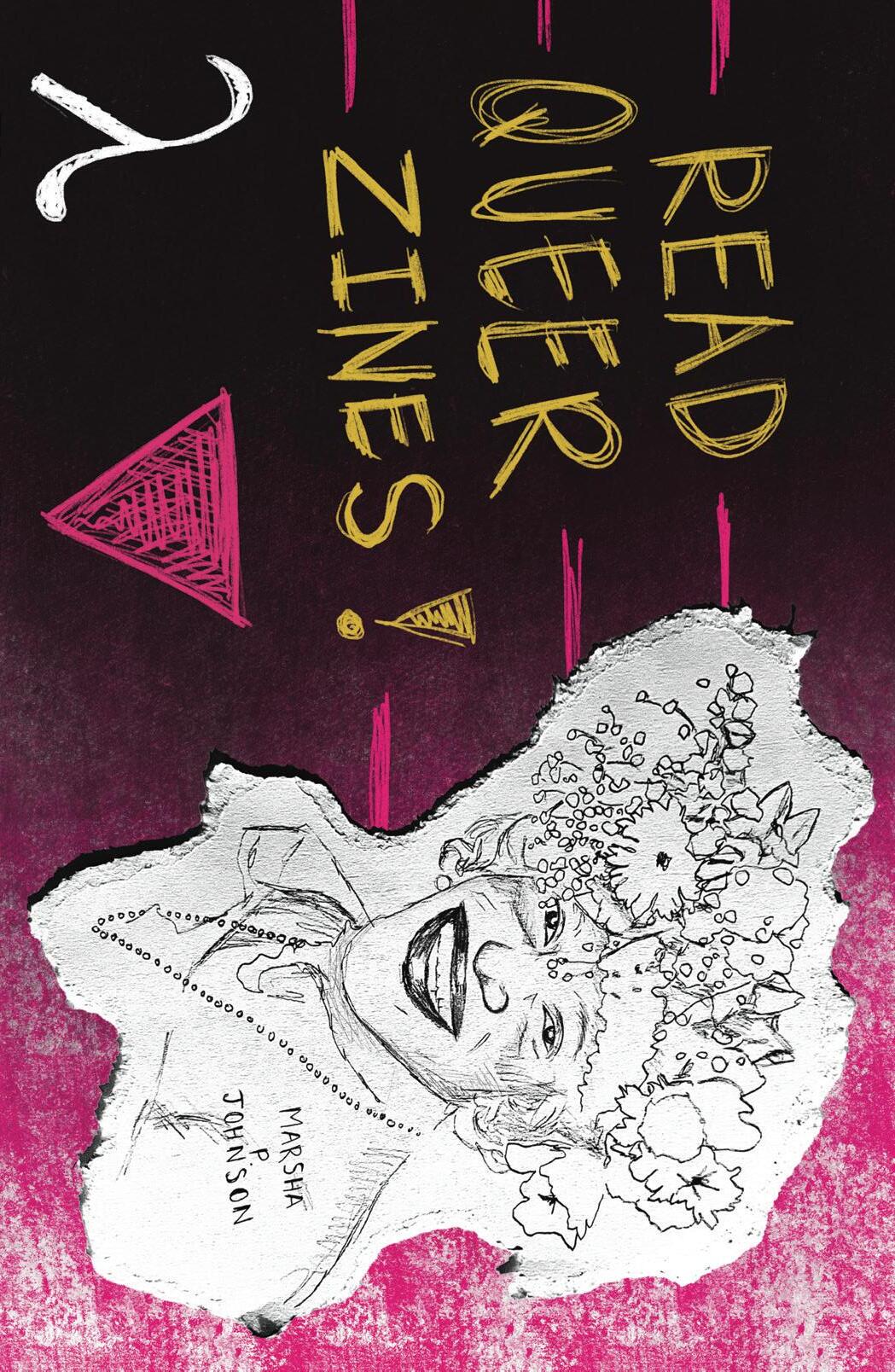
CUT THIS OUT AND TRY FOR YOURSELF!




Written by Madisyn MacKay
Designed and Illustrated by Ava Klooster

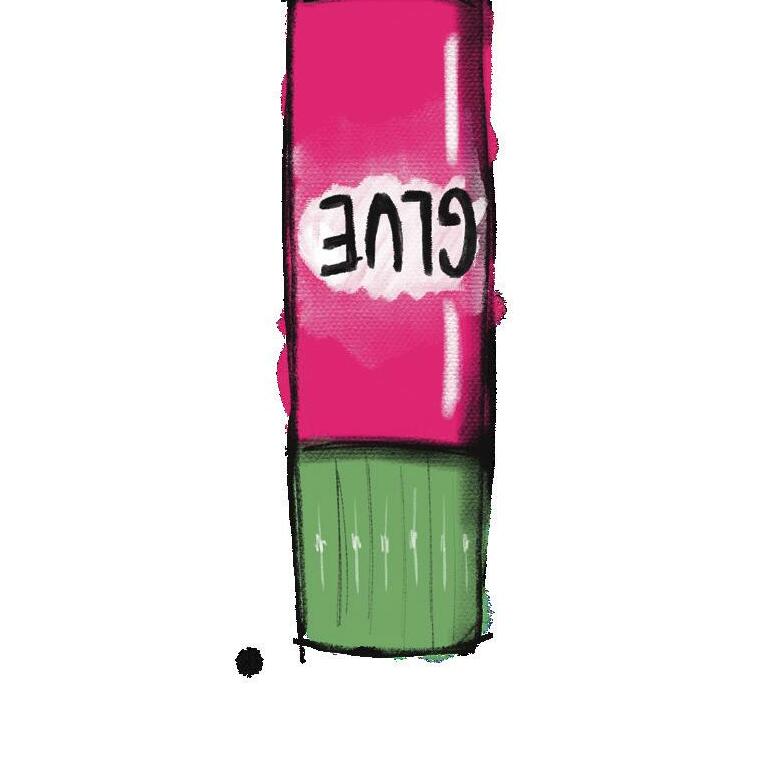
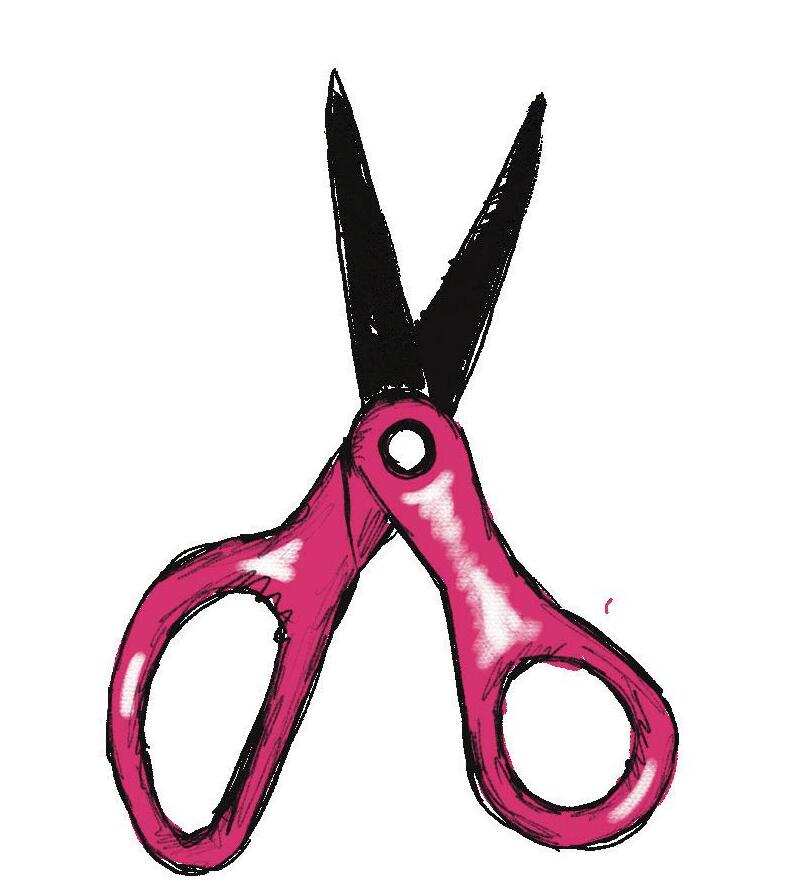
One of my favorite ways to rewind is high crafting. My go-to crafting sesh starts with a couple bowls of sativa to get the creativity flowing, then I dig into my stash of art supplies. Zines are a great high-crafting activity; a simple and fun craft with lots of possibilities and a cool history.
Okay, but what is a zine? They’re typically small-batch, handmade magazines or booklets (can be digital too) with a focus on topics that are historically unconventional or taboo. However, there’s no strict rule for zines; they can be about anything or used to showcase works of art, poetry, stories, comics, photography, etc.
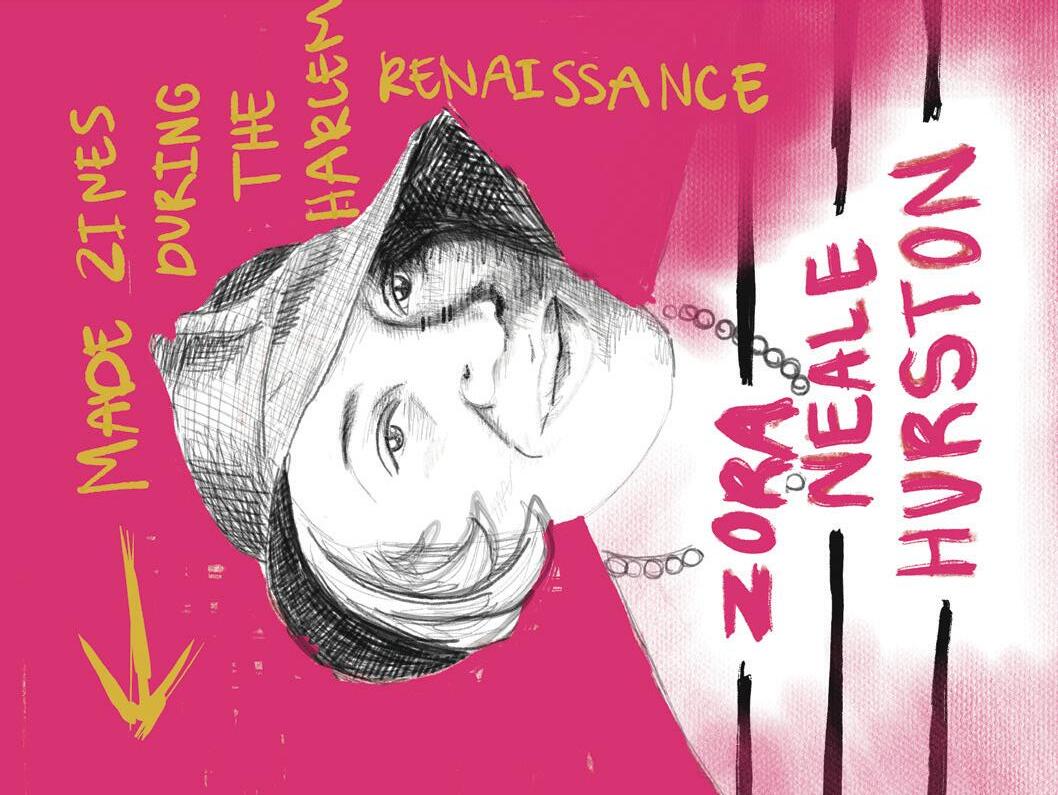
Zines have an interesting history, with some crediting them as the start of the “fandom,” being used for niche shared interests like sci-fi pulp fiction, comics, music genres, shows, movies, etc. They were also used by various movements throughout history to spread their messages within the community. Zines were used during the Harlem Renaissance, the 1970s punk culture, the “Riot Grrl” scene, and within queer communities. The Knight Library even has zines as part of their rare book collection, with some available online. Check out their website to learn more about them!
Now that I’ve covered what a zine is, let’s talk about how to make a zine. There are lots of great resources and templates online, especially on Pinterest. Thankfully, though, it’s a relatively simple process. My freshman year, I learned a super easy way during a UO LGBTQA3
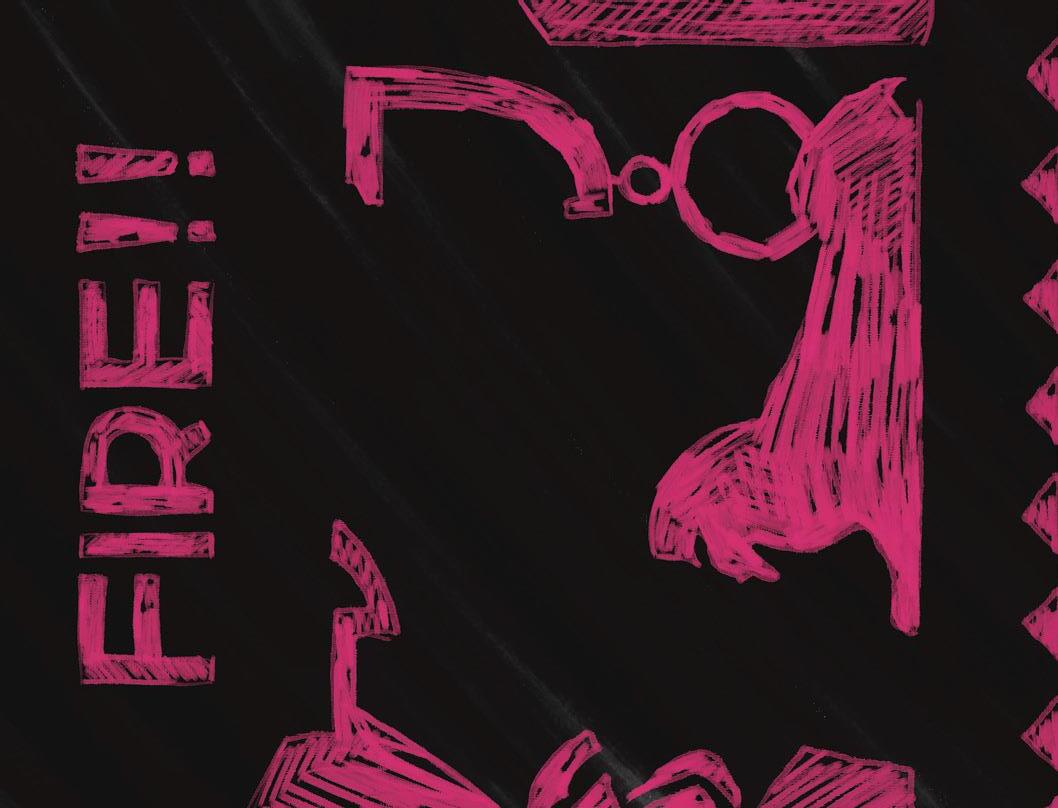
Step One: Grab a rectangular piece of paper; think printer or construction paper, but anything will work. Turn it horizontally and fold it in half, then fold it in half both ways, creasing the edges as you go to create four panels. The goal is to fold the paper so that when unfolded, there are eight panels in total.

Step Two: If you unfolded the paper, refold it in half, then in half again, so you see four panels. Then cut through only halfway from the folded edge – so when the paper unfolds, there’s a cut in the exact middle of the page, right between the middle four panels.
Step Three:

way so the cut portion is on the edge, then push the sides of the paper in so the cut closes to create an “X” shape. Fold the pieces together to form a small booklet. Now you’re ready to make your zine, pick a topic, or just make some fun art.


Pro Tip: Make multiple little booklets, nestle them inside each other, and staple them together to create more pages!
And that is all you need to know about zines to make your own and distribute them, or get your friends together to have a zine-making party and exchange them; the possibilities are endless.

Written by Javay Frye-Nekrasova | Designed by Adaleah Carman
Illustrated by Amanda Bell, Ava Klooster & Dew Mirihana
When you think of cannabis, you more than likely get visions of openness, happiness, calm, creativity, and the like. While these are all common experiences and emotions felt when cannabis is used, these are the present experience for most with cannabis, not the real history. Though cannabis is used across the globe in varying ways, a large part of cannabis’s history is not common knowledge for users and folks who just appreciate cannabis. What history am I talking about, you might be wondering…well, the history of colonization. Now, hold your horses before you get yourself in a tizzy. Colonialism has drastically impacted cannabis and played a part in the cultural uses and understanding of cannabis across the globe. While most countries that were colonized previously have regained their independence (though not all), the effects of colonization are still felt today, and cannabis is one specific area where the effects are very important to understand.
As this is the BIPOC edition, I figured, why not unpack the history of colonization and cannabis, specifically through three cultures: Hawai’ian, Rastafarian, and African. Hawai’i is an interesting case to explore, as Hawai’i has not achieved independence and is still existing under colonialism as a part of the United States of America. Rastafarianism is commonly associated with cannabis, but there are so many holes in the story and dots that still need to be connected for people to fully understand the movement and cannabis’s relationship to it. Lastly, Africa is often left out of cannabis conversations entirely, but it is
one of the largest producers of cannabis, behind America. Come along and learn some history not often taught in classrooms.
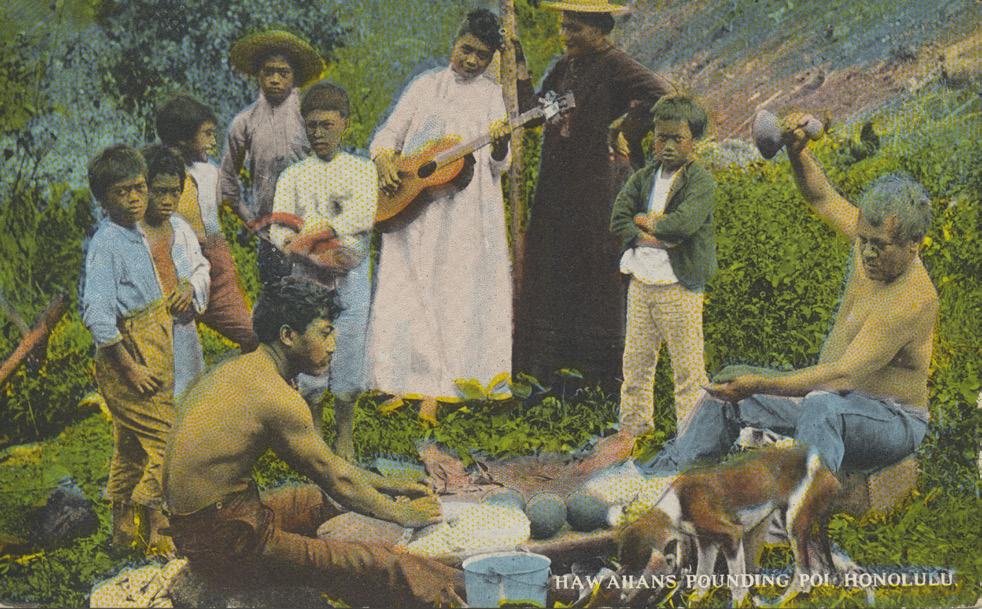
Although Hawai’i is recognized as one of the 50 states, it is a colonized country that had a fully functioning government before the U.S. inserted itself forcefully (i.e., colonialism). Thanks to colonization, so much of Hawai’ian culture has either been ignored, erased, or appropriated, and when it comes to cannabis and Hawai’ian culture, it has been appropriated AND erased.
In the Hawai’ian language, cannabis is known as Pakalōlō, which translates to crazy or numbing tobacco. In Hawai’ian culture today, many people are working to preserve Pakalōlō as the native plant, but the effects and impacts of colonialism make this much harder. The relationship that Hawai’ians had with cannabis has been greatly impacted by the United States intervention through a program called Operation Green Harvest. In the 1970s, this operation searched all over the Hawai’ian islands for cannabis with the goal of eradicating the very strains that were used for Hawai’ian medicinal purposes. Did you know that most native Hawai’ian cannabis strains are extinct?
Hawai’i had four landrace strains of cannabis that were native: Kona Gold, Maui Wowie, Kaua’i Electric, and Puna Buddaz. Due to Operation Green Harvest, most of these landrace strains



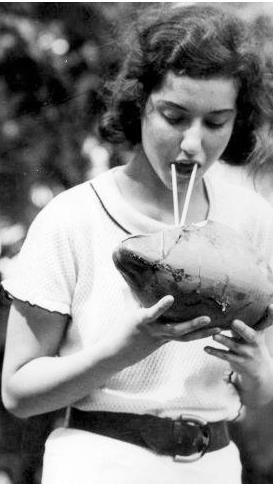




are no longer cultivated naturally in Hawai’i; instead, they have been brought to the mainland for indoor cultivation. Operation Green Harvest was supported by the Drug Enforcement Administration and used military resources to take the landraces from Hawai’i.
Through government intervention (or rather theft) and the gradual eradication of native cannabis strains, many native Hawai’ians have had to go underground with their growing in an attempt to keep landrace strains alive. The most insidious part of this all is that within Hawai’ian culture, cannabis is a medicinal plant that is celebrated, one might even say revered.
Before the government stormed in, Pakalōlō was a major part of the Hawai’ian economy. You could get it on all the islands, but today, with most growers operating underground, there are not many Pakalōlō strains available for sale in any major way, let alone in an economically sustainable way.
Rastafarianism is commonly associated with cannabis, but for many people, the history and a greater understanding of what it means to be Rastafarian is lacking. Everyone wants red, green, and yellow cannabis stuff, but there is generally very little acknowledgment of the culture that is buried beneath the cannabisstoner aesthetic.
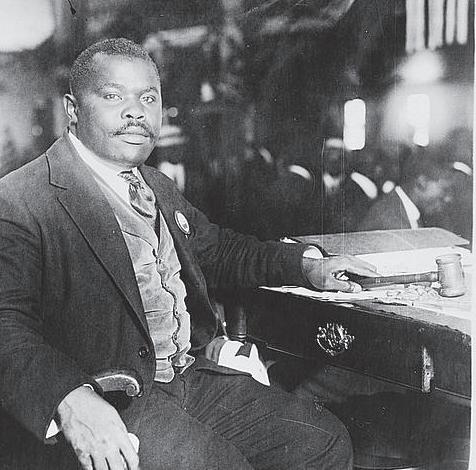
Rastafarianism began as a political and religious movement in Jamaica in the 1930s. It was built on the work of Marcus Garvey, a political activist and leader of the Pan-African movement. Garvey’s work is central to Rastafarianism, laying the foundation for five tenets: spiritual, historical, political, social, and cultural. Rastafarianism as a political movement is focused on the response of Black people to white colonial oppression. While Garvey’s work doesn’t touch on cannabis, Rastafari have a strong relationship with cannabis, recognizing it as a sacred herb for spiritual purposes.
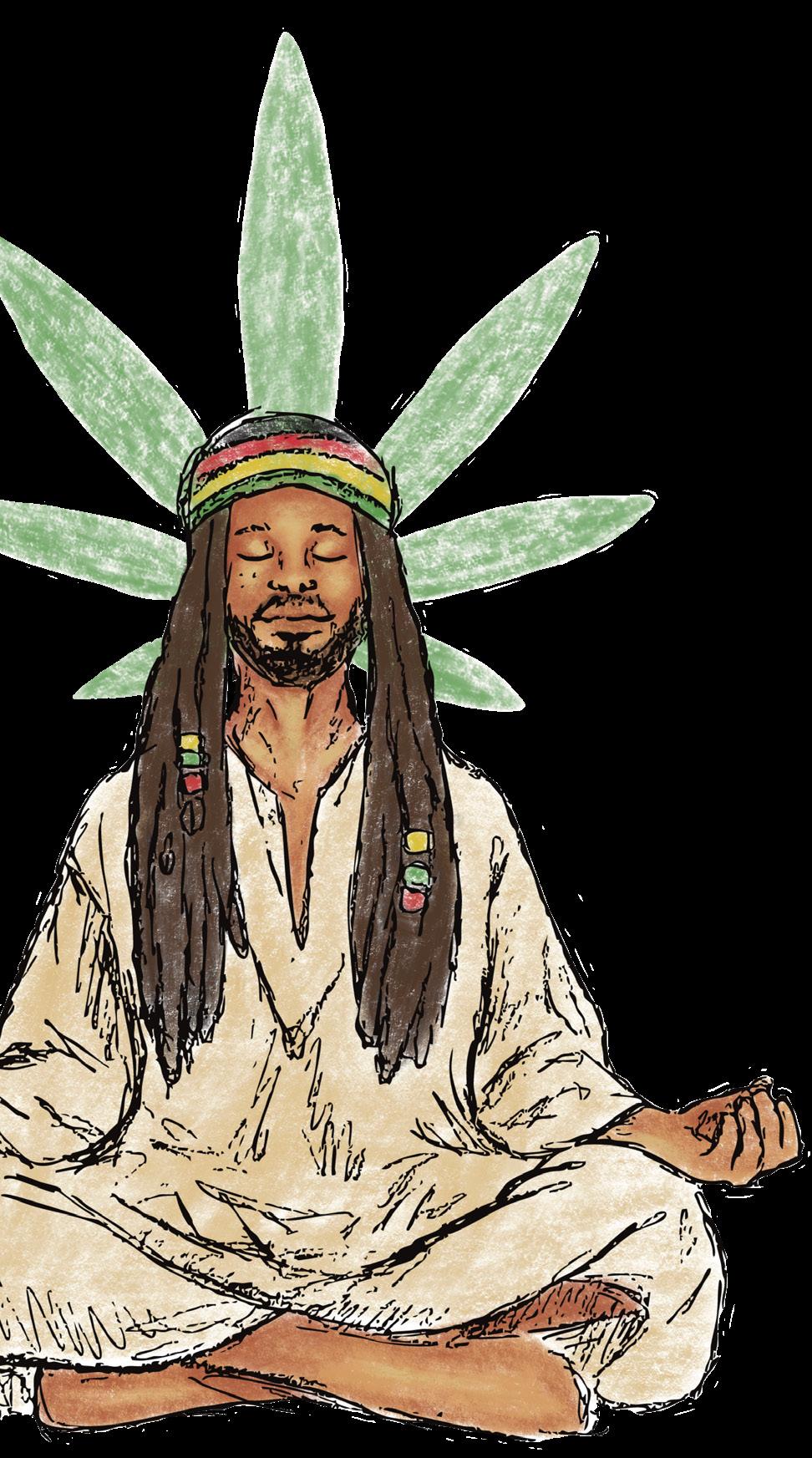
Rastafari use cannabis for meditation, spiritual elevation, and connection, specifically when praying to Jah (God). The slang term of spliffs actually stems from Rastafarianism and the sacred use of cannabis to enter a meditative state and more easily commune with Jah. While the public perception of Rastafari typically holds that they are just abundant cannabis users, the relationship is much more intentional and spiritual, with cannabis being revered as the “holy herb.”
Considering how religion is so embedded in our society, you would think that Rastafarianism and the importance of cannabis would be respected, right? Well, it’s not. With many Rastafarians being Black folks and heavily melanated, the religious aspect of cannabis is regularly overlooked, and Rastafari are viewed as just being heavy cannabis users. Even in Jamaica, where Rastafarianism was born, cannabis was illegal for religious use until 2015.
Cannabis is largely associated with the Black community here in the United States (thanks, Reagan), but cannabis use is actually quite prevalent in the homeland of Africa. Cannabis isn’t native to Africa, but it has been cultivated there for over 1,000 years across many regions and countries. Cannabis is recognized as being introduced to Africa through trade and travel from Asian countries and India. You may be asking, what does colonization have to do with Africa and cannabis? Well, travelers from India weren’t coming through just for fun—they were also living through colonization, which affected trade routes.
Colonization is also important in this conversation because colonizers criminalized cannabis. Former South African Prime Minister, Jan Christiaan Smuts actually urged the League of Nations to recognize cannabis indica and cannabis sativa as “dangerous drugs.” The negative perceptions surrounding cannabis by South African officials (read: colonizers) also led to increased oppression and policing of Black and Indigenous communities in South
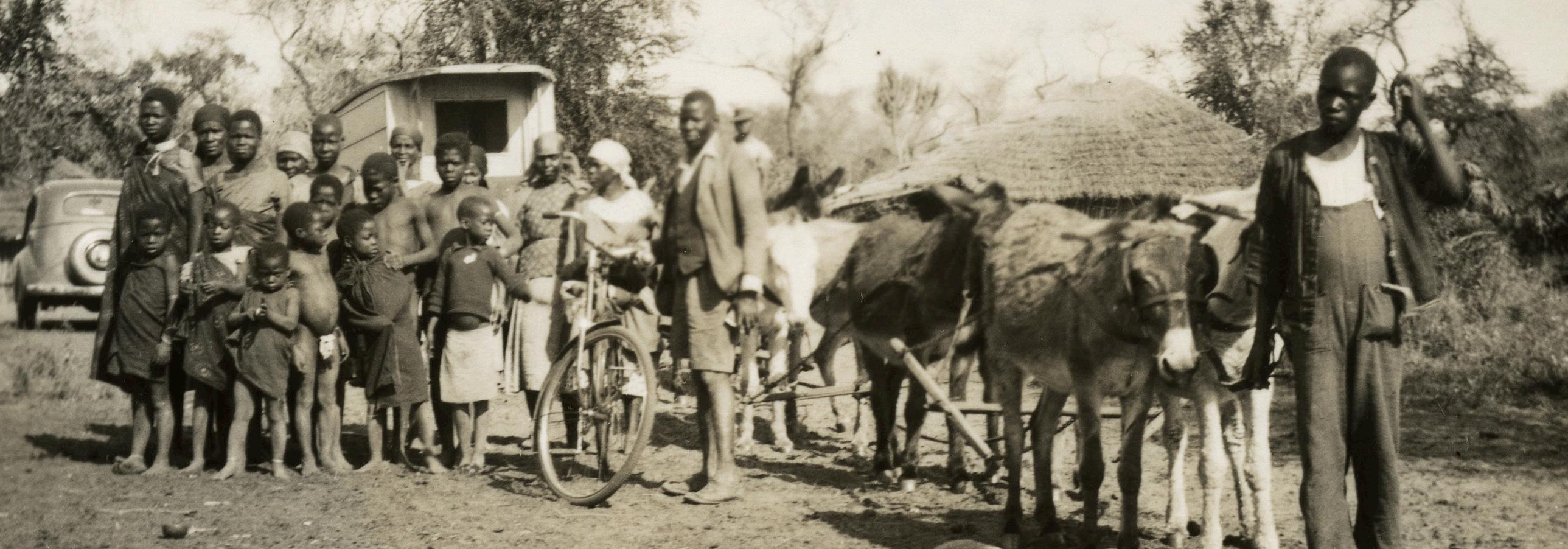
Africa. The U.S. even played a hand in this dynamic by training the South African police officers, which resulted in increased police brutality.
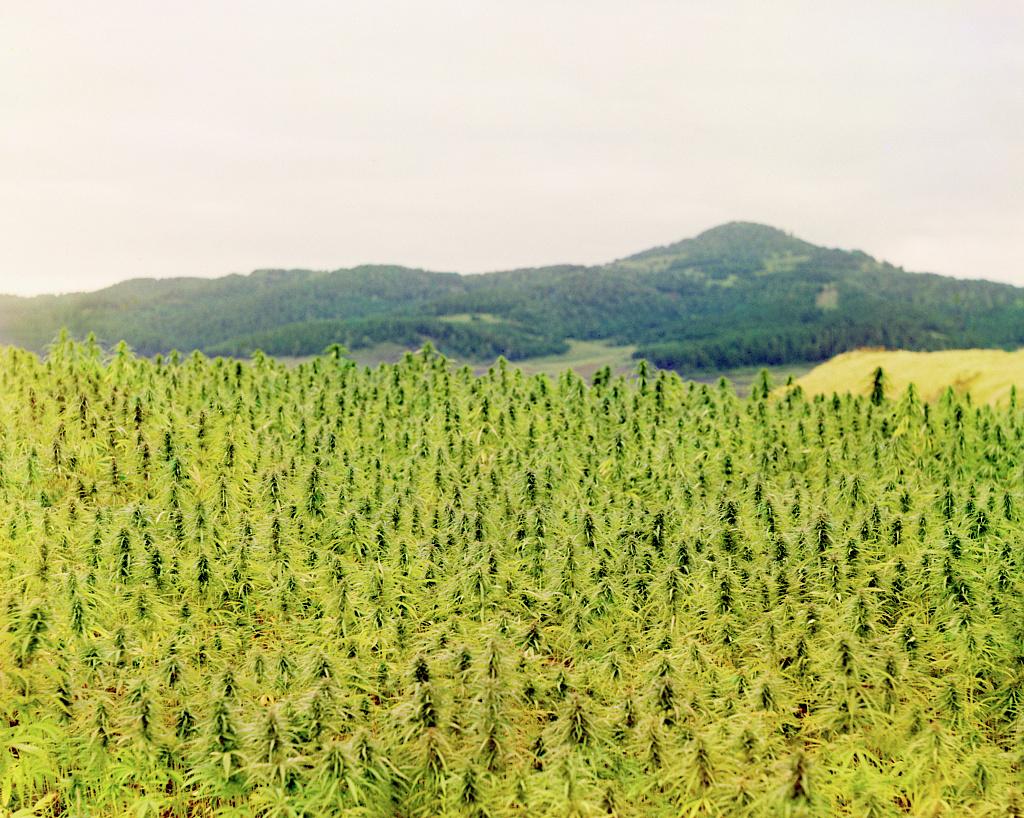
While cannabis is no longer illegal in South Africa, it is only legalized in nine countries, which is concerning considering that the types of legalization differ, and also due to the fact that up to 48% of the African population uses cannabis in some form. South Africa is the only country that has legalized cannabis for recreational use. Malawi, Zambia, Zimbabwe, Lesotho, Ghana, Rwanda, Uganda, and Morocco all have legalized cannabis for either medical use, research use, exportation, or a mix of those. Morocco produces some of the world’s most popular resin and is the largest global distributor. The lack of largescale legalization and the commercial legalization for research or medicinal use further exemplify how colonization plays a role in cannabis culture in Africa, as well as continues the history of resource extraction from the country. By limiting cannabis use and criminalizing Africans who do use it, it only continues the longstanding history and ideologies that have been around for centuries.
There is so much to the story of cannabis and Africa (much more than I can cram into this article). If you are looking to learn more about cannabis in Africa, check out the book The African Roots of Marijuana by Chris S. Duvall.
So why do these histories and cultures’ relationships with cannabis matter in the grand scheme of things? Well, look at our present-day society, cannabis

is stigmatized, criminalized (in some places), and regulated in ways that overshadow or completely erase the cultural connections that are associated with this plant. The criminalization of cannabis stems from colonization, the racism that colonization bred and birthed, and imperialism’s hand in the bigger picture. As shown earlier, the ways in which stereotypes have been attached to these different cultures are pertinent to unpack, as it is a whitewashed (literally) history that is so ingrained in society that it has allowed mass incarcerations of Black people and people of color for cannabis usage, growing, and selling.
I recognize that this article isn’t going to change history, nor is it going to change our present-day society, but knowledge is the first step in enacting change. Let’s be real, you learned something new reading this article, and you are more than likely going to tell someone about it, and then it continues like a domino effect. Maybe with enough people being aware and talking about cannabis across cultures and countries, we might see some changes in the way this plant is regulated and controlled by the government.



2. The country that produces some of the world’s most popular resin
4. Cannabis is known as this in the Hawai’in language
2. The country that produces some of the world’s most popular resin
5. The first Native-owned dispensary in Oregon
1. Jamaican Black nationalist leader
3. The country where Rastafarianism was developed
1. Jamaican Black nationalist leader
6. The name of Margaret Cho’s cannabis strain
4. Cannabis is known as this in the Hawai’in language
7. This Piscean queen from Barbados is well-known for her cannabis use
5. The first Native-owned dispensary in Oregon
8. Central & South _____ is credited as the origin of the cannabis genus
6. What is the name of Margaret Cho’s cannabis strain
7. This Piscean queen from Barbados is wellknown for her cannabis use
8. Central & South _____ is credited as the origin of the cannabis genus
9. The slang term stemming from Rastafarianism for using cannabis to enter a meditative state and commune with Jah
3. The country where Rastafarianism was developed
9. The slang term stemming from Rastafarianism for using cannabis to enter a meditative state and commune with Jah

by Amanda Bell



















Finding BIPOC cannabis businesses was difficult; a few businesses can be found in the Portland area, but outside of that, there’s not much. I found articles detailing dispensaries and a few cannabis businesses that have since closed down, resulting in nearly as many closed BIPOC cannabis businesses as open ones. However, what I did find was promising.
Green Muse, a Black-owned dispensary in Portland, focuses on cannabis culture, educating customers, and promoting safe, sustainable, high-quality cannabis production. Their website says they strive to “acknowledge those that came before us and empowered us to own our future and create a cannabis culture we believe in.” This includes their industryleading certification process with two levels: approved, which screens to reduce exposure to chemicals or contaminants, and certified, which requires a strict set of growing standards ranging from natural cultivation to vegan ingredients while checking for ethical and sustainable business practices.

Also in Portland is the first Native-owned dispensary in Oregon, Natural Wonders. Their tagline for their dispensary, found on their website and social media, is “Your budtender’s favorite dispensary”. They also offer a selection of premium, sustainably sourced options from local Oregon producers. Their website explains that their roots are in medicinal cannabis, and the majority of their producers started out in the medical cannabis industry exclusively. The Natural Wonders website highlights a commitment to creating healthy relationships with the environment.
The last dispensary is Club Sky High, a family-owned Black business, with a farm in Southern Oregon and an indoor facility in North Portland to ensure high-quality products. They started as a medical dispensary like Natural Wonders and have shown a commitment to giving back to the St. Johns community.
Magic Hour Cannabis, “one of the only minority-run and women-owned & operated cannabis businesses in the country,” according to their
website. They, like Green Muse and Natural Wonders, have a focus on sustainability, ethical practices, diverse hiring, and educating the community about cannabis, all with a focus on disenfranchised populations. They showcase current strains on their website, alongside merchandise and dispensaries that sell their products.
Although the number of BIPOC-owned cannabis businesses in Oregon is small, there are opportunities for BIPOC people looking to get into the cannabis industry, such as NuProject, a Portlandbased company that supports cannabis businesses with grants and loans. They have a clear goal emphasized across their website: “help historically-excluded entrepreneurs build generational wealth.” In fact, in 2020, Green Muse, Natural Wonders, and Magic Hour all received equity grants from a partnership between NuProject and Prosper Portland (an economic and urban development agency). Continued efforts such as this will help grow the number of BIPOCowned businesses and opportunities within the cannabis industry.





Written by Javay Frye-Nekrasova | Designed by Amanda Bell
I take new smoking pieces very seriously and have a bit of a ritual: the first smoke is ceremonial and requires a really good strain. My new piece, Roger, has a Rastafarian, alien-esque vibe that I wanted to lean into with my first use. Since the piece feels Rastafarian, I figured Jamaica Joel’s would be a great place to get my flower, and I was not wrong. The vibes when you walk into Jamaica Joel’s are just what you would expect to see, with so much red, green, and yellow throughout the store. When you first walk in, you are immediately greeted by glass cases filled with various smoking pieces and storage containers. As you make your way back to the room with the cannabis products, you pass through a hallway with a wall of fame of celebrities who have shopped at Jamaica Joel’s, which, of course, includes Snoop Dogg; a clear sign to me that I was in the right place to buy flower for my first smoke with Roger.
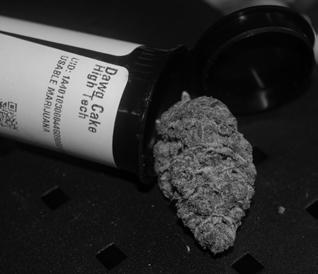
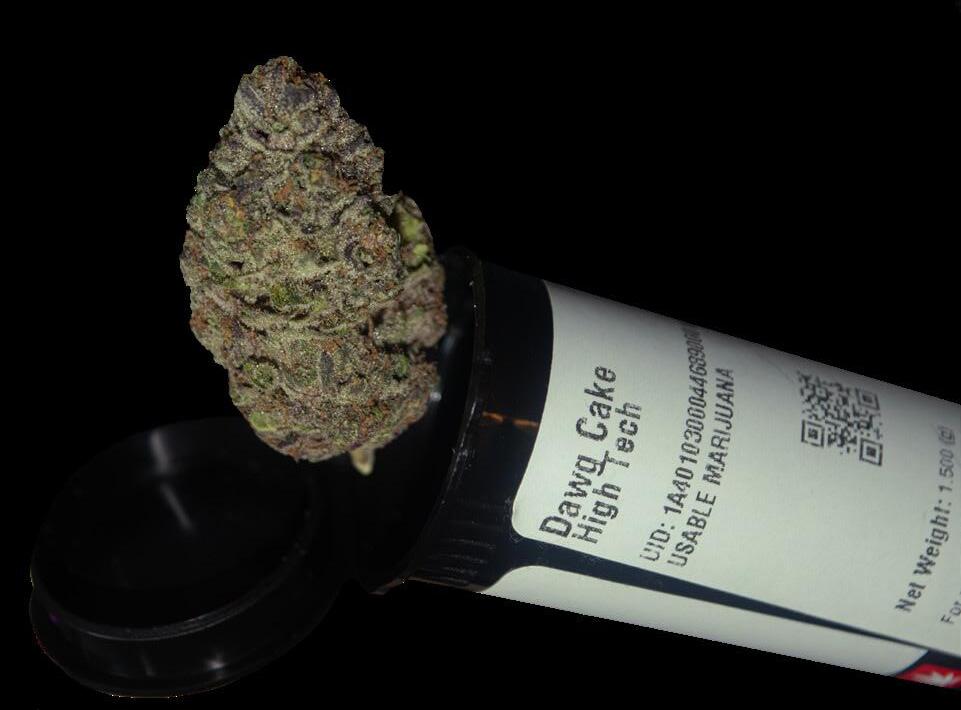
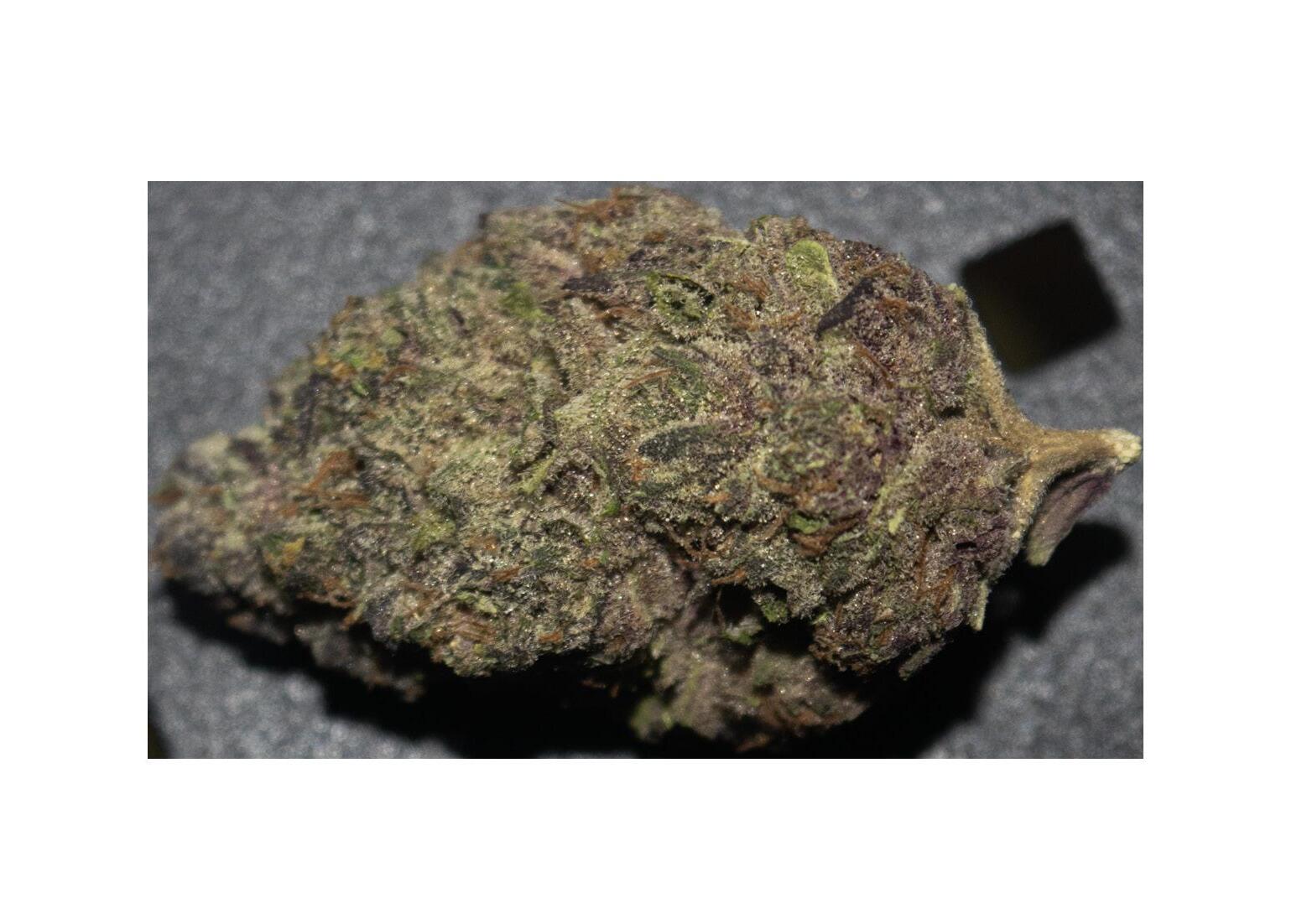
I am hard on trusting my gut, and when I was choosing my strain for this ceremonial smoke, I did absolutely that. The name Dawg Cake really excited me; something about it made me giggle, and that was enough to know that it was the strain I needed. I have a preference for indica strains, so I was quite jazzed to see that Dawg Cake was an indica-leaning hybrid from High Tech farms with 26.52% THC.
Dawg Cake had a pleasantly fun aroma, which only solidified my decision, and I gleefully ordered my gram. When I finally got back home, I grabbed Roger and my grinder. The trichome on the flowers glistened in the lighting as I put the nug in the grinder, and the aroma gently wafted up my nose. Once Roger was packed with the freshly ground Dawg Cake, I took a deep breath to center myself and clear my head. The only thing on my mind was being present and intentional with my first smoke from Roger and soaking in the full experience of the flower.
The hit of Dawg Cake was surprisingly nice and smooth. I had a few coughs

with my first couple of hits, but nothing dramatic. The high was a gradual ride into pure relaxation. I had expected the Dawg Cake to lull me into a sweet slumber as most indica strains do for me, but rather it brought me to a place of calm and serenity. The relaxation I felt with the Dawg Cake was prime. I was alert enough for a conversation and a few laughs, but not overwhelmed by the daily emotions of my ever-active mind and neverending to-do list.
I am very happy with my choice of Dawg Cake for the maiden smoke of Roger, and I think that the experience from that first smoke is setting the stage for my time with Roger. The Dawg Cake has christened Roger as my perfect relaxation piece. If you are looking for a nice and easy relaxing high, I can’t recommend Dawg Cake enough. So head on over to Jamaica Joel’s to get some for yourself!




Written by Savannah Brown
by Javay Frye-Nekrasova
Designed by Dewni Mirihana
Keke Shelton has been a budtender at Cannabis On Time for two years, ever since she went in to buy flower and they asked her if she wanted to work there. She likes her job because she can get to know her customers and be herself.
How did you start working in the cannabis industry?
It was my first time in (Cannabis On Time), and they were just like, “Do you want to work here?” And I wasn’t too sure about it. I thought, “Maybe this is odd,” because I just walked in, so I didn’t take the job. I came in to buy flower again, and they offered me the job again. And I was like, “Why not?” I’m not doing anything, and summer’s over. So I took the opportunity, and I love it.
What do you love about being a budtender?
It’s homey. You get to know your customers and what they like to smoke, and what other people are interested in. You can be yourself for sure. I also like knowing about all the different products. I remember when I first started here, I didn’t know anything, and now I feel like I know a lot about it — keeping all the flower fresh and organized, teaching myself about the cannabinoids and terps.
What do you like about working at Cannabis On Time specifically?
I just love how it’s super cheap. Everything’s at a good price. They don’t try to rip anybody off or take advantage of the customers; they just like to give back to the community. We’re a discount store. We’re actually going to be the cheapest dispensary in town, and if someone tries to price-match us, we’ll drop the price. The quality of the cannabis is pretty good. I would have to say most of the staff have probably tried all of the strains, so we know if it’s not that good, or if it’s not that strong. If it’s not looking the best or something, we won’t have it out on the shelf at all. We have pre-packaged ounces, like our $19 ounces are really good. If it’s not up to our quality, we’ll mark it down
to $10 ounces. We also sell $2.50 of shake ounces, that are good for butter or to put in your brownies or something.
What’s your go-to way to consume?
I like rosin. It’s a cleaner, better high. There’s not a bunch of additives in it. It’s solventless, so it’s cleaner on your lungs. I feel like the high is stronger off of it. It’s just more relaxing.
Indica all the way. I’ve smoked sativa, and it gave me really bad anxiety, so it just wasn’t for me. I smoke during the day too, but I usually smoke more at night when I’m ready to go to bed.
Tell me about a weird high thought you had recently
I learned what crop dusting was, and I was like, “What if I called somebody a crop duster?”
I didn’t know people knew what it meant. And I started asking my regular customers, and they were just shaking their heads at me.
What advice do you have for people just starting out with cannabis?
Just try everything and find what works for you. Make sure you try everything out. Some people try one thing and just never smoke again.
What is your favorite thing to do while high?
I like to watch The Simpsons. It is my favorite thing. I have it on repeat every day.

Favorite Munchie?
Peppermint Kisses and the Nothing Bundt Cakes are my favorite.
-Keke Shelton
ON TIME
Recommendations:
FLOWER:
Mule Fuel on the $7 shelf
DAB:
Sand Castle Super Boof
EDIBLE:
Happy Kitchen Brownie