For our Memorial Day edition, Duck Living wanted to explore how people reconnect with nature, community and themselves. The Wooden Shoe Tulip Festival brings vibrant visions to the Willamette Valley each spring through generations of hard work. Here in Eugene, the Student Sustainability Center gives the UO community a space to grow more than just a garden. We’re also highlighting the tension between connection and distraction by examining the relationship students have with their screens. In place of the small screen — our phones, you can check out some silver screen classics at the Art House theatre. However you go about finding your community, Memorial Day weekend is all about getting outside, getting some good grub and getting together.
Annie Bostwick Duck Living Editor
Special Sections Editor
Annie Bostwick
Cover Photo
Alyssa Garcia
Special Sections Writers
Campbell Williams
Daisy Sophia Valencia
Peyton Gast
Sophie Turnbull
Yasmin Alvarez
Special Sections Photographers
Alyssa Garcia
Arianna Rinaldi
Brayden Day
Lead Designer
Eva Andrews
Student Designers
Amanda Bell
Asha Mohan
Magnolia Schnobrich
Miles Bernell
Sophia Leuthold
Account Managers
Camcole Pereira
Elliot Byrne
Maria Jimenez
Emerald Media Group, Inc. 395 University St., #302 Eugene, OR, 97403 541.346.5511 x327 dailyemerald.com
Duck Living is published by Emerald Media Group, Inc., the independent nonprofit media company at the University of Oregon. Formerly the Oregon Daily Emerald; the news organization was founded in 1900.
Dig Deep at UO Grove Garden
Written by Daisy Sophia Valencia • Photos by Brayden Day • Designed & Illustrated by Amanda Bell
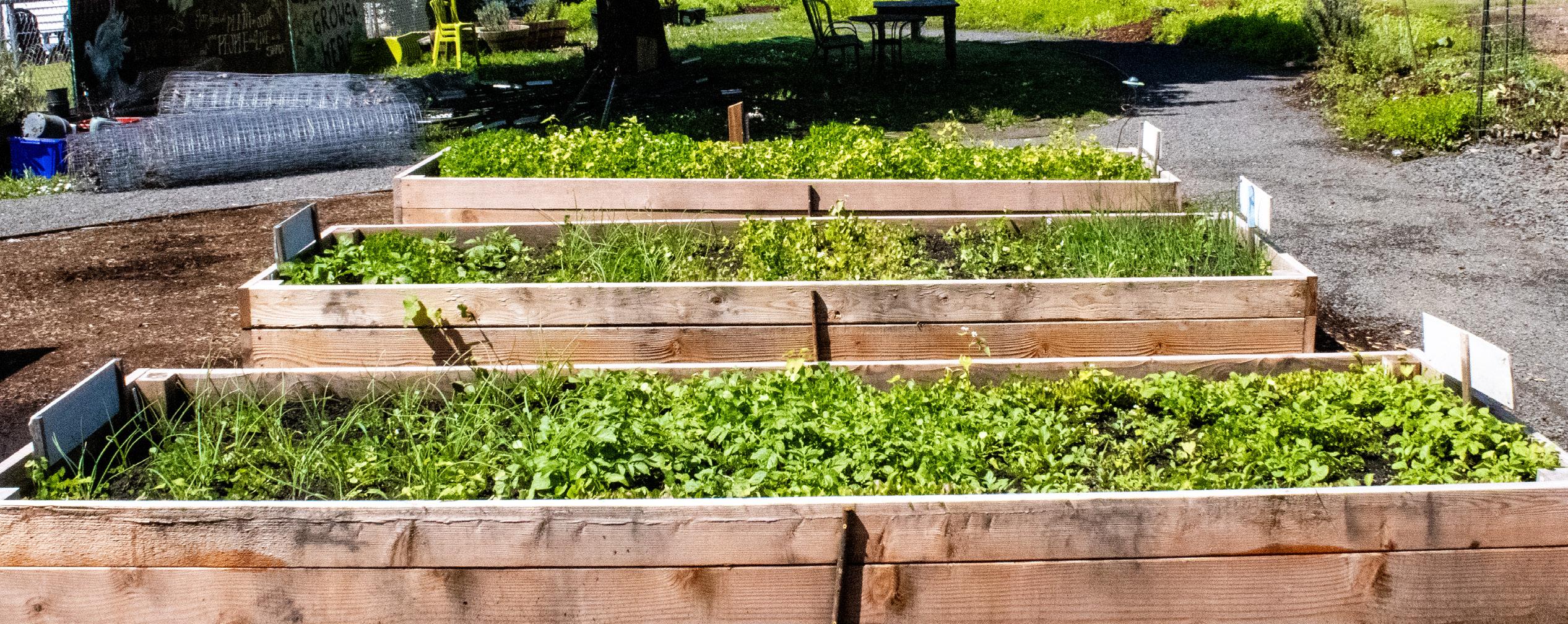
The Grove Community Garden has recently relocated next to Global Scholars Hall on 1801 Moss St. The garden is run by the Student Sustainability Center alongside a team of volunteers. The space grows a variety of fruit, vegetables and flowers. Huckleberries, artichokes and perennials are all in the mix this season.
If you’ve ever received fresh produce from the Produce Drop, it’s likely that some of that food was grown at the Grove Garden. The garden plays an active role in campus food access initiatives, and students are encouraged to get involved in the process. The majority of the food grown at the garden goes right back to the student volunteers. Prospective volunteers should reach out to the UOSSC or attend one of the weekly work parties hosted every Sunday from 2–4 p.m.
At these work parties, students set an intention for the session, such as weeding, watering, planting and
for the first time will be taught everything they need to know in a low pressure environment. Because the student volunteers come with a wide range of experience and expertise, these work parties naturally foster collaboration. Students with more experience are happy to share their knowledge with beginners, and everyone contributes toward a shared goal.
Taylor McHolm “
The Grove is a great place for students to gather on campus and learn about growing food, but also to connect with one another.
The UOSCC director, Taylor McHolm, explained that the garden is more than just a source of food. The space offers a unique opportunity for students to learn outside the classroom and develop practical skills in growing food by engaging in hands-on, group-centered learning. The community of volunteers plays a key role in maintaining the garden by routinely visiting and tending to the plants.
“The Grove is a great place for students to gather on campus and learn about growing food, but also to connect with one another,” McHolm said.
Even for those who are not interested in getting their hands dirty, everyone is welcomed to come and respectfully enjoy the garden. In the midst of all the stress from studying, the Grove Garden offers a quiet space to pause and reconnect with nature.
Turning Tulips into a Destintion: The Wooden Shoe Tulip Garden Festival
Written by Sophie Turnbull • Photos by Alyssa Garcia • Designed by Miles Bernell
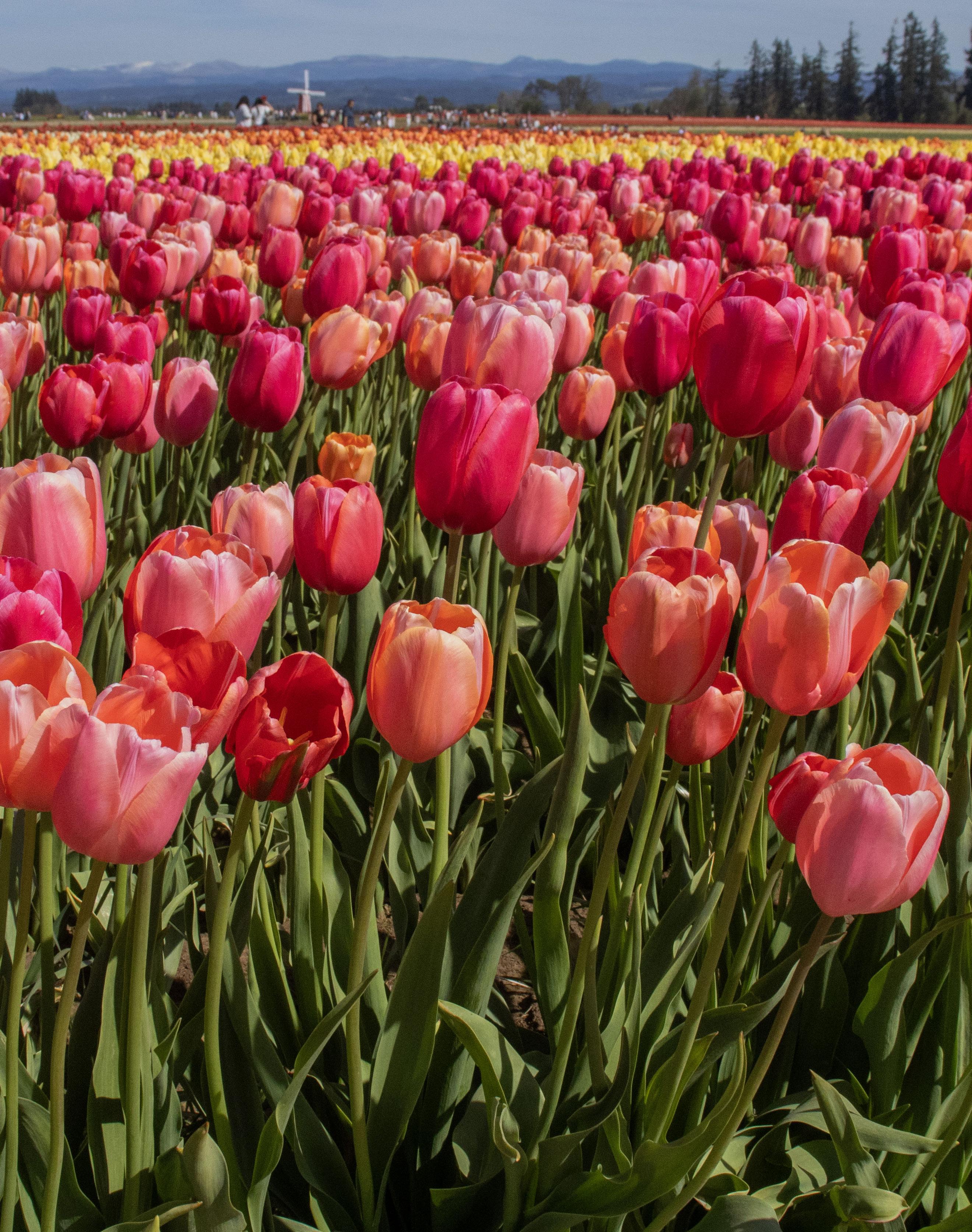
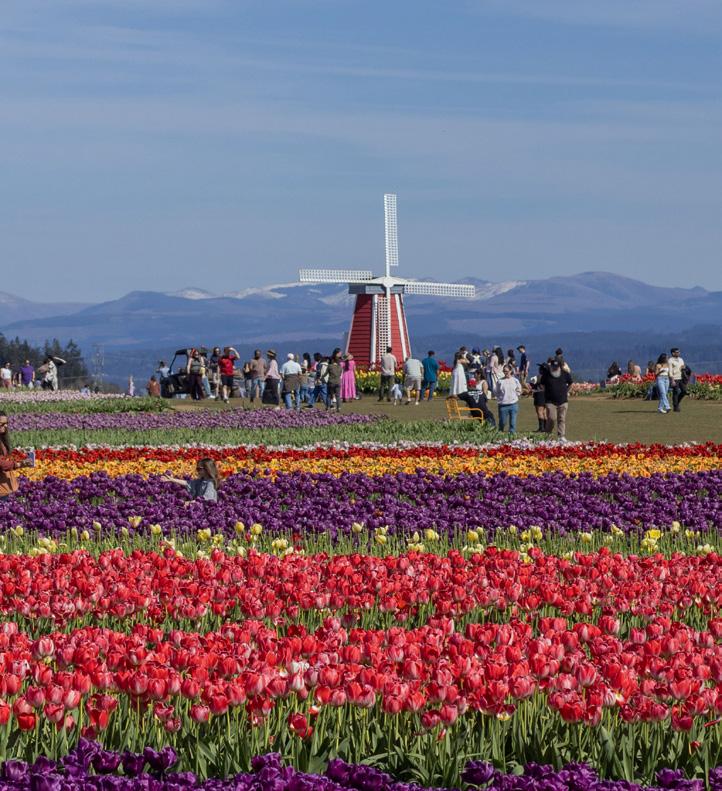
What started as a six-car traffic jam is now celebrating its 42nd year as one of the biggest tulip gardens in the world. The Wooden Shoe Tulip Garden Festival, located in Woodburn, Oregon, started as just a home to Barb Iverson and her family. Now they host this annual festival where upward of 150,000 people travel from all over the world to stand in 40 acres of the brightest tulips you have ever seen.
Iverson’s parents first bought this piece of land in the 1950s as newlyweds. Not expecting much from these flowers, they began growing their tulips in the 1970s for a bulb farmer from Indiana. Eventually, Iverson’s brothers decided this was their chance to delve into the wholesale bulb business. Selling tulips to the public started a neighborhood buzz. Opening the field up to the public was never a thought in Iverson’s mind. It wasn’t until a couple of her neighbors planted the idea
in her head that she finally considered it. Initially, she was confused, “Why would anybody want to come look at a crop?” she said. “I grew up here, surrounded by this beauty. You don’t appreciate it, ‘cause all you are looking at is all the work that has to be done.”
And that’s exactly what it was — a lot of work. But Iverson and her siblings were up for the challenge.
Just like any business, they ran into issues, but grew stronger by solving them. From adding in more parking lots to control traffic, to hosting vendors for more entertainment, to even selling their tulips to major retail grocery chains like Safeway and Trader Joe’s, Iverson’s passion made the farm flourish. Now the month-long festival sells out frequently. Families come with their kids, friends come alongside each other, and the aisles of tulips are quickly filled with
smiling faces. Additionally, they host experiences like wine-tasting, tractor riding and even watching the sunrise from above the flowers in hot air balloons.
As the Wooden Shoe Tulip Garden Festival season begins to wind down, Iverson and her team’s work only continues. The preparation for next year’s Wooden Shoe Tulip Garden Festival begins almost directly after the event ends. As generations of this family continue to keep this festival alive, Iverson hopes that her daughter Emily will follow in her steps.
From a quiet family farm, to a global destination, The Wooden Shoe Tulip Festival continues to grow as a place to bring people together, represent family legacy, and show people a glimpse of what springtime in Oregon looks like.
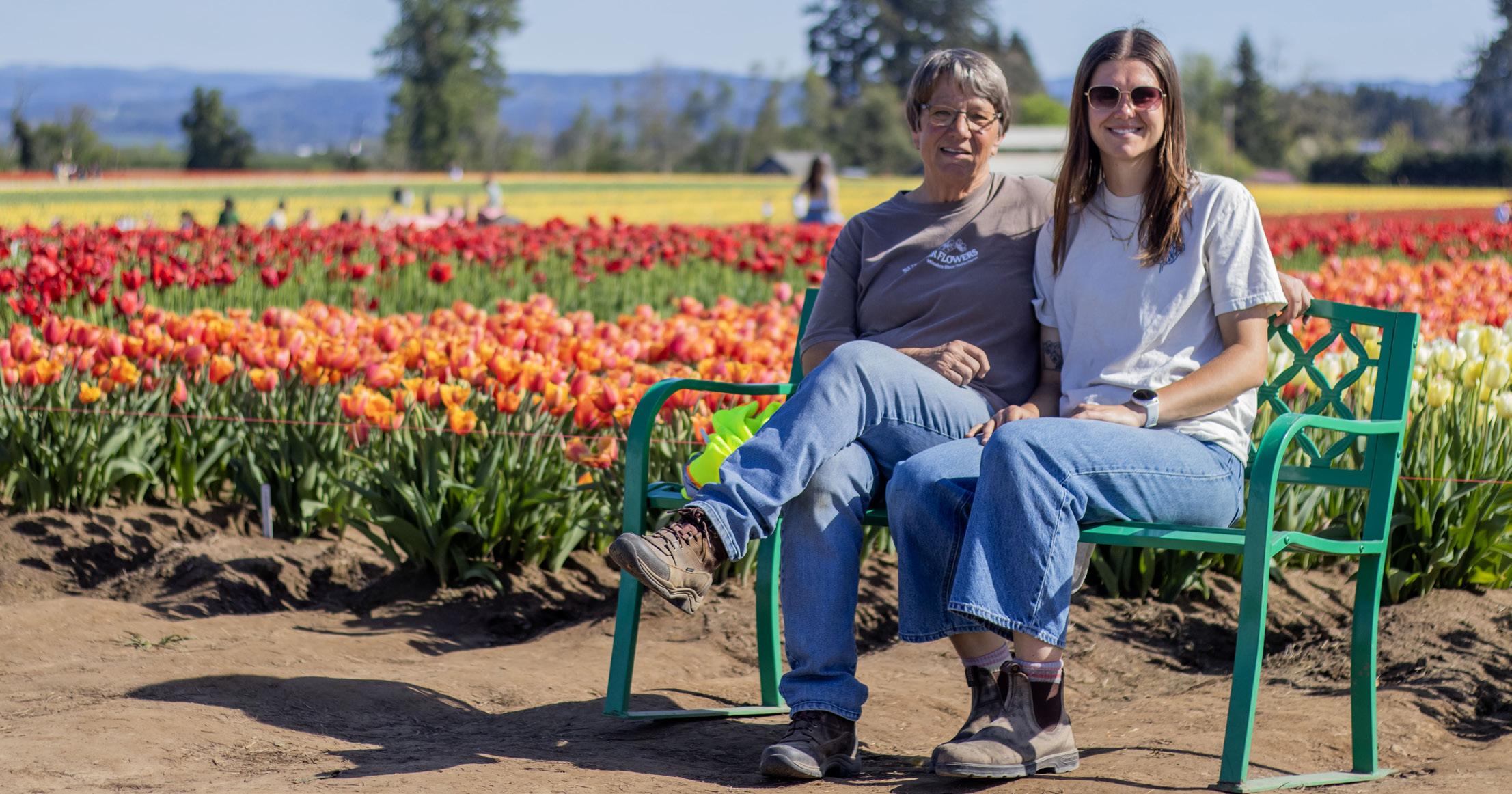
Barb Iverson and her daughter, Emily Iverson, sit on a bench at the Wooden Shoe Tulip Festival in Woodburn, Ore. The festival has been run by the Iverson family since the 1950s after Ross and Dorothy Iverson purchased the farm. A variety of tulips and other flowers on display at the tulip market at the Wooden Shoe Tulip Festival in Woodburn, Ore. Visitors are able to purchase flowers and take them home as a souvenir.
A mother photographs her children on a pink tractor at the Wooden Shoe Tulip Festival in Woodburn, Ore. The tractor is a tribute to Barb’s sister, Vicki
who died of breast cancer 25 years ago.
A father poses with his children for a professional photographer at the Wooden Shoe Tulip Festival in Woodburn, Ore.
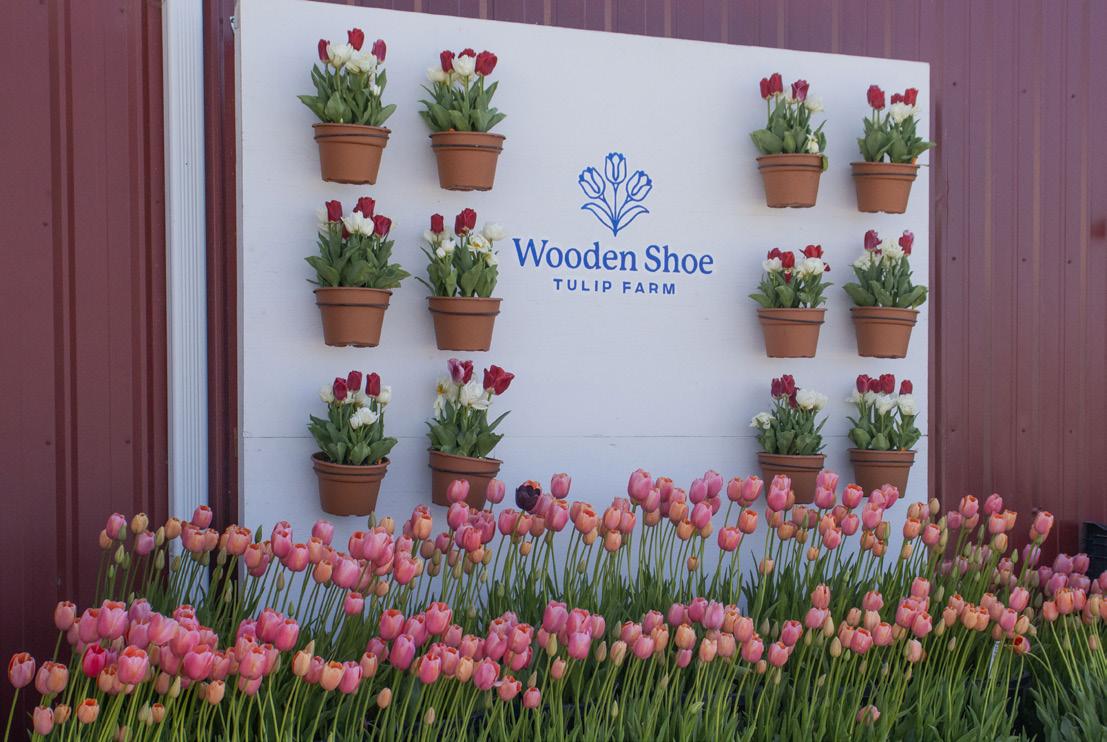
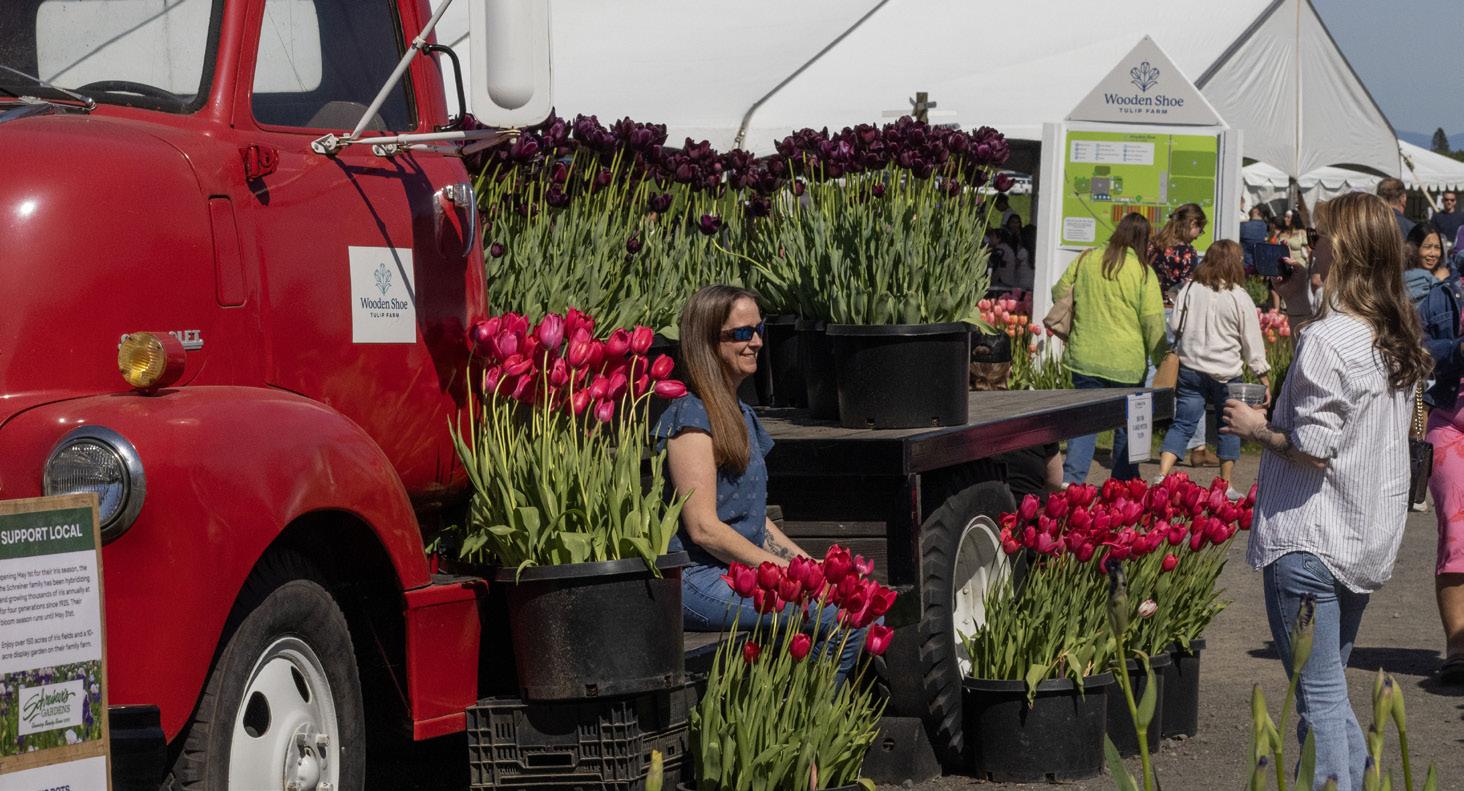
A wall of tulips is displayed outside the Tulip Café at the Wooden Shoe Tulip Festival in Woodburn Ore. Visitors often stop here for a photo while grabbing a coffee or exploring the gift shop.
A visiting mother and daughter stop at the red truck to take a photo by the shopping area. The festival has various photo opportunities, including cardboard cutouts, benches, sculptures and a colorful tulip-filled backdrop.
is
A windmill
displayed at the tulip farm at the Wooden Shoe Tulip Festival in Woodburn Ore.
Iverson,
Written by Campbell Williams • Photographed by Alyssa Garcia • Designed
When the United States went into lockdown in 2020 for the COVID-19 pandemic, small businesses across the country took a severe hit. Everything built around the gathering of people went basically extinct for the time being, and in turn, movie theaters nationwide were forced to close down. When restrictions fell, many reopened, but even more were forced to close their doors permanently. Independent theaters not tied to a nationwide brand like Regal or Cinemark were the most affected. Those theaters have become scarce, many of which are still struggling to get by.
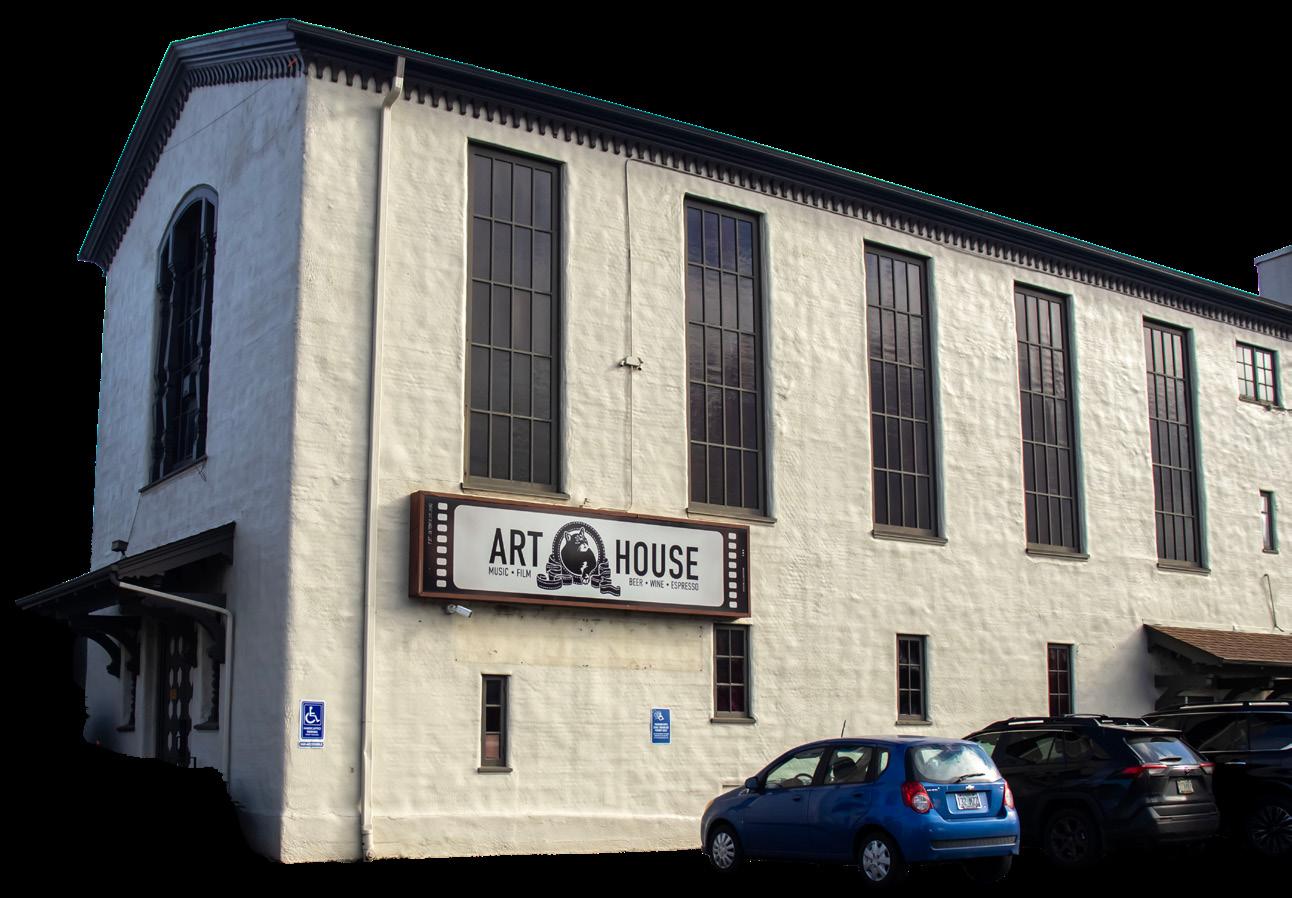
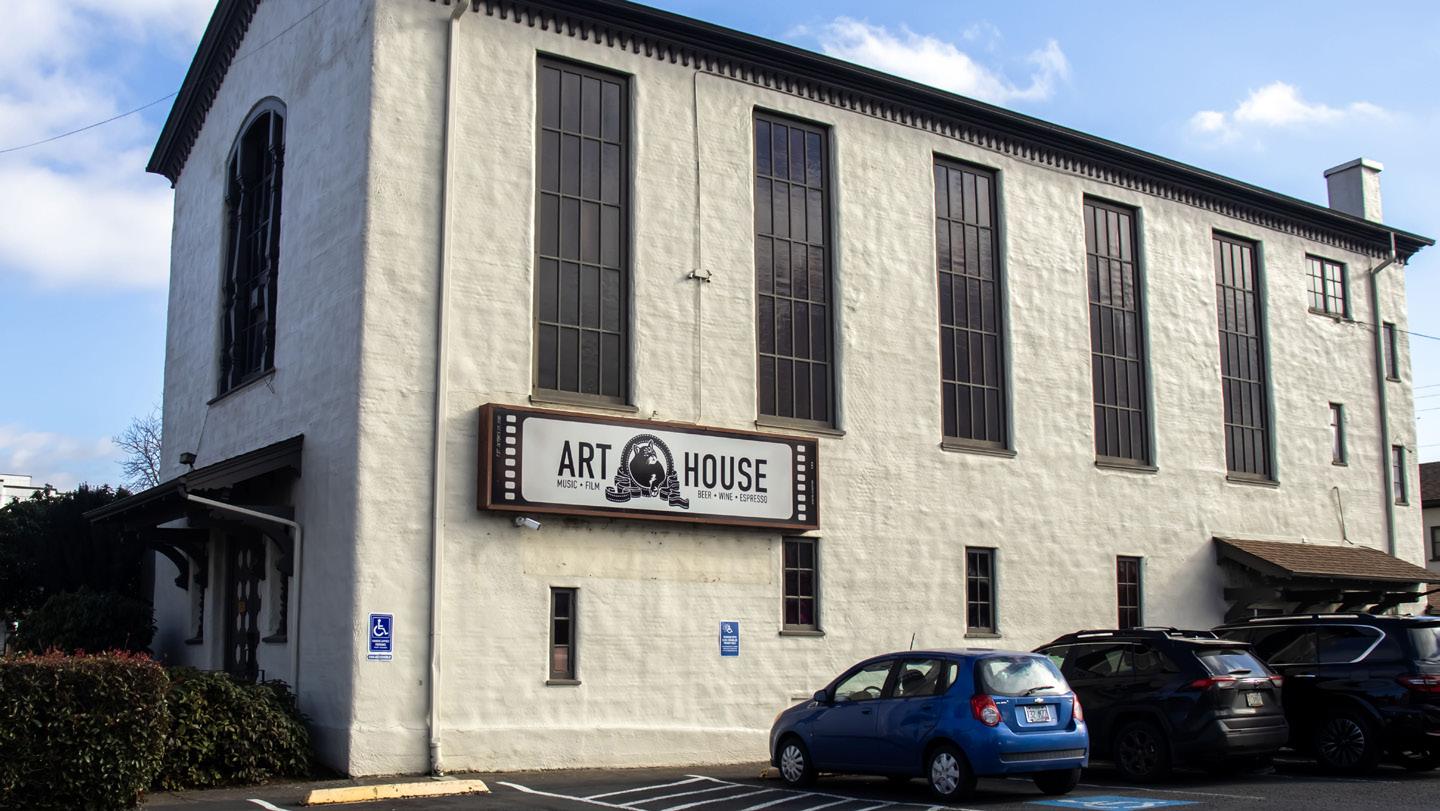
Luckily for us in Eugene, our locally owned theater is alive and well. The Art House theater, formerly known as the Bijou, has been servicing the public with amazing films, new and old, for over 40 years. Forced to close down in 2021 due to the pandemic, a group of people connected to the theater reopened under a new name, carrying on the legacy for the next generation.
“I’ve kind of been in and out of here over the last couple decades,” Edward Schiessl, current manager of Art House, said. “When I was in high school in the late 90s, I worked here part time as a projectionist and manager.”
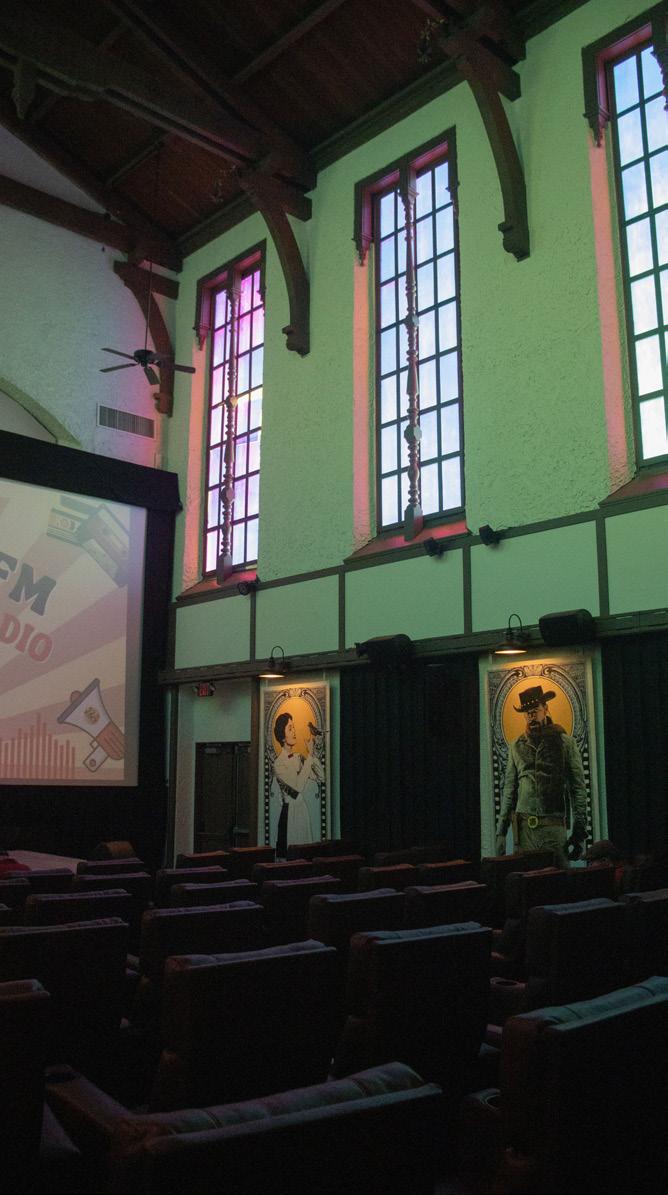
Schiessl headed the transition from Bijou to Art House in 2023, revamping the old theater to fit modern day while still keeping
the vintage aesthetic that people knew and loved. They redid flooring and seating, and “[blasted] out all the dust out of there, areas that have probably never been dusted in 100 years, literally,” he said.
After breathing new life into their building, Art House has recently done the opposite with its film selection. At the beginning of this year, they made the decision to stop showing new releases and focus on repertory programming, only showing older films. Their sister location, Metro Cinemas — located further downtown — still shows current releases while Art House focuses on bringing films from the past back to the big screen.
These films range everywhere from the 1950s to the 2000s. Along with older
films, Art House has also ventured into live events, housing musical performances as well as stand-up comedy and other events every week.
“We’re four months in on doing repertory and live music and not bringing any new movies over anymore, and we’re doing better than we were this time of last year,” Schiessl said.
Despite the switch and success within it, Schiessl said there is a market that is still lacking compared to past years before the pandemic: student audiences. He spoke on how students have been lacking from their audiences for some time now, with the majority of movie-goers being in their 30s or older.
by Asha Mohan
“We have some students that are die-hards that come into like all of our movies, but they make up a tiny, little fraction, maybe 10% overall,” he said. “I don’t doubt that students consume a lot of movies, they’re just not in the habit of doing it at the movie theater.”
I was able to attend a showing and saw firsthand how this is true. On a Thursday afternoon, I saw the 1950 film “In a Lonely Place,” starring Humphery Bogart, and, from what I could tell, I was the only college-age attendee present. Despite that, those who were in attendance had nothing but praise to say about their experience at Art House.
“You know, they have great popcorn, they show great movies, and the people who work here are very personable,”
Carol Wiles, an Art House regular, said.
Most attendees said they preferred Art House to other, big-name theaters in town. The food was a recurring point of interest, but also the attachment to the city of Eugene.
“I prefer the Art House and the Metro, and the reason is the quality of the popcorn,
the quality of the hot dogs and the espresso,” Chuck Scarpelli, a regular at Art House, said. “I’m supporting a smaller consortium of business people. It seemed, to me at least, tied to the local economy.”
These regulars are integral to the personality of the theater, and haven’t gone unnoticed by management and employees.
“We still need to reach more people, but there’s a lot of people that we see every single week,” Schiessl said. “That feels pretty good that we have a lot of loyalty from a lot of people right now.”
At Art House, students have the opportunity to see films that they would never have the opportunity to see in theaters, and for better prices than other big-name theaters. Evening showings are $11, $10 for those with a current student ID, and matinees are $7. They also offer membership programs, with a free version offering no online ticket fees, $5 admission for students on Mondays, and a point system for money spent to go towards concessions. The paid options add one or two free movies a week, plus a discount on concessions.
Art House has been a Eugene staple for over 40 years now, and students have the opportunity to be part of that history.
“We still need to reach more people, but there’s a lot of people that we see every single week. That feels pretty good that we have a lot of loyalty from a lot of people right now.
Edward Schiessl Manager at Art House
Current Offerings
French New Wave
A year-long series featuring 27 essential French New Wave classics, drawing on narrative features from 1958-1967.
Alfred Hitchcock
A monthly series featuring the legendary catalog of one of the most celebrated filmmakers in cinema history.
Art House After Dark
A curated monthly series of retro horror and slasher classics.
Stage On Screen
From Broadway to London's National Theatre, this is your first-class ticket to world-class theatre productions from around the world.
Classic & Cult Cinema
Experience classic cinema and cult favorites on the big screen, in an immersive, communal, theatrical environment — the way they were meant to be seen!
Musicals
A monthly series featuring the fascinating rhythms of the great American musical.
Visit eugenearthouse.com for updated events.
Community gathering
around the grill
Written by Yasmin Alvarez • Photos by Arianna Rinaldi • Designed & Illustrated by Sophia Leuthold
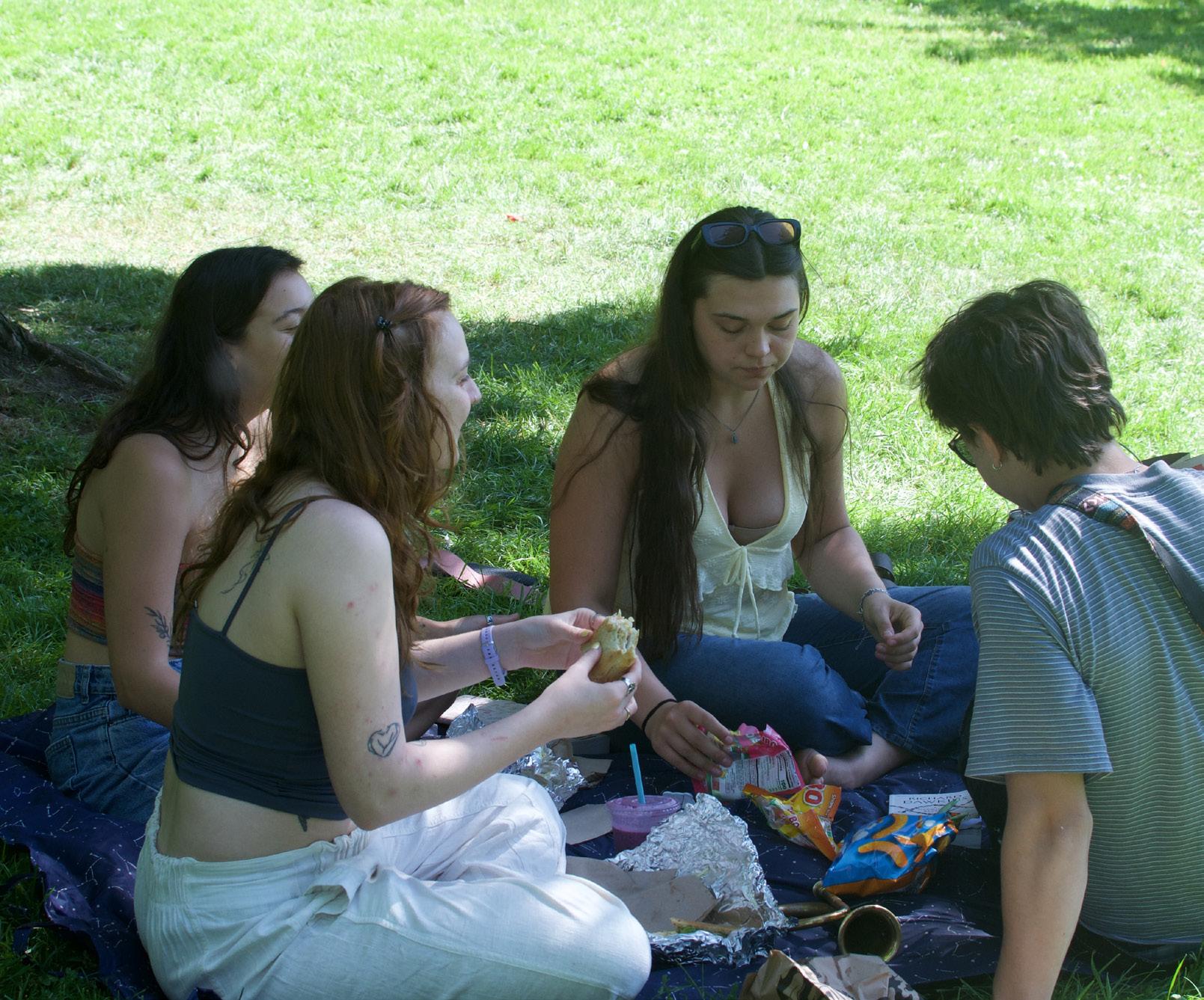
As Memorial Day weekend comes to an end, community members across Eugene shared how they stay in touch with each other over springtime cuisine.
For many in Eugene, the long weekend marks more than the start of summer; people feel open to connection and
For college students and young adults, the gatherings take on a different tone. Smaller potlucks pop up, where each person contributes a dish or drink. These events are less formal but no less meaningful. They create a sense of belonging, especially for those who may be far from home.
“With all of the gas prices going up, I couldn’t go back to my family this year,” Xen Brown, a third-year music education major at the University of Oregon, said. “Cooking and eating with friends filled in that missing gap.”
In a city known for its strong sense
from different places side by side — tacos next to dumplings, pasta salads alongside soul mac and cheese. Conversations about recipes often lead to deeper discussions about heritage, identity and shared experiences.
Memorial Day itself also carries a deeper significance. Families with military connections may share stories of loved ones. Remembrance and togetherness are a way of honoring those who served.
Beyond the dishes themselves, what stands out the most is the intention behind them. The act of preparing food becomes a gesture of care. Sharing it further reinforces stronger bonds that may have weakened over time or with distance. In a fast-paced world, these gatherings offer
community is one of the most important things we need.
As the weekend ends, the remainder of these meals — empty plates, leftover containers and lingering conversations — tell a story of connection. In Eugene, springtime social gatherings over food aren’t just seasonal traditions, they’re deeper reflections of how communities maintain their connections.
Whether through a large barbecue or a simple shared meal, the universal message stays the same: food brings people together, and in this, relationships are sustained.
Fighting Phone Addiction
Written by Peyton Gast • Designed by Magnolia Schnobrich
Gigi Roddick’s first introduction to online content began in 7th grade when she got her first phone. “Wattpad,” she said. “That sh*t had me hooked.” Wattpad is a notorious reading app among young adults where anyone can upload original stories. Roddick described the stories as having been written by 15-year-olds for 15-year-olds. Nevertheless, Roddick was consuming flashy online content from a young age.
Now a sophomore at the University of Oregon, Roddick, like other college students, has profiles on social media apps, including Instagram and TikTok. Both of which use an algorithm to suggest interest-based content rather than chronological content, which was popular in the mid-2010s. This means that users will never realistically reach the end of their feed. Scrolling becomes an infinitely long activity– and an enjoyable one at that. Algorithms track signs of interaction, suggesting more videos based on what users like, what they share, and how long they stay on videos.
As an active social media user, Roddick said that going cold turkey off social media isn’t the solution to an excessive amount of scrolling, just like tossing out cigarettes doesn’t curb the cravings. Real progress toward decentering social media comes from retraining the brain.
Consider doomscrolling, a term popularized during the height of the COVID-19 pandemic in 2020. People would log onto the internet and continuously scroll through upsetting headlines, seemingly unable to stop themselves. Now, doomscrolling has been adopted by modern-day social media users to describe the out-of-control feeling of not being able to put their phones down after opening social media.
Negative content or not, doomscrolling can lead to staying up until the early hours of the morning — past the point of fatigue — consuming online content.
Sleep deprivation is a constant risk, but scrolling on social media can also feel like a miraculous stress reliever. At nighttime, when there’s nothing to do but think, Roddick sometimes finds herself sitting with some nervousness. She can either fixate and worry about her problems, or she can “go on Instagram for eight hours and forget about it.” The quick fix is a slippery slope, though, because once the binge starts, a lot of times, it’s hard to stop.
When it’s four in the morning, and “the birds are chirping,” and someone’s been up on social media, it might feel easier to keep going rather than to stop. Stopping means having to take accountability for the last several hours, but continuing is just as bad. Both stopping the scroll and continuing feel terrible in the moment, but at least when you’re scrolling, Roddick said, “you don’t have to deal with the consequences… I think that’s sort of the danger of it.” For her, doomscrolling and guilt go hand in hand.
She recalls a spring break when she drove home to visit her parents. She calls them the people she loves most and her best friends. When they asked to watch a movie with her, Roddick responded with a resounding yes, but still found herself escaping to her room soon after to scroll on her phone.
“I’m home for two weeks,” Roddick said. “And I can’t put my phone down for long enough to hang out with my parents, who are, like, waiting for me.”
Feeling guilty for missing that time with her parents prompted her to make a change.
In this digital age, however, simply deleting social media isn’t a maintainable solution.
How does one strike a healthy balance of social media use? Redirection is one option. By picking up a new hobby like knitting or reading, the mind can be redirected away from the phone. This might work for some people, but when combating doomscrolling over the long term, Roddick feels that pleasant hobbies and quick dopamine hits from scrolling are two different things.
The goal is to build up a tolerance for more meaningful content, even if it starts silly. By doing this, a person could transition from eight hours on Instagram to two hours on Reddit, then up to a chapter of a book, and maybe one day, knitting. Slowly but surely, a person can retrain their brain to successfully wean off social media and the urge to scroll constantly.
“I want to get to a point where [I’m] not thinking conscious or unconsciously about my phone all the time,” Roddick said.
Gigi Roddick UO Student “
I want to get to a point where [I’m] not thinking conscious or unconsciously about my phone all the time.