Through the influence of both collegiate and professional leagues, hockey is on the rise in Oregon.
By Bel Perez Sports Writer
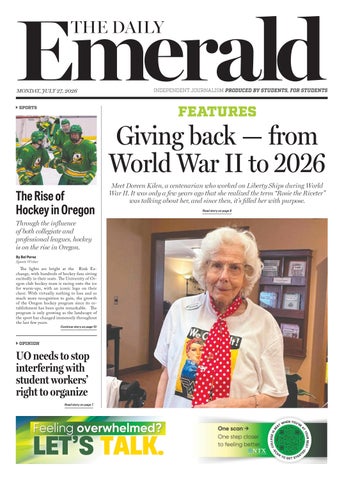
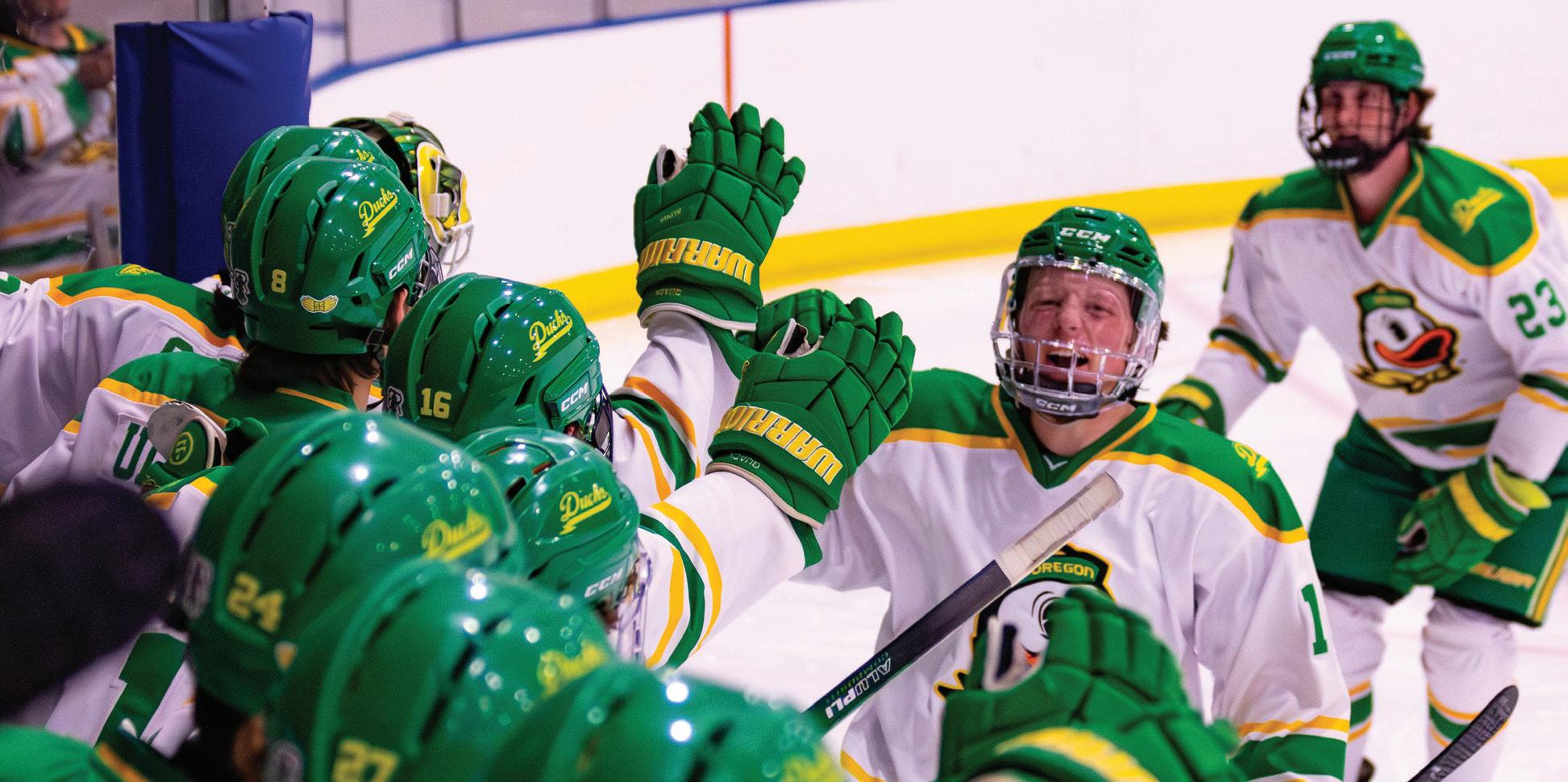
The lights are bright at the Rink Exchange, with hundreds of hockey fans sitting excitedly in their seats. The University of Oregon club hockey team is racing onto the ice for warm-ups, with an iconic logo on their chest. With virtually nothing to lose and so much more recognition to gain, the growth of the Oregon hockey program since its establishment has been quite remarkable. The program is only growing as the landscape of the sport has changed immensely throughout the last few years.
Giving back — from World War II to 2026
Meet Doreen Kilen, a centenarian who worked on Liberty Ships during World War II. It was only a few years ago that she realized the term “Rosie the Riveter” was talking about her, and since then, it’s filled her with purpose.
UO needs to stop interfering with student workers’ right to organize
EDITOR IN CHIEF
Eva Andrews
PRINT MANAGING EDITOR
Ty Tilden
NEWS EDITOR
Corey Ho man
A&C EDITOR
Bella Graham
SPORTS EDITOR
Joe Krasnowski
OPINION EDITOR
Rachel Ehly
COPY CHIEF
Lucy Forest
VIDEO EDITOR
Jake Nolan
PODCAST EDITOR
Bayley Burnham
SOCIALS EDITOR
Ana Paramo
VISUALS EDITOR
Sofia Campbell
DESIGN EDITOR
Asha Mohan
DESIGNERS
Adaleah Carman
Cassia Williams BUSINESS
PUBLISHER AND PRESIDENT
Eric Henry (X317) ehenry@dailyemerald.com
VP OPERATIONS
Kathy Carbone (X302) kcarbone@dailyemerald.com
DIRECTOR OF SALES & DIGITAL MARKETING
Shelly Rondestvedt (X303) srondestvedt@dailyemerald. com
CREATIVE & TECHNICAL
DIRECTOR
Anna Smith (X327) creative@dailyemerald.com
ACCOUNT EXECUTIVE
Maria Jimenez
THE DAILY EMERALD
The Daily Emerald is published by Emerald Media Group, Inc., the independent nonprofit media company at the University of Oregon. Formerly the Oregon Daily Emerald, the news organization was founded in 1900. Emerald Media Group 1395 University St.,#302 Eugene, Or 97403 (541)-346-5511
Loans to be limited by Department of Education for low-earning programs
The changed guidelines aiming to curb student debt could limit eligibility.
By Sasha Love Associate News Editor
A new U.S. Department of Education rule aims to decrease student loan debt from higher education, which now totals $1.7 trillion nationally, but may limit loan eligibility for students seeking degrees with low-earning job prospects.
UO College of Education Head Jerry Rosiek called the new rules another layer of “consumer protection” for young people looking at education options. Some UO professors agree, but are also skeptical about what the ED values in higher education.
“On one hand, I totally think protecting students from excessive debt is important; but the metrics being used here are focused on earnings, and there’s lots of other values and life paths that are not captured,” Colin Ives, incoming department head for the College of Design, said.
How the metrics work
If college graduates with bachelor’s degrees are not earning more than their high school-educated counterparts in the same field, students in low-earning programs might not be eligible to receive direct federal loans. The new rule is expected to take effect in July 2027.
Students in a school’s program that does not meet earning metrics two out of three consecutive years would likely be ineligible for federal direct loans and Title IV loans. Pell Grants are also at risk if the program fails a third year. The earning metrics are calculated four years after the students graduate, according to the ED.
For UO, the metrics would likely look at state earnings versus national earnings in the chosen field of study because more than 50% of UO’s students are in-state.
Th is isn’t the fi rst time the ED has changed its student loan restrictions. Most of the guidance the department is overhauling is 2019 regulations, which restricted loans based on what percentage of student borrowers’ income could be dedicated toward paying off student loans.
In its published rule, the department reasoned that the new rules upheld consistency across higher education, but said the recent changes may leave students vulnerable to private lenders with higher interest rates.
What is valued in education
In an email to The Daily Emerald, UO Spokesperson Angela Seydel said, “It’s too soon to know exactly which programs, if any, would fail the measure,” but some UO professors are hesitant about focusing only on earning outcomes.
Ives said that looking at earnings a few years after graduation might not provide the federal government with the full picture because there is no one “straight career path to
success in the long term.”
Ives pointed out examples of teaching students who have dabbled in various fields and jobs before finding a true passion.
Ives said in the art department he had a student who became a pilot, another student who works at a basic needs nonprofit in Springfield, and Josh Wardle, UO alumnus and creator of the Wordle game, who worked as a graduate employee in Ives’ class.
“All of these people have other jobs to make ends meet, but they have inspired regional artists and have been able to bring artists into the community,” Ives said. “Early-career earnings don’t necessarily reflect the long-term value they’ve added creatively, culturally or to the communities they’ve helped build.”
Emily Tanner-Smith, dean of the College of Education and psychology and human services professor, said she thinks the new rule could discourage students from serving in education where good teachers are needed most.
Tanner-Smith, in an email to The Emerald, said she is concerned that the new rule might “unintentionally shift attention away from (a) larger question” of why certain careers, including education, have low compensation.
“Ultimately, I support accountability and believe we need an approach that recognizes both economic outcomes and the public value of the professions our graduates enter,” Tanner-Smith said. “The challenge is designing accountability systems that protect students and taxpayers while also sustaining the workforce our schools and communities depend on.”
Eugene Springfield Fire to split fire and medical services after 16 years
The two cities plan on transitioning to independent departments over the next two years.
By Billie Corsetti Associate News Editor
After 16 years working together under an intergovernmental agreement, Eugene Springfield Fire will separate into independent services.
The city of Eugene announced the decision in a news release posted in early July, with comments from Eugene City Manager Jenny Haruyama, Springfield City Manager Nancy Newton and Fire Chief Mike Caven.
“As our cities look to the future, this transition creates the opportunity for each community to govern, invest in, and plan fire and emergency services in ways that best reflect local needs and priorities,” Haruyama said in the release. “Throughout this process, residents can expect the same commitment to high-quality emergency response and public safety.”
Since July 2010, the cities of Eugene and Springfield have consolidated their fi re and emergency services while working in phases to fully merge. Although fi refighters work under one department, the two different cities both govern its services.
At the end of 2025, the Eugene City Council decided that the merger was not working for fi refighters under the current model. In January, the Springfield City Council came to the same conclusion. The cities began discussing developing an intergovernmental en-
tity after a feasibility study from consultant company AP Triton recommended it as the best avenue forward.
An intergovernmental entity is an organization formed by two separate governments through an intergovernmental agreement to provide a service, often being treated as its own local government.
The International Association of Firefighters Local 851, Eugene’s local fi refighter union, requested that the cities look to develop a fi re district rather than an intergovernmental entity, but later supported the entity as an alternative.
“(A fi re district) is a huge political hill to climb and what became apparent in that is what’s going to get us to the next step… It would be a very concerted effort to try to get a district passed,” Brett Deedon, president of Local 851, said.
The union believed that an intergovernmental entity would still achieve some of the goals the community needed to reach, and that a fi re district could eventually be brought up in the conversation again.
Discussion between the cities regarding the possible development of an intergovernmental entity, or alternative solution, occurred mostly behind closed doors, according to Deedon.
Haruyama sent notice of the city of Eugene’s intent to terminate the 16-year-long
intergovernmental agreement to Newton on June 30. The transition into independent departments will take up to two years, according to the city of Eugene.
“I felt a range of emotions. It was shock, frustration, disappointment and there’s anger in there,” Deedon said. “It’s taken us a lot of work to get to the department that we have today, to be able to make it work and buy into the system and the culture and create the pride behind it.”
The cities of Eugene and Springfield said neither city’s residents will experience a change in the quality or speed of emergency response rates.
Fire Chief Mike Caven did not respond to The Daily Emerald’s request for comment.
(Miles Cull/Emerald)
One of multiple engines at station 2 waits for the next call.
OPINION /ARTS & CULTURE
Ehly: UO needs to stop interfering with student workers’ right to organize
Opinion: UO has been caught using unlawful disciplinary actions against student organizers multiple times in the past year. More consequences for UO are necessary for it not to happen again.
By Rachel Ehly Opinion Editor
In my time at UO, I’ve walked past more Graduate Teaching Fellows Federation and UO Student Workers Union rallies than I can count.
The GTFF and UOSW have been active in advocating for the rights of graduate and undergraduate student workers since 1975 and 2023, respectively.
Both unions have built their influence on campus through showing up, speaking out, and making enough noise on campus that the university administration has no choice but to listen.
Since October 2024, GTFF and UOSW have had the UO student code of conduct used against them multiple times by university administration, including when GTFF President Presence O’Neal, Vice President Matthew Tuten and UOSW President Mae Bracelin were investigated by the university after using a bullhorn at a rally.
GTFF fi led an unfair labor practice complaint against UO in February 2025. UOSW fi led a separate complaint in March 2025.
In June 2026, the Oregon Employment Relations Board agreed with the unions, and found that UO “initiated student conduct actions because of the exercise of (Public Employee Collective Bargaining Act) protected rights.”
UO Spokesperson Angela Seydel notes that the university only broke one provision of the PECBA. However, the broken statute was perhaps the most egregious of those outlined in the union’s complaints as it directly hindered the organizing rights of GTFF and UOSW members.
The ERB ordered the university to stop interfering with PECBA-protected union activities, withdraw the conduct actions brought against GTFF and UOSW leadership, post a physical notice of the violation and email the notice to represented employees.
The ERB’s findings said that UO tried to justify its investigations by pointing to a sound policy that, according to the order, didn’t even apply to the rally in question.
Senior Associate Dean of Students Dianne Tanjuaquio testified that she had never heard of PECBA, saying that she found the university’s sound policy “very confusing” and didn’t review PECBA before determining whether the Student Code of Conduct applied to the reported activity, according to the case facts.
The ERB ruled that the university’s defense was “not credible and is also contrary to PECBA,” because the investigated students were acting as protected employees, not as students.
Th is isn’t the fi rst time in recent years that UO has been reprimanded by the ERB. In October 2025, the ERB ruled that the university illegally prohibited union activity during UOSW’s certification campaign in 2022 and 2023.
That is two separate labor law violations confi rmed against UO within a year on the basis of interfering with student employees’ right to organize on campus.
And the solution for these violations is a posted notice and a mass email.
I work two jobs on this campus. GTFF members are the ones teaching my discussion sections and grading my papers. UOSW members are my friends and coworkers.
What is the “Pink Room”
on
top
The university has now been found to have broken the law twice in a year when its own workers organized. Th at directly affects the people that keep UO running: the graduate students who teach undergrads and undergrads who spend hours of their day serving food in the dorms or tutoring other students to make barely enough money to pay rent.
With GTFF contract negotiations coming up this year, this ERB ruling could affect how the union is treated by university administration.
Whether or not students belong to either one of these unions, everyone should be paying attention to the actions UO takes against them.
The next time a rally is held on campus, it’ll be worth knowing what the university has tried to do to students who speak out.
(SofiaCampbell/Emerald)
Rachel Ehly is an opinion columnist for The Daily Emerald and is studying journalism and political science. She could talk for hours about all things
store plants there for classroom use. Faculty members can also reserve greenhouse space for research and teaching.
However, the main greenhouses just across Franklin Boulevard from Onyx Bridge Hall remain busy.
of Onyx Bridge Hall?
The glowing rooftop greenhouse has become a campus curiosity, but its pink lights have a scientific purpose.
By Helen Bouchard Arts & Culture Writer
When walking back from class near Allen or Lawrence Hall, looking up into the sky, a bright pink glow can be seen shining from the rooftop of Onyx Bridge Hall.
The unusual light is seldom talked about and has an elusive presence on campus. However, behind the fluorescent pink windows is a University of Oregon greenhouse where researchers, students and educators are growing far more than just plants.
The rooftop greenhouse’s signature pink glow comes from specialized LED grow lights installed several years ago by former greenhouse manager Susan Belcher.
“When I was the manager, we received an anonymous donation,” Susan Belcher said. “I researched replacements for all of our old lights because they were very inefficient. We replaced them with these Sylvania LED lights that pro-
vide all of the wavelengths plants need to grow and thrive.”
The project extended beyond the rooftop greenhouse.
“We replaced quite a few here and across the street at the main greenhouse,” Susan Belcher said.
The pink color isn’t just for show. According to current greenhouse manager Ruth Belcher, the LEDs provide the specific wavelengths researchers need to study plant growth and photosynthesis.
For example, corn thrives under this lighting and has been used in research conducted in the greenhouse.
Although the glowing room is one of the most visible spaces on campus after sunset, it isn’t the university’s busiest greenhouse.
“Th is Onyx greenhouse isn’t really used very often,” Ruth Belcher said.
Instead, it serves a variety of specialized purposes. Professors have conducted work in the space, landscape architecture students have used it for projects and biology courses
Ruth Belcher has been expanding opportunities for student and community involvement. “We are slowly developing more educational programs, starting at the UO and then, hopefully, working out into the community,” she said.
One of those efforts is a newly established plant club that gives students hands-on experience working in the greenhouse.
Student employees play a critical role in maintaining the facilities. “A lot of the hands-on, day-to-day work is performed by student workers,” Ruth Belcher said. “They do such an amazing job keeping everything thriving.”
The greenhouse team is also developing projects that support local ecosystems. One initiative is a monarch butterfly waystation featuring milkweed.
“Milkweed plants are the only plants that monarch butterfl ies can lay their eggs on,” Ruth Belcher said. “We’re slowly trying to build out a monarch waystation, which also happens to be a great pollinator garden.”
The team has also completed its fi rst educational organic vegetable garden for a local early childhood education center, expanding the greenhouse’s impact beyond campus.
For most students, the greenhouse remains known simply as the mysterious pink room glowing above campus, but it offers so much more.
What looks like an unusual light display is actually a window into the research, education and conservation efforts taking place just above the rooftops and greenhouses of the University of Oregon.
Giving back — from World War II to 2026
By Bella Graham Arts & Culture Editor
In the Willamette Oaks Retirement Community library, Doreen Kilen sat holding a folder perched on her lap, laying her hands over it as if protecting something precious. Kilen, a resident of Willamette Oaks, is no slouch at 100 years old. She fills her days with activities at home (courtesy of Kayla Gratzer, programs coordinator at Willamette Oaks), going to club meetings, or speaking with wide-eyed high schoolers — who she finds to be attentive listeners with good questions — about her life, hoping to impart some wisdom.
Softly piercing eyes stared through cat-eye glasses as she spoke frankly about her life. Occasionally, she’d reveal a sheepish smile when she couldn’t remember a detail (although, it was sure to surface later on).
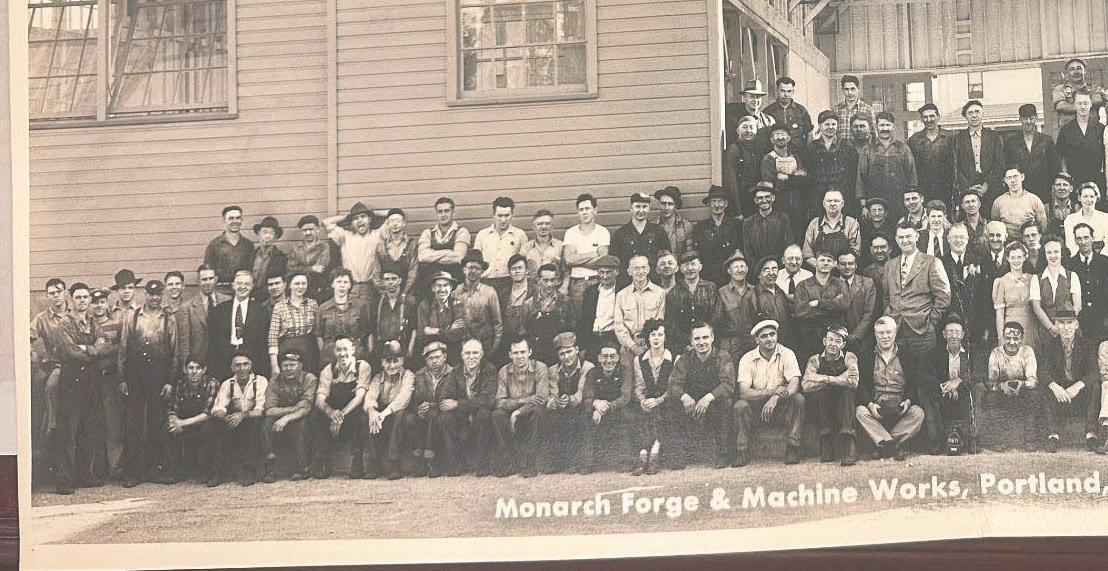
Kilen reached down for the folder, still lying patiently on her lap, opened it and revealed a stack of photos. The top one was black and white, depicting rows of people in front of a warehouse.
In this photo, it’s 1943. There are only three women hidden among the men’s suspenders and overalls — one of them being Kilen. She was one of many women who filled gaps in the workforce while men were off fighting in World War II.
Kilen’s work would later be personified as that of a Rosie the Riveter, although she wouldn’t realize it until decades later. What she did realize in the interim was a passion for helping people and giving back, and her work as a Rosie was only the beginning.
Kilen was born April 3, 1926, in Portland to Ransom and Nina Park. Nineteen days later, the family moved to Tacoma, Washington. When the Great Depression hit, Ransom lost his job, and the family uprooted to travel around the country to find work.
Eventually, Kilen found herself in high school. World War II had been raging for three years when an opportunity to help with the war effort arose.
“My father heard that this place in Lebanon, Oregon was teaching people how to operate machines, so he took me down there every day,” Kilen said. “As soon as we graduated, we moved to Portland. And I did whatever Daddy said, or Daddy did.”
By day, Kilen went to Lincoln High School. Come 4 p.m., she drove with her father over to Monarch Forge and Machine to work the swing shift.
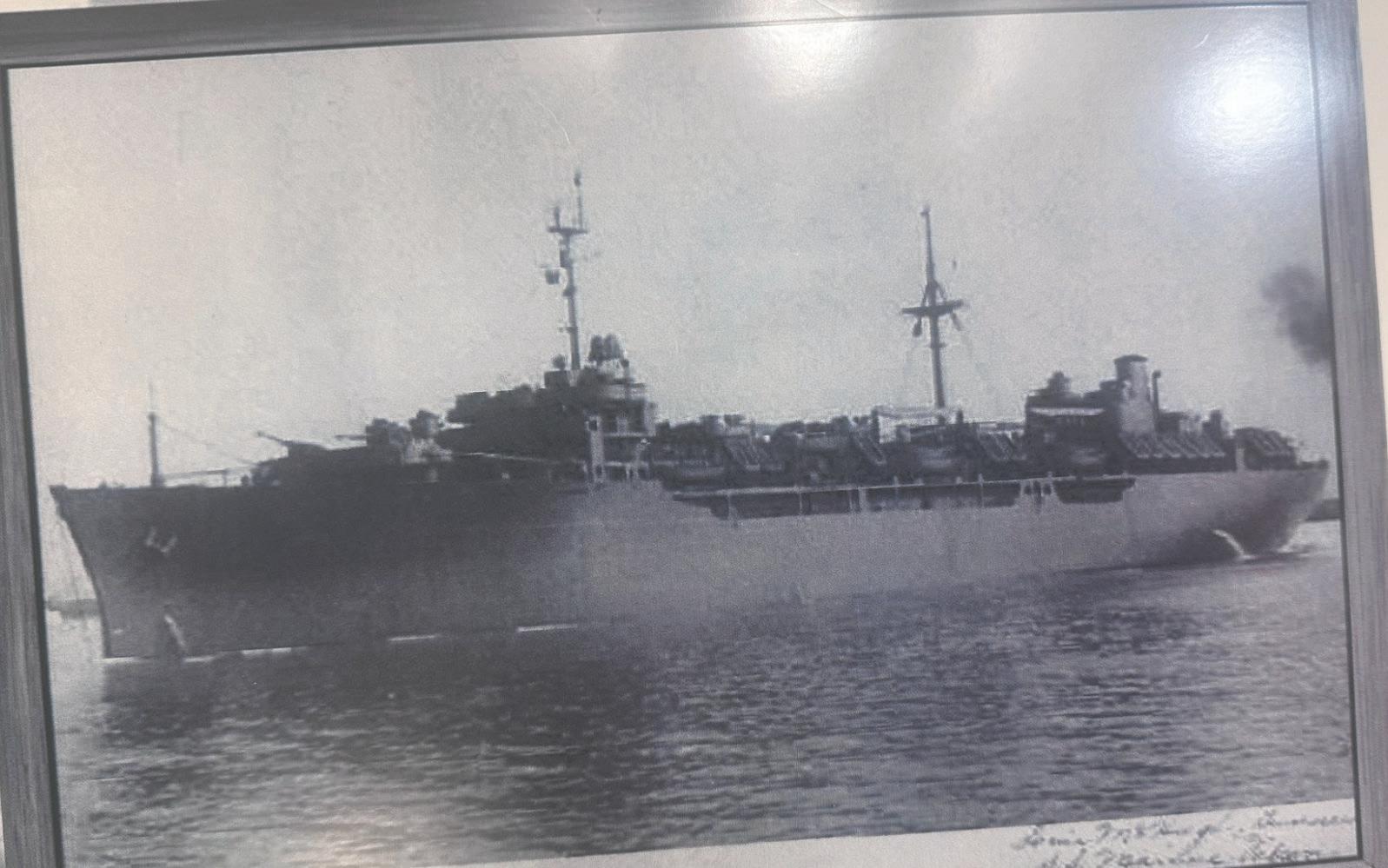
Kilen operated a lathe, making steel shafts for Liberty Ships: mass-produced cargo ships used to transport food, equipment and other supplies. Blueprints and measuring tools lay scattered about, used to make sure each shaft was down to a thousandth of an inch accurate.
She worked late into the night before going home and preparing to do it all over again. “I was younger then. I guess I didn’t notice. I just did what was required,” Kilen said.
Gratzer walked in to check on Kilen and saw something magical: Kilen in her element.
“You know, she’s not very vocal about being a Rosie, but she’s proud of it. If you ask her about it, she will happily talk your ear off,” Gratzer said.
Kilen finds herself in her element quite frequently, even when speaking to modern-day Rosies, female engineering students, on Zoom.
“I was not always a public speaker, but I have found people that are so interested in what happened 100 years ago,” Kilen said.
Kilen spoke to students at Portland State University in April about her experience as a Rosie in a majority-male forge, attending high school in what is now a building on the PSU campus, and going to college for engineering.
“I was in Portland, so I introduced Doreen. She was on the big
screen in this auditorium, and it was very moving. They could hear and see each other; so the students could ask her questions, and she could talk to them,” Yvonne Fasold, former president of American Rosie the Riveter Association and current events coordinator for the local ARRA chapter, said.
Back in 1944, Kilen had a maiden voyage of her own to go on. The war was ending, she was graduating and she had an important decision to make about what to do with her hard-earned money.
“Would you like a mink coat? Or would you like to go to college?” Kilen said, echoing the question her father asked her as she smiled slyly. For a minute, you could be fooled into thinking she chose the mink coat, the way she reveled in saying it. It didn’t help that mink was in at the time, according to Kilen. But she would say no to being stylish (this time) and opt to attend Oregon State.
“I love how all of the Rosies have just such great senses of humor, and when they present, they’re just so humble and matter-of-fact about what they did,” Fasold said.
Over the past few decades, she’s volunteered in the office at her church and with the Eugene Mission and its R3 program, which she still meets with once a month.
“I care a lot for people. I think that’s why I love it here. Because I do care so much for people, and I want to do something that helps people. So that’s why I like to volunteer,” Kilen said.
When she wasn’t volunteering, she rarely said no to getting involved — she was a mom to two Boy Scouts, sang in her church choir, and was a member of the Eugene Symphony Guild.
Fittingly, Bruce Kilen also loved music. Kilen met Bruce in college after he offered to help her study for a test. She thought he was nice, so they exchanged telephone numbers. Later, he called and said he had enough money for a Coke date, then asked if she would go out with him.
“I remember thinking, a Coke date? A little Coke date? At that time, that was a big deal. I said yes. And that was day one,” Kilen said.
That Coke date led to a marriage that would last one day short of 66 years, filled with music, travel — everywhere from the Oregon coast to India and across Europe (with a Rick Steves guidebook in hand) — and love.
And between those trips was when Kilen hit the volunteering trail. For all that giving back, however, Kilen didn’t realize that her work at Monmouth Forge as a teenager had earned her the most recognition of it all.
“It never occurred to me that I was a Rosie the Riveter, because the rivets are on planes. Some of those thin ladies could climb in the wall of the wings of the airplanes, and be the one who holds the ribbon when it comes in. But that wasn’t me,” Kilen said.
It’s so genuinely heartwarming to see any person that has recognized and realized their purpose...
Kayla Gratzer Programs Coordinator at Willamette Oaks
Four years ago, the local ARRA chapter came to Willamette Oaks.
“Doreen brought (Yvonne) some pictures, and she said, ‘I think I might be a Rosie.’ At that very moment, they inducted her into the Rosies,” Cheri Smith, the move-in coordinator and concierge at Willamette Oaks, said. “For someone who hadn’t been very involved at all before, she has hit the ground running ever since.”
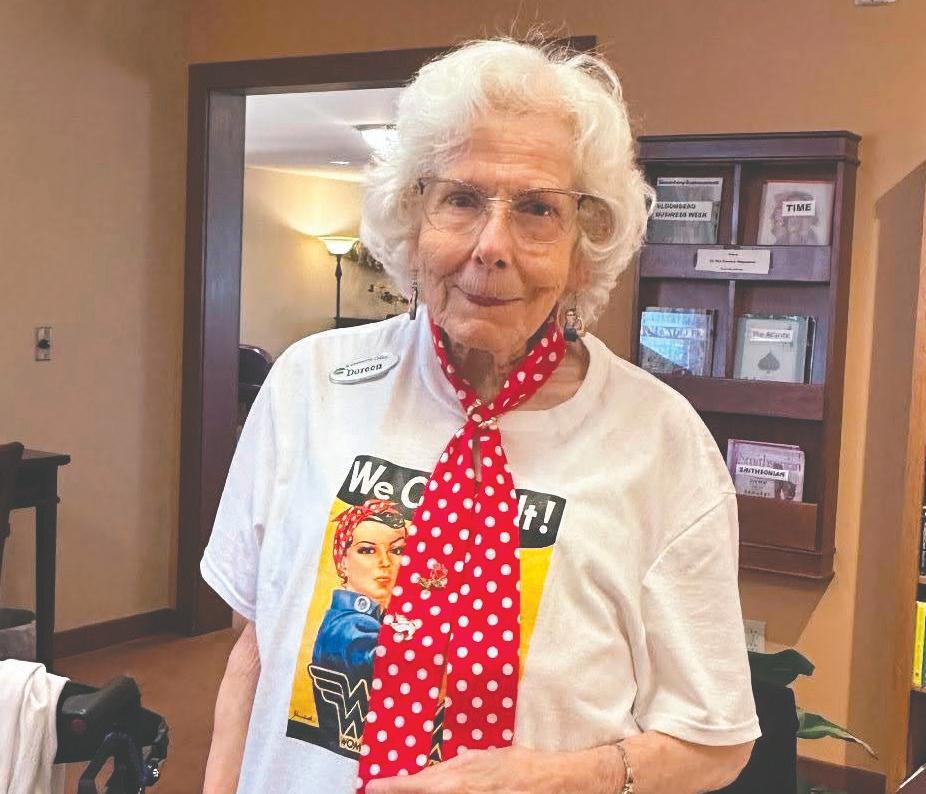
Being inducted meant she received a red, polka-dotted scarf and a Congressional Gold Medal, awarded to all Rosies in 2024. She now frequently visits local high schools and ARRA events.
“It’s so genuinely heartwarming to see any person that has recognized and realized their purpose, and it’s extra heartwarming to see somebody who’s a centenarian be so proud of who they are and the years that they’ve lived on
Smith frequently finds herself at ARRA meetings with Kilen, which happen at the Willamalane Adult Activity Center in Springfield. They talk about upcoming ARRA events, highlight past Rosies, and in Kilen’s case, sometimes get a nice surprise from women around the world.
“This young woman from France wrote a letter to our chapter, and she asked specific questions about how Rosies are portrayed and how they helped the feminist movement,” Smith said. “I thought that was really interesting, because having talked with them many, many times, (the Rosies) were just doing what was asked to help with the war effort. From that perspective, it was really cool to have them acknowledge the importance of what they did.”
Despite what seems clear to everyone else, Kilen was surprised by the reaction she’s gotten.
“It’s just that everybody seems interested in what happened then compared to now, even though you youngsters are so far away from World War II,” Kilen said. “I really didn’t think anything of it until I got involved with the Rosies. I can only say that I’m glad I did what I did.”
That humble attitude is pervasive among the Rosies, and noticeable to those adjacent to their ranks: Rosebuds, daughters of Rosies who work to preserve their mothers’ legacies.
“All the Rosies are that way,” Fasold, who is a Rosebud,
to win that war, and they wanted their loved ones to come home.”
At North Eugene High School, Kilen finds herself sitting in the library, at the head of a table with students lining it all the way down.
“The kids had good questions. They were interested and studying both the Depression and the War in their class. So I figure if I can say something to let them know what it was like, then maybe they’ll turn out alright,” Kilen said. “That’s rewarding to me because I felt like I could speak to each of the young people there, and they would listen.” And listen they did, as Kilen eased them into a story: “My father did ask me about my possibility of getting a mink coat...”
(ON THE COVER) Doreen Kilen at her retirement home, Willamette Oaks, shortly after her 100th birthday in April. Kilen worked as a Rosie the Riveter during World War II, travelled the world and met her husband.
(Bella Graham/Emerald)
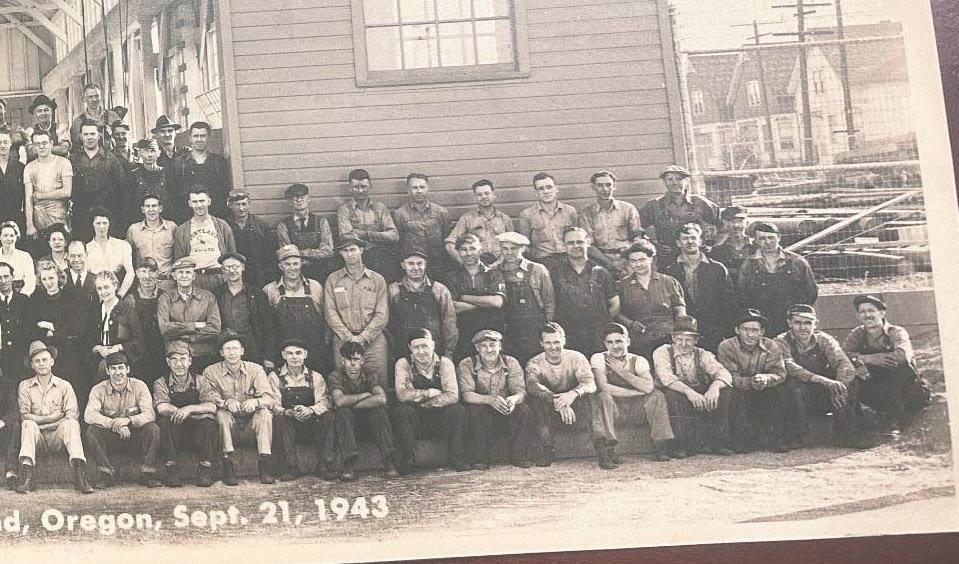
The staff of the two shifts who worked at Monarch Forge building Liberty Ships. Kilen is in the first row, 11 people from the left, with a bow in her hair. Her father, Ransom, is over her left shoulder, wearing a light, button-down shirt.
(Courtesy of Doreen Kilen)
Photo of the S.S. Marine Falcon, one of the Liberty Ships Kilen worked on. (Courtesy of Doreen Kilen)
SPORTS
Four new transfers strengthen Oregon volleyball’s roster
How four new transfers could make an impact on a revived Oregon women’s volleyball team.
By Jonah Furino Sports Writer
The 2025 Oregon women’s volleyball season was defined by transition, featuring a first-year head coach and a completely overhauled roster. The Ducks missed the NCAA Tournament for the first time since 2019 in Trent Kersten’s debut season, but expectations were low from the beginning. The team now enters 2026 in a much different position.
The foundation has been laid for Kersten, as nearly the entire roster returns from last season. On top of that, Oregon has bolstered its lineup with four key transfers who could play a major role in the Ducks’ march back to the NCAA Tournament.
Sjakkie Donkers, Outside Hitter, Gonzaga
The departure of outside hitter Sophia Meyers left a gap in the front line, one to be filled by Sjakkie Donkers. The 6’2” OH from the Netherlands is entering her junior year after two successful seasons. Donkers’ freshman season was played at UT Arlington, and she most recently played at Gonzaga.
As a team, Gonzaga had a record of 14-15, a vast improvement on their 1-27 record in 2024. Donkers was the shining star of an otherwise lackluster team, being the lone Bulldog to earn First Team All-WCC honors. Donkers led the conference in kills per set with 4.04, as well as posting 4.50 points per set, which landed her at second in the conference.
Donkers will join Valentina Vaulet as the two outside hitters in the Ducks’ main rotation. The Ducks’ front line also features Big Ten Freshman of the Year Alanah Clemente at opposite hitter, making for one of the most dangerous hitting lineups in the Big Ten.
Marina Crownover, Setter, Missouri
The second hole in the rotation that needed to be filled this offseason was the setter position. Marina Crownover transferred in from Missouri to replace the graduated Cora Taylor. The Ducks have retained nearly their entire roster from last season, and with that retention comes gained experience. Crownover certainly fits in with this experienced crew, having played several seasons of SEC Volleyball at both Missouri and Texas.
As a setter, Crownover made Second Team All-SEC in 2024, averaging 10.85 assists per set, and last season she put up 9.37 assists per set. Crownover also had 43 kills, 27 aces, 230 digs, and contributed 39 total blocks in the 2025 season. Crownover’s “do it all” ability will be crucial to Oregon’s success on the court, and her game will pair nicely with this year’s strong front row.
Maila Ribeiro, Libero/Defensive Specialist, Arizona State
Transferring from Arizona State, Maila Ribeiro comes to Eugene for her sophomore season. Ribeiro appeared in 41 sets with Arizona State, posting 41 digs and 5 assists in her freshman season. Ribeiro has a decorated national career, previously playing for Brazil’s U19 and U21 national teams, where she was named the best libero in both national championships. Ribeiro will be a long-term option on defense as a sophomore, and in the upcoming season, she will provide nice depth for the back row.
Dalia Vîrlan, Middle Blocker, Pittsburgh
Entering her junior year, Dalia Vîrlan transfers to Oregon looking to take the next step in her career. The 6’4”
The Rise of Hockey in Oregon
middle blocker from Romania spent the last two seasons as a backup at Pittsburgh, contributing to two semifinal appearances in a row. Oregon’s two starting middle blockers from last season (Iva Šucurovic and Holley McFadden) are both returning, making it tricky for Vîrlan to immediately find a prominent role. Nonetheless, Vîrlan serves as a good backup option in the MB rotation.
The Ducks’ 2026 Volleyball Campaign kicks off in one month, and team expectations are certainly higher than last season. After missing the 2025 tournament, Oregon will be underrated heading into the season. However, thanks to a foundation of experience and a few key transfers, Trent Kersten will have a roster capable of competing with the best in the nation.
have seen success through their last 50 years of existence. They have won three different WHL championships in 1982, 1998 and 2013. They have also won the Canadian Hockey League Memorial Cup twice, in 1983 and 1998.
The presence of hockey in Oregon is something fairly new.
After several short-lived teams came and went, the Portland Winterhawks began the first stable tenure in Oregon in 1976.
The Winterhawks play in the Western Hockey League, and
The University of Oregon club hockey team was established in 1989. Started by a group of students eager to bring the sport to the community, people quickly adapted a newfound love for the team. As they began competing in the American Collegiate Hockey Association’s Division II and played for the PAC-8 Conference Championship, the team experienced six successful championship runs in 2005, 2008, 2009, 2019, 2020 and 2022. The following year, they made the jump to ACHA Division I and the buzz around the team has grown at that level.
As a major junior hockey team, the Winterhawks have developed NHL talent, including Stanley Cup champions Seth Jarvis and Nolan Pratt. With that kind of legacy, Portland fans have the opportunity to see future NHL players before they reach the professional level. Though an NHL team doesn’t exist in Portland, many hockey fans in Oregon have found their allegiance to the Seattle Kraken or the San Jose Sharks. While there are currently no plans for Oregon NHL expansion, the state being a future home to a team isn’t unrealistic.
But for the Ducks, this team has other aspirations. Moving from ACHA D-II to ACHA D-I, this is just a small start. In their fourth year playing in the MD-1 Independent conference of the ACHA, the Ducks met relatively low expectations going 14-13. Oregon has a lot of growing to do. The team has the ability to be competitive in the coming seasons though, as it played similarly-ranked opponents close last season.
As times have changed, there is a lot of surrounding influence in the world that has opened opportunities for more eyes on the program. In the last couple years, there have been many major events that have increased the popularity of hockey. Primarily, the NHL’s Four Nation Face-Off, a best-on-best tournament between the USA, Canada, Sweden, and Finland. Drawing in millions of new fans to the sport, this was only the beginning. Additionally, the reintroduction of NHL players to the Winter Olympics for the first time in 12 years. Letting the best players go one-onone directed many others to an interest in hockey.
As more people have found a quick interest in hockey and the rave continues to slowly take over in Oregon, Big Ten hockey could be in the cards somewhere in the future.
(Lilly Wall/Emerald)
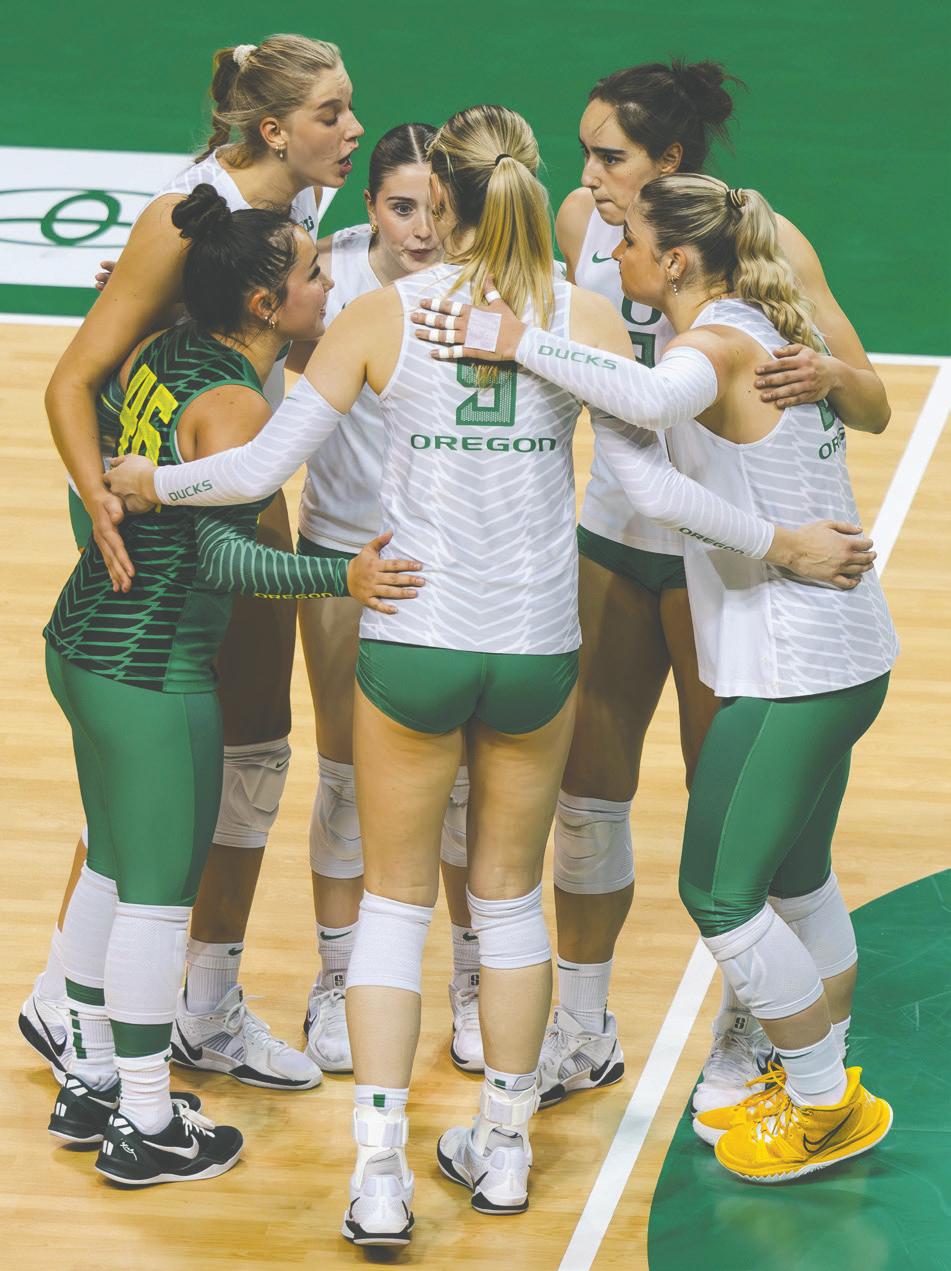
The Oregon Ducks huddle in between points. The volleyball team beat Oregon State at their spring match on April 24, 2026, at Matthew Knight Arena in Eugene, Ore.
(Corey Hoffman/Emerald)
Same-Day
WiFi Means One Less Thing for Students to Worry About
Back-to-school season is around the corner for the University of Oregon, and for students planning to live off campus that means getting a new home set up (and connected) fast. For students living off campus, reliable Internet access is critical for coursework, communication and entertainment, but it often needs to be arranged independently.
This back-to-school season, Xfinity is making it easier to get connected with Same-Day WiFi in Eugene, allowing eligible new customers to sign up and get online that very same day; either through home delivery, where available, or by picking up equipment at the Eugene Xfinity store. Eligible university students living off campus can also take advantage of a special offer featuring 1 Gig speeds for $45 per month for one year, plus Peacock Premium and a $200 virtual prepaid Mastercard.
An industry first from a major wired Internet provider, SameDay WiFi is a simple plug-and-play setup and ensures students are ready from day one. How it works is simple. Students sign up for Xfinity Internet, WiFi equipment can either be picked up at a Xfinity store, or for eligible customers in Eugene, delivered to their home, and they’re up and running — all in one day.
Sign Up: Sign up for Xfinity Internet at Xfinity.com. Eligible customers select same-day Gateway delivery during checkout.
Set Up: An Xfinity Gateway is delivered directly to their doorstep within hours. Customers can simply plug-and-play their device to get up and running.
Start Up: Customers self-install and activate service in minutes through the Xfinity app. Immediately connect devices, personalize their WiFi settings, and manage your home network.
“In a world where almost everything is instant, home Internet shouldn’t be an exception,” said Eric Jagher, senior vice president and general manager of connectivity. “With Xfinity’s Same-Day WiFi we’re giving customers access to the nation’s fastest, most reliable connectivity the moment they need it.”
Whether they’re submitting an assignment five minutes before it’s due, interviewing for that dream internship, streaming the big game, or sharing WiFi with a house full of roommates, Xfinity student plans are built to keep up with college life.
Don’t miss out on same-day WiFi and student offers from Xfinity. Learn more at xfinity.com/student and get started today!
Frog lookalikes
Feline metaphor for the economy of South
Bird on a captain’s
Row on a tier list, ex.
Espies
Paramedic drs.
Word after honey or beach
Never have I ___
Second shot
“Pick up that phone!”
Pet platypus in “Phineas and Ferb”
for
Contraction often confused with a possessive adjective (here’s an example, if your lost)