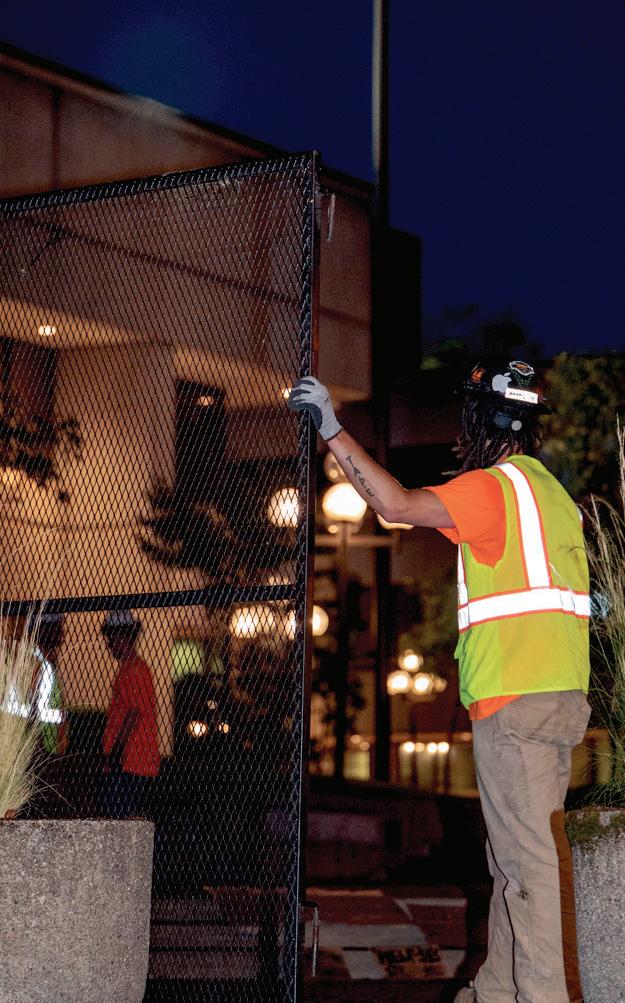
How is Oregon women’s soccer coach Tracy Joyner’s sophomore season shaping up?

How is Oregon women’s soccer coach Tracy Joyner’s sophomore season shaping up?
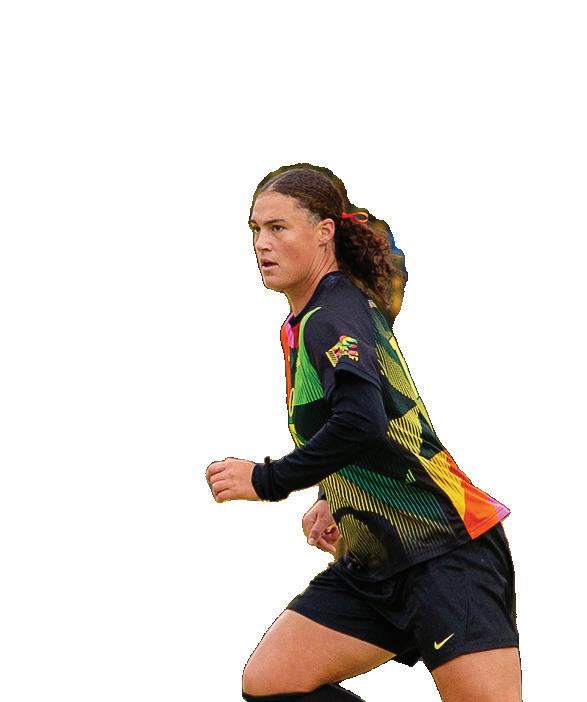
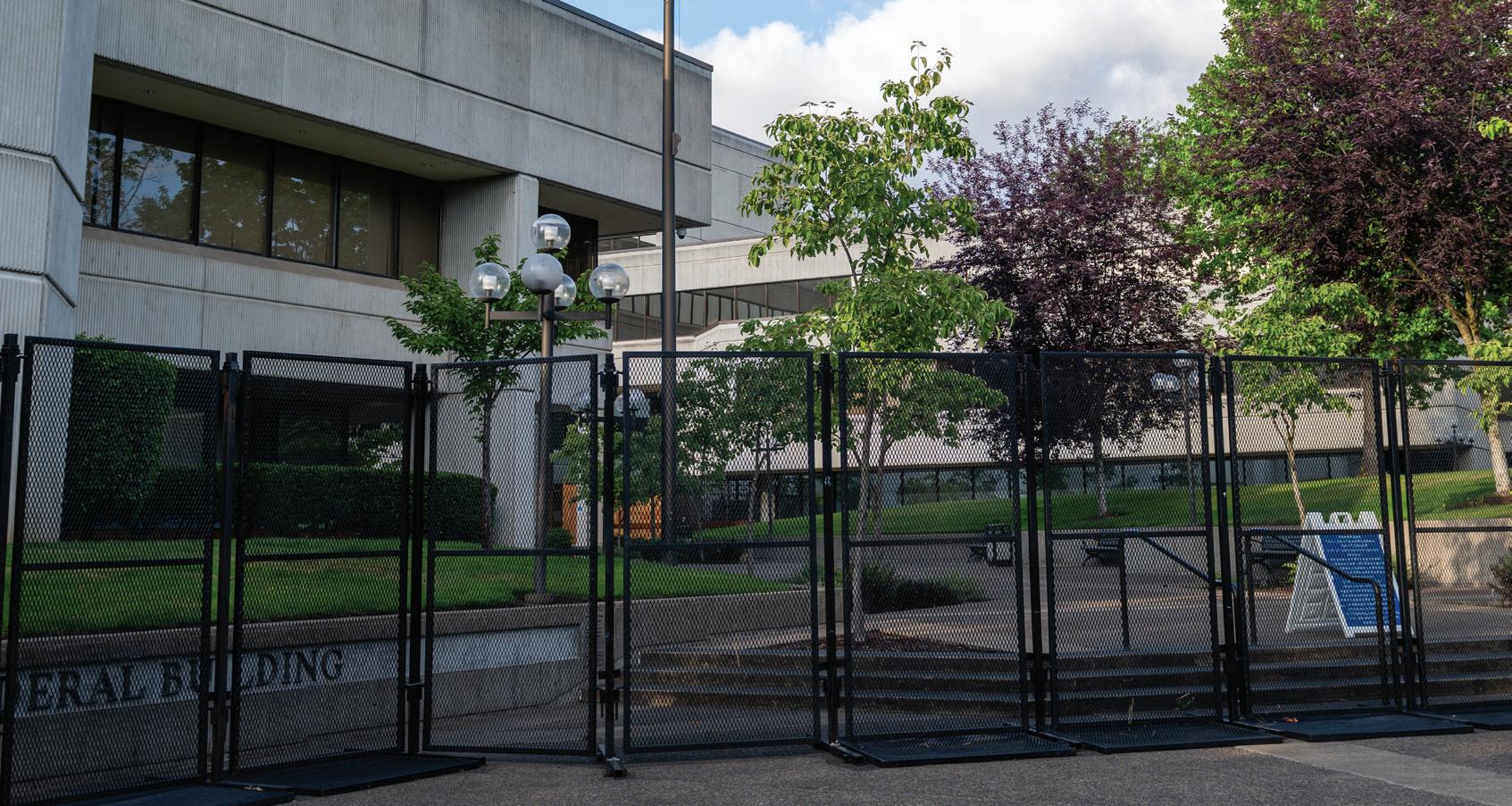
Opinion: The fence around Eugene’s federal building came down after a judge deemed it unconstitutional, but a $1 million security “hardening” project deserves just as much scrutiny.
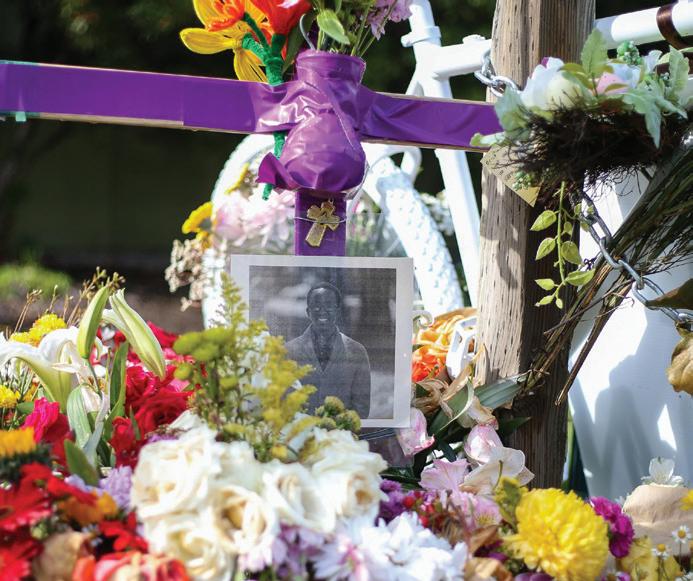
Eugene to launch multilane crossing improvements near site of UO student fatal crash

Thousands of water sources on campus, tested by four employees, are leading to infrequent data highlighting a lack of resources for UO’s Environmental Health and Safety division.
By Sasha Love Associate News Editor
The Environmental Protection Agency says there is “no safe level of exposure to lead” in drinking water, but at the University of Oregon, testing has grown increasingly infrequent, leading some professors and students to advocate for regularly updated data and lowering the acceptable lead limits.
UO has monitored and posted lead amounts for campus drinking water since 2016, and the university fixes water sources with over 15 parts per billion of lead, which is the limit enforced by the EPA for public utilities. But for some graduate employees and faculty, that limit is not good enough.


EDITOR IN CHIEF
Eva Andrews
PRINT MANAGING EDITOR
Ty Tilden
NEWS EDITOR
Corey Hoffman
A&C EDITOR
Bella Graham
SPORTS EDITOR
Joe Krasnowski
OPINION EDITOR
Rachel Ehly
PHOTO EDITOR
Katie Poluyansky
COPY CHIEF
Lucy Forest
VIDEO EDITOR
Jake Nolan
PODCAST EDITOR
Bayley Burnham
SOCIALS EDITOR
Ana Paramo
VISUALS EDITOR
Sofia Campbell
DESIGN EDITOR
Adaleah Carman
DESIGNER
Asha Mohan
PUBLISHER AND PRESIDENT
Eric Henry (X317) ehenry@dailyemerald.com
VP OPERATIONS
Kathy Carbone (X302) kcarbone@dailyemerald.com
DIRECTOR OF SALES & DIGITAL MARKETING
Shelly Rondestvedt (X303) srondestvedt@dailyemerald. com
CREATIVE & TECHNICAL DIRECTOR
Anna Smith (X327) creative@dailyemerald.com
ACCOUNT EXECUTIVES
Maria Jimenez
THE DAILY EMERALD
The Daily Emerald is published by Emerald Media Group, Inc., the independent nonprofit media company at the University of Oregon. Formerly the Oregon Daily Emerald, the news organization was founded in 1900. Emerald Media Group 1395 University St.,#302 Eugene, Or 97403 (541)-346-5511

The City of Eugene plans to reduce a four-block stretch of Patterson Street to one lane, adding a bike and bus lane.
By Corey Hoffman & Carys Sexton-Sayler News Editor & News Reporter
The City of Eugene is launching a multilane street crossing improvement project, starting with a four-block stretch on Patterson Street.
In 2015, the city passed a Vision Zero resolution with the goal of ending fatal and severe traffic collisions. Still, five people have died on Eugene roadways since the start of the year, including University of Oregon Ph.D. candidate Erick Munene Njue, who was killed in January while biking along East 22nd Avenue and Patterson Street.
The project, aimed at improving safety for all street users, will remove one of Pat-
terson’s two westbound lanes along 19th and 24th avenues and replace it with a bicycle and bus lane.
According to Eugene Public Works Public Affairs Manager Marion Suitor, the project will change pavement striping on the road and use flexible vertical poles to separate vehicle traffic lanes from bike lanes.
“Our primary goal is to make traveling in Eugene safer for all residents. In the university area, there are more people traveling by foot and on bikes; these changes add visibility to those folks so that every street user can maneuver with care and safety,” Suitor said.
While Patterson Street is currently the only location with scheduled “treatment,”
Suitor said they have identified multiple other multilane intersections around the city that could be “improved with restriping, additional signage and other modifications.” There is no planned start date for construction, but a community meeting will be held later this summer to discuss the changes.
The Eugene City Council met on June 30 and July 1 for a budget workshop to outline the city’s development of the 2027-2029 budget.
By Billie Corsetti Associate News Editor
Amid financial stability concerns, the Eugene City Council held a two-day workshop to start phase one of its longrange financial planning development.
Mayor Kaarin Knudson and all council members were present for both workshops, held on June 30 and July 1. The city worked with consultants Nancy Hetrick and Jennifer Teal from Raftelis, a company that partners with local governments to consult on budgets and financial stability.
The city of Eugene has been struggling with a budget crisis due to increased costs amid lowered revenue, cutting $94 million out of the budget since 2010. The city has traditionally created budgets by looking at previous ones and revising them based on inflation and other factors.
This year, the city is changing its method to a long-range financial plan, which looks to identify budget challenges and priorities far in the future.
Hetrick and Teal developed a presentation on possible budget principles, service framework and strategic goals for the council as they look to adopt a supplemental budget and create a biennial budget.
The workshops served as an opportunity for council members to ask questions on the presentation, brainstorm revisions and collaborate with each other. Hetrick and Teal will return to the council on July 13 with information refined to the workshop’s findings.
Using information from previous work sessions and individual interviews with council members, Hetrick developed and presented a list of potential budget principles the council could use to guide future fiscal decisions. The list laid out 10 principles, including strengthening and
diversifying revenue sources, prioritizing core and essential services and promoting transparency with the community.
A council-directed list of budget principles would not be binding, but would serve as a guideline for councilors and the community to refer to in fiscal issues.
“You now have a vocabulary, whereas previously you may have had different ways of saying those things that were important to you,” Teal said. “Now you can be like, ‘This doesn’t sit right with me because it doesn’t align with our commitments.’”
The consultants also presented a possible service framework, offering the city a categorization tool for all of the services it provides to create cohesive decisions and discussions.
There are four categories in the service framework. Required services include programs the city must provide in compliance with federal or state law; essential services comprise of programs that protect public health and safety; core community services encompass programs the community expects the city to provide; and strategic priority services respond to situational needs or council goals.
“We have gotten wrapped around the axle so many times over the years on what is a core service, and obviously everything is a core service, but that doesn’t help with prioritization. This makes a lot of sense to me,” Ward 8 Councilor Randy Groves said.
After the workshop, the consultants and other staff plan to sort current city services into the framework so councilors can visualize how it would operate in the future. They also plan to meet with the eight citizen members of the Budget Committee, who will work with the council to develop the budget, during the summer to share the same information.
The consultants also used council interviews and previous community surveys to identify the main topics to focus on in their next strategic plan. Financial sustainability, public safety, a thriving community, housing and homelessness, transportation and infrastructure, and organizational excellence were listed as the six areas of interest. Some councilors noted that environmental concerns and a distinction between public safety and community health should be included. Ward 2 Councilor Matt Keating also expressed a desire to include renters’ rights and protections as a priority.
During the July 1 workshop, councilors worked together to define what success would look like for the previously listed strategic focus areas. Councilors each wrote down one goal associated with one of the topics they would like to see accomplished in the next two years, utilizing the budget principles and service framework.
Councilors listed sustainable housing, more people off the streets, providing jobs with livable wages and a diversified economy as a few of the goals they hope to progress by 2028.
Ward 5 Councilor Mike Clark said he “didn’t see the dots connecting” about how to provide solutions to the short-term issues facing the city due to its budget crisis.
“You have collectively spoken today with one voice to the community and to the staff; that’s the first step,” City Manager Jenny Haruyama said. “Now we’ll start to refine that a little bit more and put more meat on the bones for the shorter-term strategies.”
City staff and consultants will return to the council on July 13 to present revised budget principles, service framework and strategic focus areas using the council’s input.
Kristina Beggen, a Ph.D. candidate in earth sciences and sociology, said it is “morally imperative” that the university use more conservative lead limits because of the wide range of people who come to campus to work and learn — including pregnant students and employees, and children of all ages who attend summer camps on campus.
“As a sociologist working in environmental issues, a lot of regulatory numbers are not necessarily reflections of human health or environmental health. They are a reflection of social pressures, political pressures, economic pressures,” Beggen said.
Beggen and her colleagues want the university to abide by a more conservative lead limit given what the EPA says, and the Food and Drug Administration’s bottled water regulations sits at a 5 ppb limit.
15 parts per billion of lead allowed by the Environmental Protection Agency for public utilities
UO developed its drinking water monitoring plan in 2016, partly in response to the national conversation at the time centering around the Flint, Michigan, water crisis, according to UO’s environmental services manager Adam Jones.
Lead levels over 15 ppb were found in over 100 drinking water sources around campus in 2016 during UO Environmental Health and Safety Division’s first round of testing. Since then, the university has cut down significantly on lead testing.
In the 2020s, the university began testing an average of approximately 200 fixtures per year, compared to around 500 or more a year previously, focusing mostly on the oldest buildings on campus.
Beggen is part of a team of graduate employees advocating for revamping testing and lowering drinking water lead limits to 5 ppb. This proposal, if successful, would be enforced using the graduate employees’ union contract.
In 2025, when the most recent round of testing was completed, there were 42 places on campus where the tap water was between 5 ppb and 15 ppb.
These locations included Carson Hall, Condon Hall, Columbia Hall, Barnhart Hall, Onyx Bridge, Prince Lucien Campbell Hall and the volcanology building. The university does not take action, except for occasionally increasing monitoring, when the levels fall within this range.
100+ drinking water sources with lead levels over 15 ppb found on campus in 2016
up a jar of water she said was from the second floor of Columbia Hall. According to UO’s data, the water contains 13.6 ppb of lead.
“This is under the threshold where a public institution needs to take action, but hypothetically, I’ll ask you: Would you drink it? Would you let a kid drink it? Would you let a freshman drink it or a pregnant person? I’m gonna say no,” Beggen said.
42 tap water sources with lead levels between 5-15 ppb found on campus in 2025
Beggen was inspired to push for higher standards last spring when she found out the Columbia Hall water neared the 15 ppb limit, and then talked to her pregnant friends about the issue. Pregnant individuals and their babies are more at risk than individuals who are not pregnant because it is easy for lead to flow between a mother and her unborn baby, which then increases the likelihood of miscarriages and poor health for the newborn.
In spring 2025, Beggen and Raoul Liévanos — a professor of sociology who focuses on environmental justice — wrote a resolution for the UO Senate advocating for lower lead limits and more water coolers.
Liévanos, who was a member of the UO Senate last year, recommended that the university shut off faucets and fountains containing more than 1 ppb of lead — the limit that the American Academy of Pediatrics wants daycares to abide by.
“The EPA has an acceptable risk threshold for the parts per billion amount of lead that’s in water, but most of the health and medical research suggests there is no safe level...” Liévanos said.
Liévanos said the university is “covering its bases,” but thinks it should reconsider its approach.
Instead of taking a regulatory approach to monitoring lead levels, Liévanos wants to highlight what is called the “precautionary principle.” This alternative way of looking at risk takes into account the possibility that scientific knowledge surrounding health hazards might be incomplete and encourages regulations to be as conservative as possible.
The senate resolution didn’t make it to a vote, Liévanos said, due to timing and priorities. It was, however, able to open doors to more conversations with department heads, Campus Planning and Facilities Management and EHS surrounding testing and transparency for an issue that has started to fall off the radar.
Almost all recent testing has only covered residence halls, which are a priority for the safety team because people generally consume more water in their homes than elsewhere, according to Jones.
Residence and dining halls are the only areas where the university aims to test for lead within five years. All other locations are tested “periodically,” or as requested, according to UO’s lead monitoring plan. Jones said this means the EHS team focuses on buildings that are “problematic” and have had issues in the past.
“The approach that we try to take with many things that we deal with, drinking water being one of them, is that it isn’t a matter of personal concern; it’s a matter of process, and defensibility and justification and making sure we are doing the best due diligence that we are capable of doing with the resources we have,” Jones said.
In addition to drinking water testing, Jones and his team also manage air quality and mitigate the health effects of asbestos, silica and mold on the UO community.
“For the amount of research we do and the amount of infrastructure we maintain, we are grossly understaffed,” Jones said. “I feel like we do pretty well for that, but a lot of the holes… really comes down to staffing.”
Jones said if he had more resources from UO administrators, he could focus on increasing communication and transparency, as well as updating UO’s lead testing map.
Jones’s priorities align with the requests of the graduate employee union and professors who think the data is poorly organized and notices about contamination are inadequate.
“Just because there is a QR code doesn’t mean people know,” Liévanos said, referring to the information posted above the PLC drinking fountains. “Navigating things can be quite technical for folks. They approach things with different kinds of educational background and levels of training.”
Currently, the lead testing data is scattered throughout various spreadsheets and sporadically updated. According to Jones, the major hold-up to transparency is due to the lack of finances.
The university is facing $65 million in budget cuts on top of last year’s cuts. While Beggen says she doesn’t want to “downplay” the university’s financial challenges, she would like to see more resources dedicated to drinking water monitoring.
[Drinking water] isn’t a matter of personal concern; it’s a matter of process, and defensibility and justification and making sure we are doing the best due diligence that we are capable of doing with the resources we have.
Adam Jones Environmental Services Manager, UO
“What gets cut in the budget is always a decision that reflects priorities, and the university has not been prioritizing testing lead and taking action swiftly,” Beggen said.
Though UO’s drinking water monitoring program isn’t perfect, Jones points out that it is more comprehensive than other Oregon universities. Oregon State University hasn’t posted updated data since 2019, and Portland State University claims to test the drinking water but does not have any publicly available data on its website.
“There are some things that I wish we did better, but for what we are required to do and what we are doing, we are miles ahead of our sister organizations,” Jones said.
By Rachel Ehly Opinion Editor
In all honesty, I had never even thought about the Eugene Federal Building until a giant fence went up around it.
All but a small portion of the building has been surrounded by a fence since April after a window in the lobby was smashed during a protest in January that was declared a riot by Eugene police.
On July 1, a construction crew started taking the fence apart. By 4:45 a.m., on July 2, the fence was partially dismantled just ahead of a court-ordered deadline that saw the denial of an emergency motion from federal government attorneys to extend the time limit.
“If we cannot exercise our constitutional rights to protest at the federal free speech plaza, what will be next?” said Lauren Regan, the lead attorney on the case, representing six local activists with the Civil Liberties Defense Center.
At a rally at the federal building on June 9, Regan announced the lawsuit, saying that the CLDC would continue to use the courts to fight against the Trump administration for cases like this.
U.S. District Judge Mustafa Kasubhai ruled that the fence violated protesters’ First Amendment rights, writing that the presence of the fence results in the “effective elimination of a long-established public forum in which the people have spoken freely for 50 years.”
At the same time, the fences pointed to something larger than the violation of public access to a federal building. On top of the free-speech argument, the fence around the building blocked benches and seating areas for the public and didn’t accommodate large gatherings, including protests. What’s just as concerning to me is the cost of not only the fence and its takedown, but the larger “hardening project” scheduled to be completed in December 2026 and estimated to cost $1 million.
This project includes replacing exterior doors and installing hardened glazing on windows.
The cost of this project doesn’t include the $270,000 spent on constructing the fences that went up around the building, the $58,000 to remove the fences, or the discussed alternative of simply moving the fencing to the lower plaza, which would have totaled an extra $150,000 in materials.
The fence was never the entire plan in the first place. Even when it’s been taken down, the General Services Administration — the agency that oversees the upkeep of federal buildings — is still re-engineering the building to make it more secure.
The fence was something bigger, something physical that anyone walking downtown could see, whereas the hardening project is invisible. Something like the fence is easy to be angry about, and
that was its aim — to gain attention and act as a deterrent for activists.
A million-dollar security upgrade that will move forward regardless of a court outcome is a lot easier to miss, even though it might end up mattering more for how the plaza will function.
And the court fight over the fence itself isn’t finished. The government has asked to keep some version of it up while it appeals to the 9th U.S. Circuit Court of Appeals, which has a hearing scheduled for July 8.
I still don’t think about the federal building most days; I don’t organize protests, and I don’t utilize the Eugene Federal Building in ways that so many other Eugenians do. But I still benefit from the space existing as a place people can show up freely, without a fence blocking the path.

ARTS & CULTURE
Curry Barker’s debut film demonstrates the horrors of unconditional love.
By Vinny White Arts & Culture Writer
*Spoilers ahead
Curry Barker’s terrifyingly engrossing horror film “Obsession” is nothing short of impressive. The director has experience with horror shorts, yes, but a debut film so tight, captivating and successful, coming from someone largely known for comedy sketches on YouTube, is a testament to how creativity can defy expectations. Having just finished its monumental theatrical run as one of the most profitable films of all time, it’s now available on digital, and is certainly worth watching.
“Obsession” follows Bear (Michael Johnston), a mild-mannered member of a friend group of music store employees, as he uses a mysterious “One Wish Willow” to garner the unrelenting love of his friend, Nikki (Inde Navarrette). He’s left to deal with the consequences of this action as Nikki gradually turns into something she is not, while his friends Ian (Cooper Tomlinson) and Sarah (Megan Lawless) grapple with the aftermath.
The catalyst of the story, the “One Wish Willow,” is a plot device that needs little explanation. It’s a device that grants any wish with no strings attached. Bear, though seemingly
harmless at the beginning of the movie, uses the wish for strictly selfish means and only continues to grow more selfish as time goes on. Johnston’s portrayal of Bear is wonderfully layered, accurately portraying the mannerisms of a manipulative loser who managed to worm his way into an otherwise-sound friend group. His character is easy to hate, yet he has a certain softness and occasional empathetic glances that makes the audience hope for a way out of his situation.
Starring alongside Johnston is Navarrette, who gives a tantalizing performance that brilliantly rides the line between horrifying and sympathy-inducing. Her character early in the film is immediately charming, which makes watching her voice and body language change as she succumbs to the wish all the more terrifying. The way her vocal patterns completely change — as do the accompanying crying, screaming and other miscellaneous noises — makes her feel like a completely different person than the one seen at the beginning of the film.
Lawless’s character is less prevalent than the rest, but her subplot about trying to get into college grounds the story and gives her more emotional weight. Tomlinson, a holdover from his and Barker’s YouTube comedy project, “that’s a bad idea,” provides a crucial comedic styling to the film. He hams it up a bit too much in the earlier portions of the movie, but as the chaos unfolds, he fits into the role believably.
The use of heavy-handed comedy is the secret ingredient that makes this film work. Some scenes feel ripped straight out of a “that’s a bad idea” sketch, with many of the funniest scenes simply portraying a few characters arguing over the
semantics of the situation they’re in. While some may be afraid to laugh given the movie’s prevalence of tragic subjects, ignoring the dark comedy threaded within this horror-drama would certainly be an oversight.
The camera work certainly aids the horror elements of this film, since its 3:2 aspect ratio creates a claustrophobic look that ensures the viewer is aware of everything on screen. Jump scares — at least cheap ones — are rare, since the camera work often makes it obvious what scares are coming next. Still, the pictures on screen are sure to cast many eyes to the floor.
“Obsession” is generally enjoyable to look at, with solid camera work and cool colors that makes the gore all the more jarring. This is excluding a short, largely-comedic, effects-forward scene toward the end, which is oddly unconvincing for an otherwise visually-sound film.
The film’s use of sound, particularly screaming, is what really sends shivers down the spine. This sound, as well as a complementary and wonderfully atmospheric score from Rock Burwell, makes even watching with closed eyes uncomfortable.
Even without the hype of a novice director making it big with his first feature, “Obsession” is a brilliant film. It knows when to go all the way and when to draw back. The characters all feel developed and exude an unspoken history. It’s not for the faint of heart, with the performance of Navarrette sure to linger in the mind of most long after they’ve left the theater — but there’s nothing wrong with being a little obsessed.


Oregon will look to take a significant step forward in Joyner’s second season.
By Rowan Shea & Cadence Wooden Sports Writers
The Oregon women’s soccer team had a disappointing 2025 season. Behind new head coach Tracy Joyner, the Ducks finished the season 3-10-5 and scratched across one conference win on senior day at the 88th minute of their final game against No. 8 Washington.
Joyner had a decent transfer class last season thanks to her time at UC Davis. She brought in sisters Jayde Holley and Savannah Holley, goalkeeper Gia Kiesling and seven other athletes to rebuild the Ducks roster. Oregon, though, did not have a great season last year despite the multitude of transfers that Joyner brought in. The head coach turned once more to the transfer portal and launched into rebuilding the roster before a Big Ten season where they’ll look to redeem themselves in a couple key rematches.
The transfer portal was in full effect again this offseason for Joyner. No doubt hoping to have a stronger sophomore season, Joyner has so far brought in 14 new faces to the squad, 11 of whom are freshmen.
One of the strongest newcomers Joyner has recruited for the Ducks is junior Gray Wilson, a goalkeeper who spent the last two seasons at the University of Miami and Colorado State University. In that time, she posted the second-lowest goals-against average in Colorado State history.
Wilson is a needed addition to this roster after Caeley Goldstein, a UC Davis transfer who followed Joyner to Oregon, graduated last season. Goldstein allowed 21 goals while the Ducks only netted 15 last year, and Kiesling only made two appearances during the season. Joyner made the goalkeeping room stronger by adding Wilson and Kailey Kimball, a redshirt senior, to join returning redshirt sophomore Kiesling.
Other returners who will look to lift the Ducks up in 2026 are senior forward Lauren Kenny, junior midfielder Carly Cormack, junior midfielder Cloe Chase, and sixthyear defender Cailin Bloom.
Bloom was outstanding last season in the backfield. She played aggressively, got to the ball quickly and had great field awareness. Kenny had her best season last year, second on the team in goals (3) behind Cormack (4). She led in shots on goal with 14 and started all 18 games.
Chase was a facilitator in the midfield in the early stages of last season. Like Bloom, Chase was good at finding open spaces and getting the ball where it needed to go. However, she only played seven games due to a season-ending leg injury. With the added talent, it’s now a question of whether or not that skill can translate on the pitch this upcoming season. Oregon’s transfer class will be expected to produce right away. However, their outcomes will also depend on those key returning players, Cormack and Kenny, along

with Miya Alamares, Addisen Boyer and Chase, if she can stay healthy this season.
Oregon has an early opportunity to gauge where it stands, with its first non-league matchup against a well-balanced Santa Clara team on Aug. 20, one of the stronger programs on the West Coast. The matchup should offer an early look at how offseason additions’ chemistry mixes into Joyner’s system before conference play.
In the midfield, returning starter Chase and transfer Paige Nakada will need to be aware of Santa Clara’s Mailin Orozco, who led the Broncos with six goals and 47 shots last season.
Offensively, Oregon can look toward freshman forwards Grace Charles and Makea Leonard to provide the attacking spark the Ducks lacked in the past season.
While experienced players like Chase and Nakada will provide leadership and stability, the Ducks new additions will need to adapt quickly to the speed and physicality of conference play and contribute from the start.
If they can enter their season and strengthen their performance, Oregon will have a strong opportunity to turn this season into a series of wins and climb the Big Ten standings.
Oregon women’s volleyball’s second-year head coach can succeed with a more experienced roster.
By Max Koebel Senior Sports Writer
Ahead of last season, the Oregon women’s volleyball program hired Trent Kersten to take on a daunting task. With head coach Matt Ulmer taking a job at the University of Kansas, and all but one player departing due to graduation or the transfer portal, Kersten had to rebuild the team from the ground up as the new head coach.
In the first season under Kersten, the Ducks finished with an overall record of 17-13. They were 8-12 against Big Ten opponents, 6-6 at home, and 8-6 on the road. Expectations were quite low for what Oregon would do given all the changes, but they still pulled off a few upsets.
The biggest win of the season came in a 3-2 thriller on the road against No. 9 Purdue University. Other peak moments included the 3-1 win at home against No. 18 University of Minnesota, and two wins against UCLA, which started the season with Oregon in the top 25.
Before arriving in Eugene, Kersten was the head coach at San Jose State University from 2020 to 2022 and at Loyola Marymount University from 2023 to 2024. His overall record through those five seasons was 92-40. Kersten was named West Coast Conference Coach of the Year in 2024, when he led LMU to a conference championship and the second round of the NCAA Tournament.
Now entering Kersten’s second season at the helm in Oregon, the majority of the roster consists of returning players,

including freshman phenom Alanah Clemente, who now has a year of experience under her belt.
Clemente’s strongest performance came Nov. 26 at Rutgers University, where she recorded three season highs with 34 points, 26 kills and eight blocks. Some other notable performances for Clemente came in two of Oregon’s biggest wins. In the Nov. 15 upset over Purdue, she recorded 25 kills and three assists, and on Oct. 17 against Minnesota, she recorded 23 kills and six service aces.
A more experienced force from Kersten’s first season was University of Michigan transfer Valentina Vaulet. Her best game was Sept. 28 at Northwestern University, where she recorded 32 points, 28 kills and six digs. The Ducks came up short in that game, but in the very next game, against Iowa, Vaulet recorded 20.5 points, 19 kills and 11 digs. That time, Oregon came out on top. Now entering her senior season, Vaulet’s experience on the court will be valuable to the continued development of the younger players.
Another addition to last year’s roster who is expected to have her presence felt again this season is Iva Šucurovic. Before arriving in the United States and becoming a Duck, the Zrenjanin, Serbia, native played on the Serbian national team and competed in three European Championships between 2022 and 2024. Entering her second season in Eugene, Šucurovic’s experience on a bigger stage will be another essential factor in the team’s development.
While the first season under Kersten did not hold the same level of success many Oregon volleyball fans were used to seeing in recent years, he certainly put the team in a good position given the situation he endured when he arrived. The program cannot be too disappointed with how last year’s rebuild season unfolded. Now that Kersten is in a more familiar place with players he has coached for a year, we can expect to see the team take another big step forward.