Ward 3 city council candidates discuss transportation ahead of primary election
ARTS & CULTURE
Simon Adler discusses audio career at UO
The former audiolab producer and UO alum took to Knight Library to share what students can take from his storied career.
By Vinny White Arts & Culture Writer
Having recently graduated from the University of Oregon and moved back home to Eau Claire, Wisconsin, to save some money, Simon Adler needed something to listen to as he moweds his client’s lawn. Following a friend’s recommendation, he puts on a podcast called “Radiolab,” a series of inquisitive audio documentaries. After that moment, he knew he wanted to do more than mow lawns.
“I remember so clearly how, even with the roar of that lawn mower in the background, this thing in my ear sounded unlike anything I had ever heard,” Adler said. The ideas that they were exploring, the sort of compositional nature of the way they were putting sound and music together — it was surprising, it was confusing, it was wonderful. In that moment, I was like ‘this
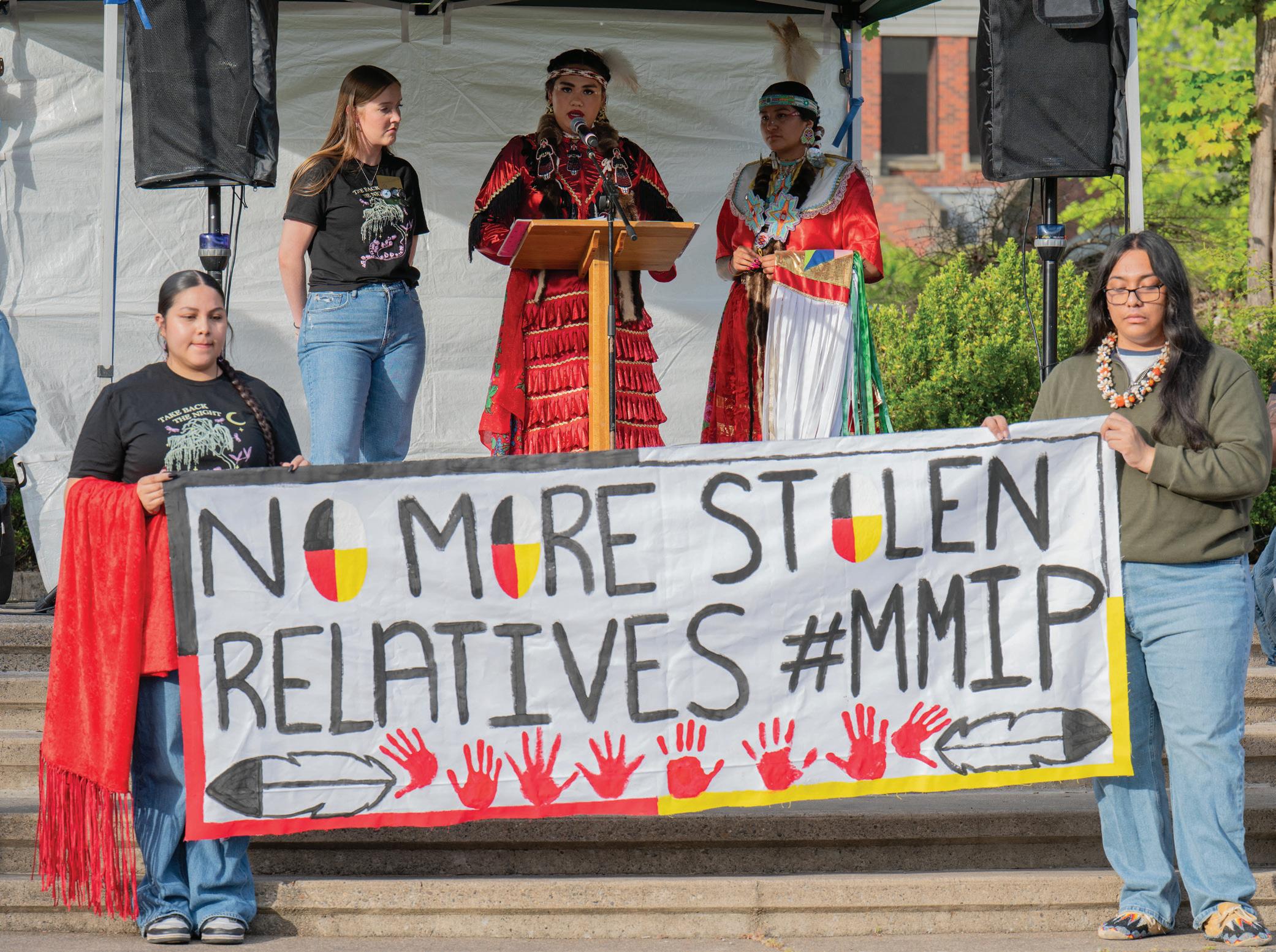
Take Back the Night rally centers “collective power”
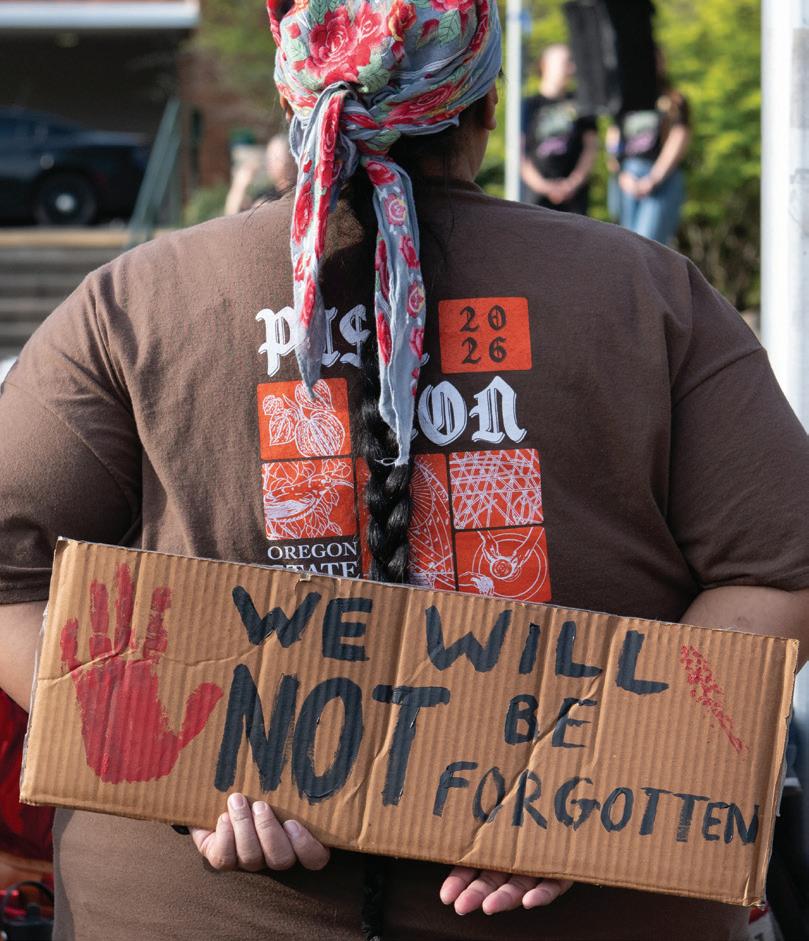
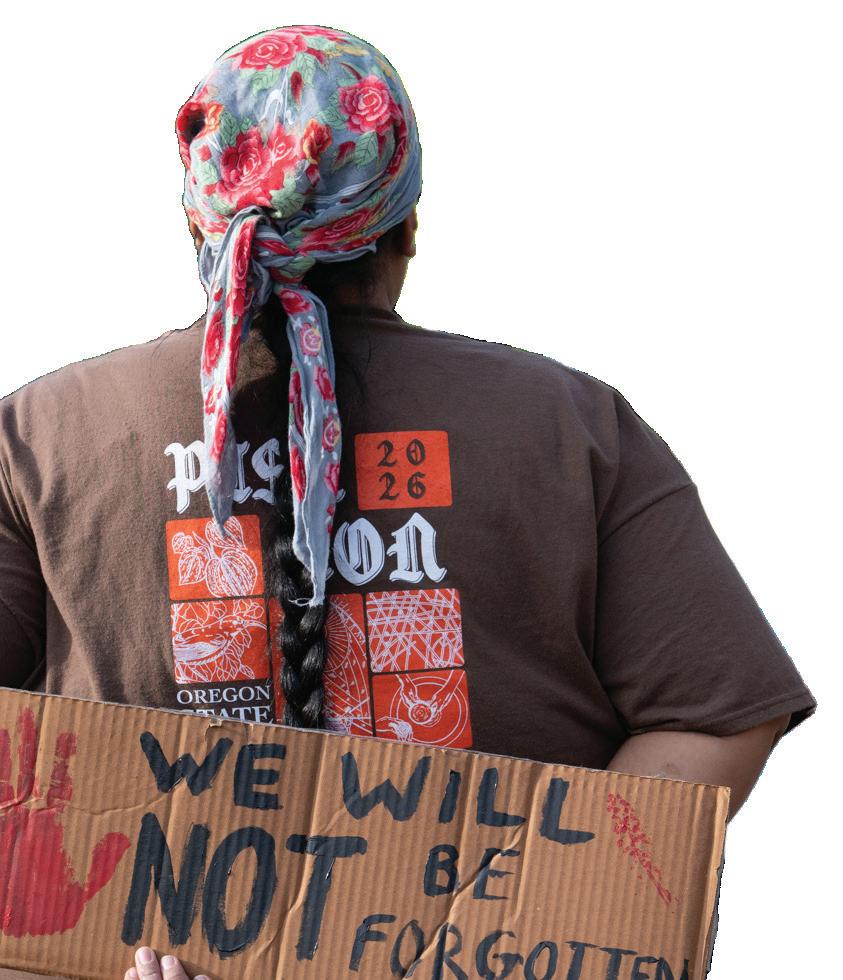
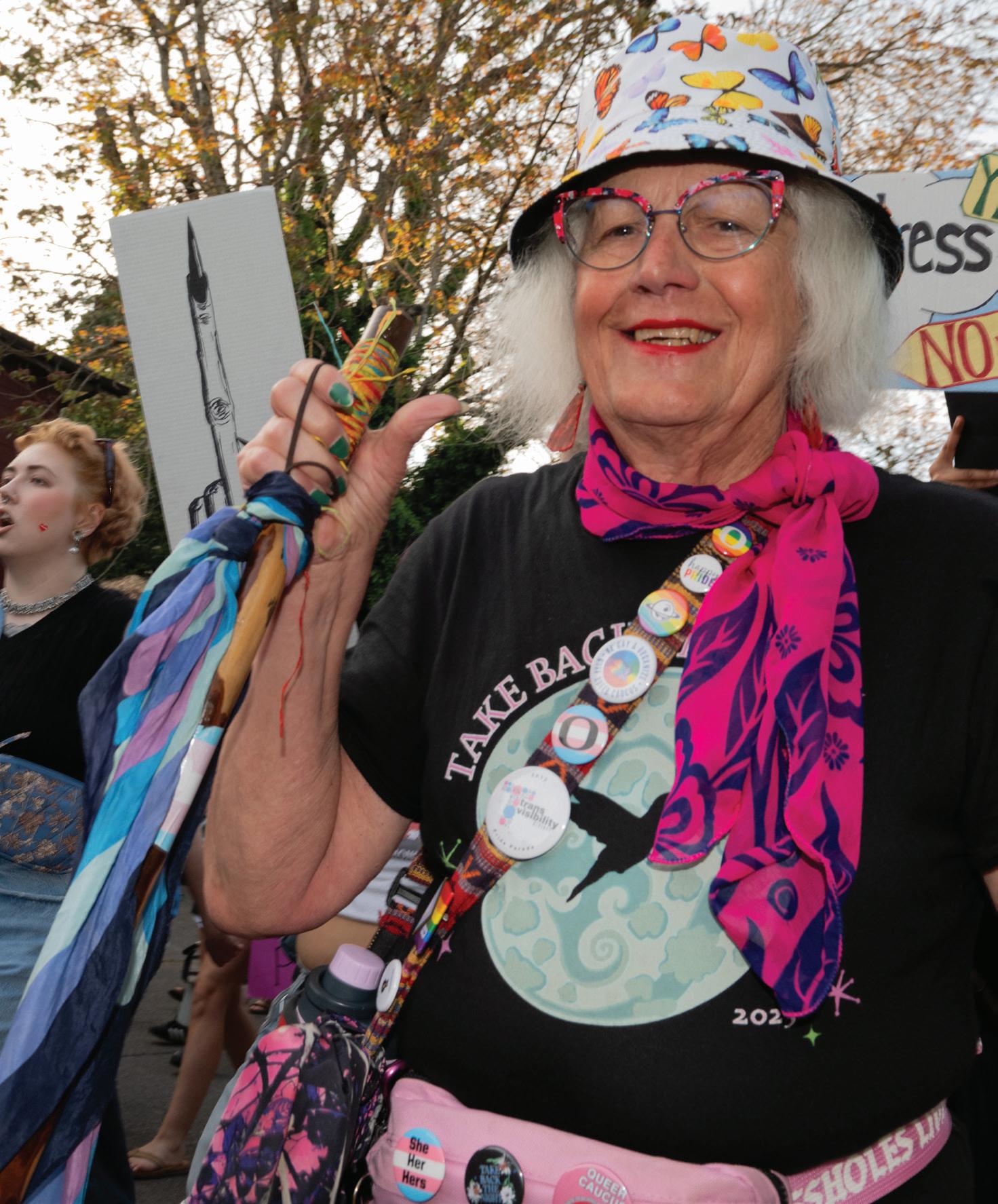
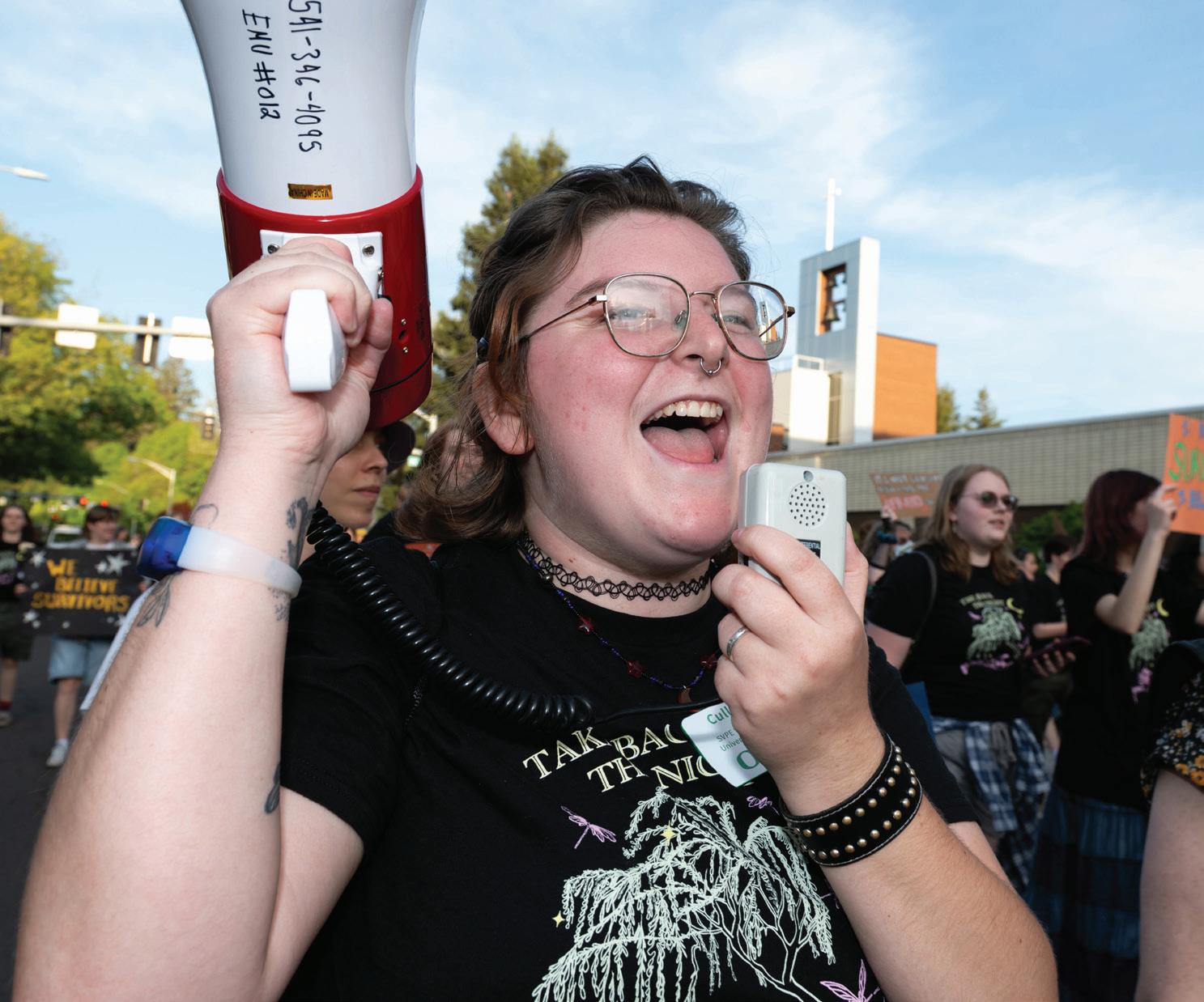
The UO Women’s Center’s 48th annual Take Back the Night rally, march and Speakout against Sexual and Domestic Violence event was held in Eugene, Ore., on April 30, 2026.
•7
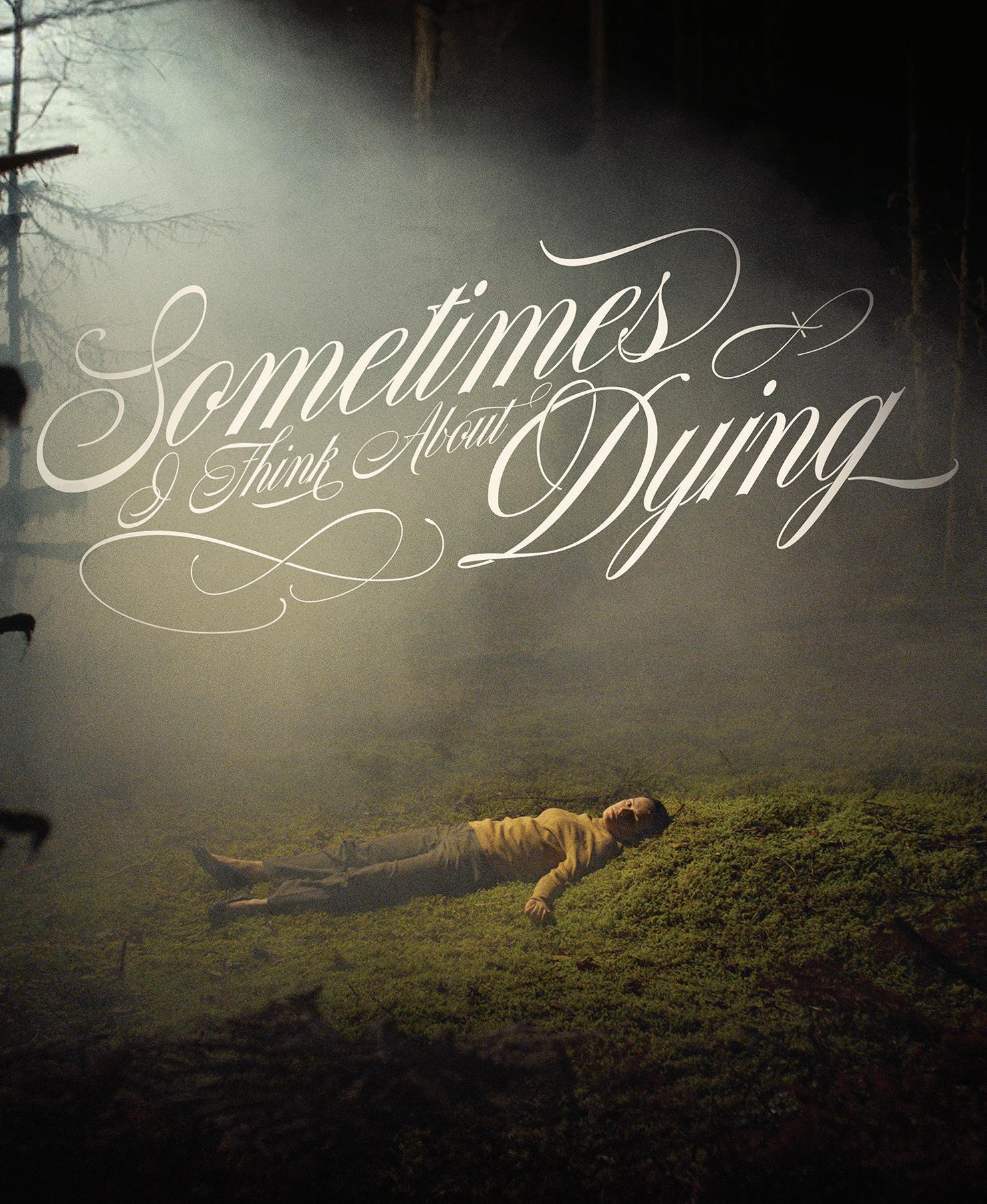
Featuring Director Rachel Lambert
EDITOR IN CHIEF
Tarek Anthony
PRINT MANAGING EDITOR
Ryan Ehrhart
DIGITAL MANAGING EDITOR
Ysabella Sosa
NEWS EDITOR
Reilly Norgren
INVESTIGATIONS EDITOR
Ana Narayan
A&C EDITOR
Claire Coit
SPORTS EDITOR
Jack Lazarus
OPINION EDITOR
Gracie Cox
PHOTO MANAGING EDITOR
Corey Hoffman
PHOTO EDITOR
Saj Sundaram
COPY CHIEF
Olivia Ellerbruch
VIDEO EDITOR
Jake Nolan
PODCAST EDITOR
Stephanie Hensley
SOCIALS EDITOR
Ysabella Sosa
VISUALS EDITOR
Noa Schwartz
DESIGN EDITOR
Adaleah Carman
DESIGNERS
Asha Mohan
Ellery Burton-Tillson
Eva Andrews
Izzy Smith
Nina Rose
BUSINESS
PUBLISHER AND PRESIDENT
Eric Henry (X317) ehenry@dailyemerald.com
VP OPERATIONS
Kathy Carbone (X302) kcarbone@dailyemerald.com
DIRECTOR OF SALES & DIGITAL MARKETING
Shelly Rondestvedt (X303) srondestvedt@dailyemerald. com
CREATIVE & TECHNICAL
DIRECTOR
Anna Smith (X327) creative@dailyemerald.com
ACCOUNT EXECUTIVES
Camcole Pereira
Elliot Byrne
Maria Jimenez
THE DAILY EMERALD
The Daily Emerald is published by Emerald Media Group, Inc., the independent nonprofit media company at the University of Oregon. Formerly the Oregon Daily Emerald, the news organization was founded in 1900.
Emerald Media Group 1395 University St.,#302 Eugene, Or 97403 (541)-346-5511
As trees come down, UO begins holding commemorative ceremonies
Disease and safety concerns prompt removals, new gatherings aim to honor campus trees and bring the community together.
By John Pham Reporter
On April 15, groundskeeping crew, students, community members and self-described “hippies” gathered around the foot of a tree between Knight Library and the Jordan Schnitzer Museum of Art. An invitation stapled to the tree had invited them to “A chance to acknowledge the loss and share a tree-ful moment.”
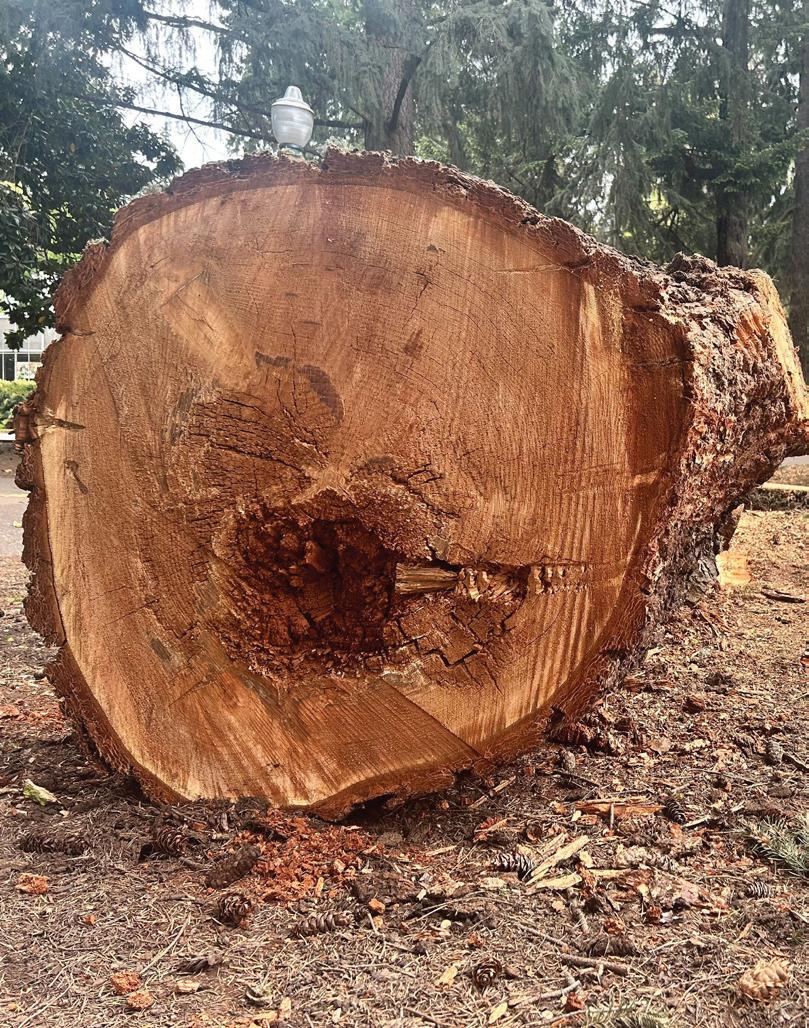
The tree, a pin oak which had stood for nearly a century, had to come down after an aggressive oak bracket fungus infection was discovered.
“This condition and the high traffic nature of the area necessitate its controlled removal to avoid a catastrophic failure,” a notice of tree removal stapled to the oak said.
The 3,500 trees that cover University of Oregon’s 295-acre are a major characteristic and selling point for the university.
This year UO Head Arborist Beckett DeChant began holding commemorative ceremonies to honor the removal of campus trees — the first of their kind held by the university.
At the ceremony, Associate Professor of Religious Studies Jeff Schroeder read a prayer that students in his class, Religion and Climate Change, had written.
“May we learn to be grateful, may we learn to give back to the earth,” Schroeder read in the opening.
At the close of this gathering, some attendees hugged the tree or placed a hand on its trunk.
Five days later, the tree was brought down, its wood turned into chips or used as nurse logs: portions of fallen trees that are left to provide support for other plants in the ecosystem.
Correction: April 27 edition
On Monday, April 27, The Daily Emerald printed a profile of University of Oregon softball player
Elon Butler detailing her skill and passion for art and tattooing off the field. Inside the cover, the Emerald published a photo of fellow player Ayanna Shaw instead of Butler. This unacceptable error resulted from a miscaptioned photo and a failure to meet our fact-checking standards.
To Butler, we are deeply sorry for this error, and we appreciate your time and willingness to participate in this story. To Butler and our broader Emerald community — we strive each day to report on the issues that impact the University of Oregon and Eugene while amplifying voices and untold stories in an accurate and thoughtful manner. In this case, we failed to do so.
The profile text correctly refers to Butler; however the photo was
incorrect. The online version of this story has been corrected.
Following the discovery of the error, we held immediate meetings with the photographers and editors involved and reached out to Butler’s representative to issue our sincere apologies. This error is ours. Internally, we have implemented additional fact-checking measures, including requiring direct confirmation of a subject’s identity for all profile photos prior to publication, to ensure this does not happen again.
The Emerald deeply regrets this error.
Tarek Anthony, Editor-in-Chief Ryan Ehrhart, Print Managing Editor
Saj Sundaram, Photo Editor
Jack Lazarus and Owen Murray,
Sports Editors
“One of the things that I hope comes from this is some sort of nucleus of people who do care about trees and what is happening to them across campus,” DeChant said at a subsequent gathering on April 23, at a Douglas fir between McKenzie and Lillis Halls.
The Douglas fir, which stood since 1890, had developed Schweinitzii butt rot, a fungus that weakens the structural core and is only visible in late summer and early fall.
“It’s not surprising,” DeChant said. “Because of the age class of these trees and the injuries that have happened over the years.”
DeChant pointed to what he believed to be a “well-healed lightning strike,” which could have been the entry point for the infection — possibly decades ago.
In addition to the fungus, a large number of ants were found, suggesting cavities in the tree where they were living.
In a forest or unpopulated area, these growths would not be cause for alarm, but their proximity to high traffic walkways, lecture halls and bike routes made leaving the tree “too much of a gamble to sleep well at night,” DeChant said.
The Douglas fir came down on April 24. Like the pin oak, the tree was turned into woodchips and nurse logs to be placed in the same area where it once stood.
“I love walking around the campus,” Schroeder said. “I love beauty. I love the old trees and I do hear that the beauty of this campus and all of its trees and greenery is a major draw to students.”
Kaden Applegate, a student from Colorado, agreed, as he walked by the ceremony on his way to class in McKenzie Hall.
“I think it’s one of the huge reasons I came to UO, actually, was the kind of incorporation of nature, even in a city,” he said. “A lot of other schools I looked at had no green spaces and so I think it was just really important for me to have a connection with nature.”
One of those trees, reportedly a 50-foot white pine, collapsed in February 2025 amid a prolonged windstorm, striking a student, Olivia Rose Edwards. Edwards has since sued the university and Fortis Construction Inc. for injuries that left her paraplegic.
Edwards’ complaint also alleges that Fortis Construction Inc., who was at the time renovating Villard and University Halls, “Had a duty to curtail the risk of foreseeable danger.” The suit says that the temporary path created by fencing erected by Fortis during renovations made them responsible for the harm sustained by the falling tree.
Edwards also alleges that the university removed evidence of the tree collapse prior to it being inspected by experts to determine the cause of the collapse.
“Despite the university being on notice of its requirement to preserve evidence of this Matter, specifically including the remains of the tree, the university destroyed the remains of the tree,” the complaint read.
The university has since denied wrongdoing. A wide and storied variety of trees can be found across campus: The Douglas fir between the Erb Memorial Union and Carson Hall grew from a seedling that orbited the moon on the Apollo XIV mission. The Dawn Redwood near Pacific Hall was once thought to be extinct before its rediscovery in China in 1943. The eight Pyramidal English Oaks on the Memorial Quadrangle were planted in memory of the senior class president who drowned in a canoeing accident at the Mill Race in 1939.
These are just some of the “Campus Trees of Interest” identified by Campus Planning & Facilities Management. In their Campus Tree Plan, some benefits of trees are recognized as “aesthetic, environmental, educational, historical, and psychological,” the document said.
Maintaining the thousands of trees is a yearround task for the landscape and grounds crew. According to records obtained by The Daily Emerald through a public records request, upwards of $50,000 a year is spent on tree maintenance alone by the university. These costs cover regular upkeep, debris management and the removal of old or damaged trees.
( ABOVE) A nearly century-old pin oak tree was removed near the Jordan Schnitzer Museum of Art due to disease on April 20, 2026.
(John Pham/Emerald)
•
•
•
•
•
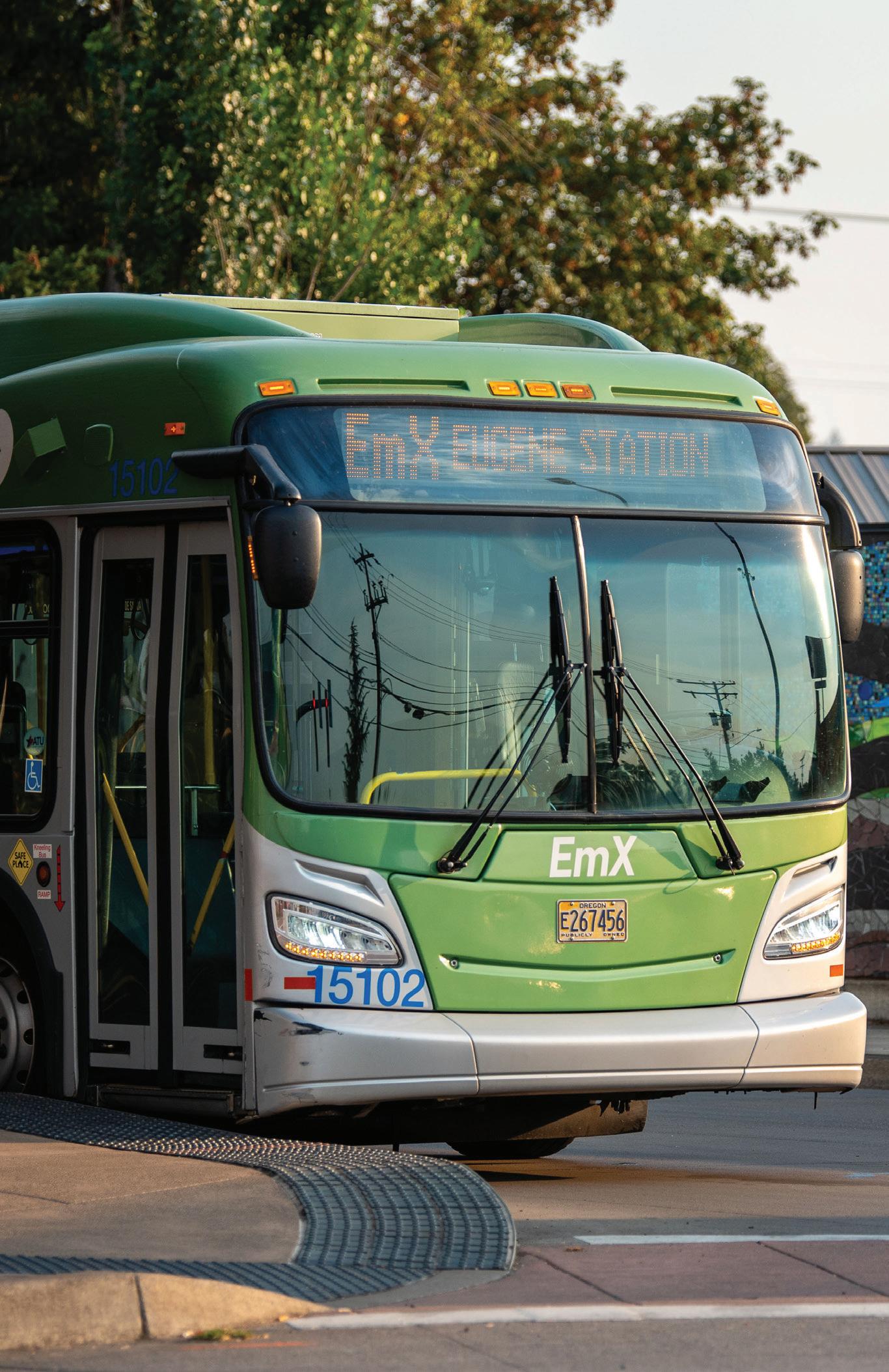
Ward 3 city council candidates discuss transportation ahead of primary election
The forum focused on increasing bus services and making Franklin Boulevard safer.
By Sasha Love Senior News Reporter
Eugene City Council candidates for Ward 3 Jennifer Smith and John Barofsky discussed ways to improve transportation around Eugene’s campus and Fairmount neighborhoods at a community forum hosted at Edison Elementary School by Better Eugene-Springfield Transportation.
Barofsky has been on the Fairmount Neighbors Board for over 20 years. He also has experience on the Eugene Budget Committee and the Eugene Planning Commission.
Smith is the President of the University of Oregon’s Service Employees International Union. She holds a master’s degree in urban planning and is on the City of Eugene’s Active Transportation Committee and Lane Transit District’s Budget Committee.
The forum centered on improving bus access in Ward 3 and discussions on whether building roundabouts would create a safe and functional Franklin Boulevard.
There are no bus routes east of university property until Highway 99, and none south of Franklin Boulevard until East 30th Avenue. The candidates pointed out that the sparse
public transit creates challenges for residents that don’t drive.
“We have (bus routes) on just the outside edge of our ward on Franklin and Hilyard, and within the ward we really have nothing,” Smith said. “There are a lot of options for smaller communities like our ward. We don’t need to have the standard size bus; we could use vans.”
Barofsky also said that he would like to focus on improving public transportation in the same area. He reiterated Smith’s idea of smaller vehicles, and suggested riders’ bus tickets also pay for Uber ride-shares.
A redesign of Franklin Boulevard was another key component of the forum.
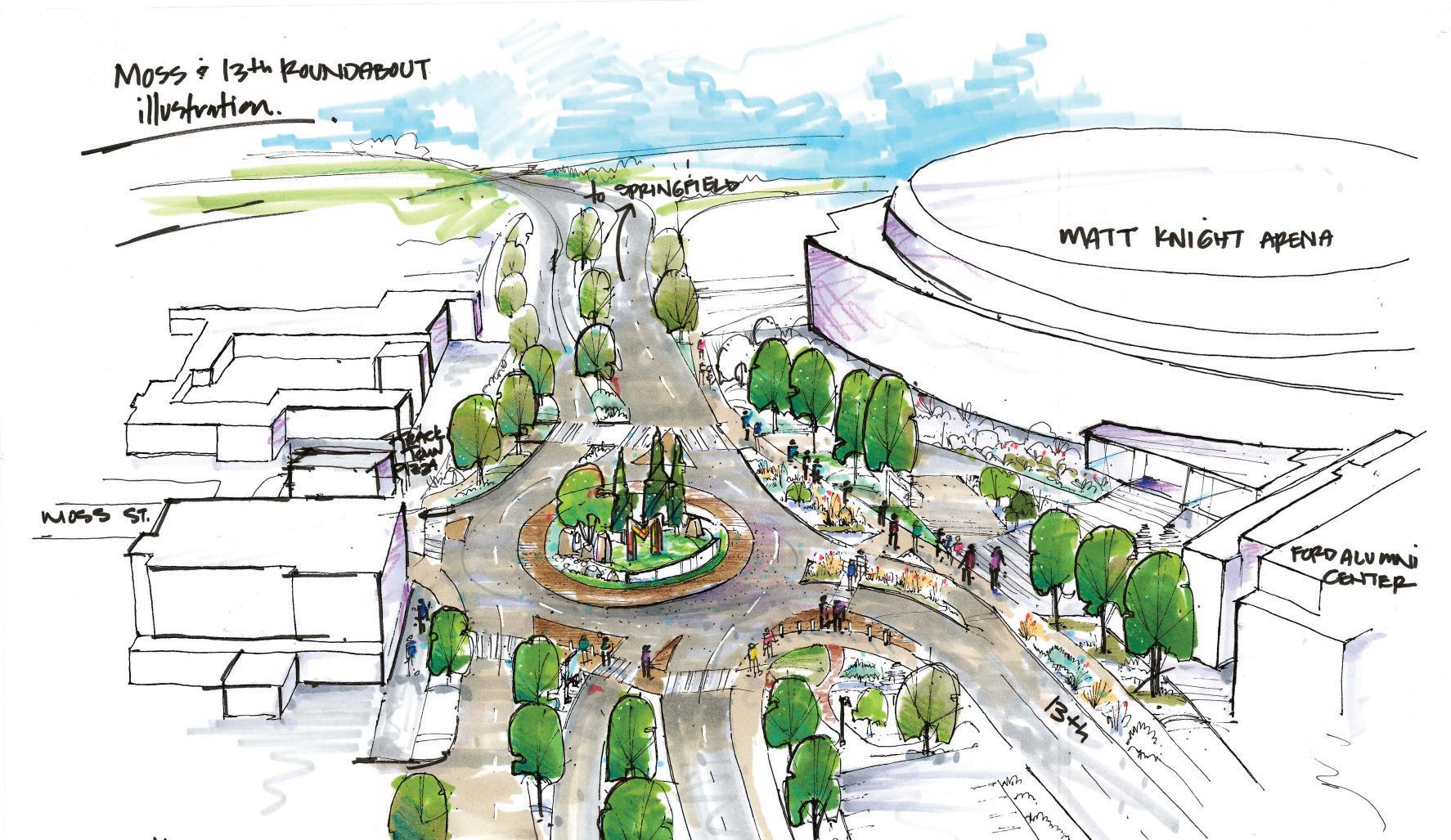
The city has drawn up proposals to create two-lane roundabouts on Franklin Boulevard at Walnut Street and East 13th Avenue at Matthew Knight Arena.
The intersection of Franklin Boulevard and Walnut Street has been identified by the City of Eugene as a high-crash intersection — one fatality and three injuries occurred there between 2014 and 2022. Since 2022, there have been at least two additional unconfirmed injuries reported by the Oregon Department of Transportation.
The city has been working to build roundabouts on the boulevard since at least 2018, but has met resistance from the owner of Hirons Drug, which has a location on Franklin Boulevard, and some local residents.
Kathy Frazer, a resident of Ward 3, said the proposed roundabouts would cause “incredible chaos.”
“Lower the traffic speed and that would be perfect,” Frazer
said. “This is the wrong place for them (roundabouts).”
Fliers signed by John Hirons, the owner of Hirons Drug, were distributed by an attendee at the forum. The fliers expressed concern for residents and businesses, annoucing that the roundabouts would be “eliminating the yeast and west accesses to the shopping center.”
Despite several attendees’ opposition to roundabouts, neither of the candidates immediately opposed them.
Smith said it might not be a perfect solution, but it would be better than doing nothing.
“Something has to happen. It is not a pleasant place to cross; it is not a pleasant place to walk along; it is not functional to bicycle along. So, this is not a street that works for all users,” Smith said. “This (road) works for a subset of users and that is primarily people in their cars.”
Smith said the solution may be roundabouts, partly because of the short crosswalks proposed between each section of road crossing for pedestrians.
Barofsky was more hesitant towards the boulevard changes on account of the scale of the project.
“It’s a big enough community concern that it should get brought back to the city council for a community discussion,” Barofsky said. “This is a community-wide issue that has a lot of stakeholders that have been interested in it, and if I were on city council, (I) would lean into the city manager to bring it back to us for consideration.”
The city brought in a third party transportation research team, Kittelson & Associates, Inc. to analyze the effect of a potential roundabout on Franklin Boulevard because the “corridor is complicated,” according to a spokesperson for the City of Eugene Public Works Department. The firm partly specializes in roundabout safety and efficiency.
In a statement to The Daily Emerald, the spokesperson said the analysis in progress “includes several factors, but extensive modeling of various options as well as a deep dive on accommodating transit needs (LTD in this case) are some of the main ones.”
To turn proposals for better roads into action, the city uses state and federal funding. Barofsky and Smith both argued they would be the best councilor to get that money to where it needs to be.
“There are only so many opportunities that we have to pull down free money. This achieves goals, and it also is a job creator and it also helps with our climate goals,” Smith said.
Barofsky said he would advocate for more money toward bicycle and public transit infrastructure.
“Making sure we advocate for state road funds and making sure that those are allocated in a way that betters our community is something I look forward to doing,” Barofsky said.
(Lulu Devoulin/Emerald)
ASUO party registration program sees little engagement this year
The ASUO party registration and notification system saw very few users throughout the academic year.
Erin Reaney News Reporter
ASUO held their second party registration training event of the school year on April 29, but nobody was in attendance.
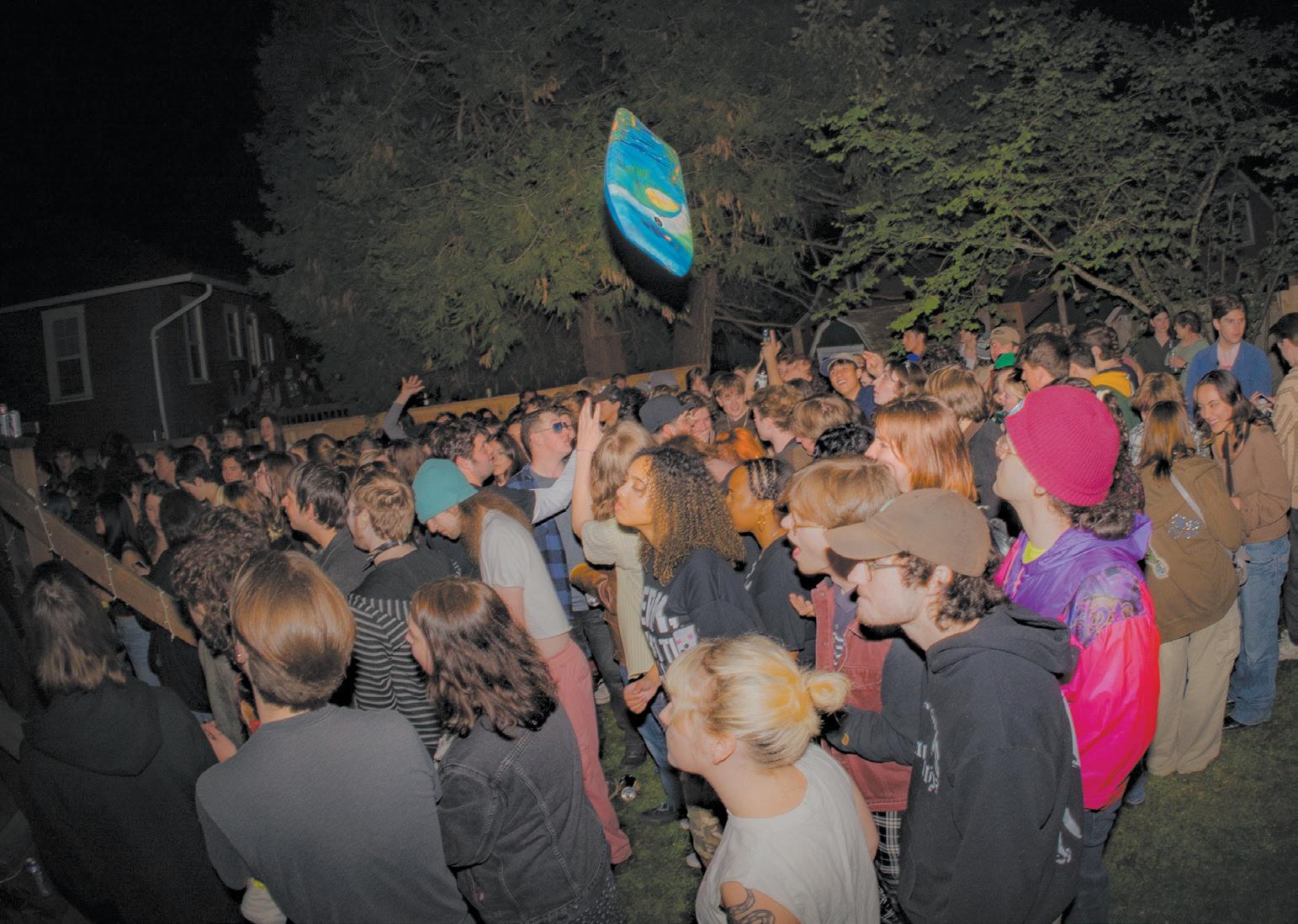
Advertised as “Get a Call, Not a Fine,” the ASUO party registration is an initiative that aims to keep parties organized and safe. Students who register their parties with ASUO get the benefit of a warning phone call from the University of Oregon Police Department if they were to receive a noise complaint from neighbors, as opposed to an immediate dispatch and steep fine.
According to UO spokesperson Angela Seydel, 911 calls in the area go to Central Lane Communications Center, which has the party registration list. If a person were to call in a noise complaint for an address that is on the party registration list, the communications center would transfer the call to UOPD instead of the Eugene Police Department.
Then, UOPD would call the listed party host to issue a warning to quiet down. If the noise were to continue, a UOPD officer would be dispatched and site the party hosts for the noise and any other misdemeanors observed.
In order to register a party and be able to receive a warning call, party hosts must attend the ASUO party training.
ASUO Secretary of Campus Life Saysha Ines has taken a big role in the party registration system as part of her role in campus safety. She said she wanted to give people a chance to register their parties for the spring after arrests occurred at a St. Patricks Day block party in March.
“Obviously no one wants law enforcement at their doorstep when they’re just trying to have a social gathering,” Ines said. “There’s a lot of anxiety tied around throwing a party rather than the good feeling of being able to bring people together.”
New version of RAs to adopt zone coverage across dormitories
The community safety assistant and community assistant roles, the result of the traditional RA role’s splitting, will cover zones that stretch across several dorms rather than a single building or floor.
By Elle Kubiaczyk News Reporter
In the fall, the former residential assistant role will be split up into two roles: The community safety assistant and the community assistant, eliminating the role of RA as students know it.
The CSAs will adopt the on-call facet of the job, responding to any safety or security reports in the resident halls. CAs, in turn, will take on the community building and creative facet of the job to include making door decor, themed bulletin boards and the planning of social events.
as a solution to help even out a heavy work load and make it manageable for student workers in the roles.”
According to her, the changes were driven by discussions with RAs that began a few years ago. Owen Ahlbrecht, a current RA in Unthank, said he doesn’t know a single RA who will be applying to either of the two modified positions next year. Both Nathan Pratt and Skyla Bird, other current RAs, believe the majority of student workers will not return.
At the training event held this spring, Ines said, “We’re not just using this (event) to show people that the party registration program is accessible, but more so that it’s something that has to be earned. Law enforcement at parties happens because most of the time it’s needed. It’s not just the notification system that avoids law enforcement, it’s how the host actually goes about throwing the party.”
At the training workshops, representatives from Sexual Violence Prevention and Education and Substance Abuse Prevention Education teach hosts how to keep parties safe. These lessons include understanding the signs of an overdose or sexual violence, how to administer Narcan, the importance of sober monitoring, the proper sizes of alcoholic drinks, a review of Oregon amnesty laws and more.
“Personally, I wouldn’t know as a party host what to do if people were to green out,” Ines said. “I don’t know how to administer Narcan. If you are hosting a party without much care, like we guide people to do through these workshops, you wouldn’t know what to do in that situation.”
Fall term’s workshop, which occurred just before Halloween, had 17 attendees.
Ines said that while the registration system has existed for a long time, in recent years it has received little to no engagement. At the start of the school year, ASUO representatives met with UO administration to brainstorm how to get it up and running strong again. “We started a bit from scratch this year,” Ines said.
The popularity of fraternity and sorority parties might contribute to the lack of attendance, because Greek life organizations are ineligible to participate in the notification system.
Registering a party does not offer immunity to citations if there is underage drinking or breaking of other laws or local ordinances.
“There is an aspect of this that cools down anxiety around throwing a party,” Ines said. “However, that doesn’t shy away from the fact that… you can’t just do whatever you want (or) violate laws at a party and not face consequences.”
Starting next year, according to University of Oregon spokesperson Angela Seydel, housing has been split up into zones. During a typical 12-24 hour on-call shift, CSAs will work in pairs alongside a new full-time professional staff role, the community safety and crisis response coordinator to respond to any incidents in their zone.
The zones are yet to be finalized, adds Seydel, but UO Housing anticipates there to be two communities per zone. The zones are currently: LLC, Carson and Earl, New Residence Hall and Justice Bean and Global Scholars Hall and Kalapuya Ilihi.
Simultaneously, any RA who has held the position for two years or longer retains their same position. The community coordinator or “legacies” are still responsible for carrying out both facets of the job.
Legacies will be assigned, as of now, to one of three residental communities: Unthank, Barnhart or Riley.
Room and board will no longer be fully covered as it was in the past. CSAs will receive 85% coverage, CAs 65% and CCs will continue to receive full coverage.
“This was not budget driven,” Seydel said. “The new model was proposed
“They’ve had to reopen applications multiple times because we haven’t gotten enough people to apply,” says Bird. Seydel confirms the CA position was reopened on April 17, and the priority deadline is March 8. The CSA position is fully staffed for the next academic year.
For current RAs, free housing was an immense draw to the role.
“I have bills to pay,” Pratt said. “Having a job that requires you to not only live on campus, to live where you work, to give up possibly hundreds of hours over the course of the year, is disrespectful to the workers.”
Bird, an out-of-state student, shares Pratt’s sentiment. As someone who pays for college on her own, she says, complimentary housing is a key reason she’s able to continue attending UO.
Additionally, Pratt believes the division in responsibilities might lead to interpersonal conflict. In other words, he suggests that residents may perceive CAs as the “good cop” and CSAs as the “bad cop.”
“Sure, the bad cop gets 20% more of their room and board covered. But is that $2,000 enough to make you a literal enemy to your residents?” Pratt said. “I don’t think it is, honestly.”
Justice Bean Hall Residence Hall. (Molly McPherson/Emerald)
Take Back the
“ Every time we refuse silence, we challenge the systems that depend on it to survive. That is collective power.
Lola Sponaa
the Night
Awareness is not enough. We need action, accountability, and each other. And every time we speak up, we are shifting the culture.
Photos by Chris Castro Photographer
Lola Sponaa Women’s
Rachel Ehly is an opinion columnist for The Daily Emerald and is studying journalism and political science. She could talk for hours about all things politics, pop culture and music.
Ehly: On-campus housing requirements put a price on student success
Opinion: An increase in on-campus housing costs puts more financial strain on first-year students who aren’t given an option for cheaper housing.
By Rachel Ehly Opinion Columnist
Living in the dorms is a rite of passage for college students everywhere. For first-year students at the University of Oregon, it’s mandatory.
Since fall of 2017, all UO first-year students have been required to live on campus. UO grants some exceptions for students already living in Eugene, students who have taken a gap year, students with a disability or religious or moral beliefs that cannot be accommodated on campus and students who are over 21-years-old, etc.
This requirement was thought to help students not worry too much about housing in the stressful transition to college.
Beginning fall of 2026, incoming freshmen will face a tuition increase of 4.5% for in-state students and 3% for out-of-state students. With this, the cost of on-campus housing is also increasing by 4.5-5% for most room types and meal plans starting in fall 2026.
The first year of college is academically challenging and financially burdensome. An increase to housing and tuition costs only makes this worse for first-year students who don’t have a choice to live off-campus.
Director of University Housing Promotions and Student Recruitment Bryson Beck says the firstyear on-campus housing requirement began as a “university-wide effort to increase student success on campus,” and follows in the footsteps of universities like Oregon State and Portland State who have similar conditions.
Beck said that Student Services and Enrollment Management research found that first-year students who live in university housing finish their freshman year with a slightly higher GPA, are 13% more likely to return to UO by year four and graduate roughly one term earlier than their off-campus counterparts.
But those statistics don’t make a housing cost that can reach $27,000 for nine months of room and board right. While on-campus living does support student success in a way that off-campus housing never can, that doesn’t justify forcing students to deal with a $15,000 price gap in on-campus room and board options without substantive alternatives.
The first-year on-campus living requirement benefits students who commit to UO and sign up for housing early, and disadvantages students who may struggle to pay for school and have to sign up for housing later than normal, earning limited
Kahl: How street art and social movements interact
Opinion: Eugene’s street art isn’t just for decor; it's a window into what the community cares about.
By Emma Kahl Opinion Columnist
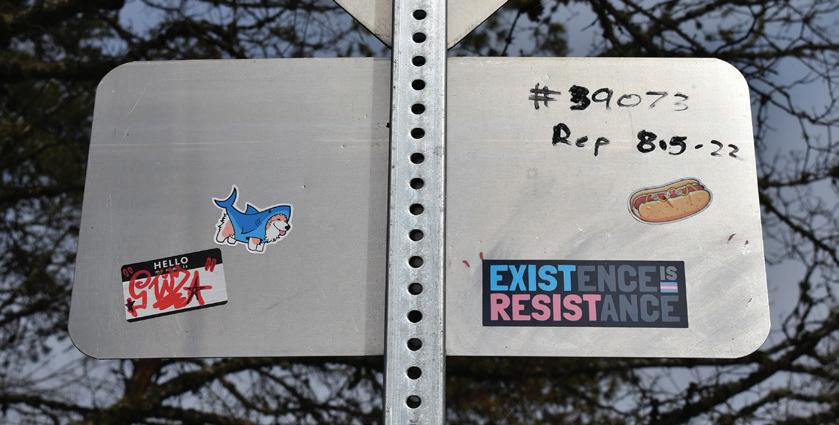
I recently went on a walk with the purpose of finding art and graffiti around the city. In doing so, I realized just how many little details are easy to miss if you don’t pay close attention — things like the hotdog stickers all around my apartment building, or the cryptic message spray-painted on the wall I pass every day on my walk home. Some community art looks like big, beautifully thought out murals, silly little drawings or the letters L+S carved in a tree surrounded by a poorly sharpied-on heart. There are stickers with political messages slapped on lamp posts, flyers with cool visuals promoting the next protest and even anonymous cries for peace in affairs of global importance.
University of Oregon junior Gretchen Wackler remembered seeing particularly impactful artwork during the 2024 pro-Palestine encampment that took place on campus. She said one particular piece of sidewalk chalk art stood out to her as it labeled UO’s Johnson Hall as “Hind’s Hall.” This paid tribute to 5-year-old Hind Rajab, who was killed by Israel’s military forces in the Gaza Strip.
“I think that’s a really powerful thing to do. It gets people’s attention and forces people to reckon with the life of this child that was taken,” Wackler said. “I think it’s a peaceful form of protest, and I don’t think it hurts anybody.”
Wackler also shared her view on street art as having the unique ability to represent the values of everyday people in the community. “It’s so raw and unfiltered, especially graffiti. I think it’s kind of beautiful to see,” she said.
Graffiti grew in immense popularity back in 1960s New York and Philadelphia as a form of self-expression and rebellion, according to the East End Arts and Humanities Council. In an article, they wrote about the impact of the art form as having a great influence on community engagement and supporting grassroots movements by transforming blank spaces into places that capture the history and culture of an area.
Eugene has some truly beautiful murals, and the city often holds mural projects and programs to support local artists in making their mark.
UO Professor Julianne Newton, teaches visual communication and directs the doctoral program.
and potentially more expensive options in a room selection slot.
Ruby Moxley, a UO Basic Needs off-campus housing peer navigator, has seen what happens when students look for ways to ease the financial pressure.
“It’s happened a couple times when students are struggling to pay their tuition because of housing, and they think that moving off-campus housing will relieve some of that,” Moxley said.
Moxley said that she’s seen parents reach out on behalf of their students to try cutting costs, only to find that Eugene’s off-campus housing market offers little relief.
“There’s kind of a misperception of (off-campus) expenses, and it’s really important for students to have a full understanding of what they’re getting into before they decide to just find an apartment,” Moxley said. “These are full apartments that are gonna charge whatever they want. That’s just the reality of it.”
If the university is genuinely committed to the idea that on-campus housing significantly improves student success, it should be working to make on-campus housing more affordable, and educate students about all of their housing options.
The university cannot say that living on campus plays a role in student success while increasing costs and utilizing an inaccessible housing selection process. Forcing 18-year-olds to pay upwards of $13,000 for nine months of housing is a revenue strategy disguised as a helping hand.
If UO wants to prioritize student success, they need to focus on building residence halls that target affordability and make on-campus housing more accessible to students by offering housing scholarships.
She explained that graffiti and street design are “manifestations of human visual behavior.” These works reflect public opinion yet the impact of this art is often difficult to measure.
Professor Newton emphasized that the anonymity of these art forms allow artists to communicate messages they may not feel safe attaching their name to. “It also carries an air of mystery, as with Banksy’s art. Credibility is bestowed by the viewer,” she said.
“Graffiti and street art offer meaningful platforms for messages a community needs to see and contemplate and that might not be publicly shared otherwise,” Newton said.
While many cities often commission murals, unauthorized graffiti is considered a criminal act, stickers and posters are commonly removed and written messages are painted over.
Because this art is used as a form of urban and suburban protest, it plays an important role in our local community. It not only entertains, it also informs. The thoughts of our neighbors are painted around the city like it’s Eugene’s living opinion column.
is currently a senior, majoring in written journalism and minoring in global studies.
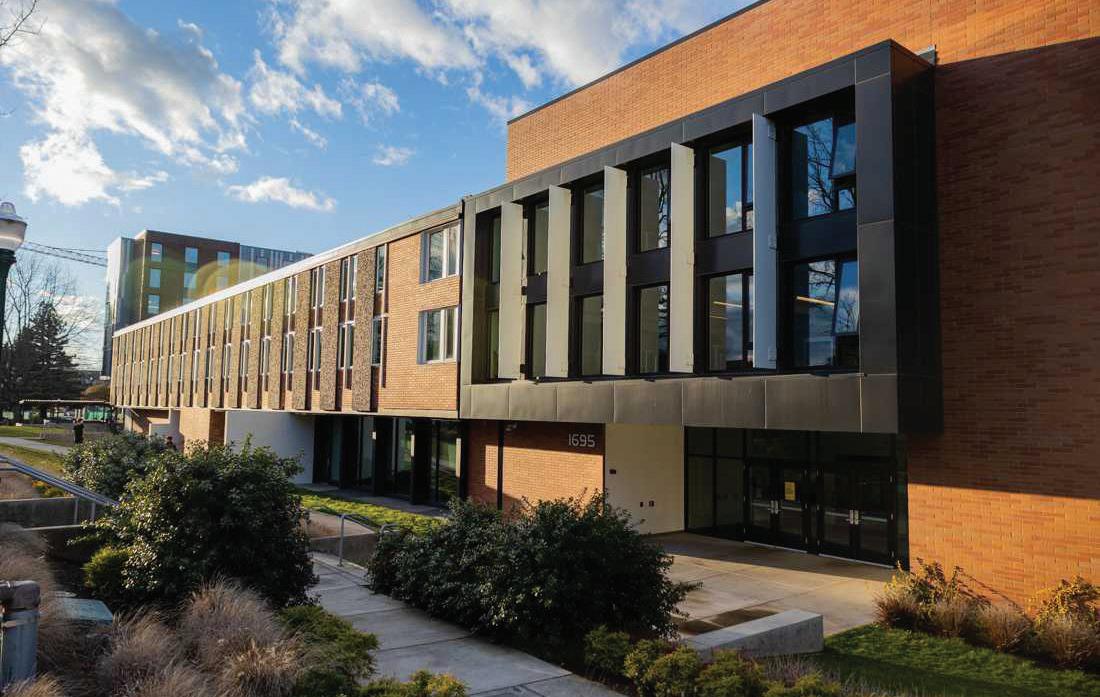
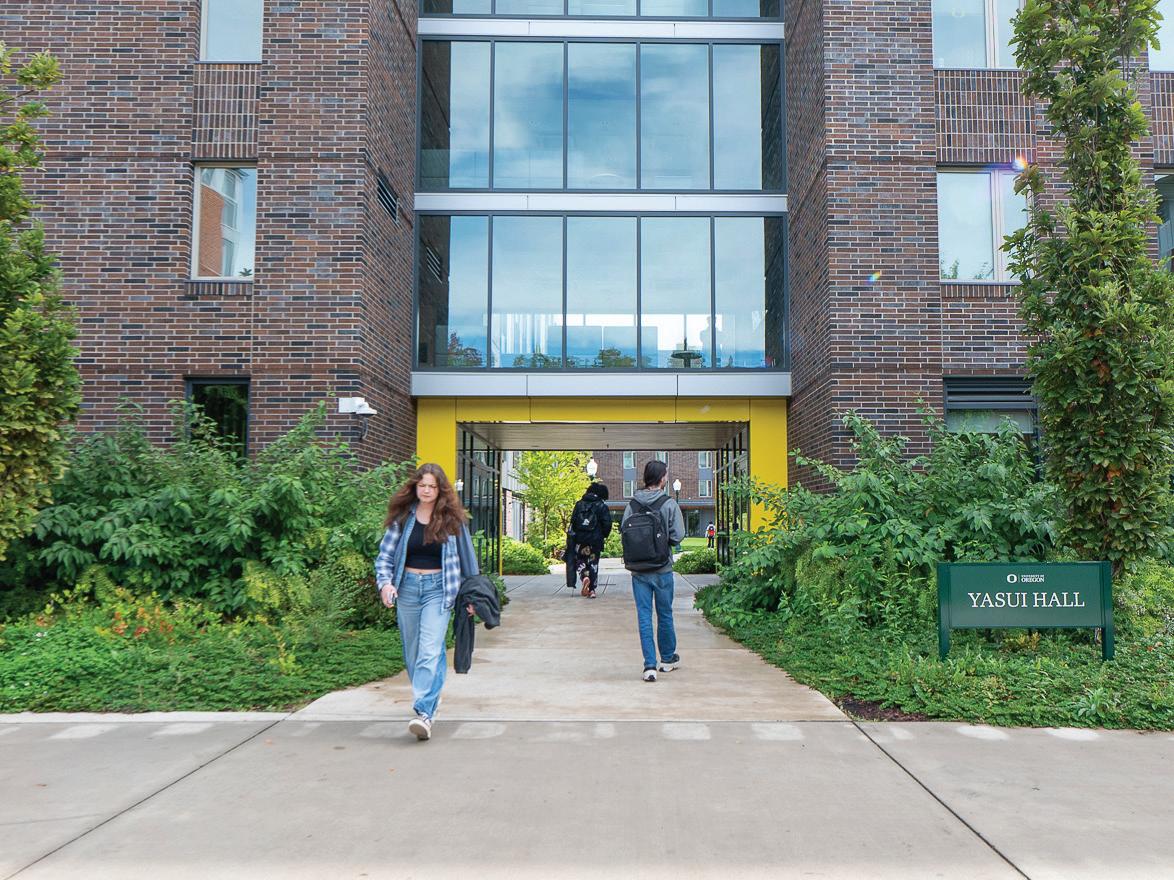
Yasui Hall built in 2023, is named after the Yasui family, a Japanese American family forced to leave the University of Oregon during World War II. (Uriah Barzola/Emerald)
Emma Kahl is an opinion columnist for The Daily Emerald. She
ARTS & CULTURE
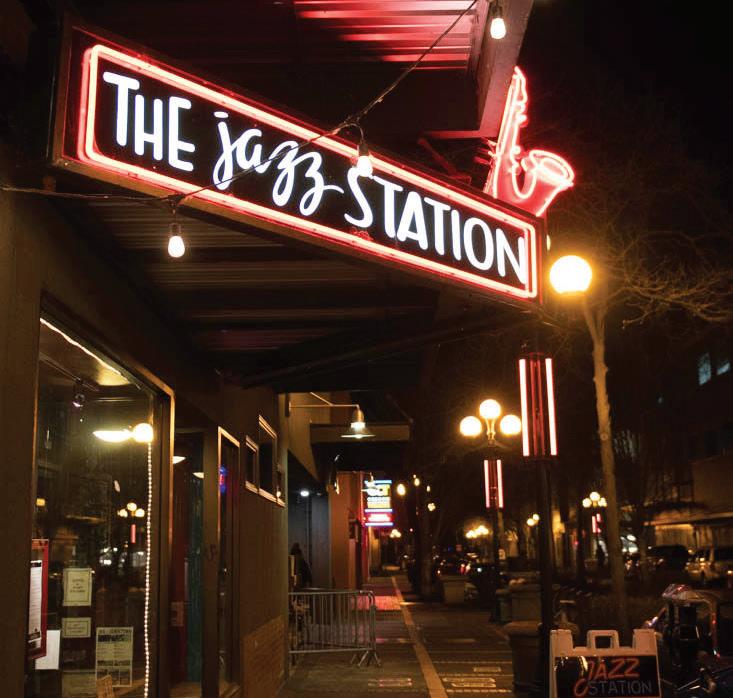
The Jazz Station Jam: an approachable gateway to jazz music
Twice a month, The Jazz Station hosts jam sessions for musicians of all levels to come together through jazz music.
By Everette Cogswell Arts & Culture Writer
On the second and fourth Wednesdays of every month, The Jazz Station hosts The Jazz Station Jam, a night of fun improvisation and spectacular music. The Jazz Station, located on West Broadway, is a nonprofit organization that has been providing performance opportunities for local musicians for over 15 years.
For $15 per ticket and $10 for jammers, the event is open to musicians of all skill levels. This jam session is a chance to play in a low-pressure environment, welcoming any instruments and songs. It works like an open mic, but musicians instead play with a whole band, improvising and riffing off one another.
Each session has a rotating host, a local professional bringing a new style to the table every time and a professional rhythm section. Last Wednesday, the host was Joe Manis on the saxophone. Other musicians featured that night were David Morgenroth on piano, Eli Hansen on bass and Jay Veach on drums.
The night began with a performance from the host band. Right off the bat, the talent was bursting from these musicians. The band came together to showcase the beauty of jazz through improvisation and collaboration.
“My favorite part of the jam session is the atmosphere and being surrounded by music and people being creative, and not necessarily celebrity musicians, just regular peo-
ple who live in Eugene who want to have fun,” Carmel Shriki, an attendant at the event, said.
After the band’s performance, Manis began calling musicians who had signed up to jam up on stage. First, he called up a saxophonist and a guitarist. As if they had all played together before, the artists on stage collaborated and improvised well together in true jazz fashion.
After their performance, a vocalist and violinist joined the stage for beautiful renditions of “Angel Eyes” and “Fine Romance” by Ella Fitzgerald.
“I really loved the women who sang, I thought it was great, especially since I feel like it showed that even no matter what age you’re at, you can still be passionate and creative and go chase your passions,” Shriki said.
The dim lighting created a very casual setting for Eugene residents to attend, whether they were in the audience or on stage making melodies. The Jazz Station also serves wine and beer on tap, making it a perfect place to get a drink with friends and hear some live music.
Tucked in the heart of downtown Eugene, the station is also accessible to students, being just blocks away from the University of Oregon campus.
The Jazz Station Jam Sessions are an ideal gateway event to dip your toes into the jazz community in Eugene. Each musician offers something unique; you’ll never hear the same thing twice.
Simon Adler discusses audio career at UO
is what I want to make, this is what I f*cking want to do with my life.’”
A few years later, Adler joined Radiolab as a producer. After a decade, he’s on his own as a freelancer, and recently flew from New York City to speak to UO students about his past and what makes a great story.
While his presentation was plagued by more audio issues than advantageous for a lecture surrounding audio storytelling, the Knight Library DREAM Lab garnered a small, engaged crowd happy to hear from a self-made professional.
“As someone who wants to go into audio storytelling, it was really amazing to hear from someone who’s been in the industry for so long, and especially a producer for Radiolab, which is such a unique program,” senior and journalism major Julia Boboc said. “It’s really awesome to have an opportunity to pick someone’s brain who’s been in that space and really knows how audio reporting works in real life.”
Given his lack of formal training, Adler’s body of work is entirely composed of real-world experience. His first pieces came in the wake of Hugo Chávez’s death in 2013. Adler, who had spent a month in Venezuela after majoring in Spanish, saw firsthand how fascinating the country was and how few English-speaking journalists were reporting on it.
“I thought, ‘there are no English-speaking reporters down there. I know how to speak Spanish pretty fluently, I know how to record stuff, I’d like to talk to people. Maybe I should move down to Caracas and just become an international freelance reporter.”
With a microphone and a Tumblr blog, Adler began building a portfolio and pitching to editors. After three weeks, “The World,” a public radio show, offered him $500 for a piece on the situation in Venezuela. After some work in Ireland, Adler applied for an internship position at Radiolab.
While Adler told this story and many others during his speech, he always made sure to explain its relevance to every type of journalist in the room. When he wasn’t sharing his own story, Adler detailed what makes a great story.
“Storytelling is the intentional and artful reveal of information,” Adler said during his speech. “We’re always trying to tease and reveal information. The tease is the question that is put in the person’s head that makes them want to keep listening. The tease is oftentimes the engine that creates the narrative tension that makes people want to stick around.”
As a producer at Radiolab, Adler would spend each year creating five different hour-long documentaries. These documentaries were “soup to nuts,” meaning fully encompassing of the story, as Adler said. He pitched, reported, produced, and even created the music for each piece himself. Adler had to learn all of these parts of the process on the job. While scoring was a new experience for him, the music side of things is perhaps the only part of the process that he had any formal training in. In fact, he contributed to the jazz program while attending UO.
Now a freelancer, Adler is putting his efforts into Windstar Enterprises, a musical project with Bon Iver’s Sean Carey. He also runs a creative studio where he works creating audio pieces for companies and publications.
Though his studies at the UO bore little significance to his career, Adler expressed an appreciation for having the opportunity to speak at his alma mater.
“Thank you all so much, it really is an honor,” he said. “I never expected to be able to come back and be proud of anything I had accomplished.”
( ABOVE) Students and community members sit in on a guest speaker event hosted by the English Undergraduate Organization. Oregon alumnus Simon Adler spoke at the Knight Library in Eugene, Ore., on April 23, 2026. (Lilly Wall/Emerald) Continued from page 1
1st Monday Jazz Orchestra plays at the The Jazz Station in Eugene, Ore. on Feb. 3, 2020. (Madi Mather/Emerald)
Oregon women’s lacrosse season ends with 8-game losing streak
The Ducks ended their season with a lackluster conference season, and the program is yet to win a Big Ten game.
TRACK AND FIELD
FRIDAY
May 8, 2026
Oregon Twilight
Senior Spotlight: Seniors fueling Ducks in more ways than one
The six seniors for Version 8 are big factors on and off the field.
ran past Butler between first and second.
The senior presence for Oregon softball has been a blessing all season. Head coach Melyssa Lombardi has sung the praises of the senior leadership all year. Young players such as Emma Cox, Maddie Milhorn, Kaylynn Jones and Taylour Spencer have praised the seniors for getting them through tough times in the field and chang-
“It’s just nice to have them in my corner, whenever I need, because I know they’re going to be there, they’re really reliable,” Spencer said.
Elon Butler
One of two transfers that have come to Oregon for her final season in college softball, Butler has hit for the first cycle in Oregon softball history, slugged her 50th career home run in a Duck uniform and has been a much-needed, consistent spark plug in the lineup. She’s hit her way to a .407 average, a phenomenal .880 slugging percentage and she gets on-base over 50% of the time (.505). She’s not just doing it at the plate; she’s been showcasing her defensive talents in right field, most notably over the Washington series — she even made the Top-10 Plays on Sportscenter, slotting in at No. 9. Butler snagged a Senior Day RBI up the middle to
Lyndsey Grein
Grein has been having the best season of her collegiate career. After the end of the Ohio State series, she has pitched 153.1 innings, accumulated a 2.15 ERA, achieved an incredible WHIP of .97, struck out 190 batters while walking 49 and opponents have been hitting under the Mendoza line against her (.179).
It should be noted that Grein is doing all of this in a season where she’s been heavily relied on because of the injury to Elise Sokolsky and the up-and-down performance from teammates out of the bullpen. Grein has also been a great mentor to both the pitching staff and the rest of her teammates.
“Lyndsey’s a big person that I look up to,” Spencer said. “(She) helped me a lot last year and even this year, just
Amari Harper
Harper came to the Ducks from Texas A&M University, but had been a part of the Ducks long before that. She would visit her grandparents up in Oregon as a kid and participate in softball camps the Ducks used to run.
In her time as a member of Version 8, Harper has been cruising right behind Butler in most offensive categories. Where Harper excels is the on-base percentage: she has nine hit by pitches, 28 total walks and, along with her 52 base hits, gets on-base at a clip of .511. She got her Senior Day moment against Ohio State in Game 3 with a solo shot in the first and another home run later in the game; however, it was scored as a single with 2 RBI because she
Harper’s showing out in the field too. In 57 chances, Harper has 54 put-outs and three assists, all without committing an error.
“Amari and Elon alone, as power hitters here, they’ve done it all,” Jones said.
#15
Remmington Hewitt
Hewitt has spent all four years of her career at Oregon. She appeared in the most games of her career in 2025 with 21 appearances, two starts and 20 at bats.
“Our team, our culture, our standards, where they are today, she has a lot to do with it,” Lombardi said. “And the leadership she’s provided in that area has been tremendous.” Over her career, Hewitt has accumulated a career slash line of .241/.364/.426, with two career home runs and 10 RBIs and 13 hits.
#67 #18
Trinity Holden
The catcher from Lebanon, Ore., has been with the Ducks since 2024 after joining the team from Portland State University. Holden has played 14 games for the Ducks and has hit .111 in her career with one RBI and a .385 on-base percentage.
Elise Sokolsky
The redshirt senior from Rogers, Ark., faced some struggles opening up the year. She got knocked around early on in Big Ten play and eventually missed time due to leg discomfort, which she exited the Indiana game with in late March. Because of the interesting start to the year and the injury, Sokolsky’s numbers are a bit inflated: 3.52 ERA and a 1.29 WHIP in 65.2 innings pitched.
But, despite the numbers, she’s been solid in her return to the circle against Washington, Oregon State and Ohio State. She’s given up seven runs in 18.2 innings, but has logged 14 strikeouts with only two free passes. Her return has been, and will continue to be, beneficial down the stretch.
“Those girls want the best for us as well. They don’t want to crush their own season; they want us to crush it individually,” Jones said.
The senior class stood with their friends, families and teammates on the field at Jane Sanders Stadium after the 8-0 run-rule victory against Ohio State on April 26. Everyone was laughing, crying, smiling and finding joy in being around the people they cared for the most.
But one thing was on the mind of everyone in the ballpark: Version 8 and its senior class wasn’t done yet. With another huge series coming up in UCLA, one riddled with playoff implications, the attention was set on their next time out on the field.
“It’s about us continuing to take care of our business and put us in a position to win the Big Ten, to put us in a position to have a great seed going into the Big Ten tournament,” Lombardi said.
The UCLA series starts May 1 at 7 p.m.
The Ducks track and field team gears up to compete at Hayward Field this Friday.
story online at Dailyemerald.com
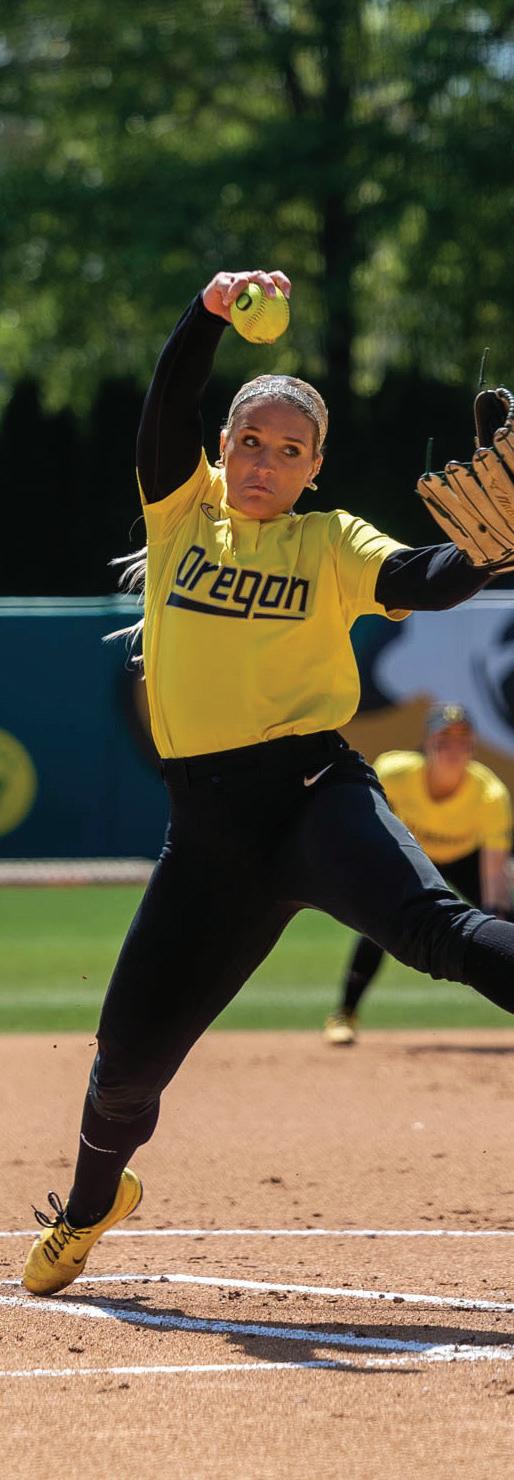
Ducks Pitcher Lyndsey Grein (33) pitches to an Ohio State batter.
The University of Oregon Ducks defeated the Ohio State University Buckeyes 8-0 at Jane Sanders Stadium on April 26, 2026. (Charlie Mack/Emerald)