This year’s ASUO Spring Elections saw the resignation of the elections board chair.
By Wyatt Fesler Investigative Reporter
David Mitrovčan Morgan is the former chair of the Elections Board, a team of five responsible for the setup and advertisement of the University of Oregon student government elections. In a school-wide email sent by Mitrovčan Morgan and former Student Government President Mariam Hassan on March 31, 2025, one week prior to the spring 2025 elections, they emphasized this power to a notably disinterested student body whose voter participation hasn’t eclipsed 12% in ten years.
Continue story on page 7
Oregon primary election results
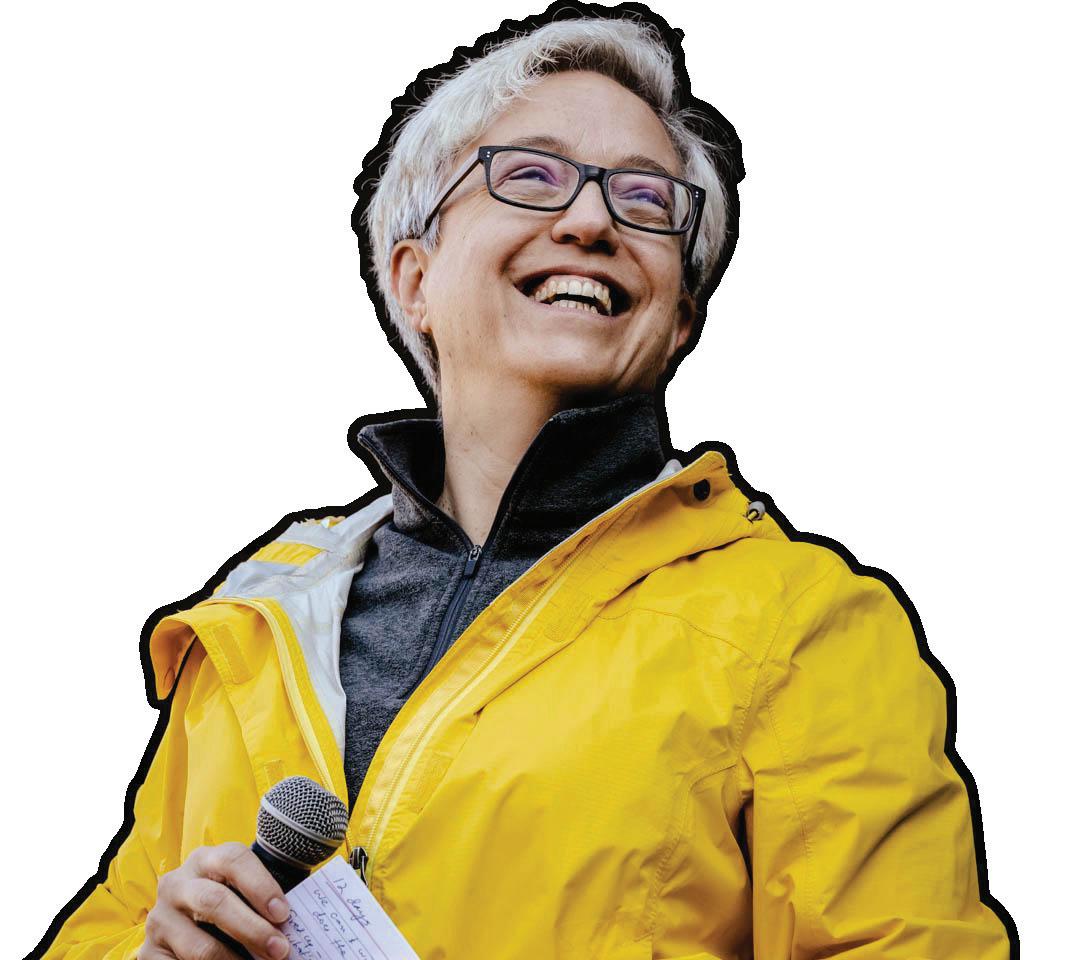
Gov. Tina Kotek secured victory as the Democratic nominee with 83.77% of the vote, defeating nine challengers in the Democratic primary. Meanwhile, Christine Drazan won the Republican primary with 40.83% of the vote. Ed Diehl finished second with 32.95%, while former Portland Trail Blazer Chris Dudley received 16.81%. Drazan’s victory sets up a rematch of the 2022 general
Kotek has focused much of her governorship and campaign on housing, homelessness and protecting abortion access, while Drazan’s campaign centered on reducing homelessness and visible street camping, increasing enforcement around public drug use and implementing tougher public safety policies. Democrats have criticized Drazan over her anti-abortion positions and opposition to Democratic-backed gun control measures, while Drazan has attempted to position herself as a more moderate Republican focused on governance and state issues rather than national politics. Kotek’s approval ratings have also fallen during her first term, potentially setting up another closely contested gubernatorial race in November.
EDITOR IN CHIEF
Tarek Anthony
PRINT MANAGING EDITOR
Ryan Ehrhart
DIGITAL MANAGING EDITOR
Ysabella Sosa
NEWS EDITOR
Reilly Norgren
INVESTIGATIONS EDITOR
Ana Narayan
A&C EDITOR
Claire Coit
SPORTS EDITOR
Jack Lazarus
OPINION EDITOR
Gracie Cox
PHOTO MANAGING EDITOR
Corey Hoffman
PHOTO EDITOR
Saj Sundaram
COPY CHIEF
Olivia Ellerbruch
VIDEO EDITOR
Jake Nolan
PODCAST EDITOR
Stephanie Hensley
SOCIALS EDITOR
Ysabella Sosa
VISUALS EDITOR
Noa Schwartz
DESIGN EDITOR
Adaleah Carman
DESIGNERS
Asha Mohan
Ellery Burton-Tillson
Eva Andrews
Izzy Smith
Nina Rose
BUSINESS
PUBLISHER AND PRESIDENT
Eric Henry (X317) ehenry@dailyemerald.com
VP OPERATIONS
Kathy Carbone (X302) kcarbone@dailyemerald.com
DIRECTOR OF SALES & DIGITAL MARKETING
Shelly Rondestvedt (X303) srondestvedt@dailyemerald. com
CREATIVE & TECHNICAL
DIRECTOR
Anna Smith (X327) creative@dailyemerald.com
ACCOUNT EXECUTIVES
Camcole Pereira
Elliot Byrne
Maria Jimenez
THE DAILY EMERALD
The Daily Emerald is published by Emerald Media Group, Inc., the independent nonprofit media company at the University of Oregon. Formerly the Oregon Daily Emerald, the news organization was founded in 1900.
Emerald Media Group 1395 University St.,#302 Eugene, Or 97403 (541)-346-5511
Graduate employees bargain for 10% yearly raises
GTFF wants to align its contract with the amount landlords can increase rent.
By Sasha Love Senior News Reporter
In its latest bargaining session with the University of Oregon, the Graduate Teaching Fellows Federation proposed yearly raises of 10% across all employees.
Increasing yearly wages is a priority for the union, according to members of the bargaining team.
“We are seeing apartment complexes in Eugene costing us out with high-rise luxury apartments and we are just seeing prices of housing increase and continue to increase constantly which is a huge challenge because our salaries don’t reflect that,” Allison LaSalvia, a member of the GTFF bargaining team, said.
2023 data from the United States Department of Housing and Urban Development shows that from 2010 to 2023 the average rent increase year-over-year in student-specific housing was 9%.
“Rent growth among (student housing) properties was much higher than in conventional apartment communities,” the HUD report reads. HUD has not published any more recent data for Eugene’s housing market.
The same year the HUD report was published, new legislation capped rent increases based on inflation and the housing market. In 2026, this cap is set at 9.5%.
GTFF’s proposal for raises comes at a time of financial uncertainty for the university. On May 14, UO President John Karl Scholz announced $65 million in budget cuts and freezes for raises — except those already settled upon with United Academics and University of Oregon Student Workers.
UO spokesperson Angela Seydel said the university values graduate employees but has to work within its projected finances.
“The university is committed to bargaining in good faith, and any wage increases reached through that process must also take into account the financial realities facing UO and all of public higher education,” Seydel said.
“We want to know what (UO administrators) are thinking and how they are approaching these salaries and how they reconcile that with retention and recruitment,” LaSalvia said.
LaSalvia said that if UO wants to retain and recruit students, it needs to focus on graduate students, who often help teach and grade student work alongside professors.
“Graduate employees are key to the health and the operations of the university. We really want to think about these ideas of how we keep up with our peers to even be able to recruit grad students to our program,” LaSalvia said.
Another layer to the housing challenges GEs face is affording rent and living expenses in the summer. Many GEs only have nine-month appointments that align with the fall through spring, meaning GEs either have to save up or find an odd job for the remaining three months.
This can be particularly challenging for international graduate students because of VISA stipulations.
“International students are often not able to find any outside employment that is suitable with their VISA,” LaSalvia said.
LaSalvia said that the union uses a “huge portion” of its mutual aid fund for helping GEs with emergencies and groceries in the summer.
Previous GTFF contracts put raises mainly at 3% to 4% over the past several years. Last year, the undergraduate student workers union successfully bargained for 2.5% across-the-board raises, raises, and annual raises for UO’s faculty union sit around 3%.
The university did not comment on specific negotiations. GTFF’s next bargaining session, where UO will likely make counterproposals, will take place on May 26.
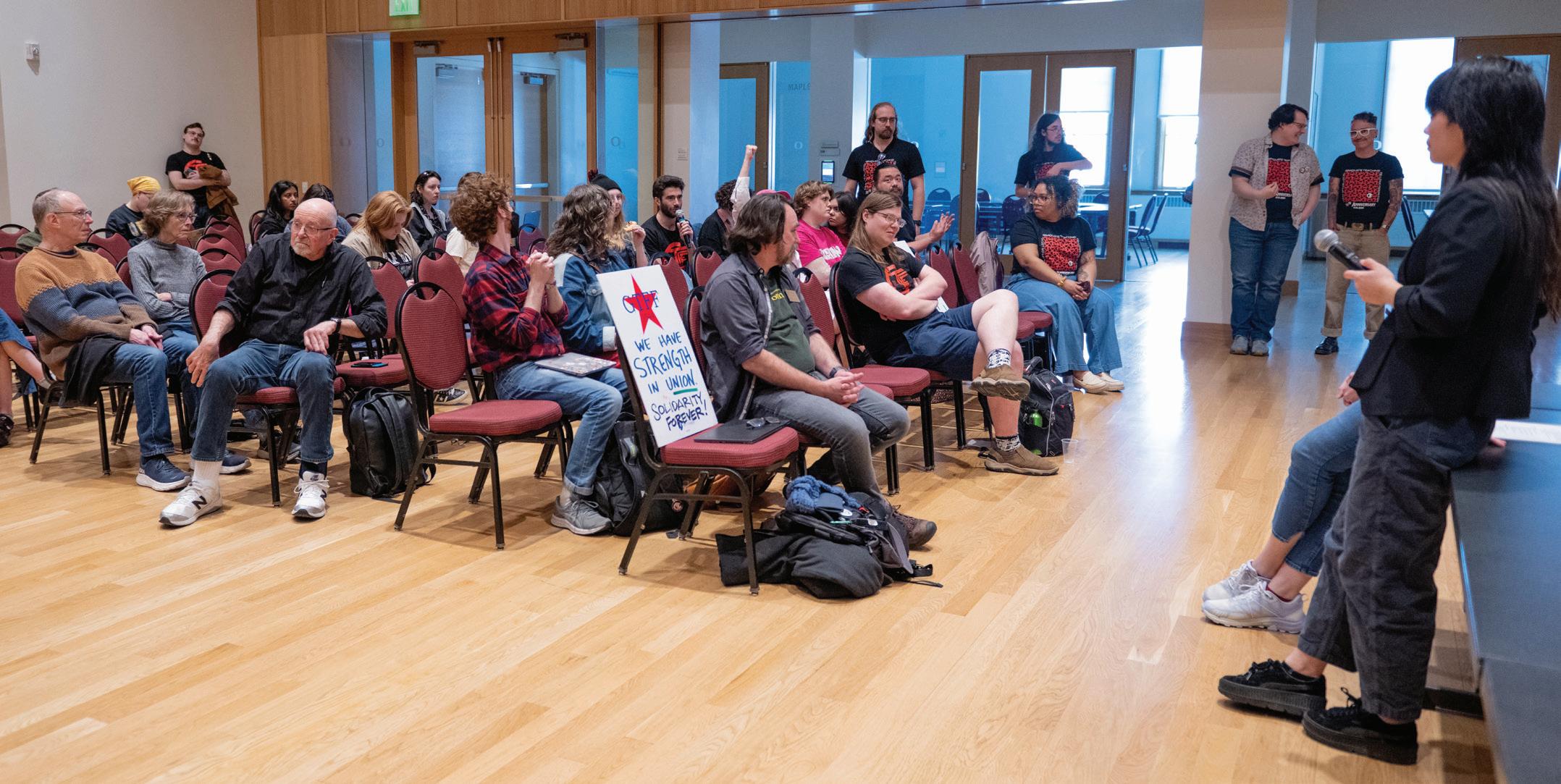
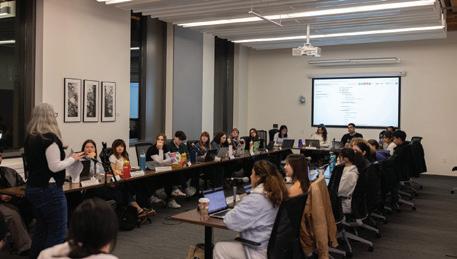
( ABOVE) Graduate Teaching Fellows Federation Lead Negotiator Chen Su speaks to members and guests during a caucus in GTFF’s contract negotiations with UO on April 17, 2026. (Chris Castro/Emerald)
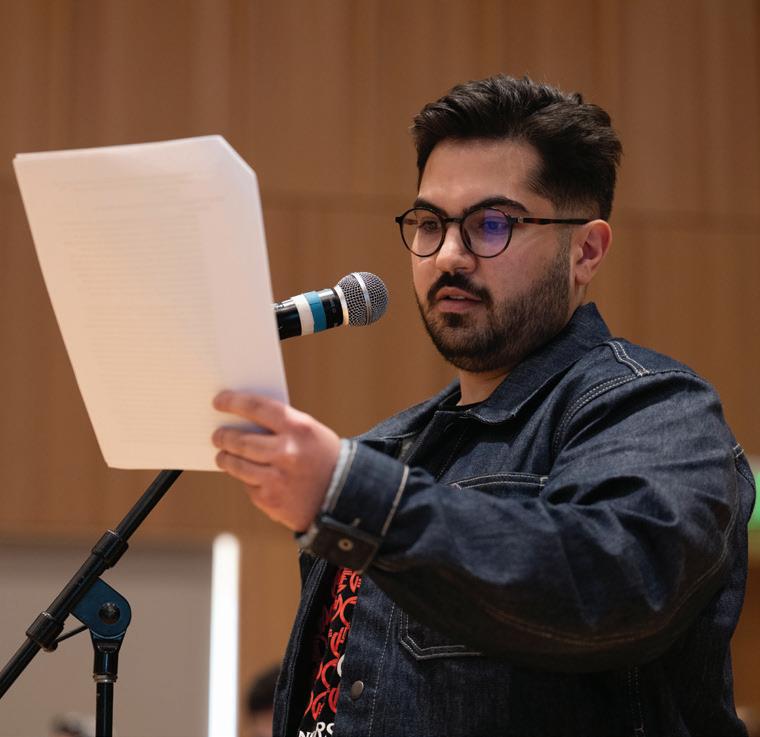
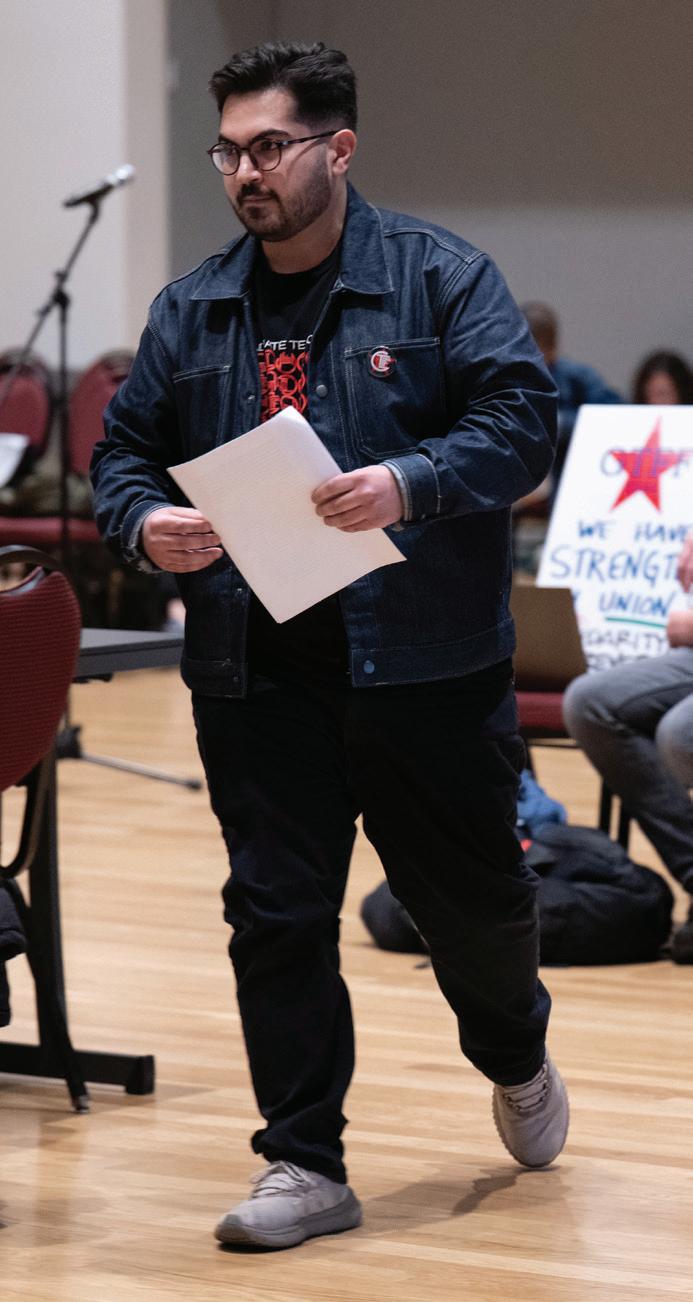
GTFF member Tali walks away after giving a speech for fellow member Gonzalo, who was unable to make it due to teaching a 400-student class and proctoring an exam, during the Graduate Teaching Fellows Federation’s contract negotiation session with UO on April 17, 2026. (Chris Castro/Emerald)
Lane County celebrates 13th annual Bike Month
Bike Month brings a plethora of events, deals and opportunities for “all bikes, all ages, all month.”
By Erin Reaney News Reporter
This year marks the 13th May is Bike Month, celebrated across Eugene with daily biking activities and advocacy for biking instead of driving.
Organized by the Lane Council of Governments, the month-long programming includes daily events such as group rides, bike repair opportunities and deals at local businesses for bikers.
Bike Month was started in 1956 by the League of American Bicyclists to highlight the benefits of biking. Today, Bike Month encourages people to ride bikes not only for recreation, but as a daily mode of transportation.
Delaney Thompson is an assistant transportation planner at the Lane Council of Governments, helping to organize May is Bike Month. The council partners with University of Oregon Transportation Services, the PeaceHealth bike system, the Lane Transit District, the City of Eugene, Safe Routes to School and local bike nonprofits to host the event.
“Bike Month is really just about celebrating people who bike already and letting them find like-minded people, and then opening up opportunities for people who want to try biking for the first time,” Thompson said.
Bike Month in Lane County offers “passports” to fill out that encourage visits to local businesses. At each event, attendees can earn a stamp in the passport and rewards are given for a full passport, according to Thompson.
One benefit of Bike Month is a free month of bike share from PeaceHealth Rides. The PeaceHealth bikes are owned by the city of Eugene, operated by nonprofit Cascadia Mobility and sponsored by PeaceHealth.
Justin Sandoval, the marketing manager for the bike share program at Cascadia Mobility, said the goal of the free month of bike share is to encourage people to try biking.
PeaceHealth bikes were introduced to Lane County in 2018 and are used for over 10,000 bike trips every week by residents, according to Sandoval. He said Cascadia Mobility is projecting over 300,000 total trips by the end of 2026.
May is Bike Month is a “huge part of Eugene and Springfield culture,” Sandoval said. He said it connects people to their communities and city, and gives people who may not have biked since childhood a chance to reintroduce the practice into their lives.
“Biking is bigger than just bikes — it’s about access, it’s about health, it’s about affordability and quality of life. Active transportation makes life more fruitful,” Sandoval said.
UO holds its own bike shop and program led by Logan Devack, located in the Erb Memorial Union and is managed by Logan Devack. The program offers a DIY space for UO students to learn how to repair their bikes for free, as well as a paid repair service. The bike program also offers two bike schools every term, and a fleet of rental bikes for touring, bike packing and mountain biking.
Devack said the shop has “pretty much anything that you’re gonna need to be able to do (bike trips) successfully, safely and confidently.”
The bike shop is an “invaluable resource for the UO because Eugene’s an incredibly bikeable city,” Devack said.
According to Devack, the League of American Bicyclists has rated Eugene a gold rating for its bikeability and infrastructure. Earning the gold rating requires a city to meet the “five Es” which are; Equity and accessibility, Engineering, Education, Encouragement, and Evaluation and planning. These measurements ensure a city like Eugene is committed to building a bikeable environment for its residents.
Devack said he’s glad to see that bike infrastructure continues to improve, with more bike lanes being implemented and more people turning to cycling over driving.
May is Bike Month opens people’s eyes to the possibility of using bikes not just for recreation, but for day to day transit, Devack said. He said that bike commuting can change people’s lives for the better.
“Carbon emissions are just crazy, gas prices right now are insane. How much is it to park on campus? Everything associated with passenger vehicle transit with one person in it is just expensive and bad for the environment. It’s not sustainable,” Devack said.
Community-hosted events
Bike Month events are held by the Lane Transportation Government, but any community member can also host an event and publish it on the website.
Every Friday at 1 p.m., Eugene resident Stephen Flanagan can be found with his bike and art supplies at the Jud Turner statue, ready to host a “Sketch By Bike” event.
At these events, Flanagan leads a group on a casual bike ride to a destination, where the group spends time drawing or painting their surroundings. At the end of the event, the group does a “throwdown” where they show each other the art they made.
Flanagan has led multiple of these events for bike month, but said that prior to Bike Month, he often spent his free time going on his own “Sketch by Bikes.”
“I have a sister who’s an artist and she encouraged me, but also it slows you down, which is something I really like,” Flanagan said.
Flanagan has been biking for over 50 years, starting out in rural Northern California with older sisters who cycled. At age nine, he taught himself how to ride so he could keep up with his sisters, and at 13 years old, he discovered he could beat the bus to school if he biked. He never rode the bus again and has been cycling ever since.
Eugene’s bike-friendly culture, along with the college town community, is why Flanagan moved to the city two decades ago. He met Gary Rayor, another biking enthusiast. They both teach kindergarten, first and second grade students how to ride bikes through the Safe Rides to School program. Rayor and Flanagan teach the kids using “training bikes” without pedals, which helps children learn to balance properly on a bike.
“I feel like I’m helping start a new generation of bike riding,” Rayor said.
Rayor was previously a mountain bike racer and a “serious mountaineer.” As he’s gotten older, he’s moved to bike packing with Flanagan and other friends, with some of his trips spanning up to 1,200 miles.
“Embrace (biking) sooner than later and try to move away from a gas powered mode of getting around,” Rayor said. “Try to make everywhere there’s people more livable because there’ll be less cars and more people riding and having fun.”
Another community-led event was hosted by Alexander “Al” Hongo, who is moving houses to a location three blocks away from his current residence. He invited the community to come with bikes and help him move all of his belongings — including two indoor exercise bikes — via bike.
Around a dozen friends, family members and co-workers showed up to help Hongo move. They loaded up his mattress, piano and other furniture into trailer bikes and rode down a hill around to his new house.
“This is actually not too out of the ordinary in Eugene,” Hongo said. “I mean, Eugene’s a very bike-friendly town and people have been organizing human-powered moves for as long as I can remember being in the bicycle scene here since the early 2000s.”
Hongo has worked in various bike-related jobs, including a bicycle courier and mechanic, and is now the operations director at Cascadia Mobility. According to Hongo, he would’ve done the “human-powered move” any month of the year, but it was just “dumb luck” that it happened to occur during May is Bike Month.
“I feel pretty honored and humbled that this many folks wanted to help me realize this rather absurd vision,” Hongo said.
Richard Armida, a volunteer at the move and a friend of Hongo, eagerly jumped in to participate.
“I’m from LA where everybody uses cars,” Armida said. “As a matter of fact, the joke is that if you’re going to the bathroom, three people will throw you car keys.”
Armida has now been in Oregon for 11 years. When he moved to Oregon, he bought his first bike at age 65. Now at 76, he’s riding an average of 40 to 50 miles a week on his bike.
“A bike event like this to move is pretty unusual… I think it’s sweet and it’s not that hard, apparently,” Armida said. Bike Month will end at the end of May, but many organizations will continue advocating for bike transportation and bike rentals and shares will remain available.
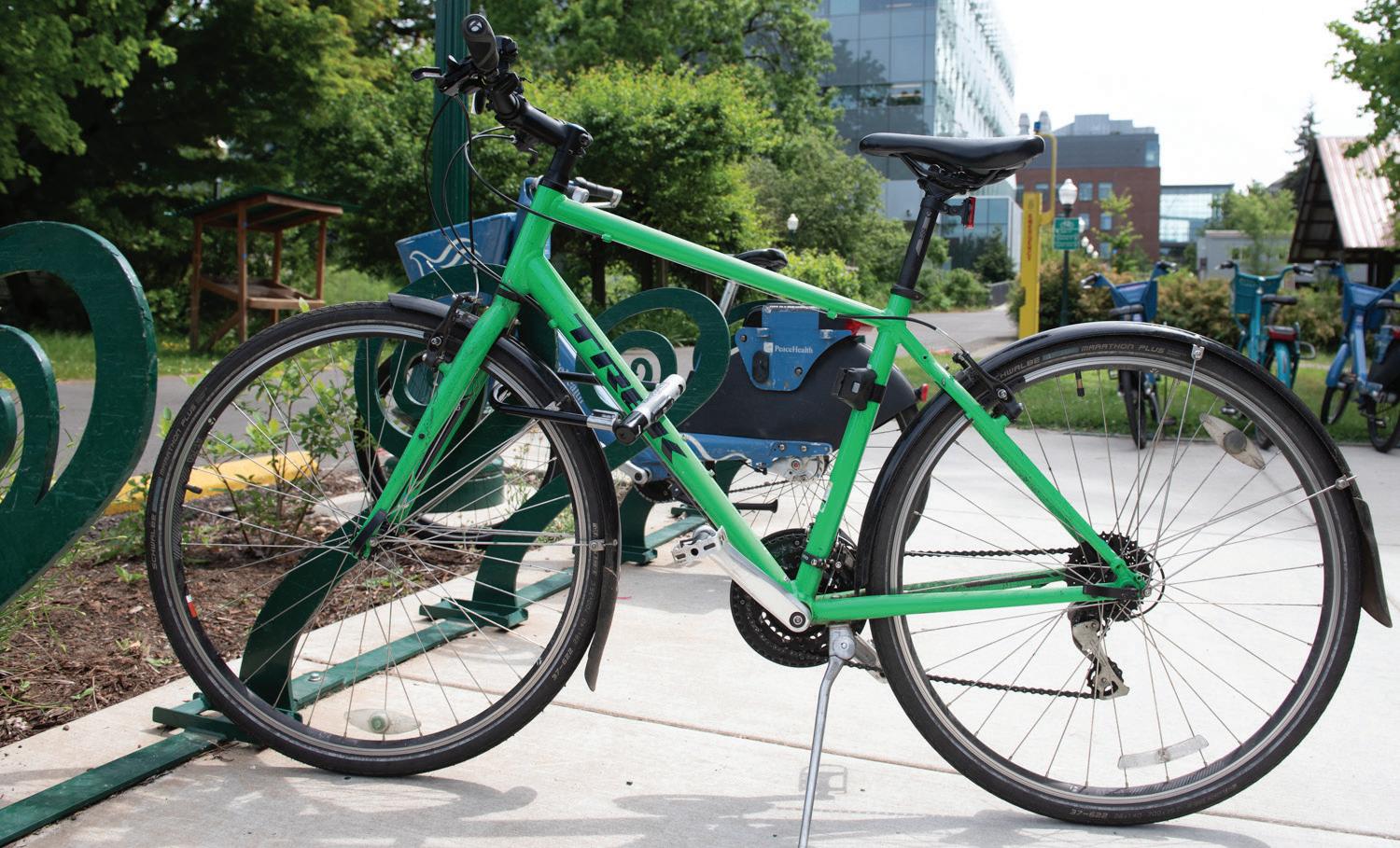
( ABOVE) Bikes on a rack by the Millrace buildings on the University of Oregon campus May 12, 2026.
(Chris Castro/Emerald)
ASUO dodges ranked-choice dilemma, faces technical questions before next elections
“You pay roughly $460 per year in Incidental Fees, funding ASUO’s $10+ million budget that supports student organizations, services and advocacy. This ASUO election decides who oversees YOUR MONEY and advocates for YOU to the UO administration and government leaders — make sure those in charge reflect your needs and priorities,” the email read.
This year, not only did voter participation fail to improve, but it declined sharply in the midst of a slew of uncontested elections. The 2026 elections, held from April 6–10, received votes from about 6.4% of the student body.
Mitrovčan Morgan and the 2024-2025 Elections Board faced obstacles in the proper implementation of rankedchoice voting, which was added to the ASUO Constitution after a special election in winter term of 2025 as part of an elections reform package. After ranked-choice voting was passed, Mitrovčan Morgan and the former Elections Board discovered that their vote processing platform, Engage, was sorting votes improperly. So, they relied on a temporary solution for the spring 2025 elections — Mitrovčan Morgan wrote code by himself to patch the faulty computer program.
Mitrovčan Morgan’s term concluded a month later, and Cassie Cleeton-Laws took office in fall 2025. Cleeton-Laws and the board were unable to solve the inherited problem with Engage, and it stacked on top of several other issues, including poor funding, a confusing candidate application process, issues with write-ins and an outdated list of students eligible to vote. These led to prominent involvement by Student Government Engagement and Success, a team of four professional staff members who oversee ASUO, so the elections board could meet deadlines to make legitimate elections possible.
On April 1, Cleeton-Laws resigned — just a week before elections began. She did not provide a reason in her resignation email. Soon after, ASUO President Prissila Moreno learned Commissioner Jimy Kuhn was no longer enrolled as a student and would resign as well. This left an already struggling elections board shorthanded for the 2026 elections.
Ranked-choice voting remained unsolved, but went unused, and votes were verified
Moreno said no solution was found for the ranked-choice voting issue in time for the elections. They commenced without any effective process in place for sorting votes for a race with three or more candidates.
Fortunately for the short-handed elections board, there were no more than two candidates on any part of the ballot. For most races, there was just one uncontested candidate. In the case of two seats, no candidates ran at all. Therefore, ranked-choice voting was not used, and votes were counted properly by Engage.
Following Cleeton-Laws’ resignation, Willow Sterling-Proulx, one of the three remaining board commission-
ers at the time, was appointed as the interim board chair. As per the duties of the chair, Sterling-Proulx certified the election results.
“I stepped into the interim role and worked to support the board through the remainder of the election cycle. While the transition required quickly adapting to new responsibilities, it was a valuable opportunity to ensure continuity and maintain the integrity of the process. I focused on making the most of the resources available and supporting a fair and accessible election for students,” Sterling-Proulx stated in an email to The Daily Emerald.
A ballot measure solidifies the Elections Chair’s delayed appointment
Moreno said the problem of ranked-choice voting will continue for the 2026-2027 Elections Board. The new elections board chair will be appointed by week five of the fall term. This comes after a ballot measure was passed that got rid of the previous appointment timeframe; in previous years, the president-elect appointed the elections board chair soon after their inauguration in the spring. Moreno said the reason for this ballot measure was budget concerns. With only a few applicants for Elections Board positions and senate meetings being sporadic during the summer term, Moreno said appointing an elections board chair with a full stipend before the summer “doesn’t make a whole lot of sense.”
Moreno appointed Cleeton-Laws in a delayed fashion before the measure was proposed and passed. Cleeton-Laws took office in the fall term of 2025 rather than late May or summer.
“We tried to meet quite regularly because she hasn’t had an experience in an election before,” Moreno said. “She had a very different approach to the last elections board chair, and had a lot of really amazing ideas.”
The Elections Board’s lack of communication and a rejected funding request
As fall term progressed, the Elections Board failed to communicate plans for hosting a candidate workshop, Moreno said.
“That’s something that, at least in recent years, happens around November or December of every single year,” Moreno said. Those months passed without a workshop taking place.
This was part of an overall lack of communication with students, which Moreno believes may have caused the low number of candidates.
“I definitely think it’s related to the Elections Board not doing outreach to students and sharing that it is possible to run for ASUO,” she said.
In a senate meeting on Feb. 25, with the elections just over a month away, Cleeton-Laws requested $5,000 in funding from the ASUO senate for various outreach projects that could aid voter turnout. This included working with the athletics department working with the athletics department to have the Duck mascot advertise the election, tabling in front of the Erb Memorial Union, food at voting stations and other advertising methods.
“That was very contentious,” Moreno said of the request. “It didn’t sound like she had any really solid plans, and I think a lot of senators were very frustrated by that.”
The request was denied. The senate amended the amount to $3,000 and approved it, informing Cleeton-Laws that she could request more funds if she gave a detailed ledger on how funds would be used, as is typical for other student organizations. They also suggested low-cost options, such as an all-student email like the one sent prior to the elections in 2025 or reaching out to student organizations and having them advertise the elections through social media.
“(Cleeton-Laws) not getting all the funds that she was requesting might have been frustrating and might have made her feel like she couldn’t fulfill her duties to the fullest,” Moreno said.
Throughout the meeting, Cleeton-Laws voiced frustrations about the formidable tasks and duties of the Elections
Board. “We have an incredibly high mountain to climb,” Cleeton-Laws said. “We’re a team of five, and we have a lot we have to do that wasn’t necessarily explained when we were jumping in.”
According to Cleeton-Laws, the budgets of previous Election Boards and how they allocated those funds were not readily available. This forced an extended period of constructing the budget from scratch. She also said that, per her research, election boards at other colleges typically had “quite a bit more” funding.
“It’s incredibly difficult to work out any full pricing structure without knowing where we’re actually being able to allocate those funds,” Cleeton-Laws said.
ASUO Senate Deputy Speaker Erin Luedemann, who holds seat 20, clarified the decision. She reiterated the concerns of her fellow senators and Moreno.
“I think the idea and the concept of the plan were great,” Luedemann said. “Where I had some concerns was the lack of specificity of how they were going to reach the goals that they told us.”
When asked whether Cleeton-Laws had support in creating these nuanced plans, Luedemann said, “Many ASUO members made themselves accessible to her. (Mitrovčan Morgan) made himself very accessible to her. I do think that resources were available to help with her position and understanding what she had access to.”
Luedemann understands that the process of requesting funds can be difficult. Allocation of money comes from surplus funds, which are generated by excess Incidental Fee money previously designated to student organizations. In essence, it is derived from tuition paid by students.
“The ASUO funding process is purposely difficult because it is student dollars,” Luedemann said.
She emphasized that the ASUO senate cannot show favoritism toward any organization, including critical ASUO branches. “We set expectations for all student orgs. That includes the elections board, that includes the executive branch, that includes the senate,” Luedemann said. “I don’t think that just because it’s the elections board and they’re involved in ASUO that we should be treating them differently than other orgs that we fund.”
The elections board’s plans to use the $3000 of funding fell through completely. “Of the funds that we allocated to them in that senate hearing, they didn’t use any of it for the election,” Luedemann said.
Still swarmed by numerous electoral issues with time running out, SGES stepped in to assist. Moreno said that pro staff noticed the Elections Board’s lack of output and became significantly involved.
In a statement to The Emerald, Moreno said, “SGES is typically a part of the back-end administrative work of the elections. For example, they post the election results on the website, ensure all links work and review signatures candidates collect to get on the ballot. So, it’s not atypical that SGES is involved in the election; it was atypical that they had to be in constant communication with the board to meet deadlines, respond to questions, etc.”
In a follow-up statement on May 18, Moreno gave the examples of “facilitating in getting the board to meet to publish the elections rules and timelines, bumping emails from candidates, etc.”
“Our pro staff has been involved more than I would like, because this is a student-run, student-led and student-funded organization,” Moreno said.
Cassie Cleeton-Laws declined to comment for this story. John Pham contributed to the reporting of this story.
Editor’s note: David Mitrovčan Morgan, a primary source in this story, is an opinion columnist for The Daily Emerald. Mitrovčan Morgan’s involvement in the subject matter of this story occurred prior to his employment with the Emerald. The story was not seen or edited by Mitrovčan Morgan, the opinion desk or anyone outside of investigations editors Ana Narayan and Ruby Duncan, Print Managing Editor Ryan Ehrhart and Editor-in-Chief Tarek Anthony. Additionally, a second named source in the story, Jimy Kuhn, was briefly employed by the Emerald in fall 2025 and was not involved in the production of this story.
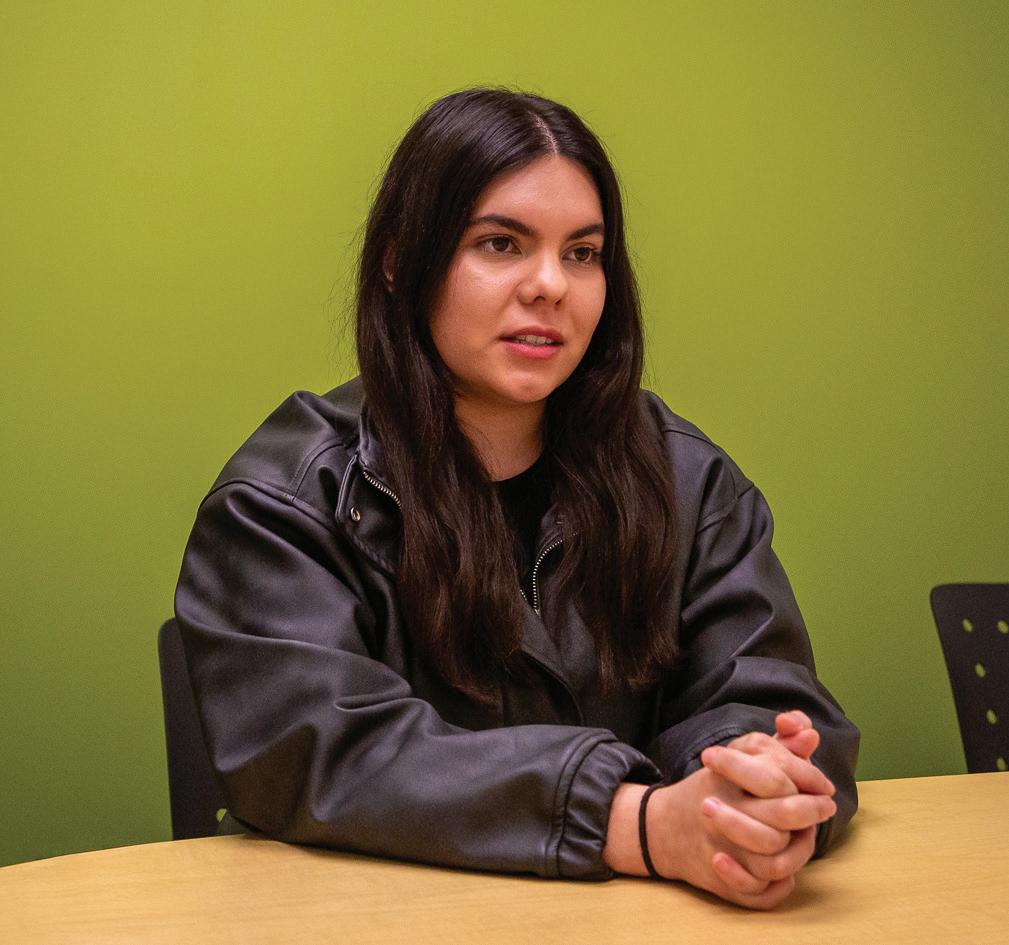
ASUO President Prissila Moreno (Corey Hoffman/Emerald)
Continued from page 1
Oregon primary election results
Lane County Board of Commissioners:
West Commissioners:
Ryan Ceniga secured reelection to the West Lane County commissioner seat with 61.10% of the vote, defeating Thomas Hiura, who received 38.52%.
Ceniga, the incumbent commissioner, has described himself as “a blue-collar dad” with deep roots in West Lane County. His official biography highlights his focus on public safety.
“Things look very positive, and we worked hard through this campaign, and we worked hard the last four years, and (I’m) looking forward to serving another four years for West Lane,” Ceniga said following his win.
Ceniga has cited his community involvement coaching his daughter’s sports teams, serving on the Junction City Athletics Board and volunteering with the Junction City Lions Club.
Before being elected commissioner, Ceniga worked in the construction industry for two decades. He also worked for the City of Junction City in its public works department before later joining Eugene Water & Electric Board.
Springfield Commissioners:
Springfield Mayor Sean VanGordon defeated incumbent Lane County Commissioner David Loveall by more than 11%.
VanGordon currently serves as mayor of Springfield, where he has advocated for housing and economic development projects throughout the city. During his tenure, Springfield has expanded development in its downtown core and supported housing projects such as the Alma Apartments. Before becoming mayor, VanGordon represented Ward 1 on the Springfield City Council for a decade.
As commissioner, VanGordon said he hopes to strengthen collaboration between local governments on regional challenges such as housing shortages and budget constraints.
“I am just grateful for all the support from the citizens of Springfield in District 2 who came out and voted and grateful for all the volunteers and the campaign staff that worked so hard on this campaign. Elections are about choices, and it takes everybody being part of a campaign to give voters real choices,” VanGordon told The Daily Emerald following his Tuesday win.
David Loveall is the incumbent commissioner for Springfield’s District 2. He is a Navy veteran and entrepreneur whose campaign website highlights his support for small businesses and efforts to add housing units to Springfield’s downtown core. Loveall has touted his record on public safety, emergency services, homelessness and mental health initiatives, as well as what he describes as “change that matters” for Springfield.
Loveall’s tenure as a Lane County commissioner had been marked by controversy after an external investigation found he violated county policy by retaliating against employees who made complaints regarding his conduct and speech in office. Loveall is currently suing Lane County, alleging the investigation into the workplace complaints violated his constitutional rights and state public meetings law.
In March, the Board of Commissioners voted 3-1, with Loveall abstaining, to publicly censure him over the find-
ings of workplace misconduct. Following the vote, Loveall alleged the meeting violated Oregon public meetings law, saying, “As I stated at the meeting today, I will not participate in a process that is illegal or an illegal meeting.”
In his federal complaint, Loveall accuses fellow commissioners and county officials of violating his First and 14th Amendment rights during the investigation process.
East Commissioner:
Incumbent Heather Buch and Jake Pelroy are heading to the general ballot in November, with Pelroy holding a 1.72% lead. Neither secured 50% of the vote, forcing the election to a runoff.
Buch is the current East Lane County commissioner and has positioned herself as a strong advocate for rural communities. Her platform focuses on public safety, affordable housing, accessible health care and local job creation. Buch has also advocated for immigrant communities in Lane County, including voting to affirm Oregon’s Sanctuary Promise Act and approving emergency funding to help families access food during immigration enforcement activity.
Buch was endorced by the Lane County Central Labor Chapter, Eugene Mayor Kaarin Knudson, the Oregon Sierra Club and five city councilors.
Pelroy, a Veneta resident, previously served as an intelligence analyst in the United States Marine Corps before being honorably discharged. He later pursued a degree in general social sciences at the University of Oregon. Pelroy founded the Lane County Garbage and Recycling Association in 2014 and owns a small business with his wife, Kelly.
Pelroy was endorsed by Cottage Grove Mayor Candace Solesbee, State Rep. Darin Harbick, the Lane County Farm Bureau and the Oregon Small Business Association.
Eugene City Council:
Ward 3:
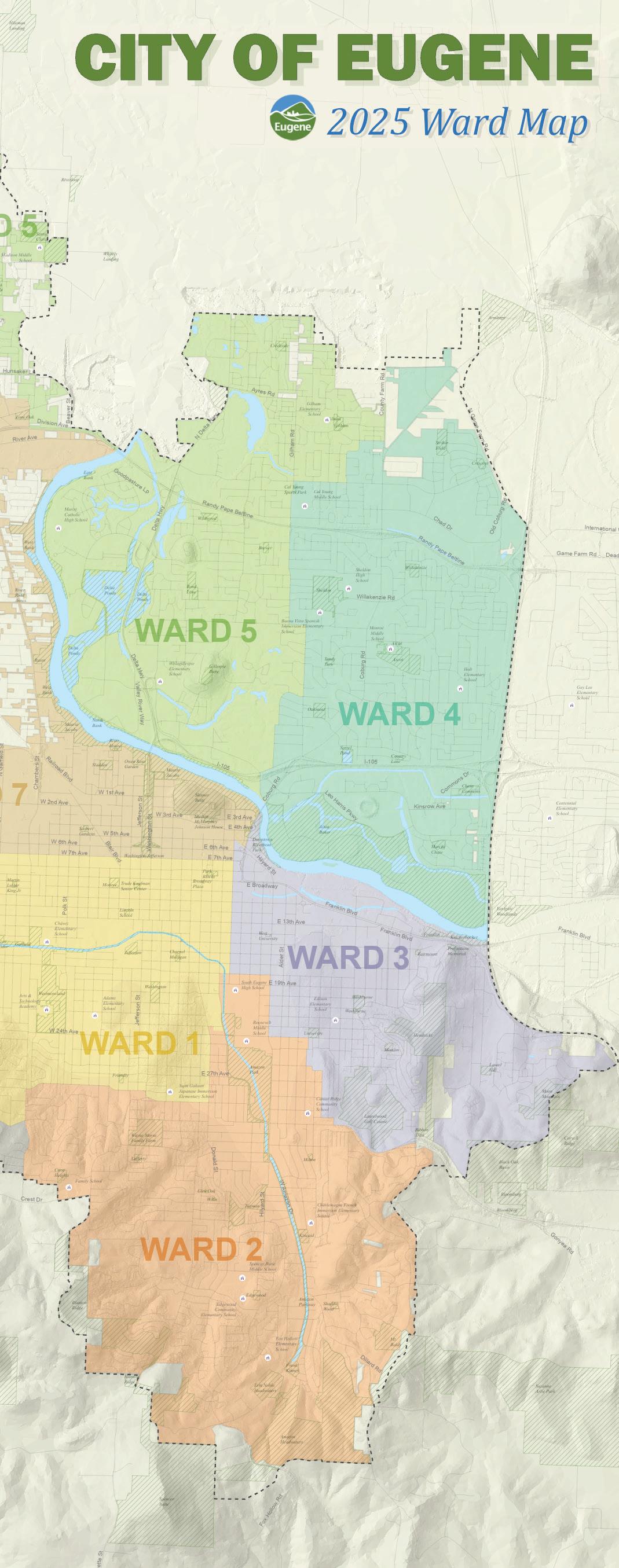
Jennifer Smith defeated local business owner John Barofsky, of Beppe & Gianni's Trattoria, by more than 15% in the race for Eugene’s Ward 3 seat.
Smith is the current president of Service Employees International Union Local 503, which represents classified workers at the University of Oregon. She has also served on the Lane Transit District Budget Committee, the Oregon Higher Education Coordinating Commission and the Eugene Permanent Shelter Task Force.
During her campaign, Smith said she would focus on expanding affordable housing to address Eugene’s housing crisis, helping the city meet its Climate Recovery Ordinance goals and defending the community against what she described as federal government overreach into local communities. Smith also said her experience as a union leader would help her build consensus on major community issues.
In a statement Thursday evening, Smith wrote:
“This result is a testament to the power of solidarity and community organizing. Our grassroots, volunteer-led campaign ran on our progressive values and our belief that a better Eugene is possible, and we won. I’m eager to serve the residents of Ward 3 and tackle the problems facing working families in our city.”
Smith will replace longtime Councilor Alan Zelenka, who is retiring after more than two decades on the council.
As a councilor, Yeh has served on the city’s Police Commission, Budget Committee, Human Rights Commission and Intergovernmental Relations Committee. She previously served as chair of the Harlow Neighborhood Association. Before joining the council, Yeh founded the Feed Hope organization, which supports children experiencing food insecurity. During her reelection campaign, Yeh said she would continue advocating for affordable and middle-income housing projects, transparency and oversight of public safety officials
Ward 4:
Ward 4 incumbent Jennifer Yeh defeated challenger Tom Steadman handily, garnering nearly 73% of the vote.
Ryan Ceniga
through her work on the Police Commission and safer public transit infrastructure, among other priorities.
Following the release of initial election night results, Steadman told The Emerald he initially did not expect Yeh to seek reelection, but decided to remain in the race after she announced her campaign to avoid an uncontested election and give voters options.
“A lot of the people just don't like the fact that when some of the candidates run unopposed, they become complacent,” Steadman said.
Ward 5:
Ward 5 is headed to a November runoff election between incumbent Mike Clark and Athena Aguiar after none of the three candidates — including Jasmine Hatmaker — secured more than 50% of the vote. Clark received 40.34% of the vote, while Aguiar and Hatmaker received 37.51% and 21.83%, respectively.
The Ward 5 seat is currently held by Clark, who has served on the council since 2006. The ward includes the Cal Young area and parts of northeast Eugene.
As a councilor, Clark has served on the city’s Budget Committee, Human Rights Commission and Capital Improvement Program Subcommittee. Before joining the council, he worked in advertising and as a political campaign consultant.
During his reelection campaign, Clark said he would continue focusing on stabilizing the city’s budget by growing the local economy, increasing housing development and supporting public safety services.
Aguiar previously worked for Environment Oregon, the Oregon State Public Interest Research Group and the Fund for the Public Interest. She currently serves on the city’s Library Advisory Board.
During her campaign, Aguiar said she was focused on safety, affordability and inclusivity. Her priorities include addressing public safety concerns following the closure of CAHOOTS, supporting affordable housing development and fostering a more inclusive community environment.
On election night, Aguiar campaign manager Ethan Smith told The Emerald:
“Tonight we forced a 20-year Republican incumbent with big money into a runoff this fall. Without our supporters, volunteers, donors and voters — and the other people we believed in throughout this race — we wouldn't be here,” Smith said. “North Eugene sent a clear message that they want a council that puts their needs first, not the interests of their donors and businesses.”
Ward 6:
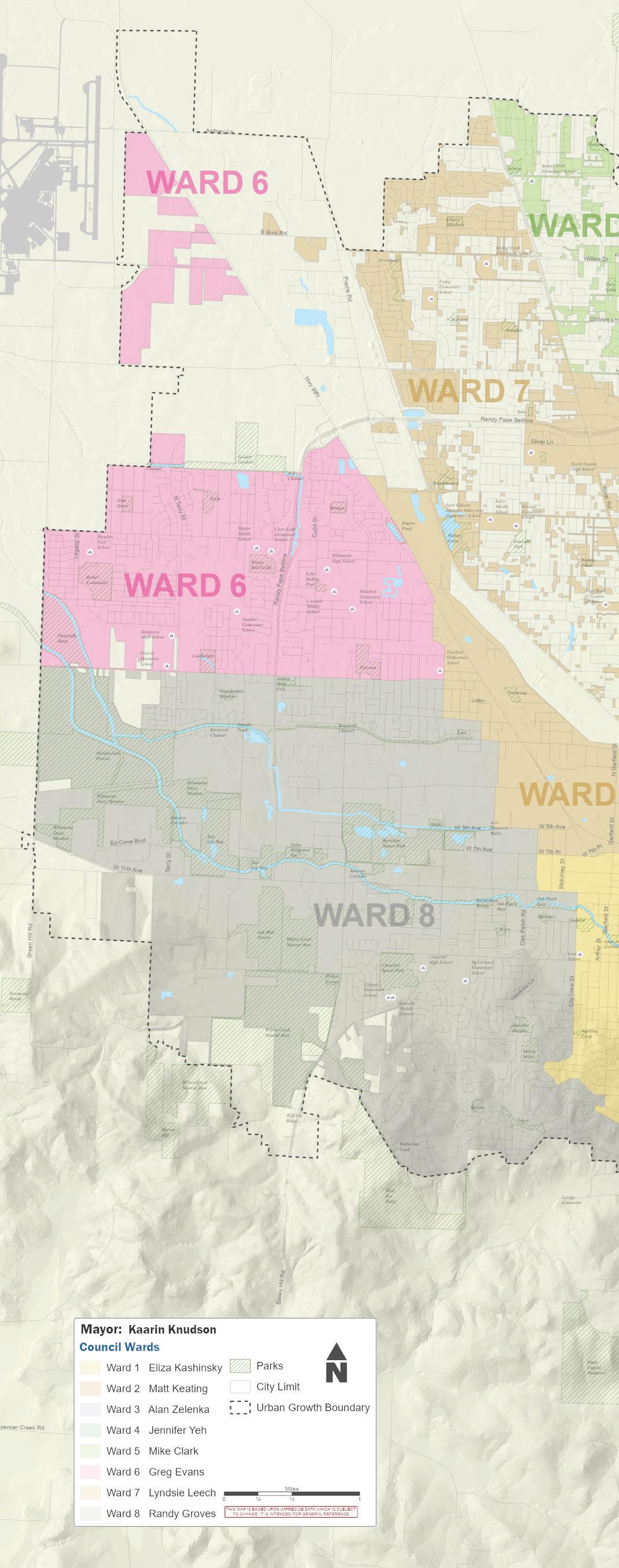
Incumbent Ward 6 councilmember Greg Evans defeated his challenger, Tai Pruce-Zimmerman easily, securing a nearly 38% margin of victory.
“I understood the situation I was in as a first time candidate challenging a 13 year incumbent, and the fact is that I was running against a friend and a mentor who is a good councilor,” Pruce-Zimmerman said on election night. “ So it’s always a win-win race, and I'm happy with where I'm at, happy with the campaign I ran, happy with all of the opportunities I had to build new relationships through doing this.
Pruce-Zimmerman said he is now moving on to seek appointment to the Bethel School Boards.
As councilor, Evans is currently serving as the council’s president. He’s served on the city’s Budget Committee, Intergovernmental Relations Committee and Lane Transit District Strategic Planning Committee. He’s previously worked as an educator at Lane Community College and as president of the League of Oregon Cities. Evans has also been a board member on the National League of Cities and a member of its finance committee.
During his campaign for re-election, Evans said he will continue to work for the Bethel neighborhood and put the local community first. He has advocated for public works like the Golden Gardens Park, and worked alongside community members to develop the Build a Better Bethel Plan.
Ballot Measures:
Eugene library levy
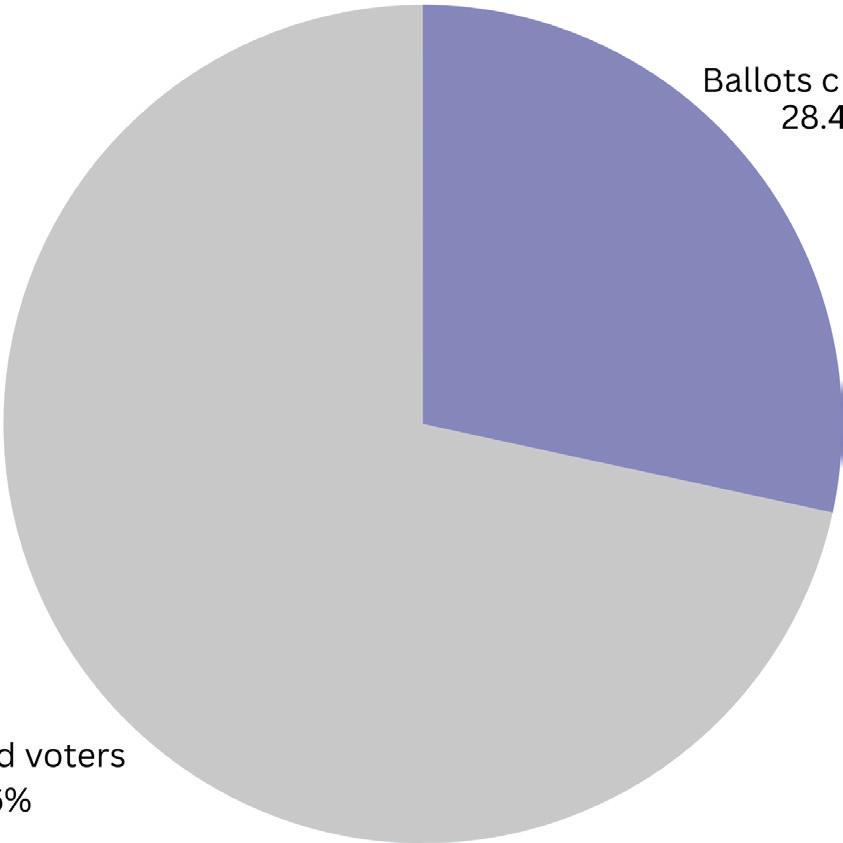
Lane County Voter turnout
113,021 ballots counted
285,064 active registered voters
The levy is expected to cost property owners about $0.19 per $1,000 of assessed property value. City estimates project a Eugene taxpayer would pay approximately $54 over the five-year period. According to the Oregon Centralized Voter Registration system, the measure could increase property taxes by more than 3%.
Watershed measure
Eugene voters approved a new five-year levy for the Eugene Public Library, with more than 64% voting in support amid ongoing budget shortfalls that have impacted operating hours and public access.
The levy will raise approximately $4.3 million annually for five years beginning July 1, totaling roughly $21.5 million over the life of the measure.
According to the city, levy funds will help maintain 47 open hours per week across all three library locations, preserve and expand collections, improve digital equity and technology access, enhance accessibility at library facilities, expand early literacy initiatives, add two 24-hour pickup stations and fund a long-range Library System Plan.
About 62.3% of Lane County voters rejected the proposed Watershed Bill of Rights measure.
The measure would have granted legal rights to bodies of water in Lane County and allowed residents to file lawsuits on behalf of watersheds. Supporters argued the proposal would protect waterways from pollution and affirm access to clean water, while opponents said it could create sweeping legal and regulatory impacts for agriculture, development and water management.
Gas tax measure
Oregon voters overwhelmingly rejected Measure 120, the transportation funding proposal backed by Gov. Tina Kotek, with nearly 83% voting against.
Measure 120 would have increased Oregon’s fuel tax from 40 cents per gallon to 46 cents per gallon and raised vehicle registration fees by $42 and title fees by $139 for most vehicles. The proposal also would have increased the payroll tax for public transportation to 0.2% through 2028. Revenue generated by the tax and fee increases would have been split between counties and cities to help maintain roads, highways and rest stops, particularly in smaller communities.
Opponents included Republican gubernatorial candidate Ed Diehl and the Community Oriented Public Servants and the Taxpayer Association of Oregon, which argued the measure would further burden residents already facing high fuel costs.
According to the American Automobile Association, Oregon gas prices currently average $5.34 per gallon, compared with $3.96 at the same time last year.
The gas tax increase was originally approved by the Oregon Legislature as part of House Bill 3991 and signed by Kotek last November, but implementation was suspended pending the outcome of Measure 120.
For a full list of ballot measures and statewide results visit dailyemerald.com *Reilly Norgren, Corey Hoffman, Billie Corsetti and Sasha Love contributed to this reporting
Athena Aguiar
ARTS & CULTURE
EMU's ‘Aperture Gallery’ hosts colorful installment for spring quarter
While Noelle Pflanz and Patrick Kalita’s pieces complement each other, the two have a different relationship to their craft.
By Vinny White Arts & Culture Writer
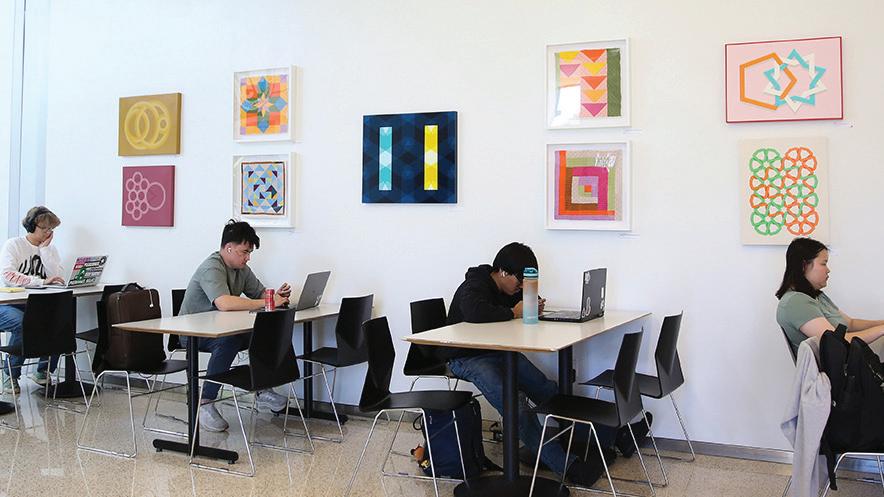
Each quarter, a wall of the Erb Memorial Union called the “Aperture Gallery” is populated with a new series of art. Following winter term’s controversial inclusion of AI-generated work, spring features two new artists: Noelle Pflanz, whose embroidery is meant to evoke the feelings of a time and place, and Patrick Kalita, whose geometric and colorful paintings, somewhat unsurprisingly, come from the mind of an engineer. The two sets of work complement each other well for students catching a glimpse as they look for a bite to eat.
Pflanz is the administrative programming assistant at the EMU’s Craft Center. She started as an instructor in 2015, teaching screenwriting, embroidery and book binding. Though Pflanz spent much of her life engrossed in art, even earning a BFA and MFA in Studio Arts, she stepped away from creating art outside of the craft center.
“There was a period of time where I kind of stopped making art, [it] was always in the background,” Pflanz said. “For years I’ve had embroidery pieces that I was working on when I was a master’s student, but it was never really my central focus. Then, during the pandemic, I lived in a smaller apartment [and embroidery] doesn’t take up a lot of space.”
Inspired by barn quilts, which used to hang off the sides of barns to demonstrate the speciality and history of a given family, Pflanz returned to art in the form of embroidery. Some of her latest pieces — which are more inspired by traditional quilting — now hang alongside the work of Kalita, a former University of Oregon employee and Pflanz’s partner. For Kalita, art consistently acts as a change of pace from his background in electrical engineering and current work with software for scientific research.
“Because of my professional and academic background, I am always worried about being lumped into the category of
Storytelling as a collaborative process
How the student-led Storytellers Collective documentary club creates community.
By Fiona McMeekin Arts & Culture Writer
Documentary filmmaking requires more than technical skills. Trust and communication are integral to the relationships among filmmakers, subjects, and communities. The Storytellers Collective, a student-led University of Oregon club, replaces the intimidation of not knowing with collaborative support, asking budding filmmakers to slow down, learn to listen, and listen to learn.
Peterson reassures prospective members that, regardless of experience level, there is a place for everyone to learn from one another.
This collaborative learning process is what makes the club unique. Founded less than two years ago, the club’s current members are navigating the filmmaking and collaboration process together. During their time with the Storytellers Collective, both Peterson and member Matias Crespo have come to understand the value of communication and collaboration.
‘math art,’” Kalita said. “I just want something that stands on its own and you don’t have to understand anything about geometry. You can just look at it and go ‘yeah, that’s right.”
While Kalita’s art is accessible, it is created with a close attention to historical and mathematical patterns. His piece “Untitled (orange/green),” which features clover-like shapes enveloping each other, is inspired by the cover of his copy of “Tales of the Alhambra" by Washington Irving, which features a “basic Islamic pattern” according to Kalita.
Pflanz’s work in “Aperture Gallery” has more of a personal backstory, with her pieces titled in accordance to her environment. Her piece, “A Friday in September around 1 p.m. the day before your friend gets married” was finished on exactly the day and time one would expect from such a title.
“My titles swing the total opposite direction of Patrick in that I’ve always thought of my art as feelings like moments from a journal and love finding nostalgic moments and highlighting those moments,”
Pflanz said. “I feel like nostalgia, even if it’s a personal nostalgia, can still be a universal feeling.”
Even with their relationship and living together, Kalita and Pflanz are vastly different artists in both their craft and inspiration. Kalita’s art is more of a hobby which gives him a break from his work. Pflanz’s art, alternatively, marks her return to the art world. While her work sees little in the way of preparation, Kalita’s is meticulously planned before the brush hits the canvas. Regardless of their differences, their work hangs together, decorating the halls and complementing each other. Kalita made sure to choose pieces that specifically complemented the colorful nature of Pflanz’s art.
Though the pair is happy to have their art featured in the EMU, Kalita has one important concern.
“I just want to make sure all my paintings are, you know, properly varnished in case anybody gets Panda Express on them.”
(ABOVE) Students study below the Erb Memorial Union’s new “Aperture Gallery” exhibit designed by Patrick Kalita and Noelle Phlanz. The work, featuring acrylic on wood and embroidery will run through spring term. (Heidi Thalman/Emerald)
“One of the hardest things to do in videography is to get started. It can feel really intimidating,” Rachel Peterson, Storytellers collective coordinator, said. “I really like the idea of building a community where people feel safe to say, ‘I don't know yet, but I want to learn.’”
The Storytellers Collective will showcase three films produced entirely by students on May 28 in Straub 145 from 7-9 p.m. The films center three Eugene-based stories: “Grounded: Transplanting our Future,” by Eden Swain, focuses on a local garden designer; “Duck Season: Home Ice Advantage,” by Ethan Perez, follows a men's hockey team; and Connor McWard’s “Rules of the Road” follows the tall bike community.
At the Storytellers Collective, members have an open environment to create their own documentaries, working out the kinks together along the way. Members delegate roles and form teams around their ideas at the beginning of the academic year, then work throughout the school year to bring their ideas to fruition.
Working collaboratively on a creative project can feel intimidating, especially for students still developing their technical skills. But this lack of hierarchy is intentional and aims to foster comfort within the group. By creating a low-stakes environment and eliminating participation barriers, Storytellers Collective allows members to gain confidence through experimentation.
“Get in the door and get comfortable being confident in your own shoes,” Matias Crespo said, Storytellers Collective member.
“Collaboration is so important. Without talking with people, you can't expand your worldview,” Crespo said. “You're not going to be able to develop as a human.”
A huge aspect of collaborative processes rests on communication, whether among filmmakers or with the stories’ subjects. This process of communication builds trust, which is essential to influencing how a subject’s stories are told.
“In making a documentary, every shot is a creative choice. When photographing a subject, the way you frame them will determine the story. And there's power in that,” Peterson said.
These documentaries allow for both filmmakers and audience members to engage with local stories, strengthening community connections.
Peterson was drawn to documentary filmmaking as a form of activism. Documentaries can be a way to tell stories that might otherwise go unheard. Starting conversations about subjects that matter is part of Peterson's personal motivation for joining the Storytellers Collective.
“Do work that makes people talk. I like when people talk about stuff that I make. I like when people don't like the stuff that I make because that means it made them feel something,” Peterson said.
For Crespo, he enjoys the complex collaborative process of filmmaking and the satisfaction of seeing all the hard work pay off.
“This is going to be a really fun night,” Crespo said about the upcoming showcase. “It's a testament to how strong student collaboration is, you know, student willpower.”
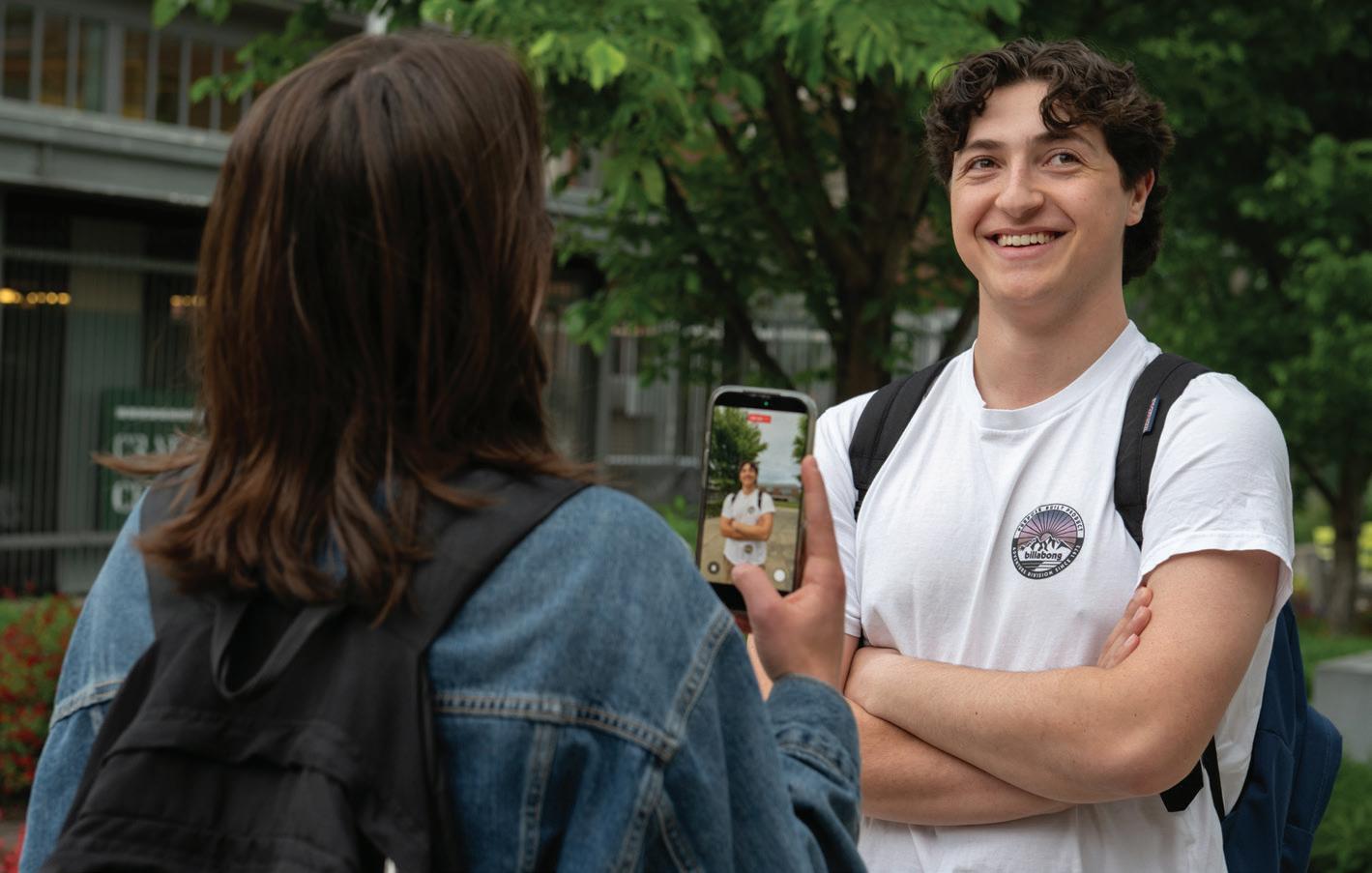
Storytellers Collective coordinator Rachel Peterson films member Ethan Perez for a promotional social media video for a club event. Ethan Perez for a promotional social media video for a club event in Eugene, Ore. on May 14, 2026. Storytellers Collective, a nonfiction multimedia production club, meets in Allen Hall on Thursdays. (Chris Castro/Emerald)
OPINION
Benton: EPD gave Martin Siller a badge. Nobody gave him a leash.
Opinion: The former officer said himself that he can’t be allowed to do whatever he wants. The Eugene Police Department just wasn’t listening.
By Kat Benton Opinion Columnist
While a picture may be worth a thousand words, no words in the English language can quite capture the gravity of the video that ultimately forced Martin Siller out of the Eugene Police Department.
The community has been in an uproar since the emergence of bodycam footage showing Siller, a now-former officer with the EPD, in his car the night of the January 30 protest at the federal building. The footage recorded a vile, albeit wide-ranging, conversation with what Chief Chris Skinner suggested was a former colleague from Utah’s West Valley Police Department, where Siller had once worked.
The pair spoke about swinger cruises, infidelity and swapped stories of fellow officers engaging in brutal domestic violence. From the comfort of his quiet, cushioned, temperature-controlled service vehicle, Siller made fun of protestors doused in tear gas by federal agents. He lauded the federal agents, mocking “unemployed” protestors and spewing racist stereotypes. At one point, Siller mused about walking a trail during his shift, quipping that he needed a leash.
It’s essential to point out that the bodycam footage was not obtained through a typical public records request; it instead emerged during the criminal proceedings against a protester. Without said proceedings, this footage could never have come to light.
Rachel Ehly is an opinion columnist for The Daily Emerald and is studying journalism and political science. She could talk for hours about all things politics, pop culture and music.
The video predictably inflamed the already-tense relationship the EPD has with the community, a fact Eugene resident Kevin Cronin was quick to point out at last week’s city council meeting. Cronin expounded upon the disturbing pattern of inappropriate behavior, citing a litany of sexual harassment accusations within the EPD, rape accusations involving on-duty officers, domestic violence incidents involving officers and, of course, their reversed rollout of Flock Safety, a controversial license plate surveillance program.
University of Oregon family and human service major Alekhya Bhupalam thinks that the footage speaks to why there’s a broader mistrust between the public and EPD, asking if the officers who are supposed to protect us can make vulgar comments like that: “Behind the community’s backs, how are we supposed to trust them?” An officer feeling comfortable enough to admit to on-duty misconduct while being filmed certainly raises a few questions. Has this behavior happened before, and what else could officers be saying when they don’t think they’re being supervised?
The problem doesn’t lie solely with the words Siller spoke, but also with his relaxation in saying them. His voice never wavers or shows any signs of hesitation. He didn’t even bother to lower his voice to hide it because he didn’t think he needed to.
EPD did not respond to questions about why Siller was on the phone in the first place. However, spokesperson Melinda McLaughlin said their reporting system includes “an independent police auditor, citizen review board and internal affairs system.” Yet she said the conduct Siller displayed
is exactly the type of behavior employees would be expected to report. So, in his seven years at the EPD, nobody heard anything concerning?
A reporting system is only as effective as the people willing to use it. If seven years passed without a single flag raised on Siller, the question isn’t just about him — it’s about everyone who worked alongside him, as well.
Siller resigned before facing accountability, but he was right that we can’t just let our officers do whatever they want. But without closure, the uncomfortable question remains: Can we be expected to feel safe and confident in our law enforcement officials when they can so casually show disdain for our community?
Kat is a thirdyear CHC student studying psychology with minors in legal studies and entrepreneurship. She enjoys writing about power dynamics, institutional accountability and the ways political structures shape communities.
Ehly: Tech-free classrooms only work if they’re well-intentioned
Opinion: Tech-free classroom policies are extremely helpful in improving in-class focus and discussion. But professors need to balance how these policies can coincide with real-world application of skillsets in a digital world.
By Rachel Ehly Opinion Columnist
At least half of the classes I’ve taken this year have restricted or outright banned all use of technology during class. It feels like that number is only going up, and not just at the University of Oregon.
An Oregon executive order that went into effect Oct. 31, 2025, prohibits the use of personal devices for students at K-12 public schools.
And honestly, I understand exactly why these restrictions have been put in place. In the classes where I’m not able to shop online, work on other assignments or read the text messages of the person in front of me, I’ve actually been able to pay attention and better retain the information.
Political science major Pallas Green has noticed the shift, too. Seven of the 12 in-person classes he’s taken this year have been tech-free. He says the policies are aimed at cutting down distractions and discouraging AI use.
Josie Shaw, a junior who transferred from the University of Houston, says she understands why many professors have adopted tech-free policies.
“It’s hard enough (for professors) to lecture a 300-person class, and then add on people on their laptops, iPads and phones, it is nearly impossible to compete and keep people engaged,” Shaw said.
But, Shaw says her JCOM courses are built almost entirely around learning a digital skillset that requires using technology in the classroom, from learning video editing software to building an online portfolio.
Green also notes that the style and pace of the lecturer is an important factor in considering the feasibility of tech-free classrooms.
“When lectures are in-depth and at a pace where taking notes by hand is achievable, I think that a tech-free classroom is warranted,” Green said. “On the other hand, a fast-paced, impersonal lecturing style free of technology, in my experience, has been a major impediment to succeeding in a class.”
A no-device rule applied the same way to every course, regardless of material or teaching style, is “sort of infantilizing,” Green said.
The best version of a tech-free classroom policy isn’t banning all technology just because it makes the life of the professor easier. A professor teaching political theory can reasonably apply tech-free protocols in favor of in-class discussion, but an advertising professor teaching digital strategy cannot.
“I enjoy having a hybrid tech experience in classrooms,” Shaw said. “For the industry I’m looking to break into, tech is necessary, and I need to be knowledgeable on how to utilize it. However, I think that having some tech-free spaces within a class can help keep me more engaged.”
That balance is hard to create, but it’s worth trying to get right.
Professors can’t tell students they’re preparing them for the real world while taking away the tools the real world runs on. Tech-free classes can bring back real focus and conversation in a classroom setting that has been taken away by a sea of computer screens in every class, but only if these policies are made with intention.
Overall, the goal for students and professors should be to find ways to learn better. Whether that’s with technology or without it.
Eugene Police Chief Chris Skinner and Independent Police Auditor Craig Renetzky hold a joint press conference May 9 to discuss the resignation of former EPD officer Martin Siller following the release of body camera footage in which he made racist, anti-immigrant and domestic violence-related comments while on duty.
Tanner Bradley, Drew Smith selected to All-Big Ten Baseball First Team
Oregon softball ace Lyndsey Grein details injury
WEDNESDAY
May 27-30, 2026
NCAA West First Round
The Ducks track and field team gears up to compete in Fayetteville, Ark. for a four-day long track tournament.
No. 8 women’s golf season ends following lackluster postseason performance
The Ducks closed out the season at the Waco Regional with a poor seventh-place finish.
By Harry Leader Sports Writer
On May 13, the No. 8 Oregon women’s golf team finished No. 7 out of 12 teams at the NCAA Waco Regional and failed to make the final cut to advance in the tournament. The Ducks were the second-highest-ranked team heading into Waco, only behind No. 4 Texas A&M University, which finished second. Oregon was the highest-ranked team competing in all of the regional tournaments to not advance to the NCAA National Championship.
The Ducks finished two strokes back from a qualification spot with a total score of nine over par, with Kiara Romero and Sophie Han leading the team with scores of five under and one over par. The team was held back by poor outings from Darae Chung (+8), Tong An (+9) and Karen Tsuru (+11).
This mediocre result was the cherry on top of an expired sundae that lost its flavor months ago after Oregon went on a skid starting in April, when the Ducks finished No. 3 at
the Chevron Silverado Showdown. Now, a third-place finish would seem like a very acceptable result, considering the winner of the tournament was No. 2 USC. The glaring issue was the fact that Oregon finished 38 strokes behind USC and 16 strokes behind No. 26 Eastern Michigan University.
Another catalyst in the Ducks’ April skid was the absence of their biggest stars, Romero and Karen Tsuru. The pair were competing in the Augusta National Women’s Amateur across the country while all of the Trojan players, including No. 5-ranked amateur women’s golfer Jasmine Koo, competed for their team.
The absences didn’t stop there for Romero, who skipped out on the Big Ten Championships two weeks later to compete in the LPGA Chevron Championship, where she didn’t make the final cut.
This all goes to show that Oregon could struggle to contend for national championships if its own stars choose to focus on their professional careers during the collegiate postseason.
Head coach Derek Radley has been able to keep the program competitive in his eight seasons with Oregon and is currently under contract through the end of the 2029 season. It would be unreasonable to say his job should be in question, given the Ducks have been a top team the last eight years, but the clear lack of loyalty to the program from star players puts his leadership in question.
Continuing to draw parallels to USC, who have been one of the nation’s most elite programs, their head coach, Justin Silverstein, has been able to have star players like Koo put their team’s needs over their own ambitions. Silverstein has been the head coach for eight seasons, but was an assistant coach when the program won the 2013 national championship. Overall, the Ducks’ season has been less than stellar, considering how strong they started off. The main thing the team needs to focus on is consistency and evaluating how they can prepare the younger core to step up when their time comes.
The rocking and rolling atmosphere of Jane Sanders Stadium
Despite the exit at home, “Janesanity” still rang true this postseason.
By Rowan Shea Sports Writer
2,500 fans enter through the old gates of Howe Field and the new gates of Jane Sanders Stadium, flocking to their seats to create a roaring sea dressed in yellow and green. With bleachers in centerfield and seats from the left field line around to the right, the claustrophobic crowd closes in and suffocates any team who walks into the newly decade old venue.
“It’s euphoric,” senior starting pitcher Elise Sokolsky said. “I want to compare it to the Washington series when I first came back out. The moments before I started warming up to pitch again, I felt like I could hear every single individual in the crowd. It was amazing.”
And for Ducks fans, it’s hard for one to not get a rising feeling in their chest. The adrenaline rush, surge of excitement and emotion when the buzzing turns into a rumbling. That’s what makes “The Jane” the experience it is.
“I think our fans get locked in every single moment,” head coach Melyssa Lombardi said. “They give us their all; that’s what we need.”
The Jane has had a lot of opportunities to explode over this season. Elon Butler hit for the first cycle in program history, and Emma Cox walked that game off on a sacrifice fly. Cox’s grand slam against rival Washington in Game 1 of the series, any Lyndsey Grein late-game performance, Rylee McCoy’s jaw dropping shot against Penn State early in the year, the list could go on.
“Throughout the season, we’ve had great showings at The Jane, but postseason out here with our fans is just something different,” Sokolsky said.
And for newcomers to the team, the experience they
get is something that many haven’t felt before. Take Butler, the senior transfer from Cal. She had been a part of three postseason runs with the Bears, but the experience at Oregon was going to be something different.
“I’m just excited to be home, to hear my walkup song and feel the energy from the crowd,” Butler said. “It’s something that I didn’t really get during my years at Cal.”
But for those who have been feeling the deafening roar for their whole career, the magic hasn’t been lost on them.
“I’ve had teammates from different programs come and watch last year, and they were like, ‘Wow, I’ve never experienced this feeling,’” Kaylynn Jones said. “And to be able to call that my home and my normal is pretty special, too.”
In the postseason, Ayanna Shaw got the biggest crowd pop of the tournament with her go-ahead grand slam in the fifth inning against Idaho State. The noise that this stadium can produce creates a rowdy and rocking atmosphere that is difficult for any team to come into and play against.
“I don’t think there’s any other schools that experience like we do here at The Jane,” Lombardi said. “I mean, we call it a lion’s den for a reason.”
The sea of yelling, chanting, hollering Ducks fans acts as a hive mind. Once they step foot into The Jane, they act as a lifesource to the players on the field, fueling the team with the energy they give off.
“Whenever we’re feeling low, you can just feel our crowd,” Butler said.
And the 2,500 fans aren’t only going to stay if the Ducks are winning. They’ve hunkered down when the deficit has seemed insurmountable and willed the team back into the game with their presence.
“I remembered one game we were losing by five or six runs, and we ended up coming back and our crowd
didn’t leave because they believed in us,” Butler said. “It’s that support that you honestly feel.”
In many stadiums, a good crowd will always get a name. Look at the Seattle Seahawks and the “12th Man” section at Lumen Field, or “The Kop” at Anfield Stadium, the home of Liverpool F.C. Add Janesanity to that list. A strong, rowdy, rambunctious and, most importantly, loud crowd will always be a blessing to a team.
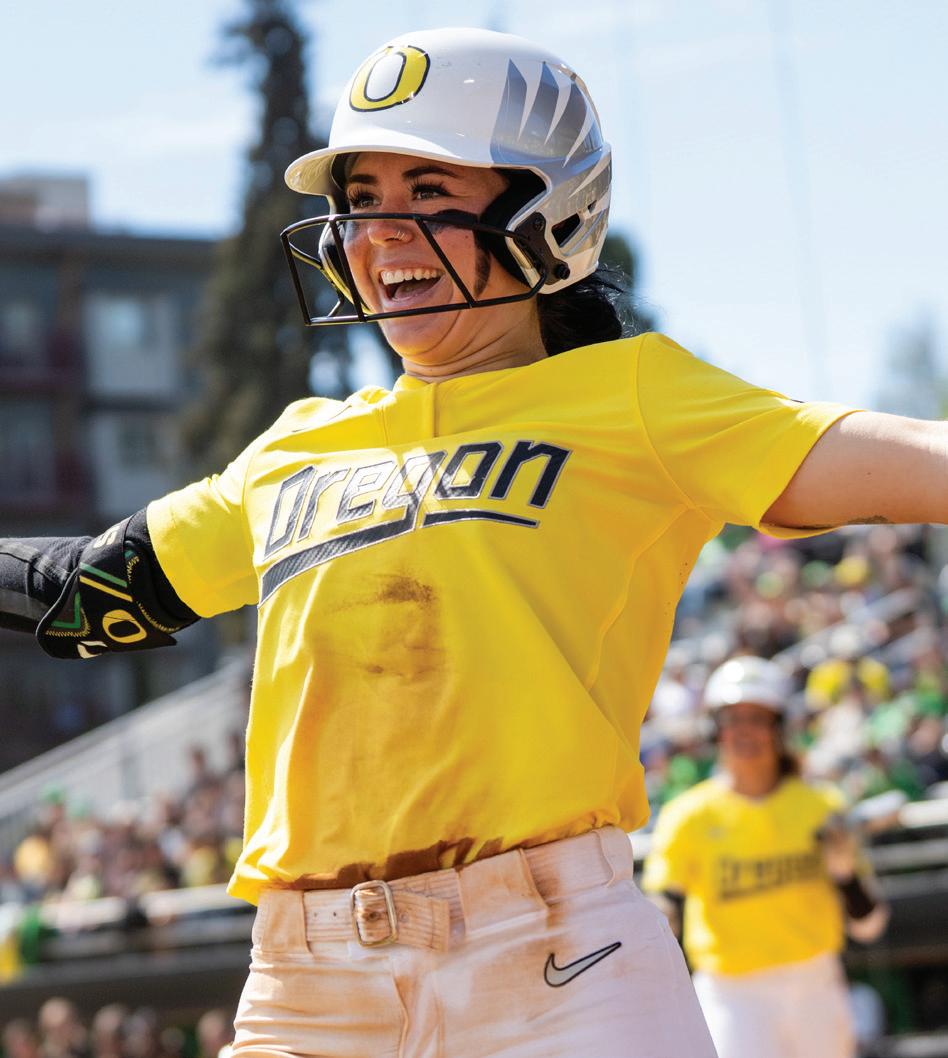
( ABOVE) Oregon infielder Kaylynn Jones (3) celebrates with her teammates after returning to the dugout. The University of Oregon Ducks Women’s Softball team win in a home game against the Iowa Hawkeyes 6-2 in Eugene, Ore., on Apr. 5, 2026. (Rowan Campbell/Emerald)