MONDAY, MAY 11, 2026
MONDAY, MAY 11, 2026
As part of Fair Housing Month, Eugene Realtors hosted a panel addressing the history of housing equity in Eugene.
By Audrey Lynch News Reporter
Eugene Realtors co-sponsored a moderated panel discussion in April with the Black Cultural Initiative and Oregon Black Pioneers to discuss fair housing in Eugene as part of Fair Housing Month.
This discussion was hosted at the Museum of Natural and Cultural History on the University of Oregon campus, where the ReEnvisioned: Contemporary Portraits of our Black Ancestors exhibit, which features portraits and stories of 10 pioneers will be on display until June.
The panel was moderated by Molly Mair, the education and diversity chair for Eugene Realtors. This is the third year the association has put on an educational event for their realtors and the community during Fair Housing Month. Mair explained that each of these unique events were able to occur due to a grant she received from the National Association of Realtors.
For this year’s event, Mair said she was inspired by the city of Eugene’s Equity Atlas research project. After doing more digging, she decided to center this year’s event on ties between discriminatory behavior toward Black residents and the current state of fair housing in Eugene.
Read story on page 4
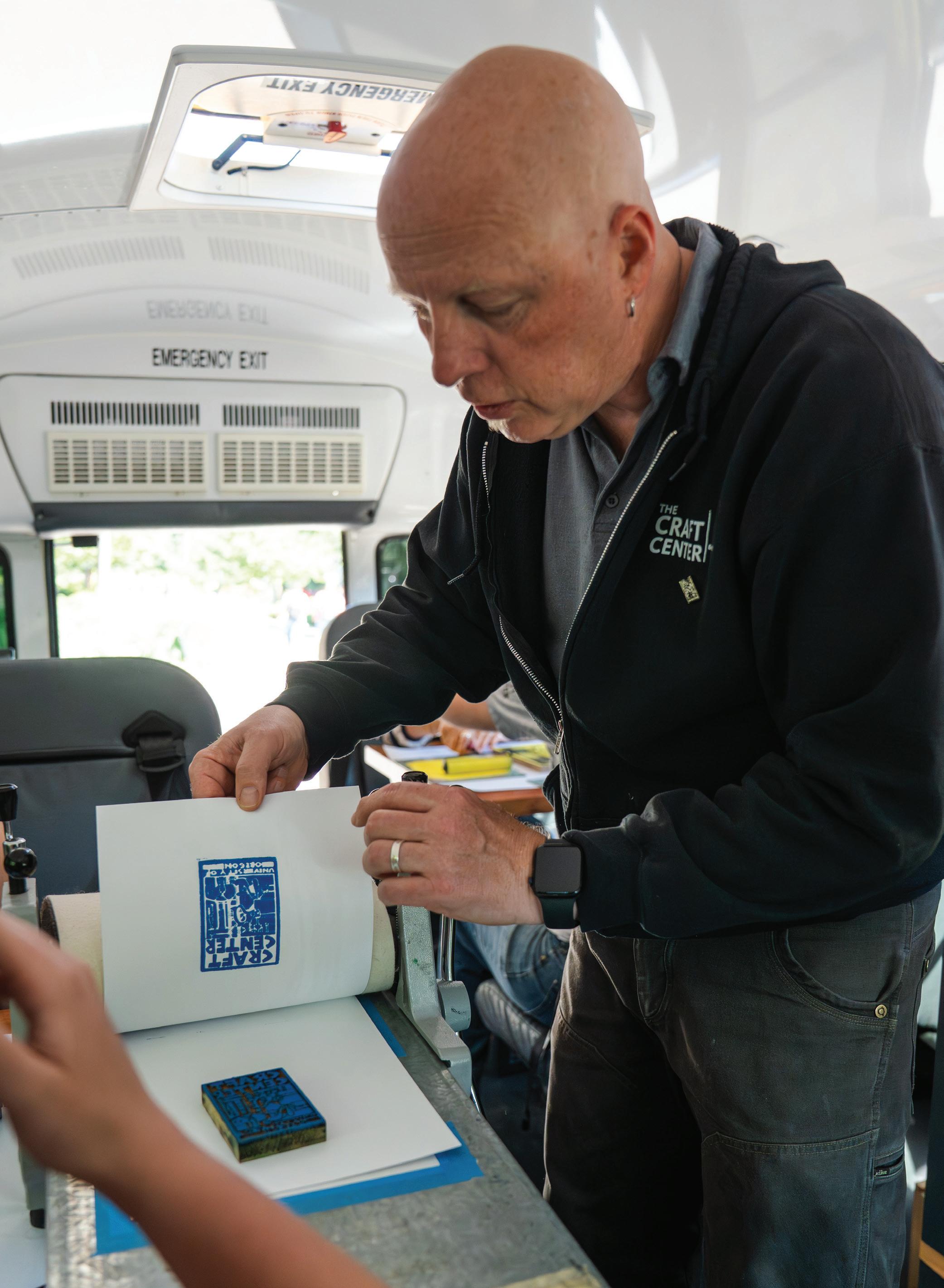
The Craft Center pushes to make art more accessible for UO students and the Eugene community.

EDITOR IN CHIEF
Tarek Anthony
PRINT MANAGING EDITOR
Ryan Ehrhart
DIGITAL MANAGING EDITOR
Ysabella Sosa
NEWS EDITOR
Reilly Norgren
INVESTIGATIONS EDITOR
Ana Narayan
A&C EDITOR
Claire Coit
SPORTS EDITOR
Jack Lazarus
OPINION EDITOR
Gracie Cox
PHOTO MANAGING EDITOR
Corey Hoffman
PHOTO EDITOR
Saj Sundaram
COPY CHIEF
Olivia Ellerbruch
VIDEO EDITOR
Jake Nolan
PODCAST EDITOR
Stephanie Hensley
SOCIALS EDITOR
Ysabella Sosa
VISUALS EDITOR
Noa Schwartz
DESIGN EDITOR
Adaleah Carman
DESIGNERS
Asha Mohan
Ellery Burton-Tillson
Eva Andrews
Izzy Smith
Nina Rose
PUBLISHER AND PRESIDENT
Eric Henry (X317) ehenry@dailyemerald.com
VP OPERATIONS
Kathy Carbone (X302) kcarbone@dailyemerald.com
DIRECTOR OF SALES & DIGITAL MARKETING
Shelly Rondestvedt (X303) srondestvedt@dailyemerald. com
CREATIVE & TECHNICAL
DIRECTOR
Anna Smith (X327) creative@dailyemerald.com
ACCOUNT EXECUTIVES
Camcole Pereira
Elliot Byrne
Maria Jimenez
THE DAILY EMERALD
The Daily Emerald is published by Emerald Media Group, Inc., the independent nonprofit media company at the University of Oregon. Formerly the Oregon Daily Emerald, the news organization was founded in 1900.

Emerald Media Group 1395 University St.,#302 Eugene, Or 97403 (541)-346-5511
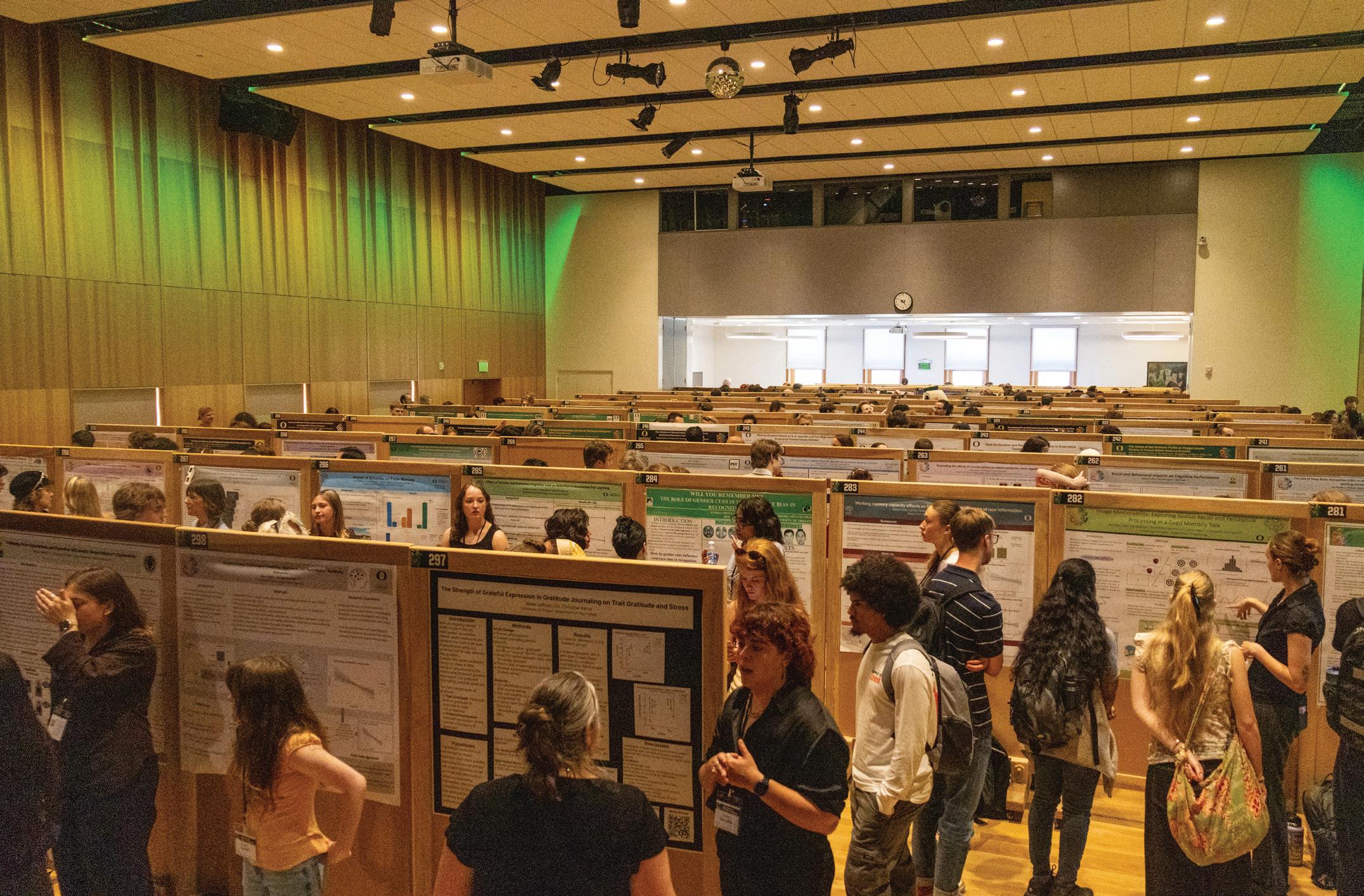
Nearly 600 undergraduate students across disciplines present research at the Undergraduate Research Symposium.
By Corey Hoffman Senior News Reporter
The University of Oregon hosted its 16th annual Undergraduate Research Symposium on May 7 reaching a record number of participants with just under 600 student presenters.
Student research spanned all eight UO departments, as well as the Ballmer Institute for Children’s Behavioral Health and the Phil and Penny Knight Campus for Accelerating Scientific Impact.
Presentation times were broken up throughout the day, in which students had the opportunity to stand by their poster and discuss their research, read or screen creative work or do an oral presentation.
Keynote speaker for the event and alumna Mérida Mehaffey, class of 2018, spoke about how her undergraduate research has prepared her for a professional setting.
Lily Rice, a junior marine biology student, researched how cranial bones and sensory organs interact in fish by examining how the neuromass of three-spined stickleback fish shapes their cranial skeleton.
Rice said that during the experiments the fish swam in two different types of dye, which allowed her to see their skeletons and neuromass. She then analyzed the fish under a microscope and conducted data image analysis.
“I wanted to see how the neural masks were being added, and also the rate they're being added. So our main finding with that was that the neuromass being added at a relatively steady rate in these regions, as the fish grows,” Rice said.
Preparation for Rice’s research began over the summer, but she just completed the data image analysis graphs last week. Rice said she logged over 100 hours alone on counting the neuromass of the fish seen in the microscope.
“My whole year has been working on this,” Rice said.
Rice said she hopes to continue this research with a grant in the future, which would allow her to dissect the neuromass and bone tissue to examine gene expression.
Rice encouraged students to get involved in undergraduate research, including looking for lab opportunities.
“I'm (majoring in) marine biology and this is very developmental biology. So when I got into this, I was like, ‘oh, I'm not sure if it's what I want to do,’ but then I really ended up loving it. So I think it's good to just get into it and try it,” Rice said.
Freshman Coretta Foster researched the economic impacts of African neocolonialism in former French colonies.
Foster, who conducted literary and data analysis, became interested in the topic after taking an intro to African studies class during fall term.
“The final assignment was to summarize a research paper. The one that I selected discussed African Neocolonialism which made me interested in the subject,” Foster said. “When the question of conducting further research on a global topic came up, it came to mind.”
Foster said the symposium is “good exposure to the research process” and gives students the opportunity to explore their interests.
Foster said that if she was to continue her research, she would want to conduct fieldwork through in-person interviews and data collection.
Sophomore Diego Escobedo worked at a lab through the Knight Campus, researching a disease in the eye called Retinitis pigmentosa, which causes blindness as photoreceptors in the retina break down.
Escobedo conducted multiple experiments, including labeling and isolating cells.
“There have been treatments that have successfully repaired the first layer (which is killed by the disease), but this disease causes downstream effects on these entrances,” Escobedo said. “So basically it's like a bridge burns down and you try to rebuild it from one side. You can't cross the bridge. So basically, they've built one side, we’re trying to repair this other side.”
Escobedo said he plans to use this research as part of a thesis and thinks the symposium is a great place to build presenting skills.
Since its debut in 2011, the symposium has represented 5,249 student presenters and 3,084 from over 90 majors. This year, 597 student presenters marked the highest number of participants, around 70 more than 2025’s symposium.
( ABOVE) Nearly 600 students presented at the Undergraduate Research Symposium. The University of Oregon held its 16th annual Undergraduate Research Symposium on May 7, 2026.
(Corey Hoffman/Emerald)
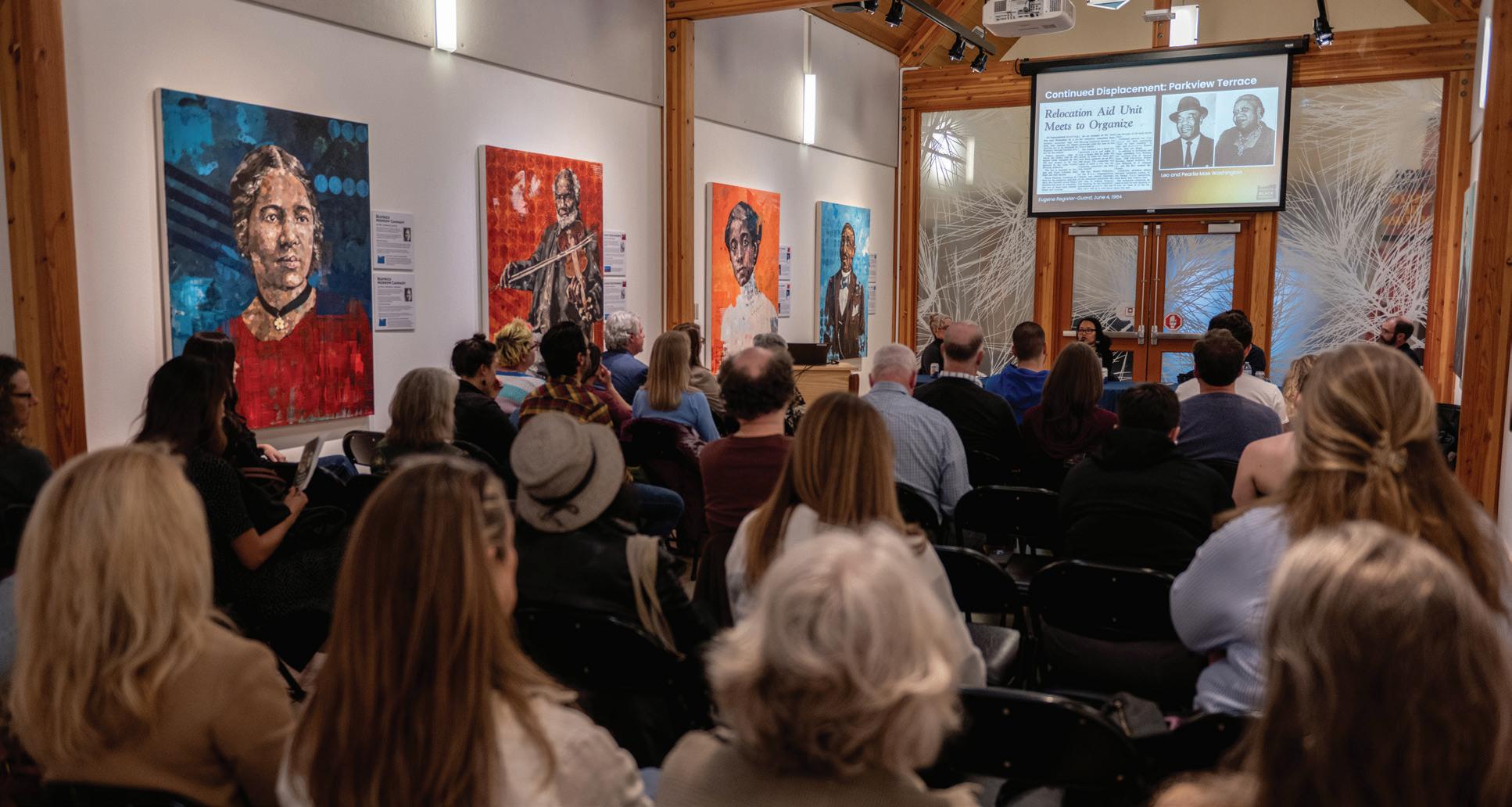
The panelists included Oregon Black Pioneers Public Programs and Exhibits Manager Mariah Rocker, founder of the Black Cultural Initiative Talicia Brown, and City of Eugene Senior Planner Stuart Warren.
The discussion began with Rocker’s presentation on the history of discrimination in this region. Rocker explained that discriminatory policies such as the Donation Land Claim Act of 1850 and racially restricted housing covenants in the 1900s directly contributed to the unfair barriers for Black individuals seeking housing.
The areas in and around Eugene where Black residents could establish homes and communities were in harsh conditions. Oftentimes, these individuals lived in areas with no running water or waste facilities and they were susceptible to seasonal flooding. Even then, when development projects were approved in these areas, the existing residents would be displaced from their homes.
In addition to these policies, “all Black settlers in Oregon face the threat of expulsion and violence,” Rocker said. Exclusionary policies and practices that existed for over 100 years made it clear to Black individuals that they were not welcomed in this area.
Despite this hardship, many Black families chose to continue to create community and help others to the best of their ability. This includes Annie and CB Mims, one of the first Black families to live within Eugene proper.
“They would utilize the two houses that they bought to welcome Black travelers that were not allowed in Eugene’s white-only hotels, including performers such as Ella Fitzgerald, Louis Armstrong and Nat King Cole,” Rocker said.
The performers listed had all been invited to and performed at McArthur Court for dances or concerts. In addition to performers invited by ASUO, the Mims family “would also house Black UO athletic recruits who were not permitted to stay here on campus during their visits,” according to Rocker.
These discriminatory and racist practices were not only confined to Eugene but the entire state of Oregon whose constitution directly contributed to their hardships. In addition, Oregon had one of the highest rates of KKK membership in the country, making it even more difficult for Black residents to live or feel safe within this state.
At the end of her presentation, Rocker emphasized “the policies and actions that were described in this brief overview continue to reverberate and impact people today.”
The spectators of the event, roughly 35 in total, were primarily realtors getting credit for attending an educational event. However, when asked by Brown “how many of you have sold a home to a Black family in the past 10 years” less than a quarter of the room raised their hand.
According to the U.S. Census, only 1.8% of the Eugene population identifies as Black. “That should tell us that there is something here that is creating an environment that does not allow Black people to be here and to stay here,” Brown said.
This shocking statistic is coupled with the prominent wealth gap that exists between white and Black Americans in Oregon. According to Brown, “In the state of Oregon, currently, white households hold $187,000 in wealth on average and Black households hold $14,000.”
This generational disparity contributes to the reduced population and the reduced number of Black families or individuals that own homes in Oregon. One of BCI’s missions is to “work to shift these systems to create greater access for home ownership.”
In supporting this mission, BCI works to provide education and resources to the Black community. They teach individuals “how to buy homes, how to generate intergenerational wealth, how to have food security and housing security and all the things that are needed and that are really owed and due to us,” Brown said.
In addition to educational initiatives, Brown shared that “Since June of 2023, we have invested literally over $900,000 in our Black community,” and that BCI has “supported four households to purchase homes, and will continue to do that work.”
With this work and continued education, Brown hopes that she can help create a community where Black people can thrive, not only obtaining but remaining in their homes.
Brown concluded, “So I hope that in a (a few years from now), that more than a few people in this room will raise their hand when I ask the question, ‘how many of you have purchased or has supported a black family and purchasing a home?’”
As the final panelist, Warren presented information about the future of housing in Eugene. While the city has its own ideas for development, the majority of Warren’s presentation focused on the housing needs determined by new state laws.
“Our new housing need is about 26,000 units over the next 20 years. For perspective, we build 900 to 1400 units a year, so we have increased that by quite a bit” Warren said.
This means that more units will be constructed on new and existing lots. Warren explained that old exclusionary practices meant lots were previously held to a size requirement and could only hold a single home. However, with the inclusion of “middle housing” those lots can be modified to hold a four-plex, college cluster or even 10 townhomes.
Beyond the need for additional housing units, the city is aiming to change their approach to housing conversations and bring in diverse perspectives, establishing a better community.
They are attempting to make positive change through the Equity Atlas research project, which tells the stories of displacement in Eugene, and the incorporation of the Envision Eugene Comprehensive Plan.
In the upcoming year, according to Warren, the city council will “adopt five new chapters for comprehensive plan. One on community engagement, compact development, urban design, housing, community health and land use.”
Ultimately, Warren hopes that by improving the city’s involvement within historically unrepresented communities, that change will be inclusive and beneficial for as many people as possible.
However, Warren clarified that these changes will not fix existing problems but serve as prevention. “We’re talking about ways in which we can prevent people from being forced to live in low income neighborhoods and be close to industrial areas.”
Finally, as these proposed changes begin to be implemented, Warren reaffirmed the mission “to really prioritize the folks who have not engaged with us in the past, prioritize the folks who will be most impacted by planning decisions.”
Mair concluded the event stating “Part of our duty as realtors is to continuously strive to become and remain informed on issues affecting real estate and as knowledgeable professionals, to willingly share the fruit of our experience and to study with others.”
After the discussion’s conclusion, two realtors shared their key takeaways from the discussion.
Jodie Smith explained that she enjoyed the events progressions “I think that was a really nice knitting together, the balance of someone who really has a great understanding of the history about how people first settled here and then how it’s tied into the current action plan.”
Stephanie Herro believes that her most important takeaway was “how the city is moving forward with new plans to sort of address some of the inequities that we’re hearing about.” Additionally Herro hopes, “that we hopefully all recognize (these problems) are not of the past, yes, and are currently impacting people on a pretty significant level when it comes to housing.”
Finally, President of Eugene Realtors Celeste Schmorde shared her belief of the importance of these kinds of education events for personal reflection. “I mean just understanding my ignorance as a native Eugeneian, … but the more informed I am, the more I can help inform those around me.”
This event brought important insights into the reality of the housing inequities across the city and how they are inextricably linked to the history of discriminatory practices. For more information about the history of Oregon, please visit the Oregon Black Pioneers website.
To learn what you can do to support the Black community in Lane County, volunteering and donation opportunities are featured on the BCI website. To keep up to date with the Equity Atlas and housing developments in Eugene, information can be found on the City of Eugene Planning and Development website.
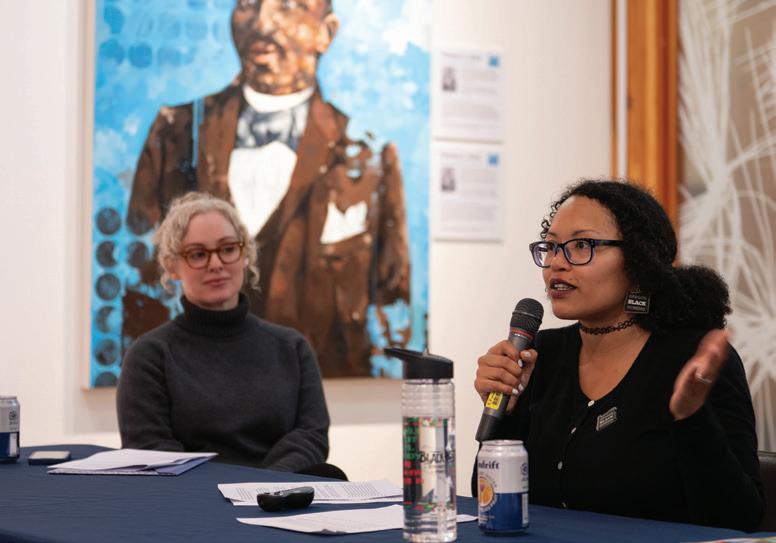
(ON THE COVER) Oregon Black Pioneers public programs/exhibits manager Mariah Rocker speaks while realtor Molly Mair looks on.
( ABOVE) A panel discussion titled The Past, Present and Future of Fair Housing in Eugene is held in the Museum of Natural and Cultural History on the University of Oregon campus in Eugene, Ore. on April 24, 2026.
(Chris Castro/Emerald)







Union politics committee says chosen senators and representatives can support higher education amid financial struggles.
By Sasha Love Senior News Reporter
The University of Oregon’s faculty union, United Academics, announced its endorsement of several state representatives and senators for Oregon’s primaries.
Rep. Lisa Fragala, district 8
Rep. Julie Fahey, district 14
Rep. Nancy Nathanson, district 13
Sen. James Manning, district 7
Sen. Floyd Prozanski, district 4
Endorsements are partly decided by UA’s politics committee, a group of five to 10 UA members.
Jeff Schroeder, the incoming co-chair of the committee and an associate professor of religious studies, said these candidates are high on UA’s list of endorsements because they condemned the university’s actions last summer when 117 faculty were laid off and UO proposed academic program eliminations.
“We met with many legislators locally, statewide, nationally, but the most effective support we got during that time came from a public letter signed by all of these legislators,” Schroeder said. “We had positive relationships with all these legislators, we met with all of them and we want to endorse them given the support they’ve shown us.”
Some candidates and measures only received a “seal of approval,” while others, like those listed above, received fullfledged endorsements. For the candidates that received these full endorsements, according to Schroeder, the politics committee reaches out to all UA members and takes into consideration any opposition.
“If it seems appropriate to do so we are interested in holding town halls with candidates or holding meetings where we all discuss it live but so far the races and ballot measures we have been considering have not seemed to warrant that,” Schroeder said.
Higher-level endorsements are made in affiliation with UA’s parent unions and may push larger academic unions to donate to the candidates.
Oregon ranks No. 46 in the nation in per-student state funding for public universities, according to the State Higher Education Executive Officers Association, and UO has tied limited state funding to projected budget deficits that have caused layoffs and significant program reductions.
Schroeder said he hopes that the Oregon legislature will allot more funding for higher education but thinks lawmakers are already on the right track by ap-
pointing the Higher Education Coordinating Commission to study university funding immediately.
“They are taking steps to look at where money is being wasted and how a more efficient and more publicly beneficial and robust higher education system could be formed,” Schroeder said. “We’re hopeful that the study will produce good positive recommendations following substantive collaboration with union members, and faculty, and staff and students.”
The study may lead to “collaboration, restructuring or integration” to “improve the financial viability of each postsecondary education institution” and the education system in its entirety.
The legislature will meet again in winter 2027 to determine the next education budget.
In a statement, Fragala, who represents the district that includes UO, said she was “thrilled” to be endorsed by UA.
“Our public universities serve as critical pathways toward opportunity and career development for many Oregonians, in addition to being one of the largest employers in local communities,” Fragala stated.
“Receiving the endorsement of an organization that is committed to defending higher education and to advocating for the frontline workers who make it possible is an honor and a privilege.”
Prozanski, who represents parts of Springfield and Eugene, said he is also honored to receive the faculty endorsement.
“I’ve worked with the faculty union over the years and continue to want to work with them and provide for the best opportunities for individuals of the university and attendants,” Prozanski said.
In office, Prozanski wants to continue to re-examine how money is allocated toward Oregon education and reverse 1990s legislation that led to less property tax revenue being used for education.
“I feel that we as a state have never held voters accountable to that type of initiative and that we have been behind ever since in trying to get to that level of funding that we need for all levels of education,” Prozanski said.
For Prozanski, creating a healthy Oregon economy and society starts with education.
“By investing in education we do in fact make a significant change in our quality of life and the ability for individuals to be able to provide for themselves and their families,” Prozanski said.
After collapsing in the final weeks of the season, the returning Ducks look to take on bigger roles next year.
By Max Koebel Senior Sports Writer
After a promising start, Oregon men’s tennis (14-11, 5-9 Big Ten) took an unfortunate turn in the final month of the season and fell short of the NCAA Tournament. Its Big Ten record was identical to last year, while its overall record improved a game and a half.
On March 21, the Ducks were at 13-3 and 4-1 since the start of Big Ten play. From there, they faced eight higher-ranked opponents and could not pull off an upset against any of them. They went 10-0 at home through most of the season before losing their final four home matches, three of which were against top 25 opponents. Oregon’s biggest win of the year was its first in-conference, when it beat No. 42 Northwestern 4-1 on the road.
Oregon’s roster will look very different next year with three of its main players graduating. Vlad Breazu held the No. 1 spot in the singles lineup for the majority of the season. He finished the year 13-5. He went 12-6 in doubles, primarily with Declan Galligan and once with Cameron Burton.
Pierre Mouesca was the No. 2 singles player for Oregon for most of the season, posting a record of 11-8. He and Matthew Burton spent the better part of the year as the No. 1 doubles pair for the Ducks, where they went 14-6. Mouesca also had a brief stint with Lachlan Robertson, where they went 2-1.
In addition to Mouesca, Robertson was partnered with Sam Olszakowski and Cameron Burton in doubles. He finished the season 11-8 overall. In singles, he spent most of the year in the No. 5 spot. He went 9-8, which included two winner-take-all matches against Utah State University and Indiana.
Oregon will have big shoes to fill without those three leaders, but it will also have
a fair number of players returning to the team. Matthew will most likely be the top player in his final season. He bounced between the third and fourth spots in the singles lineup, posting a record of 10-6. His absence at the end of the season due to undisclosed personal reasons likely played a role in Oregon’s first round exit from the Big Ten Tournament.
Matthew’s brother, Cameron, had a promising freshman season. He went 6-3 in singles, mostly in the No. 6 spot. In doubles, he and Robertson posted a 9-6 record. Cameron also partnered briefly with Olszakowski and Breazu. He finished the season 11-10 overall in doubles.
Russell Soohoo will be the other player entering his final season of college. He did not see the court in every match, but when given the opportunity, he did not disappoint. Soohoo played in just one doubles match, which he won alongside Galligan. In singles, Soohoo went 9-6 between the fifth and sixth spots in the lineup. He will look to take on a bigger role with the team in his final season.
Galligan was the other freshman who made an immediate impact with the team. He struggled in singles, going 1-4. In doubles, he went 13-6, mostly with Breazu, but a couple of times with Soohoo and Daniel Hughes, another freshman who will look to take a bigger leap next year.
Oregon will have some rebuilding to do this offseason. Regardless of what the team looks like next year, its biggest challenge will once again come against the ranked Big Ten slate in the second half of the season.
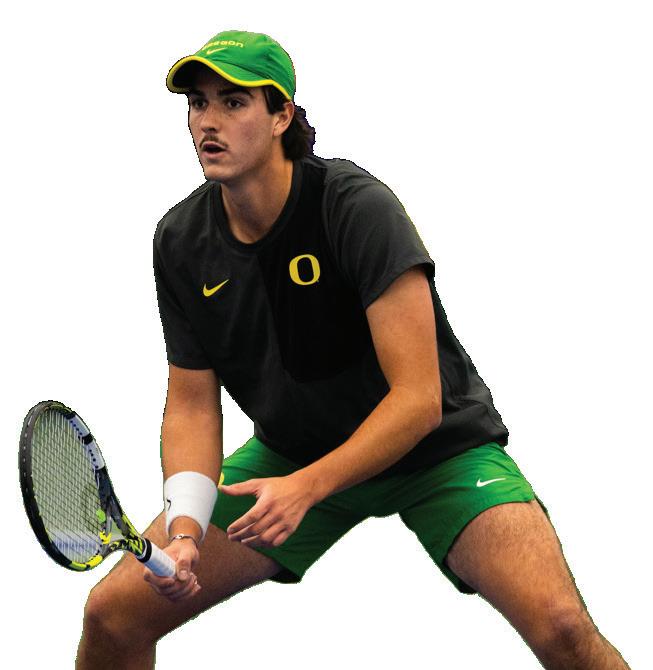
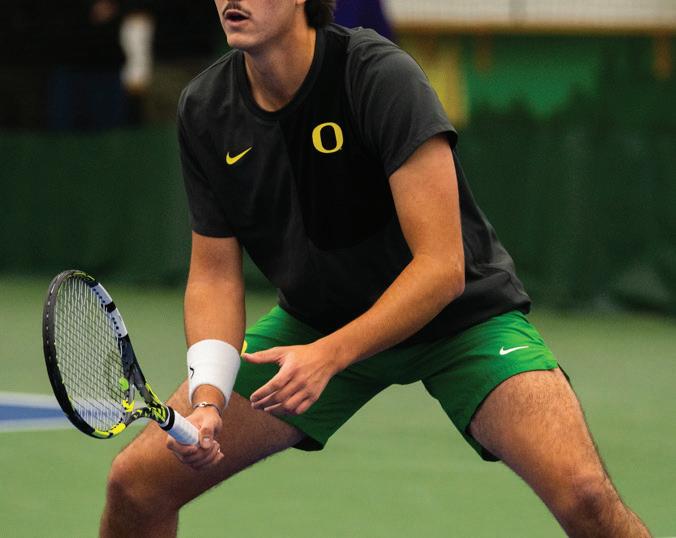
(ABOVE) Duck
defeated the University of Portland 4-0 at the Student Tennis Center in Eugene, Ore. on Jan. 17, 2026.
(Katie Poluyansky/Emerald)
By Sasha Love Arts & Culture Contributer
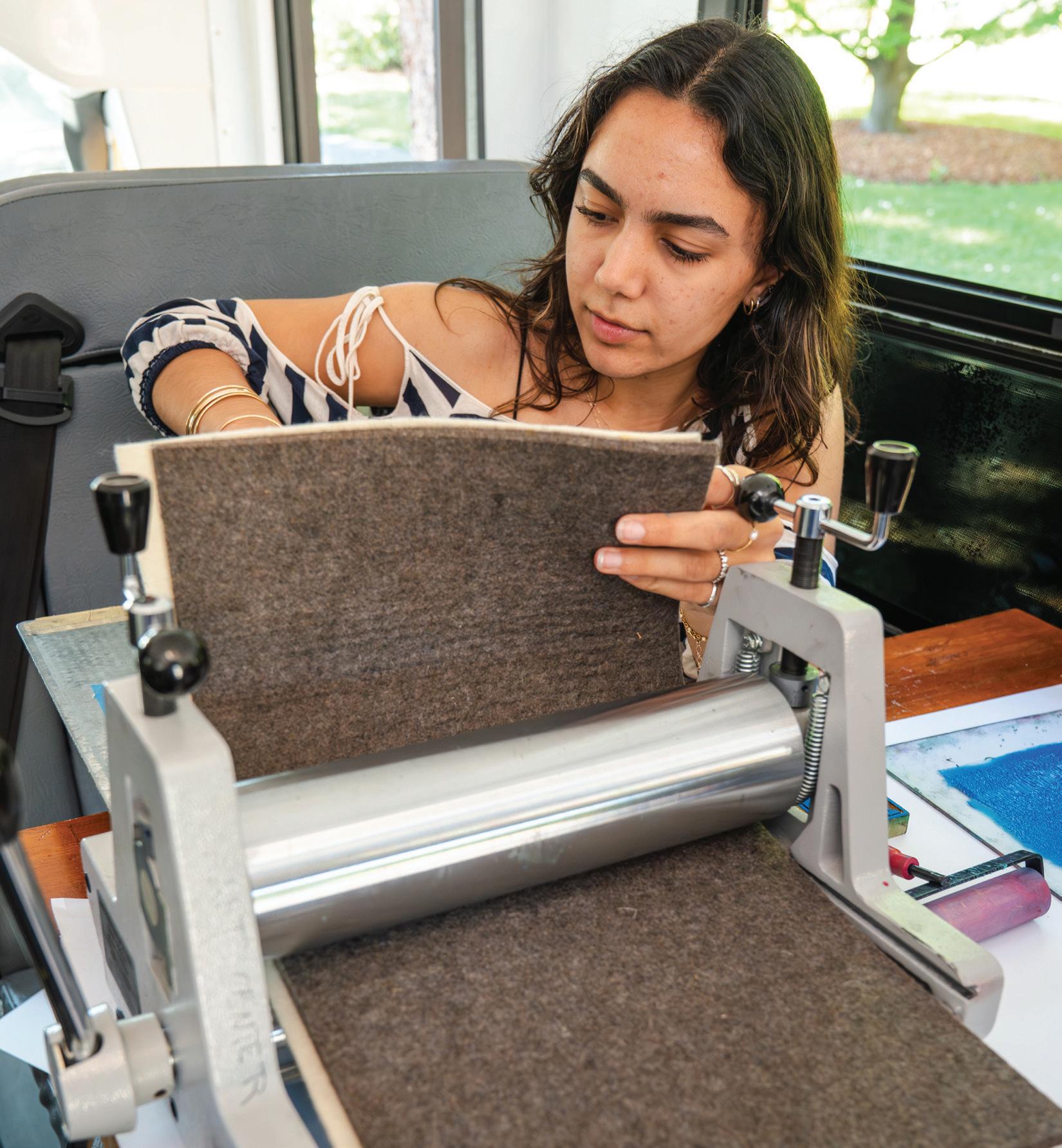
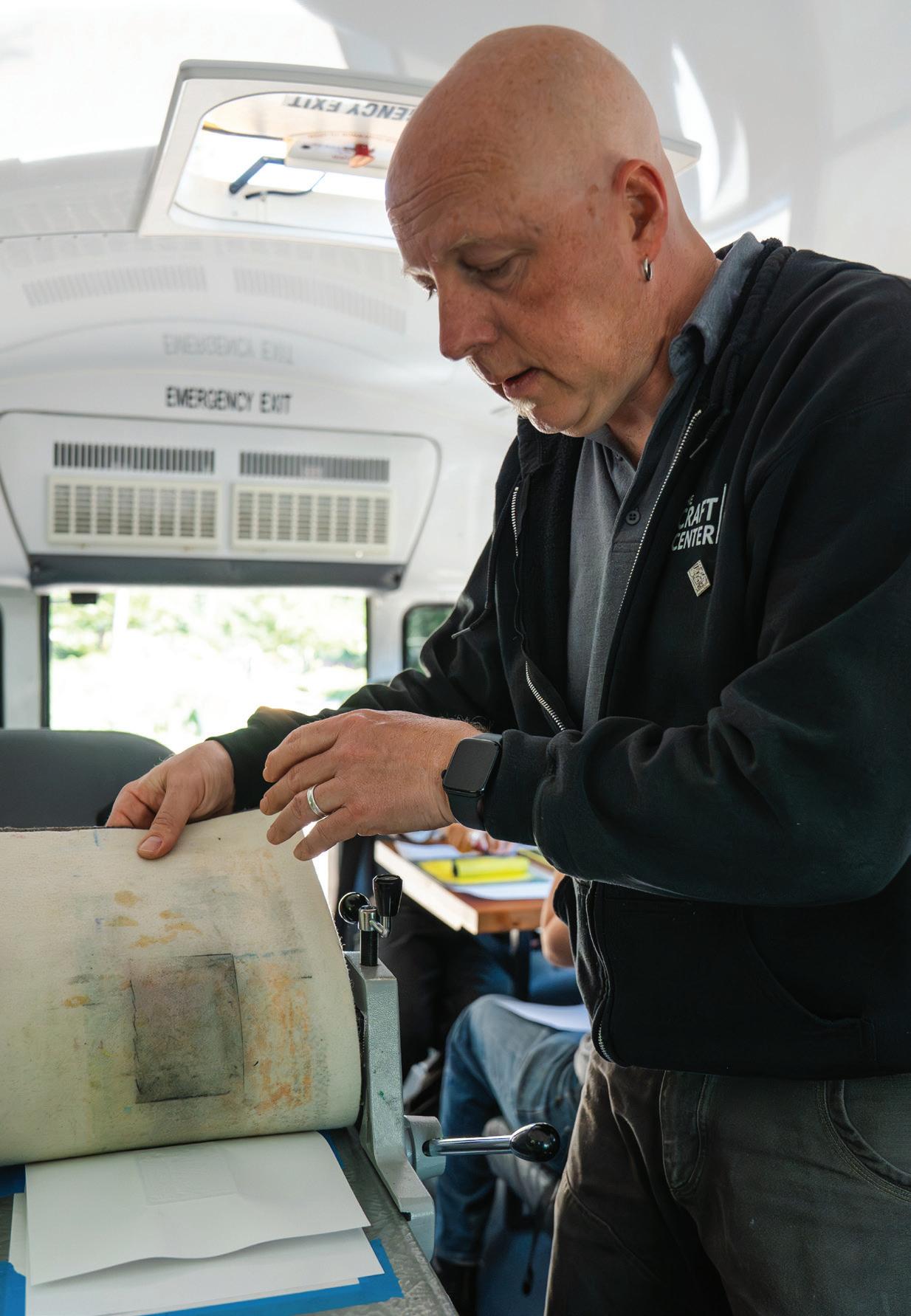
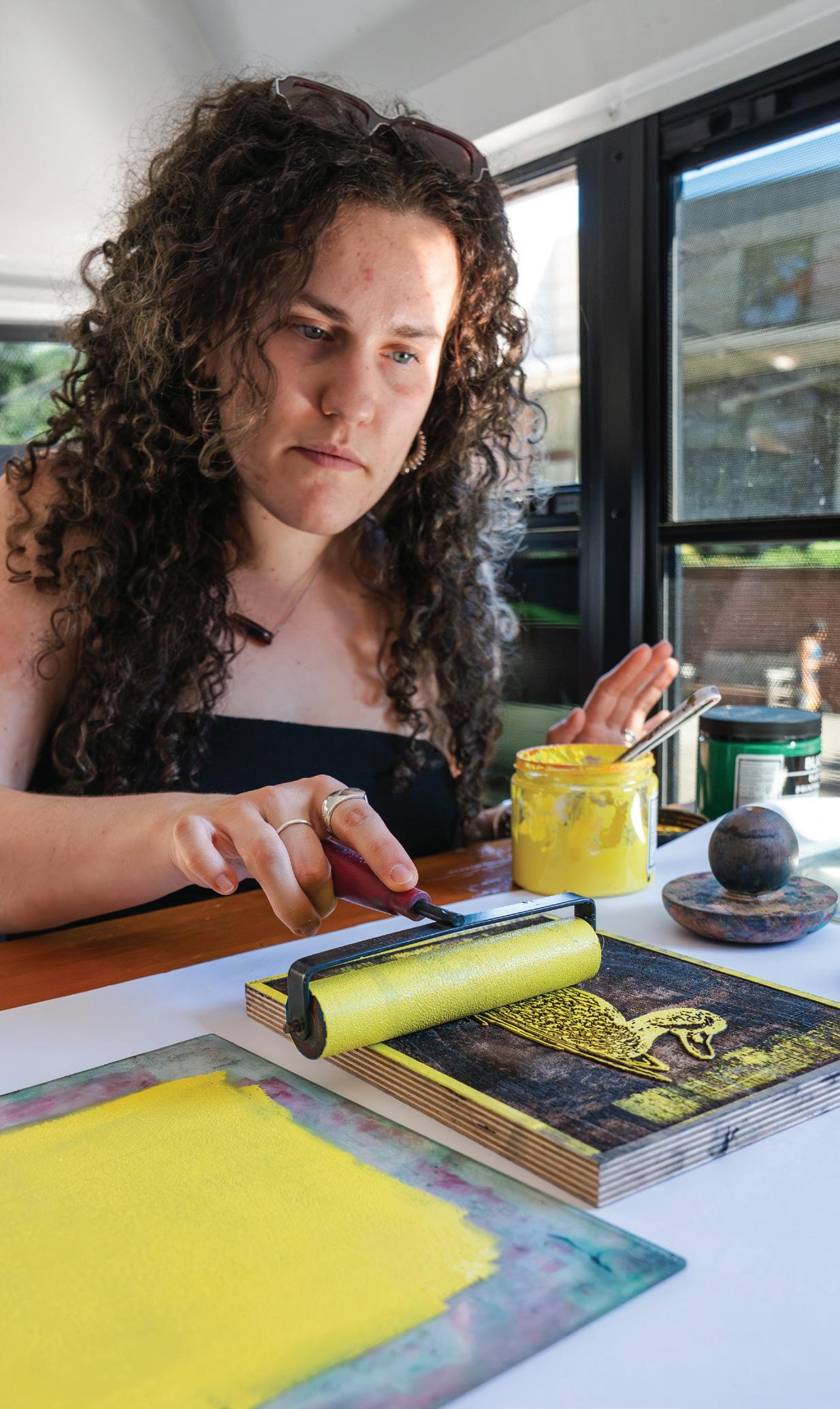
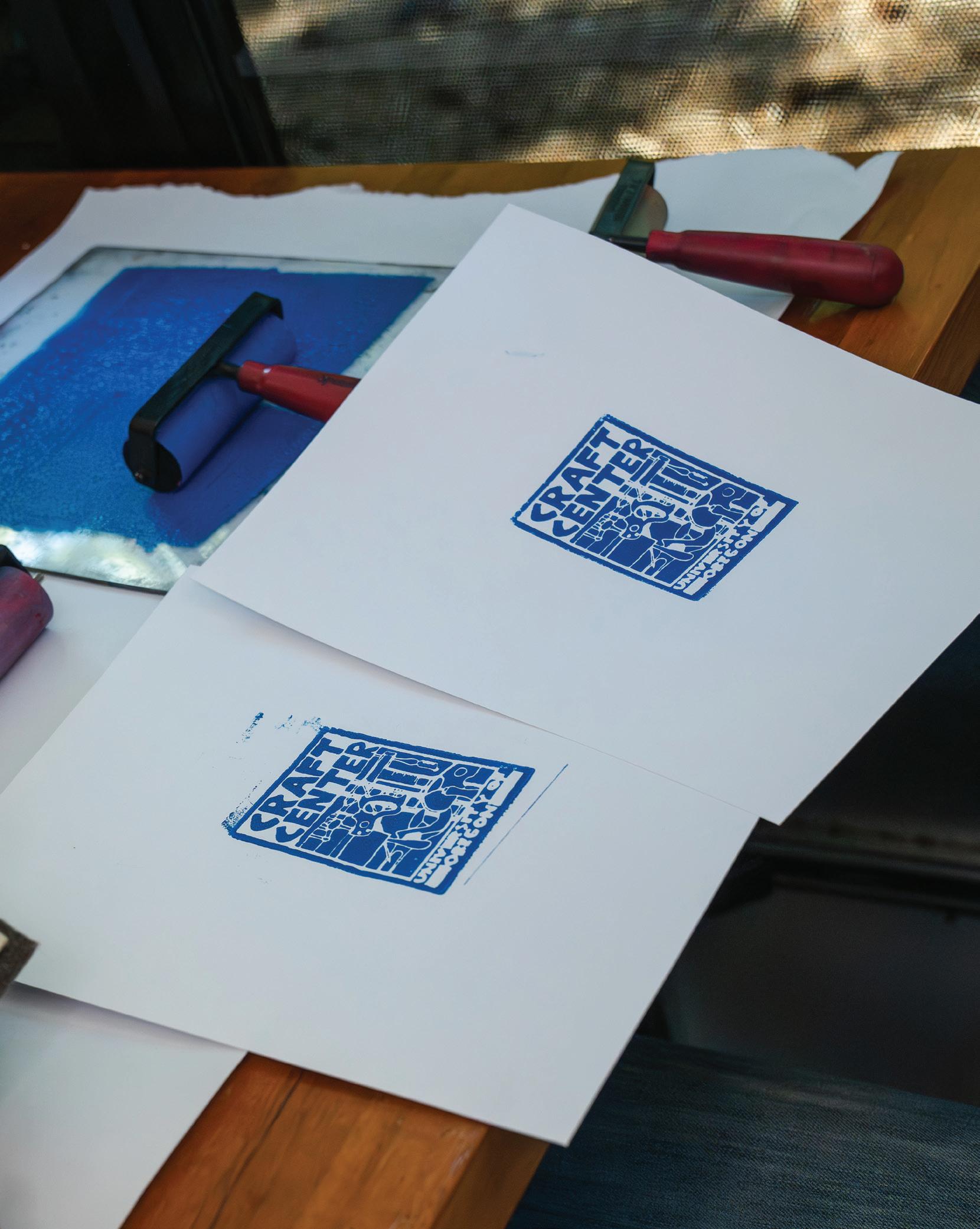
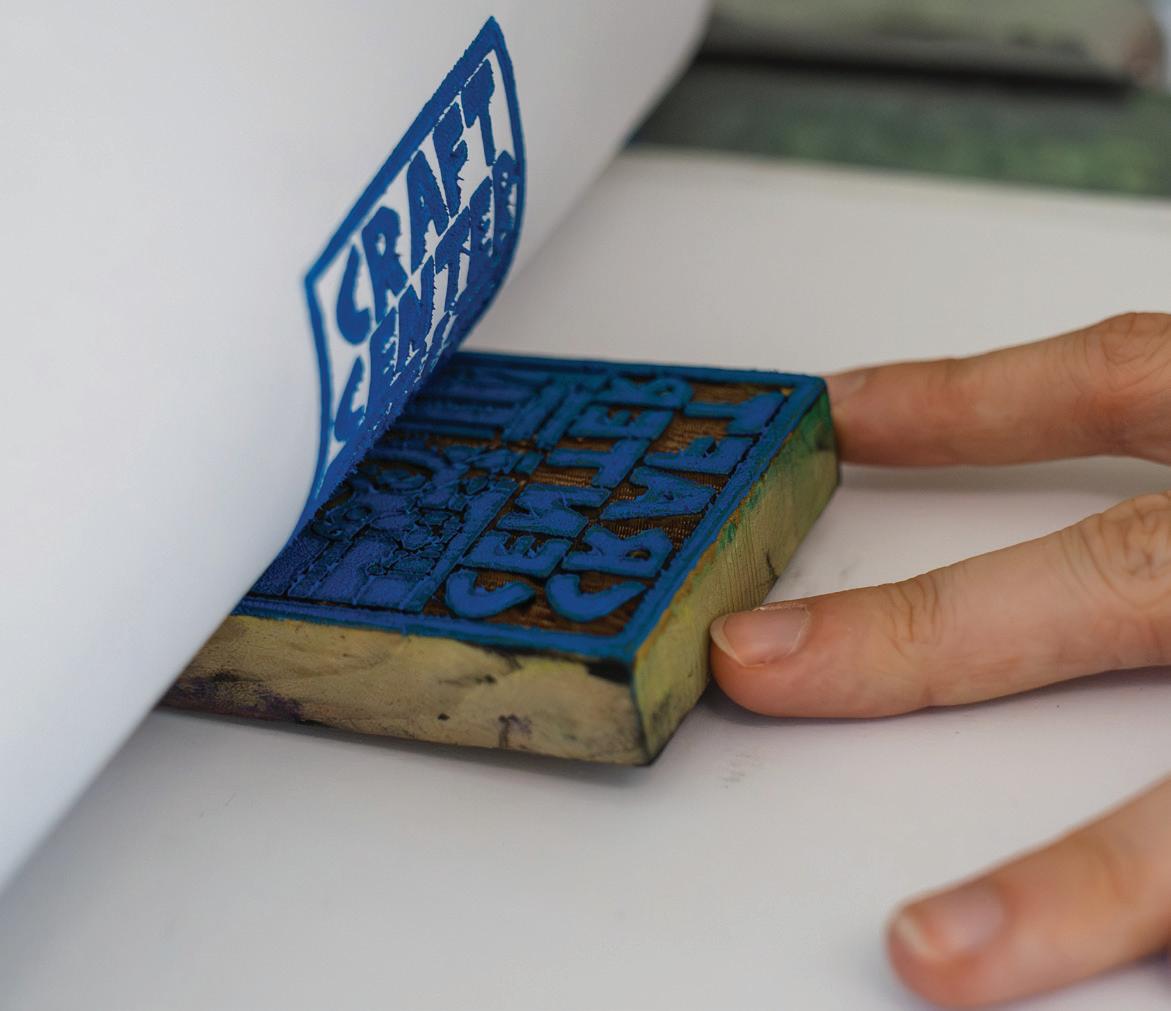
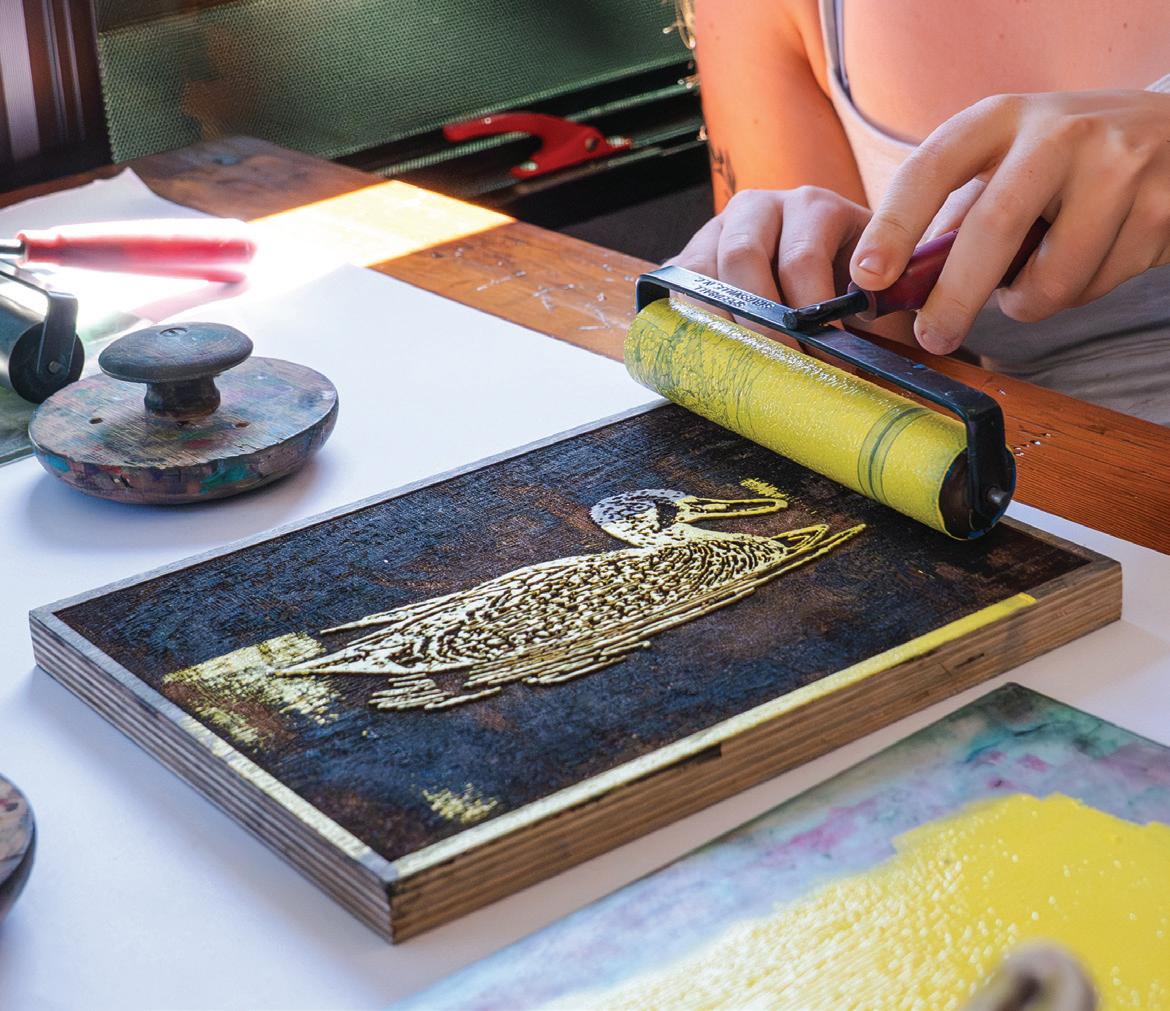
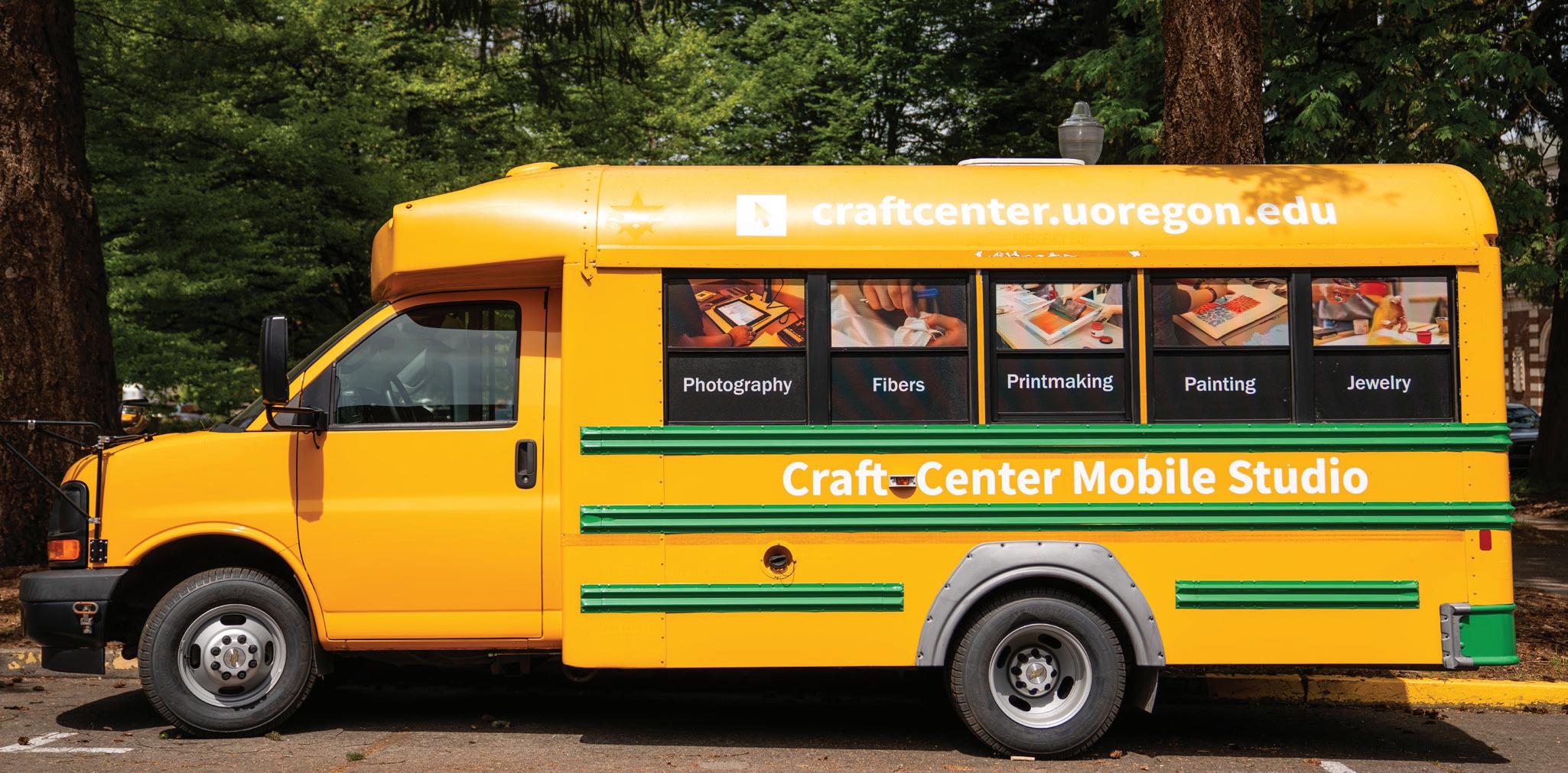
Around a year ago, “Gus” the bus took the giggling kids of Moss Street Children Center on field trips. Now he’s being filled with glitter, paints, chisels and mini pottery wheels. This is the first step of the bus’s transformation into a mobile craft studio.
The craft center bus will travel to events around campus and possibly the broader Eugene community to share the joy of crafting.
“Every time I am out here working on the bus, people are walking by and going, ‘Oh yeah! There’s a craft center!’ And that’s a win right there,” Terrence Heldreth, the craft center’s assistant director of operations, said. “You can walk past the craft center, but you can’t walk past a big yellow bus.”
Heldreth, who has worked at the craft center for over 20 years and has a background in sculpture, sees crafting as an essential part of the college experience and simply being human.
“When you see people get out of their head and stop staring at their screens and start doing things with their hands, it changes the way your brain works. Your brain is hardwired to do things with your hands, whether you know it or not,” Heldreth said.
Heldreth is happy to see artsy people use the bus, but he is more excited to attract people who think they’re “not crafty.”
“It's really fulfilling when you get one of those people. It's like, ‘Oh, I'm not crafty.’ And I can always say, ‘I guarantee you are, you just haven't figured out how yet. You do want to make, you do want to create, you just don't know where yet,” Heldreth said. “And seeing them find it is magical… It's a co-curricular piece. It’s part of the education you need that's not necessarily covered in the classroom.”
The bus’s only excursion so far has been a trip to Coburg Community Charter School, where students made fairy houses, but Gus is getting ready to go on more excursions soon.
This summer, the UO Craft Center plans to take the bus to the Museum of Natural and Cultural History’s bee festival, where participants will have the opportunity to embroider several types of Oregon bees and make honeycomb-pattern bookmarks out of copper. The center also wants to move the bus around campus in the fall so students can enjoy study breaks.
“We’ll have the mobile unit where people can come in and just enjoy doing a little craft, something very simple, let their mind relax, enjoy a moment of just de-compressing, that kind of thing,” Cece Anders, the craft center’s assistant program director, said.
But Heldreth and Anders’ vision for the bus expands beyond the boundaries of campus. Heldreth is brainstorming ways the bus might stop by the Eugene Saturday Market or the summer downtown Thursday Night Markets.
“It really would be nice to get out and just do some events with people from outside the university community, because then those people come in and they do things here, and then students are exposed to more people (at the craft center),” Heldreth said.
The bus might also explore UO’s satellite campuses in Portland and Charleston, and even other schools.
“We keep dreaming about taking it a little further afield and connecting with other partners,” Anders said. “Because it’s mobile, it's a unique opportunity to connect with students who are further afield.”
Between conventional rows of grey bus seating, Heldreth has installed tables built from the wood of the craft center’s 1970s shelves. Heldreth describes the layout as a “train setup.”
“These are parts of the original craft center,” Heldreth said, tapping on the tables, “I really wanted to tie the old craft center to the new craft center.”
Right now, the bus is classy but undecorated. Heldreth and Anders said the no-frills interior keeps the vehicle multi-use.
“We’re staying pretty bare bones with it now just because we want to make it a pretty multi-functional space, just being able to have it be usable and changeable at any minute to something else if we needed to,” Heldreth said.
Still, Heldreth said they might display prints of photographs and he also thinks hanging stained glass lighting above the tables would be neat, but isn’t sure it would be possible in the realm of physics.
Whether it’s building lighting or installing tools, Heldreth has a contagious can-do attitude.
There is only one outlet in the bus, but Heldreth is thinking outside the box, pondering how tools can be converted to battery operation instead. Heldreth welcomes almost all the challenges that come with remodeling a bus, though the leaking roofs last month did get on his nerves.
Seeing the “magic” students create in the craft center’s DIY studio has inspired Heldreth to make the bus the best it can be.
“Several times in the last two or three months I’ve gone in there and seen someone making a big banner,” Heldreth said. “And they were happy birthday banners for roommates and friends, and they were just in there making something to make somebody else happy… and that is really neat.”
Heldreth believes using your hands, whether to carefully sculpt clay into a mug, design a button for a protest or watercolor a birthday card, should be part of every student’s experience.
“We need to make things. We need to affect the world around us, and craft is an amazing way to do that,” Heldreth said.
Photos by Lilly Wall

A closer look into the Hult Center’s most recent multimedia symphony experience.
By Fiona McMeekin Arts & Culture Writer
Dolly Parton’s “Threads: My Songs in Symphony” took the stage at the Eugene Hult Center on Friday, May 1. The event showcased Parton’s unique ability to connect with a wide range of people. It offered showgoers an unexpected blend of modern multimedia technology, traditional orchestra and, of course, Parton’s country roots.
As the orchestra played, three vocalists performed her songs on stage, while a large screen displayed visuals of Parton herself, who walked the audience through the performance, sharing anecdotes and words of wisdom.
Parton’s love for Eugene began in 1972, during a Valentine’s Day concert at the Lane County Fairgrounds. While traveling with Porter Wagoner early in her career, Parton felt ill from her time on the road.
Despite canceling several prior shows, Parton took the stage at one of her last stops: Eugene, Oregon. As she took the stage, Parton openly shared her struggles and was met with understanding and kindness. It was here that she received her first, second and third standing ovations.
She immediately returned to her tour bus to write the song that plays at many of Eugene’s sports arenas today, simply titled “Eugene Oregon.”
Parton sings:
“Eugene, Oregon, I’ll remember you for the rest of my life
I won’t forget how good you were to me
No and I won’t be forgettin’ all the kindness that you show
To a homesick country girl a long, long way from Tennessee.”
Her ability to connect with and express gratitude to the crowd has been a throughline throughout Parton’s career,
supporting her unique ability to relate with diverse audiences.
“To hear the music of someone who has such an impact over such a long time and a broad influence across culture, too, that’s another thing that’s amazing about Dolly,” David Hamilton, orchestrator and arranger of the show, said. “She’s always been true to herself, and she can speak to people who have different views about culture, politics, and she’s just true to herself.”
Transforming Parton’s songs for orchestral performance is an unusual yet exciting task for composer Hamilton, and for the three vocalists, Blair Lamb, Katelyn Drye and Hollie Hammel.
“I remember the first time we did this with an orchestra. Whenever we hear the swell of the overture to start, it never gets old for me,” Lamb said. “The feeling of having such a powerful force behind you is beautiful.”
The title “Threads” has multiple meanings. As Hamilton said, Parton’s music connects people of all kinds through all kinds of music. Though best known for her country charm, Parton has branched out into many genres: gospel, bluegrass, rock and even pop. It makes sense that her music has the depth to be adapted for orchestral performance.
“It’s a testament to Dolly’s writing. I’ve said this for years about all good songwriters. If you write a good song, it can live in a different light, and it still has impact,” Hamilton said.
The vocalists helped lead this theme of adaptation through song. Each with very different musical backgrounds, the vocalists pay homage to Parton while bringing with them their own flair.
The vocalists see themselves as embodying distinct facets of Parton’s musical persona.
“The young Dolly stuff as she’s on the Porter Wagner show and the sweeter stuff, that’s the track that I cover,”
Lamb said. “The big emotional songs, Holly does a great job of storytelling. Then Katelyn gets some of the more fun, flouncy ones.”
The multimedia aspect ties into the theme of Threads, as the technical aspects of animation and video guide the viewer through the transitions between songs. The viewer feels a deeper connection to the live performance as Parton speaks directly to them, sharing the stories behind her songs.
This show signifies the adaptation not only of Parton’s music but also of the evolving landscape of live music, incorporating engaging storytelling elements. Parton’s strong storytelling and broad body of work make audiences feel not only connected to Parton but also seen and further connected to themselves.
“People didn’t come here to see me; they came to see themselves,” Parton said to the audience.
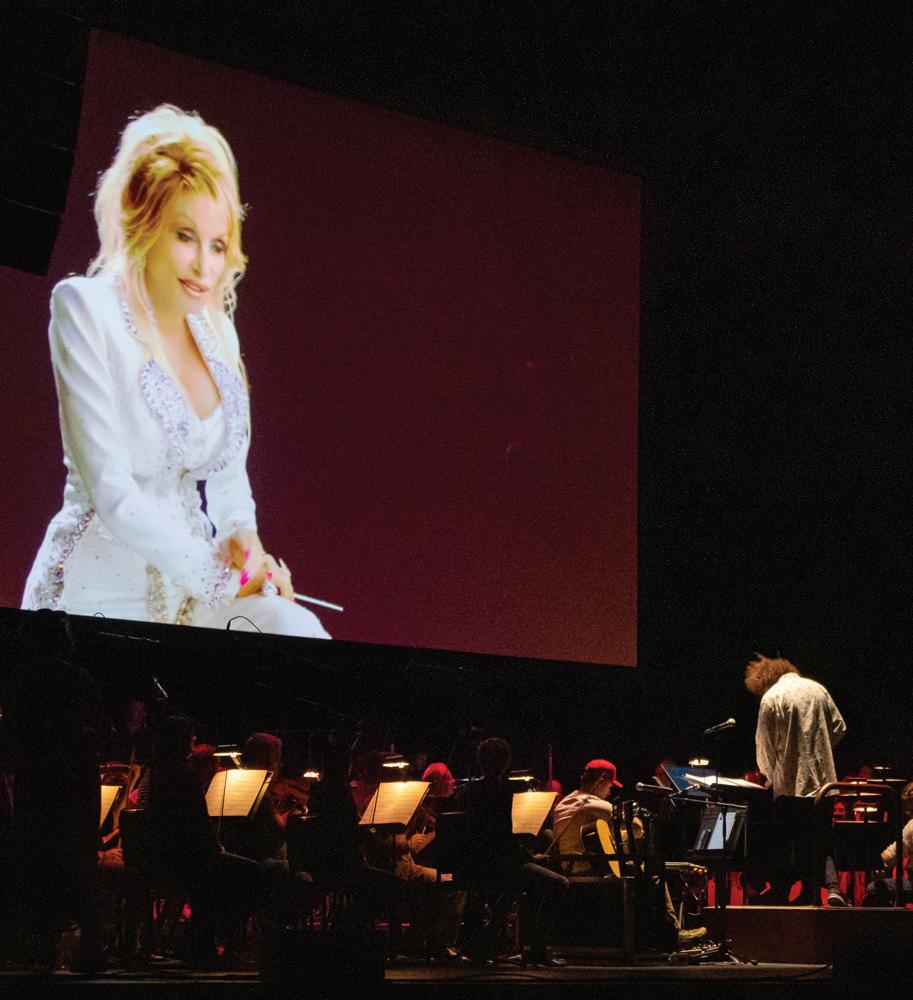
( ABOVE) A video of Dolly Parton plays above the Eugene Symphony, conducted by Artistic Director Alex Prior, during a rehearsal for Parton’s “Threads: My Songs in Symphony” at the Hult Center on April 30, 2026. The concert is part of a multimedia touring production that brings some of Parton’s biggest hits to life. (Corey Hoffman/Emerald)
Hui ‘O Hawai’i hosted its 51st annual Lu’au on May 2 to an audience of hundreds, commemorating Asian American and Pacific Islander Heritage month.
By Amelia Fiore Arts & Culture Writer
An ensemble moves in tandem on stage, donning colorful patterns of pink, yellow and green with flowers tucked into their hair. Some toss money and wave the flags of Samoa and American Samoa around the main dancer, who is adorned in a red tuiga, to the sound of guitar strums and cheerful cries.
It was one of several performances from Hui ‘O Hawai’i’s 2026 Lū’au, an Asian American and Pacific Islander Heritage Month celebration of culture and tradition through dance. The event, which took place on May 2, spotlighted an array of performances, bookending a dinner catered by local restaurants Every Day Kine Grindz from Hawaii and Spring House. It also featured a raffle and other on-stage entertainment for the 749 audience members present.
Hui ‘O Hawai’i organized the event alongside the Pacific Islander Student Alliance, a group representing Micronesian, Melanesian and Polynesian students, which was founded on UO’s campus just last year.
“It’s a special event for everyone to just gather, eat food, have a good time, watch some performances,” Penina-Taima Vaimaona, lū’au co-coordinator, said. “We’re very proud to represent our culture (and show) how proud we are of the place that we come from and how much time and effort we put into this event.”
Vaimaona and Caleb Correa, seniors, oversaw this year’s lū’au, and this year is their first as members on the executive board. They weren’t sure what to expect, but they knew
that they wanted to create a space for shared celebration and performance.
The theme this year is “Mōhala ka pua ua wehe kaiao,” or “The blossoms are opening for dawn is breaking.” It’s a proverb from the book ‘Olelo No’eau, chosen carefully by the coordinators.
According to Correa, “Last year was our 50th, and in that (year’s proverb), it talked about paying tribute to our past and our ancestors. Now we’re using that to move forward.”
It’s a message of hope in the face of new beginnings. “In order to create something more uplifting, we wanted to make it calmer, easier and just more open to interpretation for everyone to encompass,” Correa said. “For freshmen, their journey into college, and for us seniors, our journey out into the real world.”
There were three different sections of performance: Hula, Tahitian and Samoan, each carrying its own style and telling its own story. The show began with a hula kahiko number to “I Wehe Rose Nō Ka Lani” and finished with the Senior ‘Auana, a celebration of the graduating members, to “Sweet Memory/Makalapua.” The show also included a display of Siva Afi, a traditional Samoan fire dance, and an opportunity for audience members to get on stage to learn some moves themselves.
Hui ‘O Hawai’i has been working on this year’s choreography since January. Correa, a dance major, helped to shape some of the dances, but the group also connected with dancers from around the state to create different segments. One notable contributor was Angie Jackman, founder and
owner of Portland’s Teva Oriata Polynesian Dance Troupe, who choreographed the Ahuroa/Mehura and ‘Aparima performances.
What Vaimaona was most excited for was the Samoan section of the performances. “It’s an all-girls section, and I’m of Samoan heritage, and we put a lot of time and effort into all of our dances,” she said. “It’s been a really fun dance, so I’m really excited to see it all. But I’m also just really excited to watch everyone be really proud of all the work they put in. It’s been a long journey.”
Organizing the event caused some stress along the way, one speedbump being the financial toll of hosting such a large-scale show. The ASUO surplus request was crucial, but with limited funding, the coordinators were pushed to get creative, which they couldn’t have done alone.
“This is definitely not a two-person job. It’s way too much work for just two people, so we appreciate each and every one of them taking a lead and helping us execute this,” Vaimaona said. “Also, just all of our club members and our dancers, they work so hard to put on this show. We wouldn’t be able to do it. It’s not just the dancers; it’s also their parents and their friends who have poured into this event as well. So we’re grateful for all of them.”
“We genuinely have grown very, very close throughout the years,” Correa said about the group. “And even for me, I only transferred here the last school year, but being taken in by this current senior class is just very honoring and warming because they are like my family away from home.”
Months of preparation, practice and organization came together for a few hours on a softly-lit stage for hundreds to admire. For audience members, Hui ‘O Hawai’i and PISA, this annual lū’au was a way to come together and look forward to what the future holds.
•
•
•
•
•
Mental


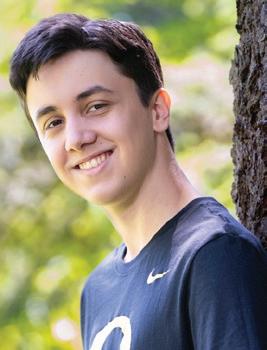
Reed is a firstyear political science student who’s interested in unusual historical facts and sharing the stories behind them. He plans to pursue law in the future, but for now, he enjoys exploring Eugene, trying out new clubs and diving into any friendly debate that comes his way.
Opinion: Constructing a fence around the federal building threatens public access to government.
By Reed Betts
Opinion Columnist
One of the most powerful ways for Eugenians to make their voices heard is to protest at the federal building, bringing public pressure directly to the government’s doorstep.
But now, that access is under threat, as structural restrictions have broader implications for the functioning of our democracy as a whole.
On April 30, the U.S. government fulfilled its promise of building a fence around the federal building and its plaza which will remain for roughly two years, in light of recent protests.
This is a flawed decision, and should be reversed as soon as possible. It contradicts the fundamental right of all Americans to engage with the federal government. We are a representative democracy, and when our democracy isn’t working for us, the Constitution clearly outlines our right and responsibility to resist that.
The U.S. government is blocking our ability to take our demands and grievances to the top. As one member of UO’s Young Democratic Socialists of America branch (who was granted anonymity because they fear retaliation due to recent protest activity) put it, “It’s appalling and disgusting in our expected democracy.”
Many Eugenians have demanded an end to the Iran war, the halting of the unconscionable actions of ICE and a rethinking of the United States’ response to the Israel-Hamas War. The Federal Building has been at the epicenter of all of this. Such is our unalienable right; the founders gave us freedom of speech and assembly for a reason.
Eugene has a long history of protest, even serving as one of the front lines of the anti-Vietnam War movement. All of this is under threat from an administration diametrically opposed to public access to government, as allowing that would weaken the Trump administration’s grip on politics.
Not only is this decision an undemocratic move, its justification is also deeply flawed. The fence is in response to the protests over the last few months, particularly those against ICE activity in the area. During one such protest, glass was broken, tear gas was launched into the crowd and an active riot was declared.
However, as Jackson Smith at the Eugene City Council’s recent meeting pointed out, “A proposal for a fence denying protesters their right to protest misunderstands the cause behind the escalation of events.”
EPD and federal officers have been far from innocent. They have arrested nonviolent protestors, and used chemical weapons so strong that their use in war is considered a war crime. Even the basic fact that the windows were broken is controversial, as it isn’t clear who actually broke the glass that fateful night. The FBI’s official story is that it was the protestors, but footage from The Daily Emerald indicates that federal officers were breaking the glass to fire tear gas.
These protests can escalate beyond control, but that is not a justification for blocking people’s access to the government. In the eternal balancing act between individual rights and public safety, this decision tips too far right.
While in comparison to proposed limits on voting rights, a fence around a single Eugene building might not seem like the most pressing issue, what matters is the principle. It sets a dangerous precedent of the federal government physically blocking public engagement.
For the sanctity of our democracy, we must resist fencing of the federal building, whether by packing city council meetings, emailing our representatives or protesting wherever we can.

Opinion: Oregon’s athletic facilities are rising fast. So why does it feel like everything else is shrinking?
By Kat Benton Opinion Columnist
Each morning on my way to class from the bus, I pass the towering steel skeleton of a new athletic building, with a mechanical symphony of construction equipment hammering away. To some undergraduates, it’s background noise. But to students who saw departmental funding or entire faculty positions cut, it’s getting harder not to notice what comes up and what goes down.
Construction is well underway for the Hatfield-Dowlin Complex Practice Field Expansion, an indoor athletics training facility slated to open next year. The plan for the building is formidable, including a meeting space, indoor field, nutrition and recovery areas, expanded weight rooms and players’ lounge. Standing at nearly 100 feet and
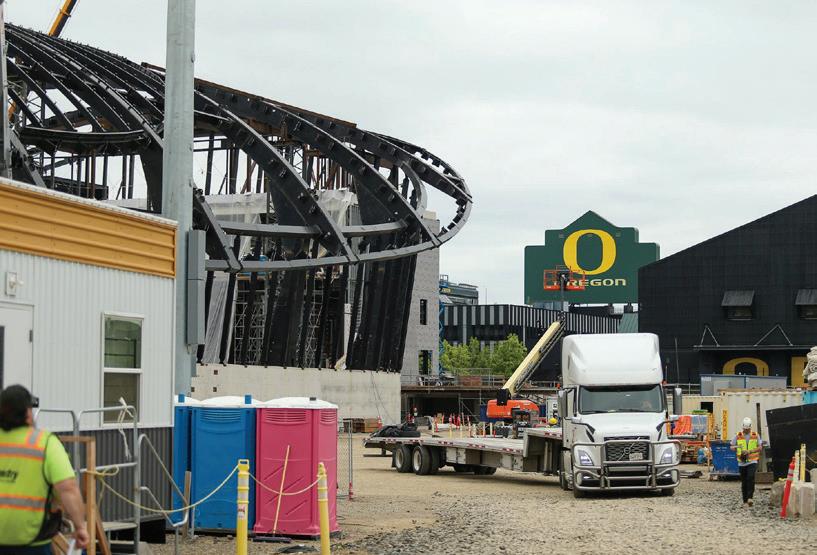
spanning 170,000 square feet, the facility is also entirely funded through private philanthropy.
The expansion marks a new addition to the athletics program’s increasing collection of buildings filled with state-of-the-art technology, with the number and size of the facilities resembling a small college of its own. Dan Lanning himself noted the change, saying that in a “healthy university, you’re going to see some buildings going up.” That confidence is harder to share when the sheer scale of construction stands in stark contrast to the slow attrition of staff members and academic departments happening at the same time.
It’s hard for an undergraduate without a connection to athletics to ignore a continuous pattern of donors funding athletic programs, used by only a small portion of students, over academics. The tension created by the funding imbalance has only worsened as time goes on, especially as recent, sudden budget cuts remain controversial for many students, faculty and staff members.
Blaise Malczewski, director of organizing for ASUO, expressed that the administration and the Board of Trustees are “prioritizing private funding for athletics in the same year that they made large-scale cuts to academic programs and fired student workers and non-student staff that make the university function.”
When I contacted UO Giving for a statement about whether comparable donor funding goals
exist for non-athletic student services and whether these donations displace philanthropic capacity that might otherwise go to academics, they said that “many donors support both athletic and academic programs,” and “give to the programs they care about.” I was also directed to the Oregon150 initiative, which aims — and will likely achieve — its goal to raise $500 million for student success and capital priorities.
But when asked directly what percentage of athletic giving is concerning for students, the response offered raw giving totals from five years ago without engaging the question. The numbers were certainly there. The answer wasn’t.
This is not intended as an indictment, but rather an inquiry into why our culture prioritizes certain institutions over others and what it means to ‘grow’ as a university. When buildings go up, the support for the average student — whether through scholarships or the staff who make UO function — should rise with them.
In a year or so, the cranes will eventually come down, and the construction equipment will disappear. I’d like to think that by that time, something else will rise with it. Maybe a department restored, a staff position refiled or an answer from someone in charge. Until then, I’m still waiting.
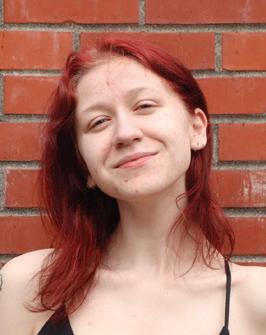
Kat is a thirdyear CHC student studying psychology with minors in legal studies and entrepreneurship. She enjoys writing about power dynamics, institutional accountability and the ways political structures shape communities.
Music genre with flutes, lyres, and hurdy-gurdies
Long-tongued termite predator
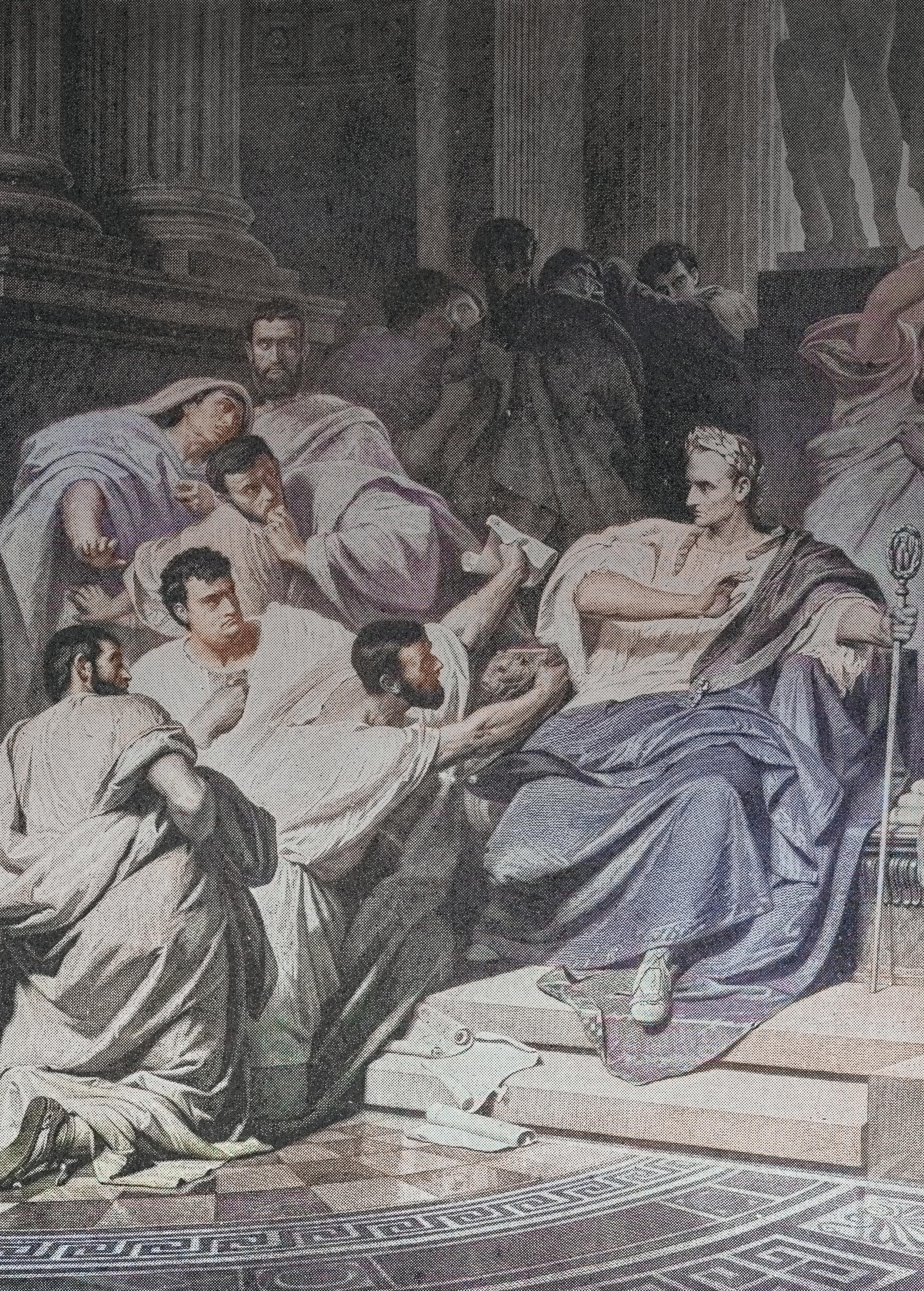
1 Unknown, on a sched. 2 Gandalf portrayer McKellen 3 Enluminure or frescos, ex. 4 Accessory for a performative male 5 Prepare a drink at a tavern 6 His and ___ 8 1/10th of a century 9 Cowboy ___Beyoncé 12 Tarot, for one 13 Antioxidant berry
Car wash supply 16 Witch hunting group, maybe 17 Debtor’s letters 18 History citation style, for short




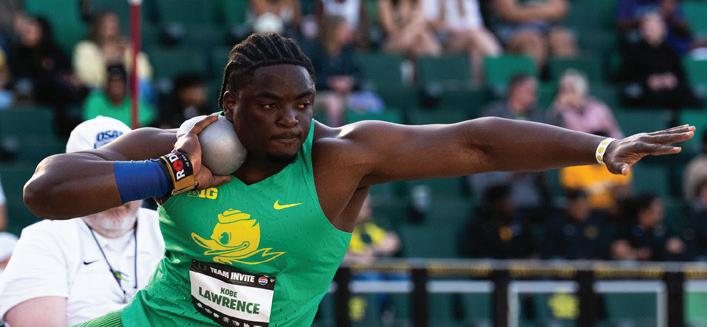
Ducks’ shot put led by two of NCAA’s best
Senior Spotlight: softball seniors fueling Ducks in more ways than one
SATURDAY
May 16, 2026
Oregon vs. USC
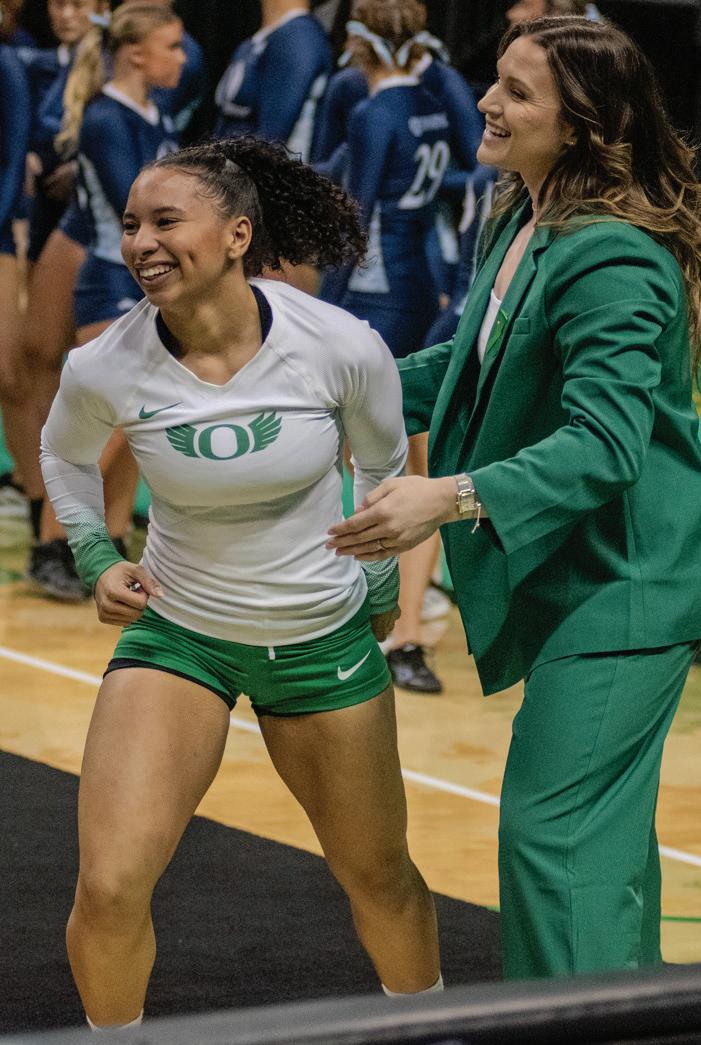
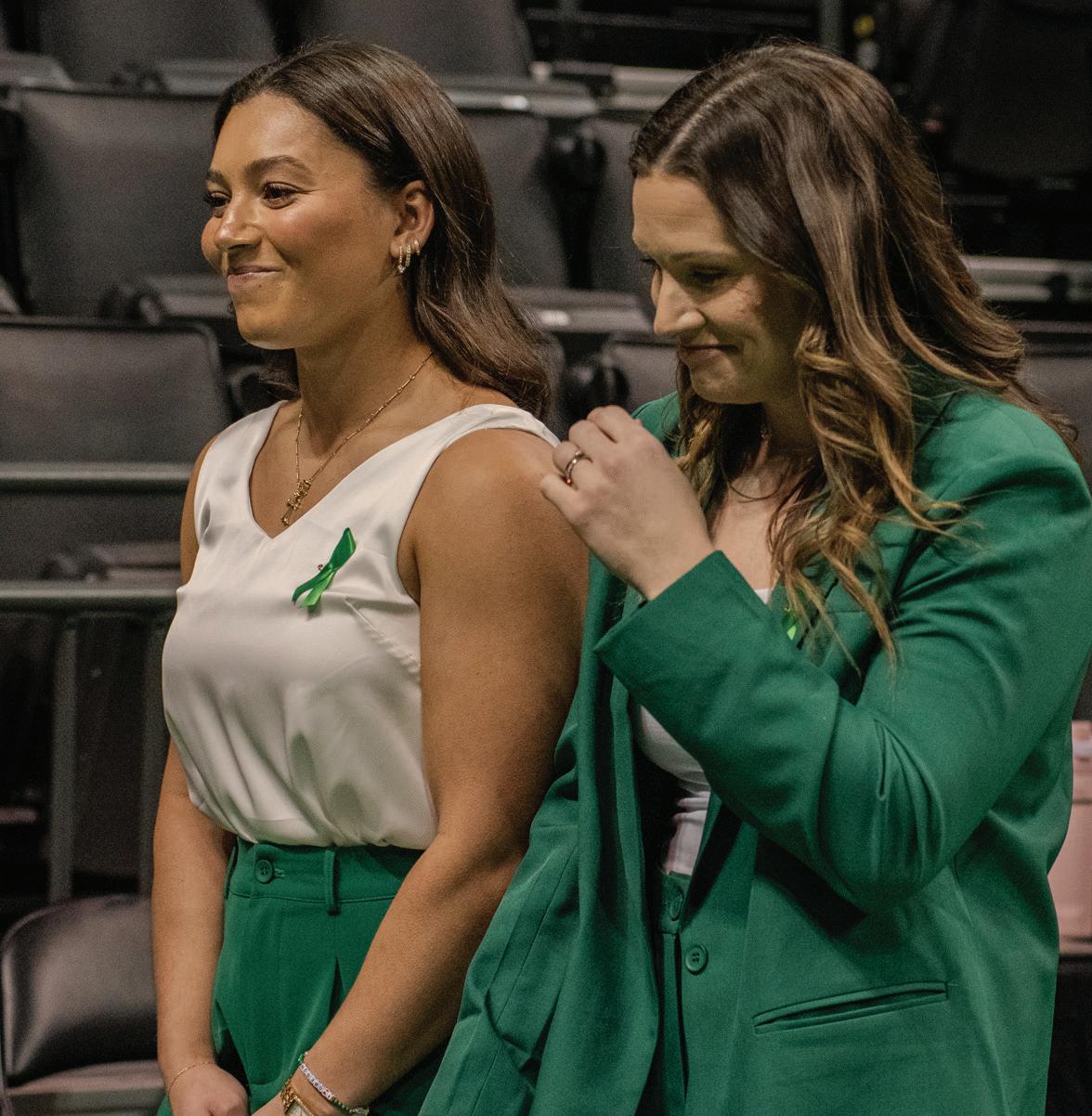
Ducks assistant Ashley Fallgren left a corporate job to work in Eugene. At Oregon, she discovered her future.
By Owen Murray Associate Sports Editor
AZUSA, Calif. — Ashley Fallgren was pretty sure she wasn’t meant to be an accountant. But when she sat on a family Zoom call in March 2025, she wasn’t sure what she was supposed to be yet, either.
The call was her idea. She was 24, in the thick of the accounting season, and hitting “rock bottom mentally with my job,” she said. Her mom, Simone, has three siblings, and they’re anchors for Fallgren. She wanted direction, and she thought it would come from hearing what they did in their first job out of college. Her uncle’s first question, though, took a different direction.
“Okay, Ashley, let’s start here,” he said. “What is your purpose in life?”
“It was such a big question for me at the time, because I really felt like I didn’t have one,” Fallgren said.
She started crying.
A year later, Fallgren, now an Oregon assistant coach, stood on the sideline of the NCATA National Championships in Azusa. She could look across the gym and see her world — her team, her best friend and her purpose. The mental work she did bled into her team as it made a run to the semifinal round and claimed three event championships.
Fallgren was a year out of competition as a student-athlete at Gannon University and working as an accountant in New York City in April 2025, after the call. She decided to make the trip with Simone to Sioux Falls, South Dakota, anyway, for the National Championships. She was sitting in the crowd with her mom when it hit her. Fallgren turned to Simone.
“Ash, if you were looking for a sign, this is a sign.” Simone said. “You need to go out and do this.”
Later that weekend in South Dakota, Fallgren was watching her best friend, Gannon University then-assistant coach Addy Womeldorph, at event finals. The Golden Knights had a mishap in their synchronized toss heat and scored 7.500. Fallgren sent Womeldorph, her former teammate, a text from the stands: “We’ve gotta fix this,” Fallgren wrote.
“I think that was her clicking moment, that she knew she still had passion for the sport,” Womeldorph said.
At that point, Womeldorph knew she was up for the opening head coach spot at Gannon. Taking Fallgren with her as an assistant was on the table when they sat together the day before, at the championship meet, especially since Fallgren felt that she’d already learned from Womeldorph.
In New York, Fallgren was deep into, “A
bunch of, ‘What am I going to do with my life?’ crashouts,” when her roommate, Iona University assistant Jenna DeCoursey, came home with an idea. She’d heard that the assistant position was opening at Oregon.
Fallgren was raised in Oregon. Simone is a part-owner of Westside Academy, a dance and gymnastics school in Tigard, Oregon, where Fallgren worked summers on and off before graduating.
“It just seemed meant to be in that moment,” Fallgren said. “I was like, ‘Oh, my gosh, is this gonna work out for me? I don’t know.’ But I’m so grateful that it did.”
Oregon head coach Taylor Susnara met Fallgren in person for the first time at an NCATA coaches’ summit in July 2025. They’d already talked on the phone after Fallgren applied, but at the summit, Susnara says, she saw Fallgren’s “genuine passion” that she looks for in her assistant coaches. Susnara has been preaching the mental fortitude that Fallgren subscribes to. Their philosophies aligned.
In Eugene, Fallgren had an instant impact. Oregon traveled to Missouri State University for its opening meet, on Feb. 8, and stumbled. Sophomore base Angelica Martin was part of a team event skill that missed. Oregon cruised against the Bears, but in a season where its team event would be a sticking point, Martin went to the new assistant coach right away. When she worried in practice, it was Fallgren who helped her through it.
At Gannon, Fallgren wasn’t doing the acrobatic gymnastics skills that made Martin a 2026 All-American. What she did understand was the mental battle that Martin was talking about — the shakeup that can happen in athletes’ heads when an unexpected mistake happens. That’s what they talked about.
The skill hit in Oregon’s next meet.
“I leaned on her with that, and she’s just a really great coach through the mental side of it, and always just is the happiest person she can be,” Martin said. “She must love her job, because she’s always so happy when she does it.”
After the 2026 event finals, Fallgren stood on the side of the gym in Azusa. The mat was a mess of parents and athletes and coaches (Womeldorph included) after the last event of the weekend. She looked out, across the sideline, into the stands, and into her new world.
She saw her purpose.
“It’s just remarkable thinking back to how different of a headspace I was in a year ago,” she said at the event finals. “Now, I’m just entirely where I want to be, and I feel like I really see a future in this for me — like, forever.”