
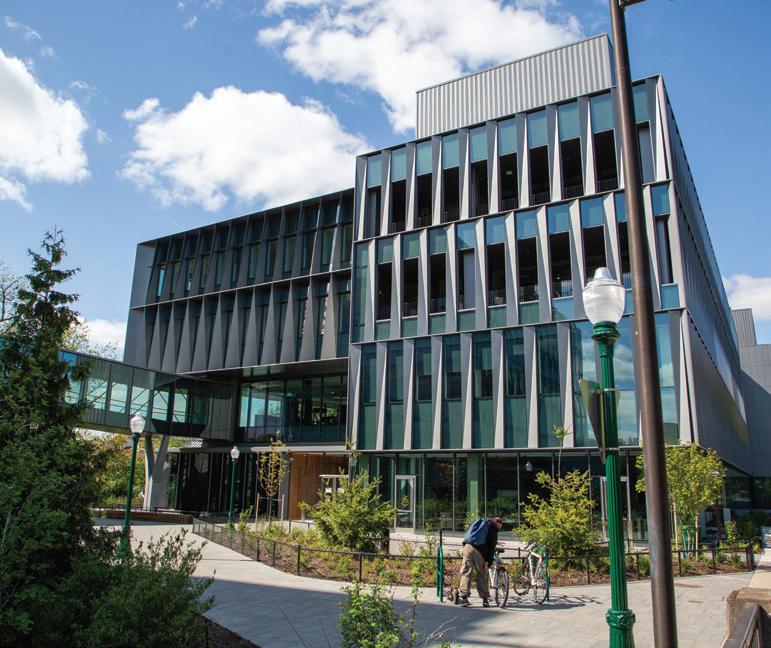
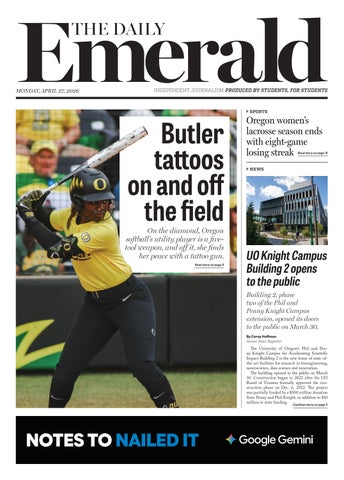
Building 2, phase two of the Phil and Penny Knight Campus extension, opened its doors to the public on March 30.
By Corey Hoffman Senior News Reporter
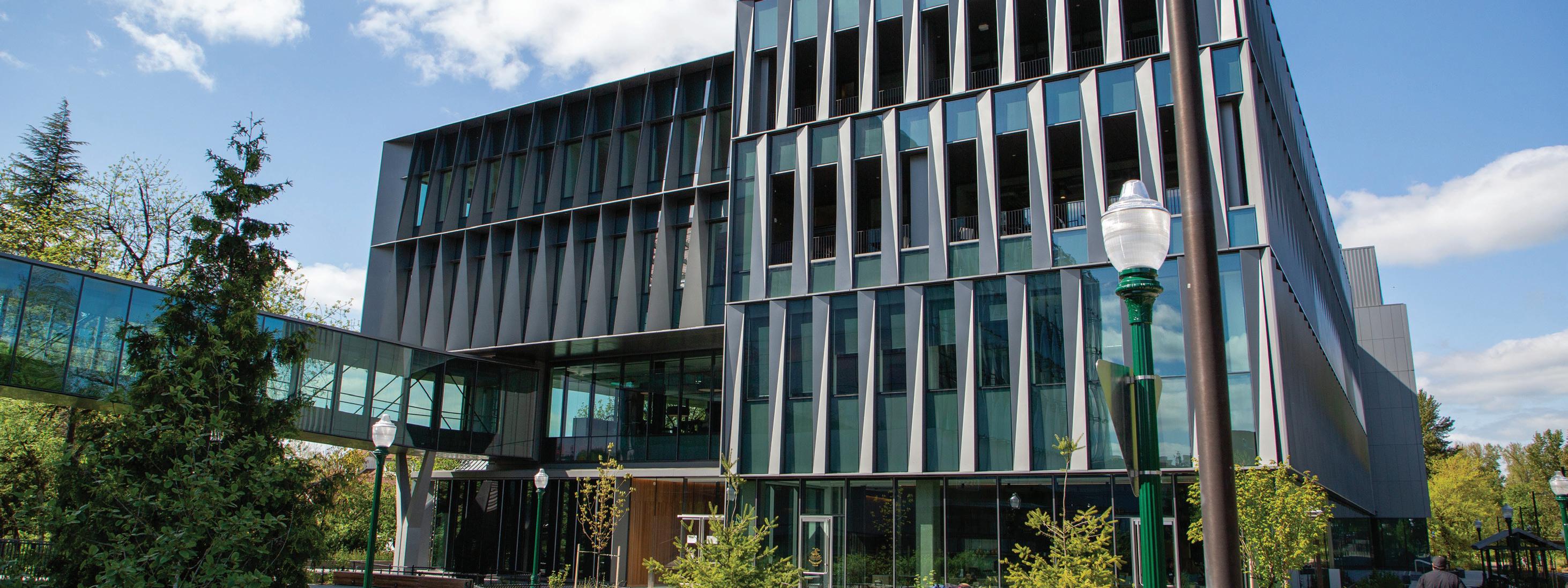
The University of Oregon’s Phil and Penny Knight Campus for Accelerating Scientific Impact Building 2 is the new home of state-ofthe-art facilities for research in bioengineering, neuroscience, data science and innovation.
The building opened to the public on March 30. Construction began in 2022 after the UO Board of Trustees formally approved the construction phase on Dec. 6, 2022. The project was partially funded by a $500 million donation from Penny and Phil Knight, in addition to $10 million in state funding.
Continue story on page 5










EDITOR IN CHIEF
Tarek Anthony
PRINT MANAGING EDITOR
Ryan Ehrhart
DIGITAL MANAGING EDITOR
Ysabella Sosa
NEWS EDITOR
Reilly Norgren
INVESTIGATIONS EDITOR
Ana Narayan
A&C EDITOR
Claire Coit
SPORTS EDITOR
Jack Lazarus
OPINION EDITOR
Gracie Cox
PHOTO MANAGING EDITOR
Corey Hoffman
PHOTO EDITOR
Saj Sundaram
COPY CHIEF
Olivia Ellerbruch
VIDEO EDITOR
Jake Nolan
PODCAST EDITOR
Stephanie Hensley
SOCIALS EDITOR
Ysabella Sosa
VISUALS EDITOR
Noa Schwartz
DESIGN EDITOR
Adaleah Carman
DESIGNERS
Asha Mohan
Ellery Burton-Tillson
Eva Andrews
Izzy Smith
Nina Rose
PUBLISHER AND PRESIDENT
Eric Henry (X317) ehenry@dailyemerald.com
VP OPERATIONS
Kathy Carbone (X302) kcarbone@dailyemerald.com
DIRECTOR OF SALES & DIGITAL MARKETING
Shelly Rondestvedt (X303) srondestvedt@dailyemerald. com
CREATIVE & TECHNICAL
DIRECTOR
Anna Smith (X327) creative@dailyemerald.com
ACCOUNT EXECUTIVES
Camcole Pereira
Elliot Byrne
Maria Jimenez
THE DAILY EMERALD
The Daily Emerald is published by Emerald Media Group, Inc., the independent nonprofit media company at the University of Oregon. Formerly the Oregon Daily Emerald, the news organization was founded in 1900.
Emerald Media Group 1395 University St.,#302 Eugene, Or 97403 (541)-346-5511


Supporters and opponents gave public testimony to the city council on April 20.
By Billie Corsetti News Reporter
The Eugene City Council heard testimonies from supporters and opponents to the East Campus Area Plan’s amended proposal on April 20, which would allow heightened dormitories in the area.
The University of Oregon, the applicant for the proposal, spent the first 10 minutes of the public hearing detailing the purpose of the proposal and the timeline of the process. Because the land use applications are a quasi-judicial proceeding, the applicant must prove whether or not they comply with the city’s applicable approval criteria.
The city’s approval of the land applications is solely based on whether or not the applicant met the approval criteria — not if council members agree or disagree with the content of the proposal.
UO has been looking at East Campus for possible housing expansion for decades, slowly purchasing buildings to implement the Next Generation Housing Development Plan. The university is asking the city to approve three applications that would amend a code to allow heightened dormitories in the area, remove a land use overlay by Matthew Knight Arena and amend the Fairmount/University of Oregon special area study.
Many residents had concerns about the height of the buildings and the preservation of the surrounding neighborhoods. Others felt that UO did not sufficiently communicate and collaborate with residents living in the area.
Representative groups like the Fairmount Neighborhood Association worked alongside campus planners in focus groups to have their concerns heard, and UO community liaisons kept the housing development page updated and available for residents to view.
The city council held a public hearing on Jan. 20 to hear from the applicant and concerned residents. After hearing testimonies from both sides, the council passed a motion to extend the record for written testimony.
Per state law, the applicant is solely allowed to submit to the record for the last seven days.
On Feb. 10, UO entered into the record their amended proposal addressing testified concerns. During a public meeting on March 9, the council voted to direct the city manager to schedule a second public hearing on April 20 for the amended proposal.
Assistant Director of Campus Planning Aaron Olsen said that the majority of the changes were in the Refinement Plan Amendments, reverting proposed language changes back to its original text.
“In total, (Fairmount Neighborhood Association) proposes 22 text changes to the applicant’s proposed Refinement Plan Amendments, which were submitted by the city on July 23, 2026,” UO’s submission said. “The applicant has reviewed these changes and accepts 18 of the proposed changes, does not accept three and partially accepts/does not accept one.”
“One example that we talked about with the neighbors for a while was that we had proposed changing the ‘low density residential’ term to just ‘residential’ to try to simplify it,” Olsen said. “Well, we had agreed a long time ago to just revert back to the original language… That was really the bulk of the changes.”
Twenty-four individuals signed up to provide public testimony: seven spoke in support, with three neutral and 14 opposed. Each who spoke in support emphasized student support, stabilizing the rental market and adaptation to growth in their testimonies.
“Our housing market’s sick, and we haven’t built enough housing,” Jacob Fox, executive director of Homes for Good, said in support. “As a community we have to decrease regulations and modify overlays so that we can build a lot more housing.”
Those opposed reiterated their previous testimonies from the first public hearing, citing the collaboration process, building height and the graceful transitioning edge of buildings. Others objected to claims that the proposal would improve student hous-
ing availability.
“This is a real estate development project by the University of Oregon to try to make money in place of the private sector,” David Wade said in opposition. “The private sector has responded to the need for student housing. You can see the 15 feet buildings all over our neighborhood. The difference is that they didn’t build it in residential neighborhoods and they pay property taxes, which the university does not.”
“If you pass this, you’re basically saying the protections that you promised us on height are out the window,” Susan Macousen said. “At that point, every ten years the university (will do that) to us, and every year (they will) get away with it. Why have a city government if you’re not gonna listen to the people? Because the university isn’t the people.”
Members of FNA also spoke at a public hearing, saying that they believe they have sufficient evidence submitted in the open record to prove that the applicant has not met the applicable approval criteria.
During the applicant’s five-minute response to the testimonies, Cameron McCarthy Principal Planner Colin McArthur argued that city officials including the public planning commission deemed the proposal adequate for the approval criteria.
Using public testimony, the city council will make a decision on May 11 on whether or not the proposal meets the approval criteria to be passed. At the end of the public hearing, the council passed a motion to keep the record open for seven more days to let the applicant submit final arguments, and then be closed. Using spoken and written testimony, the city council will make a decision on May 11 on whether or not the proposal meets the approval criteria to be passed.
( ABOVE) Construction continues on the University of Oregon’s campus along East 17th Avenue on Feb. 3, 2026.
(Owen Burriss/Emerald)




“The goal of Knight Campus is to leverage the science strengths that existed at the University of Oregon in basic science areas, which is neuroscience, material science, and the best way to do that was to build a bioengineering program and an applied science program,” Lewis Taylor, communications director for Knight Campus, said.
The building, which is 185,000 square feet, is on track to receive a Gold Leadership in Energy and Environmental Design certification, which recognizes sustainability efforts in construction, planning, material use and maintenance.
When full, the building can house between 17-20 research labs.
The main core facility housed in Building 2 is the biofoundry facility, which supports “the culturing of cells, the manipulation of cells and the characterization of cells and cellular materials,” Kurt Langworthy, senior director for shared equipment and core facilities, said.
Langworthy said they are investing roughly $4 million to outfit the facility, which is open to all Knight Campus researchers. The lab and equipment is also available for outside companies, other universities and other UO departments to rent.
The idea behind sharing the facility, Langworthy said, is to maximize the cost. Research will get a subsidized user fee, while commercial users pay an unsubsidized user fee. Those fees then go back to the facility and are used to sustain the equipment, some of which costs up to $30,000 per year to maintain.
“This is really for the community and the biosciences to come and study growth, manipulation and characterization of biological and biomaterial things,” Langworthy said.
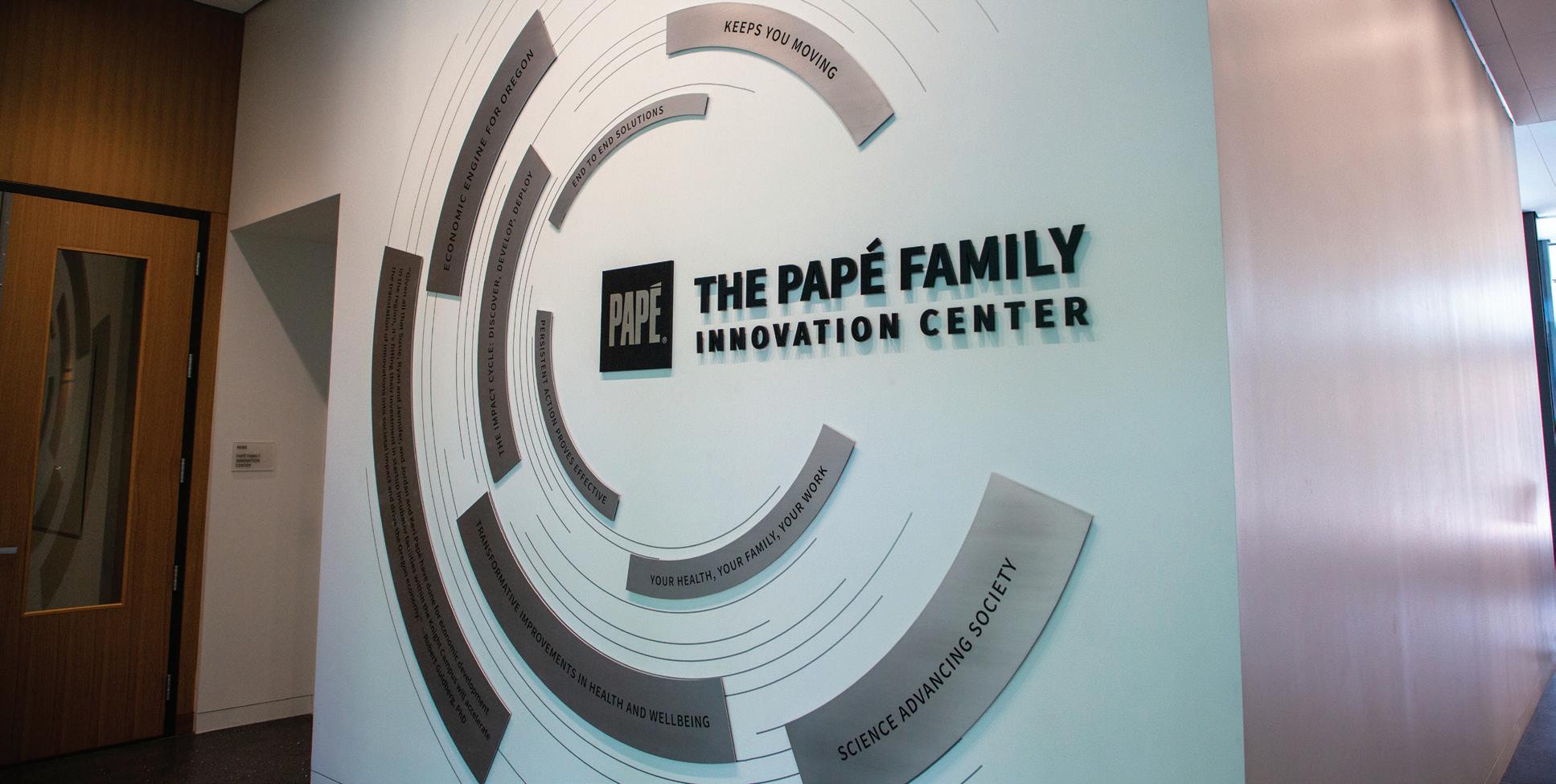
Another facility in Building 2 is the Papé Family Innovation Center which functions as an “incubator space” for startup companies looking to translate scientific discoveries into “practical applications,” according to Terra Hiebert, lab manager for the center.
The center includes labs, wet labs and office spaces in both Building 1 and 2. Lab space in Building 2, Hiebert said, is specifically designed for larger companies and companies that “need a bigger footprint” as they look to expand more rapidly.
Building 1 currently houses five companies researching everything from environmental contamination testing to microbiome source therapeutics.
Like the biofoundry facility, several of the labs in the Papé Family Innovation Center are shareable, giving startups access to equipment they otherwise wouldn’t be able to afford.
“To be able to have a space where (companies) can do their proof of principle experiments, work on getting other startup investing while they’re doing those experiments is really a great asset,” Rachel Bedford, research associate for science communication, said. “They also get to automatically be situated within the UO innovation community. Not only the Knight Campus, but (the) business school, lots of students that are excited about new ideas and projects.”
The building will also house a computational suite for researchers and UO faculty who are using computers to understand bioengineering, biological sciences, data science and artificial intelligence. The suite will also house the Center for Biomedical Data Science, which is collaborating with Oregon Health and Science University to collect data for cancer treatments.
David Peeler, assistant professor of bioengineering and founder of the Peeler Lab, which began operations in Building 2 in March, said getting to work in the new space is “an incredible opportunity.”
“There’s a strong foundation in materials (research), but not a whole lot in drug delivery here, so there was a really clear niche, especially for RNA delivery and immuno engineering,” Peeler said. “(At) the research level, there are a lot of people that I could very easily collaborate with
and an appreciation of immunology and interest in it, but not a very crowded landscape, like joining a much more established department, where you kind of have to carve out a much smaller niche.”
Peeler said there has been a lot of interest in his lab, despite it not yet running at full capacity. He said he expects to have one principal investigator, one postdoctoral researcher, two Ph.D. students and two undergraduate students in the fall.
The building, which also houses the brewing innovation minor and the bioengineering minor, will have a dedicated makerspace and instructional lab space for graduate and undergraduate students.
Peter Chien, a postdoctoral scholar and lab manager in the Peeler Lab, said getting to work with undergraduates is a very “rewarding” experience and that everyone who works in Building 2 collaborates and builds off each other.
“The flow of ideas (is) always really rewarding. I feel like it makes me a better scientist,” Chien said.
( ABOVE, BELOW, ON THE COVER) Building 2 of UO’s Phil and Penny Knight Campus houses state-of-the-art facilities for research in bioengineering and biomedical data science. Building 2 opened its doors to the public on March 30, 2026.
(Corey Hoffman/Emerald)


A look into the University of Oregon’s recent theater production of ‘Radium Girls,’ a story about women’s labor rights in the 1920s reflecting on the division between capitalism and culture.
By Fiona McMeekin Arts & Culture Writer
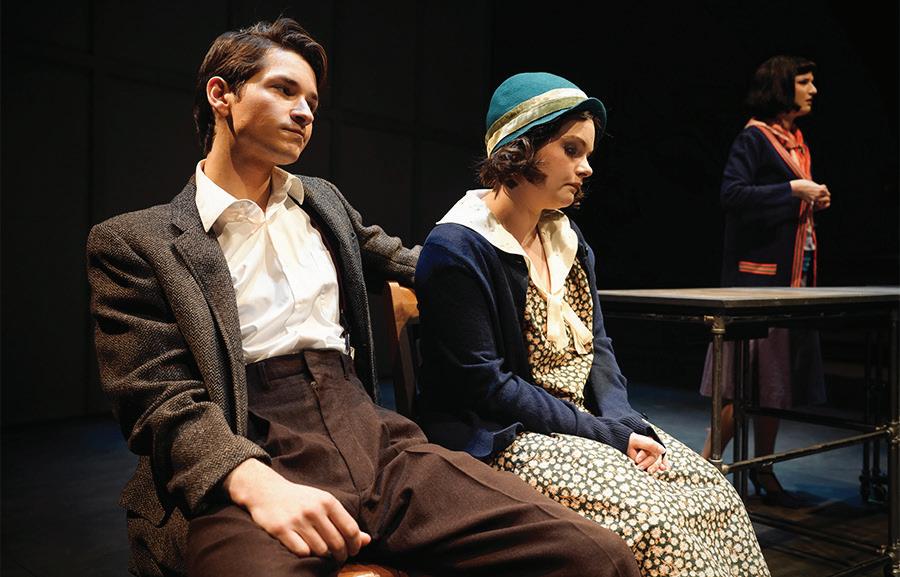
In an intimate room, standing before an audience on a jutted stage, young clock-dial painters splatter radium paint on each other’s faces, giggling in its glow, out of their supervisor’s sight.
In “Radium Girls,” a play by D.W. Gregory, director Willow Norton Zolan transports the audience to 1920s Orange, New Jersey, in the new University of Oregon Theatre production.
The story about women’s labor rights follows 15-year-old Grace Fryer, a dial painter who unknowingly poisons herself with radium paint while using the “lip-dip” technique with which painters were instructed to maintain a fine tip on the paintbrush and to preserve the expensive material. As girls at the factory begin to “mysteriously” fall ill, the company continues to deny any wrongdoing.
Based on a real story, Norton Zolan emphasizes the relevance of “Radium Girls” today.
“The culture at the time was very excited about radium. Even though this play takes place in a different time, it’s still asking the same question of now, which is culture versus capitalism. We could replace radium with cigarettes or even Ozempic,” she said.
The relationship between culture and capitalism frames the rest of the production, as 10 actors playing 30 roles bring the mechanics of theater out before the audience’s very eyes. With rapid costume and scene changes, the actors’ talent allows the show to shift its focus to the central question of the story.
“The truth of the story is so important… If we get too caught up in the theatricality of things, it wouldn’t feel as truthful. So, we wanted to peel back some of that for the audience to be a part of our story,” Norton Zolan said.
Although the story is one of deception, the production is stripped of theatrical illusions, with minimal set design, lighting, sound and onstage actors. This simplicity allows for a character-driven narrative that exposes gendered power dynamics.
“I never once questioned. I never once asked! Don’t you see? They knew I wouldn’t. That’s what they were counting on,” Grace Fryer, played by Dusty Stratton, says.
As the story unfolds, responsibility trickles downward, leaving the worker not only dismissed but also blamed for their own suffering.
Yet, the production incorporates many moments of humor, allowing a release from the heaviness of the subject and leaving the audience on a note of inspiration.
“I hope that they’re surprised that they laughed, and that then they felt more open,” Norton Zolan said when asked what she wants the audience to take away from the show. “The next generation is going to be okay. They care, and they are going to learn from the past to make a better future.”
At a university not known for its theater productions, stage manager Kio Hill, a double major in theatre arts and sports business, offers a unique perspective on what he would tell his friends about theater’s appeal.
“It’s a good chance to slow down and reflect. Sports (which are big at UO) is very now, like, ‘Are we gonna win this game? What’s the next play?’ In theater, it’s a chance to look back into history and at past events to reflect on your personal self and society as a whole,” Hill said.
“Radium Girls” runs through May 3 at the Hope Theatre, leaving audiences with not only a look into the past, but a question for the future: When profit is at the forefront, whose voices are silenced?
Before its debut, medical dramas had been dwindling in popularity, but does the sophomore season have what it takes to keep the adrenaline pumping?
By Amelia Fiore Arts & Culture Writer
*Spoilers ahead
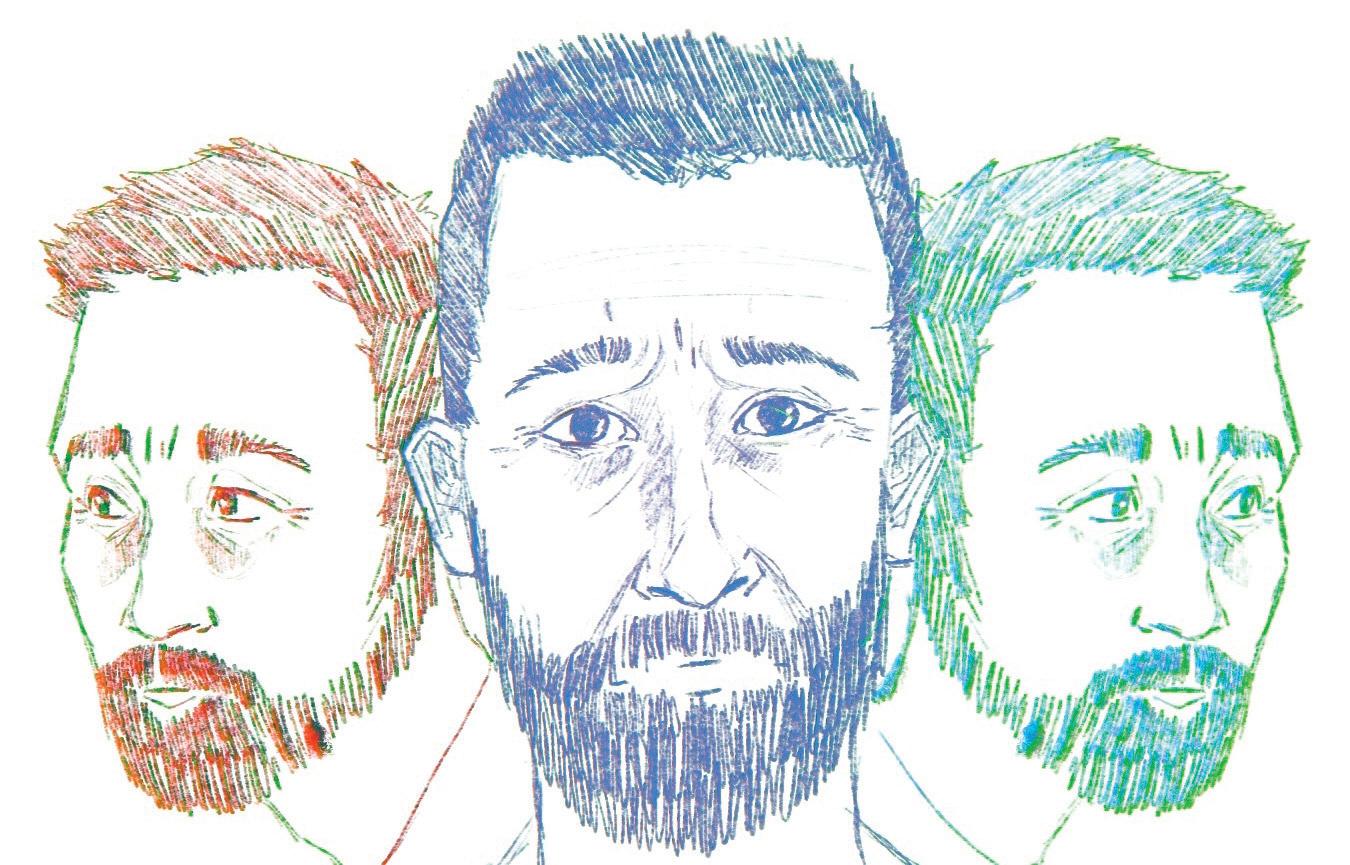
Unlike long-running dramas like “Grey’s Anatomy” and “ER,” “The Pitt,” an Emmy Award-winning HBO Max series that wrapped up its second season on April 16, does not seem like a show that can, or necessarily wants to, stand on its own for decades.
Both of its seasons span over an entire shift at the fictional Pittsburgh Trauma Medical Center (or The Pitt), lasting around 15 hours, with every episode reflecting the beginning of a new hour. With less time to play with, the high stakes are tangible in every episode, and so is the health of every patient.
Its second season begins a bit like any TV show’s would: a handful of newbies, slightly different hair colors and more developed dynamics, but the premise remains generally unchanged. Taking place on July 4 means “The Pitt” will be extra busy with firework and sunburn-related injuries, and the first hour doesn’t even conclude before Chief Attending Physician Dr. Michael “Robby” Robinavitch (Noah Wyle) finds himself butting heads with his soon-to-be substitute, Dr. Baran Al-Hashimi (Sepideh Moafi).
The new med students aren’t much of a smooth fit at first, either. The rivalry-turned-partnership between student doctors Victoria Javadi (Shabana Azeez) and James Ogilvie (Lucas Iverson) — a sweet turn of events — and Joy Kwon’s (Irene Choi) snarky bluntness created a no-nonsense dynamic between the new staff quickly. Baby Jane Doe, an infant abandoned in the waiting room’s restroom early on in the season, was rarely the center of attention, but always a notable presence.
Not everyone has seen “The Pitt,” but most who have are diehard fans with passionate opinions and relentless acclaim. Izzy Jurien, a senior cinema studies major, said the show offers something refreshing that other medical dramas haven’t tapped into.
“I think a lot of medical shows are overly dramatized, and even though “The Pitt” has some
drama, I feel like it is the most faithful to actual medicine,” Jurien said. “It has a really good point in showing how stressful medicine is. There’s no crazy, annoying ER romance or anything. Every character feels very real.”
It’s true, there are no direct romance plotlines in the series, although some casual relationships are alluded to, Dr. Trinity Santos (Isa Briones) and Dr. Yolanda Garcia (Alexandra Metz) being one we expect to see more of next season.
The show has also received praise for its representation in its independent, accomplished neurodivergent characters. Dr. Melissa “Mel” King (Taylor Dearden), who the writers consulted Developmental and Behavioral Pediatrician Dr. Wendy Ross to shape, is a glaring reflection of this.
“I love her and the fact that she shows so much care to patients. She is able to understand her autistic patients, and she pays attention to people who have disabilities and their needs,” Jurien said about her character.
“The Pitt” has a special way of weaving in current issues the average person wouldn’t even consider were taking place in an ER, but all of which are portrayed with sensitivity and grace, including but not limited to a waterpark disaster, an ICE arrest and a cyberattack among the holiday festivities.
It’s real and raw, sometimes in an eerily sobering way. When we finally see Dr. Robby, when the stresses of working in an ER finally catch up to him in the finale, it’s expected, yet jarring nonetheless; a death by a thousand cuts, and his colleagues are running out of Band-Aids to give him.
“The fact that he (Robby) obviously cares so much about his job, but also we get to see him break down, that’s the thing I love about it,” Jurien said. “I feel like every character is very human. They don’t act too sexy or emotional, all of them feel like very real humans.”
Mental health difficulties that medical professionals face due to high stress situations, workplace violence and and other hurdles are brought to light by “The Pitt,” offering a hopeful hand in solidarity with medical workers. It’s a more direct message than what we saw in the first season, and one that I hope will carry into the future as we continue to watch our beloved characters navigate the unpredictability of their workplace.
In Dr. Robby’s last monologue of the finale, which he delivers to Baby Doe, he said, “You’ve got so many wonderful things to see, and so many people to love ahead of you.” He indirectly speaks the words of reassurance to himself, still clinging on to the hope of a better tomorrow after making it through the darkness of his 15-hour day. It’s a sentiment that applies to not only medical professionals, but to anyone who is crumbling under the weight of a volatile world.
By Rowan Shea Sports Writer
Elon Butler threw her arms down to her side, clenched her fists, looked up at the sky and let out a celebratory “Let’s go!” as she ran past the first base bag.
She had just hit her 51st career home run (with her 50th coming the at-bat before), and she did it in a huge spot: to put the Ducks up by two as they looked to sweep their century-old rival, the Washington Huskies.
They did just that with help from Butler at the plate and in the field. Since transferring from Cal, Butler has looked right at home in the Oregon lineup. She’s leading the team in every offensive category and even hit for the first cycle in Oregon softball history.
Four days before she crushed home runs 50 and 51, Butler sat in the Yamanaka Media Room of Jane Sanders Stadium. In front of her, spread out on the table, were two of her sketchbooks: one recently broken, its spiral bounding
bent and twisted like a forgotten chainlink fence, and the other black leather bound. She had recently purchased the upgraded sketchbook to replace the previous.
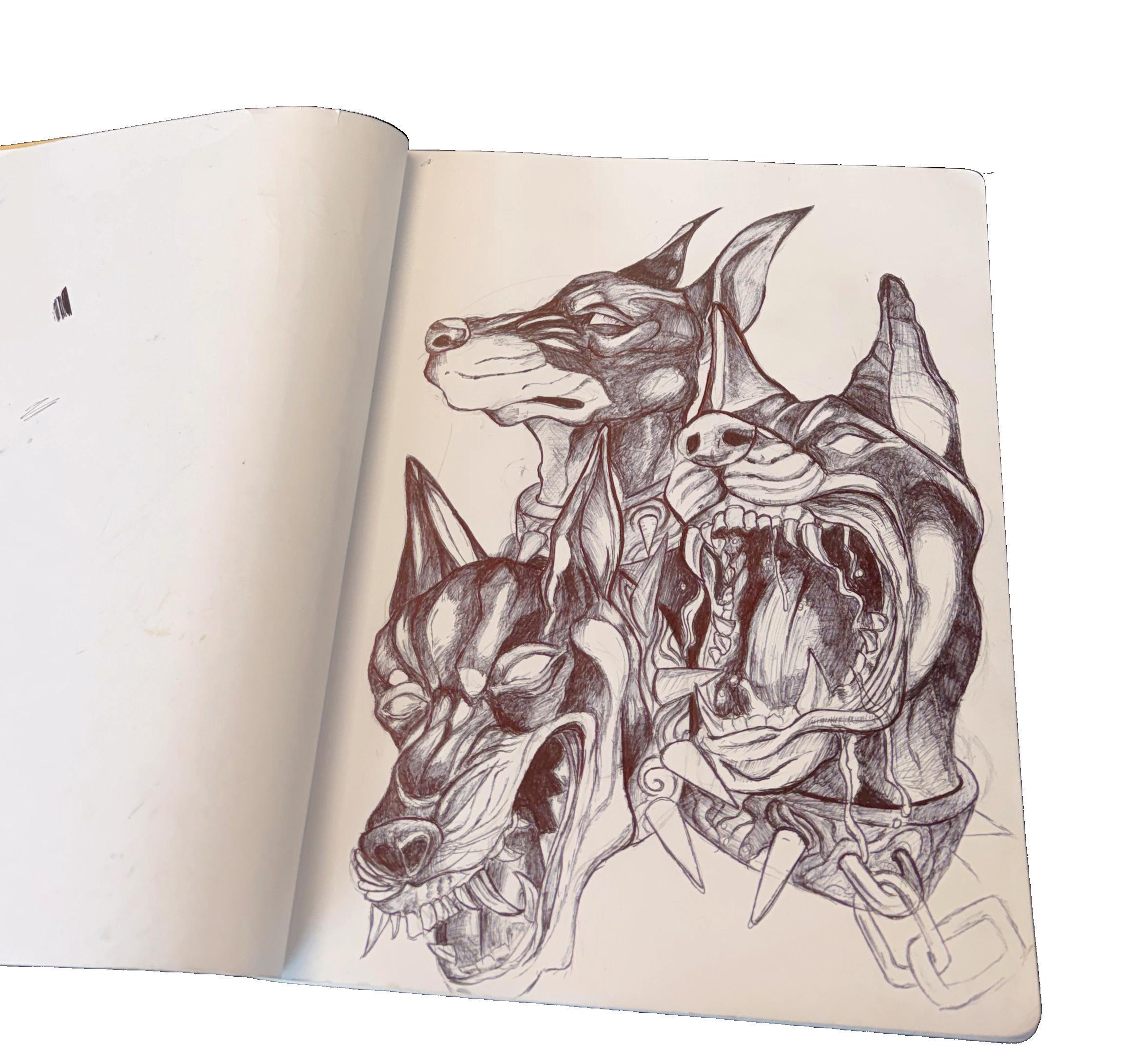
Both were filled with beautiful pastel work, intricate sketches and designs. She pointed out drawings inspired by album covers, a cover she made herself for a friend, a design for hiking shoes that she “never really finished” and more.
“I want to be the next Ed Hardy,” Butler said, still looking at and flipping through her work. Hardy is known as “The Godfather of Modern Tattoos.” He combined the art styles of traditional Japanese tattoos with American culture, creating an entirely new form of art.
“My dream, truly, would be to just tat, paint and draw for the rest of my life. And make bread,” Butler said.
Butler’s love of art goes back to her childhood. She has memories of sitting at her table in the summer months and flipping through workbooks because her mother, a school teacher, did not allow her to just take it easy over the summer.
“I would just really spend that time with her,” Butler said. “And just really enjoy being able to sit and just spend time with her, and be able to draw.”
In those early summers, something clicked. She could draw; she could do it well, and, most importantly, she loved to do it. That love for art grew and grew over the years, and her family supported the journey.
Her grandmother was the most supportive. A creative herself who’d often do crafts with Butler when she visited, she bought Butler supplies and gave them as presents during the Christmas season.
The artistic gene ran in her family. Her great-grandfather, too, was a sign painter when Jim Crow laws were still in effect.
In middle school, Butler took her first art class. She recalls sitting down in the classroom and starting each day off with a Bob Ross video before they got to work. A project centered around taking a Bob Ross landscape and repainting it onto a box for her jewelry cemented the love for Butler; she was hooked. She took another couple classes in high school, where she continued to develop her technical skills. Today, the San Jose, California athlete still loves the process of creating. It infiltrates almost every facet of her life. Even during those long, grueling days at the field, she finds time to have a little creative outlet.
“When we watch film, I always have doodles,” Butler said, drawing out what she does with her finger on the table. “Ever since I started watching film, I’ve made a stick figure of myself and where I want to actually hit the ball. On my scout(ing reports), you’ll see I have little doodles of what is actually a strike, and what’s a ball and what the trajectory of the ball is.”
But where the passion really helps for the senior is the down time. Softball is a marathon season, and players have all the time in the world to sit and stew in their own thoughts. For Butler, drawing helps her get out of it. “It’s almost like a meditative type of practice,” she said.
The ability to do something off the field also creates an identity for her.
“This is something outside of softball that I really enjoy, that’s not going to get me sucked up into, ‘I’m just a softball player, and I do softball,’” Butler said.
“But on top of that, it’s also something for me to like — if anything ever happens in life, it’s a way for me to get away from the mental wear and tear of life in general.”
That wear and tear of life came to a tipping point at Cal. Butler wasn’t having fun in Berkeley, California.
“I was kind of hating my life,” Butler said. “I was crying every night trying to finish my homework because I was a data science major. Cal is tough. They’ll fail you; they don’t care.”
Oregon was a saving grace for the transfer.
“Once I got here, to Oregon, and I was sitting back and thinking, ‘What do I actually want to do with my life? What would actually make me happy?’ I was like: drawing,” Butler said, looking toward the field through the windows.
drawing.
“And so that’s what I started to do was just draw, draw, draw, draw — like, non-stop. And then over the summer, before I got here, I was like, ‘I’m going to pick up a tattoo gun. Let me pick, just pick it up; let’s see what happens.’”
And now tattooing was on the resume. It took her a while to get good with the new machine, because it’s very different from drawing on paper. The feeling was almost like having to relearn how to draw.
But she found the process of tattooing calming. The constant low humming of the gun, the vibration that came along with it and the task at hand let her completely hone in on the art; nothing else mattered in that moment.
“
The dream is, in general, to literally become the next Ed Hardy. Like, be able to tattoo, paint and just go home and call it a day.
She gave her first tattoo to a good friend of hers back home.
“They were in full support of my dream,” Butler said. “They didn’t really necessarily care if it looked good or bad. They were just like, ‘I want you to start. It’s something you really love, and I see that you love it; so I’m going to help you.’”
As nerve-wracking as that first tattoo was for Butler, it got her running. She has since done two others, both being touch-ups to existing tattoos, while she continues to practice her skills on the silicon squares that are supposed to emulate skin to help train new artists.
Though she is still new to the process, the confidence is growing with time, and she is not backing down. “When I’m really passionate about something, I full send it,” Butler said. Her dream, 10 to 15 years down the line, is to open her own art/tattoo studio. With a smile and a hopeful look in her eye, she described how she wanted to have a large open space, preferably with a loft, that she can go to and simply create. She wants to give back to the community, offer lessons, create and sell her art and designs while also continuing to tattoo them.
She reiterated her idol again while gazing off, almost like she could see the studio now.
“The dream is, in general, to literally become the next Ed Hardy,” she said. “Like, be able to tattoo, paint and just go home and call it a day.”
With that in mind, that’s not all she wants to do. Away from softball, Butler hopes to open her studio, but is also adamant about traveling the world and hopes that her art can help her do that.
But when it all comes down to it, Butler wants to, “be able to live a life where I literally just do what I love, and just (be) a light for people and (where) people find comfort and solace being around me.”
As her time closes on an incredible collegiate softball career, the dream of the studio inches closer and closer to becoming a reality.
(Lilly
( LEFT ) Drawing completed by Elon Butler.
(Rowen Shea/Emerald)
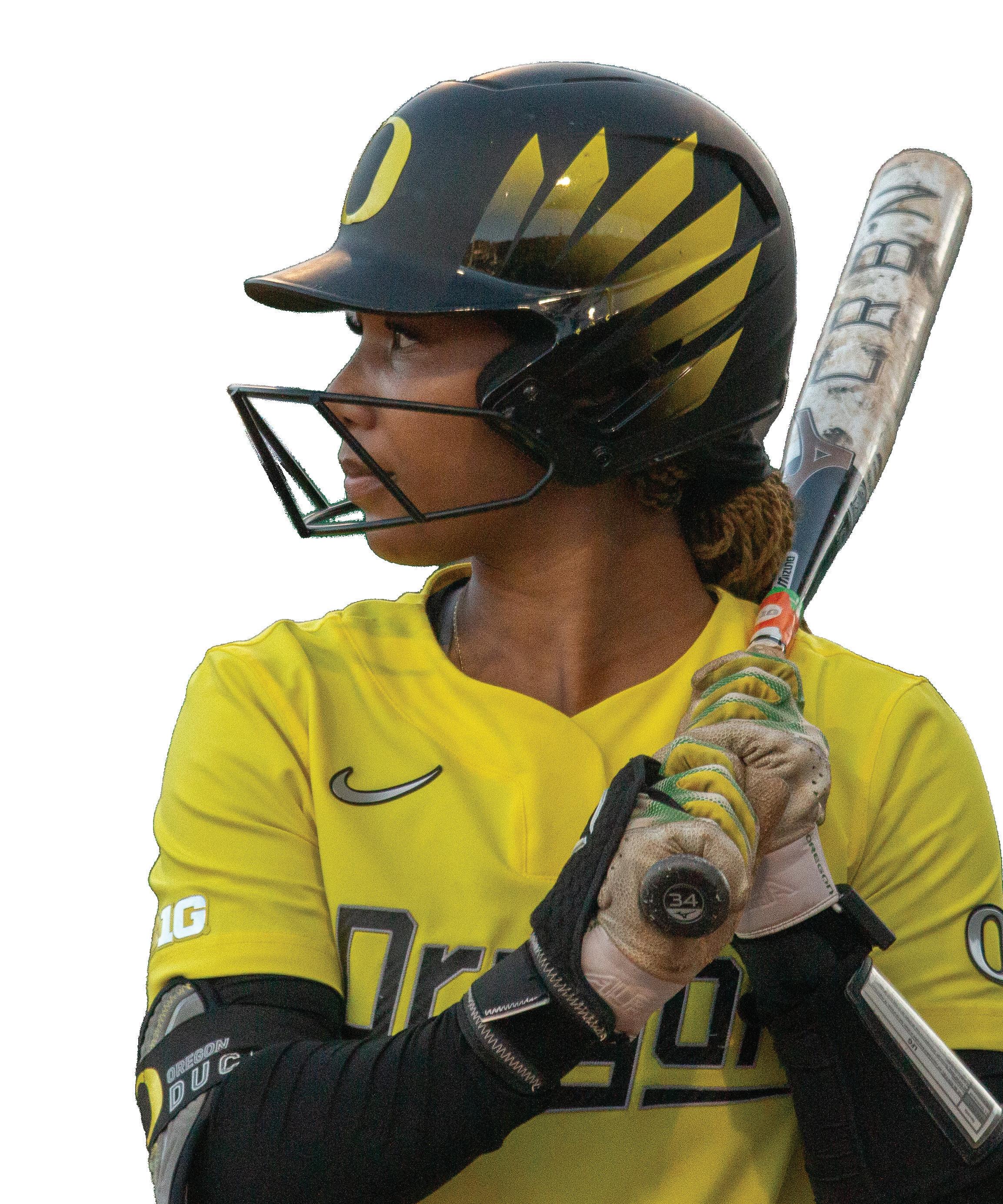
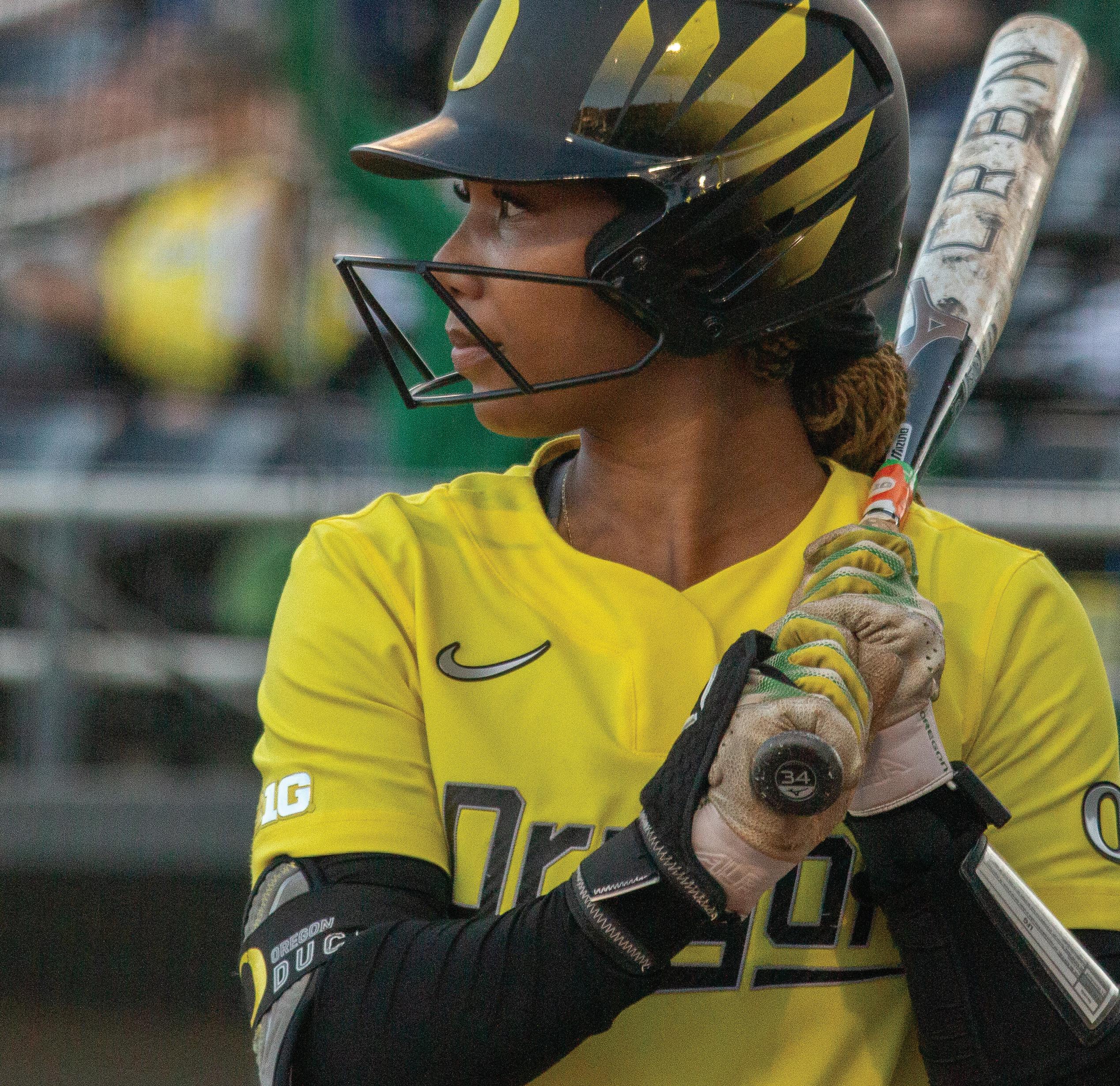
( ABOVE) Oregon utility player Elon Butler (0) looks toward the pitcher as she steps to the plate March 7, 2026. The University of Oregon Ducks were defeated by the University of Nevada Wolfpack 8-5 in the third game of the Jane Sanders Classic at Jane Sanders Stadium in Eugene, Ore., on March 6, 2026.
(Fred Hall/Emerald)

Kat is a thirdyear CHC student studying psychology with minors in legal studies and entrepreneurship. She enjoys writing about power dynamics, institutional accountability and the ways political structures shape communities.
Opinion: Now that universities across the country are facing budget shortfalls from federal funding cuts, it always feels as if there’s not enough money to go around for academic endeavors.
By Kat Benton Opinion Columnist
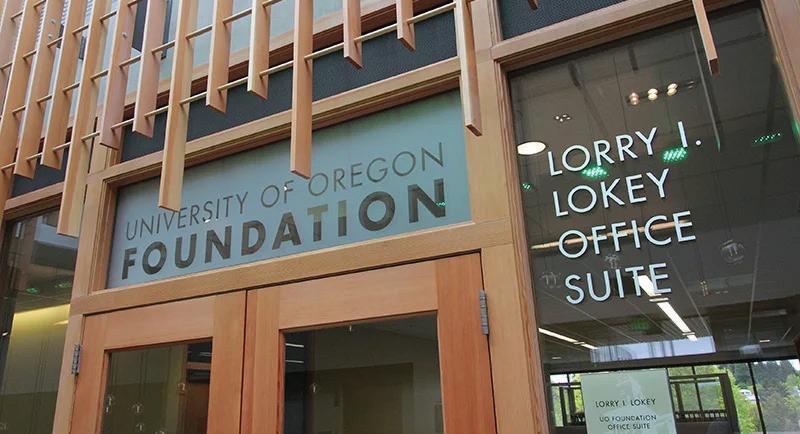
At a time when academic programs at the University of Oregon are fighting for funding and students are voicing no confidence in university leadership, the UO Foundation appears to have no trouble finding money — just not for classrooms.
Over the past year, UO has been making significant changes to the campus community in the name of budget cuts. So far, they’ve eliminated 117 filled positions, have significantly reduced perks for Residential Assistants and have cut entire language programs, leaving some students with no choice but to take their classes online.
Students have been largely unsatisfied with how the administration has handled the cuts. In fact, the aforementioned dissatisfaction was one of the reasons ASUO President Prissila Moreno initiated a vote of no confidence against UO President Karl Scholz and Board of Trustees Chair Steve Holwerda.
However, the UO Foundation allocated $5 million toward a private jet service for administrators and athletes last year. Spending of that magnitude, although not directly connected to the university budget, certainly raises a few eyebrows, especially considering the athletics department is supposed to be one of our few self-sustaining programs.
UO is only a small piece of a much larger puzzle, with universities all across the country facing their own budget shortfalls. But the numbers don’t appear to add up, even when comparing ourselves to other Big Ten counterparts.
While not all Big Ten colleges disclose their private jet spending, among those that do, ours dwarfs theirs. Of the 50 universities that received public records requests about their private jet spending, two of the top three spenders were in the Big Ten, each spending about one-fifth of what UO does, according to public records reported on by The Daily Emerald.
When asked for comment, Skyler Arruda of the UO Foundation said that donors to the foundation “designate how and where their contributions are used,” implying that the reason for this massive
imbalance is that private donors specifically paid for the jet service. But that explanation raises a question: Are there really no donors willing to fund academic programs, or has the foundation simply stopped asking them?
Toby Cole, a family and human services major, thinks that the foundation accepting such extravagant donations amidst cutting student positions and foundational academic support is “an outrageous overstep” and speaks to “what (the university) values.” Instead of a luxury jet service, “UO should be working for the betterment of their students and vital research programs,” Cole said.
No one expects a university foundation to turn down donations. But while it’s legally true that the foundation is obligated to use donor funds as originally intended, nothing prevents it from actively seeking unrestricted academic donations.
The private jet spending suggests the UO Foundation is investing heavily in cultivating athletic and administrative donors, while academic programs continue to wither. That’s a choice, not an inevitability.
If the UO Foundation won’t actively pursue academic funding on its own, then students, faculty and donors should demand transparency and a shift in priorities. The foundation calls the jet spending “for the benefit of the university.” But for the 117 people who lost their jobs, that benefit remains invisible.
Opinion: HR 655 currently threatens 150 acres of public land in Mount Hood, Senator Wyden has a chance to help protect it.
By Aishiki Nag Opinion Columnist
Growing up in the Portland metro area, one of my favorite childhood memories was visiting Mount Hood and the surrounding forests — a sentiment many Oregonians share. Even now, I can recall all of my favorite parts of visiting the Mount Hood National Forest: the crisp air in the understory, the large tree trunks surrounding me, the numerous creeks trickling through the forest floor, the unmistakable presence of the mountain in front of me and the wildlife all around.
This beloved forest is now jeopardized. Last December, Representative Cliff Bentz (R-OR 2) proposed a legislative initiative to transfer approximately 150 acres of federal public land from the Mount Hood National Forest to the city of The Dalles.
In an interview with Bark for Mt. Hood, Will Fett, the executive director, and Jade Hagan, the director of community engagement and communication, expanded on the current organizing efforts to protect the forest. Bark for Mt. Hood is committed to protecting and defending the Mount Hood National Forest and has historically rallied against old-growth logging projects and in support of restoration projects.
“We have an active poll going on right now with over 100 responses, 97% of which oppose this bill,” Hagan said.
The Dalles is the home to five Google data cen-
ters, with a sixth one under construction. In 2025 alone, the data centers used 550 million gallons of water, which is 40% of the city’s total water consumption, a 26% increase from 2024’s.
About 80% of The Dalles’ water supply comes from the Dog River, a branch of the Hood River. Recently, The Dalles expanded pipeline capacity from the Hood River watershed to the South Fork of Mill Creek, which feeds the reservoir associated with a proposed land giveaway. Despite minimal population growth, the bill aims to transfer about 150 acres to allow The Dalles to triple the reservoir’s capacity to collect water from the Dog River.
The bill is currently before the Senate Energy and Natural Resources Committee, and 14 organizations have drafted a letter urging Senator Ron Wyden, who serves on the committee, to oppose it.
“There’s zero compensation specified in the legislation for the federal government, for the taxpayers, since they are literally planning to hand over public land to the city,” Fett said. “We are very concerned about the downstream ecological impacts, and we are concerned about the motives behind this — which we perceive to be Google and the growing water demand.”
The city of Dalles has a history of secrecy, having been involved in a lawsuit against The Oregonian over the release of public records related to Google’s water use. It was later revealed that Google paid the attorney fees for The Dalles to block a public records request and delay the process.
“As reporting continues to evolve on HR 655, it appears the city of The Dalles’ demand for water is enough to dry up the Dog River, especially during the warmest months of the year when flows are reduced,” Tommy Hough, the communications manager at Water Watch, said. “Other data centers that are being built rapidly on the West Coast are tapping into these local water supplies — they rack up huge electrical bills, which ratepayers wind up paying.”
Water Watch of Oregon is a conservation nonprofit that focuses on maintaining natural streamflows and has raised institutional concerns about five salmon species on the national Endangered Species Act list that would be negatively impacted by the potential redirection.
Sen. Wyden currently has the power to listen to the various community leaders, conservation nonprofits and forest enthusiasts to protect the forest and its natural resources. It’s an important step to ensure public lands remain public and keep our environment safe.

Nag is a senior studying political science and global studies. She likes to cover state and national politics, and international peace-building efforts. When she’s not writing for The Emerald, she likes to read, hike and travel to new places.


me again!!”
1 Tingly YouTube genre
5 Time zone to our east
8 Key’s partner in “East/West College Bowl” or “High on Potenuse”
13 Word before leches or bien
17 Easily scraped body part
18 Software prerelease version
19 Delivery worker?
20 Bench-press muscles
22 One petty after a loss
24 Not a scam
25 Rub water on ink, maybe
26 Hotel management role
28 Neither’s partner
30 Insects in a farm
31 Cartoon artist’s creations, for short
32 Question’s parter, for short
33 Stingray relatives
35 “___ for ___” (Quid pro quo)
35 Barcelona buddy
36 “Congress shall make ___...” (Bill of Rights) 37 ... 38 Writer Harte 39 Warriors coach Steve 40 “American Psycho” author Easton Ellis 41 Water bottle and cooler brand
42 1998 Apple debut
43 Breaks on a road trip
45 Videogame heroine ___ Croft
46 Horned beast in Western Oregon
48 Exams for HS juniors
Lively, on a mus.
___ to go (eager)
Pianist and singer
50 “Toto, I’ve a feeling we’re not ___...” 53 Something essential 54 Weeder’s tool
55 “To ___ is human...”
56 “Check for yourself”
57 “A ___’s Tale”
61 Coral island
62 “All the Things She Said” duo
64 Stumblebum
65 Cold-weather virus
66 “Smooth Operator” singer
67 Trainer device for chest and shoulders
70 Appointer of 15Down
71 Heirs, for short
72 Ireland, poetically
73 Put it in your step
75 Digital cellular chip
76 Boy or girl preceder
77 Suffix with “macro” or “micro”
78 Rife with vegetation
80 Lowly laborer
38 From the ground up
42 “That reference is too hip for me”
43 Film introduction?
44 What you can’t do with your nose plugged
47 Grinder on a farm
48 Ï€, in the joke “i
8 sum Ï€, and it was delicious!”
49 Locale for rods and cones
51 Wonder Woman portrayer Gal
52 Crucial method for cutting a steak
57 “___! The Herald Angels Sing”
58 Legumes with a bovine name
59 Gold, in Spanish
60 Samurai’s blade
63 Hexagonal agrarian board game where you collect 5 certain resources
66 “Because I ___!”
68 Suffix with corpor- or ether-
69 Still raw, maybe
81 Spit off the dome
85 Lumps in the throat
87 Accumulated
88 Medieval structure’s defense
89 Pasture-raised and grass-fed
90 Civil wrongs
92 Jaundice color
93 Lacking couth
94 Beatle___
96 Love, to Pavarotti
97 Princess Leia wore one
99 Skater Lipinski or voice actor Strong
100 Buy-in at the UO club Ace of Ducks
101 Blood, sweat, and tears
102 Tennessee’s state flower
103 “Sing a Simple ___” - Sly and the Family Stone
104 Omega ___ (surreal grocery store exhibit)
106 Language suffix
108 Lump under a school desk
110 ___ Moines

The UO’s Master of Science in Management (MSM) can help you move forward with confidence. LEARN MORE TO
uobiz.co/msm-w26


The centerpiece of Oregon’s nine-player freshman class from a transitional season is ready for an increased role in 2026-27.
By Henry Light Sports Writer
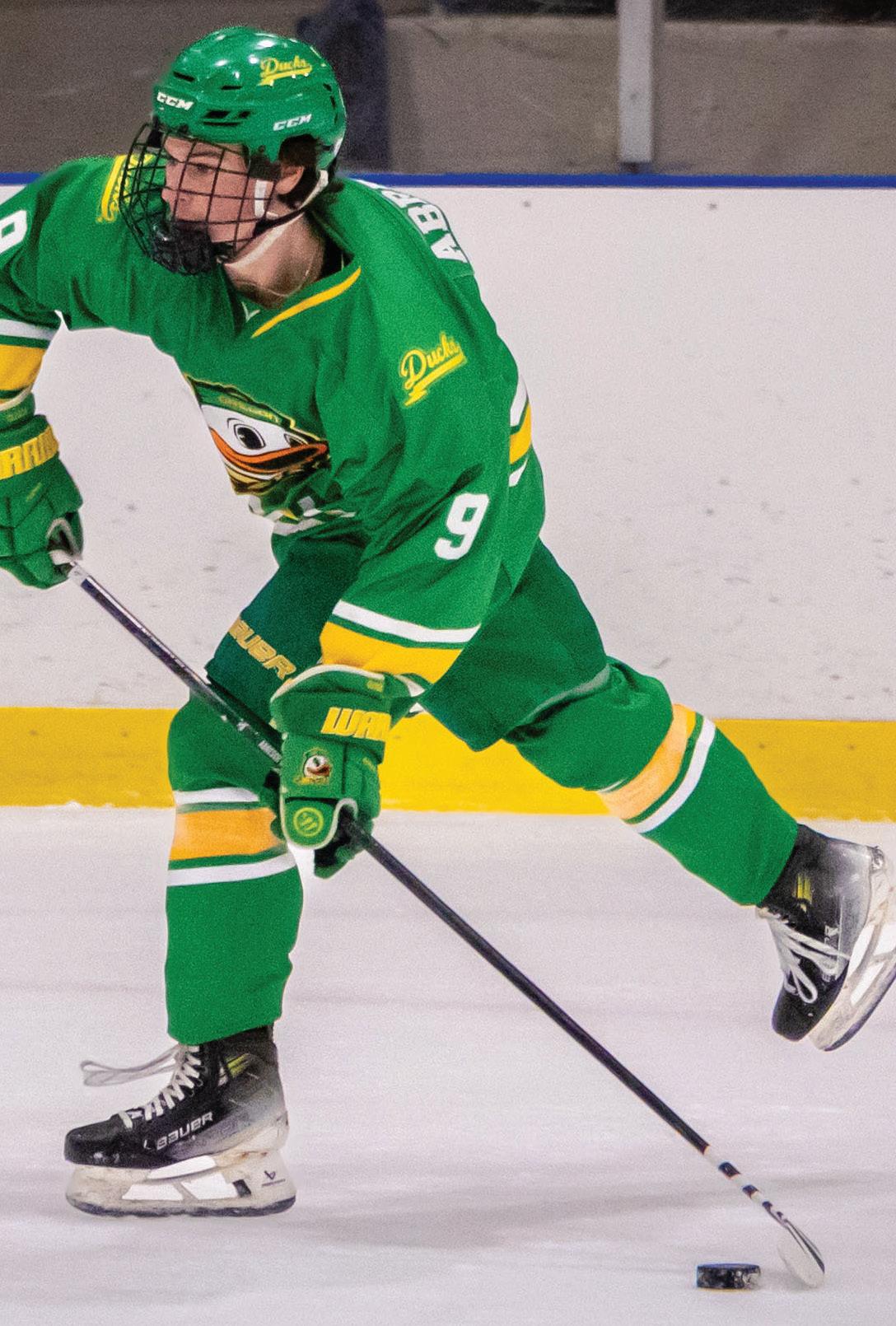
Most hockey coaches who have rostered Inde Abresch came away with similar impressions to Oregon club hockey coach Jack Hyman.
“He's arguably one of the most skilled players I've ever coached,” Hyman said.
The freshman right wing showcased creativity far beyond a first-year player from his first career goal, receiving a pass behind him in the left circle, dragging his left skate to change the angle of the shot and burying it in the top left corner.
Abresch’s highlight-reel goal in his second American Collegiate Hockey Association game represented a successful adaptation of the skills that made him stand out growing up in Madison, Wisconsin.
“When I was younger, I was always kind of the goal scorer, offensive guy,” Abresch said. “I had really good coaches and they told me they had a vision for me, and all I had to do was just put in the work, and I took that and ran with it, and tried to become the best player, best teammate I could be.”
Hyman relied upon Abresch’s seamless transition heavily, moving him up to the first line with senior Jackson Henningsgard and freshman Jackson Ebbott early in the season and never looking back. Abresch repaid him for the significant role by finishing second on the team in goals (11) and points (22). The 5-foot-10 winger, whose confidence scoring off the rush is matched in the tough area in front of the net, looks set to pile up goals for years to come in Eugene, and the Ducks will need them with Henningsgard out of the picture.
“I knew what I could do,” Abresch said. “Coming into this year with all these fans, I was kind of holding my stick too tight and playing nervous, but once I took a deep breath and knew that it's just hockey, I stepped up my game and played with a lot more confidence, and I just saw success from there.”
Abresch’s brief adjustment period end ed when he moved up to the line centered by Ebbott with Henningsgard playing left wing five games into the season. Abresch and Ebbott had been building chemistry since they found out they would be room mates months before the season started, and their ability to complement the lone senior in Oregon’s forward group formed a strong first line for the Ducks.
“Their skill, of course, has gotten better, but they came in with a ton of skill, so it's like they knew what they were doing right away,” Hen ningsgard said.
The early formula for the two freshmen see ing first-line minutes was simple.
“Henny kind of took us under his wing,” Abresch said. “Obviously, he's a senior, good player, captain, so playing with him, it's really not hard to just give him the puck and have him score.”
The setup worked for all three players, with Henningsgard leading the team in goals (19) and points (38), and Ebbott finishing third in goals (nine) and fourth in points (18). While Henningsgard outproduced the rest of the Ducks’ roster by a wide margin, the early returns favored Abresch, with his first career goal snowballing into a five-game streak.
In the second half of the season, the line evolved from effective to dominant as Abresch and Ebbott developed intricacies in their playstyles that come with experience.
“Inde found something with Ebbott, and Inde might be a little bit more of the flash, and Ebbott does a little bit more of the grunt work, and I think he does have his own skill, but they just bounce off each other pretty well,” Hyman said.
The Ducks’ first line paced the team to a 6-4 record in the new year, enough to set a new Division I wins benchmark of 11.
Replacing Henningsgard will be a tall order, but Oregon has a fellow 5-foot-10 winger from Wisconsin waiting in the wings. Further down the lineup, the flexibility provided by Abresch and Ebbott sticking on the first line allowed the Ducks’ five other freshman forwards to build chemistry while playing with productive older players, like sophomores Noah Easterson and Dylan Chapman.
“That level of continuity is something that we didn’t have my first two years here, and it's obviously been established a little bit more in my third year, so it's just a step in the right direction, it's important, and it's exciting to think about what the future might hold,” Hyman said.
Abresch, already one of Oregon’s most important players, is ready to take on even more responsibility next season.
“I think being a leader motivates me to another level. I feel like I bring a good leadership quality, and I know I want to win, and every game I bring that ‘We need to win’ mindset into the locker room,” Abresch said.
Abresch is wired like a program’s centerpiece, and he arrived with a vague knowledge of Oregon built through football broadcasts and YouTube videos when the Ducks needed one to emerge.

The Ducks ended their season with a lackluster conference season, the program is yet to win a Big Ten game.
By Jack Lazarus Sports Editor
Oregon women’s lacrosse still hasn’t won a Big Ten game, and now the 2026 season is over. The Ducks’ 2026 campaign ended almost identically to 2025, but last year didn’t end on an eight-game skid.
Oregon finished the season 6-10 and 0-8 in Big Ten play for the second straight season, but the losing streak it endured at the end of this year left the team with a slightly more negative feel going into the offseason.
While the season saw senior midfielder Anna Simmons named to the All-Big Ten Second Team, Oregon failed to win its first Big Ten game in conference history. Simmons’ ability to track back on defense and force turnovers from her midfield position often proved a crucial stopgap against strong offenses.
Simmons’ 22 caused turnovers tied for No. 9 in the Big Ten, and her 27 ground balls tied for No. 11 in the Big Ten.
The Ducks just never generated enough offense to take down any of the superpowered rosters in the Big Ten, and scored double digits just once in conference play — the season finale against USC.
“I love seeing them have fun and joy,” head coach Jessica Drummond said after the USC game. “That’s what lacrosse is about. I’m so grateful for the seniors. I want to give a huge shoutout to them for pushing each other and ending so strongly. We had 10 goals against a Big Ten team, which is pretty cool to end on that.”
Drummond, in her third season with the team, is slightly closer to getting her recruits into the team rather than players that were brought
onto the roster from previous coach Chelsea Hoffman. This will mean that Drummond will be able to start players that play her style of lacrosse primarily as well as continue to bring in talent from around the NCAA.
The only issue is that the rest of the Big Ten can also retool — with better resources at that — which means that Oregon isn’t part of any arms race going forward; it’s just looking to survive.
Oregon worked to play with more energy this season as well as execute on a high level in all facets of the game. In the non-conference section of the schedule, it did that.
In a five-day stretch in March, the Ducks outscored their opponents, Delaware State University and Kent State University, by a combined 35-4.
Largely due to outstanding defense, Oregon controlled each of these games from the opening draw and were able to suffocate opponents into long possessions, to no avail.
Oregon also displayed a slower, controlled offense in these contests, which led to more scoring chances that it created in the latter part of the season. The Ducks also were able to win more draws, something they didn’t do for the entirety of conference play.
Moving forward, Drummond’s ability to recruit and apply those players on the field could prove to be the catalyst for the future success of this program. As it stands, however, Oregon again looks for solutions in the offseason and will begin the search for the program’s first Big Ten victory next February.
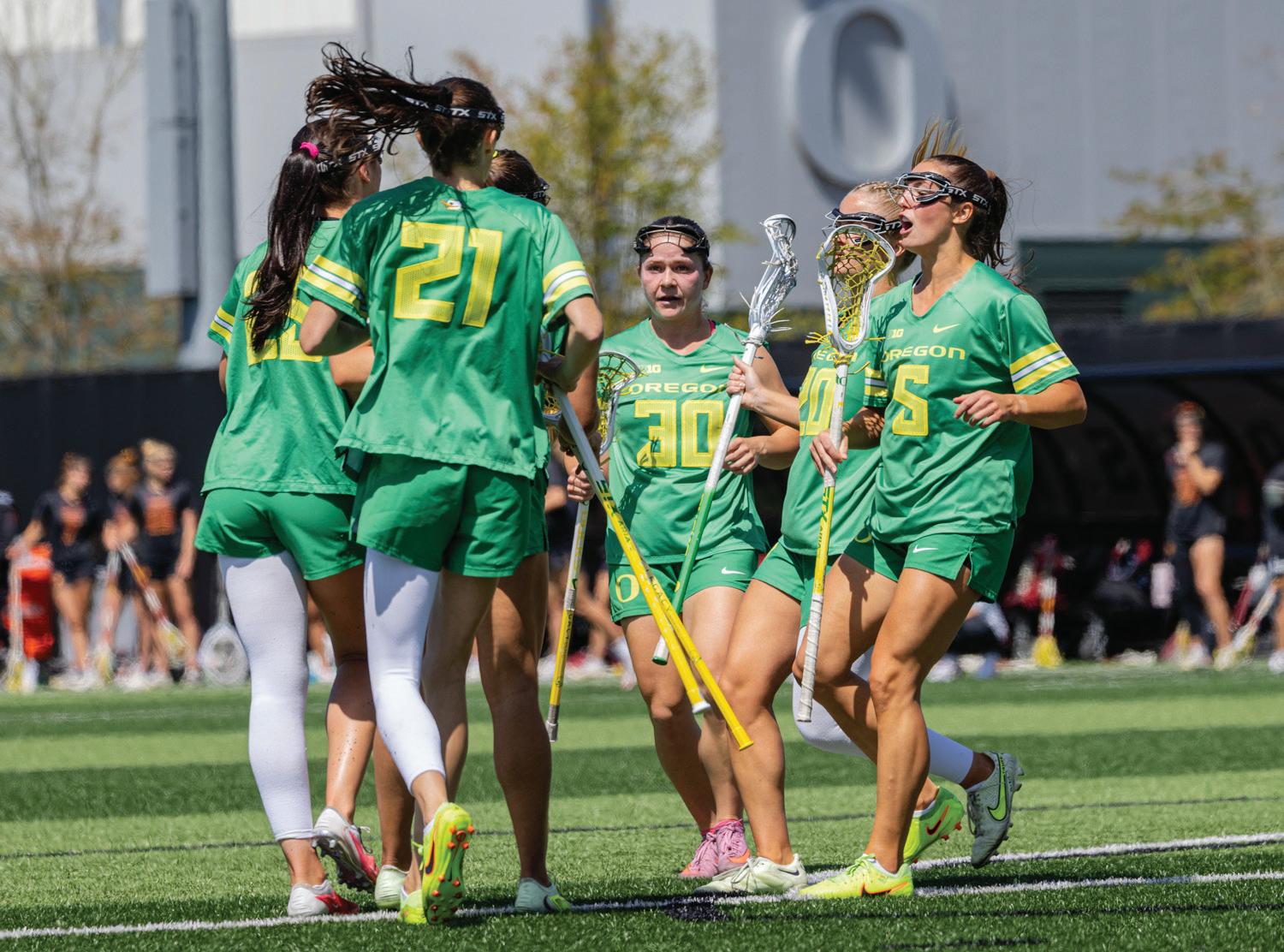
(ABOVE) Oregon players come together after they score a goal. The University of Oregon Ducks women’s lacrosse team were defeated by the USC Trojans 15-10 in their senior game at Papé Field in Eugene, Ore., on April 18, 2026. (Owen Burriss/Emerald)