
EDITOR IN CHIEF
Tarek Anthony
PRINT MANAGING
EDITOR
Ryan Ehrhart
SPORTS EDITORS
Jack Lazarus
Owen Murray
COPY CHIEF
Olivia Ellerbruch
SPORTS WRITERS
Joe Krasnowski
Max Kobel
Harry Leader
Henry Light
Rachel McConaghie
Rowan Shea
PHOTOGRAPHERS
Eric Becker
Miles Cull
Ali Watson
PHOTO EDITOR
Saj Sundaram
PHOTO MANAGING
EDITOR
Corey Hoffman
DESIGN EDITOR
Adaleah Carman
DESIGNERS
Abigail Raike
Asha Mohan
Ellery Burton-Tillson
Eva Andrews
PRESIDENT & PUBLISHER
Eric Henry x317
VICE PRESIDENT, OPERATIONS
Kathy Carbone x302
CREATIVE & TECHNICAL DIRECTOR
Anna Smith x327
DIRECTOR OF SALES AND DIGITAL MARKETING
Shelly Rondestvedt x303
ACCOUNT EXECUTIVES
Camcole Pereira
Elliot Byrne
GAMEDAY, The Daily Emerald’s football edition, is published by Emerald Media Group, Inc., the independent nonprofit news company at the University of Oregon founded in 1900.
EMERALD MEDIA GROUP
1395 University St., rm. 302 Eugene, OR 97403 541.346.5511 | dailyemerald.com

What to expect in the Ducks’ upcoming season just over four months before kickoff.
By Max Koebel Senior Sports Writer
Entering the fifth year of the Dan Lanning era, each season up to this point has been slightly better than the last for the Oregon football team. Most recently, the Ducks fell one game short of going to the National Championship Game after an 11-1 regular season and playoff wins at home over James Madison University and in the Orange Bowl against Texas Tech University. Oregon’s season ended in the Peach Bowl when it was beaten for the second time by Indiana, which went undefeated to win the National Championship.
In its third season in the Big Ten, Oregon will face a lot of familiar faces. It will also visit five stadiums that it hasn’t played in since Lanning became the head coach.
Week 1 vs Boise State
It’s easy for fans to overlook this early season matchup, but the Broncos are no doormat. The Ducks are 1-3 all time against Boise State. Their only win came in a Week 2 matchup in 2024 in a game that was tied in the final seconds of regulation before Oregon kicked a field goal to win it. Both teams went undefeated the rest of the regular season and received a first round bye in the College Football Playoff. The Broncos had a drop off last year, but if the Ducks aren’t ready to start fast, they could be on upset watch.
This will be the second year in a row the Ducks face the Cowboys in Week 2. Last season, the game was in Eugene and Oregon routed OSU 69-3 just weeks before the firing of its head coach. The Cowboys have certainly done some rebuilding since then and should be more competitive on their home turf, but that shouldn’t stop the Ducks from walking out of Stillwater with a win.
3 vs Portland State
The last time the Vikings came to Eugene in 2023, the Ducks cake walked them 81-7. With two FBS opponents before this matchup, Oregon should be fully prepared to produce a similar result.
Oregon hasn’t played at the L.A. Coliseum since Lanning arrived. It’s 2-0 against the Trojans in Eugene. Last season, both offenses were firing the whole game and USC stayed right with Oregon until the fourth quarter. We can expect similar competition this time around, and if the Ducks aren’t at their absolute best, they could be on upset watch.
The Bruins haven’t had much success on the football field in recent years, but this will be the first season under head coach Bob Chesney. The Ducks saw Chesney in Eugene last year in the College Football Playoff when he coached James Madison. This should be an easy win for Oregon, but you never know what a new coach can do to a program.
The Cornhuskers are the only Big Ten team the Ducks haven’t played since joining the conference. After quarterback Dylan Raiola left Nebraska to join Oregon’s quarterback room, it will likely be a rebuild season, which likely would give the Ducks another easy win.
The Fighting Illini typically do well against Big Ten opponents, but it’s not common for them to compete with the top teams in the conference. This was on display in 2024 when the Ducks beat Illinois 38-9 at Autzen Stadium in a season the Illini finished at 10-3. Oregon will have more of a challenge this time going into a hostile road environment, but it has proven over the past two seasons that does not affect its ability to win.
This is the second consecutive season where the Ducks face the Wildcats. Last year was in Evanston and Oregon had full control, winning 34-14. There’s no reason to expect anything other than another dominant performance from the Ducks on Halloween at Autzen Stadium.
The Buckeyes will be Oregon’s biggest challenge, and likely the only game it isn’t favored in. The Ducks have a lot of history with OSU and are 2-10 against it all time. Oregon’s first win came in its last trip to Columbus in 2021 when it upset the Buckeyes 35-28. Then in 2024, Ducks fans all remember the Autzen Stadium thriller that ended in a 32-31 Oregon victory. The most recent matchup was in the 2025 Rose Bowl, which the Buckeyes won 41-21.
This game has the potential to be a trap game or a rebound game, depending on how the week before goes. Since their National Championship in 2023, the Wolverines have not had stability with their coaching staff. They remain one of the more winning teams in the Big Ten, and there’s always a chance they could break out this season, but it will most likely be another win for the Ducks.
Football has never been the strongest sport for the Spartans. When they came to Eugene in 2024, Oregon did not play its best, but was still able to win 31-10. It might be a bit closer with Oregon traveling and having gone six weeks since its last bye, but it shouldn’t have an issue adding to the win column.
The last time the Huskies came to Eugene was also after an Oregon bye week. The Ducks were rejuvenated and pounced Washington 49-21. The Huskies saw some improvement last year as head coach Jedd Fisch continues to rebuild the program. It’s never a guarantee in these rivalry games, but Oregon should still have the upper hand at home.
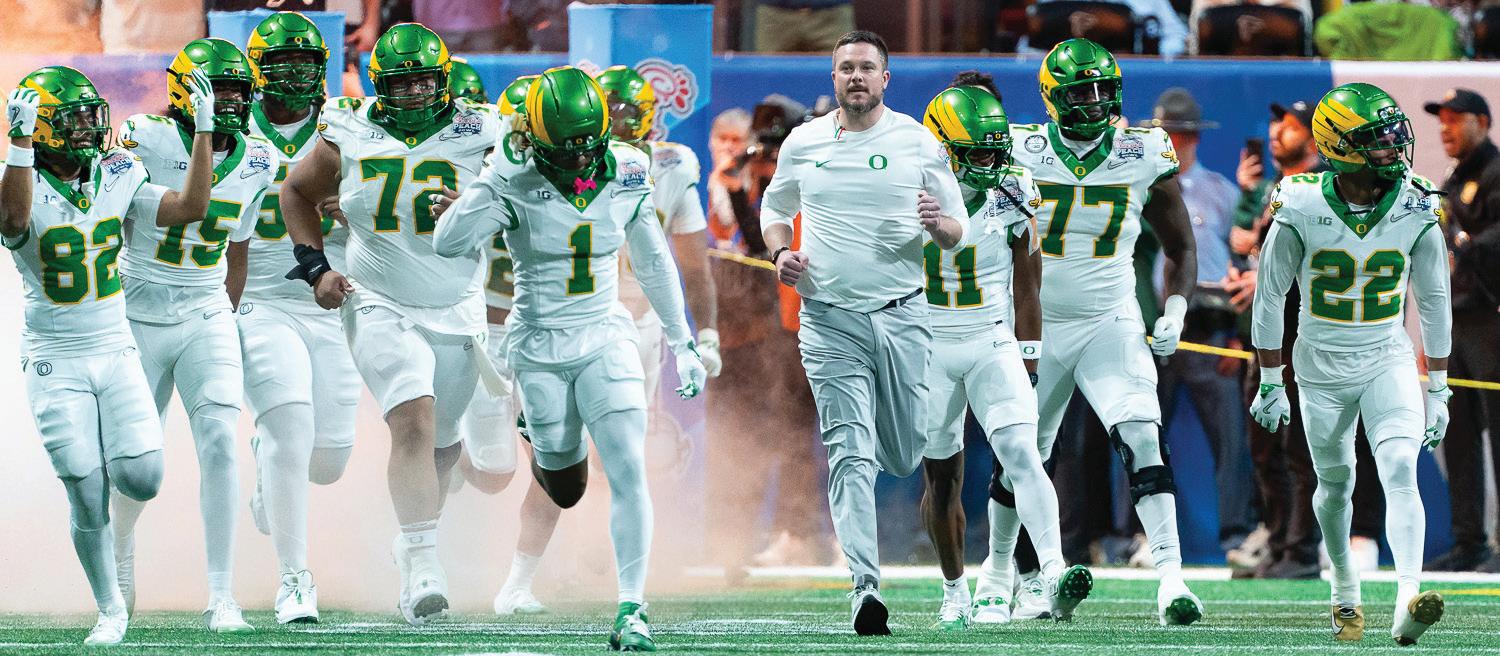
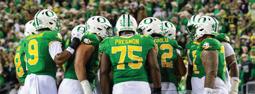
(ABOVE) Oregon Ducks head coach Dan Lanning and the team run out of their tunnel through a plume of smoke before the start of the game. The University of Oregon Ducks were defeated by the Indiana University Hoosiers 56-22 in the third round of the College Football Playoff at the Peach Bowl held at Mercedes-Benz Stadium in Atlanta on Jan. 9, 2026. (Saj Sundaram/Emerald)











With Dylan Raiola joining a returning Dante Moore, what can this quarterback room look like?
By Rowan Shea Sports Writer
Dante Moore made the decision on Jan. 14 that he was going to stay at the University of Oregon instead of declaring for the NFL Draft. Just two days before that decision, Dylan Raiola committed to Oregon after entering the transfer portal from the University of Nebraska.
“I decided before Dante decided. It was just a total buy-in of the program and Oregon as a whole,” Raiola said. “I was very excited to have the opportunity to learn from a number-onedraft-pick-caliber guy.”
Raiola had been pursued by Oregon when he was coming out of high school. When he went through the recruitment process, he visited Oregon and talked to many individuals who are still involved with the program today.
But where things change for Raiola is the depth chart. He was the starting quarterback at Nebraska for the two years he was there and made a huge leap in on-field production. In 2025, the Hawaiian quarterback threw for 2,000 yards on the dot, 18 touchdowns to six intercep tions and Nebraska finished 7-6.
In 2024, the passing yards were up from 2,000 at 2,819; he had a completion percentage of 67.1% on 410 attempts (up from his 250 attempts in 2025), but the touchdown to interception ra tio was worse as he finished the season with 13 and the interceptions went up to 11.
Though it should be noted that he played in only nine games in 2025 after he broke his leg against USC on Nov. 1.
“I’m trying to just maximize this year on ev erything. Getting healthy, getting back to a place where I know I can play, and compete and do all the things that I love doing,” Rai ola said. “Being able to learn as a leader, learn from coach Lanning, learn from (quarterbacks) Coach Koa (Ka’ai) and Dante and all the fellas here.”
That is what Raiola is here to do this season. He is going to be a better, more solid and developed backup quarterback than the Ducks had last season in Brock Thomas, and he is going to be taking this year as a chance to grow and a chance to learn — much like Moore did under Dillon Gabriel.
Moore is undoubtedly the starter of this Ducks team. After the great season he put up last year, and getting the Ducks to the semifi nals there should be no rational reason to believe that Moore will have a true competition in the offseason against Raiola.
This year for Moore, it’s about getting things under control, getting his mind right and getting into the NFL Draft next season as a more com plete package than he was the season before. With Raiola coming in looking to learn, redshirt freshman Akili “KJ” Smith Jr. benefiting from a veteran leader and the rest of the room reaping those benefits, the ability for Moore to mentor those in the room will aid both his game and those around him.
Going through the draft process also helped Moore develop into a more rounded prospect because of those he was able to have conversations with during the process.
“So I met him (Tom Brady); we talked (a lot) about leadership. I got the chance to talk with Drew Brees as well and Sean Payton out there. We talked a lot of football,” he said.
But what separates this quarterback room from those across the Big Ten is the level of experience. Moore and Raiola are big names, and to be followed up by Thomas, who saw Big Ten play last year and did not back down, shows the level of quarterback talent teams dream about.
“I think the whole room in general is pretty mature beyond its years,” Ka’ai said.
The rest of the quarterback room consists of Smith, Thomas, Ryder Hayes and Mark Wiepert. Of those, Thomas is the most likely to see the field this season. He will also most likely be seeing more time, given Raiola is coming off the broken leg from last season.
The first time fans will be able to see this quarterback room in action is during the annual Spring Game on April 25 at 1 p.m. in Autzen Stadium. The game will be broadcast via the Big Ten Network (video) and KWVA (radio).
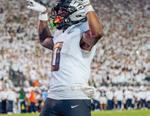
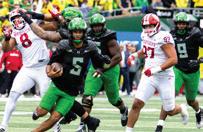
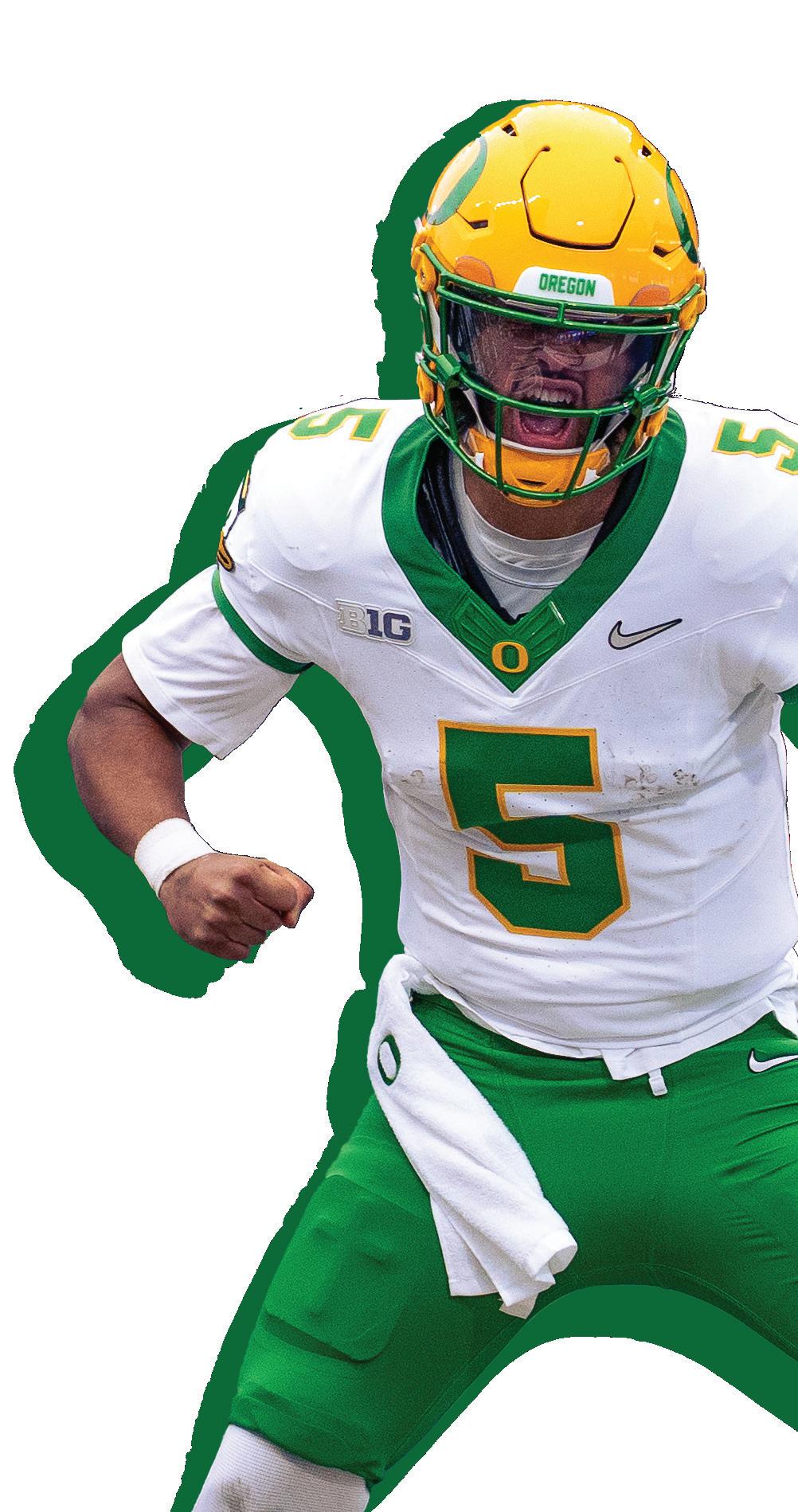
(BELOW) Oregon Ducks quarterback Dante Moore (5) celebrates after crossing the goal line to score a touchdown. The No. 6 University of Oregon Ducks defeated the University of Washington Huskies 26-14 at Husky Stadium in Seattle on Nov. 29, 2025.
(Saj Sundaram/Emerald)
The Ducks boasted a relatively young receiver room last season, but they each excelled in their own ways, coming into 2026 with improvement in mind.
By Jack Lazarus Sports Editor
Oregon football, similarly to any high-level college football team, underwent the expected plethora of changes across the board. Seniors departed, and those with the caliber to make it at the next level chose to fulfill those dreams, leaving a new group of talent waiting in the wings.
Except this group isn’t new.
The Ducks’ clan of wide receivers stuck together this offseason. While certain areas of the team, such as parts of the defense, flipped over completely to new players, this room added just one new name via the transfer portal.
“There’s only one football to go around, but everyone wants to see each other win. That’s what’s unique, more than the skillset, is the personalities that we have and different skill sets. Collectively, that creates a dangerous group,” Oregon wide receivers coach Ross Douglas said.
Leading the charge is senior Evan Stewart in his third year with the Ducks. In June 2025, during offseason practice, Stewart tore the patellar tendon in his right knee, sidelining him for the entirety of the 2025 season.
The senior showed flashes in his first season in Eugene, in 2024, with 48 catches for 613 yards and five touchdowns. Looking ahead to his final year in college football, Stewart described this year as “do or die,” both for the team’s chances at the national championship and his own aspirations in the NFL.
“I am trying to do everything in my power to make sure I can be the best football player I can be for the Oregon Ducks. And for myself, I feel like I really owe it to myself to prove that I can do what I do,” Stewart said.
In Stewart’s stead, the Ducks relied a great deal on young talent such as incoming sophomores Jeremiah McClellan and Dakorien Moore.
McClellan burst onto the scene with 38 receptions for 557 yards and three scores in 2025 as a redshirt freshman, but dazzled with his ability to separate from defenders and come down with tough catches.
“You saw all the big plays he made for us on third and fourth down, two-minute drives, contested catches. Now, we gotta take that to the next level; now it’s just the competitive stamina and doing it all the time regardless of circumstances and sit-
uation,” Douglas said.
McClellan established a critical connection with quarterback Dante Moore throughout the season, culminating in his 83-yard performance in the College Football Playoff First Round against James Madison University, where he also added a 20-yard touchdown.
He’ll be used on the outside primarily, opposite the other Moore, who also aims to take a big jump in production in 2025.
Moore’s elite speed and ability to create explosive plays with the ball in his hands make him an effective downfield option when the Ducks want to take the top off with a deep ball. The true sophomore dealt with persistent injuries in his freshman season, so a full offseason combined with a more healthy 2026 could lead to outstanding production from Moore.
That’s not to say that 497 receiving yards and four total touchdowns can be discredited in any way, but with slightly more injury luck, Moore has potential to become a 1000-yard-ormore receiver.
Rounding out the starting group is the only new face, transfer junior Iverson Hooks from the University of Alabama at Birmingham. Hooks, albeit in a non-power conference, would have led the Ducks in receiving last year with 72 catches for 927 yards and seven touchdowns.
Hooks also excels while running deep downfield, and has drawn comparisons to former Oregon standout Tez Johnson. He also grew into a solid punt returner in 2025, tallying 11 yards per return in his final season at UAB.
All these starters have similar skillsets and stand at or below 6 feet tall, which is why Douglas mentioned that this is a “positionless” group with no clear starter at the slot position.
“If you’re a good football player, you should be able to play anywhere,” Douglas said. “It’s really positionless football in my room. Whether you’re outside or inside, you should be able to plug and play anywhere.”
Ahead of the fall, Douglas believes this will all figure itself out, especially since everyone’s unique skill sets will shine through as they practice more. Having that level of talent ready to go, however, definitely helps matters.
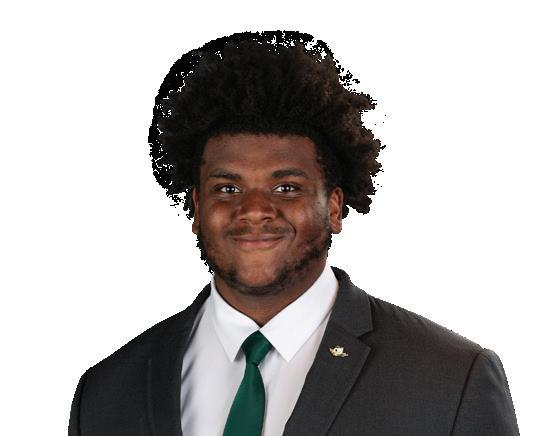
Matayo Uiagalelei, Teitum Tuioti, A’Mauri Washington and Bear Alexander will chase down individual improvements and unfinished business in 2026.
By Henry Light Sports Writer
Throughout spring practice, Oregon football players and staff constantly preach the “Oregon standard.” During the 2026 season, opposing offensive lines will see that standard bearing down on them.
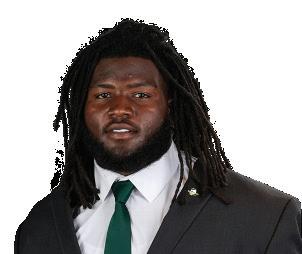
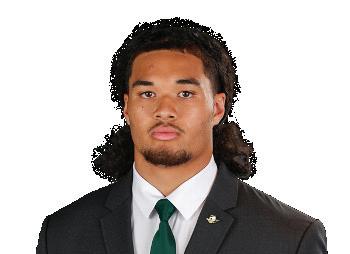
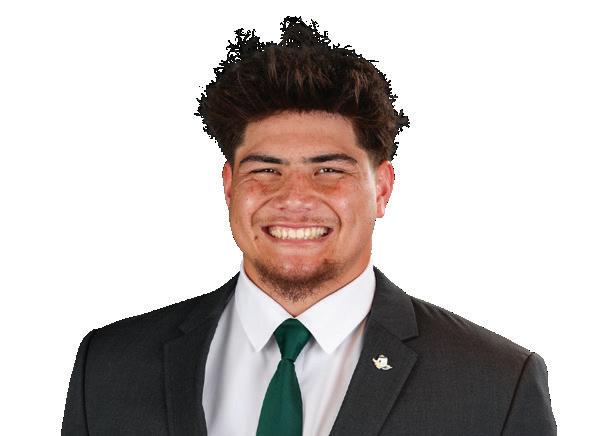
Against a backdrop of roster upheaval, Matayo Uiagalelei, Teitum Tuioti and A’Mauri Washington will provide familiar faces along Oregon’s defensive line in their fourth season as Ducks. With the return of 2025 transfer Bear Alexander, Oregon’s defensive front will bring a level of talent and experience that can only be achieved by retaining NFL talent. Each of the four could have been drafted, some in the first round. Instead, they chose to pursue unfinished business, personal growth and stability amid changes in the coaching staff, all in front of an Autzen Stadium crowd that knows them and loves them. Fans and media began scrutinizing their decisions well before they were even eligible to make them, but the four household names in Eugene could’ve saved them the breath.
“I mean, shoot, man, I already knew from the jump. I couldn’t wait to come back with these guys for one more,” Washington said. “I remember all the stuff we had last year, but now we get to take it up another notch; so I’m excited to see that.”
While Washington, Uiagalelei and Teitum have developed alongside each other since debuting in Eugene in 2023, it was the new face, Alexander, who made the crucial first announcement to return.
Alexander announced his return on Dec. 12, just over a week before his four-tackle performance in the Ducks’ 51-34 playoff rout against James Madison University.
“Bear announcing early was helpful because a lot of these guys want to play together,” Oregon defensive line coach Tony Tuioti said.
With the newest member of the NFL draft-quality defensive front secured, the three mainstays with close relationships, which formed through navigating the highs and lows of three college football seasons together, decided to join Alexander for one more.
“(Teitum) being along with (Matayo) for another season, having a chance to play again with A’Mauri — these guys have been playing together since they were freshmen, and you don’t have those opportunities too often to start your career together and finish your career together,” Tony said.
The immediate promise the three showed as true freshmen was the first step toward their forming an elite defensive line.
Uiagalelei had the highest peak that season, earning PAC12 Freshman of the Week honors in Week 8 after collecting two tackles for loss, and a sack against Washington State. Despite falling behind in accolades, Teitum had the more productive season, totaling 30 tackles to Uigalelei’s 18 and tying him in sacks with two, as the two formed a close relationship in rotational roles.
“Matayo, Teitum, some of those guys that have come back, they’ve proven over time that they have a vested interest in their voices growing since they’ve been on campus,” Oregon head coach Dan Lanning said.
Washington had a more modest debut season, playing 73 snaps across eight games, but did enough to earn significantly more playing time in a backup role in 2024.
“I think what (Washington) had to work on as he got here was his competitive stamina, the ability to go harder for longer, right?” Lanning said. “He recognized early, ‘Okay, this is going to be a limiting factor, and this is one of my strengths.’ His ability to learn our system and be extremely disruptive, be where he’s supposed to be, all those things have really paid off for A’mauri.”
That year, Uiagalelei and Teitum took off, feeding off each other’s success as defenses struggled to contain both. Uiag-
“They all have individual goals to improve themselves as players, so our job as coaches is to help them get to where they want to go, and their job is helping us reach our goals and aspirations as a team.
Chris Hampton Defensive Coordinator
alelei finished with 38 total tackles and 10.5 sacks en route to an All-Big Ten selection, while Teitum finished with 58 total tackles and 5.5 sacks.
Oregon had its edge rushers of the future, Washington’s development into a starting defensive tackle and Alexander joining him from USC to round out the formidable unit.
“Last year was definitely the time we all got the chance to get out there and pop it with each other,” Washington said. “I know they’re going to hold their stuff down on the edges, and I know our interior’s going to hold it down, too; so I’m excited to see this D-line once again.”
His excitement for 2026 is warranted after the unit anchored Division I’s No. 7 defense in yards allowed per game last season. Each of the four linemen earned All-Big Ten honors, setting up an offseason where all but Alexander had to consider going their separate ways for the NFL.
Washington and Uiagalelei both garnered first-round hype, while Teitum was rated as a later-round pick. In the end, the three couldn’t stomach ending their careers with a second straight crushing playoff loss, and decided to finalize their collegiate development in the program it began in while setting its culture for the future.
“The culture has to look a certain way, the building’s got to look a certain way, for somebody to forgo the opportunity to go to the NFL,” Tony said. “There’s got to be some connection; there’s got to be a place where they feel that they can develop.”
Despite the defense’s success last season, the defensive line’s role in the unfinished business that Oregon enters 2026 looking to rectify played into the players’ decisions to come back. The Ducks’ pass rush left sacks on the table, with Uiagalelei bearing the brunt of increased focus from offenses. Teitum finished the season ranked No. 5 in the Big Ten with 9.5 sacks, while Uiagalelei fell to No. 17 with six.
“I feel like we were definitely chipped a lot, you know, had a lot of attention, and I think just finding ways to work around that is big this year,” Uiagalelei said. “Of course, good pass rushers are going to get chipped, and people are going to run max pro.”
Uiagalelei’s dissatisfaction on a personal and team level made his decision to return an easy one.
“At the end of the season, that wasn’t the way I wanted it to end. I feel like there’s so much more on the table for me here, so that’s really all it was,” Uiagalelei said.
The other common factor in the players’ decisions was applying the feedback they had received in the draft process within the program that had developed them to that level. While Teitum has a clear motivation to improve his draft stock, Washington and Uiagalelei’s first-round grades made their decisions more intriguing.
Uiagalelei returned in pursuit of goals in the weight room, while Washington saw potential in finishing plays better before facing elite tackle-breakers in the NFL.
“You’ve got to be a legit pro before you become a pro, so once I’m there, it’s already set and go; it’s not just trying to figure out how to be good.”
Lanning, who formed visions for the players in his first full season of recruiting, sold them on the final steps they could take with one more year in the program. While Lan ning’s deep connections with the players certainly helped, Tony credited his honesty with bringing them back.
“Coach Lanning’s been great with the process with every body, not forcing them or tricking them to come back, like, ‘These are the reasons for you to come back, this is how we can help your game develop to put you in a better situation next year’,” Tony said.
With their decisions made and spring practices under way, Oregon’s star-studded defensive line will need to push their developmental goals aside to focus on the pri mary goal of winning the College Football Playoff that has eluded them the past two seasons.
It starts with getting to know play-caller Chris Hampton in his new role after Tosh Lupoi, the only defensive coordinator they’ve known, left to become head coach at Cal. Despite Hampton’s two years of experience within the program, the change in leadership amplifies the returners’ roles in up holding the Oregon standard.
“I love coach (Hampton). I love his fieriness. He’s never going to sugarcoat anything to you, and I think he really believes in his players,” Uiagalelei said. “You’ve got a coach you can trust, and that’s really all you can ask for.”
“They all have individual goals to improve themselves as players, so our job as coaches is to help them get to where they want to go; and their job is helping us reach our goals and as pirations as a team,” Hampton said.
For Uiagalelei and Teitum, helping the team begins with the culmination of the lead ership roles they had pursued since they arrived in Eugene. In the spring season, that manifests in full-circle moments as seniors mentoring true freshmen — an opportunity they would’ve passed up had they entered the NFL Draft.
“I remember the first day Prince (Tavizon) came in here; we just went straight to Teitum’s house, and it’s like me, Teitum, Dutch (Horisk) and some of the other guys just connecting their first time out here. I feel like this is a program that’s really connected,” Uiagalelei said.
That connectedness, a consistent theme in discus sions of the elusive “Oregon standard,” is best rep resented in the experienced defensive line that will lead the Ducks into the 2026 season and beyond.
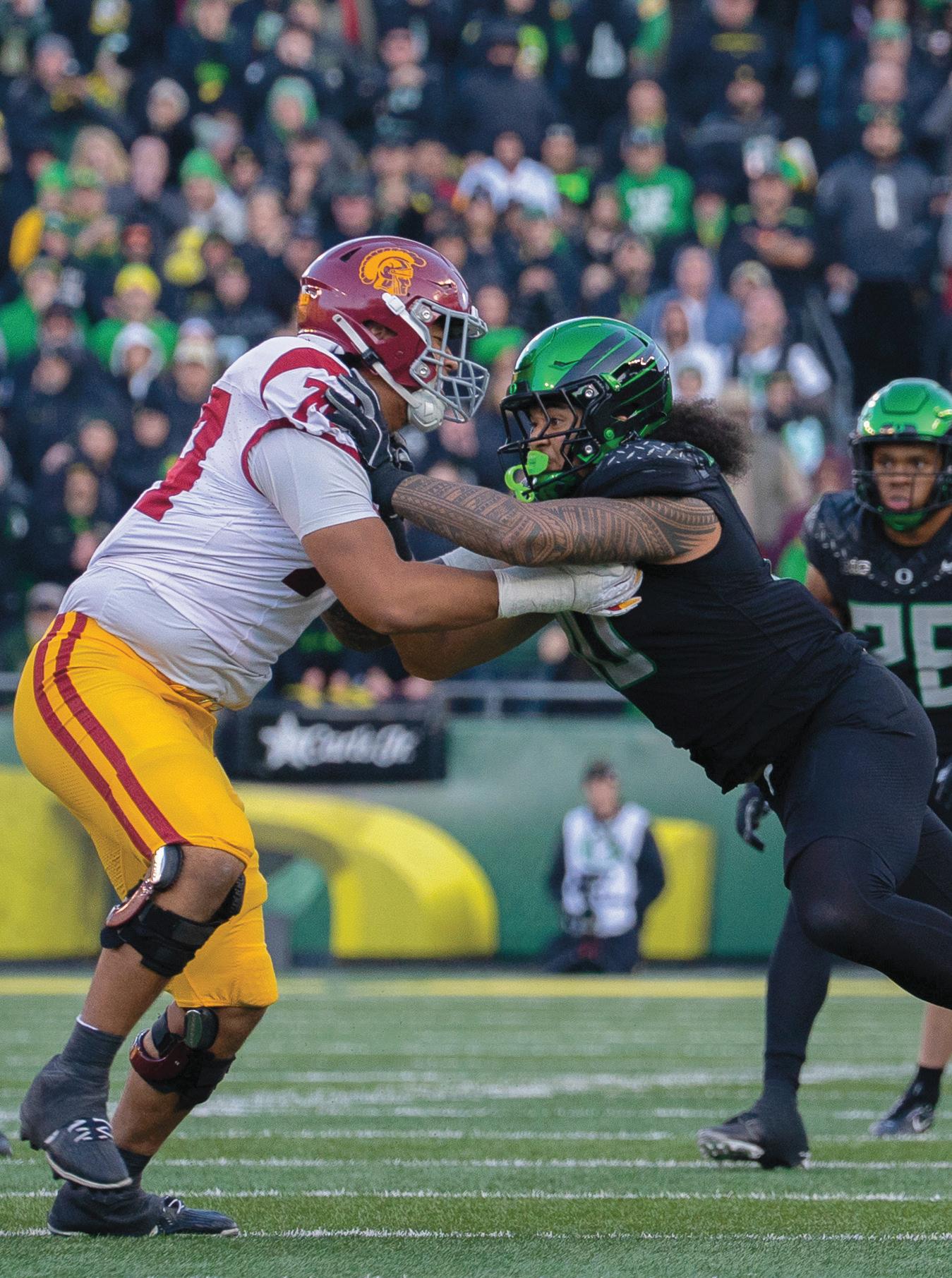
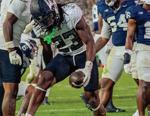
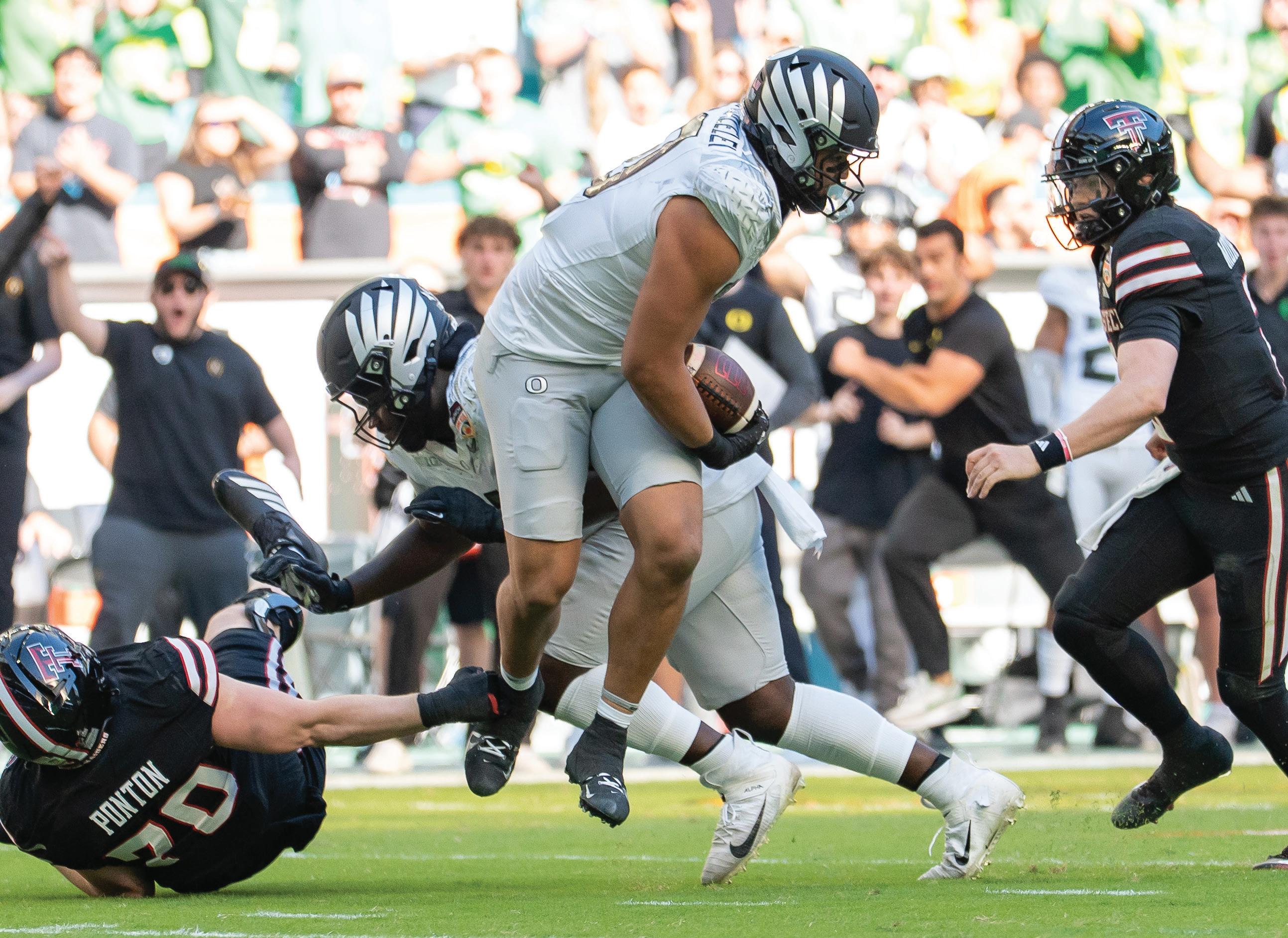
(LEFT) Oregon Ducks outside linebacker Matayo Uiagalelei (10) punches the ball out of Texas Tech Red Raiders offensive lineman Jacob Ponton’s (70) hands. The No. 5 University of Oregon Ducks defeated the No. 4 Texas Tech University Red Raiders 23-0 in the second round of the College Football Playoff at the Orange Bowl hosted at Hard Rock Stadium in Miami Gardens, Fla. on Jan. 1, 2026.
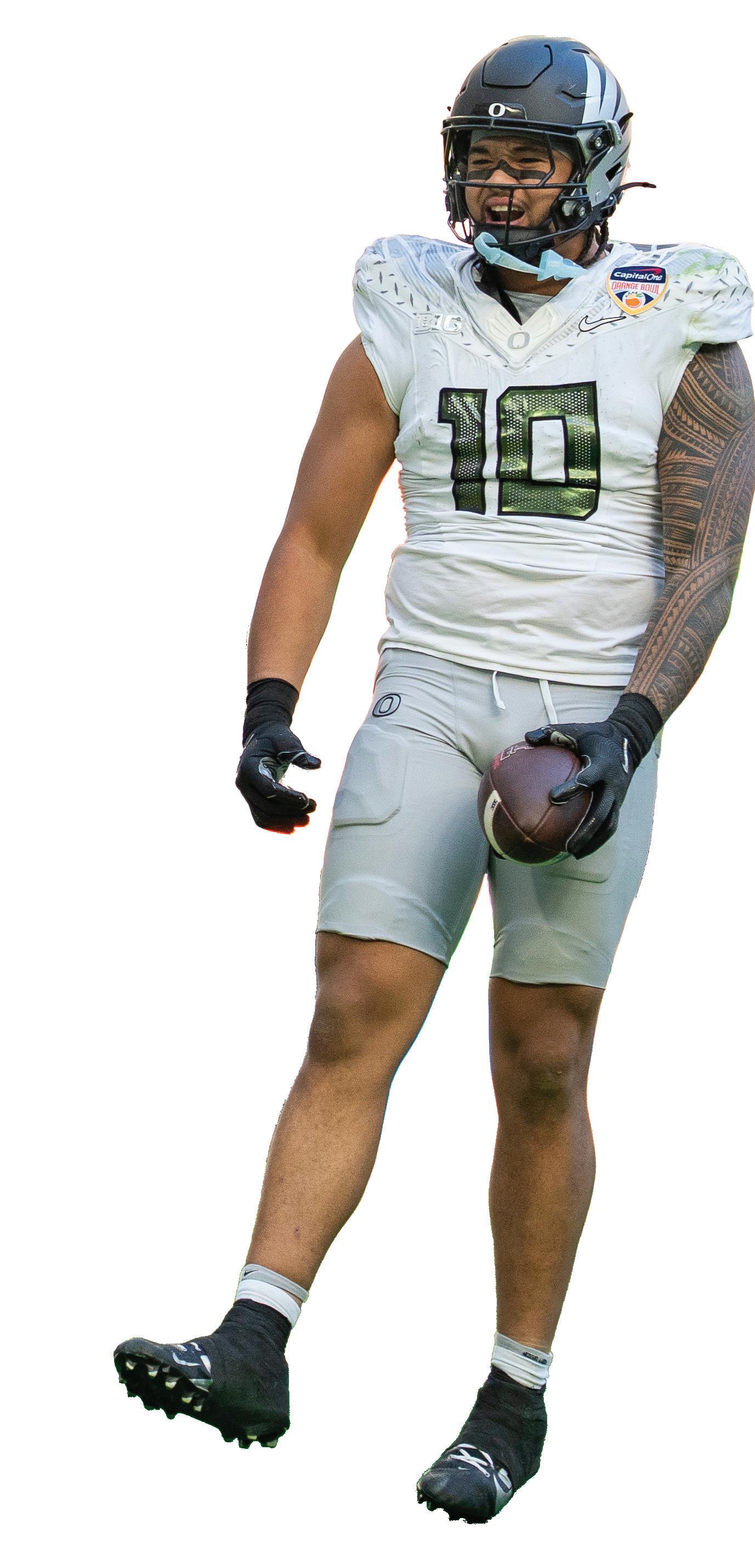
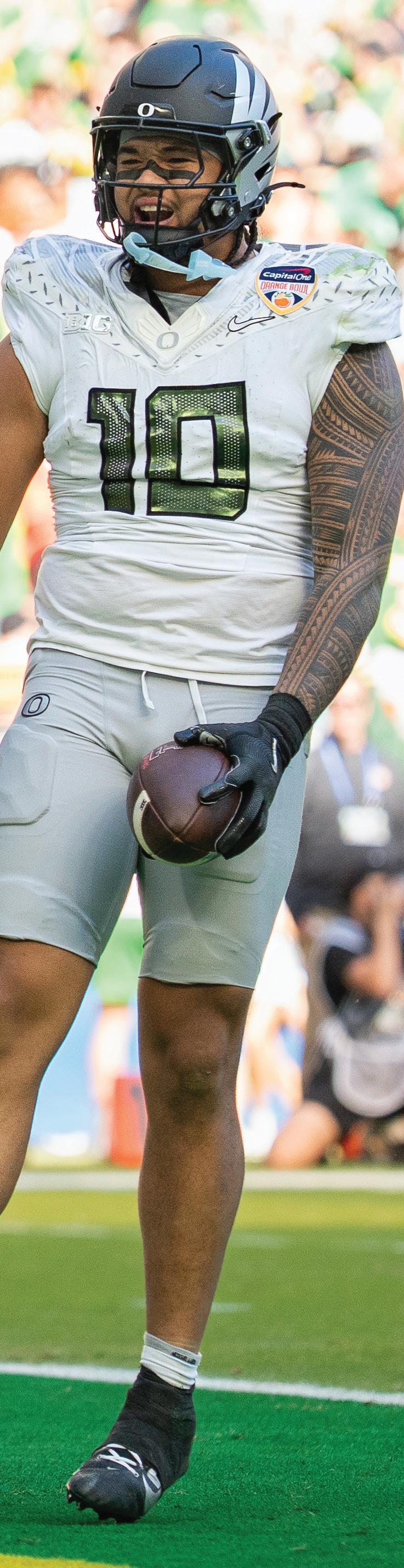
(RIGHT) Oregon Ducks outside linebacker Matayo Viagalelei’s (10) celebrates stolen ball and turn over. The No. 5 University of Oregon Ducks beat the No. 4 Texas Tech University Red Raiders 23-0 in the second round of the College Football Playoff at the Orange Bowl hosted at Hard Rock Stadium in Miami Gardens, Fla. on Jan. 1, 2026.
(Saj Sundaram/Emerald)


A breakdown of potential starters from the 2026 transfer portal.
By Harry Leader Sports Writer
Ahead of this year’s spring game, all eyes are on this year’s incoming transfers and how they’ll fit into head coach Dan Lanning’s squad next season. The Daily Emerald breaks down this year’s top transfers who may start in next season’s squad.
While UAB went 4-8 last year, Hooks was one of the top receivers in the American Conference, finishing fourth in receiving yards with 927 and tied for third in receiving touchdowns with seven.
Hooks enters a receiving room with a swath of talent in Dakorien Moore and Evan Stewart, but he has strong upside as a third or fourth receiver role, similar to Jeremiah McClellan or Gary Bryant Jr. last season.
At a recent press conference, Dan Lanning boasted his ability showed similarities with former Oregon wide receiver Tez Johnson.
“Yeah, I think we saw some of the traits that we love to see in the slot, and obviously, Tez is a slot that did really well for us here,” Lanning said. “He has to continue to get physical at the point of attack. That’s somewhere that he can improve for us. Overall, he’s a playmaker. He has a dynamic ability similar to Tez.”
One of the biggest names in this year’s transfer class is undoubtedly safety Koi Perich after an impressive first two seasons at Minnesota. Last season, he ranked 22nd in the Big Ten in total tackles with 82, alongside two pass deflections, one pick six and one forced fumble.
Perich has big shoes to fill with the departure of star safety Dillon Theineman. He’s drawn a lot of comparisons to the former Ducks star, given his path to Eugene after two solid seasons from a different Big Ten program, but his one glaring difference is his contributions on special teams and offense.
Perich totaled 306 yards on punt returns over two seasons at Minnesota alongside 813 kick return yards. Additionally, he caught seven passes for 89 yards and rushed five times for nine yards. While Perich’s involvement in the offense is unlikely given the strength of the receiving room, he could be used in certain packages like fake punts and possibly as a slot receiver.
Aaron Scott Jr. decided to take his talents to Eugene this offseason in somewhat of a shock move after two seasons at Ohio State, which included the 2024 National Championship. He played 19 games over two seasons with 11 total tackles, one tackle for loss and one pass deflection during that span.
With the departure of Jadon Canady to the NFL draft, Scott Jr. could break through at corner and be a potential early starter at nickel with Trey McNutt coming off an injury. There are a lot of unknowns about the depth chart in the secondary, which means it’s likely that there will be some competition within that secondary room for a bigger role.
With three offensive linemen on their way to the NFL this spring, the Ducks needed to bolster their line, and they did just that with one of the best linemen in the FCS, Michael Bennett III. The former Yale bulldog was a member of the All-Ivy first team in 2025 and 2024 and was an honorable mention for the AP FCS All-American team last season.
Bennett III started at right tackle last season for Yale, and with the departure of Alex Harkey, it’s likely he’ll remain on the right side of the line.
“I feel comfortable at right tackle,” Bennett III said. “I’ve been practicing the right tackle, but also working at guards, a little bit left tackle, just being able to be flexible. Ultimately it’s going to be the best five guys, physical guys who get out there and play.”
While Oregon already has a dynamic duo in the backfield in Dierre Hill Jr. and Jordon Davison, Simeon Price has the opportunity to be the Ducks’ third back next season. Price is a bit of a journeyman coming into Oregon starting his career at Mississippi State University, before heading to Coastal Carolina University and then Colorado.
Over his lengthy career, he accumulated 470 rushing yards on 100 carries with two touchdowns, which both came last season before an injury sidelined him for the final eight games of the season. Price’s viability as a pass option is limited, given he hasn’t caught many passes over his whole career, with only 21 receptions for a total of 142 yards with one touchdown.
Last season saw the Ducks use multiple running backs in prominent roles, meaning Price could likely see an increase in reps as the season goes on. He will have to compete with Da’Jaun Riggs, who hasn’t had too much involvement as of late, but time will tell how the backfield will shape up.
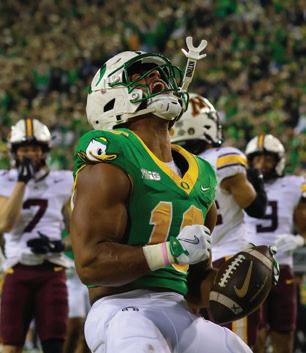
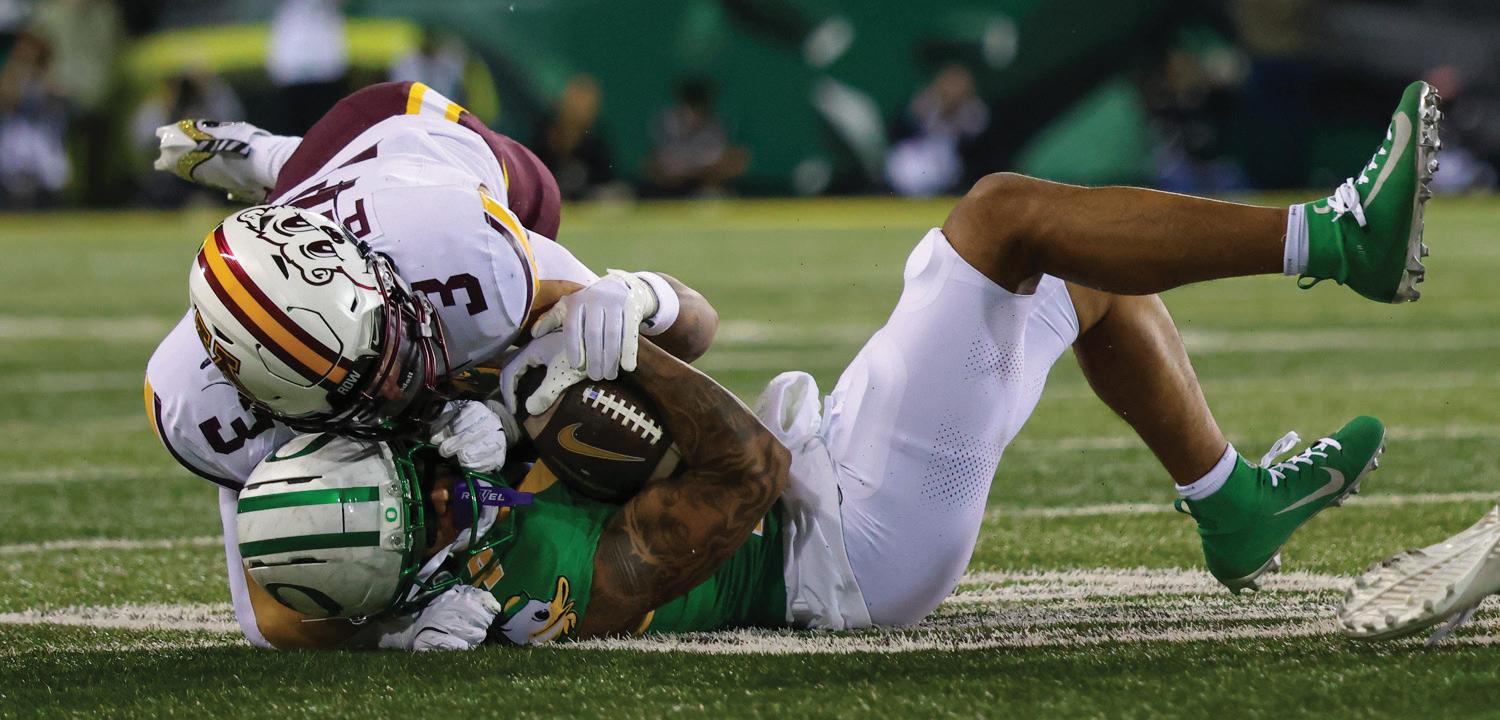
(ABOVE) Ducks wide reciever Justius Lowe (14) keeps hold of the ball as he is tackled to the ground by Gopher Koi Perich (3). The University of Oregon Ducks defeated the University of Minnesota Gophers in a Friday night matchup at Autzen Stadium in Eugene, Ore., on Nov. 14, 2025.
(Corey Hoffman/Emerald)
Oregon football’s Spring Game tackles food insecurity.
By Rachel McConaghie Sports Writer
The Oregon football spring game is more than just a preview of the upcoming season, it is a critical lifeline for thousands of residents in Lane County. As one of the largest food drives of the year, the event represents an over-decade-long partnership between the University of Oregon and Food for Lane County.
“On average, it brings in roughly 30,000 pounds of food, which is about 25,000 meals that we can give back into the community,” Caitlin Caldwell, the community giving coordinator at FFLC, said.
Caldwell noted that the university has been an "equal partner" in amplifying the mission through various on campus food drives and volunteer support.
The timing of the drive is particularly vital for the organization’s warehouse. Following the "season of giving" in November and December, food banks often face a lull period where donations slow down.
“The spring game is one of our first major food drives since that holiday giving period. So it’s always exciting when a food drive like this happens… because it replenishes our shelves,” Caldwell said.
Handling such a massive influx of donations in a single afternoon presents significant logistical challenges. The volume of food often exceeds the capacity of FFLC’s own trucks, requiring assistance from local business partners. Papé Machinery provides forklifts to move heavy pallets, while Bigfoot Beverages donates semi-trucks to transport the food to the warehouse for distribution. Once processed, the food reaches over 100 locations and partners throughout the county.
“A jar of peanut butter given at the spring game might be on a kid’s sand-
Oregon quarterback Dante Moore details mental health struggles in letter to Oregon governor.
By Joe Krasnowski Senior Sports Writer
wich a week or two later in Marcola, or Oak Ridge, or as far west as Veneta or Florence,” Larissa Ennis, FFLC’s Senior Manager of Development and Communications, said.
Uncertainty with programs like Supplemental Nutrition Assistance Program, high cost of living and food insecurity rates across the region, Ennis pointed out that Lane County’s food insecurity levels are higher than the Oregon state average.
“We want to do our best to get people the nutrition they need to thrive,” Ennis said.
In order to attend the spring game, fans are expected to bring non-perishable food items, with a specific focus on high-demand proteins like canned tuna, chicken, and peanut butter. FFLC also highlights the need for cooking oil and spices, which are often too expensive for families to purchase regularly.
A digital avenue for support is available through a "GiveGab" page, which counts monetary donations toward the spring game’s total impact for those who cannot make it to the spring game.
As the community prepares to feed the Ducks, Ennis reflects on the personal nature of the mission. Having grown up in a food-insecure household herself, she sees the drive as a modern version of a mutual aid network.
“Having experienced hunger, you know there's a real strong drive of a lot of compassion in doing what you can to make sure that other people don't have those experiences, don't experience hunger,” she said.
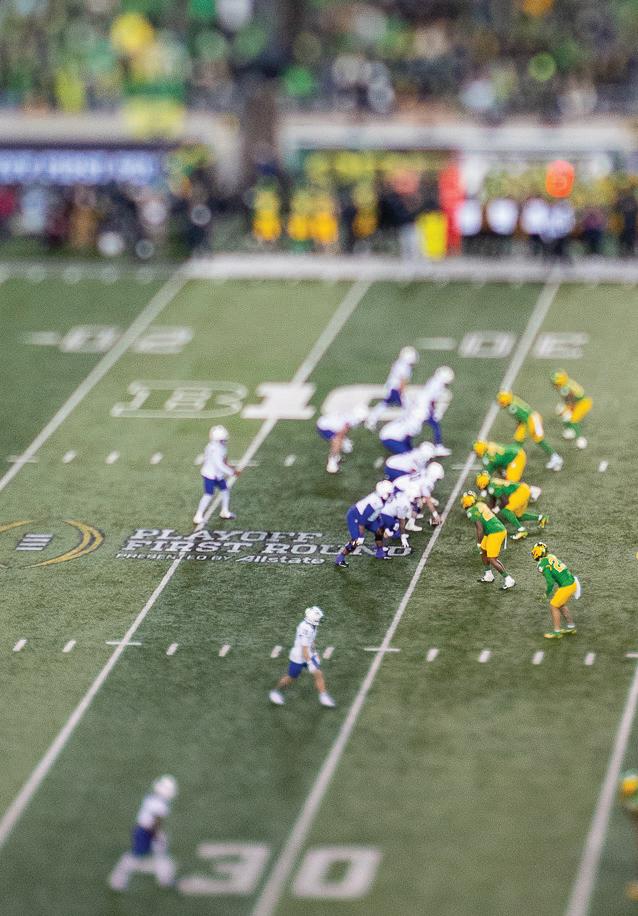
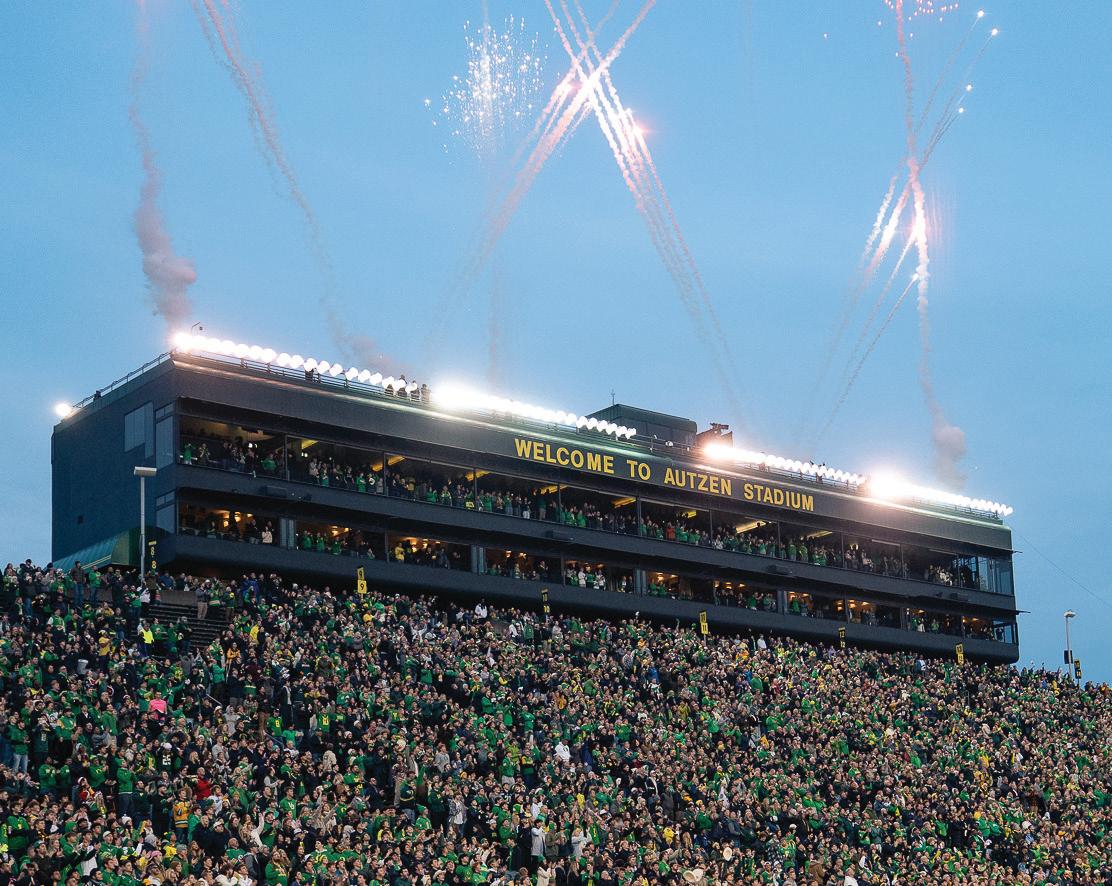
(ABOVE) Fireworks explode above Autzen Stadium as the Oregon team runs out from their tunnel. The No. 5 University of Oregon Ducks defeated the No. 12 James Madison University Dukes 51-34 in the first round of the College Football Playoff at Autzen Stadium in Eugene, Ore., on Dec. 20, 2025.
(Saj Sundaram/Emerald)
Something horrific doesn’t have to happen to talk about mental health. Something historic doesn’t have to happen for it to be discussed, either.
A letter penned from Oregon quarterback Dante Moore to Oregon Gov. Tina Kotek proved a perfect example of merging the two. Within the letter originally reported by The Oregonian, Moore detailed his experiences dealing with mental health issues while seeing his mother battle through chemotherapy, as well as his own struggles on the field as a freshman at UCLA.
“Early in my college career, I found myself struggling deeply: I was depressed,” Moore wrote in the March 3 letter, shared exclusively with The Oregonian. “The pressure and expectations that come with playing quarterback at a high level felt overwhelming at 18. Around that same time, my mother was diagnosed with cancer.”
“Watching her endure chemotherapy while I tried to stay focused on school and football challenged me mentally and emotionally,” Moore said. “It was heavy in ways that are difficult to put into words.”
Moore himself is a bit of an enigma in the sport. He turned down near-guaranteed millions of dollars as a top-two pick in April’s NFL Draft, instead returning to Oregon — albeit with NIL money — with the hope of developing into a more polished prospect and person. He’s also one of the most popular college football players in the country, and his team’s quarterback.
But he’s also unique as a person, too. It’s no secret that men struggle with talking about mental health issues, and athletes, collegiate and professional, are far from exceptions. Athletes, activists and influencers everywhere talk about using their platform for good, but it’s another thing to go out and act upon that desire.
Throughout his letter, Moore calls upon Gov. Kotek to advocate for the protection and expansion of online mental health services in Oregon. Moore details how these services have personally helped him while listing sobering statistics such as that suicide is the No. 2 leading cause of death for young adults in the state.
“These are not just statistics; they are frightening realities,” Moore said. “They
represent students, teammates, and families carrying grief, trauma and silent struggles without support.”
Moore also went into detail about calling his teammates and friends to action as a person and as a quarterback.
“I recently challenged my teammates to lead beyond the field and use our platform to support people who feel voiceless,” Moore said. “Leadership is not just about what we do on Saturdays — it is about who we stand up for every day. As a quarterback, I am expected to lead, stay composed, and carry responsibility for my team.”
But most importantly, Moore shared an essential perspective about something that affects larger-than-life athletes and students alike: breaking down walls of stigma while serving as a model in a sport that demands toughness.
It’s essential to remember that progress isn’t linear in any regard. Moore detailed making a regular season game against Indiana University “bigger than what it was” and recalled teammates saying that he “didn't have that smile on (his) face. I didn't have that joy. I was kind of too locked in, to be honest."
But what can become more normalized is athletes and people like Moore using their platforms to share their humanity in a world that demands the extraordinary from so many.
“Learning how to care for my own mental health made me a better leader, teammate, and student,” Moore said. “I know what it feels like to struggle in silence. I also know what it feels like to be supported and to come back stronger. That support saved me.”
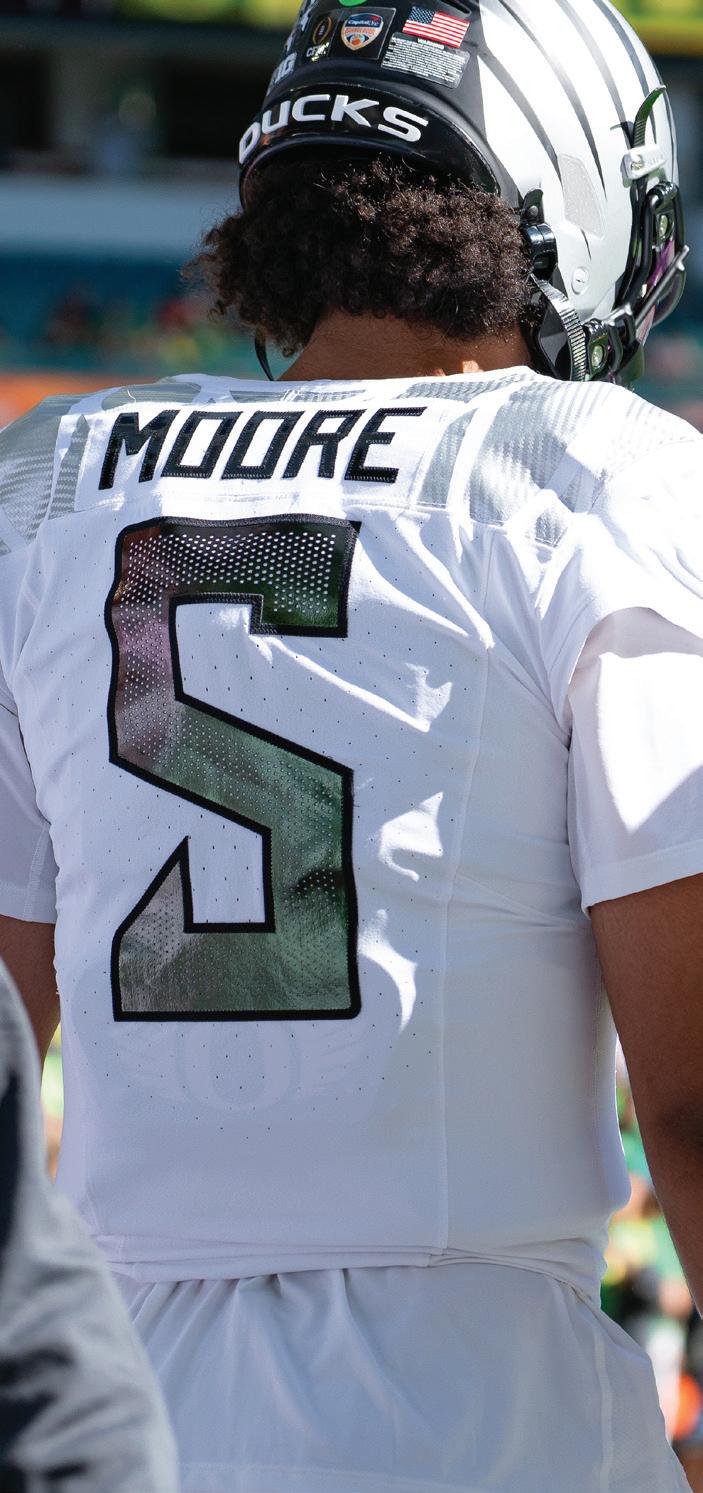
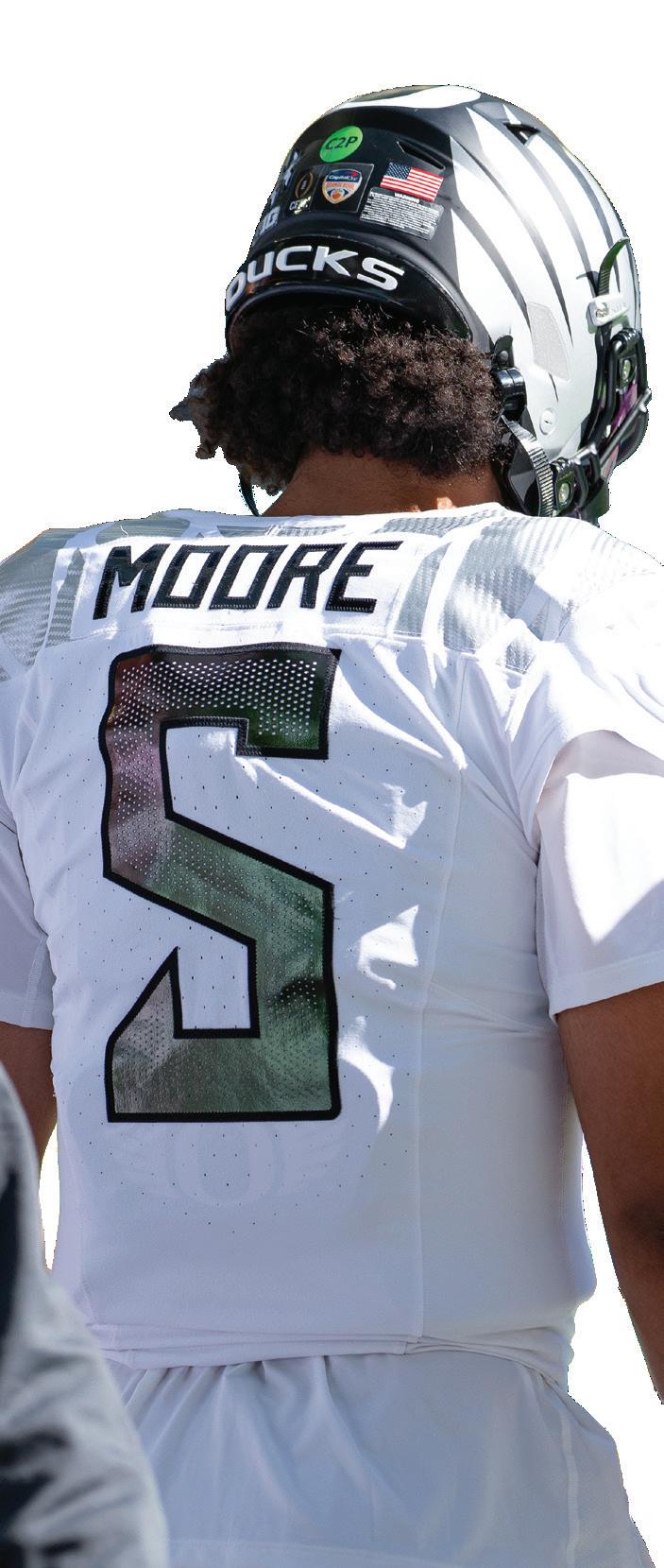
(ABOVE) Oregon Ducks quarterback Dante Moore (5) warms up for the game. The No. 5 University of Oregon Ducks defeated the No. 4 Texas Tech University Red Raiders 23-0 in the second round of the College Football Playoff at the Orange Bowl hosted at Hard Rock Stadium in Miami Gardens, Fla. on Jan. 1, 2026.
(Saj Sundaram/Emerald)
Bryce Boettcher is off to the NFL. Now, Oregon and position coach Brian Michalowski face the 2026 season with an experienced, if relatively untested room.
By Owen Murray Associate Sports Editor
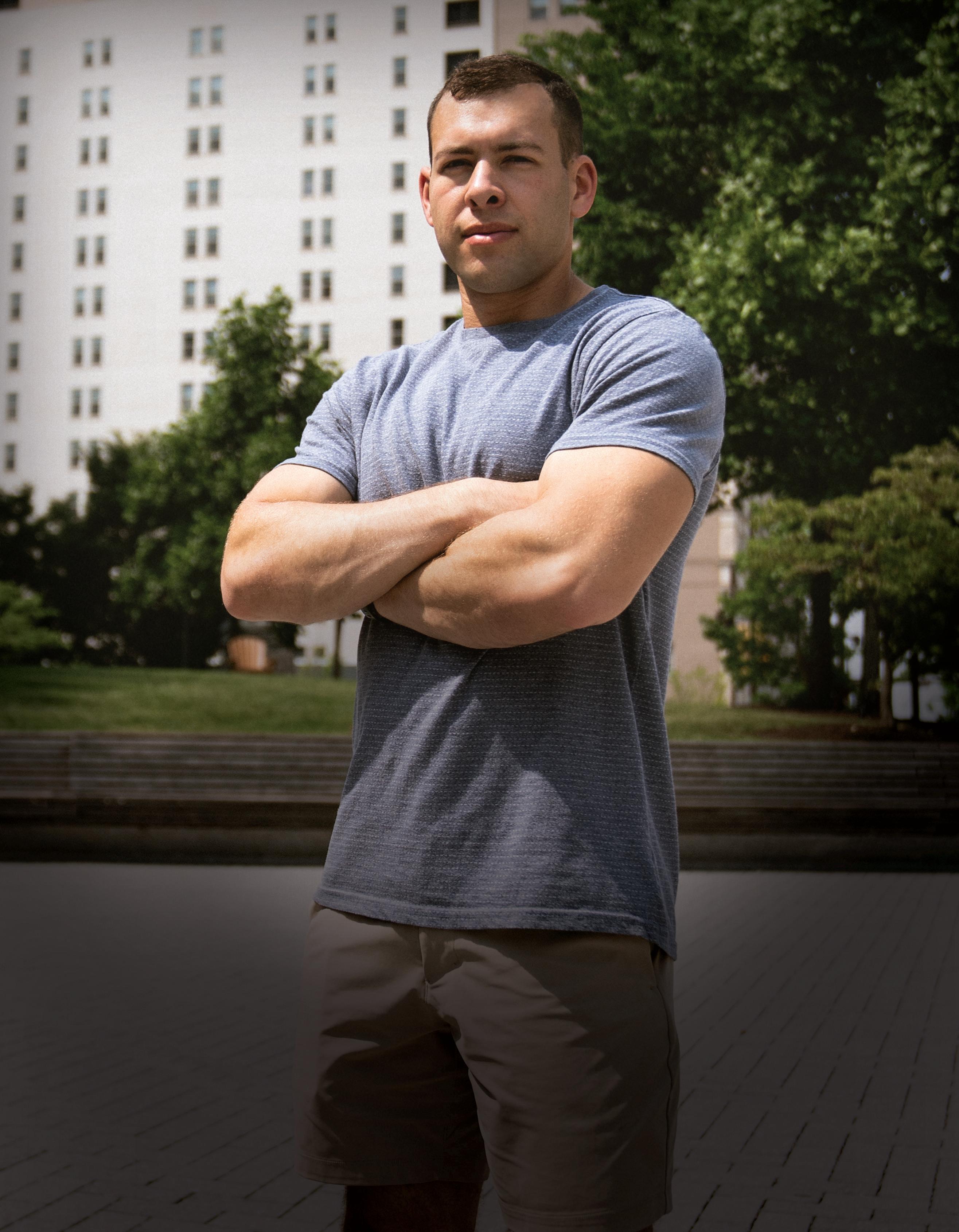
On the day of Oregon’s Spring Game, the man who has defined its linebacker room for the last two years will be hosting his NFL Draft party. That celebration, too, will be in Eugene — the city is practically Bryce Boettcher’s second surname by now.
But at Autzen Stadium, the focus will be on how to move on from the Ducks’ graduating green-dot backer. Jerry Mixon Jr., last year’s starter alongside Boettcher, returns to lead a group that includes fifth-year senior Devon Jackson, Dylan Williams, Gavin Nix, Brayden Platt, Braylon Hodge, Tristan Phillips, Will Straton and Jay Harden. Several have worked with helmet communication through the spring as the Ducks search for their next starters, but Oregon has to find two who can lead and communicate effectively. That takes another kind of voice, they say, and the brand of leadership that position coach Brian Michalowski preaches.
Mixon broke out in 2025 with a 57-tackle, two-interception season highlighted by a pick-six against Oklahoma State University in Week 2. His elite instincts bred a linebacker who jumped passing lanes almost before the quarterback knew he was throwing there, and resulted in seven passes defensed. This spring, that extra playing time has had an impact.
“It carried over a lot,” Mixon said after a spring practice. “Just being more confident out there really slowed the game down, seeing what the offense likes to do, so I feel like that played a big part in it.”
His next step is taking over the primary role. Mixon looped in on the helmet-to-helmet communication in practice last season alongside Boettcher, and now stands as the likely candidate to take over in game. Some of the development in that role comes down to literal voice training — the room will unleash a Jon Gruden-esque “White 80! White 80!” in meetings to practice — and Mixon’s pitch is a different sound to discern on the field for the defensive line and secondary than Boettcher’s was.
Leadership, though, is the other half of the equation.
“He’s always been a very connected guy on our team with other teammates,” Michalowski said. “The season he put together last year, that’s him walking the walk. Now he’s talking the talk. And it’s really the joy that he goes out on the field with — cheering other people on, just energy.”
There’s plenty of experience in the room he’s expected to lead, even if several parts of it haven’t seen consistent snaps. Mixon, Jackson, Williams, Platt, Nix and Straton
all have at least three years in the system despite sharing just one year of true starting experience between them.
“We’re really not as young as people may think we are,” Jackson said. “We’ve been here for a while. It’s just now it’s time for new faces to rise to the top.”
Jackson, a redshirt senior who posted back-to-back 40-plus tackle seasons in 2024 and 2025, was largely a tertiary option to Mixon and Boettcher last year and the third option behind Boettcher and Jeffrey Bassa in 2024. He’s one of the fastest athletes that the Ducks have, but missed spring football last season with an unspecified injury.
Now healthy, Jackson is leading the Ducks in an in-house stat they call K-E-B: knock-em-back plays, in which a linebacker gets downhill and reverses a ballcarrier’s direction. He’s facing what’s likely his last season of college football with what Michalowski called a “prove-it mentality.”
“It’s do or die,” Jackson said. “It’s my last one. There’s nothing left to hold back. If I don’t make it happen this year, then I’m just going to be a regular guy, and I feel like I’m too talented to be that.”
While Mixon and Jackson project as likely starters, Michalowski isn’t making choices yet. Nix and Williams are fluent in his emphasis on communication. Platt is, too, plus he stepped into last season’s Peach Bowl prep as a last-minute running back option, which Michalowski said, “says he’s an unbelievable team player.”
Saturday, they’ll all have a chance to step into that role. It’s about making their name, new Oregon defensive coordinator Chris Hampton thinks.
“If you would have asked anyone in 2024 preseason about Bryce Boettcher, nobody would have said Bryce Boettcher would’ve been Bryce Boettcher. He became Bryce Boettcher,” Hampton said. “So Gavin Nix has to become Gavin Nix. So does Dylan Williams… and Brayden Platt. So, we’ve got a bunch of guys that can fill that role. I think they have a lot of talent. They have a lot of ability. Now, it’s just their time.”
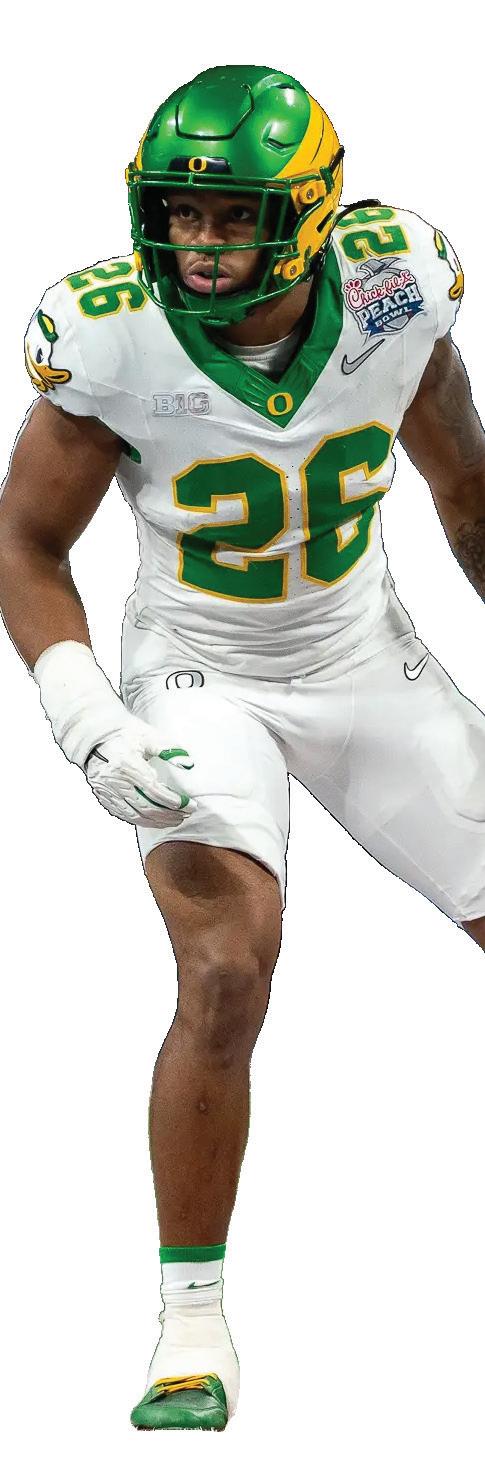
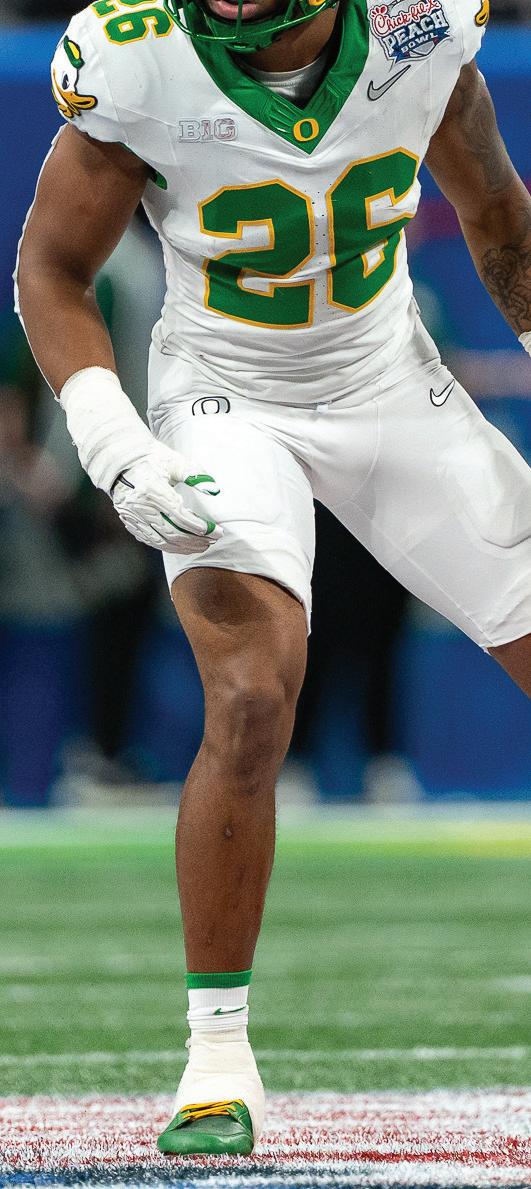
(RIGHT) Oregon Ducks linebacker Devon Jackson (26) sizes up his opponents before the start of the play. The No. 5 University of Oregon Ducks were defeated by the No. 1 Indiana University Hoosiers 22-56 in the third round of the College Football Playoff at the Peach Bowl held at Mercedes-Benz Stadium in Atlanta on Jan. 9, 2026.
(Saj Sundaram/Emerald)