MONDAY, MARCH 9, 2026
Over 100,000 fossils are stored underneath the heart of campus
The University of Oregon houses most fossils found on Oregon’s public lands. Meet the people cataloging prehistoric skulls, shells, leaves and bones while advocating for more space amid tight budgets.





EDITOR IN CHIEF
Tarek Anthony
PRINT MANAGING EDITOR
Ryan Ehrhart
DIGITAL MANAGING EDITOR
Ysabella Sosa
NEWS EDITOR
Reilly Norgren
INVESTIGATIONS EDITOR
Ana Narayan
A&C EDITOR
Claire Coit
SPORTS EDITOR
Jack Lazarus
OPINION EDITOR
Gracie Cox
PHOTO MANAGING EDITOR
Corey Hoffman
COPY CHIEF
Olivia Ellerbruch
VIDEO EDITOR
Jake Nolan
PODCAST EDITOR
Stephanie Hensley
SOCIALS EDITOR
Ysabella Sosa
VISUALS EDITOR
Noa Schwartz
DESIGN EDITOR
Adaleah Carman
DESIGNERS
Asha Mohan
Ellery Burton-Tillson
Eva Andrews
Izzy Smith
Nina Rose BUSINESS
PUBLISHER AND PRESIDENT
Eric Henry (X317) ehenry@dailyemerald.com
VP OPERATIONS
Kathy Carbone (X302) kcarbone@dailyemerald.com
DIRECTOR OF SALES & DIGITAL MARKETING
Shelly Rondestvedt (X303) srondestvedt@dailyemerald. com
CREATIVE & TECHNICAL
DIRECTOR
Anna Smith (X327) creative@dailyemerald.com
ACCOUNT EXECUTIVES
Torin Chevalier
Camcole Pereira
Ava Stephanian
Elliot Byrne
THE DAILY
EMERALD
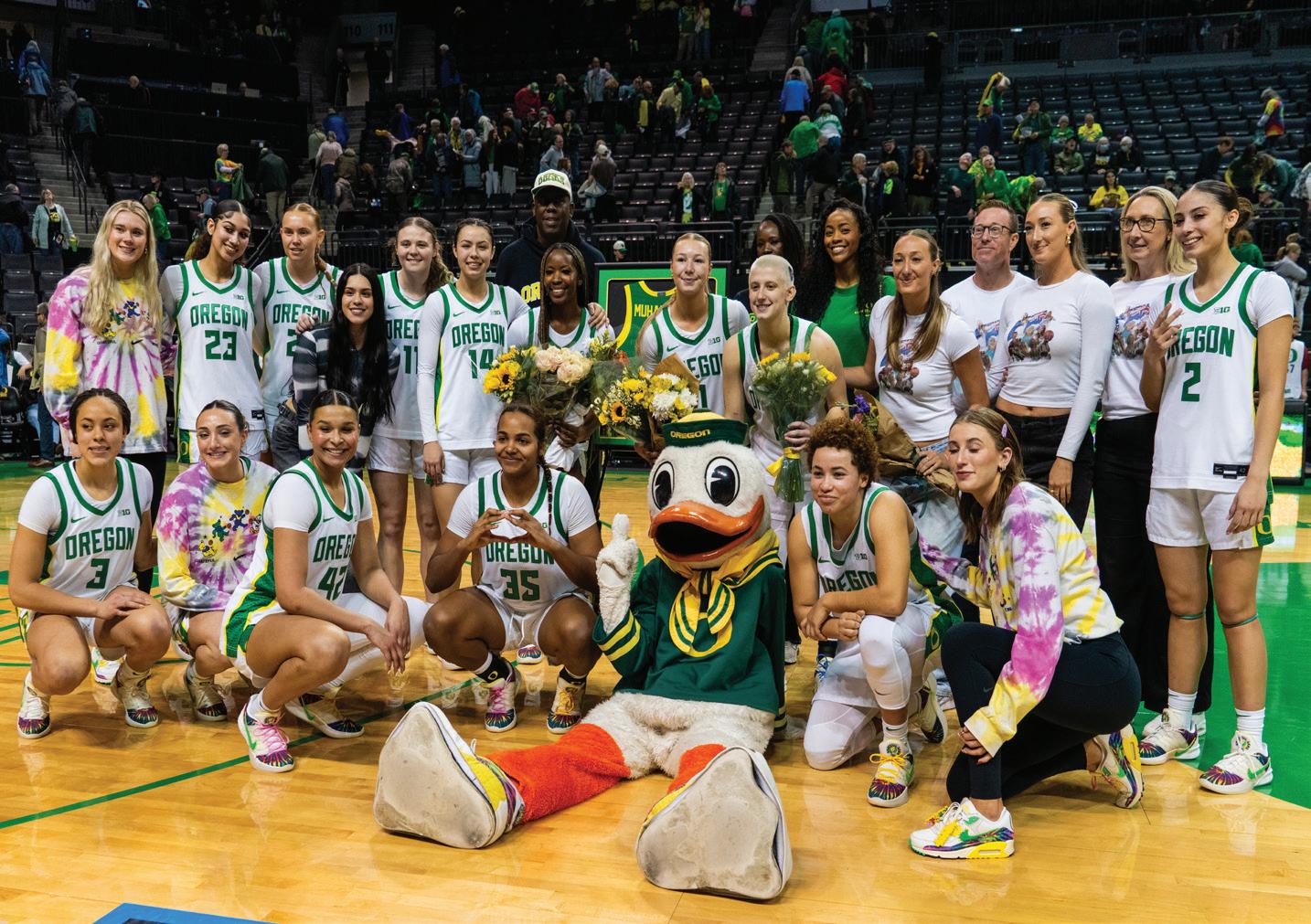
Women’s basketball senior night
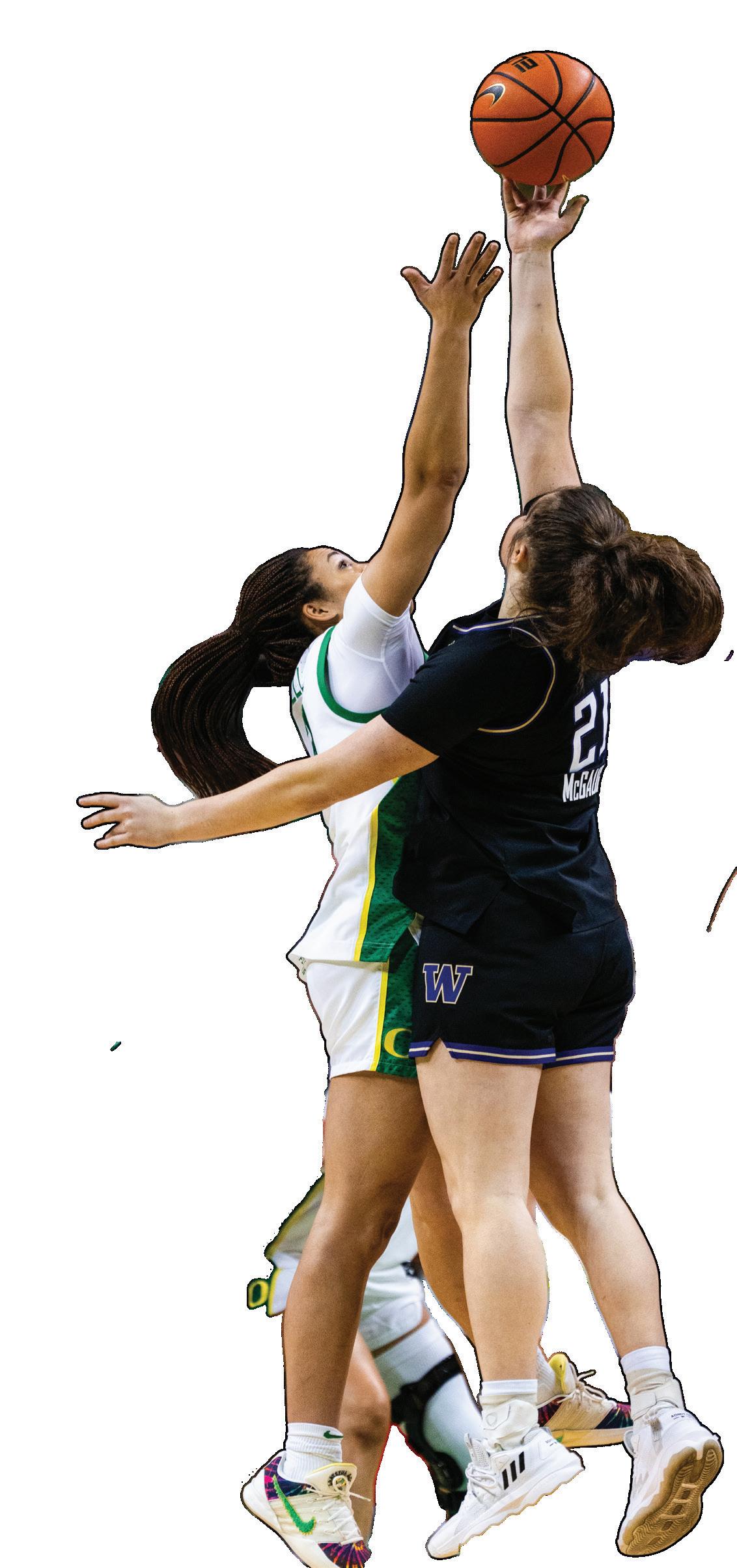
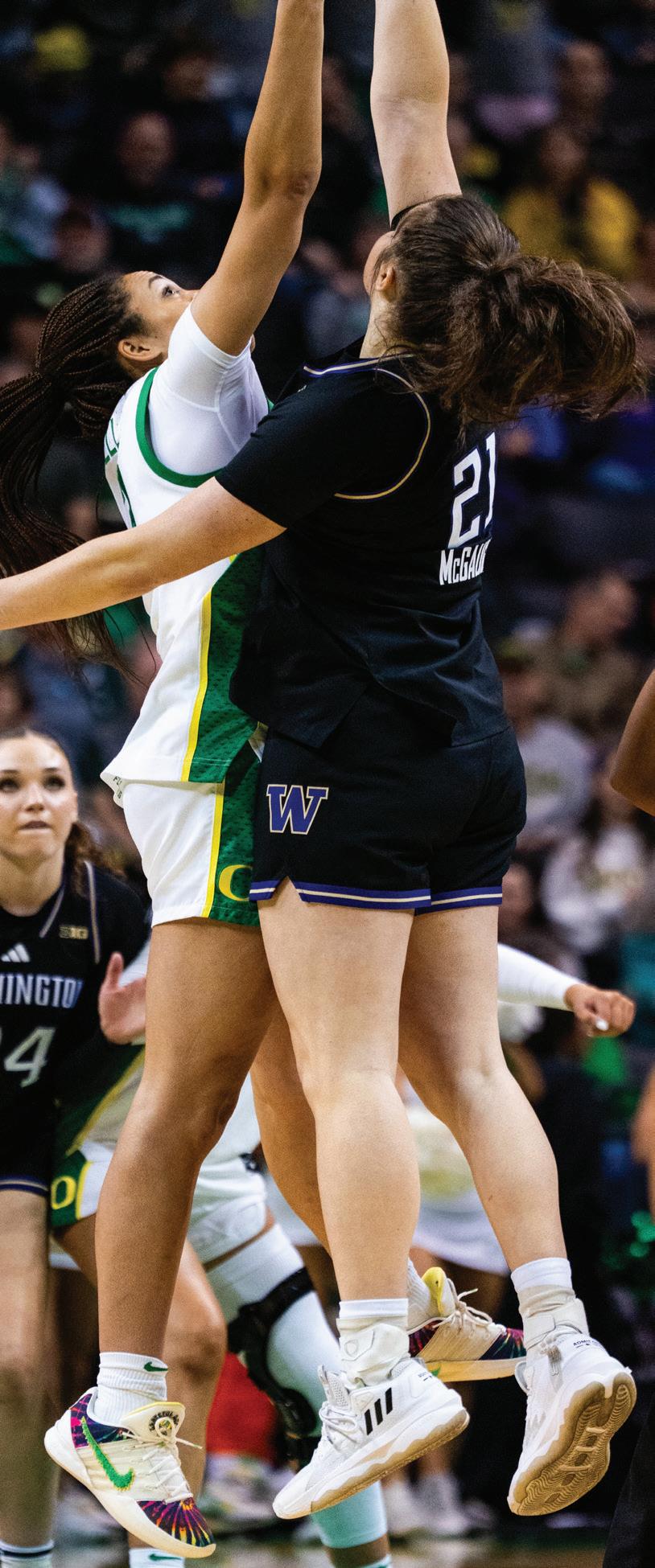
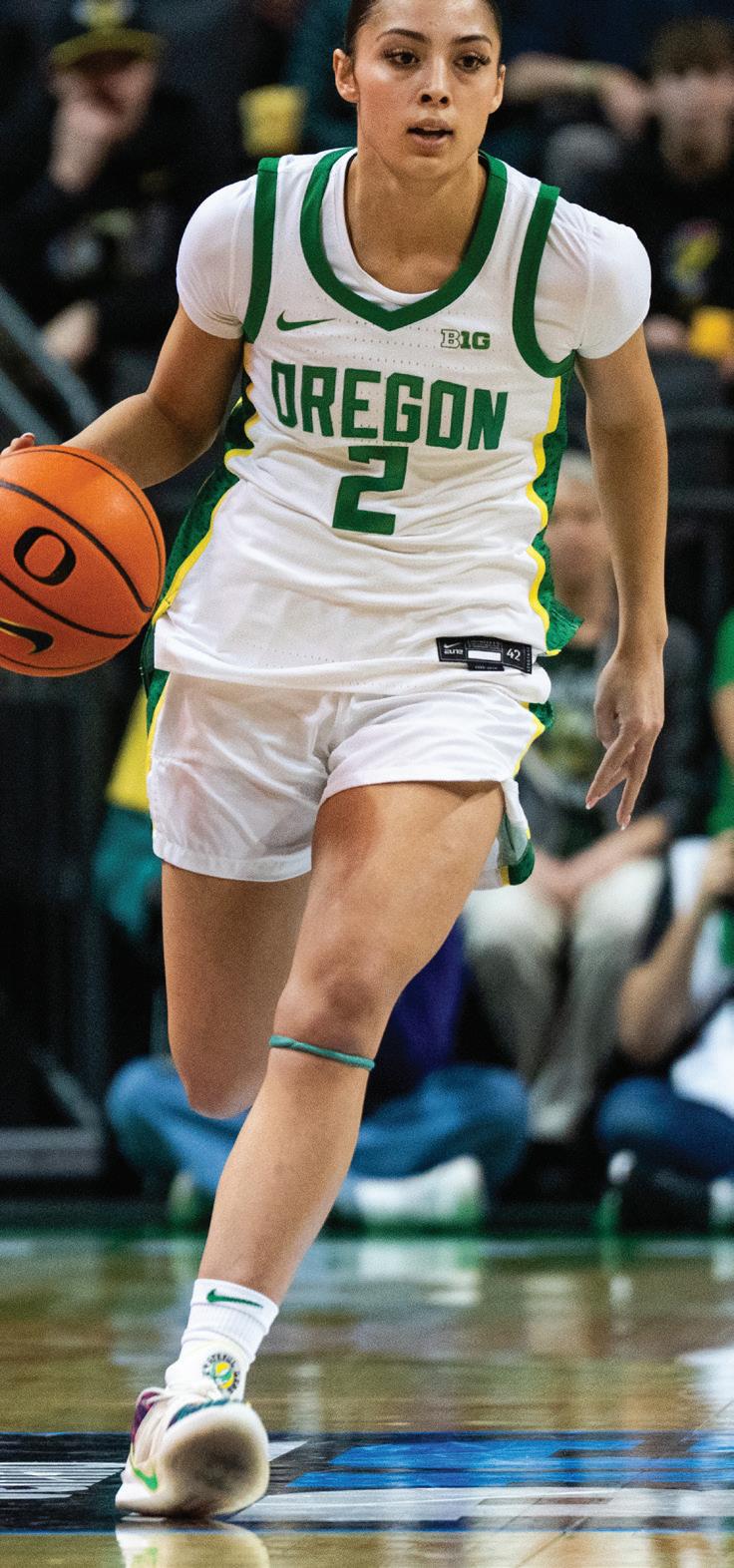
The University of Oregon Women’s Basketball team lost 70-69 to the University of Washington at Matthew Knight Arena in Eugene, Ore. on March 1.
by
Rowan Campbell

The Daily Emerald is published by Emerald Media Group, Inc., the independent nonprofit media company at the University of Oregon. Formerly the Oregon Daily Emerald, the news organization was founded in 1900. Emerald Media Group 1395 University St.,#302 Eugene, Or 97403 (541)-346-5511

PHOTO
Photos
The Oregon women’s basketball team poses for a picture with the Oregon Duck on senior night.
Oregon guard Katie Fiso (2) moves the ball up court.
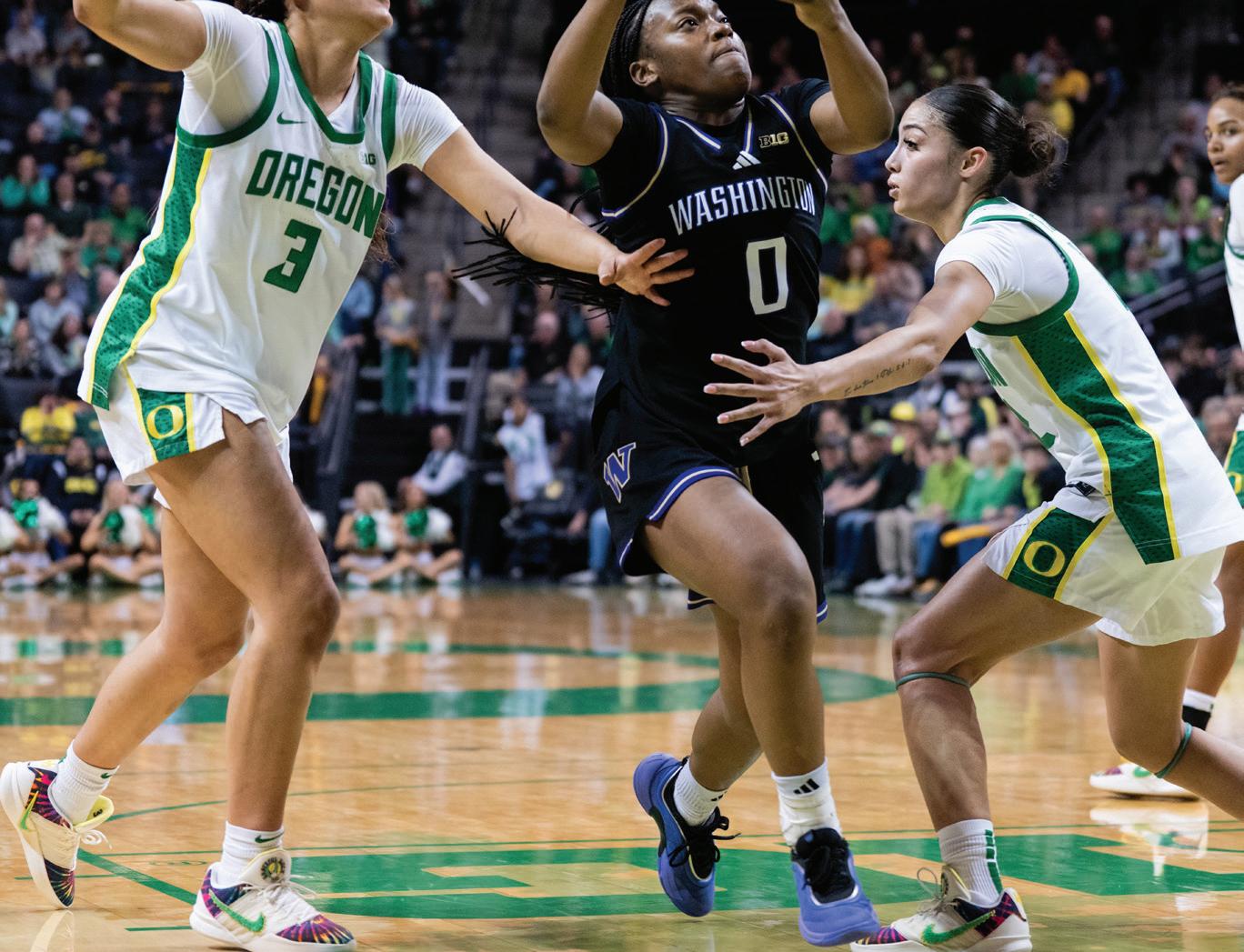
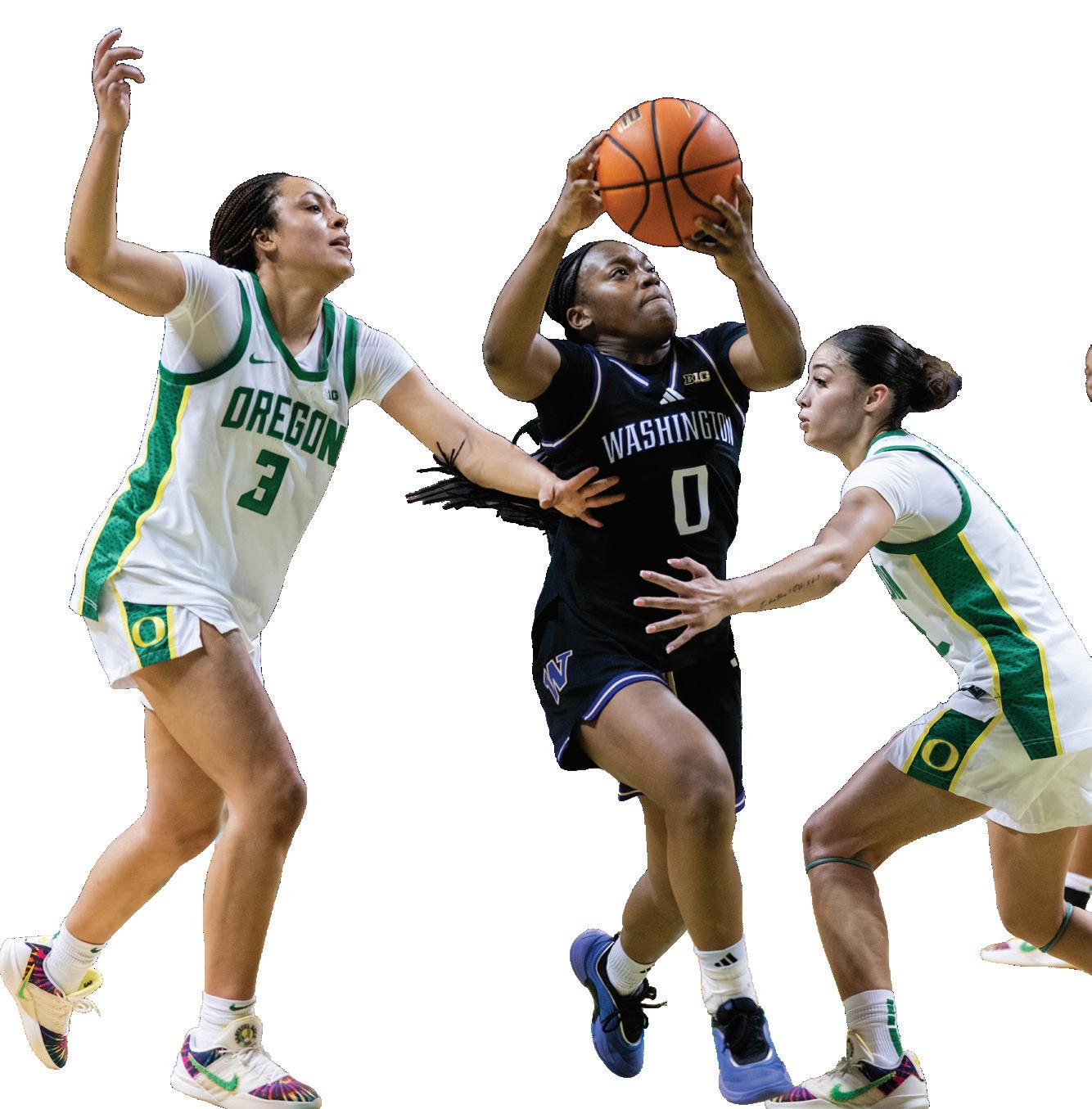
Washington guard Sayvia Sellers (0) drives through Oregon guard Ari Long (14) and Oregon guard Sofia Bell (3) to get to the basket.
Oregon guard Katie Fiso (2) cuts past Washington guard Avery Howell (2) driving towards the basket.
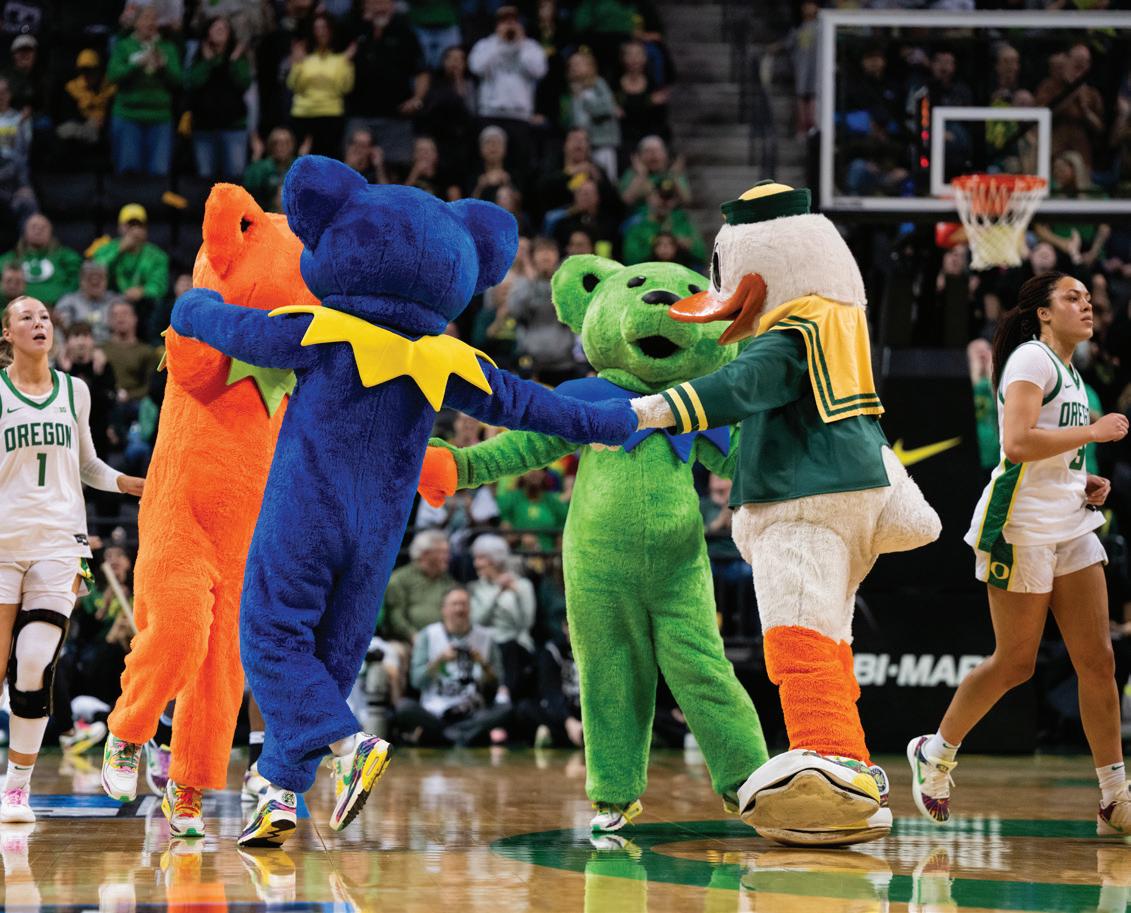
The Oregon Duck dances in a circle with The Grateful Dead bears at the end of “Shout!” as players continue on the court.
Latinx Coalition fights for Latiné Cultural Center
Latinx Coalition to send letter to Oregon State Legislature and resolution to University of Oregon administration in push for UO to create Latiné Cultural Center on campus.
By Gabby McIntyre News Reporter
The South Asian, Southwest Asian and North African Center opened in November 2025, creating another space for a cultural organization on the University of Oregon campus.
According to university demographics, approximately 37.8% of the student population identifies as Native American, Asian, Black, Latinx or Pacific Islander. Of that percent, there are approximately 3,992 Latinx students at UO.
“With today’s political climate and everything going on, just knowing that there’s gonna be a center on campus makes people think the school actually cares about us,” Diana Rendon Chavez, the program director of MEcHA, said.
ASUO, as well as three Latinx cultural groups, have come together to create a coalition to put pressure on UO to establish a cultural center.
The coalition hopes to have its own building, similar to the Many Nations Longhouse and Black Cultural Center on campus.
The coalition includes UO MEcHA, Muxeres, the Latino Male Alliance and ASUO. Members are in the process of drafting a letter to send to Oregon state representatives as well as a resolution of the wants of the coalition that will be given to UO administration.
In addition to the letter, the coalition has been drafting a resolution defining the vision beyond just the center, including. The resolution process allowed groups in the coalition to collaborate on what they want to see for the cultural center, on top of the main request of the creation of a standalone center.
One of the main wants from MEcHa was the ability to host more events within the center. The club hosts multiple events a year, such as Dia De Los Muertos events and general club meetings. The building and approval of more events would help bring students together according to the club.
The letter, which ASUO President Prissila Moreno said will likely be delivered to Oregon state representatives in
the next few weeks, will outline a shared goal among the Latinx coalition and the Oregon representatives. Coalition members stated that the purpose of the letter is to show the university that the center is something that the state of Oregon wants, as well as the coalition.
According to Bazan, during their meeting, Smith said, “If you have the letter right now, give it to me. I’ll sign it.”
Bazan believes this meeting displays the bipartisan nature of the creation of the center among Oregon lawmakers.
The coalition hopes to show the university that the state agrees with the implementation of a Latiné cultural center and UO gaining status as a Hispanic-Serving Institution.
It is way different to have a physical place. A place where I can go and see art from my culture or smell food from my culture.
Prissila Moreno ASUO President “
Gio Bazan, president of the Latinx Male Alliance and a UO student from northeastern Oregon, said he spoke with his state representative, Rep. Greg Smith, “R-Heppner.”
While Bazan said he and Smith don’t agree on many issues, they both agreed that a Latiné cultural center is important.
While Bazan said he and Smith don’t agree on many issues, they both agreed that a Latiné cultural center is important.
Rendon Chavez said she feels that the creation of a Latiné cultural center and building would be a good first step for UO to take in the process of becoming an HSI and supporting Latinx students, but needs to do more and “show diversity.”
To the Latinx coalition, the cultural center is not only about creating a space where Latinx students can have a sense of community, but also a way for UO to be more comparable with the 9 out of 18 Big Ten schools who have a center.
According to Moreno, cultural centers allow people of color and cultural minorities to find a place of belonging and an area to interact with their culture in the predominantly white institution UO.
“It is way different to have a physical place. A place where I can go and see art from my culture or smell food from my culture. It’s the little things,” Moreno said.
The two students both said they believe a center will help with the feeling of a lack of community.
“I was lost. I didn’t have a community. It made me want to transfer,” Rendon Chavez said about her first year at UO. “What I want is for first-years that were feeling like me to not feel like me and for us to actually have a community.”
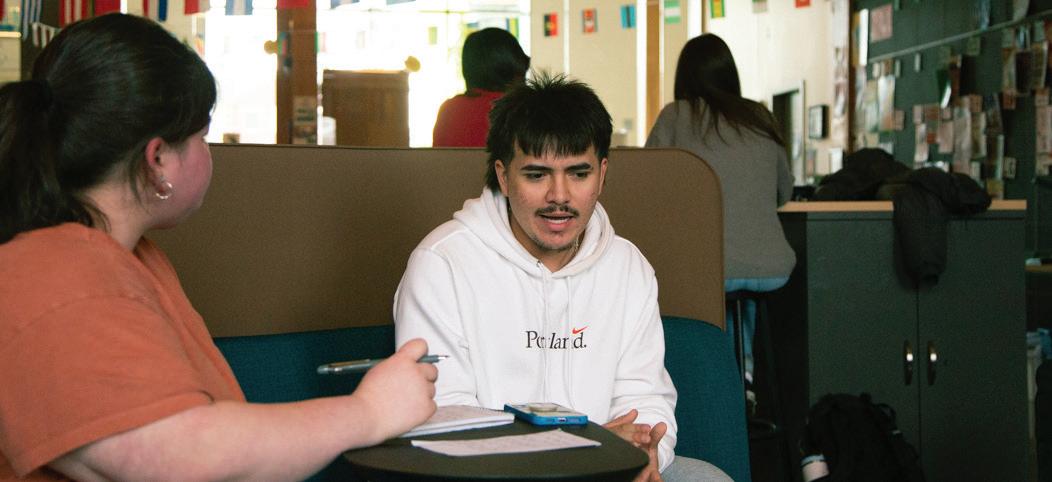
(ABOVE) Gio Bazan, president of the Latinx Male Alliance discusses advocacy for on an on-campus Latiné Cultural Center. (Roshni Ram/Emerald)















NEWS / ARTS & CULTURE
City announces speed limit reductions in support of Vision Zero
The City of Eugene Public Works department is reducing speed limits on some streets in an effort to reduce crashes and improve safety.
By Reilly Norgren News Editor
As part of ongoing Vision Zero efforts, the city will lower speed limits on certain streets, aiming to lower the amount of fatal and serious crashes.
Vision Zero is a strategy that hopes to reduce and eventually eliminate the number of transportation related injuries and fatalities. The Vision Zero resolution was first adopted by the city of Eugene in November 2015.
Despite this resolution, the city of Eugene has seen an increase in fatal crashes, seeing 132% more people dying in crashes on Eugene roads from 2022-2024, according to the city’s fatal crash report.
In an effort to mitigate these fatalities and support Vision Zero, the city will be reducing posted speed to 25 mph on the following roads: Polk Street between 2nd and 18th Avenue, Oak Patch Road between 11th and 18th Avenue, El-
ARTS & CULTURE
mira Road between Highway 99 and N Bertelsen Road and Maple Street between Roosevelt Boulevard and Elmira Road.
These changes come after two University of Oregon students died within the past year in cyclist-motorist crashes, Erick Njue and Elizabeth Cardenas Figueroa. According to a search warrant filed in Lane County Circuit Court, the driver who hit Njue on Patterson Street was speeding, traveling at an estimated 50 mph when the posted speed limit is 25 mph.
The Vision Zero Action Plan has identified Eugene’s most dangerous roads and intersections, called the High Crash Network. For people biking, 18th Avenue, Highway 99 and 11th Avenue are among the most dangerous. 11th Avenue and 18th Avenue are among the most dangerous for pedestrians walking.
Crews will begin installing the new speed limit signage starting next week, according to a press release from the City of Eugene Public Works.
New speed limits in Eugene
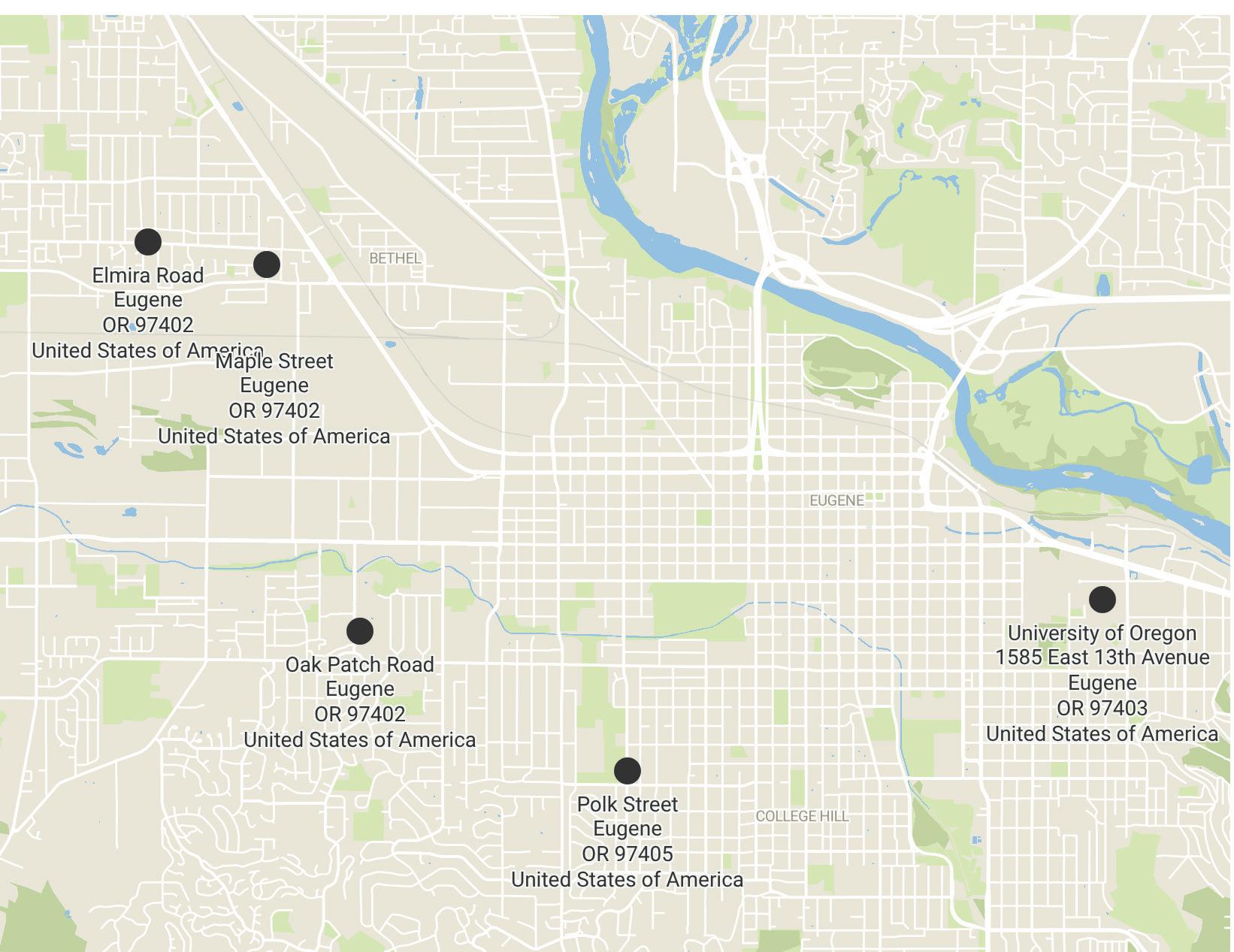
Map: Reilly Norgren/Emerald | Source: City of Eugene | Created with Datawrapper
Free ASUO x Rose Room thrift pop-up accommodates students with sustainable fashion
ASUO and the Rose Room collaborated to host a free thrifting event open to all students on Feb. 26.
By Amelia Fiore Arts & Culture Writer
Have you ever walked into a thrift store, found something that perfectly fit your style, then checked the price tag to your immediate dismay?
The Rose Room believes that sustainability shouldn’t be so financially risky, which is why they paired up with ASUO to host a free thrifting pop-up. On Feb. 26 from 2 to 5 p.m., the ASUO office opened its doors to those who wanted to donate or thrift for free. An eager crowd showed up and showed out on both fronts.
According to the SSC Reusables team, an estimated 300 students were in attendance. The room held an ensemble of different styles, colors and designs, composed partially of items already in the Rose Room’s possession alongside student-provided donations.
The event was a unique collaboration between the Student Sustainability Center and ASUO, pairing the two for something entirely fresh. “I think this is the first time in recent memory that the Student Sustainability Center has collaborated with ASUO in this way,” Dori Vaughan, an organizer of the event and a coordinator for the Student Sustainability Center’s Waste Production and Reusables Program, said.
The Rose Room, a component of the SSC, currently functions as a “free thrift store for students on campus,” and is open on Mondays and Wednesdays from 12 to 2 p.m. in PLC 182 all term. The program initially acted as a resource for staff members to secure free office supplies, but the SSC expanded the mission to include clothing to better accommodate the needs of students.
Nathaniel Pratt, an ASUO executive advocacy intern, in-
troduced the concept as part of a larger effort to promote sustainability within the student body. “I had to present to my director and the president something new, and I wanted to do it on circular clothing models. We talked about it, and we kind of both came up with the idea of having a pop-up,” Pratt said.
According to data from Capital One Shopping Research, approximately one-third of clothing and apparel items purchased in the United States over the past year were secondhand. A circular clothing model is one meant to keep clothes in use as long as possible to eliminate waste and fast fashion. Thrifting, an example of this, has resonated vastly with young adults, and the UO campus is no exception.
“We’ve seen a huge rise in thrifting culture in the last 10 years, and there are a lot of resale stores that have popped up,” Vaughan said. “We’re trying to capture an audience with people who would go to those resale stores and convince them to instead give their items back to students under the assumption that they will find things that are of equal or higher quality by engaging in these programs.”
Vaughan emphasized the importance of accessibility in order to properly introduce a circular clothing system on campus, and that the “free” part of the “free thrifting popup” was integral in catching the attention of students.
“Being able to just tell people it’s free — that’s really exciting, especially in college when it seems like everything is turning you upside down and shaking your lunch money out of your pockets,” Vaughan said. “(It’s exciting) to have opportunities to engage with movements and programs on campus where you just get stuff, and you don’t have to think about your wallet at all. And so that was something we tried to outline on our posters was this slogan of ‘thrift for free.’”
Amber Geiger, a junior, attended the event because the Rose Room had previously sparked her interest in recycling
on campus. “I appreciate that events like this get put on for community building, but also for people who need resources,” they said. Geiger is hoping to attend an event like this again, “definitely earlier too,” as the racks that initially held hundreds of items had been whittled down to only a few dozen after only an hour into the event.
“I love the way sharing economies work, and I think, especially in college, it’s so valuable to be part of a larger community that shares things instead of outsourcing everything,” Vaughan said. “I think there’s just so much for everyone. Like, we’ve had such a diverse group of people. Anyone can come, and it doesn’t really matter your income bracket.”
As for the future of the Rose Room, Vaughan hopes the mission continues to expand. “There is talk of someday having sort of a basic needs center on campus, which is after both of our times here, but we are trying to legitimize the Rose Room and its services so that if something like that were to happen, we wouldn’t get left out of the conversation,” Vaughan said.
Anyone can donate clothing to the Rose Room, either by handing it to someone working at the SSC, dropping it in the donation bin at the EMU or bringing it directly to the Rose Room. You can find a map of current donation locations on their Instagram.
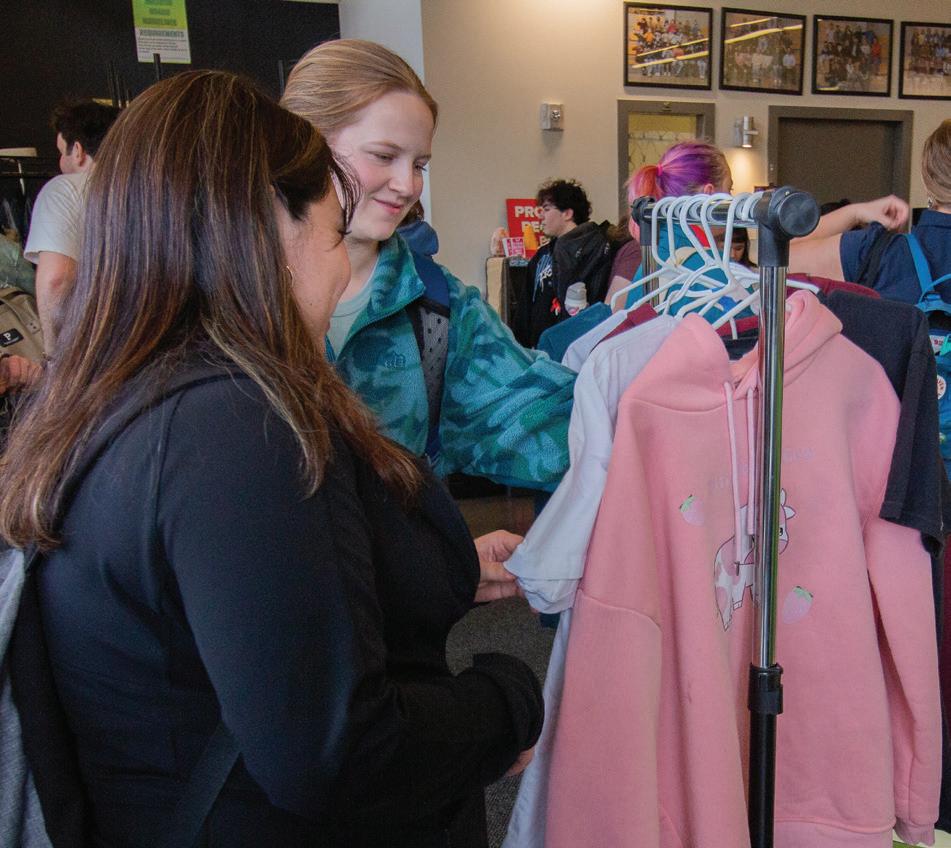
( ABOVE) Students shop among the different racks of clothes. The ASUO and Rose Room collaborated to host a clothing pop up at the ASUO Office, at University of Oregon, based in Eugene, Ore., on Feb. 26.
(Fred Hall/Emerald)
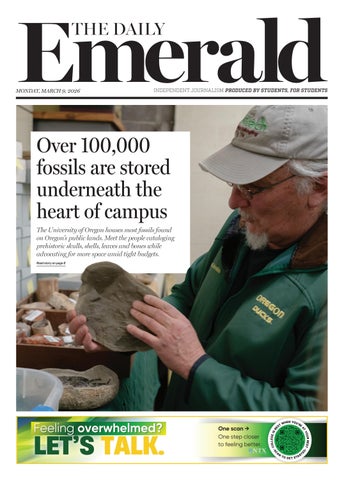
Over 100,000 fossils are underneath the heart
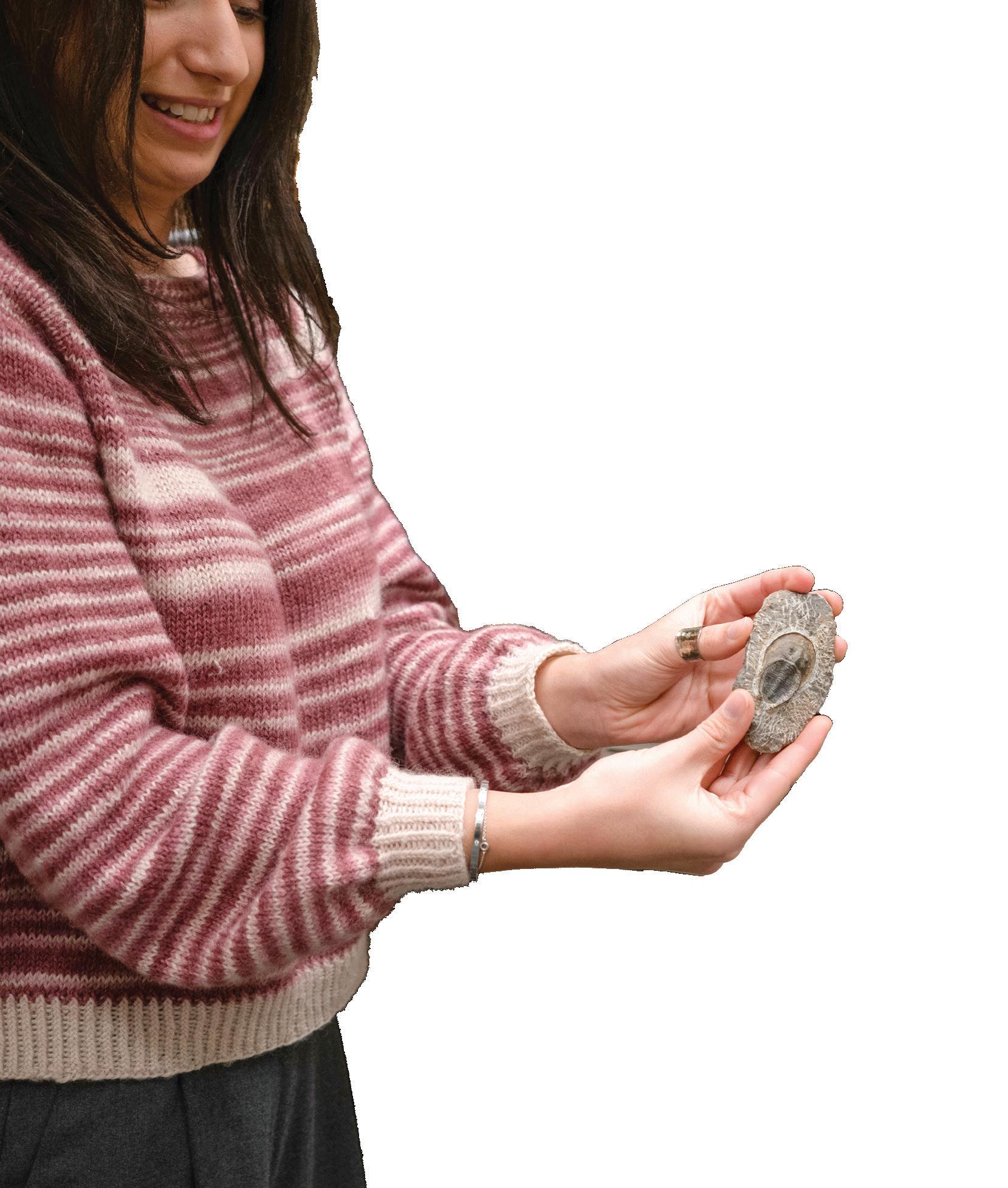
Barry Hughes, a volunteer in the Condon Fossil Collection, opens a drawer containing the head of a saber tooth tiger and Hailey Rauch, collection assistant and master’s student, shows off the 2-foot tusk of a mammoth. For Hughes and Rauch, working amidst prehistoric creatures is an everyday affair.
Hughes is retired, but he works at the collections regularly, driven by his “love of science.”
“It’s a space that desperately needs help because there is no real money provided for staff,” Hughes said.
The collections, an extension of the Museum of Natural and Cultural History at UO, house over 120,000 fossils in 1,800 square feet, including vertebrates, invertebrates and fossilized plants, accord-
Many of the fossils are marine animals because Oregon was once underwater. During the Jurassic and Triassic Period, an ocean covered most of the state, and waves lapped at the coastline just west of Idaho; so it is not uncommon to find ancient shells and trilobites throughout inland Oregon.
Rauch received her undergraduate degree in marine sciences, so Oregon’s marine environment piques her interest. Rauch is excited to show off a feathery sea creature known as a Crinoidea, or sea lily.
She said it’s her favorite fossil in the collection because sea lilies are still alive today despite a mass extinction event around 252 million years ago.
“I think it is fascinating that you can have a huge mass extinction — and you have the similar classes, and orders and there are just so many of them — and one makes it and it’s like, ‘Why did that one make it; why didn’t it go with the rest?’” Rauch said.
For Rauch, it is both comforting and fascinating to track ancient life patterns.
“You kind of get an idea of what the Earth was like, and it can give you patterns into what it could
potentially be in the future,” Rauch said.
And recently, paleontologists have been able to trace fossils back to an era near the Earth’s formation. New technology that uses artificial intelligence to track the molecular structure of ancient fossils is helping scientists learn more about the Archean Eon 3.2 billion years ago.
The fossils in the collection are studied by academics, both at UO and beyond, who are researching everything from the composition of ancient soil to the chemistry of animal teeth.
While most of the fossils are Oregon-based, there are also creatures from abroad, including large sea creatures from Morocco’s street markets.
Currently, the collections team is working to categorize fossils from the last 21 million years. The staff are constantly working on a backlog because of how the fossils are meticulously sorted with a small staff. Rauch will spend most of her days for the next year organizing just one collection of about a dozen fossil-filled shoeboxes.
Notable discoveries by associate professor of Earth sciences and Condon Fossil Collection Curator Edward Davis on spike-toothed salmon in the 2010s were partly based on fossil discoveries added to the collections in the 1970s.
“We are operating on just a slightly different timescale for everything,” Lexie Briggs, the museum’s marketing and communications specialist, said. Another reason for the constant backlog owes to the sheer amount of fossils they are responsible for. UO is the paleontological repository for the state, meaning it is required to take in most fossils found on Oregon’s public land — but one room can’t fit them all.
“Any surface can hold something,” Hughes said, pointing to shoeboxes sitting on top of every 10-foot cabinet and petrified wood, strewn across scraps of rugs.
A collector in Newport, Ore., Kent Gibson, has a fossil collection of about 6,000 artifacts in his barn that, by legal default, should be held at UO, but ac-
are stored of campus
cording to Briggs, there is simply no way the one room would fit his collection.
“He has dozens of incredible fossils that are important to the fossil record, and deeply interesting and useful, but also we don’t have the space,” Briggs said. Hughes is constantly advocating for new cabinets and expansion, which requires additional funding. While UO is cutting faculty amid a projected budget shortfall, housing fossils is a hard sell.
“The university, at the moment, is not able to be like ‘All right bosses, you get a brand new building with beautiful facilities’” Briggs said. “We have the space that we have, and we are using the space as well as we can and being entrepreneurial and scrappy.”
In a bid for more awareness, and potentially more funding, the collections team is trying to advertise their work as much as they can by talking to academics and hosting tours for the UO community. Last year, Hughes said they invited UO Provost Christopher Long to check out the collections.
“I talk to anybody and everybody, and I give tours to anybody and everybody, because the more people that know we’re here, the better,” Hughes said.
Despite the state choosing UO as the repository, apart from specific grants, the museum does not get any money from the Oregon government.
“Unfortunately this is an unfunded mandate,” Briggs said. “So they don’t give us any money to build new cabinets to house new things.”
According to Briggs, UO is planning to increase storage down the line, but the space problem could potentially be addressed with a mental shift. Briggs suggested that paleontologists might start leaving sturdy fossils in the ground instead of digging up everything.
“There might be a difference in how we collect fossils in the future. Is it always necessary to get them out of the ground and put them somewhere?” Briggs said. “There might be a world in which we don’t actually need to curate every single fossil.”
A look inside UO’s Location Innovation Lab
The university’s spatial mapping software is working to update and optimize security on campus.
By Reilly Norgren News Editor
When someone swipes a card to enter a building, someone from the University of Oregon can now see it in real time. This visibility is because of the Location Innovation Lab, a research unit of the university that uses mapping programs to restructure safety and security on campus.
The LIL manages the university’s geographic information systems, mapping program and builds software applications. It maintains a spatial database of every room and building across campus, or the campus map.
The campus map system might be familiar to students; it is responsible for map options on the interactive, campus-wide map like the Safety at Night Map, which outlines safer routes and the location of emergency call boxes, accessible routes around campus and even the locations on campus that have been landscaped to provide habitats for bees.
foundation for the security optimization. Now, instead of a spreadsheet, operators can see what doors are open, what doors are closed and what ones are either locked or unlocked, all on the spatial database. LIL will collaborate with other offices across campus, including the Division of Safety and Risk Services, to make the campus community “more efficient and more resilient.”
A lot of these optimizations are created by “just hanging out,” according to Kato. By just having discussions, the team was able to find “pain points” within the current security system and work to make the process smoother.
Now, access requests are managed completely online and come with a record of who is accessing buildings. This prevents physical access requests and the slow process of getting approval.
The database can also be used to secure buildings in the event of an emergency — a door can be locked or unlocked at the push of a button.
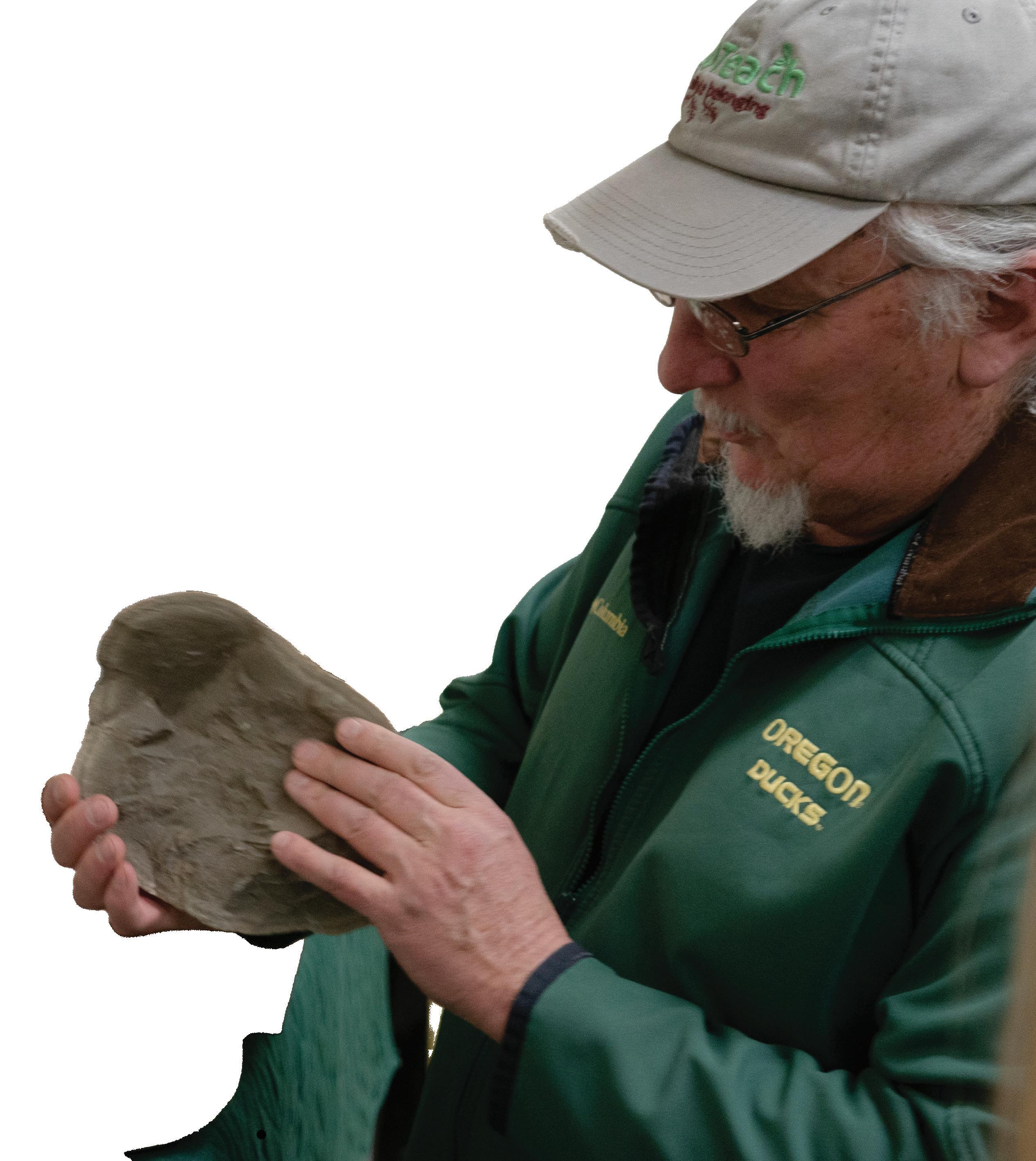
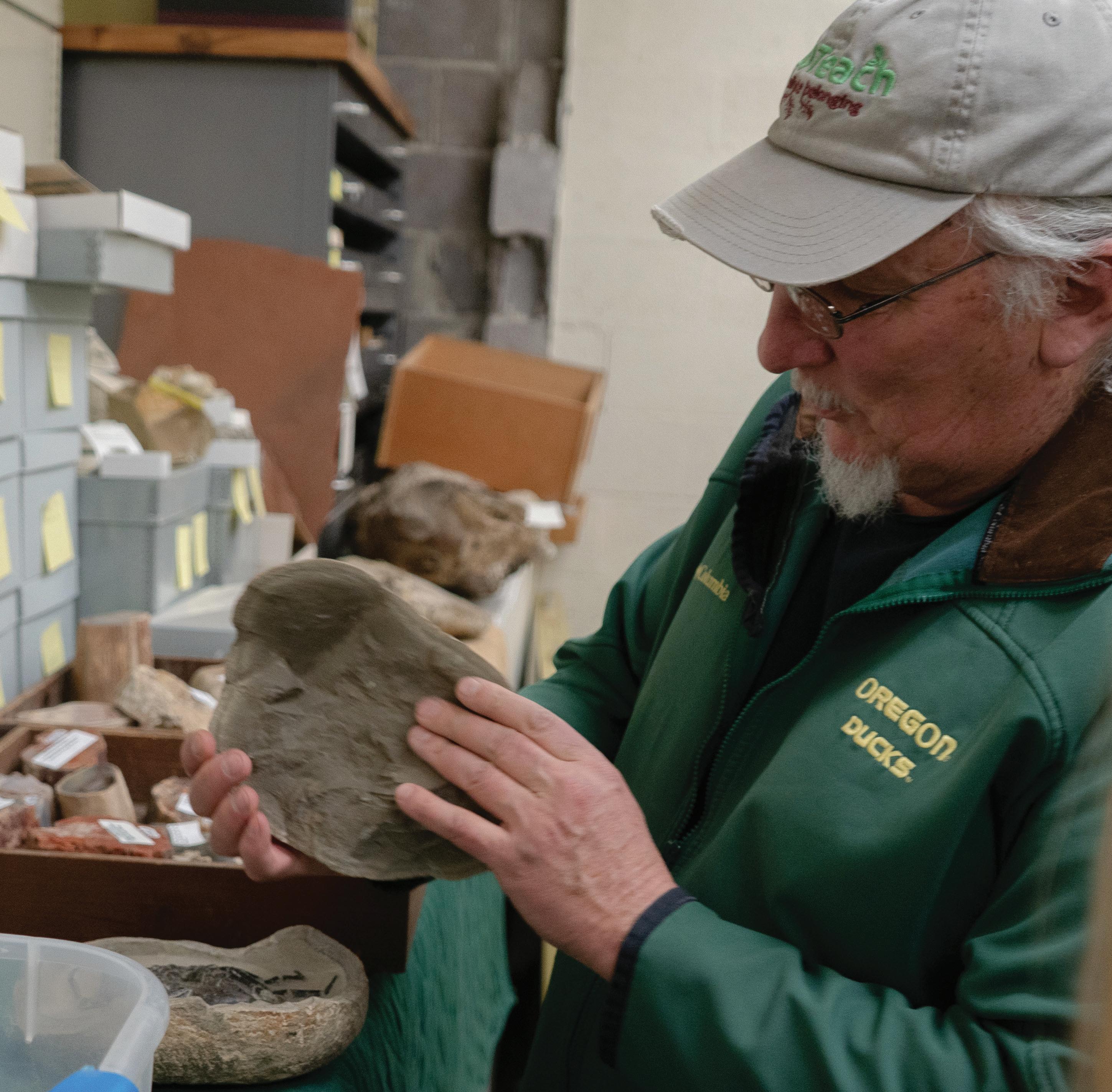
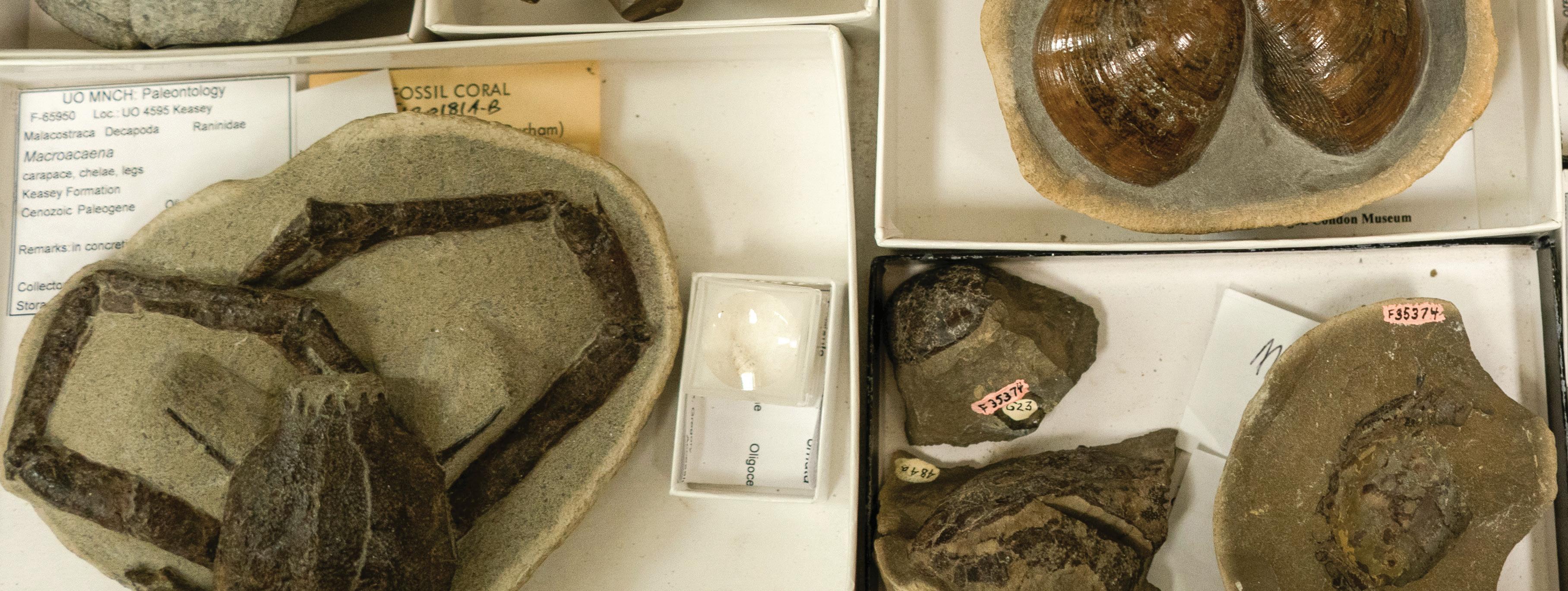
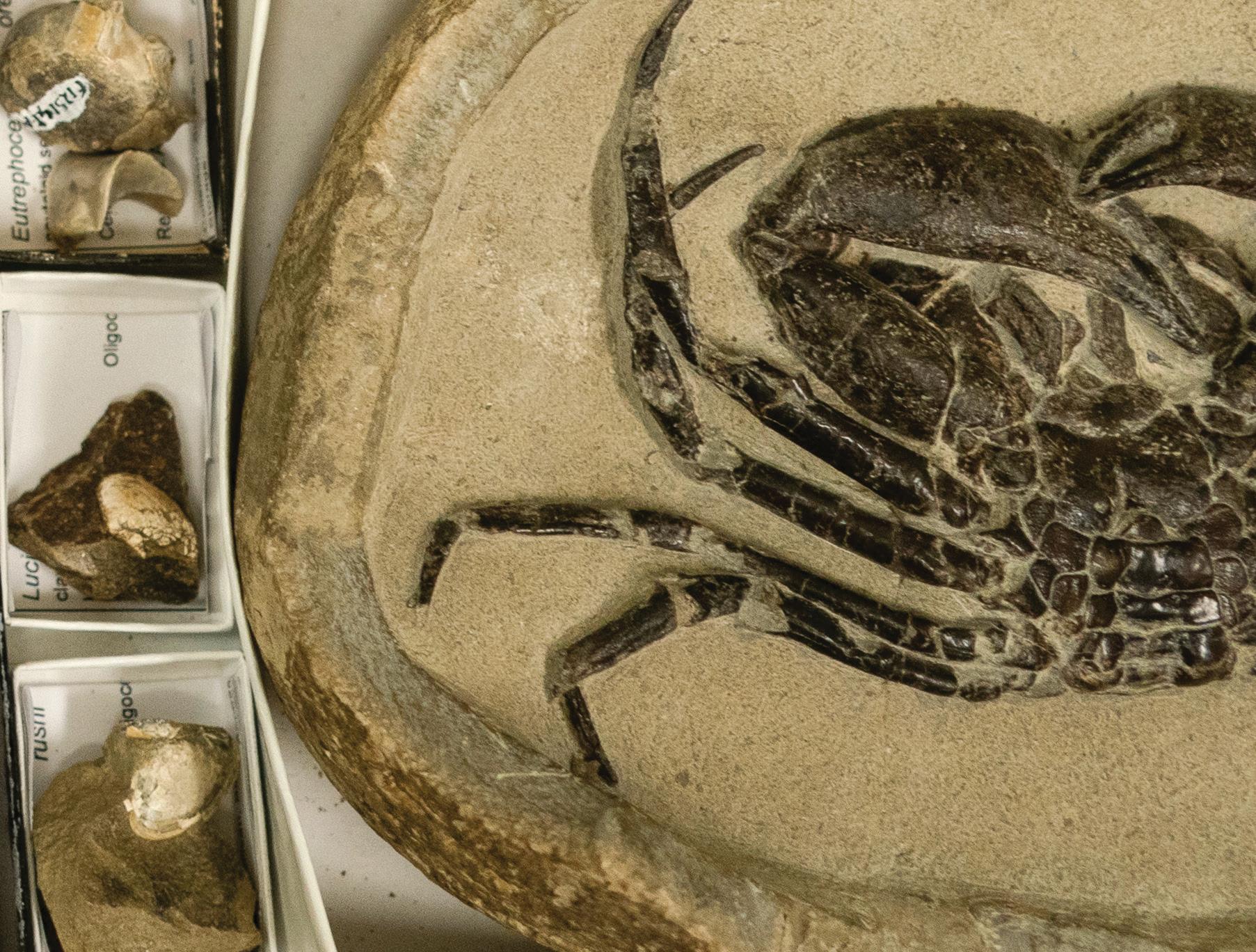
(ON THE COVER) Volunteer Barry Hughes, shows off a preserved rock. On March 3, 2026, Barry Hughes, a retired Condon Fossil Collection volunteer and Hailey Rauch, the collection assistant showed and explained the paleontological materials and what it means to be a state repository.
( ABOVE) A tray of preserved sea animal fossils.
( LEFT ) Collection assistant Hailey Rauch shows an imported fossil.
(Katie Poluyansky/Emerald)
Ken Kato, founder and senior director of the LIL, said the key to the innovation is the “little boxes,” or the mapping of campus down to every room inside of every building. These rooms are constantly changing both in shape and in use, which makes mapping essential.
“We built a clever way to generate mapping software that specializes in not just one room or one building,” Kato said.
LIL invented the unique mapping software, referred to by Kato as a “smart city” or “digital twin,” meaning a virtual replica of a system to mirror and simulate in order to optimize performance.
One of the things the LIL is utilizing their mapping system for is to replace and update safety features in buildings. For example, in terms of keeping buildings secure, access control needs to be updated and synchronized between both modern and older buildings.
This campus map had already been created by the LIL, but it has become the
Recently, President John Karl Scholz approved a recurring strategic investment for life security and security systems support and integration in the amount of $140,000. LIL falls under this umbrella.
Kato said that currently, the LIL team is preparing to present their goals to the Board of Trustees. The “two pronged” focus will be on security and safety and how to work with the people who are working at changing out the systems.
“Our job is to be the technical part of this, but we’re doing this hand in hand with those who actually know how to go wire an old thing and put in a new thing,” Kato said.
The efforts to optimize the map database to make campus more secure have already been underway for several years.
“For three years, we’re showing a really good return on investment,” Kato said. “Let’s bring more of our team to bear down on it, because let’s go faster let’s do more and faster.”
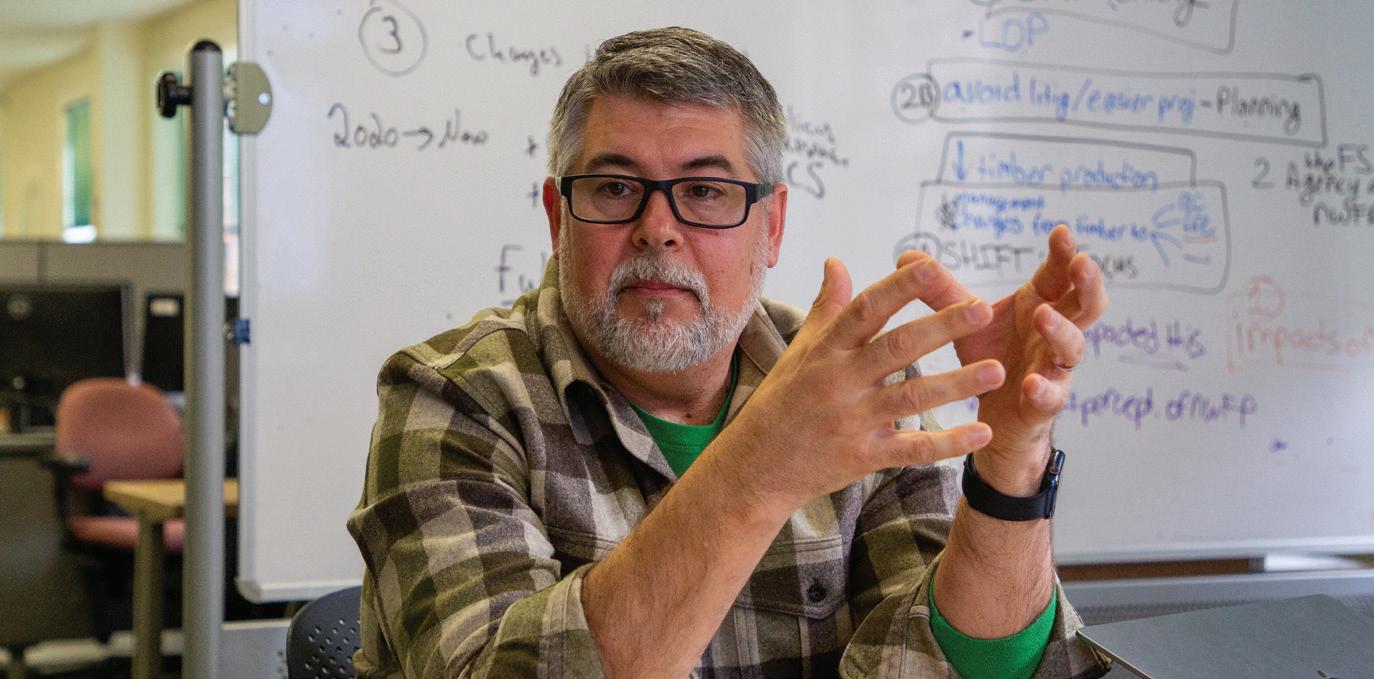
Ken Kato, the founder and director of the University of Oregon's Location Innovation Lab explains the process behind UO's mapping program on Feb. 26, 2026. The map records data on over 29,000 rooms, over 350 buildings and underground utilities on UO campus. (Corey Hoffman/Emerald)



ARTS & CULTURE
Outwit, outplay and outlast at PublicHouse
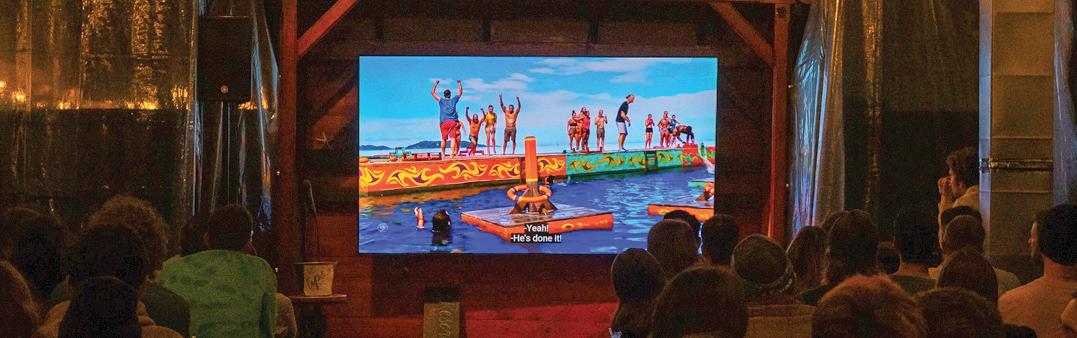
What happens when you combine an old church and reality TV? Apparently, a “Survivor” watch party. Complete with raffles, mock votes and pre-episode challenges, PublicHouse hosts viewers every Wednesday night, fostering community through a show about betrayal.
By Bella Graham Associate Arts & Culture Editor
As the clock ticked closer to 8 p.m., the sound of wood sliding on wood became punctuated by pagers beeping for people to get their food. Two people stood at the front of a marquee under a tent, heads down as they frantically shuffled pieces around to put together a block puzzle. It wasn’t uncommon for a piece or two, or three, to fly off the table.
One of them stopped, quickly scanning their work before throwing their hands up to indicate completion of the puzzle that made up the logo of the reality TV show “Survivor.” The emcee confirmed their win, and the puzzle was reset for the next pair of competitors.
Welcome to “Survivor” watch parties at PublicHouse.
Not familiar with “Survivor?” Twenty-something people are put into “tribes” and dropped in a remote location, where they must survive both literally and figuratively. While fending for themselves, contestants participate in challenges for immunity from elimination. At the end of each episode, those who lose immunity go to “Tribal Council,” where the remaining contestants vote someone out of the game.
“We’ve watched every season of ‘Survivor,’” Kim Wood, an attendee, said. “It feels like it really kicked off reality TV as we know it.”
PublicHouse, while they serve food, isn’t quite a restaurant — more like a complex for connection. Located in what used to be First Christian Church in Springfield, PublicHouse has four different pods for food trucks to operate out of, a beer hall, a whiskey bar and an outdoor area.
“I think it’s a fun concept to be in an old church. We have people who come all the time and tell us they got married here or they used to attend this church,” Geo Carcamo, the general manager of PublicHouse and emcee of “Survivor” nights, said. “The space has been used for a lot of things, and it’s always to bring the community together and hang out.”
One of the ways PublicHouse brings the community together is through the many, oftentimes nightly, events they host. For the next few months, that includes a weekly watch party of the 50th season of “Survivor.”
“Survivor 50” is an all returning player season, each one chosen to represent and celebrate the show’s 25-year history. They are, in theory, the best of the best.
“When it’s your first time playing, there’s a little bit of caution, but when people come back, it’s a whole other
game. There’s a level of confidence with moves and trying things, and that’s how the game evolves,” Carcamo said.
As PublicHouse’s very own Jeff Probst, not to be mistaken with the cardboard cutout they have of the actual show host, Carcamo came up with the idea for the watch parties in 2024, when “Survivor 47” was airing.
“(The watch parties) have been a way to experiment with what works in a big space like this,” Carcamo said. “What’s something that gets people in here? How can we try different events that are brand new and fun?”
When a 100-inch TV on the back lawn, initially meant to watch Duck football games on, sat stagnant during the offseason, ideas began flowing of what else to use it for.
Carcamo found himself inspired from online reaction videos to shows like “Game of Thrones,” and brainstormed shows that could evoke similar reactions. From his own experience and input from regulars, “Survivor” was the frontrunner.
PublicHouse started with “Survivor: Micronesia,” an older season considered to be one of the best in the show’s run, to test the waters. As they finished watching that season, they rolled right into the premiere of “Survivor 48,” and then again with “Survivor 49.” As the episode count of the series grew, so did the crowd at PublicHouse.
Now at the premiere of “Survivor 50,” come 8 p.m., the pre-episode games go away and everyone settles in for the show.
Carcamo is in his element: finding chairs for people, talking strategy and answering questions as needed — whether it’s a niche bit of “Survivor” trivia or simply where the bathroom is.
Maybe it’s all the “Survivor” he watches or maybe it’s his charm, but Carcamo is an excellent host, and gives off a convincing impression that he can read minds the way he anticipates people’s thoughts and needs. He certainly knows his audience well — both how to bring them together and how they’ll respond to the changes season 50 brings.
“At the beginning of the season, everyone’s just there because they like the show, but the game is slow,” Carcamo said. “I can only imagine that with all returning players, people will automatically have feelings at the beginning. There’ll be a little bit more of that excitement and booing.”
And excitement there was. Reactions rose above the picnic tables, responding to everything from challenge twists to emotions that were deemed dramatic by viewers.
When players got duped by Probst on the reveal of whether they would be given rice or not (they weren’t), we
got duped right alongside them, and you could tell, given the resounding groans after the reveal.
“We come here normally for trivia — well, we skipped it this week to come to this, and it now sounds like we’re going skip it every week so we can come to this,” Molly Adair, an attendee who came with Wood, said.
During commercial breaks the room came to life: servers darted between benches to drop off dinners from the food trucks, and viewers stood to talk to the other tables about the episode so far.
Once the show returned, people sat back down and adhered to an unspoken etiquette as they continued to quietly murmur to each other about predictions. As the end of the episode neared and guesses of the first elimination began to grow, names of contestants broke through the otherwise quiet conversations.
PublicHouse manages to bottle the unique effect reality TV has in convincing viewers of their expertise on the game: why so-and-so’s decision is a bad one, what they should do instead, etc..
While watching the show at home could leave you feeling left out, PublicHouse’s watch parties bring you in on the fun as you politick your way through the episode with other viewers and feel the high highs and low lows of the show. It’s easy to talk a big game when you’re sitting at a picnic table drinking amber colored ale and eating dinner from your choice of food truck. It’s even easier to talk game with other people who are just as invested as you are, talk that could evolve into lasting friendships.
“Let yourself be a part of the fun. You’re already out watching a show with a bunch of people. Talk to the table next to you, comment on the show, create that community. It makes it way more fun if everyone’s a little bit more bought in,” Carcamo said.
PublicHouse is aptly named, as it’s a space that encourages community and camaraderie from every corner of the complex. When the episode starts, however, that same camaraderie doesn’t extend to the contestants.
“I hope Coach is first out. He causes problems,” Adair said. “But I guess drama sells.”
OPINION/ARTS & CULTURE
Learning cross-culturally with sword
By Seira Kitagawa Arts & Culture Writer
The University of Oregon houses various clubs, including some involving culturally traditional martial arts, such as kendo. ,ken-do, means “way of the sword” in direct translation in Japanese. It is a sport that involves a bamboo-made sword called shi-nai.

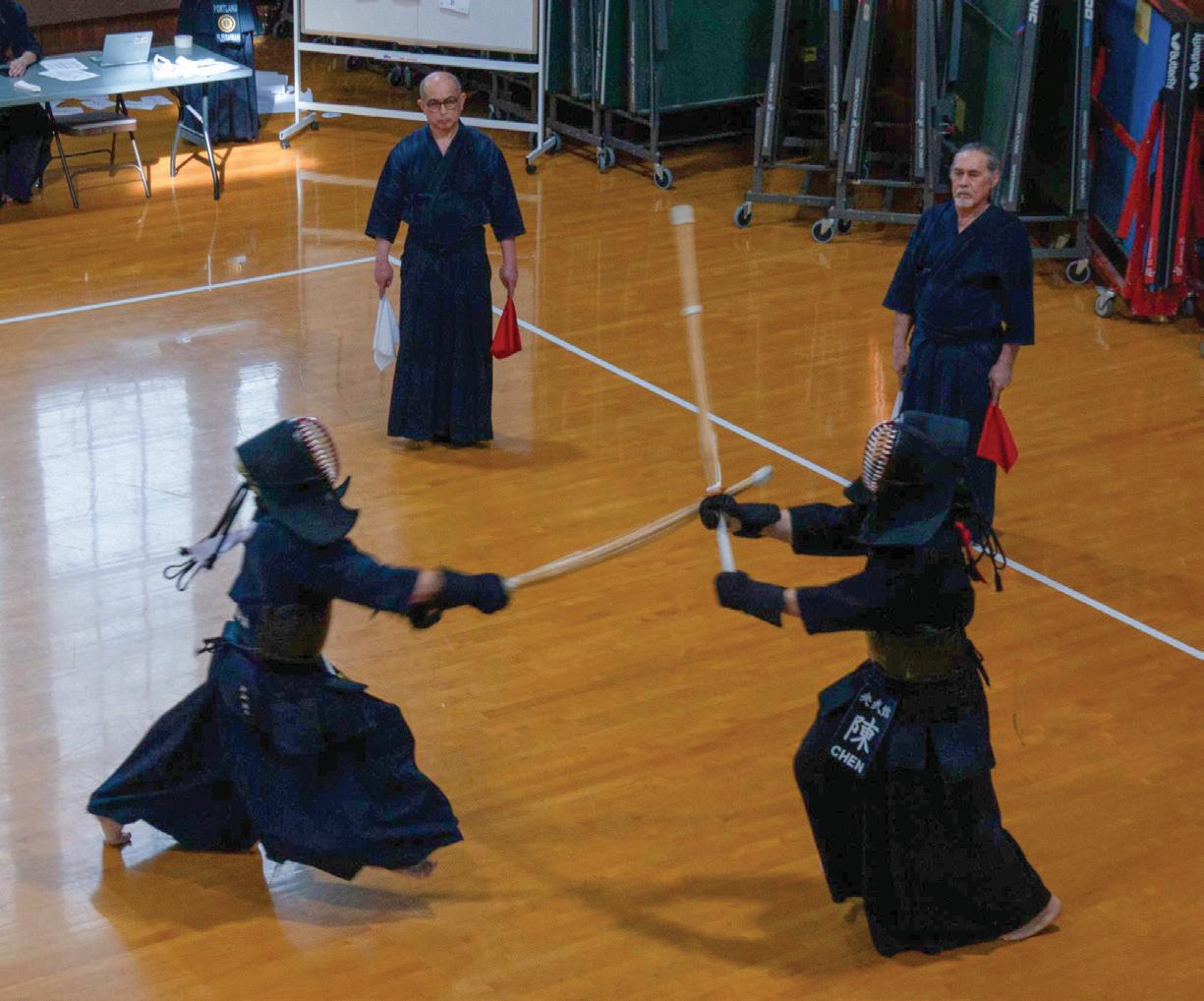
In a match, players face each other and try to hit a certain spot with the right form and spirit within three minutes, or until they make a good hit and call it “ippon,” like “KO” in boxing.
The UO Kendo Club hosted the third annual Civil War Taikai on Feb. 21 at Gerlinger Hall, featuring a Civil War team match against Oregon State and other schools in Oregon.
The Ducks had a strong win against OSU in the Civil War game.
Across the gym, the sound of bamboo sticks hitting and scratching each other mixed with the players’ kiai voice. ki-a-i means “strong motivation” in Japanese, and in kendo, it is treasured as part of the performance to show the spirit. “Each motion has meaning,” Masayori Itome, a UO Kendo Club member and an exchange student from Japan, said.

For example, Itome said that kendo players always sit from left to right because it makes it easier to draw a sword from the waist when the opponent starts attacking.
Itome said he sees people in America play kendo with more of an enjoyment to learn Japanese culture, as
The UO Kendo Club hosts annual competition, featuring the heart of martial arts on campus. (Courtesy

opposed to with how many Japanese kendo players focus on competition.
“Here, everyone enjoys kendo,” Itome said. “This is a huge difference.”
However, practicing in Japan was not the easiest thing for Itome, as it was for many kendo players. The level of competition and the teachers’ strong discipline sometimes made him not want to continue.
Sandor Cseh, a second-year student at UO, joined the kendo club after meeting its president. One of Cseh’s favorite things about kendo is sportsmanship, he said. Many Japanese martial arts value respect for the opponent, but also to teammates and teachers.
Before the team begins practice, they always bow toward the front of the gym to respect the space and teacher, and also bow to each other to share that respect.
Itome often leads practice in the club as he has experience in kendo.
“We are really happy to have you (Itome),” Cseh and other teammates said.
Itome said he is glad to have found joy in kendo again after quitting several years ago. Although he does not think he would continue kendo in Japan in a competitive setting, he hopes to focus on his remaining time at the UO Kendo Club.
The club will go to the University of Washington in April for another competition, and Itome hopes to win as a team there as well.
The UO Kendo Club is actively recruiting interested members; more information is available on their website or by email.
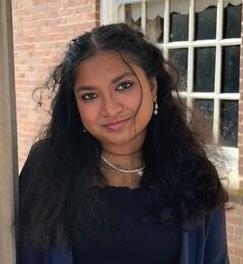
is
national politics, and international peace-building efforts.
By Aishiki Nag Opinion Columnist
Nag: Oregon needs universal school lunches
Opinion: The School Meals for All initiative is a crucial piece of legislation to ensure public schools serve all students and that no kid goes hungry.
Oregon is not immune to the national hunger crisis. Since 2023, food pantries across the state have seen a 50% increase in visitation, and with the proposed SNAP cuts, more than 342,500 Oregonians are expected to lose $475 million in food assistance per biennium.
Even with food assistance in schools, one in six kids in Oregon live in a family that struggles to afford food. That’s why legislation like SB 1581 – School Meals for All – is crucial for ensuring that every student has access to breakfast and lunch.
Currently, nine states already provide universal school lunches, and Oregon is just 21 schools away from reaching that goal. This goal would be feasible and have impactful results for all Oregon students.
Advocates for this bill note that it would reduce child hunger, improve educational achievements and increase attendance. They note the likelihood of fewer overall suspensions, eliminating school meal debt and the process to collect it.
In an interview with Senator Courtney Neron Misslin (SD-13), the chief sponsor of this bill, she expanded on the social stigma that exists for students who qualify for free or reduced school lunches.
“I find it to be unacceptable that we have determined where it is and is not okay to support students facing food insecurity,” Sen. Neron Misslin said. “The data shows us that we feed students who qualify for free and reduced lunch at a higher rate when all students have access to that meal – the stigma prevents students who qualify from pursuing that nutritious meal.”
Twenty-one schools in Oregon still require additional income documentation for school meals, which adds stigma. In addition, Sen. Neron Misslin noted that many immigrant families are hesitant to complete forms because of the paper trail associated with citizenship status.
“When you have different access to meals then you haven’t broken bread across socioeconomic lines – during COVID, we saw students (at Lincoln High School) were staying on campus and eating lunch together, and forming a stronger social fabric in that school,” Sen. Neron Misslin said.
During the pandemic, Congress authorized a nationwide waiver that allowed schools to offer meals without charging or requesting proof of income. But in the fall of 2022, programs resumed to an application-based system and saw an increase in meal debt among students.
“We know that it’s more difficult to learn on an empty stomach,” Sen. Neron Misslin said.
“We don’t ask anyone to pay for public school, we don’t ask anyone to pay tuition or for buses,” senior manager of public policy at the Oregon Food Bank Matt Newell-Ching said. “But we ask people to pay for lunch and breakfast, and that singles people out and creates an atmosphere in school that makes kids who receive (free) lunches and breakfasts really feel the stigma.”
Newell-Ching also said that when schools switched from a traditional application model to a universal model, they saw a 50% increase in the number of kids participating in free or reduced-price lunch. The stigma associated with free or reduced-price lunch is preventing students from accessing meals, and once that barrier is lifted for all students, more students feel comfortable participating.
“We often say that hunger is a policy choice, and that we continue to allow hunger as a policy choice, and we continue to allow schools to not offer this universal model, as a policy choice,” Newell-Ching said. “We’re hoping that the legislature chooses to act, because it’s within our grasp.”
Aishiki Nag
a senior studying political science and global studies. She likes to cover state and
ACROSS
1 Intro to ceramics and cells?
6 Term of affection for your parent’s siste
7 Grapple (with), as a topic
9 Letters after ems
10 Space bar neighbor
11 From the fiery underworld
13 Lengthy dress type
14 Like one’s pose after a posture check DOWN
1 Mine is Wong, for example
2 Abysmal Yelp review
3 Videocalls with an iPhone, for short
4 Ship for Jack and Rose
5 Yo-Yo Ma, ex.
6 Amazes
8 And so on
12 Deodorant brand with a notorious body spray


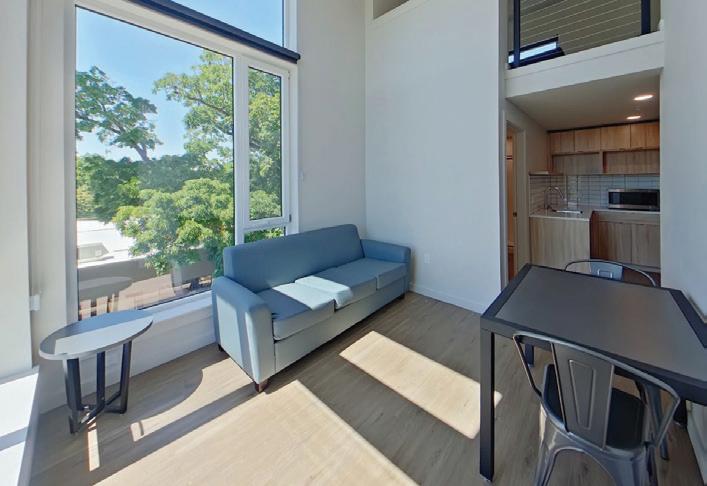
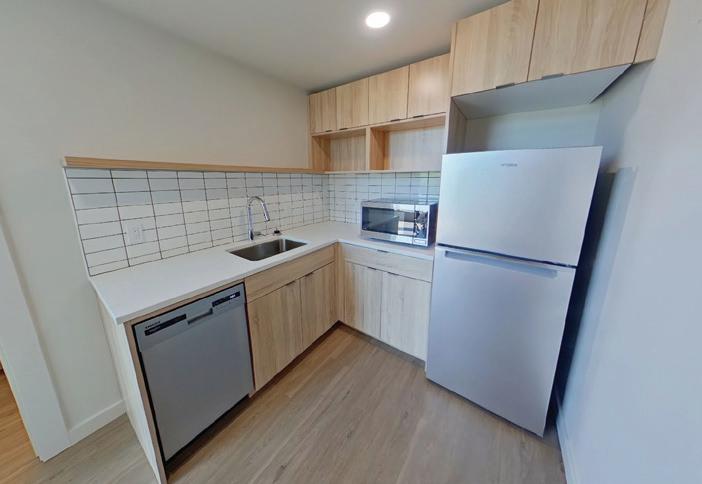

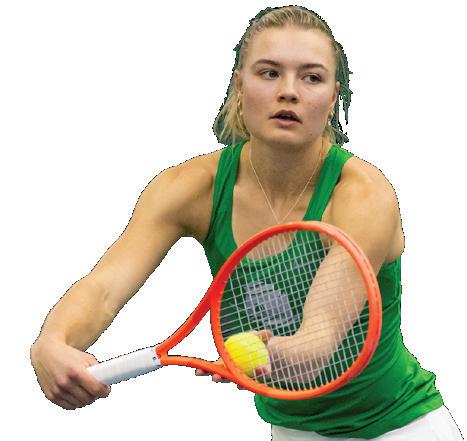
Returning, rising stars key Oregon women’s tennis’ Big Ten push

Oregon acrobatics and tumbling base Blessyn McMorris named NCATA Specialist of the Week
Krasnowski: Evaluating Oregon baseball through eleven games
A realistic look at the Ducks’ early-season success.
By Joe Krasnowski
Senior Sports Writer
Now, let’s be clear, any team that starts the season 10-1 with two wins in three games against elite competition — UC Irvine, Vanderbilt and — is pretty darn good. Most who follow Oregon baseball felt pretty comfortable about that declaration before the season, and it looks like this year won’t be any different. “Pretty good” isn’t the goal for the Ducks, though, and realistically, any year that doesn’t finish at Charles Schwab Field Omaha in Omaha, Neb., will be viewed as a bit of a disappointment.
That’s just the reality of competing at the highest level on the field and financially.
All fans can do in most sports, but especially baseball — where Oregon is going to be better than almost all of its opponents this year — is speculate. While it was just one game, the bullpen’s collapse in game two of the Ducks' weekend in Las Vegas was comparable to past playoff collapses.
In Oregon’s 8-6 loss to UC Irvine, the Anteaters scored five runs on just three hits, with the inning punctuated by five walks and hit-by-pitches.
It’s not a perfect comparison, but the collapse showed shades of the Ducks' seven-walk, nine-run seventh inning in a 2024 Super Regional loss to Texas A&M. Playoff base ball between two evenly matched teams typically has two types of games, one determined by the margins and one by the battle of attrition. It's worth noting that in the first series of the year with multiple taut contests, the Ducks were limited in the arms that head coach Mark Wasikowski felt good about putting out there.
SATURDAY
March 14, 2026
Oregon vs. Indiana
The Ducks baseball team gears up to play

game two of the weekend. It’s not the only reason why Oregon struggled early, but it's certainly a factor. The Ducks’ bats did wake up, however, with Dominic Hellman blasting a two-run go-ahead homer to put the Ducks ahead.
One aspect that is encouraging, however, is the resolve that Oregon’s pitchers showed in game three. Devin Bell — who was a part of the eighth-inning disaster less than 24 hours prior — was clutch out of the bullpen, retiring three of four batters and getting out of a bases-loaded jam to secure the win.
Another is the timely hitting the Ducks showcased to even get to a point where they could win the game against the Anteaters. It’s worth noting the quick turnover the Ducks had from game one to game two of the series. Oregon’s game the previous night ended around 11:30 p.m., just over 12 hours before the Ducks took on the Anteaters in
The vlead wouldn’t last, but it's a positive sign nonetheless. Overall, it's hard not to feel great about where the Ducks are at through 11 games. Oregon’s first Big Ten opponent, Purdue, as well as regional rivals USC and UCLA, are the only teams that currently look to stack up well against the Ducks. Everyone else, at least right now, on paper, the Ducks profile as being stronger than.
Again, this is all speculation, but through 99 innings of baseball, there’s only so much fans can know about this Oregon team.
( ABOVE) Duck shortstop Maddox Molony (9) gets into a ready stance. Oregon Duck baseball hosted in-state rivals the Oregon State Beavers at PK Park in Eugene, Ore. on March 3, 2026, losing 10-6. (Owen Burriss/Emerald)
Oregon softball struggled early in the season, but it
seems it's found an
identity at the plate
The Ducks offense put up more than 40 runs over the weekend of Feb. 27, and the preseason discussion of their power at the plate seems to finally be on display.
By Rowan Shea Sports Writer
No. 18 Oregon softball cruised through the Oregon Classic last weekend. It went undefeated on the weekend, and had two run rule victories, both against the Samford University Bulldogs. The Ducks outscored opponents 44-7 and in their final game against Samford on Sunday, nine different Oregon batters had at least one RBI and seven different Ducks had an extra-base hit.
The offense was something that fans heard a lot about coming into the season. The ace of the Oregon pitching

staff, Lyndsey Grein, mentioned a number of times that this lineup was the most potent and powerful line up she had ever faced.
The hype around this offensive lineup was palpable. However, when the season started, and the Ducks played tough nonconference opponents (Clemson University, University of Tennessee, Stanford, etc.), the offense did not slug its way past opponents. It started to raise the question of whether or not the offense was as potent as advertised.
Granted, in that early nonconference play, the Ducks put up some impressive games. Against then-No. 21 Liberty University, Oregon exploded for a six run sixth inning and a four run seventh, winning 10-2. Oregon also beat the University of Kentucky via run rule 9-0. But the rest of the games proved tough and ended a lot closer than one might’ve assumed.
Finally, the offense seemed to have flipped the switch in the final moments of the Mary Nutter Classic.
The Ducks offense, which had been almost completely silent the day before, clicked against then-No. 20 Duke University. The Blue Devils and Ducks fought into the eighth inning and Oregon finally shook the disease and scored five runs in the top of the eighth leading to an 11-8 win.
“There are plenty of times that you know you’re going to win, you just don’t maybe necessarily know when,” head coach Melyssa Lombardi said in media after the Duke game. “(In) what inning or what it’s going to look like, but the most important thing is that you know.”
The Ducks certainly knew that they could take care of business against the competition they faced this past weekend. The offense showed up and showed out over the course
of the five games, with no one more prevalent on the stat sheet than Elon Butler.
Butler tormented the opposition. She put up eight RBIs on day one against Stetson University and Idaho State (she also walked-off that Idaho State game) and put up another four RBIs in day two including driving in the eighth run for a run-rule walk off win over Samford.
The rest of the team got it going as well, but no one needed it more than Rylee McCoy, who had not registered a hit since the Tennessee loss on Feb. 7. She finally snapped the slump with a double in the 8-0 win against Samford on Saturday. On Sunday, McCoy made sure to prove that she was back by driving out her first homerun of the season and logging another double on the weekend.
“So good,” McCoy said, laughing with joy and relief as she recounted how she felt after driving one out. “That was… Oh my gosh. Yeah, it felt great.”
The rest of the lineup found their groove at the Oregon Classic. Sophomore Kaylynn Jones got her first homerun of the season, Amari Harper and Ayanna Shaw peppered the gaps in the outfield and freshman Taryn Ho has been working hard at the plate and seems to be improving each passing series.
“We have just been getting closer and closer to who we are,” Lombardi said after the 18-2 win against Samford.
The Ducks may have struggled at the plate to start the season, particularly with driving runners in, but the feeling has shifted after the Duke game. The lineup shows a calm confidence out in the box, and the Oregon Classic has displayed that the early season struggles appear to be behind “Version Eight.”
Freshman infielder Taryn Ho (1) at bat for the Ducks. Oregon Softball defeated Stetson University 10-1 in the Oregon Classic at Jane Sanders Stadium in Eugene, Ore. on Feb 27. (Julia Massa/Emerald)
McMorris won in the category for the second time this season. Two other Ducks were named honorable mentions.