MONDAY, MARCH 30, 2026
From activist to archivist: UO project documents Vietnam-era movement
19 people who participated in the anti-Vietnam War movement in Eugene were interviewed in a new collection available online.
By Joseph Chiu | Associate News Editor
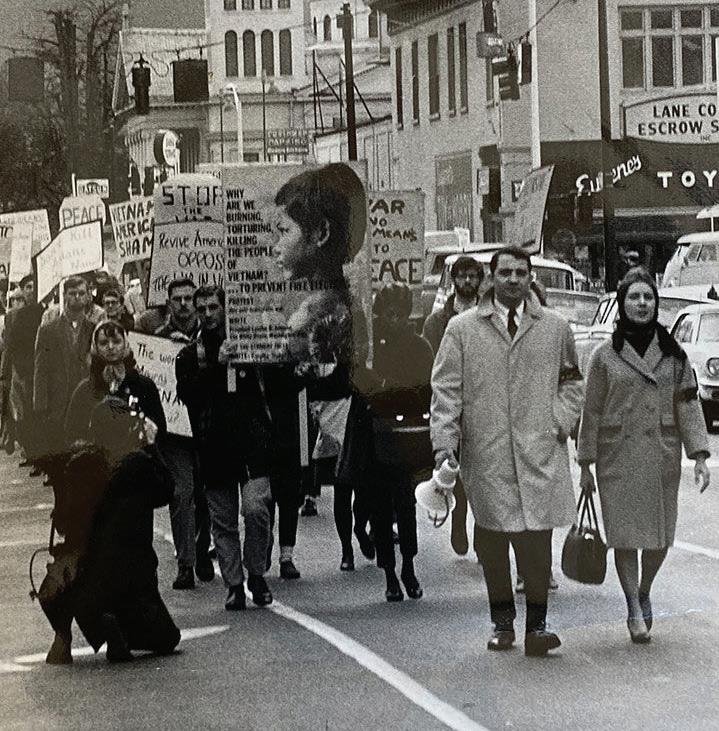
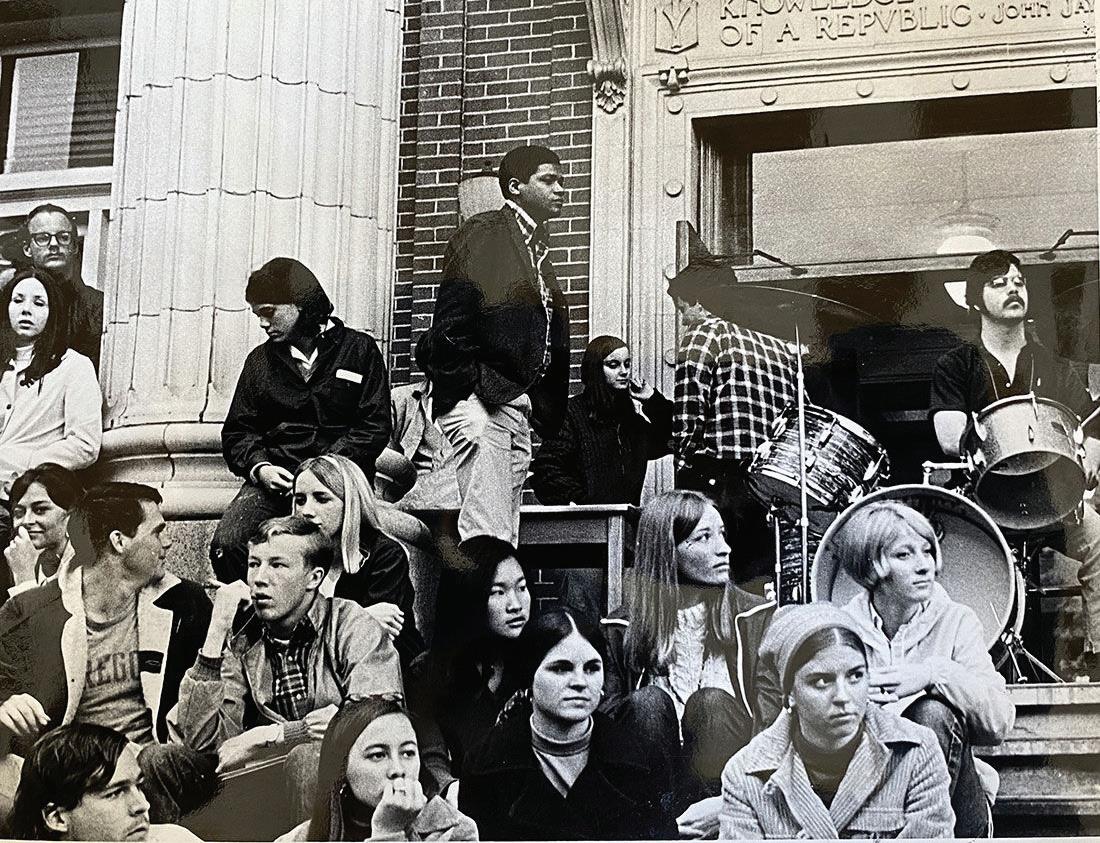
More than 50 years ago, University of Oregon student Martin J. Bennett marched down 13th Avenue alongside hundreds of other students and Eugene community members, chanting in protest of the Vietnam War.
Today, nearly six decades later, Bennett is part of a University of Oregon Libraries project revisiting that moment, contributing to a digital collection compiled between 2023 and 2025 by Special Collections and University Archives documenting the campus and community anti-war movement of the late 1960s and early 1970s.
The collection consists of recordings and transcripts from 19 oral history interviews with people who were active in the movement in Eugene, including students, community members and then faculty at the university.
Interviews were conducted by Bennett, a retired instructor of history and social sciences at Santa Rosa Junior College.
Bennett said that in the fall of 1968, the movement was growing, evolving and shifting from a minority on UO campus to a majority that opposed the Vietnam War. Support for the movement also grew beyond the campus into the greater Eugene community.
“This collection interviews people who were students like me and primarily engaged on campus, but also people who were in the community and developing and organizing in the community, sometimes apart from what was going on on campus,” Bennett said.
Bennett conducted all 19 interviews himself, reaching out to individuals through personal networks or outside connections, in addition to receiving oversight and technical support from archivist Nathan Georgitis.
Throughout the interviews, people talked about their participation in the anti-war movement efforts and reflected on their experiences with protests and demonstrations they were involved in.

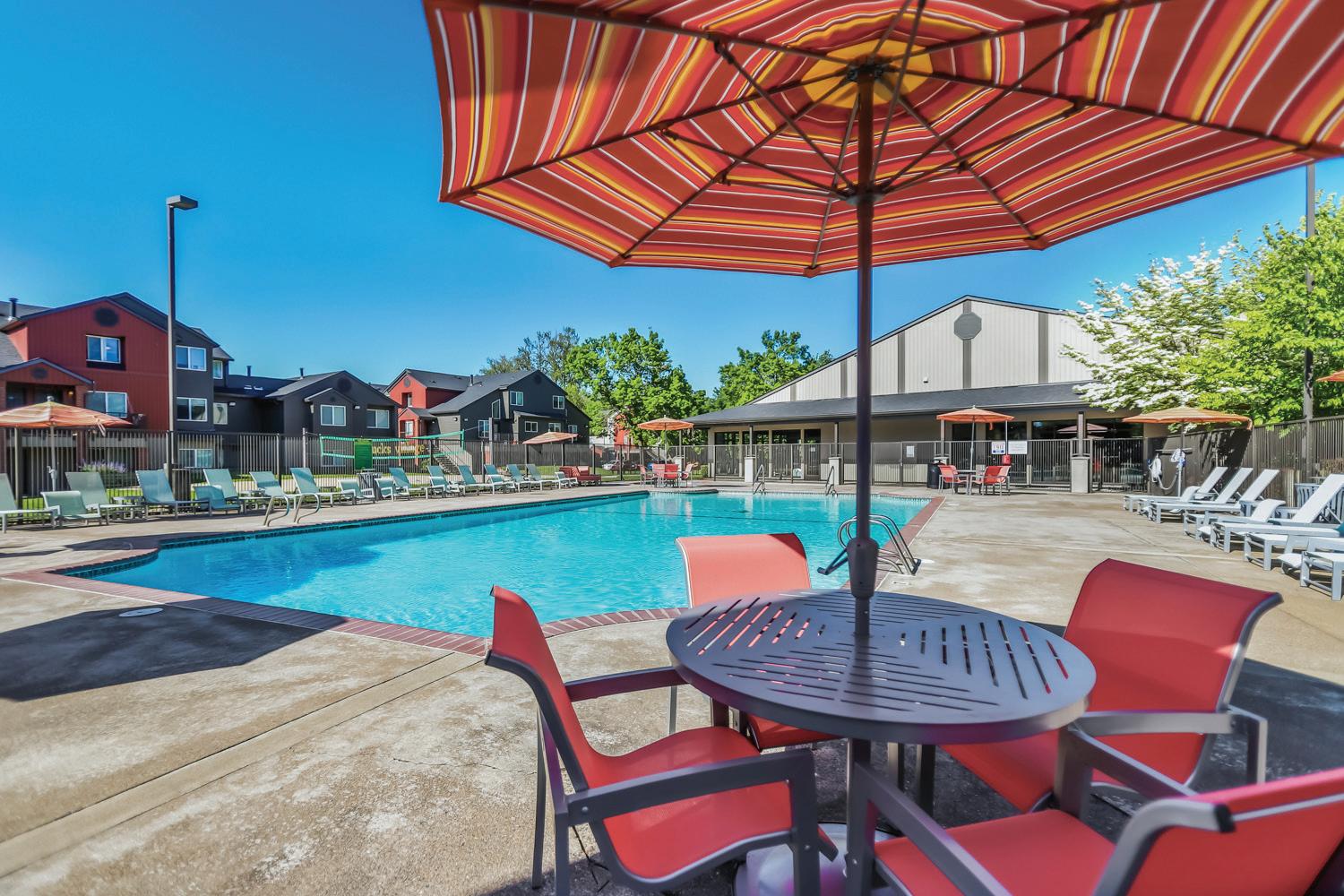
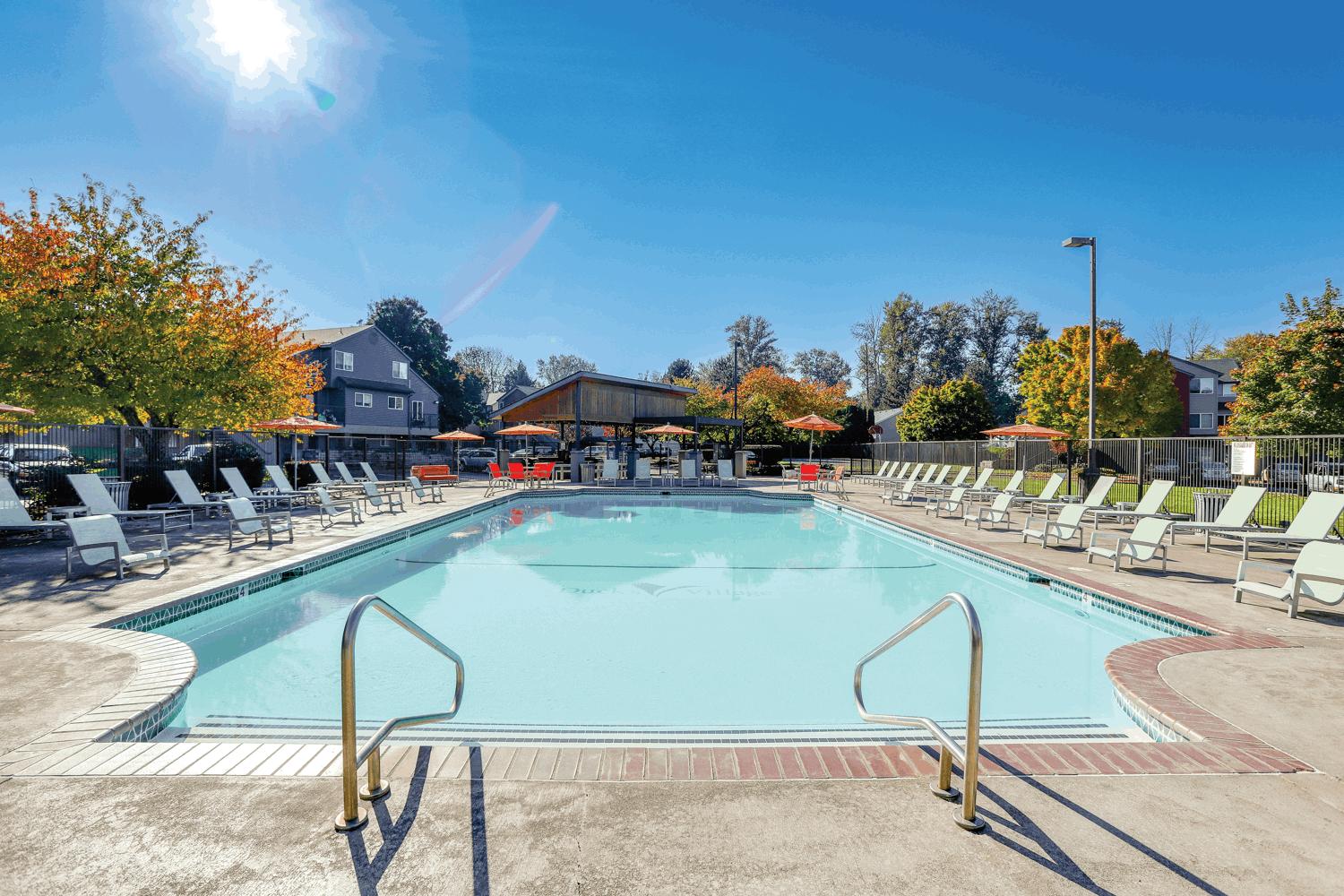
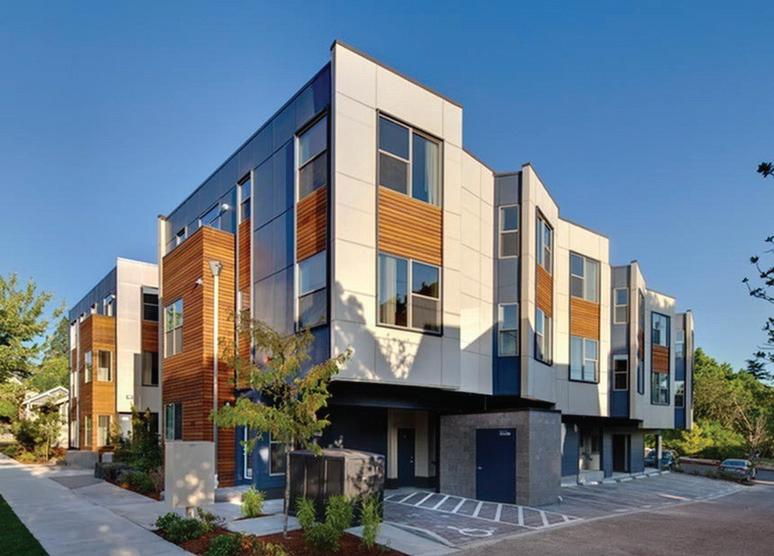
940 Hilyard Street, Eugene, OR 97401

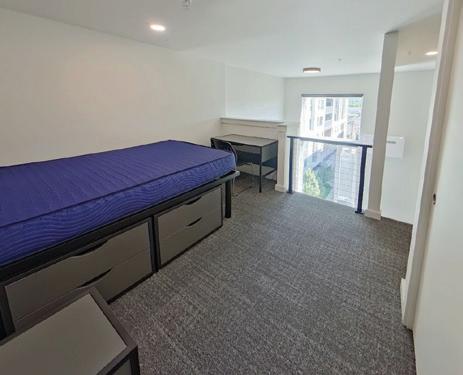
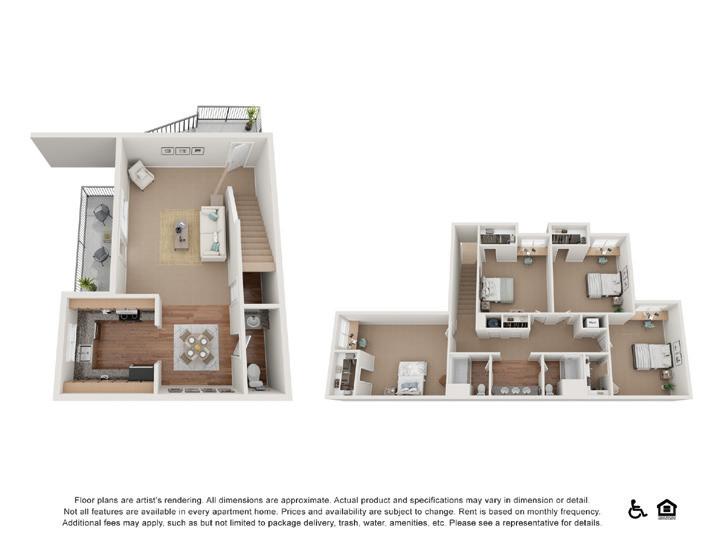
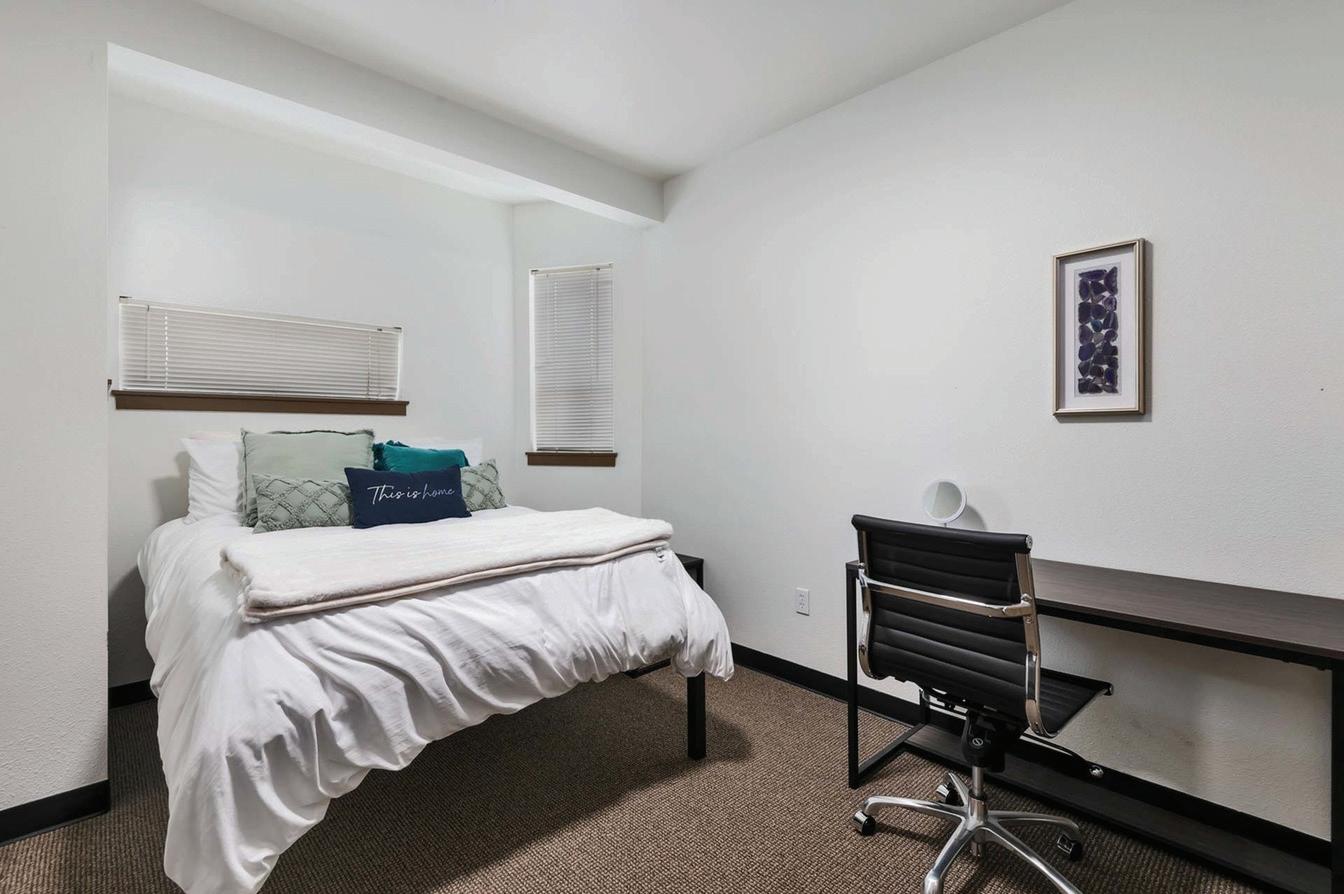
4–5 bed town house-style units with large bedrooms and spacious living areas. A popular location for students looking to live with friends!
Units include washers and dryers, dishwashers, private patios or balconies and secure garages with space for multiple vehicles.


11th and Ferry Lofts
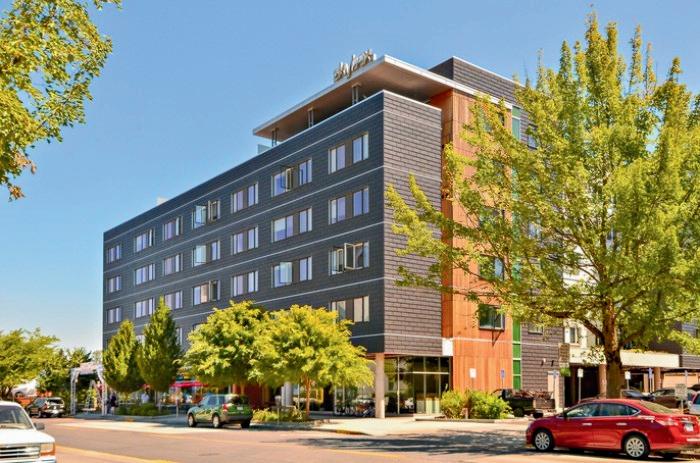
1125 Ferry Street, Eugene, OR 97401
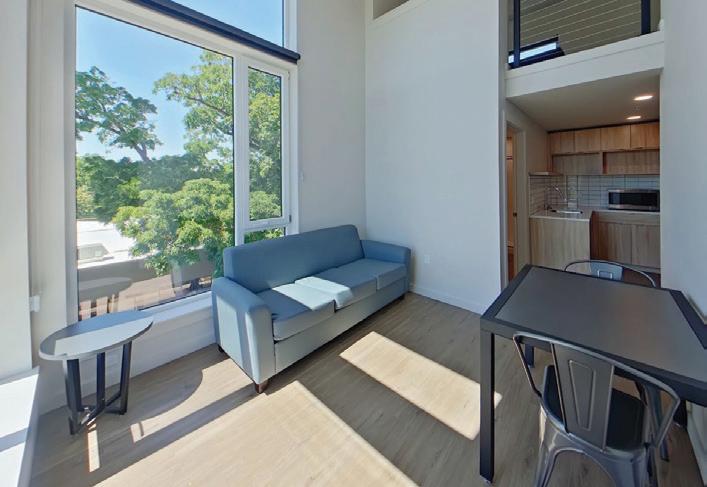
Modern, spacious design with beautiful loft or studio floor plans, large windows, furnished interiors, and pet-friendly!
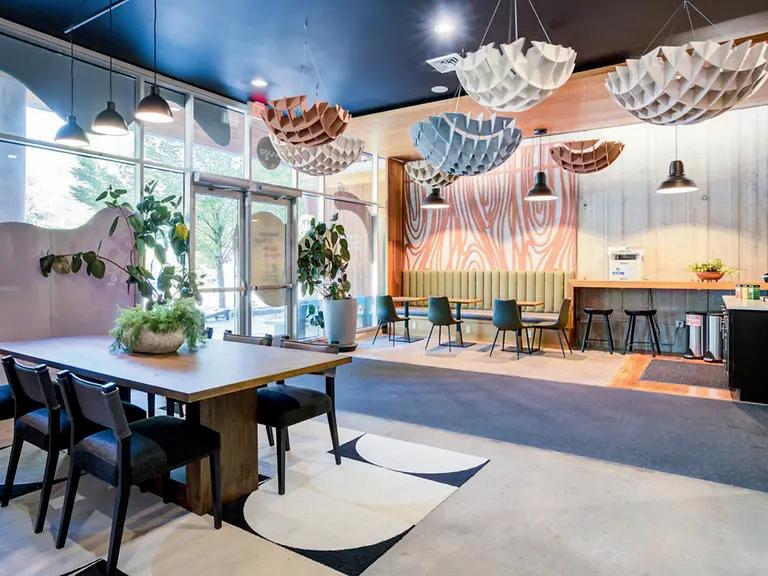
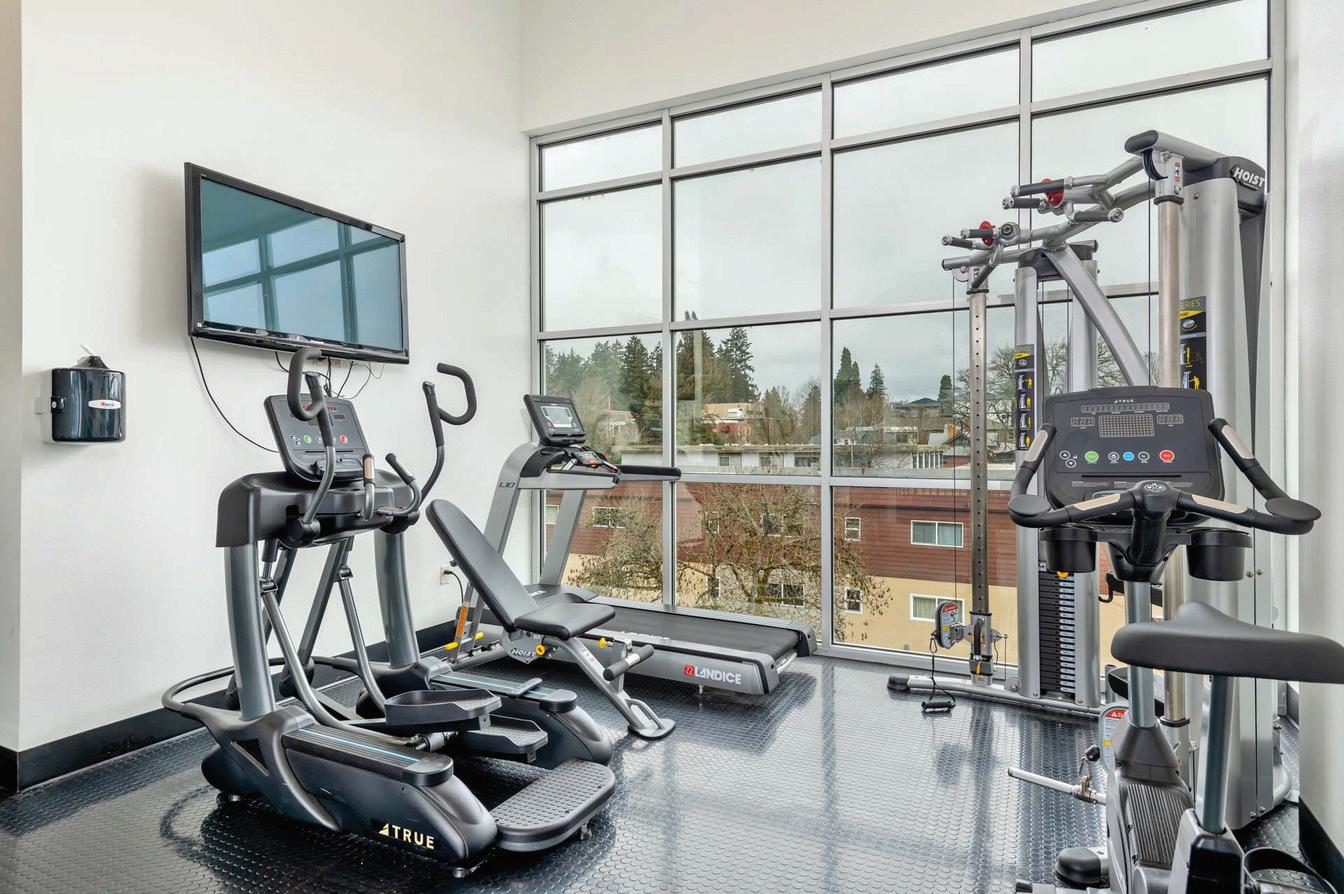
Shared kitchens, tenant laundry facilities, secure entry and bike storage.
In the heart of Eugene - just walk to campus or easily access transport options.

Midtown Apartments 362 East 12th Ave, Eugene, OR 97401 University Manor 745 East 15th Ave, Eugene, OR 97401
1–3 bed units in downtown Eugene just a short walk from campus.
Secure entry, elevator, and assigned parking. Units feature in-unit washer/dryer, and spacious layouts. Select units include balconies and A/C.
Perfect for college life or young professionals!


1–3 bed newly renovated units—perfect for a first-time student home!
Conveniently located right by campus with in unit washer/dryer, dishwasher and all new appliances. Bright, clean and modern with just the right touch of homey, these units are a great spot to start your studies at the University of Oregon.
Parking is first-come, first-served for $60 a month.


EDITOR IN CHIEF
Tarek Anthony
PRINT MANAGING EDITOR
Ryan Ehrhart
DIGITAL MANAGING EDITOR
Ysabella Sosa
NEWS EDITOR
Reilly Norgren
INVESTIGATIONS EDITOR
Ana Narayan
A&C EDITOR
Claire Coit
SPORTS EDITOR
Jack Lazarus
OPINION EDITOR
Gracie Cox
PHOTO MANAGING EDITOR
Corey Hoffman
PHOTO EDITOR
Saj Sundaram
COPY CHIEF
Olivia Ellerbruch
VIDEO EDITOR
Jake Nolan
PODCAST EDITOR
Stephanie Hensley
SOCIALS EDITOR
Ysabella Sosa
VISUALS EDITOR
Noa Schwartz
DESIGN EDITOR
Adaleah Carman
DESIGNERS
Asha Mohan
Ellery Burton-Tillson
Eva Andrews
Izzy Smith
Nina Rose
BUSINESS
PUBLISHER AND PRESIDENT
Eric Henry (X317) ehenry@dailyemerald.com
VP OPERATIONS
Kathy Carbone (X302) kcarbone@dailyemerald.com
DIRECTOR OF SALES & DIGITAL MARKETING
Shelly Rondestvedt (X303) srondestvedt@dailyemerald. com
CREATIVE & TECHNICAL
DIRECTOR
Anna Smith (X327) creative@dailyemerald.com
ACCOUNT EXECUTIVES
Torin Chevalier
Camcole Pereira
Ava Stephanian
Elliot Byrne
THE DAILY EMERALD
The Daily Emerald is published by Emerald Media Group, Inc., the independent nonprofit media company at the University of Oregon. Formerly the Oregon Daily Emerald, the news organization was founded in 1900.

Emerald Media Group 1395 University St.,#302 Eugene, Or 97403 (541)-346-5511
Eva Andrews selected as Emerald’s next Editor-in-Chief
Emerald Media Group’s Board of Directors has selected Eva Andrews as the 2026-27 Daily Emerald Editor-in-Chief. Tenure to begin in June.
By Corey Hoffman Senior News Reporter
The Emerald Media Group’s Board of Directors has selected Eva Andrews as the 2026-2027 Daily Emerald Editor-in-Chief. She will take over the position in June.
Andrews, a third-year journalism student, joined The Emerald in 2023 as a page designer for The Emerald, and is currently a senior page designer and the design editor for Emerald Media Group’s special sections magazines.
Andrews said one of her main goals for her EiC tenure will be to focus on multimedia journalism, including pushing for more video and podcast coverage, and redesigning the mobile version of The Emerald’s website to respond to “changing news consumption patterns.”
Through goal setting and cross-desk work groups, Andrews said she hopes to create a newsroom with space for collaboration and innovation.
Andrews said that her current positions at The Emerald have given her leadership skills that she’ll lean on during her EiC tenure. Skills such as “project management, the ability to lead peers and an eye for what the community would like to see in our newspaper and magazine products.”
Current EiC Tarek Anthony said he is “confident in (Andrews’) leadership and vision for The Emerald” and is excited to have an editor-in-chief with “a design background for the first time in decades.”
“Each week, when the paper comes back from our design team, I am blown away by Eva’s creativity and her ability to take thousands of words and bring them to life in our print editions,” Anthony said. “I look forward to seeing how her visual and artistic excellence will continue to lead The Emerald forward in both print and digital in the year ahead.”
Andrews first got involved in journalism in high school, serving as co-Editor-inChief of her school paper in Portland, Oregon, where she helped redesign the print edition and start the website.
“I put so much love into that newspaper and it has been very rewarding to see it grow after graduating from high school. That experience is one of the reasons I joined The Emerald staff in the first place and part of what pushed me to apply for EIC this year,” Andrews said.
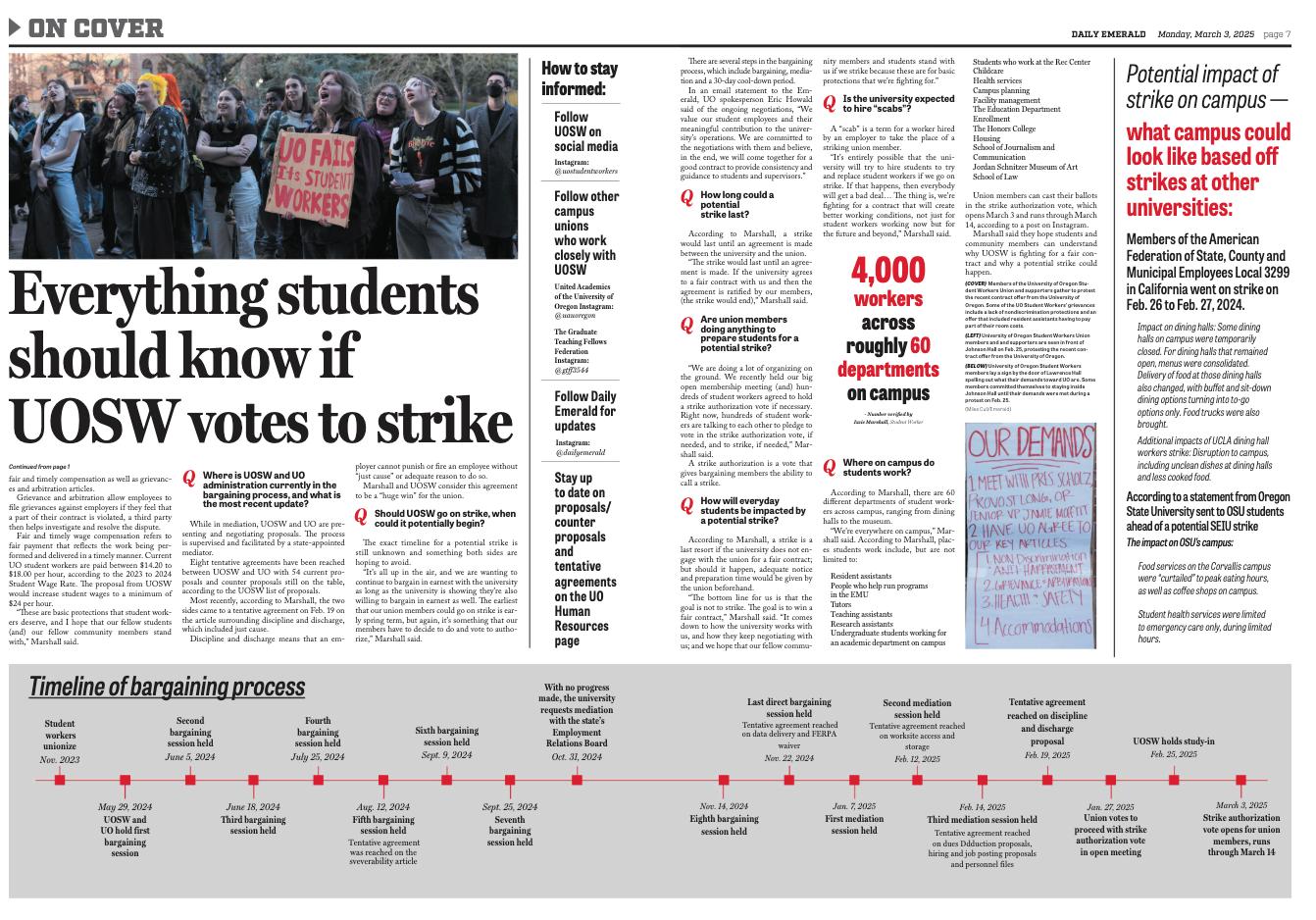
With over three years of design experience, Andrews said her favorite layout for The Emerald was in spring 2025, when the UO Student Workers Union was preparing to strike. Andrews said she enjoyed that
spread because she was able to experiment with color and other design elements, such as timelines and sidebars.
“That spread ended up winning a design of the year award at the Associated Collegiate Press conference and I am very proud that my work about such an impactful event on campus was seen at a national level,” Andrews said.
Andrews said her love and passion for The Emerald and its future potential were major motivators for her decision to run for EiC.
“I want to be someone who can support all staff members and push them to create impactful, innovative journalism,” Andrews said.
In a message to The Daily Emerald and the wider UO community, Andrews said she’s “thrilled” for this opportunity and can’t wait to get started.
“I care so much about this newspaper and the work that we do to serve the campus and greater Eugene community, and I cannot wait to bring fresh ideas into the newsroom to keep doing what we’re doing and improve as we go,” Andrews said. “I couldn’t ask for a better team of journalists to push the Emerald forward and I hope to see that reflected in the work we produce together next year.”
(BELOW) The Daily Emerald’s March 3, 2025 cover story on the potential for a University of Oregon student workers’ strike. Incoming Editor-in-Chief Eva Andrews won a national design award for the issue.







NEWS / SPORTS
Campus planning committee deliberates construction of beach volleyball court
Following Hamilton Hall’s demolition, construction plans for a women’s beach volleyball court are moving forward.
By Erin Reaney News Reporter
As the demolition of Hamilton Hall concluded, the University of Oregon’s Campus Planning Committee held a meeting to discuss details of the construction of volleyball courts and a green space that will be built on the land where the over 50-year-old dorm hall stood.
The women’s beach volleyball team was added to Oregon’s NCAA athletic programs in 2014 and still has no official facility. The team practices and competes at the Grace Beach Courts at Bushnell University.
UO is currently facing a Title IX lawsuit from the beach volleyball players and coaches, as well as the club rowing team, for the lack of facilities, but the lawsuit was filed well after the plans for the courts were underway, according to UO spokesperson Angela Seydel.
“The University of Oregon is committed to providing equitable opportunities, treatment and support for all student-athletes, in full compliance with Title IX. We strongly disagree with the allegations made in the lawsuit and are confident in the steps we’ve taken — and continue to take — to support our women’s athletics programs,” Seydel said in a statement.
Beach volleyball coaches and players were adamant the location of their facilities be in the new green space, despite the land being designated as a “temporary” use. This means that the university could build on the land later on and remove the courts, but according to the CPC, “temporary” could still mean decades of use before changes are made.
The planning and fundraising for the volleyball courts started in 2019, and after several considerations, the final

location was approved in 2023. Situated on the corner of East 13th Avenue and Agate Street, the green space will be the first sight that campus visitors see as they pass through the major thoroughfare.
According to Aaron Olsen, assistant director of campus planning, the new open space will include three beach courts, a storage/restroom building and lawn berms for seating during games. There will be an open space around the courts, “designed to support informal outdoor activity” for all students. The space will include “open lawns, pedestrian paths, mounded landscape areas, new trees and seating,” Olsen said in a statement.
The construction of the green space and beach volleyball courts marks the last step in the Hamilton Walton Transformation Project, which has included the construction of Unthank Hall, New Residence Hall and Yasui Hall.
The UO athletic department said that the new facility has been in progress for a long time and they are “excited to see it come to fruition and to continue enhancing the experience for the UO Beach Volleyball program.”
In the planning meeting, which was the fourth meeting held to discuss details of the new green space, the CPC specifically discussed the volleyball scoreboard and its location and design.
Meet Oregon football’s new offensive coordinator
Drew Mehringer spent four years as the Ducks’ tight ends coach and added co-offensive coordinator responsibilities last season.
By Owen Murray Associate Sports Editor
To explain his leadership philosophy, Oregon football’s new offensive coordinator went back to books.
“I think that there’s a book called ‘Leaders Eat Last,’ and it’s the way the military actually lines up to eat in the mess hall,” Drew Mehringer said at a March 14 press conference, his first since taking the role. “And they all line up from the young guys first, all the way to the most senior officers last, and the point is that the guy behind you should be coaching you or helping you grow, right?”
For four years, Mehringer has been taking steps backwards in line in Eugene. The former Rice University quarterback joined head coach Dan Lanning’s staff as the tight ends coach when he was hired in 2022. After three years, he added co-offensive coordinator responsibilities in 2025 as the Ducks made a run to the College Football Playoff semifinal. Now, stepping into the full-time role as Oregon’s new offensive coordinator, following the departure of two-year OC Will Stein to become the head coach at the University of Kentucky, he’s as close to the end of the line as he’s ever been.
Is it surreal? Sure. Has he pinched himself, like he said Lanning tells coaches sometimes? Maybe. The best way he could describe the feeling was with an homage to “Talladega Nights” and Ricky Bobby: “It is at least a little bit weird,” he said. “At times, it’s like, ‘I don’t know what to do with my hands.’”
That doesn’t mean he’s unprepared. The list of tight ends who’ve come through Mehringer’s room since the 38-year-old coach arrived at Oregon four years ago already approaches illustrious — Terrance Ferguson and Kenyon Sadiq alone are two of the Ducks’ best ever at the position.
“Any time you’re able to promote, it’s because you get to see what guys do every single day,” Lanning said. “It’s a body of work. You might interview with somebody three or four times on Zoom or have them visit, but the best indication of what I’m going to get in the future is how those guys’ positions have performed in the past, how they work with their teammates.”
Mehringer saw the game similarly to Stein, he said, though not completely alike. He remembered Stein being asked a question about offensive makeup before fall camp in 2025 about what the Ducks’ offense was going to look like. “I think Will would tell you the same thing,” Mehringer said. “Every offense, every year is going to be a little bit different.”
His press conference came just after the Ducks’ first official practice of the spring, months from their Week 1 game against Boise State University. Right now is about piecing together a new puzzle — one that includes a smaller transfer portal class than 2025’s group, and five new blue-chip offensive freshmen.
The door, of course, is still open to change. He doesn’t think anyone saw the Ducks’ heavy use of 12-personnel
The proposed location of the scoreboard — which is designed to be eight feet tall and 30 feet wide — is in between the courts and the Ford Alumni Center. This gives it the most visibility by players, officials, spectators and pedestrians passing by from the west.
Cheyenne Dickenson, a master’s candidate and program coordinator at UO, had concerns about the placement of the sign, suggesting it would cause a “screen” or separation between the alumni center and courts. She proposed potential signage on the reverse side of the scoreboard for visual appeal. However, according to Olsen, the university’s Campus Outdoor Sign Plan “establishes that no commercial advertising is allowed on exterior signage.”
No advertisements means no ad revenue — and the total cost for the construction of the courts and scoreboard is estimated to reach $2.3 million.
By the meeting’s end, the CPC approved the design and location of the beach volleyball scoreboard with the condition that there is no permanent commercial advertising on the scoreboard.
( ABOVE) Hamilton Residence Hall is torn down on the University of Oregon campus in February 2026 to make way for a new green space.
(Anna Liv Myklebust/Emerald)
Oregon football 2026 offensive staff
Offensive
coming before spring practice last year, or that they could’ve planned for the injuries to their receiver room that encouraged the scheme adjustment.
Those options are what he’s looking for at practice, even if it’s from a different vantage point than he’s used to. He used to be the one running the ball security drill at practice, but before his press conference, he was keeping it organized. He’s almost last in line to eat, he says, but he’s focused on everyone else — he says he’s learning constantly, from the rest of his offensive staff, and from Lanning and new defensive coordinator Chris Hampton, too. He’s talking about a communal project.
“This is never going to be Drew Mehringer’s offense, or anything like that,” he said. “This is going to be our offense.”




A R E M E M B E R S

O V E R A L L G P A

U N I Q U E C O U N C I L S

M E M B E R S











2026 midterm election preview
With Oregon primary elections set to start, students and those up for election emphasize the importance of civic engagement in local and national races.
By Audrey Lynch News Reporter
Across the United States, midterm elections can serve as a catalyst for change in federal, state and local legislatures. Between March 3 and Sept. 15, hundreds of primary elections will take place across the country, setting the stage for the national Election Day on Nov. 3.
In Congress, all 435 seats of the House of Representatives will be up for election alongside 33 Senate seats. For Oregon, U.S. Sen. Jeff Merkley, a democrat is once again running for reelection after 17 years in office.
On a state level, Democratic Gov. Tina Kotek (D-Ore.) will be seeking a second term in November among 38 other gubernatorial races. The Oregon Legislative Assembly also has 75 seats up for election, alongside hundreds of local elections that will occur throughout the state.
In Eugene, there are a few key races concerning voters.
Eugene City Council seats representing Wards 3, 4, 5 and 6 are up for election, and all four elections are contested. In Ward 6, incumbent Greg Evans seeks his fourth term against Tai Pruce-Zimmerman. Newcomers Jasmine Hatmaker and Athena Aguiar are running for Ward 5 against incumbent Mike Clark. Jennifer Yeh, in Ward 4, is seeking a third term but faces competition from Tom Stedman.
Close to campus
Ward 3 is the only race without an incumbent, since fiveterm council member Alan Zelenka will be stepping down this year. This ward, which encompasses the University of Oregon, will instead be sought by John Barofsky and Jennifer Smith. Barofsky is the current president of the Eugene Water and Electric Board and owner of Beppe and Gianni’s, an Italian restaurant near the edge of campus. Smith has been a project coordinator at UO for almost 19 years and currently serves as president of the Service Employees International Union, which represents classified employees at the university. She said her priorities include “working toward goals of affordable housing, transportation options, and environmental concerns.”
Overall, Smith plans to advocate strongly for social services and hopes for another “CAHOOTS-like response team.” She encourages young voters to participate not only in federal elections, but also in local elections.
“The smaller the unit of democracy, the more powerful your voice is, the more important your views are,” Smith said.
Oregon House of Representatives
This year, the Oregon House of Representatives will hold elections for all 60 of its seats. Of those seats, Districts 8, 13 and 14 cover the majority of Eugene. In District 14, current Speaker of the House and Democratic incumbent Julie Fahey is running to represent west Eugene against Republican candidate Kevin Burton and Democratic candidate Erik Glass.
North Eugene’s District 13 sees a similar race with Democratic incumbent Nancy Nathanson running against Republican candidate Jonathan T. Abrahamsen, and a Democratic candidate, Kathy Cantrell-Damewood.
District 8, which represents most of downtown Eugene and UO, will be a two-candidate race, with Democratic incumbent Lisa Fragala facing Republican candidate Bill Vivian. Vivian is a retired quality engineer and U.S. Navy veteran who is seeking his first ever elected position.
Fragala hopes to have the opportunity to continue working on behalf of her constituents on affordable housing, accessible healthcare and protecting education. If reelected, she said her work will focus on “ensuring that we have a fair economy for everybody.” “No one should have to decide between paying rent and putting food on the table,” Fragala said.
Despite facing challenges as a result of the federal government, Fragala said she is “really proud of what I accomplished with my colleagues, and that is, I think, how we overcome the challenges by working together.”
Fragala said she believes “young people are the future,” and encouraged them to recognize their power and engage through voting.
Oregon Senate
Fifteen Oregon Senate seats will be up for election in November, including District 4. This district, which covers Eugene and Springfield, is sought by Democratic incumbent Floyd Prozanski. Prozanski has held this role since 2003 and currently faces no opposition for the seat.
If reelected, one of Prozanski’s primary goals is to continue fighting for education funding.
“One of my goals is how (to) increase revenue that can actually be used to reduce tuition, making accessibility for higher education as well as our K-12 system stronger than it is now,” Prozanski said.
Additionally, he aims to “make certain that we have in place the ability to respond and react to adverse conditions.”
Prozanski advises young individuals to vote in the midterms, utilize the voter pamphlet and “to look at that as a tool, not as the given,” when educating themselves on can-
didates. He hopes that the midterms will act as an opportunity to protect individual rights.
Student perspectives
Riley McIntosh is a third-year student studying both political science and family and human services. She believes that civic engagement, especially for young voters, is incredibly important.
She said that a good representative is “someone who is going to protect (the environment) and just take all their constituents into consideration.”
McIntosh has been involved in the campus chapter of the Oregon State Public Interest Research Group since her freshman year and now serves as vice chair. OSPIRG has numerous national campaigns that are catered to student issues, including their new voter project.
According to McIntosh, the goal of the project is to “try to get more young people registered to vote and aware of deadlines and how to (submit) ballots.” She said that in the upcoming term, OSPIRG and ASUO will also be working together on voter registration and education events.
“We’re the people inheriting the future, and even if it is just a midterm or a primary election, it will greatly influence our future,” McIntosh said.
Will Garrahan is a fourth-year non-traditional student studying sociology at Lane Community College. Garrahan previously attended UO and became a member of both the Young Democratic Socialists of America and the UO Student Workers Union. Garrahan believes that candidates having experience supporting labor movements are crucial.
As president of the SEIU, he said “(Smith) is a huge force on campus for advocating for workers.”
He also appreciated Fragala’s support for working individuals, including when she “showed up for my union, UO Student Workers, when we were on strike to win our first contract last year,” Garrahan said.
He believes that “student voice and action is always important” and advises that new voters do research into candidates’ backgrounds before heading to the polls.
In Oregon, voter registration closes on April 28, and primary elections will take place on May 19. To check your voter registration status, visit vote.org or your state’s voter registration page. On election day, ballots may be submitted by mail or placed in an official ballot drop box.
Editor’s note: Ward 3 candidate John Barofsky and Oregon House District 8 candidate Bill Vivian could not be reached for comment.












Records show forced consumption, retaliation in Delta Sigma Phi hazing investigation
The investigation into Delta Sigma Phi’s hazing, which resulted in disaffiliation of the fraternity, included retaliation against at least one witness and forced consumption of food and drink.
By Reilly Norgren News Editor
Following an investigation into allegations of hazing, neutral case managers found that the Delta Sigma Phi fraternity engaged in hazing behavior including forced consumption of onions, milk and alcohol and planking on broken glass, according to public records obtained by The Daily Emerald.
D Sig was disaffiliated through winter 2030 on Feb. 27 following the conclusion of the investigation into the fraternity’s hazing allegations. It had previously been placed on interim suspension on Nov. 7, 2025 after the UO Police Department received a hazing report, which then prompted a report by the Dean of Students Office.
A Notice of Allegations letter, sent to the fraternity by the Office of the Dean of Students on behalf of Student Conduct and Community Standards, detailed the witness accounts and how those were taken into account by the neutral case managers to come to the final decision.
Upon disaffiliation, the university stated that D Sig had violated the following university policies: hazing, safety hazard, theft, alcohol and retaliation or obstruction.
Documents from the investigation obtained by The Emerald include witness accounts and evidence that substantiates each policy the fraternity was found to have violated.
OSCCS stated in its investigations that, reportedly, the hazing behavior occurred in October and November 2025 and included, but was not limited to, the forced pressure to consume milk, onions and alcohol, purchase snacks for older members at night, plank on broken glass, clean vomit and allow older members to spit and blow cigarette smoke in the faces of new members.
It is noted in the report that members of the chapter reportedly communicated with an individual involved with reporting the hazing allegations, attempting to deter them from reporting.
Additionally, the report found that new members were allegedly furnished with alcohol during the noted hazing activities or at social events, and surveillance images show members of the chapter attempting to use a ladder to steal items from another fraternity the day after the interim suspension was enacted.
Witness accounts
Eight witnesses were interviewed in total about the hazing allegations, according to the documents. Neutral case managers oversaw the interview process.
According to the documents, interviewees were informed that the process was “private but not confidential” and that the D Sig president would have access to the report and interviewees would be identified by name in the report. Interviews were completely voluntary and questions could be declined.
Screenshots of text messages in the documents supported evidence that a member of the fraternity contacted Witness One after his hazing report. In these messages, Witness One describes being “harassed” by members of the fraternity.
The case managers found insufficient evidence that new and active members of D Sig were instructed to retaliate against Witness One on online anonymous platforms, but it was noted within the report that members of the chapter engaged in communication with an individual to deter them from reporting the fraternity at all.
Witness One reported that punishments would take place if a mistake was made during an event, given out by an individual called “The Prophet.”
Screenshots provided by Witness One from a conversation between himself and “The Prophet” corroborate that he sustained a cut. In the messages, “The Prophet” accuses Witness One of “leaking information” about the fraternity. Witness One responds that someone had asked him how he got the cut. The report goes on to say that the injury was serious enough to require stitches. Because another source confirmed to the case managers that the witness was injured,

the report found the other witnesses’ lack of knowledge about the incident to “weigh against the reliability of their recollection” because all of the interviewees were all members of Witness One’s pledge class.
“The Prophet” was identified by Witness One as a non-student who could “do anything to new members and not get in trouble” and would conceal their identity to new members.
According to Witness One, “The Prophet” would conduct hazing in the presence of every member of the fraternity’s executive board and acted as a “pledge master.”
Additional text message screenshots provided to Dianne Tanjuaquio, the senior associate dean of students, during a meeting show “The Prophet” telling Witness One when he could and could not attend events later that day. The messages also show that he was “disappointed” in the witness for failing to memorize a Quizlet, a popular online study tool, containing information about fellow members of the fraternity.
According to the report, a source confirmed to case managers that “The Prophet” was a real individual, but was a “joke” that had existed under other names during previous years. This source went on to say they were “disappointed” to see the manner in which “The Prophet” spoke to Witness One in the messages and that the goal of “The Prophet” role was simply to keep new members engaged and teach them about the chapter.
Four of the eight witnesses stated they had never heard of “The Prophet” before — two said they knew of the figure but only that the role was “not serious” or “a joke.”
The report noted that because the existence of “The Prophet” was corroborated by three witnesses and one additional source, denial of “The Prophet’s” existence by the other four witnesses impacted the reliability of their accounts.
Witness One also provided a “signature sheet” — a list of new member events — including items like chugging a gallon of milk and consuming an onion in under five minutes.
Witness One stated that new members of D Sig were “forced” to drink a gallon of milk before a hazing session to ensure they would vomit and had to complete the signature sheet.
A source confirmed to investigators that the signature sheet was provided to new members but was intended to be “fun” and in “good faith,” and that there was no set amount of items that new members had to complete. The source acknowledged the list included milk chugging and onion eating.
Witnesses two through eight all recall the sheet, but several said it was voluntary and they were not pressured to complete a certain number of tasks.
One of the items on the sheet was to “take an item from a rival frat or sorority.” A day after the Nov. 7, 2025 interim suspension of D Sig went into effect, three new members were stopped on suspicion of theft. They admitted they were headed to Theta Chi to steal their flag — and were later caught on camera at Sigma Nu carrying a ladder.
An incident report by the university identified the three as D Sig pledges. While they had not had contact with any active members, which was not allowed per the interim suspension, taking an item was included on the signature sheet for new members.
The investigation found that there was not sufficient evidence to support that there was ever existence of a “dungeon,” that new members were ever lined up against a wall or were forced to wear a certain outfit for hazing. These were claims made by Witness One, but no other witness confirmed these activities.
Action plan
An action plan is an assigned plan by the dean’s office which aims to help student organizations found in violation of the Student Code of Conduct “realign” with institutional values. D Sig’s action plan includes the decision to disaffiliate the fraternity as well as an immediate prohibition on chapter facility use.
D Sig’s house can no longer host chapter-related gatherings, store chapter property, display chapter identifiers like flags or signs or maintain a “live-in” structure.
The report acknowledges housing arrangements may involve private lease agreements. Current residents of the house are expected to make “best efforts to transition away from residing together in a manner that functions as, or presents as, a chapter facility,” according to the report.
Residents are expected to vacate as quickly as possible by relocating at the end of the lease term, subleasing or terminating their lease early. The report indicates that, due to historical association of 1306 E 18th Ave. with D Sig, and that code violations took place at that location, individuals are expected to vacate the address by the time their lease term ends.
Ten days after the letter was sent, every resident of the former chapter house had to submit confirmation of their lease end date or plan for vacating the house to the code of conduct office.
According to UO spokesperson Angela Seydel, D Sig filed an appeal to this decision on March 18. Decisions on appeals are typically issued within 30 days.
The fraternity may apply for re-recognition no earlier than spring 2030, and future consideration will require demonstrated compliance with university policies and standards. D Sig will remain listed as suspended and disaffiliated on the Fraternity and Sorority Life status webpage.
Seydel said some students involved may face individual code of conduct violations, and that “hazing, retaliation and behaviors that endanger community members or undermine accountability will not be tolerated.”
D Sig leadership did not respond in time for publication.

ARTS & CULTURE
Eugene’s home for comics: Books with Pictures
From events to the books themselves, Books with Pictures offers Eugene comic lovers a place to come together.
By Gray Vanderpoel Arts & Culture Writer
Comic art is at the heart of many classic stories. Whether it’s DC, Marvel or independent graphic novels, comics are an important part of art and literature. Thanks to the store Books with Pictures, comics and graphic novels are far more accessible in Eugene. Additionally, the store’s events create community and career building for aspiring writers and artists.
The store itself, based at 5th Street Public Market in the downtown area, has a large variety of choices under the graphic novel and comics umbrella. The store sells role playing games, zines and everything from single issue comic books to graphic novels. Books with Pictures is also known for its regular, community based events like creator meetups, book signings and crafting events.
Andréa Gilroy, the store’s owner, got into the comic and graphic novel industry through their field of study at the University of Oregon. They taught at UO and got their Ph.D. in comparative literature. They got the idea of opening a Eugene location for Books with Pictures from the owner of the original location in Portland, who offered the idea of a new store in Eugene to Gilroy.
Gilroy opened the spot in Eugene only months before the COVID-19 pandemic. They fought through quarantine to make it the flourishing store it is today.
One of Gilroy’s favorite events is their crafting event. They have a collection of craft supplies, including old recycled comics they use to create new art, instead of letting them go to waste.
“When comics come to us damaged, they usually don’t want us to return the books,” Gilroy said. “They say to destroy it, don’t sell them and they will send you a replacement. I’m not going to sell a comic with a ripped cover to some-
body. Everything else in it is fine, so we use those for crafts.”
Their book signings include a range of local and infamous writers and artists that come to the store. These events create an opportunity for local creators and fans to get to know one another and build community. They also hold opportunities for larger celebrities to get to know attendees. Patton Oswalt, an actor, comedian and comic creator, attended one of these events in 2025. He signed his work for fans before performing his sold-out comedy show at Olsen Run Comedy Club and Lounge.
Books with Pictures works to help bring together the community in the city of Eugene, especially for students or beginner creators who are looking to get a foot in the door.
“We know that there’s an artist community in Eugene,” Gilroy said. “It can be difficult to connect with people, especially on campus, and we understand you’re in school. You’re not necessarily coming out. But there are a lot of folks like you out there, and there are resources and connections that could be helpful at the very least. But it’s also just nice to have friends, and to have other people who do the things you do.”
Rhae Olson, a bookseller and events manager at the store agrees that community building is at the forefront of all the events they do. They host many free, all-ages events for that same reason of accessibility.
“We have a motto that, ‘comics are for everyone,’” Olson said. “That is at the heart of everything we do, and a big part of that is making sure that our store and events are as accessible as we can make them.”
Whether people in Eugene simply like keeping up to date with some of the new and popular comics, or are looking for a way into the field, Books with Pictures Eugene is here for them, with a range of stories, art styles and creators.

Teach a poet to fish, he’ll write for a lifetime
A look into the weekend-long FisherPoets Gathering in Astoria, which hosts dozens of fishing professionals to share their written work each year.
By Amelia Fiore Arts & Culture Writer
Fishing is one of the oldest practices known to man, sustaining human life across hundreds of countries, cultures and communities for centuries. In Astoria, Oregon, it is the centerpiece of an annual poetry reading.
The FisherPoets Gathering invites fishermen and fisherwomen from across the Pacific Northwest to share original poetry and music that speak to their experiences in the fishing world. This year, their 29th annual event took place from Feb. 27 to March 1 across several small venues in Astoria. For those who couldn’t make the trek up to Oregon’s border, local radio station KMUN 91.9 FM streamed each night’s Liberty Theatre poetry performances live, hosted by Joanne Rideout.
The event reflects a unique intersection between art and a notoriously demanding industry. Poetry has been commonplace in fishing communities, especially for those who spend long hours on the water. Jon Broderick, experienced fisherman and organizer of the event, was inspired by this unrecognized practice and became dedicated to creating a space for it to thrive in the fishing town of Astoria.
“The goal for the gathering is for FisherPoets to enjoy each other’s company and tell each other’s stories,” Broderick said. “It’s not that much different than sitting around with folks, drinking coffee. (It’s) just an elaborate get-together. That there are other attendees at all is still kind of surprising to us. We really never intended to have an audience, other than ourselves.”
When he first conceived the idea, Broderick contacted John van Amerongen, editor of the Alaska Fisherman’s Journal at the time. The publication was already a platform for fishermen and women to showcase their writings, and was incredibly popular with Pacific Northwest fisher readers.
Broderick and van Amerongen worked together to scout for potential interested poets in the area. Broderick contacted friends from previous fisheries that he worked in, and Amerongen provided information of the poets whose work he had published previously.
Broderick ended up with 40 contacts, and once he found himself with a gap in his afternoon, he rushed to make phone calls. “Every time I called somebody — at the Columbia River Maritime Museum, Clatsop Community College, Heritage Museum — they would say, ‘Oh, that’s a great idea. Let me call somebody else.’ One thing led to the other, and there was such organic enthusiasm for it. We never had to twist anybody’s arm to make it happen,” he said.
And so, in 1998, the first FisherPoets Gathering was held. To Broderick and the other poets’ surprise, more than one hundred people had attended. They agreed to hold the event again the following year, and it’s been an annual event since.

This year, the event was sold out by Saturday afternoon. The tickets, sold in the form of buttons, were only available for purchase in-person in any of the downtown Astoria locations.
Some performers spanning over the weekend included singer/songwriter Traesti Gudmundson, Chelle Meyers, who works from the Gulf of Alaska, Kira Telgen from Bristol Bay, merchant mariner Shannon Zellerhoff and Casey Marinkovich from Prince William Sound. “These are strong, younger voices we hope will continue to animate the FisherPoets Gathering for years to come. More women than men, a trend,” Broderick said. Poems ranged from humorous retellings of a black cod-catching trip gone wrong (Doug Rhodes) to a sestina on identity and grappling as a woman in the commercial fishing industry (Maggie Parrish). Not one piece was the same as another, a mirroring of fishermen’s experiences, which vary like the Pacific’s changing tides.
Scattered between sets of poetry were musical performances, another piece of the fishing community’s intimate sharing of art. “FisherPoet’s Alphabet,” by the Beerman Creek String Band, excited the audience by tying together upbeat melodies and terminology that sounds alien to any non-fisherman.
“When we fish in Bristol Bay, we often gather in somebody’s cabin and just play music, covering everybody’s old favorites,” Broderick said about music’s importance in the fishing world.
“Everybody sings; it’s just something people have done for generations.”
As for non-fishing attendees, Broderick hopes that they walk away from the Gathering with a better understanding of the broad, hard work that comes with commercial fishing. “We’re not a reality show,” he said. “We’ve got crabbers, we’ve got longliners, we’ve got fishing in the open ocean, guys close to shore, people with big boats. You know, expensive gear and inexpensive, make a living out of it.”
The FisherPoets event opens the floor to real people to share their voices. Not grandiose, self-important artists, but hardworking individuals expressing all things ugly, beautiful and mundane about working on the water. Each poem recited and song sung opens a door into that world. I don’t know what a capstan is or where trout are most bountiful, but I do recognize the beauty in a community sharing their love for what they do with each other.
And, according to Broderick, “Every fisherman is a fisherpoet.”
(Courtesy of Jeff Taylor)
NEWS From activist to archivist: UO project documents Vietnam-era movement
Bennett said the intention of this collection made it very unique, as very few people sought out participants to give them a voice to speak.
“This was the first time they’ve had this kind of conversation, and I think it was very fruitful for those who were being interviewed,” Bennett said.
Firsthand accounts
What began as a small minority emerged into the majority, with a profound shift in public opinion, particularly regarding the anti-war movement in Eugene. Bennett de-
scribed this as a grassroots social movement where people learned how to be organizers, develop organizations and put together coalitions.
“They developed organizations and put together coalitions at the local level,” Bennett said. “Then they connected with national coalitions, and most historians say that the anti-war movement was the most successful and effective anti-war social movement in American history.”
During the interviews, Bennett asked many questions, such as when they came to Eugene, what their background was and what their aspirations were. He asked questions
based on each individual’s role, depending on whether they were a student, faculty member or townsperson, trying to get as many different perspectives as he could.
Jack Maddex was a faculty member at UO who was heavily involved with campus activism at the time and reflected on his role in the movement during his interview with Bennett.
“Some of the faculty role was being asked by student groups to speak at the free speech platform or organizing teach-ins,” Maddex said. “It meant getting a lot of faculty from different perspectives together, and you would have one lecture after another with a lot of interaction with the audience sometimes.”
Dennis Gilbert arrived at UO in 1968 as a graduate student and immediately saw many students interested in labor movements against the war. He took part in a faction that saw it needed to be a movement of both the college and the whole community, which was a broader coalition area that was “very diverse and open-ended.”
The 1969-70 academic year was a turbulent year of protests and major demonstrations, which saw campus activism reach new heights of violence and disruptive activities.
The Reserve Officers’ Training Corps program is designed to train, educate and recruit students to become commissioned officers for the U.S. military. It became a major target for anti-war protesters because it represented U.S. military involvement and sought to train new officers to join the military.
In January 1970, protesters escalated their actions toward ROTC. Groups of people threw animal blood at an ROTC recruitment table, broke into the ROTC office and scattered books and papers around the room while vandalizing the walls, and a dozen hecklers disrupted an ROTC information session.
Some protesters escalated their actions even further the next month when they started a fire in the ROTC storage area in Esslinger Hall, which led to $250,000 in damages to the building, the perpetrators were never discovered.
After a vote by UO faculty in April 1970 that allowed ROTC to remain on campus, protesters broke into the ROTC facilities, “ransacked the area” by breaking lights, doors and windows, threw rocks, torches and kerosene at the building, and attempted to start a fire. Several students were arrested and charged with inciting a riot.
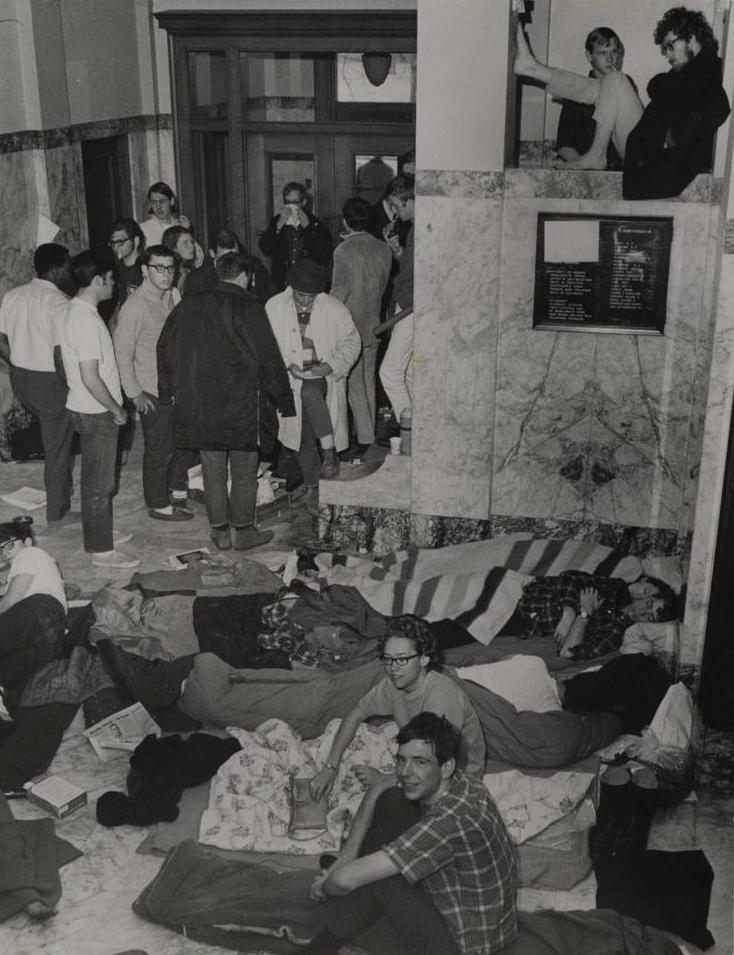
In the same month, students occupied Johnson Hall and successfully closed East 13th Avenue, calling it “The People’s Street.” Further, on Oct. 2, 1970, a bomb was set off in the basement of Prince Lucien Campbell Hall.
“There were constant demonstrations, political education and various forms of debate over the war in Vietnam, and I think in the best of American traditions, that debate was very vigorous and very open,” Bennett said.
The impact of veterans on the anti-war movement
In addition to local citizens opposing the war, Vietnam Veterans Against the War was an organization that began taking action and became public about the anti-war movement. Bennett interviewed a veteran named Rick Diggs, who returned and became active in the local VVAW chapter.
Bennett also said that other veterans he interviewed reflected on the fact that by the late 1960s, “there was a profound discontent and dissent internally within the military.”
“The anti-war movement spilling over into the military is actually one of the reasons why (former President) Nixon decided to abolish the draft and to incrementally draw down the amount of troops in Vietnam,” Bennett
said. “So I would say they played a very major role in the anti-war movement.”
Marion Malcolm worked with community-based organizations, including VVAW, which she said became a key part of the anti-war movement. Malcolm understood their small role as part of a nationwide effort to stop the war and said that Eugene citizens were always part of big nationwide protests and coalitions, outside of attending local demonstrations.
But Malcolm highlighted the impact of the veterans who returned from the war, who provided extensive firsthand accounts of being in combat and became credible sources who voiced their opposition to the war.
“I think the anti-war movement did make it harder and harder for the administration to continue the war, although I have to say that what really happened, finally, was that the anti-war movement among service people and veterans probably is what really pushed it,” Malcolm said.
Connections to protests today
Many individuals like Gilbert and Malcolm identified similarities between the anti-war movement they participated in and the protests that have taken place at UO over the last few years.
Gilbert believes the events that unfolded in Eugene during the Vietnam War can be remembered by students today to learn a few lessons from, particularly by listening to those firsthand accounts in the SCUAs.
“Obviously, there’s lots of reinvention in every movement, but it means that things like this have happened before,” Gilbert said. “It isn’t really easy getting kicked out of a class or losing your job or doing something like that as a student.” Bennett made the connection to how directly relevant these interviews are when thinking about movements on campus today. In relation to America’s current activity in
other countries, he said that it’s “all too timely to look back at what happened” during the Vietnam War.
“If there’s something to why we all agreed to be interviewed, that’s the reason. Not to be personally famous in the library at UO, it was to make a contribution to an ongoing struggle that didn’t end with the end of the Vietnam War,” Gilbert said.
Malcolm said she thinks there’s something to be learned from the collection documents because of the parallels with what we see today. She added that something listeners would get out of hearing those interviews is a sense of solidarity in a movement they knew they were a part of.
“I think Marty intended that students and faculty members today would feel inspired, that they would feel that they could make a difference, that maybe looking back 40 years later, they would feel good about anything that they do taking a stand now,” Maddex said. “Whether that’s actually true varies from one person to another.”
As a message to student advocates today, Malcolm emphasized that engagement matters to everyone involved and encouraged students to stay focused on the objective at hand.
“Try to remember what the goals really are and don’t get distracted from them,” Malcolm said. “And I would say that when there can be active partnerships between the campus and the community, everybody is stronger.”
(ON THE COVER) Anti-Vietnam War protestors march through downtown Eugene.
( LEFT ) Students organize a “sleep-in” protest inside Johnson Hall in April 1968.
( BELOW ) Anti Vietnam War protestors sit-in on the steps of Johnson Hall.
(Courtesy of Special Collections and University Archives)
OPINION/ARTS & CULTURE
The Daily Emerald Opinion Desk’s spring term ‘Hot or Nots’
River days, the new outdoor craze and just enough chaos – here’s what the opinion desk is calling “hot” this spring (and what we’re absolutely over).
Hot: Yard sales
With many graduates facing an expiring lease on their apartments, the time has come to purge closets, garages and living rooms. If you’re anything like me, you’ll pounce on the opportunity for a great deal, especially if it’s local. I’m looking forward to scouring the neighborhoods of Eugene in search of some hidden treasures.
Leo Heffron
Associate Opinion Editor
Hot: Dinners on the patio
After a long day of playing the NYT games in class, nothing beats meeting up with your friends at Eugene’s hottest spot – your apartment’s patio, stoop or deck. With top tier people watching and much-needed fresh air, patio dinners make your Trader Joe’s frozen meal taste like a million bucks. Ignore the awkward looks from passersby and you’re in for a great night.
Gracie Cox Opinion Editor
Hot: River days
With the help of daylight savings, it’s no better time to find a spot along the Willamette River to hangout with friends or solo until the sun sets. Bringing a good book, a hammock and some tunes will surely help you wind down when spring term gets to be too much. As my last term here in Eugene, you’ll find me checking out all the hot spots to find the perfect one.
D Ortega Opinion Columnist
Hot: Lawn chairs
Unexpectedly, what may be the best financial decision of your college life is a lawn chair – perfect for soaking up sun at the EMU without a wet grass stain on your jeans or backyard bbqs and a cool sodapop. Help that friend out who’s sitting awkwardly by a full couch; bust out that lawn chair for your boy.
Amelia Gaviglio Opinion Columnist
Not: Having closed primaries
Spring brings May elections, but Oregon primaries come with a twist: only registered party voters can vote for candidates running within their party, isolating third-party candidates and third-party voters from participating. Open primaries would ensure that elections are held on an equal playing field, but until then, we can keep advocating for voting reform.
Aishiki Nag Opinion Columnist
Meh: Senioritis
The high from spring break dwindling and burnt out from winter term, it seems like everyone gets tired of doing schoolwork around spring whether you’re a senior or not. The sun is out, and you wish you were too, but instead you’re stuck in class learning about biochem. But, it’s time for that final push – you’re almost there.
Amelia Gaviglio Opinion Columnist
Not: Windy days
In spring, more often than not, Oregon’s beautiful sunny days are ruined by huge gusts of wind that destroy any sense of peace I could have found basking in the sunshine. Whether it’s ruining my hair, making a terrible whirring sound in my ears or making me shiver, the wind becomes my worst enemy come spring.
Rachel Ehly Opinion Columnist
Not: The lack of rain
With temperatures reaching just below 80 degrees, global warming seems more prevalent than ever. It’s hard to enjoy this picture-perfect weather without an inkling of fear in the back of my mind. I keep thinking of the wildfires that will thrive this summer because of our dry spring. We need more rain! Not just for May flowers, but for our environment.
Leo
Heffron Associate Opinion Editor

Decker: Hollywood finally did something new with ‘The Bride!’
Director Maggie Gyllenhaal stitched together sex, violence, female liberation and more in this new take on ‘Frankenstein’.
By Will Decker Arts & Culture Writer
The newest Frankenstein adaptation, “The Bride!,” is bombing in theaters with mixed reactions from critics and audiences. Like the man himself, the film is a loosely stitched together pile of big ideas, but it had a lovely soul.
Jessie Buckley led “The Bride!” as Ida, a bleach-blonde midwest flapper girl in 1936 Chicago possessed by the spirit of Mary Shelley (who Buckley also plays). The film opens with Ida sitting at a table with a bunch of mobsters, who throw her down a flight of stairs after she goes on an accusatory and literary monologue. Her death plays behind the title sequence as we watch her neck snap and body hit the metal stairs at awkward angles until she finally reaches the bottom, where she stares up at the camera with a serene, blank expression.
We then cut to Frankenstein’s Monster, played by Christian Bale. He shows up on the doorstep of our almost typical mad scientist, Dr. Cornelia Euphronious (Annette Bening). Frank tells her he’s “looking for intercourse,” and hoped Euphronious would make him a Bride. So they dig up Ida and reanimate her, except she comes back without her memories and still possessed by the spirit of Mary Shelley. Soon, the two monsters escape the lab and go on a Bonnie and Clyde-esque murder spree together.
From here, “The Bride!” is a monster thriller, gothic horror, doomed romance, supernatural pseudo-biopic, revolutionary feminist reprisal, detective noir, mafia film, love letter to classic Hollywood and has a few dance numbers to boot. Obviously, this was too much to cram into the two hour runtime, and made for an incoherent and suffocated story.
The film made a dismal $7.3 million domestically against an $80 million budget in its opening weekend. This is far below studio Warner
Bros’ already unprofitable $16-18 million sales projection for these first few days. These are disappointing figures for Maggie Gyllenhaal’s second feature film as a writer and director, especially after the critical success of her directorial debut, “Lost Daughter,” in 2021.
The problems with the plot didn’t actually feel that frustrating, however, because Buckley and Bale had the charisma and skill to pull it off, or at least smooth it over. Their movements felt grisly, and their line delivery was deliciously theatrical. Then, sometimes, their scenes would burst open with a moment of truly sublime humanity from these undead monsters that gave the film a tangible soul.
The soul of “The Bride!” was ever-present in the visuals too. The dark alleys, old Hollywood dance numbers, flashes of dreams and the neon lights of 1930s Times Square, were beautiful and visually dense. It was not overdone and stuck fiercely to the historical period while still making room for the surreal noir style.
The film was also unblushingly sexual, violent and gruesome, but it never felt gratuitous. Consent was central to the sex and sexual assaulters were given neither mercy nor quarter – instead they were brutally murdered. It was refreshing to see; sex and violence in other films (“Wuthering Heights”) tend to come with the overwhelming sense that they expect to shock. In “The Bride!” they are simply, and often in a grotesquely romantic way, blunt and unrestrained.
Despite its failings, the film at least took a big swing and showed some soul, which Hollywood is hesitant to do at the best of times, and especially now when it is struggling to turn a profit on even the most popular movies. “The Bride!” wasn’t bad, it just didn’t stick the landing, and I think it’s worth watching if you like weird movies.
(Camille Pape/Emerald)



















Emma Kahl is an opinion columnist for The Daily Emerald. She is currently a senior, majoring in written journalism and minoring in global studies. Her writing focuses on social commentary, culture and politics.
Kahl: Homelessness isn’t a personal failure; it’s a failure of the system
Opinion: The idea that unhoused people don’t work is wrong and distracts from the reality that stable employment isn’t always enough to secure housing in Eugene.
By Emma Kahl Opinion Columnist
On Halloween, dressed as Mario, with a bright blue drink in hand, I was tired of losing at pool and ended up talking to the bouncer of the bar I was at. He was doodling flowers on a USPS sticker, and we ended up chatting about his passion for art, as well as his living situation, as he was working while also living out of his car. Since then, I’ve continuously thought about the fact that someone can be working full-time while still not being able to afford housing.
The city of Eugene estimates that over 3,000 people are affected by homelessness within the city. It’s a wide-reaching problem that requires further attention as well as compassion. I often hear overwhelmingly negative anti-homeless rhetoric when, in reality, these are our neighbors.
The National Alliance to End Homelessness did a study on the public perception of the root causes of homelessness. They found their polling to indicate many Americans believe that homelessness is primarily caused by personal issues and individual decisions. This viewpoint often overlooks the immense barriers people face in attaining stable housing, even
when many are part of the local workforce.
ShelterCare is a nonprofit that has provided housing and behavioral health services to unhoused people in Eugene since opening in 1970. Crys Webb is a peer support supervisor and program coordinator at the organization.
Webb explained that it’s common for unhoused people to be earning an income in some way, but it’s often unstable and simply doesn’t keep up with housing costs. “The idea that most aren’t working is more myth than reality,” she said.
Some of the barriers homeless people face when finding a stable job are not getting enough sleep while on the streets or in a car, a lack of transportation, access to a shower or clean clothes and the stigma that comes with being homeless.
“The narrative that unhoused people ‘don’t contribute’ does real harm, both in how policies are shaped and in how people are treated day to day. When the public believes someone isn’t working or giving back, it becomes easier to support policies that focus on punishment or removal instead of housing, services and stability,” Webb said.
This view continues to shape how our community responds to homelessness, often preventing meaningful aid and long-term solutions.
Ortega: Prioritize showing love to small, local businesses
Opinion: Small businesses struggle in new, strict regulations including tariffs that impose threats to the local community and the economy.
By D Ortega Opinion Columnist
Ongoing change in economic conditions, including tariffs, has made it difficult for small businesses to keep up with big corporations.
“Sixty percent of small businesses report that tariffs have increased their costs, forcing many to raise prices and delay expansions,” according to Dow Jones.
Small upstarts and local community efforts lose profits as bigger businesses take over the economy and control pricing. It’s difficult not to recognize these big corporations when they are at the corner of every street across the country.
Eugene alone has over 800 local businesses within technology, wood production and food & beverage industries that provide over 14,000 jobs in the community.
I visited two small businesses in the Eugene area both located southwest of campus along Willamette Street.
Tsunami Books is a local bookstore that sells new, used and out-of-print books at affordable prices. The store is situated at 2585 Willamette St., owned by Scott Landfield and has been operating for 29 years. Living in Eugene since 1978, Landfield has seen the town and the University of Oregon campus evolve over time.
“We are losing the town that made it the popular town everybody hears about,” Landfield said. “Not because we had a few trees in the old days but because of the remarkable people who came here.”
In my conversation with Landfield, he spoke on the ongoing issues he has been facing over the years, including changes in policies for small businesses.
The Trump administration has made a number of changes to small business standards that have faced public
scrutiny and has risked susceptibility to corporate capture. This includes the U.S. Small Business Administration’s 8(a) Business Development Program, which aims to target alleged contract abuses derived from the Biden administration. This program impacts foreign nationals, adding to the administration’s immigration enforcement regime.
While strict scrutiny and heavy regulations negatively impact these smaller businesses, the so-called One Big Beautiful Bill Act provided trillions of tax breaks to wealthy individuals and big corporations.
So while the top 1% retain their profits, small business owners like Landfield have to comply with ongoing firm regulations to remain in operation.
Another local business I visited was Capella Market, a natural foods store where locals come to buy fresh, locally sourced produce. Located at 2489 Willamette Street, the small business has been serving the Eugene community for over 40 years.
Sylvia Quesada has been working there for the past eight years.
“There is a group of very loyal, regular customers who spend a lot of money here,” Quesada said. “In spite of rising prices, this group of people are committed to shopping here, just because they support the store and the people here.”
As the cost of living continues to rise, including the rise of grocery products, it can create difficulties for smaller businesses that have to compete with the pricing that big corporations are able to offer.
“Everything is so expensive and people are watching every single penny. Some people only shop on the senior discount days we have on Sundays and Wednesdays, where most products are 10% off,” Quesada said.
The veteran Capella employee also discussed the impor-
Sarah Koski is a University of Oregon alum who graduated with a degree in political science and is now a local homelessness advocate. She has worked in nearly every aspect of advocacy, as she ran a safe sleep site, oversaw local disaster response in preventing unnecessary homeless deaths, provided medical care with Whitebird clinic in homeless camps and created detox bags for those trying to get sober.
Koski explained that when solutions are proposed, the underlying problem is that people simply do not want to see homelessness. Some want to help, but only if it remains out of “their own backyard.”
She said that in order to get employed, you need stability, rest and to get healthy. “But what if you don’t have a phone, a resume, an email, access to charging or even a watch?” It’s the small things that people don’t realize are essential.
Despite this, 1/3 of the people at Koski’s safe sleep site were employed. She said that people are doing “whatever they can,” and just need “a little TLC.” Koski underscored the need for a strong system of support for these individuals, as well as second-chance employers.
“We have no idea what it takes to make it out there, but grace is so important,” Koski said.
D is an opinion columnist for The Daily Emerald. She is a fourth-year student and originally comes from Las Vegas, but resides in Houston. D likes to write about things that matter to her.
tance of having an exchange of support with other local businesses in the area.
There are a great number of local stores that UO students and the surrounding community can check out. With spring term now here, the weather will be perfect to take a stroll around Eugene and visit these charming spots.

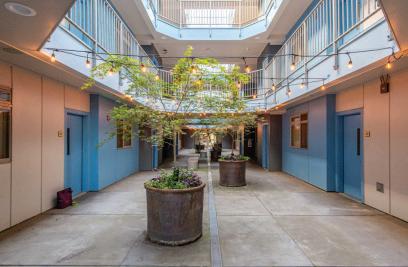
Tsunami Books is an independent














Avery Young’s comeback fuels Oregon lacrosse
After back-to-back injuries sidelined her first two seasons, the junior attacker returns with a new perspective, leadership role and passion for the game beyond the field.
By Rachel McConaghie Sports Writer
Avery Young has spent much of her collegiate career navigating challenges that most athletes hope to avoid.
A lifelong athlete, Young didn’t always know lacrosse would define her path. After starting in gymnastics, she made the switch at age 10, a decision that quickly stuck.
“I remember my first game, I was like, ‘Wait, I really like this,’” Young said. “And then a year later, I was scoring all the goals.”
That early success carried her through high school and eventually across the country, from New Jersey to Eugene, Oregon, a move she never initially envisioned.
“I always thought I was going to stay on the East Coast,” Young said. “But Oregon presented itself, and I loved it. It’s given me such a different perspective on life.”
That perspective would become even more important once her college career began. Young suffered a torn shoulder labrum her freshman year, requiring surgery. The following season, she tore her ACL. The back-to-back injuries forced her to miss significant time and reshaped how she views both the game and herself.
Now back on the field, Young is playing some of the best lacrosse of her career, but the journey back wasn’t easy.
“I just got cleared about a month ago, which is so insane,” Young said. “And just giving myself the grace of the big point of (what) it is like being able to play, and the rest of it will come as time comes.”
Her return included a moment she had envisioned long before it happened: her first goal back.
“I actually thought about that moment before (ACL) surgery,” Young said. “And so that’s been like such a motive for me. And then it happened. And in the clip, I always watch it back and I cry every time.”
Young’s role as an attacker fits naturally with her play style. Originally recruited as a midfielder, she transitioned early in her college career, a move that stuck.
“I’m much more creative than I am strategic,” Young said. “In my end of the year meeting, my freshman year, I was like, ‘you know, obviously, I was like an attacker this season, but do you want me going back to midfield?’ And they were like, ‘“No, definitely not. We love you as an attacker.’”
Beyond her on-field performance, Young has embraced a leadership role as an upperclassman. After spending much of her first two seasons sidelined, she used that time to observe and grow.
“Being injured gave me the ability to step back and think about the kind of leader I want to be,” Young said.
That leadership extends into Oregon’s team culture, which she describes as deeply rooted in connection and support.
“We’re definitely a family all the time,” Young said. “Our coaching staff does a really big job of honing in on, ‘We’re not going to be successful unless our culture’s good.’”
That sense of family has helped ease the tran sition of living far from home. While her parents and sisters remain on the East Coast, Young says her teammates have become her second family, es pecially living alongside many of them in what they call “Lax Row.”
“There’s never a time where I’m alone,” Young said. “It’s so much fun.”
Off the field, Young’s passion for sports extends beyond playing. Initially interested in sports broadcasting, her perspective has shifted toward storytelling and the broader impact of athletics.
“After college, you know taking my person al experience in sports, especially being injured through most of my career, it’s just given me such a different perspective on how important sports are and why they’re not just like, ‘Oh, games we like to play,’” Young said.
Her experiences, especially through injury, have shaped that outlook. She also credits her faith as a central part of her resilience and motivation.
“My faith and everything and the reason why I play the game,” Young said. “If I did not have my faith, there’s no way I would have ever gotten through what I’ve been through in college.”
On game days, that mindset begins early. From prayer and reflection to pregame routines and team traditions, Young approaches competition with both focus and gratitude.
“When we start playing, I feel like it’s just like, ‘Go.’ There’s not even time to think,” Young said.
As Oregon continues through a competitive Big Ten schedule, Young remains focused on growth, both individually and as part of a team with high expectations.
With multiple years of eligibility remaining, her future in the sport is still unfolding. For now, she’s focused on making the most of the present.
“In a year from now, I’ll be a completely different player than I am today,” Young said. “And just giving myself the grace of the big point of it is being able to play, and the rest of it will come as time comes.”
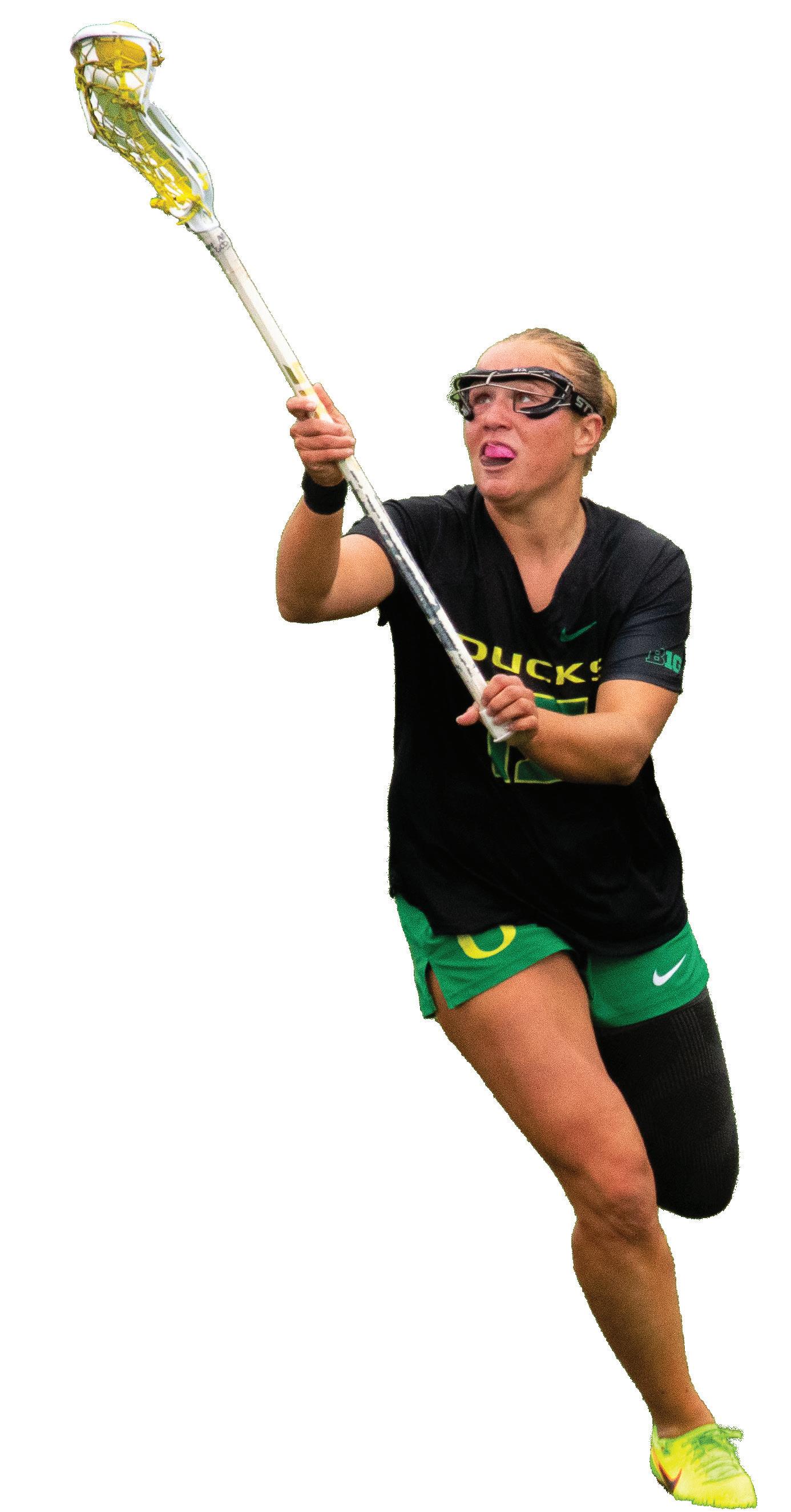
( RIGHT ) Oregon attacker Avery Young (15) scoops up the ball and advances it upfield during a game against Eastern Michigan at Pape Field in Eugene, Ore., on Feb. 22, 2026.
(Fred Hall/Emerald)



Fully-realized Will Sanford seizes Oregon baseball’s ace role
The Ducks’ bet on Sanford didn’t pay off last season, but a refined version of the sophomore right-hander is leading the Ducks’ pitching staff in 2026.
By Henry Light Sports Reporter
On April 29, 2025, Oregon baseball pitcher Will Sanford just didn’t have it.
The freshman starter lasted just two innings against Oregon State, walking five batters, allowing three runs and failing to record a strikeout. Sanford wouldn’t be seen again after that tenth start in the 2025 season, but returned to Eugene for his sophomore season penciled into Oregon’s Friday night role. The Ducks’ ace entered the season with his freshman ERA of 6.39 looming over preseason expectations, but Sanford’s 1.44 ERA across 31.1 innings through his first six starts has eliminated any lower-end projections, leaving only questions about his ceiling.
Sanford earned the third spot in Oregon’s rotation as a freshman thanks to his deceptive mechanics, which hid the ball until late in his delivery, and a low-90s fastball with unique spin that could work up to 95 mph, traits that showed clear potential in his 10 starts. That potential was clouded by command struggles, which resulted in an average of 9.2 walks per nine innings and the loss of his starting role in late April 2025.
Sanford has shown a refined version of his game through six starts as a sophomore, using an elite fastball and imposing 12-6 curveball to eclipse his freshman strikeout total of 42 in 6.2 fewer innings, with 44. When hitters do make contact, their frequent off-balance swings feed the Ducks’ strong defense.
“(Having) that ability and trust in myself to just know that my fastball can get on guys and beat guys, I think that’s something I didn’t take advantage of last year, and I was kind of timid with how I threw it,” Sanford said in preseason. “This year has been more so just being on the attack right away with it and then having that secondary to go off it, so they’re just guessing the whole time.”
Sanford rode 14.2 scoreless innings into Big Ten play after cruising through his first two starts against George Mason University and Youngstown State University in a combined 11 innings, then battling through 3.2 innings without his best command against Arizona.
The only real knock on Sanford through his excellent first six starts has been efficiency, as he has shown impressive forti tude to win long at-bats, but left room to preserve the Ducks’ bullpen better.
Oregon’s Big Ten opener brought the end of Sanford’s scoreless streak, as Purdue pushed across two runs in his five innings of work, but Sanford put together another ace-level start, striking out eight Boilermakers, in cluding a max-effort
high fastball on his 100th pitch to
hand the game over to the bullpen.
Sanford’s best start in an Oregon uniform came the next week against Indiana, as he struck out ten Hoosiers on 111 pitches over 6.2 innings, allowing two runs on three walks and three hits.
“I just thought I was mixing (pitches) well, just landing off-speeds in hitter’s counts and keeping them off balance, and that’s how I got my fastball on them,” Sanford said.
The overpowering strikeout stuff from Sanford’s last two starts once again came through against Northwestern, as he struck out eight batters and allowed one run across five innings.
Now midway through conference play, the path for Oregon’s Friday night starter is coming into view. Sanford has the stuff to achieve elite run-prevention, but his twopitch sequencing can become precarious. Increased usage of the slider or kick changeup he experimented with in the offseason could unlock another gear for the sophomore, but his results through six starts don’t warrant much urgency.
While Oregon has a lot of baseball left to play in 2026, Sanford’s first six games represent the fully-realized version of the high-ceiling freshman with projectable traits whom the Ducks bet on last season.
(BELOW)
(Charlie Mack/Emerald)



Oregon mens and womens take second-place finishes at NCAA Indoor Track and Field Championships
With strong showings from Peyton Bair, Wilma Nielsen and Liisa-Maria Lusti, both Ducks teams took home second in the NCAA Championships.
By Rowan Shea Sports Reporter
Following a successful indoor regular season, and a repeat victory in the Big Ten Indoor Championship, Oregon men’s and women’s track and field headed out to Fayetteville, Arkansas, to compete in the NCAA Indoor Track and Field Championships on Mar. 13 through Mar. 14.
The Ducks placed second in both the men’s and women’s events. The University of Arkansas scored a total of 73.5 points over the weekend, beating the Oregon men out by 33.5 points. The women scored 44 points, just nine points behind the University of Georgia.
The men only had one athlete who placed first in the championships: Peyton Bair, in the heptathlon. The Mississippi State University transfer placed first on both days of the competition, and had a personal best on day two with 6,503 points — a facility and a University of Oregon record in the event.
Bair also just received the National Field Athlete of the Year from the U.S. Track & Field and Cross Country Coaches Association.
His heptathlete counterpart, Aiden Carter, placed tenth on day one and ninth on day two. He also set a personal best, which placed him fifth-best in the Oregon record books.
The Ducks were good through the rest of the events, but not as strong as in the heptathlon. In the 800-meter, the Ducks placed fifth after James Harding’s time of 1:46.98 for a 4-point performance. Tomas Palfrey placed ninth in the mile with a time of 4:00.94, and five Oregon athletes placed in the 3000-meter — leading the pack was Simeon Birnbaum, who ran a 7:41.85 good enough for 8 points and second place.
In the field events, the Ducks sent out shot putters Kobe Lawrence and Ben
Smith. Lawrence and Smith performed well throughout the season, constantly setting personal bests and new Oregon records. They continued to do the same in the NCAA Championships as Lawrence threw 20.50-meters, a PB and first all-time in the Oregon record books and Smith threw 20.37m, a PB and second in the Ducks’ record books.
The Oregon women were runners up to the Georgia Bulldogs who scored 53 points to Oregon’s 44.
Three athletes for the women placed first in individual events: Wilma Nielsen, Aaliyah McCormick and Liisa-Maria Lusti. Then, in the distance medley relay, Juliet Cherubet, Lakely Doht-Barron, Silan Ayyildiz and Nielsen collectively ran a 10:48.76 (10 points), and placed first.
Nielsen, who had a great indoor season as she set multiple PBs and took possession of the second fastest mile time in NCAA history, placed first in the mile with a time of 4:40.06 (10 points). She was followed up by Ayyildiz and Cherubet who ran a 4:41.06 and a 4:41.51 respectively. Ayyildiz also competed in the 3000m event, where she finished 13th.
McCormick was the fourth Oregon athlete on the weekend to put their name at the top of the Oregon record books. In the 60-meter hurdles, McCormick placed first after she ran the event in just 7.86 seconds. That time gave the senior a personal best and she took the top place in Oregon history.
The indoor season came to a close, but the Ducks still have the outdoor season to look forward to. Having already started at the Oregon State University PNW Open, the first time the Ducks will be at home this season will be during the Oregon Team Invitational at Hayward Field on Apr. 17 through Apr. 18.
( ABOVE) Wilma Nielsen.
(Courtesy of Jake Weinberg)
Oregon pitcher Will Sanford (28) throws a pitch against Youngstown State on Feb. 20, 2026.