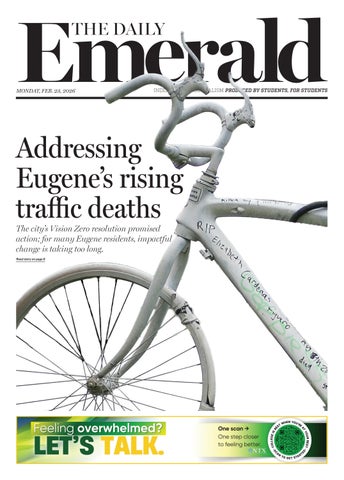
The city’s Vision Zero resolution promised action; for many Eugene residents, impactful change is taking too long.


















The city’s Vision Zero resolution promised action; for many Eugene residents, impactful change is taking too long.
EDITOR IN CHIEF
Tarek Anthony
PRINT MANAGING EDITOR
Ryan Ehrhart
DIGITAL MANAGING EDITOR
Ysabella Sosa
NEWS EDITOR
Reilly Norgren
INVESTIGATIONS EDITOR
Ana Narayan
A&C EDITOR
Claire Coit
SPORTS EDITOR
Jack Lazarus
OPINION EDITOR
Gracie Cox
PHOTO MANAGING EDITOR
Corey Hoffman
PHOTO EDITOR
Saj Sundaram
COPY CHIEF
Olivia Ellerbruch
VIDEO EDITOR
Jake Nolan
PODCAST EDITOR
Stephanie Hensley
SOCIALS EDITOR
Ysabella Sosa
VISUALS EDITOR
Noa Schwartz
DESIGN EDITOR
Adaleah Carman
DESIGNERS
Asha Mohan
Ellery Burton-Tillson
Eva Andrews
Izzy Smith
Maya Gooneratne
Nina Rose
PUBLISHER AND PRESIDENT
Eric Henry (X317) ehenry@dailyemerald.com
VP OPERATIONS
Kathy Carbone (X302) kcarbone@dailyemerald.com
DIRECTOR OF SALES & DIGITAL MARKETING
Shelly Rondestvedt (X303) srondestvedt@dailyemerald. com
CREATIVE & TECHNICAL
DIRECTOR
Anna Smith (X327) creative@dailyemerald.com
ACCOUNT EXECUTIVES
Torin Chevalier
Camcole Pereira
Ava Stephanian
Elliot Byrne
The Daily Emerald is published by Emerald Media Group, Inc., the independent nonprofit media company at the University of Oregon. Formerly the Oregon Daily Emerald, the news organization was founded in 1900. Emerald Media Group 1395 University St.,#302 Eugene, Or 97403 (541)-346-5511

The decision follows years of student organizing and will expand access to abortion care through University Health Services beginning in fall 2026.
By Sasha Love Senior News Reporter
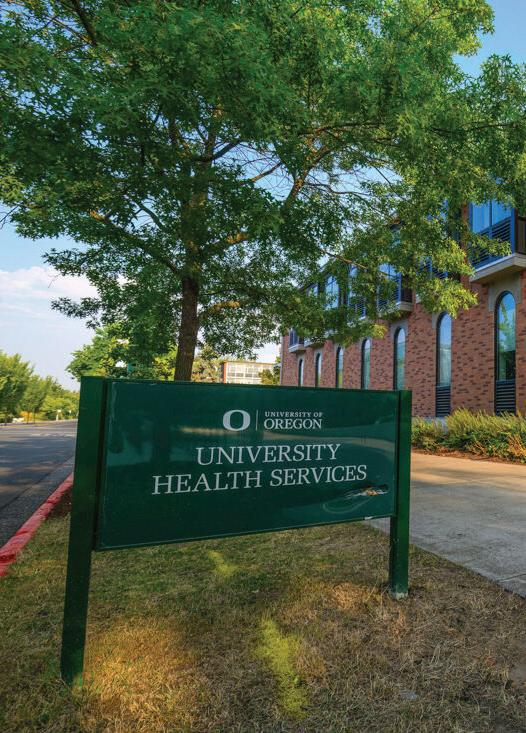
The University of Oregon has approved the use of medication abortion, often prescribed with mifepristone and misoprostol, at University Health Services starting in fall 2026, according to ASUO, the university’s student government body.
UO will become one of the first universities in Oregon to offer on-campus medication abortion.
The bill would mandate timely campus alerts about federal immigration agents and require employee training and website guidance on how to respond.
By Sasha Love Senior News Reporter
SALEM — Oregon House Bill 4079 passed the House in a 35-22 vote and now advances to the state Senate, where it must pass by March 8, when the legislative session ends. The bill declares an emergency and would take effect Sept. 30, 2026.
The bill requires each public K-12 school and higher education institution to designate one administrator and one additional staff member to notify students of federal immigration presence as quickly as possible.
A wooden footbridge near Autzen Stadium will be closed as part of larger renovations, requiring detours to access paths, dog park.
By Reilly Norgren News Editor
The Autzen Canoe Canal Footbridge will be closed for refurbishment as part of the athletics practice facility upgrades.
The wooden footbridge is the primary access to the south gate of Autzen Stadium.
The footbridge is currently closed and will remain closed until Apr. 1. The bridge will be resurfaced, aiming to create a smoother surface for walking and biking, according to an announcement from the city of Eugene.
Detours for the duration of the closure include the soft-path footbridges near Emerald Valley BMX park and Cuthbert Amphitheatre. A paved detour is available by following the signed route along MLK Boulevard and through Alton Baker Park, or go east to the bridge near the pond and follow signed detours through the park.
The Lot 8 parking lot will remain closed through August for continued improve -
ments, according to the announcement. It will be enlarged, paved and made into an all-season parking lot. During this time, the Alton Baker Dog Park will not be accessible via Lot 8. The announcement suggests dog park users use the parking lot at Alton Baker Park off Club Road, or the city parking lot near the science center, and use the bridge near Cuthbert Amphitheatre.
These renovations are part of the University of Oregon’s expansion of the Hatfield-Dowlin Complex, an indoor practice facility located next to Autzen Stadium.
According to Matt Roberts, associate vice president for community relations, the refurbished footbridge will “enhance connectivity and accessibility" for the Eugene community and ensure the space remains “welcoming and functional” year-round.
Updates on the refurbishments are available on the university’s government and community relations website.

A juvenile suspect is in custody in connection with the Feb. 17 shooting located near Marche Chase Drive and Kinsrow Avenue that left a 14-year-old boy with life-threatening injuries.
By Reilly Norgren News Editor
At around 10 p.m. Feb. 17, calls reported shots fired near Marche Chase Drive, near Autzen Stadium, with people and vehicles fleeing the scene.
While Eugene Police Department officers were responding, an individual was reported injured in a parking lot in the 330 block of S. Garden Way. Officers provided immediate care until the Eugene Springfield Fire Department transported the victim to a hospital.
The victim, a 14-year-old male, sustained life-threatening injuries, according to an EPD news release.
A juvenile suspect was arrested Friday and charged with first-degree assault, no further information is being released due to the suspects age.
The victim has been identified by his family in a GoFundMe campaign as Major Clemens. According to the fundraiser, Clemens was shot in the head and is in a medically induced coma.
The family is seeking to raise $30,000 to cover related expenses and had raised more than $17,900 as of Friday afternoon. According to the release, the shooting was not a “random” act of violence but occurred between a “group of individuals.”
EPD’s Violent Crimes Unit and Forensic Evidence Unit responded to the scene. The investigation remains ongoing.
Rolled out in November, UO’s new program is working toward reducing waste and energy in research laboratories.
By Reilly Norgren News Editor
The University of Oregon Sustainable Labs Program was rolled out in November 2025 through a partnership between the Office of Sustainability and Environmental Health and Safety.
The program hopes to find ways to lower energy costs, water usage and waste in UO research labs. According to Sarah Stoeckl, associate director at the Office of Sustainability, laboratory buildings are the most energy-intensive on campus.
Stoeckl said that sustainable lab programs are “fairly common” at universities across the country, but that UO needed its own interpretation.
“It’s long been on our office’s wish list,” Stoeckl said. “We realized that UO was going to need its own homegrown version of a sustainable labs program that fit our community, our researchers and their needs.”
EHS was a “crucial partner” during development for the program Stoeckl said. This was primarily because of their existing channels of communication and close relationship to research labs, which the sustainability office didn’t have.
After the program was initially designed, a pilot program was launched last academic year with about four labs participating.
“We did a pilot, testing out a couple pieces of the program, took the information from that over the summer, completely revamped it and what has ultimately emerged is a program based on several different focus areas,” Stoeckl said.
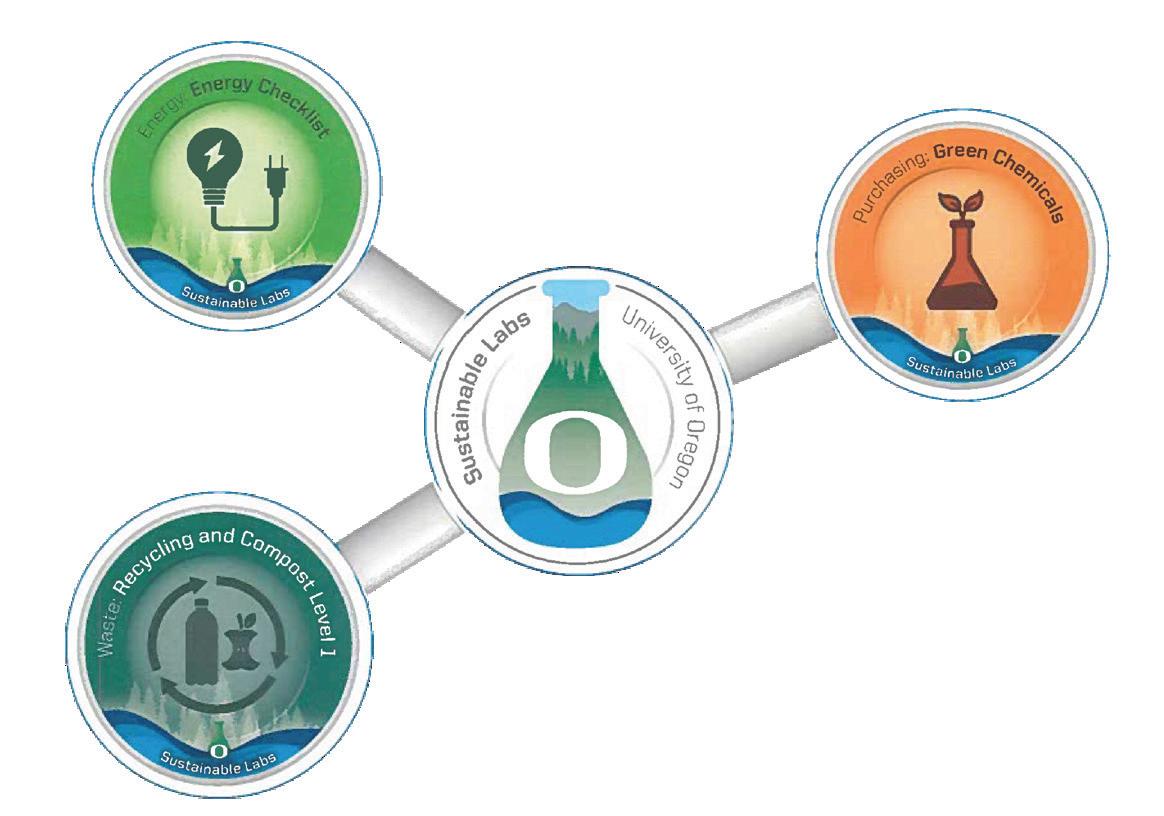
The focus areas are recycling waste, energy and water, purchas-
ing, travel and innovation. Innovation accounts for things labs are doing to increase their sustainability that goes beyond what is outlined in the program.
Under each focus area are badges that become more focused the more you earn. Stoeckl said the goal for the program was to be “choose your own adventure,” and that there is no set process that a lab must go through.
After the pilot program last year, badges were simplified to make them more achievable and more rigorous. The badge framework and making each badge a smaller task leading to a bigger overall sustainable goal is “unique to UO’s program,” according to Stoeckl.
An example of what a lab can do to save on energy waste is to lower the amount of air being constantly sucked out by a fume hood when it’s not in use. Stoeckl said that lab workers can close a hood all the way or almost all the way in order to use less energy.
More examples is ensuring samples are defrosted and organized in ultra-low temperature freezers to optimize their efficiency, and to post the newest recycling guidelines from the Zero Waste Program for hazardous waste, lab waste and recycling around a lab.
“The program is open to any lab on campus to be involved in,” Stoeckl said. “Underscoring that, how do we empower our lab researchers and give them opportunities to get involved, rather than forcing them into boxes that may or may not work for them, may not work for their research.”
Currently, there is one lab that is still participating from the initial pilot program, and three to four that are actively pursuing badges.
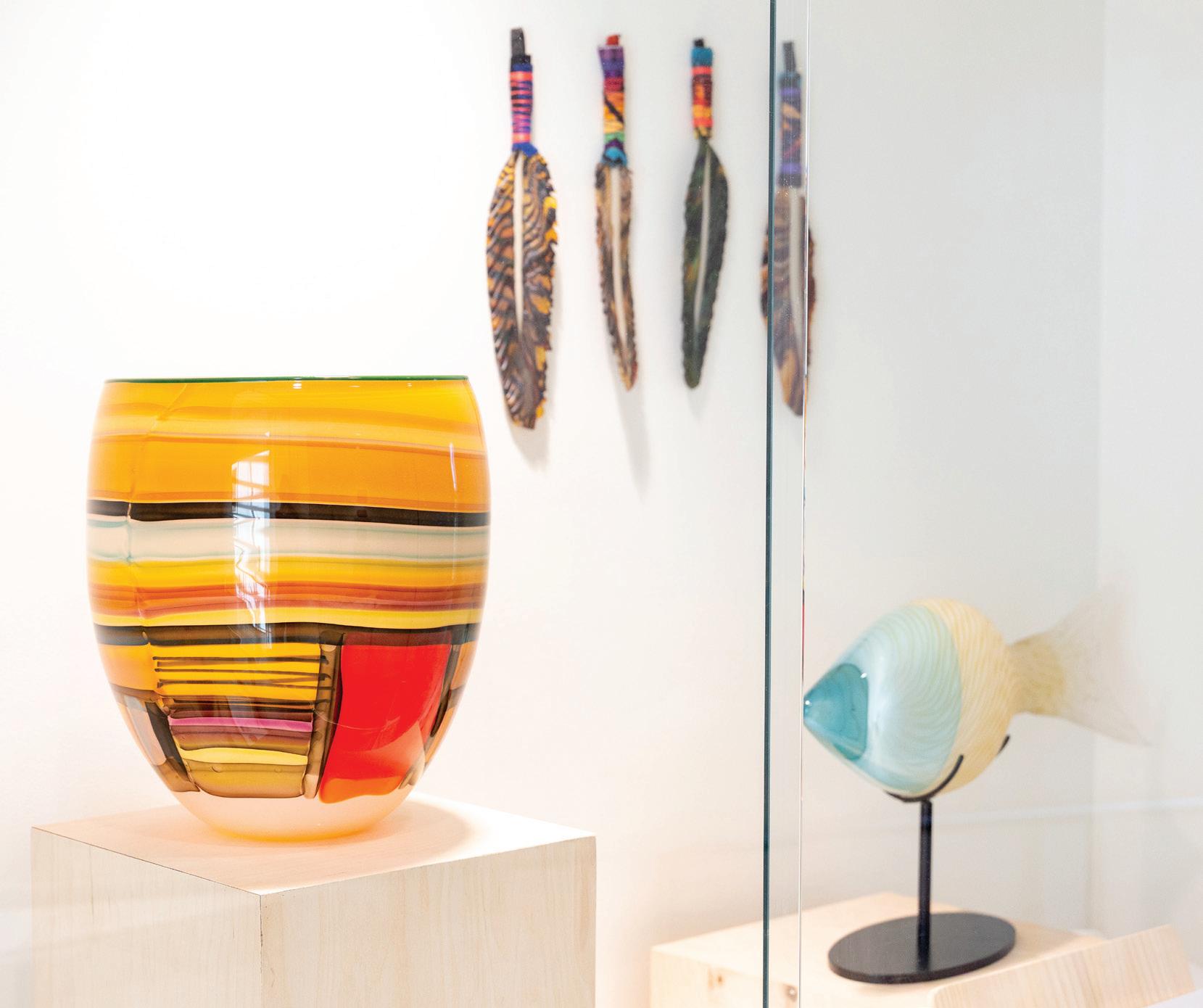
Friday’s glass works, most inspired by his Lummi Nation heritage, are currently being displayed in the Erb Memorial Union.
By Katarina Ilic News Reporter
Skagit Valley-based artist Dan Friday currently holds an exhibition displaying his glass works on the second floor of the Erb Memorial Union.
Friday’s exhibition at the University of Oregon was sparked by his connection with Samuel Decker, the glass and fabrication coordinator at the University Craft Center. According to Decker, he and Friday have known each other since the late 90s, when they began working together in Seattle.
“I’ve been friends with him for 30 years … then when I moved away, down here to Eugene, we stayed in contact and would watch each other’s progress… and when I finally got a position where I was able to invite a visiting artist, he was one of the first ones I chose,” Decker said.
Friday’s love for art started long before working with Decker. Friday said his passion came from growing up in an artistic family.
“I was raised as an artist in an artistic family, went to alternative schooling and grew up without a TV, and that really forced us to sort of be creative people,” Friday said.
It wasn’t until the age of 20 that Friday found his passion for glass blowing while working as a mechanic.
“I was in my tow truck and stopped by a glass studio and saw glass blowing up close for the first time… when I saw it a light bulb went off in my head and I just realized it was a way to work with my hands and be creative, counter to working on cars where you’re just working on people’s problems on the worst day of their week,” Friday said.
Over the years, Friday’s work has been displayed in various places, such as Chicago’s Shedd Aquar-
ium and even on the Netflix show “Blown Away.” While glass is the primary medium Friday works with, he has also been known to work with other forms, such as bronze.
“I’ve been working in new mediums and trying new things (and) trying new subject matter, and sometimes you really have to let go and let inspiration sort of find you,” Friday said. “It’s one of those things that you don’t always choose when it’s gonna happen, but I just think keeping your eyes peeled for winds that might come along like a thread that you need to pull on a little more.”
A lot of Friday’s work has been inspired by his Lummi background, the third-largest Indigenous tribe in the state of Washington and a part of the Coast Salish nations. Friday’s connection to the Lummi tribe can be seen in the various totems displayed throughout his exhibit.
“Telling that narrative of Coast Salish people through the artifacts and history and stories, that brings me a lot of pleasure, like an introspective journey,” Friday said.
Friday’s exhibition will be displayed through the end of March.
“I just want him to be able to explain how and where he came from and his upbringing, and I want students and people of hard places to know that the sky is the limit,” Decker said.
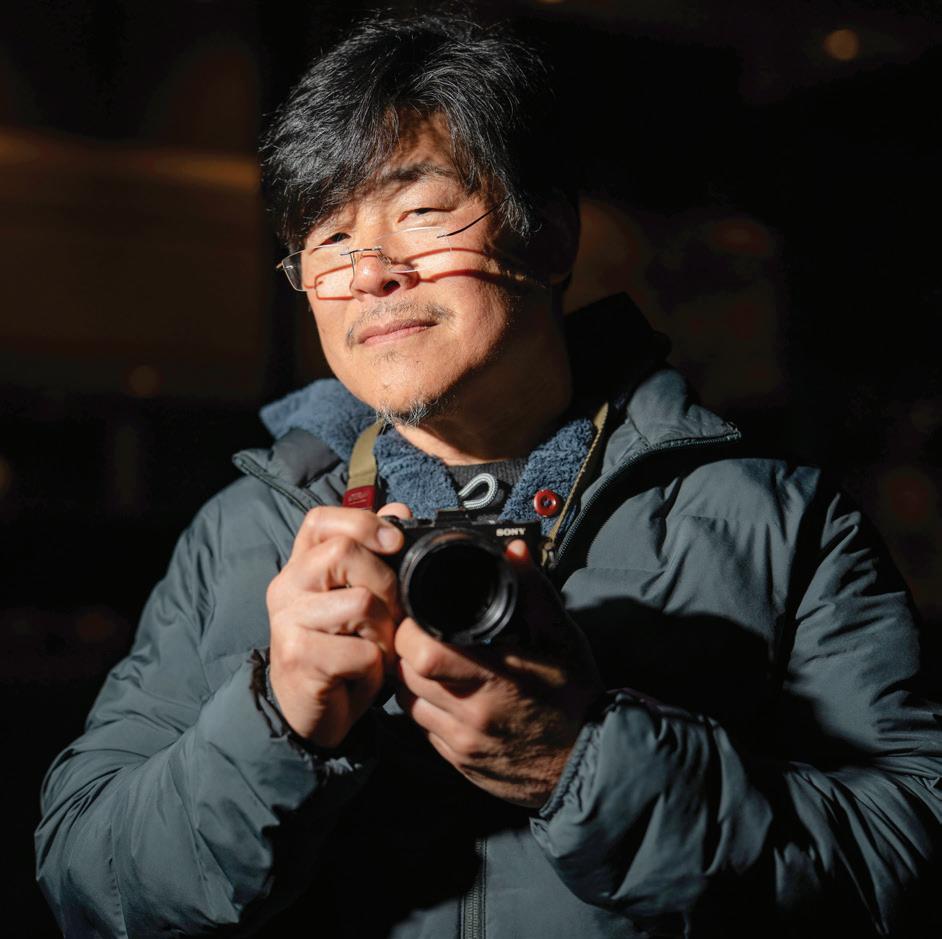
( ABOVE) Dan Friday is a Lummi Nation glass artist who is best known for drawing from themes and images of his coast Salish heritage. Friday is currently hosting an exhibition on the second floor of the EMU near the McMillan Gallery on the University of Oregon campus in Eugene, Ore. (Anna Liv Myklebust/ Emerald)










The FBI has asked several people present at anti-ICE protests to identify individuals accused of damaging windows at the Eugene Federal Building.
By Corey Hoffman Senior News Reporter
In the wake of anti-ICE protests, the FBI and the Bureau of Alcohol, Tobacco and Firearms are seeking information about broken windows at the Eugene Federal Building, including by asking Eugene residents to identify those involved.
Video footage obtained by The Daily Emerald on Feb. 1 appears to show a window being broken by an individual inside the Eugene Federal Building, while footage released by the FBI on Feb. 13 appears to show the window being broken by an individual outside the building.
Robert Scherle, an independent photographer, was questioned by the FBI after the Jan. 30 protests and refused to turn over any photos or information.
Scherle said that the FBI asked for photographs of protesters who who allegedly destroyed property.
“They said ‘could you help us try and identify some of these protesters who damaged property?’ I just said, ‘you know, it was very smoky. I had a gas mask,’” Scherle said.
An 18-year-old student who wished to remain anonymous out of fear of retaliation was also questioned by the FBI following their participation in protests at the federal building.
“(The FBI and the ATF) showed me their identification
and said right off the bat, ‘you’re not in any trouble, we’re just here to see if we can ask you some questions about the protest,’” the student said.
They said the conversations felt more “social than interrogative,” but also felt that agents were “jumping around a point or tiptoeing around something.”
“I understand that I was not doing anything illegal. All the things I was doing at the protest were things that everyone else was doing. None of what I was doing would implicate me in any sort of case,” they said.
In a statement to The Emerald, the Portland FBI field office said that the FBI is looking to speak with members of the public who were seen documenting the protests, with the goal of identifying “rioters who smashed windows and breached the federal building.”
“Should an interviewee identify themselves as a member of the media and produce identification or credentials, we have processes in place to request information that adheres to the Constitutional right ensuring freedom of the press,” the statement said.
The student said they are unsure why the FBI came to speak to them but they are not surprised that they did.
“The federal building has cameras all over and I was covered up, but there’s all sorts of tactics and software that I’m sure they use to identify people,” they said.
After others their age were also questioned, the student said they felt like the FBI and ATF were specially questioning younger protesters.
“I just think it’s really telling that they are going after some of the youngest people in that crowd and I wouldn’t honestly be shocked if they are going after minors and not giving them the correct process when they’re contacted,” they said.
The FBI and the ATF left both the student and Scherle
business cards and told them to contact them if they have any more information.
“I honestly think this shows a little bit of scaredness on their end or at least a little bit of ‘what are we going to do?’ We’re stronger together and the people being affected by the FBI’s investigation right now, we’re sticking together, we’re making sure each other are safe,” the student said.

By Rowan Shea Sports Writer
In 1941, Robert McCloskey wrote “Make Way for Ducklings” about a family of mallards navigating the crowded streets of Boston. Eighty-five years later, another family of ducks in Boston made their own way, writing their names into the NCAA and Oregon record books at the Boston University David Hemery Valentine Invitational.
It was a chaotic weekend for Ducks track and field as the program was strewn across the country. Oregon athletes competed across three states and took home school records in each.
In Boston, Wilma Nielsen, Juliet Cherubet, Diana Cherotich, Tomas Palfrey and Benjamin Balazs all had stellar performances. Nielsen continued to improve her mile time, Cherubet was right alongside her, Cherotich blew past everyone in her competition and Palfrey and Balazs both moved up in the Oregon books.
Nielsen ran a personal-best mile time of 4:21.04 on the second day of the invitational. Nielsen’s time is now the fastest in University of Oregon history, streaking past Silan Ayyildiz’s time of 4:23.46 from the 2025 edition of the BU Valentine Invitational. Shockingly, though Nielsen set a new personal best, school record and surpassed Ayyildiz, she wasn’t the fastest on the day. That title went to Elle St. Pierre, who ran a world-leading time of 4:17.83. Nielsen still ran fast enough to secure second in the NCAA record book. Cherubet joined Nielsen in the all-time Oregon performers in the mile. In the second running of the mile, Cherubet shaved off just under five seconds from her time of 4:32.03 at the Razorback Invitational and ran a 4:27.46. She took over as the third fastest mile in Oregon women’s track and field history.
Cherotich shaved about three seconds off her best 5,000-meter time as she dominated the women’s event. Cherotich ran a personal best of 15:13:38 (down from 15:16.72) and put herself firmly at the top of Oregon’s record book.
Palfrey set a school record too. He ran a 7:39.03 in the men’s 30,000-meter, setting an Oregon record. Just under three-tenths of a second later, Balazs ran a personal best. He crossed the line at 7:39.31, taking over the No. 2 spot in the Oregon record book. Just over 2,000 miles away in Lubbock, Texas, Kobe Lawrence and Ben Smith stole the show in the shot put event at the Jarvis Scott Invitational.
Lawrence threw an Oregon record and personal best 20.16 meters. The redshirt sophomore passed Ben Smith’s 19.82m throw from the Razorback Invitational. Smith placed second in the invitational with a 19.08m throw.
At the Don Kirby Elite Invitational in Albuquerque, New Mexico, the Ducks took first in the men’s and women’s 60-meter and first in the women’s 60-meter hurdles, respectively.
Grant Valley set a personal best of 6.71 in the men’s 60m. He was joined by Jaelon Barbarin who placed third with a personal best of 6.81.
Brazil Neal set a personal best in the women’s 60m at 7.37. Amirah Shaheed took third place, also with a personal best 7.38.
In the 60m hurdles, Aaliyah McCormick set a season best 7.95.
Big Ten Indoor Championships start at the end of February in Indianapolis. The games will span the last three days of the month, Feb. 26-28. The NCAA Indoor Championships will take place Mar. 13-14.
By Sasha Love Senior News Reporter
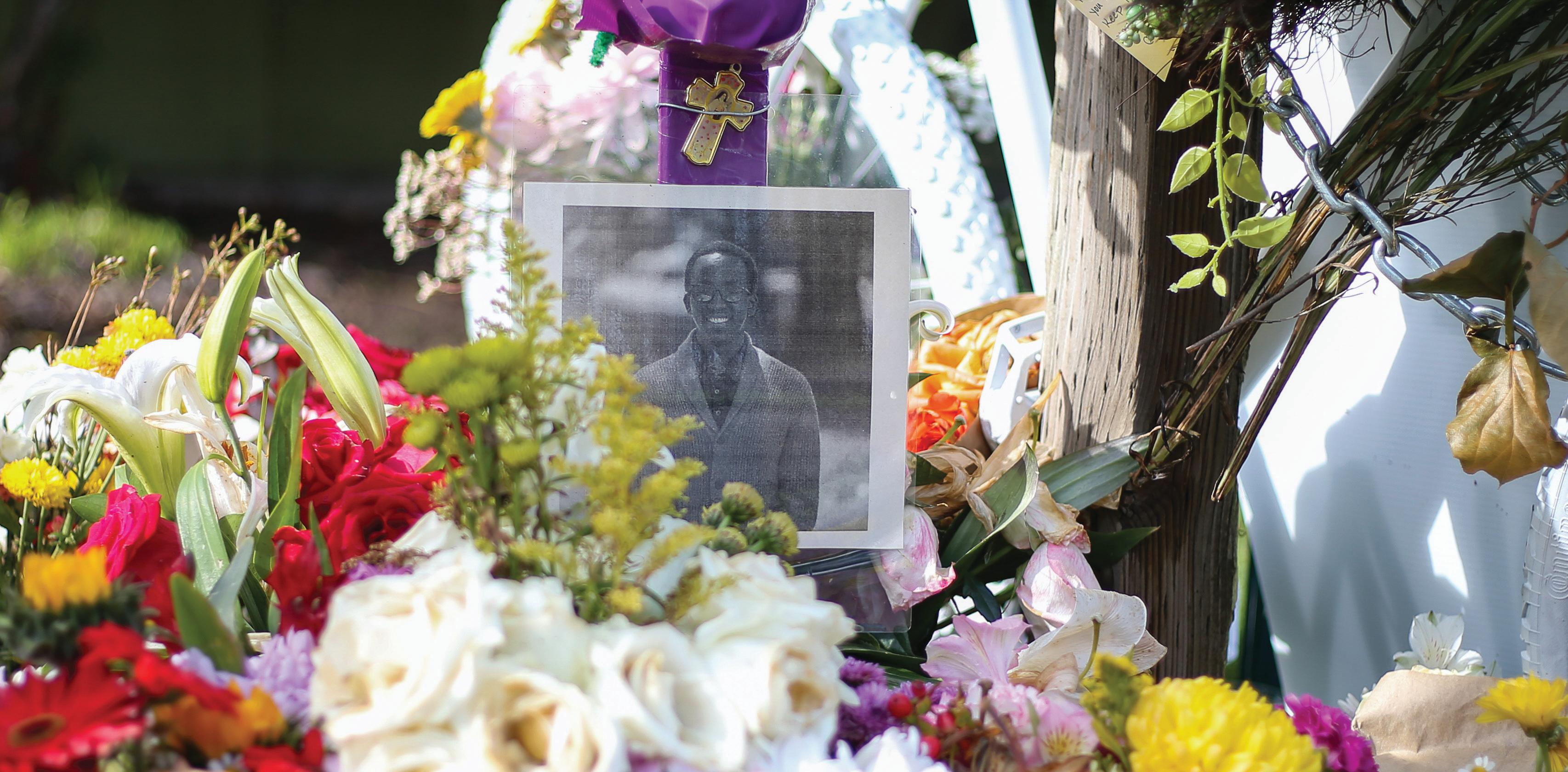
Rob Zako, executive director of Better Eugene-Springfield Transportation, walks down the road where bicyclist and University of Oregon Ph.D. student Erick Njue was hit and killed less than a month ago while crossing Patterson Street to the Spencer View Apartments.
“How many traffic deaths are acceptable?” Zako asks. “What if it was your family or your best friend, how many would be acceptable?”
In 2015, the city of Eugene asked the same question, leading to its Vision Zero resolution.
Vision Zero, a goal shared by communities across the country, was adopted by the city with the intent to end traffic collisions that result in death while also encouraging sustainable transportation to meet climate goals.
But 10 years in, fatal crashes have steadily increased. From 2022-2024, 132% more people died on Eugene roads compared to the previous three years.
For the UO community and beyond, the recent deaths of Njue and fellow student Elizabeth Cardenas Figueroa, in August 2025, turned these statistics into human grief and calls to action.
“Today it happened at Patterson Street, tomorrow it will happen at another street — we don’t know where,” Daniel Appiah Gyekye, an international graduate student and friend of Njue, said.
Appiah Gyekye and fellow community members stressed the “urgency” of safer street design during a packed Feb. 12 community forum on transportation co-supported by BEST. During the forum, held at Roosevelt Middle School, several residents expressed that their lives as a bicyclist or pedestrian feel constantly at risk.
“We need to do more because I don’t know how many people are going to be injured or die before we change things,” Ericka Thessen said.
Thessen is a physical therapist at PeaceHealth RiverBend Hospital and her job partly consists of helping patients recover after collisions.
There is no crosswalk at the entrance to Spencer View Apartments, where Njue lived, and residents of the apartments coming from Alder Street must cross what Zako described as a two lane, one-way “racetrack” without any signage and a potentially blocked sightline because of parked cars.
“If I’m biking, I cross where Erick was crossing because there is not a safe option,” UO graduate student Adrienne Pinsoneault said. Pinsoneault lives in the same apartment complex as Njue, and takes the same route to campus.
One of the city’s key recommendations in its Vision Zero plan is to slow traffic. The most recent Eugene fatal crash report found that speeding was a factor in more than onethird of fatal collisions. According to a search warrant filed in Lane County Circuit Court, the driver who hit Njue was traveling on Patterson Street at an estimated 50 mph, while the street is posted at 25 mph.
Despite Vision Zero’s speed reduction recommendation, in an interview with The Daily Emerald about two weeks after the crash, the city’s Public Works Department questioned whether speed reduction on Patterson Street is “appropriate” on the high-capacity arterial street.
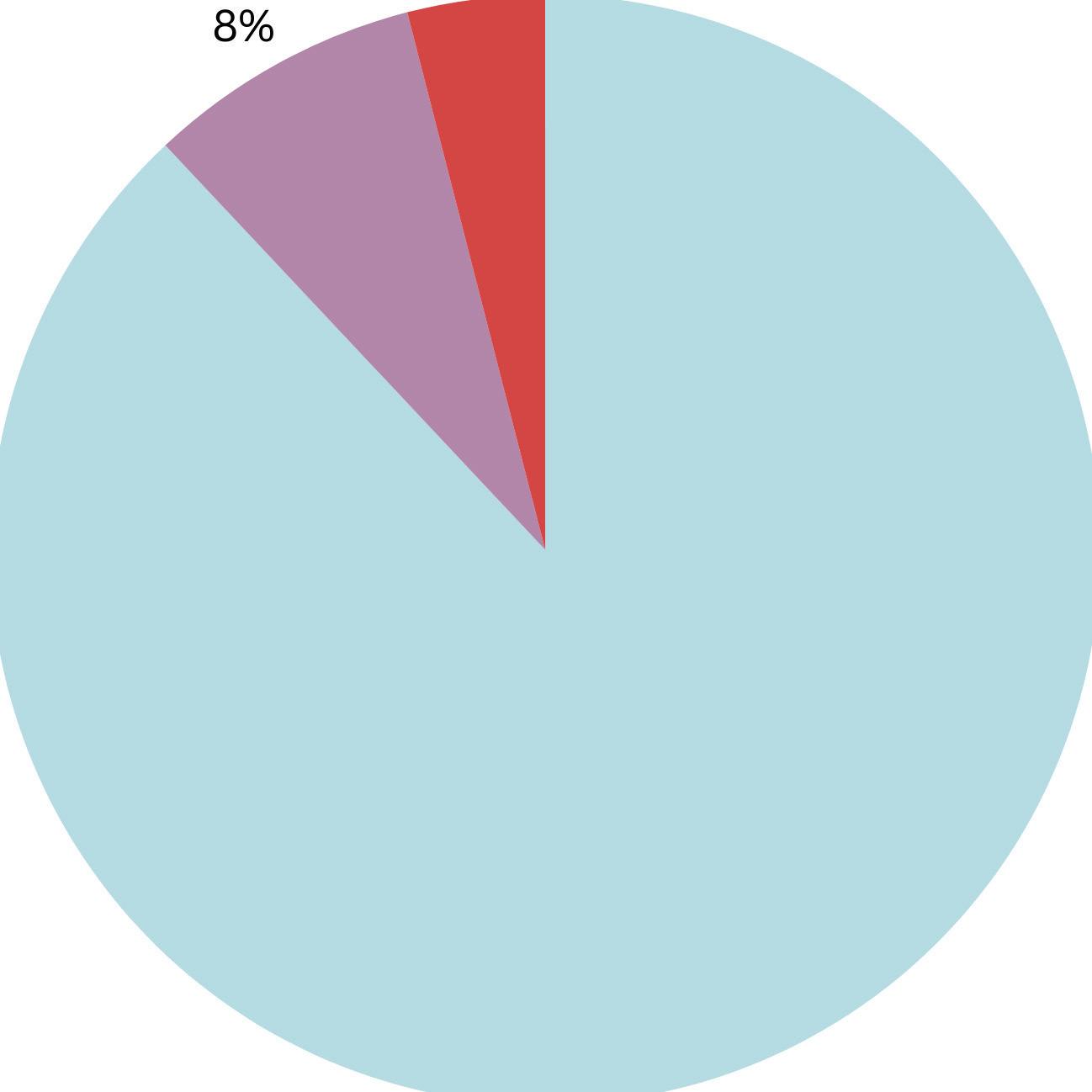
Streets are generally designated as “arterial” if they have higher traffic volume and higher speed limits. These arterial roads, which include Patterson Street, were responsible for 88% of fatal crashes from 2022-2024.
Speaking about speeding on Patterson Street, Marion Barnes, public affairs manager for the city’s Public Works Department, cited a small study conducted over three days in late January. The study found that 449 of 14,816 vehicles — about 3% — traveling through the intersection of Patterson Street and 22nd Avenue were going more than 35 mph, 10 mph over the posted limit.
Many residents expressed fear of crossing the street, and two employees of the Co-op Family Center at Spencer View Apartments said their cars have been damaged while parking along Patterson Street.
“My mirror has been broken a couple times because both
it is narrow but also not visible and it’s straight so you can just go fast,” Heida Sigurdardottir interim co-director of the center, said.
Attendees of the transportation forum also made slowing down traffic a major focus. They suggested signs, paint and posts as “quick and easy” ways the city could reduce traffic deaths and injuries on Patterson Street, but longer-term solutions like street re-design were also discussed.
UO Professor of City and Regional Planning Marc Schlossberg was a key presenter at the transportation forum and focused on these street re-design solutions. Schlossberg became a city planner after he was hit by a car while biking his children to preschool over two decades ago. Since then, he has been advocating for safer and more sustainable transportation and writing a book series titled “Rethinking Streets.”
His goal is to increase sustainable transportation safety, with a strong focus on bikes. Schlossberg uses examples of biking infrastructure in cities across the United States — from twoway protected bike lanes in Tampa, Fla. to raised bike lanes in Jackson, Wyo. — as a “recipe book” for Eugene’s layout.
“There’s a lot of experiments happening in the U.S. that we can learn from. A lot of communities have taken risks to try something new,” Schlossberg said. “Regular examples, normal cities, the world didn’t end and hopefully other communities can look like that.”
The examples in Schlossberg’s book, which he said could be applied to Patterson Street and Eugene at large, focus on road design principles that increase visual cues for drivers to slow down, such as narrowing the street and adding protected bike lanes that drivers cannot ignore as easily as posted speed limit signs.
“If the street design forces us to go the desired speed for the context, then we will go the desired speed for the context because we feel like that’s appropriate,” Schlossberg said.
Adding protected bike lanes on East 13th Avenue was a project UO students took on in the early 2010s. From 2007 until the project’s completion, there were six reported bike and pedestrian crashes each year on the street. David Minor, a 27-year-old man, and Vaclav Hajek, a 10-year-old boy, were both killed on the road regularly used by student commuters.
Since the project, there have been no fatal or major-injury traffic collisions on the protected portion of East 13th Avenue. The same group who completed the project on East 13th Avenue, LiveMove, is also currently working to make Patterson Street safer, and developing proactive measures to determine which Eugene streets are unsafe.
Cat Colson and Hannah Norris, members of LiveMove, are starting a “risk and preventative mapping project” to allow pedestrians and cyclists to report roads, bike lanes and walkways where they feel unsafe, uncomfortable or have experienced minor traffic collisions they don’t want to report to the police. The group hopes the study will highlight roads that are high-risk but are not well-tracked.
“It’s a bit of pedestrian equity because cyclists will get representation because the thing is if you’re in an auto collision, because of insurance and all of that, you report it because there is so much money tied up in the car,” Norris said. “So it (the project) is bringing awareness to the reality of what cyclists are facing in terms of unsafe conditions.”
proactive plans on which streets to improve.
“We shouldn’t be injured or die to be taken seriously,” Colson said.
Schlossberg said the city often gets “stuck in the trap” that things can only change if there is crash data to support the changes.
“There is so much of the community where there is no data because no one’s biking. Does that mean it’s safe? No, it means people are too afraid to go there,” Schlossberg said. “Lack of crash data does not mean a street is safe.”
In response, the city’s Public Works Department said that while it appreciates hearing from the community, data will remain the primary driver in re-design.
“We have to look at data to drive our decisions,” Barnes said. “We will always be data-driven because that is how government works.”
Eugene Mayor Kaarin Knudson also presented at the transportation forum.
“Crash data is going to influence some decisions about where investments go because if you know that something is unsafe and you could stop it by redesigning something in that area, of course you would want to do that,” Knudson said.
Knudson said the city is applying for an emergency grant through Eugene Springfield Safe Routes to School to improve safety on Patterson Street between East 19th Avenue and East 24th Avenue, possibly by reducing traffic flow to one lane, as Schlossberg suggested.
“My goal is that we will see significant change by the summer,” Knudson said. “The goal,” Knudson said, “is significant change by the summer.”
Several community members at the forum, including Appiah Gyekye, said they would not wait for grants to prioritize “human-centered road construction.”
“If we have students coming on board we believe we can make a change as soon as possible,” Appiah Gyekye said. “We need a collective action to make sure this happens as soon as possible and voice out what we want for the betterment of the community.”
Community members at the forum also considered more education surrounding traffic laws.
Students voiced their concerns about freshman traveling to Eugene from across the world to UO with limited background knowledge on the transportation network and laws.
“If UO Transportation Services could re-educate students coming to Eugene, some of these drivers in town would know to take care on certain roads,” Appiah Gyekye said.
Students also mentioned confusion for both cyclists and drivers when bike lanes change or abruptly end.
“I want to know what the rules are everywhere but it changes from street to street,” UO graduate student Michelle Fieser said.
*Data
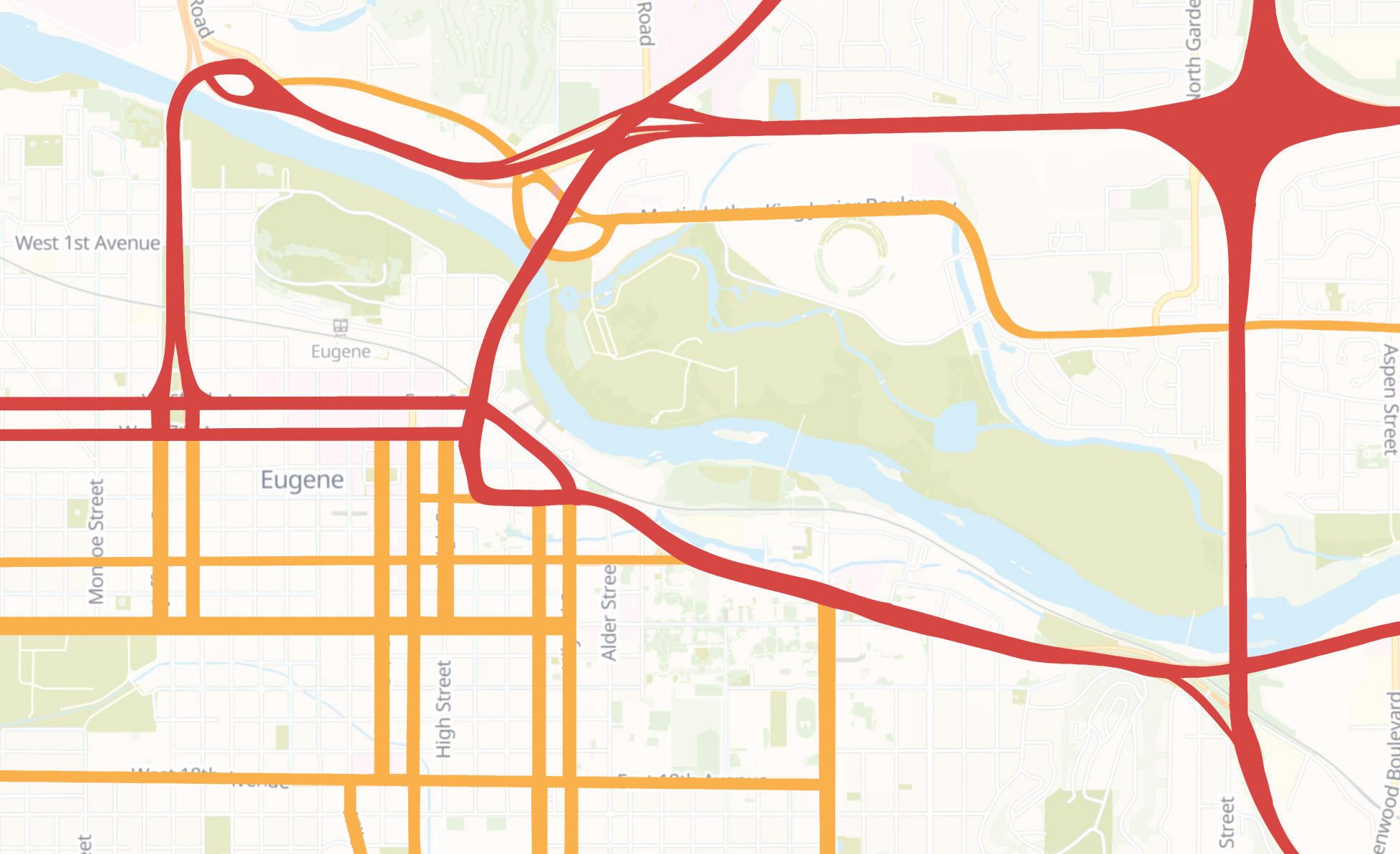
Currently, in its Vision Zero reports, the city uses postcrash data to determine whether a road needs to be fixed. The data only designates intersections as “high crash” after three fatalities, six minor injuries or a combined weighted total have been reported.
LiveMove hopes the city can use this data to form more
The planners at the meeting said ordinary residents should not have to be involved with city planning in order to feel safe on their streets.
“It is enough to simply demand and then support the change that happens,” Schlossberg said.
Students in LiveMove rely on community input to know what to focus on and talk to the city about, but said that ordinary residents should only have to be involved with city planning as much as they want to be.
“People shouldn’t have to worry about whether they’re going to make it home from campus or not,” Colson said. “People shouldn’t have to care that much to just be safe.”
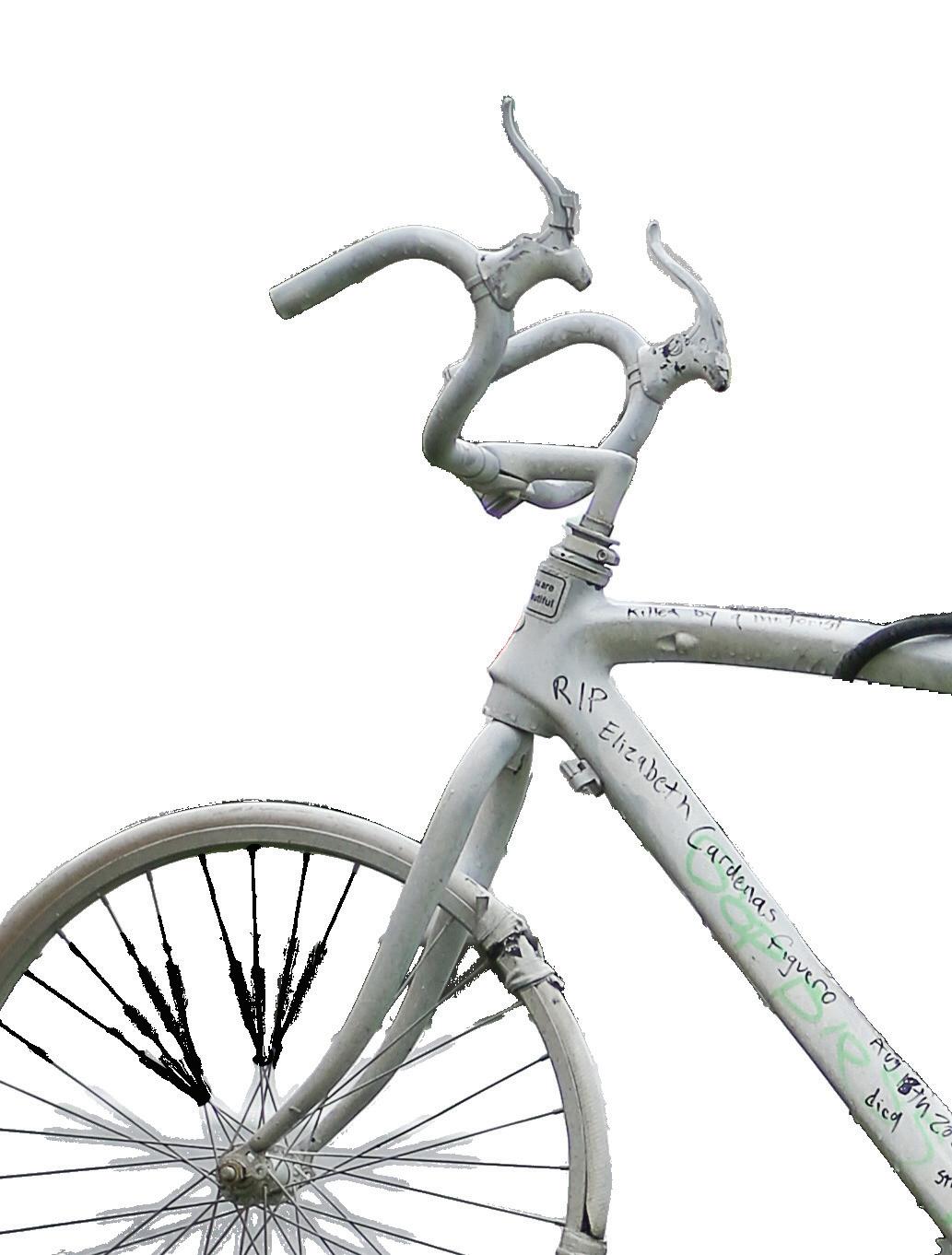
(ON THE COVER) A “Ghost Bike” commemorates the loss of cyclist Elizabeth Figueroa on the corner of 8th Ave. and Hilyard Street in Eugene, Ore. on Feb. 16.
( LEFT ) Flowers in remembrance of Erick Njue, a Ph.D. student killed in a cyclist-motorist crash, sit around the “Ghost Bike” placed in his memory on the corner of 22nd Ave. and Patterson Street in Eugene, Ore. on Feb. 17.
(Tyler Graham/Emerald)
Most heavily used streets in the street system. Four or more lanes.
Provide intra-city connectivity. Two or three lanes.
*Data sourced from City of Eugene Map
Seven trails are already under construction at Suzanne Arlie Park, with four more awaiting $60,000 in community fundraising through the Finish the Ride initiative.
By Gigi Roddick Arts & Culture Writer
At Suzanne Arlie Park in southeast Eugene, construction is underway to create a premiere mountain bike destination. Ground has already been broken on seven trails, which are expected to open by Thanksgiving 2026. An additional four trails and three hubs — gathering spots for riders featuring benches and trail maps — await further funding.
Finish the Ride is a Eugene Parks Foundation initiative aiming to raise the additional $60,000 needed to complete the “Final Four” through private donations. The city of Eugene is already investing approximately $4 million into the project.
Shouldering the cost opens the door for sizable economic opportunity, according to Ariel Lissman, executive director of the Eugene Parks Foundation.
“15% of Oregonians are participating in off-road biking. That is about 120,000 people in Oregon that look for mountain bike destinations, and we want them to stop
here,” Lissman said. “Imagine what it will do to our local economy. Imagine what it will do to our local businesses, to the mountain bike industry, to our restaurants, coffee shops, breweries and beyond.”
One of the Eugene Parks Board’s goals is to “show that parks can boost the economy, increase income, increase investment, (and) attract and retain talented workforces,” Lissman said.
The future of Suzanne Arlie Park wasn’t always so prosperous — it was originally purchased by the city of Eugene as a greenspace for bipedal pastimes like hiking and running. But community feedback showed that people wanted something different: mountain bike trails.
Hobbyists and diehards wanted something local, and complained of long drives to reach trails outside of Eugene.
“We say ‘Enough of that. We should have a functional experience here, in our community,’” Lissman said. “We deserve exceptional parks in Eugene.”
Lissman references the many health, economic, environmental, social and emotional benefits that extraordinary park systems provide. Unfortunately, he notes, it’s not always easy to provide access to these kinds of spaces.
“What happens all the time, everywhere around the world — not just a Eugene story — is that there’s an understanding that there will never, never be enough public funding for parks and recreation,” Lissman said. “There’s never enough public funding available to provide what we need in the community.”
As Finish the Ride continues its search for donors, Lissman is hopeful that the community will rally behind the vision of a premiere, countywide mountain biking destination in Eugene’s backyard.
“We just need to tap on the shoulders and say, ‘Let’s do it together,’” Lissman said. “Let’s finish the ride.”
Shakespeare’s “Much Ado about Nothing” comes alive in the newly reopened Robinson Theatre.
By Amelia Fiore Arts & Culture Writer
The lights dim, and a messenger emerges from an unseen entrance, delivering news of the Prince of Arragon’s return from war to the Household of Leonato as he weaves through the audience. The eyes of people in the seats follow him to the stage, captivated. This is a common thread throughout the rest of the show; the viewers are not separate from the story, rather, nameless onlookers to our protagonists.
And so, UO Theatre’s production of “Much Ado About Nothing” begins. The rest of the ensemble gathers on stage, and we are introduced to Leonato (Harvey Parsons), his daughter, Hero (Loralee Van Londen) and his niece, Beatrice (Bleu Jones). They meet Prince Don Pedro (Dylan Podrabsky), his illegitimate brother, Don John (Mason Bruderer) and his companions, Balthasar (Aiden Lopez), Claudio (Gavin Blackwell) and Benedick (Trevor Tarantino).
The cast is large, and the stage oftentimes feels crowded, but each plays a substantial role in propelling the layered story forward — or just providing a snappy one-liner.
The chemistry between the sharp-witted Beatrice and staunch bachelor Benedick is immediately recognizable, and it
is quickly clear that their story will follow the enemies-to-lovers trope. As for Claudio, his initial affections for Beatrice subside when he meets Hero, and they engage shortly after.
Both Benedick and Beatrice’s companions believe that the two should be together, so they enact a plan to foster a romance by telling each that the other is desperately in love with them. It works fairly quickly. However, Don John’s opposing scheme to break up Hero and Claudio also succeeds, and Claudio accuses her of infidelity before their marriage.
Toward the end, Don John’s henchmen admit to their lie, and Hero and Claudio finally marry. Benedick and Beatrice are still in love, even after learning of their friends’ plan, and the cast shares a lively dance to end the show.
Don John seems to be the least menacing villain out of all Shakespearean stories; his motives simply boil down to his bastardness and satisfaction with the role of antagonist. Despite his flat rationale, Bruderer does a brilliant job of illuminating his wickedness, albeit in a silly cartoon villain sort of way.
Beatrice commands the stage each time she takes it. Jones portrays her with a stubborn, often aloof, attitude, which makes her deeply enjoyable to watch and laugh with. Her
(Courtesy of Ella Moriarty)

budding relationship with Benedick is sometimes awkward and always combative — a romance that keeps the audience on their toes.
Ava Bousquet, a sophomore, hadn’t seen a show produced by UO Theatre before, and she thoroughly enjoyed this one’s liveliness. “I think you have to (be energetic) if you’re doing Shakespeare. I mean, I definitely don’t know the language, but I felt the plot was communicated,” they said.
One standout moment arrived about a quarter into the show, when Benedick eavesdrops on the Prince, Leonardo and Claudio as they enact their plan. His sneaking through the audience had everyone turning their heads back and forth, excited to watch his dramatic reactions up close. His liveliness during his few following monologues acted as a conversation between himself and the audience, as if he were asking our advice one-on-one to resolve his confusing romantic endeavors.
“I really like how witty Shakespeare was, and I think the actors and actresses did very well with their acting, and the lighting was phenomenal,” Kristin Koch, a UO event coordinator, said. “Jordan (Hamlin, lighting designer) did a great job.”
The technical aspect of the production did an excellent job communicating the dim, soft environment of Messina, Italy. The costumes, managed by Heather Bair and designed by Jeanette De Jong, transformed the actors into English Renaissance-era aristocrats. The scenic design, done by Mary Jungels Goodyear, was nothing short of lovely, and the details built into the garden, house of Leonato and surrounding set pieces did not go unappreciated.
The live guitarists (Akash Dhruva and Beau Jungels), who played on opposite sides of the stage whenever a main character sang or during a group dance, were an endearing touch.
“I thought the comedy was really strong in this. I felt like they were able to really get the audience involved and have a lot of really good comedic time with everything,” Bousquet’s friend, Casey, said. “I thought it was a really, really fun show. Tell everybody to stay for the dance number at the end, that was really fun.”
Seeing this show on Valentine’s Day was the ideal cozy remedy to a particularly rainy evening, and the joy emitting from the newly reopened Robinson stage was enough to keep the entire audience warm.
The last three performances will take place in the Robinson Theatre on Feb. 27 and 28 and Mar. 1. See the UO Theatre website for more details and information on upcoming productions.




Opinion: In an age of subscription fatigue, one paid membership still feels like a bargain. How did Costco turn an entry fee into trust rather than regret?
By David Mitrovčan Morgan Opinion Columnist
There are ways to buy paper towels without paying for the privilege — you can walk into any Walmart or Safeway for free. Yet somehow, Costco persuades more than 145 million people to do something slightly absurd: pay just to enter the store.
And they do it gladly! Then talk about it with reverence and glee! I am one of those people.
So is Hannah Neumann, a senior multi-disciplinary science major and proud member of what she called “a magical place.”
That is high praise in an era of widespread subscription fatigue. Every service wants a monthly fee; every app wants to rent you a feature you used to own. With Netflix tightening password sharing policies and Spotify inventing new tiers, the modern consumer has become a reluctant patron of a hundred tiny toll booths.
Yet Costco remains an exception, its membership remaining beloved and engrained as a moniker of adulthood. How did Costco manage? Incentive design.
Costco’s core profit engine isn’t the stuff in the aisles, but membership: in 2025, Costco reported 68% of profit came from membership fees.
This flips normal retail incentives on their head. Most stores make more money when you wander, overbuy and fail to notice that the package shrank. Their profit is extracted at the point of sale, so the point of sale becomes a battleground — end-cap psychology, coupon games and erosion of quality.
With Costco making its money before you touch a cart, the company gets something rare: permission to run the warehouse like a long-term relationship instead of a one-night stand.
“This means they can focus on other aspects of the experience, such as ensuring that they have… a low enough price
point relative to traditional retail,” said Keaton Miller, an Associate Professor of Economics.
If you depend on membership, you don’t need to squeeze every item for profit. You need members to feel that the deal is real and the company isn’t playing games.
But that’s only one benefit found inside Costco.
Think about labor. Costco has become a case study in “good jobs” strategy: pay more, train more and get loyalty in return. “When you support the people doing the work, it reflects everywhere,” Neumann said.
There’s also the iconic private label, Kirkland Signature, beloved by many customers. “Kirkland Signature is the only paper towel I buy,” said Neumann.
Finally, Costco maintains a few sacred price points that function like an oath to the consumer, like the $4.99 rotisserie chicken and the $1.50 hot dog.
These items are special because they signal Costco’s commitment to low prices, since most customers have an “idea what a hot dog would cost at a pub… even if they don’t know what… a two-pack of 64oz ketchup might cost elsewhere,” Keaton said.
That’s why when a CEO considered raising the price, co-founder Jim Sinegal replied with: “If you raise the effing hot dog, I will kill you.”
So what’s the takeaway, other than the fact that America’s most beloved subscription is attached to bulk groceries?
Subscriptions aren’t the villain, bad subscriptions are — the ones that profit from confusion and fine print. Costco profits from clarity. Pay up front; we’ll keep margins disciplined; we’ll behave.
If more businesses want Costco-like trust, then they must design their company so it wins only when their customer can feel, unmistakably, they’re winning too.

(Stephanie Yang/Emerald)
Opinion: Oregon ranks among the lowest in higher education funding nationally; to keep higher education accessible for both in-state and out-of-state students, it needs to allocate more funding.
By Aishiki Nag Opinion Writer
On Jan. 13, the University of Oregon hosted the Student Tuition Forum and a financial briefing for all UO students on the tuition-setting process. The university was addressing a fundamental question that night: Given inflation’s impact on fixed costs and the continued low level of state appropriations to higher education, should they raise tuition for incoming students?
Universities have two main avenues for increasing budgetary income: state or federal appropriations and student tuition. These funds are used for essentials, like paying faculty, staff and graduate employee contracts. With cuts to federal scholarship programs and higher-education affordability assistance, increasing tuition at UO would boost the inaccessibility of college.
A 2023 state appropriation analysis of public universities in the Association of American Universities ranked the University of Oregon as the second-lowest receiver of state funds out of 35 universities. Oregon ranks No. 46 nationally in four-year university per-student funding, allocating $6,200 per student with the average being $10,820.
The total increase in expenses from fiscal year 2025 to fiscal year 2026 was over $28 million, and the total projected increase for fiscal year 2027 is $33.8 million. Without reason to increase state appropriations, the Tuition and Fee Advisory Board will advise UO to raise tuition to the cost differential.
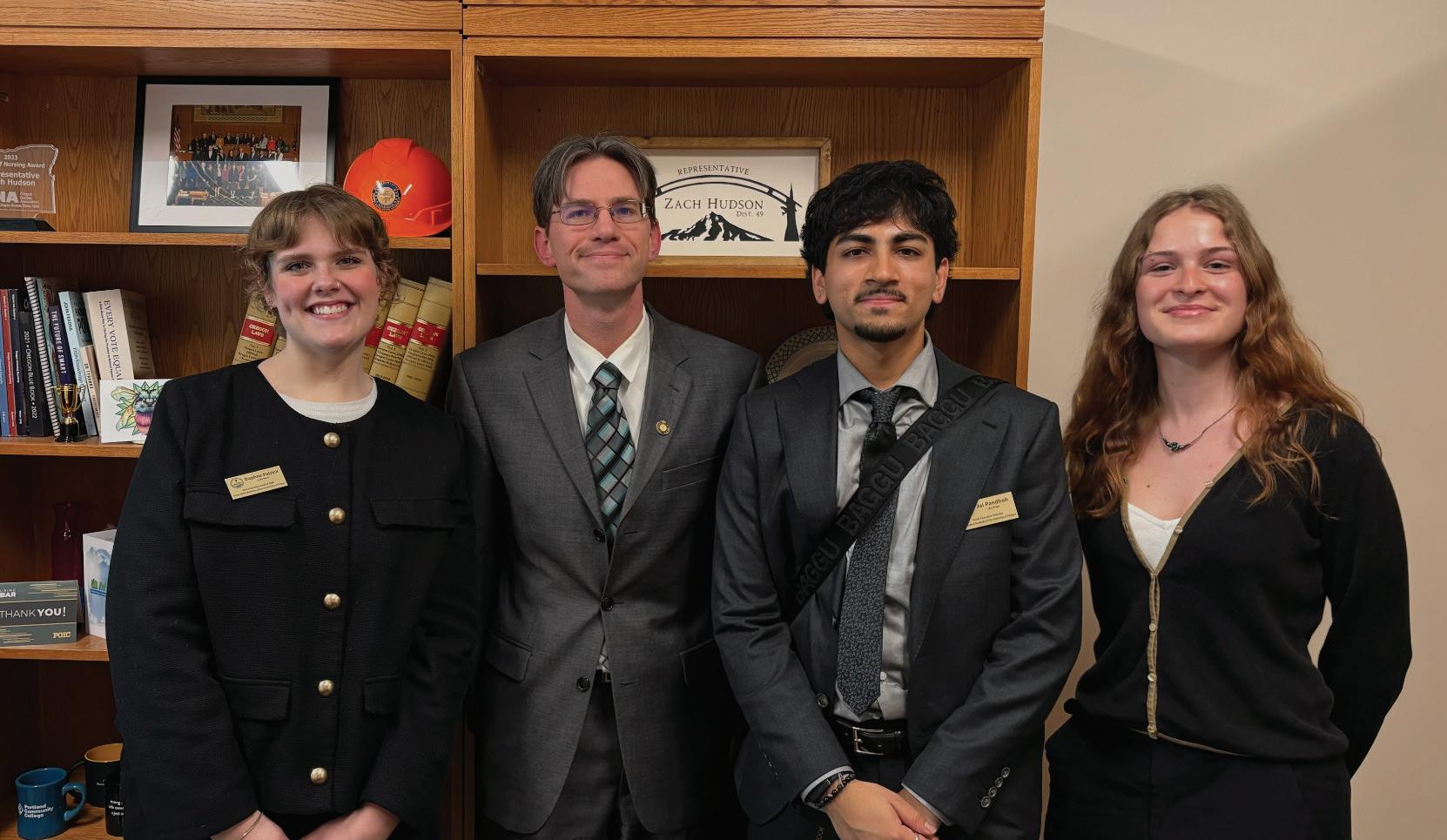
Daphne Patrick, ASUO chief of staff and an ASUO representative on TFAB, expanded the role state funding has in keeping Oregon colleges affordable.
“The biggest thing about raising tuition is that TFAB has the opportunity to raise the rates differently,” Patrick said.
“There is a discussion of cross-subsidization in TFAB, which in simple terms means that out-of-state students often cover the cost for in-state tuition.”
The University of Oregon currently has a 51% in-state and a 49% out-of-state student population. Since in-state students pay a lower tuition, it doesn’t usually cover the net total cost of their education. This gap is often filled by the differential from out-ofstate students.
“(Tuition) increases definitely lower the accessibility for out-of-state students,” Jade Peairson, a senior at UO studying marine biology, said. “As a student from Texas, I have scholarships and I am also graduating a year early to save a year of out-of-state tuition.”
“I think there is this perception from legislators in Salem, where people see a polished version of the university where they see our athletics capabilities, or they see our donor relations and they assume we have a good cash flow,” Patrick said. “But that’s not the case.”
Higher education is an important investment in the Oregon economy; Patrick said those who attend a well-funded university often stay in state post-graduation, and this allows the state to attract new talent to join the local workforce. The worse higher-education funding is in the state funding, the worse the job market tends to be within the host state. Although the results aren’t immediate, investing in education has long-term benefits for the state.
“State appropriations to public universities are what make a university public,” Patrick said. “It’s what makes a university able to offer courses and offer research, hire certain brilliant minds, faculty members, and it’s the fact that the funding is publicly supported, and not privately donated.”
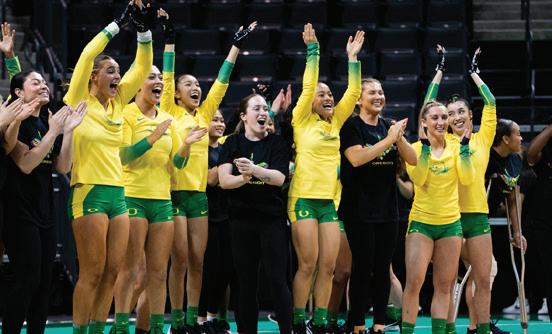
How Oregon acrobatics and tumbling changed its star sophomores’ new skill
Both golf teams opened the new year on the road with mid-table finishes. The Big Ten Championships are in less than three months. Read story

FRIDAY
Feb. 27, 2026
Oregon vs. Stetson
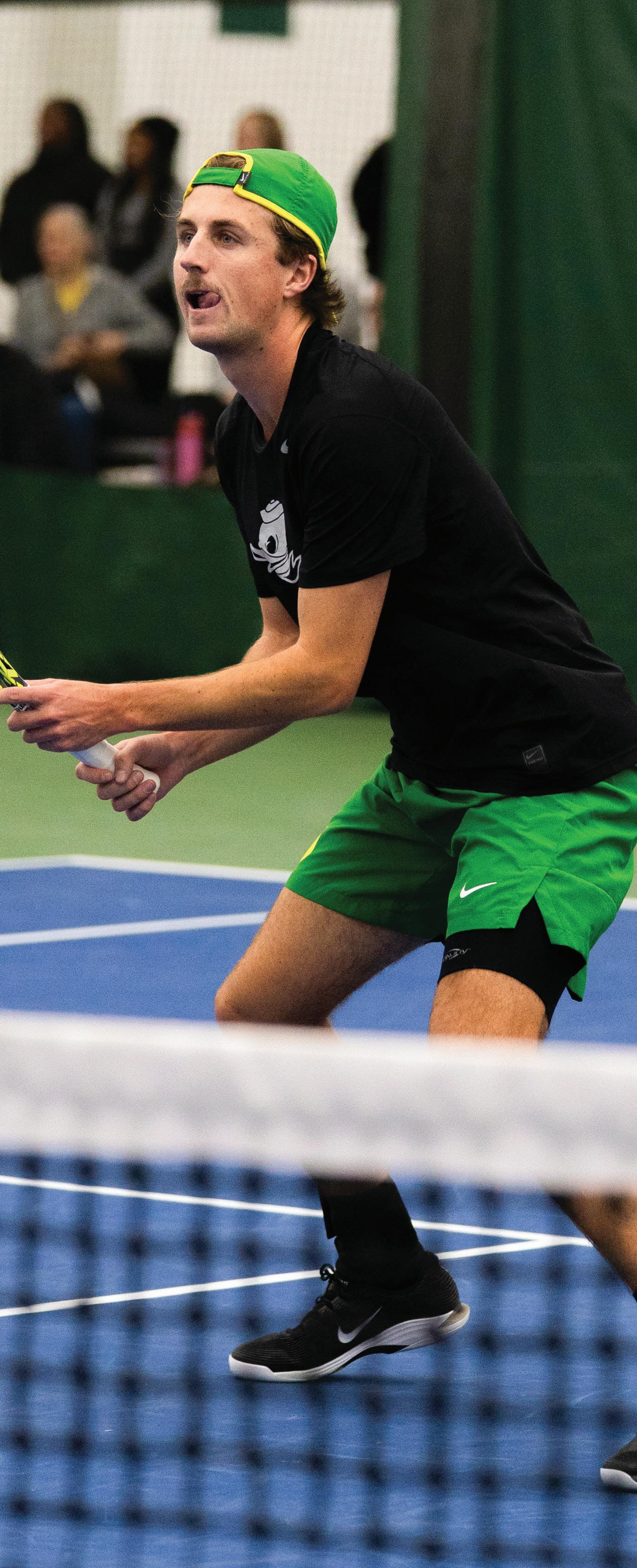
How several men’s tennis players found their way to Oregon.
By Max Koebel Sports Writer
The Oregon men’s tennis team is made up of players from across the country and the globe, united in Eugene around the universal language of sports. Most have been playing tennis since they were five years old, with some even younger. Some had connections with former players. Some see more action on the court than others, but they all have their eyes on the Big Ten and NCAA Tournaments.
Russell Soohoo is a senior from San Diego who learned tennis from his grandfather around the age of 5 or 6. It was around age 11 or 12 when Soohoo realized he was serious about tennis.
Soohoo practiced with Oregon all-time singles wins leader Jayson Amos, who played for Oregon 10 years ago. Amos connected Soohoo to head coach Nils Schyllander. He suffered a knee injury his senior year of high school, which led him to take a gap year before coming to Eugene.
“
“ I’ve always been drawn to Oregon as a massive powerhouse to be a part of.
“It took a good couple of months of rehab to get physically better,” Soohoo said. “And of course it took a little bit to get the mental part of it back and get into that competing mindset.”
Soohoo has not been in the lineup consistently. He’s been on the court for eight singles matches, seven of which he won, while the other went unfinished. He’s been in one doubles match, which he and Declan Galligan won 6-1.
Lachlan Robertson learned tennis from his older brother around age 3 or 4. He played tennis, soccer and basketball before sticking to tennis at age 7 and never took time off. The native of Vancouver, British Columbia, spent a lot of time in the Pacific Northwest for tournaments.
“Being an athlete myself,” Robertson said, “I’ve always been drawn to Oregon as a massive power-
house to be a part of, and it was just a dream come true when I first started talking to Nils and Arron (Spencer) to join the team here.”
Robertson’s favorite moment of his career came Feb. 6 against Utah State University when he clinched a 3-3 match for the first time in his career to give the Ducks the win. He was in a tight battle his entire match. The first round was tied at five before Robertson pulled ahead to win 7-5. His opponent responded by taking the next round and the back-and-forth fight continued all the way through the winner-take-all round, in which Robertson emerged victorious.
Vlad Breazu’s journey began across the ocean in Romania. He did karate at age 5, and his coach recommended he try tennis.
“A new club opened up nearby,” Breazu said, “and my parents took me to some lessons and I fell in love with it and started playing more often.”
Breazu first came to the U.S. when he was 15, and spent a year in Florida at a training academy. He saw Oregon as a place where college athletes go to succeed.
“I really wanted to play for a big athletic school,” Breazu said. “That was a big thing in my mind. I wanted to play in a very powerful conference with a great schedule.”
Breazu met former Oregon player Thomas Laurent at a tournament in Europe, which is how he first learned about the university.
“He came over to me and asked me if I’m interested in going to college,” Breazu said, “and told me about Oregon.”
Common highlights among the players include last year’s 4-3 upset win over Illinois, and the Pac12 tournament victory over UCLA. The players are not concerned about their individual success as much as they are in how they can help the team.
“We are a team really close with each other and just trying to do everything,” Pierre Mouesca said following the Ducks’ Feb. 13 win over Liberty University. “Even outside of tennis with each other and you can feel it whenever we’re on court, we’re having a lot of fun.”
Oregon faces the University of North Carolina, Wilmington, on Mar. 1 before opening Big Ten play against Illinois on Mar. 6.