
MONDAY, FEB. 16, 2026 ARTS & CULTURE
A labor of love at Armitage Park
OPINION
Kahl: The inhumane use of non-lethal munitions in Eugene
Opinion: What’s being called “crowd control” is really an abuse of power on the local community.
By Emma Kahl Opinion Columnist
The only time I experienced tear gas was during an unlucky encounter with a protest in France. The Parisian police had accidentally dropped tear gas canisters into the subway below, leading to everyone in the crowded metro car to be trapped in a haze of chemical gas. The sounds of uncontrollable coughing came from every direction as tears poured down my face. I’ll never forget the intense burning smell and the way it choked me.
This experience doesn’t feel quite so distant anymore as I see similar tactics being used in Eugene today.
On Jan. 27, pepper balls, flash-bang grenades and tear gas were deployed against protesters over the span of four hours at a protest and vigil located at the Eugene Federal Building.
One protester said they experienced being teargassed that day and again on Jan. 30. They requested to remain anonymous due to fear of
Oakridge’s Highway 58 Herald faces closure
Herald
editor George Custer reflects on his time at the Herald, preparing to step down.




NEWSROOM
EDITOR IN CHIEF
Tarek Anthony
PRINT MANAGING EDITOR
Ryan Ehrhart
DIGITAL MANAGING EDITOR
Ysabella Sosa
NEWS EDITOR
Reilly Norgren
INVESTIGATIONS EDITOR
Ana Narayan
A&C EDITOR
Claire Coit
SPORTS EDITOR
Jack Lazarus
OPINION EDITOR
Gracie Cox
PHOTO MANAGING EDITOR
Corey Hoffman
PHOTO EDITOR
Saj Sundaram
COPY CHIEF
Olivia Ellerbruch
VIDEO EDITOR
Jake Nolan
PODCAST EDITOR
Stephanie Hensley
SOCIALS EDITOR
Ysabella Sosa
VISUALS EDITOR
Noa Schwartz
DESIGN EDITOR
Adaleah Carman
DESIGNERS
Asha Mohan
Ellery Burton-Tillson
Eva Andrews
Izzy Smith
Maya Gooneratne
Nina Rose
BUSINESS
PUBLISHER AND PRESIDENT
Eric Henry (X317) ehenry@dailyemerald.com
VP OPERATIONS
Kathy Carbone (X302) kcarbone@dailyemerald.com
DIRECTOR OF SALES & DIGITAL MARKETING
Shelly Rondestvedt (X303) srondestvedt@dailyemerald. com
CREATIVE & TECHNICAL
DIRECTOR
Anna Smith (X327) creative@dailyemerald.com
ACCOUNT EXECUTIVES
Torin Chevalier
Camcole Pereira
Ava Stephanian
Elliot Byrne
THE DAILY EMERALD
FIND MORE STORIES ONLINE AT DAILYEMERALD.COM
Eugene City Council declares humanitarian crisis
Councilors voted unanimously to pass a resolution declaring a humanitarian crisis in Eugene due to ongoing federal activity.
By Billie Corsetti News Reporter
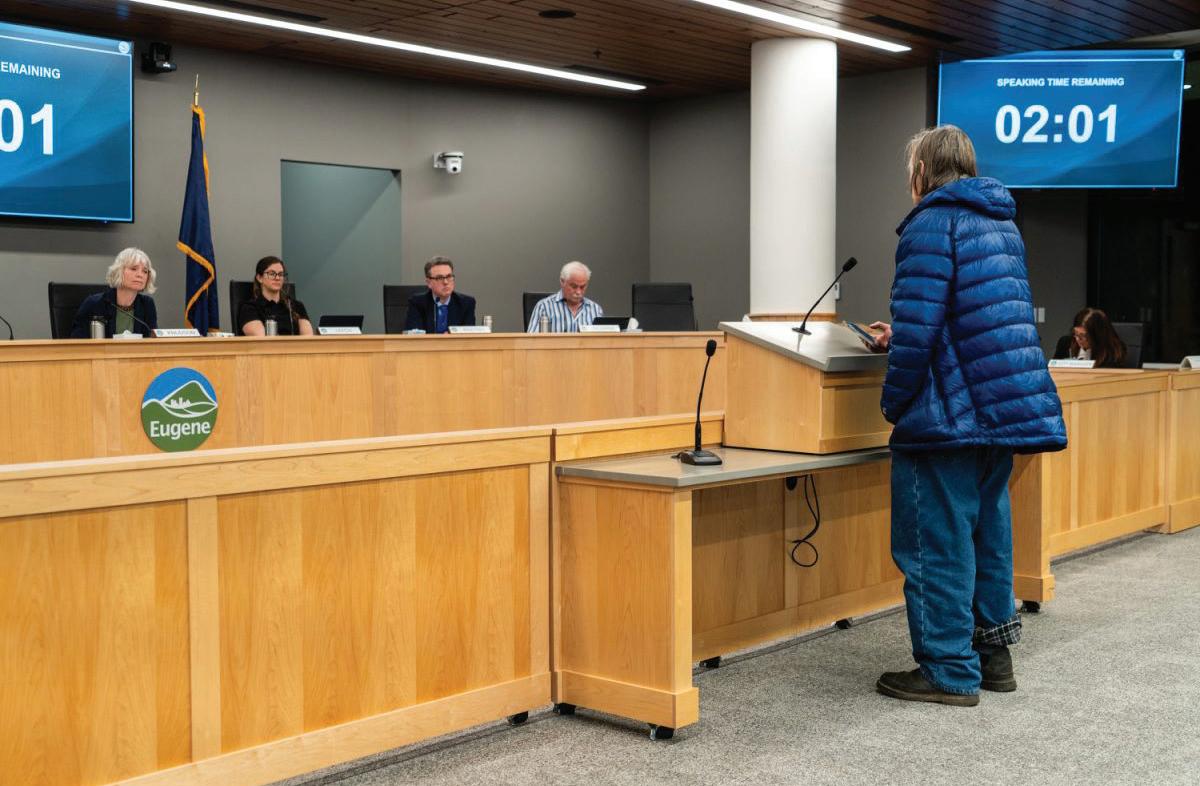
The Eugene City Council passed a resolution during Feb. 9 public meeting declaring a humanitarian crisis in Eugene due to “federal immigration actions.”
“This resolution declares that the impacts of federal immigration enforcement constitute a humanitarian crisis for all residents of the city of Eugene,” Councilor Lyndsie Leech, who represents Ward 7 and introduced and drafted the resolution, said during the meeting. “It affirms our core values to support human dignity, community belonging and access to essential services.”
College of Education encourages scholarship donations in Erick Njue’s honor
The College of Education is encouraging donations to general scholarship in honor of Erick Njue, a Ph.D. student killed in January.
By Corey Hoffman Senior News Reporter
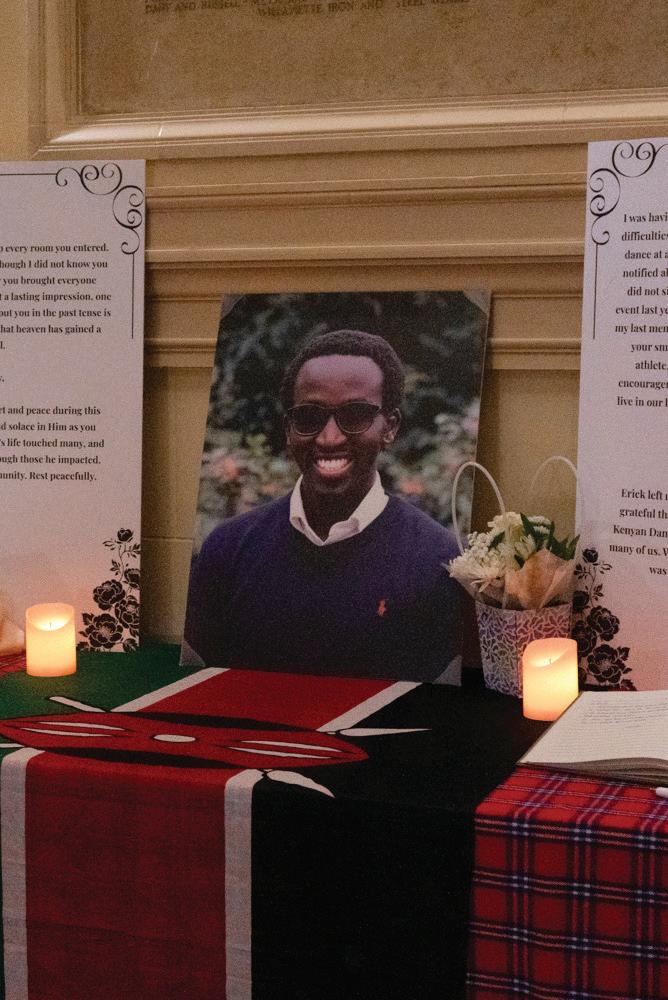
The University of Oregon’s College of Education is encouraging donations to general scholarships in memory of Erick Njue, a doctoral student in the COE, who was killed in a cyclist-motorist accident on Jan. 25.
Andrea Olsen, director of stewardship and donor relations for the college, worked closely with Njue, who served as a COE Scholarship Ambassador, and said scholarship donations are the best way to remember him.
“Erick was unique and memorable as a scholarship recipient in our program,” Olsen said in a statement to the college after Njue’s passing.
“When he first started (in) the (Education Policy and Leadership) program, he came to my office to express his gratitude for the opportunity to receive donor support for his academic pursuits,” Olsen said. “That was just the first of many visits that Erik and I had over the last (three and a half) years.”
Njue received a Masters of Science in education policy and leadership from UO in 2023 and was pursuing a Ph.D. in Special Education.
Olsen created a website giving information about how to donate in Njue’s memory, writing that gifts in his honor will “extend his legacy forward” and that donations in memory are a way to “carry forward the love he received, the gratitude he expressed and the impact he worked so intentionally to create.”
According to Olsen, students who receive scholarship money donated in Njue’s memory will be made aware of him and his legacy, with the hope that they will “pursue their studies with the same sense of belonging and possibility that Erick experienced.”
( ABOVE) Dozens of University of Oregon students and Eugene community members attended a memorial of Erick Munene Njue on Jan. 30, 2026 in Eugene, Ore.
(Katie Poluyansky/Emerald)
ASUO approves program budgets for 2026-2027, passing along I-fee recommendations to UO administrators
The committee financing clubs has a significantly larger budget for next year, while other committee budgets remain similar.
By Sasha Love Senior News Reporter

The Daily Emerald is published by Emerald Media Group, Inc., the independent nonprofit media company at the University of Oregon. Formerly the Oregon Daily Emerald, the news organization was founded in 1900. Emerald Media Group 1395 University St.,#302 Eugene, Or 97403 (541)-346-5511
ASUO approved the budgets of the Programs Finance Committee, Department Finance Committee, Contracts Finance Committee and made an Incidental Fee recommendation of 5% for fiscal year 2026-2027.
The Incidental Fee, a mandatory fee paid by all University of Oregon students is set at $161.25, for a total increase of 5%.
According to ASUO Vice President Max Jensen, President Prissila Moreno sent the I-fee increase requests to UO President John Karl Scholz this week. The UO board of trustees then approves or denies this proposed increase at its March meeting.
All three of ASUO’s financial committees, PFC, DFC and CFC, allocate I-fees towards student resources.
The PFC is the committee that allocates regular funding to over 200 student organizations at UO. These are commonly known as UO’s clubs.
The PFC Budget was increased by 11.64% to $2,520,099. Six of 22 senators voted against the increase.
The DFC is the committee that finances university department-based programs. For example, the Multicultural Center and the LGBTESS center are funded through the DFC.
Senators voted unanimously to decrease the DFC budget by 1.43% to $4,638,087.
The CFC is the committee that allocates money towards “campus-wide service providers” including Lane Transit District bus passes for students, ASUO legal services and the Oregon State Public Interest Research Group. Senators voted unanimously to increase the CFC budget by about 3.68% to $3,308,823.
ASUO’s stipend budget for those serving in the executive branch increased by about 17% from last year.
ASUO Finance Director Justin Begley said this increase was waged in part because of previous vacancies, but PFC claimed that the increases would have effects on club funding, particularly for tier three and tier four clubs.
How UO predicts future enrollment amid budget prediction shortfalls

U.S. Average Public higher education funding per resident student (FY 2024)
This year’s budget deficit was tied to less non-resident students, now a new enrollment manager is finding strategies to reach more students, now both in state and beyond Oregon borders.
By Sasha Love Senior News Reporter
The University of Oregon receives money from the state for every Oregon student at UO, but is only compensated for in-state students at about two-thirds the rate of the average major U.S. university.
At the September 2025 board of trustees meeting, UO said it is aiming to slightly increase resident students and decrease non-resident student enrollment in 2027 and remain steady through 2030.
where folks are sharing information about enrollment trends.”
Last fall 5,700 students from California were enrolled at UO, so change in the UC system came as a shock to the enrollment team.
$6,200 $11,680 $10,820 Oregon Washington
This leads UO to rely heavily on out-of-state students, who pay around $44,598 in tuition compared to an instate student’s $16,611, according to 2024-25 tuition numbers. Last year the university overestimated how many out of state students would enroll, leaving the it in finical trouble.
Non-resident enrollment — including international students — was overestiby about 15%, despite numerous models run to adjust for tuition rates, state appropriations, inflation and more.

“Our finance team works closely with our enrollment management team to forecast tuition revenue,” Jamie Moffitt, senior vice president for finance and administration and chief financial officer, said in a statement to The Daily Emerald.
Derek Kindle, hired as UO’s new vice president for enrollment management last spring, is trying to attract a diverse range of students for next year to build more financial sustainability.

Kindle emphasized that there is “no way” to make predictions an “exact science” because the university market is so dynamic. That said, he is digging into all of the factors that make students want to attend the university.
“We are planning for what students need. Do we have enough housing? Do we have significant academic support? Or classroom space?” Kindle said. UO has seen an increase in enrollment numbers for the last several years and this year welcomed the largest freshman class.
2,181 FY 2025 Target Enrollment
2,934
To prepare for further increases, two new residence halls are currently being built in the east campus area. UO has been faced with budget cuts that have strained resources and cut classes.
One of the major ways incoming students become attracted to UO, according to Kindle, is when they engage with friends and family posting positive experiences at the university on their social media accounts, or simply sharing stories.
“When they (students) are having a great experience, they are ensuring others know they are having a great experience, and to us that is the best marketing,” Kindle said.
A large part of what Kindle and his team do consists of closely tracking what other Big Ten and Pac-12 schools are doing to attract students, and how politics and the economy affect who might want to be a duck.
“Laws and things like that are changing at the drop of a hat. So it just makes it more difficult, but technically we are still following the same things as we followed in each and every year,” Kindle said.
For example, Kindle and his team are closely monitoring factors like the international currency rates and admittance rates across states.
“Most of our leadership and the professionals that make up our division, our organization, are very connected to the professional associations across the country that are sharing information,” Anna Schmidt-Mackenzie, chief of staff for student services and enrollment management, said. “As much as we are in a marketplace where students have a choice to go to different institutions, it’s also an incredibly collaborative space
Moffitt concurred that tuition projections were and are heavily influenced by how committed incoming students are to UO — measured in part by deposit rates — and how many credits current students are taking, which is used to predict how long they will be staying at UO. Moffitt called these factors a student’s “level of activity.”
“Tuition revenue projections are put together for each long-term projection scenario based on the level of activity in the various student cohorts,” Moffitt said in a statement.
Another aspect of outreach UO is involved in is global recruitment. Despite federal pressures on international students, Kindle said expanding UO’s reach is an important focus.
Currently, most international students are from India and China, but Kindle is now trying to “scan the world in a more strategic way” and build relationships with high school counselors across the world.
“We have over-relied on students from those two countries, in any scenario — outside of the political — you wouldn’t want to bank on all your students coming in from two countries. So, it’s less on the current administration and more on the idea that it’s not smart,” Kindle said.
UO admits approximately 50% resident and non-resident students each year, and despite pressure for tuition money, Kindle said he expected these figures to remain similar next fall.
2,634
























UO lacks environmental sustainability policies for events
From runaway streamers to leftover food, waste after university events calls into question sustainability policies.
By Erin Reaney News Reporter
University of Oregon students who walk past the Erb Memorial Union may glance up at the trees lining the pathways. For the last three months, there have been numerous sparkly gold and green streamers entwined in these trees, left behind by a university event.
According to Sarah Stoeckl, associate director of UO’s Office of Sustainability, the university has no formal policies for sustainability when it comes to events on campus.
While UO has official, recognized policies for general operational sustainability and climate action, events held by clubs and organizations are not held to any specific standards. Stoeckl describes the existing guidelines as “small p” policies scattered throughout UO sustainability measures, which affect things like purchasing power, transportation guidelines and many opt-in resources for event organizers. These measures include UO’s Zero Waste Program, which offers specialized recycling and compost collection at large events, such as the ASUO Street Faire and home sports games. Extra waste collection sites are placed near the Frohnmayer Bridge to collect cans on the way to and from Autzen Stadium.
At other events, catering teams offer an option to provide hard plates and silverware as opposed to plastic disposables, but that requires an additional charge for the organizers.
Declan Zupo, a representative of UO Climate Justice League representative said food waste is a big problem on campus and that he would like to see it and campus food insecurity addressed.
The Leftover Textover program is one option to help avoid food waste after events like administrative luncheons, clubs, mixers and sporting events. This program gets leftover food to students who need it by alerting them with a text message. But according to Zupo not many programs utilize this option.
“If there were to be one policy I would advocate for, it would be mandating Leftover Textover and doing a better job of reallocating leftover food,” Zupo said.
Throughout his years here, Zupo has been involved in environmental efforts on campus in many facets and currently works on the CLJ’s steering committee, which works to ensure the university maintains its existing climate commitments in line with state and nationwide standards.
According to Zupo, UO has many emissions reduction
requirements that are not being met. UO is the highest polluter of fossil fuels in the city of Eugene, and those numbers are only predicted to rise.
Concerned about the lack of event sustainability policies, Zupo pointed out that “opt-in” measures are frequently ignored unless there’s some real enforcement or incentive to choose them. And, in the case of UO’s sustainable event options, there are none — and the more sustainable choices actually cost more and require more effort from event organizers.
Because UO places an emphasis on environmental responsibility to incoming students, Zupo says that “bringing an update to our policy to bring in line our events with our institution’s ethos of environmental sustainability” would be a “huge step for the institution.”
According to Stoeckl, UO runs as “a bubble up from the bottom institution as opposed to a top-down institution, especially when it comes to sustainability topics.”
Because of this, work toward environmental change is done by “coalitions of the willing, students who care, staff and faculty who care.”
Despite the lack of any overarching rules or efforts to implement any, students and staff put in a lot of effort to make sustainable choices for events all the time, Stoeckl said.
“I do think the community would appreciate if there was official support for more sustainable options for events. But even with that said, a lot of folks are kind of doing the things that would be in a policy anyway,” Stoeckl said. “Can we do better? Always. And yet, it’s really always inspiring to me to see how much our community cares, even without a top-down mandate, and are opting into these options because they want to.”
City of Eugene aims to bring peer navigation services outside of existing downtown program
The city has published a request for proposal outlining the function of peer navigators for a pilot program.
By Billie Corsetti News Reporter
The city of Eugene is working to find a provider for the Peer Navigation Alternative Response pilot program, which aims to fill service gaps left by the 2025 closure of the Crisis Assistance Helping Out On The Streets program.
Months after the White Bird Clinic announced the closing of CAHOOTS, which operated as a mobile crisis intervention team in Eugene since 1989, the city of Eugene released a report analyzing what gaps needed to be filled since the program’s closure.
Eugene Springfield Fire Chief Mike Caven said there wasn’t as large of a gap in services as they had anticipated.
“What we didn’t really see were any increases (in calls)… There wasn’t some catastrophic hole in the net that people

were falling through,” Caven said.
High-acuity care calls that CAHOOTS responded to before its closure are now the responsibility of Mobile Crisis Services of Lane County, a behavioral health crisis service. However, because the program is state-funded and Medicaid-billable, calls must fall under certain conditions to be addressed, meaning they are often unable to respond to non-crisis situations.
The report revealed that the largest gaps remaining unfulfilled from police, fire or county services like MCS were mid-acuity behavioral health incidents, non-emergency transportation, general assistance or low-acuity calls, youth crisis response and harm reduction.
“The gap is those calls where people aren’t sure and they don’t want to approach, but they think that somebody needs a welfare check or some type of service,” Caven said. “So what we wanted to do is put a program out there that picked up those calls to make sure that the folks had somebody checking on them and that the people doing the work have the capability to track it and help case manage those folks to get them off the street.”
During a press conference after the report was released, Caven and Eugene Police Chief Chris Skinner discussed filling these gaps through a request for proposal to expand the peer navigation model in Eugene.
Peer navigators have been in downtown Eugene since January, after two navigators were added to the downtown co-responder team. The navigators are contracted for one year, and work to provide outreach for unhoused individuals in the downtown area.
“The idea with this program is to get to the root causes that are creating the situation of homelessness and making it more difficult for them to correct their situation, and find a different way,” Ray Brown, EPD’s downtown incident commander, said.
As written in the RFP, the city is hoping to build on this downtown program in the larger Eugene area, such as Highway 99, River Road, the Whiteaker Neighborhood and West Eugene, and provide outreach for “vulnerable populations.”
“This program will operate in partnership with Eugene Springfield Fire, Eugene Police Department and other community stakeholders to reduce repeat calls for service, support non-enforcement engagement strategies, and connect individuals to housing, treatment and recovery services,” the RFP states.
Some functions of peer navigators outlined in the RFP are connecting individuals to housing, recovery and healthcare support programs, facilitating referrals to psychiatric care, assisting with insurance and providing transportation. The RFP emphasizes collaboration with relevant city staff, EMS, EPD, co-responders, MCS and a variety of other service providers.
During a city council public meeting on Feb. 9, multiple commentators expressed their dissatisfaction with the model outlined in the RFP.
“Peer navigators as case managers disconnected from non-emergency dispatch is no replacement for the service Eugene lost last April,” Robert Parish, one commentator, said.
In an addendum attached to the RFP, Purchasing Analyst Darren Schmidt clarified that peer navigators “will be dispatchable through the 911 center whether or not the initial call came in through emergency or non-emergency,” and will act as the responding dispatch team. However, the service will not be operating on the public safety radio dispatch.
“Why are we piloting something new when we have a 36year nationally recognized roadmap of what works?” Nadia Raza said during public comment. “We need an RFP that includes true community crisis response.”
“When we put peer navigation out, it’s not an expectation that it’s the only level of service, or the minimum level of service that we’d accept,” Caven said. “It’s just saying we at least need to cover this work.”
Potential proposers have until Mar. 3 to submit proposals for the opportunity to be given a one-year contract from the city to provide the required services to the pilot program.
Oakridge’s Highway 58 Herald faces closure

By Tarek Anthony & Reilly Norgren Editor-in-Chief & News Editor
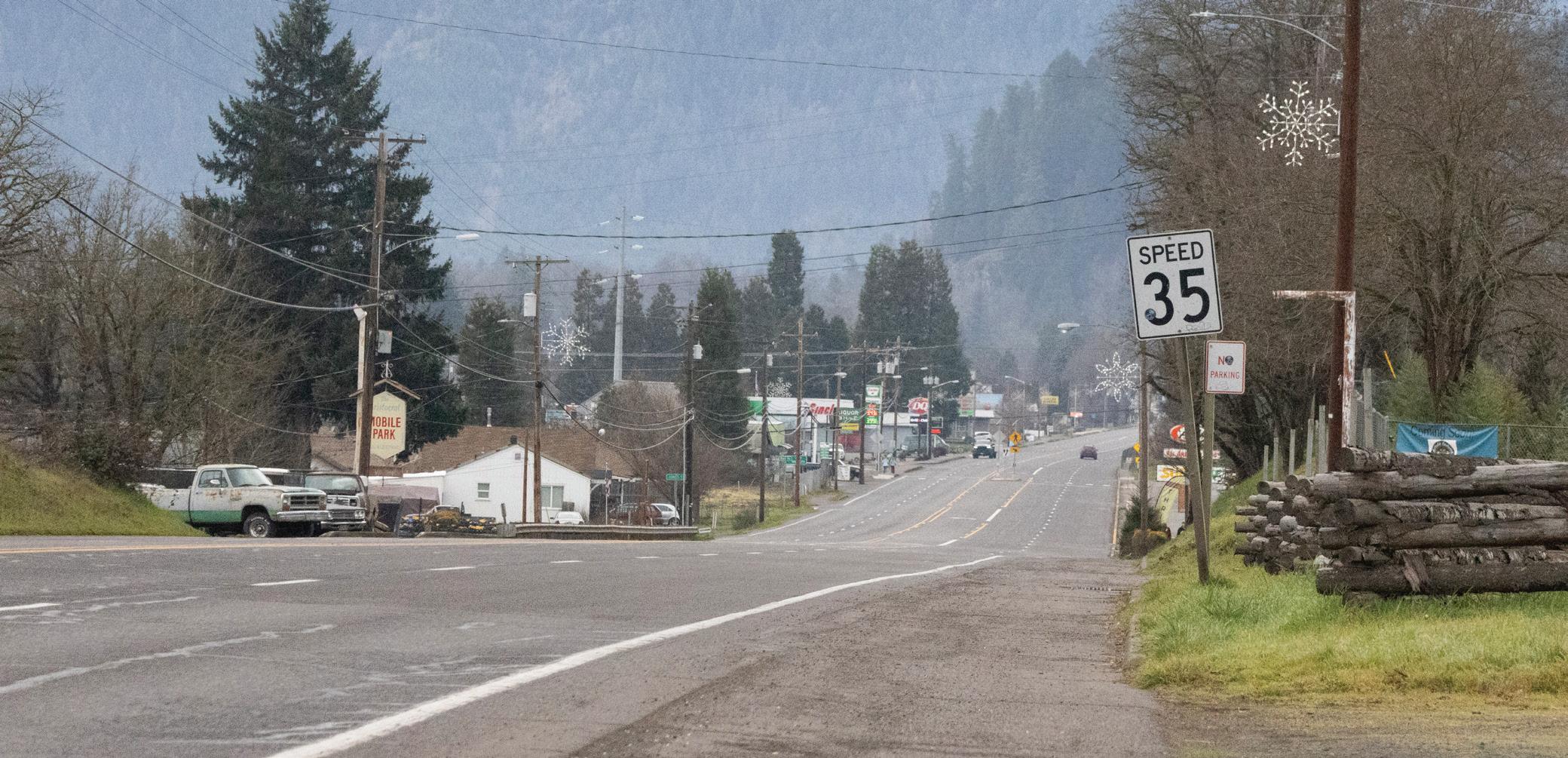
There is only one road in and out of Oakridge, a small town tucked deep in the Willamette National Forest. There is also only one newspaper — and it may not exist for much longer.
As news deserts expand across the country, Oakridge risks losing its only local publication just five years after its debut. “Interim editor” George Custer, a 15-year veteran of the Marine Corps and former smokejumper, who had no prior experience in journalism, is preparing to re-retire as uncertainty hangs over the future of the paper.
The Highway 58 Herald formed in 2021, months after its predecessor, the Dead Mountain Echo, ceased publication after nearly 50 years. The Herald was founded by two-time Pulitzer Prize winner Doug Bates, who stepped away after eight months.
Custer, who took over the paper in 2022, returned to his home state of Oregon from California in 2007, alongside his wife, Sayre — who he said was hesitant at first to move to the town of about 3,000.
The two visited Oakridge on what he described as a “drizzly Christmas Day” to check out a property they had scouted.
“I knew within five minutes that she loved the place. That’s how it started,” he said.
Custer’s retirement didn’t last for long after arriving in Oakridge. He joined the city’s planning and economic development commissions as well as headed the Oakridge Uptown Business & Revitalization committee for nearly 10 years, in addition to extensive involvement in the American Legion.
When Bates stepped down from the Herald due to health reasons, he recommended pausing operations to raise money while searching for a new editor. For Custer, who had not partook in journalism since high school, pausing wasn’t an option.
“I told Bates, I said, ‘No, we have to keep this thing going. I’ll take over,’” Custer said. “He put his hand on my shoulder and said, with a wry smile, ‘George, you have no idea what you’re getting into.’”
Describing himself as “Mr. Optimist,” Custer said he jumped in headfirst.
“For the longest period of time, a couple of years, if I was writing something, I would feel his hand on my shoulder, watching over me,” he said.
Years into what was supposed to be a temporary commitment, Custer said he maintained the title “interim editor” to remind himself that he was supposed to find a replacement and enjoy retirement.
Five years later, the “interim” title is finally coming to fruition as he prepares to re-retire March 15. He said he is stepping down for two reasons: a long-overdue promise to his wife that he would actually retire, and his belief that the paper will not last much longer.
“We’re running out of funds. We may not last a couple of months unless something breaks,” he said.
An emerging news desert
Oakridge is a small town — a single grocery store, fast food joints, a laundromat and small shops line Highway 58, the only road through town connecting Eugene to areas south of La Pine.
Older houses and trailers line the few streets in a town where nearly 24% of residents live below the poverty line — roughly double the statewide rate — and only about 34% of residents are employed,
according to United States Census data.
But the town, framed by thick trees, snowcapped mountains and the winding Willamette River, was once a logging boomtown. The closure of three sawmills led to the loss of more than 1,500 jobs.
Now much of the town’s economy relies on its nationally acclaimed dirt biking paths and outdoor recreation activities.
Citing an average 2.5 newspapers closing each week in the U.S., Custer warns Oakridge is at risk of becoming Oregon’s latest news desert.
News deserts across the country are growing. In Oregon, there was a 20% decrease in the number of newspapers from 2004 to 2019 , according to a study by the University of North Carolina’s Hussman School of Journalism and Media.
In 2025, The Seattle Times reported that three counties in Oregon were deemed news deserts.
“The reason the Herald started was the Dead Mountain Echo, which was the printed paper up here, had closed down about seven or eight months prior, and shenanigans started happening at city hall,” Custer said. “Most people didn’t know anything about that because there was no paper.”
George Custer Interim Editor, Highway 58 Herald “
We’re running out of funds. We may not last a couple of months unless something breaks.
“
The city faces several imminent issues, including the possible acquisition of TV Butte, a former broadcasting site just outside town believed to contain buried toxic waste from its lumber days, and a proposal to turn it into a gravel quarry that could risk contaminating the city’s water supply.
Custer said these issues will go unreported, allowing plans for the butte to advance without a platform for public awareness or scrutiny.
In 2025, the Agora Journalism Center at UO’s School of Journalism and Communication studied how residents of Oakridge accessed local news and civic information. The study found residents relied mostly on word of mouth and social media. Encountered issues with outdated information due to the Herald’s “limited capacity.”
The study polled more than 100 Oakridge resi-
dents and found that many craved a physical print product and a live TV station.
In 2023, the Herald began printing physical papers in an effort to expand its presence and appeal to Oakridge’s majority 55-and-older population, which Custer said residents enjoyed. But between printing, distribution and other related costs, he said it ultimately became too much.
“We were really kind of cheating ourselves. Had we started off with a good-sized nest egg, we could have had some working capital. But when you’re flying by the seat of your pants, any expenditure just really hurts, and the paper was killing us,” he said. “Papers across the country are going online only. So we tried to reverse that trend and immediately ran into too many roadblocks.”
Staffing a rural paper
Custer arrives at the Herald office at 7 a.m. each morning, checking the inbox and preparing for the day. Despite thousands of hours of work over the years, he has never taken a paycheck — nor have many of the paper’s volunteers.
In November 2024, Custer hired UO double master’s student Ellie Graham, who has since graduated and is set to take over in March. Graham, who lives and operates out of Springfield, has “really impressed” Custer.
Over the years, the Herald has offered internship opportunities to more than a dozen SOJC students, giving them hands-on experience and opportunities to publish work while helping staff the paper.
“Establishing the relationship with the SOJC was probably the best thing that happened to the Herald,” Custer said.
Many of the students initially volunteered; however, Custer has since hired them as independent contractors and paid them. He also pays an office manager — costs he said add up to thousands of dollars in expenses each month.
In spring 2025, SOJC instructor Charlie Deitz partnered with the Herald on an experimental “audio magazine” course, sending more than a dozen students to report on issues ranging from TV Butte to wildfire preparedness.
“We were able to talk about issues that affect residents on a daily basis,” Deitz said. “The Herald gave us that jumping point.”
Even with collaborations with the SOJC, a limited local advertising pool and the loss of its print product have left advertising sales practically nonexistent, forcing Custer and the Herald to rely on grants and other inconsistent sources of revenue.
According to Custer, grantmakers are generally more inclined to support student opportunities by funding his student contractors, but grants for operational expenses are few and far between.
As much as the Herald has relied on student
work, Custer says depending on full-time students to staff a newspaper can be difficult.
“I have lunch with Doug almost every month, and he told me straight up, ‘Don’t get too enthusiastic about these students. They’ve got a lot of book learning, but they don’t always know what it’s like to be a journalist in the real world,” Custer said. “And I always say, the reason they call it news is because it’s now. I don’t need that story five weeks from now.”
Custer said Graham has been helpful in integrating deadlines, and that he is confident in her ability to take over. No matter the future of the paper, he said that Graham has promised “she’ll hang around to the end.”
The Herald’s board of directors, made up of seven members, met on Feb. 9 to discuss options for the newspaper going forward. Custer said the board agreed to continue operating the Herald for as long as possible.
The paper is currently aiming to raise $20,000 to stay afloat.
In a social media post, Camilla Mortensen, editor of the Eugene Weekly, SOJC journalism instructor and Herald board member, urged people to donate so Oakridge doesn’t become a news desert.
“There are actual news deserts in Oregon — please help Oakridge not join them,” the post said in part.
“The (newspapers) that are closing are in rural communities,” Custer said. “They’re hardest hit because they have nothing other than Facebook and Twitter and all that, and there’s no fact checking. So it’s not really a news platform.”
In January, the Herald launched a GoFundMe campaign seeking $5,000 to keep operations running — a fraction of what is needed. A month later, the campaign had raised just over $1,700. De-
spite this, Custer warns time is running out.
“As optimistic as I’ve been all these years, I think it’s going to be a little too much, a little too late,” Custer said.
Moving forward
Custer sat in a mostly bare, cold office, a screwdriver beside him after attempting to fix the heat earlier that day. In front of a humming space heater, he said he was ready to sell the building for good.
“We’re getting ready to do inventory here (in the office) and see what we can get rid of, that sort of thing, should things move forward,” Custer said.
Reflecting on the past four years, Custer said he has learned a lot, particularly about the limits of trying to run the operation alone.
“I learned a lot in hindsight, the fact that I was trying to do it all,” Custer said. “I was writing grants, trying to sell advertising, editing, publishing and doing some reporting. It just became too much.”
When asked if he had any regrets, Custer said he only has one.
“No, I’m proud of what we’ve done,” he said. “The only thing I regret is that we didn’t have sufficient funds early on.”
He pointed to other local startups, such as Lookout Eugene-Springfield, which launched with millions of dollars in startup funding — something that was never realistic for the Herald.
“We literally got together, took money out of our wallets and put things together,” Custer said. “We were able to move very quickly, but with a minimal amount of funding, and it just stayed that way. We’ve been on the edge financially forever, and that’s probably taken the biggest toll on me. My wife is aware of that, and that’s why she’s been pushing me — ‘you need to get out of this.’”
As for his second retirement, Custer said this one is for real. The newspaper may leave Oakridge, but he has no plan to.
“We’re not going anywhere,” he said. “This will be our last stop.”
(ON THE COVER) George Custer, interim editor of the Highway 58 Herald, poses for a photo at his desk.
( LEFT ) A water tower sits along Highway 58.
( ABOVE) The exterior of the office building that houses the Highway 58 Herald.
( BELOW ) Highway 58 connects Eugene to areas south of La Pine, passing through Oakridge, Ore.
(Tarek Anthony/Emerald)



ARTS & CULTURE
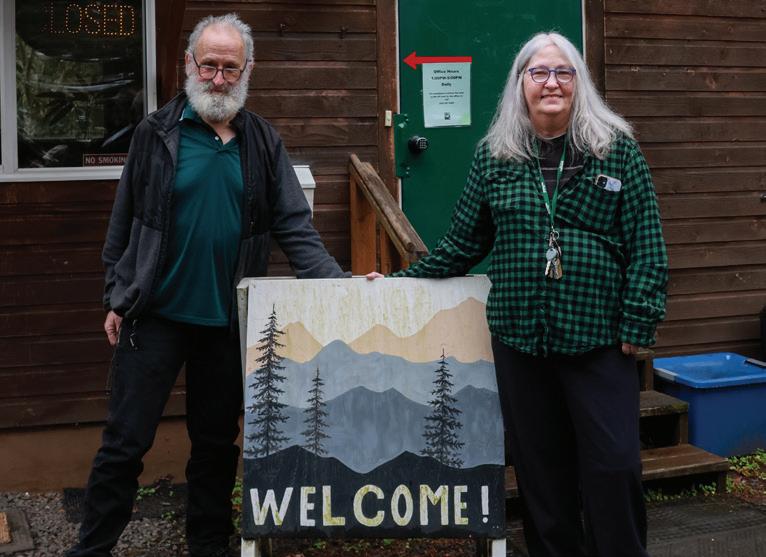
A labor of love at Armitage Park
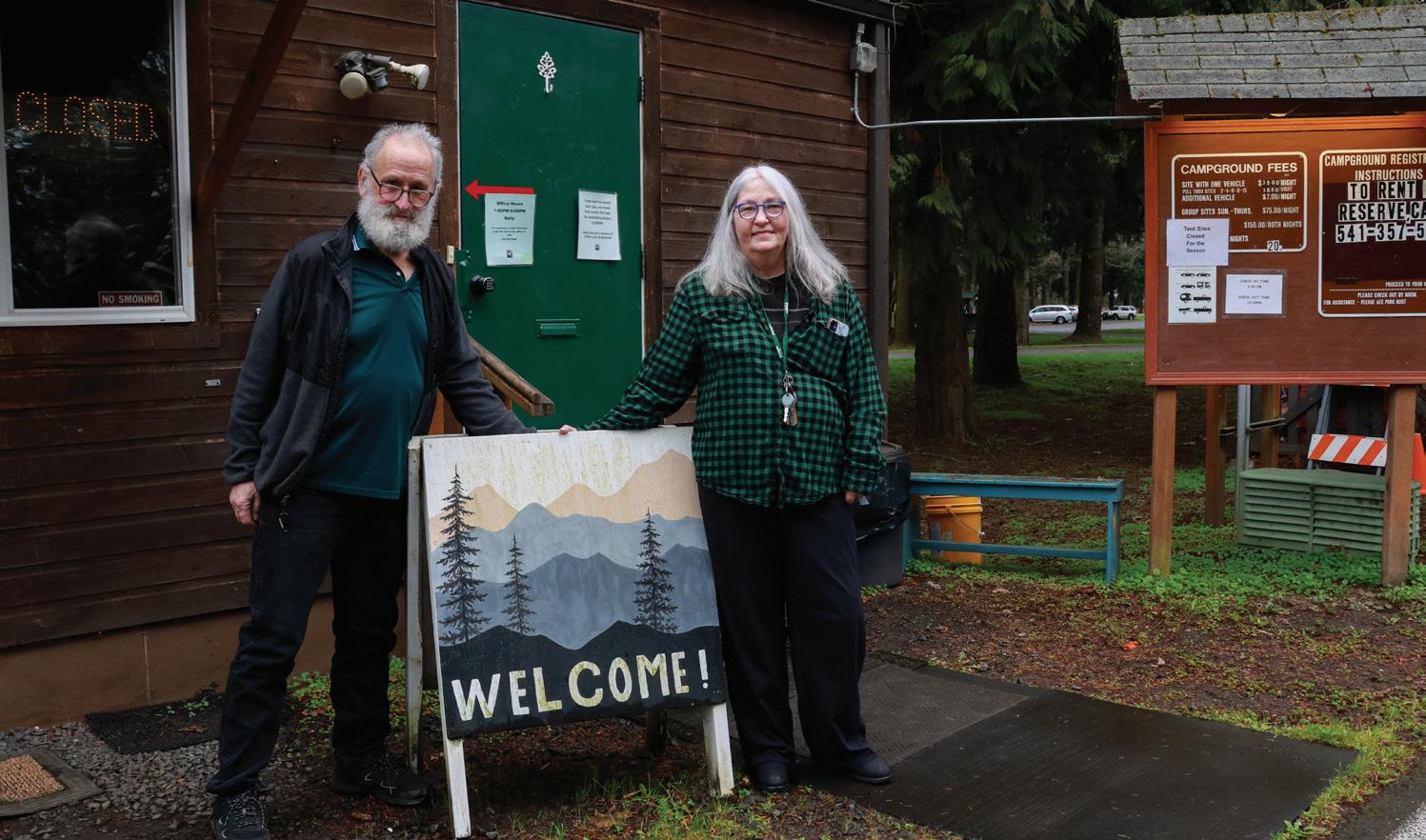
Carol and Roger Hansen stepped away from their roles as park caretakers in 2025, closing a chapter marked by
friendship, service and community.
By Gigi Roddick Arts & Culture Writer
Carol and Roger Hansen met while working, romantically enough, at Costco. In 1997, they got married and entered property management together, beginning a lifelong partnership that took them all throughout the Northwest.
After 20 years, Roger was offered an open caretaking position at Archie Knowles Campground in Mapleton, Ore.
“We thought, ‘Yeah, we’ve talked about this forever!’” Carol said. “So we decided we’d try it out.”
For two seasons, the Hansens enjoyed staffing Archie Knowles’ nine campsites, but soon they were ready for a change of scenery. Armitage Park Campground, located in northern Eugene, was in need of caretakers and provided a more convenient location for their family.
In November 2020, the couple took over at Armitage. Carol managed reservations and sold firewood in the office, while Roger worked with park hosts to maintain the campsites and facilities.
The four to six hosts who also lived and worked in the park proved to be far more than just co-workers. With them, the Hansens formed long-lasting friendships, even holding Friendsgiving celebrations together.
“Because we all lived together, we were like a family,” Carol said. Those bonds were especially necessary during the rush of football season, when out-of-town ticket holders flooded Eugene.
“When the schedule comes out in January, our entire fall season is booked on game day weekends,” Carol said. “And it’s the same people over and over again so that’s really nice — getting to know regulars who come back.”
One such story of a returning camper has stuck with the Hansens: a young man who was down on his luck, according to Carol.
“He was camping in a tent site. He said he had a dozen eggs but didn’t have a way to cook them, so we gave him some firewood and an ice chest and a pan to cook his eggs in, and he was really appreciative of that,” Carol said.
Two years later, he came back.
“He said, ‘That was the help I needed to get back on my feet. I’ve got my kids back, I’ve got a place to live and I’ve got my car.’ And now he’s working with a sober living group in Eugene,” Carol said. “It just touched us.”
Moments like that made it hard to say goodbye, but in November 2025 the couple’s contract expired and they stepped away from their role as caretakers.
—He knows I’m always right. —She knows I make mistakes “
Carol
and Roger Hansen
Caretakers
at Archie Knowles Campground
“
“It’s just been a real pleasure doing it,” Carol said, who often refers to the park as her “baby.”
In May of this year, Carol and Roger will celebrate their 29-year wedding anniversary. When asked how they’ve sustained a happy working and personal relationship, the pair looked at each other and laughed.
“He knows I’m always right,” Carol said.
“She knows I make mistakes,” Roger said.
“And I enjoy cooking. He enjoys that,” Carol said. “I don’t know. It’s just sort of yin and yang.”
(
Upcycled fashion on campus
UO students Sydney Tall and Ava Klooster give thrifted clothes new life with their art.
By Will Decker Arts & Culture Writer
The current trend of thrifted and vintage clothes won’t be cool forever. Although we likely won’t be going back to fast fashion any time soon, upcycled clothes modified with new art and personal touch could become the next thing.
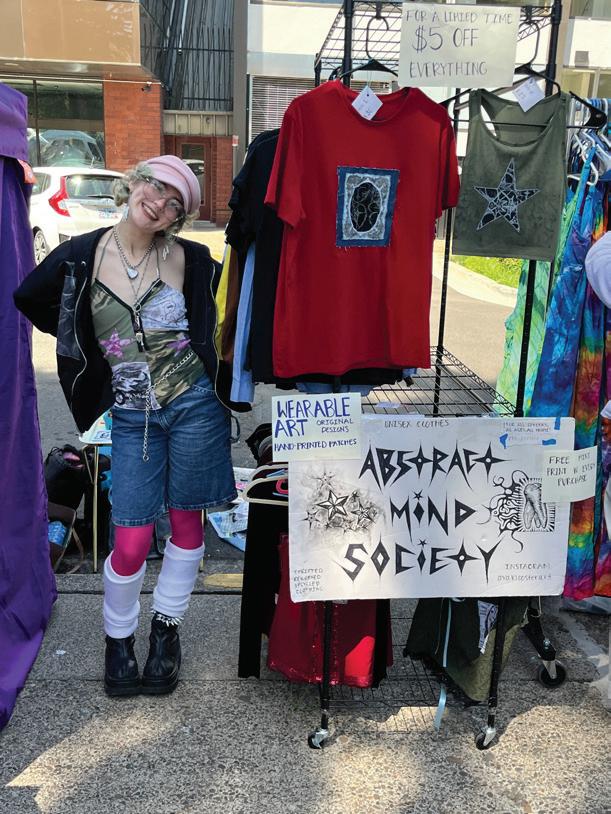
A couple of University of Oregon students are already doing it too. Sydney Tall is an advertising major and the person behind Yikes PDX. Ava Klooster is an art and technology major and the person behind Abstract Mind Society. Both businesses sell thrifted clothes, enhanced by their own custom art prints. Tall has a permanent booth at The Racks in the 5th Street Public Market, and Klooster sells at the Eugene Saturday Market.
School is a full-time job for both Tall and Klooster. The cost and flexibility of printmaking and printing on thrifted clothes allow them to keep going while being students and working on other projects.
“During the summer, I could spend 50 hours a week,” Klooster said. “Currently, I’m not actually really doing any. It’s really just when I have the time.”
Tall prefers to do all the work for her batches at once, spending a few days printing and finishing her clothes, and sometimes cutting new blocks with different designs. She does one batch a month during the school year, but manages more during the summer.
Tall began printmaking in high school when she was introduced to screen printing by her art teacher. Now she does her designs on woodcut blocks inspired by tattoo designs and street art. She finds a lot of meaning in seeing people wear her designs out in the wild.
“I would see people wearing my clothes out around Portland, like people that I didn’t even know, and I’d kind of stare at them and make them uncomfortable,” Tall said. “That was really cool.”
Klooster makes linocut prints, with the designs carved into linoleum blocks. She started putting her own designs on clothes six years ago by bleach painting them, but has been doing linocut since 2024.
“For my first print, I just got a starter’s kit from Amazon for linocut, and I did a tooth print,” Klooster said. The tooth print is a mainstay of her designs today.

Both Klooster and Tall said that community is what drives them to keep creating. Klooster said that she sells for the community, to support it and be a part of it, and Tall shared a similar sentiment.
“By sharing my art and watching people interact with it, I feel like I am accepted and appreciated along with it,” Tall said. “Yikes has helped me feel like I belong here in Eugene and it has helped me find more people like me.”
Sustainability is also important to Klooster and is a core principle in both businesses. It is always more sustainable to put new designs on used clothes than new ones.
“I think repurposing things in general is very important in this day and age because there’s already so much clothing waste,” Klooster said. “I think it’s important for people to find ways to do the things they love in a sustainable fashion.”
Klooster and Tall’s businesses are just a couple of the many student-run businesses here in Eugene. They help keep fashion sustainable and push the cultural needle forward with their unique designs and styles.
ABOVE) Armitage Campground caretakers
Roger and Carol Hansen pose for a photo Feb. 7, 2026, in Eugene, Ore.
(Julia Massa/Emerald)
(Photos courtesy of Ava Klooster)
OPINION
Emma Kahl is an opinion columnist for The Daily Emerald. She is currently a senior, majoring in written journalism and minoring in global studies. Her writing focuses on social commentary, culture and politics.
Kahl: The inhumane use of nonlethal munitions in Eugene
Continued from page 1
retaliation by DHS. The protesters explained that they showed up as part of the weekly interfaith “Singing for our Lives” protest.
“They started firing munitions while we were singing. It was a sudden but unsurprising escalation,” they said. “On Friday, things got quite heated.”
The Jan. 30 protest was deemed a riot, and President Trump even called out EPD on Truth Social for not having stopped the “criminals” from “breaking into” the building and doing “great damage.”
So, what was the damage? Video showed a federal agent who smashed a window from the inside to shoot tear gas out at the crowd.
“People are feeling scared but more empowered,” the protester said. “It’s very clear that (DHS)
wanted to escalate, and they wanted any excuse to use this force.”
According to the Geneva Protocol of 1925, the use of chemical weapons such as tear gas is illegal in warfare, yet they are being utilized by the U.S. government against protesters regularly.
Dr. Stephanie Wiley is a UO sociology professor with 20 years of experience in the criminology field. “This wouldn’t be the first time the U.S. and international standards are at odds. Our entire criminal and juvenile justice systems are out of step with the United Nations’ recommendations for protecting human rights,” she said.
Wiley explained that the use of tear gas at protests does not de-escalate conflict and has the

possibility of making situations worse. “Despite the potential for strengthening social connections within the protest group, the negative consequences of using tear gas certainly outweigh any benefits,” she said.
“Chemical sprays, like tear gas, are the last step before lethal force. I don’t believe tear gas should be used at peaceful protests, and I think there are better methods for handling large crowds when disorder and illegal activity erupt,” Wiley said.
Protesters haven’t been the only ones targeted by munitions and violence by federal agents. The Daily Emerald captured video that shows agents continuously shooting at press who clearly and repeatedly identified themselves.
While the First Amendment guarantees freedom of the press, it apparently does not guarantee that journalists will not be targeted and attacked by their own government.
A federal judge temporarily prohibited DHS from using crowd control munitions at Portland’s ICE facility after tear gas was deployed on a peaceful protest, harming protesters, children, pets and elderly people.
My question is, what will it take for that temporary order to become permanent and extend to other communities facing similar treatment? Largely unidentified, masked federal agents are controlling what they deem to be “crime” at the cost of our community’s safety and freedom.
We’re at the point where Eugene City Council has declared a humanitarian crisis, yet residents are left to deal with the consequences and fear of being tear-gassed for standing up.
Mitrovčan Morgan: SNAP shouldn’t be a coin toss
Opinion: Many UO students qualify for SNAP, but far fewer enroll. What’s causing this gap and what can we do about it?
By David Mitrovčan Morgan Opinion Columnist
The Supplemental Nutrition Assistance Program made my first two years of college possible. I’m fully supporting myself through school, and in those early years the only reason I could reliably afford real, nutritionally decent food was SNAP. But I didn’t apply because the system found me, or because the program was easy to understand. I applied because my partner was already enrolled — and she told me what it was, how to do the paperwork and why I should. That’s not a system. That’s a coin toss.
There’s a basic mismatch on college campuses: need is widespread, but enrollment is not. At UO, 39.5% of students face food insecurity, yet many who likely qualify for SNAP never use it.
That gap isn’t unique to Eugene. Nationally, the Government Accountability Office reported only 41% of likely eligible college students were enrolled in SNAP in 2024.
The largest driver is possibly social. “Students aren’t taught to prioritize food, so they wave it off. There’s this myth of the hungry college student: that all we need is ramen or iced coffee. In a lot of ways, it’s a cultural expectation that you’re broke,” Jessica Brannan, a second year planning, public policy and management and economics major, said. The problem starts with what students think they’re supposed to tolerate.
But suppose you refuse the myth. Another part is identity. So students don’t enroll because they didn’t see themselves as the kind of person who’s supposed to use it. SNAP gets filed in students’
minds as a program for a permanent “other,” rather than a short-term support designed for moments when income is low.
Part of that gap is plain bureaucratic friction. Brannan says most college students “never really had to deal with that intense of paperwork, and direct interaction with the government.”
UO’s Assistant Director for Food Security Madeline Hagar told me the costs aren’t abstract: “I think it is difficult to understand how much stress and worry is associated with food insecurity… Additionally, people’s ability to concentrate degrades, which can impact their academics, work and relationships. Prolonged food insecurity can also lead to health complications like type 2 diabetes, high blood pressure and heart disease.”
That misunderstanding suppresses enrollment among students who could benefit immediately, and it does measurable harm to nutrition, focus and wellbeing.
SNAP is “a program that we collectively pay into that is designed to give people extra purchasing power so they can buy the nutritious foods they need,” Hagar said.
Not to mention, Hagar says because SNAP is “an entitlement program, everyone who is eligible is served, unlike discretionary programs that can run out of funding.” Basic Needs is working on two fronts: access and stigma.
On access, they reduce transaction costs — time, confusion, documentation hurdles — by providing navigation support, eligibility clarification and warm handoffs that move students through enrollment rather than leaving them to self-manage a complex process.
On stigma, they utilize a peer to peer network. Julia Morrill, assistant dean of students and director of the Basic Needs Program, told me they “train students who are peer advisors… (like) FIG advisors,… RAs… students at the Financial Wellness Center and Duck Nest… students who are interacting with other students and might have a conversation.”
Through this network, Morrill says they “try to help students understand that this is a program that is meant to help people get the nutritious food that they need in order to function and be successful in their lives.”
So here’s the ask: if you think you might qualify, apply. The odds are better than you think.
If you’re unsure, talk to Basic Needs and let them help you figure it out quickly. Visit them either at Oregon Hall, or this Wednesday, Feb. 18, from 10 a.m. – 2 p.m. in the Crater Lake Rooms (145/146 EMU) for the SNAP Fair they’re putting on.
You don’t have to hit rock bottom to use a stabilizer. After all, “it’s normal… we’re all human, we all need (food),” Morrill said.
Imagine a world a few years from now, where SNAP is no more remarkable than a scholarship application. When more future doctors, teachers, engineers and managers remember SNAP as the reason they could eat while becoming who they are, that shift has political consequences. A generation that experiences SNAP as temporary support during college carries that understanding into careers and families, continuing the loop of normalization.
David is an opinion columnist for The Daily Emerald and a senior studying data science, economics and philosophy. In his writing, he enjoys finding the abstract relationships between systems and the decisions we make everyday, weaving them into a tangible story readers can easily digest.
(RIGHT) Two Customs and Border Patrol Special Response Team members fire crowd control munitions at protesters on the edge of the sidewalk from the courtyard of the Federal Building in Eugene, Ore. on Jan. 31.
(Saj Sundaram/ Emerald)
1 UO hall with 10 stories
Wetland 7 “Levitating” singer Lipa 8 Shared by us 9 Ones with forgotten memories
Currier and ___ (printmaking company)
Slangy refusal
Animal often confused with a sea lion
Clair de ___ 17 Best performances, in weightlifting
Low spiciness salsa option 19 Oktoberfest, Coachella, Gommage, etc.
“___, actually...”
“Spill the ___!” (“tell me”)
“I told you so!”
Non-native speaker’s course: Abbr. DOWN
1 Kissing loudly in the middle of a restaurant, ex.
2 Cogsworth’s friend in Beauty and the Beast (or French for “light”)
3 Surfaces for painting
4 Final enemy in a video game
5 Yes, in Paris
6 Process sugar, perhaps
10 Unagi fish
11 Fixtures on a birthday cake
12 “Thar ___ blows!”
15 Sunscreen letters
16 2020 Super Bowl numerals
18 One who might be eating an invisible baguette
20 Green Day drummer Cool or Wizards guard Johnson
21 Vulcano of Impractical Jokers
























Oregon sets records at Razorback Invitational, Millrose Games
Silan Ayyildiz and Wilma Nielsen took the top two spots in NCAA all-time mile list after Millrose Games performance.
By Rowan Shea Sports Writer
At the Millrose Games, one story prevailed: Wilma Nielsen’s mile time. Nielsen joined Silan Ayyildiz from last season as the Oregon women’s track and field milers etched their names in the history books with the two top times in NCAA history.
Nielsen wasn’t alone.
Oregon track and field is back in the record books at the start of 2026. At the end of January, the Ducks men’s and women’s indoor teams traveled to Arkansas and New York for the Razorback Invitational and the Millrose Games and left with a slew of school records snapped. The Ducks walked away with multiple Big Ten weekly award winners after overall great performances across competitions in Arkansas. Sophomore Liisa-Maria Lusti capped it off by excelling in her first collegiate pentathlon appearance.
Ayyildiz has been a force to be reckoned with since joining the Ducks in 2023. In the 2023-2024 season, Ayyildiz took the No. 2 spot in the Oregon record books with a mile time of 4:30.38. Since then, she has just gotten faster.
At the Razorback Invitational, Ayyidiz continued her dominance in the event. She set a meet record and a facility record when she ran a 4:25.11 mile.
At the Millrose Games, Nielsen followed in Ayyildiz’s
footsteps from last season. Ayyildiz ran an NCAA record 4:23.46 at the Boston University David Hemery Valentine International in 2025.
Just under a year after Ayyildiz set her record, Nielsen took control of the second fastest NCAA mile time. At the Millrose Games, the senior from Gothenburg, Sweden, ran a blistering 4:23.56 mile. Oregon now controls the top two fastest mile times in NCAA history.
While that was the most significant record Oregon set, the Razorback Invitational was a slew of broken school records.
After Arkansas, redshirt freshman Ben Smith was named Big Ten Freshman of the Week after breaking the indoor school record in shot put and Mississippi State transfer Peyton Bair was named Big Ten Field Athlete of the Week following an NCAA-leading 6,371 points in the heptathlon.
By the end of the weekend, Bair was placed as the No. 4 performer in NCAA history in the heptathlon, and he and Bryan Clay were tied for fifth on the all-time U.S. list.
Right behind Bair, setting personal bests of his own, was Aiden Carter. Carter, a junior, placed second in the heptathlon with 5,790 points and moved from ninth to sixth in the Oregon record books.
In the men’s mile, Elliott Cook placed second and Tomas Palfrey fourth. Both set personal bests and found their way into the No. 6 and No. 7 spots respectively in the school record books. Cook ran 3:53.57 and Palfrey ran 3:53.86.
Ben Smith set an Oregon record and a personal best in the shot put event. Smith threw 19.82 meters (65-0.5).
The Oregon women blew the competition out of the water in the mile. Ayyildiz and Juliet Cherubet placed first and second. Cherubet ran a personal-best 4:32.03 mile, which was also good for No. 8 in the Oregon record books.
Lusti scored 4,290 points in her first collegiate pentath-
lon, placing herself second all-time for Oregon. She placed No. 9 all-time for Oregon in high jump at 1.75 meters (58.75 feet) and No. 6 all time for Oregon in long jump at 6.43 meters (21-1.25 feet).
Oregon men’s indoor track and field ranks No. 3 in the USTFCCCA coaches poll. The men are up 10 positions from their last ranking. The women rank No. 6, up three positions from their last ranking.
The Ducks will be back in Arkansas on Friday, Feb. 20 at the Arkansas Qualifier. On Feb. 22, Oregon will be back in Boston for the DMR Challenge at Boston University. Big Ten Indoor Championships start on Feb. 26.

Oregon men’s, women’s golf struggle in first tournaments of 2026

Both golf teams opened the new year on the road with mid-table finishes. The Big Ten Championships are in less than three months.
By Harry Leader Sports Writer
Last week, both Oregon men’s and No. 3 women’s golf put up lackluster finishes in their first tournaments of 2026. The women’s team went down to Palos Verdes Estates, California, to play in the Therese Hession Regional Challenge early in the week and secured a top-five finish. The men’s team headed down to Hilo, Hawaii, for the Amer Ari Intercollegiate, where they finished 12th.
The women’s team was led by sophomore Tong An and junior Kiara Romero, who finished tied for 15th at 216 (+3). Freshman Sophie Han placed 19th at 217 (+4), a fall from success after finishing one under and one over par in her last two tournaments. Darae Chung and Shyla Singh dragged the team down with scores of 220 (+7) and 224 (+11), respectively.
The Ducks placed fifth behind multiple ranked teams, with No. 23 UCLA taking first. This finish will likely drop Oregon a few spots in the top rankings following the upset, but it is otherwise an acceptable finish given that it fought back to finish top five after struggling in the first round of play.
Oregon’s women’s team will have a couple weeks to prepare for its next tournament, the Chevron Challenge in Humble, Texas, on Feb. 23. The Ducks’ top-five finish should be just the motivation they need to get themselves back in contending status heading into the dog days of the spring season.
The men’s team fared far worse than the women, with its mid-table finish in Hawaii leaving it 12th out of 20 teams. Freshman Sebastian Desoisa and senior Casper Nerpin were the best performers, finishing tied for 33rd, shooting 146 (-10) over three rounds. Nerpin also had three eagles, the most by any player at the tournament.
The men’s team was hindered by freshmen Theodore Vigna’s and Oscar Lent’s poor performances, finishing tied for 87th with a score of 217 (+1) and 101st with a score of 221 (+5) respectively.
Oregon’s men’s team currently sits at No. 90 on the national rankings and this performance will likely see it drop out of the top 100 as it prepares for The Prestige tournament on Feb. 16 at the Greg Norman Course at PGA West in La Quinta, California.
The Prestige hosts 29 teams, including some of the nation’s top-ranked teams, and will be a great opportunity for the Ducks to pick up some much-needed momentum — if they can perform with the best of the best.
With the Big Ten Championships for both the men’s and women’s teams coming up in just over two months, their performances in these upcoming tournaments will prove if they can compete for a conference title.
(
LEFT ) Oregon women’s golfer Kiara Romero. (Photo courtesy of Oregon Athletics)
Wilma Nielsen (Photo courtesy of Jake Weinberg)



Eligibility:
Research conducted by: Sophia Sinsheimer, M.A., PhD Student, University of Oregon
Affiliation: School of Journalism and Communication (SOJC)