XEMI KNOWS WHEN TO REST AND WHEN TO BE LOUD CAITLIN
MEMENTO
INTERVIEW WITH PATRICK SHIROISHI: YURI SEUNG
EMOTIVE NOTES ON ARCHITECTURE: MAI ELTAHIR
A NEW SENSATION: PREPARING FOR A HARDCORE TAKEOVER: TAFARI ROBERTSON
POEMS BY STEPH DAVIES.
VOX LUCIS: DESSIE NYENUH
After you’ve read the mag, and if you decide that you like it after all, please come back here and make a donation to help keep it going. No amount is too small, everything helps.
If you are reading this, it’s possible that you got this copy of the mag at the launch event for the Orange Crate Magazine 2025 Philly Music Video Sampler DVD. Thanks for coming! And if you’re reading this and you couldn’t make it, just know we would have loved to have you there. It would have been great to see you smile.
Being a fan is strange. Sometimes it feels like being a ghost. But as music journalists, we have the rare opportunity to pierce the veil and directly convey our affection for the creators who mean a lot to us. I’m so grateful that the team who contributes to Orange Crate are the types of spectors who haunt with a lot of love and consideration. It’s a big responsibility to document and archive ephemeral artforms and I couldn’t ask for better folks to do it with.
If you helped make Issue 0005 of Orange Crate and/or “THE DVD” (as I call it), thank you. And to all of the artists highlighted and featured, thank you for sharing your gifts. Let’s keep it going!
Truly
Truly, Logan Cryer
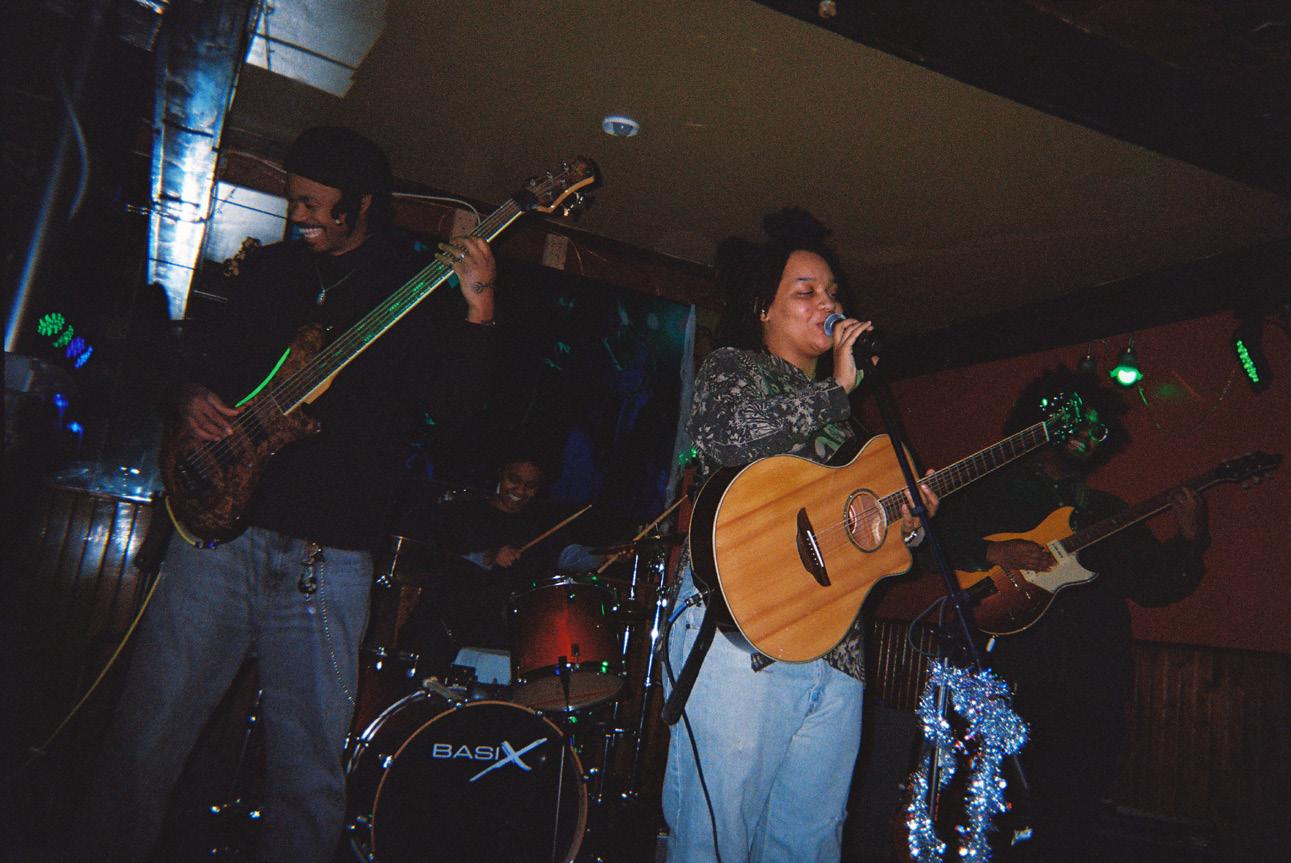
XEMI KNOWS WHEN TO REST AND WHEN TO BE LOUD CAITLIN WONG
Jade Gilliam, known in the Philadelphia DIY music scene as Xemi, is here to tell you how to be loud. A powerful vocalist and detailed producer, their talent lies in opposition; playing with minimalism in a solo ambient show one month then igniting a house to headbanging the next, they boast a distinct range of sounds that gets crowd members praising how every Xemi show feels completely different. What internal experience guides her ability to embrace such different vocal qualities — haunting and hypnotic in experimental ambient production, then sultry, soulful, and loud at live shows? Pulling from influences like Funkadelic to Paramore to Minnie Ripperton, Xemi’s duality is not one to miss. Their contrast is the interest.
Speaking with Gilliam in the tagged and beautifully cluttered basement of the Last Drop in February, we dove into her play with balance. How seemingly opposing sound and performance qualities move within the same mission: to get closer to yourself. The Xemi project is an act of peeling back the layers, to live with the pure sense of self on the surface. Their chosen name “Xemi” is an amalgamation. Originating from the Taíno word, “cemi” — sacred statues used to behold and commune with important spirits and ancestors — Gilliam drew from her Puerto Rican heritage. Incorporating an element of queerness, they chose the “x” spelling, with a nod to one of their favorite books, Audre Lorde’s Zami: A New Spelling of My Name.
On an August night, months before we spoke, I got to witness one of Xemi’s soulful rock shows in the velvety
red corner of Johnny Brenda’s. She was backed by her band: Foster Lovett on drums, Marcus Bryant aka Indoor Yves on bass, and Darius Hatcher aka Sariud on guitar. In the climax of the final track “Erode,” Xemi commanded, “Here is where you scream!” They chuckled to themselves, as if acknowledging the goofiness of the ask but the necessity of it too.
Engaging the audience with an air of nonchalant humor, Xemi doesn’t take herself too seriously. However, she isn’t afraid to be serious too. This is where their authenticity shines through: knowing when to hold emotions in their fullness, not running from the weight. Introducing track “Amalgamation” with a laugh at its context of a silly grade-school crush, Xemi quickly upended the lighthearted banter with the first note of the moodiest song of the set. A slow build of low, washy guitar and sultry, almost indecipherable, vocals make the way for eventual sonic release: suddenly, every messy emotion is captured in the scream of one word, the repetition of the title. Guttural and winding, the volume ebbs out and back again, landing the last “amalgamation” with tenderness.
“Close your eyes and imagine you are on a train,” another request, shifts the energy inwards. The performance of “Bliss (Train song)” gives four minutes to be with yourself, subject to whatever arises in the atmosphere of a spacey guitar loop overlayered with found sound, bells and clacking metal diegetic to a train ride. The audience is defenseless: disarmed and standing eyes-closed in a crowded room, trusting everyone is doing the same. Look, and the spell will be broken.
Xemi knows how to entrance a crowd, effortlessly creating environments through storytelling and sound. “Production is a big part of my identity as an artist,” they say, “and I want to bring that part into my live performance.” Imagining what a set could look like without a band, Xemi began hosting a string of solo shows with a focus on ambient experimentation after dropping their first EP Erode alongside a set at Bridgeset Sound in April 2023. In solo performance, her background as a classical musician shines through. From starting as a
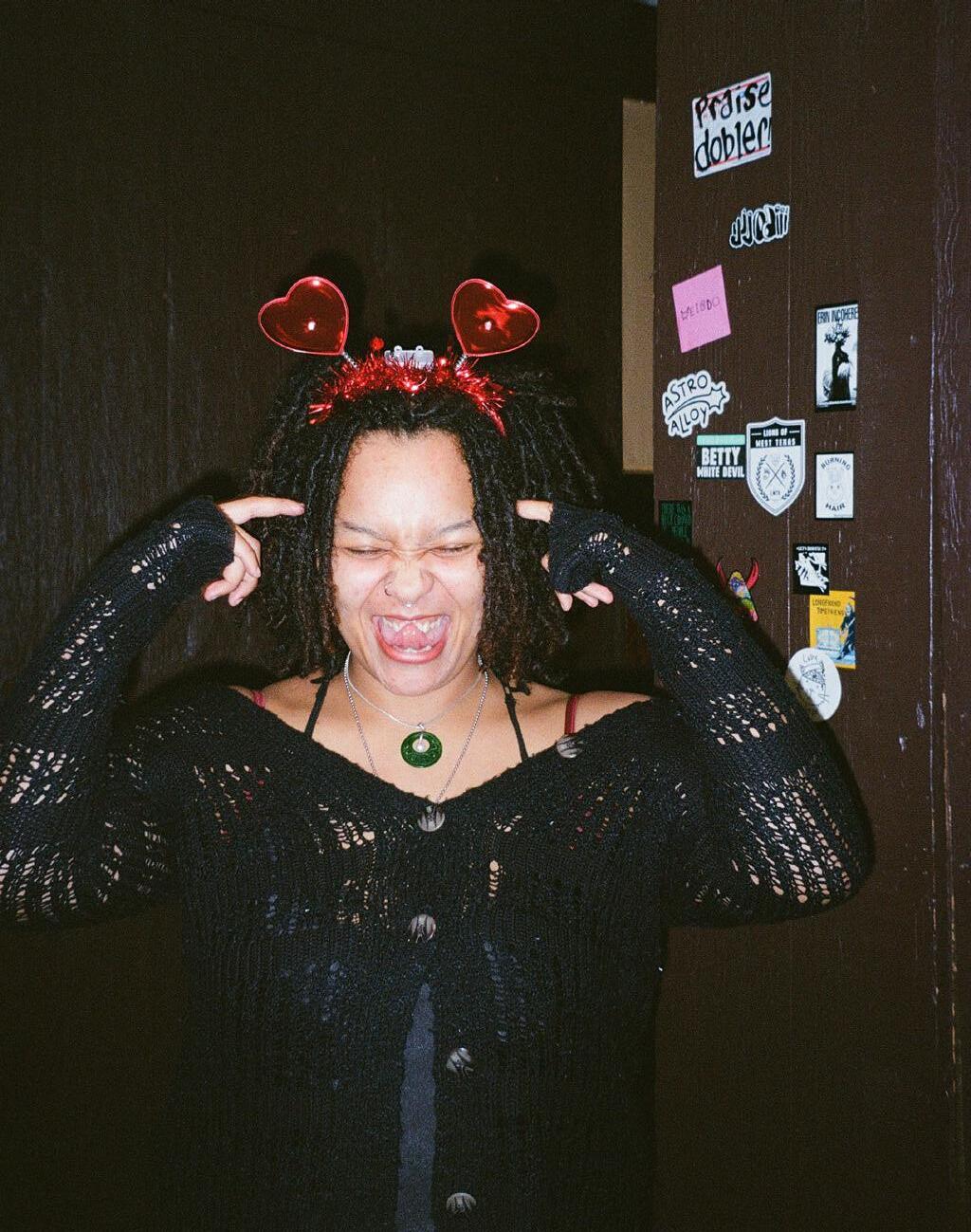
Xemi. Photo by Caitlin Wong
violin kid to studying music with a focus on medium—where sound is your material and the trick is digging into the corners of how far that material can be pushed—Xemi moves with an awareness of highs and lows. Even in absence, their sound remains full: textures hitting a range of tones, filling every timbre like an orchestra.
Their loop-driven and tranceful ambient performance provides a different sort of realm to embrace authenticity. Get a taste in “Xemi - Live in Studio,” an hour-length livestream recorded at Bridgeset in 2024. Featuring Xemi at her most abstract and candid, the set oscillates between drawn-out oceanic textures and instrumental play. Throughout, Xemi shares tidbits of themself, engaging the crowd with the same personality behind the scream.
“That’s why I like being in the DIY scene—I’m talking to a small group of people, I’m here to share these things, and I hope you can walk away with something from them,” explaining what drives them to performance. “Sharing music is very vulnerable but I like that. We all come together in this space and we experience this thing.”
Witnessing a Xemi set, you can feel the connection between their vulnerability and the sea of people looking for their own. Whether performing solo or rocking with a band, Xemi transforms the stage into a space to get out the ickier feelings, make them into something that sounds beautiful. Gathering to gather, let your eyes close and go through this thing together. “Just stand in a room of music!” they say. “It’s good for you.”
From left to right: Indoor Yves, Foster Lovett, Xemi and Sariud. Photo by Jax Gilliam
MEMENTO MUSICA: REFLECTING ON MUSIC IN THE 28 DAYS LATER SERIES
JOSEPH ROGERS
Will the music you’re listening to today still matter in 28 years? This is a question posed in 28 Years Later: The Bone Temple, the newest installment in Danny Boyle and Alex Garland’s 28 Days Later series of UK zombie flicks.
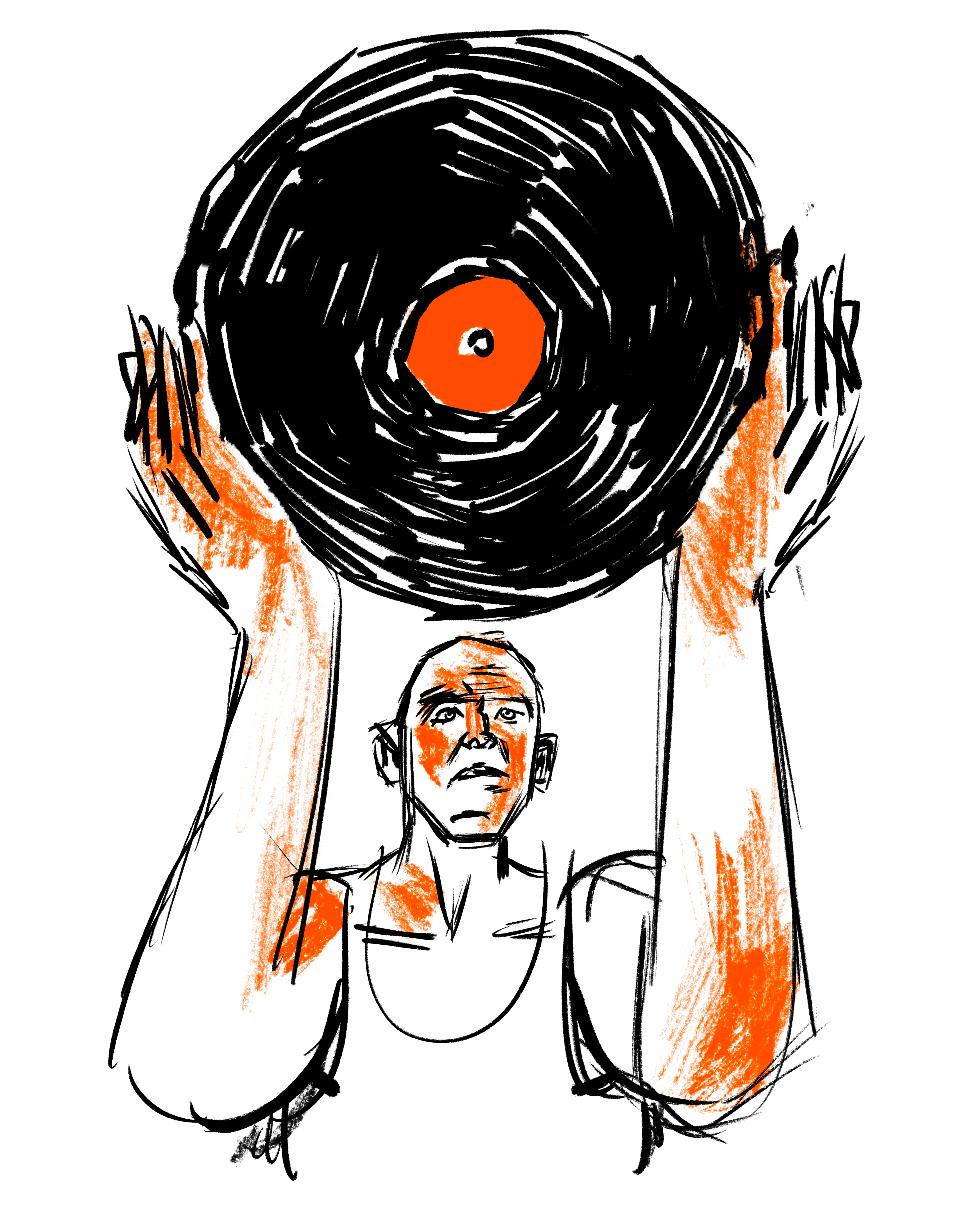
Bone Temple, directed by Nia DaCosta, picks back up with Ralph Fiennes’s Dr. Ian Kelson, a lone survivor on the quarantined British mainland who coats his body in blood-red iodine and spends his days cleaning the bones of the dead for a hillside memorial art piece, a memento mori… a bone temple. Samson, the local “alpha” zombie leader played by Chi Lewis-Parry, visits him regularly to exploit the numbing, opiate effects of Kelson’s tranquilizer darts. The doctor and the temporarily docile, drugged-out, Samson strike up a strange friendship. Kelson begins to experiment with a kind of music therapy, pulled from his own salvaged stack of vinyl.
Yes, in this movie, Ralph Fiennes and a generously fullyfrontal-nude zombie berserker dance to Duran Duran’s “Rio.”
In another scene, Kelson researches a cure for the infection in his underground shelter— his song of choice, Radiohead’s “Everything in its Right Place.” Later on, in a gambit to fool a cult of satanist chavs, he’ll be forced to give an impromptu pyrotechnic, lip-synced performance of Iron Maiden’s “The Number of the Beast”. It’s the extreme form of the desert island disc, songs that you’d carry with you to survive but also to fix the world.
Diegetic uses of popular music, where characters actually
hear the songs being played (e.g. Guardians of the Galaxy, Stranger Things 4) have the power to almost instantly bring us into a character’s interior world. Kelson’s music choices are deeply endearing, a glimpse back at a much younger man collecting sounds and styles. Dancing with a monster, constructing a monument to remember death, Kelson just can’t help but seek connection, to empathically shape and define his world through art, even at great personal risk. These records encapsulate all his eccentricities that persevered despite the apocalypse, rather than as products of it.
I left the theater wondering what music I’ll be listening to someday, what essential parts of myself will carry on decades from now. Is there a point where one’s identity crystallizes and are we thereafter equipped with the tools to reconcile with our world?
This gets at another aspect of Bone Temple’s needle-drops, one having to do with the otherwise alienating effect music has been used for in this series. In the first film, 28 Days Later, composer John Murphy’s score punctuates, with mounting rock-dread, long lapses of quiet listening. This eerie, pulsing sonic landscape is there to dissolve away whatever lucky mundane moments the characters get to just be human.
For last summer’s followup, 28 Years Later, Scottish prog hip-hop outfit Young Fathers pushed further the separation of individual and world. In one sequence, a father and son set out on a ritualized, coming of age zombie hunt set to a throbbing, lofi remix of Rudyard Kipling’s war poem “Boots.”
“Boots, boots, boots, boots, moving up and down again, There’s no discharge in the war!” shouts a shrill voice as archival footage of Boy Scouts, WWI troops, & Lawrence Olivier’s WW2-era Henry V flash by on the screen. Here, music has burrowed deeper into the historic, cultural terrors of our world to channel the foolish, ritualized call to war that whispers through time and into the nervous young boy’s ears.
In this context, Bone Temple’s needle-drops serve not just as insight into a character’s soul, but a resolution of dissonance. As the overarching narrative of the saga shifts away from cynical chaos and towards building bridges, it is now essential that music play a central role. Where it was before utilized to signify the divide between individuals and a violent world, music must now, through Kelson and Samson’s dance, play a more direct role— as a tool to negotiate, to guard, and to reconcile.
Please submit your own Bone Temple Picks to Orange Crate. (orangecratemag@pm.me)
A song to repair the relationship between zombies and humans.
Illustration by Joseph Rogers
THE TRAP
You. are. trapped.
You fight the man without ever having felt the grasp of his hands around your throat, without tracing the scars and gashes on the skin of the kin of those whose blood flows through the soil of this land.
You claim to salve the wounds of our world without ever having bandaged a sibling in the street, nor even taken spiritual leave from the institutions whom you spit upon from inside their very vehicle, if not the driver’s seat.
To you, worth is derived from the best words you can pluck from instagram posts and authors with whom you share nothing but fantasy, and that’s just it right there: to you, liberation is a fantasy. So long as your pockets run deep, it’s a game to fill the time.
It’s play pretend, where anyone outside of your ambition and drive is simply a character that you get to make dance across the stages of collective despair, and only speak as suits your activism: profits, promotions, follows and shares.
I’ve met real profits before, they sent me $5 so I could eat, they saw my future, rooted in blood, bone and flesh, not in theory.
So this isn’t just poetry or a speech, it’s a spell: a hex upon those who liberate their own egos more than anyone’s dignity.
Now, dignity would never pressure a tree to bear its fruit, or conflate the fruits with the tree; I don’t demand your growth at a pace more tasteful, or deny your multiplicity, but when we have more than enough to share, what becomes our responsibility? Have you considered this?
I’m not the arbiter of your path or purpose, and wouldn’t tear you from the forrest just to teach you a lesson, but I will remind you that what connects us isn’t what we think, it’s how we listen with our bodies.
To the Earth, her lands and seas, our mycelium, roots, and weeds, tangling up towards a future we know is not a dream, but an inevitability.
Sometimes, the greatest action we can take is to sit with what is inside of us, long enough to hear the truths our bones are begging to reveal.
To revel in, rebel against, and revere.
To parse through what is mine, what is ours, and what has yet to be seen, and perhaps most importantly, what must be released and given back to those who bestowed upon us an addiction to violence, guilt, and greed.
To grieve, and compost the pain that no one was created to bear.
If we wish to work together, to dream together, we must first practice how to be, together.
Being together will feel threatening so long as we believe whiteness will keep us free. White ego is the most damning delusion; a race with no winner, a mascot with no team. It reveals the lengths we’ll go to overthink our very breath, rather than feel the flowing rhythm of our chests. It revels in doing the math, in creating more problems that need solving. It rebels against our nature as spiritual beings, degrading the ancestors as woo-woo bullshit, or using them to bypass. Whiteness reveres revolution as a one way ticket, rather than a rhizome of intersecting paths.
I’ve learned that most of all, whiteness is a mask.
A mask of all our faces, every detail just the same.
But without softness, wrinkles turn to cracks, tears suspend in plastic, and our deepest wounds are written off as just a part of the cast. Whiteness freezes us in fear, detaching our contradictions from their beauty, our paradoxes from their pain, our passion from our humility.
We wear it in hopes it will relieve us from being implicated in this mess, and that right there is the trap.
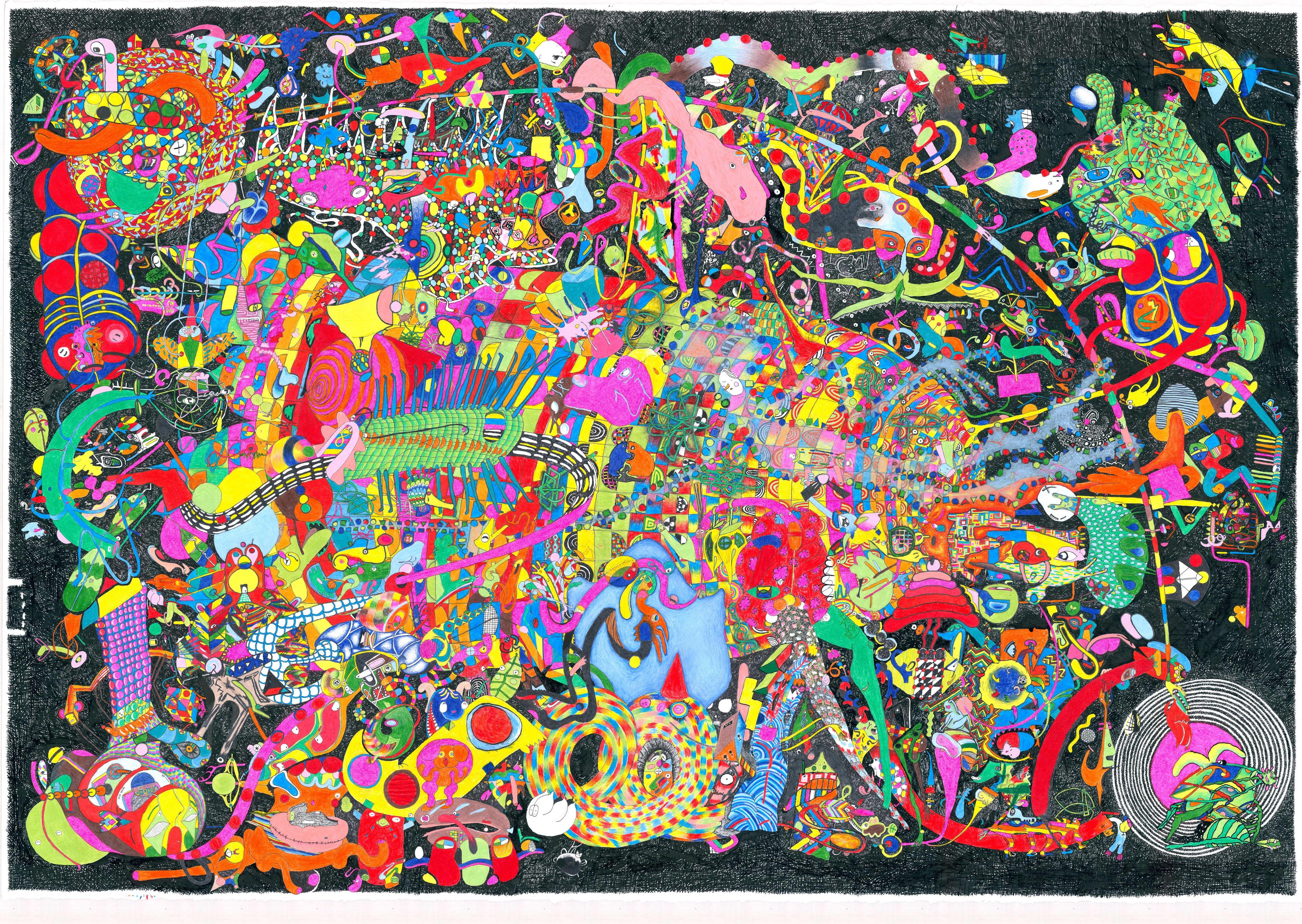
White Whale by Soso Capaldi
INTERVIEW WITH PATRICK SHIROISHI YURI SEUNG
Patrick Shiroishi is a Los Angeles–based saxophonist and composer whose work moves between solo improvisation, noise, punk, and composition without settling fully into any one space. Working primarily with the alto saxophone, he’s known for a breath-driven intensity that pushes the instrument toward its limits. His music carries the energy of punk basements and improvised music rooms, yet never feels confined to either. I had been listening for years before we met, drawn to the way he sustains intensity without losing care.
His East Coast tour coincided with a period when I was leaning more fully into my own sound projects, conducting miniinterviews for this magazine, listening and recording whenever I could, and tracing the line between the tender and the extreme. I’m drawn to artists who can hold that tension without turning it into spectacle, and I sensed that in both his playing and the way he speaks about it.
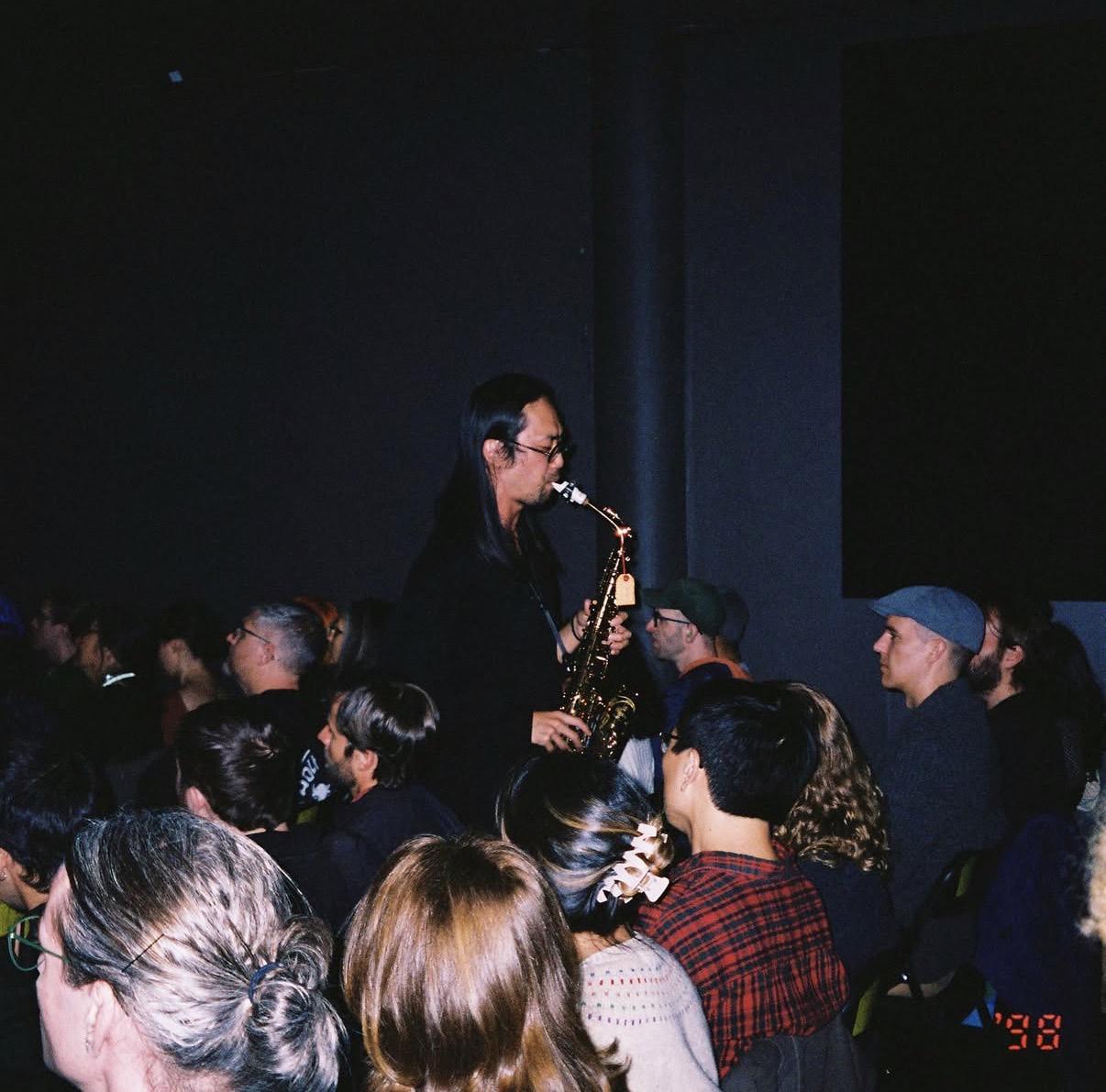
We finally met in person before his performance at Asian Arts Initiative last November, as part of his Forgetting Is Violent tour. Behind him, a projection screen cast shifting images that seemed to expand the room. The performance stretched and tightened, with passages of breath and metal pressing to the edge of rupture, then easing into pauses that let everything settle. The images did not explain the sound; they gave it space. Listening felt shared. That sense of shared attention carried into our conversation, where we spoke about sound as memory and document, improvisation as relational listening, and the ethical dimensions of making work shaped by collective histories—questions that continue to shape how I listen and make.
One thing that’s really resonated with me about your work is how it sits with memory, silence, and collective history. You’ve spoken about exploring your family’s ancestry, including your grandparents’ forced incarceration at Tule Lake during World War II, as something that quietly informs your practice. How does that history live in your relationship to sound now?
My solo practice has always acted as a space where I can actively work through & process things, from the joyous & hopeful to the devastating things that are happening around me/have happened to my family. I’ve always heard that the past repeats itself, & maybe when I initially heard it I was too young to understand what that meant. Working through & processing what my grandparents went through in the concentration camps, stripped of their rights just because of the shade of their skin & then seeing the same thing happen in the present day with this current administration & ICE... it’s frightening. There were times when I felt like I was indulging myself with this “real time processing put to music,” but then to see people taken from their homes & placed on land where Japanese Americans were held not too long ago under the same circumstances...it’s important in this age of fast information to keep talking about things that have
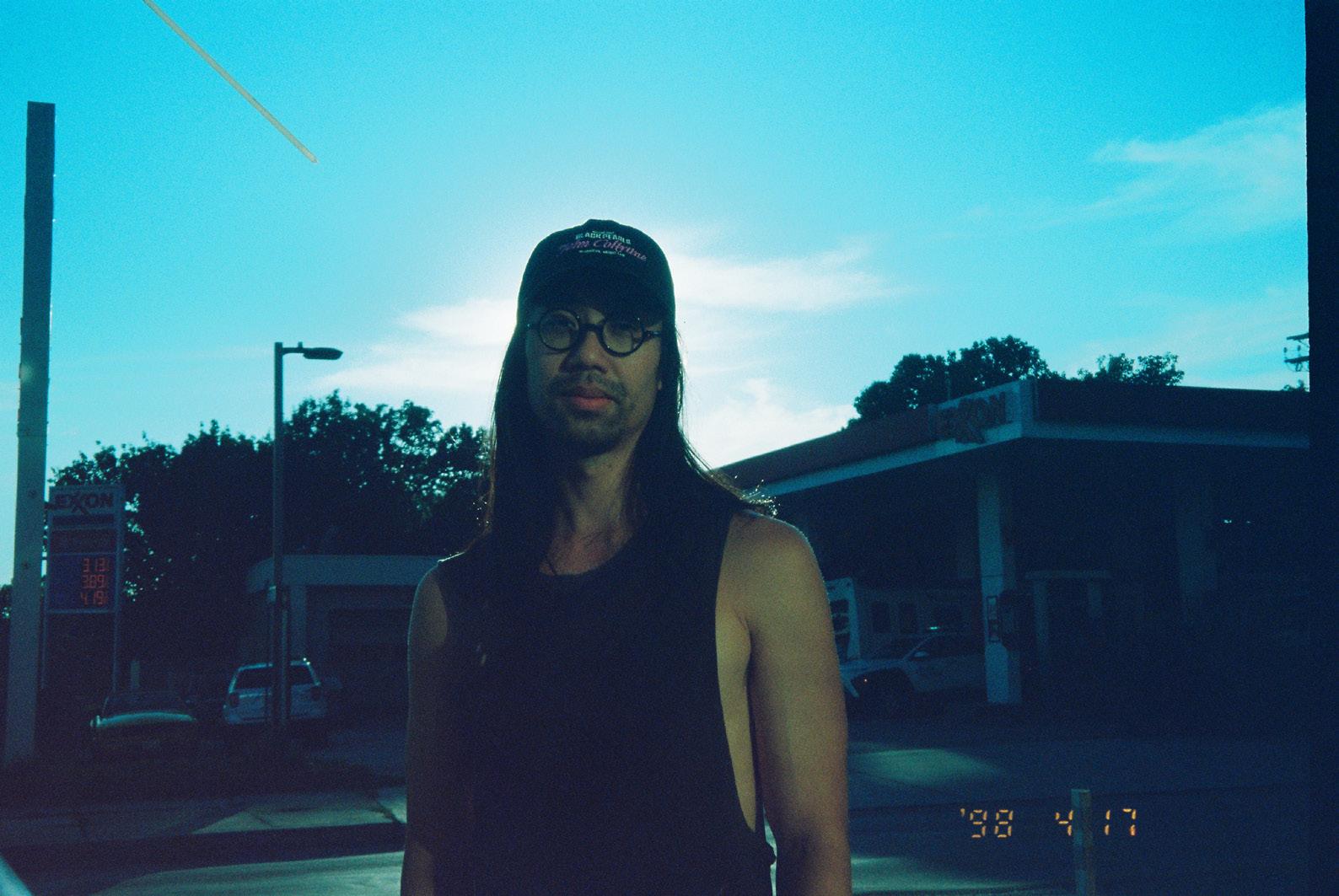
Patrick Shiroishi. Photo by Jack McBride
happened, so that there’s a stronger chance of it not happening again.
I think everything that my parents have gone through, everything that my grandparents have gone through, that all runs through me & is a part of me. I believe that when I am in a freely improvising space, they can communicate through me, as cheesy as that sounds. Although I might not be explicitly talking about it or titling songs or records about the camps & that history moving forward, they are all with me when I play through the horn.
I’ve noticed how your music often moves between composed structures and open improvisation. I tend to think of improvisation as demanding immediacy, while history accumulates slowly. What’s it like for you to hold that tension while making music?
I love that. I try & look at improvisation now as a sacred thing - but it took me a little while to get there. I’ve had - & still have to a degree - nervousness that encroaches before a performance. It was more intense when I was younger to the point where I had to have a drink to take the edge off, but thankfully in the past few years this hasn’t been the case...I’m grateful to play an instrument I can close my eyes & play! There’s a beautiful quote by Eric Dolphy, “When you hear music, after it’s over, it’s gone, in the air. You can never capture it again.” It gives the notes we play when we improvise weight, that these ideas, emotions threaded through sequences of notes & sounds is specific in that moment, it demands your full attention - both from player & listener. There’s also a weight when trying to convey what I’m feeling & what my family has gone through via instrumental music, I feel like you have to be present to do that, & that no matter what kind of day I had, it’s a blessing to be able to express these notes to a stranger’s ear.
You’ve described improvisation as a form of relational listening. How do displacement, or the absence of a fixed “sound,” change the way someone listens, responds, or composes?
I think in the exact same way where someone produces a fixed “sound” from the absence of it - it attracts your attention. Both in a solo setting or a group setting, in my playing right now this is an important part of my practice. I can see how the absence of sound can seem like the musician is not contributing to the whole, but on the contrary, it’s the opposite - the yin to a yang.
Across your collaborations, the collective presence often feels more central than individual voice. What does collaboration make possible for you that working solo doesn’t?
I’m so glad it comes across that way - it’s important for me that when it’s a group collaboration it’s exactly thatindividuals coming together to become one, to make a statement as a whole.
Collaboration for me is a joy. With each passing year, community becomes more & more important, & collaboration is an offshoot of that. With the trajectory that the states are on right now it seems like we are going to need it even more, not only from a music standpoint but from a human standpoint.
But I digress - I come from a more punk/DIY background & before getting into improvised music were in bands. The way
we would play & guest on each other’s records instilled the early sense of community that still drives me today. Coming from the same space & making a collective statement is such a strong, powerful thing. Everyone also comes from a different background, I try to look at these encounters as a potential spark for me to do something different & from that, expand my own sound & solo practice.
In some of your pieces, sound feels closely tied to place or lived experience, while in others it feels more open or abstract. When you’re making a piece, how do you think about the role sound needs to play?
My solo output is very specific & used to work through/express what I am feeling in those moments of writing. All the sounds or absence of, are all in favor to support that statement. With instrumental music it’s a little bit of a difficult thing to do, all you have in order to convey your message is the music and title of the composition. Also, depending on what headspace I’m in should be taken into account too....sometimes I’m listening to heavier music with tons of layers & other times super minimal, really bare recordings, I think that all plays a part subconsciously as well.
I’m curious how you think about care when working with sound that carries a lot of history or emotion. How does that shape what you choose to bring into a piece, or what you decide to leave out?
Being really honest with myself about what I’m doing, putting what I’m trying to express at the forefront instead of what is “hip” or will sell more records etc, having that as the core & center of the music I’m creating equals care to working with these sounds. I don’t think I’m an amazing player or have incredible technique, in fact sometimes I get down on myself for those things, but what I do have is this urgency to speak out against what is wrong, a desire to support the community as best as I can, to tell the story of my grandparents, parents & myself...I think these things can go a long way. Even if my music isn’t remembered, but I can make it 1% better for the next generation, that’s worth it. After all, these sounds just go into the air.
Patrick Shiroishi at Asian Arts Iniative 11/08/25
Photo by Jack McBride
emotive notes on architecture MAI ELTAHIR
A quote by Alexis Pauline Gumbs presents an invitation: “What touches us, touches us back. Architecture is a response in longing.”
Do the remains of migratory catastrophes, violent dispossession, and rebellion that occurred on that very place linger? Does the visitor encounter distant echoes, hot flashes, or memories heard/seen/felt? Are the blocks sad?
Or perhaps an irregular tempo or a lag during a familiar commute—at times a soft blow or screeching halt between our interior emotive world and the surrounding environment.
A contradiction emerges from a routine that feels insidious in its undertaking: paths with vacant lots unsettled by lively voids and wispy spirits, and machinery sounds trampling memories of life-making and belonging.
How does longing persist within a place? Do the aches of history hold within the built environment?
The remains of the old appear as murmurs of the new. The trance is ripped..
The heightened contradiction bridges an impossible distance between emotions, place, and architecture. I find myself in awe of this distance. The longing, desire, grief, and loss stitch new architectural landscapes and bring together a transversal interruption to our built environments. One that invites a sensitivity to experience a locality and the potential to convene in other realms where the shocks, entanglings, attractions, and oppositions live. It is less about architecture treated in isolation than the historically brutal arrangement of spatial infrastructure that incarcerates sociality, resistance, refusal, or as Stefano Harney mentions, instances “where regulation meets resistance, where symmetry slips”.
What social infrastructure emerges when sonic frequencies and sounds seep into and disorder rooms that would usually be off-limits?
What kind of resistance edges the contours of colonial monuments and lifeless luxury apartment buildings?
What would atemporal architectural landscapes that account for historicity and the relational feel like?
What happens when the voice of “reason” fails as a register for how we share with each other, with the land, with our surroundings, and with the environment?
to yearn,
to surface a place, I invite you to long for another world. to matter.
Towards new curiosities and modes of feeling architecture.
I dwell on how we slip into one another, into the past, the natural, inorganic, more-than-human, and the environment. I am especially intrigued by how we leave vestigial traces of ourselves on walls, sidewalks, roads, and alleyways, leaving behind unregulated sonic, material, and unseeable textures and surfaces.
What does it mean to…
To desire, to long, to be generous and pained.
to matter.
To share and be in relation.
To ruminate on a place, memory, feeling, or touch
To seek the distance created in this world that keeps us from reaching for each other.
A NEW SENSATION: PREPARING FOR A HARDCORE TAKEOVER
TAFARI ROBERTSON
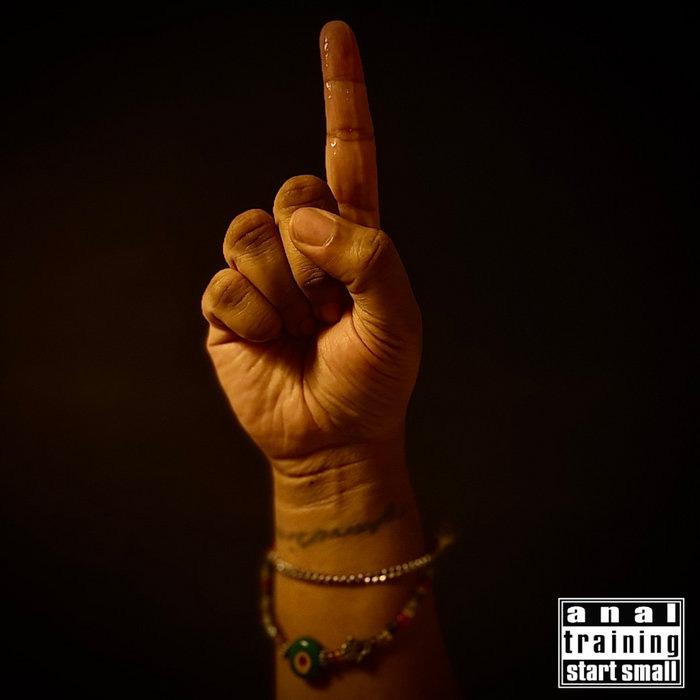
Anal Training, a new addition to Philadelphia’s Black hardcore lineage, launched onto the scene with a domineering demo aptly named start small. A single lubricated finger decorates the cover, readying you for a new or perhaps delightfully familiar but nonetheless visceral experience of listening pleasure. What follows is an earnest and heavy thrashing.
The opening track, “quickie”, is a guarded and hopeful lament for a simplified sexual exchange, somehow yearning and horny at the same time without ever losing pace. Over doomy riffs that remind of basement circle pits, lead vocalist, Syd Villard, is both caring and crass, demanding: me and you are broken and confused/ tear you apart and lick your wounds, kindly followed by the pulsing refrain, let you into my hole/ not into my heart. It’s a desirable honesty. To be Black, trans and loudly wanting is a political declaration demanding to be heard through an eerily heard through an eerily fascist era that encourages us to confine ourselves to live quiet, soft lives, work well, and be chaste.
“bury me in the backyard” follows steadily on this two-song powerhouse of an introduction to Anal Training. Let’s start over again/ and again, is the final call at the end of this clarifying demo. Their songwriting is refreshingly actionable and penetrative, while playfully adhesive to a nostalgic Black musical tradition. The self-declared three piece pioneering Philly “butt” rock consists of Villard on vocals, Maya Coplen on drums and guitar, and Ra Primus on bass.
Interview with bassist, Ra Primus
How did you come to the name Anal training?
I had a near death experience back in 2024 due to a medical crisis. My heart broke quite literally, and I was hospitalized for a little over a week. I had to do a lot of reconciling with what exactly I was living for.
At the same time, the music scene here in Philly was super buzzy. I started thinking a lot about big, significant cultural moments, like Harlem in the 20s and Chicago, Detroit in the 60s, and Memphis in the 60s, and like New York in the 70s, Seattle in the 90s, Atlanta in the early 2000s and I was like, “You know what, like, Philadelphia right now is where it’s happening.” So all these things aligned and something clicked in me and I was like, “I know what I want to do. I want to be a hardcore girly.” I started listening to all these different bands that I had never listened to before, going to all these shows. I went to Break Free for the first time in 2024.
All of these, like, Hatefivesix’s [a popular Philly hardcore videographer and protest archivist] would pop up on my youtube feed and I would be like, “damn, these band names are kind of crazy”. I was noticing the themes and motifs of hardcore band names and stuff. So I started a
list of names I thought would be funny as hardcore band names. It was Christmas morning, and I was at the breakfast table with a few of my friends and my friend Hazel mentioned something about anal training, and I was like, that’ll be a good one and I wrote it down.
Juneteenth is when I met Maya and we started talking about hardcore. We’re just talking shop because Maya has been in a bunch of bands. We were both talking about how we were kind of new to our instruments. Maya has been playing bass and guitar for many, many years, like over a decade but just started playing drums during lockdown. I just started playing bass during lockdown. And we both were like, “”Well, we want to play hardcore music and want to learn. We want to practice our instruments together.” We have such intense musical chemistry. It was so magical and electrifying.
She asked, “Do you have any dream band names?” And I was like, “I don’t know about dream band names, but I do have this list”. She was saying that it’d be cool if we were kind of funny and Anal Training was the funniest one there. So that’s what we picked, and that’s what we’re called now.
What’s your connection to Black music history and how do you make the connection to hardcore?
Back in 2018, I lived at this apartment on 50th and Locust that was right across the street from a church. They give you little programs that tell you about the sermon with the scriptures and stuff. In this one, the pastor had a little blurb about how HBCUs were started in the basement of churches. I remember reading that and thinking that’s the punkest shit I’ve ever heard.
It was a time where I would wake up on Sundays and I would hear the choir from the church. It was also when I was going to a lot of basement shows at Cousin Danny’s. It just took me back to growing up in church and seeing live music every week.I also grew up watching a lot of VH1 classics as well. I would go to church and I would listen to music and I would come home and I would watch [mini-series] like The
Jacksons: An American Dream, and watch documentaries about music, and I’d watch concerts and watch pop culture commentary about music. It’s always been the constant, most driving force in my life. So it’s hard not to compare it to everything else that’s happening in my life.
There’s just a direct line for me between church, gospel, negro spirituals to blues to rock and roll to punk to hardcore. It’s one straight line for me, it always has been.
What are you excited to step into? Is there something that you do know that has happened that you’re excited to participate in?
I’m excited to be all Black. I’m excited to be all queer. I’m excited to be all trans like I am excited for our bodies to be represented and our experiences.
I’m excited to take up space mostly, and be here and queer so get used to it; loud and proud. I’m really excited to step into this space in a way that feels accessible for people who look like me, who are in community with me, who maybe have always wanted to go to a punk show, but never thought that the space was for them. Yeah, I’m excited to take up space and to make space.
Is there a particular part of either of the songs on the demo that you’re especially excited to talk about?
I love a lyric in Quickie that’s like, Don’t want to kiss or make love, just my hand to fit like a glove. That’s my only rule of thumb. It doesn’t count if I don’t come. I think that’s so clever. When you think about the origins of the phrase rule of thumb, which was back in the olden days, where it was completely legal for men to beat their wives if the object they were using was smaller than their thumb, so that it didn’t count.
Switching that and being like, “just my hand to fit like a glove. That’s my only rule of thumb. It doesn’t count if I don’t come.” It’s so amazing. I think it’s essential that it comes from Syd as well. I would absolutely hate it if a white man grabbed a mic and went, “it doesn’t count if I don’t come” because coming from a white man, that’s actually super fucking violent.
I love how clever it is, and I love that it’s coming from Syd and it’s something that I really want to protect and keep but it’s hard because the music is for sharing. But it’s like, how do we keep it? How do we keep it in the community? I guess we’ll find out after we start playing shows.
All photos courtesy of Ra Primus
From left to right: Syd Villard, Maya Coplen and Ra Primus
FEATURING:
ABBATIA, ASPHALT SAVANNAHS, BLACK HISTORIANS’ DEPARTMENT, ELENY SHAI, GOOD NIGHTOWL, MAGIC AMERICA, THE MOON BABY, MORGAN GARRETT, QRTR, RENTBOY AND SHYGODWIN
Inquiries: orangecratemag@pm.me
STEPH DAVIES
TIME REVEALED
Now a great deal can not be said. We will have to avoid any claims
in the name of the father, justice, or law; none of which deserve the name now
in light of what’s been done. At a certain point,
paint failed to convince against the testimony of light. Then we said:
‘Our paint now becomes the testimony of all that light has cast in shadow.’ But
none of this is suitable to say now, in light of what’s been done.
MILES AT DAWN
This sense that it was tragic got in the way of starting out Until we resolved to put the books back on their shelves And accept a few things as they appeared.
Then came the joy that what you’d hoped for Was really possible, or could at least be attempted Together with everyone you knew and loved; That rough drafts of the novel should be scrapped In favor of a changing orientation towards the future; That the truth was not yours to tell—just a few small details Intended for the ones with a hand in deciding Their meaning. So what was there to fear?
Ever to try something new is batshit— Immediately the old comforts are lost And you’re loosed like pioneers in a violent fantasy Roving the jagged terrain. But this knowledge is exciting! Like the feeling of getting away, probably The only way any of us gets here in the first place: Somebody, sometime, goes running from something And the shame of it outruns them—Still, This shame is not their meaning, nor is it The meaning of these kisses. Pardoned suddenly At the last second, erupting into fits of laughter We exited the hanging garden, doused with rain And decided it was best to remain undecided On the fate of all life, or the day it all began.
TINTIN IN TIBET
Coming to the verge of wasting our lives, Feeling the pressure, thinking it best To examine old ideas and see What stands, what we stood against:
The infinity of the white page, a chance To start anew—or fail again, no better Than last time, with less to show For years gone by. The space between
Achievements growing ever-wider, The heart asks permission to lay in bed Naked, set effort aside and gaze Once more at old pictures. Meanwhile
Nothing in the street slows down; not the traffic, And not the ones who stroll against the traffic —Whatever pretensions to leisure they hold, They keep rushing. They pass
While we sleepwalk invisibly, swirling The day back and forth on our tongues Like lukewarm coffee. Soon we will need A vacation, even, from this.
VOX LUCIS DESSIE NYENUH
[minor spoilers ahead]
There is an upcoming A24 production about the dark personal past of a huge female pop star, and I cannot help but be reminded of a Neon production about the dark personal past of a huge female pop star. Stories involving fictional musicians is one of, if not my favorite, niche genres, so I will most likely be seated for this. David Lowery’s Mother Mary has yet to be released, so at the moment, there isn’t really much I can say about it. Now the other one…
Loosely translated to mean “Voice of Light”, 2018’s Vox Lux is described as a 21st century portrait by director Brady Corbet.
It is one of my favorite movies, and a hard watch.
Vox Lux is composed of three acts, and each of those acts are established or punctuated with an act of violence. Although they don’t all take place in the US, these acts of violence relate to the US in one way or another; school shootings are overwhelmingly American, 9/11 in the second act, and even a shooting in eastern Europe in the third. We can infer that our main character, a major American female pop star known mononymously as Celeste, has an image that is significant enough to represent American “values” to those outside of the US (excess, indulgence, “‘freedom”’).
And while Celeste is not necessarily at the center of all of these events, she is touched by them in one way or another; the first act of violence is an attack on her high school, of which she is a surviving victim. Celeste and her family are New York natives themselves, and 9/11 holds a significant weight in the minds of almost every American.
Going in expecting a pop star epic and immediately being met with violence is jarring, to say the least.
Vox Lux received mixed reviews due to the unexpectedness of the movie as a whole, from content to form. During a Q&A at the 2019 Toronto International Film Festival, Corbet speculates that the reason it was difficult to get the film produced was the stark difference in tone from the first to the last half. “The first half of the movie’s minimalism, the second half is maximalism. The first half is impressionistic, the second half is expressionistic. We have Scott Walker’s score, we have Sia’s pop songs…”... “The tone evolves and changes a lot over the course of the film.”
The difference in tone is one of the ways the film presents the difference between how something looks and how it actually is. The decision to use pop music is a telling one. There is a briefly featured, yet significant, character; a sludgy metal musician, who does not attempt to mask his own issues at all. During one of him and Celeste’s first interactions, she tells him that he makes the same kind of music as “the boy who attacked her,” and that she likes pop music because “I don’t want people to have to think too hard. I just want them to feel good.”
Pop, here, is a genre and industry characterized by presentation and perception, made especially clear when placed next to a genre like metal, so characterized by dysfunction and dissonance.
This being the film’s defining ethos of pop is a sentiment especially relevant in a post-Britney Spears-America. We were shown then and are shown here that stardom and violence are not separate. And it’s not as if this hasn’t been done before (Perfect Blue, Smile 2), but I rarely see Vox Lux mentioned when this subgenre is discussed, save for me and the 10 other Celeste stans on Twitter. And while many of those who have seen it find it obnoxious, it sort of feels like they’ve missed the point. During the third act, we see Celeste — all grown up as Natalie Portman — and what years of the spotlight has shaped her into. She often goes on long, vague tirades about American pop culture and “how the world is,” carrying herself away from her loved ones’ attempts to connect with her. These moments seemed to be the ones that viewers disliked the most, but these criticisms are part of what makes this film so impactful for me. The way these visceral reactions completely mirror the reactions of those around her in the film itself, proves this film’s point.
It’s an uncomfortable realization to come to, especially when you realize that you don’t even really like this character yourself. But I think this forces us to confront our attitudes towards pop female stardom, and even further, what it means when extended to our attitudes in general. Many viewers say her turn from her youth to her established stardom and adulthood was too sharp. While I feel as though we are given enough context to fill in the rest, the general consensus was enough to show how many of us still find it so much easier to dislike Celeste, and the movie as a whole, and leave it at that. I think of Chappell Roan’s transparency regarding everything from aggressive paparazzi to musicians needing health insurance, and Doja Cat expressing disdain for her boundary crossing fans. Both women who have been maligned in print and social media. And whether they were for good reasons or not, I don’t know how many people thought that what they’d said was untrue… But there is an expectation for our female pop stars to only exist for our entertainment.
Voices of light come to us in unexpected ways. Often in ways we don’t like. But that doesn’t change the importance of their existence. Vox Lux is one of the most compelling representations of our modern world that I’ve seen, and I’m not only saying that because I listen to Sia and Scott Walker’s soundtrack regularly. If you’re interested in seeing Mother Mary in April, I strongly suggest this for a double feature.