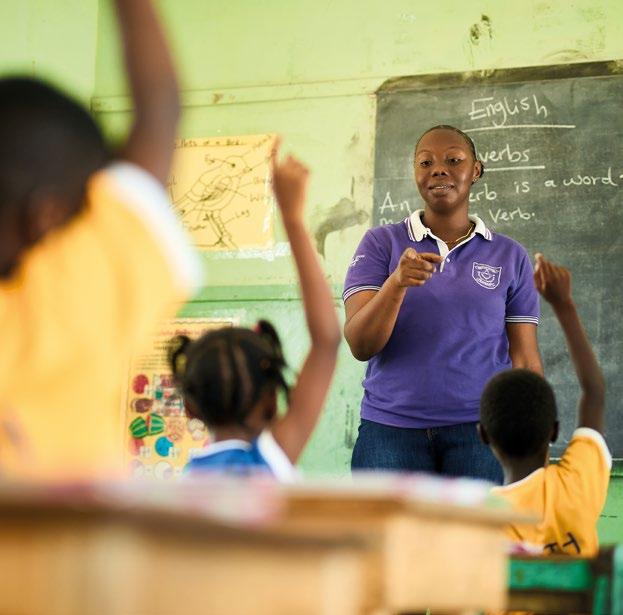
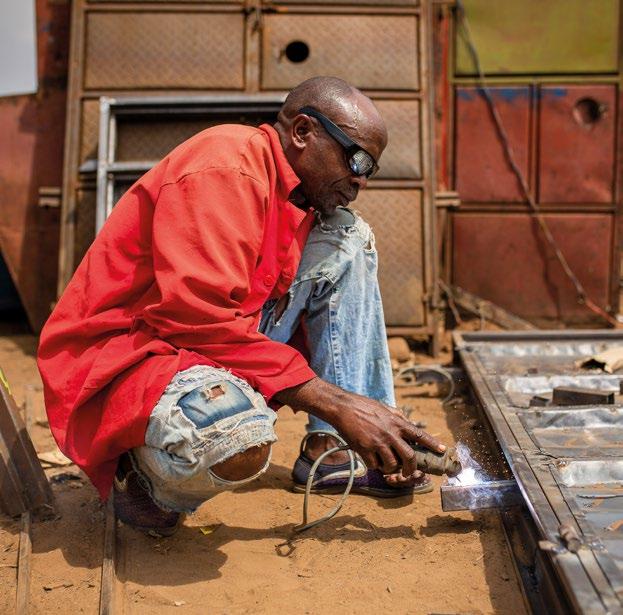
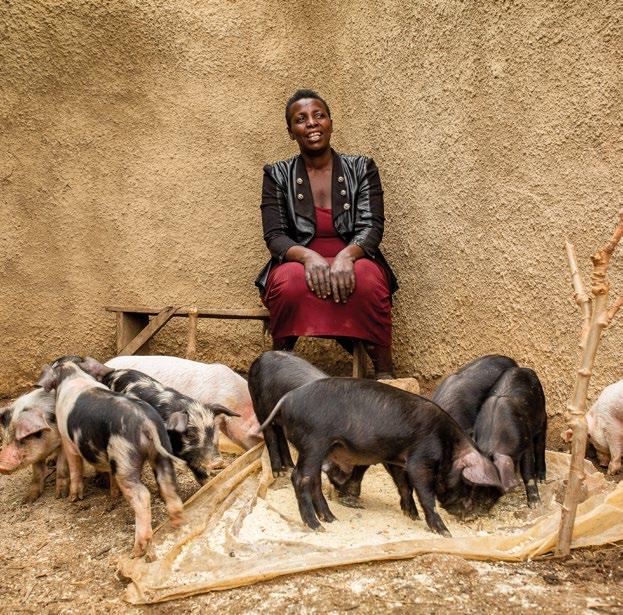
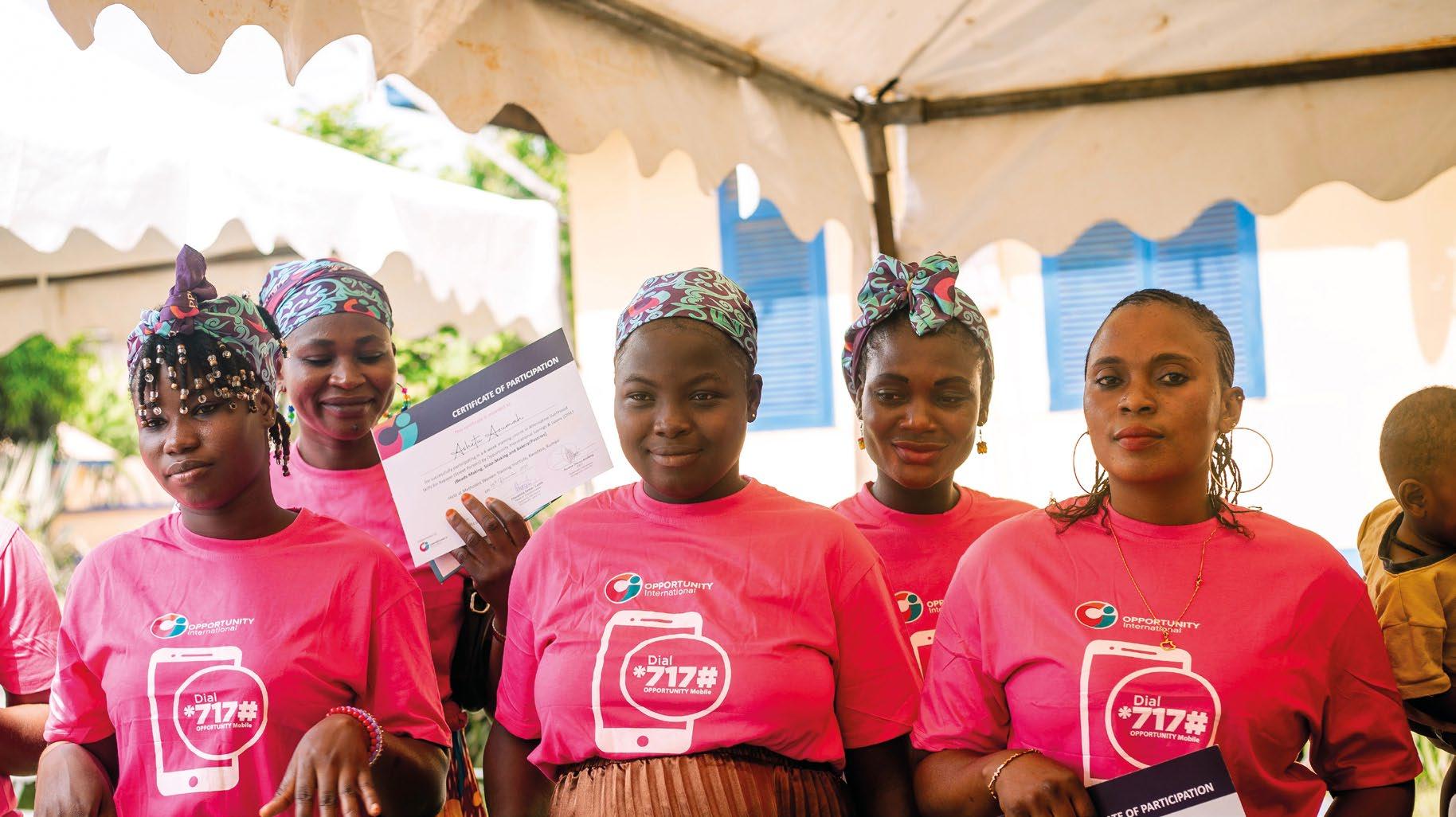
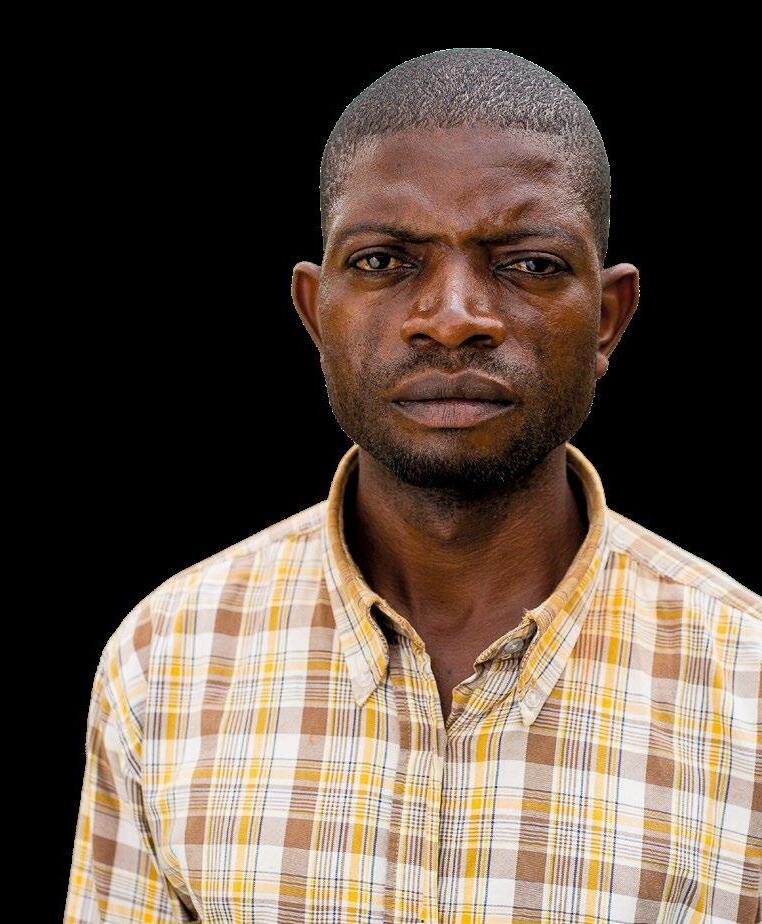
Our vision is a world in which all people have the opportunity to achieve a life free from poverty, with dignity and purpose.
Our Mission.
By providing innovative financial solutions, training and support, we equip and empower people living in poverty to build sustainable, resilient livelihoods that can transform their family’s future.
Our Motivation.
We respond to Jesus Christ’s call to love and serve people living in poverty. We seek to emulate the Good Samaritan, whose compassion crossed ethnic groups and religions. We serve all people regardless of religion, race, ethnicity, or gender.
Front cover
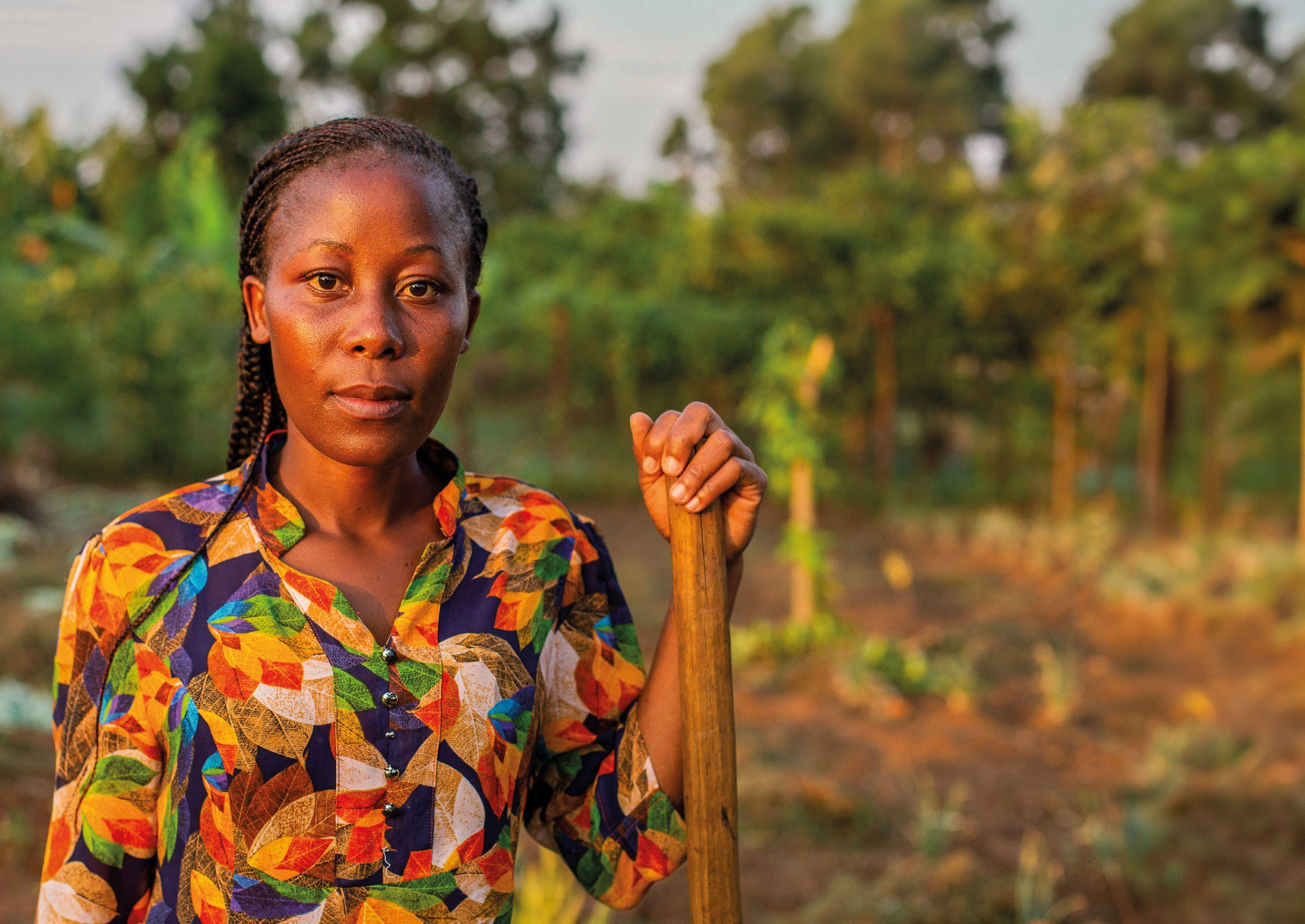
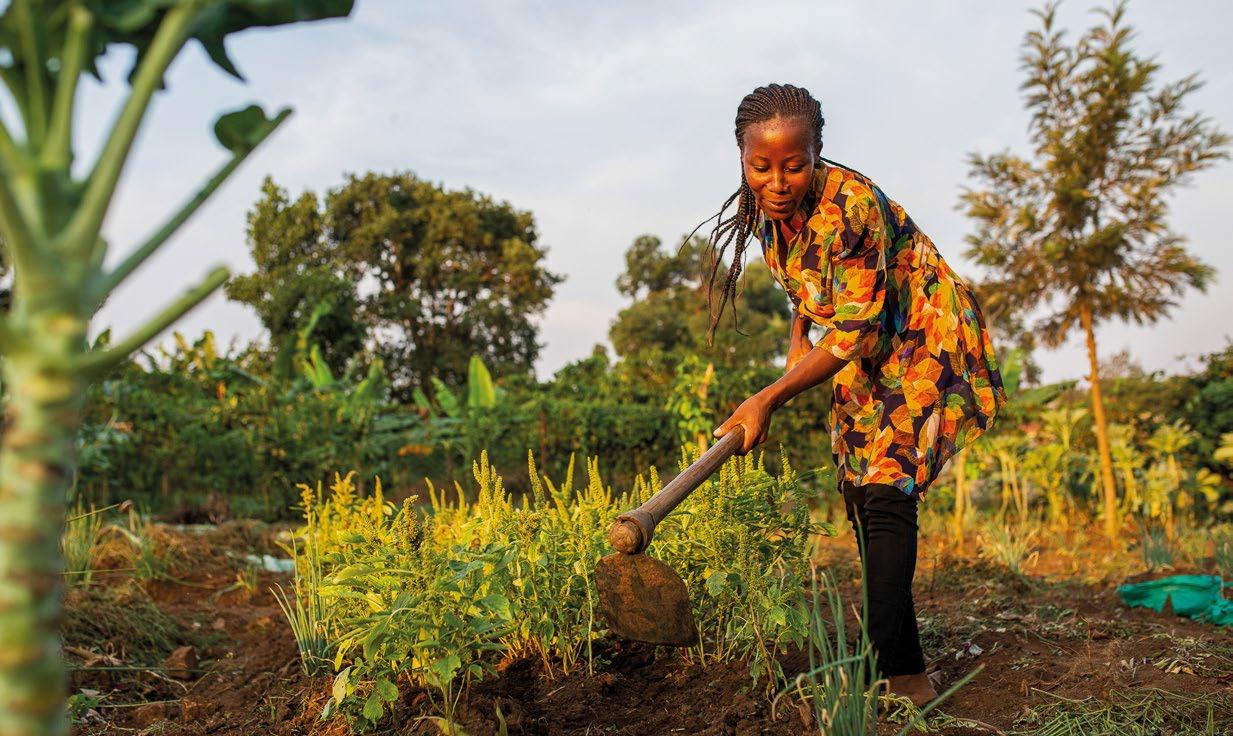
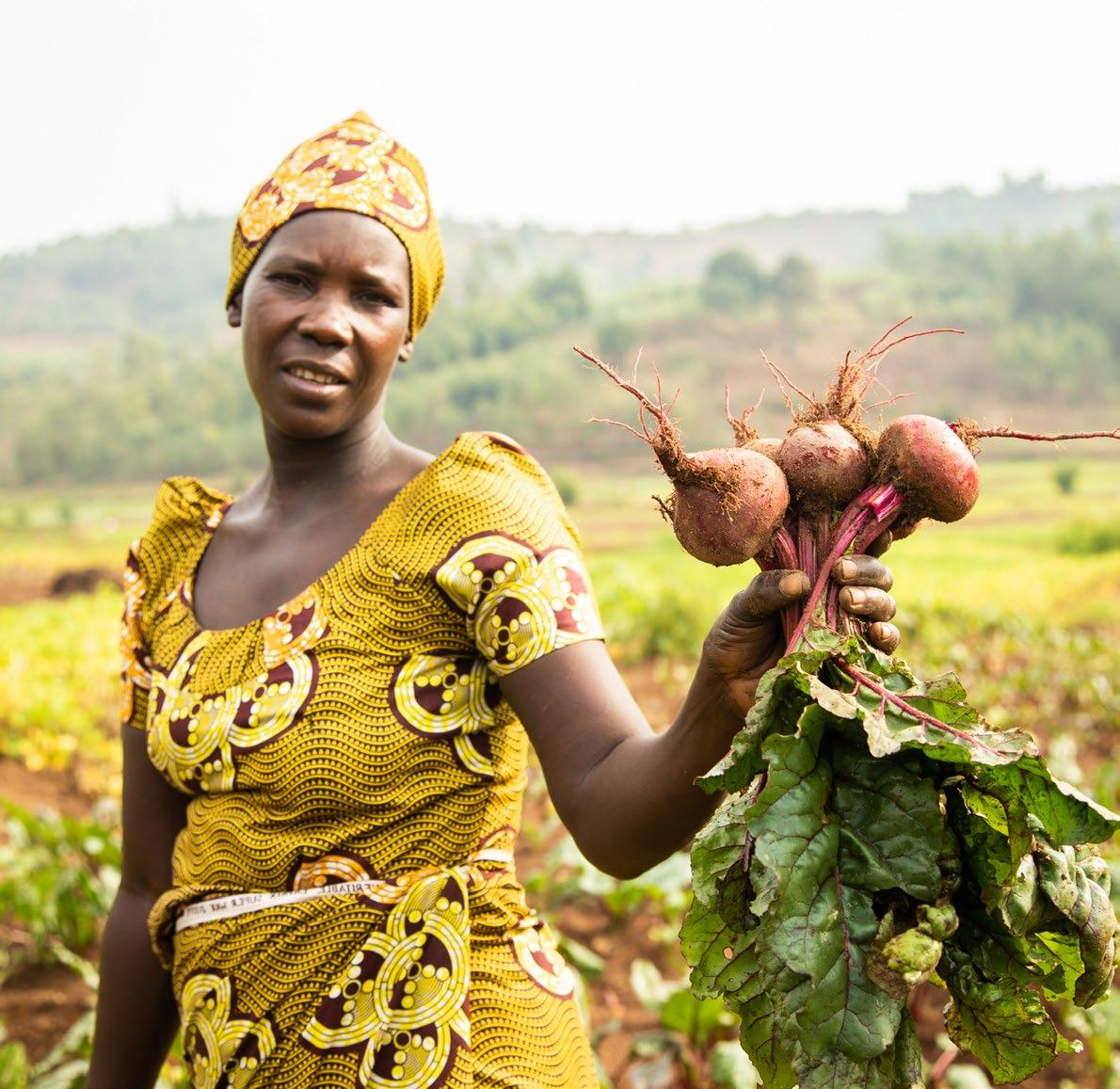
“With Opportunity, I learned how to think differently about money and business. I used to believe that you needed millions of shillings to start a business. Opportunity taught me that you can start small, manage it effectively, and then scale it up.”
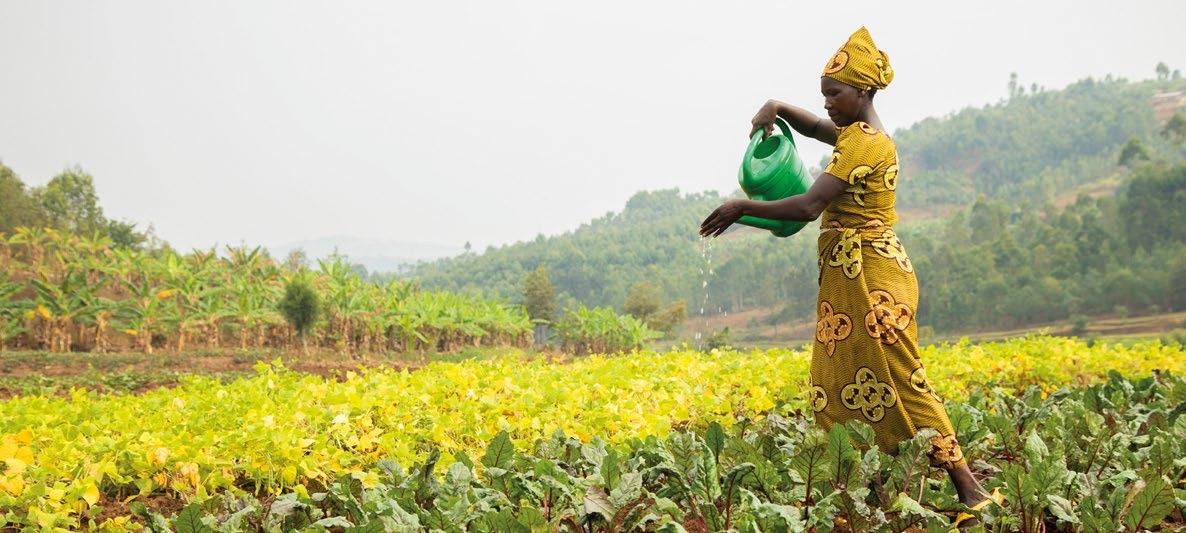
Ruth is a single mother living in Rwamwanja Refugee Settlement, Uganda — With support from Opportunity, she now has a farming business that provides for her family and has enabled her to buy a plot of land to live on.
One opportunity can change everything.
It can turn an idea into a business. A harvest into a livelihood.
A parent into a provider. With the right tools and your support, people build more than income. They build futures.
Poverty isn’t just about a lack of money. It’s a lack of opportunity.
One loan can launch a business. One training session can double a harvest. And one opportunity often leads to another, building through families, communities and generations.
We‘ve seen it for over 50 years.
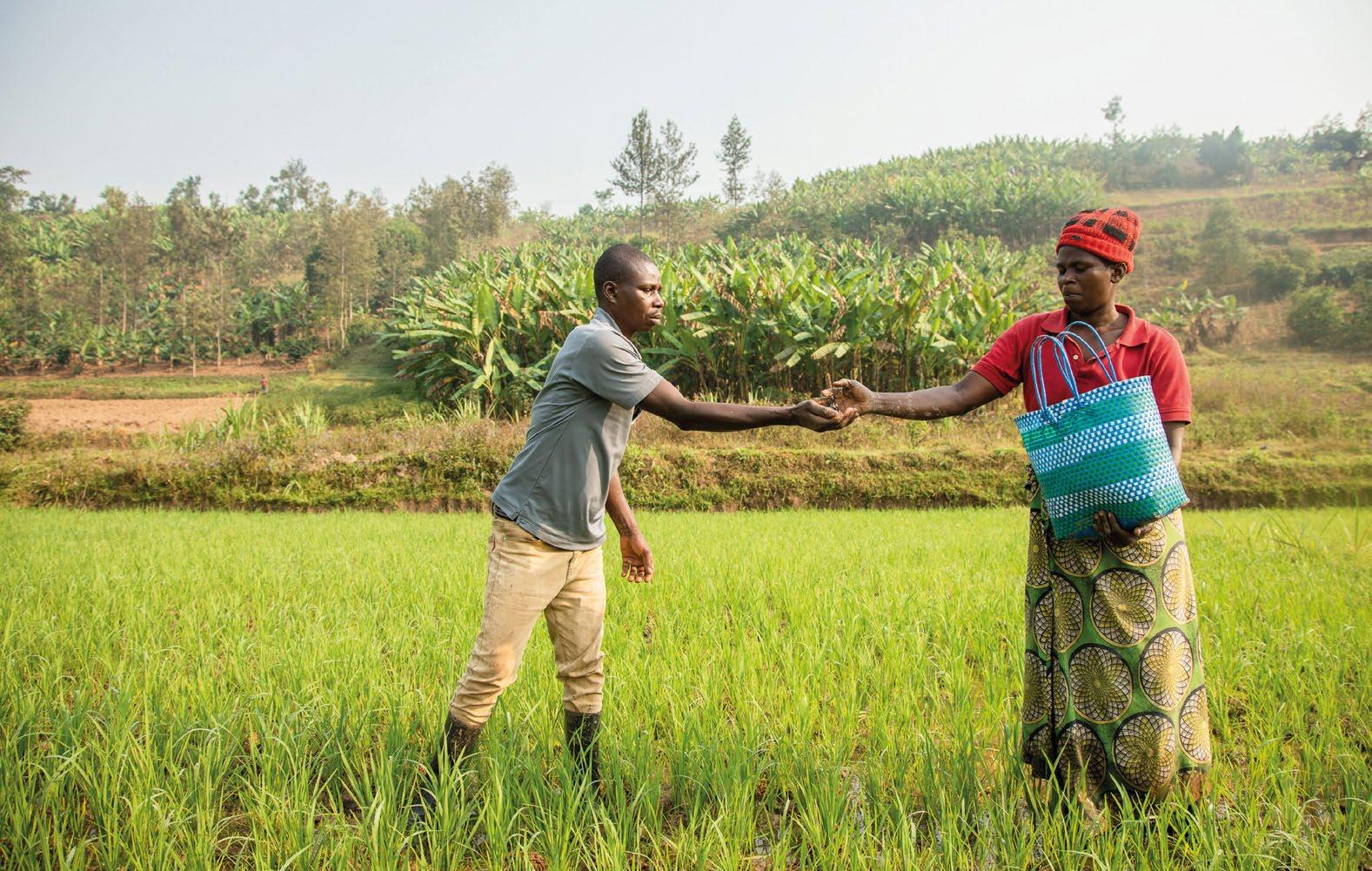
From rural farms to busy markets, we’ve worked alongside people as they build lasting change. Alice, a farmer in Rwanda, joined a local group where she learned modern agricultural techniques and how to manage a loan. With that knowledge, she hired help to cultivate her land, grew her income, and began buying health insurance and clothing for her children. Step by step, she’s building a more secure future for her family.
This is microfinance, but it’s more than loans.
It’s savings groups and digital banking, health support, and financial training. It’s tailored to each place, built on trust and strengthened by partnership.
Real change, built from the ground up.
Not short-term relief, but practical tools people use to build secure, independent futures.
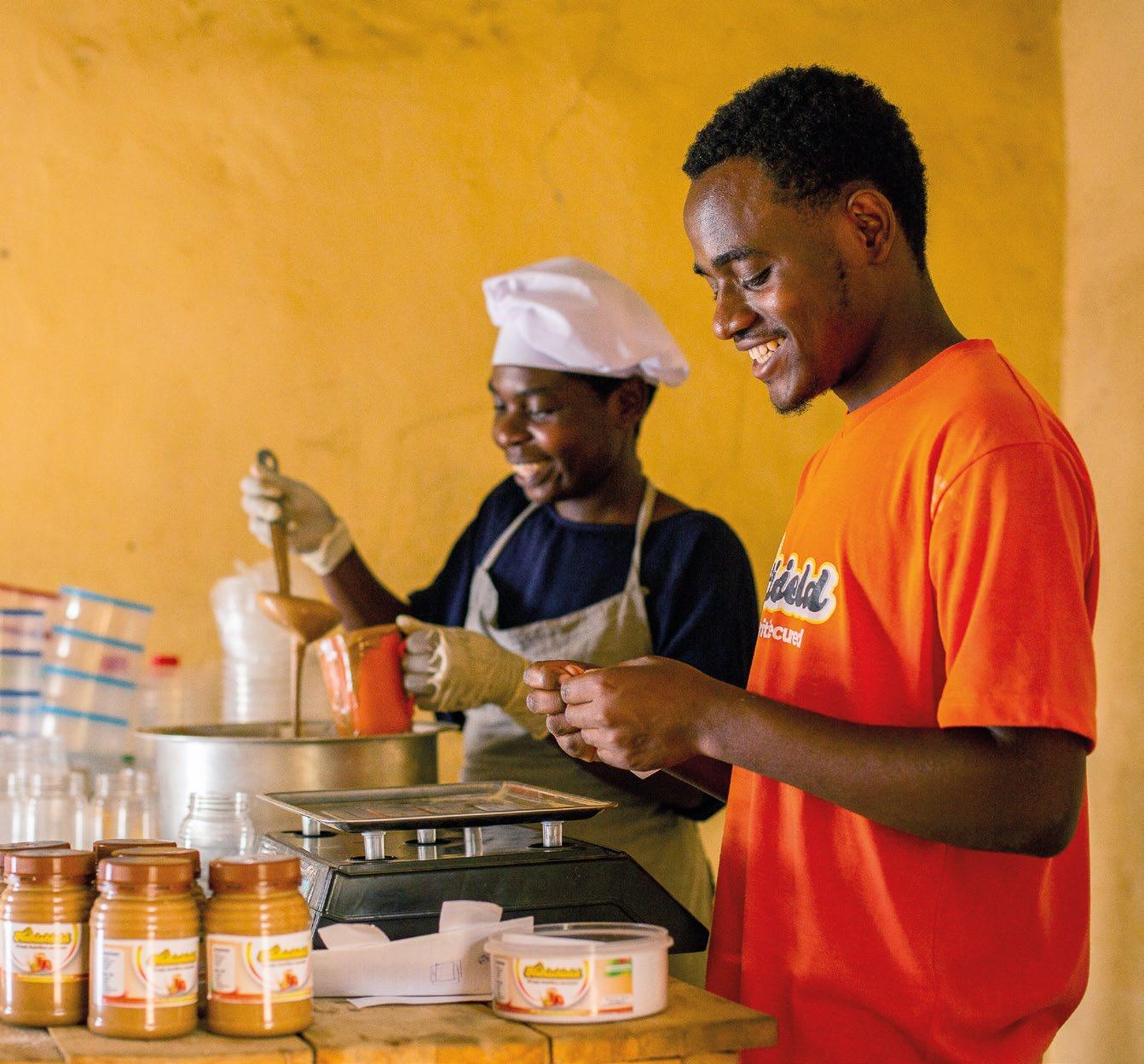
“Before, I never saved money. I would earn and spend immediately, only to find myself with nothing the next day. Through training, I learned how to manage finances more effectively, maintain accurate business records, and open bank accounts.”
Savino, growing his peanut butter business and building his financial security in Nakivale Refugee Settlement — Uganda
A letter from our Chair.
Ten years ago, I became the Chair of Opportunity
International UK. As I complete my second term and prepare to step down in 2026, I am reflecting on what we’ve built together.
I first encountered Opportunity in Mozambique over 20 years ago. There, I saw an organisation tackling poverty through empowerment and financial inclusion. It championed people’s existing ambition and focused on long-term change rather than short-term relief. Two decades on, that mission remains at the heart of Opportunity’s work.
As Chair, I’m proud of how our organisation has grown. We now work closely with local organisations, drawing on the strength of community leadership. Our programmes have also expanded into refugee support and health, enabling us to reach even more people who need our services.
I’m equally proud of how we have navigated the challenges of the past decade. With declining support for charities, reduced aid budgets and increasing mistrust, the landscape has shifted significantly. Demand has grown, even as funding has tightened. Yet we have adapted – finding new ways to fund our programmes, embracing innovative technology, and working diligently to build and maintain trust.
What stands out most from my time as Chair are the people I have met: our remarkable clients, dedicated teams on the ground, committed staff and generous institutional and private donors. Each one believes in our mission and plays a part in driving positive change. I am very grateful to our Trustees, who freely give their time and expertise to guide Opportunity. I have also been privileged to have the support of our Patron, Her Royal Highness, The Princess Royal, who generously
gives her time and hosts special events for us. I will never forget our visit to Uganda where we saw our work taking root in Nakivale Refugee Settlement, which has flourished since.
As I look ahead, my hope is that Opportunity will continue to deepen its impact – strengthening communities and building systems that ensure lasting transformation. While our long-term vision is a world where our work is no longer needed, today the challenges facing the communities we work with are only intensifying. In the face of global economic uncertainty and growing need, our work has never been more vital. I pray that you will continue to stand with us – championing and supporting Opportunity – so that together we can create lasting change.
Cliff Hampton Chair
A letter from our Chief Executive.
At Opportunity International, we often talk about the power of opportunity — and this year, I saw it in action.
This was my first year as Chief Executive of Opportunity International UK. I stepped into the role during a turbulent period for the wider aid and development sector, yet even amid these challenges, we continued to open doors. I witnessed it firsthand during a visit to Uganda, where I met young refugees gaining business and financial skills. One 17-year-old girl explained how, after a difficult past, support had enabled her to build a safer, more secure future for herself and her four siblings. Stories like hers continue to inspire my colleagues and me to do more.
This year marked the launch of a new programme in Malawi which will help farmers build long-term climate resilience. We also introduced a new initiative supporting schools to strengthen their financial management, helping them plan more effectively and provide better learning environments for their students. In Rwanda, we exceeded our targets and supported thousands of farmers to build sustainable livelihoods that will ensure greater stability for their families.
In 2025, we reached over 100,000 people across the communities we serve. Demand continues to grow, particularly as global aid budgets shrink.
In Uganda, our refugee programmes are helping people establish their own businesses and reduce their reliance on aid, while expanded access to finance is enabling both refugees and host communities to save securely for their futures.
In Ghana, young people are gaining vocational skills that allow them to start their own enterprises and take steps toward financial independence.
This progress would not be possible without our donors, partners, and the dedicated staff across the Opportunity network, all of whom work hard to maximise the impact of our programmes. I extend my sincere thanks to each of them. I remain deeply grateful for the commitment of our institutional and individual donors — their belief in our mission continues to motivate us.
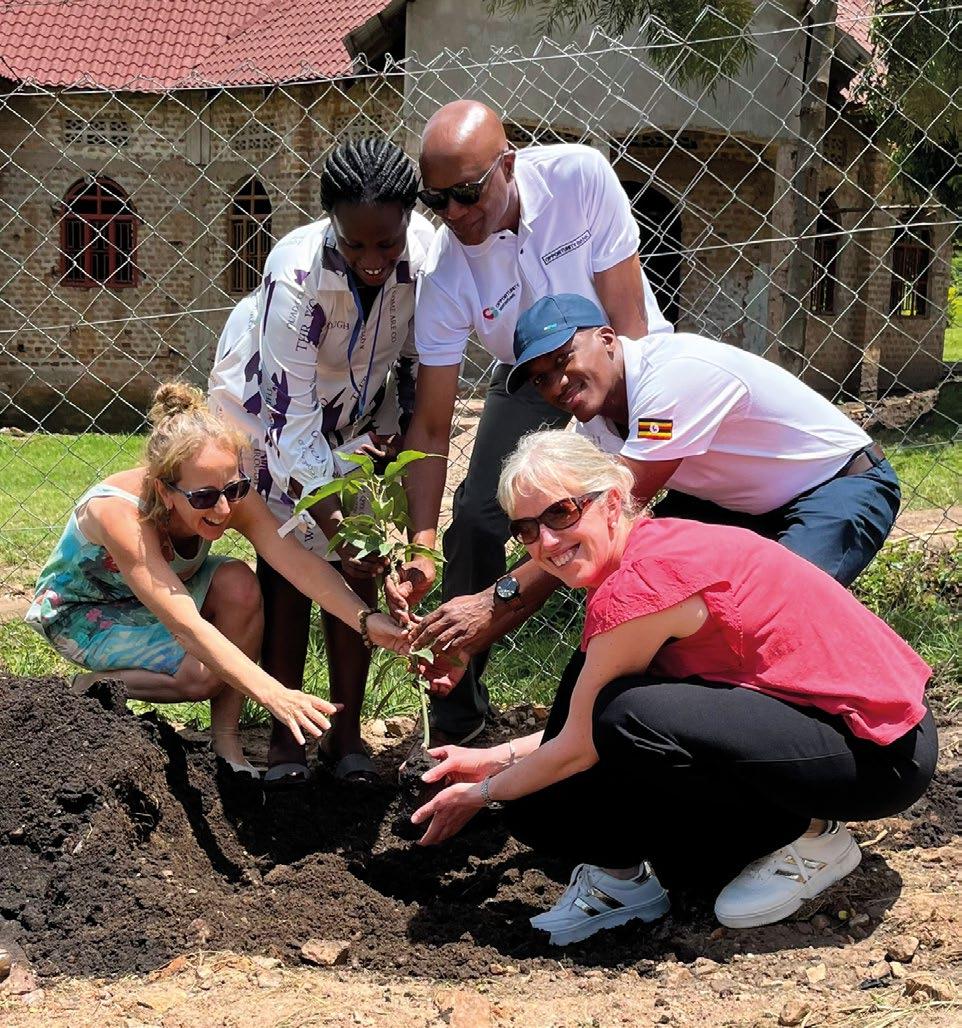
During my visit to Uganda, I planted a mango tree at the site of a new bank branch. I have watched it grow over the year — just as I have watched our organisation grow, and as I have seen our clients grow in confidence, knowledge, and hope.
As I look ahead to 2026, I am excited to see this growth continue. We will focus on sustainability — for our clients, our programmes, and our organisation. We remain committed to helping people build income, savings and stability that lasts.
And as we grow, we will reach even more people with the power of opportunity.
Mary Oakes Chief Executive, Opportunity International UK
Here I am planting the mango tree
As Patron, I am immensely proud of the achievements of Opportunity International UK and of our clients throughout 2025.
Today, we recognise and celebrate the millions of women and men around the world who are working their way out of poverty. Over the past year, Opportunity International has supported individuals and communities demonstrating remarkable resilience and enterprise. Women have grown their own businesses, refugees have rebuilt their lives through business and farming, young people have accessed training and mentorship for future opportunities, and farmers have strengthened their yields and incomes.
These individuals are at the very heart of Opportunity International’s mission. They are parents striving to create better opportunities for their children, and neighbours coming together to lift their whole community up. Many have faced significant challenges, yet each one has shown a determination to lift themselves out of poverty and shape a more secure future. It is an honour for Opportunity International to support them as they take these vital steps.
I would like to express my sincere thanks to all those whose generosity makes Opportunity International’s work possible. Your continued support enables us to stand alongside these remarkable individuals and to extend our support to many more in the years ahead.
HRH
How we work
Globally
Opportunity International UK has an operational focus in Africa. Our Opportunity International global affiliates work in 28 countries globally.
16.7 million unique clients 76% of schools increased their annual income
585,640 farmers supported 92% of microenterprise clients report an improved quality of life
841,517 clients supported with health-related finance products
Opportunity International UK’s Impact
815 people reached by our work 104,728
schools supported, improving the quality of learning for 244,500 children
97,783 75% 23,339
people trained, giving them new and improved skills
13,597
were women people took out loans, enabling them to invest opened a savings account, helping them save for their futures
Our work in more detail.
Building brighter futures for Ghana’s youth
In Ghana, young people are moving into safer and more secure work through targeted skills training. In 2025, 112 young women left kayayei work (head portering) and have learnt new trades, with 65% opening bank accounts and 10 of them accessing loans, helping them to save and invest in their enterprises. Meanwhile, 293 young people have begun apprenticeships in professions from baking to metalwork, giving them the skills to secure future employment or start their own businesses. All young women apprentices were given free monthly sanitary products.
Growing prosperity in Rwanda
In Rwanda, 21,000 farmers were trained in finance, business and agriculture, equipping them to run stronger farming businesses. Of those surveyed, 86% reported an increased income, and 8,281 farmers accessed loans to develop their businesses. With higher earnings, parents can afford to feed their children and keep them in school, building brighter futures across rural communities.
Malawi
Expanding refugee livelihoods in Uganda
In 2025, we trained 3,513 refugees in agriculture, 28,968 refugees, parents and caregivers in financial literacy, and 1,498 refugees in business, helping them to successfully build their businesses and manage their finances. We also helped create 3,254 jobs for young refugees. With 4,755 new savings accounts opened and 1,281 loans disbursed, Refugees are able to save more and invest. Refugee households are building income, independence and long-term financial security.
Empowering Uganda’s entrepreneurs
Business owners in Uganda are gaining the skills and support they need to build stronger, more resilient enterprises. In 2025, 4,838 entrepreneurs were trained in finance and business skills, 4,987 received mentoring, and 5,374 loans were disbursed. Over the programme’s lifetime, these efforts have created over 52,000 jobs, helping families secure stable incomes and provide for their children.
Strengthening climate resilience in Malawi
In 2025, farmers in Malawi strengthened their resilience to climate change through regenerative agriculture. A total of 6,300 farmers adopted new techniques to boost their yields and incomes. Another 597 farmers accessed loans to expand their farms. Meanwhile, 7,267 savings groups received training in financial management and governance, improving their efficiency and collaboration.
Education Finance
Agriculture Finance
Microenterprise & Graduation Prog.
Refugee Financing
Digital Innovations
Health & Women’s Safety
Capital Solutions
Opportunity’s work closely aligns with the UN
Sustainable Development Goals.
Across our programmes, we measure what changes and report it clearly. We seek alignment between what we are doing today, tomorrow, and next year.
We use the United Nations Sustainable Development Goals (SGDs) to guide where we focus and how we measure progress.
Our work globally has strong alignment with the UN SDGs. This helps us see what’s working, what needs to improve, and where to focus next.
Highlighting Opportunity in 2025.
This year, we helped more people open savings accounts, access affordable loans and strengthen their farms and businesses. As a result, families are earning steady income, saving for emergencies and planning ahead with confidence.
Highlights of 2025 .
In 2025, we made significant progress across our programmes. We’re delighted to share a selection of achievements that have made this year so impactful.
Building resilient livelihoods in rural Malawi
Building on our previous work, we launched a three-year initiative to strengthen resilience for 30,000 rural households in Malawi. As climate shocks and rising costs strain family budgets, this programme will help households save, access small loans and adopt farming methods that protect their crops during droughts and floods, while ensuring minority groups are not left behind. By connecting households to training, financial services and digital tools like our AI-powered Ulangizi Farmer App, farmers will be able to grow more resilient crops, earn a sustainable income, access emergency funds and secure loans to help them rebuild or expand their farms.
Better finance, better learning
Between 2025 and 2028, with support from the Waterloo Foundation, we will help low cost private schools in Nigeria, India and Pakistan access the finance needed to improve their quality. These schools serve children in low-income communities and often lack the funds to upgrade classrooms, improve sanitation and invest in better teaching materials. The newly launched programme will strengthen school leadership, improve financial management and introduce an AI tool for school self-assessment and planning. By 2028, 4,000 schools will have the financial records, leadership and plans needed to access funding, with 900 securing loans for the first time.
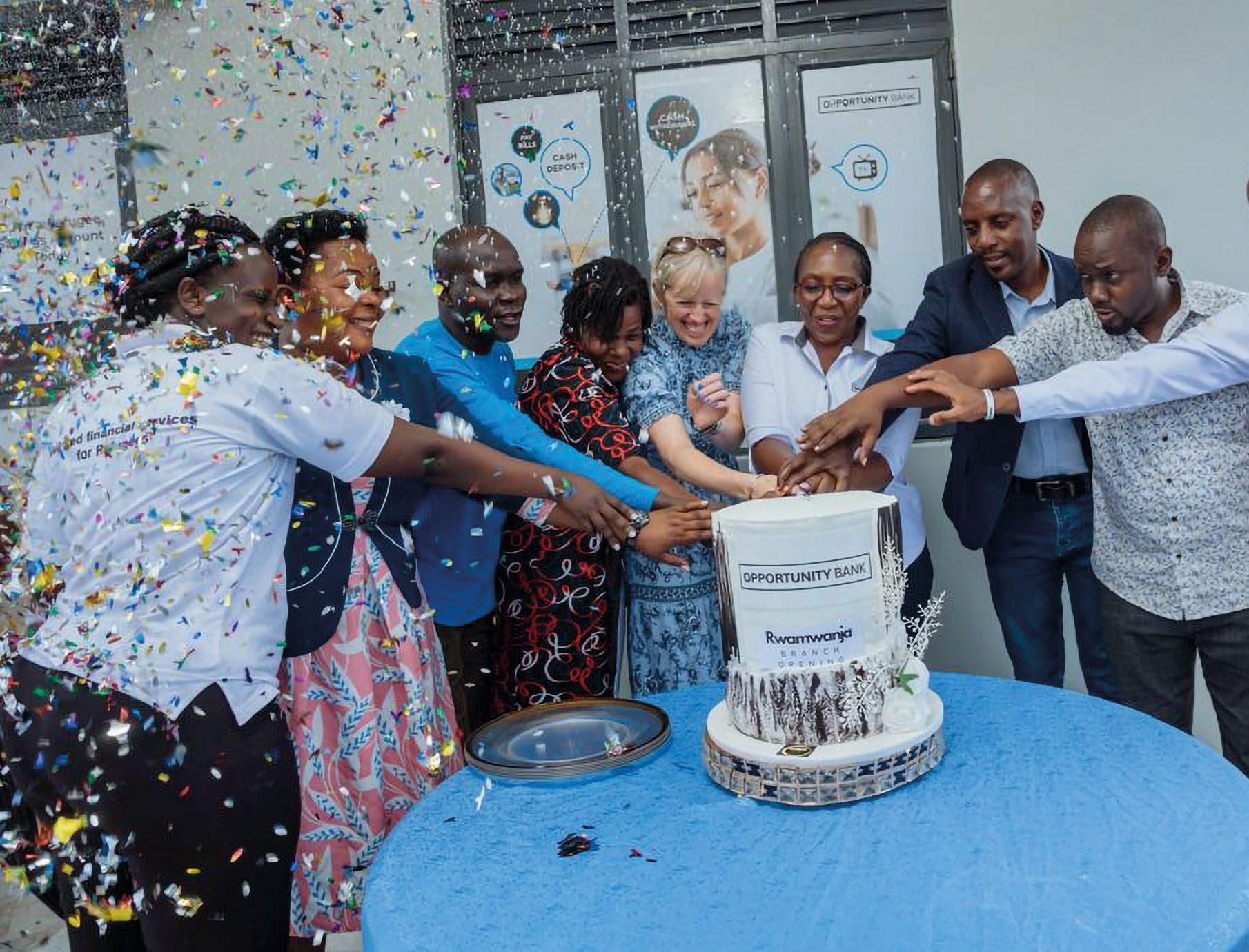
Bringing banking to Rwamwanja Refugee Settlement
In 2025, we worked with local partners to open a new bank branch in Rwamwanja Refugee Settlement, Uganda, giving thousands of refugees access to savings and loans close to home. The branch will provide loans for seeds and equipment, help refugees (especially women and young entrepreneurs) grow their enterprises, and run training sessions to build skills. For the first time, thousands of refugees will have access to banking services close to home.
Celebrating the opening of the new bank branch — Uganda
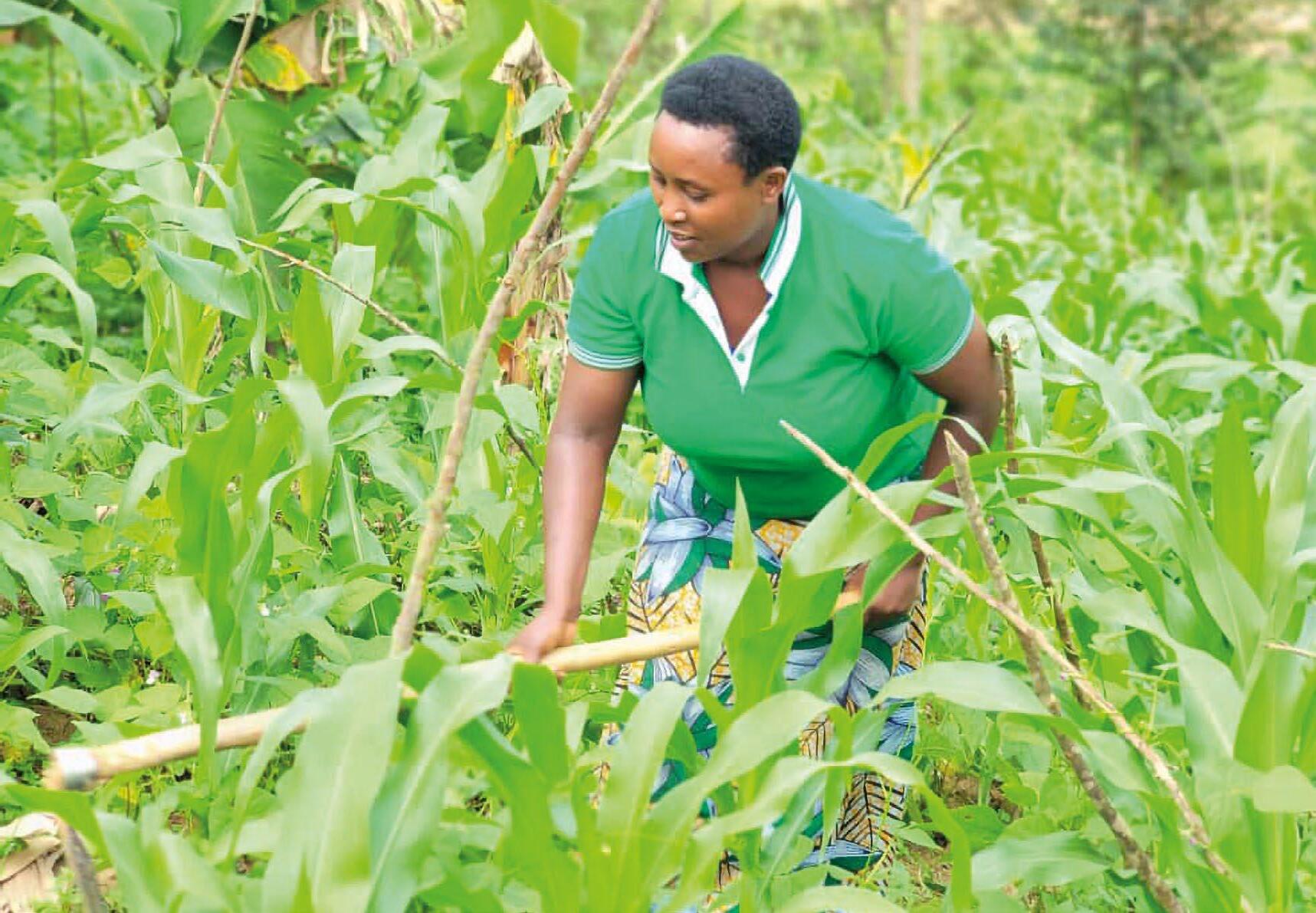
“When a community is learning, they start to grow.”
Vestine, growing change — Rwanda
Doubling our impact in Rwanda
Farming is the main source of income for rural families in Rwanda, but it is an increasingly fragile livelihood, leaving many households struggling.
To address this, we launched our programme in 2023, supported by Jersey Overseas Aid. So far, we have trained over 30,000 smallholder farmers (double our original target) in agriculture, finance and business, with 20,000 of them women. Farmers receive weekly market and weather information to help them make informed decisions, and 200 savings groups are using digital tools to manage their finances, opening the door to formal banking.
We are also working with four banks to expand access to tailored loans and savings, giving farmers affordable financial services that strengthen their ability to plan and build their businesses.
Across the programme, farmers are growing more resilient crops, managing their money better and navigating unpredictable weather with greater confidence. But there are thousands more farmers in Rwanda in need of our support. As we look ahead, we hope to extend our reach to more rural communities in Rwanda.
Vestine is growing change in Rwanda
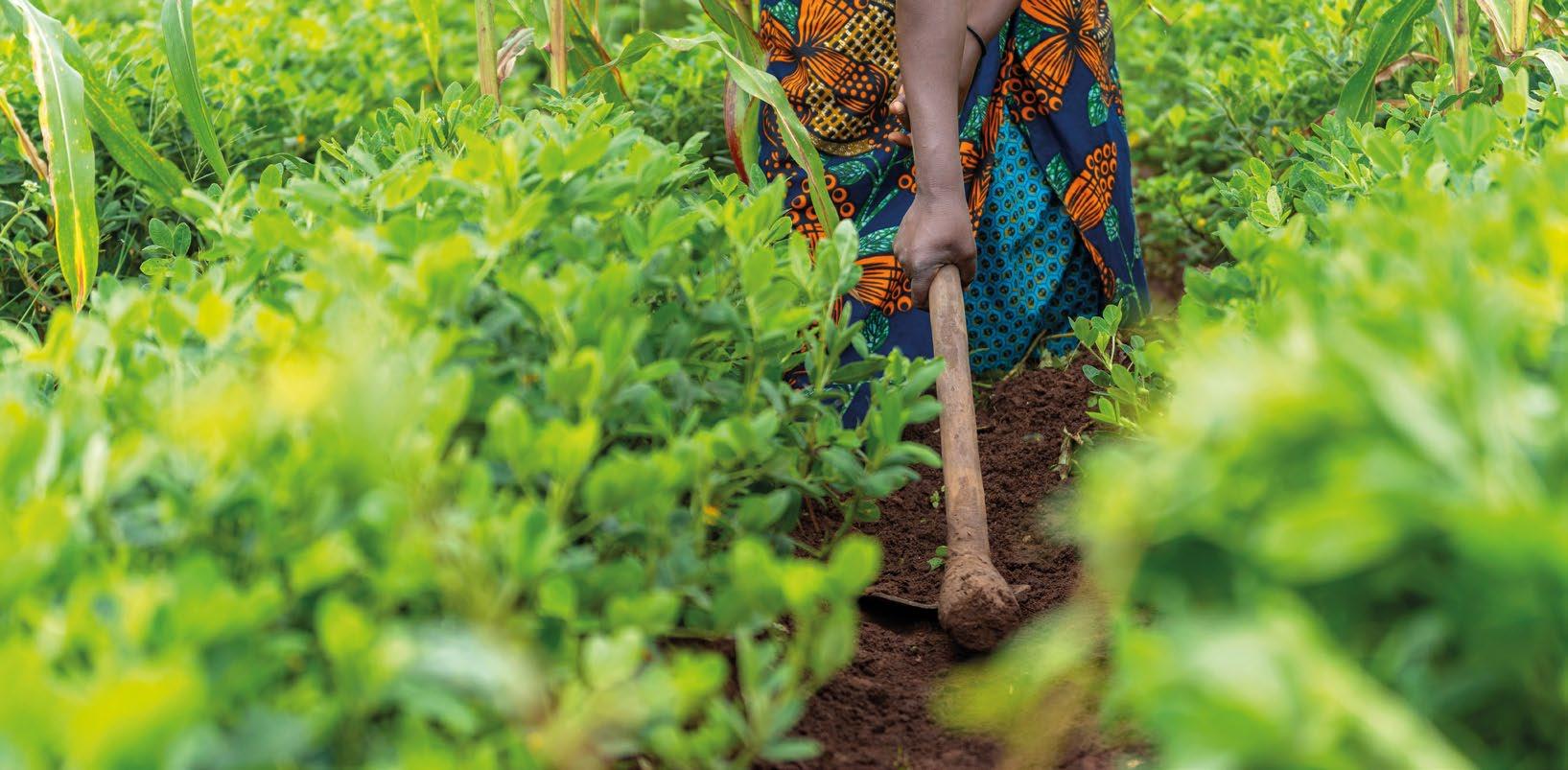
Vestine, a smallholder farmer in southern Rwanda, once struggled with poor soil, unpredictable rainfall, and limited savings. After joining our regenerative agriculture training, she learned to rebuild her soil health, diversify crops and reduce reliance on chemical fertilisers. Her harvests improved. Some crops even doubled. Her income stabilised. Financial training helped her start saving, access loans, and plan for the future.
Today, she runs several businesses, including a village shop, livestock and motorcycle rentals. She pays for her children’s education and continues to improve her home. She now shares her knowledge with other women, helping them grow their own income with confidence.
Spotlight: Seeds of Self-Reliance.
Shaping refugee futures in Uganda
In 2025, we established a new programme – Seeds of Self-Reliance. Supported by the Isle of Man Government, this programme will enable refugees and local people in Nakivale and Rwamwanja refugee settlements to establish sustainable livelihoods and become self-reliant.
Nakivale
270,000 refugees
Uganda
Rwamwanja 110,000 refugees
Uganda is the sixth largest refugee hosting nation in the world, supporting 1.9 million refugees (a number that is rapidly rising). Its refugee population has more than tripled since 2016. People are fleeing war, persecution, hunger and climate disasters that have forced them from their homes. Most refugees in Uganda are from neighbouring countries. particularly the Democratic Republic of Congo, Sudan and South Sudan.
With increasing numbers of displaced people seeking safety and depleting overseas aid, our work in Uganda is needed now more than ever.
Seeds of Self-Reliance is working with on-the-ground partners, refugee-led organisations and key stakeholders to deliver practical training and access to savings and small loans. The programme also provides ongoing support to refugees and local community members in the settlements. With these, refugees are able to establish businesses that help them to rebuild and provide for their families.
Our Seeds of Self-Reliance programme aims to:
Strengthen 400 refugeeled savings groups through training in governance, leadership and financial management.
Connect refugees to banks and strengthen their financial and business skills.
Equip 1,600 refugees – especially women – with training and mentorship to start and grow businesses.
Train 1,000 refugees in regenerative and climate smart agriculture to increase harvests, income and food security.
With our Seeds of Self-Reliance programme in place, we are seeing the impact already. Refugees are building independent, thriving livelihoods - they are starting businesses, earning a steady income and paying school fees on time.
In 2025, Seeds of Self-Reliance supported 10,290 people, of which…
73% are refugees 27% are locals 69% are female
are youth
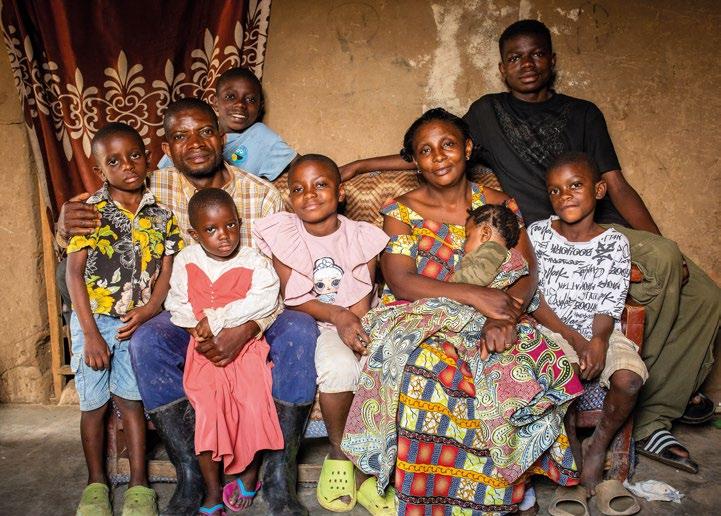
Joshua tells his story.
“My name is Joshua. I am forty years old, a farmer, and a pastor. I live in Nakivale with my wife and our eight children.
Life as a refugee is not easy, but through faith, hard work, and the support of Opportunity International, I continue to build a future for my family.
I first came to Uganda in 2017. Before that, in the Democratic Republic of Congo, life was much better. I farmed vegetables, raised chickens, and even worked as a delivery driver. But when war began, jealousy and persecution followed me. People saw the progress I was making, and when conflict erupted, they targeted me. Later, they turned on my family. To this day, I do not know if my parents and younger siblings back home are still alive.
In the end, I left with my wife, our five children, and two of my siblings.
Arriving in Uganda was painful. We depended on United Nations High Commissioner for Refugees (UNHCR) and the World Food Programme (WFP) for assistance, but it was never enough. My biggest struggles were finding food, paying school fees, and securing a place to live.
Slowly, I turned back to the work I knew – farming and raising animals. Later I joined Opportunity Bank of Uganda. At first, I had very little knowledge about running a business in this new place, but through financial literacy training my eyes were opened. I learned how to budget, save, and persevere even when challenges arose. With their support, I took out a loan and resumed farming.
Today, all my children are in school, and we have a house of our own where we live without paying rent.
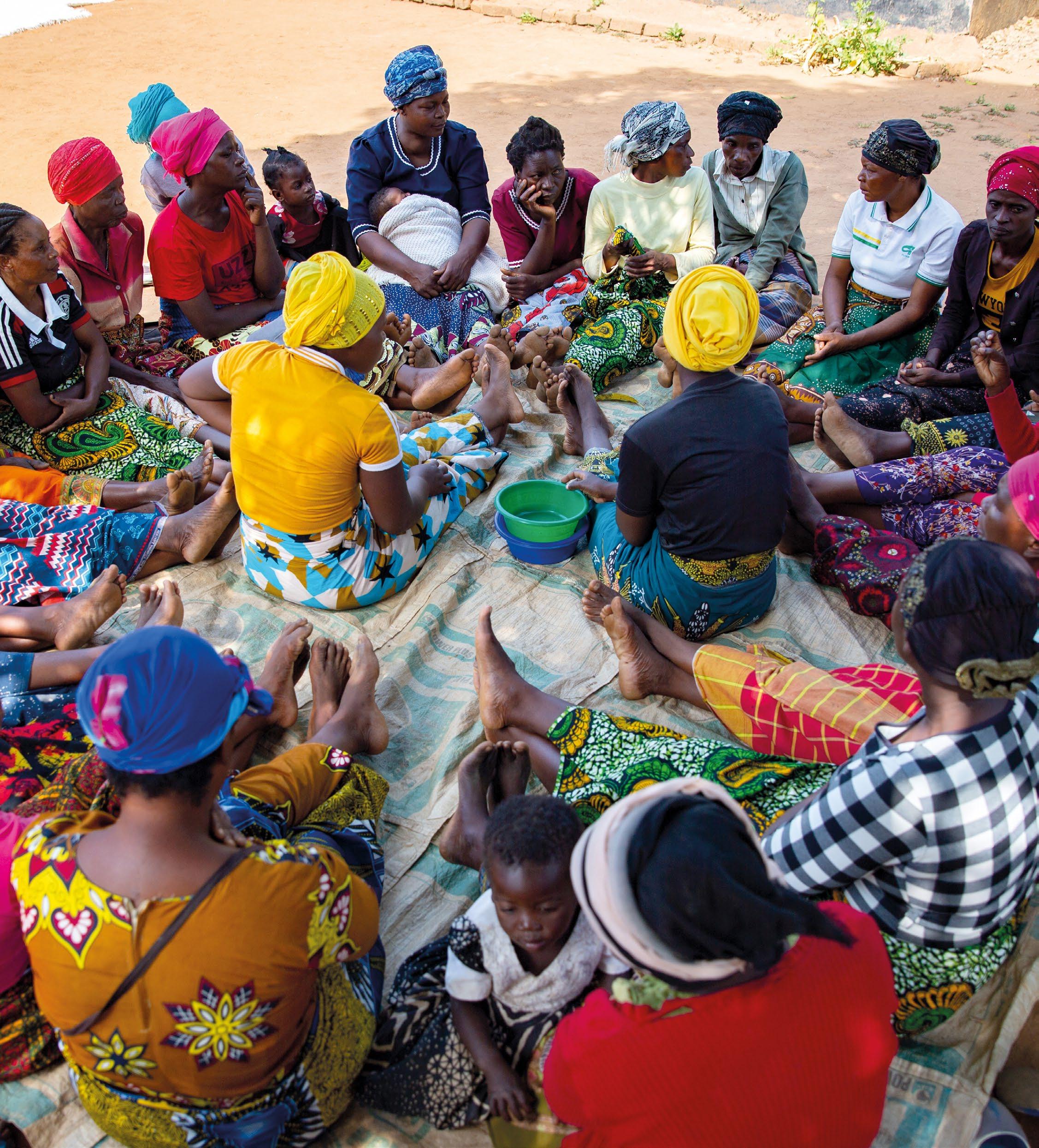
Another gift from Opportunity was the idea of savings groups. I started one called Tuinuwane, which means “let’s lift each other”. We save together, lend to one another, and work as a family. This has helped us grow our businesses and given us strength in unity.
My dream is to expand my farm, purchase my own land, and raise more livestock to alleviate hunger in our community. Above all, I want my children to grow up not just as refugees, but as independent and self-reliant individuals who know how to build a better life.”
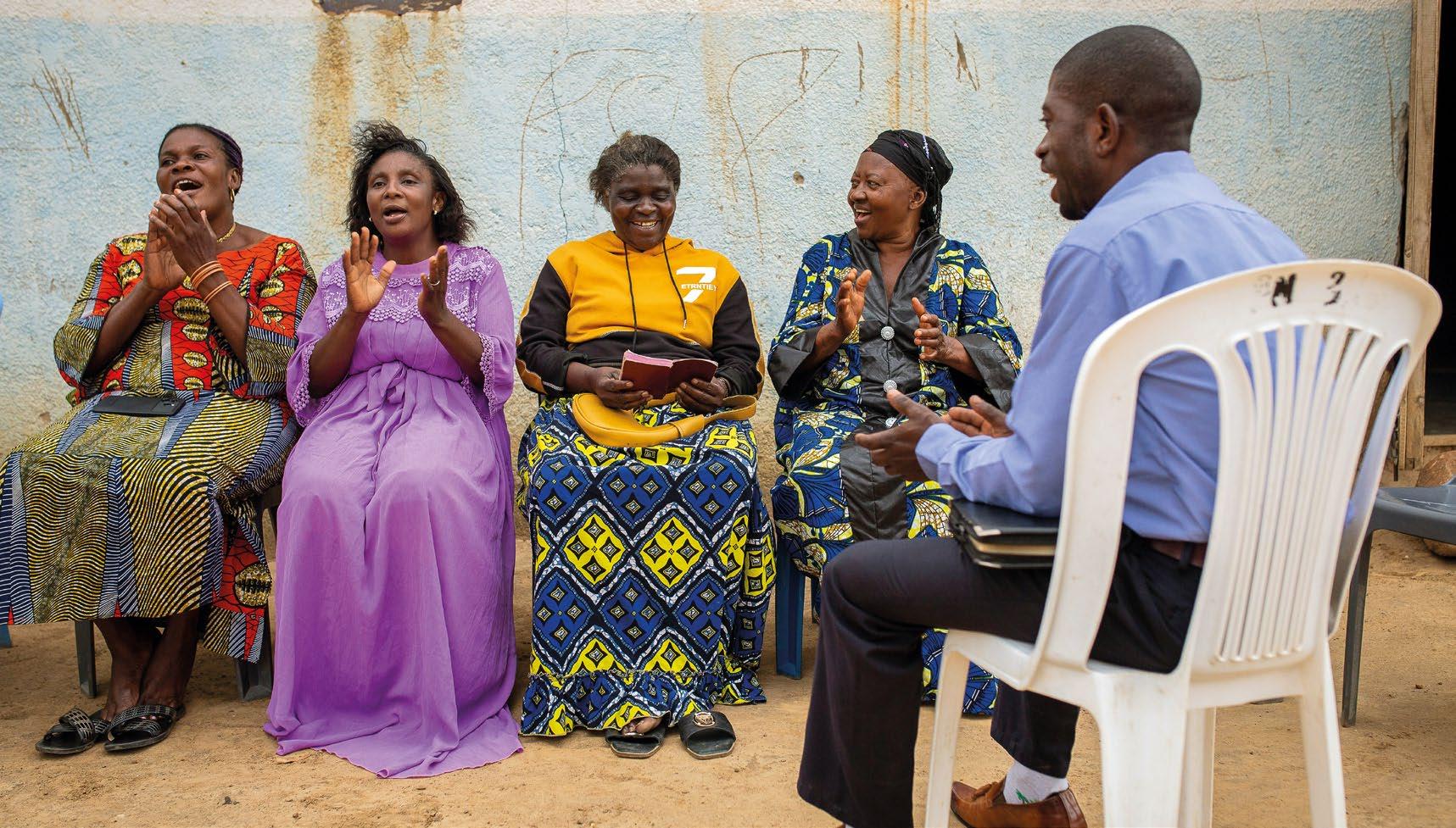
Joshua with members of his church
“After the war, I had forgotten so much. But this training and support opened my mind again, gave me confidence, and taught me how to build a future.”
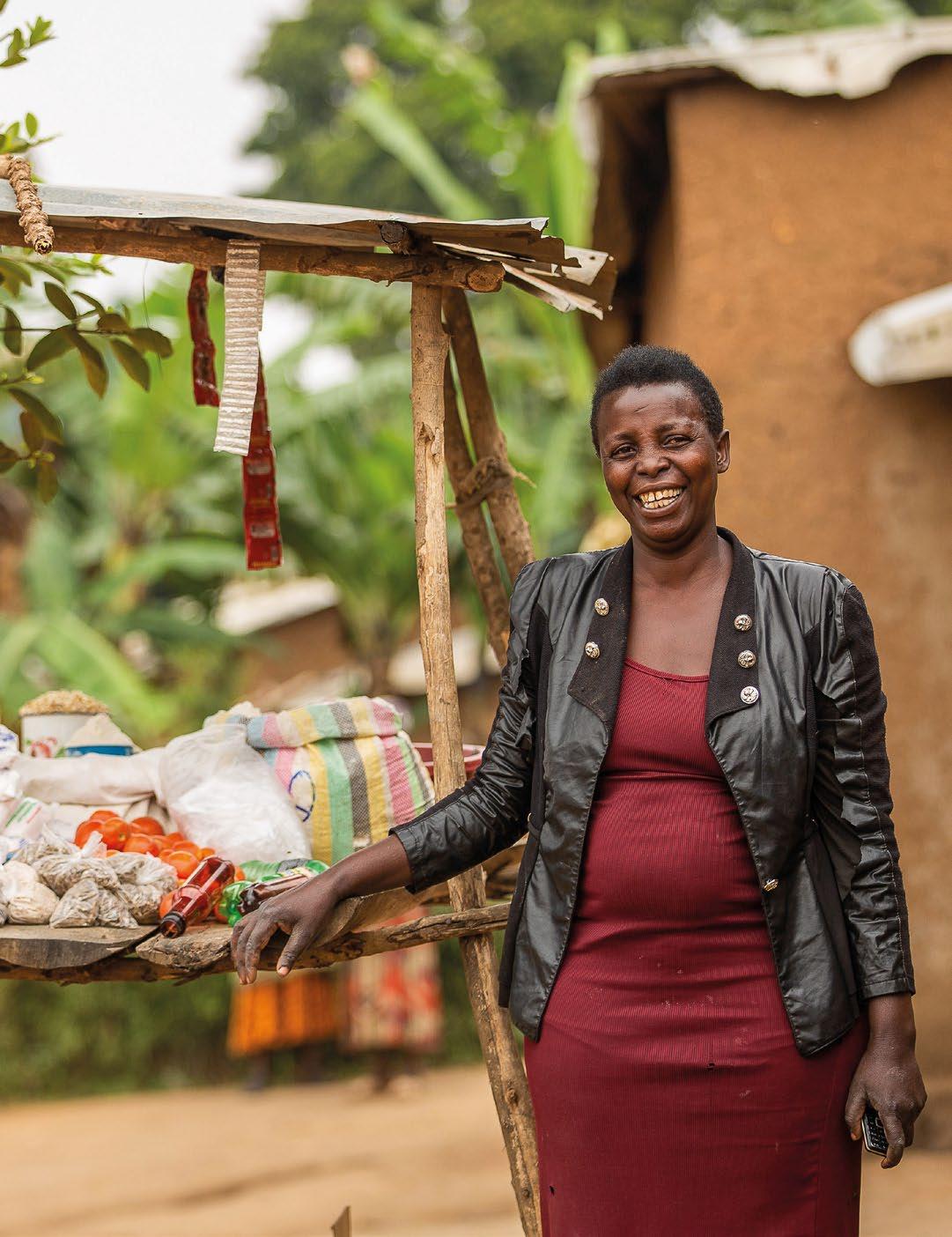
Furaha and her family fled conflict in the Democratic Republic of Congo and made the long journey to Rwamwanja Refugee Settlement in Uganda. She started a small business selling wax prints, maize and beans, but struggled to grow it. With support from Opportunity, Furaha accessed a loan and learned how to invest it wisely. She is now steadily expanding her business and increasing her income and savings.
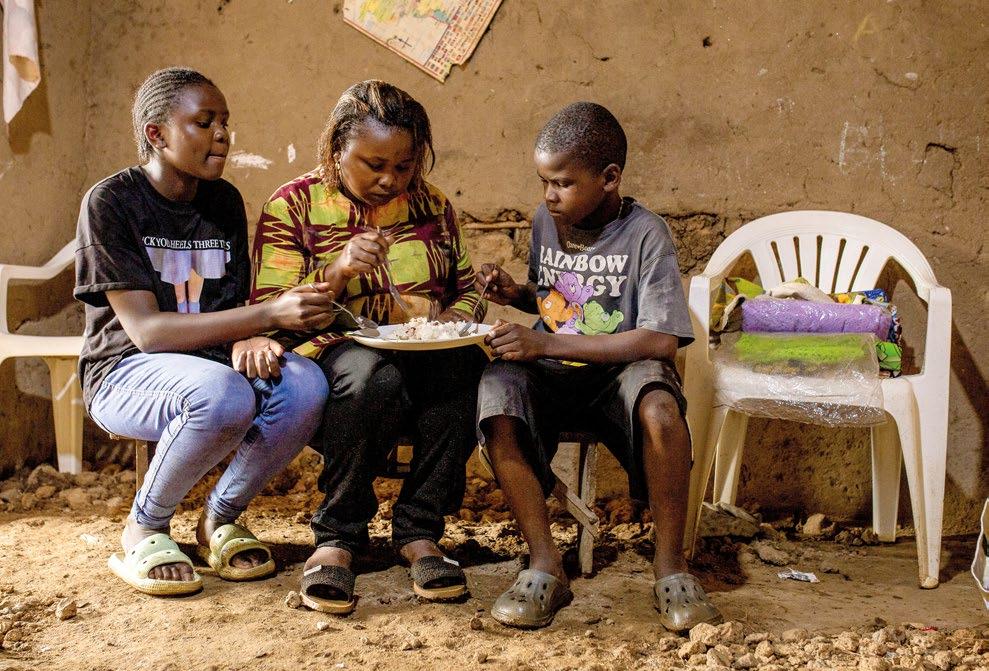
Furaha, sending her children to school and feeding her family full, nutritious meals — Uganda
Looking ahead to 2026.
In 2025, we laid the groundwork. In 2026, we will focus on two things: deepening our impact where the need is greatest and strengthening Opportunity UK for the challenges ahead.
In 2026, our goals are to…
£3.1 million
Continue to diversify our income Raise
As the funding environment tightens and some institutional programmes conclude in 2026, securing new donors will be essential.
Using what we’ve learned about our supporters and funding landscape, we will build new relationships, form new partnerships and test creative approaches to fundraising to reach our £3.1 million target by the end of 2026. Growing our income will allow us to reach more families who are currently beyond our funding.
To reduce the risk of sudden funding gaps, we will focus on diversifying our income.
As grant funding tightens and more charities compete for the same support, we must find new ways to grow income and secure new partners so that we can continue to have an impact in the communities we serve. Building on this commitment, 2025 marked the start of focused efforts in this area. We developed a regular giving product to engage new regular givers beyond our existing supporter base, and Opportunity Microfinance Investments Limited (OMIL) began work on growing our impact investing portfolio.
Deliver a new strategy
You can help us reach our 2026 goals by donating today at: opportunity.org.uk/donate
Work began in 2025 on the development of our new organisational strategy, supported by extensive research and consultation across the Opportunity network and guided by an experienced Strategy Director who generously volunteered his time.
We will publish our new strategy by summer 2026, setting a clear direction for sustainable growth. Strengthening our focus on women and girls, we will direct our efforts towards helping them to build resilience to climate shocks. Using the United Nations International Year of the Woman Farmer as our platform, we will seek to raise philanthropic and institutional funds from new partners, increasing our income to support more clients. The strategy will also set out how we use innovative finance to support women and girls, and how we strengthen our funding model for the future. We look forward to sharing this with donors and supporters as it is finalised in the summer.
Launch our Growing Her Future campaign Focus on sustainability
Sustainability at Opportunity encompasses our clients, our organisation, and our people.
We are committed to ensuring that our programmes create long-term impact and deliver meaningful transformation for the communities we serve. As an organisation, we will continue to invest in robust systems and processes that strengthen knowledge management and succession planning. A key part of this will be the recruitment of a new Chair, whose leadership will help guide us through the challenges and opportunities ahead. We also remain dedicated to safeguarding the health and wellbeing of our staff and ensuring that our organisation continues to be a safe and supportive place to work.
Women farmers are a core community reached through several of our programmes.
In alignment with the United Nations’ International Year of the Woman Farmer in 2026, we will launch our new campaign called Growing Her Future, which highlights the critical role women farmers play in their communities and economies. Our campaign aims to raise £350,000 to support 35,000 women farmers and rural business owners across Malawi, Rwanda, Uganda and Ghana. Growing Her Future will raise awareness, mobilise support, and generate funding for our work with women farmers. It will culminate in Opportunity International UK’s 35th anniversary celebration in Malawi in early 2027.
“Being trained helped a lot, I learned to cultivate vegetables and to raise livestock. Because of that, my children get school fees.”
Joselyne, now able to pay for health insurance and provide for her children — Rwanda
Creative and innovative fundraising.
We are incredibly privileged to have passionate and committed private and institutional donors. In 2025, we continued to strengthen and innovate our fundraising activities, ensuring the long-term sustainability of our income.
In 2025, we made several key appointments to our fundraising team:
Trusts and Foundations
Understanding the importance of private trusts and foundations, we engaged Kate Delaney to scale up our work with this critical supporter base.
Fundraising innovation
In an effort to freshen up our fundraising and grow our supporter base, we appointed Thomas Beattie as Donor Acquisition and Innovation Manager. Thomas launched lead generation campaigns on Meta to build awareness and grow our audience. He also worked with communications agency Battenhall to develop Create Opportunity, a new regular giving product that engages potential donors through social media ads and a microsite showcasing our work and impact.
Fundraising leadership
At the end of the year, we appointed Rebecca Andrews as Director of Fundraising and Communications. Rebecca will lead our fundraising team on income generation and build sustainable income streams through new partnerships and campaigns, as well as develop our brand awareness that will build our supporter base and increase engagement.
Welcoming our new ambassador, Afua Hagan
In 2025, Opportunity International UK was delighted to welcome journalist and broadcaster Afua Hagan as an ambassador. With her passion for storytelling and commitment to championing women and marginalised communities, she brings a powerful voice to our mission. In November, Afua joined our team in Ghana and met graduates of our vocational skills programme for kayayei in Accra.
With the support of our patron, HRH The Princess Royal, we hosted a reception at St James’s Palace in June in partnership with C. Hoare & Co. The event featured a performance by singer Heather Small, and in her speech, shared the story of Rwandan farmer Alice, emphasising how sustainable income empowers women to participate equally in family and community decision making. Thanks to one guest’s generosity, the event received global coverage.
We also had the privilege of hosting a Christmas reception at the House of Lords, generously sponsored by The Lord Wei. The event gathered supporters and friends of Opportunity to celebrate our achievements in 2025. The reception featured a Q&A with our ambassador, Afua Hagan, who shared reflections on her recent visit to Ghana.
A new venture for Opportunity this year was running our first ever Big Give campaign at Christmas. This campaign improved the visibility of our Christmas fundraising activities and provided an additional matched-gift incentive for our donors, meaning donations could go further with the support of a significant gift made by our Champion Funder.
In February 2025, Nana Francois was appointed CEO of Opportunity Microfinance Investments Limited (OMIL), driving support for our Financial Service Partners (FSPs) through investments that expand affordable finance for the communities we serve. Over the year, OMIL managed investments in Ghana and Uganda and engaged more than 20 FSPs to understand the challenges they face in providing affordable finance to our clients. Nana also presented OMIL’s purpose and approach at events including Blended Finance Africa and the Child Lens Investing Event. OMIL additionally supported savings groups by designing ways for gifts to be recycled and for the groups to continually grow their resources, as part of our ongoing work with female agricultural entrepreneurs in Malawi, with pilots planned for 2026.
Whilst our Chair of Trustees, Cliff Hampton, will step down from his role in 2026, Cliff will continue to support Opportunity as its Legacy Champion. In this role, he will help raise awareness of gifts in wills and champion this vital form of charitable giving in support of our work.
In safe hands
We are registered with the Fundraising Regulator and are committed to the Fundraising Promise and adherence to the Code of Fundraising Practice. We have safeguards in place when working with suppliers to protect our supporters and the reputation of our charity. We also action any opt out requests received through the Fundraising Preference Service.
Information on our complaints policy is available through our website, which details how the public can make a complaint. All complaints are dealt with in line with our policy and responded to within five working days of receipt. We report to the Fundraising Regulator on the totality of our complaints. In 2025, we received and responded to one complaint in relation to our fundraising activities.
In addition to our complaints policy, our safeguarding policy takes account of our duty of care to donors with emphasis on procedures to protect vulnerable people. Our fundraisers have been trained in safeguarding and are familiar with the policy and its application to fundraising activities.
If you want to learn more about leaving a gift in your will to Opportunity, please get in touch by emailing our Chief Executive, Mary, at mary@opportunity.org or calling on 01865 725304
“To Opportunity International and its donors, I extend my gratitude. Your training and support have transformed my life. Please continue to strengthen these programs so that more refugees can benefit from them. Many still live without knowledge of savings, banking, or financial literacy. With your help, their lives can change too.”
Joshua, refugee in Nakivale — Uganda
We want to acknowledge and thank our many donors and partners who make our work possible. Without their support we would not be able to empower people living in poverty, transforming their lives, their children’s futures and their communities.
All for Integral Development (AFID)
Amber Gate Foundation
Argidius Foundation
Bath Social & Development Research Ltd. (SDR)
Bramham Trust
Challenge Fund for Youth Employment
Clecam Ejoheza, Rwanda
Cohere
CUMO Microfinance Ltd.
Dietsmann
Equity Bank
FINCA
First Capital Bank
Golden Bottle Trust
Hilton Foundation
Inkunga Finance, Rwanda
Isle of Man Government
International Labour Organisation (ILO)
Jersey Overseas Aid
Kayayei Youth Association, Ghana
Medicor Foundation
Mercy Corps
Micro Loan Foundation
Opportunity Bank, Uganda
Opportunity International, Malawi
Opportunity
International Savings and Loans, Ghana
PHB
Sinapi Aba Savings and Loans, Ghana
Swiss Capacity Building Facility
The Patrick and Helena
Frost Foundation
Tomorrow Vijana
Turaco Valley Foods
Unleashed Potential
Urwego Bank, Rwanda
United Nations
Development Fund (UNCDF)
Waterloo Foundation
2025 Spend by Country
1 January 2025 to 31 December 2025
Opportunity International.
Principal and registered office
Opportunity International United Kingdom
Angel Court
81 St Clements
Oxford OX4 1AW
Bankers
Barclays Bank Plc
Oxford Corporate Banking
Wytham Court
11 West Way, Botley
Oxford OX2 0JB
Auditors
Forvis Mazars LLP
5th Floor
3 Wellington Place
Leeds LS1 4AP
Company registration number: 05322719
Registered as a Charity in England and Wales (1107713) and in Scotland (SC039692)
Patron
HRH The Princess Royal Trustees
The trustees of Opportunity International United Kingdom, who are also the directors and members for the purposes of company law, present their report and financial statements for the year ended 31 December 2025.
The trustees of the Charity who served from 1 January 2025 to the date of this report were as follows:
Clifford Hampton (Chair)
Roger Witcomb
Michael Crofton-Brigg
Tineyi Mawocha
Simon Martin
Samantha Bamert
David Burndred
Michael Gough
Eugenia Adofo
(resigned 29 January 2026 and reappointed 23 February 2026)
David Thomson
Tabitha Eccles
Nigest Haile Goshu
(resigned 22 December 2025)
Wioletta Barwicka-Lofthouse
(appointed 26 January 2026)
Senior staff
Mary Oakes Chief Executive
Lydia Baffour Awuah International Programmes Director
Shabnam Zamurd Finance Director
Rebecca Andrews Fundraising & Communications Director
Nana Francois OMIL Chief Executive
Objectives and activities .
Our vision is a world in which all people have the opportunity to achieve a life free from poverty, with dignity and purpose.
The Charity’s primary aim is to facilitate the provision of microfinance services to people living in poverty around the world, helping them to work their way out of poverty. By providing financial solutions and training, we empower people to transform their lives, their children’s futures and their communities. They are our ultimate beneficiaries and we refer to them as ‘clients’.
We are motivated by our Christian faith and we work with clients regardless of their race, ethnicity, gender or religious affiliation. Six core values guide the way we work: commitment; humility; respect; integrity; sustainability; and transformation.
We deliver our work through creating partnerships on the ground, with socially driven microfinance organisations, NGOs and other relevant organisations.
The trustees confirm that they have referred to and given due consideration to the Charity Commission’s general guidance on public benefit when reviewing the charity’s aims and objectives and planning activities. Most of our projects are in sub-Saharan Africa. By focusing on this area our aim is to achieve quality and depth in our activities rather than geographical spread. We have focused our efforts on a small number of key partnerships based in Uganda, Malawi, Ghana and Rwanda.
The trustees believe that this approach has allowed the Charity to have greater impact whilst deploying resources cost effectively, with greater governance, monitoring and control, and thereby meeting the public benefit requirement.
Environmental Social and Governance (ESG) Statement
Environmental
The Charity monitored its environmental footprint by tracking international travel and office energy use. We are developing a carbon reduction plan for 2026–2028.
Social
• All staff undergo DBS checks
• Safeguarding training delivered to all partners
• Commitment to diversity, equity, and inclusion in recruitment and leadership
Governance
• Board effectiveness review to be completed in 2026
• Trustees skills matrix maintained and reviewed annually Board will plan for succession planning for key roles now that we have a full board of 12 directors.
Significant activities of OMIL
Opportunity International did not make any grants (2024: £nil) to its wholly owned social investment vehicle, Opportunity Microfinance Investments Limited (hereafter OMIL). OMIL continued to hold investments in financial institutions in Ghana and Uganda.
A £409,000 loan was repaid by Opportunity International Savings and Loans Limited during the year.
Group results for the year
The key elements of the group’s results for the year are as follows:
• 2025 showed strong income growth from institutional
and private fundraising enabling further funding of existing projects and development of new initiatives. Income has increased by £1.3m to £3.1m.
• Total expenditure for the year was £0.4m lower, at £2.8m, than the previous year largely as a result of lower programme expenditure driven by project phasing, with a reduction in unrestricted expenditure.
The combination of the above factors has resulted in a surplus for the year of £0.3m and £0.4m increase in net assets. With a smaller, more agile team going forward, plans are in place to significantly improve fundraising results whilst closely managing our cost base.
Group consolidation basis
The Charity may retain an interest in the programmes it funds by taking a shareholding in the receiving institution. These programme investments help the Charity to improve its ongoing oversight but also have the effect of forming a financial group. The Group is a consolidation of the Charity’s finances and the additional net income, attributable to the group, by virtue of its shareholdings. The Consolidated Statement of Financial Activities and Consolidated Balance Sheet describes the Group that is formed.
Charity results for the year
The Charity’s activities constitute the majority of the Group’s income and expenditure and as noted above, the results for 2025 have been promising and the income from our supporters and our reserves allowed us to fund many different projects. We sustained our charitable expenditure at over 84% (2024: 83%) of total expenditure.
Investments
All investments held by Opportunity International have been acquired in accordance with the powers available to the trustees. Cash surplus to immediate requirements is deposited in high interest accounts operated by the Charities Aid Foundation, Scottish Widows and CCLA Investment Management Limited.
Shares are purchased in Opportunity International Implementing Partners in order to achieve charitable objects rather than with the aim of generating income or the best investment return. As such, investments are classed as programme investments. Implementing Partners are faced with difficult economic and political conditions, and it is challenging to appoint and retain senior management in these organisations, hence the Charity is unable to guarantee the economic value of such investments. No dividends are payable on these investments and, if this changed in the future, the proceeds would be reinvested into the institution in service of the clients.
Governing document
Opportunity International is a charitable company limited by guarantee and is governed by its Memorandum and Articles of Association.
Organisational structure
The Board of Trustees, currently consisting of twelve members, administers the Charity. The trustees meet at least quarterly. The trustees have set up committees that meet regularly:
• Finance & Audit
• Board Development
• Revenue Advisory Group
The Finance and Audit Committee reviews detailed budgets, the risk register, framework and appetite, staff remuneration, and matters pertaining to external and internal controls. The Board Development Committee reviews the performance and composition of the board. The Revenue Advisory Group supports our private fundraising.
A Chief Executive is appointed by the trustees to manage the day-to-day operations of the Charity. The remuneration for all staff is compared to the market for similar charities in size and location, as well as individual performance. The senior leadership team remuneration is set and annually reviewed by the Finance and Audit Committee.
Appointment of trustees
As set out in the Articles of Association, the trustees nominate the Chair and Treasurer.
The Board of Trustees consists of at least five and no more than fifteen individuals, all of whom are the members of Opportunity International and directors for purposes of company law.
One third (or the number nearest one third) of the trustees retire at each AGM, those longest in office retiring first and the choice between any of equal service being made by drawing lots. However, a retiring trustee who remains qualified may be reappointed for a maximum of two consecutive terms of office.
Trustees’ remuneration
No trustees receive remuneration.
Trustees’ indemnity provision
The Charity has taken out indemnity insurance on behalf of the trustees.
Appointment, induction and training of trustees
Potential new trustees are reviewed by the Board Development Committee and may then subsequently be asked to attend a Board of Trustees’ meeting where they meet trustees and key staff of Opportunity International. At the following trustees’ meeting, the potential new trustee is invited to join the board and providing that all trustees agree the individual becomes a new trustee.
The new trustee’s induction is made by the Chair and Chief Executive of Opportunity International at a further meeting where the new trustee is introduced to his or her legal
obligations, the content of the Memorandum and Articles of Association, the committee and decision making process, the strategy and the recent financial performance.
The trustees are recruiting a Chair in 2026 and are committed to board evaluation and training (particularly GDPR, cybercrime and safeguarding training).
Out of the 12 trustees, the skills matrix shows key strengths are in the following areas: Strategic planning 11/12; Governance 10/12; Leadership development 8/12; Finance & accounting 7/12; International development 7/12; Policy development 7/12; People & culture 6/12 and Fundraising 5/12.
Relationship with other organisations
The origins of Opportunity International date back to the early 1970s, when a network of organisations giving people a hand up out of poverty came together, motivated by Jesus’ call to love and serve the poor. In 2000, these organisations united under a formal membership structure, whereby ‘Implementing Members’ were exclusively microfinance institutions. Over time, Opportunity International broadened its approach to tackle multiple dimensions of the complex problems of poverty. It identified solutions that are putting technology to work, enhancing health outcomes, strengthening resilience and food security, and addressing some of the challenges around the provision of quality education through the non-state sector. As a result, the Opportunity International network today is a much broader ecosystem of partners. The central coordinating hub of the network is ‘Opportunity Global’. The five affiliates of Opportunity Global are offices in Australia, Canada, Germany, the UK and the US.
Risk management
The trustees have a risk management framework in place which comprises regular reviews of the risks the Charity may face together with an assessment of impact, likelihood, mitigations and appetite for such risks.
The key identified risks and mitigation strategies are detailed in Fig 1.
Identified risk Risk mitigation measures Trend
Reduction in fundraising income from private donors and from institutional funding
Match funding requirements not fully met
The Charity mitigates this risk by holding unrestricted reserves that can be utilised to absorb fluctuations in income and is committed to achieving breakeven. Efforts have been underway to actively diversify grant income sources.
The Charity is working with the affiliated support members to mitigate this risk. Care is taken when applying for new funding to ensure match is not excessive.
Project delivery and impact
Loss of key personnel
We have robust project plans which are delivered by experienced, dedicated programme managers who collaborate with locally based staff.
In a small charity setting, we manage this risk through succession planning whenever possible and by ensuring that donor relationships are maintained by more than one key staff member.
Safeguarding risk
All staff undergo DBS checks. A designated safeguarding officer oversees the process, ensuring that training is effectively provided to local staff.
Cyber Security Risk
We’re actively updating our systems and processes to mitigate this risk. Staff are given regular internal security awareness training and received external training from Gibson, Dunn & Crutcher UK LLP.
The trustees have a low-risk appetite for project delivery and safeguarding risk and high-risk appetite for the risks relating to income and match funding, due to the mitigant of reserves. The risks are reviewed bi-annually by the trustees.
Reserves policy
Purpose of reserves
OIUK maintains unrestricted reserves to ensure financial resilience, support the continuity of our programmes, and safeguard our ability to deliver impact for our clients. Our reserves strategy reflects our operating model, our funding mix, and the wider risks inherent in an increasingly volatile funding environment.
Why reserves are held
1. Match funding requirements
A significant proportion of OIUK’s income is derived from large institutional donors. These donors typically require co-financing contributions of 30–50% of total project costs. OIUK refers to this contribution as match funding.
Traditionally, match funding has been secured from private donors; however, where this is not possible, unrestricted reserves may be used to meet contractual obligations and ensure programme delivery is not compromised.
2. Global affiliation and shared costs
OIUK is part of a global network of like minded charitable organisations operating in the US, Australia, Germany, and Canada. A central secretariat provides shared services, and OIUK is responsible for its agreed contribution to these costs.
Unrestricted reserves may also be used to support global programme initiatives—such as Digital Financial Services or EduFinance.
3. Income volatility and cost pressures
Holding reserves enables OIUK to manage fluctuations in income and unexpected increases in expenditure. Some funders cap their contribution to core costs at 10%, requiring OIUK to raise additional unrestricted income to
maintain operational effectiveness.
Reserves therefore provide a buffer that protects the organisation’s long-term sustainability and ensures responsible stewardship of donor funds.
Reserves policy
OIUK aims to maintain unrestricted reserves equivalent to between 6 and 12 months of budgeted operating expenditure, plus an allowance for any committed match funding obligations arising from signed donor contracts.
This level of reserves:
• provides stability for staff, programme partners, and clients
• supports effective forward planning
• mitigates financial risks associated with income volatility
• ensures OIUK can meet contractual obligations and maintain programme delivery.
Monitoring and review
The Board of Trustees, supported by the Finance and Audit Committee, reviews the level of unrestricted reserves regularly.
If reserves fall below the 6 month minimum, the Board will consider actions to rebuild reserves to a sustainable level.
If reserves rise above the 12 month ceiling, the Board will assess whether resources should be deployed to strengthen programme delivery, invest in organisational capacity, or otherwise support OIUK’s charitable objectives.
The actual level of reserves held at the end of the reporting period is within the target range at eight months.
This policy ensures that OIUK maintains an appropriate balance between financial prudence and maximising impact for the communities we serve.
Donations
During the year, the Group made no political donations (2024: £nil).
Statement of trustees’ responsibilities
United Kingdom Company Law applicable to incorporated charities in England and Wales requires the trustees to prepare financial statements for each financial year which give a true and fair view of the Charity and group’s activities during the year, of the surplus or deficit of the Charity and group for that year and of its financial position at the year end. In preparing financial statements giving a true and fair view, the trustees should follow best practice and:
• select suitable accounting policies and apply them consistently;
• make judgements and estimates that are reasonable and prudent;
• state whether applicable accounting standards have been followed, subject to any departures disclosed and explained in the financial statements;
• prepare financial statements on a going concern basis unless it is inappropriate to assume that the charitable company and group will continue in operation.
The trustees are responsible for keeping adequate accounting records which disclose with reasonable accuracy the financial position of the Charity and group and which enable them to ensure that the financial statements comply with the Companies Act 2006.
They are also responsible for safeguarding the assets of the Charity and group and hence for taking reasonable steps for the prevention and detection of fraud and other irregularities. So far as the trustees are aware:
• there is no relevant audit information of which Opportunity International’s auditors are unaware; and
• they have taken all the steps that they ought to have taken as trustees in order to make themselves aware of any relevant audit information and to establish that Opportunity International’s auditors are aware of that information and that they have made such enquiries of fellow trustees and of Opportunity International’s
auditors for that purpose and taken such other steps (if any) for that purpose, as were required by their duty as trustees of Opportunity International to exercise due care, skill and diligence.
In preparing this report, the trustees have taken exemption of the small companies exemptions provided by section 416A of the Companies Act 2006.
Approved by the Board of Trustees and signed on behalf of the Board.
Clifford Hampton Chair 12 May 2026
“Before I joined the cooperative, I was leading a lessthan-ideal life. I didn’t have any money. But ever since I joined, I’m now confident, I have developed.”
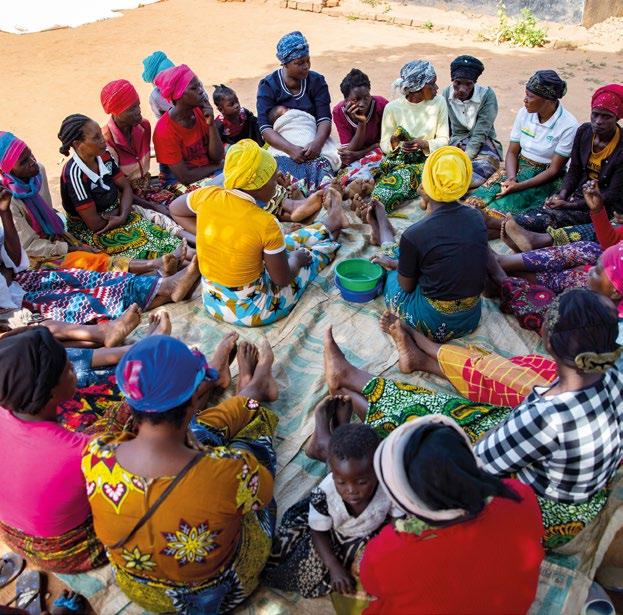
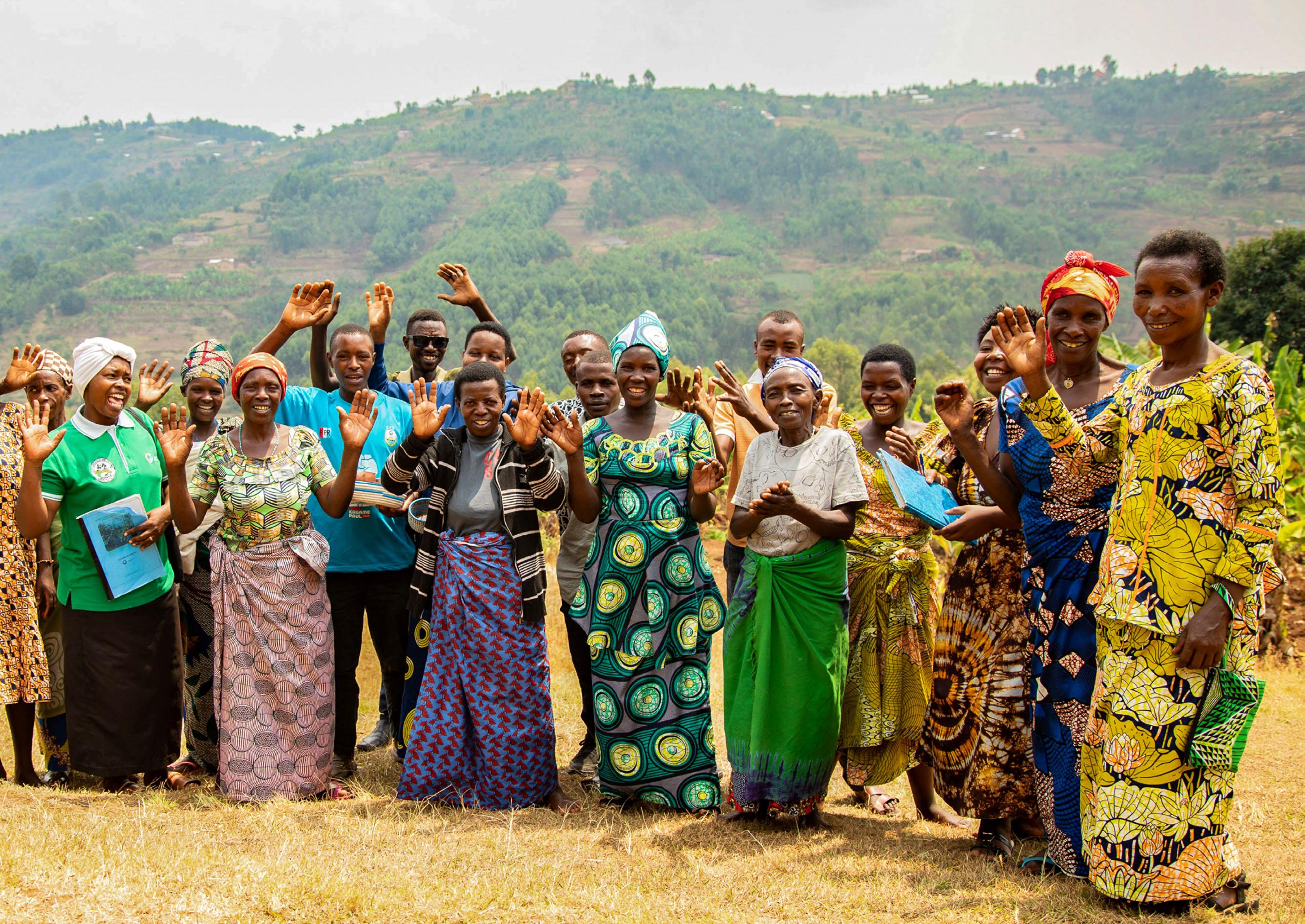
A farming cooperative in Rwanda who have benefited from digitisation of their savings and training on how to better manage their finances. Farmers have been able to save more effectively for any future challenges, and take out small loans to invest in their farms.
Felicia, member of the farming cooperative (pictured far left) — Rwanda
Independent auditor’s report to the members of Opportunity
International United Kingdom
Opinion
We have audited the financial statements of Opportunity International United Kingdom (the ‘parent charity’) and its subsidiary (‘the group’) for the year ended 31 December 2025 which comprise Charity Statement of Financial Activities, the Consolidated Statement of Financial Activities, the Charity Balance Sheet, the Consolidation Balance Sheet, the Consolidated Statement of Cashflows and notes to the financial statements, including a summary of significant accounting policies.
The financial reporting framework that has been applied in their preparation is applicable law and United Kingdom Accounting Standards, including FRS 102 “The Financial Reporting Standard applicable in the UK and Republic of Ireland” (United Kingdom Generally Accepted Accounting Practice).
In our opinion, the financial statements:
• give a true and fair view of the state of the group and of the parent charity’s affairs as at 31 December 2025 and of the group and the parent charity’s income and expenditure for the year then ended;
• have been properly prepared in accordance with United Kingdom Generally Accepted Accounting Practice; and
• have been prepared in accordance with the requirements of the Companies Act 2006, the Charities and Trustee Investment (Scotland) Act 2005 and regulation 8 of the Charities Accounts (Scotland) Regulations 2006.
Basis for opinion
We conducted our audit in accordance with International Standards on Auditing (UK) (ISAs (UK)) and applicable law. Our responsibilities under those standards are further described in the “Auditor’s responsibilities for the audit
of the financial statements” section of our report. We are independent of the charity and the group in accordance with the ethical requirements that are relevant to our audit of the financial statements in the UK, including the FRC’s Ethical Standard, and we have fulfilled our other ethical responsibilities in accordance with these requirements. We believe that the audit evidence we have obtained is sufficient and appropriate to provide a basis for our opinion.
Conclusions relating to going concern
In auditing the financial statements, we have concluded that the trustees’ use of the going concern basis of accounting in the preparation of the financial statements is appropriate.
Based on the work we have performed, we have not identified any material uncertainties relating to events or conditions that, individually or collectively, may cast significant doubt on the group’s or the charity’s ability to continue as a going concern for a period of at least twelve months from when the financial statements are authorised for issue.
Our responsibilities and the responsibilities of the trustees with respect to going concern are described in the relevant sections of this report.
Other information
The other information comprises the information included in the annual report, other than the financial statements and our auditor’s report thereon. The trustees are responsible for the other information contained within the annual report. Our opinion on the financial statements does not cover the other information and, except to the extent otherwise explicitly stated in our report, we do not express any form of assurance conclusion thereon.
Our responsibility is to read the other information and, in doing so, consider whether the other information is materially inconsistent with the financial statements, or our knowledge obtained in the course of the audit, or otherwise appears to be materially misstated. If we identify such material inconsistencies or apparent material misstatements, we are required to determine whether this gives rise to a material misstatement in the financial statements themselves. If,
based on the work we have performed, we conclude that there is a material misstatement of this other information, we are required to report that fact.
We have nothing to report in this regard.
Opinions on other matters prescribed by the Companies Act 2006
In our opinion, based on the work undertaken in the course of the audit:
• the information given in the trustees’ report which includes the directors’ report for the financial year for which the financial statements are prepared is consistent with the financial statements; and
• the directors’ report including within the trustees’ report have been prepared in accordance with applicable legal requirements.
Matters on which we are required to report by exception
In light of the knowledge and understanding of the group and parent’s charity and its environment obtained in the course of the audit, we have not identified material misstatements in the strategic report or the directors’ report.
We have nothing to report in respect of the following matters in relation to which the Companies Act 2006 requires us to report to you if, in our opinion:
• adequate accounting records have not been kept, or returns adequate for our audit have not been received from branches not visited by us; or
• the financial statements are not in agreement with the accounting records and returns; or
• certain disclosures of trustees’ remuneration specified by law are not made; or
• we have not received all the information and explanations we require for our audit; or
• the trustees were not entitled to prepare the financial statements in accordance with the small companies’ regime and take advantage of the small companies’
exemption in preparing the Report of the Trustees and from the requirement to prepare the Strategic Report.
Responsibilities of Trustees
As explained more fully in the trustees’ responsibilities statement set out on page 28, the trustees (who are also the directors of the charitable company for the purposes of company law) are responsible for the preparation of the financial statements and for being satisfied that they give a true and fair view, and for such internal control as the trustees determine is necessary to enable the preparation of financial statements that are free from material misstatement, whether due to fraud or error.
In preparing the financial statements, the trustees are responsible for assessing the group’s and the parent charity’s ability to continue as a going concern, disclosing, as applicable, matters related to going concern and using the going concern basis of accounting unless the trustees either intend to liquidate the charity or to cease operations, or have no realistic alternative but to do so.
Auditor’s responsibilities for the audit of the financial statements
Our objectives are to obtain reasonable assurance about whether the financial statements as a whole are free from material misstatement, whether due to fraud or error, and to issue an auditor’s report that includes our opinion. Reasonable assurance is a high level of assurance but is not a guarantee that an audit conducted in accordance with ISAs (UK) will always detect a material misstatement when it exists. Misstatements can arise from fraud or error and are considered material if, individually or in the aggregate, they could reasonably be expected to influence the economic decisions of users taken on the basis of the financial statements. The extent to which our procedures are capable of detecting irregularities, including fraud is detailed below.
Irregularities, including fraud, are instances of non-compliance with laws and regulations. We design procedures in line with our responsibilities, outlined above, to detect material misstatements in respect of irregularities, including fraud.
Based on our understanding of the group, the parent charity and its industry, we considered that non-compliance with the following laws and regulations might have a material effect on the financial statements: Charities Act 2011, Charities Accounts (Scotland) Regulations 2006, UK tax legislation, anti-bribery, corruption and fraud and money laundering.
To help us identify instances of non-compliance with these laws and regulations, and in identifying and assessing the risks of material misstatement in respect to non-compliance, our procedures included, but were not limited to:
• Inquiring of management and, where appropriate, those charged with governance, as to whether the group and the parent charity are in compliance with laws and regulations, and discussing their policies and procedures regarding compliance with laws and regulations;
• Inspecting correspondence, if any, with relevant licensing or regulatory authorities;
• Communicating identified laws and regulations to the engagement team and remaining alert to any indications of non-compliance throughout our audit; and
• Considering the risk of acts by the charity which were contrary to applicable laws and regulations, including fraud.
We also considered those laws and regulations that have a direct effect on the preparation of the financial statements, such as the Companies Act 2006 and the Charities Accounts (Scotland) Regulations 2006.
In addition, we evaluated the trustees’ and management’s incentives and opportunities for fraudulent manipulation of the financial statements, including the risk of management override of controls, and determined that the principal risks related to posting manual journal entries to manipulate financial performance, management bias through judgements and assumptions in significant accounting estimates, in particular in relation to revenue recognition (which we pinpointed to the cut-off assertion), and significant one-off or unusual transactions.
Our audit procedures in relation to fraud included but were not limited to:
• Making enquiries of the trustees and management on whether they had knowledge of any actual, suspected or alleged fraud;
• Gaining an understanding of the internal controls established to mitigate risks related to fraud;
• Discussing amongst the engagement team the risks of fraud; and
• Addressing the risks of fraud through management override of controls by performing journal entry testing.
There are inherent limitations in the audit procedures described above and the primary responsibility for the prevention and detection of irregularities including fraud rests with management. As with any audit, there remained a risk of non-detection of irregularities, as these may involve collusion, forgery, intentional omissions, misrepresentations or the override of internal controls.
A further description of our responsibilities for the audit of the financial statements is located on the Financial Reporting Council’s website at www.frc.org.uk/auditorsresponsibilities. This description forms part of our auditor’s report.
Use of the audit report
This report is made solely to the charity’s members as a body in accordance with Chapter 3 of Part 16 of the Companies Act 2006. Our audit work has been undertaken so that we might state to the charity’s members those matters we are required to state to them in an auditor’s report and for no other purpose. To the fullest extent permitted by law, we do not accept or assume responsibility to anyone other than the charity and the charity’s members as a body for our audit work, for this report, or for the opinions we have formed.
Michael Speight (Senior Statutory Auditor) for and on behalf of Forvis Mazars LLP Chartered Accountants and Statutory Auditor 5th Floor, 3 Wellington Place, Leeds LS1 4AP Date: 12 May 2026
Consolidated Statement of Financial Activities
(including income and expenditure account) Year ended 31 December 2025
The notes on pages 36 to 44 form part of these financial statements. All results are derived from continuing operations. There are no recognised gains or losses other than those passing through the statement of financial activities.
Comparative Consolidated Statement of Financial Activities (Including income and expenditure account) Year ended 31 December 2024
Charity Statement of Financial Activities
(including income and expenditure account)
Year ended 31 December 2025
The notes on pages 36 to 44 form part of these financial statements. All results are derived from continuing operations. There are no recognised gains or losses other than those passing through the statement of financial activities.
Comparative Charity Statement of Financial Activities (including income and expenditure account)
Year ended 31 December 2024
The notes on pages 36 to 44 form part of these financial statements. These financial statements, which have been prepared in accordance with the special provisions relating to companies subject to the small companies regime within the Companies Act 2006, Pt. 15, were approved and authorised for issue by the Board of Trustees on 12 May 2026.
Charity Balance Sheet
Year
The Charity and Consolidated Balance Sheet signed on behalf of the Board of Trustees by the Chair Clifford Hampton Chair 12
Consolidated Statement of Cash flows
Year ended 31 December 2025
Cash flows from operating activities: (£)
Comparative Consolidated Statement of Cash flows
Year ended 31 December 2024
Cash flows from operating activities: (£)
Adjustments
Notes to the financial statements .
1. Accounting Policies
Basis of preparation
The financial statements have been prepared in accordance with Accounting and Reporting by Charities: Statement of Recommended Practice applicable to charities preparing their accounts in accordance with the Financial Reporting Standard applicable in the UK and Republic of Ireland (FRS102) (effective 1 January 2020) (Charities SORP FRS102) and the Companies Act 2006. The Trustees confirm that they have complied with the duty in section 17 of the Charities Act 2011 to have due regard to the Charity Commission’s general guidance on public benefit.
Basis of consolidation
The Group financial statements consolidate:
Opportunity International United Kingdom (the “Charity”)
Opportunity Microfinance Investments Limited (OMIL), a wholly owned subsidiary
OMIL holds minority programme investments in:
Opportunity International Savings and Loans Ltd (Ghana) –9.5%
Opportunity Bank Uganda Ltd – 5%
These holdings do not meet the definition of subsidiaries, associates, or joint ventures under revised FRS 102 because the Charity does not exercise control or significant influence. They are therefore treated as programme related investments and not consolidated. Accounts are prepared in GBP sterling and are rounded to the nearest whole pound.
Going concern
The trustees have assessed the Charity’s ability to continue
as a going concern for at least 12 months from the date of approval. Scenario analysis included:
• A 20–40% reduction in grant income
• Delays in match funding
Stress testing indicates that unrestricted reserves, cost control measures, and committed income provide sufficient resilience. The Trustees have not identified any material uncertainties. The financial statements are therefore prepared on a going concern basis.
Income and expenditure statements
Income and expenditure statements are not presented because the Charity Statement of Financial Activities and Consolidated Statement of Financial Activities are considered to represent the activity of the Charity and the Group.
Foreign currency translation
Transactions in foreign currencies are translated at the rate on the transaction date.
Monetary assets and liabilities are translated at the year end rate.
Gains and losses are recognised in the SOFA.
Income
Income is recognised using the five step model under revised FRS 102:
• Identify the contract with a donor or funder
• Identify performance obligations
• Determine the transaction price
• Allocate the price to performance obligations
• Recognise income as obligations are satisfied
Restricted Income
Recognised as performance obligations are met, typically over time.
Unrestricted Income
Recognised when receivable and when no performance obligations remain.
Donations and Legacies
Recognised when:
• Entitlement is established
• Receipt is probable
• Amount can be measured reliably
Grants
Performance related grants are recognised as conditions are met.
Investment Income
Recognised on an accruals basis.
Expenditure
Expenditure is classified by activity:
• Charitable activities
• Raising funds
• Support costs
Expenditure is recognised when a liability is incurred.
Support costs are allocated based on staff time.
Operating leases
Rentals payable under an operating lease are charged against income on a straight-line basis over the period of the lease.
Pension cost
Contributions are paid into the personal pension schemes of employees and are charged to the income statement unrestricted funds as incurred. The type of pension scheme is defined contribution stakeholder personal pensions.
Taxation
Opportunity International is a charitable organisation with exemption from UK taxation on its charitable activity under section 505 of the Income and Corporation Taxes Act 1988.
Donated services
The value of services provided by volunteers is not incorporated into these financial statements.
Programme investments
Programme investments are made to further charitable objectives rather than generate financial return.
They are measured at cost less impairment, unless fair value can be measured reliably.
No dividends are expected; if received, they are reinvested.
Fixed assets
Tangible assets are stated at cost less depreciation.
Depreciation is charged on a straight line basis:
Assets costing less than £100 are not capitalised. Assets purchased using grant funding are fully written off in the year of purchase.
Cash and cash equivalents
Cash and cash equivalents comprise cash balances and call deposits which are readily convertible to known amounts of cash and which are subject to insignificant risk of changes in value and have an original maturity of three months or less at acquisition.
Liabilities
These are the obligations of the Charity and Group arising from past transactions or events, the settlement of which may result in the transfer or use of assets, provision of services or other yielding of economic benefits in the future.
Fund accounting
All income which does not have a restricted use as set out by the donor and income from investments are accounted for as unrestricted funds.
Funds are classified as:
• Unrestricted – available for general use
• Restricted – subject to donor imposed conditions
• Designated – earmarked by trustees
Transfers between funds occur when:
• Restrictions are met
• Trustees designate or undesignate funds
• A full reconciliation is provided in the notes.
Restricted funds
Asset Estimated useful economic life
Office equipment Three years
Furniture & fittings Three years
All income which has a restricted use as set out by the donor is separately accounted for as restricted funds.
Accounting estimates and judgements
In applying the accounting policies, the Trustees have made critical accounting judgements, estimates and assumptions about the carrying amount of the assets and liabilities.
These estimates and assumptions are based on historical experience and are reviewed on a continual basis.
The critical accounting judgements, estimates and assumptions that have a material effect on the amounts recognised in the financial statements for both the current and next financial years are discussed below.
Judgements
All debtors are reviewed to determine if a bad debt provision is required for each balance.
Impairment testing is carried out for all assets and investments at the year-end date where there is an indication that impairment exists. For the purposes of impairment testing, the carrying amounts of the assets are reviewed and an impairment loss is recognised where the carrying amounts exceed the asset’s recoverable amount.
Estimates
Depreciation methods, useful lives and residual values are reviewed at each balance sheet date. The gain or loss arising on the disposal or retirement of an item of property, plant and equipment is determined as the difference between the sales proceeds and the carrying amount of the assets and is recognised in the Statement of Financial Activities.
Legacy income is accrued where there is entitlement and it is measurable and probable.
An accrual for dilapidations has been provided for the building that the charity rents, as it is a listed building and the Charity is liable for the upkeep.
2. Voluntary income of the charity and group
The sources of the grants and donations received during the year were as follows: 4. Analysis of expenditure
and
3. Investment and other income
Investment income consists solely of interest from bank and deposit accounts. Other income includes £nil (2024: £6,500) gifts in kind, public information and education, through mass media.
5. Charitable activities
6. Net incoming funds of the Charity
The net incoming funds are stated after charging:
–Urwego
Net incoming funds of the Group
The net incoming funds are stated after charging:
7. Taxation
Any excess of income over expenditure for Opportunity International and OMIL is exempt from taxation.
The Charity provides a defined contribution money purchase pension scheme, the assets of which are held separately from those of the Charity in an independently administered fund. The total costs of the senior leadership team, was £350,744 (2024: £370,560). The number of employees, of the group, whose total emoluments were in excess of £60,000 are as follows:
8. Staff costs of the charity and group
Fixed assets of the Charity and Group
10. Programme investments of the Group (continued)
13. Liabilities of the
11. Debtors of the Charity and Group
Amounts due to subsidiary are unsecured, interest free and repayable on demand.
14. Liabilities of the Group: amounts falling due within one year
15. Analysis of net assets of the Charity between funds
Comparative Analysis of net assets of the Group between funds: year ended 31 December 2024
Funds are received from a number of donors with each donation generally relating to a specific project. Donations received are distributed by Opportunity International UK to our Implementing partners. These organisations are responsible for the project. Consequently, no analysis of movements on the individual underlying funds has been provided. In 2024 £208,586 of designated reserves were used for the JOA Malawi match funding.
Comparative: year ended 31 December 2024
17. Commitments
At 31 December 2025, the Charity and Group had annual commitments under non-cancellable operating leases as follows:
16. Analysis of net assets of the Group between funds
Fund balances as at 31 December 2025 are represented by:
18. Trustees’ remuneration and donations
Trustees donated £36,425 (2024: £20,527) to OIUK during the year.
No trustee or any connected person received any remuneration, reimbursement of expenses or payment for services from the Charity during the year ended 2025 (2024: nil). Annual cost of trustee indemnity insurance is £1,500).
19. Unrestricted funds for the Charity and Group
20. Related party transactions
OIUK has not transferred any funds to OMIL (2024: £nil). Opportunity International US is an affiliate of Opportunity Global that is not a related party as defined in FRS102.
21. Ultimate control
The trustees are considered the ultimate controlling party of the Group.
22. Analysis of restricted funds of the Charity and Group
Restricted funds are funds subject to use for a specific purpose, which may be declared by the donor(s) or with their authority (e.g. in a public appeal) or created through a legal process, but still within the wider objectives of the Charity. The resources of these funds are appropriate for the intended purpose of each fund. All the costs of the subsidiary are restricted except for the governance costs of OMIL.
The designated were used to match fund the JOA Malawi project in 2024, remaining funds have been moved to unrestricted.
Comparative: year ended 31 December 2024
Analysis of restricted funds of the Charity and Group Year ended 31 December 2025 Brought forward as at 1 January 2025
Argidius addressing the key constraints preventing the growth of SMEs in Uganda.
JOA Resilient Rural Economies and Livelihoods in Malawi.
JOA inclusive finance for Agricultural Value Chains in Rwanda.
SCBF Strengthening institutional and client resilience to climate change, in Ghana.
Private restricted donations
Challenge Fund for Youth Employment (CFYE) Uganda.
Hilton/FINCA Access to Finance for Early Childhood Development in Uganda.
International Labour Organisation (ILO) Pilot testing Agriculture Finance products for Refugees and Host communities in Nakivale Refugee Settlement, Uganda.
Isle of Man Strengthening Livelihoods and Resilience for Refugees and Host Communities in Southwestern Uganda.
Waterloo Project in Pakistan, Nigeria and India Increasing Quality Driven Investment in First-Time Borrower Schools Serving LowIncome Communities.
for the year
ture in the
at 31
Comparative analysis of restricted funds of the Charity and Group Year ended 31 December 2024
Scottish Government Strengthening livelihoods in rural Rwanda.
Argidius addressing the key constraints preventing the growth of SMEs in Uganda.
JOA inclusive finance for Agricultural Value Chains in Rwanda.
SCBF Strengthening institutional and client resilience to climate change, in Ghana.
restricted donations
CFYE & Hilton refugees project in Uganda
funded Education in Pakistan
DANIDA grain hubs agriculture project in Uganda
Medicor Kayayei in Ghana (private match funds)
Subsidiary’s restricted funds
Total restricted funds for the Group
Abbreviations used above: JOA – Jersey Overseas Aid; SCBF – Swiss Capacity Building Facility. Some funds are overdrawn due to the timing of receipt from donors.
- (149,389) -
-
- (97,936)
“Previously, my children would have to go to school on an empty stomach and without uniforms. Now, I am able to put food on the table and buy them clothes.”
Edith, growing her enterprise and mentoring other women in her community to do the same — Malawi