





The world of work is undergoing a structural change. Digital technologies are reshaping economic models, geopolitical tensions are redefining markets, sustainability imperatives are being challenged, and demographic shifts are intensifying competition for talent. In such an environment, leadership is tested not only in moments of crisis but in the everyday capacity to interpret complexity and act with foresight.
For a country such as Switzerland, whose prosperity is built on innovation, precision and global interconnectedness, these dynamics are especially visible. Advanced manufacturing is integrating AI-driven processes into production systems. The financial sector is navigating digital assets, sustainable finance and increasing regulatory complexity. Life sciences and healthcare are combining scientifi c breakthroughs with data analytics and global collaboration. Across these sectors, executives are required to make decisions in contexts that are technologically sophisticated, internationally exposed and ethically demanding.
Executive education has therefore moved from being a periodic investment to becoming a strategic necessity. It is no longer sufficient to rely on past expertise or on the knowledge acquired at the outset of a career. A large majority of professionals expect to update their learning more frequently to keep pace with changing requirements. Employers, in turn, are developing formal training strategies to reskill and upskill their workforce.
Across Europe, we observe a clear shift from linear educational pathways towards a lifelong learning paradigm. Careers are longer, more dynamic and less predictable. Many executives will







Prof.
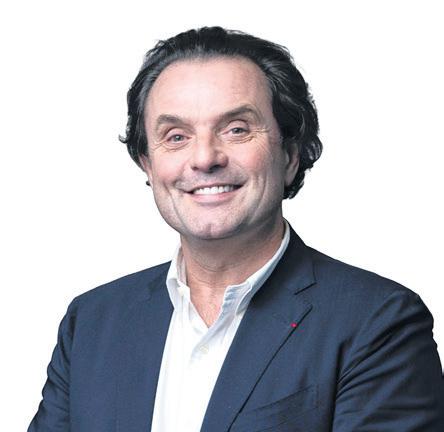
Dr. Eric Cornuel President, EFMD Global
change direction at least once during their working lives. Learning is increasingly conceived as a journey composed of multiple stages, formats and credentials, rather than a single degree completed at a specific moment in time. This transformation is also visible in the formats organisations and individuals are choosing. Short programmes, customised corporate solutions and blended models combining online and in-person learning are gaining prominence. Employers value flexible solutions that can be integrated into working life and deliver rapid impact. At the same time, there is growing interest in
stackable pathways that allow participants to accumulate credits over time and, where appropriate, translate them into recognised qualifications.
Artificial intelligence will further accelerate this evolution. AI offers opportunities for personalisation, adaptive feedback and faster content creation, opening the door for a plethora of learning providers.
Yet the rapid proliferation of diverse learning pathways also raises fundamental questions. When learning becomes modular and portable, how can organisations ensure coherence, depth and long-term value? How can executives discern a qualitative offering?
Here, established institutions play an indispensable role. Business schools and universities with strong academic foundations provide more than discrete skill acquisition. They offer intellectual rigour, research-based insight and structured reflection. They create spaces where executives from different sectors, such as technology, pharmaceuticals, energy and banking, can exchange perspectives and challenge assumptions. They connect technological innovation with ethical consideration and strategic context.
Quality assurance and accreditation form the enabling foundation of this institutional excellence. Robust accreditation frameworks require schools to demonstrate strategic clarity, faculty strength, corporate engagement and measurable impact. They promote continuous improvement and international benchmarking. In a fragmented marketplace, accreditation serves as a trusted signal of quality, reassuring organisations that their investment in executive education is grounded in recognised standards and a culture of accountability.
T he challenges ahead are multifaceted. In the ‘Future of lifelong and


executive education’ study by CarringtonCrisp, employers report shortages not only in technological domains such as artificial intelligence and data analytics but also in change management, agility, and decision-making in uncertain environments. Leaders must reconcile performance with sustainability and manage diverse, multigenerational teams. In sectors central to the Swiss economy, from engineering to sustainable finance, this integrative capability is critical.
Executive education, when anchored in quality and designed in close dialogue with business, is uniquely positioned to respond. It can bridge disciplines, combine technological expertise with human-centred leadership and extend learning beyond the classroom through applied projects, coaching and peer exchange. It can support leaders not only in acquiring new knowledge but in shaping mindsets.
Ultimately, the competitive advantage of organisations and economies will depend less on what they know at a given moment and more on how effectively they can learn, unlearn and relearn. For Switzerland and for Europe more broadly, embedding lifelong learning into corporate strategy is not simply a matter of talent development. It is a prerequisite for resilience, innovation and sustainable value creation.
T he programmes presented in this supplement reflect a diverse and high-quality ecosystem of executive offerings. They provide structured pathways within a broader lifelong learning journey. For senior decision makers, investing in such pathways is not merely an educational choice. It is a strategic commitment to adaptability, responsibility and long-term success in a world that will continue to demand both excellence and integrity.

What defines a truly effective Board of Directors?
Lukas Kühne: Exceptional boards don›t just prove their worth in calm waters— they excel when things get tough. The key is the ability to provide clear direction, set sharp priorities and make decisions under uncertainty. A modern board is not merely a compliance body; it acts as an active strategic counterpart to management.
Raphael Matt: High-performing boards stand out through three pillars. First, strategic clarity— they cut through the noise to focus on what moves the needle. Second, high-quality dialogue—they challenge constructively without drifting into operational involvement. And third, collective impact: their power comes from seamless collaboration, not individual prominence. Ultimately, the question is whether a board meaningfully contributes to a company’s future readiness—or simply preserves the status quo.
Where do today’s boards often fall short?
Laura De Paolis: The greatest omission we observe is when boards stay stuck in the past. In many cases, the focus remains on control, reporting and formal governance. While those are necessary, they aren›t enough. Too little attention is paid to how business models are evolving, which new risks are emerging and how the broader environment is shifting.
Are there cases where a board hinders transformation instead of driving it?
RM: Absolutely. And it’s usually not a lack of will, but a lack of perspective. When a board misses key expertise in digitalization or new business models, they tend to approach change too cautiously or inconsistently.
LK: Uncertainty plays a central role. Transformation inherently involves risk. If a board prioritizes stability over evolution, critical changes get delayed. Transformation rarely fails because of management alone—it often falters due to a lack of strategic clarity and experience at board level. Without that perspective, uncertainty leads to hesitation rather than decisive leadership.
Should boards embrace a generational mix? Is that realistic in practice?
LDP: A mix of generations isn›t just a ‹nice-to-have›—it’s becoming a strategic necessity. It is less about age and more about perspective. Younger members often have an intuitive grasp of emerging tech and shifting consumer behaviors, while experienced members contribute strategic depth, judgement and crisis experience.
RM: What matters is this: a board is not a representative body—it is a governing one. Every member must add real substance. A generational mix only works when it’s a deliberate orchestration of complementary skills, not a random selection. The goal is to blend proven experience with fresh, disruptive insights to create a truly effective collective.
LK: At the same time, boards are under

Selecting the right board members is pivotal to a company’s strategic direction and long-term growth. Lukas Kühne, Laura De Paolis and Raphael Matt, Owners and Partners at Meister Executive Search, share their perspective on what sets a high performing board apart in today’s landscape.
increasing public scrutiny. They are judged not only on outcomes, but on how decisions are made. This shifts the role of the board: it is measured as much by the quality of its judgement as by its results. In that sense, boards must actively manage competing priorities and navigate complexity with clarity.
How can companies proactively build a future-ready board?
LK: It starts with mindset. The board
Meister Executive Search AG Meister Executive Search AG, with around 20 professionals, supports companies in the recruitment of board and executive-level talent. With offices in Bern, Zurich and Lausanne, the firm offers comprehensive coverage across Switzerland and deep insight into regional dynamics. With over 25 years of experience and a strong focus on proactive market mapping, Meister Executive Search ensures that boards are strengthened with the right individuals.
should be treated as a high-value strategic asset, not a static fixture. Companies should regularly ask themselves: Which skills will be non-negotiable then? Where are our current blind spots? This forms the basis for structured succession and development planning.
LDP: It’s about ‹deliberate composition. You need complementarity instead of overlap—blending diverse perspectives with top-tier professionalism. But a great board is never ‹finished.›
It must evolve through constant reflection and a deep dive into emerging trends. The ultimate question every board must regularly ask itself is: Does our current skill set still fuel our future strategy? This kind of self-reflection is now a cornerstone of modern governance.
What sets board recruitment in SMEs apart from large corporations?
LK: The decisive difference lies in the proximity to ownership. In
«Effective boards go beyond oversight—they act as active strategic counterparts to management.»
SMEs—especially within the Swiss market—board members often work closely with founding families or anchor shareholders. This often highly affects the selection process on an emotional level. It’s not just about the CV; it’s about trust, shared values, and a seamless cultural fit.
RM: In large corporations, processes are typically more formalized, with defined competency profiles, nomination committees and structured selection processes. In contrast, SME recruitment is more intuitive and pragmatic. It’s driven by individuals rather than protocols, which allows for more agility but also requires sensitive guidance.
LK: Many SMEs still rely heavily on existing networks or use headhunters selectively. Truly structured, skills-based search remains the exception. We are convinced that the greatest lever for success is moving from ‹who we know› to ‹what we need.› By defining clear target profiles and tapping into a broader talent pool, SMEs can transform their board selection from a formal necessity into a powerful strategic advantage.
How does Meister Executive Search identify the right board members?
LDP: Our approach deliberately moves away from traditional, network-driven or advertisement-based recruitment. Many board appointments still rely heavily on personal connections, which often leads to homogeneous structures and neglects top-tier, diverse talent. We therefore focus on systematic market mapping and targeted high-quality direct approach.
RM: Today’s board is an active governing body, navigating companies through an increasingly complex environment shaped by geopolitical tensions, technological disruption and regulatory pressure. It is no longer enough to approve strategy—the board must actively shape and challenge it. Its effectiveness becomes visible both in periods of growth and in times of uncertainty.
Interview: Rüdiger



Executives are in high demand. But the requirements for responsible leadership have changed – and many employees are hesitant to take on leadership responsibilities in their own or another company. Do you have what it takes to be an executive? Do you understand what it takes to be a modern leader in a company? Take the test!









6




IRÜDIGER SCHMIDT-SODINGEN

s the air getting thinner at the top? What helps executives to breathe and thereby keep a company and its employees vital and successful – today and tomorrow? In 2018, the study «Leader Tracker: When Do Leaders Perform at Their Best?», jointly conducted by Erasmus University Rotterdam and the University of Lucerne, was published, analyzing interviews with 106 executives from Switzerland. «Good working relationships, in the sense of goal-oriented cooperation, are the main motivator for leaders,» the study states. «Leaders also draw motivation from the opportunity to contribute their own strengths and exert a positive influence on others.»






In its January study, «Empty Management Floor? What Really Motivates Employees to Lead,» the German Competence Center for Securing Skilled Workers (KOFA) found that «only one in seven employees without management responsibility can clearly imagine taking on a leadership role. Men are more frequently interested in management tasks than women, and full-time employees are significantly more willing to lead than part-time employees.»
Even top management in Switzerland faces challenges, as many Swiss citizens rarely change employers, while many sectors are urgently seeking new specialists with the proverbial «outsider›s perspective» or international expertise. Is experience still sufficient, or is a conscious effort required to update one›s decision-making and, consequently, leadership skills?
This page contains 10 questions to help you better understand leadership. Write down the correct letter for each question.

1



1. What time frame a er taking on a leadership role is considered crucial?1
a) The rst 30 day
b) The rst 100 days
c) The rst six months

2
2. What qualities do employees value most in managers?2
a) Will to succeed and role model
b) Ambition and assertiveness
c) Intelligence and trustworthiness
3
3. Which areas are currently demanding the most from leaders?3
a) Expectation gap between management and team
b) Limited resources (time, personnel, budget)
c) Documentation and reporting requirements
Give yourself one point for each correctly answered question.
. 0-4 correct answers: Your executive understanding level needs improvement.
5-7 points: You already understand a lot about modern leadership
8-10 points: You are «executive ready».
Solution:
Time frame: b Qualities: c Areas: b Age groups: b
Situational Leadership: c
Transactional: a Human Sustainability: b Balance: a Culture of Learning: a
4
4. What percentage of companies consider collaboration between di erent age groups a priority?4
a) 72 percent
b) 88 percent
c) 57 percent
5
5. What three factors should be emphasized in the selection or development of managers?5
a) Integrity, goodwill, expertise
b) Commitment, management skills, empathy
c) Technical understanding, motivation, communication

6. According to the «Situational Leadership» model, which aspect is crucial for choosing a leadership style?6
a) The company‘s current nancial situation.
b) The average, regularly measured performance of the entire team.


7
c) The competence and commitment of each individual employee.

7. What are the primary characteristics of a «transactional» leadership style?7

a) Focus on clear rules, rewards, and sanctions
b) Focus on inspiration and a shared vision



c) Focus on employee autonomy
8
8. What is a key element of «human sustainability» in leadership?8
a) Managers focus exclusively on ecological sustainability
b) Managers view employees as individuals who need active development
c) Managers allow reduced working hours
9
9. How can executives strike a balance between cost e ciency and innovation in the current international market environment?9
a) By establishing separate units for innovation and operations.
b) By empowering employees to decide independently how much time they dedicate to e ciency or innovation.
c) Through agile portfolio management, tailored to available resources and budgets.
10
10. Which strategy is most e ective in establishing a comprehensive culture of learning from mistakes?10
a) The strategy of „vulnerability-based leadership,“ in which leaders regularly address their own mistakes and knowledge gaps.
b) The strategy of institutionalized „pre-mortems,“ which discusses the potential failure of pending projects to normalize criticism.
c) The strategy of „low-context communication protocols“ with clear, direct communication rules that support explicit questions and documentation.
How has executive search changed in recent years?
When I started 16 years ago as a career changer at a large international company, the daily work routine was still heavily influenced by analog processes. At the same time, we were clearly in an employer›s market. Today, we are in an employee›s market, and both the nature and quality of applications have changed significantly. Previously, self-presentation tended to be more reserved and easier to verify.
For example, if someone stated that they had worked as a project manager, this could usually be verified based on the documents and several years of relevant experience. Today, a much more intensive check is required. We work with specialized providers of background checks, among others – and this shows that in around 75 percent of cases, at least one anomaly or «red flag» is identified. This doesn›t have to be serious, but can begin even with minor inaccuracies, for example, in dates: If one employment ends in February and the next one begins in April, this gap is sometimes deliberately «bridged» by setting the end date to the end of March. Against this background, the effort involved in the selection process has significantly increased.
What does this change mean for companies that are urgently seeking new leaders?
The effort involved in the selection process has increased significantly overall. Today, it›s essential to invest more time in interviews and ask targeted questions to obtain a complete and reliable picture. At the same time, loyalty in the job market has also changed. While, for example, a management position was often held for five years or more in the past, job changes after just three years are no longer uncommon. Increased visibility on platforms like LinkedIn and Xing further contributes to this – both for candidates and for the positions themselves. In practice, it repeatedly becomes clear in our assignments that the challenge is no longer in identifying suitable profiles, but rather in reaching them in the first place and receiving feedback. Direct approaches via LinkedIn – even with existing networks – only result in a response in about half of the cases. For companies, this means proactive talent management is essential. Like sports, building a robust talent pool is crucial. This is precisely where Vinci Executive Search›s key added value lies: a continuously maintained network of relevant profiles and regular communication to ensure the availability of suitable options for the long term.
Have the application processes become easier or more difficult?
For companies, the recruitment process has become more demanding, while for applicants it has become easier. The application process today often requires only a few clicks – even individual cover letters can be created in a very short time using AI-supported tools. This makes it possible to apply more quickly and for a larger number of positions, often with a more exploratory











How is the search for executives changing – and which personalities are particularly sought a er both domestically and internationally?
Answers from Arnold Lang, Executive Search Consultant and Chairman of the Board of Directors of Vinci Executive Search AG.
approach. At the same time, a slight countermovement can currently be observed. The labor market is developing more strongly in favor of employers in certain areas. For example, the number of unsolicited applications has risen significantly compared to two to three years ago – particularly in the upper segment, i.e., at the middle and upper management levels, up to and including board positions. This development suggests that the market equilibrium is currently readjusting and companies in certain sectors are once again receiving somewhat more choice.
To what extent is the personal touch of an application lost through digital aids or AI tools?
The personal touch in the recruitment process is regaining importance. This is precisely where Vinci Executive Search comes in: Professional qualifications are evident on paper – but personality is crucial. Therefore, the selection process is specifically enhanced with psychological expertise to provide a sound assessment of the fit between the individual and the company. Experience
and intuition play a vital role but are deliberately complemented by structured evaluations. Because one key pattern remains: Executives are hired based on their competencies – and often leave their positions due to personal reasons.
How do you need to adjust your search or consultation to find the right people?
I founded Vinci Executive Search about two and a half years ago – after nearly 14 years of experience in the industry. Today, around 80 percent of our contracts come from existing clients. This trust is primarily based on our strong understanding of how companies operate and what truly matters in practice. A key factor remains the interpersonal level.
Vinci Executive Search AG
Vinci Executive Search›s team possesses a broad, cross-industry network spanning construction and manufacturing, life sciences and healthcare, as well as FMCG and financial services. This foundation allows for structured access to the relevant candidate market, encompassing both actively seeking candidates and strategically identified top-tier passive talent. A particular focus is placed on assessing personality and leadership qualities to ensure a
sustainable and long-term fit between candidates and companies.
Arnold Lang is an experienced consultant and Chairman of the Board at Vinci Executive Search, with over 16 years of experience in executive search, specializing in construction, energy, and industry. He grew up on several continents and in di erent language regions. He understands diverse mentalities and manages mandates in German, French, and English.
If, during a conversation, there›s a sense that uncomplicated, authentic interaction would be possible even outside of a professional context – perhaps in an informal exchange – that›s often a good sign for a suitable collaboration. Shaped by my own background in tourism and the service industry, I›ve developed a keen sense for whether there›s common ground. This assessment is shared within the team – many colleagues possess a similar understanding.
The demands placed on managers seem to increase every year. How do you respond to this?
Yes, the pace of change has increased signifi cantly in recent years. Topics like artificial intelligence were hardly present in this form three or four years ago. Today, managers face the challenge of actively shaping how these technologies are used – both at the employee level and across the entire company. Regulatory complexity is also increasing. In Switzerland, the environment is comparatively pragmatic, while in Germany, for example, significantly stricter regulations apply. This is reflected in detailed requirements catalogs even before the start of a project – resulting in correspondingly higher coordination and documentation efforts.
How different are the requirements for managers in Swiss and international companies?
Switzerland is heavily influenced by small and medium-sized enterprises and is also a high-wage country. This means that managers here often bear a particularly broad range of responsibilities. In many cases, this means questioning issues multiple times and ensuring decisions are thoroughly vetted, as fewer support resources are available than in large international organizations. My own international experience – for example, in African markets – also demonstrates how diverse leadership realities can be.
They support candidates and companies for 12 months after hiring. What do they observe during this time?
During this sensitive phase, we will support the start and create space for open communication about how the first weeks and months are experienced. Our primary goal is to understand whether expectations on both sides are being met, whether the tasks and framework conditions are as agreed upon, and whether an environment is developing in which one can feel comfortable and thrive. Our aim is that what was jointly defined beforehand is also reflected in practice.
Against this backdrop, we at Vinci Executive Search consciously understand our role as a long-term partnership. We act as sparring partners for both companies and candidates and provide support with practical matters as needed – particularly for international relocations, such as finding accommodation or obtaining insurance. Our goal is not only to facilitate a successful start but also to foster a sustainable, mutually beneficial collaboration.
Interview: Rüdiger Schmidt-Sodingen
How do you see the development of your programme in its 25th year?
Our 25th anniversary is a milestone that reminds us how far the TRIUM community has travelled, and how much possibility still lies ahead. TRIUM brings together senior international professionals who will think differently, lead with purpose, and shape change on a global scale. Throughout this year, we’re bringing our alumni together for conversations that matter, gatherings that spark ideas, and moments that challenge the way we see the world and our roles during the next 25 years. We’re setting our sights firmly on what comes next. Our theme, Thinking: Forward captures that spirit. We’ve already begun to develop our curriculum with six international modules in international business hubs including London, New York, Paris, Seoul, Nairobi and Dubai making us definitively global and enabling us to ask new questions and seek new solutions, towards a future that demands bold leadership.
New global challenges in leadership, collaboration, and the use of technology are making the work of executives more demanding than ever. How easy or difficult is it for leaders to prepare for these challenges?
Leadership has always been an evolving story. TRIUM’s first module coincided with 9/11 and this global event galvanized our community’s belief that in times of geopolitical uncertainty and global shift, it is critical to maintain a discourse across borders. In today’s rapidly shifting global landscape, it is increasingly difficult to navigate the challenges of a multipolar world. At TRIUM, we believe that truly global leaders must be equipped with the tools to navigate this complexity. That’s why geopolitics is woven throughout the TRIUM Global Executive MBA curriculum, giving our students the context and insight to lead with confidence on the world stage. Geopolitics is more than a backdrop – it’s a defining factor shaping business strategy, investment, and leadership. From regional conflicts and trade policies to global governance and climate diplomacy, geopolitical developments now have a direct impact on business outcomes. The geopolitical expertise lent by The London School of Economics and Political Science is also what makes TRIUM unique amongst business schools, in exploring the context of business decision making.
One gets the impression that companies also have to help overcome major challenges and crises. What does this mean for the training or skillset of managers?
Every company is currently facing unprecedented complexity. Crises place extreme demands on leaders: incomplete information, time pressure, high stakes and public scrutiny. Companies are increasingly expected to help society navigate major challenges and crises have very concrete implications for the way leaders are developed at TRIUM. The programme is designed on the assumption that senior leaders today must go far beyond traditional functional excellence and be capable of acting responsibly, decisively and globally in a volatile, uncertain, complex

«The
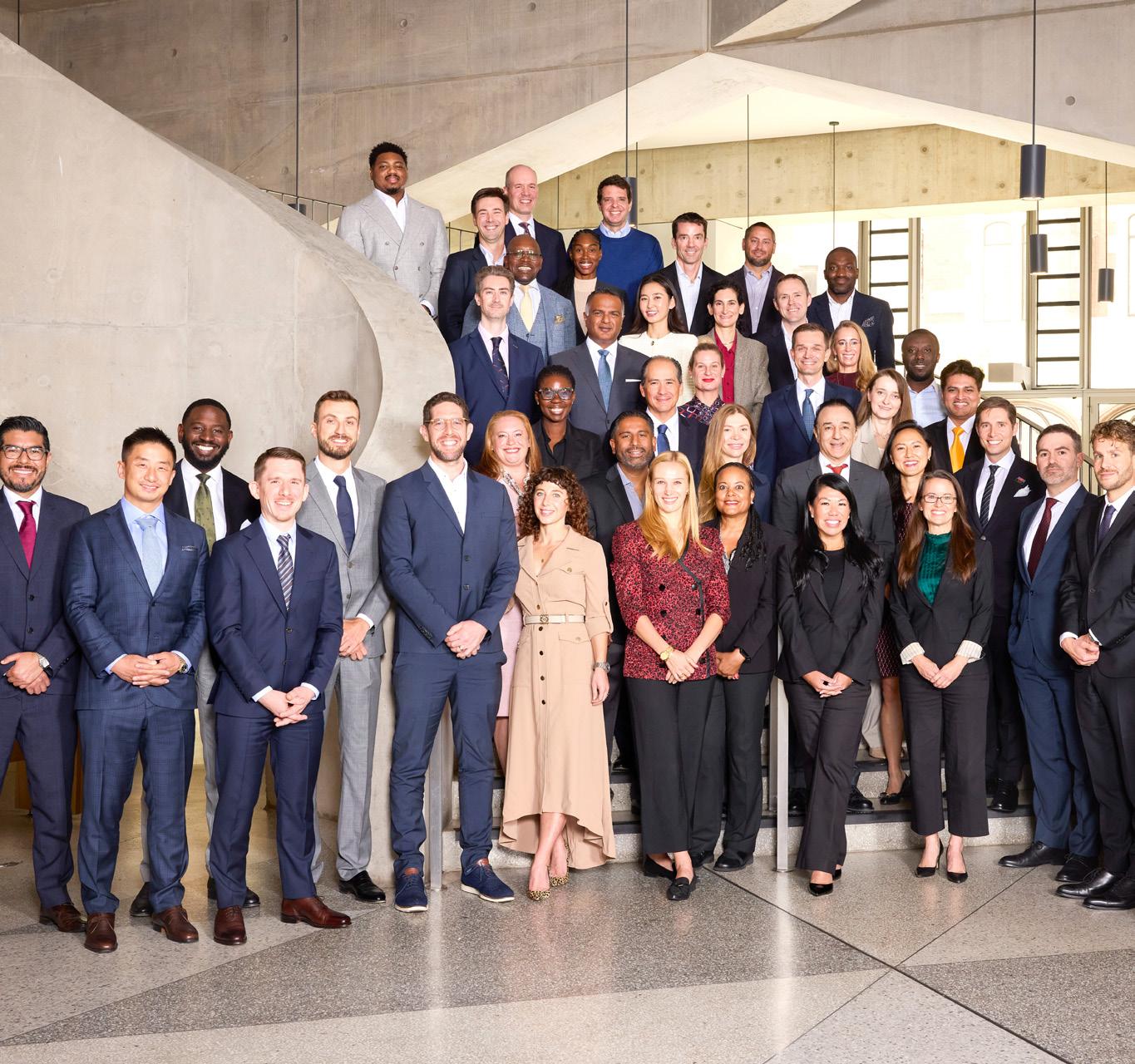
The TRIUM Global Executive MBA (EMBA) programme is considered one of the best EMBAs worldwide. An interview with Professor Robert Falkner on the 25th anniversary – and on the challenges and prospects that await global leaders today.
and ambiguous landscape. The TRIUM programme deliberately develops judgement and decision-making skills, the ability to balance swift response with responsibility and emotional resilience and composure under pressure. TRIUMers learn these skills through vertical learning in the classroom via academic delivery as well as lateral learning amongst their peers. At TRIUM, managers and leaders enter a remarkable network of high-achieving global business leaders, which exposes them to new ideas and ways of doing business and consequently new opportunities. This rich, diverse experience and connections can only benefit the leadership of any company.
How do managers benefit from the 18-month programme?
Business leaders benefit in ways that go well beyond acquiring new business knowledge. The programme is designed for experienced, internationally minded executives who want to widen their strategic impact, become more effective leaders and operate with confidence in an increasingly uncertain global environment. Candidates often cite that they want to progress from being an individual contributor
The TRIUM Global EMBA is a prestigious 18month executive MBA jointly delivered by LSE, HEC Paris, and NYU Stern, designed for senior, international business leaders seeking to develop their global perspectives and strengthen their leadership skills and strategic vision. Through a unique combination of six inperson modules located across global business hubs including London, New York, Paris, Seoul, Nairobi and Dubai, TRIUM takes a three hundred and sixty degree approach to business leadership.
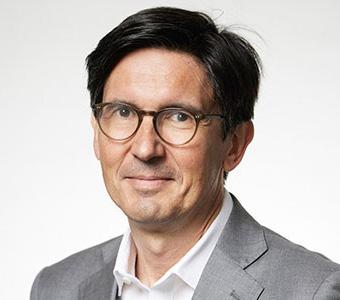
Academic Dean of the TRIUM Global Executive MBA, a world leading executive MBA programme jointly run by NYU Stern School of Business, London School of Economics and Political Science and HEC Paris. Born in Germany, he read for a double-degree in politics (MA Politikwissenschaft) and economics (Diplom-Volkswirt) at Ludwig-Maximilians-University in Munich. After moving to the UK, he gained a doctorate in international relations from the University of Oxford (Nuffield College).
Global Executive MBA
Duration: 18 months
Degree: Global Executive MBA
Information: https://www.triumemba.org/
We invite prospects to complete a Preliminary Application Form to explore their fit for TRIUM: https:// www.triumemba.org/prelim-form/
to impactful leader. TRIUM gives business leaders a truly global perspective, strategic vision, intellectual credibility and confidence at senior level and ultimately immediate relevance and return on investment. Not to mention the credentials of a EMBA jointly conferred by three world leading schools!
How important are the in-person modules that take place in London, Paris, New York and other locations in Asia and Africa?
The inperson modules are absolutely central to the TRIUM Global EMBA— they are not an addon or a nice-tohave, but a core part of what makes the programme distinctive and effective for senior leaders. Each module is immersive; a truly bonding experience where trusted peer networks and lifelong friendships are made. In each location, TRIUM is able to leverage the reputation and connections of its partner schools to connect with expert faculty, regional government organisations, business leaders and alumni to provide deep insights into the business ecosystem e.g. the geopolitical expertise of LSE, the financial smarts of NYU, the management and leadership strategy at HEC. In Seoul, we look at technology and innovation, we go indepth into frontier markets in Nairobi and Dubai is global nexus of business enterprise which truly reflect TRIUM’s diverse cohort of business leaders. This experiential learning leads to deeper engagement with complex issues. Nothing replicates the high-intensity discussions that evolve organically beyond slides or prepared remarks or the immediate feedback from faculty and peers on ideas, assumptions and leadership styles.
How can I apply?
TRIUM is designed for senior executives planning to expand into international markets, seeking a global perspective and ready to challenge themselves amongst a high calibre cohort. The admissions process is rigorous and selective, but also highly attentive to each individual and the qualities they will bring to the TRIUM cohort.
Looking back over the last 25 years: How much has the programme changed leaders and, consequently, the way they lead and invent new business models?
Looking back over the 25year history of the TRIUM Global EMBA, its impact on leaders—and through them on organisations and business models, the programme has not simply kept pace with how leadership has evolved; in many respects, it has helped shape that evolution. The programme acknowledged early on that while there is no road map, we can equip executives with the toolkit to navigate complexity by asking the right questions and understanding that business decisions are heavily influenced by the context of international relations and political economy, as these forces shape the global operating environment. This fundamentally changes the way senior executives must lead their organizations. TRIUM fundamentally redefined this by embedding leadership across institutions, ideologies and societal systems, not just geographies.
Interview: Rüdiger Schmidt-Sodingen

Founded in 1819, the ESCP Business School offers innovative executive education programs for individuals, companies, and organizations. Sven Scheid, Director of Executive Education in Berlin, discusses the part-time Executive MBA (EMBA) program, which addresses the global challenges facing businesses and society.
Is it even possible to summarize in one or two sentences what managers in global competition need to be able to do today?
In my view, leaders must be able to manage complexity and uncertainty based on a reliable value compass by analytically and data-drivenly identifying trends and business opportunities, while simultaneously leading and negotiating with empathy and intercultural sensitivity.
To what extent do ecological, technological and social transformations influence leadership responsibility?
First, these three transformation processes require assuming strategic, operational, and ethical leadership responsibility. Only those who fully embrace this triad will meet the demands. Naturally, this is only possible if leaders remain at the forefront of current discussions and continuously develop their expertise. This is also reflected in our curriculum. Several years ago, we established sustainability as a cross-cutting learning objective in all courses. With the outbreak of the war in Ukraine, a course on geopolitics became a mandatory part of the program. Naturally, artificial intelligence is now also being addressed more extensively in our courses. Global competition dies not forgive mistakes. Those who miss a trend will find it extremely difficult to catch up with the competition.
How do the call for specialization and the demand for a 360-degree view fit together?
Specialists are needed in every business
context, but top management requires a 360-degree perspective and a willingness to question one‘s own specialist viewpoint. The brilliant engineer whose passion is product development may lack an understanding of the market or the supply chain. The product may be fantastic, but it still might not sell because production costs have become too expensive due to transportation or tariffs, or because the market simply doesn‘t exist. At the highest management level, specialization can be dangerous because it narrows one‘s perspective. Our Executive MBA program is comprised primarily of specialists, such as engineers, lawyers, IT experts, and medical professionals, who understand this.
What is special about your Executive MBA?
The Executive MBA at ESCP Business School is the most flexible program among the top 10 in the Financial Times rankings. Our students can take each course at at least three different locations or online. This allows them to optimally combine their professional,
private, and academic lives. Rigid curricula without electives are hardly viable in today‘s market. Thanks to our multi-campus structure and large student numbers, we can offer this flexibility while maintaining ideal class sizes of 25 to 35 students.
In addition to the ten core courses and ten electives, the EMBA program also requires completion of five international seminars and an international consulting project. Do these courses specifically impart global perspectives and working methods?
Our roots and values are European, but our perspective is global. Economic success and the development of our society require continuous learning. We follow two principles here. First: We learn best from others, and this is achieved through openness and curiosity. That‘s why exchange in other geographical contexts, such as in China, India, Brazil, or South Africa, is so important. Second: You retain what you‘ve applied better. Therefore, our participants must successfully complete a consulting project in groups.
«Thanks to our multicampus structure and large student numbers, we can offer this flexibility while maintaining ideal class sizes of 25 to 35 students.»
What role do your 90,000 ESCP alumni in 200 countries play?
It is, of course, a tremendous advantage for us to be able to draw on robust networks worldwide. We strive to actively involve our alumni in our activities, incorporating their input into our teaching formats. Naturally, they are also fantastic ambassadors and contribute significantly to our brand. Alumni in Switzerland, in particular, are very engaged.
In which areas are your curricula evolving most significantly?
As already mentioned, AI plays a dominant role. As we‘ve already done with sustainability, the topic is addressed across disciplines in the courses. In the area of leadership, for example, the focus is increasingly on the interaction between humans and machines. But political and economic developments are also playing a more prominent role again; ten years ago, these had almost completely disappeared from the curricula or were being questioned. This has changed dramatically.
One more word about academic research. What role does research play in improving leadership in business or even taking it to a new level?
Research questions assumptions and reveals developments and trends. Management research, therefore, takes a somewhat critical look at current events. It‘s about rigor, not noise, as is often the case on social media. Leadership must do the same.
Interview: Rüdiger Schmidt-Sodingen
ESCP Business School
Founded in 1819, ESCP Business School is the world‘s oldest business school. For over 200 years, it has been educating responsible leaders who think entrepreneurially, drive innovation, and shape the economy of tomorrow. With its six campuses in Berlin, London, Madrid, Paris, Turin, and Warsaw, ESCP offers a unique European management education characterized by multiculturalism and cross-border collaboration. Each year, more than 11,000 students and 6,000 executives from over 140 countries study and work at ESCP. The program portfolio includes undergraduate, graduate, MBA, Executive MBA, doctoral, and executive education programs – all with an integrated, campus-wide learning experience. Innovation is a central component of research and teaching and reflects ESCP‘s commitment to developing responsible solutions for business and society.
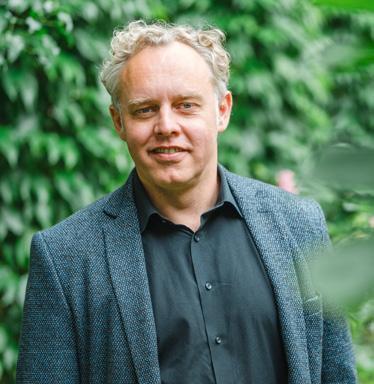
Sven Scheid has been Director of Executive Education at ESCP Business School since 2021. Previously, he held other positions at ESCP, the University of St. Gallen, and the University of Cologne.
Executive MBA (EMBA)
Duration: 18, 22, 30 oder 34 Monate
Degree: Executive MBA
Information: https://escp.eu/programmes/executive-mba

With the CAS Leadership program from Rochester-Bern, managers strengthen their leadership, communication, and cultural skills to successfully guide diverse teams into the (digital) future. Petra Joerg, CEO of RochesterBern Executive Programs, discusses in an interview how continuing education helps people inspire others and motivate them to approach their work.
challenges and simultaneously be successful in day-to-day business?
Given the numerous crises and challenges, do managers not only have to steer companies, but also save the world a little bit?
Well, they can›t save the whole world, but they must take responsibility for their employees, the company, and perhaps even a bit beyond. And in doing so, they might contribute to a better world, at least for their teams (smiles). The greater the uncertainty in the environment, the more important it is to provide guidance, create stability, and convey human values. This is where good leadership comes into play. In the CAS Leadership program, we train reflective leaders; in the CAS Business Resilience program, one of our other continuing education courses, we demonstrate how to build resilient organizations and maintain their ability to act under pressure. Both are crucial these days.
What qualities must leaders possess today to tackle the many different
They must be alert and curious, like people, be able to consider issues from different perspectives, have the courage to seize opportunities, and be prepared to give their best to overcome challenges. At the same time, they must maintain an overview and create structures in which their employees can thrive. The world of work is currently changing at a breathtaking pace. OECD studies predict that more than a billion jobs will undergo significant transformation in the coming years. Those who don›t keep up will quickly lose relevance. Targeted professional development helps to understand and utilize technological advancements while simultaneously strengthening human qualities within the company. For managers, empathy, communication, flexibility, and mental agility play a crucial role.
Where does your CAS Leadership program come into play?
This is precisely where the training
Rochester-Bern
Rochester-Bern Executive Programs (RoBe) is a Swiss business school offering postgraduate education for board members and executives. Founded in 1994 by the Universities of Rochester (USA) and Bern, it collaborates with faculty from business schools worldwide. RoBe‘s vision is to inspire and connect responsible leaders to contribute to a better and more sustainable world.
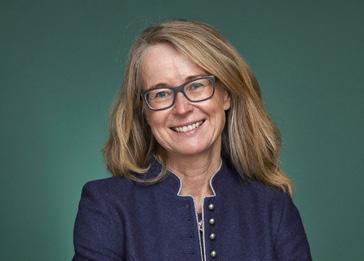
program comes in: it strengthens the participants› personal leadership, communication, and cultural skills. They learn to communicate and negotiate effectively, to lead and develop themselves and their teams, and to create a common foundation for collaboration within their company. The program equips them with practical tools to confidently master everyday and challenging leadership and communication situations and to foster an innovative corporate culture. And all of this is highly practical and contextualized within their own company.
Their CAS program comprises six modules. Which?
The professional development program rests on three fundamental pillars: communication, leadership, and culture. In the area of communication, we focus on presentation and negotiation skills, for example, conducting conflict resolution discussions. Leadership encompasses both selfleadership and team leadership. And culture focuses on shaping a shared company culture where all employees feel valued and included.
about clarity regarding one›s own values, goals, and personal patterns. Leadership always begins with oneself. Those who don›t know themselves intimately will hardly be able to lead others effectively. Working on one›s own personality is an important component of the CAS Leadership program.
In the fourth module, «Situational Team Leadership,» you also address the approach of «Positive Leadership.» What does that mean?
Positive Leadership consistently places the strengths, motivation, and well-being of employees at the heart of leadership. Based on principles of positive psychology, this approach aims to create a work environment where people can develop their potential and feel valued. This fosters positive emotions, engagement, and a sense of purpose. Employees are not primarily seen as a resource, but as a key factor for success. Combined with a focus on psychological safety, positive leadership leads to increased employee performance, motivation, and satisfaction.
On the topic of diversity, Prof. Dr. Fabiola H. Gerpot, Professor of Leadership in the CAS Leadership program, wrote that «diverse teams either perform very well or very poorly.» Success depends on management. So, what do leaders need to learn?
Successful diverse teams don›t happen automatically; they require active management. Leaders must recognize, value, and effectively utilize the differences among their team members. In the event of conflict, constructive mediation is essential. Clear goals and psychological safety are crucial. Studies show that well-managed diverse teams achieve very high performance.
CAS Leadership Duration: 10 Mounth Degree: Certificate of Advanced Studies (CAS) in Leadership and Inclusion Informations: www.rochester-bern.ch/ cas-leadership
One of your lecturers in the CAS Leadership program, Marco Furtner, recently emphasized the importance of «self-leadership» in a presentation, which plays a central role in the second module. What does this mean?
Self-leadership means consciously perceiving and managing one›s own thoughts, feelings, and actions. It›s
At the «Spirit of Bern» event at the end of February, you spoke about what continuing education should look like in the future. Continuing education must «fit into a full life.» What does that mean for the structure of degree programs? How do you utilize technological possibilities – and what role do human relationships play? In a time of constant change and constant demands, flexibility is key. Continuing education must therefore be modular, meaning you attend individual events on specific topics and combine them over time to earn a broader qualification, such as a Certificate of Advanced Studies (CAS), a Diploma of Advanced Studies (DAS), or even an Executive MBA. Digital tools facilitate knowledge transfer before the event, while the focus during the classes themselves is on interaction, application, and expansion of that knowledge. Rochester-Bern combines technological advancements with inperson instruction because the personal exchange among peers and with instructors is invaluable. We firmly believe that human connections will remain important even in a digitalized future. Continuing education is therefore not just about knowledge, skills, and practical application, but also about building a lifelong network of like-minded individuals. Our formula for future-proofing is clear: modular, digital, human.
Interview: Rüdiger Schmidt-Sodingen

PHW’s E/MBA program o ers a practice-oriented course of study that fosters the personal and professional development of current and future leaders. Depending on individual background, the program can be completed in two to four semesters. Program Director Silvia Malagon Y Alea provides insights into the curriculum, designed for a much-needed new generation of leaders.
Ms. Malagon Y Alea, many companies are desperately searching for managers. What is the main problem?

In a constantly changing world, leadership today is far more than just a skill – it has become an absolute necessity. Leaders face the challenge of not only creating stability within their organizations but also providing space for continuous development. A new generation of leaders capable of meeting these demands is urgently needed. In my opinion, the problem lies not in a lack of people, but in the design of leadership itself. Companies are looking for profiles that are virtually nonexistent, overlooking existing potential in the process. Leadership is often defined by specialist career paths. Skilled professionals are pushed into leadership roles without being properly prepared for the actual task. At the same time, structures that enable leadership are lacking. Too little space for reflection, too little development, too much operational focus. The result: There are fewer effective leaders, not fewer people with potential.
To what extent does personal development now play a key role for managers?
Personal development is no longer an add-on, but a prerequisite for effective leadership. Leadership training today must be more holistic than ever. In our program, we therefore place great emphasis on a competency-based approach that equally integrates professional skills and personal development. With a focus on self-leadership, we connect external changes with internal transformation processes. Clarity, perception, and self-awareness form the basis for decision-making and leadership in everyday life – in selfleadership, team leadership, and organizational leadership. Crucially, it is not just about understanding, but also about implementation.
Who is your E/MBA program suitable for?
The E/MBA program is designed for individuals who already hold leadership positions or are consciously seeking the next step in their careers. This includes aspiring young leaders as well as experienced managers who wish to further develop their impact. Many participants have grown into leadership roles through practical experience. The program provides an opportunity to systematically assess this
experience, have existing competencies recognized, and specifically develop any missing skills. Simultaneously, it supports the next step in career advancement. A key benefi t lies in the exchange of experiences. Small class sizes, part-time lecturers with practical experience, and diverse professional backgrounds create a learning environment where theory and reality are directly connected. Networking is not a side effect, but an integral part of the learning and development experience. At the same time, we consider the professional and family needs of our students – and, despite the clear focus on in-person instruction, offer hybrid participation and access to lecture recordings.
How is the degree program structured?
The program is designed as a consistently application-oriented learning journey that sustainably develops leadership skills. Its structure is modular, allowing students to choose semesters based on their specific interests and enabling individual specialization. This flexibility is further enhanced by the concept of micro-credentials: students can customize their semester down to the module level, tailoring content to their own topics and needs. The program duration is two to four semesters, depending on prior learning, with the possibility of shortening it based on relevant prior achievements. Our methodology includes interactive workshops, inspirational sessions, and application-oriented, modern learning formats that ensure direct practical application.
What is the significance of the choice of CAS?
Our CAS (Certificate of Advanced Studies) modules offer the opportunity to explore and discuss current topics relevant to everyday leadership directly with experts from the field. They are the key to shaping the curriculum. The program consists of two freely selectable
CAS modules and one specialization CAS. This specialization defines the topic of the master›s thesis and the area of focus, which is also indicated on the diploma. Students consciously choose their CAS modules based on their own interests, current professional responsibilities, or desired career development. Therefore, the elective CAS modules are either interest-driven, strategically aligned with future roles, or clearly position-oriented.
Two of the CAS programs you offer focus on Digital Leadership and Digital Transformation. To what extent do new digital business models and digital transformation change the requirements for leaders?
Digital transformation is fundamentally changing leadership. It›s no longer primarily about controlling processes, but about navigating dynamic, uncertain systems. Leaders must understand interrelationships, make decisions under uncertainty, and redistribute responsibilities. New digital business models increase speed and complexity. Hierarchy becomes less effective, interfaces increase, and dependencies
«The program is designed as a consistently practiceoriented learning journey that fosters leadership skills over the long term.»
become less visible. Leadership means creating clarity, setting priorities, and keeping teams productive. At the same time, the focus shifts to competencies such as adaptability, systems thinking, and the conscious use of technology. Digital leadership is not about mastering tools, but about shaping impact through the interplay of people, technology, and organization.
Who can enroll in the E/MBA advanced entry program?
Entry into the program is also possible with recognized prior learning, which can shorten the study duration.
I personally check whether the admission requirements are met. In an individual consultation, we will clarify the opportunities and prospects of the program and assess your previous academic background. Various educational achievements can be taken into account – formal qualifications such as a Higher Federal Diploma of Higher Education (HF NDS) as well as relevant professional experience.
There›s a great saying: The best leaders are those who didn›t initially consider it. How can people be better motivated to take on responsibility? Motivation arises from strengthening self-awareness and perception. We support our students in developing their personalities as both personal and professional leaders. A practiceoriented environment, in which methodological and social skills are deepened, helps them achieve their goals and actively shape the future.
Interview: Rüdiger Schmidt-Sodingen
PHW In 1995, the foundation for the Private University of Applied Sciences for Economics (VPHW) was laid with the establishment of the association „Private University of Applied Sciences for Economics.“ The association‘s goal was to create a privately owned and operated business school. That same year, campuses were founded in Bern (operated by the Feusi Education Center), Zurich, Basel, and St. Gallen (operated by the Kalaidos Education Group). PHW Bern has been accredited since October 2025 in cooperation with the HWZ University of Applied Sciences in Business Administration Zurich. The two institutions maintain close ties in the development of new educational programs and form a strong network.
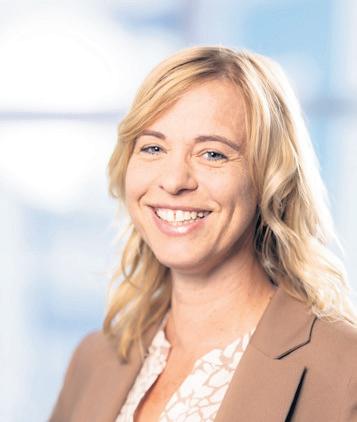
Silvia Malagon Y Alea develops educational formats that structurally integrate diversity and are consistently geared towards knowledge transfer and skills development. As Head of Studies for the Master’s programs E/ MBA, MAS, and CAS at PHW Bern, she is responsible for continuing education and combines didactic innovation with practical relevance. As a management consultant, she focuses on the competency-oriented deployment of neurodivergent specialists and managers. She makes cognitive strengths visible, strategically integrates them into roles and structures, and thus creates the foundation for e ective, di erentiated leadership in complex organizations.
(Executive) Master of Business Administration – E/MBA
Duration: 2 to 4 semesters
Degree: Executive Master of Business Administration with specialization in (elective CAS) / Master of Business Administration with specialization in (elective CAS)
Information: www.phw.ch/weiterbildung/emba

In cooperation with Kalaidos University of Applied Sciences, the AKAD in Zurich o ers insurance employees a continuing education program leading to a Master of Advanced Studies FH in Insurance. Renato Ramella, Head of Education at AKAD and Head of the Pensions and Finance Specialist Agency at Zurich Insurance, and Janine Hoese, Head of the School of Insurance at AKAD, discuss new perspectives for aspiring insurance managers.
Do managers today need to think and work across departments?
Mr. Ramella, how has the insurance industry changed in recent years – and what skills do managers need today? Much has changed in the insurance industry. One aspect is that employees have higher expectations regarding the meaningfulness of their work. Simply being involved in processes is no longer enough. There is now a greater interest in adapting more quickly and learning about new topics and interrelationships. This makes the job more demanding for managers when it comes to maintaining workflows, processes, and objectives. We address this point in our Leadership module of the CAS program, where we discuss both employee expectations and topics such as resilience. From my own experience at Zurich and UBS, I know that the pressure to be efficient can be particularly stressful for employees. Here, managers need to communicate more effectively, provide guidance, and show them the way forward. Another dimension of these changes is the increasing silo mentality in large organizations. This is problematic because, in addition to traditional underwriting and claims departments, IT, finance, and compliance functions have gained in importance. In our MAS program, we explicitly address this aspect in the CAS module on organizational leadership to understand and improve the interaction between departments. Not only are the various lecturers important, but also the exchange among the students themselves.
I would agree with that. Insurance companies today are much more confronted with the profi tability of their
AKAD
products. This is an issue that was previously ignored in sales of smaller, less prominent products. Managers are now expected to have a better understanding of the fi nancial perspective.
Profile
Founded in 1956, AKAD is one of Switzerland‘s leading providers of continuing education and professional development programs for adults. Its flexible o erings include federally recognized qualifications in various sectors, as well as vocational and academic baccalaureate degrees. AKAD is part of the Kalaidos Education Group.
Kalaidos University of Applied Sciences
Since 1997, Kalaidos University of Applied Sciences has stood for practice-oriented and transfer-focused education and training at university level. Thanks to flexible study models, work, studies, family and leisure can be ideally combined – studying without

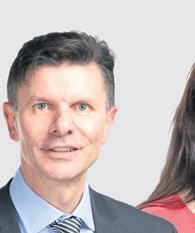
Renato Ramella Since January 2024, Renato Ramella has been Head of the Pensions and Finance Specialist Agency at Zurich Insurance. Prior to this, he spent three years as Head of Private Clients and two years as Head of Pension Planners Switzerland for the Zurich Group. Since January, Mr. Ramella has also been the Academic Director of the MAS Insurance program at AKAD.
Janine Hoese has worked at AKAD in various roles since 2014. Since August 2021, she has overseen the development of the CAS/MAS program in insurance management as program director. At the end of 2025, she assumed leadership of the School of Insurance Management.
They also need to know significantly more about how IT projects function and how to actively manage them. IT issues have a massive impact on managers: every strategic repositioning of a business unit now has IT-strategic implications. In the past, the business was generally more stable, and the product landscape remained unchanged for longer. The business has become so fast-paced that all employees need to act and react more quickly. Therefore, managers need greater competence in managing interfaces and change.
The CAS “Organizational Leadership in Insurance Companies” is therefore intended to deliberately broaden the perspective to look at the entire structure of an insurance company?
Insurance program, three insurance-specifi c CAS courses are offered, which can be completed consecutively. Depending on individual student interests, one of the CAS courses can be replaced by another elective CAS course offered by Kalaidos University of Applied Sciences. The MAS comprises 60 ECTS credits.
So the study plan is flexible and can be tailored to the individual interests of the students?
Yes. It is possible to start the program in April or October. Taking a break between two CAS programs is possible at any time. Full employment is also guaranteed. This allows students to tailor their continuing education to their career development and personal life.
Ms. Hoese, your degree program does not include traditional exams. What does that mean?
As part of project assignments, students work on problems related to topics from individual modules. They incorporate their professional experience into their work. Each CAS (Certificate of Advanced Studies) concludes with a written thesis in which a practically relevant question is scientifically analyzed. The findings are presented and discussed in greater depth with experts.
Where do the in-person events take place?
They take place at Jungholzstrasse 43 in Zürich-Oerlikon, a 3-minute walk from Oerlikon train station.
Do you find that aspiring leaders today need or want to network better and develop more soft skills?
interrupting your career.






Key Facts
Master of Advanced Studies FH
Duration: 4 semesters
Degree: Master of Advanced Studies
Information: https://www.akad.ch/ angebot/master-of-advanced-studiesfh-in-insurance/
The CAS «Organizational Leadership in Insurance Companies» is unique on the market. It›s not about specialist knowledge, nor is it primarily about strategic topics. The focus is on the interplay of relevant departments within an insurance company that are not directly involved in the value chain: HR, Marketing, CFO/Finance, and IT. What role do these functions play? What influence do they have on key functions in the value chain, such as Sales, Underwriting, or Claims? What responsibility do they bear for the company›s long-term success?
How is the MAS study program structured?
The MAS offers fl exibility in study planning and content. Within the MAS
As head of the School for Insurance Management, I have observed that aspiring leaders today not only need to be more networked, but also consciously seek to develop more soft skills. Communication skills and empathy have become crucial, as managers increasingly work in diverse teams and must understand different needs. At the same time, teamwork is gaining significant importance because decisions are more and more made jointly and across departments. Intercultural competence also plays a greater role, as the insurance industry has become more international and diverse. Furthermore, the ability for self-refl ection is essential, enabling managers to critically examine their own behavior and continuously develop themselves. Managers must also react quickly to changes, which in turn requires flexibility and resilience. Our educational programs are designed to meet these demands – compatible with work and family life, yet challenging and effective for personal development. We are pleased to have a competent partner in Kalaidos University of Applied Sciences within the Kalaidos Education Group, which supports us in implementing these programs. Finally, we are also observing a growing awareness of networking skills. Face-to-face teaching offers the opportunity to exchange experiences and to consider everyday problems from different perspectives, as the students bring a wide variety of their own experiences.
Interview: Rüdiger Schmidt-Sodingen
As a partnership between the University of Minnesota and the WU Executive Academy, the Global Executive MBA trains executives who want to position themselves internationally. Prof. Dr. Phillip C. Nell, Academic Director and Professor at the Institute for International Business at WU Vienna, discusses current developments, global career prospects, and courses o ered on three continents.
Professor Nell, the world is changing rapidly – geopolitical crises, AI, new trade corridors. What does this mean for international leaders?
It is true, today›s leaders face a multitude of upheavals: geopolitical fragmentation, technological change driven by AI, and increasing regulatory complexity—from ESG to AI legislation. International leaders need not just techiccal expertise and in-depth knowledge of and about these trends, but above all, they need tools and methodologies that help them deal with these trends and put their ideas into action.
How does the Global Executive MBA address these requirements?
On multiple levels. Over crisp and intense 16 months, in terms of content, our curriculum covers the key topics and trends relevant for all organizations – from finance and marketing to data analytics and supply chain management, all the way to negotiation and strategy. AI, digitalization, and sustainability topics are cross-cutting themes, not niche modules.In terms of skills and attitudes, we rely on a whole range of highly practical, yet research-informed modules – often using innovative methods. Our Leadership Lab supports participants throughout the entire program to develop self-reflection, leadership style, and resilience through a wide range of mini exercises and reflections. In addition, there is a Career Accelerator and a Coaching program. In the Global Team Project, participants develop a real business plan in mixed teams with students from the USA and China – across time zones and cultures. We don›t just train better managers that know and understand more, but more mature leaders.
The graduates receive a double degree. What advantages does this offer them?
The double degree – Executive MBA from the WU Vienna and MBA from the Carlson School of Management, University of Minnesota – is truly unique. First, graduates hold both a European and an American degree – a US degree from a top university is particularly valuable also in Asia and Africa. Second, they gain access to two alumni networks with thousands of executives worldwide. Third, both institutions are renowned for their proven quality, holding multiple accreditations and
maintaining close ties with Fortune 500 companies. Some of our faculty members come directly from the Carlson School – the partnership is a lived reality, not just on the diploma.
The international immersion programs take place on three continents. Do they deliberately focus on on-site learning? Absolutely. Our study trips to Kenya, China, and the USA are an integral part of the curriculum. In Kenya, participants experience the rapid transformation of national economies. In China, the focus is on large-scale digitalization and a system with its own unique logic. In the USA – New York and Minneapolis – the emphasis is on innovation and global corporate strategies. Each trip combines three elements: regular academic courses, company visits and guest speakers, and cultural immersion itself. We collaborate with local experts – in Kenya, for example, with the Founding Executive Dean of Strathmore University Business School, and in several destinations with chambers of commerce. In the USA, the Carlson School takes the lead.
What is the Global Team Project?
It’s one of the most defining elements. Each team consists of students from Vienna, Minneapolis, and China. Together, they develop an integrated business plan over several months – across time zones, cultures, and industries. At the end, all teams present their ideas in Minnesota. Graduates regularly cite the GTP as the most significant experience in the program – because it trains leadership and intercultural collaboration in real-world conditions.
How important is the WU Executive Club? Strategically important. The WU Exe-

cutive Club is a global, lifelong, and free network of thousands of executives. It also offers events, mentoring, and career services. GEMBA graduates also benefi t from the Carlson Alumni Network – a complementary network with a strong US and Asian presence.
How does the GEMBA compare in terms of pricing internationally?
Our program costs €65,200 – a fraction of comparable high quality Executive MBAs, which quickly reach €100,000 or more, often for just one degree. With us, participants receive two MBA degrees, study trips to three continents, access to two alumni networks, Triple Crown accreditation, innovative formats, and
«The international dimension shapes the experience: Students work across continents to tackle real-world challenges.››
professors from the WU Vienna, the Carlson School, and other top universities. Add to that Vienna›s significantly lower cost of living compared to, for example, London or Zurich. One of the best price-performance ratios in the Executive MBA market – backed by rankings and accreditations.
Vienna as a location – what role does the city play?
A bigger one than many suspect. Vienna is historically a connector between Western and Eastern Europe. Many international companies use Vienna as their CEE headquarters, and the Vienna University of Economics and Business (WU) has built a unique network in this region over decades. Furthermore, Vienna is home to numerous international organizations – the UN, OSCE, OPEC, UNIDO, and IAEA. This makes the city a hub of international politics and diplomacy, creating points of contact that are not found in purely economic locations. And Vienna is one of the most livable cities in the world: efficient infrastructure, short distances, and an inspiring campus – all of which make studying while working significantly easier.
Interview: Rüdiger Schmidt-Sodingen
WU Wien – WU Wien – The Vienna University of Economics and Business (WU) is one of Europe›s leading universities with over 100 years of excellence and the prestigious Triple Crown accreditation (AACSB, AMBA, EQUIS). The WU Executive Academy is the business school for all MBA and continuing education programs.
Prof. Dr. Phillip C. Nell is a professor at the Institute for International Business at the WU Vienna and academic director of the Global Executive MBA and the Executive MBA Bucharest at the WU Executive Academy.





Global Executive MBA
Duration: 16 months
Information: https://executiveacademy.at/programme/executive-mba/ global-executive-mba Profile WU Key Facts





Dual degree: Executive MBA from the WU Vienna and MBA from the Carlson School of Management, University of Minnesota
Why leadership in the era of agentic AI must shift from mere utilization to strategic shaping—and the implications for today’s business leaders.
BY DR. BENJAMIN VAN GIFFEN

While artificial intelligence has long since entered the executive suite, the reality remains sobering: approximately 85% of digital transformations fail to meet their objectives. The root cause is rarely technical; rather, it lies in leadership models that struggle to keep pace with the current velocity of change. The emergence of agentic AI systems is redefining more than just task execution — it is reshaping accountability, roles, and organizational decision-making. This evolution forces us to confront fundamental management challenges: Which decisions can be safely delegated to algorithms, and how do we maintain human oversight as systems become increasingly autonomous? These are no longer technical hurdles—they are profound questions of leadership.
From Optimizer to Designer For decades, management was defined by efficiency: optimizing processes, standardizing workflows, and refining KPIs. AI fundamentally disrupts this logic. Autonomous systems are more than just tools; they demand new roles, governance structures, and leadership models. To succeed, managers must transition from optimizers to designers. While an optimizer improves the status quo, a designer creates what does not yet exist — addressing ethical data use, human judgment, and algorithmic transparency. Leaders who merely utilize AI risk becoming obsolete; the future belongs to those who actively co-design AI solutions. This responsibility cannot be delegated to IT or external consultants. Without a deep understanding of AI logic, leaders lose the ability to strategically evaluate their systems— and ultimately, the ability to lead their organizations.
Learning by Designing Traditional seminars and webinars provide valuable insights, but they rarely transform leaders into «shapers.» Research confirms that profound competence shifts result from experience-based learning: we learn to lead by leading,
and we learn to shape AI by designing it. This «Learning by Designing» principle is the core of the CAS Leading AI and Digital Transformation program at the University of Liechtenstein. Participants engage in a structured innovation process—from problem definition to prototyping—using the «Design Thinking for AI» methodology, refined across over 40 corporate projects. A manager in finance, for instance, doesn›t just optimize preparation tasks; she designs an AI assistant, defines human-in-theloop boundaries, and prototypes the solution without writing a single line of code. Leadership in the AI era doesn›t require programming skills—it requires the ability to understand needs, assess data, and take responsibility for the logic of the systems we build.
Three Perspectives for Developing a Solution
Transformation rarely succeeds in one dimension. Anyone wanting to integrate AI into their organization needs more than just technical understanding. This Certificate of Advanced Studies (CAS) therefore combines three equally important and mutually reinforcing perspectives.
Three Dimensions of AI Transformation Transformation is rarely a single-track
process. Successfully integrating AI requires more than technical proficiency; it demands a multidimensional approach. This Certificate of Advanced Studies (CAS) integrates three mutually reinforcing perspectives to ensure sustainable success. The technological perspective clarifies where AI generates tangible value versus mere costs, teaching leaders to architect AI strategies and design scalable pilot projects. This is complemented by the organizational perspective, which focuses on the “soft factors”—culture, governance, and role clarity—since even the most sophisticated technology fails if the organization is not ready to embrace it. Finally, the innovation perspective empowers participants to create human-centered AI through “Design Thinking for AI”, transforming theory into concrete design and treating AI as a manageable design object. Mastering only one dimension is insufficient: technology alone remains a mere instrument, organization alone preserves the status quo, and innovation alone produces prototypes that never launch. Only the synergy of all three dimensions enables true, lasting transformation.
Sustainable Skills Development Instead of a Compact Seminar The program is intentionally structured
«Leaders who merely use AI will be left behind. What›s needed are innovators who co-design
University of Liechtenstein –Professional Education
The University of Liechtenstein offers part-time continuing education programs designed to support executives in transformation, innovation, and digitalization. Practical formats, personalized guidance, and the close integration of research and application ensure sustainable skill development.
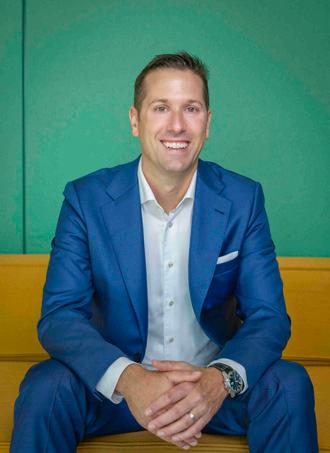
Dr. Benjamin van Giffen is an associate professor of Information Systems & Digital Innovation at the University of Liechtenstein. He researches and teaches AI management, AI strategy, and governance, and advises boards of directors and executive management on the responsible implementation of AI.
Facts
CAS Leading AI and Digital Transformation
Degree: Certificate of Advanced Studies (CAS), 12 ECTS credits
Duration: 9 in-person days over 4 months + online coaching
Start: Autumn Semester 2026
Language: German
Target group: Managers and project leaders with a transformation mandate
Prerequisites: No prior technical knowledge required
Registration / Next Step: www.uni.
li/cas-ai
Contact: digital.innovation@uni.li
over nine in-person days across four months, supplemented by individual online coaching. Real transformation is not a sprint; it requires dedicated time to design, test, and iterate. Between sessions, participants develop their own transformation projects, resulting in a validated blueprint ready for immediate organizational implementation. The curriculum is designed for executives and project leaders driving change, regardless of industry or functional background. Prior technical expertise is explicitly not required. In fact, participants without an IT background often provide the most valuable insights, viewing AI not as a technological novelty, but as a strategic management tool—with a clear eye on both its potential and its risks.
The defining decision occurs much earlier than many realize
The coming years will distinguish those who leverage AI as a competitive advantage from those who remain stalled in the transformation process. This course is not set in data centers or through software budgets; it is determined the moment a leadership team decides whether to treat its executives as mere users of technology—or as shapers who take full ownership of its organizational impact. This choice has concrete consequences: it dictates whether AI projects scale or fizzle out, whether governance effectively mitigates risk, and whether cultural change succeeds during rollout. Perhaps the most critical question for leaders today is not which technology to acquire, but what kind of leadership is required to make AI work—and how to develop it. Those who address this question have already begun the real work of transformation. Ultimately, AI follows the rule of every major shift: its success or failure depends less on the technology itself and entirely on the people who lead it.
Columbia Business School’s Executive Development Program: Leading Into the Future prepares executives in New York to face the future – with «strategic concepts for new trends» and the “necessary communication skills». «While the future can be uncertain and complicated», says co-director Stephan Meier, «it’s also exciting and cutting edge.»
BY PROF. STEPHAN MEIER
Uncertainty also poses challenges for companies, which ultimately consist of individuals who must manage their fears and confidences to continue working and improve their business performance. To master the upcoming changes, challenges, and opportunities, strong leadership skills are more important than ever. And further changes are on the horizon: the future of work, the future of finance, the future of technology, and new industries.
Stephan Meier, co-director of the Executive Development Program: Leading Into the Future at Columbia Business School in New York, researches the motivation of people to achieve peak performance, linking the interplay between economics and psychology. He points to the leadership skills required to tackle the complex, uncertain, and difficult problems that successful business leaders will face today.
Management fundamentals and a changed understanding of competition “ There are many aspects in business management and for its executives that will start changing extremely rapidly”, says Meier. “Data is one. In the past, one could have said, «Well, data is going to come.” Now, with this exponential growth in data, data availability, how machine learning is an actuality, now it goes really, fast. So what our leadership development program tries to do is give first some management fundamentals. This is what›s happening outside the business that affects you. This is what’s happening inside the business. Then, it goes deeper into understanding what are the future trends that are going to change, potentially dramatically, how we think about competition? What are the capabilities that we have? And also the future of work. What does the workforce look like? How do we organize our organizations?”
S ecuring the future viability of a company, Meier says, is essential

because the economy is changing rapidly. “Thinking about the future can no longer be left on the back burner.
With COVID, with a changing workforce, automation, and more, the future is here and we have to deal with it right now. The strength of Columbia’s executive management programs, especially Executive Development Program: Leading Into the Future, is to really prepare participants to future-proof their strategy and their business decisions that they›re having. Our participants will leave energized knowing they have the effective leadership skills needed to tackle those complicated, uncertain, difficult problems that are coming their way and understand that›s how I now can deal with the future.”
“Tomorrow we need to do something new, exciting, and interesting.”
“ When it comes to the future, a lot of it we actually don›t know”, adds Meier.
“No one has a crystal ball that shows them exactly what will happen. But effective leaders know how to understand the trends that are happening, how to implement strategic strategies in their business for those trends, and have the
communication skills and leadership style to explain them. While the future can be uncertain and complicated, it’s also exciting and cutting edge. Just as an example, the other day, I was in a talk with a guy at Columbia in robotics. He builds robots as well. He has a robot at home who paints. His robot paints creative, artistic paintings, not walls. I knew that AI and robotics have come such a long way, but to hear this shook me up a little bit. Like, «Oh my God, this is serious stuff.» I mean, he also showed there are limitations. Robots can›t really walk well and that›s a real problem. But it was more like a wake-up call. It›s like, «Okay, the future is now.»
We need to do something because the future is actually now and not a couple of years ahead. What worked in the past might not work tomorrow. More effective leadership skills will be needed. Leadership development and training programs are key to taking on the uncertainty and opportunity that the future holds. And so I want our leadership training in Executive Development Program: Leading Into the Future to really open our participants› eyes to what›s happening out there.”
«Finding strategic answers to these questions about the future is the key to effective leadership.»
Instead of getting caught up in the mindset of «Well, it worked for many, many years,» Meier wants participants to think: «We need to do something new, exciting, and interesting tomorrow.” “That’s what successful leadership does“, Meier sums up. „We help provide the core skills, key management skills, and important leadership skills that help you stay two steps ahead and lead into the future even without a crystal ball.”
W hat makes the two-week Executive Development Program: Leading Into the Future in New York so special is its strong focus on the future. The course, held at the Manhattanville Campus, brings together university staff as well as experienced executives and experts from New York City and various industries. The program imparts essential business skills, always emphasizing their application – both personally and within a corporate context. Effective leadership, strategy development, improved decision-making, managing power and influence, and successful change management form the core of the program. Continuous learning opportunities include access to the online program library for one year and a yearly subscription to the quarterly, 90-minute live online series. Upon completion of the program, participants receive the Certificate in Business Excellence (CIBE). Certificate holders benefit from select alumni perks at Columbia Business School and become part of a strong, global network of over 49,000 alumni.
Columbia Business School Executive Education
Columbia Business School Executive Education (CBSEE) is at the forefront of business education, pioneering innovative curricula and thought leadership. With a commitment to academic excellence and real-world impact, CBSEE provides a transformative learning experience for future business leaders. Visit us at https://execed.business. columbia.edu
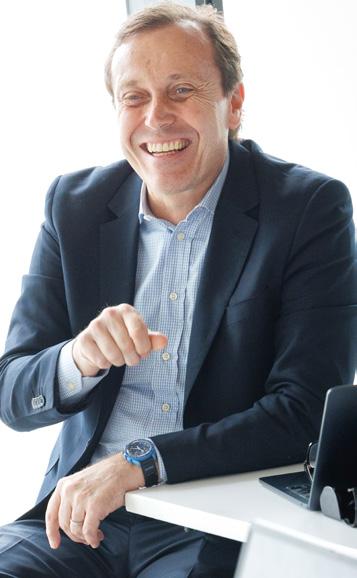
Stephan Meier holds a PhD in Economics from the University of Zurich, was previously a senior economist at the Center for Behavioral Economics and Decision Making at the Federal Reserve Bank of Boston, and taught programs on strategic interactions and economic policy at Harvard University and the University of Zurich. His research interest is in behavioral strategy. He investigates the impact of psychology and economics on human decision making and its implications for public policy and company strategy.
Key Facts
Executive Development Program: Leading Into the Future Duration: 2 Weeks in New York Certificate in Business Excellence Infos: https://execed.business. columbia.edu/general-managementprograms
Real estate valuation is the heartbeat of the market— it both determines and drives value. SIREA is synonymous with focused, high-impact professional development. Our CAS in Real Estate Valuation provides a practical deep dive into systematic methodologies and market dynamics, bridging the gap between foundational theory and real-world application.
What defines property value? Which metrics matter most? Which models deliver results?
In today’s data-driven landscape, a deep analytical mindset is the key to reliable real estate valuation. The SIREA CAS in Real Estate Valuation provides a streamlined, two-module deep dive into professional valuation standards and execution. Whether you are an architect, engineer, lawyer, or economist, this program is designed for anyone who needs to unlock a property’s true significance—be it assessing future potential or repositioning an asset for a new purpose. Master the tools to turn data into decisive market insights.
Modules «Methodology» and «Context»
The CAS in Real Estate Valuation is structured into two intensive modules focused on systematic foundations and high-level performance metrics.
In the ‹Methodology› module, participants master the essentials of residential and commercial valuation. This includes analyzing key value drivers— such as income, costs, and interest rates—and applying financial mathematics to assess age-related value shifts. Students gain a command of dynamic valuation tools, including Discounted Cash Flow (DCF), while also navigating the complexities of land registry entries and legal encumbrances.
The ‹Context› module shifts the focus to calculating and interpreting critical performance indicators. Participants explore hedonic valuation models and statistical data analysis, alongside specialized legal frameworks and ownership structures. By integrating building and planning law, students learn to unlock the full potential of both developed and undeveloped land.
Both modules conclude with a written examination. For the final
SIREA
SIREA, the Swiss Institute for Real Estate Valuation, sets standards in continuing education in real estate valuation. SI-
REA is the national partner of expertise when it comes to continuing education in real estate valuation: tailored, university-level training, courses for regular updates, and a focus on one specialized field: valuation. Emerging from the Swiss Association of Real Estate Appraisers (SIV), SIREA operates independently in terms of strategy, operations, and personnel. SIREA brings together professionals from across various associations who are passionate about the discipline of real estate valuation. Since 2002, SIREA has collaborated with Swiss universities, giving real estate valuation the recognition it deserves. The Master of Advanced Studies (MAS) and Certificate of Advanced Studies (CAS) in Real Estate Valuation are unique in Switzerland.
Profile Key Facts
CAS Real Estate Valuation
Duration: 25 course days
Degree: Certificate of Advanced Studies (CAS) in Real Estate Valuation Information: https://www.bfh.ch/ahb/ de/weiterbildung/cas/immobilienbewertung/
An increasing number of construction and real estate professionals are prioritizing valuation expertise to scale their business and gain a holistic economic perspective.
capstone project, students apply their expertise to a real-world market value.
Learning Objectives: Your Path to Expertise
The CAS in Real Estate Valuation empowers you to determine the market value of complex properties with precision and provide strategic, expert counsel to your clients.
Throughout this program, you will:
• Master the systematic and methodological frameworks of advanced property valuation.
• Analyze and evaluate market dynamics with a professional lens.
• Thrive in a personalized, high-engagement learning environment.
• Implement your new expertise immediately to drive results in your daily practice.
Conclusion and Outlook
An increasing number of construction and real estate professionals are prioritizing valuation expertise to scale their business and gain a holistic economic perspective. The principle is clear: ‹Appraisers plan better› because they integrate financial foresight into every decision—a massive advantage for clients in both new construction and renovation.

As debates over building preservation and sustainable repurposing intensify, professional valuation has become an indispensable tool for anyone planning the future of historical or existing assets. The CAS in Real Estate Valuation equips professionals with the deep expertise needed to lead these conversations. Our mission is to ensure the future of our built environment is guided by expert consulting and strategic planning, not left to algorithms or automated calculations. Real estate is a high-value asset—it deserves a valuation of equal caliber.
The EMBA as turning point for broader leadership roles, international responsibilities or highimpact transfor-mation projects.
BY MICHELE QUINTANO, DIRECTOR OF EXECUTIVE EDUCATION AT ESADE
IIn a business landscape defined by geopolitical uncertainty, rapid technological change and increasing complexity, executive education has become a strategic investment for senior leaders. Today, executives are not simply seeking to update their knowledge, but to strengthen their decision-making capabilities and broaden their strategic perspective.
There is a strong demand for practical relevance. Executives taking part in these programmes expect rigorous case analyses, reallife business situations and practical frameworks that can be applied immediately to improve decisionmaking and generate concrete value within their organisations.
At Esade, we strongly believe that executive education must help leaders operate with clarity and confidence in complex, international and technologydriven environments. This means designing programmes that respond directly to global business challenges, with a strong focus on organisational transformation, sustainability, responsible leadership and good corporate governance, while also delivering new content and initiatives addressing the impact of technology and artificial intelligence (AI). Its real value lies in enabling better decisions, stronger leadership and sustained impact over time.
This vision underpins Esade Executive Education and finds one of its most complete expressions in our Executive MBA (EMBA) – a flagship programme designed for experienced executives who want to accelerate their careers while continuing to lead in demanding professional roles.
Executive Education as a Career Catalyst
The Executive MBA represents a natural extension of Esade’s broader commitment to lifelong learning for leaders. We see the EMBA as part of an integrated learning journey. Participants bring significant professional experience, and the programme is designed to challenge their perspectives, expand their strategic horizon and connect learning directly to their organisational reality.
The Esade EMBA is a 20month, parttime programme for senior executives, delivered in different formats in Madrid or Barcelona. Graduates are awarded the Executive Master of Business Administration (EMBA) degree. Its format allows participants to combine academic rigour with professional continuity – a key requirement for executives managing complex responsibilities.
T he programme delivers strong and tangible career outcomes. Internationally, EMBA graduates report an average salary increase of 52 %, and 75 % of participants achieve a significant career change after completing the programme. Of these, 68% move to a new company, 24% progress internally through promotion, and 8% choose to
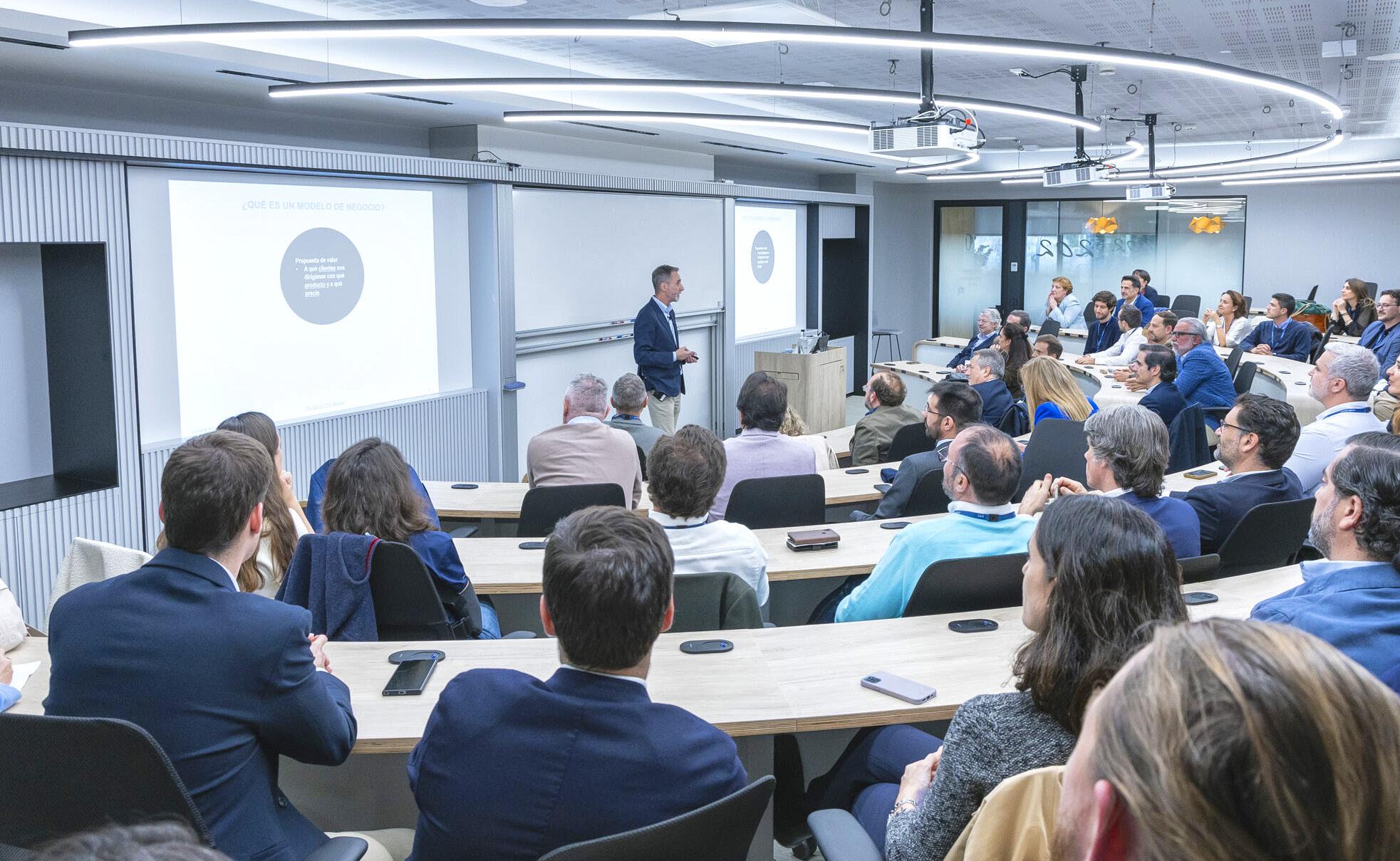
embark on entrepreneurial ventures, reflecting the EMBA’s impact on career acceleration, mobility and leadership ambition.
Alongside its structure and strong career outcomes, the programme’s distinctive value lies in three core dimensions: international exposure, innovation and technology, and practical relevance to career development.
International Exposure in a Global Context
In today’s interconnected economy, international experience is a prerequisite for senior leadership. The Esade EMBA is designed to offer participants firsthand exposure to diverse business cultures, models and best practices. This global orientation is reinforced by the diversity of the cohort itself, with participants representing more than 39 nationalities.
Learning alongside executives from different countries, industries and cultural backgrounds fundamentally enriches the experience. It develops a global mindset that is essential for leading organisations operating across borders or within international hubs.
Class discussions and teamwork are shaped by this diversity, enabling participants to test assumptions, refine their judgement and better understand how strategic decisions play out in different contexts. This international perspective is further enriched through immersion experiences that allow participants to identify new challenges and opportunities across Europe, the Middle East, Asia and North America.
At the same time, the programme recognises that international leadership today cannot be separated from a deep understanding of geopolitics and global economic dynamics. In a world increasingly fragmented into geopolitical blocs and marked by the rise of a small number of global technology firms with unprecedented economic and technological power, geopolitics has returned to the agendas of top management and corporate boards. Within this framework, the Esade EMBA includes courses in, Global Economy, Geopolitics and Global Challenges, equipping participants with the analytical tools needed to navigate uncertainty and make informed strategic decisions in a complex global environment.
Innovation and Technology as Leadership Capabilities
Another defining pillar of the Esade EMBA is its strong focus on innovation, entrepreneurship and technology. Rather than treating these themes as standalone topics, we integrate them into the broader framework of leadership and management.
Digital transformation and artificial intelligence (AI) are reshaping business models across all sectors. Senior executives need to understand not only the technologies themselves, but also their strategic, organisational and ethical implications.
Through real business cases, applied projects and expertled sessions, participants develop capabilities in innovation, entrepreneurship and intrapreneurship. Our aim is to enable
«Executive education helps leaders to navigate complex environments with confidence.»
executives to lead transformation processes – whether by launching new initiatives, redesigning existing operations or driving change from within established organisations.
They also explore digital ecosystems, platform business models and innovation governance, gaining insights into collaboration across sectors and building sustainable growth.
Learning with Immediate Professional Impact
Practical relevance is central to the Esade EMBA. The programme emphasises decisionmaking, real cases and direct application to the participant’s professional environment. This approach ensures that learning is immediately transferable to daytoday leadership challenges. This immediate impact comes from integrating executive coaching and peer mentoring into each module, enabling participants to test and refine new leadership behaviours in simulations and transfer insights back to their teams. Immersive experiences foster a strong sense of social responsibility and purpose.
This applied focus culminates in the final project, which can be oriented towards a business plan, a transformation initiative or a strategic design linked to the participant’s organisation. Supported by Esade faculty and experts, the project adopts a systemic perspective and aims to generate concrete value.
Many participants use the EMBA as a turning point in their career. It can support a move into broader leadership roles, international responsibilities or highimpact transformation projects.
Esade’s Executive MBA and our broader Executive Education portfolio are consistently recognised in leading global rankings. The Financial Times ranked Esade Executive Education number 5 globally for Openenrolment programmes and number 11 for Custom programmes
Esade
Founded in 1958, Esade is a global academic institution of Jesuit character with campuses in Barcelona and Madrid and partnerships with 271 universities worldwide. As one of the world›s leading universities, it welcomes approximately 12,000 students annually from over 100 countries to its programs in business, law, and executive education and is recognized for its academic excellence and social impact.
Professor Michele Quintano is Director of Esade Executive Education, where he is responsible for the academic and strategic development of programs specifically designed to address the challenges of the global economy. He holds a PhD in Business Administration and Management from Esade and is an Associate Professor in the Department of Marketing.
Duration: 20 months
Degree: EMBA (Executive MBA) Registration link: https://www.esade. edu/mba/en/programmes/executivemba/admissions
in 2025, and Esade is ranked number 11 in the latest Financial Times European Business School Ranking.
In the QS Executive MBA Rankings 2025, Esade ranks number 7 in Europe. The programme also stands out for Diversity, where it is ranked number 3 worldwide with a score of 98.4, and for Career Outcomes, where it ranks number 4 with a score of 99.3. These results reflect not only academic quality, but also the international profile of the cohort and the career progression of participants.
Looking ahead, we see the Executive MBA as a platform for sustained leadership development. For senior executives, an EMBA is no longer about accumulating knowledge. It is about strengthening leadership capacity, strategic judgement and the ability to navigate complexity throughout a career.
As the „first person of color at the helm of a Fortune 50 company“, Indra Nooyi led PepsiCo for twelve years. In her book „My Life in Full“ (Portfolio 2021, German Edition: Plassen, 2023), she reflects on balancing career and family – and what makes CEOs successful today and in the future.



BY RÜDIGER SCHMIDT-SODINGEN
WWhen Indra Nooyi, born in Chennai, India, joined the food giant Pepsi at the age of 39 as Senior Vice President for Strategic Planning, she had already held several positions at the Boston Consulting Group, Motorola, and ABB. Her rise continued rapidly – and she became CFO, President, and finally CEO of PepsiCo in 2006.
Nooyi, who holds an MBA from the Indian Institute of Management in Kolkata and a Master of Public and Private Management from the Yale School of Management, looks back in her memoirs on her personal life between India and the USA, reflects on the meaning of family and work, and describes what it takes to run a company. A key characteristic is the desire to learn, the enjoyment of looking behind the scenes of a business, an interest in all production steps, and the ability to develop, evaluate, implement, or discard plans. “How do I go about understanding what drives an industry I know nothing about? How do I keep current in the world of strategy? How extensive is my network of contacts?”
Even during her MBA studies, Nooyi sharpens her «focus of the interdependence of business and society» and recognizes «that MBA students can play a constructive role in helping governments». At Yale, during her second master›s degree, she appreciates the completely different approach: «practical not theoretical»: «Actual cases were used to study business issues. Leaders from industry and government came to talk about real-life examples. I was surrounded by people with at least two or three years of work experience. Class was a two-way experience.”
Time and again, it is her family members who support her and, at the same time, seem to forge connections with other people—mentors, business partners, and employees. Among them, as her first mentor, is her wise grandfather Thatha, who unwaveringly believes in people›s talents, sitting in his room,

or her mother Shantha, who joins her in the USA and tells her on her first day as President of PepsiCo, as she clocks out: «So you leave that crown in the garage.»
And yet, Nooyi, as the first «queen» of the Pepsi company, knows how to wear her crown and use it to her advantage. Just as in her early years, she immerses herself in the technical processes on the ground, visiting bottling plants, restaurants, and supermarkets, traveling the world, researching and taking notes, planning and making decisions. The way she observes and compares, initially touring countless Pizza Hut locations with her colleague, and later developing plans with expert teams for new Pepsi products that can also be enjoyed at the breakfast table, makes all the difference compared to

the male «suits» who only want to make decisions at their desks and maintain the status quo.
«Performance with Purpose»
As a visionary thinker, Nooyi is reforming the FMCG market and the soft drink sector by implementing «Performance with Purpose»—enabling not only healthier beverages but also environmentally friendly production and reuse of products and packaging. The «both/and» approach with which she restructures products while simultaneously generating profi ts and recognition is reflected in her life, where she refuses to accept an «either/or» mentality. Consequently, she must and wants to juggle family and work, care for her two daughters, and maintain her
«White American men held fifteen of the top fifteen jobs at PepsiCo when I walked in. Almost all wore blue or gray suits with white shirts and silk ties and had short hair or no hair.»
family ties to India. There are also some major setbacks: Nooyi is in a serious car accident, must care for her father, who is battling cancer, and grapples with xenophobic sentiment at her daughter›s school—yet she still rushes from appointment to appointment, laden with bags of clothes. The book›s central message could be summarized as follows: everyday life should not deter us—and especially women—from continuing to learn and move forward. Fears of not being able to please everyone, of the future or of making decisions, should be allowed – but they cannot be the guidepost for one›s own life.
“Looking back“, says Nooyi, „I see how my life is full of this kind of duality –competing forces that have pushed and pulled me from one chapter to another. And I see how this is true of everyone. We are all balancing, juggling, compromising, doing our best to find our place, move ahead, and manage our relationships and responsibilities.”
Nooyi also clarifies a fundamental misconception in her memoirs: companies are not a substitute family. Career cannot replace family – and family cannot replace career. Both spheres can enrich each other, require effort, and can be limiting – but they must function independently of one another. This makes it more important that women have access to both worlds and don›t have to choose between them. “This zero-sum game for women when it comes to work or family achievements is pernicious. It’s important for men, in particular, to
see that this holds us all back. Why not just let women soar in every part of life? (…) Why do we undercut grown women who succeed on the career playing field by frequently adding commentary on whether they are equally fabulous at home?” Her conclusion: We should say goodbye to perfection.
Nooyi›s work paves the way for a new understanding of what corporations can achieve and change—not just on store shelves, but also in how people live and interact. In a 2022 interview with Ajay Banga, the former CEO of Mastercard, she says: “I think that’s the job of the CEO, communicate, communicate, over-communicate. The only difference is that when I was doing it you had to go there and be physically present. So, I was on the road a lot. One skill set that I would love for a lot of people to take in is oral communications— communicating in a way so that when you convey a message, people form a picture in their head. I think that’s a compelling communications skill that everybody should invest in.”
A central point for Nooyi remains her belief in the economy and its innovative power. “I believe in companies. I think the world is better off with large, private organizations, not only because they add stability but also because they innovate. (…) But I also believe that companies must be good in the ethical as well as the commercial sense.” This is clearly about learning and exchanging at all levels, regardless of origin, function or age.

Bildungszentrum für Wirtschaft Weinfelden
Weiterbildung









Get expert advice on using digital collaboration, AI and automation effectively.





























































T he Bildungszentrum für Wirtschaft Weinfelden partners with organizations through tailored corporate training and a comprehensive programme focused on digital collaboration, AI and automation. Supported by practical consulting, we guide you from strategy to implementation – reliably, effectively and bespoke. We are happy to advise you: 058 345 75 75, weiterbildung@bzww.ch or weiterkommen.ch.
BY TANJA BURGENER
The NDS HF in Construction Project & Real Estate Management empowers students to bridge the gap between construction engineering, real estate management, and business administration. Graduates emerge as strategic advisors, fully equipped to provide high-level counsel throughout the property lifecycle. The program’s mission is to cultivate a holistic vision—one that rigorously analyzes the impact of every decision on assets, owners, and end-users alike. This makes the course the definitive choice for professionals who tackle complex real estate challenges daily.
T hroughout the academic year, students gain fresh perspectives on the industry’s most diverse hurdles. Beyond the classroom, they benefit from a powerful peer network and direct access to lecturers who bring a unique blend of academic excellence and proven real-world business leadership.
Core Competencies & Expertise –What Our Graduates Master Industry Insights & Market Intelligence
Through this postgraduate program, students gain the ability to analyze and anticipate the impact of demographic shifts on real estate dynamics. They master the fundamental principles of the real estate industry, integrating them seamlessly into corporate strategy. Furthermore, they develop a sophisticated understanding of macro and microeconomic drivers—such as real estate financing and market cycles—utilizing key industry benchmarks like the UBS Bubble Index and the Swiss Building Survey to make datadriven decisions.
Construction Project Management & Regulatory Excellence
O ur graduates lead and coordinate complex construction projects with precision, from initial planning to final handover. They are experts in applying essential SIA standards and ensuring rigorous compliance with building regulations. Beyond execution, they possess a deep understanding of spatial planning law, development scopes, and the nuances of building permits, allowing them to navigate the legal landscape of the Swiss construction sector with confidence.
Finance & Strategic Investment
Following the principle, «If you can›t measure it, you can›t manage it,» our students master the art of data-driven planning and budgeting. The program ensures a deep dive into financial accounting, providing a command over balance sheets, income statements,

WISS WISS Schools for Business, Information Technology, and Real Estate are the premier choice for ambitious professionals who want to strategically expand their expertise and effectively apply it within their companies. The focus is on practical training and continuing education in IT, business, business informatics, and real estate – consistently aligned with the demands of a rapidly changing job market. The programs are modular, designed for working professionals, and closely integrated with practical experience, enabling the direct application of new knowledge in daily work. Lecturers from industry, modern learning formats, and personalized support ensure that graduates not only acquire knowledge but also create measurable added value for their careers and their companies.
Tanja Burgener is Head of Marketing & Educational Consulting, WISS Schools for Business, Informatics, and Real Estate AG. She is responsible for strategic brand management and positioning in the education market. With over 18 years of experience in B2C and B2B marketing of complex products, she possesses a solid understanding of educational needs and labor market trends. Her goal is to make educational programs visible that create real opportunities and enable sustainable career development.
Construction Project and Real Estate Management (Advanced Federal Diploma of Higher Education)
Duration: 2 semesters
Degree: Diploma in Construction Project and Real Estate Management (Advanced Federal Diploma of Higher Education)
Information: https://www.wiss.ch/de-CH/ Angebot/Immobilien/Dipl-Bauprojekt-Immobilienmanager-NDS-HF
The Swiss real estate market is evolving at an incredible pace, driven by a complex array of shifting variables. For stakeholders, this means navigating heightened expectations where comprehensive industry expertise is no longer just an advantage—it is essential. The postgraduate program in Construction Project and Real Estate Management at WISS is the strategic answer to these demands, providing the perfect professional upgrade to your existing expertise.
and cash flow structures. Graduates are experts in management accounting and master both static and dynamic investment appraisal techniques to rigorously assess project profitability. By bridging the gap between theory and application, they turn complex financial data into actionable investment strategies.
Advanced Property Management
Students develop a comprehensive understanding of the operational drivers behind rental properties, emerging as
high-level consultants for administration and management. They navigate the complexities of legal frameworks and contractual obligations with ease, possessing specialized, in-depth expertise in tenancy law and its practical, real-world execution.
Valuation, Marketing & Strategic Sales
This program equips students to utilize diverse valuation methodologies, enabling them to produce methodologically sound appraisals that define
quality and value. Beyond valuation, students master the essentials of real estate marketing. They lead the entire marketing planning process—from sophisticated market analysis to the development of tailored marketing concepts—ensuring properties are positioned effectively for maximum market impact.
Accreditation & Diploma Thesis
Upon passing the final examinations, graduates earn the federally protected title of Certified Construction Project
and Real Estate Manager (NDS HF). After completing the two core semesters and meeting all qualifications, WISS awards the diploma of «Expert in Construction Project and Real Estate Management.» To ensure maximum flexibility, students have a two-year window following their coursework to submit their diploma thesis at their own pace. For those aiming for a faster track, students with outstanding performance in the first semester may choose to complete their thesis concurrently with the second.
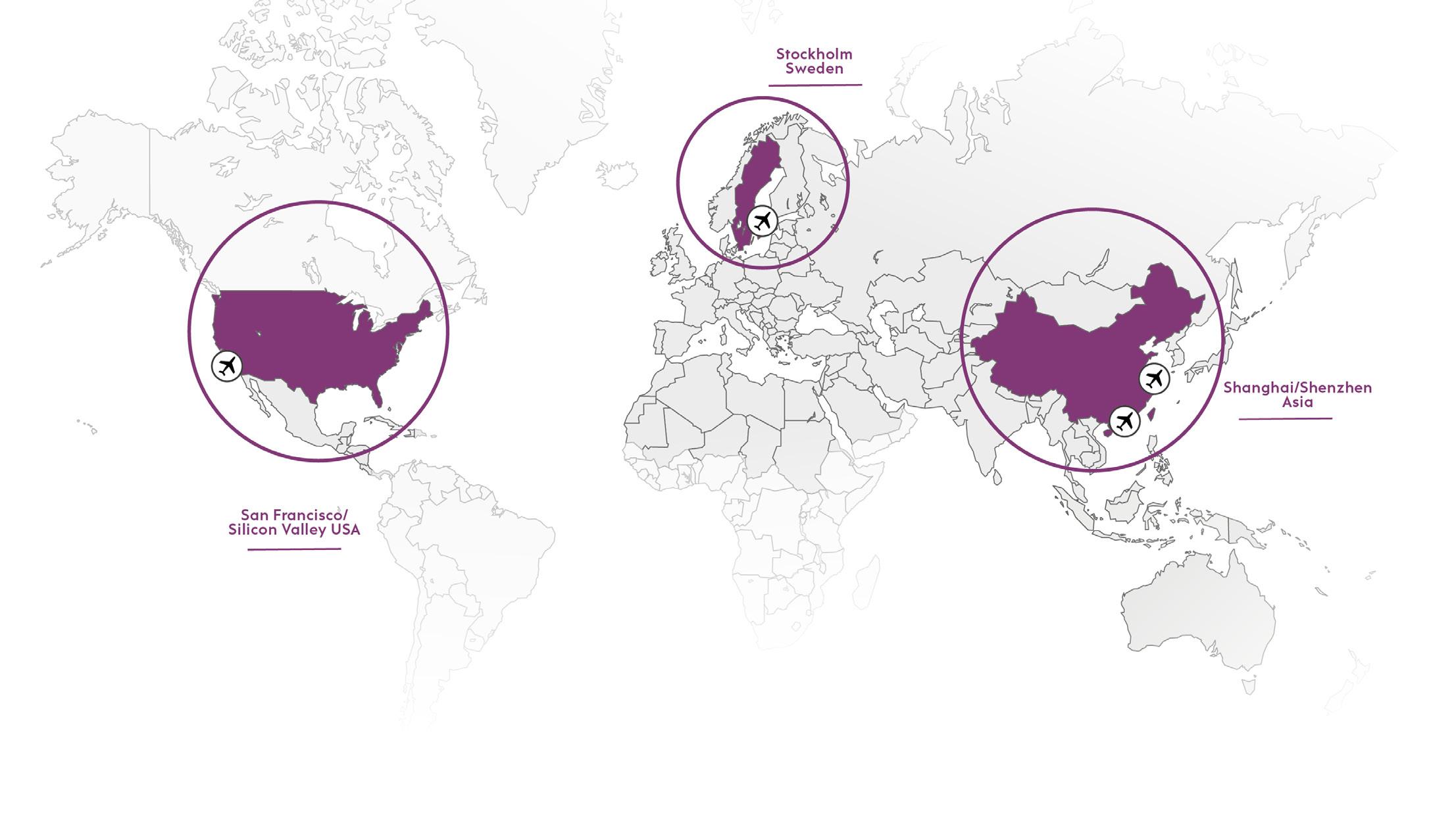
Global markets, rapid technological shifts, and evolving leadership standards demand a new approach to executive education—one that seamlessly integrates strategic management with an international mindset. The LIMAK Global Executive MBA provides this exact framework, empowering leaders to navigate and succeed in a complex, interconnected world.
BY FLORENTINA-SCHALLMEINER
Global markets, technological breakthroughs, and evolving leadership paradigms are fundamentally redefining executive demands. Today’s leaders must go beyond mastering their core business; they must navigate markets, empower people, and drive transformation within an international landscape. The LIMAK Global Executive MBA is designed specifically for this purpose—serving as a catalyst for experienced, forwardthinking managers ready to scale their entrepreneurial skills and lead their organizations toward sustainable success in the digital age.
Since its inception, LIMAK has championed the synergy between academic excellence and real-world application. Our philosophy moves beyond abstract theory, focusing instead on immediate organizational impact. We define our excellence through practical relevance, visionary leadership, and a global mindset, all supported by personalized guidance and collaborative peer learning. In the executive arena, this connection is vital: education must provide a clear compass, open new horizons, and deliver actionable results. With a network of over 250 global experts from both business and academia, we create a learning environment built for the future.
Strategic Program Structure: A Journey to Global Leadership
The Global Executive MBA transforms ambition into a high-performance curriculum. The journey begins with Business Management Excellence (10 days in Linz or Vienna), followed by High Impact Leadership Essentials (9 days in the scenic Salzkammergut or Wachau regions). Students then dive into their chosen Specialization (10–11 days in Linz or Vienna) before embarking on the program’s centerpiece: International Study Trips to Asia and North America (12
days). The curriculum culminates in a Master’s thesis and defense.
This cohesive format seamlessly integrates management fundamentals, leadership growth, and specialized expertise with a global mindset. In today’s reality—defined by digitalization, talent shortages, and shifting competitors— regional experience alone is no longer enough. The international dimension is the true differentiator.
Our study trips are not merely an ‹add-on›; they are a core pillar of the learning experience. By immersing themselves in international business hubs, students gain firsthand insights into diverse management styles and cultural contexts. Witnessing how global leaders strategize and execute decisions doesn›t just expand knowledge—it fundamentally redefines your strategic perspective and encourages true outof-the-box thinking.
Tailored Expertise: Aligning Ambition with Strategic Impact
A defining feature of the Global Executive MBA is the opportunity to align the curriculum with your specific professional trajectory. We empower leaders to customize their journey through highimpact specializations, ranging from Strategic Management and Corporate Entrepreneurship and AI & New Technology Management to Leading Change
and Transformation or Innovation Leadership and Business Renewal. This flexibility ensures that executives can select a track that perfectly resonates with their industry, their specific area of responsibility, and their organization’s strategic priorities.
This is where the true strength of modern executive education lies: it moves beyond standardized, off-theshelf content to create a framework that bridges individual growth with business relevance. Whether an organization is prioritizing digital transformation, growth strategies, or Sales Management Excellence, the program adapts to these diverse realities. It delivers both a comprehensive management foundation and the specialized depth essential for sustaining a competitive edge in an evolving market.
A Benchmark of Excellence: The FIBAA Premium Seal
In the global executive education market, international accreditation is the ultimate hallmark of quality. The Global Executive MBA—alongside the Executive MBA in Management & Leadership—has been honored with the prestigious FIBAA Premium Seal. This distinction is awarded with extreme selectivity, recognizing only those programs that deliver exceptional performance across core pillars such as strategic objectives,
«In my opinion, the combination of lectures, project work, external speakers and company visits represents significant added value for the entire MBA program.»
Mag. René Killinger, MBA, voestalpine AG
academic environment, and quality assurance. Out of 942 FIBAA-accredited programs worldwide, only 34 hold the Premium Seal. In Austria, LIMAK stands out as a clear leader, securing two of the only three Premium Seals ever awarded in the country.
For organizations and executives, this accreditation is far more than a formal credential; it is a guarantee of excellence. In an increasingly competitive landscape, leaders investing their time and resources expect a learning architecture that delivers lasting impact. The FIBAA assessment specifically validates LIMAK’s commitment to superior student support, continuous curriculum innovation, and the seamless synergy between academic theory and realworld business practice.
Personal Evolution Meets Strategic Impact
For the Global Executive MBA audience, the connection between self-leadership and organizational effectiveness is vital. Today’s leaders require more than technical expertise; they must navigate complexity, master self-reflection, and drive change with precision. LIMAK meets these demands through a highengagement learning model characterized by personalized support and small, elite cohorts. Here, learning is fueled by a rich diversity of perspectives. With peers from various industries and backgrounds, the group becomes a dynamic sounding board for real-world leadership challenges, building a high-caliber network that lasts a lifetime.
Central to our philosophy is the immediate transfer of knowledge into professional reality. We view executive education not as abstract theory, but as a strategic development space with a direct organizational footprint. This commitment culminates in the Master’s thesis, which is designed to solve specific challenges within your own company. For executives, the benefit is clear: the program transcends insights, actively advancing strategic projects, leadership goals, and transformation processes in real-time.
The Global Executive MBA is designed for visionaries who aim to refine their leadership while broadening their global horizons. It appeals to those who don’t just manage responsibility but actively shape the future. If you seek to merge international perspectives with strategic expertise—understanding tech shifts, leading change, and maximizing
LIMAK Austrian Business School
Since 1989, LIMAK Austrian Business School has been bridging the gap between business and academia. It stands for academically rigorous, practice-oriented, and internationally focused executive education, developing programs in close collaboration with companies and Johannes Kepler University Linz.
Program: Global Executive MBA
Target group: Experienced and futureoriented managers
Structure: Business Management
Excellence, High Impact Leadership Essentials, Elective Specialization, Study Trips to Asia and North America, Master‘s Thesis & Defense
Duration: 42 to 43 days of in-person instruction in a modular format plus Master‘s Thesis & Defense
Degree: Global Executive MBA
Academic degree: „MBA“ – Master of Business Administration
Registration/Consultation: LIMAK
Consulting
Registration link: https://www.limak. at/beratung/
Contact: Jordis Klima, BSc
Program Consultation
+43 732 669 944 158 +43 676 898 664 488 beratung@limak.jku.at
your personal effectiveness—this program offers definitive relevance. In the executive arena, the environment in which you learn is as critical as the content itself. A premier program is defined by the synergy of quality, applicability, and diverse thought. The LIMAK Global Executive MBA delivers exactly this through its modular structure, tailored specializations, international study trips, and world-class accreditation. For leaders ready to combine local impact with a global mindset, this program is a powerful catalyst for personal growth and entrepreneurial success.
Serving more than 3,000 learners annually, zB. Zentrum Bildung is a leader in excellence for vocational and further education. Renato Cadisch (Head of Higher Vocational Education) and Tobias Küng (Rector of Continuing Education) share insights on the vital role education plays in maintaining long-term adaptability.


zB. Zentrum Bildung
zB. Zentrum Bildung evolved from the former KV Baden and trains apprentices in the commercial sector and retail. zB.‘s continuing education programs directly follow vocational training and range from introductory courses for certified administrative assistants to advanced professional examinations for federal certificates, up to the Higher Vocational School (HF) and subsequently to the postgraduate diploma (NDS HF) at NQF level 6 (equivalent to a Bachelor‘s degree). With locations in Baden and Brugg, zB. is one of the largest partners for business administration continuing education in Aargau.
Key Facts
Diploma in Business Administration (HF)
Duration: 6 semesters, shortened program possible (4 semesters)
Degree: Diploma in Business Administration (HF)
Information: https://www.zentrumbildung.ch/weiterbildung/wirtschaft-management/hf-wirtschaft
Diploma in Communication Design (HF), specialization in Photography
Duration: 6 semesters
Degree: Diploma in Communication Design (HF), specialization in Photography
Information: fotografie-weiterbildung.ch/angebotzb-foto/hoehere-fachschule-2026
«In the Age of AI, Photographers Must Embrace a New Era of Creative Reinvention
What are the advantages of a higher vocational education (HF) qualification?
Renato Cadisch: Higher vocational education (HF) stands apart through its comprehensive, generalist approach. Unlike the more specialized federal certificates and diplomas, HF programs equip professionals with the broad expertise required for high-level specialist and management roles. A key distinction is the standardized national framework: HF programs at institutions like zB. Zentrum Bildung are SERI-accredited, ensuring that diplomas in Business and Marketing meet rigorous federal standards. Furthermore, the HF qualification serves as a vital bridge to academia. Positioned at Level 6 of the National Qualifications Framework— equivalent to a Bachelor’s degree—it grants direct access to Universities of Applied Sciences without a traditional high school diploma. Ultimately, students gain high-impact, practical expertise that is directly aligned with the evolving demands of the professional world.
What are the core areas of study in the HF (Higher Vocational Education) program?
Our programs allow students to master business administration, strategy development, and project management. The HF Business track focuses on efficient corporate management, financial literacy, and process optimization, while the HF Marketing program builds expertise in digital strategies, sales, and market development. Beyond technical skills, the curriculum integrates essential soft skills—such as communication and self-reflection—while the part-time structure naturally sharpens planning skills and resilience. Maximum flexibility is a core advantage of our model. Students have until the end of the fourth semester to choose between a specialization in Business or Marketing, allowing ample time to align their studies with their career goals. For those looking to maximize their impact, a second HF degree can be earned in just two additional semesters. Graduating with dual diplomas—as both a Business Economist (HF) and a Marketing Manager (HF)—exponentially
increases career mobility and marketability.
Combining work and education isn‘t a problem?
Not at all. Our hybrid teaching model is purpose-built for working professionals, blending online modules with high-impact, in-person sessions. By integrating seamlessly into your professional and personal life, our digital content eliminates unnecessary travel, saving you both time and costs. Yet, personal connection remains our priority. At zB. Zentrum Bildung Baden, ‚You at the center‘ is more than a motto—it is our lived reality. We provide personalized academic and organizational support, ensuring you are guided through every phase of your journey.
An HF degree is a versatile dooropener that retains its value across all industries. It equips you with transferable leadership, strategy, and management skills that are in high demand globally. Moreover, it provides a rock-solid foundation for those aiming to transition into academia, whether at a University of Applied Sciences or a traditional university.
How did the „Diploma in Communication Design“ with a specialization in photography come about in 2016?
Tobias Küng: As an established leader in commercial education, zB. Zentrum Bildung championed digital fluency early on, integrating it into every vocational track. When digital photography disrupted the industry, we moved swiftly to help professionals master the essential computer skills and data processing techniques that became the new standard. This evolution naturally led to our comprehensive photography programs and the Diploma in Communication Design—logical steps in our mission to align creative talent with the digital age.
Why is photography still relevant?
Photography is experiencing a massive, unprecedented revolution. In an era of instant global communication and smartphone-driven social media, the professional landscape has fundamentally shifted. Today, the focus is squarely on quality over quantity—the only way to stand out in a world of interchangeable, fast-paced imagery. Yet, the
rise of AI is pushing boundaries even further, challenging photographers to proactively reimagine their artistry and reinvent their professional identity for a new digital age.
Where do you place the emphasis in your vocational training?
Our focus is clear: multidimensional competence. The 2022 framework curriculum—developed by industry leaders—proves that our supporting organizations anticipated today’s shifts early on. Beyond essential practical skills, students master the art of developing compelling design processes through creative exploration and systematic self-reflection. The objective is to merge aesthetic excellence with contemporary market trends. In today’s demanding environment, technical mastery alone is no longer enough. We integrate design expertise and a deep appreciation for art to fuel true creativity, while the entrepreneurial dimension provides the leadership and management structures necessary for peak efficiency. Our training concept is built on four core pillars: Craft, Design, Art, and Entrepreneurial Competence.“
Leadership potential is not determined by gender. Yet the conditions under which leadership is exercised still differ markedly. Women remain underrepresented in senior roles across industries, and many continue to navigate organisational cultures, expectations, and power dynamics that were not originally designed with them in mind.

BY PROF. DR. VÉRONIQUE TRAN AND PROF. DR. KERSTIN ALFES
This gap between potential and context is precisely why dedicated female leadership programmes continue to play an important role.
A programme such as ESCP Business School’s Women in Leadership is not about separating women from mainstream leadership development. It is about creating a focused environment where specific challenges can be addressed openly and effectively. In mixed settings, certain questions often remain unspoken—how to assert authority without triggering backlash, how to negotiate compensation with confidence, or how to build visibility in male-dominated environments. In a targeted programme, these issues can be examined directly, without hesitation.
Overcoming structural challenges together and defining one›s own leadership style
Equally important is the learning dynamic such an environment creates. When participants share similar structural challenges, peer learning becomes significantly more powerful. The classroom shifts from a traditional teaching format to a space of mutual reflection, candid feedback, and accelerated personal growth. This collective dimension is one of the defining strengths of modern female leadership programmes.
Over the years, however, the focus of these programmes has evolved considerably. Early initiatives tended to concentrate on closing perceived “skill gaps”—communication, negotiation, or executive presence. While these remain essential, the emphasis has broadened.
Today, the development of an authentic leadership identity is central. Rather than encouraging women to
ESCP Business School
Founded in 1819, ESCP Business School is the world›s oldest business school. For over 200 years, it has been educating responsible leaders who think entrepreneurially, drive innovation, and shape the economy of tomorrow. With its six campuses in Berlin, London, Madrid, Paris, Turin, and Warsaw, ESCP offers a unique European management education characterized by multiculturalism and cross-border collaboration. Each year, more than 11,000 students and 6,000 executives from over 140 countries study and work at ESCP. The program portfolio includes undergraduate, graduate, MBA, Executive MBA, doctoral, and executive education programs – all with an integrated, campus-wide learning experience. Innovation is a central component of research and teaching and reflects ESCP›s commitment to developing responsible solutions for business and society.
Key Facts
Women in Leadership
Duration: 4 days (next date: November 24-27, 2026)
Completion: Certificate
Infos: https://escp.eu/programmes/openprogrammes/women-in-leadership
Veronique Tran is Professor of Organizational Behavior at ESCP Business School, and Executive Vice President in charge of Executive Education and Corporate Relations. She previously served as the Dean and Rector of the Berlin Campus, as the Academic Dean of the Executive MBA and General Management Programme (GMP), and as Associate Dean for the MBA in International Management. She also chaired the European Management Faculty Department from 2013 to 2015.
Kerstin Alfes is a Professor of Organisation and Human Resource Management at ESCP Business School, Berlin campus. Kerstin’s research interests include strategic human resource management, neurodiversity, employee engagement, and new ways of working. She has published extensively in leading peer-reviewed journals, including Human Resource Management, Human Relations, Human Resource Management Journal, Journal of Vocational Behavior, and International Journal of Management Reviews.
«Female leadership programmes are an adaptive response to a changing but still imperfect reality.»
adapt to traditional, often male-coded leadership models, programmes increasingly support participants in defining their own leadership style—one that is both effective and sustainable. This shift reflects a deeper understanding: longterm success in leadership is not about
imitation, but about alignment between personal values and professional behaviour.
Ongoing ecosystems instead of isolated training Another major evolution is the move
from isolated training to ongoing ecosystems. Programmes are no longer limited to a few days in the classroom. They now incorporate coaching, peer networks, and follow-up exchanges that extend learning over time. Participants leave not only with new skills, but with a
professional network that continues to support their development long after the programme ends.
At the organisational level, the purpose has also expanded. Companies are no longer sending participants solely to develop individual capabilities. Increasingly, these programmes are seen as part of a broader strategy to strengthen female talent pipelines, improve retention of high-potential employees, and foster more inclusive leadership cultures. The impact, therefore, goes beyond the individual—it becomes structural.
Companies benefit from more diverse leadership teams
Critics sometimes argue that leadership development should be entirely genderneutral. In principle, that is a fair ambition. In practice, however, structural imbalances persist. Until organisations reach a point where opportunities, expectations, and outcomes are truly equal, targeted interventions remain both relevant and necessary. They are not about creating advantage, but about accelerating parity.
The results are tangible. Participants typically report increased confidence, clearer communication, and a stronger sense of leadership direction. More importantly, they develop the ability to navigate organisational dynamics with greater awareness and strategic intent. For companies, this translates into more diverse leadership teams—and, ultimately, better decision-making.
Female leadership programmes, then, are not a temporary trend. They are an adaptive response to a changing but still imperfect reality. Their evolution—from skill-building workshops to comprehensive leadership ecosystems—mirrors a broader shift in how organisations understand talent, diversity, and performance.
Talent may be evenly distributed. Opportunity, influence, and visibility still are not. Bridging that gap is where these programmes continue to prove their value.
Leadership is no longer defined solely by hierarchy or functional expertise. In an environment shaped by technological disruption, geopolitical fragmentation, and shifting economic power centres, the role of senior executives is increasingly characterised by the ability to navigate complexity rather than to control it.
Executive MBA programmes have evolved in response to this shift. They are no longer limited to the transmission of management knowledge, but position themselves as spaces for structured reflection, integration of experience, and the development of new ways of thinking about organisations and leadership. This evolution reflects a broader shift in management education, where the emphasis moves from accumulation of knowledge towards interpretation and application.
Positioning Leadership Within the African Context
The Executive MBA (EMBA) at the University of Cape Town’s Graduate School of Business is situated within a context that differs from many traditional centres of business education. African markets are shaped by rapid urbanisation, institutional diversity, and dynamic economic development. These conditions require approaches to leadership that go beyond standardised frameworks.
The programme reflects this reality by embedding its curriculum in the socio-economic conditions of the region.
Participants engage with questions of market development, regulatory variability, and the interaction between formal and informal economic systems. This contextual grounding allows strategic decision-making to be understood not only in financial or operational terms, but within broader societal dynamics. In practice, this includes examining how organisations respond to infrastructure constraints, shifting regulatory regimes, or rapidly evolving consumer markets. At the same time, the programme is positioned within an international academic landscape. Rankings regularly place it among the leading Executive MBA offerings in Africa and the Middle East, pointing to a combination of regional specificity and global visibility. This dual positioning reflects an attempt to bridge local insight with international standards of management education.
From Knowledge to Practice: A Different Understanding of Learning
A defining characteristic of the EMBA is its departure from traditional, contentheavy management education. The programme assumes that participants
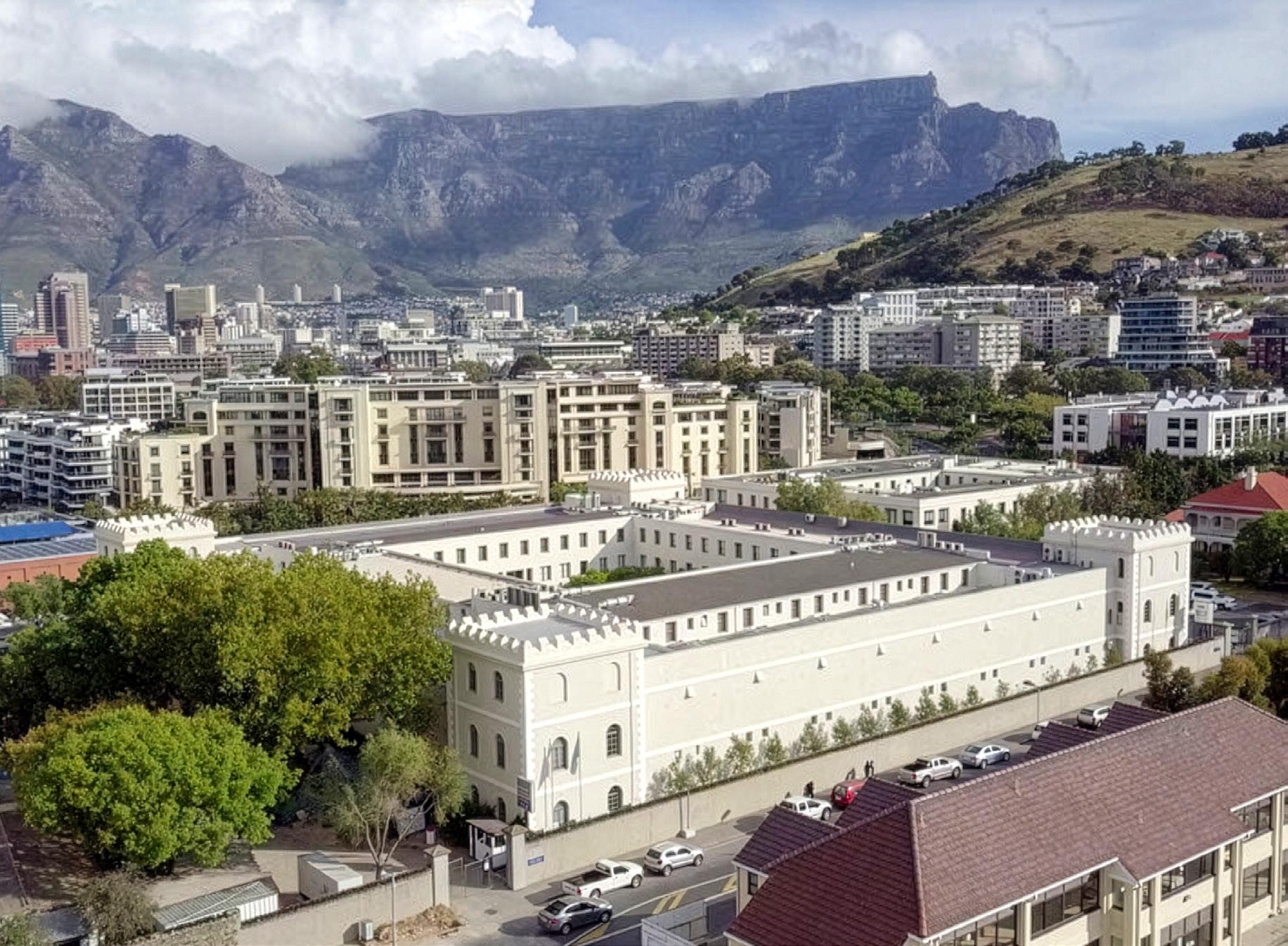
already possess a solid grounding in core business disciplines and therefore focuses on the integration of experience, theory, and reflection.
Learning is designed as an applied process. Participants bring organisational challenges into the classroom, where they are examined through conceptual frameworks and peer exchange. This creates a continuous interaction between theory and practice, in which management is treated as an evolving, context-dependent activity. In many cases, this leads to a reframing of existing business problems rather than the immediate search for solutions.
Over a period of 24 months, participants complete a series of intensive modules combined with a research component that applies academic methods to real-world organisational issues. This integration supports a deeper understanding of how decisions are made and implemented in complex environments.
Systems Thinking as a Core Organising Principle
At the centre of the curriculum lies an emphasis on systems thinking. Organisations are approached as part of interconnected economic, social, and environmental systems. This perspective shifts the focus away from linear problem-solving towards an understanding of interdependencies and unintended consequences.
The curriculum connects strategic decision-making with broader system dynamics, integrating insights from core management disciplines with considerations of societal impact and long-term sustainability. This approach supports the development of conceptual agility and the ability to operate under conditions of uncertainty. It also encourages a longer-term perspective, where immediate gains are weighed against structural implications.
Leadership as a Reflective and Personal Process
Alongside its analytical components, the programme emphasises leadership as a reflective practice. Leadership is framed as a process of continuous development that involves self-awareness,
UCT Graduate School of Business
The UCT Graduate School of Business is Africa’s top business school and offers transformative learning rooted in an African perspective. It equips leaders to build sustainable organisations, solve emerging market challenges, and drive change with integrity. UCT GSB is triple-crown accredited by AACSB, AMBA, and EQUIS.
Camille Meyer is Associate Professor of Social Innovation and Entrepreneurship and Director of the Executive MBA at UCT GSB. His work advances Africa-relevant knowledge, innovation in business education, and inclusive development by connecting research, practice, and policy.
Profile Key Facts
Executive MBA (EMBA)
Duration: 24 months
Degree: Executive MBA More information: https://www.gsb. uct.ac.za/academic-programmes/ emba/
judgement, and the ability to engage with ambiguity. Participants engage in structured reflection, coaching, and peer learning formats that examine leadership styles, decision-making patterns, and the relationship between personal values and organisational responsibilities. This approach reflects a broader shift in leadership thinking towards adaptability and the integration of multiple perspectives. In this sense, leadership development is not treated as a linear progression, but as an ongoing process shaped by experience and context.
A Modular Structure for Senior Executives
The programme is delivered in a modular format that combines intensive inperson sessions with periods of applied learning. This design reflects the professional realities of senior executives and allows for an iterative learning process in which concepts can be tested and refined in practice.
An international elective extends this perspective by exposing participants to different business environments and institutional contexts, contributing to a broader understanding of global management practices. Such exposure supports comparative thinking and highlights how similar challenges can lead to different strategic responses depending on context.
Networks, Diversity, and Exchange
Participants typically bring extensive managerial experience from a range of industries and regions. This diversity shapes the learning environment and contributes to the exchange of perspectives.
«Our EMBA is a transformative journey that empowers leaders to redefine modern leadership practices for the future.»
The programme is part of a broader alumni network across multiple countries, facilitating ongoing professional exchange beyond the duration of the programme. These networks often function as informal platforms for collaboration, knowledge sharing, and continued professional development. In many cases, they also provide access to region-specific insights that are not readily available through formal channels.
Relevance in a Period of Structural Transformation
The relevance of executive education is closely linked to broader structural changes. Digitalisation, ecological transitions and shifting global trade patterns are redefining organisational environments. In many African markets, these developments intersect with rapid demographic growth and evolving institutional frameworks.
Within this context, leadership increasingly requires the ability to interpret complex signals and balance short-term pressures with long-term considerations. The capacity to operate across different systems simultaneously becomes a defining capability. This includes navigating tensions between growth and stability, efficiency and resilience, as well as local priorities and global expectations.
Executive Education as a Strategic Investment
Executive MBA programmes are often framed as long-term investments in professional development. Beyond the acquisition of knowledge, they provide opportunities to step outside operational routines and engage with broader strategic questions.
In this context, the EMBA at the University of Cape Town represents an approach that combines contextual grounding, systems-oriented thinking, and reflective leadership development in response to evolving global demands. Its structure and orientation illustrate how executive education can function not only as a qualification, but as a space for rethinking leadership under conditions that are unlikely to become less complex in the foreseeable future.

As technological shifts redefine products and workflows, they also demand a new approach to management. Prof. Wolfgang H. Güttel explains how the TU Wien Academy combines the best of both worlds: the cutting-edge research of a top-tier European technical university and a practical curriculum designed to translate leadership theory into immediate action.

TU Wien
Why are programs that explicitly integrate technological expertise and leadership skills needed today?
The world has fundamentally shifted, and businesses that fail to adapt will soon find themselves unrecognizable. With artificial intelligence reshaping business models faster than traditional planning cycles can keep pace, leaders must look beyond technical capabilities. Success now requires a deep understanding of both the potential and the limitations of new technologies, as well as their broader strategic impact.
This is where the TU Wien Academy bridges the gap, translating the university’s technological excellence into actionable, practice-oriented professional development. Our research confirms that expertise alone is not enough: modern leadership is about navigating technological change strategically while empowering and guiding people through the journey.
What are the most pressing challenges companies bring to you today?
Organizations typically approach us with three core questions: How can we maintain a competitive edge in a tech-driven landscape? How do we integrate AI sustainably into our core processes rather than just in silos? And most importantly: How do we develop leaders capable of driving these complex transformations? While many companies possess world-class technology, they often lack the strategic leadership to leverage it. Conversely, strong managers frequently lack a deep understanding of technological
shifts. Our programs are designed to systematically close this gap, building a bridge between technology and business by prioritizing corporate reality over pure theory.
They offer two programs, among others: the Executive MBA Advanced Technologies & Global Leadership and the MBA Operational Excellence & AI. Who needs which program?
The Executive MBA Advanced Technologies & Global Leadership is designed for current and aspiring C-level executives. The program centers on strategic vision and the capacity to lead organizations through fundamental transformation. A key pillar is the international learning journey—such as the innovation ecosystem at Caltech (California Institute of Technology)— which provides direct access to worldclass research and technology. In contrast, the MBA Operational Excellence
& AI focuses on the operational core, enabling leaders to implement datadriven strategies across the entire value chain with an emphasis on scalability and ROI. Together, these programs offer a powerful synergy: while one group shapes the strategic vision, the other ensures its sustainable, operational execution.
What does the TU Wien Academy understand by Operational Excellence in the AI Age?
For a long time, Operational Excellence (OpEx) was primarily defined by efficiency—stabilizing processes, cutting costs, and ensuring quality. While these fundamentals remain essential, they have expanded significantly in the AI era. Today, the TU Wien Academy views OpEx as the systematic, data-driven management of operational systems across the entire data science lifecycle—from collection and
«What makes the TU Wien Academy special is its close connection to TU Wien and its research excellence – and our ability to create effective learning architectures from it.»
Profile
The Vienna University of Technology (TU Wien) is Austria‘s largest research and educational institution in the fields of engineering and natural sciences. More than 4,000 scientists conduct research in five key research areas across eight faculties, focusing on „Technology for People.“ The content of the offered degree programs is derived from this excellent research, benefiting more than 26,000 students in 62 different degree programs. As a driver of innovation, TU Wien strengthens Austria‘s economic position, facilitates collaborations, and contributes to the prosperity of society.
Wolfgang H. Güttel is Professor of Leadership & Strategy and Head of the Institute of Management Science at the Vienna University of Technology. He is also Dean of the TU Wien Academy, where he is responsible for and strategically develops executive education programs. His research and teaching focus on strategic change, change management, and leadership in uncertain and technology-driven contexts. As an internationally sought-after speaker and consultant, he combines academic excellence with practical application in companies.
Key Facts
Executive MBA Advanced Technologies & Global Leadership / Executive MBA Operational Excellence & AI Duration: 3 semesters each Degree: Executive MBA Advanced Technologies and Global Leadership / Executive MBA Operational Excellence & AI Information: https://www.tuwien.at/ ace/programme/mba-programme/advanced-technologies-global-leadership https://www.tuwien.at/ace/programme/mba-programme/operational-excellence-ai
management to machine learning and analytics, utilizing frameworks like CRISP-DM. AI serves as a powerful enabler, facilitating more informed decisions, identifying hidden inefficiencies, and automating complex cross-functional processes. However, the key lies in execution: integrating technology into governance, infrastructure, and regulatory frameworks to ensure scalability and measurable business impact. This synergy of data, technology, and organization is the core objective of our MBA program.
The TU Wien conducts research in AI, robotics, and quantum technologies. How do Academy participants benefit from this – without working in research themselves?
The TU Wien Academy is distinguished by its direct link to the research excellence of TU Wien, allowing us to design highly effective learning architectures. We translate cutting-edge advancements in fields like AI, robotics, and quantum technology into tailored frameworks for C-level executives and strategic decision-makers. Our mission is to transform abstract knowledge into actionable expertise, empowering leaders to drive meaningful change. By merging technological depth with sophisticated didactic design, we create a learning environment that balances strategic vision, practical application, and personal reflection—ensuring that insights lead directly to real-world implementation.
You‘re planning a learning journey to Asia. What should your leaders take away from it?
In many respects, Asia represents a reality that Europe has yet to fully embrace. Ecosystems like Singapore, Seoul, and Shenzhen scale technologies at a pace that European firms often underestimate. Our participants don’t visit as tourists; they experience firsthand the radical differences in speed, risk appetite, and innovation culture. This provides a direct strategic advantage: leaders return with global perspectives often missing in European markets and build international networks that are vital for succeeding in today’s global business landscape.
If you could give a hesitant leader a single piece of advice about why now is the right time to take this step –what would you say?
The real question is not whether you can afford to invest in your professional growth—it is whether you can afford to face a radically transformed market in three years with the same leadership skills you have today.
Interview: Rüdiger Schmidt-Sodingen
The hotel and restaurant industry is the ultimate calling card for Switzerland. However, the sector is facing a significant shift as the «Baby Boomer» generation prepares for retirement. Raphaël Gaudart, Site Manager and Head of the Thun School of Hotel Management (Hotelfachschule Thun), explains why there has never been a more promising time to pursue a career as a hotelier or hospitality professional.
Switzerland is world-famous for its hotels and restaurants. In the next few years, many businesses will change hands and many employees will retire. What does this mean for the next generation and your study programmes?
This upcoming generation shift is a major opportunity for young professionals. Many businesses are looking for welltrained specialists and leaders who can take on responsibility and think like entrepreneurs. Our programmes at the Hotelfachschule Thun prepare students for these roles through practical business management, leadership, and current industry expertise.
Whether it’s an initial qualification or further training: for those who invest today, the Swiss hospitality industry offers exceptionally good prospects. It is equally important to be able to identify trends and continuously adapt what you offer to changing guest needs. For parents, it’s worth noting that training in this sector is a solid and future-proof career path. For young people, it opens attractive opportunities in Switzerland and international prospects. For career changers or experienced professionals, we create practical programmes that can be balanced with work commitments and prepare them specifically for the challenges of the coming years. The change in the industry requires well-trained individuals—and we see it as our task to empower them.
Which study program is suitable for whom?
It doesn’t depend as much on your background as on your personal life and work situation. The fast-track programme is for those with a vocational apprenticeship in the industry who want to focus fully on their continuing education for a certain time. The work-integrated programme is suitable for those who want to stay in their business and apply what they learn right away. Both paths lead to the same Higher Federal Diploma (HF), but they differ in their learning focus.
Hotelfachschule Thun
The Hotelfachschule Thun, School of Hotel Management is one of Switzerland‘s leading hospitality schools, known for its practice-oriented training. The programmes are federally recognised, and tuition fees are subsidised for students residing in Switzerland. As a long-standing member of the industry association HotellerieSuisse, the school is closely connected to the hospitality sector, providing students with a practical education that leads to success.
Raphaël Gaudart has been the head of the Hotelfachschule Thun and Associate Dean of the EHL School of Practical Arts since 2025. The co-founder of Simon & Josef GmbH previously spent ten years as a Management Board Member and Head of the MSc BA program, Major in Entrepreneurship, at the University of Applied Sciences and Arts of Fribourg.
The program director for the Higher Technical School is Stefan Zehnder, the deputy site manager and head of Hospitality & The Lab Hotel is Sandra Wehren.
Key Facts
Advanced Federal Diploma of Higher Education in Hospitality Management (HF) (shortened fulltime program with relevant Federal Certificate of Competence)
Advanced Federal Diploma of Higher Education in Hospitality Management (HF) (part-time)
Duration: 2 or 3.5 years
Degree: Advanced Federal Diploma of Higher Education in Hospitality Management (HF) (shortened full-time program with relevant Federal Certificate of Competence)
Advanced Federal Diploma of Higher Education in Hospitality Management (HF) (part-time)
Information: https://www.hfthun.ch/ de/dipl-hotelier-hf-vollzeit-efz / https:// www.hfthun.ch/de/dipl-hotelier-hf-berufsbegleitend
«The Lab Hotel is a fully operational hotel on the campus of the Hotelfachschule Thun, Hotel Management School, where students interact directly with real guests.»
What are the most significant differences between the fast-track full-time study and the work-integrated study? Both models share the same goal and lead to the identical qualification. The differences lie primarily in the organisation. In the fast-track programme, students consciously take time out for their education. In the work-integrated programme, students remain employed and independent, linking their work closely with their studies. Stated by
You focus on a curriculum relevant to the industry. What does that involve?
The curriculum is consistently geared towards the current and future needs of the sector. It covers business management, finance, marketing, and HR, as well as leadership, entrepreneurship, and sustainability. Social and economic topics complete the content. Through
close cooperation with industry partners, we ensure the material remains up-to-date and practical.
How do you combine theory and practice?
Theory and practice are systematically linked. Students work on specific tasks from a business environment and reflect on them in class. Projects and transfer assignments allow for direct application. This transfer is particularly immediate in the work-integrated study. Additionally, we have „The Lab Hotel,“ our own practical learning environment.
What is „The Lab Hotel“ and how does it work?

„The Lab Hotel“ is a fully operational 3*hotel on the campus of the Hotelfachschule Thun, where students interact directly with real guests. It combines practical learning, application, and reflection during live operations: theories can be implemented immediately, processes analysed, and innovative concepts tested under real market conditions. At the same time, it serves as a platform for experiments and networking. The Lab Hotel is celebrating its fifth anniversary and is managed by Sandra Wehren, Deputy Site Manager / Head of Hospitality & The Lab Hotel Deputy Site Manager / Head of Hospitality & The Lab Hotel
How important is the network of various companies in the hotel and hospitality industry that you offer?
The network serves as an important source of inspiration for current developments and industry needs. These insights are incorporated into the further development of the study programmes. At the same time, the network provides practical examples, projects, and work placements that benefit the students directly.
Where do you see the biggest challenges or opportunities for hotels, restaurants, and their staff in the coming years?
The central challenges are the shortage of skilled workers, technological change, and increasing requirements for sustainability and leadership. At the same time, opportunities are emerging for businesses that invest in training, modern work models, and professional management. For qualified specialists and managers, this results in very good long-term prospects.
Interview: Rüdiger Schmidt-Sodingen
What can you tell us about the focus of your new postgraduate program in Digital Management?
The program tackles the pivotal themes of the digital era. We empower students to explore transformative technologies and understand how these drivers reshape today’s business landscape and core operations.
So, the focus is on strategic vision and analytical thinking?
Exactly, but our approach is far more holistic. We challenge the status quo: Will current revenue models remain viable, or do they require fundamental adaptation? We also address the pace of innovation—ensuring products hit the market at the right time—and identify the most effective digital distribution channels, from e-commerce platforms to virtual marketplaces. Ultimately, we are looking at the complete digitalization of marketing and sales.
To what extent is digitalization reshaping organizations and the expectations placed on their workforce?
Digitalization has evolved from a trend into the ‹operating system› of the modern enterprise. It is dismantling rigid hierarchies in favor of agile networks and data-driven decision-making. For employees, this means a shift in priorities: technical expertise alone is no longer enough. ‹Digital literacy›—the proficiency to leverage AI and advanced tools—is now mandatory. Soft skills like adaptability and a commitment to lifelong learning have become essential, as job profiles now evolve in cycles of years rather than decades. In this environment, those who embrace constant change become the primary drivers of innovation.
Many digital initiatives fail due to a lack of employee buy-in or underlying anxieties. Do you address these human factors?
Absolutely. This is a critical success factor for any digital transformation. That is why our curriculum includes a deep dive into personality profiles and leadership behavior. We focus heavily on ‹Change Leadership›—the art of guiding people through transitions and overcoming resistance to ensure longterm adoption.
What defines excellence in Digital Business Management?
Great Digital Business Management serves as the bridge between technological vision and commercial value. It’s not about chasing every new tool, but about strategically deploying technology to solve real-world customer problems and scale operations. A core element is a robust data culture, where decisions are backed by metrics rather than intuition. It also requires ‹organizational ambidexterity›—the ability to optimize the core business while simultaneously driving radical innovation. Ultimately, an effective manager in this field acts as a catalyst for cultural change, empowering teams to break down silos and remain relentlessly customer-centric.

St. Gallen
Thierry Kurtzemann, Principal of the St. Gallen Academy, explains the valueof gaining comprehensive digital expertise through their latest postgraduate offering.
Does the program primarily target professionals already in leadership roles?
Not necessarily. While a current management position isn›t a prerequisite, the program is designed as a springboard. Our goal is to empower graduates to step into leadership roles in the near future. We provide them with the strategic toolkit and practical experience necessary to lead with confidence in a digital-first environment.
Are there specific prerequisites for joining the program?
Admission typically requires a Swiss Federal Diploma (Professional or Higher Professional Examination) or a degree from a University of Applied Sciences (HF/FH). The specific field of study is secondary; what matters more is a minimum of three years of professional experience. For candidates with extensive practical backgrounds, we also offer a ‹sur dossier› admission process, allowing professional expertise to pave
the way even without traditional academic credentials.
Digitalization is a crowded market. Why choose the St. Gallen Academy over a standard CAS program?
Because our approach goes far beyond theory—practical application is our DNA. We don’t just talk about transformation; we execute it. Our faculty consists of industry practitioners who tackle these challenges in their daily roles. Even our doctoral tracks are strictly application-oriented. You won’t find traditional rote-learning exams here; we focus on real-world impact and competence.
You also entice students with a trip to Silicon Valley included in the tuition. A mandatory graduation trip sounds almost too good to be true... Let’s call it a ‹strategic hook› that delivers lasting value. Immersing yourself in the world’s leading innovation hub is
«The St.Gallen Academy visits industry giants like Amazon and NVIDIA, as well as Stanford University and the Plug and Play Tech Center.»
a life-changing experience for our participants. The feedback is consistently phenomenal. We take our students directly to the source—visiting industry giants like Amazon and NVIDIA, as well as Stanford University and the Plug and Play Tech Center. It’s about gaining a global perspective that stays with you for a lifetime.
What makes this trip so unique?
First, it’s not just a site visit; it’s an active dialogue with the people on the ground. Second, we benefit from an exclusive local network. Our primary contact is a Swiss-born consultant who has operated successfully in California for over forty years. This seasoned expert knows the tech landscape inside out—from garage startups to global giants—and opens doors that usually remain closed to the public.
Are advanced English skills a requirement for the program?
The curriculum is delivered in German. While basic English is certainly an advantage for the Silicon Valley trip, the focus is on comprehension rather than perfection. Speaking fluently is secondary; we provide translation support whenever needed. Often, it’s simply about having the confidence to ask a question. We don’t expect flawless grammar—and that’s a key distinction from more academic programs. We train practitioners!
Interview: Rüdiger Schmidt-Sodingen
The St. Gallen Academy was founded in 1892 as a school for merchants. It is a cantonal educational institution with campuses in St. Gallen and Rapperswil-Jona. As a leader in quality, the St. Gallen Academy offers promising preparation for federally recognized qualifications.
«Our knowledge transfer is both our mission and our passion – always with a focus on the needs of our students, the regional economy, and St. Gallen as a center of education.» The St. Gallen Academy has approximately 1,300 students annually and employs around 450 part-time lecturers.
Information: https://akademie.ch/ weiterbildungen-seminare/weiterbildungen/digital-und-informatik/dipl-digital-business-manager-in-nds-hf/
At Freudenfels Castle, the Liechtenstein Academy is hosting a three-day “Impact Lab” in September 2026 for people who want to not only manage change, but consciously shape it. Beat Büschlen, Senior Learning & Development Specialist at the Liechtenstein Academy, discusses the art of unleashing potential.
Change projects rarely fail due to a lack of strategy, but often due to implementation. Where exactly does the „Impact Lab“ come in?
Many managers are highly skilled and strategically well-positioned. And yet, we repeatedly see that change in everyday practice doesn‘t fail because of concepts, but because of what it triggers in people. The „Impact Lab“ is therefore not exclusively aimed at managers, but also at specialists. It‘s less about how to manage change, but rather about understanding: What actually happens within me and in others when something changes? Participants learn to perceive their own thought and behavior patterns more consciously, to categorize reactions, and to move from automatic reflexes back into an active role of shaping the process. This is the foundation for effectively guiding others through change – personally, within teams, in projects, and across the entire organization. With a clearer view of personal patterns, with concrete approaches to action for challenging (leadership) situations and with a sharpened eye for the dynamics in their environment, they return to the companies.
Many leaders feel they should develop further, but don‘t know where to start. What‘s your experience with this? We see this very often. The will to develop is there, and many invest in new tools, models, or processes. That‘s important. But an additional, often underestimated lever lies elsewhere: within ourselves.
Questions like:
- Where do I react reflexively?
- What triggers me?
- How do I act in challenging situations? These questions are crucial in determining whether development actually takes place or remains superficial. At the Impact Lab, we create a framework in which these questions are addressed: structured, honest, and with a practical focus. It‘s about moving from autopilot to more conscious, situation-appropriate action.
Why does a leader‘s personality play such a central role in the effectiveness of their leadership?

Profile
Liechtenstein Academy
Liechtenstein Academy
Founded by the Princely House of Liechtenstein, the Liechtenstein Academy now trains teams, executives, and entrepreneurial families worldwide. Its programs in personal development, family governance, leadership, and sustainability are based on both scientific findings and practical experience gained from its international network.
Freudenfels Castle – the ideal place to pause and move forward
Our seminars are held on our Freudenfels Castle campus. The ambiance, tranquility, unspoiled nature high above Lake Constance, state-of-the-art infrastructure, and 4-star hotel accommodations guarantee an inspiring stay and focused concentration.
Beat Büschlen has been with the Liechtenstein Academy as Senior Learning & Development Specialist since 2022. For him, putting people and their values and needs at the center is paramount, both in leading people and in designing educational programs.
Key Facts
Impact Lab
Duration: 3-day intensive seminar, September 13-16.
Information: https://www.liechtenstein.academy/de/programs/impactlab/
Questions? Ask me anything!
I‘m happy to help: Beat Büschlen Beat.bueschlen@liechtenstein.academy +423 235 22 87
«Leadership is becoming less and less about having ready-made answers and more and more about the ability to deal with uncertainty.»
Every decision, every communication, and every reaction is shaped by individual experiences, values, and patterns. We can‘t simply shed these, but we can learn to deal with them more consciously. Those who understand themselves better gain clarity—and thus more options. I can then decide how I want to react, instead of just reacting. This is precisely what makes leadership effective: it becomes more consistent and trustworthy. And this has a direct impact on the culture: on how people communicate within the team, how
These personal challenges form the basis for the work in the Impact Lab. This creates a format that doesn‘t remain in the realm of theory but is directly geared towards business practice. The goal is for participants to return with actionable approaches that can be tested in their daily work the very next day. Our holistic approach encompasses everything from experiential activities like rowing to contemplative sessions –thus addressing mind, heart, and body equally.
Considering numerous crises, expectations of leaders are rising. What does this mean for daily work, as well as for strategic planning?
Leadership is increasingly less about having ready-made answers and more about the ability to deal with uncertainty. No one can predict all developments today. But leaders can learn how to work with this uncertainty – both for themselves and with their teams. This brings another skill into sharper focus: not only developing oneself, but also actively shaping the development of employees. This is less about individual training sessions and more about a continuous learning process in everyday work. Those who understand how people react to change can more effectively develop potential, provide guidance, and anchor development sustainably. This is precisely where the Impact Lab comes in: It empowers leaders in their role as facilitators of learning and change processes.
Many people are afraid of change. How can you address this fear – especially as a leader?
Behind this fear often lies the apprehension of loss or disorientation: What does this mean for me? What am I losing? What lies ahead? When people can‘t process what they‘re experiencing, uncertainty, resistance, or even frantic activity can easily arise. Paradoxically, a helpful first step is to slow down for a moment. Instead of immediately increasing activity, first try to understand: What‘s happening here? What does this trigger in me and in others? If we succeed in creating spaces where important questions can be openly addressed and honestly answered, the quality of reactions changes. People can better understand their situation and react more consciously. As a leader, this means being present, remaining approachable, and providing guidance – even when not all the answers are clear. We will develop and deepen precisely this attitude and the necessary inner stability in this intensive seminar.
What long-term benefits can the Impact Lab offer companies – beyond the three days of the seminar?
conflicts are resolved, and how openly they deal with uncertainty.
You refer to it as a „laboratory“ rather than a traditional seminar. What does that mean specifically for the participants?
The Impact Lab isn‘t a lecture-based seminar, but rather a true laboratory: A clear structure is tailored to the specific questions of the participants. Even before the seminar begins, we clarify each person‘s specific change-related topics in an individual preliminary meeting.
Our goal is not a one-off, inspiring experience, but rather an impact that extends into everyday work life. In the Impact Lab, managers sharpen their self-awareness and develop a shared language for the topic of change. This makes it easier to conduct conversations differently within the team and to design development processes more consciously. When several managers from a company participate, this effect is amplified: a shared understanding emerges of how to deal with uncertainty and embed learning in daily work. This is an important building block for long-term cultural development.
Interview: Rüdiger Schmidt-Sodingen

Communication via language is and remains a „hard skill“ that makes the difference?
Yes, absolutely. Especially in the context of the shortage of qualified employees and the increasing internationalization of the workplace, communication is a key prerequisite for effective collaboration. In many companies, the challenge lies not in specialist knowledge, but in everyday communication. This involves more than just effectively using the language spoken at the workplace. Understanding cultural codes and different mentalities is also crucial. Language and intercultural competence are intertwined. Or, to put it another way: language and knowledge change everything – for the better – when they are specifically fostered. We support both specialists and managers in communicating within complex, international teams, as well as employees in developing fundamental skills through the „Simply Better! ... at the Workplace“ program.
What does the promotion of basic skills entail, and what advantages does it offer companies and employees?
Promoting basic skills encompasses the targeted development of skills that are required in the specific workplace environment such as oral communication, reading, writing, arithmetic, and digital literacy. These are essential for a productive workday. For companies, the benefits translate into more efficient processes, clearer communication, and fewer misunderstandings. This improves quality, increases safety, and strengthens collaboration. Employees become more independent, contribute more actively, and project greater confidence. Practical experience also shows that strengthened basic skills facilitate the acquisition and processing of expert knowledge. This makes the training of employees more efficient and reduces costs. Moreover, under certain conditions, the „Simply Better! ... at the Workplace“ program is subsidized by the government. .
What conditions must companies meet for the courses to be subsidized, and how high are the subsidies?
«
Flying Teachers, established in 1997, is an educational institution that has been supporting companies and their employees in the areas of language skills acquisition and basic competencies. Over 60,000 courses in more than 1,000 companies both domestically and internationally demonstrate that targeted education is a key success factor for productivity, integration, and sustainable competitiveness.
Antonio B. Adrover, member of the Flying Teachers management team, discusses the strategic importance of basic competencies for companies and employees, as well as the governmentsubsidized program «Simply Better! ... at the Workplace.»
The courses must be free of charge for participating employees and take place during working hours or be considered working time. Furthermore, clear guidelines apply: Courses typically comprise between 20 and 40 lessons, with a maximum of four lessons per day and group sizes of three to twelve participants. Funding is provided in the form of a lump sum of CHF 3,000 for the development of a new course. An additional CHF 15 is paid per lesson and per participant. Depending on the canton, supplementary funding opportunities may exist, sometimes with differing criteria.
How should companies proceed to promote their employees in the areas of language skills development and the acquisition of basic skills?
The starting point is a thorough analysis of the requirements and needs of the companies and their employees. Based on this, objectives are defined and a customized program is developed that closely matches the required skills for the actual work processes. The program is implemented by qualified teachers with relevant practical experience, supported by a professional supervisor. During the course, the program‘s impact is evaluated jointly
«With the 33rd ICC Languages Conference, we are creating a platform that connects international perspectives with Swiss practice.»
with the company and adapted to accelerate progress. Crucially, professional development should not be an isolated activity, but rather an integral component of the company‘s overall development strategy.
They are bringing the ICC Language Conference to Zurich in May. What is the idea behind this?
Multilingualism and the integration of a international workforce are key factors that contribute to Switzerland’s economic competitiveness and have always shaped our self-image. With the 33rd ICC Languages Conference, we are creating a platform that connects international perspectives with Swiss practice. The conference brings together experts from education, business, and politics, facilitates the exchange of best practices, and provides impetus for the further development of education and integration programs. The goal is to promote practical solutions to an environment increasingly characterized by diversity and mobility.
Interview: Rüdiger Schmidt-Sodingen
Flying Teachers
Flying Teachers is a specialized educational institution for language and basic skills at the workplace. For nearly three decades, the company has been developing and implementing customized programs for companies and individuals and is committed to labor market integration as well as the training and professional development of teachers at the national and international levels. The focus is on direct applicability in everyday professional life.
Flying Teachers brings international conference to Zurich
In collaboration with the International Language Association (ICC), Flying Teachers is organizing the ICC‘s 33rd annual conference at the Swiss National Museum in Zurich. The conference will focus on multilingualism, migration, and labor market integration. Flying Teachers has been committed to language education, the promotion of basic skills, and labor market-oriented professional development for many years. The conference underscores this commitment and provides a platform for the exchange of international expertise and Swiss practice. The aim is to stimulate future-oriented approaches in education and the workplace and to strengthen the dialogue between education, business, and politics.
Register here:
BY JOYCE LOPES DE AZEVEDO
The high-calibre forum, organised by Richmond Events, serves as an exclusive Swiss platform bringing together senior HR leaders and top executives with carefully selected HR service providers and consultants.
Despite the diversity of sessions, the day revealed four central and interconnected insights:
1. AI is not a substitute, but a powerful amplifier of human creativity
Johannes Alinhac, known as “Butzi”, a multiple TEDx speaker, magician and AI expert, compared artificial intelligence to magic: both create the seemingly impossible, evoke curiosity and inspire wonder. In a live demonstration, he showed how AI can recognise words, generate creative ideas and overcome mental blocks.
An anecdote about a vineyard owner who insisted that AI could not pick grapes led to a revealing question: was harvesting truly her only task? She ultimately acknowledged that planning, analysis and operational decisions could be significantly enhanced by AI. Particularly in areas such as planning, analytics and decision-making, AI enables humans to operate at a higher level of effectiveness. In the age of AI, those who succeed are those who embrace technology as a partner, not a threat.
2. Culture is shaped by daily behaviour – especially by microsignals
The second “Industry Session”, titled “It’s Not What You Say – It’s What You Do: Rewiring Daily Micro-Behaviours to Drive Culture Change”, addressed one of the most underestimated levers of organisational transformation.
Dr Valentina Kordi, an expert in mindset and high performance, made a compelling point: culture is not defined by written values, but by everyday behaviour. Declared culture often differs significantly from lived reality. At the centre of her talk were micro-behaviours – subtle signals such as eye contact, tone of voice, interruptions or so-called “micro-affirmations”.
These quiet signals are instantly perceived as either inclusion or threat and are transmitted through neural mirroring within seconds. Micro-affirmations foster inclusion through listening, eye contact and recognition. Micro-aggressions, by contrast, erode trust: interrupting, condescending tone or misattributing credit.
The highly practical session encouraged participants to consciously reshape small habits – as the foundation for authentic action and meaningful cultural change.
A spontaneous yet impactful exchange during the lunch break reinforced this idea. In conversation with Russell Beck, Director of Inspiration at
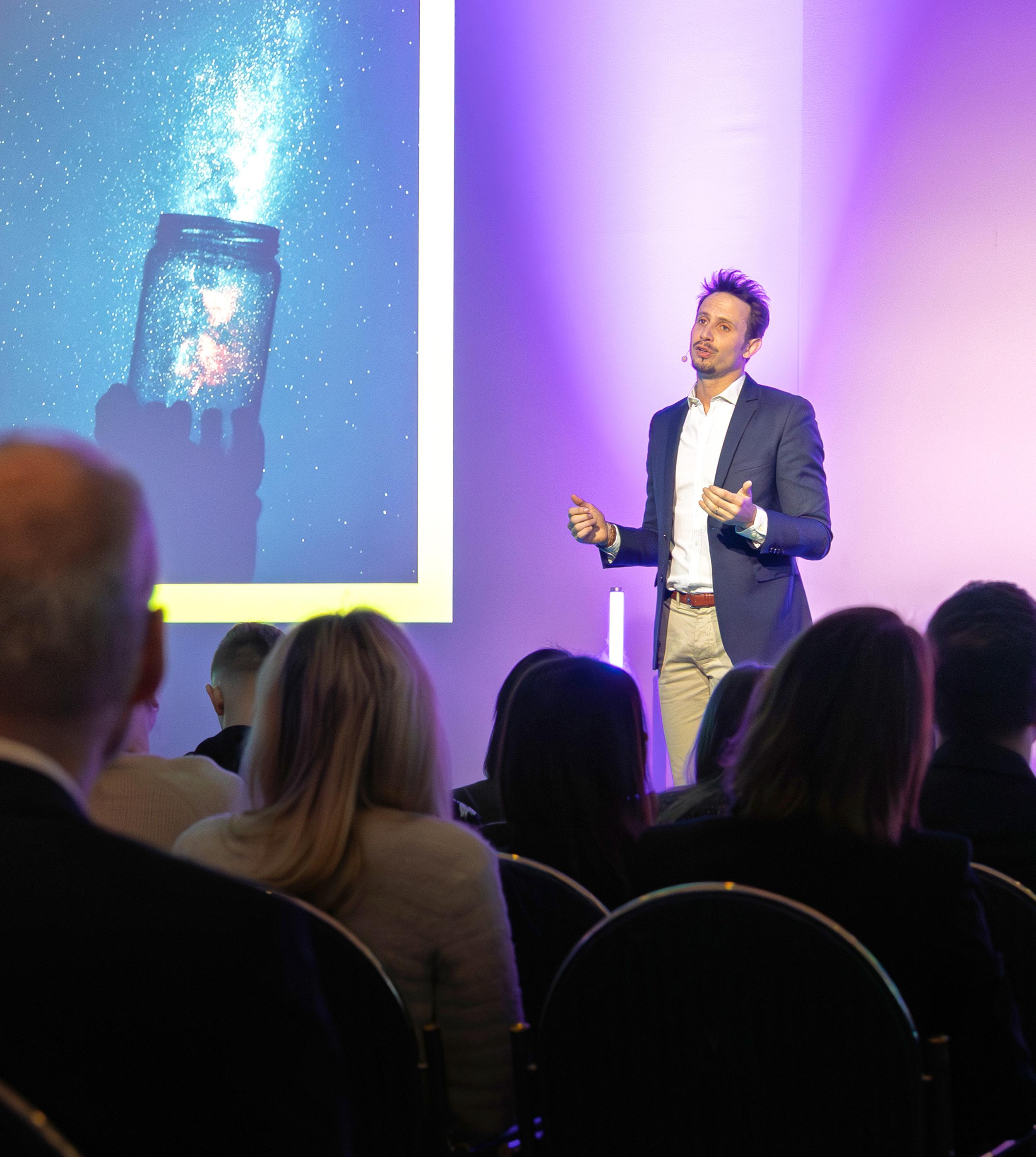
The setting could hardly have been more striking. Along Interlaken’s Höheweg, the morning sun illuminated the façade of the grande dame of Swiss luxury hospitality – the Victoria-Jungfrau Grand Hotel & Spa – which once again hosted the Richmond HR Forum, welcoming participants for the ninth time on 4 March 2026.
ImagineThinkDo Ltd., he summarised it succinctly:
“Managers spend roughly as much time with their employees as those employees spend with their partners – and the impact is enormous. That is why it is worth designing company culture deliberately around people.”
This insight resonated throughout many of the day’s sessions.
3. Mental resilience and digital mindfulness – essential for sustainable performance and retention
In his session “Resilience2Go”, Dr Fabian Kraxner demonstrated how burnout emerges from chronic overload and the continuous neglect of one’s own needs – and how it can be addressed proactively.
Swiss data from 2022 illustrates the scale: mental health conditions account for CHF 9.5 billion in healthcare costs and CHF 11.9 billion in lost productivity. Affected individuals are absent on average for 218 days – nearly seven months.
Particularly striking was a large US study (Keller et al., 2012) involving almost 29,000 participants. Individuals who, in addition to experiencing stress, believed that “stress is harmful” increased their mortality risk by 43%. Those who perceived stress as challenging but not destructive did not exhibit this elevated risk.
A positive stress mindset, combined with mindfulness, conscious breaks, humour and strong social networks, reduces this additional risk almost entirely to 3–5%.
Building directly on this, Nathalie
Leschot (CHRO Suva) and Nathalie Bourquenoud, in “Digital Mindfulness & Self-Scan”, emphasised that in an era of constant connectivity and overloaded calendars, focus becomes a true superpower – and one that is easily lost if digital tools are not used deliberately.
Suva’s post-digitalisation data from 2021/2022 confirms this: without intentional work design, employee turnover rises noticeably. The clear message: move forward digitally, remain positive – but never lose sight of people. Only then can organisations achieve a genuine balance between technology, wellbeing and culture – the foundation for more courageous and human-centred leadership.
4. Out-of-the-box dynamics: groove, resilience and what truly holds
Two unconventional sessions brought a distinctive energy to the day and, in
a playful yet profound way, revealed what truly matters in modern teams and leadership.
René Rennefeld and Anthony Thet delivered “Business is Like Rock ’n’ Roll – It’s All About Vibration, Rhythm & Resonance!” with live guitar, music and a powerful analogy: a successful business operates like a rock band. It requires vibration, rhythm and resonance. When one member falls out of sync, the entire system falters.
Teams rarely fail due to a lack of skills, but rather due to unclear roles and insufficient commitment. True alignment and “groove” emerge only when each individual understands their role and performs it with full dedication. The combination of humour, music and palpable energy made this lesson particularly memorable.
In contrast, the highly interactive session “What Falls / What Holds: The Real Dynamics of Modern Leadership”
«Managers spend roughly as much time with their employees as those employees spend with their partners – and the impact is enormous. That is why it is worth designing company culture deliberately around people.»
explored deeper dynamics. Participants built wooden block towers under time pressure – first communicating, then entirely in silence. This exercise revealed what truly holds in times of crisis or unexpected disruption. Non-verbal communication, implicit leadership, collective resilience and the observation of team dynamics became visible in real time. Stability does not arise from words alone, but from behaviour under pressure. What holds? Who leads without speaking? The metaphor was both powerful and lasting.
Both sessions ultimately conveyed the same message: successful leadership and effective teams depend on synchronisation, clarity of roles, resilience and authentic interaction – often beyond PowerPoint presentations and strategy documents. Sometimes, it takes music or simple building blocks to make these dynamics tangible.
Between the golden façade of a historic grande dame and the rapid pace of digital transformation lies precisely the space where modern leadership takes shape. The Richmond HR Forum highlighted where the most powerful levers can be found: in intelligent partnership with AI, in authentic micro-moments, in genuine mental resilience and in the conscious balance between constant connectivity and true recovery. T hose who do not avoid these tensions but actively shape them will build cultures that not only endure, but stand out. Much like the VictoriaJungfrau itself: timelessly elegant, yet always ready for the next challenge.













AI, Blockchain & Strategy: Transform technological potential into measurable success for your business.
In an environment that adopts new technologies like no other, we prepare you for leadership roles in the digital economy.
MBA in Technology and Innovation (Start June 2026)
CAS Blockchain and Fintech (Start Aug 2026)
CAS Leading AI and Digital Transformation (Start Aug 2026)
Master in Information Systems (Start Sept 2026)
Excellence at an international financial centre: Master complex legal frameworks of private wealth and international regulation.
LL.M. in Banking and Financial Markets Law (Start Sept 2026)
LL.M. in Company, Foundation and Trust Law (Start Sept 2026)
LL.M. in International Taxation (Start Sept 2026)
LL.M. in Economic Criminal Law (Start Sept 2027)
Secure your competitive edge at the Liechtenstein financial centre.
Business leaders are still underestimating the impact of AI.
BY PROFESSOR SAMEER HASIJA, DEAN OF EXECUTIVE
EDUCATION AND DEAN OF ASIA CAMPUS AT INSEAD
We’ve lived through waves of automation before. But where in the past we have automated the muscle – the manual process, the horse, the factory worker - today we are beginning to automate the brain. This kind of automation has never been seen before, and yet we are still only in the early days.
The level and nature of change we are now facing is fundamentally different from anything we have ever experienced. The speed of technological progress, combined with geopolitical instability and shifting social and climate expectations, has collapsed the shelf life of knowledge. Knowledge that once served for a decade now becomes outdated in just a few months.
With this in mind, we need to be preparing for a future that looks radically different.
Continuous learning in an AI world
Because of this rapid oncoming change, simply extrapolating from the past is dangerous. It leads to misconceptions about what AI really means for business, and what leaders must actually do to prepare.
In my work with executives, including in my book, The Phoenix Encounter Method, I argue that to renew a company, leaders must be willing to change almost everything, overhauling ways of working that no longer serve the company, and yet doing so pragmatic and controlled way.
The companies that will survive AI are those that learn, experiment and adapt faster than the world changes.
T he leaders who understand the importance of this moment are already shifting their focus. Forward-thinking leaders are developing meta-skills –learning how to learn. At business schools, this is something we take very seriously.
Supply chain management, marketing, finance or leadership, are all examples of subjects people can (somewhat) learn by reading books, watching videos, and listening to podcasts. But they only learn the ‘what’.
Classroom environments develop the ‘how’. At INSEAD, we offer Customised Programmes for all organisational levels, centred around what executives need to do differently to achieve organisational goals. They learn how to think: what information

to focus on, how to build logical arguments, create convergence when there’s divergent thinking, work as a team and read body language in a discussion/debate/negotiation, etc.
This pedagogical design is where the meta-skills naturally begin to develop.
A good example of this is our partnership with Danfoss, where the customised co-created programme won a Gold Brandon Hall Group Excellence Award. It was designed to cultivate a leadership mindset that embraces disruption, creating a unified language, stronger digital-era mental agility, and learnability. In doing so, Danfoss strengthened its ability to adapt, a core ability for surviving the AI disruption.
These types of leaders understand that, as AI rapidly evolves business practices, continuous learning is now a necessity.
The problems facing business leaders
W hen we look at AI, I see three major problems business leaders are facing.
T he first is the misconceptions surrounding AI itself. Most leaders still view AI primarily as a productivity tool: a way to do the same things faster or cheaper. AI has so much more potential than that - it can even reconfigure business models to create entirely new ways to capture value.
The second is clinging to expertise that is no longer useful. Subject-matter expertise is still essential, but its shelf life has collapsed. This is why
Professor Sameer Hasija
Professor
meta skills are so important, particularly when AI can quickly shift the importance of human skills in an instant.
Yet there are other types of leaders who, for various reasons – underestimating the technology or being consumed by the pressures of short-term financial goals – are rejecting continuous learning, or at least not prioritising it. In the long run, the business environment is changing so fast that executives may wake up one day to find that their entire skill set, and in some cases their entire organisation, is dangerously close to redundancy.
The last major problem companies face is the tendency to avoid the hard tradeoffs. It is, I say, like changing the tyres of a car while driving down a highway at 100 miles an hour. Leaders must make dramatic shifts in their organisations – building new capabilities, and business models, reshaping structures and developing new skills – all while
Preparing for an AI future
In my experience, the companies that navigate change well do not have a perfect plan. Instead, they develop ways to help them learn faster than their environment changes.
O rganisations must constantly navigate the tension between past, present, and future. Success requires facing the trade-offs head-on and having a willingness to let go of what no longer serves them.
To do this, experimentation is essential, and organisations need to develop the muscle to experiment quickly. Many organisations talk about pilots and experiments, but only use them to justify decisions they’ve already made. Real experimentation is different. It means running many small, fast tests with clear hypotheses, and then being honest about what the results tell you.
Leaders must be clear with priorities and what to ignore. Prioritisation here is key.
They must also be deliberate about talent: who they hire, retain and continuously develop.
Finally, they must paint a clear picture of the future for stakeholders. Transformation requires time, investment, and tolerance. Leaders should articulate a compelling vision of where they are taking the organisation.
T he most effective leaders are those who can explain, in concrete terms, what the next decade might look like, how AI and other forces will reshape their industry, and how their company plans to respond. That narrative gives stakeholders the confidence to grant them the slack they need to experiment, learn and change course.
Above all, they find a clear North Star: a future in which their organisation is more agile, more adaptable, and therefore more resilient. Everything else is aligned with moving towards that North Star.
Leading in the age of AI
maintaining the current business and meeting shareholder expectations.
This is far easier said than done.
U nlike start-ups, which can sometimes focus almost entirely on transformation without the burden of an established business to protect, incumbent firms do not have the luxury of pausing ‘business as usual’. They must transform and perform at the same time, and that is the essence of the trade-off.
We recognise that this is the tension many leaders are grappling with, and that’s why we have introduced new executive education programmes such as INSEAD for Impact, a three-day inperson programme for leaders to make sense of disruption, turn information into decisive action and strengthen resilience to deliver real impact.
Successful leadership in the age of AI is about courage and control. The key is to be agile in your approach. Leaders need the courage to accept that they may have to change every aspect of how their organisation works. They need the discipline to control everything that can be controlled: to build the capabilities for experimentation, prioritisation, talent development, and stakeholder alignment.
Leaders must also accept that there will always be uncertainty: events that no one can predict or manage away. But if they build a learning organisation that is agile, they can attenuate the risks due to uncertainty dramatically, and in the best ca se, make uncertainty into an opportunity.
T hat, to me, is the heart of the Phoenix mindset: having the guts to reinvent yourself and your organisation when necessary, and the wisdom to do it pragmatically – so that when the future arrives, you are ready rather than surprised.
«In my experience, the companies that navigate change well do not have a perfect plan. Instead, they develop ways to help them learn faster than their environment changes.»
Professor Sameer Hasija






We Find


How must leaders act today? And what can companies do to ensure that leaders not only lead, but also develop and implement strategies and holistic future scenarios? Dr. Oliver Wirths, founder and owner of Alpine Leadership GmbH, discusses a new generation of leadership – and coaching.
Where are the executives that companies are desperately seeking?
The leaders that companies seek are often already there. At the same time, they are often unable—or unwilling—to act in the way that our modern „VUCA“ world requires. Let me use an analogy: an alpinist grows with their challenges. It is only when they embark on a truly challenging mission that they can show what they are really capable of— and take the next step in their personal development. If the terrain is too demanding, they ideally have a guide. The same applies to leaders. They have not learned leadership in university and they are often held back by the local system or culture. In many corporate environments, true responsibility is stifled by hierarchy and decision-making committees. At that pace, it doesn‘t take days to climb a mountain—it takes years. Often, the mindset is also too rooted in the past. Leaders must look further ahead and reimagine the present from the perspective of a desirable future. Only when they manage to envision a future that is three, five, or even ten times better than the present does the flame ignite to truly champion that vision.
You say: „We need to develop a clear vision for our future and cultivate the right attitude to reach our full potential and lead ourselves and others to success and happiness.“
Exactly. I call this vision for ourselves, our company, or our department the „Future Self.“ Here, we imagine a desirable future in every detail, not just through KPIs. It is about success, yes, but also about collaboration, workload, culture, purpose, customers, and personal freedom. This future is an incredibly powerful engine for achieving something as a working community. It
means people don‘t just „go to work“— they arrive at a place where they feel they belong, where they want to reach a goal together, and where they can develop personally. A leader then looks beyond mere work results at the whole person. This allows us to achieve greater success without it feeling more difficult.
What does that mean for your coaching? Where do you start?
I have developed my own methodology for this: the ASCENT programme. Each letter stands for a fundamental element: Ambition, Strategy, Commitment, Execution Excellence, Navigation, and Transformation. It isn‘t always necessary to work through every element; instead, I work with the client to see where we should focus to achieve the greatest impact. The underlying factor is always the attitude—or, in modern terms, the mindset. This determines not only what you believe you and others are capable of, but also how we deal with difficulties and potential conflicts. Mindset is everything. It also dictates how authentically or situationally one can lead.
You advocate for committing to „bold and scary goals.“ Do we have too many mental blocks?
We don’t stand on the top of a mountain
by accident. We must first define it as our goal. In alpinism, we see people set and achieve incredibly daring goals. They are even willing to train for years, suffer, and expose themselves to risks—all without pay. I have experienced first-hand why we are able to reach these goals nevertheless. As a relatively inexperienced climber, I climbed „The Nose“ on El Capitan in a single day—after four years of preparation and one failed attempt. It is only when we set bold goals, where it isn‘t initially clear how we will achieve them, that we find new ways to get there. To put it simply: these goals force us to leave our mental blocks and well-trodden paths behind and find a new focus.
You are against conflict avoidance. Why?
Conflicts are a sign of deepening collaboration. If we don’t permit conflict, it means we cannot bring our inner ideas, our hesitations, our fears, or our visions to the table. Moving away from mediocrity and the status quo is always accompanied by conflict. Conflict is the guardian of success. Even Walt Disney knew that the voices of critics must not only be heard but occasionally spotlighted to ensure that great visions succeed. After the vision comes the acid test—and mastering that one requires conflict.
«Leadership begins where certainty ends –and you push on nevertheless.»



Alpine Leadership Alpine Leadership was born out of Oliver Wirths‘ observation of a recurring pattern across various organizations: a lack of focus, hundreds of strategy slides, plenty of politics, but rarely any practical implementation. Drawing on decades of experience in strategy, transformation, project management, and professional coaching, he and his team have researched and implemented strategies, techniques, and tools, which they then share firsthand with a proven track record of success.

Dr. Oliver Wirths is the founder and owner of Alpine Leadership GmbH. He previously worked as an outdoor leadership coach at ONEDAY and as Director of Strategy and Business Development at the Lu hansa Group. He holds a degree in industrial engineering and a doctorate in organizational development.
You offer outdoor, in-person, and online coaching. Which format is best suited for which purpose?
The outdoor format is incredibly powerful and is suited to much more than one might think. The distance from the office, the immersion in nature, and the movement allow for very profound change processes—both in 1:1 sessions and in teams. Bad weather can actually be helpful. In-person coaching, usually

in a seminar room, is well-suited for workshops—for example, when developing a new departmental strategy. I also use this for knowledge transfer in classic leadership training, though the focus must always remain on practical application. Online coaching, by contrast, is ideal for supporting longer development processes. It allows for regular „impulses“ that the coachee then implements. Also, I offer this type of coaching to my clients in the USA or Germany who cannot travel to Switzerland that easily. Finally, a combination of formats often proves best for achieving the desired result.
A key leadership skill is the ability to encourage. How can this be achieved in these crisis-ridden times, when news reports offer warnings or threats almost every minute?
I am firmly convinced that it requires a positive inner mindset. I can only transfer courage to others if I am courageous myself. Courage, by the way, doesn‘t mean having no fear; it means doing the right thing despite being afraid. Take climbing: moving through a difficult passage away from your last piece of safety equipment takes courage. You have the choice to find that courage and master the key section, or take the easy option and abseil back down. In business, the fear is also there, though it is more subtle. Only when we become aware of our fear and mental blocks can we „climb on“ bravely. Secondly, our ability to focus on the essential is vital. Courage leaves us when we focus on things we cannot influence (like the weather or the news). When we focus entirely on what we can control—our thoughts and actions—our agency increases, and so does our courage.
Interview: Rüdiger Schmidt-Sodingen

The perfect gift