From Kitty's With Love: New Writing From The People of Anfiled
January 2026
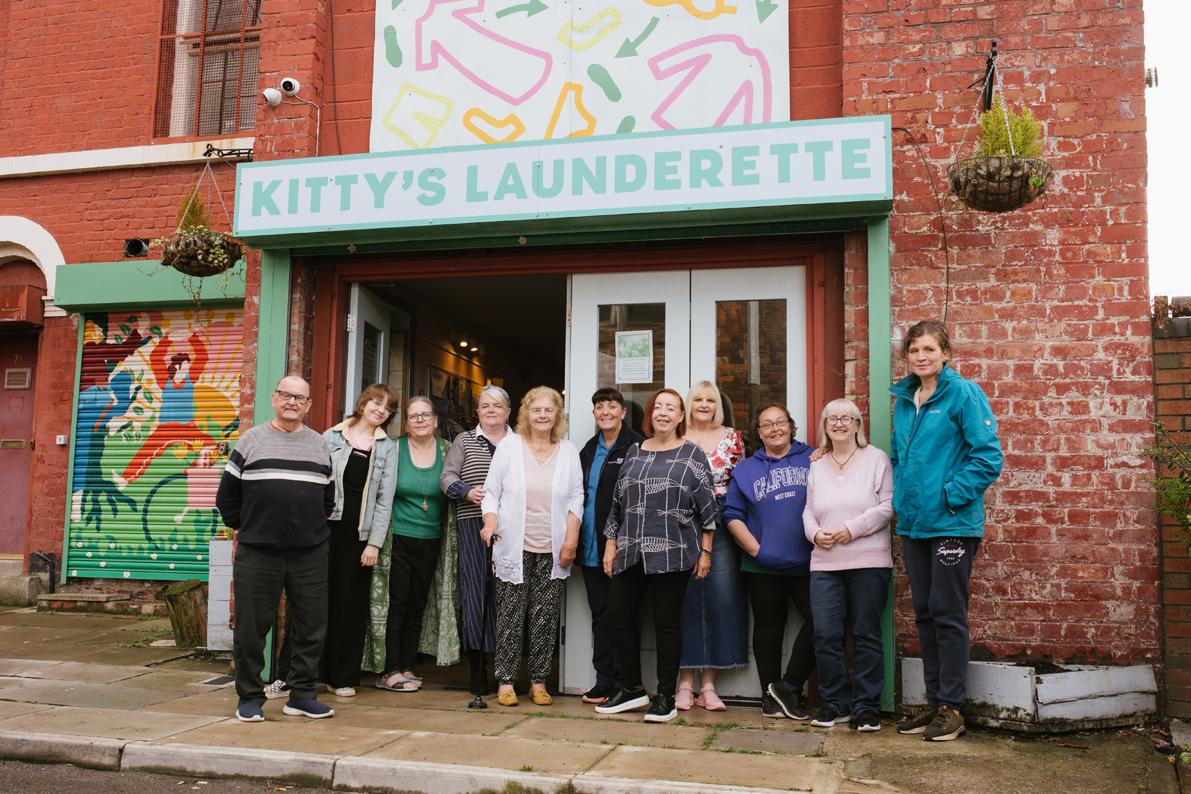
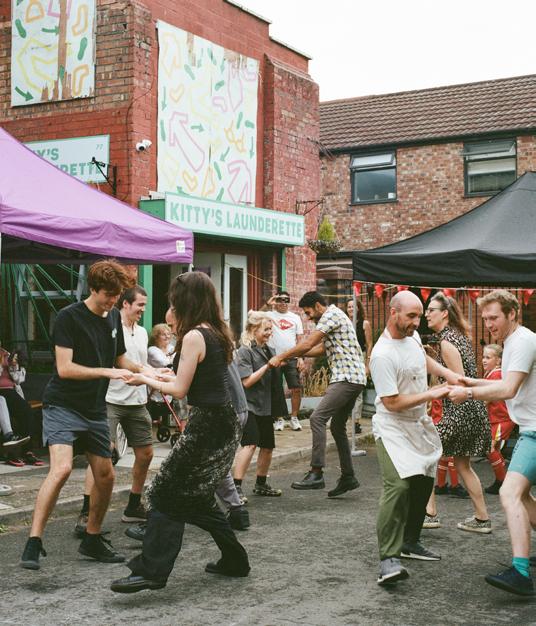
June 2025 we celebrated two years of the People of Anfield project with an outdoor exhibition at Kitty’s Launderette as well as the first photography exhibition at Kitty’s. People of Anfield continued its creative work through Kitty’s writing group from June to December 2025 with a small legacy project ‘From Kitty’s With Love’ supported by Communities Together, Culture Liverpool and the staff and community at Kitty’s Launderette. We are grateful to Declan Connolly and Sophie Mahon of Open Eye Gallery for their support.
Our writers group continued to meet at Kitty’s from summer to winter this year to discuss and explore issues including the environment, safety, friendship and community. This publication includes new writing that reflects experience, ideas, social concerns, creative expression, memory, poetry, stories and hope for the future.
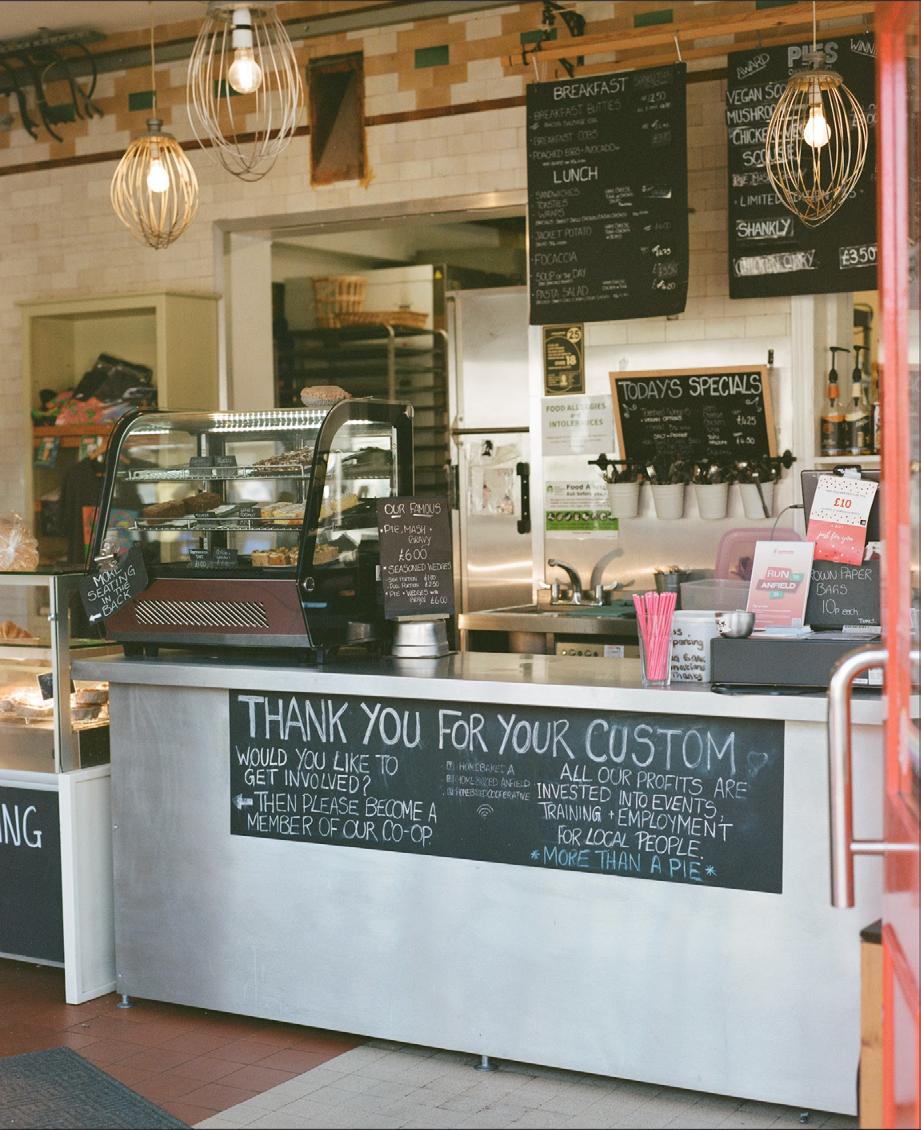
Tourists come to Liverpool for the music, the history, the waterfront and of course the football. But what if I told you that one of my favourite places is tucked away just up the road from here, in the Anfield / Everton area. The boundaries have always been fluid between the two areas, geographically at least! Then, what if I said that this destination is also a working launderette? Kitty’s Launderette in Grasmere Street isn’t just a place to wash your clothes; it’s a place to wash away your assumptions.
Named after Kitty Wilkinson, the 19th-century social reformer who opened her home for public washing during an outbreak of cholera, Kitty’s Launderette honours her legacy with a modern twist through its work as a co-operative, social enterprise, a cultural hub and a community anchor.
Originally from Ireland Kitty moved to Liverpool with her family when she was a child. In the middle of the cholera epidemic in 1832, Kitty had the only boiler in the street, so she opened her home and yard for people to wash their clothing and bedding. She also showed them how to use chloride of lime to get the laundry clean. She would charge a penny a week. Along with her husband she opened the first public washhouse in the UK in Upper Frederick Street in 1842. Such was her fame that she met Queen Victoria, and the Mayor of Liverpool presented her with a silver teapot as a gift from the Queen. It is over 150 years since her death, but she is still remembered in Liverpool. She has a statue in St George’s Hall. Commissioned by Liverpool City Council it was the first one in over a hundred years to be placed there and the first statue of a woman. She also features in a stained-glass window in the Lady Chapel at The Anglican Cathedral.
Kitty’s Launderette is more than a place to wash clothes — it’s a model for inclusion and support for the local community. It offers affordable and ecological laundry services; dry cleaning without harsh chemicals; free or subsidised services to those facing hygiene poverty and it also works with schools, foodbanks and shelters. Laundry is their service, but community is their mission.
Kitty’s social impact is impressive. It’s calculated that for every £1 spent at Kitty’s £43 of social value is generated in the local community. This work is about improving lives, strengthening relationships, and fostering long-term wellbeing.
Kitty’s is also known to host community events and is a warm hub that offers support during washing hours through various initiatives including the knitting club, tea and toast mornings and creative groups. As a member of the writing group, believe me, you need to make yourself heard over the machines. It’s brilliant practice for making your voice heard in presentations. The writing group has had a book published, ‘The Flowers Still Grow’, and we were invited to The Open Eye Gallery in the city centre for an exhibition and launch event. We’ve had Christmas events at Kitty’s too. Everyone who works at Kitty’s is so warm and welcoming to us. After hours Kitty’s is host to a multitude of events; film nights with food provided; live music and poetry; history talks; photography exhibitions, and creative workshops. Tate Liverpool have recently run workshops here too.
So as you can see, Kitty’s is not your average launderette. Next time you’re in the area, don’t just pass by. Pop in, grab a cuppa and see how a simple wash can spark something extraordinary.
Janet Gardiner
When it’s rainy, damp and grey come and chase the blues away come to Kitty’s, sit and stay where every day is washing day.
We’ll clean your sports kit, wash your socks, wash your vests and gorgeous frocks, pillowcases, pants and shirts, your uniforms, your tops and skirts.
Come and visit, have your say, make new friends and find a way at Kitty’s, to have fun and play where every day is washing day.
We wash the kits of red and blue. We’re here for everyone, for you –come in and chat and have a brew. We wash for many, not for few.
Watch a film here, write a letter, knit and chat – you’ll feel much better. Come to Kitty’s – sit and stay where every day is washing day.
Come to Kitty’s – sit and stay where every day is washing day.
Pauline Rowe
I’m a fledgling writer and still finding my feet and playing with words. Our group is full of truly lovely people who love writing and have different styles and approaches and abilities. Our writing rendezvous is quite special. We’re at Kitty’s launderette based on the border between Anfield and Everton, a social enterprise that has the heart of the community at its roots. Kitty’s writers have been meeting for over 2 years now and we write and talk accompanied by the sound of washing machines and the warmth of the dryers and on cold nights it’s warm and cosy and inviting!
I’ve always loved to write though my grammar and punctuation definitely “needs improvement” as the school report would probably say! I love gardening, reading, writing and listening to podcasts and cooking and my dream is to write a book one day.
I’ve lived in Anfield for nearly 20 years. I fell in love with the area as I knew from day one that this place still values community.
Jan Mullen
The Silver Teapot Lady
Some people simply deserve a medal or at least some recognition. It’s often the case that those who receive praise aren’t as deserving as others. (Like many things if your face doesn’t fit). This is the story of a lady who ended up with a teapot and very little else in her lifetime. Catherine Seward’s story begins in Ireland. Born in Londonderry on the 20th October 1786, daughter of an Irish woman and an English soldier (not confirmed occupation). Towards the end of the eighteenth century, Catherine’s family decided to emigrate to England and travelled across the Irish Sea to Liverpool. Travelling by sea in those days was always a risk. Catherine herself was only 8 years old when they set sail.
On route a storm brewed up near the mouth of the Mersey and the ship was wrecked on Hoyles Bank. Catherine and her family fled the sinking ship in a small lifeboat. Tragically, her father drowned and her baby sister was swept away from her mother’s arms into the sea. This had grave consequences for her mother; she lost her sanity and later her eyesight, often setting fire to her clothing and trying to destroy the property they were living in. Poor Catherine had to take over running the family as her mother, a seamstress, could no longer work. When Catherine was 12, she caught a fever and was admitted to the Liverpool infirmary where she was cared for by a blind lady, Mrs. Lightbody, a frail old lady who taught Catherine to read and write. She then employed Catherine’s mother as a teacher, training impoverished women to spin cloth. Catherine and her brother helped with daily chores. In return, Catherine received a good education and promised Mrs. Lightbody that she would always help those who were less fortunate than herself. Sadly, this was the last promise she made to her, as the old lady passed away.
Life changed drastically for the remaining family. Mrs. Lightbody had arranged for them to be employed in a cotton mill in Caton, Lancaster, in the mistaken belief that the country air would be good for them.
Catherine’s mother, now very ill, returned to Ireland to live with her remaining family. This arrangement was short-lived. Catherine had to resign from her job at Caton to return to Liverpool to care for her mother.
Catherine secured a job with Colonel Maxwell, but it only lasted a year as the colonel moved from Liverpool for a better occupation. The Maxwells asked Catherine to join them, but this was not possible because of her commitment to her mother’s care. Catherine managed to secure another position with Mrs. Heyward, which continued for three years. However, her mother’s health was getting worse, so she could no longer leave her alone. She returned home to live with her mother full-time.
To support her family, Catherine set up a small school and taught children to read and write. She charged three pence a week and needlework became a helpful sideline. Her mother sat in the corner making caps and other items which Catherine would sell, going out later at night, to bring in an extra income. I suspect that teaching the children needlework would also help her to make more of the caps to sell. She managed to keep her school going for five years. The average class size was about 80 children. Unfortunately, her mother was failing, and her behaviour became violent, possibly due to dementia. This led to parents withdrawing their children from the school. Fortunately for her, Catherine met a French sailor named John De Monte who proposed and she accepted. In 1815 she gave birth to a son and shortly afterwards became pregnant again. Tragically while she was still carrying his child, she received devastating news that her husband had drowned at sea. Things got desperate for poor Catherine. She had to go out charring and working in the fields. 48 hours before the birth of her second son, she was left with one penny roll to share with the family.
When she recovered from the birth of her second child, she got a job in a nail factory. She was paid 3d for every 1,200 nails she made; her average wage was 4 shillings a week. Her fingers got terribly burned and inflamed, and she had to give up the job after 12 months. She returned to char-work and did odd jobs in the fields. Eventually, she befriended the wife of Alexander Braik, a Dyer from Pitt Street. Catherine (or Kitty as she was now known) tended and nursed Mrs. Braik in the last 18 months of her life. When the poor woman died her husband presented Kitty with a mangle. She then began taking in washing spending every hour on the task.
In 1823, she met her second husband, Mr. Wilkinson. Having come from Caton, he was strolling through Liverpool streets when he heard a song about his old town of Lancaster being sung by a voice he recognised from his days in the mill. He’d always had a crush on Kitty and eventually proposed. At the time Kitty was living in Denison Street which had become a refuge for unwanted children and old folk. She managed all this on £2, four shillings and sixpence a week, about £70.37 in modern-day terms. Keeping a family of 14 is remarkable. That’s how many people she looked after at the time. Her rent was ten shillings and six pence a week including water charges (overpriced, just like today). They managed to survive in that small basement below stairs where they played games, music and enjoyed reading aloud – their activities became so popular that they attracted the attention of teachers from the Liverpool Mechanics Institute.
In 1832 a cholera epidemic broke out. Kitty became the most amazing ministering angel. She assisted overworked doctors by visiting sick people’s homes and caring for their children. She also prepared porridge daily for sixty people and contributed sheets and blankets and using her own kitchen, she washed the clothing of others in chloride of lime. This gave people the idea that a public washhouse was needed and one was constructed on Frederick Street. Kitty and her husband were given the job as the first superintendents.
Eventually the powers-that-be noticed Kitty’s work. She was summoned to Carnatic Hall, and the Lord Mayor presented her with an engraved silver teapot. Simply stating ‘The Queen, the Queen
Dowager, and the Ladies of Liverpool to Catherine Wilkinson, 1846.’ After Kitty’s death, Lady Rathbone reclaimed the teapot, and it vanished into history.
When Mr. Wilkinson died, her son was appointed to work alongside Kitty in looking after the wash house, which she did for twelve more years. In 1852, the decision was made to pull down the wash house and replace it with a better building. Kitty’s compensation was that she could make the new towels for the new premises, for 12 shillings a week (when it was finished). Fortunately, the good Ladies of Liverpool acquired an annuity for Kitty to live on.
Kitty died on 11th November 1860 and was buried in St James Cemetery not far from her husband in a pauper’s grave. However, her legend lived on. Eventually the Anglican Cathedral was built on the site. Kitty is immortalised in the window of the Lady Chapel. Her statue can also be found in St George’s Hall, and more recently she is remembered in a modern art sculpture in Everton Park.
Most of the buildings Kitty lived in and knew have long disappeared but Kitty’s spirit lives on in all those who do good work and charity in Liverpool.
John Murray
We call this work washing –a kind of dedication that takes note of temperatures and textures and origins says good morning –opens and closes doors with care.
Washing knows the nature of transgression and its smallest places understands the circle of neglect and seeks its repair.
Washing is a way of seeing, a harvest of kindnesses, a labour of reassurance.
Washing records and cleans the desolations of the human heart attempts to tread softly, touch gently, offer renewal.
Washing is the desire to change, it gathers tiny particles like flakes of snow, as they fall alone, one by one, to make the world anew.
Between the Pages
The moment she stepped into the Reading Rooms, the familiar hush settled over her shoulders like a shawl. Light poured in through the tall windows — even on a winter morning like this — and Sylvia squeezed her hand in excitement, tugging her toward the long tables where newspapers and pamphlets lay neatly arranged.
Pauline Rowe
“Look, Sylvia,” she whispered, pointing to the great clock above the fireplace. Sylvia pronounced each number with careful clarity. For her age, her speech was astonishing; every librarian who heard her remarked upon it.
Sylvia blinked up at the room, already soothed by its ambience. The coal stove spread warmth in a faint shimmer, and she guided the child to a table beneath one of the lamps. Its glass shade cast a muted glow, the kind that made reading easier on tired eyes. A motorcar rumbled past, its sound filtering through the windows. Even indoors, the noise was unmistakable — faster, louder, more modern than anything horses could match. Sylvia gasped and pressed her small hands against the glass. “You see?” her mother said softly. “More and more of them every week.” She wondered, briefly, what would happen to the horses and stables as these machines multiplied. For now, they were still the toys of the wealthy, but that would not last. And women could drive them — just as they drove horses. Perhaps one day she might drive one herself. Just once. She imagined a Sunday circuit around Newsham Park, holidays to Southport without the train, her daughter grown and driving freely wherever she wished.
Returning to the shelves, she ran her fingers over the spines. Dickens? Byron? No — something newer. The Daughters of Fairfield Street. She lifted the familiar volume, tracing the embossed letters. She had read it before and would read it again, creating a world of her own making. She shifted her weight, the baby pressing against her ribs, and opened the book. The cloth cover had faded in patches from years of handling, its pages softened by many readers. A familiar book — steady, like the room itself. Sylvia settled beside her with a picture book, humming faintly. She remembered the duller books of her own childhood, the ones handed out by the Church. The lamp’s soft circle of light rested on the child’s hair, turning a curl pale before she moved again. How different this quiet was from the cramped house on Breckfield Road North, where footsteps echoed through thin walls and full washing lines stole what little daylight they had. She remembered the years when her mother lifted her up to drink from the fountain, terrified of cholera. The new pipes and fittings had made things safer now.
The Reading Rooms settled into their usual rhythm — pages turning, a soft cough, the creak of a chair. Her husband had agreed to take Sylvia later today, but for now it was just the two of them in this warm, bright space. A blessing, really. Their home had grown crowded as they rearranged bedrooms: the girls’ room, the boys’ room, her parents, their own — always shifting. The baby would sleep with them at first; eventually they might need to separate the rooms again, boys on one side, girls on the other. She tried not to think too far ahead but still hoped they would have their own place one day soon.
She sometimes wondered what it would be like to stop at two children. The upper classes seemed to manage it, but she was not upper class. Her father had come across on the famine ships from Ireland; her mother was a Garston seamstress who took in mending from neighbours. She had followed the same path. Yet she dreamed of different work — real work. She admired the women she supported: teachers, suffragists, the Pankhursts, Eleanor Rathbone. Eleanor’s father, William Rathbone, had known Rawdon, the man who founded these very Reading Rooms. He had helped install the fountains outside and establish the playground. Tomorrow, after the Church Service, she would take Sylvia there if the weather held.
When the librarian stepped out to fetch coal, she slid a stack of folded suffrage leaflets beside the church notices. The gesture was quick, without drama. She had no faith in smashed windows or sudden fires — too much anger, too abrupt. Change, she believed, should arrive the way brightness did on mornings like this: gradually, without alarm. A man near the stove rustled his newspaper. “More trouble on the continent,” he muttered. “It’ll spread, you mark it.” No one replied, but the room held still for a beat, as if listening. She returned to her book, though the words seemed farther away than usual. Talk of Europe had begun to sound like distant thunder
— rumbling at the horizon, not yet near, but impossible to ignore. She traced a sentence with her fingertip. In the story, the Fairfield sisters debated their prospects around a small lamp in a Liverpool parlour. Women’s hopes so often unfolded in the hours after work, after the children slept — quiet moments lit by whatever lamp or candle could be spared. She understood that kind of hour.
Sylvia leaned against her shoulder, half-drowsy as she closed the book and rose, the chair legs scraping faintly against the floorboards. The lamp above them flickered once as she held Sylvia, then steadied again. She paused. The Rawdon glowed gently in the late-afternoon light, its windows holding a soft sheen. Men and women bent over their pages, each absorbed in a private world. A calm place, a useful one. She buttoned Sylvia’s coat and they stepped outside. The day had begun to dim, the sun lingering behind the roofs but giving only a thin brightness now. She thought of supper, how she might stretch the leftover meat and vegetables into something warm — scouse, perhaps.
Sylvia’s hand slipped into hers, small and certain. Together they walked down Breck Road, the streetlamps not yet lit but waiting for evening, their glass casings pale against the sky.
Wake up sleepy heads listen to me
This is what my grandfather taught me upon his knee. The men who wear suits – flag flyers boldare after power, titles, money and land I am told. They seek to snatch it all from your open hand.
Bold colours stitched together in red, white, and blue garnished with blood, held together with fear united in nothing but repression and greed.
Their flag flaps in the doorway in a cold embrace. Do you think you should wave it in your neighbour’s face?
Can its colours protect you, feed you, or clothe your cold form? Does it tell you it cares or loves you at all? Will it tend to the sick or give alms to the poor?
Or will it just flop like sails lost in squallwrithing and flapping but doing nothing at all. Remember my grandfather who knew them of old. Flags are for children who play in the mud.
Grow up little one and give way to love.
John Murray
Alison Little
They are so brittle
those boys from the city on the hill each one so quick to be the hard man to rush to be the bloke, fierce and in your face to threaten, to bully, to man up to break, to cry, to crack asunder.
They do not flex, they do not twist or turn. Rigid like cold iron to stop feeling, stop thought, the question, the uncertainty. That turns stupid into ignorant.
They break, those boys, and the lives they built –built on the rigid, built on the inflexible –come crashing down. Safe as houses? No.
Those around them suffer try to shore up the cracks in those little boys, their lives hanging onto inherited pain, suppressed. And when they break, the thread continues.
The boys become men, the women, the foundation for them, propping up the lies of the “hard man.” The brittle man.
Daniel Northover
Story
I was born and brought up in the Dingle, and I moved to Anfield when I was 22 after I married Alan and we got our own house in a little cul-de-sac, Stonehill Avenue. It suited me as I don’t like living on the main road, and we just loved it. The post office and shops were nearby. There was an optician which I needed. On the corner we had the butchers and opposite there was another little shop. We carried on living with my mum and dad for a while as my dad said he’d put a bathroom in for us. He was a carpenter. He got his mates to do the plumbing. So it was all decorated and sorted when we moved in. My dad was good like that. He was called Alfred Taylor. He was strict, my dad. He was originally from Grimsby and was an only child for a long time and he served in the Merchant Navy. His mum had another son when my dad was 16. He was a good cook as well. We always had good food on the table. My mum was called Lily and was from Liverpool. I missed the Dingle because I knew all the people and the shops. I still tell
Pat’s
people I’m from the Dingle. It was such a lovely place to grow up.
I worked in a florist on Park Road from the age of 13. Miss Selena took me on, and I worked there after school every day and all-day Saturday. I loved it. I used to give my mum money to contribute to the family. We got well looked after. The two older lads had paper rounds too and gave my mum money. We learned how to value and manage money.
I make friends easily, so I got to know people here. I looked after children as well. I’ve always had gangs of kids because that’s the way I love. I’ve been here for nearly 60 years, so I’ve seen a lot of changes. I’ve been going to the Baptist Church in Anfield all that time. It’s on Oakfield now but used to be Richmond Baptists on Oakfield Road. I’ve always gone to church since I was aged 3. I don’t preach or anything, but I love going and I like to help people.
Alan and I were married for 7 years, and we had the 2 girls. There’s 3 years between them. They went to Holy Trinity School in Richmond Park but it’s not there now. It was only a small school, but it was lovely and the Headmistress only lived across the road. The two girls were always hardworking, good girls. I was lucky. Although my marriage finished the girls always got on with their dad. I couldn’t carry on when I found out he had someone else. The girls were very good in the way they dealt with everything. They looked after me. The girls have always been able to mix with people. We used to go to different places. We’d go to Speke Airport and other place of interest, depending on money. I used to love going out even just to Stanley Park walking round the lake. The girls were in the Brownies too.
My dad died in his sixties. It was horrible. He had a heart attack, and I didn’t have time to say good-bye. He drove our Robert, the youngest lad, home to Aigburth and then had a heart attack. My mum died the month after her 70th birthday. The three lads, my brothers, and me just got on with it. Growing up with the boys I was a bit of a tomboy. I went to Upper Park Street school, and I loved it there. I was never clever, but it didn’t matter. I was always early, and I never missed school. I had good friends.
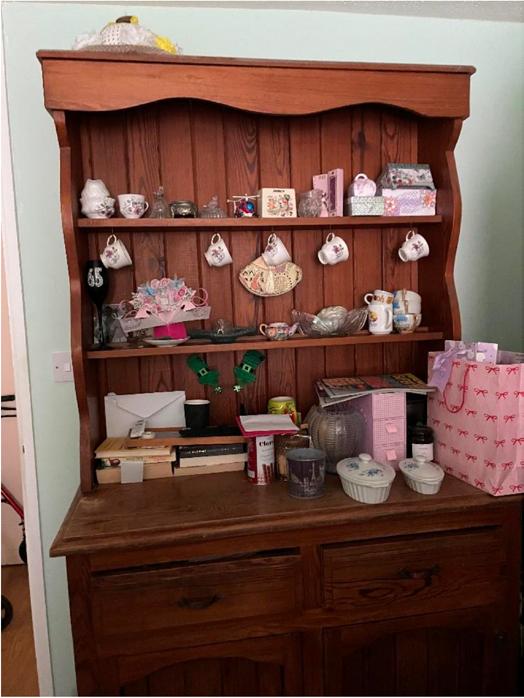
My girl Helen always came to church with me from being little until she was in her teenage years and both girls still come with me on special occasions. A while after my marriage broke up I met someone else and we had a son together, Paul. The girls were great with him. He was a lovely lad. He lives in Runcorn now with his wife and two sons. We’re just a happy family doing what we have to do. My brothers are all doing well, have turned out brilliant and we keep in touch. My dad taught them all to do woodwork. He made 3 Welsh dressers, and I always wanted to ask him for one, but as he already did so much for me I didn’t like to ask. But I got my mum and dad’s dresser. It’s in my bedroom. You should have seen the doll’s house he made me when I was growing up. It was lovely. It had two floors, bedroom, living room, kitchen, a garden with little trees. It had lovely furniture. He made a big garage for the lads. He only worked round the corner from where we lived. We didn’t know he was
making things for us. He spent the whole year between working and staying late so when Christmas arrived we got presents on our beds and when we came downstairs there was a big doll’s house for me and the garage for the lads. All painted. He just found the time, and he must have worked it out to buy the wood and make the doll’s house and garage through the year. He was very good, just a lovely dad. I loved the Dingle, but I’ve loved Anfield as well. The house was always full of kids. I’d say being a mum and looking after kids have been the best thing in my life. The other mothers would tell their kids to go to their aunty Pat’s. I think kids don’t talk as much now because of computers – they miss out on every day talking.
I’m easy going, really. I love this flat. It’s Riverside Housing. I’ve been here quite a few years. I love it. I got a good feeling as soon as I came in here. Helen, my daughter, made an enquiry here at the right time. I got it right away. It was the first flat I looked at. We’ve got a good communal room and large kitchen as well if we want to use them. We have a warden service, and I’ve got my personal alarm, so they come and help you if you need them. I know my neighbours but we’re not in one another’s flats. We keep private.
I’m eighty now and I’m happy. I do have a cry sometimes. If I feel a little bit low I’ll have a cry. I don’t keep things in. I keep busy and I love reading.
I love Kitty’s Launderette. I’ve been going there since I heard about it. The people who work there are young and you’re made welcome. You get a cup of tea even if you’re not doing any washing. You can go there, and they’ll talk to you while they’re working. You’ve got someone to associate with. They’re lovely. I tell everyone about it. I say to people if you’re feeling a little bit lonely go down there and you can do your laundry. I like being part of the writer’s group too.
Pat Richardson
This article was written by Pauline Rowe using Pat Richardson’s own words from an interview on 11th November 2025. Photo of Welsh dresser: P.Rowe.
I play of a night, I play of a day, I play until sunlight and moon fades away. My favourite tunes play on the radio as I sway, my arms and legs go their own way as my feet meet each note. It’s funny how they manage to take on a life of their own. But I know it’s me who sets the tone. It’s up to me what I learn, hear and see. It’s up to me how I play out each day even though some things get in the way. I turn up the music to play the sounds I love; to drown out negativity so I can face another day feeling upbeat as my favourite song plays. In hope that everyone around me can sing along so we can play the same song of hope, peace and love – so that everyone can enjoy the same moon, stars and sun above.
Helen Steele
“‘ello, luv! An ‘ow are you today?”
I sipped the tea I’d been given. It was a bit too milky. She’d left the bag in when she added the milk and there was an unpleasant hint of sugar, probably from the spoon in the bowl.
“Really? And I thought she was getting better. I’m so sorry.”
The woman at the counter was chatting, burbling, I could see she wasn’t really listening, just firing out platitudes and consolation like a morbid pop-up toaster. Not quite done. Pop it down for another minute.
“Oh, that’s so sad. You must be devastated.” Up pops another. “And it was so sudden. You must feel numb.” Numb? Yes, all these social pleasantries take the edge off the day. They numb the worst experiences or at least dilute them. You never know when you’re going to be grateful for a thin laminate of condolence, or a sympathetic second. And then, well, we’re British. We carry on.
How many people have snapped in here, I wonder? How many people have broken down and cried and been patted awkwardly with a series of sympathetic noises? Probably not enough. Some people sit here, maybe joking and smiling, as the Great White of pain shows an occasional fin above the surface, as you hope it won’t go for your legs.
Do you want a coffee with that? Or tea? Yes, the belly buster. Tea? Milk and sugar. Just milk.
I watched her as she desecrated another cup of something that should be tea but didn’t quite make it. I wonder if the tea deserves condolences.
“I’m sorry, Assam, but the Tetley’s didn’t make it. All we have is warm milk with a tang of tea.” Then, of course, the police would come and arrest the perpetrator, drag her from the café with cries of “me mum made it like that…” While the remaining customers mutter that her coffee was no better.
Still, she makes good chips and that counts for a lot in this world. I like my egg on top of the chips, so the yolk coats them and cooks in the heat. People talk about the Full English breakfast as though it’s sacrosanct and I always get a look when I ask for chips. Yet they’re always prepared to slap on a hash brown – that fatty American triangle. Naaah. Give me chips any day.
I look at the tea. I feel the tea look back and say make it quick! I swig half, regret it and call out my thanks. “Ta, love!”
Daniel Northover
Scran
Anfield trees are a motley lot; from the relatively pampered specimens in the parks to those that squeeze themselves in between derelict houses, from fine old trees that line up along Anfield’s larger roads to cheeky ones that have self-seeded on waste ground, as well as garden trees (some quite exotic) that peep over garden walls.
Our physical and mental well-being is aided by Anfield trees in their diversity. They help to lift our spirits in Spring with their buds, blossoms and fresh green new leaves. These leaves change into canopies of vibrant green against the muted city colours in Summer. Autumn brings a variety of colours - gold, orange and red, making wonderful scrunchy pavements if the weather is dry. The branches of trees are without leaves to resist the winter winds as they make intricate patterns against heavy winter skies. The trees whose trunks are covered in growing ivy look particularly strange, their bare branches like spindly digits in thick fingerless gloves.
There are some trees, that, for me, really stand out. There is one along Breck Road by the 14 Bus Stop going into town, nearly opposite the mosque. This large tree in a little grassy area was toppled by the winter winds. Although its root-ball is exposed, a little of the tree has sprouted new leaves this April, happily growing on the ground, still doing as nature intended, persevering and growing. The old trees along Lower Breck Road are equally remarkable. They have grown and mapped their root systems with wonky paving stones and bumpy tarmac; their ageing trunks now covered in nature’s textured bark. These trees must be older than you and me. My last stand out tree is near to the waste ground by Hops & Barley. These scrawny trees seem to exist happily amid the detritus of man. In winter they catch discarded plastic bags and look quite majestic as if they are sacred trees carrying prayer flags.
Kay Case
I come from a 1970s childhood. Playing outside because we could. The last of a feral generation some say, but I wouldn’t want it any other way.
I come from endless summer days. With time to be bored and time to laze, popping bubbles of tar with feet and sticks surrounded by friends, concrete and bricks.
I come from the adventure playground that was our street agreeing with friends where and when we would meet. Geographical boundaries set with parents agreed then extended and stretched according to need.
I come from chalk scraping concrete, drawing an uneven grid the noise of the stone as it clacked and it slid, the soft shuffle of shoe against surface, as we’d hop and skip and jump. Then the laughter or tears when we’d land with a bump.
I come from wasteland that became pirate ships and islands of treasure with wooden swords, plank walks and tea at our leisure. The whip of a skipping rope twisting in the air as we’d jump in and out as fast as we dared.
I come from actual playgrounds of concrete and steel. Hear the shrieks, the shushes the giggles and squeals. Not for the fainthearted, make no misunderstanding just like in the street, there were no soft landings.
I come from high metal slides that in winter were cold and so hot in the summer you could barely keep hold. Holding tight to witches’ hats as they spun us around as they swayed and they creaked and held us spellbound.
I come from roundabouts that rumbled and sped us round and made us so dizzy we fell on the ground. The clanking of chains as swings soared in the air and made us believe we could really fly there.
I come from the wind whipping our faces and catching our screamsrunning, laughing and playing and chasing our dreams. I remember it clearly, the joy that runs deep. Memories of my childhood - always to keep.
Janet Gardiner
Is this what it was like for those early navigators of the Cosmos eons and eons ago as they traversed the universe? Nothing ahead of them except an inky blackness, punctuated by tiny clusters of light forming what seemed like still silent systems slowly coalescing into greater or lesser formations of what would be stars being orbited by other worlds – some to evolve into sustainable civilisations, others to end in devastation and extinction.
Travelling forever forward into the blackness specks of light to the right and to the left of them, ahead nothing, a speck of light comes into view and grows ever larger as they approached at the speed of light. Even then it seemed to take forever to approach the cluster, it slowly grew into a spiral nebula with a bright centre and arms of sparkling light, light years long, spiralling out from the centre. The navigators flew on past worlds yet to form, yet to hold any form of life, dead worlds not yet ready, still in fluid form.
My reverie was interrupted by a voice over the cabins PA: This is your captain speaking. We are now flying over Istanbul at approximately 39,000 feet.
Istanbul, Constantinople, Byzantium is a city of many names. Who knows what name it had in prehistory as the border between Europe and Asia-Minor, home of Greek myth and legend. Who knows what the navigators would have made of it, and the people there.
Rachel Dee
I have two older brothers and a sister, but they are all far from me living with their own families. I have lived alone with my mother since 2015.
In 2017 me and my mom resettled through the UNHCR (United Nations High Commissioner for Refugees) from Turkey to Bradford in the UK. Back in Bradford the area we used to live in was more West/South Asian, and culturally we were close to one another, and we had our own religious and traditional communities and events.
West Yorkshire is very green and life over there was very quiet or at least it was very quiet for us. We both like an alive city, a city with lots of tourist attractions, a city where people care about sports and see similar activities as important and essential in daily life.
When I first arrived in the UK I felt completely burned down to ashes. I was born as a refugee, and I’ve never known how it feels not to be a refugee.
But living here in Liverpool, in the Anfield area, has given me hope again. I pray to God that one day I’ll feel alive once more — and feel like I’m finally home.
Since we moved to Anfield it’s our first experience of being in a more Christian community. Me and my mom, we are learning new things every day, from our neighbours. For example, my mom loves scouse (we have a very similar dish in Afghanistan). We eat Halal food, and our neighbour made us a halal version of scouse as a welcome in November 2024 when we first moved to Liverpool officially. It has been friendly and welcoming.
There is a dark side. For the first two months one of our neighbours was dealing drugs and for 24/7 their house was full of people and none of the neighbours could say a word. They ran away and the police are still after them. Every few months a police officer comes to check their house and ask neighbours if anyone has seen them again. Everyone in the street is happy and living in peace now, and the only crowd we hear is from Anfield stadium.
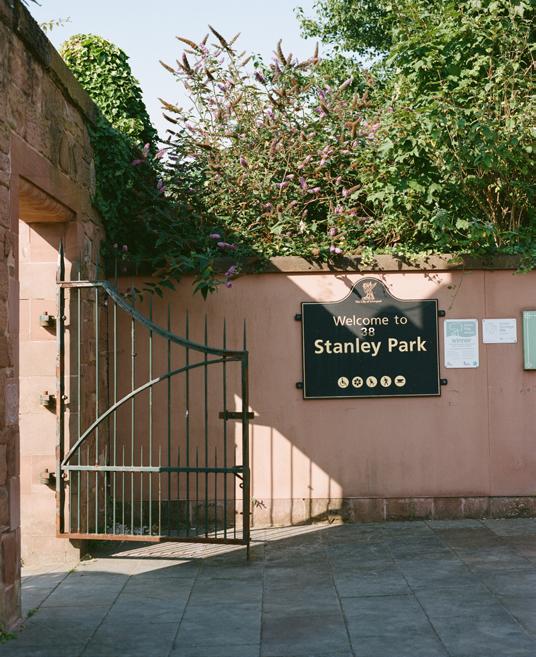
My mom goes walking every morning in Stanley park. She hopes to get a market stall to sell nuts and bags and gift boxes from home. We would both like to open a healthy snack store one day and share many healthy snacks and nuts from Afghanistan and Iran as a successful business.
I am a student in college, and my goal is to study Human Biology and Food & Nutrition at Liverpool Hope University because I love food and have always been curious about how food can cause some diseases while also being a cure for others.
I would like to research these things more. I hope that I might be able to do something about food poverty for people in my country, Afghanistan, and in other countries.
I don’t know if my lifetime will be enough to make a change in this matter or not, but I am sure God will bless me to share love in any way possible until my last day on this planet.
Farida Bamyanchi
A Blind Girl Speaks to the Lake in Stanley Park
Is it true, is it right, that the Yin crow is an evil of sorrow, a soul-hunter?
My eyes cannot see but I can feel, I can touch — I can see the Yin crow’s heart with my soul.
The Yin crow’s heart is brighter than the summer-noon sun.
Her words warm me, carry me through dark and rainy moments to wide plains filled with lavender where the Yang crow appears, and we merge with her luminous wings.
The lake replies:
Those who see with their eyes alone are the ones lost in the chaos of the world.
But those who see with the soul know Yin and Yang are not enemies.
They are two wings of the same eternal crow.
Farida Bamyanchi
1st August is the day to celebrate Lammas, one of the eight festivals of the wheel of the year celebrated by our ancestors and still today by some. It is the first of the harvest festivals, the beginning of autumn; harvesting, seed collecting and foraging in the hedgerows, finding enough food for the lean months of winter ahead. No Asda or Iceland just down Breck Road for our forebears.
The sun has done its job of growing and ripening our food and is turning towards its winter rest. The gentle breezes of summer are gradually changing, strengthening into the winds of autumn and winter. The subtle changes into autumn can be felt in the air, summer T-shirts being covered by long-sleeve jumpers.
The days are noticeably shortening, lights going on by 9.00 pm and then 8.30 pm is by midAugust. One sign of the changing season for me is Clodagh, my dog, no longer spreadeagled at the bottom of the bed but starting to cuddle up next to me, curled up in a little ball, her autumn sleeping spot.
Around Anfield in August the seeds we call helicopters are falling onto the pavement from Ash and Sycamore trees. The brambles are full of blackberries for the picking round by Priory doctors and Olympic Way – apple and blackberry crumble, an autumn favourite. Along Breck Road – hips, haws and berries, orange and red on the bushes and trees, welcoming autumn, the colours so different to those of summer flowers.
Early autumn sees the odd leaf turning yellow but within a few weeks the grass in the park along Lower Breck Road has a yellow sheen of fallen leaves. These are soft to the touch, not like the crunchy leaves of late autumn.
The mottled brown seagull chicks have now fledged and can be seen flying around in a wobbly fashion and foraging for themselves. Their cries are changing from high pitched demands for food to something akin to the squawk of the adults.
Children are making the most of their last days of freedom before the start of the new school year. New Uniforms. New teachers and classes. A bit of the unknown. Children going back to school in uniforms too big so they can “grow into them.”
The meteorological start of autumn is 1st September as told by the weathermen in suits on the television. They also say summer 2025 was the hottest since records began and the driest in some places.
The deciduous trees are becoming more colourful – shades of yellow, orange, red and brown, some even crunchy beneath our feet. Looking up into the trees I can see whole branches of golden yellow. The leaves in the hedgerows are turning brown and the remaining berries withering away.
There is a nip in the air in the early mornings and late evenings. Coats and thicker jumpers are coming out of wardrobes; sandals exchanged for shoes and boots. Shops are screaming out about their new autumn collections and there are aisles full of plastic pumpkins and artificial autumn leaves with nuts and berries intertwined.
22nd September is the autumn equinox, the second and last harvest festival. A time when day and night are of equal length, a time of balance and equality. From now on the days are getting
shorter. The holly king who reigns during the dark half of the year has defeated the oak king, ruler of summer.
Kay Case
I am a girl from very distant pasts
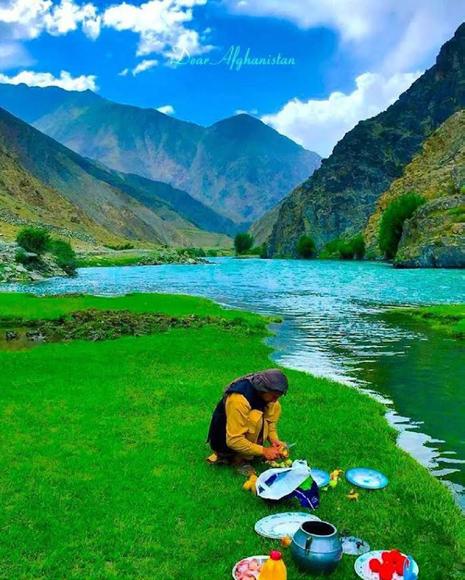
I have come from mud-brick houses from those beautiful plains full of red poppies, from the streams of Bamyan, the roof of the world.
I have come from faraway gardens, from the beautiful dreams of my childhood and I have stepped into this place.
This is not the end of the world –it is just the beginning of my dreams. I must paint this clean, white notebook beautifully.
For myself, for you, for my dreams. For my loved ones, all of whom are my hope and my love for life, even if they are far from me.
Photo courtesy of Farida Bamyanchi
Negar Bamyanchi
I have watched now over this area for more than 150 years. I have witnessed all the changes around me. You have trusted me to be there for all your most important moments. The cherubic christenings, the wonderful weddings, the forlorn funerals. As the saying goes all human life is here and I have seen it both inside and outside of these stone walls. If I could talk, the tales that I could tell. The things that I have seen. I am more than mortar. I am memory.
Let me take you back to when I was born. 1847 and my spire reaches out to pierce the Anfield sky. The fields that surrounded me. The mansion houses dotted about. The windmills and quarries I could see in the distance. A horse and carriage ride away from the ever-expanding city centre. The Cabbage Hall pub has been my constant companion. It might have had a different face, but even then it was a destination of choice for locals. The streets hummed with horses’ hooves and hymns. When the school was built I loved to listen to the children’s laughter as they skipped past me. Sundays were busy times, bonnets rustled, bootsteps reverberated through the stone and voices rose and fell in harmony. I was young, energised, radiant and resonant.
I watched the workers build new houses, brick by brick, carving roads through fields and farmland. Horse drawn carts rattled over cobblestones. The air smelled of coal fires and industry. I was surrounded by rows of terraced streets. Breck Road railway station opened, and I could smell and see the smoke from the engines. More people, more life. Weddings, christenings, funerals. In 1911 the transport stopped and I watched as soldiers marched past me towards the city centre, sent by the government to quell the strike: the streets reverberated with anger and unease. The city’s pulse grew louder, but I could feel a pulse of dread as war grew closer. I heard the whispered prayers in the pews. Felt the grief of families. I rejoiced at peace, but then the winds of war returned. The skies above rumbled, with destruction raining down. I watched the night sky lit with fire and flames and smelled the choking acrid smoke. 1939 and the laughter of children playing was replaced by the noise of sirens and airplanes bombarding the city. The school fell quiet as children were evacuated to North Wales. I waved them goodbye as they walked with their teacher to the railway station. They were gone for a year, and I felt their absence. Nighttime October 25th, 1940, and I shook uncontrollably as a bomb hit part of the school building. Thankfully no one was injured. I remained standing, my stones held firm. As war continued, the school kept logbooks of absences, but I remembered every name. The war finally over, peace returned and my pews were once again filled. I rejoiced at the weddings and christenings. Music filled the space once more. The school was as lively as ever, and I revelled in the laughter. I was older, but wiser.
In the 1980s the school closed. I missed the laughter, the noise, the energy. Fewer people sat in these old wooden pews, but once or twice a week I watched as thousands, decked out in red and white, made a pilgrimage along Walton Breck Road. Traffic jammed the streets. The Cabbage Hall was busy. More people, more life. Historic England designated me a Grade II listed building, but I am not some relic to past times. I may show the wear and tear of over a century and a half, but I still stand strong, sheltering others, helping my community. I still have my role to play. I remember every parishioner, every school child, every wedding, christening and funeral. I am Anfield’s memory keeper, its witness and its refuge. Anfield’s guardian of grace.
Janet Gardiner
What if we wondered instead of worried about Winter and see it as the blessing it is. Would we notice that the ground beneath us is full of life even though there is nothing to see yet … spring is far away. Would we notice that the air can be crisp and sharp on a cold morning perfect for a brisk walk around Stanley Park with a good friend or alone, observing how the branches look like the lymph nodes and alveoli in our lungs. Each year looking at the trees makes me wonder how amazing both our bodies and nature is.
Winter is for Wondering instead of Worrying. There’s all the time in the world to worry – why not swap it for Wonder?
It would help us see that Winter is for Rest, a time to slow down and pause and appreciate the year past whether it’s been one full of surprises (both expected and unplanned) or a year you would rather not remember because it was full of grief and sadness. We must remember to rest – or do we keep going in the depths of Winter never resting, always keeping on. Lights on, full speed, must keep going, can’t stop, always worrying, never wondering.
Wonder opens the window and helps us see things we may not see when we’re busy. Wonder will welcome you with a warm embrace and wrap you up and light you up from the inside out and once again you become like a child full of curiosity and enthusiasm for life.
Winter is full of Wonder. Can we pause if only for a little while and notice the sound of a robin –or gasp in delight when one decides to visit you in the garden or you see one in the park. These are the little things that matter in wintertime or curling up with a good book that transports you to a time and space that comforts and reassures you. For me, as always, I love the ritual of making a simple soup that is both heart-warming and deeply satisfying there is magic here whether it’s the music, or the candles or the intention of creating a soup for myself, my family or friends that always brings me home to myself. That takes me from worrying to wondering.
Jan Mullen
Centurion
Halt! Wait!
I must tell you!
I thought my eyes deceived me, But trust me, it’s true!
Shepherd
They came like an army, They filled the sky. Angels upon angels, their chorus exalting, The one most high.
Joseph
I believed him, The angel, that told me all was true. How can it be? What wonders will ensue?
Wiseman
From the east we came, We came so far. Camels and dust for miles and miles, Just to follow this star.
Mary
“Do not be afraid.” He said: “For God has shown you His grace.” I knew not then, The wonders God would bring to this place.
Shepherd
We decided to go, Left everything behind. A Saviour, a Messiah, they said, Is what we would find.
Wiseman
The glow of the star was all we needed. We followed because we knew. Few would believe it meant anything, But we chose to be the few.
Mary
Peace is all I know. Peace is all I need. And today, I’m more than certain, Is peace on earth indeed.
Joseph
There he was, a baby boy, Just like they said he would be. He held my hand and squeezed it tight, If only the world could see!
Shepherd
And there he was.
Wiseman
There he was.
Centurion
A humble baby boy.
Wiseman
No myrrh, no gold, and no frankincense, Were enough for this baby boy. I fell to my knees as a consequence, And my heart was filled with joy.
Shepherd
There was no throne. There was no crown. He was humble, he was real, he was God come down.
Centurion
I’ve seen him, I’ve witnessed it. This is all I had to say. Immanuel, God with us, Was born this Christmas day.
Rebecca M. Wilkinson
Rebecca wrote this poetic version of the Nativity story for the Church she attends in Everton and it was also shared at Kitty’s Writers Christmas event, 2025.
A Love Letter to Culture. Laura Robertson in Conversation
This interview includes extracts from two conversations between Laura Robertson and Pauline Rowe recorded in the Autumn/Winter of 2024.
Pauline: Can you say a little bit about school life? Which school did you go to?
Laura: I went to Anfield Primary School and Junior School which was right across the road from my house. I grew up in 3, Clovelly Road. So I was two doors away from the school gates. For senior school I went to Archbishop Blanch in the city centre. School was hard. I got bullied. I don’t think I ever really fitted in. My mum was very creative, in clothes and fashion. She was a bit of a hippy, and I was dressed like that and never had the right kind of brand – trainers, you know all the stuff that’s important when you’re a kid. So I was a bit slow to all that. I didn’t really have many friends until I went to senior school. So school was quite challenging. I remember drawing a lot and making books.
Pauline: Did you have any memorable teachers?
Laura: We had a wonderful teacher in primary school who played the guitar and taught us with puppets. She was wonderful. Have you ever read Matilda? She was like Miss Honey. We used to sing songs. She’d play acoustic guitar. And she had a fox and a badger puppet, and I remember us all going crazy when she’d get these puppets out of the cupboard. We absolutely loved it. She was a really sweet teacher. The headmaster – he looked like a car salesman. He’d get us into all these amazing opportunities. I remember going to Anfield Stadium for the first time in primary school, going to a match when the Queen came. We went to see a football match when the Royal Family were there. It was an anniversary. I also remember going to the Philharmonic Hall for the first time. There were special teachers there and people who had ambition for the children. Not what you’d normally expect. I remember a lot of kindness from the teachers and a lot of ambition-raising and pushing. That made a big difference.
..I think the creative drive, then and now, has come from my mum. She’s been really an important creative force in my life. I’ve always wanted to write and draw, and I can always remember doing that. There were books at home. It’s something my mum encouraged. She always had different creative projects going on. She got into drying flowers and making these beautiful canvasses out of flowers. She’s still a good baker. She’d cook all the time. Very creative in the kitchen. She’d make these amazing cakes for people’s birthdays and weddings… My mum was a stay-at-home parent until I was about eight and then she had a succession of different jobs. She was a lollypop lady, a classroom assistant and she even worked in a hospital as a porter. In their fifties she and my dad changed careers completely and trained to become carers. My dad volunteered at a blind school and really found his path in his fifties…
School was important for the reasons I mentioned, there was ambition-raising there.
My home environment was really important and my parents both made that a creative space. Our house was full of books. As I get older this is another thing I’m grateful for and appreciative of. I realise that not all houses are full of books. As a child, it’s everything. We’d go to the library every weekend as well. So it was very normal for me to be reading five books at a time. My mum and dad loved reading as well. My dad, especially. We both had a shared love of Horror and Science Fiction and fantasy books. So we had a gruesome sense of humour. That was a thing to bond over, sharing books.
Pauline: You often speak up for Liverpool and the culture of the city. Why is that such a drive? Laura: I really appreciate that. Because I do. If you’re from Liverpool, you do. It’s a very political question really. Liverpool is not special. There are many cities in the north of England like
Liverpool that have experienced the same challenges in different contexts. But Liverpool is special because I’ve never been anywhere like it. It’s often talked about for its beauty – I’m talking about the city-centre here and its architecture. When you grow up in the city area, twenty minutes from the Albert Dock, there were many children in my school who wouldn’t go into the city centre. It’s like that still. My mum lives in Bootle now and there are many people who don’t go into the city centre. They either can’t afford the train or the bus, or they have everything on their doorstep, and they don’t move out of the area.
Pauline: Does that mean they live in another place, really? This is interesting in terms of Anfield and the city.
Laura: We’re talking about two different places. Anfield for me still is another place. It was a world away. My mum, the type of mum that she was, of course she took me to the Central Library, World Museum and The Walker and they were also free, obviously. We didn’t have much money – a very working-class household. Rich in terms of our cultural life. We’d go to the city centre on the weekends to see exhibitions and go to the library and have walks. I think I speak up for Liverpool as many Scousers do because historically we haven’t had anybody to speak up for us. We have had to be our own champions. Nobody believed in Liverpool. They wanted to cut it off and kick it in to the sea. Especially when I was born. I was born in 1983. So I grew up in 80s, 90s Liverpool where the attitude about us was still highly derogatory. It was still ‘victim,’ ‘whiners’, ‘chip on your shoulder’. That kind of language has followed me into adulthood. I was talking about doing a PhD in working-class method and voice maybe six years ago and somebody told me not to do it because it would look like I had a chip on my shoulder… I was purely talking about this in the context of widening participation and positive educational experiences and all they heard me talk about was, you know, poor me! Oh, help me, I’m poor! So, that context has changed. It’s like night and day talking about being working class and being specifically from Liverpool, now. I think there’s more air around it. We can talk. Your project, the People of Anfield… is excellent – giving space to people to talk honestly about their experiences in a non-clichéd way. That the working-class experience can be nuanced, culture-rich, intelligent.
Pauline: It’s the recognition of these other places within cities – they do have cultures, people with aspirations that are about their environment. It’s not always about escape or going somewhere else. I was interested in what you said about this attitude to Liverpool. Do you think that was the same towards artists, actors, writers from Liverpool as well in the 80s and 90s? Laura: I imagine so. I can’t speak to that because I was a child. If you look at everything that was flourishing and growing during that period including The Everyman… And there’s always that element, that edge of radical politics in it. If not us, who? If not now, when? And opening doors for other people like me to think, of course, I can have a creative life. Every day could be creative if I wanted it to be and I don’t have to listen to the Career’s Adviser at school. I can actually use my brain and look at what’s out there and talk to people and see. How… Why is this painting on canvas in The Walker? Who made that? Did they paint that around a job? Were they a mother… Oh, OK, they were quite wealthy. They had a patron. Oh, OK! They were subsidised by
the Catholic Church. You find out more. You try to apply it to your own life, sometimes with great difficulty because you’re not seeing those paths in your immediate community or connections and if you ask at school the teachers don’t know.
Pauline: For lots of kids who are creative, talented from different kinds of places like Anfield, those structures are not there for them.
Laura: And in very visible ways as well. I did my MA at the Royal College of Art. There’s nothing more sobering than walking into that building and seeing all the things I’ve been told about. All the inherited wealth and cultural wealth is being held in the hands of a few hundred people who are going to be working or are already working in the top institutions. So we must create our own – if those things aren’t inherited or given to us easily we must create our own ‘boys club’ and networks.
Pauline: But there needs to be acknowledgment of what’s going on…
Laura: There are different stages to this. First, the acknowledgment. But what do you do with the acknowledgment that those systems still exist when you want to benefit from them? Well you must hack into them. In neurodivergent experience masking is talked about a lot. I’ve only just been diagnosed with adult ADHD (another story for another day) and it makes a lot of sense. This idea of masking… I feel as though I’ve been masking as a working-class person in the arts for my whole career. You absolutely mask when you go to university and Art school. I had two different experiences. I started off studying History at a Red Brick university and it was a horrible experience, and I swapped to University of Salford Art School. It was immediately welcoming, kind, compassionate, full of joy. We had our own huge studio space for the first time ever. And then I studied my MA at the Royal College of Art which again was another realisation and another art world. There are different cities and villages in the art world. It’s not one thing.
Pauline: Do you have to negotiate it differently if you’re born and brought up in Anfield?
Laura: You must mask so much and I’m not talking about pretending or lying or faking. I’m talking about saying the right thing. Out of several things you might say picking the thing that connects or communicates what you want to say in the right way, so it hits. It’s like learning a different language. I remember in Art School during my MA we read a text together in class and I said oh, this is the experience of having no money, that fear, pure panic of not being able to pay the next rent or being in arrears or having the bailiffs and nobody knew what I was talking about. We had a small conversation about what I meant… Because I went to that school in my 30s I was unapologetic and proud of my background and… I had become completely comfortable with being a working-class art critic by then. If I’d gone in my 20s I think that would have been a crushing experience… …you must have had this too, in your life, you turn up for a press view or a job interview, and people are surprised by your accent and that’s the first thing they comment on. This is what people have to contend with… It’s making sure you know your place. But we’re talking about generalisations, here not specific experiences. It is a common experience… but I did find a nurturing space in the posh MA experience. There were nurturing people. The school itself was overwhelming in its wealth and privilege and expectations. I think one of the things we talk about when we talk about class and growing up somewhere like Anfield is the word expectations. Sometimes those expectations are low. That’s why my mum put me in a city-centre school. She wanted to put me in a school with a high academic record. She wanted it to be a churchrelated experience, and she wanted a girl’s school. That place helped; it was aspiration-raising. Expectation is a funny thing. You can have expectations of yourself beyond what other people think of you. You need to have a very strong sense of self and core strength to push through. To keep a creative practice going throughout your life when there are so many distractions and people and things that want you to stop…
Pauline: And you must cope with rejection, as well.
Laura: Rejection is normal and switching mindsets to think of it as a numbers game, in some things like funding bids or competitions or open call or applications for residencies or places for education training – it’s a numbers game and you must continue to be resilient and apply, apply, apply. OK – that’s not right for me, now but it doesn’t mean I’m not right.
Pauline: What is the key thing that helped you become an art critic, a teacher, an educator?
Laura: Not one thing. Complete luck of the universe. My mum, who always said, even if you’re scared or you don’t want to, you’ve got to try it. From Maths to present day, going on the radio or something. Mum will be like, Just try it! Having that person is a kick up the arse. All the people who have mentored and fed me creatively, so many people have helped me along the way. So many people. Memorable people. My lecturer at University on my BA Visual Arts course, Brendan Fletcher he encouraged me and pushed me to make really challenging experimental sound and text work dealing with grief that I’m still making creative work around today. Currently I’m pushing out to publishers a ‘Horror’ memoir about the cultural experiences of my childhood that fed into a fascination with horror and grief. I was mentored by the editor of Frieze magazine because someone at Liverpool Biennial said you need a mentor – do you know Jennifer Higgie? Of course I don’t know Jennifer Higgie, the most famous female art critic of our generation! She mentored me for no reason. She didn’t need to. She gave up her time. She didn’t know who I was but because someone else introduced me and made it happen – that kindness, passing it on. Other people acknowledging that I was good at something and acknowledging that – it’s the difference between carrying on and giving up. Lots of people have contributed to my career path, odd as it is.
Pauline: Can you say a little more about your teaching work?
Laura: Yes. I teach at the University of Bolton in the Photography Department. I’m a lecturer in photographic theory. I teach all the thinking around photography, writing, history, contemporary debate, ideas and the biggest barrier to learning in the classroom is confidence or lack of confidence. If you’re first in your family to go to university, if English is your second language, if you’re disabled… we have a high number of students with disabilities. People come to our department for creative practice. The whole three years is about confidence-raising. That first year is about learning to be comfortable in a university. We do so much work on confidenceraising, tiny little exercises in class, to really deep conversation about background and life experiences so far. Lack of confidence is the biggest barrier to learning that I see and that is not a fast fix. People come to me in their thirties, forties, fifties, sixties having experienced a lifetime of being told they’re stupid when they’re dyslexic or they can’t write when they can and are really talented… put down for things and believing falsehoods. You have to break all that down. Have you looked at yourself and your abilities recently, today? Look what you can do. So that’s the kind of learning we’re all doing every day and it’s incredibly challenging and so satisfying when someone realises that they really enjoy something and not only that but they’re good at it. That is satisfying and life changing… When somebody realises they can do something or they want to do something and no one’s stopping them, they can do whatever they want it’s really powerful and it makes a step-change in the educational experience and their career prospects and all sorts of other things outside in their relationships… I’m learning to steer myself and I am learning how to steer others at a very specific point in their life when they’ve come somewhere to learn. I can truthfully say, I’m 40 now, I was diagnosed with ADHD at 39, so I’ve been having ADHD coaching for a year and it’s like a career coaching experience. She’s part psychologist –part scientist — part organiser and it’s fantastic. Everybody should have a person like Caroline, my coach. She has organised the shit out of me, and she’s allowed me to trial methods in my classroom that have changed my life and changed my student’s lives in terms of reducing anxiety, meeting deadlines, opening space for real conversations, making people feel safe and comfortable.
Pauline: You’ve said that criticism is ‘a love letter to culture’. You don’t often hear critics talking about love.
Laura: Traditionally we’ve talked about criticism in fixed times and in the last ten years certainly there have been female critics like Jennifer Higgie and Maria Fusco who have paved the way for writing that is experimental, creative, empathetic, wide-reaching, open minded, pin sharp, intelligent but with a female gaze and I think that’s a huge leap in terms of the way we talk about art criticism and what that can be. Certainly in my experience being from Liverpool when I first started engaging with journalism specifically (I’m not a journalist but I write for magazines) there was this sense of [how] do you build up a city that’s had negative, derogatory press for decades? Where does criticism fit into a city that needs confidence-building. It needs pushing, it needs the national press, where do you fit into that – in between the Liverpool Echo saying everything’s great, everything’s great? Everything is a show. Every film that comes out is great. And then something like Seven Streets which is hilarious and full of satire and tearing things down – that was the period of journalism I was looking at and thinking – where does an art critic fit into this because we’ve got The Tate, The Biennial, The Walker and lots of small DIY spaces and no medium sized galleries. And we’ve got an Arts School. What is the Art landscape here?
Pauline: Do you see it differently now?
Laura: Yes. But it’s still incredibly challenging. There’s so much work to do. The longer you work in this business the more you see how London-centric conversations around Art and Culture are. And it’s so approved in the national press. Yorkshire, Scotland – we’re not just talking about the North West. Where is the coverage of Welsh experience? Excuse me, there’s so much work to be done. If you know that and know where the gaps are you can work towards that or speak to that, can’t you?
Pauline: This theme of regional neglect – of Northern cities or regions, or Wales – where is that being covered? Where is the discussion about that, nationally? I could see you developing a radio series.
Laura: I think this is what we talk about when we talk about an arts landscape because it isn’t one thing or one person that makes a healthy landscape it’s those things I’ve mentioned – magazines, Art Schools, studios, DIY spaces, mid-size galleries and cultural centres. Where are those fully funded, experimental, aspirational places? Mostyn in Llandudno might be one of those mid-size galleries that has a wonderful building. It’s one of my favourite galleries in the world. You’ve got to go! A day out in Llandudno. You’ll be pleasantly surprised by Mostyn Gallery by how ambitious it is. The programming’s always perfect. It’s ambitious and experimental. Lovely café and shop. It’s really part of the fabric of the place. The landscape also includes writers and poets and creative people who are trying to document and encourage and enrich and add to that landscape. That includes coverage of things that are already happening, but people don’t know anything about.
Pauline: Do you feel that you’re doing important work?
Laura: Sometimes it’s just hard. I’ve just stopped writing for one magazine I’ve been writing for. They don’t cover photography ‘because it’s not art.’ That’s like – the 1920s is calling – they want your opinion back. What do you even mean? And secondly, I was pitching shows from under the radar places, and the response was: no thank you, we are already quite diverse. They had this odd comeback as though I was accusing them of something. I know everyone is trying their best, but art criticism and art writing is still very much like a dead white guy thing.
Pauline: Do you have a favourite memory or a favourite place in Anfield?
Laura: I’m not sure. I keep coming back to my house on Clovelly Road [refers to photograph]. This is where I grew up. This terraced house. My most vivid memories are of this house. I still dream of this house. It’s vivid to me. The feel of the wooden bannisters. Sitting in this bay window. Sitting and reading, looking out the window. Watching people go by. Sitting on the wall. This front step had a coal grate in it. It had a basement. I was 19 when I left. I’d just started university. I moved to
Manchester and my mum and dad moved out of the house maybe a year later. I didn’t go back. I’ve been back to Anfield maybe a handful of times. The changes that happened in the 80s and 90s – it’s a big part of my experience.
Pauline: Is there an Anfield that you can’t go back to, that’s lost?
Laura: I’ve been back for some positive things like the Dead Pigeon Gallery and Home Baked and all the things that are super positive and yet there is an Anfield that lives large in my head… of playing in the boarded-up houses. The asset stripping. The diminution of people. And crying with my mum in a community meeting about demolition and the compulsory purchase orders. Clovelly Road missed that by a couple of streets, but it could have been us and the threat of that really shapes my experience of safety and precarity. It’s very difficult to talk about. I don’t want to talk about it in a way that isn’t productive, but I want to talk about it in a way that acknowledges what people have gone through. Hardly anyone has written about it. There is a sports journalist who has written about what Anfield has suffered between LFC, the Council and developers. I’ll send you a link to his work. He’s the only person I’ve ever read who has told the story of what people have gone through. If you haven’t got a home, where is your sense of safety? I know about the work that is being done so it would be good to discuss this further.
Pauline: There was a concept of managed decline that we got accustomed to in Liverpool from the end of the 70s. The much more insidious thing is the managed decline of the area around the football club (LFC). I was also thinking of this sense of Anfield as a lost place to you. I wondered if those two things are connected and what you think of that idea?
Laura: I really appreciate you putting it to me like… These things are complicated aren’t they? They go hand in hand. We’re not experts in development or City Council planning. We can only go through the lived experience of it and that definitely shaped my politics and the way I think of community. I think it was one of the drivers as well for getting into deep DIY artist-led stuff, studios, community events, exhibitions and that kind of sense of creating your own community which people in Anfield are very good at for good reason.
Pauline: The place of Anfield has become a lost place to you but the way you talk about what you find in art and in community art and other forms of art – it’s as though that has become your home.
Laura: Yes. I think that all comes from a place of pain for sure. When I think about the experiences we had in Anfield, my family. And neighbours. It is tied in. A lot of our future and present was tied up in what LFC wanted to do. When I was old enough to remember and be aware of it. There were regeneration meetings about what it would look like, and we were very aware right from the get-go that streets were going to be demolished. Whole streets. To make room. Of course, there’s no room round the stadium. There was a lot of painful discussion about absorbing Stanley Park into the ownership of LFC and that expansion. Not only taking away our homes and businesses but also taking away our green space. A Victorian green space that was established for the people of the city to have a garden, to have a healthy area of plants and growth and fresh air in a city that was over-polluted.
Pauline: Football wouldn’t have started in the city at all without the park. Laura: It was always talked about in terms of how much we could benefit in terms of football economy and the latent erasure of you’re asking us to move out of our homes that we’ve paid for and for families that have lived there for generations.
Pauline: I wonder if it goes back a bit further than that with the club. So originally they’d bought – was it Lothair Road? And parts of Anfield Road. It was a creeping thing where they were buying houses and then they were left to become derelict.
Laura: I’m glad you used the words ‘creeping’… because that is absolutely the kind of way it happened. A stealth invasion. I kind of think about it like mould in your home. The rot sets in and
it gets to a point where it’s irreparable or irretrievable in some way. Like this toxic kind of… the arrogance of thinking you can completely shape or own an area and people.
Pauline: From my reading and talking to people it feels as if the local people were being abandoned in favour of the economic forces of a global giant. Laura: The city was under much pressure and there are reasons for that. It’s not justified or excusable in any shape or form, but I can imagine the financial pressures on the city, coming out of the 80s so there was desperation to make the city grow economically. This word ‘regeneration’ does a lot of heavy lifting and promises and leads to heart break… Just a few miles away we see this echoed in Toxteth, of course with very different results according to legal power, community action, circumstance but look how the two areas have changed under this enormous greedy pressure. The people have been really let down. ‘Should the place suffer?’ – that’s an interesting start to a conversation. And I wonder how other people from Anfield would discuss this in a group discussion. That would be interesting, to do that.
Pauline: I’ve become aware through the project [People of Anfield] that Anfield is like a character. The way people talk about the place… I live in Tuebrook. We’re only next door and there are lots of differences, even wards are different – this idea of a place within a place. But I think it’s perhaps to do with the fact that when the world says Anfield it means the football club. So when the people who live there talk about Anfield they’re talking about home. So perhaps there’s something about that dynamic that makes people see it like another presence. This is why I asked you the question about whether a place can suffer. Laura: I think it absolutely can. It’s funny that. Tuebrook and Anfield are in the same geographic area, and you can walk in and out of the two places very easily. We used to walk to Tuebrook market every weekend. It’s literally just down the main road. Yet the two places have different characters, you’re right. It’s interesting to think of the two places as people or characters, or sentient. I’m really interested in place-memory. One of my favourite sound artists is Janet Cardiff and I come back to something she said about place-memory. It really haunts me. I come back to this again and again and again. She said: how can we just walk over footsteps and not remember? That to me directs me to a way of thinking about Anfield as lots of different placememory ideas. A place of other people’s memories or stories or ideas – almost like a container or vessel for those other experiences and histories, individual and collective. It makes me think of mnemonic devices, you know memory palaces. My touchstones in Anfield about how I remember it are in pubs. Going to the Flat Iron with my dad and the pub dogs in there, working my first job in The Sandon. Stanley Park for a walk through my Aunty Mary’s back garden. I think the house still stands. The house is the one that, if the nursing home’s still there, you walk through LFC with it on your left and the mansions, some of them now demolished, on your right. I’ve walked down there now. It’s really weird. This is another thing about place-memory. Liverpool is an ideal place to discuss this in terms of psycho-geography because of the changes it’s undergone. When something’s demolished or erased you use your sense of place. Example, Liverpool One. In 2008 when that was raised there were times in the city centre when I didn’t know where I was any more. There were streets that had been removed. The fear of that removal or erasure is strong in my memory for Anfield and its collective experience. I really like the idea of place-memory as well as a library or an archive or touchstones that bring back memory when you’re there on the ground.
…I think ghosts are made of memories and we can define ghosts as lots of different things. We can define it in the paranormal sense. What if ghosts are fragments of memories, experiences or feelings. You can be haunted by your past, and loss and bereavement and things lost. Lost things. Lost people. I think Anfield has grieved. Anfield has had bereavement and the people who remain there actively trying to do something active and productive are healing that place. There couldn’t be more important work.
Pauline: And yet so many people have had to leave the place to keep living. They had to get out of the houses they had whether they were bought, or they just decided to go. I wonder if that is a positive decision or is that a kind of exile as well?
Laura: I think it depends on what you are talking about, but I think exile would be the word. We could use harsher terminology than that. This isn’t something to be glossed over. What Anfield’s gone through is incredibly painful. It’s criminal. It’s cruel. People have lost their lives, their families, their lifesavings, never mind the community loss that we’ve just talked about. They’ve lost their life’s work there by being forcibly removed. And there are different kinds of exile. My parents left Anfield in 2003 because they feared compulsory purchase. They thought they needed to leave while they could. They sold their house at a lower asking price than what it was worth so there was a financial repercussion for that, and they had to move to a cheaper place. They left a home for an apartment, to downsize to a different area. They couldn’t cope with the stress. Anfield was a very stressful places for us in the 80s, 90s and early noughties. It’s funny looking at compulsory purchase orders, Anfield – the formal regeneration package only came in in 2013, I believe. There must be some kind of reckoning or accountability for what we do to people when we talk about regeneration. Who is it serving? You could cry over this. It is so deeply
tied into working class politics and class hatred as well. Another thing that happened. People felt diminished and less than. People felt less important than a corporation. People weren’t important. They didn’t matter. To think of treating people so cruelly to force them out of their homes, to give them less money for their house. That’s already been paid off, mortgage free and then you must have another mortgage and a loan... You’ve left your neighbours and your community behind, so you have to start again. Uncertainty, precarity. But more than that, feeling like you don’t matter. Nothing you can say matters. There’s nothing you can legally do even if you had the money for representation. Nothing.
Pauline: The extraordinary element of this which I still can’t quite work out is so many people love the football, and The Club was the driving force for a lot of this damage and maybe at a slightly different time. The economy of world football has gone just barmy over the last 20 years. There was such an imbalance of power, yet people still go to the game.
Laura: There still is. Perhaps people come to terms with what they can come to terms with, and The Club is made of people who enjoy sport and those men who first started the club – that’s a wildly different proposition than the corporation that it is today.
Pauline: People don’t associate the damage of the environment and the damage done to people’s sense of safety; they never associate it with the players or the team that they love. These are two separate things.
Laura: I suppose that’s how capitalism works. Back to managed decline and there’s no such thing as community. The individual experience…
Pauline: That goes back to what you were saying… that really, it’s about the politics of class. Laura: You have to hold both things in both hands. They’re part of the same story. You can’t separate it out. It’s complex – people’s feelings about football. Football as a cultural experience gives life to the community itself. I’m not a football fan, probably because of experiences growing up in Anfield but my husband is an LFC supporter and there’s a benefit of having a team sport that he loves to follow and is a talking point with his male friends – it’s a bonding thing. I understand that and I don’t have an equivalent. Film, music, art and the things that I love, that’s not an equivalent of being a sport’s fan. It’s a really different cultural experience. I think it also – in a sinister way – has played on peoples’ feelings. Well, don’t you want the club to succeed? Don’t you want Anfield to be prosperous—everyone can benefit from this… Or can they, actually?
Pauline: …I’m really interested in football as a cultural experience as well, linked to place. The Spirit of Shankly has grown in opposition to the club controlling everything or ‘speaking’ for fans. There are lots of other things that have gone on. People speaking up and trying to do things.
Laura: There will be some people who don’t want to plough on about the past but there’s been no reconciliation or accountability so I don’t think we can put it to bed. If we think about Anfield as a place for memory there’s also this sense of Anfield as a place where memories are being created – so what do we want our next generation to remember and acknowledge about Anfield? I think it’s all tied up in story and conversation. This is where the work that you’re doing with the People of Anfield project is so important. I think there is space for growth and accountability, if there’s a will.
Pauline: What you’ve said about reconciliation is so important because it’s difficult to move forward if that is glossed over. I think people can speak truth to power through creativity in different ways. But can you do it retrospectively?
Laura: It still is a present issue. It’s not gone away anywhere. People are still being impacted by things even now. I was just thinking of the relatives of people who have died during this process while this is going on. Who’ve had their homes taken through compulsory purchase and they’re still living with the debt, the grief, the memories of their parents having gone through that in their last years. Sometimes in retirement. How do they feel about reconciliation and healing? I would
be very angry. I’m angry and we didn’t even go through the process of compulsory purchase. But it absolutely derives out of Anfield – the fear, the tension and the stress around that and the financial responsibility and worry about the future when you’re on low income – two low incomes, you’ve got your house that is your only asset, you’ve paid your mortgage off. Do you remain there and risk that or do you move? These are still issues that people are dealing with today…I was wondering about the idea of art speaking to power and what an exhibition could do. Could it demand accountability and responsibility? I’m not sure.
Pauline: I don’t think art can demand anything in that sense… There needs to be great care taken as an artist going into a place where people have that grief and loss and difficult things that have happened. Part of it is just a bit of a break for people to say “Oh, look! I said that!” “I did that, there” – it’s not a massive thing to do this kind of exhibition (The Flowers Still Grow, Open Eye Gallery, Sept – Oct 2024) … it’s the conversations, time, process is the most valuable stuff but how do you carry on these conversations?
Laura: Many people are required to do that work. You’ve done a jigsaw piece that will lead to other jigsaw pieces. Just over the last few days I’ve been hearing a lot about the LFC Foundation. They have projects for young people and employment projects, and I can’t help but think there are people there doing really good work. Again, people from the local area taking responsibility by joining LFC Foundation and doing this hard work so this is no shame on them because again, it’s down to community members to heal this. I can’t help thinking of that work as a kind of green washing and of art-and-creativity-washing of the hurt that’s been done. It makes me think of the artist Nina Edge in Toxteth who was fighting to keep her home and the homes around her, the Welsh Streets area and she told me she went through conflict resolution training that police and military personnel go through as part of her long fight. She worked with lawyers, developers, and the City Council. It astonishes me that somebody might be required to go to those lengths. She said the language needed in those meetings; the confidence needed in those meetings was of such a high level… none of the community could probably do that without being trained. Think about the media training as well. Think about all the work around the Welsh Streets done to keep those homes and have them restored rather than demolished which is not as financially wise as building from new because I don’t think you get a V.A.T break on restoring terraced houses basically, and they can sell the bricks. All of this [experience]… mixed in with folklore and mistrust sewn into actions and real lived experiences. It’s such a mess. This is why it’s so challenging to talk about, and I don’t blame people for finding this incredibly uncomfortable and painful…
Pauline: Thinking of your place-memory idea, you’ve got a conflict – the way politics changes all the time, councillors change, people change so only people living in a place hold the placememory and the story of what’s happened – they’re not the ones making the political decisions. Laura: A building might hold a place-memory for a street, or a corner — those inanimate objects are so easily swept aside in these political decisions. Who speaks? Who has the power, I suppose across governments?
Pauline: Who has influence?
Laura: I’ve spoken to people from different countries about this, about Anfield’s history and they just cannot believe it has happened to people, they are just astonished and completely just disgusted by it – this sense of decades long dread that people have gone through and its impact on people and this mistrust of policy-makers, politicians and city-leaders who haven’t stood up for the people. Where has the protection come from? Where is the room for the people in Anfield to have their voices heard? Who has been listening? It’s overwhelming.
Pauline: When you see where Home Baked bakery is you have the terraces too that Home Baked CLT want to restore, to have a start – get all those terraces renovated but… nothing has happened…
Laura: And when did that project start? Was it 2012? There are constant barriers being placed in front of people that want to do good and be pro-active and take responsibility for their area yet it’s still being shut down. We had an article in The Double Negative about this when it was called ‘2-Up, 2-Down’ and they had drawn up the architectural plans for those houses in 2012, so they already had the operational bakery. They had the plans for the house, they had the CLT group up and running and they were looking to have the houses – so it’s 2024 now. I did notice on social media the other day the parking fines that they’ve been bombarded with recently which is financially destroying their business. It’s just endless.
Pauline: If you could make any change in Anfield and had the influence and the power to do something would it be about the housing and development issues or is there something you think could make a real difference?
Laura: It’s completely tied up in the current housing crisis in the UK that’s been such a long time coming. Look at what we’ve done to housing. We’ve decimated people’s security. An enormous change at government level across the UK addressing the housing crisis would need to be done. Rent and landlord accountability, lowering of rent for match wages. Wages haven’t gone up. Rent has. Council houses and social housing. The whole system needs to come back to who it is for. People need housing… look at the homeless crisis!
Pauline: Almost like the post-war social contract, you mean.
Laura: It needs an absolute revolution: evolution – revolution, of course. We’re at breaking point. Apart from food and water, shelter is one of the absolute basic needs for a society to flourish and I think it’s really telling how we’ve treated people in Anfield. The quality of a country and its people is reflected in how it treats the most vulnerable and the UK has a big job to do in how it treats vulnerable people. Anfield is one example but it’s happening in so many different cities across the UK right now and it’s tied up in the things that concern us in the arts as well, with the arts being decimated and opportunities in lifelong learning and training being decreased…
Pauline: Looking at the next 12 months, do you have a dream project that you want to do?
Laura: I’ve got a couple of projects on the go right now. To get a good commission in the next 18 months would be wonderful and I’m starting a PhD as well. My ideas are around contemporary arts practice and widening participation. I’m doing the HE Advanced Fellowship qualification because I really want to have a place where I can research kindness or compassionate-led teaching or what that may look like in the classroom. Something that will help me to be a better tutor. That’s really important and I want to do that over the next few months. There doesn’t seem to be a lot of information or advice about how to make the classroom a more relaxed place for learning and how to take some of this fear of learning or this anxiety out of the equation – there’s a lot of it in the classroom. Kindness is the way forward as it is in all areas.
Pauline: That’s very fitting! We’ll end with kindness, should we?
Laura: I think we should. And start with kindness, always. Sometimes we fail but we keep trying.
In December 2024 Home Baked CLT received an email from Liverpool City Council informing them that approval for the regeneration of Oakfield Terrace had expired and the properties would be placed for sale on the open market.
Kitty’s at Night
A white cross on a blue box carries small cures for the daily pilgrims who rest here.
A night canopy spreads along the walls like a carnival tent waiting for morning.
Small glass squares of blue light hold up the dark.
Soft purple service-wash tickets in single names are numbered, to be paid on collection.
Clouds of steam rise like stage smoke or stuck ghosts as an empty jacket dances on its rack.
This is where city dirt is washed away.
Machines are named in memoriam. Football strips tumble in memory of Granny Trixie, a soft bear rocks in soap inside Dominic Maguire.
At closing time the machines glow, amber bricks like cats’ eyes.
Stillness a shock to the metal frames, red sacks on the floor, folded towels, an empty chair, a trio of full Blue bags on the floor like amniotic sacs about to give way.
The daily whiteboard wiped clean.
Pauline Rowe
The call went out “Come join me you are needed to make this City great!”
From the East sailed in the Chinese
From the North the Scandinavians came
From the distant South came men from Africa
The west? The Irish answered the call.
From Wales, Scotland, Jamaica, Pakistan, India and Iran to Liverpool they came. People from the Baltic States and Russia decided to make the banks of the Mersey their home.
What about my calling to Liverpool? No, it wasn’t so loud or clear, but I heard it. Deep in the lowlands of Scotland in the 1950s where I lived as a child. Radio was the main source of entertainment. Sound waves, the long type, would bounce off the metal staircase that led up to my tenement home and be picked up by the coat hanger aerial that was attached to my Bush 6 valve portable wireless, powered by a battery the size of an Agatha Christie penguin book. The Light Programme, Radio Luxembourg, Radio Athlone broadcasting from the middle of Ireland and the news from the BBC World Service were the main stations I would listen to but sometimes, as a child, my imagination would run wild, and I would become a spy and tune into a Russian station. That was until 1967 when a new sound came through the wireless. Through the crackly sound with a bit of static thrown in for good measure I heard a presenter who I thought he said was Mrs Butler’s eldest son, Billy. Radio Merseyside was born. I would try to listen to other broadcasters on Radio Merseyside as they talked through the atmospheric hiss that often muffled their voices. The same names of people living in Liverpool were frequently mentioned. One guy Norris Green annoyed me, he was never off the radio asking for requests, but I thought Gill Moss and Belle Vale were nice people, but it was Page (Gill Moss’s sister I think), that I had a boyhood crush on.
My working years went by but although I was never going to make my fortune working 9-5, my love for Liverpool and its football team never left me. Then in the summer of 1979 when I was working in London, the offer came: would I be interested in taking up the post of Regional Manager of a telecoms company in Liverpool? I jumped at the chance. This was the year I found a new type of friendship – The Scouse Plan for Friendship.
I soon realised that the most common name in Liverpool was Ar’kid. Everyone seemed to have a younger brother called Ar’kid but when I met the younger brother he didn’t seem to have a proper name either. No. It would be Macca, Degsy, Nobby, Mogsy or some other name but never a Christian name. It was the same with the pubs. I don’t know why they put pub names on the signs outside when no one called them by their proper name. Directions were a nightmare for me. Whoever I was meeting would say: turn left at the Iron Lung, go past the Little Cat until you come to the Welly and you will see the Round House further along. If I am not in there I will be having a pint of Guinness with Ar’Pat and the brothers in the Church house early doors. I will see you there. There were no pubs with those names on that route.
Nearly 50 years later I am still looking for pubs by their nickname and Mrs Butler’s eldest, Billy, has finally retired.
Liverpool is still the friendliest City in the world, and I am proud to call it my home.
Ian Watt
CONTRIBUTORS
Farida Bamyanchi is originally from Afghanistan and now lives in Anfield with her mum. She joined Kitty’s writing group in 2025.
Negar Bamyanchi lives in Anfield with her daughter.
Emma Case is the photographer-in-residence with the People of Anfield. Her work is deeply rooted in collaboration and centred around highlighting social issues, celebrating communities and promoting positive social change. Her recent work includes ‘The Threads That Bind us’ a project with Tate Liverpool and young people from Tiber in Toxteth. She also runs The Red Archive – collecting LFC fans’ personal photos and stories. info@emmacase.com
Kay Case
Kay has lived off Breck road in Anfield for the past 9 years but was originally from Tottenham, London. She writes just for Kitty’s writing group, mainly about nature as this fits in with her Pagan beliefs. Kay now lives with her much loved and spoilt dog, Clodagh.
Rachel Dee
My name is Rachel Dee. I was born and raised on the Wirral more years ago than I care to remember. I was married for nearly forty-two years until my wife passed away. I have two children both girls have families of their own; my youngest daughter, Caroline, is a grandmother. I love to write. I was introduced to the writing group by Jan Gardiner and John Murray and find all the other members very friendly and interesting.
Janet Gardiner
Janet, an Anfield-based writer was born and raised in Everton and has been an Anfield resident for more than 25 years. A member of Kitty’s Writers since 2023, she has also been involved in several projects for Writing on the Wall. She is Mum, Nanna, wife and in recent years a roadie and crew member for her family of musicians. She has a lifelong love of books especially mystery/ crime novels. Her writing draws on her working-class roots. Inspired by her love of family, cats and football, she is currently working on her first novel.
Alison Little
Alison Little is a Liverpool-based visual artist and writer whose multidisciplinary work blends visual arts with creative writing. She has delivered public art commissions across the Northwest, the UK, and Western Europe, including two Superlambananas for Liverpool’s European Capital of Culture and later pieces such as Superlambanana Lips for the Lip Doctors. Her projects include Rags Boutique, transforming a disused retail space into an exhibition and workshop venue. Alison’s recent work features Viking-inspired public art in Kirkby and a bold mural for East Street
Arts. She also writes widely on Liverpool’s creative scene and publishes a bi-weekly arts blog. www.alisonlittle.blog/
John Murray
Retired civil servant, photographer, I prefer to be adventurous. I like remaking old photographs into new work. My artistic side shows through in many of my photographs, example being Victorian boy by bin. I helped a well-known photographer with an exhibition and am also an amateur writer. I like the historic side of things especially the unusual facts and information (a side-effect from working in government). I’ve written a few poems and am a member of Kitty’s writing group.
Instagram: ijohn.murray100
Jan Mullen
Jan has a small independent business called The Therapeutic Gardener in the heart of Anfield. You can find more about her and other local businesses, actively making a positive difference here at: www.anfieldimprovementdistrict.co.uk Substack: janmullen.substack.com
Pat Richardson joined Kitty’s Writers in 2023. She has lived in Anfield for nearly 60 years. Her story is told on pages 11 – 13.
Laura Robertson
Laura is a working-class art critic, writer, editor and award-winning lecturer based in Liverpool, UK. She is a lecturer at the University of Bolton and currently writing a creative non-fiction book about night terrors, grief and contemporary art. She has bylines in the world’s top magazines and newspapers, including Art Monthly, ArtReview, Elephant, frieze, The Guardian and Hyperallergic, and she’s a regular guest critic on the national arts and culture show, BBC Radio 4 Front Row. She co-founded The Double Negative online arts magazine with Mike Pinnington in 2011, and has been commissioning and platforming under-the-radar people, projects and places ever since. She was born and brought up in Anfield. www.laurarobertsoniswriting.cargo.site/
Pauline Rowe
Pauline is a professional writer and Royal Literary Fund Fellow. She has facilitated and supported Kitty’s writing group for the People of Anfield since 2023. www.rlf.org.uk/writer/pauline-rowe/ www.paulineroweblog.co.uk/
Helen Steele
My name is Helen. I am originally from the Dingle but grew up from a small child in Anfield. After moving a few times I am now back living in Anfield with my lovely husband. I became a member of Kittys Writing Group from the first get together in 2023 and really enjoy our times together.
Ian Watt
I found retirement the time when life began again especially as I continued to work.. I have seen the birth of my 2 grandchildren; I have met some wonderful friends who have guided me through dark times into the brighter days that I now find myself in and most of all I found something through Kitty’s Writing Group that I thought I had lost over 60 years ago - the love of writing.
Rebecca M. Wilkinson
Rebecca has been a member of Kitty’s Writers since 2024. She lived in Anfield for several years and has recently got married and lives in Everton with her husband. She loves writing and finds the writing group provides a wonderful and encouraging community.
Photography credits: The photographs in ‘From Kitty’s With Love’ are by Emma Case, unless otherwise stated.
From January 2026 the writing group will be known as Anfield Writers and will continue to meet at Kitty’s Launderette, 77 Grasmere Street, L5 6RH at the times and dates below.
This project was supported by Culture Liverpool as part of the Creative Neighbourhoods Programme.
For further information about Anfield Writers contact Dr Pauline Rowe at paulinerowewriters@gmail.com