Don Ritenburgh Business Adviser ritenbur@oakland.edu
248.370.2533
CORRECTIONS CORNER: The Oakland Post corrects all known errors of fact. If you know of an error, please email editor@oaklandpostonline.com.
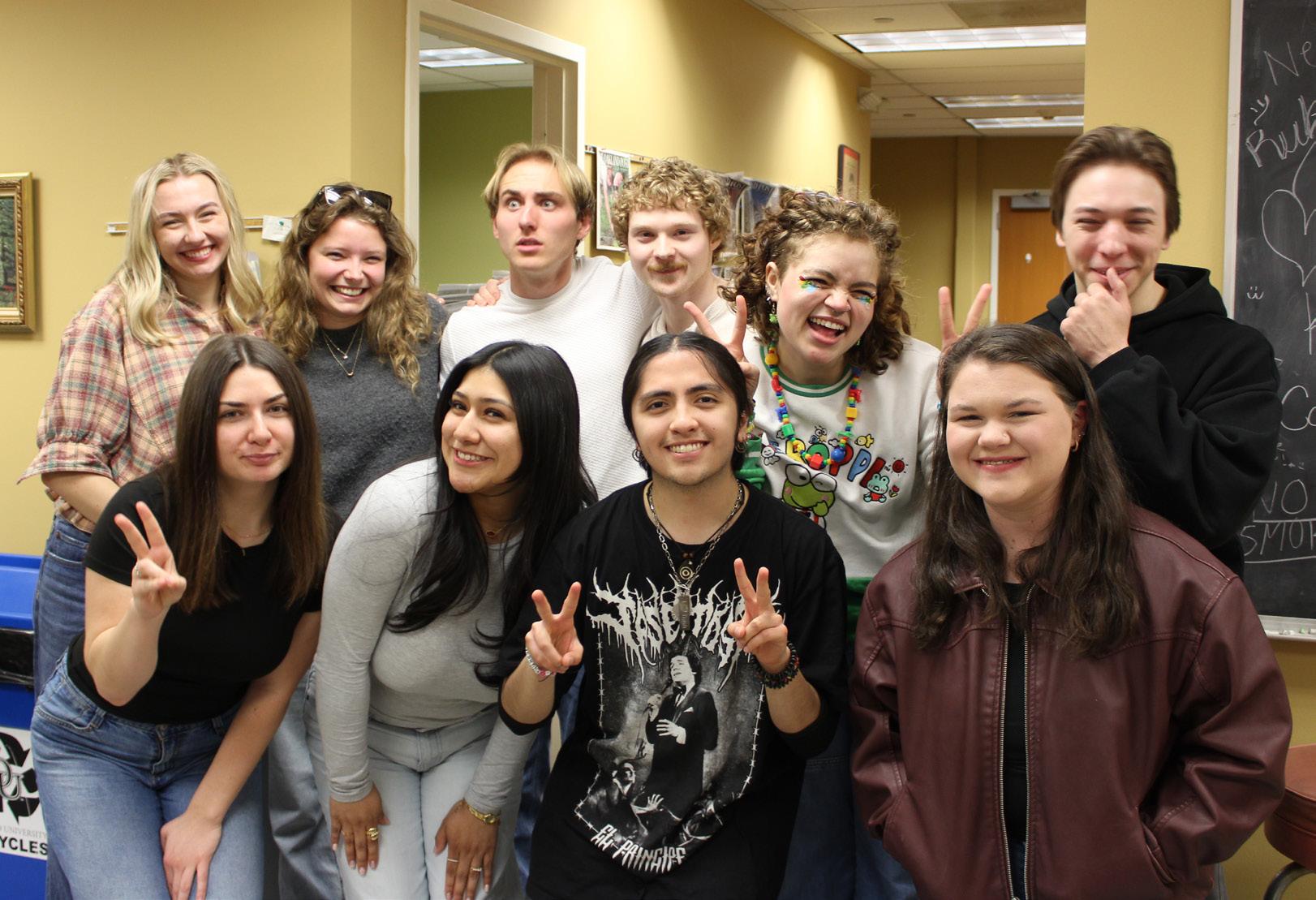
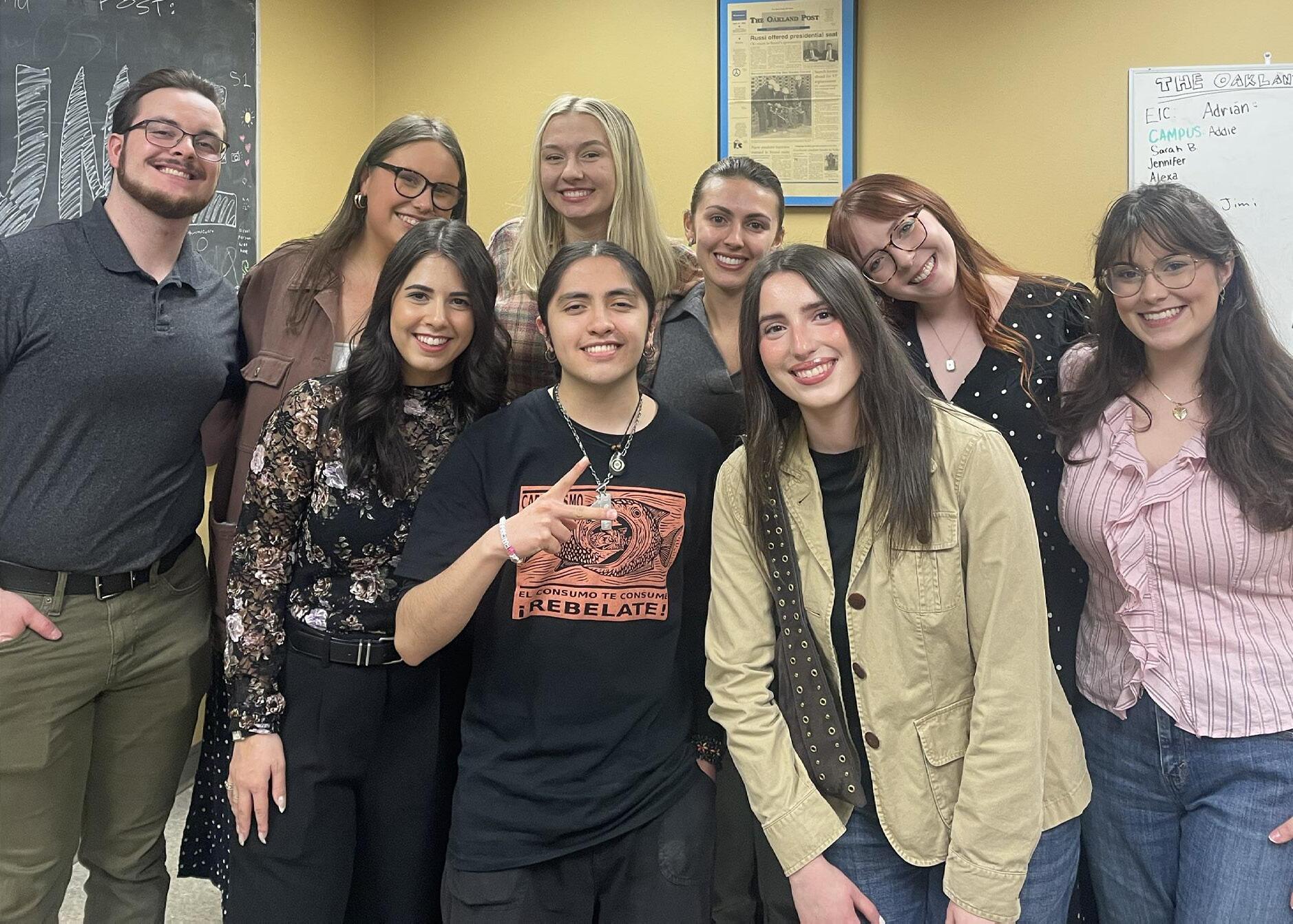
SENIOR SENDOFF! An emotional final production day this week with our graduating Posties: (top row, left to right) Mallory Waligora, Matilde Rabajoli, James Elling, Cael Tanner, August Wicker, Dylan Hecker, (bottom row, left to right) Alicia Gabbard, Ruby Hernandez, Adrian Jimenez Morales, and Anna Friedrich. (Not pictured: Ava Webb and Sarah Wasielewski)
PHOTO BY CLAIRE SANDERLIN
Thank you to The Oakland Post
ADRIAN JIMENEZ MORALES Editor-in-Chief
I am sure whoever steps foot in The Oakland Post never truly forgets about it. Whoever stops by the always-full newsstands — not a sign of incessant restocking but of missing readership — remembers something. I am sure those who cross the door or those who scare a sleeping reporter with the occasional phone call will always have something to say. I’m sure I’ll always think back to The Oakland Post.
This letter attempts to be a tribute to those who stay at The Post. It is a standing ovation to the reporters who walk through the snow, approach crime scenes and exchange endless emails to land an interview. It might fall short of a thank-you to the photographers who arrive at the scene on short notice, hands full of equipment and ready to snap front-page photos.
It is an ever grateful salutation to the funniest, most constructive and entertaining graphics team that’s great to forget your worries with or receive feedback from. Or it could also be an applause to the great editors who now mentor the next generation of talented journalists.
It definitely is a celebration of the marketing, ads and distribution teams that prevent the writers from speaking into the void and give us a fighting chance against the digital era’s oblivion. This last letter from the Editor is nothing more than my most sincere thank-you to the Post.
Being able to partake in grassroots journalism, entrench oneself in campus culture and develop professional skills while earning money on the side is the perfect combo for anyone at Oakland University. Only The Post offers that.
The Post stands as the best opportunity to make mistakes and grow from them. It was the perfect internship with a memorable community. Without it, I wouldn’t be half the journalist I am today. For that, I am ever thankful for The Post.
It is thanks to the most intentional and devoted leadership preceding me that this was possible for me and for all other students. Coming from a legacy of talented students, this college publication not only crafts professional reporters but also emerging leaders.
I want to thank Chelsea Bossert, who established the post as a cultural reference point on campus and was able to sail through some of the most vicious winter storms in decades. Thank you as well to Olivia Chiappelli, who made The Post a learning lab and has been a most patient mentor even after graduation. Also, thanks to Autumn Okuszka, who welcomed me to the best part of college life at the newspaper.
My warmest regards and gratitude go to a reporter who would make Chuck Norris think twice about his prowess; a journalist more cunning than Clark Kent or Peter Parker; a mentor more prominent than most journalists: Garry Gilbert.
As one of the last bastions of print media, Garry stands as one of the most influential people in my career and I am sure in that of all other Posties. His retirement comes at a crucial time for the Post, with a diminishing budget and fewer advertisements. And even after surviving a campus closure and multiple controversies with the admin, it is thanks to the teachings of Gilbert that our newspaper remains focused and resolved to continue informing the university.
PHOTO BY ADRIAN JIMENEZ MORALES
PHOTO BY AUGUST WICKER
You can do challenging feats
MAGGIE QUINN
Contributor
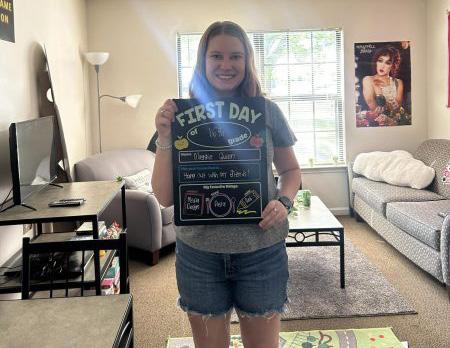
I still remember the nights in second grade when I was sitting at the dinner table, breaking down into tears over the fact that I couldn’t remember long division from the top of my head and couldn’t understand basic word problems, no matter how hard I tried.
There were the afternoons spent in my math foundations class in middle school, doing useless worksheets and activities that were meant to help me get a grasp on math, but actually left me despising school because I was getting bullied by other students who threw my textbooks across the room.
With an Individualized Education Plan (IEP) in high school, I was finally able to feel like I “fit in” in a classroom for the first time in my life, and I took several AP and honors classes to tell other students that despite having Nonverbal Learning Disorder (NVLD), I was capable of being in the same classes as some of my peers who thought they were destined to go to Harvard.
Did some of these things cause me to have imposter syndrome? Yes. Did it discourage me from advancing my education beyond what I considered to be impossible? Absolutely not.
In fact, I am actually graduating in several weeks with my Bachelor’s Degree in Public Relations and Strategic Communication, along with a minor in Digital Media Production.
The journey to get to this point hasn’t always been easy. During the college application process, my senior year of high school, my friends and I were talking about what schools we were applying to and I mentioned that I applied to Oakland and that it was my top choice because I loved the campus. One person in particular told me that it was ridiculous that I was applying to a commuter school, and that they couldn’t find the appeal because they were applying to several Big 10 schools.
Even though my gut told me that I made the right decision, it wasn’t always pretty. Several weeks before moving into my freshman dorm, my parents moved out of my childhood home and settled in a new town, away from everything I had known for the first 18 years of my life. In fact, I cried the first two months of my freshman year before settling into a new routine.
That new routine has changed since freshman year, but many of the patterns remain the same. My routine has consisted of working at several on-campus jobs or internships, hanging out with friends in the Oakland Center, attending student org events around the campus, and many, many late nights spent completing final papers, group projects and final exams.
This schedule has helped me maintain a support system of professors, colleagues, and friends that I’ll continue to lean on for the rest of my life. This team became my home away from home. They are people I could talk to about whatever was going on in my life without judgment and I knew they would be there for me no matter what.
Whether it was complaining about a difficult group project or talking about my late Uncle Tim — who unexpectedly passed away last year — these people listened and gave me the motivation to continue taking on all the opportunities I could during my time here at Oakland, especially within the past year.
With graduation just around the corner, I’m feeling all sorts of different emotions. There have been days when I’ve cried about leaving this amazing school, the amazing friends that I’ve made and what the future holds. Other days, I find myself wishing that I could be handed the diploma tomorrow. In musical terms,
it’s like my Spotify playlist shuffling between Sabrina Carpenter’s “Don’t Smile” and then Queen’s “Don’t Stop Me Now” — which actually happened recently.
But one thing remains the same, and it’s that I’m beyond grateful for the experience I had. Even with all the late nights spent on schoolwork or campus functions and even a temporary shutdown last semester, I would do most of it all over again if I could.
To Oakland, thank you for giving me the confidence to make me realize that I can, in fact, do the hard things. The professors and staff I worked with gave me an amazing support cushion that allowed me to be the most successful version of myself, letting me pursue my passions while also giving me the confidence to say that I am, in fact, capable of pursuing a career in public relations. Without your belief in me, I would not be standing here today writing this article.
To my friends and mentors, both at OU and not at OU, thank you for also being there for me, no matter what the situation or topic was. Whether it was latenight TikTok spams, SPB field trips or just eating lunch in the Oakland Center, all of you helped me learn that it’s okay to have fun once in a while. I hope that these friendships last, and that I can continue to maintain a sense of fun in the future despite transitioning into the working world in the near future.
To my immediate family, my mom, my dad, and my sibling G, thank you for being the best cheerleaders that I know I can always rely on. Whether it was assisting me with my papers, editing my resume and cover letter, or just being a shoulder to rely on, all of your support over the years has also helped me grow as a person and get to this pivotal moment in my life. If it weren’t
for all of you continuing to cheer me on when I was younger, I would not be at this point today, where I can proudly say that I am going to be a college student — and graduate — in just a few short weeks.
To the people who doubted my abilities over the years and questioned whether or not I was capable of greater things, I want to also say thank you. Not because of insecurities or a lack of confidence, but those feelings of intimidation and imposter syndrome actually caused me to be the best version of myself that everyone gets to see daily in some way or another. These hardships made me realize that I can, in fact, do the hard things when people tell me otherwise.
To me, I don’t see this moment in my life as a goodbye. Rather, it’s a see-you-later moment. As an alumnus, I know I will still maintain a connection with Oakland University. This place has given me the skills that will continue to keep me grounded, even as the world around me continues to evolve. I don’t take any of it for granted.
I also hope that other students who face the same struggles also feel a sense of accomplishment, because getting a college degree — no matter what level — is a moment that should not be downplayed. Instead, celebrate that you persevered through it all, and use that same energy to bring into your post-grad life. No matter where you end up, always celebrate the accomplishments and let it allow you to move forward in the next chapter of your life.
PHOTO BY AUGUST WICKER
The art of friendship
VIA MENZO Contributor
Friendship is one of the most important yet most overlooked aspects of life. Society as a whole can get so caught up in a state of constant distraction that social life can become pushed to the side. This then leads to many not being able to remember their old ways of finding new companions and snowballs into phenomena such as the loneliness epidemic.
Research from psychologist Sonja Lyubomirsky shows that even interactions with strangers are able to create changes on a cellular level, so one can imagine the great changes true friendships might bring to one’s life. Facts like this shed light on how much community helps everyone involved; that is why this subject needs as much research as possible.
To start, it is best to examine the claims made in the book “Build the Life You Want” by Arthur C. Brooks and Oprah Winfrey. Arthur Brooks has extensively studied happiness and written numerous books supplying readers with knowledge on how to improve their own lives. Oprah has met crowds from many different walks of life, which required that she be able to swiftly formulate reliable advice for those who come onto her talk show. To learn what must be done to nourish your social life, you will first need to know what challenges you are facing. In chapter six, “Friendship That Is Deeply Real,” Brooks brings up four issues that may arise when making new friends. The first challenge is personality traits such as introversion and extroversion. Research has proven that extroverts tend to form shallower relationships,
usually with other extroverts. Introverts, conversely, can be more socially withdrawn. Both patterns can lead to lower life satisfaction, as deep connections are an innate need for humans.
The next challenge was “Excessive Usefulness”; this segment described transactional friendships, which don’t bring true contentment despite being easier to form. Friendship should not be focused on usefulness, but rather on a genuine appreciation for the other person as they are.
Another common issue is that many people become overly attached to their opinions, dismissing others as soon as there is any friction in their relationship. When one attaches their identity too much to political views or opinions, the slightest disagreement can feel like a personal attack.
The last topic that Brooks reflects on in that chapter is how the internet impacts social health. The study described in this portion was completed in 1998, meaning that the technology was fairly different from what exists nowadays. Even so, the study found that having one computer within a household was enough to increase levels of depression and loneliness. That was just a single, old-fashioned computer.
In our current time, screens are pervasive in every aspect of life. Apps have been designed to be as addictive as they can be, short-form content is on the rise, and there are even forms of Artificial Intelligence that people can talk to as if they were humans. It is no wonder that numerous individuals struggle socially and emotionally.
Being aware of the main challenges in maintaining friendships, it is easier for one to apply this to their
own life. Extroverts may want to try delving deeper into existing friendships, and introverts could focus on stepping outside of their comfort zone more frequently. For many, the biggest obstacle in making social efforts is their own mindset. In that case, the best course of action is just to take the first step. Take an honest look at your friendships, and look for ways that you may improve them based on some of this information. Finally, a recent survey study conducted at OU proved that more friends do not automatically equate to more happiness; everyone has their own golden number of friends. Generally, those with two to five close friends have the most consistently high satisfaction in their social lives based on the data collected. Above all, spend time away from screens and nourish your relationships! It benefits everyone involved.
PHOTO
From crush to craft with Ross Gay
JENNIFER THOMASMA & ALEXA DUDEK
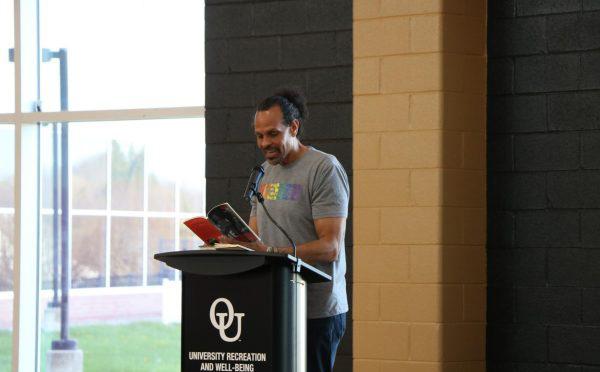
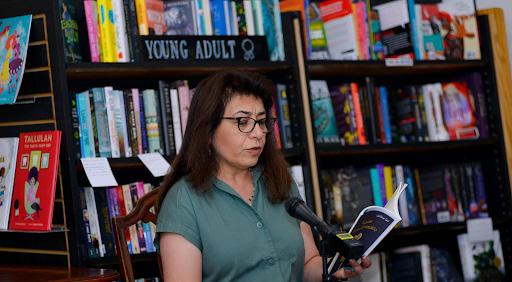
Students and community members gathered on Oakland University’s Recreation and Well-Being Center basketball courts April 14 for the 38th annual Maurice Brown Memorial Poetry Reading, an event that blended literature, athletics and campus tradition in an interactive setting.
This year’s theme, “Poem Month Madness: Celebrating Poems and Basketball” brought a unique energy to the event as attendees sat along the court, listening to poetry in a space typically reserved for sports.
The nontraditional venue created a relaxed and engaging atmosphere, allowing participants to experience the reading in a new and accessible way.
The event featured acclaimed poet and essayist Ross Gay, whose work often explores themes of joy, community and everyday life. Known for incorporating elements of basketball into his writing, Gay was a fitting choice for this year’s theme.
Throughout the reading, Gay shared selections that reflected on topics such as memory, gratitude and connections between personal experiences.
The annual reading honors Maurice Brown, a former Oakland University English professor who taught at the university from 1961 until Brown’s death in 1985. Established in 1988, the series continues to celebrate Brown’s passion for poetry while bringing nationally recognized writers to campus.
Oakland University professor Katie Hartsock, who organized this year’s event, said the decision to invite Gay came after discussion among faculty in the Creative Writing Program.
After discussion, the Creative Writing committee selected Ross Gay to read basketball-themed poetry, aligning with the goal of connecting literature with shared cultural experiences.
“The faculty of our Creative Writing program committee always discusses our choices of visiting writers to invite to our campus to read and share their work,” Hartsock said. “We all knew we wanted to bring Ross Gay, especially as he is noted both as a poet and essayist.”
Hartsock said the idea to combine poetry and basketball developed from experience teaching Ross Gay’s work and involvement in community arts programs, where blending creative expression with shared activities helped engage a wider audience.
“It struck me, what if we had poetry reading devoted to basketball, bringing people together who know they love poetry, and people who love poetry but might not yet know they love basketball,” Hartsock said.
The event transformed the basketball courts into a space for storytelling and reflection, as attendees listened closely to Gay’s readings.
“It brings together students who are majoring and minoring in English and Creative Writing, but it also invites students of all majors who love literature,” Hartsock said.
Gay’s readings emphasized a wide variety of themes, including adolescent romance, self-discovery and familial tension.
In one of the readings, Gay discussed a note written to a childhood crush. During school, Gay realized that the note had been left in a pair of pants hidden behind the couch.
Eventually, Gay found the pages of the note scattered across the bed. Gay revealed to the audience that the
note had been discovered by Gay’s father after picking up the discarded pair of pants.
Gay explained that the discovery of the note encouraged continued writing, a moment that helped shape an early interest in storytelling.
Hartsock emphasized that creative writing can enhance a wide range of careers by helping individuals express complex concepts more effectively.
“For example, our environmental sciences majors can do so much by crafting stories, beyond pure data, regarding climate emergencies,” Hartsock said.
The event welcomed members of the surrounding community, including alumni, local writers and literature enthusiasts. This open format allowed for a broader exchange of ideas and reinforced the role of poetry as a shared cultural experience.
“We love to have community friends, Southeast Michigan writers and professors, OU alums, local lit fans, join us for these events,” Hartsock said. “It’s an acknowledgement of the power of poetry to bring people into a shared space.”
Students who attended the event described the experience as both unique and engaging, particularly due to the unconventional setting.
Maggie Quinn, a senior public relations major, said the basketball court setting made the reading stand out compared to previous experiences.
“It was a very unique experience,” Quinn said. “I have been to poetry readings in the past, but doing it on a basketball court was very interesting. A lot of the storytelling was very interesting, and it was cool to see how different parts of life connected to basketball.”
Quinn added that the event expanded the understanding of what poetry can be, especially when exploring nontraditional topics.
“It was kind of nice to see you can write about stuff that isn’t traditional,” Quinn said.
Natalie Ornette Corchi, a freshman English for education major, said the setting created a different
perspective on both poetry and sports.
“For me, it felt like an interesting disconnect that made me focus more on the writing itself and how it relates to sports,” Corchi said.
Corchi said the event changed previous perceptions of poetry as rigid or structured.
“I always thought that poetry was this stiff rigid thing, but with this, it felt more personal and conversational,” Corchi said.
Shannon O’Connor, a senior majoring in women and gender studies and professional and digital writing, said the environment enhanced the emotional impact of the reading.
“I loved the way it echoed through the basketball court,” O’Connor said. “It felt like being at a basketball game and elevated the sense of connection with the topic.”
O’Connor added that the setting demonstrated how poetry can exist in a variety of environments beyond traditional spaces.
“It made me feel like poetry could be in any setting,” O’Connor said.
Following the reading, audience members had the opportunity to ask Gay questions about the work, writing process and inspiration.
A table was also set up where attendees could purchase copies of Ross Gay’s poetry collections and have books signed, providing a more personal connection between the author and audience.
As the Maurice Brown Memorial Poetry Reading continues its decades-long tradition, the event demonstrated how poetry can evolve to reach new audiences.
By combining literature with the familiarity and energy of basketball, organizers created an experience that resonated with both longtime poetry enthusiasts and those encountering poetry in a new way.
PHOTO BY MATTHEW VIGELIUS
YHC presents: The happiness showcase
ALEXA DUDEK Campus Reporter
From 1:15 p.m to 2:45 p.m, students in the Donna and Walt Young Honors College (YHC) hosted presentations between the food court and coffee shop in the Oakland Center.
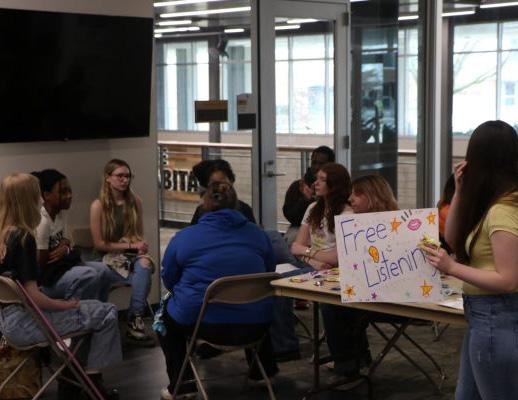
Students taking the HC 2060 course, the Art and Science of Happiness, gathered around a table in the Oakland Center to host live happiness chats. With dancing, upbeat music and cute posters, the YHC students drew in a crowd of students to discuss happiness with.
After visiting the table, students would be invited to sit down and have a one-on-one conversation with a YHC student regarding happiness. The conversations were led by attendees, while the YHC students listened to the discussion.
Attendees were met with a list of prompts to start a conversation with. The prompts were based off of chapters that were discussed in the YHC happiness class.
The prompts engaged with a variety of topics involving happiness, including a question about if healthy relationships require mutual effort.
Freshman Sage Uhl appreciated the casual atmosphere of the happiness chats.
“We just pull people in and ask them anything,” Uhl said. “It can be completely anonymous, you can tell us your name if you like.”
Inspired by the Sidewalk Talk project, these happiness chats aimed to emphasize the importance
of community support.
Donna Voronovich, professor of HC 2060, prioritizes building connections between students through these chats.
“The Sidewalk Talk is really about making interpersonal connections and getting people to sit one-on-one,” Voronovich. “In our case, the topic is happiness, which relates to the class, but it is also kinda building confidence with the students to sit and talk to one another, which is a skill we are starting to lose a little bit.”
Voronovich hopes to bring positivity to campus in a busy time for students.
Mental Health Matters Study Hall
SARAH BULGARELLI Campus Reporter
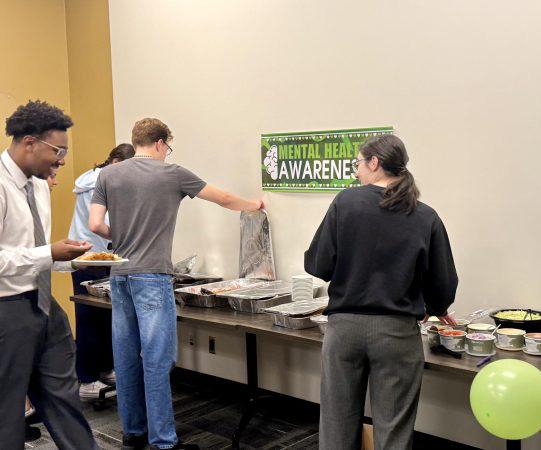
Students gathered at Oakland Center meeting rooms 128-130 from 2 to 4 p.m. on April 15 for the Mental Health Study Hall, an end-of-semester event designed to help students manage stress and prepare for finals.
Hosted by the student organization Mental Health Matters (MHM), the event provided a space for students to study, connect with others and take a break during one of the most stressful times of the semester.
Food from Slim Chickens, Panda Express and The Halal Shack was available for everyone, along with desserts and drinks.
Students could pick up small items such as motivational journals, stress-relief toys and stickers arranged on tables, alongside a display that highlighted the organization’s mission and available resources.
The flexible setup allowed students to come and go as needed, making it easier to fit into busy schedules.
Students studied, chatted and ate together while being in a supportive environment.
Sean Sellars, president of MHM, said events like this are especially important during finals due to high stress levels.
“Students, especially this time, are really stressed, and especially this age group of demographic like college students were most susceptible to a lot of mental health issues,” Sellars said. “So having
events like this that are free to students that provide advocacy and awareness and a way to actually prepare and fight and combat stress, I think, is something that’s super powerful.”
The organization focuses on promoting mental health awareness and providing resources for students through events and outreach on campus.
Sellars shared what he hoped students would take away from the event.
“The main thing is that there’s support and community here on campus,” Sellars said. “We all go to the same school, a lot of us suffer from the same stuff, so just to let people know that they’re not alone and that there’s people here who care about you.”
Aaron Thielen, vice president of MHM, said the goal is to create a welcoming space for students.
“That’s what I want out of this club, having a community where people can come and have a good time and learn about mental health, but also meet other people who can maybe connect with their struggle and help them out,” Thielen said.
Scarlett Anderson, treasurer of MHM, emphasized the value of having organizations like this on campus and expressed hope that students would leave the event with greater awareness and a stronger understanding of its message.
“I hope they take away that mental health does matter, and that all the students here at Oakland matter, and that basically, these types of clubs should be at universities,” Anderson said.
Gabriela Accioly Ferraz, a member of MHM, said that the club’s mission resonated on a
“I know that it’s a stressful time going into finals, but we want to bring a little energy,” Voronovich said.
Freshman Genny Zielinski emphasized the importance of strengthening community connections. “It’s not as scary as you may think to come up to someone and have that connection,” Zielinski said. “You can build connections easier than you think.” Through the happiness chats, YHC students hope to build a community by providing students with an outlet to rant.
Senior Angelina McGuire realized the necessity of building a connected campus community and reflected on the importance of knowing available resources. The happiness class provided McGuire with insight that would have been valuable as a freshman.
“I’m a senior right now, and knowing that there’s something like this if I was a freshman coming in, feeling that there’s somebody I could go up to and tell about my day, what’s bothering me, or what my future goals are and how to be happier is important to me,” McGuire said.
Even through difficult times, Voronovich reminds the Oakland University community to consistently search for happiness.
“Everybody is, you know, entitled to have happiness in their life, but don’t think about it as a destination you have to get to,” Voronovich said. “Just look for little moments of happiness in your life every day, and if you search you will be able to find them.”
personal level.
“Sean is my personal friend, and he invited me, but also I really support the mission of mental health matters, especially with the mental health crisis we’re facing nowadays, and especially coming from an immigrant family, it’s like a stigma,” Ferraz said.
“So I really appreciate what the club stands for.”
As finals approach, events like the Mental Health Matters Study Hall offer students a space to step away from stress, connect with others and feel supported during a demanding time in the semester.
PHOTO BY MATTHEW VIGELIUS
PHOTO BY SARAH BULGARELLI
Sexual Assault Awareness Month
JENNIFER THOMASMA Campus Reporter
Oakland University is recognizing Sexual Assault Awareness Month this April through campus initiatives, education and resources aimed at supporting students and preventing sexual violence.
The university joins campuses nationwide in raising awareness and encouraging open conversations among students, faculty and staff.
Sexual Assault Awareness Month, observed nationally each April, focuses on raising awareness, promoting prevention and supporting survivors of sexual violence.
The month also emphasizes the importance of consent education and bystander intervention in creating a safer campus environment.
Jessie Hurse, interim dean of students and deputy Title IX coordinator, emphasized the importance of creating a safe and supportive campus environment.
“Sexual assault awareness is important because we need to provide a safe, healthy environment for students to thrive,” Hurse said. “Situations like sexual misconduct or harassment can impact a student’s ability to perform academically and socially.”
Hurse added that issues such as stalking, harassment and intimate partner violence can create significant challenges for students, including impacts on mental health and overall well-being.
Hurse explained that the university offers a range of support for students who may be affected, including counseling services, academic accommodations and connections to off-campus resources such as HAVEN,
which provides counseling, advocacy and support for survivors of sexual assault and domestic violence.
“We try to be as supportive and respectful as possible,” Hurse said. “That can include counseling, academic support, or simply giving students the time and space they need to process their experience.”
Hurse added that support varies depending on individual needs, and students are given options to determine what steps they are comfortable taking.
“I don’t move unless you tell me you’re comfortable moving in that direction,” Hurse said. “You dictate the next steps.”
Hurse said students who report incidents are able to make decisions about what steps they are comfortable taking, emphasizing to encourage students that support is centered on the student’s needs.
“Have empathy,” Hurse said. “Be a supportive friend, listen, be present, and help connect them to resources.”
Hurse also noted that students should feel comfortable reporting incidents in order to access available support systems.
Shona Collins, a detective with the OU Police Department, provided materials outlining reporting options and support available to students. Officers are trained to support survivors and respond with care.
“Oakland University Police officers are trained and here to help 24 hours a day,” Collins said. “You will be treated with dignity, courtesy, and professionalism.”
Throughout the month, OU continues to promote awareness through educational efforts and campus programming aimed at informing students and encouraging respectful interactions.
Hurse pointed to initiatives such as the “Love
ENG 3681 Hosts Oil Awareness event
ERIN BANES
Campus Reporter
With the school year coming to a close, Jeffery Insko’s Literature and the Environment class (ENG 3681) replaced a traditional final with a “Petro-Party.” The event invited others to explore what students learned about oil and its impact on daily life.
Focused on petro-culture and infrastructure, the party was designed as an interactive, collaborative experience. Instead of formal presentations, students created stations that visitors could move through at their own pace.
ENG 3681 examines the ubiquity of oil, its environmental consequences and its influence on culture. Course readings, including The Great Gatsby, DUCKS! and Oil People, were displayed throughout the space.
The party format aimed to move away from despair-focused environmental discussions. It instead emphasized shared learning and curiosity.
Oil remains central to modern life, yet often goes unnoticed.
“The goal of the Petro-Party is twofold: to celebrate the class’s shared learning and to share with people outside the class all of the cool and exciting things that the students in the class have learned,” Jeffery Insko, the class’s professor, said.
He added, “I want to emphasize that learning is a joyful process. Conversations about oil can feel hopeless and desperate, but there is real power and possibilities for transformation to be found in solidarity,
in working together.”
Held in the Nyberg room of Kresge Library, the event featured poster boards, interactive displays, creative writing and take-home materials. Each student designed their own station, offering a different perspective on oil’s role in culture, history and infrastructure.
Peyton Nelson, an English major, explored oil sovereignty in Venezuela and exploitation in the Niger Delta.
“These people just have to bear the brunt of oil’s effects when they’re not the ones really behind it,” Nelson said.
The display included interactive elements that made the topic more approachable. Visitors could engage directly with the material rather than passively observe.
Brooke Holmes, an English major concentrating in linguistics, focused on green infrastructure and urban oil runoff.
“You wouldn’t look at a bridge and think oil, but there it is,” Holmes said.
Her visuals demonstrated how oil pollution travels from roads and vehicles into waterways. They also showed how green infrastructure can help reduce environmental harm.
Kade Koss, majoring in English and political science, examined technology through cars, the internet and oil.
“More might not be the solution to our socioeconomic and political problems,” Koss said.
The station included poetry pamphlets for attendees to take home. These encouraged reflection beyond the event itself.
Attendees described feeling more engaged with the topic after visiting the stations. Many said the format
Respectfully” event, held earlier this month, which encouraged open conversations about relationships, consent and sexual health.
The event, previously covered by The Oakland Post, provided students with access to resources while addressing topics that are often stigmatized.
Ann Rayford, director of the Graham Health Center, said discussions around sexual health and related topics can often be difficult for students.
“Sometimes it’s not something that’s talked about. It can be taboo,” Rayford said.
Rayford added that increasing awareness and encouraging conversation can help students feel more comfortable seeking information and support.
By combining awareness efforts, support resources and educational programming, OU aims to foster a campus environment where students feel safe, informed and supported.
As Sexual Assault Awareness Month continues, university officials encourage students to engage in conversations, utilize available resources and contribute to a culture of respect on campus.
made the information easier to understand.
“I didn’t know everything that was included in oil … just about everything we use is derived from some form of oil, even the clothes on our backs, Emily Smolinski, a biology major, said.
She added, “The party format definitely made it more interesting. I don’t think I’ve ever sat down and read something about oil just for fun, but this made it easier to engage with.”
“A lot of people don’t read essays, but when you have pictures, games, and exhibits, people pay more attention,” Shelby Shull, an English major, said.
“When things are so bad for the environment, it can be overwhelming to engage with, but having a more laid-back environment made it easier to participate without feeling hopeless,” Nick Klaver, a biology major, noted.
The Petro-Party highlights student-led learning and connects complex systems like oil and infrastructure to everyday experience.
It encourages dialogue rather than passive consumption.
Students hope attendees leave more aware and curious.
“This class and everyone’s presentations gave me a great sense of hope,” Holmes reflected.
“More discussion across different perspectives is the only way we’re going to find real solutions,” Klaver said.
PHOTO BY COURTESY OF UNSPLASH
The last war correspondent
ANDREW MCNAMARA MAY Features Reporter
Across America — if not the wider world — there is a growing appetite for anyone who can offer a single, satisfying answer to the geopolitical chaos of the Middle East. Genuine expertise, something that might otherwise simply be called “competence,” has become rare enough that those who possess it feel almost like an endangered species.
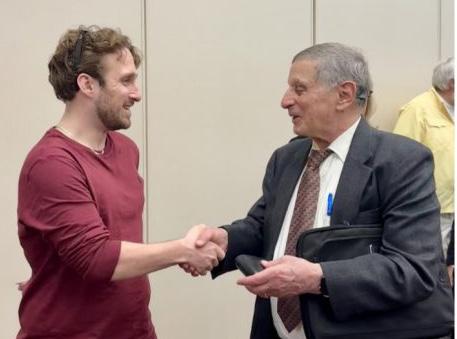
Enter Roy Gutman, a Pulitzer Prize–winning journalist known for his reporting from conflict zones in the Middle East and the Balkans, who delivered a lecture at Oakland University on April 14.
Gutman stood before the crowd as something of an emblem of that rarity. Not only for his depth of knowledge of regions that, to many Westerners, register as distant and incomprehensible, but also as a relic of a different era. A time when a newsroom was a physical place, not a Zoom link or a podcast feed.
What did he do with that rare moment?
He delivered something closer to a presidential briefing than a lecture.
He began with the modern history of Afghanistan — an untamed, mountainous country that drew the attention of a declining empire.
“That day in February 1989, when Russian forces departed Afghanistan,” Gutman told the audience, his tone measured, almost clinical, “champagne corks were popping at Langley — for the CIA, across the government. But something was missing
in that euphoria.”
In celebrating the collapse of their Cold War rival, American officials failed to fully account for the power vacuum left behind. Soviet weapons and munitions remained scattered across the country — eventually falling into the hands of insurgent groups, some of whom had previously been armed and trained by the United States.
From there, Gutman traced the region’s trajectory forward through the fall of the Shah in Iran and into the contemporary conflicts shaping Iran and Lebanon today.
Two main lessons emerged from the lecture. The first is that the search for a simple or tidy solution
Rent rising vs. paycheck grinding
MADI TURNER
Features Reporter
Students are not just worried about graduating. Many are worried about where they can afford to live afterward.
Across Oakland County, rising rents are outpacing income growth, leaving college students and recent graduates facing a difficult reality before their careers begin. What was once considered a manageable next step — moving out, renting an apartment and building independence — is becoming increasingly difficult.
Housing costs continue to climb across southeast Michigan, placing added pressure on young renters entering the market. Zillow’s March 2026 market report found the typical rent in the Detroit metro area was $1,473, up 2.3% from a year earlier.
The increase comes as many entry-level salaries have not kept pace, widening the gap between income and housing costs.
Experts say the divide is one of the biggest barriers facing young renters today.
“The rent is too damn high,” Jimmy McMillan, founder of the Rent Is Too Damn High Party, said in repeated public statements advocating for housing affordability.
Though often referenced somewhat humorously, the phrase reflects a real concern about housing costs nationwide.
Federal data underscores the pressure on renters. According to the U.S. Census Bureau, nearly half of renter households were cost-burdened in 2023,
meaning they spent more than 30% of their income on housing.
The trend reflects broader affordability challenges, especially for younger renters and those entering the housing market for the first time. In regions such as Oakland County, where demand for housing remains strong, the pressures are becoming more visible.
As more people compete for available units, prices rise, making it harder for students and recent graduates to secure affordable housing.
At the same time, the cost of living is rising in other
to the Middle East is futile; the region’s history has never allowed for such clarity.
Consider Iran — one of the world’s oldest continuous civilizations, with a history stretching across multiple empires, religions, and cultural renaissances. Long before the first kingdoms of England or Russia had taken shape, complex societies had already risen and fallen repeatedly in Mesopotamia.
That creates a relationship with the land. A similar phenomenon was observed in America’s failure in Vietnam. It is impossible to know the placement of every cave in an ancestral homeland better than those whose ancestors are often buried in those caves.
The second lesson Gutman emphasized was not limited to the Middle East. It applies internationally: the importance of reliable reporting and understanding local realities.
Gutman finished his career with reporting from Syria in the mid-2010s. At an age when most men just want to be a grandfather, Gutman embedded himself in a war zone to broadcast the facts.
Why risk a bullet instead of enjoying retirement?
“It can happen in any county … certain charges, corruption comes in, and betrayals and treasons also occur,” Gutman said.
He paused for a moment.
“That is why you need that voice,” Gutman said. “You need that perfect reflection. Unique, honest journalists who are willing to take a risk — and risk their reputation, in fact — getting stories.”
areas. The U.S. Bureau of Labor Statistics reports housing remains one of the largest contributors to inflation, with shelter costs continuing to increase year over year.
For students preparing to graduate, this is changing expectations about independence.
Many are delaying plans to move out or choosing roommates to reduce costs. Others are reconsidering job opportunities based on location and affordability rather than preference.
The shift is not about lifestyle. It is about survival in a time of nearly unprecedented economic upheaval.
Many are entering the workforce with student debt, limited savings and salaries that do not match the cost of living. The combination makes it difficult to achieve financial independence immediately after graduation.
Meanwhile, expectations have not adjusted at the same pace as economic conditions. The traditional path of graduating, securing a job and moving into independent housing is no longer guaranteed.
Instead, students are adapting. Some are staying home longer. Others are relocating to more affordable areas or balancing multiple income streams to manage expenses.
The pressure is also influencing career choices. Students increasingly prioritize jobs with higher pay or remote flexibility, allowing them to manage housing costs more effectively.
As rent continues to rise, the question is no longer whether students want independence. It is whether they can afford it.
For many students and others in Oakland County and across the country, that answer remains uncertain.
PHOTO BY ANDREW MCNAMARA MAY
PHOTO COURTESY OF UNSPLASH
Peace out, The Oakland Post!
MALLORY WALIGORA
Mallory Waligora
Working for The Oakland Post over the past three years has been nothing short of a whirlwind.
I joined The Post during my sophomore year as a political science major, and I began my journey here as a political reporter. At the time, journalism had never even crossed my mind. I figured I would go to law school or work in policy. In all honesty, I just needed some extra spending cash – and I followed politics enough to write about it – so I joined the team.
Somehow, that turned out to be one of the best decisions I’ve ever made.
Working for The Post is such a magical opportunity in the sense that you suddenly hear about everything going on around campus. You learn how things actually work, what administration really does and what issues matter most to students. You start to understand the stories people don’t always see and the inherent responsibility that comes with telling them.
Some of my favorite memories as a journalist for The Post include touring the heating plant facility when campus shut down, traveling to Pittsburgh on the student bus to attend the March Madness game and attending the Michigan Senate debate as press. There were some real pinch-me moments during my time at The Post – times where I had a press pass around my neck and a serious case of imposter syndrome, wondering how I got into this room in the first place.
However, the best moments were not spent in press gaggles or hallway interviews. The best moments were the minutes before staff meetings, when the newsroom felt loud and alive, watching people slowly trickling into our small office, opening their laptops and multiple conversations happening at once.
Mondays slowly became my favorite day of the week, simply because I knew I would see at least 20 of my friends in one place. Being part of The Post made even the hardest weeks feel like something I would miss later – and I know I will.
There were also plenty of frustrating moments behind the scenes: sources that didn’t respond, endless follow-up emails and more Freedom of Information Act requests (FOIAs) than I ever thought a university student could emotionally handle.
But more importantly, there was the satisfying feeling of getting a story right – the adrenaline rush of hitting “publish” and knowing that you did honest, meaningful work.
As I wrap up my time here at The Oakland Post, I have some people to thank.
For all my section editors and reporters – it’s been an hnor to read your work, edit your stories and watch you grow. This includes our talented section editors: Addison Koch, Cael Tanner, James Elling, Marissa Getschman and Sophia Curran. Additionally, I’ve had the honor to manage all the reporters, all of whom have brought a unique flair and perspective to writing: Sarah Bulgarelli, Alexa Dudek, Jennifer Thomasma, Erin Banes, Madi Turner, Andrew McNamara May, Maddie Short, Mike Okoronkwo, Matt Lewakowski, Maryanne Sanford, Maria Magnoli, Sarah Wasielewski, Maryam Moss and Matilde Rabajoli. If you have the time, check out their work.
I always joke that I am their biggest fan because I technically have to read and edit their stories, but there’s something really special about editing at 10 p.m. on Sunday night and seeing what everyone decided to write about. There’s something truly meaningful about working alongside writers who genuinely care about getting things right.
I’ve grown particularly fond of Sophia Curran, who has followed in my footsteps, serving as the political editor and now content editor, roles I once held myself. I feel at ease leaving The Post in her and Maria Magnoli’s hands.
To the marvelous marketing and advertising team, including Ruby Hernandez, Maryam Somo, Alicia Gabbard, Capri Clark and Reagan Reetz, thank you for making things fun in an often hectic newsroom, and for making me look significantly cooler than I actually am on social media.
To the wonderful photographers, including Ava Webb, Liliana Valenza, Claire Sanderlin, Matthew Vigelius and Evelyn Apahidean, thank you for bringing my words to life. Matthew helped me coordinate a fake stream of piss for my coverage of the OU Pisser, which feels like an apt summary of my experience here. One of my favorite memories will always be carpooling to Detroit with Courtney Blackett to cover the Seante debate — she’s still a good friend of mine several years later.
Thank you to the graphics team, August Wicker, Anna Friedrich, O’hara Diamond, Dylan Hecker and Ava Guest, for turning my chaotic ideas into stunning visuals. Zachary Oberdier remains one of the coolest people I’ve ever met and the only person I trust for beer recommendations. I also want to thank the graphics team for constantly listening to
my ongoing love life updates and somehow always having something insightful to say.
Thank you to our faculty advisor, Garry Gilbert, who has always advocated for me and my skills as a journalist. Garry always treated student journalism like it mattered, which made all of us take it more seriously too.
I’ve had the honor of working under five editorsin-chief, all of whom have had a firm, and sometimes lofty, belief in my writing. Arianna Heyman. Autumn Okuszka, Olivia Chiappelli, Chelsea Bossert and Adrian Jimenez Morales have all pushed me to tackle tough stories and ask uncomfortable questions. Their guidance has made me a better journalist and a better person. They also sat through more late-night FaceTime calls and rants than they probably signed up for.
Somewhere along the way, this stopped being just a campus job. It became something I cared deeply about. The Oakland Post taught me how to ask better questions, how to advocate for information that should be public and how to piece together complicated stories. Most importantly, it taught me how to trust my own voice and how to be part of a team.
Leaving The Post is bittersweet for lack of a better word. That said, I’m leaving with full confidence in the people continuing in it. The underclassmen write and report with a level of precision and drive that’s honestly intimidating. The Oakland Post readers –you’re in good hands.
For my fellow Posties: keep on filing FOIAs, keep on asking the hand questions and keep on writing. Please – for the love of god – no Oxford commas.
PHOTO COURTESY OF ETHAN SCHUERMAN
Back to the moon: Artemis II
JENNIFER THOMASMA Campus Reporter
As NASA’s Artemis II mission returned to Earth after a historic journey around the moon, the milestone is capturing attention and inspiring a new generation of students. The mission signals a renewed era of human space exploration.
According to NASA, Artemis II sent four astronauts on a mission around the moon to test critical systems, including the Orion spacecraft and Space Launch System rocket. The mission was designed to ensure that life-support, navigation and population systems are ready for future missions.
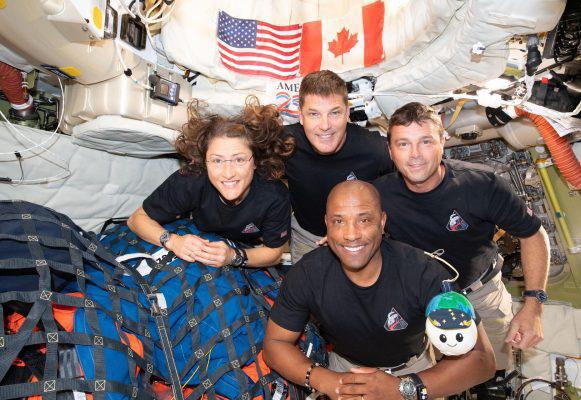
The Artemis II crew included Reid Wiseman, Victor Glover, Christina Koch and Jeremy Hansen. While the mission did not include a lunar landing, it served as a key step in NASA’s Artemis program.
The crew safely returned to Earth after completing the mission, marking the first crewed journey around the Moon in more than 50 years. The success highlights the growing potential for future deepspace exploration.
For students at Oakland University, the mission represents both excitement and uncertainty about the future of space exploration.
Emilio Eslava, a senior electrical engineering major at OU, said the mission reflects early progress in long-term space exploration efforts and a promising sign of what may be to come.
“It’s a great start, but we’re still a few years away from a Moon landing,” Eslava said.
Eslava said continued progress could lead to future missions beyond the Moon.
“If we keep doing this, we might get to Mars in 20 years,” Eslava said.
Eslava said the mission inspired trepidation leavened with admiration for the crew.
“I’m scared of outer space, but I really admire the astronauts, ” Eslava said.
Christopher Kobus, a professor of mechanical engineering at OU, said the Artemis II mission marks another momentous move toward broader contemporary space exploration.
“The Artemis II mission is a milestone in modern space exploration because it marks humanity’s return
to the lunar vicinity for the first time in more than 50 years,” Kobus said.
Kobus said the mission highlights how concepts learned in the classroom apply to real-world challenges.
“For engineering and STEM students, watching this unfold is inspiring because it transforms textbook theories into tangible reality,” Kobus said.
Richard Olawoyin, a professor of industrial and systems engineering at OU, said risk and safety are central to every decision in a mission like Artemis II.
“Risk is what could go wrong, and safety is everything done to prevent it or survive if it happens,” Olawoyin said.
Olawoyin said engineers must anticipate both known risks and uncertainties.
“Critical systems are duplicated, extensively tested and designed to respond in real time if something goes wrong,” Olawoyin said.
Daniel Aloi, a professor of electrical and computer engineering at OU, said communication systems are essential to missions like Artemis II.
“The communication system is the lifeline of a mission like Artemis II,” Aloi said.
Aloi said deep-space missions rely on strong technical foundations.
“Artemis II runs on the same fundamentals students learn in engineering courses,” Aloi said.
Artemis II represents a shift from short-term missions to long-term planning in space exploration. The mission highlights the importance of innovation, collaboration and the role of future scientists and engineers.
PHOTO COURTESY OF NASA
Farewell to our grads: The terminal
A college newspaper is something like an airport terminal. Purgatory.
Talented writers go there to wait to pass on. There exists a promise of future reward, and that’s all the brain can consider. Until the plane calls for boarding. Then all the possibilities rush through you. All the stores you didn’t stop at. The noodles you did not eat.
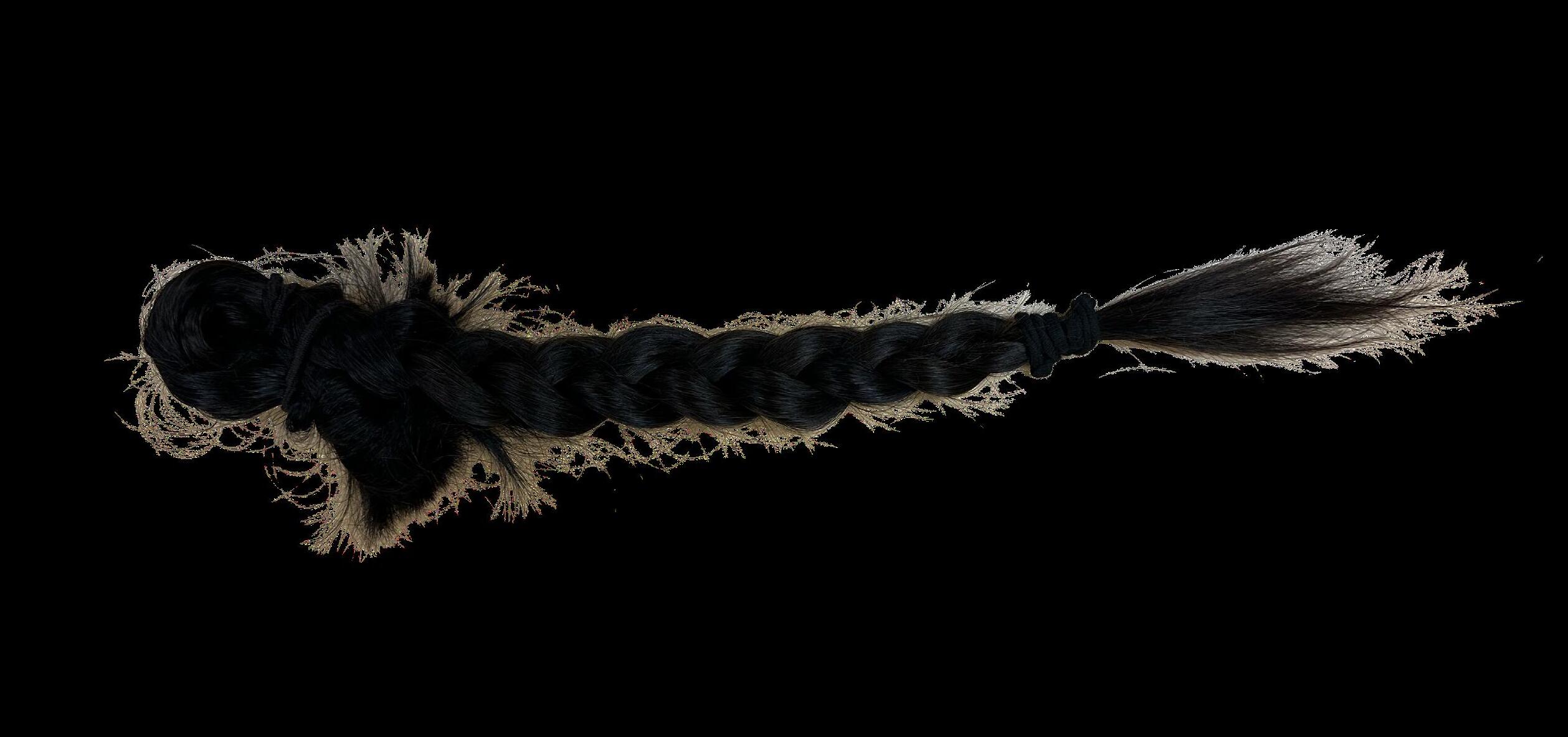
Editor-in-Chief Adrian Jimenez Morales delivered a moving speech while shaving his luscious hair to spiritually cleanse for a TV news position in South Florida this summer.
"Studying journalism was the greatest endeavor I've undertaken. It has been a crazy experience — with a lot of uncertainties and challenges — but I would do it all over again. Although I've run out of energy towards the end, I am more than excited to start working in the world out there. I'm sure The Post will be in good hands."
He rides off a hero into the sunset; his optimistic and team-oriented run of The Oakland Post will inform much future programming.
Some people cannot wait to catch the flight. It should be remembered that he was editorin-chief for one of the most newsworthy semesters in the history of OU’s swampy forest campus.
Mallory Waligora, content editor of the Post, is also anxious to spend her Sunday night doing anything but reading 40 student articles – in favor of a future in Detroit news.
Maria Magnoli, the incumbent editor-in-
chief of The Post, remarked on Waligora, “Mallory, in combination with The Post, transformed my entire OU experience. From the day I met her, I have felt utterly inspired to achieve, and I admire the humble attitude she has while doing it. Mallory Waligora is someone that both Oakland University and I will never forget."
Some fall in love with the sky and become pilots. They say less – and button their blazer.
James Elling, whose sports editing tenure enjoyed some truly nail-biting basketball, looks forward to bringing his trademark positivity to his next position.
“Jesus Christ is the way, the truth, and the life. Go Lions, go Pistons, and go make disciples.”
When some people leave the terminal, it makes the wait feel longer because their humor leaves the building.
Time slows.
The marketing director, Ruby Hernandez, is eager to bring her outside-the-box thinking, dedication, and innovation to the broader world of advertising and marketing.
“Thank you, Oakland, for giving me the community I was seeking. Transferring for my senior year was the best decision
I ever made. I wasn't here for long and didn't leave any sort of legacy at OU, but for those who did get to know me, I hope you carry three important principles with you from knowing me: the first is to be kind; you will never fully know what someone is going through. Second, go where you are seen, as a first-gen Latina, all of you make me feel seen, thank you. And finally, open your heart to new things, whether it's taking a semester abroad in Australia or simply joining a new club.“
Some people cry at the gate, conflicted by the waltzing emotions of novel opportunity and the loss of what became home.
Meanwhile, some, like politics reporter Matilde Rabajoli, are more eager for a good nap than anything else – of course, followed by a full-blown work bender, “I put the pro in procrastinate.”
Some people fall asleep at the gate.
Features editor
Cael Tanner’s eyes meticulously scan the plane and gate, looking for faults and trying to figure out where the plane’s been and where it's going."In nearly all professions,” he starts and pauses, “one is, from time to time, called upon to do things most other people would consider absurd."
Wherever his plane goes, it will be unique.
It’s possible that no two planes will
land at the same destination.
Ava Webb, chief photo editor for The Post, hustles everyone in for one last photo. The perfect moment before everyone’s flight parts ways. “Life goes on frame by frame; all you have to do is capture it.”
Then there exist a special few who delight in making the wait at the airport better for everyone else, to the point that they almost forget about their flight. Those who think the journey is the happiness in the friends you make, not the destination.
August Wicker shuffles their many stylish bags towards the gate – each with a tasteful set of pins, and a delightfully Cobain-esque outfit.
“The past year and a half has been a blast with the Post. Thank you, Posties. Thank you, Garry. Thank you, OU. I’m so grateful to have shared this time with you all, and I hope to put a fraction of this love and energy into everything I do moving forward. Stay woke and go Grizzlies!”
go Grizzlies! Working at the Oakland Post in the Advertising Department not only helped build my resume, but also allowed me to make several great friends.”
No one ever says their favorite part of the trip was the airport. Many things come: the tires slip back into the wheel well, and a pilot whispers sweet nothings to a couple of hundred sleepy people.
But it is impossible to have gone anywhere on that journey without stopping at the airport. The questions, the scrutiny, the over-reachy (and recently way too underpaid) security, and the friends you made waiting for the flight are just as much of the journey as the Magerita in Tahiti.
Just don’t forget us when you’re there, and we hope to see you again when we depart the terminal. ROCHESTER
The airport can feel like an absolute drag. There never seems to be enough comfy places to sit and hang out. The right people never want to talk to you, and it seems like you always sit next to the strangest and most bizarre of freaks – true rarities of the circus – for any process that requires more than five minutes.
This is a trick of the mind.
“I would encourage students to get as involved as possible on campus! Make the most of your time and don’t be afraid to talk to new people,”
Alicia Gabbard said, broadcasting and hyping as only a true advertising director can. “Overall, I’ve had a great experience at Oakland University -
Censored to esteemed: OU professor heads to Princeton
MARIA MAGNOLI Arts Reporter
For her, writing was the result of rampant curiosity. Born from a desire to savor stories told by her grandmother on the roof of her home in Baghdad, Oakland University professor Dunya Mikhail grew up with a pen in hand. Her prolonged writing journey has granted her a prestigious position in the fall as the Holmes Visiting Professor of Poetry at Princeton University.
Mikhail is a special lecturer in the Department of Modern Languages and Literature and the Department of English, Creative Writing and Film. Upon receiving such extraordinary news, Mikhail was met with incessant support from her colleagues, even receiving a letter from OU President Ora Pescovitz.
“That gesture of support reminded me that my home university is truly a home — one that encourages its faculty to grow beyond its walls. I do feel honored, of course, receiving this offer, but also curious. For me, what matters most is not the title, but the space it creates — for dialogue, for teaching and for listening,” Mikhail said.
Her writing encompasses a myriad of categories, including poetry, journalism, translation and prose. Working as a journalist for the Baghdad Observer, she was an editor and translator who was censored and interrogated by the Iraqi government. In 1996, she was exiled from Iraq, emigrated to Jordan, and then to the United States, where she earned her master’s from Wayne State University.
In 2001, she received the United Nations Human
Rights Award for Freedom of Writing, honoring her intrepid work. Her writing was deemed “subversive” by the government, encouraging her to seek new ways of unveiling truth.
“Censorship taught me the power of what cannot be said directly,” Mikhail said. “It pushed me toward metaphor, toward layered language, toward writing that can survive even under pressure…Interrogation is not just about questions — it is about control, about fear. But it also clarified something for me: that writing is not only an artistic act, but an ethical one.”
“Perhaps what remains unsaid does not disappear, but changes its form — like water finding its way through stone,” Mikhail continued. “It lingers in pauses, in images, in the quiet persistence of language that refuses to close. And in that space, between silence and speech, something continues to breathe.”
Poetry and translation allow Mikhail to “listen
Addie’s Albums: Sunday In Heaven
ADDISON KOCH
Campus Editor
Zella Day’s “Sunday In Heaven” is an emotional progression through love, obsession, self-awareness, and letting go. It unfolds in stages that feel cyclical rather than linear, moving from fixation and doubt into reflection, breakdown, and eventual acceptance without ever fully smoothing the edges between those states.
The album opens with “Mushroom Punch,” a warped psychedelic-pop track that sets the tone through imbalance and emotional disorientation. It captures the feeling of being stuck on someone who doesn’t return the same intensity, with hazy production that mirrors obsession and instability rather than clarity.
“Am I Still Your Baby” follows with a softer, nostalgic sound that leans into uncertainty instead of confrontation. It sits in the space where a relationship feels like it’s slipping away without either person fully saying it, where silence carries more weight than actual words.
“Dance for Love” shifts into something lighter and more open, using dreamy, retro-inspired production to change the emotional pace. It treats love as motion and release instead of tension, focusing on how connection can still feel alive even when it’s fragile or fading.
“Girls” moves away from romance entirely and takes on a more atmospheric, slightly eerie tone. It broadens the focus into identity and feminine presence, highlighting independence and shared strength instead of centering a single relationship.
“Golden” stands out as one of the most grounded and warm moments on the album, built on a 70s-inspired
sound. It’s about resilience and finding something steady within yourself, even when everything around you feels uncertain or unstable.
“I Don’t Know How to End” brings the emotional tension back, focusing on how endings rarely arrive cleanly. The track sits in that uncomfortable in-between state where something is clearly over but still hasn’t emotionally finished unfolding.
“Radio Silence” builds intensity through layered vocals and repetition that feels increasingly overwhelming.
to what is not said.” Her poetry collection “The War Works Hard” won PEN’s Translation Fund award, was nominated for the Griffin Poetry Prize and was named one of the best books of 2005 by the New York Public Library. Several works have appeared in Poetry International, Modern Poetry in Translation, The London Times and in anthologies such as “World Beat: International Poetry Now from New Directions.”
Her books have received high honors, including the Guggenheim Fellowship, the Knights Foundation grant, the Kresge Fellowship and the shortlist of the Arabic Booker Prize. Additionally, she has established the Michigan community-based Mesopotamian Forum for Art and Culture, located in Sterling Heights. This intersection of the written word and admiration of Iraqi culture spawned from a young age.
“In school, I began writing poems on small cards for my classmates for their birthdays so they called me ‘the poet,’” Mikhail said. “That was the beginning — writing as a way of gifting, of preserving a moment.”
At Princeton, she strives to “create a space where students feel both challenged and free — a space where poetry is not something distant or intimidating, but something alive and necessary.”
“I plan to focus on a few key ideas: how a poem begins, how language can transform experience and how form can both shape and disrupt meaning,” Mikhail said. “I want students to experiment, to take risks and to discover their own voices through their engagement with others. And perhaps most importantly, I want them to understand that poetry is not just something we study — it is something we live.”
It captures the weight of silence and distance in a relationship, where nothing is being said but everything still feels active and unresolved.
“Bunny” pulls the energy inward again, softening into piano-led reflection. It focuses on emotional fatigue and growth, looking back at earlier versions of the self with both distance and a quiet sense of understanding.
“Real Life” shifts into something more grounded and direct, stripping away the dreamlike quality of earlier tracks. It focuses on instability and the contrast between romantic expectations and the actual reality of day-today life.
“Almost Good” is one of the most straightforward emotional points on the record, dealing with regret and imbalance. It reflects on how something can feel close to working but still never fully become what it needed to be.
“Last Time” moves into resilience rather than resolution, acknowledging exhaustion while still pushing forward. It’s less about closure and more about continuing despite everything that has already broken down.
The album closes with “Sunday in Heaven,” which feels quieter and more reflective than conclusive. Instead of tying everything together, it loosens its grip and fades out in a way that feels like acceptance rather than resolution.
Overall, “Sunday In Heaven” explores love in a way that avoids clean answers, instead focusing on imbalance, longing, denial, realization, and recovery. It stays close to emotional contradiction rather than trying to resolve it, making the album feel honest, messy, and grounded in lived experience.
PHOTO COURTESY OF HASSAN BAZZI
PHOTO COURTESY OF UNSPLASH
Desert dreams: The magic of Coachella
SARAH WASIELEWSKI Arts Reporter
Every April, the music festival Coachella comes to Indio, California. It’s two weekends of music at the Empire Polo Club, featuring some of the industry’s biggest names as well as more niche artists. After several years of struggling to sell tickets, this year’s lineup, including Justin Bieber, Sabrina Carpenter and Karol G, meant tickets sold out in just three days.
Despite record attendance and high YouTube streaming numbers, fans were quick to react with backlash against the main headliner, Justin Bieber’s set. For his first major performance in four years, the pop star opted for a very minimal stage design and outfit.
Due to the fact that he sold his entire song catalog at the end of 2023, Bieber could only use songs from his newer albums. As a workaround, a section of Bieber’s set was dedicated to singing along to his old songs on YouTube. Many criticized the choice, calling it lazy and boring, while others thought it created an intimate atmosphere that felt like a hangout with the singer.
Meanwhile, Sabrina Carpenter, headlining on Friday, went big with several different sets, costume changes and choreographed dances.
While performing at the festival has become a major career goal for aspiring music artists, Coachella has humble origins. In 1993, Pearl Jam played at the Empire Polo Club in an effort to
avoid the high service fees at venues controlled by Ticketmaster. The venue was originally intended for polo games, but the Pearl Jam concert proved it was also suitable for large music events, and the first Coachella took place just a few years later in
Outlandish changes to a cult classic
MARISSA GETSCHMAN Arts Editor
Episode 7, season 8 of “Outlander” has made a major change from the books, and fans are split; some are thrilled, and some have gone so far as saying they can’t wait for the series to end. Major spoilers ahead for both the books and the TV series.
The current season mainly follows the events of “Go Tell the Bee’s That I Am Gone,” book 9 of “Outlander,” but also wraps up a few remaining storylines from either book, “Written in my Own Hearts Blood.” The title spares no sorrow; author Diana Gabaldon deals in tragedy.
Marsali (Lauren Lyle) and Fergus Fraser (César Domboy) are the proud parents of four adorable children, one of whom is a boy born with dwarfism named Henri-Christian (Benjamin Moss). HenriChristian is initially feared for superstitious reasons, but his parents are brimming with joy by this point in the story.
Fergus owns a print shop in Philadelphia, which has earned a dangerous reputation for seditious publications. The people of 1779 Philadelphia took to sending the family threats, calling the patriarch a frog and a traitor. One such threat comes in the form of a famous poem.
“Ladybird, ladybird, fly away home,” the poem reads. “Your house is on fire and your children are gone…”
Fergus and Marsali laugh at the clever words and resolve not to let petty threats drive them away
from the home their kids know and love. Readers of the book series, however, feel their blood turn to ice upon hearing the words spoken in the series. They know what happens next.
Or do they?
Just like in the book, the house goes up in flames. Marsali exits quickly with their daughters and Fergus races to find their sons, who are obliviously stargazing on the roof. This is where the storylines fork.
In the book, Henri-Christian falls to his death while escaping with his brother. The scene is one of
1999. That first year, tickets cost only $50 for each day and attendees received complimentary parking and a free water bottle on entry.
Today, tickets start at $550 for the most basic pass and only go up into the thousands. Many attendees must fly into California, while those who drive in locally must contend with gas prices rising about $5 a gallon and heavy traffic. Meanwhile, local businesses raise prices to capitalize on the huge crowds, as each day of the festival maxes out at a capacity of 125,000 people.
Airbnb hosts were also quick to take advantage of the festival. Many hosts cancelled their reservations and relisted for double or even triple the price. Hotel costs inflate astronomically, but the only other option is camping on the Coachella grounds. While cheaper, it involves communal bathrooms and exposure to the hot, dry and dusty desert climate. Those not camping on the festival grounds must contend with long lines to get into the festival and high transportation costs or parking that fills up quickly.
Many wonder if the festival is still even about the music anymore. But since Coachella started live streaming on YouTube, the music is now accessible for anyone, as Justin Bieber’s set alone pulled nearly 25 million streams. Coachella may have become one of the country’s biggest music festivals, but it is still true to its original purpose of expanding the reach of both popular and niche music.
the saddest reads in the soon-to-be 10-book series, considering Fergus’ tumultuous past and the lengths he’s come since his days as an orphan in Paris, France. He was finally happy.
Henri-Christian still slips from his brother’s shoulders in the TV-series but is caught by his uncle, Rodger MacKenzie (Richard Rankin), at the last second. Fergus and Marsali share a brief look of relief…before the roof gives out to the flames and Fergus falls to his death, leaving nothing but ash and bone.
The swap of who dies in the scene is simple, yet it serves to keep fans on their toes. Some louder viewers have taken to social media, reacting in outrage, while others are pleased with the change.
Gabaldon herself feared, at first, that the showrunners were being too gentle with her story.
“I suppose they thought they had to kill somebody,” Gabaldon said in an interview. “Personally, I thought if they were too chicken to do it right, they should have just eased back and burned down the print-shop — but (luckily) not my call.”
Fergus was not meant to die, Henri-Christian was not meant to live. The trade is fair to the story, satisfies the author and offers the same shock value readers would have otherwise missed in the screen adaptation. The final season of “Outlander” is no longer predictable. Only time will tell whether the choice was truly worth it or not.
PHOTO COURTESY OF VISIT CALIFORNIA
PHOTO COURTESY OF STARZ
OU trumpeter commits to Manhattan School of Music
MARIA MAGNOLI Arts Reporter
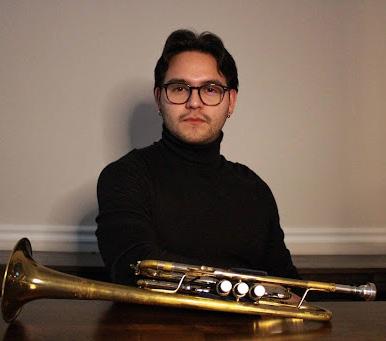
After four years of undergraduate studies, Oakland University trumpet student Carlos Perez-Hijar has recently announced his commitment to the Manhattan School of Music (MSM).
A 2025 ranking from The Hollywood Reporter placed the private New York conservatory as 15th in the world. Notable alumni include Harry Connick Jr., Herbie Hancock and Charlie Puth. Known for its prestigious faculty and exceptional performances, many of which occur at Lincoln Center, the MSM is the crème de la crème.
From Lake Orion, Perez-Hijar will be continuing his studies as a Master of Music (MM) in Classical Trumpet under the direction of David Krauss, an accomplished artist widely recognized as principal trumpet of the Metropolitan Opera Orchestra. In addition to MSM, Krauss teaches at institutions like The Juilliard School and Mannes the New School.
The road to success began at a young age. He chose the trumpet for his band class in fifth grade and never looked back. Performing throughout high school, he was invited to play in the OU Brass Band — an opportunity he pursued for two years prior to entering college. Once he enrolled at OU in the fall of 2022, he began studying with Amanda Ross, whom Perez-Hijar details as “the example of a resilient and fearless teacher.”
The Big Apple was perpetually a default option for a myriad of reasons.
“New York City itself was a big influence and a significant change in environment,” Perez-Hijar said. “I’ll be in a space where I know I’ll get out as much as I put in, I’ll be surrounded by lots of ambition and talent … and there will certainly be some big fish in that pond.”
For music students, the audition process is rigorous. Performers typically select a mix of older and newer repertoire and practice it cumulatively for several months to a year. Then, the pre-screen and audition timeline is planned accordingly.
If a student plans to enter a school in the fall of 2027, they submit pre-screen recordings in the fall of 2026, and then audition from January to April of 2027. Wholly, the process is a minimum of two years.
Thankfully for Perez-Hijar, his experiences at OU shaped him into an MSM student. During his undergrad, he received numerous honors, including advancing to the semi-finals of the 2026 International Trumpet Guild Competition with the Aurum Brass Quintet, winning the 2025-2026 OU Chamber Music Competition with Aurum Brass, advancing to the final rounds of the 2026 National Trumpet Competition, winning the 2025-2026 OU Concerto Competition and placing second in the first section championships with the OU Brass Band in 2025.
Last year, Perez-Hijar was invited to perform on national television with the American Pops Orchestra at the 38th Annual Hispanic Heritage Awards on PBS in Washington, D.C. — strengthening his formidable accolades.
In terms of repertoire, he has two favorites, the first being “Concerto for Trumpet and Orchestra” (1955) by Aleksandra Pakhmutova — his selection for the 2025-2026 Chamber Music Competition. Played with the OSO, he felt the piece highlighted his strengths and challenged his stamina. A second favorite is “Concertpiece No. 1” by Vassily Brandt, which he performed at the 2026 National Trumpet Competition.
“I spent so much time on that piece, and it taught me
a lot about being a technical player. It also taught me how to make a very technical piece lyrical as well,” Perez-Hijar said.
The trials and tribulations of attending school and competing so frequently ended up rewarding him in the end; although it didn’t always feel that way. Looking back, he can see what a transformation he endured as both a person and a musician.
“Now, I notice my worth as a human being, knowing that I’m doing a very difficult thing; not just improving music, but also being a college student facing so many responsibilities,” Perez-Hijar said. “I think I learned to be confident by being more transparent with myself. I was able to improve in terms of my time management, accountability, homework and stuff like that.”
In addition to OU involvement, his summers are spent competing internationally with the Blue Devils Drum and Bugle Corps — the most decorated corps in Drum Corps International (DCI) history, with over 40 years in the top five and a record-breaking 21 world championship titles. This summer, he’ll be touring with the Blue Devils in Europe for a month, starting in the Netherlands.
Before he was officially a member of the Blue Devils, his submitted audition tape went viral on YouTube with over 100,000 views, granting him celebrity-like status.
“His audition was so good that people use it as a reference to make their own,” Ross said.
Perez-Hijar has been a part of countless ensembles, a few being Wind Symphony, the Oakland Symphony Orchestra (OSO), Brass Band, Latin Jazz, Big Band Jazz, the OU Jazz Singers, Pep Band, a couple of different brass quintets and trumpet ensembles, both large and small. Wind symphony and Latin Jazz, particularly, were his favorites.
“Wind Symphony especially has always been a lot of fun, especially the first couple years as one of the only freshmen in Wind Symphony; that really helped me with my confidence as well,” Perez-Hijar said. “The two years I was in Latin Jazz band with Dr. Enrique were some great times, and I think that was when I really got to be myself as well.”
As he leaves his alma mater, he offers advice to musicians shooting for the conservatory setting.
“Always have something to say when you perform, or else you’re just wasting everyone’s time,” PerezHijar said. “Be yourself, be the most prepared in the room, know that there will always be someone better than you, people who can get more notes than you; but there is no one who can play like you.”
Perez-Hijar will give one final bow before he heads to the big city at his senior recital “Storylines” on April 29 at 7:30 p.m. in Varner Recital Hall — featuring works by Vivaldi, Hisaishi York and more. This concert is free and open to the public.
PHOTO COURTESY OF MARIANA PEREZ-HIJAR
Golden recommendations: Beyond graduation
SARAH WASIELEWSKI AND DANIA NEIROUKH
Graduation season marks the end of years of hard work and dedication while opening the door to new beginnings. It is a time filled with excitement, reflection and especially change. It almost feels like something out of a TV show sometimes. Those final moments, the goodbyes and the excitement for what’s next are exactly the kind of scenes we’ve all watched before.
“Gilmore Girls” (2003) Season 3, Episode 22 of “Gilmore Girls,” titled “Those Are Strings, Pinocchio,” follows Rory Gilmore (Alexis Bledel) as she prepares to graduate from Chilton and move on to the next chapter of her life. As valedictorian, she gives a speech that becomes one of the most emotional moments of the episode. In it, she reflects on how her mother guided her through her life, highlighting Lorelai Gilmore (Lauren Graham) as her greatest inspiration and the constant support behind her success, especially during her time at Chilton.
The moment is made even more meaningful with Lorelai, Rory’s grandparents and close family friends in the audience, showing that her achievement is not just her own but something shared with the people who have supported her along the way. As Rory walks across the stage, a fan-favorite moment shows her briefly sticking her tongue out toward her mom, who playfully does it back, a small but iconic detail that reflects their close mother-daughter relationship during such an important accomplishment.
The episode also captures the bittersweet feeling of graduation, balancing the excitement of what is ahead with the emotions of leaving behind a meaningful chapter and reconnecting with the people who helped along the way. It highlights that graduation is not just about finishing school but about growth, support and moving into a new stage of life beyond high school. This is a well-known episode of “Gilmore Girls,” and it is one viewers often revisit during graduation season because it captures that feeling so well.
“High School Musical 3: Senior Year” (2008)
“High School Musical 3: Senior Year” follows Troy Bolton (Zac Efron), Gabriella Montez (Vanessa Hudgens) and the rest of the East High seniors as they move towards graduation. As they prepare for their final school musical, it becomes a way for them to process everything they feel but can’t say. The stage reflects their thoughts about the future, the pressure of expectations, and the difficulty of leaving something so familiar behind.
Troy’s uncertainty about what comes next is a key part of the film and the franchise as a whole. He feels the weight of big decisions and struggles to figure out what direction his life should take, stuck between two passions. Gabriella, already beginning to step into her academic future, represents that shift into something new. Her presence shows how quickly things can start to change, even before graduation actually happens.
As the ceremony approaches, there’s a noticeable emotional shift. The school itself starts to feel different, as if every hallway and every moment is being seen for the last time. The final musical performance brings everything together, not just as a show, but as a reflection of everything the students
are about to leave behind.
When graduation finally happens, it doesn’t feel as simple as just moving on. There’s a sense of pride, but also uncertainty. The film leans into that feeling, showing that growing up means accepting change, even when you’re not fully ready for it. Graduation becomes less about having everything figured out and more about taking that next step anyway.
“Saved by the Bell” (1992)
Season 4, Episode 26 of “Saved by the Bell,” titled “Graduation,” follows characters Zack Morris (Mark-Paul Gosselaar), Kelly Kapowski (Tiffani Thiessen) and the rest of their friend group as they prepare to graduate from Bayside High School and reflect on their time together.
The episode centers around the group’s graduation ceremony, bringing all of the characters together for one final moment. It highlights the friendships that were always there when they needed each other throughout their high school journey, showing that graduation is not just about leaving high school but also about not wanting to leave those friendships behind.
A key moment shows Zack finding out that one more credit is needed to graduate, adding tension to the already stressful time. The episode emphasizes the emotional impact of going in separate directions after graduation, even though it is hard to imagine not being together with close friends from high school. While graduation brings a sense of freedom, it also comes with a sentimental feeling as everything begins to change. The episode also highlights the uncertainty that comes with graduation, as the group begins to think about life beyond high school and what those next steps may start to look like.
As a 90s show, the episode is a throwback to that era, adding a nostalgic feel that makes it stand out even more. It fits the graduation theme by showing that moving forward is not just exciting but also
emotional when recognizing who supported each other through every moment.
“Boy Meets World” (1993)
In season 5, episode 24, “Graduation,” “Boy Meets World” follows Cory Matthews (Ben Savage), Shawn Hunter (Rider Strong) and Topanga Lawrence (Danielle Fishel) as they reach the end of their time at John Adams High. What makes the episode stand out is how it focuses less on the ceremony itself and more on what it means to leave everything behind. The classroom, the friendships and the everyday moments suddenly feel more important because they’re coming to an end.
Shawn’s uncertainty about his future adds a heavier tone, showing that not everyone feels ready to move on. Cory, who spent so much of his life learning from the people around him, starts to understand that he won’t always have those same voices to guide him. Topanga looks ahead, but even she can’t ignore how much she’s leaving behind. The episode lets each character sit in that feeling instead of rushing past it.
Mr. Feeny (William Daniels) becomes the emotional center of the episode. His goodbye isn’t dramatic, but it carries weight because of everything he has meant to the students over the years. When he reminds them that they will take what they have learned with them, it doesn’t feel like a speech; it feels like something they’re only just beginning to understand.
By the time they graduate, there’s no big sense of closure, just a quiet acceptance that things are changing. The first change already happens during the ceremony when Topanga surprises Cory by proposing to him, which he ends up saying yes to in later episodes. This marks the first shift in their lives. This episode shows that growing up isn’t one defining moment, but a series of small realizations. Graduation is simply the one you can’t ignore.
A new chapter for OUSC: Black-Baker slate is sworn in
MARYAM MOSS Political Reporter
On Thursday, April 9, Oakland University Student Congress (OUSC) swore in Presidentelect Cullen Black and Vice President Autumn Baker, in addition to Valentine Fayette-Étés, for another term as Speaker of the Legislature.
The new administration seeks to strengthen executive and legislative cooperation in the OUSC to improve its engagement with the student body.
The Black-Baker ticket ran against the Johnson-Lasecki write-in ticket, earning 137 of the 168 votes cast for President.
Cullen Black, a second-year history major and French minor, previously served as Judiciary Chair of the OUSC, in addition to being Poli-ed Director for the Young Democratic Socialists of America at OU (YDSA). Black’s other accomplishments on the OUSC include connecting students to free resources on campus like the Free Menstrual Product Initiative, academic and health services, introducing a bill to allocate funds for OU’s beaver project and strengthening outreach.
“When I am in the student congress office on any given day, come next fall, students are completely welcome to come in and bother me about anything. I want talking to people, ultimately, to be my priority—whether that’s hearing out student concerns or negotiating with
admin,” Black said.
Autumn Baker, a second-year physics major, is also a member of YDSA and served as an OUSC Legislator in the previous term. As the Vice President of For Oakland, a student organization committed to promoting voterengagement, Baker brings experience in advocacy, constituent-relationship building and voter education.
Black’s and Baker’s experiences align with a vision of an involved student body where feedback systems improve OUSC-led initiatives.
“It’s really just a continuation of what we’ve done in Congress and in other orgs,” Black said regarding the Black-Baker ticket’s extensive outreach leading up to the election. “Just going out and talking to people—seeing what people cared about.”
Baker, who delivered a remark at the OUSC inauguration on April 9, cited a precedent for the type of civic investment needed on campus. She referenced a previous meeting held by the Oakland County Board of Commissioners, where attendees protested a 13-4 vote by the board for an AI-drone piloting program to be headed by the Oakland County Sheriff’s Office.
“I saw an incredibly strong community that came together and protected each other and provided for each other the resources that they needed to make their voices heard, to speak truth to power, to enact the change that they need—that we all need, to protect us,” Baker said regarding the attendees who raised privacy
concerns over the resolution.
The resilience of these Oakland County residents reinforced Baker’s commitment to honing a more balanced candidate-constituent relationship, where “the people who hold the power know where it really comes from.”
Accountability, accessibility and affordability are the “Triple A’s” of the Black-Baker slate.
“I get the sense that Student Congress has developed a reputation for being very insular, very internal, not marketing itself to the student body really at all. So my number one priority, my number one goal for this administration, is just cleaning out inventory, quite frankly,” Black said.
“We want to give students all the free stuff that is afforded to them by virtue of having a student congress that cares about them.”
In addition to the presidential election, several legislators were elected to OUSC. Among them are Ethan Vela, D.J. Williams, Bernadette Wolf, Allison Drzewiecki, Javier Rosario, Rosemary Rais, Pearl Oprah, Emily Lunger, Vincenzo Martino, Morgan Mueller, Wasey Rehman, Angel Perez and Isaiah Howell, who were involved in the Black-Baker presidential ticket.
OUSC has an eventful year ahead, and the OU community is excited to see what projects the organization will accomplish. For more information, follow OUSC on Instagram @ouscofficial. Additionally, students can check out the BlackBaker slate’s Instagram page @blackbakerou.
U.S. and Italy’s relations weaken after comment regarding Pope Leo XIV
MATILDE RABAJOLI
Political Reporter
The formerly well-renowned international friendship between the countries of Italy and the United States was recently broken up by a surprising feud between the two executive leaders.
President of the United States Donald Trump and Prime Minister Giorgia Meloni have been recognized as amicable coworkers in the international world, and have complemented each other’s work.
This friendship was first tested during President Trump’s second term in the Oval Office when sharp tariffs were raised to all of his international trading partners.
Premier Meloni was sent as an advocate for U.S.European relations to see if her personal friendship and similar way of thinking to President Trump could potentially sway him otherwise.
Premier Meloni’s efforts were not in vain, as the tariff situation has caused their rates to lessen slightly, and President Trump’s initial anger and vindictive threats of raising them even more have been quelled.
President Trump himself stated that “there will be a trade deal, 100 percent,” and complimented the Italian executive as “fantastic” during these negotiations.
This collaborative relation was again tested once President Trump launched the surprise attack, with Benjamin Netanyahu’s help, on Iran, after the nation’s supposed nuclear program was reinitiated.
Meloni has reportedly criticized the Iranian conflict after the initial strikes that occurred in
February. She also warned that the country of Italy “cannot afford a regime of ayatollahs in possession of nuclear weapons.”
These amicable remarks, compliments and moments of influence, however, were all recently thrown out of the window as President Trump made a comment on Pope Leo XIV’s comments on the war in Iran.
Pope Leo shared a statement that the world was currently “being ravaged by a handful of tyrants.”
President Trump did not take kindly to this
comment and responded by saying, “Pope Leo is WEAK on Crime, and terrible for Foreign Policy,” on social media. “I don’t want a Pope who thinks it’s OK for Iran to have a Nuclear Weapon.”
Prime Minister Meloni, obviously being both geographically close to the Vatican, but the head representative of all Catholic citizens, spoke on behalf of these remarks and stated her offense to President Trump’s “unacceptable” manners, and his now infamous AI picture posted on Truth Social, which depicts him as Jesus Christ, has garnered much backlash from Christians.
She further defended the Pope by stating it was only “right and normal for [the Pope] to call for peace and to condemn every form of war.”
This back and forth has now rendered the relation between the two countries, the U.S. and Italy, tense, and the previously cordial kinship between the two rather tense and petty.
President Trump further responded by going back on his previous praise, where he named Meloni one of the “real leaders of the world,” to now “she’s the one who’s unacceptable” and “no longer the same person.”
President Trump has recently voiced his support for former Hungarian Prime Minister Viktor Orbán, and stated how Orbán was “a friend of mine” as a personal jab at Meloni herself, and how his favor for her was very publicly lost. Trump further remarked that Orbán “didn’t let people come in and ruin his country, as Italy has done.”
Based on the current status of their relationship, it will take much effort for the two to rekindle.
Former Hungarian Prime Minister Viktor Orbán voted out of office
MATILDE RABAJOLI Political Reporter
On April 12, Hungary held its most recent presidential election.
This election had the eyes of not just the European stage, but the world overall.
The nation of Hungary has had an immense influence on the international rise of the erosion of democratic values and beliefs throughout its governments.
The “nationalistic” fear that stems from the rise of populism around the world was supported by Prime Minister Viktor Orbán himself.
He has held his position in the executive office for almost two decades, and has rendered the country of Hungary a beacon for many traditionalistic and nationalistic-driven beliefs. He is notorious for his immigration laws.
The country became a model for right-leaning executives all around the world. Even President Donald Trump has praised Premier Orbán’s immigration laws and continued leadership as “a truly strong and powerful Leader, with a proven track record of delivering phenomenal results.”
President Trump also promised the continued and reinforced economic alliance of the United States in support of Hungary “as long as [Orbán is] prime minister.”
The election, however, brought forth a longstanding adversary for the role of prime minister.
Péter Magyar has been a rising hope for the future of Hungary, even if he comes from a
previously loyal position under Orbán. He then protected his government from recent scandals that tore through the presidency office and the surrounding political parties.
Magyar rose to a surprising success when he won by a two-thirds majority after the votes on April 12 came through, making him Hungary’s new prime minister.
“Today we won because the Hungarian people didn’t ask what their country could do for them, but what they could do for their country,” newly appointed Premier Magyar said in his victory speech.
This turn of events was celebrated by the people of Hungary, as the streets of Budapest were
flooded by crowds until the early hours of the next morning. Citizens expressed their joy for a new change and the end of a long-lasting nationalistic and restrictive regime.
The electoral win was also well-received by the entirety of the European Union, as many had been trying to vote for the passing of the Multiannual Financial Framework (MFF) for the new fiscal plan. Earlier on, Orbán had been a steadfast opposing force against this plan, and its goals of enhancing defense capabilities, moving forward with digital and green advancements and simplifying funding through national and regional partnerships.
It has been called a “victory for fundamental freedoms” by European Commission President Ursula von der Leyen.
The new win by Premier Magyar should promise to fight internal corruption, revive the nation’s economy and restore democratic norms, according to his political party’s Tisza campaign. Premier Magyar, however, has also been careful of avoiding sensitive subjects and his personal position on them.
He has proudly stated that if Russian President Vladimir Putin were to call him, “it would probably be a short phone conversation, and I don’t think he would end the war on my advice,” Premier Magyar said.
It will be interesting to see a new player at the helm of Hungary’s executive office, and everyone is curious to see how the country’s international position will change.
PHOTO COURTESY OF AP
Buru: The story behind the highlights
MARYANNE SANFORD Sports Reporter
Three years, 59 games played, 33 games started, 542 points, 293 rebounds, 157 free throws and one March Madness tournament. On paper, these numbers tell just part of the story. For Tuburu “Buru” Naivalurua, they barely scratch the surface of what he leaves behind at Oakland University.
In just three seasons as a Golden Grizzly, Buru became more than a contributor — he became a presence. The kind of player fans showed up to watch. The kind of athlete whose energy could shift a game’s momentum in seconds.
For many fans, it wasn’t just about the final score. It was about the anticipation — the moment when the ball found its way to Buru on a glide to the basket, and the crowd began to rise, knowing what might come next. More often than not, it ended with a dunk powerful enough to shake the O’Rena.
That became a signature.
But defining Buru solely by his highlight‑reel finishes would miss the bigger picture.
Despite the reputation he built at the rim, his favorite shot tells a different story. When asked what shot he enjoys most, he didn’t mention the dunks the fans love. Instead, he said: “Fadeaway jump shot from the middle of the key.”
It’s an answer that reflects the layers of his game and personality. Because behind the noise, behind the highlights, Buru has always been more grounded than flashy.
That grounded nature is part of what led him to Oakland in the first place.
Coming in as a transfer, he didn’t initially expect to stay long. Like many players navigating the modern landscape of college basketball, the plan was fluid.
“Not really,” Buru said when asked if he thought Oakland would be home for the rest of his collegiate career. “I always assumed that after a good year, I’d probably transfer somewhere.”
But something changed.
It started with a visit — meeting teammates, connecting with coaches and getting a feel for the environment.
“I just really liked the vibe,” Buru said. “Same type of people I get along with and a very tight‑knit sort of community here.”
What began as a temporary stop gradually became something more permanent. Over time, the relationships he built and the comfort he found at Oakland made it harder to leave.
“After last year, I sort of noticed that this is where I wanted to finish,” Buru said.
That decision helped shape not only his career but also his legacy.
Because while Buru believed he could make an impact on the court, what surprised him most was everything off of it.
“I always thought I was good enough to come here and be a good player, but I never expected to be as appreciated as I have been,” he said.
That appreciation was visible every game day. From the fans who packed the stands to the energy that followed him when he touched the ball, Buru became a central figure in Oakland’s basketball culture.
Still, when asked about the legacy he hopes to leave behind, his answer had nothing to do with stats or highlights.
“I just want people to remember me as a pretty cool guy and a nice person to be around,” Buru said. “There will be plenty of other players that come through, I’m
not worried about any of that. It’s just what kind of person I was and how I made them feel.”
That perspective speaks volumes.
While numbers can define a career, they rarely define a person. For Buru, the relationships between teammates, coaches, friends and fans have always mattered more.
That mindset was tested early in his time at Oakland.
Before he ever had the chance to make an impact on the court, Buru faced one of the toughest stretches of his career. An indefinite suspension kept him away from the game for months, leaving him in limbo during what should have been a fresh start.
“I had no idea when I was going to be allowed to play again. I was thinking about flying back home,” he said.
The isolation made it even harder. He couldn’t practice with the team, coaches weren’t allowed to work out with him and he wasn’t even allowed in the gym.
“I was just by myself for most of the day,” Buru said. “The only time I really got to interact with my teammates was at the cafeteria.”
For a player adjusting to a new program and a new life, it was a defining challenge, but it didn’t break him.
When he was finally cleared to play — just days before a game — he stepped back onto the court and began building the career that would follow. That resilience became a quiet foundation for everything he accomplished.
It carried into the biggest moment of his career: the opportunity to play in the NCAA March Madness Tournament.
For many players, it’s a dream. For Buru, it became an unforgettable reality.
“It was unlike anything I’d ever done before. The entire experience was surreal,” he said.
From walking through arenas filled with media to sharing space with future professional players, the scope of the moment was overwhelming.
“It was the most media I had ever seen at a game in my life. It was very overwhelming, but a lot of fun,” Buru said.
Through the entire experience, one moment stood above the rest.
“When DQ hit the shot to kind of put the game away, that was the most memorable part,” he said.
It wasn’t his own highlight. It wasn’t a personal stat. It was a teammate’s moment — showing once again where his priorities lie.
That same perspective shows up in how he talks about support. Coming from Australia, Buru leaned on the people around him — teammates, coaches and the community.
“I’ve been lucky enough to develop a lot of cool relationships. Just having people around that I can talk to or hang out with, it helps a lot,” he said.
At the same time, his motivation has always traced back to family. With nine siblings and a growing group of nieces and nephews, his roots run deep.
“I want to return the favor for them someday,” Buru said. “They did a lot for me growing up, so being able to support them someday would be awesome.”
That sense of purpose has guided his journey, from his early days playing rugby in Australia to discovering basketball almost by chance.
“I wasn’t very good the first time I played, but it was a lot of fun and I kind of just fell in love with it,” he said.
That love turned into opportunity. That opportunity turned into a career that brought him halfway across the world to Oakland. Now, as his college chapter closes, the focus shifts to what comes next.
“Professional basketball — that’s the goal,” Buru said. Whether it’s the G League, overseas or somewhere else entirely, he’s keeping his options open. Places like Greece and Japan appeal to him, not just for basketball but for the experience. But wherever he goes, a part of him will remain at Oakland.
“OU means home. It’s somewhere that I’ve learned to love and somewhere that’s grown to feel like a second home for me,” Buru said.
That may be the most fitting way to understand his legacy — not just as a player who brought energy, excitement and unforgettable moments to the court, but as someone who found a home, built connections and left an impact that goes beyond the game.
Because long after the dunks fade and the numbers are forgotten, what remains is something harder to measure.
For Buru, that’s exactly the point.
PHOTO COURTESY OF TZR SPORTS
Five names Lions fans shouldn’t be surprised to hear on draft night
JAMES ELLING Sports Editor
The Detroit Lions draft in a lane of their own.
When the Lions are on the clock for the first round of the NFL Draft on Thursday, Apr. 23, many fans will be anticipating the names they’ve been hearing for weeks and months: Kadyn Proctor, Monroe Freeling or Spencer Fano if he’s on the board — but the Lions have proven time and time again that their draft board tends to look different than the national consensus.
Don’t be surprised if Detroit grabs one of these names instead with its first pick on Thursday night: Blake Miller, Offensive Tackle, Clemson
Miller is the most underrated offensive tackle prospect in the class and, as my third‑ranked tackle, my favorite realistic scenario for the Lions at pick 17.
He is by far the most experienced — and perhaps the most polished — tackle in the class. He started all 54 games for the Tigers over his four seasons, but he’s been overlooked because he doesn’t have the finishing power of the other first‑round linemen.
Miller’s measurables push him down consensus boards, but compared to Taylor Decker, who held down a tackle spot for nearly a decade in Detroit, Miller is a quarter‑inch shorter — yet measures better in weight, arm length, the 40‑yard dash, bench press and jump tests.
While he might not dominate the run game like other prospects, the Lions have already filled the brawler archetype with Penei Sewell, Tate Ratledge and Christian Mahogany. What they need is someone who can protect Jared Goff in the passing game.
Vega Ioane, Guard, Penn State Ioane is my third overall player in the class. The only reason he would be available at 17 is that he plays guard — but the Lions have never been afraid to ignore positional‑value norms.
The Penn State guard has it all: great size at 6‑4, 320; athleticism he uses to overwhelm defenders; sound technique that limits mistakes and fantastic character.
Even though Detroit’s interior offensive line is one of the deepest rooms on the roster, Ioane is one of only a handful of blue‑chip players in the class — and the only one with a real shot at being available at 17.
He would be a day‑one contributor, and the Lions would have 80% of their offensive line locked in for at least the next three years.
Malachi Lawrence, Edge, UCF
In a class full of edge rushers with glaring concerns, Lawrence’s might be the most fixable.
Arvell Reese is a freak athlete who has hardly played the position. Reuben Bain has leverage concerns because of historically short arms.
David Bailey struggles against the run. Lawrence, however, has all the tools — he’s just raw.
At 6‑4, 253 with long arms, Lawrence has elite speed and explosiveness for the position and a growing bag of pass‑rush moves. He needs to get stronger and improve his technique, gap discipline and consistency.
Detroit would only take Lawrence if it believed in its ability to develop him, but if the Lions maximized his athletic potential, he could be a star.
Akheem Mesidor, Edge, Miami
Mesidor looks like a top‑tier edge in this class in terms of his ability to produce on day one. His only knock is that he just turned 25.
He’s strong, heavy, tenacious and disciplined in setting edges in the run game — all traits the Lions love — while still being a productive pass rusher.
The age poses legitimate questions, but if the Lions are trying to maximize their current roster, Mesidor makes perfect sense. While he could be 30 by the time he becomes a free agent, players of his size and skill set have played well into their 30s (Cam Jordan, Brandon Graham, Denico Autry, etc.).
Whether they’d extend him or not, four to five years of solid production across from Aidan Hutchinson would be well worth the pick at 17.
Kenyon Sadiq, Tight End, Oregon
Sadiq has been described as “basically a wide receiver” because he moves like one. That assessment overlooks the rest of his profile as an elite tight end prospect.
Yes, the 21‑year‑old has 4.39 speed and a 43.5‑inch vertical while running a robust route tree. But he’s also a 6‑3, 241‑pound force who punishes defenders as a more‑than‑willing blocker.
The Lions would have a tougher time carving out
a high‑volume role for Sadiq on day one, but he’d form the second half of the NFL’s best tight end duo — fitting for an offense that uses multiple tight ends as much as anyone.
If everyone were healthy, Sadiq would be pushing Isaac TeSlaa or Brock Wright to the bench, depending on the formation. But rarely is everyone healthy, and he elevates Detroit’s ability to rotate weapons while staying on the right side of mismatches.
Long term, Sadiq reduces the pressure to extend Sam LaPorta amid injury concerns and even opens the door for flexibility in potential trade scenarios as the Lions navigate future salary‑cap decisions.
Ultimately, the Lions don’t draft to get applause. They draft to get good football players who fit their cultural identity.
Miller, Ioane, Lawrence, Mesidor and Sadiq fit that mold perfectly.
PHOTO
Stanley Cup Playoffs set for wide‑open, highly competitive field
MATT LEWAKOWSKI Sports Reporter
The intensity is about to rise across the National Hockey League as the Stanley Cup Playoffs begin, bringing with them the annual mix of speed, physicality and unpredictability that defines postseason hockey. With a deep field and no clear runaway favorite, this year’s playoff picture sets up for one of the most competitive races in recent memory.
At the top of the Eastern Conference conversation are perennial contenders like the Boston Bruins and New York Rangers, both of whom have built balanced rosters capable of making deep runs. Boston continues to lean on its structured defensive play and elite goaltending, while the Rangers combine high‑end scoring talent with improved depth throughout their lineup. If either team gets consistent production from its secondary scorers, they could be difficult to slow down in a seven‑game series.
The defending champion Florida Panthers enter the postseason with confidence and experience on their side. Florida’s aggressive forecheck and physical style wore down opponents last spring, and that same blueprint could once again carry them deep into June. But repeating in today’s NHL is notoriously difficult, especially with a conference loaded with challengers.
One of those challengers is the Carolina Hurricanes, who remain one of the most analytically dominant teams in hockey. Carolina’s puck possession and relentless pressure create problems for opponents, but postseason success will hinge on timely scoring and goaltending consistency — two areas that have
occasionally faltered in past playoff runs.
Out west, the Colorado Avalanche and Dallas Stars headline a competitive field. Colorado, led by its explosive top line, thrives on speed and transition offense. When the Avalanche are clicking, they can overwhelm teams in a matter of minutes.
Dallas, meanwhile, presents a more methodical approach, combining depth scoring with strong
defensive structure. The Stars’ ability to roll four lines could be a major advantage in a long postseason.
The Edmonton Oilers remain one of the most dangerous offensive teams in the league, powered by elite talent at the top of their lineup. Their success will depend heavily on whether they can tighten up defensively and receive steady goaltending — two factors that have historically determined how far they advance.
The Vegas Golden Knights, always a threat in the postseason, bring a blend of experience and physical play that translates well to playoff hockey. Vegas has proven it can win in multiple ways, whether through high‑scoring games or tight defensive battles, making it one of the most adaptable teams in the bracket.
As always, the playoffs are not just about the favorites. Wild‑card teams often emerge as dangerous opponents, playing with momentum and less pressure. Upsets are common, and a hot goaltender can single‑handedly change a series. That unpredictability is part of what makes the Stanley Cup Playoffs one of the most compelling tournaments in sports.
Key storylines to watch include goaltending performances, special‑teams efficiency and health. Injuries can quickly derail a contender, while power‑play success often becomes the difference in tightly contested matchups. Teams that can capitalize on limited opportunities while staying disciplined will have a clear edge.
For fans, the next two months promise drama, overtime thrillers and defining moments that will shape legacies. Whether it’s a veteran chasing one more championship or a young star breaking through on the biggest stage, the Stanley Cup Playoffs rarely disappoint.
One move, five years: A new era for the transfer portal
MARYANNE SANFORD
Sports Reporter
As college sports continue to evolve, a new executive order could dramatically change the future of the NCAA transfer portal — a system that has already transformed how teams build their rosters.
The proposed order would limit college athletes to a five‑year eligibility window while allowing only one transfer without penalty. The rule, expected to take effect on August 1, represents a significant shift from recent years, when athletes could transfer multiple times without sitting out.
The transfer portal has become one of the most influential forces in college sports, creating constant movement across programs. Thousands of athletes now enter the portal each year, giving players more control over their careers but also creating challenges for coaches trying to maintain roster stability.
This new proposal aims to bring balance back to college sports by limiting excessive transfer movement while still preserving athlete flexibility. Under the rule, players would have one opportunity to transfer freely, but additional moves would come with restrictions or require sitting out.
For programs like Oakland University’s, the impact could be especially significant.
Oakland has become known as a destination for transfer athletes, especially within its basketball programs. The Golden Grizzlies have embraced the portal as a way to stay competitive against larger schools. With fewer resources than major programs, Oakland
has leaned on transfers to fill key roles and rebuild the roster quickly each season.
That strategy has helped Oakland establish itself as a transfer‑friendly school, where athletes can find immediate playing time and a fresh opportunity to develop. But if the proposed rule is implemented, it could change how programs like Oakland approach recruiting.
Limiting athletes to one transfer forces players to be more selective, putting more pressure on fit, coaching and long‑term development.
For mid‑major programs, this could lead to increased roster stability — but it may also reduce the steady influx of experienced transfer talent.
Oakland University women’s basketball head coach Keisha Newell is already preparing for those adjustments.
“I’m just adapting and adjusting to changes,” Newell said.
Her perspective reflects the reality facing coaches across the country. The transfer portal has created a fast‑moving, unpredictable environment where rosters can change dramatically from year to year. Now, with potential restrictions on the horizon, programs must once again evolve.
Newell also expressed optimism about limiting transfers, noting the potential for a stronger team community.
“I like the one transfer, I think it will help for a lot of people to stay,” Newell said.
That emphasis on stability could benefit programs like Oakland, where building team chemistry is crucial to competing in conference play. While the portal has allowed teams to reload quickly, it has also made long‑term cohesion difficult to maintain.
The rule represents a broader effort to bring structure back to college athletics after years of rapid change. Between NIL deals, transfer freedom and shifting eligibility rules, the landscape has become increasingly complex for both players and programs.
Limiting athletes to one transfer could mark a turning point — not eliminating the transfer portal, but redefining how it is used.
For Oakland and similar programs, success may depend on finding the right balance between continuing to embrace transfers while placing a renewed focus on retention and player development.
In a constantly shifting college basketball landscape, adaptability remains the most valuable asset of all.
PHOTO COURTESY OF WIKIMEDIA COMMONS
PHOTO COURESY OF NCAA
The new guard: Decoding Oakland’s latest backcourt additions
MIKE OKORONKWO
Sports Reporter
To address the major positional needs following the departures of Brody Robinson and several others who left the Golden Grizzlies quite short in a lot of positions, the program wasted no time in getting to work. Oakland moved fast to grab two crucial guards right as the portal opened, ensuring they didn’t get left behind in the off-season shuffle.
These two lead guards are Ryder Bradley and RJ Taylor, and they are the two names that will likely define exactly how successful Oakland is next season. This isn’t just about filling seats on the bench; it’s a strategic reload. By picking these two up so quickly, the Golden Grizzlies have locked in a backcourt that balances veteran feel with young, explosive talent. If the team is going to make another run, it’s going to start with how these two handle the rock and lead the offense.
The homecoming: RJ Taylor and the weight of legacy
The first major finding for the Golden Grizzlies felt less like a recruitment and more like a homecoming. RJ Taylor, a native Michigan prospect from Grand Blanc High School, was a player who had been firmly on Oakland’s radar for years. Being a standout local talent just down the road, it was only a matter of time before his path crossed with the O’Rena.
The name Taylor already carries a ton of weight around here because his dad, Bob Taylor, used to be the head coach for the Oakland women’s team, leading them to a DII Final Four and leaving a huge mark on the program.
Looking at his measurements, RJ is 5’11” and about 175 lbs. He’s slightly undersized, which is something we’ve seen a lot at Oakland lately with guards like Brody or the Yeager twins. In today’s portal, height is expensive, so you have to find guys who make up for it with their brains, and that is exactly what RJ brings to the table.
On film, he does all the right things correctly. He isn’t the most explosive guard, but his basketball IQ is through the roof. What’s special is that he doesn’t need the ball in his hands to be a threat. His off-ball movement is great as he knows how to use screens and go-screens to get to his spots.
Last season, he shot 37.9% from three, and almost 73% of those were assisted, showing he is primarily a surgical spot-up shooter. He doesn’t have that same on-ball juice or twitch that Brody Robinson had, so fans should not expect him to be creating everything off the dribble. Instead, expect him to find his separation through smart movement.
The big question mark is his injury history. Back in the 2024-25 season, he looked like he was about to boom, starting all eight games at Northern Iowa and averaging 7.5 points per game on 51.1% shooting. Then, a tragic Achilles injury sidelined him for the rest of the year.
This past season, due to that injury and a crowded backcourt, he was coming exclusively off the bench. Oakland is betting on him returning to that starter energy he showed before the injury. He’s a secure ball handler with a low turnover rate of 13.7% and a solid offensive rating of 109.5, making him a highIQ gamble that could pay off huge in Oakland’s unique zone system.
The engine: Ryder Bradley and the Lone Star leap
While RJ brings the veteran feel, Ryder Bradley is the slightly more explosive engine. Coming in with three years of eligibility left, Bradley arrives
as the Lone Star Conference Freshman of the Year, which is a massive pickup for the Golden Grizzlies.
Ryder has a better size than RJ, listed at 6’2″ and roughly 180 lbs. He’s visibly more explosive and brings a different type of energy to the perimeter. Where RJ is a spot-up threat, Ryder is a consistent downhill threat who can finish in traffic. He has that offensive twitch you look for in a lead guard, and his crossover is nasty enough to genuinely take defenders off the bounce.
What stands out on tape is that he can score off the catch or the bounce, but he is also an amazing downhill passer. He forces the defense to collapse on him and then finds the open man. Wraparound passes, no-look dimes, Bradley seems to have a good grasp of it all. His stat line from last season is all-around solid, posting 14.3 points, 4.1 rebounds, and 4.0 assists per game.
He also proved to be active on the defensive end with 1.7 steals per game while shooting 35% from three with 52 makes. While his steal numbers show defensive playmaking flashes, the most evident part of his game right now is that offensive explosiveness and shot-making.
He isn’t a nuclear athlete, but he is great at filling lanes and has the potential to lock in at the top of the zone. If he fully commits to the defensive principles of Oakland’s unique zone system next season, those active hands will become an even bigger asset for the Grizzlies.
The fit: Why Bradley and Taylor work When you look at these two findings together, you see a backcourt that covers all the bases. RJ Taylor is the safety valve who acts as the high-IQ, low-turnover
guard who can light it up from deep if you leave him open. Ryder Bradley is the playmaker who provides the on-ball offensive twitch and the downhill pressure that the offense needs to stay dynamic.
Fit-wise, they both look like they will thrive in the Golden Grizzlies’ defensive system. RJ’s positioning and Ryder’s ability to disrupt passing lanes give Oakland two very different, but very effective, options at the point. Whether one starts and the other comes off the bench, or they play together, these are the two guys who will be carrying the load.
What now? The frontcourt crisis
Even though the backcourt is looking solid with Bradley and Taylor, there is a massive question regarding the bigs. The departures of Tuburu Naivalurua, Michael Houge, Nate Deer, and Isaac Garrett have left Oakland completely gutted in the paint.
Whether through graduation or the portal, the Golden Grizzlies are now quite short on size. A reliable rim protector and an anchor for the zone is still desperately needed. You can have the best guards in the league, but if you don’t have a big man to erase mistakes at the rim and grab boards, the unique zone system falls apart. The Golden Grizzlies will likely spend the rest of their time in the portal hunting for size to fill this void.
The signings of Taylor and Bradley are huge wins that address the immediate holes in the backcourt. They bring shooting, a local legacy, and conferencewinning production. But the puzzle isn’t finished yet. Until the Grizzlies find a big man to anchor the middle, the success of this new-look guard duo will be the main story to watch. The New Guard is here; now the program just needs the new bigs to follow.
BY
PHOTO
KATIE REID
Tigers show early signs of legitimacy in 2026 season
MATT LEWAKOWSKI Sports Reporter
The Detroit Tigers have opened the 2026 season showing signs of growth, resilience and, perhaps most importantly, legitimacy as a contender in the American League. After several seasons focused on rebuilding, Detroit is beginning to see the payoff, combining young talent with key veteran leadership to stay competitive through the first stretch of the year.
A major reason for the Tigers’ early success has been their pitching staff, anchored by ace Tarik Skubal. Skubal has continued to establish himself as one of the top arms in baseball, consistently delivering quality starts while keeping opposing lineups in check. His command and ability to miss bats have set the tone for a rotation that has been one of Detroit’s biggest strengths so far.
Behind Skubal, the Tigers have received solid contributions from the rest of the rotation, giving the team a chance to win nearly every night. That consistency has been critical in a division race that remains tightly contested. The bullpen, while not flawless, has shown improvement compared to previous seasons, with relievers stepping up in high‑leverage situations to secure key victories.
Offensively, Detroit has taken noticeable steps forward. The lineup, once considered a weakness, has begun to find rhythm thanks to a mix of emerging young hitters and experienced bats.
Players like Riley Greene continue to develop
into cornerstone pieces, providing both power and consistency near the top of the order. Meanwhile, veteran presence has helped stabilize the lineup, giving the Tigers more balance than in recent years.
One of the most encouraging aspects of Detroit’s start has been its ability to compete in close games.
The Tigers have shown improved situational hitting and defensive awareness, allowing them to grind out wins even when the offense isn’t firing on all cylinders. That kind of progress is often what separates rebuilding teams from those ready to take the next step.
Defensively, Detroit has also made strides. Cleaner play in the field has limited costly mistakes and helped support the pitching staff. Strong infield play and improved outfield coverage have prevented runs and kept games within reach, reinforcing the team’s identity as a more complete ballclub.
Of course, challenges remain. Consistency at the plate will be something to watch as the season progresses, especially against stronger pitching staffs. There have been stretches where the offense has cooled off, putting additional pressure on the pitching staff to carry the load. Maintaining a steady approach offensively will be key if Detroit hopes to stay in the postseason conversation.
Another storyline to follow is how the Tigers handle the grind of a full 162‑game schedule. Depth will be tested, and injuries could play a significant role in shaping the trajectory of the season. How Detroit manages those obstacles could ultimately determine whether this promising start translates into sustained success.
Still, the early returns suggest a team trending in the right direction. The Tigers are playing with confidence, showing flashes of the potential that fans have been waiting to see. While it’s too early to make definitive conclusions, Detroit has positioned itself as a team capable of competing on a nightly basis.