Don Ritenburgh Business Adviser ritenbur@oakland.edu
248.370.2533
Dylan Hecker Graphic Designer ADVISING
CORRECTIONS
CORNER: The Oakland Post corrects all known errors of fact. If you know of an error, please email editor@oaklandpostonline.com.
FALLEN FROM HEAVEN A winged Drag queen mesmerizes a cowpoke audience at the banquet room-turned-saloon during the 21st Annual Drag Show. Returning host Sabin Detroit came to the Wild Midwest featuring new local talents, seasoned artists and emergin student performers.
PHOTO BY CLAIRE SANDERLIN
BRATz Nostalgia Night brings students back in time
SARAH BULGARELLI & MARIA TARAPUEZ ALCUACER
On March 30, The BRATz at Oakland University hosted “Nostalgia Night” at the Oakland Center in meeting rooms 128-130 from 6 to 8:30 p.m., bringing students together for an evening centered on connection and shared memories.
Amid neon lights and music from the 2000s, students spent the evening enjoying a range of activities.
While some took photographs, others worked on crafts; some danced, and others enjoyed the food. The atmosphere was welcoming, with a nostalgic touch that reflected childhood and adolescent years.
Bambie Johnson, president of The BRATz club, summarized the objective of their project, which is focused on providing a safe space for students to socialize, a place where they can experience a sense of belonging.
“I feel like everybody misses when they were a kid, at least just a little bit,” Johnson said. “We felt like it would give people an opportunity to relive old experiences and build new experiences on top of it.”
Johnson emphasized the importance of having a space where students feel safe to socialize, the primary reason why The BRATz Club was founded.
“As a commuter student, I’ve definitely noticed that there are not a lot of places specifically just to go and talk to people without feeling judged or without there being some other kind of central topic,” Johnson said. “So Bratz was created to
kind of bridge that gap and to give students a place where they can feel comfortable going up to people and making the first move.”
Kamryn Humphrey, vice president of BRATz, reinforced this idea.
“We want a safe and comfortable space for people to feel seen and heard and that no matter what they’re into, it’s brought out in BRATz,” Humphrey said.
The BRATz Club decorated the venue in a way that made the atmosphere feel like it belonged to another era.
“We really wanted people to come in, and as soon as they come into the room, we wanted you to feel like you were partying from any era you can think of, from like 1990, early 2000s or 2017,” Humphrey said. “I wanted people to feel really immersed and like they were getting taken back.”
This type of event also fostered connections among students, in addition to providing entertainment through interactive activities.
“It allows people who would never be in the same space together to come together to actually make friends,” Humphrey said. “You can have a best friend that you never would have met if it wasn’t for events like this.”
Joseph Beverly, a sophomore who helped set up for the event, said the theme gave students a chance to reconnect with familiar experiences.
“It’s a good experience for everybody to kind of get back in tune with their childhood, what people used to like and the fun things before things got hard,” Beverly said.
The energy of the event carried throughout the night,
with students continuing to engage with one another. “I think people should come to Bratz more, or they should be more of a larger thing, because these things are open to everybody,” Beverly said. “It’s like come have fun, enjoy the people and the vibes.”
“Nostalgia Night” highlighted the club’s focus on building community, giving students a chance to connect through shared memories in a fun and welcoming environment.
Annual drag show fosters inclusivity to OU
JENNIFER THOMASMA
Campus Reporter
Students and community members gathered for the “21st Annual Drag Show” on March 31 at Oakland University.
Doors opened at 6 p.m., and the performance began at 7 p.m. in Banquet Rooms A and B of the Oakland Center.
The event created a welcoming environment from the start. Attendees were offered one or two bandanas, encouraging self-expression and creating a shared sense of belonging.
The show featured a “Wildest Show in the Midwest” theme. Bright lighting, music and bold costumes filled the room as the audience settled in.
The audience included students from a range of majors and class years. Many attended a drag show for the first time and viewed the event as an opportunity to learn.
The event was hosted by drag performer Sabin Detroit Cooper, known as Sabin Detroit. Cooper guided the audience and maintained energy between performances.
Carissa Clemons, a freshman computer science major, said drag culture is often misunderstood.
“People misunderstand the community and how much work goes into these drag shows. There’s a stigma where some think performers are preying on kids,” Clemons said.
Kayla Alexander, a freshman accounting major, said negative perceptions often stem from
discomfort with gender expression.
“People don’t like the concept of anyone breaking gender norms because to them it’s unnatural and weird and they want to make it seem negative, they say trans people are ‘preying on kids’ or ‘indoctrinating’ children,” Alexander said.
Regis Fulcrum described drag as an artistic form of expression.
“Drag culture is basically raw expression of oneself through theater through art through dance through music,” Fulcrum said.
“It is not inherently sexual in any way,” Fulcrum said. “It is purely just art and movement.”
Fulcrum said misconceptions often come from a lack of understanding.
“Greater exposure allows people to understand that drag is about expressing identity in the rawest form,” Fulcrum said.
Jackie Janicki said public perception is often
PHOTO BY CLARE SANDERLIN
shaped by misinformation.
“In public media there’s a lot of discourse about drag queens being pedophiles which is obviously not true. This is more of a self-expression thing,” Janicki said.
Performers brought energy through lip-syncing, choreography and interactive routines. Elaborate costumes and expressive performances kept the audience engaged.
Audience members responded with cheers and applause. The interaction between performers and attendees created an immersive experience.
Elizabeth Rosser said drag allows individuals to embrace authenticity.
“It’s people being true to themselves and being happy and celebrating who they are,” Rosser said.
Ayana Hudson said drag shows play an important role on college campuses.
“Absolutely yes! The LGBTQ+ community is a huge presence on college campuses so events like this help people come out,” Hudson said.
The event was supported by several campus organizations. These included the Sociology Club, OU Student Congress and the Gender and Sexuality Center, along with other student groups.
Collaboration between organizations reflected a broader effort to promote inclusivity. Events like the drag show create opportunities for engagement and understanding.
As the night concluded, attendees remained to connect and reflect on the experience. The event contributed to a sense of community and highlighted the importance of inclusive spaces on campus.
PHOTO BY SARAH BULGARELLI
RGM at OU hosts a night of games and connection
SARAH BULGARELLI Campus Reporter
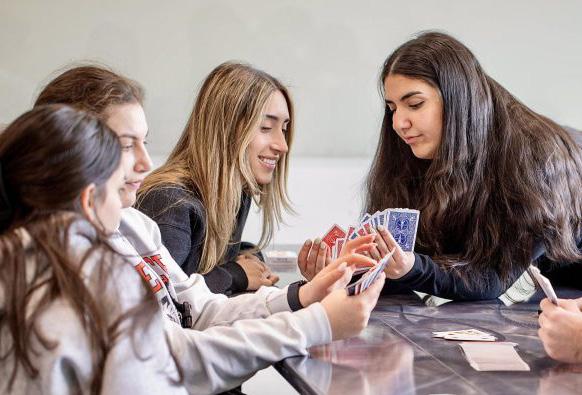
On April 1, the Red Glasses Movement at Oakland University (RGM) hosted a game night from 5:00 to 7:00 p.m. in the Ambassador Room B at the Oakland Center, bringing students together for a fun evening of socializing and building connections through games.
Music played throughout the night as students gathered around rows of tables, jumping into games like Uno and choosing from a variety of other options.
While some students already knew each other, the event also provided an opportunity to meet someone new.
Students chatted and enjoyed food as the evening continued, while others learned how to play Uno, creating a relaxed atmosphere where attendees were able to unwind from the day.
The RGM at OU is a student chapter that aims to inspire students to care for others and create a positive impact on campus.
Savannah Manjo, president of RGM, said the organization centers around spreading positivity and building community.
“The Red Glasses Movement honestly has a couple of missions, I would say, the big main mission is to live boldly, love big, and pass it along,” Manjo said.
Manjo added that the event puts the organization’s mission into action by bringing students together in a positive and engaging environment.
“It’s all about spreading positivity, being kind, and having fun,” Manjo said. “And this is a great way to
do that.”
That sense of energy and interaction was clear throughout the night as students spent time together and got to know one another.
Brooke Hermiz, volunteer coordinator for the Red Glasses Movement, said the event also strengthens relationships among students.
“I think that this is good for team bonding and it kind of stands for exactly what the Red Glasses Movement really wants everyone to do, which is just spread kindness,” Hermiz said.
Students who attended highlighted the welcoming environment and opportunity to meet new people.
Malana Yousif, an attendee, said the event was an easy decision because of her personal connections to the club.
“My friends run the club, so it was easy to come,” Yousif said. “I really love their movement.”
Yousif said spending time with friends made the time especially enjoyable.
“I really like hanging out with my friends and playing cards with them, it’s so fun,” Yousif said Micheal Zysnarski, an attendee, said the welcoming environment and purpose behind the organization encouraged him to attend.
“I know the people are great people,” Zysnarski said. “I know they’re here for a great cause.
Zysnarski said that past experiences with the organization have been positive and inviting.
“Every event that I’ve gone to, it’s been a great event,” Zysnarski said. “ It’s been welcoming and just what they stand for, I just respect a lot.”
Zysnarski said meeting new people was a highlight
of the game night.
“I met some people that didn’t even know this was the right room, but enjoyed it a lot,” Zysnarski said. The game night offered students a chance to step away from their daily routines, enjoy food, have fun, and build relationships, further fostering a strong sense of community on campus.
Unfiltered, unplugged and under the lights
ALEXA DUDEK Campus Reporter
Whether used for academic purposes, for entertainment or as a way to unwind, creative writing provides a source of connection for students at Oakland University.
On Thursday, April 2, the Creative Writing Club held an Open Mic Night in the Lake Erie room of The Oakland Center.
Attendees constructed a welcoming community of writers and found unity through the opportunity to share written work, such as poems, stories and fanfiction. While sharing was optional, some participants chose to share excerpts of personal writing from a variety of genres, such as romance and fantasy.
The Creative Writing Club created Open Mic Nights to build confidence among aspiring writers at Oakland University. The club offered a space that nurtured trust and openness, allowing students to share personal stories without fear of facing criticism.
If nobody has anything to share, the Creative Writing Club turns Open Mic Nights into a creative workshop night.
Natalie Kortge, the secretary of the Creative Writing Club, appreciates how open mic nights allow participants to gain experience sharing written work.
“For me, the inspiration behind this event is for people to get used to sharing their work with an audience,” Kortge said.
Breanne Peace, president of Oakland University’s Creative Writing Club, appreciates the variety of works
shared at these nights.
“There’s a lot of people that share things, such as fan fiction,” Peace said.
While some critics argue that fan fiction isn’t real writing, Peace disagrees.
The event aimed to build confidence among attendees by presenting various creative works.
Peace encourages people to find connection through sharing written work at open mic nights.
“There’s a lot of people that are super shy and kind of hesitant to share everything,” Peace said. “But with mic nights you share something, and we clap or snap depending on what you bring in, and go from there.”
As the event continued, members of the Creative Writing Club’s E-board shared excerpts of stories.
“Everyone on the E-board tries to bring a piece to
share,” Peace said. “I always try to make people feel more comfortable to share, there’s really no bar here.”
After sharing personal writing, members of the E-Board encouraged attendees to share any available writing.
The Creative Writing Club emphasizes the importance of inclusivity, especially among attendees who are new to sharing written work with a crowd.
The night included writers with varying levels of experience, from new writers to experienced writers.
“There’s absolutely no experience required, anyone and everyone is welcome to join us,” Kortge said. “You can come just to improve, you can come to share your work, you can come to hear others talk and you can come to find like-minded people.”
As the last echoes of the final story faded, the room filled with did not fall silent. Instead, it was filled with the applause of a supportive room filled with writers.
By hosting open mic nights throughout the year, OU’s Creative Writing Club creates a supportive space where writers can share their work, gain confidence, and connect with others, ensuring that no one ever has to write or create in isolation.
PHOTO BY JENNIFER THOMASMA
PHOTO COURTESY OF KAITLYN BULGARELLI
OUSC Repair Cafe promotes sustainability on campus
ALEXA DUDEK & JENNIFER THOMASMA
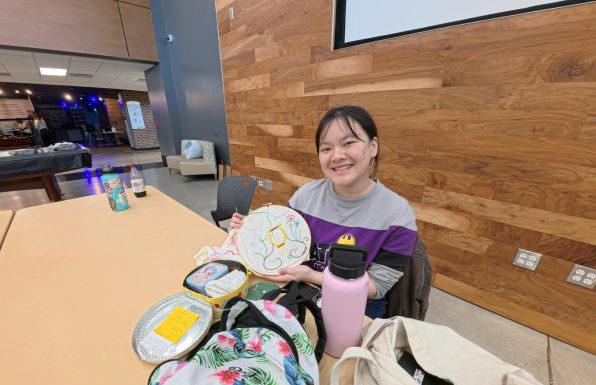
Oakland University students gathered in the Oakland Center Habitat on Friday for the OUSC Repair Cafe, an event focused on sustainability, skill-building and reducing waste on campus.
Hosted by the Oakland University Student Congress, the event ran from 12 to 3 p.m. and invited students to bring broken or worn items to be repaired instead of being discarded.
Throughout the afternoon, students arrived with clothing, jewelry and small electronics, looking for ways to extend the use.
Inside the Habitat, tables were arranged with tools and materials, creating a collaborative space where volunteers assisted with repairs. Students could leave items with volunteers or stay to observe the process and learn how everyday objects can be fixed.
Riley Demond, director of sustainability for Student Congress, said the event is part of a broader effort to promote eco-conscious habits among students.
“I plan events and lead initiatives that focus on making campus more sustainable, while also helping students live a little more eco-conscious in their everyday lives,” Demond said.
The event was formally established through congressional legislation, C.B. 66-29, introduced by OUSC President Marcus Johnson. The bill amended the duties of the director of sustainability to include planning and coordinating a yearly Repair Cafe, reinforcing the organization’s commitment to sustainability.
“The Repair Cafe is actually written into our bylaws of the director of sustainability we’re expected to continue hosting to support students and sustainability efforts.”
Demond said the goal is to provide a service that is directly useful while reducing waste.
“A lot of the items people bring in would otherwise be thrown away or just sit unused, so this gives them a second life,” Demond said.
Attendees brought items such as clothing with rips or missing buttons, broken jewelry and small electronics like cracked phone screens and remotes. Some items also carried personal value, making students more interested in repairing them rather than replacing them.
The event emphasized sustainability by encouraging students to reconsider throwing away damaged belongings.
Instead, the Repair Cafe promoted reuse and reduced the amount of waste sent to landfills.
Molly Nguyen, a student volunteer, said events like the Repair Cafe are important in a society that often prioritizes replacing items over repairing them.
“I think it’s important to not just disregard things that may seem broken, especially if the repair might be easy or it can last a lot longer if you take a little bit more care of it,” Nguyen said.
Tanzima Samima, an attendee, said she came to the event to get more involved on campus and contribute her time.
“I just want to get more involved on campus and find ways to help,” Samina said. “Events like this bring the communities together and create a good environment for students to get involved.”
Kristian Hammond, a student volunteer focusing on electronics, said repairing items is especially important as costs continue to rise.
“Otherwise, things just get tossed out,” Hammond said. “With the rising price of computer components, it’s even more that we reuse what we already have.”
Demond said events like the Repair Cafe are important because they show students that repairing items is achievable.
Not only do participants save money and keep meaningful belongings, but they also gain new skills.
“Not only do people save money and keep items they care about, but they also learn skills they might not have learned otherwise,” Demond said. “With support from the Kresge Library Makerspace, students can learn skills like sewing and feel more confident fixing things themselves.”
With support from the Kresge Library Makerspace, students had access to guidance and resources for repairs. The Makerspace team helped ensure repairs were done safely and correctly, especially when using tools like sewing and embroidery machines.
Drew Ulmer, the coordinator of the Makerspace, emphasized the importance of learning life skills through sustainability.
“It is important to learn the necessary skills to provide for yourself and to make sure that the things that you have will last,” Ulmer said.
Through teaching members of the OU community how to use tools provided by the Makerspace, Ulmer empowers the community through skill development.
“I’m a big proponent of having materials, tools and clothes that will last a lifetime,” Ulmer said. “In a world obsessed with consumerism, it is important to have the skills necessary to fix and repair items to make them last longer.”
Many Oakland University students remain unaware of the resources that the Kresge Library provides through the Makerspace.
While attending the Repair Cafe, Ulmer raised awareness of the resources that the Makerspace
provides for the campus community.
“Not everyone knows about the Makerspace, so this is a good way to help out the students, while also telling them that the resources are free and available for them to learn how to use,” Ulmer said.
Organizers also measured success beyond the number of items repaired.
“It’s definitely not just about how many items get fixed,” Desmond said. “We’re also looking at whether people leave feeling more confidence in their ability to repair things on their own.”
Demond said one goal is for students to leave feeling more confident in the ability to fix things alone.
Another is increasing awareness of campus resources such as the Makerspace and the Library of Things.
Volunteers helped set up, assisted with repairs and organized donations. To ensure safety, volunteers signed waivers and trained staff supervised the use of certain equipment.
Free food and refreshments contributed to a relaxed environment, allowing students to engage with others while waiting for items to be fixed and learning new repair skills.
Events like the repair cafe reflect a growing national movement focused on sustainability.
Repair cafes have become increasingly popular among communities and college campuses, encouraging individuals to fix items rather than discarding them. By providing access to tools, guidance and shared knowledge, these events promote more consumable habits.
As the event concluded, volunteers carefully packed up tools after welcoming a steady stream of participants throughout the day.
Organizers are hopeful about expanding the Repair Cafe in the future, potentially holding it once each semester to build on its growing community impact.
BY
PHOTO
JENNIFER THOMSASMA
Bocci talk brings fashion and business insights to OU
ADDISON KOCH Campus Editor
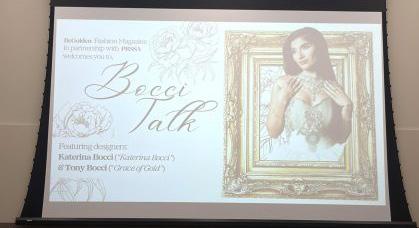
Oakland University’s chapter of the Public Relations Student Society of America (PRSSA), in collaboration with BeGolden, OU’s student-run fashion magazine, hosted the Bocci Talk on April 1 in the Oakland Center’s Founders Ballroom C.
The event, held from 12:00 p.m. to 1:30 p.m., featured wedding dress designer Katerina Bocci and jewelry brand owner Tony Bocci of Grace of Gold.
The program brought together students interested in public relations, fashion and entrepreneurship, creating an opportunity for direct engagement with professionals in creative industries.
Katerina Bocci presented first, outlining a journey from Albania to the United States and detailing the challenges of entering the fashion industry as an immigrant. Formal training in fashion design in Italy preceded relocation to the United States in 2001, where initial employment included minimum-wage positions due to limited industry opportunities.
Early career development included work in a bridal shop and the creation of garments from a home workspace. Business growth began through community connections, small design projects, and participation in local events.
A charity fashion show expanded visibility and contributed to new professional opportunities, reinforcing the value of community involvement and relationship building.
Continued progress led to participation in New York
Fashion Week despite financial barriers. Strategic decision-making and resourcefulness enabled entry into the event, resulting in increased recognition and business expansion.
A major milestone included securing orders from a prominent bridal retailer, contributing to national exposure and long-term growth within the competitive fashion market.
Throughout the presentation, emphasis remained on resilience, community support, and the importance of starting with available resources. The value of mentorship, delegation and sharing knowledge with younger generations was also highlighted as a foundation for sustainable success and long-term impact within the industry.
Tony Bocci followed with insights into the creation of Grace of Gold, a Christian-based jewelry brand established during the COVID-19 pandemic. The business began as a hobby and developed into a
OU’s Pride Prom offers a prom redo
ERIN BANES
Campus Reporter
For many LGBTQIA+ students, the traditional high school prom was an experience defined by discomfort, exclusion or absence altogether.
Oakland University’s annual Pride Prom offers something different, a queer-and gender-affirming space centered on choice, safety and celebration.
The 11th annual Pride Prom invited students to dance, play games and connect in an environment where showing up authentically is encouraged rather than questioned.
Attendees were welcomed whether they arrived with a partner, friends or on their own, emphasizing that participation came without expectation.
Hosted by the OU Gender and Sexuality Center, Pride Prom serves as an alternative to traditional prom spaces, which have not always been welcoming to LGBTQIA+ students.
The event prioritizes accessibility and community, creating a low-pressure environment where selfexpression is not only accepted but celebrated.
Kieran Montgomery, a graduate assistant at the Gender and Sexuality Center, Pride Prom represents something many queer students never had the chance to experience the first time around.
“It’s kind of like a redo,” Montgomery said. “A lot of us didn’t have that experience, and I’m definitely one of those individuals.”
Montgomery said Pride Prom provides an opportunity to dress and present authentically while being surrounded
by people who offer care and understanding.
Beyond the aesthetics of the night, Montgomery emphasized the emotional importance of being in a space where judgment is absent and connection is possible.
“Nobody in that space is going to shame you for how you show up,” Montgomery said. “As long as you’re connecting with people, you’re going to have a good time. You’ll find your people.”
Sid Missouri, an attendee, said Pride Prom offers a level of comfort and freedom that was missing from their own prom experience.
“At my prom, I was the only feminine person wearing a suit,” Missouri said. “It was really weird getting pointed at. Here, I get to wear whatever I want.”
Missouri said having a queer-affirming space
growing brand focused on faith-driven design and community engagement.
Discussion topics included the challenges of balancing academic responsibilities with entrepreneurship. Time management, goal setting and the integration of academic learning into business practices were identified as key components of success in managing both roles effectively.
Emphasis was placed on discipline and consistency in maintaining progress.
Brand development for Grace of Gold centers on purpose, identity, and consistency. Participation in local events, pop-ups and collaborations has contributed to increased visibility and continued growth, while maintaining a strong connection to faith-based values and messaging that resonate with a specific audience.
Both speakers addressed broader themes of entrepreneurship, including the importance of networking, adaptability, and persistence. Challenges faced by women in business were acknowledged, along with the importance of maintaining confidence, building relationships and pursuing long-term goals in competitive environments.
A question-and-answer session concluded the event, allowing attendees to engage directly with both speakers on topics including career pathways, branding and overcoming obstacles within competitive industries.
The PRSSA and BeGolden Bocci Talk provided students with insight into the intersection of fashion, entrepreneurship, and personal values through the experiences of two business leaders, while reinforcing the importance of perseverance, discipline, and community in achieving success.
allowed them to feel safer and more open, especially for students who may not have affirming families or social circles outside of campus.
“Prom is such a big deal,” Missouri said. “It’s nice to have an event where you can really be yourself. Life’s too short not to.”
Hudson Foraker, an attendee, said that Pride Prom didn’t need to be extravagant or extraordinary to be meaningful, simply being able to participate in a space where everyone could be themselves made the experience truly special.
“It just feels nice,” Foraker said.
Foraker noted that the familiar structure of Pride Prom made it approachable for students who might be unsure about attending.
“If you liked prom before, you’ll probably like this,” Foraker said. “There’s really no difference in the format, it’s just a different space.”
Whether attendees came seeking a second chance, a stronger sense of safety or simply a good night spent with friends, Pride Prom offered an environment defined by acceptance rather than expectation.
For many students, that freedom, to show up exactly as they are, without judgment, is what makes the event feel most meaningful and memorable.
PHOTO COURTESY OF UNSPLASH
PHOTO COURTESY OF ARMEEN SHAWKA
Mocktail Networking Night Highlights PRSSA’s mission
NATALIE LINDSTROM
Contributor
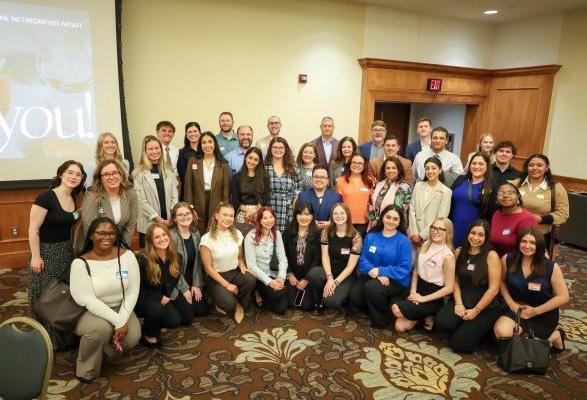
The Public Relations Student Society of America (PRSSA) at Oakland University connected students with industry professionals during its annual Mocktail Networking Night, a signature spring semester event focused on career exploration and meaningful conversation.
PRSSA at Oakland University is a student organization dedicated to preparing students for careers in public relations, advertising, communications and related fields. Through guest speakers, networking opportunities and leadership experiences, the organization helps students gain real-world insight while building confidence and professional connections.
The evening began with opening remarks from Chiaoning Su, PRSSA academic adviser, associate professor and public relations and advertising program director, alongside members of the executive board: Natalie Lindstrom, chapter president; Teagan London, event director and treasurer; and Ava Webb and Skylar Urbain, co-vice presidents.
Following introductions, students participated in a structured speed networking format designed to maximize interaction. Attendees spent seven minutes at each table speaking with a professional before rotating to the next. As soon as the timer ended, students moved on, creating fresh opportunities to engage with professionals from different industries and career stages.
This year’s event featured 19 professionals representing a wide range of fields, including sports, automotive, health care, nonprofit, agency and government sectors. The diversity of industries allowed students to explore multiple career paths in a single evening while gaining a broader understanding of the communications field.
The format encouraged students to ask thoughtful and candid questions, from breaking into the industry to understanding day-to-day responsibilities and navigating early career uncertainty. For many attendees, the event provided a rare opportunity to engage in faceto-face conversations with professionals in a setting that felt both structured and approachable.
“Mocktail Networking Night is all about creating a space where students feel comfortable having real conversations with professionals,” Teagan London, PRSSA event director and treasurer, said. “We wanted to design an environment that felt polished but still approachable, so students could ask honest questions and walk away feeling more confident about their future.”
The structured networking portion of the evening concluded with remarks from Allison Gavagan, current promotions director and incoming chapter president, helping to close out the formal rotations before transitioning into the next phase of the event.
As the structured rotations concluded, the event transitioned into open networking, allowing students to revisit conversations and connect more personally with professionals they resonated with throughout the evening.
This extended portion of the event gave attendees time to deepen connections, exchange contact information and continue discussions beyond the time limits of the rotations. What began as brief conversations often developed into more meaningful interactions, reinforcing the event’s purpose of building lasting professional relationships.
Through events like Mocktail Networking Night, PRSSA at Oakland University continues to provide students with direct access to industry professionals while helping them better understand potential career paths. By creating space for honest conversation and connection, the organization empowers students to take the next step in their professional journeys.
Finding community at Good Friday Procession
ADRIAN JIMENEZ MORALES Editor-in-Chief
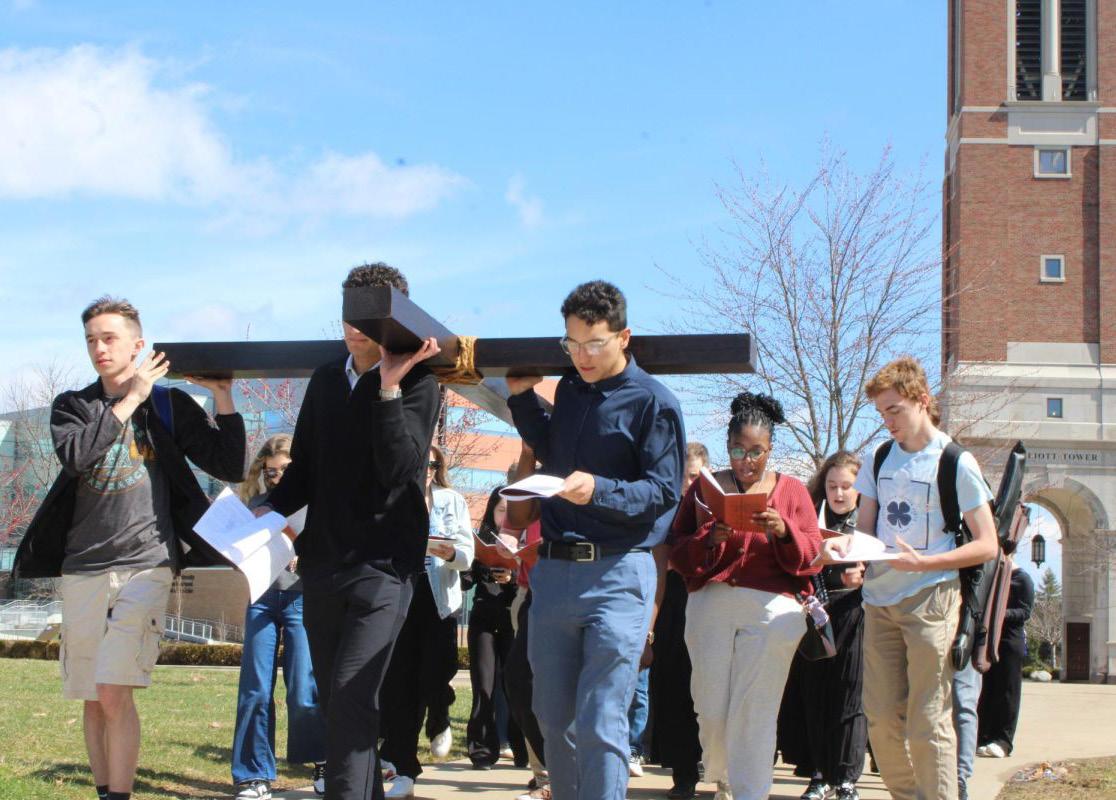
With students joining along the way, the Grizzly Catholic club carried out a Good Friday Procession on April 3rd. While carrying the cross in the now annual campus tradition, the religious group has seen a steady increase in fellowship in recent years.
Like in many places around the world that celebrate the Christian Holy Week, OU was also witness to a crucifixion procession put on by Grizzly Catholic in collaboration with St. John Fisher Parish. The ritual, event organizers said, reinvigorated faith and community in preparation for Easter.
“We’ll be praying the stations of the Cross and bringing the Rosary and just being a witness to God’s love on campus, especially on this day that is a day of penance, a day of mourning, a day of recognizing the example that Christ gives us,” Matthew Hood, chaplain and administrator at St. John Fisher said.
Starting at the Elliott Tower for the third year, around 40 participants carried the Cross around campus reflecting on their relationship with faith, graciousness and sacrifice.
“We started a renewed effort to be a presence here on campus and we’ve seen a lot of growth every year,” Hood said. “College students are hungry for truth and hungry to be challenged and hungry to discover the purpose and meaning of their lives.”
At the same time, student leaders like Angelina Bojaj, a computer science senior, say that a sense
of fulfillment is what made them stay with Grizzly Catholic. For her, the faith-based organization came at a time of doubt, shyness and questioning.
“One day I was outside, actually, at the beginning of my junior year and I had really been praying to develop fellowship, but also to find a community,” Bojaj said. “Then, one of our focus missionaries, who works over at our parish, she actually came and introduced herself and was like, ‘You want to join a Bible study?’”
Four missionaries specifically work to connect with students seeking similar opportunities to get
involved with the parish and community, alongside campus minister Drew Tonti. Attracted to the tradition and critical thinking of the church, he said he has seen a renewed fervor for faith at OU.
“Our ministry continues to grow and we’re reaching a lot more students. I noticed that more and more students are just aware of us on campus,” Tonti said. “This year’s cross procession, we had a number of new faces that hadn’t really come to our events before, so that was really exciting to see.”
After the procession was done, chants and kneeling in behind, some students reminisced on how the procession was what initially got them involved not only with Grizzly Catholic but also with Catholicism.
“It was last year and I was early to class and I was just walking around. I saw that they had a poster up saying, ‘cross procession,’ so I just came out of the blue and I showed up,” Sebastian Mora, a sophomore, said. “Looking back a whole year later, I’ve been involved now, it all started from just randomly seeing a poster on one of the boards.”
Soon to be confirmed, Mora explained how he felt very close to a catholic identity in a community that has welcomed him fully. In his testimony, he captured the essence of what Grizzly Catholic has been striving for in recent years.
“I come to campus now and I see people that I know and I look forward to meeting new people,” Mora said. “The church is right there, so we just go from class, go to the church and we just hang out. We have Thursday night dinners and enjoy the services.”
PHOTO COURTESY OF KATIE REID
PHOTO BY ADRIAN JIMENEZ MORALES
Subscription creep adds up fast
MADI TURNER Features Reporter
It is not necessarily just tuition or rent quietly draining students’ bank accounts. It is the subscriptions they forgot they were paying for.
As digital conveniences become increasingly popular, subscription models have become a default way for companies to deliver content and tools to the people. From streaming services to cloud storage and delivery memberships, these recurring charges are stacking up faster than many students realize. Individually, the costs feel small, but together they can become overwhelming.
According to C+R Research, consumers estimate they spend about $86 per month on subscriptions, while their actual spending averages $219. Passive spending can be harder to track than one-time purchases, and the significant gap highlights just how easily recurring payments can go unnoticed. Many people simply do not track how many services they are paying for each month.
The same report found that 42% of consumers forgot they were still paying for at least one subscription they no longer use. Forgetfulness turns into wasted money, often every single month.
For college students, the issue is amplified by routine. Subscriptions are tied to daily habits like music, entertainment, schoolwork and food delivery. Considered individually, each charge feels manageable. The total rarely does.
Automated billing often removes the need for users
to actively think about ongoing costs. Research from the Federal Trade Commission shows that subscriptionbased business models rely heavily on these automatic renewals, which can make charges even easier to overlook and difficult to cancel.
For many students, canceling is not always straightforward. Some platforms require multiple steps, hidden settings or strict timing windows that can discourage users from unsubscribing. Others continue charging until the end of a billing cycle, even after cancellation is requested. The resulting friction can lead to continued spending on services that are no longer needed.
At the same time, new subscriptions are constantly
Candyland in a crypt
ANDREW MCNAMARA MAY
Features Reporter
A little party never killed nobody — or so the music echoed as students danced in Matilda Dodge’s family estate during the 2026 Meadow Brook Ball.
The dusty cushions and moody arches of the Art Deco mansion welcomed hundreds of students to the annual celebration on Friday, March 27. The ghosts that live in Meadow Brook Hall had likely never heard of the night’s theme — Candyland — yet the festivities and lights were captivating enough that they, too, found themselves dancing.
The event has evolved into one of Oakland’s longeststanding and most storied traditions. The first Meadow Brook Ball was dubbed “The Scholarship Ball.” It was held in 1961 to raise money for tuition for the incoming student body.
Back then, the school’s mascot had not yet awoken from hibernation. These grounds were still Michigan State University’s honors college.
The event has since strayed away from its philanthropic origins and exists as an icon of the lasting elegance of a campus built on the grounds of a phantom estate.
A university hidden in the hunting grounds of a shrine dedicated to the gods of gilded capitalism at the sunrise of the 20th century.
Pandemonium is the name of the castle of Lucifer in the underworld in “Paradise Lost.”
Just like the devil’s palace, the Meadow Brook estate found itself full of critics.
The Candyland theme was not free from criticism. To many, it carried the bitter tang of anticlimax. The theme of the previous year was a James Bond mission — for self-evident reasons, a natural fit for a university formal in an old mansion. It was also painfully easy to dress for.
Candyland is a completely different endeavor altogether. Bright pastel suits are not commonly seen enough to be easily themed around. Light suits are often seen as a faux pas — now an endangered species, typically only spotted once a year after emerging for the Kentucky Derby.
It was during the formative years of the student body that the most fashionable modern president was lambasted
being introduced. Free trials, student discounts and bundle offers make it easy to sign up, but those offers often convert into full-priced plans automatically. Introductory deals are designed to attract users but can often lead to long-term commitments.
The financial impact is often subtle at first. Because individual charges are small, they may not feel urgent or significant in the moment, but over time, they accumulate. Students pressed with classwork, job schedules and other responsibilities often allow these charges to fall by the wayside.
For students already managing rising living costs, those recurring expenses can also compete with essential needs. Food, transportation and school supplies all become part of the same financial equation. Rising costs in other areas make even small recurring charges even more impactful over time.
This reality is forcing many students to take a closer look at their spending habits. Subscriptions, once considered minor, are becoming a more noticeable part of monthly budgets, with many applications and services having been developed for addressing this need, often at an additional cost.
But subscription creep stress can still be managed with proper documentation and foresight. Tracking expenses, reviewing bank statements and canceling unused services can help reduce unnecessary spending. Regular financial check-ins can also improve awareness and reduce overlooked expenses.
But these steps require consistency. Without that awareness, subscription creep continues in the background of many students’ lives unnoticed or unaddressed.
for wearing a tan suit. They simply are not a young man’s wardrobe staple. Maybe in 1986. Less so in 2026.
The consensus from the female student body was not much different. Women want to feel like princesses or femme fatales at a university formal. It is incredibly uncommon — though theoretically possible — to find someone who wants to attend dressed like a sexy candy cane or gumdrop.
The décor lagged behind previous years as well.
Celebrity cardboard cutouts were used as a primary piece of décor, and the mad residents of this tragic castle made sport at the end of the night by stealing away with them.
Reportedly, the administration was upset. The student body is also upset with whoever thought cardboard cutouts justified the rather high price of admission.
The imagination races — turning Meadow Brook into a murder mystery, a Bond thriller, the Spencer Estate, “The Great Gatsby” or an elegant waltz — but reality fell short.
The activities were also a stiff downgrade compared to the previous year’s spy adventure. Students were lost in thought as to how bracelet making and caricatures related to Candyland.
However, true to the spirit of pandemonium, the party was richest in moments of chaos.
Students were adamant that during the height of the dances — including Latin lessons in the first hour and two drag shows — the party came to life.
Lost in the rhythm, students were able to find release the chaos that has gripped campus over the past several months. Catharsis was found in dancing with lovers and ghosts.
PHOTO COURTESY OF MATTHEW VIGELIUS
PHOTO COURTESY OF UNSPLASH
Movement & Meaning: A healing catharsis
ADRIAN JIMENEZ MORALES
Editor-in-Chief
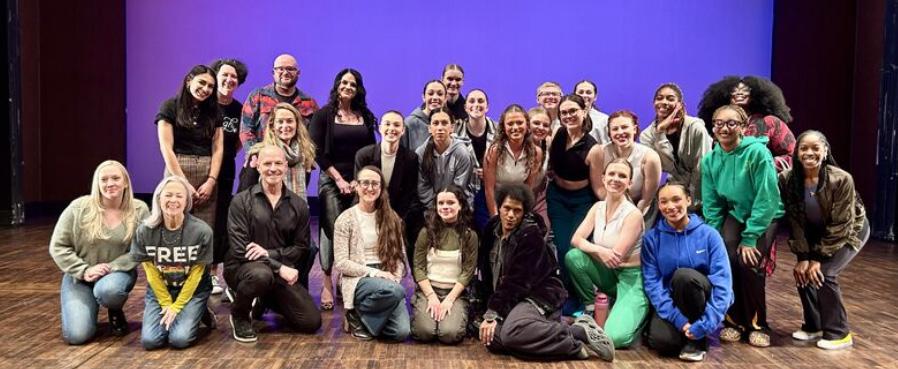
After the inaugural staging of the new “Movement & Meaning: Queer Stories in Motion” dance performance on March 23, the event organizers reflected on the cathartic process of translating LGBTQ+ mental health challenges into movement and healing.
A collaboration between the Department of Counseling and the Department of Dance reflected the long history of creative arts as healing, which is not often talked about for queer communities, Michael P. Chaney, professor at the Department of Counseling, explained.
“Mike is from the counseling department and he came to us in the dance department with this idea to find a way to display mental health topics that — transcend every human being — but specifically talking about how they affect the LGBTQ+ community,” Teresa Muller, special lecturer in dance, said.
Stemming from the Pride Project, an advocacy initiative to educate students about queer mental health issues, the performance was put together by a team of master’s in counseling students and student choreographers. Centered around four main issues, the counseling students put together presentations on anxiety, societal pressure, substance use and suicide, to which the dance students illustrated risks, resilience and protective factors.
“All the dances, I feel like, you could just get a story out of them, of being pushed away or excluded or looked down on for certain reasons,” Rachel Gralewski, a first-year counseling student, said. “But then there were also aspects where they had other people that supported them.”
With the interpretive dance pieces following
speeches on the metrics and stories of mental health, the audience and collaborators experienced the intertwining of mental health and art, which many described as healing.
“The choreography team did a wonderful job and we were all very much on the same page,” Elizabeth Mance, a master’s in counseling student, said. “It was really cool watching how powerful and passionate the dances with no words behind them were, and how well they conveyed the message that we were both trying to convey.”
Heterosexism, oppression and transmisia were the epicenter of one of the most applauded performances of the night, choreographed by OU student June Wallace. With both teams of students meeting only at the performance on March 23, the counseling students highlighted how well their dance counterparts translated their research into art.
“It really was their own artistic interpretation, but especially June’s dance, I thought was amazing,” Kelly Frank, graduate student in the clinical mental health counseling program, said. “They used a jacket as a prop in the dance. I want to say it was a jazz-inspired piece. The prop, the jacket, was this element within the struggle and also powerful visually. So I think that piece in particular and really all of them translated really well, and they all had their own expression.”
Lived experience also became part of the research team as they assembled the speeches that would inform the performance.
“It pulled from my experience in counseling people, because I am working on my limited license, so I have a number of clients who are LGBTQ+,” Deanna Synowiec, a master’s in counseling student, said. “My research was real, lived experience, looking at and listening to and holding space for my clients who’ve experienced
marginalization, minority stress, which is what our topic was about.”
With statistics turned to movement and testimonies into performance, many of the participants highlighted the event as a catharsis that captured the meaning of community and healing.
“As a member of the LGBTQIA+ population who has dealt with many of these issues, I felt seen,” Rishika Paruthi, first-year master’s student in the counseling program, said. “I found myself tearyeyed watching the dances. They really showcased the reality of mental health, which can be hard to state in words.”
For the dance department, which has hosted pride events for the past six years, the novelty came in students leading the choreography of the performance of 15 students, one of the largest groups seen in an open production. The project builds on a continuous need to foster inclusive, accessible and safe spaces for the queer community, Muller explained.
“One of the reasons why I started doing what I do in the dance program was really for comfort and just having something that wasn’t there when I was their age,” Muller said. “I didn’t have a queer faculty member, somebody to look up to when I was having whatever experiences.”
Alongside his collaborator, Chaney reminded students that the School of Education and Human Services has a free counseling center for all students and community members who want to talk about their mental health.
“I would also add for people who may not be ready to talk about things or may not be comfortable with one-on-one talking, there are ways to engage in healing and therapy that don’t involve talk, like dancing and movement and art and, you know, reading and just creating,” Chaney said.
PHOTO COURTESY OF MICHAEL CHANEY
Golden recommendations: Pur∑ Michigan magic
As the seasons shift, it can be hard to find pride in Michigan amid the bipolar weather, but there’s so much more the state has to offer: a lack of alligators and minimal venomous snakes and spiders, for one.
More importantly, Michigan has a vast collection of creativity at its core. Artists born and raised in the state reflect the beauty and nostalgia of growing up in the Midwest.
NF
Born in the small town of Gladwin, Michigan, Nathan Feuerstein is a rapper, singer, songwriter and record producer. Taking major inspiration from fellow Michigan native Eminem, Feuerstein is known professionally by his initials, NF. Like Eminem, he favors clear enunciation and a lot of internal rhymes in his raps.
certified platinum in the U.S. and several other countries. After a two-year break, his latest EP, “Fear,” was released in November of 2025. The title track “Fear” discusses NF’s perpetual mental health issues and relapses.
Unlike most rappers, NF shies away from excessive swearing or rapping about money, drugs and fame. Rather, he focuses on the struggles in his personal life, stemming from parents who divorced when he was young and an abusive childhood. His songs touch on a variety of personal issues, from his anxiety and depression to his diagnosis with OCD.
The artist has acknowledged that his OCD frequently delays his creative process as he struggles to make the music perfect. In particular, his 2023 release “Hope” took NF over a year and a half to complete as he fixated on the songs and his inability to make them perfect.
heart and lives in Germany. Meeting in person would leave one or the other dead; Ollie from an epileptic seizure or Moritz from turning off his pacemaker.
The two share their individual stories with each other as pen pals, slowly becoming unlikely friends and learning more about themselves along the way. Thomas does a beautiful job writing the dynamics of their friendship and character arcs.
Ollie’s story feels nostalgic to growing up in Michigan despite the extremities of his situation. He shares memories of running through the woods with his self-proclaimed first love, exploring the natural side of the state without the pressures of social media.
Pewabic Pottery by Mary Chase Perry Stratton and
Horace James Caulkins
“Because You’ll Never Meet Me” by Leah Thomas
Oliver “Ollie” Paulot and Moritz Farber are wunderkinds, children born a little strange.
Ollie is essentially allergic to electricity and grew up a hermit, secluded in the woods of the Michigan Upper Peninsula. Moritz, alongside a lack of eyes, has an electric
Pewabic Pottery, now a designated National Historic Landmark, was a collaboration between Mary Chase Perry Stratton and Horace James Caulkins. Stratton was trained in art and ceramics, while Caulkins was a ceramic artist who began his career as a dental supplier. In this line of work, he developed a kiln for firing dental enamel, named the Revelation.
When the two artists
story by Sarah Wasielewski and Marissa Getschman graphic by August Wicker
met, they combined Caulkin’s innovative kiln with Stratton’s knowledge of ceramic glazes to found the Pewabic Pottery. The name came from the mine Stratton’s father worked at in the Upper Peninsula, called the Pewabic Copper Mine. Their collaboration was highly successful, and they became known for their unusual iridescent ceramic glazes, producing tiles, architectural elements and jewelry.
By 1907, the pottery moved to a Tudor revival style home in Detroit and continues to operate to this day under the leadership of the nonprofit Pewabic Society Inc. The location now also houses a museum and educational programming, while many Pewabic products continue to be produced there.
While customers may still pay to have Pewabic tiles in their homes, Detroit and the surrounding areas boast a plethora of Pewabic installations. Mosaics adorn the exterior of Comerica Park and Little Caesars Arena, the floor of the Riviera Court at the Detroit Institute of Arts and inside several of the Detroit People Mover stations. Oakland University students do not have to look far to find the iconic pottery, as Meadow Brook Hall’s Pegasus Fountain is laid with turquoise Pewabic tiles.
Many Michiganders have at least heard of Starkid Productions, either through the grapevine or in the wake of their evergrowing success as a theatre company. The company was woven from the threads left by Michigan University students who put together a parody musical titled “A Very Potter Musical” based on the “Harry Potter” franchise.
The students posted the production on YouTube for friends and family to enjoy, and the video instead went viral. Fifteen full-length musicals have since been written and released on their YouTube channel, Team Starkid, three of which take place in a small town located in Michigan.
The horror-comedy collection is known as the “Hatchetfield Series” and boasts three full-length musicals and two web series for a total of fifteen stories, which take place in the town. The core trilogy consists of “The Guy Who Didn’t Like Musicals,” “Black Friday” and “Nerdy Prudes Must Die.” The web series is called “Nightmare Time” and features two installments with five more stories.
“The Guy Who Didn’t Like Musicals” was the first installment of the trilogy. It follows Paul, an average Joe with a distaste for musicals, through a musical apocalypse in which people can’t stop singing.
“Black Friday” takes place on the day it’s titled after, a shopping trip filled with nightmare fuel (and laughter!) Tickle-Me Wiggly is the hottest new toy who is also a chaos-hungry interdimensional being keen on making the world his own.
“Nerdy Prudes Must Die” is a slasherstyle musical following a group of high schoolers who accidentally summon an all-powerful and evil spirit
Starkid’s “Hatchetfield” Series
OU acting student DeNetria Gibson’s path to primetime
CAEL TANNER
Features Editor
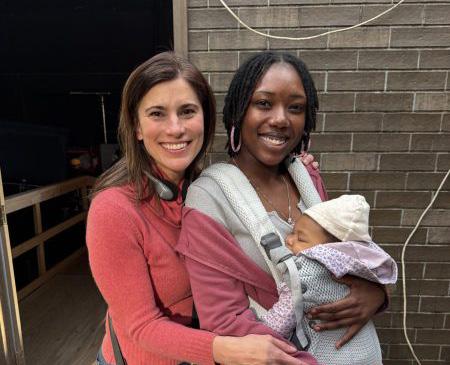
DeNetria Gibson still remembers the moment the van door opened.
Inside sat the cast of “Chicago P.D.” — the very actors she had watched from afar, now suddenly her co-stars. For a brief second, the Oakland University senior froze.
“And I’m like, ‘Oh my god, where am I?’” she said. “But then I was like, ‘No, they’re human — I have to talk to them like they’re human.”
Acclimating, the Oakland University senior and BFA acting major’s initial disbelief quickly gave way after encouragement from her fellow cast members. She was making her television debut as a guest star in Season 13, Episode 16 of the long-running NBC police procedural.
“They were all really funny,” Gibson said. “I thought [series lead] Jason Beghe would be really, really serious, but the first thing he said was a joke. We got on set, and it was really fun.”
In the episode, titled “Restored,” Gibson plays Katharine “Shorty” Short, a woman entangled in a criminal investigation involving the father of her child. The role placed her at the center of several interrogation scenes, and required an intensely emotive and demanding application of her skills.
“I played the accused’s girlfriend — or his baby mama,” she said. “They think I’m involved, and so they interrogate me… The character is there for one episode to move the story along, but she is essential.”
After receiving notice of the audition through
professor Milica Govich, Gibson submitted her tape within hours. She quickly moved from consideration to “pinned” — the top choice — and was officially booked in the role shortly afterward.
Gibson then spent two weeks filming at Cinespace Studios in Chicago. The shoot marked her first experience on a professional television set. She explained that the environment differed significantly from her past work in stage acting.
“I got to work with a real baby, which was… traumatic, to say the least,” she said. “That first scene was the hardest, but after that, it got easier. As scared as I was, I felt more comfortable than I do on stage.”
Gibson’s love of acting first began in childhood, the product of Disney movies and television inspirations as well as an enterprising imagination.
“I would repeat lines and learn monologues from my favorite TV shows to pretend like I was that character,” she said. “I had Barbie dolls, Ken dolls, and Transformers, and I would make my own little movies with them.”
Gibson first pursued acting through school programs in third grade, continuing theatrical work through high school. At OU, she has portrayed the lead in three short films, participated in several plays, and also worked as a director and choreographer for university productions.
Drawn to stories that reflect her identity and community, Gibson hopes to work with filmmakers like Ryan Coogler and pursue roles that center underrepresented voices.
“I really like stories that voice my community,” she said. “Black lesbian stories — that’s my cup of tea.”
Her next steps are already in motion: two upcoming
short film roles on campus, the lead role in a touring production of Euripides’ “Medea” in Greece. She hopes to eventually relocate, spending more time in Chicago, before heading for Los Angeles to pursue screen acting professionally.
“It’s really crazy… to think that I did it before I graduated college,” she said. “But it felt like — I can do this in the future.”
“It was crazy,” Gibson said. “I was like, ‘There’s no way that this is happening to me right now, right before I graduate. But I really feel like I can do this in the future.”
Loan repayment strains student budgets
MADI TURNER
Features Reporter
After years of payment pauses enacted during and following the COVID-19 pandemic, federal student loan repayment has fully resumed, placing financial pressure back on borrowers across the country.
Federal student loan payments officially resumed in October 2023 after a three-year pandemic pause. Interest began accruing on Sept. 1, 2023, with the first payments due the following month. Separately, collections on defaulted loans resumed on May 5, 2025, after a five-year hiatus. As borrowers are required to resume monthly payments, interest once again accrues on federal loans.
The transition has not been smooth. Many borrowers are struggling to adjust after years without required payments. For current college students and recent graduates, the restart means far more than a mere policy shift — posing a significant reality check instead.
Data from the Federal Reserve indicates that many student loan borrowers report financial strain, including difficulty covering basic expenses and managing debt.
The Federal Reserve’s 2024 Survey of Household Economics and Decisionmaking highlights how debt continues to affect financial stability, even before repayment fully resumes.
“A majority of adults also said that changes in the prices they paid over the prior year had made their finances worse,” the Board of Governors of the Federal Reserve Board said. “In response to higher prices, most people reported taking actions such as adjusting their
spending over the prior year.”
The difficulty is especially pronounced among younger borrowers. Many Gen-Z graduates are entering a job market where wages have not kept pace with rising living costs, and, according to the Pew Research Center, Americans cumulatively still owe about $1.6 trillion in student loan debt.
The increasing burden is shaping how students think about their futures. For some, it is influencing career decisions before they even graduate. Students are increasingly considering salary, flexibility and job stability in ways that are directly tied to loan repayment.
At the federal level, officials say efforts are being made to ease the transition.
PHOTO BY CLAIRE SANDERLIN
The U.S. Department of Education has introduced income-driven repayment plans designed to lower monthly payments based on a borrower’s income, including programs such as the SAVE plan, which adjusts payments based on earnings and family size.
These plans calculate payments based on income and family size, making repayment more manageable for borrowers.
But for many, those options do not eliminate the stress, only serving to manage it temporarily. Monthly payments are returning at the same time that housing, food and transportation costs remain high, and the combination is creating a financial squeeze for many young adults trying to establish independence.
For current students, the situation is also affecting how they view higher education itself.
The idea of graduating with debt while entering an uncertain economy has become a major concern. Some students are reconsidering how much they borrow. Others are questioning whether certain degrees will provide enough return on investment.
The restart of student loan payments is not just a financial issue, but a generational one. It reflects broader questions about affordability, access and the long-term value of higher education.
As repayment continues, the pressure is likely to grow.
Borrowers who were once given relief are now being asked to adjust quickly to a system that demands a potentially untenable consistency. For the next generation of college students, the message is already clear.
Debt does not wait.
PHOTO COURTESY OF DENETRIA GIBSON
HBO’s “Harry Potter” reboot sparks excitement and debate
MARYAM SOMO
Marketing Assistant
Out with the old and in with the new is the promise of the upcoming “Harry Potter” series, yet many fans remain hesitant to let go of the familiar.
Nearly 25 years after the debut of the franchise with “Harry Potter and the Philosopher’s Stone,” the blockbuster series is returning to screens with an entirely new cast. On April 12, 2023, HBO announced the reboot as a TV series during a Warner Bros. Discovery press event. Three years later, the first teaser for the new series was released in late March 2026, with the show slated to premiere Dec. 25, 2026.
The series plans to undergo a 10-year-long process. Over the next 10 years, HBO will adapt all seven books in the series. Each book will receive its own dedicated season following Harry Potter’s story chronologically from beginning to end.
The TV series will remain faithful to the original books rather than introducing a new storyline, with the main change being a new cast and a fresh take on the beloved franchise.
Reactions to the first look at the new adaptation have been mixed, with some expressing nostalgiafueled excitement for a more faithful retelling and others questioning whether it is necessary.
The remake debate
Many devoted fans of the original film franchise view the remake as redundant and unnecessary. They argue the films are already iconic and that revisiting a story so firmly embedded in cinema history risks diminishing its legacy.
Some critics of the new series have also argued that the first teaser trailer appears too desaturated
and dark, lacking the magical vibrancy that defined the original film franchise.
On the other hand, many fans are excited to experience the book series again, sharing the magic with a new generation while reconnecting with the world of Hogwarts through a fresh cast and modern production. There is also optimism among book readers that a TV show format will better represent complex storylines that were originally cut from the movies.
Many members of the original Harry Potter cast have expressed support for the new actors taking on the roles. Daniel Radcliffe and Rupert Grint, who played Harry Potter and Ron Weasley, respectively, reached out to the new cast to offer their encouragement.
Radcliffe shared his thoughts on the adaptation during an appearance on The Late Show with Stephen Colbert.
“I’m actually delighted that when my kid grows up and is into Harry Potter, he can watch a version that is not me,” Radcliffe said. “I feel like watching it with your dad would be less cool. It would take you out of it.”
J.K. Rowling and casting controversies
Author J.K. Rowling serves as an executive producer on the new TV series, a role that has made some fans uncomfortable. Much of the production is being overshadowed by the ongoing controversy surrounding Rowling, which has sparked significant and vocal backlash.
The controversy surrounding Rowling centers on her public statements about transgender people, which many have criticized as transphobic. Beginning around 2018 and amplifying in 2020, she questioned the inclusion of trans women in certain women’s spaces and criticized language
regarding women.
While she frames her views as protecting women’s rights, critics argue they dismiss and harm transgender identities. Her comments caused widespread backlash from fans, LGBTQ+ advocates and some Harry Potter cast members, while also pulling support from others who defend her right to express her opinions, making it a polarizing cultural debate.
Rowling’s history and her involvement in the series have led some fans to plan an outright boycott of the upcoming series.
The new casting has also sparked controversy and concern. Paapa Essiedu, cast as Severus Snape, has faced racist abuse and even death threats over his role.
In response to this, Essiedu took to The Times and addressed his thoughts on the situation
“The reality is that if I look at Instagram, I will see somebody saying, ‘I’m going to come to your house and kill you.’ So while I’m pretty sure I’m not going to be murdered,” Essiedu said. “That could age badly! But, yes, while I hope I’ll be OK, nobody should have to encounter this for doing their job. Many people put their lives on the line in their work. I’m playing a wizard in Harry Potter. And I’d be lying if I said it doesn’t affect me emotionally.”
Reactions to the new cast are mixed. Some fans remain fiercely protective of the original movie actors, with a few even resorting to threats, while others are eager to see fresh interpretations of the beloved characters.
The new Harry Potter series is proving to stir both excitement and controversy, but there is no denying that the announcements and releases have garnered the attention of the masses.
PHOTO COURTESY
PHOTO COURTESY OF HBO
OU piano senior heads to Baylor on full scholarship
MARIA MAGNOLI Arts Reporter
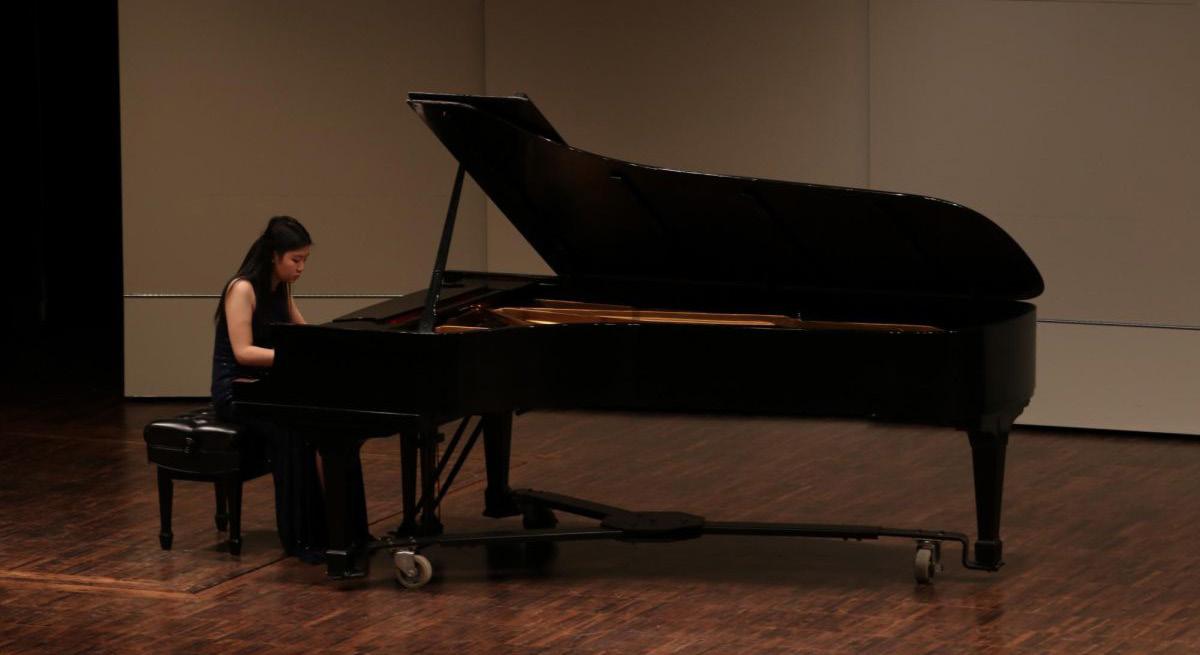
A graduating senior studying piano performance in the Oakland University School of Music, Theatre and Dance (SMTD), Yuhan Wei is nearing the end of her time as a Grizzly. Completing one of the final steps, she performed her senior recital containing more than an hour of memorized repertoire spanning five periods of classical music.
As a result of her dedication and perseverance, she has recently accepted a full scholarship offer to study at Baylor University with concert pianist Shijun Wang. Wei’s first encounter with Wang was in November at OU when he held a guest masterclass. His warm attitude was ultimately a deciding factor in choosing the Texas school.
At her recital, Wei performed Beethoven’s Sonata Op. 22 No. 11 in B-Flat major, Prokofiev’s Sonata Op 28. No. 3 in A minor, Rachmaninoff’s Etude-Tableau Op. 33 No. 9 in C# minor, Bach’s Prelude and Fugue No. 16 in G minor, BWV 861 and Liszt’s Mephisto Waltz No. 1, S514. These works were strategically selected to fulfill the necessary requirements for a master’s audition. While her audition preparation started approximately six months ago, she has played a few of the pieces for several years.
Winner of the 2023-2024 Concerto Competition and the 2026 Piano Area Competition, her accolades underscore her well-rounded piano education. Being able to transition from the delicate contrapuntal texture of Bach to the explosive virtuosity of Liszt demonstrates
her attention to detail in each era.
While watching, it is apparent that Wei has received a well-rounded piano education. Being able to transition from the delicate contrapuntal texture of Bach to the explosive virtuosity of Liszt demonstrates her attention to detail in each era.
Under the guidance of Tian Tian, D.M.A., Wei began her studies at OU in the fall of 2022. Prior to that, she graduated from high school from the Wuhan Conservatory of Music. A native of Nanning, China, her lifelong dream of studying piano at the collegiate level came true when she was asked by Tian to attend OU.
Wei had mentioned that her father is the reason she began playing the instrument, teaching her at the age of six.
“He [her father] really loved piano and music, so he
began training me when I was young,” Wei said. “That was around the time that I saw him and other pianists performing on stage. I was so inspired whenever I would watch.”
Wei’s ultimate goal is to pursue a career as a solo concert pianist. She has a deep passion for performing solo works and concertos, especially those by her two favorite composers, Chopin and Liszt. Practicing five to six hours a day on average, she has played incredibly advanced repertoire, including numerous Chopin and Rachmaninoff Etudes, Chopin’s Ballade No. 2, Ravel’s “Alborada del gracioso” and Beethoven’s Piano Concerto No. 2.
Wei graciously thanked Tian at her recital, in addition to I-Chen Yeh and Rebecca Happel — additional piano faculty — for their time and effort throughout her four years. Tian spoke very highly of Wei, praising her dedication to the program.
“It has been amazing to witness Yuhan’s growth in the past four years,” Tian said. “She is a pleasure to work with and is a valuable member of our program. I am confident that she is prepared for the next chapter of her life and will thrive at Baylor.”
Sure to be missed by all of her classmates, Wei will be remembered for her steadfast commitment to piano, for always being in the practice rooms, as well as being a dear friend to many.
“Dr. Tian first introduced me to Yuhan on the second day of school, and while she wasn’t in my classes the first semester, hearing her play in masterclass showed me the raw talent she is made of,” Tony PerezChavez said. “Ever since, I see her as the pinnacle of musicianship and hard work.”
PHOTO BY MATTHEW VIGELIUS
“Protect the Dolls” must now protect its design
MARIA MAGNOLI Arts Reporter
Countless celebrities, including Madonna and Pedro Pascal, have been sporting a white tee that is both a fashion statement as well as a political one: “Protect the Dolls.”
American fashion designer based in London, Conner Ives, created his “Protect the Dolls” T-shirts in support of transgender women — commonly referred to as “dolls.” The slogan is derived from the 1980s Ballroom scene where the AfricanAmerican and Latin underground LGBTQIA+ communities thrived. Such drag balls were popular mainly in cities such as New York, Chicago, New Orleans, Baltimore and Philadelphia.
In April 2025, Pascal donned his plain “Protect the Dolls” shirt amid the gowns, glitz and glamour of the Marvel “Thunderbolts” premiere. The “Materialists” actor echoed a statement made popular the week prior by Australian singer Troye Sivan, who appeared in the T-shirt on stage at Coachella. Social media influencer Addison Rae was spotted in hers around the Indio Valley.
A year later, the simple logo tee continues to circulate. The problem: the inauthentic duplicates that followed.
“It got bigger than I could’ve ever imagined,” Ives said.
He created the graphic tee in an effort to support the LGBTQIA+ community. With a retail price of £75 — about $100 — proceeds went to causes
close to Ives’ heart, like the Trans Lifeline and Not a Phase.
Due to its popularity, Ives is in the process of trademarking the tee, as he recognizes the large amounts of revenue lost to dupes. According to Morning Consult, a global, AI-powered decision intelligence company specializing in market research and survey data, approximately 30% of consumers and nearly 50% of Gen-Z customers have purchased a dupe.
“Social media has taken the shame out of copying,” Susan Scafidi, Fordham Law professor and founder and director of the Fashion Law Institute in New York, said. “To them, it represents savviness, and a way to save.”
To bring further awareness, MAC Cosmetics propped up its “Viva Glam” line and collaborated with Conner Ives to build virality, making the announcement on the International Trans Day of Visibility. Dressed now in black “Protect the Dolls” tees, the campaign featured trans models Dominique Jackson, Josephine Dupont, Green Kim and Ivy Stewart, highlighting the updated T-shirt and the new VIVA GLAM MACximal Lipstick that “gives back 100% to charities advancing trans equality and healthy futures for all.”
As Ives fights for the rights to his design, the fake tees featuring a black serif font on a white crew neck can be found across TikTok Shop, Amazon, Shein, Temu and Etsy, priced as low as $3.98. Some appear to be a carbon copy of the design, while others are simply variations. In February 2025, Ives wore the graphic tee for the
first time at his London Fashion Week show in February 2025.
“When I went on social media that evening after the show, it had blown up,” Ives said.
Originally not a product of the line, he quickly launched it on his website the next morning, rapidly selling out.
As it became popularized by celebrities, the demand increased quickly. Emails from customers poured in asking for restocks and even admitted to purchasing dupes to avoid the wait, promising they’d later make a contribution to the Trans Lifeline.
Trademarks used to be simple, but in a modern society where success can accumulate online in seconds, they are anything but simple. Scafidi addressed this conflict, noting that filing a trademark application is a long-term process.
“We need to be more realistic in acknowledging that when something goes viral, it does create a form of ownership that we should recognize in the trademark system,” Scafidi said.
YouTube and Meta liable in landmark lawsuit
SARAH WASIELEWSKI Arts Reporter
In a landmark lawsuit, the court found YouTube and Meta liable for creating intentionally addictive social media platforms that harmed the plaintiff’s mental health.
Earlier this year, 20-year-old Kaley sued YouTube and Meta, which includes Instagram, Facebook and WhatsApp, for negatively affecting her mental health through their addictive social media platforms. She claimed that her addiction to the social media platforms added to her mental health struggles and body dysmorphia.
The result of the trial saw the social media giants found liable for intentionally creating addictive platforms and awarded Kaley $6 million in damages. Meta and YouTube maintain that teen mental health is complex and cannot be linked to just one social media platform.
YouTube, in particular, disagreed with the verdict, claiming they are not a social media platform but rather a streaming platform. Both Meta and YouTube contest the verdict and intend to appeal. While social media platforms can be a creative outlet, they also represent severe issues in their setup. By design, their infinite scroll, autoplay videos and tailored algorithms all factor into keeping users engaged and scrolling endlessly. For some, like Kaley, this can result in mental health issues and withdrawing from the real world and real relationships to live exclusively online.
Social media platforms are also receiving significant backlash for their inability to properly protect children, who are the most vulnerable users. Meta allegedly only allows users over the age of 13, but Kaley said she started using Instagram at the age of nine and received no blocks because of her young age.
Other countries are starting to look into stricter social media restrictions. Last December, Australia imposed a social media ban on all children under the age of 16, with other countries beginning to
follow suit.
However, the efficacy of the ban is questionable, because while millions of social media accounts have been deactivated due to suspicion of being underage users, the majority of Australians under 16 still use social media.
Kaley’s case is not unique, as social media giants such as Meta and Snap, the owner of Snapchat, are facing hundreds of lawsuits. The verdict of her lawsuit comes on the heels of a New Mexico trial, which decided that Meta harms children’s safety and mental health and is in violation of state laws. The jury decided that the social media platform did not adequately protect children from predators, and as a result, Meta paid out $375 million in damages.
However, the result of her lawsuit sets the precedent for future cases, validating the claim that social media can cause personal harm and injury. It is likely to influence other lawsuits set to go to court later this year and result in social media platforms paying out millions in damages.
The money is a drop in the bucket to Meta and YouTube, who bring in hundreds of billions of dollars in revenue each year. However, it is hopeful that the increased public scrutiny will afford some changes to the social media platforms to make them safer for minors and adults alike.
PHOTO COURTESY OF GETTY IMAGES
Kiran Saini: Meet the audience manager of Outlier Media
MARYAM MOSS Political Reporter
Kiran Saini, audience manager for the nonprofit newsroom Outlier Media, amplifies the voices of readership in her newsletter. Beyond content strategy, her role seeks to recultivate trust in journalists through a solutions-based approach to news-delivery, but also inventive headlines and everyday discourses with readers.
In her undergraduate years, Saini joined the Wayne State Institute for Media Diversity. Co-founded by the Wayne State University Department of Communication and editors of the Detroit News and Free Press in 1984, the program helps WSU students acquire hands-on experience and contacts in the field in beginning their careers.
Initially, Saini envisioned her future as a political reporter. Becoming a managing editor and then Editor in Chief for Wayne State University’s student newspaper, The South Side, however, revealed a new path.
“I fell out of love with reporting and more so editing,” Saini said of this shift. “I really loved having the puzzle pieces fit together, sort of amplifying a reporter’s voice in a story.”
For her, this meant more than editorial decisionmaking, but demanded an active leadership: guiding the writer along a journey and helping them to refine their craft and hone their voices on paper.
Saini, who worked previously in audience management at Wisconsin Watch and the Detroit Free Press, brings a similar approach to delivering on credibility and solutions-based journalism for readers of Outlier’s newsletter.
Being responsive — inside and outside of the newsroom — is indispensable to quality journalism.
“A lot of news organizations do not directly address who they’re talking to; it’s more sort of … this thing happened and that was it. I think bringing humanity back into the writing is a way that we’ve really been able to build trust with hosts,” Saini said.
As an audience manager, Saini holds the door open for audiences to share concerns that help tailor content delivery to real needs, reactions and frustrations.
She also expressed that, at times, it is necessary for newsrooms to move away from a strictly objective tone; instead, acknowledging the emotional dimension to create spaces for healing among the readership.
Denoting a potential harm of neutrality, she also said a refusal to call out corruption has the effect of distorting moral understandings. This can add to feelings of confusion and frustration among readers, who believe that news coverage has dismissed their experience of an issue.
“It’s hard for a person to come to terms with that, when no one seems to be acting the way they are,” she said.
As project manager for the newsletter, Saini communicates with reporters and editors to determine which stories are curated for a given day’s issue. The inclusion of any subject is made with audiences’ needs in mind and reflects communal impact, civic engagement and actionable takeaways.
Saini spoke of tailoring coverage to resonate with the community.
“We really try to stay away from stories that we think a lot of local news around [Metro Detroit] are highlighting because we want to, you know, if it’s important, we’ll highlight it and we’ll highlight it with our own spin and context.”
When tornadoes swept through states in the
central U.S. in early March, including Michigan and Oklahoma, Outlier reminded readers to sign up for emergency alerts. Although the extreme weather did not affect Detroit, a county just two hours outside of Detroit was affected. Saini said that, in the event of a national emergency, the tip was meant to encourage people to be proactive about their own safety.
This kind of solutions-based approach seeks to shift focus away from a large, intractable issue to immediate impact — offering readers a way to respond with their own proximities and capacities. It is like placing a magnifying glass on one part of a mosaic, without taking away from the picture at large.
Research suggests that people who read solutions-oriented stories are more likely to share the content they read and seek out more information on issues encountered, as found in
“If something feels overwhelming in the digital space, you don’t have a lot of experience with it or you’re just a little bit confused. We also really try to offer a lot of in-person or Zoom opportunities,” she said.
Saini, who mentioned that Outlier publishes a lot of guides, recently hosted a FOIA workshop.
“FOIA for the People,” held on March 19, introduced attendees to the Freedom of Information Act, providing them with tools to submit public records requests to government agencies. In the newsletter issue, “Opening up About Open Records,” Saini, referencing the work of another Outlier journalist, measured the receptivity to FOIA requests it had made for police incident reports, contracts and other information from city agencies. This was installed to track compliance with the Government In The Sunshine Act of 1976, which requires decisionmaking bodies to make meetings open to the public.
In an age when the federal government has attempted to obstruct press freedoms, “FOIA for the People” empowered citizens to demand accountability, giving them tools to be journalistic actors in their own right.
From the angle of work, nonprofit newsrooms can offer a kind of flexibility that legacy organizations do not provide. Some believe they will play a significant role in the evolving, yet undetermined, future of journalism.
Not-for-profit newsrooms are financed through a mixed revenue: philanthropy, community donations, grants and independent fundraising. This could make them less pliable to the corporate pressures of advertisers and ownership interests that legacy media face.
As David Sassoon, a writer for The Global Investigative Journalism Network, describes it, “there’s no media mogul to milk [nonprofits] dry.”
“With nonprofits, you get to be a little scrappier and you get to try out some new ideas, and you don’t have to go through multiple groups to get something improved,” Saini said—noting that she has the flexibility to integrate multimedia and alternative frames into reporting if she chooses.
One of these upcoming projects is a zine designed in coordination with a local artist. It will center on the impact of Detroit’s foreclosure crisis.
Since 2009, Wayne County has foreclosed on one in three Detroit homes for inflated property assessments. More recently, in 2024, the Michigan Supreme Court ruled that the county was obligated to return its auction profits to the affected homeowners. Those who have claimed checks, though, will not recover their family homes.
Beyond figures and finance, as Saini points out, is the ripple effect of the foreclosures across living standards and generational wealth.
This is the overshadowed angle that Outlier—with creativity and testimony-based storytelling — seeks to bring to the forefront.
“We’re talking to fellow humans. I think bringing humanity back into writing is a way that we’ve really been able to build trust with folks,” Saini said.
The American Journalism Handbook.
Outlier’s mission is to foster this kind of engagement among its audiences, offering practical skills training. Outlier hosts Community of Practice sessions to help people hone their note-taking skills, including drop-in evening hours for chats with editors and the occasional trivia night in Midtown Detroit.
Saini noted how supplementing online resources with face-to-face contact is a great way to learn.
PHOTO COURTESY OF WISCONSIN WATCH
The battle for Augusta: Scheffler, McIlroy and a field full of threats
MATT LEWAKOWSKI
Sports Reporter
The first major of the golf season returns to Augusta National Golf Club this April, and the 2026 Masters Tournament promises a thrilling mix of established champions and rising stars. As the 90th edition of this storied event approaches, the field is deep, the storylines are compelling, and the odds suggest a tight battle for the coveted green jacket.
With a blend of experience, power and poise required to tame Augusta’s demanding layout, the upcoming Masters is shaping up to be one of the most competitive in recent memory.
All eyes will naturally be on Rory McIlroy, the defending champion. McIlroy finally completed the career Grand Slam in 2025, silencing critics who had long suggested he would never conquer Augusta.
Entering the 2026 tournament, McIlroy carries the dual pressure of defending his title and proving he can sustain his dominance against a field filled with elite challengers. Despite his pedigree, McIlroy is not the betting favorite, with odds generally hovering between +850 and +1000. His experience on the Augusta greens gives him an advantage, but with so many potential threats, a repeat victory will be anything but guaranteed.
The outright favorite, according to most sportsbooks, is world No. 1, Scottie Scheffler. A two-time Masters champion and consistently dominant force on the PGA Tour, Scheffler enters Augusta with odds in the +325 to +480 range.
His ball-striking ability, strategic course management and composure under pressure make him a formidable opponent. While he has faced the occasional dip in form, when Scheffler is playing at his best, he is difficult to beat — particularly on a course like Augusta that rewards precision, power and mental toughness.
Just behind the top two is a talented group of players capable of claiming their first or another green jacket. Jon Rahm, the 2023 Masters champion, is listed at roughly +1400 to +1600. Rahm’s combination of length, accuracy and fiery competitive spirit makes him a perennial contender at major championships.
Similarly, Bryson DeChambeau has regained his form in recent months and enters Augusta with odds in a similar range. Known for his overpowering driving distance, DeChambeau can dominate when he finds his rhythm, making him a dangerous factor — especially on par-5s and reachable par-4s where he can attack the pins.
Emerging talents are also poised to make an impact. Ludvig Åberg, a rising star on the PGA Tour, carries odds between +1400 and +2000. Åberg’s composure under pressure and his well-rounded game make him one of the most intriguing challengers.
Having already posted strong finishes in previous majors, including Augusta, he appears ready for a breakthrough victory that could announce his arrival on the sport’s biggest stage.
Other notable contenders include Xander Schauffele (+1600 to +1800), Collin Morikawa (+2200 to +3000) and Tommy Fleetwood (+2000). Each brings a unique set of strengths.
Schauffele’s consistency in majors has long made him a threat, Morikawa’s precise iron play can unlock scoring opportunities on Augusta’s treacherous greens and Fleetwood’s steady allaround game gives him the composure needed to thrive under pressure. This depth of talent ensures that the 2026 Masters will be fiercely competitive from start to finish.
One notable absence is Tiger Woods, whose ongoing injuries and off-course issues have ruled him out of this year’s tournament. While his presence is always felt at Augusta, his absence
underscores the opportunity for a new generation to take center stage and define the event in the years ahead.
Ultimately, the 2026 Masters promises drama, intrigue and high-level golf. Scottie Scheffler’s status as the favorite reflects his dominance and consistency, while McIlroy’s quest for consecutive titles adds a layer of historical significance. With a deep field of proven champions and rising stars, Augusta National is set to test every facet of the game — from strategic shot-making to mental resilience. Golf fans can expect a week full of intense competition, memorable moments and the unpredictable magic that only the Masters can deliver.
PHOTO COURTESY OF YAHOO! SPORTS
PHOTO COURTESY OF TORD SOLLIE VIA FLICKR
PHOTO COURTESY OF GETTY IMAGES
Life without Cade: 1-Seed Pistons look stronger and sharper
JAMES ELLING Sports Editor
The Detroit Pistons weren’t supposed to look like this without Cade Cunningham.
Not this sharp. Not this connected. Not this dominant.
When Cunningham suffered a collapsed left lung in mid‑March, Detroit lost its offensive organizer, its late‑game decision maker and the player who had carried them to the top of the Eastern Conference.
The Pistons had every excuse to slip. They didn’t.
With a 116 93 win over the Philadelphia 76ers on Apr. 4, Detroit secured the No. 1 seed in the East, a testament to a roster that has grown sturdier, deeper and more defensively connected than at any point in the Cunningham era.
And that’s the story: not that the Pistons are surviving without their star, but that they look completely prepared for life without him — at least for now.
Without Cunningham’s steadying presence on offense, Detroit has leaned fully into its defensive backbone. The Pistons have been winning games by dictating tempo, controlling the paint and forcing opponents into uncomfortable possessions. Detroit’s rotations are sharper, their communication louder and their physicality more pronounced.
As of April 5, the Pistons are 9 2 since Cunningham went down, with their only losses being to an Atlanta Hawks team that had won 14 of their last 15, and in overtime to the league’s top team in the Oklahoma City Thunder — by a combined five points.
The Pistons held their opponent to 110 points or less in seven of those contests — almost double the league average rate — and Ausar Thompson was named the Eastern Conference Defensive Player of the Month for March.
This is the version of the Pistons that head coach J.B. Bickerstaff has been trying to build — a team that can win ugly, win tough and win without needing to score 120 points.
At the center of the operation is Jalen Duren.
Duren’s growth has been one of the Pistons’ most important developments this season — he’s controlling the glass, protecting the rim and giving Detroit a physical presence that keeps opponents honest.
With Cunningham out, Duren’s role has expanded from complementary big to foundational piece. In that span, he averages 25.5 points and 10.5 rebounds on 73% shooting.
If Duren has taken upon Cade’s role as the anchor, Daniss Jenkins is filling in as the spark.
The Pistons haven’t asked Jenkins to replicate Cunningham’s production, but they have asked him to keep the offense organized, defend his position and avoid mistakes.
And he has delivered — Jenkins doesn’t try to put on Cunningham’s cape; he just plays clean, tough, winning basketball. And the Pistons have fed off it.
Since taking over the starting duties, Jenkins has averaged 18.3 points and 7 assists with efficient scoring and limited turnovers.
Jenkins’ poise has helped Detroit maintain structure, and his defensive effort has fit seamlessly into the Pistons’ new identity.
The Pistons have proven they can win without Cunningham. They can defend. They can grind. They can close out games with toughness and discipline.
But the ceiling? That still belongs to Cade.
Before the injury, Cunningham was averaging 24.5 points and 9.9 assists — production matched by only a handful of players in NBA history. He was the engine of Detroit’s offense, the late‑game decision maker and the player who elevated everyone around him.
His absence has forced the Pistons to grow in ways that may ultimately benefit them. They’ve learned to win without leaning on him. They’ve learned to defend at a higher level. They’ve learned to trust their depth.
But if Cunningham returns at full strength — and there is optimism he should be back in the playoffs — Detroit becomes something far more dangerous.
They become complete.
For now, the Pistons look suited for life without their star. But if Cunningham returns, and is seamlessly inserted into the operation that has grown so much in his absence, Detroit could reach new heights just in time for a playoff run.
PHOTO COURTESY OF GETTY IMAGES
USMNT exposed: March reveals deep structural flaws in USA Soccer
MIKE OKORONKWO Sports Reporter
As the 2026 World Cup approaches, with the United States, Canada and Mexico set to host the world’s most prestigious sporting event, the United States Men’s National Team (USMNT) finds itself in the midst of a sobering reality check.
The recent international break — featuring a disjointed 5-2 loss to Belgium and a stagnant 2-0 defeat to Portugal — served as more than just a pair of friendly setbacks. Instead, these matches acted as a microcosm of the structural failures and developmental plateaus that continue to plague American soccer.
While the “Golden Generation” was supposed to be hitting its stride, the March window revealed a side that is fundamentally behind the curve in both tactical discipline and natural flair.
The wealth filter: Why the “1%” athletes are missing
To understand why the USMNT struggled so significantly against two nations that are arguably not even top-five global powers right now, one must look at the foundation of the American developmental system. For decades, the primary hurdle has been the “pay-to-play” model — a stagnant system that effectively limits the talent pool to upper-middle-class and wealthy households.
In 2026, the cost of keeping a child in an elite youth academy that offers even a remote chance at professional development can easily exceed $10,000 annually. When a sport is gated by such significant financial barriers, it creates a “wealth filter” that excludes some of the most explosive and naturally gifted athletes in the country.
In the United States, the elite physical specimens who possess the “clutch” gene and raw, functional athleticism — the types seen in stars like Ja’Marr Chase, Anthony Edwards, Ja Morant or Justin Jefferson — are funneled into American football and basketball at an early age.
These sports have deep-rooted infrastructure and accessible, high-quality programs that soccer simply cannot match. Consequently, the USMNT is often composed of athletes who are “manufactured” through rigid systems rather than being naturally born into the sport’s DNA.
Until the United States can bridge the gap and recruit the sort of athletes who currently dominate the NFL and NBA, the national team will continue to struggle against nations like Belgium and Portugal, where the best athletes are funneled into football academies as a rule, not an exception.
Manufactured talent vs. natural flair
This systemic issue manifests on the pitch as a lack of “unpredictability.”
American players are often technically sound and physically fit, but they lack the instinctive vision and flair that define world-class attacking play. During the Belgium match, this was painfully evident. While Christian Pulisic remains the talisman of American soccer, a direct comparison to a player like Jeremy Doku highlights the talent gap.
Doku possesses a level of flair, pace and finalthird production that feels entirely organic — even more impressive given that his final-third production is still a developing trait.
Pulisic, by contrast, frequently ghosted during the recent international break. Even when he puts up respectable statistics, there is a palpable sense that he
lacks the natural, game-breaking gifts of the Kylian Mbappés, Neymars or Jamal Musialas of the world.
The American system produces functional players; the rest of the world produces artists.
The Belgium autopsy: Defensive dissonance
The 5-2 loss at Mercedes-Benz Stadium in Atlanta started with a flicker of hope when, in the 39th minute, Weston McKennie put the U.S. ahead with a well-timed effort.
However, the lead lasted only six minutes. Belgian center-back Zeno Debast equalized with a strike from outside the 18-yard box that served as a direct indictment of the U.S. defensive positioning. While the shot was well-struck, Matt Turner’s failure to save it was a critical lapse; at this level, “good enough” is a death sentence.
The situation deteriorated rapidly with Belgium’s second goal, scored by Amadou Onana. This specific sequence highlighted the team’s inability to manage elite individual threats. While three American players were hyper-focused on Doku, only two were actively defending him, leaving Timothy Weah trailing behind in a state of noman’s-land ball-watching. Malik Tillman attempted to intervene, but his decision to use a standing tackle instead of going to ground allowed the play to develop into a goal.
The second half saw a total defensive sleepwalk.
Veteran leader Tim Ream was caught in multiple clumsy errors, including a weak header that he followed up by exposing his arms and conceding a penalty. It was a lapse in focus that led to the third goal, scored by Charles De Ketelaere.
The defensive unit continued to falter during both of Dodi Lukébakio’s goals, with the backline appearing mesmerized by the ball while runners moved freely into space. By the end of the night, only McKennie, Antonee Robinson and Tillman offered any semblance of competitive quality.
The Portugal frustration: Stagnation and inefficiency
If the Belgium match was a defensive failure, the 2-0 loss to Portugal was an offensive catastrophe. Despite having more touches in the opposition box (18) than Portugal (12), the U.S. shooting was horrendous. The team managed an abysmal 25% accuracy, putting only three of twelve shots on target.
The first goal by Francisco Trincão was particularly frustrating to witness, as it was born from the world-class ability of Bruno Fernandes. Even as two American players tracked Fernandes toward the goal, he executed a slick back-heel pass that completely bypassed the defense, allowing Trincão to bury the chance.
The second goal, scored by João Félix, was perhaps the most damning evidence of the American defensive sleepwalk. Following a set piece from a corner kick on the left-hand side, Félix was left completely unmarked near the edge of the box. He had enough time to take a touch, adjust the ball to his preference and strike it perfectly. The goalkeeper had almost no chance of saving a shot of that quality, but the fact that a player of Félix’s caliber was granted that much time and space on a set piece is inexcusable.
Throughout the match, Portuguese defenders Diogo Dalot and João Cancelo left themselves exposed on multiple occasions, yet the U.S. lacked the tactical IQ to capitalize.
While the American players looked sluggish — perhaps due to the grueling schedules they play in
Europe — Portugal showed more fight.
Bruno Fernandes essentially ran all over the United States midfield, showing the kind of functional IQ and work rate that the U.S. currently lacks.
Infrastructure and the global gap
The structural shortcomings of American soccer are exacerbated by a refusal to integrate with global standards.
Major League Soccer (MLS) continues to follow the NFL and NBA draft models, which are fundamentally flawed for a sport that requires early-age academy immersion, and the lack of a relegation system removes the high-stakes pressure that sharpens players in Europe and South America.
Furthermore, the U.S. appears reluctant to learn from the infrastructure of other regions. Whether it is the tactical sophistication of Europe, the flair of South America or the burgeoning development in Africa and Asia, the United States has yet to build an environment where soccer is encouraged as a natural pursuit.
You don’t need a $10,000-a-year academy to develop vision; you can build flair with a basketball or any spherical object in a park. But the American system is so manufactured that it kills the natural growth of the game.
A dark horse or a dead end?
The March window was a “Red Alert.”
While Patrick Agyemang provided a spark of energy off the bench and Ricardo Pepi showed flashes of decency, the overall picture is bleak. The U.S. is currently reaching a ceiling that it cannot break without systemic change.
They are not yet good enough to compete with the giants of Europe or South America, and as long as the system continues to ignore the “1%” athletes and favor a wealthy, stagnant talent pool, they never will be.
As we look toward the World Cup on home soil, the USMNT must realize that they are not just fighting for a trophy; they are fighting against a system that has been designed to fail them.
March Madness has once again lived up to its reputation as one of the most unpredictable and thrilling events in sports, with both the men’s and women’s Final Four delivering high-level performances, breakout starts and defining moments.
From dominant defensive stands to explosive offensive showcases, the final weekend of the NCAA Division I Tournament gave fans everything they expected and more.
While the men’s championship promises a clash of styles and identities, the women’s tournament has already crowned a champion stunningly, further elevating the sport’s growing national spotlight.
The men’s Final Four featured a compelling mix of powerhouse programs and surging contenders.
In the first semifinal, UConn continued its dominant run through the tournament, defeating Illinois 7162. The Huskies showcased the same formula of a suffocating defense and control of tempo that has defined their postseason success. Illinois struggled to find a consistent offense, particularly in the second half, as UConn forced contested shots and capitalized on defensive stops.
UConn’s ability to dictate pace has made them one of the most complete teams in the tournament. Whether slowing the game into a half-court battle or pushing in transition when opportunities arise, the Huskies have maintained composure in high-pressure moments.
The second semifinal saw Michigan deliver a thrilling 91-73 win over Arizona. The Wolverines offense was firing on all cylinders, combining efficient perimeter shooting with aggressive drives to the basket. Arizona is known best for their high-scoring attack, but they were unable to keep up with Michigan as they controlled both sides of the court.
Michigan’s balance has been key throughout the tournament. Rather than relying on a single star, the Wolverines have consistently had multiple contributors step up, making them a difficult matchup for any opponent.
The championship between UConn and Michigan presents as a classic contrast in styles.
UConn enters as the more defensively dominant team, excelling in rebounding, rim protection and limiting second-chance opportunities. Their structured offense and patience allow them to control games and wear down opponents over time.
Michigan, on the other hand, thrives in a fasterpaced, offensive-driven system. Their ability to stretch the floor and create open looks through ball movement makes them one of the most dangerous
scoring teams remaining.
The key factor in the game will be tempo. If UConn can slow the pace and force Michigan into a half-court game, they gain a necessary advantage. However, if Michigan can push the tempo and turn the game into a high-scoring contest, it could dictate the outcome.
On the women’s side, the Final Four featured elite programs that have defined the modern era of college basketball.
In one semifinal, South Carolina defeated UConn 62-48, ending the Huskies’ commanding season with a defensive masterclass. The Gamecocks controlled the pace and used their depth to wear down UConn, whose offense struggled under pressure.
In the other semifinal, UCLA earned a hard-fought 51-44 victory over Texas in a physical, defensive battle. UCLA’s ability to grind out possessions and execute late proved crucial in securing their spot in the championship game.
These results set up a championship showdown between experience and emerging dominance between South Carolina and UCLA.
The championship game did not follow the expected script.
UCLA delivered a stunning and dominant performance, defeating South Carolina 79-51 to secure the program’s first NCAA national title.
From the first whistle, UCLA controlled the game. Their defensive intensity disrupted South Carolina’s rhythm, holding the Gamecocks to just 26 percent shooting and limiting scoring opportunities throughout the game.
On the offensive end, UCLA showcased balance and composure. Lauren Betts anchored the paint with a strong performance, while Gabriela Jaquez led the team with a standout all-around effort, including 21 points and double-digit rebounds.
UCLA’s experience and cohesion were evident, as their senior class played a major role in closing out the game and maintaining control. South Carolina, despite its depth and physicality, struggled to respond and they were unable to secure a comeback.
The victory marked a historic moment for UCLA, capping a dominant season and signaling a shift in the landscape of women’s college basketball.
UCLA’s championship win reflects the growing unity in women’s college basketball. While programs like South Carolina and UConn have long dominated the sport, new contenders are emerging with the talent and depth to compete at the highest level.
The rise of players like Lauren Betts and the continued visibility of stars across the tournament have contributed to record-breaking viewership and increased national attention. The women’s game is no longer defined by a handful of programs; it is now a wide-open field where multiple teams can realistically contend for a title.
For the men, the championship matchup between UConn and Michigan highlights the importance of balance, adaptability and execution under pressure. With contrasting styles set to collide, the title game promises to deliver yet another memorable moment.
On the women’s side, UCLA’s dominant championship performance serves as both a celebration of excellence and a signal of change within the sport. As new programs rise and competition intensifies, the future of women’s college basketball looks brighter than ever.
As the final buzzer sounds and champions are crowned, one thing remains certain: March Madness continues to define legacies, create unforgettable moments and showcase the very best of college basketball.