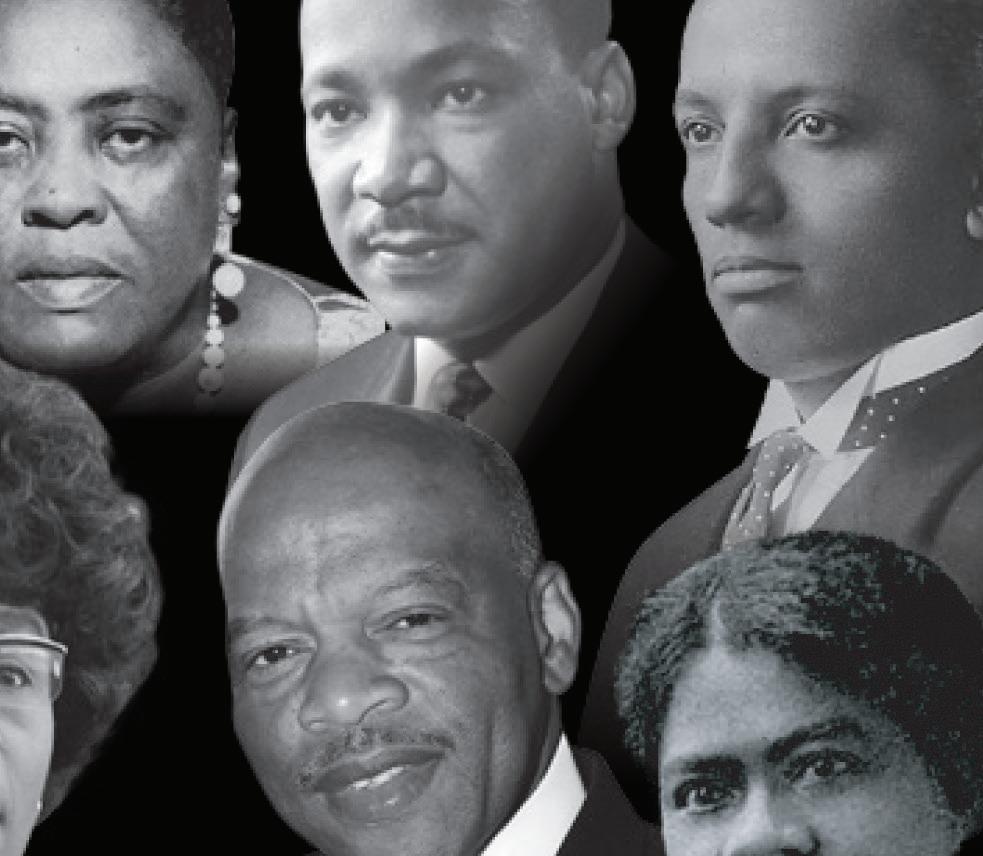
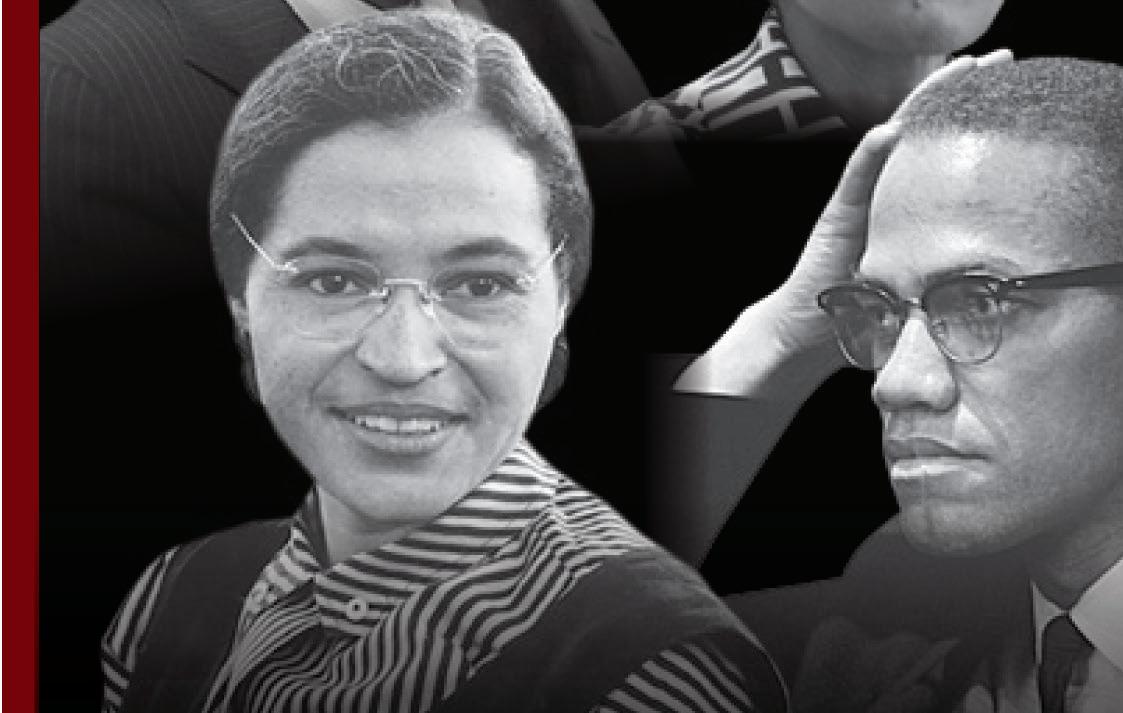
As we highlight Black history over the next couple months, it’s
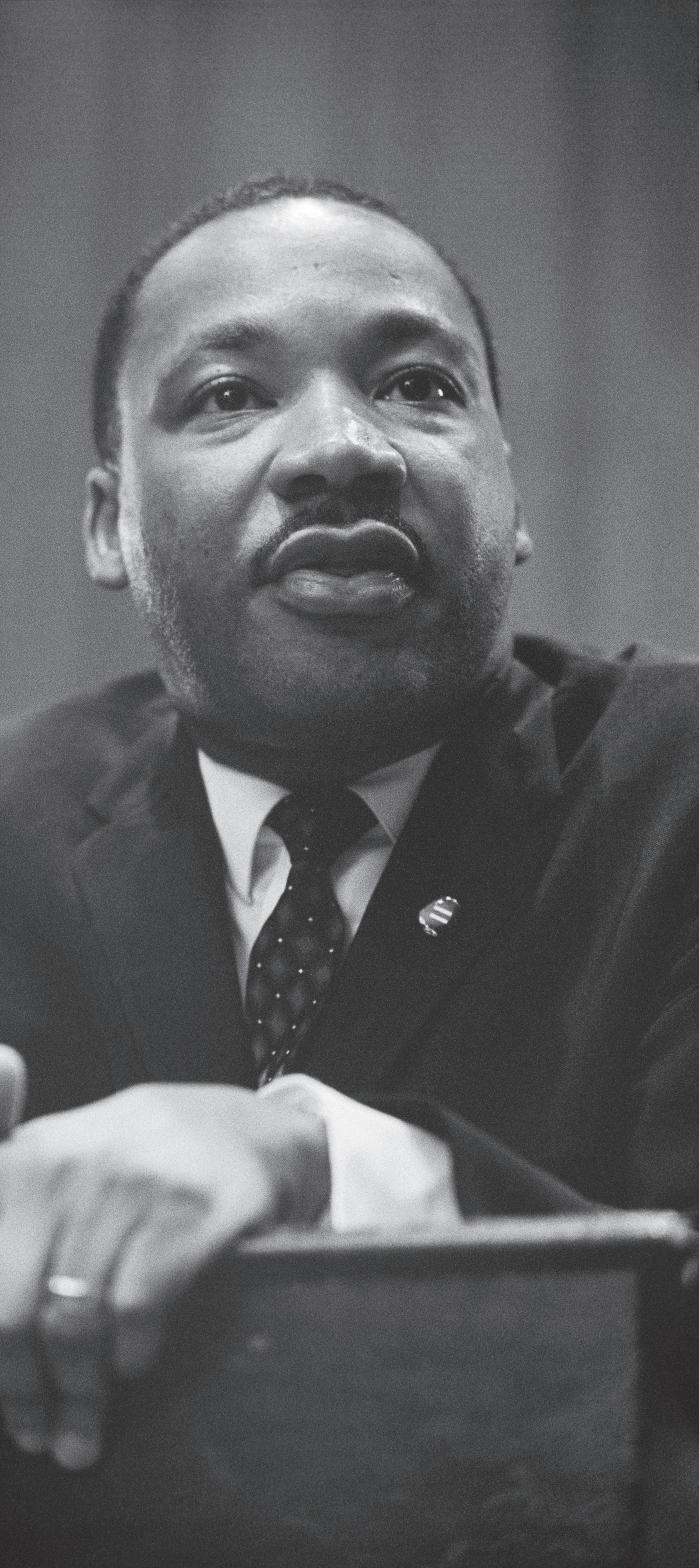
Luther King, Jr., and the ongoing importance of Black history in shaping our collective future. The goal of ONYX Magazine has always been to illuminate the stories, struggles, and triumphs of the Black community, and there’s no better moment than now to deepen our commitment to this cause.
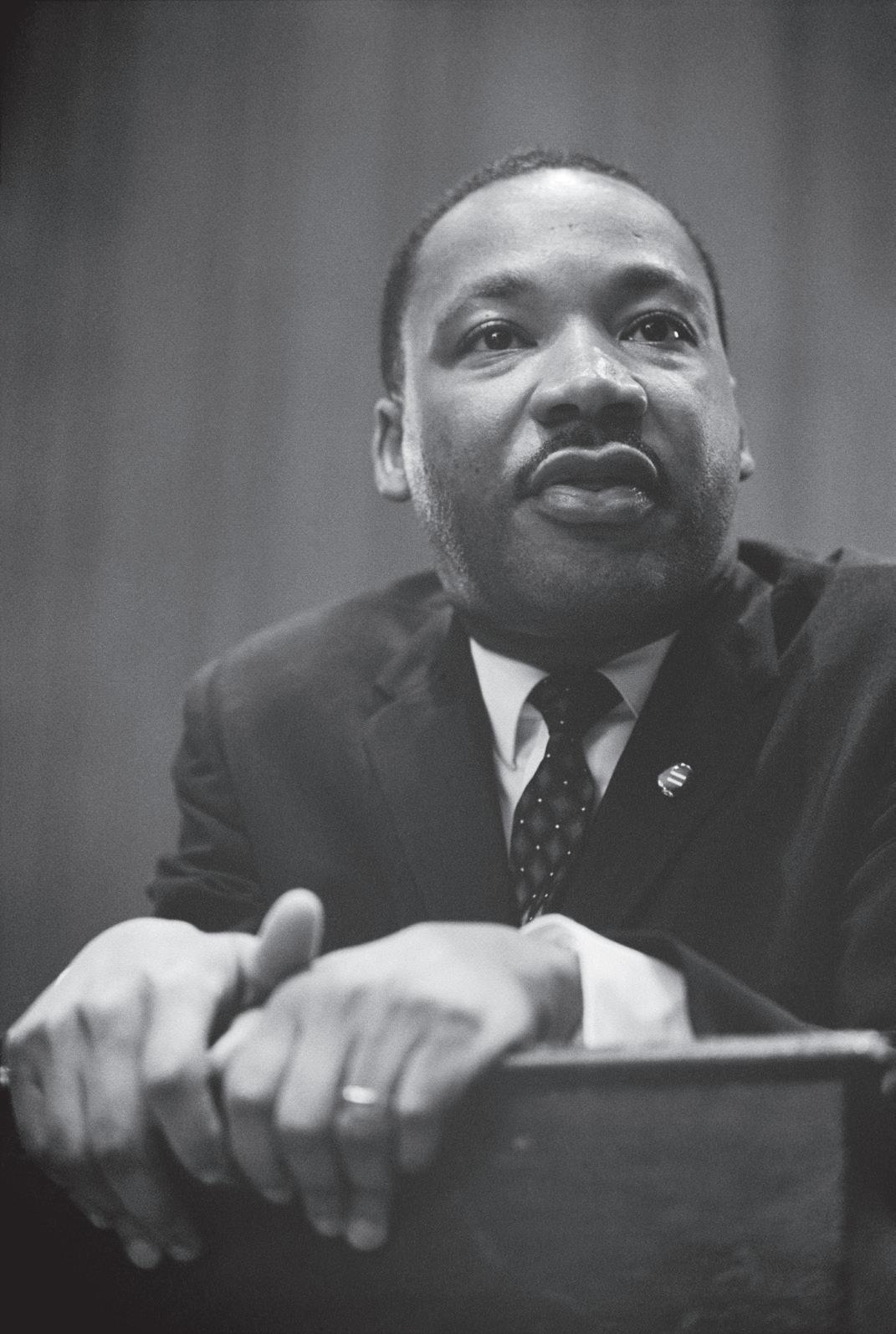
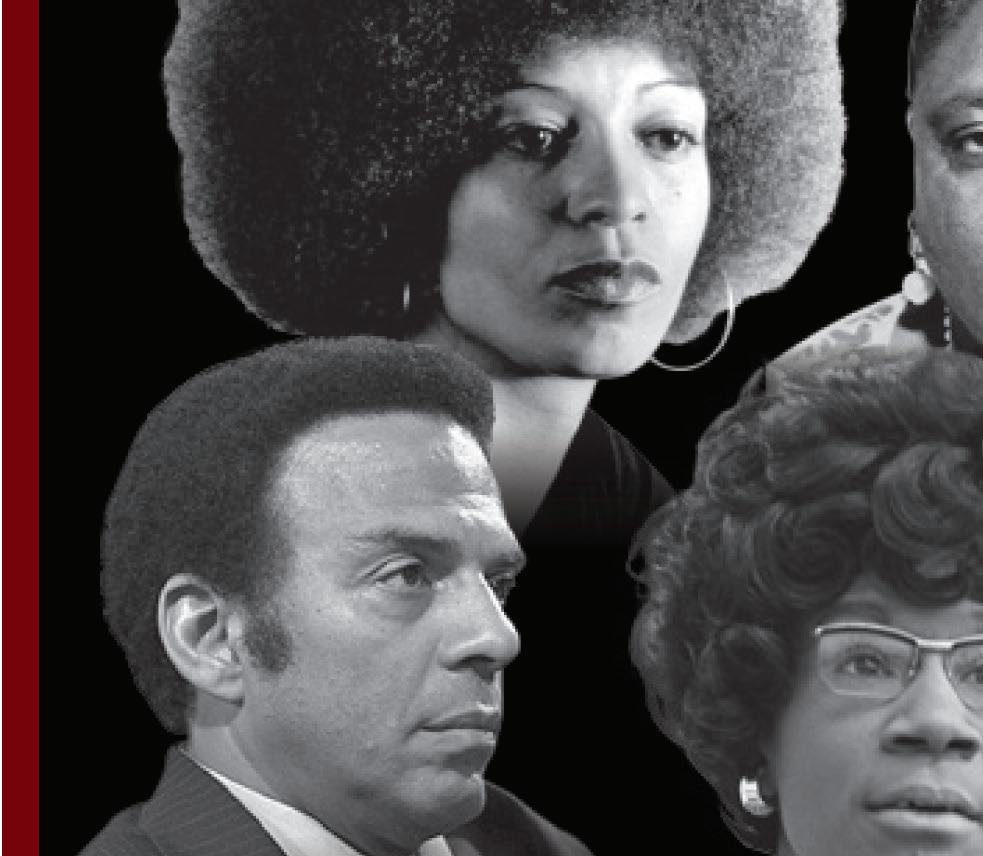
Black history is more than a month-long observance or a section in textbooks—it is woven into the fabric of American life. Every January, as we honor the birthday of Dr. King, we are reminded of his unwavering belief in equality, justice, and the transformative power of community. Dr. King’s courage and vision not only advanced the civil rights movement but also inspired generations to rise above adversity and work toward a more just society.
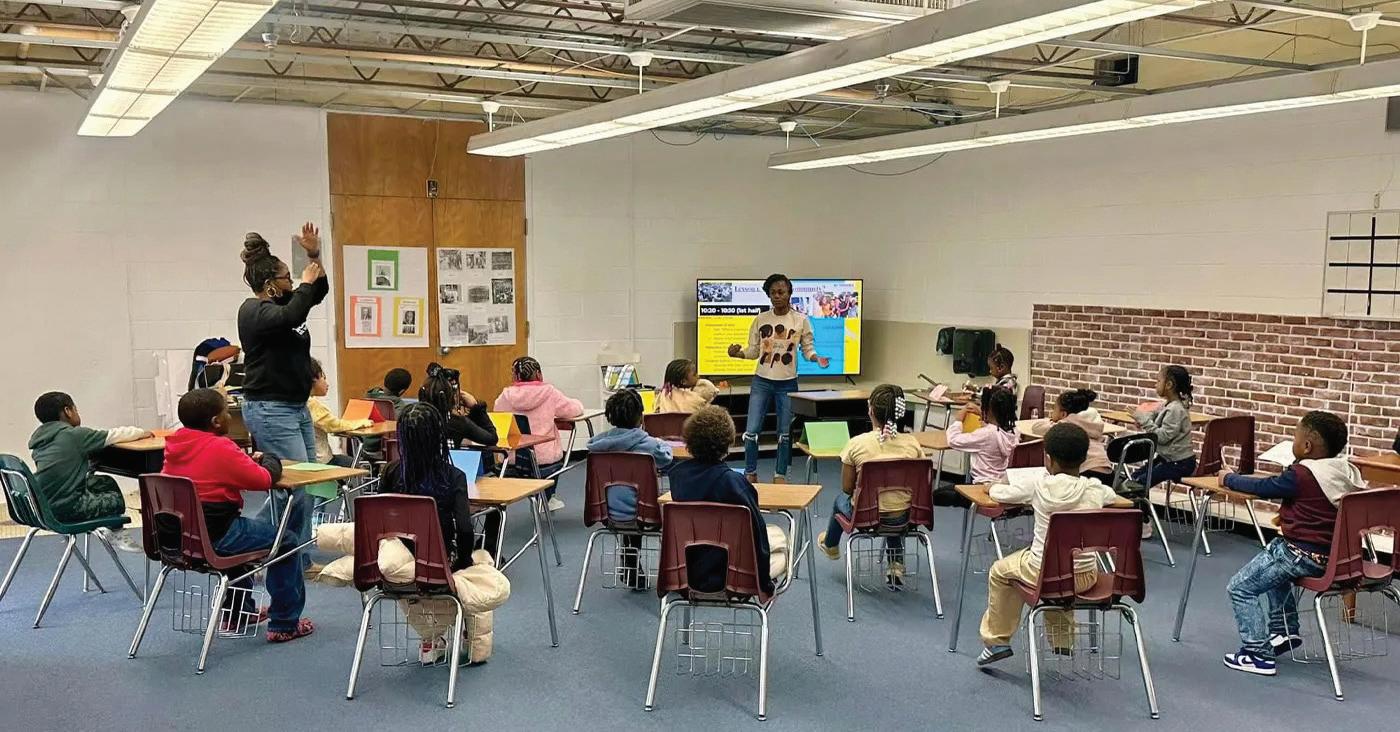
One of the most powerful tools for advancing Black history and Dr. King’s vision is mentorship. Throughout history, the Black community has relied on the wisdom and guidance of elders and trailblazers—those who reached back to lift others as they climbed. From the church pews to college campuses, from family living rooms to professional boardrooms, mentorship has played a
In today’s world, mentorship remains as crucial as ever. Young people, and career professionals, navigating the challenges of systemic inequality, educational barriers, and underrepresentation but also real-world strategies for success. It’s up to each of us to carry forward Dr. King’s legacy by becoming mentors, sharing our experiences, and opening doors for future leaders.
As ONYX Magazine continues to chronicle Black excellence, let us recommit to celebrating our heroes, learning from our past, and investing in our youth. In the words of Dr. King, “Life’s most persistent and urgent question is, ‘What are you doing for others?’”
This Martin Luther King Jr. Day, let’s answer that call—by making mentorship an ongoing movement, not just a moment.
As always, please enjoy this issue; and thank you for your continued support as we entertain, inspire and inform.
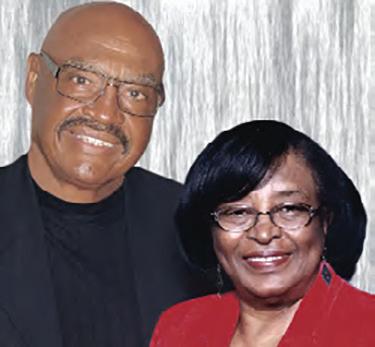
Brenda R. March, on Thanksgiving, Thursday, November 27, 2025, surrounded by her family. Born in Orlando, Fla., on November 30, 1963, to the late Mrs. Willie Mae Oliver-Gray and the late Uzella Gray, "Daddy Gray," she was a proud resident of Lake Mann Homes. She attended Washington Shores Elementary and transferred to Rolling Hills Elementary (as a result of desegregation), Carver Junior High School, and later transferred to Robert E. Lee Junior High during redistricting. She completed her education at Evans High School, where she excelled in academics, leadership and sports.
Brenda married Charles March, Jr., in 1985, and remained in this sacred union for 40 years, giving life to Toushe' C. Hinton, Joel J. March, and Jeremy Z. March. Brenda matriculated at and graduated from the University of Central Florida with a Bachelor of Science Degree in English Language Arts Education. She received her associate degree from Valencia College and completed training at the Kettering Foun-
area of her life. Her question was always, "How can I be of service to the everyday man or woman?" Consequently, that essence and spirit
Brenda's years of experience gave her a national presence in children's advocacy, as she provided leadership to community leaders, a host of programs for the city. Her commitment to her hometown positive changes. Brenda ensured that she expanded her knowledge in problem-solving and resolution and maintained the highest standards of professionalism.
In her early career, as a McKnight Center of Excellence team member, Brenda spearheaded parent, student, and volunteer recruitment preparation for college acceptance and successful matriculation.
Brenda's tenure with the City of Orlando spanned beyond 30 years. During that time, she served in leadership roles, including as
an appointee of Mayor Buddy Dyer. Her leadership ensured that the vision and mission of these City of Orlando organi-
as the manager of Children and Education-Parramore Kidz Zone. One of Brenda's key accomplishments is the City's implementation of new homeowners' associations to ensure quality, safe living for all residents. Neighborhoods include the award-winning West Lakes, one of Orlando's most progressive African American communities.
In 2018, Brenda was acknowledged among the ONYX Magazine Women on the Move and Orlando Magazine’s Women of the Year. Both publications heralded her commitment to building up communities.
Brenda was a woman of substance who lived through inspired actions, giving her time -
dations. Highlights of her service included working with the Steinway Foundation, as a devoted member of the ONYX Magazine Advisory Committee, and the Orlando Minority Youth Golf Association. As the vice president of the ONYX Foundation, her work inspired the Charles and Brenda March Dream Builders Scholarship for students pursuing career paths in vocational or trade schools for hands-on careers,
She was preceded in death by brothers, Uzella Maurice Gray and Ricky Oliver. Siblings left to cherish her memories are John Willie "Mank" Oliver, Linda Gray Green, Willena Oliver, Marilynn Oliver, Lee Vayn Oliver, Randy Gray, and Louis "Mark" Gray (Krista). Aunties and uncles to cherish her memories are Geneva Works, Barbara Stringer, Abbie Knight (Keith), James Oliver, Abraham Oliver (Patricia), Joe Louis Oliver. Special relationships to cherish her memories: Two sisters-in-law: Elizabeth Blake and Roasie Mae March; brother-in-law: Michael Blake; best friend: Lyzona Marshall; god-mother: B. Laveta Reddick Barrett; godsister: Janie Lacy; and godbrothers: Rich Black and Reggie Perry; special nieces: Cynetria Holmes and Jaquice Oliver and a host of nieces and nephews.
The Impact of BLACK HISTORY
WE EXPLORE A CENTURY OF BLACK HISTORY COMMEMORATIONS DURING THE 250TH ANNIVERSARY OF THE NATION.
By ASALH
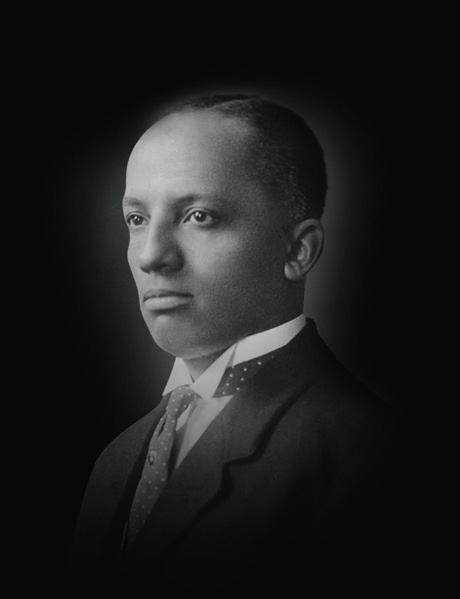
2026 marks a century of national commemorations of Black history. Carter Godwin Woodson, Ph.D., George Cleveland Hall, William D. Hartgrove, Jesse E. Moorland, Alexander L. Jackson, and James E. Stamps institutionalized the teaching, study, dissemination, and commemoration of Black history when they founded the Association for the Study of Negro Life and History (ASNLH) on September 9, 1915.
In 1925, when Director Dr. Carter G. Woodson planned the inaugural week-long observance of Black history, he could hardly have anticipated the imprint he would leave on the world. From Negro History Week to Black History Month, ASALH has carried forth the tradition, and the observances have become an integral part of American culture and, increasingly, the global community. For its 100th theme, the founders of Black History Month urge us to explore the impact and meaning of commemorating Black history and life in transforming the status of Black people in the modern world.
As part of the global African Diaspora, people of African descent in the United States have viewed their role in history as critical to their own development and that of the world. Along with writing Black histories, antebellum Black scholars observed the milestones in the struggle of people of African descent to gain their freedom and equality. Revealing their connection to the diaspora, they commemorated the Haitian Revolution, the end of the slave trade, and the end of slavery in Jamaica. They observed American emancipation as Watch Night, Jubilee Day, and Juneteenth celebrations.
who fought against slavery, most notably Abraham Lincoln and Frederick Douglass. The scholar Arthur A. Schomburg captured the motivation of Black people to dig up their own history and present it to the world: “The American Negro must remake his past in order to make his future.”
When Carter G. Woodson established Negro History Week, he did so as part of that tradition. Yet, by concen-
trating the attention of the American pub-
he sought to turn the commemorations more forthrightly into a far-reaching, organized, and sustained how Black folks viewed themselves and how the world viewed them. Year after year, he built Negro History Week into an African American and American cultural institution, including themes and illustrations of Black contributions.
As his contemporary, W. E. B. Du Bois put it, “"He literally made this country...recognize and celebrate each year a week in which it studied and action in the United States. I know of no other man who in a lifetime has unaided built up such a national celebration."
ASALH has not only continued his work but also made Negro History Week an even more deeply rooted American institution. Ondent to issue a message recognizing Black History Month during the United States Bicentennial. Then, in 1986, Congress passed Public Law
the schools of the American nation and into cultural heritage sites (i.e., museums, archives, libraries, parks, etc.), public squares, workplaces, houses of worship, and homes across the land and across the oceans. These institutions, and oth-
more about African American history through programming, camps, book displays, and exhibitions.
This year, we also commemorate the 250th Anniversary of the United States' independence. It is important to tell an inclusive, accurate history. Examining the role of Black History Month is imperative as we face forces using legislative means to remove Black history from America’s schools and public culture. Black history’s value is not its contribution to mainstream historical narratives, but its resonance in the lives of Black people.
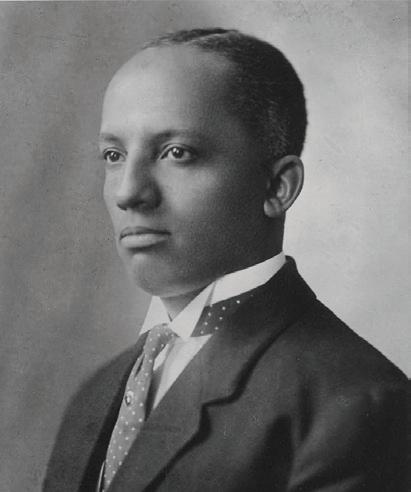
Carter G. Woodson, Ph.D., founded Negro History Week in 1926.
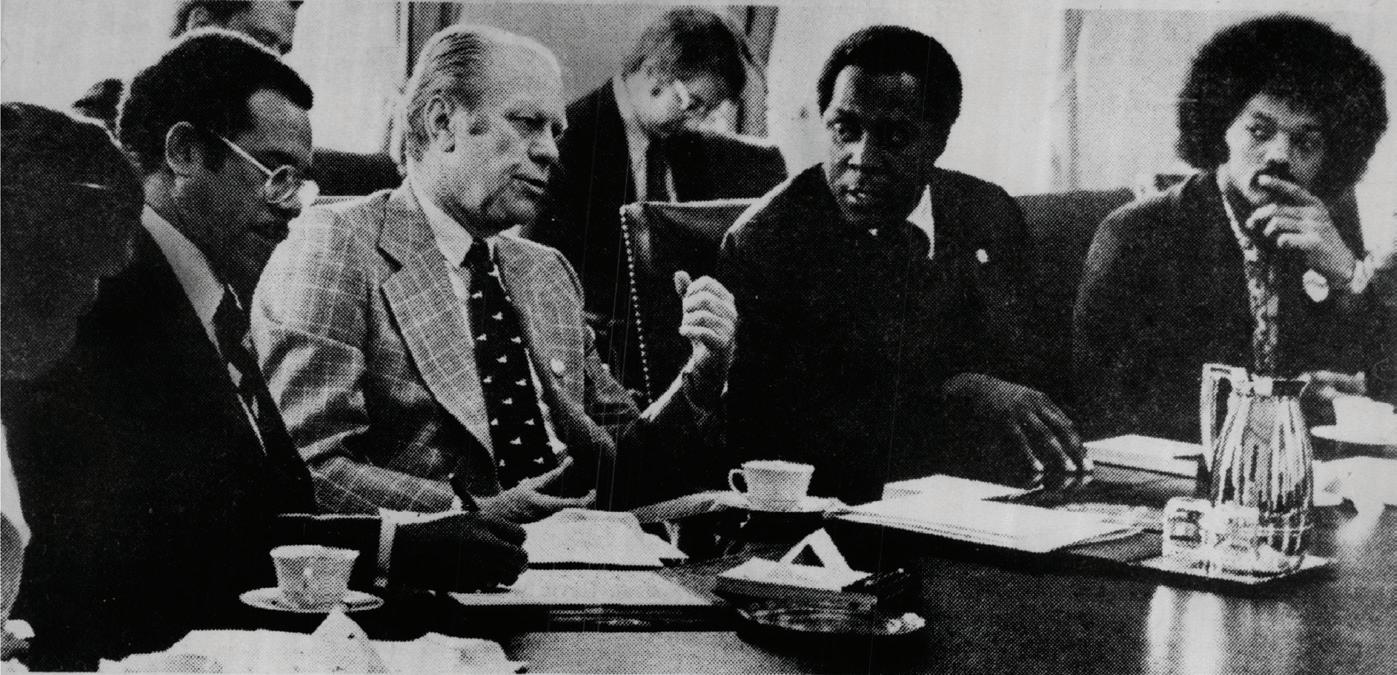
Former President Gerald Ford often received advice from Black civil rights leaders. In this 1974 photo he is surrounded by such leaders as civil rights attorney the late Vernon Jordan and activist Jesse Jackson.
TAKE 100 TRIPS AROUND the SUN
Start 2026 with intentions of living to 100. It’s never too late. It’s never too soon.
Living to 100 may sound extraordinary, but research suggests it’s more achievable—and enjoyable—than many people think. Studies show the majority of centenarians rate their health as good, and large numbers of people in this age group are mobile, active and optimistic.
According to the American Medical Association, adopting these seven habits can improve longevity and quality of life:
1. Eat Healthy. Think of food as medicine. Choose nutritious, whole foods. Eat more fruits that are dark in color — blue, purple and red — to get the most nutrients, as starchy vegetables such as broccoli, carrots and leafy greens. Incorporate whole grains,
kling water with no added sugar. Reduce your intake of sugar-sweetened beverages and unhealthy ultra-processed foods, especially those with added sodium
even 100% fruit juices, is associated with a higher mortality risk, according to a study published in JAMA Network Open. Eat fewer processed meats, which tend to be high in fat and heavy on added salt and
grains, such as breads, crackers, baked
2. Exercise. Adults should aim for at least 150 minutes of moderate-intensity activity or 75 minutes of vigorous-intensity activity weekly. A recent study published in JAMA found that putting down the television remote and walking can improve healthy aging — highlighting the importance of small everyday habits.
3. Get Enough Sleep. Adequate sleep improves memory, reduces stress, improves mood, and primes the body’s natural defenses against disease. But sleep quality decreases with age. Improve your sleep quality by setting a regular bedtime and wake-up time, insulating your bedroom against noise, avoiding exercise within an hour of bedtime, maintaining a within two hours of bedtime. Also avoid alcohol before bedtime and make your bedroom a tech-free zone as screen-time can impact your ability to fall asleep and stay asleep.
itation or yoga. Prioritize your values and beliefs and put them into action toward a goal that’s meaningful to you and bene-
5. Stay Positive. To bust stress, take a break from decisions, connect with others, pet your dog or cat, write a to-do list (stick to three items), take time to recharge, laugh, sing, curb clutter, set boundaries, perform mindfulness exercises, practice gratitude, and seek help from a professional when stress becomes overwhelming.
6. Stay Connected. Research shows that predictor of longevity and better physical, cognitive and mental health, while social predictors of premature death and poor health. Unfortunately, there is a nationwide loneliness epidemic that medical experts consider a major public health concern. Combat loneliness with social clubs and community groups, or by taking up a hobby, learning something new or volunteering. If you’re struggling with loneliness, reach out to a professional, your doctor, family member or friend. You can also call the 988 crisis helpline for support.
7. Get screened. Schedule preventive care, tests and health screenings to help your doctor spot certain conditions before they become more serious. Your doctor can recommend needed tests based on your age, gender and health conditions — including colonoscopies, mammograms, gynecological and prostate exams, and vision screenings. Today, there are many at-home screening
than others, and all work best – and minimize stress around results – when taken in consultation with a doctor. For more resources on staying healthy, visit http:// www.ama-assn.org.
“Everyone strives to live longer, but the goal should be to live as healthy as possible for as long as we live,” says AMA CEO Johning well, staying active, sleeping enough, and seeing your doctor – can add quality years, or even decades, to your life.”
4. Live With Purpose. A sense of purpose can lead to increased energy, motivation, emotional stability and resilience. -
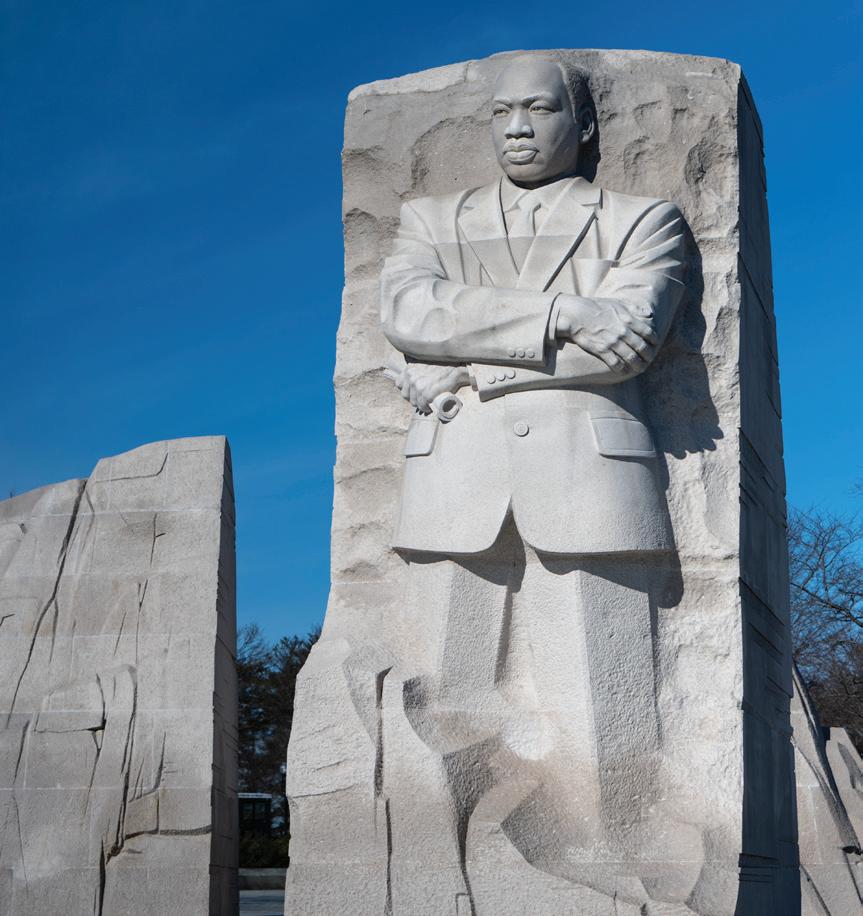
This statue stands in Washington, D.C.
BLACK HISTORY
This year’s MLK Day theme reminds us that the dream belongs to all of us. It is a collective vision of dignity and belonging, one that can guide us as we seek to transform both hearts and systems. By remembering that King’s that the work of justice is also shared — that each of us has a role to play in building a world where freedom and equality are not ideals deferred but realities lived.
The King Center
HOW WE GOT HERE
Martin Luther King Jr. Day stands as a testament to the enduring legacy of Dr. Martin Luther King Jr., whose vision and leadership transformed the course of American history. Observed annually on the third Monday of January, the holiday not only honors Dr. King’s pivotal contributions to the civil rights movement but also continued pursuit of equality.
The movement to establish a day honoring Dr. King began almost immediately after his assassination on April 4, 1968. Dr. King, a Baptist minister and Nobel Peace Prize laureate, was the face and voice of America’s nonviolent struggle for civil rights. His leadership in key events, such as the Montgomery Bus Boycott, the March on Washington, and the Selma to Montgomery marches, brought national attention to the injustices faced by Black Americans and inspired people of all backgrounds
Following his death, supporters across the nation— including members of Congress, civil rights organizations, and grassroots activists—rallied to create a federal holiday in his honor. Congressman John Conyers of Michigan was among the earliest champions, introducing a bill just
faced strong opposition, particularly from lawmakers
and that creating a holiday would be too costly. Despite these hurdles, the campaign for an MLK holiday gained momentum over the years, bolstered by persistent advocacy, public demonstrations, and the tireless work of King’s widow, Coretta Scott King.
paign was the 1982 petition to Congress, which garnered more than six million signatures—one of the largest petition drives in U.S. history. Musician Stevie -
ment, releasing the song “Happy Birthday” as an anthem for King’s birthday and a rallying cry for the holiday. The continued push from civil rights leaders, labor unions, and a diverse coalition of supporters kept national attention focused on the cause.
After years of debate and growing public support,
2, 1983, President Ronald Reagan signed the bill into law, designating the third Monday in January as Martin Luther King Jr. Day, beginning in 1986. The decision was
American history to be honored with a federal holiday.
Yet, the journey toward nationwide observance was not immediate. Some states resisted adopting the holiday, with opposition rooted in racial prejudice, local politics, and debates over the meaning of King’s legacy. Several states initially celebrated the day under
cially observed Martin Luther King Jr. Day, marking a
American history and the ongoing quest for civil rights.
cation—a time when Americans are encouraged to engage in community service, examine the realities of justice and equality, and recommit to the principles for which Dr. King stood. The holiday’s theme often centers on both celebration and challenge, reminding
that remains in the struggle against systemic inequities, racial violence, and discrimination.
The impact of Martin Luther King Jr. Day extends beyond the United States. Dr. King’s message of nonviolence, justice, and the power of collective action continues to inspire movements for civil rights and social change around the world. The holiday emphasizes that King’s dream was not his alone—it was nurtured and advanced by countless others who believed in a better, more just society. By honoring King’s legacy, MLK
as citizens and to contribute to the ongoing work of building a world where freedom, dignity, and equality are realities for all.
WHY WE SUPPORT CIVIL RIGHTS
Supporting civil rights is essential because it
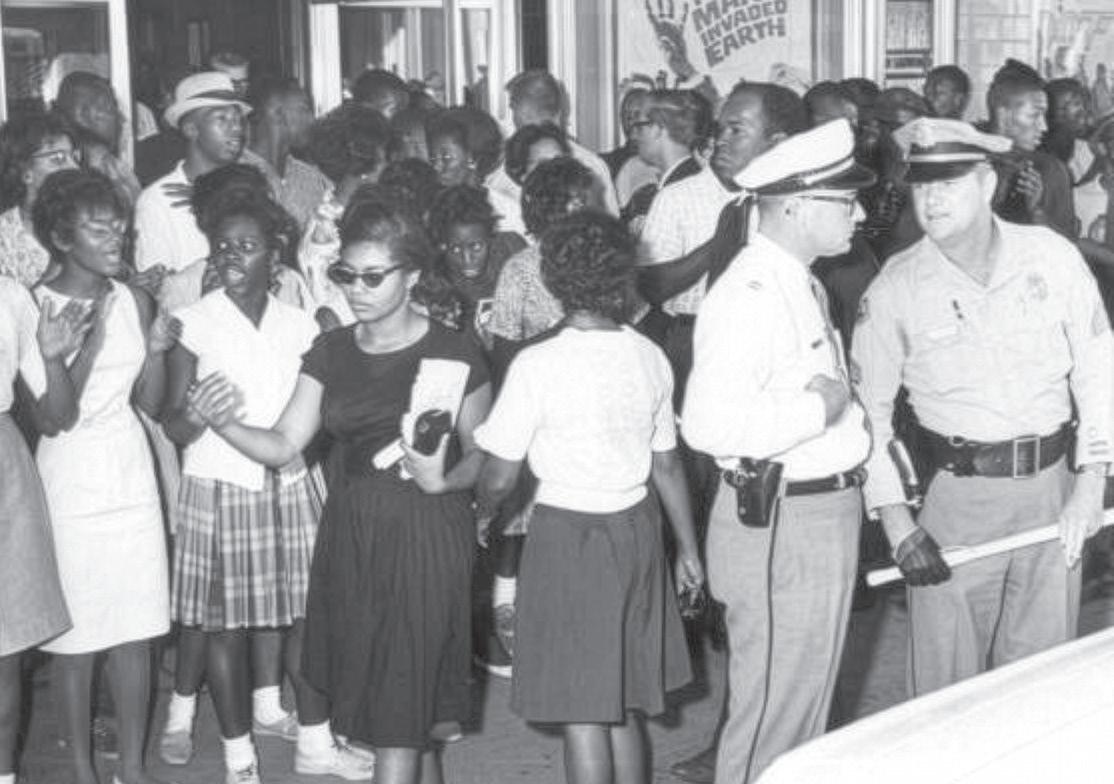
A group of students protests against segregation in Tallahassee in the 1960s.
CRACKDOWN ON VISA PROCESSING
Current U.S. Administration Halts Visa Processing For Immigrants From 75 Countries
By Natasha Decker
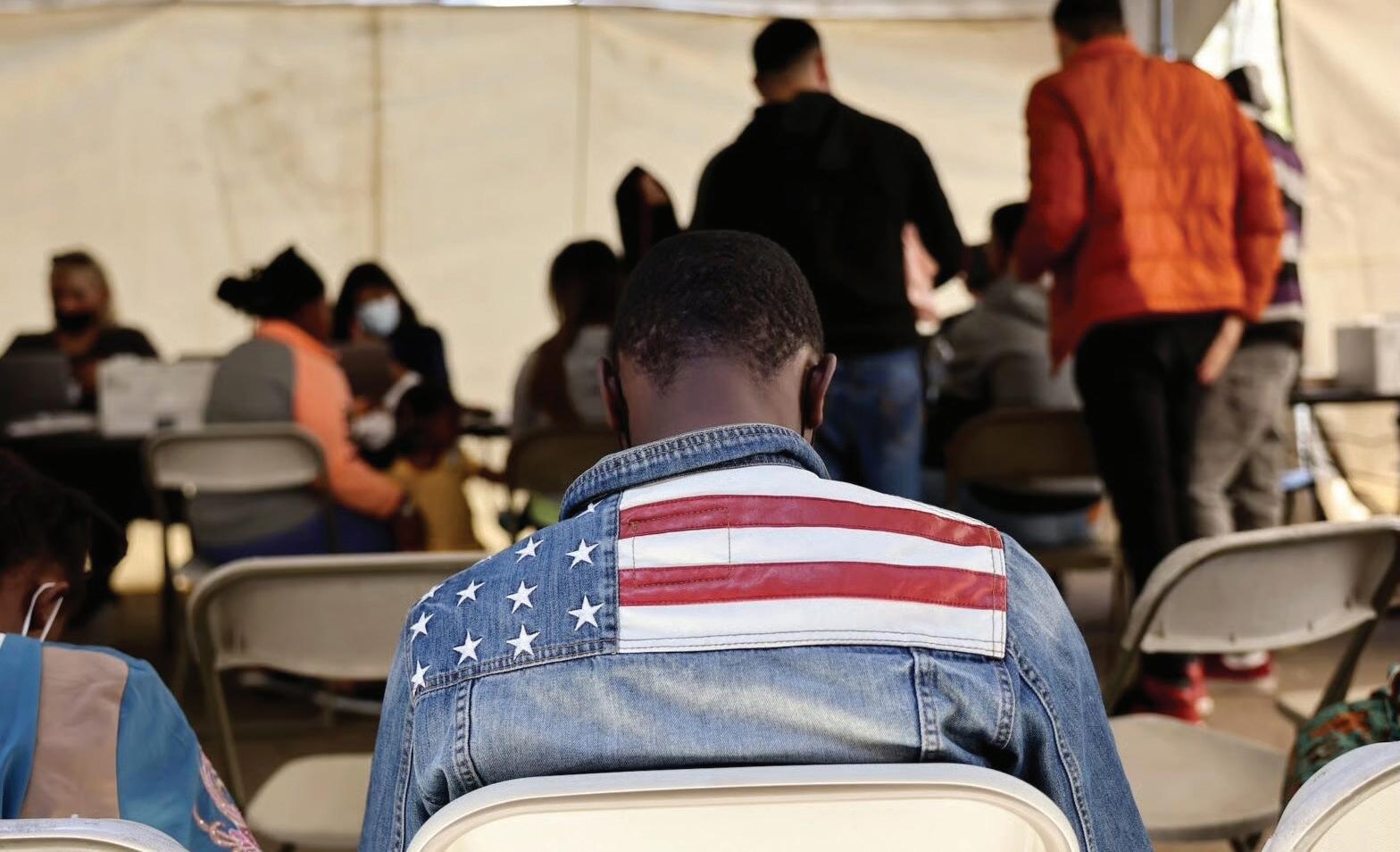
In the latest move in its crackdown, the Pres. Trump administration has halted visa processing for immigrants from 75 countries. According to the Associated Press, the State Department announced the news on January 14. The immigrant visa processing pause will begin January 21. ABC News reported that the State Department issued a designated directive to embassies and consulates. The Trump administration claims that the measure tackles potential immigrants in the United States who it believes are likely to utilize public assistance. State Department spokesperson Tommy Pigott shared that the department will exercise its power “to deem ineligible potential immigrants who would become a public charge on the United States, and exploit the generosity of the American people.”
“The Trump administration is bringing an end to the abuse of America’s immigration system by those who would extract wealth from the American peo-
ple,” stated Pigott. “Immigrant visa processing from these 75 countries will be paused while the State Department reassess immigration processing procedures to prevent the entry of foreign nationals who would take welfare
Notably, many of the 75 countries are also included on the Trump administration’s most recent list of countries with travel bans.
What’s
More to Know?
Applicants seeking non-immigrant visas, or those for tourism
MOROCCO AND EGYPT TOP TRAVEL LIST
or business, will not be impacted.
group are tourists planning to visit the U.S. during the 2026 World Cup. Back in November, the State Department reportall over the world to screen more intensively for immigrants who may require public assistance once in the U.S. The AP noted that the more thorough screening includes consideration of the applicant’s family staassistance (in any country), age,
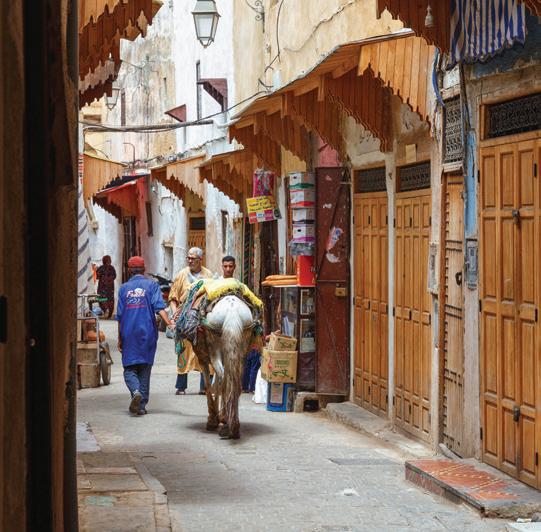
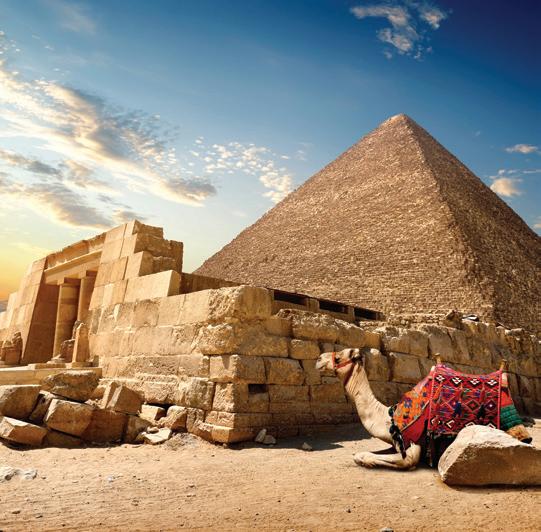
Morocco has cemented its position as Africa’s most visited destination for the second consecutive year. The country welcomed approximately 19.8 million inter-
the previous year, narrowly edging out Egypt, which recorded roughly 19 million visitors despite posting a sharper 21 percent year-on-year growth.
Both North African nations have shattered their own records, underlining a robust post-pandemic recovery that positions them as pillars of the conti-
noted since 2024: Morocco maintains a lead in absolute arrivals, while Egypt’s
What Are The Targeted Countries?
Afghanistan, Albania, Algeria, Antigua and Barbuda, Armenia, Azerbaijan, Bahamas, Bangladesh, Barbados, Belarus, Belize, Bhutan, Bosnia, Brazil, Burma, Cambodia, Cameroon, Cape Verde, Colombia, Congo, Cuba, Dominica, Egypt, Eritrea, Ethiopia, Fiji, Gambia, Georgia, Ghana, Grenada, Guatemala, Guinea, Haiti, Iran, Iraq, Ivory Coast, Jamaica, Jordan, Kazakhstan, Kosovo, Kuwait, Kyrgyzstan, Laos, Lebanon, Liberia, Libya, Macedonia, Moldova, Mongolia, Montenegro, Morocco, Nepal, Nicaragua, Nigeria, Pakistan, Republic of the Congo, Russia, Rwanda, Saint Kitts and Nevis, Saint Lucia, Saint Vincent and the Grenadines, Senegal, Sierra Leone, Somalia, South Sudan, Sudan, Syria,
Togo, Tunisia, Uganda, Uruguay, Uzbekistan and Yemen.
Passport-Free Travel
American territories in the Caribbean are just a plane trip away
By Natasha Decker
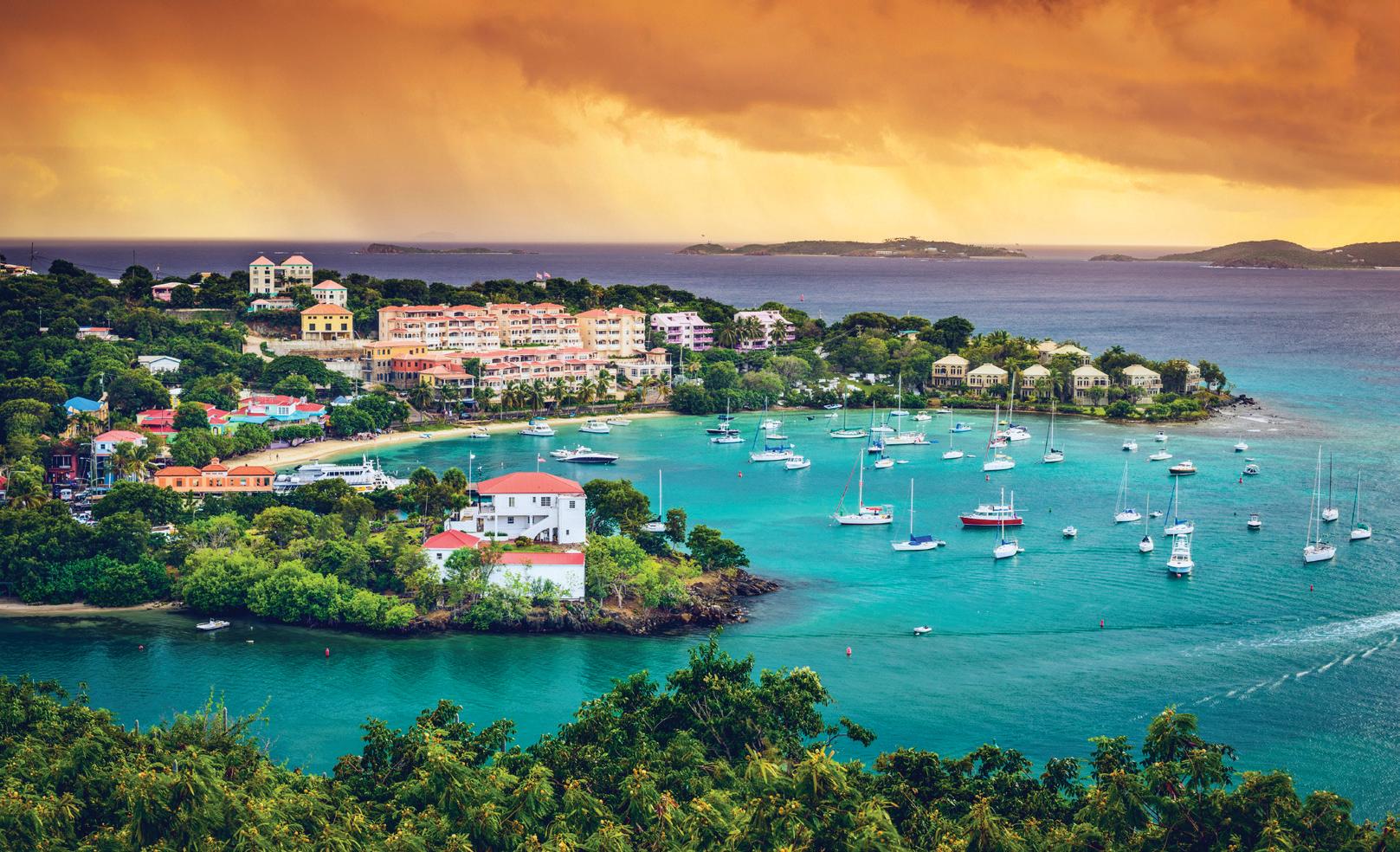
You don’t have to have a United States passport to experience the Caribbean’s stunning islands.
Virgin Islands are the perfect loophole destination for this type of trip. Puerto Rico is another option for a Caribbean escape. Just be sure to visit during the right time of year to avoid hurricanes. If you’re sipping a
St. Croix
St. Croix is the largest of the U.S. Virgin Islands
St. Thomas
St. John
This island is a nature lover’s paradise. You’ll natural beauty on the smallest of the three central
sunbathing at Trunk Bay Beach.
Best For:
Best Time To Visit: From December through
Puerto Rico
its luxury and premier shopping scene. It’s also home
groups. Puerto Rico’s Caribbean feel is derived from its
Best For:
Best Time To Visit: from December through April
Vieques, Puerto Rico
protected itself from pirates at Frederiksted. Best For:
Best Time To Visit:
Best For:
Best Time To Visit: from December through June
coast is one of the Caribbean’s most breathtaking San Juan on Puerto Rico’s main island.
Best For: seeking rest and relaxation
Best Time To Visit: from December through April
Trunk Bay
Paradise Point
Frederiksted
Old San Juan
Travel to U.S. Projected to Be Low While Other Countries Soar
Against a backdrop of economic uncertainty, the World Travel & Tourism Council’s (WTTC) latest research shows that global Travel & Tourism is projected to grow
stone to major world economies, as travelers are expected to spend more than ever before.
Reuters and industry
According to WTTC’s 2025 Economic Impact Research (EIR), international visitor spending is forecast to reach an historic $2.1TN in 2025, surpassing the previous high of $1.9TN in 2019 by $164BN. This year, Travel & Tourism is expected to contribute an all-time high of $11.7TN to the global economy, accounting for 10.3% of global GDP.
Jobs around the world supported by the sector were expected to grow by 14MN in 2025, to reach 371MN worldwide, more than the population of the U.S.
Julia Simpson, WTTC President & CEO, said “People are continuing to prioritize travel. That’s
a sign of its enduring strength. “But while the global picture in Travel & Tourism is strong, the recovery remains uneven. Whilst some countries and regions are producing record-breaking numbers, other large economies are plateauing.”
While there is some positive news for many economies around the world, in a number of major Travel & Tourism markets such as the U.S., China, and Germany, growth has slowed.
In the U.S., the world’s most powerful Travel & Tourism market, international visitors spending
and is not expected to fully recover this year. In China, while international spending was above pre-pandemic levels last year, growth is expected to slow sharply in 2025.
By contrast, other key markets such as Saudi Arabia, which will inject $800BN into the sector by 2030, is ahead of the curve and setting new benchmarks. European countries such as France and Spain, the world’s top two destinations in terms of visitor numbers, continue to lead the region’s resurgence, powered by smart investment and global appeal.
A Look Back on 2024
According to the global tourism body’s latest EIR data, in 2024, Travel & Tourism contributed 10% of the world’s economy to reach $10.9TN - an 8.5% increase on 2023, and 6% above the previous peak of 2019.
Jobs grew 6.2% to reach 357MN, accounting for one in 10 jobs around the world. International spending also increased by almost 12%, to $1.87TN and domestic spending grew 5.4% to $5.3TN.
The Decade Ahead
There’s a story behind every step.
Live music. Incredible food. Renowned golf. A vibrant cultural scene. And 42 miles of scenic coastline. Black History Month is an extraordinary opportunity to rediscover the powerful stories that helped shape the soul and spirit of St. Augustine, Ponte Vedra & The Beaches.
FLORIDASH ISTORIC C OAST.COM
&
Discover 450+ years of rich Black History in St. Augustine with the new Black History App!
Available for free on the Apple App Store and Google Play, this app provides easy access to historical sites, events, and significant figures on Florida’s Historic Coast.
Download the app here:
The Fort Mose Jazz & Blues Series returns in February 2026 at Fort Mose Historic State Park, celebrating the site’s rich history with performances by top jazz and blues artists. Past performers include Gladys Knight, Mavis Staples, Common, Keb’ Mo’, and the Jazz at Lincoln Center Orchestra with Wynton Marsalis and more.
February 2026
www.discoverfortmose.com
AND
Tour 450 plus years of Black history in our museum or plan your next activity in our newly renovated Excelsior Room. Multi-purpose space available for performances, corporate events and more.
102 M. L. King Avenue
www.lincolnvillemuseum.org 904-824-1191
AUGUSTINE FOOD + WINE FESTIVAL
“One of Florida’s Top 10 Food & Wine Festivals”, according to USA Today, May 7 - 10, 2026, with local and celebrity guest chefs and all-inclusive food and drink tickets.
Enjoy great cuisine, hundreds of wines, beers and spirits, live music, cooking demos and more.
117 Vilano Road
www.staugustinefoodandwinefestival.com
904-385-9121
ST.
LINCOLNVILLE MUSEUM
CULTURAL CENTER
ST. AUGUSTINE’S BLACK HISTORY APP
FORT MOSE JAZZ
BLUE SERIES
PLAN NOW. Protect Later.
Leaving a legacy that lives beyond the grave
By Veronica Anderson, Esq.
Too often, I’ve watched hardworking families in Orlando’s East Winter Garden and Carver Shores lose everything their loved ones fought to build—family homes sold for unpaid taxes, savings tied up in probate, and land lost because no one prepared for tomorrow. I’ve seen siblings stop speaking over who “should have” gotten what, and elders’ wishes ignored simply because nothing was written down. I know these stories because they are my neighbors, my loved ones, and sometimes, my own memories. That is why I’m on a mission to help our community understand that estate planning—having a will, power of attorney, living will, healthcare surrogate, pre need guardian, and living trust—is not just legal paperwork. It is an act of love, faith, and generational protection.
PERSONAL REPRESENTATIVE
I was raised the aforementioned neighborhoods. I grew up seeing the pride on Saturday mornings when folks mowed their own grass and painted porches with care because those homes meant something to them. They were our roots and our proof that we had overcome. Yet, over the years, I have witnessed the heartbreak of families losing those very homes—not because they did not care, but because no one told them how to protect what was theirs.
Estate planning is often misunderstood. Some think it’s only for the rich or that writing a will invites bad luck. But the truth is simple: planning ahead guarantees that you,
not the government or the court, decide what happens to your property, your family, and your future.
A Will: Setting Your House in Order
A Last Will and Testament is the foundation of every estate plan. It lets you decide who receives your property, who raises your minor children, and who takes care one, Florida law decides those things for you. A will ensures your voice echoes even after you have gone home to glory.
Durable Power of Attorney: Protecting You Now
A Durable Power of Attorney names -
cial business if you cannot. It keeps life running smoothly—bills paid, property cared for, and accounts managed if illness or accident strikes. Without it, families often face expensive, time consuming court proceedings just to get permission to help.
Living Will and Healthcare Surrogate: Your Wishes, Your Way
If you ever become unable to speak for yourself, a Living Will states what kind of medical care you do or don’t want, and a Healthcare Surrogate Designa-
tion Pre Need Guardian: For Life’s “What Ifs” Pre Need Guardian
Getting Financial Help M
Living Trust: Keeping the Legacy Intact Living Trust
Building Generational Strength
What’s Happening: You need guidance and funding to launch your small business. What You Can Do Now:--
What’s Happening: You and your family are facing financial pressures related to a disability.
What You Can Do Now
What’s Happening: You worry you’re missing out on eligible tax credits and deductions because you can’t afford a professional tax preparer.
What You Can Do Now:
Attorney Veronica Anderson, Esq., a homegrown daughter of the community, is a native of East Winter Garden, Fla., who specializes in estate planning and probate law. She is dedicated to helping families protect their legacy and build generational wealth through informed legal planning.
407-843-9901.
What’s Happening: You received notice of a rent increase. What You Can Do Now:
BFFs in Life & Love
By Gary W. Lewandowski, Jr.
Being someone’s BFF is a big deal—you don’t hand over the other half of your “Best Friends” necklace to just anyone.
Having a romantic partner who is also your best friend potentially sounds perfect. With your BFF as your romantic partner, you get the best of both worlds, someone with whom you can laugh, share your life and cuddle. When you look at seemingly happy celebrity couples and those in your friend group, not only do they appear to be in love, but they also seem to genuinely enjoy hanging out together.
How many people feel as though they have attained that type of ideal?
paradigm is a good one to strive for?
How Many Have Two-in-One Relationships?
friend couples are out there, the study
asked 801 adults across the United States the following question: “Do you consider your partner to be your best friend or do you call somebody else your best friend?”
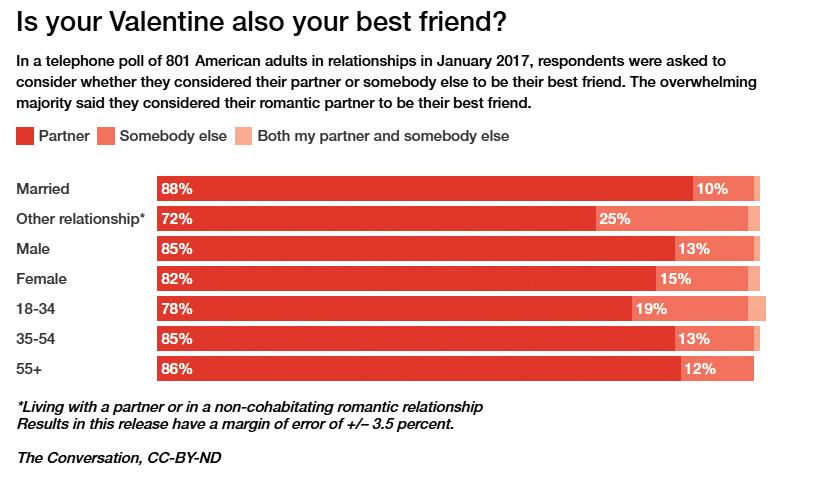
Among adults currently in a romantic relationship, the vast majority (83%) considered their current partner to be their best friend. For those who are currently married, the rate was even higher. Men and women had similar rates, while younger respondents were slightly less likely than older respondents to view their partner as their best friend.
The overall numbers from this recent poll dwarf the earlier reported rate of best-friend romantic partners. In a 1993 study, only 44% of college students indicated their romantic partner in best-friend/love rates–almost doubling over more than 20 years–could just be an artifact of the published research’s college student sample.
But expectations for modern relationships have evolved in the intervening years. Compared to previous generations, today’s heterosexual men and women are more accustomed to thinking of each other as friends on equal footing, even outside of the romantic realm. Once a romantic couple forms, couples are more likely to look for more egalitarian splits of power and divisions of labor. They hold their relationships to higher standards than they have in previous decades.
In particular, couples now expect their relationships to promote per-
your partner should help you become a better person by teaching you new things like how to make the perfect creme brulee, taking you places like the cool new trampoline park and opening your eyes to new per-
vegetarian-based diet. Although this expectation for growth could conceivably place an unwieldy burden on your relationship, researchers believe that modern relationships are up to the task. In fact, the idea that a relationship can help an individual become a better person, a phenomenon that researchers call self-expansion, is a useful one; relationships that provide more expansion are also of higher quality.
In order to hit all these self-improvement targets, you may need more from a spouse or romantic partner than was expected in years past–and a partner who is also your best friend may be a step in the right direction.
To see if those who consider their partner their best friend also expects more from them,
ideal relationship, how much should you expect your partner to help you grow and expand as a person?” Our poll results indicated generally high expectations overall, and individuals with best-friend romantic partners expected a bit more from them.
Other research shows that those in friendship-based love relationships feel they have a highly likable partner, and that shared companionship is an important part of the love. A study of 622 married individuals revealed that those with higher scores on the friendship-based love scale also reported more relationship satisfaction, greater perceived importance of the relationship, greater respect for their spouse, and felt closer to their spouse. More recently, across two studies with nearly 400 participants in relationships, those who place more value on the friendship aspect of their relationship also
In addition, valuing friendship also decreased the chances of the couple breaking up. Best-friend love is starting to sound better.
Among adults currently in a romantic relationship, the vast majority (83%) considered their current partner to be their best friend.
Of course, while individuals can expect more, that won’t automatically translate into better results. Think of it this way: Simply because you want more from your job, it doesn’t guarantee you’re going to get what you want.
Are Best-Friend Partners Better Partners?
The survey explored if these best-friend romances were really better.
you with your current relationship–extremely, very, somewhat, not too, was their best friend to those who responded it was someone else. Those who considered their partner their best friend were indeed
comfort and shared interests–last longer and are more satisfying. In fact, companionate love is more closely associated with relationship satisfaction than is passionate love–the type of romantic love based on intense feelings of attraction and preoccupation with one’s partner.
accounts from a special type of relationship expert: couples who’ve been happily married than 350 of these couples about their secret to relationship success and longevity, what was the number one reason? Simple: their partner was their best friend. The second most common response was liking their spouse as a person, another key facet of friendship-based love.
Why Are Best-Friend Partners So Beneficial?
of dating or marrying your best friend make perfect sense when you consider the type of spending time together, share similar interests, take care of each other, trust each other and feel a lasting bond between them. It isn’t a coincidence that these all happen to be qualities that
By recognizing the parallels between best from holding both types of relationships to the same standards. All too often it seems individuals are overly forgiving of a relationship partner’s bad behavior, when they would never accept similar behaviors
grumpy, nagging, dishonest, argumentative, emotionally unstable, ignored your texts, called you names or didn’t want to have meaningful conversations with you, would you still want to be friends? If not, it’s fair to hold similar expectations for your romantic partner.
To be clear, the argument here isn’t that you should try to convert an existing best friend into a romantic partner. You may not want to run the risk of compromising that friendship, anyway. Rather, the data here point out the importance of your romantic partner also being one of your best friends.
Ultimately, the best way to have true love forever may be to be
Gary
W. Lewandowski, Jr., wrote this article as chair and professor of Psychology at Monmouth University.
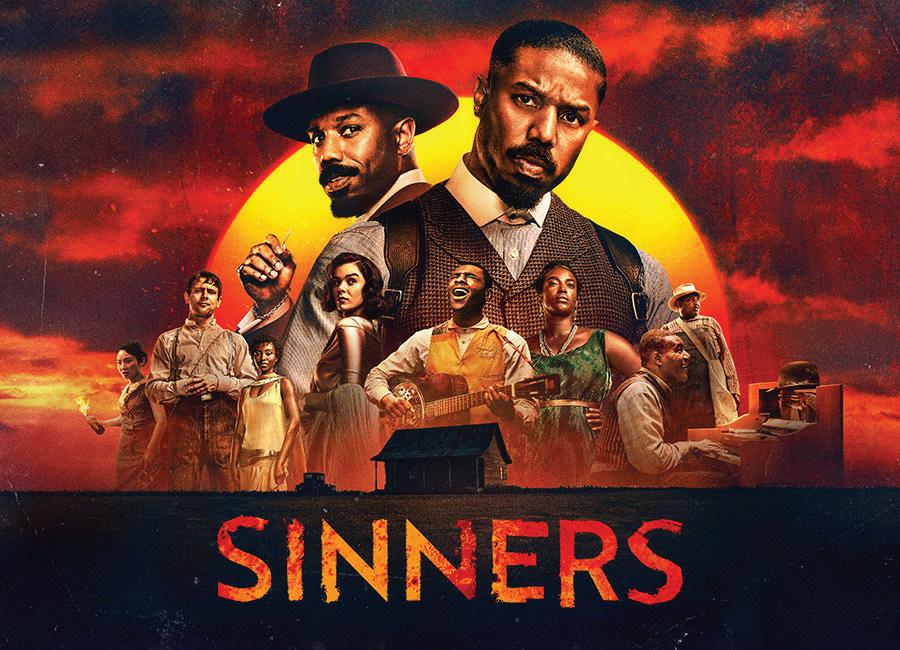
Film Puts Black Players at Top of Awards Lists
Harambee Festival Returns in Black History Month
Photo credit: NICE CROWD.
nity connection. The word Harambee, a Swahili term meaning “all pull together,” refects the spirit of collective responsibility and cultural pride that anchors the annual celebration. “The Harambee Festival plays a vital role in our relationship with the Tallahassee community and surrounding areas by enhancing our brand through community engagement,” said Vernon Bryant, Harambee Festival project manager. “It also allows us to showcase our colleges and schools and highlight the programs the university has to ofer.” The festival will feature live entertainment, cultural performances, community engagement activities and family-friendly programming designed to highlight the richness of African and African American culture while strengthening connections across campus and the broader Tallahassee community.
MUSIC & ENTERTAINMENT
Tampa Bay Collard Green Festival
Saturday, February 14
9:00 a.m. – 4:00 p.m.
Dr. Carter G. Woodson African American Museum of Florida 2240 9th Ave S, St. Petersburg Tbcgf.org
Fort Mose Jaz and Blues Series
Friday, February 6 –Sunday, February 15
7:00 p.m. –Doors Open at 6:00 p.m. 15 Fort Mose Trail, St. Augustine discoverfortmose.com
Fod From the Soul Festival
Jaz in the Gardens
Saturday & Sunday, March 7-8
Hard Rock Stadium, Miami Gardens 347 Don Shula Drive Check website for times Jazzinthegardens.com
Saturday, March 28
10:00 a.m. – 4:00 p.m. Carrollwood Cultural Center 4537 Lowell Rd., Tampa Foodfromthesoulfestival.com
KVJINC PR presents this funfilled day including excellent entertainment and ethnic cuisine from people of color (African Black Descent, African American Black Descent, Caribbean, Asian, Hispanic/ Latin/Latin X, and Native American), caterers, food trucks, start-ups, and restaurants worldwide.
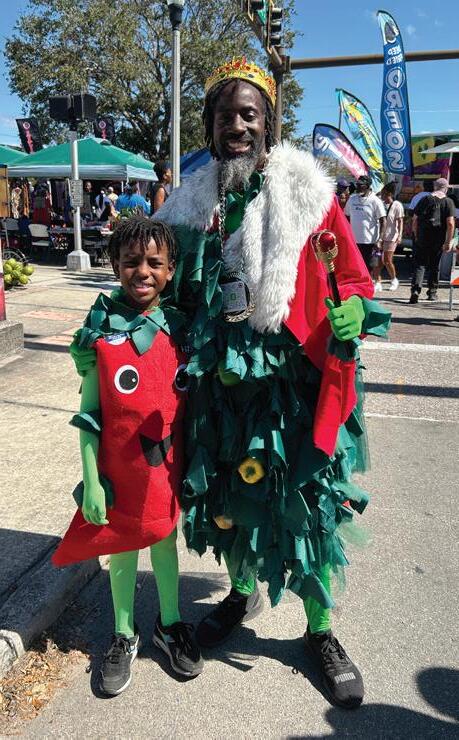
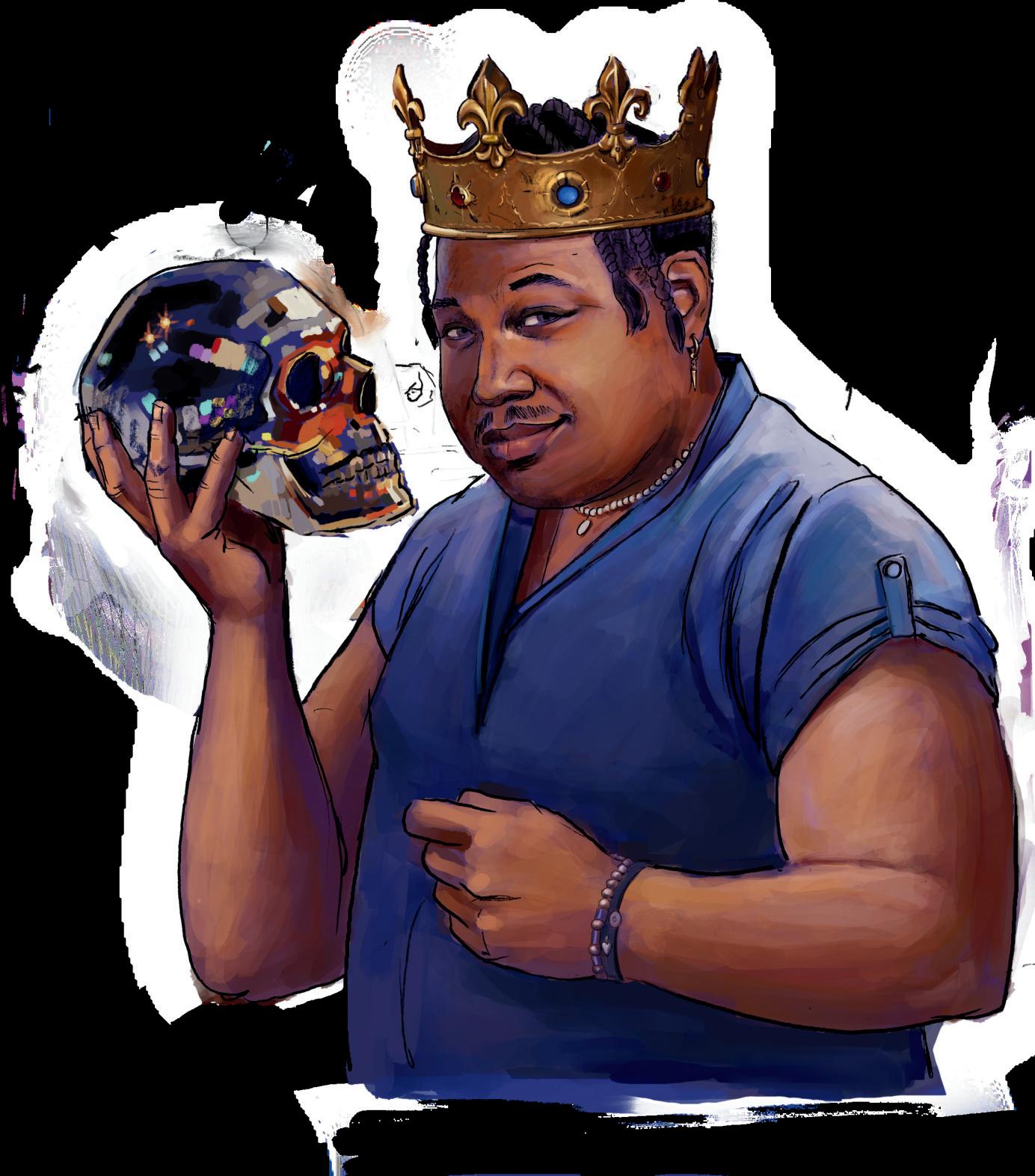
COLLARD GREEN KING , ONYX MAGAZINE
SAMARA JOY PHOTO PROVIDED BY FORT MOSE JAZZ AND BLUES SERIES
NEVER TOO SOON
What young people need to know about workplace retirement savings
Workplace retirement savings plans are an excellent way to invest in your future, and the earlier you start, the more opportunity your savings have to grow. Typically automated through payroll deductions, contributions to a plan like a 401(k) or 403(b) are tax-advantaged and easy to make.
Recent research by Edward Jones and Morning Consult -
icans who have access to a workplace retirement plan contribute, however 59% of all -
cial access and education at a critical entry point for investing. For local business owners – who are responsible for creating two out of every three new jobs in
“Edward Jones is in the process of expanding its retirement-
U.S. counties, we are well-positioned to serve small- to mid-size businesses in need of workplace solutions, and ultimately, their their employees the advice, products and education they need
tips can help you make the most of it:
Start Now. Savings can grow over time, making it valuable to sta es away from retirement.
Start With the Match.
15% of your income being a great milestone to work toward. Make Progress. Consider increasing your savings rate by 1%
making this easy.
Leverage Windfalls. Reserve a certain dollar amount or per-
toward your retirement savings.
Get Assistance.
ticipate in a workplace retirement plan, according to research from Edward Jones and Morning Consult. Reach out to a personalized recommendations for you.
-
nesses of all sizes are expanding access to retirement savings plans
MAKE 2026 THE BEST YEAR YET
Ttion, decluttering, and realistic, smallstep goal setting, not overwhelming resolutions; review the past year's wins, clear physical and digital spaces for mental clarity, and create actionable plans with milestones, incorporating self-care and start. This AI-generated list gives you speof the nation’s experts.
Mindset & Reflection
Review & Reflect: Look back at 2025 to acknowledge lessons learned, celebrate small wins, and identify what you want more or less of in 2026.
Choose a Theme: Pick a single word or theme (e.g., "Growth," "Balance") to guide your year, suggests Shira Gill. Gratitude: Start a journal to appreci-
motivation, notes cHRysos HR Solutions.
-
Declutter & Organize
Physical Space: Clean out your noise and mental stress.
Digital Space: apps to declutter your digital life.
Goals & Planning (SMART Approach)
Be Specific & Realistic: Instead of "lose weight," aim for "walk 30 mins, 3x/week," according to The Flint Courier. Break It Down: Divide big goals into small, achievable steps with milestones, says American Bank & Trust. Focus on Behaviors: Track actions (like daily exercise) rather than just results. Create a "Not-To-Do" List: Identify habits or tasks to drop.
Health & Finance
Prioritize Health: Book doctor/dentist appointments; schedule exercise like any other meeting.
Review Finances: Create a budget, start an emergency fund, or plan debt repayment, notes Reclaim.ai.
Career & Connections
Audit Your Job: See where you want to grow or make changes.
Network: Make new connections or reconnect with old ones.
Mentor: Share your knowledge and help others grow.
Key Takeaway: Start Small & Be Flexible
Don't try to change everything at once; time for life's surprises. Celebrate small wins to stay motivated, say American Bank & Trust www.americanbankusa.com
A LEGACY OF SERVICE
A HISTORICAL PROJECT SHOWS HOW FAMILY STORIES SHAPE MILITARY SERVICE.
Major historical events like war or military service make a lasting impact on family identity, values and traditions, often reverberating across multiple generations.
Veterans frequently speak about their military units as if they were family, given the unbreakable bonds that develop between comrades.tive turn of phrase.
serving. Brothers enlisted together. A father’s military legacy inspired his children to join up. Sweethearts met and married while in uniform. These stories not only illustrate the experiences of individual veterans but also provide an intimate glimpse into family legacies of military service.
Consider the Veterans History Project, a program overseen by the Library of Congress, which collects and preserves theerans and makes them accessible for future generations to better understand veterans’ encompass original correspondence, memoirs, diaries, photographs and oral history the long-term impact of military service.
Veterans’ narratives are collected by volunteers, and anyone who served from World War I to today can submit their personal story, regardless of whether or not
they saw combat. The collections frequently shed light on the importance of family in military experiences. Whether expressed through heartfelt letters home, enduring family legacies of service or the experience
profound connections.
Family Identity
During the Cold War, Jennifer rose from Army dental assistant to command sergeant major at the Army Eisenhower Medical Center in Fort Gordon, Ga. Her collection includes a poignant photograph of her mother sharing images of her four military daughters in uniform, underscoring how family identity and military service are closely connected.
Values
Military service makes a lasting impression on veterans, shaping the experiences and the values that guide them through life. Ray is one such example. He was the oldest known Pearl Harbor survivor before his passing in 2018. For most of his life, he remained silent about his experiences, but in 1991, his daughter,
openly about his service. Kathleen shared their family’s deep military legacy in her oral history for the Veterans History Project.
Traditions Across Generations
To record your family's history, combine written accounts (journals, timelines) with oral histories (interviews using phones/ recorders), digitize old media (photos, tapes), build family trees on sites like Ancestry, and create digital projects (blogs, videos), ensuring you backup everything digitally for sharing and preservation. Start
and follow tangents for deeper stories.
Traditional & Written Methods
• Journals & Scrapbooks: Write down memories, create photo journals, or build a heritage scrapbook.
• Timelines: Create a visual timeline of key family events.
• Genealogy Books: Compile research into a structured history book.
• Family Bibles & Documents: Use these as primary sources for facts and dates.
Serving in the military is a deeply personal journey, but for many veterans, it’s an experience that transcends generations. Bill enlisted in the Marine Corps in October 1942 at the age of 18. Along with his uncle, Frank, and cousin, Preston, he served as a code talker transmitting military messages through secret codes. In his oral history, Bill vividly recalled both the challenges of combat during the invasion of Iwo Jima in February 1945, and the treasured moments spent with his uncle.
These and many other family stories of military service and remembrance are available to the public at loc.gov/vets. ONYX Magazine encourages you to keep your family’s stories—whether or not they are military-related—and share them with generations to come. Writing our own narratives and sharing important stories is our way of keeping accurate historical facts about our families.
SART & CULTURE
Art & Culture Around the World
pring is a vibrant season that brings renewed energy to art and culture scenes across the globe. As the weather warms and days grow longer, cities and communities come alive with outdoor festivals, art fairs, and cultural celebrations. Many museums and galleries debut new exhibitions in the spring, taking advantage of increased foot trafc and the lively atmosphere. This is also the season when public art installations, open-air concerts, and street performances fourish, drawing both locals and visitors into shared creative experiences.
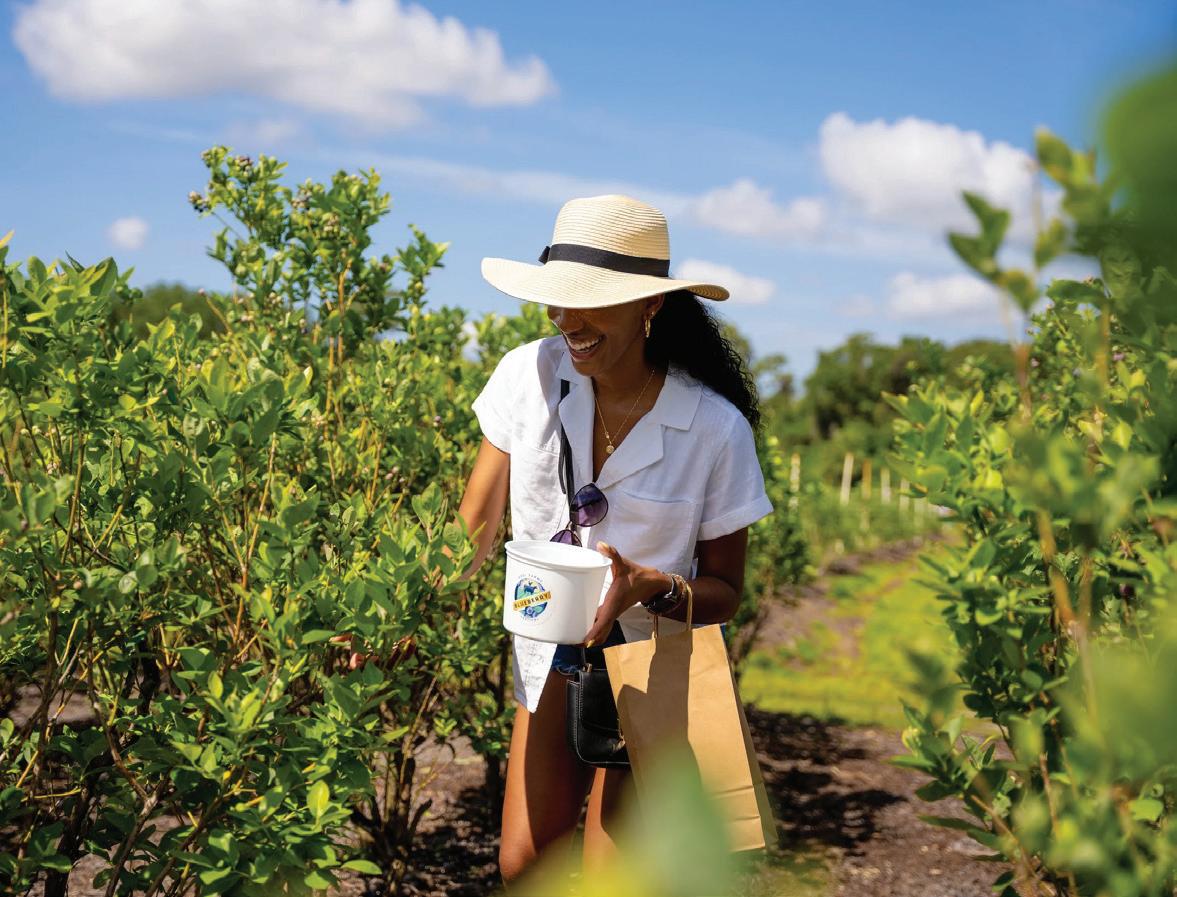
KEEL FARMS BLUEBERRY FESTIVAL
Additionally, spring is often associated with themes of renewal and growth, which artists and cultural organizations refect in
their programming. From fruit-picking festivals in Florida to new explorations throughout Africa, springtime events ofer unique opportunities to experience diverse artistic traditions and customs. Spring art walks and open studios invite the public to engage directly with artists and their work. The sense of optimism and possibility that comes with spring inspires creativity, making it an ideal time for people everywhere to explore, appreciate, and participate in art and culture. Whether through large-scale festivals or intimate gatherings, spring provides a perfect backdrop for artistic expression and cultural connection. Here are just a few places across the world ONYX Magazine suggests that you explore.
Each weekend in April 2026
5202 Thonotosassa Road, Plant City, Fla.
Featuring u-pick blueberries, local vendors, live music, and family activities like camel rides and a petting zoo. Held at, this popular free-admission event celebrates the harvest with specialized food trucks and blueberry-themed drinks, with parking available for $10. At Keel Farms exists to share their farm and grow the family through remarkable products and experiences. Through hard work on the farm, they produce honest, healthy, sustainable, ground to glass products served in a comfortable, family environment. They ofer tours, tastings, dining, events, and farm activities year-round! Stop by to grab a bite to eat, hop into a tour of our facility, and enjoy their many family-friendly events.
VISIT GHANA’S KWAME NKRUMAH MEMORIAL PARK AND MAUSOLEUM
Located in downtown Accra, Ghana is the Kwame Nkrumah Memorial Park and Mausoleum. It has a Mausoleum which is the fnal resting place of Ghana’s frst President and Africanist. The park has a museum that hosts rare artefacts relating to Ghana’s independence and tours at the park give visitors in-depth history of the Sub-saharan struggle for independence. The mausoleum designed by Don Arthur houses the mortal remains of Dr. Kwame Nkrumah and his wife Fathia Nkrumah. It is meant to represent an upside-down sword which in the Akan culture is a symbol of peace. The mausoleum is clad from top to bottom with Italian marble, with a black star at its apex to symbolize unity. The interior of the Mausoleum boasts marble fooring and a mini mastaba looking marble grave marker surrounded by river-washed rocks.
NATIONAL CHERRY BLOSSOM FESTIVAL
Keelfarms.com
Washington, D.C.
MARCH 20 – APRIL 12, 2026
Springtime is the Best Time in Washington, D.C. What began with a gift in 1912 at the Tidal Basin now spans four weeks throughout Washington, DC, and neighboring communities in Maryland and Virginia. Residents and visitors are invited to celebrate all that spring in Washington, DC has to ofer — from exciting events to delectable Cherry Picks restaurants, vibrant Art in Bloom installations, delightful hotel stays, and more. Visit nationalcherryblossomfestival.org.
Detroit-based artist Tim Yanke, represented by Park West Gallery— one of the world’s largest art dealer, brings his bold “Neo-West” style to the 2026 National Cherry Blossom Festival with America in Bloom.
QUAINT
CURACAOAN VILLAGE OFFERS BEAUTIFUL HISTORY
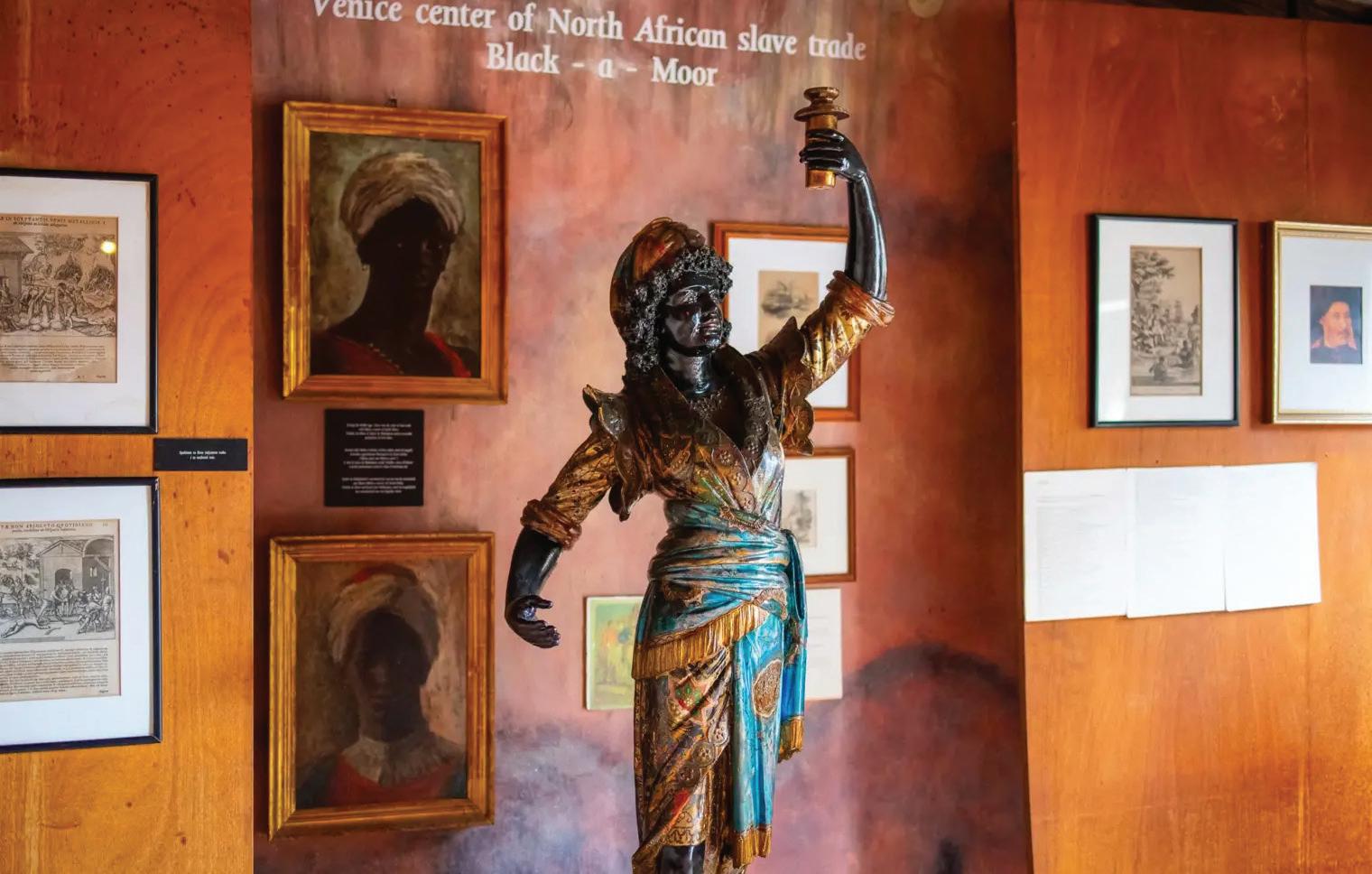
Museum Kurá Hulanda is an anthropological museum that focuses on the predominant cultures of Curacao. It ofers a worldclass chronicle of the Origin of Man, the African slave trade, West African Empires, Mesopotamian relics and Antillean art. When you visit the museum the receptionist at the entrance will give you a map of the museum and will show you how to guide your walk through the museum. You will receive general information about the museum and can inform you about all the various items that are on sale in the Museum Shop. For tours you can call the museum and appointments can be made so a guide (Papiamentu, Dutch, English and Spanish speaking) can tour your group through the museum.) At the entrance of the museum, the Museum Shop sells various items, various postcards of impressive collection items, a collection of African art–wooden masks and sculptures from shona stone, paintings and books.
CENTER FOR BLACK LITERATURE UPLOADS SPRING EVENTS
WOMEN’S HISTORY MONTH VIRTUAL CONVERSATION
Thursday, March 12
6:00 p.m. – 7:00 p.m., EST
Join Medgar Evers College (CUNY), Center for Black Literature (CBL) for a Women’s History Month conversation: The Cost of Being Strong: Black Women, Health, and Wholeness. Listen to talks moderated by Dr. Makeba Pinder, the director of the Office of Counseling and Psychological Services at the college: The Black Superwoman & Mental Health: Power & Pain with Dr. Venise Berry; and The Strong Black Woman: How a Myth Endangers the Physical and Mental Health of Black Women with Marita Golden. Together, they will delve deeper into Black women’s mental health and well-being.
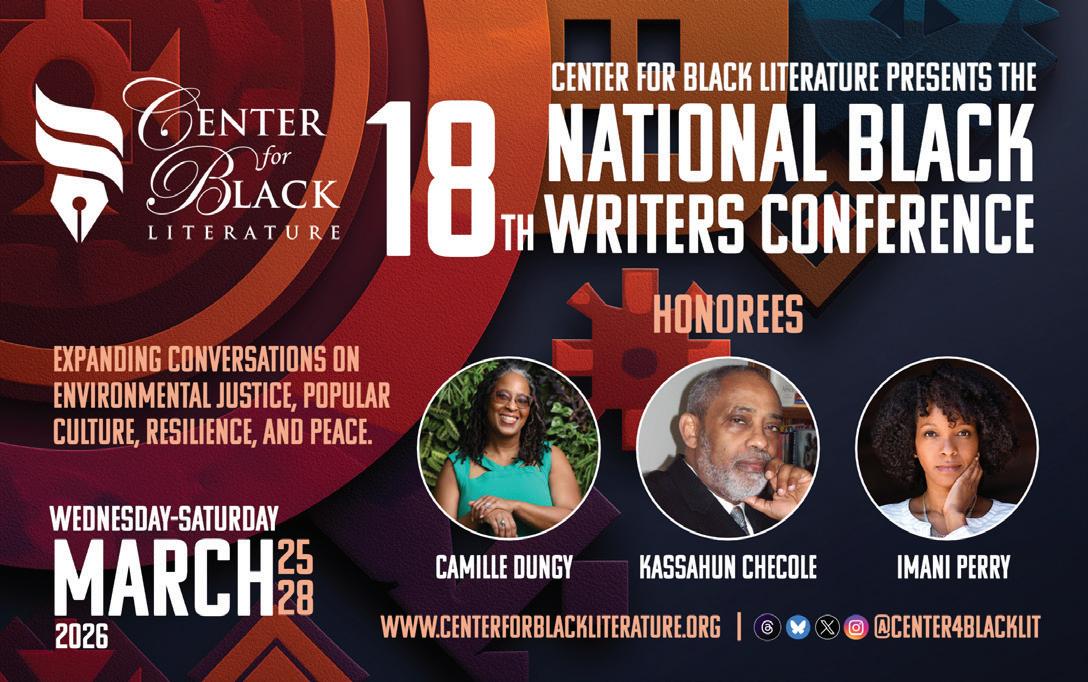
THE 18TH NATIONAL BLACK WRITERS CONFERENCE
Wednesday, March 25 Saturday, March 28
THE LEONARD REID HOUSE, SARASOTA, FLA., ROSEMARY DISTRICT
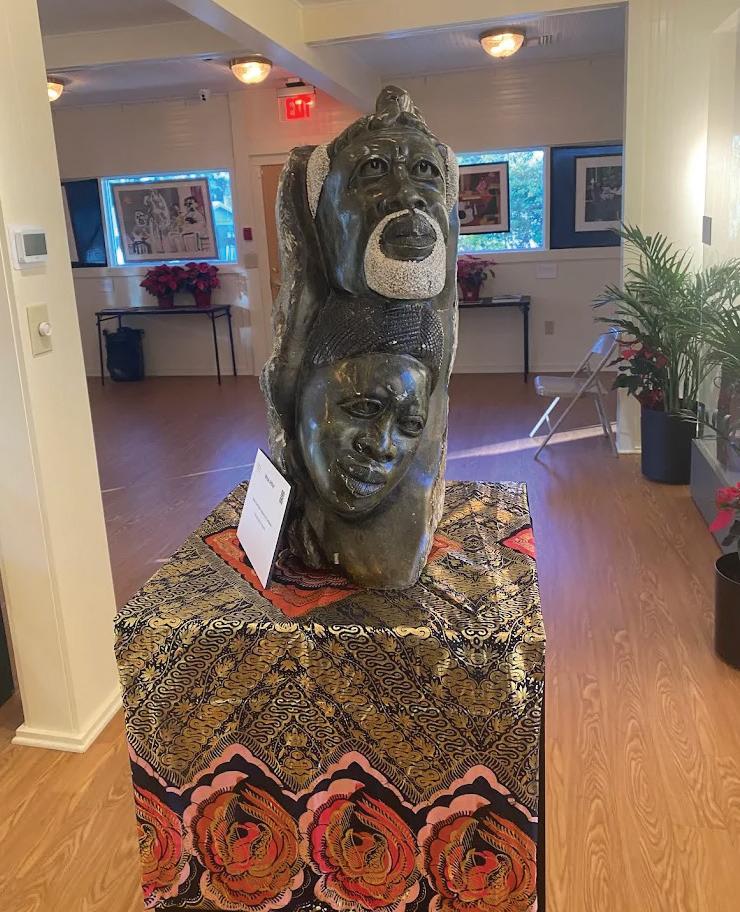
The Leonard Reid House was once the residence of Leonard Reid, one of Sarasota's pioneering Black leaders. It has undergone a breathtaking restoration to exhibit art, history and storytelling. Built in 1926, the single-story 1,400-square-foot home was an anchor of Sarasota’s frst black community, Overtown, now known as the Rosemary District. Reid was one of the architects of Sarasota’s frst golf courses and played a signifcant role in establishing the city’s frst Black community. Run by Sarasota native and historian, Vickie Oldham, the Reid House is a treasure. Stop by when you take a Newtown Alive Trolley Tour to learn about the community’s rich culture and endearing Black pioneers.
Enjoy a thought-provoking conversation between Nikole Hannah-Jones and Michael Harriot as they explore the Conference theme: Expanding Conversations on Environmental Justice, Popular Culture, Resilience, and Peace. The discussion will be moderated by Dr. Brenda Greene, executive director emeritus of the Center for Black Literature. Confrmed conference leaders include Honorée Fanonne Jefers, Victor LaValle, Cebo Campbell, Ayo Sekai, and other acclaimed Black writers and cultural thought leaders. Attendees will hear from these authors during engaging roundtables such as:
• Climate Change, Restoration of the Planet: Voices from African Diasporic Writers
• Beyond Banned Books and the Censorship of African Diasporic Literature
• African Diasporic Literature: Paths Toward Resilience and Healing
The Conference concludes with a Plenary Discussion with honorees, moderated by Lurie Daniel Favors, attorney, author, speaker and radio host on Sirius XM Radio. This year’s honorees are Camille Dungy, Kassahun Checole, and Imani Perry.
Visit CenterForBlackLiterature.org, write to info@CenterForBlackLiterature.org or call 718-804-8884 for more information.
SANKOFA: Looking Back, Reaching Forward
BOOKS THAT REVEAL OUR HISTORICAL AND FUTURE SIGNIFICANCE ONYX READS
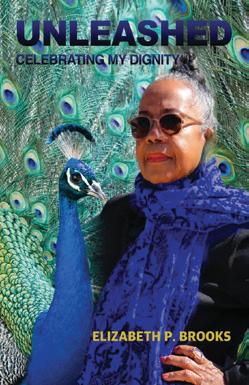
UNLEASHED:
CELEBRATING MY DIGNITY
By Elizabeth P. Brooks
Elizabeth P. Brooks’s poetry in Unleashed is both personal and powerful, inviting readers to experience her spirit and resilience. Her words transform trauma
turning personal history into art that resonates and celebrates the enduring power of self-actualization.
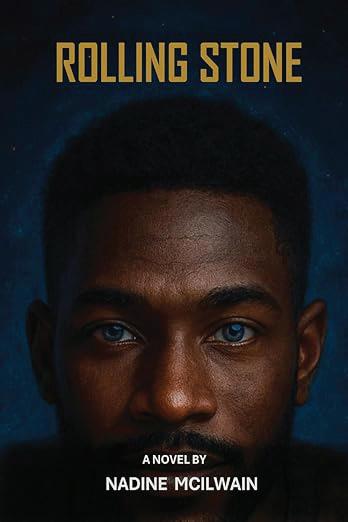
ROLLING STONE
By Nadine McIlwain
-
cover they are siblings after their father's sudden death, their search for truth unearths stolen genius, buried secrets, and a love that could either heal or destroy them all. Bound by blood but divided by history, they soon learn that some legacies are written in the heart, not the will.
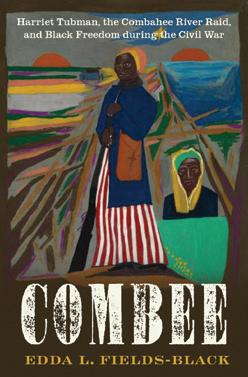
COMBEE: HARRIET TUBMAN, THE COMBAHEE RIVER RAID AND BLACK FREEDOM DURING THE CIVIL WAR
By Edda L. Fields-Black
legendary life: escaping enslavement, leading others out of bondage via the Underground
biographies omit her actions during the Civil War. Hired by the Union Army, she ventured into the heart of slave territory--Beaufort, S.C.,--to gather intelligence for a daring raid up the Combahee River to attack the major plantations of Rice Country, the breadbas-
ket of the Confederacy. Edda L. Fields-Black
expeditions, torching eight rice plantations and liberating 730 people.
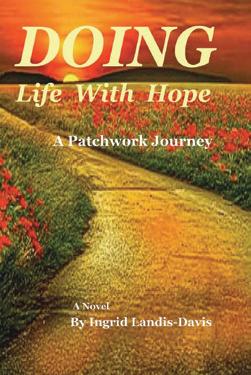
DOING LIFE WITH HOPE: A PATCHWORK JOURNEY
By Ingrid Landis-Davis
Imagine being thrust into a history you knew nothing about, compelled to discover its outcome, only to be swept through tangled timelines
her past to give meaning to her present, leading the reader through unpredictable encoun-
turn the page in anticipation, never knowing what or who awaits, as the journey unfolds in a non-linear, surprising manner.
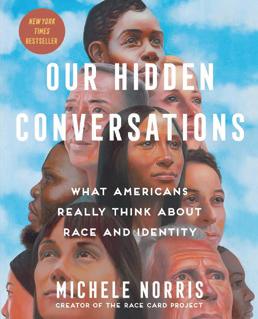
OUR HIDDEN CONVERSATIONS
By Michele Norris
Over twelve years,
Card Project collected over half a million deeply candid stories, each just six words, revealing complex truths about race, identity, and class
Our Hidden Conversations
uncomfortable look at private thoughts and memories, enriched by backstories and photos. Even at just six words, the micro-essays can pack quite a punch, revealing, fear, pain, triumph, and sometimes humor. Responses such as: “You’re Pretty for a Black girl.” “White privilege, enjoy it, earned it.” “Lady, I don’t want your purse.” Notably, many responses came from white participants, providing a rare, panoramic perspective on how Americans view themselves and each other.
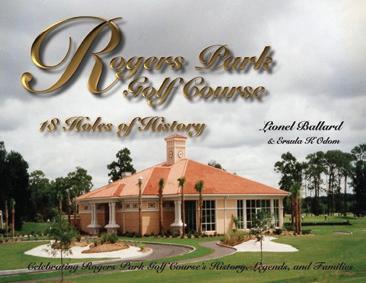
ROGERS PARK GOLF COURSE: 18 HOLES OF HISTORY
By Lionel Ballard & Ersula K. Odom
Rogers Park Golf Course is special. Its history is rich, and its people are legendary. If you listen carefully, you will hear the sound of children's joy and families' laughter. You will feel the celebration of a hole-in-one and the stories it spawns. You will appreciate the community unity that it fosters. You most likely will interact with a legend, with or without your knowledge. When it is all said and done, endless and endearing memories are attached to the names Rogers Park and Rogers Park Golf Course.
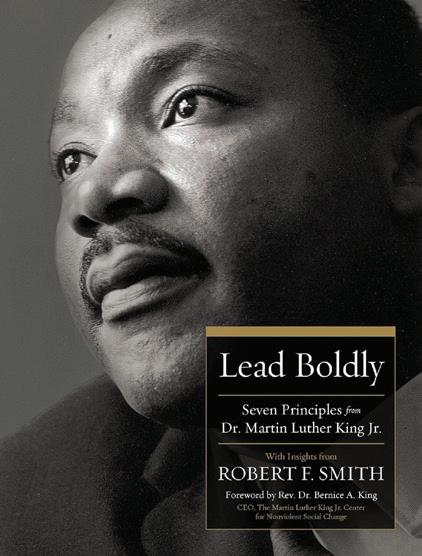
LEAD BOLDLY: SEVEN PRINCIPLES FROM DR. MARTIN LUTHER KING, JR.
By Robert F. Smith
Dr. Martin Luther King Jr.’s words remain a source of inspiration for people of all backgrounds, demonstrating the power of bold, compassionate leadership. Today’s leaders can draw on his teachings, especially about “The Beloved Community,” “Economic Justice,” and “Two Americas.” Robert F.
they are essential lessons for aspiring leaders in any era.
Book list curated by Ersula’s History Shop in Tampa, proprietor Ersula K. Odom. Ersulashistoryshop.com
Myrlande Constant: Early Works Sequin
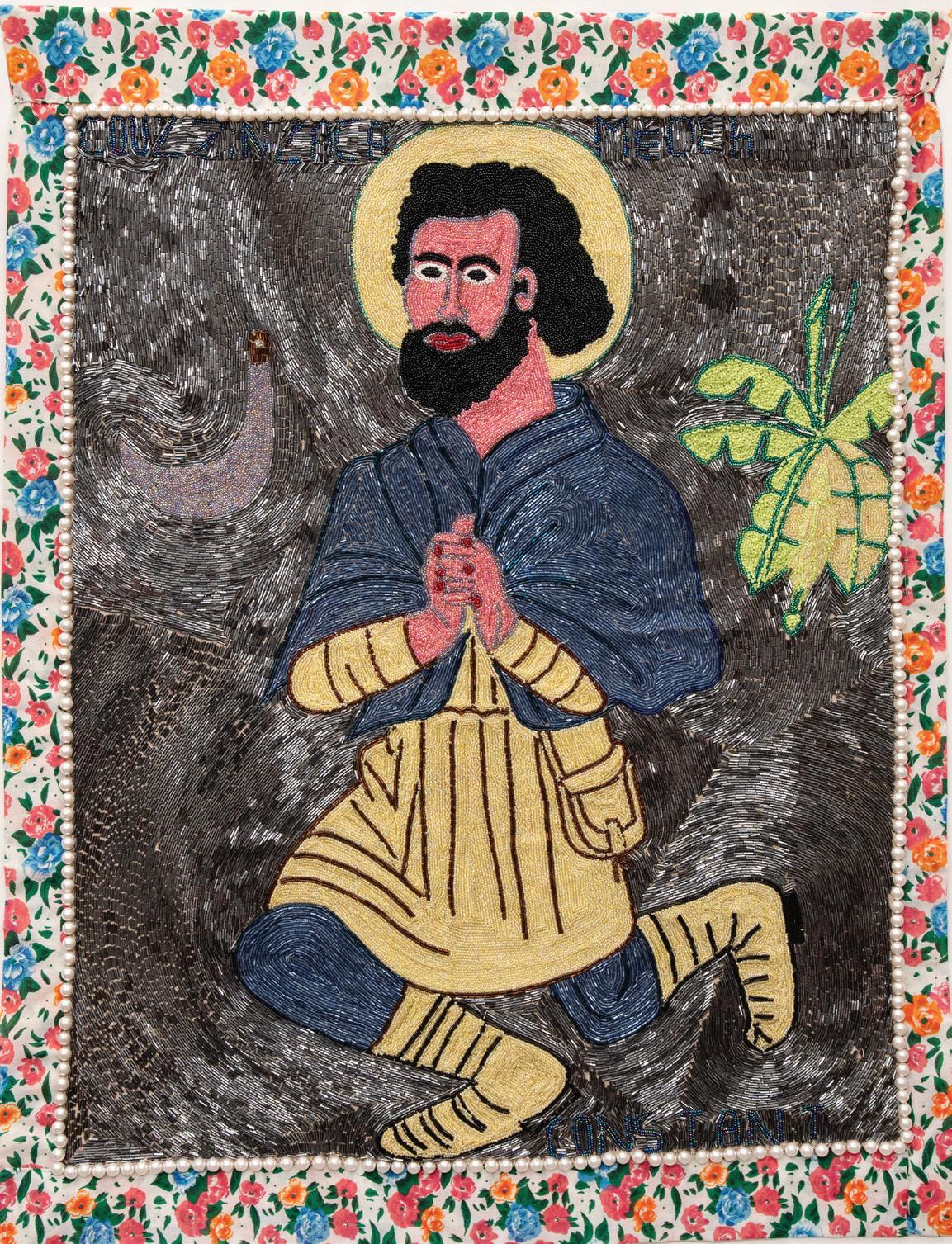
The Tampa Museum of Art acquired its first drapo Vodou, or Vodou flag, over twenty-five years ago. Myrlande Constant’s flag Papa Zaka/St. Isidore was gifted to the collection by notable Haitian art collectors Kay and Roderick Heller. An early work by Constant, the flag reflects the customary size and imagery associated with this most beloved tradition of Haiti’s sacred arts. At the center of the composition is a depiction of a lwa, or deity, from the Vodou pantheon and a geometric border frames the image. Over time, Constant’s flags have increased in scale and visual complexity. Constant’s work represents a different approach to flagmaking—notably she is one the few women working in a medium traditionally associated with Vodou priests and male artisans. For the past 30 years, she has pushed the boundaries of the medium with her approach to color, light, and pattern. Today, Constant is celebrated as one of Haiti’s most accomplished contemporary artists and her art is exhibited across the world.
Arts: The Flagmakers of Haiti
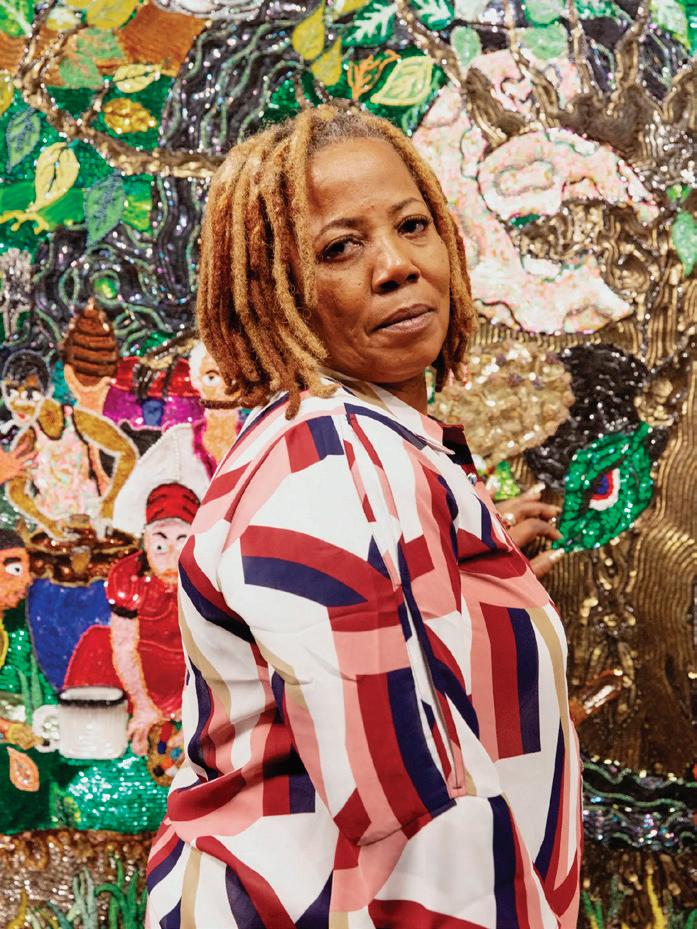
Born in Port-au-Prince, Constant was raised by her mother Jane Constant, a seamstress. In her teens, she worked with her mother in one of Haiti’s textile factories that made wedding dresses for brides in the US and Europe. Poor conditions and minimal wages caused her to quit, and she pursued the craft of flagmaking. Although she is versed in Vodou practices, Constant views her art in relation to textiles and painting, rather than as ritual flags. Distinct from her male contemporaries, Constant’s flags incorporate the tambour stitch, a technique she learned at the textile factory that allows her to create different textures and depth with sequins and beads. She also works in reverse—after drawing the image on cloth attached to supports, Constant and her assistants sew each bead from the underside and out of their view. The final picture is revealed once the cloth is turned over for inspection.
Myrlande Constant (Haitian, b. 1968), Papa Zaka/St. Isidore, c.1990s. Beads on cloth. Tampa Museum of Art, Gift of Kay Culbreath & J. Roderick Heller in memory of Dr. William Hodges of Haiti, 2000.009.
Portrait of Myrlande Constant Courtesy of Gioncarlo Valentine for The New York Times
Add Simple Exercises resolution, but people tend to fail more likely to keep it if you make stairs more often, walk to meet a friend instead of taking a taxi, or try a short-guided workout in the
Combine Outdoor Time With Socializing and being with your friends has with your friends so you
10 RESOLUTIONS YOU CAN KEP THIS YEAR
By Karen Heslop
obody plans to quit their resolutions when they make them, yet studies show that 23% of -
Find A Financial App Or Twoyou grow your wealth
Create A Reasonable Cleaning Schedule
Make Your Bed
This really simple task
part of your bedtime roufall asleep more easily and
Replace One Beverage With Water Daily
Kick One Bad Thing Out Of Your Diet one unhealthy thing at a time
Try One New Thing Monthly -
Plan One Weekly Meal
Meal planning can help you maintain your diet and take the stress out of deciding what to eat every day. However, it might feel overwhelming if you’ve never done it before. You can start by picking one meal per week to plan. As you consider the recipe, you’ll
easy ways to prepare. Over time, you can plan a meal more often.
Focus on Health That Matters
In January and February, spend some time learning about these important health matters. Gather your family for critical conversations surrounding these topics, then speak with your doctor about possible screenings or additional guidance that can keep you and your tribe healthy.
Give Blood
National Blood Donor Month (NBDM) is celebrated every January to honor the generosity of blood donors and highlight the constant need for donations, especially during winter when shortages are common due to weather and illness, with organizations like the Red Cross and America's Blood Centers promoting drives and sharing stories to encourage eligible people to give the gift of life. The observance, proclaimed by President Nixon in 1970, aims to ensure a stable blood supply for accident victims, cancer patients, and those needing surgery. www.redcross.org
Develop A Simple Skincare Routine
This resolution only requires some initial research—what are the minimum skincare products you need for healthy skin? If you have a skin con-
products, but the aim is to keep things simple.
How To Avoid Quitting
Researchers name several key factors behind why people didn’t stick to their resolutions: lack of planning, underestimating how much work the new resolution entailed, and the lack of self-monitoring. Avoid these pitfalls by putting some serious thought into the changes you want to make. Making one change that you can stick to is better than sticking to none of them.
Healthy Births
January is National Birth Defects Prevention Month (NBDPN), a time to raise awareness that while not all birth defects are preventable, risks for some can be reduced through healthy habits like taking folic acid, getting vaccines, avoiding harmful substances (alcohol, smoking, drugs), managing chronic conditions, and maintaining a healthy weight before and during pregnancy, with a focus on supporting families impacted and promoting early intervention. https://nbdpn.org/nationalbirth-defects-awarenessmonth
Remember Cervical Health
January is Cervical Health Awareness Month, a global observance focused on preventing cervical cancer through education about the HPV vaccine, regular screenings (like Pap tests and HPV tests), and early detection, as it's a largely preventable and treatable cancer, especially when caught early. The goal is to encourage people to get vaccinated, stay up-to-date with screenings, and learn about risk factors to reduce the burden of this disease, aligning with the World Health Organization's (WHO) efforts to eliminate cervical cancer. www.nccc-online.org
Healthy Eyes
January is National Glaucoma Awareness Month, a key time to highlight glaucoma as a leading cause of irreversible blindness, emphasizing that it's often a "silent thief of sight" with no early symptoms, making regular comprehensive eye exams crucial for early detection and preserving vision, as half of those affected don't know they have it. The month promotes education on risk factors, treatments, and the need for proactive eye care, especially for those over 60, with family history, or certain ethnic backgrounds. https://glaucomafoundation.org
Love Your Heart
American Heart Month, observed every February, is a national campaign led by the CDC and American Heart Association to raise awareness about heart disease (the #1 killer in the U.S.) and promote cardiovascular health through education on risk
factors, healthy lifestyles, and recognizing heart attack signs to encourage life-saving actions like calling 911. It's a time for individuals, communities, and healthcare providers to focus on heart health, manage conditions like high blood pressure, and adopt heart-healthy habits such as better diet, exercise, and stress management.
www.heart.org
Closing the AIDS Gap
National Black HIV/AIDS Awareness Day (NBHAAD) is observed annually on February 7 to focus on the disproportionate impact of HIV/AIDS on Black communities in the U.S., aiming to boost education, testing, prevention (like PrEP), and treatment access while
systemic barriers like racism. It's a day for increased community engagement, promoting safe practices (condoms, sterile equipment), and connecting people with vital health services to end the epidemic. www.nbhaad.org
Positive Eating
National Eating Disorders
Awareness Week (NEDAW) is an annual campaign to educate the public about the realities of eating disorders and to provide hope and visibility to all those impacted by eating disorders. NEDAW 2026 will take place Monday, February 23 – Sunday, March 1, 2026. www.nationaleatingdisorders.org
FLU CASES ARE SURGING ACROSS THE UNITED STATES, WITH THE CENTERS FOR DISEASE CONTROL AND PREVENTION ESTIMATING MORE THAN 15 MILLION CASES SO FAR THIS SEASON (SEPTEMBER 2025JANUARY 2026). HEALTH OFFICIALS SAY THIS IS THE WORST SEASON FOR RESPIRATORY ILLNESSES SINCE AT LEAST 1997–1998. –Centers for Disease Control and Prevention
DON’T SKIP THE FLU SHOT THIS YEAR
WHO SHOULD GET A FLU SHOT?
The short answer: everyone. With a few rare exceptions due to allergic reactions, all
should consider getting it even earlier. Those include:
• Pregnant Women.
• School-Aged Children. With most schools starting in August, and children hisrecommended.
• Seniors. Because of changes in the immune system stemming from age, adults
• Adults With Chronic Health Conditions. For people with long-term health
OTHER STEPS TO AVOID GETTING THE FLU
Martin Sodo, M.D.,
Orlando Health
SHOULD CANCER PATIENTS GET THE FLU SHOT?
Most people with cancer and undergofrom season to season. A new vaccine protects cause infection that year. Patients undergoing--
Daniel Anscher, M.D.,
Orlando Health
Chiropractors Back CBD
FOR INFLAMMATION RELIEF
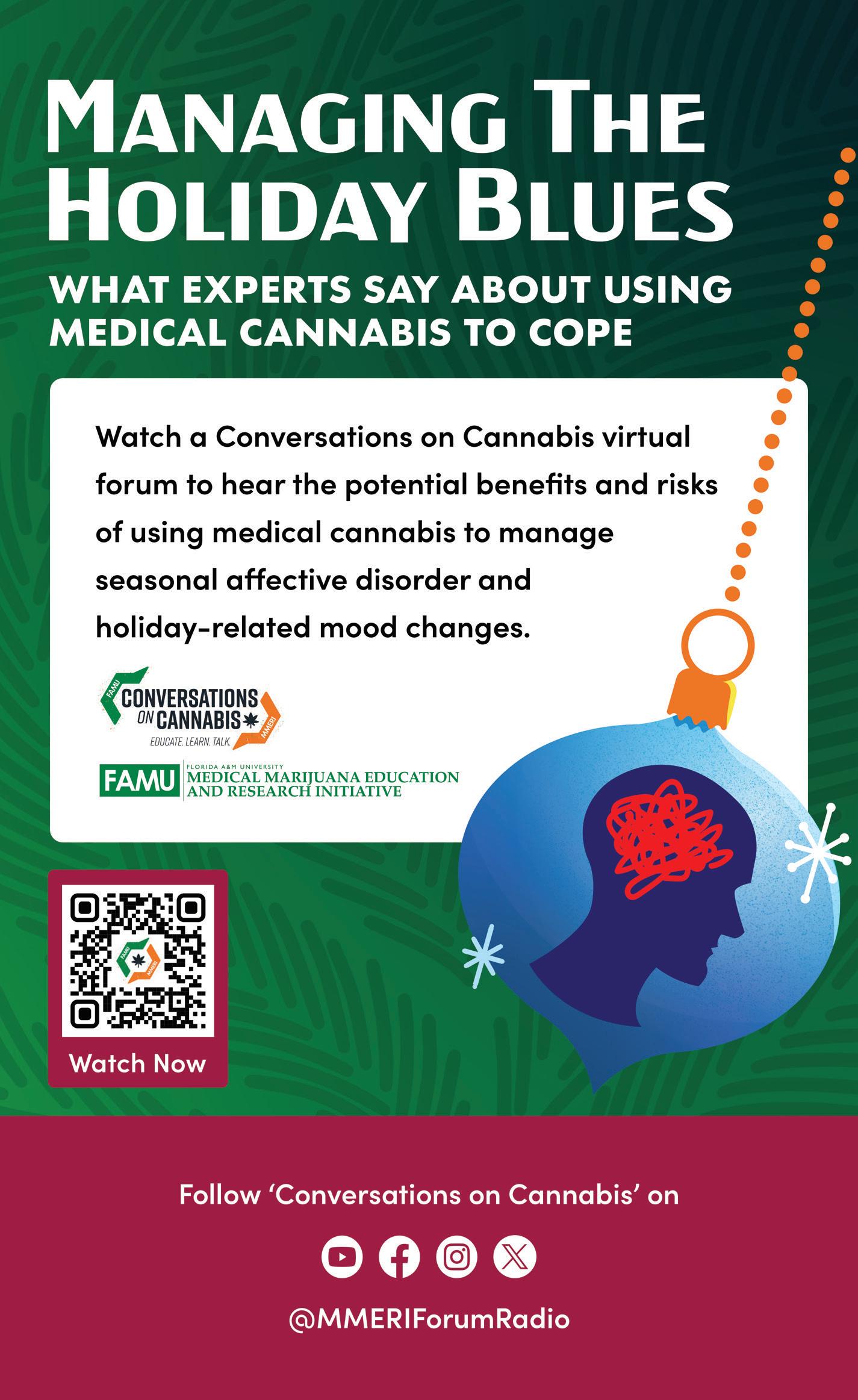
Visit https://bit.ly/MMERINovember2025 to watch MMERI’s Conversations on Cannabis Virtual Forum featuring Doctors of Chiropractic Misty Green and Andrew Lewis Jr. discussing why “Cannabis and Chiropractics.” Editor’s note: This commentary is provided by the Medical Marijuana Education and Research Initiative (MMERI) of Florida A&M University.
Level Up
Start a mentorship program in diverse communities and make a positive change for us all.
By Saheed Hassan
Mentoring programs designed to promote the advancement of communities of diverse backgrounds are proven to work. But there are nuances to successful mentoring programs. Mentoring experts from Together share seven steps to launching a mentorship program in communities of color.
Research shows that 1 in 4 people of color are discriminated against by their colleagues in the workplace, and 3 in 4 are based on the color of their skin. A study by COQUAL titled "Being Black in Corporate America: An Intersectional Exploration"
found that people of color are treatedtunities in comparison to their white counterparts in most companies.
Exposure and Networking
People of color rarely enjoy the privilege of having the same exposure as their fellow white colleagues. With mentorship programs, they will enjoy these privileges of exposure and networking. This creates an inclusive and equitable work environment which also promotes diversity in the company.
ONYX Magazine has been successful in this area. During our annual Women on the Move and Men of Honor awards programs, ONYX Magazine introduces young men and women to professionals who can help them on their college and career paths.
Career Advancement and Opportunities
Mentoring programs for BIPOC people promote career development and advancement in an organization. In 2021, Bloomberg launched their Bloomberg Black in Tech Mentoring Program (BBIT), a mentorship program for Black professionals in tech, and at the end of the program, some participants, such as Meshach, shared how the program helped him better solidify what he wanted to do with his career. The McKinsey report above also shows that employment opportunities vary greatly for white individuals and people of color with similar backgrounds. However, with a well-designed mentoring program, this gap can be narrowed, and it gives people of color equal opportunities to advance and be valued within the organization.
Creates a Sense of Community Among Participants
Mentoring helps people create a sense of community. In 2020, a leadership and mentorship program was designed for Black youths at the University of Alberta for 13 weeks. At the end of the program, the professors who were people of color at the institution formed close relationships and develop strong bonds with their mentees.
Close the Representation Gap That Exists in Top Industries
Mentoring helps bridge the representation gap that exists in top industries. It increases representation at the top management level by providing people of color with access to senior leaders and mentors who understand their unique experiences and challenges.
Break Systemic Bias and Inequities
People of color face biases from almost every angle in the schools and in the workplace. Mentoring people of color will help with breaking free from systemic bias by providing people of color with support, resources and opportunities they need to excel.
Improved Organizational Culture
Mentorship will help improve the workplace culture and also the working experience of people of color. Providing people of color with skilled mentors who understand their unique experiences and challenges helps enhance their engagement and satisfaction. It develops people of color professionally and with relevant skills needed for advancement.
MENTORSHIP
Do People of Color want Mentors from the Same Background?age of people of color would prefer to have mentors who come from the same back-
people from diverse groups feel more com-
HOW TO START A MENTORSHIP PROGRAM FOR COMMUNITIES OF COLOR
Starting a mentorship program for communities of color is very important. These steps are clear.
1. Decide on the Structure of Your Program
them to connect with peers who share similar experiences and chal-
torship program and choose the structure that aligns best with them.
2. Determine Who Will Be Mentors in Your Program
Attracting the right mentors to your program is key. You need to
ment strategy to attract the best candidates. This may involve adver-
rience. You need to be intentional and strategic in recruitment to attract the best mentors to your program.
3. Train Mentors and Set Clear Expectations
training to be prepared ahead for the program. As a mentoring proand development. Provide mentors with the resources needed to
4. Open and Promote Registration
tration. Get your community interested in participating by emphasiz-
from their mentors and how the program will be run. The requirements to become a participant must also be clearly stated in the regcolor in a diversity-focused program. One way to promote mentoringticipating in the program.
5. Match Mentors and Mentees-
ity to request their mentors rather than being assigned one.
6. Support Meaningful Mentoring Relationships
One way to support meaningful mentoring relationships is by encouraging diversity-focused activities. Creating meaningful support could include but not be limited to:
Creating a series of activities that the mentor and mentee can
more informal activities such as having lunch together to discuss work-related issues.
Encourage an open dialogue between mentor and mentee by creating a safe space and trusting environment where mentors and mentees feel comfortable sharing their thoughts and feelings. Provide feedback loops to mentor and mentee through regular
Provide resource materials for mentor and mentee such as -
7. Monitor Your Program's Impact
monitor:cussed in the program. Mentoring relationships Participant satisfaction Program Impact Together can help your organization handle any of the mentoring
For more information, reach Togetherplatform.com. ONYX Magazine contributed to this story.
Finding Your Rhythm Again
Reestablishing Routines in the New Year
The holiday season is special, fun and often-
UNDERSTAND WHY ROUTINES MATTER
REINTRODUCE STANDARD MEALTIMES
START WITH SLEEP
PRIORITIZE PHYSICAL ACTIVITY
STRATEGICALLY PROVIDE CHOICES
MODEL BEHAVIOR
Do You Need a Professional Mentor?
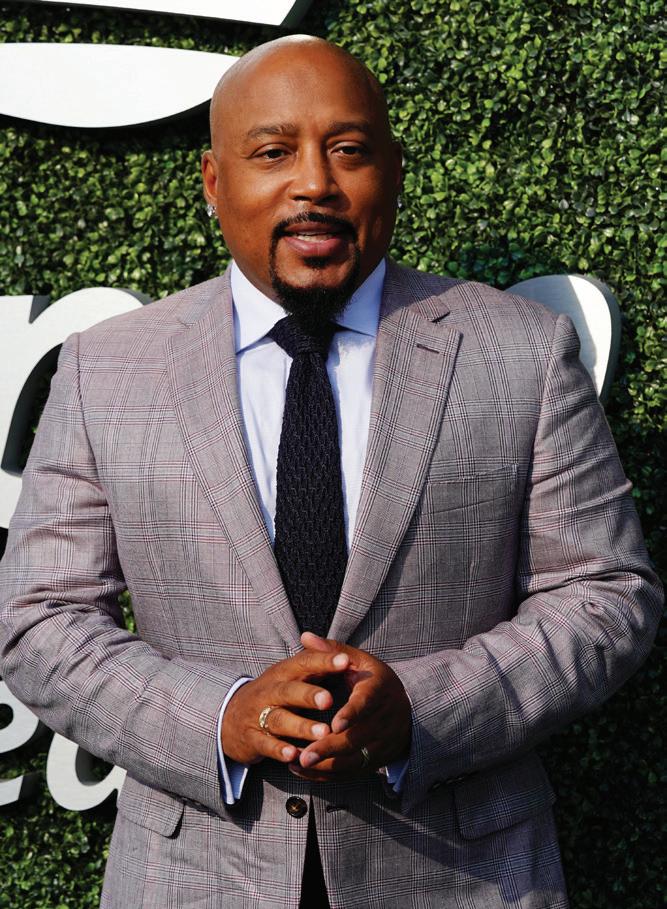
Yes, you probably do. A business mentor is widely considered important, and often a vital asset for success, whether you are a new entrepreneur or a seasoned professional. Many successful business leaders, credit mentorship with helping them reach new heights, including entrepreneur Daymond John.
With help from others, John has come a long way from turning a $40 budget into FUBU, a $6 billion fashion gamechanger. Throughout his career, John has continued to be an entrepreneur in every sense of the word. He is not only a pioneer in the fashion industry but a Shark investor on the 4-time Emmy Award winning Shark Tank, a New York Times best-selling author, branding guru, and highly sought-after motivational speaker.
“Mentors can be people who come into your life for a brief period or those who stick around forever,” says John. “My friend, and current mentor Jay Abraham, shared a study with me. It found that startups that have helpful mentors, and learn from startup thought leaders, raise 7 times more money and have 3.5 times better user growth. Mentorship is what allowed the successful companies to focus, not take funding too soon, and scale at a good pace. I’m thankful for all of the mentors who have helped me throughout my career and life. Being around like-minded people and mentors are the number one reason for success.”
KEY BENEFITS OF A BUSINESS MENTOR Access to Real-World Experience:
and Industry Events:
Platforms:
and Academic Connections:
For the Love of God and Grits
Cooking up Mama’s breakfast lights one man’s path to redemption.
By Stefany Strong
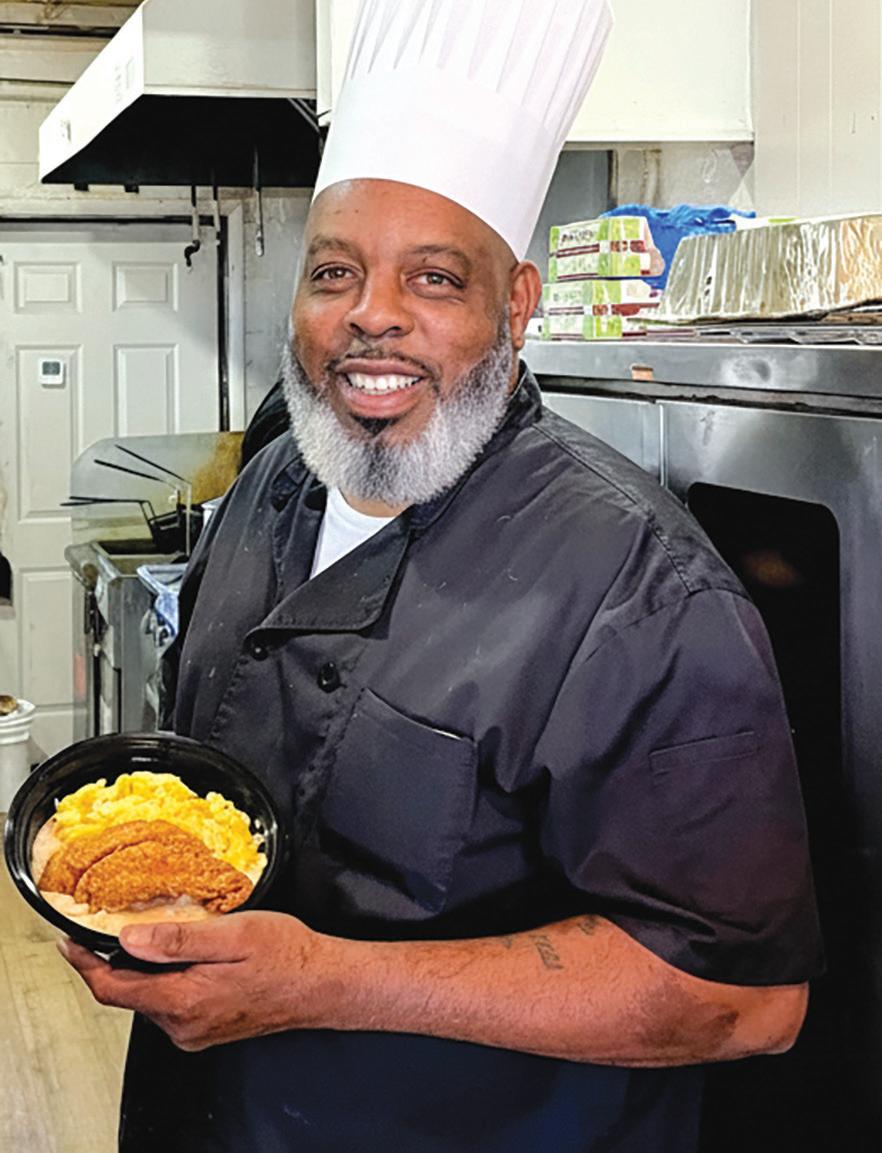
Andre Combs remembers growing up in a single-parent household in Jacksonville, sitting at the table with a bowl of his Mama’s hot grits. “Those grits were good,” said Combs. “Little did I know that those grits, along with my love for cooking and God, would bring me out of a very dark place and into the light.”
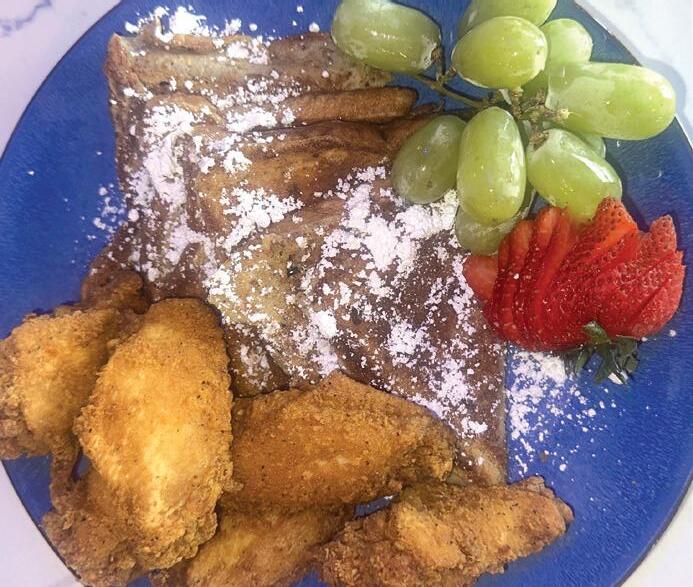
Combs is the proud owner of three Orlando-area restaurants called Eat My Gritz. A typical morning for the chef starts with him making 50 pounds of grits. The main dish features a bowl of grits accompanied by a wide variety of proteins, including shrimp, chicken wings, pork bacon, rib tips, and more. And the grits bowl costs $5.00.
“I know that times are hard for people, and that’s why the grits bowl is only $5.00,” some healthy options. The response from customers is overwhelming. They love it.”
Dark Times
Things were not always so bright for to a series of challenging events: He quit school in the ninth grade and hung out with the wrong crowd. He moved to Texas and ran drugs from Mexico to the states, which landed him a felony drug conviction. He Florida federal prison. Broken, he lived in a homeless shelter.
“Yes, I’ve made big mistakes. I want my story to be told to inspire the young kids who are coming up now. I want them to know that you may be poor or have problems, but that’s not a reason to do wrong. I want to motivate them to stay in school
and make something of themselves. If I can do it, they can do it too.”
A Vision From God
While serving time at the Coleman Federal Correctional Institution near Orlando, Combs says he stayed out of trouble and was assigned to the kitchen detail.
“I recall being in my cell and having a vision of getting out of prison and turning my life around. I wanted to open a food business. I believe that was a vision from God.”
Little did Combs know that his love for cooking and grits would turn into his business empire in Orlando, with three locations of Eat My Gritz. He feels that God had a plan for his life even in his darkest moments.
“My lawyer was able to get me releasedtence for running drugs from Mexico. While I was excited and hopeful about get-
would still be full of obstacles and chal-
lenges. I was homeless and checked into the Orlando Rescue Mission.”
Trusting God While Homeless
Combs says he’s thankful that the Orlando Rescue Mission had a program that allowed him to make and save money, stay drugfree, and participate in bible study. Combs says he continued to pray and ask God for help and guidance.
“Eventually, I met a young lady who owned her own hair business. She agreed to help me set up my food business. We are now both business owners and are engaged. I am truly thankful for her help.”
Giving Back to the Community
Combs opened locations in predominantly Black neighborhoods. He also hires employees from the nearby neighborhoods.
“I feel this is a big way to give back to the
employ those who may not get an opportunity elsewhere. It’s important to empower your community. We have to help each other to survive.”
Eat My Gritz is in Orlando at 635 N Westmoreland Drive and 901 S Goldwyn Avenue. Combs plans to open a new location in Eatonville in 2026. Stefany Strong is a freelance writer for ONYX Magazine.
Eat My Gritz features other breakfast favorites, such as French toast and wings.
New Style
How Gen Zers are parenting differently from their parents
According to The Bump, parentingronments each generation grew up in. For example, millennials who came -
tural focus on mental health, while Gen Zers, who came of age during a challenging post-COVID job market, see the need to be "practical, resilient and future-ready."
Here are three ways Gen Zers parent differently from their parents:
Tough Love Over Warm-and-Fuzzy
Gen Z parents prioritize preparing their child for the real world (54%). And whening styles were to how they were raised, their parents. This paradigm shift in parnotably their own parents: more "actions
disappointments instead of sheltering
younger parents follow their own intuition (47%) slightly more than they follow their
Gen Z Parents Face Generational Trauma Head On -
tion raised with "gentle parenting" in mind, only 32% employ this approach as parents
"cycle-breaking parenting" (41%) which focuses on healing generational trauma by family patterns. Not only does this parent-issues and uncomfortable emotions.
Gen Zers Parent Each Child Uniquely
The majority of Gen Z parents are choosing parenting styles based on what
trying to make their preferred style work regardless of their child's personality. And they're tailoring their parenting style to
suit the circumstances as well as the child.
plan to be less traditional about raising chilworld a better place and model this outparents are using a mix of styles focused oning generational trauma and treating each their approach as their children grow.
"What's true across generations is that parents are learning to parent as they go,"tion at Kiddie Academy. "Creating a nurmost important thing we can do for our little ones."
What Freedom Looks Like
Reading: The Education Foundation of Success
By Angela Pittman-Leath
Between 1740 and 1834 , Alabama, Georgia, Louisiana, Mississippi, North Carolina, South Carolina, and Virginia all passed anti-literacy laws. South Carolinaing enslaved people to read and write English, through an amendment to its 1740 Negrociating with such slaves at any meeting house or houses, & in the night; or at any SCHOOL
considered an UNLAWFUL ASSEMBLY.”
Anyone caught breaking these codes or both. Arkansas, Kentucky, Maryland, and Tennessee were the only slave states that did not enact a legal prohibition on educating enslaved people.
Why was reading such a menace pun-
understand travel passes. They could gain
want them to have.
ishment and learn to read in secret.
today. Literacy is the ability to read, write,
an academic gateway to a higher earning potential. Living without reading and literacy
School systems across the country have standards and curricula that guide schools and teachers on what is taught and learned in the classroom. According to the Florida
According to research, slave masters-
Excellent Student Thinking (B.E.S.T.). Standards. These standards provide the pathway to literacy and reading comprehension. In the classroom, students gain access to this knowledge and can transfer these reading and literacy skills to help them achieve greater academic success.
Jada Eichman, mother of a 2-year-old, said she started taking her son to the library at 10 months old. She wanted to expose him to the culture of reading and the experience of the library.
“The library also provided story time, and it is a great community resource that I hope more people will take advantage of,” she said.
Income and Wellbeing
A literate individual can make more money, and a lack of these skills limits job choices. Most low-earning jobs require some reading, and advancement potential is extremely limited without it.
An individual struggling to make a living on low wages endures compromised health and quality of life. Research studies from the National Institutes of Health (gov) show that working long and hard hours leads to stress. High stress levels may lead to high blood pressure, heart attacks and stroke. Further, because of a poor diet, which is also associated with lower incomes, more health concerns arise, such as very little time, if any, for exercise and relaxation.
Statistics also show that individuals who cannot read are more likely to enter the criminal justice system. Illiteracy perpetuates poverty by restricting access to high-paying jobs, limiting economic mobility, and fostering a cycle of intergenerational disadvantage, experts say.
This lifestyle may create conditions that heighten survival-based crime, such as theft, and disproportionately expose low-income earners to surveillance and legal punishment. It may drive systemic activity that may -
So, what are some ways parents can inspire reading for academic and life success?
Story Time
Establish a daily routine of reading to your child. Make sure reading is fun by acting out stories, characters and sounds. Track
spoken words to print. Talk about the story.
According to research, slave masters saw literacy as a threat to the institution of slavery and their of reading enticed some enslaved and free Black people to risk punishment and
Ask and answer questions. Repetition of a an age-appropriate library for your child and make sure it includes some favorite books. Let your child see you reading in your daily activities.
Connect Words to Real Life
Show your child that reading is used in our daily lives. Some examples would be reading and making his or her favorite recipe, such as chocolate chip cookies, reading the directions to put together his or her new toy, or when you all are in the car, reading the STOP signs.
Reading Achievement
Make sure that you are involved with your child’s teacher. This allows you, as a parent, to see what skills and standards your child is learning in the classroom, and you may help enhance those skills and comprehension at home by forming an academic partnership with the teacher.
Reading Fun
Go to bookstores, yard sales, and anywhere else where you can purchase or get books. Set up a special corner or bookcase for your child’s selections. Also, let your child see you as a parent who purchases books you enjoy reading. Make reading a fun activity.
Enhance Vocabulary and Increase Comprehension
Whenever you read, make sure you introduce and explain new vocabulary. Reading comprehension and understanding are also improved when you ask these basic W questions. WHO is the main character of the story? WHAT is the story about, and WHEN did the story take place (the setting)?
Reading for Future Preparation
Children who are good readers usually experience more academic success and are more prepared for standardized tests, including college entrance exams and acceptance. A college degree, in most cases, is associated with a higher earning potential.
Again, teaching enslaved people how to read was outlawed and a crime punishable alone implies that reading was a foundational steppingstone to a successful life.
Jada Eichman and son, Marley
MLK Events Honor Long Legacy Tampa Notes Community Heroes
In Tampa, the Dr. Martin Luther King, Jr., Parade Foundation hosted nearly 600 guests at a black-tie gala, featuring recording artist Nathan Mitchell, and tens of thousands of supporters during the 36th annual City of Tampa MLK Parade. The two-mile long parade featured 189 entries of walkers,versity marching bands. The Foundation noted community heroes The Honorable Congresswoman Kathy Castor, a member of the U.S. House of Representatives, 14th District of Florida; Pastor Alan Harris, the lead servant of the historic 160-year-old Beulah Baptist Institutional Church; Tonya Lewis, the founder and president of Children With A Vision, Inc.; and Robin Lockett, the regional director of Florida Rising Tampa Bay and introduced the Grand Marshal, Mr. Jerome Ryans, the CEO of the award-winning Tampa Housing Authority, also a 2024 ONYX Magazine Men of Honor honoree.
Visionaries Receive Award
Preserve Vision Florida in Tampa honored Drs. John and Juel Smith, inspirational educators and visionary leaders with their Persons of Vision Award. Dr. John L. Smith, Jr. served as President of Fisk University and Dean of USF Fine Arts College, creating the Graphic Studio and a renowned jazz program. Dr. Juel Shannon Smith has chaired Athena Society and Links and has served as a board member of Habitat for Humanity International with President Jimmy Carter. At USF she founded the Institute for Black Lives and Women in Leadership & Philanthropy. Preserve Vision Florida promotes eye health and safety through public awareness campaigns, screens children and adults, and directly assists them with medical exams and glasses.
‘Be All You Can Be’ Mural Unveiled
The CDC of Tampa invited the community to a special celebration for “Be All You Can Be,” a new community mural honoring remarkable women and the power of possibility at the Chloe Coney themes of empowerment, achievement, and community pride, serving as a vibrant addition to East Tampa. “Be All You Can Be” was made possible through the creative vision of artist and designer Michelle Sawyer, with enthusiastic participation from the Pace Center for Girls–Hill-
Miami Celebrates with 2,000+ at Breakfast
The 33rd Annual 5000 Role Models of Excellence Foundation Dr. Martin Luther King, Jr. Scholarship Breakfast was held at the Miami Beach Convention Center. The event, featuring musical performances and notable speakers, celebrated mentorship and provided scholarships to South Florida students. His Grace, Bishop Neil Ellis of Nassau, The Bahamas, received the 2026 Freedom and Justice Award. Ellis is the ONYX Magazine 2025 Men of Honor Man of the Year. Headlined by Flo Rida with special guests, it focused on empowering young men. Additional highlights included mentorship inductions for DJ Khaled and others. The breakfast raises funds for college scholarships for seniors in the program, who have an average GPA of 3.5. The 5000 Role Models of Excellence Project was founded by Congresswoman Frederica S. Wilson to mentor minority male youth. ONYX Magazine Publisher and Role Model Rich Black attended the event.
and anonymous donors supported. Women honored in the mural are: Chloe Coney, CDC of woman on the Hillsborough County Commisfrom Florida to compete in the Olympic Games; to chair the Tampa City Council; and Dr. Frankye Berry, a former chair of the English Department at Middleton High School. CDC of Tampa.
dation Tampa Bay, Gasparilla Arts, Campegia van Calcar-Sugar, Nicholas Nitch, Sandra Sroka,
Congresswoman Frederica Wilson, ONYX Foundation Scholarship Inspiration
Linda Y. Braynen and ONYX Magazine Publisher Rich Black
The MLK Parade Foundation honored community leaders, scholars and the grand marshal.
THE LAP OF LUXURY
NAPLES, A FLORIDA MARKET THAT ATTRACTS HIGH - END LIFESTYLE SEEKERS
By Joy Dumandan
The luxury housing market isn't showing any signs of slowing down, with high-end homes in certain metros selling faster than median priced homes—but location is key.
Luxury homes across the U.S. spent a median of 78 days on the market in November, according to the Realtor.com® Luxury Housing Report. And overall, national luxury prices decreased—with the 90th-percentile threshold dipping to $1.20 million, down -2.3% from the same period last year—but certain markets outperformed others.
The Naples-Marco Island, FL, metro was a standout performer. Luxury homes in this Gulf Coast metro are selling 23.5% faster year over year. The report states this is a combination of resilient highend demand and post-hurricane market dynamics after Hurricane Milton.
"Following hurricane-related disruptions, luxury sellers have adjusted pricing expectations, with yearover-year declines across upper tiers coinciding with an acceleration in selling speed," says Anthony Smith, senior economist at Realtor.com. "This pattern points to improved alignment between price and demand rather than a speculative surge."
"Naples is no longer a quiet beachside secret," Nella DeCesare, SWFL broker and founder at Florida Listing Experts, tells Realtor.com. "The Naples, Florida, lifestyle has taken center stage globally as one of the most desirable places to live, attracting buyers from across the world."
Coastal Luxury Lifestyle
and Naples has been a mainstay for high-end buyers. But the area has continued to draw in new residents looking for a luxury lifestyle.
"Luxury in Naples shows up in all shapes and sizes—from lock-and-leave condos on the Gulf with concierge service and amenities, to resortstyle communities, to single-family golf estates and waterfront properties," says Sue Pinky Benson, real estate agent with Re/Max Alliance Group in the Marco Island/Naples metro.
Benson explains what you're getting for your money.
their lifestyle. But it’s important to remember: Luxury comes with a luxury price," says Benson. "You’re not getting all the bells and whistles for $200,000 or even $500,000. The lifestyle is here—the
walkability, the golf, the beach, the amenities, the beauty—but price points rise quickly when those features are top of the priority list."
The report explains how Naples remains one of the most active and concentrated luxury markets. Million-dollar homes make up 35.8% of all listings, which is more than double the national share.
Inventory in the million-dollar segment remains substantial, with 2,213 active high-end listings— that's a 3.5% annual increase, and a 13.8% rise month over month. The metro’s luxury threshold sits at $3.50 million.
"Naples has incredible luxury condos that feel
centers, spa-style pools, social spaces, and walkable access to the beach, dining, and culture," Michael G. Lawler, luxury real estate agent focusing on Naples Coastal Communities, tells Realtor.com. "Many buyers love the lock-and-leave lifestyle, especially seasonal residents or people who travel frequently."
Well-priced homes continue to command strong attention in one of Florida’s most desirable coastal markets because of a combination of elevated supply and brisk turnover, and slightly lower price thresholds suggest buyers are active and selective, according to the report.
"Whether someone is buying a $200,000 condo or a $20 million estate, they’re typically purchasing a second or third home," Benson explains. "These buyers aren’t under pressure to relocate; they’re comparing Naples to places like Scottsdale or Boca Raton and choosing lifestyle above all else."
Other Luxury Hot Spots in the U.S.
• Riverside, Calif., and Washington, D.C., are two metros tied for a
a strong demand even as the broader market cools. Taking the top spot as the fastest-moving luxury market is the San JoseSunnyvale-Santa Clara, Calif., metro.
• Chicago–Naperville–Elgin, Ill., which recorded one of the largest annual accelerations (–7.9% days on market), buyer engagement at the top of its market.
• its evolution from driven market into a relative-value luxury destination.
• Seattle, Houston, Phoenix, and that fast-moving luxury markets are not all found in coastal regions or a particular price tier.
Realtor.com
THE QUAD
FAMU Receives $321K for Geospatial Science and AI Ocean Sensing Research
Florida A&M University (FAMU) has been awarded a two-year, $321,000 subaward as part of a national O ffice of Naval Research (ONR) initiative designed to develop a diverse STEM workforce equipped to tackle emerging environmental and national security challenges.
The funding comes from Purdue University’s $9.89 million grant, the ONR Blue Integrated Partnership (BIP 2.0). The project is led by Luciano Castillo, Ph.D., Kenninger professor of renewable energy and power systems, in the Purdue University School of Mechanical Engineering, and focuses on mentoring a diverse STEM workforce prepared to address future grand challenges. Through this effort, FAMU will support student research and workforce development in geospatial science, nearshore mapping, and AI-enabled marine sensing.
B-CU Launches Cutting-Edge Degree Programs
Provost Allyson L. Watson, Ph.D., said the project reflects the University’s commitment to expanding experiential learning and strengthening federal partnerships that enhance student success.
“This project places our students at the intersection of data, environment, and national priorities,” Watson said. “By engaging in applied research alongside federal and academic partners, they develop the skills and perspective required to solve complex problems beyond the classroom.”
FAMU’s participation in this project is strengthened by ongoing federal collaborations led by Rosny Jean, Ph.D., assistant professor of geospatial and environmental analysis for the FAMU School of the Environment. Jean works closely with the National Geospatial-Intelligence Agency and the Naval Undersea Warfare Center Division in Newport, Rhode Island, where he developed the SHIP-AID algorithm, which utilizes deep learning and geospatial analytics to detect underwater hazards. His expertise positions FAMU as a valuable partner and contributor to the consortium’s research mission.
B-CU Communications
Ph.D.,
Intelligence
professor of geospatial and environmental analysis for
Bethune-Cookman University (B-CU) is pioneering the future of higher education with the Spring 2026 launch of ‘B-CU Futures’ – an innovative portfolio of eight forward-thinking degree programs designed to place students at the leading edge of emerging industries and technologies.
Breaking new ground in HBCU education, the initiative introduces undergraduate majors in Actuarial Science, Applied Artificial Intelligence, Cybersecurity, Digital Marketing, Esports and Gaming Administration, Healthcare Administration, and Supply Chain Management. The University will also debut a cutting-edge Healthcare Administration track in its MBA program, preparing the next generation of leaders to transform healthcare delivery through innovative management strategies.
As workforce demands evolve, ‘B-CU Futures’ reflects the university’s commitment to aligning academic offerings with evolving employer needs while also providing students with a direct pathway from the classroom to high-demand professions. Each program integrates hands-on learning, applied research, and industry-relevant skills with the university’s strong liberal arts foundation.
“We’re not just responding to the future – we’re actively creating it,” said Dr. Albert Mosley, President of Bethune-Cookman University. “Dr. Mary McLeod Bethune was a visionary innovator who understood that education must evolve to serve each generation’s needs. ‘B-CU Futures’ honors that legacy by positioning our Wildcats as pioneers and changemakers in the industries shaping tomorrow.”
The university also recently announced the launch of ‘B-CU Global’ – a technologically advanced online learning platform that leverages digital innovation to democratize access to the University’s bachelor’s and master’s degree programs, reaching learners across the globe.
B-CU Communications
Rosny Jean,
assistant
the FAMU School of the Environment, works closely with the National Geospatial-
Agency and the Naval Undersea Warfare Center Division in Newport, Rhode Island. (Photo special to FAMU)
THE QUAD
EWU’s Reaccreditation Requires No Improvements
Edward Waters University (EWU) proudly announces its reaffirmation of accreditation by the Southern Association of Colleges and Schools Commission on Colleges (SACSCOC), with no recommendations for improvement. This reaffirmation was approved through 2035 by the SACSCOC Board of Trustees during its 2025 Annual Meeting in Nashville, Tenn. This extraordinary outcome, achieved by only a select number of institutions in any reaffirmation cycle, reflects the University’s demonstrated commitment to academic excellence, sound financial management, effective governance, and rigorous planning—all hallmarks of a healthy and forward-moving institution.
The Southern Association of Colleges and Schools Commission on Colleges (SACSCOC) is the regional accrediting body responsible for evaluating, accrediting, and reaffirming degree-granting institutions across a broad region of the United States, including Alabama, Florida, Georgia, Kentucky, Louisiana, Mississippi, North Carolina, South Carolina, Tennessee, Texas, and Virginia, as well as Latin America and other international sites approved to award higher education degrees. As one of the nation’s most respected and influential accreditors, SACSCOC ensures that institutions meet rigorous standards of academic quality, financial stability, institutional effectiveness, governance, and federal compliance.
Accreditation by SACSCOC is essential for maintaining eligibility for federal financial aid, ensuring the transferability of credits, securing national and international credibility, and sustaining access to key funding opportunities and graduate education pathways for students.
For Edward Waters University, reaffirmation by SACSCOC represents a powerful validation of our academic excellence, operational integrity, and institutional strength, underscoring our commitment to delivering a transformative educational experience as Florida’s first HBCU and one of its fastest-growing private universities.
This reaffirmation is especially significant because accreditation serves as the foundation of institutional legitimacy and long-term viability. It protects students’ eligibility for federal financial aid, strengthens EWU’s competitiveness for grants and philanthropic investment, ensures the integrity of every academic credential the University awards, and confirms that EWU’s operational and academic systems meet or exceed the highest national standards. Achieving reaffirmation with no recommendations signifies not simply compliance, but excellence, and positions Edward Waters University for sustained strategic expansion and national prominence.
EWU Communications
HBCUs Team Up for AI Education
Howard University will lead a new $4 million, four-year initiative aimed at preparing students and faculty to work responsibly with artificial intelligence, as colleges nationwide grapple with how AI is reshaping classrooms, research, and the workforce.
The project, known as ASCEND-AI — Advancing Student and Collaborative Educator Networks for Digital AI Integration — brings together Howard University and Bowie State University in a cross-institutional partnership designed to strengthen AI literacy while emphasizing academic integrity, ethical use, and critical evaluation of AI-generated content.
The initiative is led by LaTanya Brown-Robertson (BA ’96, MA ’98, Ph.D. ’03), associate dean for academic innovation and student success in Howard’s College of Arts and Sciences. It is supported by a grant from the U.S. Department of Education.
ASCEND-AI will serve about 400 undergraduate and graduate students and 50 faculty members each year across both campuses, with plans to expand training to secondary school teachers beginning in the third year.
“AI is already shaping how people learn, work, and make decisions,” she said. “The question is whether we are going to be a part of where this is going in terms of skills and jobs? We have to understand how these trends are going to affect the economic outcomes of our students, as well as our institution and our society.”
Brown-Robertson said ASCEND-AI will be centered on a faculty learning community model. Faculty participants from Howard and Bowie will receive training and support to integrate AI-related modules directly into their existing courses, rather than treating AI as a standalone subject. Instructors will be encouraged to work collaboratively.
Earlier this week, Howard University announced a new applied artificial intelligence course developed with industry partners, expanding its AI footprint as an R1-designated research institution and giving students hands-on experience with real-world tools, ethical frameworks, and workforce-ready skills.
“Meeting the AI challenge is a national imperative, and Howard University is answering that call in partnership with Bowie State University,” said Talitha Washington, Ph.D., executive director of the Center for Academic Data Science and Analytics and co-chair of the AI Advisory Council at Howard University. “Together, we are leading with purpose by ensuring that artificial intelligence strengthens education, upholds academic integrity, and prepares our students to thrive in a rapidly changing world.”
By Sholnn Z. Freeman, Howard
University
EWU Communications
Brown-Robertson
Eye on Florida’s Top Interests
RAYS BASEBALL, HILLSBOROUGH COLLEGE TO TALK ABOUT STADIUM SPACE
Rays Baseball, Hillsborough College To Talk About Stadium Space Tampa Bay Rays, Hillsborough College get go-ahead to start negotiations Hillsborough College’s District Board of Trustees voted unanimously Tuesday to take the
be a lengthy process to transform its Dale Mabry campus into the site of a -
MORE FUNDS FOR NURSING EDUCATION
investment in nursing programs, highlighting more than $485 mil-
run scholarship program that pro vides a dollar-for-dollar matching grant
a secondary program that provides funding based on the number of WINK News
Business Observer
POT NUMBERS FALL LOW FOR BALLOT
Attributing the delay to scrutiny of potentially invalid petition signatures,
TRI-RAIL TO RAISE RATES
To save Tri-Rail from financial doom, the publicly funded South raise fares, perhaps as early as Members of Tri-Rail's governing -
lysts that morning to explore the possibility of a 10% fare increase this
STUDY: LONG COVID LED TO $12B+ IN LOST WAGES
from employee sick time in 2022 alone, highlight-
toms, according to the study, published in the
TEACHERS’ UNION BACKS BILL ADDRESSING SHORTAGES
year contracts and require higher pay for eduSpectrum News
Palm Beach Post
Orlando Sentinel
JUDGE:
Head Start Can Still Use “DEI Words” for Funding
PROVIDERS NOTCHED A LEGAL WIN THIS WEEK WHEN A JUDGE TEMPORARILY HALTED THE ADMINISTRATION’S REQUIREMENTS FOR GRANT APPLICATIONS.
By Lauren Nutall
Lauren Nutall is a reporting fellow at The 19th
EDUCATORS FIGHT SUPPRESSION TO TEACH AMERICA’S REAL HISTORY
TO FILL THE GROWING VACUUM OF HISTORY EDUCATION IN THE U.S., RACIAL JUSTICE ORGANIZERS ARE OFFERING TRUTH - BASED CURRICULA.
By Marianne Dhenin
Slaunched an all-out assault on the nation’s past. He has cut funding and signed executive orders targeting historical program-
ties have endured since European settlers landed in what would later become the United States.
and comprehensive picture of the nation’s past.
“Education doesn’t have to be within school buildings. We need to have outside activities that provide the teach-
later walked back the changes after public outrage.-
ing to reverse a decade-long institutional shift toward expanding the nation’s preservation sites and stories representing the nation’s communities of color.
have to create those
serving the histories of communities of color while promoting its white
federal funding forassaults the truth of our executive director of
of secret routes and safe houses for freedom seekers escaping to the
legislation in place restricting the teaching of race and the histories of
YES! Media. Republished through a creative commons agreement.
NATIONAL HISTORY
at the forefront of this regressive movement, many Democratic-led states have also moved similar legislation forward. At least 44 states have begun debating legislation that would limit how schools can teach students about race, according to an analysis from EdWeek.
Williams launched Black History Saturdays in response to Oklahoma’s House Bill 1775, which was signed into law in 2021 and bans eight vague-sounding concepts and is meant to restrict discussion of race and power in the classroom. Among the prohibited classroom content is anything that could cause students to “feel discomfort, guilt, [or] anguish.”
“But history is uncomfortable,” says Williams. “Especially when you have been the aggressor in history and you don’t want to come out looking like the bad person. But the thing is, we are still operating under the same system that protected slavery, and when students learn that, they’re going to want to change it.”
Historians, educators, and advocates argue change could be the purpose of Trump’s attacks on historical truth. Restricting education on race helps prevent Americans from developing an understanding of racism, how it has been maintained, and how it continues to function through the nation’s legal system and institutions, and through systematized violence. The status quoistration, who have accumulated wealth and power thanks to the nation’s systematized inequities; they are invested in continuing it. Similarly, research has shown that Trump’s agenda appeals especially to white, Christian, and male voters who are concerned about threats to their status.
to recognize and preserve historic sites. It also calls for increasing funding and attention to such work to counter the Trump administration’s regressive approach. Williams says she sees community-of-color-led memory, and power.”
For historian Ida Jones, author of Mary McLeod Bethune in Washington, D.C.: Education and Activism in Logan Circle, community-led programs focused on Black or Latinx histories follow in the tradition of earlier educators of color who taught in their communities when the government failed or refused to do so. She draws a line back to the late-19th and early-20th centuries, when a generation of Black Americans whose parents had endured enslavement began exploring their identities as African Americans. Education was an essential part of this project.
“Education doesn’t have to be within need to have outside the teachings of Black at’s
Williams says that while the federal government’s agenda and its reasoning are part of a grim trend, the recent crackdown has also “created the right time for us to organize and learn how we can protect our histories.” Black History Saturdays and LHC remain committed to teaching about racism and uplifting the histories of communities of color through their community-based education programs.
Black History Saturdays gives students of all backgrounds and ages in Tulsa a chance to learn about the historical struggles and contributions of African Americans at day-long monthly convenings in a repurposed schoolhouse. When Williams launched the program in 2023, it served 120 students. Now, entering its third year, there are nearly 400 regular attendees. The group is divided into eight classes sorted by age. The youngest participants are preschoolers, and the adult classes include a
to participants, where a chef “teaches Black history through his food,” says Williams.
to community groups and educators to help them lead Latinx historic
a downloadable Latinx Preservation Toolkit, which provides step-bystep guidance on historic designation processes to equip communities
To hold the federal government accountable, LHC also issued the
Mary McLeod Bethune, a teacher and civil rights activist, and Carter G. Woodson, a historian and creator of Black History Month, were two of the movement’s most prominent leaders.
“What Bethune did, what Woodson did, was create a curriculum to teach the African American community, who didn’t know their history,” Jones explains. Importantly, this generation of educators, who Jones says stood “on the cusp of enslavement and freedom, of property and citizenship,” integrated their ancestors’ African pasts, their experiences of enslavement and racism, and the ways they had endured and won their freedom, into a uniquely African American narrative. They were “building this case for their humanity at the same time in which they were trying to embrace their citizenship,” says Jones.
While the Trump administration tries to paint Black histories and the histories of other communities of color as “anti-American,” Jones says teaching these histories has always been a deeply American project. In Bethune and Woodson’s time, Jones says, “They sought to be patriots of the country in which they now lived and be integrated into the fabric or the tapestry of that narrative. African Americans never sought to stand opposed or outside of the conversation of American history and culture. They saw themselves and their children as citizens, as patriots, as residents, and Americans.”
Williams also takes inspiration from the Freedom Schools of the 1960s, a series of about 2,500 schools mainly located in the U.S. South programs were meant to supplement the substandard education that many Black students received during the Jim Crow era, and helped the community improve its social, political, and economic status.
Asami Robledo-Allen Yamamoto, director of education and outreach at LHC, says her organization is also taking cues from the past in its opposition to Trump’s attacks. “When you look at the history of education, we’ve been here before,” she says. ”So, we’re going to get through this, and we’re going to get through it through acts of resistance, like staying our course, and providing tools, and supporting educators.”
Marianne Dhenin is a contributing writer with YES! Media where this
Winter REVIVER
Now that Christmas has passed and New Year’s Eve is in the rear window, it’s time to relax and take some seriously deserved me time. What better way to rev up for a splendid 2026 than with a drink whose name says it all? Reviver. The Winter Reviver is a sensuous, warm
INGREDIENTS
• 2 oz. Cabernet Sauvignon
• 1 oz. rosemary honey syrup
• ½ oz. cherry juice
• 1 lemon wedge, squeezed
• Powdered sugar for garnish
For rosemary honey syrup
• 3-4 rosemary sprigs
• 1 cup honey
DIRECTIONS
1. To make rosemary honey syrup: In a saucepan, pour 1/2 cup of water. Bring to a boil, then reduce to a low simmer. Steep rosemary sprigs for 5-7 minutes. Remove sprigs and add 1 cup of honey. Stir until honey dissolves and texture is syrupy. Set aside to cool.
2. To build cocktail: Add all the ingredients to a glass,
Recipe by Samantha Nieves - Native of Puerto Rico with Sommelier who runs her own cocktail catering group in Miami, delivering enticing drinks to any door.