3. U of G professor gives insight into the new Canada-China Strategic Plan
4. The Hair Chronicles
5. The Indigenous Student Centre to host Indigenous Recognition Week from March 2 to 7 Toast-ing to women in chemistry
6. The Rotary Club of South Guelph hosted its 22nd annual Taste of Italy fundraiser
7. Learn about education and career pathways at the Environmental Science Symposium on March 14 Hope House Guelph to host Coldest Night of the Year fundraiser
8. 10C presents the Opening Opportunities Community Showcase
9. The Ontarion turns 75
10. Dying Light: A modern zombie classic
11. Is 2026 the reincarnation of 2016?
12. Grammys 2026: Rebukes of ICE and other highlights Dirty Soda Girls tap into U.S. dirty soda trends with a Canadian twist
13. Busy Reading: Three non-fiction recommendations for International Women’s Day
14. The anonymous lovers, Blue Eyes & the Young Pup
15. The Art Gallery of Guelph unveils four new exhibitions
16. Ghost of Yōtei review Happily ever after?
17. Hot wing review
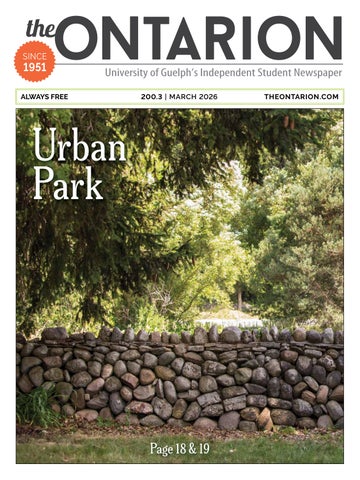
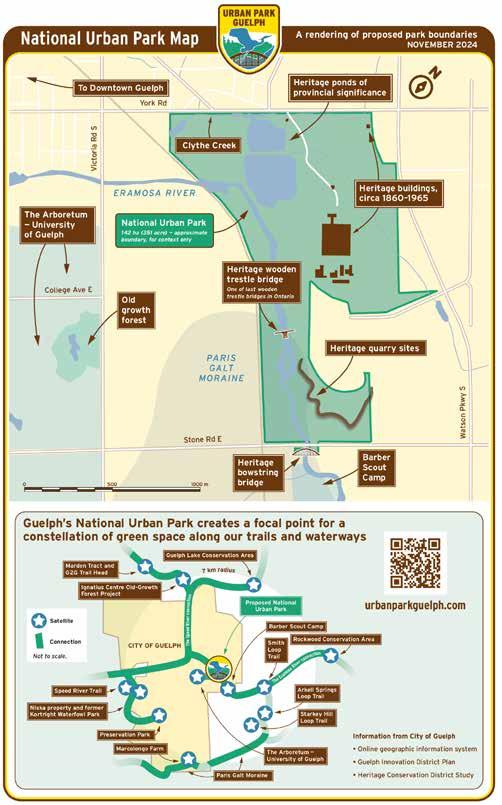
18 & 19. FEATURE STORY: Is a national urban park possible in Guelph?
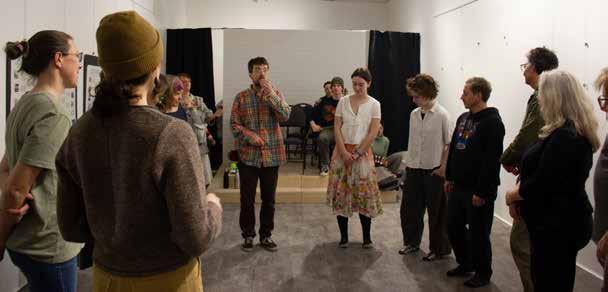
20. Workshop brings Bal Folk dances to Guelph
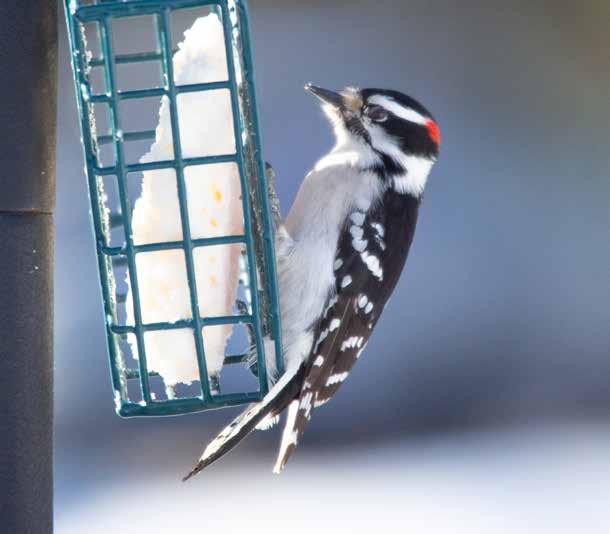
21. Winter bird species you can find in the Arboretum
22. NHL players return to the Winter Olympics
23. Guelph men’s hockey team blow out TMU 3-1 on annual Aggies Night A new spin on the game: Polo with electric unicycles
24. A perfect farewell for a closing home game
25. The historical mistreatment of women reached far beyond the kitchen Women's health still needs more research
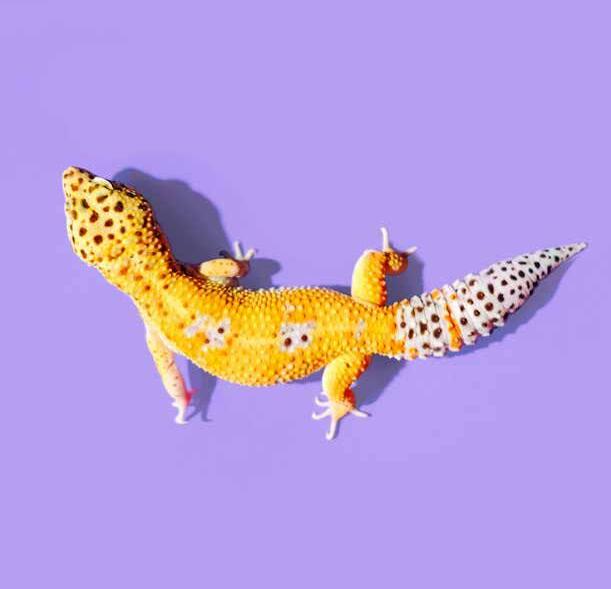
26. The gecko’s amazing superpower of regeneration
27. Why 'nothing’s wrong' still hurts
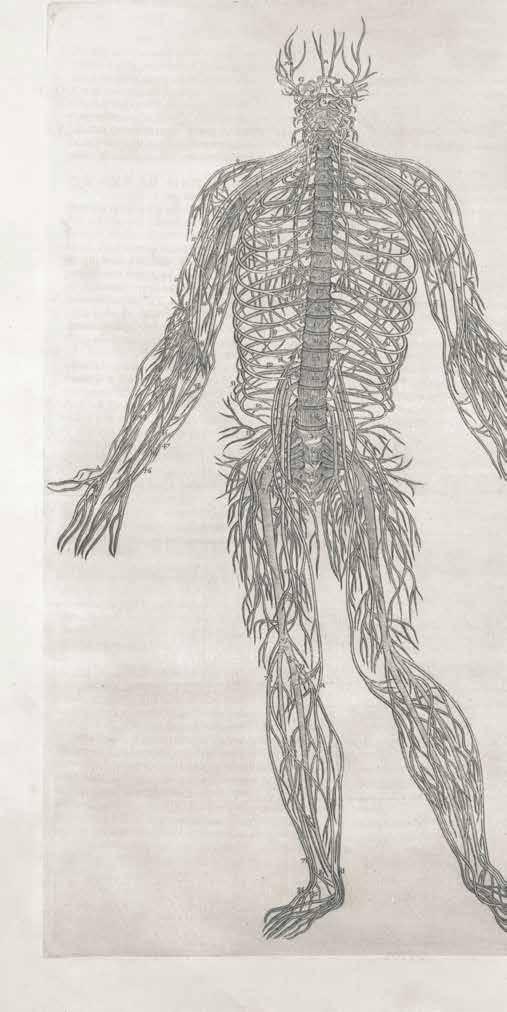
28. Unlocking neural regeneration: Answers hidden in a tiny fish
29. Why language matters more than ever in a world with an alternate halftime show
30. What we could have been watching instead of Super Bowl LX
Temporary or long-term practice: Overconsumption in a capitalist society
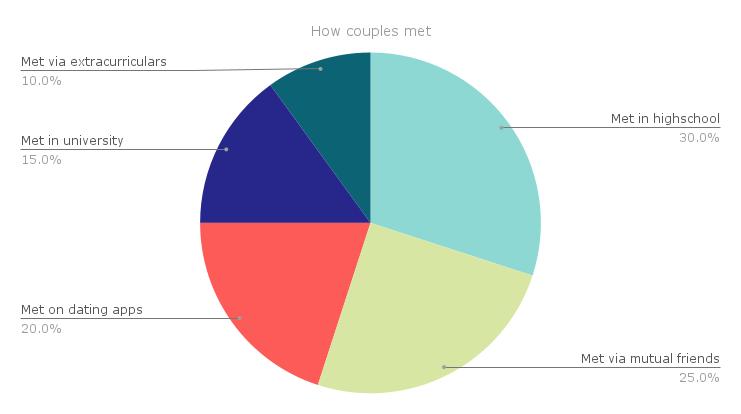
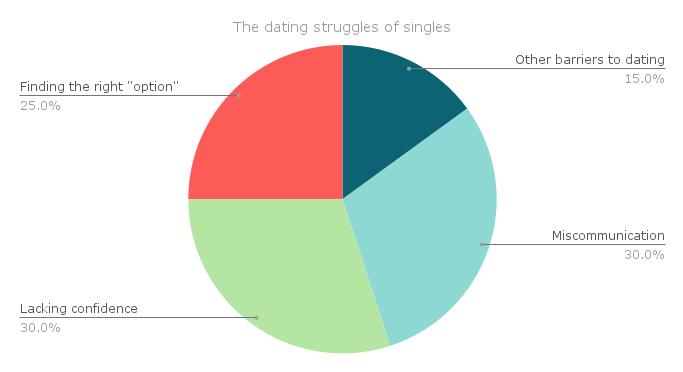
31. Is it time to ditch the apps?
32. Why you should study abroad
33. Counting down the top five dining options at U of G
34. March t0-d0 list Pets of the month
Puzzle page
U of G professor gives insight into the new CanadaChina Strategic Plan
Economics professor Talat S. Genc explains how this deal is expected to strengthen the
Canadian economy
ABBY COUNAHAN
On Jan. 16, Prime Minister Mark Carney met with the President of the People’s Republic of China, Xi Jinping, in Beijing during Carney’s first official visit to China. The leaders announced a new Canada-China strategic partnership that is aimed at renewing the relations between the two countries to strengthen their position in the global economy.
The partnership consists of five pillars: energy, economic and trade cooperation, public safety and security, multilateralism, culture and people-to-people ties. Both countries are energy superpowers and are focused on expanding two-way energy cooperation through reducing emissions and increasing investments in batteries, solar, wind and energy storage.
China continues to be Canada’s second-largest export market with long-established foundations in agri-food and trade. Canada will allow up to 49,000 Chinese electric vehicles (EVs) into the Canadian market at the tariff rate of 6.1 per cent.
By March 1, it is expected that China will lower tariffs on Canadian canola seed to a combined rate of approximately 15 per cent—a significant drop from its current combined tariff levels of approximately 85 per cent. China is currently a $4 billion canola seed market for Canadian producers.
University of Guelph economics professor Talat S. Genc gave insight into how this partnership will affect the Canadian economy.
Genc gave his perspective on
how the strategic plan could influence trade flows between the two countries in the next five to 10 years.
“While this plan is a positive step toward mutual prosperity, the benefits are likely to be asymmetrical, favoring Canada,” Genc said. “By expanding market access for our agricultural, industrial and energy sectors, the partnership allows Canada to leverage China’s massive demand to drive significant domestic growth.”
The partnership’s agreement to collaborate in energy, clean technology and climate competitiveness, and its aim to increase investment in batteries, solar, wind and energy storage, poses benefits for Canada’s energy sector.
“China currently holds a global leadership position in clean technology, particularly in the production of photovoltaic cells, wind turbines, and advanced battery systems. While Canada’s energy sector has historically been anchored in fossil fuels, our renewable energy potential is immense,” Genc said. “By leveraging China’s economies or scale to source cost-effective green technologies, Canada can accelerate its energy transition and establish a robust foundation for a sustainable, low-carbon economy.”
He also shared his perspective on which sectors of the Canadian economy are most likely to benefit from the partnership— and which sectors could potentially struggle.
“The proposed plan creates
a sectoral divide: agriculture and energy are positioned for growth, while the automotive sector faces increased competitive pressure. Despite these localized struggles in manufacturing, the broader economy stands to gain through enhanced consumer purchasing power,” Genc said. “From an aggregate welfare perspective, the policy is defensible because the total consumer surplus generated by lower prices is projected to exceed the producer surplus lost in the manufacturing transition.”
Another potential beneficiary of this partnership is the Canadian job market. However, the partnership also poses the risk of labour disruptions in the traditional automotive industry.
“The expansion of the green energy sector is poised to be a significant engine for job creation in Canada. While concerns persist regarding the impact of this partnership on the traditional automotive industry, a strategic pivot toward EV manufacturing offers a viable solution,” Genc said.
“By intensifying investment in EV infrastructure and production, Canada can effectively offset potential labor disruptions in the internal combustion engine sector, ensuring a net-positive outcome for the workforce.”
Changes in the Canada-China economic policy could not only increase Canada’s trade competitiveness, but also strengthen the
Canadian dollar (CAD).
“Strengthening ties with China could significantly bolster the Canadian dollar. As international demand for Canada’s high-value exports increases, the resulting capital inflows would likely drive a steady appreciation of the CAD,” Genc said. “Given that Canadian products are already globally competitive, this increased demand would reflect a strengthening of our terms of trade on the world stage.”
Genc also gave insight into how the new partnership could affect Canada’s trade partnership with the United States.
“The United States is Canada’s primary trading partner, absorbing approximately 75 per cent of our exports. This high level of market concentration creates a ‘monopsony-like’ effect, while it provides trade stability and guaranteed demand, it also grants the U.S. significant leverage, often imposing Canadian producers to sell at a discount,” Genc said.
Following the announcement of the new partnership, political and economic tensions between the U.S. and Canada escalated once again when President Donald Trump threatened a 100 per cent tariff on Canadian goods in an effort to coerce Canada into retracting its position within the partnership.
“The threat of U.S. trade
penalties is a credible risk that Canada must navigate. Even an additional ‘mini-tariff’ would dampen short-term growth by restricting access to our largest export market. The precise impact will be determined by whether the U.S. targets broad categories or specific high-value goods like energy and manufacturing parts,” Genc said. “However, the long-term economic gains of deepening ties with China—a global economic superpower— could eventually outweigh the costs of this initial friction with Washington.”
“The pivotal question is whether the United States will permit Canada to deepen its economic ties with China without significant pushback. Under CUSMA’s Article 32.10, the U.S. essentially holds a ‘veto’ over free trade agreements with non-market economies, creating a high risk of retaliation,” Genc said. If Canada can successfully navigate the risks posed by the U.S., the positive outcomes may outweigh the initial costs.
“While Canada may face short-term punitive measures— such as targeted tariffs or trade barriers—the long term rationale for diversification is clear,” Genc said. “Aligning with the world’s second-largest economy is a strategic move to reduce our over-reliance on a single market and secure Canada’s future prosperity.”
Illustration by Paige Stampatori
The Hair Chronicles
Building community and embracing culture through hair
GOHAR FATIMA AND MAYA TREMBLETT
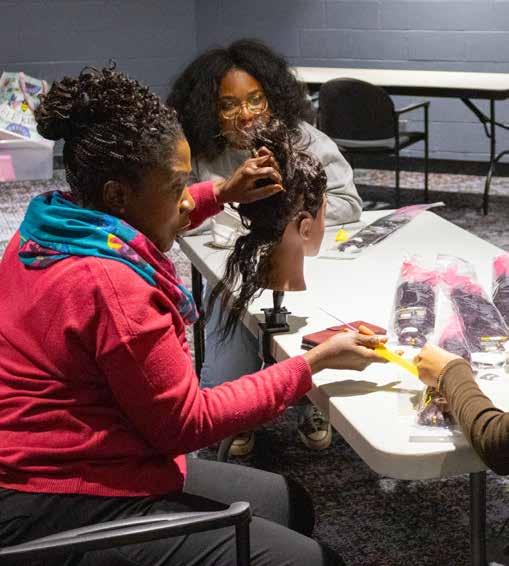
There have been many cultural events across campus in honour of Black History Month. On Feb. 10, the Guelph Black Student Association (GBSA) held The Hair Chronicles, BHM: Braids & Wellness Workshop.
What began as an idea from a junior coordinator within her residence community quickly expanded into a university-wide gathering when students eagerly embraced it. The event, which was initially expected to attract about 20 attendees, saw more than 50 people show up.
Before getting into the hands-on demonstration, the host expressed that haircare and braiding is not a one-and-done, but rather a skill that takes patience and practice.
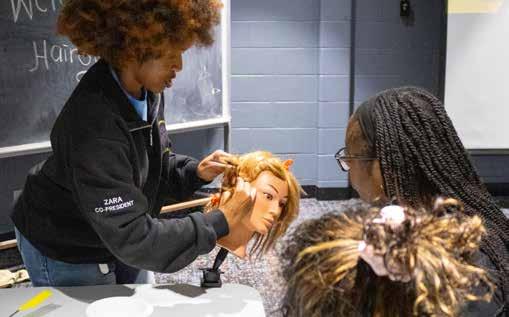
The room was lined with mannequin heads, synthetic wigs, extensions and hair tools.
“Parting is everything,” she said. She showed students how to form braiding patterns while smoothing gel into strands and adding extensions.
Aside from practical skills, the workshop was designed to create a space for conversation and mutual experiences.
According to Osakuade, braiding is an essential survival skill. It can be used for financial independence through entrepreneurship, it strengthens hand coordination, protects healthy hair and is a social activity.
“Braiding is a life skill, something you learn for yourself, a forever skill that’s hard to forget,” Osakuade said.
Haircare is more than self-care and general maintenance, but an extension of the self and one's culture. “Braiders are essentially a community’s best friend,” Osakuade said.
The workshop was divided into focused groups: styling with extensions, natural hair techniques, beginner instruction and advanced skill-building. During the workshop, students shared their challenges, from repairing damaged curls to mastering difficult techniques. They exchanged hair care remedies, practiced on one another and embraced the patience required to try again.
Coordinator Yolanda Grant hopes that students found a place to access hair care in a city where these necessities are harder to find, and that they felt comfortable and welcomed within this event.
Participants learned styling techniques using mannequin heads. Maya Tremblett/THE ONTARION
"Braiders are essentially a community's best friend," said Tolulope Osakuade. Maya Tremblett/THE ONTARION
The Indigenous Student Centre to host Indigenous Recognition Week from March 2 to 7
The events are open for everyone to celebrate Indigenous culture and traditions
ARTICLE BY CAITLIN BUCK & PHOTOS BY ISABELLA YOUNG
This March, the Indigenous Student Centre (ISC) will host events that highlight First Nations, Inuit and Métis cultures. These are meant to bring students together for discussion and learning. This Recognition Week is a campus-wide initiative and not a national holiday, as a representative from the ISC noted.
As in previous years, the events include different cultural sessions and various other activities to be announced. To kick off the week, there is a beaded dot art workshop with Marissa Magnes on March 2, where participants
learn about the beads’ history, symbolism, and the uniqueness of Métis beadwork. There is an opportunity for students to make their own work of art, thus forming a more personal connection with the people they learn from and with the practice of beading. There will also be a Fiddle and Feast event on March 4, with Metis music, jigging and free Indigenous inspired food for students to taste.
While Indigenous Recognition Week is officially one week of remembering the importance of incredibly diverse Indigenous cultures, recognition goes beyond
Toast-ing to women in chemistry
Chemistry club partners with IUPAC Global Women’s Breakfast
Atom by atom, the U of G Chemistry Club brought together an array of women in science to celebrate their strength and resilience. Partnering with the International Union of Pure and Applied Chemistry (IUPAC)
Global Women’s Breakfast (GWB) on Feb. 10, the Chemistry Club raised $130 in donations for Guelph-Wellington Women in Crisis. The turnout was nearly 80 attendees—a room filled with female professors, undergraduate
those five days. It is about highlighting and honouring the people who have been on this land since time immemorial, forming close relationships with the land.
Underrepresentation of Indigenous people does great harm in weakening Indigenous peoples’ connection to each other and to the land. Residential schools are one way in which Indigenous connections and governance structures were detrimentally impacted.
Despite this knowledge, there have been recent residential school denialism events on campuses in British Columbia. Tarene Thomas, an Indigenous PhD student at the University of British Columbia commented on how a residential school denial protest at the university affected her.
“These issues don’t just exist on campus, they follow us home,” she said. “To what extent do I need to sacrifice my peace and my safety to participate in these institutions?”
Not recognizing all aspects of Indigenous history causes sur-
and postgraduate students.
The IUPAC GWB is used as a tool for attendees to establish a network of women working to overcome common gender-based inequalities in science, with the motto: “Many voices, one science.”
This year marks the 8th annual GWB, with nearly 2500 events held in over 100 countries.
The 2025 IUPAC GWB hosted 449 breakfasts in 78 countries, aligning the breakfasts with the International Day of Women and Girls in Chemistry.
The Chemistry Club hosted guest speakers, a photo station where all attendees were assigned an element and note cards where attendees shared their ideas on “why your voice in science matters.”
The special guest speakers were Ayesha Ali, the acting
vivors to feel unsafe and does not allow for inclusive participation in campus life. It is therefore all the more important to give a voice to those affected, to create safe spaces where personal stories can be exchanged and denial is not accepted.
We can learn a lot from First Nations, Métis and Inuit ways of living and connecting with the Earth. The most important way to do this is to practice active listening. Listening to the people, to the trees and the world around us holds great importance in understanding and connecting to the environments we live, work and spend our everyday lives in. We should form personal bonds with our surroundings and connect closer to the Earth that sustains us. Beyond Indigenous Recognition Week, there are various ways to educate yourself on Indige-
associate dean of research and graduate studies in the College of Computational, Mathematical, and Physical Sciences, and Rui Huang, assistant professor in the department of chemistry.
Ali spoke about her experience as a woman working in the sciences, posing the question: why should we have to celebrate women in chemistry separately from men?
“This shouldn’t be a special hosted breakfast where we have to honour women in science. A chemistry event full of women should be normal to us,” Ali said.
Growing up in a family full of women in science, Ali said she was confused as to why it was such an accomplishment to be a woman in science. After being in the field long enough, she mentioned experiencing imposter
nous cultures. Actively listening to peers, friends, colleagues and other Indigenous people close to you is an important way to uplift their voices.
Books like The Round House, Indian Horse, and Fresh Banana Leaves give some insight into Indigenous upbringings, the impact of residential schools and the healing power of Indigenous science. Audiobooks and podcasts are a great way to receive more of a storytelling and listening experience.
On campus, you can support Indigenous initiatives at the art museum, where artwork and stories are displayed, as well as by attending storytelling and other events.
Be sure to check out the events for Indigenous Recognition Week and be prepared to listen, learn and connect.
syndrome. “I didn’t understand why people treated me differently, it was so normal to me growing up,” Ali said.
Huang also touched on the idea of imposter syndrome as a woman in science during her speech. As a woman working in STEM and an immigrant from China, she expressed that she has felt out of place in many spaces. Struggling to be taken seriously, she began to ask herself, “Am I good enough to be here?” and “Why do I need to try so much harder than others?”
Huang said she overcame these doubts by connecting with other women in the field and by reminding herself, “I deserve to be here.” Huang encourages other young women in the sciences to remind themselves of the same.
The ISC building is located on 620 Gordon St.
This memorial stone is located in front of the Summerlee Science Complex.
The Rotary Club of South Guelph hosted its 22nd annual Taste of Italy fundraiser
Sunrise Therapeutic Riding and Learning Centre celebrated at the Puslinch Community Centre
ARTICLE & PHOTOS BY ABBY COUNAHAN
On Feb. 6, the Rotary Club of South Guelph hosted its 22nd annual Taste of Italy fundraiser at the Puslinch Community Centre. Each year, the event is held in support of the Sunrise Therapeutic Riding and Learning Centre, an organization that offers programs for neurodivergent children and adults through therapy, education, horseback riding, recreation, life skills programs
and social activities.
Rotary Club president-elect
Stefanie Bradley made the opening remarks and welcomed all sponsors, partners and friends of Rotary South Guelph to the allyou-can-eat pasta dinner. Bradley introduced the President of the Rotary Club of South Guelph, Shelley Adlington, and thanked all in attendance for their support of the event.
A silent auction was held in the foyer of the community centre where attendees could bid on a series of items, including various gift baskets, works of art and household items.
Adlington shared that each year, the club donates $5,000 to Sunrise Therapeutic Riding and Learning Centre even if that amount is not reached by the silent auction. When there is a surplus of proceeds from the auction, the club donates the extra money to their other local charitable organizations such as Royal City Mission, Hope House, and others.
After the dinner, Lindsay Martin and her daughter, Scarlett Bruce, spoke to the positive impact of Sunset Therapeutic Riding and Learning Centre. Martin shared that while donations support the programs, courses and facilities, they also contribute to creating a lasting community where children and adults are understood, safe, and can grow.
Martin shared more about the personal impact the centre has made on her daughter’s life.
“It’s been almost 10 years that we’ve been with them and the difference that we’ve seen in Scarlett has just been monumental,” Martin said. “School is a very isolating place for neurodivergent
children, so [Scarlett] was able to find literally an entire room full of kids that are going through all [of] the same things she is going through.”
Martin also said that every aspect of her daughter’s life has been touched by the bonds she has made and the skills she has learned during her time at Sunset Therapeutic Riding and Learning Centre.
Chair of the Advisory Council for the current capital campaign at Sunset Therapeutic Riding and Learning Centre, Ann Caine, gave insight into the specific ways the organization supports neurodivergent children.
Caine said that starting as early as three years of age, children can have an assessment with a therapist and a head instructor. During this time, parents are consulted to discuss the ways in which the centre can meet the specific needs of their children— typically in terms of improving
both physical strength and social skills.
Caine also gave insight into the vision for a new building at the centre that will support people over the age of 18. The new building will consist of 14 bachelor suites that will each have a bed set, their own shower room and a kitchenette. There will also be a communal kitchen where residents will be able to eat together.
Despite the snow storm at the time of the event, the turnout was approximately 200 people—similar to previous years that saw soldout crowds. Adlington said that the event typically raises $9,000, and the anticipated amount for the 2026 event is between $7,0008,000. At the end of the night, Bradley returned to the stage to thank those who supported the event, offering a special thanks to the volunteer kitchen crew who had been working since 7 a.m. that morning.
Rotary Club volunteers served all-you-can-eat pasta to attendees.
The volunteer kitchen crew had been working since 7 a.m.
Learn about education and career pathways at the Environmental Science Symposium on March 14
All students are welcome to listen to keynotes and participate in networking across sectors in the field
PAIGE FIRMAN
The Environmental Science Symposium returns March 14 with opportunities for any students interested in the field to learn more about the environmental sciences. Participants can network with professionals, listen to speakers or find a club on campus to get involved with. The Environmental Sciences Student Executive (ESSE) are the hosts of the symposium, which is organized by a committee of over 30 students in a variety of programs and years, headed by Co-Chairs Mckenzie
Susil and Jacob Gawronski.
The symposium is not new to the University of Guelph. The event ran for 26 years until 2022 when the COVID-19 pandemic halted events. Gawronski and Susil are working to bring it back with hopes the event will continue into the future once again.
“I was interested in bringing back [the] symposium because it’s exactly the kind of resource that I would have loved to have in my first year of undergrad,” Gawronski said.
“This year’s symposium aims to create an environment for students to begin exploring opportunities in interesting fields of work [and] research, get involved on-campus, connect with peers and mentors, ultimately creating their own luck in doing so.”
In the past, each symposium had a specific theme to showcase, but this year aims to bring in as many perspectives as possible to give students a chance to see how broad the field of environmental science is. The board has invited
people from a variety of backgrounds to come participate in networking and speak at the event.
Some of the confirmed guests have backgrounds in soil science, plant science, geomicrobiology, wildlife biology, conservation, climate justice and environmental engineering. Individuals from TRCA, Ducks Unlimited, ESRI Canada, the GRCA, JR Burnside Environmental Engineering and more will be participating in the symposium as well.
“I believe that each person
can make change in the world, especially when they have the right tools to do so,” Susil said. “My hope is that this year's symposium will equip students with these tools to go forward with their education at the University of Guelph and [in their] further career to make positive change in the field of environmental sciences.”
A networking session will take place towards the end of the symposium and a full schedule will be released closer to the day of the event.
Hope House Guelph to host Coldest Night of the Year fundraiser
Members of the community will participate in a fundraiser walk on Feb. 28 to combat food and housing insecurity
Since opening its doors in 2012, Hope House Guelph has provided food, clothing and counselling services to those in need. In the last year alone Hope House Guelph has delivered over $100,000 worth of groceries while registering over 900 families for ongoing support services that assist with food and clothing.
Hope House operates with the philosophy that “community is the opposite of poverty,” and in turn, works to administer re-
sources and organize events that support the Guelph community in reaching its “fullest potential.”
The Coldest Night of the Year fundraiser invites communities from all around the nation to participate in a walk with the goal of fundraising money to combat food and housing insecurity.
With the proceeds going back into the community, the Coldest Night of the Year has raised $75,000,000 across Canada since the event's founding in
VIDA ADAIR MATUS
2017.
This year, Hope House Guelph has a fundraising goal of $250,000, with nearly a third of their goal reached on the first day of fundraising. 58 teams supported by 245 participants had registered.
On Feb. 28, there will be two walks available to participants. The first is a 2 km walk that will begin after a short 2 p.m. ceremony at John F. Ross Collegiate Vocational Institute. The second
is a 5 km walk that will begin after a short 5 p.m. ceremony at Guelph Collegiate Vocational Institute. Each walk is complete with signed routes, rest stops and snacks upon completion.
While much of the help comes from those at Hope House, there are many volunteers who offer their time and energy to support the fundraiser. Communications manager at Hope House, Oby Onhuga, has been assisting in the planning process
for this year's Coldest Night of the Year.
Onhuga has been a part of the Coldest Night of the Year events in the past. Being quite sensitive to cold weather, she admired how members of the community came together to support their neighbours by fundraising to help aid local food and housing insecurity. Onhuga encouraged people to come and support the event saying that beyond being a fundraiser, “It's fun!”
Environmental science includes industries from conservation to environmental engineering. Photo provided by Mckenzie Susil and Jacob Gawronski
10C presents the Opening Opportunities Community Showcase
supporting local businesses
T
he Opening Opportunities
Community Showcase, hosted by 10C Shared Space, will take place on March 7 from 2 p.m. to 4 p.m. in celebration of International Women’s Day. The event highlights local businesses and initiatives that are focused on creating opportunities and access for women. The showcase aims to celebrate women and gender diverse people and their businesses, with a focus on bringing together family, friends and new connections in the community.
The Opening Opportunities program, from 10C and Guelph Neighborhood Support Coalition, includes workshops, courses and gatherings for prospective entrepreneurs. The program aims to benefit future business owners by providing
them with knowledge and training opportunities while building a network of other local entrepreneurs. They also aim to reduce barriers by providing wrap-around support such as child care and access to technology.
“It’s about entrepreneurship skill-building for women and gender-diverse people who are facing low-income challenges,” said Kat Savic, communications and events coordinator at 10C.
At the showcase, program participants will be able to promote their work and businesses by sampling and selling products, handing out business cards and connecting with people who want to learn more about emerging local businesses in Guelph. The goal is to build aware-
ness of Opening Opportunities within the community who can then meet and support the program participants and their businesses.
“I think this is a really great opportunity to step into that world and connect with folks who are starting their businesses and building this new community,” Savic said.
“This program is specifically designed for women and gender-diverse people because traditional business programs often don’t provide the support that groups like these need, such as support with food and travel,” Savic said. “We really aim to meet participants where they are and be very supportive and inclusive, and make everyone feel like being a business owner is
something they can strive to do.”
10C decided to host this event on International Women’s Day because the goal of the Showcase is to uplift the women and gender diverse participants who have been working to build community and kickstart their own businesses.
The event is important to 10C, since most of their work over the last year has been behind the scenes. Opening Opportunities participants have been successfully launching businesses, developing new products and designing promotional materials.
Opening Opportunities participants have launched businesses, developed new products and designed promotional materials.
“These steps can seem really
small but are really big for someone who’s taking this risk and entering this world of entrepreneurship. We’re really excited to be able to showcase these wonderful new entrepreneurs who want to share their ideas and businesses with the world,” Savic said.
KIERA SCHARF
ICON BY VECTORS TANK
The Ontarion turns 75
Reflecting on the past 75 years of student journalism at U of G
On March 29, 1951, the first issue of The Ontarion was published. More like a booklet, the black-and-white pamphlet was printed on flimsy paper, detailing a fairly standard repertoire of student news for what was then the Ontario Agricultural College, Ontario Veterinary College, and MacDonald Institute. Over time, as student culture progressed to become synonymous with the cultural revolution, topics evolved from campus news to world news, with heavy hitting opinion pieces scattered among folk concert advertisements.
One would expect a publication beginning post-World War Two to be a product of its times, a mouthpiece for Red Scare-era propaganda among a conservative youth. Instead, The Ontarion turned itself fully in the opposite direction.
Beginning in the 1960s, a staunch anti-establishment theme permeated the weekly articles. Exposés of racist housing advertisements were printed alongside articles about abortion rights— and even advertisements for transportation to the United States for the procedure, which wouldn’t become fully accessible in Canada
until 1988.
In October 1970, as the terrorist group Front de libération du Québec (FLQ) was detonating bombs and kidnapping government officials in an effort to achieve an independent Quebec, The Ontarion took a massive risk with their publishing of the FLQ Manifesto—an illegal action under the War Measures Act. Just prior to printing, the Ontario Provincial Police confiscated the printing plates from the press operator’s facility.
Another interesting development in the 1970s was The Ontarion’s insistence on publishing on matters of homosexuality—the term commonly used at the time— which had only been decriminalized in 1969. Two years after that, in February 1971, various articles were written alongside letters to the editor on the topic. Again subverting expectations of an older publication, the letters and articles were almost entirely positive and pro-queer, with some students even calling for the creation of a space for gay and lesbian students. Less than two weeks later, the first meeting of the Homophile Association was held on Feb. 23, 1971. The ad promoting the club
NED BARR
in The Ontarion’s classifieds read: “ALL WELCOME. Homosexuals & Heterosexuals. Guys & Girls.”
The 70s continued with articles and opinion pieces eviscerating political leaders. A favourite topic was President Richard Nixon and the newly developing Watergate Scandal, with other individuals involved also receiving significant criticism. Battles over the newly-constructed University Centre and the removal of the cafe in Massey Hall were also picked with the school administration, in addition to a heated back-andforth with the City of Guelph over the co-op daycare, leading to a massive headline of “ONTARION DENOUNCED.” Clearly, the paper was not afraid to make itself an enemy of higher-ups, but focused on protecting the needs and wants of the student body.
In the eighties, a shift occurred. As one flips through The Ontarion’s archives, it’s clear that more of an emphasis was placed upon letters to the editor and opeds instead of a focus on news—but many topics were still explored.
Notably, the 1990 Oka Crisis, where Indigenous Mohawk protestors faced off with the police and army over the building
of a golf course on their land in Oka, Quebec, gained a significant amount of coverage by The Ontarion. Letters were printed that supported both the government and the protestors, though the overwhelming majority appeared to be in support of the Indigenous activists.
By the 1990’s, the student body was clearly still focused on advocacy and activism. The use of a campus newspaper as a form of resistance was still in favour. Campus news, such as the building of the townhouses in the East Residence, also received a fair amount of column space.
The articles published in the weeks directly after 9/11 contain a flurry of emotional and confused messages, articles, letters and responses. A letter was sent on behalf of the Muslim Student Alliance (MSA), in which they sought to make it clear that they condemned the terrorist attacks in the United States and that their faith was not the enemy.
“[We] wish peace and welfare for all people all over the world,” wrote MSA President Eihab Sewidan. There was a sense of utter turmoil among students as they processed the rapid shifting
of the world order, lives upending. Many wanted Canada to join America’s response against whoever committed the attack. Others called for the Canadian government to refrain from military action. Slowly, through the 2000s, things began to shift back to normal.
Nowadays, The Ontarion that you know (and hopefully love) does not publish weekly. The issues only touch on world news if it directly relates to Guelph, there is no longer the tonguein-cheek rebellious tone that once occupied the pages. Fewer students read the paper. Fewer students read in general. Too often, news itself has become a a collection of misinformation, an artificial bloating of irrelevance and shock value.
The 75th anniversary of the University of Guelph’s campus newspaper is celebrated with pride this month, but it is pride laden with uncertainty. Media is fractured, many students don’t have time to volunteer, and the economics of news media have changed, which makes one wonder, what will it take for a return to the golden age of student journalism?
Decades of The Ontarion preserved in archives. Rachel Fioret/THE ONTARION
Dying Light: A modern zombie classic
Techland’s debut entry into the Dying Light franchise is well worth trying, even 11 years after its release
ADITYA PARAMESWARAN
When Techland released Dying Light in 2015, we saw a change to the existing zombie game formula. Like its contemporaries, Dying Light treats the undead like an obstacle for the player, as opposed to making the goal for the player to cull the zombies. What sets Dying Light apart is its emphasis on evading zombies, implementing a parkour system, and creating a map with tall buildings that provide its setting significant verticality.
Dying Light sees the player placed into the shoes of Kyle Crane, an operative for a multinational agency, dropped into the Turkic city of Harran to find information that could lead to a cure to the virus. The
story then forces Crane to ally with survivors within the quarantine zone, alongside his employer, as he tries to find the information he needs. The story is a largely clichéd affair, and the twist within the story is likely obvious from this description. The real intrigue lies within how the survivors in Harran attempt to preserve a sense of normalcy. From creating schools to markets, the survivors aim to retain some humanity within the quarantined city.
The unique selling point of Dying Light is its gameplay, with an equal emphasis on parkour and combat. Alongside that is the game’s day-night cycle, which influences the number and kind of zombies that are
on the streets. Dying Light’s combat is satisfyingly violent, as each strike is met with a satisfying crunch and a reaction from the zombie. Combat gains the player points which can be invested in new abilities, like throwing their melee weapon or stomping on an enemy’s skull.
The parkour system is equally robust, providing the players with a variety of methods to evade the zombie hordes, such as climbing to rooftops and sliding away to avoid lunges. The more the player evades zombies, the more ability points they get.
HERE TO HELP
As the player attains more tools to fight and evade zombies, the player goes up against stronger and more dangerous zombies. At the start of the game, players will only have to deal with two zombies: Biters, the classic zombie, and Virals, recently turned humans who retain some of their humanity. Virals run as fast as the player and utter voice lines as the player strikes them.
As the player progresses, they will encounter more dangerous zombies during the day, such as the Toad, which spits acidic bile at the player. Then there is the Goon, a significantly larger zombie which uses large weapons like sledgehammers. As the player progresses, their skills are taxed more during the day.
This flips on its head at night. As the sun sets, the game’s catchphrase “Good night, good luck,” is played over massive
speakers in the city, which is blanketed in darkness. The player’s only light sources are moonlight, a flashlight and the caustic ultraviolet lights that mark safe areas. Where the day gets more dangerous as the player progresses, the night’s difficulty starts on extreme immediately. The player is introduced to the night’s chief threat, the Volatile, a zombie which is capable of outrunning the player in a straight line, and screams out calling others to join the chase. The Volatile is the game’s most iconic enemy. As the player is forced to find an escape route during pressure, they engage with the parkour system and use preparations from during the day, such as setting traps and clearing out safe zones. The goal is to successfully evade the Volatiles and escape to safety.
Dying Light was a landmark zombie game, able to stand out in an otherwise stagnant and saturated genre. Between its heavy emphasis on evading zombies and providing the player with a parkour system fit for the task, it brought about new challenges. The story is formulaic, but is enough to provide the player reason to explore the map and discover the little side stories that dot the map. Dying Light regularly goes on sale and is available on most online storefronts, such as Steam, the Playstation, the Xbox store and the Nintendo Switch. The game is a must play for fans of the zombie genre.
The game’s setting allows the gameplay’s strengths to shine, forcing players through winding streets and up tall buildings. Credit: Techland Entertainment
The Volatile, Dying Light’s most iconic threat, gets a strong introduction in the game’s opening hours. Credit: Techland Entertainment
Is 2026 the reincarnation of 2016?
Why the year 2016 is still relevant a decade later
MAGGIE ABRADJIAN
You may have seen the latest social media trend welcoming you back to 2016 with throwbacks of face-altering Snapchat filters and embarrassing Instagram photos. Many are confused as to why the year is making a comeback. “Aesthetic” isn’t the first word that comes to mind when you think of 2016’s cringe-worthy photos, melodramatic music and awkward fashion choices. Yet somehow, everyone seems to be romanticizing its quirks. It’s easy to revel in decade-old nostalgia, but what exactly makes the 2016 aesthetic so appealing?
For one, it’s easy to recognize a picture taken in 2016. The colourful Rio de Janeiro filter took Instagram by storm and no
matter how cringey they were, vibrant photos made life look more aesthetic than it really was. The attempt to find the perfect lighting at golden hour during sunset photoshoots defined many evenings, capturing life’s most vivid moments. Not only were ducklipped selfies still acceptable, but dog-ears and flower crowns were all the rage on Snapchat. Despite their cringiness, 2016 photos showcased silly moments from a simpler time. Feeds were less curated than they are now and posting photos was more an art than a science.
The resurgence of 2016 media has also reinvigorated the hype behind its music. Memories from that era are associated with
songs as much as pictures. In a time when popular radio songs seem to sacrifice quality and lyricism for a generic pop beat, 2016 music is full of personality that makes it more appealing. Long-standing classics from a decade ago include hits from The Chainsmokers, Flo Rida, Justin Bieber, Shawn Mendes, Meghan Trainor and Selena Gomez. Despite the continuing popularity of a few of these artists, the style or even genre of their music has changed drastically in the ten
years since their peak, making it easy to yearn for old times. What largely defined the music trends of 2016 was musical.ly, the lipsyncing app where snippets of trending audios could launch songs into virality. This included the widely done mannequin challenge, which propelled Rae Sremmurd and Gucci Mane’s “Black Beatles” to the number one spot on Billboard’s Hot 100 that year. Still finding its legs as a video platform, musical.ly possessed a blissful ignorance different from
the political sounding board TikTok has become. Videos were limited to 15-second clips, defining the app with shaky lip-syncing and exaggerated hand motions to storytelling songs like Lukas Graham’s “7 Years” and EDM pop songs like The Chainsmokers’ “Closer.”
Aside from photos and music, the fashion trends of 2016 are arguably the hardest thing to romanticize. In reality, 2016 fashion is “cheugy” at best, but reminiscing always tints things rose-coloured. With the year’s most popular staples making a comeback, people can try on their old selves like costumes. The attempt to turn back time has people digging through their closets for ripped skinny jeans, bomber jackets, tube tops and choker necklaces that were buried long ago. These relics were from a time when clothes lasted longer than a few years. The nostalgia over 2016 and its aesthetic speaks to simplicity, a throwback to when life was more about having fun than striving for perfection. Under the guise of self-deprecation, people can reminisce over warm-toned Instagram photos, nostalgic pop music and their old lives. The aestheticization of 2016 reminds people that there are positive things about any year, even one that was—let’s face it—less than glamorous.
The start of the new year sparked a social media trend bringing us back to 2016. Photo provided by Paige Stampatori
Grammys 2026: Rebukes of ICE and other highlights
The 68th Annual Grammy Awards were held on Feb. 1, hosted by comedian Trevor Noah for his sixth and final time. The Grammys honoured the best recordings, compositions and artists of 2026—creating viral moments as it unfolded.
This year, the Grammys saw artists and celebrities speaking out against President Trump’s mass deportation orders via Immigration and Customs Enforcement (ICE). After the Best Música Urbana Album went to Puerto Rican artist Bad Bunny for his album Debí Tirar Más Fotos, he acknowledged the political climate in his speech.
“Before I say thanks to God, I’m going to say ICE out,” he
said, as the room burst into applause.
“The only thing that's more powerful than hate is love. If we fight, we have to do it with love. We love our family and there's a way to do it, with love, and don't forget that.”
Bad Bunny went on to win the coveted Album of the Year award for Debí Tirar Más Fotos, making it the first all-Spanish album to win in the category. In his acceptance speech he dedicated the award “…for all the people who had to leave, their homeland, their country to follow their dreams.”
Anti-ICE sentiment was echoed throughout the show, with celebrities such as Billie Ei-
Dirty Soda Girls tap into U.S. dirty soda trends with a Canadian twist
Artists including Bad Bunny and Billie Eilish used the stage to advocate for immigrants and protest ICE Take a sip
lish and FINNEAS wearing “ICE out” pins. The pair won the Song of the Year award for “WILDFLOWER,” a significant moment after Eilish lost all seven of her nominations at the 2025 Grammys. This marks her third win for Song of the Year, the most wins in Grammy history for this category. Eilish took the spoke out against ICE during her acceptance speech, saying, “No one is illegal on stolen land.” She also encouraged viewers to speak up and continue to protest, saying that their voices matter.
The award for Best New Artist went to British artist Olivia Dean, who saw a swift rise in popularity after releasing her critically acclaimed album The Art
of Loving last year. After previous winner Chappell Roan presented her the Grammy, Dean spoke to her experience with immigration in her acceptance speech. Or, something else is fine but needs to be less emotive than gave a heartfelt speech.
“I’m up here as a granddaughter of an immigrant…I’m a product of bravery and I think those people deserve to be celebrated,” she said.
Dean was among those who performed during the ceremony, giving an uplifting delivery of her breakout hit “Man I Need” as she dazzled in the spotlight wearing a sparkly red dress. Justin Bieber returned to the stage for the first time in four years, giving an intimate rendition of “YUKON”—performed only in his boxers and socks.
During an In Memorium segment, Post Malone paid tribute to Ozzy Osbourne, singing Black Sabbath’s “War Pigs” to honour the late artist. His set also included other memorable songs by the metal legend.
Another of the “big four” awards given out was Record of the Year, received by Kendrick Lamar and SZA for their single “luther.” The iconic duo was also nominated for Best Pop Duo/ Group Performance for their
song “30 For 30”. They have been known for their successful partnerships in the past, creating previous Grammy-nominated songs like “All the Stars.”
Lamar came out of the ceremony with a total of five Grammy wins, demonstrating the power of his thoughtful lyricism and ambitious compositions. He made history this year as the most awarded rapper in Grammy history with 27 awards, overtaking Jay-Z and suggesting that he might be, as he proclaims, the “greatest rapper of all time.”
When the pair took the stage for their speech, Lamar gave a shout-out to the singer Luther Vandross, to whom the song paid homage. Afterwards, SZA acknowledged the troubling state of the world but encouraged viewers to remain united. “I know that right now is a scary time… we can go on. We need to trust each other and trust ourselves.”
Numerous artists saw their accomplishments recognized and awarded at the Grammys, although the show wasn’t all about music this year. The ceremony was entangled in the political sentiments of the music’s biggest stars, with artists such as Bad Bunny and Billie Eilish directly opposing ICE’s unprecedented actions.
W
hen sisters Jodie McCar-
thy and Tracy Hawkins no longer felt fulfilled by corporate life, they decided to take a leap and go into business together to open Dirty Soda Girls.
The rise in popularity of dirty soda beverages began in the United States with the Utah-based restaurant, Swig. It skyrocketed to fame with the popularity of the reality TV show The Secret Lives of Mormon Wives.
In April 2025, McCarthy and Hawkins started talking about opening a dirty soda business after watching trending videos on TikTok. Hawkins was inspired by social media content featuring people making dirty soda at home
as well as stories from women who left their jobs to start their own soda businesses. In May, the sisters bought a trailer to experiment with their ideas and then opened their first store in Haliburton, ON. After being invited to events in Guelph over the summer, they decided to open their second location on Quebec Street.
Dirty soda shops have begun opening all across Ontario, with stores like Sippity Sweet in Windsor and Fiiz Soda inside of Toronto's Dufferin Mall. The trend is slowly spreading across the country with Covet Sips and Sweets having been featured as a vendor at the Calgary Stampede for their take on dirty sodas.
McCarthy believes in curating an experience. During her time working in the corporate sector, she worked on consumer packaged goods development for beverages, using her expertise to help develop their brand.
“People love a sweet treat,” she said. “Fun and vibrant colours bring them, while also making it a social event. Our decor invites
people to take photos and treat themselves as a part of their normal, everyday routine.”
Dirty Soda Girls is a woman-owned small business that is focused on supporting the local Canadian economy.
“A small business can be super important to women: to get them their own thing, their own space. It’s easily within grasp, if
you have something you’re really passionate about,” McCarthy said.
The Dirty Soda Girls menu items are all named after Canadian song titles and made using fresh Ontario-made cream and syrups from British Columbia. The sister duo has plans for a third location and a potential fourth, having just opened up for franchising.
SARAH MOORE
Dirty Soda Girls is a new drink destination in Downtown Guelph. Aditya Parameswaran/THE ONTARION
M
Busy Reading: Three non-fiction recommendations for International Women’s Day
My essential reading list to guide our path towards a just future
arch 8 is International Women’s Day. Here are three nonfiction books I recommend you read—not merely to understand the roots and symptoms of injustice against women, but to help you envision a transformative, equitable future for all.
The Will to Change:
On Men, Masculinity and Love, bell hooks
“Men cannot change if there are no blueprints for change. Men cannot love if they are not taught the art of loving.”
It might be controversial to open an IWD-themed reading list with a book about men, but bell hooks’s relatively short exploration of manhood, masculinity and human connection is a must-read for men and women alike. “Every woman wants to love and be loved by the males in her life,” writes hooks, reflecting on her own childhood longing for her father’s affection and attention.
In a society where young boys, girls, men and women are all pained by a cycle of male violence, absent fathers and notions of masculinity, hooks calls for something much more radical than separatism: a revolution based in love. The Will to Change is an instruction manual that drags male suffering out from the shadows of patriarchy and moves it into a harsh but loving light.
Notably, hooks does not shy from addressing women’s role in perpetuating the order of things. Women have long been complacent in sustaining patriarchy by turning a blind eye to abuse in the home and enforcing rigid gender roles that deny children safety, authenticity, emotional intelligence and the capacity to love as equal partners in their adulthood.
hooks prescribes healing
EMMERSON JULL
through accountability and transformation by all parties. While all her writing is revelatory, this concise and actionable guide is essential reading.
Sister Outsider: Essays and Speeches, Audre Lorde
Sister Outsider presents the most influential works from Audre Lorde, a Black poet whose voice has been “central to the development of contemporary feminist theory,” as editor Nancy K. Bereano writes in the collection’s foreword from 1983. It’s a statement that holds true over 40 years later. No understanding of intersectionality—particularly on the intersections of race, class, gender and sexuality—is complete without reading Lorde.
In “Poetry is Not a Luxury,” first published in 1977, Lorde regards poetry as a tool for women’s survival. It’s a way of giving name to the nameless, she says, allowing exploration of our honest feelings to birth radical, creative ideas.
She was diagnosed with breast cancer in the same year and contemplated being silenced by death in “The Transformation of Silence into Language and Action.” Though many deny their voice to placate the fear of being visible or scrutinized, Lorde is sure of this: “Your silence will not protect you.” If we die in silence, we will have suffered no less, except we will die without the life-sustaining relationships that come from speaking truth.
In perhaps the most famous speech in the collection, “The Master’s Tools Will Never Dismantle the Master’s House,” Lorde speaks clearly on the differences in oppression women face when they are poor or women of colour. She argues that white feminists who were not addressing these differences were using the “master’s tools” to
make temporary gains instead of working outside dominant structures to “bring about genuine change.”
Sister Outsider is an introduction to the works of one of the most prominent advocates for truly intersectional feminism.
Invisible Women: Exposing Data Bias in a World Designed for Men,
Caroline Criado Pérez
Invisible Women is based on a simple argument: Caroline Criado Pérez theorizes that society is designed according to a male bias. She argues that most things designed to be gender-neutral or universal are implicitly designed for men, because for most of the world’s history, we have assumed men to be the default.
Her examples are manifold and start small, slight enough that the “male default” might read as inconsequential at first. Isn’t it curious, Pérez asks, that the Wikipedia for a ‘national’ sporting team—like the National Hockey League—will bring you to a men’s team, and not the women’s? How about language, which rests at the foundation of our very society? Words that have evolved to be gender-neutral, like ‘doctor’ or ‘lawyer’, are overwhelmingly interpreted by study participants as male figures. Time and time again, children asked to ‘draw a scientist’ will draw a man.
The world’s history has “been distorted by a failure to account for half of humanity… This failure has led to gaps in the data. A corruption in what we think we know about ourselves,” Pérez writes. Explicitly including women in research, data and design isn’t petty identity politics. It means real differences in how we experience life.
In many cases, gender-sensitive design is life saving. For example, standard crash test dummies are designed to replicate
the ‘average’ man, measuring 5ft 7in tall and weighing 170lbs. But women are more likely to be severely injured in crashes, and some cars tested on male dummies have actually been shown to increase injury severity in women. A similar problem exists with first aid training: women are sig-
nificantly less likely to receive proper CPR with a defibrillator because it requires a bare chest. If a person is too reluctant to remove a woman’s bra to correctly use a defibrillator, she will die. Read Invisible Women to expose the data bias. When we know better, we can do better.
Canadian author Christine Estima’s debut historical fiction envisions the brilliant life of resistance fighter and journalist Milena Jesenská on the other side of Franz Kafka’s Letters to Milena.
It’s 1919 and Milena Jesenská is unhappily married to literary critic Ernst Pollak. In Vienna’s destitute post-war economy, Milena must supplement her husband’s income with translation work. After a chance meeting with Franz Kafka in Prague, Milena requests to translate his story “The Stoker” from German to Czech, becoming his first translator and beginning a blistering love affair sustained through passionate correspondence.
With little known about Milena’s life, Estima paints a stunning portrait of a woman torn between her “roles of wife, lover and intellectual;” giving voice to a previously shadowed figure in literary lore.
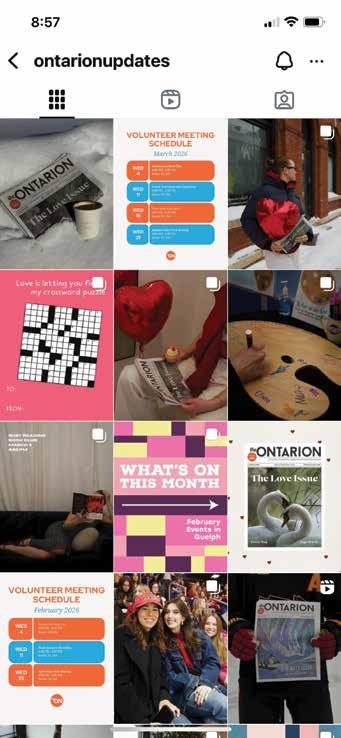
The Busy Reading Book Club’s March meeting will take place on April 1, so be sure to follow us on Instagram @ontarionupdates or email Emmerson (ae@theontarion.com) to hear more about the event.
Busy Reading Book Club: Letters to Kafka by Christine Estima
The anonymous lovers, Blue Eyes & the Young Pup
Discover unclassified lovers hidden and lost in the archives of The Ontarion
ALYSSA CUNNINGHAM
Around the 1970s and 80s, The Ontarion featured a section called Notices and Unclassified. The Unclassified section resembled a communications board located towards the end of the issue, where people could submit personal messages, club events or even messages of love.
In these issues, there used to be a cutout section where people could write their name—or remain anonymous—and the message they wanted printed and send it into The Ontarion for around 25 to 50 cents for every 25 words.
Many students would utilize this section to request lost items returned to them, send “Happy Birthday” messages out to
friends, or even try to track down that person with brown hair and a red sweater that they danced with at The Bullring on a random Thursday night, in hopes that person would respond in the next issue of The Ontarion. Luckily, there were some cases where a person would actually respond in the next issue, and one could only assume that those two lucky people ended up meeting in person. In most cases, these messages were static to just one issue. However there was a particular instance when a series of anonymous love notes were exchanged during the winter semester of 1985.
It was on Jan. 22, 1985, that the first
note between the unclassified lovers, The Young Pup and Blue Eyes, was posted. It seems they were both poets or at the least, people who appreciated poetry, as almost all of their notes to each other in the Unclassified section were formatted with poetic characteristics, whether it was a message with a poem structure or lyrics from late 70s to early 80s love ballads.
The first love note left in The Ontarion starts with lyrics from the Chris De Burgh song “Old Fashioned People” and ends with a thank you note, which seems to indicate the pair met shortly before the Christmas season and spent their Christmas break and New Year's together. The message reads as follows:
coming to an end:
Mar. 26, 1985: “young pup
Things are getting tense. Winter semester is almost over and your lessons aren't complete (you've done it ALL but jump out of a plane). But don't worry summer sports are just as fulfilling they're just a lot more hot. P.S. my windows steam could it be that plant you gave me. blue eyes”
April. 2, 1985:
“When we're together I'm happy as can be, but when we're apart, I always think of thee.
• Minutes from campus
• Best rates in town
• 24 hours access
• Drive up units
• Short and long term
• Heated units available
• Secure and convenient
• Mobile Storage (pick up available)
• Indoor climate controlled available
per
“Blue Eyes, Old Fashioned lovers, they walk in the park beside the river hand in hand, and hurry home for tea before it gets dark.
Thanks for the best New Year and Christmas Break I have ever had, not to mention a great 37 days. But who's counting. Love the Young Pup”
From late January to early April, their notes appeared almost weekly, with the majority of the love notes being addressed to Blue Eyes from The Young Pup.
Now it's only speculation on who these mysterious lovers could be, but given their use of a student newspaper, it seems very likely that at least one of them was a U of G student at the time.
It is important to note that with the imbalance in responses and with the majority of them being addressed to Blue Eyes, there is the possibility that perhaps the Young Pup attended another university and relied on the Unclassified section to communicate across campuses. It seems that these two lovers, although separated by campuses or particular circumstances, used the pages of The Ontarion as their meeting place.
Their final consistent messages to one another seem to capture their semesters
So all I can say and really want to, is there'll never be an angel quite as pretty as you.
You're right, the semester is almost over, but who says the lessons are done. You've got a few things to be taught yet. It must be the plant that is steaming up your windows; what a pane. Remember reach for the stars but keep your feet on the ground!
Love the Young Pup”
After these messages, the trail goes quiet. Did they continue their relationship beyond the pages of The Ontarion? Did they reconnect in person over the summer? Was this just a semesterly fling and they never spoke again?
It seems that even though these messages were visible to anyone flipping through the paper, their meaning was clearly shared just between two people. It’s evident from how the references in each message were written specifically for only them to understand and when read by an outsider, you can see the beauty, but you can’t quite understand the context.
We may never learn what followed after April 2, and maybe that’s for the best because for just a short amount of time during a hectic winter semester, these anonymous lovers got to be discovered again 40 years later.
A classified note from the Young Pup to Blue Eyes. Alyssa Cunningham/THE ONTARION
The Art Gallery of Guelph unveils four new exhibitions
Recent gallery opening invited community members to enjoy art from around the world
ARTICLE & PHOTOS BY ELISE FREDERIKSEN
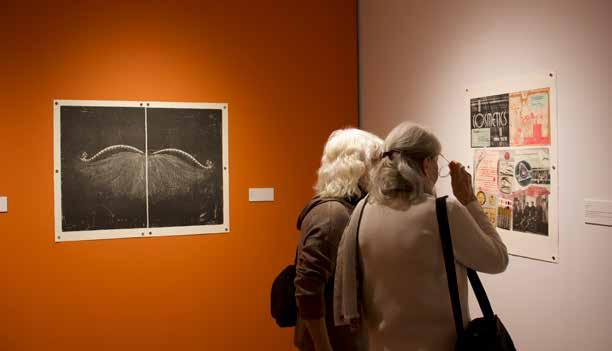
On the evening of Jan. 22, the Art Gallery of Guelph hosted a showing of their newest installations. Art lovers of Guelph gathered to view and discuss the four exhibitions: “Ron Shuebrook and Frances Thomas: In Conversation,” “Queer Print Project: Body Language,” “Prism International Printmaking” and “Kananginak Pootoogook: Printing The Inuit World.”
Executive Director Shauna McCabe led the evening’s presentation, giving guests the opportunity to learn more about the work that went into each creation. Mary Reid, Anna Gaby-Trotz and Nigel Oxley were each called up during McCabe’s presentation, describing their role in the exhibitions and acknowledging those that had helped make it all possible.
Oxley, who traveled from London, England for the event, discussed the origins of the Prism
International Printmaking organization. The goal was to collaborate the prints of UK-based and Japanese artists in order to promote exchange of artistic conversations amongst different regions of the world. In 2012, he and John Akatsu Read held their first exhibition in the Yanagisawa Gallery in Tokyo. Over the next few years, the organization grew, gaining artists from all around the world after each showing. This exhibit was dedicated to the late Maria Chiara Toni, a longstanding member of the organization and wife of Vladimiro Elvieri. After Toni’s recent passing, Elvieri began to layer and combine their prints into new pieces which are now displayed in the exhibition, keeping their art close together forever.
Many artists from the Print Study Collection flew in from around the world for this exhibition event. The Great Brit-
ain-based artist Sumi Perera traveled with her family to Guelph for the exhibition. Perera was born and raised in Sri Lanka, which had been fighting a civil war that lasted 26 years. With Perera’s mother and aunt both having been young widows, grief has been a significant challenge in Perera’s family for years. Perera’s family has been a key inspiration in many of her pieces. They have been able to persevere throughout all of this struggle and come out the other side stronger for it.
“Sometimes we have to bear crosses, but then we make the most of these and then more blessed things happen out of adversity,” Perera said, speaking on her piece, Regeneration 6 –The Crosses We Bear.
While dressed in yellow and black to match her displayed artwork, Perera answered questions regarding her artistic style and
technique. She explained the process of etching and printing her pieces—drawing through the waxy acid resist to create ink-holding lines for future transfers.
When asked of the element of art she enjoyed working with the most, Perera shared that her pieces are often interactive. Thermochromic and electroconductive inks have been used in some of Perera’s work—with the viewer completing the piece themselves. She gave examples of pieces that change colour or light intensity with touch, and electrical circuits that, when completed, even speak to the viewer responsible.
Local artist Mary Calarco and her husband Ian Hurlbut, both long-term residents of Guelph, said that they appreciate the artistic space found here. Calarco believes the gallery, along with the university, help sustain the city’s art scene.
One of the couple’s favourite pieces currently on display is an untitled abstract print of Stu Oxley from 2025. Oxley is a printmaker based in Elora, Ontario and runs a shop called Riverside Studio. He was in attendance with his wife Mary and spent the evening catching up with fellow artists and friends—including Anna Gaby-Trotz.
The two artists found themselves featured in this season’s gallery installations and explained their original connection through the University of Guelph. Gaby-Trotz was a student of Oxley’s 20 years ago and started her printmaking career under his guidance. She is now the founder of the Queer Print Project, and co-curated the gallery’s exhibition
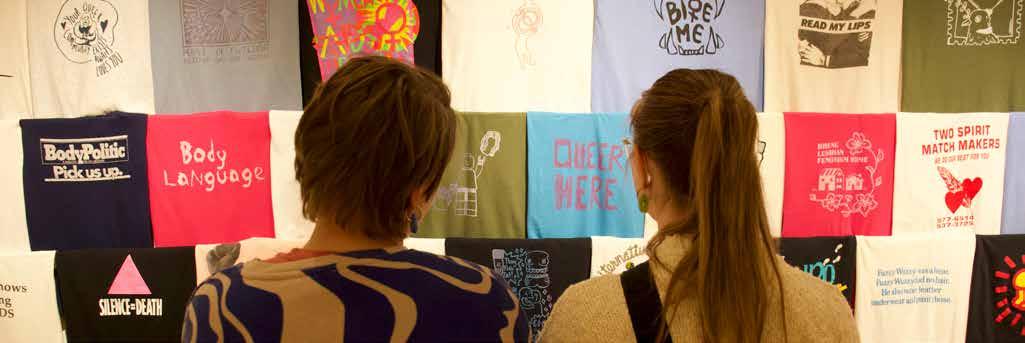
along with Jude Akrey and Maeve Hind. Gaby-Trotz started the project three years ago, with the goal of reflecting the necessity for safer spaces for the LGBTQ+ community. The Queer Print Project hosts workshops in which members of the community learn and share in the creation of printing pieces. As a result of these workshops, a wall of T-shirts can be found in the gallery, each of them with a unique design. Texts such as “I’m out therefore I am” and “Queer freedom is power” are printed onto some of these T-shirts. Gaby-Trotz explains that through the Queer Print Project, these shirts act as “everyday forms of armour and resilience in the ongoing pursuit of queer liberation and safety.”
In 2023, Reid curated the works of the artist, writer and Guelph resident Ron Shuebrook in collaboration with those of Barrie-based painter and printmaker Frances Thomas. This collection has planned to travel across four different galleries since its creation. It now lies on the first floor of the Art Gallery of Guelph.
The work of Kananginak Pootoogook can be found on the second floor of the gallery, separating the two sides of the Prism International Printmaking Exhibition. It contains a collection of Pootoogook’s prints along with the tools with which they were made. Curated by Erin Szikora, the installation includes a tablet available for visitors, in which they can select components of the print and to learn their significance in the piece.
All four of these galleries will remain open until May 3, 2026.
Attendees viewing t-shirts from the Queer Print Project.
Ghost of Yōtei review
The long-awaited sequel to Ghost of Tsushima is finally here
HUDA SHOAIB
Released on Oct. 2, 2025, Ghost of Yōtei launched exclusively for the PlayStation 5 and received very positive reviews. By the next month, the sequel to Ghost of Tsushima had sold over 3.3 million copies.
Set in the year 1603, 329 years after the events of Tsushima, the story takes place in Ezo, Japan, in the region surrounding Mount Yōtei (modern-day Hokkaido). The story follows a mercenary named Atsu, who seeks revenge against those who murdered her family 16 years before the events of the game. Playing as Atsu allows players to freely explore vast regions of Ezo, each with its own story. Along the way, players forge alliances, battle enemies and uncover the stories each location holds.
The game begins when a young Atsu watches her family murdered by a group called the Yōtei Six and is left to die at the burning Ginkgo tree. However, she miraculously survives, fleeing Ezo and becoming a wandering mercenary for the next 16 years. She eventually returns to take revenge, beginning with the Snake. She finds him drunk in a remote village and demands a duel.
The Snake recognizes her and is shocked she is alive but agrees to fight. Atsu kills him, though she is severely wounded and collapses. When she later awakens unharmed, villagers begin calling her “onryō,” believing her to be a vengeful spirit. In response, Saito places a bounty on her head.
Atsu returns to her destroyed childhood home and reminisces on her life before the massacre. She once lived peacefully with her mother Yone, a talented shamisen player; her father Kengo, a skilled swordsmith; and her brother Jubei. Her mother taught her music, her father taught her to forge weapons and she spent her childhood playing and foraging with Jubei. In the present, she continues hunting the remaining Yōtei Six, while Lord Saito raises a rebel army to claim Ezo for himself as the “Shogun of the North.”
Throughout the game, Atsu defeats Saito’s forces and trains under various weapon masters, including Hanbei, who teaches her to dual wield katana. Her reputation grows and she gains followers known as the “Wolf Pack.” At one point, she confronts Saito in his
Happily ever after?
University of Guelph musical theatre presents Into the Woods
EDITA TREACY
L
ooking for a fun escape into a fairytale mashup? The University of Guelph’s School of Fine Art and Music and School of Theatre, English, and Creative Writing, is presenting Into the Woods at War Memorial Hall from March 13 to 15. Students have been working hard all year long making costumes, designing sets and rehearsing the show.
Into the Woods is a story following the Baker, his wife, Cin-
fortress and challenges him to a duel. Their fight is interrupted by a large battle, allowing Saito to escape. Atsu is seriously injured and rescued by Hanbei.
Later, Atsu allies with Oyuki, introduced as a shamisen player at the Red Crane Inn. Oyuki helps her pursue the Kitsune, but during the confrontation it is revealed that the man Atsu faces is not the original Kitsune from the Night of the Burning Tree. Soon after, Atsu discovers that Oyuki herself was the former Kitsune and had taken part in the massacre. Oyuki expresses strong remorse and explains she abandoned that life long ago. Though Atsu chooses not to kill her, their relationship remains strained. Eventually, they part on better terms and Oyuki promises to help Atsu hunt the remaining Yōtei Six.
Atsu later encounters Lord
Kitamori, a samurai serving Clan Matsumae, and discovers he is actually her brother Jubei, who survived the massacre believing she had died. Though divided by duty and Atsu’s relentless pursuit of revenge, the siblings reconcile and work together to kill the Oni. Meanwhile, Saito prepares to attack the Matsumae with a secret fleet. Atsu spares Saito’s son, the Spider, who later helps her rescue Jubei and Oyuki. In the final confrontation, Atsu and Jubei defeat Saito, but Jubei is mortally wounded. Before dying, Jubei entrusts Atsu with his daughter, Kiku. Atsu promises to raise Kiku and ultimately abandons her vengeful “onryō” identity, choosing peace and a new purpose instead of revenge.
Ghost of Yōtei received a Metacritic score of 86 out of 100, with “generally favourable” re-
views, and OpenCritic reported that 94 per cent of critics recommended the game. GameSpot’s Richard Wakeling called it an improvement on Tsushima with its “gripping story, rewarding exploration and fantastic combat.” IGN praised its setting and mechanics, while Eurogamer’s Chris Tapsell commended its “great swordplay and heartfelt storytelling,” though he criticized its “poor sidequests and dated open world.” Overall, the game received strong praise despite some issues with pacing and sidequests.
Ghost of Yōtei is one of few examples of sequels that surpasses the original in expectations, gameplay and overall experience. With its engaging protagonist and refined mechanics, it remains a strong example of maintaining excellence while telling a new and compelling story.
derella, and Jack. All three of these characters have wishes. The Baker and his wife cannot have a child because of a Witch’s curse, so they go on a journey to break this curse. All the characters’ wishes are granted, but their actions will have consequences later on! This musical features ballads like Cinderella’s “On the Steps of the Palace,” and fun ensemble numbers such as “Your Fault” and “Children Will Listen.”
Ghost of Yōtei is the sequel game to Ghost of Tsushima. Credit: Sony Interactive Entertainment
Into the Woods features ballads and ensemble numbers. Aditya Parameswaran/THE ONTARION
Even a month after North America’s biggest annual football celebration, one thing still resonates in Guelph’s food scene: chicken wings. In a city where wing nights are basically a civic tradition, Guelph has a wide array of wing spots that’ll be sure to satisfy every wing lover’s cravings. To save you research, this guide will guarantee you get wings worth your time, dollar and tastebuds! Here’s a closer look at four popular destinations.
Mac N’ Wings
Mac N’ Wings is a student favourite for a good reason: value and variety. With one pound of wings for $10 on Wednesdays and boneless wings for $12 on Thursdays, it’s an easy choice for when you’re on your last few dollars of
Hot wing review
Reviewing Guelph’s popular chicken wing destinations
the month!
The real highlight is the extensive selection of over 100 different flavours. Whether you’re loyal to a classic buffalo wing, or curious to try something bold like spicy butter chicken wings, there’s a massive flavour menu to explore.
Located in the Campus Estates Shopping Centre, just a 10 minute walk from campus, Mac N’ Wings is perfect for a spontaneous wing run for those late night cravings with friends!
The Wing Spot
If you’re heading downtown for a pre-Trappers Alley meal, The Wing Spot delivers both energy and a wide array of options. Like Mac N’ Wings, this spot is known for its massive flavour lineup and
MAIA GALLETTA
its solid weekly deals, including one pound of wings for $12 on Sundays and boneless wings for $13 on Thursdays.
The menu doesn’t stop at wings either—loaded fries and mac and cheese bites make it easy to turn a snack into a full—and far from nutritious—feast. It’s a great place to grab food before a night out or to refuel after a long day of studying.
The Fat Duck Gastro Pub
For a more classic pub experience, The Fat Duck Gastro Pub offers a cozy British pub-style atmosphere with great wing specials that are hard to deny. Its Tuesday special features small wings for $9.50 and large wings for $12.50 with the purchase of a beverage.
While the flavour selection
is more focused, with flavours such as honey garlic and Korean BBQ, the quality and comforting pub vibe make up for it. Just be sure to plan ahead as spots fill up quickly around dinner time on their wing special day!
St. Louis Bar & Grill
Last but definitely not least, St. Louis Bar & Grill is the go-to for serious appetites. Its all-youcan-eat boneless chicken bites for $17.99 is perfect for those who are committed to a full wing feast on a game day, and its Tuesday halfprice wings provide another delicious deal for those looking for something a little more modest. Located in the Clair Marketplace, it's about a 10 minute 99S bus ride from campus—and well worth the trip.
It’s safe to say that great chicken wings are always within reach in the city of Guelph, whether you’re chasing bold flavours, unbeatable prices or good ambience! During your next game day, study sesh or late night Uber Eats order, be sure to keep this guide in mind.
ICON BY BAHU ICONS
Is a national urban park possible in Guelph?
It’s been two years since we last reported on the Urban Park Guelph proposal. Here’s everything you should know about “the most complicated piece of land ever”
EMMERSON JULL
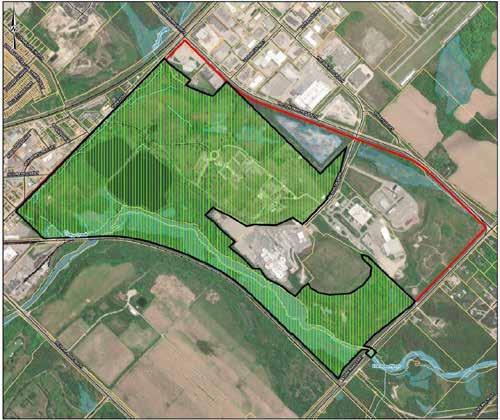
The former Ontario Reformatory site is “the most complicated piece of land ever,” said Mayor Cam Guthrie in a council planning meeting on Feb. 10, during which the lands were officially designated as a Heritage Conservation District (HCD).
Here’s everything you need to know about the district—and advocacy for it to become a future national urban park in the heart of Guelph.
The former correctional facility opened in 1910 and its lands comprised the entire block within Stone Road, Watson Road, York Road and Victoria Road. The reformatory buildings, ponds and lands were entirely built, dug and planted by prisoners. They also erected ornamental gardens, arable fields, orchards and greenhouses on the grounds.
In the name of rehabilitation, inmates were taught employable skills like masonry, machinery, farming and butchery. The reformatory became largely self-sufficient and inmate labour produced textiles, food and even cedar picnic tables for other Ontario prisons. Still, conditions at the facility were harsh, leading to a historic prison riot in 1952.
The reformatory was decommissioned in 2001, and parts of the property that had not been sold became the Guelph Correctional Centre. In 2016, Infrastructure Ontario indicated it intended to sell the property. It is no longer actively listed for sale and the province remains the owner and manager of the property.
Ontario Heritage Act designations
Heritage designation is critical for the protection of sites like the Ontario Reformatory.
In 2018, Infrastructure Ontario recognized the property at 785 York Road (formerly the Guelph Correctional Centre) as a Provincial Heritage Property of Provincial Significance under Part III of the Ontario Heritage Act. Part III offers heritage protection to provincially-owned lands and thus
would not apply if the province sold the property.
In 2021, the province requested that the municipality of Guelph designate 785 York Road under Part IV of the Ontario Heritage Act, which would ensure the long-term protection of specific heritage attributes on the property.
Council passed the motion to do so in June 2021 and unanimously moved to initiate a Part V HCD study for the lands to assess the property’s heritage, cultural and natural value and create a plan for conservation.
Under Part V designation, the entire land area within an HCD boundary is protected and conserved according to a district plan. This designation offers broader protection for the lands surrounding heritage buildings and features, rather than protecting only specific attributes, as in Part IV.
Heritage Conservation District updates
On Feb. 10, 2026, the revised district plan was presented to council with recommendations to designate the Ontario Reformatory HCD boundary and adopt the planning guidelines as by-law.
Section 5.1 of the plan included guidelines and parameters for development “so that City staff have the ability to contemplate and control residential use if it were to arise.”
“We know this is controversial,” said senior heritage planner Stephen Robinson, who stated this section was added due to federal, provincial and local attention to residential housing pressures.
“Staff feel it is important to have in the [Ontario Reformatory HCD plan] policies that address residential, if it were to occur, versus having no policies related to housing, and thus the HCD not being applicable,” Robinson said.
This addition was made despite multiple public comments objecting to residential land use within the district’s boundary. It is also contradictory to the City’s official and sec-
Attachment-1 Ontario Reformatory Heritage Conservation District boundary
Reformatory Heritage Conservation District boundary (indicated by solid black line around green hatching)
ondary plans which do not permit residential development on the land.
Following city staff’s presentation of the HCD plan were two hours of delegations and deliberation from community members and councillors.
Staff were clear this provision was added in the eventuality of the province selling the land to a developer and changing the zoning. If that were to happen, the HCD plan would already include guidelines to control residential development.
But delegates were concerned that adding residential development provisions would be a “self-fulfilling prophecy,” in the words of Brian Skerrett, president of Urban Park Guelph.
Councillor Erin Caton set forward a motion to amend the HCD plan to remove any reference to residential housing, and that staff should bring the amended plan back to a future council plan for approval. That motion passed with Busuttil, Richardson, Chew and Guthrie voting against.
The motion was then to designate the Ontario Reformatory HCD boundary, remove mentions and provisions for residential housing from the plan and bring the plan back to council for final approval. It passed unanimously and the amended plan is expected to be at council for approval in the second quarter of 2026.
Could there be a national urban park in Guelph?
Parks Canada has committed to creating 15 new national urban parks by 2030,
with six sites currently in the pre-feasibility or planning stages. A staggering number of local, provincial and national organizations believe there is potential for a national urban park—connected by a constellation of greenspaces and trails—right in the heart of Guelph.
Their advocacy is led by Urban Park Guelph, which began as a coalition of local groups and has since become a registered notfor-profit organization, with Skerrett as president.
Although the HCD designation protects the land under provincial ownership, it does not guarantee the land will always be free and accessible to the community—especially in the case of a private sale. Establishing a national park with the same boundaries as the HCD would ensure the property remains free to access and offers better protection for natural elements, alongside cultural and heritage preservation.
Potential national urban park sites must meet three objectives: conserve nature, connect people with nature and advance reconciliation with Indigenous peoples. The site has already been identified as a valuable location for environmental conservation and is beloved by community members who frequent the space to walk their dogs, explore trails, ski, ride bikes and fly kites.
As Skerrett and collaborators researched the reformatory’s history, they “came across something that had really not been well documented.” That would be the Native Sons, a group formed in 1975 to provide spiritual practice and education to Indigenous inmates. Skerrett has done significant work to learn
Figure 1 - Ontario
Map of the Ontario Reformatory Heritage Conservation District Boundary, as presented in a Staff Report to City Council on Feb. 10, 2026. Credit: City of Guelph
This photo shows the C Dormitory (left) adjacent to the four-storey Tower & Main Corridor, which connected the Administration Building (right) to the rest of the facility. Emmerson Jull/THE ONTARION
the story of the Native Sons, connect with former members and share his findings with the Mississaugas of the Credit First Nations, who are the land’s treaty holders, and the Six Nations of the Grand River.
“This is not about covering up the past in what was at times a brutal institution,” Skerrett said. “This is about acknowledging it.”
The Mississaugas of the Credit and the Six Nations were the first governments to support the national urban park proposal. The Mississaugas of the Credit expressed that they “look forward to being one of the governments developing, guiding and managing this future National Urban Park,” in their letter of support to Urban Park Guelph.
The park has conditional support from Guelph’s elected officials
In January 2024, former Guelph MP Lloyd Longfield introduced a petition with over 3,100 signatures to the House of Commons, proposing the former Ontario Reformatory lands should be considered as one of Parks Canada’s candidate sites. The federal government responded that “Parks Canada has noted the interest in the proposed Ontario Reformatory Heritage Conservation District in Guelph as a site for a national urban park.”
When the district plan was first considered by council in late 2024, they indicated support for the creation of a national urban park within the Ontario Reformatory HCD boundary “in principle,” but were firm that the creation of such park would be led by the federal government.
MP Dominique O’Rourke and MPP Mike Schreiner both affirmed their conditional support for the urban park in emails to The Ontarion.
As former Ward 6 City Councillor, O’Rourke helped move the motion to support the park in principle. She holds the position that conversation about the reformatory lands’ future use is “largely hypothetical” since it is under provincial ownership. However, she said, “The Old Reformatory lands will benefit from significant natural heritage protections—for the land and key features… [as] it is a special place.”
When asked if she would still support the urban park proposal, O’Rourke said, “If the land is not suitable for another public purpose, for instance as the site of a future hospital, then yes, I support an urban park.”
Schreiner’s office provided this message to The Ontarion: "I support a National Urban Park on the Ontario Reformatory Lands if Guelph General Hospital determines that this location is not appropriate for a new hospital. I cannot endorse the urban park until Guelph General Hospital has received approval and completed its site selection process for a new hospital."
Mayor Cam Guthrie's office did not respond to The Ontarion’s request for comment.
If and when Guelph is approved for a second hospital is at the discretion of the Ministry of Health. Officials at Guelph General Hospital (GGH) have noted interest in the OR site for a potential hospital, according to a 2024 letter from GGH to city council that was shared with GuelphToday. Critically, no preferred hospital site has been identified and other potential sites exist.
What the future with a national urban park could look like
It’s difficult to comprehend the breadth of educational, cultural and recreational ac-
tivities that can—and already do—take place within the Ontario Reformatory HCD. Establishing a national urban park would offer stronger environmental and heritage protection, increase programming and bring federal
investment to the city.
For example, the portion of the district on Stone Road along the Eramosa River is the main location for The Guelph Outdoor School who provides “accessible, nature-based education” to children. Nearby, the quarries offer stellar outdoor concert venues. Guelph band SHEBAD even filmed the music video for their 2024 single “Black Walnut” there.
Skerrett is having conversations with University of Guelph administrators about the possibility of the university backing the project, although they have not confirmed their stance on the proposal. He thinks programs like landscape architecture, history, chemistry and biology could all find curricular inspiration at the site.
The biggest innovation of all would be the national urban park becoming the focal point of a constellation of existing parks, including the Arboretum.
The concept is inspired by the Emerald Necklace park system in Boston designed by landscape architect Frederick Law Olmsted in the late 1800s. It covers 1,100 acres and consists of parks connected by trails, roadways and transit stations.
Some of the parks in Guelph are already connected by trails and rivers, and others have large swaths of greenspace between them that could be transformed into ecological corridors. The potential system would cover a 7 km radius and connect areas like Guelph Lake, Rockwood Conservation Area and the Speed River Trail.
Although it would take years to officially establish the Ontario Reformatory lands as a national urban park, you can start enjoying the site today.
Take a self-guided hike on the Guelph Hiking Trail Club’s 2.49 km Ontario Reformatory trail, or explore a virtual walk hosted by Yorklands Green Hub to learn about the reformatory’s history of production. Paint a portrait of the ornamental landscape, bird watch for one of more than 40 bird species recorded on the grounds and relax with quiet meditation next to the flowing Eramosa River.
“It’s accessible now,” Skerrett said about his hope that students and residents will explore the natural wonder hiding in their backyard. “I think the more [that] people see it and use it and appreciate it, the more they'll care about it.”
A November 2024 map of the proposed urban park boundaries and points of interest above the proposed park constellation model. Photo provided by Brian Skerrett
"Nature continues to inspire SHEBAD in all its forms, and this video is a representation and homage to the powerful impact that the world we’re in can have on each of us,” the band said. Photo provided by SHEBAD
Workshop brings Bal Folk dances to Guelph
How traditional tunes can gain a second wind, halfway across the globe
ARTICLE BY STEPHEN DOIG & PHOTOS BY MARTIN LIMA
Not unlike the 20th-century American folk revival in Greenwich Village, the streets of Western Europe have witnessed a renaissance in traditional musical forms in the last 50 years. Dubbed Bal Folk (from the French for “folk ball”), the genre encompasses a diverse collection of community dances from across the continent.
With waltzes, mazurkas, schottisches and more, Bal Folk events carry not only local tunes but also an array of standards, which are performed across gatherings. This is significant as, unlike Canadian barn-dances or Scottish ceilidhs, which use a caller to lead participants through a dance, Bal Folk relies on community teaching.
Since many of the dance steps follow simple, repeated foot patterns and looping melodies, attendees at any skill level can learn many basic steps over the course of an evening. In combination with a mix of melodic instruments, including fiddles, accordions, clarinets and mandolins, the events foster a wide variety of artistic expression, blending traditional and modern influences.
This cultural resurgence has also been steadily crossing the pond in recent years. With the creation of Balfolk Toronto in 2013 and its annual Big Branch Festival attracting international performers, interest has begun to sprout in southern Ontario. Now nestled in the Sally Wismer Gallery of Quebec Street mall, Guelph's own workshops have brought a warmth to some cold February and March nights.
Co-founder of the not-forprofit Balfolk Toronto, Emilyn Stam, and her partner, John David Williams, are providing the opportunity for locals of any background to learn and engage in a welcoming environment. As John
described, their goal is simple: “Building community around music and dances we love.”
Each week carried its own theme, such as partnered dances, Breton tunes and bourrées. For the first hour of each night, musicians of a variety of disciplines gathered to learn and rehearse three or more new pieces by ear. Conveniently, each song typically consists of two short passages linked by a small bridge, which can be repeated indefinitely.
After expanding their repertoire, the musicians then have a choice to join in on learning that night's dance or to perform their newfound tunes as live accompaniment. A daunting test of memory, whispers of “how does that one start again?” could be heard frequently between dances.
With nearly two dozen people on the floor, attendees ranging from toddlers to retirees had a chance to participate. With their universal and non-gendered structure, cycling partners throughout the evening allowed those with less experience to gain hands-on learning without fear of mistakes.
One final session by the organizers is slated for March 5, covering energetic French folk mixers like Chapeloise and Cercassien. Beyond the workshops, however, the duo has advertised more events to come, including larger seasonal balls in spring and autumn for a more in-depth approach to the dance forms. An admittedly self-serving ambition, the couple commented, “We want there to be Bal Folk events in Guelph that we can attend!”
With the help of the Guelph Arts Council, the venue may become a hotspot for other folk groups to use. Future events can be found through the Guelph Arts Council, or John and Emilyn’s website, emilynandjohn.com
SPORTS & HEALTH
Winter bird species you can find in the Arboretum
Channel your inner ornithologist and explore the nature on campus to look for these birds
FAUSTINE LIU
Even during the coldest season of the year, the University of Guelph’s Arboretum remains a destination filled with life. Spanning 165 hectares of woodland and wetland habitats, the Arboretum houses a diverse array of birdlife— up to 211 species recorded as of late according to the Arboretum's website. While many people associate birdwatching with spring migration, winter can also be one of the most rewarding times to visit. Birds are often easier to spot from empty tree branches against the snowy landscape. Below is a list of winter bird species that may be commonly observed at the Arboretum.
Songbirds
Black-capped Chickadee
One of the most familiar year-round residents is the blackcapped chickadee, a non-migratory North American songbird. They are one of the feeder birds that can often be spotted grabbing a seed from one of the feeding stations in the Arboretum before flying off. These tiny round birds have a distinctive black cap that contrasts against their white cheeks and are smaller than a sparrow in size, with a narrow tail and short bill. In terms of habitat, they prefer woody areas and often choose to nest in birch or alder trees. They are hard to miss, especially when visitors hear the nonstop sounds of “chickadee-dee-dee” calls and “fee-bee” whistled songs.
Northern Cardinal
The northern cardinal is another recognizable non-migratory species that can be found during
the wintertime. The male has bright red plumage with a black mask around the face, while the female is warm brown with reddish tinges on the wings and tail. Both share field marks of a red-orange bill and raised crest on the head, which provides a distinct silhouette that allows for easy identification from a distance. During the winter, they can commonly be seen in pairs foraging on the ground beneath shrubs or visiting feeders stocked with seeds. They are often located by their clear, whistled “cheer, cheer, cheer” and “birdie, birdie, birdie” song, or by their sharp, metallic chip-sounding call.
Woodpeckers
Downy Woodpecker
One of the most common woodpecker feeder birds is the downy woodpecker. Not to be confused with the hairy woodpecker, the downy woodpecker is the smaller bird of the two species and can be identified by its compact body and short bill that appears smaller than the length of the head. Their black-andwhite plumage is reminiscent of a checkerboard painted on their wings. Their heads are striped and males tend to have a red patch on the back of the head. They can be spotted in open woodlands moving around trees or tall weeds to feast on galls. While they can look similar to a hairy woodpecker, they are smaller in size and often show black spots on the outer white tail feathers, a field mark which the hairy woodpecker lacks. The downy woodpecker makes a high-pitched “pik” call that sometimes descends into a whiny pitch at the end.
Pileated Woodpecker
The pileated woodpecker is the largest woodpecker commonly found in the Arboretum. They are nearly the size of a crow and visually distinct with their bold black body, bright red crest and strong white strips running across their face and neck. Males show a red stripe along the cheek while females have a black one. During flight, large white patches on the underwings are visible. Pileated woodpeckers are often found in woodlands with large trees that provide both food and nesting sites. During winter, they typically search for carpenter ants and other insects housed deep within decaying wood. You’re likely to hear this bird before you spot it. Their call is loud and often described as a sharp, repeated “wuk” or “cuk” sound while their drumming is usually louder and slower than those of smaller sized woodpeckers.
Raptors
Red-tailed Hawk
The red-tailed hawk is one of the most common hawks in North America and is usually spotted high above open fields. They are large with broad wings held in a slight V shape. Adults are best identified by their reddish brown tail and pale chest with a darker streaking belly band. The red-tailed hawks are
often seen soaring in wide circles to locate their prey and conserve energy. They mostly feast on mammals, so it is unlikely for them to go for feeders. Their call is a piercing scream, often described as a raspy “kee-eeeeearr.” This is arguably one of the most recognizable bird sounds in North America, largely because of its common use in media to represent the call of a bald eagle. In reality, the bald eagle’s call is much less dramatic, thus the red-tailed hawk’s more powerful-sounding voice was made into the iconic raptor sound.
Cooper’s Hawk
The cooper’s hawk is another winter bird known for its stealth and speed, specializing in hunting other birds, often near feeders. Adults have red eyes, long tails marked with thick dark bands and grey-blue backs with distinct rufous barring on their breast. Even for experienced birders, the cooper’s hawk is often confused with the sharpshinned hawk, another smallsized raptor with similar field marks. At a distance, the cooper’s hawk is usually larger, crowsized and has a more rounded tail, compared to the straighter and aligned square tail of the sharp-shinned hawk. Some also describe sharp-shinned hawks as the more “cute-looking” bird in contrast to the cooper’s hawk’s fiercer appearance.
Helpful Birding Apps
Merlin Bird ID
For beginners hoping to identify birds by sight and sound, several digital tools can help. The Cornell Lab of Ornithology offers Merlin Bird ID, a free app used to identify birds based on photographs or audio. Its sound identification feature is especially helpful during the winter when birds are heard more often than they are seen.
eBird
Another global platform developed by the Cornell Lab is called eBird, which is both a website and an app that allows birders to submit checklists while keeping track of their sightings over time. Visitors are able to compare their findings with observations from other checklists at the Arboretum, while also contributing to their data for long term bird research.
iNaturalist
iNaturalist is another community-based app that allows users to upload general photographs of not only birds, but also anything wildlife-related including plants and insects. Other users from the community can help confirm species, aiding beginners in identification while also contributing to larger biodiversity databases.
For the novice birder, you can find all manner of birds catching a snack at the birdfeeders located at the entrance of the Arboretum. Aditya Parameswaran/THE ONTARION
NHL players return to the Winter Olympics
The long-awaited faceoff as top NHL talent returns to the Olympic Games after 12 years
SOPHIA PHILBERT
The 2026 Milano Cortina Winter Olympics is an exciting time set to bring nations together, uplift patriotic spirits and present a global stage for athletic dominance. It also marks the first time in 12 years that players in the National Hockey League (NHL) have been permitted to play in the men’s hockey event.
For many sports, the Olympics serve as an additional chance to compete, not a replacement for primary championships or as a strain on professional leagues. For the NBA, there are no scheduling conflicts, and the event provides an opportunity for international exposure and increased player development.
For many other winter sports, the arrival of the quadrennial Olympic Winter Games means a pause in league rivalries for players to compete on behalf of their re-
spective nations. For the last 12 years, however, the NHL saw things differently and restricted player participation at both the 2018 Winter Games in PyeongChang and the 2022 Winter Games in Beijing.
Citing cost, along with concerns over schedule disruption and player injury risk, the NHL set restrictions on their professional athletes attending the following Winter Games. 2018 differed from previous years as not only did the NHL schedule not feature a break for players to play for their country as it did in years prior, but it also faced additional reservations resulting from financial conflict between the International Olympic Committee and the International Ice Hockey Federation on the topic of player insurance.
Despite player and fan disagreement, the NHL was adamant about protecting
players from unnecessary injury and other potential risks associated with participating in the Olympics and effectively ruled out their attendance in the 2018 and 2022 games.
Until now, the last time men’s Olympic hockey was truly represented by best-on-best competition was the 2014 Winter Games in Sochi. Without NHL power, hockey games were certainly entertaining and unpredictable, but ultimately lacked key star power within the sport, and thus saw an immediate decline in viewership and engagement, specifically in North American audiences.
Part of the attraction to men's hockey in the Olympics was not only the competition itself, but the buzz created by franchise players representing their country. Star athletes help provide stronger narratives and higher stakes that extend far beyond the skills of the sport.
The lack of NHL players in the Olympics created a gap in viewership, fan engagement and overall quality of play. National rivalries dissipated and the lack of league-related storylines left a noticeable gap for fans and players alike. Without the NHL, men’s hockey in the winter Olympics relied heavily on European talent—and for North American teams, ex-NHL players and those successful in minor leagues made the cut.
The return of NHL players to the Olympics restores competition, credibility and intensity to the global tournament. From 2018 to 2026, American supporters could only imagine what a roster featuring Auston Matthews could do against Canada’s elite Sidney Crosby and Connor McDavid, while Swedish fans continued to dream about stars like William Nylander showcasing their skill on the Olympic stage.
With their return, the Olympics seeks
to re-establish itself as hockey’s purest form of best-on-best play and restore the status and viewership it held in pivotal years— such as the Golden Goal in Vancouver in 2010.
During this time, when the absence of NHL players placed unprecedented attention on the future of hockey in the Olympics, the world also saw significant development in the women’s hockey scene through the launch, development and success of the Professional Women's Hockey League (PWHL).
With Team USA and Team Canada finding gold medal success in 2018 and 2022, it was not shocking to see intense promotion of rising female players for the 2026 games. The collaboration and willing participation of the PWHL and the International Olympic Committee provided elite female players with visibility, taking women’s hockey to the next level and delivering another layer of competition to the global event.
Through effective collaboration, promotion and player participation, the Olympics benefit immensely from the established identities and sharpened chemistry of PWHL players, mirroring the recent boost generated by the return of NHL players after 12 years away.
The recent impact made by the PWHL at the 2026 Milano Cortina Winter Olympics largely highlights what exactly the Winter Olympics were lacking for the last 12 years without NHL players: consistency, star-driven narratives and increased global exposure.
The return of NHL players to the 2026 Milano Cortina Winter Olympics revives old passions and national pride alike, ushering in a new era of best-on-best play on the largest stage for the sport.
Canada's women's and men's hockey teams both brought home silver medals in hard-fought games against the U.S. Credit: International Olympic Committee
Guelph men’s hockey team blow out TMU 3-1 on annual Aggies Night
‘Aggies’ top off the night with a buzzerbeater goal approaching the end of the regular season
ARTICLE BY ASHLEY MAROZSAN & PHOTOS BY SAMANTHA CHEN
The men’s hockey team hosted the Toronto Metropolitan University (TMU) Bolds for Guelph’s annual Aggies Night on Feb. 5, 2026.
Once a season, the men's and women's hockey teams will each host their own Aggies Night, sporting the historical Aggies jerseys and celebrating the university’s history as an agricultural school. Though they started as the Aggies, they are now Gryphons., but the history behind the name has been anything but forgotten, in part thanks to this
annual event.
The Gryphons started the game off strong, winning the opening puck drop and taking a shot on net within the first 10 seconds of the game. Their effort paid off quickly, scoring the game’s first goal a mere 49 seconds into the game by Ethan Doyle and assisted by Cole Craft.
The team maintained this momentum and spent the following two minutes dominating the offensive zone. Six and a half minutes into the game, both teams had a player sent to the penalty box to serve a two-minute minor penalty— TMU's Jaden Raad for roughing, and Guelph’s Kaeden Johnston for unsportsmanlike conduct. Tensions remained high, with another fight
almost breaking out seven minutes later.
But the pendulum began to swing back, with TMU’s Will Portokalis scoring on a 3-on-1 breakaway assisted by Marko Djordjevic 12 and a half minutes into the period. The Gryphons remained looking strong throughout the rest of the first period with a couple of breakaway chances and a strong hip-check. The period ended 1-1.
The second period began with the Gryphons winning the face-off and shooting on net three times in the first minute, keeping up their intensity from the start of the game. Guelph defenseman Ethan Casper took a nasty hit within the first minute of the period but was undeterred.
The Gryphons’ defensive plays were particularly impressive this period, with many body blocks by players and excellent deflections and glove saves by starting goaltender Olivier Ciarlo. At just under the halfway mark of the game, the referees called a two-minute minor penalty on the Gryphons for having too many men on the ice, which was served by Nolan Degurse. Near the end of the period, another fight broke out, resulting in a two-minute minor call for roughing on TMU’s Hunter Donohoe and Guelph’s Cole Craft. The period ended goalless, remaining 1-1.
TMU won the last opening face-off of the game, but the Gryphons made up for lost time in their defensive plays, with two im-
A new spin on the game: Polo with electric unicycles
This innovative sport, known as roda polo, is coming to campus
ANDREEA BURLACU
Polo, first played in Persia over 2000 years ago, is one of the world’s oldest sports. It’s a fastpaced, energetic game with players on horseback, using mallets to hit a ball into the opponent’s
goal. In 2019, Argentinian polo player Javier Tanoira wondered how to make the game more accessible, and so roda polo was born. In place of horses, roda polo players rush to the goalposts
on electric scooters.
Many cities worldwide have adopted roda polo, and U of G student Bautista Baigorria hopes Guelph will be the next. Baigorria has played polo for several
pressive saves by goaltender Ciarlo. The Gryphons continued to stun the competition by, quite literally, knocking them off their feet in a couple of smart defensive plays.
Just after the halfway mark of the third period on a delayed penalty call, Nolan Dann passed the puck to Dylan Hudon, pulling the Gryphons back into the lead 2-1.
Three minutes later, a penalty was called against the Gryphons, which many fans in the stands did not agree with. Evidently, some of the players shared the same sentiment, and after some inaudible but heated words were exchanged, Guelph’s Giordano Biondi was given a 10-minute misconduct penalty.
The Gryphons used this fire in the last few minutes of the game, managing to utilize some riskier scoring opportunities. The
situation grew sticky in the last two minutes of the game, after TMU pulled their goalie and was up 6-on-5. Within the next 20 seconds, TMU was able to get two scoring chances on net, but thanks to the defensive group effort of the Gryphons, neither were successful. The game continued with intense heat, leading up to the last 0.2 seconds where Guelph’s Griffin Wilson scored an empty-net goal. The crowd erupted in a mad roar of excitement.
The Gryphons played a fantastic game with lots of excellent defensive plays—a strategy that the team agreed they have been practicing recently. More importantly, the team played with heart and with passion. Saddle up for the OUA playoff boys, and ride on! Go Gryphons!
years, often riding the horses at his family friends’ farm in Argentina. Last summer, he took up the sport on a scooter.
Baigorria has begun the process of creating a new sports club for roda polo. He hopes to spend some weeks teaching technique before teams face each other in intramural-style games.
“The first few meetups we're going to have, it's just going to be me and a few other instructors trying to teach people how to use the one-wheel,” he said. “It takes a few days, at least for me and 20 minute periods to do it. But I feel like everyone can get it. And once everyone knows how to play,
there's going to be teams. So it's games of three versus three and we'd be using any field we have here.”
He added that he is hoping to book a field out at least once a week, as well as starting a group chat for everyone to communicate.
When asked why students should give roda polo a try, Baigorria said, “It's just a way for people to create teamwork, friendships.”
“[They should] definitely get off their phones playing video games. It's just something that you're outdoors. You don't have to worry about anything.”
The Gryphons' men will move onto the OUA playoffs.
The Gryphons faced off against the Bolds.
Griffin Wilson's buzzer-beater goal had everyone on the edge of their seats.
A perfect farewell for a closing home game
Senior Gryphons lead
their
team to
an
8-0 blowout against the Brock Badgers in their last regular season home game
ARTICLE BY MADI TRACZE & PHOTOS BY NEEVE O’CONNOR
The Guelph Gryphons Women’s hockey team hosted the Brock Badgers on Feb. 7, at the Gryphon Centre Arena. Goaltender Sophie Helfenstein had a remarkable performance, shutting out the Badgers for an impressive 8-0 Gryphon victory. With the win, the Gryphons extended their winning streak to six in a row, defending their first place standing in the OUA West.
As the teams warmed up, the red carpet was rolled out transforming the ice into a stage for honouring the graduating Gryphons. They received flowers from supporters, framed action shots from their coaches, Katie Mora and Meagan Lee, and recognition from the announcers for their contributions over the years. The senior Gryphons include: Arielle MacDonald, Kaitlyn McKenna, assistant captains Brielle Caruso and Teghan
MacRae, and captain Katherine Heard. Heard was praised for how she has “led this team with passion and courage.”
The Gryphons lost the initial draw, but quickly regained possession—an early tell of how the first period would go. The Badgers took the first shot on goal, but Helfenstein answered with a stop. The period continued with early battles and solid contention between the teams.
It didn’t take long for their styles of play to emerge: the Badgers were quick to throw the puck at the net, with shots often going hard and wide of the net. The Gryphons employed more of a patient offensive effort. They set up plays, most often the centering pass, and they moved the puck quickly and smoothly between players.
The Gryphons kicked off the scoring
at 9:24 p.m. Alymer, Ontario native Katelyn Dance got her stick on MacRae’s shot from the point, sending the puck high into the right corner of the Badgers’ net. Dance was assisted by MacRae and McKenna, highlighting their veteran playmaking abilities.
The play was followed closely by a Gryphon powerplay, the product of a roughing call. The Gryphons wasted no time, immediately setting up their play with some quick shots on net. Capitalizing on their chances, Madeline Min found the mesh with a soaring wrist shot from the middle of the offensive zone.
The first period ended 2-0 with shots 12-7 in favour of the Gryphons.
With the ice flooded, a fresh surface to further display their talent, the Gryphons went on the offensive front, and the Badgers put up a decent defensive effort. Both teams battled hard, utilizing their bodies when necessary. The Badgers had their first solid chance of the period, a lead feed breakaway shut down by the lights-out Helfenstein. She continued to make great stops in daring style, unafraid to leave the crease when necessary.
Whether you're looking to network, showcase your business, or gain
Late in the second, Maeve Sutherland-Case got a shot off from the right side of the zone that landed in the top right corner to give the Gryphons their third goal. She was assisted by MacDonald, another solid chance contribution from a senior Gryphon.
The second period closed at a score of 3-0, shots 27-13 favouring the Gryphons once again.
The Gryphons carried their momentum into the third period, setting the tone early with a goal from second-year Deija Houston, a stellar redirect, low and to the right of the net, assisted by Avery Robinson.
This sparked a surge of goals from the inspired Gryphon team. Heard put her captainly expertise on display with a centering pass from behind the net to Sutherland-Case, whose failed shot attempt led Heard to regain control of the puck and send it past the skate of the Badger goaltender and into the net.
The Badgers remained silent, focusing on their defensive efforts, unable to keep up with the dominant Gryphons. At 10:23 p.m., Michelle Gao dangled past Badger defenders to score the team’s 6th goal. At 11:30 p.m., Sutherland-Case sent in a successful wrist shot, assisted by Jayden Calder and another from Heard. Gao hit iron for a late bar-down goal at 11:43 p.m.
The game ended 8-0, shots 38-18 for the Gryphons. It was a dynamic team performance led by senior players that were all successful in finding the scoresheet and contributing to crucial plays. The win capped off the Gryphons regular season home games with the playoff season running from Feb. 21 to March 14.
Games will be featured at the Gryphon Centre Arena, with tickets available to purchase online.
The Gryphon women's team bid their home games farewell with an 8-0 score.
From left to right: Goaltender Alyssa Wilkinson, defence Arielle MacDonald, and defence Teghan MacRae
The historical mistreatment of women reached far beyond the kitchen
Exploring hysteria and its connection to women’s rights
ATHAVI NISHAANTHAN
Typically, when Western society reflects on the historical mistreatment of women, a few key things come to mind. People tend to imagine the stereotypical, dolled-up housewives in aprons and heels maintaining the house, nursing their children and miraculously avoiding their husbands’ tempers, all while they yearned for the freedom to vote, work and to be seen as equals.
When society observes just how cruel it has been to women throughout history, there is no doubt that domestic labour was not the only injustice.
Perhaps their largest concern was the fact that they were women to begin with. Historically, the very nature of being a woman cursed you to be susceptible to various accusations, crimes and assumptions
that could, and often did, destroy a person's life. One of the most infamous was the phenomenon of hysteria.
Women’s health was, and continues to be, viewed as a mystery. Today, women’s health lacks the exploration, depth and care that men’s health holds. This is not a new issue. Previously, women’s health was only understood in relation to men. The belief that women and their bodies were innately inferior to men encouraged society to believe that women’s health issues were not a priority.
Although some men fell prey to hysteria’s vicious attack, the phenomenon primarily targeted women. There was a general notion that women were simply predisposed to hysteria, reinforcing the hierarchical idea that some
SYCHE SERIE
were inherently weak.
Dominant beliefs claimed that hysteria was a neurological disorder that stemmed from disturbances within the uterus as a result of sedentary lifestyles and lack of sexual activity. The very phenomena of hysteria targeted women, particularly those who strayed from societal expectations and norms.
Women who were sex workers, unmarried, had trouble conceiving or expressed signs and symptoms of what is known today as schizophrenia, endometriosis, premenstrual dysphoric disorder and depression, were viewed as unstable and consumed by hysteria. Because of this so-called “medical disorder,” many of these women were forced to undergo inhumane procedures that violated
Women's health still needs more research
International Women’s Day is a reminder that women face barriers to equitable health research and care
LAUREN RAND
As International Women’s Day approaches, it serves as both a celebration of women’s achievements and a reminder of the work that remains toward gender equality.
The Canadian healthcare system continues to be a source of contemporary gender inequality according to research. Women often report being dismissed and misrepresented within healthcare environments, and women’s health research continues to receive less funding and attention than necessary—for example, a 2023 study in the Biology of Sex Differences journal that less than 6 per cent of Canadian health research funding went to women’s health.
Maya Goldenberg, University of Guelph philosophy professor, has long researched how societal values and science—particularly medicine—interconnect. Golden-
berg describes the issue of funding towards women’s health research as “highly experiential.” In her philosophy of medicine course, where she discusses women’s health issues, Goldenberg shared that “female students tend to light up.” That’s because they can participate in conversations about issues less discussed and analyzed in the wider world of health research.
According to the Canadian Medical Association, women’s health needs more attention because medical experts have historically “ignored their unique health problems because of less investment in care and less research.”
Reproductive health, endocrine conditions (including endometriosis and polycystic ovary syndrome), certain cancers, osteoporosis and heart disease are just some of the areas requiring gender-sensitive care that addresses
biological and social differences in health. And, in many instances, women have reported their symptoms being dismissed and their pain being undermined as they seek out appropriate healthcare.
“It’s not that we don’t know that other people have similar experiences to us,” Goldenberg said. “Whether it's being talked down to by a healthcare provider or feeling like you’re being gaslit, [but] on the other hand [people have] really positive experiences too. So it’s not like we don’t know people have these experiences, but learning the language of how to think through our experiences is very valuable.”
Issues with physicians not offering gender-sensitive care are particularly frustrating. “Of course it's changing as we have more women entering the field.
mistaken as vengeful—and women who did not perfectly follow societal expectations were primarily those accused and convicted of witchcraft. It is hypothesized that hysterical symptoms were mistaken as evidence for witchcraft, resulting in numerous innocent civilians being tortured, publicly shamed and executed.
their autonomy and were not guaranteed to work.
These treatments included, but were not limited to, pregnancy, childbirth, hysterectomies, oophorectomy, clitoridectomies and pelvic massages that claimed to calm the nervous system. Through these practices, many were abused and mutilated, worsening their initial symptoms and overall health and well-being.
Over time, some have theorized and debated that hysteria contributed to the large number of women accused and convicted of witchcraft. The occurrence of witchcraft and its general beliefs vary among societies.
However, there is a common theme of witchcraft being tied to sin. Women regarded as overly emotional and opinionated—often
But there are cultural tropes that are taught in med schools, and even held on to by female or non-binary clinicians about women complaining too much, or that women should be able to deal with their pain,” Goldenberg said. "Just this tendency to not take the voice of women seriously. And that's a cultural problem far greater than healthcare, but it plays out in the clinical setting.”
In many cases, these cultural tropes affect the speed in which women are able to secure a diagnosis, often leaving patients without diagnoses for years after the onset of symptoms. According to the National Institute of Health, in regards to patients that are eventually found symptomatic with endometriosis or polycystic ovarian syndrome (PCOS), the delay in diagnosis in Canada averages at five years and four years respectively.
“There is still often an unstated assumption that the research and the knowledge we have on male bodies should easily translate to female bodies, but in fact, the lived experience of gendered bodies means that even things like heart disease and mental health can present differently,” Goldenberg said.
Cardiovascular health is a particular area that requires attention to those gendered differences. According to the Heart &
Hysteria was more than just a “medical condition.” It was a form of social control. It allowed society to institutionalize, sterilize and abuse women who did not conform to their views. This was especially dangerous for women of colour, whose hysterical symptoms were considered violent and aggressive, whereas white women were considered weak and frail, further reinforcing the racial hierarchy at the time.
Hysteria remained in the Diagnostic and Statistical Manual of Mental Disorders until 1980, just shy of 50 years ago. While hysteria is not a cause for institutionalization or sterilization today, its ramifications are still alive. Women’s health still lacks adequate research, and health systems still neglect women’s issues and experiences, particularly those of racialized women. Today, when society commemorates women’s history, the true reality of the past is rarely mentioned.
Stroke Foundation of Canada, half of all women who experience a heart attack go unrecognized. The unique presentation of heart attacks in women and different risk factors (such as underlying illnesses, etc.) can cause longer delays in diagnosis and even misdiagnosis—both of which put women at higher risk of premature death.
To combat gender gaps in the healthcare system, Goldenberg believes there should be “more curiosity about how different bodies present with different symptoms and different illness and disease manifestations, instead of assuming that it’s the same until we find out otherwise. And when we do find differences, to act on it.”
“The representation of women and non-binary and racialized people in healthcare research and healthcare practice are the key,” she said.
While these still persist in today’s healthcare system, increasing representation among physicians and researchers with diverse lived experiences may contribute to more empathetic care towards a diverse population of patients. With more research, funding and diverse providers, the experiences of women and other minority groups can be better recognized and acknowledged.
The gecko’s amazing superpower of regeneration
A look
into the leopard gecko’s regenerative abilities
CHRISTINA TRAN
What if losing a limb wasn’t a life-threatening event but a temporary setback? In science fiction, regeneration has long been viewed as a jaw-dropping superpower. Think of Deadpool’s ability to regrow limbs and survive the worst of injuries or the Terminator reassembling itself after catastrophic damage. For decades, these abilities were exclusive to the big screen and comic books. Yet, outside of Hollywood, regeneration is a biological reality.
Enter the gecko: a small, charismatic reptile with a biological feature that rivals Hollywood’s most iconic characters. With the ability to drop and spontaneously regrow their tail with no detectable abnormalities, geckos form the bridge between science fiction and science fact. Their remarkable regenerative abilities provide a new perspective on the cellular and molecular processes that could transform regenerative medicine.
Now enter Matthew Vickaryous, a professor and researcher at the University of Guelph at the forefront of studying gecko regeneration. His academic career is driven by a longstanding curiosity about the natural world, which fostered his interest in biology, comparative anatomy and fossil records. Through experiences spanning from Calgary to Halifax, Vickaryous investigated topics ranging from dinosaur fossils to the development of dermal skeletal structures found in many reptile species. During his postdoctoral fellowship in Calgary, he developed a focused interest in geckos, lizards capable of self-detaching their tails in response to a threat and spontaneously regenerating them. This remarkable phenomenon ultimately led to his involvement in research on tail
regeneration at the University of Guelph.
Vickaryous initially investigated tail regeneration, because although it was a well-known ability of lizards, the underlying mechanisms were not well understood.
“A lot of our initial focus was looking at lizard tail regeneration to better understand what was going on and develop approaches, such as labelling cells in the lizard to help us determine whether or not cells were dividing,” he said.
This focus led to the central objective of the research: understanding natural regeneration, defined as the ability of animals to regrow damaged or lost tissues without clinical intervention.
While discussing why geckos are an ideal model for this study, Vickaryous highlighted several practical and biological advantages.
“They’re very charismatic animals, they’re common pets and we know how to keep them happy in captivity,” he said. “Most students in [the] lab haven’t handled reptiles that much, but very quickly most people can figure out how to handle, feed and pick them up. That makes geckos an attractive model.”
Not only are geckos easy to handle, but they are also similar in size to mice, meaning many biomedical tools can be adapted for them. More importantly, they have the extraordinary ability to regenerate multiple tissues, not just their tails, making them valuable for studying regeneration.
While tail regeneration has been known for decades, Vickaryous and his team continue to expand this field to include regeneration in the heart, brain and skin, with newer focuses on the inner ear and kidneys.
regeneration isn't science
“Our initial focus was looking at tail regeneration and developing approaches such as labelling cells in the lizard to help us tell whether the cells were dividing. But these labels weren’t just restricted to cells in the tail, they were showing proliferating cells all over the body,” he said.
To study regeneration, researchers induce injuries, such as a mild heart attack, to observe organ repair without medical intervention. Though pain management is provided, the healing process is entirely natural. Ultrasound imaging, adapted from rodent studies, is used to monitor heart function.
“Once we injure the heart, we let the heart regrow naturally and let them repair it themselves,” Vickaryous said. “There’s a decline in function, but over time, it spontaneously gets better. By the end, there’s almost no damage left.”
This research also reveals how regeneration is tightly controlled. Both regeneration and cancer involve rapid cell division but have one critical difference: regeneration stops. Unlike cancer with uncontrollable cell growth, lizard tissues stop growing once their organ structure is complete.
“They don’t make a tail three or four times longer than it should be,” Vickaryous said “It comes back as a normal-looking tail and doesn’t turn into a tumour.”
Scientists believe regeneration relies on tightly controlled genetic networks rather than a single “magical” gene. “It turns out biology is more complicated than that,” Vickaryous said. “It’s a group of genes working together, and we still don’t fully understand how regeneration is turned off once it’s complete.”
Studying reptiles is not without challenges, as many biological techniques and tools are originally designed for mammals and therefore must be adapted. For example, ultrasound gel slides off gecko skin, so procedures must be adapted due to differences in skin properties. Gecko hearts also differ anatomically from mammals, including having a single ventricle. Vickaryous said, “Sometimes collaborators say, ‘I don’t think it’s going to work because it’s a lizard,’” emphasizing the need to overcome assumptions and adapt existing techniques.
Assessing cognitive function poses additional challenges, as standard rodent-based tasks–such as water mazes–are not biologically compatible with geckos, requiring researchers to design tests that reflect species-specific behaviours to yield meaningful results.
Beyond regeneration, Vickaryous also explores osteoderms, bones that form within the skin of some reptiles. These bones are covered by specialized “capping tissue” that, he explains “is as
hard as enamel, but unlike enamel, it has cells in it and can be repaired.” This unique feature has sparked interest in potential biomimetic applications, including dental tissue replacement and the development of medical coatings.
While this research is still in its early stages, it underscores how much remains to be explored in regenerative biology. By understanding the genetic networks behind regeneration, scientists hope to translate these findings into therapies for mammals.
“If we understand the ‘why’ and the ‘how,’ that gets us toward ideas for what we can do to help people and companion animals,” Vickaryous said.
So, what does this mean for students? Looking ahead, this research opens many avenues for identifying and studying molecular pathways of regeneration, understanding how regeneration is limited, and applying these discoveries to veterinary medicine, tissue engineering and therapeutic development inspired by natural biological processes.
As researchers continue to uncover the fascinating properties of geckos, including how they pull off this real-life “superpower,” one thing becomes clear: regeneration is no longer confined to fictional media, it is present and right under our microscope.
Limb
fiction. Geckos make this superpower a reality. Credit: Unsplash
Why 'nothing’s wrong' still hurts
A deeper look into chronic musculoskeletal pain
SARAH AL-ZUBAIDI
Chronic musculoskeletal pain is one of the most common reasons people seek healthcare, with roughly one in five Canadians suffering from it. Despite its prevalence, it remains one of the most difficult conditions to explain and treat. Injuries may heal, scans may come back clear, and patients are told everything looks normal, but the pain lingers and quietly sabotages quality of life. For many individuals, this disconnect is not just frustrating, but also deeply invalidating.
At the University of Guelph, Dr. John Srbely has spent years trying to understand the mechanisms that drive chronic musculoskeletal pain. His path into research began in the clinic through his work as a chiropractor. Early in his career, he went into practice with a family physician who began referring him to patients suffering from chronic musculoskeletal pain, as there were few effective options beyond medication. As Srbely began seeing more of these patients, including patients with fibromyalgia, osteoarthritis and chronic myofascial pain, he noticed a recurring pattern: their pain lingered without a clear structural explanation.
Initially, Srbely approached these cases using the traditional local injury model. If the muscle hurts, then there must be damage in that muscle, often attributed clinically to myofascial trigger points. However, the pain did not behave in a manner that fit this framework. One of the earliest observations that challenged his assumptions came during hands-on treatment. Srbely noticed that when he applied pressure to painful tissue, patients leaned into it instead of withdrawing.
“They were actually pushing into my thumbs,” he said. This response was striking, as pain caused by injured tissue is typically sharp, protective and localized, triggering a withdrawal reflex. The quality of pain that these patients described was deep, diffuse and aching, suggesting that a mechanism beyond tissue damage was at play.
Over time, other patterns emerged, highlighting the deviation from a purely local injury. Chronic musculoskeletal pain often appeared alongside primary visceral conditions, such as chronic pelvic pain. In some cases, treating the visceral condition caused the muscle pain to disappear, despite no evidence of local muscle injury. If pain could be treated without addressing the muscle, then the muscle could not be the primary source of the problem.
These clinical contradictions are what pushed Srbely back into academia. His goal was to explain chronic pain mechanistically. One of the first challenges he encoun-
tered was the vague definition of chronic pain itself. Clinically, chronic pain is often defined as pain lasting longer than three months. Srbely believes that this definition is incomplete. Rather than being an ongoing signal of injury, he describes chronic pain as a “nervous system that has undergone an adaptation to some painful stimulus in the past and is now maladapted.”
The system meant to protect the body becomes stuck in an altered state, continuing to generate pain after the original threat has passed.
This idea sits at the core of central sensitization, a phenomenon that plays a major role in Srbely’s research. In a healthy system, neurons become more responsive when exposed to pain and return to baseline once the stimulus is removed. In a sensitized system, that return does not occur.
“There are phenotypic changes in the neuron,” Srbely said, describing how neurons can maintain a state of hyperexcitability after persistent pain exposure. As a result, ordinary sensations such as pressure or movement can be amplified and perceived as painful.
“Central sensitization is the same process as memory,” he said. Just as memories are stored and not erased, pain can leave a lasting imprint in the nervous system. “You don’t lose memories. They’re buried, and the same thing happens with pain.”
This does not mean pain cannot improve, but it helps explain why chronic pain requires long-term management rather than an individual, curative intervention.
These ideas culminated in the neurogenic hypothesis of chronic myofascial pain, which Srbely developed during his PhD at the University of Guelph. The hypothesis proposes that persistent pain input can trigger neural processes that feed back into neurosegmentally linked peripheral tissues, creating a pro-inflammatory environment driven by nerve activity itself. This framework offers a way to explain why chronic pain can be regional, diffuse and resistant to treatments that aim solely at damaged tissue. Crucially, it also challenges where clinicians should be looking for the source of pain.
“The critical question,” Srbely said, “is whether the muscle is the region of primary hyperalgesia (primary pathology), or whether it’s secondary manifestation of a primary pathology elsewhere.” His conclusion is clear. “I believe we’ve been looking in the wrong place.”
This is why Srbely’s lab emphasizes mechanism-based approaches. His PhD
Library/Unsplash
thesis was the first to systematically explore the causal effects of experimentally induced central sensitization on physiologic effects using a human model. “We saw direct causal associations between central sensitization and pain pressure threshold, visceral responses and altered motor unit recruitment.”
By focusing on causality, his work underscores how changes in the nervous system translate into tangible, measurable dysfunction. Today, the lab continues to expand this work by examining spinal, supraspinal and affective components of pain, to understand the mechanisms that influence its presentation.
For patients, the implications of this research are deeply personal. Many people living with chronic pain have been told it is “all in their head.” Srbely is clear in his
response to that narrative. “First of all, it’s real,” he said. “We’re at an inflection point in the discipline right now, where we’ve got an empirical basis for understanding the biological plausibility of chronic pain. We're beginning to connect long-standing clinical observation with science.”
Looking ahead, Srbely is optimistic: “We’re hovering over the target.” By identifying the pathophysiological mechanism behind chronic musculoskeletal pain, his research aims to improve diagnostic accuracy, refine physical assessment strategies and inform more effective, multifaceted treatment options. For the millions of people living with chronic pain, this progress could ultimately carve the path for a meaningful improvement in quality of life and help patients feel seen, believed and understood.
Chronic pain research could improve the quality of life for millions. Credit: The New York Public
Unlocking neural regeneration: Answers hidden in a tiny fish
A scientific discovery in zebrafish might be promising for human health
What if we could rebuild damaged neurons to naturally recover from trauma in the nervous system? Could neurological disorders like Fragile X Syndrome one day be reversed? Could a type of fish be the key to unlocking these answers?
In our nervous system, we have neurons and helper neurons called glial cells. Angela Scott, a cellular neurobiologist at the University of Guelph, studies the interactions between neural and glial cells in the central nervous system and their roles in regenerating neurons. Throughout her graduate work, Scott focused on studying spinal cord injury with rodent models. She later examined hypoxia, a condition of low oxygen in tissues, and its role in plasticity changes during her
postdoctoral fellowship. Then she sought to connect these two fields.
“I came back to the neuro field from the hypoxia field, going ‘nobody’s looking at this, and yet we really should,’” Scott said. Glial cells are the most common signaling systems in our central nervous system, yet there is limited knowledge about them. Not many people are looking at the development of the nervous system itself and the changes that happen alongside disorders.
Currently, Scott uses zebrafish models to study their self-renewing abilities after neural injury. Through her postdoctoral fellowship at the University of Edinburgh, she found that this small, freshwater fish was able to extensively restore its spinal cord within six weeks of a full spinal
SABEEN
AMOUN
cord trauma. They were able to swim and move similar to how they were before the injury. With their natural regenerating ability, Scott hopes to use that information and introduce it to mammals.
Although zebrafish and humans differ in the natural ability to regenerate neurons, we may one day be able to do the same. We have many of the same cellular environments as zebrafish do, but our regrowth of neurons is inhibited by our glial cells, as they “create a microenvironment that’s trying to protect tissue that hasn’t been injured, from invading immune cells,” Scott said.
This ends up creating a significant barrier that prevents damaged neural cells from regenerating. Scott’s work aims to understand this operation and
how to work around it. “Perhaps they’re just not receiving the right signal,” she said. Once that signal is found, new hope for mammalian clinical therapies may also emerge.
Scott works with a company called Bowen’s FX Therapeutics, led by the grandfather of a boy with Fragile X Syndrome (FXS). He is not a scientist, nor a medical professional, but a hopeful and determined grandfather who decided to “do what he needs to do to come up with a cure” for his grandson. FXS is an incurable neurodevelopmental disorder in which a type of glial cell called an astrocyte, is highly unstable. This causes a mutation of the FMR1 gene. Since FXS is a developmental disorder, it is expressed during development and
continues downstream throughout life.
To capture what triggers this declining process, Scott found particular areas in the central nervous system that have higher levels of signaling, while others are actually restrained. With great advances, her ongoing research aims to restore the protein that the mutation had removed and find the mechanisms to do so.
Although neural regrowth holds many unanswered questions, one of the many rewarding aspects of being a scientist, Scott shared, is the excitement of finding the answers to unsolved problems. With each discovery in neural regeneration, researchers like Scott move closer to transforming uncertainty into hope.
Why language matters
more than ever in a world with an alternate halftime show
Possessing the ability to unite and divide, it’s important and necessary to question and evaluate the language that surrounds us
EMMA WILSON
When chronic individualism combines with nationalism, the effects prove themselves to be deadly. Now, maybe more than ever, it is necessary to examine and question the language used to describe laws, rights and events as they are represented online and in the news, so that we might think beyond ourselves. To break out of an individualistic way of thinking means to critically empathize with others—a skill that appears to be diminishing day by day. A few weeks ago, I was scrolling on Instagram Reels when I saw one that had been liked by one of my old coworkers. It said: “I had to show proof of vaccination to eat at restaurants during covid, so I don’t care that people have to carry proof of citizenship with them.” This is in reference to the ongoing Immigration Control and Enforcement (ICE) raids in the United States.
In the last few months, ICE agents have killed three people: Keith Porter Jr, Renee Good, and Alex Pretti, just a few weeks later. Last year, 32 people died while in ICE detainment centres, making 2025 the deadliest year for ICE-related deaths in the last two decades. While the falsity of the comparison in the post is immediately jarring, one piece of paper was requested peacefully, and the other, often through intimidation and in the presence of weapons. What also struck me was the language used in the context of this and similar posts. Words and phrases used in context with these numbers, read over and over again on social me-
dia and in the news. Terms like “illegal alien,” “citizenship,” and “American.” When writing about the three people recently shot and killed by ICE, an urge arises to clarify their American citizenship. All three victims were born and raised in the United States, and were legal, American citizens. I automatically want to include this, as though this distinction might make their deaths somehow more outrageous.
I don’t want to feel the instinct to pander to those too concerned with legality to recognize the immoral acts they’re witnessing with their own eyes, and yet I do. When I do a google search of Liam Contejo Ramos, the five year old boy who was detained by ICE agents on Jan. 20 along with his father Adrian, a search suggestion at the bottom of the page reads, “was Liam Ramos here legally?” I have a suspicion that an obsession with legality may often serve as a surface-level pretense under which the presence of white supremacy can lie in wait. The credible reasons for the detainment of a child are bare. In response to public outrage at the detainment of Ramos, widely circulated through a photograph of him wearing a blue bunny-shaped hat, the fingers of an agent gripping the top of his backpack—as though his escape could result in any kind of danger, except to himself—the DHS released a statement: “A criminal illegal alien ABANDONED his child as he fled from ICE officers, and our officers ensured the child was kept
On the surface, these words make sense. Who could be against protecting a child from the elements? But a closer look shows that Adrian is described as a "criminal illegal alien". Not only this, he is reported here as abandoning his son, while he allegedly actually requested that Liam remain with him. An essential truth is also obscured; the events that lead to Liam being separated from his family in the cold in the first place. When law enforcement repeatedly describes people as “illegal aliens,” they hide under the excuse of this being the correct legal terminology to feign ignorance of the term’s inherent dehumanization. The overwhelming credence by government officials and North Americans alike in white supremacy no longer hides as it arguably once more effectively did. Comments on social media loudly repeat racist stereotypes and promote anti-immigration sentiments in Canada and the U.S. The exact reasons for this are unclear—a lack of shame, perhaps, though the most likely overarching reason is simply that they have been given a space to ex-
ist by the language used by people in positions of power.
On Dec. 2, 2025, Donald Trump said of Somali-Americans: “We’re going to go the wrong way if we keep taking garbage into our country.” This appeals to a vastly-repeated fear informed by white nationalism, that a foreign immigrant might take the supposedly rightful place of a person born in Canada or the United States. Around 100,000 Somali-Americans reside in Minnesota, the state to which Trump sent 2,000 ICE agents, naming the deployment “Operation Metro Surge.” They make up just 0.074 per cent of the total population in the country. The want of Canadians and Americans to have access to a job, affordable groceries and housing is legitimate. In August of 2024, Statistics Canada released a report that almost half of Canadians describe an inability to meet day-to-day expenses due to rising prices. What proves illegitimate is the idea that immigrants are responsible.
So what causes rising food prices, for example? The University of Calgary cites climate change,
grocery chains attempting to increase profit margins and supply chain interruptions. Amidst such conditions, a scapegoat may become increasingly appealing. A common enemy may be created—a population, for example, that makes up less than 1 per cent of the entire United States populace. In Canada, anti-immigration sentiments against Southeast Asian immigrants, a group that represents 3.38 per cent of the country, have increased over the past couple of years. As reported by the Institute for Strategic Dialogue, or ISD Canada, posts containing anti-South Asian slurs increased by over 1350 per cent from 2023 to 2024.
Division is running rampant, to the point where an alternate Super Bowl halftime show was performed because Bad Bunny dared to sing in his first language. Language matters. It has the capacity to unite, demonise, empower. In evaluating the words we regularly consume, a path towards empathy for those apparently unlike yourself may reveal itself. In times that feel so hopeless, it's important to try.
The Super Bowl LX halftime show averaged 128.2 million viewers. Credit: Unsplash SAFE in the bitter cold.”
What we could have been watching instead of Super Bowl LX
Super Bowl LX had a historic defensive performance, a record-setting amount of field goals. It still wasn’t the most interesting thing on TV
BEN SEATON
Super Bowl LX was perhaps the most boring Super Bowl in recent memory. This is not to say that defensive Super Bowls are
uninteresting, but when a team ties a sack record on defense and still can’t score a touchdown in the first half of the biggest game of the
year, you know you're in for a long and winding night. The Seahawks proved that Drake Maye and the Patriots’ offensive line just aren’t
Temporary or long-term practice: Overconsumption in a capitalist society
Micro-trends have short lives and long-lasting environmental impacts
SCARLETT JEWELL
Following the pandemic, the world witnessed a skyrocketing increase in online shopping and overconsumption. Young adults and teenagers are quick to hop on stylistic trends that soon die out after a couple of weeks or months, spending dollars upon dollars on what they believe to be true to their style. While trying new things can be helpful for expressing a person’s identity, mass-purchasing products can be wasteful to one’s bank account and the environment.
Many people are concerned about the rapid increase of human-made waste with significant detriment to the environment. Since minimalism and conscious shopping are not as flashy as current social media trends, many ignore the real effects of their day-today spending.
That’s why “underconsumption core” has recently come into style by rebranding minimalism. Underconsumption is focused on maximizing what a person has and how to make the most of what they have already purchased. Not only is this trend cost effective, it is also
important for the environment by minimizing manufacturing and defying the capitalist nature that our society clings onto.
Sales in the retail world are designed to soothe buyers’ guilt. They promote limited-time lowered prices for items, instilling the sense of urgency to buy and “save” on items that shoppers don’t actually need. Underconsumption core resists this temptation to buy, primarily by rationalizing spending and knowing what is worth the cost.
As university students, there isn’t a whole lot of room to be spending carelessly and trying to join fads and fashion crazes, especially in the current economic climates. Thrifting and buying second-hand items is essential when spending on a budget, but it can be dangerous when thrifting becomes addictive. Knowing what you need and when you can make do with what you have helps reduce your wastage ten-fold.
Other methods like upcycling— the process of deconstructing old items and creating new
quite ready for the big stage yet, in what was a decidedly one-sided win.
The highlights of the Super Bowl are as follows:
Kenneth Walker won MVP of the game with 135 yards rushing and 26 yards receiving.
The Seahawks’ defence broke through the Patriots’ line to sack Drake Maye a record-tying six times. They were also able to pick off Maye twice, returning one of them for a 45-yard touchdown.
Jason Myers also set a record for the most field goals kicked in a Super Bowl, knocking the ball through the uprights a total of five times throughout the contest.
This concludes the highlights.
Given my general disdain for the lack of action in the Super Bowl, I have composed a list of
things I would have rather been watching than this year's game.
The list is printed below:
1. A 24/7 Pawn Stars re-run channel.
2. Any Olympic event.
3. Curling.
4. The fireplace channel.
5. Videos of dogs.
6. Instagram Reels.
7. Either of the two halftime shows.
8. A live reading of the Epstein files.
9. The news.
10. The news in a foreign language.
11. A candlelight vigil.
12. TikTok.
13. Mark Carney’s speech at the World Economic Forum.
14. A time-lapse of paint drying.
15. Anything else.
ones from older scraps and pieces—have also become much more popular. Upcycling promotes a sustainable way of repurposing old clothes, toys and products that have previously been worn/used. Many have found it to be quite helpful. Modifying and customizing clothes to fit your body and your style can be time-consuming, but incredibly rewarding–especially for outfits as it adds a personal, stylistic look that reflects individual style rather than a common trend. Friends can do craft nights together, make collages, reuse fabrics and turn old pieces into new ones. It promotes a more eco-friendly, renewable way of preserving and altering commodities.
While underconsumption and upcycling are beneficial for the environment, those ideas being viewed as a superficial trend feels unpromising. If underconsumption is treated the same way as any other trend, how effective will it be environmentally, in the long-term? How long will it be until maximalism and mass purchasing come back into style?
Even thrifting can be a source of overconsumption if you don't resist the temptation to buy more than you need. Photo provided by Emmerson Jull
Is it time to ditch the apps?
U of G students weigh in on modern dating
ELYSE ARMSTRONG
My day from hell starts with a Hinge notification. The app tells me it has someone I should get to know. Sure. What follows is small talk, from which we discover we have nothing in common, typically leading to an eventual ghosting. This lasts a week or two until I finally delete the wicked app, regaining my dignity and breaking the cycle. It’s like Bill Murray learning to be selfless at the end of Groundhog Day, but instead I just learn to talk to my mom more.
Walking around in February and seeing all of the heart-shaped decorations and cute date opportunities puts me in the common single-on-Valentine’s-day slump. But I know I’m not alone.
Many of my peers express frustration with dating in the modern era, particularly with the prevalence of dating apps. There seems to be a common idea that dating apps are the only way to meet people, but looking around at the couples on campus, I wondered if this was true. I had to find answers.
So, I took to the streets, interviewing 20 couples and 20 singles on campus about their experiences with modern dating. After compiling all of this juicy data into pie charts, I’ve reached some conclusions.
Although apps seem like the best way
to meet a partner, 80 per cent of the couples I interviewed met organically, with the majority meeting at school, parties or other extracurricular activities. A quarter of this group met through their mutual friends. On the contrary, 20 per cent of couples said they met either through an app or from direct messages on social media.
If we com pare this to the dat ing methods used by the singles I surveyed, we see that 35 per cent of singles are consistently using dating apps with an additional 10 per cent of singles claiming they use apps occasionally. This makes app-using individuals a shared ma jority, tied with the 45 per cent of singles abstaining from dating. That leaves a mere 10 per cent of the single group trying to meet someone through their social circles.
nication, which encompasses 30 per cent of responses and involves receiving mixed signals, not knowing other people’s intentions and having incongruent relationship goals.
Singles identified numerous dating struggles which could be grouped into four categories. The first category is miscommu-
The second subcategory is confidence, also at 30 per cent. It encapsulates feelings of lacking confidence, fear of approaching people or being approached, and people not knowing themselves.
The next largest category at 25 per cent is dating options, which includes the burden of having too many and too few dating options, as well as the difficulty of finding a partner who checks all your boxes. The final category is labelled “other” and it holds the final 15 per cent, with people professing lack of time, social media and hookup culture as barriers to dating.
What pulls everything together is examining singles’ responses to the question
of how they would ideally meet a partner. 100 per cent of singles wanted to meet someone organically.
So, what does any of this mean? I believe it means that we’re going about this dating stuff all wrong. If single people want to meet organically—and the majority of couples are meeting organically—why aren’t we all just talking to each other?
The red thread running through my conversations is a lack of real-life connection between single people. I think the invention of dating apps only worsened social insecurity because now everyone is able to “shoot their shot” at love with minimal risk of actually putting themselves out there. But if dating apps aren’t even that successful, what’s the point?
I can’t answer that, but I can confirm that every stranger I went up to and surveyed about dating was polite, open and even eager to chat after a quick introduction. Putting yourself out there is a necessary discomfort for the comfort that is love. I urge everyone to go out and talk to people. Ask them about their day, their classes, their interests, if they read The Ontarion, if they’ve seen the 1993 Harold Ramis film Groundhog Day, if they too dislike swiping for love. Then hopefully, we can all escape Hinge hell.
ICON BY SMASHICONS
Why you should study abroad
An experience that’s about more than just academics
ABBIE SAKAMOTO
F our years ago, it never even crossed my mind to study abroad. Why would I? In my first year, I sat in the library—crowded, buzzing, noisy, doing none of the work I planned. Two of my friends at the time scrolled on their computers, also not locked in. “We should study abroad in Europe,” they’d said. The study abroad website was open among countless tabs as we looked through each partner university. But curiosity got the better of me. So, I began aimlessly scrolling until I found one school in Japan. The distance, the probability, even the strenuous application process scared me. But I thought—why not give it a try? My parents would always tell me: don’t ask, don’t get. So I began my leap into a long, beautiful rabbit hole.
You may be thinking—why should I do it? Studying abroad will change your life, in more than one way. In my own experience, I had no idea what to expect, especially considering I’d never been to Japan before. Spending six months in a foreign country and having to grow up provided me with a whole new lens on life. Not just in a cultural sense, but in seeing the world from perspectives I’d never experienced before. You have the opportunity to network with people from all over the world, get comfortable being uncomfortable and learn a bit more about yourself.
Gaining a new perspective on culture and life
Often, we’re only familiar with our own cultures and values. However, when you get dropped off in a new country, whether you’ve been there before or not, it’s a massive learning curve. You may not speak the native language. You may not blend in anymore. You may not know the unspoken social norms that everyone else does. This sense of overwhelm, especially within
your first hours or days, can be very isolating.
Flexibility and willingness to make mistakes are important during this period of being abroad. Being abroad—especially for your first time—teaches you quickly to let go of control. As someone who thrives on control and planning, all predictability went out the window as soon as I left Pearson.
The beauty of exchange isn’t just exchanging students, but it’s the exchange of cultures. From doing collaborative work, you’ll even get a sense of how people from around the world work together, and what attributes are more or less common. Both amongst students and even with professors. I had the opportunity to be interviewed by one of my intercultural Japanese professors who was interested in how I used AI to overcome language barriers.
Ironically, being so far away from my family made me become a lot closer with them. Many times, I would look at the map and realize how far I was. I couldn’t just hop in my car and drive home. No one could come and visit me. No one could save me if something went askew. I couldn’t call anyone without taking into account the time difference. Missing big family events and milestones made me realize how much my relationships with each person meant to me. There is a lot of truth in distance making the heart grow fonder.
Global networking and unforgettable relationships
One of the beautiful things about studying abroad is you won’t just meet people from the country you chose–but you’ll likely meet other exchange students as one yourself. You have the opportunity to meet people from all over the world: Germany, Australia, Taiwan, the US, Norway, the UK, Iceland, Swe-
den, Finland, Italy, France and even other provinces of Canada.
An interesting blend of dynamics, relationships and communications come about when such a diverse group of people live and study under the same roof. Knowing time is short, people tend to gravitate towards each other and form solid, close relationships quickly. For the most part, it doesn’t matter where you’re from. People, both exchange and local students, are very interested in where you come from, creating quite the diverse friend group.
It's also interesting to see the differing lecturing styles of your professors. Not only are there differences between professors here at Guelph, but sometimes your professors on exchange will also vary in cultural perspectives and styles. For example, most of my professors were Japanese, but I had a few that were German, Kazakhstani and South African.
Get comfortable being uncomfortable
From beginning to end, comfort is not linear. This is by far one of the most universal concepts agreed upon amongst exchange students. There are moments of occasional quiet and comfort, but most of the journey is a lot of firsts and uncertainties. Often, it’s your first time travelling abroad alone, dealing with visas, paperwork and strange places where the signs aren’t in English and most locals don’t speak it either. Of course, there are people who are there to help you. However, you realize quickly that self-advocacy and management are crucial. Whether you’re an introvert or extrovert, you have to put yourself out there and are forced to be social, in more than one way. It teaches you the skills of social fluidity–the art of being comfortable alone and in a variety of big groups. For
example, you might be lost at a train station. You might be sick and need to go to the doctor who doesn’t speak English. Something as simple as going to the store or ordering at a restaurant can be nerve-wracking. In these situations, you can’t be worried about looking a bit silly, sticking out from the crowd and adjusting yourself to the cultural norms.
Unlock a new version of yourself
Along the way, not only will you acquire new skills, but you’ll learn new things about yourself too. Having to become fully independent for the first time, especially in a foreign country, is an enormous confidence booster. It allows you to see yourself in completely different ways when you undertake a completely new lifestyle with unique challenges. You’ll end up doing things you never thought you could do— whether it’s climbing a mountain or solo-travelling across the country. My mentality throughout studying abroad was “If I can do this, I can do anything.” Since coming home, that statement hasn’t wavered. Temporarily moving across the world to start a new life is exciting, yes, but absolutely terrifying. The sense of accomplishment and self-assurance you receive during and after carries over into all aspects of life: whether it’s an exam, a job interview or going on a date— anything feels possible.
Inevitably, you’ll return as a new version of yourself. While that can be both beneficial towards your growth and maturity, it can be hard integrating back into your old world. Leaving behind the home and version of yourself you built while abroad is a completely different kind of heartbreak. Dealing with reverse culture shock at the same time as relearning old routines makes you realize how much you’ve
changed. Coming back to your old friend group and noticing the inside jokes and dynamics have changed without you can cause some dissonance. Change can be hard and scary for you, but also for the people you knew before. When you return as a new person, they too need time to get to know you again.
So really, why shouldn’t you study abroad?
As university students, we are young individuals with time before we need to settle down. It’s not often you have the chance to go to a new country and build an entire life there. One of the interesting things about going abroad is not only the whirlwind of the experience itself, but the coincidences involved. Everyone who is part of your story just happens to be crossing paths at the very same time. You get to go through this chapter together—a story in which you all share, making it even more special. However, with that bonding comes harder goodbyes. These growing pains, while they hurt, are proof of your growth and also the importance of making these deep connections.
All in all, going on exchange strengthens your knowledge and critical skills academically, but also builds life skills far beyond the classroom. It’s an experience you will take with you for the rest of your life—not only because of the people you met, but everything you learned along the way. Your confidence, social and intercultural skills, independence and resourcefulness are not exclusive to just one country. I’ve never met anyone who regretted studying abroad—only those who regretted not going. The opportunities are vast, with programs and host institutions that cater to different specialties. Really, anyone can study abroad. So, why not you?
Nazaré, Portugal. Studying abroad lets you experience new cultures. Rachel Fioret/THE ONTARION
Counting down the top five dining options at U of G
Best options at the forefront campus for foodies
GRIFFIN MCGREGOR
University of Guelph is consistently ranked number one in Canada for its campus food, and it is easy to understand why. Students have no shortage of options with over 20 dining locations across campus to choose from. This ranking examines the factors that make a place worth returning to, including atmosphere, food quality, staff, accessibility and hours. While every dining hall serves a purpose, some stand out for their consistency, variety and overall student experience.
5. Bob’s Dogs
Bob’s Dogs is one of those places almost every Guelph student knows about.
Located in a small kiosk in Branion Plaza, Bob has been serving hot dogs and sausages on campus for years. The stand is covered with photos of past customers, including pictures with multiple university presidents, showing just how long he’s been part of the community.
Bob is easy to recognize with his black cowboy hat and guitar, and he is known for being genuinely friendly to everyone who stops by. Before moving to Canada from Poland more than 25 years ago, he had a career in acting. Despite the big change, he has said he never regretted the move.
At one point the university tried to remove his stand, but students protested and pushed for him to stay. Since then, Bob’s Dogs has remained a familiar and reliable stop on campus, run by someone who clearly enjoys being there.
4. Prairie Dining Hall
Back in 2009, Maclean’s labeled Prairie as one of the worst residence dining halls at the University of Guelph. Even though it was considered the worst on campus, it was arguably still comparable to the best dining halls at
other universities. Today it has a different reputation.
Prairie is a solid option for students who want somewhere a little more relaxed to eat. The space has large windows and skylights that bring in a lot of natural light, and the booths make it easy to sit down and spend time with friends instead of rushing out.
It is typically quieter than other dining halls, giving students a break from the noise on busy days. Although Mountain has longer hours and more variety, Prairie stands out for its atmosphere. It is bright, comfortable and the perfect place to step back from the usual campus rush.
Prairie is also known for having more themed days than Mountain, which changes things up from the regular menu.
Mom’s Kitchen was a favourite of mine on themed days. They often introduce special foods that have not been offered at other dining halls, making it a good choice for students who like trying something new. To add to the ambiance, the staff would go out of their way to dress in costume to match the day's theme and decorate the food hall making it a fun afternoon for all.
3. The Bullring
The Bullring is one of the most recognizable spots on campus and is a popular place for students to spend time between classes.
Located in the centre of the university, the building has a long history. It was originally built in 1903 as the “Judging Pavilion” and used for livestock auctions before the University of Guelph even existed. Over the years it was turned into a campus pub, and later reopened as the licensed café students know today.
Many of the original architectural features remain, including the round ceiling and large windows, which give the space
a distinct feel compared to newer buildings on campus. It is the kind of place students have been passing through for generations.
The Bullring offers comfortable seating, coffee and live music. The menu selections are affordable and mixed with staple comfort foods. There is also outdoor seating when the weather is nice, and the café is staffed by fellow students, which adds to its familiar atmosphere.
Whether someone is looking for a place to study, meet friends or just sit for a while, The Bullring is an easy spot to get comfortable in.
2. Creelman Hall
Unsurprisingly, Creelman is known by most students as the main place on campus to get food. Students can choose from Mongolian BBQ, grilled burgers and poutines, brick oven pizza, custom crepes, burritos, quesadillas and plenty more, making it a top choice for any cuisine or appetite.
The dining hall is large and lively, making Creelman comfortable
for a quick meal or studying and sharing a bite with friends. My favourite time at Creelman would be during the Christmas season, when the hall is filled with big Christmas trees and seasonal cheer, making finals merry and bright.
Creelman is not limited to everyday dining, either. The building includes two halls that can host wedding receptions or ceremonies. Creelman Hall features a dance floor and can accommodate up to 350 guests, while ceremonies can also be arranged at Johnston Green’s Portico for those who prefer an outdoor setting.
With the elevated food courtstyle offerings, taking a few extra minutes to decide what to eat is part of the experience.
1. University Centre
The University Centre (UC) takes the top spot as the best dining spot on campus.
The main floor of the UC is the most convenient place to grab food on campus. It offers a large selection of specialty shops in
Chef’s Hall with options ranging from burgers and burritos to PanAsian cuisine, shawarma, pizza, soups, salads and classic comfort meals. It is also the only dining hall on campus where sushi is part of the built-in experience. In addition to Chef’s Hall, popular chains including Subway, Starbucks, Booster Juice and Tim Hortons also make the UC a reliable choice for students craving something familiar.
One of my personal go-to spots in the UC is El Mejor Burrito. What makes it stand out is the freedom to load it up exactly how you want. Unlike Creelman and LA, where toppings are typically limited to three or four, El Mejor lets you add as many toppings as you want. It’s the kind of meal that keeps you full through lectures.
Dining at the UC is also practical. There is plenty of seating, making it an easy place to meet friends, eat between classes or sit down for a longer break. Its central location and wide variety of food make the UC the most dependable dining spot on campus.
The Bullring is a campus favourite for good food and atmosphere. Aditya Parameswaran/THE ONTARION
MARCH TO-DO LIST
SUN MAR 1
Guelph Little Theatre: Mary Poppins JR.
• 1:30 - 2:30 p.m.
• Location: Guelph Little Theatre / 176 Morris St
• Support local theatre by checking out Guelph's Little Theatre production of Mary Poppins Jr
• Tickets: $35
Monarch Market
• 6 - 10 p.m.
Location: Guelph Farmers’ Market
• Enjoy 15+ handcrafted vintage vendors and a live DJ
• Tickets: $3
What You Won’t Do For Love: A Why Not Theatre Production
• 7 p.m.
• Location: River Run Centre / 35 Woolwich Street
• Renowned environmentalists Drs. David Suzuki and Tara Cullis reflect on their 50-year relationship, their shared adventures, and advocacy for the planet Tickets: $40 - $60
FRI MAR 6
TV Dog
• 8 p.m.
• Location: Jimmy Jazz
TV Dog is coming to Jimmy Jazz on March 6th for the Guelph stop on their tour, supporting their new LP "Building Fences"
SAT MAR 14
Boots & Ballgowns
9 p.m. - 2 a.m.
• Location: Peter Clark Hall
• College Royal Society presents 'Boots and Ballgowns ' in celebration of 102 years of College Royal
• Dance the night away to the live band in PCH, slip into Brass Taps for some karaoke or if you’re feeling spontaneous, you can find the DJ in the courtyard
• Tickets: $25
THURS MAR 26
Stargazing Workshop
• 9 - 11 p.m.
FRI MAR 27
• 8 p.m.
• Location: The Arboretum Members of the Kitchener-Waterloo Royal Astronomical Society of Canada will be setting up an astronomical telescope for viewers to find the winter constellations like Taurus, Gemini, and Orion, as well as star clusters! Tickets: $19 plus HST Heated Rivalry at The Albion
MAR 26 - 29
Blithe Spirit
• Matinee shows: 2 p.m.
• Evening shows: 7 p.m.
• Location: Guelph Little Theatre / 176 Morris St
• A smash comedy hit of the London and Broadway stages, Blithe Spirit is a witty and spirited classic from the master of sophisticated comedy
• Tickets: $20-$30
• Visit guelphlittletheatre.com/ whats-on for more information
• Location: The Albion / 49 Norfolk Street
• Heated Rivarly club theme with dancing, DJs and of course Drag Queen performances by Anne Tique Doll, Kara Melle, and Ultraviolet
• Tickets: $20 at the door, $15 pre-bought
MAR 27 - 28
Signs of Spring Craft Show
• 10 a.m. - 7 p.m.
• Location: University Centre
• Come out to support local artisans and designers! There’ll be 55-plus vendors selling anything and everything from pottery to jewellery to food and more
Follow @ontarionupdates on Instagram for information on more events in Guelph this month!
PETS OF THE MONTH
MEET MIDNIGHT!
Breed: Unknown
Photo: Darren Rice
Age: 9
Fun Fact: He loves to drink tea.
MEET TED!
Breed: Black tabby
Photo: Rachel Fioret Age: 1
Fun Fact: He loves to watch the snow fall.
MEET RORY!
Breed: Bernedoodle
Photo: Karley Kea
Age: 6 months
Fun Fact: She’s a self-appointed potato farmer in our backyard. We’ve never planted potatoes… yet somehow she keeps harvesting them.
MEET PEEP!
Breed: Domestic shorthair
Photo: Ned Barr
Age: 5
Fun Fact: She likes to squawk until she is picked up, and then she drools while she purrs.
CROSSWORD
41–Untidy
42–Cobb, e.g.
43–Actor Herbert 44–Infuse
47–Examine closely
51–Detect
54–Zest
55–Stretched out 56–Suffragist Carrie 57–Attach
58–Suffix with cigar 59–Conception
21–Incorrect
23–Quiver
25–In-groups
26–Building addition
27–People and places, e.g.
29–Bouquet
32–Chip dip
33–Paris possessive
36–Go the distance
37–Self-respect
38–Grime
39–Hooter
40–Bristlelike parts
60–As a companion 61–Discard
62–Barely passing grades 63–Shut
Down 1–Perspective 2–Tennis great Rod 3–Absurd 4–Convenience
5–Mus. slow-up
6–Classic Alan Ladd western 7–Spanish snack
8–One of the Baldwins 9–Lullaby
10–Indigenous people of Aotearoa
11–___ once
12–Roofing stone
13–Rescues
21–Unwell
22–It parallels a radius
24–Sandwich initials
27–Nymph presiding over rivers
28–Shoppe sign word
29–___-mo replay
30–Cornfield sound
31–English class for newcomers, briefly 32–Miss, in Madrid: Abbr. 33–Lisa, to Bart, briefly
34–Hosp. sections 35–Pen full of oink 37–Translucent 38–Hand weight for exercising 40–Stated
41–A Stooge 42–High
43–Bleaching agent
44–Runs without moving
45–Opposite of o’er
46–Strike
47–Kett and James 48–Threepio’s buddy 49–Big cats
50–Rope used to guide a horse
52–Fill with cargo
53–To ___ (just so)
57–Pouch
BOB'S DOGS CROSSWORD CONTEST
For your chance to win two Bobs dog’s and two pops, just complete the crossword, snap a picture, and send it to puzzles@theontarion.com by March 19 at 3 p.m. Winners are announced in each issue and can arrange a pickup of their voucher by emailing the same address.
Last issue’s winning puzzle was submitted by Maggie Maltby!