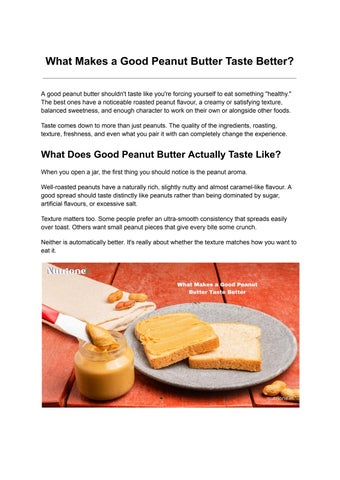
What Makes a Good Peanut Butter Taste Better? A good peanut butter shouldn't taste like you're forcing yourself to eat something "healthy." The best ones have a noticeable roasted peanut flavour, a creamy or satisfying texture, balanced sweetness, and enough character to work on their own or alongside other foods. Taste comes down to more than just peanuts. The quality of the ingredients, roasting, texture, freshness, and even what you pair it with can completely change the experience.
What Does Good Peanut Butter Actually Taste Like? When you open a jar, the first thing you should notice is the peanut aroma. Well-roasted peanuts have a naturally rich, slightly nutty and almost caramel-like flavour. A good spread should taste distinctly like peanuts rather than being dominated by sugar, artificial flavours, or excessive salt. Texture matters too. Some people prefer an ultra-smooth consistency that spreads easily over toast. Others want small peanut pieces that give every bite some crunch. Neither is automatically better. It's really about whether the texture matches how you want to eat it.
Why Does Roasting Make Such a Difference? Roasting is one of the biggest factors behind the flavour of a nut butter. Raw peanuts can have a relatively mild, earthy taste. Proper roasting develops deeper aromas and brings out the characteristic nutty flavour people associate with a satisfying spread. But there's a limit. Over-roasting can create a bitter or burnt taste, while under-roasting may leave the product tasting flat. That's why two products made from the same basic ingredient can taste surprisingly different.
Creamy vs Crunchy: Which Tastes Better? This usually comes down to personal preference, but the difference is more than texture. Type
Texture
Best For
Creamy
Smooth and easy to spread
Toast, smoothies, oats
Crunchy
Contains peanut pieces
Toast, snacks, desserts
Flavoured creamy
Smooth with additional flavour
Breakfast bowls and desserts
Chocolate-style crunchy
Nutty with chocolate notes and texture
Toast, muesli, sweet snacks
Creamy varieties tend to blend more easily into recipes. Crunchy versions add something you can actually feel while eating. If you're putting it into protein oats or a smoothie, creamy usually makes more sense. If you're spreading it over toast or adding it to a bowl for texture, crunchy can be much more interesting.
The Sweetness Shouldn't Hide the Peanuts Here's where personal preference gets interesting. Peanut butter can be naturally rich enough that it doesn't need to taste like dessert. A little sweetness can complement the roasted flavour, but too much can completely cover it. For everyday eating, I prefer a spread where you can still clearly taste the peanuts first. If the first thing you notice is sweetness, the balance probably isn't doing the peanut flavour any favours.
This becomes even more important when you're using the spread with naturally sweet foods such as bananas, dates, berries, or mango.
Why Texture Changes Your Perception of Flavour Texture can actually change how you experience taste. A smooth spread feels rich and consistent. Crunchy pieces create contrast, which can make a simple snack feel more satisfying. Try spreading a crunchy variety over toast and adding sliced banana. You get soft bread, creamy fruit, and pieces of roasted peanut in the same bite. That's a much more interesting eating experience than simply eating the spread by itself.
The Best Pairings Bring Out the Nutty Flavour One of the easiest ways to make a good spread taste even better is to pair it with foods that complement it.
Peanut Butter and Banana This combination works because banana brings sweetness while the nut butter adds richness. It's simple, inexpensive, and particularly useful as a quick breakfast or pre-workout snack.
Peanut Butter and Oats Oats have a fairly mild flavour, which makes them an excellent base for nut butter. Stir a spoonful into protein oats with milk, banana, cinnamon, and seeds. The result is creamier, richer, and much more satisfying than plain oats.
Peanut Butter and Muesli Muesli brings grains, nuts, seeds, and dried fruit into the mix. Adding a nut spread gives the bowl another layer of richness. A protein muesli bowl with yogurt, fruit, and a small spoonful of peanut butter can work particularly well as a breakfast for people who don't want something overly complicated.
Peanut Butter and Chocolate This pairing works for an obvious reason: roasted peanuts and chocolate have complementary flavours. A Chocolate Crunchy variety can add both cocoa flavour and texture to toast, oats, yogurt bowls, or simple homemade desserts.
What About Mango and Peanut Butter? Mango might sound like an unusual combination at first, but it makes sense once you think about flavour balance. Mango brings sweetness and acidity, while peanuts contribute roasted, rich notes. A Mango Creamy spread can therefore work particularly well with toast, oats, yogurt, or fruit-based breakfast bowls. The trick is balance. You don't want one flavour completely overpowering the other.
Does "Healthy" Have to Mean Less Enjoyable? Not at all. This is one of the mistakes people make when choosing foods for a healthier routine. They assume that better nutrition automatically means sacrificing flavour. It shouldn't. If you're eating something regularly, taste matters because enjoyment affects consistency. A food that fits your nutritional goals but tastes terrible isn't a particularly useful long-term choice. That's also why having different flavours and textures can make everyday breakfasts and snacks less repetitive.
How to Tell If You're Buying a Good Peanut Butter Before buying, check a few basic things: ● Look at the ingredient list: Know what you're actually getting. ● Check the texture: Choose creamy or crunchy based on how you'll use it. ● Think about sweetness: The spread shouldn't need excessive sugar to taste enjoyable. ● Consider the flavour: Roasted peanut flavour should still come through. ● Think beyond toast: A versatile spread should work in oats, muesli, smoothies, snacks, and desserts. You don't need to obsess over every number on the nutrition label. Start by understanding the ingredients and deciding whether the product fits the way you actually eat.
FAQ Why does some peanut butter taste better than others? Differences in peanut quality, roasting, ingredient ratios, freshness, and texture can all affect flavour.
Is creamy or crunchy better? Neither is universally better. Creamy works especially well in oats, smoothies, and spreads, while crunchy adds texture to toast, snacks, and breakfast bowls.
Can peanut butter be part of a healthy breakfast? Yes. Pairing it with foods such as oats, muesli, fruit, yogurt, or whole-grain toast can create a more satisfying meal.
What makes chocolate peanut butter taste good? The combination of roasted peanut flavour, cocoa, sweetness, and texture creates a richer flavour profile than plain nut butter.
Does peanut butter go well with mango? Yes. Mango's sweetness and slight acidity can complement the rich roasted flavour of peanuts, particularly in breakfast bowls, toast, and yogurt-based snacks.
Conclusion A good peanut butter should make you want to take another bite, not remind you that you're trying to eat healthy. Roasted flavour, balanced sweetness, enjoyable texture, and versatile pairings are what turn a basic pantry staple into something you'll actually use every day. Whether you prefer a smooth spread with your protein oats, crunchy texture with muesli, chocolate notes for a snack, or the sweet contrast of mango, the best choice is ultimately the one that fits your taste and your routine.