The Omaha Metro
Event Report:
A Night with Chef Wilson – French Haitian Fusion
A Night with Chef Wilson – French Haitian Fusion
“Remember, today is the tomorrow you worried about yesterday.”
Dale Carnegie
Story by Tom Murnan
The Walla Walla (WW) area in southeast Washington State is becoming more and more recognized for their wines as time goes on. The first winery was Leonetti Cellars, founded by Gary Figgins in 1974. Today, there are more than 120 wineries. The terroir favors Cabernet Sauvignon and Bordeaux varietals as well as Rhone varietals like Syrah, Grenache and Viognier, the go-to white wine of many wineries here. The name Walla Walla comes from the Native American Sahaptin language and means “place of many waters,” which is interesting because the area as a whole is almost a desert. Near Seattle, the Cascade Mountains block the moisture from the Pacific Ocean, but the Blue Mountains, which range near WW, provide rain as long as you are close to the mountains. Near the Blues, you can have 10 inches of rain a year. Every mile you move away from the range you lose one inch of rain. In 10 miles, you are in semi-arid desert conditions. Irrigation from the Ogalla Aquifer is used extensively in dry areas. A number of wineries, such as Figgins Family Wine Estates, are in the foothills of the Blue Mountains. Figgins is at an elevation of 1,500 to 1,750 feet. But most are lower down to about the 965-foot level of WW city. During the summer, temperatures may climb to 85 to 95 degrees, while at sunset, the area cools off dramatically, which helps the grapes rest at night. Humidity is low.
Millenia ago, volcanoes deposited basalt under much of Washington. Much later, in the last ice age, the area was flooded when the ice dams failed up north. Called the Missoula Flood, catastrophic amounts of water moved south depositing sediment, silt, sand, gravel and stones from the Willamette Valley south in Oregon to the WW AVA. When the flood finally receded and the land dried out, then wind-blown silt deposited loess, a fine rich soil, on top of the basalt. In an area south of WW city, over the Oregon border, many large cobblestone or larger stones were deposited. Now named the Rock District, it is similar to Châteauneuf-du-Pape, which has many galets roulés (smaller, rounded stones) covering the vineyards. The rocks warm up during the day and release their heat at night, helping to ripen the grapes. It all adds up to an impressive terroir for Bordeaux and Rhone style wines.


Story by Tom Murnan, Photos by Tom Murnan
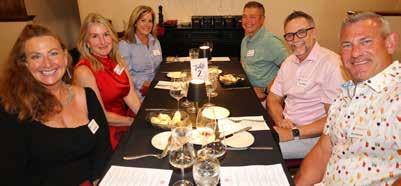
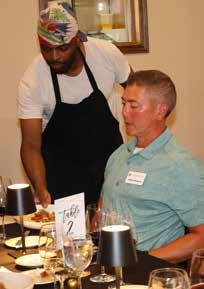
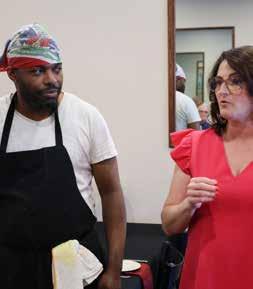
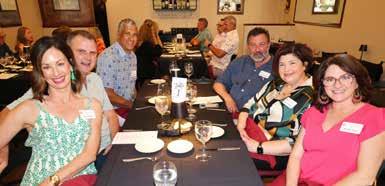
What an interesting, intriguing idea: A Haitian fusion with French food. Le Voltaire is one of Omaha’s go-to French restaurants, and Chef Wilson Calixte always delivers, so I thought this was a great invitation. Google defines French Haitian fusion as “a style of cooking that blends classic French culinary techniques with the bold, aromatic flavors of Haitian cuisine. It combines refined French methods—such as slow-simmered sauces, duck confit, and delicate pastries—with Caribbean staples like scotch bonnet peppers, plantains, and pikliz (spicy pickled slaw).” In our case, it was sweet potatoes and Epis. Epis is the flavorful green seasoning base of Haitian cooking. Think of it as the “holy grail” of the cuisine, similar to a Latin sofrito. You can use this versatile, blended mix of herbs, vegetables, and spices to marinate meat, fish, or to flavor soups, rice, etc. Chef Calixte used Epis to flavor the griot croquettes and beef Daube.
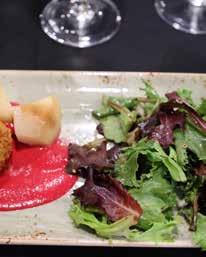
Appetizers were mostly French influence with Foie Gras on Toast, Tuna Ceviche .But also there was oriental Duck Roll with Asian Plum Sauce. A nice assortment of quaffing wines washed this down, including a Mouton Cadet Sauvignon Blanc 2023. Sitting down for our First Course, Salad with Griot Coquette, Beet Coulis and Poached Pears was next. Griot croquettes are a delicious twist on Griot, the famous Haitian dish made of pork shoulder marinated in citrus and Epis, then boiled and fried until crispy. Turning griot into a croquette means taking that crispy, shredded pork, mixing it with a creamy binder, rolling it into balls or logs, coating it in breadcrumbs, and deep-frying it until golden. Our Le Garenne Sancerre 2024 was a light, crisp wine that refreshed the palate and married well with the dish.
The Second Course was Brazino Meuniere with Couscous Tabouleh and Creamy Caper Sauce. This course was French / North African, not Haitian. Branzino Meuniere uses a French method to pan fry the Brazino, or Mediterranean Sea Bass, remove
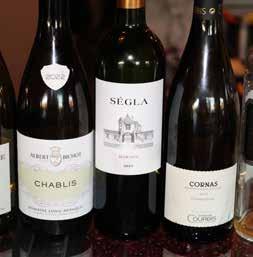
it from the pan to rest, and make Meunier Sauce by melting butter until it turns nutty brown and adding lemon juice and chopped parsley. Couscous is North African but ubiquitous in French restaurants and grocery stores. The Albert Bichot Chablis Domaine Long-Depaquit 2022 was an unoaked Chardonnay, fruity but without much minerality, that went well with the fish.
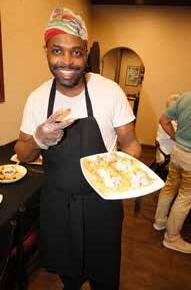
Our Third Course found us with Haitian Beef Daube with House Made Pappardelle Pasta and Garlic Infused Truffle Oil. Daube is a Provencial way of braising tougher cuts of meat, slowly breaking the toughness down with the steaming liquid until meltingly tender. The beef was marinated in Epis then cooked with carrots, onions, scallions and thickened with corn starch. Not in the descriptors was the use of sweet potatoes, which was a big surprise as it changed the stew by adding subtle sweetness and an interesting exotic flavor. Two red wines accompanied the Daube. Segla, Margaux 2015 and Domaine Courbis Cornas Champlerose 2015. So, we were comparing a Bordeaux to a Northern Rhone in the Cornas appellation, near Châteauneuf-du-Pape. The Segla is the second label of the well-known Château Rauzan-Ségla, a Second Growth in the 1855 Classification. It is a blend of mostly Cabernet Sauvignon and Merlot, with small amounts of Petit Verdot and Cabernet Franc, while the Cornas is 100% Syrah. Both did well in my estimation.
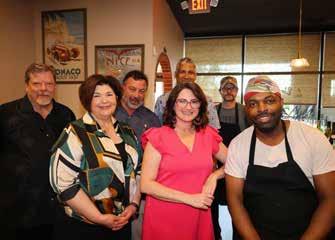
Pistachio Crusted Goat Cheesecake sitting on a bed of Glazed Cherry and Mango, to give it that Haitian touch, was interesting and not too sweet. Much sweeter was the Château Guiraud Sauternes 2009, a number 5 in the 2012 Wine Spectator’s Top 100 wines of that year. Many thanks to Suzanne & David Overholtzer who helped organize their first event with the tutelage of Michelle & Hasan Hyder. Many mercis as well to Chef Wilson and his crew who cooked for us on their day off!