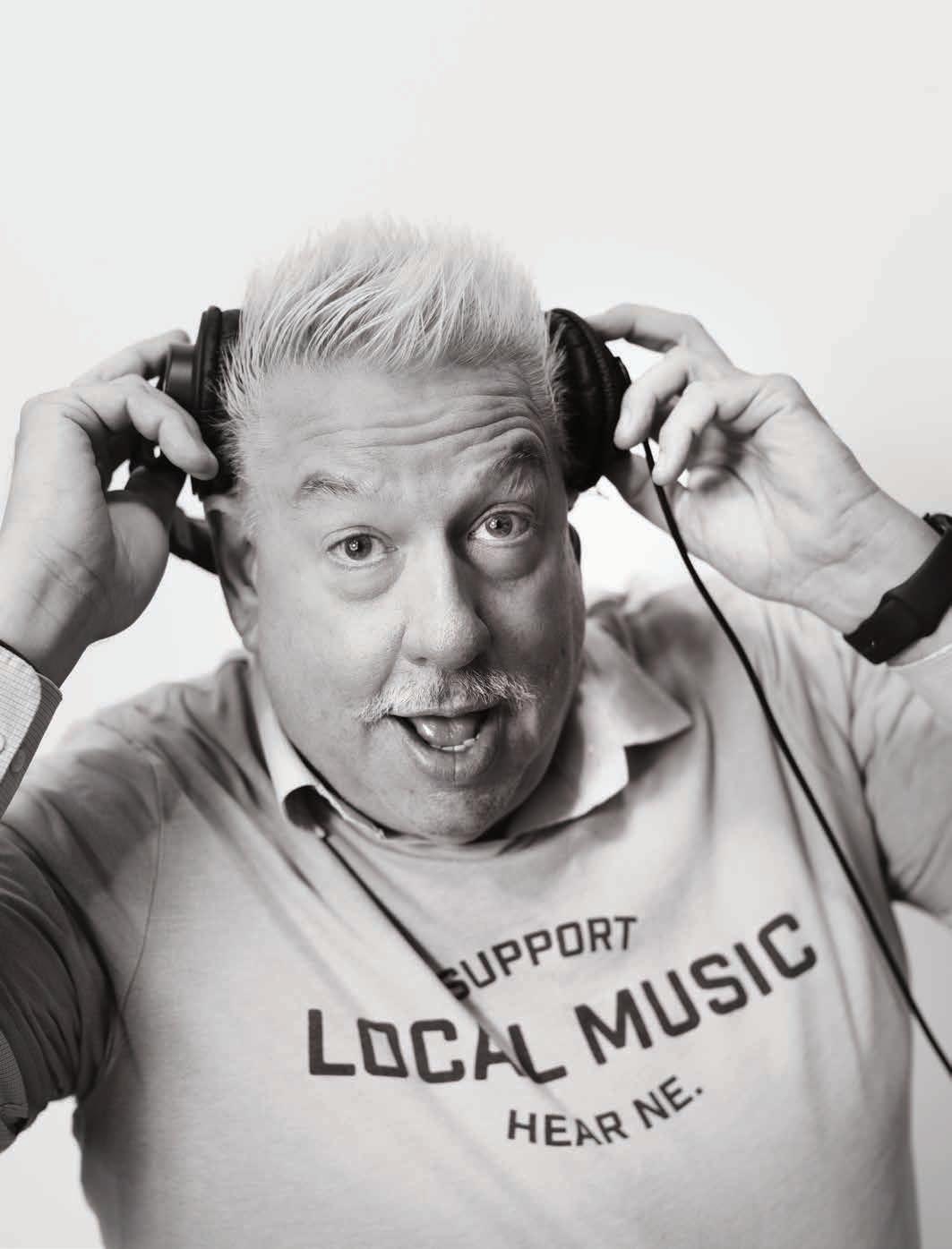
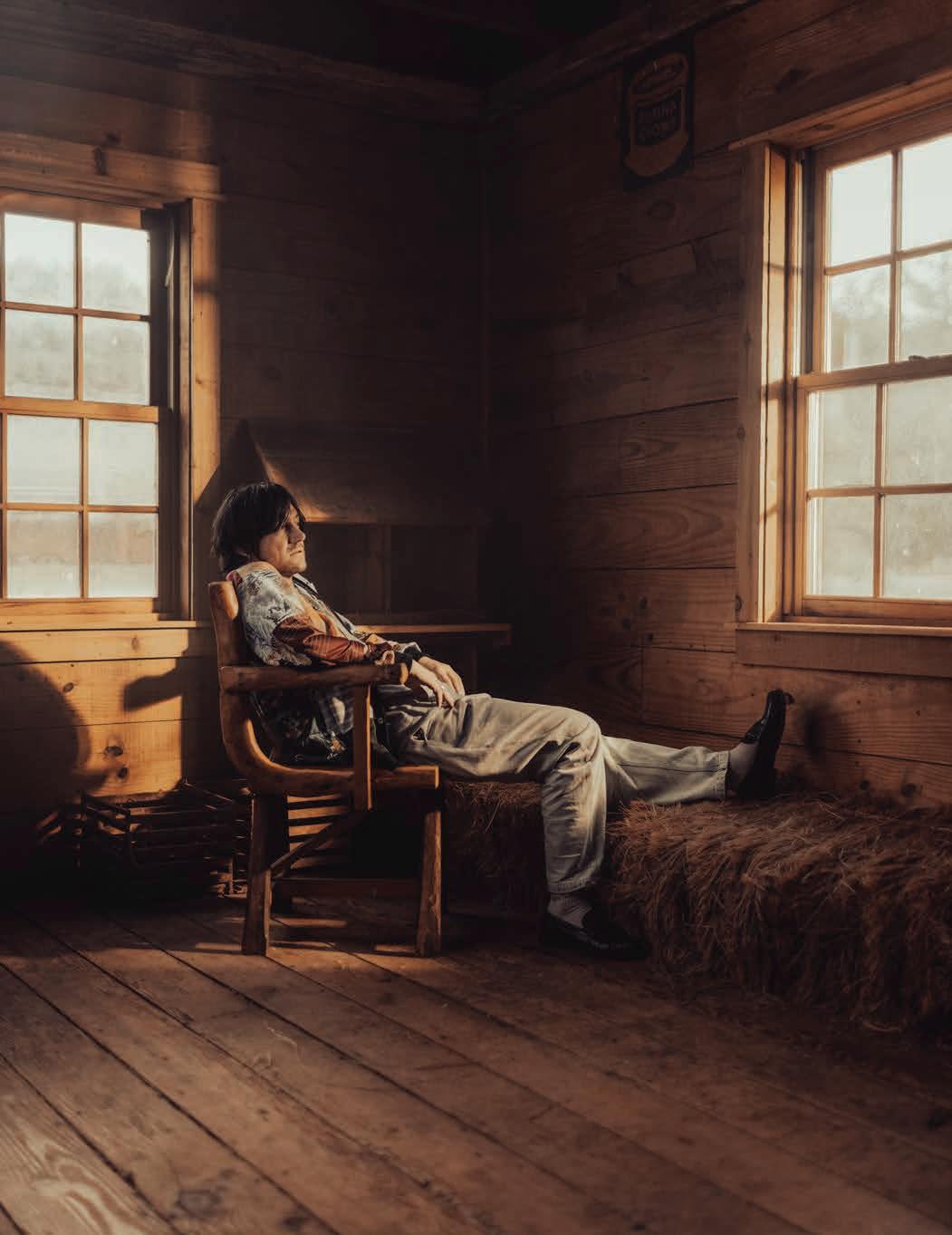
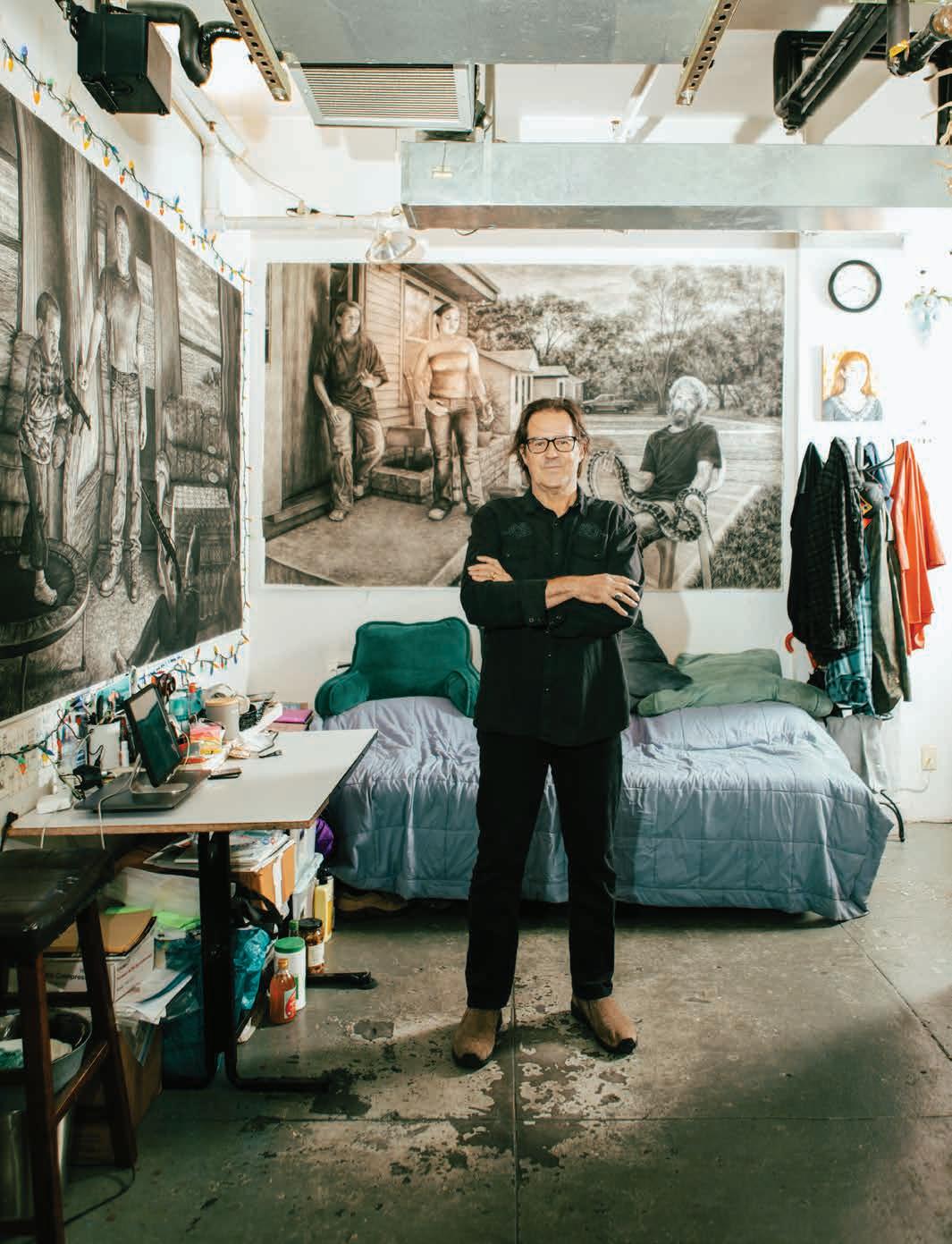
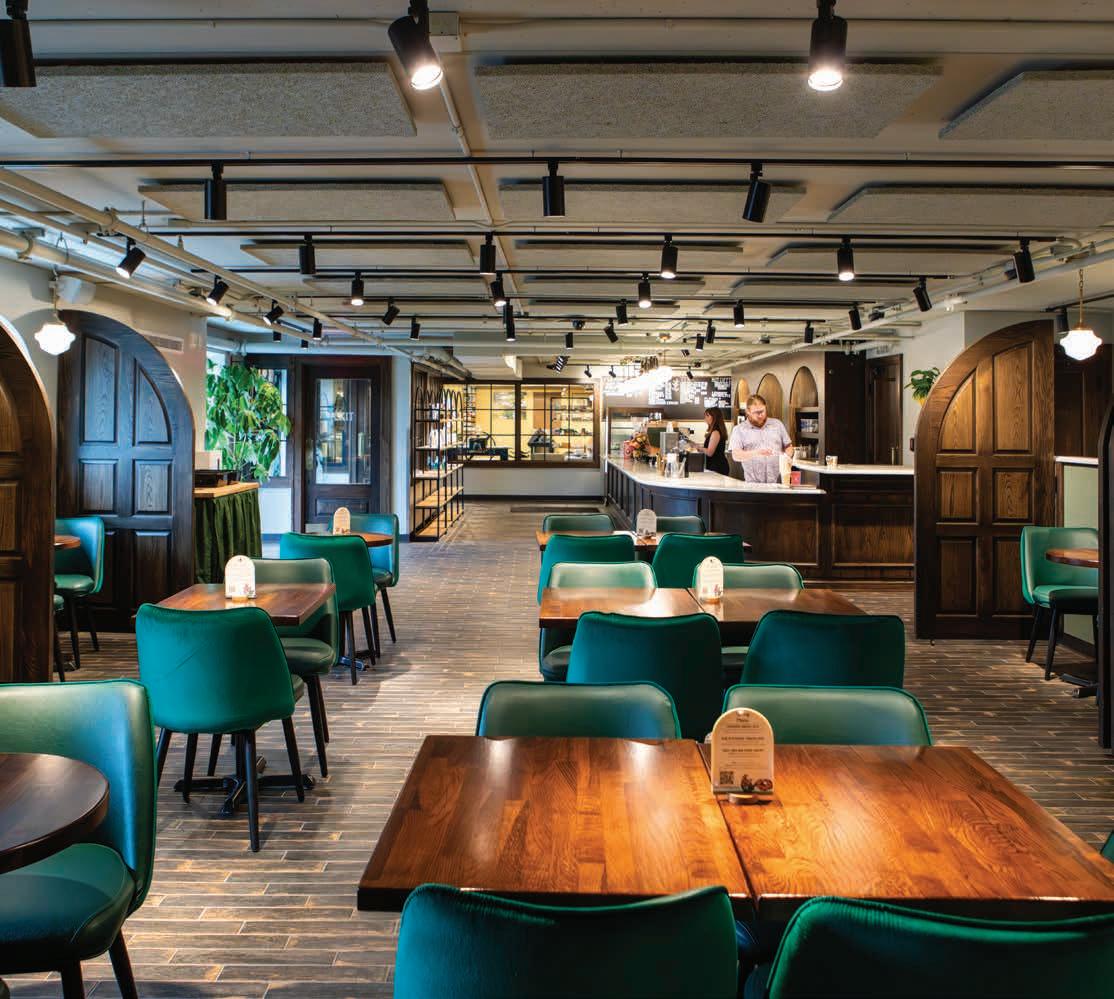
Omaha Magazine July/August 2026 The Arts & Culture Issue
JULY/AUGUST 2026
VOLUME 44 // ISSUE 4
EDITORIAL
Executive Editor
DOUG MEIGS
Senior Editors
ISAAC NIELSEN · NATALIE VELOSO
Assistant Editor NAOMI HEU
Editorial Intern
RHETT ULEMAN
Contributing Writers
PAUL B. ALLEN · BEAUFIELD BERRY · TAMSEN BUTLER
KEVIN COFFEY · MARIA CORPUZ · KYLE EUSTICE
HEATHER HANNAFORD · DAWAUNE HAYES · DWAIN HEBDA
SARA LOCKE · BRANDI LONG-FRANK · LISA LUKECART
KARA SCHWEISS · MIKE'L SEVERE · TIM TRUDELL · OTIS TWELVE
CREATIVE
Creative Director
RACHEL BIRDSALL
Senior Graphic Designers
RENEÉ LUDWICK · NICKIE ROBINSON
Graphic Designer JOEY WINTON
Chief Photographer
SARAH LEMKE
Contributing Photographer
JUSTIN BARNES
SALES
Executive Vice President Sales & Marketing
GIL COHEN
Branding & Digital Specialists
GREG BRUNS · DAWN DENNIS · FRANCINE FLEGG
SANDY MATSON · KIM MAY · TIM McCORMACK
Senior Sales Coordinator ALICIA HOLLINS
Sales Coordinators
JESSICA LINHART · SANDI M cCORMACK
Director of Business & Development
CAROLE SPRUNK
OPERATIONS
Business Manager KYLE FISHER
Ad Traffic Manager
DAVID TROUBA
Digital Manager
LUIS DE LA TOBA
Distribution Manager
CARSON KRUSE
EXECUTIVE
Publisher
TODD LEMKE
Associate Publisher
BILL SITZMANN
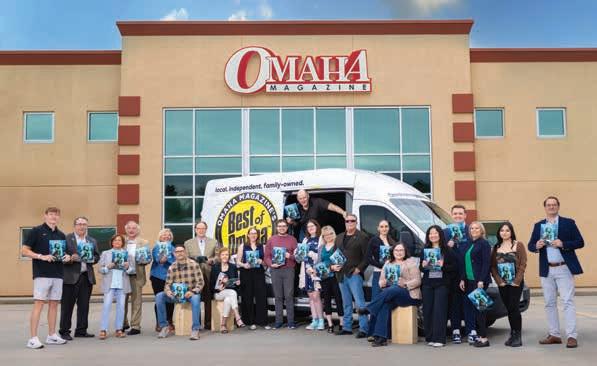
The Heart of Omaha Magazine
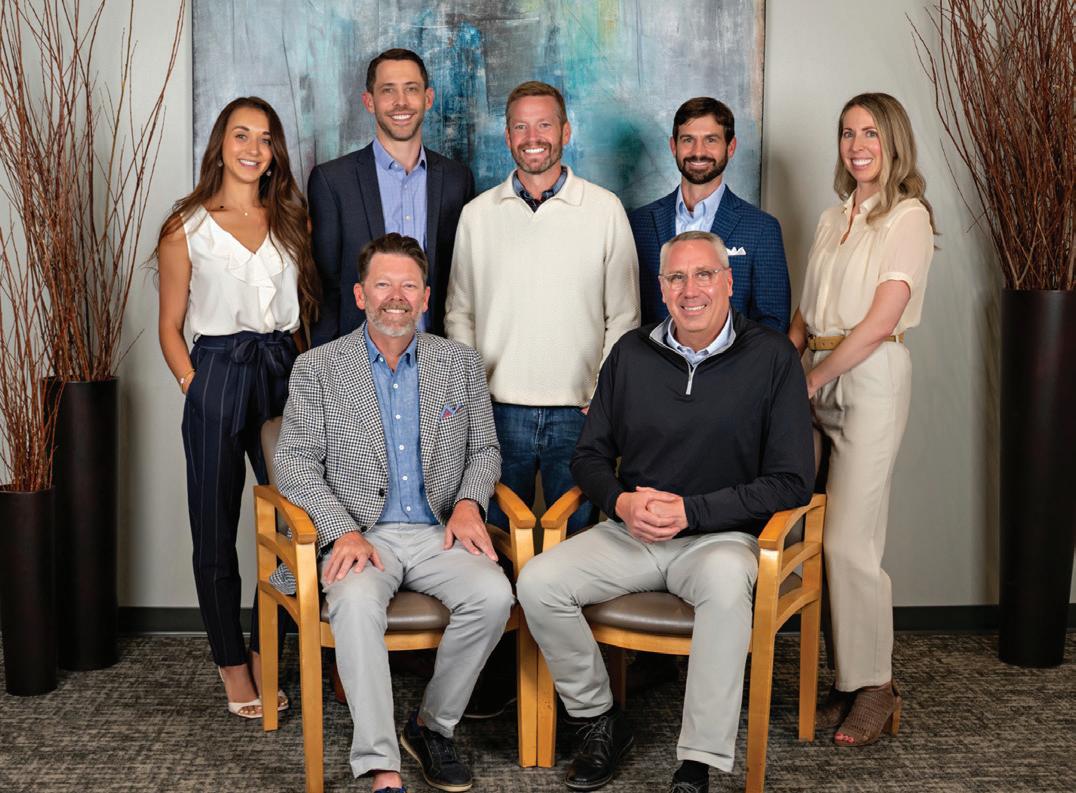
Omaha Magazine has existed in Omaha since 1890, according to publisher Todd Lemke. Lemke himself entered the Omaha publishing scene in March 1983 with the first issue of City Slicker. That newsprint publication was the precursor to his Omaha Magazine, which launched its first issue in 1989.
Today, Omaha Magazine Ltd. is the parent company of Omaha Publications, which produces other community-focused magazines such as FACES of Omaha, B2B Magazine, Family Guide, and many custom publishing products.
The magazines would not be possible without the people behind them whether that's the people in between the covers or those behind the scenes. Lemke and his Omaha Publications staff take immense pride in presenting Omahans with the best stories in the city and the company is always looking to improve its products.
At its heart, the Omaha Magazine team is one that works hard for its community. If it's Omaha, it's in Omaha Magazine. Your city. Your culture. Your stories.
THE ARTS & CULTURE ISSUE
BRIGHT EYES, NEW LIBRARY, DREAMLAND JAZZ, AND MORE
After a one-year hiatus, the Maha Festival returned last summer to its roots along the Missouri River. The first few iterations of Maha were located there, against the currents of a river that is the Indigenous basis for our city’s name.
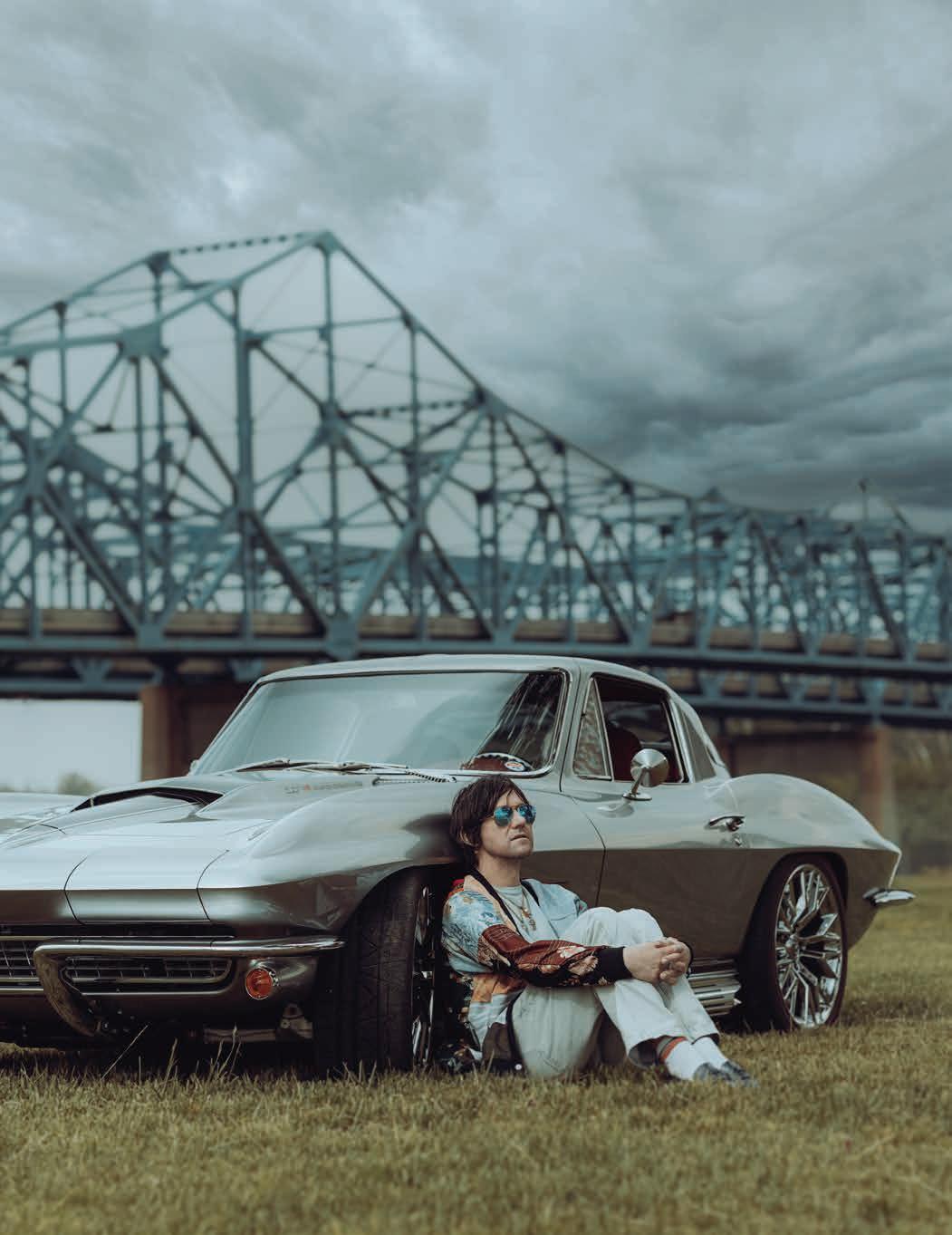
Musician Conor Oberst had played Maha once with Desaparecidos after it moved to Aksarben. Now, the 2026 festival marks his first time performing at Maha with Bright Eyes a band that brought international acclaim to Omaha’s music scene and pioneered the new millennium’s emo-folk movement.
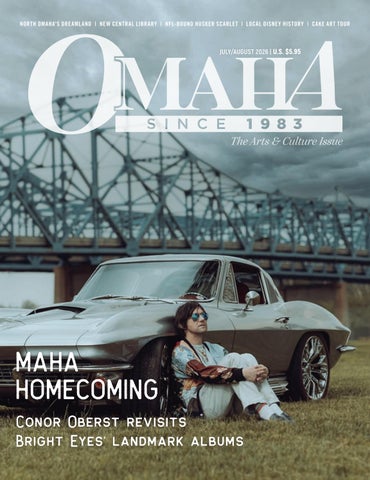
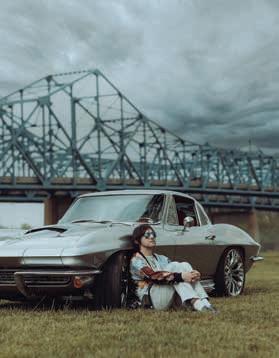
This issue of Omaha Magazine features Omaha’s prodigal son on the cover with the Mormon Bridge as a backdrop. Like one of those classic portraits of celebrities in New York City, with the Brooklyn Bridge behind, photographer Bill Sitzmann captures a definitively local image rooted in history with additional photos inside the historic Florence Mill (a structure that dates back to the Mormon Trail and one of the earliest pioneer settlements on this side of the river).
Writer Kevin Coffey dives deeper into Oberst’s local roots in a special profile story that also touches on the 20th anniversary of two beloved Bright Eyes albums, and how Omaha community motivated Oberst’s participation in this year’s Maha.
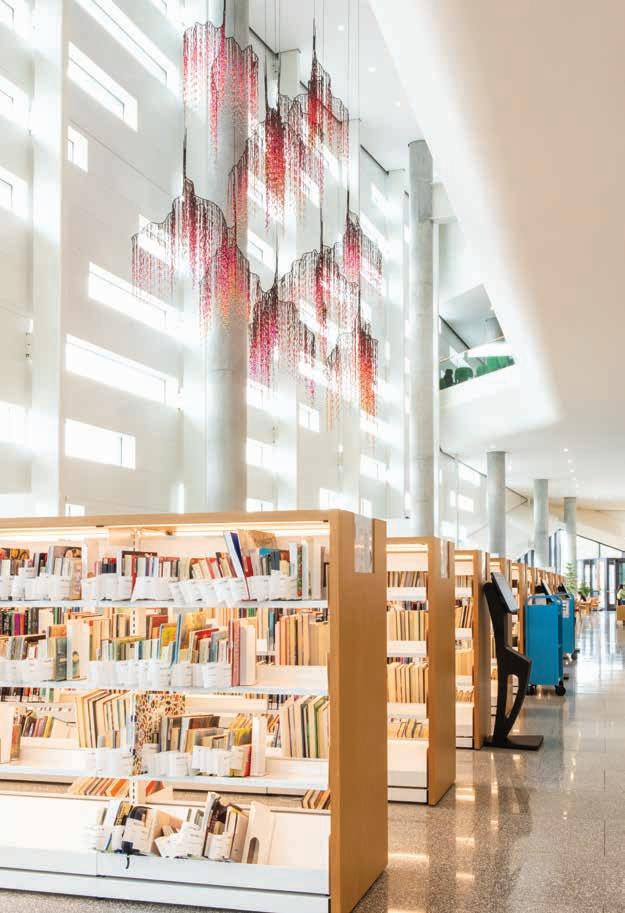
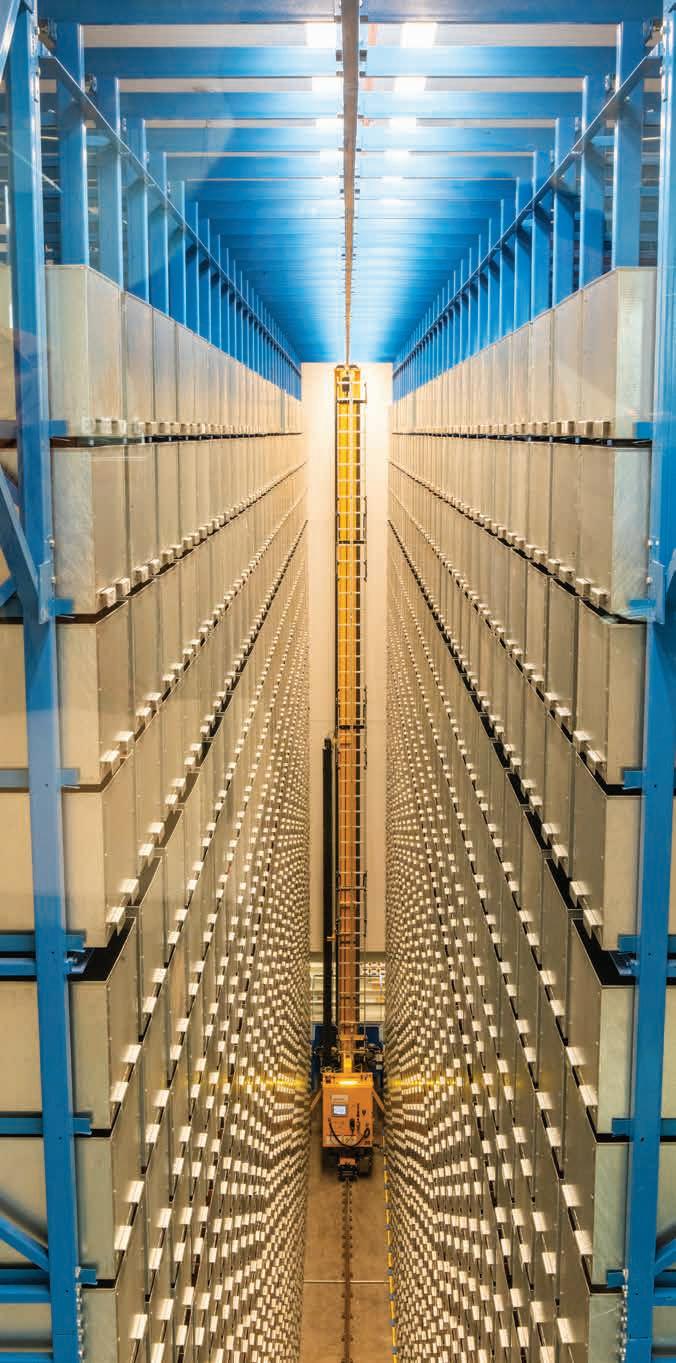
When discussing recent homecomings, this edition of Omaha Magazine also explores the city’s new Central Library. The state-ofthe-art facility is not only an architectural gem; it features amazing community-centered design and programming. There’s a multi-story book robot that fetches from storage tucked behind a giant glass wall. And there’s an amazing collection of artworks by local artists featured throughout the facility.
Senior editor Natalie Veloso takes readers through the new library and its art collection. I also had the privilege of touring the library before its grand opening with my children. They heartily approved. My daughter offered this praise: “It’s like a library, museum, playground, arts and crafts workshop, and reading room all in one!”
Omaha’s jazz scene is another integral part of our shared cultural roots. The newly opened Dreamland Lounge taps into this rich history in homage to the Dreamland Ballroom (which had been located decades ago in the Jewell Building, now home to the Great Plains Black History Museum on North 24th Street).
Covering the story is Paul B. Allen IV, a local journalist with deep family ties to Omaha’s jazz history. He spoke with the new venue’s co-founder Katie Raine Thomas, along with community advocate Preston Love Jr. (son of the celebrated jazz saxophonist and bandleader Preston Love) about their shared dreams for community and generational legacy in North Omaha.
Community is the basis for any city’s culture, and Omaha is home to a thriving arts scene. Some of our incredible artists have gone on to international acclaim. Others strive tirelessly in their craft locally. All of them are integral to the cultural landscape.
This issue is full of stories on the artists who call Omaha home. While every issue of Omaha Magazine includes A+C (arts and culture) stories, this edition carries the theme throughout every article, from cover to cover.
We love Omaha, and we love the arts. If you have a story idea about the arts or anything else please reach out. You can submit ideas to omahamagazine.com/ideas or email me directly. I’d love to hear from you. Thanks for reading.
Listen to the entire issue here. Open the camera on your smart device and hover over the QR code. Produced by Radio Talking Book
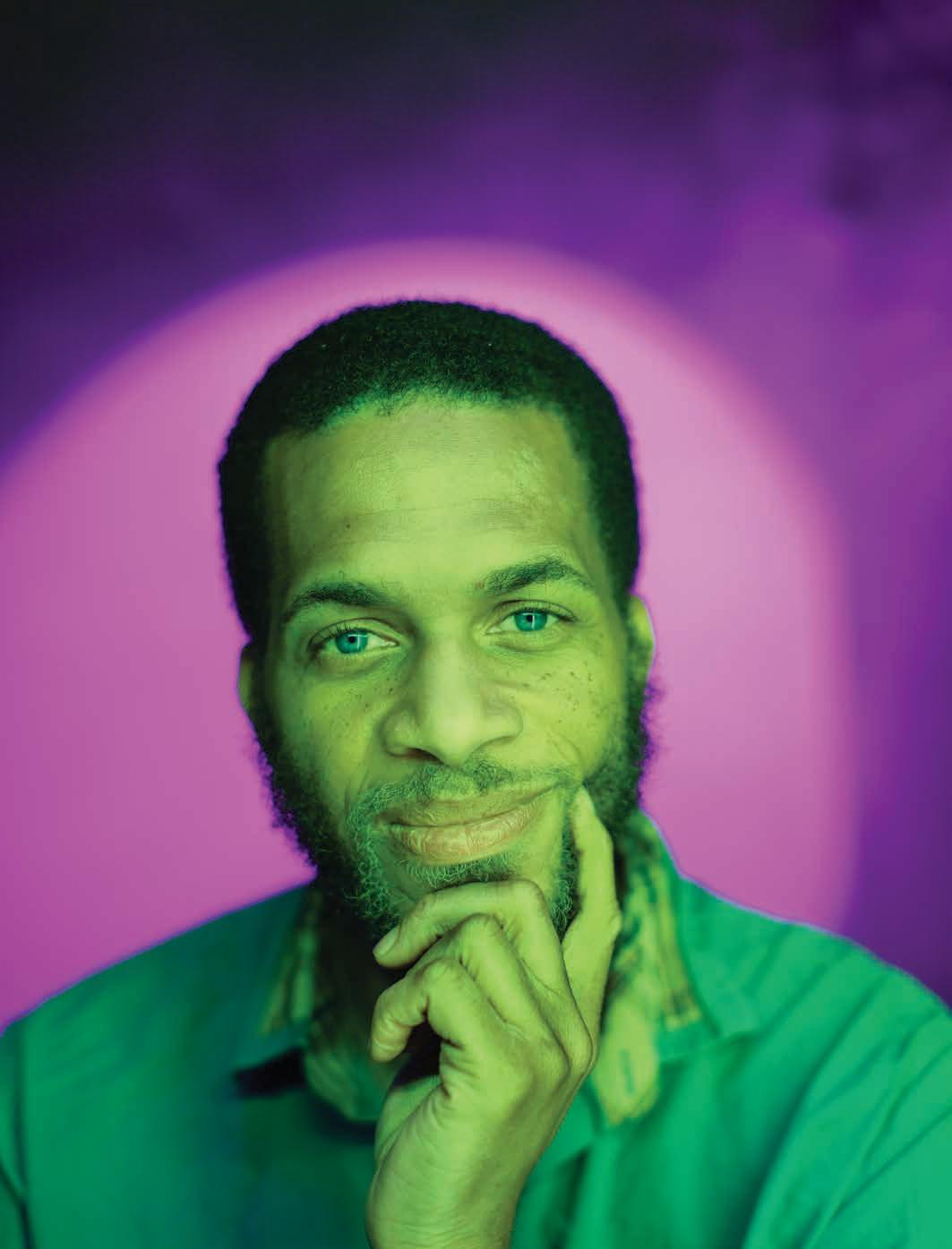
More than 20 years after I’m Wide Awake, It’s Morning, and Digital Ash in a Digital Urn reshaped indie rock, Omaha’s own Conor Oberst reflects on art, community, and the enduring power of the songs that helped define a generation. Full story on page 66.
read current and previous issues online at
Backlund Plumbing
Henry Doorly Zoo
Catering Creations
Children's Nebraska FNBO
Kiewit Luminarium
Lauritzen Gardens
M.U.D.
Omaha Performing Arts Society
Primo's Modern Mexican Restaurant
The Dentists
Valmont
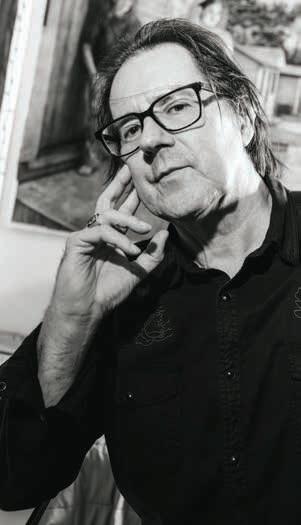
Edgar Jerins
Mazza
or me, the poetry and rap game is where it started,” Stevenson said. “Sixteen is where I real ly dove in.”
Th at summer, the Omaha native lived in New Jersey, where he began freestyling with a friend who later became one of his fi rst mentors.
“He’s like, ‘All you gotta do is just say words,’ and I’m like, ‘Th is is going to sound terrible,’” Stevenson said. “We put a beat on, and we [start] freestyling. I get into some freestyle battles, and I lose them. I’m mad about it, so I’m like ‘I gotta get better.’ I lose more, then I win a few. After that is when my fi rst big shift comes.
Slam Poet Allen Stevenson Aims to Inspire
“I noticed my lyrics were mad aggressive,” he continued. “In ’90s hip-hop East Coast, there’s this enemy you’re battling with and you get your guns and all that. So one day, I ask this dude, ‘When I say you, who am I talking to?’ And he’s like, ‘anyone you have a problem with.’”
Th at’s when Allen realized: “I don’t have any problems. So this doesn’t work. I can’t talk about murder, robbery, and diamonds and all the icky when that’s not my life. From there, I had this gospel twist that I started to do, exploring the gospel rap mode ,” he said.
His change of heart led him to a spoken word group called Passion for Christ that performed thought-provoking open prose. “I started writing in that format, just going with the fl ow as opposed to being constricted by the beat,” Stevenson said. “I still got the gift, but I liked using it in this format more because I could shape narratives and stories and chara cter build.”
His wife, Angelica, encouraged him to expand his reach. Th at led to the formation of Th e Light Poet ic Ministry.
“For us, we wanted to use our words…to help people,” he said. Th e monthly poetry night quickly grew, so they turned the program into a nonprofit and began hosting poetry shares and fundraisers all over Omaha.
After the birth of their fi rst child in 2011, the nonprofit slowed down, but Stevenson kept sharpening his craft. Then, another pivot emerged.
“Th e transition happened because I had a falling out of sorts with God,” he said. “Th ere were things happening in the world that I just did not agree with, and I had this moment hanging out under a tree where everything shattered for me. Th en my content started going through a darker
STORY
BY DAWAUNE LAMONT HAYES PHOTOGRAPHY BY BILL SITZMANN DESIGN BY JOEY WINTON
In Omaha, there are just so many good people and their stories, they can change you.
– Allen Stevenson
phase and my poetry became, more or less, arguments with God. You know, why do bad things happen to g ood people?”
“After that, me and God hashed it out, and there was a moment I put the poetry and the art on the back side. Th is thing called life [was] happening.”
As the challenges began to resolve, he used writing to process and share his experiences, especially at Verbal Gumbo, a spoken word open mic once hosted by Michelle Troxclair and Felicia Webster.
“Th at’s where I made a lot of poetic ties,” Stevenson said. “In Omaha, there are just so many good people, and their stories, they can c hange you,”
One of those storytellers, Traci Schacht, made a huge impression on him with her soul-moving poems and powerful delivery. Years later, Schacht and Stevenson collaborated on a show where he was given a chance of a lifetime.
“Traci and Matt [Scott] have this poem together called ‘Migrant Worker,’ and [she] gave me the honor of doing his part,” Stevenson said. “Th at was one of my biggest moments artistically. Th at’s a super full cir cle moment.”
Th e phrase “full circle” has continued to show up throughout his life story. In 2026, he performed at the Omaha Entertainment and Arts Awards, where he’s been nominated for Best Performance Poet several years in a row. He was also selected to perform at Juneteenth JoyFest and won his fi rst slam.
“Th at’s the craziest thing. I won a poetry slam for the fi rst time this year, and I have been doing slams since Matt Mason was at the [OM] Center,” he said. Performing at the OEAAs was another milestone. “Th e experience was massive for me…It was almost like a coronation of sorts because you do so much. I’m around performing, slamming everywhere, and then they’re like, ‘Hey, do you want to do this?’ And I’m li ke, ‘Yeah!’”
“Th e Omaha community, the poets, the singers, there is so much talent. It’s massive,” Stevenson said. “I want people to know why I do what I do, and I want people to see the stories I tell come together. I want to get people to discuss or feel s omething.”
Follow @allenstevensonpoetry on Instagram and Facebook for more information.
PHOTOGRAPHY
DESIGN
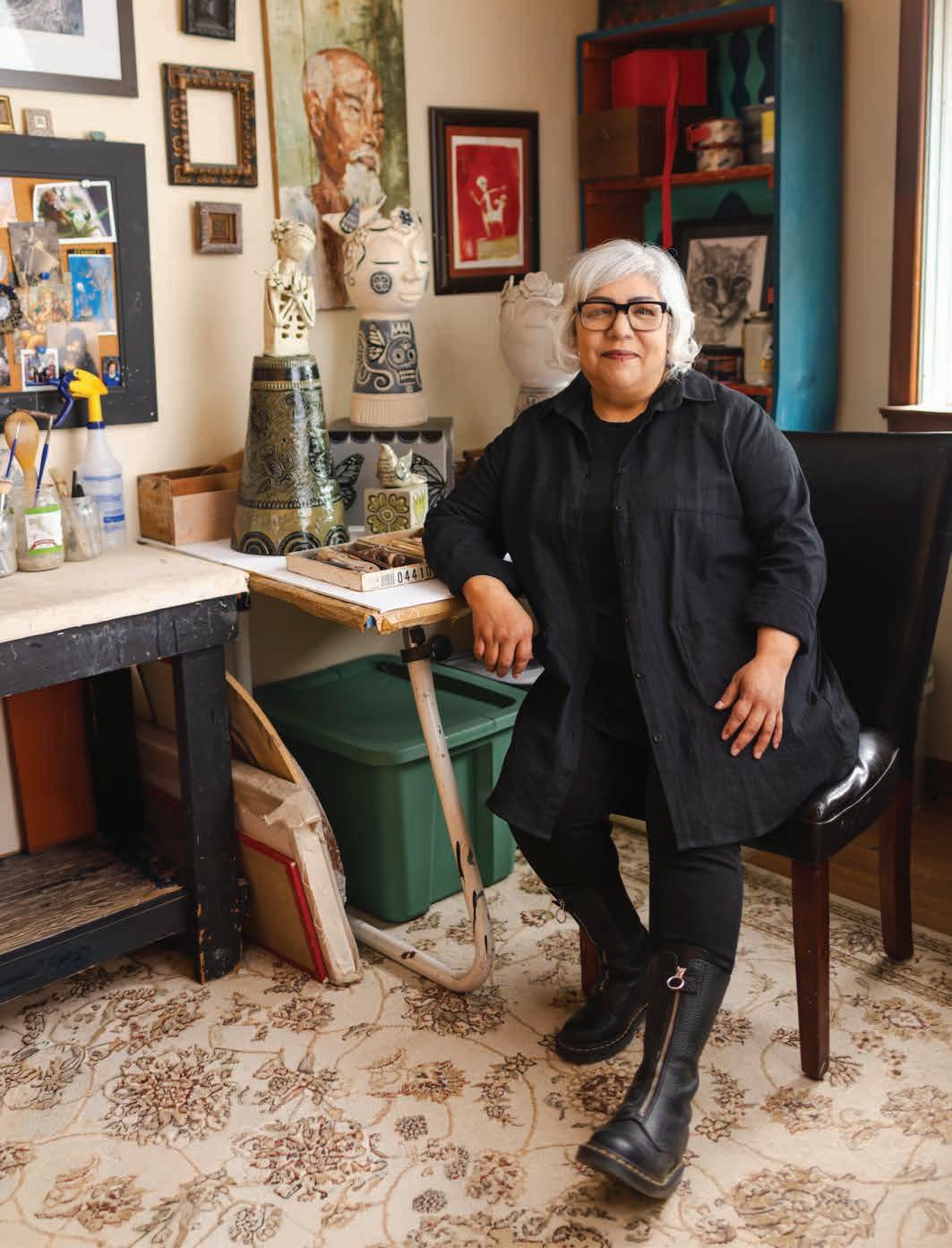
Artist Renee A . Ledesma’s
STORY Maria Corpuz
Bill Sitzmann
Nickie Robinson
A+C VISUAL ART
ere we merge with the spirit of the crow, holding both wisdom and mystery— seeing the past and the future while standing firmly in the present, reminding us that our connection with nature is what grounds us yet allows us to soar.”
Th is quote is engraved on the dedication plaque for the sculpture Gift Crow.
The RiverFront in Downtown Omaha has brought back the charm of actively gathering in public spaces. On any given day, you’ll fi nd families weaving up and down on the Arches Playground, couples spreading blankets on the grass, and teenagers practicing their gliding skills on the Skate Ribbon—locals and visitors alike claiming space in a city that has become increasingly difficult to exist in without intention. Near the Skate Ribbon, a bronze fi gure stands with her arms open and her face turned toward the sky. Some people think she’s singing, others see her praying. Renee A. Ledesma said she is what the viewer interprets.
“I don’t want to spell it out,” Ledesma said. “To me, she’s reaching out to a higher power. But when people go and see her, it’s whatever you feel.”
Gift Crow was unveiled in September 2025, commissioned by LALA (Local Artists. Local Art) and The RiverFront, and fabricated in collaboration with Walla Walla Foundry, Puritan Manufacturing, Inc., and Bruning Sculpture. Standing 20 feet tall over the park, Gift Crow proudly takes up space and encourages the viewer to do the same.
Ledesma has been part of Omaha’s arts community for over three decades. She has painted murals, shown in galleries, and participated in the O! Public Art Project in 2006 and the Gifford Park mural project in 2013. She has spent 22 years framing local artists’ work at Visions Custom Framing. She has called the Old Market her stomping ground since she started working at Dirt Cheap Records in 1988, and she has not really left. But when the pandemic hit, her studio practice slowed to almost nothing—one, maybe two pieces a year, just to stay in the habit.
When Weston Thomson, artist and co-director at LALA, approached her about the commission, her first thought was, “Me? Why not? I’ll give it a shot.”
The crow has followed Ledesma for a long time. In her 20s, her older sister gifted her a copy of Medicine Cards, a divination system rooted in Indigenous spiritual traditions that centers animals and nature as sources of wisdom. She was taken by it. Specifically, crows: messengers, carriers of mystery, creatures who remember faces and bring gifts to the people who are kind to them. She built owls, foxes, and rabbits. But the crow kept coming back.
I don’t want to spell it out. To me, she’s reaching out to a higher power. But when people go and see her, it’s whatever you feel.
_ Renee A. Ledesma
Ledesma’s art practice had a monumental shift in 2006 when she traveled to Oaxaca, Mexico. She described it as fi nally fi nding the planet she was from. Color was everywhere along with textiles, woodcarvings, papermaking, and clay. Folk artists worked in their homes with their families beside them, passing traditions from one generation to the next. When she came home, she could not get her hands on clay fast enough.
“After I went to Oaxaca, it’s less about the technique and more about the love you put into it,” she said. “How much of you are you putting into the work?”
Ledesma is self-taught, a hand-builder that never got the hang of the wheel, and for a long time, that made her nervous. The art world can be an intimidating place when your friends all have master’s degrees or studio wheels. Oaxaca showed her that what she had
been doing instinctively was, in fact, a lineage. Her mother was a seamstress and designer. Her biological father played saxophone and trumpet. Her aunt Mary studied painting in Belgium. Artmaking, in her family, was simply what you did.
The fabrication process for Gift Crow was its own education. LALA commissioned two maquettes initially, a cat and a crow, and the committee chose the crow. From there, a two-year process began, taking Ledesma and the team to Walla Walla, Washington, twice. She described touring the foundry like walking through Willy Wonka’s factory: a 3D scanning room, a wax room, cages for the molds, and bronze vats. The sculpture is made of 80 bronze puzzle pieces, seamlessly joined. When the doors opened, and they saw it standing there, she said, everyone teared up a little.
She hopes people fi nd their way to it. Construction in the area made it difficult to access at fi rst, and she is ready for what she calls a second unveiling now that the construction around the 8th Street plaza has cleared. While the crow means something different between cultures, Ledesma views the sculpture as a messenger from beyond, encapsulating the future, the past, and the present. She encourages viewers to take cues from what’s going on around them and tap into the feeling of being connected to nature.
The crow, she said, belongs to Omaha now.
“If you fi nd a message in it, or a quiet moment, or something that can’t be put into words, then you are already hearing what she has to say,” Ledesma said.
Visit lalaomaha.org and follow @reneealedesma on Instagram for more information.
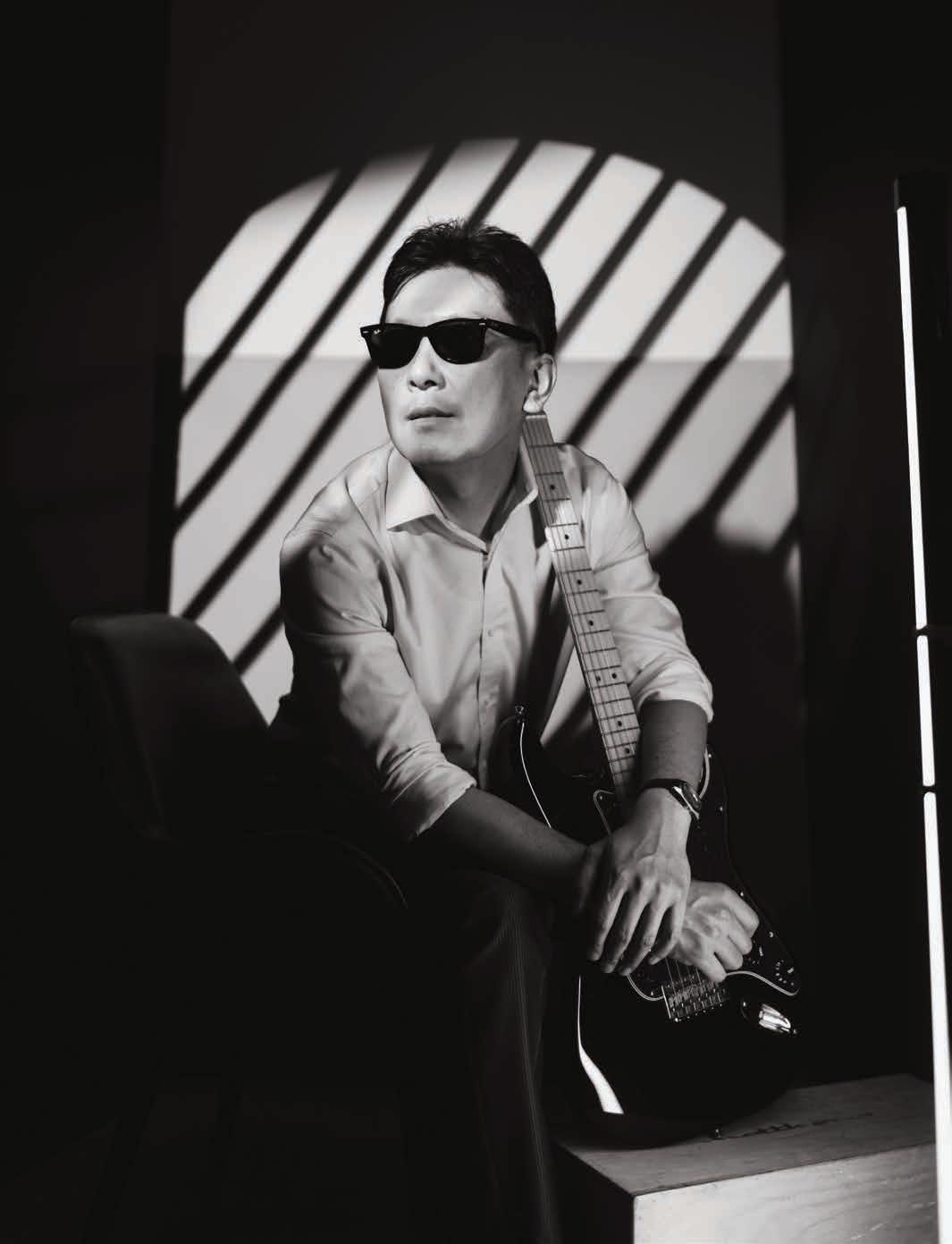
Jazz Guitarist The Reluctant
From Japan to the Midwest, Tetsuya Nishiyama Found an Unexpected Home in Jazz
STORY BY KYLE EUSTICE // PHOTOGRAPHY BY BILL SITZMANN // DESIGN BY RENEE LUDWICK
“I just want to be a better musician than I was last year. From athletes to musicians, I think we are all interested in being better than ever.”
- Tetsuy� Nishiyama
“I feel incredibly fortunate to now be part of this music culture. I never planned for jazz to become my life’s path, but one day something simply clicked. Since then, I’ve just been following the music that speaks to me the most and pushing myself every day to grow as far as possible as a musician and artist.”
– Tetsuya Nishiyama
Like many Japanese youth, Tetsuya Nishiyama was captivated by American music and often dreamt of leaving his home country for the United States. Drawn to Prince and Michael Jackson, the Nagoya native soon discovered Jimi Hendrix, B.B. King, and other guitar greats who inspired him to pick up the instrument himself. His musical ambitions ultimately gave him the courage to leave Japan in pursuit of the American dream. In 2010, Nishiyama packed his bags and headed for Chicago, where he attended Northern Illinois University.
“For a long time, I had wanted to study and live in the United States, because I wanted to experience American music culture fi rsthand and play with American musicians,” Nishiyama said. “Japan has many amazing musicians, but I always felt there was something missing about the feel, groove, and spirit. I wanted to understand them more deeply.”
Studying under Fareed Haque and Bobby Broom, two of his “idols,” he said, he fell in love with jazz guitar and quickly immersed himself in the local scene, though his attraction to jazz wasn’t immediate.
“Straight-ahead jazz didn’t connect with me at fi rst,” he said. “I thought it sounded too complex and too abstract for my taste at the time. Everything changed when I met two incredible jazz guitarists in Chicago. They taught me a tremendous amount about jazz and strongly encouraged me to pursue it seriously. I think they saw potential in me before I fully saw it in myself.”
Since then, he’s played alongside the likes of Buddy Guy, Roy Ayers, The Emotions, Nathan East, and John “JR” Robinson. “I played countless
gigs and the musicians there had an incredible feel and spirit,” he said. “I was fi nally learning exactly what I had been searching for but couldn’t fully fi nd in Japan.”
But in 2020, the COVID-19 pandemic hit and the concert industry shuttered. Gigs dried up and Nishiyama knew it was time for a pivot.
“Like millions of musicians, I had no performance jobs,” Nishiyama said. “I was still able to teach online, but my income got cut by 70% or 80%.”
A former classmate who lived in Nebraska suggested he come to the University of Nebraska–Lincoln to pursue another degree—so he did. Simultaneously, he took a position as a graduate teaching assistant while earning his doctor of musical arts degree in jazz performance, which focuses on practical artistry rather than solely musicology research. His friend joked that he might be the only Asian in the state, but Nishiyama was pleasantly surprised to discover that Omaha and Lincoln were quite diverse.
Sixteen years after moving to the U.S., Nishiyama has found his niche. He now serves on the jazz faculty at both the University of Kansas and Washburn University, splitting his time between Omaha, Lincoln, and Kansas City. It’s a lot of driving—in fact, he had to pull over on the side of the interstate to do the interview— but he juggles it with ease.
“I wasn’t planning to stay in the U.S. this long,” he said. “I guess it just happened. For the past two years, I’ve been teaching at the University of Kansas, which has one of the fi nest jazz programs in the Midwest. I’ve been commuting quite a bit, but I still want to maintain Omaha gigs. My life is like a hybrid right now.”
Th at includes a regular weekend gig at the Red Lion Lounge in Omaha, where he plays with Grammy Awardnominated organist/keyboardist Mitch Towne and drummer Jeff rey Johnson, collectively known as the Mitch Towne Trio.
“The fi rst time we played together, it just kind of clicked,” he said. “We just knew. It was very natural and all made sense.”
Towne and Nishiyama took their collaborative relationship a step further on Towne’s latest album, Refuge. The project, released in 2025, won Album of the Year at the Omaha Entertainment and Arts Awards and features Nishiyama on all seven tracks. But, at the end of the day, Nishiyama isn’t chasing fame and the accolades that often come along with it. His goals are simple.
“I just want to be a better musician than I was last year,” he said. “From athletes to musicians, I think we are all interested in being better than ever.”
Nishiyama has performed at a plethora of Midwest venues, including Green Mill, Andy’s Jazz Club, Jazz Showcase, The Blue Room, the Lied Center in Lincoln, and The Jewel. He’s also performed at the Chicago Jazz Festival, Glen Ellyn Jazz Festival, Jazz in June, and Chicago Blues Festival.
“I feel incredibly fortunate to now be part of this music culture,” he said. “I never planned for jazz to become my life’s path, but one day something simply clicked. Since then, I’ve just been following the music that speaks to me the most and pushing myself every day to grow as far as possible as a musician and artist.”
From left: Heather Hooton and Sami Hartong
ShowHaus
Rebuilding Omaha’s Fashion Community, One Designer at a Time
DESIGN Rachel Birdsall
In a city often overlooked in conversations about fashion, Omaha’s creative community has long relied on connection, collaboration, and grassroots support to thrive. When two of its most visible advocates fashion photographer Heather Hooton and marketer Sami Hartong recognized a growing gap in that ecosystem, they didn’t wait for a solution. They built one.
ShowHaus, an online platform designed to connect consumers with emerging designers, was born out of both loss and opportunity. But before it became a business, it started with a simple introduction.
“We met at a Fashion Guild happy hour,” Hartong said. “I was new to Omaha and had admired Heather from afar, so I showed up and introduced myself. Once we finally had a one-on-one conversation, it felt clear this was going to be something important.”
Their connection quickly evolved into collaboration. Through their work with Omaha Fashion Week, the two began to recognize how naturally their skill sets aligned.
“Working together showed us how well we collaborate,” Hartong said. “It felt like a no-brainer to keep building together.”
For Hooton, the impression was immediate.
“The night I met Sami, it was obvious she understood fashion and the work it takes to support a creative community,” she said. “Sami is strong in day-to-day operations and marketing, while I tend to dive deep into projects. Our strengths balance each other.”
That balance would prove essential as Omaha’s fashion landscape began to shift.
The closure of organizations like the Fashion Arts Collective and Omaha Fashion Guild left a noticeable void one that had previously served as a central hub for designers, events, and community engagement.
“The Fashion Arts Collective was how so many people got connected,” Hartong said. “Losing that was a major loss it was a hub for discovery, events, and visibility.”
Without it, designers and supporters alike were left without a consistent way to connect. While events like Omaha Fashion Week and its “Shop the Runway” marketplace still offered moments of visibility, those opportunities were limited.
“If we can help people move away from fast fashion and start supporting designers in their own communities, that’s a huge win.”
Sami Hartong
“Shop the Runway was one of the only chances for people to financially support designers,” Hartong said. “We kept asking, ‘What if that experience existed all year, in one place?’”
That question became the foundation for ShowHaus.
For Hooton, the need was both personal and practical. “Even for me, being deeply involved in the community, it was hard to keep track of designers after events where to find them, how to shop them,” she said. “If it was difficult for me, it was nearly impossible for others.”
An online platform offered a clear solution: accessibility, visibility, and continuity beyond seasonal events.
“Starting online made sense because we wanted accessibility not just for Omaha, but for designers and shoppers across the Midwest and beyond,” Hooton said.
Turning that vision into a functioning platform, however, came with challenges.
“It honestly happened very quickly,” Hooton said. “By the end of one coffee meeting, we had the name and were ready to go.”
The execution was less straightforward.
“We had no idea where to start from a technical standpoint,” Hartong said. “Whether we needed to build a website from scratch or what infrastructure we needed.”
Building a marketplace that worked for independent designers required both experimentation and support.
“The biggest challenge was figuring out the backend how to build something that functions like a marketplace while still being accessible,” Hartong said.
With guidance from collaborators and their own growing expertise, ShowHaus began to take shape not just as a retail platform, but as a resource hub.
“Many designers are one-person teams without the resources to manage marketing or e-commerce,” Hartong said. “We built ShowHaus to provide that infrastructure.”
That support extends beyond sales.
“Our designers don’t have marketing budgets, so we become that for them creating campaigns and content that elevate their work,” Hooton said. “We also provide resources, from how to photograph products to where to source materials.”
Just as important is shifting perception. “We’re focused on making designer fashion feel approachable,” Hartong said. “Showing people how to style and wear these pieces in everyday life.”
In doing so, ShowHaus is not only supporting designers it’s reshaping how consumers engage with fashion locally.
“When that central hub disappeared, people didn’t lose interest they just lost a place to gather,” Hooton said. “The support we received when we launched ShowHaus showed how much this community still cares.”
Looking ahead, both founders define success not by scale alone.
“Success isn’t about revenue first it’s about impact,” ooton said. “If we’re helping designers grow and sustain themselves, we’re doing what we set out to do.”
For Hartong, the vision is even broader.
“Success is being the connector the spider web that brings people, creativity, and opportunity together,” she said. “If we can help people move away from fast fashion and start supporting designers in their own communities, that’s a huge win.”
Visit showhaus.com for more information.
FEATURE
A Dream Returns
The Dreamland Lounge Builds on North Omaha’s Jazz Legacy
Story By Paul B. Allen IV
Photography By Sarah Lemke
Design By Rachel Birdsall
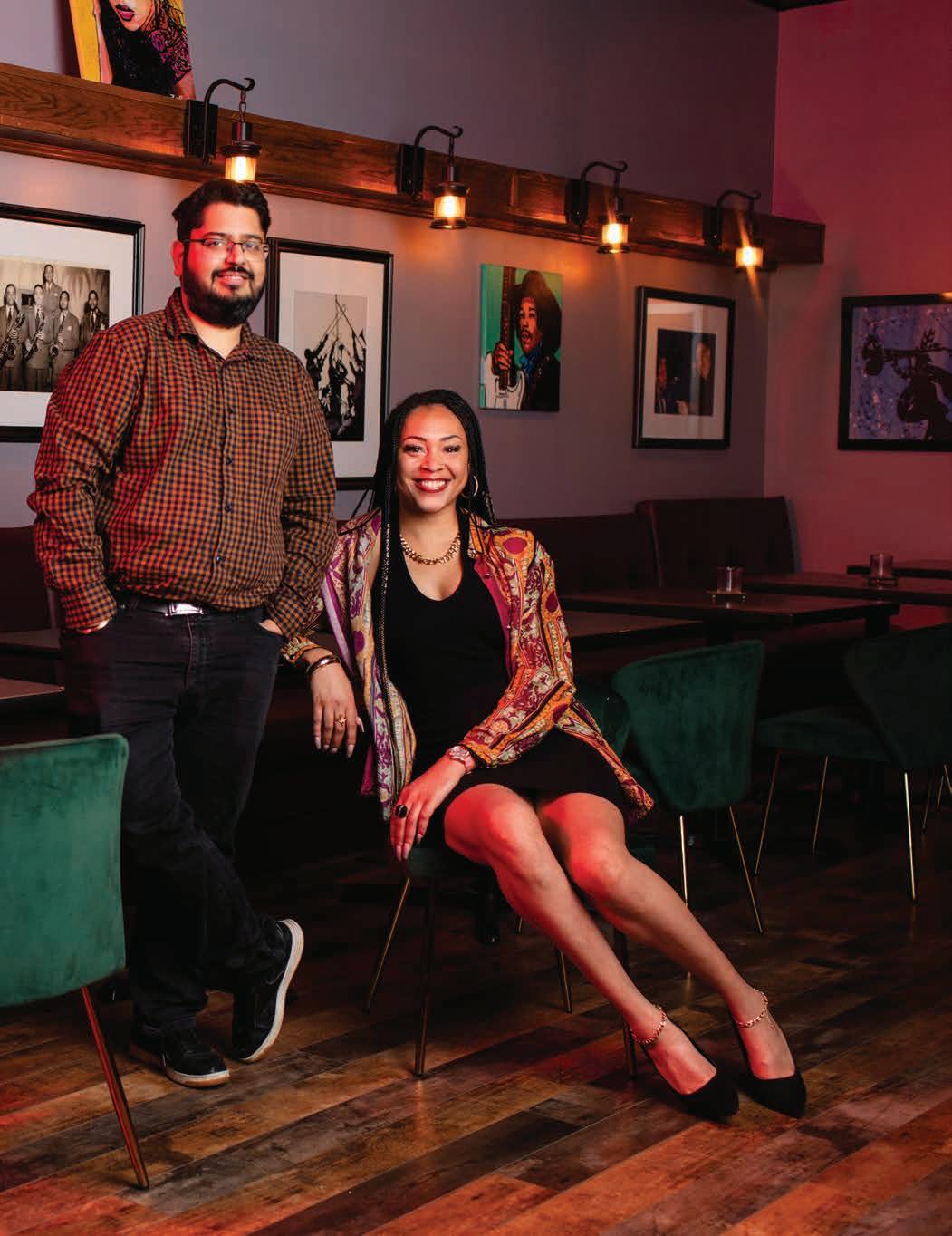
From left: Sahil Sethi, Katie Raine Thomas
ord of the Dreamland Lounge arrived in North Omaha the way the best rumors do: sideways. It started with hyped conversations in the African American community and ricocheted across social media, friends ringing friends to find out if anyone had the inside track.
The name alone did half the work. The Dreamland Lounge landed on North Omahans’ ears like a chord they already knew. A ghost note of the legendary Dreamland Ballroom, a live music and dance venue from North Omaha’s rich past. As the murmurs grew louder, artwork began surfacing on social media. A quiet marketing campaign launched soon after and was promoted by Katie Raine Thomas, a sharp and well-regarded figure in business and media and daughter of one of North Omaha's legacy African American families. A February soft opening at 39th and Ames followed, and just like that, as if it had always been waiting in the wings, North Omaha had a new jazz spot.
Just as north-siders suspected, the name was purposefully chosen. The Dreamland Lounge was conceived as a living tribute to the Dreamland Ballroom, raised in 1923 by the visionary entrepreneur Jimmy Jewell. In its heyday, Jewell's ballroom drew the royalty of African American music with names like Count Basie, Duke Ellington, Fats Domino, Preston Love Sr., and a constellation of others, bringing a particular kind of prestige to North Omaha that the neighborhood has never quite forgotten. For those who carry that history close, the new venue stirred both excitement and expectation. And when word circulated that Thomas was among the owners, decisions were made to pull up and see what was going on. The red velvet curtain, at last, was pulled back and Omaha leaned in.
“I was learning about the different neighborhoods, and that’s when I came across the Dreamland Ballroom. It has such a rich history. So many historically important events took place there.”
Sahil Sethi
The Space
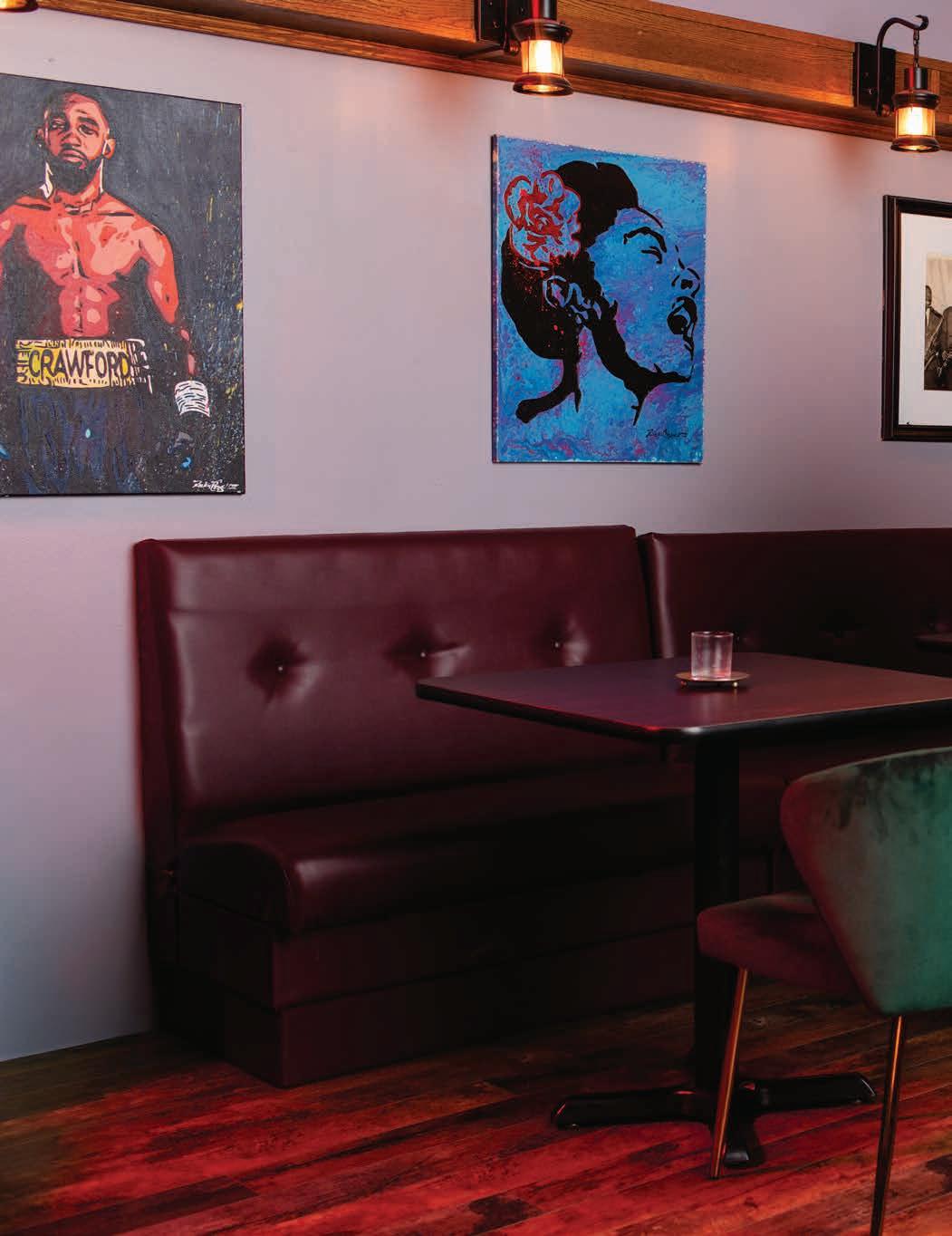
The Dreamland Lounge is a lush, intimate space that holds about 50 people just enough room to serve as a serious listening space where patrons come to study the licks. On some nights, it can morph into a lively gathering spot where conversation holds court and the music plays a background role. Some events celebrate complementary genres of art, with poets and wordsmiths gracing the stage, DJs spinning intelligent jazzy soul, and dancers titillating the sophisticated crowds with movement.
The bar employs friendly mixologists, led by Ashley Turner, who crafts signature drinks named after important North Omaha areas like the “24th Street Old Fashioned,” and the “Love’s Jazz,” a reposado drink. Other drinks are named after legacy African American families and figures like “The Mildred White Cosmo,” named after Mildred D. Brown, the matriarch journalist who founded the Omaha Star newspaper, and a mocktail named “the Malcolm” after revolutionary figure Malcolm X, who was born in Omaha. There is a full bar, including a Black-owned wine collection, and a wide variety of mocktail options a nod to a younger generation who are moving beyond alcohol culture. Catered food rotates in from food trucks depending on the night, including Indian food from Tikka Talk.
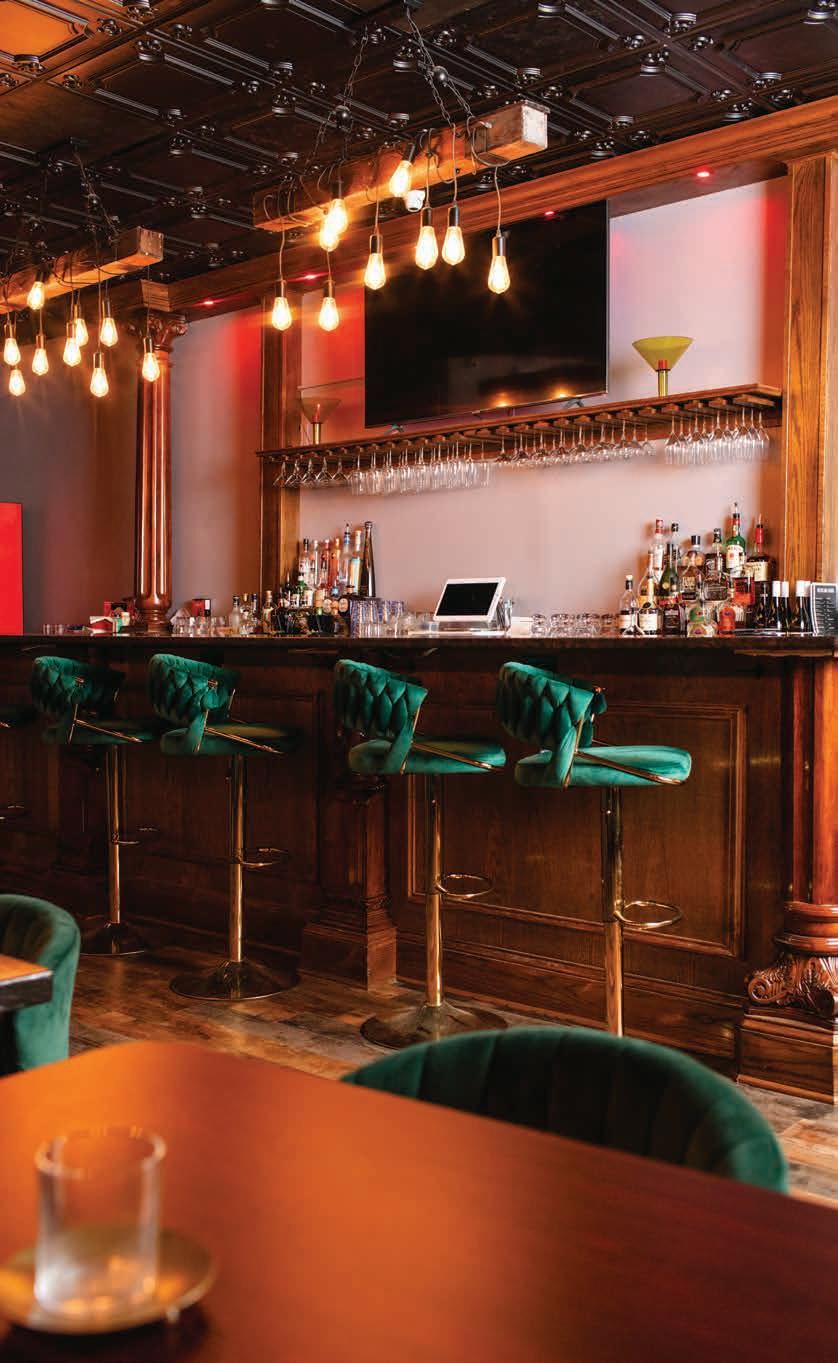
Walking into this intimate space is a vibe. Dark wood surroundings, low light, velvet barstools and booths surrounded by artwork make it a very “grown folks” scene, like a place that’s been there for a while. That aesthetic is no accident. According to Thomas, the art is doing quiet work. Works from local artists Thizzy Marley and Alvin the Artist from the Omaha Arts Council share wall space with photographs donated by Preston Love Jr. from the Love family archive. These images gently school anyone paying attention. Among the photos is Love Sr., the celebrated North Omaha saxophonist, seated with the Count Basie Orchestra in the original Dreamland Ballroom. The artwork deepens the room's character, each piece a quiet reminder of legacy, of ambition, and of jazz's deep roots in North Omaha.
The Origin Story
It all started when Sahil Sethi, a businessman originally from India, moved to Omaha in 2014 and saw opportunity all around. “From 2014 to 2026, I've seen insane development happening in and around the area,” Sethi said. A trip to New Orleans with his wife in 2017 spawned the idea that would become the Dreamland Showcase. “That's where I got exposed to live jazz and blues music and how people were relaxing sitting out on the patio with cocktails, listening to live music,” Sethi said. “It was a serene atmosphere. And just next to it was the French Quarter, where people were partying like crazy. In Omaha, I never got that kind of atmosphere. A place where I can sip a good scotch and enjoy live music in a serene setting.”
When Sethi returned, he met with his friend and business partner, Rajan Devan, and started looking for opportunities to start a jazz club. Sethi and Devan had been doing research on several areas around Omaha, including Elkhorn, the Blackstone District, and North Omaha with its rich African American history.
“I was learning about the different neighborhoods, and that's when I came across the Dreamland Ballroom. It has such a rich history. So many historically important events took place there,” Sethi said. He was inspired to name the new club the Dreamland Lounge as he learned about the ballroom. “The original ballroom also had a vision of providing a platform and a stage for budding, growing artists, and that is our agenda as well.”
Sethi said that he had not talked to the Jewell family about the use of the name and its attachment to the legacy, although he would eventually make a connection to the African American community through Thomas, his fifth partner.
In the planning years between 2017 and 2025, Sethi, Devan, and another business partner, Arun Malik, discussed the project extensively, working out what they could bring to the table. The three friends had worked on other business projects together in the past: “Omaha Loves Bollywood,” a series of event nights featuring Indian culture, and a food truck called Tikka Talk, which they created the previous year. For this latest venture, Sethi put together a team of five owners who each have responsibilities. Sethi, who is the majority stakeholder, handles operations and programming. Devan runs sound and entertainment and handles talent and artist agreements. Malik helps with liquor inventory. Eventually, they brought on Kanak Sabnekar as a fourth. Then, Thomas became the fifth owner and started right in on her creative director duties. The vibe, the culture, and the grownfolks swag comes from her.
But something else, something very important, also comes from Thomas: the connection to the culture, the legacy, the history, and most importantly, the African American community in which the lounge resides. Her connections run deeper than just the patrons, but also to the artists, to the elders, and to the individuals and organizations that work in the thriving business and art community of North Omaha. Thomas would introduce Sethi and the others to key members of the community that would connect them to the history they were wanting to celebrate.
“The Dreamland Ballroom was a product of the community. Built by a Black man: Jimmy Jewell. And when you build something that culturally evolves, it’s going to be successful because it’s being built for, and with, and around the people.”
Preston Love Jr.
Katie Raine
Thomas
Sethi met Thomas around the time of his first venture, “Omaha Loves Bollywood.” Thomas worked in media and promotions with her company, Raines Productions, and also as program director at the Love’s Jazz and Arts Center, another crucial jazz venue in North Omaha open from 2005 to 2020. Years later, as the Dreamland Lounge plans unfolded with Sethi and his partners solidifying the operational and logistical side of the business, he would reach out to Thomas to be a part of the team.
“We needed somebody from the community who knew the community someone who could help us understand which direction to go and what we should be offering in the neighborhood,” Sethi said. “So I reached out to Katie, told her what we were building in North Omaha, and said it would be really helpful if she could be part of the team.” They signed some papers and Thomas immediately began hipping them on the history of jazz in North Omaha and about the jazz ecosystem that was already existing.
“She filled me in on details I might have missed in my own research talking to me about the ballroom, the [North Omaha] Visitors Center, how NOMA [North Omaha Music and Arts] is playing a role, how the jazz and blues scene is being appreciated in North Omaha, and connecting us to local artists and performers,” Sethi said. “She's really the liaison between the needs of the community and how we can work better together.”
Sethi shared that his bartender, Ashley Turner, also helps with connections. “She's from the neighborhood as well,” he said. “She and Katie have both been helpful in connecting me to other influential people in the neighborhood who are there to help us grow and explore other opportunities.”
One of the introductions Thomas made was to Love Jr., a man who doesn't merely know the jazz legacy of North Omaha he is woven into it as a historian, as elder of the community, and as the son of Love Sr. Senior got his start playing with Count Basie and his orchestra in the Dreamland Ballroom in the 1940s. Love Jr. was all too happy to share the history and his advice
as he sat in his office at the North Omaha Visitor Center, the building right next to the original Dreamland Ballroom, now called the Jewell Building.
“You have to understand that up to that time, 24th and Lake streets was the center and was popping every corner had something going on,” Love said. He emphasized that it’s the dream of the community that must be served, especially when associating a venture with an important historical marker for North Omaha families. “The subject of the dream has to be rooted in what it is and what it was, in substance. The Dreamland Ballroom was a product of the community. Built by a Black man: Jimmy Jewell. And when you build something that culturally evolves, it's going to be successful because it's being built for, and with, and around the people.”
Thomas' connection to Love Jr. has its roots in her time at the Love’s Jazz and Arts Center on 24th and Lake, a venue built by then-city council member Frank Baum as a tribute to Love Sr. and the Love family. “Love’s Jazz was open for all the right reasons,” Love Jr. said. “It was opened with jazz and art in mind. It was meant to be a cultural center. People from all over the city and region would go to Love’s Jazz. It had all the components the visual arts, performing arts, and the hard, good jazz.”
Thomas worked at the Love’s Jazz and Arts Center from 2014 to 2018 as program director. “I met Katie during those years, and I always remembered her,” Love Jr. recalled. “She was friendly, and she was a good component.”
Just like the Dreamland Ballroom’s vision influenced Sethi, Thomas’ time at the Love’s Jazz and Arts Center inspired her to infuse its vision into the new Dreamland Lounge. Thomas’ dream? “I want this space to be known as a hub,” she said. “This is a place to build, a place to vibe, a place to create, but also a place where you can grow and make some money as an artist.”
Among the sound advice given to Thomas by Love Jr. came a warning. “Now, music projects in North Omaha cannot succeed by just naming it something or having it open,” he said. “They must connect
themselves with the legacy and the history of North Omaha. I'm hoping that all the people working with Katie understand if you detached [Thomas] or the culture from it, you're going to be left with four walls and fewer people.”
Sethi has ambitious plans for the Dreamland Lounge. He's thinking well beyond the walls of 39th and Ames. He speaks of building an ecosystem that can bring the vibe of New Orleans, where his idea originated, to Omaha. “I'd love to create something like what the French Quarter has," he said, "where you can do a bar crawl, or block off the streets and organize a big festival…people can move from one [venue] to the next, eat, drink, and experience different vibes.”
Expansion is also very much on the table. “The future plan is definitely to expand, to grow bigger, to carry that history to all the other places. West is a good potential option,” he said. He envisions the Lounge taking root in the Blackstone District, in South Omaha, and out in Elkhorn, which he calls home. “Carrying that name and the history around the place again; expand on that scale.”
For now, Omaha settles in and watches, curious to see how the Dreamland Lounge finds its footing within the city's existing jazz landscape. The team, by most measures, has already made good on their opening promise: a room that showcases emerging players alongside seasoned swingers, a cool that doesn't have to announce itself, and most importantly, working to honor the legacy and history of jazz in North Omaha. The dream, it seems, is just getting warmed up.
Paul B. Allen IV is a North Omaha media producer, music advocate, and the grandson of Allen’s Showcase founder Paul B. Allen Sr. Through his work in radio, live entertainment, and community storytelling, he has continued documenting and celebrating the neighborhood’s rich jazz history. Continuing his family’s legacy in the community, he founded 1st Sky Omaha as a North Omaha-focused digital media company.
“I want this space to be known as a hub. This is a place to build, a place to vibe, a place to create, but also a place where you can grow and make some money as an artist.”
— Katie Raine Thomas
60+ ACTIVE LIVING
STORY Kara Schweiss
PHOTOGRAPHY Sarah Lemke
DESIGN Nickie Robinson
Omaha Dancing Grannies Sustain a Lifelong Love of Performing
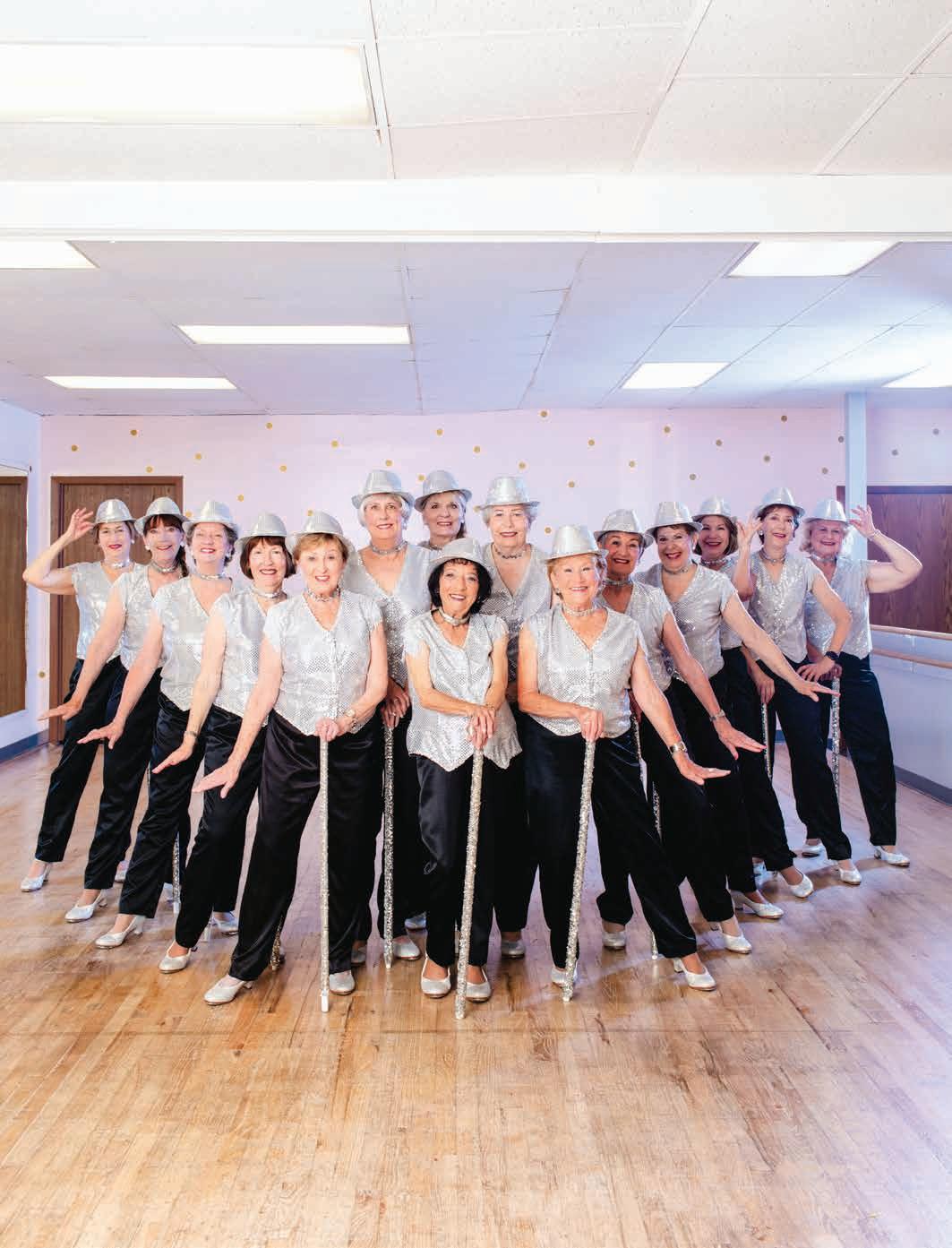
One of Omaha’s most committed and disciplined groups of dancers practices every Monday to perfect a repertoire of around 30 tapdriven choreographed routines that make up 11 or so variable selections for numerous 35- to 40-minute performances around the area year-round. Each dancer is also required to maintain several specific colors of tap shoes at their preferred heel height and manage the upkeep for 15 costumes with some interchangeable elements and accessories like hats, canes, and necklaces.
“We are so busy at our rehearsals on Monday that we don’t have time to teach dancing at all,” said member Diane Huerta. “We absolutely require a tap-dancing background.”
Th at background, however, can be from years ago. In fact, it can be from decades ago. The Omaha Dancing Grannies—recently rebranded as the Omaha Tap-Dancing Grannies—is a group of matu re dancers.
“It is a great way to keep mentally and physically active while having fun and enjoying life.” — Rocky Stern
“We have to be 55 to join the group; our oldest member right now is 88…I will be 80 in August,” Huerta said. “When you have something like dance when you’re younger, it all comes back to you.”
“It is a great way to keep mentally and physically active while having fun and enjoying life,” dancer Rocky Stern said.
The ensemble currently stands at 17, with a maximum cohort of 18 due to studio space, and sustains a waiting list. Members tend to stick around, Huerta said (she’s been with the group 12 years), so they don’t actively recruit because they really don’t have to; dancers typically find Omaha Dancing Grannies through their public performances.
Although many of the dancers would certainly be qualified to choreograph numbers, the team pays an objective professional choreographer rather than deferring to one of their own. It’s one of the ways the Omaha Dancing Grannies has evolved since its 1970s beginning when the late Jane Prawl, a former professional dancer who didn’t want to give up performing, founded the Omaha Dancing Grannies’ progenitor, the Camelot Steppers, named for their original practice space at Camelot Village. The late Pat Leitch, who eventually took over for Prawl, was another ea rly leader.
Over time, the dancers recognized the need for clarifying expectations and collectively developed policies and guidelines to ensure consistency and reduce friction. Today, in addition to requiring regular rehearsal attendance and availability for performances, the group expects everyone to rotate into additional responsibilities over time.
“All dancers voluntarily take an active role which is subject to change annually,” said Stern, a 24-year member. “My present responsibility is planning quarterly luncheons with current and retired dancers.”
“None of us really have an official title, but I am the person that selects the dances to practice each week during our Monday class time, and along with our choreographer and another member, I critique the class and the dances that we’re doing,” Huerta said. “We have a person who has a spreadsheet and picks out the dances for each performance, so when we are called back to the same venue, we’re not wearing the same costume and we’re not doing the sa me dances.”
The music they choose spans decades and genres from Broadway classics and swing-era hits to more contemporary works like Footloose. They’ve performed for convention audiences as large as 1,500 as well as community events of all sizes, technically not charging appearance fees but requesting donations to cover their studio rental, choreographer compensation, and fuel costs for travel. Th ey are especially in demand at senior centers and care facilities.
“We really enjoy memory care when the audience hears a song that might jog something in the memory. Oh, their faces just light up, and that just makes us so happy; it just makes our day,” Huerta said. “[Dance] is something that brings joy to yourself and into your audiences.”
“It is rewarding to see the joy we bring to the residents in nursing homes, senior centers, and audiences in general,” Stern said. “We are a group of women of various ages and interests who all have a love of dance.”
Huerta said the dancers enjoy enthusiastic applause and sometimes a standing ovation. The most common question from audience members during Q&A sessions is, “How do you remember all those steps and dances?”
“[Dance] is a great way to get your exercise and to stay agile, and it also helps with your memory; we know 32 dances and try to remember all those steps,” she said. “We show them that older people can still be vibrant and still be doin g things.”
Follow Omaha Dancing Grannies on Facebook for more information.
Story Beaufield Berry
Photography Bill Sitzmann
Design
Rachel Birdsall
A Symphony for everyone Giving Spotlight
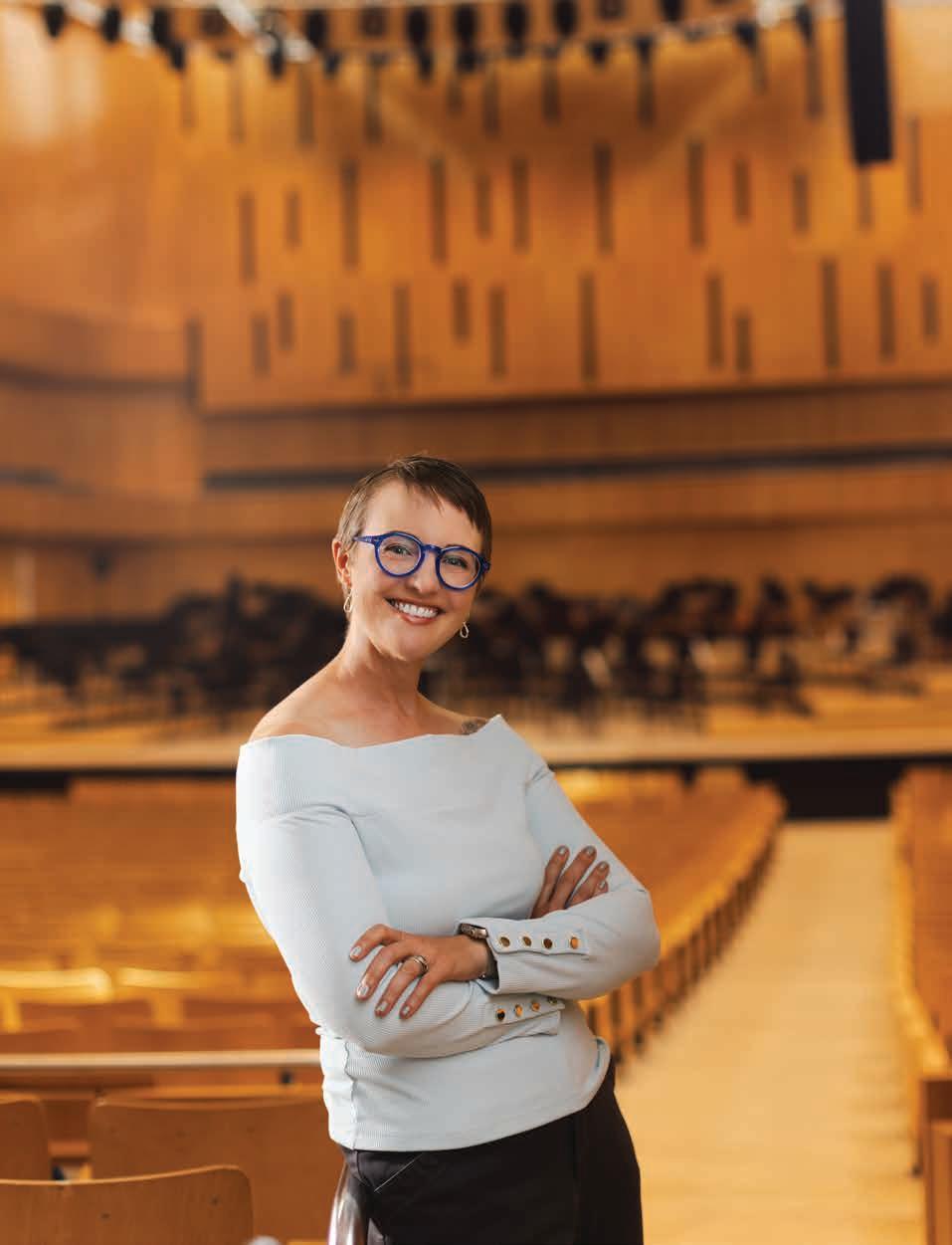
Liz Kendall Weisser Reimagines Community Through the Omaha Symphony
or Liz Kendall Weisser, director of community and education at the Omaha Symphony, outreach is not an add-on to the orchestra’s work. It is central to its identity.
“I have been there for eight years,” Weisser said. “I came in and out and engaged with them beforehand. We did some education projects and some concerts leading up to that.”
Her path to the symphony was not strictly orchestral. Weisser studied theater, worked in theater education, and built a career in arts-centered community work before stepping into her current role. That broader background now informs how she thinks about connection, collaboration, and access.
“The symphony is unique in that, at least for Omaha, its investment is in the artists to live here full-time,” she said. “If you donate to the symphony, almost all of it goes to the grocery bills [and] rent of 100 artists.”
That investment matters as experts consistently talk about brain drain, losing talented people to larger corners of the world. The program at the symphony not only allows musicians to make a living, but also to do more than perform. It makes them available to schools, neighborhood spaces, and community partners throughout the city. “Their ability to spend time in schools and invest in the community is just significantly larger, because your artist pool is available, and they’re being compensated,” Weisser said. “So they can afford to say yes.”
That “yes” takes many forms. A third of the orchestra’s time is spent on education and community engagement work, with musicians moving between subscription concerts, school visits, rehearsals, and neighborhood programs during a packed 38-week season.
“There’s 43 full-time musicians,” Weisser said, noting that the season runs roughly from mid-September through early June. There are also part-time musicians and a staff team supporting the work behind the scenes.
On Weisser’s team, three people facilitate the symphony’s K–12 education initiatives. Those programs are designed in waves, serving different age groups throughout the year. For younger students, there are orchestra introduction experiences for pre-K through second grade and participatory concerts for upper elementary students. Middle schoolers can take part in all-day arts exploration experiences created in partnership with the Joslyn, while high school students engage more deeply through performance-based programs.
Among the signature offerings are Choral Collaborative, a large-scale invitational in which schools come together to perform a masterwork with the orchestra, and Music Mentors, the symphony’s side-by-side program for student musicians. “We currently serve every high school string program with a side-by-side,” Weisser said. “The difference in ensembleship and technical proficiency from the beginning to the end of that is significant.”
Just as important are the relationships that grow through those experiences. “At the high school level, you are seeing an ensemble of those kids for four years,” she said. “And they make relationships with the symphony musicians, and then they come see the symphony on stage…and it builds an intergenerational music community.”
That sense of long-term connection also shapes the Omaha Symphony’s broader Forte programming, which brings musicians into libraries, galleries, after-school spaces, adult day centers, cultural organizations, and social service settings across the city. Under Weisser’s leadership and alongside longtime collaborators, the symphony shifted during the pandemic from offering standalone special programs to embedding community engagement into the organization’s structure.
“We kind of turned that on its head and branded all of the community engagement work that had been done for 25 years,” she said. “And made it part of the fabric of who we are, and it’s integrated into our budget, and our ideology.”
That shift created consistency for community partners and more room for strategic growth. “We are able to take risks and try new collaborations and new programs and new partners,” she said. “Because then, when you can take a breath and know that it’s going to be there, we’re always going to be there for you. Then you can be more strategic about how and when you say yes.” The program has seen the symphony partner with local artists like spoken-word poet Lite Pole and activist/author JaKeen Fox.
Accessibility is a recurring theme in Weisser’s work. That means financial accessibility, but also emotional and logistical access reducing the feeling that the symphony is for someone else.
“Everybody should have an opportunity to explore for themselves,” she said. “To be able to make up your own mind whether the symphony is something for you, regardless of their circumstances.”
The Omaha Symphony’s free virtual classroom helps extend that access to rural students or schools that cannot make the trip downtown. Community rush and student rush ticket programs help lower cost barriers. Sensory kits, hearing assistance, audio description, and neurodivergent-aware programming widen access further.
And Weisser is especially animated when talking about how this work can grow. She points to collaborations with local artists and cultural organizations, including programs with El Museo Latino, the Union for Contemporary Art, and the Nebraska Chinese Association. One highlight on the horizon is a Lunar New Year concert.
Ultimately, Weisser wants Omaha residents to see the orchestra less as an institution apart and more as part of the civic fabric.
“I really present the orchestra as your neighbors, because they are,” she said.
And if there is one invitation she hopes people take seriously, it is a simple one: “Just come.”
Visit omahasymphony.org for more information.
Opa!
PHOTOGRAPHY Bill Sitzmann
DESIGN Nickie Robinson
it’s all greek to stephania pappas
om, why do I have to go to Greek school?” a young Toula Portokalos asked.
“When you get married, don’t you want to be able to write your mother-in-law a letter?” replied her mot her, Maria.
In the romantic comedy hit My Big Fat Greek Wedding, actress and screenwriter Nia Vardalos used inspiration from her own life growing up.
16-year-old Stephania Pappas laughed at some of the stereotypical moments from the fi lm, like when the father insists on spraying Windex as a cure-all for ailments.
“We are defi nitely calmer than that,” Pappas said.
Unlike Toula, Pappas embraces her cultural side, with things such as attending Greek school on Sundays. She learns Greek vocabulary and grammar for an hour, like Toula, with about five other students who attend after services at St. John the Baptist Greek Orthodox Church. Sometimes, students have homework in online programs for extra practice. Other times, lessons center around history or reciting “Our Father” in her nat ive tongue.
Pappas stays active in her community by delivering speeches for the annual Oratorical Festival and participating in the Greek Orthodox Youth of America. She hopes to start a girls’ basketball team with the girls in her GOYA group. Although Pappas has never really played, she likes the idea of traveling to Denver or other cities, where GOYA holds the basketball tournament.
Omaha’s Original Greek Festival also brings people together to celebrate a custom that has lasted since 1978. Guests can savor gyros, dolmades, and souvlaki while sipping on a cold Mythos beer. Others may want to toast with a shot of ouzo, yelling “Opa.” Theme nights like the Mykonos Block Party, Santorini Island Night, and Athens All-Day added regional fl air to last year’s three-day event.
I want to honor my ancestors from Greece, and to share that with people who are not familiar with our culture.
— Stephania Pappas
Pappas immerses herself in the heart of the parish life and cultural customs, where their father, Peter, serves as the priest.
“I want to honor my ancestors from Greece, and to share that with people who are not familiar with our culture. I’ve heard from people who ask me if I believe in Greek gods,” Pappas said, laughing at the misunderstanding. “I’ve grown up in the church. It’s like my second home.”
Th is includes traditional Greek dancing that Pappas started at the age of 3. She has spent the past two years competing with the Anemos dance group through her church and alongside her older brother Yanni.
In one YouTube video, Pappas and other girls in Metsovo dresses stand shoulder-to-shoulder with their arms linked. Gold fi ligree chains shimmer around their necks under the bright blue-neon sign proclaiming the theme in bold letters, “I Σ TOPIE Σ,” meaning stories or histories, at the 2026 Hellenic Dance Festival in New Orleans.
The synchronized steps, shaped by the rugged mountain traditions of Metsovo, earned the Anemos troupe a silver placement in the Advanced Narratives Final division after winning gold in 2023 and platinum in 2024.
Yanni recalled his sister, along with others, waking up with the sunrise to help set up before the festival. Grandparents and children danced in the hallways while buttery baklava and savory spanakopita baked in the oven.
“The younger ones are ready to dive in, be helpful, and carry on the legacy. I want to say we’re all just one unit, cohesive,” said Yanni, the director of marketing for the festival.
Pappas hopes to learn more cooking skills from her mother, Helen. The family, including siblings Sophia, 27, and Gregory, 21, connect through their culture. Yanni, 25, recalled how Pappas reacted to seeing the places where their relatives came from during a trip to Greece. The teenager never picked up her phone, preferring instead to take in the sights and smells.
“I witnessed a bunch of times where she put others before herself,” Yanni said. “Let’s say she wants to hang out with her friends on a Friday night, but there’s a family thing or dance practice. She is okay giving up that fun Friday night to go to Greek dance parties or hang out with the fami ly instead.”
In her free time, the Marian High School student strums the guitar, paints, and plays lacrosse for Duchesne Academy of the Sacred Heart. Stephania, though, credits her parents for encouraging her to embrace her heritage. She has volunteered at the Lutheran food pantry and enjoyed sharing all things Greek at her school’s cultural day.
“It’s the best thing to be Greek. I wouldn’t want to be anything else,” she said.
Visit greekfestomaha.com for more information.
W TIME TO VOTE
elcome back to another year of Best of Omaha! Since 1992, our Best of Omaha contest has been a local favorite. Best of Omaha was established to be a true award businesses cannot buy their way into this contest.
Through the years, the contest has grown, and with it, so too has the number of voters. Best of Omaha is highly competitive with tens of thousands of votes counted each year, and voter participation remains pivotal to the outcome.
In order to become a “Best of Omaha,” restaurants, retailers, and businesses depend on your vote. You can feel good about voting in Best of Omaha, because we are the city’s legitimate “best of” contest.
Like the local businesses you love, our voting system is fair, convenient, and free from manipulation. We use a verified email system for all voters. We only accept one ballot per verified email to avoid vote-stuffing. The ballots are free of advertising and sponsorships. It doesn’t take much time to vote, and, although there are lots of fun categories from which people can choose “Household” and “Dining” are among the favorites around here the minimum number of votes is five. We also leave the category fields blank so voters are not steered toward certain businesses.
To encourage voting and say thank you, many local businesses offer discounts that the public can obtain simply by showing their proof-of-voting certificate. Anyone who completes the Best of Omaha voting ballot will receive the certificate and discounts that come with it. Who you vote for does not show or affect your ability to receive the discounts.
Please take a few minutes and vote July 1 through Aug. 10 at bestofomaha.com. Results will be published with our annual Best of Omaha Results Guide on Nov. 1. The following pages are campaign ads requesting your vote. When you see a yellow QR code, it will take you directly to their voting category.
Thank you for your participation in the Best of Omaha,
TODD LEMKE Executive Publisher Omaha Publications
KETV is proud to be a part of Omaha Magazine’s Best of Omaha. Thank you to everyone who votes each year! As Omaha’s News Leader, we love working with local businesses who make our city a great place to live and work.
ALLISON SMITH President and General Manager KETV NewsWatch
7
alnut Media is honored to once again partner Omaha Magazine as a media sponsor of the Best of Omaha campaign! As the area’s only locally owned and operated broadcast company, we recognize how important the connection to local consumers is!
Being recognized by consumers as the top businesses in their category is a great accomplishment! We are excited to spread the word to our listeners and continue to encourage active participation in the voting process.
We happily support Best of Omaha on our radio stations, which include: Boomer Radio, playing the hits from the ’60s and ’70s; KCRO 660AM, The Heartland's Christian Voice; and through our digital divisions, Performance Digital, and Performance Podcasts!
Omaha Magazine continues to do an outstanding job of making the Best of Omaha the premier program in the country.
We encourage you to support the businesses and sponsors throughout the coming year.
PATRICK COMBS President/CEO Walnut Media
Since 1992, Best of Omaha has asked a simple question: Who does Omaha trust?
The answer comes from the choices made by thousands of customers every day. The salon that remembers “the usual,” the mechanic who explains a repair before you walk out the door, and the fitness studio where people find encouragement are all places we can choose to keep going back to.
For many of us who have a “favorite” of these businesses, the choice is personal. But when enough people take the time to vote, they become a public recommendation.
This is why Best of Omaha votes matter. The answer to that question Who does Omaha trust? can be found in Best of Omaha winners’ signage throughout the metro area.
Omaha Magazine’s Best of Omaha contest is designed to be a true reader-driven award. It’s not about who can purchase the most attention, it’s about who has earned it.
For local business owners, this recognition can bring new people through the door or remind employees that their
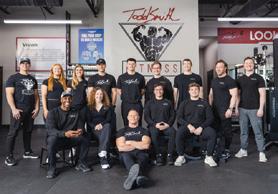
effort isn’t going unnoticed. Todd Smith Fitness, a perennial winner, put that feeling into words: “We are deeply honored by this consistent recognition. For the last 42 years we have pursued a level of excellence that allows our clients to flourish physically, emotionally, and metabolically. This award is a testament to the hard work of our dedicated team and, most importantly, the progress of our members.”
The feeling has been echoed by countless businesses who have won Best of Omaha over the years. But the contest is just as much about the voters.
Most votes are tied to specific memories. Voter #60709 wrote about visiting a neighborhood La Mesa in Papillion, where staff say “Welcome home” when regulars walk in. The voter said their family had been going to that location for 15 years. Voter #82391 wrote that Block 16 is “unique and incredibly delicious” every time they go, adding that the specials are “out of this world.” Businesses like these have given their customers a reason to tell others, and then a reason to vote.
This is what makes Best of Omaha different from a quick star rating. These votes often come from relationships built over time. People remember when a server is patient with their family, when a business owner stops by the table, when a staff member knows the usual order, or when a team handles a busy day without making customers feel rushed.
18 YEARS #1.
Best of Omaha reaches well beyond where people go for dinner. Voters also use the ballot to recognize the people who train their dogs, plan celebrations, start their mornings, and even buy their houses. Voter #50354 wrote about Karie Milford of Milford Real Estate, saying she had “an exceptional ability to meet the clients home buying goals and expectations.”
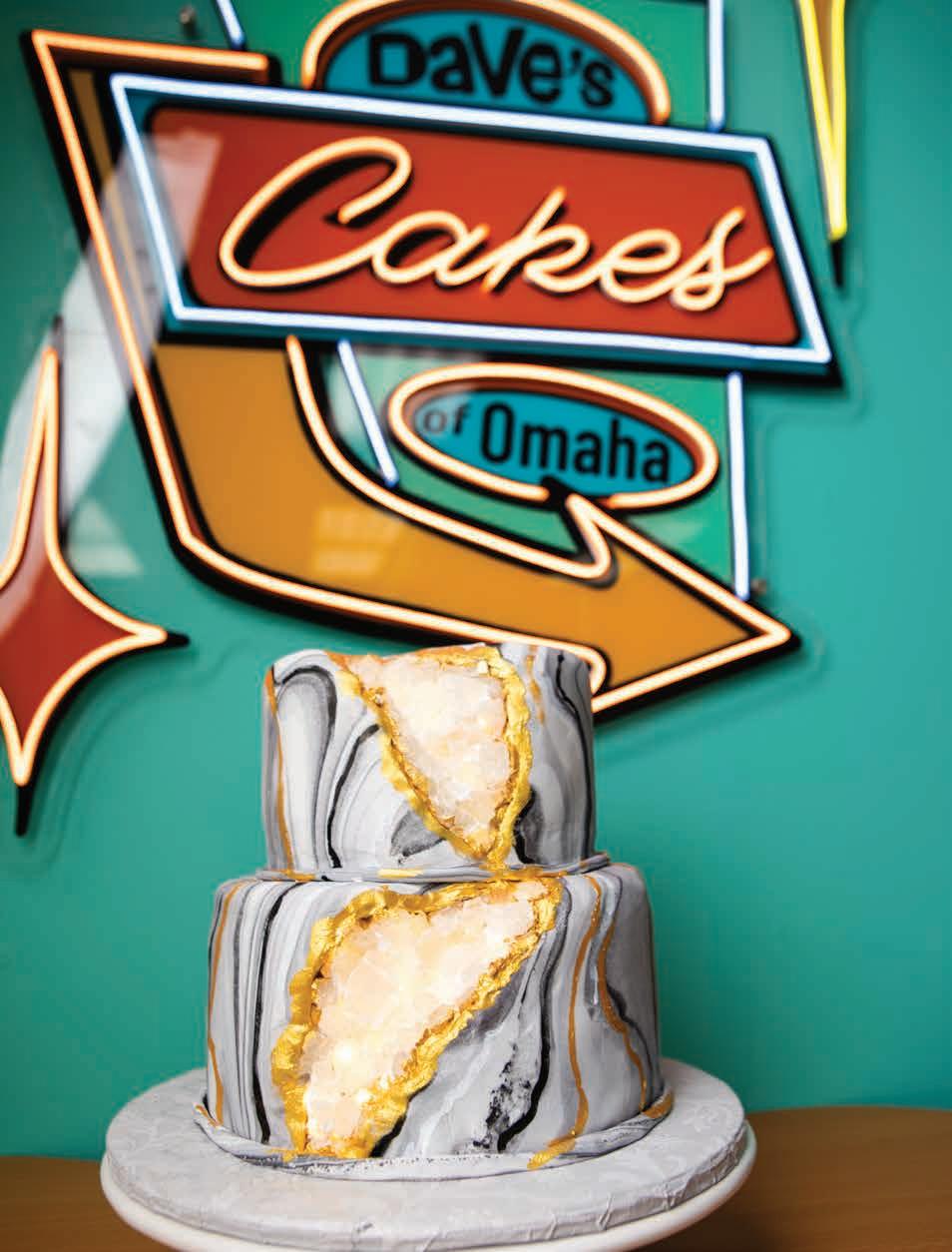
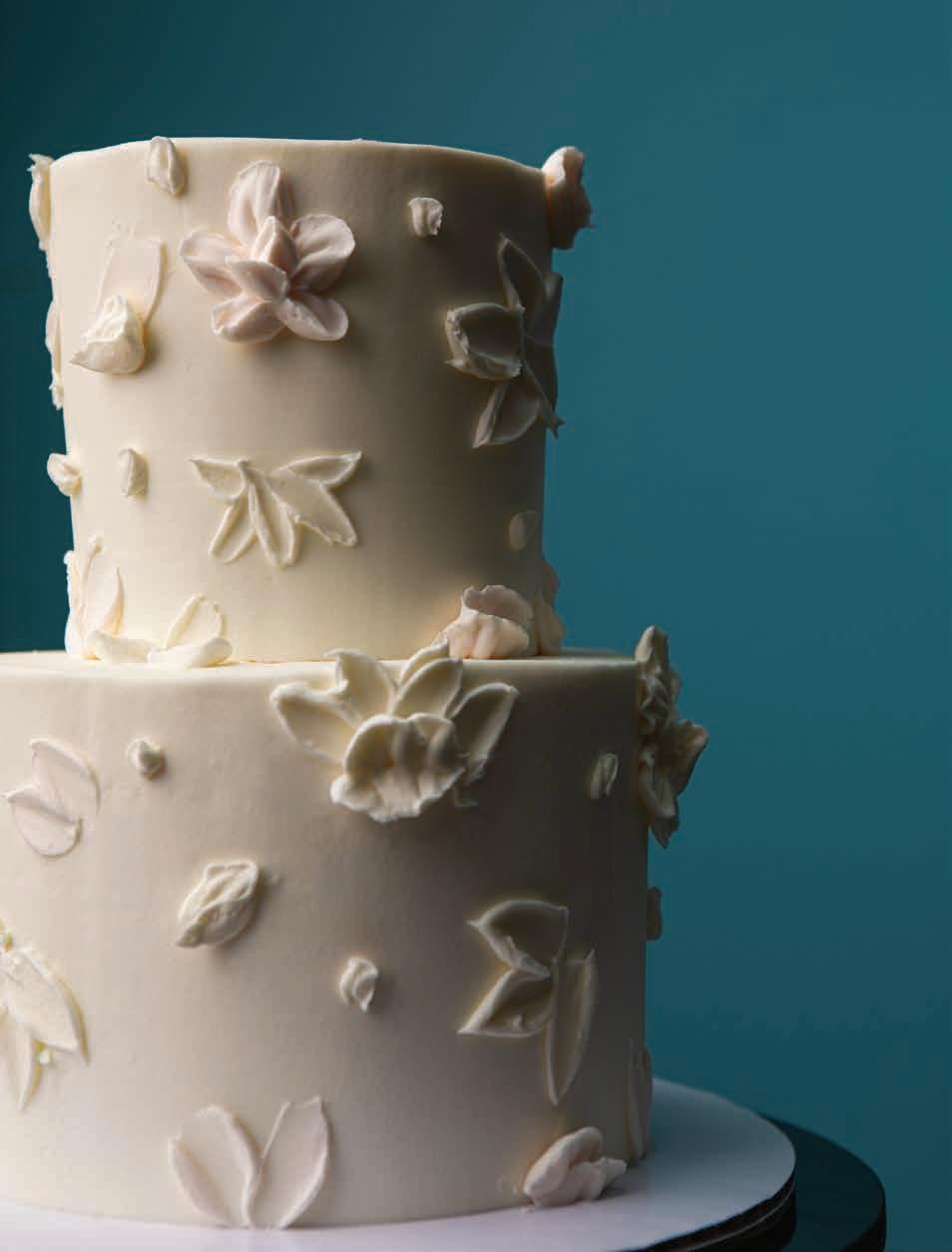
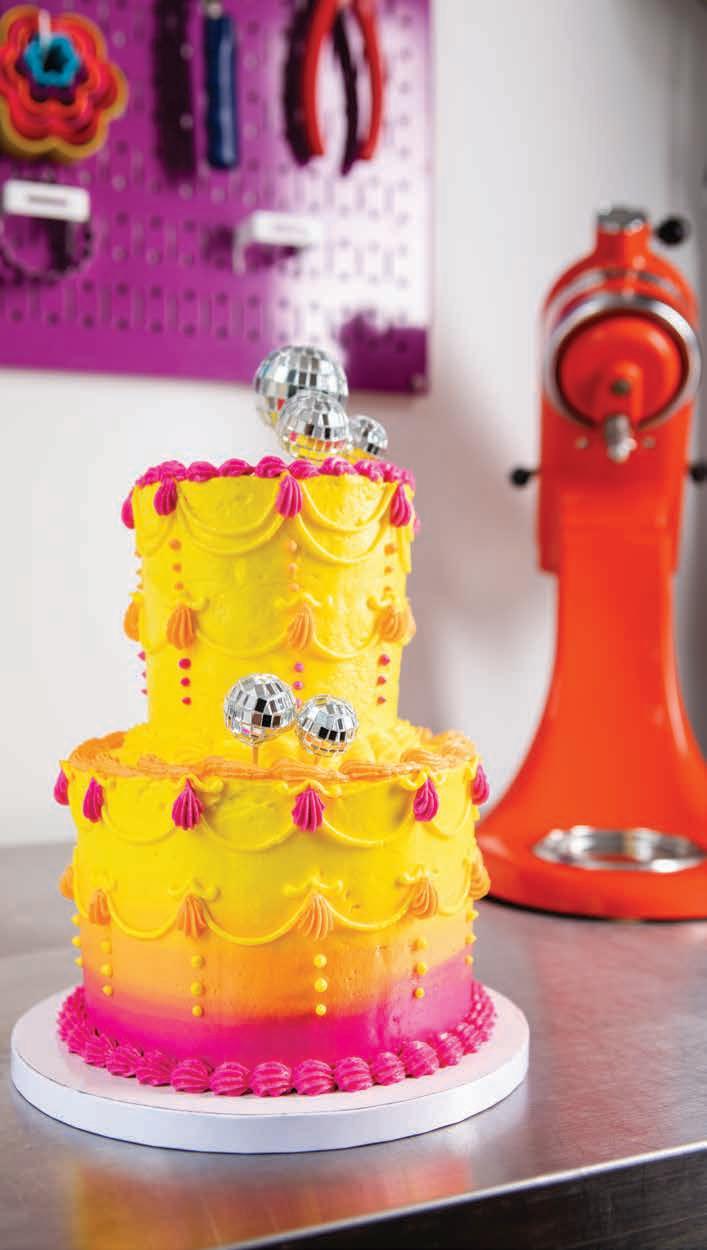
Then there are the businesses people trust for special occasions. Voter #93291 wrote that Cake Creations had handled several custom cakes and large cupcakes, adding that anyone planning a special event should contact them. For customers, that trust matters, and that’s why Best of Omaha is so important.
This year, voting runs July 1 through Aug. 10 at bestofomaha.com. The process is simple. Visit the site, complete your ballot, and vote for at least five businesses. Categories cover a wide range of Omaha favorites, including dining, household services, health, entertainment, and more. When you see a QR code in these campaign pages, it will take you directly to that business’s voting category.
Best of Omaha uses a verified email system and accepts only one ballot per verified email address. The ballot is advertising-free, and the category fields are left blank so voters are not steered toward certain businesses. Behind the scenes, safeguards including IP address monitoring and AI-assisted tracking help protect the contest from vote-stuffing and manipulation. That fairness is one of the reasons Best of Omaha has remained a trusted local contest for decades.
After completing a ballot, voters receive a proof-of-voting certificate. Many local businesses offer discounts to people who show that certificate. The discounts are simply a thankyou for participating. Who you vote for is private and does not affect your ability to receive them.
So before you vote, think about the businesses that made your year easier, better, calmer, healthier, or more enjoyable. Then vote for them!
OUR THANK YOU FOR MAKING BEST OF OMAHA THE BEST OF THE BEST
With Omaha Magazine ’s annual Best of Omaha contest, readers know that they can rely on a publication that will serve as their definitive annual guide for finding the best of what they’re looking for in the metro whether that involves pinpointing the best place in town to order the perfect Bloody Mary or deciding on the best orthodontist for a new set of braces.
Reliable, trusted, accurate that’s what the Best of Omaha contest delivers year after year. And that’s thanks to voters like you, who take the time to recognize their favorite local businesses. Without you, for example, we wouldn’t know where to find Omaha’s most dependable home service providers. The Best of Omaha takes the stress out of finding a plumber, electrician, or home builder all the listings are at your fingertips.
Voting starts July 1 and runs through Aug. 10 on bestofomaha.com. Every vote is unique. Every vote counts. Every vote matters.
As our way to thank voters for taking the time to share their top business recommendations with the community, we are gifting a complimentary subscription of six free issues of Omaha Magazine ( FREE! ), which will include the Best of Omaha Results Guide You won’t miss a single story about the people who make Omaha a spectacular place to live, work, and play and you’ll also receive the most comprehensive resource available for finding the best businesses that make all that possible.
Let’s Get Reading!
THE NEWEST BOOKSTORES ON THE BLOCK
Compiled by Naomi Heu || Design by Rachel Birdsall
here’s nothing better than cozying up with a good book, whether it’s a page-turning mystery or slow-burn romance. Local bookstores in Omaha have continued to be strong staples over the years as many book lovers favor supporting local businesses.
One of the most notable bookstores in Omaha is Jackson Street Books located in the Old Market. It is easy to get lost among the used and rare books in the maze of shelves there. Across town, The Bookworm is a beloved District 66-area literary vendor that regularly hosts author events surrounded by an extensive inventory.
Meanwhile, The Next Chapter is another popular spot with books, gifts, beverage options, and space to hang with like-minded book lovers. The Pen & Dagger, which opened in fall 2024, is a more recent addition to the city’s bookstore scene. It specializes in fantasy, sci-fi, and adult fiction books, along with select picks from other genres like children’s and nonfiction.
In summer 2025, three new bookstores opened their doors, each with their own unique character. Over the past year, they have each grown their communities and reach across Omaha. As they continue to find their footing in the city’s bookstore landscape, be sure to check them out to find must-reads, try a drink off their menu, or hang out in their space. While they each have something that makes them stand out, they all strive to create welcoming, safe spaces for readers to come together and connect over their love of books.
POP FICTION BOOKSTORE
1234 S. 13th St. popficbooks.com
Located in Little Bohemia, Pop Fiction Bookstore opened its doors in May 2025. Most of the books that line the shelves have women, queer, trans, or BIPOC authors. Pop Fiction strives to highlight underrepresented voices with their book choices. With pink walls and comfy, stylish seating, this woman-owned bookstore is a place where all feel welcome. Book clubs are often hosted here with different themes like romantic fantasy, sapphic, horror, and more. Others opt to hang with a friend or a book; either way, it is the perfect spot for book lovers.
THE READING ROOM
1505 Farnam St. readingroomomaha.com
The Reading Room, opened July 2025, is the one-stop shop for coffee, drinks, a treat, and a book. Located in the heart of Downtown Omaha, the cozy, wood-paneled walls mimic an old library feel, with multiple options to sit down with a book off the shelves. Genres range from current popular choices to historical narratives. The Reading Room’s large menu offers something for everyone to enjoy while they read. Try a cocktail, mocktail, coffee, baked goods, or a charcuterie plate. Attend events like book launches, author readings, workshops, and more.
THE WANDERING PAGE
3925 Farnam St.
thewanderingpagecafe.com
Opened in June 2025, the Wandering Page is another bookstore-cafe located in the Blackstone District. Owned by two women, it is dedicated to creating a welcoming space for women, college students, and creatives. Grab a coffee or cocktail and take a seat in one of many unique, plush chairs. Dark blue walls create a calm and peaceful atmosphere throughout the store and cafe. Chat about your favorite book with a friend, or open up the next book on your reading list. With multiple book clubs and other events like book swaps or book signings, this reading lounge is more than just a bookstore and cafe.
The Art Behind Disney’s Golden Age
STORY BY HEATHER HANNAFORD // DESIGN & ILLUSTRATION BY JOEY WINTON
How Art Babbitt Redefined the Approach to Animation
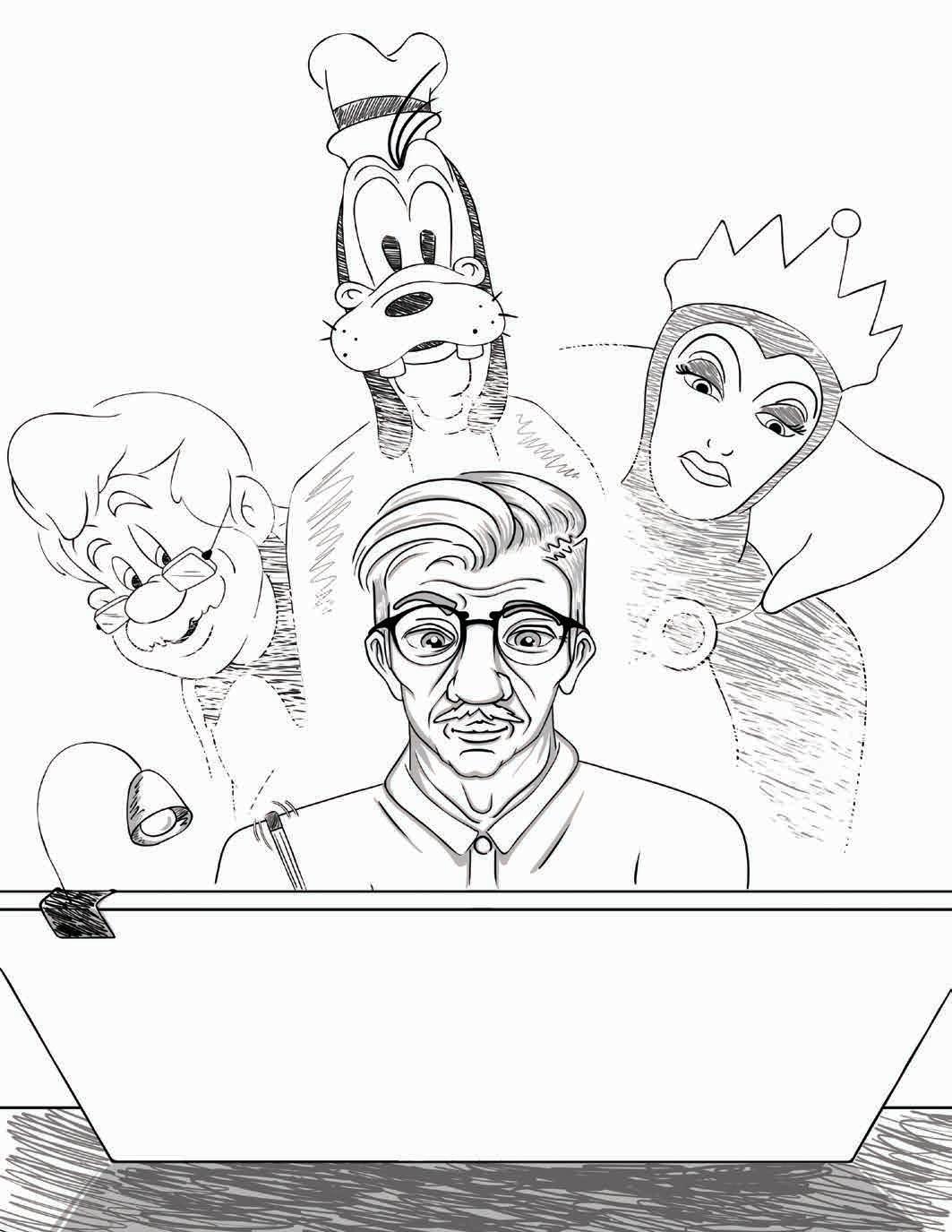
maha is not short on famous people, from Henry Fonda to Alexander Payne. But perhaps lesser known is our connection to a Disney animator whose work we all know and love. Art Babbitt helped transform the craft of animation and created many memorable characters, including the Evil Queen from Snow White, as well as Goofy. His legacy as a brilliant animator was overshadowed by his later falling out with Walt Disney, but his work remains instrumental to our vision of Disney t o this day.
Babbitt was born Arthur Harold Babitsky in 1907 to a Jewish family living in the Little Bohemia neighborhood of Omaha. He lived in Omaha until just after kindergarten, when his family moved to Sioux City, Iowa, where he lived until he graduated from high school at 16. Times were diffi cult for the Babitsky family after Babbitt’s father was paralyzed in a work accident. To help his family, Babbitt decided to move to New York City to fi nd work. Babbitt hoped to become a psychiatrist, but the need to support his family led him to pursue commercial art. In New York City, he soon found work at Terryto ons studio.
During the 1930s, the Walt Disney studio was gaining a reputation for excellence and began to attract animators from all over. On the heels of the overwhelming success of Steamboat Willie and the advent of the Silly Symphony, Disney was expanding and attracting top talent. Amazed at the artistry of the cartoon Th e Skeleton Dance , Art Babbitt decided to apply to become an animator with Disney. Known for their pioneering work in animation that attracted diverse audiences of fans and artists alike, the Disney studio was a place for Babbitt to grow and develop his own craft with a crew of dedicated artists under Walt.
Babbitt started by working on Silly Symphony, most notably Santa’s Workshop and Th e Th ree Little Pigs . In this series of shorts, Disney was gradually perfecting the craft of animation. To push the boundaries of animation, Walt understood that it was necessary for his artists to learn and draw from nature and develop stories with more depth. Disney also began to work on displaying personality through movement in animation. As Disney historian J.B. Kaufman noted, “When Walt started to push to elevate the quality of animation, Babbitt was the fi rst to grasp his ideas.”
He began to study the way people and animals moved so he could use this to ground his fantastical creations on the screen. Babbitt worked to convey the eff ort and movement of his creations to bring them fully to life. Th is extended to his work on Th e Th ree Little Pigs and Th e Country Cousin , where his naturalistic style led to the creation of some of Disney’s most memorable early work. His early characters
burst from the screen with life and movement that transformed the art of animation.
Due to his excellent work, Babbitt was very soon given more responsibility by Walt. Th e Evil Queen in Snow White was Babbitt’s fi rst human character. His intense study of movement allowed him to vividly bring her character to life. Snow White was a breakthrough for animation and ushered in what is known as the golden age of animation. Babbitt continued to push the boundaries of the art in Pinocchio, Dumbo, a nd Fantasia
Perhaps his most famous creation for modern audiences is Goofy. Th e character then known as Dippy Dawg already existed, but Babbitt transformed him into Goofy and brought him fully to life. Babbitt wrote the defi nitive character analysis of Goofy and delineated his characteristic movements, which are still in use today. He described him as “a composite of an everlasting optimist, a gullible good Samaritan, a half-wit…and a hick.” Goofy’s movements are well-known, and his rubbery body and terrible posture are a product of Babbitt’s genius as an animator. Th e importance Babbitt and Disney placed on movement as expressive of character are most easily recognizable in Goofy.
Babbitt continued to work for Disney throughout the 1930s, but his relationship with Walt was always a bit strained. Although he was one of the best-paid Disney animators, he was never very close to Walt. In 1941, Babbitt broke the relationship further when he joined the animators strike that ultimately ended the golden age of animation. Walt never forgave Babbitt for what he saw as a betrayal. Babbitt eventually sued to be hired back after Walt fi red him, but the gulf between the men was too wide. Before his death in 1992, Babbitt praised Walt and credited him with transforming animation.
Babbitt’s legacy, though, is far more than a falling out. He helped create some of the fi nest animated fi lms from the Disney Studios and his art is still enjoyed by Omahans, even if they don’t recognize Babbitt’s name.
For expanded content, open the camera on your smart device and hover over the QR code.
STATE OF THE ART
Story by Natalie Veloso
Photography by Sarah Lemke
Design by Rachel Birdsall
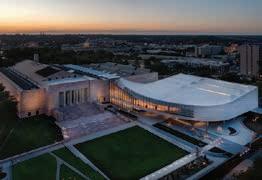
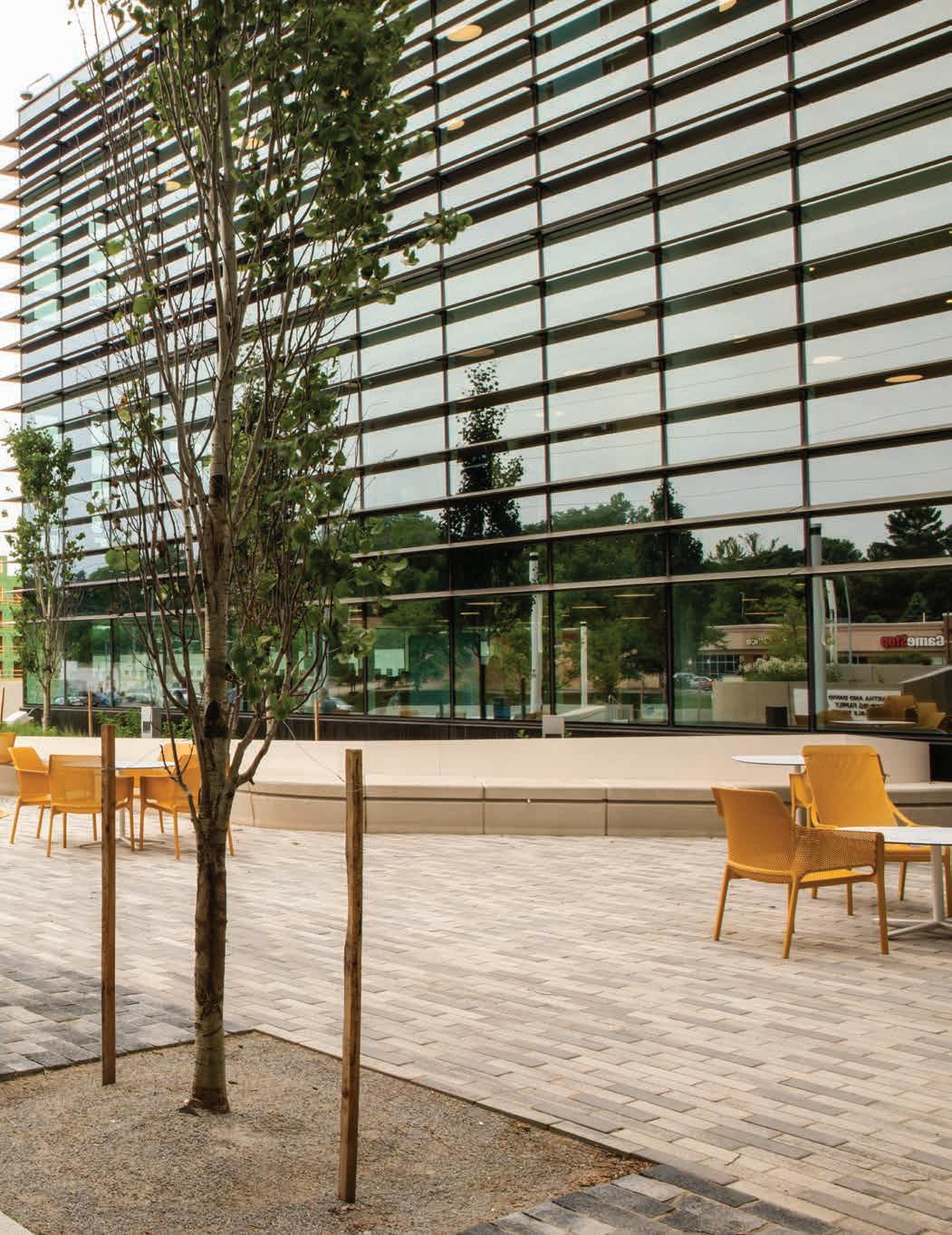
At72nd and Dodge, the newly constructed Omaha Central Library occupies a site defined by constant movement. The 96,000-square-foot building asserts its presence in return.
It rises above the intersection with lifted edges designed to suggest the turning pages of a book, and long horizontal forms draw attention toward activity inside. Broad glass openings expose movement across multiple levels and allow the interior to register from the street. The architecture and design team always intended that level of visibility.
“Given its location as a central library rather than a downtown-specific library, we approached it as a place where anyone in Omaha could feel like it belonged to them, whether they lived out west, north, south, or downtown,” said Tom Trenolone, design director at HDR and principal-in-charge for the Central Library.
The new Central Library opened its doors on April 19 following years of planning and construction. The $158 million project brought together Omaha Public Library, the Omaha Public Library Foundation, Heritage Omaha, HDR, Alley Poyner Macchietto Architecture, Do Space, Amplify Arts, engineers, artists, volunteers, and civic leaders in what became one of the city’s most ambitious public projects in decades. Built as a long-term investment in literacy and public gathering spaces, the library was designed with the expectation that it will serve Omaha for the next century.
“What was important to us was making this an all-Omaha team,” Trenolone said. “A lot of great architectural projects in Omaha have involved firms from outside the city, but we wanted to prove we could create a world-class library with local designers and architects leading the way.”
Trenolone oversaw the project’s architectural direction, including the exterior design, site planning, and landscape architecture. Alley Poyner Macchietto Architecture, led by principal and lead interior designer Nancy Novak, shaped the interior experience of the building. Early in the process, both firms shared the larger goal of making it a place for everyone.
Novak, who has spent more than two decades designing libraries, described the Central Library as one of the most extensive and collaborative projects of her career. The finished building stretches across three primary floors and a mezzanine, wrapping around a south-facing courtyard called the City Garden, which offers a rare green space in one of Omaha’s most concrete-dominated areas.
“When you look at the exterior of the building, the rectilinear forms almost interlock to create the curtain wall,” Trenolone said. “Those are symbolic of Omaha’s neighborhoods—from
Kountze Place in North Omaha to Maple Village, Benson, and Dundee. They come together to create the foundation of the building.”
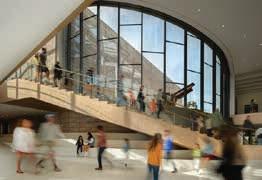
The library’s orientation responds directly to how people move through it, with multiple entry points that converge into the shared central space. Visitors and pedestrians entering from the west side parking garage, or the ORBT and Metro transit stops on the east side, immediately face a central staircase that rises through the structure like a sculptural spine.
That hanging staircase is one of the defining visual elements of the project, Novak said. “To get a four-story steel stair suspended from the ceiling is like a piece of art in and of itself,” she said. The stairs are the primary access point to all three floors and a mezzanine level that separates the first and second floors, creating a layout that keeps the public spaces accessible.
The building was designed to change with time, Novak said. Much of the building avoids permanent walls. Study rooms, larger conference rooms, service areas, and enclosed spaces sit mainly within the mezzanine core, while most lounge seating areas and collaborative spaces remain largely open. Natural light moves across all levels through expansive windows and interior glass walls. A lack of fixed walls allows the furniture and shelving systems to act as room dividers instead, letting the building adapt over time without major reconstruction.
“We always talked about this as a building built to last 100 years,” Novak said. “Most libraries, after they’re built, don’t see major redesigns for 40 or 50 years until they can be brought into a new decade. We wanted to build in that flexibility from the start.”
DESIGNED AROUND BOOKS
At the center of the library sits an Automated Storage and Retrieval System, or ASRS, a robotic system capable of housing roughly 600,000 materials. The Omaha Public Library is currently the first and only public library system in the United States using this kind of large-scale automated retrieval system.
The building itself was designed around the ASRS, Trenolone said. “This robotic storage system allows the number of subject matter available to be much greater,” he explained.
“A library should have plenty of space for books, which usually means rows and rows of bookshelves—we didn’t want the space blocked by shelves, and we didn't want to get rid of the books.”
The system changed how the rest of the building could function. Instead of dedicating large portions of the library to endless shelving, the design team created more room for public programming, collaborative workspaces, technology labs, meeting rooms, and gathering areas while still maintaining access to a massive collection.
Visitors can request materials stored in the ASRS and receive them within minutes. The system also serves every Omaha Public Library branch, allowing locations across the city to dedicate more space to neighborhood programming while still drawing from a centralized collection hub.
Thoughtful technology across the building extends further than storage. Throughout the library, mechanical and electrical systems run beneath raised flooring rather than through traditional ceiling infrastructure. The setup means that power can shift without majorly changing layouts, and future technology upgrades can happen with far less disruption.
The project also achieved LEED Gold certification under LEED 4.0 standards, one of the highest sustainability benchmarks in the region. “From the beginning, we wanted to make sure the building would stand the test of time,” Trenolone said. “Achieving that certification required a careful balance between the landscape, the mechanical systems, and the building envelope.”
A
LIBRARY FOR HOW PEOPLE LIVE NOW
Being the level visitors encounter immediately, the first floor is active and social. It functions as the library’s busiest commons area, combining collections, lounge seating, meeting rooms, event spaces, and a Zen Coffee Company café that opens directly into the City Garden courtyard. The 230seat community room lives alongside other flexible gathering spaces designed for public events, workshops, lectures, and civic programming.
As visitors move upward through the building, the atmosphere gradually changes. The mezzanine level overlooks the first floor and offers quieter seating areas and meeting rooms. Children’s areas and Do Space resources sit on the second floor, where hands-on learning and technology interact side by side. The third floor is dedicated to genealogy and local history research, with a calmer feel beneath a warm wood ceiling and expansive natural light. Staff spaces are arranged thoughtfully throughout the building to keep the library operating efficiently as it welcomes the public.
“We really hoped the layout would encourage users to come back, try more, and experience the library in different ways they might not have expected,” Novak said.
The second floor especially reflects how dramatically libraries have changed over the last several decades, noted Amy Mather, partnerships manager for Omaha Public Library. Children’s areas include interactive play spaces, digital exploration zones, sensory-safe seating areas, arts-and-crafts labs, and a large story-time area designed for more than 100 children. Nearby, older youth and adults have access to lounges, meeting rooms, collaborative workspaces, and technology stations overlooking Dodge Street.
“Over the last 40 years, libraries have become less of a quiet space where you're getting shushed,” Mather said. “They're really more about vibrant, interactive spaces where you can utilize its community resources but still go and find a quiet space if you need to.”
Do Space, now integrated throughout Omaha Public Library’s system, occupies a major portion of the second floor opposite the children’s side. The technology hub includes 3D printers, laser cutters, embroidery and sewing machines, podcast studios, video production spaces, computer labs, and fabrication equipment available to the public.
“The diversity of the people using it and the way they engage with it is really what this place is about,” Mather said. “It’s for making, creating, having fun, doing serious homework, and everything in between.”
She credits much of the public’s positive response to the way the building manages to bring comfort despite its impressive scale. Natural light reaches nearly every public area, and the architects’ acoustic design softens any surrounding traffic noise from Dodge Street. Lounge areas and comfortable reading spaces, she said, encourage visitors to stay as long as they desire.
“It’s meaningful, knowing so many visitors come in and think, ‘Yup, this is where I want to be able to drop in and hang out,’” Mather said. “People have their homes and their jobs, but we truly need these third spaces, which are so important for communities.”
BUILDING THE COLLECTION
Public art was planned for the Central Library project well before construction was underway. Amplify Arts led the commissioning process for what became one of the largest collections of site-specific public artwork by living local artists ever installed in Omaha. The call for artists drew 242 submissions. The selection process then moved through multiple rounds of review, involving outside arts professionals, architects, interior designers, project partners, and community representatives.
Once the final 16 artists were selected, they worked closely with architects and designers to determine placement and scale. “We wanted to explore the artist first and then have the building inform where their work could go,” Novak said.
Artists were also asked to reflect on their personal experiences with libraries while developing proposals. Each selected artist received commissions to develop their pieces, with a total philanthropic investment of $1.3 million.
“What came through in the applicants was a mixture of the identities of the artists themselves, and the type of work they were proposing,” said Lauren Martin, executive director of Amplify Arts. “With the final artists selected, we wanted to ensure their pieces would be part of making the library feel like a place that invites everyone in.”
The library presented unusual challenges for artwork integration, she added. Traditional framed works had fewer available surfaces than a conventional civic building. Many artists instead created suspended, sculptural, textile-based, or large-scale installation pieces that interact directly with the architecture.
“The raised-floor system meant that we had to have quite a bit of coordination with artists like Angie [Seykora] and Lee [Running], who had hanging pieces from the ceiling, to make sure that we put the pieces up there in a way that we could tie into the structure,” Trenolone said.
Many of the final installations went into place just weeks before opening day. “For so many of the pieces, we all stepped back at the end and just thought, ‘Man, this is just so serendipitous. It feels like we planned this,’” Novak said.
Several works reference storytelling, memory, migration, neighborhood identity, and Indigenous design traditions. Martin said the placement of the artwork changes how visitors navigate the building and how long they stay within it.
“It’s all positioned in a way where the art isn't gonna be blocking you,” Martin said. “It's a unique way of having people navigate through the space. We’re creating an environment for people to have these pauses and reflection.”
One of the first installations people encounter as they enter the building belongs to artist Angie Seykora, whose suspended beaded work hangs within the library’s central vertical opening. Her installation, Untitled (drawing rays) , occupies the full height of the building’s interior core with branching forms made from more than 75,000 plastic beads and over 15,000 hand-cut loops of wire suspended from steel structures overhead.
“I believe that sculpture functions in many different ways, but primarily, sculpture activates space,” Seykora said. “When I learned the location of where my work would go, I knew I wanted to create a sculptural installation that responded to the interior architecture and would fill space with an unusual and striking energy.”
Seykora said she built the installation through repetitive, labor-intensive processes using simple materials. The work references spatial drawing as much as sculpture, with lines extending outward through the open air of the building. “It transforms our understanding of what a drawing can be or look like,” she explained, adding that the shifting viewer experience of her piece was intentional and closely tied to how visitors move through the library itself.
“From the ground floor, you are able to look at the installation from afar and witness it change as you draw near,” Seykora said. “Standing underneath it and looking up presents a completely new understanding of the linear network of the sculptural form. From the mezzanine, you get bits of fragmented information, and from the second floor, you can look down into the work or view its complete form when looking east or west. Just like the interior of the Central Public Library, Untitled (drawing rays) rewards observation, investigation, and discovery.”
Nearby, Lee Running’s suspended seed pod installation floats above the Information Commons, interacting with the building’s open sightlines and ceiling planes. Sarah Rowe’s 50-foot-long installation of cut-steel fish and stars in the children’s storytime area draws inspiration from Indigenous beadwork traditions, responding directly to the geometric language around it.
Other commissioned artists brought sculpture, photography, quilting, metalwork, paper construction, and textile-based installations to the building. The collection also includes work by artists Shelby Neeley and Linda Rivera García, whose pieces further expand the range of mediums represented throughout the space.
Rivera García’s contribution, 398.2 Folktale Stories / 398.2 Cuentos Populares, sits at a child’s eye level within the children’s department adjacent to Rowe’s piece. The 80-year-old artist and former children’s librarian created the 3D tunnel-book installation using paint, papier-mâché, collage, printmaking, and sculptural elements inspired by folktales and oral storytelling traditions.
The piece takes its name from the Dewey Decimal System, the library classification method used to organize books by topic, where 398.2 is reserved for folklore, folktales, fairy tales, and fables.
“Folktales encompass various cultures telling their own diverse cultural stories, expanding language, problem solving, and imagination to foster the love of reading,” Rivera García said.
Her piece draws heavily from Mexican folk art traditions and reflects the decades she spent working directly with young readers inside public libraries. Rivera García said she often saw children connect most strongly with stories that reflected parts of their own lives.
“Children connected to stories when it included something of their identity, such as location, certain words, characters, situations,” Rivera García said. “It was important for them to continue discovering culturally diverse worlds through stories.”
The tunnel book features various animal characters alongside the beloved Omaha Public Library mascot she created years ago—Scamper the prairie dog. Rivera García said the new work was designed to feel welcoming, particularly for children exploring the space. She incorporated elements shaped by her own experiences researching stories and symbols connected to the Spanish-speaking population.
“My first visit to Mexico in 1971 had a great influence on my view of people, culture, and art,” Rivera García said. “I wanted to welcome them and have them know that they also belong here.” The installation also reflects a profession and institution that shaped much of her life. “My art is gratitude,” she added. “This is my way of saying thank you—‘gracias’—to families and friends.”
On the opposite end of the second floor, Neeley’s suspended installation GESTALT stretches across the ceiling in the form of Nebraska birds constructed entirely from recycled books. The flock includes cranes, owls, hawks, blue jays, meadowlarks, crows, and cardinals, each made from carefully selected literary titles ranging from The Scarlet Letter to 1984 , The Great Gatsby , and collections of Edgar Allan Poe.
Neeley first began working with discarded library books while serving as a student library aide in high school, where librarians encouraged her to repurpose damaged materials headed for disposal.
“I’ve been going to my local Omaha library branch for as long as I've been alive,” Neeley said. “I’ve probably checked out a thousand books there over my life, and it’s really a building that’s been integral to me in every stage of life.”
At the time she was selected for the project, Neeley was still a college student studying history at the University of Nebraska-Lincoln and had not considered herself a professional artist. She described the process as intimidating at first, particularly while the building itself was still under construction. Over time, the birds became connected to her own experiences with migration, homesickness, individuality, and community during her first year of college, she explained.
“During that time, birds and their migration specifically became a symbol to me,” Neeley said. “The idea of every bird being a different type and
made of its own book started to symbolize individuality in both environment and culture.”
Many of the books used in the sculptures were historically challenged or banned titles, a decision Neeley said reflected the role libraries continue to play in protecting access to information. “Libraries as an institution are a major roadblock for censorship in a way I find super important,” Neeley said.
The finished flock now moves overhead through one of the library corridors, suspended in mid-flight above visitors moving between collections and gathering spaces. “My hope is that just as different types of birds fly together in GESTALT, different types of people will meet in the new library and grow stronger together,” Neeley said.
Mather said the diversity of mediums throughout the collection of art mirrors the range of experiences taking place throughout the building itself. “We have beads and metal, we have quilts, we have wool that is molded into really specific pieces,” she said. “Omaha Public Library has valued public art at other locations for many years, but we've really thought about art as a bigger investment here.”
The 16 commissioned works are joined by additional works of local artists, including pieces from Todd McCollister’s Long Shadow Series just outside of the first floor’s community room. Working in wood and mixed media, McCollister carves repeating patterns into curved forms, distorting the structure in ways that echo the unpredictability of shadow and light.
The famed Eugene Kingman mural, now installed in the second-floor computer lab, carries a legacy of its own. Painted in Omaha and originally commissioned by former New York Times publisher Arthur Hays Sulzberger, the 7-by-20-foot mural was created in 1948 by Kingman, who was director of the Joslyn Art Museum at the time. It hung in the lobby of The New York Times building in New York City for 40 years as a daily presence for staff and visitors moving through one of the country’s most influential newsrooms.
The mural reflects a postwar moment when ideas about global connection were beginning to take shape in the public’s imagination. Painted years before satellite imagery or spaceflight made views of Earth from above commonplace, Kingman’s depiction of a unified world was especially meaningful at a time when that idea felt newly urgent.
The mural was placed in storage in the late 1980s, where it remained for more than two decades. It was eventually recovered through the efforts of Kingman’s daughters. From there, it returned to Omaha, and was restored and installed in the former W. Dale Clark Main Library in 2016. The mural went into storage once again at the Joslyn when the downtown library closed, until the opening of the Omaha Central Library created a permanent place for it to be reinstalled within a new civic space. The fitting inscription remains unchanged.
“Every
Day Is a Fresh Beginning—Every Morn Is the World Made New.”
A PUBLIC BUILDING WITH STAYING
POWER
Several members of the design team traveled internationally during the planning process, visiting major libraries in cities like Calgary and Oslo to study how contemporary public libraries function. “We tried to learn as much as we could about what a world-class library needs to do and how people actually use those spaces,” Trenolone said.
Those visits influenced everything from infrastructure flexibility to visibility between staff and public spaces, he said. Large interior windows near staff processing areas were inspired partly by the Oslo Opera House, where visitors can observe costume and production work happening behind the scenes.
“That small mezzanine within the building also allows for a kind of an overlook of each floor, and it’s the perfect vantage point for a lot of these suspended artworks,” he said. “Libraries and public spaces are always fun opportunities to people watch, too.”
It's not hard to imagine that being part of the appeal. The new Central Library is a place where the city can see itself in motion. The site at 72nd and Dodge has long been a busy one, but Trenolone described the library as a potential turning point.
“The idea that the library itself could be a catalyst for transformation of that particular part of the city is a huge positive that I take away from the great investment that people put towards the library,” he said. “In 50 years or so, we might hardly recognize 72nd and Dodge.”
That investment includes public and private support, along with a major philanthropic commitment that helped make the project possible. Heritage Omaha led the fundraising effort behind the $158 million project, securing $138 million in private support from hundreds of foundations, corporations, and individual donors alongside a $20 million commitment from the City of Omaha.
Project partners described the campaign as one of the largest philanthropic investments made toward a public library system in the United States in recent years. Kevin McCarthy, a longtime volunteer and supporter of Omaha Public Library who also served as a juror in selecting artists, said the vision went far beyond a building.
“Stakeholders wanted to create a space that was more broadly accessible, more inviting, and more helpful than any place we’ve ever been able to create before,” he said, adding that the artwork within it strengthens the invitation the building is trying to make to the public.
For the Omaha Public Library, the building reflects years of investment into what a public library can become when community needs are considered from the beginning. The public response has been strong, which Mather said has far exceeded expectations.
“Our doors have been open for just over a month, and I've already seen people come in multiple times and settle into their favorite spots as they gradually discover them,” she said. “That means this is a space they want to keep enjoying.”
McCarthy said the value of the library lies not only in what it stores or offers today, but in what it can hold and evolve into over time. He believes much of the project’s ambition rests in the idea that public buildings gain their deepest meaning gradually.
“As the building has gone from in-progress to a completed project, and now as an open public building, there are so many reasons to appreciate what we’ve come together to create,” McCarthy said. “Omaha should be really proud of their new Central Library. It belongs to everyone. And it will last, because people want to be there.”
Visit omahacentrallibrary.org for more information.
5, 6, 7, 8
STORY Naomi Heu | PHOTOGRAPHY Bill Sitzmann | DESIGN Nickie Robinson
Kylie Jones’ Journey From Husker Scarlet to Kansas
City Chiefs Cheerleader
ith only two minutes left on the clock, Husker Scarlet Kylie Jones watched nervously from the sidelines as the Nebraska men’s basketball team fought to gain back its lead in the 2026 NCAA Tournament Sweet 16 game in Houston. At the same time, Jones was deep in preparation for the Kansas City Chiefs Cheerleaders’ preliminary auditions.
She began dancing at age 5 at Nebraska Dance where she met future Scarlet teammate Ava Owens. However, the two drifted during high school with Jones on the top-dog Millard North dance team and Owens on the quickly developing team at El khorn South.
As college approached, they both knew their dance journey wasn’t over yet. After making the Scarlets as freshmen, they became closer than ever, and both girls recently graduated from the University of Nebraska–Lincoln in May.
Now an alum, Owens has decided to end her dance journey and will be an emergency medical technician in Omaha while she takes a gap year to apply to medical school.
While Owens is closing her dance chapter, Jones felt that she still had more to give. She will be dancing on the field once again, but this time as a Chiefs cheerleader.
“Nothing fi lls my bucket more than when a little girl comes up and wants a signature on her bow or is excited to hold my pom-poms,” Jones said. “I knew that meant I wasn’t ready to be done dancing or interacting with fans and seeing the smile that I can put on people’s faces.”
From March 23 to April 5, she spent countless hours practicing the preliminary audition video she would submit to the Chiefs. The Sweet 16 game fell directly in the middle of her prep, but Irene (Boese) Gunnerson—current Chiefs cheerleader, previous Scarlet, and Jones’ sorority grandbig—encouraged her to attend the once-in-a-lifetime experience.
As seniors, Jones and Owens had the opportunity to cheer on the football team at the SRS Distribution Las Vegas Bowl and the basketball team at the NCAA Tournament with Owens in Oklahoma City and Jones in Houston.
“I knew that was my last event for Scarlets, so I tried to take all of it in when I could,” Jones said. “And not many people can say they got to dance at the Sweet 16.”
Her teammates helped keep her on track in Houston as she balanced tournament travel with audition prep.
Everybody says that their sport is their outlet, but dance is a sport where you really can show your emotions through your body and movement.
— Kylie Jones
After advancing through to the semifi nals and a series of interviews, Jones found herself in Kansas City for the fi nal round. The weekend was full of dancing, interviews, and football knowledge, and she said the environment felt supportive rather than competitive.
Th roughout the audition process, Jones’ family and friends celebrated each round alongside her. Her brother, Dylan, is a huge Chiefs fan and helped educate her on football and Chiefs knowledge. Jones said his love for the team was what initially drew her to the Chiefs. The two happened to be together when she made the team.
“I remember so vividly looking up at him, and his eyes were all watery, and he was trying not to cry,” she said. “It was even more special that I got to fi nd out while I was with him.”
As an NFL cheerleader, Jones will be interacting with fans, dancing on the field, and standing directly in the
center of all the energy and excitement. These experiences mirror a lot of what she valued most as a Scarlet.
Performing at halftime in Memorial Stadium or Pinnacle Bank Arena and cheering on the Huskers are some of Jones and Owens’ favorite memories in college. Scarlets are also involved in community events like Husker Heroes, visiting nursing homes, and interacting with fans at tailgates. “Those experiences are just so fulfi lling, because you get to know people on a deeper level,” Owens said.
Another part of being a Scarlet is competing in the Universal Dance Association College Nationals, which takes place in Orlando, Florida, every January.
Coming from four UDA championships with Millard North, Jones was excited to continue competing in college, though the Scarlets were unable to attend nationals in 2026 due to f unding cuts.
What makes dance unique is the combination of artistry and athleticism. It is more than just a sport—it’s an outward expression of one’s emotions. “Everybody says that their sport is their outlet, but dance is a sport where you really can show your emotions through your body and movement,” Jones said.
Dance has always been a large part of who Jones is. “It’s shaped so much of my life,” she said. “I’m so thankful for all the experiences, memories, and people it has given me and continues to give me.” And with the Chiefs, she feels that her journey is right on track.
Follow @huskerscarlets on Instagram for more information.
The Annual Summer Concert Series Hits a Decade of Success
usicians know the feeling. Standing backstage, psyching themselves up, ready to play before thousands of people. Th en, taking the stage, hitting that initial beat of the drum, guitars joining in. Th e lead singer belting out the fi rst of a dozen songs. Welcome to Friday night in downtown Grand Island.
For 10 years, bands from across Nebraska and as far away as Nashville, Tennessee, have entertained up to 5,000 people in Grand Island’s Railside District. Food, drink, games—it’s all part of Hear Grand Island’s summer celebration, attracting people from the Tri-Cities (Grand Island, Hastings, Kearney), as well as smaller communities.
“It’s just a way to really bring the community together from all walks of life,” said Becky Rother of the Grand Island Area Economic Development Corporation and Chamber of Commerce. “It’s free and open to anybody. Th ey can come down, bring a lawn chair, or stand and dance along to some live music. It’s a big party that goes on downtown.”
Th e brainchild of local restaurateur Brent Lindner, Hear Grand Island has grown annually from that fi rst concert, exploding into a tourism attraction.
“Grand Island didn’t really have a huge music scene besides bars just having one-off concerts here and there,” Rother said. “It was important to bring that scene and that experience to not only the families here, but also to the students, to see that, ‘I can stay in Grand Island, because we have a music s cene here.’”
Hear Grand Island started after Lindner attended a concert sponsored by Hear Nebraska. Th e Good Life Tour sought to promote Nebraska-based musicians with concerts in smaller communities, such as Red Cloud, L indner said.
“We were chosen twice for concerts, even though we were a larger city,” Lindner said. “Th e Good Life Tour was the bluepr int for us.”
Attendance for the shows was excellent, so Lindner created Hear Grand Island with the idea to share good music with locals and promote his and other businesses.
“I was out there, blocking off the streets, getting the stage se t,” he said.
It didn’t hurt that he also handled beverage sales, which were used to help fund the concert series, Lindner said. He learned quickly that he couldn’t rely on those sales as the primary source, with each show costing up to $15,000.
“If you only get 2,100 people at a show, and they’re not drinking, you don’t make money,” L indner said.
Realizing he didn’t have the time to maintain the concert series, or continue to grow it, Lindner faced a tough choice about its future: shut it down or recruit help. Th e future of Hear Grand Island depended on getting others involv ed, he said.
While Grand Island Tourism supported the concert series from the start and helped promote it, the agency didn’t have the funding to take it over.
So, the Grand Island Area Economic Development Corporation and Chamber of Commerce stepped in to lend a helping hand.
Handling the marketing aspect, Chamber representatives recruit sponsors and line up performers, Rother said. Lindner handles bev erage sales.
It’s a partnership that works, Rother said.
Beginning with a couple of concerts, Lindner grew the series to 10 concerts each summer. Hear Grand Island now consists of six concerts, beginning in late June and ending before the Nebraska State Fair in August, Rother said.
“We found our sweet spot, reducing it to six shows,” she said. “We’ve gotten the best attendance. If you oversaturate and give people 10 nights of concert,
they may not come out for every one. But if you give them six, that’s still a really good summer and a good Fr iday night.”
Offering a variety of music appeals to attendees, Rother said. With the event kicking off at 6 p.m., each show at Amur Plaza features three bands. Opening acts perform for 45-60 minutes each, with the headliner taking the stage around 8:30 p.m. and playing until about 10:30 p.m., Rother said.
The concert series connects regional bands with Nebraskans, Rother said. Organizers look for performers who off er a variety of music, from ’70s classic rock to the ’80s, as well as country and Latino sound s, she said.
“We always try to get those bigger bands, and the ones that really bring out the crowd, and bring out the excitement for the night,” Rother said.
With Hear Grand Island stabilized and celebrating its 10th anniversary, organizers are looking to the future.
“Our goal is to never have somebody get burned out by it,” Rother said. “If one day Brent decides to retire and go to the Bahamas for the rest of his life, the concerts won’t die, because there are organizations attached that are part of the community.”
Follow Hear Grand Island on Facebook and Instagram for more information.
STORY BY TIM TRUDELL // PHOTOGRAPHY BY BILL SITZMANN // DESIGN BY JOEY WINTON
Conor Oberst Revisits Two Landmark Bright Eyes Albums Profile and Forward
Backward
Story by Kevin Coffey
Photography by Bill Sitzmann
Design by Rachel Birdsall
It's like looking into a fun house mirror.
The reflection is recognizable. The songs are his. The music is his. The words still ring true. But the person singing them now has seen decades of touring, loss, reinvention, political upheaval, and the strange passage of time.
“It is still you, but so much has changed in life and time and every other way,” Bright Eyes frontman Conor Oberst said while sitting on a bench at Omaha’s historic Florence Mill. “It is kind of bent and twisted into the new time and place that we’re singing the songs in.”
And while those songs and his perception of them shift, Oberst is still driven by something: “The world needs more art, more human feeling...more self-expression, more defiance, more punk rock.”
Bright Eyes is currently celebrating I’m Wide Awake, It’s Morning and Digital Ash in a Digital Urn , the band's pair of breakthrough albums released on the same day in 2005.
Flash forward more than 20 years and Bright Eyes’ tour in 2026 features full performances of both albums before the band returns home to Omaha this summer for a marquee performance at Maha Music Festival.
In Omaha, sitting at the historic, 180-year-old Florence Mill, Oberst took a drag of his cigarette and reflected on his career, Omaha, art, and those iconic indie rock albums, which helped define not only the band’s career but an entire era of indie rock.
Before he was everyone’s favorite singer-songwriter, Oberst was just another Omaha kid.
Now 46, Oberst recalled being a teenager with musical aspirations sitting in a basement watching his brothers, neighbors, and friends begin their own nascent rock ’n’ roll journeys.
Those older kids seemed impressively accomplished, and from the start, they treated young Conor like a peer. Ted Stevens (later of Cursive and Mayday) brought over a fourtrack and recorded Conor’s first songs. His brother Matt brought him to band practice and to hang with his friends, and other brother Justin saved up his lawn-mowing money and paid for Conor to release his first tape, Water (and co-founded Saddle Creek Records in the process).
“I had no reason to have confidence,” he said. “But the fact that people I looked up to made me feel like a peer gave me confidence to be like, ‘OK, I guess I can do this too.’”
Now, things have come full circle. Younger musicians frequently tell him Bright Eyes inspired them to start bands or begin writing songs.
“That’s just a beautiful thing,” he said. “That’s the way art should go. You pass it down to the next squad coming up.”
Oberst now speaks with similar reverence about the artists who shaped him including friend and former R.E.M. frontman Michael Stipe as well as the late John Prine, whom Oberst called “one of the realest humans.”
Despite decades spent touring the world and maintaining a second home in Los Angeles, Omaha remains central to Oberst’s life. He spends about half of his time here, often writing at his house and recording at Mike Mogis’ nearby ARC Studios.
“A lot of the work still happens here,” he said.
That relationship with Omaha evolved over time. Like many lifelong residents, Oberst described a push and pull with the city.
“There’s so much to love about Omaha, but it also can be kind of suffocating. You know everyone,” he said, describing the all-too-Omaha experience of running into everyone you know at the grocery store.
And as he has gotten older, he said, the relationship has become easier.
“I have my friends, I see my friends,” he said. “Sometimes I’ll go to a show.”
Oberst still pays attention to Omaha’s creative culture and sees encouraging signs in the city’s growth. Large venues such as Steelhouse Omaha and the Holland Performing Arts Center have transformed the city’s concert landscape since the days when touring bands played at the Ranch Bowl or the Cog Factory.
But Oberst believes thriving art scenes require more than infrastructure.
“That’s not really what makes a music scene,” he said. “You need to invest in the culture of it and have more places to play, more encouragement for art in general.”
Oberst recently walked through Benson First Friday and was encouraged by seeing new and emerging performers at the arts event.
“It was just walking down the street and there was a Mexican ska band playing in the alley and all this little stuff happening,” he said. “I was like, ‘This is dope.’”
That spirit makes Bright Eyes’ upcoming Maha appearance feel particularly fitting.
Though Oberst has played the festival before with Desaparecidos, this marks Bright Eyes’ first Maha performance. The booking came about when Oberst attended the festival himself last year and watched a set by Waxahatchee at the festival’s new Omaha RiverFront location.
“I was really blown away,” he said. “After I saw that, I was like, ‘Yeah, I want to play in the new setup.’”
For Oberst, the two-album celebration tour feels like a moment of reflection.
“We’ve all been through a lot in the last couple years,” he said. “We're feeling good about the band and everyone is in a pretty positive headspace.”
It’s a welcome feeling as they have embarked on the tour celebrating I’m Wide Awake, It’s Morning, and Digital Ash in a Digital Urn .
Much like Oberst himself, those albums and their songs carry the same weight as always, but time and perspective have shifted their significance and meaning.
Some songs—“Poison Oak,” “First Day of My Life,” “Lua,” “Take It Easy (Love Nothing),” and others—are mainstays of the Bright Eyes setlist. Others like “Devil in the Details” and “Theme From Piñata” haven't been played much at all if ever.
Both albums carry the political anxieties of the George W. Bush era. In 2005, Bright Eyes’ songs wrestled with war, inequality, and disillusionment. Oberst said today’s political climate feels even darker.
“The things that Trump has done or attempted to do are multitudes worse than what we were upset about,” he said. “It’s just so much worse. It seems like everyone is laying down and accepting it.”
He paused before adding: “I think our only antidote to all the other horrors of the world is more community.”
When the pair of albums arrived simultaneously in January 2005, the dual release felt audacious. Oberst and Bright Eyes had gained indie attention with Lifted or The Story Is in the Soil, Keep Your Ear to the Ground , an album that got the band frequently named as one of the best new things in music.
But Digital Ash and I’m Wide Awake expanded the possibilities of what Bright Eyes could be.
They emerged from the same creative burst, written at the same time. But they landed in two different camps.
“They were starting to diverge and they were gonna end up being two different records,” he said. “There was a certain element of, I guess, ‘Look what we can do.’ We always had a little streak of that kind of thing.”
Oberst has extended that streak, performing with bandmates Mike Mogis and Nathaniel Walcott as Bright Eyes but also releasing numerous solo records and others with bands including Desaparecidos, Mystic Valley Band, Monsters of Folk, and Better Oblivion Community Center.
Critics called one Bright Eyes album “folk” and the other “electronic,” but Oberst never felt that way. Wide Awake was more traditional, sure, as it mixed rock and folk and was largely tracked live to tape over about a week.
Meanwhile, Oberst calls Digital Ash his “experimental rock record” and admits now it became a months-long studio experiment where they just tried new things.
That experimentation created a different challenge when rendering them live for audiences at Red Rocks outside Denver, at Forest Hills Stadium in New York, and at the Hollywood Bowl in Los Angeles.
Bright Eyes spent months reconstructing the albums for live audiences with precision, even bringing back musicians who performed on them originally.
“We really tried to be faithful to the record, which is sort of counterintuitive to what we usually do,” Oberst said. “This one, we invited Jesse Harris, who played on Wide Awake , and Nick Zinner, who played on Digital Ash , to be part of the band, trying to make it as faithful to the record as we could.”
The stage production has become a major part of the experience. Oversized recreations of the iconic Wide Awake artwork tower over the stage while Digital Ash transforms into a barrage of lights and projections.
“It’s a fun whole other part of the show that you can be creative with,” Oberst said.
Twenty years after I’m Wide Awake, It’s Morning and Digital Ash in a Digital Urn changed the trajectory of Bright Eyes and Omaha music alike, Oberst still sounds restless, curious, and deeply invested in the communities and ideas that shaped him.
Meanwhile, he’s looking ahead and figuring out what’s next for him. More Bright Eyes? Something else? Only he knows.
But as Bright Eyes brings those songs back to life, they continue revealing new meanings.
For Oberst, that may be the point.
“History’s important,” he said.
Visit thisisbrighteyes.com for more information.
“I think our only antidote to all the other horrors of the world is more community.”
— Conor Oberst
Midwest State of Mind
Celebrated Artist Edgar Jerins Holds Fast to His Roots
Edgar Jerins’ New York City studio feels crowded, though he’s alone. From nearly every angle, faces of his own making peer over his shoulder, craning to be seen. The faces are somehow not static but seem to react in assent or bemusement at the conversation at hand, less a trick of the viewer’s eye than a testament to the skill of the artist who birthed them. It’s the same skill that has built Jerins’ decades-long reputation for haunt ing realism.
Art is meant to be diff erent things to diff erent people, and so it is with the work that hangs on Jerins’ studio wall. The pieces are the product of a yawning need that dawned when he was in middle school and has never been fully satiated; faces and fi gures that return his gaze, each forming a blueprint for the next piece. No matter how good this one is, it exists merely to point out the possibilities that lie with that one, and that one to the next one.
“If you look at Leonardo da Vinci or Michelangelo, go back, go online and look at their drawings, you’ll see their corrections in their drawings,” he said. “They’d put something down, and then they adjusted it—they changed it. A bad line leads to a good line until you get that fi nal line, and you just erase the other lines, or leave them, like the old masters did.”
He let his eyes run over a lithe drawing of the female form and sighed.
“Sometimes it’s a struggle. You’re never good enough, you know,” he said, “you can always be better.”
Born in Lincoln, Nebraska, into an artistically gifted family, one where his grandfather, mother, and older brother were all artists, Jerins grew up in Omaha among stacked art books and with a knack for observation. Later in his career, family would play a central role in some of his work, especially a 2019 exhibit he opened in Omaha showing art from three generations of his family.
“The things he does really well are portraiture and people in life situations,” said Linda Meigs with the Florence Mill Gallery, which hosted the exhibit. “One of my favorite pieces of his was a kitchen scene with his family. I recall it being a particularly striking piece that captured an ordinary family situation.”
Given this influence, it was probably only a matter of time before Jerins took his place in the art world, a journey that started by following his older brother Ron to a n art class.
“I went to that class with my older brother and did my fi rst nude at 14,” he said. “I went back to junior high the next day, and I’m like, ‘I drew a naked lady last night.’ Nobody believed me; they were like, ‘You’re a liar, Jerins. You’re a liar.’”
After high school, he was the recipient of a full scholarship from Scholastic Art Awards to attend the Pennsylvania Academy of the Fine Arts, graduating in 1980 with a four-year certificate. Th at same year, he was also awarded an Elizabeth Greenshields Foundation Grant, which enabled him to move to Los Angeles. Though he dabbled in other subject matter, portraiture was always what he came home to, a rtistically.
“The central focus of my work, from high school on, was portrait fi gure,” he said. “I studied nudes in art school and everything, but even with the nudes, I would draw the
model’s face. It would be a portrait. I always did portraits.”
Artist and fellow Nebraskan Stephen Cornelius Roberts has known Jerins for 30 years and said his success was the result of a rare combination of skills and abilities.
“First off, he’s very driven, which, if you’re ever going to get anywhere in anything, you’ve got to be pretty driven,” Roberts said. “Besides that, he was also really talented, which is a really good combination.”
Roberts added that Jerins’ superpower was belief in what he was doing, regardless of the whims of the art world.
“Sometimes people have a tendency to bend toward what’ll get them in somewhere,” he said. “Edgar never bent his style. He did what he thought was the best t hing to do.”
Today, Jerins does the work he loves, having earned the right to work at his own pace. He’s comfortable but rarely satisfied, looking to up his game with each succeeding project, to the delight of h is patrons.
“I have always said the simplest way to encourage or help an artist is to buy their work, so I think what I’ve loved most were the people that commissioned me who might not be art connoisseurs or anything, but they brought me into their houses to paint their children. Th at’s encouragement,” he said. “I’m still this kid from Omaha in New York, still looking up at the buildings as I ride my bike to the studio and back, still trying to push the envelope, still fi nding some magic in the fi nal product.”
Visit edgarjerins.com for more information.
“Sometimes people have a tendency to bend toward what’ll get them in somewhere. Edgar never bent his style. He did what he thought was the best thing to do.”
– Stephen Cornelius Roberts
DINING FEATURE
STORY BY SARA LOCKE
PHOTOGRAPHY BY SARAH LEMKE
DESIGN BY RENEE LUDWICK
Tyra Kaplan has an eye for art, but when she was considering leaving her college ceramics program for something more practical, her high school sweetheart and husband, Joey, wasn’t having it.
“It’s really hard to make it as an artist, so I was considering switching to a business degree or studying graphic design,” Tyra said. “I love pottery, and it’s a lot of fun. But the barrier for ceramics is really high.”
Joey Kaplan was a junior in the University of Nebraska-Lincoln entrepreneurship program at the time and wasn’t willing to watch his wife give up on something she was passionate about.
“We wanted to fi nd a way to create a business that would address some of the pain points artists have, and one of the biggest issues we found was that galleries take up to 50% commissions on the work they sell,” Joey said. “We had to fi nd a way to create a gallery with little to no commission, and still fi nd a way to have that business make enough money to pay rent on the space. Something with high margins that fit well within a community and met a need. An art and coffee shop married all of those needs and was an interesting offering.”
Joey’s senior thesis was to build a business from scratch and pitch it to investors. He researched demographic data and found where Omaha would most benefit from a coffee shop, and soon purchased a van to convert into a mobile business that would kickstart the effort.
“We are both from West Omaha, so we took our coffee van and spent a lot of time in Gretna and Elkhorn. We did a farmers market in downtown Gretna, but started falling in love with Elkhorn’s Old Towne area,” Joey said. “When we stopped the van for the season in the winter, we came across this spot in Elkhorn. The rent was really attractive and we toured it, and we honestly thought it was too good to be true.”
Th e Kaplans involved their investors, hoping to be talked out of acting too soon on t he property.
“They agreed with us that it was early, but that the price and the area and the opportunity would be too stupid to pass up,” Joey said. “We signed our lease at the end of 2024.”
The pair set out to establish themselves within the community while embarking on an extensive build. Joey became secretary for the neighborhood’s business improvement district, offering to be of service wherever he could.
In spite of construction snags—including undocumented changes caused by the 2016 Elkhorn Streetscape project and a giant hole in the street to address the city’s stormwater line—the pair remained effervescent and optimistic. Th at positivity has drawn a staff and client base that match t hat energy.
And for Tyra, the shop isn’t just about having a space to sell art. It’s about removing the barriers that almost stopped her from realizing this dream.
“One of our baristas, Danielle, paints and has her art on our walls,” Tyra said. “Rylee is a ceramicist and throws here. I wanted to offer a studio space with residency opportunities, and we have a kiln where people can bring in pottery they’ve made and we’ll fire it for them. We also purchase mugs from artists locally and nationally. All of our to-stay mugs are purchased from artists and sold in-shop. I love being able to force this artwork into people’s hands, something someone made by hand, and give them an opportunity to take that
piece home with them. We’ve sold 40 of our to-stay mugs. I love knowing that we’ve helped put someone’s art into someone’s home.”
And while art is a strong focus for the shop, the Kaplans give 100% to every aspect of their business. Th at means everything from how they treat their staff to how they present t heir coffee.
“We are one of only two multi-roasters in the area,” Joey said. “We have 18 roasters we’re working with, and we have this great pour-over menu with between 30 and 50 black coffees at a time.”
Reading like a wine menu, the Kaplans have included the varietals and tasting notes of each brew, ensuring that clients can enjoy the fullness of their experience.
“We have a couple of house espressos and use house-made syrups,” Joey said. “Our Cedar Creek is a brown sugar, juniper, and rosemary, and we have a honey lavender. Kiln Fire is a spicy mocha that’s really delicious. We’re in the process of getting our liquor license, and we’re planning to do an upscale speakeasy by the end of summer.”
Everything about Cedar Creek supports the growth of the artists, neighbors, and local businesses Joey and Tyra serve. It brings a whole new defi nition to supporting local.
Visit cedarcreekcoff ee.net for more information.
DISHING UP A N EXPERIENCE
Chef Rachel McGill Brings a Unique Menu to the Table
Story by Sara Locke || Photography by Sarah Lemke || Design by Rachel Birdsall
If you ask Rachel McGill about her success, she won’t mention her stint on Chopped , or being a 2022 James Beard Best Chef: Midwest semifinalist. She’ll mention her mom and her mentor, Travis Green. She’ll talk about her garden, her growers, and her staff.
“I grew up loving cooking and restaurants. We went out to eat on Fridays every week,” McGill said. “That grew my love of restaurants really early.”
But an avocation in food service didn’t become her obvious path until she was already faceto-face with a professional kitchen.
“I went to an arts and humanities program for college and independent studies, but I struggled to find my medium,” she said. “I knew I loved art, but couldn’t nail down what I was good at.”
At 21, McGill took a position at Jack’s Bar in Lincoln. “It was small with a tiny kitchen, and I was just doing lunches. I had worked with pizza but had never run a kitchen.”
On the line she learned more than food prep; she learned what she could do with a little creativity and a lot of trust from her superiors.
“I called my mom a lot asking for advice on recipes, but they gave me the freedom to write the menus,” she said. “There was a lot of trial and error early on, but I loved it, and I was good at it.”
That sparked a deeper passion for learning, sending McGill looking for a greater challenge.
“Working on my own at Jack’s was great, but working for other chefs was advantageous because I learned to work a line and about working with a team and how to communicate. I really needed to be challenged in that way,” she said.
And nowhere did she gain a greater education than under the tutelage of Travis Green, former owner of Dish and culinary educator at Southeast Community College.
“When I joined Dish, it had a reputation for the best service, great food, and being the nicest place in Lincoln,” McGill said. “I worked under Travis for two years as his sous chef, learning his unique way of running a kitchen. Travis is the gentlest, most patient person. When I showed up at Dish, I wasn’t like that. I was very rough around the edges. He taught me a better way to communicate with my team and that it doesn’t have to be this regimented, strict, French-style kitchen. It can be a functional, nurturing family.”
Ten years after buying Dish from Green, the mutual respect between McGill and her staff has culminated in a cohesive, thriving kitchen that consistently turns out exceptional dishes.
“The students love being sent to Dish,” Green said of the SCC culinary pupils he sends to McGill. “You can tell pretty quickly who in the class has been working with Rachel, the way their abilities grow. You can see their skills sharpening and her plating and pairing inspiration in their dishes. They’re learning so much from her, and it’s creating a new generation of really creative, passionate chefs. I’m really proud of her.”
The care behind Dish is deeper than an excellent plate. Mindfulness is a mantra, and everything from the preparation method to the growing conditions become part of the experience.
“I work with some really great local growers,” McGill said. “The menu isn’t static; it isn’t even seasonal. It changes depending on what my growers have on hand. Pekarek’s Produce is my staple farmer. They deliver to me every week. They grow for me directly, and that’s
a relationship I really value. Abie Vegetable People grows all of my mushrooms. And my own backyard is pretty much foodscaped with the menu in mind. I tilled up 2,000 square feet for tomatoes, peppers, cucumber, and kale. It’s really a salsa garden, but I get to source food I’ve grown myself.”
And while there are always surprises on the menu, McGill has her favorites that she always looks forward to preparing for her guests.
“Sweet Corn Extreme!” she declared. “I always do an iteration; it’s just me trying to make sweet corn as many ways as I can. I love the creative challenge, and it’s just delicious. And I love tomato season. But I think beets are my favorite ingredient to work with. While you don’t always know what you’re going to find on the menu, you’re always going to find something using fresh beets.”
The restaurant is labeled as “modern American,” but in a state known for steak, McGill keeps the menu pretty plant-forward. “We use meat more as a garnish or a complement, to enhance the other ingredients.”
While bucking the trend of a red-meat menu, she took another daring risk for a Nebraska establishment.
“You’re not going to find the game playing here,” she said. “It’s been so important to us to keep the same energy and focus that Travis did when he owned Dish. It’s about the food. It’s about disconnecting and being present. We don’t have televisions in our dining area. We want to be an escape from everything except this meal. And our guests really like it that way.”
McGill isn’t shaped or driven by expectations, accolades, or awards. She’s been honed by relationships, passion, and the experiences she helps to create every day.
Visit dishdowntown.com for more information.
DINING REVIEW
REVIEW BY MIKE’L SEVERE
PHOTOGRAPHY BY SARAH
DESIGN BY RENEE
LEMKE
LUDWICK
Mazza Trio
Gri lled Shrimp
Where the Mediterranean meets the Middle East with a distinct Persian fl air, you’ll fi nd Mazza. Located in Midtown Crossing, the restaurant is the brainchild of Harvey Atamov. Atamov is a native of Tajikistan, a nation positioned at the crossroads of Afghanistan, Uzbekistan, Kyrgyzstan, and China. Atamov’s culinary journey began at home, where his palate was shaped by his father, a professional chef. His vision further
solidified when he moved to Turkey, where he refi ned the flavors that he wanted to bring to the world. After successfully partnering to open a similar concept in Houston, Atamov decided to bring his expertise to Omaha to create something tru ly unique.
To truly experience Mazza, I advise not just bringing your appetite, because all five of your senses need to be present. From the moment you step through the door, it’s clear that this isn’t just a meal, it’s full-tilt sensory
immersion. You are greeted by not one, but two giant pieces of art that welcome you to the experience. The first, high above the tables, is a mural featuring a concept drawing of a traditional dance from Turkey known as the whirling dervishes. It’s an 800-year-old Sufi spiritual ritual where dancers spin to represent the planets orbiting the sun, symbolizing humanity’s journey toward God and the abandoning of the ego.
Atamov collaborated on the vision with a friend and artist in California. The result was a virtual masterpiece shipped straight to Omaha. The painting is a centerpiece fi lled with vibrant colors and innate movement that perfectly mirrors the energy of the restaurant.
Lower on the wall of the main dining area is a large, framed painting behind glass designed to transport you to Atamov’s hometown. The painting takes you to The His or Fortress—a large, ancient, open-air museum located in Tajikistan, less than 20 miles west of Dushanbe. Built more than 2,500 years ago, it was a major stop along the Silk Road featuring an open-air market just outside the gates. The painting is another way, along with all the fl avors on the menu and the soundtrack of Turkish music, to transport you to a different place and time.
For the perfect start, order the Mazza trio. You get three incredible dips including a refreshing labneh (strained yogurt) with mint, a deep and smoky baba ghanoush (eggplant dip), and possibly the best homemade hummus I’ve ever had. Atamov said the hummus is prepared in the Lebanese style. We shared this among four people and quickly realized the best way to go is to ask for extra warm pita immediately, so you aren’t fighting over those fi nal bites.
Atamov said he loves the concept of freshly made. On a daily basis, the dips, sauces, and as many things as possible are whipped up for your pleasure, in-house. This requires a true balance when it comes to inventory and making smart adjustments to the flow of people throughout the week.
For the most part, frying has also been removed from the cooking process, except for samboosek, crispy pastries fi lled with thinly sliced beef, sweet onions, and Middle Eastern spices.
My 89-year-old mother, who has had her share of lentil soup over her lifetime, was really impressed with the taste and creaminess of what Mazza offered. The uniqueness of their lentil soup is that it is prepared Turkish style, made primarily with red lentils, potatoes, carrots, onions, and tomato paste. The soup is served with fresh-baked naan that can be easily eaten by itself.
Baklava
The kebab is prepared Persian style on long metal skewers that are removed when it’s plated for safety. We tried the beef barg kebab , marinated in saff ron and thinly sliced before seared over an open fl ame. The meat was surprisingly tender, and when dipped in the restaurant’s signature sauce, almost melts in your mouth. Atamov said the sauce is a Central Asian sauce made with char-grilled tomato, bell peppers , fresh basil, and special spices.
The grilled shrimp was a huge hit on the table. Jumbo sized, they are marinated in olive oil, lemon, garlic, Mediterranean herbs, and fi nished with a touch of paprika and parsley. The freshness of the shrimp really stood out, and when mixed with the dill basmati rice, the plate is fi lled with several perfect bites. With each feast plate, you can choose between the traditional basmati rice or the dill. Fresh grilled vegetables and warm naan are also included.
Whatever you do, do not leave Mazza without ordering the baklava. My wife and I have tried this dessert in restaurants all over the country, and this version is by far the best we’ve ever had.
It follows a traditional Turkish recipe, baked by a pastry chef from Tajikistan. According to Atamov, the result is very similar to the authentic style you would fi nd in Istanbul. The baklava is incredibly light, perfectly balanced, and isn’t overly sweet, because there is no honey in the recipe. Instead, the focus is on the clean, nutty fl avor of the abundant pistachios and the delicate, crisp layers of pastry.
Lastly, fi nding parking when we visited was a bit of a challenge because of the construction that closed parts of Farnam Street. Once the construction is completed, Atamov plans to unveil a special Turkish-style patio with community chairs, a sharing space, and possibly a traditional hookah bar, but he has not decided yet.
Keep in mind that Mazza is closed on Mondays and open for dinner only on Tuesdays.
Do yourself a favor and experience a restaurant that brings the fusion of global cultures to a level of true perfection.
Visit mazzacuisine.com for more information.
Sambooseh
Dave’s Ca kes of Omaha
Piped to Perfection Tasty Bites
OMAHA CAKE DECORATORS MAKE SWEET ART
An expertly decorated cake can transform any celebration into a memory-making event. Luckily for Omaha, there is no shortage of professionals who enjoy putting their spin on the art of decorating cake. Whether it’s a cake that looks like a pasta dish or a multitiered piece of baked art reminiscent of The Starry Night , the talented cake decorators of Omaha have the skills and talent needed to create something impressive.
STORY BY TAMSEN BUTLER
PHOTOGRAPHY BY SARAH LEMKE
DESIGN BY JOEY WINTON
sugarco m atreats.com
2623 S. 144th St.
Lori Manoj is the owner of Sugar Coma, which is best known for its birthday-themed cakes. However, Sugar Coma is also known for its impressive wedding cakes and cakes for baby showers, fi rst communions, confi rmations, and retirements. Manoj said that her crew enjoys utilizing a variety of techniques, including various buttercream methods, fondant accents, and stencils.
“We also enjoy experimenting with diff erent materials like wafer paper, spring roll wrappers, melted candies, and edible frosting paper to create more realistic and unique designs,” Manoj said.
Her favorite project so far has been creating a full dessert setup for an engagement party. “We designed a four-tier cake with an assortment of matching treats and traveled an hour away to set it all up at a beautiful venue ,” she said.
Th ough the dessert setup for the engagement party was fun, Manoj also likes to tell the story of the “la sagna cake.”
“We once made a cake to look like a tray of lasagna. We used melted chocolate to create the tray, crumbled cake to look like ground beef, fondant to create the top. We then used shaved chocolate to look like cheese and then used a torch to ‘caramelize’ the top,” she said.
A second location might be in the future for Sugar Coma as Manoj continues to manage a growing business. Her team is getting busier and is ready for the challenge o f expansion.
The Cake Rende zvous & Co. thecakerendezv o usandco.com
N. 96th
Street
Brittany Peterson has made hundreds of baked-from-scratch wedding cakes in her time as a cake designer, but she doesn’t stop there. She also off ers wedding and event design services, as well as “alternative” fl oral design. She jumped with both feet into the wedding industry, and the industry has taken note.
Peterson spent three years in a row as a fi nalist in the Nebraska Wedding Day Magazine “Best of” awards and has been mentioned in the Omaha World-Herald for her baking accomplishments. She was also featured on Channel 6 News for being included in a national baking contest, Next Greatest Baker, in 2024. Th ough she didn’t win, she made it into the top 5% before being eliminated from a pool of over 100, 000 entries.
Her cakes take inspiration from nature. She uses natural ingredients like real vanilla beans, freeze-dried fruits, fresh squeezed fruit juices, and zest, and decorates the cakes with fresh berries, dried fruit, and fr esh fl orals.
Looking back over her career so far, Peterson can’t single out one cake decorating project as her favorite. “My favorite cake decorating project has been every wedding cake I have ever created,” she said.
In the future, she plans to expand on her wedding and event design services. She also hopes to develop a portable cake bar for weddings and other formal events so guests can build their own cake. Eventually, she’d like to invest in a vintage camper trailer and convert it into a mobile serving station for cakes a nd desserts.
Love More Sweets
lovemoreswe etsomaha.com
12664 Meredith Ave.
Cake designer and pastry chef Kelsey Ryder is best known for her beautiful wedding cakes featuring realistic fl owers. She uses a special technique that she learned while training as a pastry chef in New York City. Using an edible paste, she creates each individual petal by hand. Edible petal dust adds another touch of realism, and the result is a gorgeous, edible fl ower that rivals the beauty of a real fl ower.
Ryder has the unique ability to merge the sophistication of a New York culinary education into the friendly approachability of the Midwest. Her bespoke wedding cakes are truly a labor of love and genuinely edible art.
“What’s fun about projects is expanding and sharing the vision with the great couples I get to work with, and also the planners I collaborate with,” Ryder said. “It’s fun seeing their minds be blown by showing them how much more intricate and detailed their wedding cake can be and how it’s an art piece adding to the beautiful design of the ir wedding.”
A recent cake Ryder decorated stands out as one of her favorite projects. Th e three-tier cake featured a torn fondant look and a bouquet of edible sugar fl owers that were arranged to hang down. She used her signature method of adding blush petal dust for realism and color, resulting in an eye-catching w edding cake.
Ryder hopes to add an assistant to her team soon, which would allow her to take on bigger projects. She also hopes to start creating wedding cakes for destination weddings and dreams of writing a baking book or having her own pastry-themed television s how someday.
Dave ’s Cakes
davescake sofomaha.com
14236 U St.
No list of Omaha cake decorators would be complete without mentioning Dave Barry, the owner of Dave’s Cakes. Barry and his team gained some well-deserved attention in 2023 when they were contacted to make— and deliver—a cake to Nick Jonas when he performed in Omaha. With only two days of notice, they pulled together a customized fi ve-tier cake that they also personally delivered to the stage during the concert.
Barry attributes his shop’s success to the team he assembled. “Th ey’re an Avengers-caliber team of decorators,” he said. “We can really tackle any challenge that comes our way.” The ability to take on any custom cake decorating job is what sets Dave’s Cakes apart, as does his ardent belief that cakes and cupcakes shouldn’t be a luxury item.
Dave’s Cakes tries to bridge the gap between the outlandish cake decorations people fi nd online and something a little more accessible. The team can create spectacular cakes, but won’t charge an arm and a leg for their work.
Barry enjoys the aspect of his work that allows him to be creative and help mentor up-and-coming cake decorators. His refusal to take credit for the success of Dave’s Cakes and instead place the credit squarely on the shoulders of his team tells the story of someone who is teaching the next generation of cake decorators to continue Barry’s tradition of accessible cakes and cupcakes.
In the three years of operation, Dave’s Cakes has sold around 375,000 cupcakes. When looking toward the future, Barry is less concerned with reaching specifi c sales fi gures and more focused on continuing to help people make memories.
- Sponsored ContentDINING GUIDE Omaha
AMERICAN
LE PEEP - $
69th & Pacific - 402.933.2776
177th and Center St. - 402.934.9914
156th St. & W. Dodge Rd. - 402.408.1728
120th and Blondo St. - 402.991.8222
Le Peep puts a wholesome perspective on your favorite neighborhood breakfast and lunch spot. Fresh. Simple. Elegant. Inviting. We put the emphasis on people, both patrons and staff. We focus on providing each of our guests the fresh food and friendly service that they have come to expect. Open daily 6:30 a.m.-2 p.m. —lepeepomaha.com
LISA’S RADIAL CAFE - $ 817 N. 40th St. - 402-551-2176
American. Cafe. Diner. Vegetarian-friendly. Gluten-free options. This old-school diner serves hearty portions of American comfort classics for breakfast and lunch. Family-owned and operated. This business is a must if you’re in the area. People rave about our chicken-fried steak, stuffed French toast, coffee, and friendly staff. Monday-Friday 6 a.m.-2 p.m., Saturday and Sunday 7 a.m.-2 p.m.
PACIFIC EATIN G HOUSE - $$ 1130 Sterling Ridge Dr. - 531.999.3777
We have developed our menu inspired by all that touches the Pacific Ocean. Starting with fresh fish flown from Honolulu, locally sourced steaks and natural chicken with an Asian flare and pairing our dishes with tiki libations and Pacific coast wines. —pacificeatinghouse.com
PINE & BLACK BISTRO - $$ 248 Olson Dr., Papillion - 531.999.3777
We opened in March of 2023 to bring a family owned bistro to the community, serving local steaks and fresh seafood. We offer a wide variety of Pacific Northwest wines, local beers, and craft cocktails. Pinot Noir translates to Pine & Black, our name originates from our love of wine. —pineandblackbistro.com
SMITTY'S GARAGE - $
7610 Dodge St. - 402-614-4949
Tasty burgers, ice-cold beer, fresh-cut fries, scrumptious tacos, mouthwatering appetizers and more. What else could you want? Besides the delicious food, each location also offers a full bar with an extensive craft beer list and a one-of-a-kind environment with arcade games and plenty of TV’s. Download our new rewards app, Smitty’s Garage, in the app store to start earnin g free grub! eatatt hegarage.com
In 1988, Rotella’s Italian Bakery makes a major move to La Vista in Sarpy County. This campus at 108th & Harrison is now 44 acres consisting of 5 Baking facilities. Pictured is Louis Sr. and his wife Helen making an onsite visit to inspect the building progress. Helen later gives her husband this framed photo with writing on the back: “December 4, 1988. To my husband Louis Rotella Sr. I love this picture, a lot of hard work and planning (a dream come true). Buona fortuna! Love eternally, your wife, Helen.”
you want to see. Pick up and Delivery available. Please check website for hours of operation. —varsityromancoinpizza.com
LA CASA PIZZARIA - $$ 45th and Leavenworth St. - 402.556.6464
La Casa Pizzaria has been serving Omaha its legendary Neapolitan-style pizza and pasta for 60 years. We offer dine-in, carry-out, party facilities, catering, and now pizza shipments to the 48 contiguous states. Open Tuesday-Saturday at 11 a.m. and Sunday at 4:30 p.m. —lacasapizzaria.ne
PASTA AMORE - $$ 11027 Prairie Brook Rd. - 402.391.2585
Pastas are made fresh daily, including tortellini, fettuccine, and capellini. Daily specials and menu items include a variety of fresh seafood and regional Italian dishes, such as linguini amore and calamari steak, penne Florentine, gnocchi, spaghetti puttanesca, and osso buco. Filet mignon is also offered for those who appreciate nationally renowned Nebraska beef. To complement your dining experience, the restaurant offers a full bar and extensive wine list. Be sure to leave room for homemade desserts, like the tiramisu and cannoli. Monday-Thursday 9 p.m. and Friday-Saturday 10 p.m. Reservations recommended. pa staamore.com
Celebrating over 100 Years of Baking Excellence!
rotellasbakery.com
PITCH - $$
5021 Underwood Ave. - 402.590.2625
West: 17808 Burke Street. - 402.289.4096
An OpenTable’s Diners’ Choice for 2014 HotSpot Restaurant in America. Keeping up with the traditional way the first pizzas in Italy were made, our pizzas are cooked in a coal-fired oven. The menu also features seafood, hand-cut steak, housemade pastas, and burgers full of flavor. Our goal is to provide you with local, housemade, and imported ingredients. We offer a happy hour menu, and our bar provides an array of in-house concoctions as well as your traditional libations. Our wine selection is well-thought-out and most impressive. You will enjoy Pitch. Monday & Tuesday 11 a.m.-9 p.m., Wednesday-Friday 11 a.m.-10 p.m., Saturday 10 a.m.-11 p.m., Sunday 10 a.m.-9 p.m. pitch pizzeria.com
SPEZIA
- $$$
3125 S. 72nd St. - 402.391.2950
Choose Spezia for lunch or dinner, where you’ll find a casual elegance that’s perfect for business guests, get-togethers, or any special occasion. Exceptional food, wine, and service, with a delectable menu: fresh seafood, certified Angus steaks, innovative pasta, risotto, gnocchi, cioppino, lamb, entrée salads, Mediterranean chicken, flatbreads, and fresh salmon daily. Enjoy a full bar, Italian and California wines, Anniversary/Lovers’ Booth (call to reserve), private dining rooms, and wood-fired grill. Open Monday-Sunday. Cocktail hour 4-6 p.m., when all cocktails, glasses of wine, and beers are half price. Evening reservations recommended. —speziarestaurant.com
MEXICAN
FERNANDO’S -
$
7555 Pacific St. - 402.339.8006. 380 N. 114th St. - 402.330.5707
Featuring Sonoran-style cooking made fresh daily. Catering and party rooms also available. Monday-Thursday 11 a.m.-10 p.m., Friday-Saturday 11 a.m.-11 p.m., Sunday 4-9 p.m. —fernandosomaha.com
LA MESA - $$
158th St. and W. Maple Rd. - 402.557.6130 156th and Q streets - 402.763.2555 110th St. and W. Maple Rd. - 402.496.1101 Fort Crook Rd. and Hwy 370 - 402.733.8754 84th St. and Tara Plaza - 402.593.0983 Lake Manawa Exit - 712.256.2762
Enjoy awesome appetizers, excellent enchiladas, fabulous fajitas, seafood specialties, mouthwatering margaritas and much more at La Mesa! Come see why La Mesa has been voted Best of Omaha’s 20 Years in a Row! FridaySaturday 11 a.m.-10 p.m., Thursday-Sunday 11 a.m.-9 p.m. —lamesaomaha.com
HECTOR’S RESTAURANT - $$ 1201 S. 157th St. - 402.884.2272
Hector’s Restaurant has been serving fresh, authentic Baja-style Mexican cuisine in Omaha since 1997. Known for flavorful dishes made daily—from salsa and guacamole to beans and rice—Hector’s also offers a wide selection of margaritas, domestic, and imported beers. Guests can enjoy a familyfriendly atmosphere, perfect for casual dinners, celebrations, or events. As the only Baja-style Mexican restaurant in the region, Hector’s stands out for its fresh ingredients, lively vibe, and dedication to superior service. —hectorsomaha.com
MARGARITA’S MEXICAN RESTAURANT - $
4915 S. 72nd St. - 402.393.7515
Margarita’s is a business with more than seven years in the food world. We offer authentic Mexican food where you can enjoy a nice moment with your family. margaritasmenu.com
California Burrito, and exclusive Boba margaritas.
SPECIAL DINING
Founded in 1996, we’ve grown into Beer Corner USA with the additions of The Huber Haus German Beer Hall, Max and Joe’s Belgian Beer Tavern, and Beertopia Omaha’s Ultimate Beer Store. With more than 60 beers on tap and Omaha’s best Reuben sandwich, we are a Midtown beer-lover’s destination. Hours: Monday-Saturday 11 a.m.-2 a.m. Kitchen hours: Monday-Wednesday 11 a.m.-1 p.m., Thursday-Saturday 11 a.m.-midnight. Cl osed Sunday. —beercornerusa.com
GREEK ISLANDS - $ 3821 Center St. - 402.346.1528
Greek cuisine with specials every day at reasonable prices. We are wellknown for our gyro sandwiches and salads. We cater and can accommodate a party for 65 guests. Carry-out and delivery available. Monday-Thursday 11 a.m.-9 p.m., Friday-Saturday 11 a.m.-10 p.m., Sunday 11 a.m.-7 p.m. —greekislandsomaha.com
SAGE STUDENT BISTRO INSTITUTE FOR THE CULINARY ARTS - $ 5730 N. 30th St.
Fort Omaha Campus, Building 22
At the Metropolitan Community College Sage Student Bistro, culinary and hospitality students learn hustle, fundamentals, community service and stewardship — all from scratch. Explore dishes from around the world during lunch, or celebrate the contributions of American culinary sages at dinner. For reservations, visit: —mccneb.edu/Bistro
CASCIO’S - $$ 1620 S. 10th St. - 402-345-8313
Cascio’s is Omaha’s No. 1 steakhouse. We have been serving Omaha for 80 years. We feature steaks, chops, seafood, and Italian specialties. We have seven private party rooms, seating for up to 400 people, and plenty of parking. —casciossteakhouse.com
2121 S. 73rd St. - 402-391-7440
Famous for the original Whiskey Steak. Truly a one-of-a-kind Midwestern experience. Excellent food, wine, service, and value. Rare...and very well done.
Cocktails only 2 p.m.-5 p.m. —droverrestaurant.com
TWISTED CORK BISTRO - $$
10370 Pacific St. - 531.999.3777
We arrived in Nebraska from Washington intent on purchasing from farmers, ranchers & fishmongers who share our commitment for wholesome, sustainable fare. Our recipes use the Earth’s bounty the way it is intended ~ Wild and Natural ~ We compliment our dishes, pairing them with exquisite Pacific Northwest wines. –twistedcorkbistro.com
MAHOGANY PRIME STEAKHOUSE - $$$$
225 N. 145th St. - 402.445.4380
In a town known for its great steaks, Mahogany stands above the rest. Conveniently located in the new Heartwood Preserve Center at 145th and Dodge, our Omaha location provides an intimate and classic fine dining atmosphere. Voted Best in Omaha.
The Team at Slowiaczek Albers & Whelan is extremely humbled by their designation as Omaha’s Best Family Law Firm for 2026. Slowiaczek Albers & Whelan credit their success to the firm’s commitment to hard work and its heightened standard of professionalism.
S lowiaczek Albers & Whelan are experts in family law matters involving high net-worth divorces, complex financial considerations, custody, and parenting time. The firm helps clients navigate premarital agreements, business valuations, tax implications, the interplay with estate planning, custody and parenting disputes, and support-related issues. Extensive experience makes this the sought-after firm in Omaha when it comes to high-asset divorces and custody cases.
T he firm is comprised of John Slowiaczek, Virginia Albers, Dennis Whelan, and Jaquelyn Warren, who are consistently recognized by their peers for their expertise in the area of family law, and the latest addition to this elite team, associate attorney Tera Hanson. Slowiaczek Albers & Whelan prioritize a teambased approach to every case, ensuring that each client benefits from the knowledge and perspective of multiple attorneys. Their priority is to guide their clients through this difficult process while ensuring that their client’s interests and family are protected every step of the way.
9290 West Dodge Road, #100 Omaha, NE 68114
402.930.1000
saalawyers.com
CALENDARS
COMPILED BY NAOMI HEU
EVENTS | GIVING | EXPLORE
VISUAL ARTS
COLLECTING MEMORIES
Through July 11 at The Union for Contemporary Art, 2423 N. 24th St. Ilaamen Pelshaw displays memories, stories, and folklore from her homeland Guatemala and other Latin American countries in the exhibition Collecting Memories
402.933.3161 u-ca.org
CASEY
CALLAHAN AND CHARLES KAY JR.
Through July 15 at Fred Simon Gallery, 1004 Farnam St. Casey Callahan and Charles Kay Jr. collaborate on this exhibit that explores change and leaving.
Through Aug. 16 at The Joslyn, 2200 Dodge St. This video exhibit explores how pop music often pushes the envelope when it comes to women through music, technology, and performance.
402.342.3300
joslyn.org
THROUGH THE LENS: AMERICAN PHOTOGRAPHS FROM THE CARTER COLLECTION
Through Aug. 16 at The Joslyn, 2200 Dodge St. Explore American photography from 1920 through today, looking at photos that have documented iconic American places, communities, and historical events.
402.342.3300
joslyn.org
CITY IN PRINT
Through Aug. 16 at The Joslyn, 2200 Dodge St. Featuring works on paper by respected artists of the early twentieth century, City in Print displays urban landscapes and the drama of city life through the eyes of perceptive artists and illustrators from the period.
402.342.3300
joslyn.org
PETER MILLETT: GESTURES
Through Sept. 6 at KANEKO, 1111 Jones St. Peter Millett, the sculpture artist known for his work, Radiance, in the RiverFront displays a collection of works going back decades. Witness the growth of an ever-evolving artist through works from their enduring career.
402.341.3800
thekaneko.org
MIATTA KAWINZI: AN ALPHABET OF UNFOLDING
Through Sept. 13 at Bemis Center for Contemporary Arts, 724 S. 12th St. Miatta Kawinzi explores the intricacies of the African diaspora in this mixed-media gallery of sculpture, video, and text.
402.341.7130 bemiscenter.org
MOTHER TIME: MEASURING OURSELVES WITHIN THE LANDSCAPE
Through Sept. 13 at Bemis Center for Contemporary Arts, 724 S. 12th St. Works of photographers Rachel Cox and Rose Marie Cromwell explore family, public and private life, and overall intimacy across different regions of the United States.
402.341.7130
bemiscenter.org
COLECCIONES DE ESTUDIO DE INVIERNO
Through Sept. 26 at KANEKO, 1111 Jones St. Omaha sculptor and defining figure in the contemporary glass movement, Therman Statom, uses colorful plate glass and repurposed found items to create vivid structural art pieces embodying abstract expressionism and minimalism.
402.341.3800 thekaneko.org
BENSON FIRST FRIDAY
July 3 & Aug. 7 in Benson Creative District, 2729 N. 62nd St. View art galleries in the Benson Creative District for this monthly celebration of art, culture, and community, perfect for the whole family. Additionally, enjoy live performances, markets, and more. bffomaha.org
BEATRIZ RODRIGUEZ & CHAD FONFARA
July 24-Sept. 16 at Fred Simon Gallery, 1004 Farnam St. Works from Beatriz Rodriguez, who specializes in printmaking, and Chad Fonfara, who specializes in sculpture, will be on display together in this collaborative exhibit.
Aug. 1-Jan. 3 at The Joslyn, 2200 Dodge St. Sadie Barnette’s exhibition looks at everyday moments in a different light, exploring how personal stories and history can intersect with each other.
402.342.3300 joslyn.org
NOTICED. PRESSED. IMPRINTED. BY HOLLY
LUKASIEWICZ
Aug. 8-Sept. 13 at Lauritzen Gardens, 100 Bancroft St. Holly Lukasiewicz’s pressed flower art includes flora from native prairie plants and local flower farms that blend together in graceful movement in this collection.
402.346.4002 lauritzengardens.org
CONCERTS
JORDAN DAVIS: SUMMER ’26 TOUR
July 10 at Stir Concert Cove, 1 Harrah’s Blvd., Council Bluffs. Jordan Davis is a country singersongwriter from Louisiana, and he visits Stir Cove on his Summer ’26 Tour. Hear popular songs like “Buy Dirt” and “Next Thing You Know.”
712.329.6000
caesars.com/harrahs-council-bluffs/shows
OF MONSTERS AND MEN: THE MOUSE PARADE TOUR
July 14 at Stir Concert Cove, 1 Harrah’s Blvd., Council Bluffs. Indie folk rock band Of Monsters and Men hails from Iceland and is best known for their song “Little Talks.” They bring their Mouse Parade Tour to the metro.
712.329.6000
caesars.com/harrahs-council-bluffs/shows
KALEO: WAY DOWN WE GO TOUR
July 16 at Stir Concert Cove, 1 Harrah’s Blvd., Council Bluffs. Also an Icelandic rock band, KALEO is known for blues influence and heavy bass. Hear popular songs like “Way Down We Go” and “All the Pretty Girls” at Stir Cove.
712.329.6000
caesars.com/harrahs-council-bluffs/shows
HALESTORM
July 17 at The Astro, 8302 City Centre Drive. American rock band Halestorm performs at The Astro as a part of 89.7 The River’s Summer Concert Series. Kurt Deimer will be a special guest.
531.283.5212
theastrotheater.com
THE BLACK KEYS: PEACHES ’N KREAM TOUR
July 20 at The Astro, 8302 City Centre Drive. The Black Keys are a rock duo from Ohio, and they bring their Peaches ’n Kream Tour to The Astro. They will be joined by Eddie 9V as a special guest. 531.283.5212
theastrotheater.com
OLD CROW MEDICINE SHOW: UNION MADE TOUR
July 26 at Steelhouse Omaha, 1100 Dodge St. The Americana string band, Old Crow Medicine Show, has been playing their country sound since 1998. They come to Steelhouse for a night of great instrumentals and music. 402.345.0606
steelhouseomaha.com
PARKER MCCOLLUM: 2026 TOUR
Aug. 1 at CHI Health Center, 455 N. 10th St. From Texas, Parker McCollum is a country singer-songwriter taking influence from George Strait and Willie Nelson. Special guests are Gary Allan and Josh Abbott Band. 402.341.1500 chihealthcenteromaha.com
YOUNG THE GIANT: VICTORY GARDEN TOUR
Aug. 3 at The Astro, 8302 City Centre Drive. American indie rock band Young the Giant is on their Victory Garden Tour. Hear songs like “Cough Syrup” and “Mind Over Matter.” They are joined by Cold War Kids and KennyHoopla. 531.283.5212
theastrotheater.com
MEN AT WORK
Aug. 8 at Stir Concert Cove, 1 Harrah’s Blvd., Council Bluffs. Australian rock band Men at Work has been creating groovy songs since 1978. Their summer tour brings them to Stir Concert with special guests Toad the Wet Sprocket and Shonen Knife.
712.329.6000
caesars.com/harrahs-council-bluffs/shows
KANE BROWN
Aug. 9 at Stir Concert Cove, 1 Harrah’s Blvd., Council Bluffs. Country singer-songwriter Kane Brown comes to the metro area for a concert at Stir Cove. Hear top hits like “Miles On It” and “One Right Thing.”
712.329.6000
caesars.com/harrahs-council-bluffs/shows
LINDSEY STIRLING: DUALITY UNTAMED TOUR
Aug. 11 at The Astro, 8302 City Centre Drive. Lindsey Stirling is a multi-talented artist known for her elegant violin skills while dancing at the same time. Special guest PVRIS joins her on the Duality Untamed Tour. 531.283.5212 theastrotheater.com
ANDY GRAMMER: THE BIG STUPID HEART TOUR
Aug. 14 at Stir Concert Cove, 1 Harrah’s Blvd., Council Bluffs. Pop singer-songwriter and record producer Andy Grammer is on his Big Stupid Heart Tour. He is joined by special guest Walk off the Earth. 712.329.6000
caesars.com/harrahs-council-bluffs/shows
TUCKER WETMORE: THE BRUNETTE WORLD TOUR
Aug. 14 at The Astro, 8302 City Centre Drive. Country singer Tucker Wetmore comes to The Astro on his Brunette World Tour. Known for his hit single, “Wind Up Missin’ You,” he is on the rise in his career. 531.283.5212 theastrotheater.com
JESSE WELLES: RED TOUR 2026
Aug. 18 at Steelhouse Omaha, 1100 Dodge St. Jesse Welles is an American singer-songwriter and guitarist. He brings his folk-rock sound to Steelhouse on his Red Tour 2026. He is joined by special guest Ratboys. 402.345.0606 steelhouseomaha.com
BEACH BUNNY: TUNNEL VISION TOUR
Aug. 20 at Slowdown, 729 N. 14th St. Alternative indie-rock band Beach Bunny, best known for their song “Prom Queen,” is on their Tunnel Vision Tour. Special guest is Wishy. 402.345.7569 theslowdown.com
RAY LAMONTAGNE:
TROUBLE 20TH ANNIVERSARY TOUR
Aug. 28 at Holland Performing Arts Center, 1200 Douglas St. Ray LaMontagne is an American singersongwriter and musician. Originally postponed due to surgery recovery, this tour finally makes it to Omaha with special guest The Weather Station.
402.345.0606
o-pa.org
STAGE PERFORMANCES
DEREK HOUGH SYMPHONY OF DANCE: ENCORE
July 8 at Orpheum Theater, 409 S. 16th St. Ballroom dancer Derek Hough’s solo tour features beautiful dance performances alongside live music. With a record of six wins on ABC’s Dancing with the Stars, he is a true dance icon.
402.345.0606
o-pa.org
WICKED
June 17-July 5 at Orpheum Theater, 409 S. 16th St. The iconic Broadway musical Wicked will whisk the audience away to the Land of Oz. With songs such as “Popular” and “Defying Gravity,” you’ll be singing along the whole time.
402.345.0606
o-pa.org
RODGERS & HAMMERSTEIN’S CINDERELLA
July 18-19, 23-26, 30-31, & Aug. 1-2 at Lofte Community Theatre, 15841 Manley Road. The classic fairytale of Cinderella is reimagined through Rodgers & Hammerstein’s empowering, comedic, and enchanting adaptation, performed by the Lofte Community Theatre.
402.234.2553
lofte.org
CTRL ALT SCRIPT
Aug. 6-8, 13-15 at Florence City Hall, 2864 State St. This modern play, written by Kirk Adams, follows a struggling playwright whose AI-written script gets accidentally attributed to a legendary playwright and produced by a small theater. florentineplayers.com
FRY DADDIES
Aug. 7-24 at The Union for Contemporary Art, 2423 N. 24th St. The play Fry Daddies follows the cycle of everyday life and affirms that Black gay men live life just as everyone else with love, family, and friendship. 402.933.3161
u-ca.org
FAMILY, FESTIVALS, & MORE
HEARTWOOD BEATS & BITES FARMERS MARKET
Fridays at Heartwood Preserve, 301 S. 145th Street. A brand-new farmers market comes to Heartwood Preserve with live music and lawn games, as well as a Made in Omaha pop-up and other local vendors. heartwoodomaha.com
TAJIMAL K'IN LA FIESTA DEL SOL
Through Aug. 20 at El Museo Latino, 4701 S. 25th St. A collection of photography from Cristina Kahlo, Marcos García, and Marco Girón shows rituals and ceremonies of Mayan culture in the Festival of Tenejapa, Chiapas. elmuseolatino.org
TEXTILES OF LATIN AMERICA
Through Aug. 22 at El Museo Latino, 4701 S. 25th St. This exhibit presents traditional textiles worn by Indigenous people of Latin America. Learn more about the identity, community, and history behind them. elmuseolatino.org
HEROES & VILLAINS: THE ART OF THE DISNEY COSTUME
Through Sept. 6 at The Durham Museum, 801 S. 10th St. View 70 costumes of Disney’s most beloved characters from Cinderella to Maleficent to Captain Jack Sparrow. Learn about the artistry of characters' costumes and bringing them to life.
402.444.5071
durhammuseum.org
DINOSAURS AROUND THE WORLD: PASSPORT TO PANGEA
Through Sept. 7 at Lauritzen Gardens, 100 Bancroft St. Travel back to the prehistoric age in this immersive exhibit at Lauritzen Gardens. Walk through the gardens and come face-to-face with life-sized animatronic dinosaurs. 402.346.4002
lauritzengardens.org
OMAHA FARMERS MARKET
Through Oct. 11 in Old Market, 11th and Jackson Streets & Aksarben, 67th Street and Mercy Road. Every Saturday, stroll through vendors in the historic Old Market. On Sundays, visit Aksarben for even more local items to browse. Either way, you’ll definitely be going home with something in your bag.
402.320.1896
omahafarmersmarket.com
NEBRASKALAND: CELEBRATING 100 YEARS OUTDOORS
Through Oct. 18 at The Durham Museum, 801 S. 10th St. The Durham partners with outdoor magazine Nebraskaland to showcase original photography, magazine covers, and the rich history in celebration of 100 years of circulation.
402.444.5071
durhammuseum.org
NATURE’S PALETTE BY OMAHA ARTISTS, INC.
July 1-Aug. 5 at Lauritzen Gardens, 100 Bancroft St. This collection blends artwork from artists of various mediums from Omaha Artists, Inc. to showcase the beauty of nature’s colors and textures. 402.346.4002 lauritzengardens.org
LATE NIGHTS AT THE ZOO
Thursday nights starting July 2 at Henry Doorly Zoo & Aquarium, 3701 S. 10th St. This 21+ event invites guests to the zoo after hours for Late Nights at the Zoo. Enjoy relaxing evenings with the wildlife, food trucks, and drinks in this recurring summer event. 402.733.8401 omahazoo.com
THE RIVERFRONT FOURTH OF JULY CELEBRATION
July 4 at Gene Leahy Mall, 1001 Douglas St. Celebrate the Fourth of July at the Riverfront with performances from the talented Omaha Symphony and others followed by a spectacular fireworks show synchronized with live music. 402.342.3836
omahasymphony.org
JAZZ ON THE GREEN
July 10-Aug. 14 at Turner Park, 3110 Farnam St. Every Thursday, enjoy a free summer concert from jazz artists from far and wide. Grab a blanket or lawn chair and listen to live music while spending time with friends and family.
402.444.5930
o-pa.org
HEARTLAND PRIDE PARADE AND FESTIVAL
July 17-18 at various Omaha Performing Arts venues. Omaha’s LGBTQ+ Pride celebration is back, featuring youth pride, a local entertainment stage, interactive activities, and a vendor fair at Holland Performing Arts Center and Tenaska Center, while Steelhouse hosts an evening show with local and national entertainers. heartlandpride.org
FAIRYTALE BALL
July 24-26 at Omaha Children’s Museum, 500 S. 20th St. The most elegant and magical night returns to Omaha Children’s Museum for the Fairytale Ball. Wear your best gowns and armor, dance the night away, and meet beloved royal characters. 402.342.6164 ocm.org
ODDITIES & CURIOSITIES EXPO 2026
July 25-26 at CHI Health Center, 455 N. 10th St. This expo is the largest internationally traveling oddities event out there. Vendors have items from taxidermy to halloween-themed pieces, animal skulls/bones, and more. 402.341.1500 chihealthcenteromaha.com
THE MARCH ON WASHINGTON FOR JOBS & FREEDOM
July 30-Sept. 26 at Great Plains Black History Museum, 2221 N. 24th St. On Aug. 28, 1963, the “Big Six” leaders of the civil rights movement organized one of the largest demonstrations at the capital. This exhibit remembers that event and those who fought. 402.932.7077
gpblackhistorymuseum.org
IN THE MARKET FOR BLUES
July 31-Aug. 1 at venues throughout Omaha. For another year, In the Market for Blues, hosted by the Blues Society of Omaha, returns. This year’s headliner is the Texas Headhunters. omahablues.com
NIGHT MARKET
July 31 & Aug. 28 at Turner Park, 3110 Farnam St. In the warm summer months, Turner Park hosts the Night Market once a month. Enjoy live music, local vendors, lawn games and activities, and many options for food and drink at Midtown Crossing businesses. 402.444.5930 midtowncrossing.com
MARCH ON WASHINGTON CELEBRATION
Aug. 1 at Great Plains Black History Museum, 2221 N. 24th St. In celebration of the March on Washington and Martin Luther King Jr.’s “I Have a Dream” speech, gather with community in this event to reflect and inspire.
402.932.7077
gpblackhistorymuseum.org
OMAHA FRINGE FESTIVAL
Aug. 6-9 at venues throughout Omaha. This festival celebrates all kinds of art to encourage self-expression and accessibility. The direction of financial streams from this festival go directly toward artists. omahafringe.org
MAHA MUSIC FESTIVAL
Aug. 8 at Heartland of America Park, 800 Douglas St. For the second consecutive year at the Heartland of America Park, Maha Music Festival brings artists like Wet Leg, Bright Eyes, and Killer Mike to Omaha for a day of music, activities, and good company. mahafestival.com
COMIC CON NEBRASKA
Aug. 8-9 at CHI Health Center, 455 N. 10th St. For the second year in a row, Comic Con Nebraska comes to CHI Health Center. Browse through vendors selling all kinds of comic books and other related items. 402.341.1500 chihealthcenteromaha.com
NOMAFEST
Aug. 13-16 at Gene Leahy Mall, 1001 Douglas St. For the fifth annual NOMAFEST, see performances from talented artists such as The Bar-Kays, Mohini Dey, Richie Love, and more. 531.867.4280 northomahamusic.org
NEBRASKA BALLOON & WINE FESTIVAL
Aug. 14-15 at Ta-Ha-Zouka Park, 905 Elkhorn Drive, Elkhorn. At the Nebraska Balloon & Wine Festival, ride in a hot air balloon and taste a variety of fine wines. Enjoy live performances, kids' activities, and more. 402.346.8003 showofficeonline.com/nebraskawineballoon
OMAHA CHALK ART FESTIVAL
Aug. 15-16 at Midtown Crossing at Turner Park, 199 S. 31st St. Enjoy food and drinks from Midtown establishments as talented local artists transform the sidewalks of Turner Park into a field of vibrant color, creativity, and fun for all ages. 402.934.9275 midtowncrossing.com
OMAHA’S ORIGINAL GREEK FESTIVAL
Aug. 20-22 at St. John the Baptist Greek Orthodox Church, 602 Park Ave. This cultural festival has brought Greek culture to Omaha since 1978. Enjoy authentic Greek food and pastries, drinks, a boutique, traditional Greek performances, and more. 402.345.7103 greekfestomaha.com
OHANA FUN WEEKEND
Aug. 21-Aug. 23 at Omaha Children’s Museum, 500 S. 20th St. This weekend the Omaha Children’s Museum transforms into the beautiful island of Kaua‘i. Take the Hawaiian rollercoaster ride and meet the beloved blue alien, Stitch. 402.342.6164 ocm.org
GIVING
FURRRST FRIDAYS
July 3. Benefits: Nebraska Humane Society
Location: Nebraska Humane Society nehumanesociety.org
OMAHA FCA STARS + STRIPES CLASSIC
July 6. Benefits: Fellowship of Christian Athletes
July 18. Benefits: Head for the Cure Location: Zorinsky Lake Park headforthecure.org
CHRISTMAS IN JULY DRIVE THROUGH EVENT
July 25. Benefits: Open Door Mission Location: Garland Thompson Men’s Center Chapel opendoormission.org
2026
IRONHAWK JUNIORS
TRIATHLON CLUB EVENT DAY
July 26. Benefits: Ironhawk Juniors Triathlon Club
Location: Begins at Lied Indoor Fitness Pool at the College of Saint Mary ironhawkjuniors.org
SAMMYSTRONG HOME RUN DERBY AND 5K
Aug. 1. Benefits: SammyStrong Location: Werner Park gosammystrong.com
OMAHA FRINGE FESTIVAL
Aug. 6-9. Benefits: Performers of the festival Location: venues TBA throughout Omaha omahafringe.org
2026 EXPOSED: IT’S PERSONAL!
Aug. 7. Benefits: Project Pink’d Location: Embassy Suites by Hilton Omaha-La Vista Conference Center projectpinkd.org
FURRRST FRIDAYS
Aug. 7. Benefits: Nebraska Humane Society Location: Nebraska Humane Society nehumanesociety.org
BLACKSTONE OPEN
Aug. 8. Benefits: Ronald McDonald House Location: Blackstone District rmhcomaha.org
WINE & BEER EVENT
Aug. 8. Benefits: ALS in the Heartland Location: Rockbrook Village alsintheheartland.org
IREM GOLF OUTING
Aug. 14. Benefits: Special Olympics Nebraska Location: Tiburon Golf Club sone.org
SAFE HAVEN GOLF TOURNAMENT
Aug. 14. Benefits: Heartland Family Service Domestic Violence/Sexual Assault program Location: Eagle Hills Golf Course, Papillion heartlandfamilyservice.org
BACK TO SCHOOL SOIREE
Aug. 15. Benefits: Papillion La Vista Community Schools Location: Beardmore Event Center plcsfoundation.org
MIKE SUCHA MEMORIAL GOLF CLASSIC
Aug. 15. Benefits: BraveBe Child Advocacy Center Location: Holmes Park Golf Course bravebe.org
LINKS TO A CURE 2026
Aug. 20. Benefits: Cystic Fibrosis Foundation Location: A View on State cff.org/nebraska
CELEBRATION GALA
Aug. 22. Benefits: Madonna Ability Alliance
Location: A View on West Shores madonnaalliance.org
STARS AND CARS
Aug. 22. Benefits: Omaha Hope Foundation
Location: Love Church omahahopefoundation.com
OPERATION FREEDOM PATH
Aug. 22-23. Benefits: 50 Mile March
Location: Nebraska State Capitol to Omaha 50milemarch.org
2026 CASA CLASSIC
Aug. 24. Benefits: Court Appointed Special Advocates for Children
July 4 in Seward. In Nebraska’s Fourth of July city, Seward brings an all-day celebration. Events include the grand parade, a car show, live entertainment, a craft fair, 10K Freedom Run, 2-Mile Fun Run, and of course, a gorgeous fireworks display at the end of the night. julyfourthseward.com
TREATY OAK REVIVAL: WEST TEXAS DEGENERATE TOUR
July 11 at Pinnacle Bank Arena, Lincoln. American rock country band, Treaty Oak Revival, visits Lincoln on their extended West Texas Degenerate Tour. Formed in Odessa, Texas, they have a unique Southern sound. Their most popular songs include “Missed Call,” “No Vacancy,” and “Ode to Bourbon.” Special guests will be William Clark Green and Gannon Fremin & CCREV. pinnaclebankarena.com
Sure the Fort Cody Trading Post is a tourist trap. But it’s the best kind, the fun kind full of stuff that you never knew you needed. Or you could float down the Platte River in an unsinkable cattle tank, visit breweries, have a steak in the heart of cattle country, see the world’s largest railyard from 9 stories up, eat ice cream for breakfast, race go karts, play mini golf, or real golf. We could keep going but we’ve run out of space.
All of those activities and more is why North Platte gets Buffalo Bill’s Buffalo of Approval.
NEBRASKA
CROSSROADS MUSIC FESTIVAL
July 19-Aug. 2 at various venues in Omaha and Lincoln. Through world class musical performances, artistic workshops and free-flowing jam sessions at Gene Leahy Mall, BLUEBARN, Lincoln Community Foundation Gardens, and more, Nebraska Crossroads Music Festival returns for a one-of-a-kind celebration of the many cultural groups that call Nebraska home. Attendance is free. nebraskamusicfest.org
NEBRASKA’S BIG RODEO
July 22-25 at Nebraska’s Big Rodeo, Burwell. Head to Burwell, Nebraska, for the 105th Nebraska’s Big Rodeo. Watch livestock shows, auctions, live music, the Miss Burwell Rodeo and Little Miss Burwell Rodeo coronations, rodeo performances, and more. This weekend is sure to be jam-packed with energetic and exciting events. nebraskasbigrodeo.com
MEGAN MORONEY: THE CLOUD 9 TOUR
July 26 at Pinnacle Bank Arena, Lincoln. Up-and-coming country singer-songwriter, Megan Moroney, is on her Cloud 9 Tour and stops at Pinnacle Bank Arena for some of her top hit songs. Sing along to “Tennessee Orange,” “I’m Not Pretty,” and “Am I Okay?” She will be joined by special guests JP Saxe and Solon Holt. pinnaclebankarena.com
OLD WEST BALLOON FEST
Aug. 10-16 throughout Scotts Bluff County. The iconic Old West Balloon Fest has been occurring since the 1980s, creating memories for generations of families. Watch talented hot air balloon pilots compete in the U.S. National Hot Air Ballooning Championships 2026-2028. Other activities include night shows, a wiener dog race, vendors, and more. theoldwestballoonfest.com
NEBRASKA STATE FAIR
Aug. 28-Sept. 7 at Nebraska State Fairgrounds, Grand Island. The Nebraska State Fair is a week and a half of nonstop fun with all kinds of events for the whole family. Enjoy indoor and outdoor concerts, arena events, competitive events, and livestock shows. Don’t miss out on all the food vendors serving up tasty treats like fried food, frozen drinks, and anything on a stick. statefair.org
IOWA
TYLER CHILDERS: SNIPE HUNT TOUR
July 15 at Casey’s Center, Des Moines. Tyler Childers is a country singer-songwriter from Kentucky. He is known for blending country with bluegrass, folk, and honky-tonk genres. He comes to Casey’s Center on his Snipe Hunt Tour. Hear popular songs like “Feathered Indians,” “All Your’n,” and “Lady May.” He will be joined by special guest Wednesday. iowaeventscenter.com
LIL WAYNE: 20 YEARS OF CARTER CLASSICS
July 16 at Casey’s Center, Des Moines. Rapper, record executive, and songwriter Lil Wayne is on his 20 Years of Carter Classics Tour. His top songs include “Love Me,” “She Will,” and “Lollipop.” Originally from New Orleans, he is known for being one of the most influential hip-hop artists of his generation. Special guest will be 2 Chainz. iowaeventscenter.com
POST MALONE AND JELLY ROLL: THE BIG ASS STADIUM TOUR
July 17 at Jack Trice Stadium, Ames. Post Malone, singer, rapper, and record producer, and Jelly Roll, rapper and singer-songwriter, pair up together for the Big Ass Stadium Tour. Both artists combine hip-hop and country into their music for a unique sound. Hear popular songs like “rockstar,” by Post Malone, or “Need a Favor,” by Jelly Roll. They are joined by special guest Carter Faith. amesstadium.com
HINTERLAND
July 30-Aug. 2 in St. Charles. The indie folk music festival, Hinterland, makes its way to St. Charles for another fantastic lineup. Headliners include KATSEYE, Lorde, Mumford & Sons, and Kali Uchis. Besides four straight days of talented live performances, hit up craft vendors, kids’ activities, yoga, a silent disco, and more. hinterlandiowa.com
IOWA STATE FAIR
Aug. 13-23 at Iowa State Fairgrounds, Des Moines. Celebrate the Iowa State Fair with 10 days of amazing events and attractions. The Grandstand will see performances from HARDY, The Red Clay Strays, Lainey Wilson, Riley Green, BigXthaPlug, AJR, and more. Among livestock shows and talent competitions, enjoy the plethora of food and desserts. iowastatefair.org
KANSAS
WILD WEST FESTIVAL
July 1-4 in Hays. This four-day festival is the perfect celebration for the Fourth of July. The Wild West Festival, in Hays, Kansas, has a talented lineup of country artists, a parade, food and beverage vendors, and a grand fireworks show on July 4. This year’s performers include Lakeview, Jackson Dean, Eve 6, and more. wildwestfestival.com
LOVEGRASS MUSIC FESTIVAL
Aug. 6-8 at Wilson State Park, Sylvan Grove. The Lovegrass Music Festival brings bluegrass arts to rural Kansas for a weekend of soul-filled music. This year’s lineup includes East Nash Grass, Johnny Mullenax, Debutants, and more. Located at Wilson State Park, attendees can camp on the grounds for convenience and a true festival experience. lovegrassmusicfestival.com
MISSOURI
THE FRAY: SUMMER OF LIGHT TOUR
July 14 at Starlight Theatre, Kansas City. Iconic rock band from Denver The Fray comes to Kansas City on their Summer of Light Tour. Sing along to hit songs like “How to Save a Life,” “You Found Me,” and “Look After You.” Special guests include Dashboard Confessional and Colony House. kcstarlight.com
USHER
AND CHRIS BROWN: THE R&B TOUR
July 21 at The Dome at America’s Center, St. Louis. Two names of 2000s R&B and pop come together for The R&B Tour and stop in St. Louis for a night of smooth vocals. Usher’s top hits include “DJ Got Us Fallin’ In Love” and “Yeah!” while Chris Brown’s are “Forever” and “International Love (feat. Pitbull).” thedomestlouis.com
RAINBOW KITTEN SURPRISE: BONES NORTH AMERICAN TOUR
July 27 at Starlight Theatre, Kansas City. American alternative rock indie band, Rainbow Kitten Surprise, is on their Bones North American Tour. Originally from North Carolina, the band makes its way to the Starlight Theater in Kansas City. Top hits include “It’s Called: Freefall,” “Cocaine Jesus,” and “Devil Like Me.” They will be joined by special guest Spacey Jane. kcstarlight.com
NOAH KAHAN: THE GREAT DIVIDE
TOUR
Aug. 2 at Busch Stadium, St. Louis. Popular folk pop singer-songwriter, Noah Kahan, comes to St. Louis on his Great Divide Tour. Originally from Vermont, his raw sound and deep lyrics resonate with many. Sing along to hit songs like “Stick Season,” “Northern Attitude,” and “You’re Gonna Go Far.” Special guest will be Gigi Perez. mlb.com/cardinals/tickets/concerts
NE-YO & AKON: NIGHTS LIKE THIS TOUR 2026
Aug. 7 at Morton Amphitheater, Riverside. Two prominent figures of 2000s R&B, Ne-Yo and Akon, are joining each other on the Nights Like This Tour 2026. Hear top songs like “Miss Independent” and “So Sick” by Ne-Yo as well as “Smack That” and “Lonely” by Akon. This night is sure to be a throwback to the 2000s. mortonamphitheater.com
MISSOURI STATE FAIR
Aug. 13-23 at Missouri State Fairgrounds, Sedalia. Join Missouri in celebrating its state fair in this 10-day festival. The State Fair Grandstand offers a lineup of talented artists like the All-American Rejects and Russell Dickerson, as well as exciting arena motor competitions. Eat and drink your way through all the food and beverage vendors while viewing livestock shows, the parade, and more. mostatefair.com
GUNS N’ ROSES: WORLD TOUR 2026
Aug. 16 at Busch Stadium, St. Louis. American rock band Guns N’ Roses formed in 1985 when L.A. Guns and Hollywood Roses joined forces. The band is on their World Tour 2026 with songs like “Sweet Child O’ Mine,” “Welcome To The Jungle,” and “Paradise City.” They will be joined by special guest Public Enemy. mlb.com/cardinals/tickets/concerts
SOUTH DAKOTA
LALLYCOOLER MUSIC FESTIVAL
July 10-11 at The Birdcage, Sioux Falls. Lallycooler Music Festival will give you an unforgettable weekend in Sioux Falls. This year’s headliners are Darius Rucker on Friday and Jason Derulo on Saturday. Other artists include Braxton Keith, Bow Wow, and Gavin DeGraw. With food trucks, craft beer and cocktails, and local vendors, this festival is one of the coolest things you’ll do all summer. lallycooler.com
STURGIS BUFFALO CHIP
Aug. 7-16 at Buffalo Chip Campground, Sturgis. Presented by Progressive, Sturgis Buffalo Chip is a music festival for country and rock lovers. Headliners for this year include Lainey Wilson, YUNGBLUD, and Lynyrd Skynyrd. Other artists are Megadeth, Skillet, Drowning Pool, and more. Besides high-energy performances, watch bike shows, stunts, the Miss Buffalo Chip competition, and more.
buffalochip.com
ART, CULTURE, AND THREE FOOTNOTES
Is there a difference between art and culture?
What is art? Art is the conscious use of skill, imagination, and creativity to produce works that communicate ideas, emotions, or beauty. It spans visual forms (painting, sculpture, etc.), performing arts, and literature, acting as a medium for human expression, cultural commentary, and aesthetic pleasure. Art is also half of a famous folk/rock group in the ’60s who sang about silence.1
What is culture? Culture is the act or process of cultivating living material (such as bacteria or viruses) in prepared nutrient media. This includes cottage cheese, sourdough starter, yogurt, kefir, sauerkraut, kimchi, kombucha, miso, tempeh, and botulism germ warfare agents. In petri dishes, the food for bacteria is a derivative of red algae called agar. Agar is also used in some jams and puddings to feed humans. It’s another reason we shouldn’t be too impressed with our species.
As you can see, there is a big difference between the two—art and culture, that is, not humans and bacteria.
Art can be something a person might like even though he doesn’t know what it is, while culture is something he probably doesn’t have, if he’s so unhip that when you say, “Dylan,” he thinks you mean Dylan Thomas, whoever that was.2
Culture can be silly things that people do that they cannot defend or explain, but because they do those odd things for generations in one place or another, they are not considered “silly” or “odd,” but merely classified as part of “local culture.”
For example, in Nicaragua, people point with their lips. They really do. In Malaysia, people point with their thumb instead of their index finger. In America, pointing with your lips is something one only sees
in social media “selfies,” while using your thumb here was once associated with hitchhiking, but now is used as an insult involving spinning. And never put your hat on the table in New Zealand.
Art, too, can be very localized in its definition. I’ve seen haphazardly arranged bentsteel debris randomly arranged on interstate overpasses in certain unnamed cities that some have referred to as “art,” though uncultured folks from out-of-state driving through think it’s tornado damage. I’ve also seen cultured folks from out-of-state drive by actual tornado damage and think it’s an art installation by Marcel Duchamp.
Culture, as in, “She’s very cultured,” depends on whether she goes to accredited museums other than the roadside variety featuring giant armadillo mummies or DeSoto hubcap collections. Whether she belongs to book clubs where the authors are more akin to Salman Rushdie rather than Rainbow Rowell, even if Cherry Baby is an easier read than Satanic Verses. Or whether she travels extensively enough to know that in Nicaragua, people point with their lips.
Pablo Picasso said, “Art washes away the dust of everyday life.” Picasso’s personal life was undeniably very dusty. So dusty that it led to the saying, “Trust the art, not the artist.” A phrase that lends itself to other pithy maxims, such as, “Trust the landscape, not the landscaper.”
As for being cultured, remember, unlike pearls, most folks ain’t.3
1 Obviously, the folk-rock group cleverly referred to is Simon & Garfunkel—Paul and Art.
2 Another clever homage to Simon & Garfunkel from “A Simple Desultory Phillipic” (1966).
3 Over 99% of pearls sold in the United States are cultured.
Reveal your healthiest skin with SkinPen®
The secret to a natural, no-makeup glow is healthier skin from within. SkinPen® microneedling at Schlessinger MD stimulates your skin’s own collagen production to improve texture, tone and overall skin quality. Our licensed aestheticians offer targeted treatments to refine and refresh, while our PAs and board-certified dermatologists provide deeper options for scar revision and advanced collagen remodeling, all customized to your skin’s needs.