
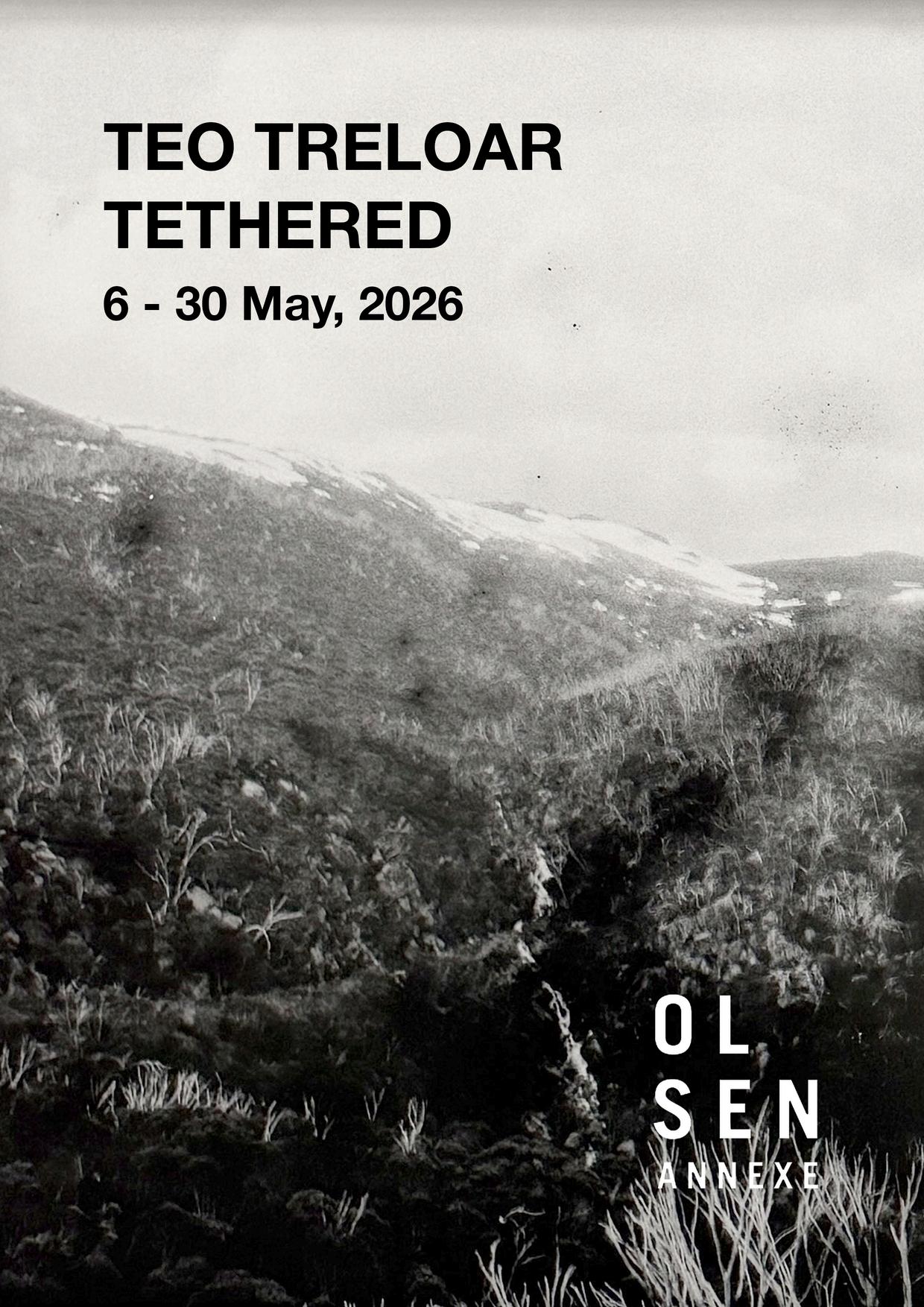
TEO TRELOAR
TETHERED
Olsen Annexe | 6 - 30 May, 2026
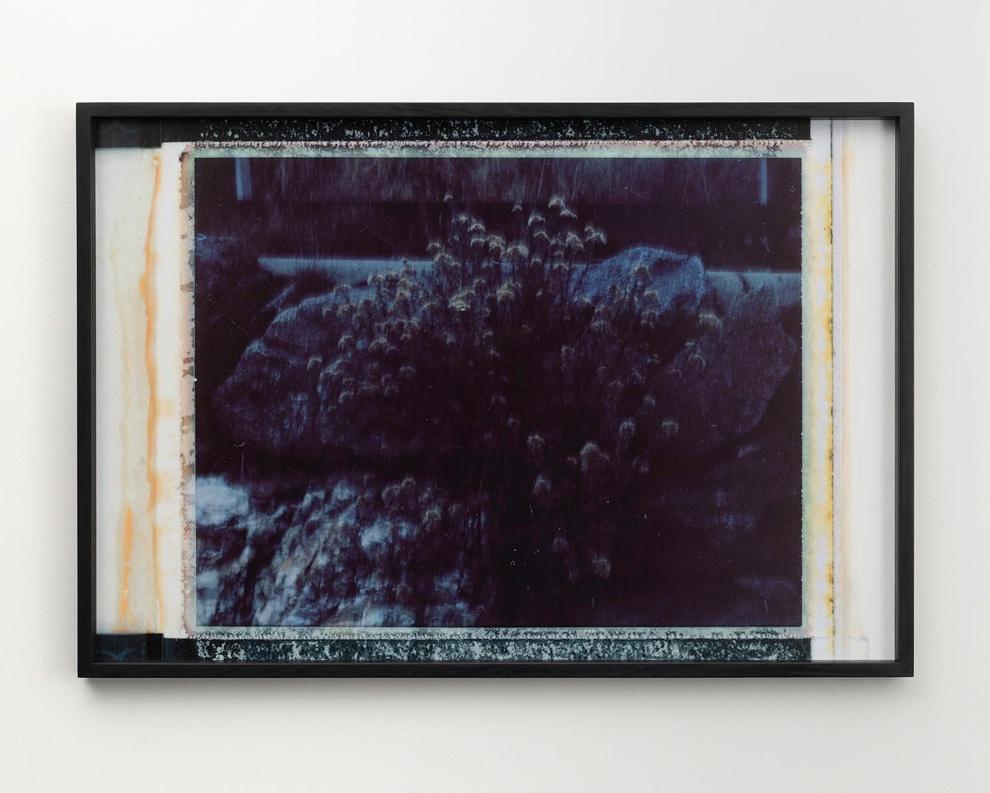
The photographs in Tethered centre on the concept of relational gravity: the pull between people, places, and materials. They carry grief, love, attachment, and loss, shaped by personal experience and by the lives of friends and lovers. In this sense, Tethered approaches landscape as a relational field, rather than as a detached or neutral view.
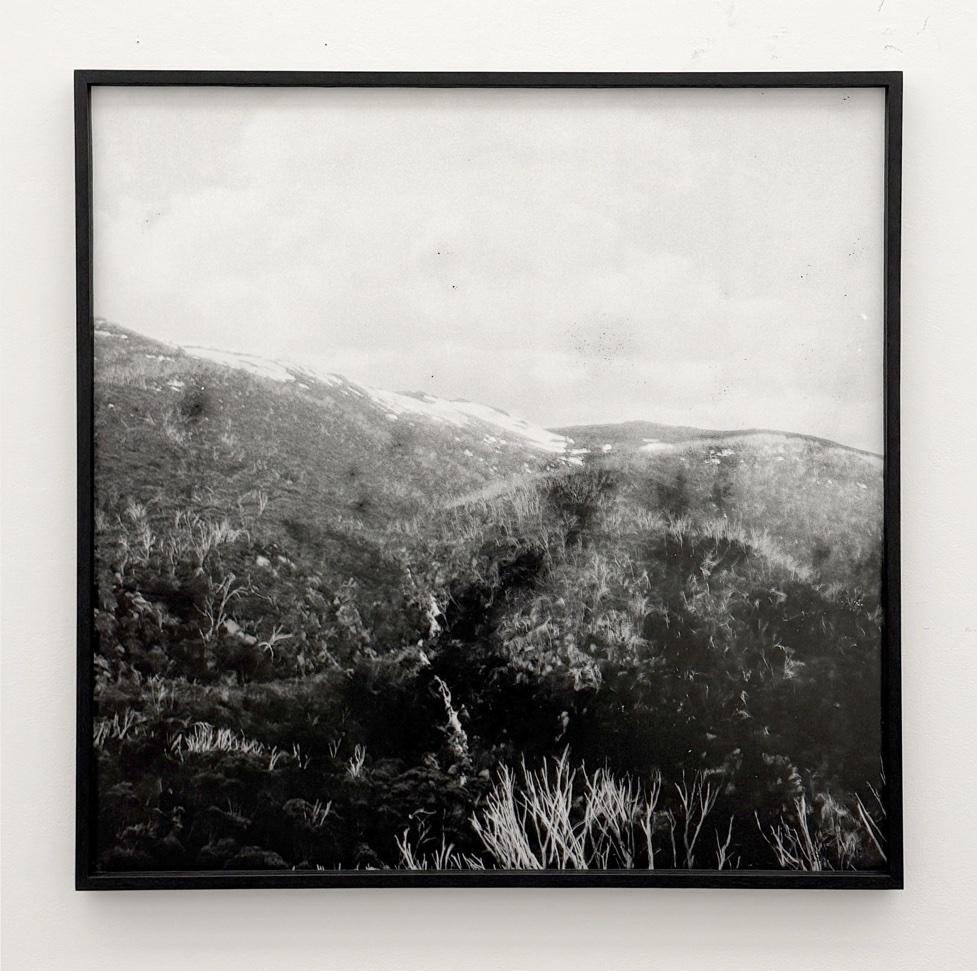
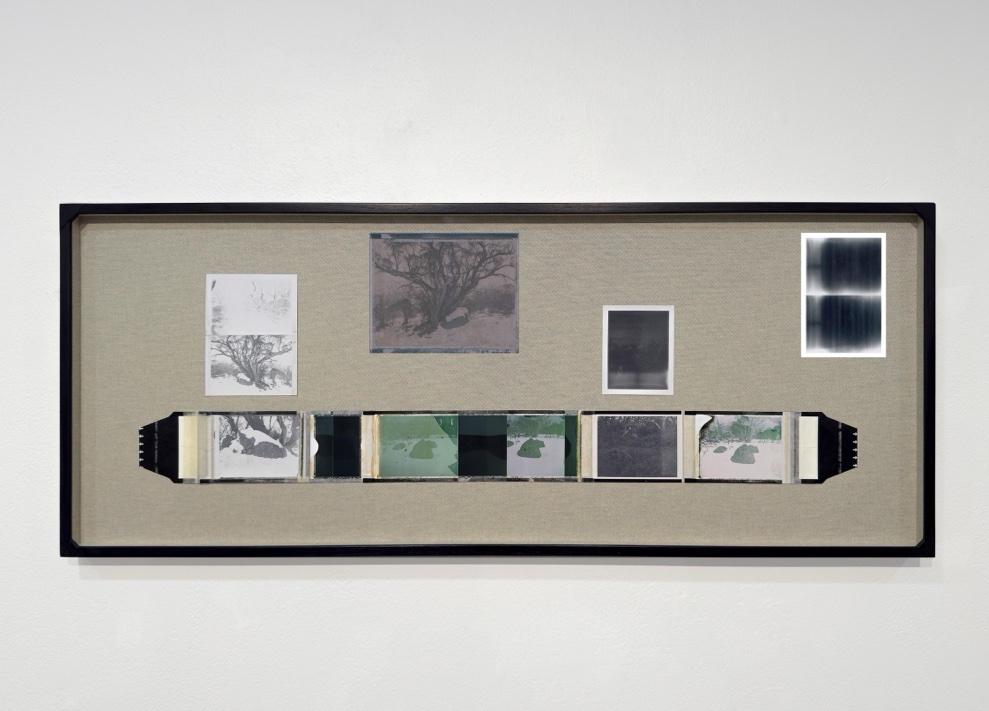
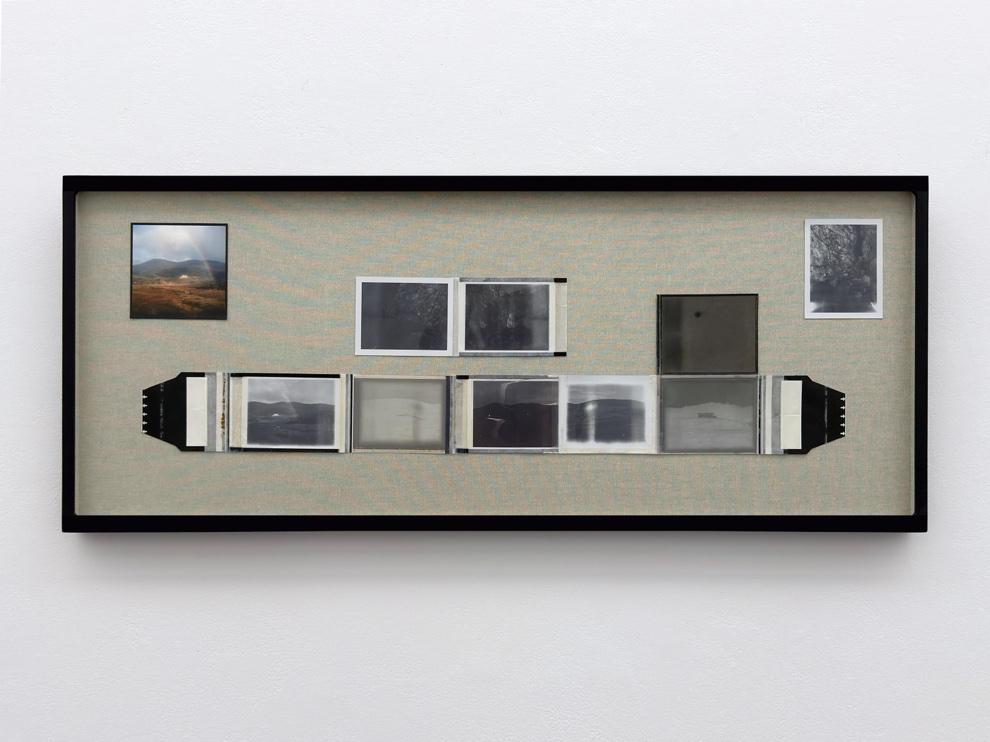
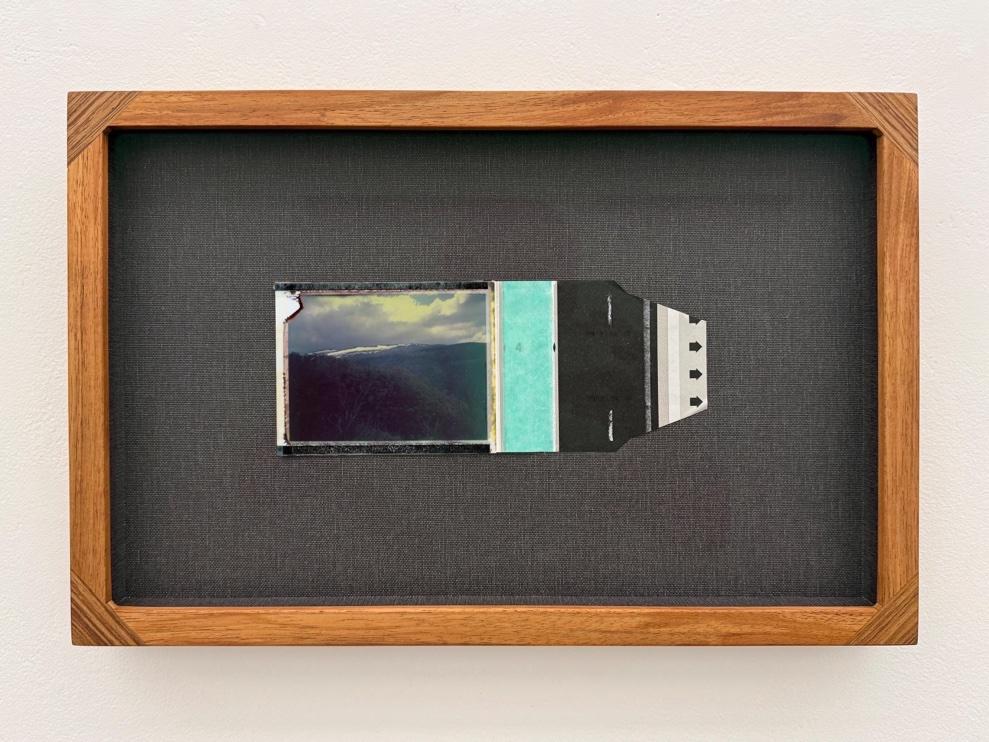
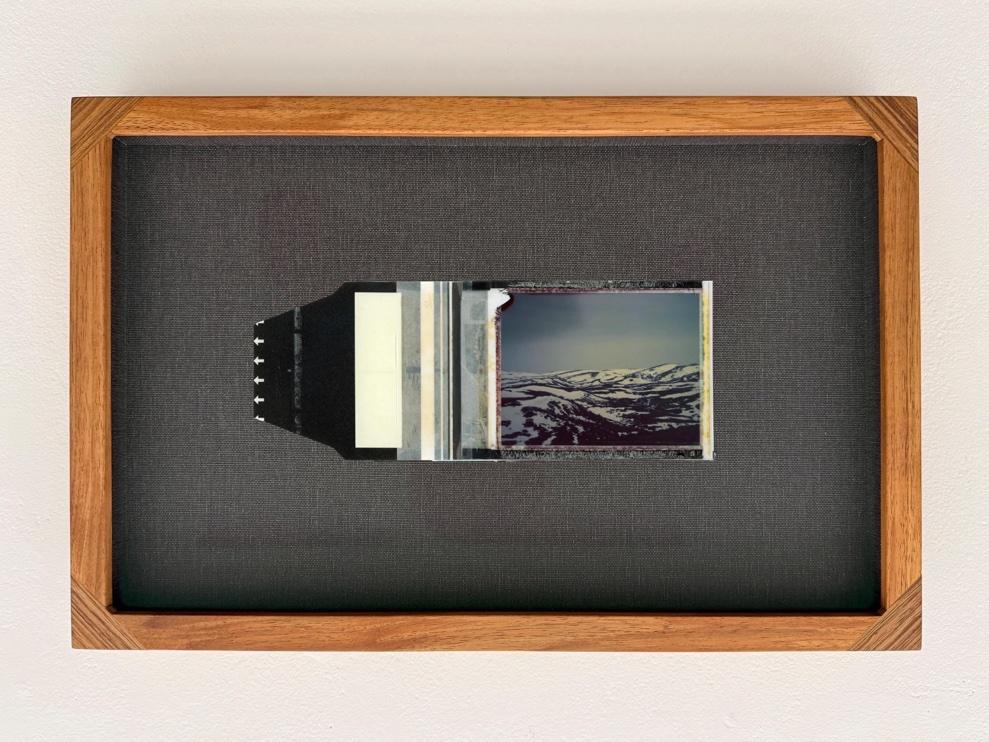
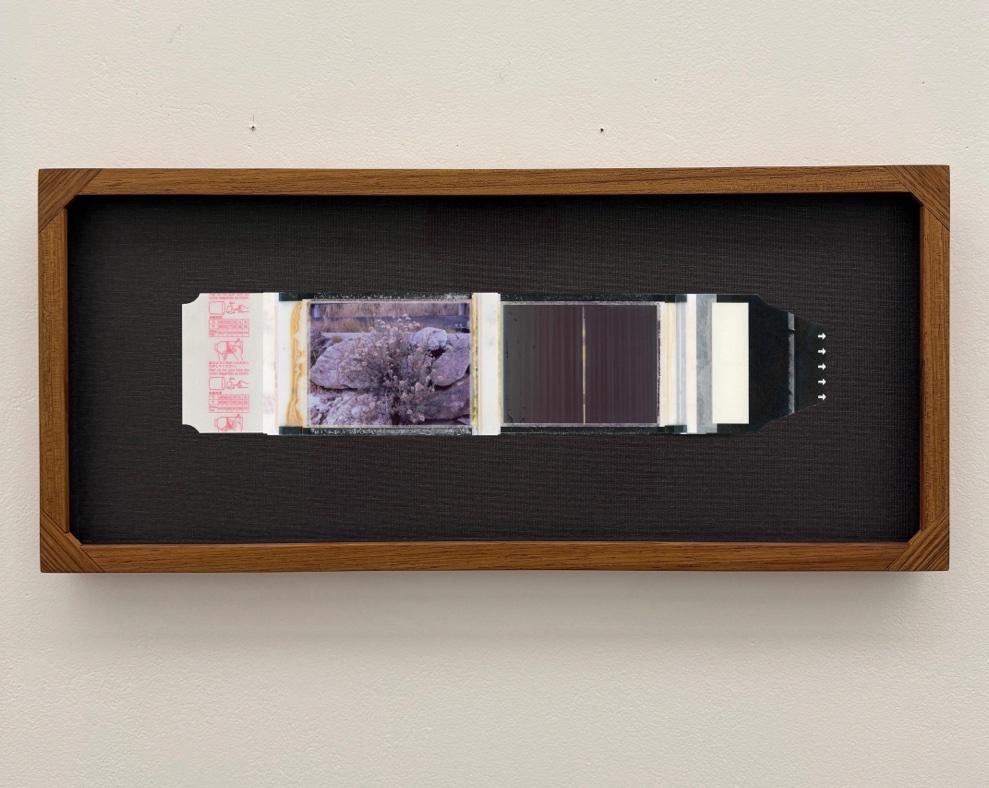
Tethered is made through analogue processes using expired mediumformat film alongside out-of-date FP-100C and 3000B instant film. Fogging, shifts in colour and density, uneven development, chemical marks, and occasional failure are part of the material outcome, carried on the photographic surface with what was in front of the camera.
As landscape images made in Australia, the work sits within the difficult, contested terrain of representing place, where images of land are shaped by histories of colonisation and dispossession, and by traditions of naming, framing, and picturing land through a colonial settler lens. In this context, the works are never separate from the histories they inherit; they are tethered to other stories, other claims, and other ways of seeing, even when driven by personal attachment and material process. The photographs were made in high alpine country, on Country connected with the Wiradjuri, Wolgalu, Ngunnawal and Monaro Ngarigo peoples.
Tethered is also built through a collage logic. Images accumulate as fragments, and meaning forms through sequence, proximity, and repetition rather than through a singular narrative.

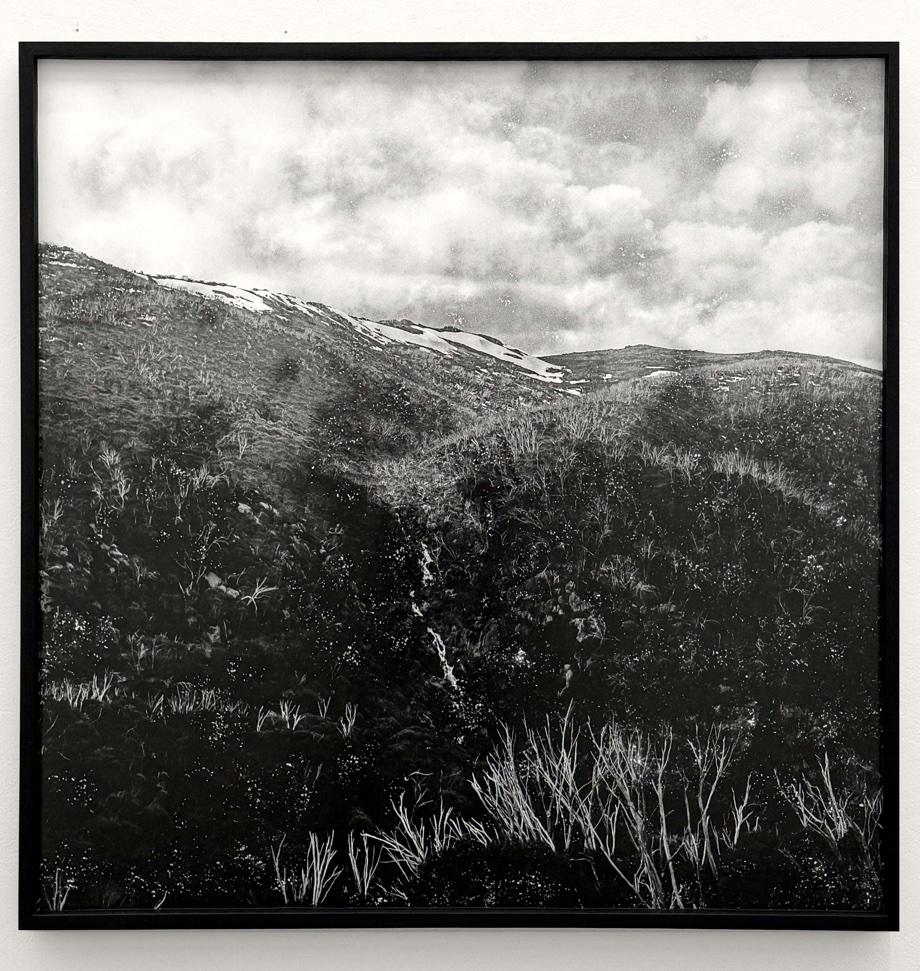
Teo Treloar
Periapsis I, 2025
archival pigment prints on semi-gloss cotton photo rag
101 x 101 cm
#41838
Framed
$6,500 individually
$11,000 as sold in diptych with Periapsis II
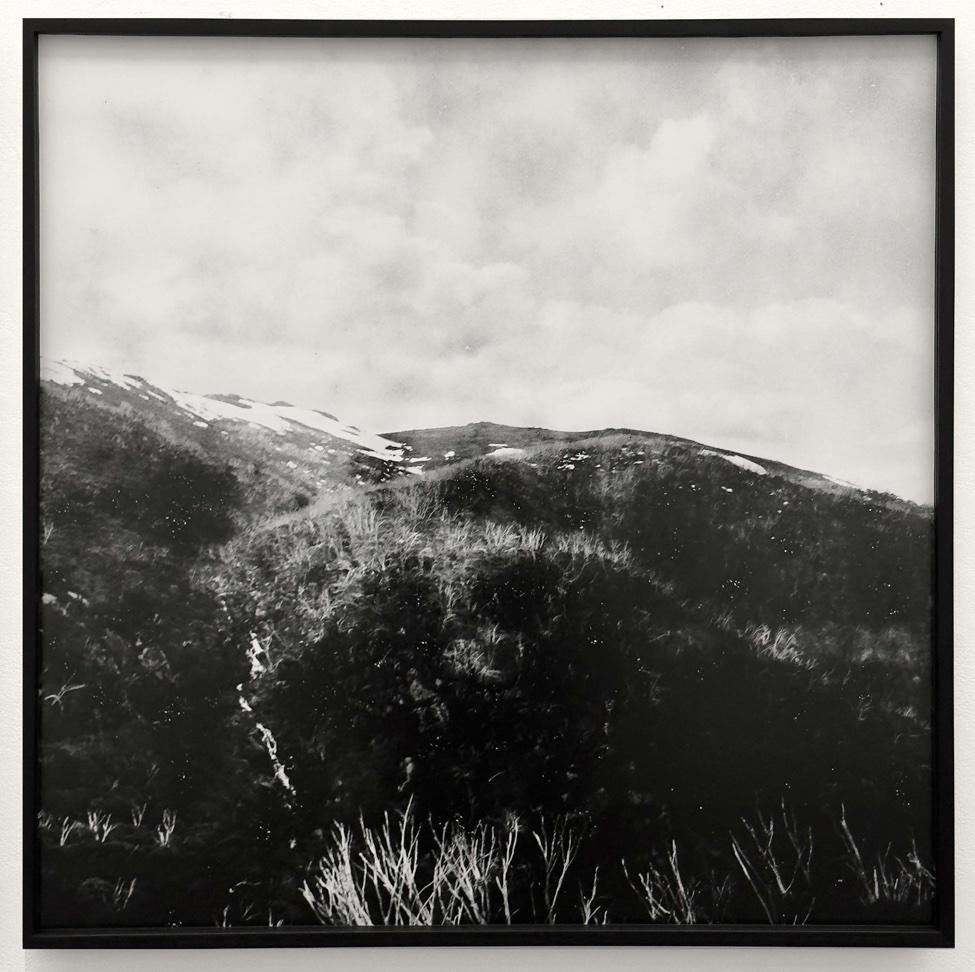
Periapsis II, 2025
archival pigment prints on semi-gloss cotton photo rag
101 x 101 cm
#41854
Framed
$6,500 individually
$11,000 as sold in diptych with Periapsis I
Teo Treloar
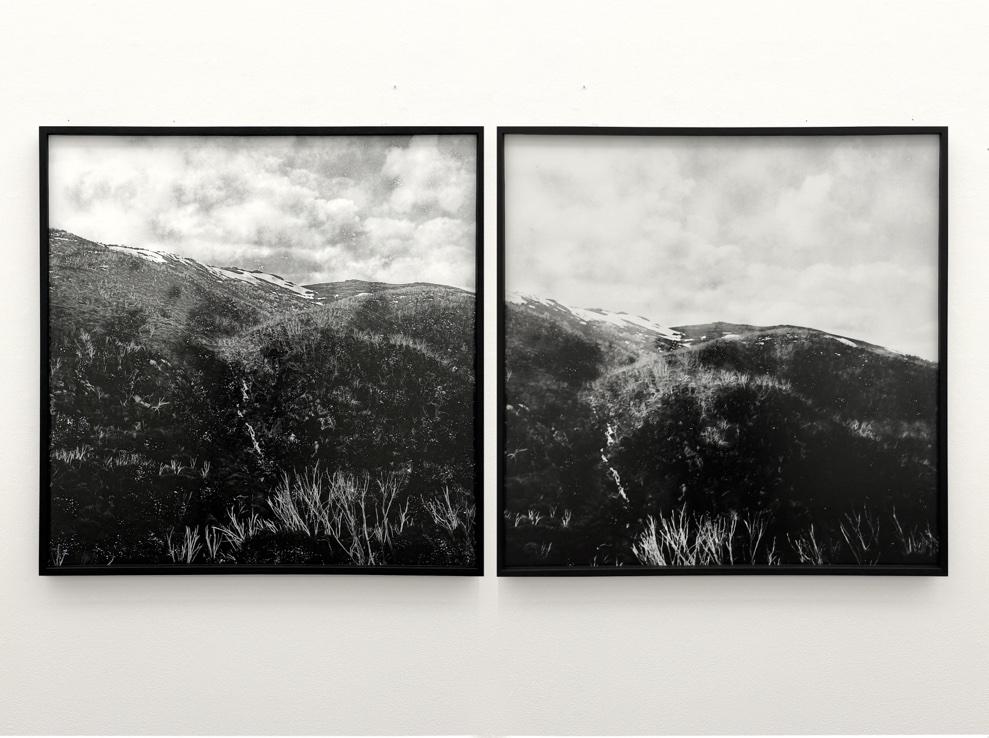
Teo Treloar
Periapsis I & II, diptych install view
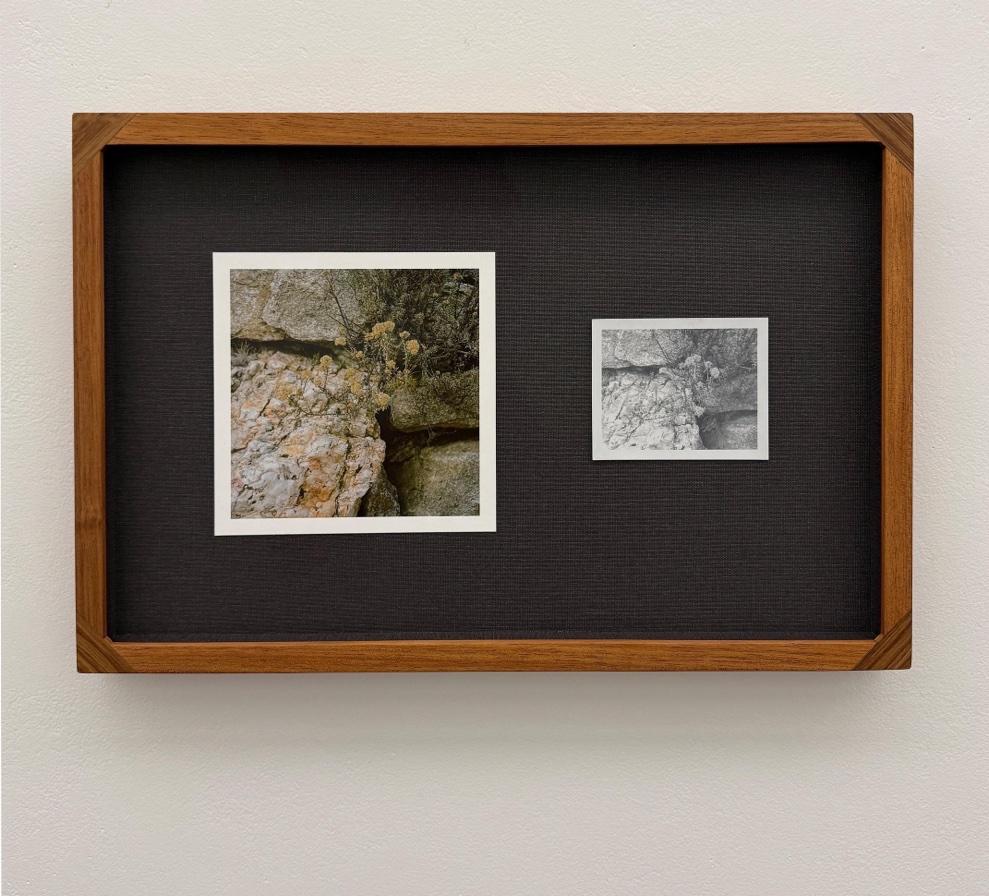
Perihelion, 2025
archival pigment prints on semi-gloss cotton photo rag
49.5 x 32.5 cm
Teo Treloar
#41839 Framed
$1,500
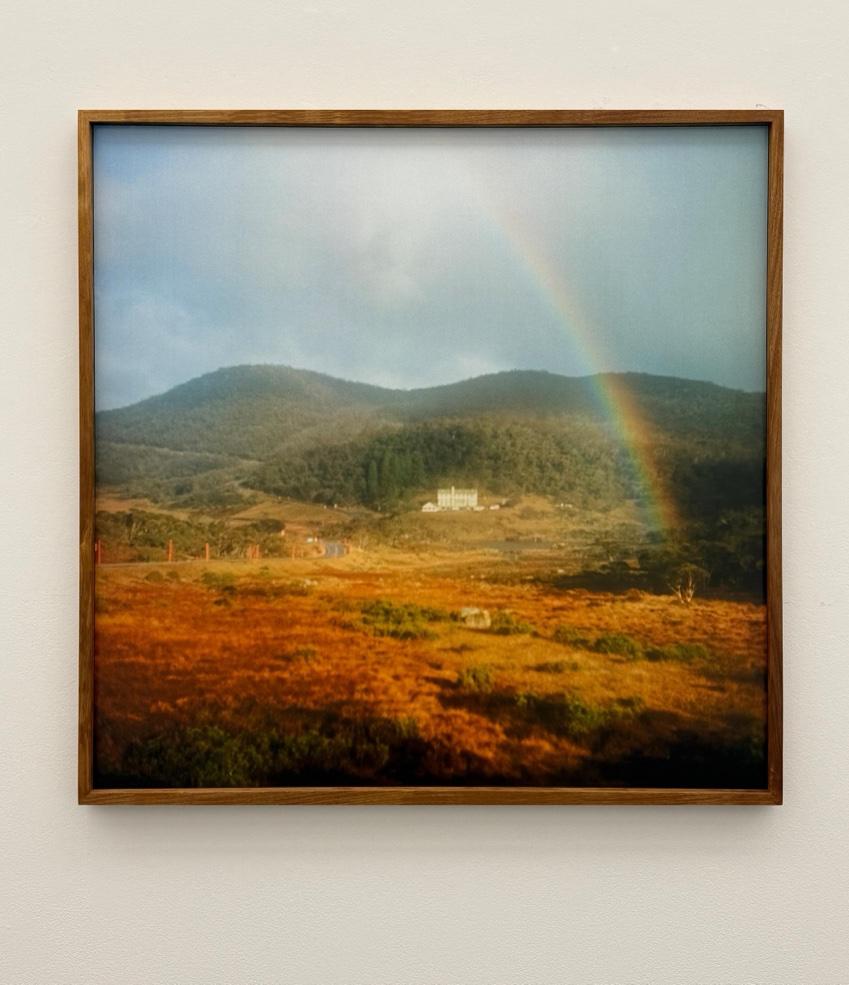
The Tether, 2025 archival pigment prints on semi-gloss cotton photo rag 101 x 101 cm #41840 Framed $6,500
Teo Treloar
Teo
Teo Treloar
Collage Logic II, 2025
expired film on linen board
94 x 38 cm
#41842
Framed
$3,300
Teo Treloar
Collage
#41843
Teo Treloar
Collage Logic IV, 2025
film on linen board 26 x 39.5 cm
#41844
Framed $1,200
Teo Treloar
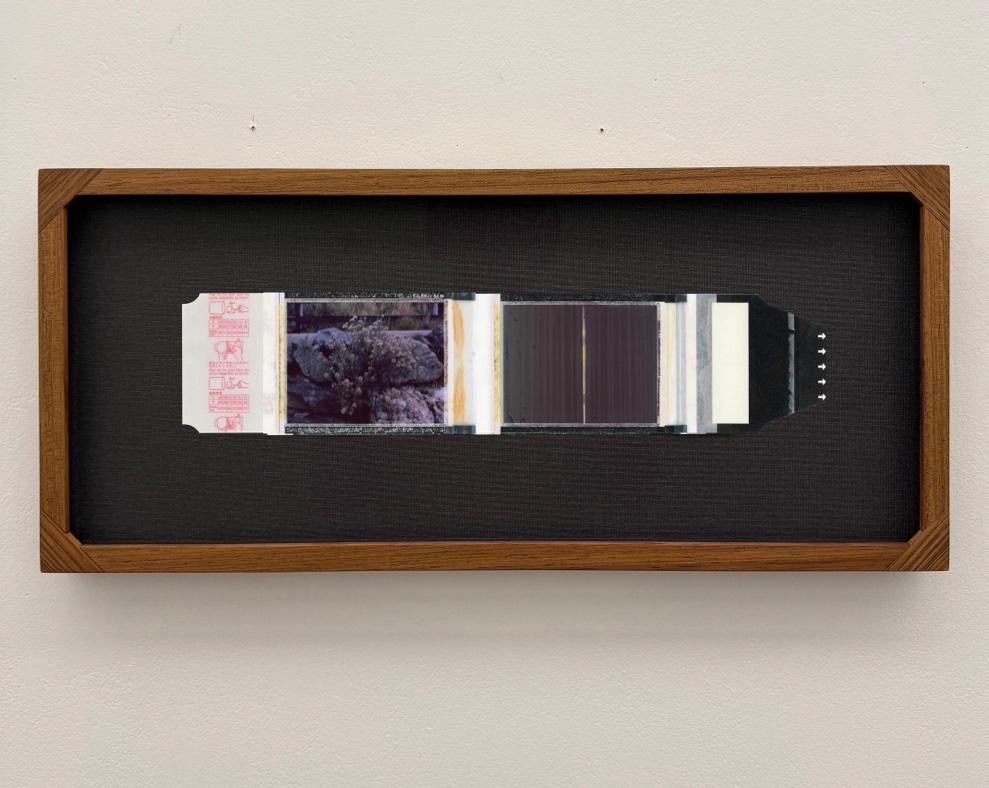
Teo Treloar
#41846 Framed $1,500
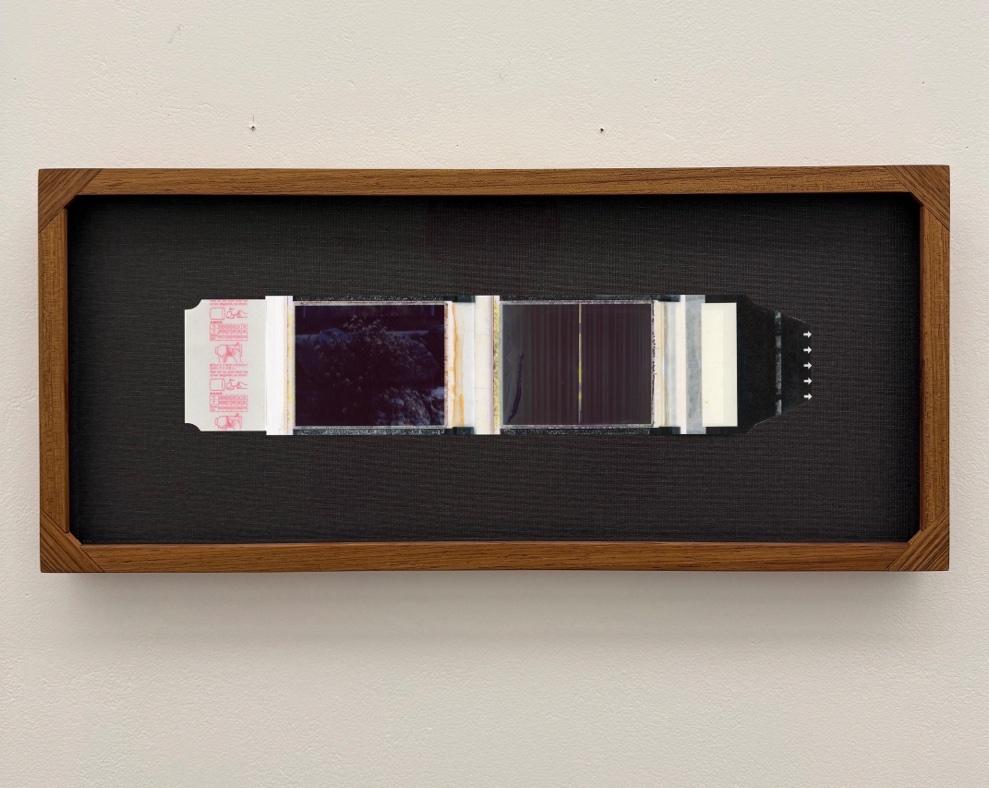
The Veil III, 2025 expired film on linen board 26 x 57.5 cm
Teo Treloar
#41847
Framed $1,500
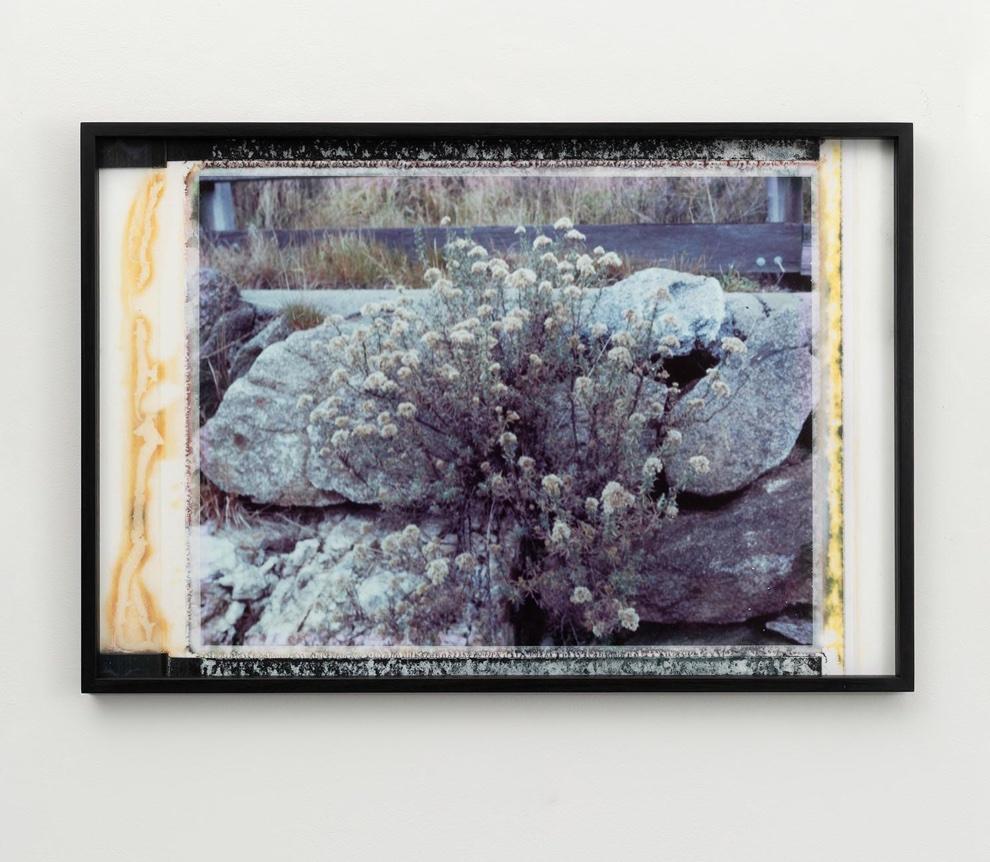
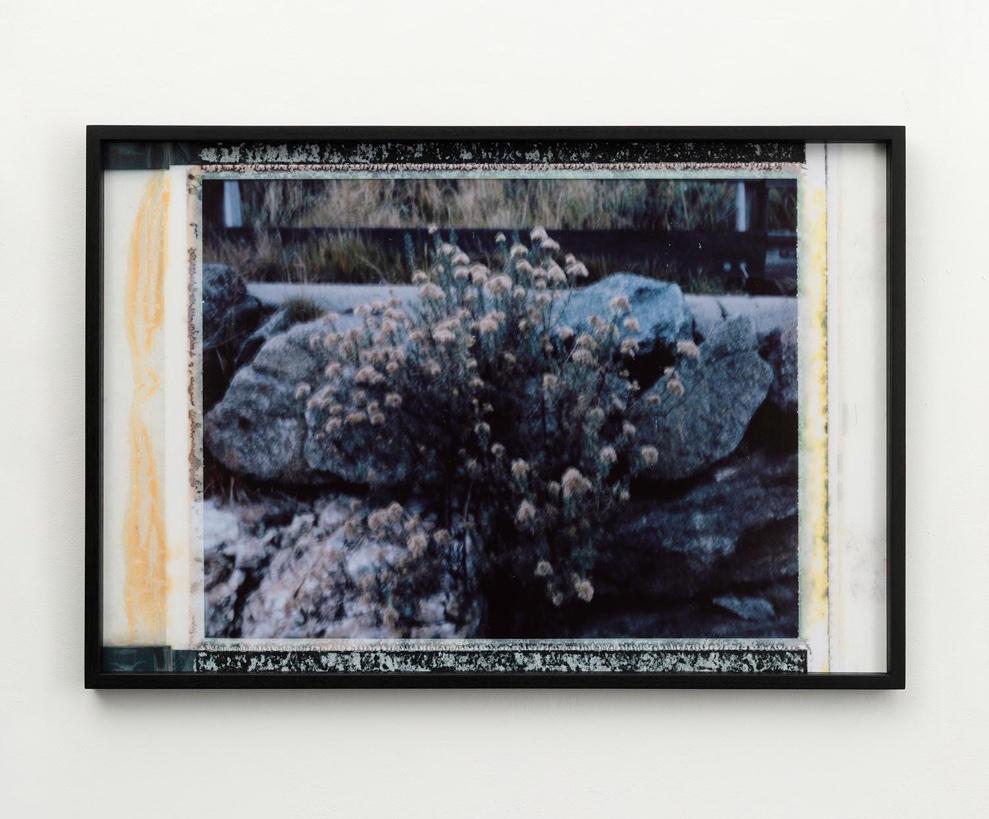
An Accompanying Essay by
Aneshka Mora
Relational Gravity || The Gravitas of Relationality
Australian landscape art has always been tied to the politics of the land. Not just in the ‘colonial gaze ' sense that you might learn in ‘ Australian Art History 101' though that lineage is real and worth naming but quite literally, in the material and juridical conditions of the nation state called ‘Australia.’ These conditions make certain artworks possible, and others invisible. Teo Treloar's photographic work is beautiful, yes But that ache in my heart rising from the perfect, sublime, transparency of the bottom of that rainbow in The Tether spills into an ache around who gets to make Australian landscape art , who gets to write about it and why
Treloar's work is preoccupied with grief, materiality, and land. There is something genuinely moving in that preoccupation. To imbue land with the personal affect of grief is to contest the understanding of land as inanimate. It conveys an understanding of how we form relationships with land, and our emotional/spiritual/psychological (not just physical) dependence on it. Treloar’s personal grief, especially in the context of his previous work around the normalisation of systems that capture and oppress us , also gestures toward a universal grief – one tied to that fantasy about living off the land, that fantasy about an earth not in climate crisis. Treloar lets us into a vulnerable and intimate moment of this relating. He archives it and uses a platform built across an entirely different career to advocate for the land’s incomparable value and meaning not as a resource but as crucial to spiritual, psychological, emotional sustenance . Intentionally or not, this advocates for an indigenist understanding of land That is, understanding land as relational, living, connected with us all and connective of us all , is an Indigenous metaphysical understanding – these photos are Treloar’s bid to capture his relationship to Country, not just land.
The concept of Country, as understood within Indigenous epistemologies, frames land not as a backdrop or resource but as a living relational network one that includes, and makes claims on, all who inhabit it. As Indigenous thinkers remind us, we are alwa ys of Country, and as such, the way we treat and regard Country is equivalent to the way we treat and regard life itself, including our own. This is the relational gravity that Treloar's work, at its best, intuits a gravitational pull between the human body a nd the living world, between grief and ground.
But there is another relational gravity operating here. It is the gravity of cultural ley lines: of colonial power, whiteness, heteropatriarchy, the specific networks through which opportunities in the Australian art industry flow.
As a settler artist, there may be no truly ethical way to create landscape art. 1 From another perspective, Treloar’s photographic series extends a long history of the colonial impulse , whereby land becomes a vessel for the artist. Treloar’s landscape photographs participate in well-worn patterns of colonially -structured power where established white, cis -male, settler artists get to make conventionally “beautiful” landscape art and have them shown in a reputable gallery. W hile elements of Treloar’s approach gesture toward decolonial critique (e.g., using degraded film to gesture at the degradation caused by colonisation or understanding land as part of relational constellation s), we can’t forget that the presence of these works in this particular gallery, at this particular moment, is not simply the result of beautiful photographs finding their natural home. It is also a result of “relational gravity” a force field of accumulated relationships, affinities, and access that bends opportunity toward certain people and not others. Being a white-passing and operating, hetero -passing, Gen X,
cis-man, in this industry enables specific relationships, and those relationships are part of why his photographs as opposed to someone else's equally beautiful landscape photographs are the ones hanging on these walls.
I say this not to diminish the work, but to name the structure it moves through. A structure that has enabled this essay, too.2
Many people have said this: Australian art is an ideological construction. E.g. in the iconic words of Richard Bell, “Australian art does not exist.” 3 As such, the institutions that validate art in Australia are not neutral arbiters of quality; they are participants in the ongoing production of ideology that serves them and the sources of power that enable them . Rachel O'Reilly articulates this incisively in her essay on e-flux, “Dematerializations of the Land/Water Object.” Here, she rigorously argues that the inextricability of art and land in the Australian context is not merely a thematic concern but is embedded in the logic of how cultural value in the nation -state itself is produced and secured. Drawing on the ~coincidence ~ of the dematerialisation of the art object and the first boom of the shale gas industry in the United States during the 1970s, O'Reilly argues that when value is "disembedded from its previously secure source in a specific materiality," what follows is a struggle waged across culture and law over what will then re-secure that value. In other words, culture becomes a site where the question of what is valuable, and for whom, is actively contested and consolidated.4
Possibly, this is why landscape art in Australia refuses to go away. It is not nostalgia, or aesthetic habit. Landscapes continue to haunt Australian art because, as obvious as it sounds, the struggle for land, through culture and law, is what constitutes the concept of 'Australia' (see: primitive accumulation) And so, the continued production of landscape art its exhibition, its criticism, its collection participates, however ambivalently, in the ongoing cultural negotiation of that founding violence.
This is not a new argument.5 But it raises a discussion the Australian art industry will never tire of finding reasons to defer. The infrastructure of the industry its galleries, its critics, its catalogue essays, its portfolios does not sit outside the politics of the land. It is made of them.
We will continue to make landscapes, I believe, because as corporeal beings we ’re always, consciously or not, concerned with the matter that sustains us. Treloar's work does not position itself as critique it is not concerned with that mode. But the questions his work opens up, through its sincerity, are the same ones that make me fascinated in Australian art : what is our relationship to this land, and what do we owe it? When Country becomes sovereign , when we give the Land Back, I imagine landscapes will be imbued with a different politic. Until then, I hope we continue to ask not only whether the work is good Treloar's is but what conditions make it possible for some good landscape work to be seen, and others not, and how does this relate to its subject matter . That question belongs to all of us who work in this industry. Including those of us who write the exhibition essays and only get invited to do so because they’re sleeping with the artist.
Dr Aneshka Mora (they/them) is a queer arts worker, curator, writer , teacher and scholar of colour based on Wodi Wodi Land in Dharawal Country. They are interested in understanding dominant structures of reality as an aesthetic project of colonialisation and artistic projects that contest this reality by imagining and enacting oth er worlds. Their practice seeks to unpick colonial organisation of life through participating in and facilitating criticality, creativity , contestation and community building.
Notes:
1 By the same measure, as a settler writer, there may be no truly ethical way to write about Australian landscape art.
2 Though my investment in writing this piece emerges from my investment in Country and the belief that these conversations are worth having even from within the structures they critique, I’m still participating in the circle-jerk of the institution.
3 Richard Bell, Judgement Day (Bell’s Theorem), 2008, acrylic on canvas, 240 x 360 cm.
4 Rachel O’Reilly, “Dematerializations of the Land/Water Object,” e-flux 90 (2018), https://www.e - flux.com/journal/90/191918/dematerializations -of-the-land-water-object/
5 Australian art historians like Ian Burn, even Bernard Smith to some extent, have been writing about this since the mid to late 1900s e.g. Ian Burn "The Sixties Crisis and Aftermath," Art & Text, ed. Paul Taylor, 49 –66. Prahran, VIC: 1981.