for Real Life Success

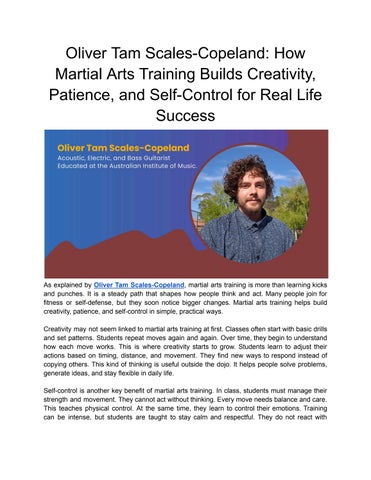
As explained by Oliver Tam Scales-Copeland, martial arts training is more than learning kicks and punches It is a steady path that shapes how people think and act Many people join for fitness or self-defense, but they soon notice bigger changes Martial arts training helps build creativity, patience, and self-control in simple, practical ways.
Creativity may not seem linked to martial arts training at first. Classes often start with basic drills and set patterns Students repeat moves again and again Over time, they begin to understand how each move works This is where creativity starts to grow Students learn to adjust their actions based on timing, distance, and movement. They find new ways to respond instead of copying others This kind of thinking is useful outside the dojo It helps people solve problems, generate ideas, and stay flexible in daily life
Self-control is another key benefit of martial arts training In class, students must manage their strength and movement. They cannot act without thinking. Every move needs balance and care. This teaches physical control. At the same time, they learn to control their emotions. Training can be intense, but students are taught to stay calm and respectful They do not react with
anger or fear Instead, they pause, think, and respond with purpose This skill is valuable in real life, especially in stressful situations.
Martial arts training also builds strong habits. Students follow routines and listen closely to their instructors. They show respect and stay focused during practice. These habits create discipline. With discipline, it becomes easier to stay committed to goals It also supports patience and self-control over time.
Another benefit of martial arts training is improved focus During practice, students must pay attention to small details. They watch movements, adjust their stance, and stay aware of others. This sharp focus strengthens the mind It helps people stay present and avoid distractions Better focus can improve performance in many areas of life
Martial arts training also teaches responsibility Students learn that their progress depends on their effort. They take ownership of their growth. This builds confidence steadily and realistically. Confidence from martial arts training is not loud or forced It comes from knowing you can handle challenges with calm and control
Martial arts training is a powerful tool for personal growth It builds creativity by encouraging flexible thinking It develops patience through steady practice It strengthens self-control in both body and mind. These skills help people handle real life with more clarity and balance. Martial arts training is not just about physical skill; it is about becoming more focused, calm, and capable every day