
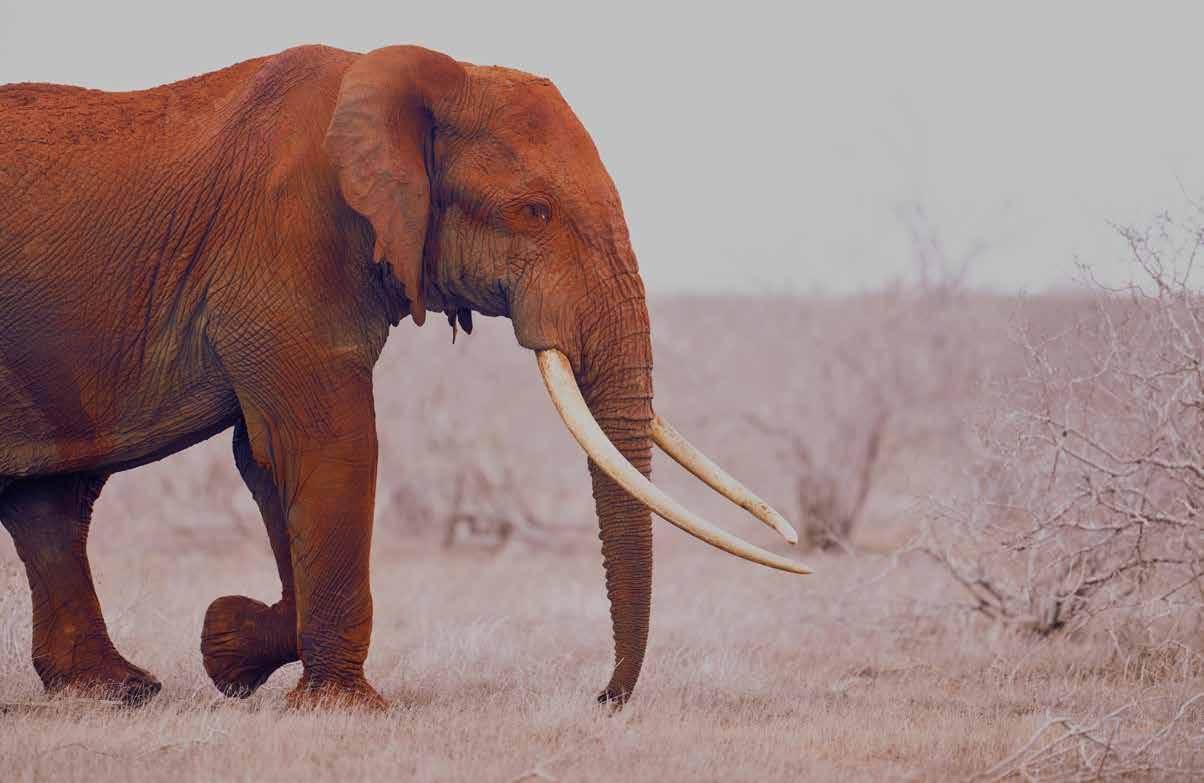
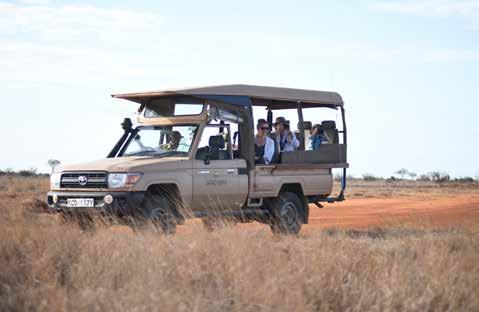



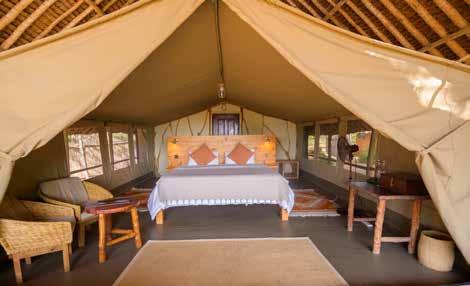
Rediscover safari’s romance at Satao Campcanvas comfor ts, star-f illed nights, and daily elephant parades at our waterhole.
When World War I breaks out, WJ Dawson joins Bowker’s Horse and starts out at Kajiado.
Fischer and his caravan reach Lake Naivasha but soon have to turn around when the Maasai begin to harass him. JM KARIUKI: POPULIST MP MURDERED PART 10
JM Kariuki’s burial in Gilgil is fraught with tension.

Senator Robert Kennedy visits Kenya as part of a wider African trip in
A missionary shoots a buffalo that he later mounts for Rift Valley Academy, where President Theodore Roosevelt stopped in 1909 to lay a cornerstone on his safari to shoot buffalo – and other animals. CROSSING THE SAHARA
Two young men head out from Nairobi to England in 1958, determined to cross the Sahara on the way.
A history of Asian drama in Nairobi, and the part Allaudin Qureshi
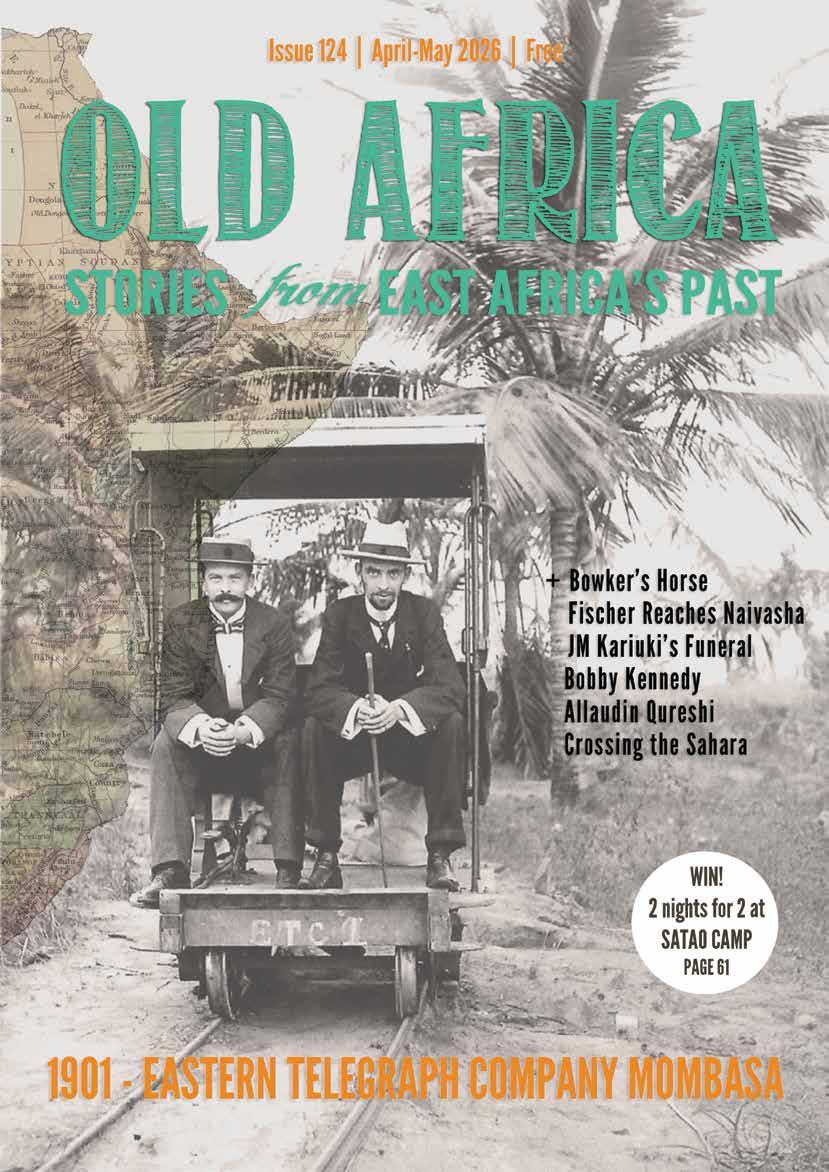
Cover photo: Our cover photo shows Willie Manson and Larnder on the Eastern Telegraph Company trolley in Mombasa in 1901. The ETC painted on the front of the trolley shows it was property of the telegraph company. (Photo courtesy Matthew McIlvena)
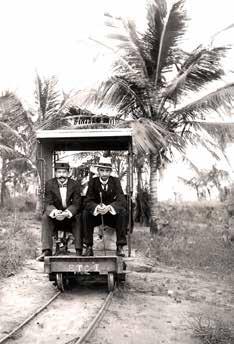
As a ten-year-old boy I remember searching for telegraph pole insulators on the old railway tracks below the Kijabe mission station. The old railway could still be traced through several deep cuts and there were massive concrete footings where trestle bridges once crossed the ravines after the Escarpment and Matathia train stations and on to old Kijabe. I had been told by Doc Propst that just before World War II the railway alignment had been moved up above Kijabe and carved into the side of the escarpment so the trains wouldn’t have to travel over bridges where they would be a vulnerable target if the Italians invaded from Ethiopia.
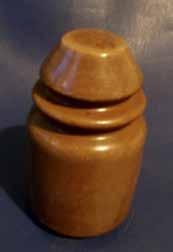
When the railway line was moved, the telegraph lines were also moved and in the process of taking down the poles, many of the insulators were left along the edge of the railway. We would scavenge through the bush on the sides of the railway bed looking for insulators to add to our growing collection. The older ones were milk-chocolate brown. The newer ones were cream-coloured and shiny. I later learned these glazed ceramic insulators were used instead of glass to withstand the heat and moisture. Most were cracked, chipped or broken. But our prizes were whole insulators with manufacturer’s markings etched on the side. I no longer remember what the markings said. I kept my collection in a cardboard carton, but my mother threw the box away when I went off to university.
I still remember the thrill of finding these relics of the old railway. So it’s our pleasure to publish an article about Willie Manson, one of the men responsible for stringing those first telegraph lines along the Uganda Railway in about 1901. Old Africa reader Matthew McIlvena purchased old photo albums at an estate sale that had belonged to Manson. Using the photos as a springboard, he researched and wrote an article that briefly traces Manson’s career, with a special focus on his years in East Africa – all illustrated by rare photos.
My insulator collection may have been thrown away, but this illustrated story about connecting East Africa to the world through telegraphic cables has been written down so it can be remembered.
-Shel Arensen, Editor
P.O. Box 2338 Naivasha, Kenya 20117 www.oldafricamagazine.com
Editor: Shel Arensen 0736-896294 or 0717-636659
Design and Layout: Mike Adkins, Blake Arensen
Proofreader: Janet Adkins
Printers: English Press, Enterprise Road, Nairobi, Kenya
Old Africa magazine is published bimonthly. It publishes stories and photos from East Africa’s past.
Subscriptions: Subscriptions are available. In Kenya the cost is Ksh. 3000/- for a one-year subscription (six issues) mailed to your postal address. You can pay by cheque or postal money order made out in favour of: Kifaru Educational and Editorial. Send your subscription order and payment to: Old Africa, Box 2338 Naivasha 20117 Kenya. For outside of Kenya subscriptions see our advert in this magazine. Advertising: To advertise in Old Africa, contact the editor at editorial@oldafricamagazine.com for a rate sheet or visit the website: www.oldafricamagazine.com
Contributions: Old Africa magazine welcomes articles on East Africa’s past. See our writer’s guidelines on the web at: www.oldafricamagazine.com or write to: Old Africa magazine, Box 2338, Naivasha 20117 Email
Address: editorial@oldafricamagazine.com. After reading our guidelines and editing your work, send it to us for review either by post or email. (To ensure return of your manuscript, send it with a self-addressed envelope and stamps to cover return postage)
Copyright © 2026 by Kifaru Educational and Editorial All rights reserved. No part of this publication may be reproduced or distributed in any form or by any means, or stored in a database or retrieval system, without prior written permission of the publisher.





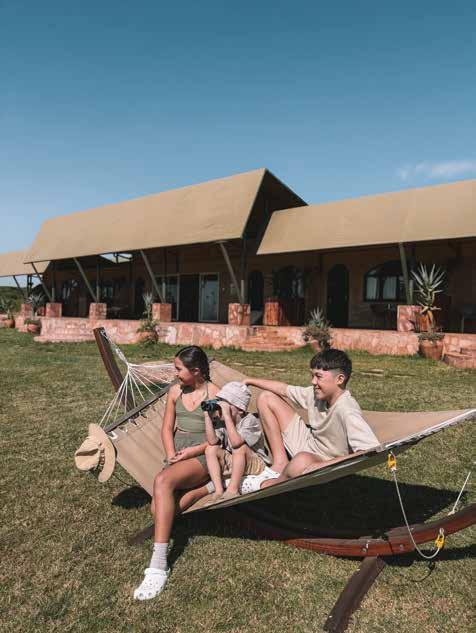


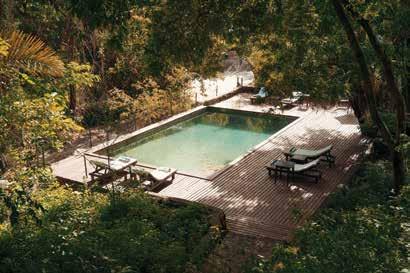
Experience an Authentic Safari this Holiday Season at Porini Camps, set in exclusive wildlife locations. Non-residents traveling with residents can enjoy special resident rates for an unforgettable safari adventure.
CAMP
Porini Giraffe Camp
Porini Amboseli, Porini Mara, Porini Cheetah & Porini Lion Camp
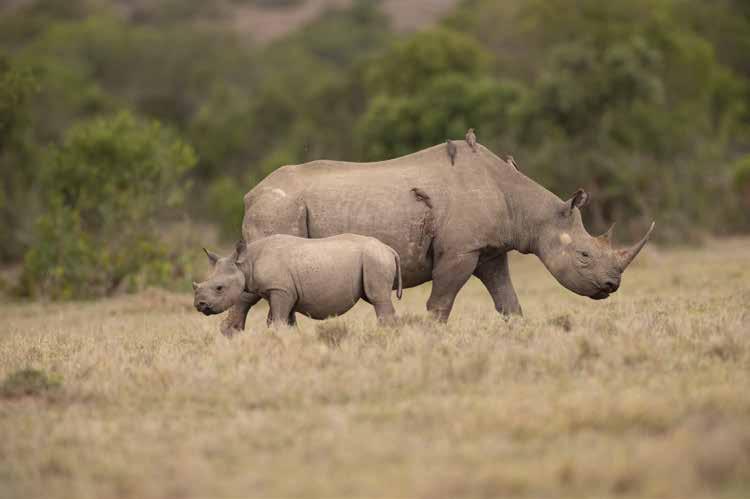
Porini Rhino Camp
Rhino River Camp (Forest Tent)
Rhino River Camp (River Tent)
Rhino River Camp (Forest Tent)
Rhino River Camp (River Tent)
Porini Ol Kinyei
Cottages

Full board accommodation I Free drinks such as mineral water, soft drinks, house wines, beer, and Gin and Tonic I
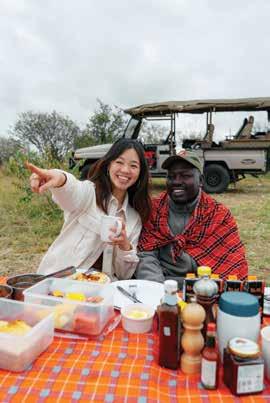
Guests will enjoy sundowners from scenic viewpoints and guided nature walks I The package also features shared day and night game drives in open 4×4 vehicles with an experienced driver-guide and spotter I At Porini Rhino Camp, guests will have the opportunity to visit the chimpanzee sanctuary in the Ol Pejeta Conservancy I Those at Porini Amboseli Camp can experience a Maasai village visit I For guests flying in, local airstrip transfers to the camps are included.
*Please note, the above rates are excluding park and conservancy fees.



Dear Editor,
I finally had some suitably dark, cold and wet days in which to catch up with the newly introduced digital versions of Old Africa. The large screen hooked into my laptop certainly makes reading them very agreeable!
I am excited by the availability of printed ‘Collectors editions’ through Amazon and will be a regular customer for my mzee who abhors the computer.
Both my father and I are much relieved to learn of your impressive recovery, and we wish you continued strength and fortitude. Salaams!
Dirk Sickmüller, Dickbuch, Switzerland
Dear Editor,
I hope this finds you and yours well, and you are continuing to recover from your surgery.
I am loving being able to order my copy of Old Africa from Amazon, and it arrives promptly by post, two days later.
How about that folk story about the baboon and man’s hairy chest! I learn something new every day! I just love receiving the Old Africa magazine, and hope you can keep it going, and more people have signed up, to make it worthwhile.
The sun has made an appearance in France for the first time in weeks, and it is amazing how it makes such a difference to one’s mood. The daffodils are out, the birds are making a wonderful racket, and all
is well. Many thanks for all you do.
Dear Editor,
Fran More Deux Sevres, France

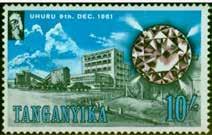
I hope you are well. I retrieved my digital copy of issue123. You did a great job with the article on the Tanganyika diamond, and particularly the arrangement of the pictures, which seemed more haphazard in The Telegraph.
I had forgotten to share with you, if you haven’t seen it before, one of the set of first postage stamps minted in 1961 in the first year of Tanganyikan independence. It features the Williamson mine in the background and the pink diamond in the foreground.
Jarat Chopra, Nairobi
Dear Editor,
There used to be a bridge over the Sagana just above the falls at Karatina, which led to the vegetable canning factory. The bridge consisted of just two steel girders spanning about 60 feet with no decking between the girders and no side walls. Just two girders; one for each wheel of a car or lorry. My father,
who worked for the Public Works Department (PWD), installed a small hydroelectric generating scheme for the factory and in 1942, when I was on holiday from Kenton College, he took me to see this scheme. I remember very vividly sitting in his car as he slowed down just before the bridge and drove straight across. My heart was in my mouth.
Later during the emergency I had to take a patrol down this road and, as I knew of the bridge, I told the driver that I would drive the Bedford 3-tonner with 20 askaris in the back. I drove across with no trouble but on the return trip the askaris begged me to let them get out as they were terrified of the crossing.
If you or any readers have a photo of that bridge over the Sagana, I would love to show my friends here in England. They do not believe that such a bridge existed. I should think that by now they would have modified the bridge.
I enjoy Old Africa, which Hughie Clark forwards to me. I have enjoyed the articles on Kilimanjaro and Mount Kenya. I climbed Kili in 1952 with Peter Colins. We just decided to drive up from Mombasa in our work clothes and climb Kili. When we got above Gilman’s Point there were very huge ice columns 20 feet high standing like trees, which made us turn back. These ice formations, often found at high altitudes, are called nieves penitentes, or penitent snows in Spanish.
I was blinded in action during the emergency, but even so I climbed Kili again in 1986 and these ice columns had all melted away. I have also climbed above base camp Everest since being blind and one of my two guides was Brian Higgins from Naivasha.
It is said that there is more mountain sickness on Mount Kenya than Kili. If altitude is the cause, then there should be no difference, so what is the other factor?
The article on Longonot reminded me of taking my two girls up when they were 10 and 11 and after descending into the crater we boiled our eggs in the steam jets.
Mike Tetley, St Albans, Herts, UK
Dear Editor,
Gail Paul’s article about ladies’ squash in the 1960s and 1970s, which appeared in Old Africa issue 98 (December 2021-January 2022), reminded me of a lesson learnt on the squash court in 1957. I was on a business visit to Malindi and stayed at the Eden Roc hotel where Charlie Schwentafsky was the manager at the time. After lunch he asked me if I would like a game of squash with his wife, who was a short, lithe lady. At 6’6” I towered above her. I agreed without - I hope, indeed pray - any apparent condescension.
I duly turned up at 4 pm, and in the knock up I could see that she was not a total beginner as I had feared. We then played. At the end of the second game, with the score 9-1, 9-0 in her favour, I declined her offer of a third game. I think she understood
what I said, as my words came from a throat gasping for air, as I leant against the wall, propped up by rubbery legs.
I believe Una (I believe that was her name) was the Kenya runner-up squash champion at the time. I learnt a good lesson on the court that day, but not so much about squash.
John Lindgren, Cambridge, UK
Dear Editor,
Marlene Reid wrote an interesting letter in Old Africa issue 98, about being attacked by bees. It must have been a scary experience – it was scary enough reading about it!
I wanted to visit Singida, a long trek from Arusha, but Tim was in town, so we decided to use him, since we were friends.
She mentioned working with Tim Air in Dar es Salaam. I think this must have been the one-man airline run by Tim Bally. I knew Tim when we were both with StandardVacuum Oil Co (Stanvac) in the mid 1950s. Tim had his flying licence then and he persuaded management to let him fly head office employees to up-country locations. Such travel was unusual in the business world of those days and the convenience and speed of such travel was much appreciated. The practice ended when, just after takeoff from Eldoret, Tim had to tell his passenger (PrimroseWells, known to all as ‘Petal’) that he had forgotten to fill up with aviation gasoline. Petal’s account easily persuaded management to change their mind about Tim’s private initiative!
It must have been about 1960 when I made a visit to Arusha to see our man there - Hugh Fraser (Harlequins and Kenya rugby). Hugh and
I must have forgotten management’s edict of a few years earlier! We set off happily but clouds soon gathered and not a moment too soon for the unprotesting passengers, Tim decided to return. Visibility worsened, and Tim wasn’t sure where he was! Fortunately, I knew the area from earlier years and recognized the road running south from Arusha, and the tsetse control shed astride the road. We made it back to Arusha flying at quite a low altitude - I had reassured Tim that as far as I could remember there were no significant hills on that route!
Tim sadly flew into a hillside in South Africa a few years later. But such flying was part of the interest of life in those days.
John Lindgren, Cambridge, UK
Dear Editor,
So many interesting stories in the latest magazine, Old Africa issue 123. I enjoyed reading about the Mtwapa Bridge. Our home is next to the old ferry crossing.The bridge is getting an upgrade again and it will be a dual crossing. This is all part of the road improvements between Mombasa and Malindi.
The folk tale about how the hairs on a man’s chest came from the baboon’s bottom was such a good story!
Miranda McGovern, Mtwapa, Kenya
Dear Editor,
When I asked you if it would be possible for Old


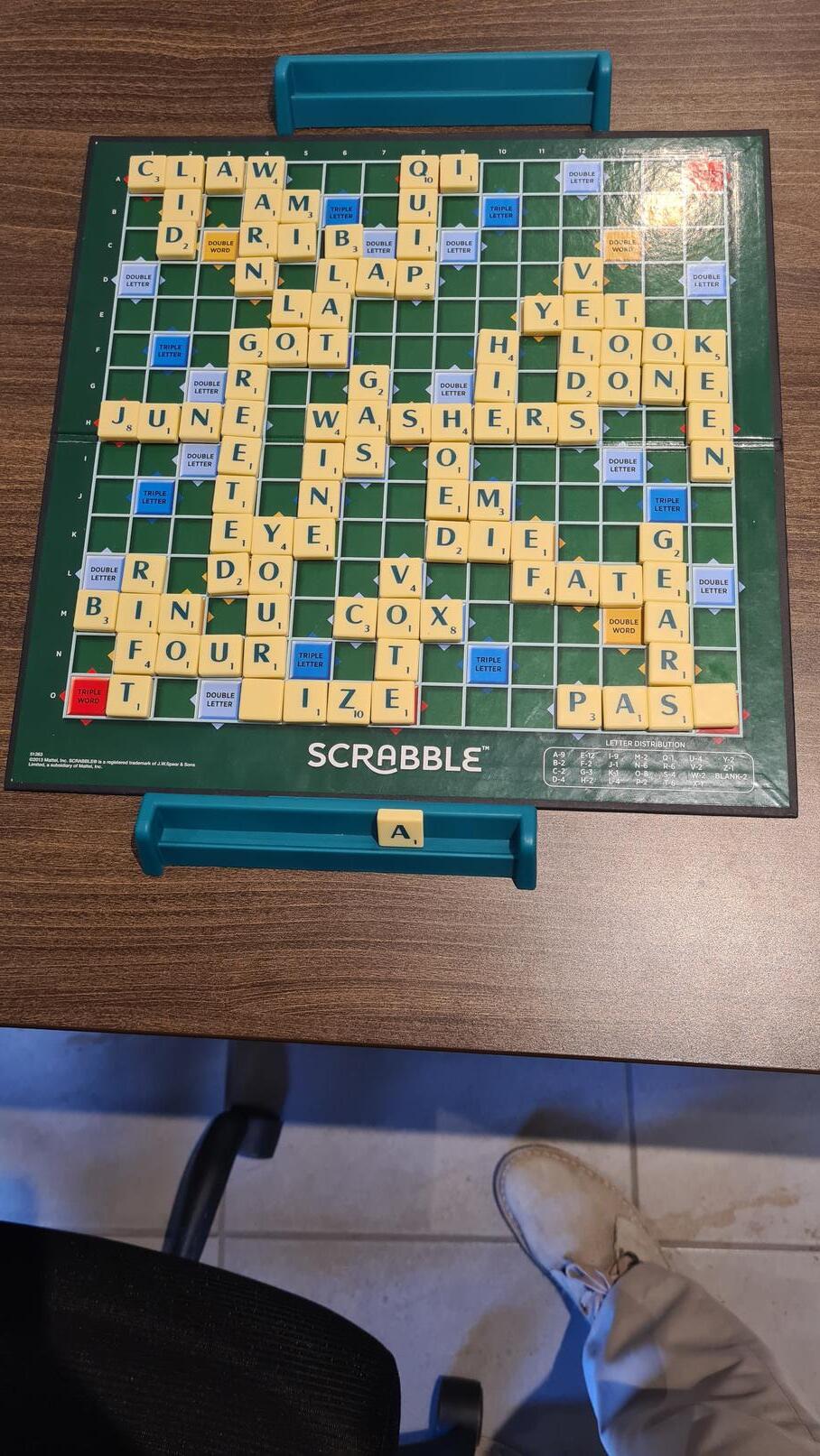
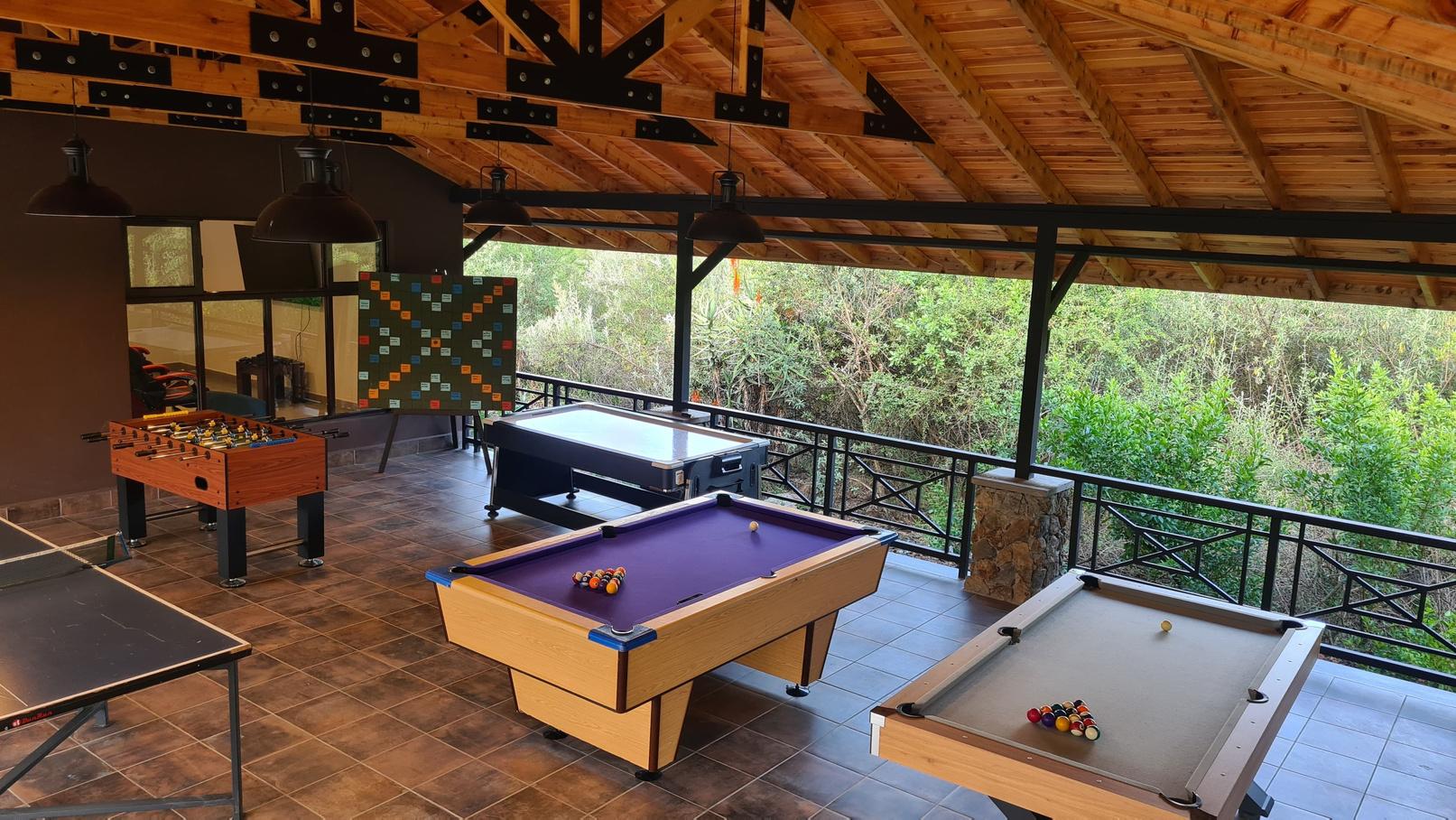


Africa to do a Mwishowe piece on Iain DouglasHamilton, I never expected a cover, and five pages with great pictures. Thanks to the Old Africa team, and Jane Wynyard from Save the Elephants for the great spread of pictures,
Valeria Rocco
Dear Editor,
Old Africa issue 123 was a great magazine againanother blockbuster. I will share it far and wide. I thought your editorial was very good, too. You are right to touch on faith as well. Thank you for all you hard work and effort, for you and your team’s coordination and late hours; for nothing like this is easy.
Conrad Thorpe, Mbag’athi River, Kenya
Dear Editor,
Thanks for publishing my story on Indian death rites in Old Africa issue 123. But you made an error with the caption on the photo on page 43. The photo shows my father, Krishanlal Kapur, not
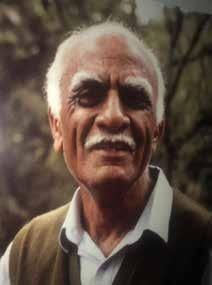
my brother-in-law Raji Singh Gabriah.
Neera Kapur-Dromsom, France
Editor’s note: We offered our apologies face to face to the author for the error on the caption in issue 123.
Dear Editor,
I just wonder how I would cope with this awful cold and damp English weather, having been used to the tropical sunshine of Kenya, were it not for a timely saver – Old Africa! I must say I admire your sheer and infectious positive attitude and determination as shown in the editorial of the latest issue (No. 123) of your highly popular magazine. You are a real role model for us all and I thank you for instilling that confidence when some of us are tempted to give up. Your luck and grit are beyond compare. That you are able to continue with your pastoral duties and still produce an excellent editorial each time is highly commendable and we readers are so lucky to have you at the helm.
Once again - my sincere good wishes and prayers for your complete recovery.
Mervyn Maciel, ‘Manyatta,’ Sutton, Surrey, UK
Dear Editor,
Many thanks for the article on my grandmother Lady Sidney Farrar (by Christine Nicholls, on your website blog page posted on 28 September 2015). It contained information about my family which I was unaware of, as I was not very close with my father Ewan Farrar. For the record, I can tell you that Lady Sidney died in Harare, Zimbabwe. I thought it was in 1986, but it
could have been 1987, as the article states.
My grandfather Thomas Farrar is a great mystery to me. No one ever talked about him. If you have any more information about him, it would be most gratefully received! I understand he was related to Dean Farrar, the Victorian churchman and novelist, author of Eric, or Little by Little.
Robert Farrar
Dear Editor,
Since I started reading Old Africa, I have found it an incredible repository of knowledge. I am currently putting together a historical profile of PCEA St Andrew’s Church (Nairobi). I would like to appeal to the readers, through you, for any information or material of historical nature they may be of help to the project. Response could be made to: jknganga@gmail.com.
Jeremy Ng’ang’a Kikuyu, Kenya
by Matthew McIlvena
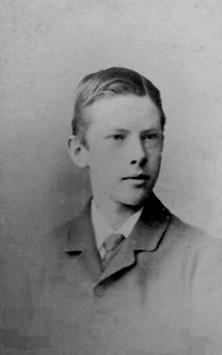
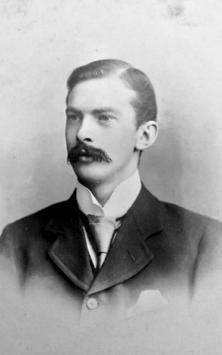
William George Mackenzie Manson, known as Willie, faithfully recorded his schooling and career with the Eastern Telegraph through photography. During the colonial period, the ‘colonisers’ owned cameras and had access to film processing services. Therefore, much of the photographic history and records returned from corners of the Empire back to Europe, where they were stored and often forgotten in family homes, handed down from one generation to the next. I acquired these albums through a ‘house sale’ conducted by Willie’s descendants.
As Britain approached the height of the Victorian Age in the mid-19 th century, steam power drove the emergence of global markets, enabling goods to be transported and traded on a global scale. This in turn necessitated the growth of capital markets to finance and underpin the expansion. But, as the physical movement of goods and people grew exponentially, the exchange and sharing of information lagged far behind. In 1838, Charles Wheatstone and William Cooke launched an electrical telegraph between the railway stations of London Paddington and West Drayton. The near instantaneous communication from one end to the other was greeted with incredulity and great rejoicing. From that moment forward, land-based communication barriers no longer presented an obstacle, and in the ensuing years, most major towns up and down Britain became connected through a national telegraph system. This development did not go unnoticed in the Colonial Office in London. Long distance, transcontinental connectivity was no
longer a distant dream. The breakthrough came in 1847 when the brothers John and Jacob Brett of Bristol successfully laid an undersea cable across the English Channel between France and England. After just a few days a rock or perhaps a hapless fisherman’s anchor damaged the cable itself, but the point had been proven. The impact of deciphering the first ever submarine message had an immediate and profound impact. The invention of the submarine telegraph cable marked the onset of a new era of globalization that continues to expand into the present. Various companies soon formed to lay cables to the far East, to India and the Mediterranean. John Pender consolidated all these smaller companies into the Eastern Telegraph Company in 1873. Pender became the Founding Chairman of the world’s first truly global communications enterprise. The Eastern Telegraph Company rapidly became a major global player, with its tentacles connecting a hitherto disconnected and
remote world. It also became an attractive employer, offering a stake not just in the latest cutting-edge technology, but also by offering any ambitious young man an opportunity to travel and ‘connect’ the world.
William ‘Willie’ George Mackenzie Manson was born in July 1873 in the village of Fochabers, which lies on the banks of the river Spey in Moray, Scotland. Willie lost his father in a maritime disaster, and the Eastern Telegraph Company awarded him a scholarship at their college in Cornwall, England.
By 1890 cables connected Britain through the Mediterranean, across Egypt through the Red Sea to Aden and on to Bombay. Britain and Africa were connected from Cornwall through the Portuguese coastal town of
Carcavelos, which in turn linked to Madeira and St Vincent, and on to Bathurst (Banjul), where a coastal cable looped down the west coast of Africa to Cape Town. From Durban a similar cable continued up the east coast to Mombasa and Zanzibar, with links to the Seychelles and Mauritius. A connecting cable then linked to Zanzibar and back to Aden, Carcavelos and onward to Britain. Relay stations were required throughout the network in in order to de-cypher and re-transmit messages to their onward destination, given the still limited distances that electric signals could travel through the maritime cables.
After completing his junior years of study in Porthcurno, in 1891 Willie enrolled in the Eastern Telegraph Company’s senior training
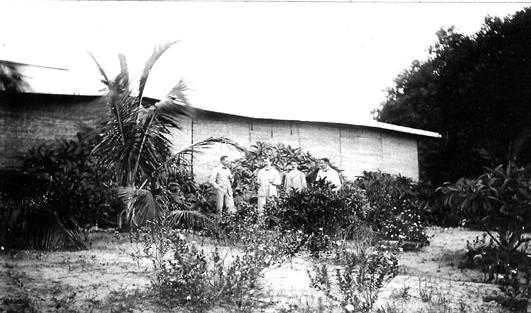
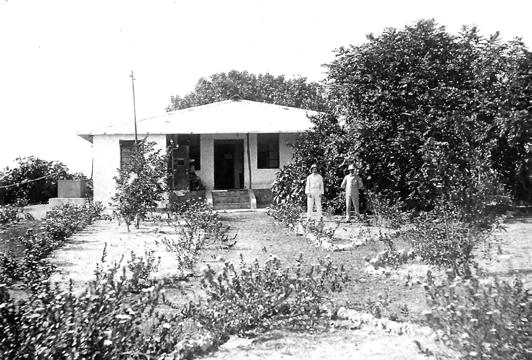
school in Carcavelos, Portugal. The Quinta Nova, a palace dating back to the 18th century, had amenities akin to a top public school in Britain. Indeed, the Quinta Nova still stands today as St Julian’s, a premier British international school in Portugal.
Willie graduated in 1897 as an electrical cable engineer from the Quinta Nova and was assigned to the relay and transmission stations along the eastern flank of Africa. After completing two years at the Eastern Telegraph’s stations in Suez, Alexandria and Aden, Willie was transferred in October 1899 to the Zanzibar/Mombasa/Dar es Salaam cable ‘triangle.’ Following the failure of the British East Africa Company in 1895, British East Africa had been declared a protectorate, and Britain needed the rapid establishment of
fast communication networks to consolidate British political and commercial influence, given the ongoing geo-political rivalries with Germany and France. The offices of the Eastern Telegraph Company would have been visible to Willie as the SS Kaiser steamed slowly into Zanzibar’s port in front of Stone Town. Today, these offices have been converted into a luxury hotel run by the Serena chain.
As Willie disembarked, the Australian transport ship, the Maplemore , was anchored offshore, with local porters busily offloading the cargo. After a few months in Zanzibar, Willie proceeded to Mombasa, where he lived and worked for the next four years, charged with establishing the Eastern Telegraph Company’s new offices there whilst overseeing the laying of the
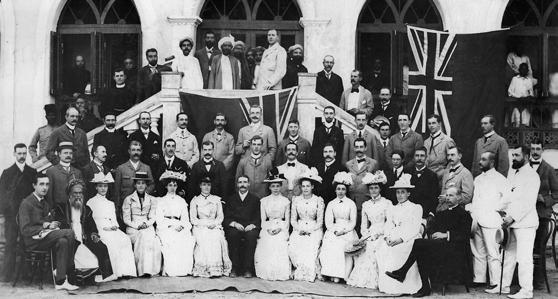
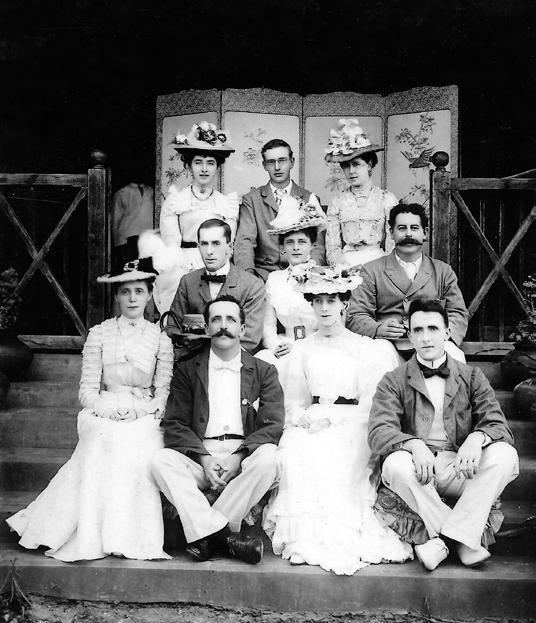
Tea given by AM Jevanjee for John Wilfred Tritton, SubCommissioner Seiyidie Province, upon his departure for England in 1901. Manson is second row, sixth from left. Jevanjee is in the top row, fourth from left, next to Tritton who is fifth from left. Salim Bin Khalfan, Liwali of Mombasa, is front row second from left. His son and successor, Ali Bin Salim, is on the left staircase second from end.
connecting cables from Zanzibar. Once this link was established, it would be imperative to connect the hinterland of British East Africa with Mombasa along the route of the Uganda Railway. The man tasked with building the railway was George Whitehouse , an experienced civil engineer who acted as the Chief Engineer from 1895. By May 1899 the rails had reached Enkari Nyrobi, a Maasai phrase meaning ‘cool waters.’ Here, Whitehouse established the railway headquarters on a flat plain in what later became Nairobi.
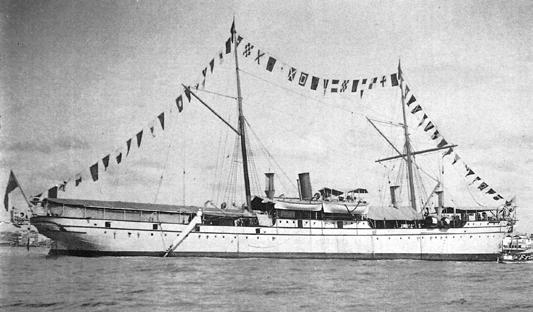
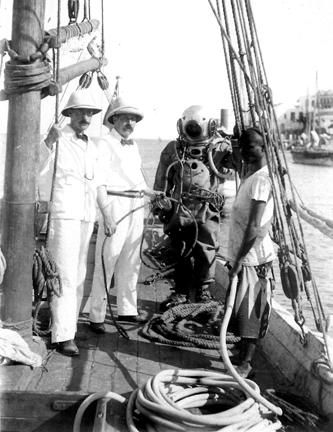
The Cable Ship Great Northern was stationed in Zanzibar, under the command of Captain Larnder. First launched in 1870 as the Euxine , the ship was re-christened the Great Northern in 1879 when she was purchased by the Eastern Telegraph Company as a Cable Ship to be stationed in Zanzibar. An elegant ship, she had high quality fittings and the latest comforts for passengers and crew.
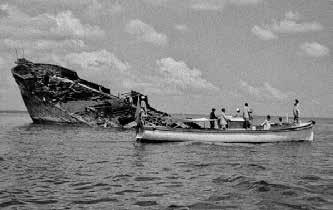
On 5 December 1902 the Great Northern spent the day repairing telegraph cable to Mombasa Island, which had been damaged. With Captain Larnder at the helm, the Great Northern struck Fungu Chawamba Reef while returning to the anchorage near Zanzibar town, tearing a twelve-foot hole in the side. The hull filled rapidly and with the weight of a hundred miles of cable, the ship quickly settled at an angle leaving the bows and the bridge above the water. Various warships came to the ship’s assistance, but after an inspection by divers the wreck was declared a total loss. Larnder cabled Lloyds: “Ship has settled down and Lloyds Agent agrees
considering her age and position with half the bottom out, operations to recover the hull would be money wasted. Have arranged to stow all cable recovered on board Nyanza . Am now recovering everything of sufficient value but lighters for cable not available at present.” By 15 December 1902 the cable ends had been prepared for lifting and four days later the recovery commenced. The remainder of the test equipment and
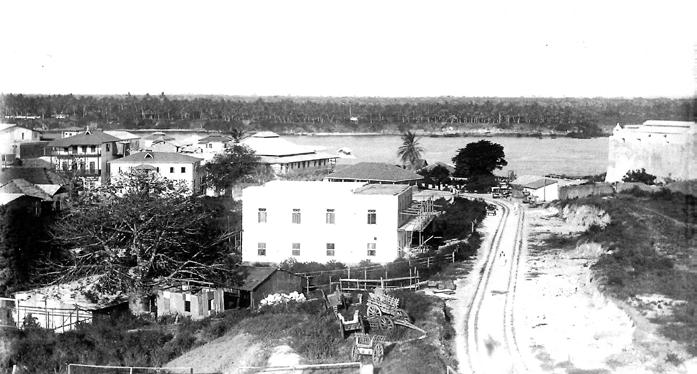
The view from the Grand Hotel looking down Fort Hill in 1901 towards the old harbour entrance with English Point on the other side of the channel.The trolley tracks can be clearly seen going down the hill towards the old harbour.
members of
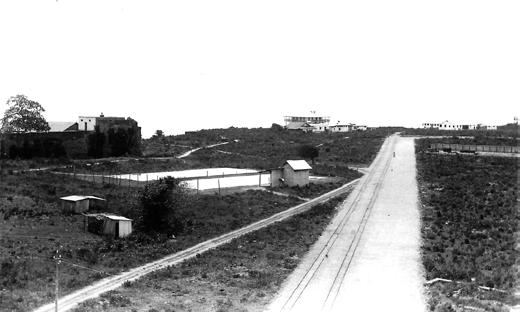
Trolley tracks leading to the Mombasa Hospital (top right) with the back of Fort Jesus on the left and new tennis courts in between. It’s also possible to see new telegraph poles and wires in the front left of the photo, constructed by the Eastern Telegraph Company.
useful fittings were also removed and the hull abandoned. Larnder resigned and left Zanzibar for Europe on 13 January 1903. The bows of the ship were visible on the reef until the late 1950s when the rusted remains were cut up. The wreck was rediscovered in the 1970s, and is now a popular dive site with the main engine and part of the hull sloping down to 40 feet.
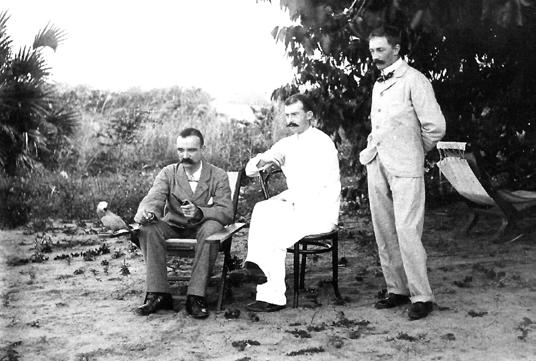
The ‘quarters’ of the Eastern Telegraph Company were located in Kilindini, where the new port was under construction to facilitate the cargo ships supplying the materials for the construction of the Uganda Railway. The city’s trolley system connected the new port with Old Town Mombasa where most of the port’s facilities were located. Willie would board the trolley with his Kodak box camera and he captured some Mombasa scenes during its brief period as the capital of the East Africa protectorate.
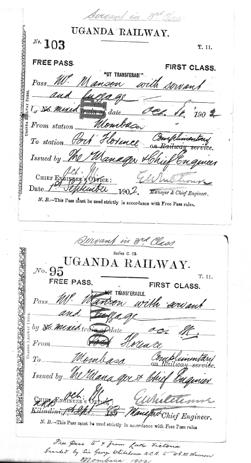
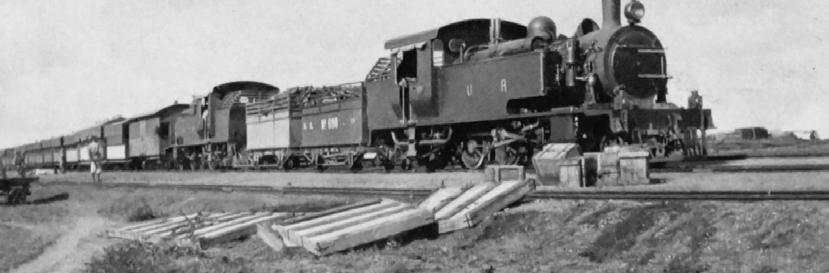
By March 1901 the railhead reached 483 miles west of Nairobi, 17 miles behind the earthworks. The line reached Port Florence (now Kisumu) on 19 December 1901. The establishment of a rapid, real-time communication system through a telegraph system following the railway’s track was a critical element of the Uganda Railway. The Colonial Office deemed control of the Nile’s source a strategic necessity, given the ongoing threat posed by France, which had led to the Fashoda Incident in 1898 in Sudan between the two European imperial powers. Willie joined the telegraph construction teams, travelling to Nairobi and then onward to Port Florence (Kisumu), installing telegraph lines linking all the stations along the track.
Winston Churchill in his travel memoir My African Journey , later wrote: “What a road it is! Everything is apple pie order. The track is smoothed and weeded and ballasted as if it were London and North-Western. Every telegraph post has its number; every mile, every hundred yards, every change of gradient, has its mark…Here and there…are plantations of rubber, fibre and cotton, the beginnings of those inexhaustible supplies which will one day meet the yet unmeasured demand of Europe for those indispensable commodities. Every few miles are little trim stations, with their water tanks, signals ticket-offices, and flower beds complete and all of pattern, backed by impenetrable
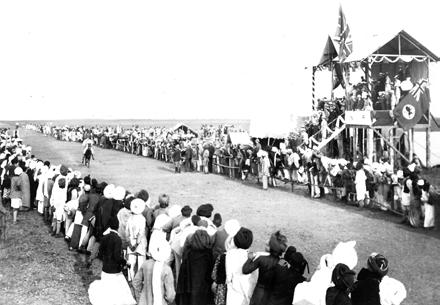
bush. In brief, one slender thread of scientific civilisation of order, authority, and arrangement, drawn across the primeval chaos of the world (Churchill 1908, page 35). By 1900 Nairobi’s population had grown to over 5,000 people, and Nairobi became formally incorporated as a town in 1901, and horse racing quickly became a defining element of the city’s developing social life.
The establishment of the telegraph system linking East Africa to the wider world had a historical parallel in the early 21st century, when fibre optic cables were laid across the Indian Ocean to Mombasa. To commemorate the landing, Kenya’s president, Mwai Kibaki, reflected an optimistic vision for the project’s transformative potential for global connectivity and economic growth. The Daily Nation noted his declaration: “The project has connected our country with the rest of the world and harnessed the power of Information Communication Technologies. This is a great enabler for growth, and development of our country.” ( Daily Nation 2009).
Willie Mackenzie Manson departed British East Africa in early 1903, reassigned by the Eastern Telegraph Company back to its main relay station in Carcavelos in Portugal. He died three years later in 1906, aged just 33, from unknown causes while on duty. They repatriated his body to his native Scotland, where he lies buried in Dipple Churchyard, in the fields around Fochabers where he grew up.
by Jim Dawson
The previous article on the life of settler, soldier and farming pioneer, WJ Dawson, left him in pre-war Nairobi, working on the Government Farm at Kabete. Nairobi then, I noted, was the thriving, growing capital of Kenya, easily reached from the coast and any of the new towns growing along the Uganda Railway even when the rains made road traffic difficult. Nairobi saw new enterprises opening and a burgeoning social and sporting life. There seemed to be little awareness in the Protectorate of the darkening political situation in Europe at that time. In political circles and the press there was, in Europe at least, an awareness that the carefully constructed edifice of treaties between the powers, designed to discourage war, might secure the very opposite by dragging nation after nation into the conflagration.
British East Africa had been partially shaped by competition between the powers, notably Britain and Germany, and the history of Uganda and indeed the all-important railway might have been very different had it not been for the machinations and depredations of Dr Karl Peters. His brutal marches and attempts to seize for Germany large tracts of Africa have been credited with triggering what became known as the Scramble for Africa. But it seems that by 1914 the settlers regarded those issues as finalised, and that fighting in faraway Europe would have little effect.
Richard Meinertzhagen, according to his Kenya Diary, was convinced almost a decade before hostilities commenced that war with Germany was inevitable, and spent some time in 1906 in German East Africa, as it was then known, gathering intelligence. He is a controversial figure, subject to considerable degree of post-colonial revisionism and there is a suspicion that he may have selectively edited his diaries with the benefit of hindsight. There is however no doubting his adventurous spirit,
or the fact that in the war he served as chief of military intelligence for British forces in East Africa. Apart from him, though, there is little evidence that the administrators and settlers of Kenya were considering, let alone preparing for war.
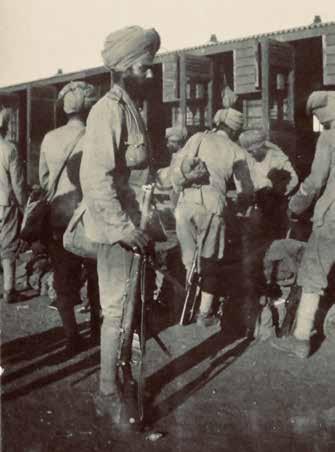
I have a copy of the Handbook of East Africa 1912 in which the section on “Armed Forces” occupies scarcely more than half a page on the King’s African Rifles, recording two battalions totalling not much more than a thousand men. As an indication that there might be a future need for an increase in military manpower, there is a section on “Volunteering in East Africa” noting that volunteers, i.e. potential recruits, were involved in three “companies,” practicing shooting in competitions, and to which a military officer had just been appointed. It was also noted that it was “practically impossible to find a volunteer who did not understand a rifle,” which is not surprising. There was also a Kenya branch of the Legion of Frontiersmen which was gazetted in that year as a Field Service Unit, making it an official reserve, subject to call-up. But most of this was in anticipation of a possible need for a small but effective peacekeeping force, and not defence of the Protectorate or the invasion of neighbouring territories.
C J Wilson’s Story of the East African Mounted Rifles indicates that these volunteers were the nucleus around which the regiment was formed. Certainly, many of the recruits in 1914 would have had some training as volunteers or were members of the Frontiersmen. Interestingly, my copy of the Handbook is inscribed by Hugh
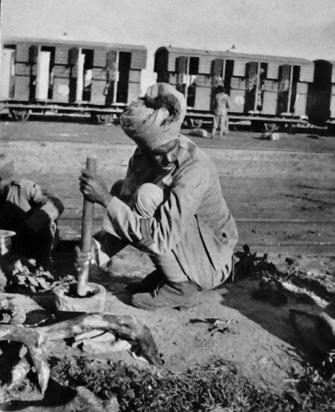
Bampfylde. According to the Europeans in East Africa website, he was a coffee farmer at Kabete, whose service is given as “1914-15 EAMR,” transferring to the KAR as a Major, and he would certainly have known WJ. Later he became Lord Poltimore.
Preparations for war aside, the Protectorate was forging ahead at this time. The Handbook records that the Government Farm at Kabete was flourishing, with its teaching function expanding under a “gradually enlarging” staff. WJ Dawson was advancing in his own career; the Handbook records that he was now the “Registrar of Brands” in the Administrative Division of the Department of Agriculture, recorded as having a staff of 16, excluding the veterinary section. The Handbook provides an almost complete record of settlers, businesses and civil servants then resident in Kenya. Over 50 advertisements give an insight into social history: everyone from The Dustpan (“Household Requisites”) to Emile Jardin (“Wine & Spirit Merchant”) to Gailey & Roberts (“Hardware Merchants”) and J Klein (“Taxidermist”) was offering goods or services to settlers and tourists alike. The London advertisers tell a story too, with gunsmiths and outfitters predominating, although adverts for Fortnum and Mason and a few whisky distillers illustrate the
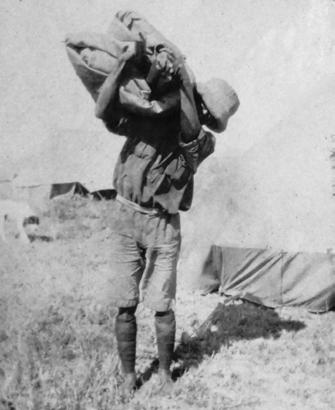
predilections of some of Nairobi’s wealthier residents.
Into this society the news in August 1914 that Britain and Germany were at war dropped like a rock in a pond. Reactions varied between panic and gung-ho martial determination to invade German East Africa as soon as possible. J R Gregory in Under the Sun reports being told that “many settlers set off to the German East African border to intercept the German forces armed only with their own rifles…” This is something of a simplification as we shall see, but not too far from the truth. Definitely, martial ardour blended uncomfortably with a certain amount of chaos and not only in the capital. Sir Charles Dundas, later to become governor of Uganda, arrived by sea exactly as war broke out, and reported that a gunner who had been
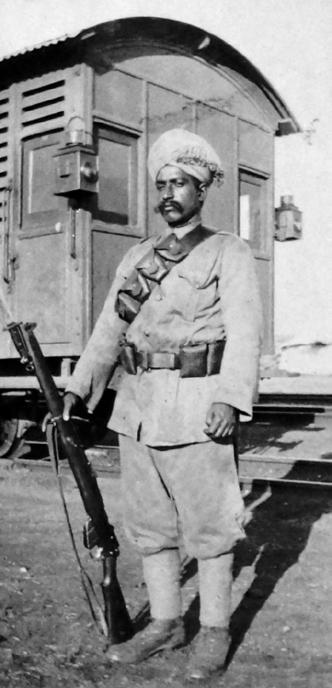
aboard on holiday was immediately made OC artillery, and that a Naval officer who had arrived on the same boat was entrusted with harbour defence. His first act was to change the navigation marks to confuse the German navy (the cruiser Konigsberg was ranging the African coast at that point). This was done to such good effect that the next British merchant ship to arrive ran aground.
There was some speculation, and it was the position of the Governor as well as that of the civilian government in German East Africa, that the two territories should remain neutral. This was not the view of General Paul von Lettow Vorbeck, who was the military commander in the German territory. And nor was it the opinion of most of the settlers on the British side. “Nothing in the lifetime of the
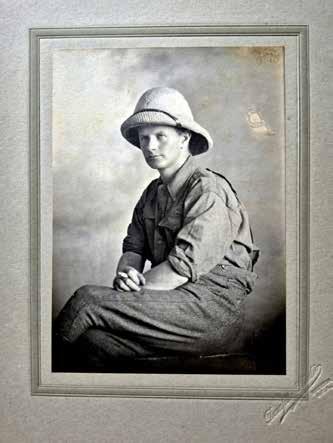
average man is seized on with more eagerness than the chance to put on uniform and go into the desperate adventure of war,” wrote James Ambrose Brown in They Fought for King and Kaiser. As if to prove this point, Captain C J Wilson recounts a wild night-long dash by horse, mule and train to Nairobi by attendees at an agricultural meeting in Eldoret, which had been interrupted by news of the outbreak of war. The inadequacy of preparations on the Kenya side were swiftly exposed. Von Lettow Vorbeck advanced across the border, and soon won a minor victory at Taveta, initiating a campaign which would last the full four years, and cost thousands of lives.
In the beginning, confusion reigned in Nairobi, but order soon emerged from the chaos. Groups of locally raised volunteers with names like Wessels’ Scouts, Bowker’s Horse, Cole’s Scouts, the Magadi Defence Force and the Plateau South Africans were brought together into the East African Mounted Rifles (EAMR). The South African connection meant that many were familiar with the Kommando system, under which the men of a district, when called upon by the Veldkornet, would swiftly muster on horseback to deal with any threat. The system was used from the Cape Frontier Wars to the 2nd Anglo Boer war to such
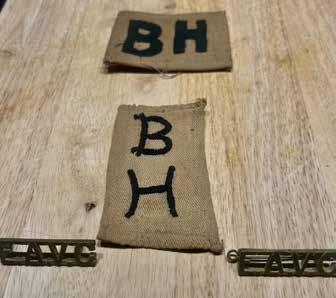
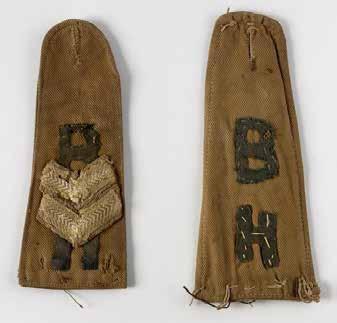
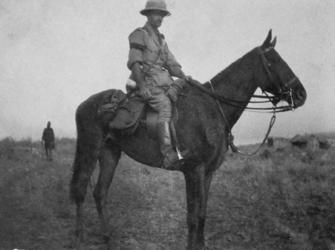
good effect that Churchill (who had personal experience, having been captured by the Boers), borrowed the name for the British Commandos of World War II. But in Kenya, apart from skirmishing in the border area, the threat was not immediate, fortunately, as it took some time to sort an unruly bunch of settlers into a coherent whole as the EAMR. In the absence of proper uniforms, these groups made do. Some were permitted to keep a degree of their original identity. For example Bowker’s Horse, according to Wilson, were permitted to retain the letters BH on their helmets while wearing EAMR on their shoulder straps, although I think he has this the wrong way round. I had WJ’s war medals and original hand embroidered BH epaulette straps (see photo), now in the possession of my nephew. Some years ago I was excited to see another pair like this in the Imperial War Museum, which are no longer on display, but can be seen on the website
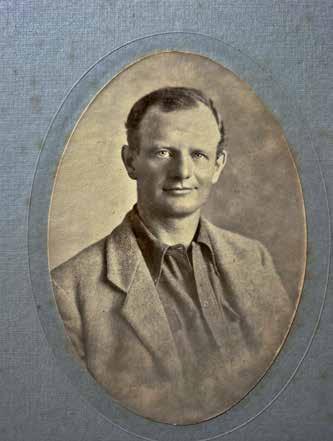
From this it is clear that WJ Dawson threw in his lot with Bowker’s Horse. Russell Bowker was a South African of British descent, the family claiming a background in English landed gentry. They had a long military history in the Frontier wars and he had served in the Anglo-Boer wars. I lived for a short spell in Queenstown (now Komani) and I can recall that they even had a local
landmark, Bowker’s Kop, named after the family. Bowker had encouraged a number of Eastern Cape South Africans to come to Kenya, where he had acquired a considerable acreage in presentday Maai Mahiu. He often wore a hat which incorporated a leopard’s head, teeth bared in an alarming snarl which, with his fierce moustache, gave him a most intimidating appearance. His unit proved extremely useful in the early months of the war, but it was not immune to setbacks. In one less than glorious incident, they had their mounts spirited away by the enemy in a nocturnal raid after which, according to an entry in Europeans in East Africa, they were referred to by other units as Bowker’s Foot.
It is not my intention to cover in any detail the progress of the war in East Africa. For any reader interested in this I can recommend James G Willson’s wonderfully researched and illustrated Guerillas of the Tsavo, as well as CJ Wilson’s book on the EAMR. Also useful, particularly regarding the latter stages of the campaign, is James Ambrose Brown’s They Fought for King and Kaiser. I would recommend looking for Ann Samson and Harry Fecitt on the internet; their work can lead to various unexpected and interesting aspects of the Great War in Africa.
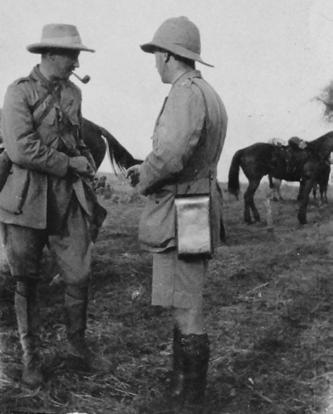
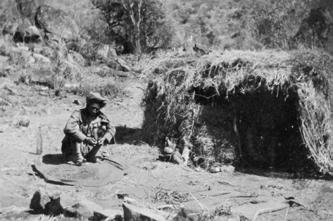
Returning to the activities of WJ Dawson, and his service with Bowker’s Horse, we know that he attained the rank of corporal, before being transferred to the Veterinary Corps early in the war, but we assume that he remained with this unit as long as it lasted. WJ had no military background, so he would have been starting from scratch, as no doubt would many others. But there were, scattered amongst them, veterans of the Zulu and Anglo-Boer wars and Lugard’s forces in Uganda, and others who
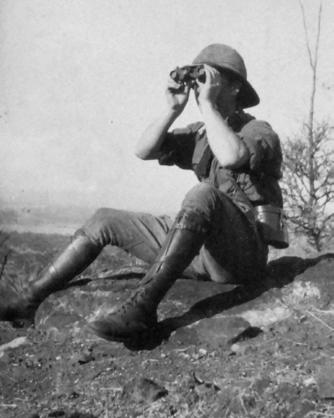
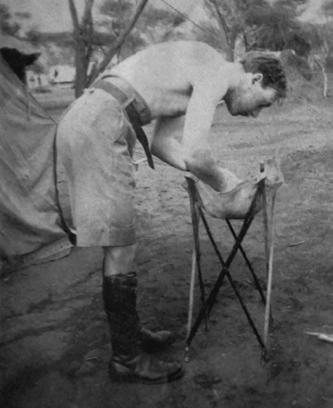
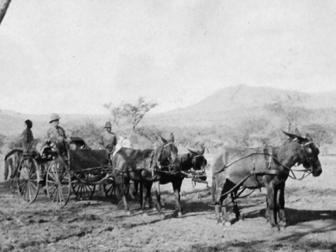
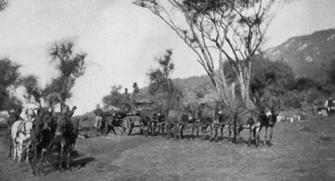
would have had military experience elsewhere in the Empire from whom the newcomers could learn. From Wilson’s account, training and drilling was to a degree successful, but at no stage in its history did the EAMR resemble a Guards regiment on parade. “An East African Mounted Rifles Rifleman on the warpath was a wonderful sight. Straddled across a diminutive mule, and slung around with rifle, bandoliers, haversack and waterbottle, with perhaps a bush-knife, revolver, fieldglasses, and an odd billycan or two…”
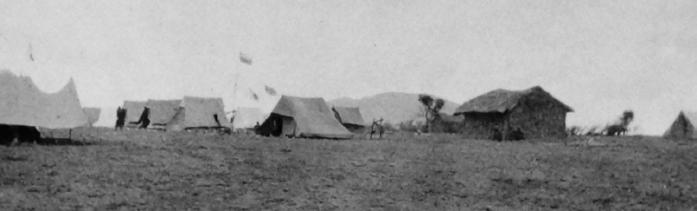
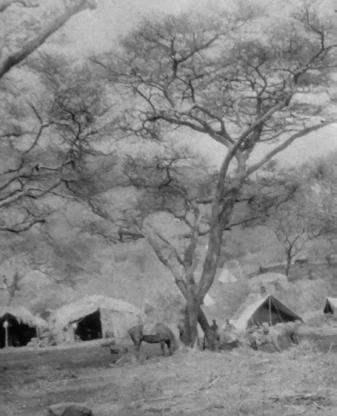
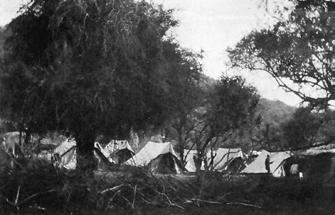
Their first ceremonial parade ended in chaos when the mules and horses stampeded at the sound of “Three cheers for His Excellency!” The Governor was less than impressed. After three weeks or so, though, they were ready for their first tentative steps as a regiment, and they took the train to Kajiado where they encamped for a while. The early adventures of Bowker’s Horse included hunger, thirst, interrupted sleep, blisters, thorns, and lions, as they patrolled the border area. Little fighting is reported by Wilson at this stage. Oddly, “B” squadron, which included Bowker’s Horse, were then sent without their mounts across to Lake Victoria, where, as one chronicler of
the event remarked, their first engagement as mounted infantry was naval. They fought their first battle from the decks of a ship, when they came under fire from an enemy vessel while navigating the lake on the steamer Winifred.
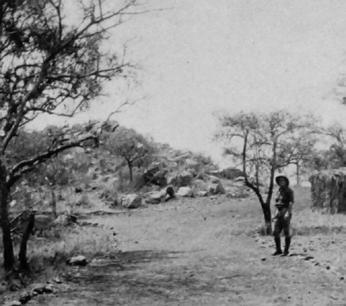
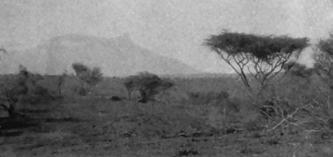
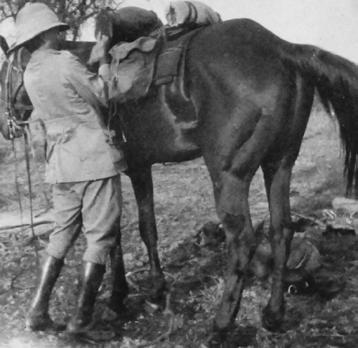
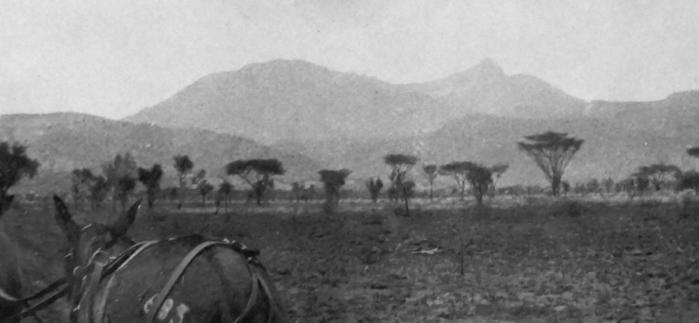
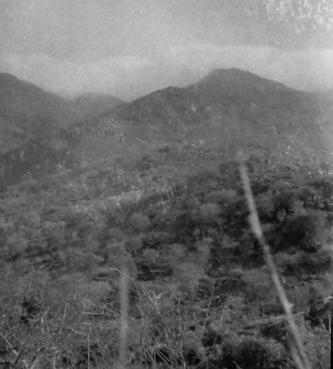
In September the Bowker’s Horse squadron rejoined the regiment, which by that stage was turning its attention to Longido, a brooding mountain on the German side of the border. Kenya’s colonial troops attacked the German position, ending in what Wilson described as “a dismal and depressing failure.” Despite this, the Germans felt for various reasons that the position could not be held and evacuated without further fighting, and the EAMR moved into camp. WJ was with them and they stayed at Longido for a length of time. WJ’s war photos, later arranged in an album by Catherine Dawson, are mainly from this period.
A proposed British attack on German East from the sea at the port of Tanga by Indian troops had also ended in an embarrassing defeat. From the EAMR’s point of view, things went quiet and a long period of evisceration of the regiment, as described by Wilson, began. Many troopers, allowed indefinite leave, headed back to their farms or their
Corporal Harries with KAR signallers and
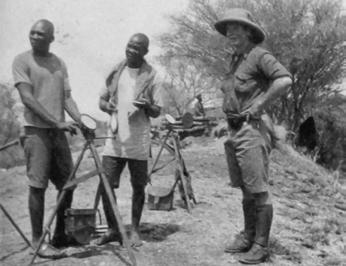
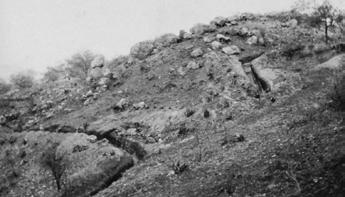
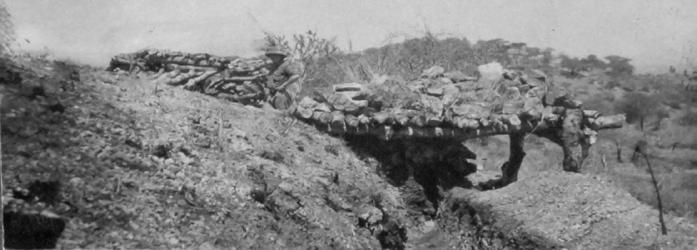
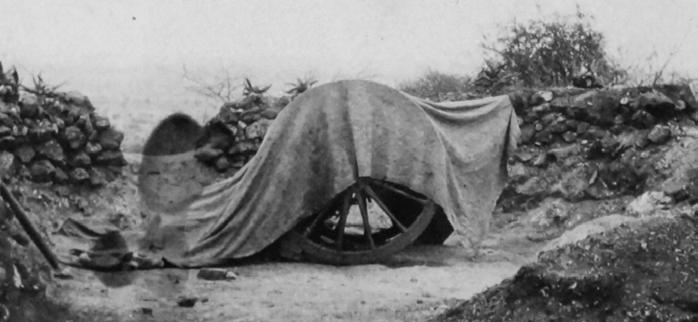

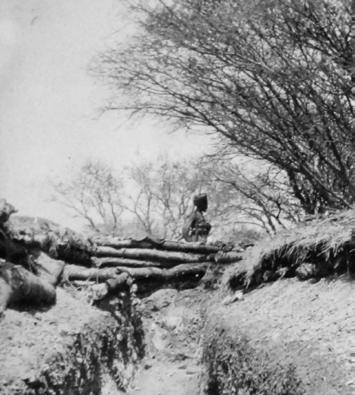
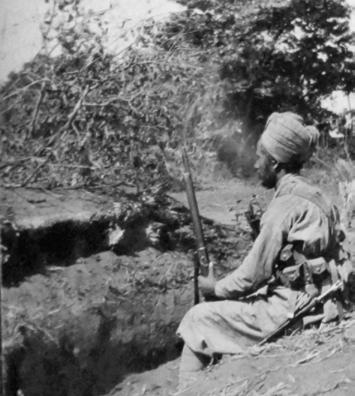
businesses in Nairobi. As more regular troops arrived, from India and Rhodesia mostly, the local knowledge and skills of the Regiment came into increasing demand, especially as scouts and transport experts. The Regimental Nominal Roll, besides listing those killed and wounded, lists an inordinate number of transfers, particularly to the KAR, the Supply Corps, Intelligence Department and the Transport Corps. The men’s knowledge of local conditions and languages was invaluable, and often brought with it a commission. As noted,
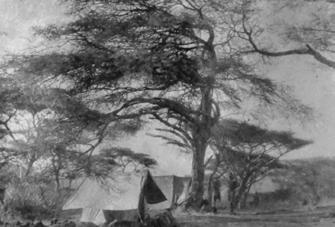
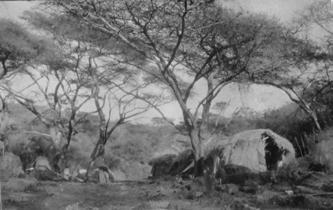
Corporal WJ Dawson was an early transferee to the East African Veterinary Corps, and in 1915 he was commissioned as Lieutenant, according to the medal card held in the UK National Archive.
In the meantime, life in Nairobi carried on. By 1915 the character of the war had changed, and the original perceived threat to the capital had dissipated, but while some of the men from the EAMR had been given indefinite leave, there was still the need to recruit for the fighting to come. As in Britain and the rest of the Empire,
considerable pressure was applied to the young men of the Protectorate who had not yet done so to enlist, but the results indicate that the supply of local recruits was more or less exhausted. An appeal for volunteers in January 1915 had little effect, although the EAMR did acquire a few recruits from the appeal. But this could not stem the bleeding from its ranks, and Wilson records that by early 1916, the regiment was down to just over 100 men. They still delivered sterling service, but within a year, he records,
the EAMR was gone. “It never disbanded. Like an old soldier it simply faded away.”
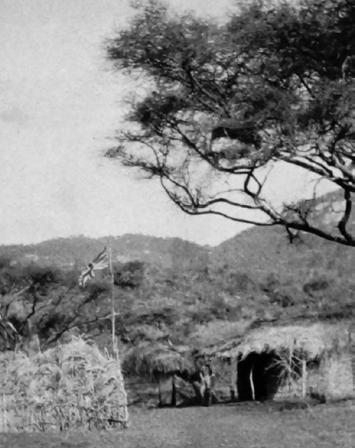
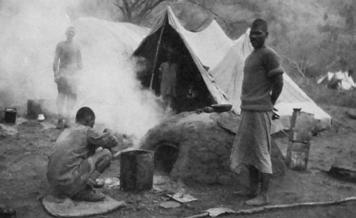
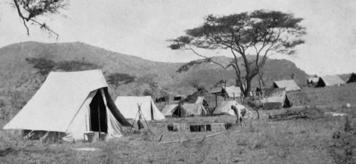
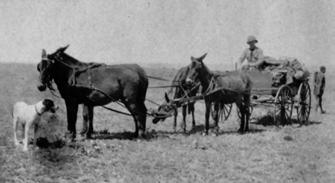
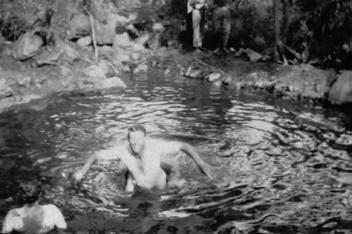



‘Deaf Banks’ was camped in Busoga on the shores of Victoria Nyanza. After smoking a pipe or two over the campfire, he turned in with his fox-terrier sleeping under his camp bed in the tent. Some hours later Banks was awakened by his dog jumping up and barking vigorously under his bed. The flap of the tent had not been tied down. Glancing around, Banks saw a large leopard standing in his tent close by the bed and evidently having evil designs on the terrier. Leopards will risk much to get a meal off a pet dog.
Banks always slept with a loaded rifle and a shot gun within easy reach. But with the
leopard almost within arm’s reach, the various movements necessary to grasp a rifle, push up the safety catch and aim, did not appeal to him. Beside his bed was a chopbox, and on this was a cup of cold tea which he had put there in case he felt thirsty in the night. Quickly grabbing the cup of tea, Banks flung it in the face of the leopard, which turned and bolted into the jungle.
Our correspondent adds; “Some of those who know Banks today may be surprised at the tea beside his bed. Banks has had to answer the same jibe, and he explains that this adventure took place 25 years ago, before the Uganda Railway reached

Lake Victoria. Whisky was then a rarity seldom seen, and tea was the popular substitute!”
Taken from East Africa, a weekly newspaper published in the 1920s and 1930s. The magazine had published an article about FC Banks and his miraculous recovery after being gored by a wounded buffalo, in their issue of 30 October 1930. Banks was one of the original elephant hunters of the Lado Enclave. After that account had appeared, one of their readers contributed this story about the leopard in the tent, which appeared in East Africa Volume 7, No. 340 from 26 March 1931.
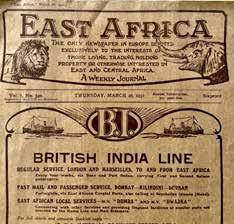
devoted exclusively to the interests of those living, trading, holding property and otherwise interested in East and Central Africa.”
When my father, Allan Johnston, first started to work for the railway (KUR & H) as an assistant civil engineer in the late 1920s, they often sent him upcountry to check branch lines and to survey routes for possible new development. Once he heard of a white man living by himself in the bush. Allan investigated and found the man living alone in a mud hut. The man did not welcome Allan’s visit, but before leaving Allan gave the man a bundle of British newspapers.
Sometime later Allan visited the man again. This time the man welcomed him and introduced himself as Mr Mitchell. Amongst the newspapers which Allan had left on the first visit were copies of The Press and Journal, an Aberdeen paper. Mitchell asked Allan if he was from Aberdeen, which indeed he was. Apparently, Mitchell’s father had been postmaster there but he had lost touch with his family as he had been in some sort of trouble. He decided to go walk-about and ended up living as a recluse in the African bush.
Allan wrote to his sister in Aberdeen and relayed the story. She had a friend, a Mr Ross who was a gossip columnist for the P & J, and he included this story in his column. It turned out that Mitchell Senior had long since died and his estate could not be properly wound up because a member of his family was missing. The lawyer acting for the family contacted the P & J who in turn put him in touch with Ross and so the chain continued back to Africa and Allan. The estate was considerable, but instead
of putting the money towards improving his life, Mitchell drank himself to death. The shopkeeper who supplied Mitchel with his booze contacted Allan and asked if he could help. Sadly, when Allan next visited it was only in time to attend Mitchell’s funeral.
Christine Hart, UK
In 1928 my father Allan Johnston, a civil engineer working for the KUR & H, had a brief work on bridges. The Prince of Wales (later King Edward VIII) who visited Kenya that year, was to open a bridge on which Allan had been working. The day arrived and prior to the ceremony Allan preceded the royal train across the bridge in a buggy in order to welcome the Prince. After the formalities were completed, the Prince who had been lavishly entertained the previous evening, was being taken to shoot snipe. Later in conversation with Allan, the Prince asked what a snipe looked like. Allan explained that it was a speckled bird, to which the Prince replied, “Everything looks speckled today!”
Christine Hart, UK

I had heard that crowned eagles were big enough and powerful enough to kill a monkey or small animal like a baby goat. But I always wondered if that was really true. Then one day on a hike with some high school students in the forest at the top of Mt Eburru, we had been listening to the lowthroated chuckling of colobus monkeys as they moved along in the canopy above us.
Suddenly we heard a thump and saw a colobus monkey that had just plummeted to the forest floor, narrowly missing us. Our guide Daniel Kashu moved quickly to the stricken monkey. It had blood bubbling out of puncture wounds in its chest area. But in its pain it wanted to bite and lash out. Daniel, an experienced Dorobo hunter, used his walking stick to pin the monkey as it breathed its last.
“What knocked that monkey out of the tree?” we asked Daniel. He pointed up in the air where a crowned eagle was circling and watching us. The crowned eagle had dive bombed the colobus, piercing into its lungs with his curved talons. The resulting collision had sent the monkey spiralling to the ground.
We left the dead monkey on the ground and signalled to the crowned eagle that he could come enjoy his meal. The eagle didn’t trust us, so we had to hike away in our unsuccessful search to see a bongo and we never saw the eagle’s actual mealtime. But I now had firsthand experience that a crowned eagle could indeed kill a full-grown colobus monkey.
Shel Arensen, Naivasha
Do you have a short, funny or quirky story about something that happened in Africa? Send your contributions marked Only in Africa to editorial@ oldafricamagazine.com, or by post to Old Africa, Box 2338, and Naivasha - 20117 Kenya. Please limit stories for Only in Africa to 350 words or less. Include your name and address in case your story is published. We pay KSH 1000/- for each published story. Sorry, we cannot return submissions to our Only in Africa column.
This article originally appeared in German as “Bericht über die im Auftrage der Ge- ographischen Gesellschaft in Hamburg unternommene Reise in das Massai-Land,” published in the geographical journal Mittheilungen der Geographischen Gesellschaft in Hamburg, 1882-83, and which formed the basis of Fischer’s 1885 book Das Masai-Land. The translated sections here comprise section I. General Report (pp. 36-99) and section III. D. Dr. G.A. Fischer’s ethnographic collection from East Africa (pp. 275-279).
This article was translated by Eckhart and Almut Spalding (the latter is a retired professor of Germanic Languages and Literature, Illinois College). For the sake of authenticity, Old Africa has chosen not to edit Fischer’s use of words like Negro and Washenzi, which are now objected to as pejorative, but in his day were descriptive.
Report of the Journey into Massai-Land, taken under commission for the Geographical Society in Hamburg by Gustav Adolf Fischer
Let us return once more to Nguram´an, the caravan’s latest stop. Here the negro corn was mostly unripe, and so a contingent of porters was sent to the area of Sonyo, across from the eastern side of the Ngurum´an mountain
range. As mentioned above, agricultural Negroes of the Wasegeyu tribe live here. After 4 days [the porters] came back with 200 pounds of flour, beans, and negro corn, a very meager amount given the long time ahead of us when we would no longer be able to obtain vegetables. Iron wire does not have currency in Sonyo [for barter]. Cowrie shells were very sought after, as well as brass wire and larger beads of various colorations. Here in Ngurum´an we had northeastern winds, and few clouds in the sky. The temperature, shown by a thermometer hanging in the open under an acacia tree, had a maximum of 37 degrees C, falling at night to 20 degrees C. Even though rain had already fallen here—or at least the river from Mount Sambo held a lot of water— and even though the natives claimed that now it would be dry, unrelenting rain followed.
During the rain the Dondorobo fly is said to make its appearace, against whose sting the Massai are said to have an antidote. Mosquitos are also here, though I was not bothered by them in Massai regions. However, the scourge of flies here is terrible. As soon as the women come into the encampment, the camp is covered in flies. The face, the head, and the backs of these women are so covered in flies that one can hardly see any skin anymore.
They are also the main spreaders among the Massai of infectious conjunctivitis,
which is very common. The [flies] sit tightly packed on the edges of the eyelids, especially on those of the children, and thirstily suck the purulent liquid, which they then carry to healthy eyes.
That is why the men use a fly-whisk made from the tail of a gnu. The Wakwavis’ corn fields were plagued by large flocks of turtledoves. The natives are always on their guard against numerous Ploceids [weaver birds] including magnificent firefinches and ribbon finches, and they scare them away with cries and [by throwing] clay balls. Everywhere we heard in the morning and evening the sweet song of a thrush-like bird, the Cichladusa guttata [Spotted Palm Thrush], the most outstanding singer of East African birds.
On April 25 we departed Ngurum´an and soon headed in a northerly, then northeasterly direction. After a four-hour march we reached the country called ngare kiti, where another colony of agricultural Wakwavi live along a small stream. After a similarly long march we reached a third such colony at Utimi, where several streams flow through the rocks. [The streams] send their water to the Waso Nyiro, which we soon crossed upstream where it flows over a bed of rocks close to the foot of the mountain range. Even though the stream is only 12 feet wide here and the water is mostly shallow, at a few deeper areas one can find hippos. Along
the stream’s left bank [we] soon [reached] wooded hill country which rises up to 1200 metres above sea level. On the 29th of April, when I looked out from a hill back at the plain [below] Ngurum´an, I noticed a thick cloud of dust, which moved from southeast to northwest on the flatland, and in several places there were dust devils. The dust eventually pervaded the air, and towards evening there was a strong thunderstorm which made the water in the streams rise by 1 metre. After that day, there was a southwest wind and unceasing rain.
The hill country soon flattened out into the plateau of the district Mosiro, where there were several Massai settlements. The path then turned more easterly, so that we left the stream and the mountain range. At an altitude of 1400 metres the acacias and mimosas suddenly ended, and in their place came a shrub tree called Elelesho [Leleshwa] by the Massai, which furthermore is the archetypal plant [for this region], and is said to be common as far as the Mbaringo and Samburu lakes. The leaves, blossoms, and wood have a strongly aromatic smell, and water which is drawn from its vicinity has a corresponding taste. On the 8th day after the departure for Ngurum´an we found ourselves in an undulating highland at 1600 metres. Individual hills towered above it, and it was very cool from many rains. Here grew trees similar to cassowaries. There were also several strips of high-altitude forest of trees similar to juniper. Otherwise the area was covered with a
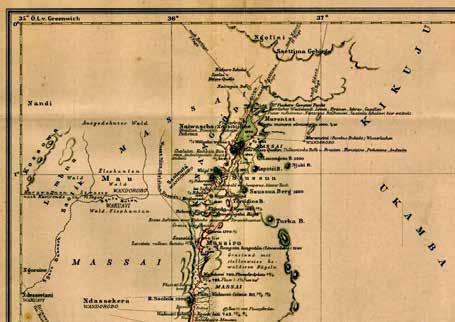
Fischer’s map showing details of his route around Lake Naivasha and his campsite at Morendat (which he spelled Murent’at).
carpet of short and lush grass. Only at individual locations were there small clumps of Elelesho.
It rained every day. It usually desisted from 10 in the morning until 5 o’clock in the afternoon, without the sun ever really piercing through. The rain showers were especially strong at night, so that the encampment was a morass in the morning. The tent never dried out, and in these days I contracted the pernicious fever which was breaking out in the area of Lake Naivasha. The highest altitude [we] reached was 1020 metres above sea level.
The district which also contains Lake Naivasha is called kinang´op, i.e., “our land” (ng´op means land). The path partly went through deep gorges carved by rainwater, wherein flowed a red-brown water, and in the crags of which lived many baboons (Cynoscephalus babuin). Our vegetative provisions ran out, and many of the porters, many of whom lived only on meat, suffered from dysentery, which
however was soon cured with Ipecacuanha powder.
On May 11 towards 10 o’clock Lake Naivasha came into view, which lies in a cauldron-like depression in the highlands approximately 1900 metres above sea level. A magnificent sight opened up: a lush drift stretched before us, delimited toward the lake by several domelike hills that appeared as if superimposed on the plain. Numerous Massai settlements appeared like large black dots, and numerous herds of cattle grazed. A small forest of Elelesho trees bounded [the grassland] and behind it glittered the surface of the water surrounded by a chain of hills. We set up camp close to the lake under numerous acacia trees. It had taken us 82 days to get here from Maurui, including 53 days of march.
Lake Naivasha, which is about half as large as Lake Zurich, has an elongated oval shape and is a highland sea without an outlet. At individual spots stood groups of acacia trees. The western
bank is partly overgrown with papyrus brush. A group of mountains 200 metres high fronts the lake to the southeast. The water registered a temperature of 17-1/2 degrees C at sunrise, while at night the minimum air temperature was 10-1/2 degrees C. It has a very agreeable taste. The Massai also call the lake Ndabibi, after a little plant (Oxalis?), that grows plentifully in the grass here. The name Balib´al, which is indicated on the Ravenstein map of equatorial East Africa, means nothing more than “lake” in general. Numerous seahorses [hippos] inhabit the lake. It does not contain crocodiles; at least we did not see any, and the Massai insisted that there were none. Instead, it swarmed with leeches, for which reason the porters shied away from getting into the water to fish with a net. The use of fishing rods did not yield anything, though of course smaller fish are available, for gulls (Larus phaeocephalus or a closely related kind) and terns (Sterna) were not rare. We did not encounter any pelicans. Instead, the Egyptian goose (Chenalopex aegyptiacus) frequently made its appearance, and inhabits the moist banks in gaggles of 50 or more. We also made out the long-unheard cheering call of the river scree eagles (Haliaetos vocifer)— a sign that apparently larger fish are also found in the lake.
On the 2nd day I attempted to make an excursion to an elevated point nearby in order to gain a full view of the lake, but soon had to pull back because of the Massai. A group of 40 warriors congregated around me, who wanted
explanations for everything that I was doing. [They] suspected evil magic, and finally desired a discussion which never seemed to end, and wanted special gifts for reconnoitering their land with such meticulousness.
On the 3rd day after arriving at the lake I was seized by a fever associated with jaundice, which in a few days weakened me so much that I had to be carried to [our next] encampment further to the north.
The path led partly through acacia forest and over rock outcroppings. Large pieces of pumice and black slags lay scattered about. The encampment was located in a small forest of Elelesho about 30 metres above the lake, where the edge dropped precipitously. From here we had a view over the widest part of the lake. At various points there were banks of waterlogged grass, which presumably lie exposed in the dry season. After a march of a few hours we reached the northern end of the lake, which is densely overgrown here with reeds and papyrus. Here is the mouth of a stream called “Gilgil,” which flows from the mountainous land north of the lake. Then the land rose about 30 metres. We crossed the Gilgil, which has dug a deep bed in the lime earth here, and set up camp in a highland of low hills sparsely forested with small trees, which stretched out to the Satima Mountains.
In this area, called Murent´at, the caravan was under the protection of an elderly Massai named Kidaru, the only man with good intentions whom I
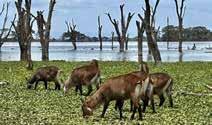
A recent picture of Lake Naivasha with waterbuck grazing on the shore. (Photo by Shel Arensen)
encountered and who actually offered some degree of service for the presents he received. Here too I still experienced attacks of fever— the tent was continually damp from the almost daily rains. But even after I vanquished the fever, I had such a weakness and anemia that I could not leave the encampment. And all along we were entirely dependent on meat for sustenance, which disgusted me. If I had not had the good fortune to find a Massai who kept back the bands of young warriors who were encamped 1 to 2 days’ [travel] away, there would have been nothing left of [my] remaining wares. Among [the warriors] were the same Wakwavi who wiped out the Mombasa caravan mentioned above. Of the 40 bunches of iron wire we had taken along, by the time we reached the lake we had lost everything to 30 tribute payments, and to a lesser extent, for purchases of cattle. Of the 23 bunches of beads we had carried, only 7 remained.
The old Kidaru, who was a respected and wealthy man, had the honorific title of Leit´un. He was especially feared by the younger people for this because he was said to have very potent magical skills, and even his stare was said to be dangerous. He often sat for hours in front of my tent,
so as to prevent an attack. He had one of his wives bring me cow’s milk every day, and on two occasions also brought a goat as a gift. He moderated the shameless demands for tribute from approaching warriors, [and] brought back stolen goods. The elders supported him in this, for he was the first-class spokesman of the Elm´orua. He possessed 200 cattle and 1000 sheep and goats, had participated in 25 raids against the Wakwavi of Laikipia, and had 7 wives (though he said he only loved one), but only 5 children. Two of his sons he assigned as guides to my hunter, whom he permitted to hunt in his land. Otherwise, shooting in proximity to Massai camps is not permitted. I have only him to thank for being able to make a good ornithological reconnaissance at Lake Naivasha. Here I found Passer rufocinctus, Nectarinia Reichenowi, [and] Saxicola Schalowi.
A snow mountain the Massai called D´onyo Sonai, presumably Kenia, is not yet visible from Murent´at. Only after 3 [days’?] marches, when one reaches the mountain range of Satima, from where the plateau of Laikipia stretches to Lake Samburu, does one get to see it from the Massai district of Ndoro. North of Naivasha lie the Lakes Neir´ogwa and Nakuro, which one reaches after 4 and 8 hours’ march, respectively. According to the old Massai, who had been there himself, one reaches Lake Mbaringo after 27 hours’ march on the 5th day from the location of our encampment. Along the way one encounters hot springs similar to, but
larger than, those later found southeast of Lake Naivasha. But a volcano does not exist here, allegedly.
The agrarian Wakwavi, who live in the land of Ny´emzi and also engage in fishing, are entirely peaceful, like those of Ngurum´an. From here, caravans send out smaller parties into the surrounding areas. Among the Suku, who are an agrarian and livestockkeeping tribe west of Lake Mbaringo, a dwarf people lives in caves where smoke from the fireplaces is funneled to the outside through thick bamboo pipes. Furthermore, there is supposed to be a tribe which raises ostriches. Caravans strive every year to go ever further. The continental divide between the Nile region in the wider sense and the East African region lies in the wooded land which lies east of VictoriaNyanza. The terrain drops noticeably as one goes west of Lake Naivasha, for Victoria Nyanza lies only about 4000 feet above sea level. The ngare dab´ash flows into the
latter; the waso nyiro, which originates in the same region, to the salt lake not far from Ngurum´an.
Soon after our arrival in Murent´at, the Mohammedan merchants sent several parties to the aforementioned smaller lakes Nakuro and Neirogwa, where Wandorobo live, who allegedly possess much ivory. There they encountered many Massai warriors, who not only dared to seize wares with violence, but also abused the porters, striking them with knobkerry clubs, branded them with spears glowing [with heat], among other things. I had sent along one of my dependable servants from Zanzibar, so as to obtain a reliable report. When these parties arrived in Murent´at and told of their experiences, having withdrawn in what was to an extent a melee, the porters insisted that they did not want to march further. My old friend Kidaru also advised me against it, claiming that among such a band [of people], I would lose all my wares. Following
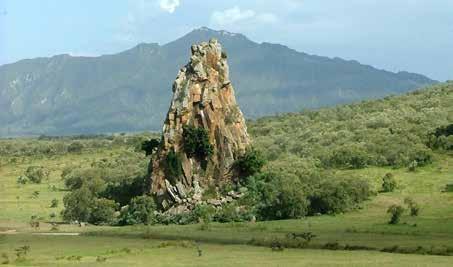
The volcanic tower in Hell’s Gate which Fischer described as he and his expedition returned to the coast after Maasai moran began harassing him. The tower later became known as Fischer’s Tower, although the Maasai name is Ol Njorowa and their traditional story is that the tower represents a young bride turned to stone when she looked longingly towards her childhood home as her husband took her away to his home. (Photo by Shel Arensen)
my insistence, however, he said he was prepared to provide me with two guides who would lead me through the jungle and evade any warriors. But the porters did not want to commit to such a route either, where one does not see the sun for several days, where one must wade through water, especially during the rainy season, and one must anticipate the greatest exertions. Besides, they feared the provisions would no longer be sufficient on the return journey to feed them every day, as they demand of the European. I could do nothing but turn back. The wind, which had blown from the southwest quite strongly for some time, became more moderate towards the end of May, and we had thunderstorms almost every day towards 4 o’clock in the afternoon, though with little rain. At night the thermometer usually fell to 12 degrees C, one time even to 9 degrees. The daily high was 23 degrees. The lowest temperature would be towards 5 o’clock in the morning. Here on Lake Naivasha, which lies between the great forests to the west and the partly densely forested mountains of Kikuyu to the east, rain falls during a large part of the year, and the sky is almost always very overcast.
On June 6, old Kidaru told us that we could stay no longer, for he and the elders were no longer able to keep the warriors from committing violent acts against us. He was right, as was shown the last night we spent in Murent´at. Towards midnight we were suddenly pelted with stones which were thrown into the
middle of the camp, but without injuring anyone.
But a few rockets, which always lay at the ready at night, and which had already provided valuable services in the past, sent these disturbers of the peace into precipitous flight. We had peace from then on.
On the following day the return march commenced along the eastern shore. But I was still so weak that I had to be carried for another 2 days. Soon we crossed a stream called Malewa, which has a deep lime bed and also empties into the lake. Later [we crossed]another small creek, but which only carries water at the current time of year. A luscious pastureland spread out here, where we could see many zebras and gazelles, and also large flocks of turtle doves (Turtur capicola) and the guinea dove (Columba guineensis), which search the ground for the seeds of a small shrub. The roars of lions could be heard all night.
The Massai complained that several of these thieves often burst into their kraals at night in large numbers, and carried away livestock.
Our caravan was only
attacked once by such [a lion]. It was in the Pare Mountains. We were camping without a defensive perimeter along a small stream, when towards midnight a lion sprang into the camp and tore away a donkey. It happened so fast that we only heard a growling and rushing, and when the porters jumped to their feet and I burst out of the tent, the lion and donkey had disappeared.
Also the hyenas were nowhere more numerous than here on Lake Naivasha. Their nocturnal concerts were indescribable. When in the evenings the Massai returned with their livestock to their encampments, the women raised a dreadful screeching so as to drive out the hyenas (H. crocuta) which were combing through the bones and refuse of the camp. Other than these animals and the aforementioned Marabu and vultures, there also lives a raven (Archicorax albicollis) that stays near Massai encampments and lives from the leftovers of slaughtered animals. Before we departed from the lake, we sent a party of 30 men to the border of Kikuyu, to the bamboo forest
which the merchants call Miwanzini, so that they could buy grains.
This bamboo forest lies along the border of Kikuyu to the northwest and is only inhabited by some Wandorobo families, who live a wretched life in filth, dampness, and cold, in a jungle which the rays of the sun never penetrate, and which even the animals avoid. Here they run a small trade with inhabitants of Kikuyu, whereby they buy up flour and other vegetative sustenance and keep them sown up in animal skins so as to sell them to caravans which do not want to go to Kikuyu themselves. They also carry out elephant hunting in Kikuyu and usually have very nice, large pieces of ivory to sell. The porters reached this place after eleven hours’ march. The area is of such bad repute that it is difficult to motivate the porters to go there despite the good prospects for finding vegetative sustenance. Larger caravans, which only stay there a short while, are said to have frequently lost many people.
Even two of my men had to be left behind because they had fallen ill, even though they had spent only one night there. But later [they] dragged themselves onward and reached the caravan just as it was about to break camp. According to the Mohammedans, the cold is so great that, especially when a fine rain falls, porters shiver violently and suddenly collapse and soon die. (Surely dangerous miasmas also play a role.)
After the men had returned on the third day and the sorghum flour, beans and
millet (Pennicilaria spicata) had been distributed, on 12 July we departed from Lake Naivasha and set off on the route back to the S´uswa District. It went through a mountain range, which extends for a stretch into the lake, through a large crevasse about 300 steps wide. Initially the walls were as if they had been cut through. In the middle of the gorge there remained a tower-like rock formation [now called Fischer’s Tower in Hell’s Gate National Park].There had probably been volcanic disturbances in the past, which were later carved by rain. The water at the location of [our] camp tasted flat with a hint of salt. On the following day the gorge fell off more precipitously and was more carved up here. The deeper [dry river] beds, sometimes of lime, sometimes sandy, led down to the level of S´uswa. The walls exhibited variouslycolored layers of lime and clay. In places there were reddish masses, and soon a pillar of steam 10 feet high became visible, indicating the location of a hot spring. The main spring lay about 1750 metres above sea level on the northeastern rock wall, and in places rocks protruded over it. It formed a basin of about 80 centimetres in diameter, in which the thick red-brown water boiled. Nearby the soil was loosened, and in places lifted up by the hot water. At one such location it hissed and bubbled like in a cooking pot, and a vigorous pillar of steam was shooting out. The ground in the area had a temperature of 40-45 degrees C. In various locations, water which was more or less hot
trickled from cracks in the rock.
A type of Lycopodium and ferns proliferated here on the warmed earth. Further along during the march in the canyon we could see pillars of steam shooting out from the overhangs at varying heights. Rubble and sandmasses, and especially pumice rocks originating from the mountains, had been flushed in abundance far out into the plains of high grasses. Then to the s[outh]e[ast] Mt. Kapot´ei became visible, behind which stood a taller peak which appears to lie on the boundary of Ukamba. Then the path continued at a distance of 10 miles from the mountain ranges of S´uswa and fell in elevation. Near the path the waters from the mimosa- and acacia-bounded riverbeds, which wind snakelike down the otherwise treeless mountainsides in a s[outh] and s[outh]w[esterly] direction, collected into a small pond. Only one of the riverbeds had water, where we rested at 1670 metres elevation. At night several lions prowled around the encampment, and [we] shooed [them] away with the shots of flintlocks and magical incantations. On the following day we had to undertake a strenuous march of 10 hours before reaching a water source, consisting of ponds of yellow water which tasted of Elelesho. Now we were back in the Mas´ero district. When we re reached the familiar Waso Nyiro on the following day, we bade farewell to the Elelesho trees.
To be continued…
byTiras Waiyaki
This serialised story gives the life of JM Kariuki and how he became a prominent politician in Kenya in the 1960s. But by the 1970s he found himself in a struggle against President Kenyatta’s supporters. In 1974 he received active death threats and in 1975 he is called in for questioning and is killed. The killers try to dispose of his body and create a cover story. Once his body is discovered and identified, there is public outcry. The story continues:
In parliament the ensuing debate was as hot as events outside. Nyeri Town MP Waruru Kanja declared, “We are ruled not by government but by a bunch of thugs. This is a gangster government!”
Maina Wanjigi shouted, “We have in Kenya a government of killers. Let them know we are tired of this nonsense of Harambee.” (Harambee was Kenyatta’s favourite slogan for joint effort). Former intelligence officer Bart Joseph Kibati indicates that when Wanjigi subsequently visited State House, Kenyatta allegedly ordered him to shout, “Harambee,” several times.
Shikuku accused government of behaving like a hyena which first ‘ate’ Pio Gama Pinto, then Tom Mboya and now JM. Chelagat Mutai, George Anyona, Peter Kibisu and Jean Marie Seroney also openly expressed their rage.
Police issued a Ksh 200,000 reward for anyone with information on the bombings that had taken place and a further Ksh 200,000 for information on JM Kariuki’s murder but this did not elicit much information.
JM had known his assassination was inevitable as he had defeated all enemy schemes to outmanoeuvre him. Waruru Kanja remembered that in his last conversation with JM, the fiery politician said that some Kenyans should be prepared to die for this country’s liberation and he, JM, was one of them.
targeted for killing. He alleged he was to be killed next after JM. Gachogo survived yet the witch hunt against certain MPs continued.
Rubia said he was also on the hit list. “One of the rumours that I heard was that I was on the list of those to be assassinated after JM. Some people were even saying they thought that Rubia was even more dangerous but somebody said, ‘No, no, no. JM hatari hata kuliko Rubia!’ I have no proof but this is what I hear.” Rubia told this to JM’s daughter in a documentary, In Search of My Father, which is available online at the time of writing.
“When you put two and two together, you know who killed JM. People around the president were very jealous of him and saw him as the only stumbling block for those who were vying for the presidency after Kenyatta,” Terry told the BBC.
Martin Meredith wrote in the British Independent newspaper, “He (JM) was murdered on the orders of State House.”
Norwojee recalled when he spoke on KTN News, “When JM died, the mood was and instantly became an unspoken rejection of Kenyatta personally and of his style of government, totally.”
JM’s colleague Jesse Gachago, who was MP for Makuyu, told this writer in the year 2000 that there was a list of MPs who were
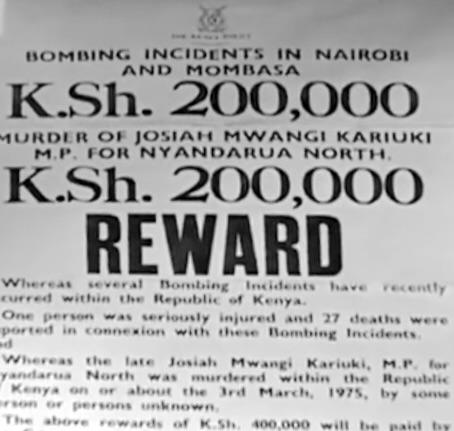
The Kenya Police issued this leaflet promising anyone with crucial information on the bombing incidents in Nairobi and Mombasa a cash award. Critical information on JM Kariuki’s murder also had a cash award tied to it.
JM’s last born son Tony Kariuki, in his presentation to the Truth, Justice and Reconciliation Commission, captured the struggle in JM’s mind in the hands of his captors.
“What do you think would be going through your mind, as you realize that your captors had gone this far? There was no way that they would allow you back in public domain to show the callous marks that they had left on you. Through your broken and tortured ribs, what would be left in your mind?”
The final farewell to a man who had fought many impossibly difficult battles all over the country and won, took place. People had been crying and crying, with others openly wailing loudly since the day his body was discovered by family. As JM’s body was driven out of the City Mortuary in a black Chevrolet Impala station wagon hearse registration number KNN 635, police officers kept angry, wailing crowds at bay.
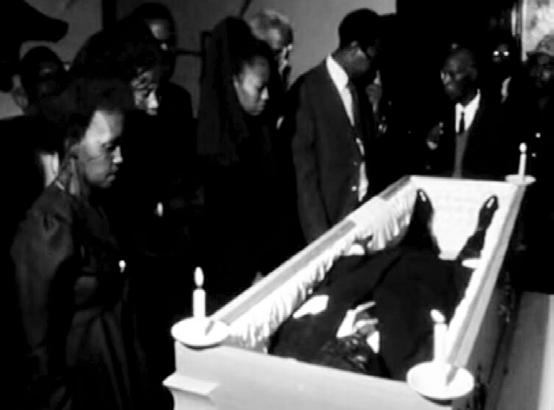
His casket was open for one last viewing of the body at his Kanyamwi Estate home in Gilgil. One woman was heard wailing, “ Woooi , Kariuki witu ,” ( Woooooi, our Kariuki). Those present at his burial like Wanyiri Kihoro remember Finance Minister Mwai Kibaki, the only minister present at
JM’s final rites, saying in his speech that we would have to get to know who killed JM and why, even if it took 100 years. Interestingly, Joe Khamisi writes that JM had described Kibaki as “ kimundu , an amorphous and useless person,” and called him a “coward with a good mind but a weak heart.”
In 1999 a close family friend of JM’s, according to his daughter Rosemary, went to see Kibaki and asked, “Aren’t you the same one who said that even if it takes 100 years we want to know who and why JM was killed?” He allegedly responded, “Well, 100 years are not yet over.” So when Kibaki became President, Rosemary did not think it was necessary for JM Kariuki’s family to see him.
Former political prisoner Wafula Buke tells a similar story. In 1999 together with Kabando wa Kabando, Otieno Aluoka and others, they did a fundraising to revive the annual JM Kariuki commemorations which Moi had ended in 1980 by re-scheduling the university calendar so that March 2, the day JM was killed, finds students on holiday. Hon. Barre Shill gave Ksh500, Dr Adhu Awiti Ksh5,000 and Kiraitu Murungi Ksh1,500. Kiraitu then asked Buke to accompany him to Kibaki for financial support.
Buke wrote in an article entitled, “The killers of JM are alive and are still in power,” in an online newspaper, Kenya Today , that
Kibaki told him during their meeting the Democratic Party, which he headed then, had no money for the appeal to commemorate JM. Buke asserted, “Aren’t you the one quoted to have said at the funeral of JM that even if it takes 100 years, Kenyans will be told who killed JM!”
“But a hundred years are not over!” Kibaki is reputed to have said. Buke felt stunned as he walked away without a coin.
The commemoration for JM went on at Hilton Hotel, the place where JM was last seen alive by members of the public. Not one elected Gikuyu leader contributed a penny. In the year 2000 a very successful memorial function was held in JM’s honour at All Saints Cathedral Church, Nairobi but not a single elected MP from Mt Kenya region attended. Ironically, leadership from JM’s own community has made sure that he remains a pariah.
Shikuku also remembered Kibaki’s funeral speech. “He, Kibaki, came to power in 2002 and all along the family of JM has been complaining that they want justice. He is in
the chair, surely he is in a better position than he was at the funeral. Why hasn’t he followed it up?” Shikuku told K24 TV’s Capital Talk show during Kibaki’s presidency.
Nyeri Town MP, Waruru Kanja, was very close to JM. They called one another, ‘ Muria imwe,’ (eaters of the same food) as they had been detained together during the emergency. When JM was followed everywhere by Special Branch agents, Kanja gave him his car to use. In his speech at JM’s funeral he condemned Kenyatta’s government as one of thugs and killers.
Starehe MP Charles Rubia said that he had been threatened with death if he attended the funeral. Rubia went to the funeral anyway, daring those who had threatened him to kill him at the funeral.
Tom Mboya’s brother, Alphonse Okuku, attended the burial in respect of the friendship Mboya and JM enjoyed. He told the audience that it was the people’s lack of action after earlier assassinations, that led to this assassination: “In 1965 they killed Pio Gama Pinto. Many said it didn’t matter
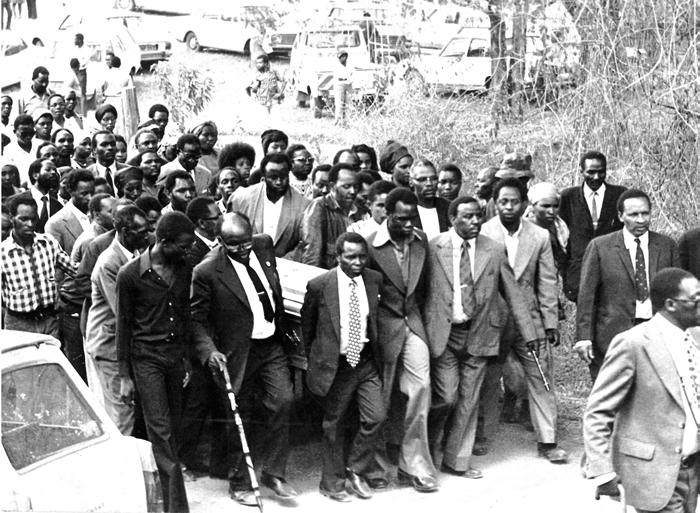
because Pinto was a muhindi (an Asian). In 1969 they killed Tom Mboya. Again many said it didn’t matter because Mboya was a Mjaluo. Then they killed Ronald Ngala, and many said it didn’t matter because Ngala was just a Mswahili. Now they have killed JM. Shall we again say it does not matter? It is just Gikuyus killing one another. Today it is JM. Tomorrow it will be you.”
Interestingly, Shikuku claimed to have asked JM to second his intended motion of forming a Parliamentary Select Committee to investigate the assassination of Mboya but he claims that JM reckoned that was “too hot” a proposal. Had this happened successfully, maybe JM’s killers would have been deterred from doing him harm.
JM’s fellow detainee during the emergency, an old man called Kirori Mutoku, told mourners how much the MP had suffered for independence, how he was nearly killed for speaking for other detainees and for refusing to surrender to the colonial authorities. He shared the incident in which JM was used for target practice by holding a piece of timber over his head that was fired at continuously. He tearfully narrated how JM was tortured before being killed, how his teeth were knocked out and how his body was riddled with bullets. “How has a man who fought so hard for an African government been killed so brutally by the same government? The independence that JM fought so hard for has turned into the poison that killed him.”
Wanyiri Kihoro was a law student at the University of Nairobi at the time of JM’s funeral. He led three busloads of students to JM’s funeral. They were dressed in red graduation gowns. He later told KTN News, “We travelled the whole 100 kilometres to JM’s Kanyamwi Farm. From Gilgil to the farm a journey of about 16 kilometres. There were GSU all over. There were more than four roadblocks we had to go through. It only took the most courageous to go to JM’s funeral.”
Throngs of people still lined up the roads, some were wailing while others fainted.
Journalist Victor Riitho also told KTN, “The mood was very tense, very ugly and very compromising. The government exposed itself openly that they were the perpetrators. What were those troops doing there in the home of sadness where the family was mourning? Only true and courageous friends
will come. What were those troops for? And where were they when JM was being killed?”
University students were chanting antiKenyatta slogans, especially when Rift Valley Provincial Commissioner Simeon Nyachae was sent to read the president’s message of condolence. “We don’t want that. We don’t want messages from murderers,” the students shouted him down. Nyachae, a good friend of the JM family, had to cut short the written speech and speak straight from his head and heart. “He changed tune and started saying what the people wanted to hear and delivered a very national message!” Kihoro told KTN News. Nyachae appealed for cooperation with the Parliamentary Select Committee looking into JM’s disappearance and death. Nyachae’s youngest wife, Grace, had advised him not to attend the funeral as government representative, after the Head of Civil Service Geoffrey Kariithi asked him to do so. She felt there was real danger that he would be attacked. “I have only two choices, one is to obey and the other is resigning my position as Provincial Commissioner,” responded Nyachae. He decided to attend the funeral. After his off-the-cuff speech, many feared Nyachae would be reprimanded. That never happened.
Reality of life without JM set in for his family after the burial. They were ostracized by society. People feared being associated with them. The name JM Kariuki was like a crime and any association with it became highly risky. Dorcas remembered how they had to adapt. She had to sort out the electricity bills, learn about vehicle insurance, where to buy new tyres for the cars and handle all the other obligations her late husband used to deal with.
To be continued…
by Shel Arensen
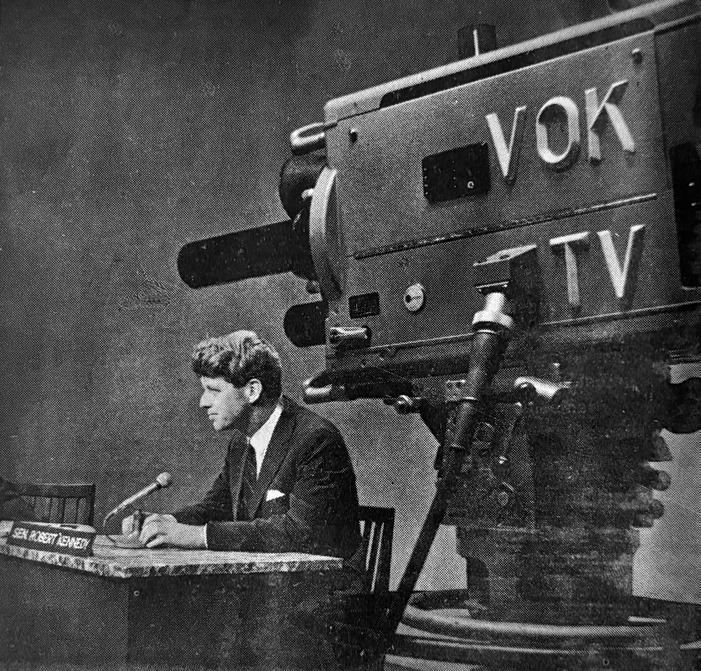
1966Senator
Robert F Kennedy, younger brother of John F Kennedy, the 35th President of the United States, who was assassinated in 1963, visited Kenya in 1966. It was part of an African tour that also took him to South Africa where he gave his famous Day of Affirmation speech in Cape Town, giving hope to African nationalists during the darkest hours of the apartheid era. On 16 June Kennedy came to Nairobi briefly, hosted by Tom Mboya who had gotten funding from John F Kennedy a few years earlier for African students to get university degrees in the United States. Kennedy also visited Kenya’s President Mzee Jomo Kenyatta. His tour included visiting parliament, speaking with students at Kenyatta College and being interviewed on Voice of Kenya TV.
Kennedy was gaining support to make a run
to be the next president of the United States and his visit to Africa was meant to get the backing of African American voters. However, two years after Kennedy’s Nairobi visit, he was shot and killed by Sirhan Sirhan at the Ambassador Hotel in Los Angeles in June 1968. A year later in July 1969 Tom Mboya was gunned down on the streets of Nairobi.
My father, Ed Arensen, had a press pass as editor of Afrika ya Kesho (Tomorrow’s Africa), a Christian magazine “for the man on the street,” and he took photos of Kennedy’s visit. The cover photo of the July 1966 issue of Afrika ya Kesho showed Bobby Kennedy and Tom Mboya smiling together, two political leaders working together to make each of their countries better. Who knew that within two years both men would be assassinated on opposite sides of the globe.
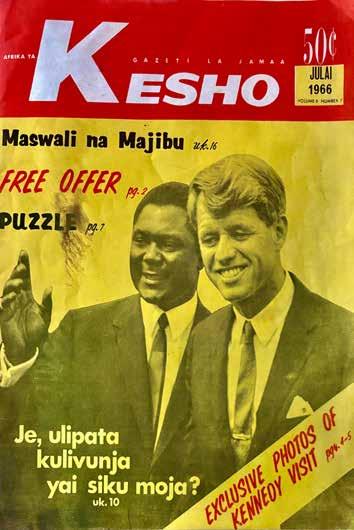
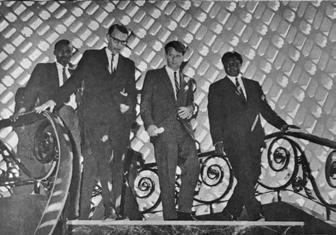
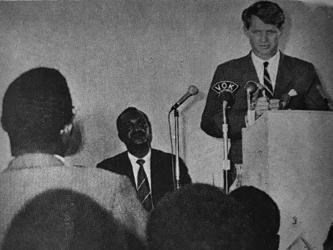
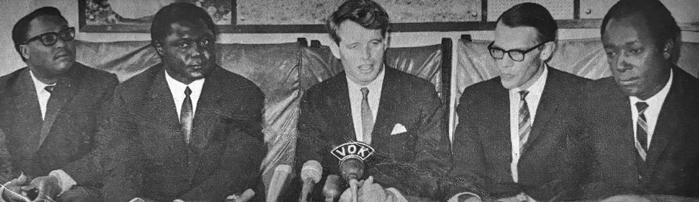
<< Opposite Page: Bobby Kennedy also met the
at a televised interview aired on VOK
As a Canadian educational missionary living on the African continent for 25 years, I have stood atop snowcapped Uhuru Point on Mt Kilimanjaro, Africa’s highest peak at 19,341 feet. I have also hunted the Bangweulu Swamps of Zambia for black lechwe, shot springbok under the steaming desert mirage of Koopan-Suid in the Northern Cape, trekked through deep forests blanketing Mt Kenya on my way up to Point Lenana, a majestic peak at 16,355 feet. I have shot elephant on the thorn strewn plains of Zimbabwe’s western flank, approaching the Botswana border, and taken lion next to the swift-flowing Luangwa River, in northeastern Zambia.
In 1840 Johannes Rebman, a German missionary to the Kenyan coast, was the first European to see Kilimanjaro, but it was not until 1889 that two Europeans, Hans Meyer and Ludwig Purtscheller, climbed to its lofty summit.
When a fellow missionary, Ron Posein, invited me to hunt buffalo in Tanzania, at Lake Manyara Ranch, I accepted. Years later in a 2023 email to me, Ron wrote: “The reason it is such a good hunting area is because it lies in the Wildlife Migration Corridor between Lake Manyara National Park and the Tarangire Park. For game purposes the area is technically known as Kwakuchinja, to butcher in the Kiswahili language.
by Robert Kurtz
It truly is a fantastic area, with Cape buffalo, warthog, eland, wildebeest, hartebeest, along with quite a few of the smaller bush animals, like dik-dik. It was paradise for sure.” Packing a .458 and a .30-06, Ron and I dispatched two mature buffalo bulls during our hunting foray.
In 1901 with a small contingent of missionaries
affiliated with Africa Inland Mission (AIM), Charles Hurlburt arrived in Kenya. While preaching and spreading Christianity from AIM’s first base in Ukambani, Hurlburt searched for a place to start a mission station where they could also have a school to educate missionary children. By 1902 Hurlburt obtained a plot of land for
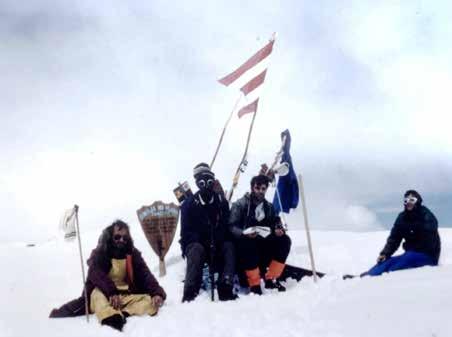
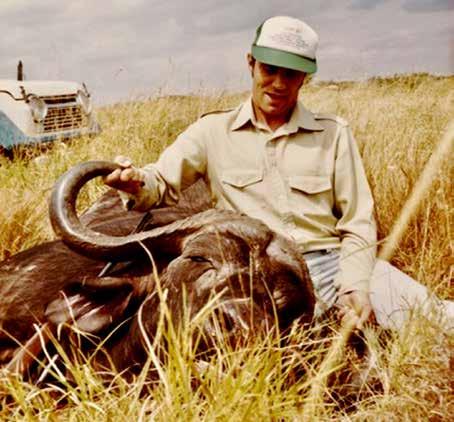
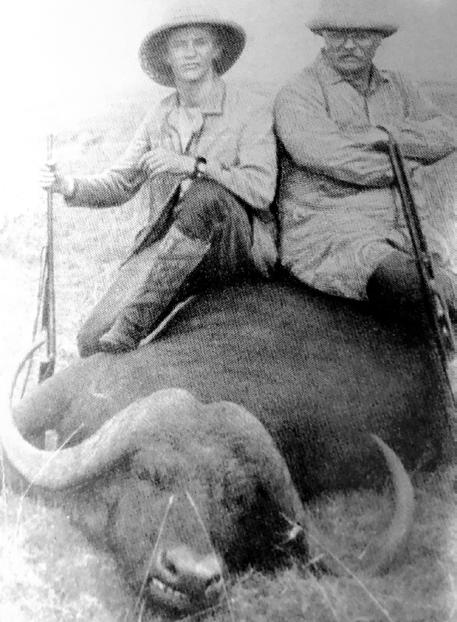
the mission, half way up the escarpment of the Great Rift Valley, in a place called Kijabe, meaning a place of cold wind in the Maasai language! Kijabe fulfilled the important factors Hurlburt had been searching for: close to the railway; central within Kenya to serve as mission headquarters; and a climate conducive to good health. At 7,200 feet in elevation, Kijabe stood above the malaria belt and had a moderately cool climate.
Hurlburt took a furlough back the United States in 1905. President Theodore Roosevelt heard Hurlburt was in America and invited him to the White House, where they spoke for a few hours. They both left with high regard for one another. Roosevelt accepted Hurlburt’s invitation to visit the mission station at Kijabe when he came to Africa a few years later for his hunting safari.
According to Roosevelt’s book African Game Trails, he was,“Fascinated by the call of the African wild.” Much influenced by Frederick Selous, acknowledged as the greatest African hunter of his day, Roosevelt arranged to take a long safari holiday in East Africa in the company of his son Kermit, as soon as his presidential term came to an end in 1908.
During Hurlburt’s 1905 furlough, a well-to-do friend asked what the most pressing need was on the mission station in Kenya. Hurlburt replied quickly, “A school for
Top: A close-up of the author’s buffalo. Bottom: Teddy Roosevelt and his son Kermit with their first buffalo. (Photo from African Game Trails)
AIM missionary children.”
In 1908 a very large sum of money was donated for the construction of a school building to be built at Kijabe on a piece of land the Kikuyu called Kiambogo, place of the buffalo. The massive school building was dubbed Kiambogo. Construction started with burnt clay bricks, but it was taking too long, so the building was completed with yellow limestone blocks quarried from the valley floor.
The school for missionary children, called Rift Valley Academy (RVA) actually started in 1906 with a oneroom schoolhouse using the educational talents of its first teacher, Miss Hope. While on his year-long hunting expedition to Africa, Theodore Roosevelt, personally set the cornerstone in 1909. The Kiambogo building still stands today, over a hundred years later, one of the major buildings within the greatly enlarged campus. Roosevelt wrote in African Game Trails, “On August 4 I returned to Lake Naivasha, stopping on the way at Kijabe to lay the cornerstone of the new mission building.”
Teddy Roosevelt and Charles Hurlburt both put their mark on the beginning of RVA which was ranked second out of the top 100 best high schools in Africa by Africa Almanac in 2003, based upon “quality of education, student engagement, strength and activities of alumni, school profile, internet and news visibility.” It now serves about 500 students representing approximately 80 mission organizations from 30 nations across the world, as well as many Kenyan students.
After laying the cornerstone on RVA’s central building Kiambogo, meaning the place of the buffalo, Roosevelt and his son, Kermit, went on to hunt buffalo on his 1909 safari. After the downing of their first Cape buffalo, Roosevelt
expressed his preference of firearms this way: “For heavy game like the rhinoceroses and buffalo I found that for me personally the heavy Holland was unquestionably the proper weapon.”
Having successfully taken
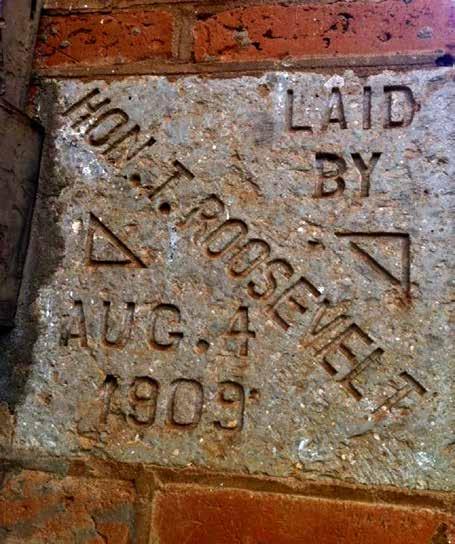
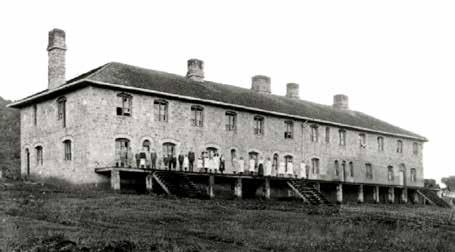
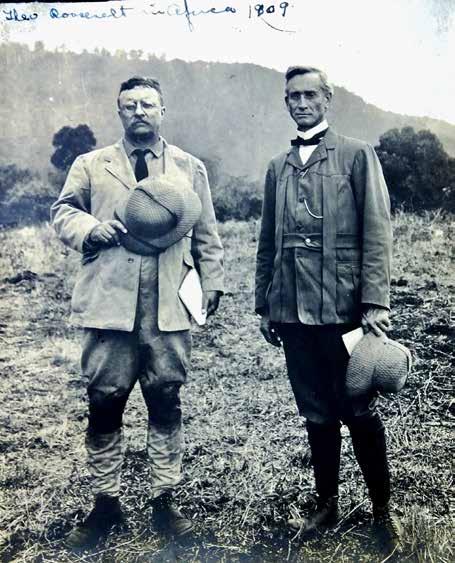
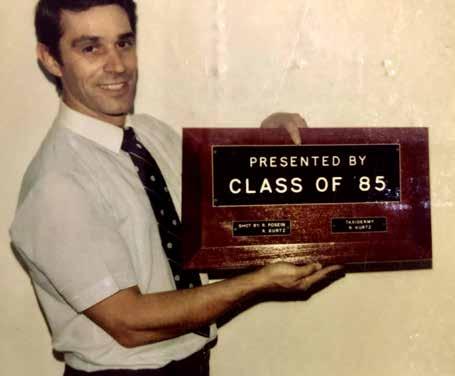
two trophy buffalo bulls, Ron Posein and I were, like Roosevelt, now linked to Kiambogo and Rift Valley Academy.
Ron’s daughter Rhonda, a student at RVA who would graduate in 1985, decided that her class would present to the school a mounted trophy of the largest of the two bulls we had shot. As a taxidermist, I agreed to mount the head. What more fitting gesture than to hang a huge buffalo bull, the school mascot, in the library of RVA, which looked so much like the first buffalo Roosevelt shot in Africa?
Both my daughters, Dawn and Tracy, graduated from RVA in 1980 and 1989 respectively. When Ron’s son Stephen attended RVA in 1986, there were still signs of leopard in the forest buttressing the school grounds.
Roosevelt portrayed Africa in eloquent style in African Game Trails: “In these greatest of the world’s great huntinggrounds there are mountainpeaks whose snows are dazzling under the equatorial sun; swamps where the slime oozes and bubbles and festers in the steaming heat; lakes like seas; skies that burn above deserts where the iron desolation is shrouded from view by the wavering mockery of the mirage; vast grassy plains where palms and thorn-trees fringe the dwindling streams; mighty rivers rushing out of the heart of the continent through the sadness of endless marshes; forests of gorgeous beauty, where death broods in the dark and silent depths.”
Roosevelt’s words resonate with me and I feel privileged
to have hunted in Kenya’s northern Lake Baringo country, taking warthog, Northern Grant’s gazelle and Beisa oryx, before hunting closed in 1977.
Publisher Peter Stiff acknowledges in the forward to the 1986 reprint of Roosevelt’s book, African Game Trails , “The collection of birds and mammals made by the Roosevelts during this [year-long] expedition, was afterwards presented to the American Museum of Natural History in New York and Washington… and [recognized] as one of the finest ever made by an expedition on a single trip into Africa.” Theodore Roosevelt’s legacy lives on today.
To say that Roosevelt was a hunter, should come
as no surprise. But on the cover leaf of the same book, it spoke of him as “A great hunter but paradoxically a conservationist as well.” What a privilege I have had, to stand on the lip of the Great Rift Valley, upon the steps of the original Kiambogo building where Roosevelt’s hand laid the cornerstone for
Rift Valley Academy’s main building. There I looked out over Mt Longonot, a dormant volcano in the valley floor, and knew that I shared some of the same buffalo hunting adventures as Teddy Roosevelt did over a century earlier.
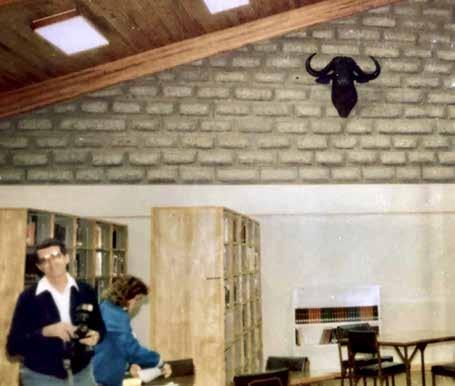
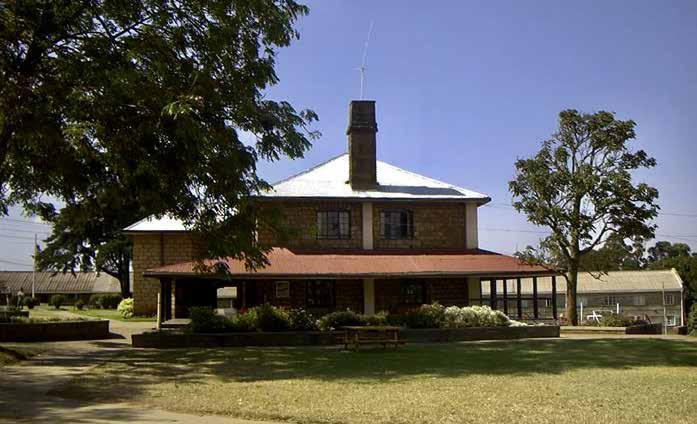
by Peter Goodwin
A newspaper clipping from the East African Standard in 1958 shows two young Kenya-born friends ready to head out for further studies in England – by driving a Land Rover through the Sahara! Here is the article.
1958With a route to England boldly painted in white and yellow on its blue sides, a specially-converted vehicle left Nairobi yesterday carrying two young men on the first stage of the overland journey. They will make the entire journey by road, except for short sea trips between Dakar and Casablanca, Tangier and Gibraltar and Calais
and Dover, and hope to be in London in two months’ time.
The men are Mr Nigel Challoner, aged 20, the son of Mrs CF Challoner, of Lower Kabete and Mr Peter Goodwin, aged 21, son of Mr and Mrs Stewart Goodwin, of Kiambu.
Mr Challoner is bound for the Royal Agricultural College at Cirencester, Glos, where he will spend three years. Mr Goodwin is to take a four-year motor engineering course in Lancashire.
Sahara road ban
It took them three months to secure visas
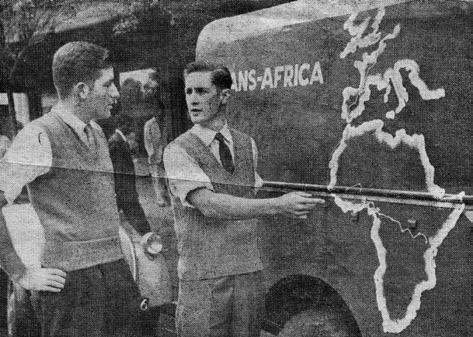
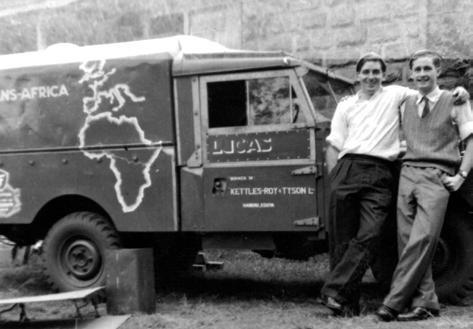
Nigel Challoner and Peter Goodwin pose in front of their Land Rover, pointing out their proposed route from Nairobi to England across Africa and the Sahara Desert.
to pass through the various countries on their route — the Belgian Congo, French Equatorial Africa, the Cameroons, French West Africa, Morocco, Tangier International Zone, Spain and France.
They had hoped to motor from Dakar to Casablanca, but the road passes through the territory of Spanish Sahara. The Spanish authorities declined to grant them visas because of the internal situation in that colony and they were forced to plan a seaborne diversion.
The cost of the expedition, estimated at £300, is being shared by the two men. The vehicle has been adapted so that the rear portion is a closed van, containing extensive equipment and beds.
Mr Goodwin was educated at the Duke of York School, Nairobi, and has been working for the Government at Fort Hall for the past three years. Mr Challoner, who went to St Mary’s School, Nairobi, was a field intelligence officer at Fort Hall for two years.
Peter Goodwin, an Old Africa reader and one of the two men featured in the news article, also sent in some photos of their safari.
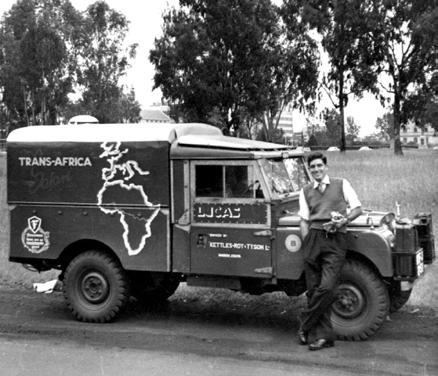
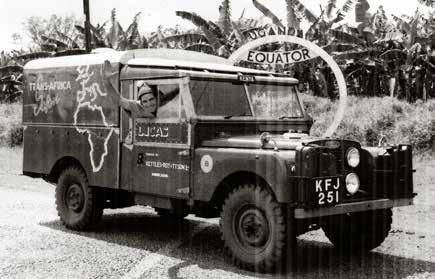
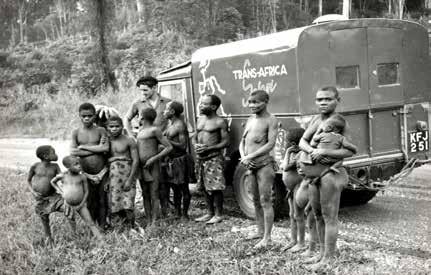
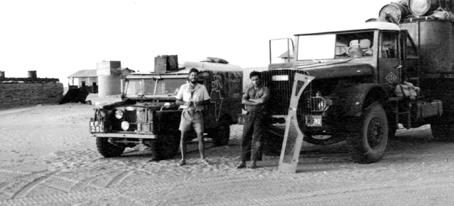
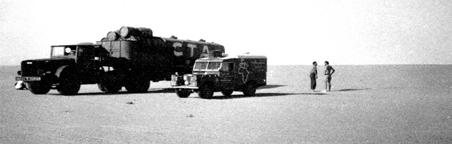
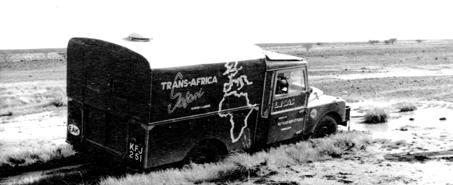

Goodwin and Challoner joined up with a truck convoy before crossing the Sahara.
A brief rest in the sands of the Sahara.
Unexpected rains in one section left the Land Rover stuck for several days!

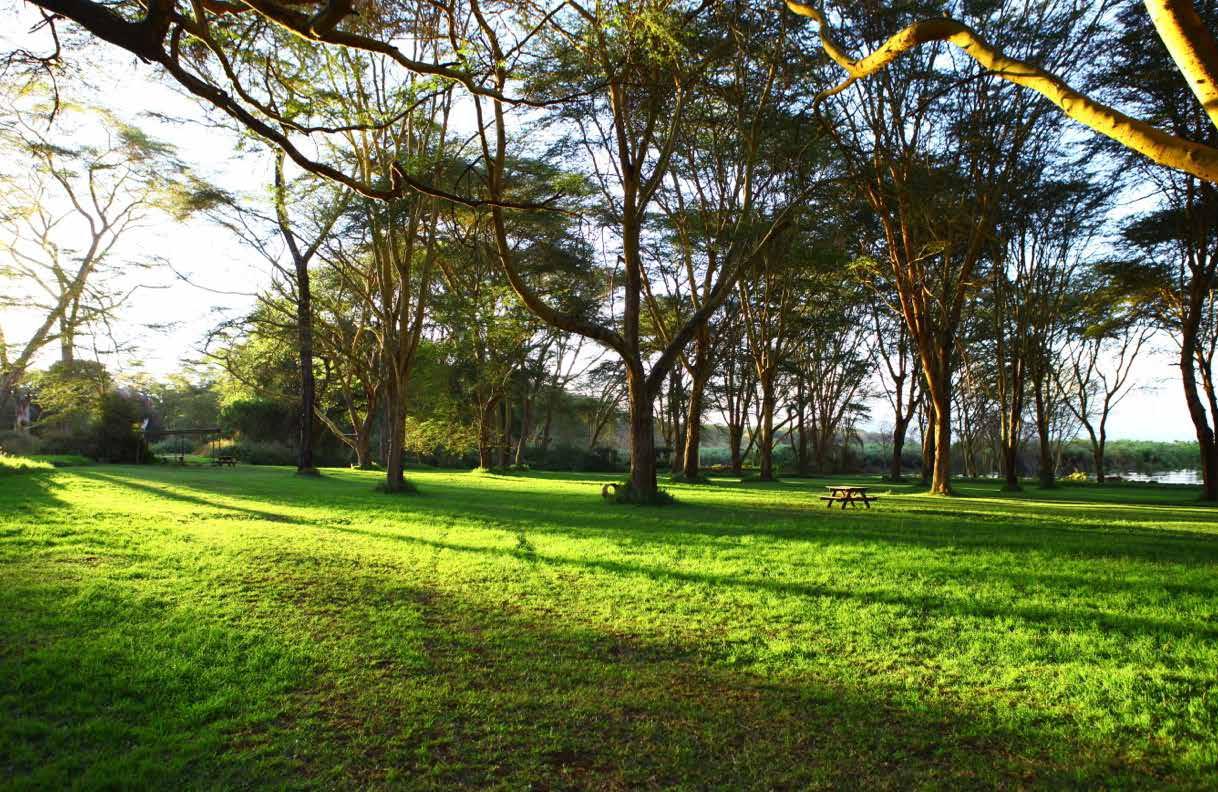
by Neera Kapur-Dromsom
With Ramlila sequences celebrating the Ramayana, street processions, and roadshows before the performance, early Indian ‘theatre’ commenced at the turn of the twentieth century with the Indian workers who came to construct the Uganda Railway, bringing their traditions and faiths with them. Mythological events, imagined events through gesture, speech, song, music, and dance, were part of a broader culture that included rituals. Later, even Shakespearean adaptations would be presented in this fashion.
Each year in October or November, depending on the lunar calendar, the Ramlila procession, starting in temples and spilling into the streets, did the rounds of the bazaar area in Nairobi. The jaloos (procession) went from Ram Mandir dhobi temple in Eastleigh right up to Azad Maidan (opposite the old Nation House) in the centre of town. The yearly spectacle carried on through the 1940s and 1950s, and even into the 1960s and 1970s.
Vedic chants and Ramayana slokas would be sung, conches blown. Big drums (dhol) hung round the necks of strong men and were beaten with two sticks. Auspicious sounds, divine worship, incense and fragrances all played a part in making certain that the
ceremony commenced well. Particular rites and pujas (prayers) were performed. Coconuts were cracked, diyas (oil lamps) were lit, and flower petals were thrown on the performers playing gods and devils. There was colour and
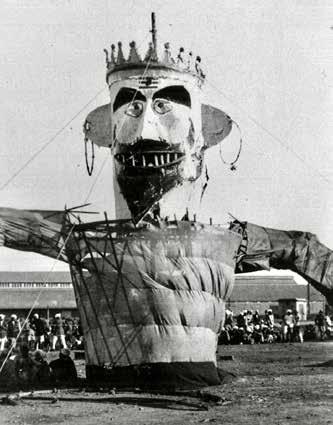
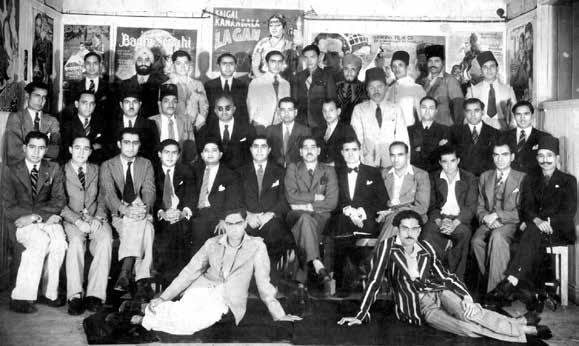
movement, and there were marvellous heroic figures. None of the participants belonged to a professional theatre group; such a company did not even exist. These were amateurs, who acted with great zeal and devotion. Demons wore large masks; Rama’s army was well equipped with bows and arrows; Hanuman, the monkey god, had a long tail appended; and boys in their early teens performed the role of girls. My great-grandmother told me that earlier they even used real swords
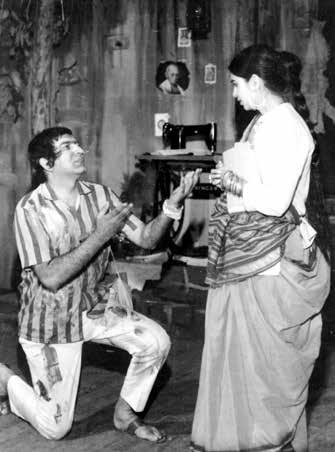
and other weapons, polishing them for the occasion.
Commencing with the first night of the Navratra, different parts of the Ramayana were enacted over the next nine days. It was essentially a warrior celebration, appealing particularly to the martial Punjabis in the audience. The nine nights of war between the good King Rama and the evil King Ravana were also seen as a symbol of the triumph of good over evil. Totally immersed in the spirit, they came, they participated in the rituals being performed, and in this way they worshipped the mother goddess. The actors dressed up eagerly as Rama, his younger brother Laxman, or the old spiritual rishi, their guide. Yellow paste adorned the faces of gurus; blue was reserved for divine characters, while red signified the bad. A crowd of young and old followed the big jaloos as all walked to the Shree Sanatan Dharam temple on Duke Street (now Ronald Ngala Street).
My mother recounts hilarious episodes and spectator/participant interactions in the 1940s. They were always taken in good stride. She remembers one incident at the temple grounds, when Ravana captured Sita, the wife of Rama. The two pieces of padding supposed to be Sita’s breasts kept on falling through ‘her’ choli (blouse). The poor fellow tried to hold on to his short blouse with his right hand while, his left arm outstretched, he cried out in pain for help, “Rama! Rama!” Everyone burst out in laughter instead of breaking into tears. To make it worse, Rama, in his glorious crown
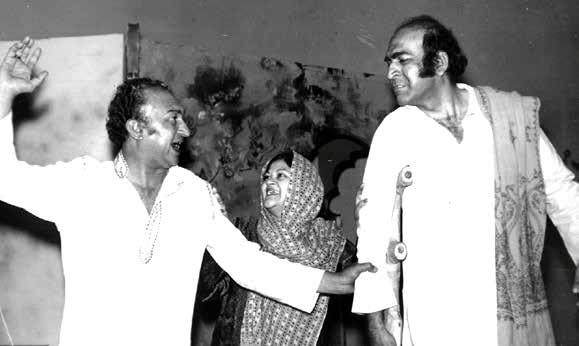
and white canvas Bata shoes, rushed in calling out in anguish for his wife’s whereabouts, “Site-e-e! Site-e-e!” The audience joined in the chorus and the hall resounded with “Site-e-e! Site-e-e!” – a cathartic pleasure in seeing the god-king Rama suffer. Tragedy had become hilarious comedy.
Men and children in the audience laughed unabashedly, while women watched seriously and respectfully, their heads covered with their sari palavs, hands folded in true devotion. When they could not control their laughter, they simply stuffed a corner of their sari into their mouth, or covered it with their right hand to suppress their mirth.
Often the audience shouted at the stage, at times even directed the cast. “Oh Ravana, now jump!” “Speak louder!” And the characters obeyed. The audience was close, on the floor in a semicircle. Since no amplification was used, actors had to project their voices, almost shouting.
As usual, big Gandu Halwai would play the part of Ravana, King of Lanka, in the short war scene. Massive and imposing, every inch the stereotypical image of Ravana, Gandu would shout out to his soldiers, “Kill! Kill!” There was blood in his eyes, strength in his extended legs, but his arms were stretched out limply, the fists opening and closing alternately – as if he was still making laddus in his confectionery shop.
For several years in the late 1940s and early 1950s, my uncle Roshan played the part of the god-king Rama. The temple priest would garland him and a small puja ceremony would be held before the commencement of the jaloos. As usual, some women who saw him as the incarnation would come forward to touch his feet. Soon after one such parade, Roshan fell ill. His anxious mother got upset and sent a message to stop the women from touching his feet. She felt it was too heavy a responsibility for the young boy.
The actors participating in the Ramlila stayed at the house of the director right from the time of rehearsals up to Dussehra, the tenth and concluding night. They underwent rigorous training. A big part of their instruction included spiritual exercises and meditation, besides the physical and technical preparations. The devotional aspect was of utmost importance. They fasted regularly, or ate only sattwik (pure) foods – abstaining from meat, alcohol, garlic, and food cooked in oil. Such was the serious
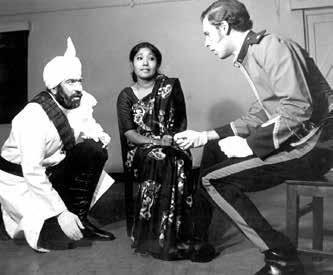
and devotional aspect associated with theatre.
On the tenth day of the drama festival, instead of an actor playing King Ravana, there would be a large effigy of King Ravana. This was to ensure that when the god-king Rama and his party fired shots at him, their arrows would bring him down on his back – or else the year would bring ill-luck. The attack at sunset would be cheered on by spectators as the effigy went up in a tremendous burst of flames. Rama’s victorious army would then be escorted away to make the rounds of various temples and receive blessings from people.
At this point in time, 1943 and 1944, World War II was already into its two thousandth day, yet these nine days and nights of war that presumably took place three millennia earlier were of far greater importance to many of the Hindus of Kenya. Emotionally and sentimentally, spiritually and culturally, they could identify with it. World War II was not theirs and they never identified with it. The Ramlila was their war.
Poetry and theatre, music and dance were central to the lives of the Asian community. There was always a moral to an ending. Even if the plays were often of a religious nature, the theatre groups themselves were not partisan to any religious group. But they supplemented the work of communal organizations and religious bodies such as the Shree Sanatan Dharam, which could engage in organizing and helping to produce them.
Hindus and Muslims crossed religious boundaries to put on productions together, initially at the Shree Sanatan Dharam temple and later also at the Arya Samaj. Since these
performances were at the temple grounds, there was no entrance fee. All were welcome. Those who wished could donate, and most people did, according to their means. Coins and small notes went into the small wooden box placed in front of the sanctum sanctorum. Larger amounts were given directly to the temple secretary. Some of the money collected in this way was even given for soldiers during the World War II efforts.
In the traditional setting, these dramas had significance, symbolism, and deep religious meaning. The totality of the stage was consecrated. The physical space of the event, be it the theatre, the temple, or the street, became a micro- model of the cosmos. A puja was held and the space was given life as well as presence. It was given breath and soul; it became sacred. It was given the same potency as an image.
From childhood, the devotees were brought up to play god. In temple celebrations, worshippers would be so caught up by the performance they would not hesitate to prostrate themselves before a child god and offer him flame and flowers.
Entertainment in itself was important, but doing and watching a performance was more of a spiritual journey. The act of observation was in itself darshana – that is, being in the aura of the spirit and the moment. It was to ‘see’ god. This participation gave the audience dignity as well as a sense of being complete. By 1910, Indian theatre had blossomed. Plays were now also staged at the Railway
Indian Institute. Some groups hired the Playhouse Cinema on Market Street, normally where English films were screened. Nonwhites had to adhere to segregation rules in seating. Africans could sit with Indians. The Capitol Cinema (where the Ambassadeur Hotel presently stands) was another venue for staging Indian plays, as was Theatre Royale (the present-day Cameo).
A group of people who had initially arrived from Zanzibar formed the Zanzibar Drama Group in 1924. An Amateur Dramatic Society was formed in the late 1930s. The Blue Room Restaurant on Hardinge Street (now Kimathi Street) was often used for rehearsals after it had closed for the night. At such venues, the audience was mostly male, both Indian and Swahili, whereas at the temples, the audience was mixed – men, women, and children. The Amateur Dramatic Society of the 1930s and 1940s took a whole year to rehearse for a big play. Sometimes they even put on plays in tents for wedding receptions. They may have taken a year to rehearse, but they loved what they did, keeping in mind that the audience expected a performance of about five hours, if not continued over several nights! Local musicians and magicians entertained during scene changes, which could be long. By the 1940s, the groups were performing at the Desai Memorial Hall or at the Empire Theatre. Theatre became increasingly important. Aga Hashr Kashmiri’s Urdu versions of Shakespearean plays became an important resource for drama. Thespians such as Master Sarwar,
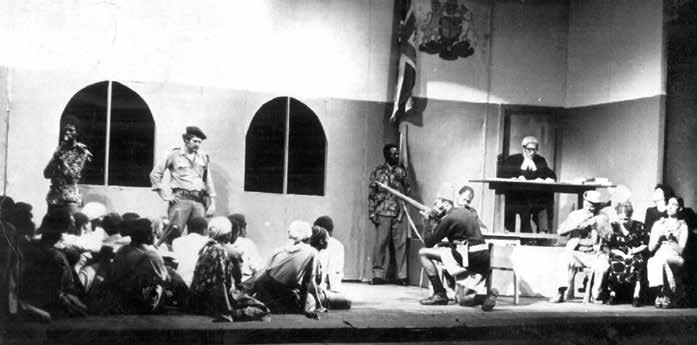
Ghulam Kader, Juma Khan, T. N. Soni, Babu Ram, Abbas Shah, Marajdin, Najamuddin, and Hiralal Kapur dominated the Indian stage until at least the late 1940s. Plays such as Naik Parveen, a story of an alcoholic (played by Najamuddin) and his good wife (played by Abbas Shah), were performed at wedding parties.
The more formal organization of Asian dramatists, poets, and artists came towards the end of the 1940s, with the formation of the Orient Art Circle by Apa Pant, the first Indian High Commissioner to Kenya (1948), and his wife Dr Nalini Pant. Vinay Inamdar, Harish Dave, Surya Patel, and Harbhajan Singh were some of the recipients of a British bursary to attend courses in London for producers of amateur drama. At first very Maharashtrian oriented in its choice of plays, the Orient Art Circle became increasingly Gujarati in its choice of language for performance.
With the opening of the Kenya National Theatre in 1952, Vinay Inamdar, Harish Dave, and Shanti Pandit made a name for themselves as directors and actors. Ram Sharda and Harshad Joshi did some excellent plays (for example, Balwant Gargi’s Kanak di Bali), while the Eastern Art Theatre Group did English plays, mostly Shakespeare, with Asian actors in the 1950s and 1960s. By now, spectators were required to buy tickets for shows. However, audiences were not used to being charged for watching a play, and collecting money was never easy. Uma Devi Chaudhri (Hasslauer), a classical dancer just arrived from India with the Uday Shankar troupe, the Inamdar sisters, Damyanti Ghelani, Manju Patel, Usha and Manju Jesani, and Vidya Patel made many a heart throb. They were among the first Asian women to act on stage. Savitri Madan and Lajjya Sharda followed. Besides writing scripts (she wrote the script for the renowned play Shravan Kumar, directed by her husband Ram Sharda in the late 1950s, and in which my father also had a major role), Lajjya Sharda was much sought after as an actress. Bohras, Hindu Gujaratis, Ismailis, and Parsees popularized Gujarati language plays, while Badalas specialized in qawali singing. Urdu mushairas and poetry recitals started gaining prominence.
Harbhajan Preet, and Allaudin Qureshi. The Artists Welfare Guild was formed by Pritam Chaggar in 1961so that they could participate in the drama festival organized by the East African Welfare Guild. Under its banner, Teja Singh directed the one- act Chinese play The Stolen Prince, in which Allaudin Qureshi and Krishanlal Kapur acted. Stage sets designed by Davinder Lamba won a special award. Many of these actors had started their acting careers at the Sanatan Dharam temple, or they came with some training from the Asian Teachers’ Training College. A prominent personality, both as producer and director, Joseph Clement, who also taught English at the college, was their theatre guru.
As other performance venues came up – The Forces Theatre, City Hall, the Kenya Cultural Centre – the early 1960s also saw the beginnings of multiracial theatre. Kuldeep Sondhi wrote short plays with an Asian and African cast in mind. It was at about this time that Allaudin Qureshi started making a mark in the world of Kenyan and Asian theatre.
The Daily Nation’s 25th Anniversary Review in 1977 said, “It was in the early seventies that the stylish young writer, director and actor
Afro Orient Players, a short-lived group, was formed at independence by veteran actors such as Mohinder Bhalla, Ram Sharda, Teja Singh,
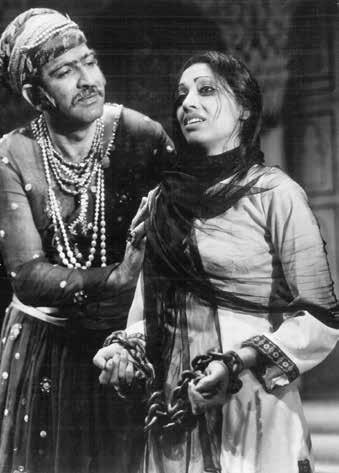
Allaudin Qureshi took the Nairobi stage by storm,” while Kul Bhushan wrote, “Allaudin makes a stunning impact as an actor… dominates the show as a writer who bites with his satire.”
Allaudin Qureshi is a name that is synonymous with Asian theatre in Kenya. Acting, writing, directing, broadcasting, he has done it all. Journalist Margaretta wa Gacheru has called him, “the playful child, the wise poet, wistful romantic.” Allaudin is all these and more, amazing in his versatility. He explores direction, expresses, communicates, reaches out. Writing dialogue, skits, or comic sketches is his forte. His talent ranges from Zaviye (on Indian dance drama) to Musical Mosaic to the comedy Ankh Micholi, the philosophical Parchhaiyan, or the eternal love legend Anarkali.
Allaudin’s entry to the world of theatre was inevitable. His father, Najamuddin, had already been a stage actor in Lahore when he arrived in Kenya in the late 1920s and joined the Amateur Dramatic Society, a group formed by Abdul Waheed Cockar and Ghulam Kader in the 1930s. The plays they performed – such as Khubsurat Bala, Yahudi ki Ladki, and Saide Hawas – were sensational, spectacular. They wore elaborate and majestic costumes.
A photo of my grandfather, Hiralal Kapur, sitting majestically in a royal Indian costume, a princely turban with feathers and jewels on his head, holding a real sword in his hand, is captioned Khoon ka Khoon (‘blood for blood’ in Urdu). It is quite possible that my grandfather, who also acted with the Amateur Dramatic Society, performed with Najamuddin in this adaptation of Shakespeare’s Hamlet by the renowned Indian writer of the time, Aga Hashr Kashmiri. Many years later, their children, Allaudin Qureshi and I, also acted together.
The directors paid special attention to ‘raw theatre’, with forceful stamping of the feet to announce entries and exits. Language and dialogue delivery were dramatic, the voices rich, since amplification was nonexistent. The intended impact was achieved –young Allaudin was mesmerized forever. The admiration of those moments would grow into a passion of sorts while at school, continuing to blossom over the years. In this he had had the full encouragement of his father.
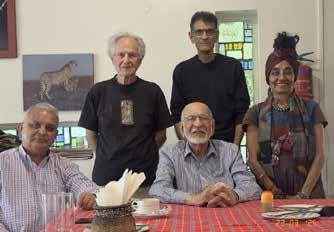
The author (right) with Allaudin Quereshi (seated centre) and the author’s husband Alain Dromsom (standing left of Allaudin) and others at a meeting in 2024 at the National Museum in Nairobi.
communal house where many families shared a bathing room and a toilet. In the shared central courtyard, they sat many a night watching the stars, listening to the crackling of the bonfire, talking, laughing. The language of those childhood days, of veda house stories, became an inspiration for dramatic scenes and dialogue. He watched his father rehearsing lines with great technical skill, painstakingly getting into character over months.
His first role as an actor was in the Drama Society at Eastleigh Secondary School. Joe de Souza and Carvalho, his teachers of English, produced the play Shivering Shocks. Allaudin played the role of a detective. “A portrait of Pandit Nehru was hanging in the Brahma Sabha Hall where we were performing. When I had my first stage fright, I looked at it and immediately got inspired,” says Allaudin.
Allaudin grew up in a large family, six brothers and two sisters. They lived in a
With the well-known radio veteran, Chaman Lal Chaman, he acted in a comedy, the cast including Mrs Savatri Madan and Lajjya Sharda. Lajjya’s husband, Ram Sharda, was by then recognized as a master of the theatre. One of Allaudin’s earliest romantic plays (when he was just over twenty years of age) was under the direction of Ram Sharda – Roti aur Beti, with Leena Rao in the lead. His several plays under the direction of Ram Sharda were performed at the Sanatan Dharam temple. In Shravan Kumar, Allaudin worked backstage. After one such performance, in which Allaudin acted the role of a pandit, he went backstage, only to be followed by two elderly women touching his feet and asking him for blessings! “I was overwhelmed,” Allaudin tells me. “I did not feel pious enough…I was only acting in the way [I had been] directed by Ram Sharda.”
Over the years, Allaudin acted with renowned players, writers, and directors. One of the most prolific Gambian playwrights of the time was Janet Young. She was in Kenya then, and Allaudin worked with her in Moon on a Rainbow Shawl. With Joe de Graft, a prominent Ghanaian writer, playwright, and dramatist (well known for his play Muntu), they performed Othello in a Theatre Group production. Allaudin acted the role of the Prince of Venice. During a performance, one of the actors fell down in an epileptic fit, and the cast was stunned into a momentary silence. Allaudin had the presence of mind to start clapping and call for the guards to take the man away. Backstage, director James Falkland hugged him; Allaudin had saved the situation.
John Ebdon, Noreen Antrobus, Donald Whittle, and Brian Epson’s Nairobi City Players was a very exclusive English group in those days. In 1973, with Andrew Warwick as director, they decided to stage their version of Conduct Unbecoming, a play by Barry England in which the British regiment stationed in India in the 1880s is involved in a scandal. They needed Indian actors. Those selected, Allaudin among them, were given associate membership; they could not attain full membership of the group, even then. Allaudin played the role of a major-domo at a military mess. Liza McKinney wrote, “But above all, it is the performance of Allaudin Qureshi that stands out. Despite little dialogue, he manages to convey the quiet strength and dignity of a man who rises above his imposed servility…” Allaudin had to grow a beard for the role – something he had never had before, and something he never had again.
He followed up this triumph with further roles with the Nairobi City Players in The King and I, Toad of Toad Hall, Alladin and the Wonderful Lamp, and Bang Bang Beirut. With the Theatre Group, he acted in Jack and the Beanstalk.
In 1977, Allaudin acted in the breakthrough play by Ngugi wa Thiong’o and Micere Mugo, The Trial of Dedan Kimathi. This National Theatre Group production was selected to perform for the Second World Black and African Festival of Arts and Culture, FESTAC ’77. Being an anti-colonial play, apart from Margaretta wa Gacheru (an American married to a Kikuyu) and one or two others, there was difficulty casting the roles of the British
colonials, as few wazungu actors wanted to be affiliated with it. The two directors, Tirus Gathwe and Seth Adagala, decided to go for the “lighter-skinned people.” The Asian theatre group NATAK was contacted. Allaudin, Kuldeep Bhakoo, Ram Sharda, and Sharad Shankardass were cast. Allaudin covered two roles, those of a judge and an Indian businessman. They first performed the play at the Kenya National Theatre before flying out to the FESTAC Village in Lagos, Nigeria, where they were treated like VIPs.
Allaudin had also been performing from time to time at the Donovan Maule Theatre, and when it closed down, he continued with Phoenix Players. However, it was in late 1976, when Allaudin, Kuldeep Bhakoo, Kehar Singh, and Usha Panji formed their own group, NATAK, that Allaudin’s love and devotion for the theatre was complete.
At NATAK, Allaudin’s universe was enlarged. Always more than an actor, he could now write, direct, produce, manage, and do marketing. He worked backstage when necessary, doing stage lighting and sets. Provocative and exciting on stage, he expressed himself with vigor, ensuring authenticity. He wrote prolifically and continued to do all that was required to see a play from dream to inception to stage. His plays Heer Ranjha, Parchhayian, Anarkali,
Chachi- o-Chachi, and Wohi Manzilein Wohi Raaste were all performed by NATAK at the Kenya National Theatre. The theatre became our temple; we had come full circle.
Like most of us in the theatre, Allaudin held a full-time job to sustain himself and his family. The actors continued to perform gratis well into the late 1980s, yet working with full enthusiasm and dedication late into the night. It was a vibrant tradition, bringing together people from different backgrounds. In spite of national political tensions, the 1980s and 1990s were fertile periods. Plays, poetry, short stories, satires, tragedy, comedy, dance dramas, adventures, or allegories such as Peace for the World Peace Conference at the Kenyatta International Conference Centre –Allaudin has written them all. He continues to write the weekly Asian Scene for the Sunday Nation, a column he began in 1986 and has maintained unbroken.
Alongside his major career in the theatre, Allaudin achieved other laurels in the world of radio broadcasting. As a young primary school student of ten, Allaudin started submitting contributions to the Voice of Kenya Radio. Ram Moorti Maini, his teacher at Park Road Primary School, became his mentor for the radio. Allaudin appeared as the character Bhaiya Moorti on Maini’s children’s programme Phulwari. In time, Allaudin would take over the programme. He also introduced a new programme for teenagers called Naubhahar.
As a freelance broadcaster and radio presenter, Allaudin worked with radio veterans Musa Ayub, Haroon Ahmed, Chaman Lal Chaman, Darshi, Sajjad Shamsi, and Sudesh Chetan. In addition to presenting popular radio shows, which in those days enjoyed listener appreciation throughout East Africa on AM frequencies, Allaudin was commissioned by the World Health Organization to write and present an AIDS awareness show. This show was aired for nearly two years. He was involved in commercial radio advertising and won several awards for creative and quality radio advertising. His major achievement in this medium has been the body of outstanding radio plays written and broadcast over the years. Today, his Sunday radio programme Anjuman, which he started at the inception of East FM thirteen odd years ago, literally “brings friends together” from all over the world. It is probably the only radio programme in Africa dedicated to ghazals.
Allaudin has also had a notable spell in film, Hollywood films included. He was cast to play character roles in a number of award-winning films: Out of Africa, The Wilby Conspiracy, Cheeta, Check Point, Living Free, Blue Pastures (a BBC series), Raising Daisy Rothschild, and Walt Disney’s The Biggest Bongo in the World. Participating in the BBC radio play Love Brewed in an African Pot, or writing a dance drama for Uma Devi Hasslauer, Neera Kapur, and Kamini Kothari, or working with religious or social groups such as the Muslim Youth League, Sikh Women’s Society, Hindu Council, Arya Samaj, Giants, Kalaniketan Shishukunj, or with inter-racial groups, Allaudin knows no boundaries in his creative world. It is no wonder that in 2014 he was selected to be an ‘ambassador of culture’ by the Asian Foundation and honoured there by former President Mwai Kibaki.
In all this, Allaudin’s biggest support has been his wife Naseem, who has always inspired and supported his creative ventures. They have three sons and six grandchildren. Looking back, Allaudin says, “My childhood passion and love for the arts, radio, and theatre in particular, have never dimmed, and have only further enriched my being, earning me millions of friends and fans the world over. My love for this media grows fonder and stronger as days pass.”
One of his early original scripts, for which Allaudin was voted Best Local Writer in Hindustani, was a radio story. In 1969, six years after independence, Haroon Ahmed, then head of the Hindustani Service for the Kenya Broadcasting Service, emphasized the creation of a “national image” through broadcasting. Haroon challenged local writers to come up with a theme based on Asian/ African relationships. In response, Allaudin wrote Kya Tum Na Aaogey, which was selected for broadcasting. It was subsequently translated into English for the stage by Allaudin himself under the title Ameena. But it was not produced. Ameena is now being published by the Asian African Heritage Trust, which is perhaps the best invitation to produce it and show it to the largest audience possible.
by Ken de P Beaton
The Nairobi National Park began in 1946. Ken de P Beaton, the first warden, published a weekly diary in the East African Standard newspaper in 1949, later published as two books. Ken’s son Ron recently shared those books with Old Africa. His diary entries give a flavour of what the park was like in its early days.
1949 April 2nd. Lion have been most obliging this week. Every evening a battery of cameras has been aimed at one or other of the prides as they posed to be photographed. However, I must again warn the public that these are wild, and not tame lions.
That they have become accustomed to motor cars, and the presence of human beings, makes them even more dangerous than the lions in more remote parts which have not lost their fear of men. If people approach these lions in open cars, or do anything foolish to annoy them, it is certain that sooner or later there will be a tragedy.
I often meet these lions when on foot going about my normal duties, and I can assure
Ken Beaton wrote that he had never seen a very young dik-dik. This photo shows a baby dik-dik with Old Africa editor Shel Arensen and his younger brother Brian in about 1968. A car had hit and killed the mother dik-dik after dark and when the driver stopped to see what he had run into, he found the baby dik-dik in the grass by the edge of the road. He brought the orphan dik-dik to Ed Arensen, who raised it for a week, trying to feed it on cow’s milk. Sadly, without its mother’s milk the baby dik-dik died.
(Photo by Ed Arensen)
you that some of them are very bad tempered brutes. An angry lion is not an animal to be trifled with, and can be a terrifying sight.
I suppose it is because of this element of danger that lion seem to be the main attraction, and people like to feel the excitement of being near a killer. I can only hope that some visitor will not get more than he bargained for. There are many more attractive residents in the park than these great, tawny, vicious cats.
If one motors quietly through some of the forest tracks, it is very likely that one will see some of the miniature antelope of the park. Of these there are two species represented, the dik-dik ( Rhynchotragus kirkii ) and the suni ( Nesotragus mochatus ). Both these little animals are delightful to watch when unalarmed.
As they pick their way daintily under the forest trees, they seem to have stepped straight out of the pages of a fairy-tale.
It is easy to distinguish these two little antelope from each other. The dik-dik is dark grey with a tuft of hair between the horns, which gives him a crested appearance. They are usually found in the scrub on rocky ridges and along the banks of gulleys. The dik-dik in
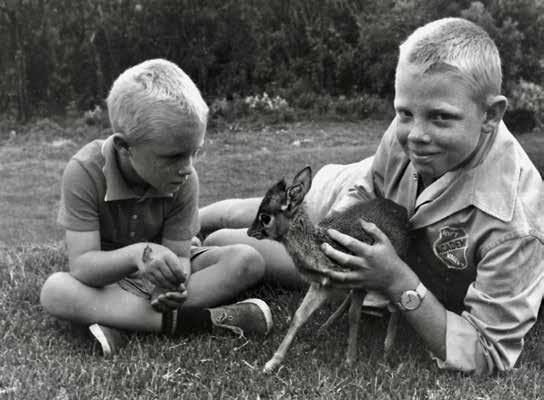
this area inhabit quite heavy forest, a type of country in which they are not generally found in other parts of Kenya.
Dik-dik can be seen at any time of day and are not very shy. They are usually seen in pairs, or threes. They will dart away when alarmed but will stop after a short run and stand motionless at gaze. I believe these little antelope mate for life and when seen in threes, they are accompanied by a grown fawn.
The suni is a much more timid beast. It inhabits the thick bush along the verges of the forest and is only seen at dusk or dawn. They are a lighter brown in colour than the dik-dik and stand about fourteen inches at the shoulder. Both these little antelope are quite independent of water and browse on leaves. They will also nibble rotting wood.
I have never seen a very young did-dik or suni, nor have I ever met anyone who has. I think that they give birth to their young in old ant-bear holes and that the fawns are kept below ground until they are well grown.
They emit a sharp whistle when alarmed and often stamp a fore foot in a gesture of anger. Their chief enemies are the leopard and serval. Where they are not protected, many are killed by man as their skins make attractive pelts.
Another larger but no less attractive little antelope to be found in the park is the steinbuck (Rhaplicerus campestris). This buck is golden brown in colour and is solitary. Seldom are even a pair seen together. It prefers more open country and dry riverbeds.
When alarmed it will drop to the ground, and with neck stretched out flat on the ground is very difficult to see. If approached it will bound away at a great pace altering its course every 50 yards or so in an effort to throw any possible enemy off the scent.
A pair of augur buzzards are building a nest in a large tree close to my house. These fine birds have conspicuous white chests. They live almost entirely on rats and mice. The Nandi and Kipsigis tribesmen have a superstition about this bird when hunting dangerous game, or when setting out on a cattle raid. If a buzzard is seen facing them on a tree to their left front, all will go well. If facing the party to the right front, great caution must be exercised. If the bird is seen behind them, or in front with its back toward them, disaster is sure to follow.
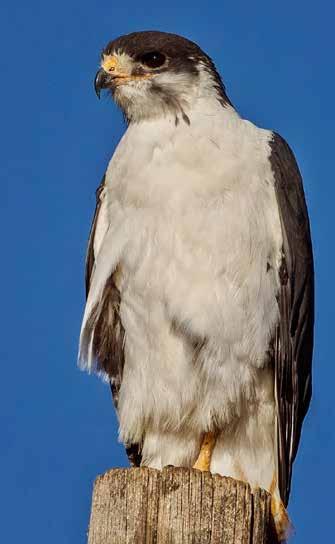
So strongly do they believe in this omen that when hunting with members of these tribes, I have known them flatly refuse to proceed any further. The hunt must be abandoned, or a totally different direction tried.
They attach the same superstition to the ringing call of the woodpecker. Another omen of great importance is meeting with a snake during the course of a hunt. This is a sign of good luck. If the snake is killed, a really good tusker will be brought to bag, or some particularly good stroke of luck is in store for the expedition.
It is a curious thing that in my experience this augur buzzard omen has invariably proved to accurate. Once I insisted on going on after we saw an augur buzzard in one of the locations predicting disaster. The whole safari was a failure and one of the party was killed!
Accidental Diplomats: American Missionaries and the Cold War in Africa by
Phil Dow
Reviewed by Old Africa
Missionaries and diplomats perform two very different roles. Christian missionaries feel called to pass on their message of salvation and to help people become followers of Jesus. Their allegiance is to a heavenly kingdom. Diplomats represent their country to another country, and their own country’s interests are paramount. So I was intrigued to see missionaries and diplomats linked in the title and subtitle of this book. The key is in the first word of the title. Accidental. While fulfilling what they believe is their calling from God to make disciples and start churches, they accidentally served the role of diplomats in Africa during the Cold War.
The author follows the history of American evangelical missions in three countries in Africa – Ethiopia, Congo (DRC) and Kenya. He shows how the missionaries, following their calling from God, made friends, learned languages, understood local culture and started schools. They started schools to teach their converts to read the Bible and lead churches.But schools and the newly educated became the hotbed for many of Africa’s leaders-to-be and awakened the African nationalist movement that was soon demanding independence from European colonial powers. So even though their motives and goals were apolitical, there work had political consequences.
Dow begins with Ethiopia, where his parents used to work as missionaries. Ethiopia was not a European colony but as part of the chaos leading up to World War II, Mussolini-led Italy had invaded Ethiopia in 1935 and forced Emperor Haile Selassie to flee. After Italy was defeated in Ethiopia by allied forces in 1941 and Haile Selassie was reinstated, he wanted closer relationships with the US. He took on American missionary Della Hanson who spent the next 14 years as coordinator of Selassie’s palace and became a close family friend. After World War II when the US wanted the emperor’s support in standing against communism in Africa, they turned for information to those who knew him best – his American missionary friends.
In Congo the author shows how American evangelical missionaries played a major role in US-Congolese relations from independence in 1959 to the end of the Katangan secession in 1963. They were a major source of information about Congo to the American public through
their missionary reports, as well as acting as a diplomatic bridge between Congolese and American policymakers.
Methodist missionary Howard Brinton, who had grown up as a missionary kid in Katanga, was a close childhood friend and confidant of Moise Tshombe, who became President of the province of Katanga in his attempt to secede from Congo. As the US tried to resolve this issue, they turned to Howard Brinton to get access to Tshombe. In the end Brinton’s efforts to bring a peaceful solution to the Katangan secession met with failure. Dow goes on to show the influence lay missionary Dr Close had in his role as personal doctor to President Mobutu, who later took over leadership of Congo.
In Kenya Dow shows the influence of missionaries on the early converts to Christianity and how this blossomed into nationalist longings. Harry Thuku, who became a Christian under the teaching of Rev and Mrs Knapp, built on his education to speak out for Kenya’s independence in the 1920s leading to a political rally in Nairobi that turned violent and ended with over 21 Kenyans being killed and Thuku being arrested. Although the Knapps never advocated for this type of political activism, it was their introduction of truth and freedom spoken of in the Bible that sparked Thuku’s motivation.
Dow goes on to show how various missionaries influenced the life of Daniel arap Moi, who went on to become Kenya’s second president and a firm friend of the United States – at least in part because of his close friendship with missionaries like Earl Andersen and Paul Barnett.
Dow has done an immense amount of research in finding stories and communications to back up his assertions that the American evangelical missionaries in Africa played a strong, albeit accidental role, in the Cold War in Africa. The book is worth reading, both for its historical content and conclusions and for its stories about the missionaries and the African friends they mentored.
Melani McAlister wrote this in her foreword to the book: “Phil Dow has written a remarkable and compelling history of the relationship between American evangelical missionaries in Africa and the US state during the Cold War.” We agree.
Published by William Carey Publishing, 2024. Available as Kindle version on Amazon.com for US$14.99, or as a paperback for $26.
1. What book of the Bible did Alexander Mackay translate into Luganda?
2. Where did Peter Goodwin go to school?
3. Who promised at JM Kariuki’s funeral that they would find the killers even if it took 100 years?
Old Africa reader Dirk Sickmüller from Switzerland is the winner of our History Quiz 87, which appeared in Old Africa issue 123 (February-March 2026). By the contest deadline we received 12 entries. All 12 names were put into the Old Africa pith helmet and swirled around. Dirk’s name was chosen out of the hat and he wins two nights for two at Satao Camp. If you didn’t win this time, have a go at Quiz 88, which follows below. This month’s History Quiz Contest is sponsored once again by Satao Camp and Old Africa is thankful for their support and willingness to sponsor this page.
History Quiz Competition #88!
Win two nights for two at Satao Camp!
How closely did you read this issue of Old Africa? Answer the ten questions in our history quiz below and you have a chance to win a vacation at Satao Camp. All the answers are found in this issue of Old Africa. You don’t have to cut up your magazine. Just write the correct answers on a separate sheet of paper and send your entry along with your name and address and phone number to: History Quiz, Old Africa, PO Box 2338, Naivasha, Kenya 20117. Or you can email your list of answers to editorial@oldafricamagazine. com The winner will be randomly chosen from all the correct entries received by the contest deadline, which is 10th May 2026
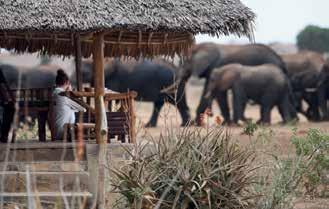
4. Who was the Maasai elder who protected and helped Gustav Fischer when he arrived at Naivasha in 1883?
5. What bird can be an good omen or bad luck depending on where he appears when you are heading out on a safari?
6. What unit did WJ Dawson first join up with in World War I?
7. Which college did Senator Robert Kennedy visit in Kenya and talk with students?
8. What was the name of Allaudin Qureshi’s actor father?
9. In what year was a diver for the Eastern Telegraph Company laying cables in Mombasa?
10. Who cut the rope between heaven and earth?

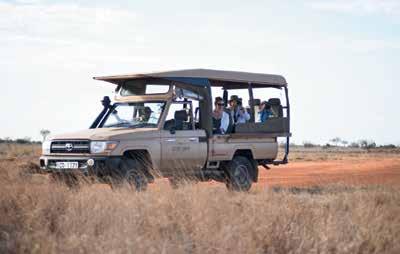
Unbeatable Wildlife Viewing: Spot elephants, impala, lions, and more right from your veranda or observe from the camp watchtower.
Authentic Tented Comfort: Relax in beautifully designed en-suite tents that blend comfort with the charm of the wild.
Stunning Landscapes: Explore vast savannahs with iconic amber sands and the untouched beauty of Tsavo East.
Book your adventure today
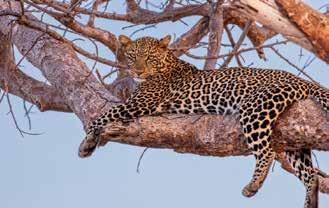
Wake up to the sight of elephants at our waterhole, unwind in spacious tents, and immerse yourself in the beauty of Tsavo East National Park. Located in one of Kenya’s largest and most iconic parks, Satao Camp offers:


An origin story told around the campfire by both Maasai and Dorobo elders
When Enkai created the first man, he made a Dorobo. But Enkai had never made a man before and he was not pleased with the result. The Dorobo man was short and not very good looking. So Enkai sent the Dorobo off and set to work digging his hands into the clay and shaping a second man. Having had some practice, Enkai did a good job and created a handsome man with fine features. Enkai loved this second man and called him Maasai.
Enkai then decided to bless Maasai and told him to go to a certain tree. From this tree a thick rope reached up to heaven, Enkai’s home. Enkai then sent down cattle from heaven, which descended on the rope. Maasai soon had great wealth because of all the cattle. He loved his cattle. And if anyone else had cattle, Maasai and his descendants felt justified in taking them, since God had given all the cattle in the world to the first Maasai.
Maasai loved his cows, which gave him milk to drink and blood to mix with his milk to add extra protein. But Maasai loved his cows so much, he did not want to kill any of them for meat. So he returned to the tree with the rope and spoke to Enkai.
Maasai asked Enkai if he could send down some other animals that he could eat, so he did not have to kill his beautiful cows. Enkai answered Maasai’s prayer by sending down flocks of sheep and goats. So Maasai went out to herd his immense herds of cattle, sheep and goats and became extremely wealthy.
The first man, the Dorobo, saw God giving Maasai all the cattle and other animals and he became jealous. He had been created first, but he had no cattle. Enkai hadn’t even given him a name. It was Maasai who called him Oltorrobo, the poor man without cattle. So the Dorobo decided to go to tree with the rope and speak to Enkai.
At the tree the Dorobo spoke, a bit hesitantly. “Enkai?” he entreated. “Do you remember me. I’m the man you created first. And I know I’m not very good looking. But I am hungry. I wondered if maybe you could send me a
cow down the rope. I don’t deserve herds like Maasai, but one cow would be very helpful.”
He waited. Enkai sent down a buffalo, which ran past the Dorobo and thundered into the forest.
The Dorobo tried again. “Enkai, I hope I haven’t offended you. I see you sent me a buffalo instead of a cow. I understand that you may have given all the cattle to Maasai. But out of your bounty, could you send me a sheep or a goat? I am hungry.”
Enkai sent down a bushbuck, which immediately ran away and hid in the forest. The Dorobo man realized he would have to make his living by hunting these wild animals, while Maasai herded his flocks and herds.
But the Dorobo felt this was unfair and he became angry. He took his large knife and began sharpening it. After two days of honing his knife, he felt it was ready. He took his razor sharp knife and cut the rope between heaven and earth. And ever since all mankind has been separated from the creator Enkai, because the Dorobo cut the rope.
“Kesipa ena atini,” the elders conclude, nodding wisely around the campfire. “This story is true.”
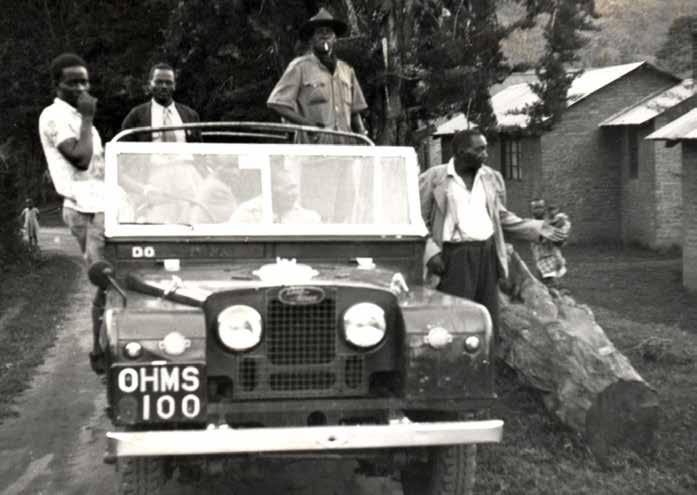
Peter Goodwin is the winner of our Historic Photo Contest for issue 124 of Old Africa with this photo of a group of African chiefs from the Fort Hall area in the government Land Rover ready to travel with Peter to Mombasa in about 1956. For most of them, it was their first visit to the coast. Peter adds: “Most weekends while working at Fort Hall, I and the chiefs and my driver, Gichea Njoroge (on the left in the photo) would go on an outing. The most popular place was David Sheldrick’s elephant orphanage at Voi to watch the feeding of the baby elephants. The other place they really enjoyed was a water hole just inside Tsavo East. We would sit there for hours talking and watching the game coming and going. From Fort Hall to Voi the trip took about eight hours, and with nine of us in the Land Rover it wasn’t comfortable. They never once complained, although it must have been a rough trip for them.”
Peter wins a book prize from Old Africa.
Enter our Historic Photo Contest
Old family albums hold many treasures. Enter one of your photos in our Historic Photo Contest and win a free book from Old Africa! And have the pleasure of sharing your photo with Old Africa readers around the world.
If your photo is chosen as a winner in our Historic Photo Contest, you will win a free book from Old Africa. The best way to send a photo to Old Africa is to have it scanned as a jpeg file of 300 dpi resolution and email it to us at: editorial@oldafricamagazine.com Note on your email that you want this photo entered in our Historic Photo Contest.
If you don’t have access to a scanner or to email, you can mail your photo or photos to us at: Old Africa, PO Box 2338, Naivasha, Kenya 20117.
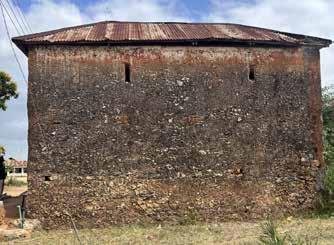
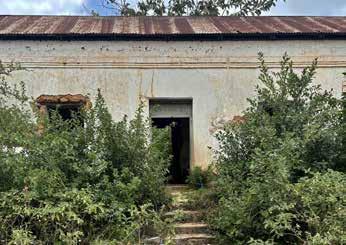
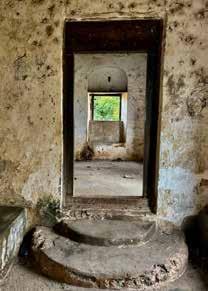
Win a Ksh 3000/- gift certificate from Text Book Centre by identifying the location of this old building on Kenya’s south coast. Locals say this house is haunted because of its association with the slave trade. It is over 125 years old, though some say it’s even older and date its construction to 1850. One hint. There are two photos of this house in the Old Africa book Kenya’s Swahili Coast. One photo shows the house with its original two storeys taken in 1900. The other is more recent and shows the house with only one storey, as it is in these photos taken in January 2026. Win a Ksh 3000/- gift certificate from Text Book Centre by telling us where this house is located. It’s still standing. If you know where this house is located or if you have any personal stories from visiting this mystery location, send in your answer to Old Africa for a chance to win our History Mystery Contest.
Contest Deadline: For this prize we have to receive your entry by 10 May 2026.
Send your answer to this History Mystery Contest along with any information, history, memories or stories about this cross to: History Mystery Contest, Old Africa Magazine, PO Box 2338, Naivasha, Kenya 20117. Or email your answer to: editorial@oldafricamagazine.com. Editors will choose the winning entry. The answer to our mystery contest will be announced in our next issue along with the name of the winner and his or her story about our mystery location. Family members of Old Africa staff members are ineligible to enter this contest.
Our History Mystery Contest is sponsored by Text Book Centre.
…much more than a Bookshop!
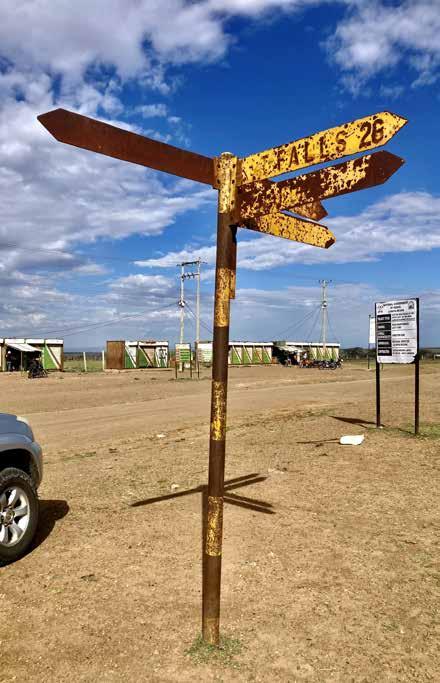
Signboard in Laikipia at Check Point Junction near Mutara Shopping Centre.
We did not receive any correct answers to our History Mystery Contest from Old Africa issue 123 (February-March 2026). So we have no winner this time.
Andrew Mules of Naivasha, who sent in the photo, tells us where the road signboard is located. The photo shows an old and rusty road signpost that is still standing at one of the junctions in Laikipia. It is found on the main Nanyuki-Rumuruti road at the so called “Check Point” Junction near the present day Mutara Shopping Centre. The distances are still in miles rather kilometers, although very hard to distinguish. The sign points the traveller to Thomson’s Falls (now Nyahururu) and it reads 26 miles. The colonial name for Nyahururu and the fact that the distance is in miles, not kilometres, dates the road sign back to the early 1960s. The road was or is, the original highway and most direct route from Nanyuki to Thomson’s Falls in the old days. The road is in a very poor state of affairs - like the signpost - and I would recommend drivers to continue on to Nyahururu on the gravel road via Rumuruti, even though Google Maps says otherwise!
Some years ago Velia Carn allowed Old Africa to scan photos from her collection of family photo albums before she moved to Zambia. These photos all come from an album simply labelled 1930s. Velia’s mother Vera was a nurse, explaining some of her photos of the Nairobi Hospital in its early days.
1. Some of the old growth trees in the Meru forest.
2. A settler house in Nanyuki with Mt Kenya rising above the clouds in the background.
3. Crescent Island in Lake Naivasha showing the lake level in the 1930s. The photo seems to be taken from almost the same location on Sanctuary Farm where visitors catch boats to walk with animals on Crescent Island today.
4. The caption to this photo just stated Gravestone Corner, Ruiru. However, the signboards are not grave markers. One clearly reads: Mchana Estates. It’s possible the name Gravestone Corner came from the fact that road accidents often happened there.
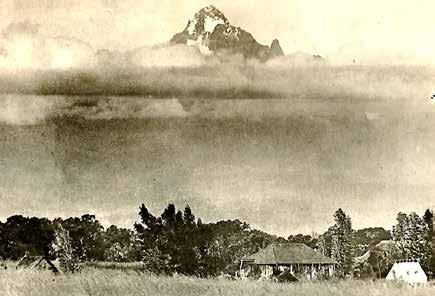
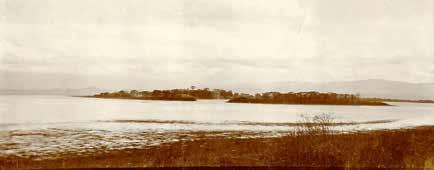
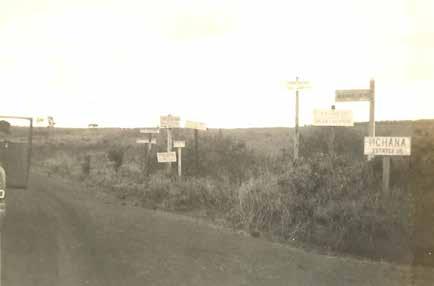
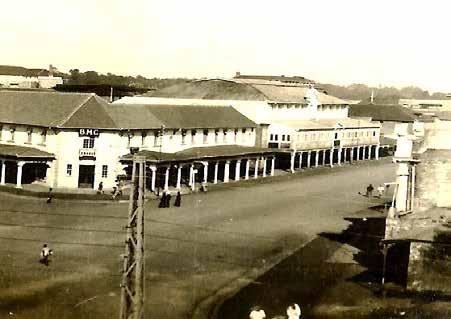
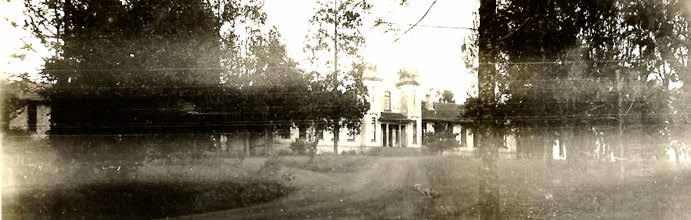
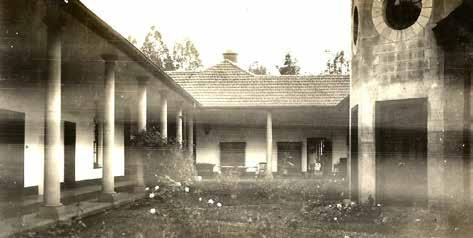
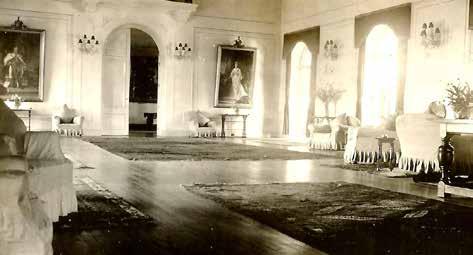
5. A view looking down on Government Road in Nairobi in 1932. It’s now called Moi Avenue.
6. Shops on the Indian Bazaar in Nairobi in 1932.
7. The European Hospital in Nairobi in 1931.
8. A closer view of the front of the European Hospital in Nairobi in 1931.
9. The Government House Ballroom in Nairobi in the 1930s.
A pioneer missionary in Uganda with the Church Missionary Society (CMS).
by Shel Arensen
When my parents first came to Tanganyika Territory in 1946 they lived at a mission station called Nassa on the shores of Lake Victoria. They learned that Alexander Mackay, early missionary to Uganda, had died near Nassa over 50 years earlier.
Alexander Mackay came to Uganda in 1876 as a member of the first team from the Church Missionary Society (CMS). Mackay spent nearly 14 years in Uganda, never once returning to his native Scotland. He translated the Gospel of Matthew into Luganda and, using his engineering skills, built 230 miles of roads Mackay was raised in Scotland in the Free Church. He attended the Aberdeen Grammar School and the University of Edinburgh before going to Berlin to gain experience in engineering. He read an appeal in 1875 in the Edinburgh Review for missionaries to go to Uganda and applied to the CMS. Letters from Henry Stanley, the explorer, said King Mutesa of Buganda would welcome Christian missionaries. In 1876 Mackay joined the first CMS party going to Uganda and he was the only missionary to remain for any length of time.
Mutesa feared the encroaching power of Egypt, and his first priority was to get guns from Europe and any engineering skills Mackay could offer. But he had an interest in religion. Arab traders from the East African coast had already introduced Islam, and after partially adopting this faith, Mutesa had executed some two hundred Muslim converts for defying him in the name of Allah. He hoped Christianity might provide a counterweight to Islam.
Mackay soon set up a printing press and printed reading sheets and portions of the Bible in Swahili, the coastal language introduced by the Arabs, using existing translations. He also learned Luganda and translated the Gospel of Matthew into that language. But Mackay also spent time repairing guns for Mutesa and other technical tasks including road-building.
In 1879 Roman Catholic White Fathers arrived; Mackay’s Calvinistic upbringing led him into controversy with them in public at Mutesa’s court. He also debated with Muslims, who feared that his superior debating and technological skills were edging them out
of their position of influence. Many young men in training at court for future high office were attracted to Christianity by Mackay’s passionate dedication.
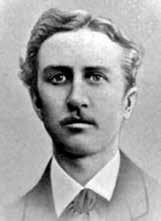
From 1885 to 1887 Mutesa’s successor, Mwanga, turned against the Christians at court for the same reason that Mutesa had earlier turned against the Muslims for questioning his authority in the name of a higher power. The names of 50 Protestant and Catholic martyrs are known, and others perished too. During this dangerous time Mackay was the only western missionary in the country. The White Fathers temporarily retreated south of Lake Victoria.
A Muslim coup in 1888 forced both missionaries and converts to flee, and Mackay moved south to Nassa, in what is now Tanzania. Mackay contracted a virulent form of malaria on February 4, 1890, and he died four days later. He was buried near the mission station at Nassa. Then in 1927 his body was reinterred outside Namirembe Cathedral in Kampala. Sources: The website Dictionary of African Christian Biography, dacb.org and the book Biographical Dictionary of Christian Missions, 1998, edited by Gerald H Anderson, Eerdmans Publishing Company.
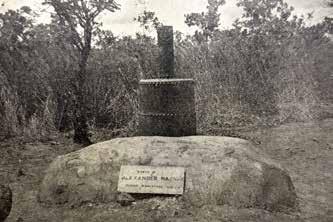
Top: Alexander Mackay, one of the first CMS missionaries to go to Uganda. Bottom: Alexander Mackay’s grave near Nassa in then-Tanganyika Territory in 1926, the year before his body was exhumed and then reinterred outside the Namirembe Cathedral in Kampala. (Photo by Rev HH Zemmer, which appeared in the November 1926 issue of Inland Africa, an inhouse publication from the Africa Inland Mission.
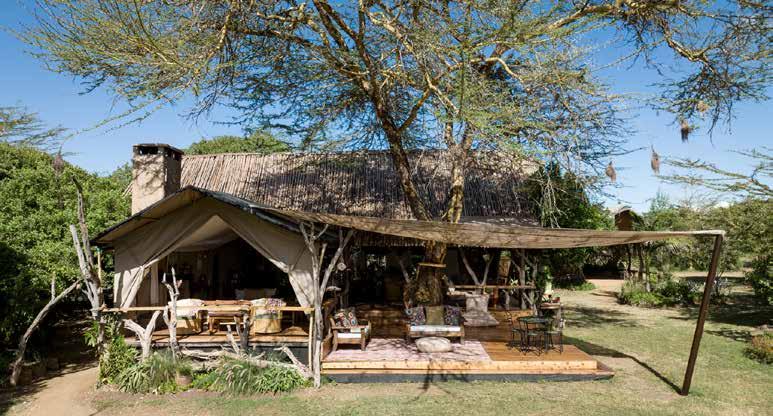

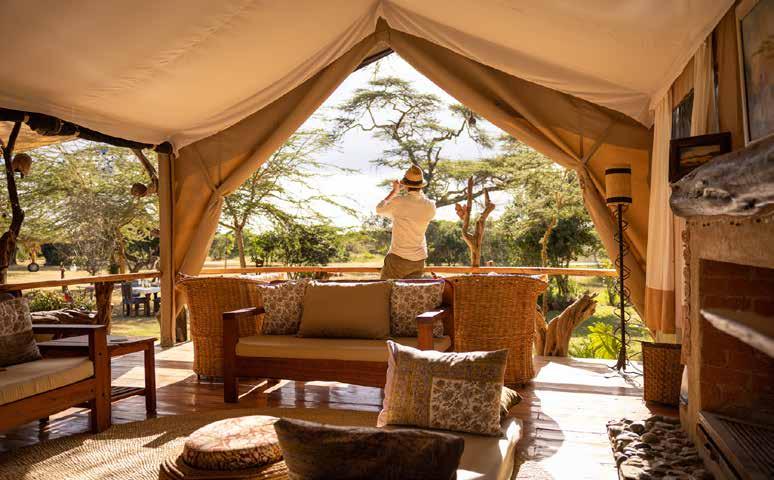
We hope you enjoyed this edition of Old Africa. Please consider a donation to help us keep the stories coming.
www.oldafricamagazine.com/donate