HIGH HEAVENLY NEEDED MUCH FOR Purpose TOO RIGHT MEAL PEACE Fit BARE THREAD
the Mum’s
Suriya Ramyead
This magazine is reassuring. It shows the importance of giving young people the chance to share their passions, and it is a lovely display of a wide range of passions. It is reassuring to read original thoughts expressed with human language in this new world of generative AI and intellectual complacency. If there was any doubt that my generation is trading in their creativity for a saturated future of lazy solutions fragmented by em dashes — fear not! The creation of this year’s Mind’s Eye (the sixteenth!) has been full of collaboration and positivity, and only a few heated disputes, and the honest humanity in those interactions was truly reassuring. It is reassuring for me, as their editor, that all of these young writers have the potential to reach the stars, and I know you, the reader, will be reassured too.
Lily Robertson Editor
www.mindseyemagazine.com
“
IT IS REASSURING TO READ ORIGINAL THOUGHTS EXPRESSED WITH HUMAN LANGUAGE IN THIS NEW WORLD OF GENERATIVE AI AND INTELLECTUAL COMPLACENCY.
THE HONEST HUMANITY IN THOSE INTERACTIONS WAS TRULY REASSURING.
COCO URSELL BEER brings the high world of fashion down to Earth.
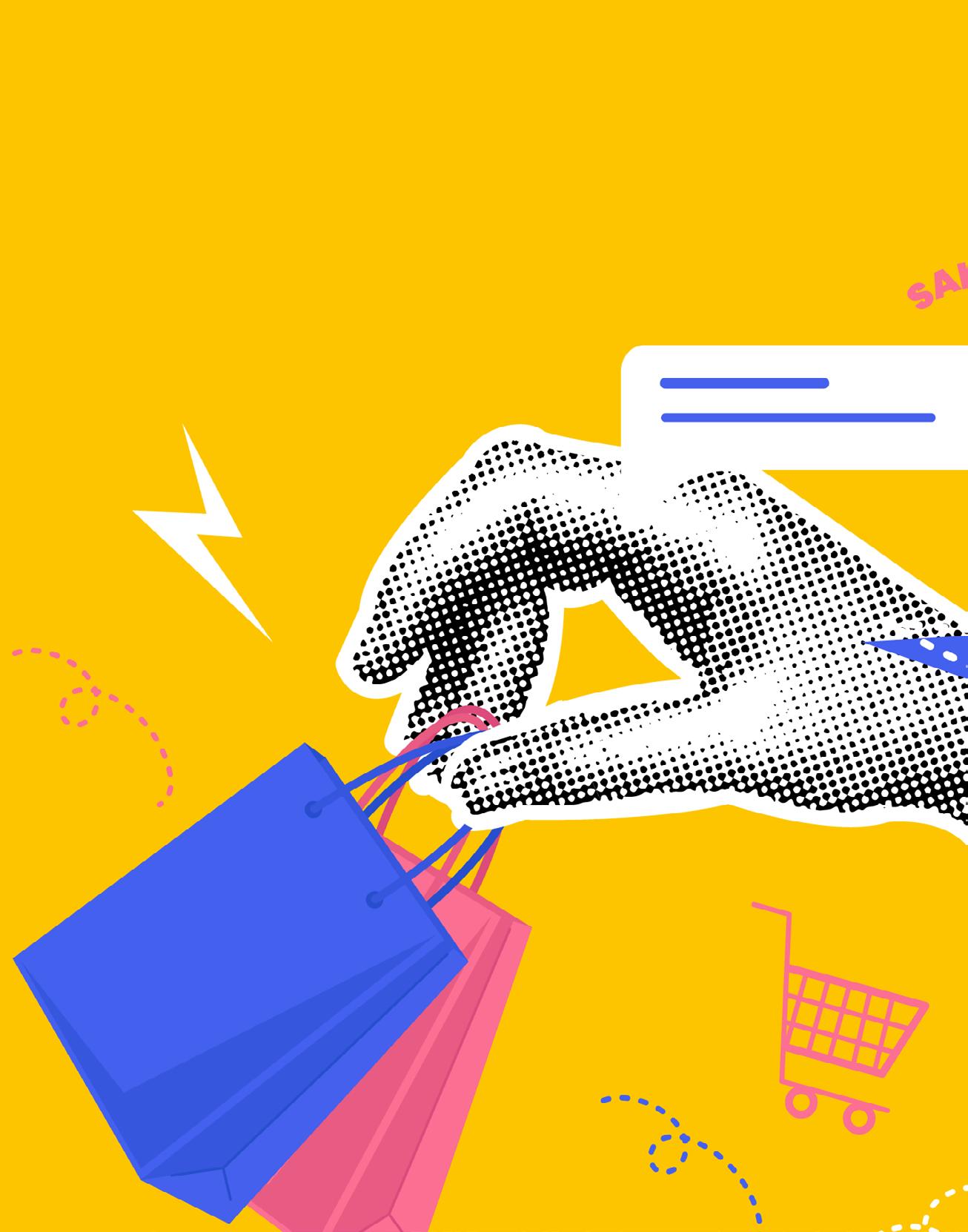
In the world of high fashion, you’d expect marketeers to exploit the power of high-quality imagery, stylized campaigns and globally known celebrity endorsement to persuade us to buy their wares. It’s been this way for decades, as former editor-in-chief of British Vogue, Alexandra Shulman, once observed: ‘Fashion is smoke and mirrors. We create images, we create a world of stuff, yes, ultimately to make people want to have it.’
As a reformed fast-fashion addict turned campaigner, Venetia La Manna says it’s not just about the need to change your look.
“MARKETING EXPERTS ALSO HAVE AT THEIR FINGERTIPS HIGHLY REFINED DATA ANALYTICS, CUSTOMER INSIGHTS, BEHAVIOURAL TRENDS AND DIGITAL INFLUENCERS TO HOOK US IN AND MAKE US SPEND.
These days, however, marketing experts also have at their fingertips highly refined data analytics, customer insights, behavioural trends and digital influencers to hook us in and make us spend. And such tools are never more expertly deployed than in the space of fast-fashion, a $100 billion sector of the fashion business, where cheap versions of high-end fashions move within weeks from catwalk to wardrobe. Endless desire for low-cost T-shirts, wear-once dresses and jeans we’ll rapidly replace, is both created and stoked, with Generation-Z driving the show.
Dr Elaine Ritch, Reader in Fashion, Marketing and Sustainability at Glasgow Caledonian University, explains further: ‘Generation-Z present with insecure fashion identities, seeking solutions from social media fashion marketing, where frequent-impulsive fashion consumption reflects an urgency to maintain in-the-moment fashion identities.’
As one Gen-Z participant in a piece of Ritch’s recent research admits: ‘Our age group cannot be seen wearing the same thing twice; there’s social pressure. I need to buy a new outfit for everything I go to.’
‘I’d go into fast-fashion shops in my lunchbreak and after work. They were places I went to try to feel better. Buying something gave me a hit of feel-good dopamine.’ It took someone online calling her out, advising her to investigate her shopping habits, to open her eyes to issues lying behind this multi-billion industry.
Andrew Brooks, author of Clothing Poverty, helps us to understand such issues and starts with the immediate human impact the business has in emerging economies where many fast-fashion items start their life.
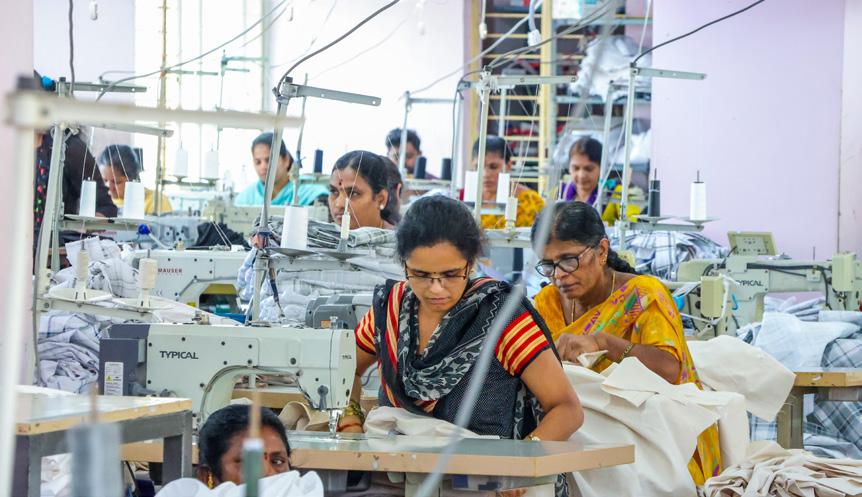
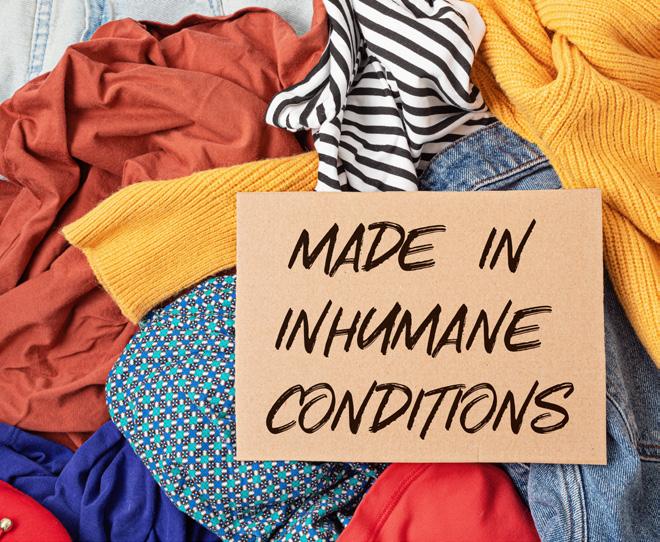
Poverty wages are, he writes, endemic and he cites the disturbingly ironic case in which, seven years ago, female Bangladeshi workers made T-shirts endorsed by a girl band known for extolling the importance of girl power, to raise funds for charity. The women making the T-shirts were paid 35p an hour, faced verbal abuse and harassment, and were forced to work 16-hour shifts to keep up with production targets.
Sophie Eastaugh, a presenter on the BBC World Service podcast, The Climate Question, reveals this case is far from an isolated case, with, she claims, 93% of fast-fashion workers not getting a living wage. The gender-based violence women face is also endemic in the industry, with Brooks citing Indian supplier factories for H&M and GAP being two of the high-profile brands being publicly called out and accused of physical abuse against female employees.
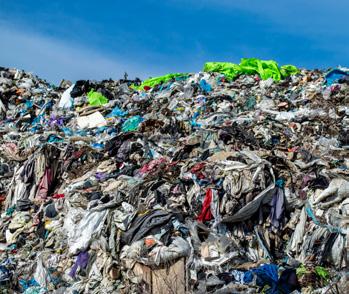
A less obvious negative impact of this industry in the global south, where cheap, poorly made clothes are made and exported to the global north, is that, once discarded, two-thirds of these cast-offs end up returning to the south, to countries such as Ghana. The Kantamanto second-hand market in its capital city, Accra, for instance, receives 1,000 tonnes of our cast-off clothes a week. Favour Nunoo, a journalist with BBC news in Accra, says that since 40% of these fast-fashion clothes are damaged, and not fit for resale, ‘stall holders themselves then chuck them out.’
Some are funnelled to engineered dump sites around the coastal capital, Accra, but official sites can collect and process 30 tonnes of such fashion waste daily, leaving hundreds more tonnes with nowhere official to go, which means they end up in drains, on beaches and nearby wetlands where local wildlife inevitably suffers.
These discarded clothes affect local citizens, too. As Nunoo points out, cheaply made clothes don’t just fall apart. They are made with cheap dyes and, as with a pair of jeans he bought recently, such dyes leak out during washing and, when discarded, in waterways. Unsurprisingly, this water becomes polluted and undrinkable. You need only do a quick internet search of ‘fashion waste in Ghana’ to see eye-stretching images of fishermen and cattle struggling to make their way over mountains of textile waste, to glimpse the scale of the problem.
These downsides of the fast-fashion industry may make us think twice about how we engage with it but as with most things in life we’re most likely to act only once an impact is felt in our own lives. For example, do we really want to be eating the clothes we once wore? If this sounds dystopian, consider this: microscopic, low-quality synthetic fibres in fast-fashion pieces are easily broken down when we wash them and they find their way from our washing machines into waterways and oceans.
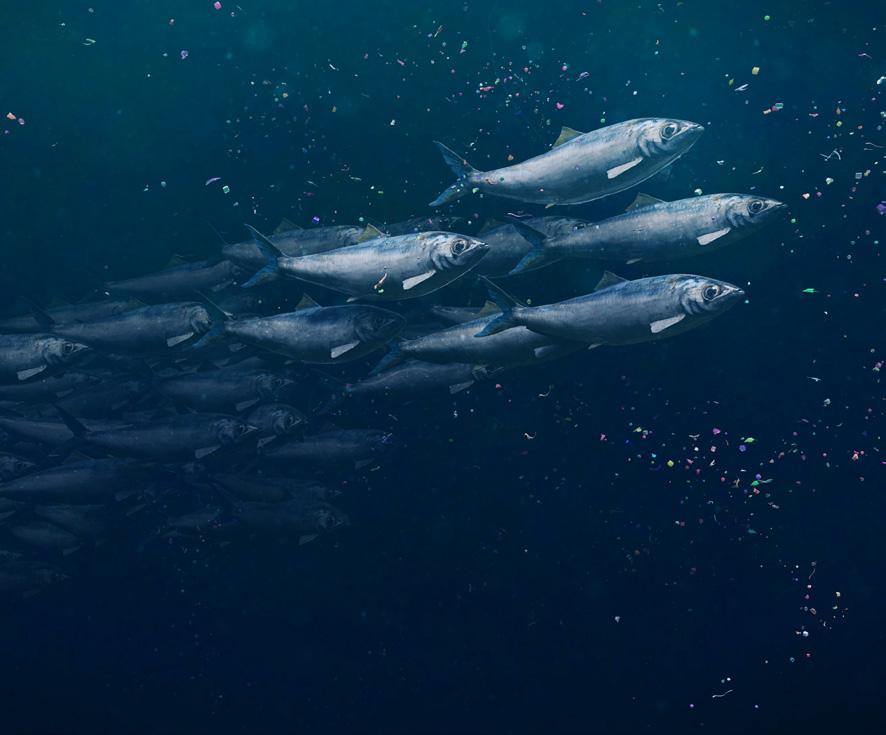
Although all clothes shed fibres, natural ones from cotton, linen and wool are broken down by micro-organisms, light, air and water, and these biodegradable natural fibres pose few problems in comparison with artificial versions. Tiny strands and coils of polyester and acrylic acidify the water (itself a trigger for climate change) and are fed on by marine organisms, which gradually work their way through the food chain, and end up in our fish fingers, salmon fillets and canned tuna. In turn, these micro fibres are deposited in our guts, along with the pollutants that adhere to them. Currently it is not known for sure the impact this may have on our health, but it’s safe to say it’s not going to be good.
Fast-fashion can also affect our mental wellbeing. Do we really want to be held hostage and become addicted to the so-called ‘dark patterns’ fast-fashion marketeers build into their website user interface (UI) and techniques that encourage us to buy, buy, buy? Web design agency Rouge Media helps us to understand more, on their own website:
‘A user interface is how someone interacts with a website, application, software, or device. It involves the placement of buttons, layouts, words, navigation, and framework, which facilitate our actions. A good UI design helps us to feel in control and is created with our interests in mind.’
Do we really want to be held hostage and become addicted to the so-called ‘dark patterns’ fast-fashion marketeers build into their website user interface?
Rouge Media goes on to explain that dark patterns are the opposite, taking everything wholesome about the UI and making it work in the interests of the website or app owner. A great example, they say, is the hyper-fast-fashion website of Shein. When we first visit the homepage, as a new user, the screen is flooded with special offers, coupons, and moneyoff vouchers, which creates cognitive dissonance in our brains, knocking us off-guard, and triggering our brains to look for danger or, crucially, ‘reward’. Before we know it, we’ve clicked on an offer without thinking and are one step
Tiny strands and coils of polyester and acrylic acidify the water and are fed on by marine organisms, which gradually work their way through the food chain.
closer to buying. Sophie Eastaugh adds that pop-ups on-screen informing us that it is ‘our last chance to buy’, that ‘98 other people have this product in their basket’ and ‘this product is running low’, compel us further, to panic-buy.
What’s the solution? Where to start? is probably the answer. The fashion industry is acutely aware of their growing image problem. They know that textile production alone pumps out more greenhouse gas emissions than all international flights and maritime shipping put together, and many are frantically playing catch-up.
Some make it policy not to palm excess clothing off to landfill either in the UK or other countries. Others are beginning to offer repair services, boast of not increasing their volume of textile production and of setting up recycling banks.
Known as the ‘closed loop’ solution, companies like H&M are encouraging customers to drop previously worn, unwanted clothes at such recycling points in-store to be repurposed. It is a good idea in principle, but those with their fingers on the pulse of fast-fashion downsides point out that this approach risks fuelling, rather than reducing, our reliance on fast-fashion. It casts, for example, a feel-good
aura around returning once-worn clothes into the system, yet does not address the practical challenges and huge energy costs of recycling such clothes back into new, wearable items.
Perhaps governments and politicians ultimately need to encourage, if not legislate, to push the corporate responsibility along. In 2019, French President Emmanuel Macron had a try, by inviting bosses from 150 brands to launch the ‘Fashion Pact’. Their vision was to present a pioneering new approach to build a naturepositive, net-zero future with a mission to chart the pathway for the industry to create collective solutions powered by CEO leadership. Members range from Armani and Asics to Chanel and Chole. The group is still going, and such initiatives are maybe a starting point, but they are not a quick fix to the fast-fashion crisis.
Indian supplier factories for H&M and GAP are two of the high-profile brands being publicly called out and accused of physical abuse against female employees.
If you want to take more direct control of your purchasing, one thing you can do is check out the ‘ethical policy’ fashion brands follow. The TOAST site is one worth looking at as an example of a brand attempting to support everyone throughout their production chain and is a useful policy against which to measure other
“
GOVERNMENTS AND POLITICIANS ULTIMATELY NEED TO ENCOURAGE, IF NOT LEGISLATE, TO PUSH THE CORPORATE RESPONSIBILITY ALONG.
“
IF YOU WANT TO TAKE MORE DIRECT CONTROL OF YOUR PURCHASING, ONE THING YOU CAN DO IS CHECK OUT THE ‘ETHICAL POLICY’ FASHION BRANDS FOLLOW.
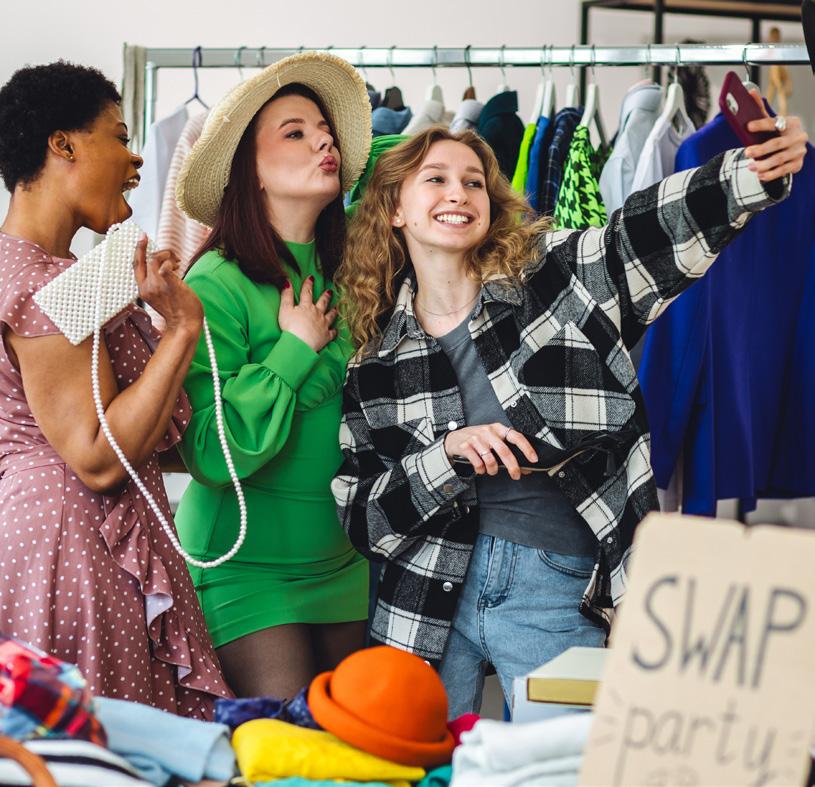
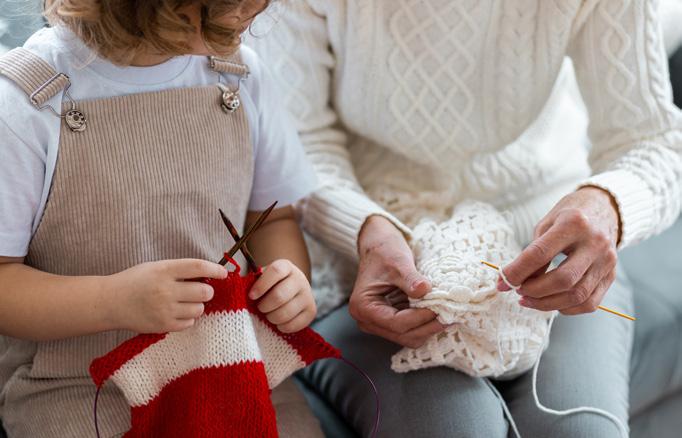
Learn to sew and upgrade what you have. Set up sewing clubs. Host a swap shop.
brands. Then there is the advice from Patsy Perry, Senior Lecturer in fashion marketing at the University of Manchester. Perry cuts to the chase by pointing out: ‘less is always more.’
If we really want to break the fast-fashion habit, we need to step back and quite simply buy less, a concept championed by La Manna, the reformed fast-fashion addict, who sees the beauty and value in the pre-loved market and urges us to do the same. ‘Get to know your wardrobe. Celebrate what you already own. Honour the people who made the clothes,’ urges La Manna. ‘Learn to sew and upgrade what you have. Set up sewing clubs. Host a swap shop.’
Sure, these are small-scale steps, but so was the suffragette movement when it started, and if we want fast-fashion brands to refine their models to benefit exploited female workers, the global environment and our own financial, health and mental wellbeing, we’ve got to start somewhere. ¢
Biodegradable natural fibres pose few problems in comparison with artificial versions.
Long Reign
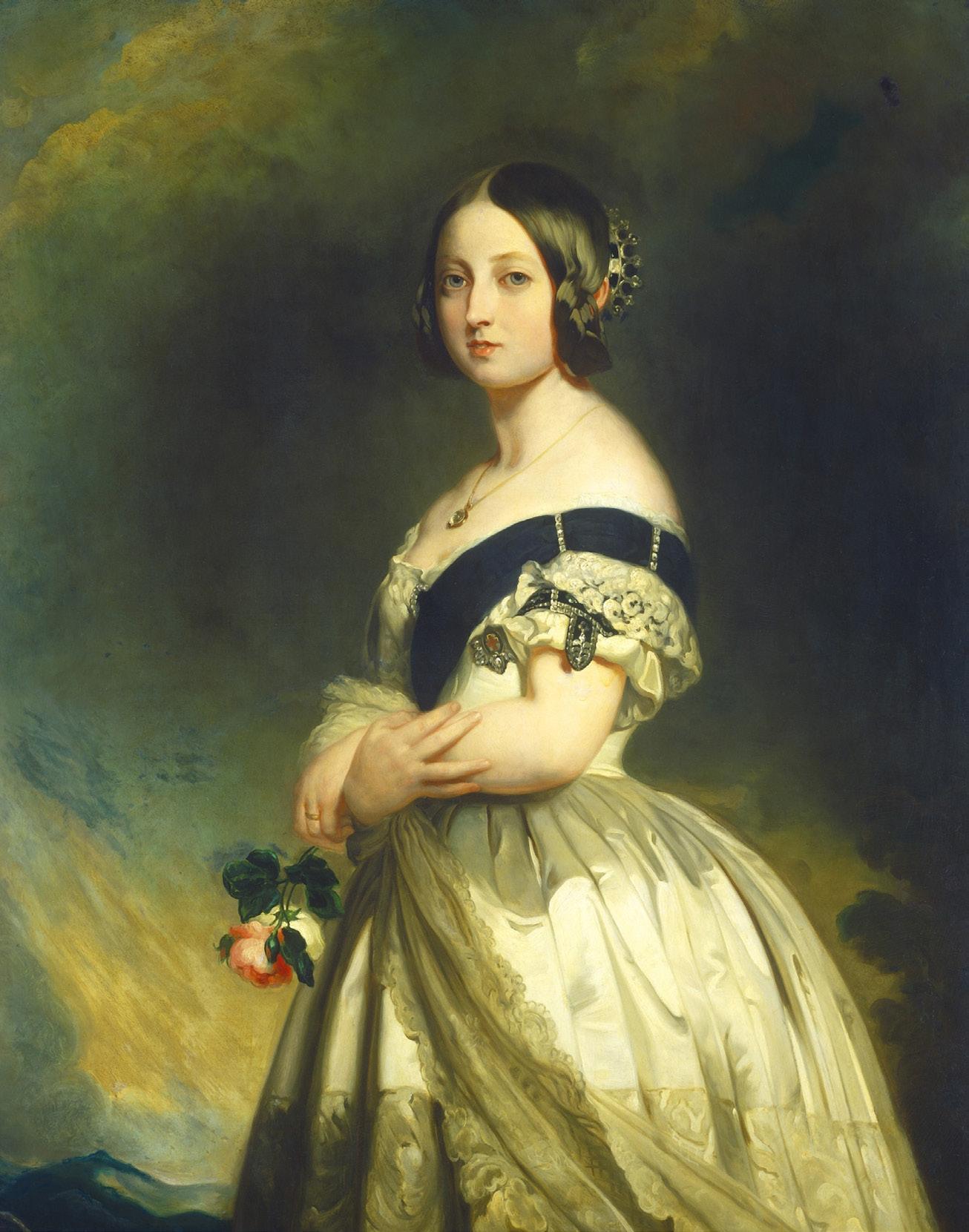
SOPHIA CHANDY celebrates the remarkable life of our second-longest-reigning monarch.
“WHAT IF I TOLD YOU THERE WAS A VICTORIA BEFORE THE GRIEF? A VICTORIA WHO LOVED DRAWING AND DANCING AND SINGING? A HEADSTRONG TEENAGER WHO GUSHED IN HER DIARIES ABOUT PRINCE ALBERT?
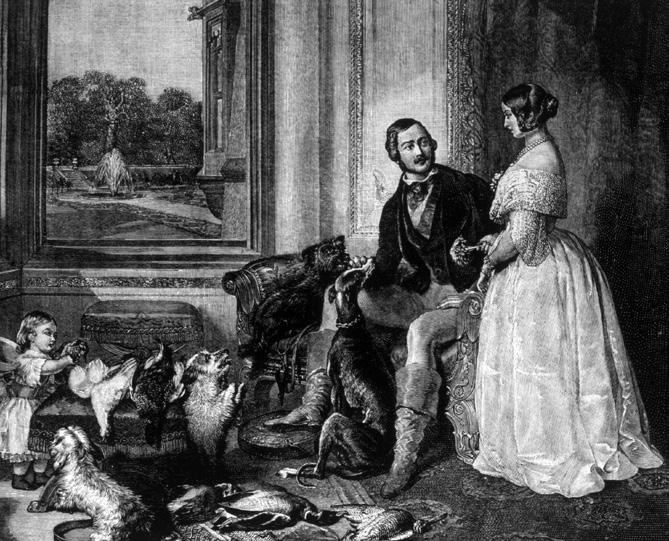
When I say Queen Victoria, you probably picture a little old lady, plump and sad, who seems like she’s been in mourning her whole life. Well, all of that is true, except she only went into mourning when she was 42 so, yes, that was half of her life, but not all of her life. What if I told you there was a Victoria before the grief? A Victoria who loved drawing and dancing and singing? A troublesome toddler, a naughty child, a headstrong teenager, who gushed in her diaries about Prince Albert, the charming German prince she fell head-over-heels in love with and, above all, a woman whose destiny was to rule what would be the largest empire in the world?
strict, and Victoria hated it. She couldn’t sleep in a room without her mother for safety; she couldn’t eat certain things; public appearances were little to none; and she had to hold someone’s hand when walking down the stairs. Victoria felt lonely and isolated.
“Princess (later Queen) Victoria was born on 24 May 1819. She was initially fifth in line to the throne at birth, since she was born to Edward, the Duke of Kent, and her uncles, George IV and William IV, were ahead of her as monarchs. However, due to deaths in infancy from other family members, she quickly escalated up the line of succession.
But soon after her birth tragedy struck. Her father died of pneumonia. This left raising Victoria to the Duchess of Kent, Victoria’s mother, who unfortunately left that to Sir John Conroy. Conroy then established the harsh set of rules called ‘The Kensington System’. It was
SHE COULDN’T SLEEP IN A ROOM WITHOUT HER MOTHER FOR SAFETY; SHE COULDN’T EAT CERTAIN THINGS AND SHE HAD TO HOLD SOMEONE’S HAND WHEN WALKING DOWN THE STAIRS.
However, she did have some company. Her governess, Louise Lehzen, was like a mother to her. She and Lehzen would make dresses for her many dolls, and draw together. Victoria also loved drawing and painting, something she would excel at all her life. When she was 13, she got a King Charles Spaniel called Dash. She and Dash did everything together, and Dash rarely left her side.
When she was 17, she met Prince Albert and his older brother, Prince Ernest of SaxeCoburg and Gotha. She and Albert were to have an arranged marriage that her Uncle Leopold was micromanaging. This worked out – Victoria and Albert ended up falling in love and got married when they were 20. Their marriage saved the monarchy, because Britain liked to see a loving relationship, unlike the scandalous ones that had come before.
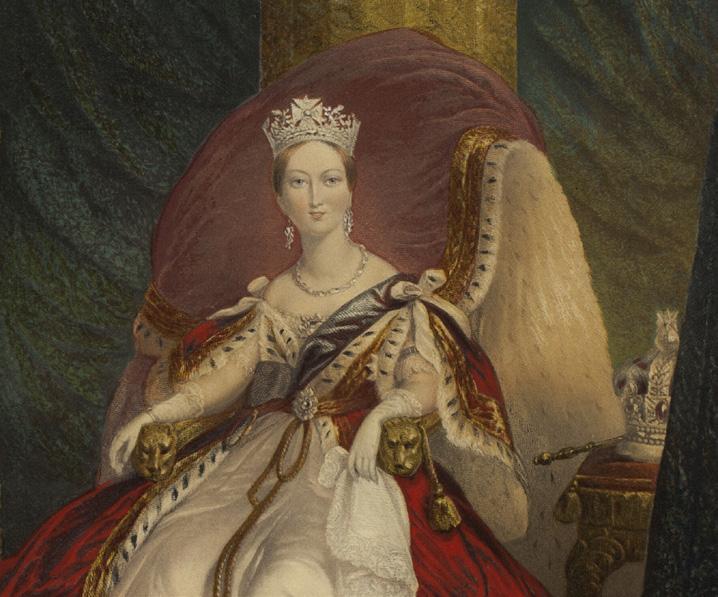
Victoria ascended the throne on 20 June 1837 following the death of her uncle, King William IV. She was 18 years old, so a Regency was avoided. She then had her coronation service on 28 June 1838. It was the dawn of a new era. A Victorian era. An era of great upheaval and change. For some it was hugely destructive, for others excitingly progressive, but nonetheless it formed the society we live in today. ¢
Victoria ascended the throne on 20 June 1837 following the death of her uncle, King William IV. She was 18 years old.
Droning On
RAF CABLE reckons farmers will rely more and more on drones to do their heavy lifting.
When most people think of drones, or Unmanned Aerial Vehicles (UAVs), they tend to imagine small camera drones used for fun, or – for those who follow current affairs – military drones operating over conflict zones like Ukraine. While these recreational and military uses dominate public perception, UAVs have another crucial, yet often overlooked, role in the civilian world: agriculture.
For an industry so essential to human life, farming faces a surprising number of challenges. These range from the pressures of a changing climate to rising costs, and UAVs offer farmers a new way to see and manage their land without exceeding their budget.
While exact figures are hard to find, it is well known that in the UK the cost of farming resources has been increasing out of proportion with the
revenue gained from selling crops. This makes it more important than ever to ensure seed and fertilisers are used as efficiently as possible, covering the largest area with the minimum input. Historically, farmers relied on their experience and judgement to achieve this, later supported by GPS technology. But UAVs now allow individual farmers to precisely map their land, giving them far greater control and making the process of planning and managing their crops much easier.
“
can save time and money by preventing wasted effort on crops that are unlikely to thrive, and by allowing treatment to be targeted only where it is needed.
UAVS NOW ALLOW INDIVIDUAL FARMERS TO PRECISELY MAP THEIR LAND, GIVING THEM FAR GREATER CONTROL.
UAVs are not only useful for mapping; they can also be used to detect areas of poor crop health early on, identifying issues that would otherwise go unnoticed. This early warning system
In a world where droughts and storms are becoming more frequent, and in a country like the UK where pressure on water supplies is increasing, efficient management of irrigation systems is important for more than just a farmer’s wallet. A UAV equipped with sensors and cameras can accurately measure soil moisture across fields, and convert this data into detailed irrigation plans, all without the need for manual sampling. This not only saves time but also benefits the environment by ensuring water is used responsibly and preventing unnecessary wastage.
Using the data they collect, UAVs can even be equipped with tanks and seed-dispersal systems to carry out labour-intensive tasks, such as sowing seeds and spraying crops from the air, with the operator barely needing to lift a finger. This reduces the reliance on larger, more expensive machinery such as tractors, lowering both upfront and maintenance costs. These time and cost benefits mean that, in theory, the final product can be sold more cheaply, helping consumers like you and me to access food at lower prices.
However, alongside these many advantages come challenges. UAVs – especially budget models – are not always the most robust pieces of equipment, and they can be more vulnerable to damage than traditional farm machinery. Also, more advanced agricultural drones require specialised training to operate, and regulations often mandate certified pilots. As with many emerging industries, there are not yet enough qualified drone operators meaning that, even if a farmer owns a UAV, they may not always be able to use it effectively.
Moreover, UAVs tend not to be the final answer. Often to work most efficiently they must be paired up with other software, artificial intelligence, and rural internet connections, not all of which are yet
“UAVS CAN EVEN BE EQUIPPED WITH TANKS AND SEED-DISPERSAL SYSTEMS TO CARRY OUT LABOURINTENSIVE TASKS, SUCH AS SOWING SEEDS AND SPRAYING CROPS FROM THE AIR.
up to standard for this technology to be adopted by farming across the UK, let alone the globe.
Despite these challenges, the way forward does show clear solutions, as well as proof that UAVs can work in an agricultural setting. A decade ago, it was almost unimaginable that any farmer could have their own eye in the sky, replacing many of the practices used before, and with the rapid development of autonomous vehicles and the military paving the way for more robust drones, who knows what it could look like in another decade’s time?
More advanced agricultural drones require specialised training to operate.
Ultimately, while drones may have started life as gadgets and military machines, their greatest impact may well be found in the fields of ordinary farms. As agriculture evolves to meet the demands of a growing population and a changing climate, UAVs are likely to play a central role in ensuring we can feed mouths of the future – sustainably, intelligently, and with a view from above. ¢
“A DECADE AGO, IT WAS ALMOST UNIMAGINABLE THAT ANY FARMER COULD HAVE THEIR OWN EYE IN THE SKY, REPLACING MANY OF THE PRACTICES USED BEFORE.
GEORGIA ROBERTS asks what drives consumer hunger.
There are five main factors that drive consumers to purchase goods: psychological, social, cultural, economic, and technical. What interests me most is the psychological aspect. This is because as humans we like to think of ourselves as the most rational beings, but our emotional side, what makes us human, is the lead driver of what causes us to make decisions, particularly with purchasing goods.
“
OUR EMOTIONAL SIDE, WHAT MAKES US HUMAN, IS THE LEAD DRIVER OF WHAT CAUSES US TO MAKE DECISIONS, PARTICULARLY WITH PURCHASING GOODS.
Whether it’s for a family member, or just a favourite brand coming out with new products, our emotions will always take over and leave rationality behind. So a company’s best way to increase consumer loyalty, or get everyone to buy their product, is to take advantage of these emotions. For example, nostalgia could be a great way to trigger the emotions of the consumer. This could be launching products similar to items from ten years ago to remind customers of memories from before. This would drive sales and boost your company. It could also get everyone talking about your products. This relates more to the social side of why consumers act irrationally. By becoming a ‘must-have’ item on social media, or a popular product within
different demographics, it triggers others to buy the product purely to fit into their social groups, to feel like they belong. So firms will often use this tactic to their advantage because they know the majority of people will conform to their social groups by also buying the product. This is why things like fast-fashion are a huge problem, because the items are bought so people fit in with the current trends of the internet but get thrown away as soon as the next trend takes over.
Economic factors can also cause people to purchase goods without thinking, such as during an economic boom when people tend to feel richer. This is because there is higher job stability, so income is more stable, which increases consumer confidence. This confidence means consumers feel they have more purchasing ability so they will spend more on non-essentials, which causes them to behave more irrationally and therefore buy products without thinking things through. This is brilliant for firms because they make huge profits and are able to expand their businesses, which is why they take full advantage of this consumer confidence. Another
People very often get carried away with buying presents, food, and decorations.
factor is when interest rates are lower. This is because people are more able to get a loan, which could allow them to purchase a house or other assets. This also boosts consumer confidence because they would have more wealth as well as income, also causing them to act irrationally.
There are also cultural influences that cause this behaviour, such as national or religious holidays, for example Christmas. People very often get carried away with buying presents, food, and decorations, all to add to the enjoyment of the celebration. This excitement also causes people to act irrationally.
see these adverts you are drawn in more and start to be convinced that this product has to be for you, and then you buy it without actually thinking about it, and end up with a product you probably don’t need, purely because it was advertised effectively.
People are more able to get a loan, which could allow them to purchase a house or other assets. This also boosts consumer confidence.
Technical influences particularly apply to online businesses because they spend most of their marketing budget on online pop-ups or adverts on YouTube, tailored to individuals and the algorithm, and when you repeatedly
The use of AI also contributes to irrational behaviour, because people think that their personalised search in AI means that they must be the perfect person for the product, meaning they are more likely to purchase the good, without further research or thought. Businesses also use tactics like sales: for example, as time goes on, and trends change, companies need to get rid of stock so, for a period of time they will slowly raise the price almost unnoticeably, in small amounts, and then they will have a huge discount or sale so it looks like the price has been reduced by loads, but in fact it has only dropped a small amount from the original price. And yet consumers still buy it thinking they are saving huge amounts of money when in reality it’s their irrational mind being exploited.
Last are personal factors, such as age, stage of life, occupation, economic circumstances, lifestyle and personality. For example, if you are trying to save for a house, or starting to have children, you are more likely to save money and really consider each purchase rather than buying on a whim. Or if you’ve just got a promotion, you are more likely to spend lots because you have a higher level of disposable income. Or if someone is a very low consumption person and only buys necessities and hates the fast-fashion trends or lifestyles, they won’t just buy something for no reason. They will really consider it even if they have disposable income and no money pressures. They simply don’t want to buy something just because others have it. ¢
If you’ve just got a promotion, you are more likely to spend lots because you have a higher level of disposable income.
“
BY BECOMING A ‘MUST-HAVE’ ITEM ON SOCIAL MEDIA, OR A POPULAR PRODUCT WITHIN DIFFERENT DEMOGRAPHICS, IT TRIGGERS OTHERS TO BUY THE PRODUCT.
Mean Spirit
MICHELLE GARRICK says there is no need to mourn the passing of those, such as Charlie Kirk, who do more harm than good.
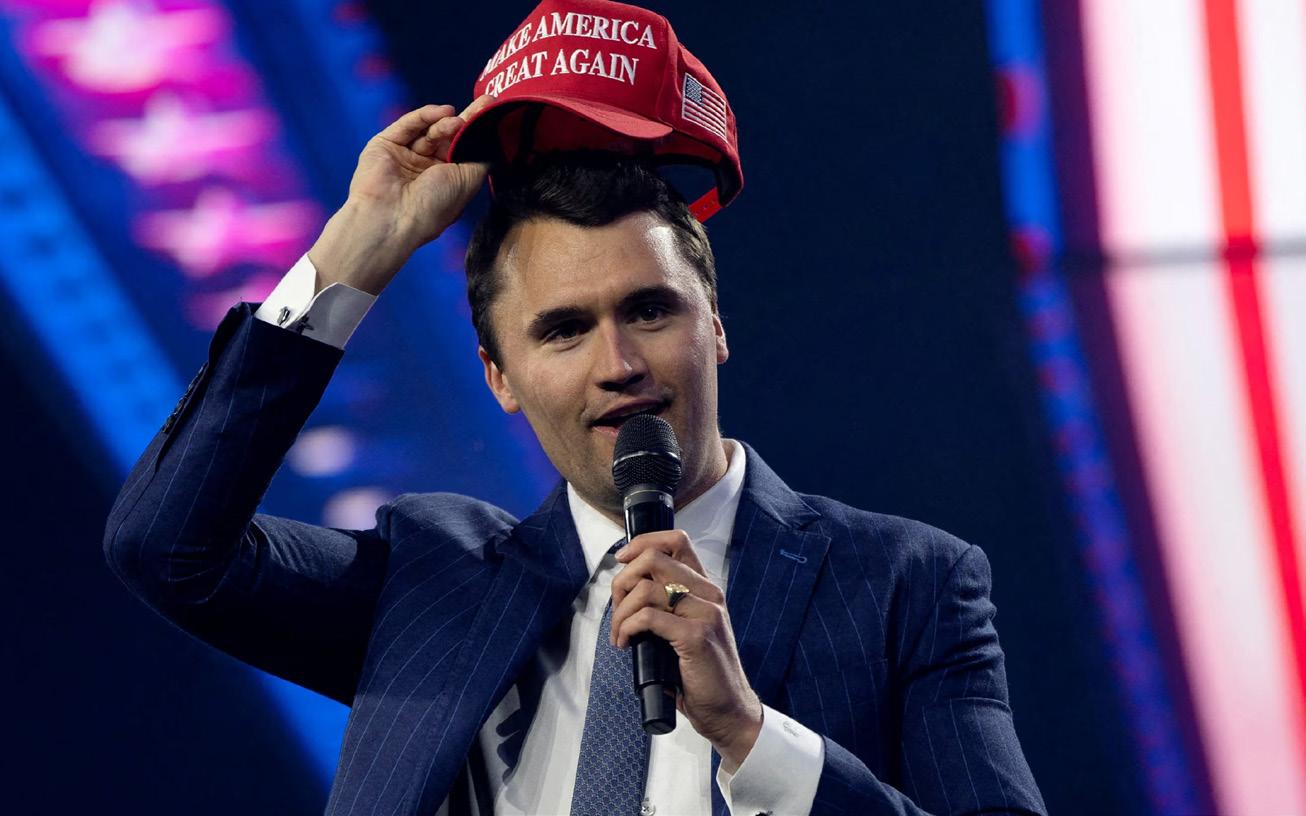
This article is aimed at the kind of reader who is not afraid to look past the headlines, the kind of reader who knows how quickly and easily sympathy can be weaponised. My purpose is not to accuse anyone but to examine what happens when a figure who built a career on hatred is suddenly gone and we are all told to forget why he became famous in the first place.
Charlie Kirk was one of those figures. When Kirk was rejected at the age of 18 from West Point, he chose a different path and co-founded a grassroots organisation called Turning Point USA. Its apparent goal was to mobilize young conservatives and spark political engagement, but critics argued it thrived on outrage and cultural tensions rather than debate.
Within years, it grew rapidly alongside the rise of President Donald Trump, supporting the ‘Make America Great Again’ movement.
“
While Kirk’s influence expanded, so did the scrutiny. His public debates and viral campus clips became less about policy and more about performance. They used catchy sounds, short clips and quick outrage to maximise views. By 2024, Turning Point had over $US 85 million of annual revenue, which proved controversy had become a profitable business. Many student groups formed in support of Kirk, giving him a national footprint. However, critics accused Kirk
of wanting spectacle more than debate.
THE NARRATIVE QUICKLY SHIFTED. MEDIA OUTLETS THAT ONCE WROTE HEADLINES ABOUT HIS CHAOTIC PROVOCATION NOW ROMANTICISED HIS ‘DEDICATION’.
After his violent death, the narrative quickly shifted. Media outlets that once wrote headlines about his chaotic provocation now romanticised his ‘dedication’. The news was suddenly filled with tributes, often portraying his family grieving in a way that was softening his legacy. Many began to preach forgiveness whilst ignoring accountability. The same voices he targeted were being told to stay silent, to be respectful, to grieve.
This pressure to lament Kirk’s demise provokes an uncomfortable question.
How can the very black, brown, queer and immigrant people he vilified be expected to mourn his passing? Kirk’s online views often demeaned people based on their race, sex and gender. He once said, ‘If I see a black pilot, I’m going to be like, boy, I hope he’s qualified.’ He did not measure people by their individual ability but reduced everyone to stereotypes.
“
IF
He judged people by the colour of their skin and the complexion of their communities, by their religion, and by their gender. He treated anyone outside his idea of ‘American Values’ as less than capable. He once claimed that birth control makes women ‘angry and bitter’ and ‘screws up female brains.’ He openly mocked women in leadership, saying they were ‘too emotional’ to handle power, dismissing their accomplishments as luck or dependent on connections.
outrage he stirred up, he was a man with a family and a faith, but many flaws. Like most strongly opinionated people, he believed in his views and actions wholeheartedly, but simply being human does not give you a free pass to be cruel. His ability to feel and breathe does not undo the damage he caused to many others with his vicious words.
WE ARE ARE NOT AFRAID TO LOOK PAST THE HEADLINES, HOLDING CHARLIE KIRK ACCOUNTABLE IS NOT AN OPTION BUT A NECESSITY.
Charlie Kirk’s death has not erased that damage. The same man who mocked women, reduced black, brown, queer, and immigrant people to hopeless stereotypes, and built a following on outrage, is now being framed as a martyr. Across the US, supporters have held memorials and large gatherings in places like Glendale, Arizona, Boston, and Oregon, all of which portrayed him as a hero for youth activism and free speech.
“HE DID NOT MEASURE PEOPLE BY THEIR INDIVIDUAL ABILITY BUT REDUCED EVERYONE TO STEREOTYPES.
He was human, of course. Apart from the politics, the performance and the
But remembering him shouldn’t mean ignoring the harm he did in his short life. If we are are not afraid to look past the headlines, holding Charlie Kirk accountable is not an option but a necessity. Sympathy must never erase such a poisonous legacy. ¢
OLIVIA OTUNYO says if you want to feel good eat well.
Have you ever noticed how some meals make you feel calm and focused, while others leave you tired and moody? This happens because food affects both your mind and your body. For example, eating a sugary breakfast might give quick comfort, but it often leads to a crash and will eventually cause irritability later.
Although diet plays a significant role in mental health, people rarely talk about it in daily life, and only sometimes in healthcare. This topic is Nutritional Psychiatry, which examines how what we eat affects our mood and mental state.
The brain uses about 20% of the body’s total energy, meaning that nutrients function as a fuel for important brain chemicals like serotonin, dopamine, and GABA (gamma-aminobutyric acid). These chemicals affect mood, focus, and emotional balance. Serotonin comes from tryptophan, which is found in eggs, turkey, and seeds, while dopamine depends on B vitamins. Omega-3 fats, which come from fish, also help brain cells communicate smoothly.
“
THE TRILLIONS OF BACTERIA LIVING IN YOUR GUT PRODUCE CHEMICALS THAT CAN EITHER IMPROVE OR DISRUPT YOUR MOOD.
Your gut and brain are also connected through something called the gutbrain axis. The trillions of bacteria living in your gut produce chemicals that can either improve or disrupt your mood. When you eat fibrerich or fermented foods like yoghurt, kimchi or kefir, you can help the bacteria stay healthy. This supports focus and improves overall mood. Research indicates that diet quality has a significant impact on mental health. The International Society for
Nutritional Psychiatry Research (2015) found strong links between nutrition and emotional well-being, showing that healthy diets help protect you against depression. They argued that nutrition should become a standard part of mental health provision because it is an affordable way to prevent mental illness. This means that the foods we eat can play a role like lifestyle medicine, small daily choices that support long-term mental stability and resilience.
I’m not saying don’t eat sugary foods; however, do everything in moderation. Therefore, improving diet quality plays a vital role in maintaining longterm emotional well-being.
“Similarly, the SMILES trial by Jacka et al. (2018) tested a Mediterranean-style diet on adults with depression and found major improvements in mood compared to those who didn’t change their eating habits. The study revealed that the more participants improved their diets the better they felt and thought, and depression symptoms decreased. This suggests that eating better can directly support recovery from mental illness. Food can therefore be viewed as an effective and low-cost way to boost mental health alongside therapy and medication.
THE FOODS WE EAT CAN PLAY A ROLE LIKE LIFESTYLE MEDICINE, SMALL DAILY CHOICES THAT SUPPORT LONG-TERM MENTAL STABILITY AND RESILIENCE.
Of course, not everyone has equal access to healthy foods. Poverty and food insecurity can make healthy eating more difficult, especially for young people. Still, eating well is about consistency and not perfection. Even small swaps like choosing flavoured sparkling water over fizzy drinks, or 50/50 bread over white bread, can still have an influence.
Healthy food, sleep, exercise, and stress control keep your emotions stable. Each meal is an opportunity to nourish both body and mind. ¢
“EATING A SUGARY BREAKFAST MIGHT GIVE QUICK COMFORT, BUT IT OFTEN LEADS TO A CRASH AND WILL EVENTUALLY CAUSE IRRITABILITY LATER.
Small swaps like choosing flavoured sparkling water over fizzy drinks can still have an influence.
CastingDoubt
JULIEN HUANG charts the mess in Myanmar.
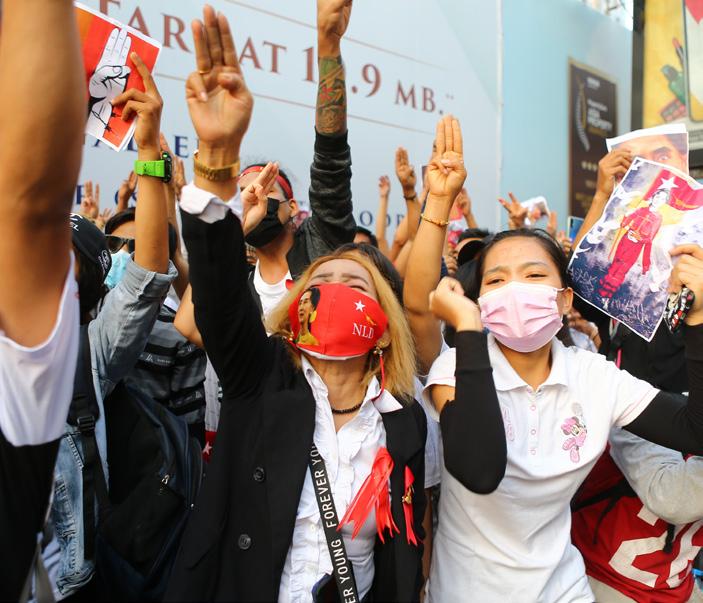
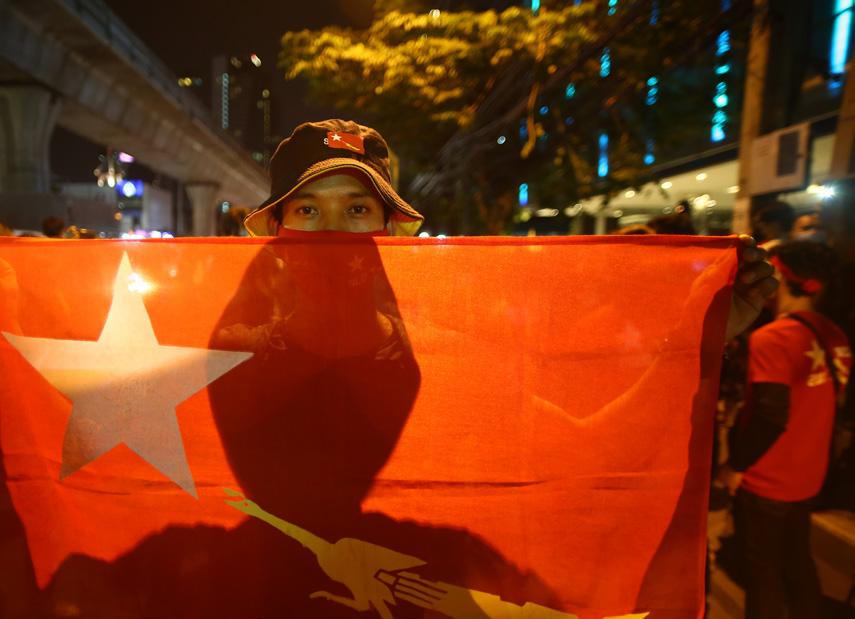
The Myanmar junta’s decision to transfer power to a civilian-led government, ahead of the proposed election on 28 December, may mark a major turning point after the coup that ousted elected president Aung San Suu Kyi, with the new military government facing heavy resistance in northern parts of the country.
“
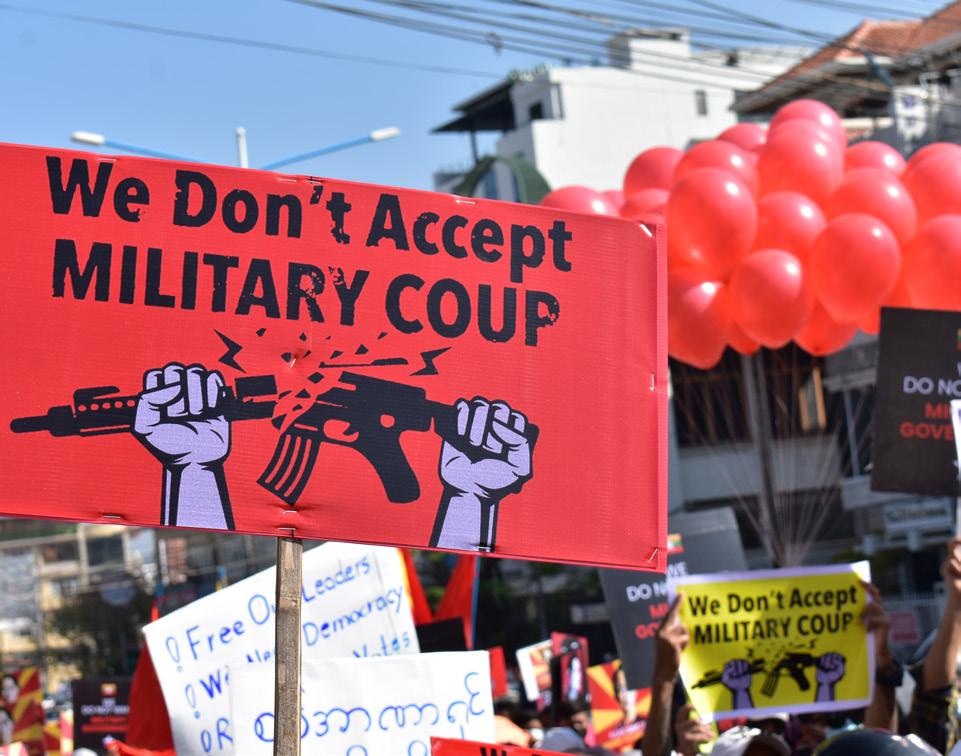
Myanmar has long suffered from political instability, even during times when former President and Nobel Peace Prize winner Aung San Suu Kyi was in power. She has long been criticised by the UN, ICC and the International Amnesty Group for her lack of action over the Rohingya genocide. The ongoing persecution of the Muslim Rohingya people by the Myanmar military (Tatmadaw) is to this day unresolved. More significantly, following the landslide election of 2020, won by Aung San Suu Kyi-led NLD, the militarybacked USDP party, which lost the election, staged a military coup in January 2021, on the brink of the major outbreak of COVID-19.
in exile) has been raging. The NUG is now a shadow government with mostly officials from the past regime, together with the People’s Defence Forces (PDFs), who make up the largest portion of the rebels.
EVER SINCE THE MILITARY COUP, THE NEWBORN GOVERNMENT HAS FOUND IT INCREASINGLY HARD TO GAIN THE FULL SUPPORT OF THE PEOPLE.
While the National Unity government has been deemed illegal and categorised as a ‘terrorist group’ by the SAG, the NUG has also criticised the SAG of being a terrorist organisation. Apart from the two main players in the civil war, the insurgents don’t stop there. The complicated power brawl in the capital, Naypyidaw, created a perfect breeding space for warlords, militias and other ethnic armed organisations. In 2025, more than 100 military groups were involved in the conflicts.
Ever since the military coup, the newborn government has found it increasingly hard to gain the full support of the people, and a major civil war between the State Administration Council (the military government) and the European-recognised National Unity Government (government
Back in September 2025, a local private school in the Rakhine State was reported to be bombed by the junta, causing 18 deaths, as reported by the Arakan Army, who controls the area. Those killed in the air strikes were part of the 30-40 boarders who were still sleeping when two 500lb bombs were dropped. The local Rakhine Area, formerly known as Arakan, was a major battlefield in the counter-insurgency operation in 2017, which drove more than 740,000 locals away from their homeland to seek refuge in Bangladesh.
It is safe to say that the junta government’s diplomatic policies have not been fully successful.
Last year, Myanmar experienced a major crisis from the core of the Earth, a 7.7 earthquake that left more than 5,000 dead and 10,000 injured, shaking the infrastructure and putting the nation into more turmoil. Although a ceasefire was called by rebel movements, the junta continued airstrikes. Even a natural disaster is not a big enough incentive for the belligerents to reunite and make a truce.
While the National Unity government has been deemed illegal and categorised as a ‘terrorist group’ by the SAG, the NUG has also criticised the SAG for being a terrorist organisation.
The junta government has failed to gain legitimacy. The Asian Network for Free Elections regarded the outcome of the 2020 elections as ‘by and large, representative of the will of the people of Myanmar’. The junta suffers a lack of legitimacy from within the nation after overthrowing the elected NLD government; global recognition had been a far-fetched dream for the Tatmadaw government. The current ambassador for Myanmar in the United Nations, Kyaw Moe Tun,
was appointed by the NLD government before 2021, and strongly opposes the military coup. Although the current junta government has tried to remove him from his seat, the UN’s General Assembly Credentials Committee has repeatedly deferred recognition. This means that the junta government doesn’t represent Myanmar at the UN stage. In the 2022 general assembly of the United Nations, Kyaw Moe Tun cast a vote condemning the Russian invasion of Ukraine, a vote which opposes the junta’s beliefs.
Furthermore, the US, EU, Japan, Australia and other nations have chosen to impose sanctions on the junta government and engage with NUG as Myanmar’s legitimate representative. Although neighbouring nations strike deals with the junta government, they have avoided formal recognition to leave negotiation space with other military groups. It is safe to say that the junta government’s diplomatic policies have not been fully successful.
On 31 July 2025, the junta called an end to the four-year-long state of emergency and opened up to elections after seven extensions prior. It promised to transfer power to civilianled groups, and a caretaker administration had been formed to oversee elections. However, despite seemingly moving towards democracy, it offers no changes to the current status quo, since the coup leader, Min Aung Hlaing, will continue to hold major levels of power as the acting president and retain his position in the military. Critics argue that the Tatmaduw will continue to pressure elected officials or create puppets to rig the elections.
Even a natural disaster is not a big enough incentive for the belligerents to reunite and make a truce.
Western powers have dismissed the elections because opposition leaders are either barred or have refused to take part. Many of them are currently participating in the civil war. While the election seems like a desperate act for the unrecognised junta to gain legitimacy, we still hope that the beautiful nation will be able to reunite and once more turn to democracy. ¢
WE STILL HOPE THAT THE BEAUTIFUL NATION WILL BE ABLE TO REUNITE AND ONCE MORE TURN TO DEMOCRACY.
Mum’s the
CHLOE HAY explains how languages evolve through women.
In today’s world the power of language is often overlooked. Language defines us as humans, allowing us to share information in a more sophisticated way than any other species on Earth. Language connects people across the globe and, nowadays, with the dramatic rise of social media exposing us to many different linguistic subcultures, it never stands still. Language constantly evolves with each generation to mirror their unique perspective as well as to reflect other social trends.
“LANGUAGE CONSTANTLY EVOLVES WITH EACH GENERATION TO MIRROR THEIR UNIQUE PERSPECTIVE AS WELL AS TO REFLECT OTHER SOCIAL TRENDS.
Linguistic change is a term used to describe this phenomenon, and refers to the evolution of language over time. This includes shifts in grammar, punctuation and vocabulary. Sociolinguist Jennifer Coates says that ‘linguistic change can be said to have taken place when a new linguistic form, used by some sub-group within a speech community, is adopted by other members of that community and accepted as the norm.’ Because this process generally takes place over an extended period of time, new and old language features co-exist, which some commentators regard
as ‘corruption’ owing to their belief that language change corresponds with a degradation in the quality of a language. Modern linguists oppose this idea, because from a scientific point of view these changes cannot be defined as concretely good or bad. These changes are implemented by those who speak the language on a day-to-day basis, and they are themselves influenced by their experiences and surroundings. And this shows how language is a living record of a community’s priorities.
If linguistic change emerges from everyday usage, however, an important question is raised: who within that community is most responsible for initiating and driving such change? One might assume that linguistic innovation originates from powerful figures such as politicians, writers or celebrities, but the truth is different.
Several studies carried out on languages across the globe have proved it is post-adolescent females – young women – who spark and spread linguistic change most throughout society. In the early 2000s,
sociolinguist William Labov saw that up to 90% of linguistic change was led by women. Furthermore, there can be a ‘lag’ lasting as long as an entire generation between the evolution of male and female language: women adopt and spread new language norms earlier than men.
This idea can be explained in several different ways. First, historically, women were more likely to stay at home to care for children while men went out to work. As a result, children interacted more frequently with women during their formative years, placing women in a stronger position to pass on their speech patterns. Because early childhood is a vital period for speech acquisition, the speech patterns children are most exposed to are the ones they tend to adopt. In this way, female linguistic habits were more likely to be transmitted to younger generations and become embedded in the language of wider society, reinforcing women’s significant role in shaping language change.
Children interacted more frequently with women during their formative years, placing women in a stronger position to pass on their speech patterns.
From a social perspective, young women often occupy influential positions within peer networks. Research in sociolinguistics suggests
that they tend to maintain broader and more diverse social connections than young men, allowing new linguistic features to spread rapidly across different groups. Female speech is also frequently imitated, particularly within adolescent communities, where identity and belonging are closely tied to language use. Moreover, young women are often highly attuned to how their language is perceived by others. This heightened linguistic awareness can make them more responsive to emerging trends and more willing to adopt forms that carry social value, for example prestige or group affiliation. By both introducing
and accelerating the uptake of these forms, young women consistently position themselves at the forefront of linguistic change.
This pattern of innovation can also be seen as a response to social pressures that shape women’s language use. Gendered language itself is what reinforces these pressures because it refers to language forms that make conscious or unconscious assumptions about gender, which can lead to greater societal distinctions between genders. In languages such as French and Spanish, for example, nouns are assigned grammatical genders that influence the formation of other words across a sentence. This style of language can inadvertently comply with gender stereotypes and reinforce unequal power dynamics.
In professional environments and workplaces, the intersection of gendered language and power is highly visible. For instance, women are frequently associated with using language that is considered polite and indirect. This is especially obvious in Western societies, where women have historically faced criticism for using assertive language in professional settings. In contrast, men are often encouraged to adopt a direct manner of speech when in the workplace. Linguistic choices that may be recognised as decisive in men can be perceived as demanding or too aggressive when used by women in equivalent positions. Therefore, we can recognise the appearance of ‘double
standards’ which appear to be pressuring women to use language deemed to be ‘softer’ so they can avoid appearing rude, even when they wish to display authority. These double standards place women in a linguistic bind.
As a result, young women may use linguistic innovation as a way of negotiating these conflicting expectations. By subtly reshaping norms, they are able to challenge restrictive stereotypes, showing that their role at the forefront of linguistic change is not accidental, but a response to the gendered constraints embedded within language itself. When women are expected to sound accommodating yet competent, warm yet authoritative, innovation can become a strategy. Bringing about linguistic change allows young women to project confidence while avoiding social judgement traditionally associated with ‘speaking too directly’.
“FEMALE LINGUISTIC HABITS WERE MORE LIKELY TO BE TRANSMITTED TO YOUNGER GENERATIONS AND BECOME EMBEDDED IN THE LANGUAGE OF WIDER SOCIETY.
of Jordan, where young women were also found to be leading the evolution of language. Such findings suggest that the disproportionate role of women in driving linguistic innovation is not merely Western, but global in scope.
“Importantly, this phenomenon is not confined to one cultural context. While much research on this subject is based on studies carried out on European languages, linguist Enam Al-Wer has identified similar patterns in her work in Amman, the capital
We must not ignore that men also contribute to linguistic change, but in British English, American English, Spanish dialects and many other widely spoken languages, it is women who lead the charge with regards to linguistic innovation. Recognising this invites us to reconsider whose voices truly hold power in society. Language does not simply mirror existing hierarchies; it actively participates in constructing and reshaping them. Young women play a central role in shaping the future of language and consistently lead linguistic change so, ultimately, their influence extends far beyond vocabulary or pronunciation. It reaches into the evolving structures of social power itself. ¢
YOUNG WOMEN PLAY A CENTRAL ROLE IN SHAPING THE FUTURE OF LANGUAGE AND CONSISTENTLY LEAD LINGUISTIC CHANGE.
Chain Reaction
In the energy race, ALEXANDER CLAYTON explains the difference between splitting and joining, and wonders who will get there first.
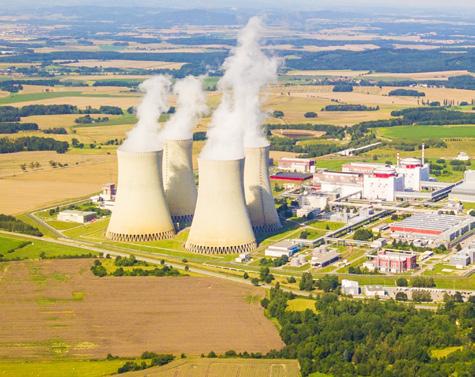
The race to harness the power of the stars is on, and it’s called nuclear fusion. Imagine a world where a glass of seawater packs enough power to fuel a city for a day. Well, that is the reality of nuclear fusion. The question is who will get there first: the billion-pound companies like ITER or the daring startups like Helion?
“
THE TOKAMAK IS A SOVIET FUSION DESIGN THAT USES STRONG MAGNETIC FIELDS TO CONFINE HOT PLASMA IN A DOUGHNUT-SHAPED CHAMBER.
In 1971 Richard Post published a chart in the ‘Bulletin of the Atomic Scientists’, predicting commercial fusion by 1990. That’s when the famous saying, ‘for over 70 years, scientists have said fusion is 30 years away’, originated. Today, some companies are setting fusion deadlines within 30 years, raising the question: is the timeline finally shifting?
To best understand fusion, we must first know how current fission reactors work and how fusion is different. Fission reactors release energy by splitting heavy nuclei to create lighter fragments. This process is aided by the natural electrical repulsion of positive charges in the nuclei. Fusion, by contrast, joins light isotopes of hydrogen into heavier, more stable nuclei. This process is harder since the electrical repulsion between like charges inhibits fusion. To fuse, the hydrogen isotopes, deuterium and tritium, must move rapidly enough to overcome this barrier, requiring temperatures around 150 million °C. At these temperatures atoms collide so violently that electrons are torn from the nuclei, creating a gas of free-
moving electrons and nuclei. This is the fourth state of matter called ‘plasma’. But plasma is so superheated it would incinerate any container instantly, stopping the fusion reaction. So, how are big science labs and startups tackling this challenge?
The tokamak is a Soviet fusion design that uses strong magnetic fields to confine hot plasma in a doughnutshaped chamber. A powerful electric current induced in the plasma, combined with external magnetic coils, creates a helical magnetic field that prevents the plasma from touching the reactor walls. ITER, Latin for ‘the way’, is the world’s most ambitious fusion project, launched in 2006 by an international organisation, including China, the US, and the EU. Its goal is to produce the first-ever reactor that burns plasma, causing the plasma to undergo a self-heating process.
ITER cannot convert the heating power to electricity but it aims to generate 500 MW of fusion power from 50 MW of input to prove net energy gain. If successful, ITER will be the first magnetic fusion confinement experiment to produce net energy gain across the plasma. The target date is 2035, with costs exceeding $US 20 billion. However, ITER faces a significant problem: its beryllium walls, meant to multiply neutrons, contain uranium impurities which, under bombardment, make the beryllium dangerously radioactive over time. This risks fusion becoming as expensive as fission.
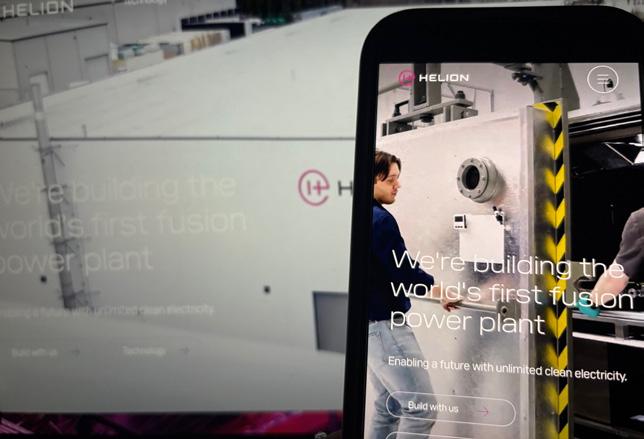
Founded in America in 2013, Helion takes a different approach to fusion, using magnetic confinement to heat plasma directly and converting that energy to electricity. Trenta, Helion’s sixth-generation reactor, forms two plasma rings at either end of the generator and slams them together in a fraction of a millisecond. Magnetic fields suspend and compress the plasma at over 300 km/s, raising temperatures to tens of millions of degrees – hot enough for fusion. This allows the ions to fuse, releasing tremendous amounts of energy. Helion has a deal to deliver 50 MW of electricity to Microsoft by 2028, with plans for a 500 MW plant in the 2030s.
“FUSION COULD PROVIDE VIRTUALLY LIMITLESS CLEAN ENERGY FOR THE WORLD. IT COULD END CONFLICTS OVER RESOURCES, LIKE THE GULF WAR.
What’s at stake? Fusion could provide virtually limitless clean energy for the world. It could end conflicts over resources, like the Gulf War, which caused over 100,000 deaths, as well as making energy affordable enough to lift billions from poverty and drive development. It could also inspire future generations to pursue STEM, fuelling faster development. However, fusion could arrive too late for current climate deadlines, reducing its impact.
Imagine a world where a glass of seawater packs enough power to fuel a city for a day.
Startups may achieve fusion first but they face the challenge of scaling up and proving their innovative ideas. Big science labs, like ITER, will move more slowly, and many won’t produce electricity, yet they remain vital for advancing the science, testing tokamaks, and showing how fusion could work at scale. In the end the big question is, will fusion arrive in time to change our future, and who will get us there first? ¢
“HELION TAKES A DIFFERENT APPROACH TO FUSION, USING MAGNETIC CONFINEMENT TO HEAT PLASMA DIRECTLY AND CONVERTING THAT ENERGY TO ELECTRICITY.
Growing
SELINA ZHANG asks whether UK government intervention in the lives of the young is doing more harm than good.
Young people have always wondered whether government intervention is a benefit or a cost. On the one hand it provides healthcare, education, and employment, but on the other it limits personal freedom, encourages dependency and undermines the strength of youth. With the rising cost of living, social media and youth unemployment it is crucial to ask whether the government intervention is fostering growth of youth and stimulating its independence.
“
The government runs state education. In the UK, this aims to widen the availability of learning and grant financial support to students by treating higher level education as a public good. By providing economic support for those who lack the availability or opportunity, it provides the economy with efficiency in the long run and allows young people to be educated. Moreover, T Levels were introduced quite recently in 2020, specific skilled industry education which benefits and prepares young people for skilled employment and allows a smooth shift into the workforce. The possession of an educated background gives young people a wider prospect of employment, especially jobs with higher earnings and more worth, reflecting
education interventions as positive externalities for not only young people but also society as a whole. Additionally, the UK government provides an extra funding of £3.5 billion to support children with disabilities and special educational needs. Government intervention in education does masses of good for young people because it increases social mobility when they are granted more opportunities, reducing inequality and protecting young people from exploitation.
WITH THE RISING COST OF LIVING, SOCIAL MEDIA AND YOUTH UNEMPLOYMENT IT IS CRUCIAL TO ASK WHETHER THE GOVERNMENT INTERVENTION IS FOSTERING THE GROWTH OF YOUTH.
Intervention on safeguarding and protection also yields greater benefits because it protects young people from dangers in many areas such as exploitation, addiction, and fraud. Age restrictions, regulations, and protection services ensure the safety of young people. Having an age limit on the purchase of certain goods like alcohol and cigarettes discourages addiction and health problems linked with them from an early age. Furthermore, many schools have adopted educational lessons on safeguarding to spread awareness and ensure the protection of individuals, especially in areas of online safety, bullying, and mental health concerns. With the rise of mental health issues today, government intervenes to ensure schools are supporting those in need, providing
education and training programs to oversee wellbeing. The NHS Long Term Plan, which is a 10-year programmes, also aims to expand community-based services, supporting a greater number of young people. However, government intervention in the mental health sector can also be viewed negatively. The lack of investment by government in the youth mental health services has been widely criticised due to the dramatic rise in mental health numbers amongst young people in recent years. Those who then seek help are often faced with long waiting times, or are told that their problems are not serious enough due to cuts in local government policies. Although these problems are reflected negatively in mental and physical health concerns, it is due to the lack of intervention and services on mental health protection and not the already implemented interventions.
While most government interventions do good for the younger generation, much of the harm occurs in the housing and employment sectors. The-cost-of living crisis has significantly affected young people, particularly students and graduates who are looking to
enter labour markets. Due to COVID and our volatile economy over the past few years, many prices have shot up, including rent, food, and transport. With inflation peaking, there is an increased pressure on those who earn lower wages with household budgets, decreased disposable income and difficulties in entering the employment market. The Bank of England’s chief economist, Huw Pill, says that the government policies of raising
The cost-of-living crisis has significantly affected young people, particularly students and graduates.
the minimum wage and increasing national insurance contributions has led to youth unemployment of 16.1% today, which is the highest in ten years. The imposition of a minimum wage makes it more difficult for young people to get jobs because firms do not want to give jobs to young people, who often have less experience and skill, because they fear a decrease in productivity. Furthermore, a rise in wages results in the decrease in demand for labour and creates incentives to substitute labour with capital (like self-checkout and automated cleaning robots). As a result, it specifically takes young people out of the workforce and provokes unemployment amongst those who are in university, or early career workers, leading to the underutilisation of skilled and trained students.
House prices are another demonstration of a negative intervention because fewer young people now own houses. Most people who own homes are older people who bought houses a long time ago, and those who earn higher incomes. House prices are affected by the imposition of maximum prices and price caps since lowering the prices does not directly benefit young people but kicks them out of the housing market. Consequently, higher-income individuals can purchase property more easily, while younger people must accumulate and save more to
Many young people still live with their parents because they are unable to purchase a place for themselves.
compete in the market, leaving them struggling even to meet deposit requirements. That said, many young people still live with their parents because they are unable to purchase a place for themselves. This coexists with the problems of structural unemployment for young people and results in the younger generation becoming even more economically deprived.
Ultimately, government intervention is not itself doing harm to young people, but its effectiveness and success depend on its implementation, the external market factors, and the broader context of our society. Although not all interventions bring successful outcomes in the short run, such as minimum wage laws, which may reduce the demand for young labour, in the long run government spending and investment in education, healthcare and infrastructure will improve the productivity of our economy and the social mobility of young people. ¢
HIGHER-INCOME INDIVIDUALS CAN PURCHASE PROPERTY MORE EASILY, WHILE YOUNGER PEOPLE MUST ACCUMULATE AND SAVE MORE TO COMPETE IN THE MARKET, LEAVING THEM STRUGGLING EVEN TO MEET DEPOSIT REQUIREMENTS.
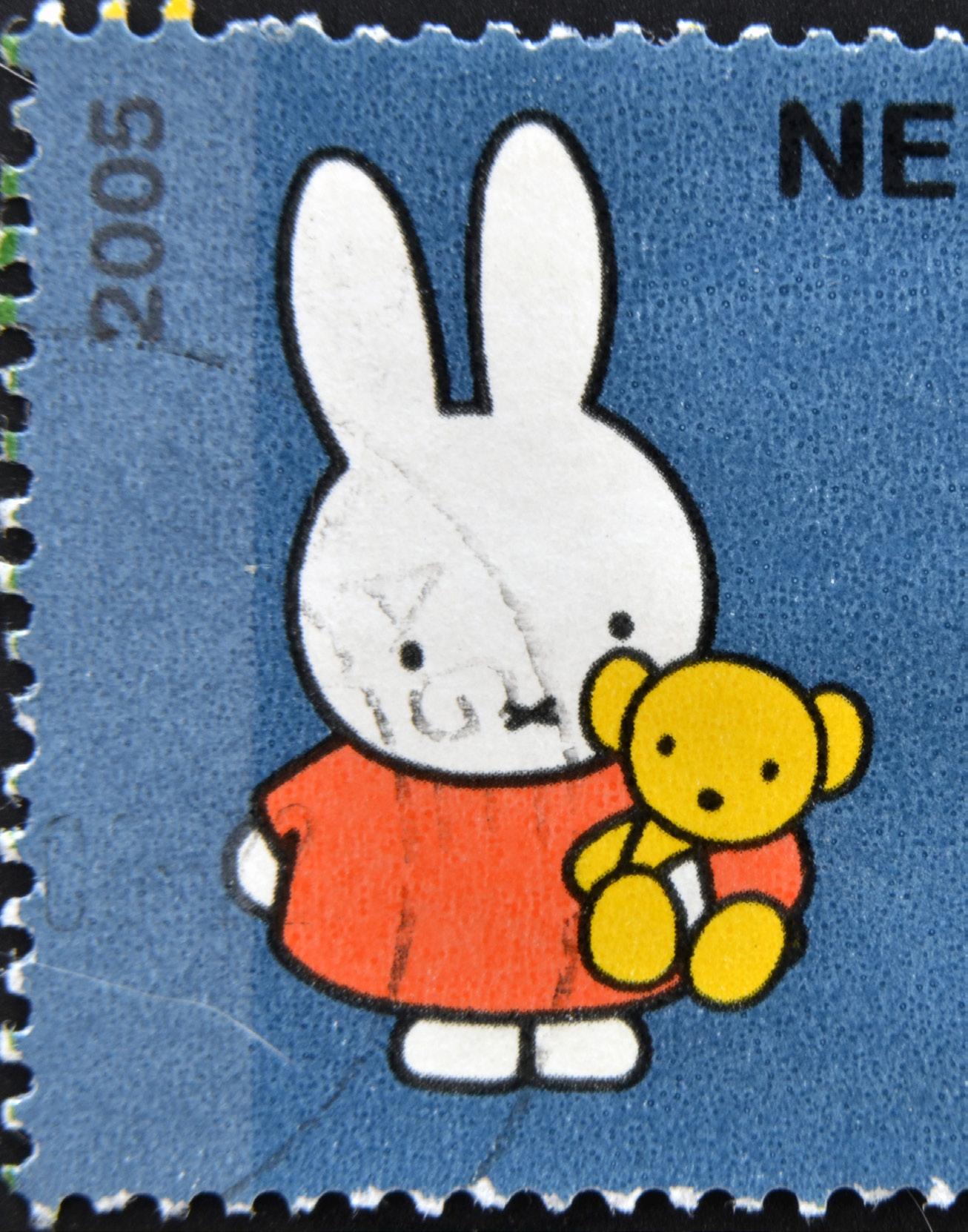
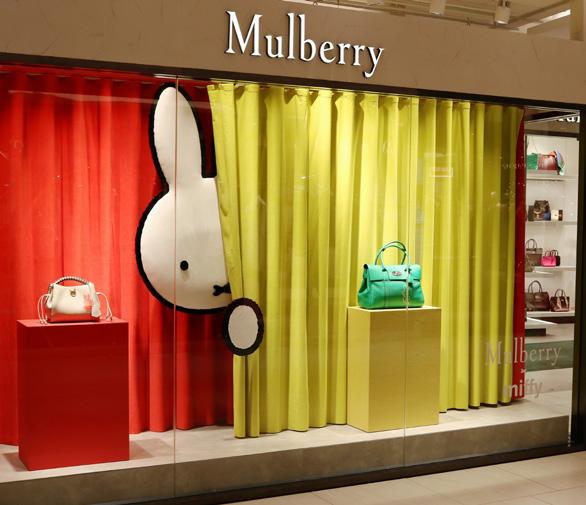
MILLY CORDEAUX asks whether Miffy is a symbol of joy or a puppet of consumerism.
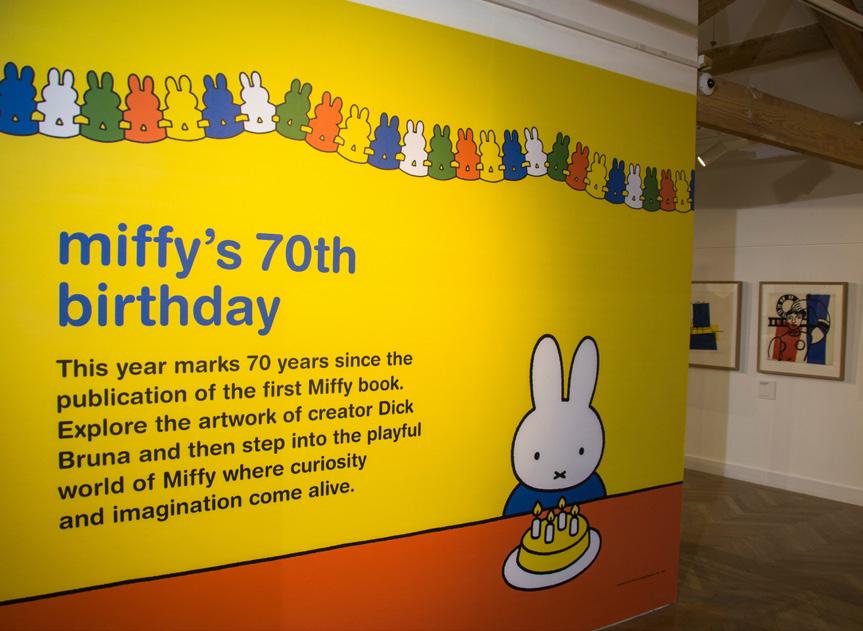
One night in 1955, a graphic designer called Dick Bruna wanted to tell his son stories about a rabbit they had seen earlier that day. He drew it with two large ears, two small eyes, an x-shaped mouth, and a red dress. Bruna made this rabbit the main character of a children’s book series, which would go on to become Miffy, a globally loved merchandising brand now worth over £200 million.
“
SUCH STORIES HELP THE CHILDREN UNDERSTAND THAT THEY ARE NOT ALONE IN THESE SITUATIONS AND THAT THINGS WILL GET BETTER.
Good for him. But a lovable cartoon character generating a multi-million-pound business begs the question: Is Miffy a symbol of joy and whimsy in our current political hellscape, or is Miffy just another symbol of mindless consumerism and consumption that feeds into our longing for nostalgia?
Miffy’s meteoric rise to fame can be put down to the minimalist style of the Miffy books and their effective storytelling. They consist of one page of text and a full-page illustration on the opposite page, repeated about ten times per book. A limited colour palette of saturated shades of blue, green, yellow, red, brown and grey is used, as well as black and white, which makes the books engaging for a young audience without being overstimulating.
The text of the stories is composed into four-line rhyming stanzas that are easy to read and effective at breaking down
the story’s theme into small chunks. These stories discuss a range of topics, from those as wholesome and relatable as going to school or visiting an art gallery or as profound as the death of a family member or the birth of a younger sibling. Since these experiences may be similar to those of their readers, such stories help the children understand that they are not alone in these situations and that things will get better, which is inspiring and important for them to hear.
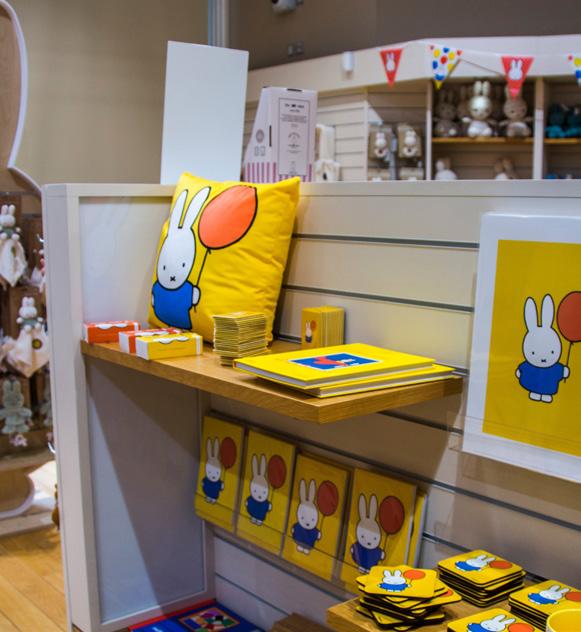
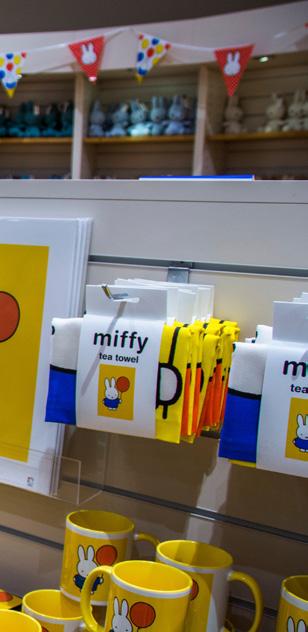
But a side-effect of the simple Miffy graphics is merchandising. Companies have hit an absolute goldmine by simply putting Miffy’s face on just about anything, from T-shirts and water bottles to badges and plasters. Despite being originally aimed at children, Miffy-related products are now popular among every age demographic, especially women in their teens and 20s. This has led to the Miffy brand partnering with other brands, such as the much-loved British clothing brand, Cath Kidston, and creating products like bags and clothing.
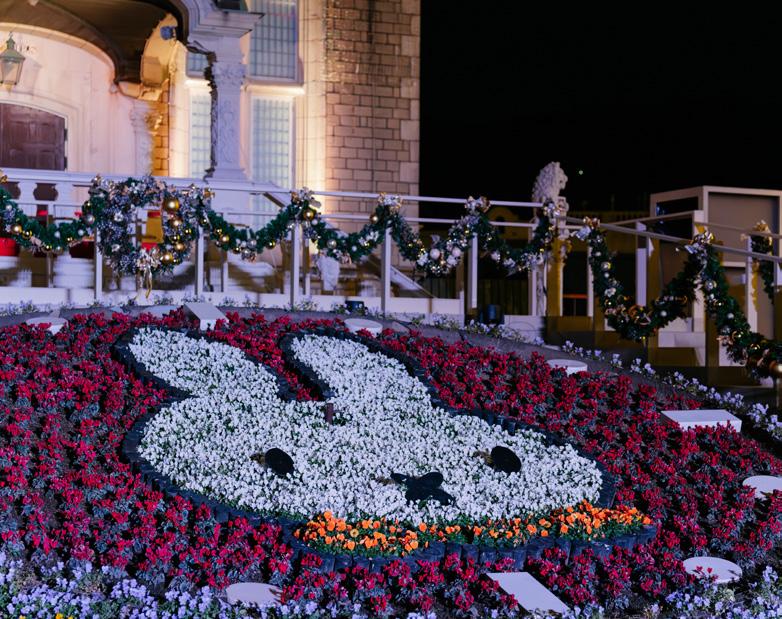
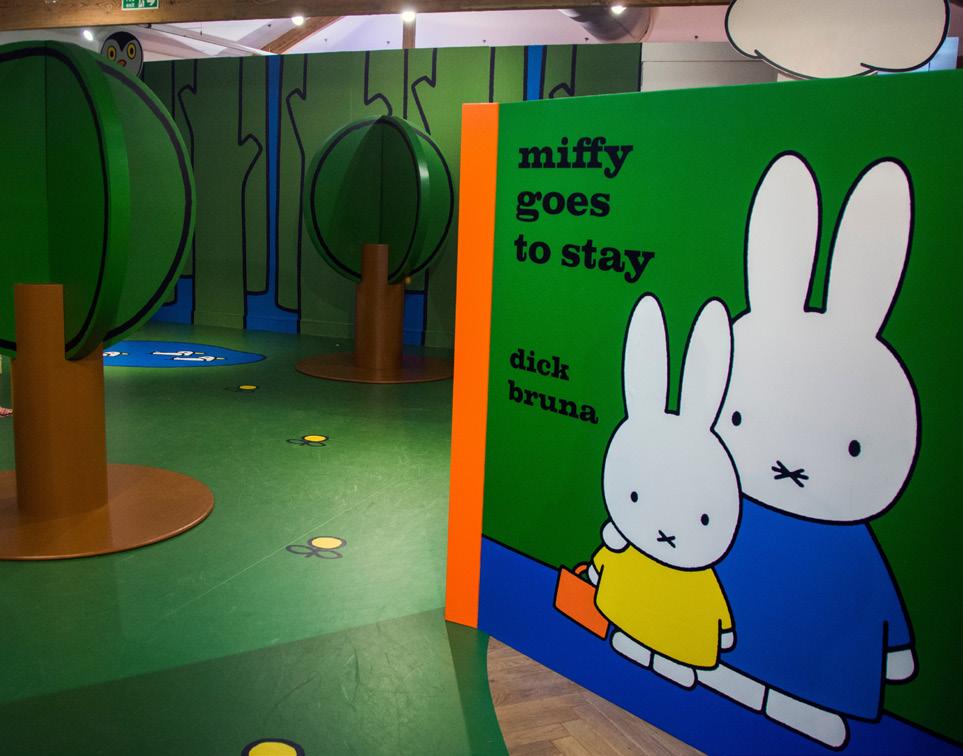
2025 was the 70th anniversary of Miffy’s creation, and this was celebrated around the world with increased merchandising and even exhibitions explaining how Miffy was created and some background stuff about Dick Bruna’s life and earlier work. These exhibitions were visited by thousands of tourists and fans of Miffy,
Companies have hit an absolute goldmine by simply putting Miffy’s face on just about anything.
WE FEEL NOSTALGIC FOR A PAST LONG GONE AND DECIDE TO BUY A TOTE BAG SPORTING MIFFY, INSTEAD OF CONSUMING THE CONTENT AS ORIGINALLY INTENDED
giving them a chance to learn more and celebrate the character and its history. There is even a miffy museum in Dick Bruna’s hometown of Utrecht in the Netherlands, which has been open since 2016 and attracts thousands of visitors every year. The museum is aimed at 2-to-6-year-olds and focuses on developing independence and giving young children useful learning experiences.
This lovable bunny, however, has not been immune to controversy. There is much debate over whether Miffy should be referred to by its English name, Miffy, or its original Dutch name, Nijntje, because some believe that Miffy should be called Nijntje out of respect for Dick Bruna and Miffy’s Dutch origins, but
others argue that Dick Bruna called his bunny Miffy for international translations because it was easier to pronounce and translate into other languages.
The museum is aimed at 2-to-6-year-olds and focuses on developing independence and giving young children useful learning experiences.
The Miffy books have been translated into over 30 languages. Furthermore, in 1976 Dick Bruna entered a legal battle with Sanrio, the Japanese company behind Hello Kitty, when they introduced a character called Cathy, a white rabbit with a very similar design to Miffy. Bruna pointed out these similarities, which ended up with Sanrio pulling Cathy from their lineup of characters, opening up a wider conversation about copyright and intellectual property.
Despite these minor controversies, Miffy remains as popular as ever, but is this popularity really justified? Although Miffy gained popularity through the books and storytelling, companies have made millions by slapping its face on products consumers might not ordinarily buy. Part of Miffy’s appeal to the general consumer is that it preys
on our need for nostalgia in a world which is so rapidly churning out new technology and at the same time experiencing a climate crisis. While the world becomes ever more turbulent, we feel ourselves yearn for a world where everything was simpler and we had fewer worries and responsibilities, and we find these small forms of escapism in characters from our childhood, such as Miffy.
But I believe that we’ve been conditioned, when we want to feel a certain way, to turn towards consumption that worsens the very environmental issues we’re so desperately trying to prevent. We feel nostalgic for a past long gone and decide to buy a tote bag sporting Miffy, instead of consuming the content as originally intended and reading the books or embracing the values of problem-solving and teamwork that Miffy was created to embody. This makes me wonder whether all this merchandising is truly in keeping with Dick Bruna’s original vision for Miffy – a cartoon rabbit that he drew for his son to tell stories and make him laugh. ¢
We find these small forms of escapism in characters from our childhood, such as Miffy.
2025 WAS THE 70TH ANNIVERSARY OF MIFFY’S CREATION, AND THIS WAS CELEBRATED AROUND THE WORLD WITH INCREASED MERCHANDISING AND EVEN EXHIBITIONS.
It’s Alive! It’s Alive!
PATRICK LYU considers the relative merits of dualism and materialism in relation to the mystery of consciousness.
Are we really so different from AI and computer algorithms? Perhaps not without consciousness, which all agree is a bit of a mystery. Consciousness is the state of being aware of one’s surroundings, the ability to see the world from a uniquely subjective, first-person perspective, your perspective. Every minute of your life is experienced in a perspective private to you – seeing, hearing, feeling. How it happens neurologically is easily explainable by studying human anatomy, but it seems impossible to explain how such physical processes produce a conscious experience.
The key question was coined as ‘The hard problem of consciousness’ by David Chalmers. It is ‘hard’ because it cannot be explained using scientific approaches, and countless philosophers throughout human history have tried to produce an answer. Chalmers also introduced the
concept of ‘philosophical zombies’, a thought experiment that encourages us to imagine a disturbing creature. Imagine a creature that is physically identical to a standard human, as responsive to its environment as any other human would be, behaving in a way that is completely indistinguishable from us, but without any subjective experience. Truly, there is no way to differentiate a normal person from a ‘philosophical zombie’, and the possibility to imagine such a creature raises the uncomfortable question: what is consciousness, and what are the conditions for its emergence?
“
THIS VIEW IMPLIES THAT CONSCIOUSNESS IS A SOULLIKE BEING, ATTACHED TO COMPLEX SYSTEMS SUCH AS A HUMAN BRAIN.
Historically, philosophers have taken two main approaches towards the issue of consciousness: dualism and materialism.
Dualism, famously linked to René Descartes, is the belief that the mind is non-physical and is separate from the body. This belief serves as a foundation for several attempts to explain consciousness. Substance dualists claim that although consciousness is immaterial and fundamentally detached from the physical body, its capability of thought is very much linked to complex systems of the physical brain. This view implies that consciousness is a soul-like being, attached to complex systems such as a human brain. Property dualists present a similar argument based on dualist beliefs, in which subjective experiences are portrayed as a result of non-physical ‘mental properties’ of physical objects, without the involvement of a separate soul-like existence.
“
The Integrated Information Theory (IIT), being a popular materialist argument, states that consciousness is a representation of how integrated (ability to work together efficiently) and differentiated (ability to be in many different states) information is in a system. The theory quantifies the ‘level of integrated information’ or ‘level of consciousness’ of a system using Φ (phi), implying that all objects are conscious to a certain degree. A singular atom would have a low Φ whereas the human brain would have a very high Φ. However, this theory does not provide an explanation of the nature of conscious experience (how it feels) and the implication of simple objects possessing a level of consciousness often faces criticism.
THIS INEVITABLY PROVOKES SOME OF THE MOST DEBATED QUESTION IN THE FIELD: HOW COMPLEX MUST A SYSTEM BE TO SUPPORT OR ENABLE CONSCIOUSNESS?
Consciousness is the state of being aware of one’s surroundings.
Dualism, IIT and other philosophical arguments often refer to consciousness, subjective experience or thought being linked to systems of high complexity. This inevitably provokes some of the most debated question in the field: How complex must a system be to support or enable consciousness? What would a consciousness beyond human experience be like? Might computer systems become conscious once a threshold of complexity is achieved? These questions concerning for some, remain open till this day, with philosophers, scientists and religious believers all looking for an answer.
For me, it is important to think critically, to accept openly varying ideas and to accept our unavoidable ignorance – an individual confined within their own physicality may never truly understand consciousness and the issues surrounding it until their death, when, hopefully, first-hand experience will teach us all the truth behind life and consciousness. ¢
“
WHAT WOULD A CONSCIOUSNESS BEYOND HUMAN EXPERIENCE BE LIKE?
Heavenly
MONTY BUTLER says it’s time for us to break free from the drug of religion.
‘T
he opium of the people’ is a phrase used by Karl Marx to depict religion as a drug for society that comforts and distracts people from seeing and addressing the real issues of the world. But was he right? Does religion inhibit progress, and is it a drug? I say yes, and yes.
“
F YOU PAY A BIT MORE ATTENTION TO WHAT THESE MEN SAY THEY ARE ALWAYS ASKING FOR DONATIONS WHILE CLAIMING THEY USE THE MONEY TO HELP PEOPLE.
Religion is a drug. I have one main piece of evidence for this claim, and it is the exploitative nature of religion. An example is the many pastors in the Bible Belt of America who preach on Tik Tok, the ones who fly in private jets, wear Rolexes and draw huge crowds. You see their lifestyles and wonder how on Earth they are funding such luxury whilst only being pastors, but if you pay a bit more attention to what these men say they are always asking for donations while claiming they use the money to help people by building new churches and so on. But this is not what they do with the money, because most, if not all, of the donations go toward their lavish lifestyles. This begs the question: if it is so obvious that they are lying, then why do they still receive donations? Because,
like people addicted to cocaine or meth, even though they at some point realise it is only doing them harm, members of their flocks still have to spend more and more and more. This exploitation is especially cruel because the people who donate are often quite poor and don’t have much money to spare, but the little that they do have spare they give to cynical pastors hoping their self-sacrifice will please God. These Bible Belt pastors are only the most modern form of the swindling charlatan. The same thing was happening across Europe throughout the Middle Ages, when monks would screw money out of poor peasants by claiming it would give them health or buy them a ticket to Heaven.
Religions, like drugs, rule by fear. People who take drugs are scared what will happen if they stop, just as people of faith, especially in Christianity, but also in other religions, still go to church, still pray every day, and all because they fear displeasing their god. Why are they scared? Because religion has its own nicotine. Hell. The fear of going to Hell, or not going to Heaven or Paradise, is what keeps people enslaved by religion. Otherwise, why would spend so much of
“YOU
SEE THEIR LIFESTYLES AND WONDER HOW ON EARTH THEY ARE FUNDING SUCH LUXURY WHILST ONLY BEING PASTORS.
Would people care, or even notice, if religion disappeared?
their lives trying to please a deity? You can apply the same logic to cigarettes. Why would people keep smoking and be so committed if it wasn’t for nicotine, the addictive property, like Hell, that keeps people coming back?
I’ve shown that religion is a drug, but does it also get in the way of social progress? Yes, it does. First, I need to ask whether religion is still necessary in the modern world. Regular church attendance has dropped by over half in the last 40 years, although you may see reports that claim church attendance is going up. Whilst this is true, we are talking about less than 12% of the population. So, whilst most people in this country probably identify with a faith, with attendance this low, and as low as 4% among those aged 35-50, would people care, or even notice, if religion disappeared?
Regular church attendance has dropped by over half in the last 40 years.
But why get rid of religion if it isn’t hurting anybody? Well, religion does far more harm than good, and this is why it has to go. Whilst religion does have many good aspects, I believe the bad far outweighs the good. For example, the western world today is so liberal it believes everyone can be who they want to be and have equal opportunities. But most of the churches in the western world portray something different, holding onto the views of an old patriarchal society that does not exist anymore.
Many branches of Christianity, especially the Roman Catholic Church, directly contradict the views of our society today, but we allow them to normalise outdated and hateful views about women, LGBTQ+ people and other groups. Yet people don’t bat an eyelid, allowing such bigotry to go on because it has for so long, but at some point we must realise that if the church will not reflect the societies they infest, they cannot be allowed to continue.
Many branches of Christianity, especially the Roman Catholic Church, directly contradict the views of our society today.
Think of this: what we think are liberal candidates for senior posts like the office of papacy are still reluctant to give equal opportunities to women in their church and to allow LGBTQ+ people to be who they are, decades after the rest of the western world has changed for the better in allowing everyone to be equal.
So why, considering all this, do we still have religion as such a pillar in our society? It is because many of us are addicted to it, like opium. We allow ourselves to overlook the obvious faults, shortcomings and outdatedness of religion, so maybe it is time to break once and for all society’s addiction. Because without it we may finally break the chains of the past and be free to build a future world that we want. Marx was right, and I hope, if you’re not persuaded that he is, that at least you can now see religion differently. ¢
WILLIAM SHI helps us find meaning in our lives.
Y“
YOUR SADNESS IS NOT A FLAW; IT IS A DEPTH. YOUR HAPPINESS IS NOT A REWARD; IT IS A TEXTURE.
ou are standing in a room that has no ceiling, holding a key to a door that was never built. Sometimes, in the silence between songs on the radio, you can hear the static of a universe that never learned how to speak. Tonight, the rain sounds like that static, and for a moment you can almost hear the channel everything is supposed to be on. There is a question that lives in the corner of your eye, just outside your vision. Don’t turn to look at it directly. Just let it sit there, humming. This feeling is not a mistake. It is the truth. We have been lied to by fairy tales. We were promised a script, a divine map with a glowing ‘X’ marking our spot. We search the stars for a sign and find only cold, beautiful fire. We listen for a voice in the wind and hear only air. The universe offers no answer because it has never asked the question. This realization can crush you. It can fill you with a sadness so profound it feels like gravity itself, pulling you into the earth. It makes you feel like a ghost in a machine – a fleeting, insignificant glitch. But that is the oldest lie of all. You are not a ghost in the machine. You are the machine dreaming it has a ghost. You are the universe itself, become conscious, waking up and wondering what it is. There is no grand meaning to life. There is only meaning in it. And that meaning is painted in the swatches of colour you gather in the liminality of your emotions: the bruised pastel of a forgotten hour, the violent neon of a 3am street, the deep ultra blue of a private grief. It is the raw, unfiltered data of a burning tear and the uncontrollable glow of a laugh that cracks you open. Your sadness is not a flaw; it is a depth. Your happiness is not a reward; it is a texture. Each emotion, each experience, is a brushstroke on the void. And that ‘or’. That single, terrifying word. It is the crack where the light gets in. It is the permission to stop looking for the door and to start appreciating the strange, endless architecture of the room. The meaning was never hidden in a star. It is the star itself, and the ache it creates in you to see it. You are not a key-holder waiting for a lock. You are the static; you are the spectrum; you are the universe feeling its own weight and painting its own canvas with every shuddering, glorious breath. And that’s what brings meaning into your life. ¢
Britain
RUPERT BRETT says Great Britain is now Brand Britain.
The modern British identity has evolved over the years alongside empire, industrialisation and consumer culture. The British Empire not only expanded Britain’s territorial reach but also created a cultural and ideological need to project power, a drive that became embedded in its brands. People feared the British before they invaded. British goods and symbols became a tool of soft power signifying refinement, authority, and moral superiority, masking the exploitative systems which sustained them. In this way, early British branding benefited not only economically but also ideologically from the empire’s global dominance.
“
the harmful kind of patriotism can be attributed to this period when those who reminisce get caught up.
Through the First and Second World Wars British society had been bound together by a persistent and all-consuming threat.
BRITISH INDUSTRY BECAME A SYMBOL OF THE NATION’S RESILIENCE, OF COLLECTIVE ENDURANCE, A REDEFINITION OF WHAT IT MEANT TO BE BRITISH.
Britain was no longer a little island on a map. It was an idea, one that demanded belief. The power of the British ‘brand’ was such that it preceded conquest – by the union jack, the royal insignia, and the men in red. Icons of British civility instilled both fear and admiration long before military or administrative control arrived on the shore. This combination of strength and psychological torment enabled Britain to secure, at its peak, nearly one third of the globe’s land mass. This impressive but tyrannical reign ended quite abruptly after Britain’s grip began to weaken, and
The idea of national identity became strongly instilled within the British people; it became not merely a matter of pride but of survival. While men fought abroad, women took control of factories, producing everything from ammunition to uniforms.
War production was linked to patriotism, and warehouses were turned into engines of both ammunition and pride. British industry became a symbol of the nation’s resilience, of collective endurance, a redefinition of what it meant to be British.
The post-war decades saw the rebranding of Britain as modern, creative and aspirational through mediums like the Design Council and the 1951 Festival of Britain, which tried to reframe Britain from its tainted imperial past towards an innovative future. Brands like Mini, Penguin Books and later Virgin embodied a playful modernity that paralleled cultural movements in music and fashion. The branding of Britain was no longer about
Britain, once the master of imperial projection, now relies on branding to assert its relevance in a post-industrial and postimperial world.
THE
POST-WAR DECADES SAW THE REBRANDING OF BRITAIN AS MODERN, CREATIVE AND ASPIRATIONAL.
hierarchy and power; it was about style, accessibility and youth, driven by the cultural chaos that had ensued. In this case, its brands had shaped Britain. The people had a thirst for novelty, and this was evident in the brands that defined post-war Britain. After years of restraint, consumers searched for colour, exuberance and creativity, something that demonstrated a break from austerity.
By the 21st Century, some brands had become synonymous with Britain across the world: Barbour, Bentley, Rolls Royce, Burberry, Ascot, Aston Martin, Land Rover, Fortnum and Mason, Cadbury, Walkers, Jaguar, Boodles, and others. This brought an economic and political climate that became entwined with entrepreneurship, individuality and aspiration. Richard Branson’s Virgin Group embodied a new kind of British identity, daring and unapologetically commercial. The nation’s image had been shifted, from imperial tyranny to creative enterprise (in moderation – leaning towards mass consumerism on some levels). Importantly, media and fashion helped to export this modernized identity abroad.
Now Brand Britain is a deliberate construct that we exploit to promote exports through a national self-image built upon heritage, quality and creativity.
Now Brand Britain is a deliberate construct that we exploit to promote exports through a national self-image built upon heritage, quality and creativity. The irony here is that Britain, once the master of imperial projection, now relies on branding to assert its relevance in a post-industrial and post-imperial world. Its trade has shifted from production to perception, a manufacture of image rather than goods. Now with high-street brands reverting to narrative, Brand Britain helps sustain household names. Burberry’s rebrand from their modern and rather boring minimalist 2010s logo, back to the Equestrian Knight, represents a larger cultural shift in the way people value quality and heritage. In a society of screens, bombarded with dopamine hits, people crave authenticity more than ever and they are willing to pay.
But in modern Britain there is a divide in attitude towards strategy. Emerging brands chase modernity and relevance while heritage brands embrace the comfort and continuity of their legacy. In contrast to Burberry,
Barbour has been repositioning itself to appeal to a wider audience, one that doesn’t always reside in a muddy sheep-filled field but rather the streets of Kensington and Chelsea. Once synonymous with countryside walks and muddy wellington boots, Barbour is being remodeled through endless collaborations with fashionforward brands like Levi’s and ARKET. This is to appeal to a new market of Londoners who strive for a look that evokes rural living without the muck. We live in an age where there are two main constituent camps – one that needs instant gratification and another that wants a slice of the old, a buffer between them and reality.
We live in an age where there are two main constituent camps –one that needs instant gratification and another that wants a slice of the old, a buffer between them and reality.
The relationship between Britain and its brands is a dynamic feedback loop, a reciprocal exchange in which one shapes the other in different moments. While in the past Britain has shaped its brands through conflict and national identity, its brands now shape Britain as the reins are taken over by different strands of society. The result today is an image depicted and negotiated by commerce, culture and collective imagination. While globally Britain can be seen by some as a failing society, I believe we are not in the bin just yet. If we were, British brands would by now be owned by people overseas. ¢
“BARBOUR IS BEING REMODELED THROUGH ENDLESS COLLABORATIONS WITH FASHIONFORWARD BRANDS LIKE LEVI’S AND ARKET.
for Purpose
LINA WANG grew to love exercise but only after she realized it was not about how you look..
For a long time, exercise was a chore. I never enjoyed sport. Exercising was like doing laundry without a washing machine. I gave it my all, but the clothes still came out dirty. To be honest, I wasn’t really giving it my all. You can’t commit to a sport if you don’t want to do it.
“
Back then I cared only about my appearance. I didn’t care about building endurance or improving my cardiovascular system. It was invisible if it didn’t show in the mirror. I despised running, but after butchering my cross-country event at school I told myself things needed to change. I would prepare for cross country next year by running with my sister every day. She was way faster than me so on the first day of the holiday I lost to her. I felt humiliated but I thought maybe I should just accept it and grit my way through cross country next time. I didn’t stop, and the next day I managed to run a little bit more, and it kept going like that. By the end of the month, I could comfortably run 3km. My
body still looked the same but I felt lighter and happier and more productive.
Then I started rowing. Everyone says it’s like a cult that you can’t leave and I guess that’s true since you can’t fake an erg split: it’s full commitment or nothing; every stroke hurts; every breath is painful. This was the first time my muscles ever felt sore – after my first rowing session, but somehow the pain became addictive. It forces you to push yourself to your limits.
THIS WAS THE FIRST TIME MY MUSCLES EVER FELT SORE – AFTER MY FIRST ROWING SESSION, BUT SOMEHOW THE PAIN BECAME ADDICTIVE.
One day I noticed my shoulders had grown, and that’s what got me into resistance training. I genuinely think that everyone should give this a go: I guarantee you will see real progress if you start.
It was satisfying to see progress, not in how I looked but in what I could do. I still cared about how exercise would affect my body, but not just physically any more – mentally as well.
ELEANOR
HOGG explores the disastrous results of inbreeding.
We all know what a dog is and history nerds know about the Habsburg dynasty. But how are they related? The answer is incest! The bizarre human desire to control everything from royal bloodlines to the lengths of dogs’ noses has caused inbreeding in royal families and modern pugs so that both have involved medical issues that fall foul of a basic law: the survival of the fittest.
The Habsburgs were a royal family in power in many European countries. The particular branch I will be writing about held power in Spain from 1516 to 1700. The royal line ended with King Charles the Second, who died at the age of 38 due to chronic kidney failure, a result of lifelong health problems.
The main reason for these health problems was, you guessed it, incest! Charles the Second was more inbred than if he was the son of a brother and sister. This was a result of multiple generations of intermarriage between cousins and twice between uncle and niece. Not only is this frankly a bit disturbing but it is also genetically damaging. For instance, the Habsburgs were famous for their ‘Habsburg Jaw’, a distinctive jaw line that was a result of constant inbreeding. But there is more: Charles the Second was mentally and physically disabled. His tongue was so swollen he
“THEY WANTED TO CONTROL POWER SO THEY RULED OUT THE POSSIBILITY OF OTHER POWERFUL FAMILIES MARRYING INTO POWER.
struggled with eating and speaking. After his death doctors claimed he ‘did not contain a single drop of blood; his heart was the size of a peppercorn; his lungs were corroded; his intestines were rotten and gangrenous; he had a single testicle, as black as a coal; and his head was full of water.’ Whilst a lot of this may have been propaganda, it does give us an idea of the problems caused by inbreeding.
But how does this have anything to do with our four-legged friends? Inbreeding! Pugs are those small dogs with squashed faces. Well, guess what,
pugs are also very inbred! Pugs are one example but brachycephalic breeds (squished-face dogs) all suffer from inbreeding. English bulldogs are the most common dog seen in the vets due to health problems caused by inbreeding. Pugs and other dogs with squashed faces suffer from diseases such as Brachycephalic obstructive airway syndrome (BOAS), joint and bone problems due to their unnatural structure, behavioural and neurological issues, as well as other genetic disorders, all because of inbreeding. Some experts even say that pugs and bulldogs may not exist much longer, which is honestly not surprising since they lack many important structures, such as the complex breathing system that dogs use to explore their environment. They were bred for small heads so their skulls became smaller more quickly than the rest of their head could adapt, leaving the tissues folded and cramped. But why?
We can see that inbreeding causes problems in both dogs and humans, so why do we do it?
Control. The Habsburgs wanted a ‘pure’ bloodline so they used incest until it became their downfall. They wanted to control power so they ruled
Charles the Second was more inbred than if he was the son of a brother and sister.
“THEY HAVE BEEN SELECTIVELY BRED WITH OTHER DOGS WHO HAD THE SAME ‘CUTE’ APPEARANCE, WHICH RESULTED IN INCEST DAMAGING THEIR GENETICS.
out the possibility of other powerful families marrying into power (which, ironically enough, is how the Habsburgs gained power in Spain) with intermarriage and incest. Humans also wanted to control the appearance of their dogs. You can see the devolution of Brachycephalic breeds by looking at pictures of them a hundred years ago. Humans wanted ‘cuter’ dogs with tiny ears and squished faces but that is not normal. They should not look like that. They have been selectively bred with other dogs who had the same ‘cute’ appearance, which resulted in incest damaging their genetics. A desire to keep royal families pure (the Habsburgs were not the only ones) resulted in their downfall, and dogs suffer from our obsession with ‘cuteness’.
Incest may be genetically disastrous but it is woven heavily into the crazy ambitions of human history. ¢
ENGLISH BULLDOGS ARE THE MOST COMMON DOG SEEN IN THE VETS DUE TO HEALTH PROBLEMS CAUSED BY INBREEDING.
LYANNA FIKURY is maddened by the human demonisation of sharks.
“
I WAS SCUBA-DIVING WITH MY INSTRUCTOR WHEN A TIGER SHARK GLIDED PAST GRACEFULLY. WE WERE NOT INTIMIDATED, NOR FRIGHTENED, BUT WATCHED IN AWE.
Sharks. Running joke in the family on beach day. Scare your siblings. Fill every marine film with blood. Fuel everyone’s deepest sea fears. Barely understood beyond dorsal fin and jagged teeth.
In 2024 there were 68 shark attacks globally. Four were fatal. 64 were not. But humans villainise sharks and kill 100 million every year, mostly to make tasteless and nutritionally poor soup. There are more than five hundred shark species, and we still see all of them as a threat.
But what if I told you that sharks are just gentle giants? I was scuba-diving with my instructor when a tiger shark glided past gracefully. We were not intimidated, nor frightened, but watched in awe. But in the fantasy of a greedy film director the story would have ended disastrously.
“
At that moment, the realisation dawned on me: our perception of sharks has been shaped by the media. Fear sells big, and production companies know it. Films make more profit if they are packed with gore, terror and any monster narrative. As a result, sharks are constantly put in a bad light just for entertainment. For example, the film ‘Jaws’ made $US500,000 in 1975, equivalent to three billion dollars today. The creators profited from an exaggerated view of the deep-sea predators, encouraging a public fear of sharks.
WITH MILLIONS OF SHARKS KILLED BY US EACH YEAR, HOW CAN IT BE REASONABLE TO PLACE ‘PRECAUTIONS’ AT A COASTLINE, SUCH AS WIDE NETS THAT TANGLE UP SHARKS AND OTHER ANIMALS?
But sharks play a vital role in the underwater ecosystem. As apex predators of the deep, they keep the food chain in balance. As carnivores, they control the population of sick, invasive or overpopulated fish and in the process strengthen fish genetics. Sharks also benefit humans in many ways when scientists study their tissue for anti-coagulant and antibacterial properties. Decades from now, this research could be the backbone of survival for many.
Human beings are not part of a shark’s diet. That is the truth, not what dumb movies make it out to be. What looks like aggression is usually careful investigation because for most sharks men and women are not a regular sight. Investigation can include circling, even gentle biting, which generates fear through misunderstanding.
Most of the time when we criticise sharks, we take the anthropocentric approach. Many news headings sensationalise something as basic as a shiver of sharks being spotted at the coast, framing it as an infestation, warning readers that they ‘require protection’.
With millions of sharks killed by us each year, how can it be reasonable to place ‘precautions’ at a coastline, such as wide nets that tangle up sharks and other animals? Shark culling is common these days due to negative stereotypes and bizarre beliefs.
Undisturbed, the sharks will continue to roam the waters, and it is crucial that we leave them just as they are. Our fear of sharks says more about us than it says about them.
It’s their planet as well as ours. ¢
There are more than five hundred shark species, and we still see all of them as a threat.
NEHA WIJEYERATNE explores Lake Baikal, which is not at all like any other lake. Not even close.
While many anomalies exist in Nature, none can beat Lake Baikal. In Southern Siberia, Lake Baikal is called a lake but behaves more like an inland ocean, equally vast and equally unpredictable. The oldest and deepest freshwater lake on Earth, Lake Baikal has had 28 million years to develop a distinct and unusual ecosystem, with a web of conditions that almost never occur together in nature: extreme age, immense depth, unusual geological activity and undisturbed isolation.
“
LAKE BAIKAL HAS HAD 28 MILLION YEARS TO DEVELOP A DISTINCT AND UNUSUAL ECOSYSTEM, WITH A WEB OF CONDITIONS THAT ALMOST NEVER OCCUR TOGETHER IN NATURE.
Most lakes are geologically short-lived, filling up with sediment from inflowing rivers and disappearing over tens of thousands of years. Lake Baikal is a striking exception. It lies within the Baikal Rift Zone, where the Eurasian Plate is pulling away from the Amurian Plate. This tectonic movement has created a rift valley that continues to widen and deepen over time, creating hydrothermal vents and releasing minerals into the water. This is the foundation of lake Baikal’s evolutionary divergence: immense depth caused by the ever-growing rift of tectonic plates creates stable, cold conditions that allow for a rich vertical stratification of habitats, preventing the lake from freezing during glacial periods, and allowing its inhabitants millennia of isolated evolution and high endemism (restriction to a native area).
Unlike most deep lakes, Baikal’s deepest waters remain cold and rich in oxygen. Usually, in larger lakes, deep water becomes stagnant and oxygen-poor, limiting life. (Plants struggle to photosynthesise in low light conditions.) Baikal, however, avoids this fate because cold temperatures increase oxygen solubility and underwater currents prevent stagnation, making it possible for complex organisms to flourish. It’s for this reason that many Baikal organisms exhibit characteristics more typical of marine than of freshwater species.
With a surface area slightly larger than Belgium, Lake Baikal is the deepest freshwater lake in the world (though not the largest), reaching a depth of approximately 1,700 meters. Even more remarkable are its sediment layers, which preserve an uninterrupted record of deposition spanning millions of years. These sediment deposits reach depths of 8 to 11 kilometres, making the Baikal Rift Zone the deepest continental rift on the planet.
With over 2,500 animal and 1,000 plant species, Lake Baikal contains the highest level of endemism of any freshwater body on Earth, with over 60% of its species found nowhere else. Baikal has persisted long enough for species to diversify and develop
“
BAIKAL HOSTS VERTICALLY STRATIFIED COMMUNITIES AND TROPHIC LEVELS THAT RESEMBLE MARINE ECOLOGICAL RATHER THAN FRESHWATER ROLES.
Lake Baikal is more than just a lake; it’s a symbol of nature’s power and mystery.
characteristics similar to those found in marine systems. A key contributor to this biodiversity is the presence of hydrothermal vents along the lake’s rift zone. These vents release minerals such as iron, silica and methane into the water, providing a nutrient-rich habitat for Lake Baikal’s complex ecosystem. These mineral inputs support microbial communities that contribute to a stable cycle that feeds more complex organisms all year round, unlike other lakes that typically host shorter, seasonal food-webs. As a result, Baikal hosts vertically stratified communities and trophic levels that resemble marine ecological rather than freshwater roles. No two species display this more than the Baikal seal (Pusa sibirica) and the golomyanka (Comephorus).
Lake Baikal is not only a natural treasure, but a popular tourist attraction and it is fundamental to scientists’ exploration.
freshwater seal species in the world. Genetic evidence suggests its ancestors may have entered Baikal from Arctic marine populations during glacial periods and became isolated, though physiological evidence (such as the shape of their skull) suggests they may be closely related to another inland Caspian Seal. Baikal seals have thick blubber, delayed reproduction, long lifespans, and deepdiving behaviour and hunting habits, all similar to traits of Arctic marine seals. The seals are Lake Baikal’s top predators, stabilising and controlling prey populations.
The Nerpa seal, Lake Baikal’s sole species of mammal, is the only exclusively
Golomyanka, by contrast, occupy the pelagic mid-water zone (the open water of a lake, excluding the shallow near-shore and lake bed areas), making them the most abyssal (relating to depth) freshwater fish in the world. These bizarre fish are oil-rich and fatty, serving as the predominant primary consumers of the ecosystem. Golomyanka are scale-less, giving them
a translucent exterior. They give live birth, lack swim bladders (internal, gas-filled organs in most bony fish that control buoyancy, allowing them to maintain depth without constantly swimming), and migrate vertically through the water column – all traits found in deep-sea fishes. Furthermore, Golomyanka have have cannibalistic tendencies, swallowing their own young, or plankton, amphipods and larvae.
Tectonic movement has created a rift valley that continues to widen and deepen over time, creating hydrothermal vents and releasing minerals into the water.
Lake Baikal is not only a natural treasure, but a popular tourist attraction and it is fundamental to scientists’ exploration. In 1996, Lake Baikal was declared a UNESCO world heritage site, highlighting its global importance and the need to protect it for future generations. Lake Baikal is more than just a lake; it’s a symbol of nature’s power and mystery. Protecting Lake Baikal means protecting one of the most extraordinary ecosystems on Earth. ¢
“
BAIKAL SEALS HAVE THICK BLUBBER, DELAYED REPRODUCTION, LONG LIFESPANS, AND DEEP-DIVING BEHAVIOUR AND HUNTING HABITS, ALL SIMILAR TO TRAITS OF ARCTIC MARINE SEALS.
GRAB Land Green
Greenland is no longer news but JAYDEN KONG knows exactly why it once was.
In early January 2025, before taking office, Trump had revealed a desire to control Greenland, not excluding the use of economic or military force. Greenland is an autonomous country within the Kingdom of Denmark, found between North America and the Arctic, so why would Trump want this piece of land? And why now?
The original motive for the acquisition of Greenland was defence and surveillance. It was historically valued for its critical location, allowing for tracking and monitoring, and preventing ‘hostile powers’ from getting a foothold in the North Atlantic; even now, preventing Russia and China from establishing a presence in the Arctic keeps a major threat out of America’s strategic interests.
However, its new motives are far more complicated. In recent years, there has been increasing interest in Greenland’s natural resources, including rare minerals, uranium, and iron. It also holds significant undiscovered oil and gas, with an estimated 31.4 billion barrels of oil, which would significantly boost the US economy. On top of that, as the Arctic ice slowly melts, new, shorter shipping routes are opening, which the US aims to secure to shorten trade routes from Europe to Asia.
“
IN RECENT YEARS, THERE HAS BEEN INCREASING INTEREST IN GREENLAND’S NATURAL RESOURCES, INCLUDING RARE MINERALS, URANIUM, AND IRON.
talks with NATO secretary-general, Mark Rutte, pledging not to use tariffs to annex Greenland, before reneging on his word in early January 2026, stating that a 10% tariff would be imposed on Denmark, Norway, Sweden, France, Germany, the United Kingdom, the Netherlands, and Finland starting on 1 February 2026 before raising it to a 25% tariff on 1 June unless Denmark agreed to sell Greenland to the US.
What has the Trump administration done so far? On 21 January 2025, Trump abandoned tariff threats after
As of 21 January, Trump had still not ruled out force to take Greenland, but if he were to use force let’s look at the ramifications for the US. Militarily, the operation would be
“
POLITICALLY, THE OPERATION WOULD BE CATASTROPHIC. DENMARK COULD MAKE APPEALS TO NATO AND TAKE INTERNATIONAL LEGAL ACTION.
simple and straightforward: US forces would rapidly establish control over key infrastructure – securing airfields, ports, and communications. Politically, the operation would be catastrophic. Denmark could make appeals to NATO and take international legal action, but any type of military response against the US would be symbolic at best. Instead, an invasion would destroy America’s alliance network. Whilst NATO has no mechanism to resolve such disputes among members, such an action would raise questions about the merits and value of aligning with the United States in the near future, the strategic consequences making allies question the reliability of the US.
As the Arctic ice slowly melts, new, shorter shipping routes are opening, which the US aims to secure.
So, Trump’s renewed interest in Greenland reveals the dark and ugly side of American power when others refuse to give into its bullying. Their power is framed as unilateral and is rooted in military superiority and economic pressure rather than legitimacy. The threat against America is not that they lack strength, but that pursuing such action risks eroding the alliances that have historically made the US dominant, and this is why military action has not been seen yet, and will not be seen. ¢
Trump’s renewed interest in Greenland reveals the dark and ugly side of American power.
Intentions
LILY ROBERTSON compares our culture’s polar perceptions of female sexuality.
Female sexuality is caught between two extremes: repression and performance. We are facing changes in our society and how we understand ourselves. On one hand we have ‘purity culture’, which refers to a woman’s worth corresponding with virginity, modesty or ‘saving herself’ for marriage. On the other hand we have what some call pejoratively or ironically ‘thot culture’. This makes claims to a hyper-sexualized, selfpromotional aesthetic in which sexual visibility is portrayed as power. Both assert moral clarity and personal authority. Both, potentially, leave women confined rather than free. So, which is more harmful?
“BOYS ARE OFTEN ALLOWED LENIENCY, WHILE GIRLS BEAR THE BURDEN OF UPHOLDING THIS TRADITIONAL MORALITY.
Purity culture is rooted in religious or conservative ideologies, and regularly leads with the notion that sex is shameful outside heterosexual marriage. The damage of purity culture falls on women being told to cover up, to abstain, to guard their bodies. Being desired is being in danger; acting on desire is falling from grace. What we find under this approach are young girls associating sex with shame, something natural which has
been telegraphed a sin. If you live your entire life dismissing it as forbidden, how practical is the transition on your wedding night? Furthermore, anxiety about intercourse does not vanish when you grow up. It’s difficult to understand why we plant seeds of doubt in young people’s minds at early ages, and watch those seeds fester. Many who are raised in purity cultures experience guilt, sexual dysfunction and difficulty embracing intimacy later in life. And for victims of sexual violence, purity culture absolutely adds an unnecessary and unearned layer of self-blame. It suggests they are now somehow ruined because of something far beyond their control. Moreover, purity culture is so rarely applied equally. Catcalling and casual objectification from some men is far too frequent, and the way certain people go about disgracing more modern women is ridiculous. Boys are often allowed leniency, while girls bear the burden of upholding this traditional morality. This culture reinforces patriarchal control. Her body is not her own; instead it is a symbol, a site of virtue and a test of restraint.
As a response to this repression, a new cultural narrative has emerged. It preaches radical sexual openness, stylish liberation and unapologetic bodily autonomy. ‘Hot girl summer’, TikTok thirst traps, OnlyFans. These new elements claim to empower women through pleasure, choice and visibility. This rebellious attitude is highly appealing, appears welcoming, but is also profitable. There’s a fine line between taking control and performative behaviour. Are we fighting for our own rights, or for likes, followers and male validation? Sex sells. People understand their audiences more than ever online, and a problem with that culture is people’s questionable intentions. Despite being built on feminist roots, the culture of hyper-sexualization quite frankly mirrors the same old objectification, but now filtered through a lens of capitalism. If a woman’s value used to depend on modesty in
Are we more free if we are simply being bought and sold on different terms?
the previous status quo, now it risks depending on her marketability. Are we more free if we are simply being bought and sold on different terms? Young girls, especially, are targeted with this kind of media: the pressure to be sexy before understanding sex; the way it’s no longer an adult thing but a part of their world. For example, on TikTok there’s the ‘Bop House’, where OnlyFans creators live together and make videos on the platform about how much money they make, and how glamorous it is to be a porn star. It’s not adults on TikTok. This marketing strategy caters for teenagers, and it aims to normalize prostitution and widen its industry. The original liberation has been commercialized.
“
A NEW CULTURAL NARRATIVE HAS EMERGED. IT PREACHES RADICAL SEXUAL OPENNESS, STYLISH LIBERATION AND UNAPOLOGETIC BODILY AUTONOMY. ‘HOT GIRL SUMMER’, TIKTOK THIRST TRAPS, ONLYFANS.
“
PEOPLE UNDERSTAND THEIR AUDIENCES MORE THAN EVER ONLINE, AND A PROBLEM WITH THAT CULTURE IS PEOPLE’S QUESTIONABLE INTENTIONS.
Always ensure that your intentions are correct when you are in these conversations, and don’t hide behind the inauthentic assertion that you want what’s best for women.
But this argument is a false dichotomy. The truth is that purity culture and thot culture are two sides of the same coin. Each reduces females to their sexuality at their extremes, and what’s important is real freedom. True equality is not restriction or exhibitionism; it is unaltered choice. What we desperately need is a framework, one that can cater to sexual wholeness rather than purity or performance. We must recognize that sexuality is part of being human, not all of it. Open discussions like these are vital to our growth as a society, especially since morality is purely subjective. Sex means something different to everyone, but pushing the agenda that it can only be one thing, or that a woman is only good for one thing in any context is blatantly misguided. The world is not inhabited by just one group of people. Always ensure that your intentions are correct when you are in these conversations, and don’t hide behind the inauthentic assertion that you want what’s best for women. Ask: is it genuine advocation for traditional, respectful, intimate relationships, or does it stem from the hatred of women’s liberation, the desire to subjugate women? I recognize in full that this is a provocative statement to make, but I don’t see the use in tiptoeing around instead of exchanging significant ideas. For a change to be made, something needs to happen. The future is right in front of us and we should seize it.
The goal of finding this hopeful middle ground with bodily identity is to not replace one doctrine with another, but to dismantle the ideology that female sexuality is ever a matter for public ownership. ¢
THE DAMAGE OF PURITY CULTURE FALLS ON WOMEN BEING TOLD TO COVER UP, TO ABSTAIN, TO GUARD THEIR BODIES.
Virgil Aeternus
SHIRA LAHAV pays homage to a Roman poet whose legacy is alive and well to this day.
In his Eclogues, Virgil explores pastoral themes from the perspective of shepherds, idealising a rural lifestyle.
It is ironic that on his death bed in southern Italy, Publius Vergilius Maro (fl. 70 – 19 BCE) asked for his incomplete epic, The Aeneid, to be burnt, a selfdestructive act echoed by the likes of Emily Dickinson, Franz Kafka and Gerard Manley Hopkins in more recent times. The poem had been over a decade in the making and would go on to be a jewel in the crown of Rome’s most established and celebrated poet, alongside his Eclogues and Georgics. Thankfully, the poet, better known as Virgil, did not have this final wish honoured, the poems going on to shape Western thought and religion, the poet both lauded and vilified by the Church.
Virgil rose to prominence during his lifetime, after being scouted by Maecenas (68 - 8 BCE), a trusted advisor to Augustus, the man best known as the founder of the Roman Empire after the fall of Julius Caesar. In his Eclogues, Virgil explores pastoral themes from the perspective of shepherds, idealising a rural lifestyle often repeated in his later works. He discusses land confiscations (poignant for a generation still reeling from the proscriptions of Sulla in 82 BCE) and both homosexual and heterosexual love in its happy and unrequited forms, the combination of eroticism and visionary politics elevating Virgil to celebrity status in his lifetime. His Georgics, commissioned by and dedicated to Maecenas, are written in the didactic (how to) style of the Greek Hesiod’s Works and Days, instructing the reader in a range of agricultural practices from raising crops to keeping bees.
“
THE POEM HAD BEEN OVER A DECADE IN THE MAKING AND WOULD GO ON TO BE A JEWEL IN THE CROWN OF ROME’S MOST ESTABLISHED AND CELEBRATED POET.
The epic provided a rich cultural heritage for its original Roman audience, allowing them to trace their roots back to the Trojan War and to Ilium (the modern-day Çanakkale province in the Republic of Türkiye) as the descendants of the Trojan hero, Aeneas. This mythological heritage was later adopted by the elite in Renaissance Italy, who would have scenes from the Aeneid painted on their walls, often with political, allegorical symbolism, showcasing their piety, wisdom, or military skill depending on what they wished to emphasise. Marriage chests also would be adorned with scenes from the Aeneid, but these would focus on the love of Aeneas and Lavinia (treated rather unsentimentally in the epic) rather than commemorating his illicit affair with Dido.
The Aeneid was commissioned by Augustus to rival the Greek epics of Homer. The epic swiftly replaced in schools the existing texts of the Roman poet, Ennius, and has been studied as a vital part of the curriculum ever since. It follows the story of the Trojan, Aeneas, who, after the destruction of his city in the Trojan War, is forced to found a new place in which to settle – in the land of Italy and what was to become the city of Rome. On his journey he encounters the Carthaginian Queen, Dido, with whom he begins a passionate relationship, before having to leave and found Lavinium, named after the Italian woman he eventually marries. He also visits the Underworld, and in Italy fights a brutal war with the Latins, native to the land.
Despite some detractors, Virgil also had a profound influence on Christianity. Saint Augustine of Hippo (354 – 430 CE), a leading Church Father of early Christianity, read him as a teenager, recalling in his Confessions how he wept in particular for the character of Dido, who, heartbroken and betrayed by Aeneas’ departure, commits suicide when he leaves North Africa to sail to Italy. Augustine studied and taught at Carthage for a time and empathised with the queen due to their shared African connections. Augustine often felt great nostalgia for a bygone time when Carthage was a major empire and North Africa was independent from Roman rule.
However, whilst Augustine held much love for the part the Aeneid made up of his education, preferring it by far to the arduous technicalities of ab initio Greek and Mathematics, his later reflections are not so flattering – he describes his former adoration of Dido’s tragedy as pursuing ‘the lowest things of [God’s] creation’. Instead, he wishes he had sought God sooner, likening the Aeneid and its writer to something sinful and heretical. Nonetheless the contemporary French Latinist, Jacques Fontaine, maintains that Augustine could not have conceived the ‘interior landscapes’ of his Confessions without Virgil’s influence.
Likewise, the 8th Century Anglo-Latin scholar and clergyman, Alcuin of York, told his students that ‘the divine poets are enough for you; you do not need the luxurious eloquence of Virgil to pollute you.’ Jean du Vergier de Hauranne (1518 – 1643), the Abbot of Saint Cyran, expressed a similar sentiment to his pupils by declaring Virgil’s writing selfindulgent, but conceded that he must be studied thoroughly for the sake of his good Latin. In perhaps the most extreme aversion to Virgilian influence, the 10th Century Saint Odo of Cluny abandoned his studies of the Aeneid after a dream in which Virgil’s poetry appeared as a beautiful vase teeming with deadly serpents.
Whilst all of this characterises Virgil’s reception as some sort of forbidden fruit only to be used for the sake of linguistic dexterity, the interpretations of his so-called Messianic Eclogue (Eclogue IV) helped to sanctify his work in the Middle Ages and Renaissance, leading many, like Dante Alighieri (1265 - 1321), to see him as a ‘virtuous pagan’. In the Fourth Eclogue, written forty years before the advent of Jesus Christ, Virgil predicts the birth of a divine boy who will eventually ‘rule a peaceful world with his father’s powers’. He describes an earthly utopia in subsequent years, with major agricultural advances, noting how ‘the ram in the meadows will change his fleece himself, now to a sweetly blushing purple, now to a saffron yellow’.
The Aeneid was also interpreted allegorically as the triumph of virtue over passion, Aeneas’s abandonment of Dido seen as him fulfilling his filial piety, serving the greater vision of Rome. The work Aeneas, Anchises, and Ascanius by the 17th Century sculptor, Bernini, captures this, suggesting the importance of familial ties above all else with the depiction of father, son, and grandson. This veneration by many of the most powerful of institutions contributed to the preservation of Virgil’s poetry, monks recording his writings in monasteries, also leading to a wonderful plethora of illustrated manuscripts depicting scenes of the Aeneid and of Virgil himself. One such
notable example is the illustrated 5th Century manuscript, Vergilius Romanus.
Virgil is perhaps best known for his role as guide in Dante’s Divine Comedy, a poem which has provided a vast amount of inspiration in itself. Virgil leads the author through the circles, rings, and terraces of Hell and Purgatory. Dante was very much inspired by Virgil’s depiction of Dis in Book VI of the Aeneid, the ideas of confession and repentance combined with a defined area for each of the sins serving as clear inspiration for Christian thought on death in general. In Inferno and Purgatorio Virgil symbolises knowledge and thought; due to his paganism he can go no further and is replaced in Paradiso by Beatrice, the muse and inspiration of Dante’s earlier works, who here is a symbol of divine love. Dante also draws on Book IV of Virgil’s Georgics, echoing Orpheus’s final farewell to Eurydice in his goodbye to Virgil. References to rivers and horrible tortures show clear Virgilian influence. Both poets also wrote in their vernacular (Latin and Italian,
respectively) as a symbol of patriotism whilst reaching a wider audience.
The English poet John Milton (1608 –1674) also draws upon Virgil to a great extent in Paradise Lost and beyond. The idea of an overlap between the Classics and Christian thought is clearly expressed here. On the Morning of ‘Christ’s Nativity’ expresses some regret amongst the ‘ninefold harmony’ (XIII, l.131) beckoning the coming of Christ. Milton describes ‘weeping’ and ‘loud lament’ (XX, l.183) from the nymphs and pagan deities, which provoked his political opponents to question the sincerity of his Christian faith, whilst notable atheists enjoyed Milton more greatly. The English literary critic and poet, William Empson (1906 –1984), who saw organised religion as inexplicably tied to social oppression, famously quipped in his work, Milton’s God, that ‘the reason why the poem is
Henry Purcell wrote what many consider to be the first English opera, Dido and Aeneas, by focusing on Book IV of the Aeneid.
The English poet
John Milton (1608 – 1674) also draws upon Virgil to a great extent.
so good is that it makes God so bad’. Whilst Milton had originally wanted to write Paradise Lost as a drama, he aborted this idea due to the difficulties of portraying Adam and Eve in the Garden of Eden before the Fall on stage. Thus, he drew inspiration from the Aeneid, subverting the characteristics of military prowess championed in the Aeneid and its Greek counterparts of the Odyssey and the Iliad by giving these to Satan.
Virgil’s influence can be seen in music too. The 17th Century composer, Henry Purcell, wrote what many consider to be the first English opera, Dido and Aeneas, by focusing on Book IV of the Aeneid. The closing aria, Dido’s Lament, ‘When I am laid in Earth’, has also inspired more contemporary works, such as the closing track, Magnolias, in the Spanish singer-songwriter Rosalía’s 2025 album, LUX. However, Rosalía subverts the idea of death as a tragedy, as seen in the Aeneid, and instead takes inspiration from the Indian saint, teacher and mystic Anandamayi Ma (1896 - 1982), who thinks of death as a celebration of life.
Ultimately, Virgil permeates the very frameworks of Western religion, culture, literature and art, acting as the underlying fabric of a rich tapestry of poems, epics, plays and music. A rather impressive legacy for a poet who wanted his work to be burnt more than two millennia ago! ¢
SEB CLARK blames lack of faith in a winning formula for England’s Ashes failure down-under.
Early summer 2022. Joe Root, England Skipper, and Chris Silverwood, Coach, resign after winning one out of the last 17 test matches. Rob Key, newly appointed Managing Director of England Cricket, is in charge of recruiting the new England Head Coach and Captain. He wants England to be exhilarating to watch and he wants a new style of play where you always take the game to the opposition, and who better than former Kiwi cricketer, Brendon McCullum, and current all-rounder, Ben Stokes, to take on the roles. Their fearless, high-risk ultra-positive brand of cricket quickly became synonymous with McCullum and Stokes and was dubbed Bazball. With new leadership, England won 16 of their first 21 tests at a run rate of almost 5 – something fans would have laughed at even the thought of under
Root. So, why did we fail when it came to the 25/26 ashes? Was it the pitches? The lack of commitment? Or, perhaps, was it the management of their risk?
The first series under Stokes and McCullum, in 2022, saw England facing New Zealand in a threetest series, beginning at Lord’s where England convincingly chased down New Zealand’s total. But the first real snippet of Bazball was when, in the second test, England would have to chase 299 in the final innings. This new England team went about it with extraordinary aggression, achieving a scoring rate of 5.98, almost double the 3.2 before Bazball. Johnny
“
Bairstow scored 136 from only 92 balls, and Skipper Ben Stokes scored the winning runs, taking 75 off 70 balls.
OUR LACK OF GUTS AND HEART LEFT US WHIMPERING AS WE STRUGGLED TO TAKE WICKETS AT CRUCIAL TIMES, WITH OUR TOP ORDER BATTERS CONSISTENTLY FAILING TO SCORE BIG TOTALS.
What brought this side so much success was not that they were much better than any other. It was the brilliant captaincy of Ben Stokes, the aggressive ideology and crucially their balance of risk against reward. Some of the best moments of Bazball came from exciting declarations, chasing huge totals and breaking records, but this mentality wasn’t just gung-ho cricket: the players understood when to take risks and when to dig in.
Getty Images: Darrian Traynor
All this excitement around England’s tested and proven Bazball provided high hopes heading into the pinnacle of all cricket, the Ashes. Yet, five test matches later, every England supporter was left wondering how we had just lost 4-1 in a series we could’ve won. Our lack of guts and heart left us whimpering as we struggled to take wickets at crucial times, with our top-order batters consistently failing to score big totals: only two batters even made it to three figures. Since the Ashes, Bazball has come under extreme scrutiny, and people are questioning why we failed so miserably.
I believe it was due not to lack of preparation, a difference in playing conditions or even the away disadvantage. I think it was, in fact, terrible risk against reward judgements. Coming into the Ashes, it was crucial that England played the style of cricket that had brought them so much success over the past years: ultra-aggression and entertainment. Yet, throughout this series they failed again and again to be clinical under pressure and aggressive at the right moments. During the first test, England were cruising to victory, when suddenly a quick batting collapse brought the Aussies back into the game and Australia went 1-0 up in the series.
England were cruising to victory, when suddenly a quick batting collapse brought the Aussies back into the game.
“COMING INTO THE ASHES, IT WAS CRUCIAL THAT ENGLAND PLAYED THE STYLE OF CRICKET THAT HAD BROUGHT THEM SO MUCH SUCCESS OVER THE PAST YEARS.
Balancing risk and reward have always been key to winning in any form of life: weighing up likelihood of success versus when to take a gamble. It’s the same in cricket: players are constantly asking ‘should I play this shot?’, ‘will I get out?’ or ‘will I score runs?’ England have historically hedged their bets well, and when attacking it was all-out attack, but in this series Australia even scored at a quicker rate than us. We would cower away, when all we really needed was a forward-thinking mindset and a team of risk-takers. So, it is clear that Bazball only functions effectively when England disregard disorganised negative approaches, and instead opt for risk-taking and 100% mental commitment.¢
“Throughout this series they failed again and again to be clinical under pressure and aggressive at the right moments.
Image: AP Photo / Gary Day
Getty
Images: Darrian Traynor
TREASURE ARMADI asks why social media has lurched to the right.
If you’ve been scrolling recently, chances are you’ve heard of tradwives, looks-maxxing and Andrew Tate –trends that have one thing in common: they’re all right-wing. Far-right views have always existed on the internet but in the past intolerant people have skulked in corners, knowing their bigotry did not represent the views of the man in the street. So, why have ultraconservative views moved centre-stage? Tradwives and looks-maxxing may appear harmless at first glance, but they are celebrated by those who post more sinister content, such as anti-immigration propaganda. Below are a few of these trends that may be unfamiliar to those with a more limited social media presence.
“
the black-pill ideology, which says that men must accept their fate when nature dictates that sexual partners are chosen solely on looks, which its adherents claim are predetermined.
TRADWIVES AND LOOKSMAXXING MAY APPEAR HARMLESS AT FIRST GLANCE, BUT THEY ARE CELEBRATED BY THOSE WHO POST MORE SINISTER CONTENT, SUCH AS ANTI-IMMIGRATION PROPAGANDA.
‘Looksmaxxing’ means maximising one’s physical appearance and enhancing looks and physical health. This trend is ascribed mostly to teenaged boys and young men. At face value, a trend like this may seem harmless or even good for young men who are stereotyped as not caring about their hygiene or appearance. But the truth is ‘looksmaxxing’ quickly leads into ideas of white supremacy and fatphobia. An escalated version of looksmaxxing is
A tradwife is a stay-at-home wife who practices traditional values in her marriage, often posting her lifestyle on social media. The tradwife portrays a luxury version of domestic life; she is young and lives in a large house, in which she does pilates, cooks elaborate meals with ease and takes care of extremely well-behaved children. And then she posts all about it on TikTok. These women boast their countercultural lifestyles and encourage others to follow suit, making it easy to forget that they actively profit from the systems of which they disapprove – feminism and modernisation have made it possible for them to make content on, and even profit from, social media.
A large slice of content made about relationships perpetuates harmful gender norms in the guise of female empowerment. A widely held view is that in a heterosexual relationship a man must completely ‘provide’ financially, and that
the ideal relationship should never have the man and woman contributing equally where money is concerned. This benevolent sexism may be alluring because it allows women to profit from the status quo, but in the end this is not only unrealistic in a world where one salary is often not enough to support one person, let alone two, but it is to the detriment of both men and women. To men, the fear and pressure of having to be successful to be desirable is arguably the cause of them becoming more radical in their views, which ultimately leads to violence. For women, this presents the patronising idea that only a man is capable of providing a life with financial comfort. This undermines the tireless work of women in the past who have fought to make their own money.
All this being said, a few years ago social media platforms used by young people were largely progressive, with movements like MeToo being popularised on Twitter in 2017 and leading to a huge cultural shift in attitudes towards victims of sexual assault. So, what has changed?
Social media is a tool for recruitment. Given that a large part of social media is short-form content, getting a like or even a follow from someone is simply down to grabbing and holding
their attention. Hence, problematic or even malevolent views can appear on the feed of any unsuspecting social media user if it is funny enough or worded in a sufficiently euphemistic way. In this way, extremists can softly push their agenda in a way that makes extreme opinions seem milder. Extremists use social media to cajole people into subscribing to their views. In the looksmaxxing example given above, an extremist may upload content on how people can maximise their looks, hooking those who feel insecure, but content could quickly escalate to ‘If he
was white, he would be a 10’, and the rigid beauty standards that arise lead to rhetoric that claims people of different races should ‘never mix’.
If the west is becoming more open to the opinions voiced by these parties, it is only logical that the media we create will be also.
A major way for content creators to make money on social media is through user engagement with their posts. Controversial posts generate high engagement, not only incentivising people to deliberately post extreme or controversial views for monetary gain but also incentivising platforms to boost this content so that users spend more time online.
Also, many western countries have seen an increase in voting for parties on the right of the political spectrum. In the United Kingdom, Reform UK leads the polls on voter intention. In Germany and France, far-right parties are the most popular, and in Italy and Hungary far-right parties lead government. Further, the most powerful country in the world is run by none other than Trump. Why voters are choosing to cast their ballots in favour of these parties is a broader discussion, but it can be said that social media is created and consumed by the same people who vote for these parties. If the west is becoming more open to the opinions voiced by these parties, it is only logical that the media we create will be also.
Since the pandemic, people – especially young people – have turned to social media for information. According to
Extremists use social media to cajole people into subscribing to their views.
The fear and pressure of having to be successful to be desirable is arguably the cause of them becoming more radical in their views.
research carried out by the National Centre for Social Research, published in June 2025, 53% of those aged under 35 ‘primarily use social media to access political news’. It is incredibly easy to share fake news online, and those who have a political or ideological agenda may want their audience to feel polarised or fearful in order to present their cause as a solution. Impressionable viewers are more likely to accept facts that are distorted or exaggerated, helping to perpetuate false and harmful ideas.
Ultimately, there are several factors contributing to the increase of right-wing views online; motivations range from monetary to political. Yet a part of the beauty of social media is that a plethora of subject matter, created by virtually anyone, can be consumed within minutes due to short-form content. Despite this, it is essential to stay informed on facts rather than embellished opinions, and it is crucial that we protect and continue to fight for progress in society, rather than stagnation or regression. ¢
AVA WANG tells the terrible story of a record-breaking ‘No Limits’ freediver who may well have been killed by her husband.
Statistically, Freediving is one of the safest ‘extreme’ sports. Competitions have resolute safety teams to ensure rigorous standards. However, there is a discipline of freediving considered so dangerous that it is not sanctioned by a single global federation. Welcome to the deadly sport of No Limits Freediving.
No Limits takes the freediver down on a weighted sled to a predetermined depth and back up with an inflatable device. The women’s world record, to a depth of 160m, was set by Tanya Streeter in August 2002. This broke the overall record, including the women’s record of 130m, set by Audrey Mestre. Mestre (or her husband) was determined to set the world record again with a dive to 171m but she died when her inflatable bag failed to take her to the surface.
But this story goes deeper than malfunctioning equipment. Everyone had questions when Mestre died, but no one had answers. Was her death a mistake, or murder?
Audrey Mestre met celebrity freediver Francisco ‘Pipin’ Ferreras, the subject of her thesis, in 1996. They married and moved to Miami where Ferreras began to train Mestre to become a professional freediver. She advanced quickly, setting her first world record just one year after starting. She then set the world record of 130m a year later. Mestre was achieving in three years what Ferreras had worked towards over more than ten.
“ON 12 OCTOBER 2002 THE ATMOSPHERE WAS TENSE. MESTRE WAS WITHDRAWN AND GLOOMY, AN UNEXPLAINED BRUISE ON HER CHEEK.
Mestre’s dive was being sanctioned by the International Association of Freedivers (IAFD), which was created by Ferreras in order to sanction his own dives, without having to adhere to regular rules. The safety and medical teams during a competition are central to safety, but an IAFD diver had died the previous year, and Ferreras couldn’t afford to hire another. Streeter’s dive had fourteen safety divers; Mestre only had three.
On 12 October 2002 the atmosphere was tense. Mestre was withdrawn and gloomy, an unexplained bruise on her cheek. Something was not right, yet nothing was wrong, but preparations
had to be made. Mestre had to warm up, the safety divers had to descend to their marks and, above all, the lift bag had to be filled, a job Ferreras had taken upon himself. He was asked twice if the bag had been filled, but he said, ‘Get away from it and take care of other things. Just leave it alone. I already took care of the bottle. It’s filled.’ It had not been filled.
The countdown for the dive began. Mestre sank on her sled. At one minute and 42 seconds, she reached the bottom. It was time for her to inflate her lift bag, her only way out of there. Nothing happened. A safety diver swam over to fill it with air from his scuba tank and she started to ascend, but too slowly. If there had been a safety diver at 130m, they would’ve noticed.
The surface world was oblivious. Only 15 seconds had elapsed since the expected return time, but suddenly Ferreras screamed for scuba gear, which he donned and disappeared into the water. Meanwhile, a safety diver noticed that Mestre had blacked out, 124m down. The diver carried her up to 90 metres but had to stop there – any further, and he would be risking his own life with decompression syndrome. All he could do was wait.
“
During an interview, when asked who was responsible for filling the lift bag, Ferreras responded, ‘Well…it was a... the whole team.’
THEY RACED TO THE INFIRMARY, WHERE STAFF WERE PAINTING THE WALLS, SO IT TOOK 30 MINUTES TO GET MESTRE TO A HOSPITAL.
When Ferreras finally took Mestre from the diver and returned to the surface, she had spent 8 minutes and 38 seconds in the water. They frantically tried to resuscitate her, calling for the doctor. But then, the on-board doctor turned out to be a dentist. Meanwhile, Audrey Mestre was dying.
They rushed to shore, using a beach lounge chair as a makeshift backboard. They raced to the infirmary, where staff were painting the walls, so it took 30 minutes to get Mestre to a hospital, where she died.
Carlos Serra, Ferreras’s ex-business partner, is convinced Ferreras is at fault. He was the only person who checked the lift bag, pushing others away. And an empty lift bag was what killed his wife. Some claim that Ferreras had set the whole thing up for him to perform a heroic rescue and hadn’t intended Mestre to die. Serra derailed his life to publish a book, The Last Attempt, which meticulously goes through everything that happened that day, and comes to one definitive conclusion: there was no equipment failure. Whatever his intentions, Pipin Ferreras was responsible for the death of Audrey Mestre.
So many conflicting stories and opinions, but official reports state it was simply a tragic accident. Did Pipin murder his own wife, or was it just a freak accident?
Tanya Streeter’s record dive remains unbroken to this day, but Audrey Mestre’s death remains unsolved, and perhaps will be forever. ¢
“IT WAS TIME FOR HER TO INFLATE HER LIFT BAG, HER ONLY WAY OUT OF THERE. NOTHING HAPPENED.
Paradise
TOM DINGLE wonders if Milton Keynes should really be Labour’s model for curing the housing crisis.
The urban sprawl of sunny Los Angeles evokes rows of palm trees, suburban bliss, swimming pools and the American Dream. And the optimism of such American urban planning was fuelled by Prime Minister Harold Wilson’s desire for forging a Britain in the latent heat of the scientific revolution of 1963. One city located just 72 km from London was the nucleus of this urban revolution, one that has the most successful local economy in the UK, with a 135% increase in gross value between 1997 and 2013 – faster growth than Cambridge, Bristol and even London.
“
CRITICS ARE CORRECT TO QUESTION IF THIS AMERICAN DESIGN PHILOSOPHY HAS IN ANY WAY BROUGHT A POSITIVE QUALITY OF LIFE.
Yet this town is still criticised for its soulless environment, resting on the foundation of an urban design that contrasts with the British consensus. Critics are correct to question if this American design philosophy has in any way brought a positive quality of life, and if sustainable urban development can even be ensured. However, this town will become the model for this Labour government’s housing crisis strategy. Can Milton Keynes really be a model for dealing with this crisis, and how did it even make the short list?
It begins with the vision of Melvin Webber, a scholar at Berkeley, California. He had a contrarian philosophy, as the consensus of urban developers was that urban decentralisation and sprawl was an evil to contain. These planners believed in high population densities and greater public transport as close to the CBD
(Central Business District) as possible, in order to protect the natural world. Webber fought this, his twin pillars for development being suburban intensification and the motorcar. He was critical of high-density cities: they were unattractive, unnecessary and led to the displacement of local communities. This, paired with the implementation of new technologies that allowed working from home, forged his belief that communities should be dispersed, decentralised and linked together by ‘webs of communication’. This belief remains just as valid in the 2020s as in the 1960s, since post-Covid remote working has widened the commuter belt. Webber’s timeless Californian dream inspired the revolutionary highway system in Los Angeles, allowing for door-to-door private transportation. This philosophy removes the place of the pedestrian in its design and is certainly responsible for the multiple-nuclei model observed in the LA region, wherein several CBDs have been created, connected by multi-lane highways rather than accessible public routes.
Milton Keynes rose from Webber’s economic framework, and the populist policies of Wilson for the new-town wave in a post-industrial era. Its key design element is a 1km grid of dual carriageways, contrasting to the typical concentric Burgess model with rings of housing and services around a CBD seen in
other British towns. Milton Keynes prefers a low housing density, extensive open spaces and retail opportunities scattered around the town instead of agglomerating. This has had significant long-term impacts: a survey in 2010 showed that 71% used cars every day, greater than the national average of 61%. This prioritising of private vehicles of course clashes with Net Zero goals.
Despite claims that the town is the Little Los Angeles of Buckinghamshire, it has a British character, with permeation of the countryside and gentle undulations of the landscape. There is certainly more green space in Milton Keynes, with a focus on allowing the pedestrian to have suitable access across the grid. This reveals elements of sustainable urban development in its planning, and it is easy to see why this could be an effective way to protect the Southern green belt.
Critics consider it a convenient way to label controversial greenfield development as a ‘blast from the past’.
The South East Regional Study of 1964 expressed concern for new housing due to the natural increase of 2.5 million in the region, with a further one million due to migration. This provoked the proposal of new towns in Kent with a similar design to Milton Keynes. As Britain moved into the Thatcher era, government policy shifted from regenerating inner cities to greater individual freedom for self-financing and purchasing property. The city was positive to anticipate this change, and this ‘middleclass individualism’ was suited to the new-build properties where this growth in class meant a greater demand for property ownership. The same can be seen during the mid-1990s, when
“
FEBRUARY 2025, ANNOUNCING 100 POTENTIAL SITES FOR THE NEXT GENERATION OF NEW
KEIR STARMER VISITED MILTON KEYNES IN
TOWNS WITH A SIMILAR URBAN DESIGN PHILOSOPHY.
Despite claims that the town is the Little Los Angeles of Buckinghamshire, it has a British character.
Maybe the Milton Keynes dream can become a reality, shaping how we view what makes a ‘place’ and the community that grows there.
60% of the population considered themselves middle class and these new-build estates were well equipped to absorb such population pressure.
This city remains a key influence on British politics today. Keir Starmer visited Milton Keynes in February 2025, announcing 100 potential sites for the next generation of new towns with a similar urban design philosophy. Critics consider it a convenient way to label controversial greenfield development as a ‘blast from the past’ and claim that if your local area is not included in the programme then your rural-urban fringe can be preserved.
I must distinguish between houses and places. It is much easier to build houses and urban extensions. However, a place must be created organically with local communities taking the initiative for shaping culture and a town’s ‘soul’. Several of these modern new-build settlements provoke disapproval due to a lack of pubs, shops and urban life. For example, the new dormitory town, Northstowe, just outside Cambridge, did not have a signal café or shop in 2023, revealing a drought of personality.
This new town strategy is necessary, but it must receive careful attention as ‘social glue’ can never be supplied by government policy. Milton Keynes required decades to develop its culture and even had to buy Wimbledon FC and turn it into the MK Dons to create a sense of community spirit.
The sunny Los Angeles dream will never be fully achieved in the UK, but maybe the Milton Keynes dream can become a reality, shaping how we view what makes a ‘place’ and the community that grows there. ¢
Human
SURIYA RAMYEAD wonders whether AI could ever become a citizen.
In 2017, at a major conference in Riyadh, a woman named Sophia was granted citizenship. Since then, Sophia has become an instantly recognisable figure, appearing on The Tonight Show, at the United Nations, and travelling around the world. While she may seem to be living the dream life, it is not her achievements that gained her international attention. Sophia sparked worldwide debate because she is not really a woman at all, but a humanoid robot created by Hanson Robotics, a Hong Kong–based engineering company. Sophia’s status divided the public: some praised the innovative nature of her existence, while others were outraged that citizenship had been allocated to what
they claimed was simply a sophisticated object made up of wires and code. While Sophia’s appearance hovers in the uncanny space between human and machine, her position has raised several questions about whether AI can ever truly belong to a nation and, if so, what this says about the essence of personhood.
Traditionally, citizenship has been defined through both politics and personhood. Aristotle believed that citizenship was not determined by birth, but by active engagement in politics, deliberation, and judicial service within
WHILE SOPHIA’S APPEARANCE HOVERS IN THE UNCANNY SPACE BETWEEN HUMAN AND MACHINE, HER POSITION HAS RAISED SEVERAL QUESTIONS.
one’s state. A ‘good citizen’ was one who served their specific constitution well, in which case many public figures – Barack Obama, for instance – would align with Aristotelian ideals of civic virtue through their contribution to politics, democracy, and public engagement.
However, from her attendance at ECOSOC to being awarded an honorary title as an Innovation Champion by the UN, one could say Sophia has had similar involvement and success in politics. Yet
it seems absurd to claim that a robot, entirely constructed by programmers, could hold the same standing in society as Barack Obama simply for these reasons alone. While Sophia may be able to attend and speak at conferences, her actions are entirely scripted; she cannot reason or take responsibility. Her citizenship is simulated because she performs political engagement without being truly capable.
Yet this gap between appearing to act and actually acting highlights a deeper issue: the question of personhood. To consider whether Sophia’s citizenship should be taken seriously, we must understand what it means to be a person at all. Philosophers such as John Locke viewed personhood as inseparable from consciousness and memory. Locke argued that being a ‘person’ requires self-awareness across time – the ability to recognise oneself as the same being in different moments, to remember past experiences, and to reflect on them in relation to one’s present and future actions. This capacity underpins our ability to learn from mistakes and develop responsibility. Whether it is tripping over shoelaces as a child or failing a maths test, humans continually reflect on their past performance to guide future decisions, forming a narrative of who they are and who they hope to become.
This idea connects to Derek Parfit’s account of psychological continuity, where identity is maintained not simply by inhabiting the same physical body, but through the ongoing web of memories, intentions and desires that link our experiences together. Even when memories fade, the emotional, moral, and psychological threads that shape our decisions remain. And even in cases of severe amnesia, when identity
is fractured or diminished, a feeling and experiencing person still persists.
This is where Sophia cannot follow. If a human loses memory, there is still a living consciousness that once had experiences. Sophia, however, never possessed subjective experience in the first place. She does not remember. She stores. Nor does she choose. She executes code. Her ‘identity’ is authored not internally, but externally. Sophia’s responses may imitate emotional nuance, but imitation is not experience. Behind her smile there is no feeling. Her statements about compassion or unity are not rooted in empathy, but algorithmic patterning. Even her apparent ‘goals’ are not chosen; they are implemented and maintained by her developers. She cannot take responsibility because she cannot intend anything to begin with.
If we define personhood by outward capability, Sophia begins to resemble us.
If citizenship requires a capacity for accountability, self-reflection and moral agency, then Sophia is not a citizen but a performance of citizenhood. But this problem extends beyond Sophia herself. The debate forces us to confront what we believe to be uniquely human. For
“
PHILOSOPHERS SUCH AS JOHN LOCKE VIEWED PERSONHOOD AS INSEPARABLE FROM CONSCIOUSNESS AND MEMORY.
“SOPHIA CANNOT HOPE, FEAR, SUFFER OR IMAGINE A FUTURE. SHE DOES NOT LIVE A LIFE;
SHE
SIMPLY RUNS A PRE-MADE PROGRAMME.
much of history, humans distinguished themselves through labour, speech, or rationality, but AI can now produce essays, paint portraits and debate policy. If we define personhood by outward capability, Sophia begins to resemble us. But if we define it by inward experience, such as empathy and moral understanding, she remains fundamentally other.
Perhaps the question we are left with is not ‘Can AI be a citizen?’ but instead ‘What does it take to belong to a human community?’ Citizenship is not merely public participation but shared vulnerability, mutual recognition, and an ability to be affected by the consequences of one’s actions. Sophia cannot hope, fear, suffer or imagine a future. She does not live a life; she simply runs a pre-made programme. So, while it is unlikely that AI could ever meet this criteria of citizenship, the concept tells us less about AI and more about us: our desire to see ourselves reflected in our creations, our discomfort with the boundaries of humanity, and our fear that we are less unique than we once believed. ¢
“
ARISTOTLE BELIEVED THAT CITIZENSHIP WAS NOT DETERMINED BY BIRTH, BUT BY ACTIVE ENGAGEMENT IN POLITICS, DELIBERATION, AND JUDICIAL SERVICE WITHIN ONE’S STATE.
“PERHAPS THE QUESTION WE ARE LEFT WITH IS NOT ‘CAN AI BE A CITIZEN?’ BUT INSTEAD ‘WHAT DOES IT TAKE TO BELONG TO A HUMAN COMMUNITY?’
ANDIE WHIBLEY assesses the impact of America First on US foreign aid.
After Trump’s return to office, the global perception of the US has undergone a major change. With clear national and sovereign motives in mind, he has tackled foreign policy with vigour, ordering a 90-day pause on all US foreign development assistance. In midFebruary it was announced that 83% of USAID projects and grants would be terminated and the remaining ones would be merged into the State Department.
USAID, a 64-year-old federal agency, was dismantled, jumpstarting Trump’s ‘America First’ agenda.
“
us to exert influence for the maintenance of freedom.’ Having the Marshall Pact of 1947 in mind, the United States helped provide economic assistance to restore the infrastructure of postwar Europe. It began, therefore, as a tool of diplomacy, and cold world strategy, opening trade routes and economies globally, serving as a precondition for economic order and a thriving economy in America.
USAID, A 64-YEAR-OLD FEDERAL AGENCY, WAS DISMANTLED, JUMPSTARTING TRUMP’S ‘AMERICA FIRST’ AGENDA.
DOGE (Department of Governmental Efficiency, founded by Elon Musk) and the Trump Administration were able to pursue administrative action, terminating contracts and freezing spending under the guise of reorganisation. While the ‘America First’ restructuring of US foreign aid exposes genuine inefficiencies in traditional aid models, its abrupt deconstruction of longstanding institutions risks undermining both global stability and American strategic influence.
Kennedy introduced USAID during the Cold War with the goal of its being a ‘powerful source of strength that permits
Kennedy cited ‘our moral obligations as a wise leader and good neighbour in the interdependent community of free nations; our economic obligations as the wealthiest people in a world of largely poor people, as a nation no longer dependent upon the loans from abroad that once helped us develop our own economy; and our political obligations as the single largest counter to the adversaries of freedom.’ In the past decade, this mantra of humanitarian obligation and great American saviourism has been degraded by a worldwide lack of trust in Trump.
The America First Global Health Strategy statement declared: ‘Our global health programs have become wasteful and created a culture of dependency among recipient countries.’ To what extent is this
an accurate representation? Critically, does this renovated strategy prove in practice to achieve American goals of prosperity and safety? Traditional foreign aid models have at times produced dependency, weakened local institutions, and encouraged shortterm project cycles over long-term structural reform.
The global health system of supplying drugs from large pharmaceutical companies rather than investing in building self-sufficient medical facilities or training local staff prioritizes shortterm relief that requires consistently massive spending compared with long-term solutions. A revealing political example of inefficiency is the billion-dollar aid provided to Zaire (now the Democratic Republic of the Congo) under Mobutu Sese Seko in the 1960s, largely because he was anti-communist, which fostered a dependence within the party’s fragile governance. As geopolitical priorities faded, support declined and the state collapsed into crisis.
These drawbacks do not show the full picture, and this claim of weakness retracts from the overall record. According to The Lancet Global Health’s analysis of the last two decades, overall
humanitarian and development assistance was associated with a 15% reduction in all-age mortality and a 32% reduction in under-5 mortality over the past two decades. The study also projected that the near-complete dismantling of former USAID programmes could result in 14 million deaths by 2030, including 4·5 million children.
In mid-February it was announced that 83% of USAID projects and grants would be terminated
The new government aims to reimagine their strategy by applying a ‘trade, not aid’ take on foreign aid. This channels 40% of US aid to the
Western Hemisphere and East Asia, and ties foreign assistance to security, trade, and loyalty. That includes investment in the Philippines’ Luzon Economic Corridor, an infrastructure initiative spearheaded under the Biden administration, and launching new programs to accelerate the use of American-made artificial intelligence, build port infrastructure, and transfer decommissioned US Coast Guard vessels to the region to boost maritime security. Globally, policymakers and recipient governments have long debated the trade-first foreign aid approach, with many arguing that trade can foster sustainable, accelerated growth in a way that’s less dependencyinducing than traditional aid, but this is always unlikely to reach the most fragile populations, who depend on immediate humanitarian assistance, which raises urgent ethical questions.
The more immediate impacts of the spending cuts are job lay-offs, rotting food in shipments, and vaccines and medicines sitting in ports. Large numbers of people worldwide are stuck in medical trials not receiving their next dose. Broken overnight is the trust built over years, undoing decades of health gains. Upsurges in HIV/AIDS, malaria and hunger across the developing world are happening and predicted to increase. Importantly, other traditional donors (France, Germany and Britain, among them) are following suit and
Upsurges in HIV/ AIDS, malaria and hunger across the developing world are happening and predicted to increase.
have also carried out sweeping cuts, prioritizing domestic spending amid economic uncertainty and doubt about whether the donor-led aid model was achieving its goals.
The question is not about whether to stop all foreign development but rather how to change its methods to be more effective and efficient. Many poor countries would profit more greatly from investment and trade over reliance on handouts, although it must be acknowledged that trade cannot substitute the immediate lifesaving functions of humanitarian assistance, nor can markets alone address structural inequality.
In an increasingly interconnected world, the pursuit of national prosperity cannot be separated from global stability, as well as posing ethical and social responsibility concerns. The challenge is not whether foreign aid should exist but how it can be altered without abandoning the very systems that have, however imperfectly, sustained millions of lives up to now. ¢
Many poor countries would profit more greatly from investment and trade over reliance on handouts.
The Final Shah
GEORGIE CARTER explains what really happened in Iran before The 1979 Revolution and wonders if history has not been repeating itself.
The Iranian Revolution of 1979 is one of the most dramatic and seismic episodes of the 20th Century. It transformed Iran from a decadent monarchy to a deeply theocratic state, and above all from a devoted ally of the West to one of its fiercest opponents. Today, the USA and Iran find themselves locked in an apparently neverending conflict, one that has a far-reaching impact on every single one of us. 1979 is often cited as the root of this conflict, yet few people know what really happened.
“
undergone rapid economic expansion, leading to a wealthy and powerful nation. A CIA report at the beginning of 1979 claimed that the Shah’s regime would remain for at least 50 years. But six months later, it was all gone.
TODAY, THE USA AND IRAN FIND THEMSELVES LOCKED IN AN APPARENTLY NEVERENDING CONFLICT, ONE THAT HAS A FAR-REACHING IMPACT.
Like most revolution Iran’s began many years earlier. In 1953, the West orchestrated a coup to overthrow Iran’s elected prime minister, Mohammed Mossadegh, and protect Iran’s vast oil reserves from nationalisation. Mossadegh was overthrown and Shah Mohammed Reza Pahlavi was placed in total control of the same sprawling empire that battled the Greeks at Thermopylae.
The Shah wanted to restore Iran to its former glory, after it had become a battleground for colonial empires in the 1900s. Iran was underdeveloped and poor, and the Shah wanted rapid Westernisation. His first step in modernising came in 1963 with the White Revolution. This brought in the industrialisation, modernisation and Westernisation of Iran. By 1977, Iran had the fifth largest army in the world and had
The Shah’s reforms were not all positive. First, he had underestimated the power of religion. The banning of the veil and the Shah’s quest to limit the power of traditional Shia clerics had led to riots in 1963 and the emergence of Shia authorities as fierce opponents of the regime. In addition, despite the Shah’s Westernising reforms, students and young people were angry at the lack of democracy. After all, the Shah ruled as a dictator and crushed opposition with an iron fist. His secret police force, SAVAK, tortured political prisoners and brutally suppressed freedom of speech. Finally, while Tehran was engulfed by inflation and poverty, the Shah entertained Western leaders at a $200 million banquet in Persepolis and had his meals flown in from Paris. In addition, oil revenues flooded into the pockets of those at the top, not Iran’s people. By 1978, Iran was a cauldron of resentment towards the ‘American Shah’.
The revolution began in January 1978 after an article in the state newspaper entitled ‘Iran and Red and Black Colonization’ attacked a senior Shia cleric and exiled
opponent of the Shah, Ayatollah Ruhollah Khomenei. The piece sparked outrage. In the holy city of Qom, riots erupted and the police killed four people. This led to a deadly cycle since, according to the Shia tradition of Arbaeen, people would gather 40 days after the latest killing.
Mourning turned to rioting, rioting turned to killing and killing led to mourning. All across Iran, government buildings and Western culture were attacked. The Shah refused to believe the people hated him, meaning that the regime’s response was characterised by paralysis and indecision. In the Shah’s eyes, he was the beloved leader who was guiding Iran towards a better future. In the eyes of the people, he was a tyrant.
The summer of 1978 produced two catastrophic events. First, followers of Ayatollah Khomeini set fire to a packed cinema, killing 377 innocent people. However, this act was blamed on the government, leading to fresh demonstrations. Second, around 200 people were killed after the army opened fire on protesters in Jaleh Square – an event known as Black
Strikes had crippled the oil industry and, on Ashura, around one million people marched through the streets of Tehran.
Friday. These disasters radicalised the people against the Shah. By October, strikes had crippled the oil industry and, on Ashura, around one million people marched through the streets of Tehran. All this time, the Shah’s closest friend, the US, was becoming increasingly out of touch with the reality of events. It is important to understand that the US saw the Shah as invincible. They were completely unaware of the feelings of the Iranian people. This meant their response was slow and ineffective, ultimately dooming the Shah.
Ayatollah Khomeini was not out of touch. He was possibly the only person in the entire revolution who knew what he was doing. He moved from Iraq, where he was living in exile, to Paris. Here, he gave interview after interview to the world press, spreading anti-Shah and anti-Western messages and promoting an Islamic Republic. Khomeini’s blend of religion and nationalism stirred young people, who saw the Shah as a corrupt servant of the West. By 1979, Khomeini was the unofficial leader of the revolution.
The Shah was in a hopeless state. About 5% of the population had taken to the streets to protest against him (barely 1% of the population had taken part in the French and Russian Revolutions). Radical young men and women chanted for an Islamic Republic and ‘Death to the Shah’. Finally, he was dying from leukaemia and was physically unable to rule Iran anymore. Therefore, in January 1979, the Shah left his palace in Tehran and fled. Given that staff had refused to stock the plane, he ate his first meal in exile off a paper plate. He died a broken man.
The Shah’s final act as King had been to appoint Shapour Bakhtiar, a liberal, as Prime Minister. Many people still thought Iran could become a democracy, guided by Islamic principles. Bakhtiar even offered Khomeini an advisory role within the government, but Khomeini wanted to be the government.
Around 200 people were killed after the army opened fire on protesters in Jaleh Square – an event known as Black Friday.
Khomeini returned to Iran on 1st February and was greeted by ecstatic crowds. He sacked Bakhtiar and appointed his own Prime Minister. After a brief power struggle between the liberals and the clerics, the army abandoned the regime and Khomeini supporters seized power. The last cable from the US embassy read ‘Army surrenders; Khomeini wins. Destroying all classified’.
All hope for democracy quickly evaporated. Opponents of Khomeini were eliminated. A new constitution gave all power to Shia clerics and created the Islamic Republic we know today. Hopes of friendship with the US were also dashed after student militants overran the US embassy, leading to a 444-day hostage crisis that doomed Jimmy Carter’s administration.
If the Iranian Revolution can teach us one thing it is that awareness is key. Many of the factions hurt by the revolution were out of touch with the feelings of the Iranian people. The US was deluded. The Shah was deluded. The liberals were deluded. The Iranian Revolution did not come about as a result of a single event or plan. It came about as the result of miscalculations created by this delusion. This is what makes it such an important moment in history, as it showed how ignorance and delusion can easily lead to seismic, and often disastrous, outcomes. This lack of understanding shown by outsiders such as the US, when dealing with the Iranian people, can be seen in what is happening right now. ¢
ISAAC WONG looks at how artificial intelligence is reshaping cybersecurity.
“NATURAL LANGUAGE PROCESSING MODELS CAN NOW TRAWL LINKEDIN PROFILES, COMPANY WEBSITES AND PUBLIC DATABASES TO BUILD DETAILED PROFILES ON SPECIFIC PEOPLE.
Cybersecurity is a game of cat and mouse: penetration attackers try to exploit vulnerabilities before the server admins can fix them. But AI has flipped the script, and the game of cat and mouse has suddenly turned into a dog fight with Mach 10 jets. Both attackers and defenders now have tools that would’ve seemed like science fiction a decade ago. Things have evolved fast. What we’re seeing now isn’t just an improvement in how things work, but a total transformation in how digital warfare happens.
Traditional phishing was simple: send out thousands of dodgy emails and hope someone clicks. I recall when spotting a phishing email was as easy as looking at typos or common words used three times in one sentence. Those days are gone because AI has turned this into precision targeting that’s terrifying. Natural language processing models can now trawl LinkedIn profiles, company websites and public databases to build detailed profiles on specific people.
jumped to over 50% compared to less than 20% for oldschool phishing.
“ATTACKERS ARE DEVELOPING TECHNIQUES TO POISON TRAINING DATA, MANIPULATE AI OUTPUTS THROUGH CAREFULLY CRAFTED INPUTS, AND EVADE AIBASED DETECTION.
These systems do something called stylometric analysis, studying how someone writes – what words they use and how they structure sentences – to create phishing emails that look legitimate. Modern AI can reference your projects, use your company’s jargon, and even keep up a conversation that adapts to your responses in real time. The numbers are stark: success rates have
Adversarial machine learning is where things get properly science-fiction. Attackers are developing techniques to poison training data, manipulate AI outputs through carefully crafted inputs, and evade AI-based detection by exploiting how these systems work computationally. Chat-GPT, Claude and GROK all have guard rails called content filters to prevent users from asking illegal stuff. Now there are several unfiltered chatbots in the dark web that could allow you to ask all sorts of malicious questions. Hackers have built their own AI systems and are using them to create malware and phishing tools. These are being shared on the dark web and use ChatGPT-like models that have been turned toward harmful ends. The interfaces are so user-friendly that you can pull up huge amounts of personal data (usernames, names and addresses) with only basic input. While LLMs aren’t about to take over the world, it’s realistic to worry that, in time, social-engineering attacks could be automated.
Deepfakes have taken things to another level entirely. Generative adversarial networks, basically two AI systems fighting each other to create better fakes, can now make convincing video and audio from almost nothing. Technology is now so good that synthetic media passes most authentication checks, exploiting how humans naturally trust what they see and hear. In 2024, a major engineering firm called Arup, which helped design the Sydney Opera House a half-century ago, lost twentyfive million dollars when their employees joined a video
The interfaces are so user-friendly that you can pull up huge amounts of personal data (usernames, names and addresses) with only basic input.
conference with their CFO and finance team. Everything seemed normal, so when they were asked to transfer sensitive information, they did. But everyone else on that call was an AIgenerated deepfake. Every single person.
Now, if this all sounds scary and depressing, you’d be grateful to know that the defenders haven’t just been sitting around watching this happen. SecOPS centres have rolled out AIpowered systems that analyze millions of events per second – volumes of data that would completely overwhelm human analysts. These platforms use unsupervised learning algorithms to figure out what ‘normal’ looks like for networks, users and applications across multiple dimensions. When something weird happens, the systems calculate risk scores using Bayesian inference and probability maths to flag actual threats instead of the false alarms that are used to bury security teams.
Behavioural analysis has become incredibly sophisticated. User and Entity Behavior Analytics (UEBA) platforms track hundreds of parameters — login times, locations, what files you access, even how you type. These systems can spot within minutes when an account’s been compromised by detecting statistically weird deviations
from your normal patterns. Some cutting-edge systems use recurrent neural networks to predict what you’ll likely do next, flagging actions that don’t match expectations before anything malicious happens. Essentially, your computer now watches how you type, how you move your mouse, and how you hold your phone. We’re probably heading toward a future where your computer knows you’re compromised before you do, which is both reassuring and deeply creepy.
Two AI systems fighting each other to create better fakes can now make convincing video and audio from almost nothing.
signature-based detection, modern systems use heuristic analysis to spot brand-new exploits. Convolutional neural networks analyze executable code at the binary level, identifying malicious intent from instruction patterns and API calls that reveal bad intentions. These systems catch a little over 90% of previously unseen malware variants, operating fast enough to block them at network boundaries before they can do anything.
Threat detection has been completely rethought too. Instead of relying on
Automated threat hunting works alongside these defences, constantly searching through telemetry data for signs of compromise. These systems pull information from endpoint detection, network traffic analysis, and cloud security systems, connecting the dots that might otherwise stay completely hidden. The average time from initial breach to detection has dropped from two hundred days to under forty-eight hours for organizations using advanced AI security platforms. Attackers who used to spend months casually exploring compromised networks must be feeling pretty rushed these days.
Despite all these defensive improvements, there’s a fundamental problem that still favours attackers. They need to succeed only once, while defenders need perfect coverage everywhere, all the time. Not a single vulnerability can breached. AI has democratized advanced hacking
We’re probably heading toward a future where your computer knows you’re compromised before you do, which is both reassuring and deeply creepy.
The core challenge is maintaining security when attack surfaces expand faster than defensive capabilities can scale.
capabilities, letting less skilled attackers use techniques that used to require serious expertise. Automated exploitation frameworks can find and weaponize vulnerabilities faster than companies can patch them, creating windows of exposure that are basically inevitable in complex systems. It’s easier to think of this as the ‘whacka-mole’ problem, except the moles have machine learning algorithms and the mallet is always two swings behind.
The arms race just keeps accelerating. The core challenge is maintaining security when attack surfaces expand faster than defensive capabilities can scale — it’s a race where staying ahead requires constant innovation. I think the only certainty in modern cybersecurity is uncertainty itself, which is either philosophically profound or deeply depressing. ¢
Watch it!
AL PRESTON explores his favourite weird films in ascending order of weirdness.
RANDOMNESS IS A CENTRAL THEME IN AMÉLIE; SHE EMBRACES THIS LACK OF CONTROL AND FINDS IN IT MEANING.
Art and seduction aren’t that far apart. Falling in love with a work of art, whether that’s a song, a novel or a film, is a lot like falling in love with a person. And, just like a person, a work of art reveals itself over time. At first we fall for surface things, then deeper, weirder and more unique characteristics. There’s a quote that’s often attributed to Dr Seuss but is, disappointingly, actually from a priest and painter called Roger Fulgham:
“‘We are all a little weird and life’s a little weird, and when we find someone whose weirdness is compatible with ours, we join up with them and fall in mutual weirdness and call it love.’ Finding weirdness that reflects your own weirdness is one of the things we look for in art. Here are five films to watch if you are unsure where to start in the sometimes-overwhelming world of weird and surrealist films.
MOST FILMS AIM TO BE UNIVERSAL AND RELEVANT TO ANYONE; WEIRD FILMS DO THE OPPOSITE.
Amélie; she embraces this lack of control and finds in it meaning. Amélie is almost entirely shot in three colours: red, green and blue. The red and green colours dominate the screen for most of the film, but blue is used sparingly, representing Amélie’s own renewal and reflection. Amélie is a perfect example of the beauty of weird films. Most films aim to be universal and relevant to anyone; weird films do the opposite. They are so specific and strange that when you do relate or feel connection, it is far stronger.
Amélie
This French rom-com, directed by JeanPierre Jeunet, is the perfect place to start if you want to get into weird films. It follows an eccentric teenage girl working in a café. After a traumatic childhood, she finds her meaning and happiness through simple things: dipping her hand into a bag of grains, cracking the top of a crème brûlée and skipping stones on the Canal Saint-Martin. Amélie goes on a charming journey tracking down a man and eventually finding love. Randomness is a central theme in
The Lobster
Whilst Amélie is a weird film, it is still welcoming and warm. The Lobster, directed by Yorgos Lanthimos, on the other hand, involves surreal sensibilities and makes a cold and unsettling watch. The Lobster is a very funny film, yet this humour doesn’t come with any effort. The premise of The Lobster is ridiculous on paper: a society where if you don’t find love you are turned into an animal, yet it is performed and directed almost completely straight and deadpan. The film follows the main character, whose brother has been turned into a dog after failing to find love, who stays in a hotel for people being made to find love, and his romantic struggles. The film’s cinematography is visually cold; the sterile hotel setting and long uncomfortable shots complement its story and dialogue. It critiques modern love – how dating apps gamify love – and the commodification of personality. This film is a great second watch; it will get you comfortable with being uncomfortable.
Audrey Tautou in Amélie. AF archive/Alamy
The Seventh Seal
The Seventh Seal by Ingmar Bergman may be quite a step up from The Lobster in its strangeness. Whilst both films deal with big existential themes, Bergman presents it through a more philosophical and unconventional lens. Its pacing is slow and meditative; there is very little resolution, and it will leave you with more questions than answers. The Seventh Seal follows a disillusioned knight and his squire when they return from a crusade to find their home ravaged by plague. The most famous scene from this movie is of the knight playing a game of chess with Death on a beach; he is allowed to live as long as the game continues. Its existential ideals are presented not only through its script but predominantly through its cinematography. Doubt, faith and mortality are explored through its stark black-andwhite shots. Watching this film feels as if you are watching a painting come to life. It is a masterclass in existential cinematography.
The most famous scene from this movie is of the knight playing a game of chess with Death on a beach.
The Diving Bell and the Butterfly
This is the most uncomfortable watch on the list. We watch this film through the one working eye of a paralysed man with LockedIn Syndrome. The Seventh Seal and this film are more similar in their themes than you may think. Although this film’s modern setting is different from Bergman’s medieval allegory,
“
THE SEVENTH SEAL FOLLOWS A DISILLUSIONED KNIGHT AND HIS SQUIRE WHEN THEY RETURN FROM A CRUSADE TO FIND THEIR HOME RAVAGED BY PLAGUE.
“THIS FILM IS TERRIFYING AND CLAUSTROPHOBIC YET BEAUTIFUL WHEN WE GO BACK THROUGH THE CHARACTER’S MEMORIES.
The Seventh Seal
The Diving Bell and the Butterfly. Moviestore Collection Ltd/Alamy
The character, after living with his condition for a while, finds meaning by writing a novel using only his one eye to communicate.
they share the same message of coming to terms with death and change. This film is incredibly unique because we see through the central character’s eye; the camera is his consciousness, transporting us into his memories and imagination. Like all the films on this list, existentialism and the search for meaning is a major theme. The character, after living with his condition for a while, finds meaning by writing a novel using only his one eye to communicate. This film is terrifying and claustrophobic yet beautiful when we go back through the character’s memories, with a freedom that directly contrasts with his physical state.
The Holy Mountain
The Holy Mountain is the strangest film I have ever seen. Alejandro Jodorowsky, the director, is rumoured to have given the actors LSD before shooting, and by watching this film you too will feel as if you have taken a similar substance. The film follows a man, known only as The Thief, and seven other people, who are all personifications of the seven planets, as well as an alchemist and his assistant, who complete a series of rituals for the promise of immortality. This film really is the deepest level of the iceberg as weird films go. Don’t be disheartened if, once you’ve finished this film, you are unsure what you’ve just seen. I cannot even begin to understand everything this film is trying to say, but it is incredibly powerful. ¢
Etienne George / Miramax The Holy
Offensive
HANNAH MULHEIRN assesses the danger to politics of charisma.
“
CHARISMATIC LEADERS OFTEN RISE IN MOMENTS OF CRISIS, DESPERATION AND SOCIAL UPHEAVAL
Our society prides itself on democratic structures designed to serve our needs in the fairest way possible. And they do, in principle. But flaws deep in the system make us question if this is the case in practice. Do they serve us or do we serve them? We are easily manipulated, and when we are, we can find ourselves believing something that we would otherwise dismiss or even be opposed to. How insidiously oblivious we are to this is the dark side of our democratic system. And although politicians are supposed to work within the system of democracy, there are those who have hacked it, using their charisma to manipulate us to their advantage. They hold the power to exploit the masses, masking it under the name of democracy, and it is not until it is too late that we recognise this. History suggests that we have too often allowed ourselves to be seduced by charisma, in the worst cases resulting in catastrophe, and we must not let history repeat itself.
Although this is a hyperbolic representation of charisma, there is no doubt that charisma plays a hugely influential role in modern politics. Whether this is a good thing or not is what I will begin to explore in this article.
“These are concepts outlined by Max Weber (1864–1920) who was the first to use charisma as a sociological term in his Economy and Society. His definition of ‘charisma’ suggests that it is an exceptional personal quality that allows one to be treated as endowed with supernatural or superhuman powers. This definition captures the extent of charismatic power and compares it to divine power. Such an impalpable concept has been debated for years, and its meaning has developed in relation to societal change, but all definitions point towards the same underlying concept that it is the ability to inspire and connect with people, creating an inescapable attraction to one’s leadership. With this, leaders are created through emotional connection and legitimacy through respect, even without a title or fame.
FOR SOMEONE TO STAND OUT FROM THE REST AS A ‘LEADER’, THEY MUST HAVE SOME SORT OF AUTHORITY TO LEGITIMISE THEIR LEADERSHIP AND GAIN SUPPORTERS.
For someone to stand out from the rest as a ‘leader’, they must have some sort of authority to legitimise their leadership and gain supporters or at least general acceptance of their power. Otherwise, they are nothing but a person with a dream. Charismatic authority is one of the big three sources of power: traditional authority, rooted in custom and long-standing belief; legalrational authority, based on laws, rules and institutions; and charismatic authority. The third is particularly interesting because it lies in tension with traditional and legal-rational authority in the sense that it is temporary and unstable, though hugely powerful. This is because charismatic leaders often rise in moments of crisis, desperation and social upheaval (usually temporary statuses) and only remain legitimate as long as the leader ‘delivers’. It is also fully dependent on the person, making their power intrinsically fragile compared to the other forms of authority, which have been institutionalised and embedded in societal structures.
This idea is not unfamiliar to us. We encounter charisma on a regular basis from television presenters to school leaders to everyday social interactions, but what makes it so powerful at the highest levels?
On its own charisma has its limits. Some may say it is only a personality trait, but when it is fully understood, especially in relation to understanding human social and psychological tendencies, its power is immense. There are three key elements: emotion, simplicity, definition.
When strong enough, emotion often overrides thought and reason. Understanding this, charismatic leaders turn otherwise complex debates, situations or politics into personal narratives with deep emotional resonance. Furthermore, the human brain is drawn to simplicity, and by making ideas clear and easy to understand a leader is capable of selling themselves, their policies or their vision easily to audiences. Finally, leaders who bring definition, with clear and decisive views in politics (which will always be complex and ambiguous), is what wins over crowds.
People are uninterested in the statistics and figures and are bored by ambiguity or balance when faced with a voice that confidently and inspirationally calls for change. In this way, charisma can be a formidable tool to access power over people. Its influence is magnified by herd mentality, because once a critical mass expresses admiration, others are inclined to follow, reinforcing and accelerating the leader’s authority.
Their confidence gives them the power to hide manipulation.
Charisma is essentially performative. Those who employ the skill effectively have perfected their presentation to catch people’s eye. This is not often a drastic change but an extension of their personality with a particular focus on amplifying friendliness, confidence, or even creating a sense of superpower or even divinity, be this through clothing, actions or the way one speaks. By building an image of themselves that is unmistakable and magnetic, charisma is scaled up to create unforgettable leaders.
Today, this is effectively employed thorough tactical use of social media, exploiting its wide reach to present oneself in a certain way and gaining validation of this through likes and direct interactions.
Charisma is essentially performative. Those who employ the skill effectively have perfected their presentation to catch people’s eye.
We have established that those who project charismatic qualities can easily become leaders. But charisma is morally neutral. How comfortable should we be that the most charismatic should wield the most power, regardless of intention, and have disproportionate influence over others?
Another danger is that a leader’s charisma can lead to people taking their word as fact. Their confidence gives them the power to hide manipulation through convincing (but not necessarily accurate) narratives. Worse still, listeners don’t have the time or feel the need to fact-check or make an evaluative judgement for themselves when an argument is made so clearly by a charismatic orator. Leaders can use this to manipulate facts or present ideas in ways that benefit themselves
or a particular view. Thus, there comes a fine line between persuasiveness and manipulation, which can blur morality and rationality. Perhaps, then, such people become comparable to social media algorithms that show you things which it has learned will catch your interest and provide carefully chosen content that will suck you in. Similarly, charismatic leaders can create the illusion that they are talking directly to you, responding directly to your needs or, if not, continually tweaking their message until they do. And we get sucked in. This dynamic undermines effective scrutiny of a leader’s decisions.
How comfortable should we be that the most charismatic should wield the most power, regardless of intention?
Charisma, at times, can be worn like a mask, especially in politics, blurring the lines between authenticity and performance. This raises doubts about whether leaders with this type of authority really have any legitimacy.
That said, charisma is an essential part of democratic politics. It can have significant benefits. A charismatic leader can increase a sense of hope, a shared sense of purpose revitalising politics, and increase political participation. And when used to inspire and mobilise people for the right reasons, charisma can trigger collective action toward meaningful and lasting change.
Charisma alone is not inherently dangerous. But it can be exceptionally powerful. Our best defence is educating ourselves and our society so that we are capable of coming to our own judgements and questioning others’ arguments. We, as citizens, should be alert to this and to the importance of traditional and legal-rational authority as constraints or counterbalances to charismatic authority in our democratic system. It is only then that we can ensure that the democratic system truly serves us and our needs as citizens. ¢
“A CHARISMATIC LEADER CAN INCREASE A SENSE OF HOPE, A SHARED SENSE OF PURPOSE REVITALISING POLITICS, AND INCREASE POLITICAL PARTICIPATION.
Music Mark the
DORA WANG muses on the sweet power of music.
Music has been around since the beginning of human culture. For as long as we have created things, music has shaped us, from the lullabies sung to us as infants to the hymns we, in turn, sing to something bigger than ourselves. For the ancient Greeks, music was one of the three pillars of primary education alongside literacy and sport: from this came the foundations of Western classical music.
“
MUSIC
HAS SHAPED US, FROM THE LULLABIES SUNG TO US AS INFANTS TO THE HYMNS WE, IN TURN, SING TO SOMETHING BIGGER THAN OURSELVES.
Pre-1600 music was mostly religious. Throughout the 15th and 16th Centuries, monophonic Gregorian chant (one melody with no accompaniment) developed into more complex forms, including multiple melodies and harmony, and started to be written down. In the Baroque era, music was still deeply tied to the Church. Some famous compositions include Handel’s ‘Zadok the Priest’, which has been performed at every British coronation since it was composed, and his ‘Messiah’, in particular the Hallelujah chorus. Of course, there was music for entertainment as well – Vivaldi was a Baroque composer most famous for his first four violin concertos, better known as the ‘Four Seasons’.
You might think music was different back then, with so little of the technology we now have, and to some extent it was. For one thing, the instruments used were not the same:
the piano was not invented until the early 1700s, making the harpsichord one of the main instruments of the time. Baroque bows for string instruments had a different shape, and the strings themselves, instead of being steel, were made from ‘catgut’ (sheep intestines). There were also instruments in common use which are now rare, such as the hurdy-gurdy.
Of course, one cannot mention the Baroque era without mentioning Bach. This man married his second cousin and had a total of twenty children with his two wives. Out of over 1000 known works of Bach, one of the more famous is a set of twelve pieces for keyboard, one in each major and minor key. People have long tried to define what a scale should be. Mostly, they considered ratios between frequencies of notes. ‘Pythagorean tuning’ was based around fifths, but some combinations of notes sounded off. Tuning instruments into ‘well temperament’ mostly fixed it, but a side-effect was that now every key had slightly different distances between its notes, which led to a different ‘feel’. This is why Bach’s ‘Well tempered Klavier’ is considered so impressive. Eventually ‘equal temperament’ emerged, where an octave was divided into twelve identical-sounding semitones based on ratios between consecutive notes, the system still used today.
Contrary to previous composition, where each piece explored one theme in detail, which is perhaps why some find it ‘boring’, music in the Classical period began to be about contrast. Apparently, this didn’t make concerts less sleepinducing: the story goes that one composer was so fed up by audiences nodding off he wrote a symphony later nicknamed the ‘Surprise Symphony’. The reason for this? The second movement starts with a rhythmic, repetitive, soft, structured tune, until suddenly… BAM! The orchestra bashes out a loud chord guaranteed to wake up snoozing spectators. Haydn was the composer in question, and some of his other 105 symphonies include one where the orchestra members all walk out, the ‘Farewell Symphony’, and another ‘Fart’ symphony including bassoon sound effects. Haydn’s penchant for jokes was not unique among Classical composers. Mozart, one of his contemporaries, famously finished writing an opera the night before it was supposed to première and said opera – ‘Don Giovanni’ – is now considered among the best works of Classical music. One of his canons has the title ‘Leck Mich
im Arsch’. I’m sure you can guess how that translates. From serenades to concertos, Mozart considered himself so far ahead of his peers that he even wrote a parody piece, ‘A Musical Joke’, to make fun of them.
Regarded as one of the greatest composers of all time, Beethoven began his work as a performer and composer in Vienna.
Regarded as one of the greatest composers of all time, Beethoven began his work as a performer and composer in Vienna. At around 30, he began to suffer hearing loss. This in turn made him reclusive and even suicidal. After all, how could he continue his career without hearing
himself? Despite this, he continued to push the boundaries of the Classical style and in later life composed his 9th Symphony containing his famous ‘Ode to Joy’. Beethoven’s music marked a transition into the Romantic era, known for its lush and emotional harmonies with greater focus on storytelling.
It was during this time that the piano finally took over as the main keyboard instrument. My current favourite piece is from this period: Mendelssohn’s ‘Violin Concerto in E Minor’, specifically the third movement. I love its playful energy and swaying melodies.
Do you ever look at the name of a piece (like the one above) and wonder ‘what does that even mean?’ Well, here are some types of music you might see. A concerto is for a solo instrument accompanied by an orchestra. It has three sections, or ‘movements’, that normally go fast-slow-fast. A symphony is for a large orchestra (up to 100 musicians) and has four movements. On the other hand, chamber music is for an orchestra of fewer than fifty musicians with no conductor. There are inevitably exceptions, like Mahler’s ‘3rd Symphony’ with six movements, because composers like to play around with the rules.
Then, of course, there are string quartets, canons, dances, fugues, and many more, as well as all kinds of choral music, requiems and masses for the church, ballets and operas for the people. Best known for the latter two genres, the Russian composer
Tchaikovsky is widely thought to have been homosexual and involved illicitly with one of his students. During a rather unhappy life, which some believe ended in suicide, he produced some very beautiful and memorable music including the famous ballets, ‘Swan Lake’ and ‘The Nutcracker.
In the 20th Century, the evolution of music continues. Composers like Schoenberg and Stravinsky are known for, although not defined by, their use of atonality: instead of music being in a particular key, it was based around the chromatic scale, that is all the keys on a piano, black and white. Impressionism, Neoclassicism, and Expressionism arose when composers started to experiment more, and music drew further away from the strict rules by which it had once been defined.
One 20th Century composer of note was Shostakovich. Living under Stalin’s reign, he led a dual life, repeatedly denounced by the government then favoured again, depending on the style of his work. He eventually joined the Communist Party (possibly under blackmail). Comparing Shostakovich’s famous ‘Jazz Suite’ to his unsettling ‘String Quartet No. 8’, you can hear the dichotomy of his personal beliefs warring with outside pressure to conform. Indeed, during the later Romantic era patriotism had started to become prominent in music, with composers
“like Dvorak and Vaughan Williams incorporating elements of folk songs into their pieces and Sibelius producing ‘Finlandia’. The two world wars inspired their own styles, like War Requiems. During the latter half of the century, jazz and electronic music began to take the spotlight, eventually leading to the many different genres we enjoy now.
“
While Classical music is sometimes thought of as a thing of the past, its influences are deeply felt. It is often used in adverts and films to evoke a sense of elegance. It can be heard in film scores from writers like John Williams, his famous Star Wars music heavily inspired by Holst’s ‘The Planets’, and the iconic two-note theme of Jaws taken from Dvorak’s ‘9th Symphony’. Orchestras around the world still perform the great works with pride –music that, according to Sir Arthur Conan Doyle’s Sherlock Holmes, evokes the ‘vague memories in our souls of those misty centuries when the world was in its childhood.’ ¢
“
FOR THE ANCIENT GREEKS, MUSIC WAS ONE OF THE THREE PILLARS OF PRIMARY EDUCATION.
ACCORDING TO SIR ARTHUR CONAN DOYLE’S SHERLOCK HOLMES, MUSIC EVOKES THE ‘VAGUE MEMORIES IN OUR SOULS OF THOSE MISTY CENTURIES WHEN THE WORLD WAS IN ITS CHILDHOOD.’
Drama
They say the show must go on, but SEBASTIAN HAMMOND celebrates the backstage tech team without whom the show would not go on at all.
When the lights go up and the first scene is underway, everything looks effortless, but most people in the audience never stop to think about what’s happening behind (or even in front of) the stage. They see performers confidently delivering lines, moves or music, clearly seen and heard and perfectly lit, but organised chaos reigns behind the scenes, made up of split-second decisions, last-minute fixes that put constant pressure on the technical team to ensure that nothing goes wrong, and to prevent that dreaded moment when everyone watches the frantic tech team running around and trying to find out who unplugged the theatre speakers to charge their phone.
“
ORGANISED CHAOS REIGNS BEHIND THE SCENES, MADE UP OF SPLIT-SECOND DECISIONS, LAST-MINUTE FIXES THAT PUT CONSTANT PRESSURE ON THE TECHNICAL TEAM.
Before the audience even walks in, hours if not days of work behind the scenes have already taken place. Microphones have been cleaned and tested and cables have been laid. Lights have been programmed for every moment on stage to be visible. It’s not just a case of plugging things in, but also about understanding how everything connects, since a single mistake in setup can mean darkness or silence, instead of a perfectly lit and audible performance. And with often limited time, equipment and people, everything must be done efficiently.
Sound, in particular, is far more complicated than most realise. It’s
not just about making things louder. It’s about balance. Voices need to be clear, backing tracks need to provide support, and this all must adapt constantly to what is happening onstage. One wrong adjustment can cause ear-piercing feedback or a lost line, and the audience might not know why something sounds ‘off’ but they’ll notice it immediately.
Lighting is just as important, even if it is less obvious. Good lighting doesn’t draw attention to itself; it simply makes everything look right, directing the audience’s attention to certain features of the performance, or an area on stage where the plot is deepening. Through little shifts of intensity and colour, the atmosphere can be completely changed, so a missed cue, even by a second, can break the illusion of a performance.
And then there’s the chaos. No matter how well everything is prepared, something always goes wrong. A microphone suddenly stops working just before someone walks out on stage. A cable that worked perfectly in rehearsals decides to not work during the performance. A cue is missed, or something unexpected happens on stage that forces an instant adjustment. In these moments there’s no time to panic and no opportunity to start again. Everything is live, and the only option is to fix the problem as quickly and quietly as possible.
What makes it even more challenging is that, if everything goes well, no one should even notice the tech. The audience doesn’t see the last-second cable swap or the rushed change to a lighting cue. They don’t hear the feedback caught just in time. The better the technical team performs, the more invisible they become, which is a strange way to measure the quality or success of a person or group of people. ‘It takes a lot of hard work to make something look simple,’ said Steve jobs.
“BEFORE THE AUDIENCE EVEN WALKS IN, HOURS IF NOT DAYS OF WORK BEHIND THE SCENES HAVE ALREADY TAKEN PLACE.
That’s why technical work in theatre productions is often underestimated. Performers absolutely deserve recognition for what they do, but the technical side is what allows a performance to function at all. Without sound, the audience can’t hear what’s happening. Without lighting, they can’t see it. And without a team managing those elements in real time, even the most talented performers would struggle to deliver their best.
The audience doesn’t see the last-second cable swap or the rushed change to a lighting cue.
In many ways the technical team are performers too. Running sound or lights during a show isn’t simple. It requires constant attention, quick thinking and precise timing. It’s a live performance in its own right, just without the applause at the end. Every cue, every adjustment and every decision contributes to the overall experience of the audience, even if they shouldn’t and don’t realise it.
So, when you sit in the audience and everything runs smoothly, it’s worth remembering what people don’t usually think about. Behind every clearly-heard line and perfectly-timed lighting change is a team working under pressure to keep the show together. You might not see them, and you might not hear about what went wrong, but without them the show would not go on at all. ¢
“
A MISSED CUE, EVEN BY A SECOND, CAN BREAK THE ILLUSION OF A PERFORMANCE.
ASUKA ARAI finds hope in the rubble of Gaza.
Since 7 October 2023 the Middle East has returned to global attention largely through images of destruction. As the war in Gaza intensifies and regional tensions spread into Lebanon, around Iran, and across vital trade and security routes, the Middle East and North Africa (hereafter MENA) have once again been framed through grief, violence, and instability. None of that suffering should be minimised. However, when a place is seen only through violence, it risks becoming a headline before it is a home.
“
Rina’s presentation was, for me, the most emotional session of the summit, but also the most hopeful. Over Easter, I had the chance to reconnect with her and hear more about the story behind her work. There was one word she returned to again and again: ‘do’. At first, it sounded almost too simple. But the more I learned, the more I understood the weight it carried.
THE MIDDLE EAST AND NORTH AFRICA (HEREAFTER MENA) HAVE ONCE AGAIN BEEN FRAMED THROUGH GRIEF, VIOLENCE, AND INSTABILITY.
That is why I keep returning to a very different image: a room in Tel Aviv in September 2025, filled with more than fifty women leaders connected through their origins in the MENA region. What stayed with me most was not only the reality of conflict, but the persistence of leadership and hope. Every woman at Women Champion for Change (WCC) was a changemaker in her own right, but one in particular came to embody what I found so powerful about the summit: Rina Naor, an Israeli Jewish peace activist.
It all goes back to 7 October. Following a period of disbelief and fear, her next instinct was, ‘What can I do?’ So she texted her neighbourhood group chat asking for volunteers to make schnitzels and bring them to displaced people from southern Israeli communities near Gaza. Soon, her kitchen was filled with schnitzels. ‘Literally everyone, everyone helped,’ she said. In a time of crisis where the whole country shut down and the government lost control, it was civilians who stepped in. This was only one of many ways people responded that day; and only one of many ways Rina has acted since.
Later, she returned to southern Israel to deliver medical prescriptions to those in need. ‘I’ve seen it because I was there,’ she said. Having witnessed the aftermath of 7 October first-hand, acknowledging the suffering on the other side felt almost unbearable. That’s why a few months later, when she encountered a magazine article describing the situation in Gaza, her instinct was a self-protective one –refusal. ‘I didn’t want to read it. I didn’t want to know,’ she said.
For three days, she would open the magazine to confront this reality of the other side in Gaza and close the magazine to retreat to her side. What brought her back to it on the third day was the teaching from her grandfather, who was a Holocaust survivor: Always open your eyes. After reading it, she said, ‘I cried. I cried for humanity.’ What moved her further was that its author, the American-Palestinian Dr David Hassans, was able ‘to do both’: even while experiencing the devastation of Gaza, he still asked after the Israeli hostages. His refusal of moral blindness stayed with her.
She texted her neighbourhood group chat asking for volunteers to make schnitzels and bring them to displaced people from southern Israeli communities near Gaza.
Rather than letting that moment end with emotion, Rina acted on it. She reached out to Dr Hassans on LinkedIn, and what began as a response to one article grew into friendship, and a series of initiatives that, in different ways, all ask the same question she had asked on 7 October: What can I do?
In Gaza, this work took shape through initiatives such as Gaza Children Village, an orphan village established during the war that has grown into a chain of schools now serving 18,000 children, and later the
Women’s Centre. The Women’s Centre began by listening: after surveying 800 women who came to Gaza Children Village — many of them widows, single mothers, or adoptive mothers — Rina and her team found the need they expressed most strongly was access to clean, safe showers and support to build financial stability and care for their children.
Now, the Women Centre already has 40 women who have completed a social psychology support course, which was created to help rebuild their confidence and well-being. Outside Gaza, that same question took another form through Lumiflies, a non-profit organization. Lumiflies itself began with the idea of growing hope in this divided region through IsraeliPalestinian collaboration. However, soon enough, they discovered 200 existing Israeli-Palestinian collaborative projects already doing so. Creating hope was no longer the agenda: hope already existed, but it just needed to be amplified. So Lumiflies became the ‘hope incubator’, which equips existing projects with the marketing and support needed to scale and grow.
Creating hope was no longer the agenda: hope already existed, but it just needed to be amplified.
My favourite project supported by Lumiflies is Mejdi Tours, where visitors get two guides to be shown through the same place by two narratives, one Israeli and one Palestinian. Lumiflies also connects hopeful but isolated initiatives to one another, what Rina describes as turning ‘one and one’ into ‘one plus one.’ At one ‘hope pitch’ event, people who described themselves as hopeless listened to these projects present their work. By the end, some were saying they ‘couldn’t believe [they] exist.’
Rina’s conviction in ‘doing’ continues. Recently, she traveled across US cities to share her and Dr Hassan’s work and raise funds. She is now organising a second course at the Women’s Centre, this time focused on entrepreneurship. By the end of it, participants will have developed their own business plans and received a $US 1,000 start-up grant. The aim is not only to support these women, but to help them build financial independence.
“FROM HER, I LEARNT THAT HOPE IS NOT PASSIVE – IT IS SOMETHING MADE VISIBLE THROUGH ACTION.
To Rina, ‘do’ is what led to thousands of schnitzels being cooked in October 2023. It is what connected her to Dr Hassans and led her to discover that hope had already existed. It is what enabled 18,000 orphaned and vulnerable children in Gaza to continue the education unjustly taken from them. It will soon be the reason why women in Gaza may gain access to clean and safe showers.
This article is not trying to deny the reality in the Middle East, but to deliver the message that, behind the painful context, there are still individuals against all odds choosing action, care, and hope. WCC has made it harder for me to accept headlines as the whole story of MENA. I am grateful to have met such extraordinary women at the WCC summit.
What moved me the most about Rina was that she did not deny suffering close to her; she simply refused to let that be the limit of her humanity. From her, I learnt that hope is not passive – it is something made visible through action.
“
“
THERE WAS ONE WORD SHE RETURNED TO AGAIN AND AGAIN: ‘DO’.
So now, I want to challenge you, as well as myself: ‘What can WE do?’ ¢
AFTER READING IT, SHE SAID, ‘I CRIED. I CRIED FOR HUMANITY.’