Putting this edition together has been one of the most rewarding parts of my year. Reading the submissions, I was impressed by the creativity and thoughtfulness of each piece of work. Every piece offers something different and I hope everyone can see that!
What makes this journal special is the variety of voices it contains. Each contribution reflects the time, effort, and courage required to share your work with others, and I am incredibly grateful to everyone who submitted. The collection you are about to read is a testament to the talent that exists throughout our school community. The journal has always been special, it shows off the variety of voices the school has to offer, it reflects the time and effort required to share work with others and I am incredibly grateful to all those who submitted!
I would like to thank Mrs Stansfield for her guidance, encouragement, and support throughout the process
Archie Clarke
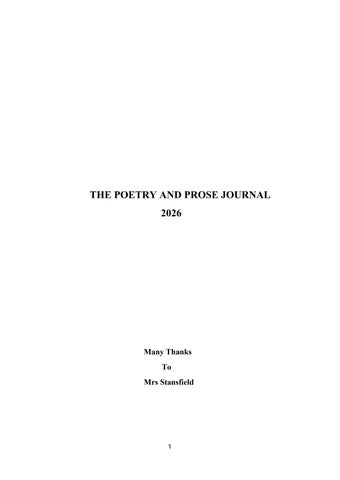
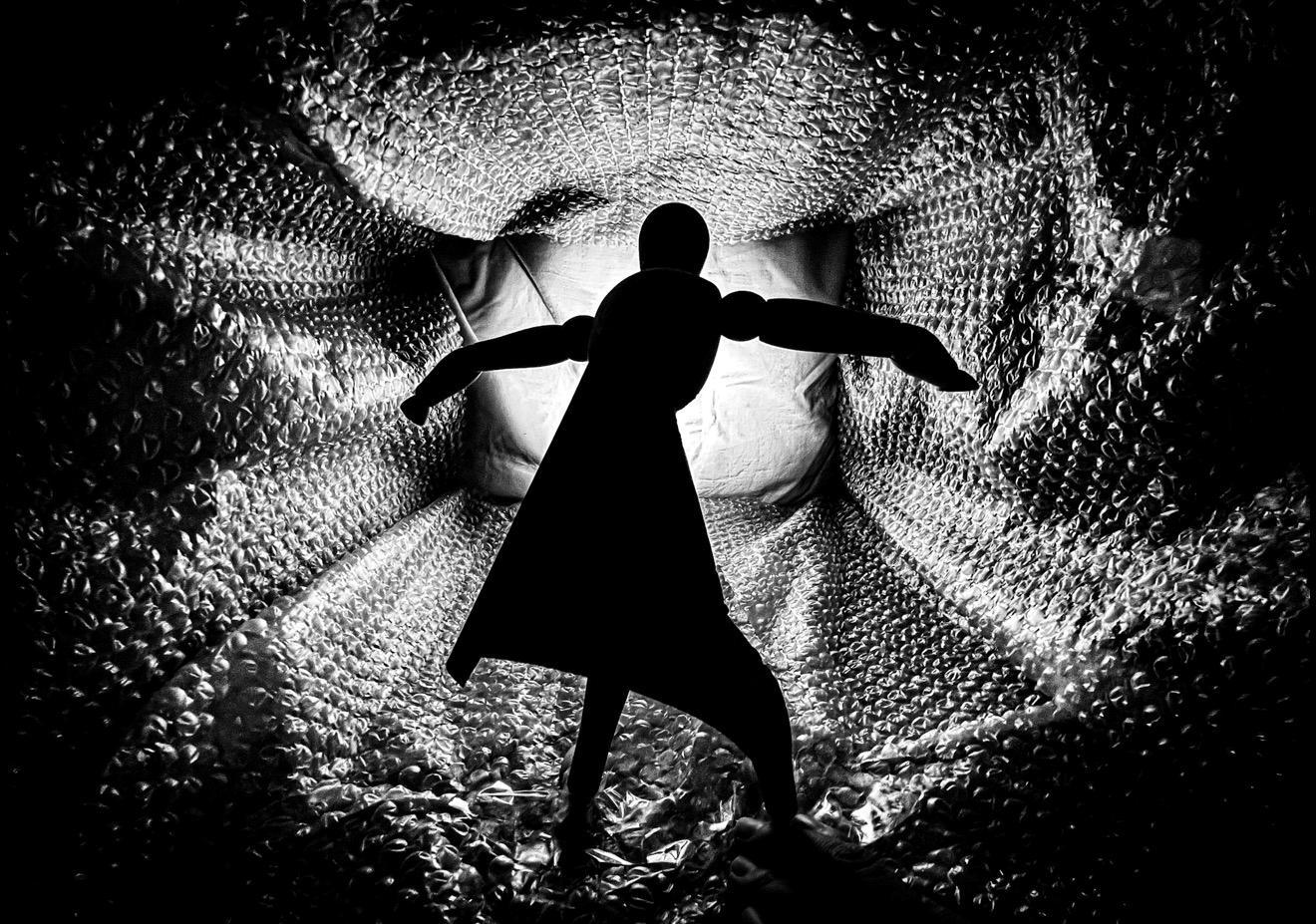
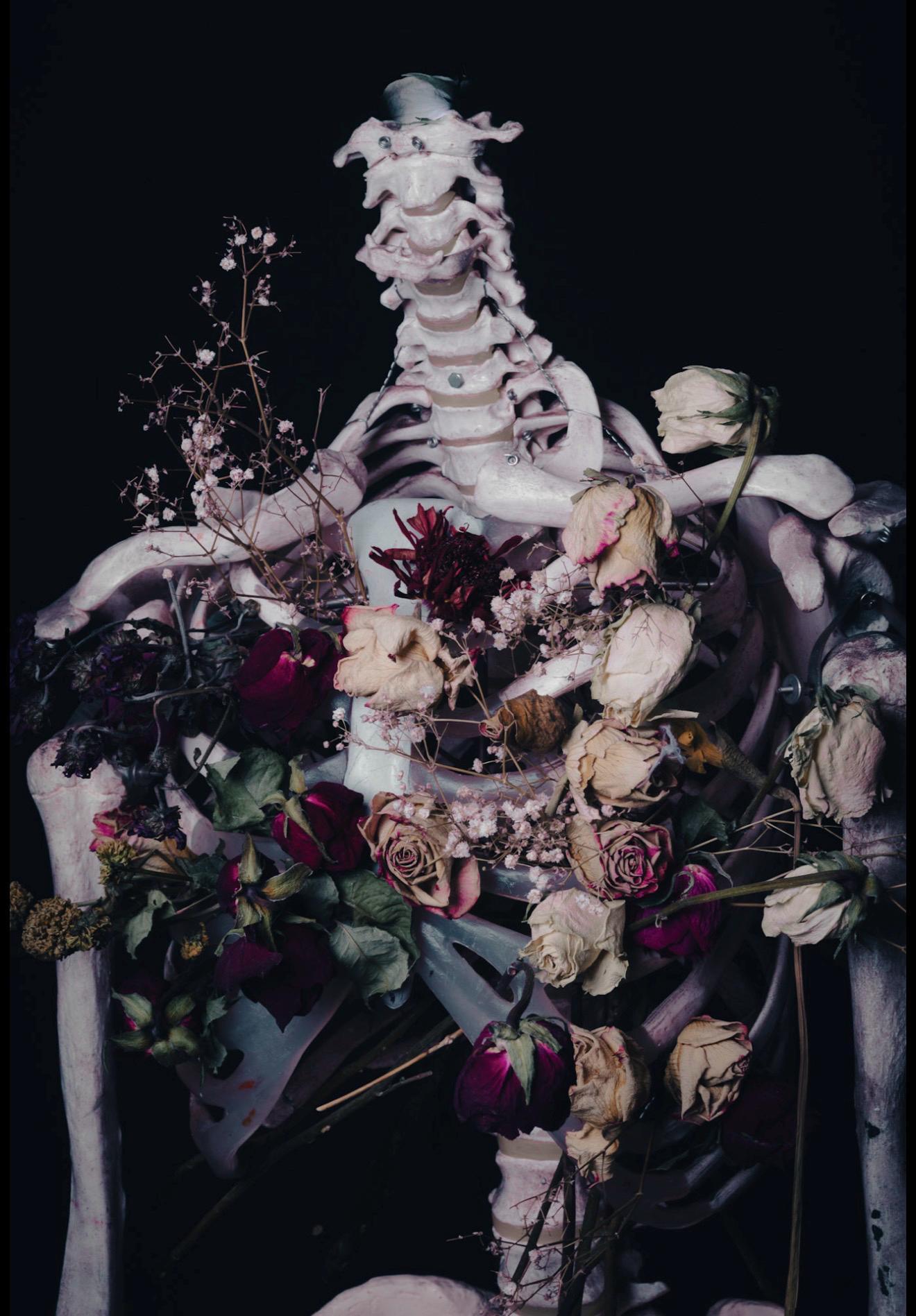
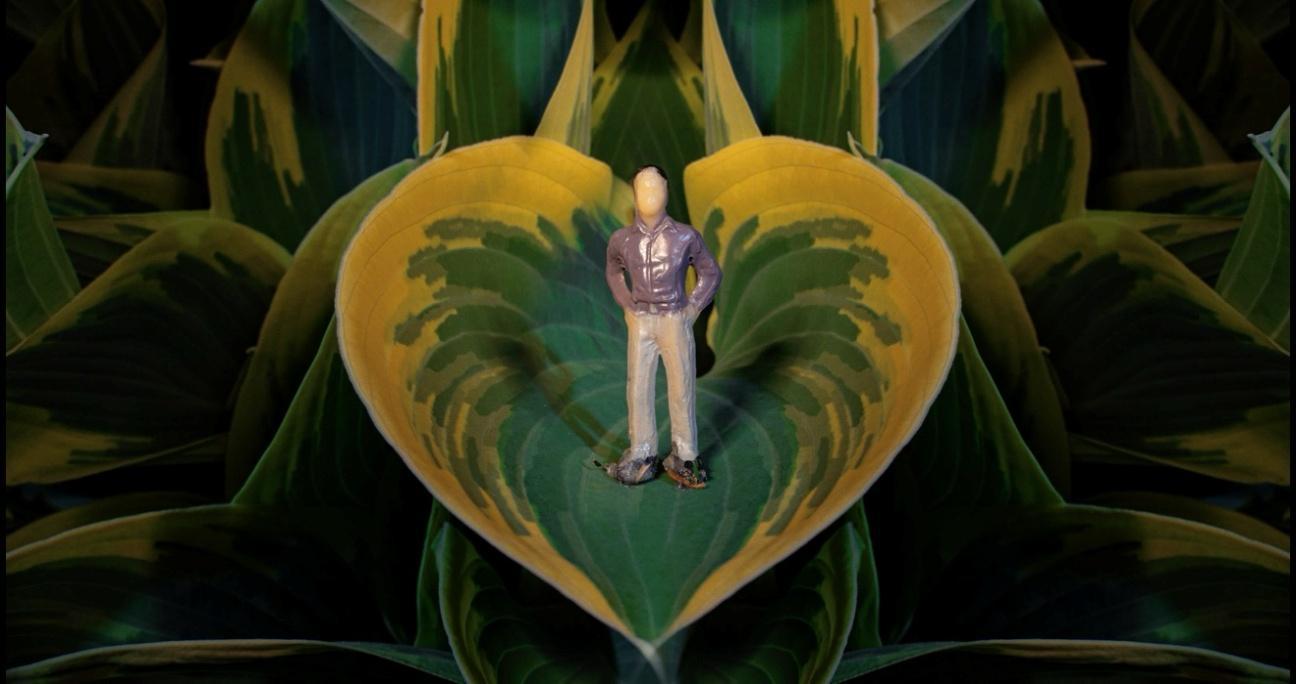
Editor Our grateful thanks too to Mr Dutton and the Art Department for visual contributions.
PROSE
The Pilgrim, the Preacher, the Preacher’s Wife - 5
Milly Cordeaux
Room Six - 9
Anonymous
The Committee Meets so Greg Can Pitch a New Design for Earth - 13
Milly Cordeaux
Never Go To Sleep With The Closet Open - 17
Archie Clarke
POETRY
Misotheism in Heaven - 21
Ethan Sparey
AVNAMPTITUWBOTWHFSORA - 23
Anonymous
Nothing left for me here - 24
Milly Cordeaux
Silent Bright - 26
Ethan Sparey
Loss of Romanticism – 29
Ruyi Imasekha
To the Store - 31
CrashDaE
That Made Me - 32
Charlie Nosworthy
The Pilgrim, the Preacher, the Preacher’s Wife
She’s coming back again. I know it. The one mystery about my husband I could never solve. La Viajera – the traveller. A woman who comes careering into our lives once a year, smashes up everything we hold dear, and goes away again. Always for three days, always in June, when the summer is fiercest.
She arrives after Sunday mass, the second one of the month, still on horseback, scarves trailing from her shoulders, wide-brimmed hat pulled low over her eyes. She tracks dust onto the checkerboard floor of the church that I will inevitably have to clear up later while they sit together over glasses of wine and discuss matters I’m not allowed to understand. I think she fills his head with nonsense. They sit there, for hours on end, like they're the only people in the world. They sometimes shout, sometimes cry, rarely laugh. When she leaves again for her next great adventure, he's left in a bad mood for days. His sermons become sloppy and repetitive, with none of his usual sincerity. He forgets to respond to his letters, throwing them aside after reading them and seeing that they're not from her. She never writes to him anyway. After she leaves, he is a different man. He ignores me and locks himself in his office for hours, writing and sleeping and muttering to himself. He finally returns to himself after a week or three, becoming the friendly, amiable ‘pillar of the community’ that the village knows and dotes on.
But I can tell she's always there. Just sat at the back of his mind. Like a tumour. Benign but ever present. Pressing on the parts of his brain that make him snappy and irritable.
I remember the first time, almost exactly ten years ago, that La Viajera stormed into my life. We had been married for just three months. I was only just getting settled into the village and my role as the vicar’s wife, and then she came silently through the doors of our church and has plagued me ever since. At first, I thought she was a previous lover of my husband’s, who, upon hearing of his marriage, came to try and dramatically win him back. But she walked straight past me like I wasn’t even there. They exchanged a look. The kind you can only see in people with more history between them than you could possibly comprehend. A kind of understanding that far transcends logic or reason. I still don’t know the full story of everything between them, as much as I want to find out, but I know it was never romantic. That was my only mercy.
She then guided herself and the horse out of the church and turned left towards the vicarage. He went after her, moving with more purpose than I’d ever seen from him. I was stunned, watching my newlywed husband leave his church to pursue another woman. A member of the congregation, an elderly woman who always stayed after mass to pray, tapped my shoulder and said to me: “She isn’t here to seduce him. She’s a pilgrim. She finds him wherever he is. They have known each other for a very, very long time. She was around before you and will be around when you’re gone. Just put up with her. For his sake. For all our sakes.” And then she turned away, pulling a few coins out of her purse to put in our collection basket.
I found them a few minutes later, sitting in our kitchen, huddled over some stained sheets of paper that looked as if they’d been torn from a book. The second she noticed me enter, she scrambled to gather her papers and stood up from her seat, the chair falling to the floor. That was when I finally got to look at her. She was taller than me, only by a little, but seemed to tower over me with presence alone. Her eyes were black and hooded the same uncommon shape as my husband's. Her hair was long and white, but she didn’t look old. Strange, off-putting, unnatural. Unplaceable.
For the next two days, they argued. By God, did they argue. I could hear them shouting into the small hours, about what exactly I’m not sure, but it made the whole house shake. I did catch the occasional word or sentence, though. “Don’t waste your life”, she would scream. “I’m safe here”, he would yell back.
I think every year she tries to convince him to leave me. To run away with her on horseback, never to be seen again. But I think every year he refuses because being here, being my husband, being the vicar of our parish, is ‘safer’ than whatever awaits him elsewhere.
Now that I think about it, I don’t know a lot about my husband. We got married after knowing each other for four months. He was the new vicar in the village; I was almost past marriageable age. It was perfect. Safe. Ordinary. The perfect business arrangement. Exactly what I thought I wanted. I left my household and moved into the vicarage. All I really know about my husband is that he’s a devout catholic, likes his coffee plain, and never, ever, preaches about eternal life for reasons he never explained to me.
He never likes talking about his age, and I’m not even sure how old he is. He seems about the same age as me, give or take a few years, but he has one of
those faces that could be wearing the weight of thirty years or fifty, and you’d never be able to place it.
And though he’s the perfect husband, she’s always a lingering presence, hanging over the house. Despite all the frustration her visits always cause, he always seems to look forward to the next time.
She came every year for nine years, like clockwork. So, this year, her tenth year, I was ready. I made no plans for that week and cancelled all my engagements. She wasn’t going to touch anything this time.
Then the day came.
The second Sunday of June. After Mass. I bid farewell to the congregation, and then I sat on a pew, waiting. My mind was racing. This year I’d get her. She’d realise she shouldn’t mess with my marriage and would never come back. Yes. I would have the upper hand, the power to end this game, once and for all. My husband would come to his senses.
But she never came.
Ten minutes passed. The church emptied, but I was so focused on her shadow crossing the doorway that I didn’t even notice my husband slip out the side door. I waited for an hour and she never came. La Viajera missed her pilgrimage.
Eventually, I retreated to the vicarage. His cloak was missing, along with his bag, his boots, and his personal bible. A note sat on the kitchen table, another small mercy on his part.
“My dear wife,
You’re probably wondering why she didn’t come this year. And why I’m gone. There's not much I can say.
What goes too long unchanged will eventually die of stagnation. I may not know what the meaning of life is, but the meaning of my life is to keep moving. I promise you that I did want the quiet life. Coffee in the mornings, visits in the afternoons, prayer in the evenings.
I made a decision. A very, very long time ago. I sinned. Badly. And my atonement has driven me all over the country. Galicia to Extremadura to Aragon to finally Castilla-La Mancha. To you. But now I must go. If I stay in one place,
these things that have chased me for hundreds of years will catch up to me, and I can’t bring that upon you. I hope you understand. Please live out the rest of your life with all the dignity and love you gave me for ten years. Do not cut it short. Let God decide when it is your time He has made a decision for me that does not allow me that liberty. The beauty of your life is that it is not eternal. You must live every day like you may die tomorrow. There is beauty in knowing that for you there is an end.
Everything I have ever done has been done out of love, and as my final act of love to you, I must leave you. Forget me, please. For all our sakes.”
- Milly Cordeaux
Tristan Zou GCSE - 2025
Room Six
There is a man in room six. He says his name is Eliot Crane. The nurses call him Eliot as it's easier than correcting him.
His room sits at the far end of the long psychiatric ward where due to lack of funding, half the lights don’t work. Sunlight does reach the window at the far end, but it never seems to make it as far as room six. The paint is yellowing and the radiators knock at odd hours. Sometimes making it feel that the whole building is slowly settling into the ground.
Every morning Eliot stands in the front of the mirror above that sink. His face bothers him, nothing major that many would notice, just small details. His nose seems different every day, or one ear sticks out farther than he remembers. I once watched him spend 20 minutes staring at his left eye because he was convinced that it blinked a fraction later than the other.
I’m assured that this is normal by Dr. Admis.
“How are you feeling today, Eliot?”
Eliot shrugs.
“Same as yesterday?”
“Eliot.” Admis insists,
“Depends.” Eliot says dismissively.
Dr. Admis writes something down.
Eliot hates when he does that.
Sleep becomes difficult. He has been dreaming about a burning staircase. A hallway filled with smoke and the sound of crying beyond a locked door.
Then he mentions names. Alice and Jonah or Mara. We found the scratched into the wood beneath his bed while trying to help move the frame.
There are dozens more, some very old, some quite new, each carved so deeply that it’s split the wood.
Eliot asked about them. He doesn’t get any answers. Always a “Don’t you worry about it dear.”
The bed has been moved back, and a rug now covers the floorboard.
A few weeks later a girl arrived in room seven. Her name is Lila. A quiet woman, barely spoke during the group sessions, sits there with her notebook instead. Page after page of sketches, eyes, mostly.
One afternoon she tore a sheet from her notebook and slid it to the table on which Eliot was sitting alone.
The drawing was that of a man standing in front of a fire, eyes relaxed and his posture slouched. Apart from those eyes, the face is unfinished.
Eliot asked whether it was Lila who drew it and she nodded.
“Who is it?” Eliot questioned.
Lila studied him for a moment.
“You tell me.”
From then, the dreams got worse. He’d wake up sometimes, sweat dripping and dirt under his fingernails. He once found a bruise shaped him a hand.
Dr. Admis increased their sessions together. There are periods where Eliot does not remember anything. He calls it ‘lost time’.
In one of the sessions, Dr, Admis talked to Eliot about this.
Eliot laughed, stating that “Everyone forgets things.”
“Not entire afternoons, Eliot.” Admis responded, his eyes were narrowed and his voice soft but Solem.
He slid a folder across the table, a folder I compiled. Inside were pages covered in handwriting. Eliot did recognise the notebook, it was his.
The writing was not.
One week later, Lila left. No announcement, or explanation
When Eliot asked where she had gone, the nurses looked in confusion and responded,
“What girl?”
On that night, Eliot couldn't sleep. It was two in the morning when he heard footsteps in the corridor, they were slow and measured. They stop, right outside his door.
Admis walked in.
He places a old photograph on the bedside table, the picture is faded and damaged by smoke. You can make out a group of hospital staff, standing outside the building.
Eliot recognises Dr. Admis almost immediately, he looks the exact same, he's not younger, nor older, exactly the same.
In the back, there stands a woman. Lila. Besides her is a man.
Eliot froze. The face is his. The photograph is dated 1983.
“Eliot” Admis said carefully, “there is something we have been trying to get you too remember”
Eliot looked up, his face a cold shade, his eyes had gone still.
“What happened in that fire?”
Admis looked down, he doesn’t answer immediately, instead looks at the photo.
Outside, in the corridor, the light flickers.
“That’s the problem”
A door slams, and from the stale darkness come a voice. A voice that Elliot knows.
“I wouldn’t tell him that if I were you.”
Dr. Admis’s face drained of colour, the voice laughed.
“After all, he wasn't the one who started it.”
- Tiggy Cammegh – A-Level 2024
The Committee Meets so Greg Can Pitch a New Design for Earth
The Committee is ready to meet once more. They gradually file into the boardroom, some in small groups, some alone. This pitch has been widely anticipated in the same way that one might anticipate the arrival of a bank statement: a mixture of vague dread and inexplicable curiosity. An intern is rushing around with cups of coffee and tripping on nearly everyone’s shoes along the way.
As the beginning of the meeting approaches, the Committee settles into their ineffective horseshoe table layout fifteen of The Company’s best executives are ready to hear the next pitch. Their reputation is one of callous rejection and cutthroat questioning. Enough to make even the best employees squirm.
Various workers from all branches of The Company are piled in around the edges, standing, because there isn’t enough room for twenty more chairs, as if they were attending a spectator sport and not a corporate meeting.
The clock strikes twelve. And so it begins.
An executive in a grey suit stands up from his seat at the centre of the horseshoe. His lanyard identifies him as ‘Mark’. He speaks, his voice clipped and well-acquainted with the routine of a meeting.
“The Earth has gone untextured for far too long, and we still need to figure out what to do about it”, he announces to the Committee. “According to the minutes from the last meeting, I believe it’s Greg’s turn to pitch a design. Have you done all the paperwork?” He addresses a young man standing nervously by the door like he could run away at any second. His blazer has a small orange stain on the sleeve from lunch, and his tie is slightly wonky, tied in a hurry. An intern hands him a clicker for his presentation. He thought it best to have visual aids with his work.
The young man clears his throat before he speaks. “Yes, I believe so. I have copies for everyone to follow along, if that’s okay.” He hands out stapled documents to the rest of The Committee, five pages thick and dense with text, still warm from the printer. “You can read through that in your own time, but I’ll provide an overview of the plan to you now. Feel free to jump in with any questions.”
He pauses to check his notes. He practised his pitch in the lift on the way, and he desperately hopes he doesn’t mess up. This could be his big break. He gulps, takes a deep breath, and begins.
“For starters, I want this planet to be colourful. Janet, I really like what you had in your design. Very minimalistic. But to me, it just felt too… I don’t know… empty. I thought I’d use some of the blue, though, which I’ve made a fluid layer over the crust with some tall bits of green and brown crust poking out to break it up, you know? Big cliffs, rolling hills. Give it some texture. I thought I could decorate it with some of those ‘plants’ that Michael’s been prototyping, so the animals and humans yes, Linda, I’m stealing them from your design they could have something to eat. You know, so they don’t die really quickly.” He presses a button on the clicker to show an image on the projector screen. It shows a tall, beige, fleshy blob standing next to a spindly green blob with an arrow pointing from one to the other.
Linda glares at Greg from across the room. She had spent months designing all the animals and humans perfectly. In the simulation, they did everything they were supposed to, but she’d forgotten to give them anything to eat, and they all started eating each other. It was not a pretty sight. The Board was not happy.
Janet cuts in, “Aren’t humans kind of a risk? I mean, in Linda’s design, they all started eating each other. That’s no way for a planet to live.”
“Yes, Janet. Humans are a risk, but I’ve tweaked their hunger mechanisms, so they only eat the plants and some of the animals.” He presses a button and the screen now shows a complex diagram of arrows between beige, green, pink, and red blobs, surrounded by tiny, almost incomprehensible notes, words like “decomposition”, “nutrients”, and “consumption”.
He continues, “I just really wanted to include them because I’ve made the climate perfect for them. Not too hot, not too cold. Rainy enough that the plants can grow, but not so rainy they all drown.” He pauses, flicks to the next page of his notes, clears his throat, and continues.
“I think I want to adopt a different approach to what we’ve seen previously. I don’t want to give each human a pre-determined path. I don’t want to make them all the same either. I want to put them on the Earth and just let them be. Minimal interference. I want this planet to be busy; full of life, you know? Full of hope and joy and all that good stuff. That’ll keep them alive. Not us, not the
landscape, themselves. I want to give them the tools to survive and just see what they do. Yes, there’ll be suffering, there’ll always be suffering, but I hope that through the suffering, they have hope. I think this planet has potential. I think it has the potential to last a very long time. Longer than Janet’s, and certainly longer than Linda’s.
“The humans they’ll have communities, and they’ll work together to help each other. They’ll build things and make things, and they’ll give everything names. They’ll create vehicles to explore with and homes to return to when they get tired. They’ll make harbours and piers and places to meet, to laugh, to socialise.
“They’ll define everything! Time, love, beauty, strength, morality, anything they can get their heads around. They’ll ask questions and then spend their lives trying to answer them. They don’t need to know how they got there, that they’re a component of a wider project, they just need to know that they’re alive and will be around for as long as they decide to be.
“We will give them the materials; they will do with them what they please. They may hurt each other. That is okay. It’s not good, but it’s not bad either. A collection of humans who refuse to fight is a collection of humans who refuse to survive. They can’t always be good. They do not have to be good. They just have to do what they can to survive, whatever it takes.
“They’ll explain everything with gods, and they’ll make buildings to worship them in. Big, tall things that can be seen from all around. Stained glass, high ceilings. Hundreds of years of work for something they believe in. They’ll get together and worship something they made for themselves.
“There are no gods.”
“We aren’t the gods. They will be the gods because they will look at each other and see something there that makes them believe in the divine. Everything we give them will be so joyful and necessary and important that they won’t be able to blame their luck for it. They’ll craft myths about the world around them to explain what simply exists.
“Their world will be beautiful. They will be beautiful. I just hope they look after it.
“I hope my design can be accepted for simulation. Thank you.”
The Committee applauds politely and begins to consult their notes. Their lunch break begins in fifteen minutes.
- Milly Cordeaux
Henry McLeod-Scott – A-Level 2022
Never Go To Sleep With The Closet Open
When I was a kid, I had a rule about my closet. It had to be all the way shut before I could even think about going to sleep. My mom thought at the time it was just a phase, and she had been telling me that I was too old to be imagining monsters in my closet.
The reason was a reoccurring dream, that I had been having since I was five years old, it was this room that was navy blue and it was on the top story of a house, except the whole room was slanted. So, the entire time I’m in these dreams, I’m hanging out in the doorway because if I go a little bit further into the centre of the room, I would slide down and not be able to get back up. About three feet to the right of the doorway was a closet with a sliding door. I knew that the door of the closet had to stay shut, and I had to stay away from it.
I had that dream maybe five or six times over a year or two, and each time I got a little bit braver, and got a little further from the doorway and a little closer to the closet. The last time I had that dream, I got all the way to the closet, and as I predicted a man came out of there, or at least that's the closet way I can describe it. He grabbed me. I woke up as soon as he pulled me into the closet and I haven’t had the dream since.
I was glad, I thought it was over. It was around that time though that I started feeling the same way about my real bedroom, that I had felt about the closet in the dream room. I knew that something bad was in there. One night, my dad left the closet door open, he came in, did the whole goodnight routine, kissed my head, tucked me in, turned the light off on his way out my room but he forgot the closet. It was wide open; there was just a rectangle of black where the closet was.
I laid there telling myself, swearing on everything that I’d get up and close it. I would count to ten and start over. The hallway light flickered off, and my parents went to bed, and the house got that weird type of quiet that only comes after midnight. At this point I was still counting to ten, trying to get the courage to get up out of my bed and close that closet door. The closet shifted. It was the sound the floor makes when somebody has been standing in the same place for a while and they shift their weight to one leg
from the other and then something leaned around the door. I’d love to say it had claws or razor-sharp teeth, but what I remember clearly was how thin it was, how its head was too big for its neck or how it was smiling. Except it wasn’t a smile it was just that the skin had been pulled so far back that’s the shape its face was making. It looked directly at me. I could not move; I was completely frozen in panic or maybe fear, I could not think. The silence that had just been in the house was now the sound of my own blood rushing through my ears; I could hear and feel my heartbeat in my face.
Then somewhere in the house, our phone made a sound, it was my grandparents old house and we had one of those old landline phones that connects to an answering machine and if you left the phone off the hook for too long this voice would come on. It had this flat dead voice, and it said, “The following is the tone for the hearing impaired” Then this long beep, except nobody was on the phone, it was on the hook. I’d watched my mom hang it up before bed.
The thing in the closet tilted its head when the voice played, almost like it was listening to it. And then during the beep, under that long, flat tone, came the sound of whatever it was, creeping back into the closet. It just ducked back in as soon as the beep started playing.
I stayed awake as long as I could. I wanted to stay awake until I could see the sun come up and shine into the closet, but somewhere around 3.30, 4am I fell asleep. When my mom woke me up the closet door was closed, I figured she had closed it and I went to school like any other normal day. About halfway through the day my teacher gets a call and tells me I need to go down to the principal's office. I think I'm in trouble, and I'm trying to wrap my brain on what I could have done, and when I get to the office my mom is there and her face is red and puffy like she had been crying for hours and hours.
The second she saw me, she crossed the room and grabbed me up in the tightest hug she’d ever given me. So tight that it started to hurt a little. She had something in her hand, but I couldn't make it out. When she finally let go, her and the principle were looking at me with this sort of careful, scared expression and my mom asked me in a soft, shaky voice,
“Did you let anybody into the house last night?”
Still thinking I am in trouble and not really understanding why she’s asking me, I just stare at her. I’m thinking about the guy in the closet. As if she could read my mind, she said,
“You are not in trouble sweetie. We just need to know if anyone was in the house with us last night.”
Still kind of scared I replied “No, nobody came through the front door”
She went very still, and she asked what I meant, why I had said it that way. For the first time, I told her about the closet, about the dream, about everything. I told her about the man in the sliding door closet and how when he grabbed me the dream stopped, but then the closet stuff started in real life. And when I got to the part about the phone, it was like all the colour drained from her face, and when I said I had tried to stay up until sunrise but fell asleep shortly before, she dropped the thing that was in her hand, and it was a Polaroid photo.
On it, was a picture of me asleep in my bed. The same bed I had left that morning, and I was smiling, only it wasn't a smile. It was just the shape my face was making because the skin was being pulled back so tight.
My mom had found that Polaroid that morning on the kitchen counter.
Right next to the phone.
- Archie Clarke
Cassius Baker – A-Level 2024
Poetry
Misotheism in Heaven
The Romani still whisper to the devla at dusk, and leave, for the mulo, a crust and a bent coin.
Old Jupiter’s thunderclap turns Christian to dust; Diana’s wild crescent makes the Baptist’s throat grow dry. On Ganga’s hip a thousand names learn to drown and to rise; in Mecca’s cold stone, a single name hammers the sky.
The Buddha smiles and offers no god to the eyes. The Torah parts seas but will not let that sea pass by.
The cross drinks blood; the crescent drinks only the light. The lotus drinks nothing and blossoms in spite of the hoax.
Each one unscrews the head of the other at night.
Each one swears my altar is nothing but smoke and old jokes. "I am the one true god” they sing as a choir. "I am the one who will burn the liars’ own pyre.”
- Ethan Sparey
Elisa Saunders GCSE 2025
AVNAMPTITUWBOTWHFSORA
One fish, two fish, red fish, and then blue fish. Nice taste, so I think it was a good dish. Life's like lots of dice, to see what Is cast Look back I did, to see me in the past.
This day I ate some food to sate my mouth I will go on a plane that brings me south The dog says "meow", the cat says "woof", and I Eat prep and then pin blame on my dog, Ty.
These words are weird, but I think they are bright I might go out and buy for mom a kite I am out of new words so I just might End this and go to sleep, call it a night!
- CrashDaE
Tristan Brett – GCSE 2025
Nothing left for me here
Dripping tap, ebbing tide, Waves against the shore. Who am I meant to be If I don’t know you anymore?
Dripping tap, ebbing tide, I can't keep keeping score. But who will count the puddles If I'm not here anymore?
Ticking clock, blinking light, Broken boats and oars.
Thirteen whole years I've lived here, But what am I staying for?
Dripping tap, ebbing tide Waves against the shore. I love this place, but I can’t Call it home anymore.
- Milly Cordeaux
Tiggy Cammegh – A-Level 2024
Silent Bright.
They solved world hunger. They brought about world peace. They cured every disease. They filled every need. In time, they grew bored of their crystalline cities. When they stopped fighting, They began to fade. Not with a roar, but with silence. No new children. Fewer voices.
A few metal tubes threw themselves into the sky. Then, quite suddenly, they died together.
All they built returned to the earth. The plants withered. The animals died. And then. Stillness. With nothing alive, everything became the same: dead seas, dead lands. Then, a long and dreamless sleep.
The sun swelled, drinking the last oceans, turning the deserts to fields of glass.
Later, the sun shrank, to a cold white speck in the endless black. The dead earth cooled.
For a while, stars were born as quickly as they died. Then their deaths outnumbered their births. Two gone before one returned, then three, then four, until only a handful of sparks pricked the void.
When the last star guttered out, the darkness did not stir.
A billion years passed since the final light vanished. And then, a flicker. Bright. Moving. Alive. It crawled across the abyss before fading. Another followed.
Then, they began to land. They dug into the cold soil and placed sealed boxes there. Children of Adam.
They did not stay. They vanished back into the black eternity.
- Ethan Sparey
Laura Ding – GCSE 2025
Loss of Romanticism
I study the people around me
I watch the way their hair catches the light
Their eyebrows scrunch, their heads slightly tilt
All things others don’t see
Yet I throw stones at a bottomless well
As I admire the beauty in all creatures living
They admire the pocket-sized universe referred to as their cell
Wordsworth forgive them for their sinning
Icarus falls from the sky once again
The moon unhooks itself from the heavens
Summer turns fall and winter turns spring
Yet to their mechanical vessel they cling
Then the pocketed light abandons them
The artificial sun finally sets
They finally look up at God’s burning diadem
The oldest fire waiting to be loved
As they gave glory to the machines they beheld
- Ruyi Imasekha
Billy Ma – GCSE 2025
To the Store
I woke up in my bed at six a.m.
I sat upright and looked around and saw The everlasting, dreaded to-do list.
On it, it said to buy stuff at the store.
I left my house and got there at half past. The roads were mute; there was a lack of cars.
'Twas quick and easy, I got all my stuff.
My back turned, I was walking back to home.
However, the rushing of traffic was Surprising to me, compared back to the Serene and empty landscape that it was.
With care I took a detour and I strolled.
However, when I got to my abode
My stuff was left behind; I loudly sighed.
- CrashDaE
Harry Baxendale A-Level 2024
That Made Me
I thank the gods that made me, For the life that lies before me, For the impression I’ve made in my wake, I only hope it reflects how I feel.
Chapters remain unwritten, And I hope on hope that their contents instil pride in you. With head held high I can say I’ve worked hard, But only fools are content, only dead fish go with the flow.
I’m gripped by complacency now, I feel stagnant, which is allowed, maybe encouraged, But I pray now that it doesn’t last, And I pray that the path I follow leads to a life well lived.
I thank the men that made me, May my strengths be my armour, May my flaws make me stronger, Let me exist in the image you envisaged.