
Alliant is the ODA Endorsed Insurance Broker
LIFE INSURANCE is a smart financial investment for you and your family. Unlike many other benefits, life insurance is more cost-effective now than in the recent past. During this tough economic period, ensuring that your family will be financially secure in the future is more important than ever.
DISABILITY INCOME eases the financial burden associated with a serious illness or injury that keeps you from working. Some professionals have no emergency fund to replace lost income due to a disability and some disabilities are not covered by workers’ compensation.
BUSINESS OVERHEAD EXPENSE INSURANCE can help you and your business make it through a health crisis, such as an accident or sickness. This insurance provides benefits to help pay many of your practice’s overhead expenses should you become disabled and unable to work.
ALLIANT IS THE NATION’S LEADING SPECIALTY BROKER In the face of increasing complexity, our approach is simple: hire the best people and invest extensively in the

through one national platform, giving clients complete access to our resources and expertise – regardless of where
on new opportunities to grow and protect their organizations and their people. alliant.com | CA License No. 0C36861 © 2025 Alliant Insurance Services, Inc. All rights

We
Thank you to the following businesses who support the Oklahoma Dental Association by advertising in the Journal:
Alliant Insurance Services
Endodontic Associates
Endodontic Practice Associates
MedPro
MidFirst Bank
ODA Rewards Partners
Oklahoma Health Professionals Program
Suction Solutions
Tobacco Settlement Endowment Trust
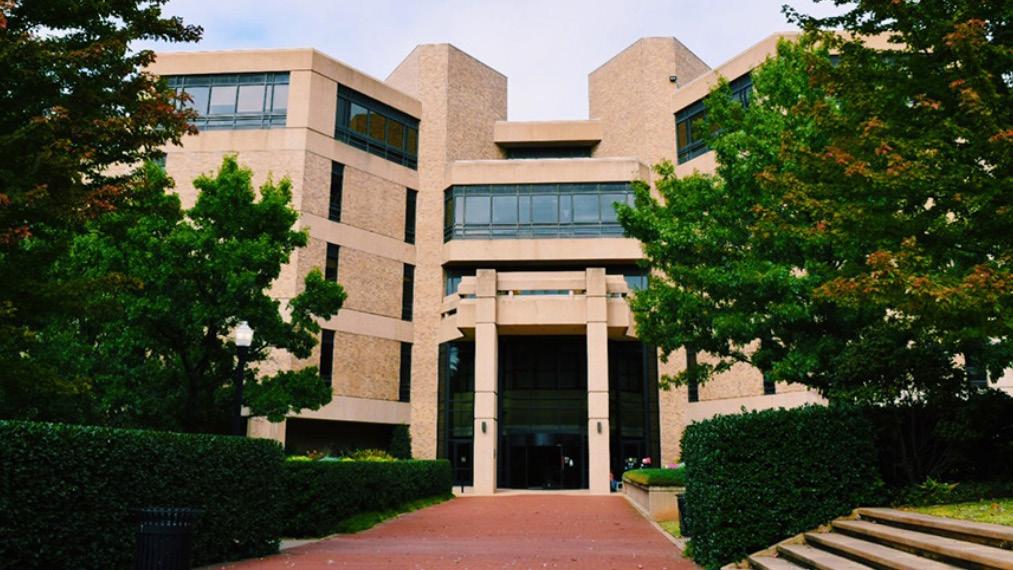
6 Educating, Serving, Leading: 50 Years of the OU College of Dentistry by Dr. Paul Mullasseril
STATE ASSOCIATION 4 ODA Calendar 7 Welcome New Members
8 ODA Workforce Task Force Update 9 2026-2027 Officers Installed
10 ODA Executive Director House of Delegates Address 12 ODF Mobile Smiles Update
18 Congratulations ODA Leadership Academy Graduates
THE OKLAHOMA DENTAL ASSOCIATION
JOURNAL (ISSN 0164-9442) is the official publication of the Oklahoma Dental Association and is published quarterly by the Oklahoma Dental Association, 317 NE 13th Street, Oklahoma City, OK 73104, Phone: (405) 848-8873; (800) 876-8890. Fax: (405) 848-8875. Email: information@ okda.org.
POSTMASTER: Send address changes to OKLAHOMA DENTAL ASSOCIATION, 317 NE 13th Street Oklahoma City, OK 73104
Periodical postage paid at Oklahoma City, OK and additional mailing offices.
Subscriptions: Rates for non-members are $56. Single copy rate is $18, payable in advance.
Reprints: of the Journal are available by contacting the ODA at (405) 848-8873, (800) 876-8890, editor@okda.org.
Opinions and statements expressed in the OKLAHOMA DENTAL ASSOCIATION JOURNAL are those of the author and are not necessarily those of the Oklahoma Dental Association. Neither the Editors nor the Oklahoma Dental Association are in any way responsible for the articles or views published in the OKLAHOMA DENTAL ASSOCIATION JOURNAL.
Copyright © 2026 Oklahoma Dental Association.

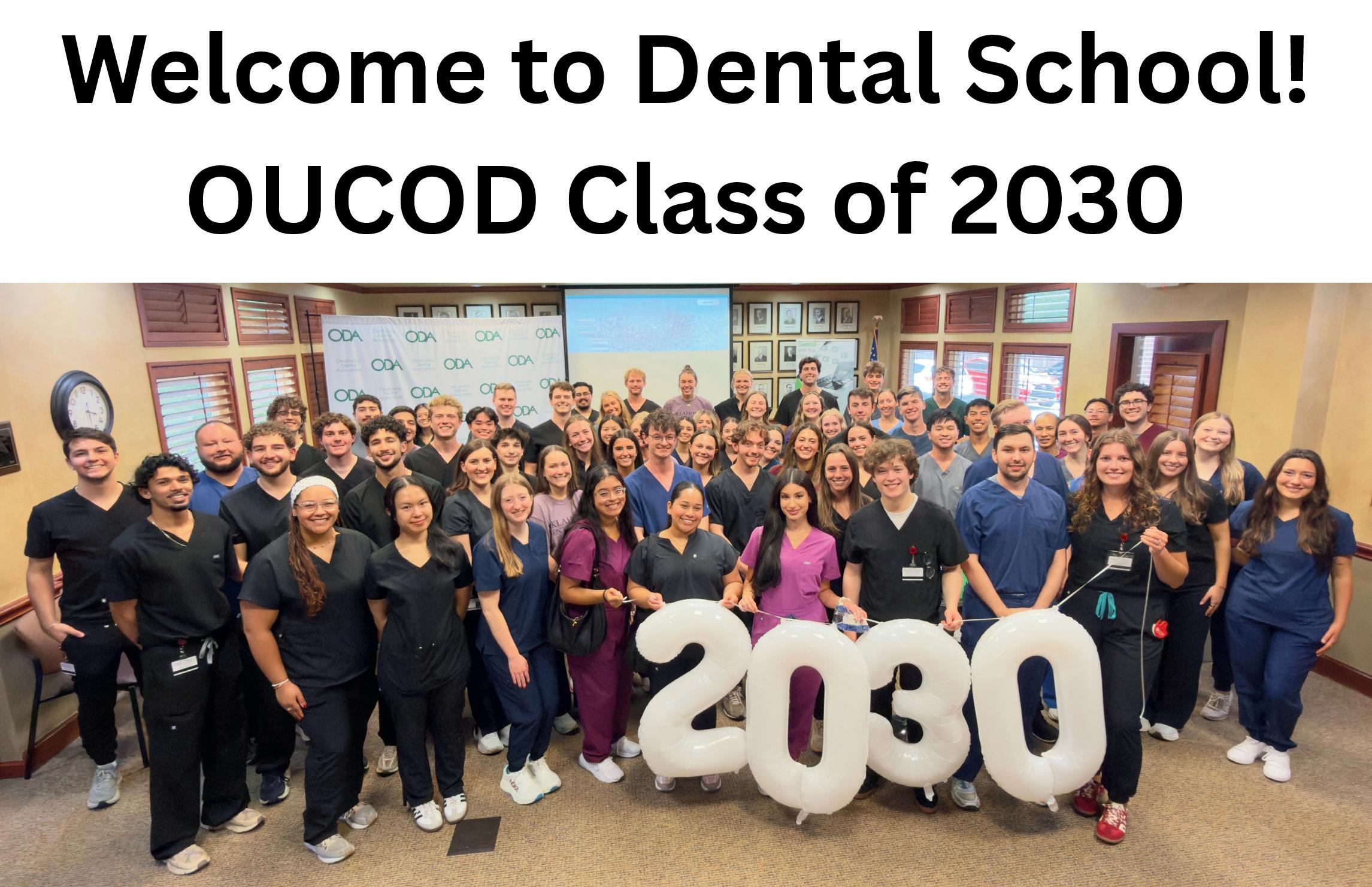
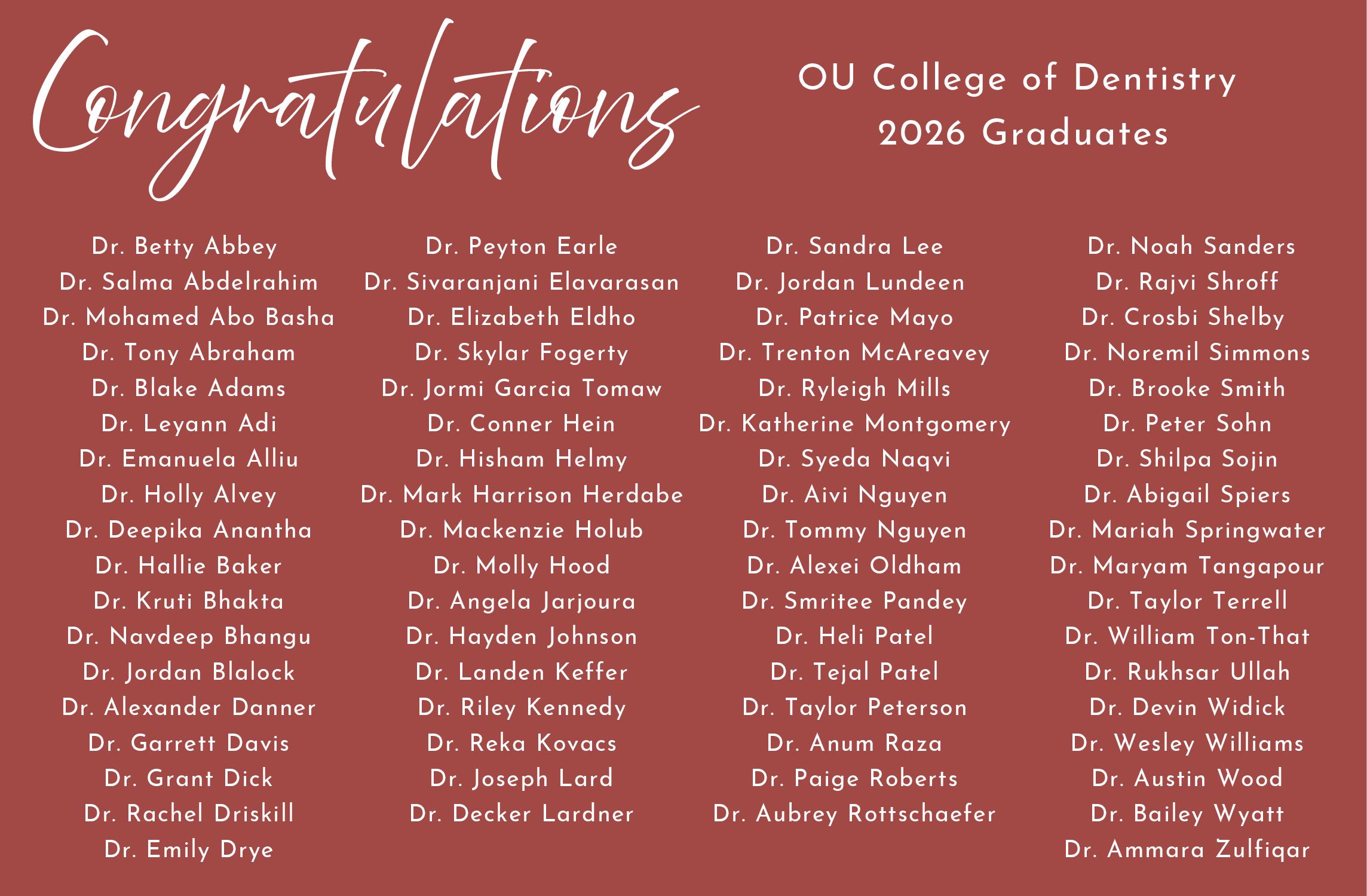
27 Congratulations OUCOD Class of 2026
34 ODA Rewards Partners
21 Deadline for Updated Digital Accessibility Regulation Extended to May 2027
13 A Successful Session for Oklahoma Dentistry by Mark Yates
15 Oklahoma Strengthens Noncovered Services Protections in New Law
17 Robie Herman Memorial Golf Tournament Photos
18 2026 DENPAC Members
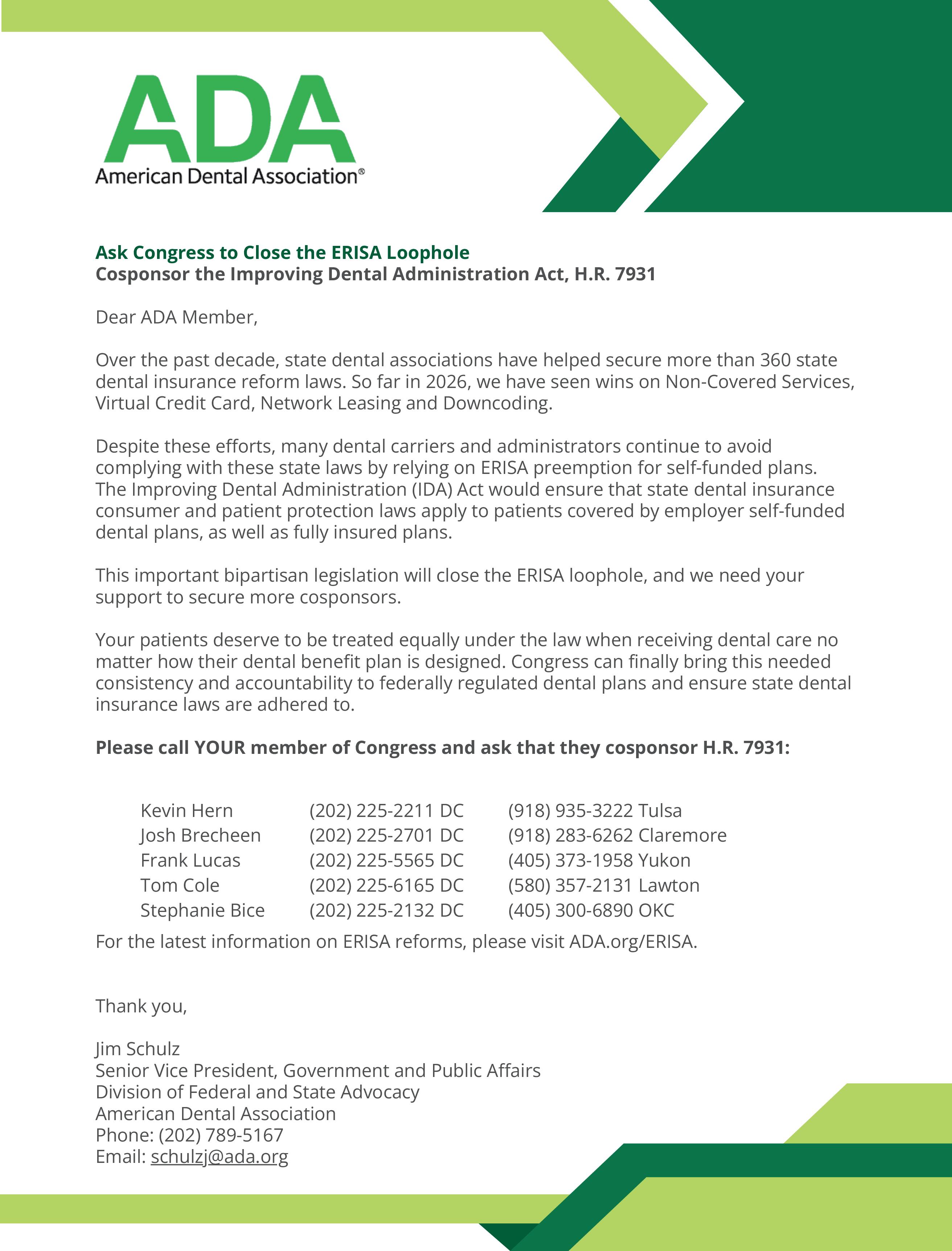
19 Ask Congress to Close the ERISA Loophole
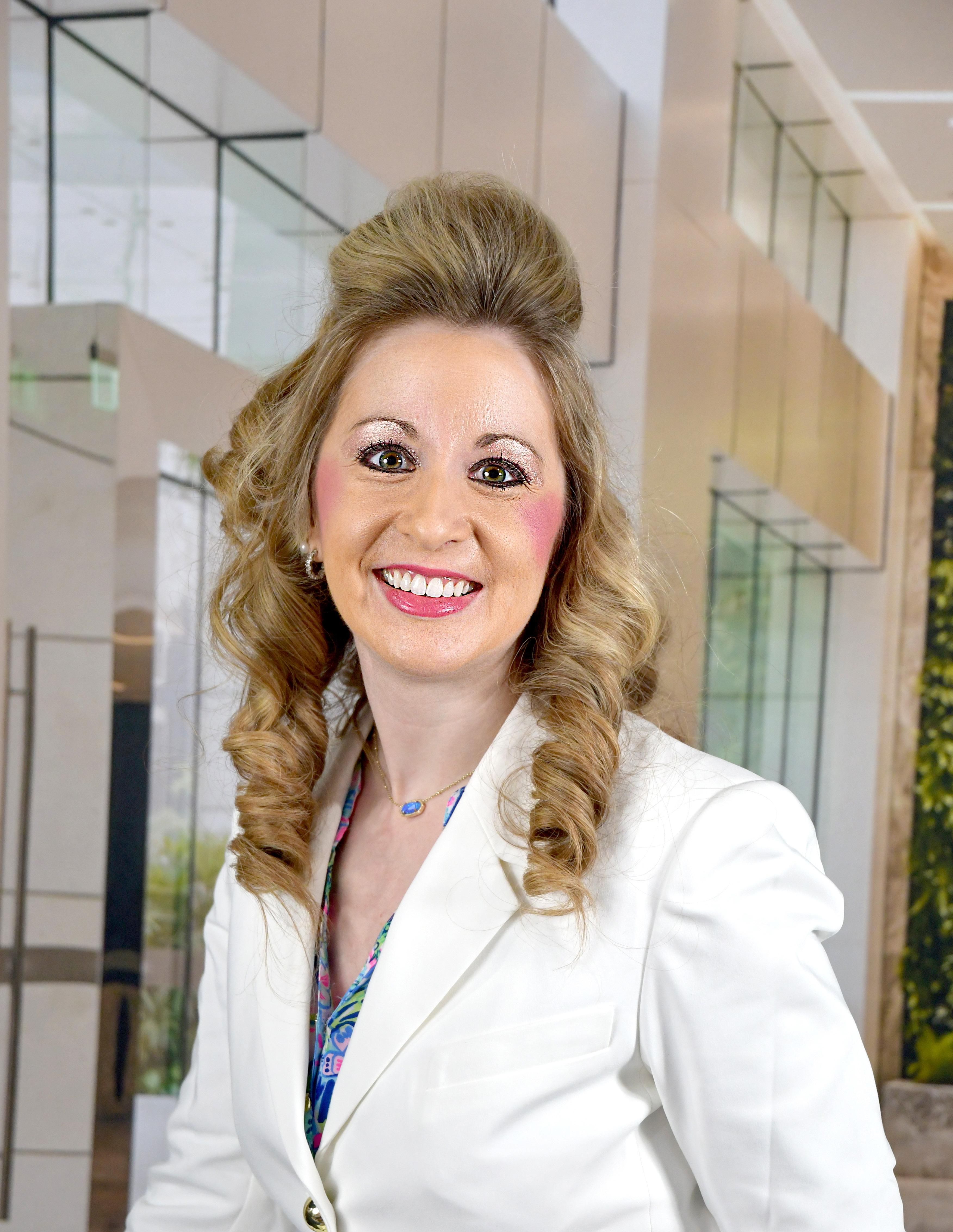
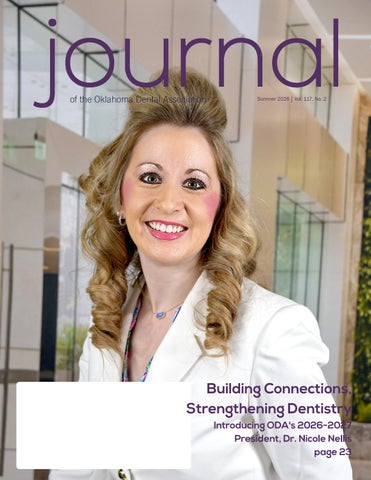
23 Introducing ODA President Dr. Nicole Nellis: Building Connections, Strengthening Dentisty
28 Beyond the Arch: Gut Check: Why are more people dying from colorectal cancer before age 50? by Stacy Sigler, RDH
32 Case Study: Differential Diagnosis of the Gingival Mass by Glen Houston, DDS, MSD
35 Classifed Ads
Is Your Information Correct?
Help the ODA keep you informed about legislative actions, educational opportunities, events, and other important member-only news. Contact Ansley Bennett at abennett@okda.org or 800.876.8890 to provide ODA with your current contact information.
ODA JOURNAL STAFF
EDITOR
Roberta A. Wright, DMD, MDSc, FACP
EDITORIAL BOARD MEMBERS
Philip Morton, DDS, PhD
Stacy Sigler, RDH
Glen Houston, DDS, MSD
ODA OFFICERS 2026-2027
PRESIDENT Nicole Nellis, DDS president@okda.org
VICE PRESIDENT
Tabitha Arias, DDS vicepresident@okda.org
SECRETARY/TREASURER
Erin Roberts-Svob, DDS treasurer@okda.org
SPEAKER OF THE HOUSE
Matthew Bridges, DDS speaker@okda.org
IMMEDIATE PAST PRESIDENT
Twana Duncan, DDS pastpresident@okda.org
ADMINISTRATIVE STAFF
EXECUTIVE DIRECTOR
F. Lynn Means
DIRECTOR OF GOVERNANCE & FINANCE
Shelly Frantz
DIRECTOR OF MEMBERSHIP
Ansley Bennett
DIRECTOR OF COMMUNICATIONS
Jill Johnson
DIRECTOR OF EVENTS & EDUCATION
Ramsey Tarrant
OFFICE & COMMUNICATIONS
MANAGER
Katie Douglas
See more online at OKDA.ORG/CALENDAR
June National Oral Health Month
June 12
Medicaid Task Force Meeting Online & ODA Office 10:00am
June 12-13
ODA Botox and Dermal Fillers CE Course
Southern Hills Marriott Tulsa
Register online at okda. org/events
July
July 2-3
ODA Closed
July 24
Council on Governmental Affairs Meeting Online & ODA Office 9:00am
July 24 Council on Membership and Member Services Meeting Online & ODA Office 11:00am
July 24
ODA Board of Trustees Meeting Online & ODA Office 1:30pm
August
August 6 National Fresh Breath Day
August 22 National Tooth Fairy Day
August 21-22
Southwest Dental Conference Dallas, TX
September National Gum Care Month
Dental Infection Control Awareness Month
Sept. 4-7
ODA Closed Sept. 11 OSHA and Infection Control Webinar Online
1:00-3:00pm See more info online at okda.org/events
September 18 ODA Membership Summit
September 25 Components' CE and Business Meetings: Central, Southwest, and Northern Online
All dentists may attend the one-hour CE. Details coming soon at okda.org/events
October National Dental Hygiene Month
Orthodontic Health Month
October 1 Eastern District Dental Society Annual Meeting and CE Event
Pete's Place - Krebs, OK 6:00pm - 9:00pm Register online at okda. org/events
October 2
ODA Risk Management Webinar Online 1:00-3:00pm Details coming soon at okda.org/events
October 8-10
ADA 2026 Scientific Sessions Indianapolis, IN Learn more at ada.org/ education/scientificsession
October 16 ODA CPR & BLS Course Details coming soon at okda.org/events
SAVE THE DATE
February 5 Oklahoma Mission of Mercy State Fairgrounds
Oklahoma City Find more info online at okmom.org
Stay connected with the ODA!



This year marks a meaningful milestone for the University of Oklahoma College of Dentistry as we celebrate the 50th anniversary of our first graduating dental class in 1976. For five decades, the college has prepared dentists who have gone on to serve communities across Oklahoma and beyond with skill, compassion, and a deep sense of responsibility. We take great pride in the impact our graduates have made across the state, and as we reflect on that legacy, we are equally focused on the work ahead and the role we must continue to play in meeting the needs of our communities.
Oklahoma continues to experience significant gaps in oral health access, particularly in rural and underserved areas. At the same time, practices across the state continue to face a shortage of dental hygienists, which directly impacts patient access and practice capacity. These challenges are
not new, but they are increasingly urgent, and they call for thoughtful, sustained action.
One of the most impactful steps we have taken is increasing class sizes across our programs, with significant growth in both our dental and dental hygiene programs. These increases will have a positive effect on communities across Oklahoma by expanding the number of graduates entering the workforce and helping practices care for more patients.
We are also proud to announce the launch of a new Dental Assisting program beginning in 2026. This addition reflects our commitment to supporting the full dental team and to ensuring that practices have the support they need to provide efficient, high-quality care.
Expanding the workforce is only part of the solution. We must also continue to find meaningful ways to reach communities where access remains limited. The MobileSmiles program is one example of how we are doing just that. Following its launch in Guymon, the program has already provided care to hundreds of Oklahomans, bringing services directly to communities that might otherwise go without. We are encouraged by its early success and look forward to expanding this model into additional areas. We are also advancing how we care for patients with urgent needs. The College’s Acute Care Clinic represents an important step forward, providing timely,
appropriate care while also giving students valuable, hands-on experience. It is a reflection of our commitment to meeting patients where they are and ensuring they receive the care they need when they need it.
The pediatric dentistry residency will soon celebrate its first graduating class, in 2026. We have increased next year’s class size by one for a total of four residents per year. All of our programs remain fully accredited, reflecting the strength and stability of our academic mission.
None of this work happens in isolation. It is made possible through strong partnerships and the continued support of our colleagues across the state. Investments in student scholarships and initiatives such as the Access to Care Fund support clinical experiences for students while also expanding care for Oklahomans.
As we celebrate 50 years of dental graduates, we are reminded that our mission has always been rooted in service—to our students, to our profession, and to the people of Oklahoma. That commitment remains as strong as ever. We are grateful for our partnership with the Oklahoma Dental Association and for the many dentists and team members who share in this work every day.
The next 50 years will bring new challenges, but also new opportunities. We look forward to meeting them together.

In 2025, Dr. Daryn Lu appointed a task force chaired by Dr. Twana Duncan, to address dental workforce shortages in Oklahoma. The task force was comprised of general dentists, specialists, dentists from various practice modalities, and representatives from the Oklahoma Dental Hygienists Association, and the Oklahoma Dental Assistants Association. The task force collaborated with the Oklahoma Board of Dentistry to develop five key recommendations aimed at addressing the workforce shortages in Oklahoma:
• Create a dental hygiene licensure for foreign-trained dentists to practice dental hygiene.
• Accelerate the RDH program by increasing class size and allowing the final part of their education to be gained in private offices with adjunct faculty.
• Develop a program for assistants to be trained and graduate with all their expanded functions, with competencies in place upon completion
• Establish an expanded function certification for dental assistants to scale above the gumline for children’s (ages 0-12) prophys.
by ODA Staff
• Change supervisory restrictions to allow RDHs to administer LA, films, laser, and N2O while the dentist is not in the office, and allow RDHs to supervise dental assistants in the same functions while dentists are not in the office.
The ODA Board of Trustees voted to support revisions to the State Dental Practice Act that enable these recommendations to be realized through legislation presented by the Oklahoma Board of Dentistry during the 2026 legislative session.
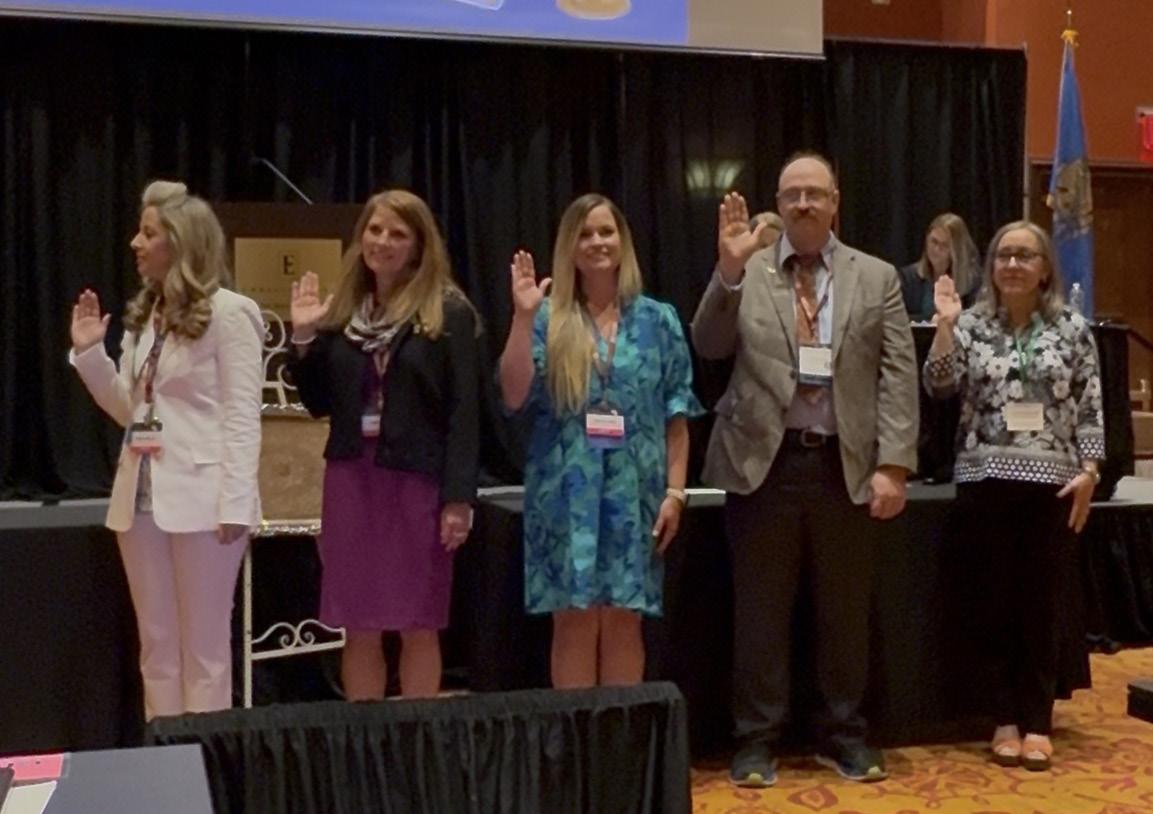
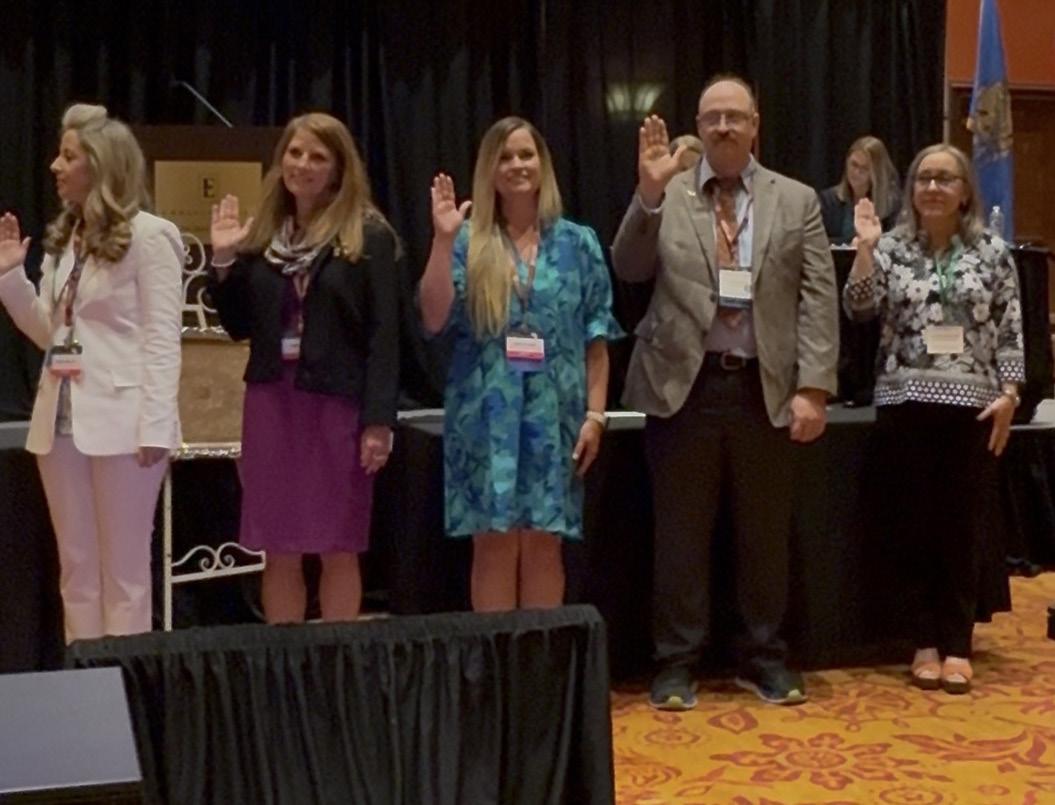
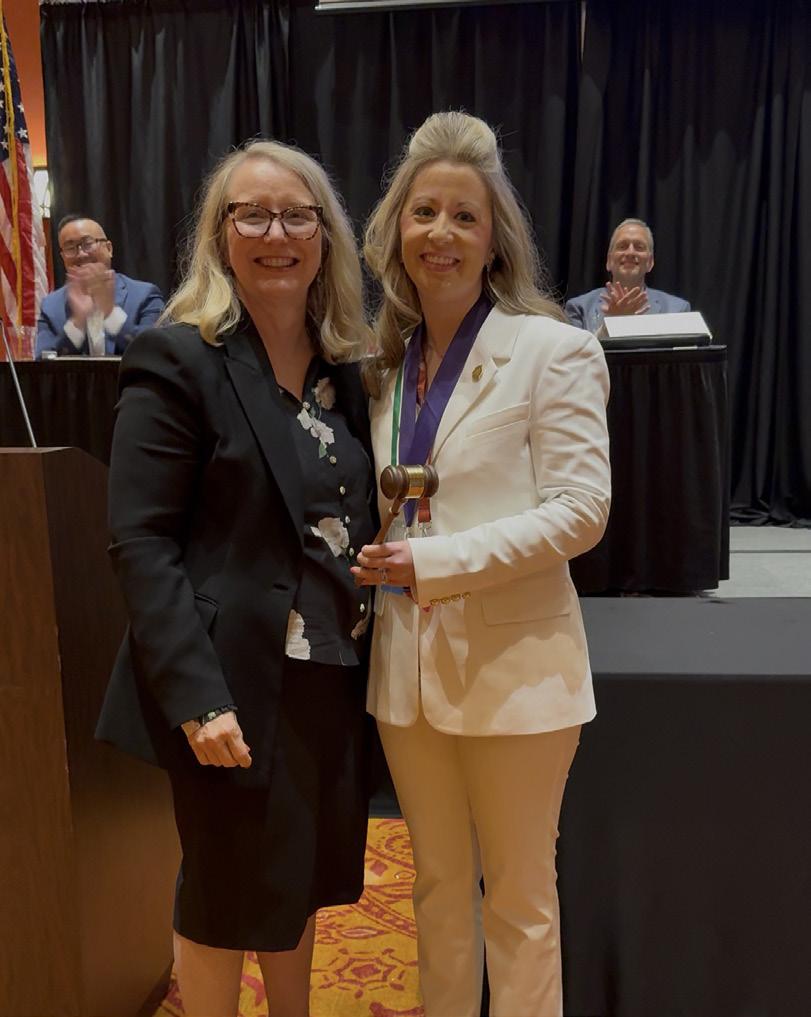
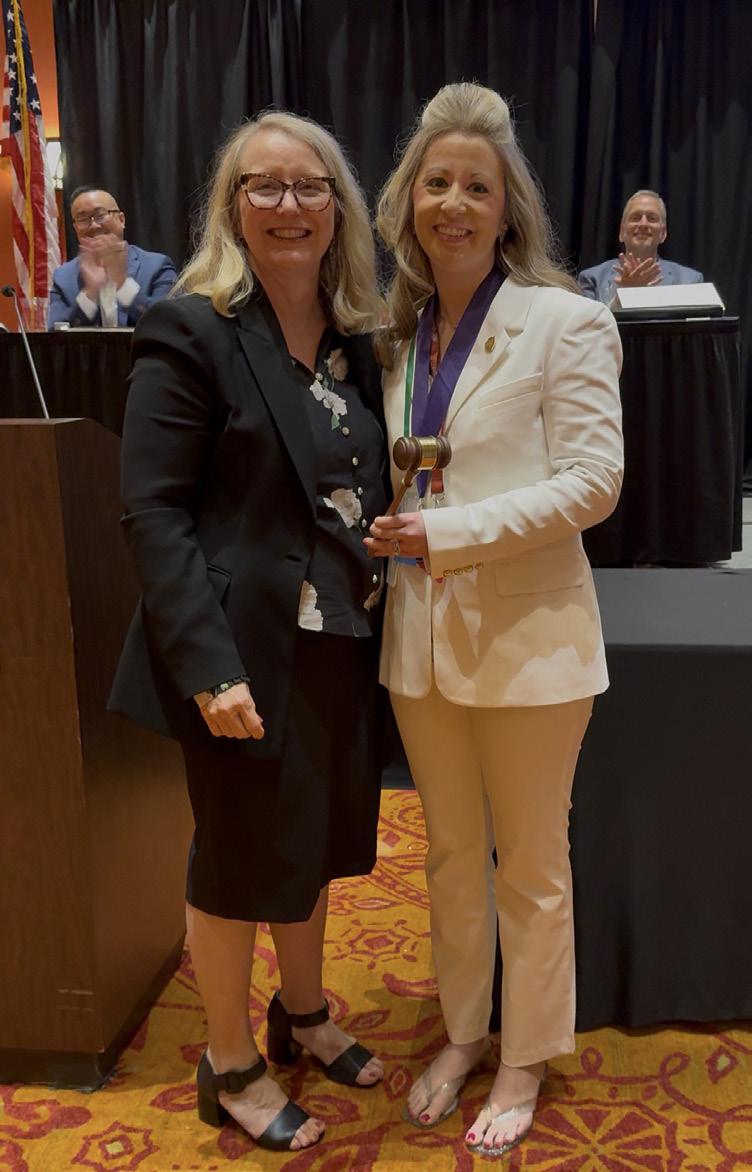
The Oklahoma Dental Association proudly welcomes its 2026–2027 officers and board leaders, who will help guide the association's mission of advancing the dental profession and advocating for oral health across Oklahoma.
Installed as officers for this year are:
President: Dr. Nicole Nellis
President Elect: Dr. Tamara Berg*
Vice President: Dr. Tabitha Arias
Secretary/Treasurer: Dr. Erin Roberts-Svob
Speaker of the House: Dr. Matthew Bridges
The ODA also recognizes the additional leaders serving on the Board of Trustees and in key leadership roles throughout the organization:
Dr. Addie Allen-Steed, Tulsa County Trustee
Dr. Doug Auld, Eastern Trustee
Dr. Matthew Cohlmia, ADA Delegate
Dr. Twana Duncan, Past President
Dr. Chris Fagan, Northwest Trustee
Dr. Shannon Griffin Lopez, ADA Delegate
Dr. Jandra Korb, Northern Trustee
Dr. Paul Mullasseril, Dean, OU College of Dentistry
Dr. Lauren Parker, New Dentist Trustee
Dr. Steffan Sigler, Oklahoma County Trustee
Dr. Lindsay Smith, ADA Delegate
Dr. Sara Spurlock, Central Trustee
Dr. Mary Temple-Goins, Southwest Trustee
Dr. Dan Wilguess, ADA Delegate
Council and Committee Chairs:
Dr. Doug Auld, Chair, Investments Committee
Dr. Matthew Bridges, Chair, Council on Bylaws, Policy, and Ethics
Dr. Ronnie Faram, Chair, Continuing Education Committee
Dr. Chris Fagan, Chair, DENPAC
Dr. Edward Harroz, Chair, Council on Budget and Finance
Dr. Nicole Nellis, Chair, Council on Nominations
Dr. Lauren Parker, Chair, New Dentist Committee
Dr. Steffan Sigler and Stacy Sigler, Co-Chairs, Ok Mission of Mercy
Dr. Lindsay Smith, Chair, Council on Governmental Affairs
Dr. Mary Temple-Goins, Chair, ODA Annual Meeting
Dr. Roberta Wright, ODA Journal Editor
Dr. Whitney Yeates, Chair, Council on Membership and Member Services
Together, these leaders bring a wealth of experience, expertise, and dedication to organized dentistry. As the ODA continues its work on behalf of Oklahoma dentists and the patients they serve, the association looks forward to the leadership and vision this team will provide in the year ahead.
The ODA thanks each of these individuals for their willingness to serve and for their commitment to strengthening the profession and advancing oral health throughout Oklahoma.
To get involved with the ODA in a leadership role or to join a council or committee, please visit okda.org/get-involved or contact the ODA team at (405)848-8873.
*Dr. Tamara Berg will officially take office on October 15, 2026 when she concludes her term as ADA First Vice President.
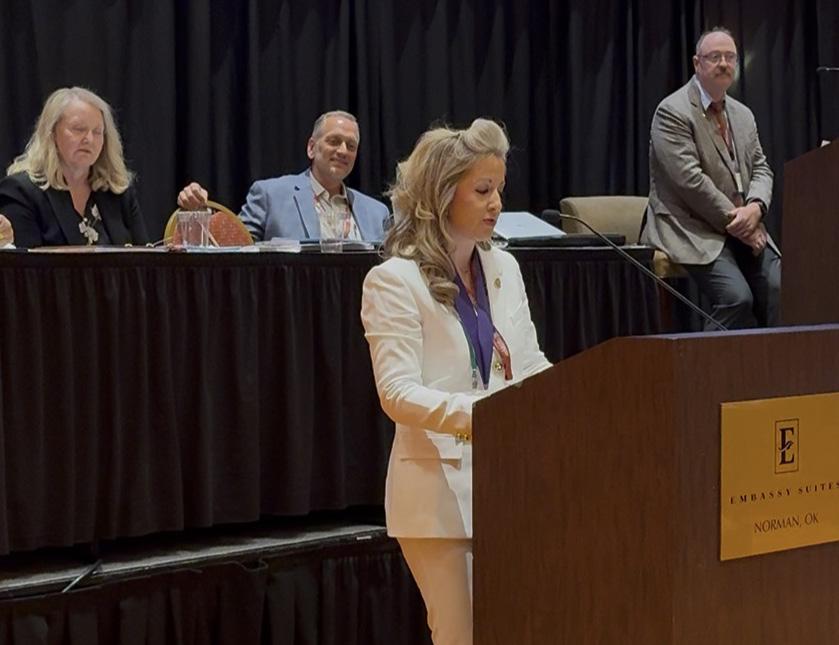
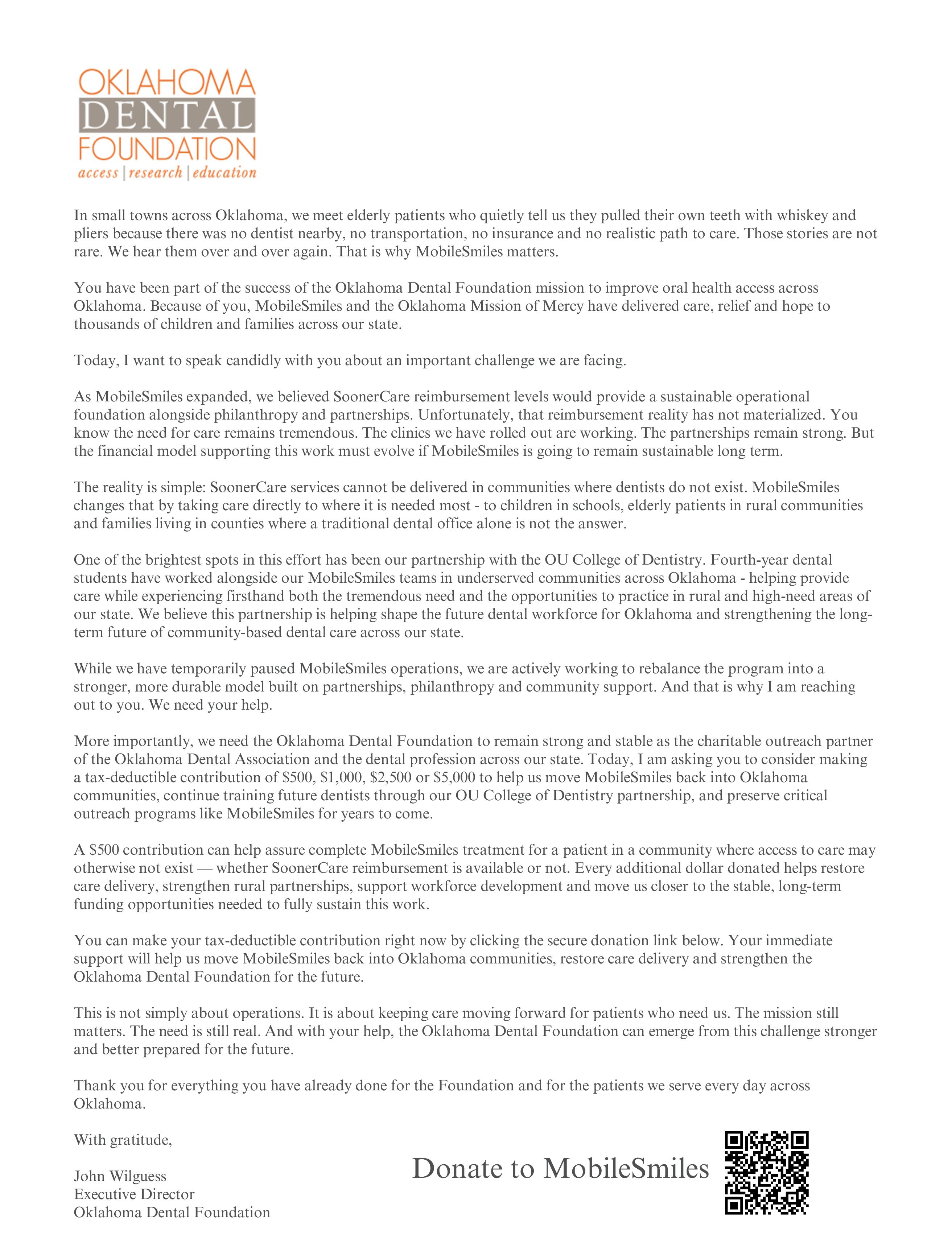
Lynn Means ODA Executive Director
May 2, 2026
Good afternoon, ODA Delegates and Officers, and extending another special welcome to our ADA guests – Drs. Nadershahi and Reavis – and our FAVORITE ADA Board member, Dr. Tamara Berg, ADA 1st Vice President! Thank you all for joining us today!
And Delegates, THANK YOU for volunteering your time to represent your Component today. I would also like to thank everyone who also serves on an ODA Council, Committee or Task Force and those of you in leadership at the Component level. Please know the gift of your time makes your profession stronger.
First, reporting on the resolution this House passed last year directing the President to appoint a task force to evaluate sunsetting the Annual Meeting. The task force did their work and ultimately recommended to the Board last July, that given the fact that the meeting had just been downsized to a two-day event and moved to a smaller venue, we should give it one more year with that format, following this meeting, to re-evaluate. So, that task force will come back together again soon to continue their work.
I will report that we were up 13% over 2025’s pre-registration of 356, which is great news. Nowhere near where we were 10 or 15 years ago, but an increase. And we picked up 39 more registrations onsite, putting us 4% over last year’s total registration.
In an effort to try to offer you and your teams quality CE apart from the Annual Meeting, we started offering more oneoff courses in 2025, which I am pleased to report yielded $43,000 in income last year. And, so far, 2026 is following suit.
As Dr. Rogers just reported, reserve funds currently represent over 156% of the proposed 2026 operating budget, well above the required 30%. The Budget and Finance Council continues to make tough decisions when building our Association budget. And your Investments Committee closely watches your investments, making strategic decisions regarding your reserves throughout the year.
Membership: We gained 115 new members in 2025, 80 of which were new graduates, 14 graduate students, and 32 members who came back to us after lapsed memberships. We finished 2025 with a 75.3% market share, up from 72.1% in 2024 – an over 3% increase! We processed 20 retired memberships in 2025, almost doubling 2024 and keeping with the trend we expect to see for a while. And we’ve retired six more members just since January 1of this year.
The ODA’s calling campaign in March was highly successful. 68% of the dentists contacted renewed following those conversations. Thank you to Ansley and Katie for calling every nonrenew last month!
The list of 2025 non-renews is in your packet. As leaders in your Component, please reach out to these colleagues and encourage them to renew. Member-tomember conversations WORK and our market share MATTERS – especially at the State Capitol. The higher the percentage of dentists in Oklahoma we represent and speak for, the better,
AND the bigger our grassroots, the better. Please start TODAY emailing, calling, and texting them, and THANK YOU in advance for your help with our recruitment and retention efforts.
Before we leave membership, I’ll report on last year’s resolution directing the Membership Council to resurrect the New Dentist Committee. Component Trustees appointed new dentists to represent their members on the reimagined committee. They began meeting early last fall, and let me say, it has been a breath of fresh air!
Chaired by New Dentist Trustee, Dr. Lauren Parker, and also comprised of the ASDA President and a large group practice representative, this group is engaged, full of ideas and brings a completely fresh perspective.
They are actively working on several initiatives, like a restructured mentorship program, more meaningful Success Seminars for dental students, and exploring a potential membership pilot for employee dentists. Suffice it to say, we can expect great things out of this group very soon!
Since 2010, Oklahoma dentistry has come together to provide $19.3 million in donated dental care to more than 21,000 patients in need through the Oklahoma Mission of Mercy. The 2027 event will be a one-day event, so please mark your calendar now for OkMOM 2027, February 5th, in Oklahoma City! And thank you to Dr. Steffan Sigler and his partner in all things, Stacy Sigler, for co-chairing next year’s mission!
The 2026 mission in Enid was financed in large part by a state allocation from our Legislature, and we are so grateful for that gift. That funding is in no way guaranteed next year, so please continue to support the OkMOM Legacy Fund. While the treatment during OkMOM is completely donated, there is still a substantial cost of about $275,000 to operate the event each year – even more when we’re in OKC or Tulsa. If you haven’t yet joined the OkMOM Legacy,
please help us continue the life-changing work done every year by making your one-time or monthly gift today.
This past February in Enid was a tremendous success, and we again thank Dr. Chris Fagan for serving as event chair a second time! If you volunteered your talents in Enid this past February, please stand!
I also want to express our deepest gratitude to the Oklahoma Dental Foundation for continuing to serve as the ODA’s TRUE partner in all things OkMOM! We REALLY could not do it without them!
You guys, ELEVEN YEARS! We have been trying to restore the original meaning behind the non-covered services law we passed in 2010, but loopholed in 2025, making it illegal for insurance to price fix services they do not cover REGARDLESS OF CONTRACTUAL LIMITATIONS … AND WE FINALLY DID IT!
There are so many people to thank. I will start with Dr. Lindsay Smith for his steadfast leadership on our legislative efforts, and the entire Council on Governmental Affairs. Mark Yates and Maddy Hague, our fearless lobbyists at Cornerstone, working day and night – not letting up on the gas once. Next, and they’ve been thanked 100 times, but I’ll say it 100 more – THANK YOU to Representative Anthony Moore and Senator Kristen Thompson, our small business and free market CHAMPIONS for carrying our bill! But mostly, thank you to every member of the ODA who called, emailed, and texted your legislators! YOU MADE THIS HAPPEN!
The opposition was loud and apparently had thousands and thousands of dollars in patient premiums to spend on a highly orchestrated gaslighting campaign. But the truth prevailed and your hard work has finally paid off! The Governor signed the bill on April 14 – thank you to Kevin Stitt – and it goes into effect on November 1st. Most years can be pretty frustrating, not understanding or being able to explain why things didn’t go our way at the Capitol when they make so
much sense. BUT NOT THIS YEAR! Congratulations to us all!
I also want to thank the ADA for a generous State Public Affairs grant that assisted in funding a big part of our communications effort this session.
And we are not done - - - because dental insurance is very broken and there is still A LOT to fix! How can you help us keep up the momentum into next year? I will answer by asking you two questions: #1: Are you a member of DENPAC? Your personal investment each year goes a long way in helping the ODA protect your profession. If you haven’t done your part by giving this year, please visit the DENPAC table to make your contribution today! And, #2: Do you actually KNOW your State Representative and Senator? I hope you see now that YOU are the key to our legislative success. It’s so important that we foster strong relationships with our legislators.
Reach out to your state representative and senator – invite them for coffee at your office one day this summer. Introduce them to your team and just take 30 minutes to get to know them personally. Offer to serve as a resource to them. They are not scary. They are just people. And they need US to be who they are relying upon to get the answers they need.
Those relationships are CRUCIAL and THAT’S what protects your patients and your business and continues to move the profession forward.
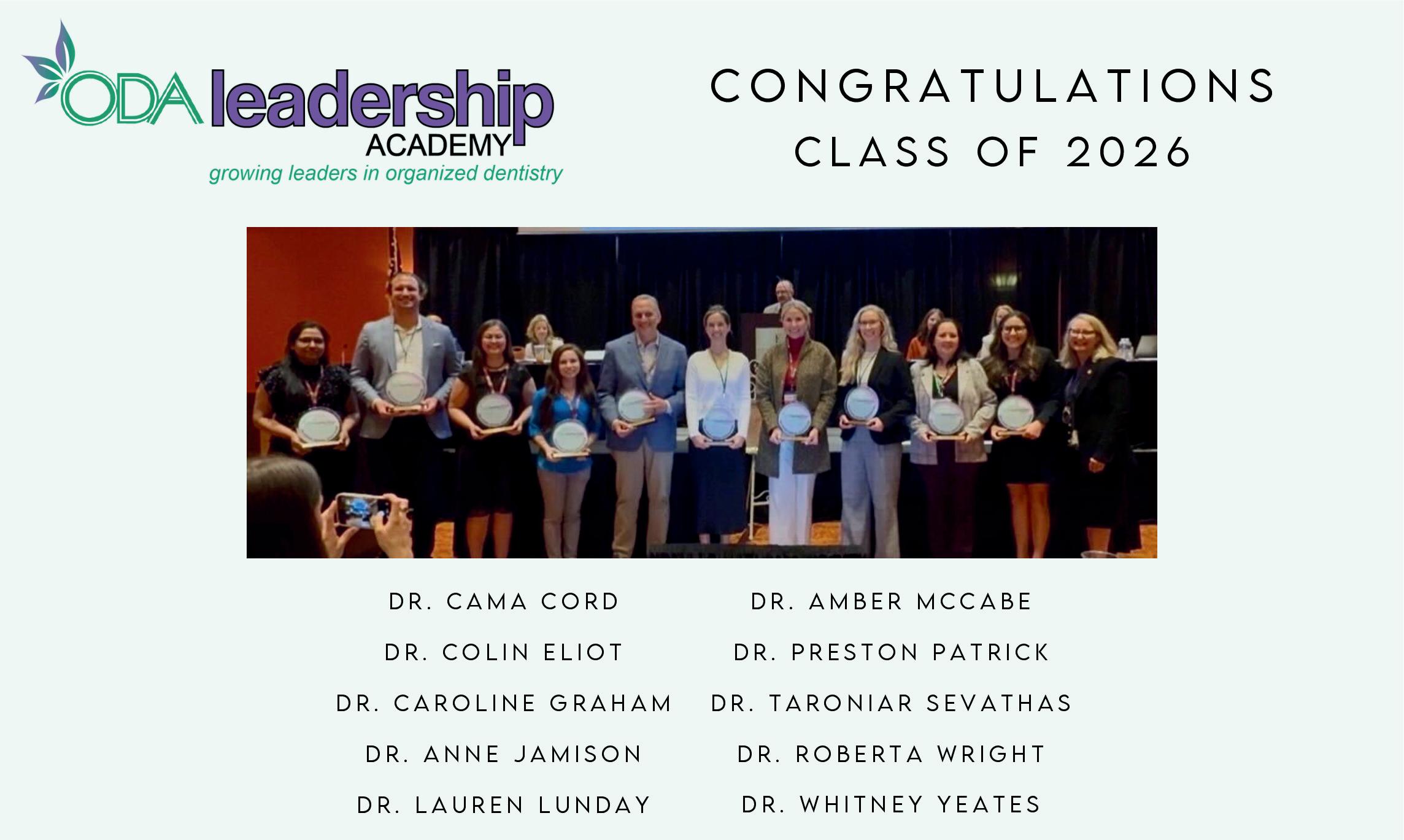
Congratulations again to our 10 ODA Leadership Academy graduates! We are excited to watch how each of you continue to make contributions to the Tripartite, and we look forward to working with you! The next class will graduate in 2028, and we will start taking applications for that class this time next year.
If you are a past ODA Leadership Academy graduate, please stand so we may recognize you.
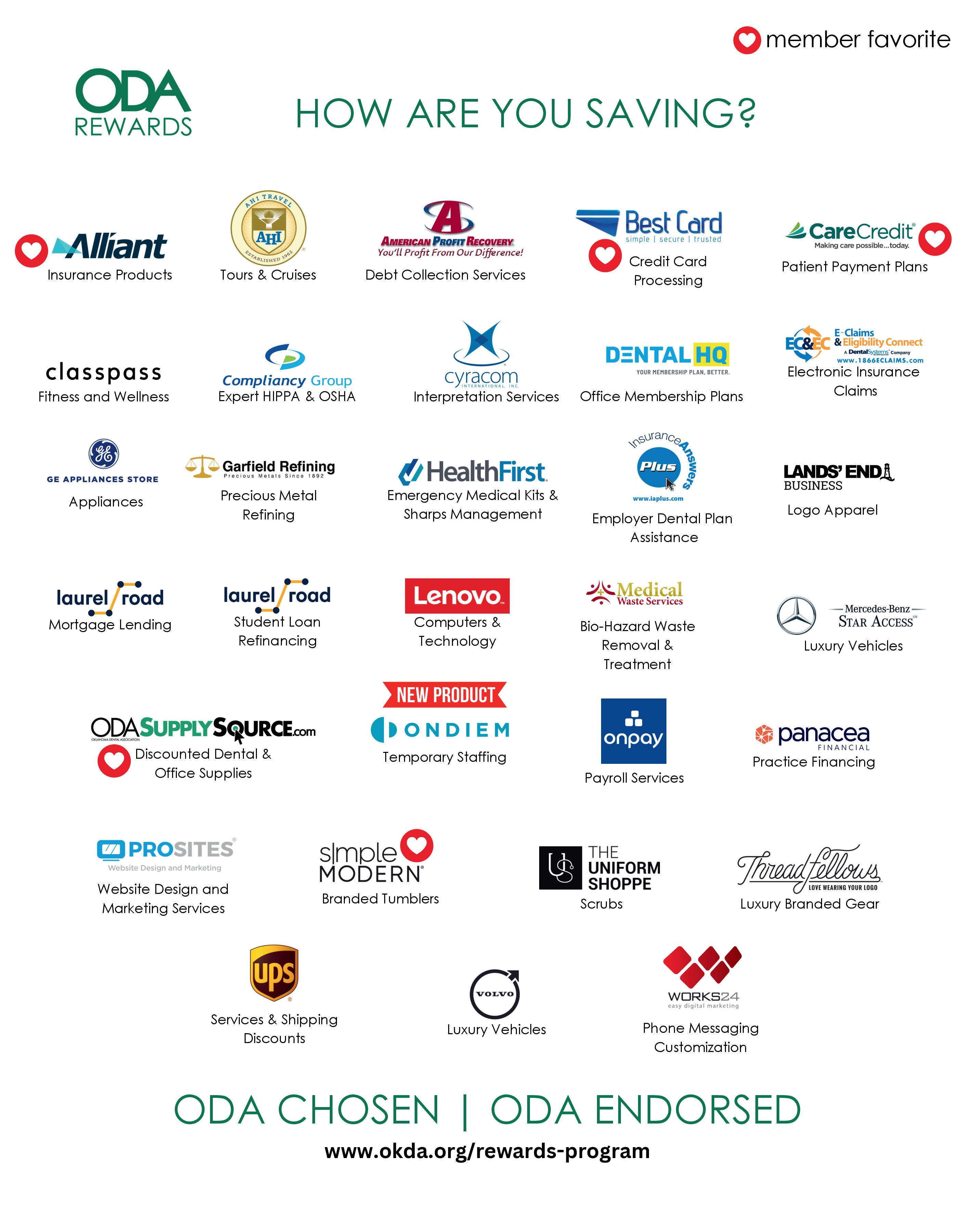
You will find a list of ODA Rewards Partners in your packet. The ODA Rewards program offers member-only discounts on products and services you use every day in your practice and even at home. And your participation provides the ODA non-dues revenue. The ODA received $138,000 in Rewards Partners royalties in 2025, reducing your dues by $152 EACH this year. Take advantage of those member discounts! If you are buying from other companies, you are absolutely paying too much!
To the ODA Board of Trustees and Executive Committee – thank you for your leadership, flexibility, and support over the past year. I am beyond grateful to work for a group of volunteers that are so fully committed to the Association, and to providing value to the member dentists we serve.
I have thanked many people today, but the MOST gratitude will always go to my teammates … Shelly, Ansley, Jill, Ramsey, and Katie! Thank you, ladies, for your flexibility, resourcefulness, creativity, generosity, patience, and ESPECIALLY your commitment to excellence. Delegates, you have an exceptionally talented team working for you!
Twenty years have flown by, and I know how very blessed I am – just how much the ODA has provided my family and myself the past two decades. I am grateful to still love, love, love my job. Truly. THANK YOU for the opportunity to continue to serve as your Executive Director.
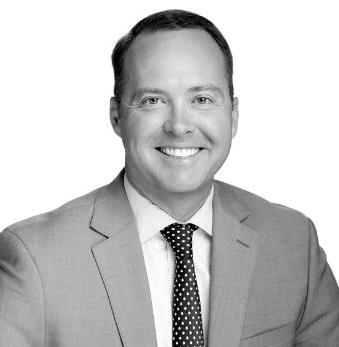
The 2026 Oklahoma Legislature adjourned Sine Die on May 14, marking the close of a legislative session that delivered significant victories for Oklahoma dentists and their patients.
The continued engagement and commitment of Oklahoma Dental Association members across the state remain essential to advancing the profession at the Capitol. This year, that engagement helped secure a major legislative win with the passage of Senate Bill 1942, the ODA's Non-Covered Services legislation. Authored by Senator Kristen Thompson, R-Edmond, and Representative Anthony Moore, R-Clinton, the bill was successfully passed by the Legislature and signed into law by Governor Kevin Stitt.
Throughout the legislative process, ODA members made a tremendous difference. Your phone calls, emails, text messages, and conversations with lawmakers helped ensure that legislators understood the importance of this issue to both dentists and patients. In the end, lawmakers chose to stand with Oklahoma dentists and consumers over large dental insurance carriers. This victory demonstrates the impact grassroots advocacy can have when members speak with a unified voice.
The ODA also continued its efforts to address workforce challenges affecting dental practices throughout the state. Representative David Smith, R-Arpelar, and Senator Roland Pederson, R-Burlington, successfully advanced House Bill 3934, which was also signed into law by Governor Stitt. The legislation establishes a three-year pilot pathway that will allow foreign-trained dentists to practice in Oklahoma.
While HB 3934 represents meaningful progress, workforce shortages remain one of the most pressing issues facing the profession. The ODA will continue working throughout the interim to identify and develop additional policy solutions that can be considered during the next legislative session. As the legislative session concludes, attention now turns to the 2026 election cycle and the important work of educating newly elected
officials about the issues impacting dentistry. Oklahoma voters will select a new governor, along with every other statewide elected official. Significant turnover is also expected in the Legislature, with as many as 20 new members joining the House of Representatives and at least three new members entering the Senate.
These changes present valuable opportunities for ODA members to engage with incoming policymakers and help build strong relationships from the beginning. Educating elected officials about the challenges facing dentistry— and the role dentists play in improving the health of Oklahomans—will remain a top priority in the months ahead.
Finally, the team at Cornerstone Government Affairs extends its sincere appreciation for the opportunity to represent the Oklahoma Dental Association. While we celebrate the successes achieved this session, there is still important work ahead. As preparations begin for the next legislative session, we look forward to continuing to work alongside ODA members to advance policies that strengthen the profession and improve access to care for patients across Oklahoma.
Thank you for your continued support, engagement, and advocacy.



Bill marks culmination of years of advocacy to close loophole, restore balance in dental
On April 14, Oklahoma Gov. Kevin Stitt signed into law a bill clarifying that dental insurance companies may not set fees for services they do not cover. The policy is intended to restore the original intent of the state’s 2010 noncovered services law and marks a significant victory for organized dentistry.
The legislation, Senate Bill 1942, advanced by the Oklahoma Dental Association with support from the ADA, closes a loophole created by a 2013 attorney general opinion that allowed insurers to impose fee restrictions under certain contractual conditions. With this bill, Oklahoma aligns more clearly with the growing number of states that prohibit such practices outright.
With the original 2010 law, Oklahoma was among the first states to establish that dental insurers may not set fees for services they do not cover. However, a subsequent interpretation of the law created a loophole that insurers used to continue influencing pricing for noncovered services, allowing them to regulate fees in cases involving frequency limits, waiting periods or annual maximums.
For the Oklahoma Dental Association, the bill’s signing marks the end of a long and deliberate advocacy campaign that spanned more than a decade and required sustained grassroots engagement as well as coordinated messaging. Supporters say it will likely have a national impact, as states around the country may consider similarly improving their noncovered services laws.
“The 2026 legislative session success in our state represents the culmination of more than a decade of persistence, strategy, and grassroots advocacy from Oklahoma Dental Association and its members,” said Lindsay Smith, D.D.S., chair of the Oklahoma Dental
Association Council on Governmental Affairs. “By closing the loophole in noncovered services, we restored fairness to the marketplace, protected small dental practices, and ensured that decisions about patient care are no longer dictated by insurance companies that aren’t paying for those services.”
ADA president Richard Rosato, D.M.D. offered his own congratulations and noted how Oklahoma’s win connects to national advocacy.
“Dentists in Oklahoma refused to quit on an issue they knew, if passed, would benefit themselves and their patients,” he said. “Great laws like this are exactly why we are pursuing the Improving Dental Administration Act at the federal level, so that if a state has a noncovered services law on the books, it applies to all forms of coverage offered, including self-funded plans.”
The issue of whether third-party payers should be allowed to dictate prices for services they do not reimburse has been a defining one for organized dentistry. Dentists participating in insurance networks already agree to significant discounts, often averaging about 55% of their usual fees, for covered services. Extending those controls to noncovered services, advocates said, undermines free-market principles and places disproportionate pressure on small dental practices.
Oklahoma Dental Association leaders also emphasized the broader market implications. By leveraging their size, large insurers can impose contract provisions that smaller competitors cannot match, contributing to industry consolidation and limiting competition, which may ultimately impact patients through higher costs and reduced choice.
Addressing that imbalance, Senate Bill 1942 moved in tandem with a companion measure in the House. Early decisions like routing the legislation through appropriations committees rather than insurance committees
by
helped the bill avoid procedural roadblocks where opposition influence was expected to be strongest.
At the same time, the Oklahoma Dental Association mobilized a broad-based advocacy campaign. Dentists across the state engaged lawmakers directly through calls, texts and in-person meetings, while the association deployed many communications tools, including legislative alerts, social media outreach, town halls and targeted educational materials for policymakers. Events like legislative receptions and coordinated media efforts kept the issue visible throughout the session.
The campaign faced significant resistance, as insurance industry groups and affiliated organizations mounted a well-funded opposition effort that included proposed amendments and messaging aimed at slowing the bill’s progress. Oklahoma Dental Association leaders said strong member engagement, along with support from ADA staff and resources and state-level partnerships, helped overcome those challenges
Ultimately, the measure passed both chambers with broad bipartisan support, followed by a final push from members urging the governor’s signature.
“What ODA accomplished this year in our state legislature is a powerful example of what happens when dentists speak with one voice through organized dentistry,” said Oklahoma Dental Association President Twana Duncan, D.D.S. “Our members showed up, engaged their legislators, and stood firm against well-funded opposition. From the individual dentists calling their legislators to the support we received from the ADA, organized dentistry showed up in a major way. The result is a meaningful, pro-patient, pro-small business reform that brings balance back to the dentist-patient relationship in Oklahoma.”
The legislation is set to take effect Nov. 1.
As a dentist, you face unique challenges every day. That’s why at MedPro Group, we created an industry-leading malpractice policy that keeps you safe.
Join the 45,000+ dental professionals who trust MedPro.
Get affordable coverage. Practice more safely.
Your premium costs may be discounted for claims-free history, risk management CEs, part-time practice, and more. Plus, get stronger coverage with options like Occurrence policies and a pure consent clause — all designed to give you peace of mind at a fair price.
With 24/7 access to our free risk resources and on-staff experts, you and your practice will be better prepared for every day challenges. We don’t just defend claims, we help you avoid them.

to get the best protection
you? Contact us for your free custom quote and see how much you could save! 405.521.1600 | timothy.tate@alliant.com | paul.gassen@alliant.com
Protect your good name.
The average dentist is sued at least once in their career, which is why we’re in your corner when it matters most. We lead the industry with a 95% dental trial win rate (plus 8 out of 10 claims close without payment).




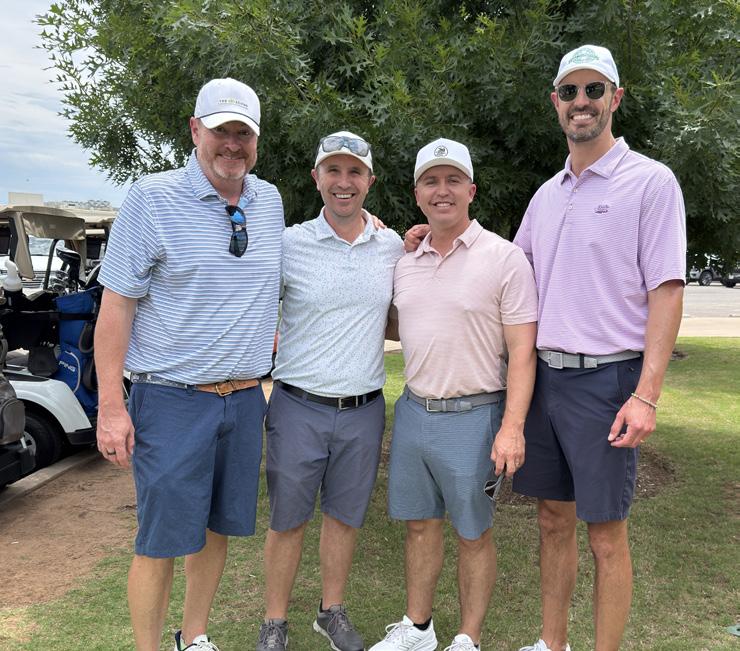
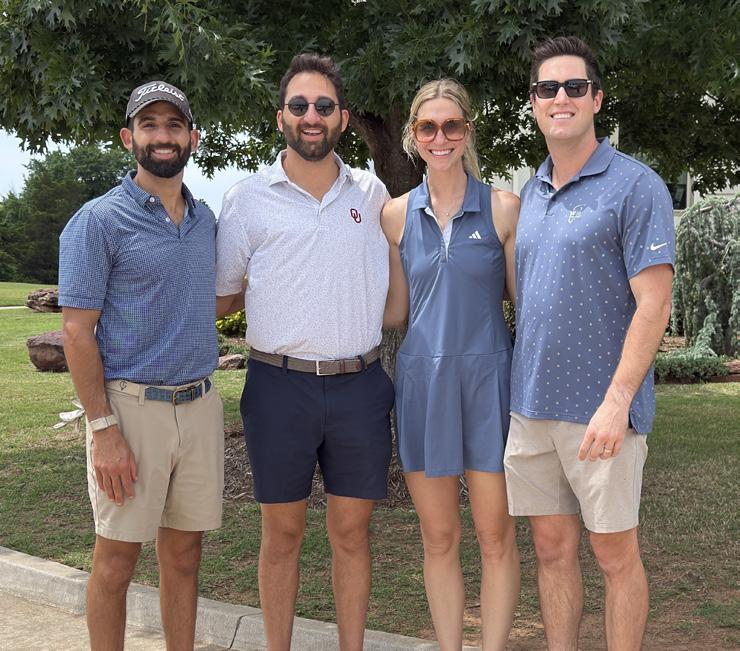
Herman Memorial Golf Tournament May 29, 2026

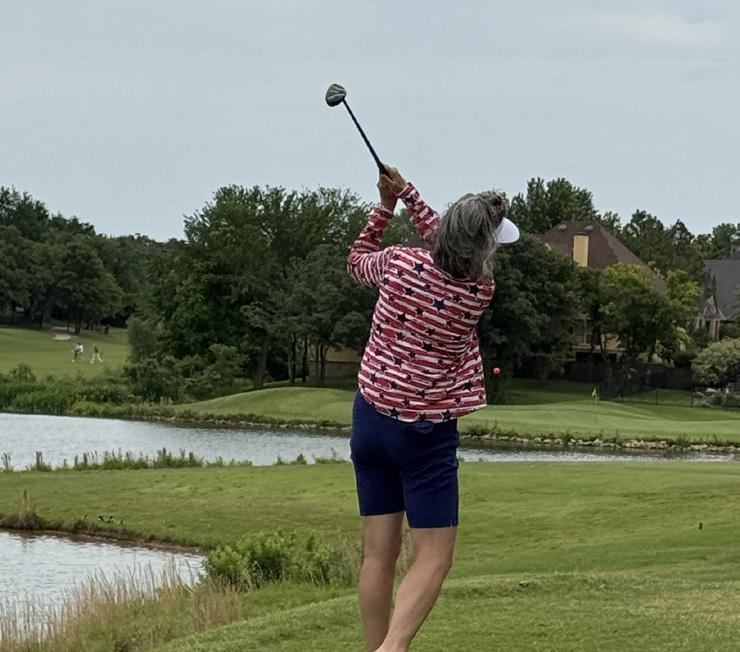
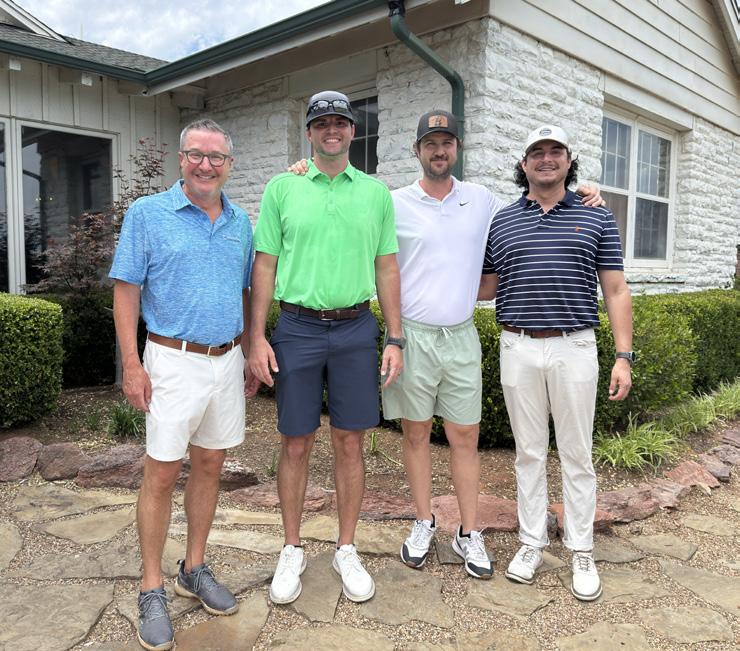
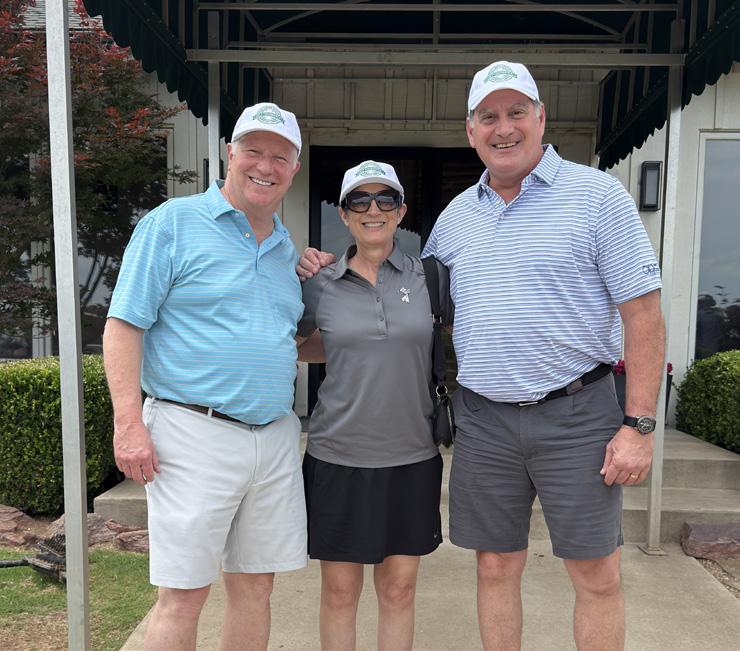
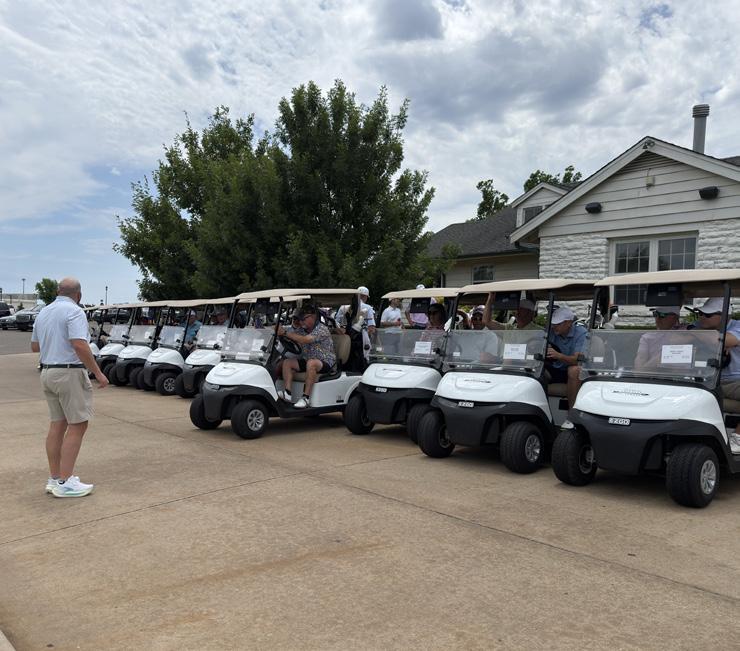
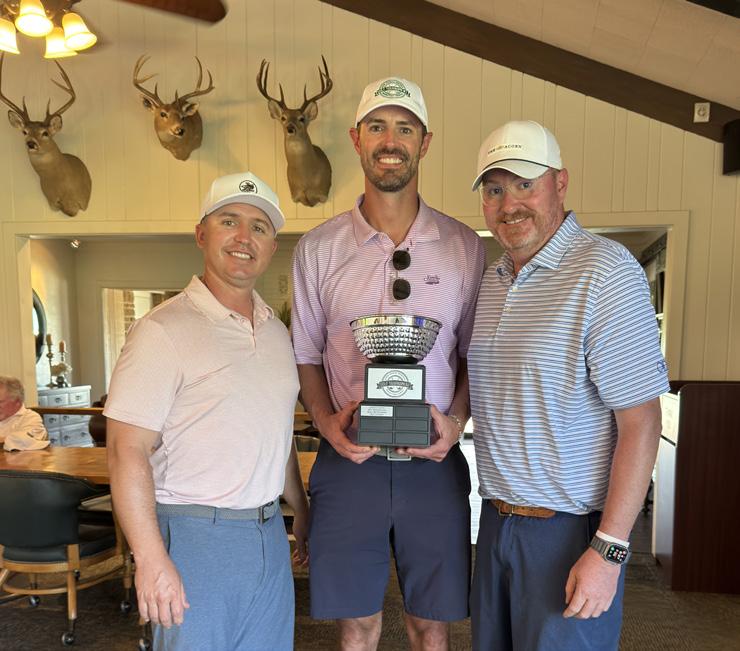

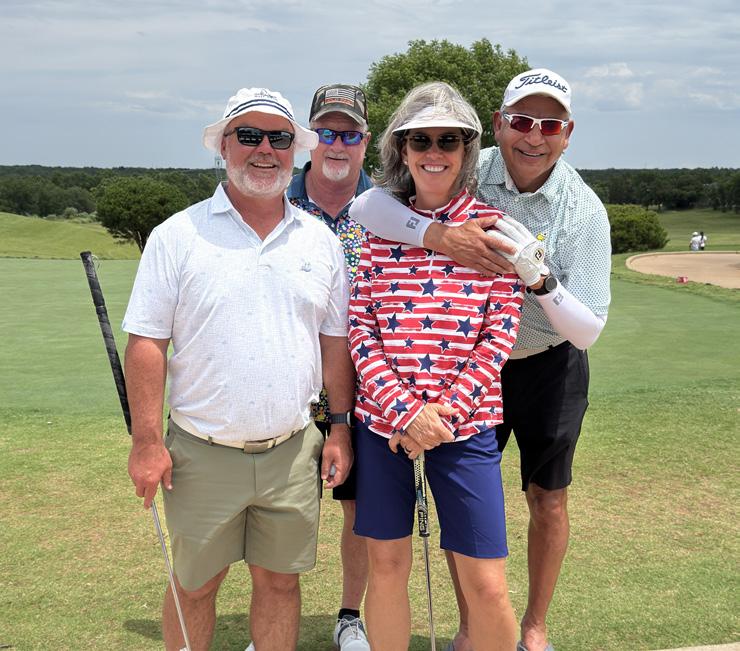

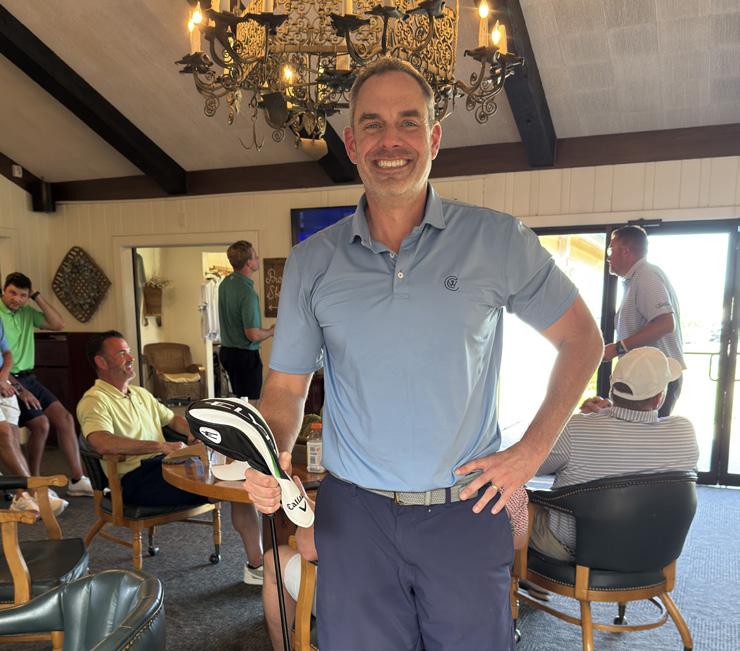
Dr. Douglas Auld
Dr. Tamara Berg
Dr. M. Edmund Braly
Dr. Matthew Cohlmia
Dr. Twana Duncan
Dr. Shannon Griffin Lopez
Dr. Richard Haught
Dr. Juan Lopez
Dr. Nicole Nellis
Dr. Steffan Sigler
Dr. Lindsay Smith
Dr. BDr. Jeffrey Ahlert
Dr. Clay Anderson
Dr. Tabitha Arias
Dr. Glenn Ashmore
Dr. Brandon Beaver
Dr. David Birdwell
Dr. Michael Breland
Dr. Matthew Bridges
Dr. C. Todd Bridges
Dr. Nathan Brown
Dr. Adam Bulleigh
Dr. Kristen Campbell
Dr. Tricia Cannon
Dr. John Carletti
Dr. Bobby Carmen
Dr. Jennifer Chambers
Dr. Brian Chastain
Dr. Carrie Chastain
Dr. Logan Coffee
Dr. Larry Coggins
Dr. Susan Davis
Dr. Brian Drew
Dr. Kolton Erickson
Dr. Heath Evans
Dr. Christopher Fagan
Dr. Ryan Fitzgerald
Dr. John Folks
Dr. Richard Freeman
Dr. Sandra Grace
Dr. Stephen Gray
Dr. John Groves
Dr. Jacob Hager
Dr. Michael Hansen
Dr. Richard Henry
Dr. Marilyn Hiebert
Dr. James Hooper
Dr. Brad Hoopes
Dr. James Hulsey
Dr. Benjamin Humphrey
Dr. Karl Jobst
Dr. Donald Johnson
Dr. Krista Jones
Dr. Michael Kirk
Dr. Jandra Korb
Dr. Leslie Ledbetter
Dr. Marti Levinson
Dr. Shannon Lewis
Dr. Heng Lim
Dr. Daryn Lu
Dr. Edith Lu
Dr. David Marks
Dr. Stephen Martin
Dr. Stephen Mayer
Dr. Andrew McGarry
Dr. Janna McIntosh
Dr. Glenn Mead
Dr. Paul Mullasseril
Dr. John Phillips
Dr. Ray Plant
Dr. Nathan Powell
Dr. Dana Price
Dr. Christopher Ray
Dr. Brant Rouse
Dr. Troy Schmitz
Dr. Brandon Schultz
Dr. Floyd Simon
Dr. Lori Smith
Dr. Caleb Smith
Dr. Sterling Stalder
Dr. Adelaide Steed
Dr. Clinton Stevens
Dr. Ryan Streight
Dr. Stephanie Sugg
Dr. Carla Sullivan
Dr. Jim Taylor
Dr. Ryan Theobald
Dr. Kara Tims
Dr. Jonah Vandiver
Dr. Daniel Wilguess
Dr. Brian Wilson
Dr. Roberta Wright
Dr. Kendra Yandell
With the deadline fast approaching for certain dental practices to ensure their websites and other digital tools are accessible to people with disabilities to comply with an updated federal regulation, the U.S. Department of Health and Human Services Office for Civil Rights announced a revised timeline providing an additional year for compliance.
In May 2024, the Office for Civil Rights published a final rule — Nondiscrimination on the Basis of Disability in Programs or Activities Receiving Federal Financial Assistance — that updates, clarifies and strengthens Section 504 of the Rehabilitation Act of 1973, including a covered entity’s obligations related to digital accessibility.
The act prohibits discrimination on the basis of disability in programs and activities that receive federal financial assistance and provides protections for people with disabilities in federally funded health and human services programs. The rule clarifies that web content, mobile apps and medical kiosks must be accessible to people with disabilities and meet defined technical standards.
The rule applies to any entity that receives federal financial assistance from HHS, either directly or indirectly. This includes dental practices and dental clinics affiliated with hospitals or health systems; dental schools and academic dental programs; Medicaid and Children’s Health Insurance Program dental providers; community health centers with dental services; dental specialists; and dental researchers or companies receiving federal research funding. Under the original rule, organizations with 15 or more employees were
by Mary Beth Versaci, ADA Staff
required to comply by May 11, while those with fewer than 15 employees were given until May 10, 2027. However, after hearing concerns about the approaching deadline from a range of recipients of federal financial assistance, HHS announced a new interim final rule extending the deadlines by an additional year. Recipients with 15 or more employees will now have until May 11, 2027, to comply, and recipients with fewer than 15 employees will now have until May 10, 2028, to comply.
“We have heard about the challenges our funding recipients face in meeting the original deadline,” Paula M. Stannard, director of the Office for Civil Rights, said in a May 7 news release. “We believe that this extension provides necessary flexibility, ensuring that recipients have the time to comply with accessibility standards and aligns our rules with those of our partners at DOJ. At the same time, we remind recipients of their legal obligation to ensure that their programs and activities are accessible to persons with disabilities. Equal access to health and human services is a top priority for OCR.”
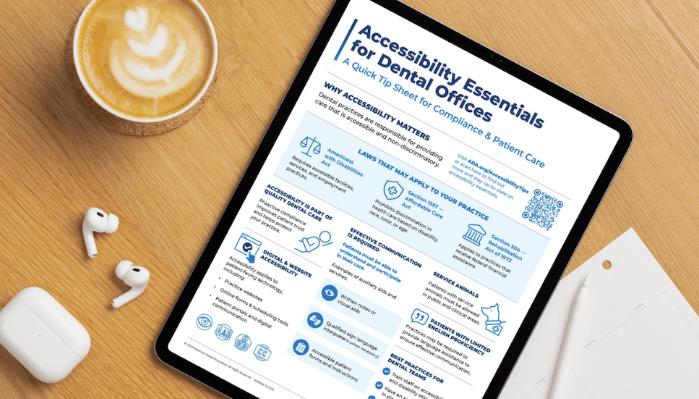
The American Dental Association has published a digital accessibility guide to help dental practices comply with the rule, which applies to all patient-facing digital tools, including practice websites and mobile apps; patient portals; online intake, consent and medical history forms; and online payment and billing systems. A one-page accessibility essentials tip sheet is also available for practices to download.
Making digital content accessible means that everyone, including people with vision, hearing or mobility disabilities, can perceive, understand, navigate and interact with it. Accessibility also ensures content works with assistive technologies and does not rely on a single sense or ability to be usable. It is not acceptable for dental practices to rely on phone calls or staff assistance as a substitute for providing accessible digital tools, the guide states.
Find the guide and other resources on the ADA’s webpage on navigating accessibility.

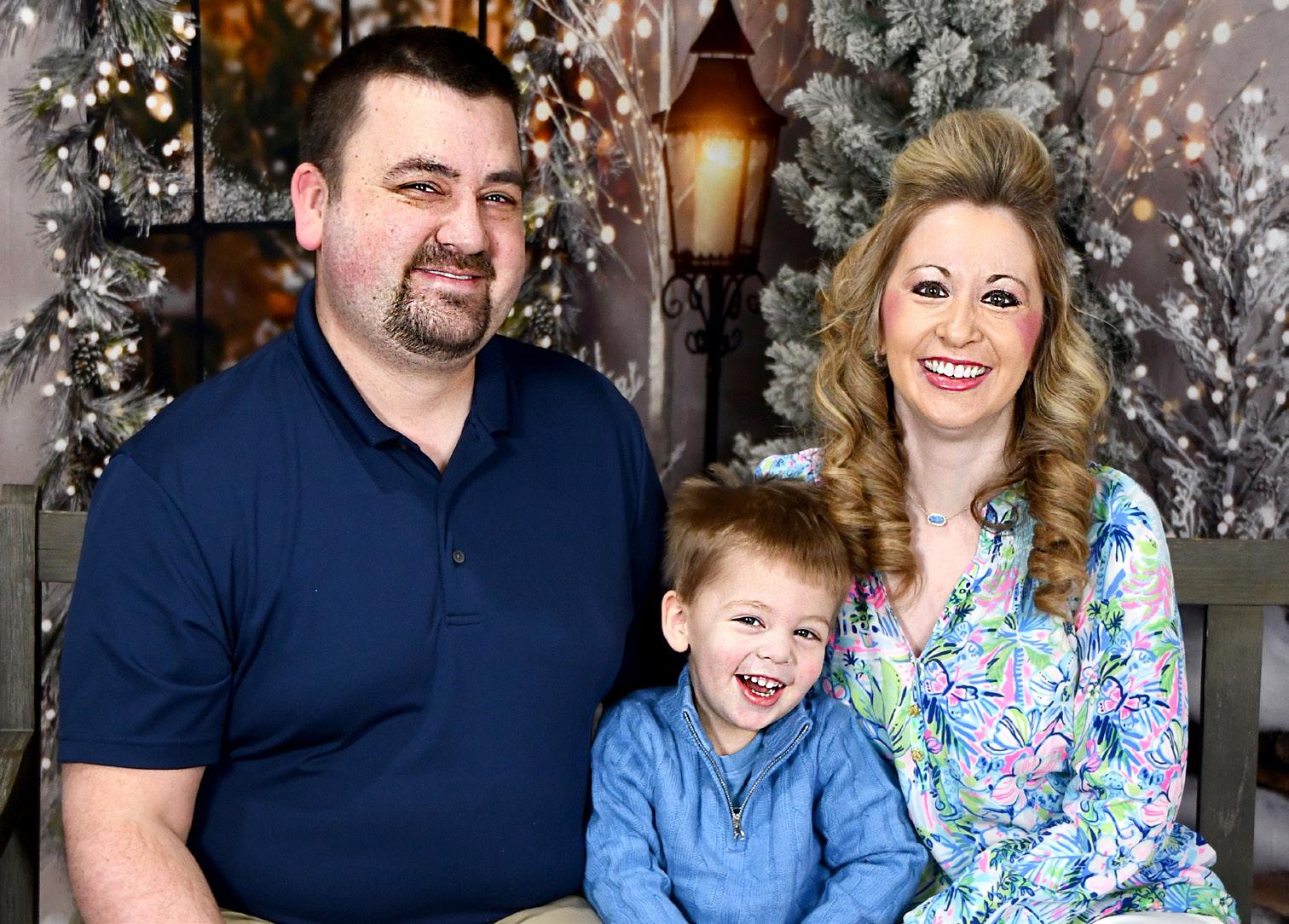
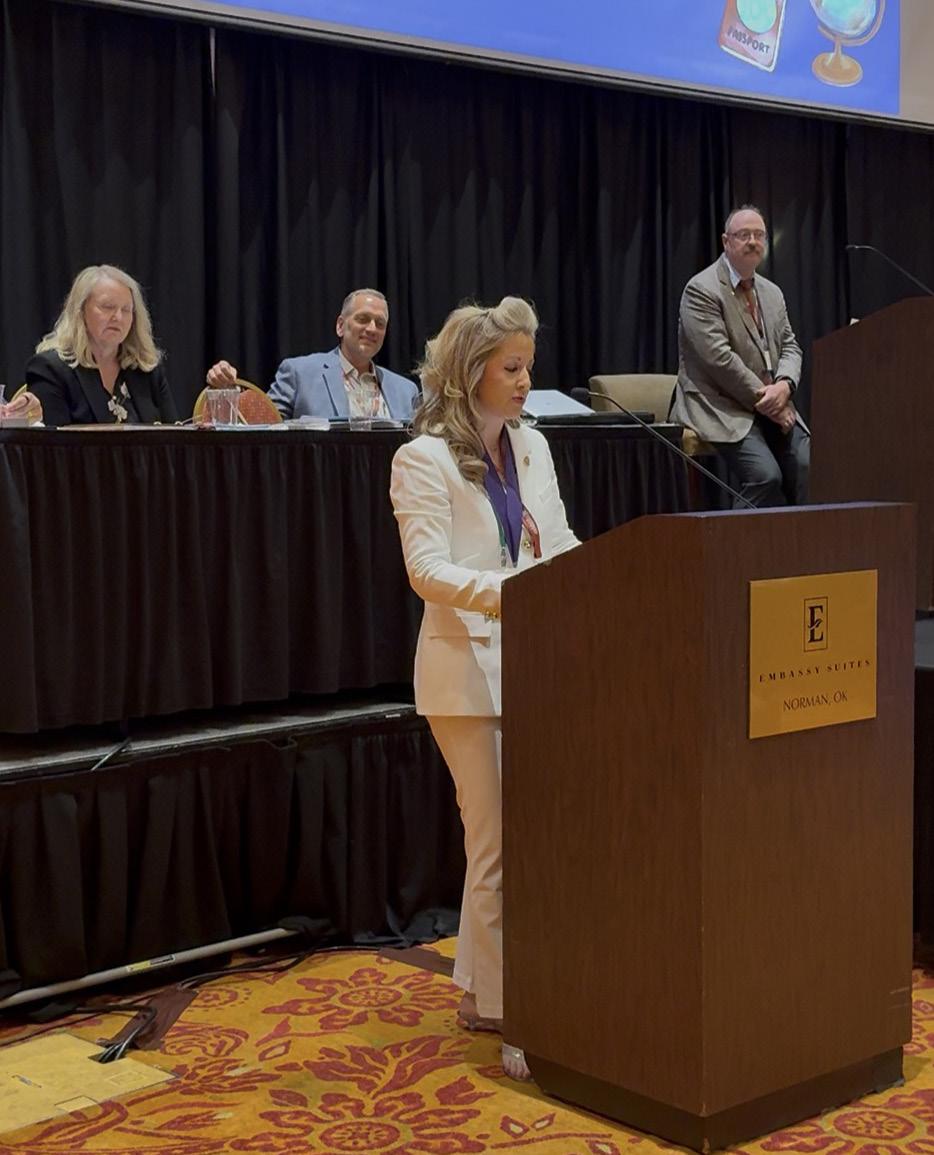
As Dr. Nicole Nellis steps into her role as President of the Oklahoma Dental Association, she brings with her a deep commitment to organized dentistry, a passion for patient care, and a vision focused on supporting Oklahoma dentists through some of the profession’s most pressing challenges.
Her journey to dentistry began long before dental school.
“No one in my family is a dentist,” Dr. Nellis recalls. “The first time we found in writing that I wanted to be a dentist was in my reading journal in second grade.”
Her interest only grew from there. Influenced by positive experiences with her childhood dentist—who also happened to be her father’s longtime friend—she dressed as a dentist for Halloween in fifth grade, began shadowing dental offices in sixth grade, and landed her first dental job working at a front desk when she was just 15 years old.
by Jill Johnson,
That early passion eventually led her to the University of Texas Health Science Center at San Antonio School of Dentistry, where she earned her dental degree in 2014. While dental school was demanding, it also introduced her to mentors who would shape both her professional and leadership paths.
One of those mentors was Dr. Kevin Gureckis, her clinic group director, who emphasized the importance of organized dentistry and lifelong learning.
“He encouraged all of his students to be active in organized dentistry because that’s what you are supposed to do to protect your profession,” she says.
Following graduation, Dr. Nellis continued her education through the Advanced Education in General Dentistry (AEGD) residency
program at the OU College of Dentistry, where she trained under Drs. Shannon Griffin and Reiger Wood. Their mentorship helped refine her clinical skills while reinforcing the importance of leadership and service.
As soon as she arrived in Oklahoma, Dr. Nellis transferred her ADA membership and began her involvement with the ODA—a decision that would become a defining aspect of her career.
After completing her residency, Dr. Nellis spent six months as an associate before realizing she wanted to create a practice of her own.
Continued on page 25

That opportunity came unexpectedly when she was shown a vacant dental office that had been closed for only a few months but remained fully equipped and ready to reopen.
She received the keys to what would become Nellis Family Dentistry on December 7, 2015, and welcomed her first patients less than a month later, on January 4, 2016.
Her vision was straightforward but powerful: provide high-quality dental care in a comfortable environment while treating patients like family.
“I wanted to care for my patients like they were members of my own family, learn their stories, and be a small part of their lives,” she says.
Building a successful practice was not without challenges. Like many new business owners, Dr. Nellis faced uncertainty during those early years.
“The first year of owning my own business was incredibly challenging,” she says. “At times, I was nervous that I wasn’t going to succeed.”
Through mentorship, strategic planning, and the support of an exceptional team, the practice flourished. By 2019, she was planning the construction of a new building, and in February 2021, Nellis Family Dentistry moved into its permanent home.
Today, she considers building her practice to be her proudest professional accomplishment.
Dr. Nellis’s leadership journey within organized dentistry began almost immediately after returning to Oklahoma.
She became active in the Tulsa County Dental Society, where the late Dr. Jim Torchia encouraged her to serve as the society’s New Dentist Chair. From there, she advanced through leadership positions and ultimately served as President of the Tulsa County Dental Society from 2020 to 2022.
Leading during the COVID-19 pandemic presented unprecedented challenges, requiring adaptability and steady leadership as the organization navigated rapidly changing circumstances.
A pivotal moment in her leadership development came in 2017 when she completed the ODA Leadership Academy.
“That’s where I learned exactly what the ODA is and what the ODA does for its members,” she says.
The experience inspired her to become more involved at the state level, including service on the Council on Membership and Membership Services, where she later served as chair.
Membership engagement remains one of her greatest passions and will be a major focus of her presidency.
As ODA President, Dr. Nellis has identified several key priorities for the coming year.
First, she intends to continue supporting the strong programs, councils, and initiatives already serving ODA members.
Second, she hopes to address declining membership numbers by strengthening engagement and helping dentists understand the value of organized dentistry.
“We need to do what we can to stop that decline and re-energize our membership,” she says.
Another major concern is Oklahoma’s workforce shortage.
Continued on page 26
shortages, financial responsibilities, and patient expectations.
“It’s easy to go to work every day, put your head down, and before you know it, you’ve dug yourself into a hole mentally,” she says.
Her passion for the issue comes from personal experience. During dental school, she benefited from counseling services that helped her navigate periods of stress. Years later, as a new mother balancing a growing practice, staff responsibilities, patients, and family life, she encountered similar challenges.
Although she knew mental health resources existed, finding them was not always easy.
Dentistry to explore additional ways the ODA can support students and help them understand the value of membership before graduation.
She is also excited about the return of the ODA’s New Dentist Committee and the opportunities it creates for developing future leaders.
“I truly believe that early involvement in organized dentistry leads to lifelong membership,” she says.
More than a decade into practice, Dr. Nellis remains energized by dentistry’s constant evolution.
Practices across the state continue to struggle with staffing challenges, and Dr. Nellis believes additional strategic planning and collaboration are necessary to develop meaningful solutions.
She also remains focused on advocacy efforts related to dental insurance reform. While she celebrates the ODA’s recent legislative success regarding non-covered services, she recognizes that reimbursement rates and rising business costs continue to create challenges for practitioners.
“We have to continue our advocacy efforts at the State Capitol to improve insurance reform so our dentists can continue to provide high-quality care for our patients,” she says.
One issue particularly close to Dr. Nellis’s heart is mental health.
She believes dentistry can be an isolating profession, especially when dentists face the combined pressures of practice ownership, workforce
Fortunately, trusted colleagues helped connect her with the support she needed. That experience reinforced her belief that dental professionals should have clear access to resources and support before they reach a crisis point.
As president, she hopes to strengthen awareness of available resources while encouraging conversations around wellness and mental health throughout the profession.
Dr. Nellis is equally passionate about engaging dental students and new dentists.
She believes involvement in organized dentistry should begin early and continue throughout a professional career.
“Students need to know what the ODA is doing to protect the profession of dentistry in Oklahoma,” she says.
She plans to work closely with faculty at the OU College of
She enjoys continuing education opportunities and the challenge of staying current with new technologies, techniques, and best practices.
“I always feel re-energized after attending a good course,” she says. That enthusiasm for lifelong learning mirrors the advice she received from mentors early in her career and continues to guide her professional development today.

Outside of dentistry, Dr. Nellis enjoys a wide range of interests.
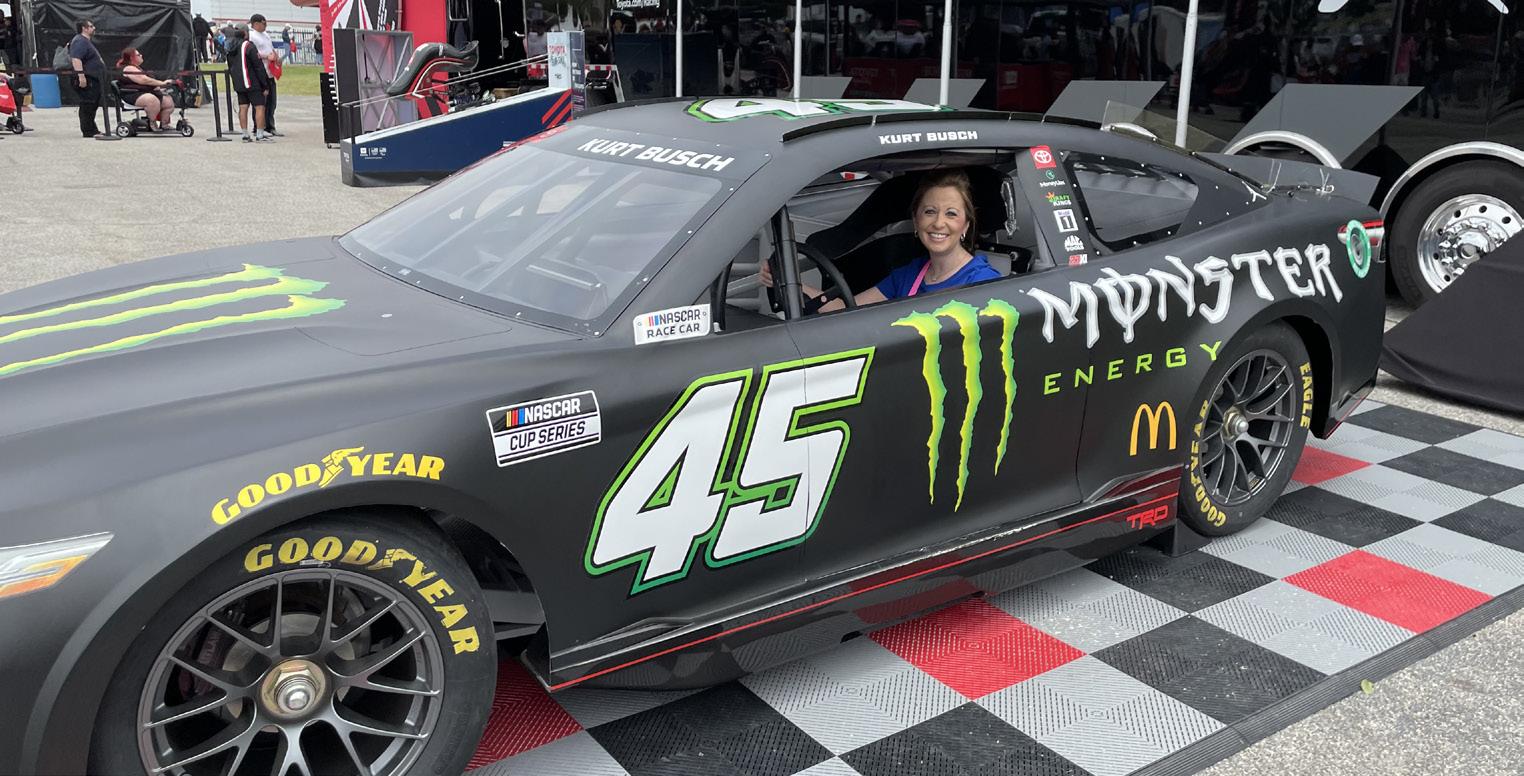
She is an avid NASCAR fan who rarely misses a race and regularly tunes into SiriusXM NASCAR Radio.
In the fall, she and her husband cheer on the Oklahoma Sooners each weekend. She is also a Barbie doll collector and a Lilly Pulitzer enthusiast.
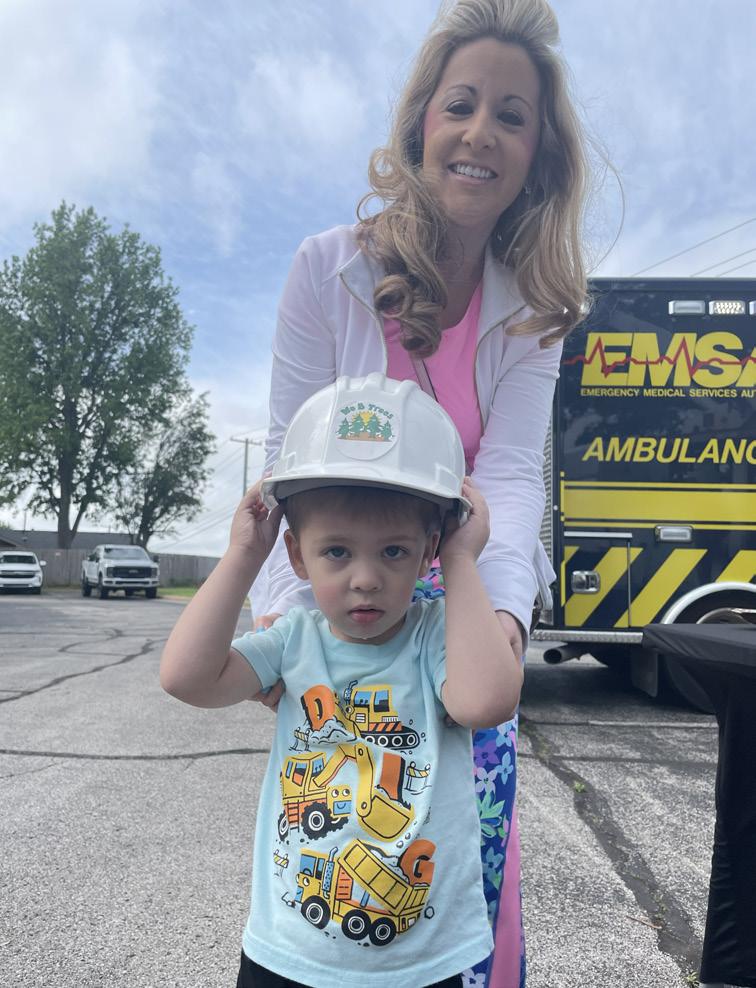
Most importantly, she treasures time with her husband and their young son, Mason, who is two and a half years old.
The family are active members of Boston Avenue United Methodist Church in Tulsa.
As she begins her presidential year, Dr. Nellis hopes ODA members recognize that they are not facing today’s challenges alone.
Whether addressing workforce shortages, insurance concerns, mental health needs, or the future of the profession, she believes organized dentistry remains the strongest vehicle for meaningful progress.
“We are all on this journey together,” she says. “The more dentists that join us and are involved, the more success we will have as an organization.”
With a career defined by service and a commitment to building meaningful connections, Dr. Nellis is well positioned to guide the ODA through the year ahead and help strengthen the profession for the future.
by Stacy Sigler, RDH
Stacy Sigler is a lifelong Oklahoman and graduate of the University of Oklahoma College of Dentistry. She holds dual bachelor’s degrees in science and business, and she practices at Downtown Dental in Oklahoma City. Stacy has been married since 2012 and has two fur kids. She enjoys traveling, cooking, sports, volunteering, and learning anything new—especially when it comes to healthcare.
“Science is a tribute to what we can know, although we are fallible.”
— Jacob Bronowski
We are in another epidemic. This time, there are no urgent CDC updates, but rather “I’m not sure the benefits outweigh the risk” from doctors or “I don’t want screenings there” from patients. We need to talk about it: Colorectal cancer (CRC) is now the leading cause of cancer-related death in men under 50 and in women under 50, recently surpassing breast cancer mortality within that age group.¹ Since 2011, cases have increased roughly 3% per year in people under the age of 50, and this early-onset CRC (EOCRC) is expected to double in incidence by 2030—that’s one in five CRC diagnoses. The median age group diagnosed with CRC (patients over 50) has seen a consistent annual reduction in CRC mortality rates since the early 1990s due to screenings.²
A systematic review in 2025 found incidence occurring highest between the ages of 40–49 and frequently in advanced stages.³ So why have the American Cancer Society and CDC only recently lowered the recommended screening age, and why is that screening age 45 instead of 40? At present, there seem to be more questions than answers, but these skyrocketing statistics
share one definitive certainty: we have to do something. If there’s one area people want to discuss less than the mouth, it’s the rectum. The dental field already handles the gritty business and delicate conversations of the mouth, so why should we further push the discomfort? The unsettling truth is: because it’s more connected than you think.
The rise in early-onset colorectal cancer (EOCRC) is unlikely to be explained by a single factor. Current literature points toward a convergence of modifiable and non-modifiable risk factors, as well as emerging risk modifiers. In other words, the burden is cumulative. Non-modifiable risk factors for EOCRC include family history of CRC or polyps, inflammatory bowel disease, Crohn's disease, ulcerative colitis, Lynch syndrome, and familial adenomatous polyposis. Patients with a first-degree relative diagnosed with colorectal cancer are generally advised to begin screening at age 40, or 10 years earlier than the age at which their family member was diagnosed — whichever comes first.⁴ Modifiable risk factors include obesity, ultra-processed diets, low fiber intake, smoking, alcohol use, sedentary lifestyle, Type 2 diabetes, microbial dysbiosis (including possible antibiotic associations), and chronic inflammatory burden.³
Emerging research has also begun examining environmental contributors such as endocrine-disrupting chemicals, microplastics, and nanoplastics. These have been identified in human blood, placenta, and stool samples and are associated with oxidative stress and inflammatory signaling pathways, though direct causation in colorectal carcinogenesis remains unconfirmed.⁵ Colibactin-producing bacteria (such as E. coli) and other microbial carcinogenic pathways may also contribute to chronic low-grade
inflammation and cumulative systemic stress.⁶
Gastrointestinal symptoms are increasingly normalized or overlooked. Patients often attribute their GI symptoms to stress, diet, probiotic changes, reflux, or side effects of medications such as popular GLP1 receptor agonists. This lack of recognition could be contributing to a modern era of diagnostic delay. The oral cavity may also represent an additional — and frequently overlooked — component of cumulative biologic burden.
Current research continues to link the oral microbiome to the development and progression of many diseases, citing well-known periodontal pathogens as diagnostic indicators and/or contributors. An increase in the bacterial load of specific bacteria facilitates chronic inflammation and subsequent cellular changes, resulting in a potentially increased risk for cancers. Reducing the bacterial load and its associated inflammation may mitigate these health-threatening changes and their host cellular responses. In other words, pathogens and their mechanisms should be discussed as risk factors to many life-threatening illnesses.
In the case of colorectal cancers, Fusobacterium nucleatum (F. nucleatum) has been classified as an oncobiont—a microorganism found within or around tumor tissue that actively contributes to the genesis, progression, or treatment resistance of malignant tumors. F. nucleatum impacts immune response modulation, virulence factors, oncogenic microRNAs, intestinal metabolite interactions, DNA damage, and epithelial-mesenchymal
transition. It is similarly linked to oral, pancreatic, esophageal, and breast cancers. Not only might it negatively influence the cancers, but also their treatments such as chemotherapy and immunotherapy. A comprehensive 2024 review reports elevated levels of oral-derived F. nucleatum in colorectal cancer tissues and fecal samples, indicating ectopic colonization.⁷ It has been long established that transient bacteremia can arise from periodontal disease.
A 2020 study comparing PCR assays on F. nucleatum in same-patient saliva and CRC tumor tissue, alongside murine studies of oral vs. hematogenous routes, suggests that tumor-associated
F. nucleatum originates from the oral microbial reservoir and is delivered via the circulatory system. This same study also supports that F. nucleatum inhibits anti-cancer lymphocytes (such as T-cells and NK cells) and disrupts cancer treatments via TLR4/NF-κB pathwayinduced autophagy.⁸
A 2024 systematic editorial (and its accompanying graphic below) further illustrate that F. nucleatum affects “the occurrence and progression of GI malignancies by colonizing the digestive tract, contributing to the proliferation, metastasis, and chemoresistance of cancer cells.”⁹ At this point, might we consider F. nucleatum a biomarker for cancer?
While the generic answer is to continue doing our best to educate and create a healthy mouth, these ominous statistics outgrow the responsibility of a sole provider and suggest the burden of prevention and recognition should be shared. Prevention isn't so far outside our jurisdiction as we might believe: periodontal therapy, reducing pathogenic bacterial load, oral hygiene instruction, tobacco cessation, nutritional counseling, and thorough oral screenings are in every provider's routine care.
Continued on page 31
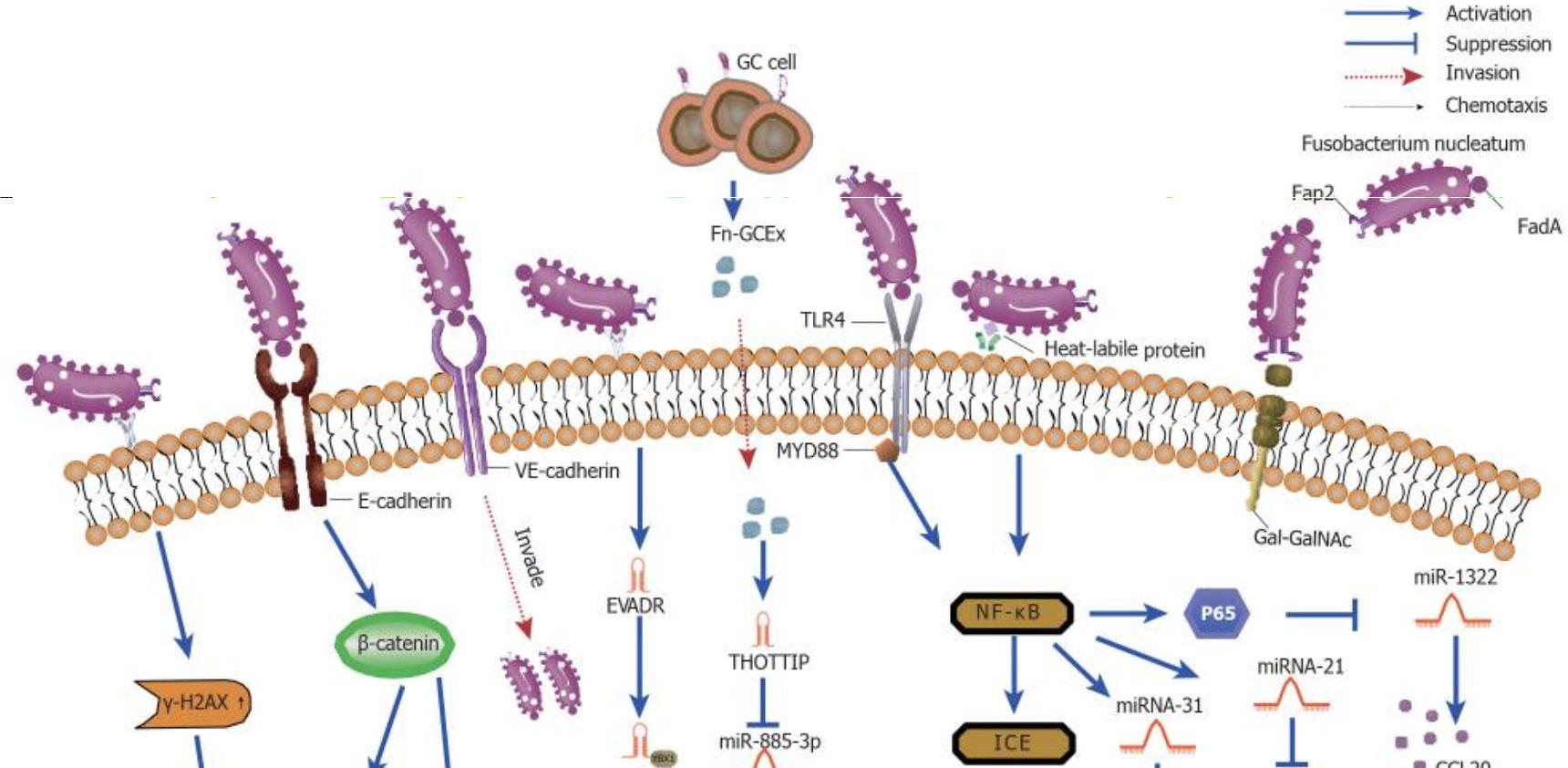
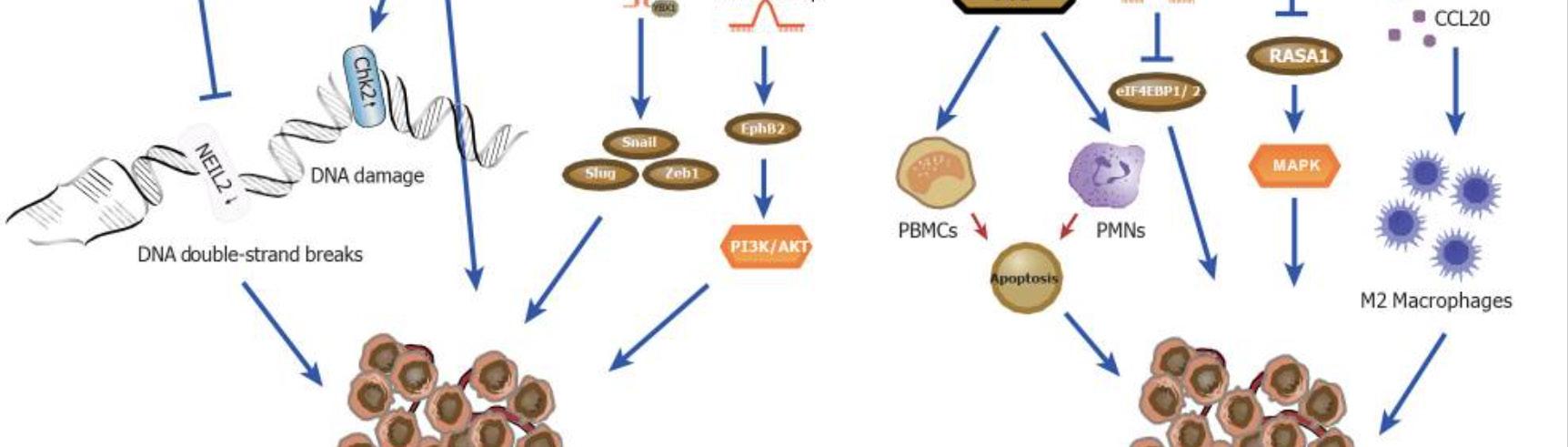
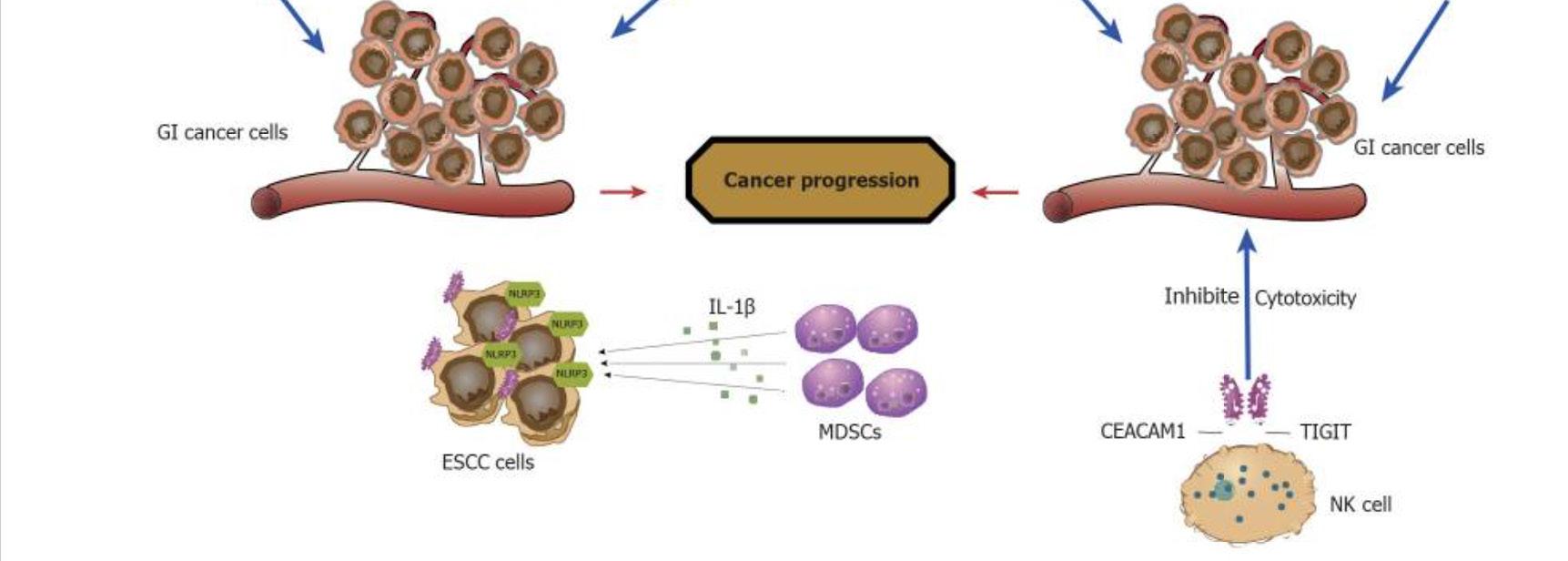
Figure 1. Proposed mechanisms by which F. nucleatum contributes to gastrointestinal malignancy, including digestive tract colonization, proliferation, metastasis, and chemoresistance. Binding of F. nucleatum to receptors on the surface of tumor cells promotes malignant transformation through a variety of mechanisms, including the induction of DNA damage, modulation of the immune microenvironment of tumors, and regulation of non-coding RNA expression. GC cells: Gastric cancer cells; GI cancer cells: Gastrointestinal cancer cells; Fn-GCEx: Exosomes secreted by F. nucleatuminfected GC cells; TLR4: Toll-like receptor 4; Gal-GalNAc: D-galactos-ß (1-3)-N-acetyl-Dgalactosamine; ESCC cells: Esophageal squamous carcinoma cells; MDSCs: Myeloid suppressor cells; PBMCs: Peripheral blood mononuclear cells; PMNs: Polymorphonuclear cells; NK cell: Natural killer cell. 9
Serving the OKC Metro since 1977
Your patient ’s experience is top priority
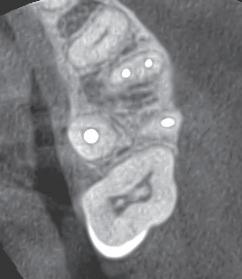
3D CBCT scanning for improved diagnosis
Complex endodontic cases welcomed
Complex and “heroic” teeth salvage
Build-up and post & core placement available
Cutting edge instrumentation and disinfection
Zeiss microscopes used on every case
Specializing in finding 4+ canals in molars
Surgical and nonsurgical retreatment
General anesthesia and oral sedation
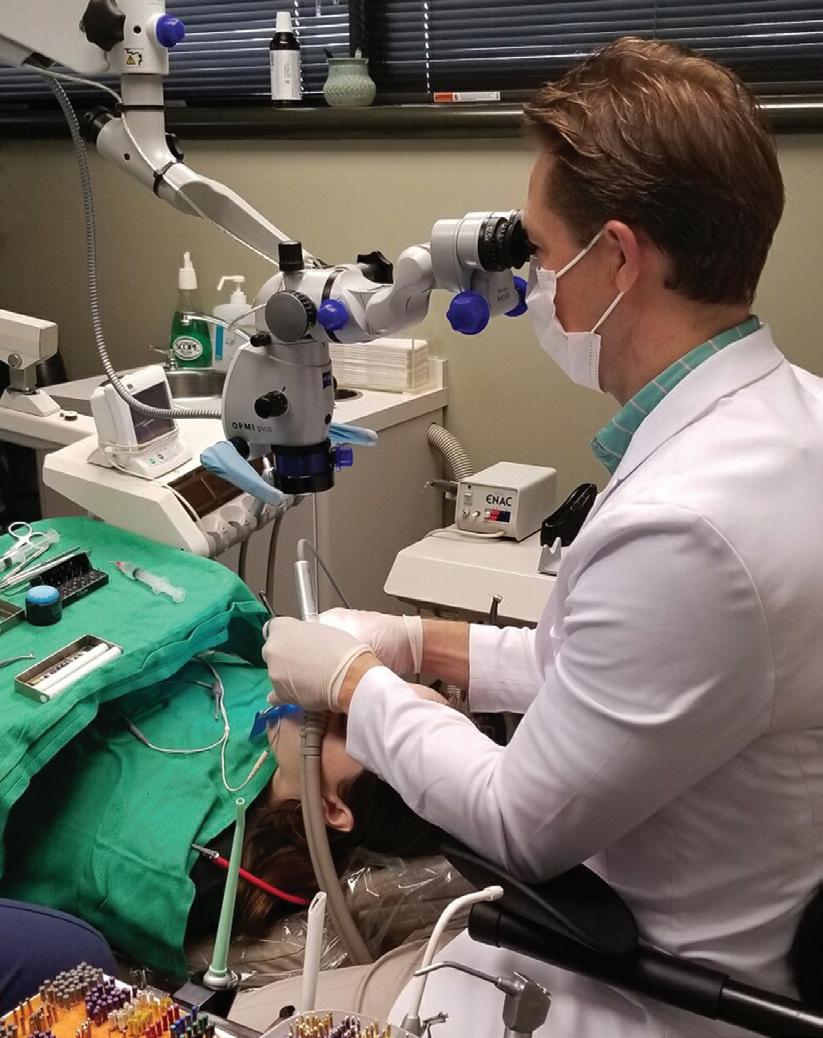
We pride ourselves in a trusted referral pattern that ensures your patient returns to you holding you in high regard - regardless of the reason for referral. We speak highly of you to your patient and reassure them they are in good hands in your care.
We value communication between you and our office. Give us a call to talk about anything. We are even happy to help you navigate through a difficult case in your chair.
As previously stated, all of these are considered CRC risk factors if poorly managed. We simply need to inform patients of another valuable service in our repertoire: we are incorporating emerging cancer risk awareness into our preventive care. All we are doing is adding value to services we already provide. From there, the conversation can become more natural and engaging. Patients start asking questions, and this gives providers the opportunity to educate with confidence and care.
The most common symptoms are changes in bowel habits, hematochezia (blood in stool), persistent abdominal pain, frequent diarrhea (more common) or constipation, and unexplained weight loss. As previously mentioned, patients often dismiss these symptoms as stress, habits, or medications. A 2024 study reported that more than 50% of patients had symptoms at least 3 months prior to diagnosis.¹⁰ Continuing education could play an important role in helping providers feel more comfortable discussing colorectal cancer risk factors, symptom recognition, and appropriate referral pathways. Emerging salivary diagnostics and biomarker research may further strengthen dentistry’s role in interdisciplinary screening and prevention efforts. As research continues to evolve, dentistry may be uniquely positioned to recognize patterns of risk long before disease progresses to advanced stages
Reducing patients' "these symptoms are normal" assumptions can be life-saving. Perhaps, however, one of the most dangerous assumptions of colorectal cancer is that a patient is “too young” to have it. Despite increasing awareness surrounding EOCRC, barriers to screening and early intervention still exist, including insurance limitations and subsequent pressure on providers, patient hesitation, evolving screening recommendations, and delayed symptom recognition. With projections suggesting that one in five colorectal cancer diagnoses may occur in patients under 50 by 2030,² reducing generalizations that patients are “too young” for colorectal cancer is vital. Encouraging patients to recognize symptoms and seek
medical evaluation remains crucial, but dental providers may also help bridge gaps in awareness through collaboration and accountability with physicians. The oral-systemic link is widely acknowledged. Why are we not linking our oral specialty into broader medical care? Interdisciplinary referrals and collaborative care could help our patients with advocacy and truly comprehensive care.
If the burden is cumulative, then every opportunity to reduce it matters.
1. American Cancer Society. Mortality Under 50 Declines for 4 of 5 Leading Cancers in U.S., but Colorectal Now Top Cancer Killer, New ACS Study Finds [Internet]. Atlanta (GA): American Cancer Society; 2026 Jan 26. Available from: https://pressroom.cancer.org/under50-mortality-declines
2. The University of Chicago Medicine. Why are more people under 50 getting colorectal cancer? [Internet]. Chicago (IL): UChicago Medicine; 2026 Mar 13. Available from: https://www. uchicagomedicine.org/forefront/ cancer-articles/why-are-morepeople-under-50-getting-colorectalcancer

3. Kyrochristou ID, Lianos GD, Kyrochristou GD, Georvasili V, Tatsis V, Mitsis M, et al. Earlyonset colorectal cancer in patients younger than 50 years: a systematic review of the literature. Ann Gastroenterol [Internet]. 2025 Jun 25;38(4):364–379. Available from: https://pmc.ncbi.nlm.nih.gov/ articles/PMC12277510/
4. Jones V. Colorectal cancer screening: At what age should I get a colonoscopy? [Internet]. Houston (TX): MD Anderson Cancer Center; 2023 Jun 6. Available from: https://www.mdanderson. org/cancerwise/colorectal-cancerscreening--at-what-age-should-iget-a-colonoscopy.h00-159619434. html
5. Ririe AK, Fatema N, Dina TJ, Kuchipudi JD, Tamanna P, Libriansyah L, et al. Impact of
Microplastic Exposure on Human Health: A Systematic Review of Mechanisms, Biomarkers, and Clinical Outcomes. Cureus [Internet]. 2025 Dec 28;17(12):e100295. Available from: https://pmc.ncbi.nlm.nih.gov/ articles/PMC12848325/
6. Pandey H, Tang DWT, Wong SH, Lal D. Gut Microbiota in Colorectal Cancer: Biological Role and Therapeutic Opportunities. Cancers (Basel) [Internet]. 2023 Jan 30;15(3):866. Available from: https://pmc.ncbi.nlm.nih.gov/ articles/PMC9913759/
7. Ye C, Liu Z, Pan C, Zhang X, Zhao Z, Sun H. Review of oralderived Fusobacterium nucleatum and ectopic colonization in gastrointestinal malignancy. Cancer Biol Ther [Internet]. 2024 Jan 30;25(1):2306676. Available from: https://pmc.ncbi.nlm.nih.gov/ articles/PMC10829845/
8. Abed J, Maalouf N, Manson A, Earl A, Parhi L, Emgård JEM, et al. Colon Cancer-Associated Fusobacterium nucleatum May Originate From the Oral Cavity and Reach Colon Tumors via the Circulatory System. Front Cell Infect Microbiol [Internet]. 2020 Aug 7;10:400. Available from: https://pmc.ncbi.nlm.nih.gov/ articles/PMC7426652/
9. Yu LC, Li YP, Xin YM, Mao M, Pan YX, Qu YX, et al. Application of Fusobacterium nucleatum as a biomarker in gastrointestinal malignancies. World J Gastrointest Oncol [Internet]. 2024 Jun 15;16(6):2271–2283. Available from: https://pmc.ncbi.nlm.nih.gov/ articles/PMC11236247/
10. Skalitzky MK, Zhou PP, Goffredo P, Guyton K, Sherman SK, Gribovskaja-Rupp I, et al. Characteristics and Symptomatology of Colorectal Cancer in the Young. Surgery [Internet]. 2023 Mar 3;173(5):1137–1143. Available from: https:// pmc.ncbi.nlm.nih.gov/articles/ PMC10116569/
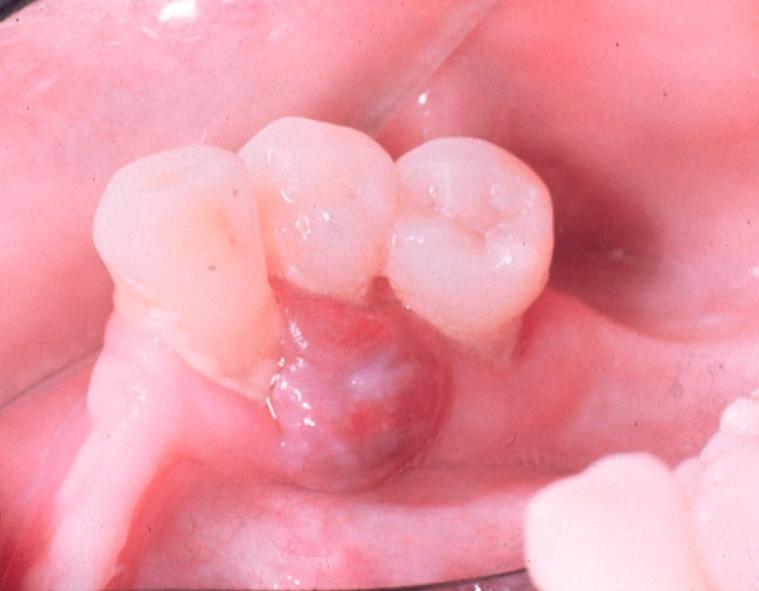
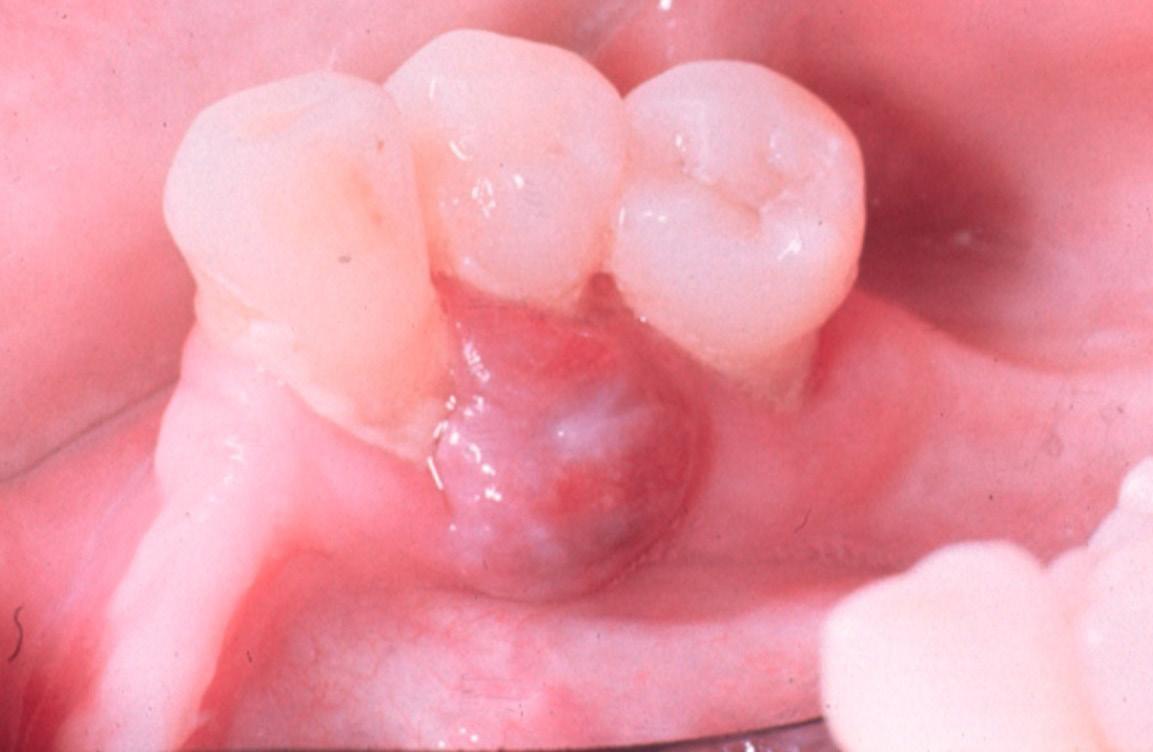
A 69 year old female presents with a chief complaint of "my lower partial denture doesn't fit." Examination reveals a fluctuant, asymptomatic soft tissue mass involving the anterior mandibular lingual gingiva. The patient notes that the "knot" has been present for several weeks and has slowly increased in size. The patient has a history of mild hypertension, fibromyalgia, chronic discoid lupus erythematosus, and a long history of tobacco (smoking) abuse.
The clinical differential diagnosis should include:
a. Pyogenic granuloma
b. Pleomorphic adenoma
c. Fibroma
d. Peripheral giant cell granuloma
e. Peripheral ossifying fibroma
f. Squamous cell carcinoma
Your differential diagnosis should include:
a. Pyogenic granuloma
c. Fibroma
d. Peripheral giant cell granuloma
e. Peripheral ossifying fibroma
All four (4) of these entities can present intraorally as an isolated, circumscribed mass involving the gingiva.
The pyogenic granuloma (a) is a common "tumor-like" growth of the oral cavity that is non-neoplastic in nature. It is felt to represent an exuberant tissue response to local irritation or trauma. The pyogenic granuloma typically presents as a smooth surfaced mass that may be ulcerated and the gingiva is, by far, the most common location intraorally. However, it may also be observed involving the lips, tongue, buccal mucosa, and cutaneous surfaces.
The fibroma (c) is the most common "tumor" of the oral cavity. Although it may appear anywhere in the mouth, the buccal mucosa is the most common anatomic location. The labial mucosa, tongue, and gingiva are also common sites. It typically presents as a smoothsurfaced, firm nodule with a broad, sessile base. The fibroma is usually asymptomatic and not ulcerated.
The peripheral giant cell granuloma (d) is also a "tumor-like" growth of the oral cavity that occurs exclusively on the gingiva or the edentulous alveolar ridge and presents as a nodular mass. This lesion may be red to reddish-blue in color, exhibit a sessile or pedunculated base, and may or may not be ulcerated.
The peripheral ossifying fibroma (e) is another non-neoplastic, reactive lesion that occurs exclusively on the gingiva. It typically presents as a nodular mass with a pedunculated or broad sessile base. It may be red to pink in color and usually exhibits surface ulceration. This lesion usually involves the anterior segments of the jaws.
Although the pleomorphic adenoma (b) may occur in the oral cavity and typically presents as a nodular mass, it would not be included in the differential diagnosis here because the attached mucosa is typically devoid of salivary gland tissue. Likewise, squamous cell carcinoma (f) may also occur intraorally, but this malignant neoplastic process typically presents as an area of leukoplakia, erythroplakia, or an ulcerated, fungating, exophytic mass. Only about four to six percent of these cases occur on the gingiva or the alveolar mucosa.
by Glen D. Houston, DDS, MSD
Which of the following are indicated for this patient?
a. Intraoral radiographic survey
b. Biopsy the lesion
c. Advise the patient to remove the denture for 10-14 days, then evaluate the area again for any change
d. Adjust the denture
The following procedures are indicated in this case:
a. Intraoral radiographic survey
b. Biopsy the lesion (excision)
The intraoral radiographic survey (a) will supplement your clinical observations and will also complete a comprehensive intraoral examination. Additionally, an isolated, asymptomatic mass involving the alveolar ridge/mucosa/gingiva is best managed by a biopsy, usually an excision (b).
There is little to be gained by advising the patient to remove the denture for 10-14 days (c). To adjust the denture (d) is definitely not indicated in the treatment of this lesion. As indicated earlier, biopsy of the lesion is warranted.
Histologic examination of the lesion reveals the following: a proliferation of loose mesenchymal tissue with foci of hemorrhage, hemosiderin deposition, and numerous aggregates of multinucleated giant cells. The overlying surface epithelium is unremarkable.
Based upon these microscopic features, the correct diagnosis for the lesion is:
a. Pyogenic granuloma
b. Peripheral giant cell granuloma
c. Epulis fissuratum
d. Neurofibroma
The lesion is correctly diagnosed as (b) peripheral giant cell granuloma--see "Discussion" section.
The other possibilities are not considered here because (a) the pyogenic granuloma is composed of a highly vascular proliferation of granulation tissue which exhibits numerous endothelium-lined vascular channels that are engorged with erythrocytes. Epulis fissuratum (c) is also known as inflammatory fibrous hyperplasia and is composed of hyperplastic dense fibrous connective tissue with a chronic inflammatory cell infiltrate. The neurofibroma (d) is a neoplastic process of peripheral nerve sheath origin. It is composed of interlacing bundles of spindle-shaped cells which exhibit "wavy", "commashaped" nuclei in association with delicate collagen fiber bundles.
The peripheral giant cell granuloma is a soft tissue lesion that is nonneoplastic and reactive/inflammatory in nature. This entity has been reported in the past under a great variety of terms such as peripheral giant cell tumor, osteoclastoma, giant cell epulis, and peripheral giant cell reparative granuloma. The variety of terms for
this lesion is indicative of the confusion over the true origin of this lesion. Even today there is no universal agreement concerning the pathogenesis of this entity.
From a clinical standpoint, the peripheral giant cell granuloma usually presents as a solitary, sessile, or pedunculated mass that occurs exclusively on the gingiva or alveolar mucosa. The lesion may be quite variable in size and is often red or hemorrhagic in appearance with surface ulceration present. The peripheral giant cell granuloma is more common in females than males, with a slight predilection for the mandible over the maxilla. The lesion may be observed in children as well as adults and may develop on either the anterior or posterior regions of the gingiva or alveolar mucosa. Radiographically, there may or may not be evidence of involvement of the underlying osseous tissue. It has been observed that in the edentulous patient, however, superficial erosion of the underlying bone is quite characteristic and presents a pathognomonic feature known as peripheral "cupping" of the bone.
The microscopic appearance of the peripheral giant cell granuloma is quite unique. This lesion is composed of a nonencapsulated mass of loose mesenchymal tissue containing
numerous multinucleated giant cells. Capillaries are usually quite numerous along with foci of hemorrhage, hemosiderin deposition, and spicules of osteoid or bone. The overlying surface epithelium may be ulcerated.
The treatment of the peripheral giant cell granuloma is surgical excision. If only superficial excision is carried out, recurrence/persistence may be observed (10%-18% of the cases). In the past, it was common practice to remove the adjacent teeth at the time of the excision to prevent recurrence/persistence but this practice has now been abandoned.
Lester SR, Cordell KG, Rosebush MS, et al. Peripheral giant cell granulomas: a series of 279 cases. Oral Surg Oral Med Oral Pathol Oral Radiol 2014;118:475482.
Katsikeris N, Kakarantza-Angelopoulou E, Angelopoulos AP. Peripheral giant cell granuloma: clinicopathologic study of 224 new cases and review of 956 reported cases. Int J Oral Maxillofac Surg 1988;17:94-99.
Giansanti JS, Waldron CA. Peripheral giant cell granuloma: review of 720 cases. J Oral Surg 1969;17:787-791.
Feeling stuck or looking for a more fulfilling opportunity? At Perry Smiles in Perry, OK, you'll find the autonomy and support you need to truly thrive. Located in a rural town, our practice has 9 operatories and brings in 30+ new patients per month, ensuring a strong flow of opportunities to grow your skills and income. As part of our privately owned dental group, you’ll enjoy advanced technology, including CBCT, iTero, intraoral cameras, and digital radiographs, alongside a dedicated team of hygienists and clinical staff. We welcome new graduates and provide hands-on mentorship and real earning potential— $250K+ in your first year, with experienced doctors earning $400K–$600K+. If you're seeking meaningful growth, balance, and a place where your input matters, this is the change you've been waiting for.
Contact:
Candice Davis, RDH 405-365-1448
candice.d@pidental.org
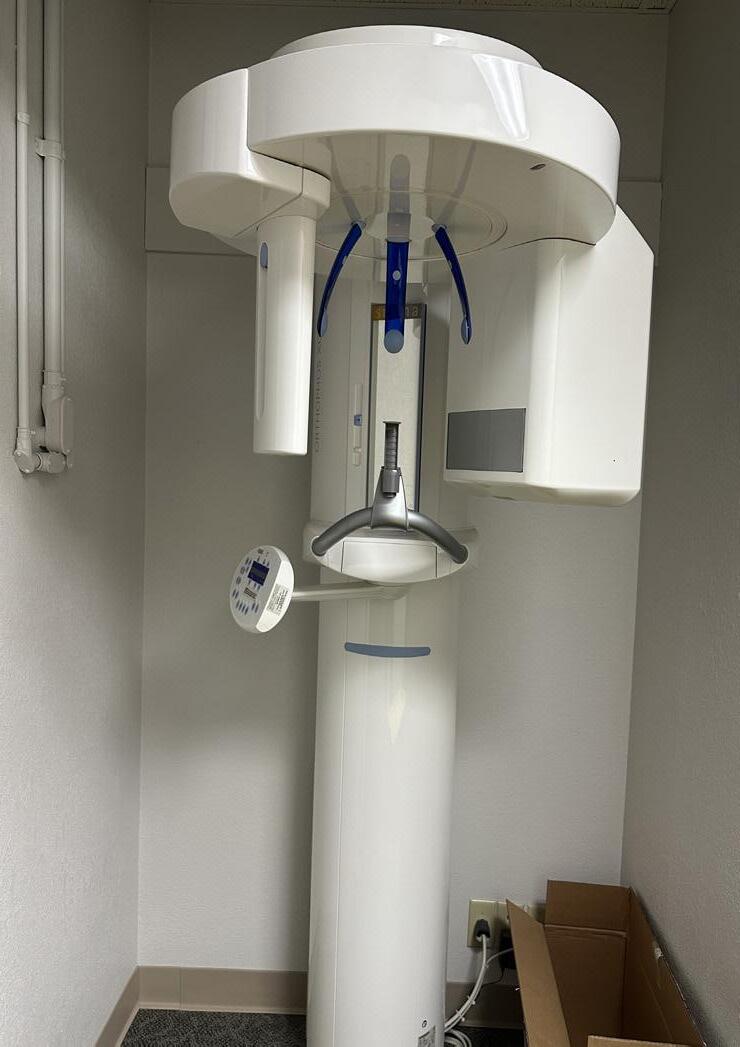
Pre-owned Orthophos XG Panoramic xray system. Reliable imaging purchased thru Patterson Dental. Located in Alva, OK. $6,500 Call Melanie @ 580-748-0100 for any questions.
Lawton, OK. Annual Collections of $2.4M in Southwest Oklahoma. Active patient base of 3,446 with a payor mix of 85% PPO and 15% FFS. The 2,400 square foot, free standing dental office features 6 operatories. Real estate available for purchase. Contact Paula for more info at Paula@WatsonBrownSales.com or 469-222-3200.
High-producing Moore, OK dental practice established in 2017. Immediate ownership opportunity in a proven, growing office. $1.5M annual collections, 6 operatories, 90 new patients per month, prime, highvisibility location. Ideal for an ambitious general dentist ready to build equity and income without startup risk. Call or text Kelli: 405.664.9909